EP3395980A1 - Non-magnetic steel material having excellent hot workability and manufacturing method therefor - Google Patents
Non-magnetic steel material having excellent hot workability and manufacturing method therefor Download PDFInfo
- Publication number
- EP3395980A1 EP3395980A1 EP16879377.6A EP16879377A EP3395980A1 EP 3395980 A1 EP3395980 A1 EP 3395980A1 EP 16879377 A EP16879377 A EP 16879377A EP 3395980 A1 EP3395980 A1 EP 3395980A1
- Authority
- EP
- European Patent Office
- Prior art keywords
- less
- steel material
- excluding
- hot
- austenite
- Prior art date
- Legal status (The legal status is an assumption and is not a legal conclusion. Google has not performed a legal analysis and makes no representation as to the accuracy of the status listed.)
- Granted
Links
Images

Classifications
-
- C—CHEMISTRY; METALLURGY
- C22—METALLURGY; FERROUS OR NON-FERROUS ALLOYS; TREATMENT OF ALLOYS OR NON-FERROUS METALS
- C22C—ALLOYS
- C22C38/00—Ferrous alloys, e.g. steel alloys
- C22C38/18—Ferrous alloys, e.g. steel alloys containing chromium
- C22C38/38—Ferrous alloys, e.g. steel alloys containing chromium with more than 1.5% by weight of manganese
-
- C—CHEMISTRY; METALLURGY
- C22—METALLURGY; FERROUS OR NON-FERROUS ALLOYS; TREATMENT OF ALLOYS OR NON-FERROUS METALS
- C22C—ALLOYS
- C22C38/00—Ferrous alloys, e.g. steel alloys
- C22C38/04—Ferrous alloys, e.g. steel alloys containing manganese
-
- C—CHEMISTRY; METALLURGY
- C21—METALLURGY OF IRON
- C21D—MODIFYING THE PHYSICAL STRUCTURE OF FERROUS METALS; GENERAL DEVICES FOR HEAT TREATMENT OF FERROUS OR NON-FERROUS METALS OR ALLOYS; MAKING METAL MALLEABLE, e.g. BY DECARBURISATION OR TEMPERING
- C21D6/00—Heat treatment of ferrous alloys
- C21D6/005—Heat treatment of ferrous alloys containing Mn
-
- C—CHEMISTRY; METALLURGY
- C21—METALLURGY OF IRON
- C21D—MODIFYING THE PHYSICAL STRUCTURE OF FERROUS METALS; GENERAL DEVICES FOR HEAT TREATMENT OF FERROUS OR NON-FERROUS METALS OR ALLOYS; MAKING METAL MALLEABLE, e.g. BY DECARBURISATION OR TEMPERING
- C21D8/00—Modifying the physical properties of ferrous metals or ferrous alloys by deformation combined with, or followed by, heat treatment
- C21D8/02—Modifying the physical properties of ferrous metals or ferrous alloys by deformation combined with, or followed by, heat treatment during manufacturing of plates or strips
-
- C—CHEMISTRY; METALLURGY
- C21—METALLURGY OF IRON
- C21D—MODIFYING THE PHYSICAL STRUCTURE OF FERROUS METALS; GENERAL DEVICES FOR HEAT TREATMENT OF FERROUS OR NON-FERROUS METALS OR ALLOYS; MAKING METAL MALLEABLE, e.g. BY DECARBURISATION OR TEMPERING
- C21D8/00—Modifying the physical properties of ferrous metals or ferrous alloys by deformation combined with, or followed by, heat treatment
- C21D8/02—Modifying the physical properties of ferrous metals or ferrous alloys by deformation combined with, or followed by, heat treatment during manufacturing of plates or strips
- C21D8/0221—Modifying the physical properties of ferrous metals or ferrous alloys by deformation combined with, or followed by, heat treatment during manufacturing of plates or strips characterised by the working steps
- C21D8/0226—Hot rolling
-
- C—CHEMISTRY; METALLURGY
- C21—METALLURGY OF IRON
- C21D—MODIFYING THE PHYSICAL STRUCTURE OF FERROUS METALS; GENERAL DEVICES FOR HEAT TREATMENT OF FERROUS OR NON-FERROUS METALS OR ALLOYS; MAKING METAL MALLEABLE, e.g. BY DECARBURISATION OR TEMPERING
- C21D9/00—Heat treatment, e.g. annealing, hardening, quenching or tempering, adapted for particular articles; Furnaces therefor
- C21D9/46—Heat treatment, e.g. annealing, hardening, quenching or tempering, adapted for particular articles; Furnaces therefor for sheet metals
-
- C—CHEMISTRY; METALLURGY
- C22—METALLURGY; FERROUS OR NON-FERROUS ALLOYS; TREATMENT OF ALLOYS OR NON-FERROUS METALS
- C22C—ALLOYS
- C22C38/00—Ferrous alloys, e.g. steel alloys
-
- C—CHEMISTRY; METALLURGY
- C22—METALLURGY; FERROUS OR NON-FERROUS ALLOYS; TREATMENT OF ALLOYS OR NON-FERROUS METALS
- C22C—ALLOYS
- C22C38/00—Ferrous alloys, e.g. steel alloys
- C22C38/001—Ferrous alloys, e.g. steel alloys containing N
-
- C—CHEMISTRY; METALLURGY
- C22—METALLURGY; FERROUS OR NON-FERROUS ALLOYS; TREATMENT OF ALLOYS OR NON-FERROUS METALS
- C22C—ALLOYS
- C22C38/00—Ferrous alloys, e.g. steel alloys
- C22C38/002—Ferrous alloys, e.g. steel alloys containing In, Mg, or other elements not provided for in one single group C22C38/001 - C22C38/60
-
- C—CHEMISTRY; METALLURGY
- C22—METALLURGY; FERROUS OR NON-FERROUS ALLOYS; TREATMENT OF ALLOYS OR NON-FERROUS METALS
- C22C—ALLOYS
- C22C38/00—Ferrous alloys, e.g. steel alloys
- C22C38/02—Ferrous alloys, e.g. steel alloys containing silicon
-
- C—CHEMISTRY; METALLURGY
- C22—METALLURGY; FERROUS OR NON-FERROUS ALLOYS; TREATMENT OF ALLOYS OR NON-FERROUS METALS
- C22C—ALLOYS
- C22C38/00—Ferrous alloys, e.g. steel alloys
- C22C38/06—Ferrous alloys, e.g. steel alloys containing aluminium
-
- C—CHEMISTRY; METALLURGY
- C22—METALLURGY; FERROUS OR NON-FERROUS ALLOYS; TREATMENT OF ALLOYS OR NON-FERROUS METALS
- C22C—ALLOYS
- C22C38/00—Ferrous alloys, e.g. steel alloys
- C22C38/18—Ferrous alloys, e.g. steel alloys containing chromium
-
- C—CHEMISTRY; METALLURGY
- C21—METALLURGY OF IRON
- C21D—MODIFYING THE PHYSICAL STRUCTURE OF FERROUS METALS; GENERAL DEVICES FOR HEAT TREATMENT OF FERROUS OR NON-FERROUS METALS OR ALLOYS; MAKING METAL MALLEABLE, e.g. BY DECARBURISATION OR TEMPERING
- C21D2211/00—Microstructure comprising significant phases
- C21D2211/001—Austenite
Definitions
- the present disclosure relates to a non-magnetic steel material having high hot workability and a method for manufacturing the non-magnetic steel material.
- Transformer structures include a case and a lock plate, and steel materials used for such transformer structures are required to have high non-magnetic characteristics.
- Austenite is a paramagnetic substance having low magnetic permeability and is more non-magnetic than ferrite.
- High manganese (Mn) steel materials having austenite in which carbon (C) is contained in large amounts are suitable for use as non-magnetic steel materials due to high stability of austenite.
- An aspect of the present disclosure may provide a non-magnetic steel material having high hot workability, low hot crack sensitivity, and high surface qualities.
- Another aspect of the present disclosure may provide a method for manufacturing a non-magnetic steel material having high hot workability, low hot crack sensitivity, and high surface qualities.
- a non-magnetic steel material having high hot workability may include manganese (Mn): 15 wt% to 27 wt%, carbon (C): 0.1 wt% to 1.1 wt%, silicon (Si): 0.05 wt% to 0.50 wt%, phosphorus (P): 0.03 wt% or less (excluding 0%), sulfur (S): 0.01 wt% or less (excluding 0%), aluminum (Al): 0.050 wt% or less (excluding 0%), chromium (Cr): 5 wt% or less (including 0%), boron (B): 0.01 wt% or less (including 0%), nitrogen (N): 0.1 wt% or less (excluding 0%), and a balance of iron (Fe) and inevitable impurities, wherein the non-magnetic steel material has a composition index of sensitivity expressed by Formula 1 below within a range of 3.4 or less, ⁇ 0.451
- the austenite may have an average grain size of 10 ⁇ m or greater.
- a method for manufacturing a non-magnetic steel material having high hot workability may include: preparing a slab, the slab including manganese (Mn): 15 wt% to 27 wt%, carbon (C): 0.1 wt% to 1.1 wt%, silicon (Si): 0.05 wt% to 0.50 wt%, phosphorus (P): 0.03 wt% or less (excluding 0%), sulfur (S): 0.01 wt% or less (excluding 0%), aluminum (Al): 0.050 wt% or less (excluding 0%), chromium (Cr): 5 wt% or less (including 0%), boron (B): 0.01 wt% or less (including 0%), nitrogen (N): 0.1 wt% or less (excluding 0%), and a balance of iron (Fe) and inevitable impurities, the slab having a composition index of sensitivity expressed by Formula 1 below within a range of 3.4 or
- Embodiments of the present disclosure may provide a non-magnetic steel material having uniform austenite, good non-magnetic characteristics, and high surface qualities owing to low crack sensitivity, and a method for manufacturing the non-magnetic steel material.
- the non-magnetic steel material having high hot workability includes: manganese (Mn): 15 wt% to 27 wt%, carbon (C): 0.1 wt% to 1.1 wt%, silicon (Si): 0.05 wt% to 0.50 wt%, phosphorus (P): 0.03 wt% or less (excluding 0%), sulfur (S): 0.01 wt% or less (excluding 0%), aluminum (Al): 0.050 wt% or less (excluding 0%), chromium (Cr): 5 wt% or less (including 0%), boron (B): 0.01 wt% or less (including 0%), nitrogen (N): 0.1 wt% or less (excluding 0%), and the balance of iron (Fe) and inevitable impurities, wherein the non-magnetic steel material has a composition index of sensitivity expressed by Formula 1 below within the range of 3.4 or less and has a microstructure having austea
- the content of manganese (Mn) is adjusted to be within the range of 15 wt% to 27 wt%.
- Manganese (Mn) is an element stabilizing austenite.
- Manganese (Mn) may be added in an amount of 15 wt% or greater to stabilize austenite at very low temperatures.
- ⁇ -martensite being a metastable phase may be formed in a steel material having a low content of carbon (C), and may be easily transformed into ⁇ '-martensite at a very low temperature by strain induced transformation. Thus, the toughness of the steel material may decrease.
- the content of manganese (Mn) may be within the range of 15 wt% to 25 wt%, and even more preferably within the range of 17 wt% to 25 wt%.
- the content of carbon (C) is adjusted to be within the range of 0.1 wt% to 1.1 wt%.
- Carbon (C) is an element stabilizing austenite and increasing the strength of the steel material.
- Carbon (C) may decrease transformation points Ms and Md at which austenite transforms into ⁇ -martensite or ⁇ '-martensite during a cooling or processing process.
- the content of carbon (C) is less than 0.1 wt%, the stability of austenite is insufficient to obtain stabile austenite at very low temperatures, and austenite may be easily transformed into ⁇ -martensite or ⁇ '-martensite by external stress through strain induced transformation, thereby decreasing the toughness and strength of the steel material.
- the toughness of the steel material may markedly decrease because of precipitation of carbides, and the strength of the steel material may excessively increase to result in a decrease in the workability of the steel material.
- the content of carbon (C) may be within the range of 0.1 wt% to 1.0 wt%, and even more preferably within the range of 0.1 wt% to 0.8 wt%.
- silicon (Si) is an element inevitably added in very small amounts as a deoxidizer. If the content of silicon (Si) is excessive, oxides are formed along grain boundaries which may decrease high-temperature ductility and may decrease surface quality by causing cracks. However, costs may be excessively incurred to decrease the content of silicon (Si) in steel, and thus it may be preferable that the lower limit of the content of silicon (Si) be set to be 0.05%. Silicon (Si) is more oxidable than aluminum (Al), and thus if the content of silicon (Si) is greater than 0.5%, oxides may be formed which cause cracks decreasing surface quality. Therefore, it may be preferable that the content of silicon (Si) be adjusted to be within the range of 0.05 wt% to 0.5%.
- chromium (Cr) is added to the steel material in an appropriate amount, chromium (Cr) stabilizes austenite and thus improves the low-temperature impact toughness of the steel material.
- chromium (Cr) dissolves in austenite and thus increases the strength of the steel material.
- chromium (Cr) improves the corrosion resistance of the steel material.
- chromium (Cr) is a carbide forming element. Particularly, chromium (Cr) leads to the formation of carbides along grain boundaries of austenite and thus decreases low-temperature impact toughness.
- the content of chromium (Cr) may be determined by considering a relationship with carbon (C) and other elements, and since chromium (Cr) is an expensive element, it may be preferable that the content of chromium (Cr) be adjusted to be 5 wt% or less.
- the content of chromium (Cr) may be within the range of 0 wt% to 4 wt%, and even more preferably within the range of 0.001 wt% to 4 wt%.
- the content of boron (B) may be adjusted to be within the range of 0.01 wt% or less.
- Boron (B) is an element strengthening austenite grain boundaries.
- boron (B) may strengthen austenite grain boundaries and may thus decrease the crack sensitivity of the steel material at high temperatures.
- the content of boron (B) may preferably be 0.0005 wt% or greater.
- the content of aluminum (Al) may be adjusted to be within the range of 0.05 wt% or less (excluding 0%).
- Aluminum (Al) is added as a deoxidizer.
- Aluminum (Al) may form precipitate by reacting with carbon (C) or nitrogen (N) and may thus decrease hot workability.
- the content of aluminum (Al) may preferably be adjusted to be 0.05 wt% or less (excluding 0%). More preferably, the content of aluminum (Al) may be within the range of 0.005 wt% to 0.05 wt%.
- the content of sulfur (S) may be adjusted to be 0.01% or less for controlling the amounts of inclusions. If the content of sulfur (S) is greater than 0.01%, hot embrittlement may occur.
- Phosphorus (P) easily segregates and leads to cracks during a casting process. To prevent this, the content of phosphorus (P) is adjusted to be 0.03% or less. If the content of phosphorus (P) is greater than 0.03%, castability may decrease, and thus the upper limit of the content of phosphorus (P) is set to be 0.03%.
- nitrogen (N) is an element stabilizing austenite and improving toughness.
- nitrogen (N) is very effective in improving strength by the effect of solid solution strengthening or the formation of precipitate.
- the upper limit of the content of nitrogen (N) be set to be 0.1 wt%. More preferably, the content of nitrogen (N) may be within the range of 0.001 wt% to 0.06 wt%, and even more preferably within the range of 0.005 wt% to 0.03 wt%.
- the steel material includes the balance of iron (Fe) and inevitable impurities.
- Impurities of raw materials or manufacturing environments may be inevitably included in the steel material, and such impurities may not be removed from the steel material.
- the non-magnetic austenitic steel material having high hot workability has a composition index of sensitivity expressed by Formula 1 below within the range of 3.4 or less. ⁇ 0.451 + 34.131 * P + 111.152 * Al ⁇ 799.483 * B + 0.526 * Cr ⁇ 3.4 (where each of [P], [Al], [B], and [Cr] is the weight percent (wt%) of the corresponding element)
- composition index of sensitivity expressed by Formula 1 is greater than 3.4, cracking may easily occur and propagate, thereby increasing surface defects of products.
- the non-magnetic austenitic steel material having high hot workability has austenite in an area fraction of 95% or greater.
- Austenite which is a paramagnetic substance having low magnetic permeability and is more non-magnetic than ferrite, is a key microstructure for guaranteeing non-magnetic characteristics.
- the average grain size of austenite may be 10 ⁇ m or greater.
- the grain size of austenite obtainable through a manufacturing process of the present disclosure is 10 ⁇ m or greater, and since the strength of the steel material may decrease if the grain size markedly increases, it may be preferable that the grain size of austenite be 60 ⁇ m or less.
- the non-magnetic steel material having high hot workability may include one or more of precipitates and ⁇ -martensite in an area fraction of 5% or less.
- the toughness and ductility of the steel material may decrease.
- the method for manufacturing a non-magnetic steel material having high hot workability includes: preparing a slab, the slab including manganese (Mn): 15 wt% to 27 wt%, carbon (C): 0.1 wt% to 1.1 wt%, silicon (Si): 0.05 wt% to 0.50 wt%, phosphorus (P): 0.03 wt% or less (excluding 0%), sulfur (S): 0.01 wt% or less (excluding 0%), aluminum (Al): 0.050 wt% or less (excluding 0%), chromium (Cr): 5 wt% or less (including 0%), boron (B): 0.01 wt% or less (including 0%), nitrogen (N): 0.1 wt% or less (excluding 0%), and the balance of iron (Fe) and inevitable impurities, the slab having a composition index of sensitivity expressed by Formula 1 below within the range of 3.4 or less, ⁇
- a slab is reheated in a heating furnace to a temperature of 1050°C to 1250°C for a hot rolling process.
- the reheating temperature is too low, that is, lower than 1050°C, the load acting on a rolling mill may be markedly increased, and alloying elements may not be sufficiently dissolved in the slab. Conversely, if the reheating temperature is too high, grains may excessively grow to cause a strength decrease, and the reheating temperature may be higher than the temperature of the solidus curve of the slab to cause poor rollability. Therefore, it may be preferable that the upper limit of the reheating temperature be 1250°C.
- a hot rolling process is performed on the reheated slab to obtain a hot-rolled steel material.
- the hot rolling process may include a rough rolling process and a finish rolling process.
- the temperature of the hot finish rolling process may be adjusted to be within the range of 800°C to 1050°C. If the hot rolling temperature is less than 800°C, a great rolling load may be applied, and if the hot rolling temperature is greater than 1050°C, an intended degree of strength may not be obtained because of coarse grains. Thus, it may be preferable that the upper limit of the hot rolling temperature be set to be 1050°C.
- the hot-rolled steel material obtained through the hot rolling process is cooled.
- the hot-rolled steel material may be cooled at a sufficiently high cooling rate to suppress the formation of carbides along grain boundaries. If the cooling rate is less than 10°C/s, the formation of carbides may not be sufficiently suppressed, and thus carbides may precipitate along grain boundaries during cooling. This may cause problems such as premature fracture, a ductility decrease, and a wear resistance decrease. Therefore, the cooling rate may be adjusted to be as high as possible, and the upper limit of the cooling rate may not be limited to a particular value as long as the cooling rate is within an accelerated cooling rate range. However, since it is generally difficult to increase the cooling rate of accelerated cooling to be greater than 100°C/s, it may be preferable that the upper limit of the cooling rate of the cooling process be set to be 100°C/s.
- a cooling stop temperature may preferably be set to be 600°C or less.
- carbides may be formed and grown in the steel material.
- the crack sensitivity is a reference for checking the hot workability of the steel materials, and as shown in FIG. 2 , the surface quality of a lateral edge, a leading edge, and an upper surface of each of the steel materials were measured to evaluate the crack sensitivity.
- the degree of sensitivity of each measurement portion was scored according to references shown in FIG. 1 , and the product of scores of the three portions was shown as sensitivity in Table 2 below. In Table 2 below, if the sensitivity is 3 or less, it is determined as having good surface quality.
- Table 2 shows a composition index of sensitivity which is -0.451+34.131*P+111.152*Al-799.483*B+0.526*Cr.
- Examples 1 to 8 had good surface quality because the sensitivity thereof was within the range of 3 or less as proposed in the present disclosure.
- composition index of sensitivity expressed by-0.451+34.131*P+111.152*Al-799.483*B+0.526*Cr was 3.4 or less, sensitivity of 3 or less was obtained, that is, good surface quality was obtained.
Landscapes
- Chemical & Material Sciences (AREA)
- Engineering & Computer Science (AREA)
- Materials Engineering (AREA)
- Mechanical Engineering (AREA)
- Metallurgy (AREA)
- Organic Chemistry (AREA)
- Physics & Mathematics (AREA)
- Thermal Sciences (AREA)
- Crystallography & Structural Chemistry (AREA)
- Heat Treatment Of Steel (AREA)
Abstract
Description
- The present disclosure relates to a non-magnetic steel material having high hot workability and a method for manufacturing the non-magnetic steel material.
- Transformer structures include a case and a lock plate, and steel materials used for such transformer structures are required to have high non-magnetic characteristics.
- Recently, steel materials having high non-magnetic characteristics in which austenite is stabilized by adding large amounts of manganese (Mn) and carbon (C) while entirely excluding chromium (Cr) and nickel (Ni) have been developed. Austenite is a paramagnetic substance having low magnetic permeability and is more non-magnetic than ferrite.
- High manganese (Mn) steel materials having austenite in which carbon (C) is contained in large amounts are suitable for use as non-magnetic steel materials due to high stability of austenite.
- However, if elements such as aluminum (Al) or phosphorus (P), remaining in manufacturing processes of high manganese steel materials, are included in austenite in large amounts, the crack sensitivity of the steel materials increases at high temperatures. This is due to low hot ductility and internal grain boundary oxidation at high temperatures. High crack sensitivity has a large influence on the surface quality of steel materials at room temperature.
- Therefore, it is necessary to develop a non-magnetic steel material having low crack sensitivity and high surface qualities.
- An aspect of the present disclosure may provide a non-magnetic steel material having high hot workability, low hot crack sensitivity, and high surface qualities.
- Another aspect of the present disclosure may provide a method for manufacturing a non-magnetic steel material having high hot workability, low hot crack sensitivity, and high surface qualities.
- According to an aspect of the present disclosure, a non-magnetic steel material having high hot workability may include manganese (Mn): 15 wt% to 27 wt%, carbon (C): 0.1 wt% to 1.1 wt%, silicon (Si): 0.05 wt% to 0.50 wt%, phosphorus (P): 0.03 wt% or less (excluding 0%), sulfur (S): 0.01 wt% or less (excluding 0%), aluminum (Al): 0.050 wt% or less (excluding 0%), chromium (Cr): 5 wt% or less (including 0%), boron (B): 0.01 wt% or less (including 0%), nitrogen (N): 0.1 wt% or less (excluding 0%), and a balance of iron (Fe) and inevitable impurities, wherein the non-magnetic steel material has a composition index of sensitivity expressed by
Formula 1 below within a range of 3.4 or less,
- where each of [P], [Al], [B], and [Cr] is a weight percent (wt%) of a corresponding element,
- wherein the non-magnetic steel material has a microstructure including austenite in an area fraction of 95% or greater.
- The austenite may have an average grain size of 10 µm or greater.
- According to another aspect of the present disclosure, a method for manufacturing a non-magnetic steel material having high hot workability may include:
preparing a slab, the slab including manganese (Mn): 15 wt% to 27 wt%, carbon (C): 0.1 wt% to 1.1 wt%, silicon (Si): 0.05 wt% to 0.50 wt%, phosphorus (P): 0.03 wt% or less (excluding 0%), sulfur (S): 0.01 wt% or less (excluding 0%), aluminum (Al): 0.050 wt% or less (excluding 0%), chromium (Cr): 5 wt% or less (including 0%), boron (B): 0.01 wt% or less (including 0%), nitrogen (N): 0.1 wt% or less (excluding 0%), and a balance of iron (Fe) and inevitable impurities, the slab having a composition index of sensitivity expressed byFormula 1 below within a range of 3.4 or less,
- where each of [P], [Al], [B], and [Cr] is a weight percent (wt%) of a corresponding element;
- reheating the slab to a temperature within a range of 1050°C to 1250°C;
- hot rolling the reheated slab to obtain a hot-rolled steel material; and
- cooling the hot-rolled steel material.
- Embodiments of the present disclosure may provide a non-magnetic steel material having uniform austenite, good non-magnetic characteristics, and high surface qualities owing to low crack sensitivity, and a method for manufacturing the non-magnetic steel material.
-
-
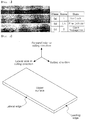
FIG. 1 is a view illustrating surface quality scores for measuring crack sensitivity, a score of 1 indicating a state having no surface crack, a score of 1.5 indicating a state having fine defects, and a score of 2 indicating a state in which cracks propagate and large cracks are present. -
FIG. 2 is a schematic example view illustrating crack sensitivity measurement portions for crack sensitivity evaluation. -
FIG. 3 is a graph illustrating a relationship between crack sensitivity and a composition index of sensitivity. - Embodiments of the present disclosure will now be described in detail.
- Rather, these embodiments are provided so that this disclosure will be thorough and complete, and will fully convey the scope of the disclosure to those skilled in the art.
- The disclosure may, however, be exemplified in many different forms and should not be construed as being limited to the specific embodiments set forth herein.
- It will be further understood that the terms "comprises" and/or "comprising" used herein specify the presence of stated features or elements, but do not preclude the presence or addition of one or more other features or elements.
- Hereinafter, a non-magnetic steel material of the present disclosure having high hot workability will be described in detail.
- According to an aspect of the present disclosure, the non-magnetic steel material having high hot workability includes: manganese (Mn): 15 wt% to 27 wt%, carbon (C): 0.1 wt% to 1.1 wt%, silicon (Si): 0.05 wt% to 0.50 wt%, phosphorus (P): 0.03 wt% or less (excluding 0%), sulfur (S): 0.01 wt% or less (excluding 0%), aluminum (Al): 0.050 wt% or less (excluding 0%), chromium (Cr): 5 wt% or less (including 0%), boron (B): 0.01 wt% or less (including 0%), nitrogen (N): 0.1 wt% or less (excluding 0%), and the balance of iron (Fe) and inevitable impurities, wherein the non-magnetic steel material has a composition index of sensitivity expressed by Formula 1 below within the range of 3.4 or less and has a microstructure having austenite in an area fraction of 95% or greater.

- First, the alloying elements and the contents of the alloying elements of the steel material will be described.
- Preferably, the content of manganese (Mn) is adjusted to be within the range of 15 wt% to 27 wt%.
- Manganese (Mn) is an element stabilizing austenite.
- Manganese (Mn) may be added in an amount of 15 wt% or greater to stabilize austenite at very low temperatures.
- If the content of manganese (Mn) is less than 15 wt%, ε-martensite being a metastable phase may be formed in a steel material having a low content of carbon (C), and may be easily transformed into α'-martensite at a very low temperature by strain induced transformation. Thus, the toughness of the steel material may decrease.
- Furthermore, in the case of a steel material having a content of carbon (C) increased to guarantee toughness, physical properties of the steel material may markedly deteriorate because of precipitation of carbides.
- If the content of manganese (Mn) is greater than 27 wt%, manufacturing costs increase, and thus the economic feasibility of the steel material may decrease.
- More preferably, the content of manganese (Mn) may be within the range of 15 wt% to 25 wt%, and even more preferably within the range of 17 wt% to 25 wt%.
- Preferably, the content of carbon (C) is adjusted to be within the range of 0.1 wt% to 1.1 wt%.
- Carbon (C) is an element stabilizing austenite and increasing the strength of the steel material.
- Carbon (C) may decrease transformation points Ms and Md at which austenite transforms into ε-martensite or α'-martensite during a cooling or processing process.
- If the content of carbon (C) is less than 0.1 wt%, the stability of austenite is insufficient to obtain stabile austenite at very low temperatures, and austenite may be easily transformed into ε-martensite or α'-martensite by external stress through strain induced transformation, thereby decreasing the toughness and strength of the steel material.
- If the content of carbon (C) is greater than 1.1 wt%, the toughness of the steel material may markedly decrease because of precipitation of carbides, and the strength of the steel material may excessively increase to result in a decrease in the workability of the steel material.
- More preferably, the content of carbon (C) may be within the range of 0.1 wt% to 1.0 wt%, and even more preferably within the range of 0.1 wt% to 0.8 wt%.
- Like aluminum (Al), silicon (Si) is an element inevitably added in very small amounts as a deoxidizer. If the content of silicon (Si) is excessive, oxides are formed along grain boundaries which may decrease high-temperature ductility and may decrease surface quality by causing cracks. However, costs may be excessively incurred to decrease the content of silicon (Si) in steel, and thus it may be preferable that the lower limit of the content of silicon (Si) be set to be 0.05%. Silicon (Si) is more oxidable than aluminum (Al), and thus if the content of silicon (Si) is greater than 0.5%, oxides may be formed which cause cracks decreasing surface quality. Therefore, it may be preferable that the content of silicon (Si) be adjusted to be within the range of 0.05 wt% to 0.5%.
- If chromium (Cr) is added to the steel material in an appropriate amount, chromium (Cr) stabilizes austenite and thus improves the low-temperature impact toughness of the steel material. In addition, chromium (Cr) dissolves in austenite and thus increases the strength of the steel material. Furthermore, chromium (Cr) improves the corrosion resistance of the steel material. However, chromium (Cr) is a carbide forming element. Particularly, chromium (Cr) leads to the formation of carbides along grain boundaries of austenite and thus decreases low-temperature impact toughness. Therefore, the content of chromium (Cr) may be determined by considering a relationship with carbon (C) and other elements, and since chromium (Cr) is an expensive element, it may be preferable that the content of chromium (Cr) be adjusted to be 5 wt% or less.
- More preferably, the content of chromium (Cr) may be within the range of 0 wt% to 4 wt%, and even more preferably within the range of 0.001 wt% to 4 wt%.
- Preferably, the content of boron (B) may be adjusted to be within the range of 0.01 wt% or less.
- Boron (B) is an element strengthening austenite grain boundaries.
- Even a small amount of boron (B) may strengthen austenite grain boundaries and may thus decrease the crack sensitivity of the steel material at high temperatures. To improve surface quality by austenite grain boundary strengthening, the content of boron (B) may preferably be 0.0005 wt% or greater.
- However, if the content of boron (B) is greater than 0.01%, segregation may occur along austenite grain boundaries, and thus the crack sensitivity of the steel material may increase at high temperatures, thereby decreasing the surface quality of the steel material.
- Preferably, the content of aluminum (Al) may be adjusted to be within the range of 0.05 wt% or less (excluding 0%).
- Aluminum (Al) is added as a deoxidizer. Aluminum (Al) may form precipitate by reacting with carbon (C) or nitrogen (N) and may thus decrease hot workability. Thus, the content of aluminum (Al) may preferably be adjusted to be 0.05 wt% or less (excluding 0%). More preferably, the content of aluminum (Al) may be within the range of 0.005 wt% to 0.05 wt%.
- The content of sulfur (S) may be adjusted to be 0.01% or less for controlling the amounts of inclusions. If the content of sulfur (S) is greater than 0.01%, hot embrittlement may occur.
- Phosphorus (P) easily segregates and leads to cracks during a casting process. To prevent this, the content of phosphorus (P) is adjusted to be 0.03% or less. If the content of phosphorus (P) is greater than 0.03%, castability may decrease, and thus the upper limit of the content of phosphorus (P) is set to be 0.03%.
- Like carbon (C), nitrogen (N) is an element stabilizing austenite and improving toughness. In addition, like carbon (C), nitrogen (N) is very effective in improving strength by the effect of solid solution strengthening or the formation of precipitate. However, if the content of nitrogen (N) is greater than 0.1%, physical properties or surface quality of the steel material deteriorate because of coarsening of carbonitrides coarsen, and thus it may be preferable that the upper limit of the content of nitrogen (N) be set to be 0.1 wt%. More preferably, the content of nitrogen (N) may be within the range of 0.001 wt% to 0.06 wt%, and even more preferably within the range of 0.005 wt% to 0.03 wt%.
- In the present disclosure, the steel material includes the balance of iron (Fe) and inevitable impurities.
- Impurities of raw materials or manufacturing environments may be inevitably included in the steel material, and such impurities may not be removed from the steel material.
- Such impurities are well-known to those of ordinary skill in the steel manufacturing industry, and thus descriptions thereof will not be given in the present disclosure.
- According to the aspect of the present disclosure, the non-magnetic austenitic steel material having high hot workability has a composition index of sensitivity expressed by
Formula 1 below within the range of 3.4 or less.
- If the composition index of sensitivity expressed by
Formula 1 is greater than 3.4, cracking may easily occur and propagate, thereby increasing surface defects of products. - According to the aspect of the present disclosure, the non-magnetic austenitic steel material having high hot workability has austenite in an area fraction of 95% or greater.
- Austenite, which is a paramagnetic substance having low magnetic permeability and is more non-magnetic than ferrite, is a key microstructure for guaranteeing non-magnetic characteristics.
- If the area fraction of austenite is less than 95%, it may be difficult to guarantee non-magnetic characteristics.
- The average grain size of austenite may be 10 µm or greater.
- The grain size of austenite obtainable through a manufacturing process of the present disclosure is 10 µm or greater, and since the strength of the steel material may decrease if the grain size markedly increases, it may be preferable that the grain size of austenite be 60 µm or less.
- According to the aspect of the present disclosure, the non-magnetic steel material having high hot workability may include one or more of precipitates and ε-martensite in an area fraction of 5% or less.
- If the area fraction of one or more of precipitates and ε-martensite is greater than 5%, the toughness and ductility of the steel material may decrease.
- Hereinafter, a method for manufacturing a non-magnetic steel material having high hot workability will be described in detail according to the present disclosure.
- According to another aspect of the present disclosure, the method for manufacturing a non-magnetic steel material having high hot workability includes:
preparing a slab, the slab including manganese (Mn): 15 wt% to 27 wt%, carbon (C): 0.1 wt% to 1.1 wt%, silicon (Si): 0.05 wt% to 0.50 wt%, phosphorus (P): 0.03 wt% or less (excluding 0%), sulfur (S): 0.01 wt% or less (excluding 0%), aluminum (Al): 0.050 wt% or less (excluding 0%), chromium (Cr): 5 wt% or less (including 0%), boron (B): 0.01 wt% or less (including 0%), nitrogen (N): 0.1 wt% or less (excluding 0%), and the balance of iron (Fe) and inevitable impurities, the slab having a composition index of sensitivity expressed byFormula 1 below within the range of 3.4 or less,
- (where each of [P], [Al], [B], and [Cr] is the weight percent (wt%) of the corresponding element);
- reheating the slab to a temperature within a range of 1050°C to 1250°C;
- hot rolling the reheated slab to obtain a hot-rolled steel material; and
- cooling the hot-rolled steel material.
- A slab is reheated in a heating furnace to a temperature of 1050°C to 1250°C for a hot rolling process.
- If the reheating temperature is too low, that is, lower than 1050°C, the load acting on a rolling mill may be markedly increased, and alloying elements may not be sufficiently dissolved in the slab. Conversely, if the reheating temperature is too high, grains may excessively grow to cause a strength decrease, and the reheating temperature may be higher than the temperature of the solidus curve of the slab to cause poor rollability. Therefore, it may be preferable that the upper limit of the reheating temperature be 1250°C.
- A hot rolling process is performed on the reheated slab to obtain a hot-rolled steel material.
- The hot rolling process may include a rough rolling process and a finish rolling process.
- Preferably, the temperature of the hot finish rolling process may be adjusted to be within the range of 800°C to 1050°C. If the hot rolling temperature is less than 800°C, a great rolling load may be applied, and if the hot rolling temperature is greater than 1050°C, an intended degree of strength may not be obtained because of coarse grains. Thus, it may be preferable that the upper limit of the hot rolling temperature be set to be 1050°C.
- The hot-rolled steel material obtained through the hot rolling process is cooled.
- After the finish rolling process, the hot-rolled steel material may be cooled at a sufficiently high cooling rate to suppress the formation of carbides along grain boundaries. If the cooling rate is less than 10°C/s, the formation of carbides may not be sufficiently suppressed, and thus carbides may precipitate along grain boundaries during cooling. This may cause problems such as premature fracture, a ductility decrease, and a wear resistance decrease. Therefore, the cooling rate may be adjusted to be as high as possible, and the upper limit of the cooling rate may not be limited to a particular value as long as the cooling rate is within an accelerated cooling rate range. However, since it is generally difficult to increase the cooling rate of accelerated cooling to be greater than 100°C/s, it may be preferable that the upper limit of the cooling rate of the cooling process be set to be 100°C/s.
- When the hot-rolled steel material is cooled, a cooling stop temperature may preferably be set to be 600°C or less. Although the steel material is cooled at a high cooling rate, if the cooling of the steel material is stopped at a high temperature, carbides may be formed and grown in the steel material.
- Hereinafter, the present disclosure will be described more specifically through examples. However, the following examples should be considered in a descriptive sense only and not for purpose of limitation. The scope of the present invention is defined by the appended claims, and modifications and variations reasonably made therefrom.
- Slabs satisfying compositions shown in Table 1 below were reheated to 1200°C and were hot rolled under the hot finish rolling conditions shown in Table 1 below to manufacture hot-rolled steel materials having a thickness of 12 mm. Then, the hot-rolled steel materials were cooled to 300°C at a cooling rate of 20°C/s
- The grain size, yield strength, tensile strength, elongation, and crack sensitivity of the hot-rolled steel sheets (steel materials) manufactured as described above were measured, and results thereof are shown in Table 1 below.
- The crack sensitivity is a reference for checking the hot workability of the steel materials, and as shown in
FIG. 2 , the surface quality of a lateral edge, a leading edge, and an upper surface of each of the steel materials were measured to evaluate the crack sensitivity. The degree of sensitivity of each measurement portion was scored according to references shown inFIG. 1 , and the product of scores of the three portions was shown as sensitivity in Table 2 below. In Table 2 below, if the sensitivity is 3 or less, it is determined as having good surface quality. - In addition, Table 2 below shows a composition index of sensitivity which is -0.451+34.131*P+111.152*Al-799.483*B+0.526*Cr.
- In addition, a relationship between the sensitivity and the composition index of sensitivity which is - 0.451+34.131*P+111.152*Al-799.483*B+0.526*Cr, shown in Table 2, is illustrated in
FIG. 3 .[Table 1] No. Composition (wt%) Finish rolling temperature (°C) C Mn Si P S N Al B Cr *E1 0.42 20.3 0.21 0.016 0.004 0.015 0.028 - - 870 E2 0.46 25.0 0.29 0.016 0.004 0.020 0.026 0.0042 3.93 891 E3 0.40 19.9 0.17 0.016 0.003 0.018 0.025 0.0023 2.05 930 E4 0.39 21.6 0.19 0.017 0.007 0.019 0.025 0.0045 2.06 905 E5 0.40 25.0 0.22 0.016 0.004 0.021 0.026 - - 885 E6 0.40 22.1 0.21 0.016 0.004 0.016 0.021 0.0030 - 940 E7 0.39 19.6 0.18 0.018 0.009 0.018 0.022 0.0038 2.03 938 E8 1.10 17.9 0.21 0.018 0.004 0.018 0.028 0.0040 2.70 937 *CE1 0.40 22.0 0.19 0.029 0.004 0.018 0.026 - - 922 CE2 0.40 22.1 0.18 0.027 0.003 0.017 0.072 0.0037 - 938 CE3 0.40 22.2 0.20 0.015 0.004 0.017 0.051 - - 894 CE4 0.40 22.2 0.20 0.030 0.003 0.017 0.060 - - 933 CE5 0.40 22.1 0.22 0.030 0.003 0.018 0.059 - - 885 *E: Example, **CE: Comparative Example [Table 2] No. Surface quality Properties Composition index Sensitivity Grain size (µm) Yield strength (MPa) Tensile strength (MPa) Elongation (%) *E1 3.21 1.00 28 371.4 977.4 50.9 E2 1.70 1.00 37 427.1 871.5 59.3 E3 2.11 1.00 32 350.6 946.0 55.9 E4 0.39 1.00 33 358.9 905.3 57.1 E5 2.98 1.50 26 360.5 918.0 27.0 E6 0.03 1.50 43 329.9 896.6 56.0 E7 0.64 1.50 29 344.1 933.7 45.9 E8 1.50 2.25 31 508.3 1003.9 29.5 **CE1 3.43 3.38 30 342.5 925.9 61.9 CE2 5.52 3.38 40 325.5 887.0 53.1 CE3 5.73 8.00 28 356.2 928.7 52.7 CE4 7.24 8.00 35 339.0 920.0 61.4 CE5 7.13 8.00 33 352.5 899.9 39.2 *E: Example, **CE: Comparative Example - As shown in Tables 1 and 2 above, Examples 1 to 8 had good surface quality because the sensitivity thereof was within the range of 3 or less as proposed in the present disclosure.
- Comparative Example 1, having a high content of phosphorus (P), had relatively high crack sensitivity, that is, a composition index of 3.43.
- Comparative Example 2 to which boron (B) was added had a decreased composition index because of a relatively high aluminum (Al) content and thus, decreased crack sensitivity. However, the composition index and crack sensitivity of Comparative Example 2 were outside of the ranges proposed in the present disclosure.
- Comparative Example 3, having an aluminum (Al) content outside of the range proposed in the present disclosure, had a composition index of 5.62 and a crack sensitivity of 8.00.
- Comparative Examples 4 and 5 had a relatively high composition index and crack sensitivity because of the addition of phosphorus (P) and aluminum (Al).
- In addition, as illustrated in
FIG. 3 , when the composition index of sensitivity expressed by-0.451+34.131*P+111.152*Al-799.483*B+0.526*Cr was 3.4 or less, sensitivity of 3 or less was obtained, that is, good surface quality was obtained. - While embodiments have been shown and described above, it will be apparent to those skilled in the art that modifications and variations could be made without departing from the scope of the present invention as defined by the appended claims.
Claims (8)
- A non-magnetic steel material having high hot workability, the non-magnetic steel material comprising manganese (Mn): 15 wt% to 27 wt%, carbon (C): 0.1 wt% to 1.1 wt%, silicon (Si): 0.05 wt% to 0.50 wt%, phosphorus (P): 0.03 wt% or less (excluding 0%), sulfur (S): 0.01 wt% or less (excluding 0%), aluminum (Al): 0.050 wt% or less (excluding 0%), chromium (Cr): 5 wt% or less (including 0%), boron (B): 0.01 wt% or less (including 0%), nitrogen (N): 0.1 wt% or less (excluding 0%), and a balance of iron (Fe) and inevitable impurities, wherein the non-magnetic steel material has a composition index of sensitivity expressed by Formula 1 below within a range of 3.4 or less,
 where each of [P], [Al], [B], and [Cr] is a weight percent (wt%) of a corresponding element,wherein the non-magnetic steel material has a microstructure comprising austenite in an area fraction of 95% or greater.
 - The non-magnetic steel material of claim 1, wherein the austenite has an average grain size of 10 µm or greater.
- A method for manufacturing a non-magnetic steel material having high hot workability, the method comprising:preparing a slab, the slab comprising manganese (Mn): 15 wt% to 27 wt%, carbon (C): 0.1 wt% to 1.1 wt%, silicon (Si): 0.05 wt% to 0.50 wt%, phosphorus (P): 0.03 wt% or less (excluding 0%), sulfur (S): 0.01 wt% or less (excluding 0%), aluminum (Al): 0.050 wt% or less (excluding 0%), chromium (Cr): 5 wt% or less (including 0%), boron (B): 0.01 wt% or less (including 0%), nitrogen (N): 0.1 wt% or less (excluding 0%), and a balance of iron (Fe) and inevitable impurities, the slab having a composition index of sensitivity expressed by Formula 1 below within a range of 3.4 or less,
 where each of [P], [Al], [B], and [Cr] is a weight percent (wt%) of a corresponding element;reheating the slab to a temperature within a range of 1050°C to 1250°C;hot rolling the reheated slab to obtain a hot-rolled steel material; andcooling the hot-rolled steel material.
 - The method of claim 3, wherein the hot rolling of the reheated slab is performed at a hot finish rolling temperature of 800°C to 1050°C.
- The method of claim 3, wherein the cooling of the hot-rolled steel material is performed at a cooling rate of 10°C/s to 100°C/s.
- The method of claim 3, wherein the cooling of the hot-rolled steel material is stopped at a cooling stop temperature of 600°C or less.
- The method of claim 3, wherein the steel material has a microstructure comprising austenite in an area fraction of 95% or greater.
- The method of claim 7, wherein the austenite has an average grain size of 10 µm or greater.
Applications Claiming Priority (3)
| Application Number | Priority Date | Filing Date | Title |
|---|---|---|---|
| KR20150184757 | 2015-12-23 | ||
| KR1020160176294A KR101889187B1 (en) | 2015-12-23 | 2016-12-22 | Nonmagnetic steel having superior hot workability and method for manufacturing the same |
| PCT/KR2016/015121 WO2017111510A1 (en) | 2015-12-23 | 2016-12-23 | Non-magnetic steel material having excellent hot workability and manufacturing method therefor |
Publications (3)
| Publication Number | Publication Date |
|---|---|
| EP3395980A1 true EP3395980A1 (en) | 2018-10-31 |
| EP3395980A4 EP3395980A4 (en) | 2018-12-05 |
| EP3395980B1 EP3395980B1 (en) | 2020-05-06 |
Family
ID=59357664
Family Applications (1)
| Application Number | Title | Priority Date | Filing Date |
|---|---|---|---|
| EP16879377.6A Active EP3395980B1 (en) | 2015-12-23 | 2016-12-23 | Non-magnetic steel material having excellent hot workability and manufacturing method therefor |
Country Status (5)
| Country | Link |
|---|---|
| US (2) | US10961610B2 (en) |
| EP (1) | EP3395980B1 (en) |
| JP (1) | JP6793199B2 (en) |
| KR (1) | KR101889187B1 (en) |
| CN (1) | CN108474083A (en) |
Families Citing this family (16)
| Publication number | Priority date | Publication date | Assignee | Title |
|---|---|---|---|---|
| KR102109270B1 (en) | 2017-10-18 | 2020-05-12 | 주식회사 포스코 | Low temperature high manganese steel plate with excellent surface property and method for manufacturing the same |
| KR102020386B1 (en) * | 2017-12-24 | 2019-09-10 | 주식회사 포스코 | High manganese austenitic steel having high strength and method for manufacturing the same |
| KR102031455B1 (en) | 2017-12-26 | 2019-10-11 | 주식회사 포스코 | Hot-rolled steel sheet having excellent low temperature toughness, steel pipe using the steel sheet and method for manufacturing thereof |
| KR102245226B1 (en) * | 2018-10-25 | 2021-04-28 | 주식회사 포스코 | High manganese steel having excellent oxygen cutting property and manufacturing method for the same |
| KR102290780B1 (en) * | 2018-10-25 | 2021-08-20 | 주식회사 포스코 | High manganese austenitic steel having high yield strength and manufacturing method for the same |
| KR102290103B1 (en) * | 2018-10-25 | 2021-08-19 | 주식회사 포스코 | Ultra-low temperature austenitic high manganese steel having excellent scale peeling property and manufacturing method for the same |
| WO2020085855A1 (en) * | 2018-10-25 | 2020-04-30 | 주식회사 포스코 | High manganese steel having excellent oxygen cutting properties, and manufacturing method therefor |
| KR20200046831A (en) * | 2018-10-25 | 2020-05-07 | 주식회사 포스코 | Low temperature austenitic high manganese steel having excellent surface quality and resistance to stress corrosion cracking, and manufacturing method for the same |
| WO2020085851A1 (en) * | 2018-10-25 | 2020-04-30 | 주식회사 포스코 | Cryogenic austenitic high manganese steel having excellent surface quality and manufacturing method therefor |
| US12221680B2 (en) | 2018-10-25 | 2025-02-11 | Posco Co., Ltd | Cryogenic austenitic high-manganese steel having excellent corrosion resistance, and manufacturing method therefor |
| CN112912531A (en) * | 2018-10-25 | 2021-06-04 | 株式会社Posco | Austenitic high manganese steel for ultra-low temperature with excellent corrosion resistance and manufacturing method thereof |
| KR102255827B1 (en) * | 2018-10-25 | 2021-05-26 | 주식회사 포스코 | Low-temperature austenitic high manganese steel having excellent surface quality and manufacturing method for the same |
| WO2020085862A1 (en) * | 2018-10-25 | 2020-04-30 | 주식회사 포스코 | Cryogenic austenitic high-manganese steel having excellent scale peeling properties, and manufacturing method therefor |
| KR102218441B1 (en) * | 2019-10-08 | 2021-02-19 | 주식회사 포스코 | High strength wire rod having non-magnetic property and method for manufacturing thereof |
| KR102307950B1 (en) * | 2019-12-16 | 2021-09-30 | 주식회사 포스코 | High strength non-magnetic steel having excellent oxygen cutting property and manufacturing method for the same |
| KR20250039198A (en) * | 2023-09-13 | 2025-03-20 | 주식회사 포스코 | Steel material and method for manufacturing the same |
Family Cites Families (24)
| Publication number | Priority date | Publication date | Assignee | Title |
|---|---|---|---|---|
| JPS5844725B2 (en) * | 1978-03-01 | 1983-10-05 | 住友金属工業株式会社 | Manufacturing method of non-magnetic steel wire and steel bar |
| JPH02190445A (en) * | 1989-01-18 | 1990-07-26 | Kobe Steel Ltd | High-mn nonmagnetic steel excellent in sr embrittlement-resisting property |
| JPH0762172B2 (en) | 1989-06-09 | 1995-07-05 | 新日本製鐵株式会社 | Method for producing high Mn non-magnetic reinforcing steel bar |
| KR920007925B1 (en) | 1989-12-29 | 1992-09-19 | 포항종합제철 주식회사 | Manufacturing method of non-magnetic roll material for continuous casting |
| JPH04259325A (en) * | 1991-02-13 | 1992-09-14 | Sumitomo Metal Ind Ltd | Production of hot rolled high strength steel sheet excellent in workability |
| JPH0657379A (en) * | 1992-08-12 | 1994-03-01 | Nippon Steel Corp | Non-magnetic steel with excellent hot workability and corrosion resistance |
| KR950026569U (en) | 1994-03-15 | 1995-10-16 | 마길평 | Airtight Structure between Inner Plate and Inner Pot in Electric Pressure Cooker |
| KR970001324B1 (en) | 1994-03-25 | 1997-02-05 | 김만제 | Hot rolling method of high mn steel |
| JPH0956499A (en) | 1995-08-25 | 1997-03-04 | Matsushita Electric Works Ltd | Cabinet structure |
| JP3439062B2 (en) | 1997-03-11 | 2003-08-25 | 株式会社神戸製鋼所 | High Mn stainless steel with excellent hot workability and cryogenic toughness |
| FR2878257B1 (en) | 2004-11-24 | 2007-01-12 | Usinor Sa | PROCESS FOR MANUFACTURING AUSTENITIC STEEL SHEET, FER-CARBON-MANGANIZED WITH VERY HIGH RESISTANCE AND ELONGATION CHARACTERISTICS, AND EXCELLENT HOMOGENEITY |
| EP1878811A1 (en) * | 2006-07-11 | 2008-01-16 | ARCELOR France | Process for manufacturing iron-carbon-manganese austenitic steel sheet with excellent resistance to delayed cracking, and sheet thus produced |
| JP5041029B2 (en) * | 2010-04-30 | 2012-10-03 | 住友金属工業株式会社 | Method for producing high manganese steel |
| JP5618932B2 (en) * | 2011-07-22 | 2014-11-05 | 株式会社神戸製鋼所 | Non-magnetic steel wire rod or bar, and method for producing the same |
| US9347121B2 (en) | 2011-12-20 | 2016-05-24 | Ati Properties, Inc. | High strength, corrosion resistant austenitic alloys |
| CN104011248B (en) * | 2011-12-23 | 2016-08-17 | Posco公司 | Non-magnetic high manganese steel sheet for heavy electric machinery having high strength and manufacturing method thereof |
| KR20130074384A (en) | 2011-12-26 | 2013-07-04 | 주식회사 포스코 | High strength and high manganese steel sheet having excellent non-magnetic property and method for manufacturing the same |
| KR20130073736A (en) | 2011-12-23 | 2013-07-03 | 주식회사 포스코 | High strength non-magnetic steel sheet having excellent austenite stability and method for manufacturing the same |
| US10041156B2 (en) * | 2012-12-26 | 2018-08-07 | Posco | High strength austenitic-based steel with remarkable toughness of welding heat-affected zone and preparation method therefor |
| JP6185865B2 (en) * | 2013-03-21 | 2017-08-23 | 株式会社神戸製鋼所 | Nonmagnetic steel excellent in low-temperature bending workability and method for producing the same |
| JP6154768B2 (en) * | 2013-03-21 | 2017-06-28 | 株式会社神戸製鋼所 | Nonmagnetic steel with excellent low-temperature bending workability |
| KR101585742B1 (en) | 2013-12-25 | 2016-01-14 | 주식회사 포스코 | Austenitic steel for expandable pipe having excellent expandability of welded zone and method for manufacturing the same |
| KR101536478B1 (en) | 2013-12-25 | 2015-07-13 | 주식회사 포스코 | Pressure vessel steel with excellent low temperature toughness and sulfide stress corrosion cracking, manufacturing method thereof and manufacturing method of deep drawing article |
| JP6257417B2 (en) | 2014-03-31 | 2018-01-10 | 新日鐵住金ステンレス株式会社 | Austenitic stainless steel wire rod and steel wire for non-magnetic game balls |
-
2016
- 2016-12-22 KR KR1020160176294A patent/KR101889187B1/en active Active
- 2016-12-23 EP EP16879377.6A patent/EP3395980B1/en active Active
- 2016-12-23 CN CN201680075986.6A patent/CN108474083A/en active Pending
- 2016-12-23 JP JP2018532026A patent/JP6793199B2/en active Active
- 2016-12-23 US US16/061,196 patent/US10961610B2/en active Active
-
2021
- 2021-03-09 US US17/195,850 patent/US11873546B2/en active Active
Also Published As
| Publication number | Publication date |
|---|---|
| JP2019504198A (en) | 2019-02-14 |
| US11873546B2 (en) | 2024-01-16 |
| US10961610B2 (en) | 2021-03-30 |
| US20210189533A1 (en) | 2021-06-24 |
| EP3395980B1 (en) | 2020-05-06 |
| EP3395980A4 (en) | 2018-12-05 |
| CN108474083A (en) | 2018-08-31 |
| US20180363108A1 (en) | 2018-12-20 |
| KR101889187B1 (en) | 2018-08-16 |
| JP6793199B2 (en) | 2020-12-02 |
| KR20170075657A (en) | 2017-07-03 |
Similar Documents
| Publication | Publication Date | Title |
|---|---|---|
| US11873546B2 (en) | Austenitic steel material having excellent hot workability and manufacturing method therefor | |
| KR101656980B1 (en) | Stainless steel brake disc and method for manufacturing same | |
| EP3561111A1 (en) | Thick steel sheet having excellent cryogenic impact toughness and manufacturing method therefor | |
| CN110088340A (en) | Non-oriented electromagnetic steel sheet and preparation method thereof | |
| KR101903181B1 (en) | Duplex stainless steel with improved corrosion resistance and formability and method of manufacturing the same | |
| KR20190044689A (en) | Steel plate | |
| JP7438967B2 (en) | High strength austenitic high manganese steel and manufacturing method thereof | |
| EP4265782A1 (en) | High-yield-ratio ultra-high-strength steel sheet having excellent thermal stability, and manufacturing method therefor | |
| EP4424862A1 (en) | Methods for manufacturing wire rod for cold forging and screw part, having excellent drilling characteristics | |
| KR102255825B1 (en) | Ultra-low temperature austenitic high manganese steel having excellent shape and manufacturing method for the same | |
| KR20210009606A (en) | Austenitic stainless steel with imporoved strength and method for manufacturing the same | |
| KR102307950B1 (en) | High strength non-magnetic steel having excellent oxygen cutting property and manufacturing method for the same | |
| EP4442851A1 (en) | Ultra-high strength cold-rolled steel sheet having excellent elongation and manufacturing method thereof | |
| KR101879069B1 (en) | Non-magnetic steel plate having excellent hot-rolling property and method for manufacturing the same | |
| KR20190077672A (en) | Ferritic stainless steel excellent in ridging property | |
| KR101938588B1 (en) | Manufacturing method of ferritic stainless steel having excellent ridging property | |
| CN119121048B (en) | Low-density high-strength high-wear-resistance steel and heat treatment preparation method thereof | |
| KR20130074384A (en) | High strength and high manganese steel sheet having excellent non-magnetic property and method for manufacturing the same | |
| KR102245226B1 (en) | High manganese steel having excellent oxygen cutting property and manufacturing method for the same | |
| EP3733908A1 (en) | Hot-rolled steel sheet with excellent low-temperature toughness, steel pipe, and manufacturing method therefor | |
| KR101630981B1 (en) | Wire-shaped or rod-shaped steel having excellent cold workability and method for manufacturing the same | |
| KR101839240B1 (en) | High forming low-carbon wire rod having excellent cold workability and method for manufacturing same | |
| KR20140073473A (en) | High strength and high manganese steel sheet having excellent non-magnetic property and method for manufacturing the same | |
| CN120322583A (en) | Ferritic stainless steel having excellent ultra-thin rolling properties and method for producing the same | |
| KR20140106961A (en) | Method for setting hot-rolling temperature |
Legal Events
| Date | Code | Title | Description |
|---|---|---|---|
| STAA | Information on the status of an ep patent application or granted ep patent |
Free format text: STATUS: THE INTERNATIONAL PUBLICATION HAS BEEN MADE |
|
| PUAI | Public reference made under article 153(3) epc to a published international application that has entered the european phase |
Free format text: ORIGINAL CODE: 0009012 |
|
| STAA | Information on the status of an ep patent application or granted ep patent |
Free format text: STATUS: REQUEST FOR EXAMINATION WAS MADE |
|
| 17P | Request for examination filed |
Effective date: 20180719 |
|
| AK | Designated contracting states |
Kind code of ref document: A1 Designated state(s): AL AT BE BG CH CY CZ DE DK EE ES FI FR GB GR HR HU IE IS IT LI LT LU LV MC MK MT NL NO PL PT RO RS SE SI SK SM TR |
|
| AX | Request for extension of the european patent |
Extension state: BA ME |
|
| A4 | Supplementary search report drawn up and despatched |
Effective date: 20181107 |
|
| RIC1 | Information provided on ipc code assigned before grant |
Ipc: C21D 8/02 20060101ALI20181031BHEP Ipc: C22C 38/18 20060101ALI20181031BHEP Ipc: C22C 38/00 20060101ALI20181031BHEP Ipc: C22C 38/38 20060101ALI20181031BHEP Ipc: C22C 38/04 20060101AFI20181031BHEP Ipc: C22C 38/06 20060101ALI20181031BHEP Ipc: C21D 9/46 20060101ALI20181031BHEP Ipc: C21D 6/00 20060101ALI20181031BHEP |
|
| DAV | Request for validation of the european patent (deleted) | ||
| DAX | Request for extension of the european patent (deleted) | ||
| GRAP | Despatch of communication of intention to grant a patent |
Free format text: ORIGINAL CODE: EPIDOSNIGR1 |
|
| STAA | Information on the status of an ep patent application or granted ep patent |
Free format text: STATUS: GRANT OF PATENT IS INTENDED |
|
| RIC1 | Information provided on ipc code assigned before grant |
Ipc: C22C 38/00 20060101ALI20191107BHEP Ipc: C22C 38/02 20060101ALI20191107BHEP Ipc: C22C 38/18 20060101ALI20191107BHEP Ipc: C21D 9/46 20060101ALI20191107BHEP Ipc: C22C 38/06 20060101ALI20191107BHEP Ipc: C22C 38/04 20060101AFI20191107BHEP Ipc: C21D 6/00 20060101ALI20191107BHEP Ipc: C21D 8/02 20060101ALI20191107BHEP Ipc: C22C 38/38 20060101ALI20191107BHEP |
|
| INTG | Intention to grant announced |
Effective date: 20191129 |
|
| GRAS | Grant fee paid |
Free format text: ORIGINAL CODE: EPIDOSNIGR3 |
|
| GRAA | (expected) grant |
Free format text: ORIGINAL CODE: 0009210 |
|
| STAA | Information on the status of an ep patent application or granted ep patent |
Free format text: STATUS: THE PATENT HAS BEEN GRANTED |
|
| AK | Designated contracting states |
Kind code of ref document: B1 Designated state(s): AL AT BE BG CH CY CZ DE DK EE ES FI FR GB GR HR HU IE IS IT LI LT LU LV MC MK MT NL NO PL PT RO RS SE SI SK SM TR |
|
| REG | Reference to a national code |
Ref country code: GB Ref legal event code: FG4D |
|
| REG | Reference to a national code |
Ref country code: AT Ref legal event code: REF Ref document number: 1266832 Country of ref document: AT Kind code of ref document: T Effective date: 20200515 Ref country code: CH Ref legal event code: EP |
|
| REG | Reference to a national code |
Ref country code: IE Ref legal event code: FG4D |
|
| REG | Reference to a national code |
Ref country code: DE Ref legal event code: R096 Ref document number: 602016036201 Country of ref document: DE |
|
| REG | Reference to a national code |
Ref country code: NL Ref legal event code: FP |
|
| REG | Reference to a national code |
Ref country code: LT Ref legal event code: MG4D |
|
| PG25 | Lapsed in a contracting state [announced via postgrant information from national office to epo] |
Ref country code: LT Free format text: LAPSE BECAUSE OF FAILURE TO SUBMIT A TRANSLATION OF THE DESCRIPTION OR TO PAY THE FEE WITHIN THE PRESCRIBED TIME-LIMIT Effective date: 20200506 Ref country code: SE Free format text: LAPSE BECAUSE OF FAILURE TO SUBMIT A TRANSLATION OF THE DESCRIPTION OR TO PAY THE FEE WITHIN THE PRESCRIBED TIME-LIMIT Effective date: 20200506 Ref country code: GR Free format text: LAPSE BECAUSE OF FAILURE TO SUBMIT A TRANSLATION OF THE DESCRIPTION OR TO PAY THE FEE WITHIN THE PRESCRIBED TIME-LIMIT Effective date: 20200807 Ref country code: FI Free format text: LAPSE BECAUSE OF FAILURE TO SUBMIT A TRANSLATION OF THE DESCRIPTION OR TO PAY THE FEE WITHIN THE PRESCRIBED TIME-LIMIT Effective date: 20200506 Ref country code: NO Free format text: LAPSE BECAUSE OF FAILURE TO SUBMIT A TRANSLATION OF THE DESCRIPTION OR TO PAY THE FEE WITHIN THE PRESCRIBED TIME-LIMIT Effective date: 20200806 Ref country code: IS Free format text: LAPSE BECAUSE OF FAILURE TO SUBMIT A TRANSLATION OF THE DESCRIPTION OR TO PAY THE FEE WITHIN THE PRESCRIBED TIME-LIMIT Effective date: 20200906 Ref country code: PT Free format text: LAPSE BECAUSE OF FAILURE TO SUBMIT A TRANSLATION OF THE DESCRIPTION OR TO PAY THE FEE WITHIN THE PRESCRIBED TIME-LIMIT Effective date: 20200907 |
|
| PG25 | Lapsed in a contracting state [announced via postgrant information from national office to epo] |
Ref country code: HR Free format text: LAPSE BECAUSE OF FAILURE TO SUBMIT A TRANSLATION OF THE DESCRIPTION OR TO PAY THE FEE WITHIN THE PRESCRIBED TIME-LIMIT Effective date: 20200506 Ref country code: LV Free format text: LAPSE BECAUSE OF FAILURE TO SUBMIT A TRANSLATION OF THE DESCRIPTION OR TO PAY THE FEE WITHIN THE PRESCRIBED TIME-LIMIT Effective date: 20200506 Ref country code: RS Free format text: LAPSE BECAUSE OF FAILURE TO SUBMIT A TRANSLATION OF THE DESCRIPTION OR TO PAY THE FEE WITHIN THE PRESCRIBED TIME-LIMIT Effective date: 20200506 Ref country code: BG Free format text: LAPSE BECAUSE OF FAILURE TO SUBMIT A TRANSLATION OF THE DESCRIPTION OR TO PAY THE FEE WITHIN THE PRESCRIBED TIME-LIMIT Effective date: 20200806 |
|
| REG | Reference to a national code |
Ref country code: AT Ref legal event code: MK05 Ref document number: 1266832 Country of ref document: AT Kind code of ref document: T Effective date: 20200506 |
|
| PG25 | Lapsed in a contracting state [announced via postgrant information from national office to epo] |
Ref country code: AL Free format text: LAPSE BECAUSE OF FAILURE TO SUBMIT A TRANSLATION OF THE DESCRIPTION OR TO PAY THE FEE WITHIN THE PRESCRIBED TIME-LIMIT Effective date: 20200506 |
|
| PG25 | Lapsed in a contracting state [announced via postgrant information from national office to epo] |
Ref country code: ES Free format text: LAPSE BECAUSE OF FAILURE TO SUBMIT A TRANSLATION OF THE DESCRIPTION OR TO PAY THE FEE WITHIN THE PRESCRIBED TIME-LIMIT Effective date: 20200506 Ref country code: RO Free format text: LAPSE BECAUSE OF FAILURE TO SUBMIT A TRANSLATION OF THE DESCRIPTION OR TO PAY THE FEE WITHIN THE PRESCRIBED TIME-LIMIT Effective date: 20200506 Ref country code: IT Free format text: LAPSE BECAUSE OF FAILURE TO SUBMIT A TRANSLATION OF THE DESCRIPTION OR TO PAY THE FEE WITHIN THE PRESCRIBED TIME-LIMIT Effective date: 20200506 Ref country code: CZ Free format text: LAPSE BECAUSE OF FAILURE TO SUBMIT A TRANSLATION OF THE DESCRIPTION OR TO PAY THE FEE WITHIN THE PRESCRIBED TIME-LIMIT Effective date: 20200506 Ref country code: AT Free format text: LAPSE BECAUSE OF FAILURE TO SUBMIT A TRANSLATION OF THE DESCRIPTION OR TO PAY THE FEE WITHIN THE PRESCRIBED TIME-LIMIT Effective date: 20200506 Ref country code: SM Free format text: LAPSE BECAUSE OF FAILURE TO SUBMIT A TRANSLATION OF THE DESCRIPTION OR TO PAY THE FEE WITHIN THE PRESCRIBED TIME-LIMIT Effective date: 20200506 Ref country code: EE Free format text: LAPSE BECAUSE OF FAILURE TO SUBMIT A TRANSLATION OF THE DESCRIPTION OR TO PAY THE FEE WITHIN THE PRESCRIBED TIME-LIMIT Effective date: 20200506 Ref country code: DK Free format text: LAPSE BECAUSE OF FAILURE TO SUBMIT A TRANSLATION OF THE DESCRIPTION OR TO PAY THE FEE WITHIN THE PRESCRIBED TIME-LIMIT Effective date: 20200506 |
|
| REG | Reference to a national code |
Ref country code: DE Ref legal event code: R097 Ref document number: 602016036201 Country of ref document: DE |
|
| PG25 | Lapsed in a contracting state [announced via postgrant information from national office to epo] |
Ref country code: SK Free format text: LAPSE BECAUSE OF FAILURE TO SUBMIT A TRANSLATION OF THE DESCRIPTION OR TO PAY THE FEE WITHIN THE PRESCRIBED TIME-LIMIT Effective date: 20200506 Ref country code: PL Free format text: LAPSE BECAUSE OF FAILURE TO SUBMIT A TRANSLATION OF THE DESCRIPTION OR TO PAY THE FEE WITHIN THE PRESCRIBED TIME-LIMIT Effective date: 20200506 |
|
| PLBE | No opposition filed within time limit |
Free format text: ORIGINAL CODE: 0009261 |
|
| STAA | Information on the status of an ep patent application or granted ep patent |
Free format text: STATUS: NO OPPOSITION FILED WITHIN TIME LIMIT |
|
| 26N | No opposition filed |
Effective date: 20210209 |
|
| PG25 | Lapsed in a contracting state [announced via postgrant information from national office to epo] |
Ref country code: SI Free format text: LAPSE BECAUSE OF FAILURE TO SUBMIT A TRANSLATION OF THE DESCRIPTION OR TO PAY THE FEE WITHIN THE PRESCRIBED TIME-LIMIT Effective date: 20200506 |
|
| REG | Reference to a national code |
Ref country code: CH Ref legal event code: PL |
|
| PG25 | Lapsed in a contracting state [announced via postgrant information from national office to epo] |
Ref country code: MC Free format text: LAPSE BECAUSE OF FAILURE TO SUBMIT A TRANSLATION OF THE DESCRIPTION OR TO PAY THE FEE WITHIN THE PRESCRIBED TIME-LIMIT Effective date: 20200506 |
|
| REG | Reference to a national code |
Ref country code: BE Ref legal event code: MM Effective date: 20201231 |
|
| PG25 | Lapsed in a contracting state [announced via postgrant information from national office to epo] |
Ref country code: LU Free format text: LAPSE BECAUSE OF NON-PAYMENT OF DUE FEES Effective date: 20201223 Ref country code: IE Free format text: LAPSE BECAUSE OF NON-PAYMENT OF DUE FEES Effective date: 20201223 |
|
| PG25 | Lapsed in a contracting state [announced via postgrant information from national office to epo] |
Ref country code: CH Free format text: LAPSE BECAUSE OF NON-PAYMENT OF DUE FEES Effective date: 20201231 Ref country code: LI Free format text: LAPSE BECAUSE OF NON-PAYMENT OF DUE FEES Effective date: 20201231 |
|
| PG25 | Lapsed in a contracting state [announced via postgrant information from national office to epo] |
Ref country code: TR Free format text: LAPSE BECAUSE OF FAILURE TO SUBMIT A TRANSLATION OF THE DESCRIPTION OR TO PAY THE FEE WITHIN THE PRESCRIBED TIME-LIMIT Effective date: 20200506 Ref country code: MT Free format text: LAPSE BECAUSE OF FAILURE TO SUBMIT A TRANSLATION OF THE DESCRIPTION OR TO PAY THE FEE WITHIN THE PRESCRIBED TIME-LIMIT Effective date: 20200506 Ref country code: CY Free format text: LAPSE BECAUSE OF FAILURE TO SUBMIT A TRANSLATION OF THE DESCRIPTION OR TO PAY THE FEE WITHIN THE PRESCRIBED TIME-LIMIT Effective date: 20200506 |
|
| PG25 | Lapsed in a contracting state [announced via postgrant information from national office to epo] |
Ref country code: MK Free format text: LAPSE BECAUSE OF FAILURE TO SUBMIT A TRANSLATION OF THE DESCRIPTION OR TO PAY THE FEE WITHIN THE PRESCRIBED TIME-LIMIT Effective date: 20200506 |
|
| PG25 | Lapsed in a contracting state [announced via postgrant information from national office to epo] |
Ref country code: BE Free format text: LAPSE BECAUSE OF NON-PAYMENT OF DUE FEES Effective date: 20201231 |
|
| REG | Reference to a national code |
Ref country code: DE Ref legal event code: R081 Ref document number: 602016036201 Country of ref document: DE Owner name: POSCO CO., LTD, POHANG-SI, KR Free format text: FORMER OWNER: POSCO, POHANG-SI, GYEONGSANGBUK-DO, KR Ref country code: DE Ref legal event code: R081 Ref document number: 602016036201 Country of ref document: DE Owner name: POSCO CO., LTD, POHANG- SI, KR Free format text: FORMER OWNER: POSCO, POHANG-SI, GYEONGSANGBUK-DO, KR Ref country code: DE Ref legal event code: R081 Ref document number: 602016036201 Country of ref document: DE Owner name: POSCO HOLDINGS INC., KR Free format text: FORMER OWNER: POSCO, POHANG-SI, GYEONGSANGBUK-DO, KR |
|
| REG | Reference to a national code |
Ref country code: NL Ref legal event code: PD Owner name: POSCO HOLDINGS INC.; KR Free format text: DETAILS ASSIGNMENT: CHANGE OF OWNER(S), CHANGE OF LEGAL ENTITY; FORMER OWNER NAME: POSCO Effective date: 20221026 |
|
| REG | Reference to a national code |
Ref country code: GB Ref legal event code: 732E Free format text: REGISTERED BETWEEN 20221027 AND 20221102 |
|
| REG | Reference to a national code |
Ref country code: NL Ref legal event code: PD Owner name: POSCO CO., LTD; KO Free format text: DETAILS ASSIGNMENT: CHANGE OF OWNER(S), ASSIGNMENT; FORMER OWNER NAME: POSCO Effective date: 20221109 |
|
| REG | Reference to a national code |
Ref country code: DE Ref legal event code: R081 Ref document number: 602016036201 Country of ref document: DE Owner name: POSCO CO., LTD, POHANG-SI, KR Free format text: FORMER OWNER: POSCO HOLDINGS INC., SEOUL, KR Ref country code: DE Ref legal event code: R081 Ref document number: 602016036201 Country of ref document: DE Owner name: POSCO CO., LTD, POHANG- SI, KR Free format text: FORMER OWNER: POSCO HOLDINGS INC., SEOUL, KR |
|
| PGFP | Annual fee paid to national office [announced via postgrant information from national office to epo] |
Ref country code: NL Payment date: 20250922 Year of fee payment: 10 |
|
| PGFP | Annual fee paid to national office [announced via postgrant information from national office to epo] |
Ref country code: FR Payment date: 20250925 Year of fee payment: 10 |
|
| PGFP | Annual fee paid to national office [announced via postgrant information from national office to epo] |
Ref country code: DE Payment date: 20250922 Year of fee payment: 10 |
|
| PGFP | Annual fee paid to national office [announced via postgrant information from national office to epo] |
Ref country code: GB Payment date: 20251001 Year of fee payment: 10 |