EP3395458A1 - Magnesium alloy sheet and method for manufacturing same - Google Patents
Magnesium alloy sheet and method for manufacturing same Download PDFInfo
- Publication number
- EP3395458A1 EP3395458A1 EP16879417.0A EP16879417A EP3395458A1 EP 3395458 A1 EP3395458 A1 EP 3395458A1 EP 16879417 A EP16879417 A EP 16879417A EP 3395458 A1 EP3395458 A1 EP 3395458A1
- Authority
- EP
- European Patent Office
- Prior art keywords
- magnesium alloy
- alloy sheet
- heat treatment
- manufacturing
- rolling
- Prior art date
- Legal status (The legal status is an assumption and is not a legal conclusion. Google has not performed a legal analysis and makes no representation as to the accuracy of the status listed.)
- Granted
Links
Images



Classifications
-
- C—CHEMISTRY; METALLURGY
- C22—METALLURGY; FERROUS OR NON-FERROUS ALLOYS; TREATMENT OF ALLOYS OR NON-FERROUS METALS
- C22C—ALLOYS
- C22C23/00—Alloys based on magnesium
- C22C23/02—Alloys based on magnesium with aluminium as the next major constituent
-
- C—CHEMISTRY; METALLURGY
- C22—METALLURGY; FERROUS OR NON-FERROUS ALLOYS; TREATMENT OF ALLOYS OR NON-FERROUS METALS
- C22F—CHANGING THE PHYSICAL STRUCTURE OF NON-FERROUS METALS AND NON-FERROUS ALLOYS
- C22F1/00—Changing the physical structure of non-ferrous metals or alloys by heat treatment or by hot or cold working
- C22F1/06—Changing the physical structure of non-ferrous metals or alloys by heat treatment or by hot or cold working of magnesium or alloys based thereon
Definitions
- the invention relates to a magnesium alloy sheet, and method for manufacturing thereof.
- magnesium is the lightest metal with a density of 1.744 g/cm 3 such as aluminum and steel and has various advantages such as vibration absorbing ability and electromagnetic shielding capability as compared with other structural materials, therefore Related industry researches are being actively carried out to utilize them.
- Such an alloy comprising magnesium are currently being applied not only in the field of electronic devices but also in the field of vehicle, but they have fundamental problems in corrosion resistance, flame resistance, and formability, therefore there are limitations in expanding the application range.
- magnesium is a HCP structure (Hexagonal Closed Packed Structure), and there is not enough slip system at room temperature, making it difficult to progress. That is, a large amount of heat is required in the magnesium processing process, this leads to an increase in the cost of the processing process.
- HCP structure Hexagonal Closed Packed Structure
- the AZ system magnesium alloys comprise aluminum (Al) and zinc (Zn), which are inexpensive and yet commercially available magnesium alloys, securing adequate strength and physical properties of ductile.
- the physical properties mentioned above mean that it has an appropriate level among the magnesium alloys, and the strength is lower than that of aluminum (Al), which is competitive material.
- the present invention is intended to provide a method of manufacturing magnesium alloy sheet with improved strength and formability.
- a magnesium alloy sheet according to an embodiment of the present invention contains 2.7 to 5 wt% of Al, 0.75 to 1 wt% of Zn, 0.1 to 1 wt% of Ca and 1 wt% or less (Excluding 0 wt%) of Mn, and consists of the balance of Mg and inevitable impurities.
- the magnesium alloy sheet alloy sheet may comprise Al-Ca secondary phase particles comprising 20 to 25% wt% of Al, 5 to 10% wt% of Ca, 0.1 to 0.5% wt% of Mn, 0.5 to 1% of Zn and the balance of Mg.
- the average particle size of the Al-Ca secondary phase particles may be 0.01 to 4 ⁇ m.
- the Al-Ca secondary phase particles may comprise 5 to 15 per 100 ⁇ m 2 of the magnesium alloy sheet.
- the magnesium alloy sheet may comprise crystal grain and the average particle size of the crystal grain is 5 to 30 ⁇ m.
- the thickness of the magnesium alloy sheet may be 0.4 to 3 mm.
- a method for manufacturing a magnesium alloy sheet according to an embodiment of the present invention comprises the steps of casting a molten metal containing 2.7 to 5 wt% of Al, 0.75 to 1 wt% of Zn, 0.1 to 1 wt% of Ca and 1 wt% or less (Excluding 0 wt%) of Mn and consisting of the balance of Mg and inevitable impurities to produce a casted material; subjecting the casted material to homogenization heat treatment; and warm-rolling the casted material subjected to homogenization treatment.
- the reduction pressure may be 0.2 ton/mm 2 or more. More specifically, it may be 1 ton/mm 2 or more. More specifically, it may be 1 to 1.5 ton/mm 2 or more.
- Subjecting the casted material to homogenization heat treatment may be carried out for 1 to 28 hours at a temperature of 350 to 500 °C. More specifically, it may be subjected to homogenization heat treatment for 18 to 28 hours.
- Warm-rolling may be at a temperature of 150 to 350 °C. More specifically, warm-rolling may be at a temperature of 200 to 300 °C.
- Warm-rolling may be performed a plurality of times, and warm-rolling may be at a reduction ratio of 10 % to 30 % per time.
- It may further comprise the step of intermediate annealing in the middle of a plurality of times of warm-rolling.
- the intermediate annealing may be carried out at a temperature of 300 to 500 °C. More specifically, it may be carried out at a temperature of 450 to 500 °C. More specifically, it may be carried out for 1 to 10 hours.
- the step of subjecting to subsequent heat treatment may comprise further after the step of warm-rolling,
- the step of subjecting to subsequent heat treatment may be carried out for 1 to 10 hours at a temperature of 300 to 500 °C.
- a method for manufacturing a magnesium alloy sheet may comprise the steps of preparing a master alloy comprising 2.7 wt% or more and 5 wt% or less of Al, 0.75 wt% or more and 1 wt% or less of Zn, 0.1 wt% or more and 1 wt% or less of Ca, more than 0 wt% and 1 wt% or less of Mn and the balance of inevitable impurities and magnesium, for a total of 100 wt%; casting the master alloy to produce a casted material; subjecting the casted material to homogenization heat treatment; warm-rolling the casted material subjected to homogenization heat treatment to produce a rolled material; subjecting the rolled material to subsequent heat treatment; and carrying out a skin pass to the rolled material subjected to subsequent heat treatment to produce a magnesium alloy sheet.
- the skin pass may be carried out once, and it may be carried out at a temperature in the range of 250 °C to 350 °C.
- the produced magnesium alloy sheet may be rolled at a reduction ratio of 2 to 15 % with respect to the thickness of the rolled material. More specifically, the produced magnesium alloy sheet may be rolled at a reduction ratio of 2 to 6 % with respect to the thickness of the rolled material.
- the step of subjecting the casted material to homogenization heat treatment may comprise a first heat treatment step at a temperature in the range of 300°C to 400°C; and a second heat treatment step at a temperature in the range of 400 °C to 500 °C.
- a first heat treatment step at a temperature in the range of 300 °C to 400 °C may be carried out for 5 to 20 hours.
- a second heat treatment step at a temperature in the range of 400 °C to 500 °C may be carried out for 5 to 20 hours.
- the casted material may be rolled to a thickness of 0.4 to 3 mm.
- the casted material may be rolled 1 to 15 times.
- the step of rolling the casted material subjected to homogenization heat treatment to produce a rolled material may be carried out at 150 °C to 350 °C.
- the rolled material may be annealed at a temperature in the range of 300 °C to 550 °C for 1 to 15 hours.
- the limiting dome height (LDH) of the magnesium alloy sheet may be 7 mm or more. More specifically, the limiting dome height (LDH) of the magnesium alloy sheet may be 8 mm or more.
- a maximum aggregate strength may be 1 to 4 on the basis of the magnesium alloy sheet (0001) surface.
- the yield strength of the magnesium alloy sheet may be 170 to 300 MPa.
- it may provide a magnesium alloy sheet that the center segregation which is likely to be generated in the conventional magnesium alloy sheet is removed and the formability is improved.
- it may provide a magnesium alloy sheet in which the texture of the magnesium alloy sheet is homogeneously dispersed, and the formability of which is improved.
- it may provide a magnesium alloy sheet that the secondary phase particle of Al-Ca system are formed in a magnesium alloy sheet and strength is improved.
- a method for manufacturing a magnesium alloy sheet according to an embodiment of the present invention may provide a magnesium alloy sheet which is excellent in strength and formability by controlling the manufacturing process of a commercially available magnesium alloy. Because of this, it may be applied to appliances of vehicle or IT mobile devices in the future.
- the first term, second and third term, etc. are used to describe various parts, components, regions, layers and/or sections, but are not limited thereto. These terms are only used to distinguish any part, component, region, layer or section from other part, component, region, layer or section. Therefore, the first part, component, region, layer or section may be referred to as the second part, component, region, layer or section within the scope unless excluded from the scope of the present invention.
- % means weight% (wt%) unless otherwise referred.
- the magnesium alloy sheet according to an embodiment of the present invention contains 2.7 to 5 wt% of Al, 0.75 to 1 wt% of Zn, 0.1 to 1 wt% of Ca, 1 wt% or less of Mn (excluding 0 wt%) and consist of the balance of Mg and inevitable impurities.
- Al improves the mechanical properties of the magnesium alloy sheet and castability of the molten metal. If Al is added too much, the castability may deteriorate rapidly, and if too little Al is added, the problem that mechanical properties deteriorate may occur. Therefore, the content range of Al may be adjusted within the range mentioned above.
- Zinc (Zn) improves the mechanical properties of the magnesium alloy sheet. If too much Zn is added, a large number of surface defects and center segregation may be generated, leading to a problem of rapidly deteriorated castability, and if too little Zn is added, the problem that mechanical properties of magnesium alloy sheet deteriorate may occur. Therefore, the content range of Zn may be adjusted within the range mentioned above.
- Ca Calcium (Ca) gives flame resistance to the magnesium alloy sheet. If too much Ca is added, the fluidity of the molten metal is reduced, the castability becomes worse, and the center segregation made of the Al-Ca system intermetallic material is generated, which may cause a problem of deteriorating the formability of the magnesium alloy sheet, and if too little is added, the problem that the flame resistance is not sufficiently given may occur. Therefore, the content range of Ca may be adjusted within the range mentioned above. More specifically, Ca may be comprised 0.3 to 0.8 % (wt%).
- Manganese (Mn) improves the mechanical properties of the magnesium alloy sheet material. If too much Mn is added, the problems that the heat emission is reduced and at the same time, uniform distribution control is difficult, may occur. Therefore, the content range of Mn may be adjusted within the above-mentioned range.
- the magnesium alloy sheet alloy sheet according to embodiment of the present invention may comprise Al-Ca secondary phase particles comprising 20 to 25% wt% of Al, 5 to 10% wt% of Ca, 0.1 to 0.5% wt% of Mn, 0.5 to 1% of Zn and the balance of Mg.
- Al-Ca secondary phase particles comprising 20 to 25% wt% of Al, 5 to 10% wt% of Ca, 0.1 to 0.5% wt% of Mn, 0.5 to 1% of Zn and the balance of Mg.
- the magnesium alloy sheet according to an embodiment of the present invention may improve formability by comprising Al-Ca secondary phase particles.
- the average particle diameter of the Al-Ca secondary phase particles may be 0.01 to 4 ⁇ m. The formability may be further improved in the above-mentioned range.
- the Al-Ca secondary phase particles may be comprised 5 to 15 particles per 100 ⁇ m 2 square of the magnesium alloy sheet material.
- the formability of the magnesium alloy sheet may be further improved.
- the composition ranges of Al. Zn, Mn, and Ca, the temperature and time conditions during the homogenization heat treatment, the temperature and the rolling rate during warm rolling are necessary to be precisely controlled.
- the magnesium alloy sheet comprise crystal grain and the average particle size of the crystal grain is 5 to 30 ⁇ m.
- the formability may be further improved within the range mentioned above.
- the composition scopes of Al. Zn, Mn, and Ca the temperature and time conditions during the homogenization heat treatment, the temperature and the rolling rate during warm rolling are necessary to be precisely controlled.
- the limiting dome height of the magnesium alloy sheet according to an embodiment of the present invention may be 7 mm or more. More specifically, it may be 8 mm or more, more specifically 8 to 10 mm.
- the limiting dome height is as an index for evaluating the formability (especially, compressibility) of the material, it means that the formability of the material is improved as such the limiting dome height increases.
- the limited range mentioned above is, significantly higher limiting dome height than magnesium alloy sheet generally known, which caused by an increase in the distribution of crystal grain orientation in magnesium alloy sheet.
- the thickness of the magnesium alloy sheet according to an embodiment of the present invention may be 0.4 to 3 mm.
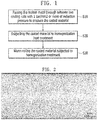
- FIG. 1 schematically shows a flow chart of a method manufacturing a magnesium alloy sheet according to an embodiment of the present invention.
- the flow chart of a method manufacturing a magnesium alloy sheet of FIG. 1 is only to illustrate the present invention and is not limited thereto. Therefore, the method of manufacturing a magnesium alloy sheet may be variously modified.
- a method of manufacturing a magnesium alloy sheet according to an embodiment of the present invention comprises the steps of casting a molten metal containing 2.7 to 5 wt% of Al, 0.75 to 1 wt% of Zn, 0.1 to 1 wt% of Ca and 1 wt% or less(Excluding 0 wt%) of Mn and consisting of the balance of Mg and inevitable impurities to produce a casted material (S10); subjecting the casted material to homogenization heat treatment (S20); and warm-rolling the casted material subjected to homogenization treatment (S30).
- the manufacturing method of the magnesium alloy sheet may further comprise other steps.
- a molten metal containing 2.7 to 5 wt% of Al, 0.75 to 1 wt% of Zn, 0.1 to 1 wt% of Ca and 1 wt% or less (Excluding 0 wt%) of Mn and consisting of the balance of Mg and inevitable impurities is casted to produce a casted material.
- a method of casting the casted material are die casting, strip casting, centrifugal casting, tilting casting, sand casting, direct chill casting or a combination thereof. More specifically, strip casting may be used. However, the present invention is not limited thereto.
- the reduction pressure may be 0.2 ton/mm 2 or more. More specifically, it may be 1 ton/mm2 or more. More specifically, it may be 1 to 1.5 ton/mm 2 or more.
- the casted material may be produced by casting. At this time, when the casted material is coagulated and reduction pressure is simultaneously applied, the formability of the magnesium alloy sheet may be improved by adjusting the reduction pressure to the range mentioned above.
- the casted material is subjected to homogenization heat treatment.
- the heat treatment condition may be at a temperature of 350 to 500 °C for 1 to 28 hours. More specifically, it may be subjected to homogenization heat treatment for 18 to 28 hours. If the temperature is too low, the homogenization treatment cannot be properly performed, and there may occur a problem that beta phases such as Mg 17 A 12 are not be employed at the base. If the temperature is too high, beta phases condensed the casted material may melt, resulting in a fire or resulting in holes on the magnesium sheet. Therefore, it may be subjected to homogenization heat treatment within the temperature range described above.
- the homogenized casted material is warm-rolled.
- the temperature condition of the warm-rolling may be at a temperature of 150 to 350 °C. If the temperature is too low, there may occur a problem generating large amount of edge crack. If the temperature is too high, there may occur a problem being inappropriate for mass production. Therefore, warm-rolling may be within the above-mentioned temperature range.
- the step of warm-rolling may be performed a plurality of times, and warm-rolling may be at a reduction ratio of 10 % to 30 % per time. By carrying out warm-rolling a plurality of times, finally, it may be rolled to a thin thickness of 0.4 mm.
- the formability of the magnesium alloy sheet may be further improved by comprising the step of intermediate annealing. More specifically, the step of intermediate annealing may be carried out at a temperature of 300 to 500 °C for 1 to 10 hours. More specifically, it may be carried out at a temperature of 450 to 500 °C. The formability of the magnesium alloy sheet may be improved within the range mentioned above.
- subjecting to the subsequent heat treatment may be further comprised.
- the formability of the magnesium alloy sheet may be improved by comprising the step of subjecting to the subsequent heat treatment.
- the step of subjecting to the subsequent heat treatment may be carried out at a temperature of 300 to 500 °C for 1 to 10 hours.
- the formability of the magnesium alloy sheet may be further improved within the above-mentioned range.
- a method for manufacturing a magnesium alloy sheet according to an embodiment of the present invention may comprise the steps of preparing a master alloy comprising 2.7 wt% or more and 5 wt% or less of Al, 0.75 wt% or more and 1 wt% or less of Zn, 0.1 wt% or more and 0.7 wt% or less of Ca, more than 0 wt% and 1 wt% or less of Mn and the balance of inevitable impurities and magnesium, for a total of 100 wt%; casting the master alloy to produce a casted material; subjecting the casted material to homogenization heat treatment; warm-rolling the casted material subjected to homogenization heat treatment to produce a rolled material; subjecting the rolled material to subsequent heat treatment; and carrying out a skin pass to the rolled material subjected to subsequent heat treatment to produce a magnesium alloy sheet.
- the master alloy may be commercially available AZ31 alloy, AL5083 alloy or a combination thereof. However, it is not limited thereto.
- the step of casting the master alloy to produce a casted material may be carried out.
- the master alloy may be dissolved to prepare the molten metal at the temperature range of 650 to 750 °C. Thereafter, the molten metal may be cast to produce a casted material. At this time, the thickness of the casted material may be 3 to 7 mm.
- a method of casting the casted material are die casting, strip casting, centrifugal casting, tilting casting, sand casting, direct chill casting or a combination thereof. More specifically, strip casting may be used. However, it is not limited thereof.
- the reduction pressure may be 0.2 ton/mm 2 or more. More specifically, it may be 1 ton/mm 2 or more. More specifically, it may be 1 to 1.5 ton/mm 2 or more.
- the step of subjecting the casted material to homogenization heat treatment may be carried out.
- the step of subjecting the casted material to homogenization heat treatment may comprise the step of a first heat treatment at a temperature scope of 300 °C to 400°C; and the step of a second heat treatment at a temperature scope of 400 °C to 500 °C. More specifically, the step of first heat treatment at a temperature range of 300 °C to 400 °C may be carried out for 5 to 20 hours. In addition, the step of second heat treatment at a temperature range of 400 °C to 500 °C may be carried out for 5 to 20 hours.
- the Mg-Al-Zn ternary system Pi-phase generated in the casting step may be removed. If the ternary system Pi-phase exists, the subsequent process may be adversely affected. In addition, the stress in the slab may be released by carrying out the second heat treatment step within the above-mentioned temperature range. Furthermore, it may actively induce the formation of recrystallization of the cast structure in the slab.
- the step of warm-rolling the casted material subjected to homogenization heat treatment to produce the rolled material may be carried out.
- the heat-treated slab may be rolled to a thickness range of 0.4 to 3 mm through 1 to 15 times of rolling.
- the rolling may be carried out at a temperature of 150 °C to 350 °C.
- the rolling temperature is less than 150 °C, it may induce a crack on the surface when rolling, and if it exceeds 350 °C, it may not be suitable for actual production facilities. Therefore, it may be rolled at 150 °C to 350 °C.
- the step of intermediate annealing the rolled material may be carried out.
- it When it is rolled several times in the step of rolling, it may be subjected to heat treatment at the temperature range of 300 °C to 550 °C for 1 to 15 hours in the interval between the pass and the pass.
- it may be subjected to intermediate annealing once after rolling twice, and then rolled to a final target thickness.
- it may be rolled to the final target thickness by annealing once after rolling three times. More specifically, in the case where the rolled casted material is annealed in the above temperature range, the stress generated by rolling may be released. Therefore, it may be rolled several times up to the desired thickness of the casted material.
- the step of carrying out a skin pass to the rolled material subjected to subsequent heat treatment to produce a magnesium alloy sheet may be performed.
- the skin pass is also known as skin pass rolling or temper rolling, which means that it removes a deformation pattern generated in a cold rolled steel sheet after heat treatment, and cold rolling with light pressure to improve the hardness.
- a skin pass may be carried out once at a temperature range of 250 °C to 350 °C. More specifically, the magnesium alloy sheet manufactured by carrying out the skin pass may be rolled at a reduction ratio of 2 to 15% with respect to the thickness of the rolled material, more specifically, may be rolled at a reduction ratio of 2 to 6 %. More specifically, in the case of rolling under the conditions of the temperature and the pressure, the development of the texture, which is a weak base surface texture (0001) is reduced, so that formability may be obtained.
- the magnesium alloy sheet manufactured by the step of carrying out a skin pass to the annealed rolled material to produce a magnesium alloy sheet may be rolled at a reduction ratio of 2 to 15 % with respect to the thickness of the rolled slab. More specifically, it may be rolled at a reduction ratio of 2 to 6%.
- the strength may be improved by minimizing the change in the strength of the texture. More specifically, when the reduction ratio is 2 to 6 %, the change in the strength of the texture is the smallest and the yield strength may be 170 to 300 MPa. In addition, the value of the limiting dome height (LDH) may be 8 to 9 mm.
- the yield strength may be 250 to 280 MPa, but value of the limiting dome height may be 7 to 8 mm since the texture is somewhat developed.
- the area fraction of the twinned crystal structure may be 5 % or less with respect to 100 % of the total area of the magnesium alloy sheet.
- the area fraction of the twinned crystal structure may be 5 to 20 % with respect to 100 % of the total area of the magnesium alloy sheet.
- a black color means twinned crystal structure, and as described above, the strength of the magnesium alloy sheet is maintained and the formability may be improved due to twinned crystal and dislocation.
- the texture of the (0001) surface may be developed again and the formability may be lowered. This may be the same phenomenon that occurs when the temperature range during rolling is low. Therefore, the skin pass may be carried out under the condition of temperature range and the reduction ratio according to an embodiment of the present invention.
- LDH Limit Dome Height
- the limit dome height (LDH) is measured the distance at which punch moved until the disc-shaped specimen was fractured, that is, the height at which the specimen was deformed, by fixing a peripheral portion of a specimen having a diameter of 50 mm with a force of 10 KN and then applying a deformation at a rate of 5 to 10 mm/min using a spherical punch having a diameter of 20 mm at a room temperature.
- a molten metal comprising 3.0 wt% of Al, 0.8 wt% of Zn, 0.6 wt% of Ca, 0.5 wt% of Mn and consisting of the balance of Mg and inevitable impurities was passed through between two cooling rolls having a reduction pressure of 1.2 ton/mm 2 to produce a magnesium casted material.
- the magnesium alloy sheet having a final thickness of 0.7 mm was produced by carrying out subjecting the magnesium casted material to homogenization heat treatment at a temperature of 400 °C for 24 hours, warm-rolling at 250 °C at a reduction ratio of 15 %, intermediate annealing at 450 °C for 1 hour, and warm-rolling again at 250 °C at a reduction ratio of 15 %.
- a magnesium alloy sheet was produced in the same manner as in Example 1, except that 3.0 wt% of Al and 0.8 wt% of Zn were comprised.
- Test Example 1 Observation of microstructure that composes a magnesium alloy sheet.
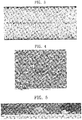
- Example 1 In the case of Example 1 ( FIG. 2 ), the central segregation of the magnesium alloy sheet was hardly generated, whereas in the case of Comparative Example 1 ( FIG. 3 ), it may be confirmed that a large amount of central segregation occurred. Such center segregation becomes a factor of being deteriorated the formability of the magnesium alloy sheet.
- the white dot portion in FIG. 4 is Al-Ca secondary phase particles.
- analysis was made with 65.62 wt% of Mg, 24.61 wt% of Al, 8.75 wt% of Ca, 0.36 wt% of Mn and 0.66 wt% of Zn.
- Test Example 2 Measurement of limit dome height of a magnesium alloy sheet.
- the limit dome height was determined by inserting each magnesium alloy sheet of the Examples and the Comparative examples between the upper die and the lower die and fixing the outer periphery of each specimen with a force of 5 kN and the press oil was used as the lubricant. Then, a spherical punch having a diameter of 30 mm was used to deform at a rate of 5 to 10 mm/min, the punch was inserted until each specimen was fractured and then it was performed when occurring such fracture in the manner of measuring of the deformation height of each specimen.
- FIG. 5 is an image of a result of measuring the limit dome height of the magnesium alloy sheet produced in Example 1.
- Test Example 3 Analysis of crystal grain orientation.
- Example 1 The crystal orientation of each of the crystal grains of the magnesium alloy sheet produced in Example 1 and Comparative Example 1 confirmed by an XRD analyzer and was shown in FIG. 6 and FIG.7 respectively.
- Example 1 In the case of Example 1 ( FIG. 6 ), contour lines are widely spread, and it may be confirmed that the crystal orientation of the crystal grains in the sheet are presented widely and variously. Therefore, it may be confirmed that the formability of Example 1 is excellent. On the other hand, in the case of Comparative Example 1 ( FIG. 7 ), it may be confirmed that the (0001) peak is concentrated.
- a master alloy comprising 3 % of Al, 1 % of Zn, 1 % of Ca, 0.3 % of Mn and the balance of magnesium and inevitable impurities was prepared.
- the master alloy was cast to produce a casted material.
- the casted material was subjected to a first homogenization heat treatment at a temperature of 350 °C for 10 hours.
- the casted material subjected to a first homogenization heat treatment was subjected to a secondary homogenization heat treatment at a temperature of 450 °C for 10 hours.
- the casted material subjected to homogenization heat treatment was rolled to produce a rolled material. Thereafter, the rolled material was subjected to subsequent heat treatment at a temperature of 400 °C for 10 hours.
- Test Example 4 Test of Comparison of mechanical properties according to reduction ratio and temperature of skin pass.
- the yield strength was improved without greatly changing the formability. More specifically, the formability may be compared with the numerical values of the elongation and the limit dome height.
- FIG. 10 shows the aggregate strength of (0001) surface of the Examples and Comparative Examples of the present invention.
- Example 3 As compared with Example 1, a magnesium alloy sheet material was produced under different conditions as disclosed in Table 2 below. As a result, the mechanical properties of the magnesium alloy sheet produced in Example 3 are disclosed in Table 3 below.
- Example 3a 3 0.6 1.2 24 250 450 Example 3b 4 0.6 1.2 24 250 450
- Example 3c 5 0.6 1 24 250 450
- Example 3d 3 0.6 1.2 24 250 300 Example 3e 3 0.6 1.2 24 250 400
- the present invention is not limited to the above-mentioned examples or embodiments and may be manufactured in various forms, those who have ordinary knowledge of the technical field to which the present invention belongs may understand that it may be carried out in different and concrete forms without changing the technical idea or fundamental feature of the present invention. Therefore, the above-mentioned examples or embodiments are illustrative in all aspects and not limitative.
Landscapes
- Chemical & Material Sciences (AREA)
- Engineering & Computer Science (AREA)
- Materials Engineering (AREA)
- Mechanical Engineering (AREA)
- Metallurgy (AREA)
- Organic Chemistry (AREA)
- Physics & Mathematics (AREA)
- Thermal Sciences (AREA)
- Crystallography & Structural Chemistry (AREA)
- Metal Rolling (AREA)
- Heat Treatment Of Sheet Steel (AREA)
Abstract
Description
- The invention relates to a magnesium alloy sheet, and method for manufacturing thereof.
- At present, the limitation of carbon dioxide emission and the importance of renewable energy are becoming the conversation topic in the international community and accordingly, lightweight alloys, which are a type of structural materials, are recognized as very attractive research fields.
- In particular, magnesium is the lightest metal with a density of 1.744 g/cm3 such as aluminum and steel and has various advantages such as vibration absorbing ability and electromagnetic shielding capability as compared with other structural materials, therefore Related industry researches are being actively carried out to utilize them.
- Such an alloy comprising magnesium are currently being applied not only in the field of electronic devices but also in the field of vehicle, but they have fundamental problems in corrosion resistance, flame resistance, and formability, therefore there are limitations in expanding the application range.
- Especially with regard to formability, magnesium is a HCP structure (Hexagonal Closed Packed Structure), and there is not enough slip system at room temperature, making it difficult to progress. That is, a large amount of heat is required in the magnesium processing process, this leads to an increase in the cost of the processing process.
- On the other hand, among the magnesium alloys, the AZ system magnesium alloys comprise aluminum (Al) and zinc (Zn), which are inexpensive and yet commercially available magnesium alloys, securing adequate strength and physical properties of ductile.
- However, the physical properties mentioned above mean that it has an appropriate level among the magnesium alloys, and the strength is lower than that of aluminum (Al), which is competitive material.
- Therefore, it is necessary to improve the physical properties such as low formability and strength of the AZ system magnesium alloy, but there is lack of research on this.
- The present invention is intended to provide a method of manufacturing magnesium alloy sheet with improved strength and formability.
- A magnesium alloy sheet according to an embodiment of the present invention contains 2.7 to 5 wt% of Al, 0.75 to 1 wt% of Zn, 0.1 to 1 wt% of Ca and 1 wt% or less (Excluding 0 wt%) of Mn, and consists of the balance of Mg and inevitable impurities.
- It may contain 0.3 to 0.8 wt% of Ca.
- The magnesium alloy sheet alloy sheet may comprise Al-Ca secondary phase particles comprising 20 to 25% wt% of Al, 5 to 10% wt% of Ca, 0.1 to 0.5% wt% of Mn, 0.5 to 1% of Zn and the balance of Mg.
- The average particle size of the Al-Ca secondary phase particles may be 0.01 to 4 µm.
the Al-Ca secondary phase particles may comprise 5 to 15 per 100µm2 of the magnesium alloy sheet.
the magnesium alloy sheet may comprise crystal grain and the average particle size of the crystal grain is 5 to 30 µm.
the thickness of the magnesium alloy sheet may be 0.4 to 3 mm. - A method for manufacturing a magnesium alloy sheet according to an embodiment of the present invention comprises the steps of casting a molten metal containing 2.7 to 5 wt% of Al, 0.75 to 1 wt% of Zn, 0.1 to 1 wt% of Ca and 1 wt% or less (Excluding 0 wt%) of Mn and consisting of the balance of Mg and inevitable impurities to produce a casted material; subjecting the casted material to homogenization heat treatment; and warm-rolling the casted material subjected to homogenization treatment.
- In the step of producing the casted material; the reduction pressure may be 0.2 ton/mm2 or more. More specifically, it may be 1 ton/mm2 or more. More specifically, it may be 1 to 1.5 ton/mm2 or more.
- Subjecting the casted material to homogenization heat treatment may be carried out for 1 to 28 hours at a temperature of 350 to 500 °C. More specifically, it may be subjected to homogenization heat treatment for 18 to 28 hours.
- Warm-rolling may be at a temperature of 150 to 350 °C. More specifically, warm-rolling may be at a temperature of 200 to 300 °C.
- Warm-rolling may be performed a plurality of times, and warm-rolling may be at a reduction ratio of 10 % to 30 % per time.
- It may further comprise the step of intermediate annealing in the middle of a plurality of times of warm-rolling.
- The intermediate annealing may be carried out at a temperature of 300 to 500 °C. More specifically, it may be carried out at a temperature of 450 to 500 °C. More specifically, it may be carried out for 1 to 10 hours.
- The step of subjecting to subsequent heat treatment may comprise further after the step of warm-rolling,
The step of subjecting to subsequent heat treatment may be carried out for 1 to 10 hours at a temperature of 300 to 500 °C. - A method for manufacturing a magnesium alloy sheet according to an embodiment of the present invention, may comprise the steps of preparing a master alloy comprising 2.7 wt% or more and 5 wt% or less of Al, 0.75 wt% or more and 1 wt% or less of Zn, 0.1 wt% or more and 1 wt% or less of Ca, more than 0 wt% and 1 wt% or less of Mn and the balance of inevitable impurities and magnesium, for a total of 100 wt%; casting the master alloy to produce a casted material; subjecting the casted material to homogenization heat treatment; warm-rolling the casted material subjected to homogenization heat treatment to produce a rolled material; subjecting the rolled material to subsequent heat treatment; and carrying out a skin pass to the rolled material subjected to subsequent heat treatment to produce a magnesium alloy sheet.
- In the step of carrying out a skin pass to the rolled material subjected to subsequent heat treatment to produce a magnesium alloy sheet; the skin pass may be carried out once, and it may be carried out at a temperature in the range of 250 °C to 350 °C.
- By the step of carrying out a skin pass to the rolled material subjected to subsequent heat treatment to produce a magnesium alloy sheet; the produced magnesium alloy sheet may be rolled at a reduction ratio of 2 to 15 % with respect to the thickness of the rolled material. More specifically, the produced magnesium alloy sheet may be rolled at a reduction ratio of 2 to 6 % with respect to the thickness of the rolled material.
- The step of subjecting the casted material to homogenization heat treatment may comprise a first heat treatment step at a temperature in the range of 300°C to 400°C; and a second heat treatment step at a temperature in the range of 400 °C to 500 °C.
- A first heat treatment step at a temperature in the range of 300 °C to 400 °C may be carried out for 5 to 20 hours.
- A second heat treatment step at a temperature in the range of 400 °C to 500 °C may be carried out for 5 to 20 hours.
- By the step of rolling the casted material subjected to homogenization heat treatment to produce a rolled material, the casted material may be rolled to a thickness of 0.4 to 3 mm.
- By the step of rolling the casted material subjected to homogenization heat treatment to produce a rolled material, the casted material may be rolled 1 to 15 times.
- The step of rolling the casted material subjected to homogenization heat treatment to produce a rolled material may be carried out at 150 °C to 350 °C.
- By the step of subjecting the rolled material to subsequent heat treatment, the rolled material may be annealed at a temperature in the range of 300 °C to 550 °C for 1 to 15 hours.
- The limiting dome height (LDH) of the magnesium alloy sheet may be 7 mm or more. More specifically, the limiting dome height (LDH) of the magnesium alloy sheet may be 8 mm or more.
- A maximum aggregate strength may be 1 to 4 on the basis of the magnesium alloy sheet (0001) surface. In addition, the yield strength of the magnesium alloy sheet may be 170 to 300 MPa.
- According to an embodiment of the present invention, it may provide a magnesium alloy sheet that the center segregation which is likely to be generated in the conventional magnesium alloy sheet is removed and the formability is improved.
- In addition, according to an embodiment of the present invention, it may provide a magnesium alloy sheet in which the texture of the magnesium alloy sheet is homogeneously dispersed, and the formability of which is improved.
- In addition, according to other embodiment of the present invention, it may provide a magnesium alloy sheet that the secondary phase particle of Al-Ca system are formed in a magnesium alloy sheet and strength is improved.
- A method for manufacturing a magnesium alloy sheet according to an embodiment of the present invention, it may provide a magnesium alloy sheet which is excellent in strength and formability by controlling the manufacturing process of a commercially available magnesium alloy. Because of this, it may be applied to appliances of vehicle or IT mobile devices in the future.
-
-
FIG. 1 is a schematic flowchart of a method of manufacturing a magnesium alloy sheet according to an embodiment of the present invention. -
FIG. 2 is an image of scanning electron microscope (SEM) of the magnesium alloy sheet produced in Example 1. -
FIG. 3 is an image of scanning electron microscope of the magnesium alloy sheet produced in Comparative Example 1. -
FIG. 4 is an image of a Secondary Electron Microscopy of the magnesium alloy sheet produced in Example 1. -
FIG. 5 is an image of a result of measuring the limiting dome height of the magnesium alloy sheet produced in Example 1. -
FIG. 6 is a result of analysis of the crystal orientation by the XRD analyzer of the magnesium alloy sheet produced in Example 1. -
FIG. 7 is a result of analysis of the crystal orientation by the XRD analyzer of the magnesium alloy sheet produced in Comparative Example 1. -
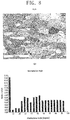
FIG. 8 is an image of Electron Backscatter Diffraction (EBSD) of the magnesium alloy sheet produced in Example 1. -
Fig. 9 is a result of EBSD analysis of the surface according to the reduction ratio in the skin pass process. -
FIG. 10 shows the aggregate strength of the (0001) surface of Examples and Comparative Examples of the present invention. - The first term, second and third term, etc. are used to describe various parts, components, regions, layers and/or sections, but are not limited thereto. These terms are only used to distinguish any part, component, region, layer or section from other part, component, region, layer or section. Therefore, the first part, component, region, layer or section may be referred to as the second part, component, region, layer or section within the scope unless excluded from the scope of the present invention.
- The terminology used herein is only to refer specific embodiments and is not intended to be limiting of the invention. The singular forms used herein comprise plural forms as well unless the phrases clearly indicate the opposite meaning. The meaning of the term "comprise" is to specify a particular feature, region, integer, step, operation, element and/or component, not to exclude presence or addition of other features, regions, integers, steps, operations, elements and/or components.
- Although not defined differently, every term comprising technical and scientific terms used herein have the same meaning as commonly understood by those who is having ordinary knowledge of the technical field to which the present invention belongs. The commonly used predefined terms are further interpreted as having meanings consistent with the relevant technology literature and the present content and are not interpreted as ideal or very formal meanings unless otherwise defined.
- In addition. % means weight% (wt%) unless otherwise referred.
- Hereinafter, embodiments of the present invention will be described in detail with reference to the accompanying drawings so that those people who are having ordinary knowledge will easily carry out. The present invention may, however, be implemented in several different forms and is not limited to the embodiments described herein.
- The magnesium alloy sheet according to an embodiment of the present invention contains 2.7 to 5 wt% of Al, 0.75 to 1 wt% of Zn, 0.1 to 1 wt% of Ca, 1 wt% or less of Mn (excluding 0 wt%) and consist of the balance of Mg and inevitable impurities.
- Hereinafter, the reason for limiting the numerical value of the component content in the embodiment of the present invention will be described.
- First, aluminum (Al) improves the mechanical properties of the magnesium alloy sheet and castability of the molten metal. If Al is added too much, the castability may deteriorate rapidly, and if too little Al is added, the problem that mechanical properties deteriorate may occur. Therefore, the content range of Al may be adjusted within the range mentioned above.
- Zinc (Zn) improves the mechanical properties of the magnesium alloy sheet. If too much Zn is added, a large number of surface defects and center segregation may be generated, leading to a problem of rapidly deteriorated castability, and if too little Zn is added, the problem that mechanical properties of magnesium alloy sheet deteriorate may occur. Therefore, the content range of Zn may be adjusted within the range mentioned above.
- Calcium (Ca) gives flame resistance to the magnesium alloy sheet. If too much Ca is added, the fluidity of the molten metal is reduced, the castability becomes worse, and the center segregation made of the Al-Ca system intermetallic material is generated, which may cause a problem of deteriorating the formability of the magnesium alloy sheet, and if too little is added, the problem that the flame resistance is not sufficiently given may occur. Therefore, the content range of Ca may be adjusted within the range mentioned above. More specifically, Ca may be comprised 0.3 to 0.8 % (wt%).
- Manganese (Mn) improves the mechanical properties of the magnesium alloy sheet material. If too much Mn is added, the problems that the heat emission is reduced and at the same time, uniform distribution control is difficult, may occur. Therefore, the content range of Mn may be adjusted within the above-mentioned range.
- The magnesium alloy sheet alloy sheet according to embodiment of the present invention may comprise Al-Ca secondary phase particles comprising 20 to 25% wt% of Al, 5 to 10% wt% of Ca, 0.1 to 0.5% wt% of Mn, 0.5 to 1% of Zn and the balance of Mg. In general, when alloying by adding Al and Ca to magnesium, center segregation consisting of Al-Ca intermetallic compound is generated which significantly reduce formability. On the other hand, the magnesium alloy sheet according to an embodiment of the present invention may improve formability by comprising Al-Ca secondary phase particles. The average particle diameter of the Al-Ca secondary phase particles may be 0.01 to 4 µm. The formability may be further improved in the above-mentioned range. In addition, the Al-Ca secondary phase particles may be comprised 5 to 15 particles per 100µm2 square of the magnesium alloy sheet material. By comprising Al-Ca secondary phase particles in the above-mentioned scope, the formability of the magnesium alloy sheet may be further improved. In order to obtain the above-mentioned Al-Ca secondary phase particles, the composition ranges of Al. Zn, Mn, and Ca, the temperature and time conditions during the homogenization heat treatment, the temperature and the rolling rate during warm rolling are necessary to be precisely controlled.
- The magnesium alloy sheet comprise crystal grain and the average particle size of the crystal grain is 5 to 30 µm. The formability may be further improved within the range mentioned above. In order to obtain crystal grain of the above-mentioned sizes, the composition scopes of Al. Zn, Mn, and Ca, the temperature and time conditions during the homogenization heat treatment, the temperature and the rolling rate during warm rolling are necessary to be precisely controlled.
- In addition, the limiting dome height of the magnesium alloy sheet according to an embodiment of the present invention may be 7 mm or more. More specifically, it may be 8 mm or more, more specifically 8 to 10 mm.
- In general, the limiting dome height is as an index for evaluating the formability (especially, compressibility) of the material, it means that the formability of the material is improved as such the limiting dome height increases.
- The limited range mentioned above is, significantly higher limiting dome height than magnesium alloy sheet generally known, which caused by an increase in the distribution of crystal grain orientation in magnesium alloy sheet.
- In addition, the thickness of the magnesium alloy sheet according to an embodiment of the present invention may be 0.4 to 3 mm.
-
FIG. 1 schematically shows a flow chart of a method manufacturing a magnesium alloy sheet according to an embodiment of the present invention. The flow chart of a method manufacturing a magnesium alloy sheet ofFIG. 1 is only to illustrate the present invention and is not limited thereto. Therefore, the method of manufacturing a magnesium alloy sheet may be variously modified. - A method of manufacturing a magnesium alloy sheet according to an embodiment of the present invention comprises the steps of casting a molten metal containing 2.7 to 5 wt% of Al, 0.75 to 1 wt% of Zn, 0.1 to 1 wt% of Ca and 1 wt% or less(Excluding 0 wt%) of Mn and consisting of the balance of Mg and inevitable impurities to produce a casted material (S10); subjecting the casted material to homogenization heat treatment (S20); and warm-rolling the casted material subjected to homogenization treatment (S30). In addition, if necessary, the manufacturing method of the magnesium alloy sheet may further comprise other steps.
- First, in the step (S10), a molten metal containing 2.7 to 5 wt% of Al, 0.75 to 1 wt% of Zn, 0.1 to 1 wt% of Ca and 1 wt% or less (Excluding 0 wt%) of Mn and consisting of the balance of Mg and inevitable impurities is casted to produce a casted material.
- The reason for limiting the numerical value of the respective components is same as that described, therefore repeated descriptions will be omitted.
- At this time, a method of casting the casted material are die casting, strip casting, centrifugal casting, tilting casting, sand casting, direct chill casting or a combination thereof. More specifically, strip casting may be used. However, the present invention is not limited thereto.
- More specifically, in the step of producing the cast material; the reduction pressure may be 0.2 ton/mm2 or more. More specifically, it may be 1 ton/mm2 or more. More specifically, it may be 1 to 1.5 ton/mm2 or more.
- The casted material may be produced by casting. At this time, when the casted material is coagulated and reduction pressure is simultaneously applied, the formability of the magnesium alloy sheet may be improved by adjusting the reduction pressure to the range mentioned above. In the step (S20), the casted material is subjected to homogenization heat treatment. At this time, the heat treatment condition may be at a temperature of 350 to 500 °C for 1 to 28 hours. More specifically, it may be subjected to homogenization heat treatment for 18 to 28 hours. If the temperature is too low, the homogenization treatment cannot be properly performed, and there may occur a problem that beta phases such as Mg17A12 are not be employed at the base. If the temperature is too high, beta phases condensed the casted material may melt, resulting in a fire or resulting in holes on the magnesium sheet. Therefore, it may be subjected to homogenization heat treatment within the temperature range described above.
- In the step (S30), the homogenized casted material is warm-rolled. At this time, the temperature condition of the warm-rolling may be at a temperature of 150 to 350 °C. If the temperature is too low, there may occur a problem generating large amount of edge crack. If the temperature is too high, there may occur a problem being inappropriate for mass production. Therefore, warm-rolling may be within the above-mentioned temperature range.
- The step of warm-rolling may be performed a plurality of times, and warm-rolling may be at a reduction ratio of 10 % to 30 % per time. By carrying out warm-rolling a plurality of times, finally, it may be rolled to a thin thickness of 0.4 mm.
- It may further comprise at least one time of the step of intermediate annealing in the middle of a plurality of times of warm-rolling. The formability of the magnesium alloy sheet may be further improved by comprising the step of intermediate annealing. More specifically, the step of intermediate annealing may be carried out at a temperature of 300 to 500 °C for 1 to 10 hours. More specifically, it may be carried out at a temperature of 450 to 500 °C. The formability of the magnesium alloy sheet may be improved within the range mentioned above.
- After the step of warm-rolling (S30), subjecting to the subsequent heat treatment may be further comprised. The formability of the magnesium alloy sheet may be improved by comprising the step of subjecting to the subsequent heat treatment. The step of subjecting to the subsequent heat treatment may be carried out at a temperature of 300 to 500 °C for 1 to 10 hours. The formability of the magnesium alloy sheet may be further improved within the above-mentioned range.
- A method for manufacturing a magnesium alloy sheet according to an embodiment of the present invention may comprise the steps of preparing a master alloy comprising 2.7 wt% or more and 5 wt% or less of Al, 0.75 wt% or more and 1 wt% or less of Zn, 0.1 wt% or more and 0.7 wt% or less of Ca, more than 0 wt% and 1 wt% or less of Mn and the balance of inevitable impurities and magnesium, for a total of 100 wt%; casting the master alloy to produce a casted material; subjecting the casted material to homogenization heat treatment; warm-rolling the casted material subjected to homogenization heat treatment to produce a rolled material; subjecting the rolled material to subsequent heat treatment; and carrying out a skin pass to the rolled material subjected to subsequent heat treatment to produce a magnesium alloy sheet.
- First, in the step of preparing a master alloy comprising 2.7 wt% or more and 5 wt% or less of Al, 0.75 wt% or more and 1 wt% or less of Zn, 0.1 wt% or more and 0.7 wt% or less of Ca, more than 0 wt% and 1 wt% or less of Mn and the balance of inevitable impurities and magnesium, for a total of 100 wt%; the master alloy may be commercially available AZ31 alloy, AL5083 alloy or a combination thereof. However, it is not limited thereto.
- Next, the step of casting the master alloy to produce a casted material; may be carried out.
- More specifically, the master alloy may be dissolved to prepare the molten metal at the temperature range of 650 to 750 °C. Thereafter, the molten metal may be cast to produce a casted material. At this time, the thickness of the casted material may be 3 to 7 mm.
- At this time, a method of casting the casted material are die casting, strip casting, centrifugal casting, tilting casting, sand casting, direct chill casting or a combination thereof. More specifically, strip casting may be used. However, it is not limited thereof.
- In the step of producing the casted material, the reduction pressure may be 0.2 ton/mm2 or more. More specifically, it may be 1 ton/mm2 or more. More specifically, it may be 1 to 1.5 ton/mm2 or more.
- Thereafter, the step of subjecting the casted material to homogenization heat treatment; may be carried out.
- More specifically, the step of subjecting the casted material to homogenization heat treatment may comprise the step of a first heat treatment at a temperature scope of 300 °C to 400°C; and the step of a second heat treatment at a temperature scope of 400 °C to 500 °C. More specifically, the step of first heat treatment at a temperature range of 300 °C to 400 °C may be carried out for 5 to 20 hours. In addition, the step of second heat treatment at a temperature range of 400 °C to 500 °C may be carried out for 5 to 20 hours.
- By carrying out the first heat treatment at the temperature range mentioned above, The Mg-Al-Zn ternary system Pi-phase generated in the casting step may be removed. If the ternary system Pi-phase exists, the subsequent process may be adversely affected. In addition, the stress in the slab may be released by carrying out the second heat treatment step within the above-mentioned temperature range. Furthermore, it may actively induce the formation of recrystallization of the cast structure in the slab.
- Thereafter, the step of warm-rolling the casted material subjected to homogenization heat treatment to produce the rolled material; may be carried out.
- The heat-treated slab may be rolled to a thickness range of 0.4 to 3 mm through 1 to 15 times of rolling. In addition, the rolling may be carried out at a temperature of 150 °C to 350 °C.
- More specifically, if the rolling temperature is less than 150 °C, it may induce a crack on the surface when rolling, and if it exceeds 350 °C, it may not be suitable for actual production facilities. Therefore, it may be rolled at 150 °C to 350 °C.
- Next, the step of intermediate annealing the rolled material may be carried out. When it is rolled several times in the step of rolling, it may be subjected to heat treatment at the temperature range of 300 °C to 550 °C for 1 to 15 hours in the interval between the pass and the pass. For example, it may be subjected to intermediate annealing once after rolling twice, and then rolled to a final target thickness. As another example, it may be rolled to the final target thickness by annealing once after rolling three times. More specifically, in the case where the rolled casted material is annealed in the above temperature range, the stress generated by rolling may be released. Therefore, it may be rolled several times up to the desired thickness of the casted material. Finally, the step of carrying out a skin pass to the rolled material subjected to subsequent heat treatment to produce a magnesium alloy sheet; may be performed. More specifically, the skin pass is also known as skin pass rolling or temper rolling, which means that it removes a deformation pattern generated in a cold rolled steel sheet after heat treatment, and cold rolling with light pressure to improve the hardness.
- Therefore, in an embodiment of the present invention, a skin pass may be carried out once at a temperature range of 250 °C to 350 °C. More specifically, the magnesium alloy sheet manufactured by carrying out the skin pass may be rolled at a reduction ratio of 2 to 15% with respect to the thickness of the rolled material, more specifically, may be rolled at a reduction ratio of 2 to 6 %. More specifically, in the case of rolling under the conditions of the temperature and the pressure, the development of the texture, which is a weak base surface texture (0001) is reduced, so that formability may be obtained.
- In addition, the magnesium alloy sheet manufactured by the step of carrying out a skin pass to the annealed rolled material to produce a magnesium alloy sheet; may be rolled at a reduction ratio of 2 to 15 % with respect to the thickness of the rolled slab. More specifically, it may be rolled at a reduction ratio of 2 to 6%.
- In the case of rolling with the reduction ratio, the strength may be improved by minimizing the change in the strength of the texture. More specifically, when the reduction ratio is 2 to 6 %, the change in the strength of the texture is the smallest and the yield strength may be 170 to 300 MPa. In addition, the value of the limiting dome height (LDH) may be 8 to 9 mm.
- However, when the reduction ratio is 2 to 15 %, the yield strength may be 250 to 280 MPa, but value of the limiting dome height may be 7 to 8 mm since the texture is somewhat developed. This is because, as disclosed in
FIG. 9 , when rolling at a reduction ratio of 6 to 15%, a hardening occurs due to the double turning or dislocation. More specifically, when the reduction ratio is 2 to 15 %, the area fraction of the twinned crystal structure may be 5 % or less with respect to 100 % of the total area of the magnesium alloy sheet. More specifically, when the rolling is at the reduction ratio of 6 to 15 %, the area fraction of the twinned crystal structure may be 5 to 20 % with respect to 100 % of the total area of the magnesium alloy sheet. In the image of the structure disclosed inFIG. 9 , a black color means twinned crystal structure, and as described above, the strength of the magnesium alloy sheet is maintained and the formability may be improved due to twinned crystal and dislocation. - Therefore, in the case of rolling with a reduction ratio greater than 15 %, the texture of the (0001) surface may be developed again and the formability may be lowered. This may be the same phenomenon that occurs when the temperature range during rolling is low. Therefore, the skin pass may be carried out under the condition of temperature range and the reduction ratio according to an embodiment of the present invention.
- In addition, The term "Limit Dome Height (LDH)" is an index for evaluating the formability of a sheet, particularly pressability, and may be measured by measuring the deformed height by applying a deformation to the specimen.
- More specifically, the limit dome height (LDH) according to an embodiment of the present invention is measured the distance at which punch moved until the disc-shaped specimen was fractured, that is, the height at which the specimen was deformed, by fixing a peripheral portion of a specimen having a diameter of 50 mm with a force of 10 KN and then applying a deformation at a rate of 5 to 10 mm/min using a spherical punch having a diameter of 20 mm at a room temperature.
- Hereinafter, preferred examples and comparative examples of the present invention will be described. However, the following examples are merely preferred examples of the present invention, and the present invention is not limited thereto.
- A molten metal comprising 3.0 wt% of Al, 0.8 wt% of Zn, 0.6 wt% of Ca, 0.5 wt% of Mn and consisting of the balance of Mg and inevitable impurities was passed through between two cooling rolls having a reduction pressure of 1.2 ton/mm2 to produce a magnesium casted material.
- The magnesium alloy sheet having a final thickness of 0.7 mm was produced by carrying out subjecting the magnesium casted material to homogenization heat treatment at a temperature of 400 °C for 24 hours, warm-rolling at 250 °C at a reduction ratio of 15 %, intermediate annealing at 450 °C for 1 hour, and warm-rolling again at 250 °C at a reduction ratio of 15 %.
- A magnesium alloy sheet was produced in the same manner as in Example 1, except that 3.0 wt% of Al and 0.8 wt% of Zn were comprised.
- The image of Scanning Electron Microscope (SEM) of the magnesium alloy sheet produced in Example 1 and Comparative Example 1 were shown in
FIG. 2 andFIG. 4 respectively. - In the case of Example 1 (
FIG. 2 ), the central segregation of the magnesium alloy sheet was hardly generated, whereas in the case of Comparative Example 1 (FIG. 3 ), it may be confirmed that a large amount of central segregation occurred. Such center segregation becomes a factor of being deteriorated the formability of the magnesium alloy sheet. - The image of Secondary Electron Microscopy of the magnesium alloy sheet produced in Example 1 was shown in
FIG. 4 . - The white dot portion in
FIG. 4 is Al-Ca secondary phase particles. As a result of analyzing the white dot portion, analysis was made with 65.62 wt% of Mg, 24.61 wt% of Al, 8.75 wt% of Ca, 0.36 wt% of Mn and 0.66 wt% of Zn. - The limit dome height was determined by inserting each magnesium alloy sheet of the Examples and the Comparative examples between the upper die and the lower die and fixing the outer periphery of each specimen with a force of 5 kN and the press oil was used as the lubricant. Then, a spherical punch having a diameter of 30 mm was used to deform at a rate of 5 to 10 mm/min, the punch was inserted until each specimen was fractured and then it was performed when occurring such fracture in the manner of measuring of the deformation height of each specimen.
-
FIG. 5 is an image of a result of measuring the limit dome height of the magnesium alloy sheet produced in Example 1. - The crystal orientation of each of the crystal grains of the magnesium alloy sheet produced in Example 1 and Comparative Example 1 confirmed by an XRD analyzer and was shown in
FIG. 6 and FIG.7 respectively. - In the case of Example 1 (
FIG. 6 ), contour lines are widely spread, and it may be confirmed that the crystal orientation of the crystal grains in the sheet are presented widely and variously. Therefore, it may be confirmed that the formability of Example 1 is excellent. On the other hand, in the case of Comparative Example 1 (FIG. 7 ), it may be confirmed that the (0001) peak is concentrated. - An image of the EBSD of Example 1 was taken and shown in
FIG. 8 . As shown in <b>, it may be known that the values of misorientation are evenly distributed in each of the crystal grains, and it may be confirmed that each of the crystal grains have various crystal orientations. - A master alloy comprising 3 % of Al, 1 % of Zn, 1 % of Ca, 0.3 % of Mn and the balance of magnesium and inevitable impurities was prepared.
- The master alloy was cast to produce a casted material. The casted material was subjected to a first homogenization heat treatment at a temperature of 350 °C for 10 hours. The casted material subjected to a first homogenization heat treatment was subjected to a secondary homogenization heat treatment at a temperature of 450 °C for 10 hours. The casted material subjected to homogenization heat treatment was rolled to produce a rolled material. Thereafter, the rolled material was subjected to subsequent heat treatment at a temperature of 400 °C for 10 hours.
- Finally, skin pass was carried out to the rolled material subjected to the subsequent heat treatment to produce the magnesium alloy sheet, the temperature and the reduction ratio of execution of the skin pass are shown in Table 1 below.
-
[Table 1] Rolling temperature (°C) Reduction ratio(% ) Yield strength (MPa) Maximum tensile strength (MPa) Elongation (%) Limit dome height (LDH, mm) Example 2a 250 5 202 257 22 8.1 Example 2b 9 211 254 22 8.0 Example 2c 15 252 272 16 7.3 Comparative 2a 22 272 289 8.6 7.0 Comparative 2b 300 X 140 233 23 8-9 Example 2d 7 203 253 22 8 Example 2e 12 247 267 18 7.3 Comparative 2c17 247 272 10 7.3 - As shown in Table 1, the result of carrying out the skin pass to the magnesium alloy sheet having the same component and composition, the yield strength was improved without greatly changing the formability. More specifically, the formability may be compared with the numerical values of the elongation and the limit dome height.
- In addition, the formability was secured by minimizing the change in the aggregate strength, and the aggregate strength is as disclosed in
FIG. 10 herein. -
FIG. 10 shows the aggregate strength of (0001) surface of the Examples and Comparative Examples of the present invention. - As disclosed in
FIG. 10 , in the case of Comparative Examples 2a and 2c, it may be seen that the yield strength increases significantly as the change in the strength of the texture increases. However, it may be seen that the formability is somewhat reduced as the elongation is rapidly lowered. - Therefore, as disclosed in Table 1 and
FIG. 10 . It was confirmed that the present invention minimizes the change in strength of the texture to secure the formability. - As compared with Example 1, a magnesium alloy sheet material was produced under different conditions as disclosed in Table 2 below. As a result, the mechanical properties of the magnesium alloy sheet produced in Example 3 are disclosed in Table 3 below.
[Table 2] Al content (wt%) Ca content (wt%) Cast roll reduction pressure (mm/ton) Homogenization annealing time (hr) Rolling temperature (°C) Intermediate annealing temperature(°C) Example 3a 3 0.6 1.2 24 250 450 Example 3b 4 0.6 1.2 24 250 450 Example 3c 5 0.6 1 24 250 450 Example 3d 3 0.6 1.2 24 250 300 Example 3e 3 0.6 1.2 24 250 400 Example 3f 3 0.6 1.2 24 250 500 Example 3g 3 0.7 0.2 24 250 500 Example 3h 3 0.7 1.2 24 250 450 Example 3i 3 0.6 1 1 250 400 Comparative 3a 3 0.6 0.8 24 250 None Comparative 3b 3 0.7 1.2 24 400 250 Comparative 3c 3 0.7 1 48 250 400 Comparative 3d 3 0.7 0.8 24 100 400 [Table 3] Crystal grain size (µm) Sheet thickness (mm) Yield strength (Mpa) Limit dome height (LDH, mm) Example 3a 19 0.7 164 9.4 Example 3b 7 0.6 161 8.2 Example 3c 6 1 166 8.1 Example 3d 13 1 155 7.5 Example 3e 21 1 157 8 Example 3f 25 1 154 9.9 Example 3g 16 0.7 151 9 Example 3h 15 3 155 9.1 Example 3i 17 1 164 9 Comparative 3a 10 0.7 188 2.5 Comparative 3b 11 0.6 155 5 Comparative 3c 40 1.5 145 5.1 Comparative 3d 8 1 166 4.9 - As a result, in the case of Comparative Examples 3a to 3d which did not satisfy the conditions of the homogenization annealing time, the rolling temperature and the intermediate annealing temperature, it was confirmed that the formability was inferior to the example of the present invention. In addition, the yield strength is also inferior to the example herein. In the case of comparative Example 3c, the size of the crystal grain was about 40µm, which was relatively superior to the other comparative examples but was less than examples of the present invention.
- The present invention is not limited to the above-mentioned examples or embodiments and may be manufactured in various forms, those who have ordinary knowledge of the technical field to which the present invention belongs may understand that it may be carried out in different and concrete forms without changing the technical idea or fundamental feature of the present invention. Therefore, the above-mentioned examples or embodiments are illustrative in all aspects and not limitative.
Claims (33)
- A magnesium alloy sheet containing 2.7 to 5 wt% of Al, 0.75 to 1 wt% of Zn, 0.1 to 1 wt% of Ca and 1 wt% or less(Excluding 0 wt%) of Mn and consisting of the balance of Mg and inevitable impurities,
wherein the area fraction of the twin structure is 5 % or less with respect to 100 % of the area of the magnesium alloy sheet. - A magnesium alloy sheet according to claim 1,
containing 0.3 to 0.8 wt% of Ca. - A magnesium alloy sheet according to claim 1,
wherein the magnesium alloy sheet comprises Al-Ca secondary phase particles comprising 20 to 25 wt% of Al, 5 to 10 wt% of Ca, 0.1 to 0.5 wt% of Mn, 0.5 to 1 wt% of Zn and the balance of Mg. - A magnesium alloy sheet according to claim 3,
wherein the average particle size of the Al-Ca secondary phase particles is 0.01 to 4 µm. - A magnesium alloy sheet according to claim 3,
wherein the Al-Ca secondary phase particles comprises 5 to 15 per 100µm2 of the magnesium alloy sheet. - A magnesium alloy sheet according to claim 1,
wherein the magnesium alloy sheet comprises grains and the average particle size of the grains is 5 to 30 µm. - A magnesium alloy sheet according to claim 1,
wherein the thickness of the magnesium alloy sheet is 0.4 to 2 mm. - A method for manufacturing a magnesium alloy sheet comprising the steps of casting a molten metal containing 2.7 to 5 wt% of Al, 0.75 to 1 wt% of Zn, 0.1 to 1 wt% of Ca and 1 wt% or less(Excluding 0 wt%) of Mn and consisting of the balance of Mg and inevitable impurities to produce a casted material;
subjecting the casted material to homogenization heat treatment; and
warm-rolling the casted material subjected to homogenization treatment. - The method for manufacturing a magnesium alloy sheet of claim 8,
wherein the step of producing the casted material,
the reduction pressure is 0.2 ton/mm2 or more. - The method for manufacturing a magnesium alloy sheet of claim 8,
wherein subjecting the casted material to homogenization heat treatment is carried out for 1 to 28 hours at a temperature of 350 to 500 °C. - The method for manufacturing a magnesium alloy sheet of claim 8,
wherein warm-rolling is at a temperature of 150 to 350 °C. - The method for manufacturing a magnesium alloy sheet of claim 8,
wherein warm-rolling is performed a plurality of times and rolling is at a reduction ratio of 10 % to 30 % per time. - The method for manufacturing a magnesium alloy sheet of claim 12,
further comprising the step of one or more times of intermediate annealing in the middle of a plurality of times of warm-rolling. - The method for manufacturing a magnesium alloy sheet of claim 13,
wherein the intermediate annealing is carried out for 1 to 10 hours at a temperature of 300 to 500 °C. - The method for manufacturing a magnesium alloy sheet of claim 8,
further comprising the step of subjecting to subsequent heat treatment after the step of warm-rolling. - The method for manufacturing a magnesium alloy sheet of claim 15,
wherein the step of subjecting to subsequent heat treatment is carried out for 1 to 10 hours at a temperature of 300 to 500 °C. - A method for manufacturing a magnesium alloy sheet comprising the steps of preparing a master alloy comprising 2.7 wt% or more and 5 wt% or less of Al, 0.75 wt% or more and 1 wt% or less of Zn, 0.1 wt% or more and 1 wt% or less of Ca, more than 0 wt% and 1 wt% or less of Mn and the balance of inevitable impurities and magnesium, for a total of 100 wt%;
casting the master alloy to produce a casted material;
subjecting the casted material to homogenization heat treatment;
warm-rolling the casted material subjected to homogenization heat treatment to produce a rolled material;
subjecting the rolled material to subsequent heat treatment; and
carrying out a skin pass to the rolled material subjected to subsequent heat treatment to produce a magnesium alloy sheet. - The method for manufacturing a magnesium alloy sheet of claim 17,
wherein carrying a skin pass to the rolled material subjected to subsequent heat treatment to produce a magnesium alloy sheet,
wherein the skin pass is carried out once. - The method for manufacturing a magnesium alloy sheet of claim 18,
wherein carrying out a skin pass to the rolled material subjected to subsequent heat treatment to produce a magnesium alloy sheet,
wherein the skin pass is carried out at a temperature in the range of 250 °C to 350 °C. - The method for manufacturing a magnesium alloy sheet of claim 19,
wherein by the step of carrying out a skin pass to the rolled material subjected to subsequent heat treatment to produce a magnesium alloy sheet,
the produced magnesium alloy sheet is rolled at a reduction ratio of 2 to 15 % with respect to the thickness of the rolled material. - The method for manufacturing a magnesium alloy sheet of claim 20,
wherein by the step of carrying out a skin pass to the rolled material subjected to subsequent heat treatment to produce a magnesium alloy sheet,
the produced magnesium alloy sheet is rolled at a reduction ratio of 2 to 6 % with respect to the thickness of the rolled material. - The method for manufacturing a magnesium alloy sheet of claim 17,
wherein the step of subjecting the casted material to homogenization heat treatment comprising
a first heat treatment step at a temperature in the range of 300°C to 400°C; and
a second heat treatment step at a temperature in the range of 400°C to 500°C - The method for manufacturing a magnesium alloy sheet of claim 22,
wherein a first heat treatment step at a temperature in the range of 300 °C to 400 °C
is carried out for 5 to 20 hours. - The method for manufacturing a magnesium alloy sheet of claim 23,
wherein a second heat treatment step at a temperature in the range of 400°C to 500°C
is carried out for 5 to 20 hours. - The method for manufacturing a magnesium alloy sheet of claim 17,
wherein by the step of rolling the casted material subjected to homogenization heat treatment to produce a rolled material,
wherein the casted material is rolled to a thickness of 0.4 to 3 mm. - The method for manufacturing a magnesium alloy sheet of claim 25,
wherein by the step of rolling the casted material subjected to homogenization heat treatment to produce a rolled material,
the casted material is rolled 1 to 15 times. - The method for manufacturing a magnesium alloy sheet of claim 26,
wherein the step of rolling the casted material subjected to homogenization heat treatment to produce a rolled material
is carried out at 150 °C to 350 °C. - The method for manufacturing a magnesium alloy sheet of claim 17,
wherein by the step of subjecting the rolled material to subsequent heat treatment,
the rolled material is annealed at a temperature in the range of 300 °C to 550 °C. - The method for manufacturing a magnesium alloy sheet of claim 28,
wherein by the step of subjecting the rolled material to subsequent heat treatment,
the rolled material is annealed for 1 to 15 hours. - The method for manufacturing a magnesium alloy sheet according to any one of claims 17 to 29,
wherein the limiting dome height(LDH) of the magnesium alloy sheet is 7 mm or more. - The method for manufacturing a magnesium alloy sheet according to any one of claims 17 to 29,
wherein the limiting dome height(LDH) of the magnesium alloy sheet is 8 mm or more. - The method for manufacturing a magnesium alloy sheet according to any one of claims 17 to 29,
wherein a maximum aggregate strength is 1 to 4 on the basis of the magnesium alloy sheet (0001) surface. - The method for manufacturing a magnesium alloy sheet according to any one of claims 17 to 29,
wherein
Applications Claiming Priority (3)
| Application Number | Priority Date | Filing Date | Title |
|---|---|---|---|
| KR1020150185017A KR20170075407A (en) | 2015-12-23 | 2015-12-23 | Magnesium alloy sheet, method for manufacturing the same |
| KR1020150186295A KR101751521B1 (en) | 2015-12-24 | 2015-12-24 | Method of manufacturing magnesium alloy sheet |
| PCT/KR2016/015228 WO2017111550A1 (en) | 2015-12-23 | 2016-12-23 | Magnesium alloy sheet material and manufacturing method therefor |
Publications (3)
| Publication Number | Publication Date |
|---|---|
| EP3395458A4 EP3395458A4 (en) | 2018-10-31 |
| EP3395458A1 true EP3395458A1 (en) | 2018-10-31 |
| EP3395458B1 EP3395458B1 (en) | 2021-08-18 |
Family
ID=59091071
Family Applications (1)
| Application Number | Title | Priority Date | Filing Date |
|---|---|---|---|
| EP16879417.0A Active EP3395458B1 (en) | 2015-12-23 | 2016-12-23 | Magnesium alloy sheet and method for manufacturing same |
Country Status (5)
| Country | Link |
|---|---|
| US (1) | US20190093200A1 (en) |
| EP (1) | EP3395458B1 (en) |
| JP (1) | JP6758383B2 (en) |
| CN (1) | CN108472699B (en) |
| WO (1) | WO2017111550A1 (en) |
Cited By (1)
| Publication number | Priority date | Publication date | Assignee | Title |
|---|---|---|---|---|
| EP4022104A4 (en) * | 2019-08-26 | 2023-09-27 | Ohio State Innovation Foundation | MAGNESIUM ALLOY BASED ARTICLES AND METHODS FOR THEIR PRODUCTION AND USE THEREOF |
Families Citing this family (8)
| Publication number | Priority date | Publication date | Assignee | Title |
|---|---|---|---|---|
| KR20190000676A (en) * | 2017-06-23 | 2019-01-03 | 주식회사 포스코 | Magnesium alloy sheet and manufacturing for the same |
| KR102043786B1 (en) * | 2017-12-26 | 2019-11-12 | 주식회사 포스코 | Magnesium alloy sheet and method for manufacturing the same |
| KR102043287B1 (en) * | 2017-12-26 | 2019-11-11 | 주식회사 포스코 | Magnesium alloy sheet and method for manufacturing the same |
| CN108796327B (en) * | 2018-06-28 | 2020-08-28 | 郑州大学 | High-plasticity low-anisotropy deformed magnesium alloy plate and preparation method thereof |
| KR102239185B1 (en) * | 2018-12-18 | 2021-04-12 | 주식회사 포스코 | Manufacturing method of magnesium alloy plate having excellent formability and magnesium alloy plate using thereof |
| CN113005347B (en) * | 2021-02-25 | 2021-10-08 | 吉林大学 | High-plasticity Mg-Al-Ca magnesium alloy and preparation method thereof |
| CN113416873B (en) * | 2021-06-28 | 2023-01-20 | 晋中学院 | Rare earth magnesium alloy plate with high electromagnetic shielding effect and preparation method thereof |
| CN113770175B (en) * | 2021-09-30 | 2024-08-06 | 重庆大学 | Method for rolling edge-crack-free magnesium alloy sheet through low-temperature large-pass reduction |
Family Cites Families (9)
| Publication number | Priority date | Publication date | Assignee | Title |
|---|---|---|---|---|
| JP5158675B2 (en) * | 2007-06-27 | 2013-03-06 | 三菱アルミニウム株式会社 | Magnesium alloy sheet material excellent in corrosion resistance and surface treatment and method for producing the same |
| KR101078308B1 (en) * | 2008-05-19 | 2011-10-31 | 포항공과대학교 산학협력단 | Magnesium alloy panel having high strength and manufacturing method for the same |
| JP2010156007A (en) * | 2008-12-26 | 2010-07-15 | Mitsubishi Alum Co Ltd | Magnesium-alloy sheet excellent in corrosion resistance and surface treatability, and method for producing the same |
| JP2010229467A (en) * | 2009-03-26 | 2010-10-14 | Hitachi Metals Ltd | Method of producing magnesium alloy thin plate |
| JP5424391B2 (en) * | 2009-09-30 | 2014-02-26 | 国立大学法人長岡技術科学大学 | Magnesium alloy rolled material and method for producing the same |
| JP5590660B2 (en) * | 2010-03-01 | 2014-09-17 | 独立行政法人産業技術総合研究所 | Magnesium alloy sheet with improved cold formability and in-plane anisotropy and method for producing the same |
| JP5660525B2 (en) * | 2010-03-05 | 2015-01-28 | 独立行政法人産業技術総合研究所 | General-purpose magnesium alloy sheet that exhibits formability similar to that of aluminum alloy and method for producing the same |
| KR101481909B1 (en) * | 2013-08-08 | 2015-01-13 | 주식회사 포스코 | Manufacturing method of magnesium alloy |
| KR101626820B1 (en) * | 2013-12-05 | 2016-06-02 | 주식회사 포스코 | magnesium-alloy plate and manufacturing method of it |
-
2016
- 2016-12-23 EP EP16879417.0A patent/EP3395458B1/en active Active
- 2016-12-23 US US16/065,562 patent/US20190093200A1/en not_active Abandoned
- 2016-12-23 JP JP2018532629A patent/JP6758383B2/en active Active
- 2016-12-23 CN CN201680075821.9A patent/CN108472699B/en active Active
- 2016-12-23 WO PCT/KR2016/015228 patent/WO2017111550A1/en not_active Ceased
Cited By (2)
| Publication number | Priority date | Publication date | Assignee | Title |
|---|---|---|---|---|
| EP4022104A4 (en) * | 2019-08-26 | 2023-09-27 | Ohio State Innovation Foundation | MAGNESIUM ALLOY BASED ARTICLES AND METHODS FOR THEIR PRODUCTION AND USE THEREOF |
| US12173384B2 (en) | 2019-08-26 | 2024-12-24 | Ohio State Innovation Foundation | Magnesium alloy based objects and methods of making and use thereof |
Also Published As
| Publication number | Publication date |
|---|---|
| EP3395458A4 (en) | 2018-10-31 |
| JP2019504207A (en) | 2019-02-14 |
| JP6758383B2 (en) | 2020-09-23 |
| CN108472699A (en) | 2018-08-31 |
| US20190093200A1 (en) | 2019-03-28 |
| EP3395458B1 (en) | 2021-08-18 |
| WO2017111550A1 (en) | 2017-06-29 |
| WO2017111550A8 (en) | 2017-09-28 |
| CN108472699B (en) | 2021-12-28 |
Similar Documents
| Publication | Publication Date | Title |
|---|---|---|
| EP3395458B1 (en) | Magnesium alloy sheet and method for manufacturing same | |
| WO2014046047A1 (en) | Aluminum alloy plate for automobile part | |
| KR102043774B1 (en) | High formability magnesium alloy sheet and method for manufacturing the same | |
| WO2019008783A1 (en) | Aluminium alloy foil and production method for aluminium alloy foil | |
| WO2019008784A1 (en) | Aluminium alloy foil and production method for aluminium alloy foil | |
| JP7785367B2 (en) | Solution-treated magnesium alloy and its use | |
| EP3480326A1 (en) | Aluminum alloy sheet having excellent ridging resistance and hem bendability and production method for same | |
| US20180105900A1 (en) | High-strength aluminum alloy sheet | |
| JP7274585B2 (en) | Magnesium alloy plate and manufacturing method thereof | |
| KR20150065418A (en) | magnesium-alloy plate and manufacturing method of it | |
| KR20140118486A (en) | Preparing method of Manesium alloy sheet using symmetric and assymetric rolling and the magnesium alloy sheet thereby | |
| KR20190000756A (en) | Magnesium alloy sheet having high room temperature formability and high strength and method for fabrication | |
| JP6768568B2 (en) | Aluminum alloy plate with excellent press formability, rigging mark property, and BH property | |
| JP2009173972A (en) | Aluminum alloy sheet having excellent ridging mark property upon forming | |
| US11739400B2 (en) | Magnesium alloy and method for manufacturing the same | |
| EP3561095A1 (en) | Magnesium alloy sheet and method for manufacturing same | |
| KR101610360B1 (en) | Magnesium alloy sheet, method for manufacturing the same | |
| JP2019007038A (en) | Aluminum alloy sheet for automobile panel excellent in press moldability and dent resistance | |
| KR20170075407A (en) | Magnesium alloy sheet, method for manufacturing the same | |
| EP3643802A1 (en) | Magnesium alloy sheet and manufacturing method therefor | |
| JP2019044270A (en) | Aluminum alloy foil and manufacturing method of aluminum alloy foil | |
| EP3561096B1 (en) | Magnesium alloy plate and method for manufacturing same | |
| KR102252289B1 (en) | Magnesium alloy sheet and manufacturing method of the same | |
| KR102045063B1 (en) | Magnesium alloy sheet and method for manufacturing the same | |
| KR20210001054A (en) | Method of manufacturing magnesium alloy sheet |
Legal Events
| Date | Code | Title | Description |
|---|---|---|---|
| STAA | Information on the status of an ep patent application or granted ep patent |
Free format text: STATUS: THE INTERNATIONAL PUBLICATION HAS BEEN MADE |
|
| PUAI | Public reference made under article 153(3) epc to a published international application that has entered the european phase |
Free format text: ORIGINAL CODE: 0009012 |
|
| STAA | Information on the status of an ep patent application or granted ep patent |
Free format text: STATUS: REQUEST FOR EXAMINATION WAS MADE |
|
| 17P | Request for examination filed |
Effective date: 20180622 |
|
| A4 | Supplementary search report drawn up and despatched |
Effective date: 20180820 |
|
| AK | Designated contracting states |
Kind code of ref document: A1 Designated state(s): AL AT BE BG CH CY CZ DE DK EE ES FI FR GB GR HR HU IE IS IT LI LT LU LV MC MK MT NL NO PL PT RO RS SE SI SK SM TR |
|
| AX | Request for extension of the european patent |
Extension state: BA ME |
|
| DAV | Request for validation of the european patent (deleted) | ||
| DAX | Request for extension of the european patent (deleted) | ||
| STAA | Information on the status of an ep patent application or granted ep patent |
Free format text: STATUS: EXAMINATION IS IN PROGRESS |
|
| 17Q | First examination report despatched |
Effective date: 20190418 |
|
| REG | Reference to a national code |
Ref country code: DE Ref legal event code: R079 Ref document number: 602016062545 Country of ref document: DE Free format text: PREVIOUS MAIN CLASS: B21B0003000000 Ipc: C22C0023020000 |
|
| GRAP | Despatch of communication of intention to grant a patent |
Free format text: ORIGINAL CODE: EPIDOSNIGR1 |
|
| STAA | Information on the status of an ep patent application or granted ep patent |
Free format text: STATUS: GRANT OF PATENT IS INTENDED |
|
| RIC1 | Information provided on ipc code assigned before grant |
Ipc: C22C 23/02 20060101AFI20210219BHEP Ipc: C22F 1/06 20060101ALI20210219BHEP |
|
| INTG | Intention to grant announced |
Effective date: 20210310 |
|
| GRAS | Grant fee paid |
Free format text: ORIGINAL CODE: EPIDOSNIGR3 |
|
| GRAA | (expected) grant |
Free format text: ORIGINAL CODE: 0009210 |
|
| STAA | Information on the status of an ep patent application or granted ep patent |
Free format text: STATUS: THE PATENT HAS BEEN GRANTED |
|
| AK | Designated contracting states |
Kind code of ref document: B1 Designated state(s): AL AT BE BG CH CY CZ DE DK EE ES FI FR GB GR HR HU IE IS IT LI LT LU LV MC MK MT NL NO PL PT RO RS SE SI SK SM TR |
|
| REG | Reference to a national code |
Ref country code: GB Ref legal event code: FG4D |
|
| REG | Reference to a national code |
Ref country code: CH Ref legal event code: EP |
|
| REG | Reference to a national code |
Ref country code: DE Ref legal event code: R096 Ref document number: 602016062545 Country of ref document: DE |
|
| REG | Reference to a national code |
Ref country code: IE Ref legal event code: FG4D Ref country code: AT Ref legal event code: REF Ref document number: 1421705 Country of ref document: AT Kind code of ref document: T Effective date: 20210915 |
|
| REG | Reference to a national code |
Ref country code: LT Ref legal event code: MG9D |
|
| REG | Reference to a national code |
Ref country code: NL Ref legal event code: MP Effective date: 20210818 |
|
| PG25 | Lapsed in a contracting state [announced via postgrant information from national office to epo] |
Ref country code: BG Free format text: LAPSE BECAUSE OF FAILURE TO SUBMIT A TRANSLATION OF THE DESCRIPTION OR TO PAY THE FEE WITHIN THE PRESCRIBED TIME-LIMIT Effective date: 20211118 Ref country code: LT Free format text: LAPSE BECAUSE OF FAILURE TO SUBMIT A TRANSLATION OF THE DESCRIPTION OR TO PAY THE FEE WITHIN THE PRESCRIBED TIME-LIMIT Effective date: 20210818 Ref country code: NO Free format text: LAPSE BECAUSE OF FAILURE TO SUBMIT A TRANSLATION OF THE DESCRIPTION OR TO PAY THE FEE WITHIN THE PRESCRIBED TIME-LIMIT Effective date: 20211118 Ref country code: PT Free format text: LAPSE BECAUSE OF FAILURE TO SUBMIT A TRANSLATION OF THE DESCRIPTION OR TO PAY THE FEE WITHIN THE PRESCRIBED TIME-LIMIT Effective date: 20211220 Ref country code: ES Free format text: LAPSE BECAUSE OF FAILURE TO SUBMIT A TRANSLATION OF THE DESCRIPTION OR TO PAY THE FEE WITHIN THE PRESCRIBED TIME-LIMIT Effective date: 20210818 Ref country code: FI Free format text: LAPSE BECAUSE OF FAILURE TO SUBMIT A TRANSLATION OF THE DESCRIPTION OR TO PAY THE FEE WITHIN THE PRESCRIBED TIME-LIMIT Effective date: 20210818 Ref country code: HR Free format text: LAPSE BECAUSE OF FAILURE TO SUBMIT A TRANSLATION OF THE DESCRIPTION OR TO PAY THE FEE WITHIN THE PRESCRIBED TIME-LIMIT Effective date: 20210818 Ref country code: RS Free format text: LAPSE BECAUSE OF FAILURE TO SUBMIT A TRANSLATION OF THE DESCRIPTION OR TO PAY THE FEE WITHIN THE PRESCRIBED TIME-LIMIT Effective date: 20210818 Ref country code: SE Free format text: LAPSE BECAUSE OF FAILURE TO SUBMIT A TRANSLATION OF THE DESCRIPTION OR TO PAY THE FEE WITHIN THE PRESCRIBED TIME-LIMIT Effective date: 20210818 |
|
| PG25 | Lapsed in a contracting state [announced via postgrant information from national office to epo] |
Ref country code: PL Free format text: LAPSE BECAUSE OF FAILURE TO SUBMIT A TRANSLATION OF THE DESCRIPTION OR TO PAY THE FEE WITHIN THE PRESCRIBED TIME-LIMIT Effective date: 20210818 Ref country code: LV Free format text: LAPSE BECAUSE OF FAILURE TO SUBMIT A TRANSLATION OF THE DESCRIPTION OR TO PAY THE FEE WITHIN THE PRESCRIBED TIME-LIMIT Effective date: 20210818 Ref country code: GR Free format text: LAPSE BECAUSE OF FAILURE TO SUBMIT A TRANSLATION OF THE DESCRIPTION OR TO PAY THE FEE WITHIN THE PRESCRIBED TIME-LIMIT Effective date: 20211119 |
|
| PG25 | Lapsed in a contracting state [announced via postgrant information from national office to epo] |
Ref country code: NL Free format text: LAPSE BECAUSE OF FAILURE TO SUBMIT A TRANSLATION OF THE DESCRIPTION OR TO PAY THE FEE WITHIN THE PRESCRIBED TIME-LIMIT Effective date: 20210818 |
|
| PG25 | Lapsed in a contracting state [announced via postgrant information from national office to epo] |
Ref country code: DK Free format text: LAPSE BECAUSE OF FAILURE TO SUBMIT A TRANSLATION OF THE DESCRIPTION OR TO PAY THE FEE WITHIN THE PRESCRIBED TIME-LIMIT Effective date: 20210818 |
|
| REG | Reference to a national code |
Ref country code: DE Ref legal event code: R097 Ref document number: 602016062545 Country of ref document: DE |
|
| PG25 | Lapsed in a contracting state [announced via postgrant information from national office to epo] |
Ref country code: SM Free format text: LAPSE BECAUSE OF FAILURE TO SUBMIT A TRANSLATION OF THE DESCRIPTION OR TO PAY THE FEE WITHIN THE PRESCRIBED TIME-LIMIT Effective date: 20210818 Ref country code: SK Free format text: LAPSE BECAUSE OF FAILURE TO SUBMIT A TRANSLATION OF THE DESCRIPTION OR TO PAY THE FEE WITHIN THE PRESCRIBED TIME-LIMIT Effective date: 20210818 Ref country code: RO Free format text: LAPSE BECAUSE OF FAILURE TO SUBMIT A TRANSLATION OF THE DESCRIPTION OR TO PAY THE FEE WITHIN THE PRESCRIBED TIME-LIMIT Effective date: 20210818 Ref country code: EE Free format text: LAPSE BECAUSE OF FAILURE TO SUBMIT A TRANSLATION OF THE DESCRIPTION OR TO PAY THE FEE WITHIN THE PRESCRIBED TIME-LIMIT Effective date: 20210818 Ref country code: CZ Free format text: LAPSE BECAUSE OF FAILURE TO SUBMIT A TRANSLATION OF THE DESCRIPTION OR TO PAY THE FEE WITHIN THE PRESCRIBED TIME-LIMIT Effective date: 20210818 Ref country code: AL Free format text: LAPSE BECAUSE OF FAILURE TO SUBMIT A TRANSLATION OF THE DESCRIPTION OR TO PAY THE FEE WITHIN THE PRESCRIBED TIME-LIMIT Effective date: 20210818 |
|
| PLBE | No opposition filed within time limit |
Free format text: ORIGINAL CODE: 0009261 |
|
| STAA | Information on the status of an ep patent application or granted ep patent |
Free format text: STATUS: NO OPPOSITION FILED WITHIN TIME LIMIT |
|
| 26N | No opposition filed |
Effective date: 20220519 |
|
| PG25 | Lapsed in a contracting state [announced via postgrant information from national office to epo] |
Ref country code: MC Free format text: LAPSE BECAUSE OF FAILURE TO SUBMIT A TRANSLATION OF THE DESCRIPTION OR TO PAY THE FEE WITHIN THE PRESCRIBED TIME-LIMIT Effective date: 20210818 |
|
| REG | Reference to a national code |
Ref country code: CH Ref legal event code: PL |
|
| PG25 | Lapsed in a contracting state [announced via postgrant information from national office to epo] |
Ref country code: SI Free format text: LAPSE BECAUSE OF FAILURE TO SUBMIT A TRANSLATION OF THE DESCRIPTION OR TO PAY THE FEE WITHIN THE PRESCRIBED TIME-LIMIT Effective date: 20210818 |
|
| REG | Reference to a national code |
Ref country code: DE Ref legal event code: R081 Ref document number: 602016062545 Country of ref document: DE Owner name: POSCO CO., LTD, POHANG-SI, KR Free format text: FORMER OWNER: POSCO, POHANG-SI, GYEONGSANGBUK-DO, KR Ref country code: DE Ref legal event code: R081 Ref document number: 602016062545 Country of ref document: DE Owner name: POSCO CO., LTD, POHANG- SI, KR Free format text: FORMER OWNER: POSCO, POHANG-SI, GYEONGSANGBUK-DO, KR Ref country code: DE Ref legal event code: R081 Ref document number: 602016062545 Country of ref document: DE Owner name: POSCO HOLDINGS INC., KR Free format text: FORMER OWNER: POSCO, POHANG-SI, GYEONGSANGBUK-DO, KR |
|
| REG | Reference to a national code |
Ref country code: BE Ref legal event code: MM Effective date: 20211231 |
|
| PG25 | Lapsed in a contracting state [announced via postgrant information from national office to epo] |
Ref country code: LU Free format text: LAPSE BECAUSE OF NON-PAYMENT OF DUE FEES Effective date: 20211223 Ref country code: IE Free format text: LAPSE BECAUSE OF NON-PAYMENT OF DUE FEES Effective date: 20211223 |
|
| REG | Reference to a national code |
Ref country code: GB Ref legal event code: 732E Free format text: REGISTERED BETWEEN 20221027 AND 20221102 |
|
| PG25 | Lapsed in a contracting state [announced via postgrant information from national office to epo] |
Ref country code: FR Free format text: LAPSE BECAUSE OF NON-PAYMENT OF DUE FEES Effective date: 20211231 Ref country code: BE Free format text: LAPSE BECAUSE OF NON-PAYMENT OF DUE FEES Effective date: 20211231 |
|
| PG25 | Lapsed in a contracting state [announced via postgrant information from national office to epo] |
Ref country code: LI Free format text: LAPSE BECAUSE OF NON-PAYMENT OF DUE FEES Effective date: 20211231 Ref country code: CH Free format text: LAPSE BECAUSE OF NON-PAYMENT OF DUE FEES Effective date: 20211231 |
|
| REG | Reference to a national code |
Ref country code: AT Ref legal event code: UEP Ref document number: 1421705 Country of ref document: AT Kind code of ref document: T Effective date: 20210818 Ref country code: AT Ref legal event code: PC Ref document number: 1421705 Country of ref document: AT Kind code of ref document: T Owner name: POSCO CO., LTD, KR Effective date: 20230228 |
|
| REG | Reference to a national code |
Ref country code: DE Ref legal event code: R081 Ref document number: 602016062545 Country of ref document: DE Owner name: POSCO CO., LTD, POHANG-SI, KR Free format text: FORMER OWNER: POSCO HOLDINGS INC., SEOUL, KR Ref country code: DE Ref legal event code: R081 Ref document number: 602016062545 Country of ref document: DE Owner name: POSCO CO., LTD, POHANG- SI, KR Free format text: FORMER OWNER: POSCO HOLDINGS INC., SEOUL, KR |
|
| PG25 | Lapsed in a contracting state [announced via postgrant information from national office to epo] |
Ref country code: CY Free format text: LAPSE BECAUSE OF FAILURE TO SUBMIT A TRANSLATION OF THE DESCRIPTION OR TO PAY THE FEE WITHIN THE PRESCRIBED TIME-LIMIT Effective date: 20210818 |
|
| PG25 | Lapsed in a contracting state [announced via postgrant information from national office to epo] |
Ref country code: HU Free format text: LAPSE BECAUSE OF FAILURE TO SUBMIT A TRANSLATION OF THE DESCRIPTION OR TO PAY THE FEE WITHIN THE PRESCRIBED TIME-LIMIT; INVALID AB INITIO Effective date: 20161223 |
|
| PG25 | Lapsed in a contracting state [announced via postgrant information from national office to epo] |
Ref country code: MK Free format text: LAPSE BECAUSE OF FAILURE TO SUBMIT A TRANSLATION OF THE DESCRIPTION OR TO PAY THE FEE WITHIN THE PRESCRIBED TIME-LIMIT Effective date: 20210818 |
|
| PG25 | Lapsed in a contracting state [announced via postgrant information from national office to epo] |
Ref country code: TR Free format text: LAPSE BECAUSE OF FAILURE TO SUBMIT A TRANSLATION OF THE DESCRIPTION OR TO PAY THE FEE WITHIN THE PRESCRIBED TIME-LIMIT Effective date: 20210818 |
|
| PG25 | Lapsed in a contracting state [announced via postgrant information from national office to epo] |
Ref country code: MT Free format text: LAPSE BECAUSE OF FAILURE TO SUBMIT A TRANSLATION OF THE DESCRIPTION OR TO PAY THE FEE WITHIN THE PRESCRIBED TIME-LIMIT Effective date: 20210818 |
|
| PGFP | Annual fee paid to national office [announced via postgrant information from national office to epo] |
Ref country code: GB Payment date: 20251222 Year of fee payment: 10 |
|
| PGFP | Annual fee paid to national office [announced via postgrant information from national office to epo] |
Ref country code: AT Payment date: 20251222 Year of fee payment: 10 |
|
| PGFP | Annual fee paid to national office [announced via postgrant information from national office to epo] |
Ref country code: IT Payment date: 20251223 Year of fee payment: 10 |
|
| PGFP | Annual fee paid to national office [announced via postgrant information from national office to epo] |
Ref country code: DE Payment date: 20251222 Year of fee payment: 10 |