EP3395017B1 - Verbesserungen der netzwerkübertragung von usb-verkehr - Google Patents
Verbesserungen der netzwerkübertragung von usb-verkehr Download PDFInfo
- Publication number
- EP3395017B1 EP3395017B1 EP16829431.2A EP16829431A EP3395017B1 EP 3395017 B1 EP3395017 B1 EP 3395017B1 EP 16829431 A EP16829431 A EP 16829431A EP 3395017 B1 EP3395017 B1 EP 3395017B1
- Authority
- EP
- European Patent Office
- Prior art keywords
- usb
- data
- packets
- data transfer
- transfer
- Prior art date
- Legal status (The legal status is an assumption and is not a legal conclusion. Google has not performed a legal analysis and makes no representation as to the accuracy of the status listed.)
- Active
Links
Images



Classifications
-
- H—ELECTRICITY
- H04—ELECTRIC COMMUNICATION TECHNIQUE
- H04L—TRANSMISSION OF DIGITAL INFORMATION, e.g. TELEGRAPHIC COMMUNICATION
- H04L12/00—Data switching networks
- H04L12/28—Data switching networks characterised by path configuration, e.g. LAN [Local Area Networks] or WAN [Wide Area Networks]
- H04L12/40—Bus networks
- H04L12/40143—Bus networks involving priority mechanisms
-
- H—ELECTRICITY
- H04—ELECTRIC COMMUNICATION TECHNIQUE
- H04L—TRANSMISSION OF DIGITAL INFORMATION, e.g. TELEGRAPHIC COMMUNICATION
- H04L47/00—Traffic control in data switching networks
- H04L47/10—Flow control; Congestion control
- H04L47/24—Traffic characterised by specific attributes, e.g. priority or QoS
- H04L47/2425—Traffic characterised by specific attributes, e.g. priority or QoS for supporting services specification, e.g. SLA
- H04L47/2433—Allocation of priorities to traffic types
-
- H—ELECTRICITY
- H04—ELECTRIC COMMUNICATION TECHNIQUE
- H04L—TRANSMISSION OF DIGITAL INFORMATION, e.g. TELEGRAPHIC COMMUNICATION
- H04L47/00—Traffic control in data switching networks
- H04L47/10—Flow control; Congestion control
- H04L47/24—Traffic characterised by specific attributes, e.g. priority or QoS
- H04L47/2491—Mapping quality of service [QoS] requirements between different networks
Definitions
- the present invention relates to the field of data transmission and, in particular, to the transmission of USB traffic over a communications network.
- USB Universal Serial Bus
- USB Implementers Forum, Inc. develops and maintains the USB specification.
- devices implement the USB version 2.0 specification, but more recently so-called “super-speed USB” (version 3.0/3.1 Gen 1 specification) devices have been deployed.
- the present invention is not limited having regard to which version/release of the USB specification is being implemented.
- USB communication is based on the notion of logical channels (referred to as “pipes") between a host controller in a USB host and "endpoints" in a USB device connected to the USB host; software (including firmware, operating systems, and application software) transmits data over these logical channels.
- pipes There are two types of pipes: message pipes and stream pipes.
- Message pipes are bi-directional and are used for control transfers (e.g. transfers used for conveying commands and status) whereas stream pipes have a defined single direction of flow.
- An endpoint which transmits data to the USB host is an "IN” endpoint.
- An endpoint which receives data from the USB host is an "OUT” endpoint.
- a given USB device may include up to 16 "OUT” endpoints and up to 16 "IN” endpoints (with endpoint 0 being reserved for control operations).
- Plural endpoints that are involved in implementation of a particular function may share a common interface.
- An interface represents a functional unit.
- a multifunction printer/fax/scanner device may have one interface for the endpoints relating to the fax function, a second interface for the endpoints relating to the printer function and a third interface for the endpoints relating to the scanner function.
- USB Data transfers on the bus are packetized.
- USB supports four kinds of data transfers: control transfers, interrupt transfers, isochronous transfers, and bulk transfers.
- the USB protocol imposes different requirements on the transmission parameters applicable to these different types of USB data transfers.
- control transfers involve non-periodic transmission of packets and provide best effort delivery.
- interrupt transfers are non-periodic and require guaranteed bounded latency. Error detection and next-period retry should be applied for interrupt transfers.
- the USB specification defines a maximum data payload for interrupt transfers (and this maximum varies depending on the device speed).
- isochronous transfers are provided with guaranteed access to a specified bandwidth on the bus, the latency is bounded, there is no application of retry, and no guarantee of delivery.
- an endpoint descriptor may specify the maximum size of data payload that may be involved in isochronous transfers involving this endpoint.
- Bulk transfers use up unallocated bandwidth on the bus after other types of data transfers have been catered for and, typically, they are used for large data that is not time sensitive (e.g. print data being sent to a printer). So, bulk transfers have no guarantee of a specific bandwidth or latency. However, error detection is performed on bulk transfers (via cyclic redundancy codes) and there should be a guarantee of delivery.
- the USB host controller manages use of the bus with a view to ensuring that USB data transfers are performed according to the transmission requirements that apply to the different USB data transfers, taking into account the conditions on the bus (congestion, etc.) at the time.
- the transmission requirements may include general requirements (use of error detection, guarantee of bounded latency, and so on) that apply to data transfers of this USB transfer type, general requirements that apply to data transfers on this type of USB pipe, particular requirements (e.g. guaranteed bandwidth and so on) that are associated with the specific USB data transfer that is being handled, and so forth. So, it will be understood that when a USB data transfer starts, the USB host controller allocates resources on the physical USB bus to this data transfer in view of the (USB domain) context in which the data transfer is taking place.
- the USB host controller may take certain management decisions in order to implement USB data transfers taking into account their respective transmission requirements: for example, the host controller may determine the order of transmission of data packets relating to different data transfers based on the type of the transfer. As another example, when traffic on the bus is heavy the host controller may decide which data packets to drop in order to avoid exceeding the data-transmission capacity of the bus. In addition the USB host controller's management of the bus bandwidth is constrained by certain requirements of the USB specification itself: for example, there may be an upper limit on the percentage of any frame that may be allocated for periodic transfers, and so on.
- USB specification was developed to standardize connections and communications between personal computers (PCs) and local peripherals, with communication taking place over cables and hubs interconnected in a tiered star topography. More recently there have been proposals to allow USB traffic to be transmitted over communications networks of various types. Thus, for example, the USB/IP project aims to allow USB traffic to be transmitted between computers and the like over networks that employ the Internet Protocol (IP networks).
- IP networks Internet Protocol
- the computers (or, more generally, the nodes) communicating USB traffic over the IP network both run application software that is adapted to handle transmission of USB packets over the IP network.
- USB Media Agnostic Universal Serial Bus
- MA-USB Media Agnostic Universal Serial Bus
- Other proposals in this regard include USBRDIR and RDP protocol.
- the nodes communicating USB traffic over the network run application software that is adapted to handle transmission of USB packets over the network.
- USB traffic may be transmitted over a communications network in various different situations.
- a direct connection between a communications network and a USB device, either a physical USB device (for instance a USB printer, a USB keyboard, a still or video camera, a webcam, video projector, game controller, gamepad, oscilloscope, and so on, that has its own network communications interface) or a computer implementing a USB device function.
- a physical USB device for instance a USB printer, a USB keyboard, a still or video camera, a webcam, video projector, game controller, gamepad, oscilloscope, and so on, that has its own network communications interface
- a computer implementing a USB device function.
- the USB device may be connected by a physical USB bus to a computer which is the node that connects to the communications network.
- the computer may be a proxy, playing the role of USB host relative to the USB device but presenting an interface of the USB device towards a remote device which is the communication partner of the USB device over the communications network.
- USB-data-source device is used to designate a physical device that connects directly to the communications network and which puts onto the communications network transport packets that convey USB packet data, even if there is another device that is the ultimate source of the USB data.
- USB-data-sink device is used to designate a physical device that connects directly to the communications network and which receives from the communications network transport packets that contain USB data, even if there is another device which is the ultimate destination of the USB packet data.
- USB-data sink device Even in a "unidirectional" USB data transfer the endpoint which receives USB data transmits back acknowledgement packets, so a USB-data sink device receiving certain USB packets will generally play the role of USB-data source device in relation to other USB packets (and vice versa).
- USB packets are forwarded over the communications network in a manner which does not take into account the transmission requirements (e.g. in terms of latency, lack of retry, bandwidth, direction, and so on) which, when data transfers occur entirely in the USB domain, affect the way in which data is transmitted.
- the transmission requirements e.g. in terms of latency, lack of retry, bandwidth, direction, and so on
- a sub-optimal condition or failure condition may exist (e.g. the packets may not arrive as early as desired or, indeed, they may arrive too late).
- the present invention has been made in the light of the above situation.
- each USB data transfer takes place in a certain context in the USB domain, i.e. each USB data transfer involves particular endpoints, makes use of a particular type of USB pipe and a particular type of USB data transfer, involves USB devices having particular characteristics (e.g. which implement a particular version of the USB protocol, have a particular model/product ID (PID), have a particular values of Class, Subclass and Protocol , have a particular list of interfaces and those interfaces have their own lists of endpoints, each of them having a pipe type, endpoint type, and endpoint properties (e.g. packet size for isochronous endpoints), and so on.
- PID model/product ID
- Class, Subclass and Protocol have a particular list of interfaces and those interfaces have their own lists of endpoints, each of them having a pipe type, endpoint type, and endpoint properties (e.g. packet size for isochronous endpoints), and so on.
- the various features of the USB context entail a set of transmission requirements for the USB data transfer.
- a particular USB context might entail the following set of 3 transmission requirements for a USB data transfer: guarantee bounded latency, do not apply retry, and use a specified maximum bitrate.
- the transmission requirements are conditions or constraints that are defined in the USB domain.
- the invention is not particularly limited having regard to the number of transmission requirements there may be in the set of transmission requirements that apply to a USB data transfer (the number may be one, two, three, and so on).
- the present invention exploits quality-of-service (QoS) mechanisms that exist in many different types of network, using them to enable USB packet data that is to be transported over a communications network to be forwarded in the network in a manner that is appropriate to the USB context of the applicable USB data transfer.
- QoS quality-of-service
- the manner of forwarding the USB packet data need not take into account all aspects of the USB context of the applicable data transfer, but at least one QoS parameter is assigned dependent on some aspect of the USB context.
- QoS mechanisms are implemented in many different wired and wireless networks.
- the manner of implementing QoS mechanisms may differ between networks that conform to different technical standards (e.g. Ethernet, Internet Protocol and MPLS standards in wired networks, LTE, WiBro and Wi-Fi in wireless networks, as well as other standards).
- quality of service is not always used in the nomenclature that designates the relevant mechanism in different technical standards (although that expression will be used in the present document, irrespective of the technical standard that is implemented in the communications network in which the invention is applied).
- the common feature of QoS functions is that they enable differentiated levels of service (in terms of traffic quality, i.e. bandwidth and so on) to be guaranteed for different communications on the network.
- QoS mechanisms may allow higher priority to be given to live streaming data, which is time sensitive, than to Internet browsing traffic.
- the present invention is defined by a first independent claim referring to a method (claim 1) and a second independent claim referring to a node device (claim 7) configured to perform the method claim 1 and a third independent claim referring to a computer program (claim 6) and a fourth independent claim referring to a USB-data source device (claim 5) configured to execute the program claim 6. Further embodiments are specified in the dependent claims.
- the present invention provides a method of transmitting USB packet data over a communications network that forwards transport packets in a differentiated manner based on quality-of-service indicators assigned to the transport packets.
- Each USB packet forms part of a USB data transfer that arises in a particular USB context and has a respective set of transmission requirements that derive from, or are defined based on, this USB context.
- Embodiments of the invention expose the USB context of USB packet data, and QoS levels appropriate to the USB context are then selected and assigned to transport packets which convey the USB packet data over the communications network.
- the present invention provides a method of transmitting data in USB packets comprised in one or several transport packets, over a communications network, executed by a node of the communications network, the communications network being configured to forward transport packets in a differentiated manner based on quality-of-service parameter values assigned to the transport packets, wherein each USB packet forms part of a USB data transfer having a respective set of transmission requirements derived from the USB context of the USB data transfer, the method comprising:
- transport packets that contain USB packet data belonging to a USB data transfer are assigned one or more QoS parameters that depend on the USB context of the USB data transfer and so reflect transmission requirements that are defined for this USB data transfer in view of its USB context.
- transport packets that contain USB packet data can be forwarded in the communications network in a manner which takes into account the needs of the applicable USB data transfer.
- USB packets which require fast reaction time in view of the USB context of the USB data transfer to which they belong, may be assigned a QoS parameter value that involves a shorter delay budget, thus increasing the probability that the data arrives in a sufficiently timely manner to assure performance of a desired function and/or sufficiently quickly to enhance the user's real-time experience.
- USB packets that handle bulk traffic (and, thus, are not time-critical) may be assigned a QoS parameter value that involves a longer delay budget, allowing for more flexible resource allocation in the communications network.
- USB packets which, according to the USB protocol, are allowed to have higher packet loss ratio may be assigned QoS parameter values that take fewer resources from the communications network.
- the assigned QoS parameter value may depend on a transmission requirement that is defined in the USB domain as a necessity for a given USB context (e.g. the USB standard may specify this transmission requirement as applicable in a given USB context).
- the assigned QoS parameter value may depend on a transmission requirement which a designer has decided is desirable for a given USB context.
- a network operator may decide to allocate different priorities to USB data transfers that relate to USB printing and to USB data transfers that relate to user operation of a USB device of HID class ("human interface device" class).
- the discriminating of the USB context of a USB data transfer need not involve determination of all aspects of the applicable USB context; to the contrary it may simply comprise determination of one or more high-level features of the USB context (e.g. the USB transfer type, the USB pipe type, the USB device type, and so on) and/or identification of a specific USB data transfer.
- the USB context e.g. the USB transfer type, the USB pipe type, the USB device type, and so on
- identification of a specific USB data transfer e.g. the USB transfer type, the USB pipe type, the USB device type, and so on
- the above-described method relates to a case where the USB packet data is transported in a transport packet which includes, in its header data, a sub-header or other label that is indicative of the USB context of the USB data transfer, and the USB context may be discriminated by parsing the header data of the transport packet.
- This sub-header or label may, for example, identify the type of the USB data transfer.
- the port number and transport protocol type of a host port that outputs a transport packet comprising USB packet data uniquely identifies a USB data transfer taking place between a USB-data source and USB-data sink.
- a network node that is to discriminate the USB context of USB data transfers that apply to USB packet data in transport packets may become informed of the relationship between transport packets and USB context of USB data transfers.
- the relationship is static and so can be pre-configured, e.g. pre-programmed into a network node.
- a rule may be pre-specified indicating that a particular QoS parameter value that is appropriate for USB bulk transfers should be assigned to all the transport packets that contain USB packet data and are output from TCP port 1001 of the USB-data source.
- Use of a pre-configured rule typically is suitable for a case where QoS parameter values are assigned based on the type of the applicable USB data transfer, or the type of the applicable USB pipe.
- the USB-data source device (or the USB-data sink device) transmits, to the network, information indicating what is the relationship between transport packets and USB context.
- This approach is useful in cases where it is desired to cater for transmission requirements that derive from the USB context but are specific to a particular USB data transfer. So, for example, a computer program (application software, firmware, operating system software, etc.) executing on a processor of the USB-data source device may notify the network that transport packets output from UDP port 1002 relate to a specific USB data transfer which is an isochronous USB transfer with a bandwidth of 32 kbit/s in a particular direction.
- the present invention further provides a USB-data source device comprising:
- USB-data source device exposes the USB contexts of respective USB data transfers applicable to the USB packet data in the transport packets output by this source device
- nodes of the communications network can set QoS parameter values that are appropriate to the USB-domain transmission requirements that apply to the various USB data transfers.
- the USB-data source device may be configured to transmit to the network information indicative of a relationship between transport packets comprising USB packet data and the USB context of USB data transfers to which the USB packets belong.
- the present invention yet further provides the above-mentioned computer program, for example in the form of machine-readable instructions recorded on a non-transitory machine-readable recording medium.
- the present invention yet further provides a node device in a communications network, the communications network being configured to forward transport packets in a differentiated manner based on quality-of-service parameters assigned to the transport packets, data in USB packets being comprised in one or several transport packets, wherein each USB packet forms part of a USB data transfer having a respective set of transmission requirements derived from the USB context of the USB data transfer, the node device comprising:
- the present invention still further provides a communications network comprising the above-mentioned node device.
- the above communications network may further comprise a deep packet inspection module, and the deep packet inspection module may be configured to determine, for transport packets comprising USB packet data belonging to a specific USB data transfer, at least one transmission requirement applicable to the specific USB data transfer.
- the discrimination of the USB context of the USB data transfer to which USB packet data belongs may be performed by different components in the communications network and, indeed, there may be plural nodes within the communication network which perform this discrimination.
- USB-packet-data transmission method for instance:
- Fig.1 illustrates a method of transmitting USB packet data over a communications network which includes a quality-of-service mechanism, according to an embodiment of the present invention.
- the method of Fig.1 is implemented in a case where a source of USB data generates transport packets for transmission over the communications network and the transport packets convey USB packet data.
- the invention is not particularly limited having regard to the number or nature of the USB packets that may be included in each transport packet.
- a long USB packet may be split between plural transport packets.
- plural USB packets may be carried by a single transport packet.
- a group of USB packets may be spread over a number of transport packets that is greater or lesser in number than the number of USB packets in the group.
- a processor of the USB-data source runs a computer program (e.g. application software, firmware, operating system software, etc.) that includes machine-readable instructions which control execution of USB-data transmission over the network in question, performing processes including encapsulation of USB packets in transport packets and output of transport packets to the communications network via a suitable wired or wireless interface.
- the computer program may also include instructions to perform USB-data reception via the network, and other functions, but for the time being the discussion focuses on the USB-data transmission functionality).
- the method of Fig.1 enables transport packets that comprise USB packet data belonging to USB data transfers to be forwarded over the communications network in a manner that is adapted to transmission requirements (bounded latency, application of re-try, and so on) that are appropriate to the USB context of the USB data transfers in question.
- a transport packet that comprises USB packet data belonging to a USB data transfer has assigned thereto at least one quality-of-service parameter value that depends on a transmission requirement applicable to the USB data transfer.
- the USB-packet transmission method of Fig.1 includes a step S01 of discriminating, for transport packets that comprise USB packet data belonging to USB data transfers, the USB context of the USB data transfer to which the USB packet data belongs, and a step S02 of assigning, to a transport packet that comprises USB packet data, at least one QoS parameter value that depends on at least one transmission requirement that is defined for the USB context of the USB data transfer in question.
- the requisite knowledge of the set of one or more transmission requirements that is applicable to the USB context of a given USB data transfer may be pre-programmed or dynamically determined, as described later on.
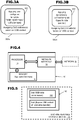
- the discriminating of the applicable USB context may be implemented in various ways. According to the present invention there is a first method of performing the discriminating, as illustrated in Fig.2A .
- the applicable USB context is determined by parsing header data of the transport packet that contains USB packet data belonging to the USB data transfer (in a process labelled S11).
- the method of Fig.2A is appropriate, for example, in a case where the computer program in the USB-data source device causes output of transport packets which include, in their header data, a sub-header or other label indicative of the USB data transfer to which the USB packets of this transport packet belong.
- the sub-header or label may be an identifier of the specific individual USB data transfer in question.
- the size of the transport packet header may be kept down, reducing overhead on the communications network, in a case where the sub-header or label is indicative of one, or a limited number of, features of the USB context, for instance the USB transfer type of the relevant USB data transfer and/or the type of the USB pipe conveying these USB packets.
- Fig.2B A different method of performing the discriminating process of Fig.1 is illustrated in Fig.2B .
- the applicable USB context is determined by determining the port number and transport protocol type of the host port of the device that is the source of the USB data being transported over the communications network (in a process labelled S12).
- the method of Fig.2B is appropriate, for example, in a case where there is a known relationship between the host port and protocol which the computer program in the USB-data source device uses to output transport packets and the USB context of the USB data transfer whose USB packet data is transported in the transport packets.
- This known relationship may be static and pre-programmed into the entity which assigns QoS parameter values to transport packets, or it may be dynamic and notified to the QoS assignment entity at the time when the specific USB data transfer is performed.
- counter-measures may be implemented to avoid the situation where QoS parameter values appropriate to USB traffic are assigned inappropriately to transport packets that contain non-USB traffic.
- suitable counter-measures may be integrated into the software that implements the end-to-end communication of USB traffic over the communications network.
- Fig.2C Another different method of performing the discriminating process of Fig.1 is illustrated in Fig.2C .
- the applicable USB context is determined by deep packet inspection of transport packets transiting on the communications network.
- the process S02 of assigning QoS parameter values to transport packets may associate a QoS label to a transport packet so that the transport packet can subsequently be forwarded through the communications network in a manner which provides the requisite transmission properties.
- the QoS label may be used to determine which bearer is used for transporting the transport packet.
- the assignment of QoS parameters to a transport packet may consist of identifying forwarding parameters (e.g. a bearer) which offer QoS (transmission characteristics) that is appropriate to the USB context of the USB data transfer to which the USB packet data in this transport packet belong.
- the assignment may take the USB context of the USB data transfer into account to a greater or lesser degree.
- the USB context of the USB data transfer may lead to assignment of a specific value of a QoS parameter (for example a standardized QCI or extended QCI, described below) that corresponds to transmission parameter values that most closely match the transmission requirements that are imposed on this USB data transfer in the USB domain.
- the assigned QoS parameter value may be selected in view of just one of a set of requirements that derive from the USB context applicable to this USB data transfer.
- the USB context of the USB data transfer may simply govern whether the assigned QoS parameter value corresponds to a guaranteed bitrate or non-guaranteed bit rate bearer.
- Various USB-domain transmission requirements may be used as a basis for the assignment of QCI values (or other QoS parameter values) including, but not limited to: the USB-domain transmission requirements that apply to USB pipes of the same type as the USB pipe involved in the current USB data transfer and/or the USB-domain transmission requirements that apply to USB data transfers of the same type (interrupt, isochronous, ...) as the current USB data transfer.
- GBR guaranteed bit rate
- MBR maximum bit rate
- the present invention is not particularly limited with regard to the number of the QoS parameter values that are assigned to a transport packet which are based on USB-domain transmission requirements of the USB data transfer to which belong the USB packet(s) comprised in this transport packet. Examples discussed below refer to the assignment of a value of a single QoS parameter (QCI) in dependence on the USB context of the applicable USB data transfer, but it is to be understood that values for plural QoS parameters may be assigned to a transport packet in dependence on the USB context of the applicable USB data transfer.
- QCI QoS parameter
- the present invention is not particularly limited having regard to how QoS parameter values are set so that they are appropriate for the USB contexts of respective different USB data transfers applicable to USB packet data in transport packets.
- the selected QoS parameter values take into account the transmission requirements of the endpoints involved in the USB data transfer.
- the delay budget and ratio of allowed packet loss in the network may be different for each USB endpoint type and so it may be appropriate to specify, for USB data transfers involving the different types of endpoint, respective QoS parameter values that provide the desired combinations of delay budget and ratio of allowed packet loss.
- a USB device may supply information about itself (including parameters of its interfaces and endpoints) during the enumeration phase and if this information is communicated over the communications network to a remote USB host then a node performing deep packet inspection (DPI) may listen for the packet exchange that occurs during enumeration and, for example, extract the endpoint information as USB context information applicable to subsequent USB data transfers that involve the relevant USB device.
- DPI deep packet inspection
- the transmission requirements may be determined by an exchange of information between the USB-data source or sink device and the node/module managing QoS parameter values.
- the USB data-source device may extract endpoint information and the like from the USB device during an enumeration phase.
- the software run by the USB device to implement communication of USB traffic over the communications network may include instructions to cause the USB device to supply details of its interfaces, endpoints, etc.
- USB context may be communicated to network nodes from USB-data source and sink devices dynamically, when the context changes (for example when USB transfers start and stop), not only at the time of setting up a USB connection.
- Fig.3A A first method of performing the assigning is illustrated in Fig.3A .
- transport packets are mapped to QoS parameter values based on a pre-configured template.
- the mapping implemented by the pre-configured template takes into account the USB transfer type and/or the USB pipe type of the USB data transfer applicable to the USB packet data in the respective transport packet.
- FIG.3B A second method of performing the assigning is illustrated in Fig.3B .
- transport packets are mapped to QoS parameter values based on a dynamically-configured template.
- the mapping implemented by the dynamically-configured template takes into account the USB context of the specific USB data transfer that is applicable to the USB packet(s) in the respective transport packet.
- Parameters that may be taken into account include, but are not limited to:
- a USB-data source device is illustrated, in simplified form, in Fig.4 .
- the USB-data source device 10 has a network interface 12 enabling the USB-data source device 10 to transmit data to/receive data from a communications network N.
- the form of the interface 12 varies depending on the type of the communications network N over which the USB data is to be transported (i.e. wired/wireless, which technical standard the network implements, and so on).
- the network interface could be an IEEE 802.11 interface (wireless LAN), an IEEE 802.16 interface (WiMAX), a 3GPP Release 8 E-UTRAN (LTE) interface, a GPON ITU-T G.984.x interface, a VDSL2 ITU-T G.993.x interface, an ADSL ITU-T G.992.x interface, and so on.
- the USB-data source device 10 includes a processor 15 and a computer program (application software, firmware, operating system software, etc.) including instructions which, when executed by the processor 15, enable the USB-data source device 10 to transmit USB data over the network N.
- the computer program also enables the USB-data source device to receive USB data over the network N because, as mentioned above, the same device may play the roles of source and sink in relation to different USB packets.
- the computer program is loaded in a memory 16 of the USB-data source device.
- the invention is not limited with respect to the localisation of the computer program: for example, the program could be recorded on a machine-readable storage medium 170 accessible to the processor 15 either locally or remotely (e.g. over a network connection (not shown)).
- the invention is not particularly limited having regard to the nature of the memory 16 (ROM, RAM, etc.) nor the technology used to implement the memory (SRAM, DRAM, flash memory, memristors, and so on).
- the USB-data source device 10 may be a computer, or substantially any other source of USB data that has a network interface and a computer program (application software, firmware, operating system software, etc.) enabling communication of USB data over the network N.
- the diagram of Fig.4 is highly simplified and it will be understood that, in practice, the USB-data source may include numerous other functional modules (a user interface, a display device, a bus, and so forth).
- Fig.5 illustrates a computer program according to an embodiment of the invention, which may be used as the computer program of Fig.4 .
- the computer program 160 includes instructions 161 enabling the USB-data source device to transmit USB data over the network N.
- the instructions 161 may specify how USB packets are to be encapsulated in transport packets, procedures enabling the USB-data source device 10 to participate in data exchanges with the network n according to network protocols, and so forth.
- the computer program 160 includes instructions 162 enabling the USB-data source device to expose to nodes of the network N the USB context of the USB data transfer that is applicable to the USB packet data in the transport packets output by the USB-data source device 10.
- the USB context of the USB data transfer is exposed by virtue of including in the transport packet a value that serves as an identifier of some aspect of the USB data transfer in question.
- this value may be a label (code, sub-header, etc.) which indicates the type of the USB data transfer (isochronous, interrupt, bulk or control).
- a label may be referred to as a type of service ToS, and it may be included in the header of the transport packet.
- the assigned value may serve to distinguish this particular USB data transfer from other USB data transfers that may be taking place between the same pair of USB-data source and sink devices. In the latter case, in the event that the network N is an IP network, this value may be a tuple consisting of the port number and an identifier of the applicable transport protocol type (TCP or UDP).
- the exposed USB context is taken into account when assigning a value to at least one QoS parameter.
- QoS parameter values may be used for traffic in the uplink and downlink directions, this is not mandatory; on the contrary, assignment of QoS parameter values may take place separately in the uplink and downlink directions.
- the assignment of QoS values dependent on USB context may be implemented in various nodes of the network (which may include the USB data-source or sink device itself). For example, in an LTE/EPS network specific rules provided by the Mobile Core are applied, in the form of Traffic Flow Templates, by the network interface of the USB-data source device itself.
- the TFT maps transport packets to LTE bearers according to QoS parameter values that are assigned to those transport packets, at least one of the applicable QoS values being dependent on the applicable USB context. It may be considered that an assignment of QoS parameter values based on USB context is built into the mapping that is performed by the TFT, even though there is no output or generation of an explicit QoS parameter value in respect of each transport packet.
- Some examples of packet attributes that can be used for filtering with TFT filter include, but are not limited to:
- the values of QoS parameters are of particular importance on entry to access networks, both radio access networks (such as E-UTRAN in LTE systems), and fixed networks (such as DSL or GPON).
- radio access networks such as E-UTRAN in LTE systems
- fixed networks such as DSL or GPON.
- a USB-data source/sink that is connected directly to the access network (e.g. it has an LTE modem built-in) then highly efficient use is made of QoS mechanisms in the event that this USB-data source/sink device applies QoS rules itself (i.e. it determines forwarding behaviour based on QoS, taking into account how QoS is assigned to transport packets based on USB context).
- a USB-data source/sink that is connected to the access network indirectly (e.g. it is connected to a LAN, and then a DSL modem connects the LAN to DSL access) then may be appropriate for the QoS rules to be applied by the modem.
- EPS Evolved Packet System
- LTE Long Term Evolution
- 4G 4G networks
- the LTE network standard is described in the release 8 and 9 series of documents produced by the Third Generation Partnership Project (3GPP) consortium.
- the present invention is applicable in general to networks supporting this standard (as well as others, see below), irrespective of the particular version/release of the standard that is supported.
- IP Internet Protocol
- EPS bearer makes use of radio bearers in the access network (E-UTRAN, Evolved UMTS Radio Access Network), as well as bearers in the core network (EPC, Evolved Packet Core) that conform to various different protocols (for instance S1, S5, S8 protocols).
- E-UTRAN Evolved UMTS Radio Access Network
- EPC Evolved Packet Core
- EPS networks incorporate components and protocols that vary the treatment that is given to EPS-bearer-level packets being forwarded over the EPS network, as a function of network conditions (congestion and so forth) and of the needs of different data communications. For instance, EPS-bearer-level packets being forwarded in the network may receive different treatment in terms of allocated bandwidth, priority, delay budget, how they are handled by scheduling policy, and so on.
- Each EPS bearer is allocated one or more QoS parameters to indicate a particular level of service that the network should give to this bearer's packets as they are forwarded through the network.
- EPS bearers are assigned a Quality of Service Class Identifier (QCI) and network components/protocols determine how to forward packets of a particular EPS bearer taking into account its assigned QCI.
- QCI Quality of Service Class Identifier
- IP packets that are mapped to the same EPS bearer will receive the same forwarding treatment/quality of service.
- nodes use QCI as a reference to access node-specific parameters that control bearer level packet forwarding treatment (e.g. scheduling weights, admission thresholds, queue management thresholds, link layer protocol configuration, etc.).
- the operator or vendor of the access node e.g. eNB pre-configures the node-specific parameters. These parameters have direct impact on measures such as Packet Delay Budget, Packet Loss and Error Rate.
- certain standardized QCI values are assigned to data communications that relate to services of different types.
- Table 1 indicates details of typical services that correspond to the standardized QCI values, as well as some of the transmission parameters associated to the QCI values, notably: guaranteed/non-guaranteed bit rate, packet delay budget, packet error loss rate and priority.
- Table 1 QCI value Example service Guaranteed Bit Rate Packet delay budget (msec) Packet error loss rate Priority 1 Voice, conversational YES 100 10 -2 2 2 Video, conversational (live streaming) YES 150 10 -3 4 3 Video, non-conversational (buffered streaming) YES 300 10 -6 5 4 Real-time gaming YES 50 10 -3 3 5 IMS signaling NO 100 10 -6 1 6 Voice, video (live streaming), interactive gaming NO 100 10 -3 7 7 Voice (buffered streaming) NO 100 10 -3 6 8 Email, www traffic, chat, file transfer protocol, p2p file sharing NO 300 10 -6 8 9 NO 300 10 -6 9
- Extended QCI that is, QCI values above 9 which, if supported by network hardware, may be used for operator-specific configurations.
- EPS bearers are selected for IP packets using Traffic Flow Templates (TFT), provided by the EPS system.
- TFTs map IP packets which have been assigned the same QoS parameter values (e.g. the same QCI) to an EPS bearer which provides the requisite transmission-parameter values, i.e. the desired quality of service.
- components in an LTE network make use of specific TFTs to map IP packets transporting USB packets to EPS bearers. These specific TFTs are configured to perform this mapping based on one or more QoS parameter values which are assigned to the USB packets in view of parameters of the USB context that applies to the USB data transfer to which these USB packets belong.
- the mapping may be based, for example, on the transport layer port range of the source device, or on a Type of Service (ToS) field aggregated to the USB packet data.
- Source IP address as well as destination IP address may also be taken into account by the TFT in order to limit this mechanism to selected hosts.
- the assignment may make use of Extended QCI values which correspond to non-standard QoS level configurations, e.g. non-standard configurations which better match the specifics of USB endpoint types and USB transfer types.
- Extended QCI values may be defined which correspond to combinations of values of packet delay budget and loss rate that match the requirements discussed in the introductory portion of this document for USB transfers of the different types (bulk, isochronous, etc.).
- certain Extended QCI values may be defined which correspond to Guaranteed Bit Rate, so that transmission resources may be allocated for specific isochronous transfers.
- certain Extended QCI values may be defined which correspond to particular values of Priority assigned for particular types of USB device, e.g. based on some criteria defined by the network operator so that different user Quality of Experience may be obtained for different applications (e.g. the network operator may offer a service which delivers a fast USB-over-network printing experience, while file transfer to/from mass storage memory is given lower priority).
- USB-data source devices and USB-data sink devices in view of their roles in communicating USB data, but it will be understood that the communication of USB data may not be the only or, indeed, the principal function of the devices in question.
- USB-data source and USB-data sink devices are both computers, but it will be understood that the invention may be applied more generally.
- USB device in the case of a USB device that is directly connected to the communications network this may be substantially any USB device that has a network communications interface (printer with Ethernet port, WiFi-enabled video camera, game controller with built-in LTE, etc.), and includes devices such as mobile telephones, tablets, etc. which emulate USB devices.
- the USB-data source/sink device may also be a mobile phone, tablet, portable mobile modem with a built in WiFi access point, modem, router, CPE, Set-top-box, and so on.
- USB source computer designated here as Computer A
- USB sink computer designated here as Computer B
- PDN packet data network
- the invention is not limited to this case and, of course, both computers may be connected to the LTE network.
- the overall structure which interconnects the USB-data source device and USB-data sink device is referred to in this document as "communications network" even in cases where the route from one device to the other travels over plural networks of different types.
- a pre-defined QCI mapping that takes into account USB context (and transmission-parameter constraints that derive from that context) is statically configured in a Policy Control Enforcement Function (PCEF) of the LTE network.
- PCEF Policy Control Enforcement Function
- This QCI mapping may be restricted so that it is only applied in respect of IP packets if those IP packets originate from some selected users (User Equipment, UE).
- the QCI mapping maps IP packets that contain USB data to QoS levels, according to some pre-defined rules (e.g. rules based on specific TCP/UDP port numbers, rules based on specific ToS field values).
- the QCI mapping may include an assumption that all of the traffic of the relevant users (User Equipment) that matches these rules carries USB packets.
- the QCI mapping is configured in PCEF, to the contrary the QCI mapping may be configured in other network components, e.g. it may be provisioned on the Home Subscriber Server (HSS).
- HSS Home Subscriber Server
- Computer A is enabled to transmit USB data over the communications network by virtue of the fact that computer A runs special application software comprising instructions to implement USB-over-network transmission.
- IP packets that are output by the USB-over-network application software and the USB context of the USB packets transported by those IP packets.
- types interrupt, bulk, etc.
- TCP/UDP ports that the USB-over-network application software uses for outputting IP packets comprising the USB packets of the USB transfers.
- the QCI mapping exploits this known relationship.
- the QCI mapping involves QoS levels that are assigned, to IP packets that contain USB packet data belonging to a particular USB data transfer, based on the type of the USB data transfer involved in this case. It may be that at the application level which implements the USB protocol, some other parameter values were defined for this specific individual USB data transfer but, in this example, such other constraints are not taken into account.
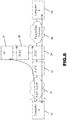
- Fig.6 illustrates a configuration including USB-data source and sink devices and a network, according to a second example implementation.
- Computer A i.e. a source computer 10
- AF application function
- the LTE network comprises, amongst other elements, a radio access network and serving gateway (S-GW) portion 30 to which Computer A is connected, as well as a packet data network gateway (P-GW), associated Policy Charging Enforcement Function (PCEF), Policy and Charging Rules Function (PCRF) and Application Function (AF) labelled 34, 38 and 37, respectively, in Fig.6 .
- S-GW radio access network and serving gateway
- PCEF Policy Charging Enforcement Function
- PCRF Policy and Charging Rules Function
- AF Application Function
- the general procedure according to example 2 may be extended into a more detailed version which includes initial communication between the USB source and sink devices (here, Computers A and B) and feedback to Computer A regarding the behavior of the PCRF.
- Fig.7 illustrates various exchanges which take place between the USB-data source and sink devices, and certain functions in the mobile network core, during implementation of this extended version of example 2.
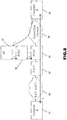
- Fig.8 This example implementation is illustrated in Fig.8 and may make use of USB-data source and sink devices, and network components, of the same general type as those used in the example of Fig.6 . Accordingly, Fig.8 uses the same reference numerals as Fig.6 .
- This third example implementation involves reporting (or negotiating) by the remote Computer B to the Application Function AF, according to the following steps:
- Fig.9 This example implementation is illustrated in Fig.9 and is based on the use of Deep Packet Inspection (DPI).
- DPI Deep Packet Inspection
- This fourth example may make use of USB-data source and sink devices, and network components, of the same general type as those used in the example of Fig.6 , with the addition of a DPI node 39 in the communications network. Accordingly, Fig.9 uses the same reference numerals as Fig.6 for the elements that are present in both examples.
- DPI Deep Packet Inspection
- the DPI node 39 may be called a Traffic Detection Function (TDF).
- TDF Traffic Detection Function
- This method according to this fourth example involves the following steps:
- USB traffic is communicated over an EPS network.
- the present invention is applicable in general to cases where USB traffic is communicated over a network that has mechanisms for assigning different levels of service to different messages (irrespective of whether those mechanisms are named "quality of service” mechanisms or named in some other way).
- the present invention may be applied in a case where USB packets are transmitted over an IEEE 802.11 wireless network, using Wireless Multimedia Extensions (WME).
- WME Wireless Multimedia Extensions
- the USB contexts applicable to particular USB packets may be mapped to WME Access Categories.
- Other examples include transmission of USB traffic over other networks with wireless access (for instance 3G networks, high speed packet access (HSPA) networks, IMT-Advanced networks, and so on) and over networks with fixed access (for instance passive optical networks (including GPONs, EPONs), very-high-bit-rate digital subscriber line (VDSL), and so on).
Landscapes
- Engineering & Computer Science (AREA)
- Computer Networks & Wireless Communication (AREA)
- Signal Processing (AREA)
- Quality & Reliability (AREA)
- Information Transfer Systems (AREA)
Claims (8)
- Verfahren zum Übertragen von Daten in USB-Paketen, die in einem oder mehreren Transportpaketen enthalten sind, über ein Kommunikationsnetzwerk, ausgeführt durch einen Knoten des Kommunikationsnetzwerks, wobei das Kommunikationsnetzwerk ausgelegt ist zum Weiterleiten von Transportpaketen auf eine differenzierte Weise basierend auf den Transportpaketen zugewiesenen Dienstgüteparameterwerten, wobei jedes USB-Paket Teil eines USB-Datentransfers mit einem jeweiligen Satz von Übertragungsanforderungen, die aus dem USB-Kontext des USB-Datentransfers hergeleitet werden, bildet, wobei das Verfahren Folgendes umfasst:Parsen (S01, S11) von Header-Daten eines der durch eine USB-Daten-Quellenvorrichtung ausgegebenen Transportpakete, wobei das eine Transportpaket die Daten in USB-Paketen umfasst, um den zu dem USB-Datentransfer gehörenden USB-Kontext durch Detektieren einer durch die USB-Daten-Quellenvorrichtung hinzugefügten Kennzeichnung zu identifizieren, wobei die Kennzeichnung mindestens eines der Folgenden angibt:- die USB-Transferart des USB-Datentransfers,- die USB-Pipe des USB-Datentransfers,- den spezifischen USB-Datentransfer und- den USB-Vorrichtungstyp und das USB-Vorrichtungsmodell einer an dem USB-Datentransfer teilnehmenden USB-Vorrichtung; undZuweisen (S02), zu dem Transportpaket, das die Daten in USB-Paketen umfasst, mindestens eines Dienstgüteparameters, der von dem USB-Kontext des USB-Datentransfers abhängig ist.
- Verfahren nach Anspruch 1, wobei die Identifikation des USB-Kontexts des USB-Datentransfers, zu dem die Daten in USB-Paketen gehören, Identifizieren mindestens eines der Folgenden umfasst: einer Quellenportnummer, einer Quellenadresse und eines Transportprotokolltyps eines Hostports, der das die USB-Paketdaten umfassende Transportpaket ausgibt, einer Zielportnummer, einer Zieladresse und einer Sitzungs-, Stream- oder Substream-Kennung, eines Authentifizierungs-Token-Felds, eines Typs des nächsten Headers, einer Dienstart, einer Verkehrsklasse und einer Flusskennzeichnung des Transportpakets.
- Verfahren nach Anspruch 1 oder 2, wobei das Hinzufügen der Kennzeichnung Anwenden (S21) einer vorkonfigurierten Vorlage umfasst, um Transportpakete, die die Daten in USB-Paketen umfassen, zu Dienstgüteparametern zuzuordnen, die von mindestens einem der Folgendes abhängig sind:- der USB-Transferart,- der USB-Pipe,- der maximalen Paketgröße,- dem Intervall,- der Transferrichtung,- der USB-Schnittstelle und- dem spezifischen Modell der USB-Vorrichtung.
- Verfahren nach Anspruch 2, wobei das Hinzufügen der Kennzeichnung Zuordnen von Transportpaketen, die Daten in USB-Paketen umfassen, zu Dienstgüteparametern, die von dem USB-Datentransfer abhängig sind, umfasst.
- USB-Daten-Quellenvorrichtung (10), die Folgendes umfasst:eine Schnittstelle (12) zu einem Kommunikationsnetzwerk;einen Prozessor (15); undein Computerprogramm (160), das maschinenlesbare Anweisungen umfasst, die bei Ausführung auf dem Prozessor bewirken, dass die USB-Daten-Quellenvorrichtung Transportpakete, die Daten in USB-Paketen umfassen, über die Schnittstelle an das Kommunikationsnetzwerk ausgibt, wobei jedes USB-Paket Teil eines USB-Datentransfers mit einem USB-Kontext bildet,wobei das Computerprogramm maschinenlesbare Anweisungen umfasst, die bei Ausführung auf dem Prozessor bewirken, dass die USB-Daten-Quellenvorrichtung (10) eine Kennzeichnung an einen Netzwerkknoten des Kommunikationsnetzwerks überträgt durch:- Erzeugen von Kennzeichnungen, die mindestens eines der Folgenden angeben:- die USB-Transferart des USB-Datentransfers,- die USB-Pipe des USB-Datentransfers,- den spezifischen USB-Datentransfer; und- den USB-Vorrichtungstyp und das USB-Vorrichtungsmodell einer an dem USB-Datentransfer teilnehmenden USB-Vorrichtung,- Aggregieren von USB-Paketen eines USB-Datentransfers mit der für den Transfer erzeugten Kennzeichnung, und- Bewirken, dass die USB-Daten-Quellenvorrichtung Transportpakete, die die aggregierten Daten umfassen, an den Netzwerkknoten ausgibt.
- Computerprogramm (160), das maschinenlesbare Anweisungen (161) umfasst, die bei Ausführung des Programms durch einen Prozessor in einer USB-Daten-Quellenvorrichtung mit einer Schnittstelle zu einem Kommunikationsnetzwerk bewirken, dass die USB-Daten-Quellenvorrichtung Transportpakete, die Daten in USB-Paketen umfassen, über die Schnittstelle an das Kommunikationsnetzwerk ausgibt, wobei jedes USB-Paket Teil eines USB-Datentransfers mit einem Satz von Übertragungsanforderungen bildet;
wobei das Computerprogramm maschinenlesbare Anweisungen umfasst, die bei Ausführung auf dem Prozessor bewirken, dass die USB-Daten-Quellenvorrichtung eine Kennzeichnung an einen Netzwerkknoten des Kommunikationsnetzwerks überträgt durch:- Erzeugen von Kennzeichnungen, die mindestens eines der Folgenden angeben:- die USB-Transferart des USB-Datentransfers,- die USB-Pipe des USB-Datentransfers,- den spezifischen USB-Datentransfer; und- den USB-Vorrichtungstyp und das USB-Vorrichtungsmodell einer an dem USB-Datentransfer teilnehmenden USB-Vorrichtung,- Aggregieren von USB-Paketen eines USB-Datentransfers mit der für den Transfer erzeugten Kennzeichnung, und- Bewirken, dass die USB-Daten-Quellenvorrichtung Transportpakete, die die aggregierten Daten umfassen, an den Netzwerkknoten ausgibt. - Knotenvorrichtung in einem Kommunikationsnetzwerk, wobei das Kommunikationsnetzwerk ausgelegt ist zum Weiterleiten von Transportpaketen auf eine differenzierte Weise basierend auf den Transportpaketen zugewiesenen Dienstgüteparametern, wobei Daten in USB-Paketen in einem oder mehreren Transportpaketen enthalten sind, wobei jedes USB-Paket Teil eines USB-Datentransfers mit einem jeweiligen Satz von Übertragungsanforderungen, die aus dem USB-Kontext des USB-Datentransfers hergeleitet werden, bildet, wobei die Knotenvorrichtung Folgendes umfasst:ein Identifikationsmodul, ausgelegt zum Identifizieren, für ein Transportpaket, das Daten in USB-Paketen umfasst, des USB-Kontexts des USB-Datentransfers, zu dem die Daten in den USB-Paketen gehören, und zum Zuordnen von Transportpaketen, die die Daten in den USB-Paketen umfassen, zu Dienstgüteparametern basierend auf den jeweiligen USB-Kontexten der USB-Datentransfers, zu dem die Daten in den USB-Paketen gehören;wobei das Identifikationsmodul ausgelegt ist zum Identifizieren des USB-Kontexts des USB-Datentransfers durch Parsen von Header-Daten eines der durch eine USB-Daten-Quellenvorrichtung ausgegebenen Transportpakete, wobei das eine Transportpaket die Daten in USB-Paketen umfasst, um den zu dem USB-Datentransfer gehörenden USB-Kontext durch Detektieren einer durch die USB-Daten-Quellenvorrichtung hinzugefügten Kennzeichnung zu identifizieren, wobei die Kennzeichnung mindestens eines der Folgenden angibt:wobei das Identifikationsmodul ausgelegt ist zum Zuweisen, zu dem Transportpaket, das die Daten in USB-Paketen umfasst, mindestens eines Dienstgüteparameters, der von dem USB-Kontext des USB-Datentransfers abhängig ist.- die USB-Transferart des USB-Datentransfers,- die USB-Pipe des USB-Datentransfers,- den spezifischen USB-Datentransfer und- den USB-Vorrichtungstyp und das USB-Vorrichtungsmodell einer an dem USB-Datentransfer teilnehmenden USB-Vorrichtung; und
- Kommunikationsnetzwerk, das eine Knotenvorrichtung nach Anspruch 7 umfasst.
Applications Claiming Priority (2)
| Application Number | Priority Date | Filing Date | Title |
|---|---|---|---|
| EP15307139.4A EP3185484A1 (de) | 2015-12-24 | 2015-12-24 | Verbesserungen in der netzwerkübertragung von usb-verkehr |
| PCT/IB2016/001928 WO2017109574A1 (en) | 2015-12-24 | 2016-12-14 | Improvements in network transmission of usb traffic |
Publications (2)
| Publication Number | Publication Date |
|---|---|
| EP3395017A1 EP3395017A1 (de) | 2018-10-31 |
| EP3395017B1 true EP3395017B1 (de) | 2020-11-18 |
Family
ID=55129480
Family Applications (2)
| Application Number | Title | Priority Date | Filing Date |
|---|---|---|---|
| EP15307139.4A Withdrawn EP3185484A1 (de) | 2015-12-24 | 2015-12-24 | Verbesserungen in der netzwerkübertragung von usb-verkehr |
| EP16829431.2A Active EP3395017B1 (de) | 2015-12-24 | 2016-12-14 | Verbesserungen der netzwerkübertragung von usb-verkehr |
Family Applications Before (1)
| Application Number | Title | Priority Date | Filing Date |
|---|---|---|---|
| EP15307139.4A Withdrawn EP3185484A1 (de) | 2015-12-24 | 2015-12-24 | Verbesserungen in der netzwerkübertragung von usb-verkehr |
Country Status (3)
| Country | Link |
|---|---|
| US (1) | US10749708B2 (de) |
| EP (2) | EP3185484A1 (de) |
| WO (1) | WO2017109574A1 (de) |
Families Citing this family (2)
| Publication number | Priority date | Publication date | Assignee | Title |
|---|---|---|---|---|
| CN114186293A (zh) * | 2021-11-30 | 2022-03-15 | 北京博衍思创信息科技有限公司 | Usb设备与被保护设备的通信控制方法、装置及电子设备 |
| JP7732058B1 (ja) * | 2024-10-15 | 2025-09-01 | アットホームホールディングス株式会社 | 情報処理装置、情報処理プログラム、及び情報処理方法 |
Family Cites Families (6)
| Publication number | Priority date | Publication date | Assignee | Title |
|---|---|---|---|---|
| US20070083491A1 (en) * | 2004-05-27 | 2007-04-12 | Silverbrook Research Pty Ltd | Storage of key in non-volatile memory |
| US8068495B2 (en) * | 2005-09-27 | 2011-11-29 | Intel Corporation | Mechanisms for data rate improvement in a wireless network |
| US20100163601A1 (en) * | 2008-12-31 | 2010-07-01 | General Electric Company | Friction weld vibration quality monitoring system |
| CN102546388B (zh) * | 2010-12-16 | 2014-08-13 | 国际商业机器公司 | 分组qos水平归因的方法和系统 |
| JP2014509421A (ja) * | 2011-02-01 | 2014-04-17 | エムシーシーアイ コーポレイション | Usbホストシステムの拡張usbプロトコルスタックのためのセキュリティ手段 |
| KR102133526B1 (ko) * | 2013-10-31 | 2020-07-13 | 삼성전자주식회사 | USB 어플리케이션 데이터의 QoS를 고려한 무선 전송 지원 기법 |
-
2015
- 2015-12-24 EP EP15307139.4A patent/EP3185484A1/de not_active Withdrawn
-
2016
- 2016-12-14 WO PCT/IB2016/001928 patent/WO2017109574A1/en not_active Ceased
- 2016-12-14 US US16/065,722 patent/US10749708B2/en active Active
- 2016-12-14 EP EP16829431.2A patent/EP3395017B1/de active Active
Non-Patent Citations (1)
| Title |
|---|
| None * |
Also Published As
| Publication number | Publication date |
|---|---|
| EP3395017A1 (de) | 2018-10-31 |
| US10749708B2 (en) | 2020-08-18 |
| US20190013961A1 (en) | 2019-01-10 |
| EP3185484A1 (de) | 2017-06-28 |
| WO2017109574A1 (en) | 2017-06-29 |
Similar Documents
| Publication | Publication Date | Title |
|---|---|---|
| US8917625B2 (en) | Mapping quality of service (QOS) from a wireless network to a wired network | |
| CN102547610B (zh) | 消息处理方法、设备及系统 | |
| CN103988543B (zh) | 无线局域网中的控制设备、网络系统及业务处理方法 | |
| CN106255148B (zh) | 在多连接性5G网络中促进承载中QoS差异化 | |
| CN110557786A (zh) | 一种无线承载建立、业务流的监测方法及装置 | |
| CN109196918B (zh) | 一种数据传输控制方法、通信设备及核心网设备 | |
| KR102275579B1 (ko) | 이동 통신 시스템에서 전송 차별화를 제공하는 방법 및 장치 | |
| US20120033563A1 (en) | Packet classification and prioritization using an ip header in a mobile wireless device | |
| CN105493525A (zh) | 服务层南向接口和服务质量 | |
| CN106465194B (zh) | 用于控制业务的qos的方法和设备 | |
| CN104247496A (zh) | 用于为无线用户提供智能编解码器速率适配的方法和设备 | |
| CN102469020A (zh) | 一种业务控制方法及系统、演进基站、分组数据网网关 | |
| EP3528533B1 (de) | Drahtloskommunikationsverfahren, benutzergerät, zugangsnetzwerkvorrichtung und system | |
| US8953596B2 (en) | Conserving network capacity by releasing QoS resources | |
| JP2018512760A (ja) | サービス処理方法、pcrf、及びサービス処理システム | |
| CN102802206B (zh) | 一种wlan分流方法和分流网元 | |
| US8942104B2 (en) | Packet classification and prioritization using a UDP checksum in a mobile wireless device | |
| CN108632892A (zh) | 无线通信方法、终端、接入网设备和网络系统 | |
| US10749708B2 (en) | Network transmission of USB traffic | |
| CN107211400B (zh) | 网络准入控制方法、接入点及接入控制器 | |
| WO2014127635A1 (zh) | 一种增强型传输选择标准配置信息传输方法及装置 | |
| CN109756936B (zh) | 一种流的映射方法、接收方法、网络设备及终端 | |
| JP2009105949A (ja) | QoS制御を実行することが可能な端末 | |
| CN1627785A (zh) | 通用移动通讯系统到ip网的服务质量映射方法及其系统 | |
| WO2009124492A1 (zh) | 实现传输服务质量保证的方法、装置及系统 |
Legal Events
| Date | Code | Title | Description |
|---|---|---|---|
| STAA | Information on the status of an ep patent application or granted ep patent |
Free format text: STATUS: UNKNOWN |
|
| STAA | Information on the status of an ep patent application or granted ep patent |
Free format text: STATUS: THE INTERNATIONAL PUBLICATION HAS BEEN MADE |
|
| PUAI | Public reference made under article 153(3) epc to a published international application that has entered the european phase |
Free format text: ORIGINAL CODE: 0009012 |
|
| STAA | Information on the status of an ep patent application or granted ep patent |
Free format text: STATUS: REQUEST FOR EXAMINATION WAS MADE |
|
| 17P | Request for examination filed |
Effective date: 20180720 |
|
| AK | Designated contracting states |
Kind code of ref document: A1 Designated state(s): AL AT BE BG CH CY CZ DE DK EE ES FI FR GB GR HR HU IE IS IT LI LT LU LV MC MK MT NL NO PL PT RO RS SE SI SK SM TR |
|
| AX | Request for extension of the european patent |
Extension state: BA ME |
|
| DAV | Request for validation of the european patent (deleted) | ||
| DAX | Request for extension of the european patent (deleted) | ||
| STAA | Information on the status of an ep patent application or granted ep patent |
Free format text: STATUS: EXAMINATION IS IN PROGRESS |
|
| 17Q | First examination report despatched |
Effective date: 20190628 |
|
| GRAP | Despatch of communication of intention to grant a patent |
Free format text: ORIGINAL CODE: EPIDOSNIGR1 |
|
| STAA | Information on the status of an ep patent application or granted ep patent |
Free format text: STATUS: GRANT OF PATENT IS INTENDED |
|
| RAP1 | Party data changed (applicant data changed or rights of an application transferred) |
Owner name: ORANGE |
|
| INTG | Intention to grant announced |
Effective date: 20200623 |
|
| GRAS | Grant fee paid |
Free format text: ORIGINAL CODE: EPIDOSNIGR3 |
|
| GRAA | (expected) grant |
Free format text: ORIGINAL CODE: 0009210 |
|
| STAA | Information on the status of an ep patent application or granted ep patent |
Free format text: STATUS: THE PATENT HAS BEEN GRANTED |
|
| AK | Designated contracting states |
Kind code of ref document: B1 Designated state(s): AL AT BE BG CH CY CZ DE DK EE ES FI FR GB GR HR HU IE IS IT LI LT LU LV MC MK MT NL NO PL PT RO RS SE SI SK SM TR |
|
| REG | Reference to a national code |
Ref country code: GB Ref legal event code: FG4D |
|
| REG | Reference to a national code |
Ref country code: CH Ref legal event code: EP |
|
| REG | Reference to a national code |
Ref country code: DE Ref legal event code: R096 Ref document number: 602016048256 Country of ref document: DE |
|
| REG | Reference to a national code |
Ref country code: IE Ref legal event code: FG4D |
|
| REG | Reference to a national code |
Ref country code: AT Ref legal event code: REF Ref document number: 1336949 Country of ref document: AT Kind code of ref document: T Effective date: 20201215 |
|
| REG | Reference to a national code |
Ref country code: AT Ref legal event code: MK05 Ref document number: 1336949 Country of ref document: AT Kind code of ref document: T Effective date: 20201118 |
|
| REG | Reference to a national code |
Ref country code: NL Ref legal event code: MP Effective date: 20201118 |
|
| PG25 | Lapsed in a contracting state [announced via postgrant information from national office to epo] |
Ref country code: RS Free format text: LAPSE BECAUSE OF FAILURE TO SUBMIT A TRANSLATION OF THE DESCRIPTION OR TO PAY THE FEE WITHIN THE PRESCRIBED TIME-LIMIT Effective date: 20201118 Ref country code: PT Free format text: LAPSE BECAUSE OF FAILURE TO SUBMIT A TRANSLATION OF THE DESCRIPTION OR TO PAY THE FEE WITHIN THE PRESCRIBED TIME-LIMIT Effective date: 20210318 Ref country code: NO Free format text: LAPSE BECAUSE OF FAILURE TO SUBMIT A TRANSLATION OF THE DESCRIPTION OR TO PAY THE FEE WITHIN THE PRESCRIBED TIME-LIMIT Effective date: 20210218 Ref country code: FI Free format text: LAPSE BECAUSE OF FAILURE TO SUBMIT A TRANSLATION OF THE DESCRIPTION OR TO PAY THE FEE WITHIN THE PRESCRIBED TIME-LIMIT Effective date: 20201118 Ref country code: GR Free format text: LAPSE BECAUSE OF FAILURE TO SUBMIT A TRANSLATION OF THE DESCRIPTION OR TO PAY THE FEE WITHIN THE PRESCRIBED TIME-LIMIT Effective date: 20210219 |
|
| PG25 | Lapsed in a contracting state [announced via postgrant information from national office to epo] |
Ref country code: AT Free format text: LAPSE BECAUSE OF FAILURE TO SUBMIT A TRANSLATION OF THE DESCRIPTION OR TO PAY THE FEE WITHIN THE PRESCRIBED TIME-LIMIT Effective date: 20201118 Ref country code: BG Free format text: LAPSE BECAUSE OF FAILURE TO SUBMIT A TRANSLATION OF THE DESCRIPTION OR TO PAY THE FEE WITHIN THE PRESCRIBED TIME-LIMIT Effective date: 20210218 Ref country code: PL Free format text: LAPSE BECAUSE OF FAILURE TO SUBMIT A TRANSLATION OF THE DESCRIPTION OR TO PAY THE FEE WITHIN THE PRESCRIBED TIME-LIMIT Effective date: 20201118 Ref country code: IS Free format text: LAPSE BECAUSE OF FAILURE TO SUBMIT A TRANSLATION OF THE DESCRIPTION OR TO PAY THE FEE WITHIN THE PRESCRIBED TIME-LIMIT Effective date: 20210318 Ref country code: LV Free format text: LAPSE BECAUSE OF FAILURE TO SUBMIT A TRANSLATION OF THE DESCRIPTION OR TO PAY THE FEE WITHIN THE PRESCRIBED TIME-LIMIT Effective date: 20201118 Ref country code: SE Free format text: LAPSE BECAUSE OF FAILURE TO SUBMIT A TRANSLATION OF THE DESCRIPTION OR TO PAY THE FEE WITHIN THE PRESCRIBED TIME-LIMIT Effective date: 20201118 |
|
| REG | Reference to a national code |
Ref country code: LT Ref legal event code: MG9D |
|
| PG25 | Lapsed in a contracting state [announced via postgrant information from national office to epo] |
Ref country code: HR Free format text: LAPSE BECAUSE OF FAILURE TO SUBMIT A TRANSLATION OF THE DESCRIPTION OR TO PAY THE FEE WITHIN THE PRESCRIBED TIME-LIMIT Effective date: 20201118 |
|
| RAP4 | Party data changed (patent owner data changed or rights of a patent transferred) |
Owner name: ORANGE |
|
| PG25 | Lapsed in a contracting state [announced via postgrant information from national office to epo] |
Ref country code: SM Free format text: LAPSE BECAUSE OF FAILURE TO SUBMIT A TRANSLATION OF THE DESCRIPTION OR TO PAY THE FEE WITHIN THE PRESCRIBED TIME-LIMIT Effective date: 20201118 Ref country code: LT Free format text: LAPSE BECAUSE OF FAILURE TO SUBMIT A TRANSLATION OF THE DESCRIPTION OR TO PAY THE FEE WITHIN THE PRESCRIBED TIME-LIMIT Effective date: 20201118 Ref country code: EE Free format text: LAPSE BECAUSE OF FAILURE TO SUBMIT A TRANSLATION OF THE DESCRIPTION OR TO PAY THE FEE WITHIN THE PRESCRIBED TIME-LIMIT Effective date: 20201118 Ref country code: CZ Free format text: LAPSE BECAUSE OF FAILURE TO SUBMIT A TRANSLATION OF THE DESCRIPTION OR TO PAY THE FEE WITHIN THE PRESCRIBED TIME-LIMIT Effective date: 20201118 Ref country code: RO Free format text: LAPSE BECAUSE OF FAILURE TO SUBMIT A TRANSLATION OF THE DESCRIPTION OR TO PAY THE FEE WITHIN THE PRESCRIBED TIME-LIMIT Effective date: 20201118 Ref country code: SK Free format text: LAPSE BECAUSE OF FAILURE TO SUBMIT A TRANSLATION OF THE DESCRIPTION OR TO PAY THE FEE WITHIN THE PRESCRIBED TIME-LIMIT Effective date: 20201118 |
|
| REG | Reference to a national code |
Ref country code: CH Ref legal event code: PL |
|
| REG | Reference to a national code |
Ref country code: DE Ref legal event code: R097 Ref document number: 602016048256 Country of ref document: DE |
|
| PG25 | Lapsed in a contracting state [announced via postgrant information from national office to epo] |
Ref country code: DK Free format text: LAPSE BECAUSE OF FAILURE TO SUBMIT A TRANSLATION OF THE DESCRIPTION OR TO PAY THE FEE WITHIN THE PRESCRIBED TIME-LIMIT Effective date: 20201118 Ref country code: MC Free format text: LAPSE BECAUSE OF FAILURE TO SUBMIT A TRANSLATION OF THE DESCRIPTION OR TO PAY THE FEE WITHIN THE PRESCRIBED TIME-LIMIT Effective date: 20201118 |
|
| REG | Reference to a national code |
Ref country code: BE Ref legal event code: MM Effective date: 20201231 |
|
| PLBE | No opposition filed within time limit |
Free format text: ORIGINAL CODE: 0009261 |
|
| STAA | Information on the status of an ep patent application or granted ep patent |
Free format text: STATUS: NO OPPOSITION FILED WITHIN TIME LIMIT |
|
| 26N | No opposition filed |
Effective date: 20210819 |
|
| PG25 | Lapsed in a contracting state [announced via postgrant information from national office to epo] |
Ref country code: IT Free format text: LAPSE BECAUSE OF FAILURE TO SUBMIT A TRANSLATION OF THE DESCRIPTION OR TO PAY THE FEE WITHIN THE PRESCRIBED TIME-LIMIT Effective date: 20201118 Ref country code: LU Free format text: LAPSE BECAUSE OF NON-PAYMENT OF DUE FEES Effective date: 20201214 Ref country code: NL Free format text: LAPSE BECAUSE OF FAILURE TO SUBMIT A TRANSLATION OF THE DESCRIPTION OR TO PAY THE FEE WITHIN THE PRESCRIBED TIME-LIMIT Effective date: 20201118 Ref country code: AL Free format text: LAPSE BECAUSE OF FAILURE TO SUBMIT A TRANSLATION OF THE DESCRIPTION OR TO PAY THE FEE WITHIN THE PRESCRIBED TIME-LIMIT Effective date: 20201118 Ref country code: IE Free format text: LAPSE BECAUSE OF NON-PAYMENT OF DUE FEES Effective date: 20201214 |
|
| PG25 | Lapsed in a contracting state [announced via postgrant information from national office to epo] |
Ref country code: LI Free format text: LAPSE BECAUSE OF NON-PAYMENT OF DUE FEES Effective date: 20201231 Ref country code: SI Free format text: LAPSE BECAUSE OF FAILURE TO SUBMIT A TRANSLATION OF THE DESCRIPTION OR TO PAY THE FEE WITHIN THE PRESCRIBED TIME-LIMIT Effective date: 20201118 Ref country code: CH Free format text: LAPSE BECAUSE OF NON-PAYMENT OF DUE FEES Effective date: 20201231 |
|
| PG25 | Lapsed in a contracting state [announced via postgrant information from national office to epo] |
Ref country code: ES Free format text: LAPSE BECAUSE OF FAILURE TO SUBMIT A TRANSLATION OF THE DESCRIPTION OR TO PAY THE FEE WITHIN THE PRESCRIBED TIME-LIMIT Effective date: 20201118 |
|
| PG25 | Lapsed in a contracting state [announced via postgrant information from national office to epo] |
Ref country code: IS Free format text: LAPSE BECAUSE OF FAILURE TO SUBMIT A TRANSLATION OF THE DESCRIPTION OR TO PAY THE FEE WITHIN THE PRESCRIBED TIME-LIMIT Effective date: 20210318 Ref country code: TR Free format text: LAPSE BECAUSE OF FAILURE TO SUBMIT A TRANSLATION OF THE DESCRIPTION OR TO PAY THE FEE WITHIN THE PRESCRIBED TIME-LIMIT Effective date: 20201118 Ref country code: MT Free format text: LAPSE BECAUSE OF FAILURE TO SUBMIT A TRANSLATION OF THE DESCRIPTION OR TO PAY THE FEE WITHIN THE PRESCRIBED TIME-LIMIT Effective date: 20201118 Ref country code: CY Free format text: LAPSE BECAUSE OF FAILURE TO SUBMIT A TRANSLATION OF THE DESCRIPTION OR TO PAY THE FEE WITHIN THE PRESCRIBED TIME-LIMIT Effective date: 20201118 |
|
| PG25 | Lapsed in a contracting state [announced via postgrant information from national office to epo] |
Ref country code: MK Free format text: LAPSE BECAUSE OF FAILURE TO SUBMIT A TRANSLATION OF THE DESCRIPTION OR TO PAY THE FEE WITHIN THE PRESCRIBED TIME-LIMIT Effective date: 20201118 |
|
| PG25 | Lapsed in a contracting state [announced via postgrant information from national office to epo] |
Ref country code: BE Free format text: LAPSE BECAUSE OF NON-PAYMENT OF DUE FEES Effective date: 20201231 |
|
| PGFP | Annual fee paid to national office [announced via postgrant information from national office to epo] |
Ref country code: DE Payment date: 20251126 Year of fee payment: 10 |
|
| PGFP | Annual fee paid to national office [announced via postgrant information from national office to epo] |
Ref country code: GB Payment date: 20251119 Year of fee payment: 10 |
|
| PGFP | Annual fee paid to national office [announced via postgrant information from national office to epo] |
Ref country code: FR Payment date: 20251119 Year of fee payment: 10 |