EP3386387B1 - Vorrichtungen und verfahren zur nicht-invasiven überwachung eines stoffes in einem körper - Google Patents
Vorrichtungen und verfahren zur nicht-invasiven überwachung eines stoffes in einem körper Download PDFInfo
- Publication number
- EP3386387B1 EP3386387B1 EP16872538.0A EP16872538A EP3386387B1 EP 3386387 B1 EP3386387 B1 EP 3386387B1 EP 16872538 A EP16872538 A EP 16872538A EP 3386387 B1 EP3386387 B1 EP 3386387B1
- Authority
- EP
- European Patent Office
- Prior art keywords
- substance
- time
- user
- data
- consumptions
- Prior art date
- Legal status (The legal status is an assumption and is not a legal conclusion. Google has not performed a legal analysis and makes no representation as to the accuracy of the status listed.)
- Active
Links
Images


Classifications
-
- A—HUMAN NECESSITIES
- A61—MEDICAL OR VETERINARY SCIENCE; HYGIENE
- A61B—DIAGNOSIS; SURGERY; IDENTIFICATION
- A61B5/00—Measuring for diagnostic purposes; Identification of persons
- A61B5/08—Measuring devices for evaluating the respiratory organs
- A61B5/082—Evaluation by breath analysis, e.g. determination of the chemical composition of exhaled breath
-
- A—HUMAN NECESSITIES
- A61—MEDICAL OR VETERINARY SCIENCE; HYGIENE
- A61B—DIAGNOSIS; SURGERY; IDENTIFICATION
- A61B5/00—Measuring for diagnostic purposes; Identification of persons
- A61B5/08—Measuring devices for evaluating the respiratory organs
- A61B5/0803—Recording apparatus specially adapted therefor
-
- A—HUMAN NECESSITIES
- A61—MEDICAL OR VETERINARY SCIENCE; HYGIENE
- A61B—DIAGNOSIS; SURGERY; IDENTIFICATION
- A61B5/00—Measuring for diagnostic purposes; Identification of persons
- A61B5/08—Measuring devices for evaluating the respiratory organs
- A61B5/091—Measuring volume of inspired or expired gases, e.g. to determine lung capacity
- A61B5/093—Measuring volume of inspired or expired gases, e.g. to determine lung capacity the gases being exhaled into, or inhaled from, an expansible chamber, e.g. bellows or expansible bag
- A61B5/0935—Recording apparatus specially adapted therefor
-
- A—HUMAN NECESSITIES
- A61—MEDICAL OR VETERINARY SCIENCE; HYGIENE
- A61B—DIAGNOSIS; SURGERY; IDENTIFICATION
- A61B5/00—Measuring for diagnostic purposes; Identification of persons
- A61B5/145—Measuring characteristics of blood in vivo, e.g. gas concentration or pH-value ; Measuring characteristics of body fluids or tissues, e.g. interstitial fluid or cerebral tissue
- A61B5/14546—Measuring characteristics of blood in vivo, e.g. gas concentration or pH-value ; Measuring characteristics of body fluids or tissues, e.g. interstitial fluid or cerebral tissue for measuring analytes not otherwise provided for, e.g. ions, cytochromes
-
- A—HUMAN NECESSITIES
- A61—MEDICAL OR VETERINARY SCIENCE; HYGIENE
- A61B—DIAGNOSIS; SURGERY; IDENTIFICATION
- A61B5/00—Measuring for diagnostic purposes; Identification of persons
- A61B5/48—Other medical applications
- A61B5/4833—Assessment of subject's compliance to treatment
-
- A—HUMAN NECESSITIES
- A61—MEDICAL OR VETERINARY SCIENCE; HYGIENE
- A61B—DIAGNOSIS; SURGERY; IDENTIFICATION
- A61B5/00—Measuring for diagnostic purposes; Identification of persons
- A61B5/48—Other medical applications
- A61B5/4845—Toxicology, e.g. by detection of alcohol, drug or toxic products
-
- A—HUMAN NECESSITIES
- A61—MEDICAL OR VETERINARY SCIENCE; HYGIENE
- A61B—DIAGNOSIS; SURGERY; IDENTIFICATION
- A61B5/00—Measuring for diagnostic purposes; Identification of persons
- A61B5/48—Other medical applications
- A61B5/4866—Evaluating metabolism
-
- A—HUMAN NECESSITIES
- A61—MEDICAL OR VETERINARY SCIENCE; HYGIENE
- A61B—DIAGNOSIS; SURGERY; IDENTIFICATION
- A61B5/00—Measuring for diagnostic purposes; Identification of persons
- A61B5/72—Signal processing specially adapted for physiological signals or for diagnostic purposes
- A61B5/7271—Specific aspects of physiological measurement analysis
- A61B5/7275—Determining trends in physiological measurement data; Predicting development of a medical condition based on physiological measurements, e.g. determining a risk factor
-
- A—HUMAN NECESSITIES
- A61—MEDICAL OR VETERINARY SCIENCE; HYGIENE
- A61B—DIAGNOSIS; SURGERY; IDENTIFICATION
- A61B5/00—Measuring for diagnostic purposes; Identification of persons
- A61B5/72—Signal processing specially adapted for physiological signals or for diagnostic purposes
- A61B5/7271—Specific aspects of physiological measurement analysis
- A61B5/7278—Artificial waveform generation or derivation, e.g. synthesizing signals from measured signals
-
- A—HUMAN NECESSITIES
- A61—MEDICAL OR VETERINARY SCIENCE; HYGIENE
- A61B—DIAGNOSIS; SURGERY; IDENTIFICATION
- A61B5/00—Measuring for diagnostic purposes; Identification of persons
- A61B5/74—Details of notification to user or communication with user or patient; User input means
- A61B5/746—Alarms related to a physiological condition, e.g. details of setting alarm thresholds or avoiding false alarms
-
- G—PHYSICS
- G01—MEASURING; TESTING
- G01N—INVESTIGATING OR ANALYSING MATERIALS BY DETERMINING THEIR CHEMICAL OR PHYSICAL PROPERTIES
- G01N33/00—Investigating or analysing materials by specific methods not covered by groups G01N1/00 - G01N31/00
- G01N33/48—Biological material, e.g. blood, urine; Haemocytometers
- G01N33/483—Physical analysis of biological material
- G01N33/497—Physical analysis of biological material of gaseous biological material, e.g. breath
-
- G—PHYSICS
- G16—INFORMATION AND COMMUNICATION TECHNOLOGY [ICT] SPECIALLY ADAPTED FOR SPECIFIC APPLICATION FIELDS
- G16H—HEALTHCARE INFORMATICS, i.e. INFORMATION AND COMMUNICATION TECHNOLOGY [ICT] SPECIALLY ADAPTED FOR THE HANDLING OR PROCESSING OF MEDICAL OR HEALTHCARE DATA
- G16H50/00—ICT specially adapted for medical diagnosis, medical simulation or medical data mining; ICT specially adapted for detecting, monitoring or modelling epidemics or pandemics
- G16H50/30—ICT specially adapted for medical diagnosis, medical simulation or medical data mining; ICT specially adapted for detecting, monitoring or modelling epidemics or pandemics for calculating health indices; for individual health risk assessment
-
- A—HUMAN NECESSITIES
- A61—MEDICAL OR VETERINARY SCIENCE; HYGIENE
- A61B—DIAGNOSIS; SURGERY; IDENTIFICATION
- A61B2560/00—Constructional details of operational features of apparatus; Accessories for medical measuring apparatus
- A61B2560/02—Operational features
- A61B2560/0242—Operational features adapted to measure environmental factors, e.g. temperature, pollution
-
- A—HUMAN NECESSITIES
- A61—MEDICAL OR VETERINARY SCIENCE; HYGIENE
- A61B—DIAGNOSIS; SURGERY; IDENTIFICATION
- A61B5/00—Measuring for diagnostic purposes; Identification of persons
- A61B5/0002—Remote monitoring of patients using telemetry, e.g. transmission of vital signals via a communication network
- A61B5/0015—Remote monitoring of patients using telemetry, e.g. transmission of vital signals via a communication network characterised by features of the telemetry system
- A61B5/0022—Monitoring a patient using a global network, e.g. telephone networks, internet
-
- A—HUMAN NECESSITIES
- A61—MEDICAL OR VETERINARY SCIENCE; HYGIENE
- A61B—DIAGNOSIS; SURGERY; IDENTIFICATION
- A61B5/00—Measuring for diagnostic purposes; Identification of persons
- A61B5/08—Measuring devices for evaluating the respiratory organs
- A61B5/083—Measuring rate of metabolism by using breath test, e.g. measuring rate of oxygen consumption
-
- A—HUMAN NECESSITIES
- A61—MEDICAL OR VETERINARY SCIENCE; HYGIENE
- A61B—DIAGNOSIS; SURGERY; IDENTIFICATION
- A61B5/00—Measuring for diagnostic purposes; Identification of persons
- A61B5/08—Measuring devices for evaluating the respiratory organs
- A61B5/097—Devices for facilitating collection of breath or for directing breath into or through measuring devices
-
- G—PHYSICS
- G01—MEASURING; TESTING
- G01N—INVESTIGATING OR ANALYSING MATERIALS BY DETERMINING THEIR CHEMICAL OR PHYSICAL PROPERTIES
- G01N33/00—Investigating or analysing materials by specific methods not covered by groups G01N1/00 - G01N31/00
- G01N33/0004—Gaseous mixtures, e.g. polluted air
- G01N33/0009—General constructional details of gas analysers, e.g. portable test equipment
- G01N33/0073—Control unit therefor
- G01N33/0075—Control unit therefor for multiple spatially distributed sensors, e.g. for environmental monitoring
-
- G—PHYSICS
- G01—MEASURING; TESTING
- G01N—INVESTIGATING OR ANALYSING MATERIALS BY DETERMINING THEIR CHEMICAL OR PHYSICAL PROPERTIES
- G01N33/00—Investigating or analysing materials by specific methods not covered by groups G01N1/00 - G01N31/00
- G01N33/48—Biological material, e.g. blood, urine; Haemocytometers
- G01N33/483—Physical analysis of biological material
- G01N33/497—Physical analysis of biological material of gaseous biological material, e.g. breath
- G01N33/4975—Physical analysis of biological material of gaseous biological material, e.g. breath other than oxygen, carbon dioxide or alcohol, e.g. organic vapours
Definitions
- the embodiments herein generally relate to monitoring of substance consumption and more particularly to devices and methods that enable goal oriented and personalized monitoring of substance consumption.
- Substance consumption by a user may be attributed to various reasons such as medical requirement, peer pressure and the like which may easily translate to substance abuse. It is a big challenge to overcome dependence or addiction of substances because it involves more than just good intentions. Abuse of substances must be controlled because of the negative impact it can have on the user. However, it is difficult to monitor consumption patterns and at the same time for the user to remain motivated to continue with a cessation plan. Means such as substance patches, lozenges, gum and sprays are available to help substance users overcome addiction. However, keeping users motivated, side effects of chemicals contained in these means and the fact that there is no monitoring of the substance levels in the body without using invasive techniques continue to pose challenges in cessation plans.
- US patent publication 2009/187111 (A1 ) is relevant for understanding the background of the present invention. It discloses a breath analyser configured to detect carbon monoxide (CO) and hydrogen cyanide (HCN), being targeted for use in fire hazard environments, due to these gases' toxicity and prevalence among fire victims or firefighters. It discloses sensing ambient conditions for calibration. It fails to disclose associating the readings with a user's respiration.
- CO carbon monoxide
- HCN hydrogen cyanide
- a computer implemented method for non-invasive monitoring of substance in a user's body comprising receiving, by an input module, a first data pertaining to substance consumption characteristics based on the substance consumed by the user; identifying, by a dynamic monitoring module, the user's substance consumption profile based on the received first data; and computing, by the dynamic monitoring module, average amount of the substance in the body at a given time (N final (t)) based on the received first data.
- the method can further comprise receiving, by the input module, a second data pertaining to the user's profile.
- the step of identifying the user's substance consumption profile comprises receiving a measure of the substance present in the ambience at pre-determined time intervals from the received first data; computing inhale time, hold time and exhale time from the received measure of the substance present in the ambience; computing puff time based on the computed inhale time, hold time and exhale time; and associating the computed puff time with the user's substance consumption profile.
- computing average amount of substance in the body at a given time N final (t) comprises computing substance level in the body after each consumption; and integrating the computed substance level in the body in a day.
- integrating the computed substance level involves use of a unit step function to account for abrupt change in the computed substance levels between consumptions
- the method further comprises generating at pre-determined intervals, by a dynamic goal setting module, a summary of consumption of the substance based on the received first data and obtaining goals directed to reduce consumption of the substance by setting desired number of consumptions in a day to be less than the received first data.
- the method further comprises computing, by a dynamic threshold setting module, a threshold N(ICT) corresponding to amount of substance the body can sustain, the threshold N(ICT) being based on the received first data, the received second data and the obtained goals.
- computing the threshold N(ICT) is based on initial quantity of substance in the body (N 0 ), half-life of the substance in the body, residual substance in the body (N res ) and average time interval between two consecutive consumptions of the substance (ICT).
- the average time interval is based on maximum time interval between two consecutive consumptions and number of consumptions of the substance in a day.
- the initial quantity (N 0 ) is computed based on the user's substance consumption profile.
- the half-life of the substance in the body is computed based on the received second data.
- the residual substance in the body (N res )is computed based on the computed average amount of substance in the body at a given time (N final (t)), the average time interval between two consecutive consumptions of the substance (ICT) and starting time of first consumption of the substance by the user.
- the method further comprises generating and transmitting, by an alerting module, an alert based on a pre-determined condition selected from the group consisting of (i) user consuming the substance before the set threshold N(ICT) is reached by the body, (ii) number of consumptions in a day is more than the desired number of consumptions in the day; and (iii) time interval between two consecutive consumptions of the substance is less than the average time interval between two consecutive consumptions of the substance (ICT).
- a pre-determined condition selected from the group consisting of (i) user consuming the substance before the set threshold N(ICT) is reached by the body, (ii) number of consumptions in a day is more than the desired number of consumptions in the day; and (iii) time interval between two consecutive consumptions of the substance is less than the average time interval between two consecutive consumptions of the substance (ICT).
- a device for non-invasive monitoring amount of substance in a user's body comprising: an input module configured to dynamically receive a first data pertaining to substance consumption characteristics based on the substance consumed by the user; and a dynamic monitoring module configured to identify the user's substance consumption profile and compute average amount of the substance in the body at a given time (N final (t)) based on the received first data.
- the input module is further configured to receive a second data pertaining to the user's profile.
- At least some of the first data is received from at least one substance sensor.
- the device further comprises a dynamic goal setting module configured to generate a summary of consumption, at pre-determined intervals, of the substance based on the received first data and obtain goals directed to reduce consumption of the substance. by setting desired number of consumptions in a day to be less than the received first data.
- the device further comprises a dynamic threshold setting module configured to compute a threshold N(ICT) corresponding to amount of substance the body can sustain, the threshold N(ICT) being based on the received first data, the received second data and the obtained goals.
- a dynamic threshold setting module configured to compute a threshold N(ICT) corresponding to amount of substance the body can sustain, the threshold N(ICT) being based on the received first data, the received second data and the obtained goals.
- the device further comprises an alerting module configured to generate and transmit an alert based on one or more pre-determined conditions selected from the group consisting of (i) user consuming the substance before the set threshold N(ICT) is reached by the body, (ii) number of consumptions in a day is more than the desired number of consumptions in a day; and (iii) time interval between two consecutive consumptions of the substance is less than the average time interval between two consecutive consumptions of the substance (ICT).
- an alerting module configured to generate and transmit an alert based on one or more pre-determined conditions selected from the group consisting of (i) user consuming the substance before the set threshold N(ICT) is reached by the body, (ii) number of consumptions in a day is more than the desired number of consumptions in a day; and (iii) time interval between two consecutive consumptions of the substance is less than the average time interval between two consecutive consumptions of the substance (ICT).
- a computer program product for processing data comprising a non-transitory computer readable medium having program instructions embodied therein for receiving, a first data pertaining to substance consumption characteristics based on the substance consumed by the user; identifying the user's substance consumption profile based on the received first data; and computing average amount of the substance in the body at a given time (N final (t)) based on the received first data.
- any block diagram herein represent conceptual views of illustrative devices embodying the principles of the present subject matter.
- any flow charts, flow diagrams, state transition diagrams, pseudo code, and the like represent various processes which may be substantially represented in computer readable medium and so executed by a computing device or processor, whether or not such computing device or processor is explicitly shown.
- the expression "substance” pertains to a chemical substance as known in the art, capable of being consumed by a user and emanating at least a portion of the substance or remnant substance into the ambience of the user, such remnant substance being capable of being sensed and measured by at least one substance sensor.
- substances may be for instance, nicotine that may be consumed in the form of cigarettes, bidis, hookahs, cigars, and the like.
- FIG.1 illustrates an exemplary configuration of a device 200 for non-invasive monitoring of substance in a user's body
- FIG.2 is an exemplary flow diagram illustrating a computer implemented method for non-invasive monitoring of substance in a user's body using the device 200 in accordance with a configuration of the present disclosure
- device 100 includes one or more processors (not shown), communication interface or input/output (I/O) interface (not shown), and memory or one or more internal data storage devices (not shown) operatively coupled to the one or more processors.
- the one or more processors can be implemented as one or more microprocessors, microcomputers, microcontrollers, digital signal processors, central processing units, state machines, logic circuitries, and/or any devices that manipulate signals based on operational instructions.
- the processor(s) is configured to fetch and execute computer-readable instructions stored in the memory.
- device 200 can be implemented in a variety of computing systems, such as a laptop computer, a desktop computer, a notebook, a workstation, a mainframe computer, a server, a network server, cloud, hand-held device, wearable device and the like.
- the I/O interface can include a variety of software and hardware interfaces, for example, a web interface, a graphical user interface, and the like and can facilitate multiple communications within a wide variety of networks and protocol types, including wired networks, for example, LAN, cable, etc., and wireless networks, such as WLAN, cellular, or satellite.
- the I/O interface can include one or more ports for connecting a number of devices to one another or to another server.
- the memory may include any computer-readable medium known in the art including, for example, volatile memory, such as static random access memory (SRAM) and dynamic random access memory (DRAM), and/or non-volatile memory, such as read only memory (ROM), erasable programmable ROM, flash memories, hard disks, optical disks, and magnetic tapes.
- volatile memory such as static random access memory (SRAM) and dynamic random access memory (DRAM)
- non-volatile memory such as read only memory (ROM), erasable programmable ROM, flash memories, hard disks, optical disks, and magnetic tapes.
- an input module 210 receives a first data pertaining to substance consumption characteristics based on the substance consumed by the user.
- first data refers to one or more of type of substance consumed, number of consumptions per day of the substance, brand name of the consumed substance, time interval between two consecutive consumptions, history of consumption, measure of the substance present in the ambience at pre-determined time intervals, and the like pertaining to the consumption of the substance by the user.
- at least some of the first data is received from at least one substance sensor.
- the first data can comprise number of cigarettes smoked in a day, brand name of the cigarette consumed, time interval between smoking of two consecutive cigarettes, amount of nicotine in the ambience of the smoker sensed by a nicotine sensor at pre-determined time intervals, and the like.
- the nicotine sensor is located in the vicinity of the user.
- the input module 210 is configured to receive a second data pertaining to the user's profile.
- second data refers to one or more of age, sex, physical activity levels, health history and the like of the substance user.
- the second data may be received directly from the user, indirectly through social media, fitness applications or any other source.
- a dynamic monitoring module 212 identifies the user's substance consumption profile and at step 306, the dynamic monitoring module 212 computes average amount of the substance in the body at a given time, (N final (t)) based on the received first data.
- the step of identifying the user's substance consumption profile comprises receiving a measure of the substance present in the ambience at pre-determined time intervals from the received first data; computing inhale time, hold time and exhale time from the received measure of the substance present in the ambience; computing puff time based on the computed inhale time, hold time and exhale time; ; and associating the computed puff time with the user's substance consumption profile.
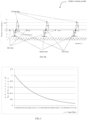
- FIG.3A and 3B illustrate nicotine sensor readings with respect to time, in an exemplary embodiment of the disclosure for a deep smoker and a shallow smoker respectively.
- N 0 or the "initial quantity" refers to the average amount of intake of the substance that is nicotine in this exemplary instance
- T wt each time the user smokes, and if tobacco weight in a cigarette/bidi is represented as T wt , average nicotine content N 0 is represented as given below.
- T wt 700mg
- Avg. nicotine intake varies from 5% - 30% of avg nicotine content i.e. 0.5mg - 3mg. Therefore the average intake based on smoking profile varies as represented below.
- the step of computing average amount of substance in the user's body at a given time N final (t) comprises computing substance level in the body after each consumption; and integrating the computed substance level in the body in a day.
- N final (t) can be computed as explained hereinafter. Nicotine level in the body decays exponentially and its half-life varies between 1-2 hours as known in the art.
- N 0 or the "initial quantity" refers to the average amount of intake of the substance that is nicotine in this exemplary instance, each time the user smokes
- t 1/2 refers to half-life of nicotine
- ⁇ refers to decay constant of nicotine
- ⁇ refers to mean lifetime of nicotine in this exemplary instance.
- integrating the substance level in the body in a day involves use of a unit step function u(t) to account for abrupt change in the computed substance levels between consumptions.
- the above expressions can be obtained for nicotine levels after every smoke by the user.
- the device 200 further comprises a dynamic goal setting module 214 configured to generate a summary of consumption, at pre-determined intervals, of the substance based on the received first data and obtain goals directed to reduce consumption of the substance by setting desired number of consumptions in a day to be less than the received first data.
- the substance is nicotine
- the user can receive a summary of his smoking history using which the user can set goals for a fixed duration such as maximum number of cigarettes to be smoked per day with the intent of reducing the intake from his current intake.
- the device 200 further comprises a dynamic threshold setting module 216 configured to compute a threshold N(ICT) corresponding to amount of substance the body can sustain, the threshold N(ICT) being based on the received first data, the received second data and the obtained goals.
- the threshold N(ICT) is based on the initial quantity of substance in the body (N 0 ), half-life of the substance in the body (t 1/2 ), residual substance in the body (N res ) and average time interval between two consecutive consumptions of the substance (ICT).
- t 1/2 half-life of the nicotine in the body t 1/2 ranges from 1 to 2 hours or t 1/2 ⁇ [1,2].
- t 1 / 2 1
- t 1 / 2 max 2
- t 1 / 2 avg t 1 / 2 min + t 1 / 2 max / 2
- t 1/2 based on empirical study, the following table describes t 1/2 based on the second data such as physical activity of the user. Physical activity t 1/2 Athlete t 1/2min Normal work-out t 1/2avg No workout t 1/2max
- the substance is nicotine
- N cd number of cigarettes smoked per day
- t m maximum time interval between two consecutive cigarette smoking
- N ICT N res + N 0 ⁇ 1 2 ICT t 1 2 wherein N res refers to the residual substance in the body or the accumulated amount of the substance or nicotine in the body based on the received first data.
- the device 200 further comprises an alerting module 218 configured to generate and transmit an alert based on one or more pre-determined conditions selected from the group consisting of (i) user consuming the substance before the set threshold N(ICT) is reached by the body, (ii) number of consumptions in a day is more than the desired number of consumptions in a day; and (iii) time interval between two consecutive consumptions of the substance is less than the average time interval between two consecutive consumptions of the substance (ICT).
- an alerting module 218 configured to generate and transmit an alert based on one or more pre-determined conditions selected from the group consisting of (i) user consuming the substance before the set threshold N(ICT) is reached by the body, (ii) number of consumptions in a day is more than the desired number of consumptions in a day; and (iii) time interval between two consecutive consumptions of the substance is less than the average time interval between two consecutive consumptions of the substance (ICT).
- devices and methods in accordance with various embodiments of the present disclosure provide a goal oriented personalized monitoring of substance consumed by a user in a non-invasive manner.
- user can set his goals based on his substance consumption history which will be targeted to reduce the number of intake.
- his goal successfully, he will be motivated through personalized alerts to modify the goals to further reduce the substance intake.
- This eventually helps the user to overcome addiction to substances that are prone to have harmful effects on the body and mind.
- Devices and methods of the present disclosure enable identifying the user's consumption profile effectively and also facilitates computation of the Inter Cigarette Time (ICT) and the threshold corresponding to the amount of substance the user's body can sustain to provide personalized monitoring of the substance consumed by the user.
- ICT Inter Cigarette Time
- the hardware device can be any kind of device which can be programmed including e.g. any kind of computer like a server or a personal computer, or the like, or any combination thereof.
- the device may also include means which could be e.g. hardware means like e.g. an application-specific integrated circuit (ASIC), a field-programmable gate array (FPGA), or a combination of hardware and software means, e.g.
- ASIC application-specific integrated circuit
- FPGA field-programmable gate array
- the means can include both hardware means and software means.
- the method embodiments described herein could be implemented in hardware and software.
- the device may also include software means.
- the invention may be implemented on different hardware devices, e.g. using a plurality of CPUs.
- the embodiments herein can comprise hardware and software elements.
- the embodiments that are implemented in software include but are not limited to, firmware, resident software, microcode, etc.
- the functions performed by various modules comprising the device of the present disclosure and described herein may be implemented in other modules or combinations of other modules.
- a computer-usable or computer readable medium can be any apparatus that can comprise, store, communicate, propagate, or transport the program for use by or in connection with the instruction execution system, apparatus, or device.
- the various modules described herein may be implemented as software and/or hardware modules and may be stored in any type of non-transitory computer readable medium or other storage device.
- Some non-limiting examples of non-transitory computer-readable media include CDs, DVDs, BLU-RAY, flash memory, and hard disk drives.
Landscapes
- Health & Medical Sciences (AREA)
- Life Sciences & Earth Sciences (AREA)
- Engineering & Computer Science (AREA)
- Physics & Mathematics (AREA)
- Biomedical Technology (AREA)
- Molecular Biology (AREA)
- General Health & Medical Sciences (AREA)
- Pathology (AREA)
- Biophysics (AREA)
- Medical Informatics (AREA)
- Public Health (AREA)
- Heart & Thoracic Surgery (AREA)
- Surgery (AREA)
- Animal Behavior & Ethology (AREA)
- Veterinary Medicine (AREA)
- Physiology (AREA)
- Chemical & Material Sciences (AREA)
- Pulmonology (AREA)
- Psychiatry (AREA)
- Signal Processing (AREA)
- Artificial Intelligence (AREA)
- Computer Vision & Pattern Recognition (AREA)
- Urology & Nephrology (AREA)
- Biochemistry (AREA)
- Hematology (AREA)
- Immunology (AREA)
- General Physics & Mathematics (AREA)
- Food Science & Technology (AREA)
- Medicinal Chemistry (AREA)
- Analytical Chemistry (AREA)
- Toxicology (AREA)
- Bioinformatics & Cheminformatics (AREA)
- Optics & Photonics (AREA)
- Pharmacology & Pharmacy (AREA)
- Obesity (AREA)
- Primary Health Care (AREA)
- Data Mining & Analysis (AREA)
- Databases & Information Systems (AREA)
- Epidemiology (AREA)
- Medical Treatment And Welfare Office Work (AREA)
Claims (13)
- Vorrichtung zur nicht-invasiven Überwachung der Substanzmenge im Körper eines Benutzers, wobei die Vorrichtung umfasst:ein Eingabemodul (210), das konfiguriert ist, um dynamisch erste Daten zu empfangen, die sich auf Substanzverbrauchseigenschaften beziehen, die auf der vom Benutzer verbrauchten Substanz basieren, wobei die ersten Daten ein Maß der Substanz umfassen, die in einer Umgebung des Benutzers in vorbestimmten Zeitintervallen vorhanden ist; undein dynamisches Überwachungsmodul (212), das konfiguriert ist, um das Substanzverbrauchsprofil des Benutzers zu identifizieren und die durchschnittliche Menge der Substanz im Körper zu einem gegebenen Zeitpunkt (Nfinale(t)) basierend auf den empfangenen ersten Daten zu berechnen, wobei das Substanzverbrauchsprofil des Benutzers identifiziert wird durch:Berechnen der Einatmungszeit, der Haltezeit und der Ausatmungszeit aus dem empfangenen Maß der in der Umgebung vorhandenen Substanz;Berechnen der Zugzeit basierend auf der berechneten Einatmungszeit, Haltezeit und Ausatmungszeit; undZuordnen der berechneten Zugzeit zum Substanzverbrauchsprofil des Benutzers; undwobei die durchschnittliche Substanzmenge im Körper zum gegebenen Zeitpunkt Nfinale(t) berechnet wird durch:Berechnen des Substanzspiegels im Körper nach jedem Verbrauch; undIntegrieren des berechneten Substanzspiegels im Körper an einem Tag.
- Vorrichtung nach Anspruch 1, wobei das Eingabemodul (210) ferner konfiguriert ist, um zweite Daten zu empfangen, die sich auf das Profil des Benutzers beziehen.
- Vorrichtung nach Anspruch 1, wobei mindestens einige der ersten Daten von mindestens einem Substanzsensor (110) empfangen werden.
- Vorrichtung nach Anspruch 2, ferner umfassend ein dynamisches Zieleinstellmodul (214), das konfiguriert ist, um eine Zusammenfassung des Verbrauchs der Substanz in vorbestimmten Intervallen basierend auf den empfangenen ersten Daten zu erzeugen und Ziele zu erhalten, die darauf ausgerichtet sind, den Verbrauch der Substanz durch Einstellen der gewünschten Anzahl von Verbräuchen an einem Tag auf weniger als die empfangenen ersten Daten zu reduzieren.
- Vorrichtung nach Anspruch 4, ferner umfassend ein dynamisches Schwellenwerteinstellmodul (216), das konfiguriert ist, um einen Schwellenwert N(ICT) zu berechnen, der der Substanzmenge entspricht, die der Körper ertragen kann, wobei der Schwellenwert N(ICT) auf den empfangenen ersten Daten, den empfangenen zweiten Daten und den erhaltenen Zielen basiert.
- Vorrichtung nach Anspruch 5, wobei das dynamische Schwellenwerteinstellmodul (214) ferner konfiguriert ist, um den Schwellenwert N(ICT) basierend auf der anfänglichen Substanzmenge im Körper (N0), der Halbwertszeit der Substanz im Körper, der Restsubstanz im Körper (Nres) und dem durchschnittlichen Zeitintervall zwischen zwei aufeinanderfolgenden Verbräuchen der Substanz (ICT) zu berechnen.
- Vorrichtung nach Anspruch 6, ferner umfassend ein Warnmodul (218), das konfiguriert ist, um eine Warnung basierend auf einer oder mehreren vorbestimmten Bedingungen zu erzeugen und zu übertragen, die aus der Gruppe ausgewählt sind, die aus Folgendem besteht: (i) der Benutzer verbraucht die Substanz, bevor der eingestellte Schwellenwert N(ICT) vom Körper erreicht wird, (ii) die Anzahl der Verbräuche an einem Tag ist größer als die gewünschte Anzahl von Verbräuchen an einem Tag; und (iii) das Zeitintervall zwischen zwei aufeinanderfolgenden Verbräuchen der Substanz ist kleiner als das durchschnittliche Zeitintervall zwischen zwei aufeinanderfolgenden Verbräuchen der Substanz (ICT).
- Computerimplementiertes Verfahren zur nicht-invasiven Überwachung der Substanz im Körper eines Benutzers, wobei das Verfahren umfasst:Empfangen, durch ein Eingabemodul (210), von ersten Daten, die sich auf Substanzverbrauchseigenschaften beziehen, die auf der vom Benutzer verbrauchten Substanz basieren, wobei die ersten Daten ein Maß der Substanz umfassen, die in einer Umgebung des Benutzers in vorbestimmten Zeitintervallen vorhanden ist;Identifizieren, durch ein dynamisches Überwachungsmodul (212), des Substanzverbrauchsprofils des Benutzers basierend auf den empfangenen ersten Daten; undBerechnen, durch das dynamische Überwachungsmodul (212), der durchschnittlichen Substanzmenge im Körper zu einem gegebenen Zeitpunkt (Nfinale(t)) basierend auf den empfangenen ersten Daten, wobei das Substanzverbrauchsprofil des Benutzers identifiziert wird durch:Berechnen der Einatmungszeit, Haltezeit und Ausatmungszeit aus dem empfangenen Maß der in der Umgebung vorhandenen Substanz;Berechnen der Zugzeit basierend auf der berechneten Einatmungszeit, Haltezeit und Ausatmungszeit; undZuordnen der berechneten Zugzeit zum Substanzverbrauchsprofil des Benutzers; undwobei die durchschnittliche Substanzmenge im Körper zum gegebenen Zeitpunkt Nfinale(t) berechnet wird durch:
Berechnen des Substanzspiegels im Körper nach jedem Verbrauch; undIntegrieren des berechneten Substanzspiegels im Körper an einem Tag. - Computerimplementiertes Verfahren nach Anspruch 8, ferner umfassend das Empfangen, durch das Eingabemodul (210), von zweiten Daten, die sich auf das Profil des Benutzers beziehen.
- Computerimplementiertes Verfahren nach Anspruch 8, wobei das Integrieren des berechneten Substanzspiegels die Verwendung einer Einheitsschrittfunktion beinhaltet, um eine abrupte Änderung der berechneten Substanzspiegel zwischen den Verbräuchen zu berücksichtigen.
- Computerimplementiertes Verfahren nach Anspruch 9, ferner umfassend das Durchführen von mindestens einem von:Erzeugen, in vorbestimmten Intervallen, durch ein dynamisches Zieleinstellmodul (214), einer Zusammenfassung des Verbrauchs der Substanz basierend auf den empfangenen ersten Daten und Erhalten von Zielen, die darauf ausgerichtet sind, den Verbrauch der Substanz durch Einstellen der gewünschten Anzahl von Verbräuchen an einem Tag auf weniger als die empfangenen ersten Daten zu reduzieren; undBerechnen, durch ein dynamisches Schwellenwerteinstellmodul (216), eines Schwellenwertes N(ICT), der der Substanzmenge entspricht, die der Körper ertragen kann, wobei der Schwellenwert N(ICT) auf den empfangenen ersten Daten, den empfangenen zweiten Daten und den erhaltenen Zielen basiert.
- Computerimplementiertes Verfahren nach Anspruch 11, wobei das Berechnen des Schwellenwertes N(ICT) auf der anfänglichen Substanzmenge im Körper (N0), der Halbwertszeit der Substanz im Körper, der Restsubstanz im Körper (Nres) und dem durchschnittlichen Zeitintervall zwischen zwei aufeinanderfolgenden Verbräuchen der Substanz (ICT) basiert, wobei das durchschnittliche Zeitintervall (ICT) auf einem maximalen Zeitintervall zwischen zwei aufeinanderfolgenden Verbräuchen und der Anzahl von Verbräuchen der Substanz an einem Tag basiert, wobei die anfängliche Menge (N0) basierend auf dem Substanzverbrauchsprofil des Benutzers berechnet wird, wobei die Halbwertszeit der Substanz im Körper basierend auf den empfangenen zweiten Daten berechnet wird, und wobei die Restsubstanz im Körper (Nres) basierend auf der berechneten durchschnittlichen Substanzmenge im Körper zu einem gegebenen Zeitpunkt (Nfinale(t)), dem durchschnittlichen Zeitintervall zwischen zwei aufeinanderfolgenden Verbräuchen der Substanz (ICT) und dem Startzeitpunkt des ersten Verbrauchs der Substanz durch den Benutzer berechnet wird.
- Computerimplementiertes Verfahren nach Anspruch 12, ferner umfassend das Erzeugen und Übertragen, durch ein Warnmodul (218), einer Warnung basierend auf einer vorbestimmten Bedingung, die aus der Gruppe ausgewählt ist, die aus Folgendem besteht: (i) der Benutzer verbraucht die Substanz, bevor der eingestellte Schwellenwert N(ICT) vom Körper erreicht wird, (ii) die Anzahl der Verbräuche an einem Tag ist größer als die gewünschte Anzahl von Verbräuchen an einem Tag; und (iii) das Zeitintervall zwischen zwei aufeinanderfolgenden Verbräuchen der Substanz ist kleiner als das durchschnittliche Zeitintervall zwischen zwei aufeinanderfolgenden Verbräuchen der Substanz (ICT).
Applications Claiming Priority (2)
| Application Number | Priority Date | Filing Date | Title |
|---|---|---|---|
| IN4655MU2015 | 2015-12-10 | ||
| PCT/IB2016/057537 WO2017098485A1 (en) | 2015-12-10 | 2016-12-12 | Devices and methods for non-invasive monitoring of substance in a body |
Publications (4)
| Publication Number | Publication Date |
|---|---|
| EP3386387A1 EP3386387A1 (de) | 2018-10-17 |
| EP3386387A4 EP3386387A4 (de) | 2019-05-29 |
| EP3386387C0 EP3386387C0 (de) | 2025-02-26 |
| EP3386387B1 true EP3386387B1 (de) | 2025-02-26 |
Family
ID=59012810
Family Applications (1)
| Application Number | Title | Priority Date | Filing Date |
|---|---|---|---|
| EP16872538.0A Active EP3386387B1 (de) | 2015-12-10 | 2016-12-12 | Vorrichtungen und verfahren zur nicht-invasiven überwachung eines stoffes in einem körper |
Country Status (4)
| Country | Link |
|---|---|
| US (1) | US10813571B2 (de) |
| EP (1) | EP3386387B1 (de) |
| AU (1) | AU2016367532B2 (de) |
| WO (1) | WO2017098485A1 (de) |
Families Citing this family (1)
| Publication number | Priority date | Publication date | Assignee | Title |
|---|---|---|---|---|
| CN113331489A (zh) * | 2020-03-03 | 2021-09-03 | 深圳市卓力能技术有限公司 | 控制设定时间内雾化装置产生的雾化总量的方法及装置 |
Citations (4)
| Publication number | Priority date | Publication date | Assignee | Title |
|---|---|---|---|---|
| KR20080049463A (ko) * | 2006-11-30 | 2008-06-04 | (주)센코 | 호기 검사 장치 |
| US20090187111A1 (en) * | 2007-03-08 | 2009-07-23 | Fsp Instruments, Inc. | Gas analyzer |
| US20110144515A1 (en) * | 2008-02-15 | 2011-06-16 | Georgia Tech Research Corporation | Systems and methods for providing environment monitoring |
| WO2014190079A2 (en) * | 2013-05-22 | 2014-11-27 | Njoy, Inc. | Compositions, devices, and methods for nicotine aerosol delivery |
Family Cites Families (13)
| Publication number | Priority date | Publication date | Assignee | Title |
|---|---|---|---|---|
| EP0229064A1 (de) * | 1984-10-04 | 1987-07-22 | Alcolator Limited | Verfahren zur messung der körperalkoholkonzentration |
| US5274550A (en) * | 1991-09-17 | 1993-12-28 | Greenlee Robert J | Blood alcohol level determining device |
| US6017308A (en) * | 1998-05-19 | 2000-01-25 | Fults; Steven P. | Blood alcohol content monitoring device |
| GB0003197D0 (en) * | 2000-02-11 | 2000-04-05 | Aid Medic Ltd | Improvements in and relating to controlling drug delivery |
| DE10023148A1 (de) * | 2000-05-12 | 2001-11-22 | Hohlbein Renate | Vorrichtung zur Berechnung des Alkoholgehalts im Blut des menschlichen Körpers |
| US20070258894A1 (en) * | 2000-11-08 | 2007-11-08 | Melker Richard J | System and Method for Real-Time Diagnosis, Treatment, and Therapeutic Drug Monitoring |
| US20060122864A1 (en) * | 2004-12-02 | 2006-06-08 | Gottesman Janell M | Patient management network |
| US20090137919A1 (en) * | 2005-09-02 | 2009-05-28 | Technion City | Lung volume monitoring method and device |
| US20110247638A1 (en) * | 2010-04-07 | 2011-10-13 | Theresa Ayala | Smoking cessation and weight management method and kit |
| US20130216989A1 (en) * | 2012-02-22 | 2013-08-22 | Mgoodlife, Corp. | Personalization platform for behavioral change |
| US10517530B2 (en) * | 2012-08-28 | 2019-12-31 | Juul Labs, Inc. | Methods and devices for delivering and monitoring of tobacco, nicotine, or other substances |
| US8878669B2 (en) * | 2013-01-31 | 2014-11-04 | KHN Solutions, Inc. | Method and system for monitoring intoxication |
| US20150064672A1 (en) * | 2013-09-05 | 2015-03-05 | Matthew Bars | Systems and methods for treatment of substance addiction |
-
2016
- 2016-12-12 AU AU2016367532A patent/AU2016367532B2/en active Active
- 2016-12-12 US US16/004,177 patent/US10813571B2/en active Active
- 2016-12-12 EP EP16872538.0A patent/EP3386387B1/de active Active
- 2016-12-12 WO PCT/IB2016/057537 patent/WO2017098485A1/en not_active Ceased
Patent Citations (4)
| Publication number | Priority date | Publication date | Assignee | Title |
|---|---|---|---|---|
| KR20080049463A (ko) * | 2006-11-30 | 2008-06-04 | (주)센코 | 호기 검사 장치 |
| US20090187111A1 (en) * | 2007-03-08 | 2009-07-23 | Fsp Instruments, Inc. | Gas analyzer |
| US20110144515A1 (en) * | 2008-02-15 | 2011-06-16 | Georgia Tech Research Corporation | Systems and methods for providing environment monitoring |
| WO2014190079A2 (en) * | 2013-05-22 | 2014-11-27 | Njoy, Inc. | Compositions, devices, and methods for nicotine aerosol delivery |
Also Published As
| Publication number | Publication date |
|---|---|
| US20180360345A1 (en) | 2018-12-20 |
| AU2016367532A1 (en) | 2018-07-26 |
| AU2016367532B2 (en) | 2020-03-26 |
| US10813571B2 (en) | 2020-10-27 |
| EP3386387A1 (de) | 2018-10-17 |
| EP3386387A4 (de) | 2019-05-29 |
| EP3386387C0 (de) | 2025-02-26 |
| WO2017098485A1 (en) | 2017-06-15 |
Similar Documents
| Publication | Publication Date | Title |
|---|---|---|
| Hartmann-Boyce et al. | Electronic cigarettes for smoking cessation | |
| Hartmann-Boyce et al. | Electronic cigarettes for smoking cessation | |
| US11412784B2 (en) | Systems and methods for quantification of, and prediction of smoking behavior | |
| Newth et al. | Weaning and extubation readiness in pediatric patients | |
| Peters et al. | Does marijuana “blunt” smoking contribute to nicotine exposure?: Preliminary product testing of nicotine content in wrappers of cigars commonly used for blunt smoking | |
| Hua et al. | Health-related effects reported by electronic cigarette users in online forums | |
| Dai et al. | Flavored electronic cigarette use and smoking among youth | |
| US8491489B2 (en) | System, medium, and method to conduce a user's breathing | |
| US10335032B2 (en) | Systems and methods for quantification of, and prediction of smoking behavior | |
| US20240108243A1 (en) | Breath sensor calibration methods and apparatus | |
| EP3302235B1 (de) | Vorrichtung zur diagnose der wirksamkeit der beatmung eines patienten und verfahren zur bestimmung der wirksamkeit der atemeffizienz eines patienten | |
| Vansickel et al. | Waterpipe tobacco products: nicotine labelling versus nicotine delivery | |
| Owotomo et al. | Perceptions of the harm and addictiveness of conventional cigarette smoking among adolescent e-cigarette users | |
| WO2012165182A1 (ja) | 生体ガス検知装置及び生体ガス検知方法 | |
| NZ740135A (en) | Breath gas analysis | |
| AU2020418520B2 (en) | Use of co values in smoking cessation | |
| McKelvey et al. | Adolescent cigarette smoking perceptions and behavior: tobacco control gains and gaps amidst the rapidly expanding tobacco products market from 2001 to 2015 | |
| Fitzpatrick et al. | Adolescent beliefs about hookah and hookah tobacco use and implications for preventing use | |
| US10813571B2 (en) | Devices and methods for non-invasive monitoring of substance in a body | |
| Ross et al. | Adolescents’ first tobacco product: Results from a nationally representative survey | |
| Borchert et al. | Reporting of pneumothorax in association with vaping devices and electronic cigarettes | |
| US20210313029A1 (en) | System and method for promoting a change in consumer smoking habits | |
| JP2021534489A5 (de) | ||
| KR20150080900A (ko) | 스마트 금연방법 | |
| Sutfin et al. | Longitudinal associations between marijuana and cigar use in young adults. |
Legal Events
| Date | Code | Title | Description |
|---|---|---|---|
| STAA | Information on the status of an ep patent application or granted ep patent |
Free format text: STATUS: THE INTERNATIONAL PUBLICATION HAS BEEN MADE |
|
| PUAI | Public reference made under article 153(3) epc to a published international application that has entered the european phase |
Free format text: ORIGINAL CODE: 0009012 |
|
| STAA | Information on the status of an ep patent application or granted ep patent |
Free format text: STATUS: REQUEST FOR EXAMINATION WAS MADE |
|
| 17P | Request for examination filed |
Effective date: 20180709 |
|
| AK | Designated contracting states |
Kind code of ref document: A1 Designated state(s): AL AT BE BG CH CY CZ DE DK EE ES FI FR GB GR HR HU IE IS IT LI LT LU LV MC MK MT NL NO PL PT RO RS SE SI SK SM TR |
|
| AX | Request for extension of the european patent |
Extension state: BA ME |
|
| DAV | Request for validation of the european patent (deleted) | ||
| DAX | Request for extension of the european patent (deleted) | ||
| A4 | Supplementary search report drawn up and despatched |
Effective date: 20190502 |
|
| RIC1 | Information provided on ipc code assigned before grant |
Ipc: A61B 5/00 20060101ALI20190425BHEP Ipc: G01N 33/497 20060101ALI20190425BHEP Ipc: A61B 5/145 20060101ALI20190425BHEP Ipc: A61B 5/097 20060101ALI20190425BHEP Ipc: A61B 5/083 20060101AFI20190425BHEP Ipc: A61B 5/08 20060101ALI20190425BHEP |
|
| STAA | Information on the status of an ep patent application or granted ep patent |
Free format text: STATUS: EXAMINATION IS IN PROGRESS |
|
| 17Q | First examination report despatched |
Effective date: 20220624 |
|
| REG | Reference to a national code |
Ref country code: DE Ref legal event code: R079 Free format text: PREVIOUS MAIN CLASS: A61B0005083000 Ipc: G16H0050300000 Ref country code: DE Ref legal event code: R079 Ref document number: 602016091398 Country of ref document: DE Free format text: PREVIOUS MAIN CLASS: A61B0005083000 Ipc: G16H0050300000 |
|
| GRAP | Despatch of communication of intention to grant a patent |
Free format text: ORIGINAL CODE: EPIDOSNIGR1 |
|
| STAA | Information on the status of an ep patent application or granted ep patent |
Free format text: STATUS: GRANT OF PATENT IS INTENDED |
|
| RIC1 | Information provided on ipc code assigned before grant |
Ipc: A61B 5/097 20060101ALI20241113BHEP Ipc: A61B 5/083 20060101ALI20241113BHEP Ipc: A61B 5/145 20060101ALI20241113BHEP Ipc: G01N 33/497 20060101ALI20241113BHEP Ipc: A61B 5/08 20060101ALI20241113BHEP Ipc: A61B 5/00 20060101ALI20241113BHEP Ipc: G16H 50/30 20180101AFI20241113BHEP |
|
| INTG | Intention to grant announced |
Effective date: 20241128 |
|
| GRAS | Grant fee paid |
Free format text: ORIGINAL CODE: EPIDOSNIGR3 |
|
| GRAA | (expected) grant |
Free format text: ORIGINAL CODE: 0009210 |
|
| STAA | Information on the status of an ep patent application or granted ep patent |
Free format text: STATUS: THE PATENT HAS BEEN GRANTED |
|
| AK | Designated contracting states |
Kind code of ref document: B1 Designated state(s): AL AT BE BG CH CY CZ DE DK EE ES FI FR GB GR HR HU IE IS IT LI LT LU LV MC MK MT NL NO PL PT RO RS SE SI SK SM TR |
|
| REG | Reference to a national code |
Ref country code: GB Ref legal event code: FG4D |
|
| REG | Reference to a national code |
Ref country code: CH Ref legal event code: EP |
|
| REG | Reference to a national code |
Ref country code: DE Ref legal event code: R096 Ref document number: 602016091398 Country of ref document: DE |
|
| REG | Reference to a national code |
Ref country code: IE Ref legal event code: FG4D |
|
| RAP4 | Party data changed (patent owner data changed or rights of a patent transferred) |
Owner name: TATA CONSULTANCY SERVICES LIMITED |
|
| U01 | Request for unitary effect filed |
Effective date: 20250226 |
|
| U07 | Unitary effect registered |
Designated state(s): AT BE BG DE DK EE FI FR IT LT LU LV MT NL PT RO SE SI Effective date: 20250304 |
|
| PG25 | Lapsed in a contracting state [announced via postgrant information from national office to epo] |
Ref country code: RS Free format text: LAPSE BECAUSE OF FAILURE TO SUBMIT A TRANSLATION OF THE DESCRIPTION OR TO PAY THE FEE WITHIN THE PRESCRIBED TIME-LIMIT Effective date: 20250526 |
|
| PG25 | Lapsed in a contracting state [announced via postgrant information from national office to epo] |
Ref country code: PL Free format text: LAPSE BECAUSE OF FAILURE TO SUBMIT A TRANSLATION OF THE DESCRIPTION OR TO PAY THE FEE WITHIN THE PRESCRIBED TIME-LIMIT Effective date: 20250226 |
|
| PG25 | Lapsed in a contracting state [announced via postgrant information from national office to epo] |
Ref country code: ES Free format text: LAPSE BECAUSE OF FAILURE TO SUBMIT A TRANSLATION OF THE DESCRIPTION OR TO PAY THE FEE WITHIN THE PRESCRIBED TIME-LIMIT Effective date: 20250226 |
|
| PG25 | Lapsed in a contracting state [announced via postgrant information from national office to epo] |
Ref country code: NO Free format text: LAPSE BECAUSE OF FAILURE TO SUBMIT A TRANSLATION OF THE DESCRIPTION OR TO PAY THE FEE WITHIN THE PRESCRIBED TIME-LIMIT Effective date: 20250526 Ref country code: IS Free format text: LAPSE BECAUSE OF FAILURE TO SUBMIT A TRANSLATION OF THE DESCRIPTION OR TO PAY THE FEE WITHIN THE PRESCRIBED TIME-LIMIT Effective date: 20250626 |
|
| PG25 | Lapsed in a contracting state [announced via postgrant information from national office to epo] |
Ref country code: HR Free format text: LAPSE BECAUSE OF FAILURE TO SUBMIT A TRANSLATION OF THE DESCRIPTION OR TO PAY THE FEE WITHIN THE PRESCRIBED TIME-LIMIT Effective date: 20250226 |
|
| PG25 | Lapsed in a contracting state [announced via postgrant information from national office to epo] |
Ref country code: GR Free format text: LAPSE BECAUSE OF FAILURE TO SUBMIT A TRANSLATION OF THE DESCRIPTION OR TO PAY THE FEE WITHIN THE PRESCRIBED TIME-LIMIT Effective date: 20250527 |
|
| PG25 | Lapsed in a contracting state [announced via postgrant information from national office to epo] |
Ref country code: SM Free format text: LAPSE BECAUSE OF FAILURE TO SUBMIT A TRANSLATION OF THE DESCRIPTION OR TO PAY THE FEE WITHIN THE PRESCRIBED TIME-LIMIT Effective date: 20250226 |
|
| PG25 | Lapsed in a contracting state [announced via postgrant information from national office to epo] |
Ref country code: CZ Free format text: LAPSE BECAUSE OF FAILURE TO SUBMIT A TRANSLATION OF THE DESCRIPTION OR TO PAY THE FEE WITHIN THE PRESCRIBED TIME-LIMIT Effective date: 20250226 |
|
| PG25 | Lapsed in a contracting state [announced via postgrant information from national office to epo] |
Ref country code: SK Free format text: LAPSE BECAUSE OF FAILURE TO SUBMIT A TRANSLATION OF THE DESCRIPTION OR TO PAY THE FEE WITHIN THE PRESCRIBED TIME-LIMIT Effective date: 20250226 |
|
| PLBE | No opposition filed within time limit |
Free format text: ORIGINAL CODE: 0009261 |
|
| REG | Reference to a national code |
Ref country code: CH Ref legal event code: U11 Free format text: ST27 STATUS EVENT CODE: U-0-0-U10-U11 (AS PROVIDED BY THE NATIONAL OFFICE) Effective date: 20260101 |
|
| STAA | Information on the status of an ep patent application or granted ep patent |
Free format text: STATUS: NO OPPOSITION FILED WITHIN TIME LIMIT |
|
| PGFP | Annual fee paid to national office [announced via postgrant information from national office to epo] |
Ref country code: GB Payment date: 20251223 Year of fee payment: 10 |
|
| U20 | Renewal fee for the european patent with unitary effect paid |
Year of fee payment: 10 Effective date: 20251223 |
|
| 26N | No opposition filed |
Effective date: 20251127 |
|
| PGFP | Annual fee paid to national office [announced via postgrant information from national office to epo] |
Ref country code: CH Payment date: 20260101 Year of fee payment: 10 |