EP3379800B1 - Verfahren und vorrichtung zur ausführung von zeitlich festgelegten netzwerkoperationen - Google Patents
Verfahren und vorrichtung zur ausführung von zeitlich festgelegten netzwerkoperationen Download PDFInfo
- Publication number
- EP3379800B1 EP3379800B1 EP18170994.0A EP18170994A EP3379800B1 EP 3379800 B1 EP3379800 B1 EP 3379800B1 EP 18170994 A EP18170994 A EP 18170994A EP 3379800 B1 EP3379800 B1 EP 3379800B1
- Authority
- EP
- European Patent Office
- Prior art keywords
- network
- operations
- network operations
- timing
- maintaining
- Prior art date
- Legal status (The legal status is an assumption and is not a legal conclusion. Google has not performed a legal analysis and makes no representation as to the accuracy of the status listed.)
- Active
Links
Images
Classifications
-
- H—ELECTRICITY
- H04—ELECTRIC COMMUNICATION TECHNIQUE
- H04L—TRANSMISSION OF DIGITAL INFORMATION, e.g. TELEGRAPHIC COMMUNICATION
- H04L67/00—Network arrangements or protocols for supporting network services or applications
- H04L67/50—Network services
- H04L67/60—Scheduling or organising the servicing of application requests, e.g. requests for application data transmissions using the analysis and optimisation of the required network resources
- H04L67/61—Scheduling or organising the servicing of application requests, e.g. requests for application data transmissions using the analysis and optimisation of the required network resources taking into account QoS or priority requirements
-
- H—ELECTRICITY
- H04—ELECTRIC COMMUNICATION TECHNIQUE
- H04W—WIRELESS COMMUNICATION NETWORKS
- H04W76/00—Connection management
- H04W76/20—Manipulation of established connections
- H04W76/25—Maintenance of established connections
-
- H—ELECTRICITY
- H04—ELECTRIC COMMUNICATION TECHNIQUE
- H04L—TRANSMISSION OF DIGITAL INFORMATION, e.g. TELEGRAPHIC COMMUNICATION
- H04L67/00—Network arrangements or protocols for supporting network services or applications
- H04L67/50—Network services
- H04L67/60—Scheduling or organising the servicing of application requests, e.g. requests for application data transmissions using the analysis and optimisation of the required network resources
- H04L67/62—Establishing a time schedule for servicing the requests
Definitions
- the invention generally concerns communication over communication networks. Especially the invention concerns temporal adjustment of network operations execution.
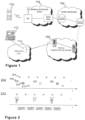
- Figure 1 depicts an example of a communication system, or an aggregate of multiple communication systems, that interconnects both mobile and computer networks.
- a mobile terminal 102 is communicating with a second terminal such as another mobile terminal or a desktop computer 112 reachable via radio access network 104, core (mobile) network 106, a public computer network 108 such as the Internet, and a local area network 110.
- a second terminal such as another mobile terminal or a desktop computer 112 reachable via radio access network 104, core (mobile) network 106, a public computer network 108 such as the Internet, and a local area network 110.
- either of the terminals 102, 112 may communicate with one or more network elements residing in one of the intermediate networks 104, 106, 108, and 110, for example.
- the figure is merely used to highlight the fact how far-situated two or more communicating parties having access to different networks may actually reside and how different information transfer technologies may be cleverly combined to provide nearly transparent communication experience.
- transfer resources being either wireless (frequencies, etc) or wired (time slots over a copper pair, etc) are in many cases designed for a certain average load only and the number of connections is generally increasing, the unnecessary or "idle" connections between two or more entities shall not be kept alive for unlimited period of time.
- Terminal devices and various network elements may be required to execute a plurality of cyclic operations that are to be performed at least once per a predetermined time interval (e.g. once every N seconds or minutes).
- a predetermined time interval e.g. once every N seconds or minutes.
- NAT Network Address Translation
- firewall bindings refreshment offers address mapping between two different networks (e.g. a private and a public one) whereas the firewalls monitor and limit traffic on the edge of a network.
- NAT and firewall functions may be implemented by the same apparatus, e.g. the GGSN. (Gateway GPRS Support Node) of figure 1 .
- keep-alive time refers to a time period X prior to or upon the expiration of which the terminal should send a keep-alive message to the NAT/firewall entity concerning each UDP (User Datagram Protocol) and TCP (Transmission Control Protocol) connection thereof; then the associated, connection-specific timer is reset and the same cycle repeats until the connection is finally terminated.
- this X may be something like 30 seconds, and for TCP somewhere around 1200 seconds, for example.
- keep-alive operations are sent separately for each connection, there often are several keep-alive sequences simultaneously running.
- constant wake up procedures from a sleep (or other power saving) state for executing each keep alive operation consume an unnecessary amount of power.
- the wake up procedure causes a power consumption peak that may last for a relatively long time.
- the connection-specific keep-alive transmissions may prevent the mobile apparatus from never really entering a true sleep state, and the apparatus constantly stays in some power inefficient mode instead.
- US 2006/0123119 A1 describes including an Ack Request of multiple sequence sessions in a single message.
- US 6,405,262 B1 describes coalescing keep-alive signals into single inter-process messages which are periodically sent.
- timing of network operations with the same timing sequence e.g. a cycle length or a 'keep-alive time' within which a periodic keep-alive operation shall be performed since the previous one, or different timing sequences may be adjusted to regularly, i.e. either for each instance of one or more network operations executed or for at least every nth instance, coincide is found in the detailed description.
- substantially refers to parallel activity, e.g. transmitting two keep-alive messages simultaneously, or serial activity with small or no delay between the operations so that the executing apparatus will not initiate e.g. a sleep mode between the keep-alive messages.
- Serial activity may be implemented by sending e.g. two or more keep-alive notifications in one message, or two or more separate messages temporally close to each other; the issue will be reviewed hereinafter in more detail.
- connection may refer to a physical or a logical one.
- the invention enables the executing apparatus to stay longer in a power-saving mode like a sleep mode, which, for its part, maximises operating time in general including e.g. standby and call times.
- a terminal apparatus includes a scheduler entity that takes care of the timing of keep-alive operations for each registered client (application) thereof.
- At least a part of the periodic network operations have the same timing sequence or different timing sequences.
- said means for transmitting comprise a transmitter and/or wherein said means for receiving comprise a receiver and/or wherein said means for maintaining and adjusting comprise a scheduler entity.
- Figure 2 discloses one example of the effect of the inventive arrangement that takes place in a terminal apparatus required to perform multiple network operations in order to keep the related network connections alive.
- network operations for maintaining a connection are also referred to as keep-alive operations due to their nature.
- a total of four keep-alive operation chains, or 'timelines', 204, 206, 208, and 210 are simultaneously running and causing a situation, wherein the executing apparatus cannot in practice enter the power-saving mode at all.
- different client applications of the executing apparatus may perform the keep-alive operations independently of each other, which makes the overall timing thereof more or less random.
- Keep-alive operations for maintaining the associated connections may involve data transmission, which requires ramping-up amplifier(s) in the transmitter and executing other time and power-consuming activities.
- Keep-alive operation chain 204 has the highest frequency, i.e. the shortest cycle, which means that the associated operations have to be executed most frequently in contrast to the remaining chains.
- Keep-alive operation chains 206 and 208 have a common, slightly lower frequency/longer cycle, whereas the reference numeral 210 denotes a chain requiring performing keep-alive operations most seldom (half the frequency of chains 206, 208).
- the scheduler obtains knowledge of the current, either established or to-be-established, connections and required timing sequences, e.g. keep-alive times.
- Next to reference numeral 212 one option for optimizing the timing of keep-alive operations is presented. Now the operation chains of all four connections are synchronized so that during every second keep-alive operation instance three 204, 206, 208 or four 204, 206, 208, 210 keep-alive operations are performed whereas the remaining instances solely related to the keep-alive chain 204 requiring most frequent attention. Keep-alive operations relating to the keep-alive chain 210 having the longest cycle ('keep-alive time') are performed during every fourth keep-alive operation instance only.
- periods marked with "SLEEP" rectangle are created to enable the executing apparatus to properly enter a power-saving mode without a need to perform keep-alive operations all the time and thus keep e.g. the amplifiers of the transmitter in power-consuming, active mode.
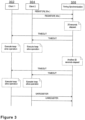
- Figure 3 discloses an example of signalling taking place between clients 302, 304 (e.g. UDP sockets or VoIP (Voice Over IP) -related entities) taking care of each connection/related keep-alive operations and the scheduler entity 306, e.g. a software module such as an application, adjusting the timing of the keep-alive operations in accordance with an embodiment of the current invention.
- clients 302, 304 e.g. UDP sockets or VoIP (Voice Over IP) -related entities
- VoIP Voice Over IP
- Each client 302, 304 applying the scheduler 306 may first register therewith by sending e.g. a message including the required timing sequence (e.g. keep-alive time or period length) and possible timing constraints (e.g. timing accuracy and/or timing randomization requirements).
- the required timing sequence e.g. keep-alive time or period length
- possible timing constraints e.g. timing accuracy and/or timing randomization requirements.
- the registration and/or triggering of network operations may be handled through function-based solutions (callback etc) in the context of the invention.
- the timing sequence may in basic form thus refer to a cycle time, e.g. 20 seconds shown in the figure, which defines the maximum duration between two subsequent keep-alive operations so that the connection is still maintained.
- a cycle time e.g. 20 seconds shown in the figure
- keep-alive operations may be performed according to some mathematic formula or other predetermined rules. For example, every third keep-alive transmission may be performed within extended, e.g. a double, keep-alive time in contrast to the basic keep-alive cycle.
- the scheduler 306 may inform each client about a synchronized timing instant for performing a keep-alive operation by sending a notification message ('TIMEOUT').
- the scheduler 306 finds out suitable operation timings by analyzing the timing needs that the registered clients have indicated. Implementing the timing of operations that require similar kind of timing, e.g. same cycle length without further modifiers, requires just a single timer.
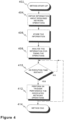
- Figure 4 discloses a flow diagram of one option for carrying out the method according to the invention.
- the scheduler is launched and the client applications may, for example, inform the scheduler about their timing needs for performing network operations.
- the scheduler obtains the necessary information (timing sequences including at least the keep-alive cycle, optional constraints) from the clients by receiving related messages or by accessing, on its own initiative, e.g. memory locations of the client application disclosing such information.
- the scheduler may also advertise the scheduling service and poll the clients to get assignments and necessary information for adjusting and keeping track of the network operations timing, for example.
- the obtained information is stored as such, in part, or in a modified form.
- the scheduler adapts and adjusts the timing of the required network operations relating to a number of network connections so as to coincide, if possible.
- the scheduler may maintain an information database that comprises the data received from clients and arrange the data into a single schedule with optimized, i.e. merged, network operation time instants commonly used by the clients.
- Such process may utilize e.g. tables (e.g. different cycle lengths and how to fit these together for a single timeline) and/or formulas for timing optimization. Operations with similar timing requirements (same cycle length etc) may be straightforwardly tied together, i.e. they will be always performed substantially simultaneously. Operations with different cycle length, e.g.
- each network operation shall be executed in time, e.g. prior to the expiry of the related keep-alive time.
- Another solution to the exemplary scenario with 3 and 4 seconds cycle lengths is to execute both the network operations once per every shorter cycle length of 3 seconds, which in a general case indicates performing at least two network operations according to the shortest original cycle length thereof. Consequently the network operation with 4 seconds cycle is executed a bit more often than necessary, but the executing apparatus may still stay longer in a continuous sleep state.
- the selection between the above two solutions has to be assessed by evaluating e.g. the power consumption gain arising from the more seldom switching between operational states (e.g. sleep and active) against the power consumption increase due to additional transmissions or extended transmission periods.
- the scheduler may execute them in parallel or serially with minimized temporal difference.
- the scheduler may either externally trigger the operations by sending a message (e.g. TIMEOUT in figure 3 ) or proactively instruct the clients with a time schedule, etc how to proceed with timing in the future.
- the scheduler may also be used to control the timing of network operations executed by an external device; in that case the device to be controlled and the apparatus comprising the scheduler communicate via a compatible data interface, a wired or a wireless one, through which the scheduler transmits timing information and receives timing assignments/requests, for example.
- step 410 it is checked, either by the scheduler itself in the case it is in real-time fashion controlling the clients or even performing the operations, or by the clients who have received instructions from the scheduler how to deal with the timing, whether a scheduled instant for performing network operation(s) for one or more connection has taken place; if that is the case 412, the associated network operations such as keep-alive message transmissions are performed preferably simultaneously, although fully simultaneous execution is not practically feasible in many scenarios wherein e.g. a single transmission means serve all client applications of an apparatus or the clients receiving the triggering commands are not mutually synchronized anyhow. In those cases the operations are taken with minimized temporal separation offered e.g. by a transmission/task queue functions.
- the scheduler may obtain updated/new information from the clients for further adapting and adjusting a common schedule for performing network operations of various connections.
- the remote entity that is the target of network operations may at least occasionally acknowledge the detected keep-alive operations and transmit (updated) requirements (keep-alive time, constraints) to the apparatus, either targeted directly to the scheduler or to the client(s) that later forward at least part of them to the scheduler.
- the method execution is ended in step 414, when the scheduler functionality is disabled in the executing apparatus, for example. Otherwise, the scheduling operation 410, 412 may be continued in a loop-fashion as depicted by the dotted line in the figure.
- the scheduler entity of the invention may not have to be implemented as a separate apparatus or a separate application from other apparatuses/applications; it may also be integrated in an apparatus/application for controlling internal functions (e.g. tasks) that require performing network operations for maintaining related network connections.
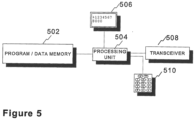
- Figure 5 discloses one example of an apparatus adapted to perform the arrangement of the present invention.
- the apparatus comprises a processing means for executing instructions and handling data, such as a processing unit 504 or a plurality of functionally connected units in a form of a microprocessor, a microcontroller, a DSP, a programmable logic array, or a combination of those.
- the apparatus comprises a means for storing information such as instructions and other data.
- Such means include memory 502 comprising one or more, optionally removable, memory chips and/or a magnetic disc, for example.
- the scheduler may be dedicated software or a part of a more-generic software running in general hardware, but also tailored hardware may be utilized.
- User input means 510 such as a keypad, buttons, voice command interface, touch screen, mouse, touch pad, etc are optional but handy means for providing control input by a user of the apparatus.
- a display means 506 which may refer to an internal display, a connector for an external monitor, or data projection means (e.g. a projector), for example.
- a transmission means such as a transceiver 508 comprising a transmitter and a receiver is provided.
- the transmission means may support wireless and/or wired communication; e.g. RF, infrared, or Bluetooth connectivity may be implemented.
- the network operations for maintaining the related network connections are not limited to any specific ones, e.g. the ones particularly expressed as 'keep-alive' operations in the literature, as long as the operations follow the general idea disclosed in this text.
- the invention may be utilized in other devices such as network elements.
- Various embodiments disclosed by the dependent claims can also be combined together to form aggregate solutions.
- Figure 5 discloses one example of an apparatus adapted to perform the arrangement of the present invention.
- the apparatus comprises a processing means for executing instructions and handling data, such as a processing unit 504 or a plurality of functionally connected units in a form of a microprocessor, a microcontroller, a DSP, a programmable logic array, or a combination of those.
- the apparatus comprises a means for storing information such as instructions and other data.
- Such means include memory 502 comprising one or more, optionally removable, memory chips and/or a magnetic disc, for example.
- the scheduler may be dedicated software or a part of a more-generic software running in general hardware, but also tailored hardware may be utilized.
- User input means 510 such as a keypad, buttons, voice command interface, touch screen, mouse, touch pad, etc are optional but handy means for providing control input by a user of the apparatus.
- a display means 506 which may refer to an internal display, a connector for an external monitor, or data projection means (e.g. a projector), for example.
- a transmission means such as a transceiver 508 comprising a transmitter and a receiver is provided.
- the transmission means may support wireless and/or wired communication; e.g. RF, infrared, or Bluetooth connectivity may be implemented.
- the network operations for maintaining the related network connections are not limited to any specific ones, e.g. the ones particularly expressed as 'keep-alive' operations in the literature, as long as the operations follow the general idea disclosed in this text.
- the invention may be utilized in other devices such as network elements.
- Various embodiments disclosed by the dependent claims can also be combined together to form aggregate solutions.
Landscapes
- Engineering & Computer Science (AREA)
- Computer Networks & Wireless Communication (AREA)
- Signal Processing (AREA)
- Mobile Radio Communication Systems (AREA)
Claims (20)
- Vorrichtung, die Folgendes umfasst- ein Mittel (508) zum Übertragen von Daten zu mindestens einer entfernten Entität über ein Kommunikationsnetzwerk (104,106,108,110),- ein Mittel (508) zum Empfangen von Daten von der mindestens einen entfernten Entität über ein Kommunikationsnetzwerk (104,106,108,110),- ein Mittel (306) zum Aufrechterhalten von Kenntnissen zu einer Anzahl von aktuellen Netzwerkverbindungen, die zum Aufrechterhalten der Verbindungen das Durchführen einer periodischen Netzwerkoperation mit einer oder mehreren vorbestimmten Timingsequenzen (204, 206, 208, 210), die an die mindestens eine entfernte Entität gerichtet ist, erfordern, und zum Anpassen der Zeit der Ausführung von mindestens zwei dieser Netzwerkoperationen derart, dass sie entweder für jede Instanz von einer oder mehreren Netzwerkoperationen oder für mindestens jede n-te Instanz entweder in paralleler Aktivität oder in serieller Aktivität mit einer geringen oder keiner Verzögerung zwischen den Operationen zusammenfallen, derart, dass die Vorrichtung zwischen den mindestens zwei Netzwerkoperationen keinen Energiesparmodus initiiert, nicht aber die ganze Zeit zusammenfallen müssen und nicht während jeder möglichen Netzwerkoperationsinstanz zusammenfallen müssen, und- ein Mittel zum Durchführen oder Auslösen des Durchführens der mindestens zwei Netzwerkoperationen gemäß dem angepassten Timing.
- Vorrichtung nach Anspruch 1, wobei das Anpassen (408) das Verzögern oder Vorrücken von verschiedenen Netzwerkoperationsketten, die mit den mindestens zwei Netzwerkoperationen verknüpft sind, auf Basis eines gemeinsamen Vielfachen von Zykluszeiten von jeweiligen vorbestimmten Timingsequenzen (204, 206, 208, 210) umfasst, derart, dass das Umsetzen die Netzwerkoperationen in paralleler Aktivität oder in serieller Aktivität mit einer geringen oder keiner Verzögerung zwischen den Operationen startet.
- Vorrichtung nach Anspruch 1, wobei das Anpassen (408) das Bestimmen einer kürzesten Zykluslänge der mindestens zwei Netzwerkoperationen umfasst, wobei die mindestens zwei Netzwerkoperationen anschließend auf Basis der kürzesten Zykluslänge ausgeführt werden (412).
- Vorrichtung nach einem der Ansprüche 1 bis 3, die angeordnet ist, mindestens einen Teil der Kenntnisse via das Mittel (508) zum Empfangen von der entfernten Entität zu empfangen.
- Vorrichtung nach einem der Ansprüche 1 bis 4, wobei das Mittel (306) zum Aufrechterhalten und Anpassen dazu ausgelegt ist, die Kenntnisse von einer oder mehreren Cliententitäten (302, 304) zu empfangen, die die Anzahl von Netzwerkverbindungen in der Vorrichtung verwalten.
- Vorrichtung nach einem der Ansprüche 1 bis 5, wobei das Mittel (306) zum Aufrechterhalten und Anpassen dazu ausgelegt ist, durch Zugreifen auf einen vorbestimmten Speicherort in der Vorrichtung, der mit einer Cliententität (302, 304) verknüpft ist, die eine oder mehrere der Netzwerkverbindungen in der Vorrichtung verwaltet, mindestens einen Teil der Kenntnisse zu erhalten.
- Vorrichtung nach einem der Ansprüche 1 bis 6, wobei das Mittel (306) zum Aufrechterhalten und Anpassen dazu ausgelegt ist, zum Durchführen der Netzwerkoperationen gemäß dem angepassten Timing eine Anzahl von Cliententitäten auszulösen.
- Vorrichtung nach einem der Ansprüche 1 bis 7, wobei das Mittel (306) zum Aufrechterhalten und Anpassen angeordnet ist, mindestens einen Teil der Netzwerkoperationen durch das Mittel (508) zum Übertragen gemäß dem angepassten Timing durchzuführen.
- Vorrichtung nach einem der Ansprüche 1 bis 8, wobei das Mittel (306) zum Aufrechterhalten und Anpassen angeordnet ist, einer Anzahl von Clients (302, 304) Anweisungen zum korrekten Timing der Netzwerkoperationen gemäß der Anpassung bereitzustellen.
- Vorrichtung nach einem der Ansprüche 1 bis 9, wobei eine Timingsequenz eine Keep-alive-Zeit oder eine Zykluslänge definiert, innerhalb der zum Aufrechterhalten einer Netzwerkverbindung eine periodische Netzwerkoperation seit der vorherigen Netzwerkoperation durchzuführen ist.
- Vorrichtung nach einem der Ansprüche 1 bis 10, wobei eine Timingsequenz eines von Folgendem beinhaltet:- einen Satz von Regeln, die die Wechselbeziehungen zwischen sequenziellen Netzwerkoperationen zum Aufrechterhalten einer Netzwerkverbindung definieren, und- eine mathematische Formel, die die Wechselbeziehungen zwischen sequenziellen Netzwerkoperationen zum Aufrechterhalten einer Netzwerkverbindung definiert.
- Vorrichtung nach einem der Ansprüche 1 bis 11, wobei eine periodische Netzwerkoperation das Senden einer Keep-alive-Nachricht an die mindestens eine entfernte Entität beinhaltet.
- Vorrichtung nach einem der Ansprüche 1 bis 12, die dazu ausgelegt ist, eine externe Entität anzuweisen, die periodischen Netzwerkoperationen zeitlich zu steuern.
- Vorrichtung nach einem der Ansprüche 1 bis 13, wobei das Mittel (306) zum Aufrechterhalten und Anpassen eine Planerentität (306) ist, die zum Erhalten von Informationen über deren Timingerfordernisse zum Durchführen von Netzwerkoperationen von einer oder mehreren Clientanwendungen ausgelegt ist sowie zum Beachten des Timings der Keep-alive-Operationen für jede registrierte Clientanwendung ausgelegt ist.
- Verfahren zum Anpassen der Zeit der Ausführung von Netzwerkoperationen, die von einer Vorrichtung durchgeführt werden, wobei das Verfahren Folgendes umfasst:- Erhalten (404) von Informationen über eine Anzahl von Netzwerkverbindungen, die zum Aufrechterhalten der Verbindungen das Durchführen einer periodischen Netzwerkoperation mit einer oder mehreren vorbestimmten Timingsequenzen (204, 206, 208, 210), die an mindestens eine entfernte Entität gerichtet ist, erfordern,- Speichern (406) der Informationen,- Anpassen (408) der Zeit der Ausführung für mindestens zwei dieser Netzwerkoperationen derart, dass sie entweder für jede Instanz von einer oder mehreren Netzwerkoperationen oder für mindestens jede n-te Instanz entweder in paralleler Aktivität oder in serieller Aktivität mit einer geringen oder keiner Verzögerung zwischen den Operationen zusammenfallen, derart, dass die Vorrichtung zwischen den mindestens zwei Netzwerkoperationen keinen Energiesparmodus initiiert, nicht aber die ganze Zeit zusammenfallen müssen und nicht während jeder möglichen Netzwerkoperationsinstanz zusammenfallen müssen,
Durchführen oder Auslösen des Durchführens der mindestens zwei Netzwerkoperationen gemäß dem angepassten Timing. - Verfahren nach Anspruch 15, wobei das Anpassen (408) Folgendes umfasst:- Verzögern oder Vorrücken von verschiedenen Netzwerkoperationsketten, die mit den mindestens zwei Netzwerkoperationen verknüpft sind, auf Basis eines gemeinsamen Vielfachen von Zykluszeiten von jeweiligen vorbestimmten Timingsequenzen (204, 206, 208, 210), derart, dass das Umsetzen die Netzwerkoperationen in paralleler Aktivität oder in serieller Aktivität mit einer geringen oder keiner Verzögerung zwischen den Operationen startet, oder- Bestimmen einer kürzesten Zykluslänge der mindestens zwei Netzwerkoperationen, wobei die mindestens zwei Netzwerkoperationen anschließend auf Basis der kürzesten Zykluslänge ausgeführt werden (412).
- Verfahren nach Anspruch 15 oder 16, das ferner eines oder mehreres von Folgendem umfasst:- Empfangen mindestens eines Teils der Informationen von der entfernten Entität;- Empfangen der Kenntnisse von einer oder mehreren Cliententitäten (302, 304), die die Anzahl von Netzwerkverbindungen in der Vorrichtung verwalten;- Erhalten von mindestens einem Teil der Kenntnisse durch Zugreifen auf einen vorbestimmten Speicherort in der Vorrichtung, der mit einer Cliententität (302, 304) verknüpft ist, die eine oder mehrere der Netzwerkverbindungen in der Vorrichtung verwaltet;- Auslösen einer Anzahl von Cliententitäten zum Durchführen der Netzwerkoperationen gemäß dem angepassten Timing;- Durchführen von mindestens einem Teil der Netzwerkoperationen durch das Mittel (508) zum Übertragen gemäß dem angepassten Timing; und/oder- Bereitstellen von Anweisungen für eine Anzahl von Clients (302, 304) zum korrekten Timing der Netzwerkoperationen gemäß der Anpassung.
- Verfahren nach einem der Ansprüche 15 bis 17,wobei eine Timingsequenz eine Keep-alive-Zeit oder eine Zykluslänge definiert, innerhalb der zum Aufrechterhalten einer Netzwerkverbindung eine periodische Netzwerkoperation seit der vorherigen Netzwerkoperation durchzuführen ist; und/oderwobei eine Timingsequenz eines von Folgendem beinhaltet:- einen Satz von Regeln, die die Wechselbeziehungen zwischen sequenziellen Netzwerkoperationen zum Aufrechterhalten einer Netzwerkverbindung definieren, und- eine mathematische Formel, die die Wechselbeziehungen zwischen sequenziellen Netzwerkoperationen zum Aufrechterhalten einer Netzwerkverbindung definiert.
- Verfahren nach einem der Ansprüche 15 bis 18, wobei eine periodische Netzwerkoperation das Senden einer Keep-alive-Nachricht an die mindestens eine entfernte Entität beinhaltet.
- Verfahren nach einem der Ansprüche 15 bis 19, wobei das Verfahren ferner das Anweisen einer externen Entität zum zeitlichen Steuern der periodischen Netzwerkoperationen umfasst.
Applications Claiming Priority (3)
| Application Number | Priority Date | Filing Date | Title |
|---|---|---|---|
| US11/645,023 US7698409B2 (en) | 2006-12-22 | 2006-12-22 | Method and an apparatus for executing timed network operations |
| PCT/FI2007/000297 WO2008077994A1 (en) | 2006-12-22 | 2007-12-18 | A method and an apparatus for executing timed network operations |
| EP07858321.8A EP2122973A4 (de) | 2006-12-22 | 2007-12-18 | Verfahren und vorrichtung zum ausführen zeitgesteuerter netzwerkoperationen |
Related Parent Applications (1)
| Application Number | Title | Priority Date | Filing Date |
|---|---|---|---|
| EP07858321.8A Division EP2122973A4 (de) | 2006-12-22 | 2007-12-18 | Verfahren und vorrichtung zum ausführen zeitgesteuerter netzwerkoperationen |
Publications (2)
| Publication Number | Publication Date |
|---|---|
| EP3379800A1 EP3379800A1 (de) | 2018-09-26 |
| EP3379800B1 true EP3379800B1 (de) | 2023-07-05 |
Family
ID=39544389
Family Applications (2)
| Application Number | Title | Priority Date | Filing Date |
|---|---|---|---|
| EP07858321.8A Withdrawn EP2122973A4 (de) | 2006-12-22 | 2007-12-18 | Verfahren und vorrichtung zum ausführen zeitgesteuerter netzwerkoperationen |
| EP18170994.0A Active EP3379800B1 (de) | 2006-12-22 | 2007-12-18 | Verfahren und vorrichtung zur ausführung von zeitlich festgelegten netzwerkoperationen |
Family Applications Before (1)
| Application Number | Title | Priority Date | Filing Date |
|---|---|---|---|
| EP07858321.8A Withdrawn EP2122973A4 (de) | 2006-12-22 | 2007-12-18 | Verfahren und vorrichtung zum ausführen zeitgesteuerter netzwerkoperationen |
Country Status (3)
| Country | Link |
|---|---|
| US (1) | US7698409B2 (de) |
| EP (2) | EP2122973A4 (de) |
| WO (1) | WO2008077994A1 (de) |
Families Citing this family (56)
| Publication number | Priority date | Publication date | Assignee | Title |
|---|---|---|---|---|
| AU2003209194A1 (en) | 2002-01-08 | 2003-07-24 | Seven Networks, Inc. | Secure transport for mobile communication network |
| US8438633B1 (en) | 2005-04-21 | 2013-05-07 | Seven Networks, Inc. | Flexible real-time inbox access |
| WO2006136660A1 (en) | 2005-06-21 | 2006-12-28 | Seven Networks International Oy | Maintaining an ip connection in a mobile network |
| US7729273B2 (en) * | 2006-06-20 | 2010-06-01 | General Instrument Corporation | Method and apparatus for conserving bandwidth between a network device and a remote device |
| US7729357B2 (en) * | 2006-06-20 | 2010-06-01 | General Instrument Corporation | Method and apparatus for enabling a network device to asynchronously access a set top box in a way that conserves network bandwidth |
| JP4813596B2 (ja) * | 2007-03-28 | 2011-11-09 | パイオニア株式会社 | コンテンツ配信システム及びその制御方法 |
| US8805425B2 (en) | 2007-06-01 | 2014-08-12 | Seven Networks, Inc. | Integrated messaging |
| FR2922398B1 (fr) * | 2007-10-11 | 2011-02-11 | Stephane Perret | Systeme d'interconnexion entre au moins un appareil de communication et au moins un systeme d'information distant et methode d'interconnexion |
| US9002828B2 (en) | 2007-12-13 | 2015-04-07 | Seven Networks, Inc. | Predictive content delivery |
| US8862657B2 (en) | 2008-01-25 | 2014-10-14 | Seven Networks, Inc. | Policy based content service |
| US20090193338A1 (en) | 2008-01-28 | 2009-07-30 | Trevor Fiatal | Reducing network and battery consumption during content delivery and playback |
| JP5315867B2 (ja) * | 2008-09-05 | 2013-10-16 | 富士通モバイルコミュニケーションズ株式会社 | 通信端末 |
| US9521625B2 (en) * | 2008-09-15 | 2016-12-13 | Apple Inc. | Electronic devices for receiving pushed data |
| US8909759B2 (en) | 2008-10-10 | 2014-12-09 | Seven Networks, Inc. | Bandwidth measurement |
| JP5228112B2 (ja) * | 2008-11-25 | 2013-07-03 | テレフオンアクチーボラゲット エル エム エリクソン(パブル) | ソフトステート・シグナリングにおけるリフレッシュ要求 |
| CN106162850A (zh) * | 2008-11-25 | 2016-11-23 | 爱立信电话股份有限公司 | 软状态信令中的更新请求 |
| US9313800B2 (en) * | 2009-06-23 | 2016-04-12 | Nokia Technologies Oy | Method and apparatus for optimizing energy consumption for wireless connectivity |
| CN102111306B (zh) * | 2009-12-23 | 2013-06-26 | 杭州华三通信技术有限公司 | 基于以太网的光纤通道虚链路故障检测方法、系统和装置 |
| US9143428B1 (en) * | 2010-03-22 | 2015-09-22 | Sprint Communications Company L.P. | Keep-alive message integration over a wireless communication network |
| WO2012018430A1 (en) | 2010-07-26 | 2012-02-09 | Seven Networks, Inc. | Mobile network traffic coordination across multiple applications |
| US8838783B2 (en) | 2010-07-26 | 2014-09-16 | Seven Networks, Inc. | Distributed caching for resource and mobile network traffic management |
| JP5676762B2 (ja) * | 2010-07-26 | 2015-02-25 | セブン ネットワークス インコーポレイテッド | モバイルアプリケーショントラフィック最適化 |
| US8903954B2 (en) | 2010-11-22 | 2014-12-02 | Seven Networks, Inc. | Optimization of resource polling intervals to satisfy mobile device requests |
| US8843153B2 (en) | 2010-11-01 | 2014-09-23 | Seven Networks, Inc. | Mobile traffic categorization and policy for network use optimization while preserving user experience |
| WO2012060995A2 (en) | 2010-11-01 | 2012-05-10 | Michael Luna | Distributed caching in a wireless network of content delivered for a mobile application over a long-held request |
| US8484314B2 (en) | 2010-11-01 | 2013-07-09 | Seven Networks, Inc. | Distributed caching in a wireless network of content delivered for a mobile application over a long-held request |
| US8560792B2 (en) | 2010-12-16 | 2013-10-15 | International Business Machines Corporation | Synchronous extent migration protocol for paired storage |
| US8583889B2 (en) * | 2010-12-16 | 2013-11-12 | International Business Machines Corporation | Synchronous extent migration protocol for paired storage |
| WO2012094675A2 (en) | 2011-01-07 | 2012-07-12 | Seven Networks, Inc. | System and method for reduction of mobile network traffic used for domain name system (dns) queries |
| GB2517815A (en) | 2011-04-19 | 2015-03-04 | Seven Networks Inc | Shared resource and virtual resource management in a networked environment |
| US20120278431A1 (en) | 2011-04-27 | 2012-11-01 | Michael Luna | Mobile device which offloads requests made by a mobile application to a remote entity for conservation of mobile device and network resources and methods therefor |
| US8621075B2 (en) | 2011-04-27 | 2013-12-31 | Seven Metworks, Inc. | Detecting and preserving state for satisfying application requests in a distributed proxy and cache system |
| WO2013015835A1 (en) | 2011-07-22 | 2013-01-31 | Seven Networks, Inc. | Mobile application traffic optimization |
| EP2789138B1 (de) | 2011-12-06 | 2016-09-14 | Seven Networks, LLC | Mobile vorrichtung und verfahren zum verwenden von failover-mechanismen zur fehlertoleranz für mobilverkehrsverwaltung und zur erhaltung von netzwerk-/vorrichtungs-ressourcen |
| US8918503B2 (en) | 2011-12-06 | 2014-12-23 | Seven Networks, Inc. | Optimization of mobile traffic directed to private networks and operator configurability thereof |
| EP2788889A4 (de) | 2011-12-07 | 2015-08-12 | Seven Networks Inc | Flexible und dynamische integrationsschemata eines verkehrsverwaltungssystems mit verschiedenen netzwerkbetreibern zur netzwerkverkehrabschwächung |
| US9277443B2 (en) | 2011-12-07 | 2016-03-01 | Seven Networks, Llc | Radio-awareness of mobile device for sending server-side control signals using a wireless network optimized transport protocol |
| US9021021B2 (en) | 2011-12-14 | 2015-04-28 | Seven Networks, Inc. | Mobile network reporting and usage analytics system and method aggregated using a distributed traffic optimization system |
| GB2499306B (en) | 2012-01-05 | 2014-10-22 | Seven Networks Inc | Managing user interaction with an application on a mobile device |
| KR20130086700A (ko) * | 2012-01-26 | 2013-08-05 | 삼성전자주식회사 | 휴대 단말기의 패킷 전송 방법 및 장치 |
| US8812695B2 (en) | 2012-04-09 | 2014-08-19 | Seven Networks, Inc. | Method and system for management of a virtual network connection without heartbeat messages |
| WO2013155208A1 (en) | 2012-04-10 | 2013-10-17 | Seven Networks, Inc. | Intelligent customer service/call center services enhanced using real-time and historical mobile application and traffic-related statistics collected by a distributed caching system in a mobile network |
| US8775631B2 (en) | 2012-07-13 | 2014-07-08 | Seven Networks, Inc. | Dynamic bandwidth adjustment for browsing or streaming activity in a wireless network based on prediction of user behavior when interacting with mobile applications |
| US9756089B2 (en) * | 2012-08-28 | 2017-09-05 | Facebook, Inc. | Maintain persistent connections between servers and mobile clients |
| KR20150084017A (ko) * | 2012-10-22 | 2015-07-21 | 인터디지탈 패튼 홀딩스, 인크 | 이동국에서 실행 중인 애플리케이션의 “킵-얼라이브” 메시지 빈도를 협상하기 위한 방법 및 장치 |
| US9161258B2 (en) | 2012-10-24 | 2015-10-13 | Seven Networks, Llc | Optimized and selective management of policy deployment to mobile clients in a congested network to prevent further aggravation of network congestion |
| US20140177497A1 (en) | 2012-12-20 | 2014-06-26 | Seven Networks, Inc. | Management of mobile device radio state promotion and demotion |
| US9241314B2 (en) | 2013-01-23 | 2016-01-19 | Seven Networks, Llc | Mobile device with application or context aware fast dormancy |
| US8874761B2 (en) | 2013-01-25 | 2014-10-28 | Seven Networks, Inc. | Signaling optimization in a wireless network for traffic utilizing proprietary and non-proprietary protocols |
| US8750123B1 (en) | 2013-03-11 | 2014-06-10 | Seven Networks, Inc. | Mobile device equipped with mobile network congestion recognition to make intelligent decisions regarding connecting to an operator network |
| US9065765B2 (en) | 2013-07-22 | 2015-06-23 | Seven Networks, Inc. | Proxy server associated with a mobile carrier for enhancing mobile traffic management in a mobile network |
| US9602293B2 (en) * | 2013-11-06 | 2017-03-21 | Marvell World Trade Ltd. | Managing idle mode of operation in network switches |
| TWI577154B (zh) * | 2014-10-31 | 2017-04-01 | 宏碁股份有限公司 | 保持遠端連線方法、電子裝置與伺服器 |
| WO2017210209A1 (en) | 2016-05-31 | 2017-12-07 | Brocade Communications Systems, Inc. | Keepalive scheduler in a network device |
| CN108616903B (zh) * | 2016-12-19 | 2021-06-18 | 南宁富桂精密工业有限公司 | Ac与ap之间的链路保活方法及系统 |
| US10542476B2 (en) | 2017-07-13 | 2020-01-21 | Nokia Solutions And Networks Oy | Selecting communication paths for application server queries of devices |
Family Cites Families (12)
| Publication number | Priority date | Publication date | Assignee | Title |
|---|---|---|---|---|
| US6405262B1 (en) | 1995-07-14 | 2002-06-11 | Microsoft Corporation | Efficient inter-process object and interface pinging |
| US5802305A (en) * | 1996-05-17 | 1998-09-01 | Microsoft Corporation | System for remotely waking a sleeping computer in power down state by comparing incoming packet to the list of packets storing on network interface card |
| US5768528A (en) * | 1996-05-24 | 1998-06-16 | V-Cast, Inc. | Client-server system for delivery of online information |
| US5915119A (en) | 1996-10-01 | 1999-06-22 | Ncr Corporation | Proxy terminal for network controlling of power managed user terminals in suspend mode |
| US6240294B1 (en) * | 1997-05-30 | 2001-05-29 | Itt Manufacturing Enterprises, Inc. | Mobile radio device having adaptive position transmitting capabilities |
| CN1177461C (zh) | 2001-02-13 | 2004-11-24 | 因芬尼昂技术股份公司 | 建立xdsl数据传送连接的系统及方法 |
| US7788381B2 (en) * | 2001-09-17 | 2010-08-31 | Foundry Networks, Inc. | System and method for router keep-alive control |
| EP1578095B1 (de) | 2004-03-17 | 2006-06-28 | Alcatel | Verfahren zum Steuern des Schlafmodus eines Endgerätes, dazugehöriges mobiles Endgerät und Funkzugriffsknoten |
| US7899921B2 (en) * | 2004-12-08 | 2011-03-01 | Microsoft Corporation | Verifying and maintaining connection liveliness in a reliable messaging for web services environment |
| WO2006069067A2 (en) * | 2004-12-20 | 2006-06-29 | Sensicast Systems | Method for reporting and accumulating data in a wireless communication network |
| US8755848B2 (en) * | 2005-09-30 | 2014-06-17 | Qualcomm Incorporated | Mobile device power management |
| US7885616B2 (en) * | 2006-08-16 | 2011-02-08 | Research In Motion Limited | Method and system for coordinating necessary radio transmission events with unrelated opportunistic events to optimize battery life and network resources |
-
2006
- 2006-12-22 US US11/645,023 patent/US7698409B2/en active Active
-
2007
- 2007-12-18 EP EP07858321.8A patent/EP2122973A4/de not_active Withdrawn
- 2007-12-18 EP EP18170994.0A patent/EP3379800B1/de active Active
- 2007-12-18 WO PCT/FI2007/000297 patent/WO2008077994A1/en not_active Ceased
Also Published As
| Publication number | Publication date |
|---|---|
| EP2122973A4 (de) | 2013-05-22 |
| WO2008077994A1 (en) | 2008-07-03 |
| EP2122973A1 (de) | 2009-11-25 |
| EP3379800A1 (de) | 2018-09-26 |
| US7698409B2 (en) | 2010-04-13 |
| US20080154913A1 (en) | 2008-06-26 |
Similar Documents
| Publication | Publication Date | Title |
|---|---|---|
| EP3379800B1 (de) | Verfahren und vorrichtung zur ausführung von zeitlich festgelegten netzwerkoperationen | |
| US7231223B2 (en) | Push-to-talk call setup for a mobile packet data dispatch network | |
| US9264868B2 (en) | Management of network access requests | |
| US8090963B2 (en) | Automated power management of a peripheral device | |
| JP5095861B2 (ja) | 通信システムにおける端末とサーバとの接続維持方法及びシステム | |
| US8923176B2 (en) | Saving power in a wireless communication device | |
| US20100042691A1 (en) | Intelligent message receiving method and apparatus | |
| US20160112947A1 (en) | Method and apparatus to improve wireless device performance | |
| US8306018B2 (en) | Energy star compliant voice over internet protocol (VoIP) telecommunications network including energy star compliant VoIP devices | |
| US20140157009A1 (en) | Opportunistic Modem Wakeup | |
| EP2725869B1 (de) | System und Verfahren zum Reduzieren des Stromverbrauchs basierend auf Datenaktivitätstimern | |
| KR101944556B1 (ko) | 무선부에서의 절전 모드 제어 방법 | |
| TW201826826A (zh) | 一種參數配置方法及設備 | |
| JP4732523B2 (ja) | 通信装置及び電力供給方法 | |
| JP5517875B2 (ja) | 無線通信システム、データ送信装置、データ無線受信装置、及び、無線通信方法 | |
| US9955422B2 (en) | User equipment power optimization | |
| EP2060064A2 (de) | Verfahren und vorrichtung für ausgerichtete übertragungen in einem drahtlosen netzwerk | |
| US11937279B2 (en) | Systems, devices, and methods related to configuring a multi-stream network with a messaging schedule | |
| EP2244522B1 (de) | Vorrichtung und verfahren zur identifizierung des netzwerkverbindungszustands in einem tragbaren endgerät | |
| US12596661B2 (en) | System and method for synchronized wake up and packet polling system for wireless input/output (IO) devices and wireless radio system of an information handling system | |
| US20250036585A1 (en) | System and method for synchronized wake up and packet polling system for wireless input/output (io) devices and wireless radio system of an information handling system | |
| WO2021258962A1 (zh) | 数据下发方法、设备和存储介质 | |
| WO2009122014A1 (en) | Control of hybrid peer-to-peer system |
Legal Events
| Date | Code | Title | Description |
|---|---|---|---|
| PUAI | Public reference made under article 153(3) epc to a published international application that has entered the european phase |
Free format text: ORIGINAL CODE: 0009012 |
|
| STAA | Information on the status of an ep patent application or granted ep patent |
Free format text: STATUS: REQUEST FOR EXAMINATION WAS MADE |
|
| 17P | Request for examination filed |
Effective date: 20180507 |
|
| AC | Divisional application: reference to earlier application |
Ref document number: 2122973 Country of ref document: EP Kind code of ref document: P |
|
| AK | Designated contracting states |
Kind code of ref document: A1 Designated state(s): AT BE BG CH CY CZ DE DK EE ES FI FR GB GR HU IE IS IT LI LT LU LV MC MT NL PL PT RO SE SI SK TR |
|
| STAA | Information on the status of an ep patent application or granted ep patent |
Free format text: STATUS: EXAMINATION IS IN PROGRESS |
|
| 17Q | First examination report despatched |
Effective date: 20190604 |
|
| RAP1 | Party data changed (applicant data changed or rights of an application transferred) |
Owner name: NOKIA TECHNOLOGIES OY |
|
| GRAP | Despatch of communication of intention to grant a patent |
Free format text: ORIGINAL CODE: EPIDOSNIGR1 |
|
| STAA | Information on the status of an ep patent application or granted ep patent |
Free format text: STATUS: GRANT OF PATENT IS INTENDED |
|
| INTG | Intention to grant announced |
Effective date: 20210219 |
|
| GRAJ | Information related to disapproval of communication of intention to grant by the applicant or resumption of examination proceedings by the epo deleted |
Free format text: ORIGINAL CODE: EPIDOSDIGR1 |
|
| STAA | Information on the status of an ep patent application or granted ep patent |
Free format text: STATUS: EXAMINATION IS IN PROGRESS |
|
| INTC | Intention to grant announced (deleted) | ||
| REG | Reference to a national code |
Ref country code: DE Ref legal event code: R079 Ref document number: 602007061705 Country of ref document: DE Free format text: PREVIOUS MAIN CLASS: H04L0029060000 Ipc: H04L0067610000 Ref country code: DE Ref legal event code: R079 Free format text: PREVIOUS MAIN CLASS: H04L0029060000 Ipc: H04L0067610000 |
|
| GRAP | Despatch of communication of intention to grant a patent |
Free format text: ORIGINAL CODE: EPIDOSNIGR1 |
|
| STAA | Information on the status of an ep patent application or granted ep patent |
Free format text: STATUS: GRANT OF PATENT IS INTENDED |
|
| RIC1 | Information provided on ipc code assigned before grant |
Ipc: H04W 76/25 20180101ALI20230104BHEP Ipc: H04L 67/62 20220101ALI20230104BHEP Ipc: H04L 67/61 20220101AFI20230104BHEP |
|
| INTG | Intention to grant announced |
Effective date: 20230130 |
|
| GRAS | Grant fee paid |
Free format text: ORIGINAL CODE: EPIDOSNIGR3 |
|
| GRAA | (expected) grant |
Free format text: ORIGINAL CODE: 0009210 |
|
| STAA | Information on the status of an ep patent application or granted ep patent |
Free format text: STATUS: THE PATENT HAS BEEN GRANTED |
|
| AC | Divisional application: reference to earlier application |
Ref document number: 2122973 Country of ref document: EP Kind code of ref document: P |
|
| AK | Designated contracting states |
Kind code of ref document: B1 Designated state(s): AT BE BG CH CY CZ DE DK EE ES FI FR GB GR HU IE IS IT LI LT LU LV MC MT NL PL PT RO SE SI SK TR |
|
| REG | Reference to a national code |
Ref country code: CH Ref legal event code: EP |
|
| REG | Reference to a national code |
Ref country code: AT Ref legal event code: REF Ref document number: 1585870 Country of ref document: AT Kind code of ref document: T Effective date: 20230715 |
|
| REG | Reference to a national code |
Ref country code: DE Ref legal event code: R096 Ref document number: 602007061705 Country of ref document: DE |
|
| REG | Reference to a national code |
Ref country code: IE Ref legal event code: FG4D |
|
| REG | Reference to a national code |
Ref country code: LT Ref legal event code: MG9D |
|
| REG | Reference to a national code |
Ref country code: NL Ref legal event code: MP Effective date: 20230705 |
|
| REG | Reference to a national code |
Ref country code: AT Ref legal event code: MK05 Ref document number: 1585870 Country of ref document: AT Kind code of ref document: T Effective date: 20230705 |
|
| PG25 | Lapsed in a contracting state [announced via postgrant information from national office to epo] |
Ref country code: NL Free format text: LAPSE BECAUSE OF FAILURE TO SUBMIT A TRANSLATION OF THE DESCRIPTION OR TO PAY THE FEE WITHIN THE PRESCRIBED TIME-LIMIT Effective date: 20230705 |
|
| PG25 | Lapsed in a contracting state [announced via postgrant information from national office to epo] |
Ref country code: GR Free format text: LAPSE BECAUSE OF FAILURE TO SUBMIT A TRANSLATION OF THE DESCRIPTION OR TO PAY THE FEE WITHIN THE PRESCRIBED TIME-LIMIT Effective date: 20231006 |
|
| PG25 | Lapsed in a contracting state [announced via postgrant information from national office to epo] |
Ref country code: ES Free format text: LAPSE BECAUSE OF FAILURE TO SUBMIT A TRANSLATION OF THE DESCRIPTION OR TO PAY THE FEE WITHIN THE PRESCRIBED TIME-LIMIT Effective date: 20230705 |
|
| PG25 | Lapsed in a contracting state [announced via postgrant information from national office to epo] |
Ref country code: IS Free format text: LAPSE BECAUSE OF FAILURE TO SUBMIT A TRANSLATION OF THE DESCRIPTION OR TO PAY THE FEE WITHIN THE PRESCRIBED TIME-LIMIT Effective date: 20231105 |
|
| PG25 | Lapsed in a contracting state [announced via postgrant information from national office to epo] |
Ref country code: SE Free format text: LAPSE BECAUSE OF FAILURE TO SUBMIT A TRANSLATION OF THE DESCRIPTION OR TO PAY THE FEE WITHIN THE PRESCRIBED TIME-LIMIT Effective date: 20230705 Ref country code: PT Free format text: LAPSE BECAUSE OF FAILURE TO SUBMIT A TRANSLATION OF THE DESCRIPTION OR TO PAY THE FEE WITHIN THE PRESCRIBED TIME-LIMIT Effective date: 20231106 Ref country code: LV Free format text: LAPSE BECAUSE OF FAILURE TO SUBMIT A TRANSLATION OF THE DESCRIPTION OR TO PAY THE FEE WITHIN THE PRESCRIBED TIME-LIMIT Effective date: 20230705 Ref country code: LT Free format text: LAPSE BECAUSE OF FAILURE TO SUBMIT A TRANSLATION OF THE DESCRIPTION OR TO PAY THE FEE WITHIN THE PRESCRIBED TIME-LIMIT Effective date: 20230705 Ref country code: IS Free format text: LAPSE BECAUSE OF FAILURE TO SUBMIT A TRANSLATION OF THE DESCRIPTION OR TO PAY THE FEE WITHIN THE PRESCRIBED TIME-LIMIT Effective date: 20231105 Ref country code: GR Free format text: LAPSE BECAUSE OF FAILURE TO SUBMIT A TRANSLATION OF THE DESCRIPTION OR TO PAY THE FEE WITHIN THE PRESCRIBED TIME-LIMIT Effective date: 20231006 Ref country code: FI Free format text: LAPSE BECAUSE OF FAILURE TO SUBMIT A TRANSLATION OF THE DESCRIPTION OR TO PAY THE FEE WITHIN THE PRESCRIBED TIME-LIMIT Effective date: 20230705 Ref country code: ES Free format text: LAPSE BECAUSE OF FAILURE TO SUBMIT A TRANSLATION OF THE DESCRIPTION OR TO PAY THE FEE WITHIN THE PRESCRIBED TIME-LIMIT Effective date: 20230705 Ref country code: AT Free format text: LAPSE BECAUSE OF FAILURE TO SUBMIT A TRANSLATION OF THE DESCRIPTION OR TO PAY THE FEE WITHIN THE PRESCRIBED TIME-LIMIT Effective date: 20230705 |
|
| PG25 | Lapsed in a contracting state [announced via postgrant information from national office to epo] |
Ref country code: PL Free format text: LAPSE BECAUSE OF FAILURE TO SUBMIT A TRANSLATION OF THE DESCRIPTION OR TO PAY THE FEE WITHIN THE PRESCRIBED TIME-LIMIT Effective date: 20230705 |
|
| REG | Reference to a national code |
Ref country code: DE Ref legal event code: R097 Ref document number: 602007061705 Country of ref document: DE |
|
| PG25 | Lapsed in a contracting state [announced via postgrant information from national office to epo] |
Ref country code: RO Free format text: LAPSE BECAUSE OF FAILURE TO SUBMIT A TRANSLATION OF THE DESCRIPTION OR TO PAY THE FEE WITHIN THE PRESCRIBED TIME-LIMIT Effective date: 20230705 Ref country code: EE Free format text: LAPSE BECAUSE OF FAILURE TO SUBMIT A TRANSLATION OF THE DESCRIPTION OR TO PAY THE FEE WITHIN THE PRESCRIBED TIME-LIMIT Effective date: 20230705 Ref country code: DK Free format text: LAPSE BECAUSE OF FAILURE TO SUBMIT A TRANSLATION OF THE DESCRIPTION OR TO PAY THE FEE WITHIN THE PRESCRIBED TIME-LIMIT Effective date: 20230705 Ref country code: CZ Free format text: LAPSE BECAUSE OF FAILURE TO SUBMIT A TRANSLATION OF THE DESCRIPTION OR TO PAY THE FEE WITHIN THE PRESCRIBED TIME-LIMIT Effective date: 20230705 Ref country code: SK Free format text: LAPSE BECAUSE OF FAILURE TO SUBMIT A TRANSLATION OF THE DESCRIPTION OR TO PAY THE FEE WITHIN THE PRESCRIBED TIME-LIMIT Effective date: 20230705 |
|
| PLBE | No opposition filed within time limit |
Free format text: ORIGINAL CODE: 0009261 |
|
| STAA | Information on the status of an ep patent application or granted ep patent |
Free format text: STATUS: NO OPPOSITION FILED WITHIN TIME LIMIT |
|
| PG25 | Lapsed in a contracting state [announced via postgrant information from national office to epo] |
Ref country code: IT Free format text: LAPSE BECAUSE OF FAILURE TO SUBMIT A TRANSLATION OF THE DESCRIPTION OR TO PAY THE FEE WITHIN THE PRESCRIBED TIME-LIMIT Effective date: 20230705 |
|
| 26N | No opposition filed |
Effective date: 20240408 |
|
| PG25 | Lapsed in a contracting state [announced via postgrant information from national office to epo] |
Ref country code: SI Free format text: LAPSE BECAUSE OF FAILURE TO SUBMIT A TRANSLATION OF THE DESCRIPTION OR TO PAY THE FEE WITHIN THE PRESCRIBED TIME-LIMIT Effective date: 20230705 |
|
| REG | Reference to a national code |
Ref country code: CH Ref legal event code: PL |
|
| PG25 | Lapsed in a contracting state [announced via postgrant information from national office to epo] |
Ref country code: LU Free format text: LAPSE BECAUSE OF NON-PAYMENT OF DUE FEES Effective date: 20231218 |
|
| PG25 | Lapsed in a contracting state [announced via postgrant information from national office to epo] |
Ref country code: MC Free format text: LAPSE BECAUSE OF FAILURE TO SUBMIT A TRANSLATION OF THE DESCRIPTION OR TO PAY THE FEE WITHIN THE PRESCRIBED TIME-LIMIT Effective date: 20230705 |
|
| GBPC | Gb: european patent ceased through non-payment of renewal fee |
Effective date: 20231218 |
|
| REG | Reference to a national code |
Ref country code: BE Ref legal event code: MM Effective date: 20231231 |
|
| PG25 | Lapsed in a contracting state [announced via postgrant information from national office to epo] |
Ref country code: MC Free format text: LAPSE BECAUSE OF FAILURE TO SUBMIT A TRANSLATION OF THE DESCRIPTION OR TO PAY THE FEE WITHIN THE PRESCRIBED TIME-LIMIT Effective date: 20230705 Ref country code: LU Free format text: LAPSE BECAUSE OF NON-PAYMENT OF DUE FEES Effective date: 20231218 |
|
| REG | Reference to a national code |
Ref country code: IE Ref legal event code: MM4A |
|
| PG25 | Lapsed in a contracting state [announced via postgrant information from national office to epo] |
Ref country code: IE Free format text: LAPSE BECAUSE OF NON-PAYMENT OF DUE FEES Effective date: 20231218 |
|
| PG25 | Lapsed in a contracting state [announced via postgrant information from national office to epo] |
Ref country code: GB Free format text: LAPSE BECAUSE OF NON-PAYMENT OF DUE FEES Effective date: 20231218 |
|
| PG25 | Lapsed in a contracting state [announced via postgrant information from national office to epo] |
Ref country code: BE Free format text: LAPSE BECAUSE OF NON-PAYMENT OF DUE FEES Effective date: 20231231 |
|
| PG25 | Lapsed in a contracting state [announced via postgrant information from national office to epo] |
Ref country code: FR Free format text: LAPSE BECAUSE OF NON-PAYMENT OF DUE FEES Effective date: 20231231 |
|
| PG25 | Lapsed in a contracting state [announced via postgrant information from national office to epo] |
Ref country code: CH Free format text: LAPSE BECAUSE OF NON-PAYMENT OF DUE FEES Effective date: 20231231 |
|
| PG25 | Lapsed in a contracting state [announced via postgrant information from national office to epo] |
Ref country code: IE Free format text: LAPSE BECAUSE OF NON-PAYMENT OF DUE FEES Effective date: 20231218 Ref country code: GB Free format text: LAPSE BECAUSE OF NON-PAYMENT OF DUE FEES Effective date: 20231218 Ref country code: FR Free format text: LAPSE BECAUSE OF NON-PAYMENT OF DUE FEES Effective date: 20231231 Ref country code: CH Free format text: LAPSE BECAUSE OF NON-PAYMENT OF DUE FEES Effective date: 20231231 Ref country code: BE Free format text: LAPSE BECAUSE OF NON-PAYMENT OF DUE FEES Effective date: 20231231 |
|
| PG25 | Lapsed in a contracting state [announced via postgrant information from national office to epo] |
Ref country code: BG Free format text: LAPSE BECAUSE OF FAILURE TO SUBMIT A TRANSLATION OF THE DESCRIPTION OR TO PAY THE FEE WITHIN THE PRESCRIBED TIME-LIMIT Effective date: 20230705 |
|
| PG25 | Lapsed in a contracting state [announced via postgrant information from national office to epo] |
Ref country code: BG Free format text: LAPSE BECAUSE OF FAILURE TO SUBMIT A TRANSLATION OF THE DESCRIPTION OR TO PAY THE FEE WITHIN THE PRESCRIBED TIME-LIMIT Effective date: 20230705 |
|
| PG25 | Lapsed in a contracting state [announced via postgrant information from national office to epo] |
Ref country code: CY Free format text: LAPSE BECAUSE OF FAILURE TO SUBMIT A TRANSLATION OF THE DESCRIPTION OR TO PAY THE FEE WITHIN THE PRESCRIBED TIME-LIMIT; INVALID AB INITIO Effective date: 20071218 |
|
| PG25 | Lapsed in a contracting state [announced via postgrant information from national office to epo] |
Ref country code: HU Free format text: LAPSE BECAUSE OF FAILURE TO SUBMIT A TRANSLATION OF THE DESCRIPTION OR TO PAY THE FEE WITHIN THE PRESCRIBED TIME-LIMIT; INVALID AB INITIO Effective date: 20071218 |
|
| PG25 | Lapsed in a contracting state [announced via postgrant information from national office to epo] |
Ref country code: TR Free format text: LAPSE BECAUSE OF FAILURE TO SUBMIT A TRANSLATION OF THE DESCRIPTION OR TO PAY THE FEE WITHIN THE PRESCRIBED TIME-LIMIT Effective date: 20230705 |
|
| PGFP | Annual fee paid to national office [announced via postgrant information from national office to epo] |
Ref country code: DE Payment date: 20251104 Year of fee payment: 19 |