EP3376438B1 - System und verfahren zur erkennung von änderungen mit einer ontologiebasierten salienz - Google Patents
System und verfahren zur erkennung von änderungen mit einer ontologiebasierten salienz Download PDFInfo
- Publication number
- EP3376438B1 EP3376438B1 EP18150698.1A EP18150698A EP3376438B1 EP 3376438 B1 EP3376438 B1 EP 3376438B1 EP 18150698 A EP18150698 A EP 18150698A EP 3376438 B1 EP3376438 B1 EP 3376438B1
- Authority
- EP
- European Patent Office
- Prior art keywords
- image
- saliency
- subsequent
- ontologically
- ontology
- Prior art date
- Legal status (The legal status is an assumption and is not a legal conclusion. Google has not performed a legal analysis and makes no representation as to the accuracy of the status listed.)
- Active
Links
Images

Classifications
-
- G—PHYSICS
- G06—COMPUTING OR CALCULATING; COUNTING
- G06V—IMAGE OR VIDEO RECOGNITION OR UNDERSTANDING
- G06V20/00—Scenes; Scene-specific elements
- G06V20/50—Context or environment of the image
- G06V20/56—Context or environment of the image exterior to a vehicle by using sensors mounted on the vehicle
-
- G—PHYSICS
- G06—COMPUTING OR CALCULATING; COUNTING
- G06F—ELECTRIC DIGITAL DATA PROCESSING
- G06F18/00—Pattern recognition
- G06F18/20—Analysing
- G06F18/22—Matching criteria, e.g. proximity measures
-
- G—PHYSICS
- G06—COMPUTING OR CALCULATING; COUNTING
- G06V—IMAGE OR VIDEO RECOGNITION OR UNDERSTANDING
- G06V10/00—Arrangements for image or video recognition or understanding
- G06V10/40—Extraction of image or video features
- G06V10/44—Local feature extraction by analysis of parts of the pattern, e.g. by detecting edges, contours, loops, corners, strokes or intersections; Connectivity analysis, e.g. of connected components
- G06V10/443—Local feature extraction by analysis of parts of the pattern, e.g. by detecting edges, contours, loops, corners, strokes or intersections; Connectivity analysis, e.g. of connected components by matching or filtering
- G06V10/449—Biologically inspired filters, e.g. difference of Gaussians [DoG] or Gabor filters
- G06V10/451—Biologically inspired filters, e.g. difference of Gaussians [DoG] or Gabor filters with interaction between the filter responses, e.g. cortical complex cells
-
- G—PHYSICS
- G06—COMPUTING OR CALCULATING; COUNTING
- G06V—IMAGE OR VIDEO RECOGNITION OR UNDERSTANDING
- G06V10/00—Arrangements for image or video recognition or understanding
- G06V10/40—Extraction of image or video features
- G06V10/46—Descriptors for shape, contour or point-related descriptors, e.g. scale invariant feature transform [SIFT] or bags of words [BoW]; Salient regional features
- G06V10/462—Salient features, e.g. scale invariant feature transforms [SIFT]
-
- G—PHYSICS
- G06—COMPUTING OR CALCULATING; COUNTING
- G06V—IMAGE OR VIDEO RECOGNITION OR UNDERSTANDING
- G06V10/00—Arrangements for image or video recognition or understanding
- G06V10/40—Extraction of image or video features
- G06V10/62—Extraction of image or video features relating to a temporal dimension, e.g. time-based feature extraction; Pattern tracking
Definitions
- the present invention claims priority to India Application (Title: A system and method for detecting change using ontology based saliency) No. 201721008937, filed in India on March 15, 2017 .
- the embodiments herein generally relates to a system and method for visual based autonomous change detection using unmanned vehicles and, more particularly, determining about an object using visual change and using unmanned vehicle to assess and detect change in the object of interest in an unknown environment.
- the embodiments herein more particularly relate to identifying real time change in a state of one or more objects based on ontology.
- Visual based autonomous defect/change detection using unmanned vehicles is in its infancy. Given details about an object using visual input and using an unmanned vehicle to assess and detect change in the object of interest in currently unfeasible. Due to limited computational and communication resources on the unmanned vehicle, automatic change detection is non-trivial. A new paradigm of visual change detection methods are required that can work in real time.
- Visual change detection is an extremely challenging task and it involves significant challenges due to variation in illumination, lighting and other environmental conditions.
- features are captured based on well-known image attributes such as color, orientation, texture, motion etc.
- these attributes may have different weights.
- the regions of interest should be narrowed down based on certain fixed criterion.
- One such criterion could be ontology of the domain that will force the weight re-adjustment and quickly focuses on the regions of interest.
- Current saliency detection systems are not controlled using ontology or semantics.
- the first, or learning stage combines a focus of attention (FoA) mechanism, and bottom-up saliency to identify a maximally discriminant set of features for target detection.
- the second, or detection stage uses a feature-based attention mechanism and a target-tuned top-down discriminant saliency detector to detect the target.
- the tracker iterates between learning discriminant features from the target location in a Video frame and detecting the location of the target in the next.
- the statistics of natural images are exploited to derive an implementation which is conceptually simple and computationally efficient.
- the saliency formulation is also shown to establish a unified framework for classifier design, target detection, automatic tracker initialization, and scale adaptation.
- the system breaks down the complex problem of scene understanding by rapidly selecting, in a computationally efficient manner, conspicuous locations to be analyzed in detail.
- Index terms Visual attention, scene analysis, feature extraction, target detection, visual search. ⁇ Pi I. Introduction Primates have a remarkable ability to interpret complex scenes in real time, despite the limited speed of the neuronal hardware available for such tasks. Intermediate and higher visual processes appear to select a subset of the available sensory information before further processing [1], most likely to reduce the complexity of scene analysis [2].
- an embodiment herein provides a system and method for identifying real time change in state of one or more objects based on ontology.
- the invention is set out in the appended set of claims.
- a system for identifying real time change in state of one or more objects based on ontology comprises a processor, a memory communicatively coupled to the processor and the memory contains instructions that are readable by the processor, a media acquisition module which is configured to capture a plurality of images of an unknown environment. It would be appreciated that the first image of the plurality of images is a predefined reference for a subsequent second image.
- An identification module of the system is configured to identify at least one salient region of a frame of the first image and at least one salient region of a frame of the second image. The identification of the salient region is based on ontology of a predefined area of interest.
- a calculation module of the system is configured to calculate the saliency of a plurality of pixels of the first image and the second image, wherein the calculation of the saliency is based on the predefined area of interest and a registration module is configured to register at least two calculated saliency of consecutive image of the plurality of images. The registration is based on Gaussian pyramids calculated in identified salient regions.
- a comparison module of the system is configured to compare the saliency map of first image with the saliency map of second image to get change using probability of saliency map, wherein the change is based on probability difference in salient regions. Furthermore, the difference estimation between the at least two registered saliency of consecutive images converting saliency values into normalized probabilities using a cost function.
- an analysis module of the system is configured to analyze the change in saliency is localized to identify real time change in state of one or more objects in the unknown environment.
- a method for identifying real time change in state of one or more objects based on ontology comprising steps of capturing a plurality of images of an unknown environment, wherein a first image of the plurality of images is a predefined reference for a subsequent second image. Further, the process identifies at least one salient region of a frame of the first image and at least one salient region of a frame of the second image, wherein the identification of the salient region is based on ontology of a predefined area of interest.
- Calculating the saliency of a plurality of pixels of the first image and the second image wherein the calculation of the saliency is based on the predefined area of interest and registering at least two calculated saliency of consecutive image of the plurality of images, wherein the registration is based on Gaussian pyramids calculated in salient regions. Further, the process compares the saliency map of first image with saliency map of second image to get change using probability of saliency map, wherein the change is based on normalized probability difference in salient regions and analyzing the change in saliency is localized to identify real time change in state of the one or more objects in the unknown environment.
- any block diagram herein represent conceptual views of illustrative systems embodying the principles of the present subject matter.
- any flow charts, flow diagrams, state transition diagrams, pseudo code, and the like represent various processes which may be substantially represented in computer readable medium and so executed by a computing device or processor, whether or not such computing device or processor is explicitly shown.
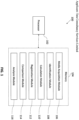
- a system 100 for identifying real time change in state of one or more objects based on ontology comprising a processor 102, a memory 104 communicatively coupled to the processor 102, a media acquisition module 106, an identification module 108, a calculation module 110, a registration module 112, a comparison module 114 and an analysis module 116.
- the memory 104 contains instructions that are readable by the processor 102.
- the media acquisition module 106 is configured to capture a plurality of images of an unknown environment. It would be appreciated that the first image of the plurality of images is a predefined reference for a subsequent second image.
- the change in an object can be defined as insertion, disappearance, deformation, displacement or any other change in the state such as turning of levers. For example, in a street view, there are clearly recognized public and private properties.
- the identification module is configured to identify at least one salient region of a frame of the first image and at least one salient region of a frame of the second image, wherein the identification of the salient region is based on ontology of a predefined area of interest.
- Domain specific ontology is developed. For example, the industrial settings have machines, pipes, nuts, bolts, etc. Specific features of interest that represent such objects are extracted.
- the system defines saliency as a weighted combination of domain specific features. Ontology to weight relationship is derived based on training dataset. In real-time, when a new scene comes in along with related ontology, appropriate weights are chosen to detect salient regions.
- the salient regions reflect domain specific ontology.
- the calculation module is configured to calculate the saliency of a plurality of pixels of the first image and the second image, wherein the calculation of the saliency is based on the predefined area of interest.
- the calculation of saliency comprises calculating a spatial distribution of pixel distance in the plurality of pixels of the first image and the second image.
- the pixel distance is being calculated based on a distance measure between the chromaticity parameters of individual pixel of the plurality of pixels of the first image and the second image.
- a spatio-temporal analysis is used for creating an ontology based saliency model.
- the salient region is captured using the input technology. Further, it encompasses appearance and motion features to automatically calculate the spatio-temporal properties of the given data and the use of the same in highlighting saliency.
- a probabilistic method is applied to measure real time change in one or more objects using ontology based saliency. Wherein, a new metrics is generated for converting the ontology based saliency maps into probabilities in the context of change detection.
- a real time architecture is being used to calculate visual saliency. In the context of unmanned vehicle navigation, it is critical to calculate the saliency map in real-time and to employ them in unknown environment. Therefore, a pyramidal implementation is being used to provide information at different scales that can speed up the process.
- the overlapping area needs to be compared to detect change.
- the system switches back to original saliency maps created in the earlier procedure. It focuses on the overlapping areas of saliency maps. If nothing has changed, the saliency maps have to be similar irrespective of change in environmental condition. If any object has changed (object insertion, deletion, deformation and displacement), the saliency values get scaled.
- normalization is carried out using values calculated for the first image as a reference.
- the two saliency maps are compared to find the spots where change occurs.
- Low valued changes detected are filtered using an empirically chosen threshold ⁇ .
- the resulting map contains changed areas in the 2nd image. Positive values indicate disappearance, negative values indicate insertion and low values within the second threshold ⁇ will indicate change in state.
- the registration module is configured to register at least two calculated saliency of consecutive image of the plurality of images, wherein the registration is based on Gaussian pyramids calculated in salient regions.
- registration helps in real time navigation, where the subsequent image of the plurality of images are matched with the first image (reference image) at a more abstract level that allows avoiding false alarms and bad registration using low level features.
- visual maps include multi-view videos that is collected and stored as archive. If a new image is presented, accurate and real time registration will aid in localizing the object as well as to detect any change in the scenario.
- the developed saliency based image registration will perform much faster due to the reduction in matching points/patches. In spite of losing accuracy in registration, the process is fast and suited for change detection application.
- the system combines the positive aspects of saliency maps and Gaussian pyramids based registration to detect the overlap and to calculate the features of the interest. This registration process ensures fast calculation provided that there are sufficient regions of interest.
- the system converts the saliency maps into binary by using an appropriate threshold. It would be appreciated that the threshold can be an adaptive threshold based on the required percentage area. Using this as a mask over the first image and convert the non-salient regions into background. Further, the system creates a Gaussian pyramid for both the foreground maps.. Further, the system matches the extracted features of the identified salient regions of the first image and the subsequent image of the plurality of images to calculate transformation matrix. Thus, the system registers the foreground maps at every scale and finds the registration points. This yields the overlap area between the first image and the subsequent images.
- the comparison module is configured to compare the saliency map of first image with saliency map of second image to get change using probability of saliency map, wherein the change is based on probability difference in salient regions.
- the resulting map contains changed areas in the subsequent image. Therefore, positive values indicate change in the object such as insertion, disappearance, deformation, displacement or any other change in the state such as turning of levers. Negative values indicate insertion and low values within the second threshold will indicate change in the state.
- the difference between at least two registered saliency maps of consecutive images is estimated by converting saliency values into normalized probabilities using a cost function.
- the system analyses the overlapping area of saliency maps to estimate the change. If nothing has changed, the saliency maps have to be similar irrespective of change in environmental condition. If any object has changed, the saliency values get scaled. In this process, the system normalizes the saliency values of the first image and convert them to probability in the overlapping region. For the subsequent image, normalization in the saliency values is carried out using values calculated for the first image. From both the saliency maps, low valued changes are detected are filtered using an empirically chosen threshold.
- the analysis module is configured to analyze the change in saliency is localized to identify real time change in state of the one or more objects in the unknown environment.
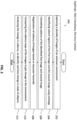
- a method 200 for identifying real time change in state of one or more objects based on ontology is provided.
- the process captures a plurality of images of an unknown environment, wherein a first image of the plurality of images is a predefined reference for a subsequent second image. It would be appreciated that the first image of the plurality of images is a predefined reference for a subsequent second image.
- the change in an object can be defined as insertion, disappearance, deformation, displacement or any other change in the state such as turning of levers.
- the process identifies at least one salient region of a frame of the first image and at least one salient region of a frame of the second image, wherein the identification of the salient region is based on ontology of a predefined area of interest.
- the process calculates the saliency of a plurality of pixels of the first image and the second image, wherein the calculation of the saliency is based on the predefined area of interest.
- the calculation of saliency comprises calculating a spatial distribution of pixel distance in the plurality of pixels of the first image and the second image.
- the pixel distance is being calculated based on a distance measure between the chromaticity parameters of individual pixel of the plurality of pixels of the first image and the second image.
- the process registers at least two calculated saliency of consecutive image of the plurality of images, wherein the registration is based on Gaussian pyramids calculated in salient regions.
- registration helps in real time navigation, where the subsequent image of the plurality of images are matched with the first image (reference image) at a more abstract level that allows avoiding false alarms and bad registration using low level features.
- visual maps include multi-view videos that is collected and stored as archive. If a new image is presented, accurate and real time registration will aid in localizing the object as well as to detect any change in the scenario. Although many approaches for accurate registration exists, the developed saliency based image registration will perform much faster due to the reduction in matching points/patches. In spite of losing accuracy in registration, the process is fast and suited for change detection application. Further, the process combines the positive aspects of saliency maps and Gaussian pyramids based registration to detect the overlap and to calculate the features of the interest.
- step 210 where the process compares the saliency map of first image with saliency map of second image to get change using probability of saliency map, wherein the change is based on probability difference in salient regions.
- the resulting map contains changed areas in the subsequent image. Therefore, positive values indicate change in the object such as insertion, disappearance, deformation, displacement or any other change in the state such as turning of levers. Negative values indicate insertion and low values within the second threshold will indicate change in the state.
- step 212 where the process analyzes the change in saliency as localized to identify real time change in state of the one or more objects in the unknown environment.
- the process identifies at least one salient region of a frame of the reference image and at least one salient region of a frame of the subsequent image, wherein the identification of the salient region is based on ontology of a predefined area of interest.
- Registering the two calculated saliency of reference image and subsequent image wherein the registration is based on Gaussian pyramids calculated in salient regions.
- the process compares the saliency map of reference image with saliency map of subsequent image to get change using probability of saliency map, wherein the change is based on normalized probability difference in salient regions and analyzing the change in saliency is localized to identify real time change in state of the objects of subsequent image.
- the embodiments of present disclosure herein addresses unresolved problem of visual based autonomous defect/change detection using unmanned vehicles.
- Visual change detection is an extremely challenging task and it involves significant challenges due to variation in illumination, lighting and other environmental conditions.
- features are captured based on well-known image attributes such as color, orientation, texture, motion etc.
- these attributes may have different weights.
- the regions of interest should be narrowed down based on certain fixed criterion.
- the hardware device can be any kind of device which can be programmed including e.g. any kind of computer like a server or a personal computer, or the like, or any combination thereof.
- the device may also include means which could be e.g. hardware means like e.g. an application-specific integrated circuit (ASIC), a field-programmable gate array (FPGA), or a combination of hardware and software means, e.g.
- ASIC application-specific integrated circuit
- FPGA field-programmable gate array
- the means can include both hardware means and software means.
- the method embodiments described herein could be implemented in hardware and software.
- the device may also include software means.
- the embodiments may be implemented on different hardware devices, e.g. using a plurality of CPUs.
- the embodiments herein can comprise hardware and software elements.
- the embodiments that are implemented in software include but are not limited to, firmware, resident software, microcode, etc.
- the functions performed by various modules described herein may be implemented in other modules or combinations of other modules.
- a computer-usable or computer readable medium can be any apparatus that can comprise, store, communicate, propagate, or transport the program for use by or in connection with the instruction execution system, apparatus, or device.
- the medium can be an electronic, magnetic, optical, electromagnetic, infrared, or semiconductor system (or apparatus or device) or a propagation medium.
- Examples of a computer-readable medium include a semiconductor or solid state memory, magnetic tape, a removable computer diskette, a random access memory (RAM), a read-only memory (ROM), a rigid magnetic disk and an optical disk.
- Current examples of optical disks include compact disk-read only memory (CD-ROM), compact disk-read/write (CD-R/W) and DVD.
- a data processing system suitable for storing and/or executing program code will include at least one processor coupled directly or indirectly to memory elements through a system bus.
- the memory elements can include local memory employed during actual execution of the program code, bulk storage, and cache memories which provide temporary storage of at least some program code in order to reduce the number of times code must be retrieved from bulk storage during execution.
- I/O devices can be coupled to the system either directly or through intervening I/O controllers.
- Network adapters may also be coupled to the system to enable the data processing system to become coupled to other data processing systems or remote printers or storage devices through intervening private or public networks. Modems, cable modem and Ethernet cards are just a few of the currently available types of network adapters.
- a representative hardware environment for practicing the embodiments may include a hardware configuration of an information handling/computer system in accordance with the embodiments herein.
- the system herein comprises at least one processor or central processing unit (CPU).
- the CPUs are interconnected via system bus to various devices such as a random access memory (RAM), read-only memory (ROM), and an input/output (I/O) adapter.
- RAM random access memory
- ROM read-only memory
- I/O input/output
- the I/O adapter can connect to peripheral devices, such as disk units and tape drives, or other program storage devices that are readable by the system.
- the system can read the inventive instructions on the program storage devices and follow these instructions to execute the methodology of the embodiments herein.
- the system further includes a user interface adapter that connects a keyboard, mouse, speaker, microphone, and/or other user interface devices such as a touch screen device (not shown) to the bus to gather user input.
- a communication adapter connects the bus to a data processing network
- a display adapter connects the bus to a display device which may be embodied as an output device such as a monitor, printer, or transmitter, for example.
Landscapes
- Engineering & Computer Science (AREA)
- Theoretical Computer Science (AREA)
- General Physics & Mathematics (AREA)
- Physics & Mathematics (AREA)
- Multimedia (AREA)
- Computer Vision & Pattern Recognition (AREA)
- Life Sciences & Earth Sciences (AREA)
- Biodiversity & Conservation Biology (AREA)
- Health & Medical Sciences (AREA)
- Data Mining & Analysis (AREA)
- Biomedical Technology (AREA)
- General Health & Medical Sciences (AREA)
- Molecular Biology (AREA)
- Artificial Intelligence (AREA)
- Bioinformatics & Cheminformatics (AREA)
- Bioinformatics & Computational Biology (AREA)
- Evolutionary Biology (AREA)
- Evolutionary Computation (AREA)
- General Engineering & Computer Science (AREA)
- Image Analysis (AREA)
Claims (11)
- Verfahren zum Identifizieren einer Echtzeitänderung in einem Zustand von einem oder mehreren Objekten basierend auf Ontologie, wobei das Verfahren umfasst:Erfassen einer Mehrzahl von Bildern einer unbekannten Umgebung, wobei ein erstes Bild der Mehrzahl von Bildern eine vordefinierte Referenz für ein nachfolgendes zweites Bild ist;Identifizieren mindestens einer ontologisch hervorstechenden Region eines Einzelbilds des ersten Bilds und mindestens einer ontologisch hervorstechenden Region eines Einzelbilds des nachfolgenden zweiten Bilds, wobei die Identifizierung der ontologisch hervorstechenden Region auf dem Berechnen einer ontologiebasierten Auffälligkeit als eine gewichtete Kombination von Merkmalen basiert, die Farbe, Textur, Orientierung und Bewegung des Bilds umfassen, wobei die Gewichte gemäß der Ontologie eines vordefinierten Bereichs von Interesse bestimmt werden, wobei Merkmale, die den vordefinierten Bereich von Interesse darstellen, automatisch extrahiert werden, wobei der vordefinierte Bereich von Interesse ein oder mehrere Objekte von Interesse darstellt, und wobei die Ontologie-Gewicht-Beziehung unter Verwendung einer Maschinenlerntechnik basierend auf einem Trainingsdatensatz abgeleitet wird, und wobei in Echtzeit, wenn eine neue Szene mit einer verwandten Ontologie einhergeht, geeignete Gewichte für die Merkmale unter Verwendung der Maschinenlerntechnik ausgewählt werden, um eine Entsprechung zwischen der Ontologie und einem spezifisch gewichteten Satz der Merkmale herzustellen, um die ontologisch hervorstechende Region zu detektieren;Berechnen einer Auffälligkeit einer Mehrzahl von Pixeln des ersten Bilds und des nachfolgenden zweiten Bilds basierend auf den identifizierten ontologisch hervorstechenden Regionen, und wobei die Berechnung der Auffälligkeit das Berechnen einer räumlichen Verteilung eines Pixelabstands in der Mehrzahl von Pixeln des ersten Bilds und des nachfolgenden zweiten Bilds, die zu der hervorstechenden Region gehören, umfasst, wobei der Pixelabstand basierend auf einem Abstandsmaß zwischen Chromatizitätsparametern jedes Pixels der Mehrzahl von Pixeln des ersten Bilds und des nachfolgenden zweiten Bilds, die zu der hervorstechenden Region gehören, berechnet wird;Registrieren von mindestens zwei ontologisch basierten hervorstechenden Regionen des ersten Bilds und des nachfolgenden zweiten Bilds der Mehrzahl von Bildern, wobei die Registrierung umfasst:Umwandeln der ontologiebasierten Auffälligkeit des ersten Bilds und des nachfolgenden zweiten Bilds in eine Binärmaske unter Verwendung eines vordefinierten Schwellenwerts und Verwenden der Binärmaske über dem ersten und zweiten Bild zum Umwandeln einer ontologisch nicht hervorstechenden Region in Hintergrund; undIdentifizieren eines Überlappungsbereichs zwischen dem ersten Bild und dem nachfolgenden zweiten Bild durch Erzeugen einer Gaußschen Pyramide für ontologisch hervorstechende Vordergrundregionen und Extrahieren von Merkmalen des ersten und zweiten Bilds, die den ontologisch hervorstechenden Vordergrundregionen entsprechen, wobei die Merkmale unter Verwendung von Center-Surround-Operationen extrahiert werden, und Abgleichen der extrahierten Merkmale der ontologisch hervorstechenden Regionen des ersten Bilds und des nachfolgenden zweiten Bilds, um eine Transformationsmatrix zu berechnen, wobei die Transformationsmatrix den Überlappungsbereich zwischen dem ersten Bild und dem nachfolgenden zweiten Bild bereitstellt;Vergleichen des Überlappungsbereichs der ontologisch hervorstechenden Regionen des ersten Bilds mit den ontologisch hervorstechenden Regionen des nachfolgenden zweiten Bilds, um eine Änderung der Auffälligkeit unter Verwendung einer normalisierten Wahrscheinlichkeit der Auffälligkeit zu erhalten, wobei Auffälligkeitswerte des ersten Bilds normalisiert werden und die normalisierten Werte in eine Wahrscheinlichkeit in dem Überlappungsbereich umgewandelt werden, und wobei die Auffälligkeitswerte für das nachfolgende zweite Bild unter Verwendung der normalisierten Werte des ersten Bilds normalisiert werden, wobei die Änderung auf der normalisierten Wahrscheinlichkeitsdifferenz in den ontologisch hervorstechenden Regionen basiert, die geänderte Bereiche in dem nachfolgenden zweiten Bild enthalten, wobei die Auffälligkeitswerte skaliert werden, wenn eine Änderung des Zustands eines oder mehrerer Objekte der unbekannten Umgebung vorliegt; undAnalysieren der Änderung der Auffälligkeit, um eine Echtzeitänderung in dem Zustand des einen oder der mehreren Objekte in der unbekannten Umgebung zu identifizieren.
- Verfahren nach Anspruch 1, wobei eine Ontologie auf niedriger Ebene zur Extraktion der gewichteten Kombination von Merkmalen der unbekannten Umgebung verwendet wird.
- Verfahren nach Anspruch 1, wobei die Änderung in den Bildern eine Echtzeitänderung ist und wobei die Änderung in den Bildern mindestens eines von Einfügen, Verschwinden, Verformung und Verschiebung des einen oder der mehreren Objekte von Interesse beinhaltet.
- Verfahren nach Anspruch 1, wobei die Differenz zwischen mindestens zwei Auffälligkeiten der aufeinanderfolgenden Bilder durch Umwandeln der Auffälligkeitswerte in normalisierte Wahrscheinlichkeiten unter Verwendung einer Kostenfunktion geschätzt wird.
- Verfahren nach Anspruch 1, wobei, wenn die berechnete Bewertung der Auffälligkeit des zweiten Bilds null ist, entweder das eine oder die mehreren Objekte von Interesse in einem Frame eine Echtzeitänderung zeigen oder den Frame verwerfen.
- System (100) zum Identifizieren einer Echtzeitänderung in einem Zustand von einem oder mehreren Objekten basierend auf Ontologie, wobei das System umfasst:einen Speicher (104) mit einem Satz von Anweisungen;mindestens einen Prozessor (102), wobei der Prozessor (102) kommunikativ mit dem Speicher verbunden ist;ein Medienerfassungsmodul (106), das konfiguriert ist, um eine Mehrzahl von Bildern einer unbekannten Umgebung zu erfassen, wobei ein erstes Bild der Mehrzahl von Bildern eine vordefinierte Referenz für ein nachfolgendes zweites Bild ist;ein Identifizierungsmodul (108), das konfiguriert ist, um mindestens eine ontologisch hervorstechende Region eines Einzelbilds des ersten Bilds und mindestens eine ontologisch hervorstechende Region eines Einzelbilds des nachfolgenden zweiten Bilds zu identifizieren, wobei die Identifizierung der ontologisch hervorstechenden Region auf dem Berechnen einer ontologiebasierten Auffälligkeit als eine gewichtete Kombination von Merkmalen basiert, die Farbe, Textur, Orientierung und Bewegung des Bilds umfassen, wobei die Gewichte gemäß der Ontologie eines vordefinierten Bereichs von Interesse bestimmt werden, wobei Merkmale, die den vordefinierten Bereich von Interesse darstellen, automatisch extrahiert werden, und wobei der vordefinierte Bereich von Interesse ein oder mehrere Objekte von Interesse darstellt, und , wobei die Ontologie-Gewicht-Beziehung unter Verwendung einer Maschinenlerntechnik basierend auf einem Trainingsdatensatz abgeleitet wird, und wobei in Echtzeit, wenn eine neue Szene mit einer verwandten Ontologie einhergeht, geeignete Gewichte für die Merkmale unter Verwendung der Maschinenlerntechnik ausgewählt werden, um eine Entsprechung zwischen der Ontologie und einem spezifisch gewichteten Satz der Merkmale herzustellen, um die ontologisch hervorstechende Region zu detektieren;ein Berechnungsmodul (110), das konfiguriert ist, um eine Auffälligkeit einer Mehrzahl von Pixeln des ersten Bilds und des nachfolgenden zweiten Bilds basierend auf den identifizierten ontologisch hervorstechenden Regionen zu berechnen, und wobei die Berechnung der Auffälligkeit das Berechnen einer räumlichen Verteilung eines Pixelabstands in der Mehrzahl von Pixeln des ersten Bilds und des nachfolgenden zweiten Bilds, die zu der hervorstechenden Region gehören, umfasst, wobei der Pixelabstand basierend auf einem Abstandsmaß zwischen Chromatizitätsparametern jedes Pixels der Mehrzahl von Pixeln des ersten Bilds und des nachfolgenden zweiten Bilds, die zu der hervorstechenden Region gehören, berechnet wird;ein Registrierungsmodul (112), das konfiguriert ist, um mindestens zwei ontologisch basierte hervorstechende Regionen des ersten Bilds und des nachfolgenden zweiten Bilds der Mehrzahl von Bildern zu registrieren, wobei die Registrierung umfasst:Umwandeln der ontologiebasierten Auffälligkeit des ersten Bilds und des nachfolgenden zweiten Bilds in eine Binärmaske unter Verwendung eines vordefinierten Schwellenwerts und Verwenden der Binärmaske über dem ersten und zweiten Bild zum Umwandeln einer ontologisch nicht hervorstechenden Region in Hintergrund; undIdentifizieren eines Überlappungsbereichs zwischen dem ersten Bild und dem nachfolgenden zweiten Bild durch Erzeugen einer Gaußschen Pyramide für ontologisch hervorstechende Vordergrundregionen und Extrahieren von Merkmalen des ersten und zweiten Bilds, die den ontologisch hervorstechenden Vordergrundregionen entsprechen, wobei die Merkmale unter Verwendung von Center-Surround-Operationen extrahiert werden, und Abgleichen der extrahierten Merkmale der ontologisch hervorstechenden Regionen des ersten Bilds und des nachfolgenden zweiten Bilds, um eine Transformationsmatrix zu berechnen, wobei die Transformationsmatrix den Überlappungsbereich zwischen dem ersten Bild und dem nachfolgenden zweiten Bild bereitstellt;ein Vergleichsmodul (114) , das konfiguriert ist, um den Überlappungsbereich der ontologisch hervorstechenden Regionen des ersten Bilds mit den ontologisch hervorstechenden Regionen des nachfolgenden zweiten Bilds zu vergleichen, um eine Änderung der Auffälligkeit unter Verwendung einer normalisierten Wahrscheinlichkeit der Auffälligkeit zu erhalten, wobei Auffälligkeitswerte des ersten Bilds normalisiert werden und die normalisierten Werte in eine Wahrscheinlichkeit in dem Überlappungsbereich umgewandelt werden, und wobei die Auffälligkeitswerte für das nachfolgende zweite Bild unter Verwendung der normalisierten Werte des ersten Bilds normalisiert werden, wobei die Änderung auf der normalisierten Wahrscheinlichkeitsdifferenz in den ontologisch hervorstechenden Regionen basiert, die geänderte Bereiche in dem nachfolgenden zweiten Bild enthalten, wobei die Auffälligkeitswerte skaliert werden, wenn eine Änderung des Zustands eines oder mehrerer Objekte der unbekannten Umgebung vorliegt; undein Analysemodul (1116), das konfiguriert ist, um die Änderung der Auffälligkeit zu analysieren, um eine Echtzeitänderung in dem Zustand des einen oder der mehreren Objekte in der unbekannten Umgebung zu identifizieren.
- System (100) nach Anspruch 6, wobei eine Ontologie auf niedriger Ebene zur Extraktion der gewichteten Kombination von Merkmalen der unbekannten Umgebung verwendet wird.
- System (100) nach Anspruch 6, wobei die Änderung eine Echtzeitänderung ist und die Änderung in dem ersten Bild und dem nachfolgenden Bild Einfügen, Verschwinden, Verformung oder Verschiebung des Objekts von Interesse umfasst.
- System (100) nach Anspruch 6, wobei, wenn die berechnete Bewertung der Auffälligkeit des zweiten Bilds null ist, entweder das Objekt von Interesse in einem Frame eine Echtzeitänderung zeigt oder den Frame verwerfen.
- System (100) nach Anspruch 6, wobei die Differenz zwischen mindestens zwei registrierten Auffälligkeiten von aufeinanderfolgenden Bildern durch Umwandeln von Auffälligkeitswerten in normalisierte Wahrscheinlichkeiten unter Verwendung einer Kostenfunktion geschätzt wird.
- Nichtflüchtiges computerlesbares Medium, das eine oder mehrere Anweisungen speichert, die, wenn sie von einem Prozessor auf einem System ausgeführt werden, den Prozessor veranlassen, ein Verfahren zum Identifizieren einer Echtzeitänderung in einem Zustand von einem oder mehreren Objekten basierend auf Ontologie durchzuführen, umfassend:Erfassen einer Mehrzahl von Bildern einer unbekannten Umgebung, wobei ein erstes Bild der Mehrzahl von Bildern eine vordefinierte Referenz für ein nachfolgendes zweites Bild ist;Identifizieren mindestens einer ontologisch hervorstechenden Region eines Einzelbilds des ersten Bilds und mindestens einer ontologisch hervorstechenden Region eines Einzelbilds des nachfolgenden zweiten Bilds, wobei die Identifizierung der ontologisch hervorstechenden Region auf dem Berechnen einer ontologiebasierten Auffälligkeit als eine gewichtete Kombination von Merkmalen basiert, die Farbe, Textur, Orientierung und Bewegung des Bilds umfassen, wobei die Gewichte gemäß der Ontologie eines vordefinierten Bereichs von Interesse bestimmt werden, wobei Merkmale, die den vordefinierten Bereich von Interesse darstellen, automatisch extrahiert werden, und wobei der vordefinierte Bereich von Interesse ein oder mehrere Objekte von Interesse darstellt, die Ontologie-Gewicht-Beziehung unter Verwendung einer Maschinenlerntechnik basierend auf einem Trainingsdatensatz abgeleitet wird, und wobei in Echtzeit, wenn eine neue Szene mit einer verwandten Ontologie einhergeht, geeignete Gewichte für die Merkmale unter Verwendung der Maschinenlerntechnik ausgewählt werden, um eine Entsprechung zwischen der Ontologie und einem spezifisch gewichteten Satz der Merkmale herzustellen, um die ontologisch hervorstechende Region zu detektieren;Berechnen einer Auffälligkeit einer Mehrzahl von Pixeln des ersten Bilds und des nachfolgenden zweiten Bilds basierend auf den identifizierten ontologisch hervorstechenden Regionen, und wobei die Berechnung der Auffälligkeit das Berechnen einer räumlichen Verteilung eines Pixelabstands in der Mehrzahl von Pixeln des ersten Bilds und des nachfolgenden zweiten Bilds, die zu der hervorstechenden Region gehören, umfasst, wobei der Pixelabstand basierend auf einem Abstandsmaß zwischen Chromatizitätsparametern jedes Pixels der Mehrzahl von Pixeln des ersten Bilds und des nachfolgenden zweiten Bilds, die zu der hervorstechenden Region gehören, berechnet wird;Registrieren von mindestens zwei ontologisch basierten hervorstechenden Regionen des ersten Bilds und des nachfolgenden zweiten Bilds der Mehrzahl von Bildern, wobei die Registrierung umfasst:Umwandeln der ontologiebasierten Auffälligkeit des ersten Bilds und des nachfolgenden zweiten Bilds in eine Binärmaske unter Verwendung eines vordefinierten Schwellenwerts und Verwenden der Binärmaske über dem ersten und zweiten Bild zum Umwandeln einer ontologisch nicht hervorstechenden Region in Hintergrund;Identifizieren eines Überlappungsbereichs zwischen dem ersten Bild und dem nachfolgenden zweiten Bild durch Erzeugen einer Gaußschen Pyramide für ontologisch hervorstechende Vordergrundregionen und Extrahieren von Merkmalen des ersten und zweiten Bilds, die den ontologisch hervorstechenden Vordergrundregionen entsprechen, wobei die Merkmale unter Verwendung von Center-Surround-Operationen extrahiert werden, und Abgleichen der extrahierten Merkmale der ontologisch hervorstechenden Regionen des ersten Bilds und des nachfolgenden zweiten Bilds, um eine Transformationsmatrix zu berechnen, wobei die Transformationsmatrix den Überlappungsbereich zwischen dem ersten Bild und dem nachfolgenden zweiten Bild bereitstellt;Vergleichen des Überlappungsbereichs der ontologisch hervorstechenden Regionen des ersten Bilds mit den ontologisch hervorstechenden Regionen des nachfolgenden zweiten Bilds, um eine Änderung der Auffälligkeit unter Verwendung einer normalisierten Wahrscheinlichkeit der Auffälligkeit zu erhalten, wobei Auffälligkeitswerte des ersten Bilds normalisiert werden und die normalisierten Werte in eine Wahrscheinlichkeit in dem Überlappungsbereich umgewandelt werden, und wobei die Auffälligkeitswerte für das nachfolgende zweite Bild unter Verwendung der normalisierten Werte des ersten Bilds normalisiert werden, wobei die Änderung auf der normalisierten Wahrscheinlichkeitsdifferenz in den ontologisch hervorstechenden Regionen basiert, die geänderte Bereiche in dem nachfolgenden zweiten Bild enthalten, wobei die Auffälligkeitswerte skaliert werden, wenn eine Änderung des Zustands eines oder mehrerer Objekte der unbekannten Umgebung vorliegt; undAnalysieren der Änderung der Auffälligkeit, um eine Echtzeitänderung in dem Zustand des einen oder der mehreren Objekte in der unbekannten Umgebung zu identifizieren.
Applications Claiming Priority (1)
| Application Number | Priority Date | Filing Date | Title |
|---|---|---|---|
| IN201721008937 | 2017-03-15 |
Publications (3)
| Publication Number | Publication Date |
|---|---|
| EP3376438A1 EP3376438A1 (de) | 2018-09-19 |
| EP3376438C0 EP3376438C0 (de) | 2025-06-04 |
| EP3376438B1 true EP3376438B1 (de) | 2025-06-04 |
Family
ID=60990642
Family Applications (1)
| Application Number | Title | Priority Date | Filing Date |
|---|---|---|---|
| EP18150698.1A Active EP3376438B1 (de) | 2017-03-15 | 2018-01-09 | System und verfahren zur erkennung von änderungen mit einer ontologiebasierten salienz |
Country Status (2)
| Country | Link |
|---|---|
| US (1) | US10599946B2 (de) |
| EP (1) | EP3376438B1 (de) |
Families Citing this family (6)
| Publication number | Priority date | Publication date | Assignee | Title |
|---|---|---|---|---|
| EP3850542A1 (de) * | 2018-09-11 | 2021-07-21 | Telefonaktiebolaget Lm Ericsson (Publ) | Verfahren zum zuordnen von objekten in einem video |
| CN109341707B (zh) * | 2018-12-03 | 2022-04-08 | 南开大学 | 未知环境下移动机器人三维地图构建方法 |
| CN113408326B (zh) * | 2020-03-17 | 2022-07-22 | 阿里巴巴集团控股有限公司 | 移动对象识别方法、装置及设备 |
| CN113570539B (zh) * | 2020-04-28 | 2025-01-28 | 京东方科技集团股份有限公司 | 螺丝漏锁检测方法及系统、装置和存储介质 |
| CN113723462B (zh) * | 2021-08-02 | 2023-09-26 | 广东白云学院 | 危险品检测方法、装置、计算机设备和存储介质 |
| CN118691594A (zh) * | 2024-07-09 | 2024-09-24 | 威海晟南船舶技术服务有限公司 | 一种基于图像处理的护舷装置撞击力测试方法及装置 |
Family Cites Families (9)
| Publication number | Priority date | Publication date | Assignee | Title |
|---|---|---|---|---|
| JPH1115914A (ja) | 1997-06-09 | 1999-01-22 | Internatl Business Mach Corp <Ibm> | 文字データ入力装置およびその方法 |
| US8005264B2 (en) * | 2008-06-09 | 2011-08-23 | Arcsoft, Inc. | Method of automatically detecting and tracking successive frames in a region of interesting by an electronic imaging device |
| US8649606B2 (en) | 2010-02-10 | 2014-02-11 | California Institute Of Technology | Methods and systems for generating saliency models through linear and/or nonlinear integration |
| US8494302B2 (en) | 2010-11-11 | 2013-07-23 | Seiko Epson Corporation | Importance filtering for image retargeting |
| US9141866B2 (en) | 2013-01-30 | 2015-09-22 | International Business Machines Corporation | Summarizing salient events in unmanned aerial videos |
| US20140254922A1 (en) | 2013-03-11 | 2014-09-11 | Microsoft Corporation | Salient Object Detection in Images via Saliency |
| US9195903B2 (en) * | 2014-04-29 | 2015-11-24 | International Business Machines Corporation | Extracting salient features from video using a neurosynaptic system |
| CN104103082A (zh) | 2014-06-06 | 2014-10-15 | 华南理工大学 | 一种基于区域描述和先验知识的图像显著性检测方法 |
| US10198654B2 (en) * | 2016-06-24 | 2019-02-05 | Ebay Inc. | Automated saliency map estimation |
-
2018
- 2018-01-09 EP EP18150698.1A patent/EP3376438B1/de active Active
- 2018-01-12 US US15/869,311 patent/US10599946B2/en active Active
Non-Patent Citations (2)
| Title |
|---|
| LAURENT ITTI ET AL: "Short Papers A Model of Saliency-Based Visual Attention for Rapid Scene Analysis", IEEE TRANSACTIONS ON PATTERN ANALYSIS AND MACHINE INTELLIGENCE, 1 January 1998 (1998-01-01), XP055685135, Retrieved from the Internet <URL:https://ieeexplore.ieee.org/stampPDF/getPDF.jsp?tp=&arnumber=730558&ref=aHR0cHM6Ly9pZWVleHBsb3JlLmllZWUub3JnL2RvY3VtZW50LzczMDU1OA==> [retrieved on 20200409] * |
| ZHANG JUN ET AL: "Spatiochromatic Context Modeling for Color Saliency Analysis", IEEE TRANSACTIONS ON NEURAL NETWORKS AND LEARNING SYSTEMS, IEEE, USA, vol. 27, no. 6, 1 June 2016 (2016-06-01), pages 1177 - 1189, XP011610487, ISSN: 2162-237X, [retrieved on 20160516], DOI: 10.1109/TNNLS.2015.2464316 * |
Also Published As
| Publication number | Publication date |
|---|---|
| EP3376438A1 (de) | 2018-09-19 |
| US20180268247A1 (en) | 2018-09-20 |
| EP3376438C0 (de) | 2025-06-04 |
| US10599946B2 (en) | 2020-03-24 |
Similar Documents
| Publication | Publication Date | Title |
|---|---|---|
| EP3376438B1 (de) | System und verfahren zur erkennung von änderungen mit einer ontologiebasierten salienz | |
| US9008365B2 (en) | Systems and methods for pedestrian detection in images | |
| US8792722B2 (en) | Hand gesture detection | |
| US10445602B2 (en) | Apparatus and method for recognizing traffic signs | |
| CN108875500B (zh) | 行人再识别方法、装置、系统及存储介质 | |
| Cao et al. | Robust vehicle detection by combining deep features with exemplar classification | |
| CN115049954A (zh) | 目标识别方法、装置、电子设备和介质 | |
| WO2023165616A1 (zh) | 图像模型隐蔽后门的检测方法及系统、存储介质、终端 | |
| CN111402185B (zh) | 一种图像检测方法及装置 | |
| CN120260014B (zh) | 一种图像融合驱动的防碰撞识别方法及系统 | |
| CN115018886A (zh) | 运动轨迹识别方法、装置、设备及介质 | |
| Kaimkhani et al. | UAV with vision to recognise vehicle number plates | |
| Zheng et al. | Shadow removal for pedestrian detection and tracking in indoor environments | |
| EP3516592A1 (de) | Verfahren zur objekterkennung in digitalen bildern und videos unter verwendung von gepulsten neuronalen netzwerken | |
| Gal | Automatic obstacle detection for USV’s navigation using vision sensors | |
| CN118262258A (zh) | 一种地面环境图像差异性检测方法和系统 | |
| CN117576369A (zh) | 火灾检测方法、装置以及存储介质 | |
| Lu et al. | Adaptive random-based self-organizing background subtraction for moving detection | |
| Kiruthika Devi et al. | A deep learning-based residual network model for traffic sign detection and classification | |
| Ghimire et al. | Online sequential extreme learning machine-based co-training for dynamic moving cast shadow detection | |
| Vaquero et al. | Fast multi-object tracking with feature pyramid and region proposal networks | |
| CN113255595A (zh) | 基于区块链技术的多摄像头土方覆盖率的智能计算方法 | |
| Yin et al. | Flue gas layer feature segmentation based on multi-channel pixel adaptive | |
| Zhang et al. | A unified saliency detection framework for visible and infrared images | |
| Sable et al. | Algorithmic Implementation of Parking Spot Detector and Counter using MATLAB and OpenCV |
Legal Events
| Date | Code | Title | Description |
|---|---|---|---|
| PUAI | Public reference made under article 153(3) epc to a published international application that has entered the european phase |
Free format text: ORIGINAL CODE: 0009012 |
|
| STAA | Information on the status of an ep patent application or granted ep patent |
Free format text: STATUS: THE APPLICATION HAS BEEN PUBLISHED |
|
| AK | Designated contracting states |
Kind code of ref document: A1 Designated state(s): AL AT BE BG CH CY CZ DE DK EE ES FI FR GB GR HR HU IE IS IT LI LT LU LV MC MK MT NL NO PL PT RO RS SE SI SK SM TR |
|
| AX | Request for extension of the european patent |
Extension state: BA ME |
|
| STAA | Information on the status of an ep patent application or granted ep patent |
Free format text: STATUS: REQUEST FOR EXAMINATION WAS MADE |
|
| 17P | Request for examination filed |
Effective date: 20190319 |
|
| RBV | Designated contracting states (corrected) |
Designated state(s): AL AT BE BG CH CY CZ DE DK EE ES FI FR GB GR HR HU IE IS IT LI LT LU LV MC MK MT NL NO PL PT RO RS SE SI SK SM TR |
|
| STAA | Information on the status of an ep patent application or granted ep patent |
Free format text: STATUS: EXAMINATION IS IN PROGRESS |
|
| 17Q | First examination report despatched |
Effective date: 20200420 |
|
| REG | Reference to a national code |
Ref country code: DE Free format text: PREVIOUS MAIN CLASS: G06K0009460000 Ipc: G06V0010560000 Ref country code: DE Ref legal event code: R079 Ref document number: 602018082352 Country of ref document: DE Free format text: PREVIOUS MAIN CLASS: G06K0009460000 Ipc: G06V0010560000 |
|
| GRAP | Despatch of communication of intention to grant a patent |
Free format text: ORIGINAL CODE: EPIDOSNIGR1 |
|
| STAA | Information on the status of an ep patent application or granted ep patent |
Free format text: STATUS: GRANT OF PATENT IS INTENDED |
|
| RIC1 | Information provided on ipc code assigned before grant |
Ipc: G06V 20/56 20220101ALI20250124BHEP Ipc: G06V 10/56 20220101AFI20250124BHEP |
|
| INTG | Intention to grant announced |
Effective date: 20250213 |
|
| GRAS | Grant fee paid |
Free format text: ORIGINAL CODE: EPIDOSNIGR3 |
|
| GRAA | (expected) grant |
Free format text: ORIGINAL CODE: 0009210 |
|
| STAA | Information on the status of an ep patent application or granted ep patent |
Free format text: STATUS: THE PATENT HAS BEEN GRANTED |
|
| AK | Designated contracting states |
Kind code of ref document: B1 Designated state(s): AL AT BE BG CH CY CZ DE DK EE ES FI FR GB GR HR HU IE IS IT LI LT LU LV MC MK MT NL NO PL PT RO RS SE SI SK SM TR |
|
| REG | Reference to a national code |
Ref country code: GB Ref legal event code: FG4D |
|
| REG | Reference to a national code |
Ref country code: CH Ref legal event code: EP |
|
| REG | Reference to a national code |
Ref country code: IE Ref legal event code: FG4D |
|
| U01 | Request for unitary effect filed |
Effective date: 20250604 |
|
| U07 | Unitary effect registered |
Designated state(s): AT BE BG DE DK EE FI FR IT LT LU LV MT NL PT RO SE SI Effective date: 20250611 |
|
| PG25 | Lapsed in a contracting state [announced via postgrant information from national office to epo] |
Ref country code: ES Free format text: LAPSE BECAUSE OF FAILURE TO SUBMIT A TRANSLATION OF THE DESCRIPTION OR TO PAY THE FEE WITHIN THE PRESCRIBED TIME-LIMIT Effective date: 20250604 |
|
| PG25 | Lapsed in a contracting state [announced via postgrant information from national office to epo] |
Ref country code: GR Free format text: LAPSE BECAUSE OF FAILURE TO SUBMIT A TRANSLATION OF THE DESCRIPTION OR TO PAY THE FEE WITHIN THE PRESCRIBED TIME-LIMIT Effective date: 20250905 Ref country code: NO Free format text: LAPSE BECAUSE OF FAILURE TO SUBMIT A TRANSLATION OF THE DESCRIPTION OR TO PAY THE FEE WITHIN THE PRESCRIBED TIME-LIMIT Effective date: 20250904 |
|
| PG25 | Lapsed in a contracting state [announced via postgrant information from national office to epo] |
Ref country code: PL Free format text: LAPSE BECAUSE OF FAILURE TO SUBMIT A TRANSLATION OF THE DESCRIPTION OR TO PAY THE FEE WITHIN THE PRESCRIBED TIME-LIMIT Effective date: 20250604 |
|
| PG25 | Lapsed in a contracting state [announced via postgrant information from national office to epo] |
Ref country code: HR Free format text: LAPSE BECAUSE OF FAILURE TO SUBMIT A TRANSLATION OF THE DESCRIPTION OR TO PAY THE FEE WITHIN THE PRESCRIBED TIME-LIMIT Effective date: 20250604 |
|
| PG25 | Lapsed in a contracting state [announced via postgrant information from national office to epo] |
Ref country code: RS Free format text: LAPSE BECAUSE OF FAILURE TO SUBMIT A TRANSLATION OF THE DESCRIPTION OR TO PAY THE FEE WITHIN THE PRESCRIBED TIME-LIMIT Effective date: 20250904 |
|
| PG25 | Lapsed in a contracting state [announced via postgrant information from national office to epo] |
Ref country code: IS Free format text: LAPSE BECAUSE OF FAILURE TO SUBMIT A TRANSLATION OF THE DESCRIPTION OR TO PAY THE FEE WITHIN THE PRESCRIBED TIME-LIMIT Effective date: 20251004 |
|
| PG25 | Lapsed in a contracting state [announced via postgrant information from national office to epo] |
Ref country code: SM Free format text: LAPSE BECAUSE OF FAILURE TO SUBMIT A TRANSLATION OF THE DESCRIPTION OR TO PAY THE FEE WITHIN THE PRESCRIBED TIME-LIMIT Effective date: 20250604 |
|
| PG25 | Lapsed in a contracting state [announced via postgrant information from national office to epo] |
Ref country code: CZ Free format text: LAPSE BECAUSE OF FAILURE TO SUBMIT A TRANSLATION OF THE DESCRIPTION OR TO PAY THE FEE WITHIN THE PRESCRIBED TIME-LIMIT Effective date: 20250604 |
|
| PG25 | Lapsed in a contracting state [announced via postgrant information from national office to epo] |
Ref country code: SK Free format text: LAPSE BECAUSE OF FAILURE TO SUBMIT A TRANSLATION OF THE DESCRIPTION OR TO PAY THE FEE WITHIN THE PRESCRIBED TIME-LIMIT Effective date: 20250604 |
|
| REG | Reference to a national code |
Ref country code: CH Ref legal event code: U11 Free format text: ST27 STATUS EVENT CODE: U-0-0-U10-U11 (AS PROVIDED BY THE NATIONAL OFFICE) Effective date: 20260201 |