EP3374882B1 - Dateisystem mit verteiltem entitätszustand - Google Patents
Dateisystem mit verteiltem entitätszustand Download PDFInfo
- Publication number
- EP3374882B1 EP3374882B1 EP16806317.0A EP16806317A EP3374882B1 EP 3374882 B1 EP3374882 B1 EP 3374882B1 EP 16806317 A EP16806317 A EP 16806317A EP 3374882 B1 EP3374882 B1 EP 3374882B1
- Authority
- EP
- European Patent Office
- Prior art keywords
- computing node
- file system
- tier
- computing
- tiers
- Prior art date
- Legal status (The legal status is an assumption and is not a legal conclusion. Google has not performed a legal analysis and makes no representation as to the accuracy of the status listed.)
- Active
Links
Images

Classifications
-
- G—PHYSICS
- G06—COMPUTING OR CALCULATING; COUNTING
- G06F—ELECTRIC DIGITAL DATA PROCESSING
- G06F16/00—Information retrieval; Database structures therefor; File system structures therefor
- G06F16/10—File systems; File servers
- G06F16/18—File system types
- G06F16/182—Distributed file systems
-
- H—ELECTRICITY
- H04—ELECTRIC COMMUNICATION TECHNIQUE
- H04L—TRANSMISSION OF DIGITAL INFORMATION, e.g. TELEGRAPHIC COMMUNICATION
- H04L47/00—Traffic control in data switching networks
- H04L47/70—Admission control; Resource allocation
- H04L47/72—Admission control; Resource allocation using reservation actions during connection setup
- H04L47/726—Reserving resources in multiple paths to be used simultaneously
-
- H—ELECTRICITY
- H04—ELECTRIC COMMUNICATION TECHNIQUE
- H04L—TRANSMISSION OF DIGITAL INFORMATION, e.g. TELEGRAPHIC COMMUNICATION
- H04L67/00—Network arrangements or protocols for supporting network services or applications
- H04L67/01—Protocols
- H04L67/10—Protocols in which an application is distributed across nodes in the network
- H04L67/1097—Protocols in which an application is distributed across nodes in the network for distributed storage of data in networks, e.g. transport arrangements for network file system [NFS], storage area networks [SAN] or network attached storage [NAS]
Definitions
- Computing systems and associated networks have revolutionized the way human beings work, play, and communicate. Nearly every aspect of our lives is affected in some way by computing systems.
- Computing systems rely on having ready access to data.
- file systems typically organize data within files, and allow those files to be placed within a directory structure.
- the file system also allows for creation, modification and deletion of files or directories. Accordingly, data may be organized in a fashion that is convenient, intuitive, and deterministic way for a human user and/or a computer program so that data can be properly retrieved as needed.
- a directory structure for a file system may be confined to a particular local hard drive.
- the directory structure may include directories that include files accessible over a network.
- Remoting software often allows a local view of a file system in which the entirety of the file system is remotely located. Accordingly, file systems may conventionally be distributed.
- US 2014/215007 A1 discloses front-end clusters that generate a large amount of data in real time and transfer the log data to aggregating clusters. When the aggregating cluster is not available, the front-clusters write the log data to local filers and send the data when the aggregating cluster recovers.
- HYERAN LIM ET AL "Active Disk File System : A Distributed, Scalable File System", MASS STORAGE SYSTEMS AND TECHNOLOGIES, 2001. MSS '01. EIGHTEENTH IEEE SYMPOSIUM ON, IEEE, PI 1 April 2001, pages 101-115 proposes a file system for an active-disk-based data server (ADFS). All data files stored on active disks are provided with operations, forming objects. For some applications such as database, application-specific operations can be run by disk processors so that only the results are returned to clients, rather than whole data file is read by the clients.
- ADFS active-disk-based data server
- At least some embodiments described herein relate to a distributed file system that includes multiple computing node tiers.
- Each of at least some of the multiple computing node tiers has multiple computing nodes having like characteristics.
- the computing nodes of a front end computing node tier may each be front end computing nodes that have a similar topological proximity to file system requestors.
- such front end computing nodes may handle connections from a load balancer that has a common web address or Internet Protocol (IP) address.
- IP Internet Protocol
- the computing nodes of a back end computing node tier may each be back end computing nodes that have a similar topological proximity to a durable store.
- such back end computing nodes may be able to mount data portions (e.g., shares, partitions, directories) within the durable store.
- the distributed file system also has an executable component in the form of a distribution component that comprises logic that distributes state of file system entities amongst the computing node tiers. The distribution is performed so that durability guarantees remain met and/or to reduce latency of file system requests due to state responsive to many requests being much closer latency wise to the file system requestor(s).
- At least some embodiments described herein relate to a distributed file system that includes multiple computing node tiers.
- Each of at least some of the multiple computing node tiers has multiple computing nodes having like characteristics.
- the computing nodes of a front end computing node tier may each be front end computing nodes that have a similar topological proximity to file system requestors.
- such front end computing nodes may handle connections from a load balancer that has a common web address or Internet Protocol (IP) address.
- IP Internet Protocol
- the computing nodes of a back end computing node tier may each be back end computing nodes that have a similar topological proximity to a durable store.
- such back end computing nodes may be able to mount data portions (e.g., shares, partitions, directories) within the durable store.
- the distributed file system also has an executable component in the form of a distribution component that comprises logic that distributes state of file system entities amongst the computing node tiers. The distribution is performed so that durability guarantees remain met and/or to reduce latency of file system requests due to state responsive to many requests being much closer latency wise to the file system requestor(s).
- Computing systems are now increasingly taking a wide variety of forms.
- Computing systems may, for example, be handheld devices, appliances, laptop computers, desktop computers, mainframes, distributed computing systems, datacenters, or even devices that have not conventionally been considered a computing system, such as wearables (e.g., glasses).
- the term "computing system” is defined broadly as including any device or system (or combination thereof) that includes at least one physical and tangible processor, and a physical and tangible memory capable of having thereon computer-executable instructions that may be executed by a processor.
- the memory may take any form and may depend on the nature and form of the computing system.
- a computing system may be distributed over a network environment and may include multiple constituent computing systems.
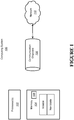
- a computing system 100 typically includes at least one hardware processing unit 102 and memory 104.
- the memory 104 may be physical system memory, which may be volatile, non-volatile, or some combination of the two.
- the term "memory” may also be used herein to refer to non-volatile mass storage such as physical storage media. If the computing system is distributed, the processing, memory and/or storage capability may be distributed as well.
- the computing system 100 also has thereon multiple structures often referred to as an "executable component".
- the memory 104 of the computing system 100 is illustrated as including executable component 106.
- executable component is the name for a structure that is reasonably well understood to one of ordinary skill in the art in the field of computing as being a structure that can be software, hardware, or a combination thereof.
- the structure of an executable component may include software objects, routines, methods that may be executed on the computing system, whether such an executable component exists in the heap of a computing system, or whether the executable component exists on computer-readable storage media.
- the structure of the executable component exists on a computer-readable medium such that, when interpreted by one or more processors of a computing system (e.g., by a processor thread), the computing system is caused to perform a function.
- Such structure may be computer-readable directly by the processors (as is the case if the executable component were binary).
- the structure may be structured to be interpretable (e.g., as in the case of intermediate language component) or compiled (as in the case of a source code component) so as to generate such binary that is directly interpretable by the processors.
- interpretable e.g., as in the case of intermediate language component
- compiled as in the case of a source code component
- executable component is also reasonably well understood by one of ordinary skill as including structures that are implemented exclusively or near-exclusively in hardware, such as within a field programmable gate array (FPGA), an application specific integrated circuit (ASIC), or any other specialized circuit. Accordingly, the term “executable component” is a term for a structure that is reasonable well understood by those of ordinary skill in the art of computing, whether implemented in software, hardware, or a combination. In this description, the terms “service”, “engine”, “module” of the like may also be used. As used in this description and in the case, these terms are also intended to be synonymous with the term “executable component", and thus also have a structure that is sufficiently well understood by those of ordinary skill in the art of computing.
- FPGA field programmable gate array
- ASIC application specific integrated circuit
- embodiments are described with reference to acts that are performed by one or more computing systems. If such acts are implemented in software, one or more processors (of the associated computing system that performs the act) direct the operation of the computing system in response to having executed computer-executable instructions that constitute an executable component.
- processors of the associated computing system that performs the act
- Such computer-executable instructions may be embodied on one or more computer-readable media that form a computer program product.
- An example of such an operation involves the manipulation of data.
- the computer-executable instructions may be stored in the memory 104 of the computing system 100.
- Computing system 100 may also contain communication channels 108 that allow the computing system 100 to communicate with other computing systems over, for example, network(s) 110.
- the computing system 100 may also include a display, which may be used to display visual representations to a user.
- Embodiments described herein may comprise or utilize a special purpose or general-purpose computing system including computer hardware, such as, for example, one or more processors and system memory, as discussed in greater detail below.
- Embodiments described herein also include physical and other computer-readable media for carrying or storing computer-executable instructions and/or data structures.
- Such computer-readable media can be any available media that can be accessed by a general purpose or special purpose computing system.
- Computer-readable media that store computer-executable instructions are physical storage media.
- Computer-readable media that carry computer-executable instructions are transmission media.
- embodiments of the invention can comprise at least two distinctly different kinds of computer-readable media: storage media and transmission media.
- Computer-readable storage media includes RAM, ROM, EEPROM, CD-ROM or other optical disk storage, magnetic disk storage or other magnetic storage devices, or any other physical and tangible storage medium which can be used to store desired program code means in the form of computer-executable instructions or data structures and which can be accessed by a general purpose or special purpose computing system.
- a "network” is defined as one or more data links that enable the transport of electronic data between computing systems and/or modules and/or other electronic devices.
- a network or another communications connection can include a network and/or data links which can be used to carry desired program code means in the form of computer-executable instructions or data structures and which can be accessed by a general purpose or special purpose computing system. Combinations of the above should also be included within the scope of computer-readable media.
- program code means in the form of computer-executable instructions or data structures can be transferred automatically from transmission media to storage media (or vice versa).
- computer-executable instructions or data structures received over a network or data link can be buffered in RAM within a network interface module (e.g., a "NIC"), and then eventually transferred to computing system RAM and/or to less volatile storage media at a computing system.
- a network interface module e.g., a "NIC”
- storage media can be included in computing system components that also (or even primarily) utilize transmission media.
- Computer-executable instructions comprise, for example, instructions and data which, when executed at a processor, cause a general purpose computing system, special purpose computing system, or special purpose processing device to perform a certain function or group of functions. Alternatively or in addition, the computer-executable instructions may configure the computing system to perform a certain function or group of functions.
- the computer executable instructions may be, for example, binaries or even instructions that undergo some translation (such as compilation) before direct execution by the processors, such as intermediate format instructions such as assembly language, or even source code.
- the invention may be practiced in network computing environments with many types of computing system configurations, including, personal computers, desktop computers, laptop computers, message processors, hand-held devices, multi-processor systems, microprocessor-based or programmable consumer electronics, network PCs, minicomputers, mainframe computers, mobile telephones, PDAs, pagers, routers, switches, datacenters, wearables (such as glasses) and the like.
- the invention may also be practiced in distributed system environments where local and remote computing systems, which are linked (either by hardwired data links, wireless data links, or by a combination of hardwired and wireless data links) through a network, both perform tasks.
- program modules may be located in both local and remote memory storage devices.
- FIG. 2 illustrates a distributed file system in accordance with the principles described herein.
- the distributed file system 200 includes multiple computing node tiers, including at least a first computing node tier 210 and a second computing node tier 220.
- the principles described herein are not limited to distributed file systems that include just two computing node tiers, as represented by the ellipses 230.
- Each of at least some of the computing node tiers includes multiple computing nodes.
- first computing node tier 210 is illustrated as including three computing nodes 211, 212 and 213, though the ellipses 214 represents that there may be any number of computing nodes within the computing node tier 210.
- the second computing node tier 220 is illustrated as including four computing nodes 221, 222, 223 and 224, though the ellipses 215 again represent that there may be any number of computing nodes within the computing node tier 220 as well.
- Each computing node may be a virtual machine or a physical machine.
- each computing node may be structured as described above for the computing system 100.
- the tiers are organized according to like characteristics.
- the first computing node tier 210 may include computing nodes that have a given like characteristic
- the second computing node tier 220 may include computing nodes that have another given like characteristic.
- the like characteristic for a given computing node may, for instance, be those computing nodes that are able to perform a particular function.
- the like characteristic may include an ability to respond to a file system request within a given latency performance range provided the information required to respond to the request is at the computing node.
- ready access to a durable store helps to meet durability guarantees.
- the distributed file system 200 may also include a distribution component 240 that includes logic 241 that distributes state of a file system entities amongst the computing node tiers so that latency of file system requests are reduced while maintaining expected durability guarantees. For instance, such reduction in latency may be due to state of the file system entities sufficient to respond to some of the file system requests being placed in a computing node tier that is topographically closer to the file system requestor than the state might otherwise be absent such distribution.
- Figure 3 illustrates an environment 300 that includes a file system entity 301 and associated state 302. Not all file systems are stateful in the sense that each file system entity has associated state that is maintained regarding the file system entity. However, the principles described herein deal with file systems that are stateful in which there is state 302 associated with at least some, and likely most, and potentially all of the corresponding file system entities 301.
- the file system entity 301 may be a file, directory, or metadata associated with a file or directory.
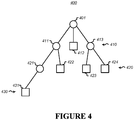
- Figure 4 illustrates an example directory structure 400 having four levels 401, 410, 420 and 430.
- the directory structure 400 is a simple example, but the principles described herein operate no matter how complex the directory structure of the distributed file system. Furthermore, in the example directory structure 400, there are one-to-one mappings between files and full path names. However, the principles described herein operate even for directory structures in which a single file may have multiple path names.
- directories are represented by circles, and files are represented by squares.
- there is a root directory 401 that represents the root level 401 of the directory structure 400. In one example, the root directory 401 may be the parent directory of a data share.
- the root directory 401 includes two directories 411 and 413 and a file 412, all at the level 410 in the directory structure 400.
- the directory 411 includes a file 422 and a directory 421, both at the level 420 in the directory structure 400.
- Directory 421 includes a single file 431 at the level 430 in the directory structure 400.
- the directory 413 has two files 423 and 424 at the level 420 in the directory structure 400.
- Each of these files and directories may have associated state, or may have metadata that has associated state. Accordingly, file system entity 301 is shown as having corresponding state 302.
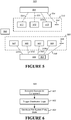
- FIG. 5 illustrates a distributed file system entity 500 that is an example of the distributed file system 200 of Figure 2 .
- the computing node tier 510 is a front end computing node tier that interfaces with a load balancer 501.
- the load balancer 501 may be a software load balancer that receives a connection request (such as, but not limited to a various file system request, or a REST request), whereupon the load balancer 501 establishes a connection to a front end computing node 511, 512, 513 or 514 of the front end computing node tier 510.
- the like characteristics of the particular computing node tier 210 include a topographical proximity to a file system requestor.
- file system requests may be directed towards a web site address or Internet Protocol (IP) protocol address of the load balancer 501, which assigns processing of the file system request to an appropriate front end computing node 511, 512, 513 or 514.
- IP Internet Protocol
- possible connections between the load balancer and respective front end computing nodes 511 through 514 are represented by dashed lines 531 through 534.
- the computing node tier 520 is a back end computing node tier that interfaces with a durable store 502.
- the durable store 502 may store a mountable data share 503 that has an associated directory structure.
- any one or more or all of the back end computing nodes 521, 522, 523, 524 or 525 may mount the data share 503 so as to have claim on the ability to execute file system commands on the data share 503.
- possible mountings between the respective back end computing node 521 through 525 and the data share 503 is represented by dotted lines 541 through 545.
- the environment 500 also includes an executable component 540 called herein a distribution component 540.
- the distribution component 540 of Figure 5 is an example of the distribution component 240 of Figure 2 , and also includes logic that distributes state of the file system entities amongst the tiers 510 and 520.
- the executable component 540 may be present on a single computing node within the environment 500, or may be distributed across multiple computing nodes. Alternatively or in addition, the executable component 540 may be present within a computing node that is not one of the computing nodes within any of the computing node tiers 510 or 520.
- Figure 6 illustrates an example method 600 that may be performed by the executable component 540.
- the executable component 540 is executed (act 601).
- the executable component is the executable component 106 present on the computing system 100.
- the executable component 540 may be executed by the one or more processors of the computing system if the executable component 106 has a software structure.
- the execution of the executable component thereby triggers logic (act 602) that distributes (act 603) state of multiple of the file system entities amongst at least some of the computing node tiers.
- the executable component 540 distributes file system entity state between the front end computing node tier 510 and the back end computing node tier 520.
- the distribution component 240 may distribute file system entity state amongst the computing node tiers 210, 220 and 230.
- the exact mechanism for distribution is not important. However, the distribution occurs such that durability guarantees are met, and/or such that the latency of file system requests are reduced due to state of the file system entity that is the subject of the corresponding file system request being in a computing node tier that is closer to the corresponding file system request than another computing system node. For instance, in the case of Figure 5 , distribution occurs such that more file system requests can be satisfied wholly by computing nodes at the front end computing node 510 that would occur without distribution.
- This reduced latency may be achieved by distributing state such that state that has a state lifetime that tends to be shorter (i.e., transient state) is placed in a front end computing node within the front end computing node tier 510, while state having a state lifetime that tends to be longer (i.e., durable state) and/or that is more critical to maintaining durability guarantees is placed in a back end computing node within the back end computing node tier 520.
- state that state that has a state lifetime that tends to be shorter (i.e., transient state) is placed in a front end computing node within the front end computing node tier 510
- state having a state lifetime that tends to be longer i.e., durable state
- the lifetime of state and the durability guaranty levels of the state might be just be a few of a host of parameters that are considered by the executable components 240 and 540 in determining which computing node tier to place particular file system entity state within.
- Other factors might include size of the state, reproducibility (e.g., difficulty in reproducing) the state, and so forth.
- An example algorithm might include, for instance, a simple weighted summation of each of these factors, comparing the summation to a threshold range for each tier, matching the weighted sum to a threshold range of a given tier, and assigning the state to that tier.
- Another consideration is that back end nodes by their very nature of mounting some or all of a data share are a centralized contended resource. For instance, the back end nodes may be mounted to a partition. Furthermore, the mechanics of data share movement can introduce significant delays.
- the principles described herein provide an effective mechanism to distribute file system entity state amongst multiple tiers of a distributed file system entity in a manner that reduces latency of file system requests while maintaining expected durability guarantees.
- the distribution mechanisms might factor in other goals as well, such as effective use of bandwidth between computing node tiers, effective use of processing capability, and so forth, so as to achieve closer to maximum utilization efficiency of the distributed file system as a whole.
- the principles described herein provide a technical improvement in the field of distributed file system that are stateful in that the file system entities have associated state.
Landscapes
- Engineering & Computer Science (AREA)
- Theoretical Computer Science (AREA)
- Computer Networks & Wireless Communication (AREA)
- Signal Processing (AREA)
- Data Mining & Analysis (AREA)
- Databases & Information Systems (AREA)
- Physics & Mathematics (AREA)
- General Engineering & Computer Science (AREA)
- General Physics & Mathematics (AREA)
- Information Retrieval, Db Structures And Fs Structures Therefor (AREA)
Claims (14)
- Statusbezogenes verteiltes Dateisystem (200; 500), das umfasst:eine Vielzahl von Dateisystementitäten (300; 401, 411, 412, 413, 421, 422, 423, 324, 431) mit einem zugeordneten Status (302);eine Vielzahl von Computerknotenebenen (210, 220; 510, 520), wobei jede von wenigstens einigen aus der Vielzahl von Computerknotenebenen eine Vielzahl von Computerknoten (211, 212, 213, 214; 511, 512, 513, 514) mit gleichen Eigenschaften im Vergleich zu anderen Computerknoten in der gleichen Computerknotenebene umfasst, wobei die Vielzahl von Computerknotenebenen eine Front-End-Computerknotenebene (510) und eine Back-End-Computerknotenebene (520) umfasst; undeine Verteilungskomponente (240), die eine Logik umfasst, die den Status der Vielzahl von Dateisystementitäten unter wenigstens einigen aus der Vielzahl von Computerknotenebenen verteilt, wobei die Verteilung des Status umfasst:Platzieren eines flüchtigen Status in einem Front-End-Computerknoten innerhalb der Front-End-Computerknotenebene (510) undPlatzieren eines dauerhaften Status in einem Back-End-Computerknoten innerhalb der Back-End-Computerknotenebene (520).
- Verteiltes Dateisystem (200; 500) nach Anspruch 1, wobei die ähnlichen Eigenschaften einer bestimmten aus der Vielzahl von Computerknotenebenen (210, 220; 510, 520) eine topologische Nähe zu einer Verbindungsanforderungseinrichtung umfassen.
- Verteiltes Dateisystem (200; 500) nach Anspruch 2, wobei die bestimmte Computerknotenebene die Front-End-Computerknotenebene (510) ist.
- Verteiltes Dateisystem (200; 500) nach Anspruch 1, wobei die ähnlichen Eigenschaften einer bestimmten aus der Vielzahl von Computerknotenebenen (210, 220; 510, 520) eine Nähe zu einem dauerhaften Speicher (502) des verteilten Dateisystems umfassen.
- Verteiltes Dateisystem (200; 500) nach Anspruch 4, wobei die bestimmte Computerknotenebene die Back-End-Computerknotenebene (520) ist.
- Verteiltes Dateisystem (200; 500) nach Anspruch 1, wobei die ähnlichen Eigenschaften einer ersten bestimmten aus der Vielzahl von Computerknotenebenen (210, 220; 510, 520) eine topologische Nähe zu einer Verbindungsanforderungseinrichtung umfassen, wobei die ähnlichen Eigenschaften einer zweiten bestimmten aus der Vielzahl von Computerknotenebenen eine topologische Nähe zu einem dauerhaften Speicher (502) des verteilten Dateisystems umfassen.
- Verteiltes Dateisystem (200; 500) nach Anspruch 6, wobei die erste bestimmte Computerknotenebene die Front-End-Computerknotenebene (510) ist, die eine Vielzahl von Front-End-Servern umfasst, die zweite bestimmte Computerknotenebene eine Back-End-Computerknotenebene (520) ist, die eine Vielzahl von Back-End-Servern umfasst, wobei das verteilte Dateisystem des Weiteren umfasst:einen Load Balancer (501), der konfiguriert ist zum:Empfangen eine Verbindungsanforderung undFormulieren einer Verbindung mit einem beliebigen aus der Vielzahl von Front-End-Servern, wobeider dauerhafte Speicher (502) einen Datenanteil (503) hat, den jeder aus der Vielzahl von Back-End-Servern anbringen kann.
- Verteiltes Dateisystem (200; 500) nach Anspruch 1, wobei die Vielzahl von Dateisystementitäten (300; 401, 411, 412, 413, 421, 422, 423, 324, 431) wenigstens eine Datei oder ein Verzeichnis umfasst.
- Verteiltes Dateisystem (200; 500) nach Anspruch 1, wobei die Vielzahl von Dateisystementitäten (300; 401, 411, 412, 413, 421, 422, 423, 324, 431) Metadaten für wenigstens eine Datei oder ein Verzeichnis umfasst.
- Verteiltes Dateisystem (200; 500) nach Anspruch 1, wobei die ähnlichen Eigenschaften einer bestimmten aus der Vielzahl von Computerknotenebenen (210, 220; 510, 520) eine Funktion der Computerknotenebene umfassen.
- Verteiltes Dateisystem (200; 500) nach Anspruch 1, wobei wenigstens einige aus der Vielzahl von Computerknoten (211, 212, 213, 214; 511, 512, 513, 514) für wenigstens eine aus der Vielzahl von Computerknotenebenen (210, 220; 510, 520) einen physikalischen Computerknoten umfassen.
- Verteiltes Dateisystem (200; 500) nach Anspruch 1, wobei wenigstens einige aus der Vielzahl von Computerknoten (211, 212, 213, 214; 511, 512, 513, 514) für wenigstens eine aus der Vielzahl von Computerknotenebenen (210, 220; 510, 520) einen virtuellen Computerknoten umfassen.
- Verfahren zum Verteilen eines Dateisystementitätsstatus in einem statusbezogenen verteilten Computersystem (200; 500), das aufweist:eine Vielzahl von Computerknotenebenen (210, 220; 510, 520), wobei jede von wenigstens einigen aus der Vielzahl von Computerknotenebenen eine Vielzahl von Computerknoten (211, 212, 213, 214; 511, 512, 513, 514) mit gleichen Eigenschaften im Vergleich zu anderen Computerknoten in der gleichen Computerknotenebene umfasst,eine Vielzahl von Dateisystementitäten (300; 401, 411, 412, 413, 421, 422, 423, 324, 431) mit einem zugeordneten Status (302);wobei das Verfahren umfasst:
Ausführen einer ausführbaren Komponente (540), um dadurch eine Logik auszulösen, die den Status der Vielzahl von Dateisystementitäten unter wenigstens einigen aus der Vielzahl von Computerknotenebenen verteilt, wobei die Verteilung des Status umfasst:Platzieren eines flüchtigen Status in einem Front-End-Computerknoten innerhalb der Front-End-Computerknotenebene (510) undPlatzieren eines dauerhaften Status in einem Back-End-Computerknoten innerhalb der Back-End-Computerknotenebene (520). - Ein oder mehrere computerlesbare Medien (104) mit darauf befindlichen computerausführbaren Anweisungen, die so strukturiert sind, dass, wenn sie durch einen oder mehrere Prozessoren (102) ausgeführt werden, ein statusbezogenes verteiltes Dateisystem (200; 500) bewirkt wird, das umfasst:eine Vielzahl von Computerknotenebenen (210, 220; 510, 520), wobei jede von wenigstens einigen aus der Vielzahl von Computerknotenebenen eine Vielzahl von Computerknoten (211, 212, 213, 214; 511, 512, 513, 514) mit gleichen Eigenschaften im Vergleich zu anderen Computerknoten in der gleichen Computerknotenebene umfasst,eine Vielzahl von Dateisystementitäten (300; 401, 411, 412, 413, 421, 422, 423, 324, 431) mit einem zugeordneten Status (302);um eine Verteilungslogik (240) auszuführen, die den Status der Vielzahl von Dateisystementitäten unter wenigstens einigen aus der Vielzahl von Computerknotenebenen verteilt, wobei die Verteilung des Status umfasst:Platzieren eines flüchtigen Status in einem Front-End-Computerknoten innerhalb der Front-End-Computerknotenebene (510) undPlatzieren eines dauerhaften Status in einem Back-End-Computerknoten innerhalb der Back-End-Computerknotenebene (520).
Applications Claiming Priority (2)
| Application Number | Priority Date | Filing Date | Title |
|---|---|---|---|
| US14/939,942 US10303660B2 (en) | 2015-11-12 | 2015-11-12 | File system with distributed entity state |
| PCT/US2016/060417 WO2017083172A1 (en) | 2015-11-12 | 2016-11-04 | File system with distributed entity state |
Publications (2)
| Publication Number | Publication Date |
|---|---|
| EP3374882A1 EP3374882A1 (de) | 2018-09-19 |
| EP3374882B1 true EP3374882B1 (de) | 2020-08-19 |
Family
ID=57485860
Family Applications (1)
| Application Number | Title | Priority Date | Filing Date |
|---|---|---|---|
| EP16806317.0A Active EP3374882B1 (de) | 2015-11-12 | 2016-11-04 | Dateisystem mit verteiltem entitätszustand |
Country Status (4)
| Country | Link |
|---|---|
| US (2) | US10303660B2 (de) |
| EP (1) | EP3374882B1 (de) |
| CN (1) | CN108351894B (de) |
| WO (1) | WO2017083172A1 (de) |
Families Citing this family (1)
| Publication number | Priority date | Publication date | Assignee | Title |
|---|---|---|---|---|
| CN110765073B (zh) * | 2019-09-11 | 2022-06-07 | 厦门卫星定位应用股份有限公司 | 分布式存储系统的文件管理方法、介质、设备及装置 |
Family Cites Families (32)
| Publication number | Priority date | Publication date | Assignee | Title |
|---|---|---|---|---|
| US7512676B2 (en) * | 2001-09-13 | 2009-03-31 | Network Foundation Technologies, Llc | Systems for distributing data over a computer network and methods for arranging nodes for distribution of data over a computer network |
| US7788346B2 (en) | 2002-03-01 | 2010-08-31 | Oracle America, Inc. | System and method for state data back-up in a distributed data system |
| CN1317662C (zh) * | 2002-10-31 | 2007-05-23 | 中兴通讯股份有限公司 | 一种分布式文件存取方法 |
| US7634583B2 (en) | 2003-12-18 | 2009-12-15 | Microsoft Corporation | Systems and methods that utilize persisted push/pull state to provide reliable message publishing |
| US7373502B2 (en) | 2004-01-12 | 2008-05-13 | Cisco Technology, Inc. | Avoiding server storage of client state |
| US7716274B1 (en) | 2004-04-14 | 2010-05-11 | Oracle America, Inc. | State data persistence in a distributed computing environment |
| US20060248199A1 (en) | 2005-04-29 | 2006-11-02 | Georgi Stanev | Shared closure persistence of session state information |
| US8112525B2 (en) | 2006-05-16 | 2012-02-07 | Oracle International Corporation | Engine near cache for reducing latency in a telecommunications environment |
| US7647454B2 (en) * | 2006-06-12 | 2010-01-12 | Hewlett-Packard Development Company, L.P. | Transactional shared memory system and method of control |
| US8078737B2 (en) | 2006-12-13 | 2011-12-13 | Oracle International Corporation | System and method for efficient storage of long-lived session state in a SIP server |
| CN101420320A (zh) * | 2007-10-26 | 2009-04-29 | 西门子公司 | 多跳无线通信网络中的网络重配方法、系统与网络节点 |
| EP2148473A1 (de) * | 2008-07-22 | 2010-01-27 | ABB Research Ltd | Vermittlungsknoten für Netzwerke mit hoher Verfügbarkeit |
| US20110161294A1 (en) * | 2009-12-30 | 2011-06-30 | Sun Microsystems, Inc. | Method for determining whether to dynamically replicate data |
| CA2802996A1 (en) * | 2010-06-17 | 2011-12-22 | Coral Networks, Inc. | System and method for a computer based forms language |
| US8631277B2 (en) | 2010-12-10 | 2014-01-14 | Microsoft Corporation | Providing transparent failover in a file system |
| US8862933B2 (en) * | 2011-02-09 | 2014-10-14 | Cliqr Technologies, Inc. | Apparatus, systems and methods for deployment and management of distributed computing systems and applications |
| CN102142934B (zh) * | 2011-03-29 | 2013-11-13 | 浙江大学 | 基于分层网络拓扑实现分布式的近似理想lt编码的方法 |
| US8856582B2 (en) | 2011-06-30 | 2014-10-07 | Microsoft Corporation | Transparent failover |
| US8601473B1 (en) * | 2011-08-10 | 2013-12-03 | Nutanix, Inc. | Architecture for managing I/O and storage for a virtualization environment |
| US9652265B1 (en) * | 2011-08-10 | 2017-05-16 | Nutanix, Inc. | Architecture for managing I/O and storage for a virtualization environment with multiple hypervisor types |
| US9344494B2 (en) | 2011-08-30 | 2016-05-17 | Oracle International Corporation | Failover data replication with colocation of session state data |
| US20130067095A1 (en) | 2011-09-09 | 2013-03-14 | Microsoft Corporation | Smb2 scaleout |
| US9805054B2 (en) * | 2011-11-14 | 2017-10-31 | Panzura, Inc. | Managing a global namespace for a distributed filesystem |
| US10623485B2 (en) | 2012-07-16 | 2020-04-14 | Seagate Technology Llc | Method of, and apparatus for, file system replication |
| US9609050B2 (en) * | 2013-01-31 | 2017-03-28 | Facebook, Inc. | Multi-level data staging for low latency data access |
| CN103152825A (zh) * | 2013-03-07 | 2013-06-12 | 北京交通大学 | 一种适用于无线传感器网络的分布式非测距定位方法 |
| US9141626B2 (en) * | 2013-03-14 | 2015-09-22 | Microsoft Technology Licensing, Llc | Volume having tiers of different storage traits |
| US9712622B2 (en) | 2013-07-15 | 2017-07-18 | Microsoft Technology Licensing, Llc | Techniques to manage state information for a web service |
| CA2867585A1 (en) * | 2013-10-15 | 2015-04-15 | Coho Data Inc. | Methods, devices and systems for coordinating network-based communication in distributed server systems with sdn switching |
| CN104010329B (zh) * | 2014-06-17 | 2017-11-14 | 哈尔滨工业大学 | 基于量化无偏广播Gossip算法的分布式负载均衡方法 |
| US9672122B1 (en) * | 2014-09-29 | 2017-06-06 | Amazon Technologies, Inc. | Fault tolerant distributed tasks using distributed file systems |
| US20160125059A1 (en) * | 2014-11-04 | 2016-05-05 | Rubrik, Inc. | Hybrid cloud data management system |
-
2015
- 2015-11-12 US US14/939,942 patent/US10303660B2/en active Active
-
2016
- 2016-11-04 CN CN201680065867.2A patent/CN108351894B/zh active Active
- 2016-11-04 WO PCT/US2016/060417 patent/WO2017083172A1/en not_active Ceased
- 2016-11-04 EP EP16806317.0A patent/EP3374882B1/de active Active
-
2019
- 2019-05-16 US US16/413,930 patent/US11010349B2/en active Active
Non-Patent Citations (1)
| Title |
|---|
| HYERAN LIM ET AL: "Active Disk File System : A Distributed, Scalable File System", MASS STORAGE SYSTEMS AND TECHNOLOGIES, 2001. MSS '01. EIGHTEENTH IEEE SYMPOSIUM ON, IEEE, PI, 1 April 2001 (2001-04-01), pages 101 - 101, XP031023307, ISBN: 978-0-7695-9173-5 * |
Also Published As
| Publication number | Publication date |
|---|---|
| WO2017083172A1 (en) | 2017-05-18 |
| US10303660B2 (en) | 2019-05-28 |
| US20170139951A1 (en) | 2017-05-18 |
| CN108351894B (zh) | 2022-06-17 |
| US20190272259A1 (en) | 2019-09-05 |
| EP3374882A1 (de) | 2018-09-19 |
| CN108351894A (zh) | 2018-07-31 |
| US11010349B2 (en) | 2021-05-18 |
Similar Documents
| Publication | Publication Date | Title |
|---|---|---|
| US9563426B1 (en) | Partitioned key-value store with atomic memory operations | |
| US9971823B2 (en) | Dynamic replica failure detection and healing | |
| EP3553655B1 (de) | Verteilte richtlinienbasierte bereitstellung und durchsetzung für dienstqualität | |
| US10715460B2 (en) | Opportunistic resource migration to optimize resource placement | |
| US9053167B1 (en) | Storage device selection for database partition replicas | |
| US12204496B2 (en) | Metadata control in a load-balanced distributed storage system | |
| US10356150B1 (en) | Automated repartitioning of streaming data | |
| US20220124150A1 (en) | Infrastructure for deploying a security information and event management application on a container platform | |
| US20140149590A1 (en) | Scaling computing clusters in a distributed computing system | |
| US20190147066A1 (en) | Directory structure for a distributed storage system | |
| Greenberg et al. | {MDHIM}: A parallel {Key/Value} framework for {HPC} | |
| WO2011120791A1 (en) | Transmission of map-reduce data based on a storage network or a storage network file system | |
| US20190310893A1 (en) | Workload management with data access awareness in a computing cluster | |
| CN116805946B (zh) | 一种消息请求处理方法、装置、电子设备及存储介质 | |
| WO2019005404A1 (en) | GLOBAL OCCUPANCY AGGREGATOR FOR PLANNING GLOBAL MEMORY SPACE RECOVERY | |
| US11461053B2 (en) | Data storage system with separate interfaces for bulk data ingestion and data access | |
| US10375164B1 (en) | Parallel storage system with burst buffer appliance for storage of partitioned key-value store across a plurality of storage tiers | |
| US10594620B1 (en) | Bit vector analysis for resource placement in a distributed system | |
| US11010349B2 (en) | File system with distributed entity state | |
| US20210141686A1 (en) | Efficient Networking for a Distributed Storage System | |
| Vilaça et al. | A correlation-aware data placement strategy for key-value stores | |
| US11947568B1 (en) | Working set ratio estimations of data items in a sliding time window for dynamically allocating computing resources for the data items | |
| Pérez-Miguel et al. | High throughput computing over peer-to-peer networks | |
| US9619153B2 (en) | Increase memory scalability using table-specific memory cleanup | |
| KR101754713B1 (ko) | 비대칭 분산 파일 시스템, 연산 분배 장치 및 방법 |
Legal Events
| Date | Code | Title | Description |
|---|---|---|---|
| STAA | Information on the status of an ep patent application or granted ep patent |
Free format text: STATUS: UNKNOWN |
|
| STAA | Information on the status of an ep patent application or granted ep patent |
Free format text: STATUS: THE INTERNATIONAL PUBLICATION HAS BEEN MADE |
|
| PUAI | Public reference made under article 153(3) epc to a published international application that has entered the european phase |
Free format text: ORIGINAL CODE: 0009012 |
|
| STAA | Information on the status of an ep patent application or granted ep patent |
Free format text: STATUS: REQUEST FOR EXAMINATION WAS MADE |
|
| 17P | Request for examination filed |
Effective date: 20180509 |
|
| AK | Designated contracting states |
Kind code of ref document: A1 Designated state(s): AL AT BE BG CH CY CZ DE DK EE ES FI FR GB GR HR HU IE IS IT LI LT LU LV MC MK MT NL NO PL PT RO RS SE SI SK SM TR |
|
| AX | Request for extension of the european patent |
Extension state: BA ME |
|
| DAV | Request for validation of the european patent (deleted) | ||
| DAX | Request for extension of the european patent (deleted) | ||
| REG | Reference to a national code |
Ref country code: DE Ref legal event code: R079 Ref document number: 602016042411 Country of ref document: DE Free format text: PREVIOUS MAIN CLASS: G06F0017300000 Ipc: G06F0016182000 |
|
| GRAP | Despatch of communication of intention to grant a patent |
Free format text: ORIGINAL CODE: EPIDOSNIGR1 |
|
| STAA | Information on the status of an ep patent application or granted ep patent |
Free format text: STATUS: GRANT OF PATENT IS INTENDED |
|
| RIC1 | Information provided on ipc code assigned before grant |
Ipc: G06F 16/182 20190101AFI20200304BHEP |
|
| INTG | Intention to grant announced |
Effective date: 20200323 |
|
| GRAS | Grant fee paid |
Free format text: ORIGINAL CODE: EPIDOSNIGR3 |
|
| GRAA | (expected) grant |
Free format text: ORIGINAL CODE: 0009210 |
|
| STAA | Information on the status of an ep patent application or granted ep patent |
Free format text: STATUS: THE PATENT HAS BEEN GRANTED |
|
| AK | Designated contracting states |
Kind code of ref document: B1 Designated state(s): AL AT BE BG CH CY CZ DE DK EE ES FI FR GB GR HR HU IE IS IT LI LT LU LV MC MK MT NL NO PL PT RO RS SE SI SK SM TR |
|
| REG | Reference to a national code |
Ref country code: CH Ref legal event code: EP |
|
| REG | Reference to a national code |
Ref country code: DE Ref legal event code: R096 Ref document number: 602016042411 Country of ref document: DE |
|
| REG | Reference to a national code |
Ref country code: AT Ref legal event code: REF Ref document number: 1304740 Country of ref document: AT Kind code of ref document: T Effective date: 20200915 |
|
| REG | Reference to a national code |
Ref country code: IE Ref legal event code: FG4D |
|
| REG | Reference to a national code |
Ref country code: NL Ref legal event code: FP |
|
| REG | Reference to a national code |
Ref country code: LT Ref legal event code: MG4D |
|
| PG25 | Lapsed in a contracting state [announced via postgrant information from national office to epo] |
Ref country code: FI Free format text: LAPSE BECAUSE OF FAILURE TO SUBMIT A TRANSLATION OF THE DESCRIPTION OR TO PAY THE FEE WITHIN THE PRESCRIBED TIME-LIMIT Effective date: 20200819 Ref country code: GR Free format text: LAPSE BECAUSE OF FAILURE TO SUBMIT A TRANSLATION OF THE DESCRIPTION OR TO PAY THE FEE WITHIN THE PRESCRIBED TIME-LIMIT Effective date: 20201120 Ref country code: PT Free format text: LAPSE BECAUSE OF FAILURE TO SUBMIT A TRANSLATION OF THE DESCRIPTION OR TO PAY THE FEE WITHIN THE PRESCRIBED TIME-LIMIT Effective date: 20201221 Ref country code: NO Free format text: LAPSE BECAUSE OF FAILURE TO SUBMIT A TRANSLATION OF THE DESCRIPTION OR TO PAY THE FEE WITHIN THE PRESCRIBED TIME-LIMIT Effective date: 20201119 Ref country code: BG Free format text: LAPSE BECAUSE OF FAILURE TO SUBMIT A TRANSLATION OF THE DESCRIPTION OR TO PAY THE FEE WITHIN THE PRESCRIBED TIME-LIMIT Effective date: 20201119 Ref country code: SE Free format text: LAPSE BECAUSE OF FAILURE TO SUBMIT A TRANSLATION OF THE DESCRIPTION OR TO PAY THE FEE WITHIN THE PRESCRIBED TIME-LIMIT Effective date: 20200819 Ref country code: LT Free format text: LAPSE BECAUSE OF FAILURE TO SUBMIT A TRANSLATION OF THE DESCRIPTION OR TO PAY THE FEE WITHIN THE PRESCRIBED TIME-LIMIT Effective date: 20200819 Ref country code: HR Free format text: LAPSE BECAUSE OF FAILURE TO SUBMIT A TRANSLATION OF THE DESCRIPTION OR TO PAY THE FEE WITHIN THE PRESCRIBED TIME-LIMIT Effective date: 20200819 |
|
| REG | Reference to a national code |
Ref country code: AT Ref legal event code: MK05 Ref document number: 1304740 Country of ref document: AT Kind code of ref document: T Effective date: 20200819 |
|
| PG25 | Lapsed in a contracting state [announced via postgrant information from national office to epo] |
Ref country code: PL Free format text: LAPSE BECAUSE OF FAILURE TO SUBMIT A TRANSLATION OF THE DESCRIPTION OR TO PAY THE FEE WITHIN THE PRESCRIBED TIME-LIMIT Effective date: 20200819 Ref country code: LV Free format text: LAPSE BECAUSE OF FAILURE TO SUBMIT A TRANSLATION OF THE DESCRIPTION OR TO PAY THE FEE WITHIN THE PRESCRIBED TIME-LIMIT Effective date: 20200819 Ref country code: RS Free format text: LAPSE BECAUSE OF FAILURE TO SUBMIT A TRANSLATION OF THE DESCRIPTION OR TO PAY THE FEE WITHIN THE PRESCRIBED TIME-LIMIT Effective date: 20200819 Ref country code: IS Free format text: LAPSE BECAUSE OF FAILURE TO SUBMIT A TRANSLATION OF THE DESCRIPTION OR TO PAY THE FEE WITHIN THE PRESCRIBED TIME-LIMIT Effective date: 20201219 |
|
| PG25 | Lapsed in a contracting state [announced via postgrant information from national office to epo] |
Ref country code: CZ Free format text: LAPSE BECAUSE OF FAILURE TO SUBMIT A TRANSLATION OF THE DESCRIPTION OR TO PAY THE FEE WITHIN THE PRESCRIBED TIME-LIMIT Effective date: 20200819 Ref country code: DK Free format text: LAPSE BECAUSE OF FAILURE TO SUBMIT A TRANSLATION OF THE DESCRIPTION OR TO PAY THE FEE WITHIN THE PRESCRIBED TIME-LIMIT Effective date: 20200819 Ref country code: RO Free format text: LAPSE BECAUSE OF FAILURE TO SUBMIT A TRANSLATION OF THE DESCRIPTION OR TO PAY THE FEE WITHIN THE PRESCRIBED TIME-LIMIT Effective date: 20200819 Ref country code: SM Free format text: LAPSE BECAUSE OF FAILURE TO SUBMIT A TRANSLATION OF THE DESCRIPTION OR TO PAY THE FEE WITHIN THE PRESCRIBED TIME-LIMIT Effective date: 20200819 Ref country code: EE Free format text: LAPSE BECAUSE OF FAILURE TO SUBMIT A TRANSLATION OF THE DESCRIPTION OR TO PAY THE FEE WITHIN THE PRESCRIBED TIME-LIMIT Effective date: 20200819 |
|
| REG | Reference to a national code |
Ref country code: DE Ref legal event code: R097 Ref document number: 602016042411 Country of ref document: DE |
|
| PG25 | Lapsed in a contracting state [announced via postgrant information from national office to epo] |
Ref country code: ES Free format text: LAPSE BECAUSE OF FAILURE TO SUBMIT A TRANSLATION OF THE DESCRIPTION OR TO PAY THE FEE WITHIN THE PRESCRIBED TIME-LIMIT Effective date: 20200819 Ref country code: AT Free format text: LAPSE BECAUSE OF FAILURE TO SUBMIT A TRANSLATION OF THE DESCRIPTION OR TO PAY THE FEE WITHIN THE PRESCRIBED TIME-LIMIT Effective date: 20200819 Ref country code: AL Free format text: LAPSE BECAUSE OF FAILURE TO SUBMIT A TRANSLATION OF THE DESCRIPTION OR TO PAY THE FEE WITHIN THE PRESCRIBED TIME-LIMIT Effective date: 20200819 |
|
| PLBE | No opposition filed within time limit |
Free format text: ORIGINAL CODE: 0009261 |
|
| STAA | Information on the status of an ep patent application or granted ep patent |
Free format text: STATUS: NO OPPOSITION FILED WITHIN TIME LIMIT |
|
| PG25 | Lapsed in a contracting state [announced via postgrant information from national office to epo] |
Ref country code: MC Free format text: LAPSE BECAUSE OF FAILURE TO SUBMIT A TRANSLATION OF THE DESCRIPTION OR TO PAY THE FEE WITHIN THE PRESCRIBED TIME-LIMIT Effective date: 20200819 Ref country code: SK Free format text: LAPSE BECAUSE OF FAILURE TO SUBMIT A TRANSLATION OF THE DESCRIPTION OR TO PAY THE FEE WITHIN THE PRESCRIBED TIME-LIMIT Effective date: 20200819 |
|
| REG | Reference to a national code |
Ref country code: CH Ref legal event code: PL |
|
| 26N | No opposition filed |
Effective date: 20210520 |
|
| PG25 | Lapsed in a contracting state [announced via postgrant information from national office to epo] |
Ref country code: IT Free format text: LAPSE BECAUSE OF FAILURE TO SUBMIT A TRANSLATION OF THE DESCRIPTION OR TO PAY THE FEE WITHIN THE PRESCRIBED TIME-LIMIT Effective date: 20200819 Ref country code: LU Free format text: LAPSE BECAUSE OF NON-PAYMENT OF DUE FEES Effective date: 20201104 |
|
| REG | Reference to a national code |
Ref country code: BE Ref legal event code: MM Effective date: 20201130 |
|
| PG25 | Lapsed in a contracting state [announced via postgrant information from national office to epo] |
Ref country code: SI Free format text: LAPSE BECAUSE OF FAILURE TO SUBMIT A TRANSLATION OF THE DESCRIPTION OR TO PAY THE FEE WITHIN THE PRESCRIBED TIME-LIMIT Effective date: 20200819 Ref country code: LI Free format text: LAPSE BECAUSE OF NON-PAYMENT OF DUE FEES Effective date: 20201130 Ref country code: CH Free format text: LAPSE BECAUSE OF NON-PAYMENT OF DUE FEES Effective date: 20201130 |
|
| PG25 | Lapsed in a contracting state [announced via postgrant information from national office to epo] |
Ref country code: IE Free format text: LAPSE BECAUSE OF NON-PAYMENT OF DUE FEES Effective date: 20201104 |
|
| PG25 | Lapsed in a contracting state [announced via postgrant information from national office to epo] |
Ref country code: TR Free format text: LAPSE BECAUSE OF FAILURE TO SUBMIT A TRANSLATION OF THE DESCRIPTION OR TO PAY THE FEE WITHIN THE PRESCRIBED TIME-LIMIT Effective date: 20200819 Ref country code: MT Free format text: LAPSE BECAUSE OF FAILURE TO SUBMIT A TRANSLATION OF THE DESCRIPTION OR TO PAY THE FEE WITHIN THE PRESCRIBED TIME-LIMIT Effective date: 20200819 Ref country code: CY Free format text: LAPSE BECAUSE OF FAILURE TO SUBMIT A TRANSLATION OF THE DESCRIPTION OR TO PAY THE FEE WITHIN THE PRESCRIBED TIME-LIMIT Effective date: 20200819 |
|
| PG25 | Lapsed in a contracting state [announced via postgrant information from national office to epo] |
Ref country code: MK Free format text: LAPSE BECAUSE OF FAILURE TO SUBMIT A TRANSLATION OF THE DESCRIPTION OR TO PAY THE FEE WITHIN THE PRESCRIBED TIME-LIMIT Effective date: 20200819 |
|
| PG25 | Lapsed in a contracting state [announced via postgrant information from national office to epo] |
Ref country code: BE Free format text: LAPSE BECAUSE OF NON-PAYMENT OF DUE FEES Effective date: 20201130 |
|
| P01 | Opt-out of the competence of the unified patent court (upc) registered |
Effective date: 20230523 |
|
| PGFP | Annual fee paid to national office [announced via postgrant information from national office to epo] |
Ref country code: NL Payment date: 20251022 Year of fee payment: 10 |
|
| PGFP | Annual fee paid to national office [announced via postgrant information from national office to epo] |
Ref country code: DE Payment date: 20251022 Year of fee payment: 10 |
|
| PGFP | Annual fee paid to national office [announced via postgrant information from national office to epo] |
Ref country code: GB Payment date: 20251023 Year of fee payment: 10 |
|
| PGFP | Annual fee paid to national office [announced via postgrant information from national office to epo] |
Ref country code: FR Payment date: 20251022 Year of fee payment: 10 |