EP3374591B1 - A connection device - Google Patents
A connection device Download PDFInfo
- Publication number
- EP3374591B1 EP3374591B1 EP16863235.4A EP16863235A EP3374591B1 EP 3374591 B1 EP3374591 B1 EP 3374591B1 EP 16863235 A EP16863235 A EP 16863235A EP 3374591 B1 EP3374591 B1 EP 3374591B1
- Authority
- EP
- European Patent Office
- Prior art keywords
- locking
- connection
- path
- projection
- connection device
- Prior art date
- Legal status (The legal status is an assumption and is not a legal conclusion. Google has not performed a legal analysis and makes no representation as to the accuracy of the status listed.)
- Active
Links
Images


Classifications
-
- E—FIXED CONSTRUCTIONS
- E21—EARTH OR ROCK DRILLING; MINING
- E21B—EARTH OR ROCK DRILLING; OBTAINING OIL, GAS, WATER, SOLUBLE OR MELTABLE MATERIALS OR A SLURRY OF MINERALS FROM WELLS
- E21B17/00—Drilling rods or pipes; Flexible drill strings; Kellies; Drill collars; Sucker rods; Cables; Casings; Tubings
- E21B17/02—Couplings; joints
- E21B17/04—Couplings; joints between rod or the like and bit or between rod and rod or the like
- E21B17/046—Couplings; joints between rod or the like and bit or between rod and rod or the like with ribs, pins, or jaws, and complementary grooves or the like, e.g. bayonet catches
-
- E—FIXED CONSTRUCTIONS
- E21—EARTH OR ROCK DRILLING; MINING
- E21B—EARTH OR ROCK DRILLING; OBTAINING OIL, GAS, WATER, SOLUBLE OR MELTABLE MATERIALS OR A SLURRY OF MINERALS FROM WELLS
- E21B17/00—Drilling rods or pipes; Flexible drill strings; Kellies; Drill collars; Sucker rods; Cables; Casings; Tubings
- E21B17/02—Couplings; joints
- E21B17/04—Couplings; joints between rod or the like and bit or between rod and rod or the like
- E21B17/042—Threaded
-
- F—MECHANICAL ENGINEERING; LIGHTING; HEATING; WEAPONS; BLASTING
- F16—ENGINEERING ELEMENTS AND UNITS; GENERAL MEASURES FOR PRODUCING AND MAINTAINING EFFECTIVE FUNCTIONING OF MACHINES OR INSTALLATIONS; THERMAL INSULATION IN GENERAL
- F16D—COUPLINGS FOR TRANSMITTING ROTATION; CLUTCHES; BRAKES
- F16D1/00—Couplings for rigidly connecting two coaxial shafts or other movable machine elements
- F16D1/10—Quick-acting couplings in which the parts are connected by simply bringing them together axially
- F16D1/108—Quick-acting couplings in which the parts are connected by simply bringing them together axially having retaining means rotating with the coupling and acting by interengaging parts, i.e. positive coupling
- F16D1/112—Quick-acting couplings in which the parts are connected by simply bringing them together axially having retaining means rotating with the coupling and acting by interengaging parts, i.e. positive coupling the interengaging parts comprising torque-transmitting surfaces, e.g. bayonet joints
-
- F—MECHANICAL ENGINEERING; LIGHTING; HEATING; WEAPONS; BLASTING
- F16—ENGINEERING ELEMENTS AND UNITS; GENERAL MEASURES FOR PRODUCING AND MAINTAINING EFFECTIVE FUNCTIONING OF MACHINES OR INSTALLATIONS; THERMAL INSULATION IN GENERAL
- F16L—PIPES; JOINTS OR FITTINGS FOR PIPES; SUPPORTS FOR PIPES, CABLES OR PROTECTIVE TUBING; MEANS FOR THERMAL INSULATION IN GENERAL
- F16L21/00—Joints with sleeve or socket
- F16L21/08—Joints with sleeve or socket with additional locking means
-
- F—MECHANICAL ENGINEERING; LIGHTING; HEATING; WEAPONS; BLASTING
- F16—ENGINEERING ELEMENTS AND UNITS; GENERAL MEASURES FOR PRODUCING AND MAINTAINING EFFECTIVE FUNCTIONING OF MACHINES OR INSTALLATIONS; THERMAL INSULATION IN GENERAL
- F16L—PIPES; JOINTS OR FITTINGS FOR PIPES; SUPPORTS FOR PIPES, CABLES OR PROTECTIVE TUBING; MEANS FOR THERMAL INSULATION IN GENERAL
- F16L37/00—Couplings of the quick-acting type
- F16L37/24—Couplings of the quick-acting type in which the connection is made by inserting one member axially into the other and rotating it to a limited extent, e.g. with bayonet-action
- F16L37/244—Couplings of the quick-acting type in which the connection is made by inserting one member axially into the other and rotating it to a limited extent, e.g. with bayonet-action the coupling being co-axial with the pipe
- F16L37/248—Bayonet-type couplings
Definitions
- the present invention relates to a connection device for a core drilling assembly.
- a core drilling assembly is used to obtain a core sample.
- the core sample is created when an annular drill bit and associated drill string drills through ground, and an inner tube assembly is typically used to retain the core sample as drilling progresses.
- the inner tube assembly locates within a core barrel assembly and typically includes an inner tube connected using a screw thread to a head assembly that facilitates retrieval of the inner tube assembly from the drill string when a suitable core sample is disposed in the inner tube assembly.
- the inner tube assembly can be relatively long and as a consequence when the inner tube assembly is retrieved from the core barrel assembly the inner tube assembly can be cumbersome and difficult for operators to handle.
- the inner tube assembly can be cumbersome and difficult for operators to handle.
- it can be difficult for operators to unscrew the head assembly from the inner tube.
- US 2,035,887 discloses a valve for the upper end of the core receiving inner barrel of a core drill and means for detachably connecting a body of the valve with the inner barrel.
- a latch pivotally mounted on an upper end of the body of the valve may be pivoted downwardly into a slot of the inner barrel to prevent rotational movement of the body and inner barrel relative to each other.
- connection device for a core drilling assembly, the connection device comprising: a first connection portion and a second connection portion; the connection device including a connection mechanism arranged to facilitate engagement of the first and second connection portions with each other and disengagement of the first and second connection portions from each other; the connection mechanism including: at least one locking projection disposed on the first connection portion and at least one corresponding locking path disposed on the second connection portion, the locking path having a locking position such that the first and second connection portions are held together when a locking projection is disposed in the locking position, wherein each locking projection is engageable with a respective locking path, and the locking path is arranged such that the locking projection is movable through the locking path and receivable in the locking position by moving the first and second connection portions substantially towards each other and rotating the first and second connection portions relative to each other; and a locking member mounted on the first or second connection portion such that rotation of the locking member is restricted, wherein when the locking projection is disposed in the locking position, the locking
- the locking path is generally L-shaped and includes a longitudinal path portion extending in a direction substantially parallel to the connection device and a transverse path portion extending in a direction generally transverse of the connection device.
- the locking position is defined by a well portion integral with the transverse path portion.
- connection device comprises a first biasing member arranged to resiliently bias the first and second connection portions away from each other and thereby the projection towards the locking position.
- the locking member comprises a locking collar reciprocably mounted on the first connection portion.
- the locking member comprises an elongate guide aperture and the first connection portion includes a guide pin received in the elongate guide aperture, the guide pin and the guide aperture cooperating so as to facilitate reciprocal movement of the locking member relative to the first connection portion and to restrict rotation of the locking member relative to the first connection portion.
- the locking member comprises a locking tab arranged, when the locking projection is disposed in the locking position, to engage with the locking path when the locking member is in the first position and to not engage with the locking path when the locking member is in the second position.
- the second connection portion includes a guide projection arranged to facilitate alignment of the first and second connection portions as the first and second connection portions are moved towards each other during engagement of the first connection portion with the second connection portion.
- the guide projection includes a through hole arranged to facilitate passage of fluid through the connection device when the connection device is connected to the head assembly and the inner tube during use.
- an inner tube assembly 10 of a core drilling assembly is shown, the inner tube assembly 10 including a connection device 12 disposed between a head assembly 14 and an inner tube 16.
- the head assembly 14 is usable to retrieve the inner tube assembly 10 from a core barrel assembly (not shown) of a core drilling assembly (not shown).
- the inner tube 16 receives and retains a core sample as drilling progresses and is retrieved from the core barrel assembly when the inner tube 16 is full by retrieving the head assembly 14 from the core barrel assembly.
- connection device 12 includes a first connection portion 18 and a second connection portion 20 that are arranged to connect together and disconnect from each other in a quick-release manner. Disposed between the first and second connection portions 18, 20 in an annular cavity 23 defined by the second connection portion 20 is a biasing member, in this example a coil spring 24, arranged to resiliently bias the first and second connection portions 18, 20 away from each other.
- a biasing member in this example a coil spring 24, arranged to resiliently bias the first and second connection portions 18, 20 away from each other.
- the first connection portion 18 includes a first cylindrical portion 24 and an integral second cylindrical portion 26 of smaller diameter than the first cylindrical portion 24. Disposed on the second cylindrical portion 26 and extending outwardly is at least one locking projection 28, in this example 2 oppositely disposed locking projections 28, usable to lock the first and second connection portions 18, 20 together as described in more detail below.
- the first connection portion 18 also includes an internal screw threaded portion that engages during use with a corresponding external screw threaded portion of the head assembly 14 in order to connect the first connection portion 18 to the head assembly 14.
- the second connection portion 20 includes an outer socket portion 32 and an inner socket portion 34 that in the present example connect together using complementary screw threaded portions 36.
- the outer and inner socket portions 32, 34 together define the annular cavity 23 that receives the coil spring 22.
- the outer socket portion 32 also includes a locking path 40 of generally L-shape configuration, the locking path including a longitudinal path portion 42, a transverse path portion 44 perpendicularly disposed relative to the longitudinal path portion 42 and a well portion 46 disposed at a remote end of the transverse path portion 44.
- Each locking projection has an associated locking path 40 and the arrangement is such that each locking path 40 is configured to receive a locking projection 28, and by manipulating the first and second connection portions 18, 20 a user is able to move the locking projections 28 in the respective locking paths 40 until the locking projections 28 are seated in the respective locking wells 46.
- the locking projections 28 will be urged to remain seated in the respective locking wells 46, and thereby the first and second connection portions are urged to remain connected together, until a user applies a force against the biasing force of the coil spring 22.
- the locking wells 46 correspond to locking positions such that the first and second connection portions 18, 20 securely connect together when the locking projections 28 are disposed in the locking positions.
- the outer socket portion 32 also includes an external screw threaded portion 48 that engages during use with a corresponding internal screw threaded portion of the inner tube 16 in order to connect the second connection portion 20 to the inner tube 16.
- the inner socket portion 34 includes a guide projection 50 arranged to facilitate correct alignment of the first and second connection portions 18, 20 as the first and second connection portions 18, 20 are connected together.
- the guide projection 50 includes a through hole 52 that facilitates passage of fluid through the connection device 10 when the connection device 10 is connected to the head assembly 14 and the inner tube 16 during use.
- FIG. 4 A process of connecting the first and second connection portions 18, 20 together and disconnecting first and second connection portions 18, 20 from each other is shown in Figure 4 .
- the first connection portion 18 is connected to a head assembly 14 using the internal screw threaded portion 30 and the second connection portion 20 is connected to an inner tube 16 using the external screw threaded portion 48.
- first and second connection portions 18, 20 are first aligned such that the guide projection 50 aligns with the second cylindrical portion 26 and the locking projections 28 align with the longitudinal path portions 42.
- first and second connection portions 18, 20 are then urged towards each other against the biasing force of the coil spring 22 with the locking projections 28 moving through the longitudinal path portions 42.
- the locking projections 28 reach the end of the longitudinal path portions 42
- the user rotates the first and second connection portions 18, 20 relative to each other so that the locking projections 28 move through the transverse path portions 44.
- the locking projections 28 reach the end of the transverse path portions 44, the user releases the first and/or second connection portion 18, 20 which causes the coil spring 22 to urge the locking projections 28 to seat in the well portions 46.
- a quick connection and release mechanism is provided that allows an operator to quickly engage the head assembly 14 with the inner tube 16, and in particular quickly disengage the head assembly 14 from the inner tube 16 as the inner tube assembly 10 is retrieved from a core barrel assembly.
- first and second connection portions 18, 20 may inadvertently disengage from each other as a consequence of reciprocal and rotational movement of the head assembly 14 and the inner tube 16.
- a locking arrangement is provided for restraining rotation of the first and second connection portions 18, 20 relative to each other, thereby preventing the locking projections 28 from moving through the transverse path portions 44 and preventing disengagement of the first connection portion 18 from the second connection portion 20.
- connection device 58 that includes a suitable locking arrangement. Like and similar features are shown with like reference numerals.
- the connection device 58 includes a locking member 60, in this example a locking collar, mounted on the second cylindrical portion 26 of the first connection portion 18 and reciprocably movable relative to the second cylindrical portion 26.
- the locking member 60 includes an elongate guide aperture 61 that receives a guide pin 62 disposed on the second cylindrical portion 26.
- the guide aperture 61 and guide pin 62 cooperate to enable the locking collar to move reciprocably relative to the second cylindrical portion 26 whilst restraining rotation of the locking collar 60 relative to the second cylindrical portion 26.
- the locking member 60 is configured so as to engage with the second connection portion 20 so as to restrict rotation of the second connection portion 20 relative to the locking member 60 and thereby restrict rotation of the first and second connection portions 18, 20 relative to each other.
- relative rotation between the second connection portion 20 and the locking member 60 is restricted by providing the locking member 60 with a locking tab 66 disposed at a location such that the locking tab 66 is received in the longitudinal path portion 42 when the locking projection 28 is disposed in the locking position, as shown in Figure 5 .
- relative rotation between the second connection portion 20 and the locking member 60 is restricted by engagement between the locking tab 66 and the longitudinal path portion 42.
- the locking member 60 is movable between a first position wherein coil spring 64 is compressed, and during use the locking tab 66 is not engaged with the longitudinal path portion 42, and a second position wherein the coil spring is expanded, and during use the locking tab 66 is engaged with the longitudinal path portion 42.
- the locking member 60 is biased towards the second position, in this example using a coil spring 64.
- the first and second connection portions 18, 20 are first aligned such that the guide projection 50 aligns with the second cylindrical portion 26 and the locking projections 28 align with the longitudinal path portions 42.
- the first and second connection portions 18, 20 are then urged towards each other with the locking projections 28 moving through the longitudinal path portions 42.
- This causes the locking tab 66 to contact the second connection portion 20, and the locking member 60 to move from the second position towards the first position against the biasing force of the coil spring 64.
- the locking projections 28 reach the end of the longitudinal path portions 42, the user rotates the first and second connection portions 18, 20 relative to each other so that the locking projections 28 move through the transverse path portions 44.
- Rotation of the first and second connection portions 18, 20 relative to each other causes the second connection portion 20 to rotate relative to the locking member 60, and relative rotation continues until the locking tab 66 is aligned with the longitudinal path portion 42.
- the user allows the biasing force of the coil spring 64 to act on the locking member 60 to cause the locking tab 66 to be received in the longitudinal path portion 42, as shown in Figure 5 .
- Disengagement of the first and second connection portions 18, 20 from each other is achieved by first urging the locking member 60 to move away from the locking projections 28 against the biasing force of the coil spring 64 until the locking tab 66 is released from the longitudinal path portion 42. This allows the first and second connection portions 18, 20 to be rotated relative to each other and movement of the locking projection in the transverse path portion 44 to occur.
- connection device 12 that has a first connection portion 18 connected to a head assembly 14 and a second connection portion 20 connected to an inner tube 16
- first connection portion 18 is connected to the inner tube 16
- second connection portion 20 is connected to the head assembly 14.
Landscapes
- Engineering & Computer Science (AREA)
- General Engineering & Computer Science (AREA)
- Mechanical Engineering (AREA)
- Geology (AREA)
- Life Sciences & Earth Sciences (AREA)
- Mining & Mineral Resources (AREA)
- General Life Sciences & Earth Sciences (AREA)
- Fluid Mechanics (AREA)
- Environmental & Geological Engineering (AREA)
- Geochemistry & Mineralogy (AREA)
- Physics & Mathematics (AREA)
- Quick-Acting Or Multi-Walled Pipe Joints (AREA)
- Drilling Tools (AREA)
- Sampling And Sample Adjustment (AREA)
- Coupling Device And Connection With Printed Circuit (AREA)
- Sink And Installation For Waste Water (AREA)
Description
- The present invention relates to a connection device for a core drilling assembly.
- During a core drilling operation, a core drilling assembly is used to obtain a core sample. The core sample is created when an annular drill bit and associated drill string drills through ground, and an inner tube assembly is typically used to retain the core sample as drilling progresses. The inner tube assembly locates within a core barrel assembly and typically includes an inner tube connected using a screw thread to a head assembly that facilitates retrieval of the inner tube assembly from the drill string when a suitable core sample is disposed in the inner tube assembly.
- However, the inner tube assembly can be relatively long and as a consequence when the inner tube assembly is retrieved from the core barrel assembly the inner tube assembly can be cumbersome and difficult for operators to handle. In particular, because of the combined length of the head assembly and inner tube, it can be difficult for operators to unscrew the head assembly from the inner tube.
-
US 2,035,887 discloses a valve for the upper end of the core receiving inner barrel of a core drill and means for detachably connecting a body of the valve with the inner barrel. When the body of the valve is connected to the inner barrel, a latch pivotally mounted on an upper end of the body of the valve may be pivoted downwardly into a slot of the inner barrel to prevent rotational movement of the body and inner barrel relative to each other. - In accordance with a first aspect of the present invention, there is provided a connection device for a core drilling assembly, the connection device comprising:
a first connection portion and a second connection portion;
the connection device including a connection mechanism arranged to facilitate engagement of the first and second connection portions with each other and disengagement of the first and second connection portions from each other; the connection mechanism including:
at least one locking projection disposed on the first connection portion and at least one corresponding locking path disposed on the second connection portion, the locking path having a locking position such that the first and second connection portions are held together when a locking projection is disposed in the locking position, wherein each locking projection is engageable with a respective locking path, and the locking path is arranged such that the locking projection is movable through the locking path and receivable in the locking position by moving the first and second connection portions substantially towards each other and rotating the first and second connection portions relative to each other; and
a locking member mounted on the first or second connection portion such that rotation of the locking member is restricted, wherein when the locking projection is disposed in the locking position, the locking member is reciprocably movable between a first position wherein the first and second connection portions are restrained from rotating relative to each other and the projection is thereby restrained from moving along at least a portion of the locking path, and a second position wherein the first and second connection portions are not restrained from rotating relative to each other and the projection is able to move along the locking path. - In an embodiment, the locking path is generally L-shaped and includes a longitudinal path portion extending in a direction substantially parallel to the connection device and a transverse path portion extending in a direction generally transverse of the connection device.
- In an embodiment, the locking position is defined by a well portion integral with the transverse path portion.
- In an embodiment, the connection device comprises a first biasing member arranged to resiliently bias the first and second connection portions away from each other and thereby the projection towards the locking position.
- In an embodiment, the locking member comprises a locking collar reciprocably mounted on the first connection portion.
- In an embodiment, the locking member comprises an elongate guide aperture and the first connection portion includes a guide pin received in the elongate guide aperture, the guide pin and the guide aperture cooperating so as to facilitate reciprocal movement of the locking member relative to the first connection portion and to restrict rotation of the locking member relative to the first connection portion.
- In an embodiment, the locking member comprises a locking tab arranged, when the locking projection is disposed in the locking position, to engage with the locking path when the locking member is in the first position and to not engage with the locking path when the locking member is in the second position.
- In an embodiment, the second connection portion includes a guide projection arranged to facilitate alignment of the first and second connection portions as the first and second connection portions are moved towards each other during engagement of the first connection portion with the second connection portion.
- In an embodiment, the guide projection includes a through hole arranged to facilitate passage of fluid through the connection device when the connection device is connected to the head assembly and the inner tube during use.
- Embodiments of the present invention will now be described, by way of example only, with reference to the accompanying figures, in which:
-
Figure 1 is a diagrammatic side view of an inner tube assembly including a connection device in accordance with an embodiment of the present invention; -
Figure 2 is an exploded view of the connection device shown inFigure 1 ; -
Figure 3 is a cross sectional view of the connection device shown inFigure 2 with the connection device shown in a connected configuration; -
Figures 4a to 4c are diagrammatic perspective views of the connection device shown inFigure 2 with the connection device shown at 3 positions between a disconnected configuration and a connected configuration; -
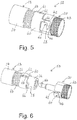
Figure 5 is a diagrammatic perspective view of a connection device including a locking arrangement; and -
Figure 6 is a diagrammatic exploded perspective view of the connection device shown inFigure 5 . - Referring to
Figure 1 , an inner tube assembly 10 of a core drilling assembly is shown, the inner tube assembly 10 including aconnection device 12 disposed between ahead assembly 14 and an inner tube 16. - The
head assembly 14 is usable to retrieve the inner tube assembly 10 from a core barrel assembly (not shown) of a core drilling assembly (not shown). - The inner tube 16 receives and retains a core sample as drilling progresses and is retrieved from the core barrel assembly when the inner tube 16 is full by retrieving the
head assembly 14 from the core barrel assembly. - As shown more particularly in
Figures 2 and 3 , theconnection device 12 includes afirst connection portion 18 and asecond connection portion 20 that are arranged to connect together and disconnect from each other in a quick-release manner. Disposed between the first andsecond connection portions annular cavity 23 defined by thesecond connection portion 20 is a biasing member, in this example acoil spring 24, arranged to resiliently bias the first andsecond connection portions - The
first connection portion 18 includes a firstcylindrical portion 24 and an integral secondcylindrical portion 26 of smaller diameter than the firstcylindrical portion 24. Disposed on the secondcylindrical portion 26 and extending outwardly is at least onelocking projection 28, in this example 2 oppositely disposedlocking projections 28, usable to lock the first andsecond connection portions - The
first connection portion 18 also includes an internal screw threaded portion that engages during use with a corresponding external screw threaded portion of thehead assembly 14 in order to connect thefirst connection portion 18 to thehead assembly 14. - The
second connection portion 20 includes anouter socket portion 32 and aninner socket portion 34 that in the present example connect together using complementary screw threadedportions 36. The outer andinner socket portions annular cavity 23 that receives thecoil spring 22. - The
outer socket portion 32 also includes alocking path 40 of generally L-shape configuration, the locking path including alongitudinal path portion 42, atransverse path portion 44 perpendicularly disposed relative to thelongitudinal path portion 42 and awell portion 46 disposed at a remote end of thetransverse path portion 44. Each locking projection has an associatedlocking path 40 and the arrangement is such that eachlocking path 40 is configured to receive alocking projection 28, and by manipulating the first andsecond connection portions 18, 20 a user is able to move thelocking projections 28 in therespective locking paths 40 until thelocking projections 28 are seated in therespective locking wells 46. - It will be understood that by virtue of the resilient biasing force provided by the
coil spring 22, thelocking projections 28 will be urged to remain seated in therespective locking wells 46, and thereby the first and second connection portions are urged to remain connected together, until a user applies a force against the biasing force of thecoil spring 22. In this way, thelocking wells 46 correspond to locking positions such that the first andsecond connection portions locking projections 28 are disposed in the locking positions. - The
outer socket portion 32 also includes an external screw threadedportion 48 that engages during use with a corresponding internal screw threaded portion of the inner tube 16 in order to connect thesecond connection portion 20 to the inner tube 16. - The
inner socket portion 34 includes aguide projection 50 arranged to facilitate correct alignment of the first andsecond connection portions second connection portions guide projection 50 includes a throughhole 52 that facilitates passage of fluid through the connection device 10 when the connection device 10 is connected to thehead assembly 14 and the inner tube 16 during use. - A process of connecting the first and
second connection portions second connection portions Figure 4 . - The
first connection portion 18 is connected to ahead assembly 14 using the internal screw threadedportion 30 and thesecond connection portion 20 is connected to an inner tube 16 using the external screw threadedportion 48. - As shown in
Figure 4a , in order to connect the first andsecond connection portions second connection portions guide projection 50 aligns with the secondcylindrical portion 26 and thelocking projections 28 align with thelongitudinal path portions 42. As shown inFigure 4b , the first andsecond connection portions coil spring 22 with thelocking projections 28 moving through thelongitudinal path portions 42. When thelocking projections 28 reach the end of thelongitudinal path portions 42, the user rotates the first andsecond connection portions locking projections 28 move through thetransverse path portions 44. When thelocking projections 28 reach the end of thetransverse path portions 44, the user releases the first and/orsecond connection portion coil spring 22 to urge thelocking projections 28 to seat in thewell portions 46. - Disengagement of the first and
second connection portions - It will be understood that in this way, a quick connection and release mechanism is provided that allows an operator to quickly engage the
head assembly 14 with the inner tube 16, and in particular quickly disengage thehead assembly 14 from the inner tube 16 as the inner tube assembly 10 is retrieved from a core barrel assembly. - During use, it is possible that the first and
second connection portions head assembly 14 and the inner tube 16. In order to prevent such disengagement, a locking arrangement is provided for restraining rotation of the first andsecond connection portions locking projections 28 from moving through thetransverse path portions 44 and preventing disengagement of thefirst connection portion 18 from thesecond connection portion 20. - Referring to
Figures 5 and 6 , aconnection device 58 is shown that includes a suitable locking arrangement. Like and similar features are shown with like reference numerals. - The
connection device 58 includes alocking member 60, in this example a locking collar, mounted on the secondcylindrical portion 26 of thefirst connection portion 18 and reciprocably movable relative to the secondcylindrical portion 26. Thelocking member 60 includes anelongate guide aperture 61 that receives aguide pin 62 disposed on the secondcylindrical portion 26. Theguide aperture 61 andguide pin 62 cooperate to enable the locking collar to move reciprocably relative to the secondcylindrical portion 26 whilst restraining rotation of thelocking collar 60 relative to the secondcylindrical portion 26. - The locking
member 60 is configured so as to engage with thesecond connection portion 20 so as to restrict rotation of thesecond connection portion 20 relative to the lockingmember 60 and thereby restrict rotation of the first andsecond connection portions - In this example, relative rotation between the
second connection portion 20 and the lockingmember 60 is restricted by providing the lockingmember 60 with alocking tab 66 disposed at a location such that thelocking tab 66 is received in thelongitudinal path portion 42 when the lockingprojection 28 is disposed in the locking position, as shown inFigure 5 . In this way, relative rotation between thesecond connection portion 20 and the lockingmember 60 is restricted by engagement between the lockingtab 66 and thelongitudinal path portion 42. - The locking
member 60 is movable between a first position whereincoil spring 64 is compressed, and during use thelocking tab 66 is not engaged with thelongitudinal path portion 42, and a second position wherein the coil spring is expanded, and during use thelocking tab 66 is engaged with thelongitudinal path portion 42. The lockingmember 60 is biased towards the second position, in this example using acoil spring 64. - During use, in order to connect the first and
second connection portions second connection portions guide projection 50 aligns with the secondcylindrical portion 26 and the lockingprojections 28 align with thelongitudinal path portions 42. The first andsecond connection portions projections 28 moving through thelongitudinal path portions 42. This causes thelocking tab 66 to contact thesecond connection portion 20, and the lockingmember 60 to move from the second position towards the first position against the biasing force of thecoil spring 64. When the lockingprojections 28 reach the end of thelongitudinal path portions 42, the user rotates the first andsecond connection portions projections 28 move through thetransverse path portions 44. Rotation of the first andsecond connection portions second connection portion 20 to rotate relative to the lockingmember 60, and relative rotation continues until thelocking tab 66 is aligned with thelongitudinal path portion 42. When this occurs, the user allows the biasing force of thecoil spring 64 to act on the lockingmember 60 to cause thelocking tab 66 to be received in thelongitudinal path portion 42, as shown inFigure 5 . - Disengagement of the first and
second connection portions member 60 to move away from the lockingprojections 28 against the biasing force of thecoil spring 64 until thelocking tab 66 is released from thelongitudinal path portion 42. This allows the first andsecond connection portions transverse path portion 44 to occur. - While the above embodiments are described in relation to a
connection device 12 that has afirst connection portion 18 connected to ahead assembly 14 and asecond connection portion 20 connected to an inner tube 16, it will be understood that an alternative arrangement is envisaged wherein thefirst connection portion 18 is connected to the inner tube 16 and thesecond connection portion 20 is connected to thehead assembly 14. - In the description of the invention, except where the context requires otherwise due to express language or necessary implication, the words "comprise" or variations such as "comprises" or "comprising" are used in an inclusive sense, i.e. to specify the presence of the stated features, but not to preclude the presence or addition of further features in various embodiments of the invention.
- Modifications and variations as would be apparent to a skilled addressee are deemed to be within the scope of the present invention.
Claims (7)
- A connection device (12) for a core drilling assembly, the connection device (12) comprising: a first connection portion (18) and a second connection portion (20); the connection device (12) including a connection mechanism arranged to facilitate engagement of the first and second connection portions (18, 20) with each other and disengagement of the first and second connection portions (18, 20) from each other; the connection mechanism including: at least one locking projection (28) disposed on the first connection portion (18) and at least one corresponding locking path (40) disposed on the second connection portion (20), the locking path (40) having a locking position such that the first and second connection portions (18, 20) are held together when a locking projection (28) is disposed in the locking position, wherein each locking projection is engageable with a respective locking path (40), and the locking path (40) is arranged such that the locking projection (28) is movable through the locking path and receivable in the locking position by moving the first and second connection portions substantially towards each other and rotating the first and second connection portions relative to each other; characterised in that the connection mechanism further comprises: a locking collar (60) mounted on the first connection portion (18) such that the locking collar (60) is reciprocably movable relative to the at least one locking projection (28) and rotation of the locking collar (60) relative to the at least one locking projection (28) is restricted, the locking collar (60) including a locking tab (66); wherein when the locking projection (28) is disposed in the locking position, the locking collar (60) is reciprocably movable between: a first position wherein the locking tab (66) engages with the locking path (40), so as to restrain the first and second connection portions (18, 20) from rotating relative to each other and thereby restrain the projection (28) from moving along at least a portion of the locking path (40), and a second position wherein the locking tab (66) does not engage with locking path (40) and does not restrain the first and second connection portions (18, 20) from rotating relative to each other, thereby permitting the projection (28) to move along the locking path (40); and wherein the locking collar (60) is resiliently biased towards the first position such that the locking collar (60) resiliently urges the first and second connection portions (18, 20) away from each other.
- A connection device (12) as claimed in claim 1, wherein the locking path (40) is generally L- shaped and includes a longitudinal path portion (42) extending in a direction substantially parallel to the connection device (12) and a transverse path portion (44) extending in a direction generally transverse of the connection device (12).
- A connection device (12) as claimed in claim 2, wherein the locking position is defined by a well portion (46) integral with the transverse path portion (44).
- A connection device (12) as claimed in any one of the preceding claims, comprising a first biasing member (64) arranged to resiliently bias the first and second connection portions (18, 20) away from each other and thereby the projection (28) towards the locking position.
- A connection device (12) as claimed in any one of the preceeding claims, wherein the locking collar (60) comprises an elongate guide aperture (61) and the first connection portion (18) includes a guide pin (62) received in the elongate guide aperture (61), the guide pin (62) and the guide aperture (61) cooperating so as to facilitate reciprocal movement of the locking collar (60) relative to the first connection portion (18) and to restrict rotation of the locking collar (60) relative to the first connection portion (18).
- A connection device as claimed in any one of the preceding claims, wherein the second connection portion (20) includes a guide projection (50) arranged to facilitate alignment of the first and second connection portions (18, 20) as the first and second connection portions (18, 20) are moved towards each other during engagement of the first connection portion (18) with the second connection portion (20).
- A connection device (12) as claimed in claim 6, wherein the guide projection (50) includes a through hole (52) arranged to facilitate passage of fluid through the connection device (12) when the connection device (12) is connected to a head assembly (14) and an inner tube (16) of the core drilling assembly during use.
Applications Claiming Priority (2)
| Application Number | Priority Date | Filing Date | Title |
|---|---|---|---|
| AU2015904625A AU2015904625A0 (en) | 2015-11-10 | A connection device | |
| PCT/AU2016/051081 WO2017079801A1 (en) | 2015-11-10 | 2016-11-10 | A connection device |
Publications (3)
| Publication Number | Publication Date |
|---|---|
| EP3374591A1 EP3374591A1 (en) | 2018-09-19 |
| EP3374591A4 EP3374591A4 (en) | 2019-07-03 |
| EP3374591B1 true EP3374591B1 (en) | 2020-10-14 |
Family
ID=58694535
Family Applications (1)
| Application Number | Title | Priority Date | Filing Date |
|---|---|---|---|
| EP16863235.4A Active EP3374591B1 (en) | 2015-11-10 | 2016-11-10 | A connection device |
Country Status (9)
| Country | Link |
|---|---|
| US (1) | US11168823B2 (en) |
| EP (1) | EP3374591B1 (en) |
| AU (2) | AU2016354672B2 (en) |
| BR (1) | BR112018009323B1 (en) |
| CL (1) | CL2018001233A1 (en) |
| ES (1) | ES2830264T3 (en) |
| PT (1) | PT3374591T (en) |
| WO (1) | WO2017079801A1 (en) |
| ZA (2) | ZA201802754B (en) |
Families Citing this family (21)
| Publication number | Priority date | Publication date | Assignee | Title |
|---|---|---|---|---|
| JPWO2015177901A1 (en) * | 2014-05-22 | 2017-04-20 | 株式会社島津製作所 | Column mounting device and ferrule set |
| US9644443B1 (en) | 2015-12-07 | 2017-05-09 | Fhe Usa Llc | Remotely-operated wellhead pressure control apparatus |
| JP6699625B2 (en) * | 2017-05-31 | 2020-05-27 | 京セラドキュメントソリューションズ株式会社 | Joint mechanism and image forming apparatus including the same |
| AU2018344162B2 (en) | 2017-10-03 | 2023-11-23 | Reflex Instruments Asia Pacific Pty Ltd | Downhole device delivery and associated drive transfer system and method of delivering a device down a hole |
| EP3752703B1 (en) * | 2018-02-16 | 2023-08-23 | Flexidrill Limited | Pivot coupling |
| US20190301260A1 (en) | 2018-03-28 | 2019-10-03 | Fhe Usa Llc | Remotely operated fluid connection |
| US12252949B2 (en) | 2018-03-28 | 2025-03-18 | Fhe Usa Llc | Fluid connection assembly with adapter release |
| USD976092S1 (en) | 2019-06-24 | 2023-01-24 | Flexidrill Limited | Clevis |
| CN111577185B (en) * | 2020-06-08 | 2023-08-15 | 四川大学 | Quick-connect central rod pulling structure and split-type fidelity coring device pressure test structure |
| EP4211380A4 (en) | 2020-09-14 | 2024-12-11 | Johnson Screens, Inc. | ANTI-ROTATION PIPE COUPLING |
| DE102021107006A1 (en) * | 2021-03-22 | 2022-09-22 | Fresenius Medical Care Deutschland Gmbh | coupling device |
| WO2022251878A1 (en) | 2021-05-28 | 2022-12-01 | Engineered Controls International, Llc | Low-emission nozzle and receptacle coupling for cryogenic fluid |
| JP2023107577A (en) * | 2022-01-24 | 2023-08-03 | 株式会社大林組 | Punching device, attachment/detachment method, and core bit |
| EP4219073A1 (en) * | 2022-01-26 | 2023-08-02 | Monti-Werkzeuge GmbH | Rotatable rotating tool device |
| KR102648828B1 (en) * | 2022-03-30 | 2024-03-18 | 샘찬에너지(주) | Gas fueling nozzle |
| KR102648827B1 (en) * | 2022-03-30 | 2024-03-19 | 샘찬에너지(주) | Gas fueling nozzle |
| AU2023226780A1 (en) | 2022-09-09 | 2024-03-28 | Techtronic Cordless Gp | Connecting device and tool |
| CN115635492B (en) * | 2022-09-28 | 2025-05-13 | 河北大学 | Multifunctional scissor-type end effector and robotic arm for reconnaissance and rescue missions |
| JP7824859B2 (en) * | 2022-11-02 | 2026-03-05 | 株式会社クボタ | Attachment device and method for attaching and detaching information acquisition device |
| PE20260596A1 (en) * | 2023-03-25 | 2026-03-11 | Hy Tech Drilling Ltd | QUICK-RELEASE INNER TUBE CONNECTION FOR CORE TEST RECOVERY |
| US20250361899A1 (en) * | 2024-05-24 | 2025-11-27 | The Boeing Company | Twist-lock fasteners, assemblies, and methods for fastening |
Family Cites Families (18)
| Publication number | Priority date | Publication date | Assignee | Title |
|---|---|---|---|---|
| US765225A (en) * | 1904-03-18 | 1904-07-19 | Louis B Colin | Hose-coupling. |
| FR465921A (en) * | 1913-07-18 | 1914-04-30 | Georges Rudolph | Improvements to pipe coupling joints, especially applicable to acoustic pipes |
| US1890011A (en) * | 1930-05-05 | 1932-12-06 | Wirz Henry | Coupling device |
| US2035887A (en) * | 1933-10-23 | 1936-03-31 | Globe Oil Tools Co | Valve for core barrels |
| US2240738A (en) * | 1937-07-14 | 1941-05-06 | Nat Supply Co | Rotary drilling rig |
| US3217746A (en) * | 1962-10-30 | 1965-11-16 | Brock Ind Inc | Fluid valve coupling with interlocking lugs |
| GB1194047A (en) * | 1967-08-29 | 1970-06-10 | John Joseph Mccarthy | Releasable Mechanical Coupling |
| US3253310A (en) * | 1965-05-04 | 1966-05-31 | Norco Inc | Releasable two-part fastener |
| FR1526167A (en) * | 1967-04-10 | 1968-05-24 | Fenwick | Quick-fit fitting of the so-called bayonet type for pressurized fluid piping |
| US4679959A (en) * | 1986-10-16 | 1987-07-14 | The United States Of America As Represented By The Secretary Of The Army | Quick-connect/disconnect connector |
| DK0466702T3 (en) | 1989-04-05 | 1994-10-10 | Geissler & Kuper Gmbh | Coupler for drill with dust extraction |
| AUPM681194A0 (en) | 1994-07-13 | 1994-08-04 | Expertest Pty. Ltd. | Quick connect coupling |
| US5660196A (en) * | 1995-12-20 | 1997-08-26 | Oven Systems, Inc. | Quick disconnect riser pipe assembly for can washer |
| US6102135A (en) * | 1997-12-11 | 2000-08-15 | Shaw; Neil B. | Portable core sampler |
| GB2332933B (en) * | 1998-01-05 | 2002-10-09 | Nat Coupling Co Inc | Locking device for undersea hydraulic coupling |
| CN1417450A (en) * | 2002-11-18 | 2003-05-14 | 陈月辉 | Bayonet joint mechanism with automatic interval compensation |
| JP2004169436A (en) | 2002-11-21 | 2004-06-17 | Kyowa Kiso:Kk | Double pipe drilling system |
| US20070252386A1 (en) * | 2005-09-22 | 2007-11-01 | Cress Ronald J | Pressure tank fitting assembly |
-
2016
- 2016-11-10 AU AU2016354672A patent/AU2016354672B2/en active Active
- 2016-11-10 ES ES16863235T patent/ES2830264T3/en active Active
- 2016-11-10 WO PCT/AU2016/051081 patent/WO2017079801A1/en not_active Ceased
- 2016-11-10 EP EP16863235.4A patent/EP3374591B1/en active Active
- 2016-11-10 PT PT168632354T patent/PT3374591T/en unknown
- 2016-11-10 BR BR112018009323-8A patent/BR112018009323B1/en active IP Right Grant
-
2018
- 2018-04-25 ZA ZA2018/02754A patent/ZA201802754B/en unknown
- 2018-05-04 US US15/971,773 patent/US11168823B2/en active Active
- 2018-05-08 CL CL2018001233A patent/CL2018001233A1/en unknown
-
2021
- 2021-07-22 ZA ZA2021/05173A patent/ZA202105173B/en unknown
-
2022
- 2022-03-08 AU AU2022201614A patent/AU2022201614B2/en active Active
Non-Patent Citations (1)
| Title |
|---|
| None * |
Also Published As
| Publication number | Publication date |
|---|---|
| EP3374591A4 (en) | 2019-07-03 |
| BR112018009323A2 (en) | 2018-11-06 |
| AU2022201614B2 (en) | 2023-10-12 |
| WO2017079801A1 (en) | 2017-05-18 |
| AU2022201614A1 (en) | 2022-03-31 |
| AU2016354672A1 (en) | 2018-05-10 |
| US11168823B2 (en) | 2021-11-09 |
| ZA201802754B (en) | 2022-09-28 |
| EP3374591A1 (en) | 2018-09-19 |
| BR112018009323A8 (en) | 2019-02-26 |
| PT3374591T (en) | 2020-11-11 |
| ES2830264T3 (en) | 2021-06-03 |
| ZA202105173B (en) | 2024-01-31 |
| AU2016354672B2 (en) | 2021-12-09 |
| CL2018001233A1 (en) | 2018-08-24 |
| BR112018009323B1 (en) | 2022-11-01 |
| CA3004471A1 (en) | 2017-05-18 |
| US20180252052A1 (en) | 2018-09-06 |
Similar Documents
| Publication | Publication Date | Title |
|---|---|---|
| AU2022201614B2 (en) | A connection device | |
| US6623220B2 (en) | Quick change mandrel assembly for use with a hole saw and a pilot drill bit | |
| US9144847B2 (en) | Cutter assembly | |
| EP3568263B1 (en) | Torque wrench and reaction arm assembly | |
| US20180320469A1 (en) | Tubing hanger orientation system and techniques | |
| US6997493B2 (en) | Lockable overshot | |
| US20140314505A1 (en) | Multi-position hole saw assembly with plug ejector | |
| US3148510A (en) | Method of installing earth anchors | |
| EP2992173B1 (en) | Safety latch for a downhole tool | |
| CA3004471C (en) | A connection device | |
| US20220410289A1 (en) | Variable length tool holder | |
| HK1261029B (en) | A connection device | |
| HK1261029A1 (en) | A connection device | |
| OA18650A (en) | A connection device. | |
| EP1462198B1 (en) | Quick change mandrel assembly for hole saw and drill bit | |
| US8689891B2 (en) | Ball and dart launcher with parallel axis release | |
| US20090183351A1 (en) | Sewer lateral cap puller | |
| AU2002254799B2 (en) | Lockable overshot | |
| CN204603395U (en) | circular hole saw assembly | |
| AU2013200314A1 (en) | Pin-type coupling devices | |
| AU2002254799A1 (en) | Lockable overshot |
Legal Events
| Date | Code | Title | Description |
|---|---|---|---|
| STAA | Information on the status of an ep patent application or granted ep patent |
Free format text: STATUS: THE INTERNATIONAL PUBLICATION HAS BEEN MADE |
|
| PUAI | Public reference made under article 153(3) epc to a published international application that has entered the european phase |
Free format text: ORIGINAL CODE: 0009012 |
|
| STAA | Information on the status of an ep patent application or granted ep patent |
Free format text: STATUS: REQUEST FOR EXAMINATION WAS MADE |
|
| 17P | Request for examination filed |
Effective date: 20180425 |
|
| AK | Designated contracting states |
Kind code of ref document: A1 Designated state(s): AL AT BE BG CH CY CZ DE DK EE ES FI FR GB GR HR HU IE IS IT LI LT LU LV MC MK MT NL NO PL PT RO RS SE SI SK SM TR |
|
| AX | Request for extension of the european patent |
Extension state: BA ME |
|
| DAV | Request for validation of the european patent (deleted) | ||
| DAX | Request for extension of the european patent (deleted) | ||
| A4 | Supplementary search report drawn up and despatched |
Effective date: 20190604 |
|
| RIC1 | Information provided on ipc code assigned before grant |
Ipc: E21B 10/02 20060101ALI20190528BHEP Ipc: E21B 17/02 20060101AFI20190528BHEP Ipc: F16L 21/08 20060101ALI20190528BHEP Ipc: F16D 1/10 20060101ALI20190528BHEP Ipc: F16L 37/08 20060101ALI20190528BHEP Ipc: F16L 37/248 20060101ALI20190528BHEP Ipc: E21B 25/00 20060101ALI20190528BHEP Ipc: E21B 17/046 20060101ALI20190528BHEP Ipc: F16D 1/112 20060101ALI20190528BHEP |
|
| REG | Reference to a national code |
Ref country code: HK Ref legal event code: DE Ref document number: 1261029 Country of ref document: HK |
|
| GRAP | Despatch of communication of intention to grant a patent |
Free format text: ORIGINAL CODE: EPIDOSNIGR1 |
|
| STAA | Information on the status of an ep patent application or granted ep patent |
Free format text: STATUS: GRANT OF PATENT IS INTENDED |
|
| INTG | Intention to grant announced |
Effective date: 20200602 |
|
| GRAS | Grant fee paid |
Free format text: ORIGINAL CODE: EPIDOSNIGR3 |
|
| GRAA | (expected) grant |
Free format text: ORIGINAL CODE: 0009210 |
|
| STAA | Information on the status of an ep patent application or granted ep patent |
Free format text: STATUS: THE PATENT HAS BEEN GRANTED |
|
| AK | Designated contracting states |
Kind code of ref document: B1 Designated state(s): AL AT BE BG CH CY CZ DE DK EE ES FI FR GB GR HR HU IE IS IT LI LT LU LV MC MK MT NL NO PL PT RO RS SE SI SK SM TR |
|
| REG | Reference to a national code |
Ref country code: GB Ref legal event code: FG4D |
|
| REG | Reference to a national code |
Ref country code: AT Ref legal event code: REF Ref document number: 1323759 Country of ref document: AT Kind code of ref document: T Effective date: 20201015 Ref country code: CH Ref legal event code: EP |
|
| REG | Reference to a national code |
Ref country code: DE Ref legal event code: R096 Ref document number: 602016046013 Country of ref document: DE |
|
| REG | Reference to a national code |
Ref country code: FI Ref legal event code: FGE |
|
| REG | Reference to a national code |
Ref country code: PT Ref legal event code: SC4A Ref document number: 3374591 Country of ref document: PT Date of ref document: 20201111 Kind code of ref document: T Free format text: AVAILABILITY OF NATIONAL TRANSLATION Effective date: 20201104 Ref country code: IE Ref legal event code: FG4D |
|
| REG | Reference to a national code |
Ref country code: SE Ref legal event code: TRGR |
|
| REG | Reference to a national code |
Ref country code: AT Ref legal event code: MK05 Ref document number: 1323759 Country of ref document: AT Kind code of ref document: T Effective date: 20201014 |
|
| REG | Reference to a national code |
Ref country code: NL Ref legal event code: MP Effective date: 20201014 |
|
| PG25 | Lapsed in a contracting state [announced via postgrant information from national office to epo] |
Ref country code: NO Free format text: LAPSE BECAUSE OF FAILURE TO SUBMIT A TRANSLATION OF THE DESCRIPTION OR TO PAY THE FEE WITHIN THE PRESCRIBED TIME-LIMIT Effective date: 20210114 Ref country code: RS Free format text: LAPSE BECAUSE OF FAILURE TO SUBMIT A TRANSLATION OF THE DESCRIPTION OR TO PAY THE FEE WITHIN THE PRESCRIBED TIME-LIMIT Effective date: 20201014 Ref country code: GR Free format text: LAPSE BECAUSE OF FAILURE TO SUBMIT A TRANSLATION OF THE DESCRIPTION OR TO PAY THE FEE WITHIN THE PRESCRIBED TIME-LIMIT Effective date: 20210115 |
|
| REG | Reference to a national code |
Ref country code: LT Ref legal event code: MG4D |
|
| PG25 | Lapsed in a contracting state [announced via postgrant information from national office to epo] |
Ref country code: AT Free format text: LAPSE BECAUSE OF FAILURE TO SUBMIT A TRANSLATION OF THE DESCRIPTION OR TO PAY THE FEE WITHIN THE PRESCRIBED TIME-LIMIT Effective date: 20201014 Ref country code: BG Free format text: LAPSE BECAUSE OF FAILURE TO SUBMIT A TRANSLATION OF THE DESCRIPTION OR TO PAY THE FEE WITHIN THE PRESCRIBED TIME-LIMIT Effective date: 20210114 Ref country code: PL Free format text: LAPSE BECAUSE OF FAILURE TO SUBMIT A TRANSLATION OF THE DESCRIPTION OR TO PAY THE FEE WITHIN THE PRESCRIBED TIME-LIMIT Effective date: 20201014 Ref country code: LV Free format text: LAPSE BECAUSE OF FAILURE TO SUBMIT A TRANSLATION OF THE DESCRIPTION OR TO PAY THE FEE WITHIN THE PRESCRIBED TIME-LIMIT Effective date: 20201014 Ref country code: IS Free format text: LAPSE BECAUSE OF FAILURE TO SUBMIT A TRANSLATION OF THE DESCRIPTION OR TO PAY THE FEE WITHIN THE PRESCRIBED TIME-LIMIT Effective date: 20210214 |
|
| REG | Reference to a national code |
Ref country code: DE Ref legal event code: R119 Ref document number: 602016046013 Country of ref document: DE |
|
| REG | Reference to a national code |
Ref country code: ES Ref legal event code: FG2A Ref document number: 2830264 Country of ref document: ES Kind code of ref document: T3 Effective date: 20210603 |
|
| PG25 | Lapsed in a contracting state [announced via postgrant information from national office to epo] |
Ref country code: NL Free format text: LAPSE BECAUSE OF FAILURE TO SUBMIT A TRANSLATION OF THE DESCRIPTION OR TO PAY THE FEE WITHIN THE PRESCRIBED TIME-LIMIT Effective date: 20201014 Ref country code: HR Free format text: LAPSE BECAUSE OF FAILURE TO SUBMIT A TRANSLATION OF THE DESCRIPTION OR TO PAY THE FEE WITHIN THE PRESCRIBED TIME-LIMIT Effective date: 20201014 |
|
| REG | Reference to a national code |
Ref country code: CH Ref legal event code: PL |
|
| PG25 | Lapsed in a contracting state [announced via postgrant information from national office to epo] |
Ref country code: RO Free format text: LAPSE BECAUSE OF FAILURE TO SUBMIT A TRANSLATION OF THE DESCRIPTION OR TO PAY THE FEE WITHIN THE PRESCRIBED TIME-LIMIT Effective date: 20201014 Ref country code: SK Free format text: LAPSE BECAUSE OF FAILURE TO SUBMIT A TRANSLATION OF THE DESCRIPTION OR TO PAY THE FEE WITHIN THE PRESCRIBED TIME-LIMIT Effective date: 20201014 Ref country code: CZ Free format text: LAPSE BECAUSE OF FAILURE TO SUBMIT A TRANSLATION OF THE DESCRIPTION OR TO PAY THE FEE WITHIN THE PRESCRIBED TIME-LIMIT Effective date: 20201014 Ref country code: EE Free format text: LAPSE BECAUSE OF FAILURE TO SUBMIT A TRANSLATION OF THE DESCRIPTION OR TO PAY THE FEE WITHIN THE PRESCRIBED TIME-LIMIT Effective date: 20201014 Ref country code: SM Free format text: LAPSE BECAUSE OF FAILURE TO SUBMIT A TRANSLATION OF THE DESCRIPTION OR TO PAY THE FEE WITHIN THE PRESCRIBED TIME-LIMIT Effective date: 20201014 Ref country code: LT Free format text: LAPSE BECAUSE OF FAILURE TO SUBMIT A TRANSLATION OF THE DESCRIPTION OR TO PAY THE FEE WITHIN THE PRESCRIBED TIME-LIMIT Effective date: 20201014 Ref country code: MC Free format text: LAPSE BECAUSE OF FAILURE TO SUBMIT A TRANSLATION OF THE DESCRIPTION OR TO PAY THE FEE WITHIN THE PRESCRIBED TIME-LIMIT Effective date: 20201014 Ref country code: LU Free format text: LAPSE BECAUSE OF NON-PAYMENT OF DUE FEES Effective date: 20201110 |
|
| REG | Reference to a national code |
Ref country code: BE Ref legal event code: MM Effective date: 20201130 |
|
| PLBE | No opposition filed within time limit |
Free format text: ORIGINAL CODE: 0009261 |
|
| STAA | Information on the status of an ep patent application or granted ep patent |
Free format text: STATUS: NO OPPOSITION FILED WITHIN TIME LIMIT |
|
| PG25 | Lapsed in a contracting state [announced via postgrant information from national office to epo] |
Ref country code: LI Free format text: LAPSE BECAUSE OF NON-PAYMENT OF DUE FEES Effective date: 20201130 Ref country code: CH Free format text: LAPSE BECAUSE OF NON-PAYMENT OF DUE FEES Effective date: 20201130 Ref country code: DK Free format text: LAPSE BECAUSE OF FAILURE TO SUBMIT A TRANSLATION OF THE DESCRIPTION OR TO PAY THE FEE WITHIN THE PRESCRIBED TIME-LIMIT Effective date: 20201014 |
|
| 26N | No opposition filed |
Effective date: 20210715 |
|
| GBPC | Gb: european patent ceased through non-payment of renewal fee |
Effective date: 20210114 |
|
| PG25 | Lapsed in a contracting state [announced via postgrant information from national office to epo] |
Ref country code: IE Free format text: LAPSE BECAUSE OF NON-PAYMENT OF DUE FEES Effective date: 20201110 Ref country code: AL Free format text: LAPSE BECAUSE OF FAILURE TO SUBMIT A TRANSLATION OF THE DESCRIPTION OR TO PAY THE FEE WITHIN THE PRESCRIBED TIME-LIMIT Effective date: 20201014 Ref country code: FR Free format text: LAPSE BECAUSE OF NON-PAYMENT OF DUE FEES Effective date: 20201214 Ref country code: IT Free format text: LAPSE BECAUSE OF FAILURE TO SUBMIT A TRANSLATION OF THE DESCRIPTION OR TO PAY THE FEE WITHIN THE PRESCRIBED TIME-LIMIT Effective date: 20201014 |
|
| PG25 | Lapsed in a contracting state [announced via postgrant information from national office to epo] |
Ref country code: GB Free format text: LAPSE BECAUSE OF NON-PAYMENT OF DUE FEES Effective date: 20210114 Ref country code: SI Free format text: LAPSE BECAUSE OF FAILURE TO SUBMIT A TRANSLATION OF THE DESCRIPTION OR TO PAY THE FEE WITHIN THE PRESCRIBED TIME-LIMIT Effective date: 20201014 Ref country code: DE Free format text: LAPSE BECAUSE OF NON-PAYMENT OF DUE FEES Effective date: 20210601 |
|
| PG25 | Lapsed in a contracting state [announced via postgrant information from national office to epo] |
Ref country code: IS Free format text: LAPSE BECAUSE OF FAILURE TO SUBMIT A TRANSLATION OF THE DESCRIPTION OR TO PAY THE FEE WITHIN THE PRESCRIBED TIME-LIMIT Effective date: 20210214 Ref country code: TR Free format text: LAPSE BECAUSE OF FAILURE TO SUBMIT A TRANSLATION OF THE DESCRIPTION OR TO PAY THE FEE WITHIN THE PRESCRIBED TIME-LIMIT Effective date: 20201014 Ref country code: MT Free format text: LAPSE BECAUSE OF FAILURE TO SUBMIT A TRANSLATION OF THE DESCRIPTION OR TO PAY THE FEE WITHIN THE PRESCRIBED TIME-LIMIT Effective date: 20201014 Ref country code: CY Free format text: LAPSE BECAUSE OF FAILURE TO SUBMIT A TRANSLATION OF THE DESCRIPTION OR TO PAY THE FEE WITHIN THE PRESCRIBED TIME-LIMIT Effective date: 20201014 |
|
| PG25 | Lapsed in a contracting state [announced via postgrant information from national office to epo] |
Ref country code: MK Free format text: LAPSE BECAUSE OF FAILURE TO SUBMIT A TRANSLATION OF THE DESCRIPTION OR TO PAY THE FEE WITHIN THE PRESCRIBED TIME-LIMIT Effective date: 20201014 |
|
| PG25 | Lapsed in a contracting state [announced via postgrant information from national office to epo] |
Ref country code: BE Free format text: LAPSE BECAUSE OF NON-PAYMENT OF DUE FEES Effective date: 20201130 |
|
| PGFP | Annual fee paid to national office [announced via postgrant information from national office to epo] |
Ref country code: PT Payment date: 20251030 Year of fee payment: 10 |
|
| PGFP | Annual fee paid to national office [announced via postgrant information from national office to epo] |
Ref country code: FI Payment date: 20251125 Year of fee payment: 10 |
|
| PGFP | Annual fee paid to national office [announced via postgrant information from national office to epo] |
Ref country code: SE Payment date: 20251119 Year of fee payment: 10 |
|
| PGFP | Annual fee paid to national office [announced via postgrant information from national office to epo] |
Ref country code: ES Payment date: 20251229 Year of fee payment: 10 |