EP3373283A2 - Verfahren und vorrichtung zur einstellung der hintergrundbeleuchtungshelligkeit eines bildschirms und mobiles endgerät - Google Patents
Verfahren und vorrichtung zur einstellung der hintergrundbeleuchtungshelligkeit eines bildschirms und mobiles endgerät Download PDFInfo
- Publication number
- EP3373283A2 EP3373283A2 EP17201312.0A EP17201312A EP3373283A2 EP 3373283 A2 EP3373283 A2 EP 3373283A2 EP 17201312 A EP17201312 A EP 17201312A EP 3373283 A2 EP3373283 A2 EP 3373283A2
- Authority
- EP
- European Patent Office
- Prior art keywords
- screen
- scene
- characteristic
- backlight control
- control level
- Prior art date
- Legal status (The legal status is an assumption and is not a legal conclusion. Google has not performed a legal analysis and makes no representation as to the accuracy of the status listed.)
- Ceased
Links
Images


Classifications
-
- G—PHYSICS
- G09—EDUCATION; CRYPTOGRAPHY; DISPLAY; ADVERTISING; SEALS
- G09G—ARRANGEMENTS OR CIRCUITS FOR CONTROL OF INDICATING DEVICES USING STATIC MEANS TO PRESENT VARIABLE INFORMATION
- G09G5/00—Control arrangements or circuits for visual indicators common to cathode-ray tube indicators and other visual indicators
- G09G5/003—Details of a display terminal, the details relating to the control arrangement of the display terminal and to the interfaces thereto
-
- G—PHYSICS
- G09—EDUCATION; CRYPTOGRAPHY; DISPLAY; ADVERTISING; SEALS
- G09G—ARRANGEMENTS OR CIRCUITS FOR CONTROL OF INDICATING DEVICES USING STATIC MEANS TO PRESENT VARIABLE INFORMATION
- G09G5/00—Control arrangements or circuits for visual indicators common to cathode-ray tube indicators and other visual indicators
- G09G5/10—Intensity circuits
-
- G—PHYSICS
- G06—COMPUTING OR CALCULATING; COUNTING
- G06F—ELECTRIC DIGITAL DATA PROCESSING
- G06F3/00—Input arrangements for transferring data to be processed into a form capable of being handled by the computer; Output arrangements for transferring data from processing unit to output unit, e.g. interface arrangements
- G06F3/01—Input arrangements or combined input and output arrangements for interaction between user and computer
- G06F3/048—Interaction techniques based on graphical user interfaces [GUI]
- G06F3/0487—Interaction techniques based on graphical user interfaces [GUI] using specific features provided by the input device, e.g. functions controlled by the rotation of a mouse with dual sensing arrangements, or of the nature of the input device, e.g. tap gestures based on pressure sensed by a digitiser
-
- G—PHYSICS
- G09—EDUCATION; CRYPTOGRAPHY; DISPLAY; ADVERTISING; SEALS
- G09G—ARRANGEMENTS OR CIRCUITS FOR CONTROL OF INDICATING DEVICES USING STATIC MEANS TO PRESENT VARIABLE INFORMATION
- G09G3/00—Control arrangements or circuits, of interest only in connection with visual indicators other than cathode-ray tubes
- G09G3/20—Control arrangements or circuits, of interest only in connection with visual indicators other than cathode-ray tubes for presentation of an assembly of a number of characters, e.g. a page, by composing the assembly by combination of individual elements arranged in a matrix no fixed position being assigned to or needed to be assigned to the individual characters or partial characters
- G09G3/34—Control arrangements or circuits, of interest only in connection with visual indicators other than cathode-ray tubes for presentation of an assembly of a number of characters, e.g. a page, by composing the assembly by combination of individual elements arranged in a matrix no fixed position being assigned to or needed to be assigned to the individual characters or partial characters by control of light from an independent source
- G09G3/3406—Control of illumination source
-
- H—ELECTRICITY
- H04—ELECTRIC COMMUNICATION TECHNIQUE
- H04M—TELEPHONIC COMMUNICATION
- H04M1/00—Substation equipment, e.g. for use by subscribers
- H04M1/72—Mobile telephones; Cordless telephones, i.e. devices for establishing wireless links to base stations without route selection
- H04M1/724—User interfaces specially adapted for cordless or mobile telephones
- H04M1/72448—User interfaces specially adapted for cordless or mobile telephones with means for adapting the functionality of the device according to specific conditions
- H04M1/72454—User interfaces specially adapted for cordless or mobile telephones with means for adapting the functionality of the device according to specific conditions according to context-related or environment-related conditions
-
- G—PHYSICS
- G09—EDUCATION; CRYPTOGRAPHY; DISPLAY; ADVERTISING; SEALS
- G09G—ARRANGEMENTS OR CIRCUITS FOR CONTROL OF INDICATING DEVICES USING STATIC MEANS TO PRESENT VARIABLE INFORMATION
- G09G2320/00—Control of display operating conditions
- G09G2320/02—Improving the quality of display appearance
- G09G2320/0247—Flicker reduction other than flicker reduction circuits used for single beam cathode-ray tubes
-
- G—PHYSICS
- G09—EDUCATION; CRYPTOGRAPHY; DISPLAY; ADVERTISING; SEALS
- G09G—ARRANGEMENTS OR CIRCUITS FOR CONTROL OF INDICATING DEVICES USING STATIC MEANS TO PRESENT VARIABLE INFORMATION
- G09G2320/00—Control of display operating conditions
- G09G2320/06—Adjustment of display parameters
- G09G2320/0613—The adjustment depending on the type of the information to be displayed
- G09G2320/062—Adjustment of illumination source parameters
-
- G—PHYSICS
- G09—EDUCATION; CRYPTOGRAPHY; DISPLAY; ADVERTISING; SEALS
- G09G—ARRANGEMENTS OR CIRCUITS FOR CONTROL OF INDICATING DEVICES USING STATIC MEANS TO PRESENT VARIABLE INFORMATION
- G09G2320/00—Control of display operating conditions
- G09G2320/06—Adjustment of display parameters
- G09G2320/0626—Adjustment of display parameters for control of overall brightness
-
- G—PHYSICS
- G09—EDUCATION; CRYPTOGRAPHY; DISPLAY; ADVERTISING; SEALS
- G09G—ARRANGEMENTS OR CIRCUITS FOR CONTROL OF INDICATING DEVICES USING STATIC MEANS TO PRESENT VARIABLE INFORMATION
- G09G2320/00—Control of display operating conditions
- G09G2320/08—Arrangements within a display terminal for setting, manually or automatically, display parameters of the display terminal
-
- G—PHYSICS
- G09—EDUCATION; CRYPTOGRAPHY; DISPLAY; ADVERTISING; SEALS
- G09G—ARRANGEMENTS OR CIRCUITS FOR CONTROL OF INDICATING DEVICES USING STATIC MEANS TO PRESENT VARIABLE INFORMATION
- G09G2320/00—Control of display operating conditions
- G09G2320/10—Special adaptations of display systems for operation with variable images
-
- G—PHYSICS
- G09—EDUCATION; CRYPTOGRAPHY; DISPLAY; ADVERTISING; SEALS
- G09G—ARRANGEMENTS OR CIRCUITS FOR CONTROL OF INDICATING DEVICES USING STATIC MEANS TO PRESENT VARIABLE INFORMATION
- G09G2340/00—Aspects of display data processing
- G09G2340/16—Determination of a pixel data signal depending on the signal applied in the previous frame
-
- G—PHYSICS
- G09—EDUCATION; CRYPTOGRAPHY; DISPLAY; ADVERTISING; SEALS
- G09G—ARRANGEMENTS OR CIRCUITS FOR CONTROL OF INDICATING DEVICES USING STATIC MEANS TO PRESENT VARIABLE INFORMATION
- G09G2360/00—Aspects of the architecture of display systems
- G09G2360/16—Calculation or use of calculated indices related to luminance levels in display data
Definitions
- the present disclosure relates to the electronic device field, and more particularly to a method for adjusting a backlight brightness of a screen, an apparatus for adjusting a backlight brightness of a screen and a mobile terminal.
- a mobile terminal such as a smart phone or a tablet computer has become an essential communication tool in people's life. How to take a requirement on both low power consumption and quality of an image displayed on a screen into account is an urgent problem to be solved in the image processing field.
- a backlight control technology such as a content adaptive brightness control (for short, CABC) is configured to adjust a relationship between a gray-scale value of the image and a backlight brightness of the screen according to a content displayed on the screen, such that the image quality can be ensured while the backlight brightness of the screen is effectively reduced.
- CABC content adaptive brightness control
- problems such as flickering or shaking
- the present disclosure provides a method for adjusting a backlight brightness of a screen, an apparatus for adjusting a backlight brightness of a screen and a mobile terminal, which can improve quality of an image displayed on a screen.
- Embodiments of the present disclosure provide a method for adjusting a backlight brightness of a screen.
- the method includes: obtaining at least one of a display frame characteristic of the screen, a user behavior characteristic, a camera status and a scene characteristic, when a backlight control function is enabled; determining a target backlight control level according to the at least one of the display frame characteristic of the screen, the user behavior characteristic, the camera status and the scene characteristic; and adjusting the backlight brightness of the screen dynamically based on the target backlight control level.
- Embodiments of the present disclosure further provide an apparatus for adjusting a backlight brightness of a screen.
- the apparatus includes an obtaining module, a determining module, and a control module.
- the obtaining module is configured to obtain at least one of a display frame characteristic of the screen, a user behavior characteristic, a camera status and a scene characteristic, when a backlight control function is enabled.
- the determining module is configured to determine a target backlight control level according to the at least one of the display frame characteristic of the screen, the user behavior characteristic, the camera status and the scene characteristic.
- the control module is configured to adjust the backlight brightness of the screen dynamically based on the target backlight control level.
- Embodiments of the present disclosure provide a mobile terminal.
- the mobile terminal includes a screen, a memory, a processor, and a computer program stored in the storage and executable by the processor.
- the processor is configured to perform a method for adjusting a backlight brightness of the screen according to embodiments of the present disclosure by executing the computer program.
- the target backlight control level is determined according to at least one of the above mentioned characteristics, and the backlight brightness of the screen can be adjusted using the target backlight control level. In this way, the accuracy of determining the target backlight control level can be improved, thus improving the quality of the image displayed on the screen.
- Fig. 1 is a flow chart of a method for adjusting a backlight brightness of a screen according to an embodiment of the present disclosure.
- the method can be performed by an apparatus for adjusting a backlight brightness of a screen.
- the apparatus can be implemented by software or hardware or a combination thereof, and can be applied in a mobile terminal. As illustrated in Fig. 1 , the method includes the followings.
- At block 11 when a backlight control function is enabled, at least one of a display frame characteristic of the screen, a user behavior characteristic, a camera status and a scene characteristic of the screen is obtained.
- the characteristic of the display frame of the screen can include at least one of a gray-scale, a brightness, a transparency, a hue, a contrast ratio, a saturability and an ambiguity of the display frame.
- the user behavior characteristic can include a user behavior type and a time, a distance or a range corresponding to the user behavior.
- the camera status can include an enabled status and a disabled status.
- the scene characteristic of the screen may be used to determine or indicate a scene type of the screen.
- the sensitivity of the user to an adjustment of the gray scale of the image on the screen varies with different characteristic changes between adjacent display frames, different user behavior characteristics or different camera statuses, such that different backlight control ways can be determined for the screen based on the characteristic change between adjacent display frames, the user behavior characteristic or the camera status.
- the scene characteristic of the screen can include a frame rate of the screen, a type of an active process running in the screen or a type of a current layer or the like. For example, if the current frame rate of the screen is 0, the current scene type of the screen is a static picture scene. If the active process running currently is a video-type process or a game-type process, and the current layer is a dynamic layer, the current scene type of the screen is a dynamic picture scene.
- a target backlight control level is determined according to the at least one of the display frame characteristic of the screen, the user behavior characteristic, the camera status and the scene characteristic of the screen.
- a multi-level backlight control function refers to that, the gray scale value of the image and the backlight brightness of the screen are adjusted to different extents, such that the backlight control function consumes decreased power of the terminal and endurance of the terminal is obviously improved.
- the backlight control level does not match with the scene of the screen, it may cause problems in the image quality, such as flickering or shaking.
- the target backlight control level is determined according to at least one of the above mentioned characteristics and a preset level determining rule in the terminal. In this way, the matching between the backlight control level and the scene of the screen can be ensured, such that it can avoid problems in the image quality on the screen during the controlling according to the target backlight brightness control level.
- the backlight brightness of the screen is adjusted dynamically based on the target backlight control level.
- backlight control levels and control parameters corresponding to the respective backlight control levels for example, an enhanced range of a gray scale and a duty ratio of a pulse width modulation (PWM for short) signal sent to a backlight drive chip corresponding to each backlight control level, can be preset in the terminal.
- PWM pulse width modulation
- control parameters corresponding to the target backlight control level are obtained from the terminal, and are used for adjusting the gray scale of the image and the backlight brightness of the screen simultaneously.
- the target backlight control level is determined according to the at least one of the above mentioned characteristics, and the gray scale and the backlight brightness of the screen can be adjusted using the target backlight control level. In this way, the accuracy of determining the target backlight control level can be improved, thus improving the quality of the image displayed on the screen.
- the target backlight control level can be determined according to the at least one of the display frame characteristic of the screen, the user behavior characteristic, the camera status and the scene characteristic of the screen as follows.
- a scene type of the screen is determined according to the at least one of the display frame characteristic of the screen, the user behavior characteristic, the camera status and the scene characteristic of the screen. Then, the target backlight control level corresponding to the scene type is determined according to a preset mapping relationship between scene types and backlight control levels.
- the scene type of the screen is determined as an image preview scene.
- the camera status indicates a disabled status
- the scene type of the screen is determined as the dynamic picture scene, otherwise, the scene type the screen is determined as the static picture scene.
- a clicking behavior of the user when a clicking behavior of the user is detected, it is determined whether the scene type of the screen is the static picture scene or the dynamic picture scene according to a click frequency of the clicking behavior.
- a sliding behavior when a sliding behavior is detected, it is determined whether the scene type of the screen is the static picture scene or the dynamic picture scene according to a sliding time, a sliding distance or a sliding range of the sliding behavior.
- a first preset backlight control level is determined as the target backlight control level.
- a second preset backlight control level is determined as the target backlight control level.
- a third preset backlight control level is determined as the target backlight control level.
- a backlight brightness corresponding to the first preset backlight control level is greater than that corresponding to the second preset backlight control level, and the backlight brightness corresponding to the second preset backlight control level is greater than that corresponding to the third preset backlight control level.
- the effect of the backlight control function generally needs to be applicable to the static picture, which leads to a poor power-saving effect.
- the power-saving effect can be improved under a premise of ensuring the image quality.
- the method for adjusting the backlight brightness of the screen may include the followings.
- At block 21 when the backlight control function is enabled, at least one of a display frame characteristic of the screen, a user behavior characteristic, a camera status and a scene characteristic of the screen is obtained.
- a display frame change level of the screen is determined according to a characteristic change between adjacent display frames.
- the characteristic change between adjacent display frames is determined according to the characteristics of display frames, and the range to which the characteristic change belongs is determined, and then the display frame change level is determined.
- the target backlight control level corresponding to the display frame change level is determined according to a preset mapping relationship between display frame change levels and backlight control levels.
- the target backlight control level increases with an increasing of the display frame change level.
- the higher the display frame change level is, the faster the picture of the screen changes, and the higher the backlight brightness of the backlight control level is. In this way, not only the power-saving effect is improved, but also the image quality is not influenced.
- the backlight brightness of the screen is dynamically adjusted according to the target backlight control level.
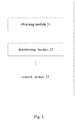
- Fig. 3 is a block diagram of an apparatus for adjusting a backlight brightness of a screen according to an embodiment of the present disclosure.
- the apparatus can be applied in a mobile terminal.
- the apparatus includes an obtaining module 31, a determining module 32 and a control module 33.
- the obtaining module 31 is configured to obtain at least one of a display frame characteristic of the screen, a user behavior characteristic, a camera status and a scene characteristic of the screen, when a backlight control function is enabled.
- the determining module 32 is configured to determine a target backlight control level according to the at least one of the display frame characteristic of the screen, the user behavior characteristic, the camera status and the scene characteristic of the screen.
- the control module 33 is configured to adjust the backlight brightness of the screen dynamically based on the target backlight control level.
- the determining module 32 includes a first determining unit and a second determining unit.
- the first determining unit is configured to determine a scene type of the screen according to the at least one of the display frame characteristic of the screen, the user behavior characteristic, the camera status and the scene characteristic of the screen.
- the second determining unit is configured to determine the target backlight control level corresponding to the scene type according to a preset mapping relationship between scene types and backlight control levels.
- the first determining unit is configured to: determine the scene type of the screen as an image preview scene when the camera status indicates an enabled status; determine whether a characteristic change between adjacent display frames is greater than a characteristic threshold when the camera status indicates a disabled status; determine the scene type of the screen as a dynamic picture scene when the characteristic change is greater than the characteristic threshold; and determine the scene type of the screen as a static picture scene when the characteristic change is less than or equal to the characteristic threshold.
- the first determining unit is configured to: determine whether the scene type of the screen is a static picture scene or a dynamic picture scene according to a click frequency of a clicking behavior, when the clicking behavior is detected; or determine whether the scene type of the screen is a static picture scene or a dynamic picture scene according to a sliding time, a sliding distance or a sliding range of a sliding behavior, when the sliding behavior is detected.
- the second determining unit is configured to: determine a first preset backlight control level as the target backlight control level, when the scene type is a static picture scene; determine a second preset backlight control level as the target backlight control level, when the scene type is an image preview scene; and determine a third preset backlight control level as the target backlight control level, when the scene type is a dynamic picture scene.
- a backlight brightness corresponding to the first preset backlight control level is greater than that corresponding to the second preset backlight control level
- the backlight brightness corresponding to the second preset backlight control level is greater than that corresponding to the third preset backlight control level.
- the determining module 32 is configured to: determine a display frame change level of the screen according to a characteristic change between adjacent display frames; and determine the target backlight control level corresponding to the display frame change level according to a preset mapping relationship between change levels and backlight control levels.
- the target backlight control level increases with an increasing of the display frame change level.
- the above apparatus for adjusting a backlight brightness of a screen belongs to a same inventive concept as the method for adjusting a backlight brightness of a screen according to any of embodiments of the present disclosure, and can perform the method for adjusting a backlight brightness of a screen according to any of embodiments of the present disclosure and have corresponding functional modules and advantageous effects corresponding to the method for adjusting a backlight brightness of a screen.
- Embodiments of the present disclosure further provide a mobile terminal.
- the mobile terminal may include a screen, a memory, a processor and a computer program stored in the storage and executable by the processor.
- the processor is configured to perform the method for adjusting the backlight brightness of the screen according to embodiments of the present disclosure by executing the computer program.
- Fig. 4 is a block diagram of a mobile terminal according to an embodiment of the present disclosure.
- the smart phone 400 may include a memory 401, a central processing unit (CPU for short) 402, a peripheral interface 403, a RF circuit 405, an audio circuit 406, a speaker 411, a power management chip 408, an input/output (IO) subsystem 409, other input/control devices 410 and an external port 404.
- CPU central processing unit
- IO input/output subsystem
- the smart phone 400 is just an example of the mobile terminal.
- the smart phone can have less or more than the components illustrated in Fig. 4 , can combine two or more components, or can have different component arrangements.
- the components illustrated in Fig. 4 can be implemented in hardware, software or a combination of hardware and software including one or more signal processing circuits and/or application-specific integrated circuits.
- Memory 401 the memory 401 can be accessed by the CPU 402, the peripheral interface 403.
- the storage 401 can include a high speed semi random access memory, or can include a nonvolatile memory, for example one or more disk storage devices, flash storage devices, or other volatile storage devices.
- Peripheral interface 403 the peripheral interface can connect the input and output peripheral devices to the CPU 402 and the storage 401.
- the I/O subsystem 409 can connect the input and output peripheral device such as a touch screen 402 and other input/control devices 410 to the peripheral interface 403.
- the I/O subsystem 409 can include a display controller 4091 and one or more input controllers 4092 configured to control other input/control devices 410.
- the one or more input controllers 4092 receive electric signals from the other input/control devices 410 or send electric signals to the other input/control devices 410.
- the other input/control devices 410 may include a physical button (a press button, a rocker arm button or the like), a dial plate, a slide switch, a joystick or a click wheel.
- the input controllers 4092 can be connected to any of a keyboard, an infrared port, a USB interface and an indicate device such as a mouse.
- Touch screen 412 the touch screen 412 is an input interface and an output interface between the terminal and the user, which can display visible output for the user.
- the visible output may include a figure, a text, an icon or a video etc..
- the display controller 4091 in the I/O subsystem 409 receives an electric signal from the touch screen 412 or sends an electric signal to the touch screen 412.
- the touch screen 412 detects a contact thereon, the display control 4091 converts the detected contact into an interaction with a user interface object displayed on the touch screen 412, i.e., the man-machine interaction is realized.
- the user interface object displayed on the touch screen 412 can be an icon for running a game, an icon for accessing a corresponding network or the like.
- the device may further include an optical mouse, which is a touch sensitive surface not displaying the visible output or an extend of a touch sensitive surface formed by the touch screen.
- RF circuit 405 the RF circuit is mainly configured to establish a communication between the smart phone and a wireless network (on the network side), thus realizing a receipt and transmission of data between the smart phone and the wireless network, for example receiving or sending a message, an email or the like.
- RF circuit 405 receives and sends a RF signal, which is also called an electromagnetic signal.
- the RF circuit 405 converts an electric signal into an electromagnetic signal or converts an electromagnetic signal into an electric signal, and communicates with other devices via the electromagnetic signal and communication network.
- the RF circuit 405 can include a known circuit for realizing these functions, which includes but is not limited to an antenna system, a RF transceiver, one or more amplifiers, a tuner, one or more oscillators, a digital signal processor, a CODEC chip set, a subscriber identity module (SIM for short) or the like.
- a known circuit for realizing these functions which includes but is not limited to an antenna system, a RF transceiver, one or more amplifiers, a tuner, one or more oscillators, a digital signal processor, a CODEC chip set, a subscriber identity module (SIM for short) or the like.
- Audio circuit 406 the audio circuit is mainly configured to receive audio data from the peripheral interface 403, converts the audio data into an electric signal, and sends the electric signal to the speaker 411.
- Speaker 411 the speaker is configured to restore the speech signal received from the wireless network via the RF circuit 405 into sound and playback the sound for the user.
- Power management chip 408, the power management chip is configured to provide power and power management for hardware connected to the CPU 402, the I/O subsystem and the peripheral interface.
- the CPU 402 performs the followings when executing the computer program: obtaining at least one of a characteristic of a display frame, a user behavior characteristic, a camera status and a scene characteristic, when a backlight control function is enabled; determining a target backlight control level according to the at least one of the characteristic of the display frame, the user behavior characteristic, the camera status and the scene characteristic; and adjusting the backlight brightness of the screen dynamically based on the target backlight control level.
- Any process or method described in a flow chart or described herein in other ways may be understood to include one or more modules, segments or portions of codes of executable instructions for achieving specific logical functions or steps in the process, and the scope of a preferred embodiment of the present disclosure includes other implementations, wherein the order of execution may differ from that which is depicted or discussed, including according to involved function, executing concurrently or with partial concurrence or in the contrary order to perform the function, which should be understood by those skilled in the art.
- the logic and/or step described in other manners herein or shown in the flow chart, for example, a particular sequence table of executable instructions for realizing the logical function may be specifically achieved in any computer readable medium to be used by the instruction execution system, device or equipment (such as the system based on computers, the system comprising processors or other systems capable of acquiring the instruction from the instruction execution system, device and equipment and executing the instruction), or to be used in combination with the instruction execution system, device and equipment.
- the computer readable medium may be any device adaptive for including, storing, communicating, propagating or transferring programs to be used by or in combination with the instruction execution system, device or equipment.
- the computer-readable medium comprise but are not limited to: an electronic connection (an electronic device) with one or more wires, a portable computer enclosure (a magnetic device), a random access memory (RAM), a read-only memory (ROM), an erasable programmable read-only memory (EPROM or a flash memory), an optical fiber device and a portable compact disk read-only memory (CDROM).
- the computer-readable medium may even be a paper or other appropriate medium capable of printing programs thereon, this is because, for example, the paper or other appropriate medium may be optically scanned and then edited, decrypted or processed with other appropriate methods when necessary to obtain the programs in an electric manner, and then the programs may be stored in the computer memories.
- each part of the present disclosure may be realized by hardware, software, firmware or their combination.
- a plurality of steps or methods may be realized by the software or firmware stored in the memory and executed by the appropriate instruction execution system.
- the steps or methods may be realized by one or a combination of the following techniques known in the art: a discrete logic circuit having a logic gate circuit for realizing a logic function of a data signal, an application-specific integrated circuit having an appropriate combination logic gate circuit, a programmable gate array (PGA), a field programmable gate array (FPGA), etc..
- each function cell of the embodiments of the present disclosure may be integrated in a processing module, or these cells may be separate physical existence, or two or more cells are integrated in a processing module.
- the integrated module may be realized in a form of hardware or in a form of software function modules. When the integrated module is realized in a form of software function module and is sold or used as a standalone product, the integrated module may be stored in a computer-readable storage medium.
- the storage medium mentioned above may be read-only memories, magnetic disks, CD, etc.
Landscapes
- Engineering & Computer Science (AREA)
- Theoretical Computer Science (AREA)
- Physics & Mathematics (AREA)
- General Physics & Mathematics (AREA)
- Computer Hardware Design (AREA)
- General Engineering & Computer Science (AREA)
- Human Computer Interaction (AREA)
- Environmental & Geological Engineering (AREA)
- Computer Networks & Wireless Communication (AREA)
- Signal Processing (AREA)
- Liquid Crystal Display Device Control (AREA)
- Control Of Indicators Other Than Cathode Ray Tubes (AREA)
- Transforming Electric Information Into Light Information (AREA)
- Controls And Circuits For Display Device (AREA)
Applications Claiming Priority (1)
| Application Number | Priority Date | Filing Date | Title |
|---|---|---|---|
| CN201710142875.9A CN106782431B (zh) | 2017-03-10 | 2017-03-10 | 一种屏幕背光亮度调节方法、装置及移动终端 |
Publications (2)
| Publication Number | Publication Date |
|---|---|
| EP3373283A2 true EP3373283A2 (de) | 2018-09-12 |
| EP3373283A3 EP3373283A3 (de) | 2018-12-12 |
Family
ID=58962113
Family Applications (1)
| Application Number | Title | Priority Date | Filing Date |
|---|---|---|---|
| EP17201312.0A Ceased EP3373283A3 (de) | 2017-03-10 | 2017-11-13 | Verfahren und vorrichtung zur einstellung der hintergrundbeleuchtungshelligkeit eines bildschirms und mobiles endgerät |
Country Status (4)
| Country | Link |
|---|---|
| US (1) | US10475413B2 (de) |
| EP (1) | EP3373283A3 (de) |
| CN (1) | CN106782431B (de) |
| WO (1) | WO2018161629A1 (de) |
Cited By (1)
| Publication number | Priority date | Publication date | Assignee | Title |
|---|---|---|---|---|
| CN110890063A (zh) * | 2019-11-22 | 2020-03-17 | 深圳市华星光电半导体显示技术有限公司 | 显示面板功耗降低方法及其装置 |
Families Citing this family (33)
| Publication number | Priority date | Publication date | Assignee | Title |
|---|---|---|---|---|
| JP6322765B2 (ja) | 2014-08-02 | 2018-05-09 | アップル インコーポレイテッド | コンテキスト特化ユーザインターフェース |
| US10452253B2 (en) | 2014-08-15 | 2019-10-22 | Apple Inc. | Weather user interface |
| WO2016144385A1 (en) | 2015-03-08 | 2016-09-15 | Apple Inc. | Sharing user-configurable graphical constructs |
| US10304347B2 (en) | 2015-08-20 | 2019-05-28 | Apple Inc. | Exercised-based watch face and complications |
| US12175065B2 (en) | 2016-06-10 | 2024-12-24 | Apple Inc. | Context-specific user interfaces for relocating one or more complications in a watch or clock interface |
| CN114740951B (zh) | 2016-09-23 | 2025-03-07 | 苹果公司 | 观影模式 |
| CN106782431B (zh) | 2017-03-10 | 2020-02-07 | Oppo广东移动通信有限公司 | 一种屏幕背光亮度调节方法、装置及移动终端 |
| DK179412B1 (en) | 2017-05-12 | 2018-06-06 | Apple Inc | Context-Specific User Interfaces |
| DK179555B1 (en) | 2017-05-16 | 2019-02-13 | Apple Inc. | USER INTERFACE FOR A FLASHLIGHT MODE ON AN ELECTRONIC DEVICE |
| CN107731146A (zh) * | 2017-10-20 | 2018-02-23 | 广东欧珀移动通信有限公司 | 亮度调节方法及相关产品 |
| CN108564913B (zh) * | 2018-04-19 | 2021-07-16 | Oppo广东移动通信有限公司 | 亮度调节方法及相关产品 |
| CN108735166A (zh) * | 2018-04-27 | 2018-11-02 | Oppo广东移动通信有限公司 | 背光调节方法及相关装置 |
| US11327650B2 (en) | 2018-05-07 | 2022-05-10 | Apple Inc. | User interfaces having a collection of complications |
| CN109120979B (zh) * | 2018-08-23 | 2020-08-21 | Oppo广东移动通信有限公司 | 视频增强控制方法、装置以及电子设备 |
| CN109640169B (zh) * | 2018-11-27 | 2020-09-22 | Oppo广东移动通信有限公司 | 视频增强控制方法、装置以及电子设备 |
| US10600388B1 (en) * | 2019-02-28 | 2020-03-24 | Motorola Mobility Llc | Managing display brightness of a mobile device |
| KR102393717B1 (ko) | 2019-05-06 | 2022-05-03 | 애플 인크. | 전자 디바이스의 제한된 동작 |
| US11131967B2 (en) | 2019-05-06 | 2021-09-28 | Apple Inc. | Clock faces for an electronic device |
| CN112947883B (zh) * | 2019-09-09 | 2022-07-12 | 苹果公司 | 用于管理显示器使用的技术 |
| DK180392B1 (en) | 2019-09-09 | 2021-03-12 | Apple Inc | Techniques for managing display usage |
| DK202070625A1 (en) | 2020-05-11 | 2022-01-04 | Apple Inc | User interfaces related to time |
| EP4439263A3 (de) | 2020-05-11 | 2024-10-16 | Apple Inc. | Benutzerschnittstellen zur verwaltung der gemeinsamen nutzung einer benutzerschnittstelle |
| CN111862894A (zh) * | 2020-06-04 | 2020-10-30 | 深圳市金锐显数码科技有限公司 | 一种背光亮度的调整方法、装置、终端和可读存储介质 |
| CN112689107B (zh) * | 2020-12-16 | 2022-02-08 | 四川长虹电器股份有限公司 | 一种动态调节背光的方法 |
| US11694590B2 (en) | 2020-12-21 | 2023-07-04 | Apple Inc. | Dynamic user interface with time indicator |
| US11720239B2 (en) | 2021-01-07 | 2023-08-08 | Apple Inc. | Techniques for user interfaces related to an event |
| US12182373B2 (en) | 2021-04-27 | 2024-12-31 | Apple Inc. | Techniques for managing display usage |
| US11921992B2 (en) | 2021-05-14 | 2024-03-05 | Apple Inc. | User interfaces related to time |
| CN115705828B (zh) * | 2021-08-03 | 2026-01-02 | 海信视像科技股份有限公司 | 显示设备、显示设备的调光方法 |
| CN114141206B (zh) * | 2021-12-10 | 2023-05-09 | Tcl华星光电技术有限公司 | 背光校正方法、相关装置及存储介质 |
| US12493267B2 (en) | 2022-01-24 | 2025-12-09 | Apple Inc. | User interfaces for indicating time |
| CN114596819B (zh) * | 2022-03-11 | 2023-06-27 | Oppo广东移动通信有限公司 | 亮度调节方法及相关装置 |
| CN118506743B (zh) * | 2024-07-15 | 2024-10-11 | 深圳创维显示技术有限公司 | 显示设备的亮度调整方法及装置 |
Family Cites Families (20)
| Publication number | Priority date | Publication date | Assignee | Title |
|---|---|---|---|---|
| JP2001154642A (ja) | 1999-11-30 | 2001-06-08 | Toshiba Corp | 情報処理装置 |
| JP3859623B2 (ja) | 2003-07-29 | 2006-12-20 | 埼玉日本電気株式会社 | 液晶表示装置のバックライト制御方法 |
| JP4628770B2 (ja) | 2004-02-09 | 2011-02-09 | 株式会社日立製作所 | 照明装置を備えた画像表示装置及び画像表示方法 |
| TWI307600B (en) * | 2006-01-26 | 2009-03-11 | Asustek Comp Inc | Image processing method for display device |
| EP2793217A3 (de) * | 2007-03-26 | 2015-02-18 | NEC Corporation | Tragbares telefonendgerät, Bildanzeigesteuerungsverfahren, Programm dafür und Programmaufzeichnungsmedium |
| US20100073362A1 (en) | 2008-09-23 | 2010-03-25 | Ike Ikizyan | Method And System For Scene Adaptive Dynamic 3-D Color Management |
| KR20100077819A (ko) | 2008-12-29 | 2010-07-08 | 엘지디스플레이 주식회사 | 액정표시장치 및 그 구동방법 |
| CN102157140A (zh) * | 2010-02-11 | 2011-08-17 | 联咏科技股份有限公司 | 背光控制装置及其控制方法 |
| KR20120070921A (ko) | 2010-12-22 | 2012-07-02 | 엘지디스플레이 주식회사 | 타이밍 컨트롤러 및 이를 이용한 유기발광다이오드 표시장치 |
| KR101778997B1 (ko) | 2011-05-02 | 2017-09-18 | 엘지전자 주식회사 | 이동 단말기 및 이동 단말기의 제어 방법 |
| CN102842288B (zh) | 2011-06-21 | 2017-03-01 | 飞思卡尔半导体公司 | 具有动态亮度缩放的背光视频显示器 |
| US9165510B2 (en) | 2011-12-16 | 2015-10-20 | Qualcomm Incorporated | Temporal control of illumination scaling in a display device |
| CN103050108B (zh) * | 2012-12-17 | 2015-12-02 | 华为终端有限公司 | 一种屏幕背光动态调整方法以及用户终端 |
| CN103077684B (zh) | 2013-01-23 | 2015-09-16 | 京东方科技集团股份有限公司 | 一种背光调节方法、装置和显示屏 |
| CN103384314B (zh) | 2013-07-09 | 2016-12-07 | 冠捷显示科技(厦门)有限公司 | 基于动态和静态画面智能调整画质的实现方法 |
| CN105511765A (zh) * | 2014-09-22 | 2016-04-20 | 中兴通讯股份有限公司 | 一种屏幕亮度调节的方法、装置及电子设备 |
| US9805662B2 (en) | 2015-03-23 | 2017-10-31 | Intel Corporation | Content adaptive backlight power saving technology |
| CN105100411A (zh) * | 2015-05-27 | 2015-11-25 | 努比亚技术有限公司 | 显示控制方法及装置 |
| CN105741786B (zh) * | 2016-01-27 | 2018-11-02 | 努比亚技术有限公司 | 消除显示屏抖动的方法及移动终端 |
| CN106782431B (zh) | 2017-03-10 | 2020-02-07 | Oppo广东移动通信有限公司 | 一种屏幕背光亮度调节方法、装置及移动终端 |
-
2017
- 2017-03-10 CN CN201710142875.9A patent/CN106782431B/zh not_active Expired - Fee Related
- 2017-10-31 US US15/798,634 patent/US10475413B2/en not_active Expired - Fee Related
- 2017-11-08 WO PCT/CN2017/109978 patent/WO2018161629A1/en not_active Ceased
- 2017-11-13 EP EP17201312.0A patent/EP3373283A3/de not_active Ceased
Non-Patent Citations (1)
| Title |
|---|
| None |
Cited By (1)
| Publication number | Priority date | Publication date | Assignee | Title |
|---|---|---|---|---|
| CN110890063A (zh) * | 2019-11-22 | 2020-03-17 | 深圳市华星光电半导体显示技术有限公司 | 显示面板功耗降低方法及其装置 |
Also Published As
| Publication number | Publication date |
|---|---|
| WO2018161629A1 (en) | 2018-09-13 |
| CN106782431B (zh) | 2020-02-07 |
| US10475413B2 (en) | 2019-11-12 |
| US20180261183A1 (en) | 2018-09-13 |
| CN106782431A (zh) | 2017-05-31 |
| EP3373283A3 (de) | 2018-12-12 |
Similar Documents
| Publication | Publication Date | Title |
|---|---|---|
| EP3373283A2 (de) | Verfahren und vorrichtung zur einstellung der hintergrundbeleuchtungshelligkeit eines bildschirms und mobiles endgerät | |
| US11158033B2 (en) | Method for image processing, electronic device, and non-transitory storage medium for improving contrast of image | |
| US11138701B2 (en) | Image processing method, storage medium, and electronic apparatus | |
| US11138700B2 (en) | Method for image processing, non-transitory computer readable medium, and electronic device | |
| CN109741279B (zh) | 图像饱和度调整方法、装置、存储介质及终端 | |
| CN109685746B (zh) | 图像亮度调整方法、装置、存储介质及终端 | |
| CN106817753B (zh) | 一种切换背景灰阶进行省电的方法、装置及移动终端 | |
| CN111179861B (zh) | 一种亮度校准方法、装置、存储介质以及终端 | |
| CN106937371B (zh) | 一种切换背景灰阶进行省电的方法、装置及移动终端 | |
| CN109741288B (zh) | 图像处理方法、装置、存储介质及电子设备 | |
| CN109157839B (zh) | 帧率调控方法、装置、存储介质及终端 | |
| CN109460364B (zh) | 应用程序检测方法、装置、存储介质及移动终端 | |
| CN106710535B (zh) | 一种屏幕背光调节方法、装置及移动终端 | |
| CN109784252A (zh) | 图像处理方法、装置、存储介质及电子设备 | |
| WO2018095128A1 (zh) | 一种显示屏的显示控制方法及相关产品 | |
| CN107343076A (zh) | 音量调节方法、装置、存储介质及移动终端 | |
| CN109859283B (zh) | 一种取色方法、取色装置、电子设备和可存储介质 | |
| CN106658691A (zh) | 一种显示控制方法、装置及移动终端 | |
| CN110675838A (zh) | 亮度调节方法、装置、计算机可读存储介质及终端 | |
| WO2020134789A1 (zh) | 移动终端及其屏幕亮灭的控制方法、计算机存储介质 | |
| CN108551552A (zh) | 图像处理方法、装置、存储介质及移动终端 | |
| CN107526569A (zh) | 一种音量调节方法、装置、存储介质及移动终端 | |
| CN113053332B (zh) | 背光亮度调节方法、装置、电子设备及可读存储介质 | |
| WO2021092806A1 (zh) | 一种屏幕参数调整方法、装置及终端设备 | |
| CN108966010A (zh) | 在线视频分辨率的调节方法、装置、存储介质及终端 |
Legal Events
| Date | Code | Title | Description |
|---|---|---|---|
| PUAI | Public reference made under article 153(3) epc to a published international application that has entered the european phase |
Free format text: ORIGINAL CODE: 0009012 |
|
| STAA | Information on the status of an ep patent application or granted ep patent |
Free format text: STATUS: REQUEST FOR EXAMINATION WAS MADE |
|
| 17P | Request for examination filed |
Effective date: 20171113 |
|
| AK | Designated contracting states |
Kind code of ref document: A2 Designated state(s): AL AT BE BG CH CY CZ DE DK EE ES FI FR GB GR HR HU IE IS IT LI LT LU LV MC MK MT NL NO PL PT RO RS SE SI SK SM TR |
|
| AX | Request for extension of the european patent |
Extension state: BA ME |
|
| PUAL | Search report despatched |
Free format text: ORIGINAL CODE: 0009013 |
|
| AK | Designated contracting states |
Kind code of ref document: A3 Designated state(s): AL AT BE BG CH CY CZ DE DK EE ES FI FR GB GR HR HU IE IS IT LI LT LU LV MC MK MT NL NO PL PT RO RS SE SI SK SM TR |
|
| AX | Request for extension of the european patent |
Extension state: BA ME |
|
| RIC1 | Information provided on ipc code assigned before grant |
Ipc: G09G 3/34 20060101AFI20181107BHEP |
|
| STAA | Information on the status of an ep patent application or granted ep patent |
Free format text: STATUS: EXAMINATION IS IN PROGRESS |
|
| 17Q | First examination report despatched |
Effective date: 20190917 |
|
| RAP1 | Party data changed (applicant data changed or rights of an application transferred) |
Owner name: GUANGDONG OPPO MOBILE TELECOMMUNICATIONS CORP., LT |
|
| STAA | Information on the status of an ep patent application or granted ep patent |
Free format text: STATUS: THE APPLICATION HAS BEEN REFUSED |
|
| 18R | Application refused |
Effective date: 20201024 |