EP3370852B1 - Steuerung von luftreinigungssystemen - Google Patents
Steuerung von luftreinigungssystemen Download PDFInfo
- Publication number
- EP3370852B1 EP3370852B1 EP16791582.6A EP16791582A EP3370852B1 EP 3370852 B1 EP3370852 B1 EP 3370852B1 EP 16791582 A EP16791582 A EP 16791582A EP 3370852 B1 EP3370852 B1 EP 3370852B1
- Authority
- EP
- European Patent Office
- Prior art keywords
- bioreactor
- water
- network
- biomass
- data
- Prior art date
- Legal status (The legal status is an assumption and is not a legal conclusion. Google has not performed a legal analysis and makes no representation as to the accuracy of the status listed.)
- Active
Links
Images



Classifications
-
- B—PERFORMING OPERATIONS; TRANSPORTING
- B01—PHYSICAL OR CHEMICAL PROCESSES OR APPARATUS IN GENERAL
- B01D—SEPARATION
- B01D53/00—Separation of gases or vapours; Recovering vapours of volatile solvents from gases; Chemical or biological purification of waste gases, e.g. engine exhaust gases, smoke, fumes, flue gases, aerosols
- B01D53/30—Controlling by gas-analysis apparatus
-
- B—PERFORMING OPERATIONS; TRANSPORTING
- B01—PHYSICAL OR CHEMICAL PROCESSES OR APPARATUS IN GENERAL
- B01D—SEPARATION
- B01D53/00—Separation of gases or vapours; Recovering vapours of volatile solvents from gases; Chemical or biological purification of waste gases, e.g. engine exhaust gases, smoke, fumes, flue gases, aerosols
- B01D53/34—Chemical or biological purification of waste gases
- B01D53/346—Controlling the process
-
- B—PERFORMING OPERATIONS; TRANSPORTING
- B01—PHYSICAL OR CHEMICAL PROCESSES OR APPARATUS IN GENERAL
- B01D—SEPARATION
- B01D53/00—Separation of gases or vapours; Recovering vapours of volatile solvents from gases; Chemical or biological purification of waste gases, e.g. engine exhaust gases, smoke, fumes, flue gases, aerosols
- B01D53/34—Chemical or biological purification of waste gases
- B01D53/46—Removing components of defined structure
- B01D53/62—Carbon oxides
-
- B—PERFORMING OPERATIONS; TRANSPORTING
- B01—PHYSICAL OR CHEMICAL PROCESSES OR APPARATUS IN GENERAL
- B01D—SEPARATION
- B01D53/00—Separation of gases or vapours; Recovering vapours of volatile solvents from gases; Chemical or biological purification of waste gases, e.g. engine exhaust gases, smoke, fumes, flue gases, aerosols
- B01D53/34—Chemical or biological purification of waste gases
- B01D53/74—General processes for purification of waste gases; Apparatus or devices specially adapted therefor
- B01D53/84—Biological processes
-
- B—PERFORMING OPERATIONS; TRANSPORTING
- B01—PHYSICAL OR CHEMICAL PROCESSES OR APPARATUS IN GENERAL
- B01D—SEPARATION
- B01D2251/00—Reactants
- B01D2251/95—Specific microorganisms
-
- B—PERFORMING OPERATIONS; TRANSPORTING
- B01—PHYSICAL OR CHEMICAL PROCESSES OR APPARATUS IN GENERAL
- B01D—SEPARATION
- B01D2257/00—Components to be removed
- B01D2257/50—Carbon oxides
- B01D2257/504—Carbon dioxide
-
- B—PERFORMING OPERATIONS; TRANSPORTING
- B01—PHYSICAL OR CHEMICAL PROCESSES OR APPARATUS IN GENERAL
- B01D—SEPARATION
- B01D2258/00—Sources of waste gases
- B01D2258/06—Polluted air
-
- B—PERFORMING OPERATIONS; TRANSPORTING
- B01—PHYSICAL OR CHEMICAL PROCESSES OR APPARATUS IN GENERAL
- B01D—SEPARATION
- B01D2259/00—Type of treatment
- B01D2259/45—Gas separation or purification devices adapted for specific applications
- B01D2259/4591—Construction elements containing cleaning material, e.g. catalysts
-
- B—PERFORMING OPERATIONS; TRANSPORTING
- B01—PHYSICAL OR CHEMICAL PROCESSES OR APPARATUS IN GENERAL
- B01D—SEPARATION
- B01D2259/00—Type of treatment
- B01D2259/80—Employing electric, magnetic, electromagnetic or wave energy, or particle radiation
- B01D2259/802—Visible light
-
- Y—GENERAL TAGGING OF NEW TECHNOLOGICAL DEVELOPMENTS; GENERAL TAGGING OF CROSS-SECTIONAL TECHNOLOGIES SPANNING OVER SEVERAL SECTIONS OF THE IPC; TECHNICAL SUBJECTS COVERED BY FORMER USPC CROSS-REFERENCE ART COLLECTIONS [XRACs] AND DIGESTS
- Y02—TECHNOLOGIES OR APPLICATIONS FOR MITIGATION OR ADAPTATION AGAINST CLIMATE CHANGE
- Y02A—TECHNOLOGIES FOR ADAPTATION TO CLIMATE CHANGE
- Y02A50/00—TECHNOLOGIES FOR ADAPTATION TO CLIMATE CHANGE in human health protection, e.g. against extreme weather
- Y02A50/20—Air quality improvement or preservation, e.g. vehicle emission control or emission reduction by using catalytic converters
-
- Y—GENERAL TAGGING OF NEW TECHNOLOGICAL DEVELOPMENTS; GENERAL TAGGING OF CROSS-SECTIONAL TECHNOLOGIES SPANNING OVER SEVERAL SECTIONS OF THE IPC; TECHNICAL SUBJECTS COVERED BY FORMER USPC CROSS-REFERENCE ART COLLECTIONS [XRACs] AND DIGESTS
- Y02—TECHNOLOGIES OR APPLICATIONS FOR MITIGATION OR ADAPTATION AGAINST CLIMATE CHANGE
- Y02C—CAPTURE, STORAGE, SEQUESTRATION OR DISPOSAL OF GREENHOUSE GASES [GHG]
- Y02C20/00—Capture or disposal of greenhouse gases
- Y02C20/40—Capture or disposal of greenhouse gases of CO2
Definitions
- the invention relates to methods for regulating air purification systems, and to systems for purifying air, in particular urban air, said systems being in particular remotely controlled and/or being regulated according to different types of enslavement.
- a carbon sink or carbon dioxide sink is a reservoir, natural or artificial, which absorbs carbon from the atmosphere and contributes to reducing the quantity of atmospheric carbon dioxide.
- the size of such reservoirs is variable.
- the main natural carbon sinks are the oceans, soils (humus, peat bogs) and certain vital environments (forest formation).
- the carbon sinks considered by industrialists include bioreactors, generally based on the process of photosynthesis.
- the patent application FR2945215 discloses another example of a process for treating ambient air consisting in placing in the environment to be treated a reservoir containing a medium in which autotrophic microorganisms such as algae develop by photobioreaction using a light source placed in or close to the reservoir, the reservoir allowing exchanges between the medium and the air of the environment to be treated, the autotrophic microorganisms generating calcified elements from the carbon dioxide present in the environment to be treated.
- This approach has drawbacks, which preclude the massive use of such installations. For example, a A significant technical problem lies in the need to collect compost, which is difficult in urban areas (eg logistics, odor nuisance) and also from an economic point of view.
- Embodiments of the invention provide a method of controlling an air cleaning system according to claim 1, a computer program product according to claim 8 and an air treatment system according to claim 9
- Other additional features are defined in the dependent claims.
- the system can be connected to the sewage network and/or to a water distribution network (drinking and/or city).
- the connection and the drainage system can in particular maintain fluidic isolation between the two types of networks.
- the system can optionally be instrumented with measurement sensors and/or actuators making it possible to regulate the internal activity of the bioreactor. Different modes of regulation of a grid of bioreactors are described. Status data from connected networks (e.g. water, sanitation, cold, heat networks) contribute to the regulation of a network of geolocated bioreactors. Aspects of software are described.
- the supervision of the bioreactor grid can in particular be carried out remotely via on-board communication devices.
- a device for regulating a micro-algae bioreactor allowing its connection from the urban public space to a collective sanitation network and thus achieving a virtuous cycle of capturing carbon dioxide and producing biogas.
- a device for regulating a microalgae bioreactor is disclosed. allowing its connection of the urban public space to a collective sanitation network and thus achieving a virtuous cycle of carbon dioxide capture and biogas production.
- the carbon sink according to the invention can be integrated into street furniture.
- the carbon sink according to the invention can be connected or connected to the urban sanitation network.
- the invention creates a new and additional economic use value of these sewerage networks.
- an appropriate and/or automated management of the emptying of the biochemical reactor maintains a maximum CO2 absorption capacity, for example by optimizing the growth of the biomass of the micro-algae.
- embodiments of the invention make it possible to measure the quantity of organic matter discharged into the network and in particular to prevent the rise of foul odors, olfactory and/or visual nuisances, or even pests (e.g. cockroaches, insects, worms, rats, etc) towards the public space.
- pests e.g. cockroaches, insects, worms, rats, etc
- the carbon sink according to the invention can be networked.
- Developments describe the management of a park or network of urban wells: the regulation of such networks of urban wells can be carried out according to different methods.
- the system according to the invention allows the production of biogas.
- the system according to the invention makes it possible to carry out a virtuous cycle of capture of carbon dioxide.
- the system according to the invention responds to several major concerns of contemporary cities: a) the reduction of greenhouse gases b) the improvement of urban air quality c) the production of renewable energy.
- the methods and systems according to the invention participate in the energy transition.
- the methods and systems according to the invention can be applied to the treatment of (i) urban air laden with CO2 (road traffic areas, subway exits, car parks), (ii) the treatment of the industrial era (fume from combustion of industrial air e.g. boiler room, incineration etc) but also to (iii) treatment of domestic air (“improved ficus”)
- the system according to the invention improves air quality by capturing carbon dioxide.
- certain chemical compounds e.g. pollutants
- particles or classes of particles are captured (e.g. precipitated and evacuated).
- the general principle of the invention consists in placing a biochemical reactor in the environment, in controlling the biochemical reactions taking place in this reactor, for example by injecting matter and/or energy therein and, after biochemical treatment within the reactor, to recover transformed material and/or energy, directly or indirectly.
- At least a part of the biochemical agents of the reactor is directed towards a network 120 (for example public sanitation).
- the management of a fleet or a network made up of a plurality of reactors can be regulated according to different methods.
- Variants include in particular the number and type of reactor, the type and the capture and/or emission surfaces of reactor by-products, the type of connection to one or more networks - for example public sanitation but not only -, the modes of regulation of a network made up of a plurality of reactors at least partially interconnected, the general dimensioning of the installations (from millimetric quantities to major installations, of the skyscraper type), etc.
- a computer-implemented method of controlling an air cleaning system comprising a bioreactor, the method comprising the steps of receiving measurements of concentration levels of one or more pollutants and/or particles in the air flows at the inlet and at the outlet of a bioreactor containing water and a biomass purifying at least partially some of these pollutants and/or particles; as a function of regulation parameters comprising the measurements of the concentration rates received, determining a volume of biomass to be evacuated from the bioreactor to a drainage network connected to the bioreactor.
- the method further comprises a step consisting in evacuating said determined volume of biomass into said sewer network.
- the method comprises a step consisting in reintroducing a volume of water into the bioreactor, for example after emptying. New water can also be introduced before a combined water/biomass drain.
- Water supply (bioreactor inlet) and biomass discharge (bioreactor outlet) are interdependent (or correlated or managed in combination) variables.
- fresh water is not supplied via the network, but only via an integrated cistern.
- an additional filter makes it possible to renew almost all of the water in the culture medium.
- the volume of biomass evacuated is compensated by an equivalent volume of new water.
- the sanitation network can be a public network (ie sewers), or a private network (eg industrial).
- a bioreactor can contain various microbiological agents which can treat the air (atmospheric, ambient, industrial, urban, domestic, etc.) by purifying (i.e. eliminating and/or filtering and/or fixing and/or precipitating and/or metabolizing) certain chemical compounds present in the air, in particular one or more pollutants and/or toxic or harmful particles.
- An (atmospheric) pollutant is a chemical element in excess of a predefined threshold.
- a pollutant is a biological, physical or chemical alterogen which, beyond one or more predefined thresholds, and sometimes under certain conditions (potentiation), develops negative impacts on all or part of an organism, an ecosystem or the environment in general.
- a pollutant can in certain cases be defined as a contaminant of one or more compartments of ecosystems (air, water, soil) and/or of an organism (e.g. man) or having an impact on the ecosystem, beyond beyond a predefined threshold or standard (scientific and/or legal).
- Pollutants can be of different nature (solid, liquid or gaseous substance), abnormally present in a given environment. Pollutants can be "micropollutants" i.e. active products (mineral or organic) toxic at minute concentrations (of the order of ⁇ g/l or less) or "macro-pollutants” i.e. substances or molecules of natural origin or not, found in the environment in abnormal concentrations, with negative effects on the Living.
- micropollutants i.e. active products (mineral or organic) toxic at minute concentrations (of the order of ⁇ g/l or less) or "macro-pollutants” i.e. substances or molecules of natural origin or not, found in the environment in abnormal concentrations, with negative effects on the Living.
- Particulate matter (PM, in English Particulate Matter) refers to suspended particles in the earth's atmosphere. Particulate matter as a whole is now classified as carcinogenic to humans.
- the non-exhaustive list of pollutants and/or particles that can be manipulated and/or manipulated by the methods or systems according to the invention includes in particular: sulfur dioxide (SO2), nitrogen oxides (NOx) including nitrogen (NO2), fine particles PM10, PM2.5, carbon monoxide (CO), benzene (C6H6), arsenic (As), Cadmium (Cd), nickel (Ni), lead ( Pb), polycyclic aromatic hydrocarbons (PAHs) such as benzo[a]pyrene (B[a]P) and more generally greenhouse gases (e.g. carbon dioxide CO2, hyperoxidizing ozone O3, nitrous oxide N2O, sulfur hexafluoride SF6 and halocarbons including CFCs).
- Bio air treatments can also concern deodorization, for example using bacteria that will capture odorous organic molecules such as mercaptans or hydrogen sulphide.
- the bioreactor is connected to a water distribution network to supply the culture medium of said bioreactor.
- Water supply (bioreactor inlet) and biomass discharge (bioreactor outlet) are interdependent (or correlated or managed in combination) variables.
- fresh water is not supplied via the network, but only via an integrated cistern.
- an additional filter makes it possible to renew almost all of the water in the culture medium.
- the volume of biomass evacuated is compensated by an equivalent volume of fresh water.
- the purified air is the ambient air, in particular the air environment in an urban setting.
- the geolocation of one or more reactors can be optimized in order to optimize the air treatment.
- at least one pollutant is a gaseous pollutant in the ambient air, preferably the greenhouse gas CO2 (ie beyond a certain natural and/or legal threshold).
- the invention can constitute a carbon sink.
- the CO2 levels are measured on entry and exit (continuously, or periodically, or intermittently, or opportunistically i.e. on event). If the fixation of CO2 decreases, it can for example be determined that biomass is in excess; in this case, part of the biomass is evacuated and/or new water is brought into the culture medium.
- the bioreactor is a photo-bioreactor and the regulation parameters comprise parameters associated with the internal activity of the bioreactor, these parameters comprising one or more data chosen from: the pH, the temperature, the turbidity, the conductivity measured in the culture medium of the bioreactor, and the quantification of the light fluxes received by the culture medium of the bioreactor.
- the regulation parameters further comprise data external to the bioreactor, these external data comprising data associated with the state of the sewerage network and/or data associated with the state of the water supply network of the bioreactor.
- Data external to the bioreactor includes data relating to system input (water) and output (sanitation).
- Sewer system data includes water/sludge level data, maintenance data, topological or topographical or cartographic, etc.
- Data associated with the status of the bioreactor water supply network includes water quality, pressure, flow, maintenance data, etc.
- the regulation parameters comprise data for measuring the level of wastewater present in the sewerage network.
- the term “wastewater level” also refers to “circulating effluent level” or “sludge level”.
- the regulation parameters comprise meteorological measurement and/or forecast data.
- Meteorological data can have direct or at least indirect consequences on sewer levels.
- High sludge levels would tend to increase the transport capacity of the evacuated biomass.
- high levels can sometimes saturate the treatment plants downstream, which generally leads to favoring the evacuations of the bioreactor in the event of low levels in the sewer network.
- the method further comprises management rules for determining the volume of biomass to be evacuated (the volume to be evacuated is determined by application of management rules, e.g. according to fuzzy logic or an expert system)
- Management rules can be predefined. In whole or in part, they can be modified remotely. The rules make it possible to manage the biomass (light influx, water supply, nutrient supply, etc.) in order in particular to optimize growth cycles, stop the activity if necessary, etc. Rules can be static and/or invariant. They can be dynamic (e.g. chained rules).
- the bioreactor includes sensors for measurement and/or remotely controllable actuators in order to regulate the activity of the reactor.
- the method comprises a step consisting in receiving the data associated with a plurality of bioreactors connected to the same sewerage network, which sewerage network is optionally connected to one or more biogas production stations.
- the plurality of bioreactors is connected to the same water distribution network to supply the culture medium of the bioreactors.
- the plurality of bioreactors connected to the same sanitation network constitutes a network or a grid.
- the bioreactors are geolocated; their respective geographical location is determined or determinable. Supervised globally or by peer-to-peer negotiation, the neighboring states of a given bioreactor can be known.
- the method comprises a step consisting in regulating the plurality of bioreactors according to geolocation data of said bioreactors, data associated with the state of the sewer network and/or data associated with the state of the sewage network. bioreactor water supply and/or data associated with the status of biogas production.
- Regulating the grid of bioreactors may in particular comprise multi-objective optimization steps, the objectives being associated with one or more bioreactors and/or the sanitation network and/or the water supply network and/or the production downstream biogas.
- the method for regulating the grid or network of bioreactors may in particular aim to maximize the fixation of CO2 from the atmospheric air by one or more bioreactors. You can also search for in a subsidiary manner, to maximize the production of biogas from the biomass evacuated by one or more bioreactors.
- the objectives or criteria for optimizing one or more bioreactors include minimizing or maximizing or optimizing the capture of one or more predefined materials (pollutants/particles) in the environment from a or more bioreactors, the qualitative and/or quantitative growth state of the biomass present in one or more bioreactors, the gaseous emission or the liquid or solid discharge of predefined materials out of one or more bioreactors.
- the criteria for optimizing discharges from a bioreactor into the sewerage network include taking account of external weather forecast data, this data including in particular data on rainfall, temperature and sunshine.
- a computer program product comprising code instructions for carrying out the steps of the method, when said program is executed on a control-command system with computer which regulates the processing system of 'air.
- An air treatment system comprising means for implementing the steps of the method.
- the system includes a bioreactor, air inlets and outlets; the bioreactor being configured to be connected to a drainage network for the evacuation of at least part of the biomass.
- the reactor can be fixed and installed in the urban environment but it can also be removable and/or temporary. It is suitable for connection to a sewerage network, but may include complementary means for removing the biomass (for example in excess).
- the bioreactor is a photo-bioreactor comprising photosynthetic microorganisms.
- the photosynthetic microorganisms suspended in water can be photosynthetic bacteria and/or cyanobacteria and/or eukaryotic microalgae and/or isolated cells of multicellular plants and/or gametophytes of macroalgae and/or foam protonemata.
- the tank or vessel or enclosure containing the biomass is at least partially transparent to light (generally made of transparent or translucent glass or plastic).
- the bioreactor is connected to a water distribution network to supply the culture medium of the bioreactor.
- the water distribution network is a pre-treated non-potable city water network.
- the reactor according to the invention may not be connected at all to an inlet water network: the reactor according to the invention may be “preloaded” with water.
- a water network which can be a drinking water network and/or a non-drinking city water network (pretreated Seine water).
- system further comprises a bioreactor drain system maintaining fluidic isolation between the water network and the sewerage network.
- the emptying system comprises at least two tanks and remotely controllable solenoid valves, the tanks being configured to be emptied alternately so as to maintain fluidic isolation between the water network and the sewerage network.
- the bioreactor is connected to a heating network and/or a cooling network.
- the bioreactor connected according to the invention comprises a device for regulating the temperature of the bioreactor.
- the temperature of the bioreactor can be regulated, in particular with a heat exchanger and/or a heat network and/or heaters.
- a heat exchanger can be used (gas cooler or heating device) but advantageously the system according to the invention will be coupled with an existing infrastructure, such as a heat network (urban heating network or private or industrial heating network) or a cooling network.
- the heating network can be a steam network (e.g. private or public), a geothermal network.
- a cooling network is the equivalent of a heating network, but dedicated to the transport and distribution of "refrigeration" rather than calories.
- the system includes one or more sources of artificial light to regulate the activity of the bioreactor.
- the system according to the invention can comprise reflectors and/or concentrators of natural light, to improve the activity of the bioreactor.
- the system comprises one or more photovoltaic panels to power one or more sources of artificial light.
- the system according to the invention can comprise reflectors and/or concentrators of natural light, to improve the activity of the bioreactor.
- the system comprises one or more sensors chosen from a pH meter, an indoor thermometer, an outdoor thermometer, an oximetric probe, a level sensor, a culture medium conductivity sensor, a sensor suitable for measuring of the CO2 level in the air of the bioreactor and/or of the atmosphere, a sensor adapted to the measurement of the O2 level in the air of the bioreactor and/or of the atmosphere and a sensor adapted to the measurement of CO2 dissolved in the biomass culture medium.
- sensors chosen from a pH meter, an indoor thermometer, an outdoor thermometer, an oximetric probe, a level sensor, a culture medium conductivity sensor, a sensor suitable for measuring of the CO2 level in the air of the bioreactor and/or of the atmosphere, a sensor adapted to the measurement of the O2 level in the air of the bioreactor and/or of the atmosphere and a sensor adapted to the measurement of CO2 dissolved in the biomass culture medium.
- the bioreactor further comprises one or more actuators to regulate the air flow rates at the inlet and/or at the outlet, and/or to agitate the biomass of the reactor, and/or to regulate the natural light influx and/or to or artificial and/or to regulate temperature.
- actuators to regulate the air flow rates at the inlet and/or at the outlet, and/or to agitate the biomass of the reactor, and/or to regulate the natural light influx and/or to or artificial and/or to regulate temperature.
- To regulate means in particular to be able to regulate or adjust.
- the flow rates of the air inlets and/or the air outlets of the bioreactor can be controlled or configured (in particular remotely).
- the I/O or I/O are in particular controllable remotely. They allow aerobic and/or anaerobic operation, depending on the type of reactor used.
- the connected bioreactor according to the invention comprises one or more ventilation devices. These devices include, for example, one or more fans and/or compressors.
- the connected bioreactor according to the invention further comprises one or more actuators suitable for stirring the biomass in the reservoir.
- the bioreactor connected according to the invention further comprises one or more actuators adapted or configured to regulate the natural and/or artificial light influx.
- the system according to the invention can comprise blinds or rolling shutters by example.
- the opacity of the panes or walls of the tank exposing the micro-algae can also be controlled.
- the connected bioreactor according to the invention comprises one or more access routes for injecting biological and/or chemical compounds into the bioreactor.
- the system according to the invention can comprise ports allowing the injection into the reactor of products such as fertilizers, solvents, additives or dyes.
- the connected bioreactor according to the invention further comprises means for evacuating at least part of the biomass independent of the sewer network. Excess or useless or ineffective biomass can be evacuated locally, without going through the sewerage network (or not exclusively, for example temporarily or as a back-up).
- the system also comprises a communication device making it possible to remotely control the activity of the bioreactor.
- the system further comprises a two-way communication device making it possible to remotely control the activity of the bioreactor.
- the activity of the bioreactor is regulated in particular by the management of water inputs, evacuated biomass, light inputs or nutrients.
- Sensor data can be accessed remotely. Actuators can be taken over remotely (regulation of bioreactor activity, in particular by controlling water and nutrient inputs, solar and natural influx, biomass agitation and aeration )
- the system includes a plurality of bioreactors.
- the bioreactors can be positioned in a predefined geographic area so as to maximize CO2 capture and/or maximize O2 emissions to the atmosphere of the geographic area.
- one or more bioreactors are connected to one or more biogas production devices.
- a bioreactor can be associated with a biogas production unit in the immediate vicinity.
- the biogas production entity is located remotely.
- a plurality of bioreactors can be connected via the sewerage network to a treatment plant and biogas production (e.g. methane).
- the figure 1 illustrates a particular example of an embodiment of the invention specific to the urban environment.
- the reactor is a photo-bioreactor (PBR) or a micro-algae bioreactor 100.
- Micro-algae are exposed to light through transparent surfaces 101 (in the example, the glass surfaces are arranged on street furniture of Morris 102 column type).
- the carbon sink is integrated into or takes the form of street furniture installed within the public space.
- Micro-algae carry out biochemical photosynthesis cycles and constitute a carbon sink: carbon dioxide is partially captured or fixed by the algae and dioxygen is released into the environment 104.
- the biomass of micro-algae evolves over time . At a certain predefined threshold, and according to different methods, part of the biomass created is eliminated, for example via drain pipes 105 106 to one or more sewerage networks 120.
- the effluent, composed of micro-algae and their culture medium, resulting from the process absorption of CO2 is evacuated via a particular connection 105 to the urban sanitation network 120.
- a carbon sink 100 according to the invention can be placed at a judicious or opportune or strategic or relevant or optimized place within the public space, that is to say at a place where the urban air is particularly charged. in CO2.
- the carbon sink can be placed near a subway air vent 111 and near a garage exit 112.
- urban places with high CO2 emissions provide places suitable for installing the system according to the invention: road tunnels, interchanges, areas with particularly dense road traffic, such as the Paris ring road , etc.
- favorable locations include sensitive areas such as schools, hospitals or urban residential areas with high population density.
- Computer modeling and/or measurements of air circulation and quality can make it possible to optimize the various compromises made between optimizations in terms of CO2 (and/or pollutants) capture and optimizations in terms of oxygen (or other selected by-product).
- Embodiments use one or more bioreactors arranged in series and/or in parallel.
- a bioreactor (“fermentor” or “propagator”), is a system in which microorganisms (e.g. yeasts, bacteria, microscopic fungi, algae, animal and plant cells, homogeneously or in combination) are multiplied for the production of biomass and/or for the production of a metabolite or the bioconversion of a molecule of interest.
- microorganisms e.g. yeasts, bacteria, microscopic fungi, algae, animal and plant cells, homogeneously or in combination
- a bioreactor generally comprises a) a tank or a vessel or an enclosure, for example made of glass or stainless steel; the shape of the tank can be flat (glass plates containing the micro-algae) or circular or according to any other shape b) access routes for the circulation of air between the interior environment and the exterior environment (these routes may be temporarily closed or clogged) c) access routes for the injection water and/or nutrients (fertilizers) and/or chemical compounds (solvents, additives, dyes); the water injected into the culture medium can be drinking water and/or non-potable water, for example water from the pretreated Seine water network of the City of Paris; in other words, the reactor according to the invention can use feed water and/or city water d) sometimes actuators (for example a stirring system to mix or circulate the biomass in the reactor (eg turbines, articulated arms, etc.) e) sensors or sensors (for measuring the temperature, pH, dissolved oxygen concentration, internal level, etc.); the sensors can therefore comprise one or more pH meters, thermo
- a bioreactor is generally regulated by a control system implemented by computer, making it possible to measure, record and control all the operating parameters of the reactor.
- a bioreactor can in some cases be autonomous i.e. self-regulated by the implementation of management rules that do not require external intervention.
- the bioreactor according to the invention may comprise an emergency stop tank (in the event of drift in the creation of biomass, the latter can be stopped by injecting bleach or a mixture including weed killer and/or fungicide fluids).
- the bioreactor comprises a photo-bioreactor (based on the photosynthesis cycle).
- This type of reactor is known.
- the patent application FR2978159 discloses for example a photo-bioreactor for the closed circuit production of a concentrated algal solution comprising a container containing the algal solution, and a means for exposing the algal solution to light; the exposure means comprises at least one vertical sleeve made of a flexible, transparent, tensile-resistant material, this sleeve being suspended from a support and filled with a liquid which ensures a cylindrical shape to this sleeve, which is in contact through its outer wall with the algal solution.
- reactors in combination or in substitution of the photo-bioreactor, i.e. according to different biochemical processes (e.g. with bacteria whose function has been determined by synthetic biology techniques or genetic engineering).
- one or more colorants can be used.
- street furniture implementing the invention may appear to the public in different colors (e.g. pink, blue or several colors) and not necessarily green (as micro-algae may be).
- the reactor according to the invention may further comprise one or more sources of artificial light.
- the system according to the invention can comprise light-emitting diodes (LED for Light Emitting Diode) or growth lamps, the light spectrum of which can be adapted or optimized for the growth of micro-algae (absorption bands specific to photosynthesis)
- the reactor according to the invention may comprise means for capturing the solar light flux, possibly including concentration means (eg reflecting panels or reflectors, magnifying glasses, etc.) and/or means for modulating the light influx (eg rolling or slatted shutters, blinds reclining, variable opacity of glass surfaces, etc.).
- concentration means eg reflecting panels or reflectors, magnifying glasses, etc.
- modulating the light influx eg rolling or slatted shutters, blinds reclining, variable opacity of glass surfaces, etc.
- the reactor according to the invention may comprise a combination of natural and artificial light influx.
- the artificial light sources can compensate for temporary deficits in natural luminosity, via accumulators and/or solar panels for example. Even without a temporary deficit, the use of artificial sources can maintain the photosynthesis of micro-algae at intense levels. Numerous regulations of the activity of the bioreactor become possible. For example, photovoltaic panels recharged during the day can power light sources at night and ensure the growth of algae, thereby allowing uninterrupted photosynthesis of micro-algae (or equivalent). The combined use of the two types of sources can also make it possible to maintain a constant luminous flux.
- Light fluxes (artificial and/or natural) passing through glazed or transparent or translucent surfaces (exposing the micro-algae for photosynthesis cycles) can be configurable and/or controlled, in order to regulate the evolution of the biomass .
- blinds or shutters can make it possible to appropriately modulate the light fluxes.
- the opacity of panes can also be configurable (the application of an electric current can darken or lighten a pane).
- one or more miniature reactors are integrated into solar panels with configurable opacity.
- the dimensioning of the systems according to the invention is very variable.
- an “urban” type reactor can have a capacity of 1 m 3 of microalgae equivalent to the production of dioxygen from around fifty trees (eg plane trees).
- a carbon sink containing 1 m 3 of microalgae fixes about 1 ton of CO2 per year, releases more than 600 kg of oxygen into the air of the city, produces more than 350 m3 of bio methane and allows the injection into the network of more than 3500 kWh of bio gas.
- a reactor (of the "industrial” type) implemented by the invention may have a capacity of 6000 m3 (representing 5000 tons per year of captured C02, which is of the order of magnitude of the biomass equivalent to the Bois de Boulogne with an area of 850 Ha).
- the concrete forms of implementation of the systems and methods according to the invention can therefore be declined in many ways, in particular in the form of street furniture (e.g. Morris column, bus shelters, billboards, roofs, etc.), urban equipment (e.g. glazed roofs, pavements, etc.), industrial installations (e.g. air purification reactor near industrial areas), domestic appliances (e.g. improved air purifier connected to the sewer network, etc.) .
- street furniture e.g. Morris column, bus shelters, billboards, roofs, etc.
- urban equipment e.g. glazed roofs, pavements, etc.
- industrial installations e.g. air purification reactor near industrial areas
- domestic appliances e.g. improved air purifier connected to the sewer network, etc.
- the air ventilation can be natural, ie the network of bioreactors captures the carbon dioxide near the installations. Additional ventilation means can also be used to make it possible to increase or optimize the capture of CO2.
- the means of ventilation and/or concentration and/or compression of the urban air can in particular comprise one or more fans.
- a fan can be integrated into street furniture comprising a bioreactor.
- a plurality of fans can also be integrated into street furniture or into the bioreactor itself.
- the dimensions of the fans are variable, from macroscopic orders of magnitude (eg from decametre fans to ventilation devices millimetric) or even microscopic (eg use of MEMS).
- a compressor known from the state of the art can be used, for example with a power of 75 W.
- the incoming air flow is generally around 6 m3/h at peak and 2 m3/h on average.
- the direction of the wind and more generally of the local air flows around the urban installations comprising the fans can be modeled and/or measured (for example by means of anemometers e.g. laser embedded on the street furniture and/or arranged according to a network of independent sensors but coupled with the systems according to the invention).
- anemometers e.g. laser embedded on the street furniture and/or arranged according to a network of independent sensors but coupled with the systems according to the invention.
- an urban air purification system comprising a connection to the sewer network.
- the sanitation network is generally public (the sewers). In certain embodiments, in addition to or in substitution for the public sewerage network, private or “proprietary” or dedicated networks can be used.
- the evacuation of the compost or the effluent can be carried out (exclusively) via the connection to the sewerage network.
- this embodiment does not require dedicated logistics.
- the evacuation of the compost or of the effluent can be carried out (exclusively) by physical removal; for example, household waste collection trucks gain access through hatches to surpluses or dried compost aggregates. Drones or automated vehicles can carry out the collection of aggregates, for example concentrates.
- this embodiment does not require access to the sewer network.
- the evacuation of the compost or of the effluent can be carried out partially by physical collection and partially by connection to the sewerage network.
- this embodiment makes it possible to optimize the mesh, that is to say the optimization of the distribution of the carbon sinks according to the invention in an urban environment (multi-criteria optimization as to the capture of the materials to be transformed, the emission of transformed materials, evacuation of by-products according to the availability of access points to the sanitation network, etc.)
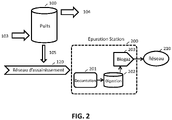
- the figure 2 illustrates an embodiment of the invention for the treatment of urban air.
- the carbon sink 100 captures the ambient urban air 103, releases oxygen 104 into the atmosphere and excess microalgae 105 into the sewer network 120.
- the effluents from the carbon sink according to the invention are added and combine with the flows of wastewater, which reach the treatment plant 200.
- the sludge is digested (by bacteria) in step 202 and biogas 203 is produced (by methanization , or other), which is fed back into the energy networks 210.
- the system according to the invention may comprise a micro-algae photo-bioreactor 100.
- the process for capturing atmospheric carbon dioxide 103 is coupled with a process for transforming carbon into bio-hydrocarbon 203 by methanization .
- the micro-algae are transported to a treatment plant 200 having a methanation sector contributing in terms of organic substrate to the said methanation sector 203.
- the photo-bioreactor 100 can comprise unicellular algae of the Chlorella type, which capture CO2. Many other types of strain are possible, allowing in particular the fixing or the capture or the precipitation of particles present in the air (urban or industrial).
- One of the processes underlying the operation of the bioreactor according to the invention is therefore that of photosynthesis.
- the absorption of CO2 can also be done by means of amine solvents, in particular ethanolamine (2-aminoethanol).
- amine solvents in particular ethanolamine (2-aminoethanol).
- acid gases such as CO2
- an aqueous solution of 2-aminoethanol forms a salt at room temperature.
- the solution is then transported to a closed medium where it is heated to approximately 120°C, which, according to Le Culier's principle, releases the (pure) CO2 and regenerates, in aqueous solution, the 2-aminoethanol.
- Alternatives to this chemical process include absorption techniques by rapid temperature/pressure variation, gas separation, cryogenics or even the use of hydroxides.
- the picture 3 shows aspects of an example of a reactor drain system for connection to the sewerage network.
- process water designates the water produced by the industrial process according to the invention.
- it is water loaded with microalgae (at least in certain embodiments) and/or liquid constituting the microalgae culture medium.
- the diagram of the picture 3 details in particular the operation of the evacuation system (drainage) of process water to the sewerage network.
- the interface between the CO2 absorption process and the sewerage network can indeed be achieved by a specific drainage system.
- the drainage system comprises for its connection a connection to the water network 301 (potable and/or non-potable, for example water from the pretreated Seine water network of the City of Paris), a water supply to process 302 (culture of micro-algae), a waste process water collector loaded with algae 303, a drain to the sewer network 304 and a control/power terminal block 306 (power supply).
- the water network 301 potable and/or non-potable, for example water from the pretreated Seine water network of the City of Paris
- process 302 culture of micro-algae
- waste process water collector loaded with algae 303 a waste process water collector loaded with algae 303
- drain to the sewer network 304 and a control/power terminal block 306 (power supply).
- An external command signal 313 coming from the automated supervision or from a human operator commands the opening of the solenoid valve 311 ensuring the filling of the tank 309. After closing the valve 311, a weight measurement is carried out by the force 308 then the tank is emptied via the evacuation connection 304 by controlling the solenoid valve 312. After closing the valve 312, a new weight measurement is carried out by the force sensor 308. The mass of solution rejected is obtained by difference of the two previous measurements.
- the sequenced opening of the solenoid valves 311 and 312 ensures the hydraulic disconnection with the sanitation network.
- the disconnection of the reservoirs implies that the process water supply valve 311 is closed during the discharge phase to the sewerage network for which the valve 312 is open.
- the volume of new water injected into the process is measured by the volumetric meter 307.
- a daily balance is established by the central control unit 305 by difference between the mass of water entering and the mass of solution exiting the device.
- the risks of migration or of microalgae rising through the various pipes is low or negligible, given that the microalgae algae are photo-dependent (microalgae excursions will be spatially limited).
- the evacuation pipes can comprise non-return valves and/or be chemically treated in order to minimize or avoid the rises of the biochemical agents.
- the system according to the invention can comprise a force sensor 308, which measures for example the resistance to a modified current as a function of the force exerted.
- a force sensor 308 measures for example the resistance to a modified current as a function of the force exerted.
- Different techniques concerning the weighing of the volumes of sand on the hydrocureurs can be used.
- Other complementary techniques for measuring the weight of microalgae are possible.
- measurements (for example optical) of algae concentration can be combined with the measurement of volumes (e.g. by level measurement or thresholds).
- the system according to the invention can comprise a plurality of reservoirs arranged in parallel.
- the system can comprise two tanks arranged in parallel. According to this dual configuration, emptying is carried out alternately.
- the use of two storage tanks 309 and 319 arranged in parallel allows sequenced or alternating operation which ensures the permanent supply of the process with fresh water and the hydraulic disconnection with the sanitation network.
- a given reservoir acts as a "buffer” in relation to the other and makes it possible to maintain a "leakage” flow rate, that is to say a constant fresh water supply in the photo-bioreactor.
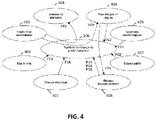
- the figure 4 illustrates examples of implementations of the invention, including connected reactor management modes and optional features.
- the photo-bioreactor 106 can be placed in the public space 407, connected to the sewer network 408 and has a supply of mains or city water 402 and electrical energy 401
- the reactor can be instrumented by sensors and automatisms 403, and comprises means of communication, for example a remote-reading antenna 404.
- This remote-reading antenna 404 notably allows bidirectional communication between the system 106 according to the invention and a supervisory position (man and/or machine).
- a control signal triggers the handling of solenoid valves causing the evacuation of process water loaded with algae 405 towards the storage tanks (for example 309) before being evacuated towards the sanitation network 408.
- the measurement of the mass of rejected algae 405 is established by weight difference between the fresh water entering and the waste water leaving the device, by means of various sensors.
- the reduction in temperature, pH and organic matter concentration of the effluents can be obtained by dilution effect: water (potable or non-potable, for example non-potable water from the pretreated Seine water network of the City of Paris) can be added to reach the predefined minimum values required.
- a minimum water level can be left at the bottom of the tank (for example 309) after emptying to stop odors coming from the sewer network 408 like a siphon.
- the tanks are for example provided with a vent with activated carbon filter.
- a disconnection device (303, 311, 309, 308, 311) can ensure the protection of the city water network.
- the process water passes through storage tanks 309 and 319 whose opening of the filling and emptying valves is alternated.
- Effluent discharges can be made by flushing, which generally has the effect of cleaning the discharge pipe and preventing the accumulation of solid matter.
- the tanks are provided with a non-adherent interior coating.
- Meteorological forecasts can advantageously be taken into account in the regulation of effluent discharges; for example, rain or storm alerts transmitted via onboard communication means or remote reading antennas 404 increase the probability of a high level in the sewerage networks, in which case emptying can be deferred in the time for certain parts of the grid or network of bioreactors connected according to the invention or on the contrary accelerated i.e. implemented opportunistically in certain other sectors.
- Certain specific shapes of the tanks and their non-adherent interior coating can contribute to ensuring the absence of organic deposits. In some cases, rinsing with mains water can be carried out (daily or according to measurements carried out locally).
- the system according to the invention can comprise an urban dressing (possibly instrumented) comprising a photo-bioreactor (generally instrumented), connected to the sanitation network (monitored)
- the urban envelope or dressing may include sensors (eg photovoltaic panels or equivalent, with or without accumulator or battery, presence or motion detectors, measurement of the rate of CO2 input and output, measurement of oxygen or a determined pollutant, input and/or output, etc) and/or actuators (speakers, shutters that can be operated remotely, etc).
- the casing of the bioreactor can comprise one or more fans (air inlets and/or outlets), accesses for removing compost or portions of the biomass, accesses for adding nutrients.
- the containment envelope of the bioreactor can also include means for diffusing perfumes (to annihilate or mask unwanted odors), means for acoustic diffusion, computer display screens (eg display of maps tourist attractions; the display of visual or textual information is not exclusive of the exposure of micro-algae, which can grow behind semi- or partially transparent screens), means of projection (projection of information onto the roadway or the walls), calculation means (eg processors) and communication means (wired or wireless, specific to the system according to the invention and/or to serve as public relay antennas), etc.
- Tangible and/or logical means corresponding for example to social functions can be made available to the public (eg biomass health reports, images of its evolution) or even means allowing interactivity with the public.
- a number of parameters can be monitored and/or regulated. These parameters may include in particular (for example and if applicable): the CO2 level of the incoming air, the CO2 level of the air at the outlet, the dissolved CO2 level (for example in the culture medium), the pressure at the outlet of the compressor (fan), the turbidity (eg rheology measurements of the internal biomass of the reactor), the concentration of micro-algae by optical measurement of the density of the culture medium, the internal temperature (probed in different places of the bioreactor), the outside temperature to the reactor (for example the temperature measured in the street), the light influx (in particular the measurement of solar gain and/or the level of artificial lighting), the pH (acidity or basicity of the medium of the biomass or the "process water), conductivity (of the biomass medium or process water, RedOX, NO3 and/or PO4 concentrations.
- these parameters may include in particular (for example and if applicable): the CO2 level of the incoming air, the CO2 level of the air at the outlet, the
- the temperature of the reactor can be regulated by means of a connection to an existing heating network and/or by geothermal energy and/or by the use of a heat exchanger placed near the network of sanitation.
- a negative yield alarm can be triggered, for example if the C02 flux removed on average becomes negative.
- data sampling can be performed every 30 seconds, every 5 minutes, every 15 minutes, every hour or according to predefined thresholds (and/or configurable ).
- the bioreactor or the urban dressing can comprise one or more sensors whose measurements allow, after processing of the information by a calculation unit, the measurement of the quantity of organic matter discharged into the sewerage network.
- the discharges or effluents from the bioreactor are measured and monitored (qualitatively and/or quantitatively), in particular remotely (e.g. wired or wireless means of communication, by remote readings, encrypted or in clear, etc.) .
- the remote metering system can in particular be mono-directional or bi-directional.
- a certain number of parameters relating to the sewer network can be monitored and/or regulated. These parameters may include in particular: the water level (in order to adjust the emptying at appropriate times and/or at appropriate places in the grid of networked bioreactors), the physical properties of the sludge measured locally or globally and statistically (eg pH, turbidity, conductivity, RedOX, NO3 and/or PO4 concentrations).
- the sensors (or sensors) on board the system according to the invention may include one or more sensors or sensors selected from pressure, flow, temperature, oxygen, speed, movement, position, location, radioactivity, energy, product or component sensors chemicals (e.g. nitric oxide, ozone, smoke, pollutants, etc.) or biological products or components (e.g. viruses, contaminants, pollens, etc.).
- the sensors can include one or more MEMS, magnetometers, hygrometers, gyroscopes, accelerometers, bio-sensors, radars, sonars, cameras, 3D scanners etc.
- the actuators or actuators can be of the pneumatic, hydraulic, electric, mechanical, magnetic, Pelletier effect, piezoelectric or electroluminescence type, etc. They can for example comprise one or more actuators, motors, heating resistors, lamps, acoustic enclosures, electromagnets, or even thermo coolers, ionizers, valves, valves, winders, etc.
- the supervision of the overall system covers the control of i) the urban layout and its sensors/actuators, ii) the bioreactor as such and iii) the sanitation network.
- Global supervision may include receiving, analyzing and predicting meteorological type data. For example, rainfall forecasts can influence the different drains of networked bioreactors (some areas will be drained before others, for example). Factors related to temperature and light input having direct consequences on the evolution of the biomass can also be monitored.
- the supervision of the overall system and/or of one or more reactors in particular can be carried out automatically, semi-automatically or manually. It can be performed remotely and/or locally (some operations may require certain authorizations and/or a physical presence on site).
- the regulation of the system can be carried out in a fixed manner (“control station) and/or in mobility.
- a web portal comprising web services and/or software applications (“apps”) can provide access to reactor monitoring data and/or can allow control of them to be taken.
- apps web services and/or software applications
- a variety of terminals can be used to consult data and/or take control of a reactor or the grid of reactors, in particular smartphones, tablets, laptops or servers. Access rights can be defined.
- User interfaces using touch, augmented reality and/or virtual technologies can be used.
- the figure 5 shows an example of a network of bioreactors, ie a plurality of reactors interconnected to the sanitation network. Some wells are photo-bioreactors, others are not (eg bioreactors with genetically modified bacteria).
- wells 100, 511, 512 and 513 are directly connected to the sewer network and wells 501, 502, 503 are indirectly connected via well 100.
- Reactor 511 is bidirectional: it can discharge its effluents in the sewerage network but also to extract material from it, for example for treatment (like the 512 reactor).
- Well 513 like well 100, is a carbon sink comprising a photo-bioreactor discharging its effluents into the sewerage network.
- Well 100 is a photo-bioreactor networked with several other reactors.
- well 502 is a Morris column according to the invention and well 100 is an adjacent bus shelter whose biomass reservoirs communicate.
- Shaft 501 corresponds to the facade of a building implementing a system according to the invention.
- the shaft 503 is a portion of glazed sidewalk according to the invention.
- the well 531 is a well according to the invention which can be connected but not connected to the network 120. For this well 531, the compost of the micro-algae can be collected on site (or discharged into another sewer network separate from the network 120).
- the treatment plant 200 can be part of the overall regulation.
- the modes of regulation can be variable and variously controllable, from upstream to downstream, i.e. from the capture of air and/or pollutants, the activity of the bioreactor, the management of effluent discharges, the levels of wastewater measured or simulated in sewerage networks, weather forecasts and their consequences in terms of dilution, etc.).
- the figure 5 shows a park or a network of carbon sinks connected and/or connectable to the sanitation network 120 which leads to the purification station 200, which produces the biogas reinjected into the energy networks.
- the topology of the graph of interconnected reactors allows more or less sophisticated regulation, that is to say according to multiple and diverse feedbacks.
- the graph corresponds to a grid of interconnected entities.
- This grid of carbon sinks can be supervised by applying complex systems regulation systems (formal logic, fuzzy logic, peer-to-peer negotiations, voting mechanisms), whether this regulation is partially human-made (human operator or supervisor) and/or due to the machine (local decisions made by computer, arc-reflexes, etc.).
- Well reactors can be instrumented (i.e. onboard measurement sensors specifying the state of biomass growth or many other parameters such as temperature, concentration, etc.), as well as the sanitation network (eg work in progress, topography, pollutant loads or concentration at different locations, etc.).
- onboard measurement sensors specifying the state of biomass growth or many other parameters such as temperature, concentration, etc.
- sanitation network eg work in progress, topography, pollutant loads or concentration at different locations, etc.
- the perimeter of the system can include the modeling of flows and air quality (e.g. at variable granularities of scale, for example from the street to the entire agglomeration), the network of wells (e.g. types of reactors, cycles biomass, capacities, etc.), the sanitation network itself (e.g. water levels, maintenance work, weather forecasts, etc.) and the purification network (e.g. settling cycles, methanisation, etc.)
- the downstream does not control the upstream (even partially).
- wastewater treatment plant 200 “subjects” passively to the cumulative spills from networked carbon sinks.
- a regulation can then be carried out upstream if necessary, for example by determining the load of the downstream treatment plant (e.g. observed or measured or calculated or simulated).
- the wells can for example communicate with each other, “dialogue” by implementing decision systems between peers to vote or decide which reactors will be authorized to drain or not, according to which sequences, etc.
- the downstream controls the upstream (at least partially).
- the wastewater treatment plant 200 depending on its load and its own methanation cycles, directly or indirectly controls the emptying of the carbon sinks upstream.
- the treatment plant 200 can influence (or authorize or favor or weight or facilitate or accelerate or delay or prohibit or shift ) emptying of certain wells, taking into account the effects of cumulative dilution or of the resulting composition of the collected wastewater.
- upstream and downstream contribute in various ways to the overall regulation. For example, certain reactors noticing an overload of the purification downstream will accentuate the opacity of the surfaces exposing the micro-algae in order to reduce the growth of biomass. If a local need for air purification becomes pressing (beyond a certain predefined threshold), because an inhabited area becomes polluted, and simultaneously the absorption capacities downstream do not allow evacuation in the short term, occasional emptying (by truck or ejection of compost after desiccation) can resolve occasional or "peak" problems on the network. As not all the reactors are equipped with dual evacuation modes (physical compost and sewer network), the management of the graph underlying the network of carbon sinks according to the invention can allow alternative solutions.
- Examples of management of the bioreactor grid or network are described below (these scenarios are in no way limiting).
- the supervisor human and/or machine
- the supervisor can temporarily stop the emptying of the bioreactors in the area concerned and/or can decrease the metabolism of the bioreactors by reducing the amount of light.
- a pollution alert being in progress, the activity of the bioreactors can be maximized as much as possible for each of the bioreactors.
- the quality of the urban air is determined to be satisfactory, the contributions of light will be able to maintain the algae in activity but without going into a purifying mode.
- a fourth scenario violent storms being forecast, the emptying of the bioreactors close to biomass saturation can be carried out in advance in order to take advantage of transport capacities and the batteries of the photovoltaic panels can be recharged to the maximum in order to continue the lighting during weather disturbances at low light.
- a fifth scenario in the event of a high level in the sewerage network (rains and/or floods and/or during peak hours, eg football match) which high level generally leads to overloads and/or malfunctions wastewater treatment plants downstream (and can lead to untreated discharges into the environment), it will generally be avoided to carry out emptying in this type of context.
- appropriate emptying sequences can be planned by zones (inter-zones) and/or within zones (intra-zones), etc.
- the treatment plant being under maintenance emptying will be avoided as much as possible.
- the present invention can be implemented from hardware and/or software elements. It may be available as a computer program product on a computer-readable medium.
- the medium can be electronic, magnetic, optical or electromagnetic.
- the terms computer program and software are used herein in a general sense to refer to any type of computer code (e.g., application software, firmware, microcode, or other form of operating instruction). computer) that can be used to program one or more processors to implement aspects of the techniques described herein.
- the IT means or resources can in particular be distributed (“ Cloud computing ”), possibly using peer-to-peer technologies.
- the software code may be executed on any suitable processor (e.g., a microprocessor) or processor core or set of processors, whether provided in a single computing device or distributed among multiple computing devices (e.g. example as possibly accessible in the environment of the device).
Landscapes
- Chemical & Material Sciences (AREA)
- Engineering & Computer Science (AREA)
- Analytical Chemistry (AREA)
- Health & Medical Sciences (AREA)
- Oil, Petroleum & Natural Gas (AREA)
- Chemical Kinetics & Catalysis (AREA)
- General Chemical & Material Sciences (AREA)
- Biomedical Technology (AREA)
- Environmental & Geological Engineering (AREA)
- Life Sciences & Earth Sciences (AREA)
- Molecular Biology (AREA)
- Apparatus Associated With Microorganisms And Enzymes (AREA)
- Disinfection, Sterilisation Or Deodorisation Of Air (AREA)
- Micro-Organisms Or Cultivation Processes Thereof (AREA)
Claims (14)
- Computerimplementiertes Verfahren zur Regulierung eines Luftreinigungssystems, umfassend einen Bioreaktor, wobei das Verfahren folgende Schritte umfasst:- Empfangen der Messungen der Konzentrationsraten eines oder mehrerer Schadstoffe und/oder von Partikeln in Luftströmen am Eingang und am Ausgang eines Bioreaktors, welcher Wasser und eine Biomasse enthält, welche mindestens teilweise einen Teil dieser Schadstoffe und/oder Partikel reinigt;- angesichts von Regelungsparametern, welche die empfangenen Messungen der Konzentrationsraten umfassen, Bestimmen eines aus dem Bioreaktor abzuleitenden Volumens an Biomasse in Richtung eines Kanalisationsnetzes, welches an den Bioreaktor angeschlossen ist, und eines Wasservolumens, das in den Bioreaktor rückgeführt werden soll;- Ableiten des bestimmten Volumens an Biomasse in das Kanalisationsnetz;- Neuspeisen des Bioreaktors mit Wasser mit dem bestimmten Wasservolumen;wobei die Regelungsparameter dem Bioreaktor gegenüber externe Daten umfassen, wobei diese externen Daten Daten umfassen, welche dem Zustand des Kanalisationsnetzes zugeordnet sind und/oder Daten, welche dem Zustand des Wasserspeisungsnetzes des Bioreaktors zugeordnet sind;wobei die Regelungsparameter ferner Daten von Messungen des Pegels der in dem Kanalisationsnetz vorhandenen Abwässer und/oder meteorologische Vorhersagedaten umfassen.
- Verfahren nach Anspruch 1, wobei der Bioreaktor ein Photobioreaktor ist und die Regelungsparameter Parameter umfassen, welche der internen Aktivität des Bioreaktors zugeordnet sind, wobei diese Parameter ein oder mehrere Daten umfassen, ausgewählt aus: dem pH-Wert, der Temperatur, der Trübung, der Leitfähigkeit, welche im Kulturmedium des Bioreaktors gemessen werden, und der Quantifizierung der durch das Kulturmedium des Bioreaktors empfangenen Lichtströme.
- Verfahren nach Anspruch 1, ferner umfassend Verwaltungsregeln zum Bestimmen des abzuleitenden Volumens an Biomasse.
- Verfahren nach einem der Ansprüche 1 bis 3, wobei der Bioreaktor Messsensoren und/oder fernsteuerbare Betätigungselemente umfasst, um die Aktivität des Reaktors zu regulieren.
- Verfahren nach einem der vorhergehenden Ansprüche, umfassend einen Schritt, darin bestehend, die einer Vielzahl von Bioreaktoren zugeordneten Daten zu empfangen, welche an ein gleiches Kanalisationsnetz angeschlossen ist, wobei das Kanalisationsnetz eventuell an eine oder mehrere Biogas-Produktionsstationen angeschlossen ist.
- Verfahren nach Anspruch 5, wobei die Vielzahl von Bioreaktoren an ein gleiches Wasserverteilungsnetz zur Speisung des Kulturmediums der Bioreaktoren angeschlossen ist.
- Verfahren nach Anspruch 6, umfassend einen Schritt, darin bestehend, die Vielzahl von Bioreaktoren angesichts von Geolokalisierungsdaten der Bioreaktoren, von Daten, welche dem Zustand des Kanalisationsnetzes zugeordnet sind und/oder der Daten, welche dem Zustand des Wasserspeisungsnetzes des Bioreaktors zugeordnet sind und/oder der Daten, welche dem Zustand der Biogaserzeugung zugeordnet sind, zu regulieren.
- Computerprogrammprodukt, wobei das Computerprogramm Code-Anweisungen umfasst, welche es ermöglichen, die Schritte des Verfahrens nach einem der Ansprüche 1 bis 7 durchzuführen, wenn das Programm auf dem Luftaufbereitungssystem nach den Ansprüchen 9 bis 14 ausgeführt wird.
- Luftaufbereitungssystem, umfassend einen Bioreaktor, welcher einen Eingang und einen Ausgang umfasst, wobei der Bioreaktor Wasser und eine Biomasse enthält, welche mindestens teilweise Schadstoffe und/oder Partikel reinigt, wobei der Bioreaktor durch ein Kontroll- und Steuerungssystem reguliert wird, welches durch einen Computer implementiert wird, welches es ermöglicht, sämtliche Betriebsparameter des Bioreaktors zu messen, zu speichern und zu steuern, dadurch gekennzeichnet, dass das Luftaufbereitungssystem Folgendes umfasst:- Mittel zum Messen der Konzentrationsraten eines oder mehrerer Schadstoffe und/oder von Partikeln in Luftströmen am Eingang und am Ausgang des Bioreaktors;- Mittel zum Bestimmen eines aus dem Bioreaktor abzuleitenden Volumens an Biomasse in Richtung eines Kanalisationsnetzes, welches an den Bioreaktor angeschlossen ist, und eines Wasservolumens, das in den Bioreaktor rückgeführt werden soll, angesichts der Regulierungsparameter, welche die Messungen der Konzentrationsraten umfassen;- Mittel zum Ableiten des bestimmten Biomassevolumens in das Kanalisationsnetz;- Mittel zum Neuspeisen des Bioreaktors mit Wasser mit dem bestimmten Wasservolumen;wobei die Regelungsparameter dem Bioreaktor gegenüber externe Daten umfassen, wobei diese externen Daten Daten umfassen, welche dem Zustand des Kanalisationsnetzes zugeordnet sind und/oder Daten, welche dem Zustand des Wasserspeisungsnetzes des Bioreaktors zugeordnet sind;wobei die Regelungsparameter ferner Daten von Messungen des Pegels der in dem Kanalisationsnetz vorhandenen Abwässer und/oder meteorologische Vorhersagedaten umfassen.
- System nach Anspruch 9, dadurch gekennzeichnet, dass der Bioreaktor ein Photobioreaktor ist, welcher photosynthetische Mikroorganismen umfasst.
- System nach einem der Ansprüche 9 und 10, dadurch gekennzeichnet, dass das Wasserspeisungsmittel des Bioreaktors ein Wasserverteilungsnetz ist, welches die Speisung des Kulturmediums des Bioreaktors ermöglicht, und dadurch, dass es ferner ein Entleerungssystem umfasst, welches mindestens zwei Tanks und fernsteuerbare Magnetventile umfasst, wobei die Tanks konfiguriert sind, um abwechselnd dergestalt entleert zu werden, dass eine fluidische Isolation zwischen dem Wassernetz und dem Kanalisationsnetz beibehalten wird.
- System nach einem der Ansprüche 9 und 10, dadurch gekennzeichnet, dass das Wasserspeisungsmittel des Bioreaktors ein Netz für nicht trinkbares, vorbehandeltes Stadtwasser ist, und dadurch, dass es ferner ein Entleerungssystem umfasst, welches mindestens zwei Tanks und fernsteuerbare Magnetventile umfasst, wobei die Tanks konfiguriert sind, um abwechselnd dergestalt entleert zu werden, dass eine fluidische Isolation zwischen dem Wassernetz und dem Kanalisationsnetz beibehalten wird.
- System nach einem der Ansprüche 9 bis 12, dadurch gekennzeichnet, dass der Bioreaktor ferner ein oder mehrere Betätigungselemente zum Regulieren der Luftströme am Eingang und/oder am Ausgang des Bioreaktors umfasst, und/oder zum Rühren der Biomasse des Reaktors, und/oder zum Regulieren des natürlichen und/oder künstlichen Lichtzustroms und/oder zum Regulieren der Temperatur.
- System nach einem der Ansprüche 9 bis 13, dadurch gekennzeichnet, dass es ferner eine Kommunikationsvorrichtung umfasst, welche die Fernsteuerung der Aktivität des Bioreaktors ermöglicht.
Applications Claiming Priority (2)
| Application Number | Priority Date | Filing Date | Title |
|---|---|---|---|
| FR1560666A FR3043331B1 (fr) | 2015-11-06 | 2015-11-06 | Puits de carbone urbain |
| PCT/EP2016/076708 WO2017077061A1 (fr) | 2015-11-06 | 2016-11-04 | Procede de regulation de systemes d'epuration d'air |
Publications (2)
| Publication Number | Publication Date |
|---|---|
| EP3370852A1 EP3370852A1 (de) | 2018-09-12 |
| EP3370852B1 true EP3370852B1 (de) | 2022-09-28 |
Family
ID=55345969
Family Applications (1)
| Application Number | Title | Priority Date | Filing Date |
|---|---|---|---|
| EP16791582.6A Active EP3370852B1 (de) | 2015-11-06 | 2016-11-04 | Steuerung von luftreinigungssystemen |
Country Status (6)
| Country | Link |
|---|---|
| US (1) | US10807037B2 (de) |
| EP (1) | EP3370852B1 (de) |
| JP (1) | JP6843873B2 (de) |
| CN (1) | CN109069988A (de) |
| FR (1) | FR3043331B1 (de) |
| WO (1) | WO2017077061A1 (de) |
Cited By (1)
| Publication number | Priority date | Publication date | Assignee | Title |
|---|---|---|---|---|
| WO2025227212A1 (pt) * | 2024-04-29 | 2025-11-06 | Life Work Servicos Especializados Ltda | Dispositivo e método para captura de poluentes atmosfericos |
Families Citing this family (10)
| Publication number | Priority date | Publication date | Assignee | Title |
|---|---|---|---|---|
| FR3073860B1 (fr) | 2017-11-23 | 2024-07-12 | Fermentalg | Milieu de culture anti-adhesion |
| CN109364737A (zh) * | 2018-12-27 | 2019-02-22 | 黄河三角洲京博化工研究院有限公司 | 一种复合除臭剂 |
| DE102019214688A1 (de) * | 2019-09-25 | 2021-03-25 | Subitec Gmbh | Verfahren und Vorrichtung zur Aufreinigung von Raum- oder Stadtluft unter Bereitstellung mindestens einer Wertstofffraktion |
| US20230032416A1 (en) * | 2019-11-11 | 2023-02-02 | Takachar Limited | System and method for the control of biomass conversion systems |
| FR3107459B1 (fr) | 2020-02-20 | 2022-01-14 | Suez Groupe | Installation et procede d’epuration d’air |
| WO2021187847A1 (en) * | 2020-03-15 | 2021-09-23 | Moon Bong Lee | Method and device for treating various type of fluids |
| KR102222701B1 (ko) * | 2020-06-19 | 2021-03-04 | 서울주택도시공사 | 스마트그린 이끼타워 미세먼지 저감 시스템 및 그 방법 |
| EP4538752A1 (de) * | 2020-10-08 | 2025-04-16 | Miraie Corporation | Desodorierungsbehandlungsvorrichtung und informationssammelsystem |
| EP4385608A1 (de) * | 2022-12-16 | 2024-06-19 | Bromalgae, S.L. | Dekontaminationssystem für stadtluft |
| WO2026057867A1 (en) * | 2024-09-16 | 2026-03-19 | Kjellberg Kenn | Method and plant for controlling the capturing of carbon dioxide using algae |
Family Cites Families (17)
| Publication number | Priority date | Publication date | Assignee | Title |
|---|---|---|---|---|
| JPS57112870A (en) | 1980-12-31 | 1982-07-14 | Takashi Mori | Air purifier |
| JP2716627B2 (ja) | 1992-06-09 | 1998-02-18 | 三井造船株式会社 | 光培養装置 |
| DE19533238A1 (de) * | 1995-09-08 | 1997-03-13 | Reinluft Umwelttechnik Ingenie | Verfahren zur kontinuierlichen Erfassung der Funktionsfähigkeit und Aktivität von biologischen Abluftreinigungsanlagen |
| US20050260553A1 (en) * | 2002-05-13 | 2005-11-24 | Isaac Berzin | Photobioreactor and process for biomass production and mitigation of pollutants in flue gases |
| AU2007248725B2 (en) * | 2006-05-02 | 2011-10-27 | Evoqua Water Technologies Llc | System and method for gas treatment comprising biological and chemical oxidation scrubbing stages |
| US8372632B2 (en) * | 2006-06-14 | 2013-02-12 | Malcolm Glen Kertz | Method and apparatus for CO2 sequestration |
| US8110395B2 (en) * | 2006-07-10 | 2012-02-07 | Algae Systems, LLC | Photobioreactor systems and methods for treating CO2-enriched gas and producing biomass |
| US9175252B2 (en) * | 2007-02-06 | 2015-11-03 | Phyco2, Llc | Photobioreactor and method for processing polluted air |
| US20090087898A1 (en) * | 2007-09-06 | 2009-04-02 | Clearvalue, Inc. | Methods, processes and apparatus of sequestering and environmentally coverting oxide(s) of carbon and nitrogen |
| FR2945215B1 (fr) | 2009-05-06 | 2011-08-19 | Fermentalg | Procede de traitement de l'air ambiant |
| WO2011014507A1 (en) * | 2009-07-27 | 2011-02-03 | The University Of Wyoming Research Corporation | Biological clean fuel processing systems and methods |
| CN101914572B (zh) * | 2010-07-20 | 2012-07-25 | 中国科学院广州能源研究所 | 二氧化碳零排放型有机废弃物能源化利用的方法 |
| FR2978159B1 (fr) | 2011-07-18 | 2014-10-10 | Suez Environnement | Photo-bioreacteur pour la production d'une solution algale concentree et dispositif d'exposition de la solution, en particulier pour un tel photo-bioreacteur |
| KR101382989B1 (ko) * | 2011-09-02 | 2014-04-08 | 현대자동차주식회사 | 미세조류 배양용 광생물 반응장치 |
| WO2014063229A1 (en) | 2012-10-24 | 2014-05-01 | Pond Biofuels Inc. | Process of operating a plurality of photobioreactors |
| CN203329620U (zh) * | 2013-06-28 | 2013-12-11 | 济南佰福康物联网技术有限公司 | 室内空气智能化绿色净化装置 |
| KR20180107077A (ko) * | 2015-10-26 | 2018-10-01 | 아트비올리, 인크. | 공기질 개선을 위한 미세유체 칩 모듈, 시스템, 및 방법 |
-
2015
- 2015-11-06 FR FR1560666A patent/FR3043331B1/fr active Active
-
2016
- 2016-11-04 WO PCT/EP2016/076708 patent/WO2017077061A1/fr not_active Ceased
- 2016-11-04 CN CN201680071363.1A patent/CN109069988A/zh active Pending
- 2016-11-04 EP EP16791582.6A patent/EP3370852B1/de active Active
- 2016-11-04 US US15/771,075 patent/US10807037B2/en active Active
- 2016-11-04 JP JP2018541557A patent/JP6843873B2/ja active Active
Cited By (1)
| Publication number | Priority date | Publication date | Assignee | Title |
|---|---|---|---|---|
| WO2025227212A1 (pt) * | 2024-04-29 | 2025-11-06 | Life Work Servicos Especializados Ltda | Dispositivo e método para captura de poluentes atmosfericos |
Also Published As
| Publication number | Publication date |
|---|---|
| EP3370852A1 (de) | 2018-09-12 |
| FR3043331B1 (fr) | 2019-11-22 |
| US10807037B2 (en) | 2020-10-20 |
| US20180304195A1 (en) | 2018-10-25 |
| WO2017077061A1 (fr) | 2017-05-11 |
| JP6843873B2 (ja) | 2021-03-17 |
| FR3043331A1 (fr) | 2017-05-12 |
| JP2019503817A (ja) | 2019-02-14 |
| CN109069988A (zh) | 2018-12-21 |
Similar Documents
| Publication | Publication Date | Title |
|---|---|---|
| FR3043331B1 (fr) | Puits de carbone urbain | |
| Kumar et al. | Internet of things for secure surveillance for sewage wastewater treatment systems | |
| Marcé et al. | Automatic high frequency monitoring for improved lake and reservoir management | |
| Karamouz et al. | Urban water engineering and management | |
| Pugh et al. | Effectiveness of green infrastructure for improvement of air quality in urban street canyons | |
| Piasecki | Water and sewage management issues in rural Poland | |
| Ci et al. | Permafrost thaw dominates mercury emission in Tibetan thermokarst ponds | |
| Altobelli et al. | Combined application of real-time control and green technologies to urban drainage systems | |
| Yu et al. | Katabatic wind and sea–ice dynamics drive isotopic variations of total gaseous mercury on the Antarctic coast | |
| Zhang et al. | Using mercury stable isotopes to quantify bidirectional water–atmosphere Hg (0) exchange fluxes and explore controlling factors | |
| Han | Concise environmental engineering | |
| Sahni et al. | Planning for low carbon cities in India | |
| Kurniawan et al. | Strengthening Climate Resilience: Urban Water Technologies for Heat-Resilient Physical Infrastructure in Southeast Asia Cities Amidst Extreme Temperature Events and El Niño Challenges | |
| Abuseif | Exploring influencing factors and innovative solutions for sustainable water management on green roofs: A systematic quantitative review | |
| Bertone et al. | Statistical analysis and modelling of the manganese cycle in the subtropical Advancetown Lake, Australia | |
| Schmidt et al. | Assessment of evaporation mitigation technologies in Queensland | |
| Pandya | General concept of environmental sciences | |
| Sposito et al. | RICICLO IDRICO E RAFFRESCAMENTO URBANO: Un nuovo paradigma metabolico Acqua/Energia/Cibo per le città temperate. | |
| Magalhães | The dynamic of seasonal nonpoint pollution in complex watersheds. | |
| Puerto Bohorquez | Assessing Wastewater Treatment in Yopal Colombia Using GIS | |
| Pinho et al. | Development of a Smart Framework to Continuously Monitor Constructed Wetland Efficiency | |
| Kudzin et al. | Ecohydrological Pathways of Water Quality Under Climate Change: Nature-Based Solutions for Pollutant Flux Regulation | |
| Ripaldi | Life cycle assesment of waste management system | |
| Kanmacher | Resilience of a Methane Oxidation Biosystem (MOB) Treating Residual Methane Emissions from a Closed Landfill | |
| Maximin et al. | Quantification of greenhouse gas emissions in the Figuil-Cameroon cement plant between 2016–2020 using the Genetic Algorithm-Gaussian coupling |
Legal Events
| Date | Code | Title | Description |
|---|---|---|---|
| STAA | Information on the status of an ep patent application or granted ep patent |
Free format text: STATUS: UNKNOWN |
|
| STAA | Information on the status of an ep patent application or granted ep patent |
Free format text: STATUS: THE INTERNATIONAL PUBLICATION HAS BEEN MADE |
|
| PUAI | Public reference made under article 153(3) epc to a published international application that has entered the european phase |
Free format text: ORIGINAL CODE: 0009012 |
|
| STAA | Information on the status of an ep patent application or granted ep patent |
Free format text: STATUS: REQUEST FOR EXAMINATION WAS MADE |
|
| 17P | Request for examination filed |
Effective date: 20180528 |
|
| AK | Designated contracting states |
Kind code of ref document: A1 Designated state(s): AL AT BE BG CH CY CZ DE DK EE ES FI FR GB GR HR HU IE IS IT LI LT LU LV MC MK MT NL NO PL PT RO RS SE SI SK SM TR |
|
| AX | Request for extension of the european patent |
Extension state: BA ME |
|
| DAV | Request for validation of the european patent (deleted) | ||
| DAX | Request for extension of the european patent (deleted) | ||
| STAA | Information on the status of an ep patent application or granted ep patent |
Free format text: STATUS: EXAMINATION IS IN PROGRESS |
|
| 17Q | First examination report despatched |
Effective date: 20190731 |
|
| GRAP | Despatch of communication of intention to grant a patent |
Free format text: ORIGINAL CODE: EPIDOSNIGR1 |
|
| STAA | Information on the status of an ep patent application or granted ep patent |
Free format text: STATUS: GRANT OF PATENT IS INTENDED |
|
| INTG | Intention to grant announced |
Effective date: 20220421 |
|
| GRAS | Grant fee paid |
Free format text: ORIGINAL CODE: EPIDOSNIGR3 |
|
| GRAA | (expected) grant |
Free format text: ORIGINAL CODE: 0009210 |
|
| STAA | Information on the status of an ep patent application or granted ep patent |
Free format text: STATUS: THE PATENT HAS BEEN GRANTED |
|
| AK | Designated contracting states |
Kind code of ref document: B1 Designated state(s): AL AT BE BG CH CY CZ DE DK EE ES FI FR GB GR HR HU IE IS IT LI LT LU LV MC MK MT NL NO PL PT RO RS SE SI SK SM TR |
|
| REG | Reference to a national code |
Ref country code: GB Ref legal event code: FG4D Free format text: NOT ENGLISH |
|
| REG | Reference to a national code |
Ref country code: CH Ref legal event code: EP |
|
| REG | Reference to a national code |
Ref country code: AT Ref legal event code: REF Ref document number: 1520881 Country of ref document: AT Kind code of ref document: T Effective date: 20221015 |
|
| REG | Reference to a national code |
Ref country code: DE Ref legal event code: R096 Ref document number: 602016075290 Country of ref document: DE |
|
| REG | Reference to a national code |
Ref country code: IE Ref legal event code: FG4D Free format text: LANGUAGE OF EP DOCUMENT: FRENCH |
|
| RAP2 | Party data changed (patent owner data changed or rights of a patent transferred) |
Owner name: SUEZ INTERNATIONAL |
|
| REG | Reference to a national code |
Ref country code: DE Ref legal event code: R081 Ref document number: 602016075290 Country of ref document: DE Owner name: SUEZ INTERNATIONAL, FR Free format text: FORMER OWNER: SUEZ GROUPE, PARIS, FR |
|
| REG | Reference to a national code |
Ref country code: LT Ref legal event code: MG9D |
|
| PG25 | Lapsed in a contracting state [announced via postgrant information from national office to epo] |
Ref country code: SE Free format text: LAPSE BECAUSE OF FAILURE TO SUBMIT A TRANSLATION OF THE DESCRIPTION OR TO PAY THE FEE WITHIN THE PRESCRIBED TIME-LIMIT Effective date: 20220928 Ref country code: RS Free format text: LAPSE BECAUSE OF FAILURE TO SUBMIT A TRANSLATION OF THE DESCRIPTION OR TO PAY THE FEE WITHIN THE PRESCRIBED TIME-LIMIT Effective date: 20220928 Ref country code: NO Free format text: LAPSE BECAUSE OF FAILURE TO SUBMIT A TRANSLATION OF THE DESCRIPTION OR TO PAY THE FEE WITHIN THE PRESCRIBED TIME-LIMIT Effective date: 20221228 Ref country code: LV Free format text: LAPSE BECAUSE OF FAILURE TO SUBMIT A TRANSLATION OF THE DESCRIPTION OR TO PAY THE FEE WITHIN THE PRESCRIBED TIME-LIMIT Effective date: 20220928 Ref country code: LT Free format text: LAPSE BECAUSE OF FAILURE TO SUBMIT A TRANSLATION OF THE DESCRIPTION OR TO PAY THE FEE WITHIN THE PRESCRIBED TIME-LIMIT Effective date: 20220928 Ref country code: FI Free format text: LAPSE BECAUSE OF FAILURE TO SUBMIT A TRANSLATION OF THE DESCRIPTION OR TO PAY THE FEE WITHIN THE PRESCRIBED TIME-LIMIT Effective date: 20220928 |
|
| REG | Reference to a national code |
Ref country code: NL Ref legal event code: MP Effective date: 20220928 |
|
| REG | Reference to a national code |
Ref country code: AT Ref legal event code: MK05 Ref document number: 1520881 Country of ref document: AT Kind code of ref document: T Effective date: 20220928 |
|
| PG25 | Lapsed in a contracting state [announced via postgrant information from national office to epo] |
Ref country code: HR Free format text: LAPSE BECAUSE OF FAILURE TO SUBMIT A TRANSLATION OF THE DESCRIPTION OR TO PAY THE FEE WITHIN THE PRESCRIBED TIME-LIMIT Effective date: 20220928 Ref country code: GR Free format text: LAPSE BECAUSE OF FAILURE TO SUBMIT A TRANSLATION OF THE DESCRIPTION OR TO PAY THE FEE WITHIN THE PRESCRIBED TIME-LIMIT Effective date: 20221229 |
|
| 111L | Licence recorded |
Designated state(s): AL AT BE BG CH CY CZ DE DK EE ES FI FR GB GR HR HU IE IS IT LT LU LV MC MK MT NL NO PL PT RO RS SE SI SK SM TR Free format text: EXCLUSIVE LICENSE Name of requester: CARBONWORKS, FR Effective date: 20220920 |
|
| PG25 | Lapsed in a contracting state [announced via postgrant information from national office to epo] |
Ref country code: SM Free format text: LAPSE BECAUSE OF FAILURE TO SUBMIT A TRANSLATION OF THE DESCRIPTION OR TO PAY THE FEE WITHIN THE PRESCRIBED TIME-LIMIT Effective date: 20220928 Ref country code: RO Free format text: LAPSE BECAUSE OF FAILURE TO SUBMIT A TRANSLATION OF THE DESCRIPTION OR TO PAY THE FEE WITHIN THE PRESCRIBED TIME-LIMIT Effective date: 20220928 Ref country code: PT Free format text: LAPSE BECAUSE OF FAILURE TO SUBMIT A TRANSLATION OF THE DESCRIPTION OR TO PAY THE FEE WITHIN THE PRESCRIBED TIME-LIMIT Effective date: 20230130 Ref country code: ES Free format text: LAPSE BECAUSE OF FAILURE TO SUBMIT A TRANSLATION OF THE DESCRIPTION OR TO PAY THE FEE WITHIN THE PRESCRIBED TIME-LIMIT Effective date: 20220928 Ref country code: CZ Free format text: LAPSE BECAUSE OF FAILURE TO SUBMIT A TRANSLATION OF THE DESCRIPTION OR TO PAY THE FEE WITHIN THE PRESCRIBED TIME-LIMIT Effective date: 20220928 Ref country code: AT Free format text: LAPSE BECAUSE OF FAILURE TO SUBMIT A TRANSLATION OF THE DESCRIPTION OR TO PAY THE FEE WITHIN THE PRESCRIBED TIME-LIMIT Effective date: 20220928 |
|
| PG25 | Lapsed in a contracting state [announced via postgrant information from national office to epo] |
Ref country code: SK Free format text: LAPSE BECAUSE OF FAILURE TO SUBMIT A TRANSLATION OF THE DESCRIPTION OR TO PAY THE FEE WITHIN THE PRESCRIBED TIME-LIMIT Effective date: 20220928 Ref country code: PL Free format text: LAPSE BECAUSE OF FAILURE TO SUBMIT A TRANSLATION OF THE DESCRIPTION OR TO PAY THE FEE WITHIN THE PRESCRIBED TIME-LIMIT Effective date: 20220928 Ref country code: IS Free format text: LAPSE BECAUSE OF FAILURE TO SUBMIT A TRANSLATION OF THE DESCRIPTION OR TO PAY THE FEE WITHIN THE PRESCRIBED TIME-LIMIT Effective date: 20230128 Ref country code: EE Free format text: LAPSE BECAUSE OF FAILURE TO SUBMIT A TRANSLATION OF THE DESCRIPTION OR TO PAY THE FEE WITHIN THE PRESCRIBED TIME-LIMIT Effective date: 20220928 |
|
| REG | Reference to a national code |
Ref country code: DE Ref legal event code: R097 Ref document number: 602016075290 Country of ref document: DE |
|
| PG25 | Lapsed in a contracting state [announced via postgrant information from national office to epo] |
Ref country code: NL Free format text: LAPSE BECAUSE OF FAILURE TO SUBMIT A TRANSLATION OF THE DESCRIPTION OR TO PAY THE FEE WITHIN THE PRESCRIBED TIME-LIMIT Effective date: 20220928 Ref country code: MC Free format text: LAPSE BECAUSE OF FAILURE TO SUBMIT A TRANSLATION OF THE DESCRIPTION OR TO PAY THE FEE WITHIN THE PRESCRIBED TIME-LIMIT Effective date: 20220928 Ref country code: AL Free format text: LAPSE BECAUSE OF FAILURE TO SUBMIT A TRANSLATION OF THE DESCRIPTION OR TO PAY THE FEE WITHIN THE PRESCRIBED TIME-LIMIT Effective date: 20220928 |
|
| P01 | Opt-out of the competence of the unified patent court (upc) registered |
Effective date: 20230606 |
|
| PG25 | Lapsed in a contracting state [announced via postgrant information from national office to epo] |
Ref country code: DK Free format text: LAPSE BECAUSE OF FAILURE TO SUBMIT A TRANSLATION OF THE DESCRIPTION OR TO PAY THE FEE WITHIN THE PRESCRIBED TIME-LIMIT Effective date: 20220928 |
|
| PLBE | No opposition filed within time limit |
Free format text: ORIGINAL CODE: 0009261 |
|
| STAA | Information on the status of an ep patent application or granted ep patent |
Free format text: STATUS: NO OPPOSITION FILED WITHIN TIME LIMIT |
|
| PG25 | Lapsed in a contracting state [announced via postgrant information from national office to epo] |
Ref country code: LU Free format text: LAPSE BECAUSE OF NON-PAYMENT OF DUE FEES Effective date: 20221104 |
|
| 26N | No opposition filed |
Effective date: 20230629 |
|
| PG25 | Lapsed in a contracting state [announced via postgrant information from national office to epo] |
Ref country code: IE Free format text: LAPSE BECAUSE OF NON-PAYMENT OF DUE FEES Effective date: 20221104 |
|
| PG25 | Lapsed in a contracting state [announced via postgrant information from national office to epo] |
Ref country code: SI Free format text: LAPSE BECAUSE OF FAILURE TO SUBMIT A TRANSLATION OF THE DESCRIPTION OR TO PAY THE FEE WITHIN THE PRESCRIBED TIME-LIMIT Effective date: 20220928 |
|
| PG25 | Lapsed in a contracting state [announced via postgrant information from national office to epo] |
Ref country code: HU Free format text: LAPSE BECAUSE OF FAILURE TO SUBMIT A TRANSLATION OF THE DESCRIPTION OR TO PAY THE FEE WITHIN THE PRESCRIBED TIME-LIMIT; INVALID AB INITIO Effective date: 20161104 |
|
| PG25 | Lapsed in a contracting state [announced via postgrant information from national office to epo] |
Ref country code: CY Free format text: LAPSE BECAUSE OF FAILURE TO SUBMIT A TRANSLATION OF THE DESCRIPTION OR TO PAY THE FEE WITHIN THE PRESCRIBED TIME-LIMIT Effective date: 20220928 |
|
| PG25 | Lapsed in a contracting state [announced via postgrant information from national office to epo] |
Ref country code: MK Free format text: LAPSE BECAUSE OF FAILURE TO SUBMIT A TRANSLATION OF THE DESCRIPTION OR TO PAY THE FEE WITHIN THE PRESCRIBED TIME-LIMIT Effective date: 20220928 Ref country code: IT Free format text: LAPSE BECAUSE OF FAILURE TO SUBMIT A TRANSLATION OF THE DESCRIPTION OR TO PAY THE FEE WITHIN THE PRESCRIBED TIME-LIMIT Effective date: 20220928 |
|
| PG25 | Lapsed in a contracting state [announced via postgrant information from national office to epo] |
Ref country code: TR Free format text: LAPSE BECAUSE OF FAILURE TO SUBMIT A TRANSLATION OF THE DESCRIPTION OR TO PAY THE FEE WITHIN THE PRESCRIBED TIME-LIMIT Effective date: 20220928 |
|
| PG25 | Lapsed in a contracting state [announced via postgrant information from national office to epo] |
Ref country code: BG Free format text: LAPSE BECAUSE OF FAILURE TO SUBMIT A TRANSLATION OF THE DESCRIPTION OR TO PAY THE FEE WITHIN THE PRESCRIBED TIME-LIMIT Effective date: 20220928 |
|
| PG25 | Lapsed in a contracting state [announced via postgrant information from national office to epo] |
Ref country code: MT Free format text: LAPSE BECAUSE OF FAILURE TO SUBMIT A TRANSLATION OF THE DESCRIPTION OR TO PAY THE FEE WITHIN THE PRESCRIBED TIME-LIMIT Effective date: 20220928 |
|
| REG | Reference to a national code |
Ref country code: CH Ref legal event code: U11 Free format text: ST27 STATUS EVENT CODE: U-0-0-U10-U11 (AS PROVIDED BY THE NATIONAL OFFICE) Effective date: 20251201 |
|
| REG | Reference to a national code |
Ref country code: CH Ref legal event code: R18 Free format text: ST27 STATUS EVENT CODE: U-0-0-R10-R18 (AS PROVIDED BY THE NATIONAL OFFICE) Effective date: 20260106 |
|
| PGFP | Annual fee paid to national office [announced via postgrant information from national office to epo] |
Ref country code: DE Payment date: 20251128 Year of fee payment: 10 |
|
| PGFP | Annual fee paid to national office [announced via postgrant information from national office to epo] |
Ref country code: GB Payment date: 20251127 Year of fee payment: 10 |
|
| PGFP | Annual fee paid to national office [announced via postgrant information from national office to epo] |
Ref country code: FR Payment date: 20251125 Year of fee payment: 10 |
|
| PGFP | Annual fee paid to national office [announced via postgrant information from national office to epo] |
Ref country code: BE Payment date: 20251127 Year of fee payment: 10 |
|
| PGFP | Annual fee paid to national office [announced via postgrant information from national office to epo] |
Ref country code: CH Payment date: 20251201 Year of fee payment: 10 |