EP3368116B1 - Breathing training, monitoring and/or assistance device - Google Patents
Breathing training, monitoring and/or assistance device Download PDFInfo
- Publication number
- EP3368116B1 EP3368116B1 EP16785142.7A EP16785142A EP3368116B1 EP 3368116 B1 EP3368116 B1 EP 3368116B1 EP 16785142 A EP16785142 A EP 16785142A EP 3368116 B1 EP3368116 B1 EP 3368116B1
- Authority
- EP
- European Patent Office
- Prior art keywords
- breathing
- user
- exercise
- patient
- exercises
- Prior art date
- Legal status (The legal status is an assumption and is not a legal conclusion. Google has not performed a legal analysis and makes no representation as to the accuracy of the status listed.)
- Active
Links
Images


Classifications
-
- A—HUMAN NECESSITIES
- A63—SPORTS; GAMES; AMUSEMENTS
- A63B—APPARATUS FOR PHYSICAL TRAINING, GYMNASTICS, SWIMMING, CLIMBING, OR FENCING; BALL GAMES; TRAINING EQUIPMENT
- A63B23/00—Exercising apparatus specially adapted for particular parts of the body
- A63B23/18—Exercising apparatus specially adapted for particular parts of the body for improving respiratory function
- A63B23/185—Rhythm indicators
-
- A—HUMAN NECESSITIES
- A63—SPORTS; GAMES; AMUSEMENTS
- A63B—APPARATUS FOR PHYSICAL TRAINING, GYMNASTICS, SWIMMING, CLIMBING, OR FENCING; BALL GAMES; TRAINING EQUIPMENT
- A63B23/00—Exercising apparatus specially adapted for particular parts of the body
- A63B23/18—Exercising apparatus specially adapted for particular parts of the body for improving respiratory function
-
- A—HUMAN NECESSITIES
- A61—MEDICAL OR VETERINARY SCIENCE; HYGIENE
- A61B—DIAGNOSIS; SURGERY; IDENTIFICATION
- A61B5/00—Measuring for diagnostic purposes; Identification of persons
- A61B5/08—Measuring devices for evaluating the respiratory organs
- A61B5/097—Devices for facilitating collection of breath or for directing breath into or through measuring devices
-
- A—HUMAN NECESSITIES
- A61—MEDICAL OR VETERINARY SCIENCE; HYGIENE
- A61B—DIAGNOSIS; SURGERY; IDENTIFICATION
- A61B5/00—Measuring for diagnostic purposes; Identification of persons
- A61B5/68—Arrangements of detecting, measuring or recording means, e.g. sensors, in relation to patient
- A61B5/6887—Arrangements of detecting, measuring or recording means, e.g. sensors, in relation to patient mounted on external non-worn devices, e.g. non-medical devices
- A61B5/6898—Portable consumer electronic devices, e.g. music players, telephones, tablet computers
-
- A—HUMAN NECESSITIES
- A61—MEDICAL OR VETERINARY SCIENCE; HYGIENE
- A61M—DEVICES FOR INTRODUCING MEDIA INTO, OR ONTO, THE BODY; DEVICES FOR TRANSDUCING BODY MEDIA OR FOR TAKING MEDIA FROM THE BODY; DEVICES FOR PRODUCING OR ENDING SLEEP OR STUPOR
- A61M16/00—Devices for influencing the respiratory system of patients by gas treatment, e.g. ventilators; Tracheal tubes
- A61M16/0003—Accessories therefor, e.g. sensors, vibrators, negative pressure
-
- A—HUMAN NECESSITIES
- A61—MEDICAL OR VETERINARY SCIENCE; HYGIENE
- A61M—DEVICES FOR INTRODUCING MEDIA INTO, OR ONTO, THE BODY; DEVICES FOR TRANSDUCING BODY MEDIA OR FOR TAKING MEDIA FROM THE BODY; DEVICES FOR PRODUCING OR ENDING SLEEP OR STUPOR
- A61M16/00—Devices for influencing the respiratory system of patients by gas treatment, e.g. ventilators; Tracheal tubes
- A61M16/0057—Pumps therefor
-
- A—HUMAN NECESSITIES
- A61—MEDICAL OR VETERINARY SCIENCE; HYGIENE
- A61M—DEVICES FOR INTRODUCING MEDIA INTO, OR ONTO, THE BODY; DEVICES FOR TRANSDUCING BODY MEDIA OR FOR TAKING MEDIA FROM THE BODY; DEVICES FOR PRODUCING OR ENDING SLEEP OR STUPOR
- A61M16/00—Devices for influencing the respiratory system of patients by gas treatment, e.g. ventilators; Tracheal tubes
- A61M16/021—Devices for influencing the respiratory system of patients by gas treatment, e.g. ventilators; Tracheal tubes operated by electrical means
- A61M16/022—Control means therefor
- A61M16/024—Control means therefor including calculation means, e.g. using a processor
-
- A—HUMAN NECESSITIES
- A61—MEDICAL OR VETERINARY SCIENCE; HYGIENE
- A61M—DEVICES FOR INTRODUCING MEDIA INTO, OR ONTO, THE BODY; DEVICES FOR TRANSDUCING BODY MEDIA OR FOR TAKING MEDIA FROM THE BODY; DEVICES FOR PRODUCING OR ENDING SLEEP OR STUPOR
- A61M16/00—Devices for influencing the respiratory system of patients by gas treatment, e.g. ventilators; Tracheal tubes
- A61M16/021—Devices for influencing the respiratory system of patients by gas treatment, e.g. ventilators; Tracheal tubes operated by electrical means
- A61M16/022—Control means therefor
- A61M16/024—Control means therefor including calculation means, e.g. using a processor
- A61M16/026—Control means therefor including calculation means, e.g. using a processor specially adapted for predicting, e.g. for determining an information representative of a flow limitation during a ventilation cycle by using a root square technique or a regression analysis
-
- A—HUMAN NECESSITIES
- A61—MEDICAL OR VETERINARY SCIENCE; HYGIENE
- A61M—DEVICES FOR INTRODUCING MEDIA INTO, OR ONTO, THE BODY; DEVICES FOR TRANSDUCING BODY MEDIA OR FOR TAKING MEDIA FROM THE BODY; DEVICES FOR PRODUCING OR ENDING SLEEP OR STUPOR
- A61M16/00—Devices for influencing the respiratory system of patients by gas treatment, e.g. ventilators; Tracheal tubes
- A61M16/20—Valves specially adapted to medical respiratory devices
- A61M16/201—Controlled valves
- A61M16/202—Controlled valves electrically actuated
-
- A—HUMAN NECESSITIES
- A63—SPORTS; GAMES; AMUSEMENTS
- A63B—APPARATUS FOR PHYSICAL TRAINING, GYMNASTICS, SWIMMING, CLIMBING, OR FENCING; BALL GAMES; TRAINING EQUIPMENT
- A63B21/00—Exercising apparatus for developing or strengthening the muscles or joints of the body by working against a counterforce, with or without measuring devices
- A63B21/00058—Mechanical means for varying the resistance
- A63B21/00069—Setting or adjusting the resistance level; Compensating for a preload prior to use, e.g. changing length of resistance or adjusting a valve
-
- A—HUMAN NECESSITIES
- A63—SPORTS; GAMES; AMUSEMENTS
- A63B—APPARATUS FOR PHYSICAL TRAINING, GYMNASTICS, SWIMMING, CLIMBING, OR FENCING; BALL GAMES; TRAINING EQUIPMENT
- A63B24/00—Electric or electronic controls for exercising apparatus of preceding groups; Controlling or monitoring of exercises, sportive games, training or athletic performances
- A63B24/0087—Electric or electronic controls for exercising apparatus of groups A63B21/00 - A63B23/00, e.g. controlling load
-
- A—HUMAN NECESSITIES
- A63—SPORTS; GAMES; AMUSEMENTS
- A63B—APPARATUS FOR PHYSICAL TRAINING, GYMNASTICS, SWIMMING, CLIMBING, OR FENCING; BALL GAMES; TRAINING EQUIPMENT
- A63B71/00—Games or sports accessories not covered in groups A63B1/00 - A63B69/00
- A63B71/06—Indicating or scoring devices for games or players, or for other sports activities
- A63B71/0619—Displays, user interfaces and indicating devices, specially adapted for sport equipment, e.g. display mounted on treadmills
-
- A—HUMAN NECESSITIES
- A63—SPORTS; GAMES; AMUSEMENTS
- A63B—APPARATUS FOR PHYSICAL TRAINING, GYMNASTICS, SWIMMING, CLIMBING, OR FENCING; BALL GAMES; TRAINING EQUIPMENT
- A63B71/00—Games or sports accessories not covered in groups A63B1/00 - A63B69/00
- A63B71/06—Indicating or scoring devices for games or players, or for other sports activities
- A63B71/0619—Displays, user interfaces and indicating devices, specially adapted for sport equipment, e.g. display mounted on treadmills
- A63B71/0622—Visual, audio or audio-visual systems for entertaining, instructing or motivating the user
-
- A—HUMAN NECESSITIES
- A63—SPORTS; GAMES; AMUSEMENTS
- A63B—APPARATUS FOR PHYSICAL TRAINING, GYMNASTICS, SWIMMING, CLIMBING, OR FENCING; BALL GAMES; TRAINING EQUIPMENT
- A63B71/00—Games or sports accessories not covered in groups A63B1/00 - A63B69/00
- A63B71/06—Indicating or scoring devices for games or players, or for other sports activities
- A63B71/0686—Timers, rhythm indicators or pacing apparatus using electric or electronic means
-
- A—HUMAN NECESSITIES
- A61—MEDICAL OR VETERINARY SCIENCE; HYGIENE
- A61B—DIAGNOSIS; SURGERY; IDENTIFICATION
- A61B2505/00—Evaluating, monitoring or diagnosing in the context of a particular type of medical care
- A61B2505/09—Rehabilitation or training
-
- A—HUMAN NECESSITIES
- A61—MEDICAL OR VETERINARY SCIENCE; HYGIENE
- A61B—DIAGNOSIS; SURGERY; IDENTIFICATION
- A61B2560/00—Constructional details of operational features of apparatus; Accessories for medical measuring apparatus
- A61B2560/02—Operational features
- A61B2560/0242—Operational features adapted to measure environmental factors, e.g. temperature, pollution
-
- A—HUMAN NECESSITIES
- A61—MEDICAL OR VETERINARY SCIENCE; HYGIENE
- A61B—DIAGNOSIS; SURGERY; IDENTIFICATION
- A61B5/00—Measuring for diagnostic purposes; Identification of persons
- A61B5/08—Measuring devices for evaluating the respiratory organs
- A61B5/0816—Measuring devices for examining respiratory frequency
-
- A—HUMAN NECESSITIES
- A61—MEDICAL OR VETERINARY SCIENCE; HYGIENE
- A61B—DIAGNOSIS; SURGERY; IDENTIFICATION
- A61B5/00—Measuring for diagnostic purposes; Identification of persons
- A61B5/08—Measuring devices for evaluating the respiratory organs
- A61B5/085—Measuring impedance of respiratory organs or lung elasticity
-
- A—HUMAN NECESSITIES
- A61—MEDICAL OR VETERINARY SCIENCE; HYGIENE
- A61B—DIAGNOSIS; SURGERY; IDENTIFICATION
- A61B5/00—Measuring for diagnostic purposes; Identification of persons
- A61B5/08—Measuring devices for evaluating the respiratory organs
- A61B5/087—Measuring breath flow
-
- A—HUMAN NECESSITIES
- A61—MEDICAL OR VETERINARY SCIENCE; HYGIENE
- A61B—DIAGNOSIS; SURGERY; IDENTIFICATION
- A61B5/00—Measuring for diagnostic purposes; Identification of persons
- A61B5/08—Measuring devices for evaluating the respiratory organs
- A61B5/091—Measuring volume of inspired or expired gases, e.g. to determine lung capacity
-
- A—HUMAN NECESSITIES
- A61—MEDICAL OR VETERINARY SCIENCE; HYGIENE
- A61B—DIAGNOSIS; SURGERY; IDENTIFICATION
- A61B5/00—Measuring for diagnostic purposes; Identification of persons
- A61B5/48—Other medical applications
- A61B5/486—Biofeedback
-
- A—HUMAN NECESSITIES
- A61—MEDICAL OR VETERINARY SCIENCE; HYGIENE
- A61M—DEVICES FOR INTRODUCING MEDIA INTO, OR ONTO, THE BODY; DEVICES FOR TRANSDUCING BODY MEDIA OR FOR TAKING MEDIA FROM THE BODY; DEVICES FOR PRODUCING OR ENDING SLEEP OR STUPOR
- A61M16/00—Devices for influencing the respiratory system of patients by gas treatment, e.g. ventilators; Tracheal tubes
- A61M16/0003—Accessories therefor, e.g. sensors, vibrators, negative pressure
- A61M2016/0027—Accessories therefor, e.g. sensors, vibrators, negative pressure pressure meter
-
- A—HUMAN NECESSITIES
- A61—MEDICAL OR VETERINARY SCIENCE; HYGIENE
- A61M—DEVICES FOR INTRODUCING MEDIA INTO, OR ONTO, THE BODY; DEVICES FOR TRANSDUCING BODY MEDIA OR FOR TAKING MEDIA FROM THE BODY; DEVICES FOR PRODUCING OR ENDING SLEEP OR STUPOR
- A61M16/00—Devices for influencing the respiratory system of patients by gas treatment, e.g. ventilators; Tracheal tubes
- A61M16/0003—Accessories therefor, e.g. sensors, vibrators, negative pressure
- A61M2016/003—Accessories therefor, e.g. sensors, vibrators, negative pressure with a flowmeter
-
- A—HUMAN NECESSITIES
- A61—MEDICAL OR VETERINARY SCIENCE; HYGIENE
- A61M—DEVICES FOR INTRODUCING MEDIA INTO, OR ONTO, THE BODY; DEVICES FOR TRANSDUCING BODY MEDIA OR FOR TAKING MEDIA FROM THE BODY; DEVICES FOR PRODUCING OR ENDING SLEEP OR STUPOR
- A61M2205/00—General characteristics of the apparatus
- A61M2205/50—General characteristics of the apparatus with microprocessors or computers
-
- A—HUMAN NECESSITIES
- A61—MEDICAL OR VETERINARY SCIENCE; HYGIENE
- A61M—DEVICES FOR INTRODUCING MEDIA INTO, OR ONTO, THE BODY; DEVICES FOR TRANSDUCING BODY MEDIA OR FOR TAKING MEDIA FROM THE BODY; DEVICES FOR PRODUCING OR ENDING SLEEP OR STUPOR
- A61M2205/00—General characteristics of the apparatus
- A61M2205/50—General characteristics of the apparatus with microprocessors or computers
- A61M2205/502—User interfaces, e.g. screens or keyboards
-
- A—HUMAN NECESSITIES
- A61—MEDICAL OR VETERINARY SCIENCE; HYGIENE
- A61M—DEVICES FOR INTRODUCING MEDIA INTO, OR ONTO, THE BODY; DEVICES FOR TRANSDUCING BODY MEDIA OR FOR TAKING MEDIA FROM THE BODY; DEVICES FOR PRODUCING OR ENDING SLEEP OR STUPOR
- A61M2205/00—General characteristics of the apparatus
- A61M2205/58—Means for facilitating use, e.g. by people with impaired vision
- A61M2205/582—Means for facilitating use, e.g. by people with impaired vision by tactile feedback
-
- A—HUMAN NECESSITIES
- A61—MEDICAL OR VETERINARY SCIENCE; HYGIENE
- A61M—DEVICES FOR INTRODUCING MEDIA INTO, OR ONTO, THE BODY; DEVICES FOR TRANSDUCING BODY MEDIA OR FOR TAKING MEDIA FROM THE BODY; DEVICES FOR PRODUCING OR ENDING SLEEP OR STUPOR
- A61M2205/00—General characteristics of the apparatus
- A61M2205/58—Means for facilitating use, e.g. by people with impaired vision
- A61M2205/583—Means for facilitating use, e.g. by people with impaired vision by visual feedback
-
- A—HUMAN NECESSITIES
- A61—MEDICAL OR VETERINARY SCIENCE; HYGIENE
- A61M—DEVICES FOR INTRODUCING MEDIA INTO, OR ONTO, THE BODY; DEVICES FOR TRANSDUCING BODY MEDIA OR FOR TAKING MEDIA FROM THE BODY; DEVICES FOR PRODUCING OR ENDING SLEEP OR STUPOR
- A61M2205/00—General characteristics of the apparatus
- A61M2205/82—Internal energy supply devices
- A61M2205/8206—Internal energy supply devices battery-operated
-
- A—HUMAN NECESSITIES
- A63—SPORTS; GAMES; AMUSEMENTS
- A63B—APPARATUS FOR PHYSICAL TRAINING, GYMNASTICS, SWIMMING, CLIMBING, OR FENCING; BALL GAMES; TRAINING EQUIPMENT
- A63B24/00—Electric or electronic controls for exercising apparatus of preceding groups; Controlling or monitoring of exercises, sportive games, training or athletic performances
- A63B24/0087—Electric or electronic controls for exercising apparatus of groups A63B21/00 - A63B23/00, e.g. controlling load
- A63B2024/0093—Electric or electronic controls for exercising apparatus of groups A63B21/00 - A63B23/00, e.g. controlling load the load of the exercise apparatus being controlled by performance parameters, e.g. distance or speed
-
- A—HUMAN NECESSITIES
- A63—SPORTS; GAMES; AMUSEMENTS
- A63B—APPARATUS FOR PHYSICAL TRAINING, GYMNASTICS, SWIMMING, CLIMBING, OR FENCING; BALL GAMES; TRAINING EQUIPMENT
- A63B24/00—Electric or electronic controls for exercising apparatus of preceding groups; Controlling or monitoring of exercises, sportive games, training or athletic performances
- A63B24/0087—Electric or electronic controls for exercising apparatus of groups A63B21/00 - A63B23/00, e.g. controlling load
- A63B2024/0096—Electric or electronic controls for exercising apparatus of groups A63B21/00 - A63B23/00, e.g. controlling load using performance related parameters for controlling electronic or video games or avatars
-
- A—HUMAN NECESSITIES
- A63—SPORTS; GAMES; AMUSEMENTS
- A63B—APPARATUS FOR PHYSICAL TRAINING, GYMNASTICS, SWIMMING, CLIMBING, OR FENCING; BALL GAMES; TRAINING EQUIPMENT
- A63B71/00—Games or sports accessories not covered in groups A63B1/00 - A63B69/00
- A63B71/06—Indicating or scoring devices for games or players, or for other sports activities
- A63B71/0619—Displays, user interfaces and indicating devices, specially adapted for sport equipment, e.g. display mounted on treadmills
- A63B71/0622—Visual, audio or audio-visual systems for entertaining, instructing or motivating the user
- A63B2071/0625—Emitting sound, noise or music
-
- A—HUMAN NECESSITIES
- A63—SPORTS; GAMES; AMUSEMENTS
- A63B—APPARATUS FOR PHYSICAL TRAINING, GYMNASTICS, SWIMMING, CLIMBING, OR FENCING; BALL GAMES; TRAINING EQUIPMENT
- A63B71/00—Games or sports accessories not covered in groups A63B1/00 - A63B69/00
- A63B71/06—Indicating or scoring devices for games or players, or for other sports activities
- A63B71/0619—Displays, user interfaces and indicating devices, specially adapted for sport equipment, e.g. display mounted on treadmills
- A63B2071/0655—Tactile feedback
-
- A—HUMAN NECESSITIES
- A63—SPORTS; GAMES; AMUSEMENTS
- A63B—APPARATUS FOR PHYSICAL TRAINING, GYMNASTICS, SWIMMING, CLIMBING, OR FENCING; BALL GAMES; TRAINING EQUIPMENT
- A63B2213/00—Exercising combined with therapy
- A63B2213/005—Exercising combined with therapy with respiratory gas delivering means, e.g. O2
-
- A—HUMAN NECESSITIES
- A63—SPORTS; GAMES; AMUSEMENTS
- A63B—APPARATUS FOR PHYSICAL TRAINING, GYMNASTICS, SWIMMING, CLIMBING, OR FENCING; BALL GAMES; TRAINING EQUIPMENT
- A63B2220/00—Measuring of physical parameters relating to sporting activity
-
- A—HUMAN NECESSITIES
- A63—SPORTS; GAMES; AMUSEMENTS
- A63B—APPARATUS FOR PHYSICAL TRAINING, GYMNASTICS, SWIMMING, CLIMBING, OR FENCING; BALL GAMES; TRAINING EQUIPMENT
- A63B2220/00—Measuring of physical parameters relating to sporting activity
- A63B2220/10—Positions
- A63B2220/12—Absolute positions, e.g. by using GPS
-
- A—HUMAN NECESSITIES
- A63—SPORTS; GAMES; AMUSEMENTS
- A63B—APPARATUS FOR PHYSICAL TRAINING, GYMNASTICS, SWIMMING, CLIMBING, OR FENCING; BALL GAMES; TRAINING EQUIPMENT
- A63B2220/00—Measuring of physical parameters relating to sporting activity
- A63B2220/40—Acceleration
-
- A—HUMAN NECESSITIES
- A63—SPORTS; GAMES; AMUSEMENTS
- A63B—APPARATUS FOR PHYSICAL TRAINING, GYMNASTICS, SWIMMING, CLIMBING, OR FENCING; BALL GAMES; TRAINING EQUIPMENT
- A63B2220/00—Measuring of physical parameters relating to sporting activity
- A63B2220/50—Force related parameters
- A63B2220/56—Pressure
-
- A—HUMAN NECESSITIES
- A63—SPORTS; GAMES; AMUSEMENTS
- A63B—APPARATUS FOR PHYSICAL TRAINING, GYMNASTICS, SWIMMING, CLIMBING, OR FENCING; BALL GAMES; TRAINING EQUIPMENT
- A63B2220/00—Measuring of physical parameters relating to sporting activity
- A63B2220/80—Special sensors, transducers or devices therefor
- A63B2220/808—Microphones
-
- A—HUMAN NECESSITIES
- A63—SPORTS; GAMES; AMUSEMENTS
- A63B—APPARATUS FOR PHYSICAL TRAINING, GYMNASTICS, SWIMMING, CLIMBING, OR FENCING; BALL GAMES; TRAINING EQUIPMENT
- A63B2220/00—Measuring of physical parameters relating to sporting activity
- A63B2220/80—Special sensors, transducers or devices therefor
- A63B2220/83—Special sensors, transducers or devices therefor characterised by the position of the sensor
- A63B2220/836—Sensors arranged on the body of the user
-
- A—HUMAN NECESSITIES
- A63—SPORTS; GAMES; AMUSEMENTS
- A63B—APPARATUS FOR PHYSICAL TRAINING, GYMNASTICS, SWIMMING, CLIMBING, OR FENCING; BALL GAMES; TRAINING EQUIPMENT
- A63B2225/00—Miscellaneous features of sport apparatus, devices or equipment
- A63B2225/20—Miscellaneous features of sport apparatus, devices or equipment with means for remote communication, e.g. internet or the like
-
- A—HUMAN NECESSITIES
- A63—SPORTS; GAMES; AMUSEMENTS
- A63B—APPARATUS FOR PHYSICAL TRAINING, GYMNASTICS, SWIMMING, CLIMBING, OR FENCING; BALL GAMES; TRAINING EQUIPMENT
- A63B2225/00—Miscellaneous features of sport apparatus, devices or equipment
- A63B2225/50—Wireless data transmission, e.g. by radio transmitters or telemetry
-
- A—HUMAN NECESSITIES
- A63—SPORTS; GAMES; AMUSEMENTS
- A63B—APPARATUS FOR PHYSICAL TRAINING, GYMNASTICS, SWIMMING, CLIMBING, OR FENCING; BALL GAMES; TRAINING EQUIPMENT
- A63B2225/00—Miscellaneous features of sport apparatus, devices or equipment
- A63B2225/74—Miscellaneous features of sport apparatus, devices or equipment with powered illuminating means, e.g. lights
-
- A—HUMAN NECESSITIES
- A63—SPORTS; GAMES; AMUSEMENTS
- A63B—APPARATUS FOR PHYSICAL TRAINING, GYMNASTICS, SWIMMING, CLIMBING, OR FENCING; BALL GAMES; TRAINING EQUIPMENT
- A63B2230/00—Measuring physiological parameters of the user
- A63B2230/04—Measuring physiological parameters of the user heartbeat characteristics, e.g. ECG, blood pressure modulations
- A63B2230/06—Measuring physiological parameters of the user heartbeat characteristics, e.g. ECG, blood pressure modulations heartbeat rate only
-
- A—HUMAN NECESSITIES
- A63—SPORTS; GAMES; AMUSEMENTS
- A63B—APPARATUS FOR PHYSICAL TRAINING, GYMNASTICS, SWIMMING, CLIMBING, OR FENCING; BALL GAMES; TRAINING EQUIPMENT
- A63B2230/00—Measuring physiological parameters of the user
- A63B2230/20—Measuring physiological parameters of the user blood composition characteristics
- A63B2230/207—P-O2, i.e. partial O2 value
-
- A—HUMAN NECESSITIES
- A63—SPORTS; GAMES; AMUSEMENTS
- A63B—APPARATUS FOR PHYSICAL TRAINING, GYMNASTICS, SWIMMING, CLIMBING, OR FENCING; BALL GAMES; TRAINING EQUIPMENT
- A63B2230/00—Measuring physiological parameters of the user
- A63B2230/30—Measuring physiological parameters of the user blood pressure
-
- A—HUMAN NECESSITIES
- A63—SPORTS; GAMES; AMUSEMENTS
- A63B—APPARATUS FOR PHYSICAL TRAINING, GYMNASTICS, SWIMMING, CLIMBING, OR FENCING; BALL GAMES; TRAINING EQUIPMENT
- A63B2230/00—Measuring physiological parameters of the user
- A63B2230/40—Measuring physiological parameters of the user respiratory characteristics
-
- A—HUMAN NECESSITIES
- A63—SPORTS; GAMES; AMUSEMENTS
- A63B—APPARATUS FOR PHYSICAL TRAINING, GYMNASTICS, SWIMMING, CLIMBING, OR FENCING; BALL GAMES; TRAINING EQUIPMENT
- A63B2230/00—Measuring physiological parameters of the user
- A63B2230/40—Measuring physiological parameters of the user respiratory characteristics
- A63B2230/405—Measuring physiological parameters of the user respiratory characteristics used as a control parameter for the apparatus
-
- A—HUMAN NECESSITIES
- A63—SPORTS; GAMES; AMUSEMENTS
- A63B—APPARATUS FOR PHYSICAL TRAINING, GYMNASTICS, SWIMMING, CLIMBING, OR FENCING; BALL GAMES; TRAINING EQUIPMENT
- A63B2230/00—Measuring physiological parameters of the user
- A63B2230/40—Measuring physiological parameters of the user respiratory characteristics
- A63B2230/42—Measuring physiological parameters of the user respiratory characteristics rate
Definitions
- This invention relates to apparatus relating to monitoring or assisting breathing in patients.
- COPD Chronic obstructive pulmonary disease
- COPD refers broadly to a group of conditions that cause irreversible respiratory impairment by increasing obstruction to airflow through the bronchi of the lungs.
- COPD typically has two components which may be present to varying degrees. The first is chronic obstructive bronchitis where the airways become reduced in volume, showing increased airway resistance making it more difficult to move air out of the lung. The second is pulmonary emphysema, where the small air sacs are ruptured causing air to be retained in the lungs and limit the available space during inhalation.
- Chronic obstructive pulmonary disease is progressive and irreversible. It is an under-diagnosed, life-threatening lung disease that interferes with normal breathing.
- the primary cause of COPD is tobacco smoke.
- Other risk factors for COPD are indoor and outdoor air pollution, occupational dusts and chemicals.
- breathlessness is the number one complaint by diagnosed or non-diagnosed COPD patients.
- Daily activities such as walking up stairs can become very difficult due to breathlessness as the condition gradually worsens.
- cough and getting rid of secretions that build up in the lungs is an issue for patients with COPD.
- COPD patients can be very prone to lung infections and pneumonia, which can cause a downward spiral of repeated lung infections and a further decline of lung function.
- COPD patients have a negative impact on their health related quality of life, pulmonary function and survival of patients with COPD.
- COPD patients When COPD patients have an acute exacerbation, they are in most cases admitted to the hospital. They receive interventions such as non-invasive ventilation (NIV), medication treatment, and/or oxygen treatment to improve their conditions.
- NMV non-invasive ventilation
- At discharge even if respiratory functions of the patients have been improved, most patients are nervous and anxious to be discharged to their home. Patients report that they do not feel better although the clinical judgment indicates this. Anxiety of being alone at home with the disease affecting patients them and does not support their recovery phase.
- one breathing exercise is a pursed lip breathing exercise.
- the exercise begins by breathing in through the nose for about 2 seconds. Then the lips are puckered as if to get ready to blow out candles on a birthday cake. Breathing out slowly through pursed lips should take two to three times as long as breathing in. This exercise is typically repeated several times.
- the pursed lip breathing technique slows down the breathing rate and keeps airways open longer so lungs can get rid of more stale, trapped air. It reduces the work of breathing, increases the amount of time patients can exercise or perform an activity and improves the exchange of oxygen and carbon dioxide.
- the latter pressure level can be provided by a Positive Expiratory End Pressure (PEEP) or a Bilevel Positive Airway Pressure (BiPAP) device.
- PEEP Positive Expiratory End Pressure
- BiPAP Bilevel Positive Airway Pressure
- Another breathing exercise is a diaphragmatic breathing exercise. This is a more demanding exercise than pursed lip breathing and it is important that, before starting, the patient is relaxed and in a good position / posture to perform the exercise. Therefore it is important to take time to prepare before starting the exercise. To perform the exercise the patient is asked to place one hand just above the belt line, and the other on the chest, right over the breastbone to monitor the movement of belly and chest.
- the next step is to open the mouth and gently sigh, as if someone had just told you something really annoying. This is to let go of all the air. During this exhaling step the shoulders and the muscles of the upper body should be relaxed, and fall down. Then the patient should close the mouth and pause for a few seconds. In the next step the patient is asked to keep the mouth closed and inhale slowly through the nose by relaxing the abdominal muscles and pushing their belly out. In the same time the waist and parts of the back can feel like expanding.
- Training in breathing exercises such as those outlined above assists in breaking through the "vicious cycle" of disease progression through lack of exercise.
- patients are educated about the disease and are trained on the breathing exercises as well as to be physically active.
- some patients do not have the possibility (availability, cost%) to join such a program while others are not able to translate the learning into long term habits.
- US 2014/0178844 discloses a breathing training system which can be used in the home, and thus attempts to address some of the problems outlined above.
- a training system should therefore have ease of use, have interactivity so that it is fun or engaging, give clear guidance but without drawing the attention of third parties, be personalized and optimized to suit the individual patient needs, and should give relevant feedback to the patient (together with their caregivers).
- breathing performance is indicative of the severity of the condition.
- the breathing performance is typically determined in a clinical practice by determining some of the following respiratory parameters:
- a high f R , low T I /T TOT or low T I /T E may indicate obstruction of a subject's airways.
- a first is a Positive Expiratory Pressure (PEP) device, which produces the effect of a positive counter pressure upon exhaling by blowing through a restriction.
- PEP Positive Expiratory Pressure
- a pursed lip breathing device is disclosed in WO 2004/096110 .
- the pressure-flow rate relation of a restriction is super-linear, meaning that the pressure drops more than the flow rate does, tending towards lower values at the end of exhalation. While PEP may train the muscles, it does not prevent the closure of the lungs before complete emptying.
- PEEP Positive Expiratory End Pressure
- inhalation through a restriction to create an under-pressure upon inhaling
- desired pressure levels to be attained by the subject will depend on the nature of the subject, such as their age and their respiratory condition. These devices are cheap and may be paid out-of-pocket by the patients themselves.
- COPD patients may suffer from both too high carbon dioxide levels and too low oxygen levels.
- the delivery of oxygen is known but only severe patients receive medical treatment with additional enriched oxygen flow rates starting from 1 liter per second, requiring very advanced equipment.
- This invention relates to devices which provide solutions for at least some of these problems.
- US 8807131 discloses a device which monitors a patient's compliance with an asthma inhaler regime.
- WO 2014/004437 discloses a system which provides adherence monitoring of a medication schedule. Another monitoring device is disclosed in WO 2008/024375 .
- Examples in accordance with an aspect of the disclosure provide a portable breathing assistance or training device, comprising:
- the device is able to tailor the exercise or training program to the current or predicted conditions.
- the tailoring may relate to the time at which exercises or training is to take place, or the timing at which breathing assistance is to be provided, or the nature of exercises and targets to be set for the user.
- the environmental conditions may comprise one or more of:
- the location may for example be used to discriminate between a home and a workplace, and the noise levels may be used to give an indication of the number of other people in the vicinity.
- the availability of sports equipment for example depends on the location.
- the moment of the exercise or the type of exercise might for example be adjusted depending on the nature of the space the person is in.
- the location information could be obtained using GPS or simply using the agenda of the subject.
- Speed of movement information may also be obtained by a GPS system for example to determine that the subject is in a transportation system.
- the activity information may comprise one or more of:
- timing of assistance or an exercise may be selected to fit within a pattern of present, past or predicted activity levels of the user.
- the physiological sensor data may represent one or more of:
- the sensor arrangement for sensing breathing characteristics of a user may be for measuring the breathing volume and/or the breathing amplitude and/or the breathing frequency or pattern.
- a controller may be provided for controlling the timing at which an output indication is provided, based on a prediction of when an output is most suitable, taking into account the external data.
- the term “assistance” is used to indicate that an output may be provided to the user to guide them in their breathing.
- the assistance may extend to providing a source of gas (i.e. oxygen) for the user for emergency occasions.
- the output information is for example to indicate adherence to breathing exercises, or to provide breathing training, or to indicate correct breathing performance, or to provide advisory timing information.
- the output information is for instructing the user to breathe at a certain rate, for example to inhale for a particular time period and to exhale for a particular time period.
- An instruction to exhale for a particular time period will take into account a reference breathing pattern for the user and the sensed breathing characteristics. The instructions then evolve over time to reflect the performance of the user.
- the device may further comprise a connector for receiving a portable source of pressurized gas, for providing gas to the user at a pressure above atmospheric pressure.
- a portable source of pressurized gas for providing gas to the user at a pressure above atmospheric pressure.
- the device also provides a supply of gas (e.g. air or air with enriched oxygen).
- gas e.g. air or air with enriched oxygen.
- the device then functions both as a training aid and anemergency device.
- the device may further comprise a portable gas canister.
- a system may comprise the portable breathing assistance or training device as defined above and a portable display device for providing breathing exercise or training instructions to a user.
- the disclosure also provides a method of providing breathing assistance or training, comprising:
- the method may comprise controlling the timing at which an output indication is provided, based on a prediction of when an output is most suitable, taking into account the external data.
- a communication system may be provided for transmitting the sensor arrangement signals to a remote (display) device for setting and/or monitoring adherence to the breathing exercises or training. This provides a convenient system for the user.
- the communication may be over a wireless connection.
- a gas canister When a gas canister is used, it may have a volume of between 0.2 and 1.0L, for example between 0.2L and 0.6L. By mixing with ambient air, a small volume canister may be used to provide support for a reasonable length of time. This enables a small portable device to be created.
- the pressure of the canister is for example between 10 atm (1013250 Pa) and 20 atm (2026500Pa).
- the invention provides various improvements to breathing training, monitoring and/or assistance devices. It relates to breathing training, and provides a system for home use, which is designed as a modular system for providing guidance, motivation and confidence to apply breathing techniques advised to COPD (or other) patients.
- the system is for providing support and guidance during the training of breathing exercises.
- the device takes account of external data which relates to one or more of:
- the system acts as an intervention tool in acute moments of shortness of breath, e.g. after physical activity. By then helping the patients to regain their normal or optimal breathing rhythm more quickly, it helps them to stay more active.
- the system can be extended and adjusted according to the patient's need to serve them optimally during the different phases of the disease.
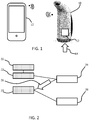
- the system is shown in Figure 1 . It comprises a portable breathing assist device 10 used to support COPD patients in the exercise and application of breathing techniques, and a remote display device 12 which provides a user interface.
- the display device 12 is shown as a smart phone on which an app is loaded so that the display device 12 communicates wirelessly with the breathing assist device 10.
- the display device may connect to a remote platform hosting services to provide extended functionality and services.
- the device has internal sensors 12 for sensing a first set of parameters and it also receives as input external data 14 either from the remote device 12 or directly from external sources, for example wirelessly over the internet.
- the breathing assist device comprises a housing which defines a mouthpiece as shown. Within the housing is a sensor arrangement for sensing breathing characteristics of the user.
- a device is used to measure breathing rate of the user, and provide feedback to the user, while additionally providing pressure feedback so that the system provides a positive expiratory end pressure.
- a gas canister is housed in the base of the housing, for providing gas to the user at a pressure above atmospheric pressure, for assisting the user during acute events.
- the pressure feedback system may then also provide pressure control during gas delivery which takes place during an inhalation cycle.
- the user interface can be realized in different ways.
- the display device 12 may be used on its own to practice breathing exercises, with options for up-grades.
- the breathing assist device 10 may also be used on its own used to give feedback about breathing exercises, to support breathing, and also provide positive pressure support during exhalation (PEEP).
- the two devices may be used together to offer more options, for example exercises which take the form of games or other entertaining or engaging ways to encourage the correct performance of the exercises.
- the overall system can also provide more precise data collection, for example measuring flow as well as breathing events.
- the app on the display device can act as a data collector and connection to a remote platform, although this can be integrated in the breathing assist device 10.
- the system is designed to deliver an optimized training and intervention experience. By collecting data on the execution, performance and frequency of use a patient history can be established that helps to monitor the status and progression of COPD.
- the system is preferably adapted to measure breathing related parameters, such as breathing rate / breathing pattern, flow, overall exhaled volume, attained pressure, etc., and to determine irregularities and fluctuations in these parameters.
- breathing related parameters such as breathing rate / breathing pattern, flow, overall exhaled volume, attained pressure, etc.
- the device can operate in different modes.
- an indication can be provided of the time during which the patient should be exhaling and/or the pressure that should be reached, and an indication of whether these targets are met.
- the user interface for example also provides guidance and support for applying pursed lip breathing.
- the system can measure the performance and effectiveness of the breathing exercises and provide appropriate coaching.
- the system can provide an evaluation of the initial breathing rate range (e.g. red for very fast breathing).
- the scale may depend on previous usage, so that the system is implemented as a self-learning system.
- the indication for the time of exhalation may be slowly increased, to slow down the patient's breathing.
- the system can be configured to suit the individual patient's needs and the patient profile. It can store all data relating to the use of the interface, and can connect to a platform to which it can forward the data for further processing and feedback to additional parties.
- a first function of the system is to provide breathing guidance with the breathing assist device, and to provide assistance when there is an acute moment of shortness of breath:
- This information is used to set by how much the breathing should be slowed down from one breath to another, e.g. 5% longer, as well as when the guidance is stopped, e.g. five or ten repeated "normal" breathings.
- the breathing assist device may indicate too fast breathing to the user by providing an indication such as a low volume but high pitch sound, a red light, or a fast vibration.
- This signal will change as the breathing is slowed down, either to a lower pitch sound, a yellow - green light or a slower vibration respectively.
- the signal will disappear once a normal breathing pattern has been regained.
- a more quantitative guidance can be implemented on the breathing assist device tool or on the display device.
- Figure 2 shows the sequence of events.
- the left column of shaded boxes relates to actions or events which relate to the patient and the right column of un-shaded boxes relates to actions or events which relate to the breathing assist device (or the display device).
- step 20 the patient performs physical activity.
- step 22 the patient experiences shortness of breath and decides to use the breathing assist device 10.
- the breathing assist device 10 measures the breathing rate, compares this to a normal rate (for that particular patient) and determines the appropriate slow down rate for the breathing.
- the required breathing rate is then indicated to the patient as shown by arrow 26.
- step 27 the patient slows down their breathing as guided by the breathing assist device 10.
- the patient's breathing rate is monitored in step 28 to measure the improvement.
- the breathing assist device 10 is also able to deliver positive pressure breathing support. This may for example accompany the guidance to slow down the breathing rate (arrow 26).
- the positive pressure breathing support may for example increase gradually as in an acute situation additional pressure might be experienced as an additional burden.
- the breathing rate instruction may initially be decreased and at a certain moment the pressure is increased for an optimized effect.
- data is gathered about the patient performance for feedback to the patient or to a caregiver.
- the instructions to the patient may be relayed by the breathing assist device as explained above, or by the display device, or both.
- a second function of the system is to provide breathing exercise training.
- Figure 3 shows the sequence of events.
- the left column again relates to actions or events which relate to the patient and the right column relates to actions or events which relate to the breathing assist device (or the display device).
- the app is started in the display device 12 in step 30 and base parameters are established, such as the background noise, normal breathing rate, etc.
- the breathing parameters such as inhalation and exhalation time, flow etc. can be measured using various different sensors such as a flow meter, a microphone possibly attached to the chest, accelerometer attached to the belly, an accelerometer in a smart watch on the wrist, with the patient requested by the smart watch to place the hand on the belly, etc.
- the goal of the exercise is to achieve a long exhalation time. This is either a pre-set time depending on the patient's status, e.g. 4 - 10 sec., or a time established with respect to the base parameters and a pre-set factor, e.g. 2 or 3 times as long.
- the exercise is repeated several times, e.g. 5 - 10 times, depending on recommended settings by the doctor (or therapist) or an experience value.
- step 32 the display device indicates to the user the instructions to be followed.
- the exercise starts with a request provided to the patient to inhale.
- the patient inhales in step 34.
- a goal is indicated to the user in step 36 that the patient has to reach by exhaling for the pre-set amount of time.
- an indicator advances towards the goal to show the patient the progress. This can be implemented in either a rather simple, technical visualization e.g. a line that moves towards the goal line or the second indicator of a watch moving towards a marked time.
- Step 40 is the display of the advancement towards the goal.
- Breathing exercises with the breathing assist device 10 alone can be implemented in a similar way, with the indication on the exhalation duration coming directly from the tool, e.g. by sound, visual or haptic indications.
- step 42 if the goal was reached, a next inhale exhale procedure is started, as shown by the feedback loop to the instruction step 32. If the goal was not reached, a next inhale exhale procedure is started but more time might be allocated for the inhaling. This might be used if the goal has been missed repeatedly. Furthermore, only more time for inhalation is given and the time for exhalation (which was not met previously) may be kept the same. Other events may also be detected such as coughing, in which case a period may be set to allow the patient to recover or the exercise might be interrupted completely.
- step 44 may relate to another type of breathing exercise. For example if starting with pursed lip breathing, this could be followed by diaphragmatic breathing which is done in a similar way, but recoding different parameters. The exhalation time may be adjusted as this is a more difficult exercise.
- the user interface can be extended.
- an extended exercise portfolio may be provided, for example to include diaphragmatic breathing with either an additional device or video analysis to track the belly and possibly the chest and shoulder movement.
- Different levels of data analysis and feedback may be provided as well as services e.g. for additional information and coaching, as well as direct feedback to a doctor.
- the system may also implement data collection from additional devices.
- the collected sensor data may be evaluated (by a doctor, off-line) in the context of the breathing exercise.
- the breathing parameters can be significantly different depending on the type of breathing exercise, e.g. for COPD patients diaphragmatic breathing is more difficult to do well and not to start coughing than for pursed lip breathing.
- pursed lip breathing could be performed without a target exhalation duration or an initial, pre-set time to just monitor the overall performance without guidance.
- the exercise settings can be adjusted dynamically during one session or from session to session. So, rather than just guiding, a smart solution is possible. For example, if a lot of coughing occurs, the exercise has to be stopped. If the exercise repeatedly cannot be performed well or is performed with ease, then the settings can be adjusted.
- a feedback loop is part of the exercise (game) control unit.
- the breathing exercise settings would have to be set manually, e.g. in discussion with care providers. With collection of sensor data, this can be automated, based on the recorded data which makes it more convenient to use and also gives a lot of test data to the doctor.
- a breathing exercise may be set in a smart way, using analysis of the sensor data (e.g. sound) plus possible other input data, so that medically relevant data can be obtained which are not readily available in any other straight forward way.
- sensor data e.g. sound
- the system can provide positive end pressure support during exhalation and inhalation (BiPAP).
- FIG. 4 shows the general system.
- the breathing assist device 10 comprises a canister 54 for canned air or canned air enriched with oxygen. It may contain almost pure oxygen, then to be mixed with ambient air.
- the charging station may include electric charging. Air or oxygen enriched air is provided to a patient, for example with a maximum oxygen concentration of about 40%. Pure oxygen is not provided to a patient. If nearly pure oxygen comes from a canister, it is mixed with ambient air.
- the main head 56 of the breathing assist device 10 provides sensing of breathing parameters as well as the controlled delivery of the positive pressure to the patient.
- An optional module 58 is also shown with medication so that the device functions in a similar way to an inhaler.
- the various parts can be modular so that different combinations of units may be employed.
- the modules can be used either via a simple tool without data connection to a remote device, or as a smart tool that also collects data and connects with the app, as shown in Figure 4 .
- a patient may thus build the modular system starting from the breathing assist device or the display device app, and may also decide to extend or upgrade to a positive pressure BiPAP device with a controller module.
- the system includes a pressure control system for providing pressure control during inhalation and exhalation, wherein the pressure control system is controllable to regulate different pressures during inhalation and exhalation.
- the overall system can be extended to connect with additional data sources that deliver data to the app or the platform.
- additional devices for example comprise monitoring devices and modalities e.g. heart rate, blood pressure, activity, stress, questionnaires, GPS data (location, direction, velocity and distance), etc.
- the device may implement an electronic diary and provide web-based information such as weather conditions and air quality.
- Additional devices can for example enable additional breathing exercises such as diaphragmatic breathing as outlined above. Furthermore, additional data can be used to extend the information that can be used for monitoring allowing better insights in the patient's status and hence delivering better feedback and coaching.
- the sensing used in the breathing assist device may provide data which can then be analyzed to extract information on the performance (and progression of performance) during and effectiveness of breathing exercises, and adherence to the exercises.
- the history of usage of the device for training or for intervention is recorded.
- Certain parts of the information gathered by the system can be provided to third parties including the system provider, relatives and friends (i.e. users of the social community), any informal or formal caregiver, insurance providers and healthcare providers e.g. doctor or nurse.
- adherence information may be used by insurance companies or by caregivers.
- the information exchanged may include not only the sensor data of the breathing assist device itself, but also any other monitoring devices used by the patient.
- the system in some implementations is able to deliver a positive pressure.
- PEEP devices provide positive pressure during exhalation, but no guidance for the patient for how long to exhale.
- a visual interface consisting of a series of light sources such as LEDs which can be programmed to light up in a certain color.
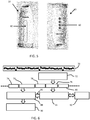
- the breathing assist device 10 is shown in Figure 5 , with a line 60 of LEDs running parallel to an elongate axis of the device, functioning as an output interface to the patient.
- the breathing assist device is designed to point slightly upward in use, such that the interface 60 comes in the line of sight of the patient and the end of it in focus. The longer the patient exhales, the more and/or further away LEDs light up during exhalation (e.g. in white or yellow).
- the maximum time is marked with a different LED color (e.g.
- a last LED may be used in yet another color (e.g. red or purple) to indicate that the patient is overdoing it.
- the display is reset if no exhalation is measured for a certain time such as 3 seconds to provide a reset during inhalation.
- the data may be collected and sent to an app on the display device 12.
- the app running on the display device 12 may have a visual display looking substantially the same as the LED array on the breathing assist device.
- the display on the app may be fed with the data coming from the breathing assist device, but alternatively also with sound analysis of the exhalation of a patient who is near the app.
- an electrical contact switch is provided on a spring operated valve (as used in Threshold PEP devices), or a pressure sensor in the mouthpiece may be used, in either case to detect exhalation at a sufficiently high pressure.
- a spring operated valve as used in Threshold PEP devices
- a pressure sensor in the mouthpiece may be used, in either case to detect exhalation at a sufficiently high pressure.
- Other sensing approached may be used, for example temperature sensing.
- a controller measures the signal and controls the programmable strip of LEDs.
- Breathing exercises implemented as instructions provided on mobile devices are very suitable to relieve anxiety and shortness of breath as explained above.
- COPD or Asthma the mid and long-term progression of the breathing condition
- Such monitoring requires measurement of at least some of the breathing parameters which then typically requires a visit to a clinician. Hence the patients are often not motivated to keep up the exercises as they cannot see the short term effects.
- the respiratory parameters listed in the introduction above can each be derived from a microphone audio signal when the user is breathing towards the microphone.
- breathing exercise applications on mobile devices may be extended by analyzing an audio signal and extracting respiratory parameters.
- Direct feedback can be given to the patient as well as providing a clinically relevant report on the progression of the breathing condition.
- a microphone may be used as a parameter sensor as part of the breathing assist device 10.
- Figure 6 shows a method which makes use of a microphone for providing user feedback.
- the breathing exercise application analyses an audio signal 70 in step 72 and converts it to a stream of audio events, such as an in breath 74 an out breath 76, a pause 78 and a cough 80.
- These events control the breathing exercise logic 84, guiding the user through the user interface 82 (e.g. the display device 12) and controlling the exercise, for example in a game-based way as explained above.
- the audio events are analyzed by the respiratory monitor and respiratory parameters are extracted in step 88 and stored in a report in step 90.
- the audio signal 70 is the output of a microphone that picks up the user's breathing. Both the breathing exercise routine and the respiratory monitor routine use the audio events for further analysis.
- the breathing exercise uses the audio signal for direct real time feedback, whereas the respiratory monitor logs the overall performance over the short and long term. Relevant information may for example be the number of coughs per exercise session, the number of exercise repetitions, the number of repetitions executed well, trends during the exercise session and over multiple exercise sessions.
- extra cues 86 about the audio events are sent from the breathing exercise control logic 84 to the respiratory parameter extraction function 88.
- a breath out event can be due to pursed lip breathing, as instructed by the breathing exercise, and this hint can be used by the respiratory monitor routine to start extracting a respiratory parameter such as the increase in f R directly after pursed lip breathing.
- the extracted respiratory parameters are placed in context in a respiratory report, that is then stored to derive trends or to share with a clinician.
- the respiratory report may be enriched with optional sensor data such as accelerometer data to put the respiratory parameters also in the user's lifestyle context.
- Activity measurements can be correlated to breathing performances for a better estimation of clinically relevant trends, e.g. by distinguishing breathing exercises performed at rest or after physical activity. Additional sensors may also be used as input during the exercise, e.g. to support diaphragmatic breathing exercises by monitoring belly and chest movements.
- providing a positive inhalation pressure is one approach to alleviate shortness of breath, and some implementations of the training and monitoring system described above provide this functionality.
- This aspect relates to a way to occasionally produce the additional benefits of a positive pressure during inhalation in a low cost, small, lightweight, portable device, while maintaining the most important effect of having a positive exhalation pressure.
- PEEP positive end expiratory pressure
- PIP positive inspiratory pressure
- a response from inhaling medication is often not quick enough. Training of the lungs, lips and psychological techniques may help using the system as described above, but this requires extensive training, and may be forgotten in case of an acute event. The short duration of such an event leads to the insight that the number of breaths during such an event are quite limited, and that quite a number of them can be supplied with positive pressure, coming from a canister filled with pressurized gas.
- the gas may be air, oxygen enriched air, or highly enriched oxygen which is then mixed with ambient air.
- Figure 7 shows schematically the functional parts of a first example of device for delivering positive air pressure from a small portable canister.
- the device comprises a canister 100 in the form of a small pressurized gas bottle. It typically has a volume of 0.2-0.6 L of compressed gas at a maximum pressure of for example 10 atm (1013250 Pa).
- the output from the gas bottle is connected to a pressure control device 102.
- a pressure control device 102 In the case of a canister of pressurized air or oxygen enriched air, this comprises a pressure reducer so that the pressure is controllable to a pressure level below the pressurization level.
- an injector 105 is provided (either as well as the pressure reducer 102 or instead of it) which is used to mix the oxygen with ambient air.
- the outlet from the pressure control device 102 passes through a user controlled valve 104 such as a lever operated valve.
- the pressure control device for example is used to safely decrease the high canister pressure down to the near ambient atmospheric pressure.
- the valve 104 may be of the type used for pressurized oxygen cans, but with the additional feature that upon moving the lever, it also activates a change in the feedback control system described below.
- the outlet from the valve 104 passes to the mouthpiece 106 (with injection of ambient air if the injector 105 is needed).
- the pressure in the tube near the mouthpiece is monitored by a pressure sensor 108, which generates a pressure sensor signal which is provided to a first terminal of a controller, which in this example is shown as a differential amplifier 110.
- the controller may instead be implemented as a processor such as a digital signal processor, which receives the input signals at an analogue to digital converter port.
- the settings of the inhalation and exhalation pressures p inh and p exh may then be adjusted dynamically, even per breath, depending on the analysis of the breathing pattern of the patient during exercise or intervention.
- the other terminal of the controller circuit receives one of two possible reference signals.
- the higher voltage signal overrides the lower voltage signal when the lever is opened as a result of a diode or other circuit arrangement.
- the controller generates a control signal to implement feedback control which sets the pressure near the mouthpiece to the reference level, by controlling an electronically operated valve 116 which is coupled between the mouthpiece and the outside.
- the valve 116 functions as a restriction through which air is blown.
- the valve is controllable to different settings, for example opening progressively as the control voltage is increased.
- PIP positive inspiratory pressure
- the PEEP and PIP pressure settings can be adaptive rather than fixed. They can be manually controlled and regulated by the patient depending upon his requirements and comfortable levels. Alternatively, they may be automatically adapted according to the detected respiratory rate, respiratory phases, respiratory variability etc., if additional sensors are integrated in the device. Moreover, these monitored parameters may be sent wirelessly to an intermediate app or user interface to be shared with the caregivers or clinicians.
- the device may for example be separable into two independent modules to provide only exhalation support (PEEP) or the combination of PEEP and PIP.
- PEEP exhalation support
- a device which supports only a PEEP function may for example be used as a training device as an alternative to pursed lip breathing (PLB), when the pressure is set to a minimum level such as 4 - 5 cm H 2 O (392 - 491 Pa).
- PLB pursed lip breathing
- the canister may be a small pressurized gas bottle for example less than 1 L, less than 0.6 L and possibly as small as 0.2 L, which can be carried separately and can be connected to the PEEP unit when needed.
- An injector or mixer may be used not only for enriched oxygen but also for all other types of compressed gas, for example in order to be able to deliver the maximum number of breaths by taking in ambient air.
- the patient takes the mouthpiece 106 at the front end of the delivery straw into the mouth when exhaling.
- the pressure sensor 108 Upon reaching the required pressure level (p_exh), the pressure sensor 108 gives a sufficiently high voltage to open the electronic valve 116, to maintain the pressure.
- p_exh required pressure level
- the pressure sensor 108 gives a sufficiently high voltage to open the electronic valve 116, to maintain the pressure.
- the gain level of the amplifier 110 together with the pressure-flow characteristics of the valve, it is possible to have a comfortable effect for a patient that cannot reach the optimum pressure, yet has to be able to exhale.
- the patient may choose to do either of two actions:
- FIG. 8 A typical pressure-time plot is shown in Figure 8 .
- the small peaks 120 are exhale pressure spikes, and the large peak 122 is when the patient applies the lever while inhaling.
- the user operated valve 104 may also be replaced by a machine operated valve, for example which opens every once every predetermined a number of breaths, further diminishing the coordination required from the patient.
- the system may make use of other sensors, for example physiological parameters such as respiratory rate, respiratory rate variability, SpO 2 , pCO 2 , activity rate etc., may be obtained from any wearable device. These sensor signals can then be fed back to the device to optimize the pressure support or the oxygen content in the respiratory phases.
- physiological parameters such as respiratory rate, respiratory rate variability, SpO 2 , pCO 2 , activity rate etc.
- the system of Figure 7 has an electronically controlled valve 116.
- An alternative simpler design can be purely mechanical, driven by the same pressurized gas.
- the disadvantage of the electronic design is that additional electrical power from a battery is needed so that (more) regular recharging replacement or inspection of the battery is required.
- the system above enable at least PEP (Positive Expiratory Pressure), and in more extended exampled also Positive inspiratory Pressure (PIP) during a number of inhalations.
- PEP Positive Expiratory Pressure
- the system is intended for small canisters which are bought pre-filled with their compressed gas, being air, enriched air or pure oxygen, depending on the type of patient and/or progression of their disease.
- the examples of device above which include a gas canister are generally for use in a crisis situation.
- the user does not have to switch on the device to use it in this mode.
- the device may thus auto-power-on when it detects patient breathing.
- One option is to use sensors within the device by leaving them in a low power state, and when a certain threshold is achieved, the device switches into full power mode.
- a passive actuator may be used to turn on when the airflow through the handset begins. This self-actuation could also extend to a wireless connection to a paired device, to share data or auto-connect at the same time, avoiding additional actions from the patient each time.
- the right type of system output e.g. coaching or exercise
- the content and moment of delivery is therefore determined by monitoring various parameters as explained below.
- the data measured during the use of the system and also additional external data, e.g. from other monitoring devices, may be combined to determine the right type of coaching output as well as to give feedback on the COPD status and progression.
- stress level parameters e.g. worsening of the breathing pattern or external inputs
- the performance of the exercise is evaluated: correctness of execution and performance, to gather feedback on the ability to perform the new breathing techniques but also give insights into the patient's status and control of his breathing.
- this information is stored together with the determined recovery time, i.e. the time needed to slow down the breathing rate / pattern.
- the ability to slow down the breathing rate with the help of a guided exercise is an indication of how well the patient is in control of his breathing but also the current status and the overall status of the disease. For example, increased coughing during the exercise can highlight an acute or progressive worsening of the disease / symptoms.
- External data sources such as SpO2 measurements, indications of use of other systems such as oxygen supplies, inhalers.
- Physical activity levels, stress and anxiety levels may also be monitored for example with an accelerometer for physical activity and biomedical sensors such as skin conductance for stress and anxiety levels, as well as planned activities (from a diary of the user or from a user questionnaire).
- Environmental data inputs may also be received such as weather and air quality.
- Analysing the internally collected data, together with situational parameters, like location, temperature, air quality, etc., can help identify optimum conditions for physical activity. All this data is fed back into the smart coaching system for learning and adjusting of the exercises (for example different types of exercise) but also to the patient and doctor to better understand the patient's situation, adherence to the program and their disease progression. The data is used not only to provide the right type of advice, exercise or information at the right moment but also to establish a patient history.
- the system analyses these inputs and determines the use frequency, circumstances concerning the use, the exercise performance and the effectiveness of the exercise, and the recovery time. All data is stored including data from external sources to enable a complete analysis. The system may then derive exercises for continuous training.
- Outputs are provided, for example to suggest an exercise according to the performance level, and to provide feedback on the performance, and changes in performance. Feedback on the disease status and progression is also provided, together with other relevant advice and information.
- This advice and information for example provides information about long term development of the condition, education on physiology and on COPD, and other general advice about best practices relating to the disease.
- the feedback about the disease progression for example may provide long-term breathing rates, the frequency and severity of dyspnea events as well as recovery time from dyspnea events, performance during breathing exercises (coughing events, number of exercises performed, breathing rhythm at beginning and end, etc.), and BODE score.
- the data input is used to extract information on the performance of the exercises, the effectiveness of the breathing exercises to achieve breathing rate reduction including recovery time.
- the frequency and adherence to the exercise program is monitored for example based on the number of planned and actually performed exercises,
- the user interface is used both for training and for intervention.
- the data can also be interpreted by using correlation with other lifestyle data and situational data. This enables the system to learn about an individual patient's situation and triggers, leading to different coaching, predictions and advice. Furthermore, long-term changes are identified for disease self-management and status of disease progression.
- the analysis of the performance and effectiveness of the breathing exercises is used to reflect the physical status of the patient at that particular moment but also the ability of the patient to overcome a shortness of breath situation, i.e. representing his control of the symptoms.
- the performance reflects the ability of the patient to correctly perform the exercise for the set number of repetitions in the training mode, i.e. without additional support of the system.
- the effectiveness of the exercise is measured by the ability to slow down the breathing to the average breathing rate if it was elevated at the beginning of the exercise.
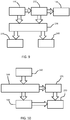
- Figure 9 shows a first example of breathing exercise training.
- step 130 it is determined if breathing exercise training has been performed in a preset previous number of days (e.g. 2 or 3 days). If yes, it is determined in step 132 if the performance was good. If the performance was good, feedback is given in step 134 to motivate continuity and adherence. If the performance was not good, or there has not been a recent training exercise, the method moves to step 136, when a good moment for a new exercise or training is found. This is for example when the patient has low stress or anxiety, there is good air quality, and there is no other action in the patient's diary. One or more of these factors may be used to determine a suitable time. This ensures that the patient is capable of fully focusing on the exercise and the training is conducted in the most beneficial circumstances.
- a preset previous number of days e.g. 2 or 3 days.
- the exercise or training may be a breathing exercise 138 during which breathing rate, and other parameters (for example measuring stress levels) are monitored. After an exercise, the recovery time is monitored, and a relaxation exercise may be used to support recovery. Feedback on the performance may then also be given.
- the exercise can for example be implemented as a serious gaming application to intuitively guide the patient through the exercise (e.g. inflation of a balloon, blowing out candles or blowing away the seeds of a dandelion ). In this way, no extensive explanations are needed as the patient is familiar with the exercise and can perform it well by himself with only minor guidance via the implementation.
- the exercise or training may be a training exercise 140 during which the patient is shown the correct posture and guided through an exercise. This may be a more detailed explanation with explicit feedback given during the exercise to make following the exercise easy. At the end, the performance is evaluated and feedback is given on what has improved and what still needs attention.
- Breathing exercises such as pursed lip breathing or diaphragmatic breathing as outlined above, help patients to relax, train their respiratory muscles (providing a long-term effect) and help them in adopting new breathing techniques that they can apply to recover from shortness of breath or calm down in other crisis moments. Therefore, it is necessary to learn and practice performing these breathing techniques by regular exercising.
- the initial breathing rate and the slowing down may be detected, e.g. by sound, breathing flow or pressure analysis.
- a patient specific program can be set up, for example to perform breathing exercises at least once per day.
- the system monitors the frequency of the breathing training and gives advice as outlined below.
- the approach of Figure 9 is generally that if patients do their exercises regularly, the performance is checked. If the performance is good, no additional exercises are proposed, and the system delivers the regular outputs such as general information, and the patient is motivated to continue with the exercises as normal. If the patients do the exercises regularly, but the performance is not good or the execution is not correct, a suitable moment is found to propose a training module. If, however, the last performance of a breathing exercise was too long ago, e.g. more than three days, a suitable moment is identified and the breathing exercise is proposed.
- Figure 10 shows a second example, of breathing intervention for example to counteract an acute episode of dyspnea.
- an acute crisis or at risk moment is identified, during which an intervention or prevention by breathing exercises is needed either to reduce anxiety or provide relieve from dyspnea.
- a crisis moment may be a time of low activity level and high stress or anxiety.
- the patient's agenda and several physiological measurements can be used.
- This can for example be a monitor worn around the wrist that measures COPD patient's physical activity and stress level or a breath monitor to identify moments of shortness of breath based on e.g. stopping activity like walking and using a breathing assist device.
- an additional questionnaire can be used to find out if breathlessness and coughing of the patients increases. The measured data are processed and are made available to patients but can also be made available to the caregiver.
- "at risk" moments can be identified, where the predicted probability of the patient experiencing shortness of breath is high. These indications will typically be done on the basis of the patient history (trends of monitoring data before previous crisis moments), a daily schedule and / or activities planned in the patient's agenda. As a preventative measure, breathing exercises can be proposed to avoid the crisis moment.
- step 144 it is determined if the patient's attention can be caught. This may be issuing a signal from the device or a wrist band of the user. If not, then the vital signs are monitored in step 146 to monitor how the patient gets through the at risk moment without using the device.
- step 148 provides a guided exercise to slow down the breathing rate.
- the breathing exercise can for example comprise pursed lips breathing.
- the coaching system gives the patient feedback on the performance and long term progress. If in the normal region again the patient is asked to carefully step up and continue the planned actions for the day.
- the monitoring system sends a flag to the caregiver that the patient needs support.
- a nurse then contacts the patient and checks the health status and decides with the patient if doctor help is needed.
- a questionnaire can further investigate the experience of the patient during the crisis as well as possible triggers, in step 150.
- the data gathered during the crisis and the potentially performed exercise is stored and analysed to build a better understanding of the patient's triggers for crisis moments to help the prediction of "at risk” moments and to monitor the patient's disease status and his control of the situation.
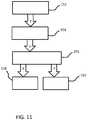
- Figure 11 shows a third example, of evaluation of recovery after physical exercise.
- step 152 it is determined, based on real time monitoring, that the person is exercising.
- step 154 it is determined that the exercise is finished, based on a change in activity level.
- step 156 a breathing exercise is proposed.
- the recovery time is monitored and parameters are stored such as the initial and final breathing rates, and the time to slow down the breathing rate. In this way, the system detects that an activity has been performed and evaluates the recovery and control of dyspnea via the breathing exercise.
- step 160 If the recovery time is longer than usual (compared to previous data), for example indications for shortness of breath are present, counter measures such as relaxation and breathing exercises can be proposed in step 160, as explained above.
- monitoring devices are connected, other parameters can be monitored to evaluate the effectiveness of the exercise, e.g. heart rate, stress level etc.
- Monitoring recovery time exercises over an extended time can indicate the stability / worsening of the patient's disease or situation, but also serves as input to adjust the exercise parameters to implement a self-learning system.
- a breathing exercise such as pursed lip breathing can be used as discussed above.
- patients may use the system for practicing whenever convenient or to overcome crisis moments.
- the overall scheduled and un-planned usage of the user interface may be monitored, so that the frequency and use purpose (practicing or intervention in acute moment) of exercises are monitored.
- the breathing rate will be fairly slow already at the beginning and will only be minimally slowed down but the patient should be able to conduct the exercise well. That means that the effectiveness of the exercise to further slow down the breathing rate will be low, while the performance should be good (or at least average).
- patterns or the change in patterns can be interesting input for third parties, such as doctors or informal care givers.
- Table 1 below summarizes changes in use frequency of the user interface, together with possible causes and actions to motivate continuity or change the behaviour or circumstances.
- Practising frequency Intervention frequency Conclusion Actions (by system, caregiver %) Stable or increased Decreased Good control of breathing technique established, intervention with user interface needed less often Give feedback to patient that clear effect can be seen Ask if experience of shortness of breath is less strong Motivate to continue Stable or increased Increased Something changed that requires patient to use interface more often Investigate change in circumstances by looking at additional data and asking patient (change in living environment, life style, %) Test for worsening of COPD condition Give advice to patient for additional measures Decreased Increased Change in circumstances or motivation Investigate change in circumstances (e.g.
- the frequency of breathing exercises being performed is monitored as outlined above. Also, the frequency is monitored and performance of exercises in the training mode, as well as the frequency of acute moments. The effectiveness of the exercise during a crisis moment is determined.
- the system or a third party can give feedback, motivational messages or suggest other actions, such as changes to the system settings.
- These actions are summarized in Table 2 below.
- Freq' Performanc e Effectiveness Feedback to patient Motivate to Other actions Good Good Good Overall positive
- Low Low Positive on frequency Continue Investigate why performance is low, e.g. is there a need for decreasing difficult level better explanation ⁇ extra guided exercises more but shorter training sessions more repetitions?
- Feedback and motivational messages can be sent directly by the user interface. Setting changes and data interpretation as well as investigation of situational changes may be at least verified by a medical professional or addressed in a personal discussion with the patient.
- One condition for changing the exercise a patient is to follow is if tasks and exercises or targets are too demanding.
- a subject or patient can have a bad day due to a bad night sleep, limiting his physical exercise capabilities and limiting his mental capacities. This may mean that requiring too much will result in frustration, leading to a dislike of the coaching which in turn can affect the adherence and thus the system performance.
- the overall system in one example is provided with an input which provides quality-of-sleep indicators.
- This is for example derived from an actigraphy sensor.
- the data from the actigraphy sensor is then analyzed and interpreted.
- the analysis typically involves identification of the bed time and an interpretation of the actigraphy data during the night to form a number of quality-of-sleep indicators.
- Night time is defined the time interval between the moment in which the subject is lying down with the intention to fall asleep and the moment in which the subject stands up from the bed after the night's sleep.
- the most valuable indicators are the sleep efficiency, the sleep fragmentation, and/or the average sleep bout duration.
- the system takes this additional information into account and if the indicators indicate a bad night's sleep, the performance targets (number of exercises, strength and/or duration of the exercise(s)) for the current day are reduced. In this way, the quality of sleep is taken into account in setting targets, for example using a separate sensor for night-time data.
- Quality of sleep can be measured by a number of systems such as polysomnography or actigraphy systems. Actigraphy data correlates well with polysomnography, with reliability coefficients ranging from 0.89 to 0.98 for normal sleep. Actigraphy data collection can be done in a relatively unobtrusive way and wearable devices exist for this purpose.
- a bad sleep can have a negative influence on the fitness during next day. Indeed, poor sleep has been associated with reduced physical function in older adults.
Landscapes
- Health & Medical Sciences (AREA)
- General Health & Medical Sciences (AREA)
- Life Sciences & Earth Sciences (AREA)
- Engineering & Computer Science (AREA)
- Physical Education & Sports Medicine (AREA)
- Pulmonology (AREA)
- Veterinary Medicine (AREA)
- Heart & Thoracic Surgery (AREA)
- Animal Behavior & Ethology (AREA)
- Biomedical Technology (AREA)
- Public Health (AREA)
- Biophysics (AREA)
- Hematology (AREA)
- Anesthesiology (AREA)
- Emergency Medicine (AREA)
- Multimedia (AREA)
- Physics & Mathematics (AREA)
- Pathology (AREA)
- Medical Informatics (AREA)
- Molecular Biology (AREA)
- Surgery (AREA)
- Human Computer Interaction (AREA)
- Orthopedic Medicine & Surgery (AREA)
- Physiology (AREA)
- Measurement Of The Respiration, Hearing Ability, Form, And Blood Characteristics Of Living Organisms (AREA)
- Measuring And Recording Apparatus For Diagnosis (AREA)
Applications Claiming Priority (4)
| Application Number | Priority Date | Filing Date | Title |
|---|---|---|---|
| EP15192426 | 2015-10-30 | ||
| EP15192420 | 2015-10-30 | ||
| EP16153113 | 2016-01-28 | ||
| PCT/EP2016/075331 WO2017072036A1 (en) | 2015-10-30 | 2016-10-21 | Breathing training, monitoring and/or assistance device |
Publications (2)
| Publication Number | Publication Date |
|---|---|
| EP3368116A1 EP3368116A1 (en) | 2018-09-05 |
| EP3368116B1 true EP3368116B1 (en) | 2021-08-18 |
Family
ID=57190017
Family Applications (1)
| Application Number | Title | Priority Date | Filing Date |
|---|---|---|---|
| EP16785142.7A Active EP3368116B1 (en) | 2015-10-30 | 2016-10-21 | Breathing training, monitoring and/or assistance device |
Country Status (5)
| Country | Link |
|---|---|
| US (1) | US11351418B2 (enExample) |
| EP (1) | EP3368116B1 (enExample) |
| JP (1) | JP2018533412A (enExample) |
| CN (2) | CN108348717A (enExample) |
| WO (1) | WO2017072036A1 (enExample) |
Families Citing this family (40)
| Publication number | Priority date | Publication date | Assignee | Title |
|---|---|---|---|---|
| WO2017072036A1 (en) | 2015-10-30 | 2017-05-04 | Koninklijke Philips N.V. | Breathing training, monitoring and/or assistance device |
| CN107334475A (zh) * | 2017-05-10 | 2017-11-10 | 王亦农 | 用于肺功能测试中快喘动作的训练装置 |
| JP6295477B1 (ja) * | 2017-08-23 | 2018-03-20 | 弓場商事株式会社 | 呼気圧測定器 |
| US11998313B2 (en) * | 2018-01-05 | 2024-06-04 | Children's Hospital Medical Center | Systems and methods for respiration-controlled virtual experiences |
| US11759677B2 (en) | 2018-02-16 | 2023-09-19 | University Of Louisville Research Foundation, Inc. | Respiratory training and airway pressure monitoring device |
| CN108888282A (zh) * | 2018-04-25 | 2018-11-27 | 杭州聚陆医疗器械有限公司 | 一种智能的呼吸肌功能评估反馈训练系统及其使用方法 |
| WO2020037361A1 (en) | 2018-08-23 | 2020-02-27 | ResMed Pty Ltd | Methods and apparatus for controlling respiratory therapy |
| FI128346B (en) | 2018-11-19 | 2020-03-31 | Hapella Oy | A device for taking care of respiratory well-being and for practicing and improving respiratory function |
| US20220122728A1 (en) * | 2018-11-30 | 2022-04-21 | Ibreve Limited | System and method for breathing monitoring and management |
| CN109718443B (zh) * | 2018-12-28 | 2020-01-14 | 北京谊安医疗系统股份有限公司 | 呼吸支持过程管理方法、装置及呼吸支持设备 |
| US11395938B2 (en) * | 2019-01-31 | 2022-07-26 | Evolved, Llc | Respiratory training system |
| IT201900002317A1 (it) * | 2019-02-18 | 2020-08-18 | Pietro Maria Picotti | “Dispositivo medico per l’esercitazione della funzionalità respiratoria di un utilizzatore e metodo non terapeutico di monitoraggio e di raccolta dati” |
| KR102272946B1 (ko) * | 2019-03-25 | 2021-07-06 | (주)아이쿱 | 천식흡입기 모니터링 장치 및 천식흡입기 사용정보를 기반으로 의료상담을 보조하는 방법 |
| US12676225B2 (en) | 2019-05-02 | 2026-07-07 | Moon Factory Inc. | System for measuring breath and for adapting breath exercises |
| CN112827136A (zh) * | 2019-11-25 | 2021-05-25 | 京东方科技集团股份有限公司 | 一种呼吸训练方法、装置、电子设备、训练系统及存储介质 |
| KR102365413B1 (ko) * | 2020-04-09 | 2022-02-21 | 주식회사 애드에이블 | 호흡 훈련장치 |
| IL273938A (en) * | 2020-04-12 | 2021-10-31 | Tel Hashomer Medical Res Infrastructure & Services Ltd | Upgrading a bipap device to a ventilator system for treating acute respiratory distress syndrome |
| CN111657949A (zh) * | 2020-05-29 | 2020-09-15 | 安徽省立医院(中国科学技术大学附属第一医院) | 一种用于检测吸气流速的侦测装置及其检测方法 |
| FR3111535B1 (fr) * | 2020-06-17 | 2023-01-13 | Vanessa Lesobre | Méthode pour la génération d’une donnée respiratoire et dispositif associé |
| US12230406B2 (en) | 2020-07-13 | 2025-02-18 | Vignet Incorporated | Increasing diversity and engagement in clinical trails through digital tools for health data collection |
| US11056242B1 (en) | 2020-08-05 | 2021-07-06 | Vignet Incorporated | Predictive analysis and interventions to limit disease exposure |
| US11127506B1 (en) | 2020-08-05 | 2021-09-21 | Vignet Incorporated | Digital health tools to predict and prevent disease transmission |
| US11342051B1 (en) | 2020-08-21 | 2022-05-24 | Vignet Incorporated | Infectious disease monitoring using location information and surveys |
| US11456080B1 (en) | 2020-08-05 | 2022-09-27 | Vignet Incorporated | Adjusting disease data collection to provide high-quality health data to meet needs of different communities |
| US11504011B1 (en) * | 2020-08-05 | 2022-11-22 | Vignet Incorporated | Early detection and prevention of infectious disease transmission using location data and geofencing |
| US11918884B2 (en) | 2020-09-02 | 2024-03-05 | Oxefit, Inc. | Pacing lighting system for strength training apparatus |
| US20240016411A1 (en) * | 2020-10-15 | 2024-01-18 | Halare, Inc. | Personalized breath training system |
| US20230405401A1 (en) * | 2020-10-27 | 2023-12-21 | Jerry Chi Hu | Musical instrument therapy device |
| WO2022163882A1 (ko) * | 2021-01-28 | 2022-08-04 | 주식회사 인트인 | 흡입기의 사용법 안내 방법 및 사용자 단말 |
| USD1076056S1 (en) * | 2021-08-02 | 2025-05-20 | Mercury Enterprises, Inc. | Oscillating positive expiratory pressure device |
| IT202100024510A1 (it) * | 2021-09-23 | 2023-03-23 | Uba Project Soc A Responsabilita Limitata Semplificata | Sistema e metodo di monitoraggio della respirazione |
| CN114272101A (zh) * | 2021-11-03 | 2022-04-05 | 苏州大学附属第二医院 | 肺功能锻炼同步肢体气压治疗仪器 |
| EP4430622A4 (en) * | 2021-11-12 | 2025-10-22 | Noble Int Llc | SYSTEMS AND METHODS FOR ENHANCING PATIENT SELF-ADMINISTRATION |
| DE102022111990A1 (de) | 2022-05-12 | 2023-11-16 | Alijani Reza | Verfahren zur Atemfrequenzerfassung und Vorrichtung zur Durchführung des Verfahrens |
| EP4321227A1 (en) * | 2022-08-11 | 2024-02-14 | Koninklijke Philips N.V. | A system and method for guiding the breathing of a user |
| CN119677461A (zh) * | 2022-08-11 | 2025-03-21 | 皇家飞利浦有限公司 | 用于指导用户呼吸的系统和方法 |
| US20240269513A1 (en) * | 2023-02-14 | 2024-08-15 | Samsung Electronics Co., Ltd. | System and method for tracking and recommending breathing exercises using wearable devices |
| DE102023113862A1 (de) * | 2023-05-26 | 2024-11-28 | Bayerische Motoren Werke Aktiengesellschaft | Steuervorrichtung und verfahren zur unterstützung einer mehrphasigen atemübung eines insassen eines fahrzeugs |
| CN119236245B (zh) * | 2024-12-05 | 2025-05-13 | 湖南比扬医疗科技有限公司 | 一种基于大数据分析的呼吸监测方法及呼吸机 |
| TWI908527B (zh) * | 2024-12-09 | 2025-12-11 | 敏莉 柳 | 呼吸狀態辨識與調整系統 |
Citations (1)
| Publication number | Priority date | Publication date | Assignee | Title |
|---|---|---|---|---|
| WO2008024375A2 (en) * | 2006-08-21 | 2008-02-28 | Trudell Medical International | Respiratory muscle endurance training device and method for the use thereof |
Family Cites Families (35)
| Publication number | Priority date | Publication date | Assignee | Title |
|---|---|---|---|---|
| US6651658B1 (en) | 2000-08-03 | 2003-11-25 | Sequal Technologies, Inc. | Portable oxygen concentration system and method of using the same |
| US20070089740A1 (en) | 2003-04-28 | 2007-04-26 | Chi, Llc | Pursed lip breathing device |
| DE10352056B4 (de) | 2003-11-07 | 2006-04-20 | Infineon Technologies Ag | Hybrides DSL-System zur Übertragung von hybriden DSL-Daten über eine Teilnehmeranschlussleitung zur Erhöhung einer Gesamtdatenübertragungsrate und zur Optimierung der Übertragungsreichweiten von beiden Transceivern |
| CA2587491C (en) | 2004-10-22 | 2015-11-03 | Mytrak Health System Inc. | System for measuring physical performance and for providing interactive feedback |
| US9779751B2 (en) * | 2005-12-28 | 2017-10-03 | Breath Research, Inc. | Respiratory biofeedback devices, systems, and methods |
| JP2007190278A (ja) * | 2006-01-20 | 2007-08-02 | Omron Healthcare Co Ltd | 呼吸訓練器 |
| US20070219059A1 (en) | 2006-03-17 | 2007-09-20 | Schwartz Mark H | Method and system for continuous monitoring and training of exercise |
| FI20085334A7 (fi) | 2008-04-18 | 2009-10-19 | Healthy Ecercise Holding Oy | Harjoitusmenetelmä ja -järjestelmä |
| GB0814442D0 (en) | 2008-08-08 | 2008-09-10 | Health Smart Ltd | Breathing Monitor |
| US9789275B2 (en) * | 2009-07-09 | 2017-10-17 | Koninklijke Philips N.V. | System and method for entraining the breathing of a subject |
| CN102687155A (zh) | 2009-12-28 | 2012-09-19 | 皇家飞利浦电子股份有限公司 | 用于肺康复中的程序指导的生物反馈 |
| CN103209636A (zh) * | 2010-11-23 | 2013-07-17 | 皇家飞利浦电子股份有限公司 | 用于对对象的呼吸活动进行调步的呼吸调步设备和方法 |
| JP5283720B2 (ja) | 2011-02-16 | 2013-09-04 | 株式会社タニタ | 活動量計、活動目標算出方法およびプログラム |
| WO2012117376A1 (en) | 2011-03-02 | 2012-09-07 | Koninklijke Philips Electronics N.V. | Breathing guidance device and method |
| US20120240945A1 (en) | 2011-03-25 | 2012-09-27 | Jacques Laplante | Cigarette making machine |
| CN102726256A (zh) | 2011-04-07 | 2012-10-17 | 何松庆 | 木霉生物防治剂新的施用方法 |
| JP6009538B2 (ja) | 2011-04-28 | 2016-10-19 | コーニンクレッカ フィリップス エヌ ヴェKoninklijke Philips N.V. | Hdr画像を符号化及び復号するための装置及び方法 |
| CN102151385B (zh) * | 2011-05-27 | 2012-08-15 | 徐赤坤 | 呼吸训练器 |
| DK2797652T3 (en) * | 2011-12-27 | 2019-03-11 | Vectura Gmbh | FEEDBACK SYSTEM INHALATION DEVICE |
| US20140121540A1 (en) | 2012-05-09 | 2014-05-01 | Aliphcom | System and method for monitoring the health of a user |
| JP2015517865A (ja) * | 2012-05-30 | 2015-06-25 | コーニンクレッカ フィリップス エヌ ヴェ | ポータブル手持ち式混合気体富化圧力支援システム及び方法 |
| CA3176610A1 (en) | 2012-06-25 | 2014-01-03 | Gecko Health Innovations, Inc. | Devices, systems, and methods for adherence monitoring and patient interaction |
| US11185241B2 (en) | 2014-03-05 | 2021-11-30 | Whoop, Inc. | Continuous heart rate monitoring and interpretation |
| US9452317B2 (en) * | 2012-10-11 | 2016-09-27 | Bezalel Arkush | Breathing and respiratory muscle training method and system |
| US10046123B2 (en) | 2012-10-31 | 2018-08-14 | Inhaletech Llc | Systems and methods for administering pulmonary medications |
| RU2666877C2 (ru) | 2012-12-13 | 2018-09-12 | Конинклейке Филипс Н.В. | Ручная система поддержки давления для лечения гиперинфляции |
| US9830832B2 (en) | 2012-12-20 | 2017-11-28 | Halare, Inc. | Automated systems, methods, and apparatus for breath training |
| US20150182163A1 (en) | 2013-12-31 | 2015-07-02 | Aliphcom | Wearable device to detect inflamation |
| US8807131B1 (en) * | 2013-06-18 | 2014-08-19 | Isonea Limited | Compliance monitoring for asthma inhalers |
| US9674336B2 (en) | 2013-10-20 | 2017-06-06 | Karim Jean Yaghmour | Portable processing unit add on for mobile devices |
| CN103736256B (zh) | 2013-11-29 | 2016-03-30 | 广州曼纽科实验分析仪器有限公司 | 一种人体呼吸训练设备及呼吸训练反馈方法 |
| WO2015108700A1 (en) | 2014-01-14 | 2015-07-23 | Zsolutionz, LLC | Sensor-based evaluation and feedback of exercise performance |
| WO2015109259A1 (en) * | 2014-01-16 | 2015-07-23 | Focusstart Respiratory Llc | Systems and methods for managing pulmonary medication delivery |
| US20160179103A1 (en) * | 2014-12-22 | 2016-06-23 | Michel Paradis | Device for locally regulating the delivery of gas in response to environmental variables |
| WO2017072036A1 (en) | 2015-10-30 | 2017-05-04 | Koninklijke Philips N.V. | Breathing training, monitoring and/or assistance device |
-
2016
- 2016-10-21 WO PCT/EP2016/075331 patent/WO2017072036A1/en not_active Ceased
- 2016-10-21 US US15/771,101 patent/US11351418B2/en active Active
- 2016-10-21 CN CN201680063647.6A patent/CN108348717A/zh active Pending
- 2016-10-21 CN CN202410644636.3A patent/CN118557853A/zh active Pending
- 2016-10-21 JP JP2018521661A patent/JP2018533412A/ja active Pending
- 2016-10-21 EP EP16785142.7A patent/EP3368116B1/en active Active
Patent Citations (1)
| Publication number | Priority date | Publication date | Assignee | Title |
|---|---|---|---|---|
| WO2008024375A2 (en) * | 2006-08-21 | 2008-02-28 | Trudell Medical International | Respiratory muscle endurance training device and method for the use thereof |
Also Published As
| Publication number | Publication date |
|---|---|
| US20180318643A1 (en) | 2018-11-08 |
| JP2018533412A (ja) | 2018-11-15 |
| EP3368116A1 (en) | 2018-09-05 |
| CN118557853A (zh) | 2024-08-30 |
| US11351418B2 (en) | 2022-06-07 |
| CN108348717A (zh) | 2018-07-31 |
| WO2017072036A1 (en) | 2017-05-04 |
Similar Documents
| Publication | Publication Date | Title |
|---|---|---|
| US11351418B2 (en) | Breathing training, monitoring and/or assistance device | |
| US10835700B2 (en) | Breathing training, monitoring and/or assistance device | |
| US11389695B2 (en) | Breathing training, monitoring and/or assistance device | |
| JP2018533412A5 (enExample) | ||
| AU2019417727B2 (en) | Prediction of usage or compliance | |
| JP5711661B2 (ja) | バイオフィードバックモニタリング及び患者の活動及び健康を改善する制御装置を有するベンチレータ | |
| US12109038B2 (en) | Systems and methods for using breath events in sleep staging | |
| JP2018535728A5 (enExample) | ||
| JP2021180853A (ja) | 慢性疾患の監視および管理のためのシステムおよび方法 | |
| US20220160255A1 (en) | Device, process and computer program for influencing the breathing of a person | |
| KR102881247B1 (ko) | 센서벨트장치 및 그를 활용한 호흡훈련 시스템 | |
| KR20250107341A (ko) | 복식 호흡훈련을 모니터링하는 센서벨트장치 및 그를 이용하여 올바른 호흡을 유지하여 신체 건강을 유도하는 호흡유도시스템 | |
| TWI544914B (zh) | 生物回饋換氣量與氧氣兩階段補償運動平台及其運動方法 |
Legal Events
| Date | Code | Title | Description |
|---|---|---|---|
| STAA | Information on the status of an ep patent application or granted ep patent |
Free format text: STATUS: UNKNOWN |
|
| STAA | Information on the status of an ep patent application or granted ep patent |
Free format text: STATUS: THE INTERNATIONAL PUBLICATION HAS BEEN MADE |
|
| PUAI | Public reference made under article 153(3) epc to a published international application that has entered the european phase |
Free format text: ORIGINAL CODE: 0009012 |
|
| STAA | Information on the status of an ep patent application or granted ep patent |
Free format text: STATUS: REQUEST FOR EXAMINATION WAS MADE |
|
| 17P | Request for examination filed |
Effective date: 20180530 |
|
| AK | Designated contracting states |
Kind code of ref document: A1 Designated state(s): AL AT BE BG CH CY CZ DE DK EE ES FI FR GB GR HR HU IE IS IT LI LT LU LV MC MK MT NL NO PL PT RO RS SE SI SK SM TR |
|
| AX | Request for extension of the european patent |
Extension state: BA ME |
|
| STAA | Information on the status of an ep patent application or granted ep patent |
Free format text: STATUS: EXAMINATION IS IN PROGRESS |
|
| 17Q | First examination report despatched |
Effective date: 20181121 |
|
| DAV | Request for validation of the european patent (deleted) | ||
| DAX | Request for extension of the european patent (deleted) | ||
| RAP1 | Party data changed (applicant data changed or rights of an application transferred) |
Owner name: KONINKLIJKE PHILIPS N.V. |
|
| GRAP | Despatch of communication of intention to grant a patent |
Free format text: ORIGINAL CODE: EPIDOSNIGR1 |
|
| STAA | Information on the status of an ep patent application or granted ep patent |
Free format text: STATUS: GRANT OF PATENT IS INTENDED |
|
| INTG | Intention to grant announced |
Effective date: 20210331 |
|
| GRAS | Grant fee paid |
Free format text: ORIGINAL CODE: EPIDOSNIGR3 |
|
| GRAA | (expected) grant |
Free format text: ORIGINAL CODE: 0009210 |
|
| STAA | Information on the status of an ep patent application or granted ep patent |
Free format text: STATUS: THE PATENT HAS BEEN GRANTED |
|
| AK | Designated contracting states |
Kind code of ref document: B1 Designated state(s): AL AT BE BG CH CY CZ DE DK EE ES FI FR GB GR HR HU IE IS IT LI LT LU LV MC MK MT NL NO PL PT RO RS SE SI SK SM TR |
|
| REG | Reference to a national code |
Ref country code: GB Ref legal event code: FG4D |
|
| REG | Reference to a national code |
Ref country code: CH Ref legal event code: EP |
|
| REG | Reference to a national code |
Ref country code: DE Ref legal event code: R096 Ref document number: 602016062433 Country of ref document: DE |
|
| REG | Reference to a national code |
Ref country code: IE Ref legal event code: FG4D Ref country code: AT Ref legal event code: REF Ref document number: 1421064 Country of ref document: AT Kind code of ref document: T Effective date: 20210915 |
|
| REG | Reference to a national code |
Ref country code: LT Ref legal event code: MG9D |
|
| REG | Reference to a national code |
Ref country code: NL Ref legal event code: MP Effective date: 20210818 |
|
| REG | Reference to a national code |
Ref country code: AT Ref legal event code: MK05 Ref document number: 1421064 Country of ref document: AT Kind code of ref document: T Effective date: 20210818 |
|
| PG25 | Lapsed in a contracting state [announced via postgrant information from national office to epo] |
Ref country code: PT Free format text: LAPSE BECAUSE OF FAILURE TO SUBMIT A TRANSLATION OF THE DESCRIPTION OR TO PAY THE FEE WITHIN THE PRESCRIBED TIME-LIMIT Effective date: 20211220 Ref country code: NO Free format text: LAPSE BECAUSE OF FAILURE TO SUBMIT A TRANSLATION OF THE DESCRIPTION OR TO PAY THE FEE WITHIN THE PRESCRIBED TIME-LIMIT Effective date: 20211118 Ref country code: HR Free format text: LAPSE BECAUSE OF FAILURE TO SUBMIT A TRANSLATION OF THE DESCRIPTION OR TO PAY THE FEE WITHIN THE PRESCRIBED TIME-LIMIT Effective date: 20210818 Ref country code: ES Free format text: LAPSE BECAUSE OF FAILURE TO SUBMIT A TRANSLATION OF THE DESCRIPTION OR TO PAY THE FEE WITHIN THE PRESCRIBED TIME-LIMIT Effective date: 20210818 Ref country code: FI Free format text: LAPSE BECAUSE OF FAILURE TO SUBMIT A TRANSLATION OF THE DESCRIPTION OR TO PAY THE FEE WITHIN THE PRESCRIBED TIME-LIMIT Effective date: 20210818 Ref country code: LT Free format text: LAPSE BECAUSE OF FAILURE TO SUBMIT A TRANSLATION OF THE DESCRIPTION OR TO PAY THE FEE WITHIN THE PRESCRIBED TIME-LIMIT Effective date: 20210818 Ref country code: AT Free format text: LAPSE BECAUSE OF FAILURE TO SUBMIT A TRANSLATION OF THE DESCRIPTION OR TO PAY THE FEE WITHIN THE PRESCRIBED TIME-LIMIT Effective date: 20210818 Ref country code: BG Free format text: LAPSE BECAUSE OF FAILURE TO SUBMIT A TRANSLATION OF THE DESCRIPTION OR TO PAY THE FEE WITHIN THE PRESCRIBED TIME-LIMIT Effective date: 20211118 Ref country code: RS Free format text: LAPSE BECAUSE OF FAILURE TO SUBMIT A TRANSLATION OF THE DESCRIPTION OR TO PAY THE FEE WITHIN THE PRESCRIBED TIME-LIMIT Effective date: 20210818 Ref country code: SE Free format text: LAPSE BECAUSE OF FAILURE TO SUBMIT A TRANSLATION OF THE DESCRIPTION OR TO PAY THE FEE WITHIN THE PRESCRIBED TIME-LIMIT Effective date: 20210818 |
|
| PG25 | Lapsed in a contracting state [announced via postgrant information from national office to epo] |
Ref country code: PL Free format text: LAPSE BECAUSE OF FAILURE TO SUBMIT A TRANSLATION OF THE DESCRIPTION OR TO PAY THE FEE WITHIN THE PRESCRIBED TIME-LIMIT Effective date: 20210818 Ref country code: LV Free format text: LAPSE BECAUSE OF FAILURE TO SUBMIT A TRANSLATION OF THE DESCRIPTION OR TO PAY THE FEE WITHIN THE PRESCRIBED TIME-LIMIT Effective date: 20210818 Ref country code: GR Free format text: LAPSE BECAUSE OF FAILURE TO SUBMIT A TRANSLATION OF THE DESCRIPTION OR TO PAY THE FEE WITHIN THE PRESCRIBED TIME-LIMIT Effective date: 20211119 |
|
| PG25 | Lapsed in a contracting state [announced via postgrant information from national office to epo] |
Ref country code: NL Free format text: LAPSE BECAUSE OF FAILURE TO SUBMIT A TRANSLATION OF THE DESCRIPTION OR TO PAY THE FEE WITHIN THE PRESCRIBED TIME-LIMIT Effective date: 20210818 |
|
| PG25 | Lapsed in a contracting state [announced via postgrant information from national office to epo] |
Ref country code: DK Free format text: LAPSE BECAUSE OF FAILURE TO SUBMIT A TRANSLATION OF THE DESCRIPTION OR TO PAY THE FEE WITHIN THE PRESCRIBED TIME-LIMIT Effective date: 20210818 |
|
| REG | Reference to a national code |
Ref country code: DE Ref legal event code: R097 Ref document number: 602016062433 Country of ref document: DE |
|
| REG | Reference to a national code |
Ref country code: CH Ref legal event code: PL |
|
| PG25 | Lapsed in a contracting state [announced via postgrant information from national office to epo] |
Ref country code: SM Free format text: LAPSE BECAUSE OF FAILURE TO SUBMIT A TRANSLATION OF THE DESCRIPTION OR TO PAY THE FEE WITHIN THE PRESCRIBED TIME-LIMIT Effective date: 20210818 Ref country code: SK Free format text: LAPSE BECAUSE OF FAILURE TO SUBMIT A TRANSLATION OF THE DESCRIPTION OR TO PAY THE FEE WITHIN THE PRESCRIBED TIME-LIMIT Effective date: 20210818 Ref country code: RO Free format text: LAPSE BECAUSE OF FAILURE TO SUBMIT A TRANSLATION OF THE DESCRIPTION OR TO PAY THE FEE WITHIN THE PRESCRIBED TIME-LIMIT Effective date: 20210818 Ref country code: EE Free format text: LAPSE BECAUSE OF FAILURE TO SUBMIT A TRANSLATION OF THE DESCRIPTION OR TO PAY THE FEE WITHIN THE PRESCRIBED TIME-LIMIT Effective date: 20210818 Ref country code: CZ Free format text: LAPSE BECAUSE OF FAILURE TO SUBMIT A TRANSLATION OF THE DESCRIPTION OR TO PAY THE FEE WITHIN THE PRESCRIBED TIME-LIMIT Effective date: 20210818 Ref country code: AL Free format text: LAPSE BECAUSE OF FAILURE TO SUBMIT A TRANSLATION OF THE DESCRIPTION OR TO PAY THE FEE WITHIN THE PRESCRIBED TIME-LIMIT Effective date: 20210818 |
|
| REG | Reference to a national code |
Ref country code: BE Ref legal event code: MM Effective date: 20211031 |
|
| PLBE | No opposition filed within time limit |
Free format text: ORIGINAL CODE: 0009261 |
|
| STAA | Information on the status of an ep patent application or granted ep patent |
Free format text: STATUS: NO OPPOSITION FILED WITHIN TIME LIMIT |
|
| PG25 | Lapsed in a contracting state [announced via postgrant information from national office to epo] |
Ref country code: MC Free format text: LAPSE BECAUSE OF FAILURE TO SUBMIT A TRANSLATION OF THE DESCRIPTION OR TO PAY THE FEE WITHIN THE PRESCRIBED TIME-LIMIT Effective date: 20210818 |
|
| 26N | No opposition filed |
Effective date: 20220519 |
|
| GBPC | Gb: european patent ceased through non-payment of renewal fee |
Effective date: 20211118 |
|
| PG25 | Lapsed in a contracting state [announced via postgrant information from national office to epo] |
Ref country code: LU Free format text: LAPSE BECAUSE OF NON-PAYMENT OF DUE FEES Effective date: 20211021 Ref country code: IT Free format text: LAPSE BECAUSE OF FAILURE TO SUBMIT A TRANSLATION OF THE DESCRIPTION OR TO PAY THE FEE WITHIN THE PRESCRIBED TIME-LIMIT Effective date: 20210818 Ref country code: BE Free format text: LAPSE BECAUSE OF NON-PAYMENT OF DUE FEES Effective date: 20211031 |
|
| PG25 | Lapsed in a contracting state [announced via postgrant information from national office to epo] |
Ref country code: SI Free format text: LAPSE BECAUSE OF FAILURE TO SUBMIT A TRANSLATION OF THE DESCRIPTION OR TO PAY THE FEE WITHIN THE PRESCRIBED TIME-LIMIT Effective date: 20210818 Ref country code: LI Free format text: LAPSE BECAUSE OF NON-PAYMENT OF DUE FEES Effective date: 20211031 Ref country code: CH Free format text: LAPSE BECAUSE OF NON-PAYMENT OF DUE FEES Effective date: 20211031 |
|
| PG25 | Lapsed in a contracting state [announced via postgrant information from national office to epo] |
Ref country code: FR Free format text: LAPSE BECAUSE OF NON-PAYMENT OF DUE FEES Effective date: 20211031 |
|
| PG25 | Lapsed in a contracting state [announced via postgrant information from national office to epo] |
Ref country code: IE Free format text: LAPSE BECAUSE OF NON-PAYMENT OF DUE FEES Effective date: 20211021 Ref country code: GB Free format text: LAPSE BECAUSE OF NON-PAYMENT OF DUE FEES Effective date: 20211118 |
|
| PG25 | Lapsed in a contracting state [announced via postgrant information from national office to epo] |
Ref country code: HU Free format text: LAPSE BECAUSE OF FAILURE TO SUBMIT A TRANSLATION OF THE DESCRIPTION OR TO PAY THE FEE WITHIN THE PRESCRIBED TIME-LIMIT; INVALID AB INITIO Effective date: 20161021 |
|
| PG25 | Lapsed in a contracting state [announced via postgrant information from national office to epo] |
Ref country code: CY Free format text: LAPSE BECAUSE OF FAILURE TO SUBMIT A TRANSLATION OF THE DESCRIPTION OR TO PAY THE FEE WITHIN THE PRESCRIBED TIME-LIMIT Effective date: 20210818 |
|
| PG25 | Lapsed in a contracting state [announced via postgrant information from national office to epo] |
Ref country code: MK Free format text: LAPSE BECAUSE OF FAILURE TO SUBMIT A TRANSLATION OF THE DESCRIPTION OR TO PAY THE FEE WITHIN THE PRESCRIBED TIME-LIMIT Effective date: 20210818 |
|
| PG25 | Lapsed in a contracting state [announced via postgrant information from national office to epo] |
Ref country code: MT Free format text: LAPSE BECAUSE OF FAILURE TO SUBMIT A TRANSLATION OF THE DESCRIPTION OR TO PAY THE FEE WITHIN THE PRESCRIBED TIME-LIMIT Effective date: 20210818 |
|
| PG25 | Lapsed in a contracting state [announced via postgrant information from national office to epo] |
Ref country code: TR Free format text: LAPSE BECAUSE OF FAILURE TO SUBMIT A TRANSLATION OF THE DESCRIPTION OR TO PAY THE FEE WITHIN THE PRESCRIBED TIME-LIMIT Effective date: 20210818 |
|
| PGFP | Annual fee paid to national office [announced via postgrant information from national office to epo] |
Ref country code: DE Payment date: 20251028 Year of fee payment: 10 |