EP3362348B2 - Verfahren zum auftragen einer beschichtung auf eine aussenfläche eines künstlichen objekts, das zumindest teilweise in wasser getaucht wird - Google Patents
Verfahren zum auftragen einer beschichtung auf eine aussenfläche eines künstlichen objekts, das zumindest teilweise in wasser getaucht wird Download PDFInfo
- Publication number
- EP3362348B2 EP3362348B2 EP16784423.2A EP16784423A EP3362348B2 EP 3362348 B2 EP3362348 B2 EP 3362348B2 EP 16784423 A EP16784423 A EP 16784423A EP 3362348 B2 EP3362348 B2 EP 3362348B2
- Authority
- EP
- European Patent Office
- Prior art keywords
- fouling
- roughness value
- roughness
- coating
- man
- Prior art date
- Legal status (The legal status is an assumption and is not a legal conclusion. Google has not performed a legal analysis and makes no representation as to the accuracy of the status listed.)
- Active
Links
Images




Classifications
-
- C—CHEMISTRY; METALLURGY
- C09—DYES; PAINTS; POLISHES; NATURAL RESINS; ADHESIVES; COMPOSITIONS NOT OTHERWISE PROVIDED FOR; APPLICATIONS OF MATERIALS NOT OTHERWISE PROVIDED FOR
- C09D—COATING COMPOSITIONS, e.g. PAINTS, VARNISHES OR LACQUERS; FILLING PASTES; CHEMICAL PAINT OR INK REMOVERS; INKS; CORRECTING FLUIDS; WOODSTAINS; PASTES OR SOLIDS FOR COLOURING OR PRINTING; USE OF MATERIALS THEREFOR
- C09D5/00—Coating compositions, e.g. paints, varnishes or lacquers, characterised by their physical nature or the effects produced; Filling pastes
- C09D5/16—Antifouling paints; Underwater paints
- C09D5/1681—Antifouling coatings characterised by surface structure, e.g. for roughness effect giving superhydrophobic coatings or Lotus effect
-
- B—PERFORMING OPERATIONS; TRANSPORTING
- B05—SPRAYING OR ATOMISING IN GENERAL; APPLYING FLUENT MATERIALS TO SURFACES, IN GENERAL
- B05D—PROCESSES FOR APPLYING FLUENT MATERIALS TO SURFACES, IN GENERAL
- B05D5/00—Processes for applying liquids or other fluent materials to surfaces to obtain special surface effects, finishes or structures
-
- B—PERFORMING OPERATIONS; TRANSPORTING
- B05—SPRAYING OR ATOMISING IN GENERAL; APPLYING FLUENT MATERIALS TO SURFACES, IN GENERAL
- B05D—PROCESSES FOR APPLYING FLUENT MATERIALS TO SURFACES, IN GENERAL
- B05D7/00—Processes, other than flocking, specially adapted for applying liquids or other fluent materials to particular surfaces or for applying particular liquids or other fluent materials
- B05D7/14—Processes, other than flocking, specially adapted for applying liquids or other fluent materials to particular surfaces or for applying particular liquids or other fluent materials to metal, e.g. car bodies
-
- B—PERFORMING OPERATIONS; TRANSPORTING
- B63—SHIPS OR OTHER WATERBORNE VESSELS; RELATED EQUIPMENT
- B63B—SHIPS OR OTHER WATERBORNE VESSELS; EQUIPMENT FOR SHIPPING
- B63B71/00—Designing vessels; Predicting their performance
-
- C—CHEMISTRY; METALLURGY
- C09—DYES; PAINTS; POLISHES; NATURAL RESINS; ADHESIVES; COMPOSITIONS NOT OTHERWISE PROVIDED FOR; APPLICATIONS OF MATERIALS NOT OTHERWISE PROVIDED FOR
- C09D—COATING COMPOSITIONS, e.g. PAINTS, VARNISHES OR LACQUERS; FILLING PASTES; CHEMICAL PAINT OR INK REMOVERS; INKS; CORRECTING FLUIDS; WOODSTAINS; PASTES OR SOLIDS FOR COLOURING OR PRINTING; USE OF MATERIALS THEREFOR
- C09D5/00—Coating compositions, e.g. paints, varnishes or lacquers, characterised by their physical nature or the effects produced; Filling pastes
- C09D5/16—Antifouling paints; Underwater paints
-
- C—CHEMISTRY; METALLURGY
- C09—DYES; PAINTS; POLISHES; NATURAL RESINS; ADHESIVES; COMPOSITIONS NOT OTHERWISE PROVIDED FOR; APPLICATIONS OF MATERIALS NOT OTHERWISE PROVIDED FOR
- C09D—COATING COMPOSITIONS, e.g. PAINTS, VARNISHES OR LACQUERS; FILLING PASTES; CHEMICAL PAINT OR INK REMOVERS; INKS; CORRECTING FLUIDS; WOODSTAINS; PASTES OR SOLIDS FOR COLOURING OR PRINTING; USE OF MATERIALS THEREFOR
- C09D5/00—Coating compositions, e.g. paints, varnishes or lacquers, characterised by their physical nature or the effects produced; Filling pastes
- C09D5/16—Antifouling paints; Underwater paints
- C09D5/1693—Antifouling paints; Underwater paints as part of a multilayer system
-
- B—PERFORMING OPERATIONS; TRANSPORTING
- B05—SPRAYING OR ATOMISING IN GENERAL; APPLYING FLUENT MATERIALS TO SURFACES, IN GENERAL
- B05D—PROCESSES FOR APPLYING FLUENT MATERIALS TO SURFACES, IN GENERAL
- B05D2202/00—Metallic substrate
-
- B—PERFORMING OPERATIONS; TRANSPORTING
- B63—SHIPS OR OTHER WATERBORNE VESSELS; RELATED EQUIPMENT
- B63B—SHIPS OR OTHER WATERBORNE VESSELS; EQUIPMENT FOR SHIPPING
- B63B59/00—Hull protection specially adapted for vessels; Cleaning devices specially adapted for vessels
- B63B59/04—Preventing hull fouling
-
- G—PHYSICS
- G01—MEASURING; TESTING
- G01N—INVESTIGATING OR ANALYSING MATERIALS BY DETERMINING THEIR CHEMICAL OR PHYSICAL PROPERTIES
- G01N19/00—Investigating materials by mechanical methods
- G01N19/02—Measuring coefficient of friction between materials
Definitions
- the invention relates to a method for applying a coating to an external surface of a man-made object to be at least partly immersed in water. More particularly, the invention relates to a method for applying a coating, wherein the coating has a minimal resistance rating in a set of coatings and wherein a total roughness value of the external surface is calculated for each coating in the set of coatings based on a fouling roughness value, a macro roughness value and a micro roughness value.
- Man-made objects such as ship and boat hulls and other water craft, buoys, drilling platforms, oil production rigs and the like which are at least partly immersed in water are prone to fouling by aquatic organisms such as slime, green and brown algae, barnacles, mussels, and the like.
- aquatic organisms such as slime, green and brown algae, barnacles, mussels, and the like.
- Such structures are commonly of metal, but may also comprise other structural materials such as concrete or wood. This fouling is a nuisance on boat hulls, because it increases frictional resistance during movement through the water, the consequence being reduced speeds and increased fuel costs.
- the maintenance of the underwater hull is typically performed during a dry docking of the vessel, wherein the period between launch and the first dry docking, or between subsequent dry dockings is referred to as a dry dock cycle.
- This dry dock cycle is typically three to five years but may be longer or shorter. Additionally more regular maintenance of the propeller and propulsion system may be performed.
- coatings are known to be applied to their exterior surfaces.
- coatings may be applied during the building process and at subsequent dry dockings to limit the frictional drag, or resistance, of the vessel.
- the coatings typically provide a smooth surface on the hull and prevent fouling by marine organisms, thereby reducing the effective roughness of the hull, and reducing the resistance of the ship when it moves through the water.
- coatings may be applied to propellers and other external surfaces. Successfully reducing the resistance may result in substantial benefits for vessel operators. Maintaining a lower resistance may lead to a combination of benefits such as higher sailing speeds, lower fuel costs and reduced emissions of environmental hazardous substances for example greenhouse gases or polyaromatic hydrocarbon particulates.
- a lower resistance may lead to a reduced force exerted by moving water on the object, which would enable for example lighter designs of objects.
- a large number of coatings are available, each providing its own fouling control characteristics. Choosing the appropriate coating, or combination of coatings, is essential for e.g. vessel owners in order to achieve the desired reduction of resistance for an extended period of time, preferably at least for the intended duration of an upcoming dry dock cycle.
- a protective coating may be selected on the basis of fouling risks associated with regions where the vessel is expected to travel after the selected coating was applied. Whereas this method is useful, the applicant has found that room for improvement exists.
- EP 1484700 A relates to a method for determining the costs associated with the application and use of a foul release or antifouling coating composition on the underwater section of a vessel.
- the method described in this document requires determination or calculation of the extent of fouling of the underwater surface of a vessel, and correlates predicted additional fuel costs of the vessel to the extent of fouling.
- a drawback of the method described in this document is that the precision and accuracy of the predicted additional fuel costs is not very high. The ability of this method to reliably identify the optimum combination of substrate preparation and foul control coating choice for any particular vessel is therefore low. Accordingly, there is need for an improved and more precise and accurate method.
- One aspect of the disclosure as claimed pertains to a method of applying a coating to an external surface of a man-made object to be at least partly immersed in water (e.g. a vessel or an offshore drilling station) for a time period wherein there is water-flow over the immersed surface of the object.
- the applied coating has a minimal resistance rating for a set of at least two coatings.
- the method comprises a computer-implemented coating selection process, which comprises a first step of obtaining, for each coating in the set of coatings, a total roughness value of the external surface based on a fouling roughness value, a macro roughness value and a micro roughness value associated with each coating.
- a fouling roughness value may relate to a roughness associated with the settlement of marine fouling organisms.
- the fouling roughness value throughout the invention is not an actual physical measure of marine fouling organism roughness but rather is a measure of the effective physical roughness that would have the same impact on drag and flow structure as the fouling from a point of view of hydrodynamics.
- a macro- roughness value may primarily relate to roughness elements originating from elements of the external surface of the object, such as plate waviness, plate laps, weld seams, bolts or other protrusions, steel profile, corrosion of or damage to the object and roughness elements originating from the substrate preparation and paint application process such as coating roughness and coating defects, such as runs, sags, and overspray.
- a micro roughness value relates to roughness below the macro roughness value. It may primarily relate to roughness elements originating from the surface of the coating material
- the coating selection process comprises in a second step selecting a coating from the set of coatings, wherein the selected coating has a minimal resistance rating associated with the obtained total roughness value for the time period.
- the method further comprises applying the selected coating to the external surface of the man-made object.
- the method may involve the measurement or estimation of parameters relating to the fouling roughness value, the macro roughness value and/or the micro-scale roughness value.
- parameters relating to the fouling roughness value are the types, distribution, density and rates of growth of biofouling on the coating over the time period.
- Rt 50 i.e. the greatest peak to trough height at 50mm cut off length
- Rt 50 is a measure of the macro roughness values as measured by a stylus probe profilometer, laser profilometer or white/blue light interferometer etc. Measurements may be carried out on the underwater hull area during dockings (newbuild and maintenance and repair). For in-dock surveys fouling roughness is suitably removed using a high pressure freshwater wash prior to measurement of the macro roughness values. Obvious areas, such as extensive mechanical damage, if present, may be excluded from the survey.
- Examples of the parameters that may be measured or estimated in relation to the micro roughness value relate to amplitude, spatial and hybrid parameters (combination of amplitude and spatial parameters) per cut-off length.
- Ra 5 i.e. the arithmetic average of the absolute values of the profile height deviations from the mean line, recorded within the evaluation length at 5mm cut off length
- surface imprints can be generated on the underwater hull area during dockings (newbuild and maintenance and repair) and later reviewed in the laboratory. Measurement can be done using a stylus probe profilometer, laser profilometry, or white/blue light interferometer.
- the measured or estimated parameters relating to the fouling roughness value, the macro roughness value and the micro roughness value may then all be expressed in terms of a common parameter which enables a simple addition of the three parameters to arrive at the total roughness value.
- the fouling roughness value, the macro roughness value and the micro roughness value may be expressed as an equivalent sandgrain roughness height, k s .
- the equivalent sandgrain roughness height for a specific roughness is the height of uniform, closely-packed sands which give the same roughness function as the specific roughness in a fully-developed turbulent flow regime.
- each specific coating influences the fouling roughness value, the macro roughness value and the micro roughness value in a specific way. It may for example be that a first coating has a very positive effect on the fouling roughness value, but a very negative effect on the macro roughness value and micro roughness value, possibly resulting in an overall negative effect on the total roughness value.
- a second coating may have a moderate positive effect on the fouling roughness value, macro roughness value and micro roughness value, possibly resulting in an overall positive effect on the total roughness value of the external surface.
- the second coating would be the best option.
- the costs of the coating material and the costs of application are additionally taken into account in the selection process. More in particular, the coating having the lowest total roughness value would only be selected if the expected benefits in terms of longer service intervals and/or fuel savings would outweigh any higher costs related to that coating material or its application.
- the man-made object to be at least partly immersed in water may be a vessel such as a ship, boat or other watercraft that is expected to move through the water for at least some of the time, or a static structure to be at least partly immersed in water, such as an offshore drilling station that is expected to be substantially stationary.
- coating may refer to a coating substance but the term may also refer to a technology used to apply a coating, or to a coating scheme.
- the set of coatings comprises two identical coating substances applied using two different technologies.
- a coating may also comprise multiple layers prepared from different coating compositions
- the time period may be any suitable time period, for example a dry-dock cycle for a vessel, that is the period between launch of a vessel and its first dry-docking or between subsequent dry-dockings.
- the time period may be, for example three years, or five years or may be shorter or longer.
- the fouling roughness value, the macro roughness value and the micro roughness value may be time-dependent and change over the time period.
- the calculated total roughness value of the external surface may also therefore be time-dependent and change over the time period.
- the calculated total roughness value, as well as the fouling roughness value, the macro roughness value and the micro roughness value may comprise a plurality of values, wherein each value is associated with a particular time or time span in the time period.
- the calculated total roughness value may be plotted as a curve on a graph with on the vertical axis the values of the total roughness value and time on the horizontal axis.
- an associated resistance rating may be calculated, yielding a set of resistance ratings.
- the minimal resistance rating of the selected coating may be the lowest resistance rating in the set of resistance ratings.
- the static fouling roughness value is the fouling roughness value resulting when the coated object is subject to a constant or periodic shear force (for example, the flow of water less than about 5 knots).
- a dynamic fouling roughness value is the fouling roughness value resulting when the coated object is subject to a constant or periodic application of a shear force (for example, the flow of water greater than about 5 knots). Fouling that settles under dynamic conditions, yields less fouling accumulation, smoother surfaces and a lower fouling roughness values. For this reason, a fouling roughness value adjustment factor is introduced to account for fouling roughness value differences between static and dynamic conditions.
- the adjustment factor is a mathematical factor that modifies the fouling roughness value.
- the embodiment enables accounting for an expected activity of the man-made object during the time period. Much less fouling may be expected for a man-made object at about 100% activity, for example a vessel that is sailing most of the time, than for a man-made object at about 0% activity, for example a vessel that lies still most of the time or a stationary object. Furthermore, by applying the predicted change in the fouling roughness value with time, the fouling roughness value may be calculated for any time in the time period based on the dynamic fouling roughness value and hence enables selecting a coating using a calculation of a plurality of values of the fouling roughness value over time, wherein each value of the plurality of values represents the fouling roughness at a particular time in the time period.
- At least one static fouling roughness value associated with a combination of a coating in the set of coatings and the geographical region has been derived.
- a first step involves retrieving from a fouling database parameters relating to fouling of a plurality of man-made objects to be at least partly immersed in water that have been in the geographical region and to which the coating was applied.
- a second step involves calculating a fouling score based on the parameters for each man-made object in the plurality of man-made objects, yielding fouling scores.
- a third step involves calculating a representative value of the fouling scores.
- a fourth step comprises obtaining the static fouling roughness value from a table associating the calculated representative value of the fouling scores with the static fouling roughness values.
- the parameters relating to fouling of the plurality of man-made objects to be at least partly immersed in water may have been measured on man-made objects during a selected period such as a dry dock cycle for a vessel.
- the parameters relating to fouling may comprise a number of sub-categories to account for the extent and severity of different types of fouling growth that may be present on an immersed surface.
- these sub-categories may include at least one of a percentage of coverage of the external surface with light slime, a percentage of coverage of the external surface with medium slime, a percentage of coverage of the external surface with heavy slime, a percentage of coverage of the external surface with weed, a percentage of coverage of the external surface with light animal fouling, a percentage of coverage of the external surface with heavy animal fouling.
- calculating a representative value of the fouling scores may involve calculating an arithmetic average of the fouling scores. It may also involve calculating a weighted average, or any other type of mean, such as a median, a cubic mean, or a midrange or modal value.
- the embodiment enables, for each coating in the set of coatings, the use of numerous historical measurements of parameters relating to fouling of man-made objects that have been immersed in water in the geographical region. Founding the static fouling roughness value on these actual measurements enables better results.
- the plurality of man-made objects is divided into at least two subgroups.
- Each of the at least two subgroups is associated with a respective range of fouling scores.
- the respective ranges do not overlap and each subgroup comprises only man-made objects that have fouling scores within the respective range of each subgroup.
- For each subgroup a separate representative value is calculated, and subsequently a separate static fouling roughness value, a separate dynamic fouling roughness value, a separate fouling roughness value and a separate total roughness value are calculated.
- the plurality of man-made objects is divided into three subgroups.
- the first subgroup may, for example, comprise 70 percent of the plurality of man-made objects, wherein each man-made object in the first subgroup has a lower fouling score than each man-made object in the second and third subgroup.
- the second subgroup may, for example, comprise 20 percent of the plurality of man-made objects, wherein the man-made objects in the second subgroup each have a higher fouling score than each man-made object in the first subgroup, and each man-made object in the second subgroup has a lower fouling score than each man-made object in the third subgroup.
- the third subgroup may comprise, for example, 10 percent of the plurality of man-made objects, wherein each man-made object in the third subgroup has a higher fouling score than each man-made object in the second subgroup.
- the embodiment enables an improved derivation of the static fouling roughness value by distinguishing between the three different subgroups. It prevents a skew of the calculated representative value of the fouling scores towards higher values that may be caused by a few man-made objects associated with very high fouling scores. Also the embodiment enables the calculation of three resistance ratings for each coating.
- the macro roughness value is derived by calculating a macro roughness score based on at least one of an initial substrate macro roughness score, a coating macro roughness score , and a time-dependent macro roughness score .
- the initial substrate macro roughness score may depend on a preparation of the external surface prior to applying the coating.
- the external surface of the hull it is common practice for the external surface of the hull to be prepared for application of a coating by techniques such as scraping, power-tooling, low or high pressure water-washing, hydroblasting or abrasive blasting to be performed on in preparation for re-coating.
- the preparation of the external surface may comprise a "full blast", wherein all coating layers of the entire external surface to be immersed are removed by abrasive blasting and the bare external surface is uncovered.
- the preparation may also be a "partial blast", wherein only the coating layers of selected areas of the external surface, for example areas where the existing coating is in poor condition, are removed and wherein the bare external surface is uncovered only in these selected areas.
- the preparation of the external surface may also be a percentage of the external surface that is treated by abrasive blasting. For example, two partial blast treatments, wherein the selected areas in one treatment constitute 50% of the total external surface and wherein the selected areas in the other treatment constitutes 70% of the total external surface, may be considered as two different preparations.
- the preparation may also be that the external surface is not treated by abrasive blasting.
- the external surface of the hull For newly built vessels, it is common practice for the external surface of the hull to be fully blasted in preparation for coating.
- the coating macro roughness score and the time-dependent macro roughness score may depend on the coating product that is to be applied to the object. Different coating macro roughness scores and time-dependent macro roughness scores may be selected for different individual coating products. Alternatively, different coating products may be categorized according to different generic technology classifications.
- Fouling control coatings may, for example, be categorized as at least one of Foul Release, Biocidal Foul Release, Self Polishing Copolymer (SPC), Linear Polishing Polymer (LPP), Self Polishing (SP), Controlled Depletion Polymer (CDP), Ablative, Self Polishing Hybrids (SPH), hydrolyzing, ion-exchange, or another coating technology.
- SPC Self Polishing Copolymer
- LDP Linear Polishing Polymer
- SP Self Polishing
- CDP Controlled Depletion Polymer
- SPH Self Polishing Hybrids
- the embodiment enables the distinction between different contributing factors to the macro roughness score, wherein each contributing factor may be different for each coating.
- the micro roughness value is derived by calculating a micro roughness score based on an initial micro roughness score and a time-dependent micro roughness score, and by calculating the micro roughness value based on the micro roughness score.
- the initial micro roughness score and the time-dependent micro roughness score may be derived from measurements performed in a laboratory.
- the initial micro roughness score may be measured by a variety of techniques such as a stylus probe profilometer, laser profilometer or white/blue light interferometry to characterize the surface roughness in 2 or 3 dimensions. These measurements can build up details regarding the nature of surface features, such as amplitude, wavelength etc.
- the time dependent micro-scale score may be measured by, for example, exposure of the coating surface to flowing seawater using a flume, disc rotor, drum rotor or other technique and periodically measuring the change in microroughness for the coating surface.
- the embodiment enables the use of laboratory measurements in the calculation of the micro roughness values of the hull.
- the external surface is segmented in at least two segments. And the total roughness value of the external surface is a combination of the total roughness value of a first segment and the total roughness value of a second segment.
- the combination may be an addition, wherein the total roughness value of each segment is weighted with a segment specific factor. It may be that the sum of the segment specific factors is equal to 1.
- the values of the segment specific factors may reflect the approximate relative surface areas of each segment and may differ per man-made object to be at least partly immersed in water. The embodiment enables the separate calculation of a total roughness value of each segment of the external surface.
- the external immersed surface for example of a ship hull, is segmented into areas.
- areas include a Boot Top part, a Vertical Side part and a Flat Bottom part, a Bow part, a Shoulders part, a Stern part, a propeller part or other part of the hull.
- the external immersed surface of a ship hull is segmented into areas selected from a Boot Top part, a Vertical Side part and a Flat Bottom part.
- the total roughness value of the hull may be a combination of a total roughness values for each segment of the hull, for example a combination of a total roughness value of the Boot Top part, a total roughness value of the Vertical Side part and a total roughness value of the Flat Bottom part.
- the combination may be an addition, wherein the roughness of each segment of the hull is weighted with a factor, for example the Boot Top part is weighted with a Boot Top factor, the roughness of the Vertical Side part is weighted with a Vertical Side factor, and the roughness of the Flat Bottom part is weighted with a Flat Bottom factor.
- the embodiment enables the separate calculation of a roughness of each part of the hull.
- the minimal resistance rating is calculated by a Computational Fluid Dynamics model based on at least one of the total roughness value, a shape and size of the man-made object, and an operational speed of the man-made object.
- the embodiment enables a sophisticated derivation of the resistance rating associated with the obtained roughness during the time period.
- the operational speed of the object may vary with time. Suitably, an average operational speed is used, or a more detailed speed profile.
- the selected coating is configured to protect against one of fouling, corrosion, solid and liquid particle abrasion, deterioration as a result of UV absorbance and ice.
- the embodiment enables applying different types of coatings.
- the external surface of the man-made object to be at least partly immersed in water comprises a hull of a vessel.
- the overall roughness value may be dominated by the fouling roughness value. In such cases, the changes in macro roughness value or micro roughness value may be ignored.
- the method of the invention is also very suitable to predict power requirement, fuel consumption and green-house gas emissions of a vessel hull coated with a selected coating.
- This enables vessel operators to accurately predict economic advantages caused by selection of a specific coating. Therefore, in a preferred embodiment the power requirement to move a vessel at a desired speed is calculated for the vessel hull coated with the selected coating.
- the total roughness value can be correlated to a drag resistance of a specific vessel having a specific hull shape and size, which in turn can be correlated to power requirement at a desired vessel speed.
- These data can, for example, be extracted from a database containing historic or calculated power requirement and drag resistance data for a specific vessel.
- the power requirement is converted into predicted fuel consumption. In cases where the vessel is powered by fossil fuel, it is possible to correlate the selection of a specific coating with green-house gas emissions.
- a computer program product may be embodied in one or more computer readable medium(s) having computer readable program code embodied, e.g., stored, thereon.
- the computer readable medium may be a computer readable signal medium or a computer readable storage medium.
- a computer readable storage medium may be, for example, but not limited to, an electronic, magnetic, optical, electromagnetic, infrared, or semiconductor system, apparatus, or device, or any suitable combination of the foregoing.
- a computer readable storage medium may include, but are not limited to, the following: an electrical connection having one or more wires, a portable computer diskette, a hard disk, a random access memory (RAM), a read-only memory (ROM), an erasable programmable read-only memory (EPROM or Flash memory), an optical fiber, a portable compact disc read-only memory (CD-ROM), an optical storage device, a magnetic storage device, or any suitable combination of the foregoing.
- a computer readable storage medium may be any tangible medium that can contain, or store, a program for use by or in connection with an instruction execution system, apparatus, or device.
- a computer readable signal medium may include a propagated data signal with computer readable program code embodied therein, for example, in baseband or as part of a carrier wave. Such a propagated signal may take any of a variety of forms, including, but not limited to, electro-magnetic, optical, or any suitable combination thereof.
- a computer readable signal medium may be any computer readable medium that is not a computer readable storage medium and that can communicate, propagate, or transport a program for use by or in connection with an instruction execution system, apparatus, or device.
- Program code embodied on a computer readable medium may be transmitted using any appropriate medium, including but not limited to wireless, wireline, optical fiber, cable, RF, etc., or any suitable combination of the foregoing.
- Computer program code for carrying out operations may be written in any combination of one or more programming languages, including an object oriented programming language such as Java(TM), Smalltalk, C++ or the like and conventional procedural programming languages, such as the "C" programming language or similar programming languages.
- the program code may execute entirely on the user's computer, partly on the user's computer, as a stand-alone software package, partly on the user's computer and partly on a remote computer, or entirely on the remote computer or server.
- the remote computer may be connected to the user's computer through any type of network, including a local area network (LAN) or a wide area network (WAN), or the connection may be made to an external computer (for example, through the Internet using an Internet Service Provider).
- LAN local area network
- WAN wide area network
- Internet Service Provider an Internet Service Provider
- These computer program instructions may also be stored in a computer readable medium that can direct a computer, other programmable data processing apparatus, or other devices to function in a particular manner, such that the instructions stored in the computer readable medium produce an article of manufacture including instructions which implement the function/act specified in the flowchart and/or block diagram block or blocks.
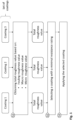
- step S6 After the static fouling roughness value has been obtained, in step S6 it is converted to a dynamic fouling roughness value.
- This conversion is based on an activity factor and an expected activity.
- the activity factor may reflect the risk that a vessel at 0% activity will foul more severely than a vessel at 100% activity.
- the expected activity may indicate a ratio between the time that a vessel is sailing, and the time that a vessel is lying still in the water.
- the activity of the vessel is accounted for in the calculation of the fouling roughness.
- the fouling roughness value is calculated.
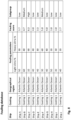
- each ship A - J may have its own dry dock period, thus the time between application of coating 1 and measurement of the fouling parameters may have been different from ship to ship, which naturally influences the measured fouling parameters.
- Ships with longer dry dock cycle periods are generally at higher risk of fouling than ships with shorter dry-dock cycle periods.
- Ship J has been sailing much more than ship B (i.e. has had a higher activity), resulting in a lower fouling score for ship J.
- Such differences between the operating characteristics of the vessels in the fouling database are preferably taken into account as much as possible, for example by adjustment factors.
- the entries in the fouling database preferably take into account such differences in the operating characteristics of the vessels, for example by the application of adjustment factors, in order to arrive at a relevant average fouling score.
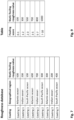
- FIG. 9 is an illustrative example of a table, wherein static fouling roughness values are associated with a fouling score.
- the table may be based on scientific research.
- FIG. 10 is a diagram depicting the respective total roughness values for coating 1, 2 and 3.
- the total roughness values are calculated for a period of three years.
- the values of the total roughness values at the end of this three year period are the respective dynamic fouling roughness values of coating 1, 2 and 3.
- the dynamic fouling roughness value of coating 1 is indicated by the dashed line.
- the total roughness value curves have been calculated.
- the expected change of the total roughness value with time was assumed to be an exponential increase, hence the exponential curves.
- due to these exponential increases especially the total roughness values of the three coatings in the third year differ significantly.
- higher total roughness values are associated with higher resistances, and thus for example with higher fuel costs for vessel owners.
- FIG. 11 is a diagram depicting the respective resistance ratings that are associated with the total roughness values shown in FIG. 10 .
- the resistance rating is a result of CFD modeling that uses as input, among others, the total roughness value.
- the resistance rating for coating 3 is the minimal resistance rating in this embodiment. Calculation of the resistance rating based on the total roughness value may involve an integration of the total roughness value over the time period, in this case over the three year time period depicted in FIG. 10 .
- the resistance rating of for example a vessel may be an indication of the fuel costs for the vessel owner for the upcoming dry dock cycle.
- FIG. 12 shows an example of resistance ratings for coating 3 wherein the vessels in the fouling database have been divided into three subgroups and wherein three average fouling scores have been obtained and subsequently three static fouling roughness values, three dynamic fouling roughness values, three fouling roughness values, three total roughness values and finally three resistance ratings, one for each subgroup. It may be that the subgroup High comprises the 10% of the vessels in the fouling database with the highest fouling scores, the subgroup Medium comprises 20 percent of the vessels with medium fouling scores, and the subgroup Low comprises 70% of the vessels in the fouling database with the lowest fouling scores. As such, the three curves in FIG. 12 may indicate a likelihood of different levels of total roughness values occurring for coating 3.
- the curve of subgroup Low is then the main prediction and represents the probable or expected total roughness value.
- the curve of subgroup Medium then represents a possible total roughness value, yet somewhat more unlikely than the total roughness value associated with subgroup Low.
- the curve of subgroup High represents an unlikely total roughness value.
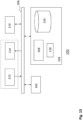
- Fig. 13 depicts a block diagram illustrating an exemplary data processing system that may be used in the computer-implemented coating selection process.
- the data processing system 100 may include at least one processor 102 coupled to memory elements 104 through a system bus 106. As such, the data processing system may store program code within memory elements 104. Further, the processor 102 may execute the program code accessed from the memory elements 104 via a system bus 106. In one aspect, the data processing system may be implemented as a computer that is suitable for storing and/or executing program code. It should be appreciated, however, that the data processing system 100 may be implemented in the form of any system including a processor and a memory that is capable of performing the functions described within this specification.
- the memory elements 104 may include one or more physical memory devices such as, for example, local memory 108 and one or more bulk storage devices 110.
- the local memory may refer to random access memory or other non-persistent memory device(s) generally used during actual execution of the program code.
- a bulk storage device may be implemented as a hard drive or other persistent data storage device.
- the processing system 100 may also include one or more cache memories (not shown) that provide temporary storage of at least some program code in order to reduce the number of times program code must be retrieved from the bulk storage device 110 during execution.
- I/O devices depicted as an input device 112 and an output device 114 optionally can be coupled to the data processing system.
- input devices may include, but are not limited to, a keyboard, a pointing device such as a mouse, or the like.
- output devices may include, but are not limited to, a monitor or a display, speakers, or the like.
- Input and/or output devices may be coupled to the data processing system either directly or through intervening I/O controllers.
- the input and the output devices may be implemented as a combined input/output device (illustrated in FIG. 13 with a dashed line surrounding the input device 112 and the output device 114).
- a combined device is a touch sensitive display, also sometimes referred to as a "touch screen display” or simply "touch screen”.
- input to the device may be provided by a movement of a physical object, such as e.g. a stylus or a finger of a user, on or near the touch screen display.
- a network adapter 116 may also be coupled to the data processing system to enable it to become coupled to other systems, computer systems, remote network devices, and/or remote storage devices through intervening private or public networks.
- the network adapter may comprise a data receiver for receiving data that is transmitted by said systems, devices and/or networks to the data processing system 100, and a data transmitter for transmitting data from the data processing system 100 to said systems, devices and/or networks.
- Modems, cable modems, and Ethernet cards are examples of different types of network adapter that may be used with the data processing system 100.
Landscapes
- Chemical & Material Sciences (AREA)
- Engineering & Computer Science (AREA)
- Life Sciences & Earth Sciences (AREA)
- Wood Science & Technology (AREA)
- Materials Engineering (AREA)
- Organic Chemistry (AREA)
- Combustion & Propulsion (AREA)
- Mechanical Engineering (AREA)
- Ocean & Marine Engineering (AREA)
- Crystallography & Structural Chemistry (AREA)
- Application Of Or Painting With Fluid Materials (AREA)
- Paints Or Removers (AREA)
Claims (13)
- Verfahren zum Auftragen einer Beschichtung auf eine Außenfläche eines vom Menschen hergestellten Objekts, das zumindest teilweise in Wasser getaucht wird (z.B. ein Schiff oder eine Offshore-Bohrstation) für einen Zeitraum, in dem eine relative Bewegung zwischen dem eingetauchten Objekt und dem Wasser vorhanden ist, wobei die Beschichtung eine minimale Widerstandsklasse für einen Satz von Beschichtungen hat, wobei das Verfahren Folgendes umfasst:- ein computerimplementiertes Beschichtungsauswahlverfahren, umfassend die folgenden Schritte:wobei das Verfahren weiterhin das Auftragen der ausgewählten Beschichtung auf die Außenfläche des vom Menschen hergestellten Objekts umfasst.- für jede Beschichtung in dem Satz von Beschichtungen: Erhalten eines Gesamt-Rauheitswertes der Außenfläche, basierend auf einem Rauheitswert durch Verschmutzung, einen Makro-Rauheitswert und einen Mikro-Rauheitswert im Zusammenhang mit jeder Beschichtung,- Auswählen einer Beschichtung aus dem Satz von Beschichtungen, wobei die ausgewählte Beschichtung eine minimale Widerstandsklasse im Zusammenhang mit dem erhaltenen Gesamt-Rauheitswert für den Zeitraum hat;
- Verfahren nach Anspruch 1, wobei eine Berechnung des Rauheitswerts durch Verschmutzung im Zusammenhang mit jeder Beschichtung Folgendes umfasst:- Zugriff auf eine Rauheits-Datenbank, die Kombinationen jeder Beschichtung und einer geographischen Region, in der sich das vom Menschen hergestellte Objekt für den Zeitraum voraussichtlich befindet, mit einem jeweiligen statischen Rauheitswert durch Verschmutzung assoziiert;- Abruf des statischen Rauheitswerts durch Verschmutzung;- Umwandlung des statischen Rauheitswerts durch Verschmutzung in einen dynamischen Rauheitswert durch Verschmutzung, indem man die erwartete Aktivität des vom Menschen hergestellten Objekts während des Zeitraums berücksichtigt;- Berechnung des Rauheitswerts durch Verschmutzung, basierend auf dem dynamischen Rauheitswert durch Verschmutzung und basierend auf einer erwarteten Veränderung in dem Rauheitswert durch Verschmutzung im Laufe der Zeit.
- Verfahren nach Anspruch 1 oder 2, wobei zumindest ein statischer Rauheitswert durch Verschmutzung in Verbindung mit einer Kombination einer Beschichtung in dem Satz von Beschichtungen und der geographischen Region von Folgendem stammt:- Abrufen von Parametern aus einer Datenbank über Verschmutzungen in Bezug auf die Verschmutzung einer Vielzahl von vom Menschen hergestellten Objekten, die zumindest teilweise in Wasser getaucht werden, die sich in der geographischen Region befanden und auf die die Beschichtung aufgetragen wurde;- Berechnen einer Verschmutzungseinstufung, basierend auf den Parametern für jedes vom Menschen hergestellte Objekt in der Vielzahl von vom Menschen hergestellten Objekten, die Verschmutzungseinstufungen hervorbringen;- Berechnen eines repräsentativen Wertes der Verschmutzungseinstufungen;- Erhalten des statischen Rauheitswerts durch Verschmutzung aus einer Tabelle, in der der berechnete repräsentative Wert der Verschmutzungseinstufungen mit dem statischen Rauheitswert durch Verschmutzung assoziiert wird.
- Verfahren nach Anspruch 3, wobei die Vielzahl von vom Menschen hergestellten Objekten zumindest in zwei Untergruppen aufgeteilt ist, wobei jede der zumindest zwei Untergruppen mit einem jeweiligen Bereich von Verschmutzungseinstufungen assoziiert ist, wobei die jeweiligen Bereiche nicht überlappen und wobei jede Untergruppe nur vom Menschen hergestellte Objekte umfasst, die Verschmutzungseinstufungen innerhalb des jeweiligen Bereichs jeder Untergruppe haben; und
wobei für jede Untergruppe ein separater Durchschnitt berechnet wird und anschließend ein separater statischer Rauheitswert durch Verschmutzung, ein separater dynamischer Rauheitswert durch Verschmutzung, ein separater Rauheitswert durch Verschmutzung und ein separater Gesamt-Rauheitswert. - Verfahren nach einem oder mehreren der vorhergehenden Ansprüche, wobei der Makro-Rauheitswert von Folgendem stammt:- Berechnen einer Makro-Rauheitseinstufung, basierend auf zumindest einer Makro-Rauheitseinstufung eines anfänglichen Substrats, einer Makro-Rauheitseinstufung einer Beschichtung und einer zeitabhängigen Makro-Rauheitseinstufung;- Berechnen des Makro-Rauheitswertes, basierend auf der Makro-Rauheitseinstufung.
- Verfahren nach einem oder mehreren der vorhergehenden Ansprüche, wobei der Mikro-Rauheitswert von Folgendem stammt:- Berechnen einer Mikro-Rauheitseinstufung, basierend auf einer anfänglichen Mikro-Rauheitseinstufung und einer zeitabhängigen Mikro-Rauheitseinstufung;- Berechnen des Mikro-Rauheitswerts, basierend auf der Mikro-Rauheitseinstufung.
- Verfahren nach einem oder mehreren der vorhergehenden Ansprüche, wobei die minimale Widerstandsklasse durch ein numerisches Strömungsmechanik-Modell (CFD-Modell) berechnet wird, basierend auf zumindest einem des Gesamt-Rauheitswerts, der Form und Größe des vom Menschen hergestellten Objekts und einer Betriebsgeschwindigkeit des vom Menschen hergestellten Objekts.
- Verfahren nach einem oder mehreren der vorhergehenden Ansprüche, wobei die Außenfläche in zumindest zwei Segmente unterteilt ist, und wobei der Gesamt-Rauheitswert der Außenfläche eine Kombination des Gesamt-Rauheitswerts eines ersten Segments und des Gesamt-Rauheitswerts eines zweiten Segments ist.
- Verfahren nach Anspruch 8, wobei die Außenfläche in ein Oberteil, ein vertikales Seitenteil und ein flaches Unterteil unterteilt ist.
- Verfahren nach einem oder mehreren der vorhergehenden Ansprüche, wobei die ausgewählte Beschichtung konfiguriert ist, um vor einem von Verschmutzung, Korrosion, Feststoff- und Flüssigteilabrieb, Verschlechterung aufgrund von UV-Absorption und Eis zu schützen.
- Verfahren nach einem oder mehreren der vorhergehenden Ansprüche, wobei die Außenfläche des vom Menschen hergestellten Objekts, das zumindest teilweise in Wasser getaucht wird, einen Schiffsrumpf umfasst.
- Verfahren nach Anspruch 11, wobei der Leistungsbedarf zum Bewegen des Schiffs mit einer gewünschten Geschwindigkeit für den mit der gewählten Beschichtung beschichteten Schiffsrumpf berechnet wird.
- Verfahren nach Anspruch 12, wobei der Leistungsbedarf in vorhergesagten Kraftstoffverbrauch oder vorhergesagte Treibhausgasemissionen umgewandelt wird.
Applications Claiming Priority (2)
| Application Number | Priority Date | Filing Date | Title |
|---|---|---|---|
| EP15189877 | 2015-10-15 | ||
| PCT/EP2016/074257 WO2017064016A1 (en) | 2015-10-15 | 2016-10-11 | Method for applying a coating to an external surface of a man-made object to be at least partly immersed in water |
Publications (3)
| Publication Number | Publication Date |
|---|---|
| EP3362348A1 EP3362348A1 (de) | 2018-08-22 |
| EP3362348B1 EP3362348B1 (de) | 2019-07-10 |
| EP3362348B2 true EP3362348B2 (de) | 2025-04-16 |
Family
ID=54365940
Family Applications (1)
| Application Number | Title | Priority Date | Filing Date |
|---|---|---|---|
| EP16784423.2A Active EP3362348B2 (de) | 2015-10-15 | 2016-10-11 | Verfahren zum auftragen einer beschichtung auf eine aussenfläche eines künstlichen objekts, das zumindest teilweise in wasser getaucht wird |
Country Status (7)
| Country | Link |
|---|---|
| US (2) | US11078371B2 (de) |
| EP (1) | EP3362348B2 (de) |
| JP (2) | JP7075339B2 (de) |
| KR (2) | KR20180064501A (de) |
| CN (1) | CN108137143B (de) |
| TW (1) | TW201729145A (de) |
| WO (1) | WO2017064016A1 (de) |
Families Citing this family (6)
| Publication number | Priority date | Publication date | Assignee | Title |
|---|---|---|---|---|
| KR20180064501A (ko) * | 2015-10-15 | 2018-06-14 | 아크조노벨코팅스인터내셔널비.브이. | 물에 적어도 부분적으로 침지될 인공 물체의 외부 표면에 코팅을 적용하는 방법 |
| WO2017094079A1 (ja) * | 2015-11-30 | 2017-06-08 | 日本郵船株式会社 | 船舶用支援装置及び方法 |
| US11625844B2 (en) * | 2020-05-11 | 2023-04-11 | The Boeing Company | Rapid effective case depth measurement of a metal component using physical surface conditioning |
| GB202107159D0 (en) * | 2021-03-23 | 2021-06-30 | Jotun As | Monitoring a vessel |
| WO2025198023A1 (ja) * | 2024-03-22 | 2025-09-25 | 中国塗料株式会社 | 船体の摩擦抵抗を考慮して得られた馬力増加率を用いた燃料消費量のシミュレーション方法、ならびにそのシミュレーション方法を実行するためのプログラムおよびシステム |
| GB2642258A (en) * | 2024-06-27 | 2026-01-07 | Jotun As | Coating system evaluation and application |
Citations (3)
| Publication number | Priority date | Publication date | Assignee | Title |
|---|---|---|---|---|
| EP1484700A1 (de) † | 2003-06-02 | 2004-12-08 | Akzo Nobel N.V. | Verfahren zur Kostenbestimmung in Zusammenhang mit dem Antifouling Beschichtungszusammensetzungen für die Betriebszeit eines Schiffes |
| WO2013092681A1 (en) † | 2011-12-22 | 2013-06-27 | Akzo Nobel Coatings International B.V. | A process of selecting and applying a protective coating |
| US20150081231A1 (en) † | 2012-04-09 | 2015-03-19 | Chugoku Marine Paints, Ltd. | Method of estimating frictional resistance of ship bottom coating film, and a method of evaluating coating film performance using said method and a device for evaluating coating film performance |
Family Cites Families (5)
| Publication number | Priority date | Publication date | Assignee | Title |
|---|---|---|---|---|
| EP1084948A1 (de) * | 1999-09-17 | 2001-03-21 | Magnus Kvant | Verfahren zum Hemmen von Bewuchs auf einer Unterwasseroberfläche |
| EP1084947A1 (de) * | 1999-09-17 | 2001-03-21 | Magnus Kvant | Verfahren zum Dauerschutz von im Kontakt mit Wasser stehenden Oberflächen gegen biologische Fäule |
| GB0328812D0 (en) * | 2003-12-12 | 2004-01-14 | Ecosea Ltd | A marine anti-bio-fouling coating and a method and apparatus for manufacturing the coating |
| CN103608411A (zh) * | 2011-06-21 | 2014-02-26 | 阿克佐诺贝尔国际涂料股份有限公司 | 生物杀伤性污垢释放涂料体系 |
| KR20180064501A (ko) | 2015-10-15 | 2018-06-14 | 아크조노벨코팅스인터내셔널비.브이. | 물에 적어도 부분적으로 침지될 인공 물체의 외부 표면에 코팅을 적용하는 방법 |
-
2016
- 2016-10-11 KR KR1020187013056A patent/KR20180064501A/ko not_active Ceased
- 2016-10-11 US US15/767,295 patent/US11078371B2/en active Active
- 2016-10-11 JP JP2018518700A patent/JP7075339B2/ja active Active
- 2016-10-11 WO PCT/EP2016/074257 patent/WO2017064016A1/en not_active Ceased
- 2016-10-11 EP EP16784423.2A patent/EP3362348B2/de active Active
- 2016-10-11 KR KR1020217002629A patent/KR102487360B1/ko active Active
- 2016-10-11 CN CN201680059612.5A patent/CN108137143B/zh active Active
- 2016-10-14 TW TW105133228A patent/TW201729145A/zh unknown
-
2021
- 2021-06-29 US US17/361,977 patent/US20210324207A1/en not_active Abandoned
-
2022
- 2022-01-26 JP JP2022010104A patent/JP7539423B2/ja active Active
Patent Citations (3)
| Publication number | Priority date | Publication date | Assignee | Title |
|---|---|---|---|---|
| EP1484700A1 (de) † | 2003-06-02 | 2004-12-08 | Akzo Nobel N.V. | Verfahren zur Kostenbestimmung in Zusammenhang mit dem Antifouling Beschichtungszusammensetzungen für die Betriebszeit eines Schiffes |
| WO2013092681A1 (en) † | 2011-12-22 | 2013-06-27 | Akzo Nobel Coatings International B.V. | A process of selecting and applying a protective coating |
| US20150081231A1 (en) † | 2012-04-09 | 2015-03-19 | Chugoku Marine Paints, Ltd. | Method of estimating frictional resistance of ship bottom coating film, and a method of evaluating coating film performance using said method and a device for evaluating coating film performance |
Non-Patent Citations (24)
| Title |
|---|
| "A CFD model for the frictional resistance prediction of antifouling coatings", Yigit Kemal Demirel, et al. † |
| "Marine Propeller Roughness Penalties", Mohamed Ahmed Mosaad † |
| "Surfaces and their Measurement", David Whitehouse † |
| ABS: "Guidance notes on the application and maintenance of marine coating systems", ABS, 2004, XP055716193 † |
| ANONYMOUS: "2003 antifouling", PROPELLER, January 2003 (2003-01-01), pages 1 - 15, XP055716183 † |
| ANONYMOUS: "Classification societies-what, why and how?", IACS, 2011, pages 1 - 16, XP055716173, Retrieved from the Internet <URL:https://pdf4pro.com/view/classification-societies-what-why-and-how-3580a2.html> † |
| ANONYMOUS: "Hull protection plus", JOTUN - BROCHURE, January 1998 (1998-01-01), pages 1 - 25, XP055716233 † |
| ANONYMOUS: "New benchmark to prove coatings performance", SHIP PERFORMANCE, January 2012 (2012-01-01), pages 1 - 4, XP055716181 † |
| ANONYMOUS: "SeaFlo Neo Series", CMP - BROCHURE, August 2013 (2013-08-01), pages 1 - 6, XP055716196, Retrieved from the Internet <URL:https://www.cmp-chugoku.com/> † |
| BUREAU OF SHIPS ET AL: "Marine fouling and its prevention", 1952, U.S. NAVA INSTITUTE, article "Chapter 2 Ship resistance", pages: 21 - 34; 42-47; 48-76; 91-101, XP055716175 † |
| CLAIRE HELLIO ET AL: "Advances in marine antifouling coatings and technologies", 2009, CRC, ISBN: 978-1-84569-386-2, article "Biofouling", pages: 4 - 6, XP055716216 † |
| CLAIRE HELLIO ET AL: "Advances in marine antifouling coatings and technologies", 2009, ISBN: 978-1-84569-386-2, article "Effects of biofilms", pages: 429 - 430, XP055716219 † |
| DICKON HOWELL ET AL: "A review of surface roughness in antifouling coatings illustrating the importance of cutoff length", BIOFOULING, vol. 22, no. 6, January 2006 (2006-01-01), pages 401 - 410, XP055716186 † |
| HARALD WALDERHAUG: "Energiøkonomisering i skipsfarten", NTNF, 5 November 1985 (1985-11-05), pages 1 - 40, XP055716200 † |
| INTERNATIONAL: "Hull roughness penalty calculator", AZKO NOBEL, November 2004 (2004-11-01), XP055716229 † |
| J S CARLTON: "Marine propellers and propulsion. 2nd ed.", 2007, ELSEVIER, ISBN: 978-07506-8150-6, article "24 Service performance and analysis", pages: 478 - 502, XP055716177 † |
| LINDA DAMON: "Menu Management versus fouling", POLYMERS PAINT COLOUR JOURNAL (PPCJ), July 1998 (1998-07-01), pages 14 - 15, XP055716237 † |
| M. BADER-ELDIN: "Hull roughness and antifouling paint", INPROCEEDINGS 2014HULLRA, 2014, XP055716223, Retrieved from the Internet <URL:https://pdfs.semanticscholar.org/6c9e/77296696540e6212f1dc4375312ab459a166.pdf> † |
| M. J. KING: "The measurement of ship hull roughness", WEAR, vol. 83, no. 2, 15 December 1982 (1982-12-15), pages 385 - 397, XP055716199 † |
| M. PERRY: "Underwater hull surface painting strategy - a shipowners conclusions", TRANS IMARE (TM), vol. 97, no. 12, 28 January 1985 (1985-01-28), pages 2 - 15, XP055716179 † |
| SCHULTZ M. P. ET AL: "Economic impact of biofouling on a naval surface ship", BIOFOULING, vol. 27, no. 1, 14 December 2010 (2010-12-14), pages 87 - 98, XP055716172 † |
| SCHULTZ MICHAEL P.: "Effects of coating roughness and biofouling on ship resistance and powering", BIOFOULING, vol. 23, no. 5, 12 September 2007 (2007-09-12), pages 331 - 341, XP055716171 † |
| SCHULTZ MICHAEL P.: "Frictional resistance of antifouling coating systems", JOURNAL OF FLUIDS ENGINEERING, vol. 126, no. 6, November 2004 (2004-11-01), pages 1039 - 1047, XP055716188 † |
| SIMONE DÜRR ET AL: "Biofouling", 2010, WILEY-BLACKWELL, article "Chapter 12 Fouling on Artificial Substrata", pages: 170 - 171, 218-219, 352-353, 376-377, XP055716174 † |
Also Published As
| Publication number | Publication date |
|---|---|
| JP7539423B2 (ja) | 2024-08-23 |
| TW201729145A (zh) | 2017-08-16 |
| WO2017064016A1 (en) | 2017-04-20 |
| JP2019502532A (ja) | 2019-01-31 |
| US20210324207A1 (en) | 2021-10-21 |
| EP3362348B1 (de) | 2019-07-10 |
| KR20210013330A (ko) | 2021-02-03 |
| EP3362348A1 (de) | 2018-08-22 |
| JP7075339B2 (ja) | 2022-05-25 |
| JP2022084575A (ja) | 2022-06-07 |
| CN108137143A (zh) | 2018-06-08 |
| KR20180064501A (ko) | 2018-06-14 |
| US20180305561A1 (en) | 2018-10-25 |
| KR102487360B1 (ko) | 2023-01-10 |
| US11078371B2 (en) | 2021-08-03 |
| CN108137143B (zh) | 2019-11-08 |
Similar Documents
| Publication | Publication Date | Title |
|---|---|---|
| US20210324207A1 (en) | Method for Applying a Coating to an External Surface of a Man-Made Object to Be at Least Partly Immersed in Water | |
| Lindholdt et al. | Effects of biofouling development on drag forces of hull coatings for ocean-going ships: a review | |
| Sprenger et al. | Experimental studies on seakeeping and maneuverability of ships in adverse weather conditions | |
| Demirel et al. | Practical added resistance diagrams to predict fouling impact on ship performance | |
| Munk et al. | The effects of corrosion and fouling on the performance of ocean-going vessels: a naval architectural perspective | |
| KR102418938B1 (ko) | 해양 선박 성능 진단 | |
| Uzun et al. | A CFD study: Influence of biofouling on a full-scale submarine | |
| Demirel | Modelling the roughness effects of marine coatings and biofouling on ship frictional resistance | |
| Hakim et al. | Alternative empirical formula for predicting the frictional drag penalty due to fouling on the ship hull using the design of experiments (DOE) method | |
| Dinariyana et al. | Development of model-driven decision support system to schedule underwater hull cleaning | |
| Wang et al. | Drag resistance of ship hulls: Effects of surface roughness of newly applied fouling control coatings, coating water absorption, and welding seams | |
| Gledić et al. | Comparison of full-scale measurements and seakeeping calculations for two research vessels in the Adriatic Sea | |
| Swain et al. | Dry dock inspection methods for improved fouling control coating performance | |
| TWI575475B (zh) | 施加保護塗層至運輸工具之方法及用於執行該方法的電腦系統或電腦程式 | |
| Liu et al. | A fast and transparent method for setting powering margins in ship design | |
| Ko et al. | Time domain simulation for icebreaking and turning capability of bow-first icebreaking models in level ice | |
| Lindholdt | Fuel efficiency and fouling control coatings in maritime transport | |
| de Haasa et al. | Power Increase due to Marine Biofouling: a Grey-box Model Approach | |
| Park et al. | Scenario-Based Analysis of Economic and Environmental Impacts of Underwater Biofouling, and Artificial Neural Network for Underwater Hull and Propeller Cleaning | |
| Eftekhar et al. | Use of machine learning for estimation of wave added resistance and its application in ship performance analysis | |
| Kellett et al. | Investigating the roughness effect of biofouling on propeller performance | |
| Anoman et al. | A numerical approach to assess marine fouling tolerability on the hull of surface vessels | |
| Farkas | Numerical modelling of the effects of biofouling on ship resistance and propulsion characteristics | |
| Degiuli et al. | Reconstruction of Hull Form of Traditional Croatian Fishing Vessel and Prediction of Effective Power | |
| Mittendorf et al. | Hull and Propeller Performance Decomposition via an Adaptive Machine Learning Framework |
Legal Events
| Date | Code | Title | Description |
|---|---|---|---|
| STAA | Information on the status of an ep patent application or granted ep patent |
Free format text: STATUS: UNKNOWN |
|
| STAA | Information on the status of an ep patent application or granted ep patent |
Free format text: STATUS: THE INTERNATIONAL PUBLICATION HAS BEEN MADE |
|
| PUAI | Public reference made under article 153(3) epc to a published international application that has entered the european phase |
Free format text: ORIGINAL CODE: 0009012 |
|
| STAA | Information on the status of an ep patent application or granted ep patent |
Free format text: STATUS: REQUEST FOR EXAMINATION WAS MADE |
|
| 17P | Request for examination filed |
Effective date: 20180508 |
|
| AK | Designated contracting states |
Kind code of ref document: A1 Designated state(s): AL AT BE BG CH CY CZ DE DK EE ES FI FR GB GR HR HU IE IS IT LI LT LU LV MC MK MT NL NO PL PT RO RS SE SI SK SM TR |
|
| AX | Request for extension of the european patent |
Extension state: BA ME |
|
| DAV | Request for validation of the european patent (deleted) | ||
| DAX | Request for extension of the european patent (deleted) | ||
| GRAP | Despatch of communication of intention to grant a patent |
Free format text: ORIGINAL CODE: EPIDOSNIGR1 |
|
| STAA | Information on the status of an ep patent application or granted ep patent |
Free format text: STATUS: GRANT OF PATENT IS INTENDED |
|
| INTG | Intention to grant announced |
Effective date: 20190214 |
|
| GRAS | Grant fee paid |
Free format text: ORIGINAL CODE: EPIDOSNIGR3 |
|
| GRAA | (expected) grant |
Free format text: ORIGINAL CODE: 0009210 |
|
| STAA | Information on the status of an ep patent application or granted ep patent |
Free format text: STATUS: THE PATENT HAS BEEN GRANTED |
|
| AK | Designated contracting states |
Kind code of ref document: B1 Designated state(s): AL AT BE BG CH CY CZ DE DK EE ES FI FR GB GR HR HU IE IS IT LI LT LU LV MC MK MT NL NO PL PT RO RS SE SI SK SM TR |
|
| REG | Reference to a national code |
Ref country code: GB Ref legal event code: FG4D |
|
| REG | Reference to a national code |
Ref country code: CH Ref legal event code: EP Ref country code: AT Ref legal event code: REF Ref document number: 1153295 Country of ref document: AT Kind code of ref document: T Effective date: 20190715 |
|
| REG | Reference to a national code |
Ref country code: DE Ref legal event code: R096 Ref document number: 602016016797 Country of ref document: DE |
|
| REG | Reference to a national code |
Ref country code: IE Ref legal event code: FG4D |
|
| REG | Reference to a national code |
Ref country code: NL Ref legal event code: FP |
|
| REG | Reference to a national code |
Ref country code: LT Ref legal event code: MG4D |
|
| REG | Reference to a national code |
Ref country code: AT Ref legal event code: MK05 Ref document number: 1153295 Country of ref document: AT Kind code of ref document: T Effective date: 20190710 |
|
| PG25 | Lapsed in a contracting state [announced via postgrant information from national office to epo] |
Ref country code: BG Free format text: LAPSE BECAUSE OF FAILURE TO SUBMIT A TRANSLATION OF THE DESCRIPTION OR TO PAY THE FEE WITHIN THE PRESCRIBED TIME-LIMIT Effective date: 20191010 Ref country code: SE Free format text: LAPSE BECAUSE OF FAILURE TO SUBMIT A TRANSLATION OF THE DESCRIPTION OR TO PAY THE FEE WITHIN THE PRESCRIBED TIME-LIMIT Effective date: 20190710 Ref country code: AT Free format text: LAPSE BECAUSE OF FAILURE TO SUBMIT A TRANSLATION OF THE DESCRIPTION OR TO PAY THE FEE WITHIN THE PRESCRIBED TIME-LIMIT Effective date: 20190710 Ref country code: NO Free format text: LAPSE BECAUSE OF FAILURE TO SUBMIT A TRANSLATION OF THE DESCRIPTION OR TO PAY THE FEE WITHIN THE PRESCRIBED TIME-LIMIT Effective date: 20191010 Ref country code: FI Free format text: LAPSE BECAUSE OF FAILURE TO SUBMIT A TRANSLATION OF THE DESCRIPTION OR TO PAY THE FEE WITHIN THE PRESCRIBED TIME-LIMIT Effective date: 20190710 Ref country code: PT Free format text: LAPSE BECAUSE OF FAILURE TO SUBMIT A TRANSLATION OF THE DESCRIPTION OR TO PAY THE FEE WITHIN THE PRESCRIBED TIME-LIMIT Effective date: 20191111 Ref country code: HR Free format text: LAPSE BECAUSE OF FAILURE TO SUBMIT A TRANSLATION OF THE DESCRIPTION OR TO PAY THE FEE WITHIN THE PRESCRIBED TIME-LIMIT Effective date: 20190710 Ref country code: LT Free format text: LAPSE BECAUSE OF FAILURE TO SUBMIT A TRANSLATION OF THE DESCRIPTION OR TO PAY THE FEE WITHIN THE PRESCRIBED TIME-LIMIT Effective date: 20190710 |
|
| PG25 | Lapsed in a contracting state [announced via postgrant information from national office to epo] |
Ref country code: AL Free format text: LAPSE BECAUSE OF FAILURE TO SUBMIT A TRANSLATION OF THE DESCRIPTION OR TO PAY THE FEE WITHIN THE PRESCRIBED TIME-LIMIT Effective date: 20190710 Ref country code: RS Free format text: LAPSE BECAUSE OF FAILURE TO SUBMIT A TRANSLATION OF THE DESCRIPTION OR TO PAY THE FEE WITHIN THE PRESCRIBED TIME-LIMIT Effective date: 20190710 Ref country code: IS Free format text: LAPSE BECAUSE OF FAILURE TO SUBMIT A TRANSLATION OF THE DESCRIPTION OR TO PAY THE FEE WITHIN THE PRESCRIBED TIME-LIMIT Effective date: 20191110 Ref country code: LV Free format text: LAPSE BECAUSE OF FAILURE TO SUBMIT A TRANSLATION OF THE DESCRIPTION OR TO PAY THE FEE WITHIN THE PRESCRIBED TIME-LIMIT Effective date: 20190710 Ref country code: GR Free format text: LAPSE BECAUSE OF FAILURE TO SUBMIT A TRANSLATION OF THE DESCRIPTION OR TO PAY THE FEE WITHIN THE PRESCRIBED TIME-LIMIT Effective date: 20191011 Ref country code: ES Free format text: LAPSE BECAUSE OF FAILURE TO SUBMIT A TRANSLATION OF THE DESCRIPTION OR TO PAY THE FEE WITHIN THE PRESCRIBED TIME-LIMIT Effective date: 20190710 |
|
| PG25 | Lapsed in a contracting state [announced via postgrant information from national office to epo] |
Ref country code: TR Free format text: LAPSE BECAUSE OF FAILURE TO SUBMIT A TRANSLATION OF THE DESCRIPTION OR TO PAY THE FEE WITHIN THE PRESCRIBED TIME-LIMIT Effective date: 20190710 |
|
| REG | Reference to a national code |
Ref country code: DE Ref legal event code: R026 Ref document number: 602016016797 Country of ref document: DE |
|
| PLBI | Opposition filed |
Free format text: ORIGINAL CODE: 0009260 |
|
| PG25 | Lapsed in a contracting state [announced via postgrant information from national office to epo] |
Ref country code: IT Free format text: LAPSE BECAUSE OF FAILURE TO SUBMIT A TRANSLATION OF THE DESCRIPTION OR TO PAY THE FEE WITHIN THE PRESCRIBED TIME-LIMIT Effective date: 20190710 Ref country code: EE Free format text: LAPSE BECAUSE OF FAILURE TO SUBMIT A TRANSLATION OF THE DESCRIPTION OR TO PAY THE FEE WITHIN THE PRESCRIBED TIME-LIMIT Effective date: 20190710 Ref country code: PL Free format text: LAPSE BECAUSE OF FAILURE TO SUBMIT A TRANSLATION OF THE DESCRIPTION OR TO PAY THE FEE WITHIN THE PRESCRIBED TIME-LIMIT Effective date: 20190710 Ref country code: DK Free format text: LAPSE BECAUSE OF FAILURE TO SUBMIT A TRANSLATION OF THE DESCRIPTION OR TO PAY THE FEE WITHIN THE PRESCRIBED TIME-LIMIT Effective date: 20190710 Ref country code: RO Free format text: LAPSE BECAUSE OF FAILURE TO SUBMIT A TRANSLATION OF THE DESCRIPTION OR TO PAY THE FEE WITHIN THE PRESCRIBED TIME-LIMIT Effective date: 20190710 |
|
| REG | Reference to a national code |
Ref country code: DE Ref legal event code: R119 Ref document number: 602016016797 Country of ref document: DE |
|
| 26 | Opposition filed |
Opponent name: JOTUN A/S Effective date: 20200409 |
|
| PG25 | Lapsed in a contracting state [announced via postgrant information from national office to epo] |
Ref country code: MC Free format text: LAPSE BECAUSE OF FAILURE TO SUBMIT A TRANSLATION OF THE DESCRIPTION OR TO PAY THE FEE WITHIN THE PRESCRIBED TIME-LIMIT Effective date: 20190710 Ref country code: CZ Free format text: LAPSE BECAUSE OF FAILURE TO SUBMIT A TRANSLATION OF THE DESCRIPTION OR TO PAY THE FEE WITHIN THE PRESCRIBED TIME-LIMIT Effective date: 20190710 Ref country code: SK Free format text: LAPSE BECAUSE OF FAILURE TO SUBMIT A TRANSLATION OF THE DESCRIPTION OR TO PAY THE FEE WITHIN THE PRESCRIBED TIME-LIMIT Effective date: 20190710 Ref country code: SM Free format text: LAPSE BECAUSE OF FAILURE TO SUBMIT A TRANSLATION OF THE DESCRIPTION OR TO PAY THE FEE WITHIN THE PRESCRIBED TIME-LIMIT Effective date: 20190710 Ref country code: IS Free format text: LAPSE BECAUSE OF FAILURE TO SUBMIT A TRANSLATION OF THE DESCRIPTION OR TO PAY THE FEE WITHIN THE PRESCRIBED TIME-LIMIT Effective date: 20200224 |
|
| REG | Reference to a national code |
Ref country code: CH Ref legal event code: PL |
|
| PLAX | Notice of opposition and request to file observation + time limit sent |
Free format text: ORIGINAL CODE: EPIDOSNOBS2 |
|
| PG2D | Information on lapse in contracting state deleted |
Ref country code: IS |
|
| PG25 | Lapsed in a contracting state [announced via postgrant information from national office to epo] |
Ref country code: DE Free format text: LAPSE BECAUSE OF NON-PAYMENT OF DUE FEES Effective date: 20200501 Ref country code: LI Free format text: LAPSE BECAUSE OF NON-PAYMENT OF DUE FEES Effective date: 20191031 Ref country code: LU Free format text: LAPSE BECAUSE OF NON-PAYMENT OF DUE FEES Effective date: 20191011 Ref country code: CH Free format text: LAPSE BECAUSE OF NON-PAYMENT OF DUE FEES Effective date: 20191031 |
|
| REG | Reference to a national code |
Ref country code: BE Ref legal event code: MM Effective date: 20191031 |
|
| PG25 | Lapsed in a contracting state [announced via postgrant information from national office to epo] |
Ref country code: BE Free format text: LAPSE BECAUSE OF NON-PAYMENT OF DUE FEES Effective date: 20191031 Ref country code: SI Free format text: LAPSE BECAUSE OF FAILURE TO SUBMIT A TRANSLATION OF THE DESCRIPTION OR TO PAY THE FEE WITHIN THE PRESCRIBED TIME-LIMIT Effective date: 20190710 |
|
| PLBB | Reply of patent proprietor to notice(s) of opposition received |
Free format text: ORIGINAL CODE: EPIDOSNOBS3 |
|
| PG25 | Lapsed in a contracting state [announced via postgrant information from national office to epo] |
Ref country code: FR Free format text: LAPSE BECAUSE OF NON-PAYMENT OF DUE FEES Effective date: 20191031 Ref country code: IE Free format text: LAPSE BECAUSE OF NON-PAYMENT OF DUE FEES Effective date: 20191011 |
|
| PG25 | Lapsed in a contracting state [announced via postgrant information from national office to epo] |
Ref country code: CY Free format text: LAPSE BECAUSE OF FAILURE TO SUBMIT A TRANSLATION OF THE DESCRIPTION OR TO PAY THE FEE WITHIN THE PRESCRIBED TIME-LIMIT Effective date: 20190710 |
|
| PG25 | Lapsed in a contracting state [announced via postgrant information from national office to epo] |
Ref country code: MT Free format text: LAPSE BECAUSE OF FAILURE TO SUBMIT A TRANSLATION OF THE DESCRIPTION OR TO PAY THE FEE WITHIN THE PRESCRIBED TIME-LIMIT Effective date: 20190710 Ref country code: HU Free format text: LAPSE BECAUSE OF FAILURE TO SUBMIT A TRANSLATION OF THE DESCRIPTION OR TO PAY THE FEE WITHIN THE PRESCRIBED TIME-LIMIT; INVALID AB INITIO Effective date: 20161011 |
|
| RAP4 | Party data changed (patent owner data changed or rights of a patent transferred) |
Owner name: AKZO NOBEL COATINGS INTERNATIONAL B.V. |
|
| APAH | Appeal reference modified |
Free format text: ORIGINAL CODE: EPIDOSCREFNO |
|
| APBM | Appeal reference recorded |
Free format text: ORIGINAL CODE: EPIDOSNREFNO |
|
| APBP | Date of receipt of notice of appeal recorded |
Free format text: ORIGINAL CODE: EPIDOSNNOA2O |
|
| APBQ | Date of receipt of statement of grounds of appeal recorded |
Free format text: ORIGINAL CODE: EPIDOSNNOA3O |
|
| PG25 | Lapsed in a contracting state [announced via postgrant information from national office to epo] |
Ref country code: MK Free format text: LAPSE BECAUSE OF FAILURE TO SUBMIT A TRANSLATION OF THE DESCRIPTION OR TO PAY THE FEE WITHIN THE PRESCRIBED TIME-LIMIT Effective date: 20190710 |
|
| PLAB | Opposition data, opponent's data or that of the opponent's representative modified |
Free format text: ORIGINAL CODE: 0009299OPPO |
|
| R26 | Opposition filed (corrected) |
Opponent name: JOTUN A/S Effective date: 20200409 |
|
| P01 | Opt-out of the competence of the unified patent court (upc) registered |
Effective date: 20231108 |
|
| APBU | Appeal procedure closed |
Free format text: ORIGINAL CODE: EPIDOSNNOA9O |
|
| PLAY | Examination report in opposition despatched + time limit |
Free format text: ORIGINAL CODE: EPIDOSNORE2 |
|
| PLBC | Reply to examination report in opposition received |
Free format text: ORIGINAL CODE: EPIDOSNORE3 |
|
| PLAY | Examination report in opposition despatched + time limit |
Free format text: ORIGINAL CODE: EPIDOSNORE2 |
|
| PLBC | Reply to examination report in opposition received |
Free format text: ORIGINAL CODE: EPIDOSNORE3 |
|
| PUAH | Patent maintained in amended form |
Free format text: ORIGINAL CODE: 0009272 |
|
| STAA | Information on the status of an ep patent application or granted ep patent |
Free format text: STATUS: PATENT MAINTAINED AS AMENDED |
|
| 27A | Patent maintained in amended form |
Effective date: 20250416 |
|
| AK | Designated contracting states |
Kind code of ref document: B2 Designated state(s): AL AT BE BG CH CY CZ DE DK EE ES FI FR GB GR HR HU IE IS IT LI LT LU LV MC MK MT NL NO PL PT RO RS SE SI SK SM TR |
|
| REG | Reference to a national code |
Ref country code: DE Ref legal event code: R102 Ref document number: 602016016797 Country of ref document: DE |
|
| REG | Reference to a national code |
Ref country code: NL Ref legal event code: FP |
|
| PGFP | Annual fee paid to national office [announced via postgrant information from national office to epo] |
Ref country code: NL Payment date: 20251024 Year of fee payment: 10 |
|
| PGFP | Annual fee paid to national office [announced via postgrant information from national office to epo] |
Ref country code: GB Payment date: 20251023 Year of fee payment: 10 |