EP3357938A2 - Method for preparing metallocene catalyst for preparing polyolefin - Google Patents
Method for preparing metallocene catalyst for preparing polyolefin Download PDFInfo
- Publication number
- EP3357938A2 EP3357938A2 EP17824572.6A EP17824572A EP3357938A2 EP 3357938 A2 EP3357938 A2 EP 3357938A2 EP 17824572 A EP17824572 A EP 17824572A EP 3357938 A2 EP3357938 A2 EP 3357938A2
- Authority
- EP
- European Patent Office
- Prior art keywords
- compound
- lithium chloride
- solvent
- chloride complex
- complex compound
- Prior art date
- Legal status (The legal status is an assumption and is not a legal conclusion. Google has not performed a legal analysis and makes no representation as to the accuracy of the status listed.)
- Granted
Links
- 0 CCCC(C1)C1c(cc1)ccc1-c1cccc2c1C=C(C)C2C1([C@]2C1C1c3cccc(-c4ccc(*)cc4)c3C=C1C)C1C2C(C*)C1 Chemical compound CCCC(C1)C1c(cc1)ccc1-c1cccc2c1C=C(C)C2C1([C@]2C1C1c3cccc(-c4ccc(*)cc4)c3C=C1C)C1C2C(C*)C1 0.000 description 2
Images
Classifications
-
- C—CHEMISTRY; METALLURGY
- C08—ORGANIC MACROMOLECULAR COMPOUNDS; THEIR PREPARATION OR CHEMICAL WORKING-UP; COMPOSITIONS BASED THEREON
- C08F—MACROMOLECULAR COMPOUNDS OBTAINED BY REACTIONS ONLY INVOLVING CARBON-TO-CARBON UNSATURATED BONDS
- C08F4/00—Polymerisation catalysts
- C08F4/42—Metals; Metal hydrides; Metallo-organic compounds; Use thereof as catalyst precursors
- C08F4/44—Metals; Metal hydrides; Metallo-organic compounds; Use thereof as catalyst precursors selected from light metals, zinc, cadmium, mercury, copper, silver, gold, boron, gallium, indium, thallium, rare earths or actinides
- C08F4/60—Metals; Metal hydrides; Metallo-organic compounds; Use thereof as catalyst precursors selected from light metals, zinc, cadmium, mercury, copper, silver, gold, boron, gallium, indium, thallium, rare earths or actinides together with refractory metals, iron group metals, platinum group metals, manganese, rhenium technetium or compounds thereof
- C08F4/62—Refractory metals or compounds thereof
- C08F4/64—Titanium, zirconium, hafnium or compounds thereof
-
- B—PERFORMING OPERATIONS; TRANSPORTING
- B01—PHYSICAL OR CHEMICAL PROCESSES OR APPARATUS IN GENERAL
- B01J—CHEMICAL OR PHYSICAL PROCESSES, e.g. CATALYSIS OR COLLOID CHEMISTRY; THEIR RELEVANT APPARATUS
- B01J31/00—Catalysts comprising hydrides, coordination complexes or organic compounds
- B01J31/16—Catalysts comprising hydrides, coordination complexes or organic compounds containing coordination complexes
- B01J31/22—Organic complexes
- B01J31/2282—Unsaturated compounds used as ligands
- B01J31/2295—Cyclic compounds, e.g. cyclopentadienyls
-
- B—PERFORMING OPERATIONS; TRANSPORTING
- B01—PHYSICAL OR CHEMICAL PROCESSES OR APPARATUS IN GENERAL
- B01J—CHEMICAL OR PHYSICAL PROCESSES, e.g. CATALYSIS OR COLLOID CHEMISTRY; THEIR RELEVANT APPARATUS
- B01J31/00—Catalysts comprising hydrides, coordination complexes or organic compounds
- B01J31/26—Catalysts comprising hydrides, coordination complexes or organic compounds containing in addition, inorganic metal compounds not provided for in groups B01J31/02 - B01J31/24
- B01J31/38—Catalysts comprising hydrides, coordination complexes or organic compounds containing in addition, inorganic metal compounds not provided for in groups B01J31/02 - B01J31/24 of titanium, zirconium or hafnium
-
- B—PERFORMING OPERATIONS; TRANSPORTING
- B01—PHYSICAL OR CHEMICAL PROCESSES OR APPARATUS IN GENERAL
- B01J—CHEMICAL OR PHYSICAL PROCESSES, e.g. CATALYSIS OR COLLOID CHEMISTRY; THEIR RELEVANT APPARATUS
- B01J37/00—Processes, in general, for preparing catalysts; Processes, in general, for activation of catalysts
- B01J37/02—Impregnation, coating or precipitation
- B01J37/03—Precipitation; Co-precipitation
- B01J37/031—Precipitation
-
- C—CHEMISTRY; METALLURGY
- C07—ORGANIC CHEMISTRY
- C07F—ACYCLIC, CARBOCYCLIC OR HETEROCYCLIC COMPOUNDS CONTAINING ELEMENTS OTHER THAN CARBON, HYDROGEN, HALOGEN, OXYGEN, NITROGEN, SULFUR, SELENIUM OR TELLURIUM
- C07F17/00—Metallocenes
-
- C—CHEMISTRY; METALLURGY
- C08—ORGANIC MACROMOLECULAR COMPOUNDS; THEIR PREPARATION OR CHEMICAL WORKING-UP; COMPOSITIONS BASED THEREON
- C08F—MACROMOLECULAR COMPOUNDS OBTAINED BY REACTIONS ONLY INVOLVING CARBON-TO-CARBON UNSATURATED BONDS
- C08F110/00—Homopolymers of unsaturated aliphatic hydrocarbons having only one carbon-to-carbon double bond
- C08F110/04—Monomers containing three or four carbon atoms
- C08F110/06—Propene
-
- C—CHEMISTRY; METALLURGY
- C08—ORGANIC MACROMOLECULAR COMPOUNDS; THEIR PREPARATION OR CHEMICAL WORKING-UP; COMPOSITIONS BASED THEREON
- C08F—MACROMOLECULAR COMPOUNDS OBTAINED BY REACTIONS ONLY INVOLVING CARBON-TO-CARBON UNSATURATED BONDS
- C08F4/00—Polymerisation catalysts
- C08F4/42—Metals; Metal hydrides; Metallo-organic compounds; Use thereof as catalyst precursors
- C08F4/44—Metals; Metal hydrides; Metallo-organic compounds; Use thereof as catalyst precursors selected from light metals, zinc, cadmium, mercury, copper, silver, gold, boron, gallium, indium, thallium, rare earths or actinides
- C08F4/52—Metals; Metal hydrides; Metallo-organic compounds; Use thereof as catalyst precursors selected from light metals, zinc, cadmium, mercury, copper, silver, gold, boron, gallium, indium, thallium, rare earths or actinides selected from boron, aluminium, gallium, indium, thallium or rare earths
-
- C—CHEMISTRY; METALLURGY
- C08—ORGANIC MACROMOLECULAR COMPOUNDS; THEIR PREPARATION OR CHEMICAL WORKING-UP; COMPOSITIONS BASED THEREON
- C08F—MACROMOLECULAR COMPOUNDS OBTAINED BY REACTIONS ONLY INVOLVING CARBON-TO-CARBON UNSATURATED BONDS
- C08F4/00—Polymerisation catalysts
- C08F4/42—Metals; Metal hydrides; Metallo-organic compounds; Use thereof as catalyst precursors
- C08F4/44—Metals; Metal hydrides; Metallo-organic compounds; Use thereof as catalyst precursors selected from light metals, zinc, cadmium, mercury, copper, silver, gold, boron, gallium, indium, thallium, rare earths or actinides
- C08F4/60—Metals; Metal hydrides; Metallo-organic compounds; Use thereof as catalyst precursors selected from light metals, zinc, cadmium, mercury, copper, silver, gold, boron, gallium, indium, thallium, rare earths or actinides together with refractory metals, iron group metals, platinum group metals, manganese, rhenium technetium or compounds thereof
- C08F4/62—Refractory metals or compounds thereof
- C08F4/64—Titanium, zirconium, hafnium or compounds thereof
- C08F4/642—Component covered by group C08F4/64 with an organo-aluminium compound
- C08F4/6423—Component of C08F4/64 containing at least two different metals
- C08F4/6425—Component of C08F4/64 containing at least two different metals containing magnesium
-
- C—CHEMISTRY; METALLURGY
- C08—ORGANIC MACROMOLECULAR COMPOUNDS; THEIR PREPARATION OR CHEMICAL WORKING-UP; COMPOSITIONS BASED THEREON
- C08F—MACROMOLECULAR COMPOUNDS OBTAINED BY REACTIONS ONLY INVOLVING CARBON-TO-CARBON UNSATURATED BONDS
- C08F4/00—Polymerisation catalysts
- C08F4/42—Metals; Metal hydrides; Metallo-organic compounds; Use thereof as catalyst precursors
- C08F4/44—Metals; Metal hydrides; Metallo-organic compounds; Use thereof as catalyst precursors selected from light metals, zinc, cadmium, mercury, copper, silver, gold, boron, gallium, indium, thallium, rare earths or actinides
- C08F4/60—Metals; Metal hydrides; Metallo-organic compounds; Use thereof as catalyst precursors selected from light metals, zinc, cadmium, mercury, copper, silver, gold, boron, gallium, indium, thallium, rare earths or actinides together with refractory metals, iron group metals, platinum group metals, manganese, rhenium technetium or compounds thereof
- C08F4/62—Refractory metals or compounds thereof
- C08F4/64—Titanium, zirconium, hafnium or compounds thereof
- C08F4/65—Pretreating the metal or compound covered by group C08F4/64 before the final contacting with the metal or compound covered by group C08F4/44
- C08F4/652—Pretreating with metals or metal-containing compounds
- C08F4/658—Pretreating with metals or metal-containing compounds with metals or metal-containing compounds, not provided for in a single group of groups C08F4/653 - C08F4/657
-
- C—CHEMISTRY; METALLURGY
- C08—ORGANIC MACROMOLECULAR COMPOUNDS; THEIR PREPARATION OR CHEMICAL WORKING-UP; COMPOSITIONS BASED THEREON
- C08F—MACROMOLECULAR COMPOUNDS OBTAINED BY REACTIONS ONLY INVOLVING CARBON-TO-CARBON UNSATURATED BONDS
- C08F4/00—Polymerisation catalysts
- C08F4/42—Metals; Metal hydrides; Metallo-organic compounds; Use thereof as catalyst precursors
- C08F4/44—Metals; Metal hydrides; Metallo-organic compounds; Use thereof as catalyst precursors selected from light metals, zinc, cadmium, mercury, copper, silver, gold, boron, gallium, indium, thallium, rare earths or actinides
- C08F4/60—Metals; Metal hydrides; Metallo-organic compounds; Use thereof as catalyst precursors selected from light metals, zinc, cadmium, mercury, copper, silver, gold, boron, gallium, indium, thallium, rare earths or actinides together with refractory metals, iron group metals, platinum group metals, manganese, rhenium technetium or compounds thereof
- C08F4/62—Refractory metals or compounds thereof
- C08F4/64—Titanium, zirconium, hafnium or compounds thereof
- C08F4/65—Pretreating the metal or compound covered by group C08F4/64 before the final contacting with the metal or compound covered by group C08F4/44
- C08F4/652—Pretreating with metals or metal-containing compounds
- C08F4/658—Pretreating with metals or metal-containing compounds with metals or metal-containing compounds, not provided for in a single group of groups C08F4/653 - C08F4/657
- C08F4/6586—Pretreating with metals or metal-containing compounds with metals or metal-containing compounds, not provided for in a single group of groups C08F4/653 - C08F4/657 and silicon or compounds thereof
-
- C—CHEMISTRY; METALLURGY
- C08—ORGANIC MACROMOLECULAR COMPOUNDS; THEIR PREPARATION OR CHEMICAL WORKING-UP; COMPOSITIONS BASED THEREON
- C08F—MACROMOLECULAR COMPOUNDS OBTAINED BY REACTIONS ONLY INVOLVING CARBON-TO-CARBON UNSATURATED BONDS
- C08F4/00—Polymerisation catalysts
- C08F4/42—Metals; Metal hydrides; Metallo-organic compounds; Use thereof as catalyst precursors
- C08F4/44—Metals; Metal hydrides; Metallo-organic compounds; Use thereof as catalyst precursors selected from light metals, zinc, cadmium, mercury, copper, silver, gold, boron, gallium, indium, thallium, rare earths or actinides
- C08F4/60—Metals; Metal hydrides; Metallo-organic compounds; Use thereof as catalyst precursors selected from light metals, zinc, cadmium, mercury, copper, silver, gold, boron, gallium, indium, thallium, rare earths or actinides together with refractory metals, iron group metals, platinum group metals, manganese, rhenium technetium or compounds thereof
- C08F4/62—Refractory metals or compounds thereof
- C08F4/64—Titanium, zirconium, hafnium or compounds thereof
- C08F4/659—Component covered by group C08F4/64 containing a transition metal-carbon bond
- C08F4/6592—Component covered by group C08F4/64 containing a transition metal-carbon bond containing at least one cyclopentadienyl ring, condensed or not, e.g. an indenyl or a fluorenyl ring
- C08F4/65922—Component covered by group C08F4/64 containing a transition metal-carbon bond containing at least one cyclopentadienyl ring, condensed or not, e.g. an indenyl or a fluorenyl ring containing at least two cyclopentadienyl rings, fused or not
- C08F4/65927—Component covered by group C08F4/64 containing a transition metal-carbon bond containing at least one cyclopentadienyl ring, condensed or not, e.g. an indenyl or a fluorenyl ring containing at least two cyclopentadienyl rings, fused or not two cyclopentadienyl rings being mutually bridged
-
- B—PERFORMING OPERATIONS; TRANSPORTING
- B01—PHYSICAL OR CHEMICAL PROCESSES OR APPARATUS IN GENERAL
- B01J—CHEMICAL OR PHYSICAL PROCESSES, e.g. CATALYSIS OR COLLOID CHEMISTRY; THEIR RELEVANT APPARATUS
- B01J2231/00—Catalytic reactions performed with catalysts classified in B01J31/00
- B01J2231/10—Polymerisation reactions involving at least dual use catalysts, e.g. for both oligomerisation and polymerisation
- B01J2231/12—Olefin polymerisation or copolymerisation
-
- B—PERFORMING OPERATIONS; TRANSPORTING
- B01—PHYSICAL OR CHEMICAL PROCESSES OR APPARATUS IN GENERAL
- B01J—CHEMICAL OR PHYSICAL PROCESSES, e.g. CATALYSIS OR COLLOID CHEMISTRY; THEIR RELEVANT APPARATUS
- B01J2531/00—Additional information regarding catalytic systems classified in B01J31/00
- B01J2531/40—Complexes comprising metals of Group IV (IVA or IVB) as the central metal
- B01J2531/48—Zirconium
-
- C—CHEMISTRY; METALLURGY
- C08—ORGANIC MACROMOLECULAR COMPOUNDS; THEIR PREPARATION OR CHEMICAL WORKING-UP; COMPOSITIONS BASED THEREON
- C08F—MACROMOLECULAR COMPOUNDS OBTAINED BY REACTIONS ONLY INVOLVING CARBON-TO-CARBON UNSATURATED BONDS
- C08F10/00—Homopolymers and copolymers of unsaturated aliphatic hydrocarbons having only one carbon-to-carbon double bond
- C08F10/04—Monomers containing three or four carbon atoms
- C08F10/06—Propene
-
- C—CHEMISTRY; METALLURGY
- C08—ORGANIC MACROMOLECULAR COMPOUNDS; THEIR PREPARATION OR CHEMICAL WORKING-UP; COMPOSITIONS BASED THEREON
- C08F—MACROMOLECULAR COMPOUNDS OBTAINED BY REACTIONS ONLY INVOLVING CARBON-TO-CARBON UNSATURATED BONDS
- C08F2420/00—Metallocene catalysts
- C08F2420/10—Heteroatom-substituted bridge, i.e. Cp or analog where the bridge linking the two Cps or analogs is substituted by at least one group that contains a heteroatom
-
- C—CHEMISTRY; METALLURGY
- C08—ORGANIC MACROMOLECULAR COMPOUNDS; THEIR PREPARATION OR CHEMICAL WORKING-UP; COMPOSITIONS BASED THEREON
- C08F—MACROMOLECULAR COMPOUNDS OBTAINED BY REACTIONS ONLY INVOLVING CARBON-TO-CARBON UNSATURATED BONDS
- C08F4/00—Polymerisation catalysts
- C08F4/42—Metals; Metal hydrides; Metallo-organic compounds; Use thereof as catalyst precursors
- C08F4/44—Metals; Metal hydrides; Metallo-organic compounds; Use thereof as catalyst precursors selected from light metals, zinc, cadmium, mercury, copper, silver, gold, boron, gallium, indium, thallium, rare earths or actinides
- C08F4/60—Metals; Metal hydrides; Metallo-organic compounds; Use thereof as catalyst precursors selected from light metals, zinc, cadmium, mercury, copper, silver, gold, boron, gallium, indium, thallium, rare earths or actinides together with refractory metals, iron group metals, platinum group metals, manganese, rhenium technetium or compounds thereof
- C08F4/62—Refractory metals or compounds thereof
- C08F4/64—Titanium, zirconium, hafnium or compounds thereof
- C08F4/659—Component covered by group C08F4/64 containing a transition metal-carbon bond
- C08F4/65908—Component covered by group C08F4/64 containing a transition metal-carbon bond in combination with an ionising compound other than alumoxane, e.g. (C6F5)4B-X+
-
- C—CHEMISTRY; METALLURGY
- C08—ORGANIC MACROMOLECULAR COMPOUNDS; THEIR PREPARATION OR CHEMICAL WORKING-UP; COMPOSITIONS BASED THEREON
- C08F—MACROMOLECULAR COMPOUNDS OBTAINED BY REACTIONS ONLY INVOLVING CARBON-TO-CARBON UNSATURATED BONDS
- C08F4/00—Polymerisation catalysts
- C08F4/42—Metals; Metal hydrides; Metallo-organic compounds; Use thereof as catalyst precursors
- C08F4/44—Metals; Metal hydrides; Metallo-organic compounds; Use thereof as catalyst precursors selected from light metals, zinc, cadmium, mercury, copper, silver, gold, boron, gallium, indium, thallium, rare earths or actinides
- C08F4/60—Metals; Metal hydrides; Metallo-organic compounds; Use thereof as catalyst precursors selected from light metals, zinc, cadmium, mercury, copper, silver, gold, boron, gallium, indium, thallium, rare earths or actinides together with refractory metals, iron group metals, platinum group metals, manganese, rhenium technetium or compounds thereof
- C08F4/62—Refractory metals or compounds thereof
- C08F4/64—Titanium, zirconium, hafnium or compounds thereof
- C08F4/659—Component covered by group C08F4/64 containing a transition metal-carbon bond
- C08F4/65912—Component covered by group C08F4/64 containing a transition metal-carbon bond in combination with an organoaluminium compound
-
- C—CHEMISTRY; METALLURGY
- C08—ORGANIC MACROMOLECULAR COMPOUNDS; THEIR PREPARATION OR CHEMICAL WORKING-UP; COMPOSITIONS BASED THEREON
- C08F—MACROMOLECULAR COMPOUNDS OBTAINED BY REACTIONS ONLY INVOLVING CARBON-TO-CARBON UNSATURATED BONDS
- C08F4/00—Polymerisation catalysts
- C08F4/42—Metals; Metal hydrides; Metallo-organic compounds; Use thereof as catalyst precursors
- C08F4/44—Metals; Metal hydrides; Metallo-organic compounds; Use thereof as catalyst precursors selected from light metals, zinc, cadmium, mercury, copper, silver, gold, boron, gallium, indium, thallium, rare earths or actinides
- C08F4/60—Metals; Metal hydrides; Metallo-organic compounds; Use thereof as catalyst precursors selected from light metals, zinc, cadmium, mercury, copper, silver, gold, boron, gallium, indium, thallium, rare earths or actinides together with refractory metals, iron group metals, platinum group metals, manganese, rhenium technetium or compounds thereof
- C08F4/62—Refractory metals or compounds thereof
- C08F4/64—Titanium, zirconium, hafnium or compounds thereof
- C08F4/659—Component covered by group C08F4/64 containing a transition metal-carbon bond
- C08F4/65916—Component covered by group C08F4/64 containing a transition metal-carbon bond supported on a carrier, e.g. silica, MgCl2, polymer
Definitions
- the present invention relates to a method of effectively preparing a high-purity metallocene catalyst which may exhibit high activity during preparation of high molecular weight polyolefins.
- Olefin polymerization catalyst systems may be categorized into a Ziegler-Natta catalyst system and a metallocene catalyst system. These two highly active catalyst systems have been developed according to their characteristics.
- the Ziegler-Natta catalyst system has been widely used in prior commercial processes since it was invented in the 1950s.
- the Ziegler-Natta catalyst system is characterized in that a molecular weight distribution of polymers obtained thereby is wide because it is a multi-site catalyst having a plurality of active sites, and the Ziegler-Natta catalyst system has a problem that a composition distribution of comonomers is not uniform and there is a limitation in securing desired physical properties.
- the metallocene catalyst includes a combination of a main catalyst that is formed primarily of a transition metal compound and a cocatalyst that is an organometallic compound primarily formed of aluminum.
- a catalyst is a homogeneous complex catalyst and a single site catalyst. Due to single site characteristics thereof, a polymer of which a molecular weight distribution is narrow and a composition distribution of comonomers is uniform may be obtained, and stereoregularity, copolymerization characteristics, molecular weight, and degrees of crystallinity of the polymer may be changed by varying a ligand structure of the catalyst and adjusting polymerization conditions.
- an ansa-metallocene compound is an organometallic compound including two ligands which are linked to each other via a bridge group.
- the bridge group prevents rotation of the ligands and determines the structure and activity of the metal center.
- Such an ansa-metallocene compound is being used as a catalyst for preparing olefinic homopolymers or copolymers.
- an ansa-metallocene compound including a cyclopentadienyl-fluorenyl ligand may be used to prepare a high molecular weight polyethylene and to control a microstructure of a polypropylene.
- an ansa-metallocene compound including an indenyl ligand has excellent activity and may be used to prepare a polyolefin with enhanced stereoregularity.
- the present inventors disclosed an ansa-metallocene compound having a novel structure which may provide various selectivities and activities for polyolefin copolymers in Korean Patent Publication No. 10-2013-0125311 .
- ansa-metallocene catalyst has a bis-indenyl ligand
- two types of isomers i.e., a racemate and a mirror-symmetric meso diastereomer
- the racemate is preferred because it is used to prepare an isotactic polymer having high crystallinity and melting point as well as high specific gravity and mechanical strength, whereas the mirror-symmetric meso diastereomer is avoided because it prepares an atactic polymer.
- the racemate and the mirror-symmetric meso diastereomer are simultaneously prepared in the preparation process of the ansa-metallocene catalyst, the structure of the ansa-metallocene catalyst in which an excess of the racemate may be formed must be importantly considered. Further, the ansa-metallocene catalysts capable of preparing a polyolefin with a higher high molecular weight are needed.
- LiCI which is one of by-products produced during synthesis of the metallocene catalyst, may coexist when it is not removed during a filtration process, and as a result, the LiCI decreases purity of the catalyst, causing a problem of reducing activity of the metallocene catalyst during polymerization of polymers.
- the present invention provides a high-purity metallocene catalyst capable of preparing a high molecular weight polyolefin with high activity.
- the present invention provides a method of preparing a metallocene catalyst, the method including the steps of: forming a metallocene compound by reacting a ligand compound represented by the following Chemical Formula 1 with a zirconium compound; forming a lithium chloride complex compound by adding a solvent for forming the lithium chloride complex compound to reaction products including the metallocene compound; and adding a solvent for extracting the lithium chloride complex compound to reaction products including the lithium chloride complex compound and the metallocene compound, followed by filtration.
- R 1 is a C 6-20 aryl substituted with a C 1-20 alkyl
- R 2 , R 3 , and R 4 are each independently hydrogen, a halogen, a C 1-20 alkyl, a C 2-20 alkenyl, a C 1-20 alkylsilyl, a C 1-20 silylalkyl, a C 1-20 alkoxysilyl, a C 1-20 ether, a C 1-20 silylether, a C 1-20 alkoxy, a C 6-20 aryl, a C 7-20 alkylaryl, or a C 7-20 arylalkyl;
- A is carbon, silicon, or germanium;
- R 5 is a C 1-20 alkyl substituted with a C 1-20 alkoxy; and
- R 6 is hydrogen, a C 1-20 alkyl, or a C 2-20 alkenyl.
- the present invention provides a metallocene catalyst prepared by the above-described method.
- first the terms “first”, “second”, and the like are used to describe a variety of components, and these terms are merely employed to differentiate a certain component from other components.
- a method of preparing a metallocene catalyst including the steps of: forming a metallocene compound by reacting a ligand compound represented by the following Chemical Formula 1 with a zirconium compound; forming a lithium chloride complex compound by adding a solvent for forming the lithium chloride complex compound to reaction products including the metallocene compound; and adding a solvent for extracting the lithium chloride complex compound to reaction products including the lithium chloride complex compound and the metallocene compound, followed by filtration.
- R 1 is a C 6-20 aryl substituted with a C 1-20 alkyl
- R 2 , R 3 , and R 4 are each independently hydrogen, a halogen, a C 1-20 alkyl, a C 2-20 alkenyl, a C 1-20 alkylsilyl, a C 1-20 silylalkyl, a C 1-20 alkoxysilyl, a C 1-20 ether, C 1-20 silylether, a C 1-20 alkoxy, a C 6-20 aryl, a C 7-20 alkylaryl, or a C 7-20 arylalkyl;
- A is carbon, silicon, or germanium;
- R 5 is a C 1-20 alkyl substituted with a C 1-20 alkoxy; and
- R 6 is hydrogen, a C 1-20 alkyl, or a C 2-20 alkenyl.
- the present invention is characterized by including the step of reacting with a solvent capable of forming a lithium chloride complex compound, e.g., a specific solvent having a ring structure including two or more oxygen atoms, so as to effectively remove LiCl which is produced as a by-product during reaction of a ligand compound and a transition metal compound, and the step of using a specific aprotic solvent capable of selectively extracting the organometallic compound and the lithium chloride complex compound.
- a solvent capable of forming a lithium chloride complex compound e.g., a specific solvent having a ring structure including two or more oxygen atoms
- the present invention is characterized in that a solvent having a ring structure including two or more oxygen atoms, such as 1,4-dioxane, etc., which acts as a specific solvent for removing LiCI, is used as the solvent for forming the lithium chloride complex compound, and ultimately, a high-purity organometallic compound is prepared, thereby preparing a polypropylene with high activity.
- a solvent having a ring structure including two or more oxygen atoms such as 1,4-dioxane, etc., which acts as a specific solvent for removing LiCI
- the ligand compound includes an indene compound as shown in Chemical Formula 1.
- the method of preparing the metallocene catalyst of the present invention may include the steps of preparing the ligand compound represented by the following Chemical Formula 1 by reacting an indene compound represented by the following Chemical Formula 2 with a compound represented by the following Chemical Formula 3; forming the metallocene compound by reacting the ligand compound represented by the following Chemical Formula 1 with a zirconium compound; forming the lithium chloride complex compound by adding the solvent for forming the lithium chloride complex compound to reaction products including the metallocene compound; and adding the solvent for extracting the lithium chloride complex compound to reaction products including the lithium chloride complex compound and the metallocene compound, followed by filtration.
- R 1 is a C 6-20 aryl substituted with a C 1-20 alkyl
- R 2 , R 3 , and R 4 are each independently hydrogen, a halogen, a C 1-20 alkyl, a C 2-20 alkenyl, a C 1-20 alkylsilyl, a C 1-20 silylalkyl, a C 1-20 alkoxysilyl, a C 1-20 ether, a C 1-20 silylether, a C 1-20 alkoxy, a C 6-20 aryl, a C 7-20 alkylaryl, or a C 7-20 arylalkyl;
- A is carbon, silicon, or germanium;
- R 5 is a C 1-20 alkyl substituted with a C 1-20 alkoxy; and
- R 6 is hydrogen, a C 1-20 alkyl, or a C 2-20 alkenyl.
- R 1 is a C 6-20 aryl substituted with a C 1-20 alkyl
- R 2 , R 3 , and R 4 are each independently hydrogen, a halogen, a C 1-20 alkyl, a C 2-20 alkenyl, a C 1-20 alkylsilyl, a C 1-20 silylalkyl, a C 1-20 alkoxysilyl, a C 1-20 ether, a C 1-20 silylether, a C 1-20 alkoxy, a C 6-20 aryl, a C 7-20 alkylaryl, or a C 7-20 arylalkyl.
- A is carbon, silicon, or germanium;
- R 5 is a C 1-20 alkyl substituted with a C 1-20 alkoxy; and
- R 6 is hydrogen, a C 1-20 alkyl, or a C 2-20 alkenyl;
- X's are the same or different halogens.
- X's are the same or different halogens.
- the present invention provides a method of preparing a metallocene catalyst as a catalyst for olefin polymerization, which may minimize reaction by-products and may prepare the metallocene compound with high purity.
- the metallocene catalyst may particularly include a metallocene compound of the following Chemical Formula 5.
- X's are the same or different halogens;
- R 1 is a C 6-20 aryl substituted with a C 1-20 alkyl;
- R 2 , R 3 , and R 4 are each independently hydrogen, a halogen, a C 1-20 alkyl, a C 2-20 alkenyl, a C 1-20 alkylsilyl, a C 1-20 silylalkyl, a C 1-20 alkoxysilyl, a C 1-20 ether, a C 1-20 silylether, a C 1-20 alkoxy, a C 6-20 aryl, a C 7-20 alkylaryl, or a C 7-20 arylalkyl;
- A is carbon, silicon, or germanium;
- R 5 is a C 1-20 alkyl substituted with a C 1-20 alkoxy; and
- R 6 is hydrogen, a C 1-20 alkyl, or a C 2-20 alkenyl.
- the compound of Chemical Formula 5 has an ansa-metallocene structure and includes two indenyl groups as ligands.
- the compound has an advantage that the bridge group connecting the ligands is substituted with a functional group which may take a role of a Lewis base as an oxygen-donor, and therefore, activity of the catalyst may be maximized.
- the indenyl groups are substituted by a bulky group such as a C 6-20 aryl (R 1 ) substituted with a C 1-20 alkyl, steric hindrance occurs and formation of a meso-form is prevented.
- the indene compound represented by Chemical Formula 1 may be used to more easily prepare a polyolefin having desired physical properties, when it is used as a catalyst for preparing the polyolefin by itself or in a supported form. Further, since the catalyst includes zirconium (Zr) as a metal atom, activity of the catalyst may be improved and a polyolefin having a higher molecular weight may be polymerized.
- Zr zirconium
- R 1 is phenyl substituted with tert-butyl. More preferably, R 1 is 4-tert-butyl-phenyl.
- R 2 , R 3 , and R 4 are hydrogen.
- A is silicon
- R 5 is 3-(t-butoxy)-propyl and R 6 is methyl.
- the method of preparing the metallocene catalyst according to the present invention may be performed by the following Reaction Scheme 1.
- the step 1 is the step of preparing the ligand compound represented by Chemical Formula 3 by reacting the indene compound represented by Chemical Formula 1 with the compound represented by Chemical Formula 2.
- Alkyllithium e.g., n-butyllithium
- the reaction temperature is -200 °C to 0 °C, and more preferably -150 °C to 0 °C.
- Toluene, tetrahydrofuran (THF), etc. may be used as a solvent.
- the steps of separating an organic layer from the product, vacuum drying the separated organic layer, and eliminating an excess of the reactant therefrom may be further carried out.
- the step 2 is the step of preparing the compound represented by Chemical Formula 5 by reacting the ligand compound represented by Chemical Formula 3 with the zirconium compound represented by Chemical Formula 4.
- Alkyllithium e.g., n-butyllithium
- the reaction temperature is -20 °C to 0 °C, and more preferably -78 °C to 0 °C.
- One or more selected from the group consisting of diethyl ether, hexane, toluene, and 1,4-dioxane may be used as a solvent of the reaction.
- the step of removing the reaction solvent after the above reaction and then forming the lithium chloride complex compound by adding the solvent for forming the lithium chloride complex compound to the reaction products including the obtained metallocene compound may be performed.
- the solvent for forming the lithium chloride complex compound has a characteristic of dissolving both of the produced lithium chloride complex compound and the metallocene compound while forming the complex compound by reacting with lithium chloride.
- a Li atom which is a component of LiCI is oxophilic, and thus LiCI may easily form a complex with an oxygen atom included in the solvent.
- an organic solvent containing two or more oxygen atoms and having a ring structure is preferred.
- an organic solvent containing two or more oxygen atoms when used, reactivity with LiCI is increased due to high oxophilicity, and when the organic solvent has a ring structure, a shielding effect by surrounding carbon atoms is reduced, and therefore the oxygen atoms effectively form the complex compound, together with LiCI, with high oxophilicity.
- the solvent for forming the lithium chloride complex compound may be one or more selected from the group consisting of 1,4-dioxane and 1,3-dioxolane.
- the solvent for forming the lithium chloride complex compound may be added in an amount of about 3 times to about 20 times, preferably about 5 times to about 15 times, and most preferably about 8 times to about 12 times the weight of the indene compound of Chemical Formula 2, and then stirred for about 1 h or more.
- the lithium chloride complex compound thus prepared is a lithium chloride-1,4-dioxane complex compound in which a ratio of LiCl/dioxane is 1:1.
- the solvent for forming the lithium chloride complex compound may be removed by vacuum distillation under conditions of a pressure of 0.5 mbar to 2.0 mbar and a temperature of 30 °C to 45 °C.
- the reaction products obtained after removing the solvent for forming the lithium chloride complex compound such as 1,4-dioxane, etc. may include the lithium chloride complex compound and the metallocene compound.
- the step of adding a solvent for extracting the lithium chloride complex compound to the reaction products including the lithium chloride complex compound and the metallocene compound, followed by filtration, may be performed.
- the solvent for extracting the lithium chloride complex compound may dissolve only the lithium chloride complex compound in the reaction products to obtain only the metallocene compound in a solid state by filtration.
- the solvent for extracting the lithium chloride complex compound may be an aprotic solvent including no oxygen atoms.
- the metallocene compound which is the product when an organic solvent including oxygen atoms is added to the reaction products including the lithium chloride complex compound and the metallocene compound, the metallocene compound which is the product may also be dissolved.
- a protic solvent such as an alcohol, which is one of polar solvents, is used, the metallocene compound which is the product may be decomposed.
- the solvent for extracting the lithium chloride complex compound may be, for example, one or more selected from the group consisting of dichloromethane, chloroform, carbon tetrachloride, benzene, and toluene.
- the solvent for extracting the lithium chloride complex compound may be added in an amount of about 3 times to about 20 times, preferably about 4 times to about 15 times, and most preferably about 5 times to about 12 times the weight of the indene compound of Chemical Formula 2, and then stirred for about 1 h or more.
- the extraction solvent may be added and filtration may be performed, and then the solvent may be removed from the obtained filtrate, preferably followed by vacuum distillation and recrystallization.
- the solvent may be removed from the obtained filtrate, preferably followed by vacuum distillation and recrystallization.
- one or more solvents selected from the group consisting of dichloromethane and hexane may be used.
- a metallocene catalyst prepared by the above-described method is provided.
- the metallocene catalyst prepared according to the present invention may have high purity by removing as much as possible of the LiCI reaction impurity.
- a content of LiCI in the prepared metallocene catalyst may be 200 ppm or less, 150 ppm or less, 100 ppm or less, or 75 ppm or less.
- the compound represented by Chemical Formula 5 may be used as the catalyst for olefin polymerization by itself or in combination with a cocatalyst as a catalyst precursor.
- the metallocene catalyst may be a catalyst supported on a carrier.
- the carrier is not particularly limited as long as it is commonly used in the art to which the present invention pertains.
- one or more carriers selected from the group consisting of silica, silica-alumina, and silica-magnesia may be used.
- the silica carrier and the functional group of the compound represented by Chemical Formula 1 are chemically bonded. Therefore, the catalyst is hardly released from the surface during the olefin polymerization, and there is no fouling that is the adhesion of polymers onto a reactor wall or between polymer particles when polyolefin is prepared by slurry or vapor phase polymerization.
- polyolefin prepared in the presence of the catalyst including such silica carrier is superior in particle shape and apparent density of the polymer, the polyolefin may be suitable for traditional slurry or vapor-phase polymerization. Therefore, a carrier that is dried at high temperature and has highly reactive siloxane groups on the surface may be preferably used.
- silica, silica-alumina, etc. dried at a high temperature may be used, and they may include an oxide, carbonate, sulfate, or nitrate component, such as Na 2 O, K 2 CO 3 , BaSO 4 , Mg(NO 3 ) 2 , etc.
- the metallocene catalyst may include a cocatalyst consisting of alkylaluminoxane.
- the catalyst may be used in the form where X group bonded to the metal element (Hf) of the compound represented by Chemical Formula 5 is substituted with an alkyl group, e.g., a C 1-20 alkyl.
- the cocatalyst is not particularly limited as long as it is commonly used in the related art to which the present invention pertains.
- one or more cocatalysts selected from the group consisting of silica, silica-alumina, and an organoaluminum compound may be used.
- a method of polymerizing a polymer by using the metallocene catalyst is provided.
- a method of preparing a polyolefin is provided, the method including the step of polymerizing at least one olefinic monomer in the presence of the metallocene catalyst.
- the olefinic monomer may be one or more selected from the group consisting of ethylene, propylene, 1-butene, 1-pentene, 1-hexene, 4-methyl-1-pentene, 1-octene, 1-decene, 1-dodecene, 1-tetradecene, 1-hexadecene, 1-octadecene, 1-eicosene, and mixtures thereof.
- the polymerization of polyolefin may be carried out at a temperature of 25 °C to 500 °C and a pressure of 1 kgf/cm 2 to 100 kgf/cm 2 for 1 h to 24 h.
- the polymerization temperature is preferably 25 °C to 200 °C, and more preferably 50 °C to 500 °C.
- the polymerization reaction pressure is preferably 1 kgf/cm 2 to 70 kgf/cm 2 , and more preferably 5 kgf/cm 2 to 40 kgf/cm 2 .
- the polymerization reaction time is preferably 1 h to 5 h.
- the polymerization process may control the molecular weight range of a final polymer product according to whether hydrogen is added thereto or not.
- a polyolefin having a high molecular weight may be prepared when hydrogen is not added, and a polyolefin having a low molecular weight may be prepared even by using a small quantity of hydrogen when hydrogen is added.
- the amount of hydrogen added to the polymerization process may be 0.07 L to 4 L under a reactor condition of 1 atm, or hydrogen may be provided to the reactor with a pressure of 1 bar to 40 bar, or at a mole ratio of hydrogen to an olefinic monomer of 168 ppm to 8000 ppm.
- activity of the catalyst may be 8.0 kg/gCat ⁇ h or more, or 8.0 to 30 kg/mmol ⁇ h, preferably 10.0 kg/mmol ⁇ h or more, and more preferably 12.0 kg/mmol ⁇ h or more, when calculated as a ratio of the weight (kg) of the produced polymer to the unit weight (g) of the used catalyst, based on unit time (h).
- the polyolefin prepared by using the compound of Chemical Formula 5 as a catalyst may have a high molecular weight, as compared with those prepared by using known metallocene catalysts.
- a melt index (MFR, 2.16 kg) of the polyolefin which is measured according to the American Society for Testing and Materials ASTM D1238, may be greatly reduced to 25 g/10 min or less, preferably 18 g/10 min or less, and most preferably 15 g/10 min or less, and therefore a polyolefin having a high molecular weight may be obtained.
- the present invention is characterized in that vacuum distillation is further performed after dissolving the catalyst in the solvent for forming the lithium chloride complex compound such as 1,4-dioxane, etc. during the known preparation process of the catalyst, thereby preparing the catalyst with higher purity.
- the present invention may be very effective for removing by-products such as LiCI, etc., and may achieve the effect of increasing filtration efficiency due to an increase of the particle size.
- a polyolefin prepared by using the metallocene catalyst according to the present invention may have an average particle size of 500 ⁇ m or more, or 500 ⁇ m to 1200 ⁇ m, preferably 600 ⁇ m or more, and more preferably 700 ⁇ m or more.
- a polyolefin When a polyolefin is used in films, residual inorganic materials increase gelling in the film. Since a high-purity polymer may be prepared by using the metallocene catalyst prepared according to the present invention, gelling is reduced when the polymer is used in films, and accordingly, processibility may be remarkably improved.
- a high-purity metallocene catalyst according to the present invention is prepared by effectively removing LiCI which is a by-product generated during synthesis of the catalyst exhibits superior catalytic activity in olefin polymerization, as compared to known metallocene compounds.
- this metallocene catalyst is used in polyolefin preparation, a polyolefin having a high molecular weight may be easily prepared.
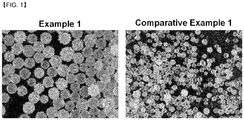
- FIG. 1 is an image showing a size and a distribution of particles produced after performing polymerization processes according to Example 1 and Comparative Example 1 of the present invention.
- Step 2 Preparation of rac-[(3-t-butoxypropylmethylsilanediyl)-bis(2-methyl-4-(4-t-butylphenyl)indenyl]zirconium dichloride
- the reaction solution was raised to room temperature and stirred for about 15 h, and the solvent was removed under reduced pressure. After distillation of all the reaction solvents under reduced pressure, 1,4-dioxane was added in an amount of 750 g, which is about 5 times the weight of 2-methyl-4-(4-t-butylphenyl)-indene, and stirred for about 1 h.
- the solvent was removed under reduced pressure to obtain a solid mixture of a lithium chloride-1,4-dioxane complex compound and an organometallic compound. About 1 L of dichloromethane was added to a reaction vessel containing the thus-obtained solid mixture, and insoluble inorganic salts, etc. were removed by filtration.
- the thus-obtained metallocene catalyst was subjected to inductively coupled plasma (ICP-AES) analysis to measure the content of a LiCI reaction impurity.
- ICP-AES inductively coupled plasma
- the content of LiCI in the produced metallocene catalyst was 30 ppm, indicating that the metallocene catalyst having very high purity was prepared by removing the impurity.
- the content of LiCI in the produced metallocene catalyst was 50 ppm, indicating that the metallocene catalyst having very high purity was prepared by removing the impurity.
- Step 2 Preparation of rac-[(3-t-butoxypropylmethylsilanediyl)-bis(2-methyl-4-(4-t-butylphenyl)indenyl)]zirconium dichloride
- the thus-obtained metallocene catalyst was subjected to inductively coupled plasma (ICP-AES) analysis to measure the content of a LiCl reaction impurity.
- ICP-AES inductively coupled plasma
- silica 3 g was weighed and put in a Schlenk flask and then 10 mmol of methylaluminoxane (MAO) was added thereto, and allowed to react at 90 °C for about 24 h. After precipitation, an upper layer was removed and a remaining part was washed once with toluene. 60 ⁇ mol of rac-[(3-t-butoxypropylmethylsilanediyl)-bis(2-methyl-4-(4-t-butylphenyl)indenyl)]zirconium dichloride, which is an ansa-metallocene compound prepared in step 2, was dissolved in toluene, and allowed to react at about 70 °C for about 5 h.
- MAO methylaluminoxane
- a metallocene catalyst was prepared in the same manner as in Example 1, except that after reaction by addition of zirconium chloride, the reaction solvents were all removed by distillation under reduced pressure and tetrahydrofuran (THF) was added, instead of 1,4-dioxane, in an amount of 1500 g, which is about 10 times the weight of 2-methyl-4-(4-t-butylphenyl)-indene, and then the content of LiCI was measured.
- THF tetrahydrofuran
- the content of LiCI in the produced metallocene catalyst was 450 ppm, indicating that the metallocene catalyst had a high content of impurity.
- a metallocene catalyst was prepared in the same manner as in Example 1, except that after reaction by addition of zirconium chloride, the reaction solvents were all removed by distillation under reduced pressure and methyl tertiary butyl ether was added, instead of 1,4-dioxane, in an amount of 1500 g, which is about 10 times the weight of 2-methyl-4-(4-t-butylphenyl)-indene, and then the content of LiCI was measured.
- the content of LiCI in the produced metallocene catalyst was 1730 ppm, indicating that the metallocene catalyst had a high content of impurity.
- a metallocene catalyst was prepared in the same manner as in Example 1, except that after reaction by addition of zirconium chloride, the reaction solvents were all removed by distillation under reduced pressure and diethylether (Et 2 O) was added, instead of 1,4-dioxane, in an amount of 1500 g, which is about 10 times the weight of 2-methyl-4-(4-t-butylphenyl)-indene, and then the content of LiCI was measured.
- Et 2 O diethylether
- the content of LiCI in the produced metallocene catalyst was 1850 ppm, indicating that the metallocene catalyst had a high content of impurity.
- the thus-obtained metallocene catalyst was subjected to inductively coupled plasma (ICP-AES) analysis to measure the content of a LiCI reaction impurity.
- ICP-AES inductively coupled plasma
- the content of LiCI in the produced metallocene catalyst was 1415 ppm, indicating that the metallocene catalyst had a high content of impurity, and its industrial application was difficult due to a low yield of 3.2 %.
- FIG. 1 scanning electron microscopic (SEM) images showing a size and a distribution of particles produced after performing polymerization processes according to Example 1 and Comparative Example 1 of the present invention are shown in FIG. 1 .
- SEM scanning electron microscopic
- Preparation Examples 1 to 3 in which the metallocene compound according to the present invention was used as a supported catalyst, showed the effect of increasing activity upon preparation of polypropylene.
- Preparation Examples 1 to 3 showed excellent catalytic activity of 15.3 kg/g ⁇ h to 15.9 kg/g ⁇ h upon homopolymerization.
- Comparative Preparation Examples 1 to 4 in which the solvent for extracting the LiCI complex compound was not used according to the known method, or the common ether-based solvent was used, showed remarkably low catalytic activity of 0.9 kg/g ⁇ h to 2.5 kg/g ⁇ h upon random polymerization.
- Preparation Examples 1 to 3 of the present invention remarkably improved purity of the produced metallocene catalysts, as compared with the known method, and therefore the catalytic activities upon polymerization were about 17 times higher than that of Comparative Preparation Example 1 of the known method.
- Comparative Preparation Example 1 when the catalytic activity is low, a larger amount of the catalyst is needed in order to control slurry density in the polymerization process. When the catalytic activity is low, the catalyst reaches its limit, and there is a difficulty in commercial production.
- the catalytic activity is high as in Preparation Examples 1 to 3 of the present invention, a small amount of the catalyst is needed to control slurry density, and thus it is advantageous in commercial production.
- an average particle size of the produced polypropylene was about 3 times larger than those of Comparative Preparation Examples 1 to 6, and in particular, about 4.5 times larger than that of Comparative Preparation Example 1. Accordingly, there is an advantage that long-term production may be stably performed without fouling in a commercial continuous process.
- Comparative Preparation Examples 1, 3, and 4 when the average particle size of the produced polyolefin is significantly small, a possibility of fine powder generation increases or sheets are produced during the process to cause fouling, leading to reduction of overall process efficiency.
Landscapes
- Chemical & Material Sciences (AREA)
- Organic Chemistry (AREA)
- Chemical Kinetics & Catalysis (AREA)
- Engineering & Computer Science (AREA)
- Materials Engineering (AREA)
- Health & Medical Sciences (AREA)
- Medicinal Chemistry (AREA)
- Polymers & Plastics (AREA)
- Inorganic Chemistry (AREA)
- Crystallography & Structural Chemistry (AREA)
- Transition And Organic Metals Composition Catalysts For Addition Polymerization (AREA)
Abstract
Description
- The present application is based on, and claims priority from, Korean Patent Application Nos.
10-2016-0086256 10-2017-0085739 - The present invention relates to a method of effectively preparing a high-purity metallocene catalyst which may exhibit high activity during preparation of high molecular weight polyolefins.
- Olefin polymerization catalyst systems may be categorized into a Ziegler-Natta catalyst system and a metallocene catalyst system. These two highly active catalyst systems have been developed according to their characteristics. The Ziegler-Natta catalyst system has been widely used in prior commercial processes since it was invented in the 1950s. However, the Ziegler-Natta catalyst system is characterized in that a molecular weight distribution of polymers obtained thereby is wide because it is a multi-site catalyst having a plurality of active sites, and the Ziegler-Natta catalyst system has a problem that a composition distribution of comonomers is not uniform and there is a limitation in securing desired physical properties.
- The metallocene catalyst includes a combination of a main catalyst that is formed primarily of a transition metal compound and a cocatalyst that is an organometallic compound primarily formed of aluminum. Such a catalyst is a homogeneous complex catalyst and a single site catalyst. Due to single site characteristics thereof, a polymer of which a molecular weight distribution is narrow and a composition distribution of comonomers is uniform may be obtained, and stereoregularity, copolymerization characteristics, molecular weight, and degrees of crystallinity of the polymer may be changed by varying a ligand structure of the catalyst and adjusting polymerization conditions.
- Meanwhile, an ansa-metallocene compound is an organometallic compound including two ligands which are linked to each other via a bridge group. The bridge group prevents rotation of the ligands and determines the structure and activity of the metal center.
- Such an ansa-metallocene compound is being used as a catalyst for preparing olefinic homopolymers or copolymers. Particularly, it is known that an ansa-metallocene compound including a cyclopentadienyl-fluorenyl ligand may be used to prepare a high molecular weight polyethylene and to control a microstructure of a polypropylene. It is also known that an ansa-metallocene compound including an indenyl ligand has excellent activity and may be used to prepare a polyolefin with enhanced stereoregularity.
- The present inventors disclosed an ansa-metallocene compound having a novel structure which may provide various selectivities and activities for polyolefin copolymers in Korean Patent Publication No.
10-2013-0125311 - Meanwhile, when the ansa-metallocene catalyst has a bis-indenyl ligand, two types of isomers, i.e., a racemate and a mirror-symmetric meso diastereomer, may be formed according to steric arrangement of two ligands. The racemate is preferred because it is used to prepare an isotactic polymer having high crystallinity and melting point as well as high specific gravity and mechanical strength, whereas the mirror-symmetric meso diastereomer is avoided because it prepares an atactic polymer. However, since the racemate and the mirror-symmetric meso diastereomer are simultaneously prepared in the preparation process of the ansa-metallocene catalyst, the structure of the ansa-metallocene catalyst in which an excess of the racemate may be formed must be importantly considered. Further, the ansa-metallocene catalysts capable of preparing a polyolefin with a higher high molecular weight are needed.
- In the known metallocene catalyst, LiCI, which is one of by-products produced during synthesis of the metallocene catalyst, may coexist when it is not removed during a filtration process, and as a result, the LiCI decreases purity of the catalyst, causing a problem of reducing activity of the metallocene catalyst during polymerization of polymers.
- Accordingly, it is necessary to develop a process of preparing an ansa-metallocene compound capable of preparing a high molecular weight polyolefin with high activity.
- The present invention provides a high-purity metallocene catalyst capable of preparing a high molecular weight polyolefin with high activity.
- The present invention provides a method of preparing a metallocene catalyst, the method including the steps of: forming a metallocene compound by reacting a ligand compound represented by the following Chemical Formula 1 with a zirconium compound; forming a lithium chloride complex compound by adding a solvent for forming the lithium chloride complex compound to reaction products including the metallocene compound; and adding a solvent for extracting the lithium chloride complex compound to reaction products including the lithium chloride complex compound and the metallocene compound, followed by filtration.

- Herein, R1 is a C6-20 aryl substituted with a C1-20 alkyl; R2, R3, and R4 are each independently hydrogen, a halogen, a C1-20 alkyl, a C2-20 alkenyl, a C1-20 alkylsilyl, a C1-20 silylalkyl, a C1-20 alkoxysilyl, a C1-20 ether, a C1-20 silylether, a C1-20 alkoxy, a C6-20 aryl, a C7-20 alkylaryl, or a C7-20 arylalkyl; A is carbon, silicon, or germanium; R5 is a C1-20 alkyl substituted with a C1-20 alkoxy; and R6 is hydrogen, a C1-20 alkyl, or a C2-20 alkenyl.
- Further, the present invention provides a metallocene catalyst prepared by the above-described method.
- Hereinafter, a method of preparing a metallocene catalyst and a metallocene catalyst prepared thereby according to preferred embodiments of the present invention will be described in more detail.
- In the present invention, the terms "first", "second", and the like are used to describe a variety of components, and these terms are merely employed to differentiate a certain component from other components.
- Further, the terms used in this description are just for explaining exemplary embodiments, and are not intended to restrict the present invention. A singular expression may include a plural expression unless it is differently expressed contextually. It must be understood that the term "include", "equip", or "have" in the present description is only used for designating the existence of characteristics taken effect, numbers, steps, components, or combinations thereof, and do not exclude the existence or the possibility of addition of one or more different characteristics, numbers, steps, components, or combinations thereof beforehand.
- The present invention may be variously modified and have various forms, and specific examples of the present invention will be explained in detail below. However, it is not intended to limit the present invention to the specific examples, and it must be understood that the present invention includes all modifications, equivalents, or replacements included in the spirit and technical scope of the present invention.
- According to one embodiment of the present invention, a method of preparing a metallocene catalyst is provided, the method including the steps of: forming a metallocene compound by reacting a ligand compound represented by the following Chemical Formula 1 with a zirconium compound; forming a lithium chloride complex compound by adding a solvent for forming the lithium chloride complex compound to reaction products including the metallocene compound; and adding a solvent for extracting the lithium chloride complex compound to reaction products including the lithium chloride complex compound and the metallocene compound, followed by filtration.

- In
Chemical Formula 1, R1 is a C6-20 aryl substituted with a C1-20 alkyl; R2, R3, and R4 are each independently hydrogen, a halogen, a C1-20 alkyl, a C2-20 alkenyl, a C1-20 alkylsilyl, a C1-20 silylalkyl, a C1-20 alkoxysilyl, a C1-20 ether, C1-20 silylether, a C1-20 alkoxy, a C6-20 aryl, a C7-20 alkylaryl, or a C7-20 arylalkyl; A is carbon, silicon, or germanium; R5 is a C1-20 alkyl substituted with a C1-20 alkoxy; and R6 is hydrogen, a C1-20 alkyl, or a C2-20 alkenyl. - In particular, the present invention is characterized by including the step of reacting with a solvent capable of forming a lithium chloride complex compound, e.g., a specific solvent having a ring structure including two or more oxygen atoms, so as to effectively remove LiCl which is produced as a by-product during reaction of a ligand compound and a transition metal compound, and the step of using a specific aprotic solvent capable of selectively extracting the organometallic compound and the lithium chloride complex compound. In other words, the present invention is characterized in that a solvent having a ring structure including two or more oxygen atoms, such as 1,4-dioxane, etc., which acts as a specific solvent for removing LiCI, is used as the solvent for forming the lithium chloride complex compound, and ultimately, a high-purity organometallic compound is prepared, thereby preparing a polypropylene with high activity.
- In the present invention, the ligand compound includes an indene compound as shown in
Chemical Formula 1. - In particular, the method of preparing the metallocene catalyst of the present invention may include the steps of preparing the ligand compound represented by the following Chemical Formula 1 by reacting an indene compound represented by the following Chemical Formula 2 with a compound represented by the following Chemical Formula 3; forming the metallocene compound by reacting the ligand compound represented by the following
Chemical Formula 1 with a zirconium compound; forming the lithium chloride complex compound by adding the solvent for forming the lithium chloride complex compound to reaction products including the metallocene compound; and adding the solvent for extracting the lithium chloride complex compound to reaction products including the lithium chloride complex compound and the metallocene compound, followed by filtration.
- In
Chemical Formula 1, R1 is a C6-20 aryl substituted with a C1-20 alkyl; R2, R3, and R4 are each independently hydrogen, a halogen, a C1-20 alkyl, a C2-20 alkenyl, a C1-20 alkylsilyl, a C1-20 silylalkyl, a C1-20 alkoxysilyl, a C1-20 ether, a C1-20 silylether, a C1-20 alkoxy, a C6-20 aryl, a C7-20 alkylaryl, or a C7-20 arylalkyl; A is carbon, silicon, or germanium; R5 is a C1-20 alkyl substituted with a C1-20 alkoxy; and R6 is hydrogen, a C1-20 alkyl, or a C2-20 alkenyl.
- In Chemical Formula 2, R1 is a C6-20 aryl substituted with a C1-20 alkyl; and R2, R3, and R4 are each independently hydrogen, a halogen, a C1-20 alkyl, a C2-20 alkenyl, a C1-20 alkylsilyl, a C1-20 silylalkyl, a C1-20 alkoxysilyl, a C1-20 ether, a C1-20 silylether, a C1-20 alkoxy, a C6-20 aryl, a C7-20 alkylaryl, or a C7-20 arylalkyl.

- In Chemical Formula 3, A is carbon, silicon, or germanium; R5 is a C1-20 alkyl substituted with a C1-20 alkoxy; and R6 is hydrogen, a C1-20 alkyl, or a C2-20 alkenyl; X's are the same or different halogens.
[Chemical Formula 4] ZrX4
- In Chemical Formula 4, X's are the same or different halogens.
- Further, the present invention provides a method of preparing a metallocene catalyst as a catalyst for olefin polymerization, which may minimize reaction by-products and may prepare the metallocene compound with high purity. The metallocene catalyst may particularly include a metallocene compound of the following Chemical Formula 5.

- In Chemical Formula 5, X's are the same or different halogens; R1 is a C6-20 aryl substituted with a C1-20 alkyl; R2, R3, and R4 are each independently hydrogen, a halogen, a C1-20 alkyl, a C2-20 alkenyl, a C1-20 alkylsilyl, a C1-20 silylalkyl, a C1-20 alkoxysilyl, a C1-20 ether, a C1-20 silylether, a C1-20 alkoxy, a C6-20 aryl, a C7-20 alkylaryl, or a C7-20 arylalkyl; A is carbon, silicon, or germanium; R5 is a C1-20 alkyl substituted with a C1-20 alkoxy; and R6 is hydrogen, a C1-20 alkyl, or a C2-20 alkenyl.
- The compound of Chemical Formula 5 has an ansa-metallocene structure and includes two indenyl groups as ligands. Particularly, the compound has an advantage that the bridge group connecting the ligands is substituted with a functional group which may take a role of a Lewis base as an oxygen-donor, and therefore, activity of the catalyst may be maximized. Further, since the indenyl groups are substituted by a bulky group such as a C6-20 aryl (R1) substituted with a C1-20 alkyl, steric hindrance occurs and formation of a meso-form is prevented. Therefore, the indene compound represented by Chemical Formula 1 may be used to more easily prepare a polyolefin having desired physical properties, when it is used as a catalyst for preparing the polyolefin by itself or in a supported form. Further, since the catalyst includes zirconium (Zr) as a metal atom, activity of the catalyst may be improved and a polyolefin having a higher molecular weight may be polymerized.
- Preferably, R1 is phenyl substituted with tert-butyl. More preferably, R1 is 4-tert-butyl-phenyl.
- More preferably, R2, R3, and R4 are hydrogen.
- More preferably, A is silicon.
- More preferably, R5 is 3-(t-butoxy)-propyl and R6 is methyl.
- Representative examples of the compound represented by Chemical Formula 5 are as follows.

- In particular, the method of preparing the metallocene catalyst according to the present invention may be performed by the following
Reaction Scheme 1.
- The
step 1 is the step of preparing the ligand compound represented by Chemical Formula 3 by reacting the indene compound represented by Chemical Formula 1 with the compound represented by Chemical Formula 2. Alkyllithium (e.g., n-butyllithium) is preferably used in the reaction, and the reaction temperature is -200 °C to 0 °C, and more preferably -150 °C to 0 °C. Toluene, tetrahydrofuran (THF), etc. may be used as a solvent. In this regard, the steps of separating an organic layer from the product, vacuum drying the separated organic layer, and eliminating an excess of the reactant therefrom may be further carried out. - The step 2 is the step of preparing the compound represented by Chemical Formula 5 by reacting the ligand compound represented by Chemical Formula 3 with the zirconium compound represented by Chemical Formula 4. Alkyllithium (e.g., n-butyllithium) is preferably used in the reaction, and the reaction temperature is -20 °C to 0 °C, and more preferably -78 °C to 0 °C. One or more selected from the group consisting of diethyl ether, hexane, toluene, and 1,4-dioxane may be used as a solvent of the reaction.
- Particularly, according to the present invention, the step of removing the reaction solvent after the above reaction and then forming the lithium chloride complex compound by adding the solvent for forming the lithium chloride complex compound to the reaction products including the obtained metallocene compound may be performed. Here, the solvent for forming the lithium chloride complex compound has a characteristic of dissolving both of the produced lithium chloride complex compound and the metallocene compound while forming the complex compound by reacting with lithium chloride. In general, a Li atom which is a component of LiCI is oxophilic, and thus LiCI may easily form a complex with an oxygen atom included in the solvent. However, for more effective formation of the complex compound with LiCI which coexists as an impurity in the reaction products including the metallocene compound, an organic solvent containing two or more oxygen atoms and having a ring structure is preferred. Specifically, when an organic solvent containing two or more oxygen atoms is used, reactivity with LiCI is increased due to high oxophilicity, and when the organic solvent has a ring structure, a shielding effect by surrounding carbon atoms is reduced, and therefore the oxygen atoms effectively form the complex compound, together with LiCI, with high oxophilicity. The solvent for forming the lithium chloride complex compound may be one or more selected from the group consisting of 1,4-dioxane and 1,3-dioxolane.
- The solvent for forming the lithium chloride complex compound may be added in an amount of about 3 times to about 20 times, preferably about 5 times to about 15 times, and most preferably about 8 times to about 12 times the weight of the indene compound of Chemical Formula 2, and then stirred for about 1 h or more.
- The lithium chloride complex compound thus prepared is a lithium chloride-1,4-dioxane complex compound in which a ratio of LiCl/dioxane is 1:1.
- The solvent for forming the lithium chloride complex compound may be removed by vacuum distillation under conditions of a pressure of 0.5 mbar to 2.0 mbar and a temperature of 30 °C to 45 °C.
- Further, after the solvent for forming the lithium chloride complex compound is added and then stirred, the reaction products obtained after removing the solvent for forming the lithium chloride complex compound such as 1,4-dioxane, etc. may include the lithium chloride complex compound and the metallocene compound. The step of adding a solvent for extracting the lithium chloride complex compound to the reaction products including the lithium chloride complex compound and the metallocene compound, followed by filtration, may be performed. Here, the solvent for extracting the lithium chloride complex compound may dissolve only the lithium chloride complex compound in the reaction products to obtain only the metallocene compound in a solid state by filtration. The solvent for extracting the lithium chloride complex compound may be an aprotic solvent including no oxygen atoms. Specifically, when an organic solvent including oxygen atoms is added to the reaction products including the lithium chloride complex compound and the metallocene compound, the metallocene compound which is the product may also be dissolved. When a protic solvent such as an alcohol, which is one of polar solvents, is used, the metallocene compound which is the product may be decomposed. The solvent for extracting the lithium chloride complex compound may be, for example, one or more selected from the group consisting of dichloromethane, chloroform, carbon tetrachloride, benzene, and toluene.
- The solvent for extracting the lithium chloride complex compound may be added in an amount of about 3 times to about 20 times, preferably about 4 times to about 15 times, and most preferably about 5 times to about 12 times the weight of the indene compound of Chemical Formula 2, and then stirred for about 1 h or more.
- In the method of preparing the metallocene catalyst according to the present invention, the extraction solvent may be added and filtration may be performed, and then the solvent may be removed from the obtained filtrate, preferably followed by vacuum distillation and recrystallization. In the recrystallization, one or more solvents selected from the group consisting of dichloromethane and hexane may be used.
- Meanwhile, according to another embodiment of the present invention, a metallocene catalyst prepared by the above-described method is provided. In particular, the metallocene catalyst prepared according to the present invention may have high purity by removing as much as possible of the LiCI reaction impurity. Specifically, a content of LiCI in the prepared metallocene catalyst may be 200 ppm or less, 150 ppm or less, 100 ppm or less, or 75 ppm or less.
- In the metallocene catalyst of the present invention, the compound represented by Chemical Formula 5 may be used as the catalyst for olefin polymerization by itself or in combination with a cocatalyst as a catalyst precursor.
- The metallocene catalyst may be a catalyst supported on a carrier. The carrier is not particularly limited as long as it is commonly used in the art to which the present invention pertains. Preferably, one or more carriers selected from the group consisting of silica, silica-alumina, and silica-magnesia may be used. Meanwhile, when the catalyst is supported on a carrier such as silica, the silica carrier and the functional group of the compound represented by
Chemical Formula 1 are chemically bonded. Therefore, the catalyst is hardly released from the surface during the olefin polymerization, and there is no fouling that is the adhesion of polymers onto a reactor wall or between polymer particles when polyolefin is prepared by slurry or vapor phase polymerization. - Further, since polyolefin prepared in the presence of the catalyst including such silica carrier is superior in particle shape and apparent density of the polymer, the polyolefin may be suitable for traditional slurry or vapor-phase polymerization. Therefore, a carrier that is dried at high temperature and has highly reactive siloxane groups on the surface may be preferably used.
- Specifically, silica, silica-alumina, etc. dried at a high temperature may be used, and they may include an oxide, carbonate, sulfate, or nitrate component, such as Na2O, K2CO3, BaSO4, Mg(NO3)2, etc.
- Furthermore, the metallocene catalyst may include a cocatalyst consisting of alkylaluminoxane. When the cocatalyst is used, the catalyst may be used in the form where X group bonded to the metal element (Hf) of the compound represented by Chemical Formula 5 is substituted with an alkyl group, e.g., a C1-20 alkyl.
- The cocatalyst is not particularly limited as long as it is commonly used in the related art to which the present invention pertains. Preferably, one or more cocatalysts selected from the group consisting of silica, silica-alumina, and an organoaluminum compound may be used.
- Meanwhile, according to still another embodiment, a method of polymerizing a polymer by using the metallocene catalyst is provided. Particularly, a method of preparing a polyolefin is provided, the method including the step of polymerizing at least one olefinic monomer in the presence of the metallocene catalyst. The olefinic monomer may be one or more selected from the group consisting of ethylene, propylene, 1-butene, 1-pentene, 1-hexene, 4-methyl-1-pentene, 1-octene, 1-decene, 1-dodecene, 1-tetradecene, 1-hexadecene, 1-octadecene, 1-eicosene, and mixtures thereof.
- Here, the polymerization of polyolefin may be carried out at a temperature of 25 °C to 500 °C and a pressure of 1 kgf/cm2 to 100 kgf/cm2 for 1 h to 24 h. In this regard, the polymerization temperature is preferably 25 °C to 200 °C, and more preferably 50 °C to 500 °C. Further, the polymerization reaction pressure is preferably 1 kgf/cm2 to 70 kgf/cm2, and more preferably 5 kgf/cm2 to 40 kgf/cm2. The polymerization reaction time is preferably 1 h to 5 h.
- The polymerization process may control the molecular weight range of a final polymer product according to whether hydrogen is added thereto or not. Particularly, a polyolefin having a high molecular weight may be prepared when hydrogen is not added, and a polyolefin having a low molecular weight may be prepared even by using a small quantity of hydrogen when hydrogen is added. In this regard, the amount of hydrogen added to the polymerization process may be 0.07 L to 4 L under a reactor condition of 1 atm, or hydrogen may be provided to the reactor with a pressure of 1 bar to 40 bar, or at a mole ratio of hydrogen to an olefinic monomer of 168 ppm to 8000 ppm.
- In the process of preparing a polyolefin by using the metallocene catalyst prepared according to the present invention, activity of the catalyst may be 8.0 kg/gCat · h or more, or 8.0 to 30 kg/mmol · h, preferably 10.0 kg/mmol · h or more, and more preferably 12.0 kg/mmol · h or more, when calculated as a ratio of the weight (kg) of the produced polymer to the unit weight (g) of the used catalyst, based on unit time (h).
- The polyolefin prepared by using the compound of Chemical Formula 5 as a catalyst may have a high molecular weight, as compared with those prepared by using known metallocene catalysts. For example, a melt index (MFR, 2.16 kg) of the polyolefin, which is measured according to the American Society for Testing and Materials ASTM D1238, may be greatly reduced to 25 g/10 min or less, preferably 18 g/10 min or less, and most preferably 15 g/10 min or less, and therefore a polyolefin having a high molecular weight may be obtained.
- Particularly, the present invention is characterized in that vacuum distillation is further performed after dissolving the catalyst in the solvent for forming the lithium chloride complex compound such as 1,4-dioxane, etc. during the known preparation process of the catalyst, thereby preparing the catalyst with higher purity. Furthermore, the present invention may be very effective for removing by-products such as LiCI, etc., and may achieve the effect of increasing filtration efficiency due to an increase of the particle size. For example, a polyolefin prepared by using the metallocene catalyst according to the present invention may have an average particle size of 500 µm or more, or 500 µm to 1200 µm, preferably 600 µm or more, and more preferably 700 µm or more.
- When a polyolefin is used in films, residual inorganic materials increase gelling in the film. Since a high-purity polymer may be prepared by using the metallocene catalyst prepared according to the present invention, gelling is reduced when the polymer is used in films, and accordingly, processibility may be remarkably improved.
- A high-purity metallocene catalyst according to the present invention is prepared by effectively removing LiCI which is a by-product generated during synthesis of the catalyst exhibits superior catalytic activity in olefin polymerization, as compared to known metallocene compounds. When this metallocene catalyst is used in polyolefin preparation, a polyolefin having a high molecular weight may be easily prepared.
-
FIG. 1 is an image showing a size and a distribution of particles produced after performing polymerization processes according to Example 1 and Comparative Example 1 of the present invention. - Hereinafter, preferred examples will be provided for better understanding of the present invention. However, the following examples are only provided for understanding the present invention more easily, and the content of the present invention is not limited thereby.
-

- 150 g of 2-methyl-4-(4-t-butylphenyl)-indene was put in a 3 L Schlenk flask, and a toluene/THF (5:1, 715 mL) solution was added thereto and dissolved at room temperature. The solution was cooled to -20 °C, and then 240 mL of n-butyllithium solution (n-BuLi, 2.5 M in hexane) was slowly added dropwise and stirred at room temperature for about 15 h. Thereafter, the reaction solution was cooled to -20 °C, and 82 g of (3-t-butoxypropyl)dichloromethylsilane and 512 mg of CuCN were slowly added dropwise. The reaction solution was raised to room temperature and stirred for about 15 h, and then 500 mL of water was added thereto. Thereafter, an organic layer was separated and dried over MgSO4, followed by filtration. A filtrate was distilled under reduced pressure to obtain a yellow oil.
1H NMR (500 MHz, CDCl3, 7.26 ppm): -0.09 - -0.05 (3H, m), 0.40 - 0.60 (2H, m), 0.80 - 1.51 (26H, m), 2.12 - 2.36 (6H, m), 3.20-3.28 (2H, m), 3.67 - 3.76 (2H, m), 6.81 - 6.83 (2H, m), 7.10 - 7.51 (14H, m) - Previously prepared (3-t-butoxypropyl)(methyl)bis(2-methyl-4-(4-t-butylphenyl))indenylsilane was put in a 3 L Schlenk flask, and 1 L of toluene/diethylether (volume ratio of 10:1) was added thereto and dissolved at room temperature. The solution was cooled to -20 °C, and then 240 mL of an n-butyllithium solution (n-BuLi, 2.5 M in hexane) was slowly added dropwise and stirred at room temperature for about 3 h. Thereafter, the reaction solution was cooled to -20 °C, and 92 g of zirconium chloride was added thereto. The reaction solution was raised to room temperature and stirred for about 15 h, and the solvent was removed under reduced pressure. After distillation of all the reaction solvents under reduced pressure, 1,4-dioxane was added in an amount of 750 g, which is about 5 times the weight of 2-methyl-4-(4-t-butylphenyl)-indene, and stirred for about 1 h. The solvent was removed under reduced pressure to obtain a solid mixture of a lithium chloride-1,4-dioxane complex compound and an organometallic compound. About 1 L of dichloromethane was added to a reaction vessel containing the thus-obtained solid mixture, and insoluble inorganic salts, etc. were removed by filtration. A filtrate was dried under reduced pressure, and 300 mL of dichloromethane was added thereto to precipitate crystals. The precipitated crystals were filtered and dried to obtain 80 g of rac-[(3-t-butoxypropylmethylsilanediyl)-bis(2-methyl-4-(4-t-butylphenyl)indenyl)]zirconium dichloride (yield 31.7 %, rac:meso = 50:1).
1H NMR (500 MHz, CDCl3, 7.26 ppm): 1.19 - 1.78 (37H, m), 2.33 (3H, s), 2.34 (3H, s), 3.37 (2H, t), 6.91 (2H, s), 7.05 - 7.71 (14H, m) - The thus-obtained metallocene catalyst was subjected to inductively coupled plasma (ICP-AES) analysis to measure the content of a LiCI reaction impurity. As a result, the content of LiCI was 75 ppm, indicating that the metallocene catalyst having very high purity was prepared by removing the impurity.
- 3 g of silica was weighed and put in a Schlenk flask, and then 10 mmol of methylaluminoxane (MAO) was added thereto, and allowed to react at 90 °C for about 24 h. After precipitation, an upper layer was removed and a remaining part was washed once with toluene. 60 µmol of rac-[(3-t-butoxypropylmethylsilanediyl)-bis(2-methyl-4-(4-t-butylphenyl)indenyl)]zirconium dichloride, which is an ansa-metallocene compound prepared in step 2, was dissolved in toluene, and allowed to react at about 70 °C for about 5 h. After the reaction was terminated and precipitation was completed, an upper solution was removed and a remaining reaction product was washed with toluene. The next day, 48 µmol of borate (AB) was dissolved in toluene, and allowed to react at about 70 °C for about 5 h. After the reaction was terminated and precipitation was completed, an upper solution was removed and a remaining reaction product was washed with toluene, and further washed with hexane and then dried under vacuum to obtain 5 g of a silica-supported metallocene catalyst in a solid particle form.
- 78 g of a metallocene catalyst rac-[(3-t-butoxypropylmethylsilanediyl)-bis(2-methyl-4-(4-t-butylphenyl)indenyl)]zirconium dichloride (yield 30.9 %, rac:meso = 50:1) was prepared in the same manner as in Example 1, except that after reaction by addition of zirconium chloride, the reaction solvents were all removed by distillation under reduced pressure and 1,4-dioxane was added in an amount of 1500 g, which is about 10 times the weight of 2-methyl-4-(4-t-butylphenyl)-indene, and then the content of LiCI was measured.
- In this regard, the content of LiCI in the produced metallocene catalyst was 30 ppm, indicating that the metallocene catalyst having very high purity was prepared by removing the impurity.
- 80 g of a metallocene catalyst rac-[(3-t-butoxypropylmethylsilanediyl)-bis(2-methyl-4-(4-t-butylphenyl)indenyl)]zirconium dichloride (yield 31.7 %, rac:meso = 50:1) was prepared in the same manner as in Example 1, except that after reaction by addition of zirconium chloride, the reaction solvents were all removed by distillation under reduced pressure and 1,4-dioxane was added in an amount of 2250 g, which is about 15 times the weight of 2-methyl-4-(4-t-butylphenyl)-indene, and then the content of LiCI was measured.
- In this regard, the content of LiCI in the produced metallocene catalyst was 50 ppm, indicating that the metallocene catalyst having very high purity was prepared by removing the impurity.
- 150 g of 2-methyl-4-(4-t-butylphenyl)-indene was put in a 3 L Schlenk flask, and a toluene/THF (5:1, 715 mL) solution was added thereto and dissolved at room temperature. The solution was cooled to -20 °C, and then 240 mL of n-butyllithium solution (n-BuLi, 2.5 M in hexane) was slowly added dropwise and stirred at room temperature for about 3 h. Thereafter, the reaction solution was cooled to -20 °C, and 82 g of (3-t-butoxypropyl)dichloromethylsilane and 512 mg of CuCN were slowly added dropwise. The reaction solution was raised to room temperature and stirred for about 15 h, and then 500 mL of water was added thereto. Thereafter, an organic layer was separated and dried over MgSO4, followed by filtration. A filtrate was distilled under reduced pressure to obtain a yellow oil.
1H NMR (500 MHz, CDCl3, 7.26 ppm): -0.09 - -0.05 (3H, m), 0.40 - 0.60 (2H, m), 0.80 - 1.51 (26H, m), 2.12 - 2.36 (6H, m), 3.20-3.28 (2H, m), 3.67 - 3.76 (2H, m), 6.81 - 6.83 (2H, m), 7.10 - 7.51 (14H, m) - Previously prepared (3-t-butoxypropyl)(methyl)bis(2-methyl-4-(4-t-butylphenyl))indenylsilane was put in a 3 L Schlenk flask, and 1 L of toluene/diethylether (10:1) was added thereto and dissolved at room temperature. The solution was cooled to -20 °C, and then 240 mL of n-butyllithium solution (n-BuLi, 2.5 M in hexane) was slowly added dropwise and stirred at room temperature for about 3 h. Thereafter, the reaction solution was cooled to -20 °C, and 92 g of zirconium chloride was added thereto. The reaction solution was raised to room temperature and stirred for about 15 h, and the reaction solvent was removed under reduced pressure. Without treatment of a solvent for forming a lithium chloride complex compound, about 1 L of dichloromethane was added, and insoluble inorganic salts, etc. were removed by filtration. A filtrate was dried under reduced pressure, and 300 mL of dichloromethane was added to precipitate crystals. The precipitated crystals were filtered and dried to obtain 80 g of rac-[(3-t-butoxypropylmethylsilanediyl)-bis(2-methyl-4-(4-t-butylphenyl)indenyl)]zirconium dichloride (yield 31.7 %, rac:meso = 50:1).
1H NMR (500 MHz, CDCl3, 7.26 ppm): 1.19 - 1.78 (37H, m), 2.33 (3H, s), 2.34 (3H, s), 3.37 (2H, t), 6.91 (2H, s), 7.05 - 7.71 (14H, m) - The thus-obtained metallocene catalyst was subjected to inductively coupled plasma (ICP-AES) analysis to measure the content of a LiCl reaction impurity. As a result, the content of LiCI was 2110 ppm, indicating that the metallocene catalyst had a high content of impurity.
- 3 g of silica was weighed and put in a Schlenk flask and then 10 mmol of methylaluminoxane (MAO) was added thereto, and allowed to react at 90 °C for about 24 h. After precipitation, an upper layer was removed and a remaining part was washed once with toluene. 60 µmol of rac-[(3-t-butoxypropylmethylsilanediyl)-bis(2-methyl-4-(4-t-butylphenyl)indenyl)]zirconium dichloride, which is an ansa-metallocene compound prepared in step 2, was dissolved in toluene, and allowed to react at about 70 °C for about 5 h. After the reaction was terminated and precipitation was completed, an upper solution was removed and a remaining reaction product was washed with toluene. The next day, 48 µmol of borate (AB) was dissolved in toluene, and allowed to react at about 70 °C for about 5 h. After the reaction was terminated and precipitation was completed, an upper solution was removed and a remaining reaction product was washed with toluene, and further washed with hexane and then dried under vacuum, to obtain 5 g of a silica-supported metallocene catalyst in a solid particle form.
- A metallocene catalyst was prepared in the same manner as in Example 1, except that after reaction by addition of zirconium chloride, the reaction solvents were all removed by distillation under reduced pressure and tetrahydrofuran (THF) was added, instead of 1,4-dioxane, in an amount of 1500 g, which is about 10 times the weight of 2-methyl-4-(4-t-butylphenyl)-indene, and then the content of LiCI was measured.
- In this regard, the content of LiCI in the produced metallocene catalyst was 450 ppm, indicating that the metallocene catalyst had a high content of impurity.
- A metallocene catalyst was prepared in the same manner as in Example 1, except that after reaction by addition of zirconium chloride, the reaction solvents were all removed by distillation under reduced pressure and methyl tertiary butyl ether was added, instead of 1,4-dioxane, in an amount of 1500 g, which is about 10 times the weight of 2-methyl-4-(4-t-butylphenyl)-indene, and then the content of LiCI was measured.
- In this regard, the content of LiCI in the produced metallocene catalyst was 1730 ppm, indicating that the metallocene catalyst had a high content of impurity.
- A metallocene catalyst was prepared in the same manner as in Example 1, except that after reaction by addition of zirconium chloride, the reaction solvents were all removed by distillation under reduced pressure and diethylether (Et2O) was added, instead of 1,4-dioxane, in an amount of 1500 g, which is about 10 times the weight of 2-methyl-4-(4-t-butylphenyl)-indene, and then the content of LiCI was measured.
- In this regard, the content of LiCI in the produced metallocene catalyst was 1850 ppm, indicating that the metallocene catalyst had a high content of impurity.
- After reaction by addition of zirconium chloride, the reaction solvents were all removed by distillation under reduced pressure and 1,4-dioxane was added in an amount of about 750 g, which is about 5 times the weight of 2-methyl-4-(4-t-butylphenyl)-indene, and then insoluble solids were filtered and dried to obtain 8 g of rac-[(3-t-butoxypropylmethylsilanediyl)-bis(2-methyl-4-(4-t-butylphenyl)indenyl)]zirconium dichloride (yield 3.2 %).
- The thus-obtained metallocene catalyst was subjected to inductively coupled plasma (ICP-AES) analysis to measure the content of a LiCI reaction impurity. As a result, the content of LiCI was 1080 ppm, indicating that the metallocene catalyst had a high content of impurity, and its industrial application was difficult due to a low yield of 3.2 %.
- 5 g of a metallocene catalyst rac-[(3-t-butoxypropylmethylsilanediyl)-bis(2-methyl-4-(4-t-butylphenyl)indenyl)]zirconium dichloride (yield 2.0 %) was prepared in the same manner as in Comparative Example 5, except that after reaction by addition of zirconium chloride, the reaction solvents were all removed by distillation under reduced pressure and 1,4-dioxane was added in an amount of about 1500 g, which is about 10 times the weight of 2-methyl-4-(4-t-butylphenyl)-indene, and then the content of LiCI was measured.
- In this regard, the content of LiCI in the produced metallocene catalyst was 1415 ppm, indicating that the metallocene catalyst had a high content of impurity, and its industrial application was difficult due to a low yield of 3.2 %.
- Preparation of a metallocene catalyst was attempted in the same manner as in Comparative Example 1, except that after reaction by addition of zirconium chloride, the reaction solvents were all removed by distillation under reduced pressure and 1,4-dioxane was added in an amount of about 2250 g, which is about 15 times the weight of 2-methyl-4-(4-t-butylphenyl)-indene. However, all products were dissolved, and thus no organometallic compound was obtained (yield 0 %). Also, the content of LiCI could not be measured.
- The main process conditions after reaction by addition of zirconium chloride in the preparation processes of the catalysts according to Examples 1 to 3 and Comparative Examples 1 to 7, and the contents of LiCI measured in the produced catalysts, are shown in Table 1 below.
[Table 1] Step of forming LiCl complex compound Step of selectively extracting organometallic compound Content of LiCI in catalyst (ppm) Solvent Amount (ratio) Solvent Amount (ratio) Example 1 1,4-Dioxane 5 Dichloromethane 5 75 Example 2 1,4-Dioxane 10 Dichlorometh ane 5 30 Example 3 1,4-Dioxane 15 Dichloromethane 5 50 Comparative Example 1 - - Dichlorometh ane 5 2950 Comparative Example 2 Tetrahydrofur an 10 Dichlorometh ane 5 450 Comparative Example 3 Methyl t-butyl ether 10 Dichlorometh ane 5 1730 Comparative Example 4 Diethyl ether 10 Dichlorometh ane 5 1850 Comparative Example 5 1,4-Dioxane 5 1,4-Dioxane 5 1080 Comparative Example 6 1,4-Dioxane 10 1,4-Dioxane 10 1415 Comparative Example 7 1,4-Dioxane 15 1,4-Dioxane 15 - - After vacuum-drying a 2 L stainless reactor at 65 °C and cooling the same, 3.0 mmol of triethylaluminum and about 770 g of propylene were sequentially added thereto at room temperature and with addition of 2 bar of hydrogen.
- After stirring the mixture for about 10 minutes, 0.060 g of each of the supported metallocene catalysts prepared in Examples 1 to 3 and Comparative Examples 1 to 6 was dissolved in 20 mL of TMA-prescribed hexane, and each of the solutions was added to the reactor under nitrogen pressure. Thereafter, the temperature of the reactor was slowly raised to about 70 °C, and then the polymerization was carried out for about 1 h. After the reaction was terminated, unreacted propylene was vented out.
-
- (1) Catalytic activity: a ratio of the weight of the produced polymer (kg PP) to the amount of the used catalyst (mmol and g of catalyst) was calculated, based on unit time (h).
- (2) Melting point (Tm) of polymer: a melting point of the polymer was measured by using a differential scanning calorimeter (DSC, Device Name: DSC 2920, Manufacturer: TA instruments). Specifically, after the polymer was heated to 220 °C and the temperature was maintained for 5 min, the temperature was decreased to 20 °C. Thereafter, the temperature was increased again. At this time, the scanning speed of heating and cooling processes was respectively 10 °C/min.
- (3) Crystallization temperature (Tc) of polymer: a crystallization temperature was determined from a DSC curve which was obtained while decreasing the temperature under the same conditions as in the measurement of the melting point by using DSC.
- (4) Melt index (MFR, 2.16 kg): a melt index was measured according to ASTM D1238 at 230 °C with a load of 2.16 kg, and determined as a weight (g) of the polymer melted out for 10 min.
- The homopolymerization process conditions of Preparation Examples 1 to 3 and Comparative Preparation Examples 1 to 6 using the metallocene-supported catalysts prepared in Examples 1 to 3 and Comparative Examples 1 to 6, and results of measuring physical properties of the produced polypropylenes, are shown in Table 2 (homopolymerization) below.
[Table 2] Polymerization method Temperature (°C) Amount of supported catalyst (mg) Yield (G) polymerization activity (kg-PP/g-cat · h) Average particle size (µm) MFR (g/10 min) Tm (°C) reparation Example 1 Homopolymeriza tion 70 30 471 15.7 781 12.1 151 Preparation Example 2 Homopolymeriza tion 70 30 459 15.3 803 11.1 150 Preparation Example 3 Homopolymeriza tion 70 30 477 15.9 810 13.3 151 Comparative Preparation Example 1 Homopolymeriza tion 70 30 27 0.9 170 87.2 150 Comparative Preparation Example 2 Homopolymeriza tion 70 30 303 10.1 720 19.2 151 Comparative Preparation Example 3 Homopolymeriza tion 70 30 75 2.5 255 65.2 151 Comparative Preparation Example 4 Homopolymeriza tion 70 30 66 2.2 275 59.9 150 Comparative Preparation Example 5 Homopolymeriza tion 70 30 82 2.7 269 60.1 150 Comparative Preparation Example 6 Homopolymeriza tion 70 30 77 2.6 275 69.2 151 - Further, scanning electron microscopic (SEM) images showing a size and a distribution of particles produced after performing polymerization processes according to Example 1 and Comparative Example 1 of the present invention are shown in
FIG. 1 . As shown inFIG. 1 , the particle size of the produced polymer was increased to about 25 % to inhibit fine powder generation, thereby securing process stability. - As shown in Table 2, Preparation Examples 1 to 3, in which the metallocene compound according to the present invention was used as a supported catalyst, showed the effect of increasing activity upon preparation of polypropylene. In particular, Preparation Examples 1 to 3 showed excellent catalytic activity of 15.3 kg/g · h to 15.9 kg/g · h upon homopolymerization. In contrast, Comparative Preparation Examples 1 to 4, in which the solvent for extracting the LiCI complex compound was not used according to the known method, or the common ether-based solvent was used, showed remarkably low catalytic activity of 0.9 kg/g · h to 2.5 kg/g · h upon random polymerization. Particularly, Preparation Examples 1 to 3 of the present invention remarkably improved purity of the produced metallocene catalysts, as compared with the known method, and therefore the catalytic activities upon polymerization were about 17 times higher than that of Comparative Preparation Example 1 of the known method. As in Comparative Preparation Example 1, when the catalytic activity is low, a larger amount of the catalyst is needed in order to control slurry density in the polymerization process. When the catalytic activity is low, the catalyst reaches its limit, and there is a difficulty in commercial production. In contrast, when the catalytic activity is high as in Preparation Examples 1 to 3 of the present invention, a small amount of the catalyst is needed to control slurry density, and thus it is advantageous in commercial production.
- Furthermore, in Preparation Examples 1 to 3 using the high-purity metallocene catalyst according to the present invention, an average particle size of the produced polypropylene was about 3 times larger than those of Comparative Preparation Examples 1 to 6, and in particular, about 4.5 times larger than that of Comparative Preparation Example 1. Accordingly, there is an advantage that long-term production may be stably performed without fouling in a commercial continuous process. As in Comparative Preparation Examples 1, 3, and 4, when the average particle size of the produced polyolefin is significantly small, a possibility of fine powder generation increases or sheets are produced during the process to cause fouling, leading to reduction of overall process efficiency.
- Further, in the examples of the present invention, it was confirmed that MFR values were remarkably low, indicating that polypropylene prepared by using the metallocene compound according to the present invention as the supported catalyst has a very high molecular weight.
Claims (17)
- A method of preparing a metallocene catalyst, the method comprising the steps of:forming a metallocene compound by reacting a ligand compound represented by the following Chemical Formula 1 with a zirconium compound;forming a lithium chloride complex compound by adding a solvent for forming the lithium chloride complex compound to reaction products including the metallocene compound; andadding a solvent for extracting the lithium chloride complex compound to reaction products including the lithium chloride complex compound and the metallocene compound, followed by filtration:
 wherein R1 is a C6-20 aryl substituted with a C1-20 alkyl;R2, R3, and R4 are each independently hydrogen, a halogen, a C1-20 alkyl, a C2-20 alkenyl, a C1-20 alkylsilyl, a C1-20 silylalkyl, a C1-20 alkoxysilyl, a C1-20 ether, a C1-20 silylether, a C1-20 alkoxy, a C6-20 aryl, a C7-20 alkylaryl, or a C7-20 arylalkyl;A is carbon, silicon, or germanium;R5 is a C1-20 alkyl substituted with a C1-20 alkoxy; andR6 is hydrogen, a C1-20 alkyl, or a C2-20 alkenyl.
 - The method according to Claim 1, further comprising the step of preparing the ligand compound represented by Chemical Formula 1 by reacting an indene compound represented by the following Chemical Formula 2 with a compound represented by the following Chemical Formula 3:
 wherein R1 is a C6-20 aryl substituted with a C1-20 alkyl; andR2, R3, and R4 are each independently hydrogen, a halogen, a C1-20 alkyl, a C2-20 alkenyl, a C1-20 alkylsilyl, a C1-20 silylalkyl, a C1-20 alkoxysilyl, a C1-20 ether,a C1-20 silylether, a C1-20 alkoxy, a C6-20 aryl, a C7-20 alkylaryl, or a C7-20 arylalkyl,
 wherein A is carbon, silicon, or germanium;R5 is a C1-20 alkyl substituted with a C1-20 alkoxy;R6 is hydrogen, a C1-20 alkyl, or a C2-20 alkenyl; andeach X is is the same or a different halogen.
 - The method according to Claim 1, wherein the zirconium compound is represented by the following Chemical Formula 4:
[Chemical Formula 4] ZrX4
wherein each X is are the same or different halogens. - The method according to Claim 1 or 2, wherein R1 is a phenyl substituted with a t-butyl.
- The method according to Claim 1 or 2, wherein R1 is 4-(t-butyl)-phenyl.
- The method according to Claim 1 or 2, wherein R2, R3, and R4 are hydrogen.
- The method according to Claim 1 or 2, wherein A is silicon.
- The method according to Claim 1 or 2, wherein R5 is 3-(t-butoxy)-propyl, and R6 is methyl.
- The method according to Claim 1, wherein the solvent for forming the lithium chloride complex compound is one or more selected from the group consisting of 1,4-dioxane and 1,3-dioxolane.
- The method according to Claim 2, wherein the solvent for forming the lithium chloride complex compound is added in an amount of about 3 times to 20 times the weight of the compound of Chemical Formula 2.
- The method according to Claim 1, wherein the solvent for forming the lithium chloride complex compound is added and stirred for 1 h or more.
- The method according to Claim 1, wherein the solvent for forming the lithium chloride complex compound is removed by vacuum distillation under conditions of a pressure of 0.5 mbar to 2.0 mbar and a temperature of 30 °C to 45 °C.
- The method according to Claim 1, wherein the solvent for extracting the lithium chloride complex compound is one or more selected from the group consisting of dichloromethane, chloroform, carbon tetrachloride, benzene, and toluene.
- The method according to Claim 2, wherein the solvent for extracting the lithium chloride complex compound is added in an amount of about 3 times to 20 times the weight of the compound of Chemical Formula 2.
- The method according to Claim 1, wherein the solvent for extracting the lithium chloride complex compound is added and filtration is performed, and then the solvent is removed from the obtained filtrate, followed by recrystallization using one or more solvents selected from the group consisting of dichloromethane and hexane.
- A metallocene catalyst prepared by the method according to Claim 1 or 2.
- The metallocene catalyst according to Claim 16, wherein a content of lithium chloride in the catalyst is 200 ppm or less.
Applications Claiming Priority (3)
| Application Number | Priority Date | Filing Date | Title |
|---|---|---|---|
| KR20160086256 | 2016-07-07 | ||
| KR1020170085739A KR102064412B1 (en) | 2016-07-07 | 2017-07-06 | Preparation method of metallocene catalyst for preparing polyolefin |
| PCT/KR2017/007280 WO2018009016A2 (en) | 2016-07-07 | 2017-07-07 | Method for preparing metallocene catalyst for preparing polyolefin |
Publications (3)
| Publication Number | Publication Date |
|---|---|
| EP3357938A2 true EP3357938A2 (en) | 2018-08-08 |
| EP3357938A4 EP3357938A4 (en) | 2019-01-23 |
| EP3357938B1 EP3357938B1 (en) | 2022-10-12 |
Family
ID=61025885
Family Applications (1)
| Application Number | Title | Priority Date | Filing Date |
|---|---|---|---|
| EP17824572.6A Active EP3357938B1 (en) | 2016-07-07 | 2017-07-07 | Method of preparing metallocene catalyst for polyolefin preparation |
Country Status (4)
| Country | Link |
|---|---|
| US (1) | US11077434B2 (en) |
| EP (1) | EP3357938B1 (en) |
| KR (1) | KR102064412B1 (en) |
| CN (1) | CN108290973B (en) |
Families Citing this family (3)
| Publication number | Priority date | Publication date | Assignee | Title |
|---|---|---|---|---|
| US11279723B2 (en) | 2018-07-03 | 2022-03-22 | Exxonmobil Chemical Patents Inc. | Metallocene synthesis process |
| CN112745366B (en) * | 2019-10-30 | 2024-05-24 | 中国石油化工股份有限公司 | Silicon-based bridged metallocene compound and preparation method and application thereof |
| CN120590564B (en) * | 2025-08-07 | 2025-11-28 | 卫星新材料研发有限公司 | Preparation method of post-metallocene catalyst |
Family Cites Families (16)
| Publication number | Priority date | Publication date | Assignee | Title |
|---|---|---|---|---|
| NL9201970A (en) | 1992-11-11 | 1994-06-01 | Dsm Nv | Indenyl compounds and catalyst components for the polymerization of olefins. |
| US6248883B1 (en) | 1998-07-31 | 2001-06-19 | Moltech Corporation | Methods of purifying lithium salts |
| US6239300B1 (en) | 1999-02-17 | 2001-05-29 | Phillips Petroleum Company | Metallocene production process |
| DE102004032277A1 (en) | 2004-07-02 | 2006-01-19 | Basell Polyolefine Gmbh | New ansa-metallocene complex, useful as intermediate for preparation of another ansa-metallocene complex and as constituent of catalyst systems for the polymerization of olefinically unsaturated compounds |
| US7169864B2 (en) | 2004-12-01 | 2007-01-30 | Novolen Technology Holdings, C.V. | Metallocene catalysts, their synthesis and their use for the polymerization of olefins |
| US7273914B2 (en) | 2005-08-03 | 2007-09-25 | Equistar Chemicals, Lp | Olefin polymerization methods |
| JP2010059375A (en) | 2008-09-07 | 2010-03-18 | Japan Polypropylene Corp | Olefin polymerization catalyst and method for preparing olefin polymer using the same |
| KR101499819B1 (en) | 2011-11-03 | 2015-03-10 | 주식회사 엘지화학 | Non-supported heterogeous catalyst composition for polymerizing polyolefin and preparation method of the same |
| KR101549206B1 (en) | 2012-05-08 | 2015-09-02 | 주식회사 엘지화학 | Ansa-metallocene catalyst and preparation method of supported catalyst by using the same |
| JP5710035B2 (en) | 2013-02-27 | 2015-04-30 | 日本ポリエチレン株式会社 | Metallocene compound and process for producing olefin polymer |
| KR101429746B1 (en) | 2013-12-31 | 2014-09-17 | 아주대학교산학협력단 | Method for preparing of alpha-olefin oligomer using ansa-metallocene catalyst |
| KR101703273B1 (en) | 2014-06-18 | 2017-02-06 | 주식회사 엘지화학 | Ansa-metallocene catalyst and preparation method of supported catalyst by using it |
| KR101665076B1 (en) | 2014-06-20 | 2016-10-12 | 주식회사 엘지화학 | Ansa-metallocene catalyst and preparation method of supported catalyst by using it |
| KR101653356B1 (en) | 2014-10-17 | 2016-09-01 | 주식회사 엘지화학 | Metallocene catalyst for preparing polyolefin with high molecular weight |
| CN105985473B (en) | 2015-03-04 | 2018-06-15 | 中国石油化工股份有限公司 | Catalyst precarsor and preparation method thereof and catalyst and its method of application and ethylene homo |
| KR102024328B1 (en) | 2015-07-17 | 2019-09-23 | 주식회사 엘지화학 | Metallocene compounds, catalyst compositions comprising the same, and method for preparing olefin polymers using the same |
-
2017
- 2017-07-06 KR KR1020170085739A patent/KR102064412B1/en active Active
- 2017-07-07 EP EP17824572.6A patent/EP3357938B1/en active Active
- 2017-07-07 CN CN201780004055.1A patent/CN108290973B/en active Active
- 2017-07-07 US US15/774,448 patent/US11077434B2/en active Active
Also Published As
| Publication number | Publication date |
|---|---|
| EP3357938A4 (en) | 2019-01-23 |
| CN108290973A (en) | 2018-07-17 |
| US11077434B2 (en) | 2021-08-03 |
| KR20180006319A (en) | 2018-01-17 |
| US20190224661A1 (en) | 2019-07-25 |
| EP3357938B1 (en) | 2022-10-12 |
| KR102064412B1 (en) | 2020-01-09 |
| CN108290973B (en) | 2020-11-10 |
Similar Documents
| Publication | Publication Date | Title |
|---|---|---|
| EP2824107B1 (en) | Ansa-metallocene compound and method for preparing supported catalyst using same | |
| JP4119843B2 (en) | Metallocenes and catalyst compositions derived therefrom | |
| EP3421506B1 (en) | Metallocene supported catalyst and method for producing polypropylene using same | |
| US20100261860A1 (en) | Racemoselective synthesis of ansa-metallocene compounds, ansa-metallocene compounds, catalysts comprising them, process for producing an olefin polymer by use of the catalysts, and olefin homo- and copolymers | |
| EP3936542B1 (en) | Propylene-ethylene random copolymer | |
| EP3034521A1 (en) | Metallocene catalyst for preparation of polyolefin having high molecular weight, and method for preparing same | |
| EP3363820B1 (en) | Hybrid supported metallocene catalyst, and method for preparing polyolefin by using same | |
| WO2015047030A1 (en) | Method for preparing propylene-1-butene copolymer and propylene-1-butene copolymer obtained thereby | |
| EP3321293B2 (en) | High-stiffness and energy-reducing polypropylene for foaming | |
| EP3357938B1 (en) | Method of preparing metallocene catalyst for polyolefin preparation | |
| CN111527112B (en) | Process for preparing supported metallocene catalyst and process for producing polypropylene using the catalyst thus prepared | |
| KR101665076B1 (en) | Ansa-metallocene catalyst and preparation method of supported catalyst by using it | |
| KR20200109600A (en) | Transition metal compound, catalyst composition and method for preparing polypropylene using the same | |
| KR101734427B1 (en) | Supported catalyst and method for preparing of olefin based polymer using the same | |
| KR102035310B1 (en) | Catalyst system and process for preparing polyolefins | |
| EP3045478B1 (en) | Metallocene catalyst for preparing high-molecular polyolefin, and method for preparing same | |
| KR102086059B1 (en) | Metallocene compound and method for preparing polyolefin using the same | |
| WO2018009016A2 (en) | Method for preparing metallocene catalyst for preparing polyolefin | |
| CN121532438A (en) | Metallocenes used in the manufacture of propylene copolymers | |
| KR20230072858A (en) | Method for preparing polypropylene copolymer | |
| KR20200141950A (en) | Propylene-ethylene random copolymer | |
| KR20200090042A (en) | Method for preparing supported hybrid metallocene catalyst and method for preparing olefin polymer using the same |
Legal Events
| Date | Code | Title | Description |
|---|---|---|---|
| STAA | Information on the status of an ep patent application or granted ep patent |
Free format text: STATUS: THE INTERNATIONAL PUBLICATION HAS BEEN MADE |
|
| PUAI | Public reference made under article 153(3) epc to a published international application that has entered the european phase |
Free format text: ORIGINAL CODE: 0009012 |
|
| STAA | Information on the status of an ep patent application or granted ep patent |
Free format text: STATUS: REQUEST FOR EXAMINATION WAS MADE |
|
| 17P | Request for examination filed |
Effective date: 20180503 |
|
| AK | Designated contracting states |
Kind code of ref document: A2 Designated state(s): AL AT BE BG CH CY CZ DE DK EE ES FI FR GB GR HR HU IE IS IT LI LT LU LV MC MK MT NL NO PL PT RO RS SE SI SK SM TR |
|
| AX | Request for extension of the european patent |
Extension state: BA ME |
|
| A4 | Supplementary search report drawn up and despatched |
Effective date: 20181220 |
|
| RIC1 | Information provided on ipc code assigned before grant |
Ipc: C08F 4/52 20060101ALI20181214BHEP Ipc: B01J 31/38 20060101ALI20181214BHEP Ipc: C08F 4/642 20060101ALI20181214BHEP Ipc: C07F 17/00 20060101ALI20181214BHEP Ipc: C08F 4/64 20060101AFI20181214BHEP Ipc: C08F 4/658 20060101ALI20181214BHEP |
|
| DAV | Request for validation of the european patent (deleted) | ||
| DAX | Request for extension of the european patent (deleted) | ||
| STAA | Information on the status of an ep patent application or granted ep patent |
Free format text: STATUS: EXAMINATION IS IN PROGRESS |
|
| 17Q | First examination report despatched |
Effective date: 20200409 |
|
| GRAP | Despatch of communication of intention to grant a patent |
Free format text: ORIGINAL CODE: EPIDOSNIGR1 |
|
| STAA | Information on the status of an ep patent application or granted ep patent |
Free format text: STATUS: GRANT OF PATENT IS INTENDED |
|
| RIC1 | Information provided on ipc code assigned before grant |
Ipc: C08F 4/659 20060101ALI20220620BHEP Ipc: C08F 4/642 20060101ALI20220620BHEP Ipc: C08F 4/52 20060101ALI20220620BHEP Ipc: B01J 31/38 20060101ALI20220620BHEP Ipc: C07F 17/00 20060101ALI20220620BHEP Ipc: C08F 4/64 20060101AFI20220620BHEP |
|
| INTG | Intention to grant announced |
Effective date: 20220715 |
|
| GRAS | Grant fee paid |
Free format text: ORIGINAL CODE: EPIDOSNIGR3 |
|
| GRAA | (expected) grant |
Free format text: ORIGINAL CODE: 0009210 |
|
| STAA | Information on the status of an ep patent application or granted ep patent |
Free format text: STATUS: THE PATENT HAS BEEN GRANTED |
|
| AK | Designated contracting states |
Kind code of ref document: B1 Designated state(s): AL AT BE BG CH CY CZ DE DK EE ES FI FR GB GR HR HU IE IS IT LI LT LU LV MC MK MT NL NO PL PT RO RS SE SI SK SM TR |
|
| REG | Reference to a national code |
Ref country code: GB Ref legal event code: FG4D |
|
| REG | Reference to a national code |
Ref country code: CH Ref legal event code: EP |
|
| REG | Reference to a national code |
Ref country code: DE Ref legal event code: R096 Ref document number: 602017062634 Country of ref document: DE |
|
| REG | Reference to a national code |
Ref country code: IE Ref legal event code: FG4D |
|
| REG | Reference to a national code |
Ref country code: AT Ref legal event code: REF Ref document number: 1524127 Country of ref document: AT Kind code of ref document: T Effective date: 20221115 |
|
| REG | Reference to a national code |
Ref country code: LT Ref legal event code: MG9D |
|
| REG | Reference to a national code |
Ref country code: NL Ref legal event code: MP Effective date: 20221012 |
|
| REG | Reference to a national code |
Ref country code: AT Ref legal event code: MK05 Ref document number: 1524127 Country of ref document: AT Kind code of ref document: T Effective date: 20221012 |
|
| PG25 | Lapsed in a contracting state [announced via postgrant information from national office to epo] |
Ref country code: NL Free format text: LAPSE BECAUSE OF FAILURE TO SUBMIT A TRANSLATION OF THE DESCRIPTION OR TO PAY THE FEE WITHIN THE PRESCRIBED TIME-LIMIT Effective date: 20221012 |
|
| PG25 | Lapsed in a contracting state [announced via postgrant information from national office to epo] |
Ref country code: SE Free format text: LAPSE BECAUSE OF FAILURE TO SUBMIT A TRANSLATION OF THE DESCRIPTION OR TO PAY THE FEE WITHIN THE PRESCRIBED TIME-LIMIT Effective date: 20221012 Ref country code: PT Free format text: LAPSE BECAUSE OF FAILURE TO SUBMIT A TRANSLATION OF THE DESCRIPTION OR TO PAY THE FEE WITHIN THE PRESCRIBED TIME-LIMIT Effective date: 20230213 Ref country code: NO Free format text: LAPSE BECAUSE OF FAILURE TO SUBMIT A TRANSLATION OF THE DESCRIPTION OR TO PAY THE FEE WITHIN THE PRESCRIBED TIME-LIMIT Effective date: 20230112 Ref country code: LT Free format text: LAPSE BECAUSE OF FAILURE TO SUBMIT A TRANSLATION OF THE DESCRIPTION OR TO PAY THE FEE WITHIN THE PRESCRIBED TIME-LIMIT Effective date: 20221012 Ref country code: FI Free format text: LAPSE BECAUSE OF FAILURE TO SUBMIT A TRANSLATION OF THE DESCRIPTION OR TO PAY THE FEE WITHIN THE PRESCRIBED TIME-LIMIT Effective date: 20221012 Ref country code: ES Free format text: LAPSE BECAUSE OF FAILURE TO SUBMIT A TRANSLATION OF THE DESCRIPTION OR TO PAY THE FEE WITHIN THE PRESCRIBED TIME-LIMIT Effective date: 20221012 Ref country code: AT Free format text: LAPSE BECAUSE OF FAILURE TO SUBMIT A TRANSLATION OF THE DESCRIPTION OR TO PAY THE FEE WITHIN THE PRESCRIBED TIME-LIMIT Effective date: 20221012 |
|
| PG25 | Lapsed in a contracting state [announced via postgrant information from national office to epo] |
Ref country code: RS Free format text: LAPSE BECAUSE OF FAILURE TO SUBMIT A TRANSLATION OF THE DESCRIPTION OR TO PAY THE FEE WITHIN THE PRESCRIBED TIME-LIMIT Effective date: 20221012 Ref country code: PL Free format text: LAPSE BECAUSE OF FAILURE TO SUBMIT A TRANSLATION OF THE DESCRIPTION OR TO PAY THE FEE WITHIN THE PRESCRIBED TIME-LIMIT Effective date: 20221012 Ref country code: LV Free format text: LAPSE BECAUSE OF FAILURE TO SUBMIT A TRANSLATION OF THE DESCRIPTION OR TO PAY THE FEE WITHIN THE PRESCRIBED TIME-LIMIT Effective date: 20221012 Ref country code: IS Free format text: LAPSE BECAUSE OF FAILURE TO SUBMIT A TRANSLATION OF THE DESCRIPTION OR TO PAY THE FEE WITHIN THE PRESCRIBED TIME-LIMIT Effective date: 20230212 Ref country code: HR Free format text: LAPSE BECAUSE OF FAILURE TO SUBMIT A TRANSLATION OF THE DESCRIPTION OR TO PAY THE FEE WITHIN THE PRESCRIBED TIME-LIMIT Effective date: 20221012 Ref country code: GR Free format text: LAPSE BECAUSE OF FAILURE TO SUBMIT A TRANSLATION OF THE DESCRIPTION OR TO PAY THE FEE WITHIN THE PRESCRIBED TIME-LIMIT Effective date: 20230113 |
|
| REG | Reference to a national code |
Ref country code: DE Ref legal event code: R097 Ref document number: 602017062634 Country of ref document: DE |
|
| PG25 | Lapsed in a contracting state [announced via postgrant information from national office to epo] |
Ref country code: SM Free format text: LAPSE BECAUSE OF FAILURE TO SUBMIT A TRANSLATION OF THE DESCRIPTION OR TO PAY THE FEE WITHIN THE PRESCRIBED TIME-LIMIT Effective date: 20221012 Ref country code: RO Free format text: LAPSE BECAUSE OF FAILURE TO SUBMIT A TRANSLATION OF THE DESCRIPTION OR TO PAY THE FEE WITHIN THE PRESCRIBED TIME-LIMIT Effective date: 20221012 Ref country code: EE Free format text: LAPSE BECAUSE OF FAILURE TO SUBMIT A TRANSLATION OF THE DESCRIPTION OR TO PAY THE FEE WITHIN THE PRESCRIBED TIME-LIMIT Effective date: 20221012 Ref country code: DK Free format text: LAPSE BECAUSE OF FAILURE TO SUBMIT A TRANSLATION OF THE DESCRIPTION OR TO PAY THE FEE WITHIN THE PRESCRIBED TIME-LIMIT Effective date: 20221012 Ref country code: CZ Free format text: LAPSE BECAUSE OF FAILURE TO SUBMIT A TRANSLATION OF THE DESCRIPTION OR TO PAY THE FEE WITHIN THE PRESCRIBED TIME-LIMIT Effective date: 20221012 |
|
| PLBE | No opposition filed within time limit |
Free format text: ORIGINAL CODE: 0009261 |
|
| STAA | Information on the status of an ep patent application or granted ep patent |
Free format text: STATUS: NO OPPOSITION FILED WITHIN TIME LIMIT |
|
| PG25 | Lapsed in a contracting state [announced via postgrant information from national office to epo] |
Ref country code: SK Free format text: LAPSE BECAUSE OF FAILURE TO SUBMIT A TRANSLATION OF THE DESCRIPTION OR TO PAY THE FEE WITHIN THE PRESCRIBED TIME-LIMIT Effective date: 20221012 Ref country code: AL Free format text: LAPSE BECAUSE OF FAILURE TO SUBMIT A TRANSLATION OF THE DESCRIPTION OR TO PAY THE FEE WITHIN THE PRESCRIBED TIME-LIMIT Effective date: 20221012 |
|
| 26N | No opposition filed |
Effective date: 20230713 |
|
| PG25 | Lapsed in a contracting state [announced via postgrant information from national office to epo] |
Ref country code: SI Free format text: LAPSE BECAUSE OF FAILURE TO SUBMIT A TRANSLATION OF THE DESCRIPTION OR TO PAY THE FEE WITHIN THE PRESCRIBED TIME-LIMIT Effective date: 20221012 |
|
| PG25 | Lapsed in a contracting state [announced via postgrant information from national office to epo] |
Ref country code: MC Free format text: LAPSE BECAUSE OF FAILURE TO SUBMIT A TRANSLATION OF THE DESCRIPTION OR TO PAY THE FEE WITHIN THE PRESCRIBED TIME-LIMIT Effective date: 20221012 |
|
| PG25 | Lapsed in a contracting state [announced via postgrant information from national office to epo] |
Ref country code: MC Free format text: LAPSE BECAUSE OF FAILURE TO SUBMIT A TRANSLATION OF THE DESCRIPTION OR TO PAY THE FEE WITHIN THE PRESCRIBED TIME-LIMIT Effective date: 20221012 |
|
| REG | Reference to a national code |
Ref country code: CH Ref legal event code: PL |
|
| REG | Reference to a national code |
Ref country code: BE Ref legal event code: MM Effective date: 20230731 |
|
| PG25 | Lapsed in a contracting state [announced via postgrant information from national office to epo] |
Ref country code: LU Free format text: LAPSE BECAUSE OF NON-PAYMENT OF DUE FEES Effective date: 20230707 |
|
| PG25 | Lapsed in a contracting state [announced via postgrant information from national office to epo] |
Ref country code: LU Free format text: LAPSE BECAUSE OF NON-PAYMENT OF DUE FEES Effective date: 20230707 |
|
| REG | Reference to a national code |
Ref country code: IE Ref legal event code: MM4A |
|
| PG25 | Lapsed in a contracting state [announced via postgrant information from national office to epo] |
Ref country code: CH Free format text: LAPSE BECAUSE OF NON-PAYMENT OF DUE FEES Effective date: 20230731 |
|
| PG25 | Lapsed in a contracting state [announced via postgrant information from national office to epo] |
Ref country code: BE Free format text: LAPSE BECAUSE OF NON-PAYMENT OF DUE FEES Effective date: 20230731 |
|
| PG25 | Lapsed in a contracting state [announced via postgrant information from national office to epo] |
Ref country code: IE Free format text: LAPSE BECAUSE OF NON-PAYMENT OF DUE FEES Effective date: 20230707 |
|
| PG25 | Lapsed in a contracting state [announced via postgrant information from national office to epo] |
Ref country code: IE Free format text: LAPSE BECAUSE OF NON-PAYMENT OF DUE FEES Effective date: 20230707 |
|
| PG25 | Lapsed in a contracting state [announced via postgrant information from national office to epo] |
Ref country code: BG Free format text: LAPSE BECAUSE OF FAILURE TO SUBMIT A TRANSLATION OF THE DESCRIPTION OR TO PAY THE FEE WITHIN THE PRESCRIBED TIME-LIMIT Effective date: 20221012 |
|
| PG25 | Lapsed in a contracting state [announced via postgrant information from national office to epo] |
Ref country code: BG Free format text: LAPSE BECAUSE OF FAILURE TO SUBMIT A TRANSLATION OF THE DESCRIPTION OR TO PAY THE FEE WITHIN THE PRESCRIBED TIME-LIMIT Effective date: 20221012 |
|
| PGFP | Annual fee paid to national office [announced via postgrant information from national office to epo] |
Ref country code: GB Payment date: 20250624 Year of fee payment: 9 |
|
| PGFP | Annual fee paid to national office [announced via postgrant information from national office to epo] |
Ref country code: FR Payment date: 20250624 Year of fee payment: 9 |
|
| PG25 | Lapsed in a contracting state [announced via postgrant information from national office to epo] |
Ref country code: CY Free format text: LAPSE BECAUSE OF FAILURE TO SUBMIT A TRANSLATION OF THE DESCRIPTION OR TO PAY THE FEE WITHIN THE PRESCRIBED TIME-LIMIT; INVALID AB INITIO Effective date: 20170707 |
|
| PG25 | Lapsed in a contracting state [announced via postgrant information from national office to epo] |
Ref country code: HU Free format text: LAPSE BECAUSE OF FAILURE TO SUBMIT A TRANSLATION OF THE DESCRIPTION OR TO PAY THE FEE WITHIN THE PRESCRIBED TIME-LIMIT; INVALID AB INITIO Effective date: 20170707 |
|
| PGFP | Annual fee paid to national office [announced via postgrant information from national office to epo] |
Ref country code: DE Payment date: 20250624 Year of fee payment: 9 |
|
| PGFP | Annual fee paid to national office [announced via postgrant information from national office to epo] |
Ref country code: IT Payment date: 20250624 Year of fee payment: 9 |
|
| PG25 | Lapsed in a contracting state [announced via postgrant information from national office to epo] |
Ref country code: TR Free format text: LAPSE BECAUSE OF FAILURE TO SUBMIT A TRANSLATION OF THE DESCRIPTION OR TO PAY THE FEE WITHIN THE PRESCRIBED TIME-LIMIT Effective date: 20221012 |