EP3356580B1 - Electrochemical devices, with current collector having an increased resistance to corrosion - Google Patents
Electrochemical devices, with current collector having an increased resistance to corrosion Download PDFInfo
- Publication number
- EP3356580B1 EP3356580B1 EP16777927.1A EP16777927A EP3356580B1 EP 3356580 B1 EP3356580 B1 EP 3356580B1 EP 16777927 A EP16777927 A EP 16777927A EP 3356580 B1 EP3356580 B1 EP 3356580B1
- Authority
- EP
- European Patent Office
- Prior art keywords
- current collector
- electrochemical device
- aluminum
- photo
- functionalized
- Prior art date
- Legal status (The legal status is an assumption and is not a legal conclusion. Google has not performed a legal analysis and makes no representation as to the accuracy of the status listed.)
- Active
Links
Images



Classifications
-
- C—CHEMISTRY; METALLURGY
- C25—ELECTROLYTIC OR ELECTROPHORETIC PROCESSES; APPARATUS THEREFOR
- C25D—PROCESSES FOR THE ELECTROLYTIC OR ELECTROPHORETIC PRODUCTION OF COATINGS; ELECTROFORMING; APPARATUS THEREFOR
- C25D9/00—Electrolytic coating other than with metals
- C25D9/02—Electrolytic coating other than with metals with organic materials
-
- C—CHEMISTRY; METALLURGY
- C25—ELECTROLYTIC OR ELECTROPHORETIC PROCESSES; APPARATUS THEREFOR
- C25D—PROCESSES FOR THE ELECTROLYTIC OR ELECTROPHORETIC PRODUCTION OF COATINGS; ELECTROFORMING; APPARATUS THEREFOR
- C25D5/00—Electroplating characterised by the process; Pretreatment or after-treatment of workpieces
- C25D5/34—Pretreatment of metallic surfaces to be electroplated
- C25D5/42—Pretreatment of metallic surfaces to be electroplated of light metals
- C25D5/44—Aluminium
-
- C—CHEMISTRY; METALLURGY
- C25—ELECTROLYTIC OR ELECTROPHORETIC PROCESSES; APPARATUS THEREFOR
- C25D—PROCESSES FOR THE ELECTROLYTIC OR ELECTROPHORETIC PRODUCTION OF COATINGS; ELECTROFORMING; APPARATUS THEREFOR
- C25D7/00—Electroplating characterised by the article coated
-
- H—ELECTRICITY
- H01—ELECTRIC ELEMENTS
- H01G—CAPACITORS; CAPACITORS, RECTIFIERS, DETECTORS, SWITCHING DEVICES, LIGHT-SENSITIVE OR TEMPERATURE-SENSITIVE DEVICES OF THE ELECTROLYTIC TYPE
- H01G11/00—Hybrid capacitors, i.e. capacitors having different positive and negative electrodes; Electric double-layer [EDL] capacitors; Processes for the manufacture thereof or of parts thereof
- H01G11/22—Electrodes
- H01G11/26—Electrodes characterised by their structure, e.g. multi-layered, porosity or surface features
- H01G11/28—Electrodes characterised by their structure, e.g. multi-layered, porosity or surface features arranged or disposed on a current collector; Layers or phases between electrodes and current collectors, e.g. adhesives
-
- H—ELECTRICITY
- H01—ELECTRIC ELEMENTS
- H01G—CAPACITORS; CAPACITORS, RECTIFIERS, DETECTORS, SWITCHING DEVICES, LIGHT-SENSITIVE OR TEMPERATURE-SENSITIVE DEVICES OF THE ELECTROLYTIC TYPE
- H01G11/00—Hybrid capacitors, i.e. capacitors having different positive and negative electrodes; Electric double-layer [EDL] capacitors; Processes for the manufacture thereof or of parts thereof
- H01G11/22—Electrodes
- H01G11/30—Electrodes characterised by their material
- H01G11/32—Carbon-based
-
- H—ELECTRICITY
- H01—ELECTRIC ELEMENTS
- H01G—CAPACITORS; CAPACITORS, RECTIFIERS, DETECTORS, SWITCHING DEVICES, LIGHT-SENSITIVE OR TEMPERATURE-SENSITIVE DEVICES OF THE ELECTROLYTIC TYPE
- H01G11/00—Hybrid capacitors, i.e. capacitors having different positive and negative electrodes; Electric double-layer [EDL] capacitors; Processes for the manufacture thereof or of parts thereof
- H01G11/22—Electrodes
- H01G11/30—Electrodes characterised by their material
- H01G11/50—Electrodes characterised by their material specially adapted for lithium-ion capacitors, e.g. for lithium-doping or for intercalation
-
- H—ELECTRICITY
- H01—ELECTRIC ELEMENTS
- H01G—CAPACITORS; CAPACITORS, RECTIFIERS, DETECTORS, SWITCHING DEVICES, LIGHT-SENSITIVE OR TEMPERATURE-SENSITIVE DEVICES OF THE ELECTROLYTIC TYPE
- H01G11/00—Hybrid capacitors, i.e. capacitors having different positive and negative electrodes; Electric double-layer [EDL] capacitors; Processes for the manufacture thereof or of parts thereof
- H01G11/54—Electrolytes
- H01G11/56—Solid electrolytes, e.g. gels; Additives therein
-
- H—ELECTRICITY
- H01—ELECTRIC ELEMENTS
- H01G—CAPACITORS; CAPACITORS, RECTIFIERS, DETECTORS, SWITCHING DEVICES, LIGHT-SENSITIVE OR TEMPERATURE-SENSITIVE DEVICES OF THE ELECTROLYTIC TYPE
- H01G11/00—Hybrid capacitors, i.e. capacitors having different positive and negative electrodes; Electric double-layer [EDL] capacitors; Processes for the manufacture thereof or of parts thereof
- H01G11/54—Electrolytes
- H01G11/58—Liquid electrolytes
- H01G11/60—Liquid electrolytes characterised by the solvent
-
- H—ELECTRICITY
- H01—ELECTRIC ELEMENTS
- H01G—CAPACITORS; CAPACITORS, RECTIFIERS, DETECTORS, SWITCHING DEVICES, LIGHT-SENSITIVE OR TEMPERATURE-SENSITIVE DEVICES OF THE ELECTROLYTIC TYPE
- H01G11/00—Hybrid capacitors, i.e. capacitors having different positive and negative electrodes; Electric double-layer [EDL] capacitors; Processes for the manufacture thereof or of parts thereof
- H01G11/54—Electrolytes
- H01G11/58—Liquid electrolytes
- H01G11/62—Liquid electrolytes characterised by the solute, e.g. salts, anions or cations therein
-
- H—ELECTRICITY
- H01—ELECTRIC ELEMENTS
- H01G—CAPACITORS; CAPACITORS, RECTIFIERS, DETECTORS, SWITCHING DEVICES, LIGHT-SENSITIVE OR TEMPERATURE-SENSITIVE DEVICES OF THE ELECTROLYTIC TYPE
- H01G11/00—Hybrid capacitors, i.e. capacitors having different positive and negative electrodes; Electric double-layer [EDL] capacitors; Processes for the manufacture thereof or of parts thereof
- H01G11/66—Current collectors
- H01G11/68—Current collectors characterised by their material
-
- H—ELECTRICITY
- H01—ELECTRIC ELEMENTS
- H01G—CAPACITORS; CAPACITORS, RECTIFIERS, DETECTORS, SWITCHING DEVICES, LIGHT-SENSITIVE OR TEMPERATURE-SENSITIVE DEVICES OF THE ELECTROLYTIC TYPE
- H01G11/00—Hybrid capacitors, i.e. capacitors having different positive and negative electrodes; Electric double-layer [EDL] capacitors; Processes for the manufacture thereof or of parts thereof
- H01G11/84—Processes for the manufacture of hybrid or EDL capacitors, or components thereof
-
- H—ELECTRICITY
- H01—ELECTRIC ELEMENTS
- H01G—CAPACITORS; CAPACITORS, RECTIFIERS, DETECTORS, SWITCHING DEVICES, LIGHT-SENSITIVE OR TEMPERATURE-SENSITIVE DEVICES OF THE ELECTROLYTIC TYPE
- H01G11/00—Hybrid capacitors, i.e. capacitors having different positive and negative electrodes; Electric double-layer [EDL] capacitors; Processes for the manufacture thereof or of parts thereof
- H01G11/84—Processes for the manufacture of hybrid or EDL capacitors, or components thereof
- H01G11/86—Processes for the manufacture of hybrid or EDL capacitors, or components thereof specially adapted for electrodes
-
- H—ELECTRICITY
- H01—ELECTRIC ELEMENTS
- H01M—PROCESSES OR MEANS, e.g. BATTERIES, FOR THE DIRECT CONVERSION OF CHEMICAL ENERGY INTO ELECTRICAL ENERGY
- H01M10/00—Secondary cells; Manufacture thereof
- H01M10/04—Construction or manufacture in general
- H01M10/0422—Cells or battery with cylindrical casing
- H01M10/0427—Button cells
-
- H—ELECTRICITY
- H01—ELECTRIC ELEMENTS
- H01M—PROCESSES OR MEANS, e.g. BATTERIES, FOR THE DIRECT CONVERSION OF CHEMICAL ENERGY INTO ELECTRICAL ENERGY
- H01M10/00—Secondary cells; Manufacture thereof
- H01M10/05—Accumulators with non-aqueous electrolyte
- H01M10/052—Li-accumulators
-
- H—ELECTRICITY
- H01—ELECTRIC ELEMENTS
- H01M—PROCESSES OR MEANS, e.g. BATTERIES, FOR THE DIRECT CONVERSION OF CHEMICAL ENERGY INTO ELECTRICAL ENERGY
- H01M10/00—Secondary cells; Manufacture thereof
- H01M10/05—Accumulators with non-aqueous electrolyte
- H01M10/052—Li-accumulators
- H01M10/0525—Rocking-chair batteries, i.e. batteries with lithium insertion or intercalation in both electrodes; Lithium-ion batteries
-
- H—ELECTRICITY
- H01—ELECTRIC ELEMENTS
- H01M—PROCESSES OR MEANS, e.g. BATTERIES, FOR THE DIRECT CONVERSION OF CHEMICAL ENERGY INTO ELECTRICAL ENERGY
- H01M10/00—Secondary cells; Manufacture thereof
- H01M10/05—Accumulators with non-aqueous electrolyte
- H01M10/056—Accumulators with non-aqueous electrolyte characterised by the materials used as electrolytes, e.g. mixed inorganic/organic electrolytes
- H01M10/0564—Accumulators with non-aqueous electrolyte characterised by the materials used as electrolytes, e.g. mixed inorganic/organic electrolytes the electrolyte being constituted of organic materials only
- H01M10/0565—Polymeric materials, e.g. gel-type or solid-type
-
- H—ELECTRICITY
- H01—ELECTRIC ELEMENTS
- H01M—PROCESSES OR MEANS, e.g. BATTERIES, FOR THE DIRECT CONVERSION OF CHEMICAL ENERGY INTO ELECTRICAL ENERGY
- H01M10/00—Secondary cells; Manufacture thereof
- H01M10/05—Accumulators with non-aqueous electrolyte
- H01M10/056—Accumulators with non-aqueous electrolyte characterised by the materials used as electrolytes, e.g. mixed inorganic/organic electrolytes
- H01M10/0564—Accumulators with non-aqueous electrolyte characterised by the materials used as electrolytes, e.g. mixed inorganic/organic electrolytes the electrolyte being constituted of organic materials only
- H01M10/0566—Liquid materials
- H01M10/0568—Liquid materials characterised by the solutes
-
- H—ELECTRICITY
- H01—ELECTRIC ELEMENTS
- H01M—PROCESSES OR MEANS, e.g. BATTERIES, FOR THE DIRECT CONVERSION OF CHEMICAL ENERGY INTO ELECTRICAL ENERGY
- H01M10/00—Secondary cells; Manufacture thereof
- H01M10/54—Reclaiming serviceable parts of waste accumulators
-
- H—ELECTRICITY
- H01—ELECTRIC ELEMENTS
- H01M—PROCESSES OR MEANS, e.g. BATTERIES, FOR THE DIRECT CONVERSION OF CHEMICAL ENERGY INTO ELECTRICAL ENERGY
- H01M14/00—Electrochemical current or voltage generators not provided for in groups H01M6/00 - H01M12/00; Manufacture thereof
- H01M14/005—Photoelectrochemical storage cells
-
- H—ELECTRICITY
- H01—ELECTRIC ELEMENTS
- H01M—PROCESSES OR MEANS, e.g. BATTERIES, FOR THE DIRECT CONVERSION OF CHEMICAL ENERGY INTO ELECTRICAL ENERGY
- H01M4/00—Electrodes
- H01M4/02—Electrodes composed of, or comprising, active material
- H01M4/13—Electrodes for accumulators with non-aqueous electrolyte, e.g. for lithium-accumulators; Processes of manufacture thereof
- H01M4/131—Electrodes based on mixed oxides or hydroxides, or on mixtures of oxides or hydroxides, e.g. LiCoOx
-
- H—ELECTRICITY
- H01—ELECTRIC ELEMENTS
- H01M—PROCESSES OR MEANS, e.g. BATTERIES, FOR THE DIRECT CONVERSION OF CHEMICAL ENERGY INTO ELECTRICAL ENERGY
- H01M4/00—Electrodes
- H01M4/02—Electrodes composed of, or comprising, active material
- H01M4/64—Carriers or collectors
- H01M4/66—Selection of materials
- H01M4/661—Metal or alloys, e.g. alloy coatings
-
- H—ELECTRICITY
- H01—ELECTRIC ELEMENTS
- H01M—PROCESSES OR MEANS, e.g. BATTERIES, FOR THE DIRECT CONVERSION OF CHEMICAL ENERGY INTO ELECTRICAL ENERGY
- H01M4/00—Electrodes
- H01M4/02—Electrodes composed of, or comprising, active material
- H01M4/64—Carriers or collectors
- H01M4/66—Selection of materials
- H01M4/663—Selection of materials containing carbon or carbonaceous materials as conductive part, e.g. graphite, carbon fibres
-
- H—ELECTRICITY
- H01—ELECTRIC ELEMENTS
- H01M—PROCESSES OR MEANS, e.g. BATTERIES, FOR THE DIRECT CONVERSION OF CHEMICAL ENERGY INTO ELECTRICAL ENERGY
- H01M4/00—Electrodes
- H01M4/02—Electrodes composed of, or comprising, active material
- H01M4/64—Carriers or collectors
- H01M4/66—Selection of materials
- H01M4/665—Composites
- H01M4/667—Composites in the form of layers, e.g. coatings
-
- H—ELECTRICITY
- H01—ELECTRIC ELEMENTS
- H01G—CAPACITORS; CAPACITORS, RECTIFIERS, DETECTORS, SWITCHING DEVICES, LIGHT-SENSITIVE OR TEMPERATURE-SENSITIVE DEVICES OF THE ELECTROLYTIC TYPE
- H01G11/00—Hybrid capacitors, i.e. capacitors having different positive and negative electrodes; Electric double-layer [EDL] capacitors; Processes for the manufacture thereof or of parts thereof
- H01G11/04—Hybrid capacitors
- H01G11/06—Hybrid capacitors with one of the electrodes allowing ions to be reversibly doped thereinto, e.g. lithium ion capacitors [LIC]
-
- H—ELECTRICITY
- H01—ELECTRIC ELEMENTS
- H01G—CAPACITORS; CAPACITORS, RECTIFIERS, DETECTORS, SWITCHING DEVICES, LIGHT-SENSITIVE OR TEMPERATURE-SENSITIVE DEVICES OF THE ELECTROLYTIC TYPE
- H01G2/00—Details of capacitors not covered by a single one of groups H01G4/00-H01G11/00
- H01G2/12—Protection against corrosion
-
- H—ELECTRICITY
- H01—ELECTRIC ELEMENTS
- H01M—PROCESSES OR MEANS, e.g. BATTERIES, FOR THE DIRECT CONVERSION OF CHEMICAL ENERGY INTO ELECTRICAL ENERGY
- H01M2300/00—Electrolytes
- H01M2300/0017—Non-aqueous electrolytes
- H01M2300/0025—Organic electrolyte
- H01M2300/0028—Organic electrolyte characterised by the solvent
- H01M2300/0037—Mixture of solvents
-
- H—ELECTRICITY
- H01—ELECTRIC ELEMENTS
- H01M—PROCESSES OR MEANS, e.g. BATTERIES, FOR THE DIRECT CONVERSION OF CHEMICAL ENERGY INTO ELECTRICAL ENERGY
- H01M4/00—Electrodes
- H01M4/02—Electrodes composed of, or comprising, active material
- H01M4/13—Electrodes for accumulators with non-aqueous electrolyte, e.g. for lithium-accumulators; Processes of manufacture thereof
- H01M4/133—Electrodes based on carbonaceous material, e.g. graphite-intercalation compounds or CFx
-
- H—ELECTRICITY
- H01—ELECTRIC ELEMENTS
- H01M—PROCESSES OR MEANS, e.g. BATTERIES, FOR THE DIRECT CONVERSION OF CHEMICAL ENERGY INTO ELECTRICAL ENERGY
- H01M4/00—Electrodes
- H01M4/02—Electrodes composed of, or comprising, active material
- H01M4/36—Selection of substances as active materials, active masses, active liquids
- H01M4/48—Selection of substances as active materials, active masses, active liquids of inorganic oxides or hydroxides
- H01M4/50—Selection of substances as active materials, active masses, active liquids of inorganic oxides or hydroxides of manganese
- H01M4/505—Selection of substances as active materials, active masses, active liquids of inorganic oxides or hydroxides of manganese of mixed oxides or hydroxides containing manganese for inserting or intercalating light metals, e.g. LiMn2O4 or LiMn2OxFy
-
- H—ELECTRICITY
- H01—ELECTRIC ELEMENTS
- H01M—PROCESSES OR MEANS, e.g. BATTERIES, FOR THE DIRECT CONVERSION OF CHEMICAL ENERGY INTO ELECTRICAL ENERGY
- H01M4/00—Electrodes
- H01M4/02—Electrodes composed of, or comprising, active material
- H01M4/36—Selection of substances as active materials, active masses, active liquids
- H01M4/48—Selection of substances as active materials, active masses, active liquids of inorganic oxides or hydroxides
- H01M4/52—Selection of substances as active materials, active masses, active liquids of inorganic oxides or hydroxides of nickel, cobalt or iron
- H01M4/525—Selection of substances as active materials, active masses, active liquids of inorganic oxides or hydroxides of nickel, cobalt or iron of mixed oxides or hydroxides containing iron, cobalt or nickel for inserting or intercalating light metals, e.g. LiNiO2, LiCoO2 or LiCoOxFy
-
- H—ELECTRICITY
- H01—ELECTRIC ELEMENTS
- H01M—PROCESSES OR MEANS, e.g. BATTERIES, FOR THE DIRECT CONVERSION OF CHEMICAL ENERGY INTO ELECTRICAL ENERGY
- H01M4/00—Electrodes
- H01M4/02—Electrodes composed of, or comprising, active material
- H01M4/36—Selection of substances as active materials, active masses, active liquids
- H01M4/58—Selection of substances as active materials, active masses, active liquids of inorganic compounds other than oxides or hydroxides, e.g. sulfides, selenides, tellurides, halogenides or LiCoFy; of polyanionic structures, e.g. phosphates, silicates or borates
- H01M4/583—Carbonaceous material, e.g. graphite-intercalation compounds or CFx
- H01M4/587—Carbonaceous material, e.g. graphite-intercalation compounds or CFx for inserting or intercalating light metals
-
- Y—GENERAL TAGGING OF NEW TECHNOLOGICAL DEVELOPMENTS; GENERAL TAGGING OF CROSS-SECTIONAL TECHNOLOGIES SPANNING OVER SEVERAL SECTIONS OF THE IPC; TECHNICAL SUBJECTS COVERED BY FORMER USPC CROSS-REFERENCE ART COLLECTIONS [XRACs] AND DIGESTS
- Y02—TECHNOLOGIES OR APPLICATIONS FOR MITIGATION OR ADAPTATION AGAINST CLIMATE CHANGE
- Y02E—REDUCTION OF GREENHOUSE GAS [GHG] EMISSIONS, RELATED TO ENERGY GENERATION, TRANSMISSION OR DISTRIBUTION
- Y02E60/00—Enabling technologies; Technologies with a potential or indirect contribution to GHG emissions mitigation
- Y02E60/10—Energy storage using batteries
-
- Y—GENERAL TAGGING OF NEW TECHNOLOGICAL DEVELOPMENTS; GENERAL TAGGING OF CROSS-SECTIONAL TECHNOLOGIES SPANNING OVER SEVERAL SECTIONS OF THE IPC; TECHNICAL SUBJECTS COVERED BY FORMER USPC CROSS-REFERENCE ART COLLECTIONS [XRACs] AND DIGESTS
- Y02—TECHNOLOGIES OR APPLICATIONS FOR MITIGATION OR ADAPTATION AGAINST CLIMATE CHANGE
- Y02E—REDUCTION OF GREENHOUSE GAS [GHG] EMISSIONS, RELATED TO ENERGY GENERATION, TRANSMISSION OR DISTRIBUTION
- Y02E60/00—Enabling technologies; Technologies with a potential or indirect contribution to GHG emissions mitigation
- Y02E60/13—Energy storage using capacitors
-
- Y—GENERAL TAGGING OF NEW TECHNOLOGICAL DEVELOPMENTS; GENERAL TAGGING OF CROSS-SECTIONAL TECHNOLOGIES SPANNING OVER SEVERAL SECTIONS OF THE IPC; TECHNICAL SUBJECTS COVERED BY FORMER USPC CROSS-REFERENCE ART COLLECTIONS [XRACs] AND DIGESTS
- Y02—TECHNOLOGIES OR APPLICATIONS FOR MITIGATION OR ADAPTATION AGAINST CLIMATE CHANGE
- Y02P—CLIMATE CHANGE MITIGATION TECHNOLOGIES IN THE PRODUCTION OR PROCESSING OF GOODS
- Y02P70/00—Climate change mitigation technologies in the production process for final industrial or consumer products
- Y02P70/50—Manufacturing or production processes characterised by the final manufactured product
-
- Y—GENERAL TAGGING OF NEW TECHNOLOGICAL DEVELOPMENTS; GENERAL TAGGING OF CROSS-SECTIONAL TECHNOLOGIES SPANNING OVER SEVERAL SECTIONS OF THE IPC; TECHNICAL SUBJECTS COVERED BY FORMER USPC CROSS-REFERENCE ART COLLECTIONS [XRACs] AND DIGESTS
- Y02—TECHNOLOGIES OR APPLICATIONS FOR MITIGATION OR ADAPTATION AGAINST CLIMATE CHANGE
- Y02W—CLIMATE CHANGE MITIGATION TECHNOLOGIES RELATED TO WASTEWATER TREATMENT OR WASTE MANAGEMENT
- Y02W30/00—Technologies for solid waste management
- Y02W30/50—Reuse, recycling or recovery technologies
- Y02W30/84—Recycling of batteries or fuel cells
Definitions
- the present invention relates to the field of energy storage devices, lithium-ion, sodium-ion, magnesium-ion, calcium-ion or aluminum ion batteries, electrochemical capacitors so called supercapacitors, lithium-ion or sodium-ion capacitors, hybrid devices which are intermediate between batteries and supercapacitors, photo- batteries, or electro-chromic devices.
- the current collector generally comprises a sheet of metal, mostly based on Aluminum, to provide electrical connection to the electrolyte.
- a current collector is a metallic support, the function of which is to provide to or harvest electrons from an electrode inside an electrochemical device or a photo-electrochemical device.
- the solid or liquid electrolyte includes a highly conductive salt such as the trifluorosulfonimide anion (TFSI - ), corrosion is often observed after several cycling or at high potentials. This is mainly a localized corrosion named pitting corrosion, which induces small holes in the metal of the current collector, modifying its properties and impairing its efficiency, and consequently impairing the efficiency of the battery or device.
- a highly conductive salt such as the trifluorosulfonimide anion (TFSI - )
- a first approach is to modify the electrolyte composition in contact with the current collector. Numerous attempts have been made, among others:
- EP 2 800 197 discloses an electrochemical device comprising an electrolyte containing TFSI - and n-fluoro diethyl carbonate.
- Another approach is to replace the aluminum current collector by a new material, for instance a flexible film made of pyrolytic polyimide graphite as disclosed by P. Han et al. "Anticorrosive flexible pyrolytic polyimide graphite film as a cathode current collector in lithium bis(trifluoromethane sulfonyl)" in Electrochemistry Communications, pp. 70-73, 2014 .
- This material is more expensive than aluminum sheet and less easy to process. Its use severely limits the number of possible applications.
- Still another approach is to coat the aluminum current collector surface with a protective layer as disclosed in WO 2005/089390 and in US 2012/0121974 which describe a lithium-ion electrochemical cell, where the cathode current collector comprising aluminum or aluminum alloy has a protective, electronically conductive coating on its surface, made of substantially pure carbon or graphite or mixed with a polymer for good mechanical properties of the coating and good adhesion of the coating to the surface of the metal foil, this last embodiment being preferred in the art.
- the thickness of the coating is from 0.1 ⁇ m to 10 ⁇ m.
- example 1 of US 2012/0121974 demonstrates that the protective, conductive carbon coating by itself is not sufficient to prevent corrosion of aluminum current collector, and consequently disclose in further examples the addition of LiBOB or LiPF 6 to the electrolyte solution to inhibit corrosion.
- the main objective of the present invention is to provide an electrochemical device or a photo-electrochemical device having a current collector with improved anti-corrosion properties, preferably without modifying the electrolyte in contact with such current collector.
- Another objective of the invention is to provide an electrochemical device or a photo-electrochemical device having a current collector for electrochemical cells with improved corrosion resistance, in particular to pitting corrosion, and therefore extending the life of the device.
- Another objective of the invention is to provide an electrochemical device or a photo-electrochemical device having a current collector which will be corrosion resistant and heat resistant, of low cost and easily processable.
- the electrochemical device or photo-electrochemical device comprising an electrolyte containing a bistriflimide anion, hereafter named as TFSI-, at least two electrodes, each of these electrodes being in contact with a current collector comprising a metal support
- at least one electrode has a current collector the metal support of which comprises an electro-active surface with linear or branched fluorinated carbon functional chains, comprising perfluoroalkyl aryl moieties, in the form of a molecular layer which improves the corrosion resistance of said electro-active surface compared to a non-functionalized surface, wherein not impairing the passage of electrons between said electrode and its_current collector, the electro-active surface being at the interface between said electrode and its current collector, that is in direct contact with the metal support.
- bistriflimide anion which is systematically known as bis(trifluoromethane)sulfonimide anion and colloquially known as TFSI - , is), a non-coordinating anion with the chemical formula [(CF 3 SO 2 ) 2 N] - and developed formula :
- the perfluoroalkyl aryl moiety is preferably an aromatic cycle which is mono- or di- substituted by respectively one or two linear or branched perfluoroalkyl chain(s), preferably linear or branched perfluoro C 1 to C 20 alkyl chain(s), more preferably linear or branched perfluoro C 1 to C 10 alkyl chain(s).
- the linear or branched fluorinated carbon chain may be a perfluoroalkyl chain chosen among the following groups: trifluoromethyl, perfluorohexyl and perfluorooctyl group.
- the metal support of the current collector may be an aluminum alloy or an aluminum substrate having a purity above 95 %, preferably a purity equal or above 99 %, or an aluminum alloy comprising more than 95 % Al, preferably more than 99 % Al.
- the TFSI- containing electrolyte is a liquid electrolyte, preferably an organic or ionic liquid electrolyte.
- the TFSI - electrolyte may be a mixture of a salt containing said TFSI - anion (such as LiTFSI, NaTFSI and/or NH 4 TFSI), and an organic solvent or mixture of organic solvents (such as propylene carbonate, dimethyl carbonate, ethyl carbonate, ⁇ -butyrolactone), optionally containing additives (such as vinylene carbonate).
- a salt containing said TFSI - anion such as LiTFSI, NaTFSI and/or NH 4 TFSI
- organic solvent or mixture of organic solvents such as propylene carbonate, dimethyl carbonate, ethyl carbonate, ⁇ -butyrolactone
- additives such as vinylene carbonate
- the TFSI - electrolyte may also be a mixture of a salt containing said TFSI - anion (such as LiTFSI, NaTFSI and/or NH4TFSI) dissolved in pure or diluted molten salts, systematically know as ionic liquids (such salts may be chosen among 1-Ethyl-3-methylimidazolium bis-(trifluoromethylsulfonyl)-imide, N-Propyl-N-methylpyrrolidinium bis(trifluoromethanesulfonyl)imide, 1-Butyl-1-methylpyrrolidinium bis(trifluoromethanesulfonyl)imide).
- a salt containing said TFSI - anion such as LiTFSI, NaTFSI and/or NH4TFSI
- ionic liquids such salts may be chosen among 1-Ethyl-3-methylimidazolium bis-(trifluoromethylsulfonyl)
- the TFSI- containing electrolyte is a solid electrolyte, preferably a polymer based electrolyte, or a physical ionogel, or a chemical ionogel.
- said solid electrolyte is preferably a mixture of a TFSI - anion containing salt, such as LiTFSI, NaTFSI, or NH 4 TFSI, and a polymer or mixture of polymer, such as poly(ethylene) oxide, and/or polyvinylidene fluoride.
- a TFSI - anion containing salt such as LiTFSI, NaTFSI, or NH 4 TFSI
- a polymer or mixture of polymer such as poly(ethylene) oxide, and/or polyvinylidene fluoride.
- ionogel is preferably a mixture of a TFSI - containing ionic liquid or an ionic liquid and a TFSI- containing salt, such as LiTFSI, NaTFSI, or NH4TFSI, and a silica matrix or a mixture of silica and a polymer matrix.
- the molecular functionalized current collector of the electrochemical devices of the present invention provides improved anti-corrosion properties, without requiring the use of an anti-corrosion additive in the electrolyte. This leads to improved life of the devices using said current collector.
- this kind of current collector is a low cost current collector, which is easily processable, non toxic and heat resistant (up to 400°C).
- the electrochemical device or photo-electrochemical device of the present invention is chosen among: an energy storage device, a lithium-ion, a sodium-ion, a magnesium-ion, a calcium-ion or an aluminum ion battery (including metal-air batteries using one of the corresponding metal), an electrochemical capacitor so called supercapacitor, a lithium-ion or a sodium-ion capacitor, a hybrid device which is intermediate between battery and supercapacitor, a photo-battery, or an electro-chromic device.
- an energy storage device a lithium-ion, a sodium-ion, a magnesium-ion, a calcium-ion or an aluminum ion battery (including metal-air batteries using one of the corresponding metal), an electrochemical capacitor so called supercapacitor, a lithium-ion or a sodium-ion capacitor, a hybrid device which is intermediate between battery and supercapacitor, a photo-battery, or an electro-chromic device.
- the electrochemical device of the invention is a lithium-ion battery, comprising
- the present invention also relates to a process for preparing the above functionalized current collector, comprising the following main steps:
- the functionalized step is performed in an electrochemical cell, a photochemical cell, a heated cell or a sonicated cell and/or with the help of a chemical reducer in said solution.
- the polishing step is preferably a dry polishing step.
- a dry polishing step for instance, as will be shown in comparative example 3 below, better results are obtained with a dry polishing step when the metal support comprises aluminum.
- the functionalizing step may be performed in a chronoamperometric cell containing a solution comprising a diazonium salt of the functionalizing perfluoroalkyl aryl moiety, an auxiliary electrode, a reference electrode and said metallic support as working electrode, at a potential under the redox potential of said diazonium salt of the functionalizing perfluoroalkyl aryl moiety.
- the auxiliary electrode of the chronoamperometric is an electronically conductive plate, such as platinum, and the working electrode of the chronoamperometric is said metallic support of the current collector made of an aluminum substrate having a purity above 95 %, preferably a purity equal or above 99 %, or made of an aluminum alloycomprising more than 95 % Al, preferably more than 99 % Al.
- the reference electrode may be Ag/Ag Cl, wherein the preferred potential for the chronoamperometric functionalizing step is then of -0.9 V vs. Ag/AgCl.
- aniline precursor for preparing the diazonium salt was 4-(heptadecafluorooctyl) aniline, the reducing agent tert-butylnitrite and the electrolyte was tetraethylammonium tetrafluoroborate dissolved in acetonitrile. All those reactants were used as received.
- a sheet (foil of 125 ⁇ m thickness) of non-allied aluminum was chosen with a purity of 99%. Before doing any functionalizing on this current collector the surface was dry polished using a finer abrasive (preferably grade 500) to remove the aluminum oxide layer, and then washed in a bath with acetone and ethanol using ultra-sonication.
- a finer abrasive preferably grade 500
- a first electrolyte solution of 0.1M tetraethylammonium tetrafluoroborate in acetonitrile was prepared. Then a second solution of diazonium salts (10mM) was prepared by adding 4-(heptadecafluorooctyl) aniline and 3 equivalents of tert-butylnitrite to the first solution. This "diazonium solution” was kept under stirring for 30 minutes around.
- Electrochemical functionalizing experiments were carried out in a three-electrode cell containing the "diazonium solution" and comprising a working electrode at which the functionalizing reaction takes place (aluminum sheet), an auxiliary electrode (platinum plate) and a reference electrode (Ag/AgCl). Chronoamperometry (CA) permitted to reduce the diazonium cations on the aluminum substrate to form a functionalized surface.
- the working electrode was polarized at -0.9V vs. Ag/AgCl for different periods of time (preferably at least 1 minute) according to the desired degree of functionalizing.
- the modified current collector was washed by dipping in acetone under ultrasonication to remove the unfunctionalized molecules from the aluminum surface.
- the contact angles of each sample were measured 5 times using the sessile-drop method by dispensing 1 mL droplets on the sample surfaces. All of the contact angle measurements were taken under ambient laboratory conditions with a temperature of ⁇ 20°C and a relative humidity of -45%.
- a drastic increase of the % mass fluorine is observed and is assigned to the presence of perfluoroalkyl groups on the functionalized surface.
- the contact angle of the water drop is higher for modified aluminum and the value of the polar component of surface energy decreases when the substrate is functionalized. All these results enable to conclude on the modification of aluminum surface samples by functionalizing a hydrophobic molecular layer.
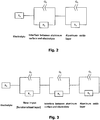
- the impedance spectroscopy permits mainly to determine that the current collector surface has been modified by the functionalizing procedure. After establishment of a model (see Figures 2 and 3 and respective calculated values presented in tables 2 and 3) it is possible to notice a new input due to the functionalized layer.
- This new input has a low resistance (14 ⁇ ) and a constant phase element (CPE) of 2.10 -6 F s- 1/a .
- CPE constant phase element
- the second interesting parameter is the potential value at which the current begins to raise, which corresponds to the potential at which the corrosion phenomenon begins. It is shown on the graph that the curve corresponding to the functionalized current collector begins to raise after the non-coated one.
- the functionalized surface according to the present invention increases the corrosion potential of the current collector from 3.9 V vs. Li/Li + up to 4.2V vs. Li/Li + .
- the functionalized current collector can be used at a higher potential than the unfunctionalized one, thus enabling to reach higher cell voltage when this functionalized current collector will be integrated in a real device. For an energy storage device, this would imply working with higher energy density in the device using the functionalized current collectors.
- the corrosion of aluminum generally appears in the form of localized corrosions called pitting, i.e.: small holes created in the metal surface. Holes (5 to 20 ⁇ m diameter) seen on the right picture ( Figure 5A ) are evidencing that the untreated current collector is quickly degraded by corrosion. The picture on the left ( Figure 5B ) shows the efficiency of the functionalized aluminum substrate according to the present invention with virtually no holes (no corrosion) thus confirming the electrochemical results presented above.
- the NMC electrode operates in the same manner whether the current collector surface is functionalized or not, which means that, as expected, the functionalizing treatment according to the present invention does not change the electrochemical behavior of the NMC cathode material.
- the polarization is also an interesting phenomenon to look at. Indeed the potential width observed between the charge and the discharge is the same for all the batteries tested.
- the NMC cathode operates as usual when deposed on a treated current collector. Thus the functionalizing treatment prevents corrosion of the aluminum current collector without inhibiting the electrochemical performance of the NMC electrode.
- a sheet (foil of 125 ⁇ m thickness) of non allied aluminum was chosen with a purity of 99%. Before doing any functionalizing on this current collector the surface was dry polished using a finer abrasive (500 grade) and then washed with acetone and ethanol under ultrasonication.
- a first solution of an electrolyte of 0.1M tetraethylammonium tetrafluoroborate in acetonitrile was prepared. Then a second solution of diazonium salts (10mM) was prepared by adding 4-dodecyl aniline and 3 equivalents of tert-butyl nitrite to the first solution. This "diazonium solution” was kept under stirring for 30 minutes.
- Electrochemical functionalizing experiments were carried out in a three-electrode cell containing the "diazonium solution" comprising a working electrode at which the functionalizing reaction takes place (aluminum sheet), an auxiliary electrode (platinum plate) and a reference electrode (Ag/AgCl). Chronoamperometry (CA) permitted to reduce the diazonium cations on the aluminum substrate to form a functionalized surface.
- the working electrode was polarized at -1.2V vs. Ag/AgCl for different periods of time according to the desired degree of functionalizing.
- the modified current collector was dipped in acetone under ultrasonication.
- the contact angles of each sample were measured 5 times using the sessile-drop method by dispensing 1 mL droplets on the sample surfaces. All of the contact angle measurements were taken under ambient laboratory conditions with a temperature of ⁇ 20°C and a relative humidity of ⁇ 45%.
- the contact angle of the water drop is higher for functionalized aluminum and the value of the polar component of surface energy decrease when the substrate is functionalized.
- the support is an Aluminum Goodfellow sheet with a purity of 99%.
- the functionalizing treatment has then been performed by chronoamperometry according to the conditions described in example 1 (step I-c).
- the polishing step is an important step in the to functionalization treatment of the present invention, in particular for aluminum substrates.
- the aluminum support surface needs to be polished without lubricant, more specifically without water.
- the polishing step aims to remove all or part of oxide layer and obtain an electro-active surface. If water is used during this step the oxide layer seems to be reformed instantly. Therefore dry polishing is much preferred.
- a full electrochemical device like a lithium ion battery could be in the shape of a button cell as shown in figure 9 . Assembly of such button cell battery is described hereafter.
- the button cell case 1 comprises a cathode shell 2 and an anode shell 3, both made of stainless steel, separated by an insulating gasket 4.
- Assembly of the respective parts of the button cell comprises the superposition of the following components from bottom (cathode shell) to top (anode shell) as shown on Fig 9 :
- the SEM image of the enlarged cross section of Fig 9A shows the cathode current collector 22 with its functionalized surface 23 (too thin to be clearly observed) on top of which is laid the cathode electrode 21.
- the electrochemical cell is made of:
- Fig 10 presents a comparison between the second galvanostatic cycle with a functionalized (NG) aluminum current collector.
- Fig 11 shows that the functionalized surface of the cathode current collector have also no negative influence on cyclability of the electrochemical cell.
Landscapes
- Chemical & Material Sciences (AREA)
- Engineering & Computer Science (AREA)
- Chemical Kinetics & Catalysis (AREA)
- Electrochemistry (AREA)
- Power Engineering (AREA)
- Materials Engineering (AREA)
- General Chemical & Material Sciences (AREA)
- Microelectronics & Electronic Packaging (AREA)
- Manufacturing & Machinery (AREA)
- Organic Chemistry (AREA)
- Metallurgy (AREA)
- Inorganic Chemistry (AREA)
- Condensed Matter Physics & Semiconductors (AREA)
- General Physics & Mathematics (AREA)
- Physics & Mathematics (AREA)
- Dispersion Chemistry (AREA)
- Composite Materials (AREA)
- Cell Electrode Carriers And Collectors (AREA)
- Secondary Cells (AREA)
- Battery Electrode And Active Subsutance (AREA)
- Electric Double-Layer Capacitors Or The Like (AREA)
Description
- The present invention relates to the field of energy storage devices, lithium-ion, sodium-ion, magnesium-ion, calcium-ion or aluminum ion batteries, electrochemical capacitors so called supercapacitors, lithium-ion or sodium-ion capacitors, hybrid devices which are intermediate between batteries and supercapacitors, photo- batteries, or electro-chromic devices.
- It applies more particularly to the field of the current collectors which are included in such batteries or devices.
- In such devices or batteries the current collector generally comprises a sheet of metal, mostly based on Aluminum, to provide electrical connection to the electrolyte.
- A current collector is a metallic support, the function of which is to provide to or harvest electrons from an electrode inside an electrochemical device or a photo-electrochemical device.
- In devices or batteries, especially rechargeable lithium batteries, where the solid or liquid electrolyte includes a highly conductive salt such as the trifluorosulfonimide anion (TFSI-), corrosion is often observed after several cycling or at high potentials. This is mainly a localized corrosion named pitting corrosion, which induces small holes in the metal of the current collector, modifying its properties and impairing its efficiency, and consequently impairing the efficiency of the battery or device.
- In order to attenuate, or at least limit, the pitting corrosion several approaches have been proposed yet.
- A first approach is to modify the electrolyte composition in contact with the current collector. Numerous attempts have been made, among others:
- Increasing the concentration of LiTFSI in the electrolyte of lithium-ion batteries (Kazuaki Inoue et al., "Suppression of aluminum corrosion by using high concentration of LiTFSI" in Journal of Power Sources, vol. 231, pp. 234-238, 2013);
- Incorporating nanoparticles in the LiTFSI electrolyte, for instance silica fume nanoparticles (Yangxing Li et al. "Attenuation of aluminum current collector corrosion in LiTFSI electrolytes using fumed silica nanoparticles" in Electrochemical and Solid-State Letters, vol. 7, pp. A228-A230, 2004);
- Adding a small amount of LiPF6 in an electrolyte containing mainly LiTFSI as lithium salt (Mouad Dahbi et al. "Comparative study of EC/DMC LiTFSI and LiPF6 electrolytes for electrochemical storage" in Journal of Power Sources, vol. 196, pp. 9743-9750, 2011);
- Using ionic liquid instead of the classical organic carbonates solvents (Ethylene carbonate EC, diethylcarbonate DEC, dimethylcarbonate DMC) in the electrolyte (C. Peng et al. "Anodic behavior of Al current collector in 1-alkyl-3-methylimidazolium bis [(trifluoromethyl)sulfonyl]amide ionic liquid electrolytes" in Journal of Power Sources, no. 173, pp. 510-517, 2007).
-
EP 2 800 197 - In the battery of
US 5 652 072 , having an aluminum current collector, a electrolyte fluoro compound with alkyl chain is added as a salt in the TFSI-. - The technical solutions brought by this first approach modify the environment of the current collector. Such modifications or incorporation of additives lead to increased costs of the electrolyte.
- Another approach is to replace the aluminum current collector by a new material, for instance a flexible film made of pyrolytic polyimide graphite as disclosed by P. Han et al. "Anticorrosive flexible pyrolytic polyimide graphite film as a cathode current collector in lithium bis(trifluoromethane sulfonyl)" in Electrochemistry Communications, pp. 70-73, 2014. This material is more expensive than aluminum sheet and less easy to process. Its use severely limits the number of possible applications.
- Still another approach is to coat the aluminum current collector surface with a protective layer as disclosed in
WO 2005/089390 and inUS 2012/0121974 which describe a lithium-ion electrochemical cell, where the cathode current collector comprising aluminum or aluminum alloy has a protective, electronically conductive coating on its surface, made of substantially pure carbon or graphite or mixed with a polymer for good mechanical properties of the coating and good adhesion of the coating to the surface of the metal foil, this last embodiment being preferred in the art. In this case (carbon + polymer), the thickness of the coating is from 0.1 µm to 10 µm. However, example 1 ofUS 2012/0121974 demonstrates that the protective, conductive carbon coating by itself is not sufficient to prevent corrosion of aluminum current collector, and consequently disclose in further examples the addition of LiBOB or LiPF6 to the electrolyte solution to inhibit corrosion. - Therefore the main objective of the present invention is to provide an electrochemical device or a photo-electrochemical device having a current collector with improved anti-corrosion properties, preferably without modifying the electrolyte in contact with such current collector.
- Another objective of the invention is to provide an electrochemical device or a photo-electrochemical device having a current collector for electrochemical cells with improved corrosion resistance, in particular to pitting corrosion, and therefore extending the life of the device.
- Another objective of the invention is to provide an electrochemical device or a photo-electrochemical device having a current collector which will be corrosion resistant and heat resistant, of low cost and easily processable.
- The above drawbacks of the prior art current collectors in electrochemical devices comprising an electrolyte containing a TFSI ion electrochemical device or photo-electrochemical device are overcome by the device of the present invention.
- According to the invention, the electrochemical device or photo-electrochemical device comprising an electrolyte containing a bistriflimide anion, hereafter named as TFSI-, at least two electrodes, each of these electrodes being in contact with a current collector comprising a metal support is characterized in that at least one electrode has a current collector the metal support of which comprises an electro-active surface with linear or branched fluorinated carbon functional chains, comprising perfluoroalkyl aryl moieties, in the form of a molecular layer which improves the corrosion resistance of said electro-active surface compared to a non-functionalized surface, wherein not impairing the passage of electrons between said electrode and its_current collector, the electro-active surface being at the interface between said electrode and its current collector, that is in direct contact with the metal support.
- The bistriflimide anion which is systematically known as bis(trifluoromethane)sulfonimide anion and colloquially known as TFSI-, is), a non-coordinating anion with the chemical formula [(CF3SO2)2N]- and developed formula :

- Such molecules have been disclosed in
EP 2 431 165 - It is also known from
US 5 124 022 an electrolytic capacitor comprising a metal support (aluminum) covered with a fluorinated layer wherein a barrier of aluminum oxide is present between the metal support and the fluorinated layer, this device being like a dielectric device. - In particular, the perfluoroalkyl aryl moiety is preferably an aromatic cycle which is mono- or di- substituted by respectively one or two linear or branched perfluoroalkyl chain(s), preferably linear or branched perfluoro C1 to C20 alkyl chain(s), more preferably linear or branched perfluoro C1 to C10 alkyl chain(s).
- For instance, the linear or branched fluorinated carbon chain may be a perfluoroalkyl chain chosen among the following groups: trifluoromethyl, perfluorohexyl and perfluorooctyl group.
- The metal support of the current collector may be an aluminum alloy or an aluminum substrate having a purity above 95 %, preferably a purity equal or above 99 %, or an aluminum alloy comprising more than 95 % Al, preferably more than 99 % Al.
- In a first embodiment of the invention, the TFSI- containing electrolyte is a liquid electrolyte, preferably an organic or ionic liquid electrolyte.
- For instance, the TFSI- electrolyte may be a mixture of a salt containing said TFSI- anion (such as LiTFSI, NaTFSI and/or NH4TFSI), and an organic solvent or mixture of organic solvents (such as propylene carbonate, dimethyl carbonate, ethyl carbonate, χ-butyrolactone), optionally containing additives (such as vinylene carbonate).
- The TFSI- electrolyte may also be a mixture of a salt containing said TFSI- anion (such as LiTFSI, NaTFSI and/or NH4TFSI) dissolved in pure or diluted molten salts, systematically know as ionic liquids (such salts may be chosen among 1-Ethyl-3-methylimidazolium bis-(trifluoromethylsulfonyl)-imide, N-Propyl-N-methylpyrrolidinium bis(trifluoromethanesulfonyl)imide, 1-Butyl-1-methylpyrrolidinium bis(trifluoromethanesulfonyl)imide).
- The above list is not limitative and other solvents or ionic liquids that can dissolved TFSI- based salts may be employed.
- In a second embodiment of the invention, the TFSI- containing electrolyte is a solid electrolyte, preferably a polymer based electrolyte, or a physical ionogel, or a chemical ionogel.
- As exemple of said solid electrolyte is preferably a mixture of a TFSI- anion containing salt, such as LiTFSI, NaTFSI, or NH4TFSI, and a polymer or mixture of polymer, such as poly(ethylene) oxide, and/or polyvinylidene fluoride.
- As exemple of ionogel is preferably a mixture of a TFSI- containing ionic liquid or an ionic liquid and a TFSI- containing salt, such as LiTFSI, NaTFSI, or NH4TFSI, and a silica matrix or a mixture of silica and a polymer matrix.
- Of course the above list is not limitative and any polymer exhibiting solvating properties or any ionogel in which TFSI- based salt can be added may be employed.
- As will be seen in the examples below, the molecular functionalized current collector of the electrochemical devices of the present invention provides improved anti-corrosion properties, without requiring the use of an anti-corrosion additive in the electrolyte. This leads to improved life of the devices using said current collector.
- Moreover this kind of current collector is a low cost current collector, which is easily processable, non toxic and heat resistant (up to 400°C).
- The electrochemical device or photo-electrochemical device of the present invention is chosen among: an energy storage device, a lithium-ion, a sodium-ion, a magnesium-ion, a calcium-ion or an aluminum ion battery (including metal-air batteries using one of the corresponding metal), an electrochemical capacitor so called supercapacitor, a lithium-ion or a sodium-ion capacitor, a hybrid device which is intermediate between battery and supercapacitor, a photo-battery, or an electro-chromic device.
- As an example, the electrochemical device of the invention is a lithium-ion battery, comprising
- a graphite anode with a copper current collector,
- a Nickel Manganese Cobalt cathode with an aluminum current collector having an electro-active surface with linear or branched fluorinated carbon functional chains comprising perfluoroalkyl aryl moieties, and
- LiTFSI 0.75M in a mixture of Ethylene carbonate:and Diethylcarbonate as electrolyte.
- The present invention also relates to a process for preparing the above functionalized current collector, comprising the following main steps:
- Providing a current collector for electrochemical devices, said current collector comprising a support with a metallic surface;
- Dry polishing said metallic surface with a fine abrasive to remove any oxide layer, then washing said surface with an organic solvent under ultra-sonication to obtain a polished electro-active surface;
- Functionalizing the polished electro-active surface by dipping said surface of the current collector in a solution comprising a diazonium salt of a perfluoroalkyl aryl moiety, under reducing conditions of the diazonium salt, and obtaining an electro-active surface functionalized with the perfluoroalkyl aryl moiety,
- Optionally washing the functionalized surface with an organic solvent under ultra-sonication, to remove the non-functionalized molecules from the electro-active surface of the support.
- Preferably in the process according to the invention, the functionalized step is performed in an electrochemical cell, a photochemical cell, a heated cell or a sonicated cell and/or with the help of a chemical reducer in said solution.
- The polishing step is preferably a dry polishing step. For instance, as will be shown in comparative example 3 below, better results are obtained with a dry polishing step when the metal support comprises aluminum.
- The functionalizing step may be performed in a chronoamperometric cell containing a solution comprising a diazonium salt of the functionalizing perfluoroalkyl aryl moiety, an auxiliary electrode, a reference electrode and said metallic support as working electrode, at a potential under the redox potential of said diazonium salt of the functionalizing perfluoroalkyl aryl moiety.
- Preferably, the auxiliary electrode of the chronoamperometric is an electronically conductive plate, such as platinum, and the working electrode of the chronoamperometric is said metallic support of the current collector made of an aluminum substrate having a purity above 95 %, preferably a purity equal or above 99 %, or made of an aluminum alloycomprising more than 95 % Al, preferably more than 99 % Al.
- The reference electrode may be Ag/Ag Cl, wherein the preferred potential for the chronoamperometric functionalizing step is then of -0.9 V vs. Ag/AgCl.
- These and other embodiments of the present invention will be more apparent when read with the following description of the examples in relationship with the attached following drawings:
-
-
FIG.1 presents Nyquist diagrams, before cycling, of a unfunctionalized (non-treated) aluminum current collector and of a functionalized (treated) aluminum current collector according to the present invention; -
FIG.2 is a schematic diagram equivalent electric circuit for interfaces of a unfunctionalized current collector; -
FIG.3 is a schematic diagram equivalent electric circuit for interfaces of the functionalized current collector; -
FIG.4 are linear sweep voltammetry curves of the functionalized and unfunctionalized aluminum substrates; -
FIG.5A and FIG. 5B are scanning electron microscopy (SEM) pictures of respectively unfunctionalized (non-treated) aluminum substrate, and functionalized (treated) aluminum substrate according to the invention; -
FIG.6 shows curves of galvanostatic cycling at cycle 1 (C/10) of functionalized and unfunctionalized current collectors; -
FIG.7 shows curves of galvanostatic cycling at cycle 10 (C/10) of functionalized and unfunctionalized current collectors; -
FIG.8 are linear sweep voltammetry curves of unfunctionalized and functionalized aluminum substrates of the comparative example 2. -
FIG.9 is a schematic cross section of a lithium ion battery in the shape of a button cell. -
FIG 9A is a SEM cross section image of the interface between cathode and functionalized current collector. -
FIG 10 shows curves of second galvanostatic cycle (voltage versus time) for battery of example 4 with functionalized (G) aluminum current collector compared to same battery with unfunctionalized (NG) aluminum current collector. -
FIG 11 shows the evolution of discharge capacity during the first 10 cycles for batteries of example 4 with functionalized (G) aluminum current collector compared to same battery with unfunctionalized (NG) aluminum current collector. - All standard chemicals were purchased from Sigma Aldrich. In the examples the aniline precursor for preparing the diazonium salt was 4-(heptadecafluorooctyl) aniline, the reducing agent tert-butylnitrite and the electrolyte was tetraethylammonium tetrafluoroborate dissolved in acetonitrile. All those reactants were used as received.
- A sheet (foil of 125 µm thickness) of non-allied aluminum was chosen with a purity of 99%. Before doing any functionalizing on this current collector the surface was dry polished using a finer abrasive (preferably grade 500) to remove the aluminum oxide layer, and then washed in a bath with acetone and ethanol using ultra-sonication.
- Typical functionalizing experiments were carried out in open air at room temperature (20-25°C) and atmospheric pressure.
- A first electrolyte solution of 0.1M tetraethylammonium tetrafluoroborate in acetonitrile was prepared. Then a second solution of diazonium salts (10mM) was prepared by adding 4-(heptadecafluorooctyl) aniline and 3 equivalents of tert-butylnitrite to the first solution. This "diazonium solution" was kept under stirring for 30 minutes around.
- Electrochemical functionalizing experiments were carried out in a three-electrode cell containing the "diazonium solution" and comprising a working electrode at which the functionalizing reaction takes place (aluminum sheet), an auxiliary electrode (platinum plate) and a reference electrode (Ag/AgCl). Chronoamperometry (CA) permitted to reduce the diazonium cations on the aluminum substrate to form a functionalized surface. The working electrode was polarized at -0.9V vs. Ag/AgCl for different periods of time (preferably at least 1 minute) according to the desired degree of functionalizing. At the end of the functionalizing process, the modified current collector was washed by dipping in acetone under ultrasonication to remove the unfunctionalized molecules from the aluminum surface.
- In order to measure the surface tension and also to observe the shape of a water drop on the substrate, the contact angles of each sample were measured 5 times using the sessile-drop method by dispensing 1 mL droplets on the sample surfaces. All of the contact angle measurements were taken under ambient laboratory conditions with a temperature of ∼20°C and a relative humidity of -45%.
- In addition, the surface was watched with a scanning electron microscope and analyzed by X-ray dispersive spectroscopy. Results are presented in Table 1 below:
Table 1 Substrate Functionalizing by CA Water Contact Angle Surface energy (mN m-1) X-ray micro analysis (% mass fluorine) Total Polar component Dispersive component Aluminum 99% - foil 125 µm no 63 43 12 31 0.05 ± 0.06 yes 92 20 5 15 0.30 ± 0.06 CA = chrono amperometry
% mass fluorine given for a 100 x 100 x 1 µm3 - A drastic increase of the % mass fluorine is observed and is assigned to the presence of perfluoroalkyl groups on the functionalized surface.
- The contact angle of the water drop is higher for modified aluminum and the value of the polar component of surface energy decreases when the substrate is functionalized. All these results enable to conclude on the modification of aluminum surface samples by functionalizing a hydrophobic molecular layer.
- The impedance spectroscopy (see Nyquist's diagram on
Figure 1 ) permits mainly to determine that the current collector surface has been modified by the functionalizing procedure. After establishment of a model (seeFigures 2 and 3 and respective calculated values presented in tables 2 and 3) it is possible to notice a new input due to the functionalized layer.Table 2 Index i Ri (Ω) Qi (F.s-1/ai) ai 0 6 - - 1 - - - 2 309 33 10-6 0.73 3 459 0.7 10-3 0.66 Table 3 Index i Ri (Ω) Qi (F.s-1/ai) ai 0 6 - - 1 14 2 10-6 0.1 2 423 29 10-6 0.75 3 264 0.9 10-3 0.68 - This new input has a low resistance (14 Ω) and a constant phase element (CPE) of 2.10-6 F s-1/a. The calculated values indicate that this new input (due to the functionalized molecular layer) is weak and has little influence on the electron transfer. Therefore, it would not alter the basic requirements for a current collector.
- Electrochemical cell (SwageLock cell):
- Reference and counter electrode = lithium metal;
- Working electrode = aluminum (functionalized or non-functionalized surface);
- Electrolyte = LiTFSI 0.75M in EC:DEC (3:7).

-
- Speed rate = 1mV s-1;
- Electrode surface = 1.13 cm2;
- Emin = Eoc (open-circuit voltage);
- Emax = 5 V vs. Li/Li+.
- In this voltammetric method the current at a working electrode is measured while the potential between the working electrode and a reference electrode is swept linearly with time, from Emin to Emax at a determined speed rate. The selected area analyzed by this method is 1.2 cm2 for all the samples. There are two phenomena to observe on
Figure 4 . - First of all the maximum current measured at 5V vs. Li/Li+ is totally different when the aluminum is functionalized or not. An impressive decrease of the maximum current of 80 % is observed when the aluminum current collector is functionalized by the functionalized molecules. Since the current is proportional to the corrosion rate this clearly indicates that the functionalizing treatment according to the present invention reduces aluminum pitting by a factor of at least 3.
- The second interesting parameter is the potential value at which the current begins to raise, which corresponds to the potential at which the corrosion phenomenon begins. It is shown on the graph that the curve corresponding to the functionalized current collector begins to raise after the non-coated one.
- So the functionalized surface according to the present invention increases the corrosion potential of the current collector from 3.9 V vs. Li/Li+ up to 4.2V vs. Li/Li+. This means that the functionalized current collector can be used at a higher potential than the unfunctionalized one, thus enabling to reach higher cell voltage when this functionalized current collector will be integrated in a real device. For an energy storage device, this would imply working with higher energy density in the device using the functionalized current collectors.
- SEM images were taken with secondary electron imaging mode and are presented in
Figures 5A and 5B . - The corrosion of aluminum generally appears in the form of localized corrosions called pitting, i.e.: small holes created in the metal surface. Holes (5 to 20µm diameter) seen on the right picture (
Figure 5A ) are evidencing that the untreated current collector is quickly degraded by corrosion. The picture on the left (Figure 5B ) shows the efficiency of the functionalized aluminum substrate according to the present invention with virtually no holes (no corrosion) thus confirming the electrochemical results presented above. - Electrochemical cell:
- Reference and counter electrode = lithium metal;
- Working electrode = NMC (Nickel Manganese Cobalt) cathode (LiNi1/3Mn1/3Co1/3O2) casted on unfunctionalized or functionalized aluminum; this material is a standard material classically used as positive electrode in Li-ion batteries;
- Electrolyte = LiTFSI 0.75M in EC:DEC (3:7).

-
- Average mass of active material = 5 mg cm2;
- Average current = ± 136 µA;
- Emin = 2.7 V vs. Li/Li+;
- Emax = 4.2 V vs. Li/Li+;
- C/10.
- The galvanostating cycling curves are presented on
Figures 6 and 7 respectively corresponding to cycle 1 (C/10) and cycle 10 (C/10). - It can be noticed that the NMC electrode operates in the same manner whether the current collector surface is functionalized or not, which means that, as expected, the functionalizing treatment according to the present invention does not change the electrochemical behavior of the NMC cathode material.
- The polarization is also an interesting phenomenon to look at. Indeed the potential width observed between the charge and the discharge is the same for all the batteries tested. The NMC cathode operates as usual when deposed on a treated current collector. Thus the functionalizing treatment prevents corrosion of the aluminum current collector without inhibiting the electrochemical performance of the NMC electrode.
- A sheet (foil of 125 µm thickness) of non allied aluminum was chosen with a purity of 99%. Before doing any functionalizing on this current collector the surface was dry polished using a finer abrasive (500 grade) and then washed with acetone and ethanol under ultrasonication.
- Typical functionalizing experiments were carried out in open air at room temperature (20-25°C) and atmospheric pressure.
- A first solution of an electrolyte of 0.1M tetraethylammonium tetrafluoroborate in acetonitrile was prepared. Then a second solution of diazonium salts (10mM) was prepared by adding 4-dodecyl aniline and 3 equivalents of tert-butyl nitrite to the first solution. This "diazonium solution" was kept under stirring for 30 minutes.
- Electrochemical functionalizing experiments were carried out in a three-electrode cell containing the "diazonium solution" comprising a working electrode at which the functionalizing reaction takes place (aluminum sheet), an auxiliary electrode (platinum plate) and a reference electrode (Ag/AgCl). Chronoamperometry (CA) permitted to reduce the diazonium cations on the aluminum substrate to form a functionalized surface. The working electrode was polarized at -1.2V vs. Ag/AgCl for different periods of time according to the desired degree of functionalizing. At the end of the functionalizing process, the modified current collector was dipped in acetone under ultrasonication.
- In order to measure the surface tension and also to observe the shape of a water drop on the substrate, the contact angles of each sample were measured 5 times using the sessile-drop method by dispensing 1 mL droplets on the sample surfaces. All of the contact angle measurements were taken under ambient laboratory conditions with a temperature of ∼20°C and a relative humidity of ∼45%.
- Results are presented in Table 4 below:
Table 4 Substrate Functionalizing step by CA Functionalizing time (min) Surface energies (mN m-1) Water Contact angle Total Polar component Dispersive component Aluminum 99% - foil 125 µm no - 63 43 12 31 yes 5 88 28 4 24 1 93 34 1 32 CA = chronoamperometry - The contact angle of the water drop is higher for functionalized aluminum and the value of the polar component of surface energy decrease when the substrate is functionalized.
- All these results permit to conclude on the modification of aluminum surface samples by functionalizing a hydrophobic molecule layer.
- Electrochemical cell:
- Reference and counter electrode = lithium metal;
- Working electrode = aluminum (functionalized or non-functionalized);
- Electrolyte = LiTFSI 0.75M in EC:DEC (3:7).
-
- Speed rate = 1mV s-1;
- Electrode surface = 1.13 cm2;
- Emin = Eoc (open-circuit voltage);
- Emax = 5 V vs. Li/Li+.
- In this voltammetric method the current at a working electrode is measured while the potential between the working electrode and a reference electrode is swept linearly from Emin to Emax at a fixed speed rate. The curves are really similar: there is no reduction of the corrosion current at 5V vs. Li/Li+ and no rise decrease in the corrosion potential. The non-fluorinated molecule functionalized on the aluminum surface does not prevent the corrosion of the current collector.
- The influence of the polishing step has been tested. The support is an Aluminum Goodfellow sheet with a purity of 99%.
- The surface of aluminum has been polished with an abrasive paper 800.
- The functionalizing treatment has then been performed by chronoamperometry according to the conditions described in example 1 (step I-c).
- Comparative tests have been made, before and after functionalization, with the aluminum sheet without polishing, after polishing under water lubrification or with dry polishing. The results are presented in table 5 below:
Table 5 Polishing step Contact angle (°) of a water drop BEFORE FUNCTIONNALIZATION Contact angle (°) of a water drop AFTER FUNCTIONNALIZATION Without polishing 31 ± 2 36 ± 2 Water polishing 33 ± 2 48 ± 2 Dry polishing 35 ± 2 100 ± 2 - It appears that the polishing step is an important step in the to functionalization treatment of the present invention, in particular for aluminum substrates. In fact the aluminum support surface needs to be polished without lubricant, more specifically without water. The polishing step aims to remove all or part of oxide layer and obtain an electro-active surface. If water is used during this step the oxide layer seems to be reformed instantly. Therefore dry polishing is much preferred.
- A full electrochemical device like a lithium ion battery could be in the shape of a button cell as shown in
figure 9 . Assembly of such button cell battery is described hereafter. - The
button cell case 1 comprises acathode shell 2 and ananode shell 3, both made of stainless steel, separated by an insulatinggasket 4. - Assembly of the respective parts of the button cell comprises the superposition of the following components from bottom (cathode shell) to top (anode shell) as shown on
Fig 9 : - on top of the cathode shell is placed the current collector with its functionalized surface turned upwards, in contact with the
cathode 21 material - on to the
cathode 21 is deposited aporous separator 6 either soaked with the liquid electrolyte comprising LITFSI or made of a solid electrolyte containing LITFSI - on top of the
separator 6 is laid theanode 31 material (usually graphite) casted in the anodecurrent collector 32, usually in copper - then is placed a
stainless steel spacer 5 and aspring 7 is interposed between thespacer 5 and theanode shell 3 to ensure a sufficient pressure between all the components of the button cell - after having positioned the
anode shell 3 on top of all the components, the button cell is sealed using an automatic press. - The SEM image of the enlarged cross section of
Fig 9A shows the cathodecurrent collector 22 with its functionalized surface 23 (too thin to be clearly observed) on top of which is laid thecathode electrode 21. - More precisely, as a specific example of the cell of
Fig 9 , the electrochemical cell is made of: - a graphite anode casted onto a copper current collector;
- a NMC (Nickel Manganese Cobalt) cathode (LiNi1/3Mn1/3Co1/302) casted on unfunctionalized aluminum (for comparative tests) or functionalized aluminum; this cathode material is a standard material classically used as positive electrode in Li-ion batteries;
- the electrolyte is LiTFSI 0.75M in EC:DEC (3:7).

- The parameters of the above electrochemical cell are as follows:
- Average mass of active material (cathode) = 7.5 mg cm2;
- Average mass of active material (anode) = 3.3 mg cm2;
- Average current = 26 mA.g-1;
- Emin = 2.8 V;
- Emax = 4.0 V;
- C/5.
- With the above electrochemical cell have been performed several galvanostatic cycles (voltage versus time):
-
Fig 10 presents a comparison between the second galvanostatic cycle with a functionalized (NG) aluminum current collector. - It is noted that the capacitance of the battery is similar for both cells. The presence of a functionalized surface between the current collector and the cathode have therefore no negative influence on the battery capacity.
-
Fig 11 shows that the functionalized surface of the cathode current collector have also no negative influence on cyclability of the electrochemical cell.
Claims (13)
- Electrochemical device or photo-electrochemical device comprising an electrolyte containing a bistriflimide anion, hereafter named as TFSI-, at least two electrodes, each of these electrodes being in contact with a current collector comprising a metal support
characterized in that at least one electrode has a current collector the metal support of which comprises an electro-active surface with linear or branched fluorinated carbon functional chains, comprising perfluoroalkyl aryl moieties, in the form of a molecular layer which improves the corrosion resistance of said electro-active surface compared to a non-functionalized surface, wherein not impairing the passage of electrons between said electrode and its current collector, the electro-active surface being at the interface between said electrode and its current collector. - Electrochemical device or photo-electrochemical device according to claim 1, characterized in that the perfluoroalkyl aryl moiety is an aromatic cycle which is mono- or di- substituted by respectively one or two linear or branched perfluoroalkyl chain(s), preferably linear or branched perfluoro C1 to C20 alkyl chain(s), more preferably linear or branched perfluoro C1 to C10 alkyl chain(s).
- Electrochemical device or photo-electrochemical device according to any of the preceding claims, characterized in that the linear or branched fluorinated carbon chain is a perfluoroalkyl chain chosen among the following groups: trifluoromethyl, perfluorohexyl and perfluorooctyl group.
- Electrochemical device or photo-electrochemical device according to any of the preceding claims, characterized in that the metal support of the current collector is an aluminum substrate or an aluminum alloy substrate.
- Electrochemical device or photo-electrochemical device according to any of the preceding claims, characterized in that the TFSI- containing electrolyte is a liquid electrolyte, comprising a mixture of a salt containing the TFSI- anion and an organic solvent or mixture of organic solvents or the former salts dissolved in ionic liquids.
- Electrochemical device or photo-electrochemical device according to any of claims 1 to 4, characterized in that the TFSI- containing electrolyte is a solid electrolyte, preferably a polymer based electrolyte, preferably a mixture of a salt containing this anion and a polymer or mixture of polymer or a physical ionogel or a chemical ionogel comprising a silica matrix or a mixture of silica and a polymer matrix.
- Electrochemical device or photo-electrochemical device according to any of claims 5 or 6, wherein the TFSI- anion is chosen among LiTFSI, NaTFSI, or NH4TFSI.
- Electrochemical device or photo-electrochemical device according to any of the preceding claims characterized in that said device is chosen among: an energy storage device, a lithium-ion, sodium-ion, magnesium-ion, a calcium-ion or an aluminum battery, a supercapacitor, a lithium-ion or a sodium-ion capacitor, a hybrid device intermediate between battery and supercapacitor, a photo-battery, or an electro-chromic device.
- Electrochemical device according to any of the preceding claims characterized in that said device is a lithium-ion battery comprising- a graphite anode with a copper current collector,- a Nickel Manganese Cobalt cathode with an aluminum current collector having an electro-active surface with linear or branched fluorinated carbon functional chains comprising perfluoroalkyl aryl moieties, and- LiTFSI 0.75M in a mixture of Ethylene carbonate and Diethylcarbonate as electrolyte.
- Process for preparing the functionalized current collector of the electrochemical device or photo-electrochemical device of any of claims 1 to 9 comprising the following main steps:- Providing a current collector for electrochemical devices, said current collector comprising a support with a metallic surface;- Dry polishing said metallic surface with a fine abrasive to remove any oxide layer, then washing said surface with an organic solvent under ultra-sonication to obtain a polished electro-active surface;- Functionalizing the polished electro-active surface by dipping said surface of the current collector in a solution comprising a diazonium salt of a perfluoroalkyl aryl moiety, under reducing conditions of the diazonium salt, and obtaining an electro-active surface functionalized with the perfluoroalkyl aryl moiety,- Optionally washing the functionalized surface with an organic solvent under ultra-sonication, to remove the non-functionalized molecules from the electro-active surface of the support.
- Process according to claim 10 wherein the functionalizing step is performed in an electrochemical cell, a photochemical cell, a heated cell or a sonicated cell and/or with the help of a chemical reducer in said solution.
- Process according to any of claims 10 or 11 wherein the functionalizing step is performed in a chronoamperometric cell containing a solution comprising a diazonium salt of the functionalizing perfluoroalkyl aryl moiety, an auxiliary electrode, a reference electrode and said metallic support as working electrode, at a potential under the redox potential of said diazonium salt of the functionalizing perfluoroalkyl aryl moiety.
- Process according to claim 12 wherein the auxiliary electrode of the chronoamperometric cell is an electronically conductive plate, and the working electrode of the chronoamperometric cell is said metallic support of the current collector made of aluminum, or made of an aluminum alloy.
Applications Claiming Priority (2)
| Application Number | Priority Date | Filing Date | Title |
|---|---|---|---|
| EP15306527.1A EP3150747A1 (en) | 2015-09-29 | 2015-09-29 | Functionalized current collector for electrochemical devices, with increased resistance to corrosion |
| PCT/EP2016/072180 WO2017055126A2 (en) | 2015-09-29 | 2016-09-19 | Electrochemical devices, with current collector having an increased resistance to corrosion |
Publications (2)
| Publication Number | Publication Date |
|---|---|
| EP3356580A2 EP3356580A2 (en) | 2018-08-08 |
| EP3356580B1 true EP3356580B1 (en) | 2019-11-06 |
Family
ID=54292755
Family Applications (2)
| Application Number | Title | Priority Date | Filing Date |
|---|---|---|---|
| EP15306527.1A Withdrawn EP3150747A1 (en) | 2015-09-29 | 2015-09-29 | Functionalized current collector for electrochemical devices, with increased resistance to corrosion |
| EP16777927.1A Active EP3356580B1 (en) | 2015-09-29 | 2016-09-19 | Electrochemical devices, with current collector having an increased resistance to corrosion |
Family Applications Before (1)
| Application Number | Title | Priority Date | Filing Date |
|---|---|---|---|
| EP15306527.1A Withdrawn EP3150747A1 (en) | 2015-09-29 | 2015-09-29 | Functionalized current collector for electrochemical devices, with increased resistance to corrosion |
Country Status (10)
| Country | Link |
|---|---|
| US (1) | US10501861B2 (en) |
| EP (2) | EP3150747A1 (en) |
| JP (1) | JP2018536966A (en) |
| KR (1) | KR20180063219A (en) |
| CN (1) | CN108350597B (en) |
| AU (1) | AU2016333420A1 (en) |
| BR (1) | BR112018005921A2 (en) |
| CA (1) | CA2999612A1 (en) |
| ES (1) | ES2765230T3 (en) |
| WO (1) | WO2017055126A2 (en) |
Families Citing this family (6)
| Publication number | Priority date | Publication date | Assignee | Title |
|---|---|---|---|---|
| FR3063493B1 (en) * | 2017-03-01 | 2023-06-09 | Nawatechnologies | METHOD FOR PREPARING AN ELECTRODE COMPRISING AN ALUMINUM SUPPORT, ALIGNED CARBON NANOTUBES AND AN ELECTROCONDUCTIVE ORGANIC POLYMER, SAID ELECTRODE AND ITS USES |
| US11728543B2 (en) * | 2017-07-07 | 2023-08-15 | University of Pittsburgh—of the Commonwealth System of Higher Education | Electrospinning of PVdF-HFP: novel composite polymer electrolytes (CPES) with enhanced ionic conductivities for lithium-sulfur batteries |
| JP6980256B2 (en) * | 2017-09-06 | 2021-12-15 | 学校法人 関西大学 | Electrolyte and storage device using the electrolytic solution |
| CN109872883A (en) * | 2017-12-01 | 2019-06-11 | 中国科学院大连化学物理研究所 | Electrolyte for supercapacitor and supercapacitor containing the same |
| US20210313583A1 (en) * | 2020-04-01 | 2021-10-07 | The Penn State Research Foundation | Stable metal anodes and batteries utilizing the same |
| CN115064785B (en) * | 2022-04-24 | 2026-01-30 | 上海领钫新能源科技有限公司 | An organic ammonium-ion battery and its preparation method |
Family Cites Families (24)
| Publication number | Priority date | Publication date | Assignee | Title |
|---|---|---|---|---|
| US5124022A (en) * | 1989-08-23 | 1992-06-23 | Aluminum Company Of America | Electrolytic capacitor and method of making same |
| US5652072A (en) * | 1995-09-21 | 1997-07-29 | Minnesota Mining And Manufacturing Company | Battery containing bis(perfluoroalkylsulfonyl)imide and cyclic perfluoroalkylene disulfonylimide salts |
| US5591318A (en) * | 1996-02-01 | 1997-01-07 | Motorola Energy Systems, Inc. | Method of fabricating a conductive polymer energy storage device |
| JP3128574B2 (en) | 1997-08-27 | 2001-01-29 | 岩手大学長 | Perfluoro group-containing triazine thiol derivative, its production method and use |
| US6063522A (en) * | 1998-03-24 | 2000-05-16 | 3M Innovative Properties Company | Electrolytes containing mixed fluorochemical/hydrocarbon imide and methide salts |
| JP4281030B2 (en) * | 1998-08-28 | 2009-06-17 | 株式会社ジーエス・ユアサコーポレーション | Non-aqueous electrolyte battery |
| JP2000243383A (en) * | 1999-02-22 | 2000-09-08 | Toshiba Battery Co Ltd | Manufacture of lithium secondary battery |
| JP3690975B2 (en) * | 2000-10-10 | 2005-08-31 | 独立行政法人科学技術振興機構 | Organic plating method and organic plating product |
| EP1406336A1 (en) * | 2002-10-01 | 2004-04-07 | Xoliox SA | Electrolyte composition having improved aluminium anticorrosive properties |
| JP2004175668A (en) * | 2002-11-22 | 2004-06-24 | Tokuyama Corp | Onium salt |
| US7348102B2 (en) | 2004-03-16 | 2008-03-25 | Toyota Motor Corporation | Corrosion protection using carbon coated electron collector for lithium-ion battery with molten salt electrolyte |
| US8685568B2 (en) * | 2006-02-01 | 2014-04-01 | Greatbatch Ltd. | Lithium/fluorinated carbon cell for high-rate pulsatlie applications |
| JP5074817B2 (en) * | 2007-05-01 | 2012-11-14 | 国立大学法人静岡大学 | BF3 complex and method for producing BF3 complex |
| JP5157244B2 (en) * | 2007-05-11 | 2013-03-06 | Tdk株式会社 | Electrochemical device and manufacturing method thereof |
| US7699916B1 (en) * | 2008-05-28 | 2010-04-20 | The United States Of America As Represented By The United States Department Of Energy | Corrosion-resistant, electrically-conductive plate for use in a fuel cell stack |
| US9065144B2 (en) * | 2010-08-12 | 2015-06-23 | Cardiac Pacemakers, Inc. | Electrode including a 3D framework formed of fluorinated carbon |
| ES2421433T3 (en) * | 2010-09-15 | 2013-09-02 | E P M O | Compression punch of a powdery material with non-stick surface and press equipped with such a punch |
| JP2012094344A (en) * | 2010-10-26 | 2012-05-17 | Dainippon Printing Co Ltd | Method for manufacturing electrode plate for nonaqueous electrolyte secondary battery |
| US9263731B2 (en) | 2010-11-12 | 2016-02-16 | A123 Systems Llc | High performance lithium or lithium ion cell |
| CN102593415A (en) * | 2012-03-05 | 2012-07-18 | 山东省科学院能源研究所 | Preparation method for positive electrode of lithium ion battery |
| EP2683008B1 (en) * | 2012-07-05 | 2015-04-29 | Saft | Three dimensional positive electrode for LiCFx technology primary electrochemical generator |
| JP6044427B2 (en) * | 2013-04-03 | 2016-12-14 | 株式会社豊田自動織機 | Current collector for positive electrode of lithium ion secondary battery, positive electrode for lithium ion secondary battery, and lithium ion secondary battery |
| EP2800197B1 (en) * | 2013-05-02 | 2017-03-22 | Westfälische Wilhelms-Universität Münster | Fluorinated carbonates as solvent for lithium sulfonimide-based electrolytes |
| JP6048312B2 (en) * | 2013-05-27 | 2016-12-21 | 株式会社豊田自動織機 | Negative electrode for lithium ion secondary battery and lithium ion secondary battery |
-
2015
- 2015-09-29 EP EP15306527.1A patent/EP3150747A1/en not_active Withdrawn
-
2016
- 2016-09-19 ES ES16777927T patent/ES2765230T3/en active Active
- 2016-09-19 CN CN201680056453.3A patent/CN108350597B/en not_active Expired - Fee Related
- 2016-09-19 WO PCT/EP2016/072180 patent/WO2017055126A2/en not_active Ceased
- 2016-09-19 BR BR112018005921-8A patent/BR112018005921A2/en active Search and Examination
- 2016-09-19 JP JP2018515584A patent/JP2018536966A/en not_active Ceased
- 2016-09-19 EP EP16777927.1A patent/EP3356580B1/en active Active
- 2016-09-19 AU AU2016333420A patent/AU2016333420A1/en not_active Abandoned
- 2016-09-19 KR KR1020187012306A patent/KR20180063219A/en not_active Withdrawn
- 2016-09-19 US US15/762,693 patent/US10501861B2/en not_active Expired - Fee Related
- 2016-09-19 CA CA2999612A patent/CA2999612A1/en not_active Abandoned
Non-Patent Citations (1)
| Title |
|---|
| None * |
Also Published As
| Publication number | Publication date |
|---|---|
| WO2017055126A3 (en) | 2017-05-18 |
| KR20180063219A (en) | 2018-06-11 |
| WO2017055126A2 (en) | 2017-04-06 |
| BR112018005921A2 (en) | 2018-10-09 |
| US20180266003A1 (en) | 2018-09-20 |
| CA2999612A1 (en) | 2017-04-06 |
| AU2016333420A1 (en) | 2018-04-12 |
| JP2018536966A (en) | 2018-12-13 |
| CN108350597B (en) | 2020-10-23 |
| CN108350597A (en) | 2018-07-31 |
| EP3150747A1 (en) | 2017-04-05 |
| EP3356580A2 (en) | 2018-08-08 |
| US10501861B2 (en) | 2019-12-10 |
| ES2765230T3 (en) | 2020-06-08 |
Similar Documents
| Publication | Publication Date | Title |
|---|---|---|
| US10501861B2 (en) | Electrochemical devices with current collector having an increased resistance to corrosion | |
| JP7051134B2 (en) | Methods for Manufacturing Protected Anodes and Protected Anodes and Methods for Using Protected Anodes | |
| US7167353B2 (en) | Ionic liquid, method of dehydration, electrical double layer capacitor, and secondary battery | |
| US7960061B2 (en) | Electrolyte composition in addition to the use thereof as an electrolyte material for electrochemical energy storage systems | |
| US6280883B1 (en) | Bis (perfluoralkanesulfonyl)imide surfactant salts in electrochemical systems | |
| Krummacher et al. | Al (TFSI) 3 as a conducting salt for high-voltage electrochemical double-layer capacitors | |
| CN107112600A (en) | Aqueous electrolytic solution for electrical storage device and electrical storage device containing the aqueous electrolytic solution | |
| US9257235B2 (en) | Electrochemical capacitor | |
| US9514887B2 (en) | Aluminum foil with carbonaceous particles dispersed and supported therein | |
| US20140295262A1 (en) | Electrolyte solution for lithium metal battery, and lithium metal battery | |
| CN109273721B (en) | Negative electrode current collector, negative electrode, and aqueous lithium ion secondary battery | |
| WO2019065151A1 (en) | Non-aqueous secondary cell, non-aqueous electrolyte used in same, and method for manufacturing non-aqueous secondary cell | |
| Lux et al. | Li‐ion anodes in air‐stable and hydrophobic ionic liquid‐based electrolyte for safer and greener batteries | |
| US20230101833A1 (en) | Chemical treatment for preparing metal electrodes | |
| JP6924264B2 (en) | Semi-solid electrolyte, semi-solid electrolyte, semi-solid electrolyte layer and secondary battery | |
| KR101389826B1 (en) | Supercapacitor comprising metal oxide electrode and polymer gel electrolyte | |
| JP2019145375A (en) | Sulfur cathode and lithium-sulfur solid battery | |
| JP4858107B2 (en) | Electrolyte | |
| CN110299250A (en) | Electrolyte and electrochemical device for electrochemical device | |
| JP7415298B2 (en) | Slurry composition for electrodes, electrodes, and power storage devices | |
| Sörgel | Electrodeposited Dendrite-Free, Nano-Columnar 3D Lithium Anodes and Their Application in Lithium Sulfur Batteries with 3D Sulfur Cathodes. | |
| JP3690065B2 (en) | Electric double layer capacitor | |
| KR20250023783A (en) | Method for manufacturing Electric Double Layer Capacitor with high voltage | |
| Demeaux et al. | Evaluate Sulfone-Based Reduction Sensitive Electrolytes with Lithium Li4Ti5O12/Li and Symmetric Li4+ XTi5O12/Li4Ti5O12 Cells | |
| Kyeremateng et al. | Direct Electropolymerization of Copolymer Electrolyte into 3D Nano-Architectured Electrodes for High-Performance Hybrid Li-ion Macrobatteries |
Legal Events
| Date | Code | Title | Description |
|---|---|---|---|
| STAA | Information on the status of an ep patent application or granted ep patent |
Free format text: STATUS: UNKNOWN |
|
| STAA | Information on the status of an ep patent application or granted ep patent |
Free format text: STATUS: THE INTERNATIONAL PUBLICATION HAS BEEN MADE |
|
| PUAI | Public reference made under article 153(3) epc to a published international application that has entered the european phase |
Free format text: ORIGINAL CODE: 0009012 |
|
| STAA | Information on the status of an ep patent application or granted ep patent |
Free format text: STATUS: REQUEST FOR EXAMINATION WAS MADE |
|
| 17P | Request for examination filed |
Effective date: 20180313 |
|
| AK | Designated contracting states |
Kind code of ref document: A2 Designated state(s): AL AT BE BG CH CY CZ DE DK EE ES FI FR GB GR HR HU IE IS IT LI LT LU LV MC MK MT NL NO PL PT RO RS SE SI SK SM TR |
|
| AX | Request for extension of the european patent |
Extension state: BA ME |
|
| DAV | Request for validation of the european patent (deleted) | ||
| DAX | Request for extension of the european patent (deleted) | ||
| STAA | Information on the status of an ep patent application or granted ep patent |
Free format text: STATUS: EXAMINATION IS IN PROGRESS |
|
| 17Q | First examination report despatched |
Effective date: 20190401 |
|
| GRAP | Despatch of communication of intention to grant a patent |
Free format text: ORIGINAL CODE: EPIDOSNIGR1 |
|
| STAA | Information on the status of an ep patent application or granted ep patent |
Free format text: STATUS: GRANT OF PATENT IS INTENDED |
|
| INTG | Intention to grant announced |
Effective date: 20190619 |
|
| GRAS | Grant fee paid |
Free format text: ORIGINAL CODE: EPIDOSNIGR3 |
|
| GRAA | (expected) grant |
Free format text: ORIGINAL CODE: 0009210 |
|
| STAA | Information on the status of an ep patent application or granted ep patent |
Free format text: STATUS: THE PATENT HAS BEEN GRANTED |
|
| AK | Designated contracting states |
Kind code of ref document: B1 Designated state(s): AL AT BE BG CH CY CZ DE DK EE ES FI FR GB GR HR HU IE IS IT LI LT LU LV MC MK MT NL NO PL PT RO RS SE SI SK SM TR |
|
| REG | Reference to a national code |
Ref country code: GB Ref legal event code: FG4D |
|
| REG | Reference to a national code |
Ref country code: CH Ref legal event code: EP Ref country code: AT Ref legal event code: REF Ref document number: 1198832 Country of ref document: AT Kind code of ref document: T Effective date: 20191115 |
|
| REG | Reference to a national code |
Ref country code: DE Ref legal event code: R096 Ref document number: 602016023916 Country of ref document: DE |
|
| REG | Reference to a national code |
Ref country code: IE Ref legal event code: FG4D |
|
| REG | Reference to a national code |
Ref country code: NL Ref legal event code: MP Effective date: 20191106 |
|
| REG | Reference to a national code |
Ref country code: LT Ref legal event code: MG4D |
|
| PG25 | Lapsed in a contracting state [announced via postgrant information from national office to epo] |
Ref country code: NL Free format text: LAPSE BECAUSE OF FAILURE TO SUBMIT A TRANSLATION OF THE DESCRIPTION OR TO PAY THE FEE WITHIN THE PRESCRIBED TIME-LIMIT Effective date: 20191106 Ref country code: BG Free format text: LAPSE BECAUSE OF FAILURE TO SUBMIT A TRANSLATION OF THE DESCRIPTION OR TO PAY THE FEE WITHIN THE PRESCRIBED TIME-LIMIT Effective date: 20200206 Ref country code: FI Free format text: LAPSE BECAUSE OF FAILURE TO SUBMIT A TRANSLATION OF THE DESCRIPTION OR TO PAY THE FEE WITHIN THE PRESCRIBED TIME-LIMIT Effective date: 20191106 Ref country code: GR Free format text: LAPSE BECAUSE OF FAILURE TO SUBMIT A TRANSLATION OF THE DESCRIPTION OR TO PAY THE FEE WITHIN THE PRESCRIBED TIME-LIMIT Effective date: 20200207 Ref country code: LT Free format text: LAPSE BECAUSE OF FAILURE TO SUBMIT A TRANSLATION OF THE DESCRIPTION OR TO PAY THE FEE WITHIN THE PRESCRIBED TIME-LIMIT Effective date: 20191106 Ref country code: PL Free format text: LAPSE BECAUSE OF FAILURE TO SUBMIT A TRANSLATION OF THE DESCRIPTION OR TO PAY THE FEE WITHIN THE PRESCRIBED TIME-LIMIT Effective date: 20191106 Ref country code: SE Free format text: LAPSE BECAUSE OF FAILURE TO SUBMIT A TRANSLATION OF THE DESCRIPTION OR TO PAY THE FEE WITHIN THE PRESCRIBED TIME-LIMIT Effective date: 20191106 Ref country code: NO Free format text: LAPSE BECAUSE OF FAILURE TO SUBMIT A TRANSLATION OF THE DESCRIPTION OR TO PAY THE FEE WITHIN THE PRESCRIBED TIME-LIMIT Effective date: 20200206 Ref country code: LV Free format text: LAPSE BECAUSE OF FAILURE TO SUBMIT A TRANSLATION OF THE DESCRIPTION OR TO PAY THE FEE WITHIN THE PRESCRIBED TIME-LIMIT Effective date: 20191106 Ref country code: PT Free format text: LAPSE BECAUSE OF FAILURE TO SUBMIT A TRANSLATION OF THE DESCRIPTION OR TO PAY THE FEE WITHIN THE PRESCRIBED TIME-LIMIT Effective date: 20200306 |
|
| PG25 | Lapsed in a contracting state [announced via postgrant information from national office to epo] |
Ref country code: RS Free format text: LAPSE BECAUSE OF FAILURE TO SUBMIT A TRANSLATION OF THE DESCRIPTION OR TO PAY THE FEE WITHIN THE PRESCRIBED TIME-LIMIT Effective date: 20191106 Ref country code: HR Free format text: LAPSE BECAUSE OF FAILURE TO SUBMIT A TRANSLATION OF THE DESCRIPTION OR TO PAY THE FEE WITHIN THE PRESCRIBED TIME-LIMIT Effective date: 20191106 Ref country code: IS Free format text: LAPSE BECAUSE OF FAILURE TO SUBMIT A TRANSLATION OF THE DESCRIPTION OR TO PAY THE FEE WITHIN THE PRESCRIBED TIME-LIMIT Effective date: 20200306 |
|
| REG | Reference to a national code |
Ref country code: ES Ref legal event code: FG2A Ref document number: 2765230 Country of ref document: ES Kind code of ref document: T3 Effective date: 20200608 |
|
| PG25 | Lapsed in a contracting state [announced via postgrant information from national office to epo] |
Ref country code: AL Free format text: LAPSE BECAUSE OF FAILURE TO SUBMIT A TRANSLATION OF THE DESCRIPTION OR TO PAY THE FEE WITHIN THE PRESCRIBED TIME-LIMIT Effective date: 20191106 |
|
| PG25 | Lapsed in a contracting state [announced via postgrant information from national office to epo] |
Ref country code: CZ Free format text: LAPSE BECAUSE OF FAILURE TO SUBMIT A TRANSLATION OF THE DESCRIPTION OR TO PAY THE FEE WITHIN THE PRESCRIBED TIME-LIMIT Effective date: 20191106 Ref country code: RO Free format text: LAPSE BECAUSE OF FAILURE TO SUBMIT A TRANSLATION OF THE DESCRIPTION OR TO PAY THE FEE WITHIN THE PRESCRIBED TIME-LIMIT Effective date: 20191106 Ref country code: EE Free format text: LAPSE BECAUSE OF FAILURE TO SUBMIT A TRANSLATION OF THE DESCRIPTION OR TO PAY THE FEE WITHIN THE PRESCRIBED TIME-LIMIT Effective date: 20191106 Ref country code: DK Free format text: LAPSE BECAUSE OF FAILURE TO SUBMIT A TRANSLATION OF THE DESCRIPTION OR TO PAY THE FEE WITHIN THE PRESCRIBED TIME-LIMIT Effective date: 20191106 |
|
| REG | Reference to a national code |
Ref country code: DE Ref legal event code: R097 Ref document number: 602016023916 Country of ref document: DE |
|
| REG | Reference to a national code |
Ref country code: AT Ref legal event code: MK05 Ref document number: 1198832 Country of ref document: AT Kind code of ref document: T Effective date: 20191106 |
|
| PG25 | Lapsed in a contracting state [announced via postgrant information from national office to epo] |
Ref country code: SK Free format text: LAPSE BECAUSE OF FAILURE TO SUBMIT A TRANSLATION OF THE DESCRIPTION OR TO PAY THE FEE WITHIN THE PRESCRIBED TIME-LIMIT Effective date: 20191106 Ref country code: SM Free format text: LAPSE BECAUSE OF FAILURE TO SUBMIT A TRANSLATION OF THE DESCRIPTION OR TO PAY THE FEE WITHIN THE PRESCRIBED TIME-LIMIT Effective date: 20191106 |
|
| PLBE | No opposition filed within time limit |
Free format text: ORIGINAL CODE: 0009261 |
|
| STAA | Information on the status of an ep patent application or granted ep patent |
Free format text: STATUS: NO OPPOSITION FILED WITHIN TIME LIMIT |
|
| 26N | No opposition filed |
Effective date: 20200807 |
|
| PG25 | Lapsed in a contracting state [announced via postgrant information from national office to epo] |
Ref country code: SI Free format text: LAPSE BECAUSE OF FAILURE TO SUBMIT A TRANSLATION OF THE DESCRIPTION OR TO PAY THE FEE WITHIN THE PRESCRIBED TIME-LIMIT Effective date: 20191106 Ref country code: AT Free format text: LAPSE BECAUSE OF FAILURE TO SUBMIT A TRANSLATION OF THE DESCRIPTION OR TO PAY THE FEE WITHIN THE PRESCRIBED TIME-LIMIT Effective date: 20191106 |
|
| REG | Reference to a national code |
Ref country code: CH Ref legal event code: PL |
|
| REG | Reference to a national code |
Ref country code: BE Ref legal event code: MM Effective date: 20200930 |
|
| PG25 | Lapsed in a contracting state [announced via postgrant information from national office to epo] |
Ref country code: LU Free format text: LAPSE BECAUSE OF NON-PAYMENT OF DUE FEES Effective date: 20200919 |
|
| PG25 | Lapsed in a contracting state [announced via postgrant information from national office to epo] |
Ref country code: CH Free format text: LAPSE BECAUSE OF NON-PAYMENT OF DUE FEES Effective date: 20200930 Ref country code: BE Free format text: LAPSE BECAUSE OF NON-PAYMENT OF DUE FEES Effective date: 20200930 Ref country code: IE Free format text: LAPSE BECAUSE OF NON-PAYMENT OF DUE FEES Effective date: 20200919 Ref country code: LI Free format text: LAPSE BECAUSE OF NON-PAYMENT OF DUE FEES Effective date: 20200930 |
|
| PGFP | Annual fee paid to national office [announced via postgrant information from national office to epo] |
Ref country code: IT Payment date: 20210914 Year of fee payment: 6 |
|
| PGFP | Annual fee paid to national office [announced via postgrant information from national office to epo] |
Ref country code: ES Payment date: 20211005 Year of fee payment: 6 |
|
| PG25 | Lapsed in a contracting state [announced via postgrant information from national office to epo] |
Ref country code: TR Free format text: LAPSE BECAUSE OF FAILURE TO SUBMIT A TRANSLATION OF THE DESCRIPTION OR TO PAY THE FEE WITHIN THE PRESCRIBED TIME-LIMIT Effective date: 20191106 Ref country code: MT Free format text: LAPSE BECAUSE OF FAILURE TO SUBMIT A TRANSLATION OF THE DESCRIPTION OR TO PAY THE FEE WITHIN THE PRESCRIBED TIME-LIMIT Effective date: 20191106 Ref country code: CY Free format text: LAPSE BECAUSE OF FAILURE TO SUBMIT A TRANSLATION OF THE DESCRIPTION OR TO PAY THE FEE WITHIN THE PRESCRIBED TIME-LIMIT Effective date: 20191106 |
|
| PG25 | Lapsed in a contracting state [announced via postgrant information from national office to epo] |
Ref country code: MK Free format text: LAPSE BECAUSE OF FAILURE TO SUBMIT A TRANSLATION OF THE DESCRIPTION OR TO PAY THE FEE WITHIN THE PRESCRIBED TIME-LIMIT Effective date: 20191106 Ref country code: MC Free format text: LAPSE BECAUSE OF FAILURE TO SUBMIT A TRANSLATION OF THE DESCRIPTION OR TO PAY THE FEE WITHIN THE PRESCRIBED TIME-LIMIT Effective date: 20191106 |
|
| REG | Reference to a national code |
Ref country code: ES Ref legal event code: FD2A Effective date: 20231027 |
|
| PG25 | Lapsed in a contracting state [announced via postgrant information from national office to epo] |
Ref country code: IT Free format text: LAPSE BECAUSE OF NON-PAYMENT OF DUE FEES Effective date: 20220919 |
|
| PGFP | Annual fee paid to national office [announced via postgrant information from national office to epo] |
Ref country code: GB Payment date: 20230920 Year of fee payment: 8 |
|
| REG | Reference to a national code |
Ref country code: GB Ref legal event code: 732E Free format text: REGISTERED BETWEEN 20231026 AND 20231101 |
|
| PGFP | Annual fee paid to national office [announced via postgrant information from national office to epo] |
Ref country code: FR Payment date: 20230927 Year of fee payment: 8 Ref country code: DE Payment date: 20230911 Year of fee payment: 8 |
|
| PG25 | Lapsed in a contracting state [announced via postgrant information from national office to epo] |
Ref country code: ES Free format text: LAPSE BECAUSE OF NON-PAYMENT OF DUE FEES Effective date: 20220920 |
|
| PG25 | Lapsed in a contracting state [announced via postgrant information from national office to epo] |
Ref country code: ES Free format text: LAPSE BECAUSE OF NON-PAYMENT OF DUE FEES Effective date: 20220920 |
|
| REG | Reference to a national code |
Ref country code: DE Ref legal event code: R119 Ref document number: 602016023916 Country of ref document: DE |
|
| GBPC | Gb: european patent ceased through non-payment of renewal fee |
Effective date: 20240919 |
|
| PG25 | Lapsed in a contracting state [announced via postgrant information from national office to epo] |
Ref country code: DE Free format text: LAPSE BECAUSE OF NON-PAYMENT OF DUE FEES Effective date: 20250401 |
|
| PG25 | Lapsed in a contracting state [announced via postgrant information from national office to epo] |
Ref country code: GB Free format text: LAPSE BECAUSE OF NON-PAYMENT OF DUE FEES Effective date: 20240919 |
|
| REG | Reference to a national code |
Ref country code: DE Ref legal event code: R081 Ref document number: 602016023916 Country of ref document: DE Owner name: NANTES UNIVERSITE, FR Free format text: FORMER OWNER: UNIVERSITE DE NANTES, NANTES, FR |
|
| PG25 | Lapsed in a contracting state [announced via postgrant information from national office to epo] |
Ref country code: FR Free format text: LAPSE BECAUSE OF NON-PAYMENT OF DUE FEES Effective date: 20240930 |