EP3354431A1 - Method for pressing fiberboard and continuous press for pressing fiberboard by adopting method - Google Patents
Method for pressing fiberboard and continuous press for pressing fiberboard by adopting method Download PDFInfo
- Publication number
- EP3354431A1 EP3354431A1 EP16848081.2A EP16848081A EP3354431A1 EP 3354431 A1 EP3354431 A1 EP 3354431A1 EP 16848081 A EP16848081 A EP 16848081A EP 3354431 A1 EP3354431 A1 EP 3354431A1
- Authority
- EP
- European Patent Office
- Prior art keywords
- pressing
- fiber mat
- curing zone
- heating plate
- zone
- Prior art date
- Legal status (The legal status is an assumption and is not a legal conclusion. Google has not performed a legal analysis and makes no representation as to the accuracy of the status listed.)
- Withdrawn
Links
- 238000003825 pressing Methods 0.000 title claims abstract description 205
- 239000011094 fiberboard Substances 0.000 title claims abstract description 48
- 238000000034 method Methods 0.000 title claims abstract description 35
- 239000000835 fiber Substances 0.000 claims abstract description 116
- 238000010438 heat treatment Methods 0.000 claims abstract description 93
- 229910000831 Steel Inorganic materials 0.000 claims abstract description 75
- 239000010959 steel Substances 0.000 claims abstract description 75
- 239000000853 adhesive Substances 0.000 claims abstract description 36
- 230000001070 adhesive effect Effects 0.000 claims abstract description 36
- 238000001816 cooling Methods 0.000 claims description 2
- 239000000428 dust Substances 0.000 abstract description 20
- 239000002994 raw material Substances 0.000 abstract description 5
- 239000008188 pellet Substances 0.000 description 10
- 238000010586 diagram Methods 0.000 description 8
- 230000003247 decreasing effect Effects 0.000 description 4
- 238000009826 distribution Methods 0.000 description 3
- 230000000694 effects Effects 0.000 description 2
- 230000007547 defect Effects 0.000 description 1
- 238000004519 manufacturing process Methods 0.000 description 1
- 238000005096 rolling process Methods 0.000 description 1
- 239000004576 sand Substances 0.000 description 1
- 230000007704 transition Effects 0.000 description 1
- 239000002699 waste material Substances 0.000 description 1
Images



Classifications
-
- B—PERFORMING OPERATIONS; TRANSPORTING
- B27—WORKING OR PRESERVING WOOD OR SIMILAR MATERIAL; NAILING OR STAPLING MACHINES IN GENERAL
- B27N—MANUFACTURE BY DRY PROCESSES OF ARTICLES, WITH OR WITHOUT ORGANIC BINDING AGENTS, MADE FROM PARTICLES OR FIBRES CONSISTING OF WOOD OR OTHER LIGNOCELLULOSIC OR LIKE ORGANIC MATERIAL
- B27N3/00—Manufacture of substantially flat articles, e.g. boards, from particles or fibres
- B27N3/08—Moulding or pressing
- B27N3/24—Moulding or pressing characterised by using continuously acting presses having endless belts or chains moved within the compression zone
-
- B—PERFORMING OPERATIONS; TRANSPORTING
- B27—WORKING OR PRESERVING WOOD OR SIMILAR MATERIAL; NAILING OR STAPLING MACHINES IN GENERAL
- B27N—MANUFACTURE BY DRY PROCESSES OF ARTICLES, WITH OR WITHOUT ORGANIC BINDING AGENTS, MADE FROM PARTICLES OR FIBRES CONSISTING OF WOOD OR OTHER LIGNOCELLULOSIC OR LIKE ORGANIC MATERIAL
- B27N1/00—Pretreatment of moulding material
- B27N1/02—Mixing the material with binding agent
- B27N1/029—Feeding; Proportioning; Controlling
-
- B—PERFORMING OPERATIONS; TRANSPORTING
- B27—WORKING OR PRESERVING WOOD OR SIMILAR MATERIAL; NAILING OR STAPLING MACHINES IN GENERAL
- B27N—MANUFACTURE BY DRY PROCESSES OF ARTICLES, WITH OR WITHOUT ORGANIC BINDING AGENTS, MADE FROM PARTICLES OR FIBRES CONSISTING OF WOOD OR OTHER LIGNOCELLULOSIC OR LIKE ORGANIC MATERIAL
- B27N3/00—Manufacture of substantially flat articles, e.g. boards, from particles or fibres
- B27N3/08—Moulding or pressing
- B27N3/18—Auxiliary operations, e.g. preheating, humidifying, cutting-off
-
- B—PERFORMING OPERATIONS; TRANSPORTING
- B30—PRESSES
- B30B—PRESSES IN GENERAL
- B30B15/00—Details of, or accessories for, presses; Auxiliary measures in connection with pressing
- B30B15/0082—Dust eliminating means; Mould or press ram cleaning means
-
- B—PERFORMING OPERATIONS; TRANSPORTING
- B30—PRESSES
- B30B—PRESSES IN GENERAL
- B30B15/00—Details of, or accessories for, presses; Auxiliary measures in connection with pressing
- B30B15/34—Heating or cooling presses or parts thereof
-
- B—PERFORMING OPERATIONS; TRANSPORTING
- B30—PRESSES
- B30B—PRESSES IN GENERAL
- B30B5/00—Presses characterised by the use of pressing means other than those mentioned in the preceding groups
- B30B5/04—Presses characterised by the use of pressing means other than those mentioned in the preceding groups wherein the pressing means is in the form of an endless band
- B30B5/06—Presses characterised by the use of pressing means other than those mentioned in the preceding groups wherein the pressing means is in the form of an endless band co-operating with another endless band
Definitions
- the invention relates to the technical field of processing artificial boards, board blanks and other boards through continuous presses, in particular to a method for pressing fiberboard and a continuous press adopting the method for pressing fiberboard.
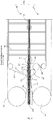
- a continuous press 100 is provided with a press top 110, a press bottom 120, a top steel belt 130, a bottom steel belt 140, a top roller bar chain blanket 150 and a bottom roller bar chain blanket 160, wherein the top steel belt 130 continuously operates in the press top 110, and the bottom steel belt 140 continuously operates in the press bottom 120.
- a top feed heating plate 170 and a bottom feed heating plate 180 are arranged in the press top 110 and the press bottom 120 separately, and a feeding area 191 is formed before the top feed heating plate 170 and the bottom feed heating plate 180 by the top steel belt 130 and the bottom steel belt 140.
- a pressing passage 192 is formed between the top feed heating plate 170 and the bottom feed heating plate 180. The feed end of the pressing passage 192 is connected with the feeding area 191 in a natural transition mode.
- the top steel belt 130 wound around a top driven roller 131 and a top driving roller 132 and the bottom steel belt 140 wound around a bottom driven roller 141 and a bottom driving roller 142 are driven by the top driving roller 132 and the bottom driving roller 142 to circulate, and a to-be-pressed fiber mat 200 is sent into the feeding area 191 formed between the top steel belt 130 and the bottom steel belt 140 along with circulation of the top steel belt 130 and the bottom steel belt 140 and then into the pressing passage 192 formed between the top feed heating plate 170 and the bottom feed heating plate 180 to be pressed into fiberboards of different specification in a subsequent pressing passage 193.
- the top roller bar chain blanket 150 wound around a top chain blanket driving chain wheel 151 and a top chain blanket driven chain wheel 152 and the bottom roller bar chain blanket 160 wound around a bottom chain blanket driving chain wheel 161 and a bottom chain blanket driven chain wheel 162 are driven by the top chain blanket driving chain wheel 151 and the bottom chain blanket driving chain wheel 161 to circulate so as to enter the zone between the top feed heating plate 170 and the bottom feed heating plate 180 and the zone between the top steel belt 130 and the bottom steel belt 140.
- a top heating device and a bottom heating device are separately arranged in the top feed heating plate 170 and the bottom feed heating plate 180 and transfer heat into the to-be-pressed fiber mat 200 in the pressing passage 192 through the top and bottom feed heating plates 170, 180, the top and bottom roller bar chain blankets 150, 160 and the top and bottom steel belts 130, 140, so that the adhesive in the to-be-pressed fiber mat 200 is cured; at the moment, a pressurization device 111 on the press top 110 applies pressure to the top and bottom feed heating plates 170, 180, the pressure is then transmitted to the to-be-pressed fiber mat 200 in the pressing passage 192 through the top and bottom roller bar chain blankets 150, 160 and the top and bottom steel belts 130, 140, so that the fiber mat 200 is gradually compressed to a preset thickness, and a fiberboard is formed in the subsequent pressing passage 193 and finally is sent out.
- the pressing passage 192 between the top feed heating plate 170 and the bottom feed heating plate 180 can be adjusted so that fiberboards with different thicknesses, such as fiberboards with the thickness of 12mm, 16mm and 25mm, can be produced through one continuous press 100.
- the top and bottom feed heating plates 170,180 of the existing continuous press 100 each have only one temperature zone, and when the to-be-pressed fiber mat 200 enters the pressing passage 192 to be cured and pressed from the feeding area 191, precuring layers can be formed on the top and bottom surfaces of the fiberboard under the high-temperature and high-pressure effect.
- the top and bottom surfaces of the obtained fiberboard need to be sanded so as to remove the precuring layers on the top and bottom surfaces of the fiberboard, and thus the hardness, along the whole cross section, of the finally obtained fiberboard is basically consistent (as is shown in FIG. 3 ).
- the thickness of each of the precuring layers on the top and bottom surfaces reaches 0.45mm, and thus the thickness of the fiberboard produced by the continuous press 100 reaches 12.9mm.
- the precuring layers are so thick that high manufacturing cost is caused by severe raw material waste, that the sanding quantity is large, and consumption of abrasive belts used for grinding and power consumption of the sanding machine are greatly increased, and that a large quantity of sand is generated by sanding, the processing workload is large, and safety problems are caused.
- the thickness of the precuring layers formed on the top and bottom surfaces of the obtained fiberboard not only depends on the fiber state and the performance of the adhesive in the fiber, but also depends on the feeding speed of the to-be-pressed fiber mat 200 and the pressing temperature and the pressing pressure applied to the to-be-pressed fiber mat 200 by the top and bottom feed heating plates 170, 180 in the pressing process.
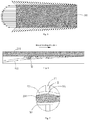
- a large quantity of gas is released by the to-be-pressed fiber mat 200 in the curing and pressing process, part of the released gas is exhausted from the two sides of the pressing passage 192, and the other part of the released gas can only be exhausted towards the feeding area 191 (as is shown in FIG. 4 and FIG. 5 ) due to the fact that the fiber mat 200 at the rear end of the pressing passage 192 has already been cured and compacted gradually.
- the gas exhausted towards the feeding area 191 can form vortex flow at the contact positions between the top and bottom steel belts 130, 140 and the to-be-pressed fiber mat 200, the vertex flow acts on the top and bottom surfaces of the to-be-pressed fiber mat 200, so that a large quantity of dust pellets 10 are generated particularly on the bottom surface of the to-be-pressed fiber mat 200 (as is shown in FIG. 6 ), these dust pellets 10 are then carried into the pressing passage 192, the adhesive in the dust pellets 10 is generally cured in advanced under the influence of high-temperature air flow and thus cannot be fused into the to-be-pressed fiber mat 200, and consequentially, dust spots are formed on the surfaces of the obtained fiberboard.
- the position close to the inlet of the pressing passage 192, namely the position I in FIG. 7 , of the top feed heating plate 170 is generally lifted by a certain height, so that an S-shaped curved surface is formed between the top feed heating plate 170 and the fiber mat 200 in the feeding direction, an exhaust gap 194 is formed at the position I between the top feed heating plate 170 and the bottom feed heating plate 180, a large quantity of gas generated in the curing and pressing process of the to-be-pressed fiber mat 200 is exhausted from the two sides via the exhaust gap 194, in this way, the flow rate of gas exhausted towards the feeding area 191 is effectively decreased, vertex flow cannot be generated at the contact position between the top and bottom steel belts 130, 140 and the to-be-pressed fiber mat 200 by the gas exhausted towards the feeding area 191, and accordingly, the quantity of generated dust pellets is effectively reduced or no dust pellet is generated. Furthermore, though the method, the feeding speed and the yield can be increased. However, by adoption of the method,
- the invention provides a method for pressing fiberboard through a continuous press.
- the thickness of the precuring layers of a fiberboard obtained through the method is greatly reduced, raw materials are saved, the sanding quantity and sanding dust are reduced, the quantity of generated dust pellets is reduced, and dust spots on the surfaces of the obtained fiberboard are avoided.
- the invention further provides a continuous press adopting the above method for pressing fiberboard.
- a top steel belt wound around a top driving roller and a top driven roller and a bottom steel belt wound around a bottom driving roller and a bottom driven roller are driven by the top driving roller and the bottom driving roller to circulate, and a to-be-pressed fiber mat is sent into a feeding area formed between the top steel belt and the bottom steel belt along with circulation of the top steel belt and the bottom steel belt and then into a pressing passage formed between a top feed heating plate and a bottom feed heating plate to be pressed into a fiberboard.
- the method is characterized in that the pressing passage is divided into a normal pressing curing zone and a pressing but not curing zone, the to-be-pressed fiber mat enters the pressing but not curing zone first and then enters the normal pressing curing zone, and when the to-be-pressed fiber mat passes through the pressing but not curing zone, the thickness of the to-be-pressed fiber mat is compressed, but the adhesive in the to-be-pressed fiber mat is not cured.
- the set temperature of the pressing but not curing zone and the time for the to-be-pressed fiber mat to pass through the pressing but not curing zone cannot meet the temperature and time requirements for normal curing of the adhesive in the to-be-pressed fiber mat.
- the set temperature of the pressing but not curing zone is lower than the temperature required for normal curing of the adhesive in the fiber mat when the fiber mat passes through the pressing but not curing zone.
- the pressing but not cooling zone is cooled, so that the temperature of the pressing but not curing zone is made lower than the temperature required for normal curing of the adhesive in the fiber mat when the fiber mat passes through the pressing but not curing zone.
- the top steel belt and the, bottom steel belt are not heated when passing through the pressing but not curing zone, so that the temperature of the pressing but not curing zone is made lower than the temperature required for normal curing of the adhesive in the fiber mat when the fiber mat passes through the pressing but not curing zone.
- the pressure of the pressing but not curing zone is equal to or lower than the pressure of the normal pressing curing zone.
- the position, close to the inlet of the pressing passage, of the top feed heating plate is lifted by a certain distance, so that an exhaust gap is formed at a position close to the inlet of the pressing passage and between the top feed heating plate and the bottom feed heating plate in the pressing process.
- the continuous press is provided with a press top, a press bottom, a top steel belt, a bottom steel belt, a top roller bar chain blanket and bottom roller bar chain blanket, wherein the top steel belt continuously operates in the press top, and the bottom steel belt continuously operates in the press bottom.
- a top feed heating plate is arranged in the press top, and a bottom feed heating plate is arranged in the press bottom.
- a feeding area is formed before the top feed heating plate and the bottom feed heating plate by the top steel belt and the bottom steel belt, and a pressing passage is formed between the top feed pressing plate and the bottom feed pressing plate and connected with the feeding area.
- the continuous press is characterized in that the pressing passage is divided into a normal pressing curing zone and a pressing but not curing zone, the to-be-pressed fiber mat enters the pressing but not curing zone first and then enters the normal pressing curing zone, and when the to-be-pressed fiber mat passes through the pressing but not curing zone, the thickness of the to-be-pressed fiber mat is compressed, but the adhesive in the to-be-pressed fiber mat is not cured.
- the set temperature of the pressing but not curing zone and the time for the to-be-pressed fiber mat to pass through the pressing but not curing zone cannot meet the temperature and time requirements for normal curing of the adhesive in the to-be-pressed fiber mat.
- the set temperature of the pressing but not curing zone is lower than the temperature required for normal curing of the adhesive in the fiber mat when the fiber mat passes through the pressing but not curing zone.
- the zone between the top feed heating plate and the bottom feed heating plate is divided into a first temperature control zone and a second temperature control zone, wherein the first temperature control zone between the top feed heating plate and the bottom feed heating plate corresponds to the pressing but not curing zone, and the second temperature control zone between the top feed heating plate and the bottom feed heating plate corresponds to the normal pressing curing zone.
- the first temperature zone and the second temperature zone between the top feed heating plate and the bottom feed heating plate are controlled independently.
- the top steel belt and the bottom steel belt are not heated when passing through the pressing but not curing zone, so that the temperature of the pressing but not curing zone is made lower than the temperature required for normal curing of the adhesive in the fiber mat when the fiber mat passes through the pressing but not curing zone.
- the pressure of the pressing but not curing zone is equal to or lower than the pressure of the normal pressing curing zone.
- the position, close to the inlet of the pressing passage, of the top feed heating plate is lifted by a certain distance, so that an exhaust gap is formed at a position close to the inlet of the pressing passage and between the top feed heating plate and the bottom feed heating plate in the pressing process.
- the to-be-pressed fiber mat enters the pressing but not curing zone first before entering the normal pressing curing zone through the feeding area, air in the fiber mat can be exhausted towards the two sides and the feeding area from the pressing but not curing zone, meanwhile, part of gas generated when the fiber mat is pressed and cured in the normal pressing curing zone is exhausted from the two sides of the normal pressing curing zone, and the other part of gas can be exhausted towards the pressing but not curing zone; and as the adhesive is not cured in the pressing but not curing zone, gas can be exhausted smoothly, finally, the thickness of the precuring layers on the top and bottom surfaces of the obtained fiberboard can be reduced at least by 30%-40% compared with the prior art and even is only 30% of that in the prior art, and therefore, raw materials are greatly saved, the sanding quantity, power consumption of the sanding machine and abrasive belt consumption are reduced, and sanding dust is also reduced.
- an exhaust gap is formed at a position close to the inlet of the passing passage and between the top feed heating plate and the bottom feed heating plate in the pressing process, in this way, gas generated by the to-be-pressed fiber mat in the pressing but not curing zone and a large quantity of gas generated in the normal pressing curing zone and exhausted towards the pressing but not curing zone can be exhausted from the two sides of the fiber mat via the exhaust gap, the flow rate of gas exhausted towards the feeding area is effectively decreased, vortex flow is avoided, and therefore, the feeding speed can be properly increased to further increase the yield.
- a continuous press of the invention is basically the same as the existing continuous press and is also provided with a press top 110, a press bottom 120, a top steel belt 130, a bottom steel belt 140, a top roller bar chain blanket 150 and a bottom roller bar chain blanket 160, wherein the top steel belt 130 continuously operates in the press top 110, and the bottom steel belt 140 continuously operates in the press bottom 120.
- a top feed heating plate 170 and a bottom feed heating plate 180 are arranged in the press top 110 and the press bottom 120 separately.
- a feeding area 191 is formed before the top feed heating plate 170 and the bottom feed heating plate 180 by the top steel belt 130 and the bottom steel belt 140.
- a pressing passage 192 is formed between the top feed heating plate 170 and the bottom feed heating plate 180.
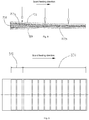
- the continuous press of the invention is different from the existing continuous press in that as is shown in FIG. 8 , the pressing passage formed between the top feed heating plate 170 and the bottom feed heating plate 180 is divided into a normal pressing curing zone 192b and a pressing but not curing zone 192a and the normal pressing curing zone 192b is connected with the feeding area 191 through the pressing but not curing zone 192a, namely, a to-be-pressed fiber mat enters the pressing but not curing zone 192a first and then enters the normal pressing curing zone 192b.
- the set temperature of the pressing but not curing zone 192a and the time for the to-be-pressed fiber mat 200 to pass through the pressing but not curing zone 192a cannot meet the temperature and time requirements for normal curing of the adhesive in the to-be-pressed fiber mat 200, and therefore, when the to-be-pressed fiber mat 200 passes through the pressing but not curing zone 192a, the thickness of the to-be-pressed fiber mat 200 is compressed, but the adhesive in the to-be-pressed fiber mat 200 is not cured.
- the temperature of the pressing but not curing zone 192a should be lower than the temperature required for normal curing of the adhesive in the to-be-pressed fiber mat 200 when the to-be-pressed fiber mat 200 passes through the pressing but not curing zone 192a.
- the pressing but not curing zone 192a can be cooled.
- the zone between the top feed heating plate 170 and the bottom feed heating plate 180 is divided into a first temperature control zone 310 and a second temperature control zone 320, and the first temperature control zone 310 and the second temperature control zone 320 are controlled independently. As is shown in FIG.
- the first temperature control zone 310 between the top feed heating plate 170 and the bottom feed heating plate 180 corresponds to the pressing but not curing zone 192a
- the second temperature control zone 320 between the top feed heating plate 170 and the bottom feed heating plate 180 corresponds to the normal pressing curing zone 192b.
- the temperature of the pressing but not curing zone 192a can also be made lower than the temperature required for normal curing of the adhesive in the to-be-pressed fiber mat 200 when the to-be-pressed fiber mat 200 passes through the pressing but not curing zone 192a through the following method: the top steel belt 130 and the bottom steel belt 140 are not heated anymore when passing through the pressing but not curing zone 192a.
- the top steel belt 130 and the bottom steel belt 140 circulate to enter the pressing passage 192 again from the inlet end of the pressing passage 192 after coming out of the pressing passage 192 from the outlet end of the pressing passage 192, and have already been cooled without being heated by heating devices in the process, the temperature of the top and bottom steel belts 130 and the bottom steel belt 140 is greatly decreased, and thus through proper adjustment, it can be ensured that the temperature generated when the top steel belt 130 and the bottom steel belt 140 enter the pressing passage 192 again is lower than the temperature required for normal curing of the adhesive in the to-be-pressed fiber mat 200 when the to-be-pressed fiber mat 200 passes through the pressing but not curing zone 192a.
- the operating process of the continuous press for pressing the fiber mat of the invention is as follows: the top steel belt 130 wound around the top driving roller and the top driven roller and the bottom steel belt 140 wound around the bottom driving roller and the bottom driven roller are driven by the top driving roller and the bottom driving roller to circulate, and the to-be-pressed fiber mat 200 is sent into the feeding area 191 formed between the top feed heating plate 170 and the bottom feed heating plate 180 along with circulation of the top bottom steel belt 130 and the bottom steel belt 140 and then sequentially passes through the pressing but not curing zone 192a, namely the first temperature control zone 310 and the normal pressing curing zone 192b, namely the second temperature control zone 320, wherein the pressure of the fiber mat 200 passing through the pressing but not curing zone 192a is equal to or lower than the pressure of the fiber mat 200 passing through the normal curing pressing zone 192b.
- the thickness of the precuring layers on the top and bottom surfaces of the obtained fiberboard can be reduced at least by 30%-40% compared with the prior art and even is only 30% of that in the prior art as is shown in FIG. 11 , and therefore, raw materials are greatly saved, the sanding quantity, power consumption of the sanding machine and abrasive belt consumption are reduced, and sanding dust is also reduced.
- these dust pellets 10 are carried into the pressing but not curing zone 192a and then can be fused into to the surfaces of the to-be-pressed fiber mat 200 as the adhesive in the to-be-pressed fiber mat 200 is not cured in the pressing but not curing zone 192a, and thus dust spots on the surfaces of the fiberboard are avoided.
- the position close to the inlet of the pressing passage 192, namely the position I in FIG. 7 , of a pressurization device 111 on the press top 110 can be lifted by a certain distance, so that an S-shaped curved surface is formed between the top feed heating plate 170 and the fiber mat 200 in the feeding direction, and accordingly, an exhaust gap 194 (as is shown in FIG. 7 ) is formed at the position I and between the top feed heating plate 170 and the bottom feed heating plate 180 in the pressing process.
- gas generated by the to-be-pressed fiber mat 200 in the pressing but not curing zone 192a and a large quantity of gas generated in the normal pressing curing zone 192b and exhausted towards the pressing but not curing zone 192a can be exhausted from the two sides of the fiber mat via the exhaust gap 194, the flow rate of gas exhausted towards the feeding area is effectively decreased, vortex flow is avoided, and therefore, the feeding speed can be properly increased to further increase the yield.
Landscapes
- Engineering & Computer Science (AREA)
- Life Sciences & Earth Sciences (AREA)
- Mechanical Engineering (AREA)
- Manufacturing & Machinery (AREA)
- Wood Science & Technology (AREA)
- Forests & Forestry (AREA)
- Dry Formation Of Fiberboard And The Like (AREA)
Abstract
Description
- The invention relates to the technical field of processing artificial boards, board blanks and other boards through continuous presses, in particular to a method for pressing fiberboard and a continuous press adopting the method for pressing fiberboard.
- As is shown in
FIG. 1 andFIG. 2 , acontinuous press 100 is provided with apress top 110, apress bottom 120, atop steel belt 130, abottom steel belt 140, a top rollerbar chain blanket 150 and a bottom rollerbar chain blanket 160, wherein thetop steel belt 130 continuously operates in thepress top 110, and thebottom steel belt 140 continuously operates in thepress bottom 120. A topfeed heating plate 170 and a bottomfeed heating plate 180 are arranged in thepress top 110 and thepress bottom 120 separately, and afeeding area 191 is formed before the topfeed heating plate 170 and the bottomfeed heating plate 180 by thetop steel belt 130 and thebottom steel belt 140. Apressing passage 192 is formed between the topfeed heating plate 170 and the bottomfeed heating plate 180. The feed end of thepressing passage 192 is connected with thefeeding area 191 in a natural transition mode. - When the continuous press operates, the
top steel belt 130 wound around a top drivenroller 131 and atop driving roller 132 and thebottom steel belt 140 wound around a bottom drivenroller 141 and abottom driving roller 142 are driven by thetop driving roller 132 and thebottom driving roller 142 to circulate, and a to-be-pressedfiber mat 200 is sent into thefeeding area 191 formed between thetop steel belt 130 and thebottom steel belt 140 along with circulation of thetop steel belt 130 and thebottom steel belt 140 and then into thepressing passage 192 formed between the topfeed heating plate 170 and the bottomfeed heating plate 180 to be pressed into fiberboards of different specification in a subsequentpressing passage 193. - To achieve rolling friction between the
top steel belt 130 and the topfeed heating plate 170 as well as between thebottom steel belt 140 and the bottomfeed heating plate 180 to further reduce the operating resistance, in work, the top rollerbar chain blanket 150 wound around a top chain blanketdriving chain wheel 151 and a top chain blanket drivenchain wheel 152 and the bottom rollerbar chain blanket 160 wound around a bottom chain blanketdriving chain wheel 161 and a bottom chain blanket drivenchain wheel 162 are driven by the top chain blanketdriving chain wheel 151 and the bottom chain blanketdriving chain wheel 161 to circulate so as to enter the zone between the topfeed heating plate 170 and the bottomfeed heating plate 180 and the zone between thetop steel belt 130 and thebottom steel belt 140. - Generally speaking, a top heating device and a bottom heating device (not shown in the FIGs) are separately arranged in the top
feed heating plate 170 and the bottomfeed heating plate 180 and transfer heat into the to-be-pressedfiber mat 200 in thepressing passage 192 through the top and bottomfeed heating plates bar chain blankets bottom steel belts fiber mat 200 is cured; at the moment, apressurization device 111 on thepress top 110 applies pressure to the top and bottomfeed heating plates fiber mat 200 in thepressing passage 192 through the top and bottom rollerbar chain blankets bottom steel belts fiber mat 200 is gradually compressed to a preset thickness, and a fiberboard is formed in the subsequentpressing passage 193 and finally is sent out. - The
pressing passage 192 between the topfeed heating plate 170 and the bottomfeed heating plate 180 can be adjusted so that fiberboards with different thicknesses, such as fiberboards with the thickness of 12mm, 16mm and 25mm, can be produced through onecontinuous press 100. - The top and bottom feed heating plates 170,180 of the existing
continuous press 100 each have only one temperature zone, and when the to-be-pressedfiber mat 200 enters thepressing passage 192 to be cured and pressed from thefeeding area 191, precuring layers can be formed on the top and bottom surfaces of the fiberboard under the high-temperature and high-pressure effect.
Generally speaking, the top and bottom surfaces of the obtained fiberboard need to be sanded so as to remove the precuring layers on the top and bottom surfaces of the fiberboard, and thus the hardness, along the whole cross section, of the finally obtained fiberboard is basically consistent (as is shown inFIG. 3 ). For example, as for a formed fiberboard with the final thickness of 12mm after the precuring layers are removed, the thickness of each of the precuring layers on the top and bottom surfaces reaches 0.45mm, and thus the thickness of the fiberboard produced by thecontinuous press 100 reaches 12.9mm. The precuring layers are so thick that high manufacturing cost is caused by severe raw material waste, that the sanding quantity is large, and consumption of abrasive belts used for grinding and power consumption of the sanding machine are greatly increased, and that a large quantity of sand is generated by sanding, the processing workload is large, and safety problems are caused. - The thickness of the precuring layers formed on the top and bottom surfaces of the obtained fiberboard not only depends on the fiber state and the performance of the adhesive in the fiber, but also depends on the feeding speed of the to-be-pressed
fiber mat 200 and the pressing temperature and the pressing pressure applied to the to-be-pressedfiber mat 200 by the top and bottomfeed heating plates fiber mat 200 by the top and bottomfeed heating plates fiber mat 200 by the top and bottomfeed heating plates - A large quantity of gas is released by the to-be-pressed
fiber mat 200 in the curing and pressing process, part of the released gas is exhausted from the two sides of thepressing passage 192, and the other part of the released gas can only be exhausted towards the feeding area 191 (as is shown inFIG. 4 andFIG. 5 ) due to the fact that thefiber mat 200 at the rear end of thepressing passage 192 has already been cured and compacted gradually. The gas exhausted towards the
feeding area 191 can form vortex flow at the contact positions between the top andbottom steel belts fiber mat 200, the vertex flow acts on the top and bottom surfaces of the to-be-pressedfiber mat 200, so that a large quantity ofdust pellets 10 are generated particularly on the bottom surface of the to-be-pressed fiber mat 200 (as is shown inFIG. 6 ), thesedust pellets 10 are then carried into thepressing passage 192, the adhesive in thedust pellets 10 is generally cured in advanced under the influence of high-temperature air flow and thus cannot be fused into the to-be-pressedfiber mat 200, and consequentially, dust spots are formed on the surfaces of the obtained fiberboard. - Currently, to solve the problem of dust spots on the obtained fiberboard, the position close to the inlet of the
pressing passage 192, namely the position I inFIG. 7 , of the topfeed heating plate 170 is generally lifted by a certain height, so that an S-shaped curved surface is formed between the topfeed heating plate 170 and thefiber mat 200 in the feeding direction, anexhaust gap 194 is formed at the position I between the topfeed heating plate 170 and the bottomfeed heating plate 180, a large quantity of gas generated in the curing and pressing process of the to-be-pressedfiber mat 200 is exhausted from the two sides via theexhaust gap 194, in this way, the flow rate of gas exhausted towards thefeeding area 191 is effectively decreased, vertex flow cannot be generated at the contact position between the top andbottom steel belts fiber mat 200 by the gas exhausted towards thefeeding area 191, and accordingly, the quantity of generated dust pellets is effectively reduced or no dust pellet is generated. Furthermore, though the method, the feeding speed and the yield can be increased. However, by adoption of the method, the thickness of the precuring layers on the surfaces of the obtained fiberboard can be increased. - The above problem has troubled the industry for a long time and urgently needs to be solved by the technicians in the industry.
- To overcome the defects of existing continuous presses for pressing fiberboards, the invention provides a method for pressing fiberboard through a continuous press. The thickness of the precuring layers of a fiberboard obtained through the method is greatly reduced, raw materials are saved, the sanding quantity and sanding dust are reduced, the quantity of generated dust pellets is reduced, and dust spots on the surfaces of the obtained fiberboard are avoided.
- The invention further provides a continuous press adopting the above method for pressing fiberboard.
- As for the method for pressing fiberboard of the invention, a top steel belt wound around a top driving roller and a top driven roller and a bottom steel belt wound around a bottom driving roller and a bottom driven roller are driven by the top driving roller and the bottom driving roller to circulate, and a to-be-pressed fiber mat is sent into a feeding area formed between the top steel belt and the bottom steel belt along with circulation of the top steel belt and the bottom steel belt and then into a pressing passage formed between a top feed heating plate and a bottom feed heating plate to be pressed into a fiberboard. The method is characterized in that the pressing passage is divided into a normal pressing curing zone and a pressing but not curing zone, the to-be-pressed fiber mat enters the pressing but not curing zone first and then enters the normal pressing curing zone, and when the to-be-pressed fiber mat passes through the pressing but not curing zone, the thickness of the to-be-pressed fiber mat is compressed, but the adhesive in the to-be-pressed fiber mat is not cured.
- In one preferred embodiment of the invention, the set temperature of the pressing but not curing zone and the time for the to-be-pressed fiber mat to pass through the pressing but not curing zone cannot meet the temperature and time requirements for normal curing of the adhesive in the to-be-pressed fiber mat.
- In one preferred embodiment of the invention, the set temperature of the pressing but not curing zone is lower than the temperature required for normal curing of the adhesive in the fiber mat when the fiber mat passes through the pressing but not curing zone.
- In one preferred embodiment of the invention, the pressing but not cooling zone is cooled, so that the temperature of the pressing but not curing zone is made lower than the temperature required for normal curing of the adhesive in the fiber mat when the fiber mat passes through the pressing but not curing zone.
- In one preferred embodiment of the invention, the top steel belt and the, bottom steel belt are not heated when passing through the pressing but not curing zone, so that the temperature of the pressing but not curing zone is made lower than the temperature required for normal curing of the adhesive in the fiber mat when the fiber mat passes through the pressing but not curing zone.
- In one preferred embodiment of the invention, the pressure of the pressing but not curing zone is equal to or lower than the pressure of the normal pressing curing zone.
- In one preferred embodiment of the invention, the position, close to the inlet of the pressing passage, of the top feed heating plate is lifted by a certain distance, so that an exhaust gap is formed at a position close to the inlet of the pressing passage and between the top feed heating plate and the bottom feed heating plate in the pressing process.
- As for the continuous press adopting the above method for pressing fiberboard, the continuous press is provided with a press top, a press bottom, a top steel belt, a bottom steel belt, a top roller bar chain blanket and bottom roller bar chain blanket, wherein the top steel belt continuously operates in the press top, and the bottom steel belt continuously operates in the press bottom. A top feed heating plate is arranged in the press top, and a bottom feed heating plate is arranged in the press bottom. A feeding area is formed before the top feed heating plate and the bottom feed heating plate by the top steel belt and the bottom steel belt, and a pressing passage is formed between the top feed pressing plate and the bottom feed pressing plate and connected with the feeding area. The continuous press is characterized in that the pressing passage is divided into a normal pressing curing zone and a pressing but not curing zone, the to-be-pressed fiber mat enters the pressing but not curing zone first and then enters the normal pressing curing zone, and when the to-be-pressed fiber mat passes through the pressing but not curing zone, the thickness of the to-be-pressed fiber mat is compressed, but the adhesive in the to-be-pressed fiber mat is not cured.
- In one preferred embodiment of the invention, the set temperature of the pressing but not curing zone and the time for the to-be-pressed fiber mat to pass through the pressing but not curing zone cannot meet the temperature and time requirements for normal curing of the adhesive in the to-be-pressed fiber mat.
- In one preferred embodiment of the invention, the set temperature of the pressing but not curing zone is lower than the temperature required for normal curing of the adhesive in the fiber mat when the fiber mat passes through the pressing but not curing zone.
- In one preferred embodiment of the invention, the zone between the top feed heating plate and the bottom feed heating plate is divided into a first temperature control zone and a second temperature control zone, wherein the first temperature control zone between the top feed heating plate and the bottom feed heating plate corresponds to the pressing but not curing zone, and the second temperature control zone between the top feed heating plate and the bottom feed heating plate corresponds to the normal pressing curing zone.
- In one preferred embodiment of the invention, the first temperature zone and the second temperature zone between the top feed heating plate and the bottom feed heating plate are controlled independently.
- In one preferred embodiment of the invention, the top steel belt and the bottom steel belt are not heated when passing through the pressing but not curing zone, so that the temperature of the pressing but not curing zone is made lower than the temperature required for normal curing of the adhesive in the fiber mat when the fiber mat passes through the pressing but not curing zone.
- In one preferred embodiment of the invention, the pressure of the pressing but not curing zone is equal to or lower than the pressure of the normal pressing curing zone.
- In one preferred embodiment of the invention, the position, close to the inlet of the pressing passage, of the top feed heating plate is lifted by a certain distance, so that an exhaust gap is formed at a position close to the inlet of the pressing passage and between the top feed heating plate and the bottom feed heating plate in the pressing process.
- As the to-be-pressed fiber mat enters the pressing but not curing zone first before entering the normal pressing curing zone through the feeding area, air in the fiber mat can be exhausted towards the two sides and the feeding area from the pressing but not curing zone, meanwhile, part of gas generated when the fiber mat is pressed and cured in the normal pressing curing zone is exhausted from the two sides of the normal pressing curing zone, and the other part of gas can be exhausted towards the pressing but not curing zone; and as the adhesive is not cured in the pressing but not curing zone, gas can be exhausted smoothly, finally, the thickness of the precuring layers on the top and bottom surfaces of the obtained fiberboard can be reduced at least by 30%-40% compared with the prior art and even is only 30% of that in the prior art, and therefore, raw materials are greatly saved, the sanding quantity, power consumption of the sanding machine and abrasive belt consumption are reduced, and sanding dust is also reduced.
- In addition, as the adhesive is not completely cured when the to-be-pressed fiber mat passes through the pressing but not curing zone, gas released by the fiber mat in the normal pressing curing zone can be exhausted towards the feeding area via the pressing but not curing zone, this part of gas cannot form vortex flow at the contact positions between the top and bottom steel belts and the to-be-pressed fiber mat, and even if vortex flow is generated and dust pellets are generated on the top and bottom surfaces of the to-be-pressed fiber mat with the adhesive not cured, these dust pellets are carried into the pressing but not curing zone and then can be fused into to the surfaces of the to-be-pressed fiber mat as the adhesive in the to-be-pressed fiber mat is not cured in the pressing but not curing zone, and thus dust spots on the surfaces of the fiberboard are avoided.
- Secondly, as the position, close to the inlet of the pressing passage, of the top feed heating plate is lifted by a certain height, an exhaust gap is formed at a position close to the inlet of the passing passage and between the top feed heating plate and the bottom feed heating plate in the pressing process, in this way, gas generated by the to-be-pressed fiber mat in the pressing but not curing zone and a large quantity of gas generated in the normal pressing curing zone and exhausted towards the pressing but not curing zone can be exhausted from the two sides of the fiber mat via the exhaust gap, the flow rate of gas exhausted towards the feeding area is effectively decreased, vortex flow is avoided, and therefore, the feeding speed can be properly increased to further increase the yield.
- To explain the technical scheme of the embodiments of the invention or the prior art more clearly, a brief description of the drawings required for describing the embodiments of the invention or the prior art is given as follows, obviously, the drawings in the following description are only for part of the embodiments of the invention, and for those ordinarily skilled in the field, other drawings can also be obtained without creative work according to these drawings.
- FIG. 1
- is a structural diagram of an existing continuous press.
- FIG. 2
- is an enlarged view of the position I in
FIG. 1 . - FIG. 3
- is a density distribution diagram of the cross section of a fiberboard produced through the existing continuous press.
- FIG. 4
- is a diagram of the existing continuous press when used for pressing fiber mat.
- FIG. 5
- is a diagram of air released when the existing continuous press is used for pressing fiber mat.
- FIG. 6
- is an enlarged view of the position B in
FIG. 2 . - FIG. 7
- is an enlarged view of the position A in
FIG. 2 . - FIG. 8
- is a diagram of a continuous press of the invention when used for pressing fiber mat.
- FIG. 9
- is a distribution diagram of temperature zones in a pressing passage of the continuous press of the invention.
- FIG. 10
- is a diagram of air released when the continuous press of the invention is used for pressing fiber mat.
- FIG. 11
- is a density distribution diagram of the cross section of a fiberboard produced through the continuous press of the invention.
- For a clear understanding of the technical means, creative characteristics, purposes and effects of the invention, a further illustration of the invention is given with the accompanying drawings as follows.
- As is shown in
FIG. 1 andFIG. 2 , a continuous press of the invention is basically the same as the existing continuous press and is also provided with apress top 110, apress bottom 120, atop steel belt 130, abottom steel belt 140, a top rollerbar chain blanket 150 and a bottom rollerbar chain blanket 160, wherein thetop steel belt 130 continuously operates in thepress top 110, and thebottom steel belt 140 continuously operates in thepress bottom 120. A topfeed heating plate 170 and a bottomfeed heating plate 180 are arranged in thepress top 110 and thepress bottom 120 separately. Afeeding area 191 is formed before the topfeed heating plate 170 and the bottomfeed heating plate 180 by thetop steel belt 130 and thebottom steel belt 140. Apressing passage 192 is formed between the topfeed heating plate 170 and the bottomfeed heating plate 180.
The continuous press of the invention is different from the existing continuous press in that as is shown inFIG. 8 , the pressing passage formed between the topfeed heating plate 170 and the bottomfeed heating plate 180 is divided into a normalpressing curing zone 192b and a pressing but not curingzone 192a and the normalpressing curing zone 192b is connected with thefeeding area 191 through the pressing but not curingzone 192a, namely, a to-be-pressed fiber mat enters the pressing but not curingzone 192a first and then enters the normalpressing curing zone 192b. The set temperature of the pressing but not curingzone 192a and the time for the to-be-pressed fiber mat 200 to pass through the pressing but not curingzone 192a cannot meet the temperature and time requirements for normal curing of the adhesive in the to-be-pressed fiber mat 200, and therefore, when the to-be-pressed fiber mat 200 passes through the pressing but not curingzone 192a, the thickness of the to-be-pressed fiber mat 200 is compressed, but the adhesive in the to-be-pressed fiber mat 200 is not cured. Specifically, the temperature of the pressing but not curingzone 192a should be lower than the temperature required for normal curing of the adhesive in the to-be-pressed fiber mat 200 when the to-be-pressed fiber mat 200 passes through the pressing but not curingzone 192a. - To make the temperature of the pressing but not curing
zone 192a lower than the temperature required for normal curing of the adhesive in the to-be-pressed fiber mat 200 when the to-be-pressed fiber mat 200 passes through the pressing but not curingzone 192a, the pressing but not curingzone 192a can be cooled. Specifically, the zone between the topfeed heating plate 170 and the bottomfeed heating plate 180 is divided into a firsttemperature control zone 310 and a secondtemperature control zone 320, and the firsttemperature control zone 310 and the secondtemperature control zone 320 are controlled independently. As is shown inFIG. 9 , the firsttemperature control zone 310 between the topfeed heating plate 170 and the bottomfeed heating plate 180 corresponds to the pressing but not curingzone 192a, and the secondtemperature control zone 320 between the topfeed heating plate 170 and the bottomfeed heating plate 180 corresponds to the normalpressing curing zone 192b. - In addition, the temperature of the pressing but not curing
zone 192a can also be made lower than the temperature required for normal curing of the adhesive in the to-be-pressed fiber mat 200 when the to-be-pressed fiber mat 200 passes through the pressing but not curingzone 192a through the following method: thetop steel belt 130 and thebottom steel belt 140 are not heated anymore when passing through the pressing but not curingzone 192a. Specifically, thetop steel belt 130 and thebottom steel belt 140 circulate to enter thepressing passage 192 again from the inlet end of thepressing passage 192 after coming out of thepressing passage 192 from the outlet end of thepressing passage 192, and have already been cooled without being heated by heating devices in the process, the temperature of the top andbottom steel belts 130 and thebottom steel belt 140 is greatly decreased, and thus through proper adjustment, it can be ensured that the temperature generated when thetop steel belt 130 and thebottom steel belt 140 enter thepressing passage 192 again is lower than the temperature required for normal curing of the adhesive in the to-be-pressed fiber mat 200 when the to-be-pressed fiber mat 200 passes through the pressing but not curingzone 192a. - The operating process of the continuous press for pressing the fiber mat of the invention is as follows: the
top steel belt 130 wound around the top driving roller and the top driven roller and thebottom steel belt 140 wound around the bottom driving roller and the bottom driven roller are driven by the top driving roller and the bottom driving roller to circulate, and the to-be-pressed fiber mat 200 is sent into thefeeding area 191 formed between the topfeed heating plate 170 and the bottomfeed heating plate 180 along with circulation of the topbottom steel belt 130 and thebottom steel belt 140 and then sequentially passes through the pressing but not curingzone 192a, namely the firsttemperature control zone 310 and the normalpressing curing zone 192b, namely the secondtemperature control zone 320, wherein the pressure of thefiber mat 200 passing through the pressing but not curingzone 192a is equal to or lower than the pressure of thefiber mat 200 passing through the normalcuring pressing zone 192b. - As the
fiber mat 200 enters the pressing but not curingzone 192a first before entering the normalpressing curing zone 192b through thefeeding area 191, air in thefiber mat 200 can be exhausted towards the two sides and the feeding area from the pressing but not curingzone 192a, meanwhile, part of gas generated when the fiber mat is pressed and cured in the normalpressing curing zone 192b is exhausted from the two sides of the normalpressing curing zone 192b, and the other part of gas can be exhausted towards the pressing but not curingzone 192a; and as is shown inFIG. 10 , as the adhesive is not cured in the pressing but not curingzone 192a, gas can be exhausted smoothly, finally, the thickness of the precuring layers on the top and bottom surfaces of the obtained fiberboard can be reduced at least by 30%-40% compared with the prior art and even is only 30% of that in the prior art as is shown inFIG. 11 , and therefore, raw materials are greatly saved, the sanding quantity, power consumption of the sanding machine and abrasive belt consumption are reduced, and sanding dust is also reduced. - In addition, as the adhesive is not completely cured when the
fiber mat 200 passes through the pressing but not curingzone 192a, gas released by thefiber mat 200 in the normalpressing curing zone 192b can be exhausted towards the feedingarea 191 via the pressing but not curingzone 192a, this part of gas cannot form vortex flow at the contact positions between the top andbottom steel belts be-pressed fiber mat 200, and even if vortex flow is generated anddust pellets 10 are generated on the top and bottom surfaces of the to-be-pressed fiber mat 200 with the adhesive not cured (as is shown inFIG. 6 ), thesedust pellets 10 are carried into the pressing but not curingzone 192a and then can be fused into to the surfaces of the to-be-pressed fiber mat 200 as the adhesive in the to-be-pressed fiber mat 200 is not cured in the pressing but not curingzone 192a, and thus dust spots on the surfaces of the fiberboard are avoided. - In addition, the position close to the inlet of the
pressing passage 192, namely the position I inFIG. 7 , of apressurization device 111 on thepress top 110 can be lifted by a certain distance, so that an S-shaped curved surface is formed between the topfeed heating plate 170 and thefiber mat 200 in the feeding direction, and accordingly, an exhaust gap 194 (as is shown inFIG. 7 ) is formed at the position I and between the topfeed heating plate 170 and the bottomfeed heating plate 180 in the pressing process. In this way, gas generated by the to-be-pressed fiber mat 200 in the pressing but not curingzone 192a and a large quantity of gas generated in the normalpressing curing zone 192b and exhausted towards the pressing but not curingzone 192a can be exhausted from the two sides of the fiber mat via theexhaust gap 194, the flow rate of gas exhausted towards the feeding area is effectively decreased, vortex flow is avoided, and therefore, the feeding speed can be properly increased to further increase the yield. - The basic principle, main characteristics and advantages of the invention are illustrated and described above. Those skilled in the field should understand that the invention is not limited to the above embodiment, the above embodiment and description are only used for illustrating the principle of the invention, various variations and improvements can also be made without deviating from the spirit and scope of the invention, and all these variations and improvements are within the protection scope of the invention. The protection scope of the invention depends on the accompanying claims and equivalents of the claims.
Claims (15)
- A method for pressing fiberboard, comprising the steps that a top steel belt wound around a top driving roller and a top driven roller and a bottom steel belt wound around a bottom driving roller and a bottom driven roller are driven by the top driving roller and the bottom driving roller to circulate, and a to-be-pressed fiber mat is sent into a feeding area formed between the top steel belt and the bottom steel belt along with circulation of the top steel belt and the bottom steel belt and then into a pressing passage formed between a top feed heating plate and a bottom feed heating plate to be pressed into a fiberboard; characterized in that the pressing passage is divided into a normal pressing curing zone and a pressing but not curing zone, the to-be-pressed fiber mat enters the pressing but not curing zone first and then enters the normal pressing curing zone, and when the to-be-pressed fiber mat passes through the pressing but not curing zone, the thickness of the to-be-pressed fiber mat is compressed, but the adhesive in the to-be-pressed fiber mat is not cured.
- The method for pressing fiberboard according to Claim 1, characterized in that the set temperature of the pressing but not curing zone and the time for the to-be-pressed fiber mat to pass through the pressing but not curing zone cannot meet the temperature and time requirements for normal curing of the adhesive in the to-be-pressed fiber mat.
- The method for pressing fiberboard according to Claim 2, characterized in that the set temperature of the pressing but not curing zone is lower than the temperature required for normal curing of the adhesive in the fiber mat when the fiber mat passes through the pressing but not curing zone.
- The method for pressing fiberboard according to Claim 3, characterized in that the pressing but not cooling zone is cooled, so that the temperature of the pressing but not curing zone is made lower than the temperature required for normal curing of the adhesive in the fiber mat when the fiber mat passes through the pressing but not curing zone.
- The method for pressing fiberboard according to Claim 3, characterized in that the top steel belt and the bottom steel belt are not heated when passing through the pressing but not curing zone, so that the temperature of the pressing but not curing zone is made lower than the temperature required for normal curing of the adhesive in the fiber mat when the fiber mat passes through the pressing but not curing zone.
- The method for pressing fiberboard according to any of Claims 1-5, characterized in that, the pressure of the pressing but not curing zone is equal to or lower than the pressure of the normal pressing curing zone.
- The method for pressing fiberboard according to Claim 6, characterized in that the position, close to the inlet of the pressing passage, of the top feed heating plate is lifted by a certain distance, so that an exhaust gap is formed at a position close to the inlet of the pressing passage and between the top feed heating plate and the bottom feed heating plate in the pressing process.
- A continuous press adopting the method for pressing fiberboard mentioned in Claim 1, provided with a press top, a press bottom, a top steel belt, a bottom steel belt, a top roller bar chain blanket and bottom roller bar chain blanket, wherein the top steel belt continuously operates in the press top, the bottom steel belt continuously operates in the press bottom, a top feed heating plate is arranged in the press top, a bottom feed heating plate is arranged in the press bottom, a feeding area is formed before the top feed heating plate and the bottom feed heating plate by the top steel belt and the bottom steel belt, and a pressing passage is formed between the top feed pressing plate and the bottom feed pressing plate and connected with the feeding area; characterized in that the pressing passage is divided into a normal pressing curing zone and a pressing but not curing zone, the to-be-pressed fiber mat enters the pressing but not curing zone first and then enters the normal pressing curing zone, and when the to-be-pressed fiber mat passes through the pressing but not curing zone, the thickness of the to-be-pressed fiber mat is compressed, but the adhesive in the to-be-pressed fiber mat is not cured.
- The continuous press according to Claim 8, characterized in that the set temperature of the pressing but not curing zone and the time for the to-be-pressed fiber mat to pass through the pressing but not curing zone cannot meet the temperature and time requirements for normal curing of the adhesive in the to-be-pressed fiber mat.
- The continuous press according to Claim 9, characterized in that the set temperature of the pressing but not curing zone is lower than the temperature required for normal curing of the adhesive in the fiber mat when the fiber mat passes through the pressing but not curing zone.
- The continuous press according to Claim 10, characterized in that the zone between the top feed heating plate and the bottom feed heating plate is divided into a first temperature control zone and a second temperature control zone, wherein the first temperature control zone between the top feed heating plate and the bottom feed heating plate corresponds to the pressing but not curing zone, and the second temperature control zone between the top feed heating plate and the bottom feed heating plate corresponds to the normal pressing curing zone.
- The continuous press according to Claim 11, characterized in that the first temperature zone and the second temperature zone between the top feed heating plate and the bottom feed heating plate are controlled independently.
- The continuous press according to Claim 10, characterized in that the top steel belt and the bottom steel belt are not heated when passing through the pressing but not curing zone, so that the temperature of the pressing but not curing zone is made lower than the temperature required for normal curing of the adhesive in the fiber mat when the fiber mat passes through the pressing but not curing zone.
- The continuous press according to any of Claims 8-13, characterized in that the pressure of the pressing but not curing zone is equal to or lower than the pressure of the normal pressing curing zone.
- The continuous press according to Claim 14, characterized in that the position, close to the inlet of the pressing passage, of the top feed heating plate is lifted by a certain distance, so that an exhaust gap is formed at a position close to the inlet of the pressing passage and between the top feed heating plate and the bottom feed heating plate in the pressing process.
Applications Claiming Priority (3)
| Application Number | Priority Date | Filing Date | Title |
|---|---|---|---|
| CN201510609132.9A CN105171891A (en) | 2015-09-22 | 2015-09-22 | Method for pressing fiberboard and continuous pressing machine for pressing fiberboard with method |
| CN201520739175.4U CN205521839U (en) | 2015-09-22 | 2015-09-22 | Continuous press of pressed -fibre board |
| PCT/CN2016/099351 WO2017050200A1 (en) | 2015-09-22 | 2016-09-19 | Method for pressing fiberboard and continuous press for pressing fiberboard by adopting method |
Publications (2)
| Publication Number | Publication Date |
|---|---|
| EP3354431A1 true EP3354431A1 (en) | 2018-08-01 |
| EP3354431A4 EP3354431A4 (en) | 2019-07-10 |
Family
ID=58385650
Family Applications (1)
| Application Number | Title | Priority Date | Filing Date |
|---|---|---|---|
| EP16848081.2A Withdrawn EP3354431A4 (en) | 2015-09-22 | 2016-09-19 | Method for pressing fiberboard and continuous press for pressing fiberboard by adopting method |
Country Status (2)
| Country | Link |
|---|---|
| EP (1) | EP3354431A4 (en) |
| WO (1) | WO2017050200A1 (en) |
Family Cites Families (10)
| Publication number | Priority date | Publication date | Assignee | Title |
|---|---|---|---|---|
| DE1271385B (en) * | 1964-03-11 | 1968-06-27 | Eugen Siempelkamp | Plate press for the production of in particular endless chipboard strips or the like. |
| CN1009443B (en) * | 1986-11-14 | 1990-09-05 | 库特·赫尔德·法布里肯特 | Method and apparatus for manufacturing composite wood product board |
| RU2068339C1 (en) * | 1989-02-14 | 1996-10-27 | СИ ЭС АР Лимитед | Device and method for continuous manufacture of wood particle boards |
| DE4301594C2 (en) * | 1993-01-21 | 2002-10-31 | Dieffenbacher Gmbh Maschf | Process and plant for the production of chipboard |
| DE19518879A1 (en) * | 1995-05-28 | 1996-12-05 | Dieffenbacher Gmbh Maschf | Mfr of chipboard etc. by stepped pressing between steel strips |
| DE19622494A1 (en) * | 1996-06-05 | 1997-12-11 | Schenck Panel Production Syste | Method of hot pressing mats of particles with binder to produce chipboard |
| DE10114381A1 (en) * | 2001-03-23 | 2002-10-10 | Metso Paper Inc | Process for the continuous production of chipboard and similar sheet-like board materials and suitable double belt press |
| DE102006062627A1 (en) * | 2006-12-30 | 2008-07-03 | Dieffenbacher Gmbh + Co. Kg | Prepress for pre-compression and deaeration of a pressed material mat in the course of the production of material plates |
| CN205521839U (en) * | 2015-09-22 | 2016-08-31 | 上海人造板机器厂有限公司 | Continuous press of pressed -fibre board |
| CN105171891A (en) * | 2015-09-22 | 2015-12-23 | 上海人造板机器厂有限公司 | Method for pressing fiberboard and continuous pressing machine for pressing fiberboard with method |
-
2016
- 2016-09-19 WO PCT/CN2016/099351 patent/WO2017050200A1/en not_active Ceased
- 2016-09-19 EP EP16848081.2A patent/EP3354431A4/en not_active Withdrawn
Also Published As
| Publication number | Publication date |
|---|---|
| WO2017050200A1 (en) | 2017-03-30 |
| EP3354431A4 (en) | 2019-07-10 |
Similar Documents
| Publication | Publication Date | Title |
|---|---|---|
| US7458317B2 (en) | Continuous belt-type board press | |
| JP2513820B2 (en) | Double belt press for the production of wood particleboard | |
| US5538676A (en) | Process and plant for the continuous production of particleboards | |
| JPH0671723B2 (en) | Continuous thin-wall particle board manufacturing equipment | |
| JP2018012327A (en) | Method for continuously manufacturing plate shaped composite workpiece | |
| CN101352866B (en) | Pressed material mat compressing method for use during production of material plate and continuously operating press | |
| CN106583875B (en) | A heat press machine with cooling function | |
| CN103950139B (en) | The hot-forming energy conserving system of bamboo-plastic composite material and method | |
| US10953618B2 (en) | Heating roll press machine and heating roll press method | |
| US3782875A (en) | Apparatus for the continuous manufacture of chip boards | |
| CA2836846A1 (en) | Method and facility for producing material panels, such as chipboard, particle board, fiberboard, or similar wood-based panels and plastic panels and a device for compressing the narrow sides of a compressed material mat | |
| EP3354431A1 (en) | Method for pressing fiberboard and continuous press for pressing fiberboard by adopting method | |
| CN207643359U (en) | Equipment for producing plate of material by distribution backing strap | |
| CN205521839U (en) | Continuous press of pressed -fibre board | |
| CN113423547B (en) | Apparatus and method for manufacturing insulating panels | |
| CN1812872A (en) | Press and method for producing panel board | |
| US5989468A (en) | Method of continuous production of lignocellulosic boards | |
| CN105171891A (en) | Method for pressing fiberboard and continuous pressing machine for pressing fiberboard with method | |
| CN88100765A (en) | Make the method and apparatus of particieboard and other similar sheet material | |
| CN102388153B (en) | Method for producing high-density reduced iron and apparatus for producing high-density reduced iron | |
| CA2334271A1 (en) | Process and facility for the continuous production of organically bonded derived timber product board | |
| JP3991133B2 (en) | Sheet thickness reduction method and equipment | |
| CN212288029U (en) | Continuous cold press for artificial fiber board | |
| CN206718463U (en) | The process and treat system of polyester of high density fiberboard | |
| KR20210112461A (en) | Method for manufacturing artficial marble |
Legal Events
| Date | Code | Title | Description |
|---|---|---|---|
| STAA | Information on the status of an ep patent application or granted ep patent |
Free format text: STATUS: THE INTERNATIONAL PUBLICATION HAS BEEN MADE |
|
| PUAI | Public reference made under article 153(3) epc to a published international application that has entered the european phase |
Free format text: ORIGINAL CODE: 0009012 |
|
| STAA | Information on the status of an ep patent application or granted ep patent |
Free format text: STATUS: REQUEST FOR EXAMINATION WAS MADE |
|
| 17P | Request for examination filed |
Effective date: 20180423 |
|
| AK | Designated contracting states |
Kind code of ref document: A1 Designated state(s): AL AT BE BG CH CY CZ DE DK EE ES FI FR GB GR HR HU IE IS IT LI LT LU LV MC MK MT NL NO PL PT RO RS SE SI SK SM TR |
|
| AX | Request for extension of the european patent |
Extension state: BA ME |
|
| DAV | Request for validation of the european patent (deleted) | ||
| DAX | Request for extension of the european patent (deleted) | ||
| A4 | Supplementary search report drawn up and despatched |
Effective date: 20190607 |
|
| RIC1 | Information provided on ipc code assigned before grant |
Ipc: B27N 3/24 20060101ALI20190603BHEP Ipc: B27N 1/02 20060101ALI20190603BHEP Ipc: B27N 3/18 20060101ALI20190603BHEP Ipc: B27N 3/26 20060101AFI20190603BHEP Ipc: B30B 5/06 20060101ALI20190603BHEP |
|
| STAA | Information on the status of an ep patent application or granted ep patent |
Free format text: STATUS: THE APPLICATION HAS BEEN WITHDRAWN |
|
| 18W | Application withdrawn |
Effective date: 20200616 |