EP3353984B1 - Rufkontinuität in einem hohen uplink-interferenzzustand - Google Patents
Rufkontinuität in einem hohen uplink-interferenzzustand Download PDFInfo
- Publication number
- EP3353984B1 EP3353984B1 EP16775400.1A EP16775400A EP3353984B1 EP 3353984 B1 EP3353984 B1 EP 3353984B1 EP 16775400 A EP16775400 A EP 16775400A EP 3353984 B1 EP3353984 B1 EP 3353984B1
- Authority
- EP
- European Patent Office
- Prior art keywords
- rtp
- packet
- failed
- pdcp
- packets
- Prior art date
- Legal status (The legal status is an assumption and is not a legal conclusion. Google has not performed a legal analysis and makes no representation as to the accuracy of the status listed.)
- Active
Links
- 238000000034 method Methods 0.000 claims description 42
- 230000006837 decompression Effects 0.000 claims description 39
- 230000006835 compression Effects 0.000 claims description 20
- 238000007906 compression Methods 0.000 claims description 20
- 238000004891 communication Methods 0.000 claims description 17
- 230000007774 longterm Effects 0.000 claims description 3
- 238000006243 chemical reaction Methods 0.000 claims description 2
- TXFOLHZMICYNRM-UHFFFAOYSA-N dichlorophosphoryloxybenzene Chemical compound ClP(Cl)(=O)OC1=CC=CC=C1 TXFOLHZMICYNRM-UHFFFAOYSA-N 0.000 claims 1
- 238000012545 processing Methods 0.000 description 26
- 230000005540 biological transmission Effects 0.000 description 23
- 230000006870 function Effects 0.000 description 22
- 238000010586 diagram Methods 0.000 description 19
- 238000005516 engineering process Methods 0.000 description 11
- 230000008569 process Effects 0.000 description 9
- 230000011664 signaling Effects 0.000 description 6
- 238000004422 calculation algorithm Methods 0.000 description 4
- 125000004122 cyclic group Chemical group 0.000 description 4
- 238000013461 design Methods 0.000 description 4
- 238000001514 detection method Methods 0.000 description 4
- 238000007726 management method Methods 0.000 description 4
- 238000012546 transfer Methods 0.000 description 4
- 230000001413 cellular effect Effects 0.000 description 3
- 230000011218 segmentation Effects 0.000 description 3
- 238000012384 transportation and delivery Methods 0.000 description 3
- 238000013459 approach Methods 0.000 description 2
- 230000000977 initiatory effect Effects 0.000 description 2
- 230000008520 organization Effects 0.000 description 2
- 230000010363 phase shift Effects 0.000 description 2
- 238000013468 resource allocation Methods 0.000 description 2
- 238000001228 spectrum Methods 0.000 description 2
- 238000003491 array Methods 0.000 description 1
- 238000004364 calculation method Methods 0.000 description 1
- 230000008859 change Effects 0.000 description 1
- 239000003795 chemical substances by application Substances 0.000 description 1
- 238000004590 computer program Methods 0.000 description 1
- 238000012937 correction Methods 0.000 description 1
- 239000000284 extract Substances 0.000 description 1
- 230000002349 favourable effect Effects 0.000 description 1
- 239000003999 initiator Substances 0.000 description 1
- 238000013507 mapping Methods 0.000 description 1
- 238000010295 mobile communication Methods 0.000 description 1
- 238000012986 modification Methods 0.000 description 1
- 230000004048 modification Effects 0.000 description 1
- 230000003287 optical effect Effects 0.000 description 1
- 230000002093 peripheral effect Effects 0.000 description 1
- 230000009467 reduction Effects 0.000 description 1
- 230000003595 spectral effect Effects 0.000 description 1
- 230000001360 synchronised effect Effects 0.000 description 1
- 230000007704 transition Effects 0.000 description 1
Images




Classifications
-
- H—ELECTRICITY
- H04—ELECTRIC COMMUNICATION TECHNIQUE
- H04L—TRANSMISSION OF DIGITAL INFORMATION, e.g. TELEGRAPHIC COMMUNICATION
- H04L65/00—Network arrangements, protocols or services for supporting real-time applications in data packet communication
- H04L65/60—Network streaming of media packets
- H04L65/75—Media network packet handling
- H04L65/764—Media network packet handling at the destination
-
- H—ELECTRICITY
- H04—ELECTRIC COMMUNICATION TECHNIQUE
- H04L—TRANSMISSION OF DIGITAL INFORMATION, e.g. TELEGRAPHIC COMMUNICATION
- H04L65/00—Network arrangements, protocols or services for supporting real-time applications in data packet communication
- H04L65/10—Architectures or entities
- H04L65/1016—IP multimedia subsystem [IMS]
-
- H—ELECTRICITY
- H04—ELECTRIC COMMUNICATION TECHNIQUE
- H04L—TRANSMISSION OF DIGITAL INFORMATION, e.g. TELEGRAPHIC COMMUNICATION
- H04L65/00—Network arrangements, protocols or services for supporting real-time applications in data packet communication
- H04L65/60—Network streaming of media packets
- H04L65/65—Network streaming protocols, e.g. real-time transport protocol [RTP] or real-time control protocol [RTCP]
-
- H—ELECTRICITY
- H04—ELECTRIC COMMUNICATION TECHNIQUE
- H04L—TRANSMISSION OF DIGITAL INFORMATION, e.g. TELEGRAPHIC COMMUNICATION
- H04L65/00—Network arrangements, protocols or services for supporting real-time applications in data packet communication
- H04L65/60—Network streaming of media packets
- H04L65/70—Media network packetisation
-
- H—ELECTRICITY
- H04—ELECTRIC COMMUNICATION TECHNIQUE
- H04L—TRANSMISSION OF DIGITAL INFORMATION, e.g. TELEGRAPHIC COMMUNICATION
- H04L69/00—Network arrangements, protocols or services independent of the application payload and not provided for in the other groups of this subclass
- H04L69/04—Protocols for data compression, e.g. ROHC
-
- H—ELECTRICITY
- H04—ELECTRIC COMMUNICATION TECHNIQUE
- H04L—TRANSMISSION OF DIGITAL INFORMATION, e.g. TELEGRAPHIC COMMUNICATION
- H04L69/00—Network arrangements, protocols or services independent of the application payload and not provided for in the other groups of this subclass
- H04L69/22—Parsing or analysis of headers
Definitions
- the present disclosure relates generally to communication systems, and more particularly, to techniques for increasing transmission quality.
- Wireless communication systems are widely deployed to provide various telecommunication services such as telephony, video, data, messaging, and broadcasts.
- Typical wireless communication systems may employ multiple-access technologies capable of supporting communication with multiple users by sharing available system resources (e.g., bandwidth, transmit power).
- multiple-access technologies include code division multiple access (CDMA) systems, time division multiple access (TDMA) systems, frequency division multiple access (FDMA) systems, orthogonal frequency division multiple access (OFDMA) systems, single-carrier frequency division multiple access (SC-FDMA) systems, and time division synchronous code division multiple access (TD-SCDMA) systems.
- CDMA code division multiple access
- TDMA time division multiple access
- FDMA frequency division multiple access
- OFDMA orthogonal frequency division multiple access
- SC-FDMA single-carrier frequency division multiple access
- TD-SCDMA time division synchronous code division multiple access
- LTE Long Term Evolution
- UMTS Universal Mobile Telecommunications System
- 3GPP Third Generation Partnership Project
- LTE is designed to better support mobile broadband Internet access by improving spectral efficiency, lowering costs, improving services, making use of new spectrum, and better integrating with other open standards using OFDMA on the downlink (DL), SC-FDMA on the uplink (UL), and multiple-input multiple-output (MIMO) antenna technology.
- OFDMA on the downlink
- SC-FDMA on the uplink
- MIMO multiple-input multiple-output
- Real-Time Transport Protocol (RTP) packets may be transmitted over wireless channels using Packet Data Convergence Protocol (PDCP).
- PDCP Packet Data Convergence Protocol
- the data packets may be transmitted in a variety of modes.
- VoIP Voice-over-Long Term Evolution
- repeated packet failures may significantly impact the user's experience. For example, a problem may occur in that the failed packets typically cannot be recognized and retransmitted in time to ensure a seamless transmission of data.
- a method, a computer program product, and an apparatus include a memory and at least one processor coupled to the memory and configured to receive a plurality of Real-time Transport (RTP) packets over a wireless channel, apply Robust Header Compression (ROHC) decompression to decode the received RTP packets wherein a decoding failure occurs for at least one of the packets, estimate at least one RTP parameter of the failed at least one packet based on a corresponding Packet Data Convergence Protocol (PDCP) parameter, and decode the failed at least one packet using the at least one RTP parameter.
- RTP Real-time Transport
- ROHC Robust Header Compression
- the apparatus further includes means for receiving a plurality of Real-time Transport (RTP) packets on a wireless channel, means for applying Robust Header Compression (ROHC) decompression to decode the received RTP packets wherein a decoding failure occurs for at least one of the packets, means for estimating at least one RTP parameter of the failed at least one packet based on a corresponding Packet Data Convergence Protocol (PDCP) parameter, and means for decoding the failed at least one packet using the at least one RTP parameter.
- RTP Real-time Transport
- ROHC Robust Header Compression
- a method for wireless communication includes receiving a plurality of Real-time Transport (RTP) packets over a wireless channel, applying Robust Header Compression (ROHC) decompression to decode the received RTP packets wherein a decoding failure occurs for at least one of the packets, estimating at least one RTP parameter of the failed at least one packet based on a corresponding Packet Data Convergence Protocol (PDCP) parameter, and decoding the failed at least one packet using the at least one RTP parameter.
- RTP Real-time Transport
- ROHC Robust Header Compression
- a computer readable medium storing computer executable code for wireless communication includes code for receiving a plurality of Real-time Transport (RTP) packets over a wireless channel, applying Robust Header Compression (ROHC) decompression to decode the received RTP packets wherein a decoding failure occurs for at least one of the packets, estimating at least one RTP parameter of the failed at least one packet based on a corresponding Packet Data Convergence Protocol (PDCP) parameter, and decoding the failed at least one packet using the at least one RTP parameter.
- RTP Real-time Transport
- ROHC Robust Header Compression
- processors include microprocessors, microcontrollers, digital signal processors (DSPs), field programmable gate arrays (FPGAs), programmable logic devices (PLDs), state machines, gated logic, discrete hardware circuits, and other suitable hardware configured to perform the various functionality described throughout this disclosure.
- DSPs digital signal processors
- FPGAs field programmable gate arrays
- PLDs programmable logic devices
- state machines gated logic, discrete hardware circuits, and other suitable hardware configured to perform the various functionality described throughout this disclosure.
- One or more processors in the processing system may execute software.
- Software shall be construed broadly to mean instructions, instruction sets, code, code segments, program code, programs, subprograms, software modules, applications, software applications, software packages, routines, subroutines, objects, executables, threads of execution, procedures, functions, etc., whether referred to as software, firmware, middleware, microcode, hardware description language, or otherwise.
- the functions described may be implemented in hardware, software, firmware, or any combination thereof. If implemented in software, the functions may be stored on or encoded as one or more instructions or code on a computer-readable medium.
- Computer-readable media includes computer storage media. Storage media may be any available media that can be accessed by a computer.
- such computer-readable media can comprise a random-access memory (RAM), a read-only memory (ROM), an electrically erasable programmable ROM (EEPROM), compact disk ROM (CD-ROM) or other optical disk storage, magnetic disk storage or other magnetic storage devices, combinations of the aforementioned types of computer-readable media, or any other medium that can be used to store computer executable code in the form of instructions or data structures that can be accessed by a computer.
- RAM random-access memory
- ROM read-only memory
- EEPROM electrically erasable programmable ROM
- CD-ROM compact disk ROM
- combinations of the aforementioned types of computer-readable media or any other medium that can be used to store computer executable code in the form of instructions or data structures that can be accessed by a computer.
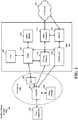
- FIG. 1 is a diagram illustrating an LTE network architecture 100.
- the LTE network architecture 100 may be referred to as an Evolved Packet System (EPS) 100.
- the EPS 100 may include one or more user equipment (UE) 102, an Evolved UMTS Terrestrial Radio Access Network (E-UTRAN) 104, an Evolved Packet Core (EPC) 110, and an Operator's Internet Protocol (IP) Services 122.
- the EPS can interconnect with other access networks, but for simplicity those entities/interfaces are not shown.
- the EPS provides packet-switched services, however, as those skilled in the art will readily appreciate, the various concepts presented throughout this disclosure may be extended to networks providing circuit-switched services.
- the E-UTRAN includes the evolved Node B (eNB) 106 and other eNBs 108, and may include a Multicast Coordination Entity (MCE) 128.
- the eNB 106 provides user and control planes protocol terminations toward the UE 102.
- the eNB 106 may be connected to the other eNBs 108 via a backhaul (e.g., an X2 interface).
- the MCE 128 allocates time/frequency radio resources for evolved Multimedia Broadcast Multicast Service (MBMS) (eMBMS), and determines the radio configuration (e.g., a modulation and coding scheme (MCS)) for the eMBMS.
- MBMS evolved Multimedia Broadcast Multicast Service
- MCS modulation and coding scheme
- the MCE 128 may be a separate entity or part of the eNB 106.
- the eNB 106 may also be referred to as a base station, a Node B, an access point, a base transceiver station, a radio base station, a radio transceiver, a transceiver function, a basic service set (BSS), an extended service set (ESS), or some other suitable terminology.
- the eNB 106 provides an access point to the EPC 110 for a UE 102.
- Examples of UEs 102 include a cellular phone, a smart phone, a session initiation protocol (SIP) phone, a laptop, a personal digital assistant (PDA), a satellite radio, a global positioning system, a multimedia device, a video device, a digital audio player (e.g., MP3 player), a camera, a game console, a tablet, or any other similar functioning device.
- SIP session initiation protocol
- PDA personal digital assistant
- satellite radio a global positioning system
- multimedia device e.g., a digital audio player (e.g., MP3 player), a camera, a game console, a tablet, or any other similar functioning device.
- MP3 player digital audio player
- the UE 102 may also be referred to by those skilled in the art as a mobile station, a subscriber station, a mobile unit, a subscriber unit, a wireless unit, a remote unit, a mobile device, a wireless device, a wireless communications device, a remote device, a mobile subscriber station, an access terminal, a mobile terminal, a wireless terminal, a remote terminal, a handset, a user agent, a mobile client, a client, or some other suitable terminology.
- the eNB 106 is connected to the EPC 110.
- the EPC 110 may include a Mobility Management Entity (MME) 112, a Home Subscriber Server (HSS) 120, other MMEs 114, a Serving Gateway 116, a Multimedia Broadcast Multicast Service (MBMS) Gateway 124, a Broadcast Multicast Service Center (BM-SC) 126, and a Packet Data Network (PDN) Gateway 118.
- MME Mobility Management Entity
- HSS Home Subscriber Server
- MBMS Multimedia Broadcast Multicast Service
- BM-SC Broadcast Multicast Service Center
- PDN Packet Data Network
- the PDN Gateway 118 provides UE IP address allocation as well as other functions.
- the PDN Gateway 118 and the BM-SC 126 are connected to the IP Services 122.
- the IP Services 122 may include the Internet, an intranet, an IP Multimedia Subsystem (IMS), a PS Streaming Service (PSS), and/or other IP services.
- the BM-SC 126 may provide functions for MBMS user service provisioning and delivery.
- the BM-SC 126 may serve as an entry point for content provider MBMS transmission, may be used to authorize and initiate MBMS Bearer Services within a PLMN, and may be used to schedule and deliver MBMS transmissions.
- the MBMS Gateway 124 may be used to distribute MBMS traffic to the eNBs (e.g., 106, 108) belonging to a Multicast Broadcast Single Frequency Network (MBSFN) area broadcasting a particular service, and may be responsible for session management (start/stop) and for collecting eMBMS related charging information.
- MMSFN Multicast Broadcast Single Frequency Network
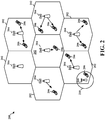
- FIG. 2 is a diagram illustrating an example of an access network 200 in an LTE network architecture.
- the access network 200 is divided into a number of cellular regions (cells) 202.
- One or more lower power class eNBs 208 may have cellular regions 210 that overlap with one or more of the cells 202.
- the lower power class eNB 208 may be a femto cell (e.g., home eNB (HeNB)), pico cell, micro cell, or remote radio head (RRH).
- HeNB home eNB
- RRH remote radio head
- the macro eNBs 204 are each assigned to a respective cell 202 and are configured to provide an access point to the EPC 110 for all the UEs 206 in the cells 202.
- the eNBs 204 are responsible for all radio related functions including radio bearer control, admission control, mobility control, scheduling, security, and connectivity to the serving gateway 116.
- An eNB may support one or multiple (e.g., three) cells (also referred to as a sectors).
- the term "cell” can refer to the smallest coverage area of an eNB and/or an eNB subsystem serving a particular coverage area. Further, the terms “eNB,” “base station,” and “cell” may be used interchangeably herein.
- the modulation and multiple access scheme employed by the access network 200 may vary depending on the particular telecommunications standard being deployed.
- OFDM is used on the DL
- SC-FDMA is used on the UL to support both frequency division duplex (FDD) and time division duplex (TDD).
- FDD frequency division duplex
- TDD time division duplex
- FDD frequency division duplex
- TDD time division duplex
- EV-DO Evolution-Data Optimized
- UMB Ultra Mobile Broadband
- EV-DO and UMB are air interface standards promulgated by the 3rd Generation Partnership Project 2 (3GPP2) as part of the CDMA2000 family of standards and employs CDMA to provide broadband Internet access to mobile stations. These concepts may also be extended to Universal Terrestrial Radio Access (UTRA) employing Wideband-CDMA (W-CDMA) and other variants of CDMA, such as TD-SCDMA; Global System for Mobile Communications (GSM) employing TDMA; and Evolved UTRA (E-UTRA), IEEE 802.11 (Wi-Fi), IEEE 802.16 (WiMAX), IEEE 802.20, and Flash-OFDM employing OFDMA.
- UTRA, E-UTRA, UMTS, LTE and GSM are described in documents from the 3GPP organization.
- CDMA2000 and UMB are described in documents from the 3GPP2 organization. The actual wireless communication standard and the multiple access technology employed will depend on the specific application and the overall design constraints imposed on the system.
- the eNBs 204 may have multiple antennas supporting MIMO technology.
- MIMO technology enables the eNBs 204 to exploit the spatial domain to support spatial multiplexing, beamforming, and transmit diversity.
- Spatial multiplexing may be used to transmit different streams of data simultaneously on the same frequency.
- the data streams may be transmitted to a single UE 206 to increase the data rate or to multiple UEs 206 to increase the overall system capacity. This is achieved by spatially precoding each data stream (i.e., applying a scaling of an amplitude and a phase) and then transmitting each spatially precoded stream through multiple transmit antennas on the DL.
- the spatially precoded data streams arrive at the UE(s) 206 with different spatial signatures, which enables each of the UE(s) 206 to recover the one or more data streams destined for that UE 206.
- each UE 206 transmits a spatially precoded data stream, which enables the eNB 204 to identify the source of each spatially precoded data stream.
- Beamforming may be used to focus the transmission energy in one or more directions. This may be achieved by spatially precoding the data for transmission through multiple antennas. To achieve good coverage at the edges of the cell, a single stream beamforming transmission may be used in combination with transmit diversity.
- OFDM is a spread-spectrum technique that modulates data over a number of subcarriers within an OFDM symbol.
- the subcarriers are spaced apart at precise frequencies. The spacing provides "orthogonality" that enables a receiver to recover the data from the subcarriers.
- a guard interval e.g., cyclic prefix
- the UL may use SC-FDMA in the form of a DFT-spread OFDM signal to compensate for high peak-to-average power ratio (PAPR).
- PAPR peak-to-average power ratio
- FIG. 3 is a diagram 300 illustrating an example of a DL frame structure in LTE.
- a frame (10 ms) may be divided into 10 equally sized subframes. Each subframe may include two consecutive time slots.
- a resource grid may be used to represent two time slots, each time slot including a resource block.
- the resource grid is divided into multiple resource elements.
- a resource block contains 12 consecutive subcarriers in the frequency domain and 7 consecutive OFDM symbols in the time domain, for a total of 84 resource elements.
- For an extended cyclic prefix a resource block contains 12 consecutive subcarriers in the frequency domain and 6 consecutive OFDM symbols in the time domain, for a total of 72 resource elements.
- Some of the resource elements, indicated as R 302, 304, include DL reference signals (DL-RS).
- the DL-RS include Cell-specific RS (CRS) (also sometimes called common RS) 302 and UE-specific RS (UE-RS) 304.
- UE-RS 304 are transmitted on the resource blocks upon which the corresponding physical DL shared channel (PDSCH) is mapped.
- PDSCH physical DL shared channel
- the number of bits carried by each resource element depends on the modulation scheme. Thus, the more resource blocks that a UE receives and the higher the modulation scheme, the higher the data rate for the UE.
- FIG. 4 is a diagram 400 illustrating an example of an UL frame structure in LTE.
- the available resource blocks for the UL may be partitioned into a data section and a control section.
- the control section may be formed at the two edges of the system bandwidth and may have a configurable size.
- the resource blocks in the control section may be assigned to UEs for transmission of control information.
- the data section may include all resource blocks not included in the control section.
- the UL frame structure results in the data section including contiguous subcarriers, which may allow a single UE to be assigned all of the contiguous subcarriers in the data section.
- a UE may be assigned resource blocks 410a, 410b in the control section to transmit control information to an eNB.
- the UE may also be assigned resource blocks 420a, 420b in the data section to transmit data to the eNB.
- the UE may transmit control information in a physical UL control channel (PUCCH) on the assigned resource blocks in the control section.
- the UE may transmit data or both data and control information in a physical UL shared channel (PUSCH) on the assigned resource blocks in the data section.
- a UL transmission may span both slots of a subframe and may hop across frequency.
- a set of resource blocks may be used to perform initial system access and achieve UL synchronization in a physical random access channel (PRACH) 430.
- the PRACH 430 carries a random sequence and cannot carry any UL data/signaling.
- Each random access preamble occupies a bandwidth corresponding to six consecutive resource blocks.
- the starting frequency is specified by the network. That is, the transmission of the random access preamble is restricted to certain time and frequency resources. There is no frequency hopping for the PRACH.
- the PRACH attempt is carried in a single subframe (1 ms) or in a sequence of few contiguous subframes and a UE can make a single PRACH attempt per frame (10 ms).
- FIG. 5 is a diagram 500 illustrating an example of a radio protocol architecture for the user and control planes in LTE.
- the radio protocol architecture for the UE and the eNB is shown with three layers: Layer 1, Layer 2, and Layer 3.
- Layer 1 (L1 layer) is the lowest layer and implements various physical layer signal processing functions.
- the L1 layer will be referred to herein as the physical layer 506.
- Layer 2 (L2 layer) 508 is above the physical layer 506 and is responsible for the link between the UE and eNB over the physical layer 506.
- the L2 layer 508 includes a media access control (MAC) sublayer 510, a radio link control (RLC) sublayer 512, and a packet data convergence protocol (PDCP) 514 sublayer, which are terminated at the eNB on the network side.
- MAC media access control
- RLC radio link control
- PDCP packet data convergence protocol
- the UE may have several upper layers above the L2 layer 508 including a network layer (e.g., IP layer) that is terminated at the PDN gateway 118 on the network side, and an application layer that is terminated at the other end of the connection (e.g., far end UE, server, etc.).
- IP layer e.g., IP layer
- the PDCP sublayer 514 provides multiplexing between different radio bearers and logical channels.
- the PDCP sublayer 514 also provides header compression for upper layer data packets to reduce radio transmission overhead, security by ciphering the data packets, and handover support for UEs between eNBs.
- the RLC sublayer 512 provides segmentation and reassembly of upper layer data packets, retransmission of lost data packets, and reordering of data packets to compensate for out-of-order reception due to hybrid automatic repeat request (HARQ).
- HARQ hybrid automatic repeat request
- the MAC sublayer 510 provides multiplexing between logical and transport channels.
- the MAC sublayer 510 is also responsible for allocating the various radio resources (e.g., resource blocks) in one cell among the UEs.
- the MAC sublayer 510 is also responsible for HARQ operations.
- the radio protocol architecture for the UE and eNB is substantially the same for the physical layer 506 and the L2 layer 508 with the exception that there is no header compression function for the control plane.
- the control plane also includes a radio resource control (RRC) sublayer 516 in Layer 3 (L3 layer).
- RRC sublayer 516 is responsible for obtaining radio resources (e.g., radio bearers) and for configuring the lower layers using RRC signaling between the eNB and the UE.
- FIG. 6 is a block diagram of an eNB 610 in communication with a UE 650 in an access network.
- upper layer packets from the core network are provided to a controller/processor 675.
- the controller/processor 675 implements the functionality of the L2 layer.
- the controller/processor 675 provides header compression, ciphering, packet segmentation and reordering, multiplexing between logical and transport channels, and radio resource allocations to the UE 650 based on various priority metrics.
- the controller/processor 675 is also responsible for HARQ operations, retransmission of lost packets, and signaling to the UE 650.
- the transmit (TX) processor 616 implements various signal processing functions for the L1 layer (i.e., physical layer).
- the signal processing functions include coding and interleaving to facilitate forward error correction (FEC) at the UE 650 and mapping to signal constellations based on various modulation schemes (e.g., binary phase-shift keying (BPSK), quadrature phase-shift keying (QPSK), M-phase-shift keying (M-PSK), M-quadrature amplitude modulation (M-QAM)).
- FEC forward error correction
- BPSK binary phase-shift keying
- QPSK quadrature phase-shift keying
- M-PSK M-phase-shift keying
- M-QAM M-quadrature amplitude modulation
- Each stream is then mapped to an OFDM subcarrier, multiplexed with a reference signal (e.g., pilot) in the time and/or frequency domain, and then combined together using an Inverse Fast Fourier Transform (IFFT) to produce a physical channel carrying a time domain OFDM symbol stream.
- the OFDM stream is spatially precoded to produce multiple spatial streams.
- Channel estimates from a channel estimator 674 may be used to determine the coding and modulation scheme, as well as for spatial processing.
- the channel estimate may be derived from a reference signal and/or channel condition feedback transmitted by the UE 650.
- Each spatial stream may then be provided to a different antenna 620 via a separate transmitter 618TX.
- Each transmitter 618TX may modulate an RF carrier with a respective spatial stream for transmission.
- each receiver 654RX receives a signal through its respective antenna 652.
- Each receiver 654RX recovers information modulated onto an RF carrier and provides the information to the receive (RX) processor 656.
- the RX processor 656 implements various signal processing functions of the L1 layer.
- the RX processor 656 may perform spatial processing on the information to recover any spatial streams destined for the UE 650. If multiple spatial streams are destined for the UE 650, they may be combined by the RX processor 656 into a single OFDM symbol stream.
- the RX processor 656 then converts the OFDM symbol stream from the time-domain to the frequency domain using a Fast Fourier Transform (FFT).
- FFT Fast Fourier Transform
- the symbols on each subcarrier, and the reference signal, are recovered and demodulated by determining the most likely signal constellation points transmitted by the eNB 610. These soft decisions may be based on channel estimates computed by the channel estimator 658. The soft decisions are then decoded and deinterleaved to recover the data and control signals that were originally transmitted by the eNB 610 on the physical channel. The data and control signals are then provided to the controller/processor 659.
- the controller/processor 659 implements the L2 layer.
- the controller/processor can be associated with a memory 660 that stores program codes and data.
- the memory 660 may be referred to as a computer-readable medium.
- the controller/processor 659 provides demultiplexing between transport and logical channels, packet reassembly, deciphering, header decompression, control signal processing to recover upper layer packets from the core network.
- the upper layer packets are then provided to a data sink 662, which represents all the protocol layers above the L2 layer.
- Various control signals may also be provided to the data sink 662 for L3 processing.
- the controller/processor 659 is also responsible for error detection using an acknowledgement (ACK) and/or negative acknowledgement (NACK) protocol to support HARQ operations.
- ACK acknowledgement
- NACK negative acknowledgement
- a data source 667 is used to provide upper layer packets to the controller/processor 659.
- the data source 667 represents all protocol layers above the L2 layer.
- the controller/processor 659 implements the L2 layer for the user plane and the control plane by providing header compression, ciphering, packet segmentation and reordering, and multiplexing between logical and transport channels based on radio resource allocations by the eNB 610.
- the controller/processor 659 is also responsible for HARQ operations, retransmission of lost packets, and signaling to the eNB 610.
- Channel estimates derived by a channel estimator 658 from a reference signal or feedback transmitted by the eNB 610 may be used by the TX processor 668 to select the appropriate coding and modulation schemes, and to facilitate spatial processing.
- the spatial streams generated by the TX processor 668 may be provided to different antenna 652 via separate transmitters 654TX. Each transmitter 654TX may modulate an RF carrier with a respective spatial stream for transmission.
- the UL transmission is processed at the eNB 610 in a manner similar to that described in connection with the receiver function at the UE 650.
- Each receiver 618RX receives a signal through its respective antenna 620.
- Each receiver 618RX recovers information modulated onto an RF carrier and provides the information to a RX processor 670.
- the RX processor 670 may implement the L1 layer.
- the controller/processor 675 implements the L2 layer.
- the controller/processor 675 can be associated with a memory 676 that stores program codes and data.
- the memory 676 may be referred to as a computer-readable medium.
- the controller/processor 675 provides demultiplexing between transport and logical channels, packet reassembly, deciphering, header decompression, control signal processing to recover upper layer packets from the UE 650.
- Upper layer packets from the controller/processor 675 may be provided to the core network.
- the controller/processor 675 is also responsible for error detection using an ACK and/or NACK protocol to support HARQ operations.
- the Real-Time Transport Protocol is an IP standard that specifies the manner in which programs manage the real-time transmission of multimedia data over a network.
- RTP supports a variety of applications, including, for example, Internet telephony applications, video conferences with multiple, geographically dispersed participants, and the like.
- RTP combines its data transport capabilities with a control protocol (RTCP). This combination makes it possible to monitor data delivery for large multicast networks, which allows the receiver to detect failed packets. Both protocols work independently of the underlying Transport layer and Network layer protocols.
- RTP header information provides the receiver with information as to how to reconstruct the data and describes how the codec bit streams are packetized.
- UDP User Datagram Protocol
- the Session Initiation Protocol (SIP) and H.323 use RTP.
- RTP components include a sequence number, which may be used to detect lost packets; a payload identification, which describes the specific media encoding type so that it can be changed to accommodate bandwidth variations; a frame indication, which specifies the beginning and end of each frame; a source identification, which identifies the originator of the frame; and intramedia synchronization, which uses timestamps to detect and compensate for delay jitter within a single stream.
- ROHC Robust Header Compression
- ROHC is an extensible framework which includes Profile 1 or ROHC Real-time Transport Protocol (RTP).
- RTP Real-time Transport Protocol
- ROHC RTP is an efficient and robust compression scheme, able to compress the headers down to a total size of one octet.
- ROHC RTP compresses packets with IP/UDP/RTP protocol headers.
- the RLC (Radio Link Control) layer is responsible for delivery of upper layer service data units (SDUs).
- SDUs can work in 3 different modes, depending on the requirement of the data to be transported; Transparent Mode (TM), Unacknowledged Mode (UM) and Acknowledged Mode (AM).
- TM Transparent Mode
- UM Unacknowledged Mode
- AM Acknowledged Mode
- RLC is also responsible for reordering of RLC data PDUs (Only for UM and AM data transfer), duplicate detection (Only for UM and AM data transfer), RLC SDU discard (Only for UM and AM data transfer), RLC re-establishment, and protocol error detection (Only for AM data transfer).
- VoLTE Voice over LTE
- IMS IP Multimedia Subsystem
- FIG. 7 is a diagram of an IMS network 700 identifying various components used in VoLTE.
- User equipment 702 is connected to IP Connectivity Access Network (IPCAN) 704, which includes E-UTRAN 706 and MME 708.
- IPCAN IP Connectivity Access Network
- Proxy Call State Control Function (P-CSCF) 710 is the user to network proxy such that SIP signaling to and from the user runs via P-CSCF 710, whether in the home or a visited network.
- Interrogating Call State Control Function (I-CSCF) 712 is used for forwarding an initial SIP request to Serving Call State Control Function (S-CSCF) 714 when the initiator does not know which S-CSCF should receive the request.
- I-CSCF Interrogating Call State Control Function
- S-CSCF Serving Call State Control Function
- S-CSCF 714 undertakes a variety of actions within the overall system, and it has a number of interfaces to enable it to communicate with other entities within the system.
- AS 718 is the application server that handles the voice as an application.
- Home Subscriber Server (HSS) 716 is the main subscriber database used within IMS. The IMS HSS 716 provides details of the subscribers to the other entities within the IMS network 700, enabling users to be granted access depending on their status.
- the IMS calls for VoLTE are processed by the subscriber's S-CSCF in the home network.
- the connection to S-CSCF 714 is via P-CSCF 710.
- P-CSCF 710 will vary, and a key element in enabling voice calling capability is the discovery of P-CSCF 710.
- VoLTE enabled networks An additional requirement for VoLTE enabled networks is to have a means to handing back to circuit switched legacy networks in a seamless manner, while only having one transmitting radio in the handset to preserve battery life.
- Single Radio Voice Call Continuity may be used for this purpose.
- SRVCC enables Inter Radio Access Technology (RAT) handover as well as a handover from packet data to circuit switched data voice calls.
- RAT Radio Access Technology
- ROHC profile 1 is herein addressed. While ROHC profile 1 is discussed as an example, the configurations herein are not so limited and may be applicable to a wide variety of wireless protocols.
- the packets are classified into streams before being compressed. Classified streams may be compressed according to a compression profile.
- ROHC profile 1 may be used in conjunction with RTP/UDP/IP.
- various packet types are used to provide various degrees of protection.
- UO0 packet type provides the maximum compression and is composed of three bytes. Two bytes are used for the UDP checksum and the remaining byte carries the four LSBs of the RTP sequence number (SN) and three bits for the cyclic redundancy check (CRC). Because four bits are used for carrying RTP SN, the receive window size is 16
- the ROHC decompressor at the UE 650 may lose synchronization. This may occur, for instance, when the ROHC packet received by the UE 650 from eNB 610 is for a SN that falls outside the receive window. In this event, the UE 650 may transmit negative ROHC feedback to the network. Nevertheless, subsequent packets received in the downlink channel will likely fail decompression until a context update packet (e.g., Initialization and Refresh (IR), IR-DYN, UOR2, etc. ) is received from the network. In the example of a VoLTE call, the ROHC decompression failure typically has a direct negative impact on voice quality.
- IR Initialization and Refresh
- RTP packets in many applications are most often sent using PDCP/RLC UM mode, including VoLTE.
- no other application typically shares the same dedicated bearer with the RTP (VoLTE) packets.
- the information from the PDCP layer can be used to increase the chances of passing decompression.
- the gap in PDCP SN corresponds directly to the gap in RTP SN.
- the value of RTP TimeStamp can be derived from the time gap between the received PDCP packets.
- RTP SN generally follows the PDCP SN. Therefore, RTP SN can be determined based on the PDCP SN.
- the RTP TS calculation is straightforward if the packet drop occurred during the same talk spurt. For example, the RTP TS jump is equal to (difference in RTP SN between two packets) ⁇ 20ms.
- the two packets may include, for example, a previous successfully decoded packet and the failed packet.
- FIG. 8 is a flow chart of a method 800 of wireless communication.
- the method may be performed by a UE 650.
- the receiver at the wireless node receives RTP packets from a remote node (e.g., eNB 610) over a wireless downlink channel.
- the RTP packets may be received in conjunction with a VoLTE call or other real-time application.
- the receiver applies ROHC decompression to decode the incoming RTP packets.
- a decoding failure is experienced and ROHC decompression fails for one or more packets.
- the RTP parameters of the failed packets are determined based on the corresponding PDCP packets in a manner to be further described below.
- the failed packets are decoded using ROHC decompression based on the estimated RTP parameters. If the failure continues for a maximum number of retries or a timer expires, then the UE may transmit negative ROHC feedback to the network, as in 814.
- the following equations may be used to estimate the correct RTP SN and RTP TS of the failed packets.
- TS RTP , est TS RTP , sd + floor RT PDCP , f ⁇ RT PDCP , sd / 20 ⁇ n
- TS RTP , est TS RTP , sd + SN RTP , est ⁇ SN RTP , sd ⁇ t c
- Equation (ii), above may be used in cases where the failed packet and last successfully decoded packet are part of the same talk spurt. Equation (i), above, may be used in cases where the failed packet and last successfully decoded packet are not part of the same talk spurt.
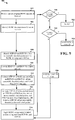
- FIG. 9 is a flow chart of a method 900 of wireless communication.
- the method may be performed by a UE (e.g. the UE 650 of FIG. 6 ).
- a UE e.g. the UE 650 of FIG. 6 .
- ROHC packets are received on a wireless channel and decompressed by the receiver.
- an ROHC decompression failure for one or more received packets is identified by the receiver.
- the RTP SN and the RTP TS of the last successfully decoded packet are identified.
- the PDCP SN and PDCP TS of the failed packets are identified.
- the RTP SN of the failed packets are estimated based on the RTP SN and the PDCP SN of the last successfully decoded packet and the PDCP SN of the failed packets.
- the RTP TS of the failed packets is estimated based on the RTP TS and the PDCP receive time of the last successfully decoded packet and the PDCP receive time of the failed packet.
- the RTP TS of a failed packet may alternatively be estimated based on the RTP SN of the last successfully decoded packet and the RTP SN of the failed packet.
- ROHC compression is applied to the failed packets using the new estimated values (916), which process 916, 918, 920 may repeat until a threshold is reached or until the packet successfully passes ROHC decompression. At that point, the UE may send a NACK to the network (924).
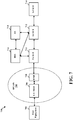
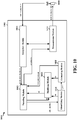
- FIG. 10 is a conceptual data flow diagram 1000 illustrating the data flow between different modules/means/components in an exemplary apparatus 1002.
- the apparatus may be a UE.
- the apparatus may communicate with node 1050, which may be an eNB, via the signal RTP_PACKETS_IN for downlink transmissions from the eNB 1050 to the UE 1002 and via the signal RTP_PACKETS_OUT for uplink transmissions from UE 1002 to eNB 1050.
- node 1050 which may be an eNB
- the apparatus includes a reception module that receives RTP packets from the eNB 1050.
- the received packets are sent via RCVD_RTP_PACKETS to decoding module 1012 for decoding.
- Decoding module 1012 sends results for failed packets via DEC_RESULT to identifying module 1016.
- Identifying module 1016 identifies the PDCP SN and RT of the failed packets. Identifying module provides this information via I_OUT to estimating module 1018.
- Estimating module 1018 estimates the RTP SN and RTP TS based on the parameters identified by identifying module 1016.
- decoding module 1012 may provide a suitable indication, e.g., to identifying module 1016 via DEC_RESULT. It will be understood that, in addition to performing ROHC decompression, decoding module 1012 may perform other decoding functions for the data packets.
- decoding module 1012 may inform modifying module 1013 using D1 and identifying module using DEC_RESULT.
- identifying module 1016 may provide modifying module 1013 with the identified parameters via D3.
- Estimating module 1018 may provide modifying module 1013 with the estimated values via D4.
- Modifying module 1013 may determine a revised RTP TS based on the identified parameters and the estimated values.
- the revised RTP TS is then sent to decoding module 1012 via D2, wherein ROHC decompression is attempted using the revised RTP TS.
- Decoding module 1012 may notify modifying module 1013 of subsequent failures or successes of ROHC decompression via D1.
- the process of revising the RTP TS may continue until ROHC decompression is successful or until a threshold is reached.
- decoding module 1012 may send a NACK signal to transmission module 1010 for transmission to eBN 1050.
- the apparatus may include additional modules that perform each of the blocks of the algorithm in the aforementioned flow charts of FIGs. 8 and 9 .
- each block in the aforementioned flow charts of FIGs. 8 and 9 may be performed by a module and the apparatus may include one or more of those modules.
- the modules may be one or more hardware components specifically configured to carry out the stated processes/algorithm, implemented by a processor configured to perform the stated processes/algorithm, stored within a computer-readable medium for implementation by a processor, or some combination thereof.
- FIG. 11 is a diagram 1100 illustrating an example of a hardware implementation for an apparatus employing a processing system 1114.
- the processing system 1114 may be implemented with a bus architecture, represented generally by the bus 1124.
- the bus 1124 may include any number of interconnecting buses and bridges depending on the specific application of the processing system 1114 and the overall design constraints.
- the bus 1124 links together various circuits including one or more processors and/or hardware modules, represented by the processor 1104, the modules 1108, 1110, 1112, 1114, 1116, 1118 and the computer-readable medium / memory 1106.
- the bus 1124 may also link various other circuits such as timing sources, peripherals, voltage regulators, and power management circuits, which are well known in the art, and therefore, will not be described any further.
- the processing system 1114 may be coupled to a transceiver 1110.
- the transceiver 1110 is coupled to one or more antennas 1120.
- the transceiver 1110 provides a means for communicating with various other apparatus over a transmission medium.
- the transceiver 1110 receives a signal from the one or more antennas 1120, extracts information from the received signal, and provides the extracted information to the processing system 1114, specifically the receiving module 1114.
- the transceiver 1110 receives information from the processing system 1114, specifically the transmitting module 1118, and based on the received information, generates a signal to be applied to the one or more antennas 1120.
- the processing system 1114 includes a processor 1104 coupled to a computer-readable medium / memory 1106.
- the processor 1104 is responsible for general processing, including the execution of software stored on the computer-readable medium / memory 1106.
- the software when executed by the processor 1104, causes the processing system 1114 to perform the various functions described supra for any particular apparatus.
- the computer-readable medium / memory 1106 may also be used for storing data that is manipulated by the processor 1104 when executing software.
- the processing system further includes at least one of the modules 1108, 1110, 1112, 1114, 1116, 1118.
- Applying/decoding module 1108 may include applying functions for ROHC decompression as well as the remaining decoding functions for the data packets.
- the modules may be software modules running in the processor 1104, resident/stored in the computer readable medium / memory 1106, one or more hardware modules coupled to the processor 1104, or some combination thereof.
- the processing system 1114 may be a component of the UE 650 and may include the memory 660 and/or at least one of the TX processor 668, the RX processor 656, and the controller/processor 659.
- the apparatus 1100/1100' for wireless communication includes means for receiving a plurality of Real-time Transport (RTP) packets on a wireless channel; means for applying Robust Header Compression (ROHC) decompression to decode the received RTP packets wherein a decoding failure occurs for at least one of the packets; means for estimating at least one RTP parameter of the failed at least one packet based on a corresponding Packet Data Convergence Protocol (PDCP) parameter; means for decoding the failed at least one packet using the at least one RTP parameter; means for estimating an RTP sequence number (SN) of the failed at least one packet based upon a difference between a PDCP SN of the failed at least one packet and a PDCP SN of a prior successfully decoded packet; means for estimating an RTP timestamp of the failed at least one packet based upon a difference between a PDCP receive time of the failed at least one packet and a PDCP receive time of the prior successfully decoded packet; means for
- the aforementioned means may be one or more of the aforementioned modules of the apparatus 1100 and/or the processing system 1114 of the apparatus 1100' configured to perform the functions recited by the aforementioned means.
- the processing system 1114 may include the TX Processor 668, the RX Processor 656, and the controller/processor 659.
- the aforementioned means may be the TX Processor 668, the RX Processor 656, and the controller/processor 659 configured to perform the functions recited by the aforementioned means.
Landscapes
- Engineering & Computer Science (AREA)
- Multimedia (AREA)
- Computer Networks & Wireless Communication (AREA)
- Signal Processing (AREA)
- Computer Security & Cryptography (AREA)
- Mobile Radio Communication Systems (AREA)
- Detection And Prevention Of Errors In Transmission (AREA)
- Noise Elimination (AREA)
Claims (15)
- Ein Verfahren (800) der drahtlosen Kommunikation, wobei das Verfahren umfasst:Empfangen (802) einer Vielzahl von Realtime-Transport-RTP-Paketen über einen drahtlosen Kanal, wobei jedes der Vielzahl von RTP-Paketen zumindest einen RTP-Parameter und zumindest einen Packet-Data-Convergence-Protocol-PDCP-Parameter beinhaltet;Anwenden (804) einer Robust-Header-Compression-ROHC-Decompression zum Dekodieren der empfangenen RTP-Pakete, wobei ein Dekodierungsfehler für zumindest eines der Pakete auftritt;Schätzen (810) von zumindest einem RTP-Parameter des fehlerhaften zumindest einen Pakets basierend auf dem zumindest einen PDCP-Parameter; undDekodieren (812) des fehlerhaften zumindest einen Pakets unter Verwendung des zumindest einen RTP-Parameters.
- Verfahren nach Anspruch 1, wobei der zumindest eine RTP-Parameter eine RTP-Sequenznummer, SN und einen RTP-Zeitstempel umfasst.
- Verfahren nach Anspruch 2, wobei der entsprechende PDCP-Parameter eine PDCP SN und eine PDCP-Empfangszeit umfasst.
- Verfahren nach Anspruch 1, wobei das Schätzen des mindestens einen RTP-Parameters ein Schätzen einer RTP-Sequenznummer, SN, des fehlerhaften zumindest einen Pakets basierend auf einer Differenz zwischen einer PDCP SN des fehlerhaften zumindest einen Pakets und einer PDCP SN eines zuvor erfolgreich dekodierten Pakets umfasst.
- Verfahren nach Anspruch 4, wobei die geschätzte RTP SN des fehlerhaften zumindest einen Pakets basierend auf der folgenden Gleichung berechnet wird:
 SNPDCP,f = PDCP SN des fehlerhaften zumindest einen Pakets;SNPDCP,sd = PDCP SN des zuvor erfolgreich dekodierten Pakets; undSNRTP,sd = RTP SN des zuvor erfolgreich dekodierten Pakets.
 - Verfahren nach Anspruch 4, wobei das Schätzen des mindestens einen RTP-Parameters ferner ein Schätzen eines RTP-Zeitstempels des fehlerhaften zumindest einen Pakets basierend auf einer Differenz zwischen einer PDCP-Empfangszeit des fehlerhaften zumindest einen Pakets und einer PDCP-Empfangszeit des zuvor erfolgreich dekodierten Pakets umfasst, um einen geschätzten RTP-Zeitstempel zu erzeugen.
- Verfahren nach Anspruch 4, wobei das Schätzen des mindestens einen RTP-Parameters ferner ein Schätzen eines RTP-Zeitstempels des fehlerhaften zumindest einen Pakets basierend auf einer Differenz zwischen der geschätzten RTP SN des fehlerhaften zumindest einen Pakets und einer RTP SN des zuvor erfolgreich dekodierten Pakets umfasst.
- Verfahren nach Anspruch 6, wobei der geschätzte RTP-Zeitstempel des fehlerhaften zumindest einen Pakets basierend auf der folgenden Gleichung berechnet wird:
 RTPDCP,f = PDCP-Empfangszeit des fehlerhaften Pakets;RTPDCP,sd = PDCP-Empfangszeit des zuvor erfolgreich dekodierten Pakets;TSRTP,sd = RTP-Zeitstempel des zuvor erfolgreich dekodierten Pakets; undn ist ein Umwandlungsfaktor.
 - Verfahren nach Anspruch 7, wobei der geschätzte RTP-Zeitstempel des fehlerhaften zumindest einen Pakets basierend auf der folgenden Gleichung berechnet wird:
 TSRTP,sd = RTP-Zeitstempel des zuvor erfolgreich dekodierten Pakets;SNRTP,est = die geschätzte RTP SN des fehlerhaften Pakets;SNRTP,sd = die RTP SN des zuvor erfolgreich dekodierten Pakets; undtc = ein Umwandlungsmass in Zeit.
 - Verfahren nach Anspruch 4, wobei die RTP-Pakete Voice-over-Long-Term-Evolution-VoLTE-Pakete umfassen und das Schätzen des zumindest einen RTP-Parameters ferner umfasst:Schätzen eines RTP-Zeitstempels des fehlerhaften zumindest einen Pakets basierend auf einer Differenz zwischen der geschätzten RTP SN des fehlerhaften zumindest einen Pakets und einer RTP SN des zuvor erfolgreich dekodierten Pakets, wenn das fehlerhafte zumindest einen Paket und das zuvor erfolgreich dekodierte Paket Teil desselben Sprachstrahls sind; undSchätzen eines RTP-Zeitstempels des fehlerhaften zumindest einen Pakets basierend auf einer Differenz zwischen einer PDCP-Empfangszeit des fehlerhaften zumindest einen Pakets und einer PDCP-Empfangszeit des zuvor erfolgreich dekodierten Pakets, wenn das fehlerhafte zumindest einen Paket und das zuvor erfolgreich dekodierte Paket nicht Teil desselben Sprachstrahls sind.
- Verfahren nach Anspruch 6, wobei das Dekodieren des fehlerhaften zumindest einen Pakets unter Verwendung des zumindest einen RTP-Parameters umfasst:Anwenden von ROHC zum Dekodieren des fehlerhaften zumindest einen Pakets unter Verwendung des geschätzten zumindest einen RTP-Parameters;Erfahren eines weiteren Dekodierungsfehlers für das fehlerhafte zumindest eine Paket;Modifizieren des geschätzten RTP-Zeitstempels um einen vorbestimmten Wert, um einen modifizierten geschätzten RTP-Zeitstempel zu erzeugen; undDekodieren des fehlerhaften zumindest einen Pakets unter Verwendung des modifizierten geschätzten RTP-Zeitstempels.
- Verfahren nach Anspruch 11, wobei das Dekodieren des fehlerhaften zumindest einen Pakets unter Verwendung des zumindest einen RTP-Parameters ferner ein sukzessives Modifizieren des geschätzten RTP-Zeitstempels in vorbestimmten Schritten umfasst, bis das fehlerhafte zumindest eine Paket erfolgreich dekodiert oder ein Schwellenwert erreicht wird, wobei der Schwellenwert zumindest eines von einer verstrichenen Zeit und einer Anzahl von Versuchen umfasst.
- Verfahren nach Anspruch 1, wobei die RTP-Pakete Voice-over-Long-Term-Evolution-VoLTE-Pakete umfassen.
- Eine Vorrichtung (206, 650, 1002) für drahtlose Kommunikation, wobei die Vorrichtung umfasst:Mittel zum Empfangen (1004, 1114) einer Vielzahl von Realtime-Transport-RTP-Paketen auf einem drahtlosen Kanal, wobei jedes der Vielzahl von RTP-Paketen zumindest einen RTP-Parameter und zumindest einen Packet-Data-Convergence-Protocol-PDCP-Parameter beinhaltet;Mittel zum Anwenden (1012, 1108) einer Robust-Header-Compression-ROHC-Decompression zum Dekodieren der empfangenen RTP-Pakete, wobei ein Dekodierungsfehler für zumindest eines der Pakete auftritt;Mittel zum Schätzen (1018, 1112) von zumindest einem RTP-Parameter des fehlerhaften zumindest einen Pakets basierend auf dem zumindest einen PCDP-Parameter; undMittel zum Dekodieren (1012, 1108) des fehlerhaften zumindest einen Pakets unter Verwendung des zumindest einen RTP-Parameters.
- Computerlesbares Speichermedium, das Anweisungen umfasst, die, wenn sie durch einen Computer ausgeführt werden, den Computer dazu veranlassen, die Schritte des Verfahrens nach Anspruch 1 durchzuführen.
Applications Claiming Priority (2)
| Application Number | Priority Date | Filing Date | Title |
|---|---|---|---|
| US14/863,416 US10009401B2 (en) | 2015-09-23 | 2015-09-23 | Call continuity in high uplink interference state |
| PCT/US2016/052246 WO2017053203A1 (en) | 2015-09-23 | 2016-09-16 | Call continuity in high uplink interference state |
Publications (2)
| Publication Number | Publication Date |
|---|---|
| EP3353984A1 EP3353984A1 (de) | 2018-08-01 |
| EP3353984B1 true EP3353984B1 (de) | 2020-02-12 |
Family
ID=57047319
Family Applications (1)
| Application Number | Title | Priority Date | Filing Date |
|---|---|---|---|
| EP16775400.1A Active EP3353984B1 (de) | 2015-09-23 | 2016-09-16 | Rufkontinuität in einem hohen uplink-interferenzzustand |
Country Status (7)
| Country | Link |
|---|---|
| US (1) | US10009401B2 (de) |
| EP (1) | EP3353984B1 (de) |
| JP (1) | JP6434191B2 (de) |
| KR (1) | KR101918907B1 (de) |
| CN (1) | CN108141439B (de) |
| BR (1) | BR112018005911A2 (de) |
| WO (1) | WO2017053203A1 (de) |
Families Citing this family (9)
| Publication number | Priority date | Publication date | Assignee | Title |
|---|---|---|---|---|
| US10887430B2 (en) * | 2015-10-21 | 2021-01-05 | Dragonwave-X, Llc | Compression in communications |
| EP3264779B1 (de) * | 2016-06-30 | 2022-04-13 | Apple Inc. | Zur beibehaltung der empfangsdatenqualität angepasste vorrichtung und verfahren zum empfang von daten |
| CN108737349B (zh) * | 2017-04-24 | 2020-08-28 | 大唐移动通信设备有限公司 | 一种语音数据包的处理方法及装置 |
| CN110602745A (zh) * | 2018-06-12 | 2019-12-20 | 大唐移动通信设备有限公司 | 一种数据包解压方法及装置 |
| CN110891246B (zh) * | 2018-09-11 | 2022-07-05 | 成都鼎桥通信技术有限公司 | 一种组播媒体数据的处理方法 |
| CN111918335B (zh) * | 2019-05-08 | 2022-07-22 | 华为技术有限公司 | 处理数据包的方法和装置 |
| US10887432B2 (en) * | 2019-05-20 | 2021-01-05 | Google Llc | Trip time estimation for transport control protocol |
| CN112218390A (zh) * | 2019-07-10 | 2021-01-12 | 大唐移动通信设备有限公司 | 数据处理的方法和设备 |
| US12132811B2 (en) | 2022-03-10 | 2024-10-29 | Qualcomm Incorporated | Protocol overhead reduction for packet data convergence protocol |
Family Cites Families (22)
| Publication number | Priority date | Publication date | Assignee | Title |
|---|---|---|---|---|
| US7839852B2 (en) | 2003-10-30 | 2010-11-23 | Utstarcom (China) Co. Ltd. | Apparatus and method for radio transmission of real-time IP packets using header compression technique |
| KR100608844B1 (ko) | 2004-01-09 | 2006-08-08 | 엘지전자 주식회사 | VoIP 서비스를 제공하는 무선통신 시스템 |
| KR100678055B1 (ko) * | 2004-02-12 | 2007-02-01 | 삼성전자주식회사 | 멀티미디어 방송/멀티캐스트 서비스 시스템에서 헤더 복원 동작을 재개하는 방법 |
| US7924731B2 (en) | 2004-11-15 | 2011-04-12 | Telefonaktiebolaget Lm Ericsson (Publ) | Method and apparatus for handling out-of-sequence packets in header decompression |
| US9031071B2 (en) * | 2005-08-26 | 2015-05-12 | Alcatel Lucent | Header elimination for real time internet applications |
| US7733867B2 (en) * | 2005-08-26 | 2010-06-08 | Alcatel-Lucent Usa Inc. | Header compression for real time internet applications |
| KR101347404B1 (ko) * | 2006-10-05 | 2014-01-02 | 엘지전자 주식회사 | 무선통신 시스템에서 음성 패킷의 전송 방법 |
| US8027328B2 (en) | 2006-12-26 | 2011-09-27 | Alcatel Lucent | Header compression in a wireless communication network |
| KR101435832B1 (ko) | 2007-03-19 | 2014-08-29 | 엘지전자 주식회사 | 이동통신 시스템에서의 무선 프로토콜 처리방법 및이동통신 송신기 |
| US8358669B2 (en) | 2007-05-01 | 2013-01-22 | Qualcomm Incorporated | Ciphering sequence number for an adjacent layer protocol in data packet communications |
| EP2190162B1 (de) * | 2007-09-03 | 2020-02-12 | ZTE Corporation | Verfahren und einrichtung zur decodierung durch verwendung von wlsb bei der robusten header-komprimierung |
| KR101178263B1 (ko) * | 2007-12-20 | 2012-08-30 | 가부시키가이샤 엔티티 도코모 | 이동국, 기지국장치, 통신제어방법 및 이동통신시스템 |
| WO2009088710A1 (en) * | 2008-01-04 | 2009-07-16 | Interdigital Patent Holdings, Inc. | Method and apparatus of performing packet data convergence protocol re-establishment |
| KR101236033B1 (ko) * | 2008-07-21 | 2013-02-21 | 한국전자통신연구원 | 통신 오버헤드를 제거하는 통신 시스템 |
| US20100027524A1 (en) * | 2008-07-31 | 2010-02-04 | Nokia Corporation | Radio layer emulation of real time protocol sequence number and timestamp |
| US7953883B2 (en) * | 2009-01-27 | 2011-05-31 | Cisco Technology, Inc. | Failover mechanism for real-time packet streaming sessions |
| US9160566B2 (en) * | 2009-04-10 | 2015-10-13 | Qualcomm Incorporated | QOS mapping for relay nodes |
| US9084142B2 (en) * | 2011-10-03 | 2015-07-14 | Qualcomm Incorporated | Activating and deactivating semi-persistent scheduling for an LTE VoIP radio bearer |
| CN103248604B (zh) * | 2012-02-01 | 2016-12-21 | 华为技术有限公司 | 增强VoIP数据上行覆盖的方法、终端及基站 |
| KR20140126762A (ko) * | 2012-02-24 | 2014-10-31 | 브이아이디 스케일, 인크. | 패킷 손실 검출을 이용한 비디오 코딩 |
| EP3180938A1 (de) * | 2014-08-15 | 2017-06-21 | Telefonaktiebolaget LM Ericsson (publ) | Rohc-optimierungen für burstverluste |
| CN104853388B (zh) * | 2015-04-02 | 2019-02-12 | 四川大学 | 一种集群通信系统中群组数据包序列号的生成方法和基站 |
-
2015
- 2015-09-23 US US14/863,416 patent/US10009401B2/en not_active Expired - Fee Related
-
2016
- 2016-09-16 CN CN201680054829.7A patent/CN108141439B/zh active Active
- 2016-09-16 KR KR1020187011266A patent/KR101918907B1/ko not_active Expired - Fee Related
- 2016-09-16 WO PCT/US2016/052246 patent/WO2017053203A1/en not_active Ceased
- 2016-09-16 JP JP2018515144A patent/JP6434191B2/ja not_active Expired - Fee Related
- 2016-09-16 EP EP16775400.1A patent/EP3353984B1/de active Active
- 2016-09-16 BR BR112018005911A patent/BR112018005911A2/pt not_active Application Discontinuation
Non-Patent Citations (1)
| Title |
|---|
| None * |
Also Published As
| Publication number | Publication date |
|---|---|
| WO2017053203A1 (en) | 2017-03-30 |
| EP3353984A1 (de) | 2018-08-01 |
| KR101918907B1 (ko) | 2019-02-08 |
| KR20180058767A (ko) | 2018-06-01 |
| US20170085615A1 (en) | 2017-03-23 |
| CN108141439A (zh) | 2018-06-08 |
| BR112018005911A2 (pt) | 2018-10-16 |
| CN108141439B (zh) | 2021-02-09 |
| US10009401B2 (en) | 2018-06-26 |
| JP2018529296A (ja) | 2018-10-04 |
| JP6434191B2 (ja) | 2018-12-05 |
Similar Documents
| Publication | Publication Date | Title |
|---|---|---|
| US10536878B2 (en) | User equipment and methods for PDCP duplication in 5G RAN | |
| US10009401B2 (en) | Call continuity in high uplink interference state | |
| EP3403442B1 (de) | Umschaltung auf/von voice over long term evolution (volte) für einen sprachanruf | |
| US10524179B2 (en) | Rate adaptation during handoffs | |
| US8780782B2 (en) | Method and apparatus for handling radio link failure in LTE eMBMS | |
| CA2950135C (en) | Feedback control for d2d communications | |
| US9538421B1 (en) | Adaptive ROHC state transition | |
| EP3207654B1 (de) | Trägeraggregationsverfahren von rundfunkkanälen mit rundfunkkanälen oder rundfunkkanälen mit unicast-kanälen | |
| US20160254881A1 (en) | Rrc aware tcp retransmissions | |
| KR20170084062A (ko) | Wlan 오프로드 가능성 표시의 핸들링 | |
| US10631200B2 (en) | System and method for packet transmission | |
| US20160095033A1 (en) | Method to optimize lte data performance for single radio hybrid tune away devices through discard timer | |
| US9876758B2 (en) | Techniques to propagate SIP/P-CSCF address changes from WAN device to LAN clients | |
| US20160294511A1 (en) | Reuse of a partially received internet protocol packet in embms | |
| US20160037414A1 (en) | Transmission control for user equipment | |
| WO2018082683A1 (en) | Techniques for reducing call delay using a session initiation protocol (sip) message timer | |
| OA18388A (en) | Relay signaling between UE and network. |
Legal Events
| Date | Code | Title | Description |
|---|---|---|---|
| STAA | Information on the status of an ep patent application or granted ep patent |
Free format text: STATUS: THE INTERNATIONAL PUBLICATION HAS BEEN MADE |
|
| PUAI | Public reference made under article 153(3) epc to a published international application that has entered the european phase |
Free format text: ORIGINAL CODE: 0009012 |
|
| STAA | Information on the status of an ep patent application or granted ep patent |
Free format text: STATUS: REQUEST FOR EXAMINATION WAS MADE |
|
| 17P | Request for examination filed |
Effective date: 20180405 |
|
| AK | Designated contracting states |
Kind code of ref document: A1 Designated state(s): AL AT BE BG CH CY CZ DE DK EE ES FI FR GB GR HR HU IE IS IT LI LT LU LV MC MK MT NL NO PL PT RO RS SE SI SK SM TR |
|
| AX | Request for extension of the european patent |
Extension state: BA ME |
|
| DAV | Request for validation of the european patent (deleted) | ||
| DAX | Request for extension of the european patent (deleted) | ||
| GRAP | Despatch of communication of intention to grant a patent |
Free format text: ORIGINAL CODE: EPIDOSNIGR1 |
|
| STAA | Information on the status of an ep patent application or granted ep patent |
Free format text: STATUS: GRANT OF PATENT IS INTENDED |
|
| INTG | Intention to grant announced |
Effective date: 20190823 |
|
| GRAS | Grant fee paid |
Free format text: ORIGINAL CODE: EPIDOSNIGR3 |
|
| GRAA | (expected) grant |
Free format text: ORIGINAL CODE: 0009210 |
|
| STAA | Information on the status of an ep patent application or granted ep patent |
Free format text: STATUS: THE PATENT HAS BEEN GRANTED |
|
| AK | Designated contracting states |
Kind code of ref document: B1 Designated state(s): AL AT BE BG CH CY CZ DE DK EE ES FI FR GB GR HR HU IE IS IT LI LT LU LV MC MK MT NL NO PL PT RO RS SE SI SK SM TR |
|
| REG | Reference to a national code |
Ref country code: GB Ref legal event code: FG4D |
|
| REG | Reference to a national code |
Ref country code: CH Ref legal event code: EP |
|
| REG | Reference to a national code |
Ref country code: AT Ref legal event code: REF Ref document number: 1233629 Country of ref document: AT Kind code of ref document: T Effective date: 20200215 |
|
| REG | Reference to a national code |
Ref country code: DE Ref legal event code: R096 Ref document number: 602016029628 Country of ref document: DE |
|
| REG | Reference to a national code |
Ref country code: IE Ref legal event code: FG4D |
|
| PG25 | Lapsed in a contracting state [announced via postgrant information from national office to epo] |
Ref country code: RS Free format text: LAPSE BECAUSE OF FAILURE TO SUBMIT A TRANSLATION OF THE DESCRIPTION OR TO PAY THE FEE WITHIN THE PRESCRIBED TIME-LIMIT Effective date: 20200212 Ref country code: FI Free format text: LAPSE BECAUSE OF FAILURE TO SUBMIT A TRANSLATION OF THE DESCRIPTION OR TO PAY THE FEE WITHIN THE PRESCRIBED TIME-LIMIT Effective date: 20200212 Ref country code: NO Free format text: LAPSE BECAUSE OF FAILURE TO SUBMIT A TRANSLATION OF THE DESCRIPTION OR TO PAY THE FEE WITHIN THE PRESCRIBED TIME-LIMIT Effective date: 20200512 |
|
| REG | Reference to a national code |
Ref country code: LT Ref legal event code: MG4D |
|
| REG | Reference to a national code |
Ref country code: NL Ref legal event code: MP Effective date: 20200212 |
|
| PG25 | Lapsed in a contracting state [announced via postgrant information from national office to epo] |
Ref country code: BG Free format text: LAPSE BECAUSE OF FAILURE TO SUBMIT A TRANSLATION OF THE DESCRIPTION OR TO PAY THE FEE WITHIN THE PRESCRIBED TIME-LIMIT Effective date: 20200512 Ref country code: HR Free format text: LAPSE BECAUSE OF FAILURE TO SUBMIT A TRANSLATION OF THE DESCRIPTION OR TO PAY THE FEE WITHIN THE PRESCRIBED TIME-LIMIT Effective date: 20200212 Ref country code: GR Free format text: LAPSE BECAUSE OF FAILURE TO SUBMIT A TRANSLATION OF THE DESCRIPTION OR TO PAY THE FEE WITHIN THE PRESCRIBED TIME-LIMIT Effective date: 20200513 Ref country code: SE Free format text: LAPSE BECAUSE OF FAILURE TO SUBMIT A TRANSLATION OF THE DESCRIPTION OR TO PAY THE FEE WITHIN THE PRESCRIBED TIME-LIMIT Effective date: 20200212 Ref country code: IS Free format text: LAPSE BECAUSE OF FAILURE TO SUBMIT A TRANSLATION OF THE DESCRIPTION OR TO PAY THE FEE WITHIN THE PRESCRIBED TIME-LIMIT Effective date: 20200612 Ref country code: LV Free format text: LAPSE BECAUSE OF FAILURE TO SUBMIT A TRANSLATION OF THE DESCRIPTION OR TO PAY THE FEE WITHIN THE PRESCRIBED TIME-LIMIT Effective date: 20200212 |
|
| PG25 | Lapsed in a contracting state [announced via postgrant information from national office to epo] |
Ref country code: NL Free format text: LAPSE BECAUSE OF FAILURE TO SUBMIT A TRANSLATION OF THE DESCRIPTION OR TO PAY THE FEE WITHIN THE PRESCRIBED TIME-LIMIT Effective date: 20200212 |
|
| PG25 | Lapsed in a contracting state [announced via postgrant information from national office to epo] |
Ref country code: ES Free format text: LAPSE BECAUSE OF FAILURE TO SUBMIT A TRANSLATION OF THE DESCRIPTION OR TO PAY THE FEE WITHIN THE PRESCRIBED TIME-LIMIT Effective date: 20200212 Ref country code: EE Free format text: LAPSE BECAUSE OF FAILURE TO SUBMIT A TRANSLATION OF THE DESCRIPTION OR TO PAY THE FEE WITHIN THE PRESCRIBED TIME-LIMIT Effective date: 20200212 Ref country code: SM Free format text: LAPSE BECAUSE OF FAILURE TO SUBMIT A TRANSLATION OF THE DESCRIPTION OR TO PAY THE FEE WITHIN THE PRESCRIBED TIME-LIMIT Effective date: 20200212 Ref country code: DK Free format text: LAPSE BECAUSE OF FAILURE TO SUBMIT A TRANSLATION OF THE DESCRIPTION OR TO PAY THE FEE WITHIN THE PRESCRIBED TIME-LIMIT Effective date: 20200212 Ref country code: SK Free format text: LAPSE BECAUSE OF FAILURE TO SUBMIT A TRANSLATION OF THE DESCRIPTION OR TO PAY THE FEE WITHIN THE PRESCRIBED TIME-LIMIT Effective date: 20200212 Ref country code: RO Free format text: LAPSE BECAUSE OF FAILURE TO SUBMIT A TRANSLATION OF THE DESCRIPTION OR TO PAY THE FEE WITHIN THE PRESCRIBED TIME-LIMIT Effective date: 20200212 Ref country code: CZ Free format text: LAPSE BECAUSE OF FAILURE TO SUBMIT A TRANSLATION OF THE DESCRIPTION OR TO PAY THE FEE WITHIN THE PRESCRIBED TIME-LIMIT Effective date: 20200212 Ref country code: LT Free format text: LAPSE BECAUSE OF FAILURE TO SUBMIT A TRANSLATION OF THE DESCRIPTION OR TO PAY THE FEE WITHIN THE PRESCRIBED TIME-LIMIT Effective date: 20200212 Ref country code: PT Free format text: LAPSE BECAUSE OF FAILURE TO SUBMIT A TRANSLATION OF THE DESCRIPTION OR TO PAY THE FEE WITHIN THE PRESCRIBED TIME-LIMIT Effective date: 20200705 |
|
| PGFP | Annual fee paid to national office [announced via postgrant information from national office to epo] |
Ref country code: GB Payment date: 20200828 Year of fee payment: 5 Ref country code: DE Payment date: 20200812 Year of fee payment: 5 Ref country code: FR Payment date: 20200814 Year of fee payment: 5 |
|
| REG | Reference to a national code |
Ref country code: DE Ref legal event code: R097 Ref document number: 602016029628 Country of ref document: DE |
|
| REG | Reference to a national code |
Ref country code: AT Ref legal event code: MK05 Ref document number: 1233629 Country of ref document: AT Kind code of ref document: T Effective date: 20200212 |
|
| PLBE | No opposition filed within time limit |
Free format text: ORIGINAL CODE: 0009261 |
|
| STAA | Information on the status of an ep patent application or granted ep patent |
Free format text: STATUS: NO OPPOSITION FILED WITHIN TIME LIMIT |
|
| 26N | No opposition filed |
Effective date: 20201113 |
|
| PG25 | Lapsed in a contracting state [announced via postgrant information from national office to epo] |
Ref country code: AT Free format text: LAPSE BECAUSE OF FAILURE TO SUBMIT A TRANSLATION OF THE DESCRIPTION OR TO PAY THE FEE WITHIN THE PRESCRIBED TIME-LIMIT Effective date: 20200212 Ref country code: IT Free format text: LAPSE BECAUSE OF FAILURE TO SUBMIT A TRANSLATION OF THE DESCRIPTION OR TO PAY THE FEE WITHIN THE PRESCRIBED TIME-LIMIT Effective date: 20200212 |
|
| PG25 | Lapsed in a contracting state [announced via postgrant information from national office to epo] |
Ref country code: PL Free format text: LAPSE BECAUSE OF FAILURE TO SUBMIT A TRANSLATION OF THE DESCRIPTION OR TO PAY THE FEE WITHIN THE PRESCRIBED TIME-LIMIT Effective date: 20200212 Ref country code: SI Free format text: LAPSE BECAUSE OF FAILURE TO SUBMIT A TRANSLATION OF THE DESCRIPTION OR TO PAY THE FEE WITHIN THE PRESCRIBED TIME-LIMIT Effective date: 20200212 |
|
| REG | Reference to a national code |
Ref country code: CH Ref legal event code: PL |
|
| REG | Reference to a national code |
Ref country code: BE Ref legal event code: MM Effective date: 20200930 |
|
| PG25 | Lapsed in a contracting state [announced via postgrant information from national office to epo] |
Ref country code: LU Free format text: LAPSE BECAUSE OF NON-PAYMENT OF DUE FEES Effective date: 20200916 |
|
| PG25 | Lapsed in a contracting state [announced via postgrant information from national office to epo] |
Ref country code: LI Free format text: LAPSE BECAUSE OF NON-PAYMENT OF DUE FEES Effective date: 20200930 Ref country code: IE Free format text: LAPSE BECAUSE OF NON-PAYMENT OF DUE FEES Effective date: 20200916 Ref country code: CH Free format text: LAPSE BECAUSE OF NON-PAYMENT OF DUE FEES Effective date: 20200930 Ref country code: BE Free format text: LAPSE BECAUSE OF NON-PAYMENT OF DUE FEES Effective date: 20200930 |
|
| REG | Reference to a national code |
Ref country code: DE Ref legal event code: R079 Ref document number: 602016029628 Country of ref document: DE Free format text: PREVIOUS MAIN CLASS: H04L0029060000 Ipc: H04L0065000000 |
|
| REG | Reference to a national code |
Ref country code: DE Ref legal event code: R119 Ref document number: 602016029628 Country of ref document: DE |
|
| GBPC | Gb: european patent ceased through non-payment of renewal fee |
Effective date: 20210916 |
|
| PG25 | Lapsed in a contracting state [announced via postgrant information from national office to epo] |
Ref country code: TR Free format text: LAPSE BECAUSE OF FAILURE TO SUBMIT A TRANSLATION OF THE DESCRIPTION OR TO PAY THE FEE WITHIN THE PRESCRIBED TIME-LIMIT Effective date: 20200212 Ref country code: MT Free format text: LAPSE BECAUSE OF FAILURE TO SUBMIT A TRANSLATION OF THE DESCRIPTION OR TO PAY THE FEE WITHIN THE PRESCRIBED TIME-LIMIT Effective date: 20200212 Ref country code: CY Free format text: LAPSE BECAUSE OF FAILURE TO SUBMIT A TRANSLATION OF THE DESCRIPTION OR TO PAY THE FEE WITHIN THE PRESCRIBED TIME-LIMIT Effective date: 20200212 |
|
| PG25 | Lapsed in a contracting state [announced via postgrant information from national office to epo] |
Ref country code: MK Free format text: LAPSE BECAUSE OF FAILURE TO SUBMIT A TRANSLATION OF THE DESCRIPTION OR TO PAY THE FEE WITHIN THE PRESCRIBED TIME-LIMIT Effective date: 20200212 Ref country code: MC Free format text: LAPSE BECAUSE OF FAILURE TO SUBMIT A TRANSLATION OF THE DESCRIPTION OR TO PAY THE FEE WITHIN THE PRESCRIBED TIME-LIMIT Effective date: 20200212 Ref country code: AL Free format text: LAPSE BECAUSE OF FAILURE TO SUBMIT A TRANSLATION OF THE DESCRIPTION OR TO PAY THE FEE WITHIN THE PRESCRIBED TIME-LIMIT Effective date: 20200212 |
|
| PG25 | Lapsed in a contracting state [announced via postgrant information from national office to epo] |
Ref country code: GB Free format text: LAPSE BECAUSE OF NON-PAYMENT OF DUE FEES Effective date: 20210916 Ref country code: FR Free format text: LAPSE BECAUSE OF NON-PAYMENT OF DUE FEES Effective date: 20210930 Ref country code: DE Free format text: LAPSE BECAUSE OF NON-PAYMENT OF DUE FEES Effective date: 20220401 |