EP3350737B1 - Chiffrement et déchiffrement de licences de groupes - Google Patents
Chiffrement et déchiffrement de licences de groupes Download PDFInfo
- Publication number
- EP3350737B1 EP3350737B1 EP16770846.0A EP16770846A EP3350737B1 EP 3350737 B1 EP3350737 B1 EP 3350737B1 EP 16770846 A EP16770846 A EP 16770846A EP 3350737 B1 EP3350737 B1 EP 3350737B1
- Authority
- EP
- European Patent Office
- Prior art keywords
- key
- license
- content
- media content
- group
- Prior art date
- Legal status (The legal status is an assumption and is not a legal conclusion. Google has not performed a legal analysis and makes no representation as to the accuracy of the status listed.)
- Active
Links
Images



Classifications
-
- G—PHYSICS
- G06—COMPUTING OR CALCULATING; COUNTING
- G06F—ELECTRIC DIGITAL DATA PROCESSING
- G06F21/00—Security arrangements for protecting computers, components thereof, programs or data against unauthorised activity
- G06F21/60—Protecting data
- G06F21/602—Providing cryptographic facilities or services
-
- G—PHYSICS
- G06—COMPUTING OR CALCULATING; COUNTING
- G06F—ELECTRIC DIGITAL DATA PROCESSING
- G06F21/00—Security arrangements for protecting computers, components thereof, programs or data against unauthorised activity
- G06F21/10—Protecting distributed programs or content, e.g. vending or licensing of copyrighted material ; Digital rights management [DRM]
- G06F21/105—Arrangements for software license management or administration, e.g. for managing licenses at corporate level
-
- H—ELECTRICITY
- H04—ELECTRIC COMMUNICATION TECHNIQUE
- H04L—TRANSMISSION OF DIGITAL INFORMATION, e.g. TELEGRAPHIC COMMUNICATION
- H04L9/00—Cryptographic mechanisms or cryptographic arrangements for secret or secure communications; Network security protocols
- H04L9/14—Cryptographic mechanisms or cryptographic arrangements for secret or secure communications; Network security protocols using a plurality of keys or algorithms
-
- G—PHYSICS
- G06—COMPUTING OR CALCULATING; COUNTING
- G06F—ELECTRIC DIGITAL DATA PROCESSING
- G06F21/00—Security arrangements for protecting computers, components thereof, programs or data against unauthorised activity
- G06F21/10—Protecting distributed programs or content, e.g. vending or licensing of copyrighted material ; Digital rights management [DRM]
- G06F21/107—License processing; Key processing
-
- H—ELECTRICITY
- H04—ELECTRIC COMMUNICATION TECHNIQUE
- H04L—TRANSMISSION OF DIGITAL INFORMATION, e.g. TELEGRAPHIC COMMUNICATION
- H04L2209/00—Additional information or applications relating to cryptographic mechanisms or cryptographic arrangements for secret or secure communication H04L9/00
- H04L2209/24—Key scheduling, i.e. generating round keys or sub-keys for block encryption
Definitions
- a license containing one or more content keys may be required to decrypt and playback media content.
- the media content may include video files such as movies.
- a device may be instructed to decrypt a relatively large number of movies, and thus requesting a license for each movie may be a problem due to network limitations and latency issues in the system.
- a single movie may contain an audio track, a standard-definition (SD) video track, and potentially a high-definition (HD) video track, where each track may be encrypted with a different content key.
- SD standard-definition
- HD high-definition
- the device may be repeatedly requesting content keys from a license server, thereby increasing the amount of network traffic (e.g., for each track within each movie, the device may have to send a content identifier and then receive a unique content key). Furthermore, this increased network traffic may create even more of a congestion problem in locations that do not have a reliable network connection.
- US2014/189853 discloses a content protection key management system.
- devices may include secure processing resources configured to derive content keys (e.g., for use in decrypting secure content) using key ladders.
- a device may comprise, for example, at least a secure processing module to derive content keys for use in decrypting secure content.
- EP1221782 discloses an information recording or reproducing device in which key distribution is effected by KRB distribution as a key distributing configuration of a tree structure.
- a key such as a master key, a media key or a content key, is transmitted along with the KRB (key renewal block) by the key distributing configuration of the tree structure.
- a computing device as set out in claim 1.
- the computing device may include one or more of the following features (or any combination thereof).
- the media content handler may be configured to obtain secondary media content
- the group license manager may be configured to determine that the secondary media content is part of the license group that includes the media content.
- the key generator may be configured to derive a secondary content key specific to the secondary media content based on the master key that was used to derive the media content, and the decryption unit may be configured to decrypt the secondary media content using the secondary content key.
- the license may also include the content key, where the decryption unit may use either the content key received as part of the license or the content key derived by the key generator for decrypting the media content.
- the license manager may be configured to request and receive an individual content key from the license manager for decrypting the media content.
- the key generator may be configured to derive the content key using the previously received master key.
- the key generator may be configured to derive the content key using a key derivation function inputted with the master key, the content identifier, and the group identifier.
- the group license manager may be configured to determine whether or not the media content is part of the license group based on an inclusion of the group identifier in the license request.
- the license group may include a plurality of movies, and the media content may be a single movie from the plurality of movies.
- the computing device may include one or more of the above or below features (or any combination thereof).
- the license request may include a content identifier identifying media content, and the key generator may be configured to generate a content key for the media content identified by the content identifier, where the license includes both the master key and the content key.
- the key generator may be configured to obtain the master key from a master key database storing a plurality of master keys, where each of the plurality of master keys corresponds to a different license group.
- the computing device may include an encryption unit configured to encrypt the master key, and the license manager may be configured to send the license with the encrypted master key.
- the license manager may be configured to determine whether the media content is part of the license group based on an inclusion of the group identifier within the license request.
- the license manager Before the license request is received from the computing device, the license manager may be configured to receive a key request from a media content provider, where the key request includes the group identifier and a content identifier identifying the media content.
- the key generator may be configured to derive the content key based on the master key and the content identifier, and the license manager may be configured to return the content key to the media content provider such that the media content can be encrypted with the content key.
- the license manager may be configured to determine whether the media content is part of the license group based on an inclusion of the group identifier within the key request. When the key request does not include the group identifier, the key generator may be configured to derive the content key without using the master key.
- the media content may be a single track of a movie.
- the system may include one or more of the above or below features (or any combination thereof).
- the content key included in the key response may be an encrypted content key, and the system further includes a provider decryption unit configured to decrypt the encrypted content key.
- the provider encryption unit may be configured to use the decrypted content key to encrypt the media content.
- the provider encryption unit may be configured to encrypt all media content belonging to the license group with a unique content key that has been derived from a same master key.
- the license group may define a plurality of movies, and the media content may represent a single movie.
- FIG 1 is a block diagram of a system 100 for implementing a group license mechanism for controlling download and playback of media content 140 in which each media content 140 belonging to a license group 115 is encrypted and decrypted with a unique content key 112 derived from a master key 128 according to an aspect.
- the system 100 may include a computing device 102, a license manager 104, and a media content provider 106, which may be connected to each other via a network 142.
- the media content provider 106 may send the key request 134 as a first key request for the first content key 112-1 to the license manager 104, and receive the key response 136 as a first key response from the license manager 104.
- the first key request may include the content identifier 124 that is specific to the first media content 140-1, and the group identifier 122 of the license group 115 in which the first media content 140-1 belongs to.
- the first key response may include the first content key 112-1 that is specific to the first media content 140-1 (e.g., only the first content key 112-1 is capable of unlocking the first media content 140-1).
- the first content key 112-1 is an encrypted content key.
- the first content key 112-1 is an unencrypted content key.
- the media content provider 106 may send the key request 134 as a second key request for the second content key 112-2 to the license manager 104, and receive the key response 136 as a second key response from the license manager 104.
- the second key request may include the content identifier 124 that is specific to the second media content 140-2, and the group identifier 122 of the license group 115 in which the second media content 140-2 belongs to.
- the second key response may include the second content key 112-2 that is specific to the second media content 140-2 (e.g., only the second content key 112-2 is capable of unlocking the second media content 140-2).
- the second content key 112-2 is an encrypted content key.
- the second content key 112-2 is an unencrypted content key.
- the device key generator 110 may derive the second content key 112-2 for the second media content 140-2 using the key derivation function 121 inputted with the master key 128, the group identifier 122, and the content identifier 124 specific to the second media content 140-2.
- the decryption unit 114 may be configured to decrypt the second media content 140-2 using the second content key 112-2 for the second media content 140-2.
- the computing device 102 may request a first master key.
- the group license manager 108 may be configured to send a first master key request over the network 142 to the license manager 104 to obtain the first master key (mKey1) for the license group 115.
- the license manager 104 may obtain the first master key (mKey1).
- the key generator 130 may obtain or derive the first master key (mKey1) from the master key database 132.
- the license manager 104 may send the first master key (mKey1), and the computing device 102 may receive the first master key (mKey1).
- the computing device 102 may generate a first content key (cKey1) using the first master key (mKey1).
- the device key generator 110 of the computing device 102 may derive the first content key (cKey1) using the key derivation function 121 inputted with the first master key (mKey1), the group identifier 122, and the content identifier 124 corresponding to the media content 140 to be decrypted.
- the computing device 102 requests another master key with the first content key (cKey1).
- the group license manager 108 may be configured to send a master key request over the network 142 to the license manager 104 to obtain another master key 128 for the license group 115.
- the license manager 104 obtains a second master key (mKey2).
- the key generator 130 may obtain or derive the second master key (mKey2) from the master key database 132.
- the license manager 104 may send the second master key (mKey2), and the computing device 102 may receive the second master key (mKey2).
- the computing device 102 may decrypt the first content key (cKey1) using the second master key (mKey2), thereby obtaining a second content key (cKey2).
- the computing device 102 request another master key using the second content key (cKey2).
- the group license manager 108 may send a master key request over the network 142 to the license manager 104 to obtain yet another master key 128 for the license group 115.
- the license manager 104 may obtain a third master key (mKey3).
- the key generator 130 may obtain or derive the third master key (mKey3) from the master key database 132.
- the license manager 104 may send the third master key (mKey3), and the computing device 102 may receive the third master key (mKey3).
- the computing device 102 may decrypt the second content key (cKey2) using the third master key (mKey3), thereby obtaining a third content key (cKey3).
- the decryption unit 114 may decrypt the media content 140 using the third content key (cKey3).
- additional layers of protection are added by repeating the previous operations to obtain a fourth content key, fifth content key, etc.
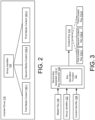
- FIG 5 illustrates a flow chart depicting example operations of the computing device 102 implementing the group license exchange mechanism of the system 100 of FIG 1 according to an aspect.
- the flowchart of FIG 5 illustrates the operations 502-518 in sequential order, it will be appreciated that this is merely an example, and that additional or alternative operations may be included. Further, operations of FIG 5 and related operations may be executed in a different order than that shown, or in a parallel or overlapping fashion.
- the group license manager 108 configured to determine whether or not the first media content 140-1 is part of the license group 115.
- the group license manager 108 may determine whether or not a group identifier 122 is associated with the first media content 140-1.
- the group identifier 122 may uniquely identify the license group 115. If the group identifier 122 is included as part of the first media content 140-1 (e.g., included as meta-data associated with the first media content 140-1), the group license manager 108 may determine that the first media content 140-1 is part of the license group 115. On the other hand, if the group identifier 122 is not provided with the first media content 140-1, the group license manager 108 may determine that the first media content 140-1 is not part of the license group 115.
- an individual content key may be requested (504).
- the group license manager 108 may request and receive an individual content key for the first media content 140-1 in accordance with standard license exchange techniques. In some examples, this content key was generated at the license manager 104 without using the master key 128.
- the group license manager 108 may determine whether or not the master key 128 for the license group 115 was previously received. For example, the group license manager 108 may determine whether it has access to the master key 128 (e.g., whether it is stored locally in a storage unit of the computing device 102).
- a license request with the group identifier and the content identifier may be sent (508). For example, if the group license manager 108 determines that it has not previously received the master key 128 for that license group 115, the group license manager 108 may send, over the network 142, a license request 120 to the license manager 104.
- the license request 120 may include the group identifier 122 of the license group 115 corresponding to the media content 140, and the content identifier 124 that uniquely identifies the first media content 140-1.
- a master key may be received (510).
- the license manager 104 may receive the license request 120, over the network 142, from the computing device 102, and obtain the master key 128 for the license group 115 from the master key database 132.
- the license manager 104 may use the group identifier 122 of the license request 120 to obtain the correct master key 128 from the master key database 132.
- the computing device may receive the license with the master key 128 from the license manager 104.
- a content key may be derived with the master key (512).
- the device key generator 110 may derive the first content key 112-1 for the first media content 140-1 based on the master key 128 received as part of the license 126.
- the device key generator 110 may generate the first content key 112-1 using the key derivation function 121 inputted with the master key 128, the group identifier 122, and the content identifier 124.
- the device key generator 110 may derive the first content key 112-1 using the key derivation function 121.
- the key derivation function 121 may be a deterministic algorithm to derive a key of a given size.
- the key derivation function 121 generates the first content key 112-1 as a 16 byte Advanced Encryption Standard (AES) based on the group identifier 122, and a length of 128 bits.
- AES Advanced Encryption Standard
- Media content may be decrypted with the content key (514).
- the decryption unit 114 may be configured to decrypt the first media content 140-1 using the derived first content key 112-1.
- the content key may be derived with the master key (516). For example, instead of sending a license request 120, the group license manager 108 determines that it already has received a license 126 for the first media content 140-1 because it previously received the master key 128 for the license group 115 which the first media content 140-1 belongs to. Then, instead of performing operations 508-510, the device key generator 110 may derive the first content key 112-1 using the previously received master key 128.
- Media content may be decrypted with the content key (518).
- the decryption unit 114 may be configured to decrypt the first media content 140-1 using the derived first content key 112-1.
- a key request with a group identifier and a content identifier may be sent to a license manager (804).
- the media content provider 106 may send the key request 134 with the group identifier 122 and the content identifier 124.
- the media content provider 106 may send the key request 134 for the first media content 140-1 including the content identifier 124 that uniquely identifies the first media content 140-1, and the group identifier 122 of the first media content's license group 115.
- a content key may be received from the license manager (806).
- the media content provider 106 may receive the first content key 112-1 from the license manager 104 as part of the key response 136. Then, the media content may be encrypted with the content key (808).
- the provider encryption unit 138 may encrypt the first media content 140-1 with the first content key 112-1.
- the memory 904 stores information within the computing device 900.
- the memory 904 is a volatile memory unit or units.
- the memory 904 is a non-volatile memory unit or units.
- the memory 904 may also be another form of computer-readable medium, such as a magnetic or optical disk.
- the low-speed expansion port which may include various communication ports (e.g., USB, Bluetooth, Ethernet, wireless Ethernet) may be coupled to one or more input/output devices, such as a keyboard, a pointing device, a scanner, or a networking device such as a switch or router, e.g., through a network adapter.
- input/output devices such as a keyboard, a pointing device, a scanner, or a networking device such as a switch or router, e.g., through a network adapter.
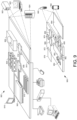
- the computing device 900 may be implemented in a number of different forms, as shown in the figure. For example, it may be implemented as a standard server 920, or multiple times in a group of such servers. It may also be implemented as part of a rack server system 924. In addition, it may be implemented in a personal computer such as a laptop computer 922. Alternatively, components from computing device 900 may be combined with other components in a mobile device (not shown), such as device 950. Each of such devices may contain one or more of computing device 900, 950, and an entire system may be made up of multiple computing devices 900, 950 communicating with each other.
- Computing device 950 includes a processor 952, memory 964, an input/output device such as a display 954, a communication interface 966, and a transceiver 968, among other components.
- the device 950 may also be provided with a storage device, such as a microdrive or other device, to provide additional storage.
- a storage device such as a microdrive or other device, to provide additional storage.
- Each of the components 950, 952, 964, 954, 966, and 968 are interconnected using various buses, and several of the components may be mounted on a common motherboard or in other manners as appropriate.
- the processor 952 can execute instructions within the computing device 950, including instructions stored in the memory 964.
- the processor may be implemented as a chipset of chips that include separate and multiple analog and digital processors.
- the processor may provide, for example, for coordination of the other components of the device 950, such as control of user interfaces, applications run by device 950, and wireless communication by device 950.
- expansion memory 974 may be provide as a security module for device 950, and may be programmed with instructions that permit secure use of device 950.
- secure applications may be provided via the SIMM cards, along with additional information, such as placing identifying information on the SIMM card in a non-hackable manner.
- the particular naming of the components, capitalization of terms, the attributes, data structures, or any other programming or structural aspect is not mandatory or significant, and the mechanisms that implement the invention or its features may have different names, formats, or protocols.
- the system may be implemented via a combination of hardware and software, as described, or entirely in hardware elements.
- the particular division of functionality between the various system components described herein is merely exemplary, and not mandatory; functions performed by a single system component may instead be performed by multiple components, and functions performed by multiple components may instead performed by a single component.
Landscapes
- Engineering & Computer Science (AREA)
- Theoretical Computer Science (AREA)
- Software Systems (AREA)
- Computer Security & Cryptography (AREA)
- General Engineering & Computer Science (AREA)
- Computer Hardware Design (AREA)
- Physics & Mathematics (AREA)
- General Physics & Mathematics (AREA)
- Multimedia (AREA)
- Technology Law (AREA)
- General Health & Medical Sciences (AREA)
- Health & Medical Sciences (AREA)
- Bioethics (AREA)
- Computer Networks & Wireless Communication (AREA)
- Signal Processing (AREA)
- Two-Way Televisions, Distribution Of Moving Picture Or The Like (AREA)
- Storage Device Security (AREA)
Claims (13)
- Dispositif informatique client (102), comprenant :au moins un processeur (902, 952) ;un support non transitoire lisible par ordinateur stockant des instructions exécutables qui, lorsqu'elles sont exécutées par l'au moins un processeur, sont configurées pour mettre en œuvre :un gestionnaire de contenu multimédia (116) configuré pour obtenir du contenu multimédia (140), le contenu multimédia (140) étant associé à un groupe de licences ;un gestionnaire de licences de groupe (108) configuré pour déterminer le fait de savoir si le contenu multimédia (140) fait partie ou non du groupe de licences (115), et lorsque le contenu multimédia (140) est déterminé comme faisant partie du groupe de licences (115), le gestionnaire de licences de groupe (108) est configuré pour déterminer le fait de savoir si une clé principale (128) pour le groupe de licences a été précédemment reçue,le gestionnaire de licences de groupe (108) étant configuré pour envoyer, sur un réseau, une demande de licence (120) à un gestionnaire de licences (104) lorsque la clé principale (128) n'a pas été reçue précédemment, la demande de licence (120) comportant un identifiant de contenu (124) identifiant le contenu multimédia (140) et un identifiant de groupe (122) identifiant le groupe de licences (115) qui comporte le contenu multimédia (140), le gestionnaire de licences de groupe (108) étant configuré pour recevoir, sur le réseau, une licence (126) pour permettre l'accès au contenu multimédia (140), la licence comportant la clé principale (128) correspondant au groupe de licences (115) ;un générateur de clé (110, 130) configuré pour dériver une clé de contenu (112) spécifique au contenu multimédia (140) identifié par l'identifiant de contenu (124) sur la base de la clé principale (128), dans lequel la clé de contenu n'est pas stockée sur le dispositif informatique client (102), dans lequel le générateur de clé (110, 130) est configuré pour dériver la clé de contenu (112) à l'aide d'une fonction de dérivation de clé (121) entrée avec la clé principale (128), l'identifiant de contenu (124) et l'identifiant de groupe (122) ; etune unité de déchiffrement (114) configurée pour déchiffrer le contenu multimédia (140) à l'aide de la clé de contenu (112) de telle sorte que le contenu multimédia (140) puisse être accessible,dans lequel les clés de contenu pour d'autres contenus multimédias qui font partie du groupe de licences sont configurées pour être dérivées au niveau du dispositif informatique client sur la base de la clé principale, d'un identifiant de contenu respectif et de l'identifiant de groupe à l'aide de la fonction de dérivation de clé.
- Dispositif informatique client selon la revendication 1, dans lequel le gestionnaire de contenu multimédia (116) est configuré pour obtenir un contenu multimédia secondaire (140-2), et le gestionnaire de licences de groupe (108) est configuré pour déterminer le fait que le contenu multimédia secondaire fait partie du groupe de licences (115) qui comporte le contenu multimédia, le générateur de clés (110, 130) étant configuré pour dériver une clé de contenu secondaire (112-2) spécifique au contenu multimédia secondaire (140-2) sur la base de la clé principale (128) qui a été utilisée pour dériver le contenu multimédia, l'unité de décryptage (114) étant configurée pour déchiffrer le contenu multimédia secondaire (142-2) à l'aide de la clé de contenu secondaire (112-2).
- Dispositif informatique client selon la revendication 1 ou la revendication 2, dans lequel la licence (126) comporte également la clé de contenu (112), l'unité de décryptage (114) étant configurée pour utiliser soit la clé de contenu reçue dans le cadre de la licence, soit la clé de contenu dérivée par le générateur de clé (110, 130) pour déchiffrer le contenu multimédia (140).
- Dispositif informatique client selon l'une quelconque des revendications 1 à 3, dans lequel, lorsque le contenu multimédia (140) est déterminé comme ne faisant pas partie du groupe de licences (115), le gestionnaire de licences (108) est configuré pour demander et recevoir une clé de contenu individuelle (112) du gestionnaire de licences (108) pour déchiffrer le contenu multimédia (140).
- Dispositif informatique client selon l'une quelconque des revendications 1 à 4, dans lequel, lorsque la clé principale (128) a été déterminée comme étant précédemment reçue, le générateur de clé (110, 130) est configuré pour dériver la clé de contenu (112) à l'aide de la clé principale (128) précédemment reçue.
- Dispositif informatique client selon l'une quelconque des revendications 1 à 5, dans lequel le gestionnaire de licences de groupe (108) est configuré pour déterminer le fait de savoir si le contenu multimédia (140) fait partie ou non du groupe de licences (115) sur la base d'une inclusion de l'identifiant de groupe (122) dans la demande de licence (120).
- Système comprenant :au moins un processeur ;un support non transitoire lisible par ordinateur stockant des instructions exécutables qui, lorsqu'elles sont exécutées par l'au moins un processeur, sont configurées pour mettre en œuvre :un gestionnaire de licences (108) configuré pour recevoir une demande de licence (120) provenant d'un dispositif informatique client (102), la demande de licence (120) comportant un identifiant de groupe (122) identifiant un groupe de licences (115) qui comporte un contenu multimédia (140) ; etun générateur de clé (110, 130) configuré pour obtenir une clé principale (128) à l'aide de l'identifiant de groupe (122), la clé principale (128) étant une clé pour le groupe de licences (115) de telle sorte qu'une clé de contenu (112) pour chaque contenu multimédia (140) qui fait partie du groupe de licences (115) peut être dérivée à l'aide de la clé principale (128), dans lequel la clé de contenu (112) est configurée pour ne pas être stockée au niveau du dispositif informatique client (102), dans lequel le générateur de clé (110, 130) est configuré pour dériver la clé de contenu (112) à l'aide d'une fonction de dérivation de clé (121) entrée avec la clé principale (128), l'identifiant de contenu (124) et l'identifiant de groupe (122),le gestionnaire de licences (108) étant configuré pour envoyer une licence (126) au dispositif informatique client (102), la licence comportant la clé principale (128), dans lequel le contenu multimédia est configuré pour être déchiffré au niveau du dispositif informatique client à l'aide de la clé de contenu et les clés de contenu pour un autre contenu multimédia qui fait partie du groupe de licences étant configurées pour être dérivées au niveau du dispositif informatique client sur la base de la clé principale, d'un identifiant de contenu respectif et de l'identifiant de groupe à l'aide de la fonction de dérivation de clé.
- Système selon la revendication 7, dans lequel la demande de licence (120) comporte un identifiant de contenu (124) identifiant le contenu multimédia (140), et le générateur de clé (110, 130) est configuré pour générer une clé de contenu (112) pour le contenu multimédia (140) identifié par l'identifiant de contenu (124), la licence (126) comportant à la fois la clé principale (128) et la clé de contenu (112).
- Système selon la revendication 7 ou la revendication 8, dans lequel le générateur de clé (110, 130) est configuré pour obtenir la clé principale (128) à partir d'une base de données de clés principales (132) stockant une pluralité de clés principales, chacune de la pluralité de clés principales correspondant à un groupe de licences différent (115).
- Système selon l'une quelconque des revendications 7 à 9, comprenant également :
une unité de chiffrement (131) configurée pour chiffrer la clé principale (128), et le gestionnaire de licences est configuré pour envoyer la licence (126) avec la clé principale (128). - Système selon l'une quelconque des revendications 7 à 10, dans lequel le gestionnaire de licences (108) est configuré pour déterminer le fait de savoir si le contenu multimédia (140) fait partie du groupe de licences (115) sur la base d'une inclusion de l'identifiant de groupe (122) dans la demande de licence (120).
- Système selon l'une quelconque des revendications 7 à 11, dans lequel, avant que la demande de licence (120) ne soit reçue du dispositif informatique client (102), le gestionnaire de licences (108) est configuré pour recevoir une demande de clé (134) d'un fournisseur de contenu multimédia (106), la demande de clé (134) comportant l'identifiant de groupe (122) et un identifiant de contenu (124) identifiant le contenu multimédia (140), le générateur de clés (110, 130) étant configuré pour dériver la clé de contenu (112) sur la base de la clé principale (128) et de l'identifiant de contenu (124), le gestionnaire de licences (108) étant configuré pour renvoyer la clé de contenu (112) au fournisseur de contenu multimédia (106) de telle sorte que le contenu multimédia (140) puisse être chiffré avec la clé de contenu (112).
- Système selon la revendication 12, dans lequel le gestionnaire de licences (108) est configuré pour déterminer le fait de savoir si le contenu multimédia (140) fait partie du groupe de licences (115) sur la base d'une inclusion de l'identifiant de groupe (122) dans la demande de clé (134), dans lequel, lorsque la demande de clé ne comporte pas l'identifiant de groupe (122), le générateur de clés (110, 130) est configuré pour dériver la clé de contenu (112) sans utiliser la clé principale (128).
Applications Claiming Priority (2)
| Application Number | Priority Date | Filing Date | Title |
|---|---|---|---|
| US14/854,799 US10339323B2 (en) | 2015-09-15 | 2015-09-15 | Group license encryption and decryption |
| PCT/US2016/051314 WO2017048631A1 (fr) | 2015-09-15 | 2016-09-12 | Chiffrement et déchiffrement de licences de groupes |
Publications (2)
| Publication Number | Publication Date |
|---|---|
| EP3350737A1 EP3350737A1 (fr) | 2018-07-25 |
| EP3350737B1 true EP3350737B1 (fr) | 2025-03-26 |
Family
ID=56997562
Family Applications (1)
| Application Number | Title | Priority Date | Filing Date |
|---|---|---|---|
| EP16770846.0A Active EP3350737B1 (fr) | 2015-09-15 | 2016-09-12 | Chiffrement et déchiffrement de licences de groupes |
Country Status (4)
| Country | Link |
|---|---|
| US (1) | US10339323B2 (fr) |
| EP (1) | EP3350737B1 (fr) |
| CN (1) | CN107567625B (fr) |
| WO (1) | WO2017048631A1 (fr) |
Families Citing this family (5)
| Publication number | Priority date | Publication date | Assignee | Title |
|---|---|---|---|---|
| US10339323B2 (en) | 2015-09-15 | 2019-07-02 | Google Llc | Group license encryption and decryption |
| EP3746920A1 (fr) * | 2018-01-31 | 2020-12-09 | Assa Abloy AB | Activation d'un module logiciel chiffré dans un fichier conteneur |
| WO2019159689A1 (fr) * | 2018-02-13 | 2019-08-22 | ソニー株式会社 | Dispositif électronique, dispositif de traitement d'informations, procédé de traitement d'informations, programme et système de traitement d'informations |
| US11943338B2 (en) * | 2021-08-19 | 2024-03-26 | Capital One Services, Llc | Object-level encryption |
| KR102508524B1 (ko) * | 2021-11-09 | 2023-03-09 | 펜타시큐리티시스템 주식회사 | 데이터 구독 시스템에서의 암호화 키 관리 방법 |
Family Cites Families (14)
| Publication number | Priority date | Publication date | Assignee | Title |
|---|---|---|---|---|
| EP1414181B1 (fr) | 2000-06-21 | 2008-12-17 | Sony Corporation | Appareil et procédé de renouvellement de clé dans une structure d'arbre de clé hierarchique |
| DE60202568T8 (de) * | 2001-08-08 | 2005-10-20 | Matsushita Electric Industrial Co., Ltd., Kadoma | Urheberrechtschutzsystem, Aufzeichungsvorrichtung, und Wiedergabevorrichtung |
| US7529933B2 (en) * | 2002-05-30 | 2009-05-05 | Microsoft Corporation | TLS tunneling |
| US7174021B2 (en) * | 2002-06-28 | 2007-02-06 | Microsoft Corporation | Systems and methods for providing secure server key operations |
| US20040249755A1 (en) | 2003-06-03 | 2004-12-09 | Bea Systems, Inc. | Self-service customer license management application using a group administration application |
| JP2007304849A (ja) * | 2006-05-11 | 2007-11-22 | Sony Corp | 管理装置、情報処理装置、管理方法および情報処理方法 |
| EP2044567A4 (fr) * | 2006-07-25 | 2011-06-22 | Sony Electronics Inc | Procédé et système de prestation d'un service d'abonnement à un contenu |
| US8433656B1 (en) | 2007-06-13 | 2013-04-30 | Qurio Holdings, Inc. | Group licenses for virtual objects in a distributed virtual world |
| US8121294B2 (en) | 2008-10-21 | 2012-02-21 | Apple Inc. | System and method for a derivation function for key per page |
| US8359473B1 (en) | 2009-02-02 | 2013-01-22 | Adobe Systems Incorporated | System and method for digital rights management using digital signatures |
| US8763159B1 (en) * | 2012-12-05 | 2014-06-24 | Parallels IP Holdings GmbH | System and method for application license management in virtual environments |
| US9008304B2 (en) | 2012-12-28 | 2015-04-14 | Intel Corporation | Content protection key management |
| CN103873233B (zh) * | 2014-03-19 | 2017-10-20 | 国家广播电影电视总局电影数字节目管理中心 | 一种基于管理网站的数字电影密钥分发方法、装置和系统 |
| US10339323B2 (en) | 2015-09-15 | 2019-07-02 | Google Llc | Group license encryption and decryption |
-
2015
- 2015-09-15 US US14/854,799 patent/US10339323B2/en active Active
-
2016
- 2016-09-12 CN CN201680025140.1A patent/CN107567625B/zh active Active
- 2016-09-12 WO PCT/US2016/051314 patent/WO2017048631A1/fr not_active Ceased
- 2016-09-12 EP EP16770846.0A patent/EP3350737B1/fr active Active
Also Published As
| Publication number | Publication date |
|---|---|
| US10339323B2 (en) | 2019-07-02 |
| EP3350737A1 (fr) | 2018-07-25 |
| CN107567625B (zh) | 2021-03-23 |
| US20170076097A1 (en) | 2017-03-16 |
| CN107567625A (zh) | 2018-01-09 |
| WO2017048631A1 (fr) | 2017-03-23 |
Similar Documents
| Publication | Publication Date | Title |
|---|---|---|
| US10938818B2 (en) | One step security system in a network storage system | |
| US11483161B2 (en) | Method for information processing and non-transitory computer readable storage medium | |
| US8751800B1 (en) | DRM provider interoperability | |
| US9992172B2 (en) | Secure key management in a data storage system | |
| US9342666B2 (en) | Providing security support for digital rights management in different formats | |
| CN107567625B (zh) | 组许可加密和解密 | |
| US11734394B2 (en) | Distributed license encryption and distribution | |
| CN105635131B (zh) | 传输数据方法、装置及服务器 | |
| US9697378B2 (en) | Network encrypted data object stored on an encrypted file system | |
| CN109522462B (zh) | 一种基于区块链的云查询方法、装置、设备及存储介质 | |
| WO2017036190A1 (fr) | Procédé d'accès à des données sur la base d'une plate-forme informatique en nuage, et terminal d'utilisateur | |
| US11601258B2 (en) | Selector derived encryption systems and methods | |
| CN113038192B (zh) | 视频处理方法、装置、电子设备和存储介质 | |
| CN105493436B (zh) | 用于向授权用户分发内容项目的方法、内容拥有者设备 | |
| US20180314807A1 (en) | File permission control method | |
| WO2021031087A1 (fr) | Procédé et appareil de gestion de certificat | |
| JP6542401B2 (ja) | メッセージ終端間暗号化のためのキーチェーン管理方法およびシステム | |
| US10484169B1 (en) | Cipher block chaining data obfuscation | |
| CN112839013B (zh) | 一种密钥传输方法、装置及计算机可读存储介质 | |
| CN111181899B (zh) | 数据处理方法、装置、系统及电子设备 | |
| CN103138922B (zh) | 一种数字内容传输的方法、系统及装置 | |
| CN119293815A (zh) | 数据处理方法、系统、装置、计算机设备及存储介质 | |
| CN110011807B (zh) | 一种关键信息维护方法及系统 | |
| US20160072777A1 (en) | Hardware crypto module and system for communicating with an external environment | |
| CN116137663A (zh) | 多媒体文件播放处理方法、装置、电子设备和存储介质 |
Legal Events
| Date | Code | Title | Description |
|---|---|---|---|
| STAA | Information on the status of an ep patent application or granted ep patent |
Free format text: STATUS: THE INTERNATIONAL PUBLICATION HAS BEEN MADE |
|
| PUAI | Public reference made under article 153(3) epc to a published international application that has entered the european phase |
Free format text: ORIGINAL CODE: 0009012 |
|
| STAA | Information on the status of an ep patent application or granted ep patent |
Free format text: STATUS: REQUEST FOR EXAMINATION WAS MADE |
|
| 17P | Request for examination filed |
Effective date: 20171018 |
|
| AK | Designated contracting states |
Kind code of ref document: A1 Designated state(s): AL AT BE BG CH CY CZ DE DK EE ES FI FR GB GR HR HU IE IS IT LI LT LU LV MC MK MT NL NO PL PT RO RS SE SI SK SM TR |
|
| AX | Request for extension of the european patent |
Extension state: BA ME |
|
| DAV | Request for validation of the european patent (deleted) | ||
| DAX | Request for extension of the european patent (deleted) | ||
| STAA | Information on the status of an ep patent application or granted ep patent |
Free format text: STATUS: EXAMINATION IS IN PROGRESS |
|
| 17Q | First examination report despatched |
Effective date: 20200324 |
|
| GRAP | Despatch of communication of intention to grant a patent |
Free format text: ORIGINAL CODE: EPIDOSNIGR1 |
|
| STAA | Information on the status of an ep patent application or granted ep patent |
Free format text: STATUS: GRANT OF PATENT IS INTENDED |
|
| INTG | Intention to grant announced |
Effective date: 20241018 |
|
| GRAS | Grant fee paid |
Free format text: ORIGINAL CODE: EPIDOSNIGR3 |
|
| GRAA | (expected) grant |
Free format text: ORIGINAL CODE: 0009210 |
|
| STAA | Information on the status of an ep patent application or granted ep patent |
Free format text: STATUS: THE PATENT HAS BEEN GRANTED |
|
| AK | Designated contracting states |
Kind code of ref document: B1 Designated state(s): AL AT BE BG CH CY CZ DE DK EE ES FI FR GB GR HR HU IE IS IT LI LT LU LV MC MK MT NL NO PL PT RO RS SE SI SK SM TR |
|
| REG | Reference to a national code |
Ref country code: GB Ref legal event code: FG4D |
|
| REG | Reference to a national code |
Ref country code: CH Ref legal event code: EP |
|
| REG | Reference to a national code |
Ref country code: DE Ref legal event code: R096 Ref document number: 602016091680 Country of ref document: DE |
|
| P01 | Opt-out of the competence of the unified patent court (upc) registered |
Free format text: CASE NUMBER: APP_13165/2025 Effective date: 20250317 |
|
| REG | Reference to a national code |
Ref country code: IE Ref legal event code: FG4D |
|
| PG25 | Lapsed in a contracting state [announced via postgrant information from national office to epo] |
Ref country code: RS Free format text: LAPSE BECAUSE OF FAILURE TO SUBMIT A TRANSLATION OF THE DESCRIPTION OR TO PAY THE FEE WITHIN THE PRESCRIBED TIME-LIMIT Effective date: 20250626 |
|
| PG25 | Lapsed in a contracting state [announced via postgrant information from national office to epo] |
Ref country code: FI Free format text: LAPSE BECAUSE OF FAILURE TO SUBMIT A TRANSLATION OF THE DESCRIPTION OR TO PAY THE FEE WITHIN THE PRESCRIBED TIME-LIMIT Effective date: 20250326 |
|
| REG | Reference to a national code |
Ref country code: LT Ref legal event code: MG9D |
|
| PG25 | Lapsed in a contracting state [announced via postgrant information from national office to epo] |
Ref country code: NO Free format text: LAPSE BECAUSE OF FAILURE TO SUBMIT A TRANSLATION OF THE DESCRIPTION OR TO PAY THE FEE WITHIN THE PRESCRIBED TIME-LIMIT Effective date: 20250626 |
|
| PG25 | Lapsed in a contracting state [announced via postgrant information from national office to epo] |
Ref country code: HR Free format text: LAPSE BECAUSE OF FAILURE TO SUBMIT A TRANSLATION OF THE DESCRIPTION OR TO PAY THE FEE WITHIN THE PRESCRIBED TIME-LIMIT Effective date: 20250326 |
|
| PG25 | Lapsed in a contracting state [announced via postgrant information from national office to epo] |
Ref country code: LV Free format text: LAPSE BECAUSE OF FAILURE TO SUBMIT A TRANSLATION OF THE DESCRIPTION OR TO PAY THE FEE WITHIN THE PRESCRIBED TIME-LIMIT Effective date: 20250326 |
|
| PG25 | Lapsed in a contracting state [announced via postgrant information from national office to epo] |
Ref country code: GR Free format text: LAPSE BECAUSE OF FAILURE TO SUBMIT A TRANSLATION OF THE DESCRIPTION OR TO PAY THE FEE WITHIN THE PRESCRIBED TIME-LIMIT Effective date: 20250627 Ref country code: BG Free format text: LAPSE BECAUSE OF FAILURE TO SUBMIT A TRANSLATION OF THE DESCRIPTION OR TO PAY THE FEE WITHIN THE PRESCRIBED TIME-LIMIT Effective date: 20250326 |
|
| REG | Reference to a national code |
Ref country code: NL Ref legal event code: MP Effective date: 20250326 |
|
| PG25 | Lapsed in a contracting state [announced via postgrant information from national office to epo] |
Ref country code: NL Free format text: LAPSE BECAUSE OF FAILURE TO SUBMIT A TRANSLATION OF THE DESCRIPTION OR TO PAY THE FEE WITHIN THE PRESCRIBED TIME-LIMIT Effective date: 20250326 |
|
| PG25 | Lapsed in a contracting state [announced via postgrant information from national office to epo] |
Ref country code: SE Free format text: LAPSE BECAUSE OF FAILURE TO SUBMIT A TRANSLATION OF THE DESCRIPTION OR TO PAY THE FEE WITHIN THE PRESCRIBED TIME-LIMIT Effective date: 20250326 |
|
| REG | Reference to a national code |
Ref country code: AT Ref legal event code: MK05 Ref document number: 1779639 Country of ref document: AT Kind code of ref document: T Effective date: 20250326 |
|
| PG25 | Lapsed in a contracting state [announced via postgrant information from national office to epo] |
Ref country code: SM Free format text: LAPSE BECAUSE OF FAILURE TO SUBMIT A TRANSLATION OF THE DESCRIPTION OR TO PAY THE FEE WITHIN THE PRESCRIBED TIME-LIMIT Effective date: 20250326 |
|
| PG25 | Lapsed in a contracting state [announced via postgrant information from national office to epo] |
Ref country code: ES Free format text: LAPSE BECAUSE OF FAILURE TO SUBMIT A TRANSLATION OF THE DESCRIPTION OR TO PAY THE FEE WITHIN THE PRESCRIBED TIME-LIMIT Effective date: 20250326 Ref country code: PT Free format text: LAPSE BECAUSE OF FAILURE TO SUBMIT A TRANSLATION OF THE DESCRIPTION OR TO PAY THE FEE WITHIN THE PRESCRIBED TIME-LIMIT Effective date: 20250728 |
|
| PGFP | Annual fee paid to national office [announced via postgrant information from national office to epo] |
Ref country code: DE Payment date: 20250929 Year of fee payment: 10 |
|
| PG25 | Lapsed in a contracting state [announced via postgrant information from national office to epo] |
Ref country code: PL Free format text: LAPSE BECAUSE OF FAILURE TO SUBMIT A TRANSLATION OF THE DESCRIPTION OR TO PAY THE FEE WITHIN THE PRESCRIBED TIME-LIMIT Effective date: 20250326 Ref country code: IT Free format text: LAPSE BECAUSE OF FAILURE TO SUBMIT A TRANSLATION OF THE DESCRIPTION OR TO PAY THE FEE WITHIN THE PRESCRIBED TIME-LIMIT Effective date: 20250326 |
|
| PGFP | Annual fee paid to national office [announced via postgrant information from national office to epo] |
Ref country code: GB Payment date: 20250929 Year of fee payment: 10 |
|
| PG25 | Lapsed in a contracting state [announced via postgrant information from national office to epo] |
Ref country code: AT Free format text: LAPSE BECAUSE OF FAILURE TO SUBMIT A TRANSLATION OF THE DESCRIPTION OR TO PAY THE FEE WITHIN THE PRESCRIBED TIME-LIMIT Effective date: 20250326 |
|
| PG25 | Lapsed in a contracting state [announced via postgrant information from national office to epo] |
Ref country code: EE Free format text: LAPSE BECAUSE OF FAILURE TO SUBMIT A TRANSLATION OF THE DESCRIPTION OR TO PAY THE FEE WITHIN THE PRESCRIBED TIME-LIMIT Effective date: 20250326 |
|
| PG25 | Lapsed in a contracting state [announced via postgrant information from national office to epo] |
Ref country code: RO Free format text: LAPSE BECAUSE OF FAILURE TO SUBMIT A TRANSLATION OF THE DESCRIPTION OR TO PAY THE FEE WITHIN THE PRESCRIBED TIME-LIMIT Effective date: 20250326 |
|
| PG25 | Lapsed in a contracting state [announced via postgrant information from national office to epo] |
Ref country code: SK Free format text: LAPSE BECAUSE OF FAILURE TO SUBMIT A TRANSLATION OF THE DESCRIPTION OR TO PAY THE FEE WITHIN THE PRESCRIBED TIME-LIMIT Effective date: 20250326 |
|
| PG25 | Lapsed in a contracting state [announced via postgrant information from national office to epo] |
Ref country code: IS Free format text: LAPSE BECAUSE OF FAILURE TO SUBMIT A TRANSLATION OF THE DESCRIPTION OR TO PAY THE FEE WITHIN THE PRESCRIBED TIME-LIMIT Effective date: 20250726 |
|
| REG | Reference to a national code |
Ref country code: DE Ref legal event code: R097 Ref document number: 602016091680 Country of ref document: DE |
|
| PG25 | Lapsed in a contracting state [announced via postgrant information from national office to epo] |
Ref country code: DK Free format text: LAPSE BECAUSE OF FAILURE TO SUBMIT A TRANSLATION OF THE DESCRIPTION OR TO PAY THE FEE WITHIN THE PRESCRIBED TIME-LIMIT Effective date: 20250326 |
|
| PG25 | Lapsed in a contracting state [announced via postgrant information from national office to epo] |
Ref country code: CZ Free format text: LAPSE BECAUSE OF FAILURE TO SUBMIT A TRANSLATION OF THE DESCRIPTION OR TO PAY THE FEE WITHIN THE PRESCRIBED TIME-LIMIT Effective date: 20250326 |
|
| PLBE | No opposition filed within time limit |
Free format text: ORIGINAL CODE: 0009261 |
|
| STAA | Information on the status of an ep patent application or granted ep patent |
Free format text: STATUS: NO OPPOSITION FILED WITHIN TIME LIMIT |
|
| REG | Reference to a national code |
Ref country code: CH Ref legal event code: L10 Free format text: ST27 STATUS EVENT CODE: U-0-0-L10-L00 (AS PROVIDED BY THE NATIONAL OFFICE) Effective date: 20260211 |
|
| 26N | No opposition filed |
Effective date: 20260105 |
|
| REG | Reference to a national code |
Ref country code: CH Ref legal event code: H13 Free format text: ST27 STATUS EVENT CODE: U-0-0-H10-H13 (AS PROVIDED BY THE NATIONAL OFFICE) Effective date: 20260504 |