EP3349762B1 - Co-crystals of sglt2 inhibitors, process for their preparation and pharmaceutical compositions thereof - Google Patents
Co-crystals of sglt2 inhibitors, process for their preparation and pharmaceutical compositions thereof Download PDFInfo
- Publication number
- EP3349762B1 EP3349762B1 EP16845817.2A EP16845817A EP3349762B1 EP 3349762 B1 EP3349762 B1 EP 3349762B1 EP 16845817 A EP16845817 A EP 16845817A EP 3349762 B1 EP3349762 B1 EP 3349762B1
- Authority
- EP
- European Patent Office
- Prior art keywords
- pipecolic acid
- crystals
- empagliflozin
- crystal
- added
- Prior art date
- Legal status (The legal status is an assumption and is not a legal conclusion. Google has not performed a legal analysis and makes no representation as to the accuracy of the status listed.)
- Active
Links
Images






Classifications
-
- C—CHEMISTRY; METALLURGY
- C07—ORGANIC CHEMISTRY
- C07D—HETEROCYCLIC COMPOUNDS
- C07D409/00—Heterocyclic compounds containing two or more hetero rings, at least one ring having sulfur atoms as the only ring hetero atoms
- C07D409/02—Heterocyclic compounds containing two or more hetero rings, at least one ring having sulfur atoms as the only ring hetero atoms containing two hetero rings
- C07D409/10—Heterocyclic compounds containing two or more hetero rings, at least one ring having sulfur atoms as the only ring hetero atoms containing two hetero rings linked by a carbon chain containing aromatic rings
-
- A—HUMAN NECESSITIES
- A61—MEDICAL OR VETERINARY SCIENCE; HYGIENE
- A61K—PREPARATIONS FOR MEDICAL, DENTAL OR TOILETRY PURPOSES
- A61K31/00—Medicinal preparations containing organic active ingredients
- A61K31/70—Carbohydrates; Sugars; Derivatives thereof
- A61K31/7042—Compounds having saccharide radicals and heterocyclic rings
- A61K31/7048—Compounds having saccharide radicals and heterocyclic rings having oxygen as a ring hetero atom, e.g. leucoglucosan, hesperidin, erythromycin, nystatin, digitoxin or digoxin
-
- A—HUMAN NECESSITIES
- A61—MEDICAL OR VETERINARY SCIENCE; HYGIENE
- A61P—SPECIFIC THERAPEUTIC ACTIVITY OF CHEMICAL COMPOUNDS OR MEDICINAL PREPARATIONS
- A61P3/00—Drugs for disorders of the metabolism
- A61P3/08—Drugs for disorders of the metabolism for glucose homeostasis
- A61P3/10—Drugs for disorders of the metabolism for glucose homeostasis for hyperglycaemia, e.g. antidiabetics
-
- C—CHEMISTRY; METALLURGY
- C07—ORGANIC CHEMISTRY
- C07D—HETEROCYCLIC COMPOUNDS
- C07D211/00—Heterocyclic compounds containing hydrogenated pyridine rings, not condensed with other rings
- C07D211/04—Heterocyclic compounds containing hydrogenated pyridine rings, not condensed with other rings with only hydrogen or carbon atoms directly attached to the ring nitrogen atom
- C07D211/06—Heterocyclic compounds containing hydrogenated pyridine rings, not condensed with other rings with only hydrogen or carbon atoms directly attached to the ring nitrogen atom having no double bonds between ring members or between ring members and non-ring members
- C07D211/36—Heterocyclic compounds containing hydrogenated pyridine rings, not condensed with other rings with only hydrogen or carbon atoms directly attached to the ring nitrogen atom having no double bonds between ring members or between ring members and non-ring members with hetero atoms or with carbon atoms having three bonds to hetero atoms with at the most one bond to halogen, e.g. ester or nitrile radicals, directly attached to ring carbon atoms
- C07D211/60—Carbon atoms having three bonds to hetero atoms with at the most one bond to halogen, e.g. ester or nitrile radicals
-
- C—CHEMISTRY; METALLURGY
- C07—ORGANIC CHEMISTRY
- C07D—HETEROCYCLIC COMPOUNDS
- C07D213/00—Heterocyclic compounds containing six-membered rings, not condensed with other rings, with one nitrogen atom as the only ring hetero atom and three or more double bonds between ring members or between ring members and non-ring members
- C07D213/02—Heterocyclic compounds containing six-membered rings, not condensed with other rings, with one nitrogen atom as the only ring hetero atom and three or more double bonds between ring members or between ring members and non-ring members having three double bonds between ring members or between ring members and non-ring members
- C07D213/04—Heterocyclic compounds containing six-membered rings, not condensed with other rings, with one nitrogen atom as the only ring hetero atom and three or more double bonds between ring members or between ring members and non-ring members having three double bonds between ring members or between ring members and non-ring members having no bond between the ring nitrogen atom and a non-ring member or having only hydrogen or carbon atoms directly attached to the ring nitrogen atom
- C07D213/60—Heterocyclic compounds containing six-membered rings, not condensed with other rings, with one nitrogen atom as the only ring hetero atom and three or more double bonds between ring members or between ring members and non-ring members having three double bonds between ring members or between ring members and non-ring members having no bond between the ring nitrogen atom and a non-ring member or having only hydrogen or carbon atoms directly attached to the ring nitrogen atom with hetero atoms or with carbon atoms having three bonds to hetero atoms with at the most one bond to halogen, e.g. ester or nitrile radicals, directly attached to ring carbon atoms
- C07D213/78—Carbon atoms having three bonds to hetero atoms, with at the most one bond to halogen, e.g. ester or nitrile radicals
- C07D213/79—Acids; Esters
- C07D213/80—Acids; Esters in position 3
-
- C—CHEMISTRY; METALLURGY
- C07—ORGANIC CHEMISTRY
- C07D—HETEROCYCLIC COMPOUNDS
- C07D241/00—Heterocyclic compounds containing 1,4-diazine or hydrogenated 1,4-diazine rings
- C07D241/02—Heterocyclic compounds containing 1,4-diazine or hydrogenated 1,4-diazine rings not condensed with other rings
- C07D241/10—Heterocyclic compounds containing 1,4-diazine or hydrogenated 1,4-diazine rings not condensed with other rings having three double bonds between ring members or between ring members and non-ring members
- C07D241/14—Heterocyclic compounds containing 1,4-diazine or hydrogenated 1,4-diazine rings not condensed with other rings having three double bonds between ring members or between ring members and non-ring members with hetero atoms or with carbon atoms having three bonds to hetero atoms with at the most one bond to halogen, e.g. ester or nitrile radicals, directly attached to ring carbon atoms
- C07D241/24—Carbon atoms having three bonds to hetero atoms with at the most one bond to halogen, e.g. ester or nitrile radicals
-
- C—CHEMISTRY; METALLURGY
- C07—ORGANIC CHEMISTRY
- C07D—HETEROCYCLIC COMPOUNDS
- C07D309/00—Heterocyclic compounds containing six-membered rings having one oxygen atom as the only ring hetero atom, not condensed with other rings
- C07D309/02—Heterocyclic compounds containing six-membered rings having one oxygen atom as the only ring hetero atom, not condensed with other rings having no double bonds between ring members or between ring members and non-ring members
- C07D309/08—Heterocyclic compounds containing six-membered rings having one oxygen atom as the only ring hetero atom, not condensed with other rings having no double bonds between ring members or between ring members and non-ring members with hetero atoms or with carbon atoms having three bonds to hetero atoms with at the most one bond to halogen, e.g. ester or nitrile radicals, directly attached to ring carbon atoms
- C07D309/10—Oxygen atoms
-
- C—CHEMISTRY; METALLURGY
- C07—ORGANIC CHEMISTRY
- C07D—HETEROCYCLIC COMPOUNDS
- C07D407/00—Heterocyclic compounds containing two or more hetero rings, at least one ring having oxygen atoms as the only ring hetero atoms, not provided for by group C07D405/00
- C07D407/02—Heterocyclic compounds containing two or more hetero rings, at least one ring having oxygen atoms as the only ring hetero atoms, not provided for by group C07D405/00 containing two hetero rings
- C07D407/12—Heterocyclic compounds containing two or more hetero rings, at least one ring having oxygen atoms as the only ring hetero atoms, not provided for by group C07D405/00 containing two hetero rings linked by a chain containing hetero atoms as chain links
Definitions
- the present invention relates to solid forms of the SGLT2 inhibitor empagliflozin, processes for their preparation and use of such solid forms in pharmaceutical compositions and to their use in therapy.
- SGLT2 is a Sodiumdependent Glucose co-Transporter protein, which affects the reabsorption of glucose in the kidney. It is estimated that 90% of renal glucose reabsorption is facilitated by SGLT2. Since glucose reabsorption is mediated predominantly by SGLT2 and because high glucose levels have been identified as a cause of disease in diabetes, SGLT2 has become a drug target for type 2 diabetes therapy. Selective inhibition of SGLT2 has the potential to reduce hyperglycemia by inhibiting glucose reabsorption in the kidney with elimination of glucose by excretion in the urine (glucosuria).
- Sodium-glucose co-transporter 2 (SGLT2) inhibitors are a new class of diabetic medications indicated only for the treatment of type 2 diabetes. In conjunction with exercise and a healthy diet, they can improve glycemic control. They have been studied alone and with other medications including metformin, sulfonylureas, pioglitazone, DPP-4 inhibitors and insulin.
- Drugs in the SGLT2 inhibitors class include, but are not limited to canagliflozin, dapagliflozin, empagliflozin and the like.
- the structures of these SGLT2 inhibitors are represented below:
- Solid forms of SGLT2 inhibitor compounds in the form of crystalline forms, solvates, co-crystals, eutectic mixtures etc. have been described in the art on various occasions, e.g. US6774112 , US7723309 , US7919598 , US7943582 , US9006188 , US9035044 , WO 2002083066 , WO2004063209 , WO2007114475 , WO2008002824 , WO2013064909 , WO2012163546 , WO2013079501 , WO2014178040 , WO2015071761 , WO2015132803 , WO2015198227 , WO2016018024 , US2015307540 , IN1985/MUM/2013 , CN102167715B and CN103965267A .
- dapagliflozin has been described in the art, for example in U.S. Patent. No. 8,999,941 ; PCT Publication Nos. WO 2015/104658 , WO 2015/132803 and WO 2015/040571 .
- WO 2010/022313 and WO 2014/161836 disclose crystalline complexes of SGLT2 inhibitor compounds with amino acids.
- Suitable solid forms of a drug is a necessary stage for many orally available drugs.
- Suitable solid forms possess the desired properties of a particular drug.
- Such suitable forms often possess more favorable pharmaceutical and pharmacological properties or may be easier to process than known forms of the drug itself or may be used as a drug product intermediate during the preparation of the drug.
- new drug formulations comprising crystalline forms of a given drug may have superior properties, such as solubility, dissolution, hygroscopicity and storage stability over existing formulations of the drug.
- Discovering new polymorphic forms, solvates or co-crystals of a pharmaceutical product can provide materials having desirable processing properties, such as ease of handling, ease of processing, storage stability, and ease of purification or as desirable intermediate forms that facilitate conversion to other solid-state forms.
- New polymorphic forms, solvates or co-crystals of a pharmaceutically useful compound can also provide an opportunity to improve the performance characteristics of a pharmaceutical product. It enlarges the repertoire of materials that a formulation scientist has available for formulation optimization, for example by providing a product with different properties, e.g., better processing or handling characteristics, better purity, improved dissolution profile, or improved shelf-life.
- a co-crystal of a drug is a distinct chemical composition between the drug and the co-crystal former, and generally possesses distinct crystallographic and spectroscopic properties when compared to those of the drug and the co-crystal former individually.
- co-crystals are comprised of neutral species.
- the stoichiometric ratio of an API to co-crystal former is a generally unpredictable feature of a co-crystal.
- the present invention addresses the need in the art for pharmaceutically useful solid forms of SGLT2 inhibitor that may have improved physicochemical properties, such as a higher solubility and dissolution rate, enhanced flow properties and enhanced stability.
- the present invention provides solid forms of the SGLT2 inhibitor empagliflozin in the form of its co-crystals and processes for their preparation, pharmaceutical compositions containing the same and to their use in therapy.
- the present disclosure provides solid forms of SGLT2 inhibitors, which are characterized by one or more of analytical techniques such as powder X-Ray diffraction (XRD); 1 H NMR Spectrum; infrared spectrum (IR), differential scanning calorimetry (DSC) and/or thermogravimetric analysis (TGA), among others.
- analytical techniques such as powder X-Ray diffraction (XRD); 1 H NMR Spectrum; infrared spectrum (IR), differential scanning calorimetry (DSC) and/or thermogravimetric analysis (TGA), among others.
- the present invention provides co-crystals of empagliflozin, wherein the co-crystal former is selected from the group comprising DL-pipecolic acid, D-pipecolic acid and L-pipecolic.
- the present invention provides a process for the preparation of co-crystals of SGLT2 inhibitors, comprising:
- canagliflozin DL-pipecolic acid co-crystal which may be characterized
- the present disclosure provides (not part of the claimed invention) dapagliflozin DL-pipecolic acid co-crystals characterized
- the present disclosure provides (not part of the claimed invention) dapagliflozin D-pipecolic acid co-crystals characterized by X-Ray powder diffraction (XRD) pattern substantially in accordance with Figure 13 .
- XRD X-Ray powder diffraction
- the present disclosure provides (not part of the claimed invention) dapagliflozin L-pipecolic acid co-crystals characterized by X-Ray powder diffraction (XRD) pattern substantially in accordance with Figure 14 , or a crystalline dapagliflozin 2, 3-butanediol solvate characterized
- the present invention provides empagliflozin DL-pipecolic acid co-crystals.
- the present invention provides empagliflozin DL-pipecolic acid co-crystals hydrate.
- the present invention provides empagliflozin DL-pipecolic acid co-crystals characterized by X-Ray powder diffraction (XRD) pattern substantially in accordance with Figure 21 .
- XRD X-Ray powder diffraction
- the present invention provides empagliflozin DL-pipecolic acid co-crystals characterized by 1 H NMR Spectrum substantially in accordance with Figure 22 .
- the present invention empagliflozin DL-pipecolic acid co-crystals characterized by a differential scanning calorimetry (DSC) thermogram substantially in accordance with Figure 23 .
- DSC differential scanning calorimetry
- the present invention provides empagliflozin DL-pipecolic acid co-crystals characterized by a thermogravimetric analysis (TGA) curve substantially in accordance with Figure 24 .
- TGA thermogravimetric analysis
- the present invention provides empagliflozin DL-pipecolic acid co-crystals characterized by one or more of the following: a powder X-Ray diffraction (XRD) pattern substantially in accordance with Figure 21 ; a 1 H NMR Spectrum substantially in accordance with Figure 22 ; a differential scanning calorimetry (DSC) thermogram substantially in accordance with Figure 23 ; and/or a thermogravimetric analysis (TGA) curve substantially in accordance with Figure 24 .
- XRD powder X-Ray diffraction
- DSC differential scanning calorimetry
- TGA thermogravimetric analysis
- the present invention provides a process for the preparation of empagliflozin DL-pipecolic acid co-crystals, comprising:
- the solid forms of co-crystals of empagliflozin of the present invention may be used as an intermediate in obtaining high purity empagliflozin.
- the present invention provides a pharmaceutical composition comprising at least one of the empagliflozin cocrystals described above and at least one or more pharmaceutically acceptable excipients.
- co-crystals means a crystalline material comprised of two or more unique solids at room temperature, each containing distinctive physical characteristics, such as structure, melting point and heats of fusion.
- solvate refers to a crystalline compound in which molecules of solvents are incorporated into the crystal lattice of the compound.
- the starting SGLT2 inhibitors used in the present disclosure is known in the art and can be prepared by any known methods, for example Canagliflozin may be synthesized as disclosed in U.S. Patent Nos. 7,943,788 and 9,024,009 ; Dapagliflozin may be synthesized as disclosed in U.S. Patent No. 6,515,117 , 7,375,213 , 7,932,379 and 7,919,598 ; and Empagliflozin may be synthesized as disclosed in U.S. Patent No. 7,579,449 , which are incorporated herein by reference; or the SGLT2 inhibitor may be obtained as a solution directly from a reaction mixture in which it is formed and used as such without isolation.
- the present invention provides co-crystals of SGLT2 inhibitors, wherein the SGLT2 inhibitor is Empagliflozin and the co-crystal former is selected from the group comprising DL-pipecolic acid, D-pipecolic acid and L-pipecolic acid.
- the ratio of SGLT2 inhibitor to co-crystal former may be stoichiometric or non-stoichiometric according to the present invention. For example, 1:1, 1.5:1, 1:1.5, 2:1 and 1:2 ratios of SGLT2 inhibitor : co-crystal former is acceptable.
- the co-crystals of empagliflozin may be characterized by one or more of analytical techniques such as powder X-Ray diffraction (XRD); 1 H NMR Spectrum; infrared spectrum (IR), differential scanning calorimetry (DSC) and/or thermogravimetric analysis (TGA), among others.
- analytical techniques such as powder X-Ray diffraction (XRD); 1 H NMR Spectrum; infrared spectrum (IR), differential scanning calorimetry (DSC) and/or thermogravimetric analysis (TGA), among others.
- the present invention provides a process for the preparation of co-crystals of SGLT2 inhibitors, comprising:
- the step of providing a solution or suspension includes any form of SGLT2 inhibitor that may be combined with one or more organic solvents at a suitable temperature, and then the co-crystal former may be mixed with the resulting solution or slurry.
- the mixture may be formed by adding both the SGLT2 inhibitor and the co-crystal former at the same time in to one or more organic solvents.
- Suitable one or more solvents includes but are not limited to alcohols, esters, ethers, ketones, nitriles, halogenated hydrocarbons, aromatic hydrocarbons, aliphatic hydrocarbons, amides, nitroalkanes and the like; water and mixtures thereof.
- the alcohols include, but are not limited to methanol, ethanol, isopropanol, n- propanol, n-butanol, isobutanol and the like; esters include, but are not limited to methyl acetate, ethyl acetate, isopropyl acetate and the like; ethers include, but are not limited to tetrahydrofuran, dimethyl ether, diisopropyl ether, methyl tertiary butyl ether, 1,4-dioxane and the like; ketones include, but are not limited to acetone, methyl isobutyl ketone, methyl ethyl ketone and the like; nitriles include, but are not limited to acetonitrile propionitrile and the like; halogenated hydrocarbons include, but are not limited to methylene chloride, ethylene chloride, chloroform, carbon tetrachloride and the like; aromatic hydrocarbons
- the one or more solvents include methanol, ethanol, n-butanol, ethyl acetate, isopropyl acetate, hexane, heptane and mixtures thereof; more preferably ethanol, n-butanol, ethyl acetate, isopropyl acetate, heptane and mixtures thereof and optionally a mixture of these solvents with water.
- the temperature suitable for dissolving or suspending the SGLT2 inhibitor in the one or more organic solvents depends on the solvent used and the amount of SGLT2 inhibitor in the reaction mass. Typically, the solution or suspension is heated at a temperature of at least about 30°C to about reflux.
- the isolation of co-crystals of SGLT2 inhibitors may be carried out by crystallization, solvent precipitation, concentration by subjecting the solution to heating, spray drying, freeze drying, evaporation on rotary evaporator under vacuum, agitated thin film evaporator (ATFE) and the like.
- the reaction may be cooled to a temperature from about 35°C or less and then an antisolvent such as n-heptane is added and then optionally the reaction medium can be heated to about 40°C to about 75° and followed by cooling the suspension to less than about 30°C.
- the precipitated product can be recovered by conventional techniques, for example filtration.
- the obtained co-crystal of SGLT2 inhibitor is further purified by heating the co-crystal of SGLT2 inhibitor in a suitable organic solvent selected from the group consisting of alcohols, esters, ketones, ethers, halogenated solvents, hydrocarbons, nitriles, carbonates, nitro alkanes, glycols, water or mixtures thereof.
- a suitable organic solvent selected from the group consisting of alcohols, esters, ketones, ethers, halogenated solvents, hydrocarbons, nitriles, carbonates, nitro alkanes, glycols, water or mixtures thereof.
- suitable organic solvent for purifying co-crystals of the present invention include but are not limited to alcohols such as methanol, ethanol, isopropanol, n-butanol, sec-butanol, tert-butanol, and the like; esters such as ethyl acetate, isopropyl acetate, n-butyl acetate, isobutyl acetate, tert-butyl acetate and the like; ketones such as acetone, methyl isobutyl ketone, 2-pentanone, cyclopentanone, cyclohexanone and the like; ethers such as diisopropyl ether, di tert-butyl ether, ethyl tert-butyl ether, and the like; halogenated solvents such as dichloromethane, 1-chlorobutane, and the like; hydrocarbons such as hexane, heptane, and
- the mixture of co-crystal of SGLT2 inhibitor and the suitable organic solvent may be heated to dissolve all solids in to solvent at a temperature of about 30°C to reflux. Then the resultant solution may optionally be cooled to less than 30°C and the precipitated solid can be isolated by conventional techniques known in the art, for example, filtration.
- the resultant co-crystals of SGLT2 inhibitors may optionally be further dried. Drying can be suitably carried out in a tray dryer, vacuum oven, air oven, fluidized bed drier, spin flash dryer, flash dryer and the like. The drying can be carried out at a temperature ranging from about 40°C to about 100°C.
- the present invention provides co-crystals of SGLT2 inhibitors having a chemical purity greater than or equal to about 97%, as measured by HPLC, preferably about 98% as measured by HPLC, and more preferably about 99.5%, as measured by HPLC.
- the co-crystals of the present invention are obtained in substantially pure form.
- co-crystals of the present invention may exist as polymorphs and as such are intended to be included in the present invention.
- some of the co-crystals of the present invention may form solvates with water (i.e., hydrates) or common organic solvents, and such solvates are also intended to be encompassed within the scope of this invention.
- the present invention provides co-crystals of empagliflozin, wherein the co-crystal former is selected from the group comprising DL-pipecolic acid, D-pipecolic acid and L-pipecolic acid.
- the present invention provides a process for the preparation of co-crystals of empagliflozin, comprising:
- the step of providing a solution or suspension includes any form of empagliflozin that may be mixed with one or more solvents and co-crystal former or includes any form of empagliflozin that may be combined with one or more solvents and then the co-crystal former may be mixed with the resulting solution or slurry.
- the mixture may be formed by adding empagliflozin and co-crystal former at the same time in to one or more solvents.
- Examples of one or more solvents of step a) includes but are not limited to esters such as methyl acetate, ethyl acetate, isopropyl acetate, n-propyl acetate, n-butyl acetate, t-butyl acetate and the like; alcohols such as methanol, ethanol, isopropanol, n-propanol, n-butanol, isobutanol and the like; ethers such as tetrahydrofuran, dimethyl ether, diisopropyl ether, methyl tertiary butyl ether, 1,4-dioxane and the like; ketones such as acetone, methyl ethyl ketone, methyl isobutyl ketone and the like; aliphatic hydrocarbon solvents such as hexane, heptane, cyclohexane and the like; halogenated hydrocarbon solvents such as dich
- the temperature suitable for dissolving or suspending the empagliflozin in one or more solvents depends on the solvent used and the amount of empagliflozin in the reaction mass. Typically, the solution or suspension is heated at a temperature of at least about 30°C to about reflux.
- the isolation of co-crystals of empagliflozin may be carried out by concentration by subjecting the solution to heating, cooling the solution to precipitation, crystallization, solvent precipitation, spray drying, freeze drying, agitated thin film evaporator (ATFE), evaporation on rotary evaporator under vacuum and the like.
- the reaction solution may be cooled to precipitation followed by stirring the reaction mixture for sufficient period of time.
- an anti-solvent can be added to improve the product precipitation prior to cooling the reaction mass.
- the anti-solvent used herein for example water.
- the co-crystals of empagliflozin can be recovered by any conventional technique known in the art, for example, filtration.
- the resultant co-crystals of empagliflozin may optionally be further purified.
- the present invention provides co-crystals of empagliflozin having a chemical purity greater than or equal to about 97%, as measured by HPLC, preferably about 98% as measured by HPLC, and more preferably about 99.5%, as measured by HPLC.
- some of the co-crystals of the present invention may exist as polymorphs and as such are intended to be included in the present invention.
- some of the co-crystals of the present invention may form solvates with water (i.e., hydrates) or common organic solvents, and such solvates are also intended to be encompassed within the scope of this invention.
- the co-crystals of empagliflozin recovered using the process of the present invention described above includes empagliflozin DL-pipecolic acid co-crystals.
- the present invention provides empagliflozin DL-pipecolic acid co-crystal.
- the present invention provides empagliflozin DL-pipecolic acid co-crystal hydrate.
- the present invention provides a process for the preparation of empagliflozin DL-pipecolic acid co-crystals, comprising:
- the step of providing a solution or suspension comprising empagliflozin and DL-pipecolic acid in one or more solvent may include heating to dissolve.
- the temperature suitable for dissolving or suspending the empagliflozin in the one or more solvents depends on the solvent used and the amount of empagliflozin in the reaction mass.
- the solution or suspension is heated at a temperature of at least about 30°C to about reflux. Examples of one or more solvents used in step a) are same as solvents defined just as above.
- isolation of the empagliflozin DL-pipecolic acid co-crystal obtained may be carried out by optionally allowing the reaction mass to gradually cool to a temperature of less than 30°C and the resultant empagliflozin DL-pipecolic acid co-crystals can be isolated by conventional techniques, for example by filtration.
- the resultant wet product may optionally be further dried. Drying can be suitably carried out in a tray dryer, vacuum oven, air oven, fluidized bed drier, spin flash dryer, flash dryer and the like.
- empagliflozin DL-pipecolic acid co-crystals are recovered using the process as described just above is a hydrate form.
- empagliflozin DL-pipecolic acid monohydrate co-crystals is recovered using the process as described just above is substantially a crystalline form.
- the present invention provides empagliflozin DL-pipecolic acid co-crystals characterized by X-Ray powder diffraction (XRD) pattern substantially in accordance with Figure 21 .
- XRD X-Ray powder diffraction
- the present invention provides empagliflozin DL-pipecolic acid co-crystals characterized by X-Ray powder diffraction (XRD) pattern having one or more peaks at about 5.5, 9.8, 11.0, 12.0, 12.2, 14.7, 15.8, 16.3, 17.3, 17.7, 18.1, 18.5, 18.9, 19.6, 20.7, 21.1, 22, 22.5, 23.5, 24.5, 25.0, 26.4, 27.2, 28.1, 29, 29.8, 30.9, 31.4, 33.7, 35.3, 36.7, 39.6 ⁇ 0.2° 2 ⁇ .
- XRD X-Ray powder diffraction
- the present invention provides empagliflozin DL-pipecolic acid co-crystals characterized by a 1 H NMR Spectrum substantially in accordance with Figure 22 .
- the present invention empagliflozin DL-pipecolic acid co-crystals characterized by a differential scanning calorimetry (DSC) thermogram substantially in accordance with Figure 23 .
- DSC differential scanning calorimetry
- the present invention provides empagliflozin DL-pipecolic acid co-crystals characterized by a thermogravimetric analysis (TGA) curve substantially in accordance with Figure 24 .
- TGA thermogravimetric analysis
- the present invention provides empagliflozin DL-pipecolic acid co-crystals characterized by X-Ray powder diffraction (XRD) pattern substantially in accordance with Figure 21 , a 1 H NMR Spectrum substantially in accordance with Figure 22 ; a differential scanning calorimetry (DSC) thermogram substantially in accordance with Figure 23 and a thermogravimetric analysis (TGA) curve substantially in accordance with Figure 24 .
- XRD X-Ray powder diffraction
- DSC differential scanning calorimetry
- TGA thermogravimetric analysis
- the solid forms of SGLT2 inhibitors as described above may have greater stability, bioavailability, and having desired pharmacological, pharmacokinetic and pharmacodynamic effects as compared to the SGLT2 inhibitor individually.
- the present invention provides a pharmaceutical composition comprising at least one of the empagliflozin co-crystals described above and at least one or more pharmaceutically acceptable excipients.
- glucose related disorder shall be defined as any disorder, which is characterized by or is developed as a consequence of elevated glucose levels.
- Glucose-related disorders shall include diabetes mellitus, diabetic retinopathy, diabetic neuropathy, diabetic nephropathy, delayed wound healing, insulin resistance, hyperglycemia, hyperinsulinemia, elevated blood levels of fatty acids, elevated blood levels of glucose, hyperlipidemia, obesity, hypertriglyceridemia, Syndrome X, diabetic complications, atherosclerosis, or hypertension.
- the "glucose related-disorder” is diabetes mellitus (type 1 and type 2 diabetes mellitus, etc.), diabetic complications (such as diabetic retinopathy, diabetic neuropathy, diabetic nephropathy), obesity, or postprandial hyperglycemia.
- Solid forms of SGLT2 inhibitors were characterized by one or more of the techniques such as PXRD, TGA, DSC and IR techniques,
- substantially pure form shall mean that the percent of impurities in the isolated solid forms is less than about 5% by weight as measured by HPLC, preferably less than about 2%, more preferably less than about 1%, most preferably less than about 0.5%.
- reaction mass was cooled to -45 to -40°C, added drop wise boron trifluoride ethyl ether complex (8 ml) and the mixture was stirred for 1.0 hr at same temperature. Further, the reaction mass was stirred at 0-5°C for 2 hrs and quenched by adding saturated sodium bicarbonate solution (100 ml). The resulting organic layer was separated, washed with water (50 ml) and the organic solvent was distilled out under vacuum to obtain Canagliflozin (8.5 gms).
- HPLC purity 99.88%
- Alpha isomer content by HPLC ⁇ 0.05%
- the PXRD is set forth in Figure 01
- the 1 H NMR is set forth in Figure 02
- the DSC thermogram is set forth in Figure 03
- the TGA is set forth in Figure 04
- the IR is set forth in Figure 05 .
- Canagliflozin (2 gms), ethanol (40 ml), and nicotinic acid (0.6 gm) was added at 25-30°C. Heated the contents of the flask to 70-75°C and allowed to cool to 25-30°C. The reaction mass was stirred for 5 hrs at 25-30°C and filtered the solid to obtain Canagliflozin Nicotinic acid co-crystal (0.3 gm).
- Canagliflozin (2 gms) was dissolved in ethanol (40 ml), and added pyrazine-2-carboxylic acid (0.6 gm) at 25-30°C. Heat the contents to 70-75 °C and allowed to cool to 25-30°C. The reaction mass was stirred for 5 hrs at 25-30°C and filtered the solid to obtain Canagliflozin pyrazine-2-carboxylic acid co-crystal (0.4 gm).
- Alpha isomer content by HPLC ⁇ 0.05%
- the PXRD is set forth in Figure 06
- the TGA is set forth in Figure 07
- the IR is set forth in Figure 08 .
- dapagliflozin 5 gms
- isopropyl acetate 100 ml
- DL-pipecolic acid 1.5 gms
- the solid obtained was filtered, washed with isopropyl acetate (10 ml) and suck dried for 20 min.
- the resulting solid was dried under vacuum for 16 hrs at room temperature and further dried under vacuum for 7 hrs at 40°C to obtain dapagliflozin DL-pipecolic acid co-crystals (4.7 gms).
- the PXRD is set forth in Figure 09
- the 1 H NMR is set forth in Figure 10
- the DSC thermogram is set forth in Figure 11
- the TGA is set forth in Figure 12 .
- the PXRD is set forth in Figure 13 .
- the PXRD is set forth in Figure 14.
- dapagliflozin 0.5 gms
- MTBE MTBE
- 2,3-butanediol 110 mgs was added and stirred the reaction mixture for 1hr at 20-25°C followed by heptane (1 mL) was added.
- heptane 1 mL was added.
- seed crystals of dapagliflozin 2,3-butanediol solvate ⁇ 20 mg
- Heptane (9 mL) was added and stirred for 2 hrs at 20-25°C.
- the PXRD is set forth in Figure 15
- the 1 H NMR is set forth in Figure 16
- the DSC thermogram is set forth in Figure 17
- the TGA is set forth in Figure 18 .
- dapagliflozin 0.5 gms
- isopropyl acetate 2 ml
- 2,3-butanediol 110 mgs was added and stirred the reaction mixture for 1hr at 20-25°C followed heptane (1 ml) was added .
- Stirred the reaction mixture for 30 mins at 20-25°C seed crystals of dapagliflozin 2,3-butanediol solvate( ⁇ 20 mg) was added and stirred for 15 mins at 20-25°C.
- dapagliflozin 5 gms
- methanol 15 ml
- the reaction mixture was heated to 60°C, stirred for 10 mins at 60 °C to obtain clear solution and then allowed to cool to 5°C.
- first portion of water (13.5 ml) was added, seeded with amorphous dapagliflozin ( ⁇ 30 mg) and stirred for 30 mins at 0-5°C.
- To the resulting reaction mixture remaining water was added in multiple lots (3 lots, 40 ml for each lot) with stirring for 30 mins at 0-5°C after each addition and finally stirring for 2hrs at 0-5°C.
- the resulting solid was filtered and washed with water (100 ml). The resulting solid was suck dried for 2 hrs under vacuum and further dried at 35°C for 24hrs to obtain amorphous dapagliflozin (4.5 gms).
- the PXRD is set forth in Figure 19
- the DSC thermogram is set forth in Figure 20 .
- dapagliflozin DL-pipecolic acid co-crystals (1 gm) and water (10 ml) were added at room temperature and the reaction mixture was stirred for 5 mins.
- IN sodium hydroxide (1 ml) was added and the reaction mixture was stirred for 5 mins at room temperature.
- Methanol (5 ml) was added and the reaction mixture was heated to 60°C, stirred for 10 mins at 60 °C to obtain clear solution and allowed to cool to 5°C.
- first portion of water (4 ml) was added, seeded with amorphous dapagliflozin ( ⁇ 10 mg) and stirred for 30 mins at 0-5°C.
- dapagliflozin (2 gms) and MTBE (16 ml) were added.
- the reaction mass was heated to 55°C and stirred for 15 mins at 55°C.
- the resulting solution was added drop wise to pre-cooled heptane (96 ml) at 15°C.
- the reaction mixture was stirred for 30 mins at 15 °C, filtered the solids and washed with heptane (10 ml).
- the resulting solid was dried at 35°C under vacuum for 16 hrs and at 55 °C under vacuum for 12 hrs to obtain amorphous dapagliflozin (1.9 gms).
- dapagliflozin (2 gms) and MTBE (16 ml) were added.
- the reaction mixture was heated to 55°C and stirred for 15 mins at 55°C.
- the resulting reaction mixture was added drop wise to pre-cooled cyclohexane (96 ml) at 15°C.
- the reaction mixture was stirred at 15°C for 30 mins, filtered and washed with cyclohexane (10 ml).
- the resulting solid was dried at 35°C under vacuum for 16 hrs and further dried at 55°C under vacuum for 12 hrs to get amorphous dapagliflozin (1.85 gms).
- the obtained residue was co-distilled with heptane (20 ml) under vacuum at 50°C.
- the resulting residue was dissolved in MTBE (6.5 mL) at room temperature and heptane (26 mL) was added at 15°C.
- the reaction mixture was stirred at 15°C for 30 mins, filtered the solids and dried at 35°C for 16 hrs and further dried at 55°C under vacuum for 12 hrs to obtain amorphous dapagliflozin (980 mg).
- dapagliflozin DL-pipecolic acid co-crystals (1 gm) and water (10 ml) were charged at room temperature and stirred the reaction mixture for 5 mins.
- 1N sodium hydroxide (1 ml) was added and stirred the reaction mixture for 5 mins at room temperature.
- Methyl acetate (10 ml) was added to the reaction mixture, stirred the solution for 10 mins at room temperature and the obtained layers were separated.
- the aqueous layer was extracted with methyl acetate (10 ml) and the combined organic layers were washed with water (10 ml).
- the organic layer was distilled at 50°C under vacuum to obtain amorphous dapagliflozin (0.4 gms).
- dapagliflozin DL-pipecolic acid co-crystals (1 gm) and water (10 ml) were added at room temperature and the reaction mixture was stirred for 5 mins.
- IN sodium hydroxide (1 ml) was added and the reaction mixture was stirred for 5 mins at room temperature.
- Methyl tertiary butyl ether (10 mL) was added to the reaction mixture, stirred the solution for 10 mins at room temperature and the obtained layers were separated.
- the aqueous layer was extracted with methyl tertiary butyl ether (10 ml) and the combined organic layers were washed with water (10 mL).
- the organic layer was distilled at 50°C under vacuum to obtain amorphous dapagliflozin (0.8 gms).
- dapagliflozin DL-pipecolic acid co-crystals (1 gm) and water (10 ml) were charged at room temperature and stirred the reaction mixture for 5 mins.
- IN sodium hydroxide (1 ml) was added and the reaction mixture was stirred for 5 mins at room temperature.
- Isopropyl acetate (10 ml) was added to the reaction mixture, stirred the solution for 10 mins at room temperature and the obtained layers were separated.
- the aqueous layer was extracted with Isopropyl acetate (10 ml) and the combined organic layers were washed with water (10 ml).
- the organic layer was distilled at 50°C under vacuum to obtain amorphous dapagliflozin (0.8 gms).
- dapagliflozin (4 gms) and methanol (12 ml) were added.
- the reaction mixture was heated to 60°C, stirred for 10 mins at 60 °C to obtain clear solution and cooled to room temperature.
- water 100 ml was added at room temperature.
- the reaction mixture was stirred at room temperature for 10mins, cooled to 0-5°C and stirred for 6 hrs.
- the resulting solid was filtered and washed with chilled water (20 ml). The resulting solid was dried at room temperature under vacuum for 5 hrs and further dried at 40°C under vacuum for 6 hrs to obtain amorphous dapagliflozin (3.0 gms).
- dapagliflozin (4 gms) and methanol (12 ml) were added.
- the reaction mixture was heated to 60°C, stirred for 10 mins at 60 °C and cooled to room temperature.
- the resulting solution was added drop wise to pre-cooled water (125 ml) at 0-5°C.
- the mixture was stirred at 0-5°C for 6 hrs, filtered the solid and washed with chilled water (25 ml).
- the resulting solid was dried at 30-35°C under vacuum for 16 hrs and further at 50-55°C under vacuum for 12 hrs to obtain amorphous dapagliflozin (3.0 gms).
- EXAMPLE 29 Preparation of empagliflozin DL-pipecolic acid co-crystals.
- the PXRD is set forth in Figure 21
- the 1 H NMR is set forth in Figure 22
- the DSC thermogram is set forth in Figure 23
- the TGA is set forth in Figure 24 .
- EXAMPLE 30 Preparation of empagliflozin DL-pipecolic acid co-crystals.
Landscapes
- Chemical & Material Sciences (AREA)
- Organic Chemistry (AREA)
- Health & Medical Sciences (AREA)
- Life Sciences & Earth Sciences (AREA)
- Diabetes (AREA)
- Public Health (AREA)
- Veterinary Medicine (AREA)
- Pharmacology & Pharmacy (AREA)
- Animal Behavior & Ethology (AREA)
- General Health & Medical Sciences (AREA)
- Medicinal Chemistry (AREA)
- Endocrinology (AREA)
- Molecular Biology (AREA)
- Emergency Medicine (AREA)
- Epidemiology (AREA)
- Engineering & Computer Science (AREA)
- Bioinformatics & Cheminformatics (AREA)
- Hematology (AREA)
- Obesity (AREA)
- Chemical Kinetics & Catalysis (AREA)
- General Chemical & Material Sciences (AREA)
- Nuclear Medicine, Radiotherapy & Molecular Imaging (AREA)
- Pharmaceuticals Containing Other Organic And Inorganic Compounds (AREA)
Description
- The present invention relates to solid forms of the SGLT2 inhibitor empagliflozin, processes for their preparation and use of such solid forms in pharmaceutical compositions and to their use in therapy.
- Diabetes mellitus is a serious and chronic metabolic disease that is characterized by high blood glucose (hyperglycemia) and affects millions of people worldwide. SGLT2 is a Sodiumdependent Glucose co-Transporter protein, which affects the reabsorption of glucose in the kidney. It is estimated that 90% of renal glucose reabsorption is facilitated by SGLT2. Since glucose reabsorption is mediated predominantly by SGLT2 and because high glucose levels have been identified as a cause of disease in diabetes, SGLT2 has become a drug target for type 2 diabetes therapy. Selective inhibition of SGLT2 has the potential to reduce hyperglycemia by inhibiting glucose reabsorption in the kidney with elimination of glucose by excretion in the urine (glucosuria).
- Sodium-glucose co-transporter 2 (SGLT2) inhibitors are a new class of diabetic medications indicated only for the treatment of type 2 diabetes. In conjunction with exercise and a healthy diet, they can improve glycemic control. They have been studied alone and with other medications including metformin, sulfonylureas, pioglitazone, DPP-4 inhibitors and insulin.
- Drugs in the SGLT2 inhibitors class include, but are not limited to canagliflozin, dapagliflozin, empagliflozin and the like. The structures of these SGLT2 inhibitors are represented below:

- SGLT2 inhibitor compounds and their preparation process have been described in the art, for example
U.S. Patent. No. 7,943,788 disclosed canagliflozin;U.S. Patent. No. 6,515,117 disclosed dapagliflozin andU.S. Patent. No. 7,579,449 disclosed empagliflozin. - Solid forms of SGLT2 inhibitor compounds in the form of crystalline forms, solvates, co-crystals, eutectic mixtures etc. have been described in the art on various occasions, e.g.
US6774112 ,US7723309 ,US7919598 ,US7943582 ,US9006188 US9035044 WO 2002083066 ,WO2004063209 ,WO2007114475 ,WO2008002824 ,WO2013064909 ,WO2012163546 ,WO2013079501 ,WO2014178040 ,WO2015071761 ,WO2015132803 ,WO2015198227 ,WO2016018024 ,US2015307540 ,IN1985/MUM/2013 CN102167715B andCN103965267A . - Further, amorphous form of dapagliflozin has been described in the art, for example in
U.S. Patent. No. 8,999,941 ;PCT Publication Nos. WO 2015/104658 ,WO 2015/132803 WO 2015/040571 -
WO 2010/022313 andWO 2014/161836 disclose crystalline complexes of SGLT2 inhibitor compounds with amino acids. - Obtaining suitable solid forms of a drug is a necessary stage for many orally available drugs. Suitable solid forms possess the desired properties of a particular drug. Such suitable forms often possess more favorable pharmaceutical and pharmacological properties or may be easier to process than known forms of the drug itself or may be used as a drug product intermediate during the preparation of the drug. For example, new drug formulations comprising crystalline forms of a given drug may have superior properties, such as solubility, dissolution, hygroscopicity and storage stability over existing formulations of the drug.
- Discovering new polymorphic forms, solvates or co-crystals of a pharmaceutical product can provide materials having desirable processing properties, such as ease of handling, ease of processing, storage stability, and ease of purification or as desirable intermediate forms that facilitate conversion to other solid-state forms. New polymorphic forms, solvates or co-crystals of a pharmaceutically useful compound can also provide an opportunity to improve the performance characteristics of a pharmaceutical product. It enlarges the repertoire of materials that a formulation scientist has available for formulation optimization, for example by providing a product with different properties, e.g., better processing or handling characteristics, better purity, improved dissolution profile, or improved shelf-life.
- A co-crystal of a drug is a distinct chemical composition between the drug and the co-crystal former, and generally possesses distinct crystallographic and spectroscopic properties when compared to those of the drug and the co-crystal former individually. Unlike salts, which possess a neutral net charge, but which are comprised of charge-balanced components, co-crystals are comprised of neutral species. Thus, unlike a salt, one cannot determine the stoichiometry of a co-crystal former based on charge balance. Indeed, one can often obtain co-crystals having stoichiometric ratios of drug to the co-crystal former of greater than or less than 1:1. The stoichiometric ratio of an API to co-crystal former is a generally unpredictable feature of a co-crystal.
- In view of the foregoing, it would be desirable to provide new solid forms of SGLT2 inhibitors. Further, it would be desirable to have reliable processes for producing these solid forms. Therefore, the present invention addresses the need in the art for pharmaceutically useful solid forms of SGLT2 inhibitor that may have improved physicochemical properties, such as a higher solubility and dissolution rate, enhanced flow properties and enhanced stability.
- Accordingly, the present invention provides solid forms of the SGLT2 inhibitor empagliflozin in the form of its co-crystals and processes for their preparation, pharmaceutical compositions containing the same and to their use in therapy.
- The present disclosure provides solid forms of SGLT2 inhibitors, which are characterized by one or more of analytical techniques such as powder X-Ray diffraction (XRD); 1H NMR Spectrum; infrared spectrum (IR), differential scanning calorimetry (DSC) and/or thermogravimetric analysis (TGA), among others.
- The present invention provides co-crystals of empagliflozin, wherein the co-crystal former is selected from the group comprising DL-pipecolic acid, D-pipecolic acid and L-pipecolic.
- In accordance with another embodiment, the present invention provides a process for the preparation of co-crystals of SGLT2 inhibitors, comprising:
- a) providing a solution or suspension comprising SGLT2 inhibitor and a co-crystal former in one or more solvents; and
- b) isolating the co-crystals of SGLT2 inhibitors; wherein the SGLT2 inhibitor is empagliflozin and wherein the co-crystal former is selected from the group comprising DL-pipecolic acid, D-pipecolic acid and L-pipecolic acid.
- The present disclosure provides (not part of the claimed invention) canagliflozin DL-pipecolic acid co-crystal, which may be
characterized - by X-Ray powder diffraction (PXRD) pattern substantially in accordance with
Figure 01 , or - by a 1H NMR Spectrum substantially in accordance with
Figure 02 , or - by a differential scanning calorimetry (DSC) thermogram substantially in accordance with
Figure 03 , or - by a thermogravimetric analysis (TGA) curve substantially in accordance with
Figure 04 , or - by an Infrared spectroscopy (IR) spectrum substantially in accordance with
Figure 05 . - The present disclosure provides (not part of the claimed invention) dapagliflozin DL-pipecolic acid co-crystals characterized
- by X-Ray powder diffraction (XRD) pattern substantially in accordance with
Figure 09 , or - by a 1H NMR Spectrum substantially in accordance with
Figure 10 , or - by a differential scanning calorimetry (DSC) thermogram substantially in accordance with
Figure 11 , or - by a thermogravimetric analysis (TGA) curve substantially in accordance with
Figure 12 . - The present disclosure provides (not part of the claimed invention) dapagliflozin D-pipecolic acid co-crystals characterized by X-Ray powder diffraction (XRD) pattern substantially in accordance with
Figure 13 . - The present disclosure provides (not part of the claimed invention) dapagliflozin L-pipecolic acid co-crystals characterized by X-Ray powder diffraction (XRD) pattern substantially in accordance with
Figure 14 , or a crystalline dapagliflozin 2, 3-butanediol solvate characterized - by X-Ray powder diffraction (XRD) pattern substantially in accordance with
Figure 15 , or - by a 1H NMR Spectrum substantially in accordance with
Figure 16 , or - by a differential scanning calorimetry (DSC) thermogram substantially in accordance with
Figure 17 , - by a thermogravimetric analysis (TGA) curve substantially in accordance with
Figure 18 . - In accordance with another embodiment, the present invention provides empagliflozin DL-pipecolic acid co-crystals.
- In accordance with another embodiment, the present invention provides empagliflozin DL-pipecolic acid co-crystals hydrate.
- In accordance with another embodiment, the present invention provides empagliflozin DL-pipecolic acid co-crystals characterized by X-Ray powder diffraction (XRD) pattern substantially in accordance with
Figure 21 . - In accordance with another embodiment, the present invention provides empagliflozin DL-pipecolic acid co-crystals characterized by 1H NMR Spectrum substantially in accordance with
Figure 22 . - In accordance with another embodiment, the present invention empagliflozin DL-pipecolic acid co-crystals characterized by a differential scanning calorimetry (DSC) thermogram substantially in accordance with
Figure 23 . - In accordance with another embodiment, the present invention provides empagliflozin DL-pipecolic acid co-crystals characterized by a thermogravimetric analysis (TGA) curve substantially in accordance with
Figure 24 . - In accordance with another embodiment, the present invention provides empagliflozin DL-pipecolic acid co-crystals characterized by one or more of the following: a powder X-Ray diffraction (XRD) pattern substantially in accordance with
Figure 21 ; a 1H NMR Spectrum substantially in accordance withFigure 22 ; a differential scanning calorimetry (DSC) thermogram substantially in accordance withFigure 23 ; and/or a thermogravimetric analysis (TGA) curve substantially in accordance withFigure 24 . - In accordance with another embodiment, the present invention provides a process for the preparation of empagliflozin DL-pipecolic acid co-crystals, comprising:
- a) providing a solution or suspension comprising empagliflozin and DL-pipecolic acid, and
- b) isolating the empagliflozin DL-pipecolic acid co-crystals.
- In accordance with another embodiment, the solid forms of co-crystals of empagliflozin of the present invention may be used as an intermediate in obtaining high purity empagliflozin.
- In accordance with another embodiment, the present invention provides a pharmaceutical composition comprising at least one of the empagliflozin cocrystals described above and at least one or more pharmaceutically acceptable excipients.
- The accompanying drawings, which are incorporated in and constitute a part of this specification, illustrate several embodiments of the invention and the disclosure and together with the description, serve to explain the principles of the invention and the disclosure.
-
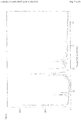
Figure 1 is the characteristic powder XRD pattern of Canagliflozin DL-pipecolic acid co-crystal. -
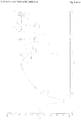
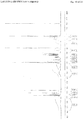
Figure 2 is the characteristic 1H NMR Spectrum of Canagliflozin DL-pipecolic acid co-crystal. -
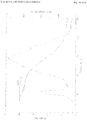
Figure 3 is the characteristic DSC thermogram of Canagliflozin DL-pipecolic acid co-crystal. -
Figure 4 is the characteristic TGA curve of Canagliflozin DL-pipecolic acid co-crystal. -
Figure 5 is the characteristic IR spectrum of Canagliflozin DL-pipecolic acid co-crystal. -
Figure 6 is the characteristic powder XRD pattern of Canagliflozin obtained according to example 10 of the present invention. -
Figure 7 is the characteristic TGA curve of Canagliflozin obtained according to example 10 of the present invention. -
Figure 8 is the characteristic IR spectrum of Canagliflozin obtained according to example 10 of the present invention. -
Figure 9 is the characteristic powder XRD pattern of dapagliflozin DL-pipecolic acid co-crystal. -
Figure 10 is the characteristic 1H NMR Spectrum of dapagliflozin DL-pipecolic acid co-crystals. -
Figure 11 is the characteristic DSC thermogram of dapagliflozin DL-pipecolic acid co-crystals. -
Figure 12 is the characteristic TGA curve of dapagliflozin DL-pipecolic acid co-crystal. -
Figure 13 is the characteristic powder XRD pattern of dapagliflozin D-pipecolic acid co-crystals. -
Figure 14 is the characteristic powder XRD pattern of dapagliflozin L-pipecolic acid co-crystals. -
Figure 15 is the characteristic powder XRD pattern of dapagliflozin 2,3-butanediol solvate. -
Figure 1 6 is the characteristic 1H NMR Spectrum of dapagliflozin 2,3-butanediol solvate. -
Figure 17 is the characteristic DSC thermogram of dapagliflozin 2,3-butanediol solvate. -
Figure 18 is the characteristic TGA curve of dapagliflozin 2,3-butanediol solvate. -
Figure 19 is the characteristic powder XRD pattern of amorphous dapagliflozin. -
Figure 20 is the characteristic DSC thermogram of amorphous dapagliflozin. -
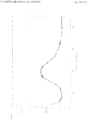
Figure 21 is the characteristic powder XRD pattern of empagliflozin DL-pipecolic acid co-crystals. -
Figure 22 is the characteristic 1H NMR Spectrum of empagliflozin DL-pipecolic acid co-crystals. -
Figure 23 is the characteristic DSC thermogram of empagliflozin DL-pipecolic acid co-crystals. -
Figure 24 is the characteristic TGA curve of empagliflozin DL-pipecolic acid co-crystals. - As used herein, the term "co-crystals" means a crystalline material comprised of two or more unique solids at room temperature, each containing distinctive physical characteristics, such as structure, melting point and heats of fusion.
- As used herein, the term "solvate" refers to a crystalline compound in which molecules of solvents are incorporated into the crystal lattice of the compound.
- The starting SGLT2 inhibitors used in the present disclosure is known in the art and can be prepared by any known methods, for example Canagliflozin may be synthesized as disclosed in
U.S. Patent Nos. 7,943,788 and9,024,009 U.S. Patent No. 6,515,117 ,7,375,213 ,7,932,379 and7,919,598 ; and Empagliflozin may be synthesized as disclosed inU.S. Patent No. 7,579,449 , which are incorporated herein by reference; or the SGLT2 inhibitor may be obtained as a solution directly from a reaction mixture in which it is formed and used as such without isolation. - The present invention provides co-crystals of SGLT2 inhibitors, wherein the SGLT2 inhibitor is Empagliflozin and the co-crystal former is selected from the group comprising DL-pipecolic acid, D-pipecolic acid and L-pipecolic acid.
- The ratio of SGLT2 inhibitor to co-crystal former may be stoichiometric or non-stoichiometric according to the present invention. For example, 1:1, 1.5:1, 1:1.5, 2:1 and 1:2 ratios of SGLT2 inhibitor : co-crystal former is acceptable.
- The co-crystals of empagliflozin may be characterized by one or more of analytical techniques such as powder X-Ray diffraction (XRD); 1H NMR Spectrum; infrared spectrum (IR), differential scanning calorimetry (DSC) and/or thermogravimetric analysis (TGA), among others.
- In accordance with another embodiment, the present invention provides a process for the preparation of co-crystals of SGLT2 inhibitors, comprising:
- a) providing a solution or suspension comprising SGLT2 inhibitor and a co-crystal former in one or more solvents; and
- b) isolating the co-crystals of SGLT2 inhibitors; wherein the SGLT2 inhibitor is Empagliflozin and wherein the co-crystal former is selected from the group comprising DL-pipecolic acid, D-pipecolic acid and L-pipecolic acid.
- The step of providing a solution or suspension includes any form of SGLT2 inhibitor that may be combined with one or more organic solvents at a suitable temperature, and then the co-crystal former may be mixed with the resulting solution or slurry. Alternatively, the mixture may be formed by adding both the SGLT2 inhibitor and the co-crystal former at the same time in to one or more organic solvents.
- Suitable one or more solvents includes but are not limited to alcohols, esters, ethers, ketones, nitriles, halogenated hydrocarbons, aromatic hydrocarbons, aliphatic hydrocarbons, amides, nitroalkanes and the like; water and mixtures thereof.
- The alcohols include, but are not limited to methanol, ethanol, isopropanol, n- propanol, n-butanol, isobutanol and the like; esters include, but are not limited to methyl acetate, ethyl acetate, isopropyl acetate and the like; ethers include, but are not limited to tetrahydrofuran, dimethyl ether, diisopropyl ether, methyl tertiary butyl ether, 1,4-dioxane and the like; ketones include, but are not limited to acetone, methyl isobutyl ketone, methyl ethyl ketone and the like; nitriles include, but are not limited to acetonitrile propionitrile and the like; halogenated hydrocarbons include, but are not limited to methylene chloride, ethylene chloride, chloroform, carbon tetrachloride and the like; aromatic hydrocarbons include, but are not limited to toluene, xylene and the like; aliphatic hydrocarbons include, but are not limited to n-hexane, n-heptane, cyclohexane and the like; amides include, but are not limited to dimethyl formamide, dimethyl acetamide, dimethyl sulfoxide, N-methyl pyrrolidinone and the like; nitroalkanes include, but are not limited to nitromethane, nitroethane and the like and mixtures thereof. Preferably the one or more solvents include methanol, ethanol, n-butanol, ethyl acetate, isopropyl acetate, hexane, heptane and mixtures thereof; more preferably ethanol, n-butanol, ethyl acetate, isopropyl acetate, heptane and mixtures thereof and optionally a mixture of these solvents with water.
- The temperature suitable for dissolving or suspending the SGLT2 inhibitor in the one or more organic solvents depends on the solvent used and the amount of SGLT2 inhibitor in the reaction mass. Typically, the solution or suspension is heated at a temperature of at least about 30°C to about reflux.
- In step b) of the foregoing process, the isolation of co-crystals of SGLT2 inhibitors may be carried out by crystallization, solvent precipitation, concentration by subjecting the solution to heating, spray drying, freeze drying, evaporation on rotary evaporator under vacuum, agitated thin film evaporator (ATFE) and the like. Preferably, the reaction may be cooled to a temperature from about 35°C or less and then an antisolvent such as n-heptane is added and then optionally the reaction medium can be heated to about 40°C to about 75° and followed by cooling the suspension to less than about 30°C. The precipitated product can be recovered by conventional techniques, for example filtration.
- The obtained co-crystal of SGLT2 inhibitor, if required, is further purified by heating the co-crystal of SGLT2 inhibitor in a suitable organic solvent selected from the group consisting of alcohols, esters, ketones, ethers, halogenated solvents, hydrocarbons, nitriles, carbonates, nitro alkanes, glycols, water or mixtures thereof.
- Examples of suitable organic solvent for purifying co-crystals of the present invention include but are not limited to alcohols such as methanol, ethanol, isopropanol, n-butanol, sec-butanol, tert-butanol, and the like; esters such as ethyl acetate, isopropyl acetate, n-butyl acetate, isobutyl acetate, tert-butyl acetate and the like; ketones such as acetone, methyl isobutyl ketone, 2-pentanone, cyclopentanone, cyclohexanone and the like; ethers such as diisopropyl ether, di tert-butyl ether, ethyl tert-butyl ether, and the like; halogenated solvents such as dichloromethane, 1-chlorobutane, and the like; hydrocarbons such as hexane, heptane, pentane, cyclohexane, methyl cyclohexane, and the like; nitriles such as acetonitrile, propionitrile, butyronitrile, benzonitrile and the like; carbonates such as diethyl carbonate, propylene carbonate, dibenzyl carbonate and the like; nitro alkanes such as nitromethane, nitroethane and the like; glycols such as ethylene glycol, propylene glycol and the like; water or mixtures thereof. Preferably the suitable organic solvent includes methanol, ethanol, isopropyl acetate, ethyl acetate, acetone and mixtures thereof; more preferably ethanol, ethyl acetate and mixtures thereof.
- The mixture of co-crystal of SGLT2 inhibitor and the suitable organic solvent may be heated to dissolve all solids in to solvent at a temperature of about 30°C to reflux. Then the resultant solution may optionally be cooled to less than 30°C and the precipitated solid can be isolated by conventional techniques known in the art, for example, filtration. The resultant co-crystals of SGLT2 inhibitors may optionally be further dried. Drying can be suitably carried out in a tray dryer, vacuum oven, air oven, fluidized bed drier, spin flash dryer, flash dryer and the like. The drying can be carried out at a temperature ranging from about 40°C to about 100°C.
- In another embodiment, the present invention provides co-crystals of SGLT2 inhibitors having a chemical purity greater than or equal to about 97%, as measured by HPLC, preferably about 98% as measured by HPLC, and more preferably about 99.5%, as measured by HPLC.
- In another embodiment, the co-crystals of the present invention are obtained in substantially pure form.
- Furthermore, some of the co-crystals of the present invention may exist as polymorphs and as such are intended to be included in the present invention. In addition, some of the co-crystals of the present invention may form solvates with water (i.e., hydrates) or common organic solvents, and such solvates are also intended to be encompassed within the scope of this invention.
- The present invention provides co-crystals of empagliflozin, wherein the co-crystal former is selected from the group comprising DL-pipecolic acid, D-pipecolic acid and L-pipecolic acid.
- In accordance with another embodiment, the present invention provides a process for the preparation of co-crystals of empagliflozin, comprising:
- a) providing a solution or suspension comprising empagliflozin and a co-crystal former, and
- b) isolating the co-crystals of empagliflozin; wherein the co-crystal former is selected from the group comprising DL-pipecolic acid, D-pipecolic acid and L-pipecolic acid.
- The step of providing a solution or suspension includes any form of empagliflozin that may be mixed with one or more solvents and co-crystal former or includes any form of empagliflozin that may be combined with one or more solvents and then the co-crystal former may be mixed with the resulting solution or slurry. Alternatively, the mixture may be formed by adding empagliflozin and co-crystal former at the same time in to one or more solvents.
- Examples of one or more solvents of step a) includes but are not limited to esters such as methyl acetate, ethyl acetate, isopropyl acetate, n-propyl acetate, n-butyl acetate, t-butyl acetate and the like; alcohols such as methanol, ethanol, isopropanol, n-propanol, n-butanol, isobutanol and the like; ethers such as tetrahydrofuran, dimethyl ether, diisopropyl ether, methyl tertiary butyl ether, 1,4-dioxane and the like; ketones such as acetone, methyl ethyl ketone, methyl isobutyl ketone and the like; aliphatic hydrocarbon solvents such as hexane, heptane, cyclohexane and the like; halogenated hydrocarbon solvents such as dichloromethane, dichloroethane, chloroform and the like; nitriles such as acetonitrile, propionitrile and the like; water or mixtures thereof; preferably the solvent of step a) is n-butanol, ethanol or acetone; more preferably n-butanol.
- The temperature suitable for dissolving or suspending the empagliflozin in one or more solvents depends on the solvent used and the amount of empagliflozin in the reaction mass. Typically, the solution or suspension is heated at a temperature of at least about 30°C to about reflux.
- The step b) of the foregoing process, the isolation of co-crystals of empagliflozin may be carried out by concentration by subjecting the solution to heating, cooling the solution to precipitation, crystallization, solvent precipitation, spray drying, freeze drying, agitated thin film evaporator (ATFE), evaporation on rotary evaporator under vacuum and the like. Preferably the reaction solution may be cooled to precipitation followed by stirring the reaction mixture for sufficient period of time. Optionally, an anti-solvent can be added to improve the product precipitation prior to cooling the reaction mass. The anti-solvent used herein for example water. The co-crystals of empagliflozin can be recovered by any conventional technique known in the art, for example, filtration. The resultant co-crystals of empagliflozin may optionally be further purified.
- In another embodiment, the present invention provides co-crystals of empagliflozin having a chemical purity greater than or equal to about 97%, as measured by HPLC, preferably about 98% as measured by HPLC, and more preferably about 99.5%, as measured by HPLC.
- In another embodiment, some of the co-crystals of the present invention may exist as polymorphs and as such are intended to be included in the present invention. In addition, some of the co-crystals of the present invention may form solvates with water (i.e., hydrates) or common organic solvents, and such solvates are also intended to be encompassed within the scope of this invention.
- In another embodiment, the co-crystals of empagliflozin recovered using the process of the present invention described above includes empagliflozin DL-pipecolic acid co-crystals.
- In another embodiment, the present invention provides empagliflozin DL-pipecolic acid co-crystal.
- In another embodiment, the present invention provides empagliflozin DL-pipecolic acid co-crystal hydrate.
- In another embodiment, the present invention provides a process for the preparation of empagliflozin DL-pipecolic acid co-crystals, comprising:
- a) providing a solution or suspension comprising empagliflozin and DL-pipecolic acid in one or more solvents; and
- b) isolating the empagliflozin DL-pipecolic acid co-crystals.
- The step of providing a solution or suspension comprising empagliflozin and DL-pipecolic acid in one or more solvent may include heating to dissolve. The temperature suitable for dissolving or suspending the empagliflozin in the one or more solvents depends on the solvent used and the amount of empagliflozin in the reaction mass. Typically, the solution or suspension is heated at a temperature of at least about 30°C to about reflux. Examples of one or more solvents used in step a) are same as solvents defined just as above.
- The step b) of the foregoing process, isolation of the empagliflozin DL-pipecolic acid co-crystal obtained may be carried out by optionally allowing the reaction mass to gradually cool to a temperature of less than 30°C and the resultant empagliflozin DL-pipecolic acid co-crystals can be isolated by conventional techniques, for example by filtration. The resultant wet product may optionally be further dried. Drying can be suitably carried out in a tray dryer, vacuum oven, air oven, fluidized bed drier, spin flash dryer, flash dryer and the like.
- In another embodiment, empagliflozin DL-pipecolic acid co-crystals are recovered using the process as described just above is a hydrate form.
- In another embodiment, empagliflozin DL-pipecolic acid monohydrate co-crystals is recovered using the process as described just above is substantially a crystalline form.
- In another embodiment, the present invention provides empagliflozin DL-pipecolic acid co-crystals characterized by X-Ray powder diffraction (XRD) pattern substantially in accordance with
Figure 21 . - In another embodiment, the present invention provides empagliflozin DL-pipecolic acid co-crystals characterized by X-Ray powder diffraction (XRD) pattern having one or more peaks at about 5.5, 9.8, 11.0, 12.0, 12.2, 14.7, 15.8, 16.3, 17.3, 17.7, 18.1, 18.5, 18.9, 19.6, 20.7, 21.1, 22, 22.5, 23.5, 24.5, 25.0, 26.4, 27.2, 28.1, 29, 29.8, 30.9, 31.4, 33.7, 35.3, 36.7, 39.6 ± 0.2° 2θ.
- In another embodiment, the present invention provides empagliflozin DL-pipecolic acid co-crystals characterized by a 1H NMR Spectrum substantially in accordance with
Figure 22 . - In another embodiment, the present invention empagliflozin DL-pipecolic acid co-crystals characterized by a differential scanning calorimetry (DSC) thermogram substantially in accordance with
Figure 23 . - In another embodiment, the present invention provides empagliflozin DL-pipecolic acid co-crystals characterized by a thermogravimetric analysis (TGA) curve substantially in accordance with
Figure 24 . - In another embodiment, the present invention provides empagliflozin DL-pipecolic acid co-crystals characterized by X-Ray powder diffraction (XRD) pattern substantially in accordance with
Figure 21 , a 1H NMR Spectrum substantially in accordance withFigure 22 ; a differential scanning calorimetry (DSC) thermogram substantially in accordance withFigure 23 and a thermogravimetric analysis (TGA) curve substantially in accordance withFigure 24 . - The solid forms of SGLT2 inhibitors as described above may have greater stability, bioavailability, and having desired pharmacological, pharmacokinetic and pharmacodynamic effects as compared to the SGLT2 inhibitor individually.
- In another embodiment, the present invention provides a pharmaceutical composition comprising at least one of the empagliflozin co-crystals described above and at least one or more pharmaceutically acceptable excipients.
- The present invention is further directed to methods for the treatment and or prevention of glucose related disorders. As used herein, the term "glucose related disorder" shall be defined as any disorder, which is characterized by or is developed as a consequence of elevated glucose levels. Glucose-related disorders shall include diabetes mellitus, diabetic retinopathy, diabetic neuropathy, diabetic nephropathy, delayed wound healing, insulin resistance, hyperglycemia, hyperinsulinemia, elevated blood levels of fatty acids, elevated blood levels of glucose, hyperlipidemia, obesity, hypertriglyceridemia, Syndrome X, diabetic complications, atherosclerosis, or hypertension. In particular, the "glucose related-disorder" is diabetes mellitus (type 1 and type 2 diabetes mellitus, etc.), diabetic complications (such as diabetic retinopathy, diabetic neuropathy, diabetic nephropathy), obesity, or postprandial hyperglycemia.
- Solid forms of SGLT2 inhibitors were characterized by one or more of the techniques such as PXRD, TGA, DSC and IR techniques,
- The X-Ray powder diffraction can be measured by X-ray powder diffractometer equipped with a Cu-anode ([λ]=1.54 Angstrom), X-ray source operated at 30kV, 15 mA. Two-theta calibration is performed using an NIST SRM 640c Si standard. The sample was analyzed using the following instrument parameters: measuring range=3-45°2θ; step width=0.020°; and scan speed=5° 2θ/minute; or
by using PANalytical X'per3pro X-ray powder Diffractometer equipped with a Cu-anode ([λ] =1.54 Angstrom), X-ray source operated at 45kV, 40 mA. Two-theta calibration is performed using an NIST SRM 640c Si standard. The sample was analyzed using the following instrument parameters: measuring range=3-45°2θ; step size=0.01°; and Time per step=43 sec. - All TGA data reported herein were analyzed using TGA Q500 V 20.13 build 39 in platinum pan with a temperature rise of about 10°C/min in the range of about 30°C to about 250°C.
- All DSC data reported herein were analyzed in hermitically sealed aluminium pan, with a blank hermitically sealed aluminium pan as the reference and were obtained using DSC (DSC Q200, TA instrumentation, Waters) at a scan rate of 10°C per minute with an Indium standard. Or in hermitically sealed pinhole aluminium pan, with a blank hermitically sealed aluminium pan as the reference and were obtained using DSC (DSC Q200, TA instrumentation, Waters) at a scan rate of 10°C per minute with an Indium standard.
- As used herein, unless otherwise noted, the term "substantially pure form" shall mean that the percent of impurities in the isolated solid forms is less than about 5% by weight as measured by HPLC, preferably less than about 2%, more preferably less than about 1%, most preferably less than about 0.5%.
- The present invention is further illustrated by the following examples. The examples marked as reference examples do not belong to the claimed invention.
- In a round bottom flask equipped with reflux condenser, 1-(1-methoxyglcopyranosyl)-4-methyl-3-[5-(4-fluorophenyl)-2-thienylmethyl]-benzene (10 gms) was dissolved in mixture of methylene chloride (100 ml) and acetonitrile (20 ml) at 25-30°C under nitrogen atmosphere. Triethyl silane (7.35 gms) was added and the reaction mass was stirred for 10 min at 25-30°C. The reaction mass was cooled to -45 to -40°C, added drop wise boron trifluoride ethyl ether complex (8 ml) and the mixture was stirred for 1.0 hr at same temperature. Further, the reaction mass was stirred at 0-5°C for 2 hrs and quenched by adding saturated sodium bicarbonate solution (100 ml). The resulting organic layer was separated, washed with water (50 ml) and the organic solvent was distilled out under vacuum to obtain Canagliflozin (8.5 gms).
- HPLC purity: 88.249 %,
- Alpha isomer content by HPLC: 2.76 %.
- To a round bottom flask equipped with reflux condenser, ethanol (100 ml) was added followed by Canagliflozin (5 gms; alpha isomer content by HPLC: 2.76%). The contents were heated to 55-60°C and DL-Pipecolic acid (1.74 gms; source: Alfa aesar) was added at 55-60°C. The reaction mass was stirred for 20 min at 55-60°C, cooled to 25-30°C and heptane (50 ml) was added. The reaction mass was stirred for 30 min at 55-60°C, cooled to 25-30°C and stirred for 15 hrs at the same temperature. The solid obtained was filtered, washed with ethanol (10 ml) and suck dried for 30 min. To the resulting wet solid (HPLC purity: 99.48%, alpha isomer content: 0.126%) ethanol (75 ml) was added at 25-30°C, the reaction mass was raised to reflux and stirred for 10 min at reflux. The reaction mass was further cooled to 25-30°C and stirred for 3 hrs at 25-30°C. The resulting solid was filtered, washed with ethanol (5 ml) and dried under vacuum at 75-80°C for 5 hrs to obtain Canagliflozin DL-pipecolic acid co-crystal (2.5 gms).
- HPLC purity: 99.88%, Alpha isomer content by HPLC: <0.05%, The PXRD is set forth in
Figure 01 , The 1H NMR is set forth inFigure 02 , The DSC thermogram is set forth inFigure 03 , The TGA is set forth inFigure 04 , The IR is set forth inFigure 05 . - To a round bottom flask equipped with reflux condenser, ethanol (10 ml) and ethyl acetate (50 ml) was added followed by canagliflozin (5 gm) and stirred for 10 min at 25-30°C. DL-Pipecolic acid (1.74 gm) was added; the contents were heated to reflux and stirred for 30 min. Then the reaction mass was cooled to 25-30°C and the solid was filtered. The wet solid thus obtained was added into the mixture of ethanol (10 ml) and ethyl acetate (50 ml) and heated to reflux. The reaction mass was further allowed to cool to 25-30°C and the solids were filtered to get Canagliflozin DL-pipecolic acid co-crystal (4gms). HPLC purity: 99.5%.
- To a round bottom flask equipped with reflux condenser, ethanol (100 ml), Canagliflozin (5 gms) and L-Pipecolic acid (1.74 gms) were added and reaction mass was allowed to raise to 70-75°C. Cooled the reaction mass to 55-60°C and heptane (50 ml) was added. The reaction mass was further cooled to 25-30°C and filtered the solid. The resulting wet solid was recrystallized from ethanol (75 ml) to obtain Canagliflozin L-pipecolic acid co-crystal (3.5 gm).
- To a round bottom flask equipped with reflux condenser, Canagliflozin (5 gm), ethanol (10 ml) and ethyl acetate (50 ml) were added and the reaction mass was stirred for 10 min at 25-30°C. L-Pipecolic acid (1.74 gm) was added, the reaction mass was allowed to rise to reflux and stirred for 30 min. Then the reaction mass was cooled to 25-30°C and the solid was filtered. To the resulting wet solid, ethanol (10 ml) and ethyl acetate (50 ml) was added and raised the temperature of the reaction mass to reflux. The reaction mass was further cooled to 25-30°C and the solids were filtered to get Canagliflozin L-pipecolic acid co-crystal (3.5 gms).
- To a round bottom flask equipped with reflux condenser, ethanol (100 ml), Canagliflozin (5 gms) and D-Pipecolic acid (1.74 gms) were added and the reaction mass was heated to 70-75°C. The contents of the flask were allowed to cool to 55-60°C and added heptane (50 ml). Cooled the reaction mass further to 25-30°C and the solid was filtered. The resulting wet solid was recrystallized from ethanol (75 ml) to obtain Canagliflozin D-pipecolic acid co-crystal (3.5 gm).
- To a round bottom flask equipped with reflux condenser, Canagliflozin (5 gm), ethanol (10 ml) and ethyl acetate (50 ml) were added and stirred the contents for 10 min at 25-30°C. D-Pipecolic acid (1.74 gm) was added, heated the contents to reflux temperature and stirred for 30 min. Then, the reaction mass was cooled to 25-30°C and the solid was filtered. The resulting wet solid was charged into the mixture of ethanol (10 ml) and ethyl acetate (50 ml), heated to reflux, cooled to 25-30°C and the solids were filtered to get Canagliflozin D-pipecolic acid co-crystal (3.5 gms).
- To a round bottom flask equipped with reflux condenser, Canagliflozin (2 gms), ethanol (40 ml), and nicotinic acid (0.6 gm) was added at 25-30°C. Heated the contents of the flask to 70-75°C and allowed to cool to 25-30°C. The reaction mass was stirred for 5 hrs at 25-30°C and filtered the solid to obtain Canagliflozin Nicotinic acid co-crystal (0.3 gm).
- To a round bottom flask equipped with reflux condenser, Canagliflozin (2 gms) was dissolved in ethanol (40 ml), and added pyrazine-2-carboxylic acid (0.6 gm) at 25-30°C. Heat the contents to 70-75 °C and allowed to cool to 25-30°C. The reaction mass was stirred for 5 hrs at 25-30°C and filtered the solid to obtain Canagliflozin pyrazine-2-carboxylic acid co-crystal (0.4 gm).
- To a round bottom flask equipped with reflux condenser, ethanol (100 ml), Canagliflozin (5 gms) and pyrazole (0.8 gms) were added and the reaction mass was heated to 70-75°C. The contents of the flask were allowed to cool to 55-60°C and added heptane (50 ml). Cooled the reaction mass further to 25-30°C and the solid was filtered. The resulting wet solid was purified from mixture of ethanol (75 ml) and n-heptane (75 ml) to obtain Canagliflozin pyrazole co-crystal co-crystal (4 gm).
- To a round bottom flask equipped with reflux condenser, ethyl acetate (30 ml) and Canagliflozin DL-pipecolic acid co-crystal (5 gms) was added at 25-30 °C. Sodium bicarbonate solution (2.5 gm dissolved in 50 ml water) was added to the reaction mass at 25-30°C and stirred for 30 min at the same temperature. The resulting organic layer was washed with water and solvent from the organic layer was distilled completely under vacuum at below 45°C. Cyclohexane (30 ml) was added to the resulting residue at 25-30°C, stirred for 30 min at 25-30°C, filtered the solid and washed with cyclohexane (5 ml). The obtained solids are dried under vacuum at below 45 °C for 10.0 hrs to obtain amorphous canagliflozin (3.0 gms). HPLC purity: 99.8%.
- Alpha isomer content by HPLC: <0.05%, The PXRD is set forth in
Figure 06 , The TGA is set forth inFigure 07 , The IR is set forth inFigure 08 . - To a round bottom flask equipped with reflux condenser, ethyl acetate (50 ml), Canagliflozin (5 g), methanol (2.5 ml) and diethyl ether (5 ml) were added and allowed to cool to 0-5°C. Ammonia gas was purged for 20 min at 0-5°C, filtered the resulting solids and washed with diethyl ether (10 ml). The obtained solid was dissolved in ethyl acetate (40 ml) at 25-30°C and washed with water. The resulting organic layer was distilled out completely under vacuum at below 50°C. Cyclohexane (25 ml) was added to the resultant compound and stirred for 30 min at 25-30°C. The obtained solid was filtered, washed with cyclohexane (5 ml) and dried under vacuum at below 45°C for 10 hrs to obtain amorphous canagliflozin (1 gm).
HPLC purity: 99.0%. - To a round bottom flask equipped with reflux condenser, dapagliflozin (5 gms), isopropyl acetate (100 ml) and DL-pipecolic acid (1.5 gms) were added at room temperature and stirred the contents for 4 hrs at room temperature. The solid obtained was filtered, washed with isopropyl acetate (10 ml) and suck dried for 20 min. The resulting solid was dried under vacuum for 16 hrs at room temperature and further dried under vacuum for 7 hrs at 40°C to obtain dapagliflozin DL-pipecolic acid co-crystals (4.7 gms).
- The PXRD is set forth in
Figure 09 , The 1H NMR is set forth inFigure 10 , The DSC thermogram is set forth inFigure 11 , The TGA is set forth inFigure 12 . - To a round bottom flask equipped with reflux condenser, isopropyl acetate (20 ml) and DL-pipecolic acid (631 mg) were added at 20-25C° and the reaction mixture was stirred for 10 mins. Dapagliflozin (2.0 gm) was added to the reaction mixture at 25-30°C and stirred the contents for 24 hrs at 20-25°C. The solid obtained was filtered and washed with isopropyl acetate (5 ml). The obtained solid was dried under vacuum at 40-45°C for 20 hrs to obtain dapagliflozin DL-pipecolic acid co-crystals (2.3 gms).
- To a round bottom flask equipped with reflux condenser, isopropyl acetate (10 ml) and D-pipecolic acid (315 mg) were added at 20-25C° and the reaction mixture was stirred for 10 mins. Dapagliflozin (1.0 gm) was added to the reaction mixture at 25-30°C and stirred the contents for 24 hrs at 20-25°C. The solid obtained was filtered and washed with isopropyl acetate (3 ml). The obtained solid was dried under vacuum at 40-45°C for 20 hrs to obtain dapagliflozin D-pipecolic acid co-crystals (1.2 gms).
- The PXRD is set forth in
Figure 13 . - To a round bottom flask equipped with reflux condenser, isopropyl acetate (10 ml) and L-pipecolic acid (315 mg) were added at 20-25C° and the reaction mixture was stirred for 10 mins. Dapagliflozin (1.0 gm) was added to the reaction mixture at 25-30°C and stirred the contents for 24 hrs at 20-25°C. The solid obtained was filtered and washed with isopropyl acetate (3 ml). The obtained solid was dried under vacuum at 40-45°C for 20 hrs to obtain dapagliflozin L-pipecolic acid co-crystals (1.1 gms).
- To a round bottom flask equipped with reflux condenser, dapagliflozin (0.5 gms) and MTBE (3 ml) were added at 20-25°C and stirred the reaction mixture at 20-25°C for 10 mins. 2,3-butanediol (110 mgs) was added and stirred the reaction mixture for 1hr at 20-25°C followed by heptane (1 mL) was added. Stirred the reaction mixture for 30 mins at 20-25°C, seed crystals of dapagliflozin 2,3-butanediol solvate (∼20 mg) was added and stirred for 15 mins at 20-25°C. Heptane (9 mL) was added and stirred for 2 hrs at 20-25°C. The resulting solids was filtered under vacuum at 20-25°C, washed with heptane (3 mL), suck dried for 10 mins and finally dried at room temperature under vacuum for 24 hrs to obtain dapagliflozin 2,3-butanediol solvate (570 mg).
- The PXRD is set forth in
Figure 15 , The 1H NMR is set forth inFigure 16 , The DSC thermogram is set forth inFigure 17 , The TGA is set forth inFigure 18 . - To a round bottom flask equipped with reflux condenser, dapagliflozin (0.5 gms) and isopropyl acetate (2 ml) were added at 20-25°C and stirred the reaction mixture at 20-25°C for 10 mins. 2,3-butanediol (110 mgs) was added and stirred the reaction mixture for 1hr at 20-25°C followed heptane (1 ml) was added . Stirred the reaction mixture for 30 mins at 20-25°C, seed crystals of dapagliflozin 2,3-butanediol solvate(∼20 mg) was added and stirred for 15 mins at 20-25°C. Heptane (9 ml) was added and stirred for 2 hrs at 20-25°C. The resulting solid was filtered under vacuum at 20-25°C, washed with heptane (3 mL), suck dried for 10 mins and finally dried at room temperature under vacuum for 24 hrs to obtain dapagliflozin 2,3-butanediol solvate (620 mg).
- To a round bottom flask equipped with reflux condenser, dapagliflozin (5 gms) and methanol (15 ml) were added. The reaction mixture was heated to 60°C, stirred for 10 mins at 60 °C to obtain clear solution and then allowed to cool to 5°C. To the resulting solution, first portion of water (13.5 ml) was added, seeded with amorphous dapagliflozin (∼30 mg) and stirred for 30 mins at 0-5°C. To the resulting reaction mixture remaining water was added in multiple lots (3 lots, 40 ml for each lot) with stirring for 30 mins at 0-5°C after each addition and finally stirring for 2hrs at 0-5°C. The resulting solid was filtered and washed with water (100 ml). The resulting solid was suck dried for 2 hrs under vacuum and further dried at 35°C for 24hrs to obtain amorphous dapagliflozin (4.5 gms).
- The PXRD is set forth in
Figure 19 , The DSC thermogram is set forth inFigure 20 . - To a round bottom flask equipped with reflux condenser, dapagliflozin DL-pipecolic acid co-crystals (1 gm) and water (10 ml) were added at room temperature and the reaction mixture was stirred for 5 mins. IN sodium hydroxide (1 ml) was added and the reaction mixture was stirred for 5 mins at room temperature. Methanol (5 ml) was added and the reaction mixture was heated to 60°C, stirred for 10 mins at 60 °C to obtain clear solution and allowed to cool to 5°C. To the resulting solution, first portion of water (4 ml) was added, seeded with amorphous dapagliflozin (∼10 mg) and stirred for 30 mins at 0-5°C. To the resulting reaction mixture, remaining water was added in multiple lots (3 lots, 10 ml for each lot) with stirring for 30 mins at 0-5°C after each addition and finally stirring for 2hrs at 0-5°C. The resulting solid was filtered and washed with water (10 ml). The resulting solid was suck dried for 2 hrs under vacuum and further dried at 35°C for 24hrs to obtain amorphous dapagliflozin (0.85 gms).
- To a round bottom flask equipped with reflux condenser, dapagliflozin (2 gms) and MTBE (16 ml) were added. The reaction mass was heated to 55°C and stirred for 15 mins at 55°C. The resulting solution was added drop wise to pre-cooled heptane (96 ml) at 15°C. The reaction mixture was stirred for 30 mins at 15 °C, filtered the solids and washed with heptane (10 ml). The resulting solid was dried at 35°C under vacuum for 16 hrs and at 55 °C under vacuum for 12 hrs to obtain amorphous dapagliflozin (1.9 gms).
- To a round bottom flask equipped with reflux condenser, dapagliflozin (2 gms) and MTBE (16 ml) were added. The reaction mixture was heated to 55°C and stirred for 15 mins at 55°C. The resulting reaction mixture was added drop wise to pre-cooled cyclohexane (96 ml) at 15°C. The reaction mixture was stirred at 15°C for 30 mins, filtered and washed with cyclohexane (10 ml). The resulting solid was dried at 35°C under vacuum for 16 hrs and further dried at 55°C under vacuum for 12 hrs to get amorphous dapagliflozin (1.85 gms).
- To a round bottom flask equipped with reflux condenser, dapagliflozin DL-pipecolic acid co-crystals (2 gms) and ethyl acetate (30 mL) were added and stirred the reaction mixture for 5 mins at room temperature. Water (30 mL) was added and stirred the mixture for 5 mins at room temperature. IN Sodium hydroxide solution (3.7 ml) was added to the reaction mixture and the mixture was stirred at room temperature for 10 mins. The organic layer was separated and the aqueous layer was extracted with ethyl acetate (20 ml). The combined organic layer was washed with water (20 ml) and evaporated completely at 50°C. The obtained residue was co-distilled with heptane (20 ml) under vacuum at 50°C. The resulting residue was dissolved in MTBE (6.5 mL) at room temperature and heptane (26 mL) was added at 15°C. The reaction mixture was stirred at 15°C for 30 mins, filtered the solids and dried at 35°C for 16 hrs and further dried at 55°C under vacuum for 12 hrs to obtain amorphous dapagliflozin (980 mg).
- To a round bottom flask equipped with reflux condenser, dapagliflozin DL-pipecolic acid co-crystals (1 gm) and water (10 ml) were charged at room temperature and stirred the reaction mixture for 5 mins. 1N sodium hydroxide (1 ml) was added and stirred the reaction mixture for 5 mins at room temperature. Methyl acetate (10 ml) was added to the reaction mixture, stirred the solution for 10 mins at room temperature and the obtained layers were separated. The aqueous layer was extracted with methyl acetate (10 ml) and the combined organic layers were washed with water (10 ml). The organic layer was distilled at 50°C under vacuum to obtain amorphous dapagliflozin (0.4 gms).
- To a round bottom flask equipped with reflux condenser, dapagliflozin DL-pipecolic acid co-crystals (1 gm) and water (10 ml) were added at room temperature and the reaction mixture was stirred for 5 mins. IN sodium hydroxide (1 ml) was added and the reaction mixture was stirred for 5 mins at room temperature. Methyl tertiary butyl ether (10 mL) was added to the reaction mixture, stirred the solution for 10 mins at room temperature and the obtained layers were separated. The aqueous layer was extracted with methyl tertiary butyl ether (10 ml) and the combined organic layers were washed with water (10 mL). The organic layer was distilled at 50°C under vacuum to obtain amorphous dapagliflozin (0.8 gms).
- To a round bottom flask equipped with reflux condenser, dapagliflozin DL-pipecolic acid co-crystals (1 gm) and water (10 ml) were charged at room temperature and stirred the reaction mixture for 5 mins. IN sodium hydroxide (1 ml) was added and the reaction mixture was stirred for 5 mins at room temperature. Isopropyl acetate (10 ml) was added to the reaction mixture, stirred the solution for 10 mins at room temperature and the obtained layers were separated. The aqueous layer was extracted with Isopropyl acetate (10 ml) and the combined organic layers were washed with water (10 ml). The organic layer was distilled at 50°C under vacuum to obtain amorphous dapagliflozin (0.8 gms).
- To a round bottom flask equipped with reflux condenser, dapagliflozin (4 gms) and methanol (12 ml) were added. The reaction mixture was heated to 60°C, stirred for 10 mins at 60 °C to obtain clear solution and cooled to room temperature. To the resulting solution, water (100 ml) was added at room temperature. The reaction mixture was stirred at room temperature for 10mins, cooled to 0-5°C and stirred for 6 hrs. The resulting solid was filtered and washed with chilled water (20 ml). The resulting solid was dried at room temperature under vacuum for 5 hrs and further dried at 40°C under vacuum for 6 hrs to obtain amorphous dapagliflozin (3.0 gms).
- To a round bottom flask equipped with reflux condenser, dapagliflozin (4 gms) and methanol (12 ml) were added. The reaction mixture was heated to 60°C, stirred for 10 mins at 60 °C and cooled to room temperature. The resulting solution was added drop wise to pre-cooled water (125 ml) at 0-5°C. The mixture was stirred at 0-5°C for 6 hrs, filtered the solid and washed with chilled water (25 ml). The resulting solid was dried at 30-35°C under vacuum for 16 hrs and further at 50-55°C under vacuum for 12 hrs to obtain amorphous dapagliflozin (3.0 gms).
- To a round bottom flask equipped with reflux condenser, Empagliflozin (10 gm), DL-pipecolic acid (5.75 gm) and n-butanol (100 ml) were added and raised the temperature to 80°C. DM water (5 ml) was added and stirred the reaction mass for 30 min. The resulted clear solution was allowed to cool to 25°C and stirred for 30 min. The suspension was further allowed to cool to 3°C, filtered the product and washed with n-butanol (20 ml). The obtained solid was dried under vacuum for 8 hrs at 40°C to obtain empagliflozin DL-pipecolic acid co-crystals (12.8 gms).
- The PXRD is set forth in
Figure 21 , The 1H NMR is set forth inFigure 22 , The DSC thermogram is set forth inFigure 23 , The TGA is set forth inFigure 24 . - To a round bottom flask equipped with reflux condenser, Empagliflozin (1gm), pipecolic acid (0.572 gm) and n-butanol (10 ml) were added and raised the temperature to 80°C. DM water (0.5 ml) was added and stirred the reaction mass for 30 min. The resulted clear solution was cooled to 25°C and stirred the suspension for 30 min. The suspension was further cooled to 3°C, washed with n-butanol (2 ml) and suck dried for 30 min. The obtained solid was dried under vacuum for 8 hrs at 45°C to obtain empagliflozin DL-pipecolic acid co-crystals (1.1 gms).
Claims (7)
- Co-crystals of SGLT2 inhibitors and a co-crystal former, wherein the SGLT2 inhibitor is Empagliflozin and the co-crystal former is selected from DL-pipecolic acid, D-pipecolic acid and L-pipecolic acid.
- A process for the preparation of co-crystals of claim 1 of SGLT2 inhibitors and a co-crystal former, comprising:a) providing a solution or suspension comprising a SGLT2 inhibitor and a co-crystal former in one or more solvents; andb) isolating the co-crystals of SGLT2 inhibitors; wherein the SGLT2 inhibitor is Empagliflozin and the co-crystal former is selected from DL-pipecolic acid, D-pipecolic acid and L-pipecolic acid.
- The process of claim 2, wherein the solvent is selected from the group comprising methanol, ethanol, isopropanol, n- propanol, n-butanol, isobutanol, methyl acetate, ethyl acetate, isopropyl acetate, tetrahydrofuran, dimethyl ether, diisopropyl ether, methyl tertiary butyl ether, 1,4-dioxane, acetone, methyl isobutyl ketone, methyl ethyl ketone, acetonitrile, propionitrile, methylene chloride, ethylene chloride, chloroform, carbon tetrachloride, toluene, xylene, n-hexane, n-heptane, cyclohexane, dimethyl formamide, dimethyl acetamide, dimethyl sulfoxide, N-methyl pyrrolidinone, nitromethane, nitroethane, water and mixtures thereof.
- The process of claim 2, wherein the solution or suspension is formed by heating at a temperature of at least about 30°C to about reflux.
- The process of claim 2, wherein the isolation of step b) is carried out by crystallization, solvent precipitation, concentration by subjecting the solution to heating, spray drying, freeze drying, evaporation on rotary evaporator under vacuum or agitated thin film evaporator (ATFE).
- Co-crystal of Empagliflozin DL-pipecolic acid of claim 1 characterized by an X-Ray powder diffraction (XRD) pattern having one or more peaks at about 5.5, 9.8, 11.0, 12.0, 12.2, 14.7, 15.8, 16.3, 17.3, 17.7, 18.1, 18.5, 18.9, 19.6, 20.7, 21.1, 22, 22.5, 23.5, 24.5, 25.0, 26.4, 27.2, 28.1, 29, 29.8, 30.9, 31.4, 33.7, 35.3, 36.7, 39.6 ± 0.2° 2θ.
- A pharmaceutical composition comprising a co-crystal according to claim 1 and one or more pharmaceutically acceptable excipients.
Applications Claiming Priority (4)
| Application Number | Priority Date | Filing Date | Title |
|---|---|---|---|
| IN4903CH2015 | 2015-09-15 | ||
| IN201641010442 | 2016-03-28 | ||
| IN201641029280 | 2016-08-29 | ||
| PCT/IB2016/055495 WO2017046730A1 (en) | 2015-09-15 | 2016-09-15 | Co-crystals of sglt2 inhibitors, process for their preparation and pharmaceutical compositions thereof |
Publications (3)
| Publication Number | Publication Date |
|---|---|
| EP3349762A1 EP3349762A1 (en) | 2018-07-25 |
| EP3349762A4 EP3349762A4 (en) | 2019-04-24 |
| EP3349762B1 true EP3349762B1 (en) | 2021-08-25 |
Family
ID=58288187
Family Applications (1)
| Application Number | Title | Priority Date | Filing Date |
|---|---|---|---|
| EP16845817.2A Active EP3349762B1 (en) | 2015-09-15 | 2016-09-15 | Co-crystals of sglt2 inhibitors, process for their preparation and pharmaceutical compositions thereof |
Country Status (4)
| Country | Link |
|---|---|
| US (4) | US10428053B2 (en) |
| EP (1) | EP3349762B1 (en) |
| ES (1) | ES2896101T3 (en) |
| WO (1) | WO2017046730A1 (en) |
Families Citing this family (18)
| Publication number | Priority date | Publication date | Assignee | Title |
|---|---|---|---|---|
| WO2015101916A1 (en) | 2013-12-30 | 2015-07-09 | Mylan Laboratories Ltd. | Process for the preparation of empagliflozin |
| ES2896101T3 (en) * | 2015-09-15 | 2022-02-23 | Laurus Labs Ltd | SGLT2 inhibitor co-crystals, process for their preparation and pharmaceutical compositions thereof |
| WO2020026570A1 (en) * | 2018-07-31 | 2020-02-06 | 株式会社親広産業 | Glucose consumption promoter and glycolysis promoter |
| WO2020031078A1 (en) * | 2018-08-06 | 2020-02-13 | Hikal Limited | A co-crystal of canagliflozin with alpha-methyl-l-proline and process for the preparation thereof |
| WO2020157644A1 (en) * | 2019-01-31 | 2020-08-06 | Laurus Labs Limited | Process for the preparation of amorphous canagliflozin substantially free of hydroperoxide impurity |
| CN111689936A (en) * | 2019-03-15 | 2020-09-22 | 罗欣药业(上海)有限公司 | Novel dapagliflozin crystal form and preparation method thereof |
| US20220324897A1 (en) * | 2019-07-05 | 2022-10-13 | Shandong Danhong Pharmaceutical Co., Ltd. | Crystal form of sglt inhibitor and application thereof |
| KR102111247B1 (en) * | 2019-08-16 | 2020-05-14 | 유니셀랩 주식회사 | Amorphous state of New dapagliflozin cocrystal or complex |
| GB201912490D0 (en) * | 2019-08-30 | 2019-10-16 | Univ Greenwich | Treatment of obesity and related conditions |
| KR102111248B1 (en) * | 2019-12-30 | 2020-05-14 | 유니셀랩 주식회사 | New Empagliflozin cocrystal |
| KR102207319B1 (en) * | 2020-03-23 | 2021-01-25 | 유니셀랩 주식회사 | New Empagliflozin cocrystal |
| KR102150825B1 (en) * | 2020-04-06 | 2020-09-03 | 유니셀랩 주식회사 | Novel sglt-2 inhibitors cocrystal |
| CN115867538A (en) * | 2020-06-05 | 2023-03-28 | 新梅斯托克公司 | Preparation of highly pure amorphous dapagliflozin |
| CN112062757A (en) * | 2020-09-23 | 2020-12-11 | 天津大学 | A kind of empagliflozin-nicotinamide co-crystal and preparation method thereof |
| KR102660615B1 (en) * | 2020-10-28 | 2024-04-26 | 동방에프티엘(주) | Novel cocrystal of Ipragliflozin and manufacture method thereof |
| KR20220080880A (en) * | 2020-12-08 | 2022-06-15 | 주식회사 종근당 | Pharmaceutical composition comprising empagliflozin co-crystal |
| CN114085203A (en) * | 2021-12-17 | 2022-02-25 | 宁波高新区美诺华医药创新研究院有限公司 | Dapagliflozin composition |
| CN114213399B (en) * | 2021-12-20 | 2024-10-01 | 上海启讯医药科技有限公司 | Canagliflozin acetone hydrate and preparation method and application thereof |
Family Cites Families (29)
| Publication number | Priority date | Publication date | Assignee | Title |
|---|---|---|---|---|
| US6515117B2 (en) | 1999-10-12 | 2003-02-04 | Bristol-Myers Squibb Company | C-aryl glucoside SGLT2 inhibitors and method |
| ES2258141T3 (en) | 2001-04-11 | 2006-08-16 | Bristol-Myers Squibb Company | C-ARILO GLUCOSIDE AMINO ACIDS COMPLEX FOR DIABETES TREATMENT AND PROCEDURE. |
| AU2003299966A1 (en) | 2003-01-03 | 2004-08-10 | Bristol-Myers Squibb Company | Methods of producing c-aryl glucoside sglt2 inhibitors |
| MXPA06001274A (en) | 2003-08-01 | 2006-04-11 | Tanabe Seiyaku Co | NEW COMPOUNDS THAT HAVE INHIBITORY ACTIVITY AGAINST SODIUM-DEPENDENT CARRIER. |
| EP2360165A3 (en) | 2004-03-16 | 2012-01-04 | Boehringer Ingelheim International GmbH | Glucopyranosyl-substituted benzene derivatives, medicaments containing such compounds, their use and process for their manufacture |
| US7723309B2 (en) | 2005-05-03 | 2010-05-25 | Boehringer Ingelheim International Gmbh | Crystalline forms of 1-chloro-4-(β-D-glucopyranos-1-yl)-2-[4-((R)-tetrahydrofuran-3-yloxy)-benzyl]-benzene, a method for its preparation and the use thereof for preparing medicaments |
| TWI370818B (en) | 2006-04-05 | 2012-08-21 | Astellas Pharma Inc | Cocrystal of c-glycoside derivative and l-proline |
| US7919598B2 (en) | 2006-06-28 | 2011-04-05 | Bristol-Myers Squibb Company | Crystal structures of SGLT2 inhibitors and processes for preparing same |
| UY30730A1 (en) | 2006-12-04 | 2008-07-03 | Mitsubishi Tanabe Pharma Corp | CRYSTAL FORM OF HEMIHYDRATE 1- (B (BETA) -D-GLUCOPYRANOSIL) -4-METHYL-3- [5- (4-FLUOROPHENYL) -2-TIENYLMETHYL] BENZENE |
| CN101801371B (en) | 2007-09-10 | 2012-11-28 | 詹森药业有限公司 | Process for the preparation of compounds useful as SGLT inhibitors |
| PT2324002T (en) | 2008-08-22 | 2016-11-09 | Theracos Sub Llc | Processes for the preparation of sglt2 inhibitors |
| CN102167715B (en) | 2011-03-07 | 2013-04-24 | 上海惠斯生物科技有限公司 | Eutectic preparation method of sodium-glucose cotransporter 2 bulk pharmaceutical chemicals |
| TWI542596B (en) | 2011-05-09 | 2016-07-21 | 健生藥品公司 | (2S,3R,4R,5S,6R)-2-(3-((5-(4-fluorophenyl)thiophen-2-yl)methyl)-4-methylphenyl)-6-(hydroxyl L-proline and citric acid cocrystals of methyl)tetrahydro-2H-piperan-3,4,5-triol |
| CA2837232A1 (en) | 2011-06-03 | 2012-12-06 | Ratiopharm Gmbh | Pharmaceutical composition comprising dapagliflozin and cyclodextrin |
| BR112014010574A2 (en) | 2011-10-31 | 2017-05-02 | Scinopharm Taiwan Ltd | crystalline and non-crystalline forms of sglt2 inhibitors |
| EP2597090A1 (en) | 2011-11-28 | 2013-05-29 | Sandoz AG | Crystalline dapagliflozin hydrate |
| CN103965267A (en) | 2013-01-24 | 2014-08-06 | 江苏豪森医药集团连云港宏创医药有限公司 | 1-(beta-D-pyranoglucosyl)-4-methyl-3-[5-(4-fluorophenyl)-2-thienylmethyl]benzene and L-phenylalanine eutectic compound and preparation method thereof |
| EP4245765A3 (en) * | 2013-04-04 | 2024-03-20 | Boehringer Ingelheim Vetmedica GmbH | Treatment of metabolic disorders in equine animals |
| EP2991999B1 (en) | 2013-04-29 | 2019-05-08 | Mapi Pharma Limited | Dapagliflozin lactose co-crystal |
| IN2013MU01985A (en) | 2013-06-10 | 2015-05-29 | Cadila Healthcare Ltd | |
| US20160214953A1 (en) | 2013-09-23 | 2016-07-28 | Sun Pharmaceutical Industries Limited | Process for the preparation of dapagliflozin |
| US20160280731A1 (en) | 2013-11-11 | 2016-09-29 | Crystal Pharmatech Co., Ltd | CRYSTALLINE FORMS B, C, and D OF CANAGLIFLOZIN |
| WO2015104658A2 (en) | 2014-01-08 | 2015-07-16 | Dr. Reddy’S Laboratories Limited | Amorphous solid dispersion of dapagliflozin and process for the preparation of amorphous dapagliflozin |
| IN2014MU00626A (en) | 2014-02-21 | 2015-09-25 | Cadila Healthcare Ltd | |
| IN2014CH01141A (en) | 2014-03-06 | 2015-09-11 | Msn Lab Private Ltd | |
| CN103936727A (en) * | 2014-05-09 | 2014-07-23 | 朱孝云 | High-purity canagliflozin compound and preparation method thereof |
| WO2015198227A1 (en) | 2014-06-23 | 2015-12-30 | Sun Pharmaceutical Industries Limited | Co-crystal of dapagliflozin with citric acid |
| KR20160013770A (en) | 2014-07-28 | 2016-02-05 | 한미정밀화학주식회사 | Novel crystalline complex of dapagliflozin and method for preparing same |
| ES2896101T3 (en) * | 2015-09-15 | 2022-02-23 | Laurus Labs Ltd | SGLT2 inhibitor co-crystals, process for their preparation and pharmaceutical compositions thereof |
-
2016
- 2016-09-15 ES ES16845817T patent/ES2896101T3/en active Active
- 2016-09-15 WO PCT/IB2016/055495 patent/WO2017046730A1/en not_active Ceased
- 2016-09-15 EP EP16845817.2A patent/EP3349762B1/en active Active
- 2016-09-15 US US15/759,562 patent/US10428053B2/en active Active
-
2019
- 2019-08-02 US US16/530,521 patent/US10836753B2/en not_active Expired - Fee Related
- 2019-08-02 US US16/530,476 patent/US10738038B2/en not_active Expired - Fee Related
- 2019-08-02 US US16/530,443 patent/US11040961B2/en active Active
Non-Patent Citations (1)
| Title |
|---|
| None * |
Also Published As
| Publication number | Publication date |
|---|---|
| US10738038B2 (en) | 2020-08-11 |
| US20190352289A1 (en) | 2019-11-21 |
| EP3349762A4 (en) | 2019-04-24 |
| US10836753B2 (en) | 2020-11-17 |
| EP3349762A1 (en) | 2018-07-25 |
| WO2017046730A1 (en) | 2017-03-23 |
| ES2896101T3 (en) | 2022-02-23 |
| US20190352290A1 (en) | 2019-11-21 |
| US11040961B2 (en) | 2021-06-22 |
| US20180362514A1 (en) | 2018-12-20 |
| US10428053B2 (en) | 2019-10-01 |
| US20190359605A1 (en) | 2019-11-28 |
Similar Documents
| Publication | Publication Date | Title |
|---|---|---|
| US10738038B2 (en) | Co-crystals of SGLT2 inhibitors, process for their preparation and pharmaceutical compositions thereof | |
| EP4097091B1 (en) | Solid state forms of mavacamten and process for preparation thereof | |
| US20090298947A1 (en) | Polymorphic and amorphous forms of lacosamide and amorphous compositions | |
| US7759481B2 (en) | Solid state forms of 5-azacytidine and processes for preparation thereof | |
| CN102686594A (en) | Polymorphs of darunavir | |
| WO2017221189A1 (en) | An improved process for the preparation of tenofovir alafenamide or pharmaceutically acceptable salts thereof | |
| JP2021105003A (en) | Process for preparing polymorph and quinazolinyl derivative | |
| EA025586B1 (en) | Optimized synthesis of pure, non-polymorphic, crystalline bile acids with defined particle size | |
| US9624207B2 (en) | Polymorphs of azilsartan medoxomil | |
| EP4096790B1 (en) | Solid state forms of asciminib and processes for the preparation thereof | |
| CN115160186B (en) | Phenyl carbamate crystal form and preparation method thereof | |
| WO2018067805A1 (en) | Solid state forms of sotagliflozin | |
| WO2010089753A2 (en) | Novel polymorphs of lopinavir | |
| WO2015170340A2 (en) | Novel polymorphs of sitagliptin hydrochloride, processes for its preparation and pharmaceutical composition thereof | |
| US20200283381A1 (en) | Solid state forms of elafibranor | |
| WO2024062344A1 (en) | Solid state forms of mesdopetam and salts therof | |
| WO2024069574A1 (en) | Solid state forms of denifanstat | |
| US20150291574A1 (en) | Novel polymorphs of azilsartan | |
| HK1149744B (en) | Crystalline modifications of (1r,2r)-3-(3-dimethylamino-1-ethyl-2-methyl -propyl)-phenol | |
| HK1149744A (en) | Crystalline modifications of (1r,2r)-3-(3-dimethylamino-1-ethyl-2-methyl -propyl)-phenol | |
| HK1235765A1 (en) | Crystalline modifications of (1r, 2r) -3- (3-dimethylamino-1-ethyl-2-methyl-propyl) - phenol | |
| EP1768969A2 (en) | Crystalline mycophenolate sodium |
Legal Events
| Date | Code | Title | Description |
|---|---|---|---|
| STAA | Information on the status of an ep patent application or granted ep patent |
Free format text: STATUS: THE INTERNATIONAL PUBLICATION HAS BEEN MADE |
|
| PUAI | Public reference made under article 153(3) epc to a published international application that has entered the european phase |
Free format text: ORIGINAL CODE: 0009012 |
|
| STAA | Information on the status of an ep patent application or granted ep patent |
Free format text: STATUS: REQUEST FOR EXAMINATION WAS MADE |
|
| 17P | Request for examination filed |
Effective date: 20180413 |
|
| AK | Designated contracting states |
Kind code of ref document: A1 Designated state(s): AL AT BE BG CH CY CZ DE DK EE ES FI FR GB GR HR HU IE IS IT LI LT LU LV MC MK MT NL NO PL PT RO RS SE SI SK SM TR |
|
| AX | Request for extension of the european patent |
Extension state: BA ME |
|
| RAP1 | Party data changed (applicant data changed or rights of an application transferred) |
Owner name: LAURUS LABS LIMITED |
|
| DAV | Request for validation of the european patent (deleted) | ||
| DAX | Request for extension of the european patent (deleted) | ||
| REG | Reference to a national code |
Ref country code: DE Ref legal event code: R079 Ref document number: 602016062848 Country of ref document: DE Free format text: PREVIOUS MAIN CLASS: A61K0031700000 Ipc: C07D0407120000 |
|
| RIC1 | Information provided on ipc code assigned before grant |
Ipc: A61P 3/10 20060101ALI20190312BHEP Ipc: A61K 31/70 20060101ALI20190312BHEP Ipc: C07D 309/10 20060101ALI20190312BHEP Ipc: C07D 409/10 20060101ALI20190312BHEP Ipc: C07D 407/12 20060101AFI20190312BHEP Ipc: C07D 211/60 20060101ALI20190312BHEP |
|
| A4 | Supplementary search report drawn up and despatched |
Effective date: 20190322 |
|
| STAA | Information on the status of an ep patent application or granted ep patent |
Free format text: STATUS: EXAMINATION IS IN PROGRESS |
|
| 17Q | First examination report despatched |
Effective date: 20191220 |
|
| GRAP | Despatch of communication of intention to grant a patent |
Free format text: ORIGINAL CODE: EPIDOSNIGR1 |
|
| STAA | Information on the status of an ep patent application or granted ep patent |
Free format text: STATUS: GRANT OF PATENT IS INTENDED |
|
| INTG | Intention to grant announced |
Effective date: 20210330 |
|
| RAP3 | Party data changed (applicant data changed or rights of an application transferred) |
Owner name: LAURUS LABS LIMITED |
|
| GRAS | Grant fee paid |
Free format text: ORIGINAL CODE: EPIDOSNIGR3 |
|
| GRAA | (expected) grant |
Free format text: ORIGINAL CODE: 0009210 |
|
| STAA | Information on the status of an ep patent application or granted ep patent |
Free format text: STATUS: THE PATENT HAS BEEN GRANTED |
|
| AK | Designated contracting states |
Kind code of ref document: B1 Designated state(s): AL AT BE BG CH CY CZ DE DK EE ES FI FR GB GR HR HU IE IS IT LI LT LU LV MC MK MT NL NO PL PT RO RS SE SI SK SM TR |
|
| REG | Reference to a national code |
Ref country code: CH Ref legal event code: EP |
|
| REG | Reference to a national code |
Ref country code: DE Ref legal event code: R096 Ref document number: 602016062848 Country of ref document: DE |
|
| REG | Reference to a national code |
Ref country code: IE Ref legal event code: FG4D Ref country code: AT Ref legal event code: REF Ref document number: 1423685 Country of ref document: AT Kind code of ref document: T Effective date: 20210915 |
|
| REG | Reference to a national code |
Ref country code: LT Ref legal event code: MG9D |
|
| REG | Reference to a national code |
Ref country code: NL Ref legal event code: MP Effective date: 20210825 |
|
| REG | Reference to a national code |
Ref country code: AT Ref legal event code: MK05 Ref document number: 1423685 Country of ref document: AT Kind code of ref document: T Effective date: 20210825 |
|
| PG25 | Lapsed in a contracting state [announced via postgrant information from national office to epo] |
Ref country code: BG Free format text: LAPSE BECAUSE OF FAILURE TO SUBMIT A TRANSLATION OF THE DESCRIPTION OR TO PAY THE FEE WITHIN THE PRESCRIBED TIME-LIMIT Effective date: 20211125 Ref country code: AT Free format text: LAPSE BECAUSE OF FAILURE TO SUBMIT A TRANSLATION OF THE DESCRIPTION OR TO PAY THE FEE WITHIN THE PRESCRIBED TIME-LIMIT Effective date: 20210825 Ref country code: LT Free format text: LAPSE BECAUSE OF FAILURE TO SUBMIT A TRANSLATION OF THE DESCRIPTION OR TO PAY THE FEE WITHIN THE PRESCRIBED TIME-LIMIT Effective date: 20210825 Ref country code: FI Free format text: LAPSE BECAUSE OF FAILURE TO SUBMIT A TRANSLATION OF THE DESCRIPTION OR TO PAY THE FEE WITHIN THE PRESCRIBED TIME-LIMIT Effective date: 20210825 Ref country code: HR Free format text: LAPSE BECAUSE OF FAILURE TO SUBMIT A TRANSLATION OF THE DESCRIPTION OR TO PAY THE FEE WITHIN THE PRESCRIBED TIME-LIMIT Effective date: 20210825 Ref country code: NO Free format text: LAPSE BECAUSE OF FAILURE TO SUBMIT A TRANSLATION OF THE DESCRIPTION OR TO PAY THE FEE WITHIN THE PRESCRIBED TIME-LIMIT Effective date: 20211125 Ref country code: PT Free format text: LAPSE BECAUSE OF FAILURE TO SUBMIT A TRANSLATION OF THE DESCRIPTION OR TO PAY THE FEE WITHIN THE PRESCRIBED TIME-LIMIT Effective date: 20211227 Ref country code: SE Free format text: LAPSE BECAUSE OF FAILURE TO SUBMIT A TRANSLATION OF THE DESCRIPTION OR TO PAY THE FEE WITHIN THE PRESCRIBED TIME-LIMIT Effective date: 20210825 Ref country code: RS Free format text: LAPSE BECAUSE OF FAILURE TO SUBMIT A TRANSLATION OF THE DESCRIPTION OR TO PAY THE FEE WITHIN THE PRESCRIBED TIME-LIMIT Effective date: 20210825 |
|
| REG | Reference to a national code |
Ref country code: ES Ref legal event code: FG2A Ref document number: 2896101 Country of ref document: ES Kind code of ref document: T3 Effective date: 20220223 |
|
| PG25 | Lapsed in a contracting state [announced via postgrant information from national office to epo] |
Ref country code: PL Free format text: LAPSE BECAUSE OF FAILURE TO SUBMIT A TRANSLATION OF THE DESCRIPTION OR TO PAY THE FEE WITHIN THE PRESCRIBED TIME-LIMIT Effective date: 20210825 Ref country code: LV Free format text: LAPSE BECAUSE OF FAILURE TO SUBMIT A TRANSLATION OF THE DESCRIPTION OR TO PAY THE FEE WITHIN THE PRESCRIBED TIME-LIMIT Effective date: 20210825 Ref country code: GR Free format text: LAPSE BECAUSE OF FAILURE TO SUBMIT A TRANSLATION OF THE DESCRIPTION OR TO PAY THE FEE WITHIN THE PRESCRIBED TIME-LIMIT Effective date: 20211126 |
|
| PG25 | Lapsed in a contracting state [announced via postgrant information from national office to epo] |
Ref country code: NL Free format text: LAPSE BECAUSE OF FAILURE TO SUBMIT A TRANSLATION OF THE DESCRIPTION OR TO PAY THE FEE WITHIN THE PRESCRIBED TIME-LIMIT Effective date: 20210825 |
|
| PG25 | Lapsed in a contracting state [announced via postgrant information from national office to epo] |
Ref country code: DK Free format text: LAPSE BECAUSE OF FAILURE TO SUBMIT A TRANSLATION OF THE DESCRIPTION OR TO PAY THE FEE WITHIN THE PRESCRIBED TIME-LIMIT Effective date: 20210825 |
|
| REG | Reference to a national code |
Ref country code: CH Ref legal event code: PL |
|
| REG | Reference to a national code |
Ref country code: BE Ref legal event code: MM Effective date: 20210930 |
|
| REG | Reference to a national code |
Ref country code: DE Ref legal event code: R097 Ref document number: 602016062848 Country of ref document: DE |
|
| PG25 | Lapsed in a contracting state [announced via postgrant information from national office to epo] |
Ref country code: SM Free format text: LAPSE BECAUSE OF FAILURE TO SUBMIT A TRANSLATION OF THE DESCRIPTION OR TO PAY THE FEE WITHIN THE PRESCRIBED TIME-LIMIT Effective date: 20210825 Ref country code: SK Free format text: LAPSE BECAUSE OF FAILURE TO SUBMIT A TRANSLATION OF THE DESCRIPTION OR TO PAY THE FEE WITHIN THE PRESCRIBED TIME-LIMIT Effective date: 20210825 Ref country code: RO Free format text: LAPSE BECAUSE OF FAILURE TO SUBMIT A TRANSLATION OF THE DESCRIPTION OR TO PAY THE FEE WITHIN THE PRESCRIBED TIME-LIMIT Effective date: 20210825 Ref country code: MC Free format text: LAPSE BECAUSE OF FAILURE TO SUBMIT A TRANSLATION OF THE DESCRIPTION OR TO PAY THE FEE WITHIN THE PRESCRIBED TIME-LIMIT Effective date: 20210825 Ref country code: EE Free format text: LAPSE BECAUSE OF FAILURE TO SUBMIT A TRANSLATION OF THE DESCRIPTION OR TO PAY THE FEE WITHIN THE PRESCRIBED TIME-LIMIT Effective date: 20210825 Ref country code: CZ Free format text: LAPSE BECAUSE OF FAILURE TO SUBMIT A TRANSLATION OF THE DESCRIPTION OR TO PAY THE FEE WITHIN THE PRESCRIBED TIME-LIMIT Effective date: 20210825 Ref country code: AL Free format text: LAPSE BECAUSE OF FAILURE TO SUBMIT A TRANSLATION OF THE DESCRIPTION OR TO PAY THE FEE WITHIN THE PRESCRIBED TIME-LIMIT Effective date: 20210825 |
|
| PLBE | No opposition filed within time limit |
Free format text: ORIGINAL CODE: 0009261 |
|
| STAA | Information on the status of an ep patent application or granted ep patent |
Free format text: STATUS: NO OPPOSITION FILED WITHIN TIME LIMIT |
|
| PG25 | Lapsed in a contracting state [announced via postgrant information from national office to epo] |
Ref country code: LU Free format text: LAPSE BECAUSE OF NON-PAYMENT OF DUE FEES Effective date: 20210915 Ref country code: IE Free format text: LAPSE BECAUSE OF NON-PAYMENT OF DUE FEES Effective date: 20210915 Ref country code: BE Free format text: LAPSE BECAUSE OF NON-PAYMENT OF DUE FEES Effective date: 20210930 |
|
| 26N | No opposition filed |
Effective date: 20220527 |
|
| PG25 | Lapsed in a contracting state [announced via postgrant information from national office to epo] |
Ref country code: SI Free format text: LAPSE BECAUSE OF FAILURE TO SUBMIT A TRANSLATION OF THE DESCRIPTION OR TO PAY THE FEE WITHIN THE PRESCRIBED TIME-LIMIT Effective date: 20210825 Ref country code: LI Free format text: LAPSE BECAUSE OF NON-PAYMENT OF DUE FEES Effective date: 20210930 Ref country code: CH Free format text: LAPSE BECAUSE OF NON-PAYMENT OF DUE FEES Effective date: 20210930 |
|
| PG25 | Lapsed in a contracting state [announced via postgrant information from national office to epo] |
Ref country code: HU Free format text: LAPSE BECAUSE OF FAILURE TO SUBMIT A TRANSLATION OF THE DESCRIPTION OR TO PAY THE FEE WITHIN THE PRESCRIBED TIME-LIMIT; INVALID AB INITIO Effective date: 20160915 |
|
| PG25 | Lapsed in a contracting state [announced via postgrant information from national office to epo] |
Ref country code: CY Free format text: LAPSE BECAUSE OF FAILURE TO SUBMIT A TRANSLATION OF THE DESCRIPTION OR TO PAY THE FEE WITHIN THE PRESCRIBED TIME-LIMIT Effective date: 20210825 |
|
| PG25 | Lapsed in a contracting state [announced via postgrant information from national office to epo] |
Ref country code: MK Free format text: LAPSE BECAUSE OF FAILURE TO SUBMIT A TRANSLATION OF THE DESCRIPTION OR TO PAY THE FEE WITHIN THE PRESCRIBED TIME-LIMIT Effective date: 20210825 |
|
| PG25 | Lapsed in a contracting state [announced via postgrant information from national office to epo] |
Ref country code: MT Free format text: LAPSE BECAUSE OF FAILURE TO SUBMIT A TRANSLATION OF THE DESCRIPTION OR TO PAY THE FEE WITHIN THE PRESCRIBED TIME-LIMIT Effective date: 20210825 |
|
| PGFP | Annual fee paid to national office [announced via postgrant information from national office to epo] |
Ref country code: DE Payment date: 20240826 Year of fee payment: 9 |
|
| PGFP | Annual fee paid to national office [announced via postgrant information from national office to epo] |
Ref country code: GB Payment date: 20240725 Year of fee payment: 9 |
|
| PGFP | Annual fee paid to national office [announced via postgrant information from national office to epo] |
Ref country code: FR Payment date: 20240927 Year of fee payment: 9 |
|
| PGFP | Annual fee paid to national office [announced via postgrant information from national office to epo] |
Ref country code: IT Payment date: 20240905 Year of fee payment: 9 |
|
| PGFP | Annual fee paid to national office [announced via postgrant information from national office to epo] |
Ref country code: ES Payment date: 20241008 Year of fee payment: 9 |
|
| PG25 | Lapsed in a contracting state [announced via postgrant information from national office to epo] |
Ref country code: TR Free format text: LAPSE BECAUSE OF FAILURE TO SUBMIT A TRANSLATION OF THE DESCRIPTION OR TO PAY THE FEE WITHIN THE PRESCRIBED TIME-LIMIT Effective date: 20210825 |