EP3348547A1 - Novel benzimidazole compound and pharmaceutical use of same - Google Patents
Novel benzimidazole compound and pharmaceutical use of same Download PDFInfo
- Publication number
- EP3348547A1 EP3348547A1 EP16844497.4A EP16844497A EP3348547A1 EP 3348547 A1 EP3348547 A1 EP 3348547A1 EP 16844497 A EP16844497 A EP 16844497A EP 3348547 A1 EP3348547 A1 EP 3348547A1
- Authority
- EP
- European Patent Office
- Prior art keywords
- group
- substituted
- substituents selected
- selected independently
- substituent
- Prior art date
- Legal status (The legal status is an assumption and is not a legal conclusion. Google has not performed a legal analysis and makes no representation as to the accuracy of the status listed.)
- Granted
Links
- YZHXAGJAOBFVPA-UHFFFAOYSA-N CC(C)(CCN1c2cc(OC3(C)C=CC(C)=CC3)ccc2N(C)C1)O Chemical compound CC(C)(CCN1c2cc(OC3(C)C=CC(C)=CC3)ccc2N(C)C1)O YZHXAGJAOBFVPA-UHFFFAOYSA-N 0.000 description 1
- OUCLXQJGLVGHER-UHFFFAOYSA-N CC(C)(C[n](cnc1c2)c1ccc2-c(cccc1)c1Cl)O Chemical compound CC(C)(C[n](cnc1c2)c1ccc2-c(cccc1)c1Cl)O OUCLXQJGLVGHER-UHFFFAOYSA-N 0.000 description 1
- LBGUDZXEWCRTOF-UHFFFAOYSA-N CC(C)(C[n]1c2cc(Oc3ccc(C(F)(F)F)cn3)ccc2nc1)O Chemical compound CC(C)(C[n]1c2cc(Oc3ccc(C(F)(F)F)cn3)ccc2nc1)O LBGUDZXEWCRTOF-UHFFFAOYSA-N 0.000 description 1
- QTXICAGHRMOCLK-UHFFFAOYSA-N CC(C1)C=C(C)C(F)=C1c1ccc2nc[n](CC3(COC3)O)c2c1 Chemical compound CC(C1)C=C(C)C(F)=C1c1ccc2nc[n](CC3(COC3)O)c2c1 QTXICAGHRMOCLK-UHFFFAOYSA-N 0.000 description 1
- TYQKBIDMSGEKLE-UHFFFAOYSA-N CC(CNc(cc(cc1)Oc2ccc(C(F)(F)F)cn2)c1[N+]([O-])=O)(N)O Chemical compound CC(CNc(cc(cc1)Oc2ccc(C(F)(F)F)cn2)c1[N+]([O-])=O)(N)O TYQKBIDMSGEKLE-UHFFFAOYSA-N 0.000 description 1
- LXBCPISXOOWJIV-UHFFFAOYSA-N CC(C[n](cnc1c2)c1ccc2-c1ccc(C(F)(F)F)cc1OC)(N)O Chemical compound CC(C[n](cnc1c2)c1ccc2-c1ccc(C(F)(F)F)cc1OC)(N)O LXBCPISXOOWJIV-UHFFFAOYSA-N 0.000 description 1
- LAEDRCKUNIDXMI-UHFFFAOYSA-N CC(C[n]1c(cc(cc2)-c3ccc(C(F)(F)F)cc3)c2nc1)(N)O Chemical compound CC(C[n]1c(cc(cc2)-c3ccc(C(F)(F)F)cc3)c2nc1)(N)O LAEDRCKUNIDXMI-UHFFFAOYSA-N 0.000 description 1
- 0 CCC(*)C[C@]1[C@@](C)CCC1 Chemical compound CCC(*)C[C@]1[C@@](C)CCC1 0.000 description 1
- IFTRQJLVEBNKJK-UHFFFAOYSA-N CCC1CCCC1 Chemical compound CCC1CCCC1 IFTRQJLVEBNKJK-UHFFFAOYSA-N 0.000 description 1
- JUXFXYQUXNXVAA-UHFFFAOYSA-N Cc(cc1)ccc1OC(F)(F)F Chemical compound Cc(cc1)ccc1OC(F)(F)F JUXFXYQUXNXVAA-UHFFFAOYSA-N 0.000 description 1
- XWKFPIODWVPXLX-UHFFFAOYSA-N Cc1ccc(C)nc1 Chemical compound Cc1ccc(C)nc1 XWKFPIODWVPXLX-UHFFFAOYSA-N 0.000 description 1
- ZBCOTWQYKCHKQK-UHFFFAOYSA-N Cc1ncc(C(F)(F)F)cc1 Chemical compound Cc1ncc(C(F)(F)F)cc1 ZBCOTWQYKCHKQK-UHFFFAOYSA-N 0.000 description 1
- CCZUZCTXCDEUNY-UHFFFAOYSA-N Cc1ncc(C(F)(F)F)cn1 Chemical compound Cc1ncc(C(F)(F)F)cn1 CCZUZCTXCDEUNY-UHFFFAOYSA-N 0.000 description 1
- YWFYXYXAUYGIJQ-UHFFFAOYSA-N OC1(C[n]2c3cc(-c4cccc(Cl)c4Cl)ccc3nc2)COC1 Chemical compound OC1(C[n]2c3cc(-c4cccc(Cl)c4Cl)ccc3nc2)COC1 YWFYXYXAUYGIJQ-UHFFFAOYSA-N 0.000 description 1
- KPKCKROGDINGQA-UHFFFAOYSA-N OC1(C[n]2c3cc(Oc(ccc(Cl)c4)c4F)ccc3nc2)COC1 Chemical compound OC1(C[n]2c3cc(Oc(ccc(Cl)c4)c4F)ccc3nc2)COC1 KPKCKROGDINGQA-UHFFFAOYSA-N 0.000 description 1
- CSSGKHVRDGATJL-UHFFFAOYSA-N [O-][N+](c(c(F)c1)ccc1O)=O Chemical compound [O-][N+](c(c(F)c1)ccc1O)=O CSSGKHVRDGATJL-UHFFFAOYSA-N 0.000 description 1
- LFSXCDWNBUNEEM-UHFFFAOYSA-N c(cc1)cc2c1cnnc2 Chemical compound c(cc1)cc2c1cnnc2 LFSXCDWNBUNEEM-UHFFFAOYSA-N 0.000 description 1
- WCZVZNOTHYJIEI-UHFFFAOYSA-N c1cc2ccnnc2cc1 Chemical compound c1cc2ccnnc2cc1 WCZVZNOTHYJIEI-UHFFFAOYSA-N 0.000 description 1
- JWVCLYRUEFBMGU-UHFFFAOYSA-N c1cc2cncnc2cc1 Chemical compound c1cc2cncnc2cc1 JWVCLYRUEFBMGU-UHFFFAOYSA-N 0.000 description 1
- MXBVNILGVJVVMH-UHFFFAOYSA-N c1cnc(cncc2)c2c1 Chemical compound c1cnc(cncc2)c2c1 MXBVNILGVJVVMH-UHFFFAOYSA-N 0.000 description 1
- YEYHFKBVNARCNE-UHFFFAOYSA-N c1cnc2nccnc2c1 Chemical compound c1cnc2nccnc2c1 YEYHFKBVNARCNE-UHFFFAOYSA-N 0.000 description 1
- UDJFFSGCRRMVFH-UHFFFAOYSA-N c1cnc2ncncc2c1 Chemical compound c1cnc2ncncc2c1 UDJFFSGCRRMVFH-UHFFFAOYSA-N 0.000 description 1
Classifications
-
- C—CHEMISTRY; METALLURGY
- C07—ORGANIC CHEMISTRY
- C07D—HETEROCYCLIC COMPOUNDS
- C07D235/00—Heterocyclic compounds containing 1,3-diazole or hydrogenated 1,3-diazole rings, condensed with other rings
- C07D235/02—Heterocyclic compounds containing 1,3-diazole or hydrogenated 1,3-diazole rings, condensed with other rings condensed with carbocyclic rings or ring systems
- C07D235/04—Benzimidazoles; Hydrogenated benzimidazoles
-
- C—CHEMISTRY; METALLURGY
- C07—ORGANIC CHEMISTRY
- C07D—HETEROCYCLIC COMPOUNDS
- C07D235/00—Heterocyclic compounds containing 1,3-diazole or hydrogenated 1,3-diazole rings, condensed with other rings
- C07D235/02—Heterocyclic compounds containing 1,3-diazole or hydrogenated 1,3-diazole rings, condensed with other rings condensed with carbocyclic rings or ring systems
- C07D235/04—Benzimidazoles; Hydrogenated benzimidazoles
- C07D235/06—Benzimidazoles; Hydrogenated benzimidazoles with only hydrogen atoms, hydrocarbon or substituted hydrocarbon radicals, directly attached in position 2
- C07D235/08—Radicals containing only hydrogen and carbon atoms
-
- A—HUMAN NECESSITIES
- A61—MEDICAL OR VETERINARY SCIENCE; HYGIENE
- A61P—SPECIFIC THERAPEUTIC ACTIVITY OF CHEMICAL COMPOUNDS OR MEDICINAL PREPARATIONS
- A61P13/00—Drugs for disorders of the urinary system
-
- A—HUMAN NECESSITIES
- A61—MEDICAL OR VETERINARY SCIENCE; HYGIENE
- A61K—PREPARATIONS FOR MEDICAL, DENTAL OR TOILETRY PURPOSES
- A61K31/00—Medicinal preparations containing organic active ingredients
- A61K31/33—Heterocyclic compounds
- A61K31/395—Heterocyclic compounds having nitrogen as a ring hetero atom, e.g. guanethidine or rifamycins
- A61K31/41—Heterocyclic compounds having nitrogen as a ring hetero atom, e.g. guanethidine or rifamycins having five-membered rings with two or more ring hetero atoms, at least one of which being nitrogen, e.g. tetrazole
- A61K31/4164—1,3-Diazoles
- A61K31/4184—1,3-Diazoles condensed with carbocyclic rings, e.g. benzimidazoles
-
- A—HUMAN NECESSITIES
- A61—MEDICAL OR VETERINARY SCIENCE; HYGIENE
- A61P—SPECIFIC THERAPEUTIC ACTIVITY OF CHEMICAL COMPOUNDS OR MEDICINAL PREPARATIONS
- A61P25/00—Drugs for disorders of the nervous system
-
- A—HUMAN NECESSITIES
- A61—MEDICAL OR VETERINARY SCIENCE; HYGIENE
- A61P—SPECIFIC THERAPEUTIC ACTIVITY OF CHEMICAL COMPOUNDS OR MEDICINAL PREPARATIONS
- A61P25/00—Drugs for disorders of the nervous system
- A61P25/04—Centrally acting analgesics, e.g. opioids
-
- A—HUMAN NECESSITIES
- A61—MEDICAL OR VETERINARY SCIENCE; HYGIENE
- A61P—SPECIFIC THERAPEUTIC ACTIVITY OF CHEMICAL COMPOUNDS OR MEDICINAL PREPARATIONS
- A61P25/00—Drugs for disorders of the nervous system
- A61P25/08—Antiepileptics; Anticonvulsants
-
- A—HUMAN NECESSITIES
- A61—MEDICAL OR VETERINARY SCIENCE; HYGIENE
- A61P—SPECIFIC THERAPEUTIC ACTIVITY OF CHEMICAL COMPOUNDS OR MEDICINAL PREPARATIONS
- A61P25/00—Drugs for disorders of the nervous system
- A61P25/24—Antidepressants
-
- A—HUMAN NECESSITIES
- A61—MEDICAL OR VETERINARY SCIENCE; HYGIENE
- A61P—SPECIFIC THERAPEUTIC ACTIVITY OF CHEMICAL COMPOUNDS OR MEDICINAL PREPARATIONS
- A61P29/00—Non-central analgesic, antipyretic or antiinflammatory agents, e.g. antirheumatic agents; Non-steroidal antiinflammatory drugs [NSAID]
-
- C—CHEMISTRY; METALLURGY
- C07—ORGANIC CHEMISTRY
- C07D—HETEROCYCLIC COMPOUNDS
- C07D235/00—Heterocyclic compounds containing 1,3-diazole or hydrogenated 1,3-diazole rings, condensed with other rings
- C07D235/02—Heterocyclic compounds containing 1,3-diazole or hydrogenated 1,3-diazole rings, condensed with other rings condensed with carbocyclic rings or ring systems
- C07D235/04—Benzimidazoles; Hydrogenated benzimidazoles
- C07D235/06—Benzimidazoles; Hydrogenated benzimidazoles with only hydrogen atoms, hydrocarbon or substituted hydrocarbon radicals, directly attached in position 2
-
- C—CHEMISTRY; METALLURGY
- C07—ORGANIC CHEMISTRY
- C07D—HETEROCYCLIC COMPOUNDS
- C07D401/00—Heterocyclic compounds containing two or more hetero rings, having nitrogen atoms as the only ring hetero atoms, at least one ring being a six-membered ring with only one nitrogen atom
- C07D401/02—Heterocyclic compounds containing two or more hetero rings, having nitrogen atoms as the only ring hetero atoms, at least one ring being a six-membered ring with only one nitrogen atom containing two hetero rings
- C07D401/04—Heterocyclic compounds containing two or more hetero rings, having nitrogen atoms as the only ring hetero atoms, at least one ring being a six-membered ring with only one nitrogen atom containing two hetero rings directly linked by a ring-member-to-ring-member bond
-
- C—CHEMISTRY; METALLURGY
- C07—ORGANIC CHEMISTRY
- C07D—HETEROCYCLIC COMPOUNDS
- C07D401/00—Heterocyclic compounds containing two or more hetero rings, having nitrogen atoms as the only ring hetero atoms, at least one ring being a six-membered ring with only one nitrogen atom
- C07D401/02—Heterocyclic compounds containing two or more hetero rings, having nitrogen atoms as the only ring hetero atoms, at least one ring being a six-membered ring with only one nitrogen atom containing two hetero rings
- C07D401/10—Heterocyclic compounds containing two or more hetero rings, having nitrogen atoms as the only ring hetero atoms, at least one ring being a six-membered ring with only one nitrogen atom containing two hetero rings linked by a carbon chain containing aromatic rings
-
- C—CHEMISTRY; METALLURGY
- C07—ORGANIC CHEMISTRY
- C07D—HETEROCYCLIC COMPOUNDS
- C07D401/00—Heterocyclic compounds containing two or more hetero rings, having nitrogen atoms as the only ring hetero atoms, at least one ring being a six-membered ring with only one nitrogen atom
- C07D401/02—Heterocyclic compounds containing two or more hetero rings, having nitrogen atoms as the only ring hetero atoms, at least one ring being a six-membered ring with only one nitrogen atom containing two hetero rings
- C07D401/12—Heterocyclic compounds containing two or more hetero rings, having nitrogen atoms as the only ring hetero atoms, at least one ring being a six-membered ring with only one nitrogen atom containing two hetero rings linked by a chain containing hetero atoms as chain links
-
- C—CHEMISTRY; METALLURGY
- C07—ORGANIC CHEMISTRY
- C07D—HETEROCYCLIC COMPOUNDS
- C07D403/00—Heterocyclic compounds containing two or more hetero rings, having nitrogen atoms as the only ring hetero atoms, not provided for by group C07D401/00
- C07D403/02—Heterocyclic compounds containing two or more hetero rings, having nitrogen atoms as the only ring hetero atoms, not provided for by group C07D401/00 containing two hetero rings
- C07D403/12—Heterocyclic compounds containing two or more hetero rings, having nitrogen atoms as the only ring hetero atoms, not provided for by group C07D401/00 containing two hetero rings linked by a chain containing hetero atoms as chain links
-
- C—CHEMISTRY; METALLURGY
- C07—ORGANIC CHEMISTRY
- C07D—HETEROCYCLIC COMPOUNDS
- C07D405/00—Heterocyclic compounds containing both one or more hetero rings having oxygen atoms as the only ring hetero atoms, and one or more rings having nitrogen as the only ring hetero atom
- C07D405/02—Heterocyclic compounds containing both one or more hetero rings having oxygen atoms as the only ring hetero atoms, and one or more rings having nitrogen as the only ring hetero atom containing two hetero rings
- C07D405/04—Heterocyclic compounds containing both one or more hetero rings having oxygen atoms as the only ring hetero atoms, and one or more rings having nitrogen as the only ring hetero atom containing two hetero rings directly linked by a ring-member-to-ring-member bond
-
- C—CHEMISTRY; METALLURGY
- C07—ORGANIC CHEMISTRY
- C07D—HETEROCYCLIC COMPOUNDS
- C07D405/00—Heterocyclic compounds containing both one or more hetero rings having oxygen atoms as the only ring hetero atoms, and one or more rings having nitrogen as the only ring hetero atom
- C07D405/02—Heterocyclic compounds containing both one or more hetero rings having oxygen atoms as the only ring hetero atoms, and one or more rings having nitrogen as the only ring hetero atom containing two hetero rings
- C07D405/06—Heterocyclic compounds containing both one or more hetero rings having oxygen atoms as the only ring hetero atoms, and one or more rings having nitrogen as the only ring hetero atom containing two hetero rings linked by a carbon chain containing only aliphatic carbon atoms
-
- C—CHEMISTRY; METALLURGY
- C07—ORGANIC CHEMISTRY
- C07D—HETEROCYCLIC COMPOUNDS
- C07D405/00—Heterocyclic compounds containing both one or more hetero rings having oxygen atoms as the only ring hetero atoms, and one or more rings having nitrogen as the only ring hetero atom
- C07D405/14—Heterocyclic compounds containing both one or more hetero rings having oxygen atoms as the only ring hetero atoms, and one or more rings having nitrogen as the only ring hetero atom containing three or more hetero rings
-
- C—CHEMISTRY; METALLURGY
- C07—ORGANIC CHEMISTRY
- C07D—HETEROCYCLIC COMPOUNDS
- C07D413/00—Heterocyclic compounds containing two or more hetero rings, at least one ring having nitrogen and oxygen atoms as the only ring hetero atoms
- C07D413/02—Heterocyclic compounds containing two or more hetero rings, at least one ring having nitrogen and oxygen atoms as the only ring hetero atoms containing two hetero rings
- C07D413/04—Heterocyclic compounds containing two or more hetero rings, at least one ring having nitrogen and oxygen atoms as the only ring hetero atoms containing two hetero rings directly linked by a ring-member-to-ring-member bond
-
- C—CHEMISTRY; METALLURGY
- C07—ORGANIC CHEMISTRY
- C07D—HETEROCYCLIC COMPOUNDS
- C07D413/00—Heterocyclic compounds containing two or more hetero rings, at least one ring having nitrogen and oxygen atoms as the only ring hetero atoms
- C07D413/02—Heterocyclic compounds containing two or more hetero rings, at least one ring having nitrogen and oxygen atoms as the only ring hetero atoms containing two hetero rings
- C07D413/10—Heterocyclic compounds containing two or more hetero rings, at least one ring having nitrogen and oxygen atoms as the only ring hetero atoms containing two hetero rings linked by a carbon chain containing aromatic rings
-
- C—CHEMISTRY; METALLURGY
- C07—ORGANIC CHEMISTRY
- C07D—HETEROCYCLIC COMPOUNDS
- C07D413/00—Heterocyclic compounds containing two or more hetero rings, at least one ring having nitrogen and oxygen atoms as the only ring hetero atoms
- C07D413/14—Heterocyclic compounds containing two or more hetero rings, at least one ring having nitrogen and oxygen atoms as the only ring hetero atoms containing three or more hetero rings
-
- C—CHEMISTRY; METALLURGY
- C07—ORGANIC CHEMISTRY
- C07D—HETEROCYCLIC COMPOUNDS
- C07D417/00—Heterocyclic compounds containing two or more hetero rings, at least one ring having nitrogen and sulfur atoms as the only ring hetero atoms, not provided for by group C07D415/00
- C07D417/14—Heterocyclic compounds containing two or more hetero rings, at least one ring having nitrogen and sulfur atoms as the only ring hetero atoms, not provided for by group C07D415/00 containing three or more hetero rings
Definitions
- the present invention may relate to a medicament for treating or preventing a disease involving Na channel, particularly SCN9A (Nav 1.7), which comprises a novel compound having a benzimidazole skeleton or a pharmaceutically-acceptable salt thereof as an active ingredient.
- a medicament for treating or preventing a disease such as neuropathic pain, nociceptive pain, inflammatory pain, small-fiber neuropathy, erythromelalgia, paroxysmal extreme pain disorder, dysuria, and multiple sclerosis.
- Voltage-dependent Na channel ⁇ subunit that forms pore is known to include 9 kinds at present. Recently, it has been evidenced that the subunit, particularly Nav 1.7 is broadly concerned in the signal transduction of acute and chronic pain.
- SCN9A (Nav 1.7) is tetrodotoxin (TTX)-sensitive Na channel localized in the peripheral sensory nerve or sympathetic nerve, which is also referred to as NENA or PN1.
- TTX tetrodotoxin
- NENA peripheral sensory nerve or sympathetic nerve
- Nav 1.7 channel functions to amplify a pain signal (i.e., generate a generator potential) at the sensory nerve ending.
- a human whose SCN9A gene mutates to result in loss-of-function shows congenital insensitivity to pain.
- SCN9A gene mutates to result in gain-of-function.
- Non-Patent Literature 1 it has been reported that approximately 30% of patients suffering from small fiber neuropathy have genetic polymorphism to enhance Nav 1.7 function (Non-Patent Literature 1). And, it is suggested that Nav 1.7 channel function is directly concerned in the hyperexcitability of DRG neuron in patients suffering from pain since the expression level and activity increase in DRG neuron of model animals suffering from chronic pain, and neuropathic pain and inflammatory pain decrease in a knockout experiment (Non-Patent Literature 2).
- Patent Literature 1 discloses a benzimidazole derivative represented by the following formula (A), but the compound have 2-((4-cyclopropylpyridin-2-yl)amino)isonicotinonitrile as an essential partial structure, which is different from the compound of the present invention. And, the invention described in Patent Literature 1 is directed to a Syk tyrosine kinase inhibitor, thus Patent Literature 1 does not disclose the present invention at all.
- Patent Literature 1 WO 2012/057262
- the purpose of the present invention may be to provide a medicament for treating or preventing a disease involving Nav 1.7, specifically such as neuropathic pain, nociceptive pain, inflammatory pain, small-fiber neuropathy, erythromelalgia, paroxysmal extreme pain disorder, dysuria, and multiple sclerosis.
- the present inventors have conducted intensive studies in an attempt to solve the aforementioned problem and found that a compound having a benzimidazole ring mentioned below or a pharmaceutically acceptable salt thereof can inhibit the membrane potential change or the Na ion current itself via Na channel in Nav 1.7 gene expressing cell, i.e., the compound or a pharmaceutically acceptable salt thereof is a blocker having a inhibitory activity for Nav 1.7.
- the derivative is useful as a medicament for treating or preventing a disease such as neuropathic pain, nociceptive pain, inflammatory pain, small-fiber neuropathy, erythromelalgia, and paroxysmal extreme pain disorder, which resulted in the completion of the present invention.
- the present invention can provide a benzimidazole compound represented by the following formula (I) (hereinafter, also referred to as “compound represented by formula (I)” or “compound of formula (I)”) or a pharmaceutically acceptable salt thereof (hereinafter, also referred to as “compound of the present invention”).
- the present invention can show as follows.
- R 1a , R 1b , R 1c , and R 1d are independently, hydrogen, halogen, cyano, C 1-4 alkyl, C 1-4 alkoxy (wherein each alkyl moiety of the alkyl and the alkoxy may be independently substituted with the same or different and 1 to 3 halogens), C 6-10 aryl, C 6-10 aryloxy, 5- to 12-membered heteroaryl, or 5- to 12-membered heteroaryloxy (wherein each aryl moiety of the aryl and the aryloxy and each heteroaryl moiety of the heteroaryl and the heteroaryloxy may be independently substituted with 1 to 3 substituents selected independently from the group consisting of halogen, cyano, C 1-4 alkyl optionally-substituted with 1 to 3 substituents selected independently from Substituent-group A, C 1-4 alkoxy optionally-substituted with 1 to 3
- R 1a , R 1b , R 1c , and R 1d are independently, hydrogen, C 6-10 aryl, C 6-10 aryloxy, 5- to 12-membered heteroaryl, or 5- to 12-membered heteroaryloxy, wherein each aryl moiety of the aryl and the aryloxy and each heteroaryl moiety of the heteroaryl and the heteroaryloxy may be independently substituted with 1 to 3 substituents selected independently from the group consisting of halogen and C 1-4 alkyl optionally-substituted with 1 to 3 substituents selected independently from Substituent-group A.
- R 7 and R 8 are independently hydrogen or C 1-4 alkyl which may be substituted with 1 to 3 substituents selected independently from the group consisting of halogen, hydroxyl, C 1-4 alkoxy optionally-substituted with 1 to 3 substituents selected independently from Substituent-group A, C 3-7 cycloalkyl optionally-substituted with 1 to 3 substituents selected independently from Substituent-group B, C 3-7 cycloalkoxy optionally-substituted with 1 to 3 substituents selected independently from Substituent-group B, and 3- to 7-membered non-aromatic heterocyclyl optionally-substituted with 1 to 3 substituents selected independently from Substituent-group B, and m is 1 or 2.
- R 1b or R 1c is C 6-10 aryl, C 6-10 aryloxy, 5- to 12-membered heteroaryl, or 5- to 12-membered heteroaryloxy, wherein each aryl moiety of the aryl and the aryloxy and each heteroaryl moiety of the heteroaryl and the heteroaryloxy may be independently substituted with 1 to 3 substituents selected independently from the group consisting of halogen, cyano, C 1-4 alkyl optionally-substituted with 1 to 3 substituents selected independently from Substituent-group A, C 1-4 alkoxy optionally-substituted with 1 to 3 substituents selected independently from Substituent-group A, and C 1-4 alkylsulfonyl optionally-substituted with 1 to 3 substituents selected independently from Substituent-group A.
- R 1b is C 6-10 aryl, C 6-10 aryloxy, 5- to 12-membered heteroaryl, or 5- to 12-membered heteroaryloxy, wherein each aryl moiety of the aryl and the aryloxy and each heteroaryl moiety of the heteroaryl and the heteroaryloxy may be independently substituted with 1 to 3 substituents selected independently from the group consisting of halogen, cyano, C 1-4 alkyl optionally-substituted with 1 to 3 substituents selected independently from Substituent-group A, C 1-4 alkoxy optionally-substituted with 1 to 3 substituents selected independently from Substituent-group A, and C 1-4 alkylsulfonyl optionally-substituted with 1 to 3 substituents selected independently from Substituent-group A.
- R 1c is C 6-10 aryl, C 6-10 aryloxy, 5- to 12-membered heteroaryl, or 5- to 12-membered heteroaryloxy, wherein each aryl moiety of the aryl and the aryloxy and each heteroaryl moiety of the heteroaryl and the heteroaryloxy may be independently substituted with 1 to 3 substituents selected independently from the group consisting of halogen, cyano, C 1-4 alkyl optionally-substituted with 1 to 3 substituents selected independently from Substituent-group A, C 1-4 alkoxy optionally-substituted with 1 to 3 substituents selected independently from Substituent-group A, and C 1-4 alkylsulfonyl optionally-substituted with 1 to 3 substituents selected independently from Substituent-group A.
- R 1d or R 1c is C 6-10 aryloxy or 5- to 12-membered heteroaryloxy wherein the aryl moiety of the aryloxy and the heteroaryl moiety of the heteroaryloxy may be independently substituted with 1 to 3 substituents selected independently from the group consisting of halogen, cyano, C 1-4 alkyl optionally-substituted with 1 to 3 substituents selected independently from Substituent-group A, C 1-4 alkoxy optionally-substituted with 1 to 3 substituents selected independently from Substituent-group A, and C 1-4 alkylsulfonyl optionally-substituted with 1 to 3 substituents selected independently from Substituent-group A.
- R 1b or R 1c is C 6-10 aryl or 5- to 12-membered heteroaryl wherein the aryl and the heteroaryl may be independently substituted with 1 to 3 substituents selected independently from the group consisting of halogen, cyano, C 1-4 alkyl optionally-substituted with 1 to 3 substituents selected independently from Substituent-group A, C 1-4 alkoxy optionally-substituted with 1 to 3 substituents selected independently from Substituent-group A, and C 1-4 alkylsulfonyl optionally-substituted with 1 to 3 substituents selected independently from Substituent-group A.
- the compound of Term 1 or 2 or a pharmaceutically acceptable salt thereof, which is selected from the following compounds:
- the compound of Term 1 or 2 or a pharmaceutically acceptable salt thereof, which is selected from the following compounds:
- the compound of Term 1 or 2 or a pharmaceutically acceptable salt thereof, which is selected from the following compounds:
- the compound of Term 1 or 2 or a pharmaceutically acceptable salt thereof, which is selected from the following compounds:
- a pharmaceutical composition comprising the compound of any one of Terms 1 to 26 or a pharmaceutically acceptable salt thereof.
- a medicament for treating a disease involving Nav 1.7 comprising the compound of any one of Terms 1 to 26 or a pharmaceutically acceptable salt thereof as an active ingredient.
- Term 29 is the same as any one of Terms 1 to 26, provided that the 11 compounds excluded at the proviso in the end of Term 1 should not be excluded.
- a medicament for treating neuropathic pain, nociceptive pain, inflammatory pain, small-fiber neuropathy, erythromelalgia, paroxysmal extreme pain disorder, dysuria, or multiple sclerosis which comprises the compound of any one of Terms 1 to 26 or a pharmaceutically acceptable salt thereof as an active ingredient.
- a medicament for treating neuropathic pain, nociceptive pain, inflammatory pain, small-fiber neuropathy, erythromelalgia, paroxysmal extreme pain disorder, dysuria, or multiple sclerosis which comprises the compound of Term 29 or a pharmaceutically acceptable salt thereof as an active ingredient.
- a pharmaceutical combination comprising the compound of any one of Terms 1 to 26 or a pharmaceutically acceptable salt thereof, and at least one drug selected from the group consisting of an antiepileptic agent, an antidepressive agent, a narcotic analgesic, an anti-inflammatory agent, a reductase inhibitor, and a prostaglandin derivative drug.
- a pharmaceutical combination comprising the compound of Term 29 or a pharmaceutically acceptable salt thereof, and at least one drug selected from the group consisting of an antiepileptic agent, an antidepressive agent, a narcotic analgesic, an anti-inflammatory agent, a reductase inhibitor, and a prostaglandin derivative drug.
- neuropathic pain nociceptive pain
- inflammatory pain small-fiber neuropathy
- erythromelalgia paroxysmal extreme pain disorder
- dysuria dysuria
- multiple sclerosis Use of the compound of Term 29 or a pharmaceutically acceptable salt thereof in the manufacture of a medicament for treating neuropathic pain, nociceptive pain, inflammatory pain, small-fiber neuropathy, erythromelalgia, paroxysmal extreme pain disorder, dysuria, or multiple sclerosis.
- a method for treating neuropathic pain, nociceptive pain, inflammatory pain, small-fiber neuropathy, erythromelalgia, paroxysmal extreme pain disorder, dysuria, or multiple sclerosis which comprises administering a therapeutically effective amount of the compound of any one of Terms 1 to 26 or a pharmaceutically acceptable salt thereof to a mammal in need thereof.
- a method for treating neuropathic pain, nociceptive pain, inflammatory pain, small-fiber neuropathy, erythromelalgia, paroxysmal extreme pain disorder, dysuria, or multiple sclerosis which comprises administering a therapeutically effective amount of the compound of Term 29 or a pharmaceutically acceptable salt thereof to a mammal in need thereof.
- the present invention provides a Nav 1.7 blocker comprising a novel benzimidazole compound or a pharmaceutically acceptable salt thereof.
- the compounds of the present invention are useful as a medicament for treating or preventing a disease involving Nav 1.7 (SCN9A), namely, the compounds are applicable to a patient suffering from neuropathic pain, nociceptive pain, inflammatory pain, small-fiber neuropathy, erythromelalgia, paroxysmal extreme pain disorder, and the like.
- C 1-6 alkyl means an alkyl having 1 to 6 carbon atoms.
- a substituent group which is not accompanied with “optionally-substituted” or “substituted” means an "unsubstituted” substituent group.
- C 1-6 alkyl means "unsubstituted C 1-6 alkyl”.
- substituent groups in the present description may be sometimes expressed without the term "group".
- the number of the substituting groups is not limited as long as the substitutions are available, i.e., it is one or more. It means that the possible number of substituting groups is the substitution-available number on carbon atoms or carbon-nitrogen atoms in a substituent group which are acceptable for substitution. Unless otherwise specified, the definition of each substituent group also extends over the case of partially-including the substituent group or the case that the substituent group substituting another substituent groups.
- the binding site of substituent groups is not limited as long as the site is available to be bound.
- halogen includes, for example, fluorine, chlorine, bromine, and iodine, preferably fluorine and chlorine.
- the "C 1-2 alkyl” means a saturated hydrocarbon group having 1 to 2 carbon atoms
- the "C 1-3 alkyl” means a saturated straight or branched chain hydrocarbon group having 1 to 3 carbon atoms
- the "C 1-4 alkyl” means a saturated straight or branched chain hydrocarbon group having 1 to 4 carbon atoms
- the "C 1-6 alkyl” means a saturated straight or branched chain hydrocarbon group having 1 to 6 carbon atoms.
- the "C 1-2 alkyl” includes, for example, methyl and ethyl; the “C 1-3 alkyl” includes, for example, propyl and isopropyl, besides the above alkyl; the “C 1-4 alkyl” includes, for example, butyl, isobutyl, sec-butyl, and tert-butyl, besides the above alkyl; and the “C 1-6 alkyl” includes, for example, pentyl, isopentyl, neopentyl, 1-ethylpropyl, hexyl, and a structural isomer thereof, besides the above alkyl.
- Preferred examples of the "C 1-6 alkyl” or “C 1-4 alkyl” include “C 1-3 alkyl", and more preferably methyl and ethyl.
- the "C 3-7 cycloalkyl” means a non-aromatic cyclic hydrocarbon group (i.e., saturated hydrocarbon group and partially-unsaturated hydrocarbon group) having 3 to 7 carbon atoms
- the "C 3-10 cycloalkyl” means a non-aromatic cyclic hydrocarbon group (i.e., saturated hydrocarbon group and partially-unsaturated hydrocarbon group) having 3 to 10 carbon atoms.
- the "C 3-7 cycloalkyl” and the “C 3-10 cycloalkyl” also include a bridged one.
- the "C 3-7 cycloalkyl” includes, for example, cyclopropyl, cyclobutyl, cyclopentyl, cyclohexyl, cyclopentenyl, cyclohexenyl, and cycloheptyl.
- the "C 3-10 cycloalkyl” includes, for example, cyclooctyl and adamantyl, besides the above, preferably, "C 3-7 cycloalkyl”.
- the "C 3-7 cycloalkyl” and the “C 3-10 cycloalkyl” also include a bi-cyclic condensed ring in which the "C 3-7 cycloalkyl” and “C 3-10 cycloalkyl” are fused with benzene or a 5- or 6-membered ring having one heteroatom selected from nitrogen, sulfur, or oxygen atom, or the same or different and two or more (for example, 2 to 4) heteroatoms thereof (for example, "5- or 6-membered mono-cyclic heteroaryl” mentioned below, and 5- or 6-membered ring in “3- to 7-membered non-aromatic heterocyclyl” mentioned below), respectively.
- Examples of the bi-cyclic condensed ring include groups of the following formulae.
- the "C 6-10 aryl” means an aromatic hydrocarbon group having 6 to 10 carbon atoms, preferably phenyl.
- the "C 6-10 aryl” includes, for example, phenyl, 1-naphthyl and 2-naphthyl.
- the "C 6-10 aryl” also includes a condensed ring in which "phenyl” is fused with a 5- or 6-membered ring having one heteroatom selected from nitrogen, sulfur, or oxygen atom, or the same or different and two or more (for example, 2 to 4) heteroatoms thereof (for example, “5- or 6-membered mono-cyclic heteroaryl” mentioned below, and 5- or 6-membered ring in “3- to 7-membered non-aromatic heterocyclyl” mentioned below), or a 5- to 7-membered cycloalkyl ring (for example, cyclopentane, cyclohexane and cycloheptane).
- the condensed ring include groups of the following formulae.
- the "5- to 12-membered heteroaryl” means a 5- to 12-membered mono- or multiple-cyclic aromatic group having one heteroatom selected from nitrogen, sulfur, or oxygen atom, or the same or different and two or more (for example, 2 to 4) heteroatoms thereof, besides carbon atoms as the ring atoms, preferably, "5- or 6-membered mono-cyclic heteroaryl".
- the "5- or 6-membered mono-cyclic heteroaryl” means a 5- or 6-membered mono-cyclic aromatic group within the "5- to 12-membered heteroaryl".
- the multiple-cyclic heteroaryl in the "5- to 12-membered heteroaryl” includes, for example, a condensed ring in which the same or different two mono-cyclic heteroaryls are fused, or a mono-cyclic heteroaryl and an aromatic ring (for example, benzene) or a non-aromatic ring (for example, cyclohexane) are fused.
- the "5- to 12-membered heteroaryl” includes, for example, groups of the formulae shown below.
- the "5- to 12-membered heteroaryl” includes pyrazolyl, imidazolyl, pyridyl, pyrimidinyl, pyrazinyl, and pyridazinyl.
- Another embodiment includes, preferably, benzofuranyl in which the binding site is on the heteroaryl (furan) ring, pyridyl, pyrimidinyl, pyrazinyl, and pyridazinyl.
- Examples of the "5- or 6-membered mono-cyclic heteroaryl” include mono-cyclic groups out of the groups of the following formulae.
- the "3- to 7-membered non-aromatic heterocyclyl” means 3- to 7-membered cyclic group having one heteroatom selected from nitrogen, oxygen, or sulfur atom, or the same or different and two or more (for example, 2 to 4, preferably 2 to 3) heteroatoms thereof, besides carbon atoms as the ring atoms.
- the heterocyclyl is non-aromatic, which may be a saturated one or a partially-unsaturated one. Preferred one thereof is a saturated heterocyclyl, more preferably 5- or 6-membered saturated heterocyclyl.
- the "3- to 7-membered non-aromatic heterocyclyl” includes, for example, oxetanyl, azetidinyl, pyranyl, tetrahydrofuryl, pyrrolidinyl, pyrazolidinyl, imidazolidinyl, piperidinyl, morpholinyl, thiomorpholinyl, dioxothiomorpholinyl, hexamethyleneiminyl, oxazolidinyl, thiazolidinyl, imidazolidinyl, oxoimidazolidinyl, dioxoimidazolidinyl, oxo-oxazolidinyl, dioxo-oxazolidinyl, dioxothiazolidinyl, tetrahydropyranyl, and tetrahydropyridinyl, and preferably pyranyl, tetrahydrofuryl, pyrrolidinyl
- the "3- to 7-membered non-aromatic heterocyclyl” also includes a condensed ring in which the 3- to 7-membered non-aromatic heterocyclyl is fused with benzene or a 6-membered heteroaryl (for example, pyridine, pyrimidine or pyridazine).
- the examples thereof include dihydroindolyl, dihydroisoindolyl, dihydropurinyl, dihydrothiazolopyrimidinyl, dihydrobenzodioxanyl, isoindolinyl, indazolyl, pyrrolopyridinyl, tetrahydroquinolinyl, decahydroquinolinyl, tetrahydroisoquinolinyl, decahydroisoquinolinyl, tetrahydronaphthyridinyl, and tetrahydropyrido-azepinyl.
- the "C 1-2 alkoxy” means oxy group substituted with the above “C 1-2 alkyl”
- the "C 1-4 alkoxy” means oxy group substituted with the above “C 1-4 alkyl”.
- the "C 1-2 alkoxy” includes, for example, methoxy and ethoxy
- the "C 1-4 alkoxy” includes, for example, propoxy, isopropoxy, butoxy, isobutoxy, sec-butoxy, and tert-butoxy, besides the above examples.
- the "C 1-4 alkoxy” includes methoxy, ethoxy, and isopropoxy.
- the "C 3-7 cycloalkoxy” means oxy group substituted with the above “C 3-7 cycloalkyl".
- the "C 3-7 cycloalkoxy” includes, for example, cyclopropyloxy, cyclobutyloxy, cyclopentyloxy, and cyclohexyloxy, and preferably cyclohexyloxy.
- the "C 5-6 cycloalkoxy” means a cycloalkoxy having 5 or 6 carbon atoms within the "C 3-7 cycloalkoxy”.
- the "C 6-10 aryloxy” means oxy group substituted with the above “C 6-10 aryl”.
- the "C 6-10 aryloxy” includes, for example, phenyloxy and naphthyloxy, and preferably phenyloxy.
- the "5- to 12-membered heteroaryloxy” means oxy group substituted with the above "5- to 12-membered heteroaryl".
- the "5- to 12-membered heteroaryloxy” includes, for example, pyridyloxy, imidazolyloxy and furyloxy, and preferably pyridyloxy.
- the "C 1-4 alkylamino” means amino group substituted with one or two of the above “C 1-4 alkyl”.
- the "C 1-4 alkylamino” includes, for example, methylamino, ethylamino, propylamino, isopropylamino, butylamino, isobutylamino, dimethylamino, diethylamino, and ethylmethylamino, and preferably methylamino and dimethylamino.
- the "C 3-7 cycloalkylamino” means amino group substituted with one or two of the above “C 3-7 cycloalkyl".
- the "C 3-7 cycloalkylamino” includes, for example, cyclopropylamino, cyclobutylamino, cyclopentylamino, cyclohexylamino and dicyclopropylamino, and preferably cyclohexylamino.
- C 1-4 alkylsulfonyl means sulfonyl group substituted with the above “C 1-4 alkyl”.
- the "C 1-4 alkylsulfonyl” includes, for example, methylsulfonyl, ethylsulfonyl, propylsulfonyl, isopropylsulfonyl and butylsulfonyl, and preferably methylsulfonyl.
- C 1-4 alkylthio means thio group substituted with the above “C 1-4 alkyl”.
- the "C 1-4 alkylthio” includes, for example, methylthio, ethylthio, propylthio, isopropylthio and butylthio, and preferably methylthio.
- R 1a , R 1b , R 1c , and R 1d include independently hydrogen, halogen, cyano, C 1-4 alkyl, C 1-4 alkoxy, C 1-4 alkylamino, (wherein each alkyl moiety of the alkyl, the alkoxy and the alkylamino may be independently substituted with 1 to 3 substituents selected independently from the group consisting of halogen, hydroxyl, C 1-4 alkoxy optionally-substituted with 1 to 3 substituents selected independently from Substituent-group A, C 3-7 cycloalkyl optionally-substituted with 1 to 3 substituents selected independently from Substituent-group B, C 3-7 cycloalkoxy optionally-substituted with 1 to 3 substituents selected independently from Substituent-group B, and 3- to 7-membered non-aromatic heterocyclyl optionally-substituted with 1 to 3 substituents selected independently from Substit
- R 1a , R 1b , R 1c , and R 1d include independently hydrogen, halogen, cyano, C 1-4 alkyl, C 1-4 alkoxy, (wherein each alkyl moiety of the alkyl and the alkoxy may be independently substituted with the same or different and 1 to 3 halogens), C 6-10 aryl, C 6-10 aryloxy, 5-to 12-membered heteroaryl, and 5- to 12-membered heteroaryloxy, (wherein each aryl moiety of the aryl and the aryloxy and each heteroaryl moiety of the heteroaryl and the heteroaryloxy may be independently substituted with 1 to 3 substituents selected independently from the group consisting of halogen, cyano, C 1-4 alkyl optionally-substituted with 1 to 3 substituents selected independently from Substituent-group A, C 1-4 alkoxy optionally-substituted with 1 to 3 substituents selected independently from Substituent-group A
- R 1a and R 1d include hydrogen
- R 1b and R 1c are independently hydrogen, C 6-10 aryl, C 6-10 aryloxy, 5- to 12-membered heteroaryl, or 5- to 12-membered heteroaryloxy, wherein each aryl moiety of the aryl and the aryloxy and each heteroaryl moiety of the heteroaryl and the heteroaryloxy may be independently substituted with 1 to 3 substituents selected independently from the group consisting of halogen and optionally-substituted C 1-4 alkyl, provided that both of R 1b and R 1c are not hydrogen.
- R 1a , R 1b , R 1c , and R 1d are hydrogen, and R 1b and R 1c are independently hydrogen, C 6-10 aryloxy, or 5- to 12-membered heteroaryloxy, wherein the aryl moiety of the aryloxy and the heteroaryl moiety of the heteroaryloxy may be independently substituted with 1 to 3 substituents selected independently from the group consisting of halogen and optionally-substituted C 1-4 alkyl, provided that both of R 1b and R 1c are not hydrogen.
- R 1a , R 1b , R 1c , and R 1d are hydrogen, and R 1b and R 1c are independently hydrogen, C 6-10 aryl, or 5- to 12-membered heteroaryl, wherein the aryl and the heteroaryl may be independently substituted with 1 to 3 substituents selected independently from the group consisting of halogen and optionally-substituted C 1-4 alkyl, provided that both of R 1b and R 1c are not hydrogen.
- R 1a , R 1b , R 1c , and R 1d are hydrogen, one of R 1b and R 1c is C 6-10 aryloxy or 5- to 12-membered heteroaryloxy, wherein the aryl moiety of the aryloxy and the heteroaryl moiety of the heteroaryloxy may be independently substituted with 1 to 3 substituents selected independently from the group consisting of halogen and optionally-substituted C 1-4 alkyl, and the other is hydrogen.
- R 1a , R 1b , R 1c , and R 1d are hydrogen, one of R 1b and R 1c is C 6-10 aryl or 5- to 12-membered heteroaryl, wherein the aryl and the heteroaryl may be independently substituted with 1 to 3 substituents selected independently from the group consisting of halogen and optionally-substituted C 1-4 alkyl, and the other is hydrogen.
- R 1a , R 1b , R 1c , and R 1d include hydrogen, fluorine, chlorine, methyl, ethyl, isopropyl, isobutyl, cyclopropyl, cyclopentyl, cyclohexyl, methoxy, ethoxy, phenyl, 2-fluorophenyl, 3-fluorophenyl, 4-fluorophenyl, 4-(trifluoromethyl)phenyl, 5-(trifluoromethyl)pyridin-2-yl, phenoxy, 3-fluorophenoxy, 4-fluorophenoxy, 3,4-difluorophenoxy, 3,5-difluorophenoxy, 4-chlorophenoxy, 4-methylphenoxy, 4-(trifluoromethyl)phenoxy, 4-methoxyphenoxy, 4-(trifluoromethoxy)phenoxy, 4-cyanophenoxy, 4-(methylsulfonyl)phenoxy, (5-methylpyridin-2-yl)oxy, (5
- R 1a , R 1b , R 1c , and R 1d include hydrogen, fluorine, chlorine, methyl, ethyl, isopropyl, isobutyl, cyclopropyl, cyclopentyl, cyclohexyl, methoxy, ethoxy, phenyl, 4-fluorophenyl, 4-(trifluoromethyl)phenyl, 5-(trifluoromethyl)pyridin-2-yl, phenoxy, 3-fluorophenoxy, 4-fluorophenoxy, 3,4-difluorophenoxy, 3,5-difluorophenoxy, 4-chlorophenoxy, 4-methylphenoxy, 4-(trifluoromethyl)phenoxy, 4-methoxyphenoxy, 4-(trifluoromethoxy)phenoxy, 4-cyanophenoxy, 4-(methylsulfonyl)phenoxy, (5-methylpyridin-2-yl)oxy, (5-(trifluoromethyl)pyridin-2-yl)
- R 1a , R 1b , R 1c , and R 13 include hydrogen, fluorine, 4-(trifluoromethyl)phenyl, 5-(trifluoromethyl)pyridin-2-yl, 3-fluorophenoxy, 4-fluorophenoxy, 4-chlorophenoxy, 4-methylphenoxy, 4-(trifluoromethyl)phenoxy, 4-(trifluoromethoxy)phenoxy, (5-methylpyridin-2-yl)oxy, and (5-(trifluoromethyl)pyridin-2-yl)oxy.
- R 1a , R 1b , R 1c , and R 1d include hydrogen, fluorine, chlorine, methyl, ethyl, isopropyl, isobutyl, cyclopropyl, cyclopentyl, cyclohexyl, methoxy, ethoxy, phenyl, 2-fluorophenyl, 3-fluorophenyl, 4-fluorophenyl, 4-(trifluoromethyl)phenyl, 5-(trifluoromethyl)pyridin-2-yl, phenoxy, 3-fluorophenoxy, 4-fluorophenoxy, 3,4-difluorophenoxy, 3,5-difluorophenoxy, 4-chlorophenoxy, 4-methylphenoxy, 4-(trifluoromethyl)phenoxy, 4-methoxyphenoxy, 4-(trifluoromethoxy)phenoxy, 4-cyanophenoxy, 4-(methylsulfonyl)phenoxy, (5-methylpyridin-2-yl)oxy, (5-methylpyr
- R 1a , R 1b , R 1c , and R 1d include hydrogen, fluorine, 4-(trifluoromethyl)phenyl, 5-(trifluoromethyl)pyridin-2-yl, 3-fluorophenoxy, 4-fluorophenoxy, 4-chlorophenoxy, 4-methylphenoxy, 4-(trifluoromethyl)phenoxy, 4-(trifluoromethoxy)phenoxy, (5-methylpyridin-2-yl)oxy, (5-(trifluoromethyl)pyridin-2-yl)oxy, 2-methoxy-4-(trifluoromethyl)phenyl, 4-(trifluoromethoxy)phenyl, and (5-chloropyridin-2-yl)oxy.
- R 2 and R 3 include hydrogen and C 1-6 alkyl which may be substituted with 1 to 5 substituents selected independently from the group consisting of cyano, halogen, hydroxyl, and C 1-4 alkoxy optionally-substituted with 1 to 3 substituents selected independently from Substituent-group A, and more preferably hydrogen and C 1-6 alkyl optionally-substituted with 1 to 5 halogens.
- R 2 and R 3 include hydrogen, methyl, ethyl, isopropyl, isobutyl, trifluoromethyl, cyclopropyl, cyclopentyl, and cyclohexyl, and more preferably hydrogen, methyl, and ethyl.
- R 2 and R 3 may be combined together with the carbon atom to which they are attached to form the following group of formula (II) with -OR 4 .
- e and f are independently 1 or 2.
- R 5a , R 5b , R 5c , and R 5d are independently hydrogen or halogen.
- R 2 and R 7 may be combined together with the carbon atom to which they are attached to form the following group of formula (IV) with R 3 , -OR 4 and R 8 .
- n 1 is 0, and preferably m 2 is 1 or 2.
- j is 1, 2 or 3.
- R 9a , R 9b , R 9c , and R 9d are independently hydrogen or halogen.
- R 4 is hydrogen
- R 4 is hydrogen, C 1-4 alkyl which may be substituted with the same or different and 1 to 3 halogens, or C 3-7 cycloalkyl which may be substituted with 1 to 3 substituents selected independently from the group consisting of halogen, hydroxyl, and C 1-4 alkoxy optionally-substituted with 1 to 3 substituents selected independently from Substituent-group A, and more preferably hydrogen.
- R 4 include hydrogen, methyl, ethyl, propyl, isopropyl, cyclopropyl, cyclobutyl, cyclopentyl, and cyclohexyl, and more preferably hydrogen, isopropyl, and cyclopentyl, and even more preferably hydrogen.
- R 3 and -OR 4 may be combined together with the carbon atom to which they are attached to form the following group of formula (III) with R 2 .
- h is 1, 2 or 3, and more preferably 2 or 3.
- R 6a , R 6d and R 6c are independently hydrogen, halogen, or C 1-4 alkyl optionally-substituted with the same or different and 1 to 3 halogens, and more preferably hydrogen.
- R 6a , R 6b and R 6c include hydrogen, fluorine, hydroxyl, methyl, trifluoromethyl, methoxy, ethoxy, and trifluoromethoxy, and more preferably hydrogen, fluorine, and methyl, and even more preferably hydrogen.
- m is 1 or 2, and more preferably 1.
- L is CR 7 R 8 provided that when m is 2 or 3, each CR 7 R 8 are independently the same or different.
- R 7 and R 8 include hydrogen and C 1-4 alkyl which may be independently substituted with 1 to 3 substituents selected independently from the group consisting of halogen, hydroxyl, C 1-4 alkoxy optionally-substituted with 1 to 3 substituents selected independently from Substituent-group A, C 3-7 cycloalkyl optionally-substituted with 1 to 3 substituents selected independently from Substituent-group B, C 3-7 cycloalkoxy optionally-substituted with 1 to 3 substituents selected independently from Substituent-group B, and 3- to 7-membered non-aromatic heterocyclyl optionally-substituted with 1 to 3 substituents selected independently from Substituent-group B, and more preferably hydrogen.
- R 7 and R 8 include hydrogen, methyl, and ethyl, and more preferably hydrogen.
- Substituent-group A includes fluorine, chlorine, hydroxyl, C 1-2 alkoxy, and C 5-6 cycloalkoxy, and more preferably fluorine, hydroxyl, and C 1-2 alkoxy.
- Substituent-group B includes fluorine, chlorine, hydroxyl, C 1-2 alkyl, C 1-2 alkoxy, and C 5-6 cycloalkoxy, and more preferably fluorine, hydroxyl, C 1-2 alkyl, and C 1-2 alkoxy.
- An embodiment of the compound of formula (I) includes the following compound or a pharmaceutically acceptable salt thereof:
- Another embodiment of the compound of formula (I) includes the following compound or a pharmaceutically acceptable salt thereof:
- Another embodiment of the compound of formula (I) includes the following compound or a pharmaceutically acceptable salt thereof:
- the compound (I) of the present invention can be prepared, for example, according to Processes 1 to 5 shown below.
- Compound (I) wherein R 1b is OR a i.e ., Compound (S-5) or a pharmaceutically acceptable salt thereof can be prepared, for example, according to the following process.
- R 1a , R 1c , R 1d , R 2 , R 3 , R 4 , L, and m are as defined in Term 1;
- R a O- means R 1b which is selected from C 1-4 alkoxy optionally-substituted with 1 to 3 substituents selected independently from Substituent-group A, C 3-7 cycloalkoxy optionally-substituted with 1 to 3 substituents selected independently from Substituent-group B, C 6-10 aryloxy optionally-substituted with 1 to 3 substituents selected independently from Substituent-group B, or 5- to 12-membered heteroaryloxy optionally-substituted with 1 to 3 substituents selected independently from Substituent-group B; and
- X 1 and X 2 are independently a leaving group such as halogen, trifluoromethanesulfonyloxy, and methanesulfonyloxy.
- This step is a process to prepare Nitroaniline compound (s-2) by reacting Nitrobenzene compound (s-1) and an amine compound.
- the base used herein includes an inorganic base such as sodium hydroxide, potassium hydroxide, potassium carbonate, and cesium carbonate, and an organic base such as triethylamine, diisopropylethylamine, and DABCO (1,4-diazabicyclo[2,2,2]octane). When the amine compound is used in large excess, it is not necessary to use such base.
- the solvent used herein includes ethers such as THF, dimethoxyethane, and 1,4-dioxane; DMF; NMP; acetonitrile; and the like.
- the reaction time is generally about 10 minutes to about 10 hours, and the reaction temperature is 0°C to boiling point of a solvent used herein.
- This step is a process to prepare Compound (s-3) by reacting Nitroaniline compound (s-2) and a compound having hydroxyl.
- the base used herein includes sodium hydroxide, potassium hydroxide, potassium carbonate, cesium carbonate, sodium hydride, and the like.
- the solvent used herein includes ethers such as THF, 1,2-dimethoxyethane, and 1,4-dioxane; DMF; NMP; acetonitrile; and the like.
- the reaction time is generally about 10 minutes to about 10 hours, and the reaction temperature is 0°C to boiling point of a solvent used herein.
- This step is a process to prepare Amino compound (s-4) by reducing Nitro compound (s-3).
- the reaction condition of the present step includes a general condition to reduce nitro group, for example, catalytic reduction under hydrogenation with palladium-carbon or the like, metallic reduction with zinc, iron or the like, and hydride reduction with lithium aluminium hydride or the like.
- the solvent used herein may be chosen from generally-used solvents depending on each reduction condition, and includes methanol, ethanol, THF, ethyl acetate, or the like for catalytic reduction; THF, acetic acid, methanol, ethanol, or the like for metallic reduction; and diethyl ether, THF, or the like for hydride reduction.
- the reaction time is generally about 10 minutes to about 24 hours, and the reaction temperature is 0°C to boiling point of a solvent used herein.
- This step is a process to prepare Compound (S-5) by reacting Phenylenediamine compound (s-4) and formic acid or a formic acid equivalent to be cyclized.
- the formic acid equivalent includes orthoformates such as methyl orthoformate and ethyl orthoformate.
- a catalyst may be used, which includes an organic acid such as formic acid and acetic acid, and Lewis acid such as ytterbium triflate.
- the solvent used herein includes alcohols such as methanol and ethanol. It is also possible to use formic acid, orthoformate and the like as a solvent, which are mentioned above as a reactant.
- the reaction time is generally about 10 minutes to about 24 hours, and the reaction temperature is room temperature to boiling point of a solvent used herein.
- Compound (I) wherein R 4 is R 4a (alkyl or cycloalkyl), i.e., Compound (S-7) or a pharmaceutically acceptable salt thereof can be prepared, for example, according to the following process.
- R 1a , R 1b , R 1c , R 1d , R 2 , R 3 , L, and m are as defined in Term 1;
- X 3 is the same definition as the above X 1 ; and
- R 4a is the same as R 4 , provided that hydrogen is excluded.
- This step is a process to prepare Ether compound (S-7) by reacting Alcohol compound (s-6) which is Compound (s-5) wherein R 4 is hydrogen, and, for example, a compound of R 4a X 3 in the presence of a base.
- the base used herein includes sodium hydride, potassium hydride, lithium hydride, butyllithium, potassium butoxide, and the like.
- the solvent used herein includes ethers such as diethyl ether and THF; DMF; NMP; dimethyl sulfoxide; and the like.
- the reaction time is generally about 10 minutes to about 24 hours, and the reaction temperature is 0°C to boiling point of a solvent used herein.
- Compound (I) wherein R 1b is R b (aryl or heteroaryl), i.e., Compound (S-10) or a pharmaceutically acceptable salt thereof can be prepared, for example, according to the following process.
- R 1a , R 1c , R 1d , R 2 , R 3 , R 4 , L, and m are as defined in Term 1;
- X 2 is as defined above; and
- R b is C 6-10 aryl or 5- to 12-membered heteroaryl, wherein the aryl and the heteroaryl may be independently substituted with 1 to 5 substituents selected independently from the group consisting of halogen, cyano, C 1-4 alkyl optionally-substituted with 1 to 3 substituents selected independently from Substituent-group A, C 1-4 alkoxy optionally-substituted with 1 to 3 substituents selected independently from Substituent-group A, C 3-7 cycloalkyl optionally-substituted with 1 to 3 substituents selected independently from Substituent-group B, C 3-7 cycloalkoxy optionally-substituted with 1 to 3 substituents selected independently from Substituent-group B, 3- to 7
- This step is a process to prepare Amino compound (s-8) by selectively reducing the nitro group in Nitrobenzene compound (s-2).
- the reaction condition of the present step includes catalytic reduction under hydrogenation with sulfur-poisoning platinum-carbon or the like; metallic reduction with zinc, iron, tin or the like; and hydride reduction with lithium aluminium hydride or the like.
- the solvent used herein may be chosen from generally-used solvents depending on each reduction condition, and includes methanol, ethanol, THF, ethyl acetate, or the like for catalytic reduction; THF, acetic acid, methanol, ethanol, or the like for metallic reduction; and diethyl ether, THF, or the like for hydride reduction.
- the reaction time is generally about 10 minutes to about 24 hours, and the reaction temperature is 0°C to boiling point of a solvent used herein.
- This step is a process to prepare Compound (s-9) by treating Amino compound (s-8) in a similar manner of Step (1-4) .
- This step is a process to prepare Compound (S-10) by reacting Compound (s-9) and a boronic acid compound having R b group or its ester compound in the presence of a base and a catalyst.
- this step is a process by means of Suzuki coupling reaction.
- the base used herein includes sodium carbonate, potassium carbonate, cesium carbonate, tripotassium phosphate, and the like.
- the catalyst used herein includes palladium acetate, tetrakis(triphenylphosphine)palladium, tris(dibenzylideneacetone)dipalladium, and the like.
- the solvent used herein includes 1,4-dioxane, toluene, 1,2-dimethoxyethane, and the like.
- the reaction time is generally about 30 minutes to about 24 hours, and the reaction temperature is room temperature to boiling point of a solvent used herein.
- Compound (I) wherein R 1b is R b , i.e ., Compound (S-10) or a pharmaceutically acceptable salt thereof can be also prepared, for example, according to the following process.
- R 1a , R 1c , R 1d , R 2 , R 3 , R 4 , L, and m are as defined in Term 1; R b and X 2 are as defined above; and R 10 and R 11 are independently optionally-substituted C 1-4 alkyl, optionally-substituted C 1-4 alkoxy, optionally-substituted C 1-4 dialkylamino, optionally-substituted C 6-10 aryl, optionally-substituted C 6-10 aryloxy, optionally-substituted 5- to 12-membered heteroaryl, optionally-substituted 5- to 12-membered heteroaryloxy, or hydroxyl.
- R 10 R 11 B- includes the following structures, but not limited thereto.
- This step is a process to prepare Boronate ester compound (s-11) by reacting Compound (s-9) and a diboron compound such as bis(pinacolato)diboron in the presence of a catalyst and a base.
- the catalyst used herein includes dichloro[1,1'-bis(diphenylphosphino)ferrocene]palladium, tetrakis(triphenylphosphine)palladium, tris(dibenzylideneacetone)dipalladium, bis(triphenylphosphine)palladium dichloride, and the like.
- the base used herein includes potassium acetate, tripotassium phosphate, potassium carbonate, and the like.
- the solvent used herein includes 1,4-dioxane, toluene, 1,2-dimethoxyethane, and the like.
- the reaction time is generally about 1 hour to about 48 hours, and the reaction temperature is room temperature to boiling point of a solvent used herein.
- This step is a process to prepare Compound (S-10) by reacting Boronate ester compound (s-11) and a halide compound having R b group or a triflate compound having R b group (such as R b -X (X: halogen atom) or CF 3 SO 2 O-R b ) in the presence of a catalyst and a base.
- a halide compound having R b group or a triflate compound having R b group such as R b -X (X: halogen atom) or CF 3 SO 2 O-R b
- the base used herein includes sodium carbonate, potassium carbonate, cesium carbonate, tripotassium phosphate, and the like.
- the catalyst used herein includes palladium acetate, tetrakis(triphenylphosphine)palladium, tris(dibenzylideneacetone)dipalladium, and the like.
- the solvent used herein includes 1,4-dioxane, toluene, 1,2-dimethoxyethane, and the like.
- the reaction time is generally about 30 minutes to about 48 hours, and the reaction temperature is room temperature to boiling point of a solvent used herein.
- Compound (I) wherein R 1b is OR a i.e ., Compound (S-5) or a pharmaceutically acceptable salt thereof can be also prepared, for example, according to the following process.
- R 1a , R 1c , R 1d , R 2 , R 3 , R 4 , L, and m are as defined in Term 1; and R a , X 1 and X 3 are as defined above.
- Bn means benzyl group. Instead of benzyl group, similar protective group to benzyl group may be also used, for example, substituted benzyl group which is disclosed in Protective Groups in Organic Synthesis.
- This step is a process to prepare Compound (s-13), for example, by reacting Compound (s-12) with Bn-X 3 in the presence of a base.
- the base used herein includes sodium carbonate, potassium carbonate, cesium carbonate, sodium hydride, and the like.
- Bn-X 3 may include benzyl chloride, benzyl bromide and the like.
- sodium iodide, potassium iodide, tetrabutylammonium iodide, tetrabutylammonium hydrogen sulfate, or the like may be added thereto.
- the solvent used herein includes acetone, acetonitrile, THF, diethyl ether, 1,4-dioxane, 1,2-dimethoxyethane, DMF, NMP, and the like.
- the reaction time is generally about 30 minutes to about 24 hours, and the reaction temperature is 0°C to boiling point of a solvent used herein.
- Compound (s-13) can be also prepared from Compound (s-12) according to the method (condition) disclosed in Protective Groups in Organic Synthesis and such.
- This step is a process to prepare Compound (s-14) from Compound (s-13) in a similar manner of Step (1-1).
- This step is a process to prepare Compound (s-15) from Compound (s-14) in a similar manner of Step (3-1) (i.e., a manner to selectively reduce a nitro group).
- This step is a process to prepare Compound (s-16) from Compound (s-15) in a similar manner of Step (1-4).
- This step is a process to prepare Compound (s-17), for example, by hydrogenating Compound (s-16) to deprotect it to the hydroxyl group.
- the catalyst used herein is a heterogenous catalyst such as palladium-carbon.
- the condition of hydrogenation means "under hydrogen atmosphere” or "in the presence of formic acid, ammonium formate, or the like".
- the solvent used herein includes methanol, ethanol, THF, ethyl acetate, and the like.
- the reaction time is generally about 30 minutes to about 24 hours, and the reaction temperature is 0°C to boiling point of a solvent used herein.
- Compound (s-17) can be also prepared from Compound (s-16) according to the method (condition) disclosed in Protective Groups in Organic Synthesis and such.
- This step is a process to prepare Compound (S-5) from Compound (s-17), which includes the following two reaction conditions, but not limited thereto.
- the above reduction of nitro group [Step (1-3), Step (3-1), Step (5-3)] and the subsequent cyclization [Step (1-4), Step (3-2), Step (5-4)] can be sequentially done, for example, by adding formic acid or a formic acid equivalent such as orthoformate in the reduction step (s-3) or (s-14), thus the cyclized compounds (S-5), (s-9), or (s-16) can be prepared in one step.
- the reaction time is 10 minutes to 12 hours, and the reaction temperature is room temperature to boiling point of a solvent used herein.
- the room temperature in the above processes means specifically 10°C to 30°C.
- the starting materials and intermediates in the above processes are known compounds or can be prepared with known compounds according to a known method.
- the functional group other than the target reaction site can be protected for the reaction, and the protective group can be cleaved to give a desired compound after the reaction is completed.
- the protective group used herein includes, for example, a conventional protective group disclosed in the aforementioned Protective Groups in Organic Synthesis and such.
- the protective group for amino group includes, for example, ethoxycarbonyl, tert-butoxycarbonyl, acetyl, benzyl, and the like; and the protective group for hydroxyl includes, for example, tri-lower alkylsilyl, acetyl, benzyl, and the like.
- the introduction and cleavage of protective groups can be done by a conventional method in organic chemistry (for example, see, the aforementioned Protective Groups in Organic Synthesis), or a similar method.
- the intermediates and desired compounds in the above processes can be isolated/purified by a purification generally-used in synthetic organic chemistry, for example, neutralization, filtration, extraction, washing, drying, concentration, recrystallization, various chromatography, etc. Some intermediates can be used in next step without any purification.
- optical isomers of the present invention can be isolated by using a known division method at an appropriate step, for example, separation with an optically-active column, and fractionated crystallization. And, it is workable to use an optically-active starting material.
- the compounds of the present invention may be sometimes an optical isomer, a stereoisomer, a tautomer such as a keto-enol compound, and/or a geometric isomer, hence which include all possible isomers including the above isomers, and a mixture thereof.
- the compounds of the present invention may also include the compound of formula (I), a prodrug thereof, and a pharmaceutically acceptable salt thereof, besides the above isomers.
- the compounds of the present invention or a pharmaceutically acceptable salt thereof may be in a form of an adduct with water or each solvent, hence which also include such adducts.
- the compounds of the present invention may also include various embodiments of the crystals and the compounds in which a part or all of atoms composing the compounds are replaced with another isotope (for example, replacing hydrogen with deuterium, and replacing 12 C with 14 C).
- prodrug of the compound of formula (I) means a compound which can be converted to the compound of formula (I) by reacting with an enzyme, gastric acid, etc. under intravitally physiological condition, i.e., a compound which can be enzymatically oxidized, reduced, hydrolyzed, or taken somehow to be converted to the compound of formula (I), and a compound which can be hydrolyzed with gastric acid or the like to be converted to the compound of formula (I).
- the "pharmaceutically acceptable salt” used herein includes, for example, a base addition salt or an acid addition salt.
- the base addition salt includes, for example, an alkali metal salt such as sodium salt and potassium salt; an alkaline earth metal salt such as calcium salt and magnesium salt; a water-soluble amine addition salt such as ammonium salt and N-methylglucamine (meglumine); and a lower alkanol ammonium salt of an organic amine.
- the acid addition salt includes, for example, hydrochloride, hydrobromide, hydroiodide, nitrate, sulfate, bisulfate, phosphate, acetate, lactate, citrate, tartrate, bitartrate, succinate, maleate, fumarate, gluconate, saccharate, benzoate, methanesulfonate, ethanesulfonate, benzene sulfonate, p-toluenesulfonate, and pamoate[1,1'-methylene-bis-(2-hydroxy-3-naphthoate)].
- Salts of the present compound can be prepared, for example, in the following manners.
- the salt thereof can be prepared by directly purifying it.
- the salt thereof can be prepared by dissolving or suspending it in an appropriate organic solvent, adding a possible acid or base thereto, and then treating the obtained mixture in a general manner.
- the compound of formula (I) prepared by the above processes may be isolated/purified in a conventional manner such as extraction, column chromatography, recrystallization, and reprecipitation.
- the extraction solvent used herein includes, for example, diethyl ether, ethyl acetate, chloroform, dichloromethane, toluene, and the like.
- the purification by column chromatography can be done with an acid-, basic-, or variously-chemical-treating silica gel, alumina, or the like.
- the elute solvent used herein includes, for example, hexane/ethyl acetate, hexane/chloroform, ethyl acetate/methanol, chloroform/methanol, acetonitrile/water, methanol/water, and the like.
- novel compounds of the present invention or a pharmaceutically acceptable salt thereof having a benzimidazole ring have a property inhibiting Nav 1.7 and thereby can be used as a medicament for treating or preventing a pain involving peripheral nerve such as C-fibres and A ⁇ -fibres, spontaneous pain such as numbness, burning pain, dull pain, pricking pain and shooting pain, neuropathic pain accompanied by hyperalgesia such as mechanical stimulation and cold stimulation or allodynia, nociceptive pain, inflammatory pain, small-fiber neuropathy, erythromelalgia, paroxysmal extreme pain disorder, etc.
- a pain involving peripheral nerve such as C-fibres and A ⁇ -fibres
- spontaneous pain such as numbness, burning pain, dull pain, pricking pain and shooting pain
- neuropathic pain accompanied by hyperalgesia such as mechanical stimulation and cold stimulation or allodynia
- nociceptive pain nociceptive pain
- the neuropathic pain includes, for example, diabetic neuropathy, postherpetic neuralgia, chemotherapy-induced neuropathy, cancer pain, sensory nerve damage caused by viral infection in human immune deficiency syndrome, trigeminal neuralgia, complex regional pain syndrome, reflex sympathetic dystrophy, neuralgia after low back surgery, phantom limb pain, pain after spinal cord injury, persistent postoperative pain, inflammatory demyelinating polyradiculopathy, alcoholic neuropathy, entrapment peripheral neuropathy, iatrogenic neuropathy, sudden sensorineural disorder, malnutrition-induced neuropathy, radiation-induced neuropathy, radiculopathy, toxic peripheral neuropathy, traumatic peripheral neuropathy, brachial plexus avulsion injury, glossopharyngeal neuralgia, autoimmune neuropathy, and chronic cauda equina syndrome.
- diabetic neuropathy postherpetic neuralgia
- chemotherapy-induced neuropathy cancer pain
- sensory nerve damage caused by viral infection in human immune deficiency syndrome trigeminal neuralg
- the nociceptive pain or inflammatory pain includes low back pain, abdominal pain, chronic rheumatoid arthritis, a pain caused by osteoarthritis, myalgia, acute postoperative pain, fracture pain, pain after burn injury, and the like.
- the present compounds or a pharmaceutically acceptable salt thereof can be also used as a medicament for treating or preventing dysuria.
- the dysuria includes frequent urination, bladder pain caused by prostatic hyperplasia, and the like.
- the present compounds or a pharmaceutically acceptable salt thereof can be also used as a medicament for treating or preventing ataxia developed by suppressing abnormal nervous firing in the cerebellum in multiple sclerosis.
- the present compounds or a pharmaceutically acceptable salt thereof can be a drug having no side effect in heart or central nerve which is a problem in existing medication, since they have a selective inhibitory activity to Nav 1.7.
- the present compounds may be administered orally, parenterally or rectally, and the daily dose can vary depending on the compound, the mode of administration, patient's condition/age, etc.
- the present compounds may be administered generally in a dosage of about 0.01 to 1000 mg, preferably about 0.1 to 500 mg a day per kilogram of body weight of human or mammal and once to several times.
- parenteral administration such as intravenous injection, for example, the present compounds may be administered generally in a dosage of about 0.01 to 300 mg, preferably about 1 to 100 mg per kilogram of body weight of human or mammal.
- the present compounds can be orally or parenterally administered directly or as a suitable formulation comprising it.
- the formulation thereof may be, for example, tablet, capsule, powder, granule, liquid, suspension, injection, patch, gel patch, and the like, but not limited thereto.
- the formulation can be prepared with pharmaceutically acceptable additive agents in known means.
- the additive agents can be chosen for any purpose, including an excipient, a disintegrant, a binder, a fluidizer, a lubricant, a coating agent, a solubilizer, a solubilizing agent, a thickener, dispersant, a stabilizing agent, a sweetening agent, a flavor, and the like.
- they include, for example, lactose, mannitol, microcrystalline cellulose, low-substituted hydroxypropylcellulose, cornstarch, partially-pregelatinized starch, carmellose calcium, croscarmellose sodium, hydroxypropylcellulose, hydroxypropyl methylcellulose, polyvinyl alcohol, magnesium stearate, sodium stearyl fumarate, polyethylene glycol, propylene glycol, titanium oxide, talc, and the like.
- the present compounds and a pharmaceutically acceptable salt thereof may be used in combination with, for example, a non-steroidal anti-inflammatory agent such as celecoxib, Voltaren, ibuprofen, loxoprofen, acetaminophen, diclofenac and dexamethasone, and an opioid analgesic such as tramadol, morphine and oxycodone, in order to strengthen the action thereof.
- a non-steroidal anti-inflammatory agent such as celecoxib, Voltaren, ibuprofen, loxoprofen, acetaminophen, diclofenac and dexamethasone
- an opioid analgesic such as tramadol, morphine and oxycodone
- the present compounds and a pharmaceutically acceptable salt thereof may be also used in combination with an antiepileptic agent (such as pregabalin and carbamazepine), an aldose reductase inhibitor (such as epalrestat), a prostaglandin derivative drug (such as limaprost alfadex), an antidepressive agent (such as amitriptyline and duloxetine), an anticonvulsant agent, an anxiolytic agent, a dopamine receptor agonist, an antiparkinsonian agent, a hormone preparation, a migraine medication, an adrenergic ⁇ receptor antagonist, a drug for treating dementia, a drug for treating mood disorder, or the like.
- an antiepileptic agent such as pregabalin and carbamazepine
- an aldose reductase inhibitor such as epalrestat
- a prostaglandin derivative drug such as limaprost alfadex
- an antidepressive agent such as amitriptyline and
- Preferred drugs used in combination with the present compound and a pharmaceutically acceptable salt thereof include an antiepileptic agent such as pregabalin and carbamazepine, an antidepressive agent such as amitriptyline and duloxetine, a narcotic analgesic such as morphine, oxycodone and tramadol, an anti-inflammatory agent such as acetaminophen, diclofenac and dexamethasone, an aldose reductase inhibitor such as epalrestat, and a prostaglandin derivative such as limaprost alfadex.
- an antiepileptic agent such as pregabalin and carbamazepine
- an antidepressive agent such as amitriptyline and duloxetine
- a narcotic analgesic such as morphine, oxycodone and tramadol
- an anti-inflammatory agent such as acetaminophen, diclofenac and dexamethasone
- the present compounds and a pharmaceutically acceptable salt thereof may be used in combination with an antiemetic drug and a sleep-inducing drug.
- the administration interval of the present compound and its concomitant drug is not limited, i.e., the concomitant drug may be administered at the same time as the present compound or at a suitable interval.
- the present compound and its concomitant drug can be formulated into a combination drug.
- the dose of the combination drug can be suitably determined based on the standard of the clinically-used dose thereof.
- the combination ratio of the present compound and its concomitant drug can be suitably determined based on its subject patient, administration route, disease, pathology, concomitant drug, etc. For example, when the subject patient is a human being, the concomitant drug may be used in 0.01 to 1000 part by weight per part of the present compound.
- the present invention is explained in more detail in the following by referring to Examples and Pharmacological tests; however, the technical scope of the present invention is not limited to such Examples and the like.
- the silica gel chromatography or amino silica gel column chromatography used in the working examples was a product made by YAMAZEN CORPORATION. Each compound was identified with a proton nuclear magnetic resonance spectrum ( 1 H-NMR), high-performance liquid chromatograph-mass spectrometer (LCMS), etc. 1 H-NMR was measured with JNM-LA300 (JEOL) or JNM-AL400 (JEOL).
- High-performance liquid chromatography-mass spectrometer The measuring condition of LCMS is shown below, and the detected value of mass spectrography [MS (m/z)] is shown as M+H.
- MS detector ACQITY SQD HPLC: ACQITY UPLC Column: ACQITY BEH C18 1.7 ⁇ m, 2.1 x 50 mm Flow rate: 0.75 mL/min Wave length: 254 nm
- Mobile phase A: 0.05% aqueous formic acid
- B acetonitrile
- Time program Step time (min) 1 0.0-1.3
- a : B 1 : 99 3 1.5-2.0
- a : B 90 : 10
- Compound 68 (0.811 g) was prepared according to the process of Step (iii) in Example 1 by using Compound 67 (1.20 g) instead of Compound 63, and 3% Pt-S/C (0.24 g) instead of 10% Pd/C as a catalyst.
- Compound 69 (0.210 g) was prepared according to the process of Step (iv) in Example 1 by using Compound 68 (0.259 g) instead of Compound 64, and acetic acid (0.060 g) instead of p-toluenesulfonic acid monohydrate.
- Compound 71 (0.698 g) was prepared according to the process of Step (i) in Example 5 by using 2-aminoethanol (0.458 g) instead of 1-amino-2-methylpropan-2-ol.
- Compound 72 (0.561 g) was prepared according to the process of Step (ii) in Example 5 by using Compound 71 (0.698 g) instead of Compound 67.
- Compound 73 (0.19 g) was prepared according to the process of Step (iii) in Example 5 by using Compound 72 (0.231 g) instead of Compound 68.
- Compound 74 (0.025 g) was prepared according to the process of Example 3 by using Compound 73 (0.19 g) instead of Compound 65.
- Compound 75 was prepared according to the process of Step (i) in Example 11 by using Compound 74 (0.015 g) instead of Compound 69. The crude product was used in the next step without purification.
- diisopropylethylamine 32 g was added to a solution of Compound 77 (24.5 g) in NMP (248 mL) at room temperature.
- the reaction mixture was heated to 88°C, and 1-amino-2-methylpropan-2-ol (11.48 g) was added dropwise thereto over 12 minutes.
- the reaction mixture was stirred further for 1 hour.
- To the reaction mixture were added ethyl acetate and water, and the objective product was extracted in the organic layer.
- the aqueous layer was extracted with ethyl acetate, and the combined organic layer was washed with water.
- the organic layer was concentrated under reduced pressure.
- Example 14 to 27 shown in the following table were prepared according to the process of Example 13 by using each appropriate starting material.
- Example 29 to 42 shown in the following table were prepared according to the process of Example 28 by using each appropriate starting material.
- diisopropylethylamine (5.53 g) and 1-amino-2-methylpropan-2-ol (3.05 g) were added to a solution of Compound 82 (7.52 g) in NMP (30 mL) at room temperature, and the mixture was stirred at 100°C for 1 hour, and then at 150°C for 1 hour.
- To the reaction mixture were added ethyl acetate and water, and the objective product was extracted in the organic layer.
- Example 44 to 54 shown in the following table were prepared according to the process of Example 43 by using each appropriate starting material.
- Examples 55 to 58 shown in the following table were prepared according to the process of Example 59 by using each appropriate starting material.
- the reaction solution was cooled to room temperature, ethyl acetate and water were added thereto, and the objective product was extracted in the organic layer.
- the aqueous layer was extracted with ethyl acetate, and the combined organic layer was washed with water.
- Examples 90 to 115 shown in the following table were prepared according to the process of Example 1 by using each appropriate starting material.
- Examples 116 to 121 shown in the following table were prepared according to the process of Example 59 by using each appropriate starting material.
- Examples 122 to 174 shown in the following table were prepared according to the process of Example 5 by using each appropriate starting material.
- Compound 175b (4.81 g) was prepared according to the process of Step (i) in Example 1 by using Compound 175a (5.0 g) instead of Compound 61.
- Compound 175c (3.52 g) was prepared according to the process of Step (ii) in Example 59 by using Compound 175b (4.80 g) instead of Compound 86.
- Examples 176 to 223 shown in the following table were prepared according to the process of Example 175 by using each appropriate starting material.
- Examples 225 and 226 shown in the following table were prepared according to the process of Example 224 by using each appropriate starting material.
- Example 229 shown in the following table was prepared according to the process of Example 228 by using the appropriate starting material.
- Nav 1.7 current was measured by automated patch clamp assay using cells stably-expressing human SCN9A.
- Tetracycline-induced cells stably-expressing SCN9A were obtained from ChanTest Corporation. The cells were passaged in Ham's F-12 medium containing 10% fetal bovine serum, 100 units/mL Penicillin-Streptomycin, 0.01 mg/ mL Blasticidin, and 0.4 mg/ mL Zeocin. The day before the measurement, the medium was replaced with Ham's F-12 medium containing 1 ⁇ g/mL tetracycline, 100 ⁇ mol/L sodium butyrate, 10% fetal bovine serum, and 100 units/mL Penicillin-Streptomycin. Next day, the Na ion current was measured by automated patch clamp assay.
- the Na ion current was measured by automated patch clamp assay using the following extracellular solution and intracellular solution.
- Extracellular solution (mmol/L): NaCl 130, MgCl 2 2, CaCl 2 2, CdCl 2 0.1, NiCl 2 0.1, Tetraethylammonium-Cl 18, 4-aminopyridine 1, HEPES 10, (adjusting pH 7.4 with NaOH)
- Intracellular solution (mmol/L): CsF 120, EGTA 10, NaCl 15, HEPES 10, (adjusting pH 7.2 with CsOH)
- the control of the stimulating pulse and the data acquisition were carried out using EPC10 amplifier and Patch Master Software (HEKA). Data were sampled at 10 kHz, and low-pass filtered at 3 kHz. All the measurements were carried out at room temperature.
- the holding potential was set at a potential inactivating 50% Nav 1.7 channel (around -60 mV), and depolarizing pulse of 20 milliseconds (+10 mV) was given once.
- the inhibitory rate of the test compounds was calculated based on the results of cells whose peak current was 500 pA or more when the depolarizing pulse was given and whose whole-cell parameter did not greatly vary until the end of the data acquisition.
- the inhibitory rate of Na ion current by each Example Compound was evaluated. The results showed that the compounds of the present invention exhibit the inhibitory effect for Nav 1.7.
- the inhibitory rate (%) wherein the concentration of each compound is 10 ⁇ mol/L is shown in the following table.
- Example Inhibitory rate (%) Example Inhibitory rate (%)
- Example Inhibitory rate (%) Example Inhibitory rate (%)
- Example Inhibitory rate (%) 1 83 2 85 3 65 4 52 5 39 6 41 7 67 8 32 9 77 10 52 11 75 12 58 13 25 14 68 15 57 16 67 17 31 18 41 19 39 20 91 21 12 22 73 23 47 24 56 25 72 26 39 27 31 28 82 29 16 30 42 31 21 32 35 33 41 34 20 35 39 36 42 37 44 38 43 39 46 40 42 41 29 42 31 43 20 44 26 45 42 46 33 47 38 48 17 49 23 50 25 51 44 52 46 53 69 54 62 55 37 56 45 57 47 58 48 59 49 60 52 90 15 91 24 92 16 93 42 94 73 95 66 96 32 97 83 98 25 99 12 100 10 101 43 102 59 103 10 104 57 105 38 106 50 107 51 108 57 109 30 110 58 111 52 112 39 113 68 114 26 115 31
- the inhibitory effect for neuropathic pain was determined through the evaluation of analgesic effect in rats streptozotocin (STZ)-induced diabetic peripheral neuropathy model.
- the disease animal model was prepared by means of a partially-modified method of Fox et al. (Pain 81, 307-316, 1999 ).
- STZ was intraperitoneally administered to 9-week old male Wistar rats in 45 mg/kg of body weight to prepare animal model suffering from diabetic peripheral neuropathy.
- the analgesic effect was evaluated by von Frey test. Specifically, mechanical sensitivity was measured by applying hairs (von Frey hair) to the plantar surface of the animal's hind paw, and then the reaction thresholds (50% paw withdrawal thresholds) for the mechanical stimulation was determined by using a formula based on Chapman et al. (Journal of Neuroscience Methods 53, 55-63, 1994 ).
- reaction thresholds of the animal's hind paw markedly decreased on the 21st day or later after administering STZ, hence the evaluation of the analgesic effect using the test compounds was done on any one day between the 21st day and the 30th day after administering STZ.
- the reaction thresholds were measured to obtain an average thereof, and the average value was used as a reference value obtained before the test compounds would be administered.
- the animals were divided into 4 to 5 groups.
- reaction thresholds were measured after administering each test compound. One hour before measuring the reaction thresholds, each test compound was administered in 3 mg/kg of body weight. The strength of analgesic effect of each test compound is expressed as the extension width (g) of reaction thresholds which is obtained by the calculation formula of (reaction threshold obtained after administering test compound)-(reaction threshold obtained before administering test compound).
- Example extension width (g) Example extension width (g) 1 2.8 [1.8] 123 1.3 [0] 20 2.9 [0.9] 148 3.7 [0.4] 28 6 [1.9] 179 6.5 [1.4] 59 5.1 [0.9] 181 2.5 [1.4] 94 4.9 [0.7] 205 1.6 [0.6] 101 1.4 [0] 229 3.9 [0.6] 118 3.4 [0.4]
- the compounds of the present invention can be used as a useful medicament for treating a disease involving Nav 1.7, for example, neuropathic pain, nociceptive pain, inflammatory pain, small-fiber neuropathy, erythromelalgia, paroxysmal extreme pain disorder, dysuria, and multiple sclerosis.
- a disease involving Nav 1.7 for example, neuropathic pain, nociceptive pain, inflammatory pain, small-fiber neuropathy, erythromelalgia, paroxysmal extreme pain disorder, dysuria, and multiple sclerosis.
- the compounds of the present invention can be very useful pharmaceuticals.
Landscapes
- Chemical & Material Sciences (AREA)
- Organic Chemistry (AREA)
- Health & Medical Sciences (AREA)
- Public Health (AREA)
- Veterinary Medicine (AREA)
- General Health & Medical Sciences (AREA)
- Animal Behavior & Ethology (AREA)
- Life Sciences & Earth Sciences (AREA)
- Pharmacology & Pharmacy (AREA)
- Medicinal Chemistry (AREA)
- Chemical Kinetics & Catalysis (AREA)
- General Chemical & Material Sciences (AREA)
- Nuclear Medicine, Radiotherapy & Molecular Imaging (AREA)
- Bioinformatics & Cheminformatics (AREA)
- Engineering & Computer Science (AREA)
- Neurosurgery (AREA)
- Neurology (AREA)
- Biomedical Technology (AREA)
- Pain & Pain Management (AREA)
- Urology & Nephrology (AREA)
- Psychiatry (AREA)
- Epidemiology (AREA)
- Rheumatology (AREA)
- Pharmaceuticals Containing Other Organic And Inorganic Compounds (AREA)
- Plural Heterocyclic Compounds (AREA)
- Medicines That Contain Protein Lipid Enzymes And Other Medicines (AREA)
Abstract

Description
- The present invention may relate to a medicament for treating or preventing a disease involving Na channel, particularly SCN9A (Nav 1.7), which comprises a novel compound having a benzimidazole skeleton or a pharmaceutically-acceptable salt thereof as an active ingredient. In more detail, it relates to a medicament for treating or preventing a disease such as neuropathic pain, nociceptive pain, inflammatory pain, small-fiber neuropathy, erythromelalgia, paroxysmal extreme pain disorder, dysuria, and multiple sclerosis.
- Voltage-dependent Na channel α subunit that forms pore is known to include 9 kinds at present. Recently, it has been evidenced that the subunit, particularly Nav 1.7 is broadly concerned in the signal transduction of acute and chronic pain.
- SCN9A (Nav 1.7) is tetrodotoxin (TTX)-sensitive Na channel localized in the peripheral sensory nerve or sympathetic nerve, which is also referred to as NENA or PN1. Physiologically, Nav 1.7 channel functions to amplify a pain signal (i.e., generate a generator potential) at the sensory nerve ending. In the field of genetic investigation, it has been getting evident that a human whose SCN9A gene mutates to result in loss-of-function shows congenital insensitivity to pain. Reversely, in patients suffering from a severe orphan disease such as erythromelalgia and paroxysmal extreme pain disorder, it is observed that SCN9A gene mutates to result in gain-of-function. Furthermore, it has been reported that approximately 30% of patients suffering from small fiber neuropathy have genetic polymorphism to enhance Nav 1.7 function (Non-Patent Literature 1). And, it is suggested that Nav 1.7 channel function is directly concerned in the hyperexcitability of DRG neuron in patients suffering from pain since the expression level and activity increase in DRG neuron of model animals suffering from chronic pain, and neuropathic pain and inflammatory pain decrease in a knockout experiment (Non-Patent Literature 2).
- Patent Literature 1 discloses a benzimidazole derivative represented by the following formula (A), but the compound have 2-((4-cyclopropylpyridin-2-yl)amino)isonicotinonitrile as an essential partial structure, which is different from the compound of the present invention. And, the invention described in Patent Literature 1 is directed to a Syk tyrosine kinase inhibitor, thus Patent Literature 1 does not disclose the present invention at all.

- [Patent Literature 1]
WO 2012/057262 -
- [Non-Patent Literature 1] Nat Rev Neurosci. 14: 49, 2013
- [Non-Patent Literature 2] Nat Commun. 3: 791, 2012
- The purpose of the present invention may be to provide a medicament for treating or preventing a disease involving Nav 1.7, specifically such as neuropathic pain, nociceptive pain, inflammatory pain, small-fiber neuropathy, erythromelalgia, paroxysmal extreme pain disorder, dysuria, and multiple sclerosis.
- The present inventors have conducted intensive studies in an attempt to solve the aforementioned problem and found that a compound having a benzimidazole ring mentioned below or a pharmaceutically acceptable salt thereof can inhibit the membrane potential change or the Na ion current itself via Na channel in Nav 1.7 gene expressing cell, i.e., the compound or a pharmaceutically acceptable salt thereof is a blocker having a inhibitory activity for Nav 1.7. In addition, the present inventors have found that the derivative is useful as a medicament for treating or preventing a disease such as neuropathic pain, nociceptive pain, inflammatory pain, small-fiber neuropathy, erythromelalgia, and paroxysmal extreme pain disorder, which resulted in the completion of the present invention. Accordingly, the present invention can provide a benzimidazole compound represented by the following formula (I) (hereinafter, also referred to as "compound represented by formula (I)" or "compound of formula (I)") or a pharmaceutically acceptable salt thereof (hereinafter, also referred to as "compound of the present invention").
- The present invention can show as follows.
- A compound of formula (I):

- R1a, R1b, R1c, and R1d are independently hydrogen, halogen, cyano, C1-4 alkyl, C1-4 alkoxy, C1-4 alkylamino, (wherein each alkyl moiety of the alkyl, the alkoxy and the alkylamino may be independently substituted with 1 to 5 substituents selected independently from the group consisting of halogen, hydroxyl, C1-4 alkoxy optionally-substituted with 1 to 3 substituents selected independently from Substituent-group A, C3-7 cycloalkyl optionally-substituted with 1 to 3 substituents selected independently from Substituent-group B, C3-7 cycloalkoxy optionally-substituted with 1 to 3 substituents selected independently from Substituent-group B, and 3- to 7-membered non-aromatic heterocyclyl optionally-substituted with 1 to 3 substituents selected independently from Substituent-group B), C3-7 cycloalkyl, C3-7 cycloalkoxy, C3-7 cycloalkylamino, (wherein each cycloalkyl moiety of the cycloalkyl, the cycloalkoxy and the cycloalkylamino may be independently substituted with 1 to 5 substituents selected independently from the group consisting of halogen, hydroxyl, C1-4 alkyl optionally-substituted with 1 to 3 substituents selected independently from Substituent-group A, C1-4 alkoxy optionally-substituted with 1 to 3 substituents selected independently from Substituent-group A, C3-7 cycloalkyl optionally-substituted with 1 to 3 substituents selected independently from Substituent-group B, and C3-7 cycloalkoxy optionally-substituted with 1 to 3 substituents selected independently from Substituent-group B), C6-10 aryl, C6-10 aryloxy, 5- to 12-membered heteroaryl, or 5- to 12-membered heteroaryloxy, (wherein each aryl moiety of the aryl and the aryloxy and each heteroaryl moiety of the heteroaryl and the heteroaryloxy may be independently substituted with 1 to 5 substituents selected independently from the group consisting of halogen, cyano, C1-4 alkyl optionally-substituted with 1 to 3 substituents selected independently from Substituent-group A, C1-4 alkoxy optionally-substituted with 1 to 3 substituents selected independently from Substituent-group A, C3-7 cycloalkyl optionally-substituted with 1 to 3 substituents selected independently from Substituent-group B, C3-7 cycloalkoxy optionally-substituted with 1 to 3 substituents selected independently from Substituent-group B, 3- to 7-membered non-aromatic heterocyclyl optionally-substituted with 1 to 3 substituents selected independently from Substituent-group B, C1-4 alkylthio optionally-substituted with 1 to 3 substituents selected independently from Substituent-group A, and C1-4 alkylsulfonyl optionally-substituted with 1 to 3 substituents selected independently from Substituent-group A), provided that at least one of R1a, R1b, R1c and R1d is the above C6-10 aryl, C6-10 aryloxy, 5- to 12-membered heteroaryl or 5- to 12-membered heteroaryloxy,
- R2 and R3 are independently hydrogen, C1-6 alkyl which may be independently substituted with 1 to 5 substituents selected independently from the group consisting of cyano, halogen, hydroxyl, C1-4 alkoxy optionally-substituted with 1 to 3 substituents selected independently from Substituent-group A, C3-7 cycloalkyl optionally-substituted with 1 to 3 substituents selected independently from Substituent-group B, and C3-7 cycloalkoxy optionally-substituted with 1 to 3 substituents selected independently from Substituent-group B, or C3-10 cycloalkyl,
- R4 is hydrogen, C1-6 alkyl which may be substituted with 1 to 3 substituents selected independently from the group consisting of halogen, hydroxyl, C1-4 alkoxy optionally-substituted with 1 to 3 substituents selected independently from Substituent-group A, C3-7 cycloalkyl optionally-substituted with 1 to 3 substituents selected independently from Substituent-group B, C3-7 cycloalkoxy optionally-substituted with 1 to 3 substituents selected independently from Substituent-group B, and 3- to 7-membered non-aromatic heterocyclyl optionally-substituted with 1 to 3 substituents selected independently from Substituent-group B, or C3-7 cycloalkyl which may be independently substituted with 1 to 3 substituents selected independently from the group consisting of halogen, hydroxyl, C1-4 alkyl optionally-substituted with 1 to 3 substituents selected independently from Substituent-group A, C1-4 alkoxy optionally-substituted with 1 to 3 substituents selected independently from Substituent-group A, C3-7 cycloalkyl optionally-substituted with 1 to 3 substituents selected independently from Substituent-group B, and C3-7 cycloalkoxy optionally-substituted with 1 to 3 substituents selected independently from Substituent-group B,
- m is 1, 2 or 3,
- L is CR7R8 provided that when m is 2 or 3, each CR7R8 are independently the same or different,
- R7 and R8 are independently hydrogen, hydroxyl, C1-4 alkyl, C1-4 alkoxy, (wherein each alkyl moiety of the alkyl and the alkoxy may be independently substituted with 1 to 3 substituents selected independently from the group consisting of halogen, hydroxyl, C1-4 alkoxy optionally-substituted with 1 to 3 substituents selected independently from Substituent-group A, C3-7 cycloalkyl optionally-substituted with 1 to 3 substituents selected independently from Substituent-group B, C3-7 cycloalkoxy optionally-substituted with 1 to 3 substituents selected independently from Substituent-group B, and 3- to 7-membered non-aromatic heterocyclyl optionally-substituted with 1 to 3 substituents selected independently from Substituent-group B), C3-7 cycloalkyl, or C3-7 cycloalkoxy, (wherein each cycloalkyl moiety of the cycloalkyl and the cycloalkoxy may be independently substituted with 1 to 3 substituents selected independently from the group consisting of halogen, hydroxyl, C1-4 alkyl optionally-substituted with 1 to 3 substituents selected independently from Substituent-group A, C1-4 alkoxy optionally-substituted with 1 to 3 substituents selected independently from Substituent-group A, C3-7 cycloalkyl optionally-substituted with 1 to 3 substituents selected independently from Substituent-group B, and C3-7 cycloalkoxy optionally-substituted with 1 to 3 substituents selected independently from Substituent-group B), or
- in R2, R3 and -OR4, R2 and R3 may be combined together with the carbon atom to which they are attached to form the following group of formula (II) with -OR4
- e and f are independently 1, 2 or 3,
- R4 is as defined above,
- V is single bond or oxygen atom,
- R5a, R5b, R5c, and R5d are independently hydrogen, halogen, hydroxyl, C1-4 alkyl, or C1-4 alkoxy, wherein each alkyl moiety of the alkyl and the alkoxy may be independently substituted with 1 to 3 substituents selected independently from the group consisting of halogen, hydroxyl, C1-4 alkoxy optionally-substituted with 1 to 3 substituents selected independently from Substituent-group A, C3-7 cycloalkyl optionally-substituted with 1 to 3 substituents selected independently from Substituent-group B, C3-7 cycloalkoxy optionally-substituted with 1 to 3 substituents selected independently from Substituent-group B, and 3- to 7-membered non-aromatic heterocyclyl optionally-substituted with 1 to 3 substituents selected independently from Substituent-group B, or
- in R2, R3, -OR4 and CR7R8 in L,
- R2 and R7 may be combined together with the carbon atom to which they are attached to form the following group of formula (IV) with R3, -OR4 and R8
- m1 is 0 or 1,
- m2 is 0 or 1 and j is 1, 2, 3 or 4 when m1 is 1, or
- m2 is 0, 1 or 2 and j is 1, 2, 3 or 4 when m1 is 0,
- R3, R4, R8 and L are as defined above,
- R9a, R9b, R9c, and R9d are independently hydrogen, halogen, hydroxyl, C1-4 alkyl, or C1-4 alkoxy, wherein each alkyl moiety of the alkyl and the alkoxy may be independently substituted with 1 to 3 substituents selected independently from the group consisting of halogen, hydroxyl, C1-4 alkoxy optionally-substituted with 1 to 3 substituents selected independently from Substituent-group A, C3-7 cycloalkyl optionally-substituted with 1 to 3 substituents selected independently from Substituent-group B, C3-7 cycloalkoxy optionally-substituted with 1 to 3 substituents selected independently from Substituent-group B, and 3- to 7-membered non-aromatic heterocyclyl optionally-substituted with 1 to 3 substituents selected independently from Substituent-group B, or
- R3 and -OR4 may be combined together with the carbon atom to which they are attached to form the following group of formula (III) with R2
- h is 1, 2, 3, or 4,
- R2 is as defined above,
- R6a, R6b, and R6c are independently hydrogen, halogen, hydroxyl, C1-4 alkyl, or C1-4 alkoxy, wherein each alkyl moiety of the alkyl and the alkoxy may be independently substituted with 1 to 3 substituents selected independently from the group consisting of halogen, hydroxyl, C1-4 alkoxy optionally-substituted with 1 to 3 substituents selected independently from Substituent-group A, C3-7 cycloalkyl optionally-substituted with 1 to 3 substituents selected independently from Substituent-group B, C3-7 cycloalkoxy optionally-substituted with 1 to 3 substituents selected independently from Substituent-group B, and 3- to 7-membered non-aromatic heterocyclyl optionally-substituted with 1 to 3 substituents selected independently from Substituent-group B,
- provided that all of R2, R3 and -OR4 are not combined together to form a ring,
- Substituent-group A is independently halogen, hydroxyl, C1-4 alkoxy, C3-7 cycloalkyl, or C3-7 cycloalkoxy, and
- Substituent-group B is independently halogen, hydroxyl, C1-4 alkyl, C1-4 alkoxy, C3-7 cycloalkyl, or C3-7 cycloalkoxy,
- provide that the following compounds are excluded:
- 6-[6-chloro-2-(morpholin-4-yl)pyrimidin-4-yl]-1-(2-methoxyethyl)-lH-benzimidazole,
- 2-[5-(3,5-dimethyl-1,2-oxazol-4-yl)-1H-benzimidazol-1-yl]ethanol,
- 2-15-[5-(tetrahydrofuran-3-yl)-4H-1,2,4-triazol-3-yl]-1H-benzimidazol-1-yl}ethanol,
- 2-{5-[3-(2-methoxyethyl)-1-(2,2,2-trifluoroethyl)-1H-1,2,4-triazol-5-yl]-1H-benzimidazol-1-yl}ethanol,
- 2-{5-[3-methyl-1-(1-methylpiperidin-4-yl)-1H-1,2,4-triazol-5-yl]-1H-benzimidazol-1-yl}ethanol,
- 2-butyl-6-[1-(2-hydroxyethyl)-1H-benzimidazol-6-yl]-3,4-dihydropyrrolo[1,2-a]pyrazin-1(2H)-one,
- 6-[1-(2-hydroxyethyl)-1H-benzimidazol-6-yl]-2-(3-methylbutyl)-3,4-dihydropyrrolo[1,2-a]pyrazin-1(2H)-one,
- 2-{5-[1-(2-hydroxyethyl)-1H-benzimidazol-5-yl]-1H-1,2,4-triazol-1-yl}ethanol,
- 6-(2-chlorophenyl)-1-(2-hydroxyethyl)-1H-benzimidazole-7-carbonitrile,
- 2-chloro-6-{7-fluoro-1-[(1S,3S)-3-methoxycyclohexyl]-1H-benzimidazol-5-yl}-9-(tetrahydro-2H-pyran-2-yl)-9H-purine, and
- 2-{5-[2-(tetrahydrofuran-3-yl)-1H-imidazol-1-yl]-1H-benzimidazol-1-yl}ethanol.
- The compound of Term 1 presented in formula (I):

- R1a, R1b, R1c, and R1d are independently hydrogen, halogen, cyano, C1-4 alkyl, C1-4 alkoxy, C1-4 alkylamino, (wherein each alkyl moiety of the alkyl, the alkoxy and the alkylamino may be independently substituted with 1 to 5 substituents selected independently from the group consisting of halogen, hydroxyl, C1-4 alkoxy optionally-substituted with 1 to 3 substituents selected independently from Substituent-group A, C3-7 cycloalkyl optionally-substituted with 1 to 3 substituents selected independently from Substituent-group B, C3-7 cycloalkoxy optionally-substituted with 1 to 3 substituents selected independently from Substituent-group B, and 3- to 7-membered non-aromatic heterocyclyl optionally-substituted with 1 to 3 substituents selected independently from Substituent-group B), C3-7 cycloalkyl, C3-7 cycloalkoxy, C3-7 cycloalkylamino, (wherein each cycloalkyl moiety of the cycloalkyl, the cycloalkoxy and the cycloalkylamino may be independently substituted with 1 to 5 substituents selected independently from the group consisting of halogen, hydroxyl, C1-4 alkyl optionally-substituted with 1 to 3 substituents selected independently from Substituent-group A, C1-4 alkoxy optionally-substituted with 1 to 3 substituents selected independently from Substituent-group A, C3-7 cycloalkyl optionally-substituted with 1 to 3 substituents selected independently from Substituent-group B, and C3-7 cycloalkoxy optionally-substituted with 1 to 3 substituents selected independently from Substituent-group B), C6-10 aryl, C6-10 aryloxy, 5- to 12-membered heteroaryl, or 5- to 12-membered heteroaryloxy, (wherein each aryl moiety of the aryl and the aryloxy and each heteroaryl moiety of the heteroaryl and the heteroaryloxy may be independently substituted with 1 to 5 substituents selected independently from the group consisting of halogen, cyano, C1-4 alkyl optionally-substituted with 1 to 3 substituents selected independently from Substituent-group A, C1-4 alkoxy optionally-substituted with 1 to 3 substituents selected independently from Substituent-group A, C3-7 cycloalkyl optionally-substituted with 1 to 3 substituents selected independently from Substituent-group B, C3-7 cycloalkoxy optionally-substituted with 1 to 3 substituents selected independently from Substituent-group B, 3- to 7-membered non-aromatic heterocyclyl optionally-substituted with 1 to 3 substituents selected independently from Substituent-group B, C1-4 alkylthio optionally-substituted with 1 to 3 substituents selected independently from Substituent-group A, and C1-4 alkylsulfonyl optionally-substituted with 1 to 3 substituents selected independently from Substituent-group A), provided that at least one of R1a, R1b, R1c and R1d is the above C6-10 aryl, C6-10 aryloxy, 5- to 12-membered heteroaryl or 5- to 12-membered heteroaryloxy,
- R2 and R3 are independently hydrogen, C1-6 alkyl which may be independently substituted with 1 to 5 substituents selected independently from the group consisting of cyano, halogen, hydroxyl, C1-4 alkoxy optionally-substituted with 1 to 3 substituents selected independently from Substituent-group A, C3-7 cycloalkyl optionally-substituted with 1 to 3 substituents selected independently from Substituent-group B, and C3-7 cycloalkoxy optionally-substituted with 1 to 3 substituents selected independently from Substituent-group B, or C3-10 cycloalkyl,
- R4 is hydrogen, C1-6 alkyl which may be independently substituted with 1 to 3 substituents selected independently from the group consisting of halogen, hydroxyl, C1-4 alkoxy optionally-substituted with 1 to 3 substituents selected independently from Substituent-group A, C3-7 cycloalkyl optionally-substituted with 1 to 3 substituents selected independently from Substituent-group B, C3-7 cycloalkoxy optionally-substituted with 1 to 3 substituents selected independently from Substituent-group B, and 3- to 7-membered non-aromatic heterocyclyl optionally-substituted with 1 to 3 substituents selected independently from Substituent-group B, or C3-7 cycloalkyl which may be independently substituted with 1 to 3 substituents selected independently from the group consisting of halogen, hydroxyl, C1-4 alkyl optionally-substituted with 1 to 3 substituents selected independently from Substituent-group A, C1-4 alkoxy optionally-substituted with 1 to 3 substituents selected independently from Substituent-group A, C3-7 cycloalkyl optionally-substituted with 1 to 3 substituents selected independently from Substituent-group B, and C3-7 cycloalkoxy optionally-substituted with 1 to 3 substituents selected independently from Substituent-group B,
- m is 1, 2 or 3,
- L is CR7R8 provided that when m is 2 or 3, each CR7R8 are independently the same or different,
- R7 and R8 are independently hydrogen, hydroxyl, C1-4 alkyl, C1-4 alkoxy, (wherein each alkyl moiety of the alkyl and the alkoxy may be independently substituted with 1 to 3 substituents selected independently from the group consisting of halogen, hydroxyl, C1-4 alkoxy optionally-substituted with 1 to 3 substituents selected independently from Substituent-group A, C3-7 cycloalkyl optionally-substituted with 1 to 3 substituents selected independently from Substituent-group B, C3-7 cycloalkoxy optionally-substituted with 1 to 3 substituents selected independently from Substituent-group B, and 3- to 7-membered non-aromatic heterocyclyl optionally-substituted with 1 to 3 substituents selected independently from Substituent-group B), C3-7 cycloalkyl, or C3-7 cycloalkoxy, (wherein each cycloalkyl moiety of the cycloalkyl and the cycloalkoxy may be independently substituted with 1 to 3 substituents selected independently from the group consisting of halogen, hydroxyl, C1-4 alkyl optionally-substituted with 1 to 3 substituents selected independently from Substituent-group A, C1-4 alkoxy optionally-substituted with 1 to 3 substituents selected independently from Substituent-group A, C3-7 cycloalkyl optionally-substituted with 1 to 3 substituents selected independently from Substituent-group B, and C3-7 cycloalkoxy optionally-substituted with 1 to 3 substituents selected independently from Substituent-group B), or
- in R2, R3 and -OR4, R2 and R3 may be combined together with the carbon atom to which they are attached to form the following group of formula (II) with -OR4
- e and f are independently 1, 2 or 3,
- R4 is as defined above,
- V is single bond or oxygen atom,
- R5a, R5b, R5c, and R5d are independently hydrogen, halogen, hydroxyl, C1-4 alkyl, or C1-4 alkoxy, wherein each alkyl moiety of the alkyl and the alkoxy may be independently substituted with 1 to 3 substituents selected independently from the group consisting of halogen, hydroxyl, C1-4 alkoxy optionally-substituted with 1 to 3 substituents selected independently from Substituent-group A, C3-7 cycloalkyl optionally-substituted with 1 to 3 substituents selected independently from Substituent-group B, C3-7 cycloalkoxy optionally-substituted with 1 to 3 substituents selected independently from Substituent-group B, and 3- to 7-membered non-aromatic heterocyclyl optionally-substituted with 1 to 3 substituents selected independently from Substituent-group B, or
- R3 and -OR4 may be combined together with the carbon atom to which they are attached to form the following group of formula (III) with R2
- h is 1, 2, 3, or 4,
- R2 is as defined above,
- R6a, R6b, and R6c are independently hydrogen, halogen, hydroxyl, C1-4 alkyl, or C1-4 alkoxy, wherein each alkyl moiety of the alkyl and the alkoxy may be independently substituted with 1 to 3 substituents selected independently from the group consisting of halogen, hydroxyl, C1-4 alkoxy optionally-substituted with 1 to 3 substituents selected independently from Substituent-group A, C3-7 cycloalkyl optionally-substituted with 1 to 3 substituents selected independently from Substituent-group B, C3-7 cycloalkoxy optionally-substituted with 1 to 3 substituents selected independently from Substituent-group B, and 3- to 7-membered non-aromatic heterocyclyl optionally-substituted with 1 to 3 substituents selected independently from Substituent-group B,
- provided that all of R2, R3 and -OR4 are not combined together to form a ring,
- Substituent-group A is independently halogen, hydroxyl, C1-4 alkoxy, C3-7 cycloalkyl, or C3-7 cycloalkoxy, and
- Substituent-group B is independently halogen, hydroxyl, C1-4 alkyl, C1-4 alkoxy, C3-7 cycloalkyl, or C3-7 cycloalkoxy.
- The compound of Term 1 or 2 or a pharmaceutically acceptable salt thereof, wherein
R1a, R1b, R1c, and R1d are independently, hydrogen, halogen, cyano, C1-4 alkyl, C1-4 alkoxy (wherein each alkyl moiety of the alkyl and the alkoxy may be independently substituted with the same or different and 1 to 3 halogens), C6-10 aryl, C6-10 aryloxy, 5- to 12-membered heteroaryl, or 5- to 12-membered heteroaryloxy (wherein each aryl moiety of the aryl and the aryloxy and each heteroaryl moiety of the heteroaryl and the heteroaryloxy may be independently substituted with 1 to 3 substituents selected independently from the group consisting of halogen, cyano, C1-4 alkyl optionally-substituted with 1 to 3 substituents selected independently from Substituent-group A, C1-4 alkoxy optionally-substituted with 1 to 3 substituents selected independently from Substituent-group A, and C1-4 alkylsulfonyl optionally-substituted with 1 to 3 substituents selected independently from Substituent-group A) . - The compound of any one of Terms 1 to 3 or a pharmaceutically acceptable salt thereof, wherein
R1a, R1b, R1c, and R1d are independently, hydrogen, C6-10 aryl, C6-10 aryloxy, 5- to 12-membered heteroaryl, or 5- to 12-membered heteroaryloxy, wherein each aryl moiety of the aryl and the aryloxy and each heteroaryl moiety of the heteroaryl and the heteroaryloxy may be independently substituted with 1 to 3 substituents selected independently from the group consisting of halogen and C1-4 alkyl optionally-substituted with 1 to 3 substituents selected independently from Substituent-group A. - The compound of any one of Terms 1 to 4 or a pharmaceutically acceptable salt thereof, wherein R1a and R1d are hydrogen.
- The compound of any one of Terms 1 and 3 to 5 or a pharmaceutically acceptable salt thereof, wherein
R2 and R3 are independently hydrogen or C1-6 alkyl which may be independently substituted with 1 to 5 substituents selected independently from the group consisting of cyano, halogen, hydroxyl, and C1-4 alkoxy optionally-substituted with 1 to 3 substituents selected independently from Substituent-group A, provided that both of R2 and R3 are not hydrogen, or
R2 and R3 may be combined together with the carbon atom to which they are attached to form the following group of formula (IIa) with -OR4
- e and f are independently 1 or 2,
- R4 and V are as defined in Term 1, and
- R5a, R5b, R5c, and R5d are independently hydrogen or halogen, or
- in R2, R3, -OR4 and CR7R8 in L,
- R2 and R7 may be combined together with the carbon atom to which they are attached to form the following group of formula (IVa) with R3, -OR4 and R8
- m1 is 0,
- m2 is 1 or 2,
- j is 1, 2 or 3,
- R3 is as defined above,
- R4, R8 and L are as defined in Term 1, and
- R9a, R9b, R9c, and R9d are independently hydrogen or halogen.
- The compound of any one of Terms 1 and 3 to 6 or a pharmaceutically acceptable salt thereof, wherein
R2 and R3 are independently C1-6 alkyl optionally-substituted with the same or different and 1 to 5 halogens, or
R2 and R3 may be combined together with the carbon atom to which they are attached to form the following group of formula (IIb) with -OR4
- e and f are independently 1 or 2,
- R4 and V are as defined in Term 1, and
- R5a, R5b, R5c, and R5d are independently hydrogen or halogen, or
- in R2, R3, -OR4 and CR7R8 in L,
- R2 and R7 may be combined together with the carbon atom to which they are attached to form the following group of formula (IVa) with R3, -OR4 and R8
- m1 is 0,
- m2 is 1 or 2,
- j is 1, 2 or 3,
- R4 is hydrogen,
- R8 and L are as defined in Term 1, and
- R9a, R9b, R9c, and R9d are independently hydrogen or halogen.
- The compound of any one of Terms 1 to 6 or a pharmaceutically acceptable salt thereof, wherein
R2 and R3 are independently hydrogen or C1-6 alkyl which may be independently substituted with 1 to 5 substituents selected independently from the group consisting of cyano, halogen, hydroxyl, and C1-4 alkoxy optionally-substituted with 1 to 3 substituents selected independently from Substituent-group A, or
R2 and R3 may be combined together with the carbon atom to which they are attached to form the following group of formula (IIa) with -OR4
- e and f are independently 1 or 2,
- R4 and V are as defined in Term 1, and
- R5a, R5b, R5c, and R5d are independently hydrogen or halogen.
- The compound of any one of Terms 1 to 6 or a pharmaceutically acceptable salt thereof, wherein
R2 and R3 are independently hydrogen or C1-6 alkyl optionally-substituted with the same or different and 1 to 5 halogens, or
R2 and R3 may be combined together with the carbon atom to which they are attached to form the following group of formula (IIb) with -OR4
- e and f are independently 1 or 2,
- R4 and V are as defined in Term 1, and
- R5a, R5b, R5c, and R5d are independently hydrogen or halogen.
- The compound of any one of Terms 1 to 9 or a pharmaceutically acceptable salt thereof, wherein
R2 and R3 are independently hydrogen or C1-6 alkyl optionally-substituted with the same or different and 1 to 5 halogens, and R2 and R3 are not combined together with the carbon atom to which they are attached to form a ring. - The compound of any one of Terms 1 to 5 and 10 or a pharmaceutically acceptable salt thereof, wherein
R4 is hydrogen, C1-4 alkyl optionally-substituted with the same or different and 1 to 3 halogens, or C3-7 cycloalkyl which may be substituted with 1 to 3 substituents selected independently from the group consisting of halogen, hydroxyl, and C1-4 alkoxy optionally-substituted with 1 to 3 substituents selected independently from Substituent-group A, or
R3 and -OR4 may be combined together with the carbon atom to which they are attached to form the following group of formula (IIIa) with R2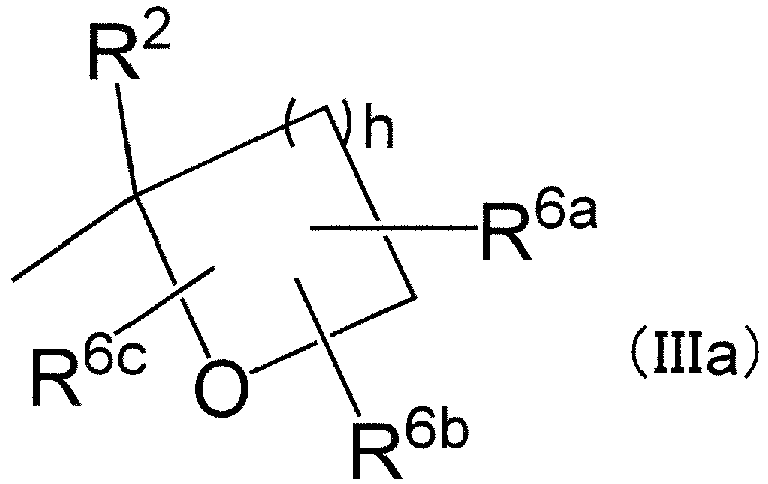
- h is 1, 2, or 3,
- R2 is as defined in Term 1,
- R6a, R6b, and R6c are independently, hydrogen, halogen, or C1-4 alkyl optionally-substituted with the same or different and 1 to 3 halogens.
- The compound of any one of Terms 1 to 11 or a pharmaceutically acceptable salt thereof, wherein
R4 is hydrogen, C1-4 alkyl optionally-substituted with the same or different and 1 to 3 halogens, or C3-7 cycloalkyl which may be substituted with 1 to 3 substituents selected independently from the group consisting of halogen, hydroxyl, and C1-4 alkoxy optionally-substituted with 1 to 3 substituents selected independently from Substituent-group A, and R3 and -OR4 are not combined together with the carbon atom to which they are attached to form a ring. - The compound of any one of Terms 1 to 12 or a pharmaceutically acceptable salt thereof, wherein R4 is hydrogen.
- The compound of any one of Terms 1 to 13 or a pharmaceutically acceptable salt thereof, wherein
R7 and R8 are independently hydrogen or C1-4 alkyl which may be substituted with 1 to 3 substituents selected independently from the group consisting of halogen, hydroxyl, C1-4 alkoxy optionally-substituted with 1 to 3 substituents selected independently from Substituent-group A, C3-7 cycloalkyl optionally-substituted with 1 to 3 substituents selected independently from Substituent-group B, C3-7 cycloalkoxy optionally-substituted with 1 to 3 substituents selected independently from Substituent-group B, and 3- to 7-membered non-aromatic heterocyclyl optionally-substituted with 1 to 3 substituents selected independently from Substituent-group B, and
m is 1 or 2. - The compound of any one of Terms 1 to 14 or a pharmaceutically acceptable salt thereof, wherein R7 and R8 are hydrogen, and m is 1.
- The compound of any one of Terms 1 to 15 or a pharmaceutically acceptable salt thereof, wherein
R1b or R1c is C6-10 aryl, C6-10 aryloxy, 5- to 12-membered heteroaryl, or 5- to 12-membered heteroaryloxy, wherein each aryl moiety of the aryl and the aryloxy and each heteroaryl moiety of the heteroaryl and the heteroaryloxy may be independently substituted with 1 to 3 substituents selected independently from the group consisting of halogen, cyano, C1-4 alkyl optionally-substituted with 1 to 3 substituents selected independently from Substituent-group A, C1-4 alkoxy optionally-substituted with 1 to 3 substituents selected independently from Substituent-group A, and C1-4 alkylsulfonyl optionally-substituted with 1 to 3 substituents selected independently from Substituent-group A. - The compound of any one of Terms 1 to 16 or a pharmaceutically acceptable salt thereof, wherein
R1b is C6-10 aryl, C6-10 aryloxy, 5- to 12-membered heteroaryl, or 5- to 12-membered heteroaryloxy, wherein each aryl moiety of the aryl and the aryloxy and each heteroaryl moiety of the heteroaryl and the heteroaryloxy may be independently substituted with 1 to 3 substituents selected independently from the group consisting of halogen, cyano, C1-4 alkyl optionally-substituted with 1 to 3 substituents selected independently from Substituent-group A, C1-4 alkoxy optionally-substituted with 1 to 3 substituents selected independently from Substituent-group A, and C1-4 alkylsulfonyl optionally-substituted with 1 to 3 substituents selected independently from Substituent-group A. - The compound of any one of Terms 1 to 16 or a pharmaceutically acceptable salt thereof, wherein
R1c is C6-10 aryl, C6-10 aryloxy, 5- to 12-membered heteroaryl, or 5- to 12-membered heteroaryloxy, wherein each aryl moiety of the aryl and the aryloxy and each heteroaryl moiety of the heteroaryl and the heteroaryloxy may be independently substituted with 1 to 3 substituents selected independently from the group consisting of halogen, cyano, C1-4 alkyl optionally-substituted with 1 to 3 substituents selected independently from Substituent-group A, C1-4 alkoxy optionally-substituted with 1 to 3 substituents selected independently from Substituent-group A, and C1-4 alkylsulfonyl optionally-substituted with 1 to 3 substituents selected independently from Substituent-group A. - The compound of any one of Terms 1 to 16 or a pharmaceutically acceptable salt thereof, wherein
R1d or R1c is C6-10 aryloxy or 5- to 12-membered heteroaryloxy wherein the aryl moiety of the aryloxy and the heteroaryl moiety of the heteroaryloxy may be independently substituted with 1 to 3 substituents selected independently from the group consisting of halogen, cyano, C1-4 alkyl optionally-substituted with 1 to 3 substituents selected independently from Substituent-group A, C1-4 alkoxy optionally-substituted with 1 to 3 substituents selected independently from Substituent-group A, and C1-4 alkylsulfonyl optionally-substituted with 1 to 3 substituents selected independently from Substituent-group A. - The compound of any one of Terms 1 to 16 or a pharmaceutically acceptable salt thereof, wherein
R1b or R1c is C6-10 aryl or 5- to 12-membered heteroaryl wherein the aryl and the heteroaryl may be independently substituted with 1 to 3 substituents selected independently from the group consisting of halogen, cyano, C1-4 alkyl optionally-substituted with 1 to 3 substituents selected independently from Substituent-group A, C1-4 alkoxy optionally-substituted with 1 to 3 substituents selected independently from Substituent-group A, and C1-4 alkylsulfonyl optionally-substituted with 1 to 3 substituents selected independently from Substituent-group A. - The compound of any one of Terms 1 to 20 or a pharmaceutically acceptable salt thereof, wherein R2 and R3 are independently C1-6 alkyl optionally-substituted with the same or different and 1 to 5 halogens.
- The compound of any one of Terms 1 and 3 to 20 or a pharmaceutically acceptable salt thereof, wherein
R2 and R3 may be combined together with the carbon atom to which they are attached to form the following group of formula (IIb) with -OR4
- e and f are independently 1 or 2,
- R4 and V are as defined in Term 1, and
- R5a, R5b, R5c, and R5d are independently hydrogen or halogen, or
- in R2, R3, -OR4 and CR7R8 in L,
- R2 and R7 may be combined together with the carbon atom to which they are attached to form the following group of formula (IVa) with R3, -OR4 and R8
- m1 is 0,
- m2 is 1 or 2,
- j is 1, 2 or 3,
- R4 is hydrogen,
- R8 and L are as defined in Term 1, and
- R9a, R9b, R9c, and R9d are independently hydrogen or halogen.
- The compound of Term 1 or 2, or a pharmaceutically acceptable salt thereof, which is selected from the following compounds:
- Example 1: 1-[6-(4-fluorophenoxy)-1H-benzimidazol-1-yl]-2-methylpropan-2-ol,
- Example 2: 6-(4-fluorophenoxy)-1-(tetrahydrofuran-2-ylmethyl)-1H-benzimidazole,
- Example 7: 1-(tetrahydrofuran-2-ylmethyl)-6-[4-(trifluoromethyl)phenyl]-1H-benzimidazole,
- Example 9: 2-methyl-1-{6-[4-(trifluoromethyl)phenyl]-1H-benzimidazol-1-yl}propan-2-ol,
- Example 10: 1-[2-(cyclopentyloxy)ethyl]-6-[4-(trifluoromethyl)phenyl]-1H-benzimidazole,
- Example 11: 2-methyl-1-{6-[5-(trifluoromethyl)pyridin-2-yl]-1H-benzimidazol-1-yl}propan-2-ol,
- Example 12: 1-[2-(cyclopentyloxy)ethyl]-6-[5-(trifluoromethyl)pyridin-2-yl]-1H-benzimidazole,
- Example 14: 2-methyl-1-[6-(4-methylphenoxy)-1H-benzimidazol-1-yl]propan-2-ol,
- Example 15: 2-methyl-1-{6-[4-(trifluoromethyl)phenoxy]-1H-benzimidazol-1-yl}propan-2-ol,
- Example 20: 1-[6-(4-chlorophenoxy)-1H-benzimidazol-1-yl]-2-methylpropan-2-ol,
- Example 22: 2-methyl-1-{6-[4-(trifluoromethoxy)phenoxy]-1H-benzimidazol-1-yl}propan-2-ol,
- Example 24: 2-methyl-1-{6-[(6-methylpyridin-3-yl)oxy]-1H-benzimidazol-1-yl}propan-2-ol,
- Example 25: 2-methyl-1-(6-{[6-(trifluoromethyl)pyridin-3-yl]oxy}-1H-benzimidazol-1-yl)propan-2-ol,
- Example 28: 2-methyl-1-(6-{[5-(trifluoromethyl)pyridin-2-yl]oxy}-1H-benzimidazol-1-yl)propan-2-ol,
- Example 51: 2-methyl-1-(5-{[5-(trifluoromethyl)pyrazin-2-yl]oxy}-1H-benzimidazol-1-yl)propan-2-ol,
- Example 52: 2-methyl-1-(5-{[5-(trifluoromethyl)pyrimidin-2-yl]oxy}-1H-benzimidazol-1-yl)propan-2-ol,
- Example 53: 1-(5-{[3-fluoro-5-(trifluoromethyl)pyridin-2-yl]oxy}-1H-benzimidazol-1-yl)-2-methylpropan-2-ol,
- Example 54: 1-{5-[(5-chloro-3-fluoropyridin-2-yl)oxy]-1H-benzimidazol-1-yl}-2-methylpropan-2-ol,
- Example 56: 3-[(6-{[5-(trifluoromethyl)pyridin-2-yl]oxy}-1H-benzimidazol-1-yl)methyl]oxetan-3-ol,
- Example 58: 1-[(6-{[5-(trifluoromethyl)pyridin-2-yl]oxy}-1H-benzimidazol-1-yl)methyl]cyclobutanol,
- Example 59: 2-methyl-4-(6-{[5-(trifluoromethyl)pyridin-2-yl]oxy}-1H-benzimidazol-1-yl)butan-2-ol,
- Example 60: 2-methyl-1-(6-{[5-(2,2,2-trifluoroethyl)pyridin-2-yl]oxy}-1H-benzimidazol-1-yl)propan-2-ol,
- Example 93: 3-({6-[4-(trifluoromethyl)phenoxy]-1H-benzimidazol-1-yl}methyl)oxetan-3-ol,
- Example 94: 3-({6-[4-(trifluoromethoxy)phenoxy]-1H-benzimidazol-1-yl}methyl)oxetan-3-ol,
- Example 101: 4-[6-(4-chlorophenoxy)-1H-benzimidazol-1-yl]-2-methylbutan-2-ol,
- Example 110: 3-{[6-(2-chloro-4-fluorophenoxy)-1H-benzimidazol-1-yl]methyl}oxetan-3-ol,
- Example 118: cis-4-(6-{[5-(trifluoromethyl)pyridin-2-yl]oxy}-1H-benzimidazol-1-yl)cyclohexanol,
- Example 123: 1-{6-[2-fluoro-4-(trifluoromethyl)phenyl]-1H-benzimidazol-1-yl}-2-methylpropan-2-ol,
- Example 130: 1-[6-(4-chloro-2-fluorophenyl)-1H-benzimidazol-1-yl]-2-methylpropan-2-ol,
- Example 148: 3-({6-[2-methoxy-4-(trifluoromethyl)phenyl]-1H-benzimidazol-1-yl}methyl)oxetan-3-ol,
- Example 173: 4-{6-[2-methoxy-4-(trifluoromethyl)phenyl]-1H-benzimidazol-1-yl}-2-methylbutan-2-ol,
- Example 176: 1-{5-[2-methoxy-4-(trifluoromethyl)phenyl]-1H-benzimidazol-1-yl}-2-methylpropan-2-ol,
- Example 179: 2-methyl-1-{5-[4-(trifluoromethoxy)phenyl]-1H-benzimidazol-1-yl}propan-2-ol,
- Example 181: 1-{5-[2-fluoro-4-(trifluoromethyl)phenyl]-1H-benzimidazol-1-yl}-2-methylpropan-2-ol,
- Example 205: 3-({5-[2-methoxy-4-(trifluoromethyl)phenyl]-1H-benzimidazol-1-yl}methyl)oxetan-3-ol, and
- Example 229: (3S)-2-methyl-3-{6-1[5-(trifluoromethyl)pyridin-2-yl]oxy}-1H-benzimidazol-1-yl)butan-2-ol.
- The compound of Term 1 or 2, or a pharmaceutically acceptable salt thereof, which is selected from the following compounds:
- Example 1: 1-[6-(4-fluorophenoxy)-1H-benzimidazol-1-yl]-2-methylpropan-2-ol,
- Example 2: 6-(4-fluorophenoxy)-1-(tetrahydrofuran-2-ylmethyl)-1H-benzimidazole,
- Example 7: 1-(tetrahydrofuran-2-ylmethyl)-6-[4-(trifluoromethyl)phenyl]-1H-benzimidazole,
- Example 9: 2-methyl-1-{6-[4-(trifluoromethyl)phenyl]-1H-benzimidazol-1-yl}propan-2-ol,
- Example 10: 1-[2-(cyclopentyloxy)ethyl]-6-[4-(trifluoromethyl)phenyl]-1H-benzimidazole,
- Example 11: 2-methyl-1-{6-[5-(trifluoromethyl)pyridin-2-yl]-1H-benzimidazol-1-yl}propan-2-ol,
- Example 12: 1-[2-(cyclopentyloxy)ethyl]-6-[5-(trifluoromethyl)pyridin-2-yl]-1H-benzimidazole,
- Example 14: 2-methyl-1-[6-(4-methylphenoxy)-1H-benzimidazol-1-yl]propan-2-ol,
- Example 15: 2-methyl-1-{6-[4-(trifluoromethyl)phenoxy]-1H-benzimidazol-1-yl}propan-2-ol,
- Example 20: 1-[6-(4-chlorophenoxy)-1H-benzimidazol-1-yl]-2-methylpropan-2-ol,
- Example 22: 2-methyl-1-{6-[4-(trifluoromethoxy)phenoxy]-1H-benzimidazol-1-yl}propan-2-ol,
- Example 24: 2-methyl-1-{6-[(6-methylpyridin-3-yl)oxy]-1H-benzimidazol-1-yl}propan-2-ol,
- Example 25: 2-methyl-1-(6-{[6-(trifluoromethyl)pyridin-3-yl]oxy}-1H-benzimidazol-1-yl)propan-2-ol,
- Example 28: 2-methyl-1-(6-{[5-(trifluoromethyl)pyridin-2-yl]oxy}-1H-benzimidazol-1-yl)propan-2-ol,
- Example 51: 2-methyl-1-(5-{[5-(trifluoromethyl)pyrazin-2-yl]oxy}-1H-benzimidazol-1-yl)propan-2-ol,
- Example 52: 2-methyl-1-(5-{[5-(trifluoromethyl)pyrimidin-2-yl]oxy}-1H-benzimidazol-1-yl)propan-2-ol,
- Example 53: 1-(5-{[3-fluoro-5-(trifluoromethyl)pyridin-2-yl]oxy}-1H-benzimidazol-1-yl)-2-methylpropan-2-ol,
- Example 54: 1-{5-[(5-chloro-3-fluoropyridin-2-yl)oxy]-1H-benzimidazol-1-yl}-2-methylpropan-2-ol,
- Example 56: 3-[(6-{[5-(trifluoromethyl)pyridin-2-yl]oxy}-1H-benzimidazol-1-yl)methyl]oxetan-3-ol,
- Example 58: 1-[(6-{[5-(trifluoromethyl)pyridin-2-yl]oxy}-1H-benzimidazol-1-yl)methyl]cyclobutanol,
- Example 59: 2-methyl-4-(6-{[5-(trifluoromethyl)pyridin-2-yl]oxy}-1H-benzimidazol-1-yl)butan-2-ol, and
- Example 60: 2-methyl-1-(6-{[5-(2,2,2-trifluoroethyl)pyridin-2-yl]oxy}-1H-benzimidazol-1-yl)propan-2-ol.
- The compound of Term 1 or 2, or a pharmaceutically acceptable salt thereof, which is selected from the following compounds:
- Example 1: 1-[6-(4-fluorophenoxy)-1H-benzimidazol-1-yl]-2-methylpropan-2-ol,
- Example 9: 2-methyl-1-{6-[4-(trifluoromethyl)phenyl]-1H-benzimidazol-1-yl}propan-2-ol,
- Example 11: 2-methyl-1-{6-[5-(trifluoromethyl)pyridin-2-yl]-1H-benzimidazol-1-yl}propan-2-ol,
- Example 15: 2-methyl-1-{6-[4-(trifluoromethyl)phenoxy]-1H-benzimidazol-1-yl}propan-2-ol,
- Example 20: 1-[6-(4-chlorophenoxy)-1H-benzimidazol-1-yl]-2-methylpropan-2-ol,
- Example 22: 2-methyl-1-{6-[4-(trifluoromethoxy)phenoxy]-1H-benzimidazol-1-yl}propan-2-ol,
- Example 24: 2-methyl-1-{6-[(6-methylpyridin-3-yl)oxy]-1H-benzimidazol-1-yl}propan-2-ol,
- Example 28: 2-methyl-1-(6-{[5-(trifluoromethyl)pyridin-2-yl]oxy}-1H-benzimidazol-1-yl)propan-2-ol,
- Example 51: 2-methyl-1-(5-{[5-(trifluoromethyl)pyrazin-2-yl]oxy}-1H-benzimidazol-1-yl)propan-2-ol,
- Example 53: 1-(5-{[3-fluoro-5-(trifluoromethyl)pyridin-2-yl]oxy}-1H-benzimidazol-1-yl)-2-methylpropan-2-ol,
- Example 59: 2-methyl-4-(6-{[5-(trifluoromethyl)pyridin-2-yl]oxy}-1H-benzimidazol-1-yl)butan-2-ol,
- Example 60: 2-methyl-1-(6-{[5-(2,2,2-trifluoroethyl)pyridin-2-yl]oxy}-1H-benzimidazol-1-yl)propan-2-ol,
- Example 94: 3-({6-[4-(trifluoromethoxy)phenoxy]-1H-benzimidazol-1-yl}methyl)oxetan-3-ol,
- Example 101: 4-[6-(4-chlorophenoxy)-1H-benzimidazol-1-yl]-2-methylbutan-2-ol,
- Example 118: cis-4-(6-{[5-(trifluoromethyl)pyridin-2-yl]oxy}-1H-benzimidazol-1-yl)cyclohexanol,
- Example 123: 1-{6-[2-fluoro-4-(trifluoromethyl)phenyl]-1H-benzimidazol-1-yl}-2-methylpropan-2-ol,
- Example 148: 3-({6-[2-methoxy-4-(trifluoromethyl)phenyl]-1H-benzimidazol-1-yl}methyl)oxetan-3-ol,
- Example 205: 3-({5-[2-methoxy-4-(trifluoromethyl)phenyl]-1H-benzimidazol-1-yl}methyl)oxetan-3-ol, and
- Example 229: (3S)-2-methyl-3-(6-{[5-(trifluoromethyl)pyridin-2-yl]oxy}-1H-benzimidazol-1-yl)butan-2-ol.
- The compound of Term 1 or 2, or a pharmaceutically acceptable salt thereof, which is selected from the following compounds:
- Example 1: 1-[6-(4-fluorophenoxy)-1H-benzimidazol-1-yl]-2-methylpropan-2-ol,
- Example 9: 2-methyl-1-{6-[4-(trifluoromethyl)phenyl]-1H-benzimidazol-1-yl}propan-2-ol,
- Example 11: 2-methyl-1-{6-[5-(trifluoromethyl)pyridin-2-yl]-1H-benzimidazol-1-yl}propan-2-ol,
- Example 15: 2-methyl-1-{6-[4-(trifluoromethyl)phenoxy]-1H-benzimidazol-1-yl}propan-2-ol,
- Example 20: 1-[6-(4-chlorophenoxy)-1H-benzimidazol-1-yl]-2-methylpropan-2-ol,
- Example 22: 2-methyl-1-{6-[4-(trifluoromethoxy)phenoxy]-1H-benzimidazol-1-yl}propan-2-ol,
- Example 24: 2-methyl-1-{6-[(6-methylpyridin-3-yl)oxy]-1H-benzimidazol-1-yl}propan-2-ol,
- Example 28: 2-methyl-1-(6-{[5-(trifluoromethyl)pyridin-2-yl]oxy}-1H-benzimidazol-1-yl)propan-2-ol,
- Example 51: 2-methyl-1-(5-{[5-(trifluoromethyl)pyrazin-2-yl]oxy}-1H-benzimidazol-1-yl)propan-2-ol,
- Example 53: 1-(5-{[3-fluoro-5-(trifluoromethyl)pyridin-2-yl]oxy}-1H-benzimidazol-1-yl)-2-methylpropan-2-ol,
- Example 59: 2-methyl-4-(6-{[5-(trifluoromethyl)pyridin-2-yl]oxy}-1H-benzimidazol-1-yl)butan-2-ol, and
- Example 60: 2-methyl-1-(6-{[5-(2,2,2-trifluoroethyl)pyridin-2-yl]oxy}-1H-benzimidazol-1-yl)propan-2-ol.
- A pharmaceutical composition comprising the compound of any one of Terms 1 to 26 or a pharmaceutically acceptable salt thereof.
- A medicament for treating a disease involving Nav 1.7 (SCN9A), comprising the compound of any one of Terms 1 to 26 or a pharmaceutically acceptable salt thereof as an active ingredient.
- A compound of any one of Terms 1 to 26 or a pharmaceutically acceptable salt thereof, or a compound selected from the group consisting of
- 6-[6-chloro-2-(morpholin-4-yl)pyrimidin-4-yl]-1-(2-methoxyethyl)-1H-benzimidazole,
- 2-[5-(3,5-dimethyl-1,2-oxazol-4-yl)-1H-benzimidazol-1-yl]ethanol,
- 2-{5-[5-(tetrahydrofuran-3-yl)-4H-1,2,4-triazol-3-yl]-1H-benzimidazol-1-yl}ethanol,
- 2-{5-[3-(2-methoxyethyl)-1-(2,2,2-trifluoroethyl)-1H-1,2,4-triazol-5-yl]-1H-benzimidazol-1-yl}ethanol,
- 2-{5-[3-methyl-1-(1-methylpiperidin-4-yl)-1H-1,2,4-triazol-5-yl]-1H-benzimidazol-1-yl}ethanol,
- 2-butyl-6-[1-(2-hydroxyethyl)-1H-benzimidazol-6-yl]-3,4-dihydropyrrolo[1,2-a]pyrazin-1(2H)-one,
- 6-[1-(2-hydroxyethyl)-1H-benzimidazol-6-yl]-2-(3-methylbutyl)-3,4-dihydropyrrolo[1,2-a]pyrazin-1(2H)-one,
- 2-{5-[1-(2-hydroxyethyl)-1H-benzimidazol-5-yl]-1H-1,2,4-triazol-1-yl}ethanol,
- 6-(2-chlorophenyl)-1-(2-hydroxyethyl)-1H-benzimidazole-7-carbonitrile,
- 2-chloro-6-{7-fluoro-1-[(1S,3S)-3-methoxycyclohexyl]-1H-benzimidazol-5-yl}-9-(tetrahydro-2H-pyran-2-yl)-9H-purine, and
- 2-{5-[2-(tetrahydrofuran-3-yl)-1H-imidazol-1-yl]-1H-benzimidazol-1-yl}ethanol,
- A medicament for treating a disease involving Nav 1.7 (SCN9A), comprising the compound of Term 29 or a pharmaceutically acceptable salt thereof as an active ingredient.
- Term 29 is the same as any one of Terms 1 to 26, provided that the 11 compounds excluded at the proviso in the end of Term 1 should not be excluded.
- A medicament for treating neuropathic pain, nociceptive pain, inflammatory pain, small-fiber neuropathy, erythromelalgia, paroxysmal extreme pain disorder, dysuria, or multiple sclerosis, which comprises the compound of any one of Terms 1 to 26 or a pharmaceutically acceptable salt thereof as an active ingredient.
- A medicament for treating neuropathic pain, nociceptive pain, inflammatory pain, small-fiber neuropathy, erythromelalgia, paroxysmal extreme pain disorder, dysuria, or multiple sclerosis, which comprises the compound of Term 29 or a pharmaceutically acceptable salt thereof as an active ingredient.
- A pharmaceutical combination comprising the compound of any one of Terms 1 to 26 or a pharmaceutically acceptable salt thereof, and at least one drug selected from the group consisting of an antiepileptic agent, an antidepressive agent, a narcotic analgesic, an anti-inflammatory agent, a reductase inhibitor, and a prostaglandin derivative drug.
- A pharmaceutical combination comprising the compound of Term 29 or a pharmaceutically acceptable salt thereof, and at least one drug selected from the group consisting of an antiepileptic agent, an antidepressive agent, a narcotic analgesic, an anti-inflammatory agent, a reductase inhibitor, and a prostaglandin derivative drug.
- Use of the compound of any one of Terms 1 to 26 or a pharmaceutically acceptable salt thereof in the manufacture of a medicament for treating neuropathic pain, nociceptive pain, inflammatory pain, small-fiber neuropathy, erythromelalgia, paroxysmal extreme pain disorder, dysuria, or multiple sclerosis.
- Use of the compound of Term 29 or a pharmaceutically acceptable salt thereof in the manufacture of a medicament for treating neuropathic pain, nociceptive pain, inflammatory pain, small-fiber neuropathy, erythromelalgia, paroxysmal extreme pain disorder, dysuria, or multiple sclerosis.
- A method for treating neuropathic pain, nociceptive pain, inflammatory pain, small-fiber neuropathy, erythromelalgia, paroxysmal extreme pain disorder, dysuria, or multiple sclerosis, which comprises administering a therapeutically effective amount of the compound of any one of Terms 1 to 26 or a pharmaceutically acceptable salt thereof to a mammal in need thereof.
- A method for treating neuropathic pain, nociceptive pain, inflammatory pain, small-fiber neuropathy, erythromelalgia, paroxysmal extreme pain disorder, dysuria, or multiple sclerosis, which comprises administering a therapeutically effective amount of the compound of Term 29 or a pharmaceutically acceptable salt thereof to a mammal in need thereof.
- The present invention provides a Nav 1.7 blocker comprising a novel benzimidazole compound or a pharmaceutically acceptable salt thereof. The compounds of the present invention are useful as a medicament for treating or preventing a disease involving Nav 1.7 (SCN9A), namely, the compounds are applicable to a patient suffering from neuropathic pain, nociceptive pain, inflammatory pain, small-fiber neuropathy, erythromelalgia, paroxysmal extreme pain disorder, and the like.
- Hereafter, the present invention is explained in more detail. The number of carbon atoms in the "substituent group" used herein can be sometimes expressed, for example, as "C1-6". Specifically, the term "C1-6 alkyl" means an alkyl having 1 to 6 carbon atoms. In the present description, a substituent group which is not accompanied with "optionally-substituted" or "substituted" means an "unsubstituted" substituent group. For example, "C1-6 alkyl" means "unsubstituted C1-6 alkyl".
- The substituent groups in the present description may be sometimes expressed without the term "group". In case that "optionally-substituted" is used in the definition of substituent groups, the number of the substituting groups is not limited as long as the substitutions are available, i.e., it is one or more. It means that the possible number of substituting groups is the substitution-available number on carbon atoms or carbon-nitrogen atoms in a substituent group which are acceptable for substitution. Unless otherwise specified, the definition of each substituent group also extends over the case of partially-including the substituent group or the case that the substituent group substituting another substituent groups.
- Unless otherwise specified, the binding site of substituent groups is not limited as long as the site is available to be bound.
- The "halogen" includes, for example, fluorine, chlorine, bromine, and iodine, preferably fluorine and chlorine.
- The "C1-2 alkyl" means a saturated hydrocarbon group having 1 to 2 carbon atoms, the "C1-3 alkyl" means a saturated straight or branched chain hydrocarbon group having 1 to 3 carbon atoms, the "C1-4 alkyl" means a saturated straight or branched chain hydrocarbon group having 1 to 4 carbon atoms, and the "C1-6 alkyl" means a saturated straight or branched chain hydrocarbon group having 1 to 6 carbon atoms. The "C1-2 alkyl" includes, for example, methyl and ethyl; the "C1-3 alkyl" includes, for example, propyl and isopropyl, besides the above alkyl; the "C1-4 alkyl" includes, for example, butyl, isobutyl, sec-butyl, and tert-butyl, besides the above alkyl; and the "C1-6 alkyl" includes, for example, pentyl, isopentyl, neopentyl, 1-ethylpropyl, hexyl, and a structural isomer thereof, besides the above alkyl. Preferred examples of the "C1-6 alkyl" or "C1-4 alkyl" include "C1-3 alkyl", and more preferably methyl and ethyl.
- The "C3-7 cycloalkyl" means a non-aromatic cyclic hydrocarbon group (i.e., saturated hydrocarbon group and partially-unsaturated hydrocarbon group) having 3 to 7 carbon atoms, and the "C3-10 cycloalkyl" means a non-aromatic cyclic hydrocarbon group (i.e., saturated hydrocarbon group and partially-unsaturated hydrocarbon group) having 3 to 10 carbon atoms. The "C3-7 cycloalkyl" and the "C3-10 cycloalkyl" also include a bridged one. The "C3-7 cycloalkyl" includes, for example, cyclopropyl, cyclobutyl, cyclopentyl, cyclohexyl, cyclopentenyl, cyclohexenyl, and cycloheptyl. The "C3-10 cycloalkyl" includes, for example, cyclooctyl and adamantyl, besides the above, preferably, "C3-7 cycloalkyl".
- The "C3-7 cycloalkyl" and the "C3-10 cycloalkyl" also include a bi-cyclic condensed ring in which the "C3-7 cycloalkyl" and "C3-10 cycloalkyl" are fused with benzene or a 5- or 6-membered ring having one heteroatom selected from nitrogen, sulfur, or oxygen atom, or the same or different and two or more (for example, 2 to 4) heteroatoms thereof (for example, "5- or 6-membered mono-cyclic heteroaryl" mentioned below, and 5- or 6-membered ring in "3- to 7-membered non-aromatic heterocyclyl" mentioned below), respectively. Examples of the bi-cyclic condensed ring include groups of the following formulae.

- The "C6-10 aryl" means an aromatic hydrocarbon group having 6 to 10 carbon atoms, preferably phenyl. The "C6-10 aryl" includes, for example, phenyl, 1-naphthyl and 2-naphthyl.
- The "C6-10 aryl" also includes a condensed ring in which "phenyl" is fused with a 5- or 6-membered ring having one heteroatom selected from nitrogen, sulfur, or oxygen atom, or the same or different and two or more (for example, 2 to 4) heteroatoms thereof (for example, "5- or 6-membered mono-cyclic heteroaryl" mentioned below, and 5- or 6-membered ring in "3- to 7-membered non-aromatic heterocyclyl" mentioned below), or a 5- to 7-membered cycloalkyl ring (for example, cyclopentane, cyclohexane and cycloheptane). Examples of the condensed ring include groups of the following formulae.


- The "5- to 12-membered heteroaryl" means a 5- to 12-membered mono- or multiple-cyclic aromatic group having one heteroatom selected from nitrogen, sulfur, or oxygen atom, or the same or different and two or more (for example, 2 to 4) heteroatoms thereof, besides carbon atoms as the ring atoms, preferably, "5- or 6-membered mono-cyclic heteroaryl". The "5- or 6-membered mono-cyclic heteroaryl" means a 5- or 6-membered mono-cyclic aromatic group within the "5- to 12-membered heteroaryl".
- The multiple-cyclic heteroaryl in the "5- to 12-membered heteroaryl" includes, for example, a condensed ring in which the same or different two mono-cyclic heteroaryls are fused, or a mono-cyclic heteroaryl and an aromatic ring (for example, benzene) or a non-aromatic ring (for example, cyclohexane) are fused.
- The "5- to 12-membered heteroaryl" includes, for example, groups of the formulae shown below. Preferably, the "5- to 12-membered heteroaryl" includes pyrazolyl, imidazolyl, pyridyl, pyrimidinyl, pyrazinyl, and pyridazinyl. Another embodiment includes, preferably, benzofuranyl in which the binding site is on the heteroaryl (furan) ring, pyridyl, pyrimidinyl, pyrazinyl, and pyridazinyl. Examples of the "5- or 6-membered mono-cyclic heteroaryl" include mono-cyclic groups out of the groups of the following formulae.


- The "3- to 7-membered non-aromatic heterocyclyl" means 3- to 7-membered cyclic group having one heteroatom selected from nitrogen, oxygen, or sulfur atom, or the same or different and two or more (for example, 2 to 4, preferably 2 to 3) heteroatoms thereof, besides carbon atoms as the ring atoms. The heterocyclyl is non-aromatic, which may be a saturated one or a partially-unsaturated one. Preferred one thereof is a saturated heterocyclyl, more preferably 5- or 6-membered saturated heterocyclyl. The "3- to 7-membered non-aromatic heterocyclyl" includes, for example, oxetanyl, azetidinyl, pyranyl, tetrahydrofuryl, pyrrolidinyl, pyrazolidinyl, imidazolidinyl, piperidinyl, morpholinyl, thiomorpholinyl, dioxothiomorpholinyl, hexamethyleneiminyl, oxazolidinyl, thiazolidinyl, imidazolidinyl, oxoimidazolidinyl, dioxoimidazolidinyl, oxo-oxazolidinyl, dioxo-oxazolidinyl, dioxothiazolidinyl, tetrahydropyranyl, and tetrahydropyridinyl, and preferably pyranyl, tetrahydrofuryl, pyrrolidinyl, piperidinyl, and morpholinyl.
- The "3- to 7-membered non-aromatic heterocyclyl" also includes a condensed ring in which the 3- to 7-membered non-aromatic heterocyclyl is fused with benzene or a 6-membered heteroaryl (for example, pyridine, pyrimidine or pyridazine). The examples thereof include dihydroindolyl, dihydroisoindolyl, dihydropurinyl, dihydrothiazolopyrimidinyl, dihydrobenzodioxanyl, isoindolinyl, indazolyl, pyrrolopyridinyl, tetrahydroquinolinyl, decahydroquinolinyl, tetrahydroisoquinolinyl, decahydroisoquinolinyl, tetrahydronaphthyridinyl, and tetrahydropyrido-azepinyl.
- The "C1-2 alkoxy" means oxy group substituted with the above "C1-2 alkyl", and the "C1-4 alkoxy" means oxy group substituted with the above "C1-4 alkyl". The "C1-2 alkoxy" includes, for example, methoxy and ethoxy, and the "C1-4 alkoxy" includes, for example, propoxy, isopropoxy, butoxy, isobutoxy, sec-butoxy, and tert-butoxy, besides the above examples. Preferably, the "C1-4 alkoxy" includes methoxy, ethoxy, and isopropoxy.
- The "C3-7 cycloalkoxy" means oxy group substituted with the above "C3-7 cycloalkyl". The "C3-7 cycloalkoxy" includes, for example, cyclopropyloxy, cyclobutyloxy, cyclopentyloxy, and cyclohexyloxy, and preferably cyclohexyloxy. The "C5-6 cycloalkoxy" means a cycloalkoxy having 5 or 6 carbon atoms within the "C3-7 cycloalkoxy".
- The "C6-10 aryloxy" means oxy group substituted with the above "C6-10 aryl". The "C6-10 aryloxy" includes, for example, phenyloxy and naphthyloxy, and preferably phenyloxy.
- The "5- to 12-membered heteroaryloxy" means oxy group substituted with the above "5- to 12-membered heteroaryl". The "5- to 12-membered heteroaryloxy" includes, for example, pyridyloxy, imidazolyloxy and furyloxy, and preferably pyridyloxy.
- The "C1-4 alkylamino" means amino group substituted with one or two of the above "C1-4 alkyl". The "C1-4 alkylamino" includes, for example, methylamino, ethylamino, propylamino, isopropylamino, butylamino, isobutylamino, dimethylamino, diethylamino, and ethylmethylamino, and preferably methylamino and dimethylamino.
- The "C3-7 cycloalkylamino" means amino group substituted with one or two of the above "C3-7 cycloalkyl". The "C3-7 cycloalkylamino" includes, for example, cyclopropylamino, cyclobutylamino, cyclopentylamino, cyclohexylamino and dicyclopropylamino, and preferably cyclohexylamino.
- The "C1-4 alkylsulfonyl" means sulfonyl group substituted with the above "C1-4 alkyl". The "C1-4 alkylsulfonyl" includes, for example, methylsulfonyl, ethylsulfonyl, propylsulfonyl, isopropylsulfonyl and butylsulfonyl, and preferably methylsulfonyl.
- The "C1-4 alkylthio" means thio group substituted with the above "C1-4 alkyl". The "C1-4 alkylthio" includes, for example, methylthio, ethylthio, propylthio, isopropylthio and butylthio, and preferably methylthio.
- In order to disclose the present compound of the above formula (I) in more detail, each symbol used in the present invention is further explained below showing preferred examples.
- Preferably, R1a, R1b, R1c, and R1d include independently hydrogen, halogen, cyano, C1-4 alkyl, C1-4 alkoxy, C1-4 alkylamino, (wherein each alkyl moiety of the alkyl, the alkoxy and the alkylamino may be independently substituted with 1 to 3 substituents selected independently from the group consisting of halogen, hydroxyl, C1-4 alkoxy optionally-substituted with 1 to 3 substituents selected independently from Substituent-group A, C3-7 cycloalkyl optionally-substituted with 1 to 3 substituents selected independently from Substituent-group B, C3-7 cycloalkoxy optionally-substituted with 1 to 3 substituents selected independently from Substituent-group B, and 3- to 7-membered non-aromatic heterocyclyl optionally-substituted with 1 to 3 substituents selected independently from Substituent-group B), C3-7 cycloalkyl, C3-7 cycloalkoxy, C3-7 cycloalkylamino, (wherein each cycloalkyl moiety of the cycloalkyl, the cycloalkoxy and the cycloalkylamino may be independently substituted with 1 to 3 substituents selected independently from the group consisting of halogen, hydroxyl, C1-4 alkyl optionally-substituted with 1 to 3 substituents selected independently from Substituent-group A, C1-4 alkoxy optionally-substituted with 1 to 3 substituents selected independently from Substituent-group A, C3-7 cycloalkyl optionally-substituted with 1 to 3 substituents selected independently from Substituent-group B, and C3-7 cycloalkoxy optionally-substituted with 1 to 3 substituents selected independently from Substituent-group B), C6-10 aryl, C6-10 aryloxy, 5- to 12-membered heteroaryl, and 5- to 12-membered heteroaryloxy, (wherein each aryl moiety of the aryl and the aryloxy and each heteroaryl moiety of the heteroaryl and the heteroaryloxy may be independently substituted with 1 to 3 substituents selected independently from the group consisting of halogen, cyano, C1-4 alkyl optionally-substituted with 1 to 3 substituents selected independently from Substituent-group A, C1-4 alkoxy optionally-substituted with 1 to 3 substituents selected independently from Substituent-group A, C3-7 cycloalkyl optionally-substituted with 1 to 3 substituents selected independently from Substituent-group B, C3-7 cycloalkoxy optionally-substituted with 1 to 3 substituents selected independently from Substituent-group B, 3- to 7-membered non-aromatic heterocyclyl optionally-substituted with 1 to 3 substituents selected independently from Substituent-group B, C1-4 alkylthio optionally-substituted with 1 to 3 substituents selected independently from Substituent-group A, and C1-4 alkylsulfonyl optionally-substituted with 1 to 3 substituents selected independently from Substituent-group A), provided that at least one of R1a, R1b, R1c and R1d is the above C6-10 aryl, C6-10 aryloxy, 5- to 12-membered heteroaryl or 5- to 12-membered heteroaryloxy.
- More preferably, R1a, R1b, R1c, and R1d include independently hydrogen, halogen, cyano, C1-4 alkyl, C1-4 alkoxy, (wherein each alkyl moiety of the alkyl and the alkoxy may be independently substituted with the same or different and 1 to 3 halogens), C6-10 aryl, C6-10 aryloxy, 5-to 12-membered heteroaryl, and 5- to 12-membered heteroaryloxy, (wherein each aryl moiety of the aryl and the aryloxy and each heteroaryl moiety of the heteroaryl and the heteroaryloxy may be independently substituted with 1 to 3 substituents selected independently from the group consisting of halogen, cyano, C1-4 alkyl optionally-substituted with 1 to 3 substituents selected independently from Substituent-group A, C1-4 alkoxy optionally-substituted with 1 to 3 substituents selected independently from Substituent-group A, and C1-4 alkylsulfonyl optionally-substituted with 1 to 3 substituents selected independently from Substituent-group A), provided that at least one of R1a, R1b, R1c and R1d is the above C6-10 aryl, C6-10 aryloxy, 5-to 12-membered heteroaryl or 5- to 12-membered heteroaryloxy.
- Even more preferably, R1a and R1d include hydrogen, and R1b and R1c are independently hydrogen, C6-10 aryl, C6-10 aryloxy, 5- to 12-membered heteroaryl, or 5- to 12-membered heteroaryloxy, wherein each aryl moiety of the aryl and the aryloxy and each heteroaryl moiety of the heteroaryl and the heteroaryloxy may be independently substituted with 1 to 3 substituents selected independently from the group consisting of halogen and optionally-substituted C1-4 alkyl, provided that both of R1b and R1c are not hydrogen.
- In another embodiment of R1a, R1b, R1c, and R1d;
R1a and R1d are hydrogen, and R1b and R1c are independently hydrogen, C6-10 aryloxy, or 5- to 12-membered heteroaryloxy, wherein the aryl moiety of the aryloxy and the heteroaryl moiety of the heteroaryloxy may be independently substituted with 1 to 3 substituents selected independently from the group consisting of halogen and optionally-substituted C1-4 alkyl, provided that both of R1b and R1c are not hydrogen. - In another embodiment of R1a, R1b, R1c, and R1d;
R1a and R1d are hydrogen, and R1b and R1c are independently hydrogen, C6-10 aryl, or 5- to 12-membered heteroaryl, wherein the aryl and the heteroaryl may be independently substituted with 1 to 3 substituents selected independently from the group consisting of halogen and optionally-substituted C1-4 alkyl, provided that both of R1b and R1c are not hydrogen. - In another embodiment of R1a, R1b, R1c, and R1d;
R1a and R1d are hydrogen,
one of R1b and R1c is C6-10 aryloxy or 5- to 12-membered heteroaryloxy, wherein the aryl moiety of the aryloxy and the heteroaryl moiety of the heteroaryloxy may be independently substituted with 1 to 3 substituents selected independently from the group consisting of halogen and optionally-substituted C1-4 alkyl, and the other is hydrogen. - In another embodiment of R1a, R1b, R1c, and R1d;
R1a and R1d are hydrogen,
one of R1b and R1c is C6-10 aryl or 5- to 12-membered heteroaryl, wherein the aryl and the heteroaryl may be independently substituted with 1 to 3 substituents selected independently from the group consisting of halogen and optionally-substituted C1-4 alkyl, and the other is hydrogen. - Preferred examples of R1a, R1b, R1c, and R1d include hydrogen, fluorine, chlorine, methyl, ethyl, isopropyl, isobutyl, cyclopropyl, cyclopentyl, cyclohexyl, methoxy, ethoxy, phenyl, 2-fluorophenyl, 3-fluorophenyl, 4-fluorophenyl, 4-(trifluoromethyl)phenyl, 5-(trifluoromethyl)pyridin-2-yl, phenoxy, 3-fluorophenoxy, 4-fluorophenoxy, 3,4-difluorophenoxy, 3,5-difluorophenoxy, 4-chlorophenoxy, 4-methylphenoxy, 4-(trifluoromethyl)phenoxy, 4-methoxyphenoxy, 4-(trifluoromethoxy)phenoxy, 4-cyanophenoxy, 4-(methylsulfonyl)phenoxy, (5-methylpyridin-2-yl)oxy, (5-(trifluoromethyl)pyridin-2-yl)oxy, and (5-fluoropyridin-2-yl)oxy.
- More preferred examples of R1a, R1b, R1c, and R1d include hydrogen, fluorine, chlorine, methyl, ethyl, isopropyl, isobutyl, cyclopropyl, cyclopentyl, cyclohexyl, methoxy, ethoxy, phenyl, 4-fluorophenyl, 4-(trifluoromethyl)phenyl, 5-(trifluoromethyl)pyridin-2-yl, phenoxy, 3-fluorophenoxy, 4-fluorophenoxy, 3,4-difluorophenoxy, 3,5-difluorophenoxy, 4-chlorophenoxy, 4-methylphenoxy, 4-(trifluoromethyl)phenoxy, 4-methoxyphenoxy, 4-(trifluoromethoxy)phenoxy, 4-cyanophenoxy, 4-(methylsulfonyl)phenoxy, (5-methylpyridin-2-yl)oxy, (5-(trifluoromethyl)pyridin-2-yl)oxy, and (5-fluoropyridin-2-yl)oxy.
- Even more preferred examples of R1a, R1b, R1c, and R13 include hydrogen, fluorine, 4-(trifluoromethyl)phenyl, 5-(trifluoromethyl)pyridin-2-yl, 3-fluorophenoxy, 4-fluorophenoxy, 4-chlorophenoxy, 4-methylphenoxy, 4-(trifluoromethyl)phenoxy, 4-(trifluoromethoxy)phenoxy, (5-methylpyridin-2-yl)oxy, and (5-(trifluoromethyl)pyridin-2-yl)oxy.
- Other embodiments of R1a, R1b, R1c, and R1d include hydrogen, fluorine, chlorine, methyl, ethyl, isopropyl, isobutyl, cyclopropyl, cyclopentyl, cyclohexyl, methoxy, ethoxy, phenyl, 2-fluorophenyl, 3-fluorophenyl, 4-fluorophenyl, 4-(trifluoromethyl)phenyl, 5-(trifluoromethyl)pyridin-2-yl, phenoxy, 3-fluorophenoxy, 4-fluorophenoxy, 3,4-difluorophenoxy, 3,5-difluorophenoxy, 4-chlorophenoxy, 4-methylphenoxy, 4-(trifluoromethyl)phenoxy, 4-methoxyphenoxy, 4-(trifluoromethoxy)phenoxy, 4-cyanophenoxy, 4-(methylsulfonyl)phenoxy, (5-methylpyridin-2-yl)oxy, (5-(trifluoromethyl)pyridin-2-yl)oxy, (5-fluoropyridin-2-yl)oxy, 2-methoxy-4-(trifluoromethyl)phenyl, 2-fluoro-4-(trifluoromethyl)phenyl, 2-chloro-4-(trifluoromethyl)phenyl, 4-(trifluoromethoxy)phenyl, (5-chloropyridin-2-yl)oxy, 2,4-dichlorophenyl, 2-chloro-4-fluorophenoxy, 4-chloro-2-fluorophenoxy, and 2,4-dichlorophenoxy.
- Other embodiments of R1a, R1b, R1c, and R1d include hydrogen, fluorine, 4-(trifluoromethyl)phenyl, 5-(trifluoromethyl)pyridin-2-yl, 3-fluorophenoxy, 4-fluorophenoxy, 4-chlorophenoxy, 4-methylphenoxy, 4-(trifluoromethyl)phenoxy, 4-(trifluoromethoxy)phenoxy, (5-methylpyridin-2-yl)oxy, (5-(trifluoromethyl)pyridin-2-yl)oxy, 2-methoxy-4-(trifluoromethyl)phenyl, 4-(trifluoromethoxy)phenyl, and (5-chloropyridin-2-yl)oxy.
- Preferably, R2 and R3 include hydrogen and C1-6 alkyl which may be substituted with 1 to 5 substituents selected independently from the group consisting of cyano, halogen, hydroxyl, and C1-4 alkoxy optionally-substituted with 1 to 3 substituents selected independently from Substituent-group A, and more preferably hydrogen and C1-6 alkyl optionally-substituted with 1 to 5 halogens.
- Preferred examples of R2 and R3 include hydrogen, methyl, ethyl, isopropyl, isobutyl, trifluoromethyl, cyclopropyl, cyclopentyl, and cyclohexyl, and more preferably hydrogen, methyl, and ethyl.
- And, R2 and R3 may be combined together with the carbon atom to which they are attached to form the following group of formula (II) with -OR4.

- In the above formula (II), preferably e and f are independently 1 or 2.
- Preferably, R5a, R5b, R5c, and R5d are independently hydrogen or halogen.
- And, R2 and R7 may be combined together with the carbon atom to which they are attached to form the following group of formula (IV) with R3, -OR4 and R8.

- In the above formula (IV), preferably m1 is 0, and preferably m2 is 1 or 2.
- Preferably, j is 1, 2 or 3.
- Preferably, R9a, R9b, R9c, and R9d are independently hydrogen or halogen.
- Preferably, R4 is hydrogen.
- Preferably, R4 is hydrogen, C1-4 alkyl which may be substituted with the same or different and 1 to 3 halogens, or C3-7 cycloalkyl which may be substituted with 1 to 3 substituents selected independently from the group consisting of halogen, hydroxyl, and C1-4 alkoxy optionally-substituted with 1 to 3 substituents selected independently from Substituent-group A, and more preferably hydrogen.
- Preferred examples of R4 include hydrogen, methyl, ethyl, propyl, isopropyl, cyclopropyl, cyclobutyl, cyclopentyl, and cyclohexyl, and more preferably hydrogen, isopropyl, and cyclopentyl, and even more preferably hydrogen.
- And, R3 and -OR4 may be combined together with the carbon atom to which they are attached to form the following group of formula (III) with R2.

- In the above formula (III), preferably h is 1, 2 or 3, and more preferably 2 or 3.
- Preferably, R6a, R6d and R6c are independently hydrogen, halogen, or C1-4 alkyl optionally-substituted with the same or different and 1 to 3 halogens, and more preferably hydrogen.
- Preferred examples of R6a, R6b and R6c include hydrogen, fluorine, hydroxyl, methyl, trifluoromethyl, methoxy, ethoxy, and trifluoromethoxy, and more preferably hydrogen, fluorine, and methyl, and even more preferably hydrogen.
- Preferably, m is 1 or 2, and more preferably 1.
- L is CR7R8 provided that when m is 2 or 3, each CR7R8 are independently the same or different.
- Preferably, R7 and R8 include hydrogen and C1-4 alkyl which may be independently substituted with 1 to 3 substituents selected independently from the group consisting of halogen, hydroxyl, C1-4 alkoxy optionally-substituted with 1 to 3 substituents selected independently from Substituent-group A, C3-7 cycloalkyl optionally-substituted with 1 to 3 substituents selected independently from Substituent-group B, C3-7 cycloalkoxy optionally-substituted with 1 to 3 substituents selected independently from Substituent-group B, and 3- to 7-membered non-aromatic heterocyclyl optionally-substituted with 1 to 3 substituents selected independently from Substituent-group B, and more preferably hydrogen.
- Preferred examples of R7 and R8 include hydrogen, methyl, and ethyl, and more preferably hydrogen.
- Preferably, Substituent-group A includes fluorine, chlorine, hydroxyl, C1-2 alkoxy, and C5-6 cycloalkoxy, and more preferably fluorine, hydroxyl, and C1-2 alkoxy.
- Preferably, Substituent-group B includes fluorine, chlorine, hydroxyl, C1-2 alkyl, C1-2 alkoxy, and C5-6 cycloalkoxy, and more preferably fluorine, hydroxyl, C1-2 alkyl, and C1-2 alkoxy.
- An embodiment of the compound of formula (I) includes the following compound or a pharmaceutically acceptable salt thereof:
- R1a, R1b, R1c, and R1d are independently, hydrogen, C6-10 aryl, C6-10 aryloxy, 5- to 12-membered heteroaryl, or 5- to 12-membered heteroaryloxy, wherein each aryl moiety of the aryl and the aryloxy and each heteroaryl moiety of the heteroaryl and the heteroaryloxy may be independently substituted with 1 to 3 substituents selected independently from the group consisting of halogen and C1-4 alkyl optionally-substituted with 1 to 3 substituents selected independently from Substituent-group A, provided that at least one of R1a, R1b, R1c and R1d is the above C6-10 aryl, C6-10 aryloxy, 5- to 12-membered heteroaryl or 5- to 12-membered heteroaryloxy,
- R2 and R3 are independently hydrogen or C1-6 alkyl which may be independently substituted with 1 to 5 substituents selected independently from the group consisting of cyano, halogen, hydroxyl, and C1-4 alkoxy optionally-substituted with 1 to 3 substituents selected independently from Substituent-group A, provided that both of R2 and R3 are not hydrogen, or
- R2 and R3 may be combined together with the carbon atom to which they are attached to form the following group of formula (IIa) with -OR4
- e and f are independently 1 or 2,
- R4 is hydrogen, C1-6 alkyl which may be substituted with 1 to 3 substituents selected independently from the group consisting of halogen, hydroxyl, C1-4 alkoxy optionally-substituted with 1 to 3 substituents selected independently from Substituent-group A, C3-7 cycloalkyl optionally-substituted with 1 to 3 substituents selected independently from Substituent-group B, C3-7 cycloalkoxy optionally-substituted with 1 to 3 substituents selected independently from Substituent-group B, and 3- to 7-membered non-aromatic heterocyclyl optionally-substituted with 1 to 3 substituents selected independently from Substituent-group B, or C3-7 cycloalkyl which may be independently substituted with 1 to 3 substituents selected independently from the group consisting of halogen, hydroxyl, C1-4 alkyl optionally-substituted with 1 to 3 substituents selected independently from Substituent-group A, C1-4 alkoxy optionally-substituted with 1 to 3 substituents selected independently from Substituent-group A, C3-7 cycloalkyl optionally-substituted with 1 to 3 substituents selected independently from Substituent-group B, and C3-7 cycloalkoxy optionally-substituted with 1 to 3 substituents selected independently from Substituent-group B,
- V is single bond or oxygen atom,
- R5a, Rbb, R5c, and R5d are independently hydrogen or halogen, or
- in R2, R3, -OR4 and CR7R8 in L,
- R2 and R7 may be combined together with the carbon atom to which they are attached to form the following group of formula (IVa) with R3, -OR4 and R8
- m1 is 0,
- m2 is 1 or 2,
- j is 1, 2 or 3,
- R3 is hydrogen or C1-6 alkyl optionally-substituted with 1 to 3 halogens,
- R4 is hydrogen or C3-7 cycloalkyl optionally-substituted with 1 to 3 halogens,
- R8 is hydrogen, hydroxyl, C1-4 alkyl, C1-4 alkoxy (wherein each alkyl moiety of the alkyl and the alkoxy may be independently substituted with 1 to 3 substituents selected independently from the group consisting of halogen, hydroxyl, C1-4 alkoxy optionally-substituted with 1 to 3 substituents selected independently from Substituent-group A, C3-7 cycloalkyl optionally-substituted with 1 to 3 substituents selected independently from Substituent-group B, C3-7 cycloalkoxy optionally-substituted with 1 to 3 substituents selected independently from Substituent-group B, and 3- to 7-membered non-aromatic heterocyclyl optionally-substituted with 1 to 3 substituents selected independently from Substituent-group B), C3-7 cycloalkyl, or C3-7 cycloalkoxy, (wherein each cycloalkyl moiety of the cycloalkyl and the cycloalkoxy may be independently substituted with 1 to 3 substituents selected independently from the group consisting of halogen, hydroxyl, C1-4 alkyl optionally-substituted with 1 to 3 substituents selected independently from Substituent-group A, C1-4 alkoxy optionally-substituted with 1 to 3 substituents selected independently from Substituent-group A, C3-7 cycloalkyl optionally-substituted with 1 to 3 substituents selected independently from Substituent-group B, and C3-7 cycloalkoxy optionally-substituted with 1 to 3 substituents selected independently from Substituent-group B),
- L is CR7R8, provided that when m is 2, each CR7R8 are independently the same or different,
- R9a, R9b, R9c, and R9d are independently hydrogen or halogen,
- R4 is hydrogen, C1-4 alkyl optionally-substituted with the same or different and 1 to 3 halogens, or C3-7 cycloalkyl which may be substituted with 1 to 3 substituents selected independently from the group consisting of halogen, hydroxyl, and C1-4 alkoxy optionally-substituted with 1 to 3 substituents selected independently from Substituent-group A, or
- R3 and -OR4 may be combined together with the carbon atom to which they are attached to form the following group of formula (IIIa) with R2
- h is 1, 2 or 3,
- R2 is hydrogen, C1-6 alkyl which may be independently substituted with 1 to 5 substituents selected independently from the group consisting of cyano, halogen, hydroxyl, C1-4 alkoxy optionally-substituted with 1 to 3 substituents selected independently from Substituent-group A, C3-7 cycloalkyl optionally-substituted with 1 to 3 substituents selected independently from Substituent-group B, and C3-7 cycloalkoxy optionally-substituted with 1 to 3 substituents selected independently from Substituent-group B, or C3-10 cycloalkyl,
- R6a, R6b, and R6c are independently hydrogen, halogen, or C1-4 alkyl optionally-substituted with the same or different and 1 to 3 halogens,
- m is 1 or 2,
- L is CR7R8, provided that when m is 2, each CR7R8 are independently the same or different,
- R7 and R8 are independently hydrogen or C1-4 alkyl which may be independently substituted with 1 to 3 substituents selected independently from the group consisting of halogen, hydroxyl, C1-4 alkoxy optionally-substituted with 1 to 3 substituents selected independently from Substituent-group A, C3-7 cycloalkyl optionally-substituted with 1 to 3 substituents selected independently from Substituent-group B, C3-7 cycloalkoxy optionally-substituted with 1 to 3 substituents selected independently from Substituent-group B, and 3- to 7-membered non-aromatic heterocyclyl optionally-substituted with 1 to 3 substituents selected independently from Substituent-group B.
- Another embodiment of the compound of formula (I) includes the following compound or a pharmaceutically acceptable salt thereof:
- R1a and R1d are hydrogen,
- at least one of R1b and R1c is C6-10 aryl, C6-10 aryloxy, 5- to 12-membered heteroaryl, or 5- to 12-membered heteroaryloxy, wherein each aryl moiety of the aryl and the aryloxy and each heteroaryl moiety of the heteroaryl and the heteroaryloxy may be independently substituted with 1 to 3 substituents selected independently from the group consisting of halogen and C1-4 alkyl optionally-substituted with 1 to 3 substituents selected independently from Substituent-group A,
- R2 and R3 are independently C1-6 alkyl optionally-substituted with the same or different and 1 to 5 halogens, or
- R2 and R3 may be combined together with the carbon atom to which they are attached to form the following group of formula (IIb) with -OR4
- e and f are independently 1 or 2,
- R4 is hydrogen, C1-6 alkyl which may be substituted with 1 to 3 substituents selected independently from the group consisting of halogen, hydroxyl, C1-4 alkoxy optionally-substituted with 1 to 3 substituents selected independently from Substituent-group A, C3-7 cycloalkyl optionally-substituted with 1 to 3 substituents selected independently from Substituent-group B, C3-7 cycloalkoxy optionally-substituted with 1 to 3 substituents selected independently from Substituent-group B, and 3- to 7-membered non-aromatic heterocyclyl optionally-substituted with 1 to 3 substituents selected independently from Substituent-group B, or C3-7 cycloalkyl which may be independently substituted with 1 to 3 substituents selected independently from the group consisting of halogen, hydroxyl, C1-4 alkyl optionally-substituted with 1 to 3 substituents selected independently from Substituent-group A, C1-4 alkoxy optionally-substituted with 1 to 3 substituents selected independently from Substituent-group A, C3-7 cycloalkyl optionally-substituted with 1 to 3 substituents selected independently from Substituent-group B, and C3-7 cycloalkoxy optionally-substituted with 1 to 3 substituents selected independently from Substituent-group B,
- V is single bond or oxygen atom,
- R5a, R5b, R5c, and R5d are independently hydrogen or halogen, or
- in R2, R3, -OR4 and CR7R8 in L,
- R2 and R7 may be combined together with the carbon atom to which they are attached to form the following group of formula (IVa) with R3, -OR4 and R8
- m1 is 0,
- m2 is 1 or 2,
- j is 1 or 2,
- R3 is hydrogen or C1-4 alkyl,
- R4 is hydrogen,
- R8 is hydrogen or C1-4 alkyl,
- L is CR7R8, provided that when m is 2, each CR7R8 are independently the same or different,
- R9a, R9b, R9c, and R9d are independently hydrogen or halogen,
- R4 is hydrogen, C1-4 alkyl optionally-substituted with the same or different and 1 to 3 halogens, or C3-7 cycloalkyl optionally-substituted with the same or different and 1 to 3 halogens, or
- R3 and -OR4 may be combined together with the carbon atom to which they are attached to form the following group of formula (IIIa) with R2
- h is 1, 2 or 3,
- R2 is hydrogen or C1-4 alkyl optionally-substituted with the same or different and 1 to 3 halogens,
- R6a, R6b, and R6c are independently hydrogen, halogen, or C1-4 alkyl optionally-substituted with the same or different and 1 to 3 halogens,
- m is 1 or 2,
- L is CR7R8, provided that when m is 2, each CR7R8 are independently the same or different,
- R7 and R8 are independently hydrogen or C1-4 alkyl optionally-substituted with the same or different and 1 to 3 halogens.
- Another embodiment of the compound of formula (I) includes the following compound or a pharmaceutically acceptable salt thereof:
- R1a and R1d are hydrogen,
- one of R1b and R1c is, phenyl, 2-fluorophenyl, 3-fluorophenyl, 4-fluorophenyl, 4-(trifluoromethyl)phenyl, 5-(trifluoromethyl)pyridin-2-yl, phenoxy, 3-fluorophenoxy, 3,4-difluorophenoxy, 3,5-difluorophenoxy, 4-chlorophenoxy, 4-(trifluoromethyl)phenoxy, 4-(trifluoromethoxy)phenoxy, 4-cyanophenoxy, 4-(methylsulfonyl)phenoxy, (5-methylpyridin-2-yl)oxy, (5-(trifluoromethyl)pyridin-2-yl)oxy, (5-fluoropyridin-2-yl)oxy, 2-methoxy-4-(trifluoromethyl)phenyl, 2-fluoro-4-(trifluoromethyl)phenyl, 2-chloro-4-(trifluoromethyl)phenyl, 4-(trifluoromethoxy)phenyl, (5-chloropyridin-2-yl)oxy, 2,4-dichlorophenyl, 2-chloro-4-fluorophenoxy, 4-chloro-2-fluorophenoxy, or 2,4-dichlorophenoxy, and the other is hydrogen,
- both of R2 and R3 are methyl, or
- R2 and R3 may be combined together with the carbon atom to which they are attached to form the following group of formula (IIc) with -OR4
- e and f are independently 1 or 2,
- R4 is hydrogen,
- V is single bond or oxygen atom, or
- R2 and R7 may be combined together with the carbon atom to which they are attached to form the following group of formula (IVc) with R3, -OR4 and R8
- R3, R4, and R8 are hydrogen,
- m1 is 0,
- m2 is 1 or 2,
- j is 1 or 2,
- L is CR7R8, and
- both of R7 and R8 are hydrogen,
- R4 is hydrogen, isopropyl or cyclopentyl, or
- R3 and -OR4 may be combined together with the carbon atom to which they are attached to form the following group of formula (IIIb) with R2
- R2 is hydrogen, and
- h is 2,
- m is 1,
- L is CR7R8, and
- both of R7 and R8 are independently hydrogen or methyl.
- Processes to prepare the compounds of the present invention are mentioned below. The compound (I) of the present invention can be prepared, for example, according to Processes 1 to 5 shown below.
- Compound (I) wherein R1b is ORa, i.e., Compound (S-5) or a pharmaceutically acceptable salt thereof can be prepared, for example, according to the following process.

- In the above scheme, R1a, R1c, R1d, R2, R3, R4, L, and m are as defined in Term 1; RaO- means R1b which is selected from C1-4 alkoxy optionally-substituted with 1 to 3 substituents selected independently from Substituent-group A, C3-7 cycloalkoxy optionally-substituted with 1 to 3 substituents selected independently from Substituent-group B, C6-10 aryloxy optionally-substituted with 1 to 3 substituents selected independently from Substituent-group B, or 5- to 12-membered heteroaryloxy optionally-substituted with 1 to 3 substituents selected independently from Substituent-group B; and X1 and X2 are independently a leaving group such as halogen, trifluoromethanesulfonyloxy, and methanesulfonyloxy.
- This step is a process to prepare Nitroaniline compound (s-2) by reacting Nitrobenzene compound (s-1) and an amine compound. The base used herein includes an inorganic base such as sodium hydroxide, potassium hydroxide, potassium carbonate, and cesium carbonate, and an organic base such as triethylamine, diisopropylethylamine, and DABCO (1,4-diazabicyclo[2,2,2]octane). When the amine compound is used in large excess, it is not necessary to use such base. The solvent used herein includes ethers such as THF, dimethoxyethane, and 1,4-dioxane; DMF; NMP; acetonitrile; and the like. The reaction time is generally about 10 minutes to about 10 hours, and the reaction temperature is 0°C to boiling point of a solvent used herein.
- This step is a process to prepare Compound (s-3) by reacting Nitroaniline compound (s-2) and a compound having hydroxyl. The base used herein includes sodium hydroxide, potassium hydroxide, potassium carbonate, cesium carbonate, sodium hydride, and the like. The solvent used herein includes ethers such as THF, 1,2-dimethoxyethane, and 1,4-dioxane; DMF; NMP; acetonitrile; and the like. The reaction time is generally about 10 minutes to about 10 hours, and the reaction temperature is 0°C to boiling point of a solvent used herein.
- This step is a process to prepare Amino compound (s-4) by reducing Nitro compound (s-3). The reaction condition of the present step includes a general condition to reduce nitro group, for example, catalytic reduction under hydrogenation with palladium-carbon or the like, metallic reduction with zinc, iron or the like, and hydride reduction with lithium aluminium hydride or the like. The solvent used herein may be chosen from generally-used solvents depending on each reduction condition, and includes methanol, ethanol, THF, ethyl acetate, or the like for catalytic reduction; THF, acetic acid, methanol, ethanol, or the like for metallic reduction; and diethyl ether, THF, or the like for hydride reduction. The reaction time is generally about 10 minutes to about 24 hours, and the reaction temperature is 0°C to boiling point of a solvent used herein.
- This step is a process to prepare Compound (S-5) by reacting Phenylenediamine compound (s-4) and formic acid or a formic acid equivalent to be cyclized. The formic acid equivalent includes orthoformates such as methyl orthoformate and ethyl orthoformate. In the present step, a catalyst may be used, which includes an organic acid such as formic acid and acetic acid, and Lewis acid such as ytterbium triflate. The solvent used herein includes alcohols such as methanol and ethanol. It is also possible to use formic acid, orthoformate and the like as a solvent, which are mentioned above as a reactant. The reaction time is generally about 10 minutes to about 24 hours, and the reaction temperature is room temperature to boiling point of a solvent used herein.
- Compound (I) wherein any one or more of R1a, R1b, R1c and R1d is ORa or a pharmaceutically acceptable salt thereof can be also prepared in a similar manner as the above process.
- Compound (I) wherein R4 is R4a (alkyl or cycloalkyl), i.e., Compound (S-7) or a pharmaceutically acceptable salt thereof can be prepared, for example, according to the following process.

- In the above scheme, R1a, R1b, R1c, R1d, R2, R3, L, and m are as defined in Term 1; X3 is the same definition as the above X1; and R4a is the same as R4, provided that hydrogen is excluded.
- This step is a process to prepare Ether compound (S-7) by reacting Alcohol compound (s-6) which is Compound (s-5) wherein R4 is hydrogen, and, for example, a compound of R4aX3 in the presence of a base. The base used herein includes sodium hydride, potassium hydride, lithium hydride, butyllithium, potassium butoxide, and the like. The solvent used herein includes ethers such as diethyl ether and THF; DMF; NMP; dimethyl sulfoxide; and the like. The reaction time is generally about 10 minutes to about 24 hours, and the reaction temperature is 0°C to boiling point of a solvent used herein.
- Compound (I) wherein R1b is Rb (aryl or heteroaryl), i.e., Compound (S-10) or a pharmaceutically acceptable salt thereof can be prepared, for example, according to the following process.

- In the above scheme, R1a, R1c, R1d, R2, R3, R4, L, and m are as defined in Term 1; X2 is as defined above; and Rb is C6-10 aryl or 5- to 12-membered heteroaryl, wherein the aryl and the heteroaryl may be independently substituted with 1 to 5 substituents selected independently from the group consisting of halogen, cyano, C1-4 alkyl optionally-substituted with 1 to 3 substituents selected independently from Substituent-group A, C1-4 alkoxy optionally-substituted with 1 to 3 substituents selected independently from Substituent-group A, C3-7 cycloalkyl optionally-substituted with 1 to 3 substituents selected independently from Substituent-group B, C3-7 cycloalkoxy optionally-substituted with 1 to 3 substituents selected independently from Substituent-group B, 3- to 7-membered non-aromatic heterocyclyl optionally-substituted with 1 to 3 substituents selected independently from Substituent-group B, C1-4 alkylthio optionally-substituted with 1 to 3 substituents selected independently from Substituent-group A, and C1-4 alkylsulfonyl optionally-substituted with 1 to 3 substituents selected independently from Substituent-group A.
- This step is a process to prepare Amino compound (s-8) by selectively reducing the nitro group in Nitrobenzene compound (s-2). The reaction condition of the present step includes catalytic reduction under hydrogenation with sulfur-poisoning platinum-carbon or the like; metallic reduction with zinc, iron, tin or the like; and hydride reduction with lithium aluminium hydride or the like. The solvent used herein may be chosen from generally-used solvents depending on each reduction condition, and includes methanol, ethanol, THF, ethyl acetate, or the like for catalytic reduction; THF, acetic acid, methanol, ethanol, or the like for metallic reduction; and diethyl ether, THF, or the like for hydride reduction. The reaction time is generally about 10 minutes to about 24 hours, and the reaction temperature is 0°C to boiling point of a solvent used herein.
- This step is a process to prepare Compound (s-9) by treating Amino compound (s-8) in a similar manner of Step (1-4) .
- This step is a process to prepare Compound (S-10) by reacting Compound (s-9) and a boronic acid compound having Rb group or its ester compound in the presence of a base and a catalyst. Specifically, this step is a process by means of Suzuki coupling reaction. The base used herein includes sodium carbonate, potassium carbonate, cesium carbonate, tripotassium phosphate, and the like. The catalyst used herein includes palladium acetate, tetrakis(triphenylphosphine)palladium, tris(dibenzylideneacetone)dipalladium, and the like. The solvent used herein includes 1,4-dioxane, toluene, 1,2-dimethoxyethane, and the like. The reaction time is generally about 30 minutes to about 24 hours, and the reaction temperature is room temperature to boiling point of a solvent used herein.
- Compound (I) wherein any one or more of R1a, R1b, R1c and R1d is Rb or a pharmaceutically acceptable salt thereof can be also prepared in a similar manner as the above process.
- Compound (I) wherein R1b is Rb, i.e., Compound (S-10) or a pharmaceutically acceptable salt thereof can be also prepared, for example, according to the following process.

- In the above scheme, R1a, R1c, R1d, R2, R3, R4, L, and m are as defined in Term 1; Rb and X2 are as defined above; and R10 and R11 are independently optionally-substituted C1-4 alkyl, optionally-substituted C1-4 alkoxy, optionally-substituted C1-4 dialkylamino, optionally-substituted C6-10 aryl, optionally-substituted C6-10 aryloxy, optionally-substituted 5- to 12-membered heteroaryl, optionally-substituted 5- to 12-membered heteroaryloxy, or hydroxyl. Preferably, R10R11B- includes the following structures, but not limited thereto.


- This step is a process to prepare Boronate ester compound (s-11) by reacting Compound (s-9) and a diboron compound such as bis(pinacolato)diboron in the presence of a catalyst and a base. The catalyst used herein includes dichloro[1,1'-bis(diphenylphosphino)ferrocene]palladium, tetrakis(triphenylphosphine)palladium, tris(dibenzylideneacetone)dipalladium, bis(triphenylphosphine)palladium dichloride, and the like. The base used herein includes potassium acetate, tripotassium phosphate, potassium carbonate, and the like. The solvent used herein includes 1,4-dioxane, toluene, 1,2-dimethoxyethane, and the like. The reaction time is generally about 1 hour to about 48 hours, and the reaction temperature is room temperature to boiling point of a solvent used herein.
- This step is a process to prepare Compound (S-10) by reacting Boronate ester compound (s-11) and a halide compound having Rb group or a triflate compound having Rb group (such as Rb-X (X: halogen atom) or CF3SO2O-Rb) in the presence of a catalyst and a base. Specifically, this step is a process by means of Suzuki coupling reaction. The base used herein includes sodium carbonate, potassium carbonate, cesium carbonate, tripotassium phosphate, and the like. The catalyst used herein includes palladium acetate, tetrakis(triphenylphosphine)palladium, tris(dibenzylideneacetone)dipalladium, and the like. The solvent used herein includes 1,4-dioxane, toluene, 1,2-dimethoxyethane, and the like. The reaction time is generally about 30 minutes to about 48 hours, and the reaction temperature is room temperature to boiling point of a solvent used herein.
- Compound (I) wherein any one or more of R1a, R1b, R1c and R1d is Rb or a pharmaceutically acceptable salt thereof can be also prepared in a similar manner as the above process.
- Compound (I) wherein R1b is ORa, i.e., Compound (S-5) or a pharmaceutically acceptable salt thereof can be also prepared, for example, according to the following process.

- In the above scheme, R1a, R1c, R1d, R2, R3, R4, L, and m are as defined in Term 1; and Ra, X1 and X3 are as defined above. Bn means benzyl group. Instead of benzyl group, similar protective group to benzyl group may be also used, for example, substituted benzyl group which is disclosed in Protective Groups in Organic Synthesis.
- This step is a process to prepare Compound (s-13), for example, by reacting Compound (s-12) with Bn-X3 in the presence of a base. The base used herein includes sodium carbonate, potassium carbonate, cesium carbonate, sodium hydride, and the like. Bn-X3 may include benzyl chloride, benzyl bromide and the like. As appropriate, sodium iodide, potassium iodide, tetrabutylammonium iodide, tetrabutylammonium hydrogen sulfate, or the like may be added thereto. The solvent used herein includes acetone, acetonitrile, THF, diethyl ether, 1,4-dioxane, 1,2-dimethoxyethane, DMF, NMP, and the like. The reaction time is generally about 30 minutes to about 24 hours, and the reaction temperature is 0°C to boiling point of a solvent used herein. In addition, Compound (s-13) can be also prepared from Compound (s-12) according to the method (condition) disclosed in Protective Groups in Organic Synthesis and such.
- This step is a process to prepare Compound (s-14) from Compound (s-13) in a similar manner of Step (1-1).
- This step is a process to prepare Compound (s-15) from Compound (s-14) in a similar manner of Step (3-1) (i.e., a manner to selectively reduce a nitro group).
- This step is a process to prepare Compound (s-16) from Compound (s-15) in a similar manner of Step (1-4).
- This step is a process to prepare Compound (s-17), for example, by hydrogenating Compound (s-16) to deprotect it to the hydroxyl group. The catalyst used herein is a heterogenous catalyst such as palladium-carbon. The condition of hydrogenation means "under hydrogen atmosphere" or "in the presence of formic acid, ammonium formate, or the like". The solvent used herein includes methanol, ethanol, THF, ethyl acetate, and the like. The reaction time is generally about 30 minutes to about 24 hours, and the reaction temperature is 0°C to boiling point of a solvent used herein. In addition, Compound (s-17) can be also prepared from Compound (s-16) according to the method (condition) disclosed in Protective Groups in Organic Synthesis and such.
- This step is a process to prepare Compound (S-5) from Compound (s-17), which includes the following two reaction conditions, but not limited thereto.
- 1) As a reaction condition using a base, it includes a process to prepare Compound (S-5) from Compound (s-17) and Ra-X4 wherein Ra in R1b is C1-4 alkyl optionally-substituted with 1 to 3 substituents selected independently from Substituent-group A, C3-7 cycloalkyl optionally-substituted with 1 to 3 substituents selected independently from Substituent-group B, C6-10 aryl optionally-substituted with 1 to 3 substituents selected independently from Substituent-group B, or 5- to 12-membered heteroaryl optionally-substituted with 1 to 3 substituents selected independently from Substituent-group B, and X4 is the same as the above X1, according to a similar reaction to Step (1-2).
- 2) As a reaction condition using a catalyst and a base, it includes a process of using a boronic acid compound having R3 or a halogen compound having Ra. The catalyst used herein includes copper (II) acetate, copper (I) iodide, copper (II) oxide, and the like. The base used herein includes potassium carbonate, cesium carbonate, potassium hydroxide, triethylamine, and the like. The solvent used herein includes chloroform, 1,4-dioxane, DMF, dimethyl sulfoxide, NMP (N-methyl-2-pyrrolidinone), and the like. The reaction time is generally about 30 minutes to about 24 hours, and the reaction temperature is room temperature to boiling point of a solvent used herein.
- Compound (I) wherein any one or more of R1a, R1b, R1c and R1d is ORa or a pharmaceutically acceptable salt thereof can be also prepared in a similar manner as the above process.
- The above reduction of nitro group [Step (1-3), Step (3-1), Step (5-3)] and the subsequent cyclization [Step (1-4), Step (3-2), Step (5-4)] can be sequentially done, for example, by adding formic acid or a formic acid equivalent such as orthoformate in the reduction step (s-3) or (s-14), thus the cyclized compounds (S-5), (s-9), or (s-16) can be prepared in one step. The reaction time is 10 minutes to 12 hours, and the reaction temperature is room temperature to boiling point of a solvent used herein.
- The room temperature in the above processes means specifically 10°C to 30°C.
- The starting materials and intermediates in the above processes are known compounds or can be prepared with known compounds according to a known method. In case that any functional group other than a target reaction site can be reacted or can be unsuitable in the above processes, the functional group other than the target reaction site can be protected for the reaction, and the protective group can be cleaved to give a desired compound after the reaction is completed. The protective group used herein includes, for example, a conventional protective group disclosed in the aforementioned Protective Groups in Organic Synthesis and such. Specifically, the protective group for amino group includes, for example, ethoxycarbonyl, tert-butoxycarbonyl, acetyl, benzyl, and the like; and the protective group for hydroxyl includes, for example, tri-lower alkylsilyl, acetyl, benzyl, and the like.
- The introduction and cleavage of protective groups can be done by a conventional method in organic chemistry (for example, see, the aforementioned Protective Groups in Organic Synthesis), or a similar method.
- By appropriately changing functional group(s) in an intermediate or final product in the above processes, it is also possible to prepare a different compound defined in the present invention. The conversion of functional group(s) can be done according to a conventional method (e.g. Comprehensive Organic Transformations, R. C. Larock (1989)).
- The intermediates and desired compounds in the above processes can be isolated/purified by a purification generally-used in synthetic organic chemistry, for example, neutralization, filtration, extraction, washing, drying, concentration, recrystallization, various chromatography, etc. Some intermediates can be used in next step without any purification.
- The optical isomers of the present invention can be isolated by using a known division method at an appropriate step, for example, separation with an optically-active column, and fractionated crystallization. And, it is workable to use an optically-active starting material.
- The compounds of the present invention may be sometimes an optical isomer, a stereoisomer, a tautomer such as a keto-enol compound, and/or a geometric isomer, hence which include all possible isomers including the above isomers, and a mixture thereof.
- The compounds of the present invention may also include the compound of formula (I), a prodrug thereof, and a pharmaceutically acceptable salt thereof, besides the above isomers. And, the compounds of the present invention or a pharmaceutically acceptable salt thereof may be in a form of an adduct with water or each solvent, hence which also include such adducts. In addition, the compounds of the present invention may also include various embodiments of the crystals and the compounds in which a part or all of atoms composing the compounds are replaced with another isotope (for example, replacing hydrogen with deuterium, and replacing 12C with 14C).
- The term "prodrug of the compound of formula (I)" used herein means a compound which can be converted to the compound of formula (I) by reacting with an enzyme, gastric acid, etc. under intravitally physiological condition, i.e., a compound which can be enzymatically oxidized, reduced, hydrolyzed, or taken somehow to be converted to the compound of formula (I), and a compound which can be hydrolyzed with gastric acid or the like to be converted to the compound of formula (I).
- The "pharmaceutically acceptable salt" used herein includes, for example, a base addition salt or an acid addition salt. The base addition salt includes, for example, an alkali metal salt such as sodium salt and potassium salt; an alkaline earth metal salt such as calcium salt and magnesium salt; a water-soluble amine addition salt such as ammonium salt and N-methylglucamine (meglumine); and a lower alkanol ammonium salt of an organic amine. The acid addition salt includes, for example, hydrochloride, hydrobromide, hydroiodide, nitrate, sulfate, bisulfate, phosphate, acetate, lactate, citrate, tartrate, bitartrate, succinate, maleate, fumarate, gluconate, saccharate, benzoate, methanesulfonate, ethanesulfonate, benzene sulfonate, p-toluenesulfonate, and pamoate[1,1'-methylene-bis-(2-hydroxy-3-naphthoate)].
- Salts of the present compound can be prepared, for example, in the following manners. For example, when the present compound is obtained in a salt form, the salt thereof can be prepared by directly purifying it. When the present compound is obtained in a free form, the salt thereof can be prepared by dissolving or suspending it in an appropriate organic solvent, adding a possible acid or base thereto, and then treating the obtained mixture in a general manner.
- The compound of formula (I) prepared by the above processes may be isolated/purified in a conventional manner such as extraction, column chromatography, recrystallization, and reprecipitation. The extraction solvent used herein includes, for example, diethyl ether, ethyl acetate, chloroform, dichloromethane, toluene, and the like. The purification by column chromatography can be done with an acid-, basic-, or variously-chemical-treating silica gel, alumina, or the like. The elute solvent used herein includes, for example, hexane/ethyl acetate, hexane/chloroform, ethyl acetate/methanol, chloroform/methanol, acetonitrile/water, methanol/water, and the like.
- The novel compounds of the present invention or a pharmaceutically acceptable salt thereof having a benzimidazole ring have a property inhibiting Nav 1.7 and thereby can be used as a medicament for treating or preventing a pain involving peripheral nerve such as C-fibres and Aδ-fibres, spontaneous pain such as numbness, burning pain, dull pain, pricking pain and shooting pain, neuropathic pain accompanied by hyperalgesia such as mechanical stimulation and cold stimulation or allodynia, nociceptive pain, inflammatory pain, small-fiber neuropathy, erythromelalgia, paroxysmal extreme pain disorder, etc. The neuropathic pain includes, for example, diabetic neuropathy, postherpetic neuralgia, chemotherapy-induced neuropathy, cancer pain, sensory nerve damage caused by viral infection in human immune deficiency syndrome, trigeminal neuralgia, complex regional pain syndrome, reflex sympathetic dystrophy, neuralgia after low back surgery, phantom limb pain, pain after spinal cord injury, persistent postoperative pain, inflammatory demyelinating polyradiculopathy, alcoholic neuropathy, entrapment peripheral neuropathy, iatrogenic neuropathy, sudden sensorineural disorder, malnutrition-induced neuropathy, radiation-induced neuropathy, radiculopathy, toxic peripheral neuropathy, traumatic peripheral neuropathy, brachial plexus avulsion injury, glossopharyngeal neuralgia, autoimmune neuropathy, and chronic cauda equina syndrome. The nociceptive pain or inflammatory pain includes low back pain, abdominal pain, chronic rheumatoid arthritis, a pain caused by osteoarthritis, myalgia, acute postoperative pain, fracture pain, pain after burn injury, and the like. In addition, the present compounds or a pharmaceutically acceptable salt thereof can be also used as a medicament for treating or preventing dysuria. The dysuria includes frequent urination, bladder pain caused by prostatic hyperplasia, and the like. Furthermore, the present compounds or a pharmaceutically acceptable salt thereof can be also used as a medicament for treating or preventing ataxia developed by suppressing abnormal nervous firing in the cerebellum in multiple sclerosis. In addition, the present compounds or a pharmaceutically acceptable salt thereof can be a drug having no side effect in heart or central nerve which is a problem in existing medication, since they have a selective inhibitory activity to Nav 1.7.
- The present compounds may be administered orally, parenterally or rectally, and the daily dose can vary depending on the compound, the mode of administration, patient's condition/age, etc. For oral administration, for example, the present compounds may be administered generally in a dosage of about 0.01 to 1000 mg, preferably about 0.1 to 500 mg a day per kilogram of body weight of human or mammal and once to several times. For parenteral administration such as intravenous injection, for example, the present compounds may be administered generally in a dosage of about 0.01 to 300 mg, preferably about 1 to 100 mg per kilogram of body weight of human or mammal.
- The present compounds can be orally or parenterally administered directly or as a suitable formulation comprising it. The formulation thereof may be, for example, tablet, capsule, powder, granule, liquid, suspension, injection, patch, gel patch, and the like, but not limited thereto. The formulation can be prepared with pharmaceutically acceptable additive agents in known means. The additive agents can be chosen for any purpose, including an excipient, a disintegrant, a binder, a fluidizer, a lubricant, a coating agent, a solubilizer, a solubilizing agent, a thickener, dispersant, a stabilizing agent, a sweetening agent, a flavor, and the like. Specifically, they include, for example, lactose, mannitol, microcrystalline cellulose, low-substituted hydroxypropylcellulose, cornstarch, partially-pregelatinized starch, carmellose calcium, croscarmellose sodium, hydroxypropylcellulose, hydroxypropyl methylcellulose, polyvinyl alcohol, magnesium stearate, sodium stearyl fumarate, polyethylene glycol, propylene glycol, titanium oxide, talc, and the like.
- The present compounds and a pharmaceutically acceptable salt thereof may be used in combination with, for example, a non-steroidal anti-inflammatory agent such as celecoxib, Voltaren, ibuprofen, loxoprofen, acetaminophen, diclofenac and dexamethasone, and an opioid analgesic such as tramadol, morphine and oxycodone, in order to strengthen the action thereof. In addition, the present compounds and a pharmaceutically acceptable salt thereof may be also used in combination with an antiepileptic agent (such as pregabalin and carbamazepine), an aldose reductase inhibitor (such as epalrestat), a prostaglandin derivative drug (such as limaprost alfadex), an antidepressive agent (such as amitriptyline and duloxetine), an anticonvulsant agent, an anxiolytic agent, a dopamine receptor agonist, an antiparkinsonian agent, a hormone preparation, a migraine medication, an adrenergic β receptor antagonist, a drug for treating dementia, a drug for treating mood disorder, or the like. Preferred drugs used in combination with the present compound and a pharmaceutically acceptable salt thereof include an antiepileptic agent such as pregabalin and carbamazepine, an antidepressive agent such as amitriptyline and duloxetine, a narcotic analgesic such as morphine, oxycodone and tramadol, an anti-inflammatory agent such as acetaminophen, diclofenac and dexamethasone, an aldose reductase inhibitor such as epalrestat, and a prostaglandin derivative such as limaprost alfadex. In order to reduce the side effects thereof, the present compounds and a pharmaceutically acceptable salt thereof may be used in combination with an antiemetic drug and a sleep-inducing drug. The administration interval of the present compound and its concomitant drug is not limited, i.e., the concomitant drug may be administered at the same time as the present compound or at a suitable interval. Or, the present compound and its concomitant drug can be formulated into a combination drug. The dose of the combination drug can be suitably determined based on the standard of the clinically-used dose thereof. The combination ratio of the present compound and its concomitant drug can be suitably determined based on its subject patient, administration route, disease, pathology, concomitant drug, etc. For example, when the subject patient is a human being, the concomitant drug may be used in 0.01 to 1000 part by weight per part of the present compound.
- The present invention is explained in more detail in the following by referring to Examples and Pharmacological tests; however, the technical scope of the present invention is not limited to such Examples and the like. The silica gel chromatography or amino silica gel column chromatography used in the working examples was a product made by YAMAZEN CORPORATION. Each compound was identified with a proton nuclear magnetic resonance spectrum (1H-NMR), high-performance liquid chromatograph-mass spectrometer (LCMS), etc. 1H-NMR was measured with JNM-LA300 (JEOL) or JNM-AL400 (JEOL).
- The condition of powder X-ray diffractometry was as follows.
- Measuring set: X'pert-MPD (Spectris Co., Ltd.)
- X-ray: Cu Kα1/45 kV/40 mA
- Entrance slit: 15 mm (Auto)/Divergence-preventing slit: 15 mm (Auto)
- Sample plate: non-reflecting Si plate
- Step size: 0.017°
- Scanning range: 4-40° (2θ)
- Integration time: 100 seconds/step
- High-performance liquid chromatography-mass spectrometer: The measuring condition of LCMS is shown below, and the detected value of mass spectrography [MS (m/z)] is shown as M+H.
MS detector: ACQITY SQD
HPLC: ACQITY UPLC
Column: ACQITY BEH C18 1.7 µm, 2.1 x 50 mm
Flow rate: 0.75 mL/min
Wave length: 254 nm
Mobile phase: A: 0.05% aqueous formic acid
B: acetonitrile
Time program:
Step time (min)1 0.0-1.3 A : B = 90 : 10 => 1 : 99 2 1.3-1.5 A : B = 1 : 99 3 1.5-2.0 A : B = 90 : 10 - Unless otherwise specified, the starting material compounds, reaction reagents and solvents used herein were commercially available products or were prepared according to known methods.
- In the following Examples and Pharmacological tests, abbreviations shown below may be sometimes used to simplify the description of the present specification. Me: methyl, Ac: acetyl, Ph: phenyl, THF: tetrahydrofuran, DMF: N,N-dimethylformaldehyde, NMP: N-methyl-2-pyrrolidinone, DMAP: N,N-dimethyl-4-aminopyridine, HEPES: 2-[4-(2-hydroxyethyl)-1-piperazinyl]ethanesulfonic acid, EGTA: O,O'-bis(2-aminoethyl)ethylene glycol-N,N,N',N'-tetraacetate, AD-mix-β : a mixture reagent of hydroquinidine-1,4-phthalazinediyl diether / potassium carbonate / potassium ferricyanide / potassium osmate dihydrate = 2 / 624 / 624 / 1 (molar ratio), Pd/C: palladium/carbon, Pt-S/C: sulfur-poisoned platinum/carbon, J: coupling constant, s: singlet, d: doublet, t: triplet, q: quartet, dd: double doublet, td: 3 doublets, tt: 3 triplet, m: multiplet, br: broad.
-

- A mixture of Compound 61 (1.59 g), 1-amino-2-methylpropan-2-ol (0.98 g), diisopropylethylamine (5.22 mL), and DMF (50 mL) was stirred at 60°C for 2 hours. To the reaction mixture were added water and a mixture of ethyl acetate/hexane (= 1/1), and the objective product was extracted in the organic layer. The organic layer was dried over anhydrous sodium sulfate and then concentrated under reduced pressure to give Compound 62 as a crude product.
- A mixture of the crude product of Compound 62 prepared in Step (i), 4-fluorophenol (1.68 g), cesium carbonate (6.52 g), and NMP (25 mL) was stirred at 100°C for 2 hours. To the reaction mixture was added water and a mixture of ethyl acetate/hexane (= 1/1), and the objective product was extracted in the organic layer. The organic layer was dried over anhydrous sodium sulfate and concentrated under reduced pressure, and then the residue was purified by silica gel column chromatography (eluate: hexane/ethyl acetate = 3/1) to give Compound 63 (3.10 g).
- A mixture of Compound 63 (3.10 g), ammonium formate (2.95 g), 10% Pd/C (0.30 g), and methanol (47 mL) was stirred at 50°C for 2 hours. The reaction mixture was filtered through Celite, and the filtrate was concentrated under reduced pressure. To the residue were added saturated aqueous sodium hydrogen carbonate and ethyl acetate, and the objective product was extracted in the organic layer. The organic layer was dried over anhydrous sodium sulfate and concentrated under reduced pressure, and then the residue was purified by silica gel column chromatography (eluate: chloroform/methanol = 99/1) to give Compound 64 (2.70 g).
- A mixture of Compound 64 (0.60 g), trimethyl orthoformate (1.73 mL), and p-toluenesulfonic acid monohydrate (0.079 g) was stirred at 60°C for 1 hour. To the reaction mixture were added saturated aqueous sodium hydrogen carbonate and ethyl acetate, and the objective product was extracted in the organic layer. The organic layer was dried over anhydrous sodium sulfate and concentrated under reduced pressure, and then the residue was purified by silica gel column chromatography (eluate: chloroform/methanol = 95/5) to give Compound 1 (0.41 g).
1H-NMR (DMSO-d6) δ: 1.06 (6H, s), 4.08 (2H, s), 4.72 (1H, s), 6.87 (1H, m), 6.96-6.99 (2H, m), 7.17 (2H, m), 7.39 (1H, m), 7.62 (1H, m), 8.09 (1H, s).
XRD ; 2θ = 12.1, 13.6, 15.0, 15.2, 16.8, 18.5, 19.1, 19.6, 19.9, 20.1, 20.7, 21.8, 23.5, 24.0, 24.5, 25.2, 26.0, 26.7, 30.4, 34.8 -

- Compound 2 (0.26 g) was prepared according to the process of Example 1 by using the starting material, (tetrahydrofuran-2-yl)methanol (0.607 g) instead of 1-amino-2-methylpropan-2-ol.
1H-NMR (DMSO-d6) δ: 1.49 (1H, m), 1.75 (2H, m), 1.94 (1H, m), 3.63 (2H, m), 4.07-4.34 (3H, m), 6.87-6.90 (1H, m), 6.97-7.02 (2H, m), 7.19 (2H, m), 7.35 (1H, m), 7.62 (1H, m), 8.14 (1H, s). -

- A mixture of Compound 65 (0.050 g) prepared according to Example 1 with an appropriate starting material, sodium hydride (0.011 g), and DMF (1.0 mL) was stirred at 0°C for 30 minutes. To the reaction solution was added 2-bromopropane (0.045 g), and the mixture was stirred at room temperature further for 2 hours. To the reaction mixture were added saturated aqueous ammonium chloride, and ethyl acetate, and the objective product was extracted in the organic layer. The organic layer was dried over anhydrous sodium sulfate and concentrated under reduced pressure, and then the residue was purified by silica gel column chromatography (eluate: chloroform/methanol = 99/1) to give Compound 3 (9 mg).
1H-NMR (DMSO-d6) δ: 0.94 (6H, d, J = 6.1 Hz), 3.44 (1H, m), 3.64 (2H, t, J = 5.0 Hz), 4.30 (2H, t, J = 5.0 Hz), 6.87-7.02 (3H, m), 7.18 (2H, m), 7.32 (1H, m), 7.62 (1H, m), 8.13 (1H, s). -

- Compound 4 (0.007 g) was prepared according to the process of Example 3 by using bromocyclopentane (0.049 g) instead of 2-bromopropane.
LCMS:T = 0.828, m/z = 341 -

- Compound 67 (1.20 g) was prepared according to the process of Step (i) in Example 1 by using Compound 66 (1.1 g) instead of Compound 61.
- Compound 68 (0.811 g) was prepared according to the process of Step (iii) in Example 1 by using Compound 67 (1.20 g) instead of Compound 63, and 3% Pt-S/C (0.24 g) instead of 10% Pd/C as a catalyst.
- Compound 69 (0.210 g) was prepared according to the process of Step (iv) in Example 1 by using Compound 68 (0.259 g) instead of Compound 64, and acetic acid (0.060 g) instead of p-toluenesulfonic acid monohydrate.
- A mixture of Compound 69 (0.050 g), 4-fluorophenylboronic acid (0.052 g), tetrakis(triphenylphosphine)palladium (0.043 g), and 1,4-dioxane (1.0 mL) was stirred at 80°C for 1 hour. To the reaction mixture were added water and ethyl acetate, and the objective product was extracted in the organic layer. The organic layer was dried over anhydrous sodium sulfate and concentrated under reduced pressure, and then the residue was purified by silica gel column chromatography (eluate: chloroform/methanol = 99/1) to give Compound 5 (30 mg) .
1H-NMR (DMSO-d6) δ: 1.11 (6H, s), 4.20 (2H, s), 4.79 (1H, s), 7.29 (2H, m), 7.45 (1H, m), 7.66-7.76 (3H, m), 7.94 (1H, s), 8.13 (1H, s). - Examples 6 to 10 shown in the following table were prepared according to the process of Example 5 by using each appropriate starting material.
[Table 1] Example Chemical Structure Spectrum data 6 
LCMS:T = 0.666, m/z = 297 7 
LCMS:T = 0.831, m/z = 347 8 
1H-NMR (DMSO-d6) δ: 1.53-1.82 (3H, m), 1.95-2.00 (1H, m), 3.58-3.79 (2H, m), 4.18-4.51 (3H, m), 7.76 (1H, m), 8.06 (1H, m), 8.29 (3H, m), 8.48 (1H, s), 9.03 (1H, s). 9 
1H-NMR (DMSO-d6) δ: 1.12 (6H, s), 4.23 (2H, s), 4.81 (1H, s), 7.55 (1H, m), 7.73 (1H, m), 7.82 (2H, m), 7.94 (2H, m), 8.07 (1H, s), 8.18 (1H, s). 10 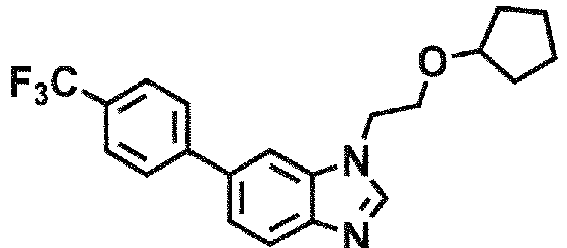
LCMS:T = 1.055, m/z = 375 -

- A mixture of Compound 69 (0.10 g), bis(pinacolato)diboron (0.142 g), dichloro[1,1'-bis(diphenylphosphino)ferrocene]palladium (0.054 g), potassium acetate (0.146 g), and 1,4-dioxane (2.0 mL) was stirred at 90°C for 2 hours. To the reaction mixture were added water and ethyl acetate, and the objective product was extracted in the organic layer. The organic layer was dried over anhydrous sodium sulfate and concentrated under reduced pressure, and then the residue was purified by silica gel column chromatography (eluate: hexane/ethyl acetate = 8/1) to give Compound 70 (90 mg).
- A mixture of Compound 70 (90 mg), 2-bromo-5-trifluoromethylpyridine (0.126 g), 3 mol/L aqueous sodium carbonate (0.372 mL), tetrakis(triphenylphosphine)palladium (86 mg), and 1,4-dioxane (2 mL) was stirred at 80°C for 1 hour. To the reaction mixture were added water and ethyl acetate, and the objective product was extracted in the organic layer. The organic layer was dried over anhydrous sodium sulfate and concentrated under reduced pressure, and then the residue was purified by silica gel column chromatography (eluate: a mixed solvent of chloroform and methanol) to give Compound 11 (40 mg).
1H-NMR (DMSO-d6) δ: 1.13 (6H, s), 4.25 (2H, s), 4.83 (1H, s), 7.74 (1H, m), 8.04 (1H, m), 8.24 (3H, m), 8.49 (1H, s), 9.02 (1H, s). -

- Compound 71 (0.698 g) was prepared according to the process of Step (i) in Example 5 by using 2-aminoethanol (0.458 g) instead of 1-amino-2-methylpropan-2-ol.
- Compound 72 (0.561 g) was prepared according to the process of Step (ii) in Example 5 by using Compound 71 (0.698 g) instead of Compound 67.
- Compound 73 (0.19 g) was prepared according to the process of Step (iii) in Example 5 by using Compound 72 (0.231 g) instead of Compound 68.
- Compound 74 (0.025 g) was prepared according to the process of Example 3 by using Compound 73 (0.19 g) instead of Compound 65.
- Compound 75 was prepared according to the process of Step (i) in Example 11 by using Compound 74 (0.015 g) instead of Compound 69. The crude product was used in the next step without purification.
- Compound 12 (0.018 g) was prepared according to the process of Step (ii) in Example 11 by using Compound 75 instead of Compound 70.
LCMS:T = 0.974, m/z = 376 -

- Under a nitrogen atmosphere, potassium carbonate (27.1 g) was added to a solution of Compound 76 (20.5 g) in DMF (326 mL) at room temperature, and then the mixture was stirred. The reaction mixture was heated to 97°C, and benzyl bromide (27.9 g) was added dropwise thereto over 20 minutes. The reaction mixture was stirred further for 1 hour. To the reaction mixture were added ethyl acetate and water, and the objective product was extracted in the organic layer. The organic layer was washed twice with water, and then concentrated under reduced pressure. To the obtained residue was added toluene (162 mL), and the mixture was concentrated under reduced pressure. (The above extraction procedure was repeated twice.) The obtained residue was slurry-washed with a mixture of ethyl acetate/hexane (= 1/4) to give Compound 77 (28.0 g).
- Under a nitrogen atmosphere, diisopropylethylamine (32 g) was added to a solution of Compound 77 (24.5 g) in NMP (248 mL) at room temperature. The reaction mixture was heated to 88°C, and 1-amino-2-methylpropan-2-ol (11.48 g) was added dropwise thereto over 12 minutes. The reaction mixture was stirred further for 1 hour. To the reaction mixture were added ethyl acetate and water, and the objective product was extracted in the organic layer. The aqueous layer was extracted with ethyl acetate, and the combined organic layer was washed with water. The organic layer was concentrated under reduced pressure. To the obtained residue was added toluene (248 mL), and the mixture was concentrated under reduced pressure. (The above extraction procedure was repeated twice.) To the obtained residue was added water (248 mL) dropwise. The precipitated crystal was collected on a filter, and dried to give Compound 78 (32.8 g).
- To a solution of Compound 78 (0.5 g) in methanol (7.9 mL) were added trimethyl orthoformate (4.37 mL), formic acid (0.6 mL), and zinc (0.52 g), and the mixture was stirred heating at 70°C for 1 hour. The reaction mixture was filtered through Celite, and the filtrate was concentrated under reduced pressure. To the residue were added a water solution of Rochelle salt (30 mL) and ethyl acetate (30 mL), and the objective product was extracted in the organic layer. The organic layer was washed with brine, dried over anhydrous sodium sulfate, and then concentrated under reduced pressure to give Compound 79 (0.45 g).
- To a solution of Compound 79 (0.5 g) in methanol (5.6 mL) at room temperature was added 10% palladium-carbon (50% water-content, 0.1 g), and the mixture was stirred under a hydrogen atmosphere for 4 hours. The reaction mixture was filtered through Celite, and the filtrate was concentrated under reduced pressure. To the obtained residue was added ethyl acetate/hexane, and the mixture was slurry-washed at room temperature. The obtained crystal was collected on a filter, and dried to give Compound 80 (0.32 g).
- A reaction mixture of Compound 80 (0.10 g), phenylboronic acid (0.118 g), copper acetate (0.132 g), triethylamine (0.198 mL), and chloroform (2.5 mL) was stirred at 35°C for 2 hours. To the reaction mixture were added saturated aqueous ammonium chloride, and ethyl acetate, and the objective product was extracted in the organic layer. The organic layer was dried over anhydrous sodium sulfate and concentrated under reduced pressure, and then the residue was purified by silica gel column chromatography (eluate: chloroform/methanol = 98/2) to give Compound 13 (0.013 g).
1H-NMR (DMSO-d6) δ: 1.06 (6H, s), 4.08 (2H, s), 4.73 (1H, s), 6.87-6.94 (3H, m), 7.05 (1H, m), 7.33 (2H, m), 7.42 (1H, m), 7.62 (1H, m), 8.09 (1H, s). - Examples 14 to 27 shown in the following table were prepared according to the process of Example 13 by using each appropriate starting material.

[Table 2] Example Ra- Spectrum data 14 
1H-NMR (DMSO-d6) δ: 1.06 (6H, s), 2.25 (3H, s), 4.07 (2H, s), 4.72 (1H, s), 6.84 (3H, m), 7.13 (2H, m), 7.36 (1H, m), 7.60 (1H, m), 8.07 (1H, s). 15 
1H-NMR (DMSO-d6) δ: 1.14 (6H, s), 4.11 (2H, s), 4.73 (1H, s), 6.95-7.08 (3H, m), 7.53 (1H, m), 7.68 (3H, m), 8.13 (1H, s). 16 
1H-NMR (CDCl3) δ: 1.27 (6H, s), 4.12 (2H, s), 6.66 (1H, dt, J = 10.4, 2.4 Hz), 6.72-6.79 (2H, m), 7.03 (1H, dd, J = 8.9, 2.1 Hz), 7.13 (1H, d, J = 1.8 Hz), 7.21-7.27 (1H, m), 7.76 (1H, d, J = 8.5 Hz), 8.34 (1H, s). 17 
1H-NMR (CDCl3) δ: 1.28 (6H, s), 4.16 (2H, s), 6.42-6.54 (3H, m), 7.06 (1H, dd, J = 8.5, 2.4 Hz), 7.17 (1H, d, J = 1.8 Hz), 7.82 (1H, d, J = 9.2 Hz), 8.48 (1H, s). 18 
1H-NMR (CDCl3) δ: 1.27 (6H, s), 4.13 (2H, s), 6.66-6.71 (1H, m), 6.77-6.82 (1H, m), 7.00 (1H, dd, J = 8.9, 2.1 Hz), 7.06-7.13 (2H, m), 7.77 (1H, d, J = 8.5 Hz), 8.39 (1H, s). 19 
1H-NMR (CDCl3) δ: 1.27 (6H, s), 3.03 (3H, s), 4.12 (2H, s), 7.01-7.06 (3H, m), 7.17-7.26 (1H, m), 7.79 (1H, d, J = 8.5 Hz), 7.85 (2H, d, J = 8.5 Hz), 8.28 (1H, s). 20 
1H-NMR (DMSO-d6) δ: 1.07 (6H, s), 4.09 (2H, s), 4.73 (1H, s), 6.89-6.96 (3H, m), 7.37 (2H, m), 7.44 (1H, m), 7.64 (1H, m), 8.11 (1H, s). 21 
1H-NMR (CDCl3) δ: 1.20 (6H, s), 3.73 (3H, s), 3.96 (2H, s), 6.78-6.82 (2H, m), 6.85-6.90 (3H, m), 6.92 (1H, d, J = 1.8 Hz), 7.56 (1H, d, J = 9.2 Hz), 7.93 (1H, s). 22 
1H-NMR (CDCl3) δ: 1.26 (6H, s), 4.08 (2H, s), 6.93-7.00 (3H, m), 7.09-7.16 (3H, m), 7.73 (1H, d, J = 8.5 Hz), 8.17 (1H, s). 23 
1H-NMR, (CDCl3) δ: 1.28 (6H, s), 4.13 (2H, s), 6.96-6.99 (2H, m), 7.03 (1H, dd, J = 8.9, 2.1 Hz), 7.18 (1H, d, J = 1.8 Hz), 7.55-7.59 (2H, m), 7.81 (1H, d, J = 8.5 Hz), 8.33 (1H, s). 24 
1H-NMR (DMSO-d6) δ: 1.06 (6H, s), 2.42 (3H, s), 4.08 (2H, s), 4.72 (1H, s), 6.90 (1H, m), 7.23 (2H, m), 7.42 (1H, m), 7.63 (1H, m), 8.09 (1H, s), 8.20 (1H, m). 25 
1H-NMR (DMSO-d6) δ: 1.07 (6H, s), 4.11 (2H, s), 4.73 (1H, s), 7.04 (1H, m), 7.44 (1H, m), 7.60 (1H, m), 7.71 (1H, m), 7.85 (1H, m), 8.15 (1H, s), 8.52 (1H, m). 26 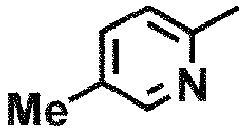
1H-NMR (DMSO-d6) δ: 1.07 (6H, s), 2.22 (3H, s), 4.09 (2H, s), 4.72 (1H, s), 6.85-6.91 (2H, m), 7.44 (1H, m), 7.59-7.65 (2H, m), 7.94 (1H, m), 8.09 (1H, s). 27 
1H-NMR (CDCl3) δ: 1.25 (6H, s), 1.74 (1H, s), 4.04 (2H, s), 6.96-6.97 (1H, m), 7.11-7.12 (1H, m), 7.22-7.22 (2H, m), 7.73-7.75 (1H, m), 7.96-7.97 (1H, m) , 8.11-8.11 (1H, m). -

- A reaction mixture of Compound 80 (1.34 g), 2-fluoro-5-(trifluoromethyl)pyridine (1.40 g), cesium carbonate (3.18 g), and acetonitrile (22 mL) was stirred at 60°C for 4 hours. To the reaction mixture were added water and ethyl acetate, and the objective product was extracted in the organic layer. The organic layer was dried over anhydrous sodium sulfate and concentrated under reduced pressure, and then the residue was purified by silica gel column chromatography (eluate: chloroform/methanol = 95/5) to give Compound 28 (1.78 g).
1H-NMR (DMSO-d6) δ: 1.07 (6H, s), 4.11 (2H, s), 4.73 (1H, s), 7.00 (1H, m), 7.18 (1H, m), 7.56 (1H, m), 7.66 (1H, m), 8.13 (1H, s), 8.20 (1H, m), 8.54 (1H, m).
XRD ; 2θ = 9.1, 12.9, 13.7, 17.5, 18.0, 18.1, 20.5, 20.8, 21.2, 21.8, 22.3, 23.2, 23.8, 24.6, 24.9, 26.9, 27.3, 28.2, 30.2, 32.5 - Examples 29 to 42 shown in the following table were prepared according to the process of Example 28 by using each appropriate starting material.
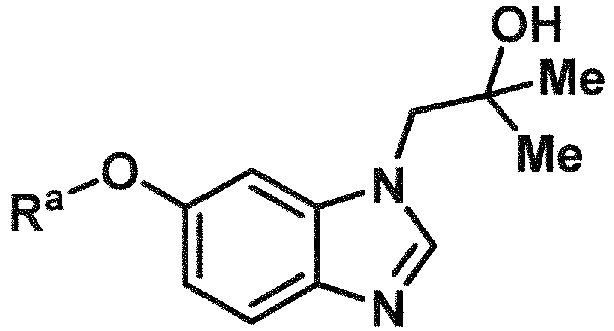
[Table 3] Example Ra- Spectrum data 29 
1H-NMR (CDCl3) δ: 1.22 (6H, s), 4.00 (2H, s), 6.82 (1H, dd, J = 9.2, 3.7 Hz), 6.94 (1H, dd, J = 8.9, 2.1 Hz), 7.17 (1H, d, J = 2.4 Hz), 7.33-7.38 (1H, m), 7.65 (1H, d, J = 9.2 Hz), 7.89 (1H, s), 7.92 (1H, d, J = 3.1 Hz). 30 
1H-NMR (CDCl3) δ: 1.28 (6H, s), 1.65 (1H, s), 4.08 (2H, s), 7.04-7.08 (2H, m), 7.29 (1H, d, J = 1.8 Hz), 7.79 (1H, d, J = 8.5 Hz), 7.97-7.99 (2H, m), 8.24 (1H, dd, J = 4.9, 1.8 Hz). 31 
1H-NMR (CDCl3) δ: 1.28 (6H, s), 1.75 (1H, s), 4.07 (2H, s), 7.04 (1H, dd, J = 8.9, 2.1 Hz), 7.13 (1H, s), 7.17 (1H, d, J = 5.5 Hz), 7.26 (1H, d, J = 2.1 Hz), 7.79 (1H, d, J = 8.9 Hz), 7.97 (1H, s), 8.29 (1H, d, J = 5.5 Hz). 32 
1H-NMR (CDCl3) δ: 1.28 (6H, s), 1.69 (1H, s), 4.07 (2H, s), 7.03-7.05 (2H, m), 7.35-7.36 (2H, m), 7.75-7.82 (2H, m), 7.98 (1H, s). 33 
1H-NMR (CDCl3) δ: 1.28 (6H, s), 1.95 (1H, s), 4.07 (2H, s), 6.63 (1H, t, J = 55.8 Hz), 6.97-7.04 (2H, m), 7.26 (1H, d, J = 1.8 Hz), 7.77 (1H, d, J = 8.5 Hz), 7.82 (1H, d, J = 9.2 Hz), 7.95 (1H, s), 8.24 (1H, s). 34 
1H-NMR (CDCl3) δ: 1.28 (6H, s), 1.81 (1H, s), 4.06 (2H, s), 6.86 (1H, d, J = 8.5 Hz), 7.02 (1H, dd, J = 9.2, 1.8 Hz), 7.23 (1H, d, J = 1.8 Hz), 7.60-7.63 (1H, m), 7.76 (1H, d, J = 8.5 Hz), 7.95 (1H, s), 8.08 (1H, d, J = 2.4 Hz). 35 
1H-NMR (CDCl3) δ: 1.28 (6H, s), 1.63 (1H, s), 4.08 (2H, s), 7.10 (1H, dd, J = 8.5, 2.1 Hz), 7.30 (1H, d, J = 9.8 Hz), 7.39 (1H, d, J = 2.1 Hz), 7.78 (1H, d, J = 9.8 Hz), 7.82 (1H, d, J = 8.5 Hz), 7.98 (1H, s). [Table 4] Example Ra- Spectrum data 36 
1H-NMR (CDCl3) δ: 1.29 (6H, s), 1.66 (1H, s), 4.08 (2H, s), 7.06 (1H, dd, J = 8.9, 2.1 Hz), 7.30 (1H, d, J = 2.1 Hz), 7.82 (1H, d, J = 8.9 Hz), 7.99 (1H, s), 8.40 (1H, s), 8.49 (1H, s). 37 
1H-NMR (CDCl3) δ: 1.26 (6H, s), 2.05 (1H, s), 4.03 (2H, s), 7.06 (1H, dd, J = 8.5, 2.4 Hz), 7.15 (1H, d, J = 9.2 Hz), 7.35 (1H, d, J = 2.4 Hz), 7.47 (1H, d, J = 9.2 Hz), 7.76 (1H, d, J = 8.5 Hz), 7.93 (1H, s). 38 
1H-NMR (CDCl3) δ: 1.28 (6H, s), 1.82 (1H, s), 4.07 (2H, s), 7.03-7.06 (1H, m), 7.27-7.27 (1H, m), 7.49-7.51 (1H, m), 7.75-7.77 (1H, m), 7.83-7.83 (1H, m), 7.95 (1H, s). 39 
1H-NMR (CDCl3) δ: 1.29 (6H, s), 1.68 (1H, s), 4.08 (2H, s), 7.07 (1H, dd, J = 8.9, 2.1 Hz), 7.31 (1H, d, J = 2.4 Hz), 7.68 (1H, dd, J = 9.5, 2.1 Hz), 7.80 (1H, d, J = 8.9 Hz), 7.98 (1H, s), 8.13 (1H, d, J = 2.4 Hz). 40 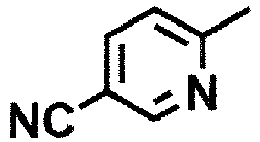
1H-NMR (CDCl3) δ: 1.28 (6H, s), 1.81 (1H, s), 4.07 (2H, s), 7.00-7.03 (2H, m), 7.26 (1H, d, J = 2.3 Hz), 7.79 (1H, d, J = 8.7 Hz), 7.90 (1H, dd, J = 8.7, 2.3 Hz), 7.97 (1H, s), 8.42-8.43 (1H, m). 41 
1H-NMR (CDCl3) δ: 1.29 (6H, s), 1.71 (1H, s), 4.08 (2H, s), 7.08 (1H, dd, J = 8.5, 2.4 Hz), 7.31 (1H, d, J = 2.4 Hz), 7.81 (1H, d, J = 8.5 Hz), 7.99 (1H, s), 8.77 (2H, s). 42 
1H-NMR (CDCl3) δ: 1.28 (6H, s), 1.70 (1H, s), 4.08 (2H, s), 6.77-6.78 (2H, m), 6.98-7.00 (1H, m), 7.19 (1H, d, J = 1.8 Hz), 7.80 (1H, d, J = 8.5 Hz), 8.01 (1H, s), 8.19 (1H, d, J = 5.5 Hz). -

- Under a nitrogen atmosphere, potassium carbonate (5.97 g) and benzyl bromide (5.91 g) were added to a solution of Compound 81 (5 g) in DMF (56 mL) at room temperature, and then the mixture was stirred for 3 hours. To the reaction mixture were added ethyl acetate and water, and the objective product was extracted in the organic layer. The organic layer was washed with brine, and dried over anhydrous sodium sulfate. After the organic layer was concentrated under reduced pressure, the residue was purified by silica gel column chromatography (eluate: hexane/ethyl acetate = 90/10) to give Compound 82 (7.52 g).
- Under a nitrogen atmosphere, diisopropylethylamine (5.53 g) and 1-amino-2-methylpropan-2-ol (3.05 g) were added to a solution of Compound 82 (7.52 g) in NMP (30 mL) at room temperature, and the mixture was stirred at 100°C for 1 hour, and then at 150°C for 1 hour. The reaction mixture stood to cool at room temperature, and diisopropylethylamine (5.53 g) and potassium fluoride (1.99 g) were added thereto at room temperature. The mixture was stirred at 150°C for 1 hour, and then at 200°C for 40 hours. To the reaction mixture were added ethyl acetate and water, and the objective product was extracted in the organic layer. The organic layer was washed with brine, and dried over anhydrous sodium sulfate. After the organic layer was concentrated under reduced pressure, the residue was purified by silica gel column chromatography (eluate: hexane/ethyl acetate = 60/40) to give Compound 83 (5.3 g).
- To a solution of Compound 83 (5.3 g) in methanol (85 mL) were added trimethyl orthoformate (44.4 g), formic acid (7.71 g) and zinc (5.48 g), and the mixture was stirred at room temperature for 2 hours. The reaction mixture was filtered through Celite, and the filtrate was concentrated under reduced pressure. The residue was purified by silica gel column chromatography (eluate : chloroform/methanol = 95/5) to give Compound 84 (2.68 g).
- To a solution of Compound 84 (2.68 g) in methanol (45 mL) was added 10% palladium-carbon (50% water-content, 0.53 g), and the mixture was stirred under a hydrogen atmosphere for 4 hours. The reaction mixture was filtered through Celite, and the filtrate was concentrated under reduced pressure. To the obtained residue was added ethyl acetate, and the mixture was slurry-washed at room temperature. The obtained crystal was collected on a filter, and dried to give Compound 85 (1.58 g).
- Under a nitrogen atmosphere, 2-fluoro-6-(trifluoromethyl)pyridine (0.048 g) and cesium carbonate (0.118 g) were added to a solution of Compound 85 (0.05 g) in NMP (1 mL) at room temperature, and the mixture was stirred at 100°C for 3 hours. The reaction mixture was directly purified by silica gel column chromatography (eluate: chloroform/methanol = 95/5) to give Compound 43 (0.064 g).
1H-NMR (CDCl3) δ: 1.31 (6H, s), 1.83 (1H, br s), 4.14 (2H, s), 6.98 (1H, d, J = 8.7 Hz), 7.13 (1H, dd, J = 8.7, 2.3 Hz), 7.35 (1H, d, J = 7.3 Hz), 7.45 (1H, d, J = 8.7 Hz), 7.56 (1H, d, J = 1.8 Hz), 7.78 (1H, t, J = 8.0 Hz), 8.07 (1H, s). - Examples 44 to 54 shown in the following table were prepared according to the process of Example 43 by using each appropriate starting material.

[Table 5] Example R3- Spectrum data 44 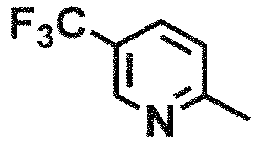
1H-NMR (CDCl3) δ: 1.31 (6H, s), 1.81 (1H, br s), 4.14 (2H, s), 7.00 (1H, d, J = 8.7 Hz), 7.10 (1H, dd, J = 8.9, 2.1 Hz), 7.48 (1H, d, J = 8.7 Hz), 7.56 (1H, d, J = 2.3 Hz), 7.87 (1H, dd, J = 8.7, 2.7 Hz), 8.08 (1H, s), 8.40-8.42 (1H, m). 45 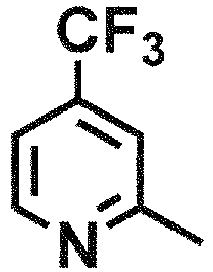
1H-NMR (CDCl3) δ: 1.31 (6H, s), 1.86 (1H, br s), 4.13 (2H, s), 7.10 (1H, dd, J = 8.7, 2.3 Hz), 7.14 (1H, s), 7.16 (1H, d, J = 5.0 Hz), 7.47 (1H, d, J = 8.7 Hz), 7.55 (1H, d, J = 2.3 Hz), 8.02 (1H, s), 8.29 (1H, d, J = 5.0 Hz). 46 
1H-NMR (CDCl3) δ: 1.30 (6H, s), 1.81 (1H, br s), 4.12 (2H, s), 7.05 (1H, dd, J = 7.3, 5.0 Hz), 7.12 (1H, dd, J = 8.7, 2.3 Hz), 7.46 (1H, d, J = 8.7 Hz), 7.57 (1H, d, J = 2.3 Hz), 7.98 (1H, dd, J = 8.0, 1.6 Hz), 8.02 (1H, s), 8.25 (1H, dd, J = 5.0, 1.4 Hz). 47 
1H-NMR (CDCl3) δ: 1.30 (6H, s), 1.86 (1H, br s), 4.11 (2H, s), 6.87-6.90 (1H, m), 6.95 (1H, ddd, J = 7.3, 5.0, 0.9 Hz), 7.10 (1H, dd, J = 8.7, 2.3 Hz), 7.44 (1H, d, J = 8.7 Hz), 7.53 (1H, d, J = 2.3 Hz), 7.65 (1H, ddd, J = 8.8, 6.7, 1.5 Hz), 8.00 (1H, s), 8.16 (1H, dt, J = 5.0, 1.1 Hz). 48 
1H-NMR (CDCl3) δ: 1.30 (6H, s), 1.80 (1H, br s), 1.80 (0H, s), 4.12 (2H, s), 6.88 (1H, dd, J = 9.1, 3.7 Hz), 7.09 (1H, dd, J = 8.7, 2.3 Hz), 7.38-7.46 (2H, m), 7.51 (1H, d, J = 2.3 Hz), 7.99 (1H, d, J = 2.7 Hz), 8.03 (1H, s). 49 
1H-NMR (CDCl3) δ: 1.30 (6H, s), 1.72 (1H, br s), 4.15 (2H, s), 6.87 (1H, d, J = 9.1 Hz), 7.11 (1H, dd, J = 8.7, 2.3 Hz), 7.47 (1H, d, J = 8.7 Hz), 7.55 (1H, d, J = 1.8 Hz), 7.62 (1H, dd, J = 8.7, 2.7 Hz), 8.08-8.09 (1H, m), 8.17 (1H, br s) . 50 
1H-NMR (CDCl3) δ: 1.27 (6H, s), 1.88 (1H, br s), 4.12 (2H, s), 7.15 (1H, dd, J = 8.7, 2.3 Hz), 7.32 (1H, d, J = 9.1 Hz), 7.48 (1H, d, J = 8.7 Hz), 7.59 (1H, d, J = 2.3 Hz), 7.79 (1H, d, J = 9.1 Hz), 7.96 (1H, s). 51 
1H-NMR (CDCl3) δ: 1.31 (6H, s), 1.76 (1H, br s), 4.15 (2H, s), 7.11 (1H, dd, J = 9.1, 2.3 Hz), 7.51 (1H, d, J = 8.7 Hz), 7.60 (1H, d, J = 2.3 Hz), 8.12 (1H, s), 8.40 (1H, d, J = 0.9 Hz), 8.50 (1H, d, J = 0.9 Hz). 52 
1H-NMR (CDCl3) δ: 1.31 (6H, s), 1.77 (1H, br s), 4.15 (2H, s), 7.14 (1H, dd, J = 8.7, 2.3 Hz), 7.51 (1H, d, J = 9.1 Hz), 7.61 (1H, d, J = 1.8 Hz), 8.11 (1H, s), 8.77 (2H, d, J = 0.9 Hz) . 53 
1H-NMR (CDCl3) δ: 1.31 (6H, s), 1.70 (1H, br s), 4.16 (2H, s), 7.14 (1H, dd, J = 8.9, 2.1 Hz), 7.50 (1H, d, J = 9.2 Hz), 7.62 (1H, d, J = 2.4 Hz), 7.67 (1H, dd, J = 9.5, 2.1 Hz), 8.14 (1H, s), 8.15 (1H, s). 54 
1H-NMR (CDCl3) δ: 1.31 (6H, s), 1.70 (1H, br s), 4.15 (2H, s), 7.13 (1H, dd, J = 8.7, 2.3 Hz), 7.46-7.52 (2H, m), 7.58 (1H, d, J = 2.3 Hz), 7.84 (1H, d, J = 2.3 Hz), 8.16 (1H, s). - Examples 55 to 58 shown in the following table were prepared according to the process of Example 59 by using each appropriate starting material.
[Table 6] Example Chemical Structure Spectrum data 55 
1H-NMR (CDCl3) δ : 1.48 (2H, d, J = 11.6 Hz), 1.75-1.83 (2H, m), 2.69 (1H, br s), 3.72 (2H, td, J = 11.6, 1.8 Hz), 3.80 (2H, td, J = 5.8, 3.7 Hz), 4.09 (2H, s), 6.98-7.02 (2H, m), 7.27 (1H, d, J = 1.8 Hz), 7.69 (1H, d, J = 8.5 Hz), 7.89 (1H, dd, J = 8.5, 2.4 Hz), 7.89 (1H, s), 8.38 (1H, s). 56 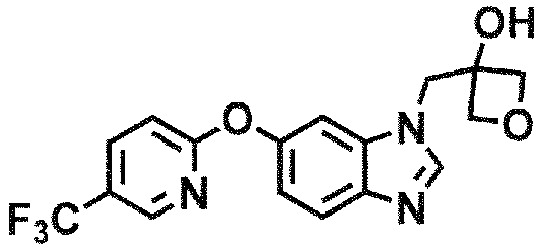
1H-NMR (CDCl3) δ : 4.39 (1H, br s), 4.51 (2H, s), 4.56 (2H, d, J = 7.9 Hz), 4.63 (2H, d, J = 7.9 Hz), 7.00 (2H, td, J = 8.2, 5.9 Hz), 7.36 (1H, d, J = 2.4 Hz), 7.66 (1H, d, J = 8.5 Hz), 7.89 (1H, dd, J = 8.5, 2.4 Hz), 7.94 (1H, s), 8.38 (1H, s). 57 
1H-NMR (CDCl3) δ : 0.83 (2H, dd, J = 6.6, 5.7 Hz), 1.04 (2H, t, J = 6.2 Hz), 1.59 (3H, br s), 4.20 (2H, s), 6.87 (1H, dd, J = 8.7, 2.3 Hz), 7.00 (1H, d, J = 8.7 Hz), 7.21 (1H, d, J = 1.8 Hz), 7.44 (1H, d, J = 9.1 Hz), 7.86-7.89 (2H, m), 8.39 (1H, t, J = 0.9 Hz). 58 
1H-NMR (CDCl3) δ : 1.63-1.73 (1H, m), 1.84-1.92 (1H, m), 2.06 (2H, q, J = 10.6 Hz), 2.17 (2H, q, J = 7.1 Hz), 4.22 (2H, s), 6.99-7.03 (2H, m), 7.31 (1H, s), 7.75 (1H, d, J = 8.5 Hz), 7.88 (1H, dd, J = 8.5, 1.8 Hz), 8.02 (1H, s), 8.40 (1H, s). -

- To a solution of Compound 76 (0.35 g) in NMP (7.5 mL) at room temperature was added diisopropylethylamine (1.01 g). To the mixture was added 4-amino-2-methylbutan-2-ol hydrochloride (0.37 g), and the reaction solution was heated to 110°C, and stirred for 3.5 hours. The reaction solution was cooled to room temperature. To reaction solution were added cesium carbonate (0.95 g) and 2-fluoro-5-(trifluoromethyl)pyridine (0.42 g), and the reaction solution was heated to 110°C, and stirred for 4 hours. The reaction solution was cooled to room temperature, ethyl acetate and water were added thereto, and the objective product was extracted in the organic layer. The aqueous layer was extracted with ethyl acetate, and the combined organic layer was washed with water. The organic layer was concentrated under reduced pressure, and the residue was purified by silica gel column chromatography (eluate: hexane/ethyl acetate = 65/35) to give Compound 86 (0.6 g).
- To a solution of Compound 86 (0.6 g) in methanol (7.8 mL) were added trimethyl orthoformate (4.26 mL), formic acid (0.6 mL) and zinc (0.51 g), and the mixture was stirred heating at 70°C for 2 hours. The reaction mixture was filtered through Celite, and the filtrate was concentrated under reduced pressure. The obtained residue was purified by amino silica gel column chromatography (eluate: chloroform/methanol = 93/7) to give Compound 59 (0.23 g).
1H-NMR (CDC13) δ: 1.31 (6H, s), 2.01-2.05 (2H, m), 4.30-4.34 (2H, m), 7.02 (1H, d, J = 8.7 Hz), 7.06 (1H, dd, J = 8.7, 2.3 Hz), 7.23 (1H, d, J = 2.3 Hz), 7.82 (1H, d, J = 8.7 Hz), 7.89 (1H, dd, J = 8.7, 2.7 Hz), 8.04 (1H, s), 8.42-8.42 (1H, m). -

- To a solution of Compound 80 (0.103 g) in DMF (1 mL) were added 6-chloronicotinaldehyde (85 mg) and cesium carbonate (326 mg), and the mixture was heated at 110°C for 1 hour. The reaction mixture was filtrated, and DMAP (92 mg) and acetic anhydride (0.142 mL) was added to the filtrate. The mixture was stirred at room temperature for 3 days. To the reaction mixture were added water and ethyl acetate : hexane = 2 : 1 (v/v), and the objective product was extracted in the organic layer (the above extraction procedure was repeated three times). The organic layer was concentrated under reduced pressure, and then the residue was purified by silica gel column chromatography (eluate: chloroform/methanol = 95/5) to give Compound 87 (130 mg).
- To a solution of Compound 87 (0.13 g) and trimethyl (trifluoromethyl)silane (0.163 mL) in DMF (3.7 mL) were added potassium carbonate (0.025 g) and cesium fluoride (0.056 g), and the mixture was stirred at room temperature for 2 hours. To the reaction mixture was added another trimethyl (trifluoromethyl)silane (0.075 mL), and the reaction mixture was stirred at room temperature further for 1 hour. To the reaction mixture were added water and ethyl acetate : hexane = 2 : 1 (v/v), and the objective product was extracted in the organic layer (the above extraction procedure was repeated three times). The organic layer was concentrated under reduced pressure, and then the residue was purified by silica gel column chromatography (eluate: chloroform/methanol = 95/5) to give Compound 88 (0.106 g).
- A solution of Compound 88 (0.1 g) and thiocarbonyldiimidazole (0.051 g) in dry THF (2 mL) was heated under reflux for 2 hours. After allowing the reaction mixture to stand to cool at room temperature, the reaction mixture was concentrated under reduced pressure. To the residue were added ethyl acetate and water, and the objective product was extracted in the organic layer. The organic layer was washed with brine, dried over anhydrous sodium sulfate, and then concentrated under reduced pressure. The obtained residue was dissolved in dry toluene (2 mL) under a nitrogen atmosphere, and then azobisisobutyronitrile (0.008 g) and tri-n-butyltin hydride (0.137 g) were added thereto. The mixture was stirred at 90°C for 1 hour. The reaction mixture was concentrated under reduced pressure, and then the residue was purified by silica gel column chromatography (eluate: chloroform/methanol = 95/5) to give Compound 89 (0.076 mg).
- To a solution of Compound 89 (0.076 mg) in methanol (2 mL) was added potassium carbonate (100 mg), and the mixture was stirred at room temperature for 2 hours. The reaction mixture was filtered, and the filtrate was concentrated under reduced pressure. The residue was purified by silica gel column chromatography (eluate: chloroform/methanol = 95/5) to give Compound 60 (0.055 g).
1H-NMR (CDCl3) 1.22 (6H, s), 3.21-3.29 (2H, m), 4.01 (2H, s), 6.84 (6H, s), 6.94-6.99 (1H, m), 7.21 (2H, s), 7.56 (1H, d, J = 8.2 Hz), 7.69 (1H, dd, J = 8.7, 2.3 Hz), 7.88 (1H, s), 7.98 (1H, s). - Examples 90 to 115 shown in the following table were prepared according to the process of Example 1 by using each appropriate starting material.
[Table 7] Example Chemical Structure Spectrum data 90 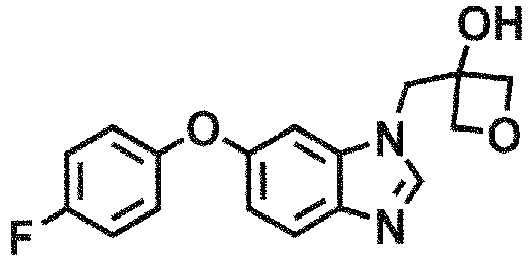
1H-NMR (CDCl3) δ: 4.54 (2H, s), 4.58 (4H, dd, J = 55.5, 7.9 Hz), 6.93-7.05 (5H, m), 7.14 (1H, d, J = 2.4 Hz), 7.64 (1H, d, J = 9.2 Hz), 8.27 (1H, d, J = 4.3 Hz). 91 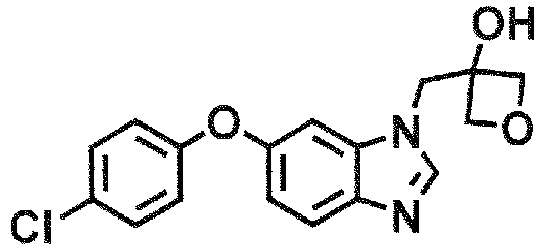
1H-NMR (CDCl3) δ: 4.55 (2H, s), 4.58 (4H, dd, J = 53.1, 7.9 Hz), 6.89-6.91 (2H, m), 6.99 (1H, dd, J = 9.2, 2.4 Hz), 7.19 (1H, d, J = 1.8 Hz), 7.26-7.28 (2H, m), 7.65 (1H, d, J = 8.5 Hz), 8.26 (1H, s). 92 
1H-NMR (CDCl3) δ: 2.32 (3H, s), 4.52 (2H, s), 4.58 (4H, dd, J = 55.5, 7.9 Hz), 6.87-6.89 (2H, m), 6.98 (1H, dd, J = 8.9, 2.1 Hz), 7.12-7.13 (3H, m), 7.60 (1H, d, J = 8.5 Hz), 8.21 (1H, s). 93 
1H-NMR (CDCl3) δ: 4.50 (2H, s), 4.59 (4H, dd, J = 27.4, 8.2 Hz), 6.95-7.00 (3H, m), 7.24-7.25 (1H, m), 7.53 (2H, d, J = 9.1 Hz), 7.64 (1H, d, J = 8.7 Hz), 7.96 (1H, s). 94 
1H-NMR (CDCl3) δ: 4.57 (2H, s), 4.59 (4H, dd, J = 52.5, 7.9 Hz), 6.94-7.02 (3H, m), 7.16 (2H, m), 7.23 (1H, d, J = 1.8 Hz), 7.68 (1H, d, J = 8.5 Hz), 8.31 (1H, s). XRD ; 2θ = 7.7, 11.5, 15.4, 17.4, 17.8, 19.3, 21.2, 21.9, 22.5, 23.1, 23.5, 25.6, 26.1, 27.0, 31.0, 32.3, 33.2, 35.0, 36.0, 39.0 95 
1H-NMR (CDCl3) δ: 4.58 (2H, s), 4.59 (4H, dd, J = 54.3, 7.3 Hz), 6.66 (1H, dd, J = 10.4, 2.4 Hz), 6.75-6.79 (2H, m), 7.03 (1H, d, J = 9.2 Hz), 7.25-7.27 (2H, m), 7.68 (1H, d, J = 8.5 Hz), 8.32 (1H, s). 96 
1H-NMR (CDCl3) δ: 4.58 (4H, dd, J = 58.0, 7.9 Hz), 4.65 (2H, s), 7.11 (1H, dd, J = 8.5, 2.4 Hz), 7.34 (1H, dd, J = 8.9, 2.7 Hz), 7.36 (1H, d, J = 2.4 Hz), 7.63 (1H, d, J = 8.5 Hz), 7.83 (1H, d, J = 9.2 Hz), 8.44 (1H, d, J = 3.1 Hz), 8.60 (1H, s). 97 
1H-NMR (CDCl3) δ: 1.29 (6H, s), 1.99-2.01 (2H, m), 4.28 (2H, t, J = 7.6 Hz), 6.94-6.96 (3H, m), 7.08 (1H, s), 7.15 (2H, m), 7.74 (1H, d, J = 8.5 Hz), 7.97 (1H, s). 98 
1H-NMR (CDCl3) δ: 1.30 (6H, s), 2.02 (2H, d, J = 13.4 Hz), 4.27-4.30 (2H, br m), 6.66-6.72 (3H, m), 6.99 (1H, d, J = 6.1 Hz), 7.10 (1H, s), 7.24 (1H, s), 7.74 (1H, d, J = 7.9 Hz), 7.95 (1H, s). 99 
1H-NMR (CDCl3) δ: 1.29 (6H, s), 2.00 (2H, t, J = 7.9 Hz), 2.31 (3H, s), 4.28 (2H, dd, J = 8.9, 7.0 Hz), 6.89 (2H, m), 6.99 (1H, d, J = 8.5 Hz), 7.05 (1H, d, J = 1.8 Hz), 7.11 (2H, m), 7.72 (1H, d, J = 8.5 Hz), 8.12 (1H, s). 100 
1H-NMR (CDCl3) δ: 1.29 (6H, s), 2.00 (2H, t, J = 7.9 Hz), 4.28 (2H, m), 6.93-7.03 (6H, m), 7.73 (1H, d, J = 8.5 Hz), 8.07 (1H, s). 101 
1H-NMR (CDCl3) δ : 1.30 (6H, s), 1.99-2.03 (2H, m), 4.28-4.32 (2H, m), 6.90-6.91 (2H, m), 6.98 (1H, dd, J = 8.5, 2.4 Hz), 7.07 (1H, d, J = 2.4 Hz), 7.26-7.27 (2H, m), 7.75 (1H, d, J = 9.2 Hz), 8.12 (1H, br s). XRD ; 2θ = 7.7, 15.3, 16.2, 16.4, 17.0, 18.9, 20.2, 20.3, 20.9, 21.2, 23.7, 24.4, 25.4, 27.5, 28.3, 28.6, 29.0, 31.0, 32.0, 34.5 102 
1H-NMR (CDCl3) δ: 1.26 (6H, s), 1.97-2.01 (2H, m), 4.28-4.32 (2H, m), 6.96-7.01 (3H, m), 7.10 (1H, d, J = 2.4 Hz), 7.51 (2H, m), 7.77 (1H, d, J = 9.2 Hz), 8.27-8.28 (1H, br m) . 103 
1H-NMR (CDCl3) δ: 1.31 (6H, s), 2.02-2.08 (2H, m), 4.37 (2H, t, J = 7.9 Hz), 7.07 (1H, dd, J = 8.9, 2.1 Hz), 7.19 (1H, d, J = 1.8 Hz), 7.30 (1H, dd, J = 8.9, 2.7 Hz), 7.61 (1H, d, J = 9.2 Hz), 7.86 (1H, d, J = 8.5 Hz), 8.40 (1H, s), 8.46 (1H, d, J = 2.4 Hz). 104 
1H-NMR (CDCl3) δ: 1.27 (6H, s), 3.27-3.35 (2H, m), 4.03 (2H, s), 6.90-6.97 (3H, m), 7.09 (1H, d, J = 2.4 Hz), 7.20 (2H, m), 7.67 (1H, d, J = 8.5 Hz), 7.92 (1H, s). 105 
1H-NMR (CDCl3) δ: 3.31 (2H, q, J = 10.8 Hz), 4.48 (2H, s), 4.59 (4H, dd, J = 27.2, 7.6 Hz), 6.91-6.97 (3H, m), 7.19-7.22 (3H, m), 7.60 (1H, d, J = 8.5 Hz), 7.93 (1H, s). 106 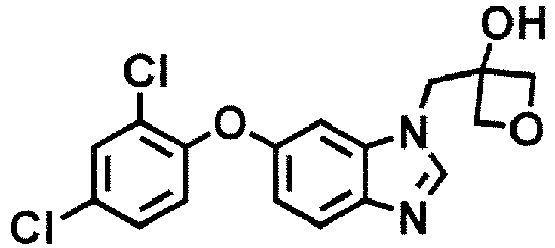
1H-NMR (DMSO-d6) δ: 4.43 (4H, dd, J = 37. 5, 7.0 Hz), 4.51 (2H, s), 6.17 (1H, s), 6.91-6.94 (2H, m), 7.36 (1H, dd, J = 8.5, 2.4 Hz), 7.40 (1H, d, J = 1.8 Hz), 7.64 (1H, d, J = 9.2 Hz), 7.75 (1H, d, J = 2.4 Hz), 8.26 (1H, s). 107 
1H-NMR (CDCl3) δ: 4.08 (1H, s), 4.50 (2H, s), 4.60 (4H, dd, J = 31.0, 7.8 Hz), 6.82 (1H, m), 6.93 (1H, m), 7.02 (1H, dd, 2.4, 2.4 Hz), 7.20 (1H, dd, J = 2.1, 2.1 Hz), 7.34 (1H, dd, J = 8.9, 2.1 Hz), 7.61 (1H, dd, J = 8.9, 2.1 Hz), 7.94 (1H, d, J = 2.4 Hz). 108 
LCMS: T = 0.782, m/z = 399, 401 109 
1H-NMR (CDCl3) δ: 4.48 (2H, s), 4.58 (4H, dd, J = 23.5, 7.6 Hz), 6.89-6.94 (2H, m), 7.03-7.06 (1H, m), 7.12 (1H, d, J = 2.4 Hz), 7.20 (1H, dd, J = 10.4, 2.4 Hz), 7.58 (1H, d, J = 9.2 Hz), 7.91 (1H, s). 110 
1H-NMR (CDCl3) δ: 4.48 (2H, s), 4.57 (4H, dd, J = 11.3, 7.6 Hz), 6.91 (3H, m), 7.07 (1H, d, J = 2.4 Hz), 7.20-7.23 (1H, m), 7.66 (1H, d, J = 8.5 Hz), 7.95 (1H, s). 111 
1H-MMR (CDCl3) δ: 4.19 (1H, br s), 4.51 (2H, s), 4.61 (4H, dd, J = 33.0, 7.9 Hz), 6.81 (2H, ,), 6.94 (1H, dd, J = 8.5, 2.4 Hz), 7.03 (1H, dd, J = 1.8, 1.8 Hz), 7.22 (1H, d, J = 2.4 Hz), 7.61 (1H, d, J = 8.5 Hz), 7.95 (1H, s). 112 
1H-NMR (CDCl3) δ: 4.51 (2H, s), 4.57-4.59 (4H, m), 6.81 (1H, d, J = 2.4 Hz), 6.96-7.02 (2H, m), 7.20 (1H, d, J = 1.8 Hz), 7.37 (1H, d, J = 8.5 Hz), 7.73 (1H, d, J = 8.5 Hz), 8.00 (1H, s). 113 
1H-NMR (DMSO-d6) δ: 1.33 (3H, s), 2.63-2.59 (2H, m), 2.54-2.50 (2H, m), 5.28 (1H, s), 7.00 (1H, dd, J = 8.8, 2.4 Hz), 7.08 (2H, m), 7.54 (1H, d, J = 1.6 Hz), 7.69 (2H, m), 7.71 (1H, d, J = 8.8 Hz), 8.39 (1H, s). 114 
1H-NMR (DMSO-d6) δ: 4.38 (2H, d, J = 6.8 Hz), 4.48 (2H, d, J = 6.8 Hz), 4.51 (2H, s), 6.17 (1H, m), 6.97-7.00 (1H, m), 7.23 (1H, d, J = 8.8, 2.4 Hz), 7.46 (1H, d, J = 2.4 Hz), 7.54 (1H, d, J = 2.4 Hz), 7.66 (1H, d, J = 8.8 Hz), 8.14 (1H, d, J = 8.8 Hz), 8.26 (1H, s), 9.39 (1H, s). 115 
1H-NMR (DMSO-d6) δ: 4.38 (2H, d, J = 6.8 Hz), 4.48 (2H, d, J = 6.8 Hz), 4.52 (2H, s), 6.18 (1H, m), 7.03 (1H, dd, J = 8.4, 2.4 Hz), 7.30 (1H, d, J = 2.4 Hz), 7.46 (1H, dd, J = 8.0, 4.4 Hz), 7.53-7.57 (2H, m), 7.68-7.70 (1H, m), 8.01-8.04 (1H, m), 8.20-8.22 (1H, m), 8.28 (1H, s), 8.78 (1H, dd, J = 2.0, 4.4 Hz). - Examples 116 to 121 shown in the following table were prepared according to the process of Example 59 by using each appropriate starting material.
[Table 8] Example Chemical Structure Spectrum data 116 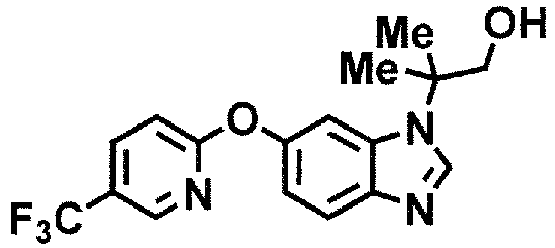
1H-NMR (CDCl3) δ: 1.73 (6H, s), 3.94 (2H, s), 7.00 (2H, m), 7.39 (1H, d, J = 2.4 Hz), 7.70 (1H, d, J = 8.5 Hz), 7.88 (1H, dd, J = 8.9, 2.1 Hz), 7.97 (1H, s), 8.40 (1H, s). 117 
1H-NMR (CDCl3) δ: 1.43-1.54 (2H, m), 1.78-1.92 (2H, m), 2.11-2.22 (4H, m), 3.75 (1H, tt, J = 10.7, 4.4 Hz), 4.11 (1H, tt, J = 12.2, 3.8 Hz), 6.97 (1H, d, J = 8.5 Hz), 7.01 (1H, dd, J = 8.5, 2.4 Hz), 7.17 (1H, d, J = 2.4 Hz), 7.77 (1H, d, J = 8.5 Hz), 7.85 (1H, dd, J = 8.9, 2.7 Hz), 7.99 (1H, s), 8.37 (1H, d, J = 1.8 Hz). 118 
1H-NMR (CDCl3) δ: 1.46 (1H, d, J = 2.4 Hz), 1.67-1.76 (2H, m), 1.95-2.03 (4H, m), 2.27-2.36 (2H, m), 4.12-4.19 (2H, m), 7.02 (2H, m), 7.22-7.24 (1H, m), 7.82 (1H, d, J = 9.2 Hz), 7.88 (1H, dd, J = 8.5, 2.4 Hz), 8.04 (1H, s), 8.42 (1H, s). 119 
1H-NMR (CDCl3) δ: 1.60-1.87 (8H, m), 4.21 (2H, s), 7.00 (1H, d, J = 8.5 Hz), 7.03 (1H, dd, J = 8.5, 2.4 Hz), 7.29 (1H, d, J = 2.4 Hz), 7.78 (1H, d, J = 9.2 Hz), 7.88 (1H, dd, J = 8.5, 2.4 Hz), 8.00 (1H, s), 8.40 (1H, s). 120 
1H-NMR (CDCl3) δ: 1.28 (6H, s), 1.61 (1H, s), 4.07 (2H, s), 6.94 (1H, d, J = 8.5 Hz), 7.04 (1H, dd, J = 8.5, 2.4 Hz), 7.25 (1H, d, J = 2.4 Hz), 7.53-7.57 (1H, m), 7.79 (1H, d, J = 8.5 Hz), 7.96 (1H, s), 8.07 (1H, d, J = 3.1 Hz) . 121 
1H-NMR (DMSO-d6) δ: 1.33 (3H, s), 2.59-2.64 (2H, m), 2.51-2.54 (2H, m), 5.28 (1H, s), 7.02-7.04 (1H, m), 7.20 (1H, d, J = 8.8 Hz), 7.56-7.57 (1H, m), 7.68 (1H, d, J = 8.8 Hz), 8.21 (1H, dd, J = 2.4, 8.8Hz), 8.38 (1H, s), 8.54-8.55 (1H, m). - Examples 122 to 174 shown in the following table were prepared according to the process of Example 5 by using each appropriate starting material.
[Table 9] Example Chemical Structure Spectrum data 122 
1H-NMR (CDCl3) δ: 1.32 (6H, s), 4.27 (2H, s), 7.53 (1H, d, J = 8.5 Hz), 7.69 (1H, d, J = 1.2 Hz), 7.76 (1H, d, J = 8.5 Hz), 7.93 (1H, d, J = 8.5 Hz), 8.06 (1H, dd, J = 7.9, 1.8 Hz), 8.45 (1H, d, J = 7.9 Hz), 8.96 (1H, d, J = 2.4 Hz). 123 
1H-NMR (CDCl3) δ: 1.31 (6H, s), 4.23 (2H, s), 7.45-7.47 (3H, m), 7.60 (1H, dd, J = 7.6, 7.6 Hz), 7.66 (1H, s), 7.88 (1H, d, J = 8.5 Hz), 8.36 (1H, s). 124 
1H-NMR (CDCl3) δ: 1.31 (6H, s), 3.84 (3H, s), 4.22 (2H, s), 7.19 (1H, s), 7.30 (1H, d, J = 7.9 Hz), 7.44 (2H, m), 7.62 (1H, s), 7.84 (1H, d, J = 8.5 Hz), 8.38 (1H, s). 125 
1H-NMR (CDCl3) δ: 1.31 (6H, s), 3.97 (3H, s), 4.24 (2H, s), 6.82 (1H, d, J = 8.5 Hz), 7.46 (1H, dd, J = 8.2, 1.5 Hz), 7.57 (1H, s), 7.81 (1H, dd, J = 8.5, 2.4 Hz), 7.85 (1H, d, J = 8.5 Hz), 8.38-8.41 (2H, br m). 126 
1H-NMR (CDCl3) δ: 1.32 (6H, s), 2.62 (3H, s), 4.20 (2H, s), 7.26 (1H, d, J = 9.8 Hz), 7.44 (1H, d, J = 8.5 Hz), 7.65 (1H, s), 7.84-7.86 (2H, m), 8.09 (1H, s), 8.74 (1H, s). 127 
1H-NMR (CDCl3) δ: 1.31 (6H, s), 3.57 (4H, t, J = 4.9 Hz), 3.84 (4H, t, J = 4.9 Hz), 4.24 (2H, s), 6.73 (1H, d, J = 8.5 Hz), 7.46 (1H, dd, J = 8.2, 1.5 Hz), 7.57 (1H, s), 7.79 (1H, dd, J = 8.5, 2.4 Hz), 7.84 (1H, d, J = 8.5 Hz), 8.39 (1H, s), 8.46 (1H, d, J = 2.4 Hz). 128 
1H-NMR (CDCl3) δ: 1.30 (6H, s), 1.73 (1H, br s), 3.78 (3H, s), 4.13 (2H, s), 6.69-6.76 (2H, m), 7.28 (1H, dd, J = 7.5, 7.5 Hz), 7.35 (1H, dd, J = 8.7, 1.4 Hz), 7.54 (1H, s), 7.78 (1H, d, J = 8.7 Hz), 7.96 (1H, s). 129 
1H-NMR (CDCl3) δ: 1.30 (6H, s), 1.75 (1H, s), 2.22 (3H, s), 4.11 (2H, s), 7.14-7.20 (3H, m), 7.25 (1H, s), 7.32 (1H, d, J = 1.4 Hz), 7.78 (1H, d, J = 8.2 Hz), 7.99 (1H, s). 130 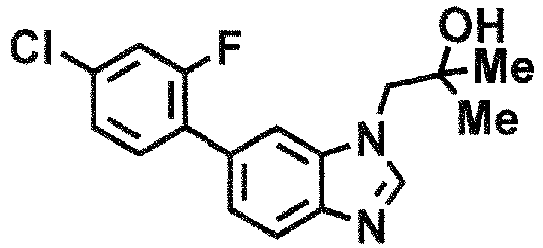
1H-NMR (CDCl3) δ: 1.30 (6H, s), 1.86 (1H, s), 4.14 (2H, s), 7.17-7.23 (2H, m), 7.35-7.43 (2H, m), 7.59-7.59 (1H, br m), 7.81 (1H, d, J = 8.2 Hz), 7.99 (1H, s). 131 
1H-NMR (CDCl3) δ: 1.27 (6H, s), 1.70 (1H, s), 4.10 (2H, s), 7.16 (1H, d, J = 8.2 Hz), 7.31 (1H, d, J = 8.2 Hz), 7.36 (1H, s), 7.51 (1H, d, J = 8.2 Hz), 7.72 (1H, s), 7.77 (1H, d, J = 8.2 Hz), 8.01 (1H, s). 133 
1H-NMR (CDCl3) δ: 1.30 (6H, s), 1.72 (1H, s), 4.13 (2H, s), 7.23-7.33 (3H, m), 7.49 (2H, m), 7.81 (1H, d, J = 7.9 Hz), 8.01 (1H, s). 133 
1H-NMR (CDCl3) δ: 1.31 (6H, s), 1.82 (1H, s), 4.15 (2H, s), 7.14 (1H, m), 7.34-7.40 (3H, m), 7.62 (1H, s), 7.82 (1H, d, J = 8.5 Hz), 8.01 (1H, s). 134 
1H-NMR (CDCl3) δ: 1.32 (6H, s), 1.82 (1H, s), 4.16 (2H, s), 7.19 (1H, dd, J = 8.9, 8.9 Hz), 7.39 (1H, dd, J = 8.5, 1.8 Hz), 7.42-7.47 (1H, m), 7.54 (1H, d, J = 1.8 Hz), 7.62 (1H, dd, J = 6.7, 2.4 Hz), 7.80 (1H, d, J = 8.5 Hz), 7.99 (1H, s). 135 
1H-NMR (CDCl3) δ: 1.31 (6H, s), 1.79 (1H, br s), 3.10 (3H, s), 4.16 (2H, s), 7.42 (1H, m), 7.66-7.71 (2H, m), 7.77 (2H, m), 7.85 (1H, d, J = 8.5 Hz), 8.03 (1H, s). 136 
1H-NMR (CDCl3) δ: 1.30 (6H, s), 1.80 (1H, s), 4.12 (2H, s), 7.26-7.30 (1H, m), 7.47-7.58 (3H, m), 7.74 (1H, s), 7.79-7.84 (1H, m), 8.00-8.02 (1H, m). 137 
1H-NMR (CDCl3) δ: 1.32 (6H, s), 1.75 (1H, s), 4.18 (2H, s), 7.46-7.63 (4H, m), 7.78 (1H, d, J = 7.3 Hz), 7.83-7.85 (2H, m), 8.02 (1H, s). 138 
1H-NMR (CDCl3) δ: 1.30 (6H, s), 1.58 (1H, s), 4.13 (2H, s), 7.26-7.32 (3H, m), 7.36-7.39 (1H, m), 7.45-7.49 (1H, m), 7.51 (1H, s), 7.79 (1H, d, J = 8.5 Hz), 8.00 (1H, s). 139 
1H-NMR (CDCl3) δ: 1.32 (6H, s), 1.87 (1H, s), 4.16 (2H, s), 7.28-7.32 (1H, m), 7.36 (1H, m), 7.43-7.49 (2H, m), 7.59 (2H, s), 7.80 (1H, d, J = 8.2 Hz), 7.99 (1H, s). 140 
1H-NMR (CDCl3) δ: 1.30 (6H, s), 1.69 (1H, s), 4.13 (2H, s), 7.31-7.37 (4H, m), 7.45-7.49 (1H, m), 7.53 (1H, d, J = 0.9 Hz), 7.81 (1H, d, J = 8.2 Hz), 8.01 (1H, s). 141 
1H-NMR (CDCl3) δ: 1.32 (6H, s), 1.84 (1H, s), 4.17 (2H, s), 7.17-7.20 (1H, m), 7.42-7.47 (3H, m), 7.53 (1H, dd, J = 7.9, 1.2 Hz), 7.59 (1H, d, J = 1.2 Hz), 7.82 (1H, d, J = 8.5 Hz), 8.00 (1H, s). 142 
1H-NMR (CDCl3) δ: 1.32 (6H, s), 1.76 (1H, s), 3.90 (3H, s), 4.17 (2H, s), 7.09 (1H, s), 7.29 (1H, s), 7.43 (1H, s), 7.46 (1H, dd, J = 8.2, 1.5 Hz), 7.59 (1H, s), 7.82 (1H, d, J = 8.5 Hz), 8.01 (1H, s). 143 
1H-NMR (CDCl3) δ: 1.32 (6H, s), 1.74 (1H, s), 4.17 (2H, s), 7.05 (1H, ddd, J = 8.2, 2.1, 2.1 Hz), 7.21 (1H, ddd, J = 9.8, 1.8, 1.8 Hz), 7.39 (1H, dd, J = 1.5, 1.5 Hz), 7.43 (1H, dd, J = 8.5, 1.8 Hz), 7.58 (1H, d, J = 1.8 Hz), 7.82 (1H, d, J = 8.5 Hz), 8.01 (1H, s). 144 
1H-NMR (DMSO-d6) δ: 1.12 (6H, s), 4.16 (2H, s), 4.80 (1H, s), 7.50 (1H, dd, J = 8.4, 2.0 Hz), 7.66 (1H, d, J = 8.4 Hz), 7.99-8.00 (1H, m), 8.13 (1H, s), 9.16 (1H, s), 9.40 (1H, s). 145 
1H-NMR (DMSO-d6) δ: 1.14 (6H, s), 4.25 (2H, s), 4.82 (1H, s), 7.54-7.57 (1H, m), 7.64-7.67 (1H, m), 7.75 (1H, d, J = 8.0 Hz), 8.10 (1H, d, J = 9.2 Hz), 8.15-8.19 (3H, m), 8.29-8.30 (1H, m), 8.43 (1H, dd, J = 8.8, 1.2 Hz), 8.88-8.89 (1H, m). 146 
1H-NMR (DMSO-d6) δ: 1.11 (6H, s), 4.16 (2H, s), 4.77 (1H, s), 6.99-7.00 (1H, m), 7.42-7.44 (1H, m), 7.58-7.61 (1H, m), 7.73-7.74 (1H, m), 7.87 (1H, s), 8.08 (1H, s), 8.14-8.15 (1H, m). 147 
1H-NMR (DMSO-d6) δ: 1.13 (6H, s), 4.23 (2H, s), 4.80 (1H, s), 7.54 (1H, dd, J = 8.4, 2.0 Hz), 7.69 (1H, d, J = 8.4 Hz), 7.77-7.80 (1H, m), 7.85 (1H, d, J = 8.4 H), 8.05 (1H, d, J = 1.2 Hz), 8.12 (1H, d, J = 1.2 Hz), 8.14 (1H, s), 8.78 (1H, s). 148 
1H-NMR (DMSO-d6) δ: 3.84 (3H, s), 4.42 (2H, d, J = 6.7 Hz), 4.54 (2H, d, J = 6.7 Hz), 4.59 (2H, s), 6.22 (1H, s), 7.33 (1H, dd, J = 8.2, 1.5 Hz), 7.37-7.41 (2H, m), 7.55 (1H, d, J = 7.9 Hz), 7.66 (1H, d, J = 8.5 Hz), 7.84 (1H, s), 8.28 (1H, s). XRD ; 2θ = 6.6, 13.0, 13.2, 13.6, 15.4, 18.0, 18.6, 19.6, 20.0, 21.0, 21.5, 21.8, 23.4, 24.0, 24.9, 25.7, 26.5, 27.5, 27.9, 29.3 149 
1H-NMR (CDCl3) δ: 4.61 (2H, s), 4.65 (4H, dd, J = 20.1, 7.9 Hz), 7.33 (1H, m), 7.46 (2H, m), 7.57 (1H, dd, J = 7.9, 7.9 Hz), 7.65 (1H, d, J = 8.5 Hz), 7.72 (1H, s), 7.99 (1H, s). 150 
1H-NMR (CDCl3) δ: 4.59 (2H, s), 4.65 (4H, dd, J = 20.8, 7.9 Hz), 7.23 (1H, d, J = 6.7 Hz), 7.48 (1H, d, J = 7.9 Hz), 7.57 (1H, dd, J = 7.9, 1.2 Hz), 7.62 (1H, d, J = 1.2 Hz), 7.66 (1H, d, J = 8.5 Hz), 7.75 (1H, d, J = 1.2 Hz), 8.00 (1H, s). 151 
1H-NMR (CDCl3) δ: 4.56-4.63 (6H, m), 7.14 (1H, dd, J = 8.5, 1.2 Hz), 7.30 (1H, d, J = 7.9 Hz), 7.47 (1H, s), 7.52 (1H, dd, J = 8.2, 2.1 Hz), 7.68 (1H, d, J = 8.5 Hz), 7.73 (1H, d, J = 2.4 Hz), 8.01 (1H, s). 152 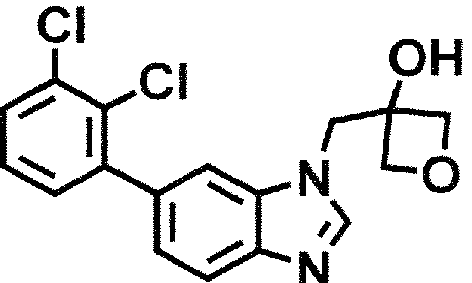
1H-NMR (CDCl3) δ: 4.57-4.68 (6H, m), 7.19-7.25 (3H, m), 7.44-7.48 (1H, m), 7.57 (1H, s), 7.62 (1H, d, J = 8.2 Hz), 7.97 (1H, s). 153 
1H-NMR (CDCl3) δ: 4.57-4.68 (6H, m), 7.18-7.24 (3H, m), 7.45-7.46 (1H, m), 7.57 (1H, s), 7.62 (1H, d, J = 8.2 Hz), 7.97 (1H, s). 154 
1H-NMR (CDCl3) δ: 4.49-4.58 (6H, m), 7.10 (1H, dd, J = 8.9, 8.9 Hz), 7.23 (1H, dd, J = 8.3, 1.5 Hz), 7.31-7.35 (1H, m), 7.48-7.55 (3H, m), 7.87 (1H, s). 155 
1H-NMR (CDCl3) δ: 4.60-4.67 (6H, m), 7.36 (1H, dd, J = 7.9, 1.8 Hz), 7.42 (1H, dd, J = 8.6, 2.4 Hz), 7.50 (1H, d, J = 7.9 Hz), 7.65-7.68 (3H, m), 7.99 (1H, s). 156 
1H-NMR (CDCl3) δ: 4.58 (2H, s), 4.62-4.67 (4H, m), 7.20 (1H, dd, J = 8.3, 1.5 Hz), 7.28-7.29 (2H, m), 7.49 (1H, d, J = 1.8 Hz), 7.58 (1H, d, J = 1.2 Hz), 7.62 (1H, d, J = 8.6 Hz), 7.97 (1H, s). 157 
1H-NMR (CDCl3) δ: 4.59 (2H, s), 4.62-4.66 (4H, m), 7.21-7.28 (2H, m), 7.35 (1H, d, J = 2.4 Hz), 7.40 (1H, d, J = 8.6 Hz), 7.59 (1H, d, J = 1.2 Hz), 7.65 (1H, d, J = 8.6 Hz), 7.99 (1H, s). 158 
1H-NMR (CDCl3) δ: 4.56-4.63 (6H, m), 7.27-7.31 (2H, m), 7.41 (2H, m), 7.58-7.61 (2H, m), 7.93 (1H, s). 159 
1H-NMR (CDCl3) δ: 2.25 (3H, s), 4.01 (1H, br s), 4.57-4.67 (6H, m), 7.11-7.18 (3H, m), 7.36 (1H, dd, J = 7.0, 2.7 Hz), 7.43 (1H, d, J = 1.2 Hz), 7.65 (1H, d, J = 8.5 Hz), 7.99 (1H, s). 160 
1H-NMR (CDCl3) δ: 2.19 (3H, s), 4.23 (1H, s), 4.58-4.67 (6H, m), 7.13 (1H, dd, J = 8.2, 1.5 Hz), 7.17-7.24 (3H, m), 7.44 (1H, d, J = 1.8 Hz), 7.64 (1H, d, J = 7.9 Hz), 7.99 (1H, s). 161 
1H-NMR (CDCl3) δ: 3.80 (1H, s), 4.62-4.67 (6H, m), 7.24-7.30 (1H, m), 7.34 (1H, m), 7.57-7.62 (1H, m), 7.67-7.74 (3H, m), 8.01 (1H, s). 162 
1H-NMR (CDCl3) δ: 4.30 (1H, s), 4.60-4.69 (6H, m), 7.21-7.24 (1H, m), 7.52-7.66 (5H, m), 8.00 (1H, s). 163 
1H-NMR (CDCl3) δ: 3.90-3.91 (4H, m), 4.61-4.68 (6H, m), 7.10 (1H, s), 7.28 (1H, s), 7.39-7.43 (2H, m), 7.67-7.69 (2H, m), 8.00 (1H, s). 164 
1H-NMR (CDCl3) δ: 4.19 (1H, s), 4.62-4.69 (6H, m), 7.37-7.41 (2H, m), 7.56-7.68 (4H, m), 7.98 (1H, s). 165 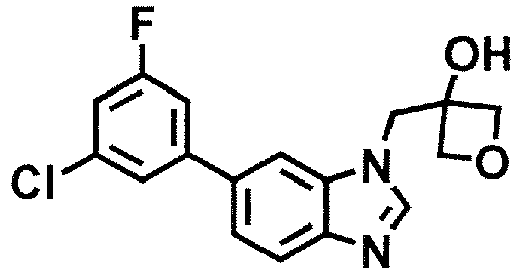
1H-NMR (CDCl3) δ: 3.79 (1H, s), 4.60-4.66 (6H, m), 7.06 (1H, m), 7.20 (1H, m), 7.36-7.39 (2H, m), 7.67-7.71 (2H, m), 8.01 (1H, s). 166 
1H-NMR (CDCl3) δ: 2.30 (3H, d, J = 1.8 Hz), 4.24 (1H, s), 4.57-4.68 (6H, m), 7.11 (1H, dd, J = 8.5, 1.2 Hz), 7.30 (1H, dd, J = 7.9, 7.9 Hz), 7.40 (1H, d, J = 7.3 Hz), 7.43 (1H, d, J = 1.2 Hz), 7.63-7.67 (2H, m), 8.00 (1H, s). 167 
1H-NMR (CDCl3) δ: 3.94 (3H, s), 4.51 (1H, s), 4.57 (2H, s), 4.65 (4H, dd, J = 21.7, 7.6 Hz), 6.93-6.97 (2H, m), 7.21-7.28 (2H, m), 7.58-7.60 (2H, m), 7.95 (1H, s). 168 
1H-NMR (CDCl3) δ: 3.91 (1H, s), 4.59-4.66 (6H, m), 7.21 (1H, dd, J = 8.2, 1.5 Hz), 7.41 (1H, dd, J = 7.9, 7.9 Hz), 7.53 (1H, dd, J = 7.6, 1.5 Hz), 7.58 (1H, d, J = 1.2 Hz), 7.68-7.73 (2H, m), 8.01 (1H, s). 169 
1H-NMR (CDCl3) δ: 2.40 (3H, s), 4.60-4.72 (6H, m), 4.78 (1H, s), 7.15 (1H, s), 7.26 (1H, s), 7.32 (1H, dd, J = 8.5, 1.8 Hz), 7.36 (1H, s), 7.53 (1H, d, J = 7.9 Hz), 7.64 (1H, d, J = 1.2 Hz), 7.92 (1H, s). 170 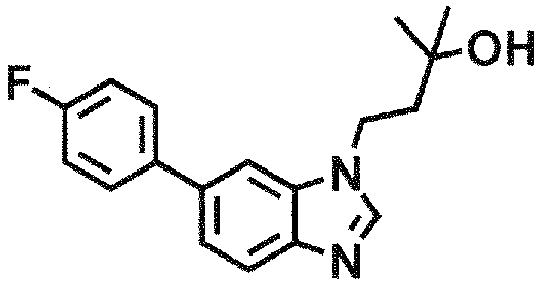
1H-NMR (CDCl3) δ: 1.33 (6H, s), 1.41 (1H, s), 2.04-2.06 (2H, m), 4.35-4.39 (2H, m), 7.12-7.14 (2H, m), 7.44 (1H, dd, J = 8.5, 1.8 Hz), 7.51 (1H, d, J = 1.2 Hz), 7.56-7.59 (2H, m), 7.82 (1H, d, J = 8.5 Hz), 7.93 (1H, s). 171 
1H-NMR (CDCl3) δ: 1.33 (6H, s), 1.41 (1H, s), 2.04-2.06 (2H, m), 4.35-4.39 (2H, m), 7.40-7.41 (2H, m), 7.45 (1H, dd, J = 8.2, 1.5 Hz), 7.52 (1H, d, J = 1.2 Hz), 7.54-7.56 (2H, m), 7.83 (1H, d, J = 8.5 Hz), 7.93 (1H, s). 172 
1H-NMR (CDCl3) δ: 1.34 (6H, s), 1.36 (1H, s), 2.04-2.06 (2H, m), 4.37-4.41 (2H, m), 7.50 (1H, dd, J = 8.5, 1.8 Hz), 7.58 (1H, s), 7.71 (4H, m), 7.86 (1H, d, J = 8.5 Hz), 7.96 (1H, s). 173 
1H-NMR (CDCl3) δ: 1.32 (6H, s), 1.33 (1H, s), 2.02-2.07 (2H, m), 3.86 (3H, s), 4.33-4.37 (2H, m), 7.19 (1H, d, J = 1.2 Hz), 7.30 (1H, dd, J = 8.2, 1.5 Hz), 7.40 (1H, dd, J = 8.2, 1.5 Hz), 7.46 (1H, d, J = 7.9 Hz), 7.53 (1H, d, J = 1.2 Hz), 7.82 (1H, d, J = 7.9 Hz), 7.94 (1H, s). 174 
1H-NMR (CDCl3) δ: 1.33 (6H, s), 2.03-2.07 (2H, m), 4.36-4.40 (2H, m), 7.42-7.50 (3H, m), 7.59-7.64 (2H, m), 7.87 (1H, d, J = 8.5 Hz), 7.97 (1H, s). -

- Compound 175b (4.81 g) was prepared according to the process of Step (i) in Example 1 by using Compound 175a (5.0 g) instead of Compound 61.
- Compound 175c (3.52 g) was prepared according to the process of Step (ii) in Example 59 by using Compound 175b (4.80 g) instead of Compound 86.
- Compound 175 (29 mg) was prepared according to the process of Step (iv) in Example 5 by using Compound 175c (50 mg) instead of Compound 69.
1H-NMR (CDCl3) δ: 1.31 (6H, s), 4.19 (2H, s), 7.10-7.13 (2H, m), 7.49 (2H, m), 7.54-7.57 (2H, m), 7.92 (1H, s), 8.23 (1H, s) . - Examples 176 to 223 shown in the following table were prepared according to the process of Example 175 by using each appropriate starting material.
[Table 10] Example Chemical Structure Spectrum data 176 
1H-NMR (CDCl3) δ: 1.32 (6H, s), 3.85 (3H, s), 4.20 (2H, s), 7.18 (1H, s), 7.29 (1H, d, J = 7.3 Hz), 7.44 (1H, d, J = 7.9 Hz), 7.46-7.51 (2H, m), 7.95 (1H, s), 8.28 (1H, s). 177 
1H-NMR (CDCl3) δ: 1.31 (6H, s), 3.55-3.57 (4H, m), 3.83-3.85 (4H, m), 4.20 (2H, s), 6.73 (1H, d, J = 8.5 Hz), 7.48-7.51 (2H, m), 7.77-7.80 (1H, m), 7.91 (1H, s), 8.28 (1H, s), 8.47 (1H, s). 178 
1H-NMR (CDCl3) δ: 1.31 (6H, s), 4.20 (2H, s), 7.38-7.41 (2H, m), 7.51-7.55 (4H, m), 7.94 (1H, s), 8.28 (1H, s). 179 
1H-NMR (CDCl3) δ: 1.32 (6H, s), 4.22 (2H, s), 7.28 (2H, m), 7.52 (2H, m), 7.61 (2H, m), 7.96 (1H, d, J = 1.2 Hz), 8.36 (1H, s). 180 
1H-NMR (CDCl3) δ: 1.32 (6H, s), 4.21 (2H, s), 7.55-7.59 (2H, m), 7.74 (1H, d, J = 7.9 Hz), 8.01 (1H, d, J = 1.2 Hz), 8.06 (1H, dd, J = 8.2, 2.1 Hz), 8.29 (1H, s), 8.96 (1H, d, J = 1.8 Hz). 181 
1H-NMR (CDCl3) δ: 1.32 (6H, s), 4.21 (2H, s), 7.41-7.61 (5H, m), 7.97 (1H, s), 8.31 (1H, s). 182 
1H-NMR (CDCl3) δ: 1.31 (6H, s), 3.97 (3H, s), 4.20 (2H, s), 6.82 (1H, d, J = 8.5 Hz), 7.47-7.52 (2H, m), 7.81 (1H, dd, J = 8.5, 1.8 Hz), 7.91 (1H, s), 8.28 (1H, s), 8.40 (1H, d, J = 2.4 Hz). 183 
1H-NMR (CDCl3) δ: 1.27 (6H, s), 2.56 (3H, s), 4.10 (2H, s), 7.17-7.19 (1H, m), 7.41-7.47 (2H, m), 7.76 (1H, dd, J = 8.2, 1.5 Hz), 7.85 (1H, s), 7.98 (1H, s), 8.64 (1H, s). 184 
1H-NMR (CDCl3) δ: 1.32 (6H, s), 4.21 (2H, s), 7.55 (2H, m), 7.68-7.71 (4H, m), 8.00 (1H, s), 8.29 (1H, s). 185 
1H-NMR (CDCl3) δ: 1.32 (6H, s), 1.77 (1H, s), 4.14 (2H, s), 7.29-7.34 (3H, m), 7.47-7.49 (2H, m), 7.80 (1H, d, J = 1.2 Hz), 8.01 (1H, s). 186 
1H-NMR (CDCl3) δ: 1.31 (6H, s), 1.70 (1H, br s), 3.79 (3H, s), 4.13 (2H, s), 6.69-6.75 (2H, m), 7.26-7.31 (1H, m), 7.39-7.46 (2H, m), 7.88 (1H, d, J = 1.2 Hz), 7.97 (1H, s). 187 
1H-NMR (CDCl3) δ: 1.32 (6H, s), 1.73 (1H, s), 2.24 (3H, s), 4.15 (2H, s), 7.16-7.21 (3H, m), 7.25 (1H, s), 7.46 (1H, d, J = 8.5 Hz), 7.67 (1H, d, J = 1.2 Hz), 8.00 (1H, s). 188 
1H-NMR (CDCl3) δ: 1.31 (6H, s), 1.81 (1H, s), 4.14 (2H, s), 7.17-7.21 (2H, m), 7.38-7.50 (3H, m), 7.89 (1H, s), 8.00 (1H, s). 189 
1H-NMR (CDCl3) δ: 1.32 (6H, s), 1.77 (1H, s), 4.15 (2H, s), 7.11-7.15 (1H, m), 7.33-7.38 (2H, m), 7.44-7.52 (2H, m), 7.91 (1H, s), 8.00 (1H, s). 190 
1H-NMR (CDCl3) δ: 1.31 (6H, s), 1.78 (1H, s), 4.14 (2H, s), 7.19 (1H, m), 7.41-7.50 (3H, m), 7.61 (1H, dd, J = 6.7, 2.4 Hz), 7.88 (1H, d, J = 1.2 Hz), 8.00 (1H, s). 191 
1H-NMR (CDCl3) δ: 1.32 (6H, s), 1.64 (1H, s), 4.14 (2H, s), 7.21 (1H, d, J = 8.2 Hz), 7.31 (1H, d, J = 8.2 Hz), 7.44 (1H, d, J = 8.7 Hz), 7.51 (1H, d, J = 8.2 Hz), 7.71 (2H, m), 8.02 (1H, br s). 192 
1H-NMR (CDCl3) δ: 1.32 (6H, s), 1.75 (1H, s), 4.15 (2H, s), 7.34-7.38 (1H, m), 7.49-7.58 (3H, m), 7.74 (1H, s), 7.84 (1H, s), 8.03 (1H, s). 193 
1H-NMR (CDCl3) δ: 1.33 (6H, s), 1.69 (1H, s), 3.14 (3H, s), 4.16 (2H, s), 7.21-7.26 (1H, m), 7.47-7.53 (1H, m), 7.59-7.64 (1H, m), 7.73-7.76 (1H, m), 8.04-8.15 (2H, m), 8.33 (1H, br s). 194 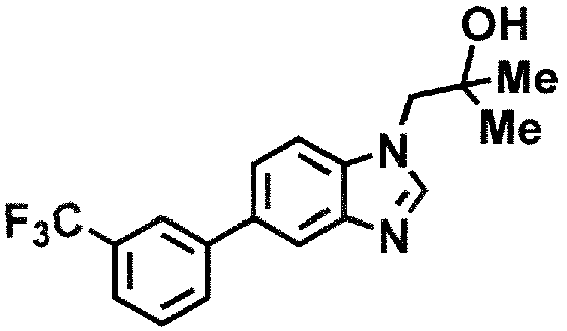
1H-NMR (CDCl3) δ: 1.32 (6H, s), 1.86 (1H, s), 4.15 (2H, s), 7.51-7.58 (4H, m), 7.78 (1H, d, J = 7.3 Hz), 7.84 (1H, s), 7.95 (1H, s), 8.00 (1H, s). 195 
1H-NMR (CDCl3) δ: 1.33 (6H, s), 1.70 (1H, s), 4.15 (2H, s), 7.25-7.33 (2H, m), 7.37 (1H, s), 7.39 (1H, d, J = 1.8 Hz), 7.46-7.49 (2H, m), 7.84 (1H, d, J = 1.2 Hz), 8.00 (1H, s). 196 
1H-NMR (CDCl3) δ: 1.32 (6H, s), 1.78 (1H, s), 4.14 (2H, s), 7.28 (1H, m), 7.35 (1H, dd, J = 7.9, 7.9 Hz), 7.47-7.51 (3H, m), 7.59 (1H, dd, J = 1.8, 1.8 Hz), 7.93 (1H, s), 7.99 (1H, s). 197 
1H-NMR (CDCl3) δ: 1.32 (6H, s), 1.73 (1H, s), 4.15 (2H, s), 7.34-7.41 (4H, m), 7.45-7.49 (2H, m), 7.86 (1H, d, J = 1.2 Hz), 8.00 (1H, s). 198 
1H-NMR (CDCl3) δ: 1.32 (6H, s), 1.80 (1H, s), 4.15 (2H, s), 7.16 (1H, d, J = 8.5 Hz), 7.42-7.55 (5H, m), 7.94 (1H, s), 8.00 (1H, s). 199 
1H-NMR (CDCl3) δ: 1.32 (6H, s), 1.95 (1H, s), 3.89 (3H, s), 4.15 (2H, s), 7.07 (1H, s), 7.28 (1H, s), 7.42 (1H, s), 7.50 (2H, m), 7.92 (1H, s), 8.00 (1H, s). 200 
1H-NMR (CDCl3) δ: 1.32 (6H, s), 1.88 (1H, s), 4.14 (2H, s), 7.03 (1H, m), 7.17-7.21 (1H, m), 7.37 (1H, d, J = 1.8 Hz), 7.44-7.52 (2H, m), 7.89 (1H, d, J = 1.2 Hz), 8.00 (1H, s). 201 
1H-NMR (DMSO-d6) δ: 1.12 (6H, s), 4.17 (2H, s), 4.80 (1H, s), 7.59 (1H, dd, J = 8.4, 1.6 Hz), 7.73-7.78 (2H, m), 7.83 (1H, d, J = 8.8 Hz), 7.93 (1H, d, J = 1.6 Hz), 8.07 (1H, d, J = 1.6 Hz), 8.15 (1H, s), 8.77 (1H, s). 202 
1H-NMR (DMSO-d6) δ: 1.10 (6H, s), 4.15 (2H, s), 4.78 (1H, s), 7.56 (1H, dd, J = 8.4, 1.2 Hz), 7.71 (1H, d, J = 8.4 Hz), 8.01 (1H, d, J = 1.2 Hz), 8.13 (1H, s), 9.20 (1H, s), 9.41 (1H, s). 203 
1H-NMR (DMSO-d6) δ: 4.43 (2H, d, J = 6.8 Hz), 4.55 (2H, d, J = 6.8 Hz), 4.61 (2H, s), 6.26 (1H, s), 7.46-7.49 (1H, m), 7.65-7.68 (1H, m), 7.77-7.86 (4H, m), 8.35 (1H, s). 204 
1H-NMR (DMSO-d6) δ: 4.43 (2H, d, J = 7.2 Hz), 4.54 (2H, d, J = 7.2 Hz), 4.59 (2H, s), 6.25 (1H, s), 7.43 (2H, m), 7.57 (1H, dd, J = 8.4, 2.0 Hz), 7.78 (1H, d, J = 8.4 Hz), 7.81-7.84 (2H, m), 7.92-7.91 (1H, m), 8.30 (1H, s). 205 
1H-NMR (CDCl3) δ: 3.84 (3H, s), 4.58-4.65 (6H, m), 7.17 (1H, s), 7.27 (1H, d, J = 7.9 Hz), 7.39 (1H, d, J = 7.3 Hz), 7.45 (1H, dd, J = 8.5, 1.2 Hz), 7.57 (1H, d, J = 8.5 Hz), 7.85 (1H, d, J = 1.8 Hz), 8.00 (1H, s). 206 
1H-NMR (CDCl3) δ: 4.60-4.66 (6H, m), 7.38 (1H, dd, J = 8.2, 1.5 Hz), 7.46 (1H, d, J = 7.9 Hz), 7.56 (1H, dd, J = 7.9, 1.2 Hz), 7.61 (1H, d, J = 7.9 Hz), 7.74 (1H, d, J = 1.2 Hz), 7.78 (1H, d, J = 1.2 Hz), 8.05 (1H, s). 207 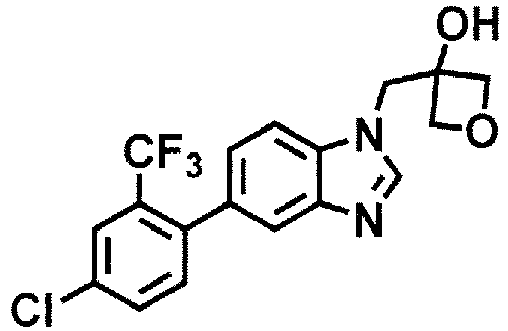
1H-NMR (CDCl3) δ: 4.59-4.65 (6H, m), 7.22-7.27 (2H, m), 7.51 (1H, dd, J = 8.2, 2.1 Hz), 7.55 (1H, d, J = 8.5 Hz), 7.65 (1H, s), 7.72 (1H, d, J = 1.8 Hz), 8.02 (1H, s). 208 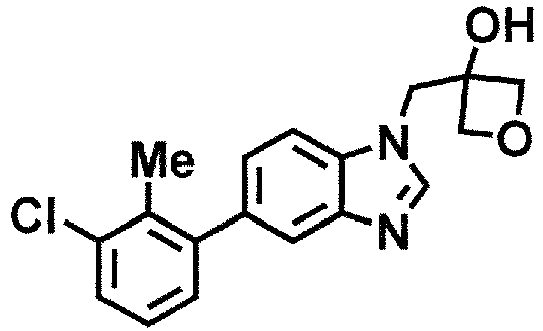
1H-NMR (CDCl3) δ: 2.25 (3H, s), 3.65 (1H, br s), 4.60-4.66 (6H, m), 7.09-7.16 (2H, m), 7.21 (1H, dd, J = 8.5, 1.6 Hz), 7.35 (1H, dd, J = 7.8, 1.8 Hz), 7.56 (1H, d, J = 8.2 Hz), 7.61 (1H, d, J = 0.9 Hz), 8.03 (1H, s). 209 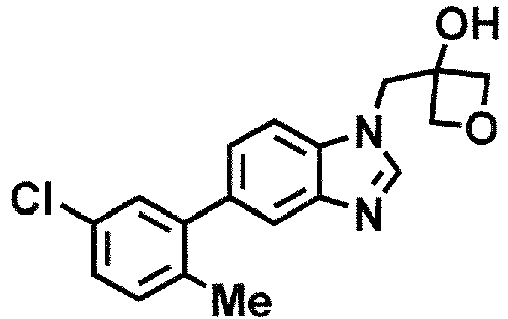
1H-NMR (CDCl3) δ: 2.19 (3H, s), 3.59 (1H, s), 4.59-4.67 (6H, m), 7.16-7.24 (4H, m), 7.56 (1H, d, J = 8.7 Hz), 7.60 (1H, d, J = 0.9 Hz), 8.01 (1H, s). 210 
1H-NMR (CDCl3) δ: 3.37 (1H, d, J = 7.3 Hz), 4.61-4.66 (6H, m), 7.22-7.27 (1H, m), 7.47 (1H, m), 7.54-7.59 (1H, m), 7.62 (1H, d, J = 8.5 Hz), 7.68 (1H, dd, J = 7.3, 1.8 Hz), 7.84 (1H, s), 8.02 (1H, s). 211 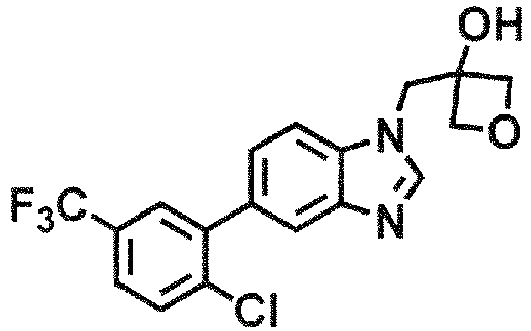
1H-NMR (CDCl3) δ: 3.83 (1H, s), 4.61-4.68 (6H, m), 7.37 (1H, dd, J = 8.5, 1.2 Hz), 7.50-7.62 (4H, m), 7.71 (1H, d, J = 1.8 Hz), 8.02 (1H, s). 212 
1H-NMR (CDCl3) δ: 3.87 (3H, s), 4.27 (1H, s), 4.60 (2H, s), 4.68 (4H, dd, J = 21.1, 7.6 Hz), 7.05 (1H, s), 7.17 (1H, s), 7.30 (1H, s), 7.46 (1H, dd, J = 8.5, 1.8 Hz), 7.59 (1H, d, J = 8.5 Hz), 7.68 (1H, d, J = 1.2 Hz), 7.94 (1H, s). 213 
1H-NMR (CDCl3) δ: 4.46 (1H, s), 4.60 (2H, s), 4.69 (4H, dd, J = 23.5, 7.5 Hz), 7.35 (1H, s), 7.43-7.49 (3H, m), 7.58 (1H, d, J = 8.7 Hz), 7.64 (1H, s), 7.92 (1H, s). 214 
1H-NMR (CDCl3) δ: 3.45 (1H, s), 4.59-4.67 (6H, m), 7.03 (1H, m), 7.14 (1H, m), 7.32 (1H, s), 7.45 (1H, dd, J = 8.5, 1.6 Hz), 7.59 (1H, d, J = 8.7 Hz), 7.78 (1H, s), 7.99 (1H, s). 215 
1H-NMR (CDCl3) δ: 2.30 (3H, d, J = 1.2 Hz), 3.80 (1H, s), 4.61-4.67 (6H, m), 7.20 (1H, dd, J = 8.2, 1.5 Hz), 7.29 (1H, dd, J = 7.6, 7.6 Hz), 7.36 (1H, d, J = 6.7 Hz), 7.56-7.64 (3H, m), 8.03 (1H, s). 216 
1H-NMR (CDCl3) δ: 3.27 (1H, s), 3.94 (3H, s), 4.60-4.65 (6H, m), 6.95 (2H, m), 7.24-7.28 (1H, m), 7.39 (1H, dd, J = 8.2, 1.5 Hz), 7.57 (1H, d, J = 8.5 Hz), 7.78 (1H, d, J = 1.8 Hz), 8.01 (1H, s). 217 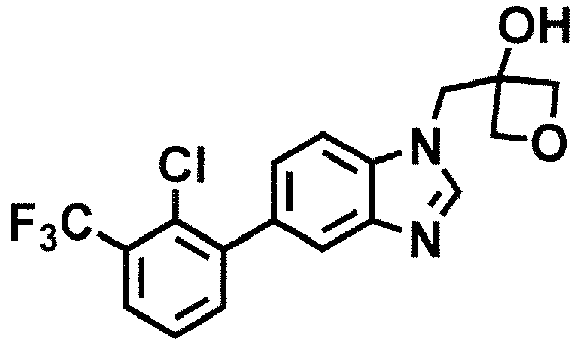
1H-NMR (CDCl3) δ: 3.23 (1H, br s), 4.61-4.64 (7H, m), 7.35 (1H, dd, J = 8.2, 1.5 Hz), 7.40 (1H, m), 7.52 (1H, dd, J = 7.9, 1.2 Hz), 7.60 (1H, d, J = 8.5 Hz), 7.70 (1H, dd, J = 7.9, 1.8 Hz), 7.75 (1H, d, J = 1.2 Hz), 8.05 (1H, s). 218 
1H-NMR (CDCl3) δ: 2.36 (3H, s), 4.56-4.73 (6H, m), 7.13 (2H, m), 7.23-7.25 (1H, m), 7.41 (1H, dd, J = 8.2, 1.5 Hz), 7.55 (1H, d, J = 8.5 Hz), 7.61 (1H, d, J = 1.8 Hz), 7.89 (1H, s). 219 
1H-NMR (CDCl3) δ: 1.34 (6H, s), 1.37 (1H, s), 2.03-2.08 (2H, m), 4.34-4.38 (2H, m), 7.11-7.13 (2H, m), 7.44-7.50 (2H, m), 7.56-7.58 (2H, m), 7.93 (2H, s). 220 
1H-NMR (CDCl3) δ: 1.33 (6H, s), 1.35 (1H, s), 2.04-2.06 (2H, m), 4.34-4.38 (2H, m), 7.39-7.41 (2H, m), 7.44-7.50 (2H, m), 7.53-7.57 (2H, m), 7.94 (1H, s), 7.95 (1H, s). 221 
1H-NMR (CDCl3) δ: 1.34 (6H, s), 1.38 (1H, s), 2.04-2.08 (2H, m), 4.35-4.39 (2H, m), 7.48-7.55 (2H, m), 7.67-7.74 (4H, m), 7.96 (1H, s), 8.01 (1H, d, J = 1.2 Hz). 222 
1H-NMR (CDCl3) δ: 1.34 (6H, s), 2.04-2.08 (2H, m), 3.85 (3H, s), 4.34-4.38 (2H, m), 7.18 (1H, s), 7.29 (1H, d, J = 7.9 Hz), 7.45-7.46 (3H, m), 7.94 (2H, s). 223 
1H-NMR (CDCl3) δ: 1.34 (6H, s), 2.04-2.08 (2H, m), 4.36-4.40 (2H, m), 7.42-7.48 (4H, m), 7.59-7.61 (1H, m), 7.96-7.97 (2H, m). -

- Compound 224 (13 mg) was prepared according to the process of Step (v) in Example 13 by using Compound 85 (50 mg) .
LCMS: T = 0.743, m/z = 369 - Examples 225 and 226 shown in the following table were prepared according to the process of Example 224 by using each appropriate starting material.
[Table 11] Example Chemical Structure Spectrum data 225 
1H-NMR (DMSO-d6) δ: 1.11 (6H, s), 4.16 (2H, s), 4.79 (1H, s), 7.03-7.07 (3H, m), 7.39 (1H, d, J = 2.4 Hz), 7.68 (2H, m), 7.73 (1H, d, J = 8.4 Hz), 8.17 (1H, s). 226 
1H-NMR (DMSO-d6) δ: 4.43 (2H, d, J = 7.2 Hz), 4.54 (2H, d, J = 7.2 Hz), 4.58 (2H, s), 6.25 (1H, s), 7.05-7.07 (3H, m), 7.40 (1H, d, J = 2.8 Hz), 7.68 (1H, d, J = 9.2 Hz), 7.76 (1H, d, J = 9.2 Hz), 8.32 (1H, s). -

- Compound 227a (1.64 g) was prepared according to the process of Step (i) in Example 59 by using the appropriate starting material.
- Compound 227b (1.25 g) was prepared according to the process of Step (ii) in Example 59 by using Compound 227a.
- Under a nitrogen atmosphere, water (1 mL), AD-mix-β (200 mg) and methanesulfonamide (14 mg) were added to a solution of Compound 227b (50 mg) in tert-butanol (1 mL), and the reaction mixture was stirred at room temperature for 5 hours. The reaction mixture was directly purified by amino silica gel column chromatography (eluate: chloroform/methanol = 95/5) to give Compound 227 (26 mg).
LCMS: T = 0.537, m/z = 368 -

- Under a nitrogen atmosphere, 3 mol/L methylmagnesium bromide/diethyl ether (5.90 mL) was added to a solution of Boc-D-alanine methyl ester (1.0 g) in diethyl ether (25 mL) at 0°C, and the mixture was stirred at room temperature for 3 hours. The reaction mixture was quenched with aqueous ammonium chloride and then extracted with ethyl acetate, and the organic layer was dried over anhydrous sodium sulfate. The concentrated residue was purified by silica gel column chromatography (eluate: hexane/ethyl acetate = 70/30) to give Compound 228b (0.86 g).
- Under a nitrogen atmosphere, 4 mol/L hydrocholic acid/ethyl acetate was added to a solution of Compound 228b (0.86 g) in ethyl acetate (5 mL), and the mixture was stirred at room temperature for 2 hours. The solvent in reaction mixture was removed by azeotropy with toluene, and the obtained residue was slurry-washed with ethyl acetate to give Compound 228c (0.54 g).
- Compound 228d (490 mg) was prepared according to the process of Step (i) in Example 59 by using Compound 76 (200 mg) and Compound 228c (213 mg).
- Compound 228 (102 mg) was prepared according to the process of Step (ii) in Example 59 by using Compound 228d (490 mg) .
1H-NMR (CDCl3) δ: 1.15 (3H, s), 1.33 (3H, s), 1.64 (3H, d, J = 7.3 Hz), 1.73 (1H, s), 4.27 (1H, q, J = 7.1 Hz), 7.00 (1H, d, J = 9.2 Hz), 7.03 (1H, dd, J = 8.9, 2.1 Hz), 7.25 (1H, d, J = 2.4 Hz), 7.78 (1H, d, J = 8.5 Hz), 7.88 (1H, dd, J = 8.5, 2.4 Hz), 8.11 (1H, s), 8.41 (1H, d, J = 2.4 Hz). - Example 229 shown in the following table was prepared according to the process of Example 228 by using the appropriate starting material.
[Table 12] Example Chemical Structure Spectrum data 229 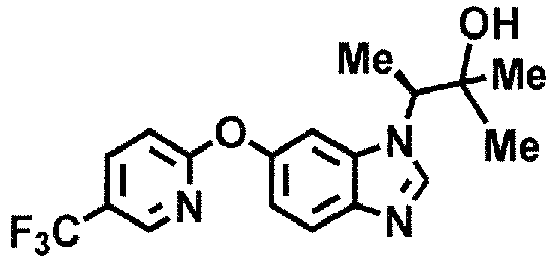
1H-NMR (CDCl3) δ: 1.14 (3H, s), 1.33 (3H, s), 1.64 (3H, d, J = 7.3 Hz), 1.82 (1H, s), 4.27 (1H, q, J = 7.2 Hz), 6.99 (1H, d, J = 8.7 Hz), 7.02 (1H, dd, J = 8.7, 2.3 Hz), 7.25 (1H, d, J = 2.3 Hz), 7.77 (1H, d, J = 8.7 Hz), 7.88 (1H, dd, J = 8.7, 2.7 Hz), 8.10 (1H, s), 8.41 (1H, s). - 2-Methyl-1-(6-{[5-(trifluoromethyl)pyridin-2-yl]oxy}-1H-benzimidazol-1-yl)propan-2-ol (Compound 28) can be prepared in the following manner.

- To a solution of Compound 76 (1.00 g) in NMP (16 mL) at room temperature was added diisopropylethylamine (2.06 g). To the mixture was added 1-amino-2-methylpropan-2-ol (0.74 g), and the reaction mixture was heated to 100°C and stirred for 4 hours. The reaction solution was cooled to room temperature, and cesium carbonate (3.11 g) and 2-fluoro-5-(trifluoromethyl)pyridine (1.37 g) were added thereto. The reaction mixture was heated to 100°C and stirred for 3 hours. The reaction solution was cooled to room temperature, and ethyl acetate, hexane and water were added thereto. And, the objective product was extracted in the organic layer. The organic layer was washed with water, and dried over anhydrous sodium sulfate. The organic layer was concentrated under reduced pressure, and the obtained residue was slurry-washed (eluate: hexane/ethyl acetate = 9/1) to give Compound 28a (1.53 g).
- To a solution of Compound 28a (0.50 g) in methanol (6.7 mL) were added trimethyl orthoformate (3.7 mL), formic acid (0.52 mL) and zinc (0.44 g), and the mixture was stirred heating at 70°C for 2 hours. The reaction mixture was filtered through Celite, and the filtrate was concentrated under reduced pressure. The obtained residue was dissolved in ethyl acetate, washed with a water solution of Rochelle salt and brine, and dried over anhydrous sodium sulfate. The concentrated crude crystal was purified by recrystallization from hexane/ethyl acetate (= 1 : 5) to give Compound 28 (0.33 g).
- Nav 1.7 current was measured by automated patch clamp assay using cells stably-expressing human SCN9A.
- Tetracycline-induced cells stably-expressing SCN9A were obtained from ChanTest Corporation. The cells were passaged in Ham's F-12 medium containing 10% fetal bovine serum, 100 units/mL Penicillin-Streptomycin, 0.01 mg/ mL Blasticidin, and 0.4 mg/ mL Zeocin. The day before the measurement, the medium was replaced with Ham's F-12 medium containing 1 µg/mL tetracycline, 100 µmol/L sodium butyrate, 10% fetal bovine serum, and 100 units/mL Penicillin-Streptomycin. Next day, the Na ion current was measured by automated patch clamp assay.
- The Na ion current was measured by automated patch clamp assay using the following extracellular solution and intracellular solution.
- Extracellular solution (mmol/L): NaCl 130, MgCl2 2, CaCl2 2, CdCl2 0.1, NiCl2 0.1, Tetraethylammonium-Cl 18, 4-aminopyridine 1, HEPES 10, (adjusting pH 7.4 with NaOH)
- The control of the stimulating pulse and the data acquisition were carried out using EPC10 amplifier and Patch Master Software (HEKA). Data were sampled at 10 kHz, and low-pass filtered at 3 kHz. All the measurements were carried out at room temperature. The holding potential was set at a potential inactivating 50% Nav 1.7 channel (around -60 mV), and depolarizing pulse of 20 milliseconds (+10 mV) was given once. The inhibitory rate of the test compounds was calculated based on the results of cells whose peak current was 500 pA or more when the depolarizing pulse was given and whose whole-cell parameter did not greatly vary until the end of the data acquisition. The inhibitory rate of the Na ion current by the test compounds was calculated according to the following calculating formula with the peak current value generated by the depolarizing pulse. Inhibitory rate of Na ion current (%) = 100 x [(Peak current value in the absence of Test Compound)-(Peak current value in the presence of Test Compound)]/(Peak current value in the absence of Test Compound)
- The inhibitory rate of Na ion current by each Example Compound was evaluated. The results showed that the compounds of the present invention exhibit the inhibitory effect for Nav 1.7. The inhibitory rate (%) wherein the concentration of each compound is 10 µmol/L is shown in the following table.
[Table 13] Example Inhibitory rate (%) Example Inhibitory rate (%) Example Inhibitory rate (%) Example Inhibitory rate (%) 1 83 2 85 3 65 4 52 5 39 6 41 7 67 8 32 9 77 10 52 11 75 12 58 13 25 14 68 15 57 16 67 17 31 18 41 19 39 20 91 21 12 22 73 23 47 24 56 25 72 26 39 27 31 28 82 29 
16 30 42 31 21 32 35 33 41 34 20 35 39 36 42 37 44 38 43 39 46 40 42 41 29 42 31 43 20 44 26 45 42 46 33 47 38 48 17 49 23 50 25 51 44 52 46 53 69 54 62 55 37 56 45 57 47 58 48 59 49 60 52 90 15 91 24 92 16 93 42 94 73 95 66 96 32 97 83 98 25 99 12 100 10 101 43 102 59 103 10 104 57 105 38 106 50 107 51 108 57 109 30 110 58 111 52 112 39 113 68 114 26 115 31 116 33 117 44 118 33 119 36 120 13 121 21 122 14 123 64 124 61 125 13 126 7 127 16 128 24 129 51 130 48 131 62 132 65 133 60 134 50 135 29 136 70 137 38 133 34 139 35 140 24 141 53 142 55 143 35 144 19 145 15 146 17 147 15 148 59 149 34 150 47 151 44 152 38 153 25 154 52 155 55 156 54 157 51 158 53 159 45 160 25 161 49 162 63 163 47 164 63 165 35 166 54 167 71 168 77 169 46 170 32 171 60 172 64 173 80 174 66 175 16 176 73 177 54 178 34 179 61 180 33 181 45 182 11 183 30 184 67 185 45 186 22 187 45 188 51 189 42 190 42 191 52 192 78 193 23 194 43 195 31 196 49 197 33 198 58 199 84 200 52 201 32 202 21 203 26 204 28 205 46 206 69 207 65 208 43 209 48 210 48 211 44 212 55 213 41 214 42 215 84 216 53 217 60 218 53 219 40 220 52 221 45 222 45 223 47 224 53 225 64 226 45 227 11 228 66 229 32 * The results of inhibitory rate in Examples 29, 49, 95, 96, 117, 126, 127, 182, 183, and 228 show inhibitory rate (%) wherein the concentration of each compound is 100 µmol/L. - Using some typical compounds among the compounds of the present invention, the inhibitory effect for neuropathic pain was determined through the evaluation of analgesic effect in rats streptozotocin (STZ)-induced diabetic peripheral neuropathy model.
- The disease animal model was prepared by means of a partially-modified method of Fox et al. (Pain 81, 307-316, 1999). STZ was intraperitoneally administered to 9-week old male Wistar rats in 45 mg/kg of body weight to prepare animal model suffering from diabetic peripheral neuropathy. The analgesic effect was evaluated by von Frey test. Specifically, mechanical sensitivity was measured by applying hairs (von Frey hair) to the plantar surface of the animal's hind paw, and then the reaction thresholds (50% paw withdrawal thresholds) for the mechanical stimulation was determined by using a formula based on Chapman et al. (Journal of Neuroscience Methods 53, 55-63, 1994).
- It was already confirmed in a preliminary study that the reaction thresholds of the animal's hind paw markedly decreased on the 21st day or later after administering STZ, hence the evaluation of the analgesic effect using the test compounds was done on any one day between the 21st day and the 30th day after administering STZ. One and two days before evaluating the test compounds, the reaction thresholds were measured to obtain an average thereof, and the average value was used as a reference value obtained before the test compounds would be administered.
- In order to reduce the variations of the averaged values among the test groups and the measured values in each group, the animals were divided into 4 to 5 groups.
- In the evaluation test of the test compounds, the reaction thresholds were measured after administering each test compound. One hour before measuring the reaction thresholds, each test compound was administered in 3 mg/kg of body weight. The strength of analgesic effect of each test compound is expressed as the extension width (g) of reaction thresholds which is obtained by the calculation formula of (reaction threshold obtained after administering test compound)-(reaction threshold obtained before administering test compound).
- As shown in the following table, the extension widths of reaction thresholds in each compound of the present invention were 1.3 to 6.5 g. Each number in [ ] shows extension widths in the solvent-administration groups for each test.
[Table 14] Example extension width (g) Example extension width (g) 1 2.8 [1.8] 123 1.3 [0] 20 2.9 [0.9] 148 3.7 [0.4] 28 6 [1.9] 179 6.5 [1.4] 59 5.1 [0.9] 181 2.5 [1.4] 94 4.9 [0.7] 205 1.6 [0.6] 101 1.4 [0] 229 3.9 [0.6] 118 3.4 [0.4] - The above result indicated that the compounds of the present invention exhibit good analgesic effects when the compounds are orally administered to rat models of diabetic peripheral neuropathy.
- The compounds of the present invention can be used as a useful medicament for treating a disease involving Nav 1.7, for example, neuropathic pain, nociceptive pain, inflammatory pain, small-fiber neuropathy, erythromelalgia, paroxysmal extreme pain disorder, dysuria, and multiple sclerosis. Thus, The compounds of the present invention can be very useful pharmaceuticals.


Claims (23)
- A compound of formula (I):
 R1a, R1b, R1c, and R1d are independently hydrogen, halogen, cyano, C1-4 alkyl, C1-4 alkoxy, C1-4 alkylamino, (wherein each alkyl moiety of the alkyl, the alkoxy and the alkylamino may be independently substituted with 1 to 5 substituents selected independently from the group consisting of halogen, hydroxyl, C1-4 alkoxy optionally-substituted with 1 to 3 substituents selected independently from Substituent-group A, C3-7 cycloalkyl optionally-substituted with 1 to 3 substituents selected independently from Substituent-group B, C3-7 cycloalkoxy optionally-substituted with 1 to 3 substituents selected independently from Substituent-group B, and 3- to 7-membered non-aromatic heterocyclyl optionally-substituted with 1 to 3 substituents selected independently from Substituent-group B), C3-7 cycloalkyl, C3-7 cycloalkoxy, C3-7 cycloalkylamino, (wherein each cycloalkyl moiety of the cycloalkyl, the cycloalkoxy and the cycloalkylamino may be independently substituted with 1 to 5 substituents selected independently from the group consisting of halogen, hydroxyl, C1-4 alkyl optionally-substituted with 1 to 3 substituents selected independently from Substituent-group A, C1-4 alkoxy optionally-substituted with 1 to 3 substituents selected independently from Substituent-group A, C3-7 cycloalkyl optionally-substituted with 1 to 3 substituents selected independently from Substituent-group B, and C3-7 cycloalkoxy optionally-substituted with 1 to 3 substituents selected independently from Substituent-group B), C6-10 aryl, C6-10 aryloxy, 5- to 12-membered heteroaryl, or 5- to 12-membered heteroaryloxy, (wherein each aryl moiety of the aryl and the aryloxy and each heteroaryl moiety of the heteroaryl and the heteroaryloxy may be independently substituted with 1 to 5 substituents selected independently from the group consisting of halogen, cyano, C1-4 alkyl optionally-substituted with 1 to 3 substituents selected independently from Substituent-group A, C1-4 alkoxy optionally-substituted with 1 to 3 substituents selected independently from Substituent-group A, C3-7 cycloalkyl optionally-substituted with 1 to 3 substituents selected independently from Substituent-group B, C3-7 cycloalkoxy optionally-substituted with 1 to 3 substituents selected independently from Substituent-group B, 3- to 7-membered non-aromatic heterocyclyl optionally-substituted with 1 to 3 substituents selected independently from Substituent-group B, C1-4 alkylthio optionally-substituted with 1 to 3 substituents selected independently from Substituent-group A, and C1-4 alkylsulfonyl optionally-substituted with 1 to 3 substituents selected independently from Substituent-group A), provided that at least one of R1a, R1b, R1c and R1d is the above C6-10 aryl, C6-10 aryloxy, 5- to 12-membered heteroaryl or 5- to 12-membered heteroaryloxy,R2 and R3 are independently hydrogen, C1-6 alkyl which may be independently substituted with 1 to 5 substituents selected independently from the group consisting of cyano, halogen, hydroxyl, C1-4 alkoxy optionally-substituted with 1 to 3 substituents selected independently from Substituent-group A, C3-7 cycloalkyl optionally-substituted with 1 to 3 substituents selected independently from Substituent-group B, and C3-7 cycloalkoxy optionally-substituted with 1 to 3 substituents selected independently from Substituent-group B, or C3-10 cycloalkyl,R4 is hydrogen, C1-6 alkyl which may be independently substituted with 1 to 3 substituents selected independently from the group consisting of halogen, hydroxyl, C1-4 alkoxy optionally-substituted with 1 to 3 substituents selected independently from Substituent-group A, C3-7 cycloalkyl optionally-substituted with 1 to 3 substituents selected independently from Substituent-group B, C3-7 cycloalkoxy optionally-substituted with 1 to 3 substituents selected independently from Substituent-group B, and 3- to 7-membered non-aromatic heterocyclyl optionally-substituted with 1 to 3 substituents selected independently from Substituent-group B, or C3-7 cycloalkyl which may be independently substituted with 1 to 3 substituents selected independently from the group consisting of halogen, hydroxyl, C1-4 alkyl optionally-substituted with 1 to 3 substituents selected independently from Substituent-group A, C1-4 alkoxy optionally-substituted with 1 to 3 substituents selected independently from Substituent-group A, C3-7 cycloalkyl optionally-substituted with 1 to 3 substituents selected independently from Substituent-group B, and C3-7 cycloalkoxy optionally-substituted with 1 to 3 substituents selected independently from Substituent-group B,m is 1, 2 or 3,L is CR7R8 provided that when m is 2 or 3, each CR7R8 are independently the same or different,R7 and R8 are independently hydrogen, hydroxyl, C1-4 alkyl, C1-4 alkoxy, (wherein each alkyl moiety of the alkyl and the alkoxy may be independently substituted with 1 to 3 substituents selected independently from the group consisting of halogen, hydroxyl, C1-4 alkoxy optionally-substituted with 1 to 3 substituents selected independently from Substituent-group A, C3-7 cycloalkyl optionally-substituted with 1 to 3 substituents selected independently from Substituent-group B, C3-7 cycloalkoxy optionally-substituted with 1 to 3 substituents selected independently from Substituent-group B, and 3- to 7-membered non-aromatic heterocyclyl optionally-substituted with 1 to 3 substituents selected independently from Substituent-group B), C3-7 cycloalkyl, or C3-7 cycloalkoxy, (wherein each cycloalkyl moiety of the cycloalkyl and the cycloalkoxy may be independently substituted with 1 to 3 substituents selected independently from the group consisting of halogen, hydroxyl, C1-4 alkyl optionally-substituted with 1 to 3 substituents selected independently from Substituent-group A, C1-4 alkoxy optionally-substituted with 1 to 3 substituents selected independently from Substituent-group A, C3-7 cycloalkyl optionally-substituted with 1 to 3 substituents selected independently from Substituent-group B, and C3-7 cycloalkoxy optionally-substituted with 1 to 3 substituents selected independently from Substituent-group B), orin R2, R3 and -OR4, R2 and R3 may be combined together with the carbon atom to which they are attached to form the following group of formula (II) with -OR4
 e and f are independently 1, 2 or 3,R4 is as defined above,V is single bond or oxygen atom,R5a, R5b, R5c, and R5d are independently hydrogen, halogen, hydroxyl, C1-4 alkyl, or C1-4 alkoxy, wherein each alkyl moiety of the alkyl and the alkoxy may be independently substituted with 1 to 3 substituents selected independently from the group consisting of halogen, hydroxyl, C1-4 alkoxy optionally-substituted with 1 to 3 substituents selected independently from Substituent-group A, C3-7 cycloalkyl optionally-substituted with 1 to 3 substituents selected independently from Substituent-group B, C3-7 cycloalkoxy optionally-substituted with 1 to 3 substituents selected independently from Substituent-group B, and 3- to 7-membered non-aromatic heterocyclyl optionally-substituted with 1 to 3 substituents selected independently from Substituent-group B, orin R2, R3, -OR4 and CR7R8 in L,R2 and R7 may be combined together with the carbon atom to which they are attached to form the following group of formula (IV) with R3, -OR4 and R8
 m1 is 0 or 1,m2 is 0 or 1 and j is 1, 2, 3 or 4 when m1 is 1, orm2 is 0, 1 or 2 and j is 1, 2, 3 or 4 when m1 is 0,R3, R4, R8 and L are as defined above,R9A, R9b, R9c, and R9d are independently hydrogen, halogen, hydroxyl, C1-4 alkyl, or C1-4 alkoxy, wherein each alkyl moiety of the alkyl and the alkoxy may be independently substituted with 1 to 3 substituents selected independently from the group consisting of halogen, hydroxyl, C1-4 alkoxy optionally-substituted with 1 to 3 substituents selected independently from Substituent-group A, C3-7 cycloalkyl optionally-substituted with 1 to 3 substituents selected independently from Substituent-group B, C3-7 cycloalkoxy optionally-substituted with 1 to 3 substituents selected independently from Substituent-group B, and 3- to 7-membered non-aromatic heterocyclyl optionally-substituted with 1 to 3 substituents selected independently from Substituent-group B, orR3 and -OR4 may be combined together with the carbon atom to which they are attached to form the following group of formula (III) with R2
 h is 1, 2, 3, or 4,R2 is as defined above,R6a, R6b, and R6c are independently hydrogen, halogen, hydroxyl, C1-4 alkyl, or C1-4 alkoxy, wherein each alkyl moiety of the alkyl and the alkoxy may be independently substituted with 1 to 3 substituents selected independently from the group consisting of halogen, hydroxyl, C1-4 alkoxy optionally-substituted with 1 to 3 substituents selected independently from Substituent-group A, C3-7 cycloalkyl optionally-substituted with 1 to 3 substituents selected independently from Substituent-group B, C3-7 cycloalkoxy optionally-substituted with 1 to 3 substituents selected independently from Substituent-group B, and 3- to 7-membered non-aromatic heterocyclyl optionally-substituted with 1 to 3 substituents selected independently from Substituent-group B,provided that all of R2, R3 and -OR4 are not combined together to form a ring,Substituent-group A is independently halogen, hydroxyl, C1-4 alkoxy, C3-7 cycloalkyl, or C3-7 cycloalkoxy, andSubstituent-group B is independently halogen, hydroxyl, C1-4 alkyl, C1-4 alkoxy, C3-7 cycloalkyl, or C3-7 cycloalkoxy,provide that the following compounds are excluded:6-[6-chloro-2-(morpholin-4-yl)pyrimidin-4-yl]-1-(2-methoxyethyl)-1H-benzimidazole,2-[5-(3,5-dimethyl-1,2-oxazol-4-yl)-1H-benzimidazol-1-yl]ethanol,2-15-[5-(tetrahydrofuran-3-yl)-4H-1,2,4-triazol-3-yl]-1H-benzimidazol-1-yl}ethanol,2-{5-[3-(2-methoxyethyl)-1-(2,2,2-trifluoroethyl)-1H-1,2,4-triazol-5-yl]-1H-benzimidazol-1-yl}ethanol,2-{5-[3-methyl-1-(1-methylpiperidin-4-yl)-1H-1,2,4-triazol-5-yl]-1H-benzimidazol-1-yl}ethanol,2-butyl-6-[1-(2-hydroxyethyl)-1H-benzimidazol-6-yl]-3,4-dihydropyrrolo[1,2-a]pyrazin-1(2H)-one,6-[1-(2-hydroxyethyl)-1H-benzimidazol-6-yl]-2-(3-methylbutyl)-3,4-dihydropyrrolo[1,2-a]pyrazin-1(2H)-one,2-{5-[1-(2-hydroxyethyl)-1H-benzimidazol-5-yl]-1H-1,2,4-triazol-1-yl}ethanol,6-(2-chlorophenyl)-1-(2-hydroxyethyl)-1H-benzimidazole-7-carbonitrile,2-chloro-6-{7-fluoro-1-[(1S,3S)-3-methoxycyclohexyl]-1H-benzimidazol-5-yl}-9-(tetrahydro-2H-pyran-2-yl)-9H-purine, and2-{5-[2-(tetrahydrofuran-3-yl)-1H-imidazol-1-yl]-1H-benzimidazol-1-yl}ethanol.
 - The compound of claim 1 or a pharmaceutically acceptable salt thereof, wherein
R1a, R1b, R1c, and R1d are independently, hydrogen, halogen, cyano, C1-4 alkyl, C1-4 alkoxy (wherein each alkyl moiety of the alkyl and the alkoxy may be independently substituted with the same or different and 1 to 3 halogens), C6-10 aryl, C6-10 aryloxy, 5- to 12-membered heteroaryl, or 5- to 12-membered heteroaryloxy (wherein each aryl moiety of the aryl and the aryloxy and each heteroaryl moiety of the heteroaryl and the heteroaryloxy may be independently substituted with 1 to 3 substituents selected independently from the group consisting of halogen, cyano, C1-4 alkyl optionally-substituted with 1 to 3 substituents selected independently from Substituent-group A, C1-4 alkoxy optionally-substituted with 1 to 3 substituents selected independently from Substituent-group A, and C1-4 alkylsulfonyl optionally-substituted with 1 to 3 substituents selected independently from Substituent-group A) . - The compound of claim 1 or 2 or a pharmaceutically acceptable salt thereof, wherein
R1a, R1b, R1c, and R1d are independently, hydrogen, C6-10 aryl, C6-10 aryloxy, 5- to 12-membered heteroaryl, or 5- to 12-membered heteroaryloxy, wherein each aryl moiety of the aryl and the aryloxy and each heteroaryl moiety of the heteroaryl and the heteroaryloxy may be independently substituted with 1 to 3 substituents selected independently from the group consisting of halogen and C1-4 alkyl optionally-substituted with 1 to 3 substituents selected independently from Substituent-group A. - The compound of any one of claims 1 to 3 or a pharmaceutically acceptable salt thereof, wherein R1a and R1d are hydrogen.
- The compound of any one of claims 1 to 4 or a pharmaceutically acceptable salt thereof, wherein
R2 and R3 are independently hydrogen or C1-6 alkyl which may be independently substituted with 1 to 5 substituents selected independently from the group consisting of cyano, halogen, hydroxyl, and C1-4 alkoxy optionally-substituted with 1 to 3 substituents selected independently from Substituent-group A, provided that both of R2 and R3 are not hydrogen, or
R2 and R3 may be combined together with the carbon atom to which they are attached to form the following group of formula (IIa) with -OR4 e and f are independently 1 or 2,R4 and V are as defined in claim 1, andR5a, R5b, R5c, and R5d are independently hydrogen or halogen, orin R2, R3, -OR4 and CR7R8 in L,R2 and R7 may be combined together with the carbon atom to which they are attached to form the following group of formula (IVa) with R3, -OR4 and R8
 m1 is 0,m2 is 1 or 2,j is 1, 2 or 3,R3 is as defined above,R4, R8 and L are as defined in claim 1, andR9A, R9b, R9c, and R9d are independently hydrogen or halogen.
 - The compound of any one of claims 1 to 5 or a pharmaceutically acceptable salt thereof, wherein
R2 and R3 are independently C1-6 alkyl optionally-substituted with the same or different and 1 to 5 halogens, or
R2 and R3 may be combined together with the carbon atom to which they are attached to form the following group of formula (IIb) with -OR4 e and f are independently 1 or 2,R4 and V are as defined in claim 1, andR5a, R5b, R5c, and R5d are independently hydrogen or halogen, orin R2, R3, -OR4 and CR7R8 in L,R2 and R7 may be combined together with the carbon atom to which they are attached to form the following group of formula (IVa) with R3, -OR4 and R8
 m1 is 0,m2 is 1 or 2,j is 1, 2 or 3,R4 is hydrogen,R8 and L are as defined in claim 1, andR9a, R9b, R9c, and R9d are independently hydrogen or halogen.
 - The compound of any one of claims 1 to 6 or a pharmaceutically acceptable salt thereof, wherein
R2 and R3 are independently hydrogen or C1-6 alkyl optionally-substituted with the same or different and 1 to 5 halogens, and R2 and R3 are not combined together with the carbon atom to which they are attached to form a ring. - The compound of any one of claims 1 to 4 and 7 or a pharmaceutically acceptable salt thereof, wherein
R4 is hydrogen, C1-4 alkyl optionally-substituted with the same or different and 1 to 3 halogens, or C3-7 cycloalkyl which may be substituted with 1 to 3 substituents selected independently from the group consisting of halogen, hydroxyl, and C1-4 alkoxy optionally-substituted with 1 to 3 substituents selected independently from Substituent-group A, or
R3 and -OR4 may be combined together with the carbon atom to which they are attached to form the following group of formula (IIIa) with R2 h is 1, 2, or 3,R2 is as defined in claim 1,R6a, R6b, and R6c are independently, hydrogen, halogen, or C1-4 alkyl optionally-substituted with the same or different and 1 to 3 halogens.
 - The compound of any one of claims 1 to 8 or a pharmaceutically acceptable salt thereof, wherein
R4 is hydrogen, C1-4 alkyl optionally-substituted with the same or different and 1 to 3 halogens, or C3-7 cycloalkyl which may be substituted with 1 to 3 substituents selected independently from the group consisting of halogen, hydroxyl, and C1-4 alkoxy optionally-substituted with 1 to 3 substituents selected independently from Substituent-group A, and R3 and -OR4 are not combined together with the carbon atom to which they are attached to form a ring. - The compound of any one of claims 1 to 9 or a pharmaceutically acceptable salt thereof, wherein R4 is hydrogen.
- The compound of any one of claims 1 to 10 or a pharmaceutically acceptable salt thereof, wherein
R7 and R8 are independently hydrogen or C1-4 alkyl which may be substituted with 1 to 3 substituents selected independently from the group consisting of halogen, hydroxyl, C1-4 alkoxy optionally-substituted with 1 to 3 substituents selected independently from Substituent-group A, C3-7 cycloalkyl optionally-substituted with 1 to 3 substituents selected independently from Substituent-group B, C3-7 cycloalkoxy optionally-substituted with 1 to 3 substituents selected independently from Substituent-group B, and 3- to 7-membered non-aromatic heterocyclyl optionally-substituted with 1 to 3 substituents selected independently from Substituent-group B, and
m is 1 or 2. - The compound of any one of claims 1 to 11 or a pharmaceutically acceptable salt thereof, wherein R7 and R8 are hydrogen, and m is 1.
- The compound of any one of claims 1 to 12 or a pharmaceutically acceptable salt thereof, wherein
R1b or R1c is C6-10 aryl, C6-10 aryloxy, 5- to 12-membered heteroaryl, or 5- to 12-membered heteroaryloxy, wherein each aryl moiety of the aryl and the aryloxy and each heteroaryl moiety of the heteroaryl and the heteroaryloxy may be independently substituted with 1 to 3 substituents selected independently from the group consisting of halogen, cyano, C1-4 alkyl optionally-substituted with 1 to 3 substituents selected independently from Substituent-group A, C1-4 alkoxy optionally-substituted with 1 to 3 substituents selected independently from Substituent-group A, and C1-4 alkylsulfonyl optionally-substituted with 1 to 3 substituents selected independently from Substituent-group A. - The compound of any one of claims 1 to 13 or a pharmaceutically acceptable salt thereof, wherein
R1b is C6-10 aryl, C6-10 aryloxy, 5- to 12-membered heteroaryl, or 5- to 12-membered heteroaryloxy, wherein each aryl moiety of the aryl and the aryloxy and each heteroaryl moiety of the heteroaryl and the heteroaryloxy may be independently substituted with 1 to 3 substituents selected independently from the group consisting of halogen, cyano, C1-4 alkyl optionally-substituted with 1 to 3 substituents selected independently from Substituent-group A, C1-4 alkoxy optionally-substituted with 1 to 3 substituents selected independently from Substituent-group A, and C1-4 alkylsulfonyl optionally-substituted with 1 to 3 substituents selected independently from Substituent-group A. - The compound of any one of claims 1 to 13 or a pharmaceutically acceptable salt thereof, wherein
R1c is C6-10 aryl, C6-10 aryloxy, 5- to 12-membered heteroaryl, or 5- to 12-membered heteroaryloxy, wherein each aryl moiety of the aryl and the aryloxy and each heteroaryl moiety of the heteroaryl and the heteroaryloxy may be independently substituted with 1 to 3 substituents selected independently from the group consisting of halogen, cyano, C1-4 alkyl optionally-substituted with 1 to 3 substituents selected independently from Substituent-group A, C1-4 alkoxy optionally-substituted with 1 to 3 substituents selected independently from Substituent-group A, and C1-4 alkylsulfonyl optionally-substituted with 1 to 3 substituents selected independently from Substituent-group A. - The compound of claim 1 or a pharmaceutically acceptable salt thereof, which is selected from the following compounds:1-[6-(4-fluorophenoxy)-1H-benzimidazol-1-yl]-2-methylpropan-2-ol,6-(4-fluorophenoxy)-1-(tetrahydrofuran-2-ylmethyl)-1H-benzimidazole,1-(tetrahydrofuran-2-ylmethyl)-6-[4-(trifluoromethyl)phenyl]-1H-benzimidazole,2-methyl-1-{6-[4-(trifluoromethyl)phenyl]-1H-benzimidazol-1-yl}propan-2-ol,1-[2-(cyclopentyloxy)ethyl]-6-[4-(trifluoromethyl)phenyl]-1H-benzimidazole,2-methyl-1-{6-[5-(trifluoromethyl)pyridin-2-yl]-1H-benzimidazol-1-yl}propan-2-ol,1-[2-(cyclopentyloxy)ethyl]-6-[5-(trifluoromethyl)pyridin-2-yl]-1H-benzimidazole,2-methyl-1-[6-(4-methylphenoxy)-1H-benzimidazol-1-yl]propan-2-ol,2-methyl-1-{6-[4-(trifluoromethyl)phenoxy]-1H-benzimidazol-1-yl}propan-2-ol,1-[6-(4-chlorophenoxy)-1H-benzimidazol-1-yl]-2-methylpropan-2-ol,2-methyl-1-{6-[4-(trifluoromethoxy)phenoxy]-1H-benzimidazol-1-yl}propan-2-ol,2-methyl-1-{6-[(6-methylpyridin-3-yl)oxy]-1H-benzimidazol-1-yl}propan-2-ol,2-methyl-1-(6-{[6-(trifluoromethyl)pyridin-3-yl]oxy}-1H-benzimidazol-1-yl)propan-2-ol,2-methyl-1-(6-{[5-(trifluoromethyl)pyridin-2-yl]oxy}-1H-benzimidazol-1-yl)propan-2-ol,2-methyl-1-(5-{[5-(trifluoromethyl)pyrazin-2-yl]oxy}-1H-benzimidazol-1-yl)propan-2-ol,2-methyl-1-(5-{[5-(trifluoromethyl)pyrimidin-2-yl]oxy}-1H-benzimidazol-1-yl)propan-2-ol,1-(5-{[3-fluoro-5-(trifluoromethyl)pyridin-2-yl]oxy}-1H-benzimidazol-1-yl)-2-methylpropan-2-ol,1-{5-[(5-chloro-3-fluoropyridin-2-yl)oxy]-1H-benzimidazol-1-yl}-2-methylpropan-2-ol,3-[(6-{[5-(trifluoromethyl)pyridin-2-yl]oxy}-1H-benzimidazol-1-yl)methyl]oxetan-3-ol,1-[(6-{[5-(trifluoromethyl)pyridin-2-yl]oxy}-1H-benzimidazol-1-yl)methyl]cyclobutanol,2-methyl-4-(6-{[5-(trifluoromethyl)pyridin-2-yl]oxy}-1H-benzimidazol-1-yl)butan-2-ol,2-methyl-1-(6-{[5-(2,2,2-trifluoroethyl)pyridin-2-yl]oxy}-1H-benzimidazol-1-yl)propan-2-ol,3-({6-[4-(trifluoromethyl)phenoxy]-1H-benzimidazol-1-yl}methyl)oxetan-3-ol,3-({6-[4-(trifluoromethoxy)phenoxy]-1H-benzimidazol-1-yl}methyl)oxetan-3-ol,4-[6-(4-chlorophenoxy)-1H-benzimidazol-1-yl]-2-methylbutan-2-ol,3-{[6-(2-chloro-4-fluorophenoxy)-1H-benzimidazol-1-yl]methyl}oxetan-3-ol,cis-4-(6-{[5-(trifluoromethyl)pyridin-2-yl]oxy}-1H-benzimidazol-1-yl)cyclohexanol,1-{6-[2-fluoro-4-(trifluoromethyl)phenyl]-1H-benzimidazol-1-yl}-2-methylpropan-2-ol,1-[6-(4-chloro-2-fluorophenyl)-1H-benzimidazol-1-yl]-2-methylpropan-2-ol,3-({6-[2-methoxy-4-(trifluoromethyl)phenyl]-1H-benzimidazol-1-yl}methyl)oxetan-3-ol,4-{6-[2-methoxy-4-(trifluoromethyl)phenyl]-1H-benzimidazol-1-yl}-2-methylbutan-2-ol,1-{5-[2-methoxy-4-(trifluoromethyl)phenyl]-1H-benzimidazol-1-yl}-2-methylpropan-2-ol,2-methyl-1-{5-[4-(trifluoromethoxy)phenyl]-1H-benzimidazol-1-yl}propan-2-ol,1-{5-[2-fluoro-4-(trifluoromethyl)phenyl]-1H-benzimidazol-1-yl}-2-methylpropan-2-ol,3-({5-[2-methoxy-4-(trifluoromethyl)phenyl]-1H-benzimidazol-1-yl}methyl)oxetan-3-ol, and(3S)-2-methyl-3-(6-{[5-(trifluoromethyl)pyridin-2-yl]oxy}-1H-benzimidazol-1-yl)butan-2-ol.
- The compound of claim 1 or a pharmaceutically acceptable salt thereof, which is selected from the following compounds:1-[6-(4-fluorophenoxy)-1H-benzimidazol-1-yl]-2-methylpropan-2-ol,2-methyl-1-{6-[4-(trifluoromethyl)phenyl]-1H-benzimidazol-1-yl}propan-2-ol,2-methyl-1-{6-[5-(trifluoromethyl)pyridin-2-yl]-1H-benzimidazol-1-yl}propan-2-ol,2-methyl-1-{6-[4-(trifluoromethyl)phenoxy]-1H-benzimidazol-1-yl}propan-2-ol,1-[6-(4-chlorophenoxy)-1H-benzimidazol-1-yl]-2-methylpropan-2-ol,2-methyl-1-{6-[4-(trifluoromethoxy)phenoxy]-1H-benzimidazol-1-yl}propan-2-ol,2-methyl-1-{6-[(6-methylpyridin-3-yl)oxy]-1H-benzimidazol-1-yl}propan-2-ol,2-methyl-1-(6-{[5-(trifluoromethyl)pyridin-2-yl]oxy}-1H-benzimidazol-1-yl)propan-2-ol,2-methyl-1-(5-{[5-(trifluoromethyl)pyrazin-2-yl]oxy}-1H-benzimidazol-1-yl)propan-2-ol,1-(5-{[3-fluoro-5-(trifluoromethyl)pyridin-2-yl]oxy}-1H-benzimidazol-1-yl)-2-methylpropan-2-ol,2-methyl-4-(6-{[5-(trifluoromethyl)pyridin-2-yl]oxy}-1H-benzimidazol-1-yl)butan-2-ol,2-methyl-1-(6-{[5-(2,2,2-trifluoroethyl)pyridin-2-yl]oxy}-1H-benzimidazol-1-yl)propan-2-ol,3-({6-[4-(trifluoromethoxy)phenoxy]-1H-benzimidazol-1-yl}methyl)oxetan-3-ol,4-[6-(4-chlorophenoxy)-1H-benzimidazol-1-yl]-2-methylbutan-2-ol,cis-4-(6-{[5-(trifluoromethyl)pyridin-2-yl]oxy}-1H-benzimidazol-1-yl)cyclohexanol,1-{6-[2-fluoro-4-(trifluoromethyl)phenyl]-1H-benzimidazol-1-yl}-2-methylpropan-2-ol,3-({6-[2-methoxy-4-(trifluoromethyl)phenyl]-1H-benzimidazol-1-yl}methyl)oxetan-3-ol,3-({5-[2-methoxy-4-(trifluoromethyl)phenyl]-1H-benzimidazol-1-yl}methyl)oxetan-3-ol, and(3S)-2-methyl-3-(6-{[5-(trifluoromethyl)pyridin-2-yl]oxy}-1H-benzimidazol-1-yl)butan-2-ol.
- A pharmaceutical composition comprising the compound of any one of claims 1 to 17 or a pharmaceutically acceptable salt thereof.
- A medicament for treating a disease involving Nav 1.7 (SCN9A), comprising the compound of any one of claims 1 to 17 or a pharmaceutically acceptable salt thereof as an active ingredient.
- A medicament for treating neuropathic pain, nociceptive pain, inflammatory pain, small-fiber neuropathy, erythromelalgia, paroxysmal extreme pain disorder, dysuria, or multiple sclerosis, which comprises the compound of any one of claims 1 to 17 or a pharmaceutically acceptable salt thereof as an active ingredient.
- A pharmaceutical combination comprising the compound of any one of claims 1 to 17 or a pharmaceutically acceptable salt thereof, and at least one drug selected from the group consisting of an antiepileptic agent, an antidepressive agent, a narcotic analgesic, an anti-inflammatory agent, a reductase inhibitor, and a prostaglandin derivative drug.
- Use of the compound of any one of claims 1 to 17 or a pharmaceutically acceptable salt thereof in the manufacture of a medicament for treating neuropathic pain, nociceptive pain, inflammatory pain, small-fiber neuropathy, erythromelalgia, paroxysmal extreme pain disorder, dysuria, or multiple sclerosis.
- A method for treating neuropathic pain, nociceptive pain, inflammatory pain, small-fiber neuropathy, erythromelalgia, paroxysmal extreme pain disorder, dysuria, or multiple sclerosis, which comprises administering a therapeutically effective amount of the compound of any one of claims 1 to 17 or a pharmaceutically acceptable salt thereof to a mammal in need thereof.
Priority Applications (2)
| Application Number | Priority Date | Filing Date | Title |
|---|---|---|---|
| PL16844497T PL3348547T3 (en) | 2015-09-11 | 2016-09-09 | Benzimidazole derivatives as nav 1.7 (sodium channel, voltage-gated, type ix, alpha subunit (scn9a)) inhibitors for treating pain, dysuria and multiple sclerosis |
| SI201630917T SI3348547T1 (en) | 2015-09-11 | 2016-09-09 | Benzimidazole derivatives as nav 1.7 (sodium channel, voltage-gated, type ix, alpha subunit (scn9a)) inhibitors for treating pain, dysuria and multiple sclerosis |
Applications Claiming Priority (2)
| Application Number | Priority Date | Filing Date | Title |
|---|---|---|---|
| JP2015179663 | 2015-09-11 | ||
| PCT/JP2016/076645 WO2017043636A1 (en) | 2015-09-11 | 2016-09-09 | Novel benzimidazole compound and pharmaceutical use of same |
Publications (3)
| Publication Number | Publication Date |
|---|---|
| EP3348547A1 true EP3348547A1 (en) | 2018-07-18 |
| EP3348547A4 EP3348547A4 (en) | 2019-03-20 |
| EP3348547B1 EP3348547B1 (en) | 2020-07-22 |
Family
ID=58239905
Family Applications (1)
| Application Number | Title | Priority Date | Filing Date |
|---|---|---|---|
| EP16844497.4A Active EP3348547B1 (en) | 2015-09-11 | 2016-09-09 | Benzimidazole derivatives as nav 1.7 (sodium channel, voltage-gated, type ix, alpha subunit (scn9a)) inhibitors for treating pain, dysuria and multiple sclerosis |
Country Status (17)
| Country | Link |
|---|---|
| US (2) | US10407395B2 (en) |
| EP (1) | EP3348547B1 (en) |
| JP (1) | JP6768674B2 (en) |
| KR (1) | KR102654710B1 (en) |
| CN (1) | CN107922350B (en) |
| AU (1) | AU2016319597B2 (en) |
| CA (1) | CA2989992A1 (en) |
| CY (1) | CY1123482T1 (en) |
| DK (1) | DK3348547T3 (en) |
| ES (1) | ES2818529T3 (en) |
| HU (1) | HUE052395T2 (en) |
| LT (1) | LT3348547T (en) |
| PL (1) | PL3348547T3 (en) |
| PT (1) | PT3348547T (en) |
| SI (1) | SI3348547T1 (en) |
| TW (1) | TWI710554B (en) |
| WO (1) | WO2017043636A1 (en) |
Families Citing this family (6)
| Publication number | Priority date | Publication date | Assignee | Title |
|---|---|---|---|---|
| JP6768674B2 (en) * | 2015-09-11 | 2020-10-14 | 大日本住友製薬株式会社 | New benzimidazole compounds and their pharmaceutical uses |
| JP7094942B2 (en) * | 2017-03-15 | 2022-07-04 | 住友ファーマ株式会社 | Method for producing benzimidazole derivative |
| JP7165501B2 (en) * | 2017-03-15 | 2022-11-04 | 住友ファーマ株式会社 | Pharmaceuticals comprising novel benzimidazole compounds |
| EP3597639A4 (en) * | 2017-03-15 | 2020-09-16 | Sumitomo Dainippon Pharma Co., Ltd. | DEUTERATED BENZIMIDAZOLE COMPOUND AND MEDICAL USE THEREOF |
| KR102183676B1 (en) | 2018-04-17 | 2020-11-27 | 주식회사 엘지화학 | Elliptical polarizing plate and organic light emitting device |
| CN115925699B (en) * | 2022-02-25 | 2023-10-03 | 南京知和医药科技有限公司 | Fused ring compound with analgesic activity and preparation method and application thereof |
Family Cites Families (17)
| Publication number | Priority date | Publication date | Assignee | Title |
|---|---|---|---|---|
| MXPA04010545A (en) * | 2002-04-26 | 2005-01-25 | Pfizer Prod Inc | N-substituted-heteroaryloxy-aryl-spiro-pyrimidine-2,4,6-trione metalloproteinase inhibitors. |
| KR20060115396A (en) * | 2003-10-28 | 2006-11-08 | 버텍스 파마슈티칼스 인코포레이티드 | Benzimidazoles Useful as Ion Channel Regulators |
| JP2008501714A (en) * | 2004-06-04 | 2008-01-24 | 武田薬品工業株式会社 | Dipeptidyl peptidase inhibitor |
| EP2582666B1 (en) | 2010-06-16 | 2014-08-13 | Purdue Pharma L.P. | Aryl substituted indoles and their use as blockers of sodium channels |
| JPWO2012057262A1 (en) | 2010-10-28 | 2014-05-12 | 日本新薬株式会社 | Pyridine derivatives and medicines |
| EP2681200A4 (en) * | 2011-03-03 | 2015-05-27 | Zalicus Pharmaceuticals Ltd | Benzimidazole inhibitors of the sodium channel |
| WO2012172043A1 (en) * | 2011-06-15 | 2012-12-20 | Laboratoire Biodim | Purine derivatives and their use as pharmaceuticals for prevention or treatment of bacterial infections |
| CA2861439C (en) * | 2012-02-03 | 2016-07-12 | Pfizer Inc. | Benzimidazole and imidazopyridine derivatives as sodium channel modulators |
| JPWO2014054635A1 (en) | 2012-10-02 | 2016-08-25 | 大日本住友製薬株式会社 | Imidazole derivatives |
| TW201444820A (en) | 2013-03-13 | 2014-12-01 | Abbvie Inc | Pyridine CDK9 kinase inhibitors |
| JP2016169161A (en) | 2013-07-19 | 2016-09-23 | 大日本住友製薬株式会社 | New imidazopyridine compounds |
| US9828348B2 (en) * | 2013-11-08 | 2017-11-28 | Purdue Pharma L.P. | Benzimidazole derivatives and use thereof |
| MA40957A (en) * | 2014-10-09 | 2017-09-19 | Biomarin Pharm Inc | HEPARANE SULPHATE BIOSYNTHESIS INHIBITORS TO TREAT DISEASES |
| JP2018052817A (en) * | 2015-01-21 | 2018-04-05 | 大日本住友製薬株式会社 | Novel benzimidazole derivatives and their pharmaceutical use |
| MA41803A (en) | 2015-03-24 | 2018-01-30 | Almirall Sa | AMINO-INDAZOLES USED AS SODIUM CHANNEL INHIBITORS |
| JP6786520B2 (en) | 2015-04-21 | 2020-11-18 | ジーティーエックス・インコーポレイテッド | Selective androgen receptor degradation agent (SARD) ligand and how to use it |
| JP6768674B2 (en) * | 2015-09-11 | 2020-10-14 | 大日本住友製薬株式会社 | New benzimidazole compounds and their pharmaceutical uses |
-
2016
- 2016-09-09 JP JP2017538545A patent/JP6768674B2/en active Active
- 2016-09-09 PT PT168444974T patent/PT3348547T/en unknown
- 2016-09-09 WO PCT/JP2016/076645 patent/WO2017043636A1/en not_active Ceased
- 2016-09-09 SI SI201630917T patent/SI3348547T1/en unknown
- 2016-09-09 US US15/323,185 patent/US10407395B2/en active Active
- 2016-09-09 ES ES16844497T patent/ES2818529T3/en active Active
- 2016-09-09 TW TW105129360A patent/TWI710554B/en active
- 2016-09-09 LT LTEP16844497.4T patent/LT3348547T/en unknown
- 2016-09-09 DK DK16844497.4T patent/DK3348547T3/en active
- 2016-09-09 KR KR1020187007320A patent/KR102654710B1/en active Active
- 2016-09-09 CN CN201680052438.1A patent/CN107922350B/en active Active
- 2016-09-09 HU HUE16844497A patent/HUE052395T2/en unknown
- 2016-09-09 CA CA2989992A patent/CA2989992A1/en active Pending
- 2016-09-09 EP EP16844497.4A patent/EP3348547B1/en active Active
- 2016-09-09 AU AU2016319597A patent/AU2016319597B2/en active Active
- 2016-09-09 PL PL16844497T patent/PL3348547T3/en unknown
- 2016-12-30 US US15/395,338 patent/US9688670B2/en active Active
-
2020
- 2020-10-14 CY CY20201100973T patent/CY1123482T1/en unknown
Also Published As
| Publication number | Publication date |
|---|---|
| CN107922350A (en) | 2018-04-17 |
| KR20180044317A (en) | 2018-05-02 |
| PT3348547T (en) | 2020-10-12 |
| HK1251225A1 (en) | 2019-01-25 |
| RU2018105683A3 (en) | 2019-12-26 |
| TWI710554B (en) | 2020-11-21 |
| ES2818529T3 (en) | 2021-04-13 |
| PL3348547T3 (en) | 2020-12-14 |
| JPWO2017043636A1 (en) | 2018-06-28 |
| AU2016319597A1 (en) | 2018-02-01 |
| TW201713629A (en) | 2017-04-16 |
| HUE052395T2 (en) | 2021-04-28 |
| WO2017043636A1 (en) | 2017-03-16 |
| EP3348547B1 (en) | 2020-07-22 |
| KR102654710B1 (en) | 2024-04-03 |
| US10407395B2 (en) | 2019-09-10 |
| CA2989992A1 (en) | 2017-03-16 |
| CN107922350B (en) | 2022-04-19 |
| US9688670B2 (en) | 2017-06-27 |
| EP3348547A4 (en) | 2019-03-20 |
| CY1123482T1 (en) | 2022-03-24 |
| RU2018105683A (en) | 2019-10-14 |
| US20180170881A1 (en) | 2018-06-21 |
| JP6768674B2 (en) | 2020-10-14 |
| DK3348547T3 (en) | 2020-09-14 |
| US20170107211A1 (en) | 2017-04-20 |
| AU2016319597B2 (en) | 2020-12-24 |
| LT3348547T (en) | 2020-11-10 |
| SI3348547T1 (en) | 2020-10-30 |
Similar Documents
| Publication | Publication Date | Title |
|---|---|---|
| EP3348547B1 (en) | Benzimidazole derivatives as nav 1.7 (sodium channel, voltage-gated, type ix, alpha subunit (scn9a)) inhibitors for treating pain, dysuria and multiple sclerosis | |
| JP2017001991A (en) | New benzoxazolone compounds | |
| JP7165501B2 (en) | Pharmaceuticals comprising novel benzimidazole compounds | |
| CN110612289B (en) | Deuterated benzimidazole compound and its medical use | |
| AU2018234089B2 (en) | Novel benzimidazolone compound and pharmaceutical use thereof | |
| RU2775673C2 (en) | New benzimidazole compound and its medical use | |
| EP1156047B1 (en) | 6-substituted-7- heteroquinoxaline carboxylic acid derivatives and addition salts thereof and processes for the preparation of both | |
| HK1251225B (en) | Benzimidazole derivatives as nav 1.7 (sodium channel, voltage-gated, type ix, alpha subunit (scn9a)) inhibitors for treating pain, dysuria and multiple sclerosis | |
| RU2804319C2 (en) | Deuterized benzimidazole compound and its medical use | |
| HK40019705A (en) | Deuterated benzimidazole compound and medicinal use thereof | |
| EP1908752A1 (en) | Novel 2-quinolone derivative | |
| HK40019697A (en) | Novel benzimidazolone compound and pharmaceutical use thereof |
Legal Events
| Date | Code | Title | Description |
|---|---|---|---|
| STAA | Information on the status of an ep patent application or granted ep patent |
Free format text: STATUS: THE INTERNATIONAL PUBLICATION HAS BEEN MADE |
|
| PUAI | Public reference made under article 153(3) epc to a published international application that has entered the european phase |
Free format text: ORIGINAL CODE: 0009012 |
|
| STAA | Information on the status of an ep patent application or granted ep patent |
Free format text: STATUS: REQUEST FOR EXAMINATION WAS MADE |
|
| 17P | Request for examination filed |
Effective date: 20180109 |
|
| AK | Designated contracting states |
Kind code of ref document: A1 Designated state(s): AL AT BE BG CH CY CZ DE DK EE ES FI FR GB GR HR HU IE IS IT LI LT LU LV MC MK MT NL NO PL PT RO RS SE SI SK SM TR |
|
| AX | Request for extension of the european patent |
Extension state: BA ME |
|
| RIN1 | Information on inventor provided before grant (corrected) |
Inventor name: MIZUSHIMA, SHINGO Inventor name: IWAMOTO, KOHEI Inventor name: URASHIMA, KUNIKO Inventor name: KANAI, TOSHIO Inventor name: KOMIYA, MASAFUMI Inventor name: ADACHI, KEIJI |
|
| RAP1 | Party data changed (applicant data changed or rights of an application transferred) |
Owner name: SUMITOMO DAINIPPON PHARMA CO., LTD. |
|
| DAV | Request for validation of the european patent (deleted) | ||
| DAX | Request for extension of the european patent (deleted) | ||
| REG | Reference to a national code |
Ref country code: HK Ref legal event code: DE Ref document number: 1251225 Country of ref document: HK |
|
| A4 | Supplementary search report drawn up and despatched |
Effective date: 20190219 |
|
| RIC1 | Information provided on ipc code assigned before grant |
Ipc: C07D 413/04 20060101ALI20190213BHEP Ipc: A61K 31/4439 20060101ALI20190213BHEP Ipc: A61P 25/04 20060101ALI20190213BHEP Ipc: A61K 31/5375 20060101ALI20190213BHEP Ipc: C07D 235/06 20060101AFI20190213BHEP Ipc: C07D 405/04 20060101ALI20190213BHEP Ipc: A61K 31/4184 20060101ALI20190213BHEP Ipc: C07D 417/14 20060101ALI20190213BHEP Ipc: C07D 405/06 20060101ALI20190213BHEP Ipc: A61P 25/00 20060101ALI20190213BHEP Ipc: C07D 401/12 20060101ALI20190213BHEP Ipc: A61K 31/497 20060101ALI20190213BHEP Ipc: A61K 31/506 20060101ALI20190213BHEP Ipc: C07D 413/14 20060101ALI20190213BHEP Ipc: A61K 31/423 20060101ALI20190213BHEP Ipc: C07D 403/12 20060101ALI20190213BHEP Ipc: C07D 405/14 20060101ALI20190213BHEP Ipc: A61P 13/00 20060101ALI20190213BHEP Ipc: A61K 31/501 20060101ALI20190213BHEP Ipc: C07D 401/04 20060101ALI20190213BHEP |
|
| GRAP | Despatch of communication of intention to grant a patent |
Free format text: ORIGINAL CODE: EPIDOSNIGR1 |
|
| STAA | Information on the status of an ep patent application or granted ep patent |
Free format text: STATUS: GRANT OF PATENT IS INTENDED |
|
| INTG | Intention to grant announced |
Effective date: 20200206 |
|
| GRAS | Grant fee paid |
Free format text: ORIGINAL CODE: EPIDOSNIGR3 |
|
| GRAA | (expected) grant |
Free format text: ORIGINAL CODE: 0009210 |
|
| STAA | Information on the status of an ep patent application or granted ep patent |
Free format text: STATUS: THE PATENT HAS BEEN GRANTED |
|
| AK | Designated contracting states |
Kind code of ref document: B1 Designated state(s): AL AT BE BG CH CY CZ DE DK EE ES FI FR GB GR HR HU IE IS IT LI LT LU LV MC MK MT NL NO PL PT RO RS SE SI SK SM TR |
|
| REG | Reference to a national code |
Ref country code: GB Ref legal event code: FG4D |
|
| REG | Reference to a national code |
Ref country code: CH Ref legal event code: EP |
|
| REG | Reference to a national code |
Ref country code: DE Ref legal event code: R096 Ref document number: 602016040568 Country of ref document: DE |
|
| REG | Reference to a national code |
Ref country code: AT Ref legal event code: REF Ref document number: 1293253 Country of ref document: AT Kind code of ref document: T Effective date: 20200815 |
|
| REG | Reference to a national code |
Ref country code: IE Ref legal event code: FG4D |
|
| REG | Reference to a national code |
Ref country code: DK Ref legal event code: T3 Effective date: 20200909 |
|
| REG | Reference to a national code |
Ref country code: FI Ref legal event code: FGE |
|
| REG | Reference to a national code |
Ref country code: PT Ref legal event code: SC4A Ref document number: 3348547 Country of ref document: PT Date of ref document: 20201012 Kind code of ref document: T Free format text: AVAILABILITY OF NATIONAL TRANSLATION Effective date: 20201006 |
|
| REG | Reference to a national code |
Ref country code: SE Ref legal event code: TRGR |
|
| REG | Reference to a national code |
Ref country code: CH Ref legal event code: NV Representative=s name: BOHEST AG, CH |
|
| REG | Reference to a national code |
Ref country code: NO Ref legal event code: T2 Effective date: 20200722 |
|
| REG | Reference to a national code |
Ref country code: NL Ref legal event code: FP |
|
| REG | Reference to a national code |
Ref country code: GR Ref legal event code: EP Ref document number: 20200402848 Country of ref document: GR Effective date: 20201116 |
|
| REG | Reference to a national code |
Ref country code: EE Ref legal event code: FG4A Ref document number: E019937 Country of ref document: EE Effective date: 20201020 |
|
| REG | Reference to a national code |
Ref country code: SK Ref legal event code: T3 Ref document number: E 35666 Country of ref document: SK |
|
| PG25 | Lapsed in a contracting state [announced via postgrant information from national office to epo] |
Ref country code: HR Free format text: LAPSE BECAUSE OF FAILURE TO SUBMIT A TRANSLATION OF THE DESCRIPTION OR TO PAY THE FEE WITHIN THE PRESCRIBED TIME-LIMIT Effective date: 20200722 |
|
| PG25 | Lapsed in a contracting state [announced via postgrant information from national office to epo] |
Ref country code: RS Free format text: LAPSE BECAUSE OF FAILURE TO SUBMIT A TRANSLATION OF THE DESCRIPTION OR TO PAY THE FEE WITHIN THE PRESCRIBED TIME-LIMIT Effective date: 20200722 |
|
| REG | Reference to a national code |
Ref country code: ES Ref legal event code: FG2A Ref document number: 2818529 Country of ref document: ES Kind code of ref document: T3 Effective date: 20210413 |
|
| REG | Reference to a national code |
Ref country code: DE Ref legal event code: R097 Ref document number: 602016040568 Country of ref document: DE |
|
| REG | Reference to a national code |
Ref country code: HU Ref legal event code: AG4A Ref document number: E052395 Country of ref document: HU |
|
| PG25 | Lapsed in a contracting state [announced via postgrant information from national office to epo] |
Ref country code: SM Free format text: LAPSE BECAUSE OF FAILURE TO SUBMIT A TRANSLATION OF THE DESCRIPTION OR TO PAY THE FEE WITHIN THE PRESCRIBED TIME-LIMIT Effective date: 20200722 |
|
| PLBE | No opposition filed within time limit |
Free format text: ORIGINAL CODE: 0009261 |
|
| STAA | Information on the status of an ep patent application or granted ep patent |
Free format text: STATUS: NO OPPOSITION FILED WITHIN TIME LIMIT |
|
| PG25 | Lapsed in a contracting state [announced via postgrant information from national office to epo] |
Ref country code: AL Free format text: LAPSE BECAUSE OF FAILURE TO SUBMIT A TRANSLATION OF THE DESCRIPTION OR TO PAY THE FEE WITHIN THE PRESCRIBED TIME-LIMIT Effective date: 20200722 |
|
| 26N | No opposition filed |
Effective date: 20210423 |
|
| PG25 | Lapsed in a contracting state [announced via postgrant information from national office to epo] |
Ref country code: MK Free format text: LAPSE BECAUSE OF FAILURE TO SUBMIT A TRANSLATION OF THE DESCRIPTION OR TO PAY THE FEE WITHIN THE PRESCRIBED TIME-LIMIT Effective date: 20200722 |
|
| REG | Reference to a national code |
Ref country code: AT Ref legal event code: UEP Ref document number: 1293253 Country of ref document: AT Kind code of ref document: T Effective date: 20200722 |
|
| REG | Reference to a national code |
Ref country code: EE Ref legal event code: HC1A Ref document number: E019937 Country of ref document: EE |
|
| REG | Reference to a national code |
Ref country code: NO Ref legal event code: CHAD Owner name: SUMITOMO PHARMA CO., JP |
|
| REG | Reference to a national code |
Ref country code: HU Ref legal event code: HC9C Owner name: SUMITOMO PHARMA CO.,LTD., JP Free format text: FORMER OWNER(S): SUMITOMO DAINIPPON PHARMA CO., LTD., JP Ref country code: NL Ref legal event code: HC Owner name: SUMITOMO PHARMA CO., LTD.; JP Free format text: DETAILS ASSIGNMENT: CHANGE OF OWNER(S), CHANGE OF OWNER(S) NAME; FORMER OWNER NAME: SUMITOMO DAINIPPON PHARMA CO., LTD. Effective date: 20221219 |
|
| REG | Reference to a national code |
Ref country code: SK Ref legal event code: TC4A Ref document number: E 35666 Country of ref document: SK Owner name: SUMITOMO PHARMA CO., LTD., OSAKA-SHI, OSAKA, JP Effective date: 20221219 |
|
| REG | Reference to a national code |
Ref country code: FI Ref legal event code: PCE Owner name: SUMITOMO PHARMA CO., LTD. |
|
| REG | Reference to a national code |
Ref country code: DE Ref legal event code: R081 Ref document number: 602016040568 Country of ref document: DE Owner name: SUMITOMO PHARMA CO., LTD., JP Free format text: FORMER OWNER: SUMITOMO DAINIPPON PHARMA CO., LTD., OSAKA, JP |
|
| REG | Reference to a national code |
Ref country code: BE Ref legal event code: HC Owner name: SUMITOMO PHARMA CO., LTD; JP Free format text: DETAILS ASSIGNMENT: CHANGE OF OWNER(S), CHANGE OF OWNER(S) NAME; FORMER OWNER NAME: SUMITOMO DAINIPPON PHARMA CO., LTD. Effective date: 20230123 |
|
| REG | Reference to a national code |
Ref country code: SI Ref legal event code: SP73 Owner name: SUMITOMO PHARMA CO., LTD.; JP Effective date: 20230109 |
|
| REG | Reference to a national code |
Ref country code: ES Ref legal event code: PC2A Owner name: SUMITOMO PHARMA CO., LTD. Effective date: 20230525 |
|
| REG | Reference to a national code |
Ref country code: AT Ref legal event code: HC Ref document number: 1293253 Country of ref document: AT Kind code of ref document: T Owner name: SUMITOMO PHARMA CO., LTD., JP Effective date: 20230427 |
|
| P01 | Opt-out of the competence of the unified patent court (upc) registered |
Effective date: 20230529 |
|
| PGFP | Annual fee paid to national office [announced via postgrant information from national office to epo] |
Ref country code: LU Payment date: 20250820 Year of fee payment: 10 Ref country code: NL Payment date: 20250820 Year of fee payment: 10 |
|
| REG | Reference to a national code |
Ref country code: CH Ref legal event code: U11 Free format text: ST27 STATUS EVENT CODE: U-0-0-U10-U11 (AS PROVIDED BY THE NATIONAL OFFICE) Effective date: 20251001 |
|
| PGFP | Annual fee paid to national office [announced via postgrant information from national office to epo] |
Ref country code: FI Payment date: 20250820 Year of fee payment: 10 Ref country code: PT Payment date: 20250825 Year of fee payment: 10 |
|
| PGFP | Annual fee paid to national office [announced via postgrant information from national office to epo] |
Ref country code: LT Payment date: 20250820 Year of fee payment: 10 Ref country code: DK Payment date: 20250820 Year of fee payment: 10 Ref country code: DE Payment date: 20250820 Year of fee payment: 10 |
|
| PGFP | Annual fee paid to national office [announced via postgrant information from national office to epo] |
Ref country code: MC Payment date: 20250826 Year of fee payment: 10 Ref country code: GR Payment date: 20250822 Year of fee payment: 10 Ref country code: NO Payment date: 20250825 Year of fee payment: 10 |
|
| PGFP | Annual fee paid to national office [announced via postgrant information from national office to epo] |
Ref country code: IT Payment date: 20250820 Year of fee payment: 10 Ref country code: TR Payment date: 20250902 Year of fee payment: 10 Ref country code: PL Payment date: 20250821 Year of fee payment: 10 |
|
| PGFP | Annual fee paid to national office [announced via postgrant information from national office to epo] |
Ref country code: HU Payment date: 20250917 Year of fee payment: 10 Ref country code: BG Payment date: 20250826 Year of fee payment: 10 Ref country code: GB Payment date: 20250822 Year of fee payment: 10 Ref country code: BE Payment date: 20250820 Year of fee payment: 10 |
|
| PGFP | Annual fee paid to national office [announced via postgrant information from national office to epo] |
Ref country code: FR Payment date: 20250820 Year of fee payment: 10 Ref country code: AT Payment date: 20250822 Year of fee payment: 10 |
|
| PGFP | Annual fee paid to national office [announced via postgrant information from national office to epo] |
Ref country code: SE Payment date: 20250820 Year of fee payment: 10 Ref country code: MT Payment date: 20250904 Year of fee payment: 10 |
|
| PGFP | Annual fee paid to national office [announced via postgrant information from national office to epo] |
Ref country code: CZ Payment date: 20250828 Year of fee payment: 10 Ref country code: EE Payment date: 20250902 Year of fee payment: 10 Ref country code: IE Payment date: 20250822 Year of fee payment: 10 |
|
| PGFP | Annual fee paid to national office [announced via postgrant information from national office to epo] |
Ref country code: RO Payment date: 20250905 Year of fee payment: 10 |
|
| PGFP | Annual fee paid to national office [announced via postgrant information from national office to epo] |
Ref country code: SK Payment date: 20250827 Year of fee payment: 10 |
|
| PGFP | Annual fee paid to national office [announced via postgrant information from national office to epo] |
Ref country code: IS Payment date: 20250909 Year of fee payment: 10 |
|
| PGFP | Annual fee paid to national office [announced via postgrant information from national office to epo] |
Ref country code: LV Payment date: 20250820 Year of fee payment: 10 |
|
| PGFP | Annual fee paid to national office [announced via postgrant information from national office to epo] |
Ref country code: SI Payment date: 20250828 Year of fee payment: 10 |
|
| PGFP | Annual fee paid to national office [announced via postgrant information from national office to epo] |
Ref country code: CH Payment date: 20251001 Year of fee payment: 10 |
|
| PGFP | Annual fee paid to national office [announced via postgrant information from national office to epo] |
Ref country code: CY Payment date: 20250821 Year of fee payment: 10 |
|
| PGFP | Annual fee paid to national office [announced via postgrant information from national office to epo] |
Ref country code: ES Payment date: 20251001 Year of fee payment: 10 |