EP3347652B1 - Thermische last mit verbesserter reaktionsfähigkeit - Google Patents
Thermische last mit verbesserter reaktionsfähigkeit Download PDFInfo
- Publication number
- EP3347652B1 EP3347652B1 EP16778086.5A EP16778086A EP3347652B1 EP 3347652 B1 EP3347652 B1 EP 3347652B1 EP 16778086 A EP16778086 A EP 16778086A EP 3347652 B1 EP3347652 B1 EP 3347652B1
- Authority
- EP
- European Patent Office
- Prior art keywords
- server
- thermal loads
- load
- thermal
- dead
- Prior art date
- Legal status (The legal status is an assumption and is not a legal conclusion. Google has not performed a legal analysis and makes no representation as to the accuracy of the status listed.)
- Active
Links
Images


Classifications
-
- F—MECHANICAL ENGINEERING; LIGHTING; HEATING; WEAPONS; BLASTING
- F24—HEATING; RANGES; VENTILATING
- F24F—AIR-CONDITIONING; AIR-HUMIDIFICATION; VENTILATION; USE OF AIR CURRENTS FOR SCREENING
- F24F11/00—Control or safety arrangements
- F24F11/30—Control or safety arrangements for purposes related to the operation of the system, e.g. for safety or monitoring
- F24F11/46—Improving electric energy efficiency or saving
- F24F11/47—Responding to energy costs
-
- F—MECHANICAL ENGINEERING; LIGHTING; HEATING; WEAPONS; BLASTING
- F24—HEATING; RANGES; VENTILATING
- F24F—AIR-CONDITIONING; AIR-HUMIDIFICATION; VENTILATION; USE OF AIR CURRENTS FOR SCREENING
- F24F11/00—Control or safety arrangements
- F24F11/30—Control or safety arrangements for purposes related to the operation of the system, e.g. for safety or monitoring
-
- F—MECHANICAL ENGINEERING; LIGHTING; HEATING; WEAPONS; BLASTING
- F24—HEATING; RANGES; VENTILATING
- F24F—AIR-CONDITIONING; AIR-HUMIDIFICATION; VENTILATION; USE OF AIR CURRENTS FOR SCREENING
- F24F11/00—Control or safety arrangements
- F24F11/50—Control or safety arrangements characterised by user interfaces or communication
- F24F11/56—Remote control
- F24F11/58—Remote control using Internet communication
-
- F—MECHANICAL ENGINEERING; LIGHTING; HEATING; WEAPONS; BLASTING
- F24—HEATING; RANGES; VENTILATING
- F24F—AIR-CONDITIONING; AIR-HUMIDIFICATION; VENTILATION; USE OF AIR CURRENTS FOR SCREENING
- F24F11/00—Control or safety arrangements
- F24F11/62—Control or safety arrangements characterised by the type of control or by internal processing, e.g. using fuzzy logic, adaptive control or estimation of values
-
- F—MECHANICAL ENGINEERING; LIGHTING; HEATING; WEAPONS; BLASTING
- F24—HEATING; RANGES; VENTILATING
- F24F—AIR-CONDITIONING; AIR-HUMIDIFICATION; VENTILATION; USE OF AIR CURRENTS FOR SCREENING
- F24F11/00—Control or safety arrangements
- F24F11/62—Control or safety arrangements characterised by the type of control or by internal processing, e.g. using fuzzy logic, adaptive control or estimation of values
- F24F11/63—Electronic processing
-
- F—MECHANICAL ENGINEERING; LIGHTING; HEATING; WEAPONS; BLASTING
- F24—HEATING; RANGES; VENTILATING
- F24F—AIR-CONDITIONING; AIR-HUMIDIFICATION; VENTILATION; USE OF AIR CURRENTS FOR SCREENING
- F24F11/00—Control or safety arrangements
- F24F11/70—Control systems characterised by their outputs; Constructional details thereof
- F24F11/80—Control systems characterised by their outputs; Constructional details thereof for controlling the temperature of the supplied air
- F24F11/86—Control systems characterised by their outputs; Constructional details thereof for controlling the temperature of the supplied air by controlling compressors within refrigeration or heat pump circuits
-
- F—MECHANICAL ENGINEERING; LIGHTING; HEATING; WEAPONS; BLASTING
- F25—REFRIGERATION OR COOLING; COMBINED HEATING AND REFRIGERATION SYSTEMS; HEAT PUMP SYSTEMS; MANUFACTURE OR STORAGE OF ICE; LIQUEFACTION SOLIDIFICATION OF GASES
- F25B—REFRIGERATION MACHINES, PLANTS OR SYSTEMS; COMBINED HEATING AND REFRIGERATION SYSTEMS; HEAT PUMP SYSTEMS
- F25B49/00—Arrangement or mounting of control or safety devices
- F25B49/02—Arrangement or mounting of control or safety devices for compression type machines, plants or systems
- F25B49/022—Compressor control arrangements
-
- F—MECHANICAL ENGINEERING; LIGHTING; HEATING; WEAPONS; BLASTING
- F25—REFRIGERATION OR COOLING; COMBINED HEATING AND REFRIGERATION SYSTEMS; HEAT PUMP SYSTEMS; MANUFACTURE OR STORAGE OF ICE; LIQUEFACTION SOLIDIFICATION OF GASES
- F25B—REFRIGERATION MACHINES, PLANTS OR SYSTEMS; COMBINED HEATING AND REFRIGERATION SYSTEMS; HEAT PUMP SYSTEMS
- F25B49/00—Arrangement or mounting of control or safety devices
- F25B49/02—Arrangement or mounting of control or safety devices for compression type machines, plants or systems
- F25B49/025—Motor control arrangements
-
- G—PHYSICS
- G05—CONTROLLING; REGULATING
- G05D—SYSTEMS FOR CONTROLLING OR REGULATING NON-ELECTRIC VARIABLES
- G05D23/00—Control of temperature
- G05D23/19—Control of temperature characterised by the use of electric means
- G05D23/1951—Control of temperature characterised by the use of electric means with control of the working time of a temperature controlling device
-
- H—ELECTRICITY
- H02—GENERATION; CONVERSION OR DISTRIBUTION OF ELECTRIC POWER
- H02J—ELECTRIC POWER NETWORKS; CIRCUIT ARRANGEMENTS OR SYSTEMS FOR SUPPLYING OR DISTRIBUTING ELECTRIC POWER; SYSTEMS FOR STORING ELECTRIC ENERGY
- H02J3/00—Circuit arrangements for AC mains or AC distribution networks
- H02J3/12—Arrangements for adjusting voltage in AC networks by changing a characteristic of the network load
- H02J3/14—Arrangements for adjusting voltage in AC networks by changing a characteristic of the network load by switching loads on to, or off from, the networks, e.g. progressively balanced loading
-
- F—MECHANICAL ENGINEERING; LIGHTING; HEATING; WEAPONS; BLASTING
- F24—HEATING; RANGES; VENTILATING
- F24F—AIR-CONDITIONING; AIR-HUMIDIFICATION; VENTILATION; USE OF AIR CURRENTS FOR SCREENING
- F24F11/00—Control or safety arrangements
- F24F11/30—Control or safety arrangements for purposes related to the operation of the system, e.g. for safety or monitoring
- F24F11/46—Improving electric energy efficiency or saving
-
- F—MECHANICAL ENGINEERING; LIGHTING; HEATING; WEAPONS; BLASTING
- F24—HEATING; RANGES; VENTILATING
- F24F—AIR-CONDITIONING; AIR-HUMIDIFICATION; VENTILATION; USE OF AIR CURRENTS FOR SCREENING
- F24F11/00—Control or safety arrangements
- F24F11/50—Control or safety arrangements characterised by user interfaces or communication
- F24F11/52—Indication arrangements, e.g. displays
-
- F—MECHANICAL ENGINEERING; LIGHTING; HEATING; WEAPONS; BLASTING
- F24—HEATING; RANGES; VENTILATING
- F24F—AIR-CONDITIONING; AIR-HUMIDIFICATION; VENTILATION; USE OF AIR CURRENTS FOR SCREENING
- F24F11/00—Control or safety arrangements
- F24F11/50—Control or safety arrangements characterised by user interfaces or communication
- F24F11/56—Remote control
-
- F—MECHANICAL ENGINEERING; LIGHTING; HEATING; WEAPONS; BLASTING
- F24—HEATING; RANGES; VENTILATING
- F24F—AIR-CONDITIONING; AIR-HUMIDIFICATION; VENTILATION; USE OF AIR CURRENTS FOR SCREENING
- F24F11/00—Control or safety arrangements
- F24F11/50—Control or safety arrangements characterised by user interfaces or communication
- F24F11/56—Remote control
- F24F11/57—Remote control using telephone networks
-
- F—MECHANICAL ENGINEERING; LIGHTING; HEATING; WEAPONS; BLASTING
- F24—HEATING; RANGES; VENTILATING
- F24F—AIR-CONDITIONING; AIR-HUMIDIFICATION; VENTILATION; USE OF AIR CURRENTS FOR SCREENING
- F24F2110/00—Control inputs relating to air properties
- F24F2110/10—Temperature
-
- F—MECHANICAL ENGINEERING; LIGHTING; HEATING; WEAPONS; BLASTING
- F25—REFRIGERATION OR COOLING; COMBINED HEATING AND REFRIGERATION SYSTEMS; HEAT PUMP SYSTEMS; MANUFACTURE OR STORAGE OF ICE; LIQUEFACTION SOLIDIFICATION OF GASES
- F25B—REFRIGERATION MACHINES, PLANTS OR SYSTEMS; COMBINED HEATING AND REFRIGERATION SYSTEMS; HEAT PUMP SYSTEMS
- F25B2600/00—Control issues
- F25B2600/02—Compressor control
- F25B2600/025—Compressor control by controlling speed
- F25B2600/0251—Compressor control by controlling speed with on-off operation
-
- F—MECHANICAL ENGINEERING; LIGHTING; HEATING; WEAPONS; BLASTING
- F25—REFRIGERATION OR COOLING; COMBINED HEATING AND REFRIGERATION SYSTEMS; HEAT PUMP SYSTEMS; MANUFACTURE OR STORAGE OF ICE; LIQUEFACTION SOLIDIFICATION OF GASES
- F25B—REFRIGERATION MACHINES, PLANTS OR SYSTEMS; COMBINED HEATING AND REFRIGERATION SYSTEMS; HEAT PUMP SYSTEMS
- F25B2600/00—Control issues
- F25B2600/23—Time delays
-
- F—MECHANICAL ENGINEERING; LIGHTING; HEATING; WEAPONS; BLASTING
- F25—REFRIGERATION OR COOLING; COMBINED HEATING AND REFRIGERATION SYSTEMS; HEAT PUMP SYSTEMS; MANUFACTURE OR STORAGE OF ICE; LIQUEFACTION SOLIDIFICATION OF GASES
- F25B—REFRIGERATION MACHINES, PLANTS OR SYSTEMS; COMBINED HEATING AND REFRIGERATION SYSTEMS; HEAT PUMP SYSTEMS
- F25B2700/00—Sensing or detecting of parameters; Sensors therefor
- F25B2700/15—Power, e.g. by voltage or current
-
- H—ELECTRICITY
- H02—GENERATION; CONVERSION OR DISTRIBUTION OF ELECTRIC POWER
- H02J—ELECTRIC POWER NETWORKS; CIRCUIT ARRANGEMENTS OR SYSTEMS FOR SUPPLYING OR DISTRIBUTING ELECTRIC POWER; SYSTEMS FOR STORING ELECTRIC ENERGY
- H02J2105/00—Networks for supplying or distributing electric power characterised by their spatial reach or by the load
- H02J2105/40—Networks for supplying or distributing electric power characterised by their spatial reach or by the load characterised by the loads connecting to the networks or being supplied by the networks
- H02J2105/42—Home appliances
-
- Y—GENERAL TAGGING OF NEW TECHNOLOGICAL DEVELOPMENTS; GENERAL TAGGING OF CROSS-SECTIONAL TECHNOLOGIES SPANNING OVER SEVERAL SECTIONS OF THE IPC; TECHNICAL SUBJECTS COVERED BY FORMER USPC CROSS-REFERENCE ART COLLECTIONS [XRACs] AND DIGESTS
- Y02—TECHNOLOGIES OR APPLICATIONS FOR MITIGATION OR ADAPTATION AGAINST CLIMATE CHANGE
- Y02B—CLIMATE CHANGE MITIGATION TECHNOLOGIES RELATED TO BUILDINGS, e.g. HOUSING, HOUSE APPLIANCES OR RELATED END-USER APPLICATIONS
- Y02B30/00—Energy efficient heating, ventilation or air conditioning [HVAC]
- Y02B30/70—Efficient control or regulation technologies, e.g. for control of refrigerant flow, motor or heating
-
- Y—GENERAL TAGGING OF NEW TECHNOLOGICAL DEVELOPMENTS; GENERAL TAGGING OF CROSS-SECTIONAL TECHNOLOGIES SPANNING OVER SEVERAL SECTIONS OF THE IPC; TECHNICAL SUBJECTS COVERED BY FORMER USPC CROSS-REFERENCE ART COLLECTIONS [XRACs] AND DIGESTS
- Y02—TECHNOLOGIES OR APPLICATIONS FOR MITIGATION OR ADAPTATION AGAINST CLIMATE CHANGE
- Y02B—CLIMATE CHANGE MITIGATION TECHNOLOGIES RELATED TO BUILDINGS, e.g. HOUSING, HOUSE APPLIANCES OR RELATED END-USER APPLICATIONS
- Y02B70/00—Technologies for an efficient end-user side electric power management and consumption
- Y02B70/30—Systems integrating technologies related to power network operation and communication or information technologies for improving the carbon footprint of the management of residential or tertiary loads, i.e. smart grids as climate change mitigation technology in the buildings sector, including also the last stages of power distribution and the control, monitoring or operating management systems at local level
-
- Y—GENERAL TAGGING OF NEW TECHNOLOGICAL DEVELOPMENTS; GENERAL TAGGING OF CROSS-SECTIONAL TECHNOLOGIES SPANNING OVER SEVERAL SECTIONS OF THE IPC; TECHNICAL SUBJECTS COVERED BY FORMER USPC CROSS-REFERENCE ART COLLECTIONS [XRACs] AND DIGESTS
- Y02—TECHNOLOGIES OR APPLICATIONS FOR MITIGATION OR ADAPTATION AGAINST CLIMATE CHANGE
- Y02B—CLIMATE CHANGE MITIGATION TECHNOLOGIES RELATED TO BUILDINGS, e.g. HOUSING, HOUSE APPLIANCES OR RELATED END-USER APPLICATIONS
- Y02B70/00—Technologies for an efficient end-user side electric power management and consumption
- Y02B70/30—Systems integrating technologies related to power network operation and communication or information technologies for improving the carbon footprint of the management of residential or tertiary loads, i.e. smart grids as climate change mitigation technology in the buildings sector, including also the last stages of power distribution and the control, monitoring or operating management systems at local level
- Y02B70/3225—Demand response systems, e.g. load shedding, peak shaving
-
- Y—GENERAL TAGGING OF NEW TECHNOLOGICAL DEVELOPMENTS; GENERAL TAGGING OF CROSS-SECTIONAL TECHNOLOGIES SPANNING OVER SEVERAL SECTIONS OF THE IPC; TECHNICAL SUBJECTS COVERED BY FORMER USPC CROSS-REFERENCE ART COLLECTIONS [XRACs] AND DIGESTS
- Y04—INFORMATION OR COMMUNICATION TECHNOLOGIES HAVING AN IMPACT ON OTHER TECHNOLOGY AREAS
- Y04S—SYSTEMS INTEGRATING TECHNOLOGIES RELATED TO POWER NETWORK OPERATION, COMMUNICATION OR INFORMATION TECHNOLOGIES FOR IMPROVING THE ELECTRICAL POWER GENERATION, TRANSMISSION, DISTRIBUTION, MANAGEMENT OR USAGE, i.e. SMART GRIDS
- Y04S20/00—Management or operation of end-user stationary applications or the last stages of power distribution; Controlling, monitoring or operating thereof
- Y04S20/20—End-user application control systems
- Y04S20/222—Demand response systems, e.g. load shedding, peak shaving
-
- Y—GENERAL TAGGING OF NEW TECHNOLOGICAL DEVELOPMENTS; GENERAL TAGGING OF CROSS-SECTIONAL TECHNOLOGIES SPANNING OVER SEVERAL SECTIONS OF THE IPC; TECHNICAL SUBJECTS COVERED BY FORMER USPC CROSS-REFERENCE ART COLLECTIONS [XRACs] AND DIGESTS
- Y04—INFORMATION OR COMMUNICATION TECHNOLOGIES HAVING AN IMPACT ON OTHER TECHNOLOGY AREAS
- Y04S—SYSTEMS INTEGRATING TECHNOLOGIES RELATED TO POWER NETWORK OPERATION, COMMUNICATION OR INFORMATION TECHNOLOGIES FOR IMPROVING THE ELECTRICAL POWER GENERATION, TRANSMISSION, DISTRIBUTION, MANAGEMENT OR USAGE, i.e. SMART GRIDS
- Y04S20/00—Management or operation of end-user stationary applications or the last stages of power distribution; Controlling, monitoring or operating thereof
- Y04S20/20—End-user application control systems
- Y04S20/242—Home appliances
- Y04S20/244—Home appliances the home appliances being or involving heating ventilating and air conditioning [HVAC] units
Definitions
- Responsive loads are described, particularly refrigeration (including air-conditioning) loads, and methods by which they may be controlled to take advantage of fluctuations in energy availability and/or to facilitate operation of an electrical grid or network.
- a refrigeration load e.g. a compressor within a refrigerator or air conditioning unit
- a refrigerator or refrigeration plant or air-con unit or building or building complex may have many such compressors.
- the compressor When a compressor is in an OFF state and the refrigerator temperature (monitored by a thermometer) rises and approaches the maximum operating temperature, the compressor is switched ON to reduce the temperature.
- the compressor is in an ON state and the temperature falls and approaches the minimum operating temperature, the compressor is switched OFF to allow the temperature to rise.
- Compressors consume electric power. It is known that the cost of power may depend on the demand and supply of power which can vary with time, for example during different times of a day. It is also a problem that electricity generators have to provide power capacity to meet peak demand, and provision of capacity is expensive. Subject to such power pricing schemes or constraints on peak available power, it may be advantageous to provide a responsive load, such as a refrigerator, in which it is possible manipulate the ON/OFF cycles of compressors, in order to enhance synchronisation between their ON/OFF behaviour and temporal variations in energy availability. For example, in the case of a peak in the supply of energy and hence the availability of less costly energy, the temperature of a refrigerator may be driven down by turning on the compressors, as long as the refrigerator is not cooled to below its minimum operating temperature. Similarly, in the case of a peak in the demand of energy, the temperature of a refrigerator may be allowed to rise by turning off the compressors as long as the refrigerator does not warm up above its maximum operating temperature.
- Peaks and troughs in power supply or demand may or may not be predicted or well known in advance. In the case where prior knowledge is available, it may be advantageous, for instance, to drive the temperature down ahead of a predicted trough in energy supply or a predicted peak in energy demand, during which power cost may be higher. Similarly, it may be advantageous to let the temperature rise ahead of a predicted peak in supply of energy or a predicted trough in energy demand, during which energy price may be lower.
- a responsive load such as a refrigerator containing one or more refrigeration loads such as compressors may be controlled by a central server.
- Each individual compressor may be controlled by means of a local control loop or local controller, and may be monitored by a local temperature sensor (e.g. a thermometer or thermostat).
- a local temperature sensor e.g. a thermometer or thermostat.
- one or more routers may be present in the system, to communicate with the refrigeration loads and the server; the server may issue instructions, based on high-level aims, and override the local control loop(s); for instance, the router(s) may receive instructions from the server and cause the local control loop(s) to respond.
- local controllers may communicate via the router(s) to coordinate their behaviour on a peer-to-peer basis.
- a typical compressor in a refrigerator has "dead times" during which it is unresponsive and cannot be turned on or off. For example, once a compressor is powered off, it may not be possible to turn it on for a period of time immediately afterwards. This is, for example, because of the need for the pressure in the system to settle down, in order to avoid damage to the compressor or the system or otherwise. Similarly, once a compressor is turned on, it may not be possible to turn it off for a period of time immediately afterwards. Other thermal loads such as a combined heat and power (CHP) plant or a heat pump can similarly experience non-responsive dead times (typically immediately after turning on or turning off).
- CHP combined heat and power
- US 4614089 A discloses a controlled refrigeration system that includes a plurality of refrigerant compressors fed from a common suction manifold, which delivers refrigerant gas under pressure to a common head pressure manifold.
- a method for providing a responsive load that may be required to respond to a peak or trough in electric power supply as recited by claim 1
- a responsive load system that may be required to respond to a peak or trough in electric power supply as recited by claim 11
- a method of providing a responsive load system comprises: providing first and second thermal loads, each having a dead time during which it is not responsive; controlling the thermal loads by means of local control loops in response to at least one local thermostat; storing, at a server, information relating to the dead times for the thermal loads; and enabling the server to intervene in the operation of the responsive load and override the local control loop of the first thermal load so as to advance or delay the dead time of the first thermal load and thereby avoid, reduce or mitigate overlapping dead times.
- enabling the server to override the local control loop causes the first thermal load to advance or delay the dead time of the first thermal load so that it does not entirely coincide with the dead time of the second thermal load.
- the step intervening may comprise causing a battery to provide power to the load or to draw power from a source supplying the load selectively during overlapping dead times.
- a responsive load system comprising a plurality of thermal loads, each having a dead time during which it is not responsive; means for controlling the plurality of thermal loads by means of local control loops in response to at least one local thermostat; a server for storing information relating to the dead times for the plurality of thermal loads; and means for enabling the server to intervene in the operation of the responsive load and override the local control loop of a first of the plurality of thermal loads so as to advance or delay the dead time of the first thermal load and thereby avoid, reduce or mitigate overlapping dead times.
- the means for enabling the server to intervene in the operation of the responsive load and override the local control loop causes the first thermal load to advance or delay the dead time of the first thermal load so that it does not entirely coincide with the dead time of a second of the plurality of thermal loads.
- the means for avoiding, reducing or mitigating overlapping dead times may comprise a battery under control of the server.
- a method of providing a responsive load system according to claim 13 is provided.
- the step of avoiding, reducing or mitigating may comprise switching a battery to provide power to the load or to draw power from a source supplying the load between times t1 to t2.
- the parameters in relation to this so-called dead time are known to the server controlling the responsive load and the thermal loads. They may be programmed into the server, or the server may be provided with means for discovering them. For example, if the dead time for a compressor is not already known, it may be detected or measured, and subsequently stored at the server. In most cases, the dead time is constant in duration for each respective compressor, but it may be necessary from time to time to detect, measure and update the dead time.
- a responsive load such as a refrigerator
- the ability to manipulate the cyclical ON/OFF behaviour of thermal loads improves overall flexibility of the system.
- the manipulating can be achieved by delaying or advancing switching on or off one or more compressors such that one or more dead times do not coincide with a time during which the responsive load may be needed.
- this entails enabling the server to override the local control loop so as to advance or delay the dead time.
- the presently disclosed system of a responsive load with thermal loads and method of providing such a system can take better advantage of variations in power supply or demand and power cost by allowing improved responsiveness through reducing or eliminating the impact of dead times of thermal loads.
- the system will also work, beyond thermal loads such as refrigerators and CHP plants, for any process or plant that has an in-built energy store, such as a building's thermal capacity, coolant stored in an air conditioner's on-site refrigerant pipework, or hot water in a CHP or other heating plant site.
- an in-built energy store such as a building's thermal capacity, coolant stored in an air conditioner's on-site refrigerant pipework, or hot water in a CHP or other heating plant site.
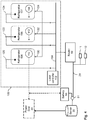
- Fig. 1 illustrates an example of a responsive load 100.
- the responsive load e.g. a refrigerator bank (or air conditioner or heat pump)
- the responsive load comprises a plurality of refrigerators 105-107 (or air conditioner units or heat pumps), each having a compressor 110-114, a temperature sensor or thermostat 120-124, and a local control input 130-134.
- Each compressor is under control by a local control loop comprising the local controller 102 and local area network 104.
- the temperature sensors feed their measurements to the local controller 102 via the network 104; the local controller 102 controls the inputs of the compressor 110-114 through the network 104.
- the refrigerators 105-107 are illustrated as being under common control of a local controller, but they may be stand-alone, each under control of its own local controller, with each local controller separately communicating with the server 30 through a respective router. There may be additional refrigerators or refrigerator banks allocated to the server 30 via routers 11 and 12.
- compressors 110-114 there may be other active (driven) elements in place of the compressors 110-114.
- Coupled to the local area network 104 is a router 10 that is coupled over a public IP network 20 to server 30.
- the server is connected to the electrical power grid 40.
- Compressors 110-114 are also connected to the power grid 40.
- the server and router(s) are not part of the refrigerator or responsive load itself, but are part of a larger control system.
- the local controller 102 In normal operation of the refrigerator 100, the local controller 102 provides commands to the inputs 130-134 to drive the compressors 110-114 based on the temperature readings provided by the sensors 120-124, in order to keep the temperature of the refrigerator within the acceptable operating temperature range. For instance, if the temperature approaches the maximum temperature from below, when the temperature crosses an upper set point (or its rate of temperature rise crosses a threshold, or some combination of both) the local controller 102 switches on one or more compressors to reduce the temperature. Similarly, if the temperature approaches the minimum temperature from above (e.g. when it drops below a lower set point or its rate of fall crosses a threshold), the local controller 102 switches off one or more compressors to allow the temperature to rise.
- the upper and lower set points and the maximum and minimum temperatures are local constraint parameters.
- This ON/OFF cyclical pattern in the operation of the compressors 110-114 is a basic and typical local operation of the responsive load 100, and variations on top of this are possible.
- the ON/OFF behaviour can be in response to the pattern of supply and demand of electric power and its cost.
- the local controller 320 may have timing instructions to preferentially drive the refrigerators during periods of off-peak (low-cost) power.
- the local controller may be pre-programmed to control the ON/OFF behaviour in a certain pre-determined way on a regular basis, for instance based on recurring electric power cost variation patterns.
- Router 10 receives parameters and/or instructions from server 30 to influence the operation of the responsive load 100.
- the former may override the latter. This may be because of the presence of some higher priorities important to the overall operation of the system, or other high-level aims. In an embodiment, this may involve the arrival of an unexpected peak or trough in energy supply or demand, leading to an unexpected price increase or decrease, which is to be advantageously taken advantage of or avoided.
- server 30 may send parameters and/or instructions to router 10 either directly, or via a local intermediary or proxy, such as a routing server, to act on its behalf; the latter possibility may advantageously help to mitigate lost communications between the central server and the routers of the individual assets.
- a local intermediary or proxy such as a routing server
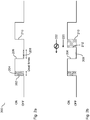
- Fig. 2a shows an exemplary representation 200 of the ON/OFF cycle of a compressor (refrigeration load) during typical operation.
- the compressor may either be in the OFF state or be in the ON state.
- the duty cycle of the load is the percentage of one period in which the compressor is ON. Its period is the time it takes to complete an on-and-off cycle.
- the compressor is switched on 202, and there may immediately follow a period of dead time ("ON dead time”) 204 during which it cannot be turned off again.
- the compressor is switched off 206, and there may immediately follow a period of dead time (“OFF dead time”) 208 during which it cannot be turned on again.
- the compressor may only be turned on again 210 after the dead time 208 has ended.
- Fig. 2b There may be reasons why it is desirable to advance a turning ON time of the compressor in a cycle. This is illustrated in Fig. 2b .
- the turning ON time is brought forward 220 from the anticipated or previously determined ON time 210 to the new ON time 212.
- the ON time cannot be advanced 222 to a point in time before the dead time 208, resulting from the previous turning OFF of the compressor, is over.
- the duty cycle and period of the control loop of a compressor may be constant.
- the period can be shortened without affecting long-term temperature control, or the phase can be adjusted.
- the period can be lengthened, but this may give rise to greater temperature fluctuations. Adjusting the phase may cause a short-term change in temperature, but this is acceptable if the change falls within acceptable limits.
- Fig. 2c illustrates an example of bringing forward a turning ON time and its effect.
- An example of a reason for advancing a turning ON time is the presence of a peak 240 in electric power supply which may result in cheaper power.
- the temperature of the refrigerator is driven below its normal range using this cheaper power; this allows more room for the temperature to rise naturally in a future period of higher-cost power when the compressor is preferably in an OFF state.
- this type of control scheme may significantly reduce the running cost of the refrigerator.
- the server may or may not need to adjust the future turning ON/OFF times of this compressor or other compressors.
- the refrigerator may, for example, be allowed to return to a steady state under its normal local closed-loop control without intervention from the server.
- the system makes sure that the temperature does not go below a pre-determined minimum allowed temperature 234 or above a maximum allowed temperature 236.
- Another consequence of moving the turning ON (or OFF) time of a compressor is its dead time is also moved. This may also require the future turning ON/OFF times of this or other compressors to be adjusted. For example, a one-off phase adjustment may simply bring forward the ON time and the next OFF time by the same amount.
- Fig. 2c serves to illustrate only one possible “event” (a power supply peak) in response to which the ON time of a compressor is altered. More complex situations are possible.
- a turning ON time of a compressor is delayed by the server and controller in response to a first event, e.g. the detection of a peak in demand for electric power.
- the ON dead time is also delayed, during which the compressor cannot be turned OFF. This overlap with the ON dead time of another compressor.
- This may impact of the responsiveness of the refrigerator load in response to a second event, e.g. a sudden increase in power demand, or a sudden decrease in power supply, e.g. due to a technical fault in the power grid, that requires turning off one or more compressors promptly.
- This demonstrates the advantage of a method to coordinate a plurality of refrigeration loads such that their cycles are not synchronised in terms of their dead times, so that responsiveness and flexibility are enhanced, in particular to the benefit of the power grid operator who is seeking to smooth out peaks and troughs in demand by the deployment of responsive loads.
- the compressors can be completely independent (e.g. belong to independent systems, locations or clients), as long as the electrical power supply to the compressors can be aggregated as a single load. This can be done, for example, by physically connecting the power supplies to a single supply point or by using a server to virtualise and aggregate compressors.
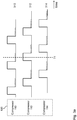
- Fig. 3a illustrates the ON/OFF cycles 310-314 of the three refrigeration loads or compressors 110-114 in the refrigerator 100 in Fig. 1 , as an example of how they can be managed to reduce, minimise or eliminate the impact of dead times.
- Situations with a plurality of more than three such refrigeration loads are possible, e.g. 10 to 20 such loads in a string under control of a common server.
- OFF dead times For clarity of illustration, only the dead times resulting from turning off each compressor ("OFF dead times", shaded) are illustrated; the dead times resulting from turning on each compressor are omitted.
- the duration of unaltered ON/OFF states and the duration of OFF dead times are shown as being identical among the three compressors, but this is not necessarily the case.
- compressor 114 is in an OFF state and not within a dead time, and so it can be turned on to drive the temperature of the refrigerator 100 lower if required.
- Altering one or more of the turning OFF times of one or more compressors affects how many compressors are in an ON state, and OFF state or within an unresponsive dead time. Dead times may overlap.
- the server may further adjust the ON/OFF behaviours of the compressors to allow them as a whole to remain responsive in the future.
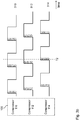
- Fig. 3b illustrates a different set of ON/OFF cycles 310-314 of compressors 110-114 in relation to their ON dead times. Again, for clarity of illustration, OFF dead times are omitted, and the duration of unaltered ON/OFF states and the duration of OFF dead times are identical among the three compressors.
- Fig. 3a which relates to the OFF dead times
- the operating cycles illustrated in Fig. 3b are staggered such that an ON dead time of each compressor does not overlap or coincide with an ON dead time of any other compressor in the given set.
- the refrigeration load as a whole remains responsive, as at least one compressor is not within an ON dead time and hence is able to be turned OFF.
- compressors 110 and 112 are in an ON state and out of an ON dead time and are able to be turned OFF responsively.
- this method of enhancing flexibility and responsiveness in a plurality of refrigeration loads within a responsive load can lead to cost saving in terms of being highly responsive to fluctuating in power in the power grid.
- a significant advantage of employing coordinated ON/OFF cycles for compressors concerns the structural cost in obtaining a high level of flexibility and responsiveness. Without such coordination (e.g. by a server 30), a greater number of resources may be required to allow the refrigeration load as a whole to be responsive (to a given level) to the fluctuations of power demand and supply.
- 20 compressors may be collected in a string, to create a responsive load, but using the method currently disclosed to attain a given level of responsiveness, the required number of compressors may be reduced, as one can now be confident there will be a portion of the compressors not locked in a dead time when required to respond to an unexpected event.
- the central server 30 issues commands or parameters to the router and local controller(s) to control the ON/OFF cycles of the compressors, based on information it stores. This includes the ON/OFF states and dead times (for example their durations) of individual compressors. It may include readings from sensors 120-124 and other temperature parameters such as the maximum and minimum allowed operating temperatures and the upper and lower set points.
- the server may have knowledge of the current periods and duty cycles of the compressors and/or it may be able to control the behaviour of the compressors by monitoring their states (ON, OFF or within a dead time), the temperature readings (such as the rate of change) and other parameters.
- the server 30 may tell a compressor to "carry on” in its current ON or OFF state and delay turning OFF or ON respectively, overriding the instructions of the local controller. This may be in response to a recent event in which one or more compressors controlled and monitored by the server has changed its state or behaviour, e.g. because a refrigerator has moved from its steady state because a door has been temporarily opened. Note that if a compressor is made to switch between an ON or OFF state at a lower frequency (longer cycle), the impact of dead times on the responsiveness and flexibility of the system as a whole is reduced, since dead times are typically constant in duration.
- the server can plan and modify the behaviour of the compressors in advance, rather than making control decisions on a cycle-by-cycle basis.
- the server may be aware of an anticipated or previously determined ON time or OFF time for a compressor or may predict such times, or it may simply operate to stagger the cycles of the compressors in the present. For example, if (as illustrated in Figs. 3a and 3b ) the compressors have similar periods, the server may simply cause those periods to be staggered - i.e. in the event of one compressor being caused to switch ON or OFF at the same time as another compressor (or when another compressor is within its corresponding dead time), the server may override the local control loop and delay the switching of the second compressor.
- the server may predict the next transitions of the compressors (knowing their periods and duty cycles) and, in anticipation that a first compressor and a second compressor will have co-incident dead times, it may select one of them to have its switching delayed or advanced. If the server knows the temperatures and temperature limits of a first and a second refrigerator (or air conditioning units or the like), it can select which one to override. It can, for example, select the one that has greater margin for re-adjusting temperature to its steady state condition.
- the server may further adjust the ON/OFF behaviours of the compressors to allow them as a whole to remain responsive when there is an unexpected peak or trough in demand or supply, for instance.
- One way to implement this is to simply stagger the ON/OFF cycles of different compressors to avoid or reduce overlapping of individual dead times.
- Fig. 4 illustrates an alternative embodiment of the responsive load system.
- one or more battery assets 50 are available in the system.
- the one or more battery assets 50 are connected to the power grid 40 via a switch 51 under control of the server 30.
- This arrangement allows the possibility that, during the dead times of one or more compressors 110-114, the battery assets 50 can be operated, so as to: selectively provide power to the load during OFF dead times or during multiple overlapping OFF dead times; or draw power from the energy grid supplying the load, to charge the battery, during ON dead times or during multiple overlapping ON dead times.
- This may be in the form of filling the compressor dead times with short times of battery operation; this would apply when there is visibility of compressor breaks.
Landscapes
- Engineering & Computer Science (AREA)
- Mechanical Engineering (AREA)
- General Engineering & Computer Science (AREA)
- Chemical & Material Sciences (AREA)
- Combustion & Propulsion (AREA)
- Physics & Mathematics (AREA)
- Signal Processing (AREA)
- Fuzzy Systems (AREA)
- Mathematical Physics (AREA)
- Thermal Sciences (AREA)
- Human Computer Interaction (AREA)
- Power Engineering (AREA)
- General Physics & Mathematics (AREA)
- Automation & Control Theory (AREA)
- Air Conditioning Control Device (AREA)
- Devices That Are Associated With Refrigeration Equipment (AREA)
- Cold Air Circulating Systems And Constructional Details In Refrigerators (AREA)
- Remote Monitoring And Control Of Power-Distribution Networks (AREA)
- Supply And Distribution Of Alternating Current (AREA)
- Control Of Temperature (AREA)
Claims (14)
- Verfahren zum Bereitstellen eines reaktionsfähigen Lastsystems (100), das erforderlich sein kann, um auf eine Spitze oder Tiefe in der Stromversorgung zu reagieren, das Folgendes beinhaltet:Bereitstellen einer ersten und zweiten thermischen Last (105, 106, 107, 110, 112, 114) jeweils mit einem Ein/Aus-Zyklus und einer Totzeit in dem Ein/Aus-Zyklus, wobei die erste und zweite thermische Last jeweils während ihrer jeweiligen Totzeit nicht reaktionsfähig sind;Steuern der thermischen Lasten mittels lokaler Regelschleifen (102, 104) als Reaktion auf mindestens ein lokales Thermostat; undSteuern der thermischen Lasten, um auf Ereignisse in der Stromversorgung zu reagieren, um Bedarfsspitzen und -tiefen zu glätten; gekennzeichnet durch:Speichern von Informationen bezüglich der Totzeiten für die thermischen Lasten in einem Server (30); undErmöglichen, dass der Server in den Betrieb des reaktionsfähigen Lastsystems (100) eingreift und die lokale Regelschleife der ersten thermischen Last außer Kraft setzt, um die Ein/Aus-Zyklen der ersten und zweiten thermischen Last in Bezug auf die genannten Informationen in Bezug auf ihre Totzeiten zu koordinieren oder zu staffeln und dadurch überlappende Totzeiten zu vermeiden, zu reduzieren oder abzuschwächen.
- Verfahren nach Anspruch 1, wobei:
das Ermöglichen, dass der Server die lokale Regelschleife außer Kraft setzt, bewirkt, dass die erste thermische Last die Totzeit der ersten thermischen Last vorverlegt oder verzögert, so dass sie nicht vollständig mit der Totzeit der zweiten thermischen Last übereinstimmt. - Verfahren nach Anspruch 2, wobei das Ermöglichen, dass der Server die lokale Regelschleife außer Kraft setzt, ferner das Verteilen der Totzeiten der mehreren thermischen Lasten beinhaltet, um die Überlappung der genannten Totzeiten zu reduzieren oder zu minimieren; und/oder
wobei das Ermöglichen, dass der Server die lokale Regelschleife außer Kraft setzt, ferner das Verteilen der Totzeiten der mehreren thermischen Lasten beinhaltet, um Betriebszyklen der ersten und zweiten und weiteren thermischen Lasten zu staffeln;
und/oder
wobei das Ermöglichen, dass der Server die lokale Regelschleife außer Kraft setzt, ferner das Verteilen der Totzeiten der mehreren thermischen Lasten beinhaltet, so dass es mindestens einen Kompressor gibt, der zu einem gegebenen Zeitpunkt nicht in einer EIN-Totzeit arbeitet;
und/oder
wobei das Ermöglichen, dass der Server die lokale Regelschleife außer Kraft setzt, ferner das Verteilen der Totzeiten der mehreren thermischen Lasten beinhaltet, so dass es mindestens einen Kompressor gibt, der zu einem gegebenen Zeitpunkt nicht in einer AUS-Totzeit arbeitet. - Verfahren nach einem der Ansprüche 2 und 3, wobei das Ermöglichen, dass der Server die lokale Regelschleife außer Kraft setzt, Folgendes beinhaltet: Vorhersehen, dass die erste thermische Last und die zweite thermische Last überlappende Totzeiten haben werden, und Auswählen der ersten thermischen Last, um ihre Totzeit vorzuverlegen oder zu verzögern.
- Verfahren nach Anspruch 4, wobei das Auswählen der ersten thermischen Last zum Vorverlegen oder Verzögern ihrer Totzeit auf Temperaturen und/oder Temperaturgrenzen der ersten und/oder der zweiten thermischen Last und/oder von mit der ersten und/oder der zweiten thermischen Last assoziierten Kühlgeräten basiert;
und/oder
wobei das Auswählen der ersten thermischen Last zum Vorverlegen oder Verzögern ihrer Totzeit das Auswählen der thermischen Last mit einem größeren Spielraum zum Verstellen der Temperatur auf einen Beharrungszustand umfasst. - Verfahren nach Anspruch 1, wobei der Schritt des Eingreifens das Bewirken beinhaltet, dass eine Batterie (50) die Last mit Strom versorgt oder Strom von einer Quelle zieht, die die Last selektiv während überlappender Totzeiten versorgt.
- Verfahren nach einem der Ansprüche 1 bis 6, wobei mindestens eine der mehreren thermischen Lasten in einem Zyklus mit einer Periode arbeitet und wobei der Server die Kenntnis der Periode des EIN/AUS-Zyklus speichert oder Zugang dazu hat.
- Verfahren nach Anspruch 7, wobei die mindestens eine der mehreren thermischen Lasten mit einem Arbeitszyklus arbeitet und der Server Kenntnis des Arbeitszyklus speichert oder Zugang dazu hat.
- Verfahren nach einem der Ansprüche 1 bis 8, wobei der Server ferner die Aufgabe hat, das Verhalten einer oder mehrerer aus der Mehrzahl von thermischen Lasten durch Überwachen ihrer Zustände (EIN, AUS oder innerhalb einer Totzeit) zu steuern;
und/oder
wobei der Server ferner die Aufgabe hat, das Verhalten einer oder mehrerer aus der Mehrzahl von thermischen Lasten durch Überwachen eines oder mehrerer Messwerte von dem mindestens einen lokalen Thermostat zu steuern;
und/oder
wobei der Server ferner die Aufgabe hat, das Verhalten von einer oder mehreren aus der Mehrzahl von thermischen Lasten im Voraus zu planen oder zu modifizieren;
und/oder
wobei der Server Kenntnis über eine oder mehrere voraussichtliche oder zuvor ermittelte, mit den ein oder den mehreren aus der Mehrzahl der thermischen Lasten assoziierte Einschaltzeiten oder Ausschaltzeiten speichert oder Zugang dazu hat;
und/oder
wobei der Server ferner die Aufgabe hat, eine oder mehrere mit den ein oder mehreren aus der Mehrzahl der thermischen Lasten assoziierte Einschaltzeiten oder Ausschaltzeiten vorherzusehen oder vorherzusagen. - Verfahren nach Anspruch 1, das ferner Folgendes beinhaltet:
Ermöglichen, dass der Server in den Betrieb der reaktionsfähigen Last eingreift und die lokale Regelschleife einer dritten thermischen Last außer Kraft setzt, um die Totzeit der dritten thermischen Last vorzuverlegen oder zu verzögern und dadurch den Beginn mehrerer sich überlappender Totzeiten herbeizuführen. - Reaktionsfähiges Lastsystem (100), das erforderlich sein kann, um auf eine Spitze oder Tiefe in der Stromversorgung zu reagieren, das Folgendes umfasst:mehrere thermische Lasten (105, 106, 107, 110, 112, 114) jeweils mit einem Ein/Aus-Zyklus und einer Totzeit in dem Ein/Aus-Zyklus, wobei jede der mehreren thermischen Lasten während ihrer jeweiligen Totzeit nicht reaktionsfähig ist;Mittel zum Steuern der mehreren thermischen Lasten mittels lokaler Regelschleifen (102, 104) als Reaktion auf mindestens ein lokales Thermostat;Mittel zum Steuern der mehreren thermischen Lasten, um auf Ereignisse in der Stromversorgung zu reagieren, um Bedarfsspitzen und -tiefen zu glätten; gekennzeichnet durch:einen Server (30), konfiguriert zum Speichern von Informationen in Bezug auf die Totzeiten für die mehreren thermischen Lasten; undMittel, konfiguriert zum Ermöglichen, dass der Server in den Betrieb der thermischen Lasten eingreift und die lokale Regelschleife einer ersten der mehreren thermischen Lasten außer Kraft setzt, um die Ein/Aus-Zyklen der thermischen Lasten hinsichtlich der genannten Informationen in Bezug auf ihre Totzeiten zu koordinieren oder zu staffeln und dadurch überlappende Totzeiten zu vermeiden, zu reduzieren oder abzuschwächen.
- System nach Anspruch 11, wobei das Mittel zum Ermöglichen, dass der Server in den Betrieb der thermischen Lasten eingreift und die lokale Regelschleife außer Kraft setzt, bewirkt, dass die erste thermische Last die Totzeit der ersten thermischen Last vorverlegt oder verzögert, so dass sie nicht vollständig mit der Totzeit einer zweiten der mehreren thermischen Lasten übereinstimmt.
- Verfahren zum Bereitstellen eines reaktionsfähigen Lastsystems (100), das Folgendes beinhaltet:Überwachen, an einem Server (30), zukünftiger Zeiten t1 und t2, zwischen denen eine reaktionsfähige Last erforderlich sein wird;Bereitstellen einer ersten und zweiten thermischen Last (105, 106, 107, 110, 112, 114) jeweils mit einem Kompressor mit einem Ein/Aus-Zyklus, der eine Totzeit hat, während der der jeweilige Kompressor nicht reaktionsfähig ist;Steuern jedes Kompressors mittels einer lokalen Regelschleife (102, 104) als Reaktion auf ein lokales Thermostat; gekennzeichnet durch:Speichern von Informationen in Bezug auf die Totzeiten für die erste und zweite thermische Last in dem Server; undErmöglichen, dass der Server in den Betrieb der reaktionsfähigen Last eingreift und die lokale Regelschleife eines oder beider Kompressoren hinsichtlich der genannten Informationen in Bezug auf ihre Totzeiten außer Kraft setzt, um die ein oder mehreren Ein/Aus-Zyklen vorzuverlegen oder zu verzögern und dadurch die voraussichtliche Verringerung der Reaktionsfähigkeit der reaktionsfähigen Last zwischen den Zeiten t1 und t2 zu vermeiden, zu reduzieren oder abzuschwächen durch:Vermeiden oder Reduzieren von Überlappung der Totzeiten der ersten und zweiten thermischen Last, oderHerbeiführen der Überlappung der Totzeiten außerhalb der Zeit t1 bis t2.
- Verfahren nach Anspruch 13, wobei der Schritt des Vermeidens, Reduzierens oder Abschwächens das Umschalten einer Batterie umfasst, um die Last mit Strom zu versorgen oder um Strom von einer Quelle zu ziehen, die die Last zwischen den Zeiten t1 bis t2 versorgt.
Applications Claiming Priority (2)
| Application Number | Priority Date | Filing Date | Title |
|---|---|---|---|
| GB1515911.4A GB2542141B (en) | 2015-09-08 | 2015-09-08 | Refrigeration load with improved responsiveness |
| PCT/GB2016/052714 WO2017042542A2 (en) | 2015-09-08 | 2016-09-02 | Thermal load with improved responsiveness |
Publications (2)
| Publication Number | Publication Date |
|---|---|
| EP3347652A2 EP3347652A2 (de) | 2018-07-18 |
| EP3347652B1 true EP3347652B1 (de) | 2021-02-17 |
Family
ID=54345946
Family Applications (1)
| Application Number | Title | Priority Date | Filing Date |
|---|---|---|---|
| EP16778086.5A Active EP3347652B1 (de) | 2015-09-08 | 2016-09-02 | Thermische last mit verbesserter reaktionsfähigkeit |
Country Status (5)
| Country | Link |
|---|---|
| EP (1) | EP3347652B1 (de) |
| JP (1) | JP6871915B2 (de) |
| AU (1) | AU2016320480B2 (de) |
| GB (1) | GB2542141B (de) |
| WO (1) | WO2017042542A2 (de) |
Families Citing this family (6)
| Publication number | Priority date | Publication date | Assignee | Title |
|---|---|---|---|---|
| CN107785888B (zh) * | 2017-10-13 | 2019-07-23 | 陆炜 | 一种智能电力负荷控制系统及控制方法 |
| BR102019003311B1 (pt) * | 2019-02-18 | 2023-12-12 | Embraco Indústria De Compressores E Soluções Em Refrigeração Ltda | Método e sistema de controle em um sistema de refrigeração e compressor de sistema de refrigeração |
| CN111854273B (zh) * | 2019-04-25 | 2023-11-17 | 博西华电器(江苏)有限公司 | 制冷器具及其控制方法、装置、计算机可读存储介质 |
| EP3978819B1 (de) * | 2019-06-03 | 2024-01-10 | Daikin Industries, Ltd. | Geräteverwaltungssystem |
| JP7578214B2 (ja) * | 2022-09-14 | 2024-11-06 | 株式会社村田製作所 | 電力システム |
| WO2024192479A1 (en) * | 2023-03-23 | 2024-09-26 | Ibms Pty Ptd | Technology configured to enable improved strategic control over electrically powered infrastructure based on energy supply parameters |
Family Cites Families (7)
| Publication number | Priority date | Publication date | Assignee | Title |
|---|---|---|---|---|
| US4614089A (en) * | 1985-03-19 | 1986-09-30 | General Services Engineering, Inc. | Controlled refrigeration system |
| IT1185938B (it) * | 1985-09-18 | 1987-11-18 | Costan Spa | Metodo di regolazione della pressione di esercizio di un circuito frigoriferi in un impianto frigorifero a compressori multipli |
| JPH0833246B2 (ja) * | 1990-08-06 | 1996-03-29 | ダイキン工業株式会社 | 冷凍装置の運転制御装置 |
| JPH09287501A (ja) * | 1996-04-23 | 1997-11-04 | Hitachi Ltd | アイドル制御方法および装置 |
| ES2255771T3 (es) * | 1999-02-16 | 2006-07-01 | Matsushita Electric Industrial Co., Ltd. | Procedimiento de control para sistema acondicionador de aire y sistema de climatizacion. |
| ES2583779T3 (es) * | 2011-08-17 | 2016-09-22 | Apm Terminals B.V. | Sistema de gestión para contenedores refrigerados |
| JP6186720B2 (ja) * | 2012-12-26 | 2017-08-30 | ダイキン工業株式会社 | 設備機器の制御装置およびそれを備えたエネルギー管理システム |
-
2015
- 2015-09-08 GB GB1515911.4A patent/GB2542141B/en active Active
-
2016
- 2016-09-02 JP JP2018512555A patent/JP6871915B2/ja not_active Expired - Fee Related
- 2016-09-02 WO PCT/GB2016/052714 patent/WO2017042542A2/en not_active Ceased
- 2016-09-02 AU AU2016320480A patent/AU2016320480B2/en not_active Ceased
- 2016-09-02 EP EP16778086.5A patent/EP3347652B1/de active Active
Non-Patent Citations (1)
| Title |
|---|
| None * |
Also Published As
| Publication number | Publication date |
|---|---|
| WO2017042542A3 (en) | 2017-05-18 |
| JP6871915B2 (ja) | 2021-05-19 |
| AU2016320480A1 (en) | 2018-04-26 |
| WO2017042542A2 (en) | 2017-03-16 |
| GB201515911D0 (en) | 2015-10-21 |
| AU2016320480B2 (en) | 2021-10-28 |
| GB2542141B (en) | 2021-01-06 |
| JP2018533711A (ja) | 2018-11-15 |
| EP3347652A2 (de) | 2018-07-18 |
| GB2542141A (en) | 2017-03-15 |
Similar Documents
| Publication | Publication Date | Title |
|---|---|---|
| EP3347652B1 (de) | Thermische last mit verbesserter reaktionsfähigkeit | |
| US8560127B2 (en) | HVAC control with comfort/economy management | |
| US8494685B2 (en) | System for utilizing predictive energy consumption | |
| JP5914595B2 (ja) | 節電システム及び方法 | |
| CN111954783B (zh) | 响应式动力转向和冗余 | |
| JP2007060848A (ja) | 電力量制御装置および電力量制御方法ならびにプログラム | |
| CN103460543B (zh) | 用于电能负载的控制设备 | |
| CN116801582A (zh) | 一种制冷设备的控制方法、装置、电子设备和存储介质 | |
| JP5476835B2 (ja) | 空調システム | |
| JP2011058660A (ja) | 冷水循環システム | |
| CN114754432B (zh) | 一种基于降温需冷量变化的冷冻水供给调控方法及系统 | |
| CN114787566B (zh) | 用于工业冷藏的控制系统旁路 | |
| US20250142775A1 (en) | Electronic device cooling system and related systems and methods | |
| CN112556485A (zh) | 一种冰机冷却塔的运行控制系统及运行控制方法 | |
| JP7601748B2 (ja) | 空調制御装置、空調制御システムおよび空調制御方法 | |
| JPS62225134A (ja) | 冷蔵倉庫の時間帯別電力デマンド制御方式 | |
| CN214950836U (zh) | 一种冰机冷却塔的运行控制系统 | |
| WO2018203350A1 (en) | A device for energy management, system and method thereof | |
| CN118998934B (zh) | 一种空调控制方法、装置、电子设备和存储介质 | |
| CN117847749B (zh) | 一种基于制冷机水蓄冷的节能控制方法、系统及存储介质 | |
| JP5392678B2 (ja) | ショーケースの温度制御方法 | |
| CN104793594A (zh) | 能源站群控系统预报控制指令的方法 | |
| CN119110555A (zh) | 机房温度的控制方法、装置、电子设备、及计算机程序产品 | |
| CN121807068A (zh) | 一种高温气冷堆一回路多系统协同加热散热控制方法 | |
| CN121474719A (zh) | 水冷式冷水机组制热的控制方法、存储介质和电子设备 |
Legal Events
| Date | Code | Title | Description |
|---|---|---|---|
| STAA | Information on the status of an ep patent application or granted ep patent |
Free format text: STATUS: THE INTERNATIONAL PUBLICATION HAS BEEN MADE |
|
| PUAI | Public reference made under article 153(3) epc to a published international application that has entered the european phase |
Free format text: ORIGINAL CODE: 0009012 |
|
| STAA | Information on the status of an ep patent application or granted ep patent |
Free format text: STATUS: REQUEST FOR EXAMINATION WAS MADE |
|
| 17P | Request for examination filed |
Effective date: 20180403 |
|
| AK | Designated contracting states |
Kind code of ref document: A2 Designated state(s): AL AT BE BG CH CY CZ DE DK EE ES FI FR GB GR HR HU IE IS IT LI LT LU LV MC MK MT NL NO PL PT RO RS SE SI SK SM TR |
|
| AX | Request for extension of the european patent |
Extension state: BA ME |
|
| DAV | Request for validation of the european patent (deleted) | ||
| DAX | Request for extension of the european patent (deleted) | ||
| STAA | Information on the status of an ep patent application or granted ep patent |
Free format text: STATUS: EXAMINATION IS IN PROGRESS |
|
| 17Q | First examination report despatched |
Effective date: 20190809 |
|
| RAP1 | Party data changed (applicant data changed or rights of an application transferred) |
Owner name: ORIGAMI ENERGY LIMITED |
|
| REG | Reference to a national code |
Ref country code: DE Ref legal event code: R079 Ref document number: 602016052638 Country of ref document: DE Free format text: PREVIOUS MAIN CLASS: F24F0011000000 Ipc: F24F0011620000 |
|
| RIC1 | Information provided on ipc code assigned before grant |
Ipc: H02J 3/14 20060101ALI20200717BHEP Ipc: F24F 110/10 20180101ALI20200717BHEP Ipc: H02J 13/00 20060101ALI20200717BHEP Ipc: F25B 49/02 20060101ALI20200717BHEP Ipc: F24F 11/62 20180101AFI20200717BHEP Ipc: F24F 11/30 20180101ALI20200717BHEP |
|
| GRAP | Despatch of communication of intention to grant a patent |
Free format text: ORIGINAL CODE: EPIDOSNIGR1 |
|
| STAA | Information on the status of an ep patent application or granted ep patent |
Free format text: STATUS: GRANT OF PATENT IS INTENDED |
|
| INTG | Intention to grant announced |
Effective date: 20200828 |
|
| GRAS | Grant fee paid |
Free format text: ORIGINAL CODE: EPIDOSNIGR3 |
|
| GRAA | (expected) grant |
Free format text: ORIGINAL CODE: 0009210 |
|
| STAA | Information on the status of an ep patent application or granted ep patent |
Free format text: STATUS: THE PATENT HAS BEEN GRANTED |
|
| AK | Designated contracting states |
Kind code of ref document: B1 Designated state(s): AL AT BE BG CH CY CZ DE DK EE ES FI FR GB GR HR HU IE IS IT LI LT LU LV MC MK MT NL NO PL PT RO RS SE SI SK SM TR |
|
| REG | Reference to a national code |
Ref country code: GB Ref legal event code: FG4D |
|
| REG | Reference to a national code |
Ref country code: CH Ref legal event code: EP |
|
| REG | Reference to a national code |
Ref country code: DE Ref legal event code: R096 Ref document number: 602016052638 Country of ref document: DE |
|
| REG | Reference to a national code |
Ref country code: AT Ref legal event code: REF Ref document number: 1361980 Country of ref document: AT Kind code of ref document: T Effective date: 20210315 |
|
| REG | Reference to a national code |
Ref country code: IE Ref legal event code: FG4D |
|
| REG | Reference to a national code |
Ref country code: LT Ref legal event code: MG9D |
|
| REG | Reference to a national code |
Ref country code: NL Ref legal event code: MP Effective date: 20210217 |
|
| PG25 | Lapsed in a contracting state [announced via postgrant information from national office to epo] |
Ref country code: FI Free format text: LAPSE BECAUSE OF FAILURE TO SUBMIT A TRANSLATION OF THE DESCRIPTION OR TO PAY THE FEE WITHIN THE PRESCRIBED TIME-LIMIT Effective date: 20210217 Ref country code: HR Free format text: LAPSE BECAUSE OF FAILURE TO SUBMIT A TRANSLATION OF THE DESCRIPTION OR TO PAY THE FEE WITHIN THE PRESCRIBED TIME-LIMIT Effective date: 20210217 Ref country code: GR Free format text: LAPSE BECAUSE OF FAILURE TO SUBMIT A TRANSLATION OF THE DESCRIPTION OR TO PAY THE FEE WITHIN THE PRESCRIBED TIME-LIMIT Effective date: 20210518 Ref country code: NO Free format text: LAPSE BECAUSE OF FAILURE TO SUBMIT A TRANSLATION OF THE DESCRIPTION OR TO PAY THE FEE WITHIN THE PRESCRIBED TIME-LIMIT Effective date: 20210517 Ref country code: PT Free format text: LAPSE BECAUSE OF FAILURE TO SUBMIT A TRANSLATION OF THE DESCRIPTION OR TO PAY THE FEE WITHIN THE PRESCRIBED TIME-LIMIT Effective date: 20210617 Ref country code: LT Free format text: LAPSE BECAUSE OF FAILURE TO SUBMIT A TRANSLATION OF THE DESCRIPTION OR TO PAY THE FEE WITHIN THE PRESCRIBED TIME-LIMIT Effective date: 20210217 Ref country code: BG Free format text: LAPSE BECAUSE OF FAILURE TO SUBMIT A TRANSLATION OF THE DESCRIPTION OR TO PAY THE FEE WITHIN THE PRESCRIBED TIME-LIMIT Effective date: 20210517 |
|
| REG | Reference to a national code |
Ref country code: AT Ref legal event code: MK05 Ref document number: 1361980 Country of ref document: AT Kind code of ref document: T Effective date: 20210217 |
|
| PG25 | Lapsed in a contracting state [announced via postgrant information from national office to epo] |
Ref country code: PL Free format text: LAPSE BECAUSE OF FAILURE TO SUBMIT A TRANSLATION OF THE DESCRIPTION OR TO PAY THE FEE WITHIN THE PRESCRIBED TIME-LIMIT Effective date: 20210217 Ref country code: RS Free format text: LAPSE BECAUSE OF FAILURE TO SUBMIT A TRANSLATION OF THE DESCRIPTION OR TO PAY THE FEE WITHIN THE PRESCRIBED TIME-LIMIT Effective date: 20210217 Ref country code: LV Free format text: LAPSE BECAUSE OF FAILURE TO SUBMIT A TRANSLATION OF THE DESCRIPTION OR TO PAY THE FEE WITHIN THE PRESCRIBED TIME-LIMIT Effective date: 20210217 Ref country code: NL Free format text: LAPSE BECAUSE OF FAILURE TO SUBMIT A TRANSLATION OF THE DESCRIPTION OR TO PAY THE FEE WITHIN THE PRESCRIBED TIME-LIMIT Effective date: 20210217 Ref country code: SE Free format text: LAPSE BECAUSE OF FAILURE TO SUBMIT A TRANSLATION OF THE DESCRIPTION OR TO PAY THE FEE WITHIN THE PRESCRIBED TIME-LIMIT Effective date: 20210217 |
|
| PG25 | Lapsed in a contracting state [announced via postgrant information from national office to epo] |
Ref country code: IS Free format text: LAPSE BECAUSE OF FAILURE TO SUBMIT A TRANSLATION OF THE DESCRIPTION OR TO PAY THE FEE WITHIN THE PRESCRIBED TIME-LIMIT Effective date: 20210617 |
|
| PG25 | Lapsed in a contracting state [announced via postgrant information from national office to epo] |
Ref country code: CZ Free format text: LAPSE BECAUSE OF FAILURE TO SUBMIT A TRANSLATION OF THE DESCRIPTION OR TO PAY THE FEE WITHIN THE PRESCRIBED TIME-LIMIT Effective date: 20210217 Ref country code: EE Free format text: LAPSE BECAUSE OF FAILURE TO SUBMIT A TRANSLATION OF THE DESCRIPTION OR TO PAY THE FEE WITHIN THE PRESCRIBED TIME-LIMIT Effective date: 20210217 Ref country code: AT Free format text: LAPSE BECAUSE OF FAILURE TO SUBMIT A TRANSLATION OF THE DESCRIPTION OR TO PAY THE FEE WITHIN THE PRESCRIBED TIME-LIMIT Effective date: 20210217 Ref country code: SM Free format text: LAPSE BECAUSE OF FAILURE TO SUBMIT A TRANSLATION OF THE DESCRIPTION OR TO PAY THE FEE WITHIN THE PRESCRIBED TIME-LIMIT Effective date: 20210217 |
|
| REG | Reference to a national code |
Ref country code: DE Ref legal event code: R097 Ref document number: 602016052638 Country of ref document: DE |
|
| PG25 | Lapsed in a contracting state [announced via postgrant information from national office to epo] |
Ref country code: DK Free format text: LAPSE BECAUSE OF FAILURE TO SUBMIT A TRANSLATION OF THE DESCRIPTION OR TO PAY THE FEE WITHIN THE PRESCRIBED TIME-LIMIT Effective date: 20210217 Ref country code: RO Free format text: LAPSE BECAUSE OF FAILURE TO SUBMIT A TRANSLATION OF THE DESCRIPTION OR TO PAY THE FEE WITHIN THE PRESCRIBED TIME-LIMIT Effective date: 20210217 Ref country code: SK Free format text: LAPSE BECAUSE OF FAILURE TO SUBMIT A TRANSLATION OF THE DESCRIPTION OR TO PAY THE FEE WITHIN THE PRESCRIBED TIME-LIMIT Effective date: 20210217 |
|
| PLBE | No opposition filed within time limit |
Free format text: ORIGINAL CODE: 0009261 |
|
| STAA | Information on the status of an ep patent application or granted ep patent |
Free format text: STATUS: NO OPPOSITION FILED WITHIN TIME LIMIT |
|
| 26N | No opposition filed |
Effective date: 20211118 |
|
| PG25 | Lapsed in a contracting state [announced via postgrant information from national office to epo] |
Ref country code: ES Free format text: LAPSE BECAUSE OF FAILURE TO SUBMIT A TRANSLATION OF THE DESCRIPTION OR TO PAY THE FEE WITHIN THE PRESCRIBED TIME-LIMIT Effective date: 20210217 Ref country code: AL Free format text: LAPSE BECAUSE OF FAILURE TO SUBMIT A TRANSLATION OF THE DESCRIPTION OR TO PAY THE FEE WITHIN THE PRESCRIBED TIME-LIMIT Effective date: 20210217 |
|
| PG25 | Lapsed in a contracting state [announced via postgrant information from national office to epo] |
Ref country code: SI Free format text: LAPSE BECAUSE OF FAILURE TO SUBMIT A TRANSLATION OF THE DESCRIPTION OR TO PAY THE FEE WITHIN THE PRESCRIBED TIME-LIMIT Effective date: 20210217 |
|
| PG25 | Lapsed in a contracting state [announced via postgrant information from national office to epo] |
Ref country code: IT Free format text: LAPSE BECAUSE OF FAILURE TO SUBMIT A TRANSLATION OF THE DESCRIPTION OR TO PAY THE FEE WITHIN THE PRESCRIBED TIME-LIMIT Effective date: 20210217 |
|
| REG | Reference to a national code |
Ref country code: CH Ref legal event code: PL |
|
| REG | Reference to a national code |
Ref country code: BE Ref legal event code: MM Effective date: 20210930 |
|
| PG25 | Lapsed in a contracting state [announced via postgrant information from national office to epo] |
Ref country code: IS Free format text: LAPSE BECAUSE OF FAILURE TO SUBMIT A TRANSLATION OF THE DESCRIPTION OR TO PAY THE FEE WITHIN THE PRESCRIBED TIME-LIMIT Effective date: 20210617 Ref country code: MC Free format text: LAPSE BECAUSE OF FAILURE TO SUBMIT A TRANSLATION OF THE DESCRIPTION OR TO PAY THE FEE WITHIN THE PRESCRIBED TIME-LIMIT Effective date: 20210217 |
|
| PG25 | Lapsed in a contracting state [announced via postgrant information from national office to epo] |
Ref country code: LU Free format text: LAPSE BECAUSE OF NON-PAYMENT OF DUE FEES Effective date: 20210902 Ref country code: BE Free format text: LAPSE BECAUSE OF NON-PAYMENT OF DUE FEES Effective date: 20210930 |
|
| PG25 | Lapsed in a contracting state [announced via postgrant information from national office to epo] |
Ref country code: LI Free format text: LAPSE BECAUSE OF NON-PAYMENT OF DUE FEES Effective date: 20210930 Ref country code: CH Free format text: LAPSE BECAUSE OF NON-PAYMENT OF DUE FEES Effective date: 20210930 |
|
| PG25 | Lapsed in a contracting state [announced via postgrant information from national office to epo] |
Ref country code: HU Free format text: LAPSE BECAUSE OF FAILURE TO SUBMIT A TRANSLATION OF THE DESCRIPTION OR TO PAY THE FEE WITHIN THE PRESCRIBED TIME-LIMIT; INVALID AB INITIO Effective date: 20160902 |
|
| PG25 | Lapsed in a contracting state [announced via postgrant information from national office to epo] |
Ref country code: CY Free format text: LAPSE BECAUSE OF FAILURE TO SUBMIT A TRANSLATION OF THE DESCRIPTION OR TO PAY THE FEE WITHIN THE PRESCRIBED TIME-LIMIT Effective date: 20210217 |
|
| PG25 | Lapsed in a contracting state [announced via postgrant information from national office to epo] |
Ref country code: MK Free format text: LAPSE BECAUSE OF FAILURE TO SUBMIT A TRANSLATION OF THE DESCRIPTION OR TO PAY THE FEE WITHIN THE PRESCRIBED TIME-LIMIT Effective date: 20210217 |
|
| PG25 | Lapsed in a contracting state [announced via postgrant information from national office to epo] |
Ref country code: MT Free format text: LAPSE BECAUSE OF FAILURE TO SUBMIT A TRANSLATION OF THE DESCRIPTION OR TO PAY THE FEE WITHIN THE PRESCRIBED TIME-LIMIT Effective date: 20210217 |
|
| PGFP | Annual fee paid to national office [announced via postgrant information from national office to epo] |
Ref country code: DE Payment date: 20240805 Year of fee payment: 9 Ref country code: IE Payment date: 20240805 Year of fee payment: 9 |
|
| PGFP | Annual fee paid to national office [announced via postgrant information from national office to epo] |
Ref country code: GB Payment date: 20240819 Year of fee payment: 9 |
|
| PGFP | Annual fee paid to national office [announced via postgrant information from national office to epo] |
Ref country code: FR Payment date: 20240826 Year of fee payment: 9 |
|
| PG25 | Lapsed in a contracting state [announced via postgrant information from national office to epo] |
Ref country code: TR Free format text: LAPSE BECAUSE OF FAILURE TO SUBMIT A TRANSLATION OF THE DESCRIPTION OR TO PAY THE FEE WITHIN THE PRESCRIBED TIME-LIMIT Effective date: 20210217 |