EP3345756A1 - Lightweight composite metal sheet having excellent vibration damping characteristics, and manufacturing method therefor - Google Patents
Lightweight composite metal sheet having excellent vibration damping characteristics, and manufacturing method therefor Download PDFInfo
- Publication number
- EP3345756A1 EP3345756A1 EP16842357.2A EP16842357A EP3345756A1 EP 3345756 A1 EP3345756 A1 EP 3345756A1 EP 16842357 A EP16842357 A EP 16842357A EP 3345756 A1 EP3345756 A1 EP 3345756A1
- Authority
- EP
- European Patent Office
- Prior art keywords
- metal sheet
- composite metal
- plastic layer
- thermoplastic polyester
- polyester polyether
- Prior art date
- Legal status (The legal status is an assumption and is not a legal conclusion. Google has not performed a legal analysis and makes no representation as to the accuracy of the status listed.)
- Granted
Links
Images
Classifications
-
- B—PERFORMING OPERATIONS; TRANSPORTING
- B32—LAYERED PRODUCTS
- B32B—LAYERED PRODUCTS, i.e. PRODUCTS BUILT-UP OF STRATA OF FLAT OR NON-FLAT, e.g. CELLULAR OR HONEYCOMB, FORM
- B32B15/00—Layered products comprising a layer of metal
- B32B15/04—Layered products comprising a layer of metal comprising metal as the main or only constituent of a layer, which is next to another layer of the same or of a different material
- B32B15/08—Layered products comprising a layer of metal comprising metal as the main or only constituent of a layer, which is next to another layer of the same or of a different material of synthetic resin
- B32B15/085—Layered products comprising a layer of metal comprising metal as the main or only constituent of a layer, which is next to another layer of the same or of a different material of synthetic resin comprising polyolefins
-
- B—PERFORMING OPERATIONS; TRANSPORTING
- B32—LAYERED PRODUCTS
- B32B—LAYERED PRODUCTS, i.e. PRODUCTS BUILT-UP OF STRATA OF FLAT OR NON-FLAT, e.g. CELLULAR OR HONEYCOMB, FORM
- B32B15/00—Layered products comprising a layer of metal
- B32B15/04—Layered products comprising a layer of metal comprising metal as the main or only constituent of a layer, which is next to another layer of the same or of a different material
- B32B15/08—Layered products comprising a layer of metal comprising metal as the main or only constituent of a layer, which is next to another layer of the same or of a different material of synthetic resin
-
- B—PERFORMING OPERATIONS; TRANSPORTING
- B32—LAYERED PRODUCTS
- B32B—LAYERED PRODUCTS, i.e. PRODUCTS BUILT-UP OF STRATA OF FLAT OR NON-FLAT, e.g. CELLULAR OR HONEYCOMB, FORM
- B32B15/00—Layered products comprising a layer of metal
- B32B15/04—Layered products comprising a layer of metal comprising metal as the main or only constituent of a layer, which is next to another layer of the same or of a different material
- B32B15/08—Layered products comprising a layer of metal comprising metal as the main or only constituent of a layer, which is next to another layer of the same or of a different material of synthetic resin
- B32B15/09—Layered products comprising a layer of metal comprising metal as the main or only constituent of a layer, which is next to another layer of the same or of a different material of synthetic resin comprising polyesters
-
- B—PERFORMING OPERATIONS; TRANSPORTING
- B32—LAYERED PRODUCTS
- B32B—LAYERED PRODUCTS, i.e. PRODUCTS BUILT-UP OF STRATA OF FLAT OR NON-FLAT, e.g. CELLULAR OR HONEYCOMB, FORM
- B32B15/00—Layered products comprising a layer of metal
- B32B15/18—Layered products comprising a layer of metal comprising iron or steel
-
- B—PERFORMING OPERATIONS; TRANSPORTING
- B32—LAYERED PRODUCTS
- B32B—LAYERED PRODUCTS, i.e. PRODUCTS BUILT-UP OF STRATA OF FLAT OR NON-FLAT, e.g. CELLULAR OR HONEYCOMB, FORM
- B32B27/00—Layered products comprising a layer of synthetic resin
- B32B27/18—Layered products comprising a layer of synthetic resin characterised by the use of special additives
- B32B27/20—Layered products comprising a layer of synthetic resin characterised by the use of special additives using fillers, pigments, thixotroping agents
-
- B—PERFORMING OPERATIONS; TRANSPORTING
- B32—LAYERED PRODUCTS
- B32B—LAYERED PRODUCTS, i.e. PRODUCTS BUILT-UP OF STRATA OF FLAT OR NON-FLAT, e.g. CELLULAR OR HONEYCOMB, FORM
- B32B27/00—Layered products comprising a layer of synthetic resin
- B32B27/18—Layered products comprising a layer of synthetic resin characterised by the use of special additives
- B32B27/26—Layered products comprising a layer of synthetic resin characterised by the use of special additives using curing agents
-
- B—PERFORMING OPERATIONS; TRANSPORTING
- B32—LAYERED PRODUCTS
- B32B—LAYERED PRODUCTS, i.e. PRODUCTS BUILT-UP OF STRATA OF FLAT OR NON-FLAT, e.g. CELLULAR OR HONEYCOMB, FORM
- B32B27/00—Layered products comprising a layer of synthetic resin
- B32B27/28—Layered products comprising a layer of synthetic resin comprising synthetic resins not wholly covered by any one of the sub-groups B32B27/30 - B32B27/42
- B32B27/285—Layered products comprising a layer of synthetic resin comprising synthetic resins not wholly covered by any one of the sub-groups B32B27/30 - B32B27/42 comprising polyethers
-
- B—PERFORMING OPERATIONS; TRANSPORTING
- B32—LAYERED PRODUCTS
- B32B—LAYERED PRODUCTS, i.e. PRODUCTS BUILT-UP OF STRATA OF FLAT OR NON-FLAT, e.g. CELLULAR OR HONEYCOMB, FORM
- B32B27/00—Layered products comprising a layer of synthetic resin
- B32B27/32—Layered products comprising a layer of synthetic resin comprising polyolefins
-
- B—PERFORMING OPERATIONS; TRANSPORTING
- B32—LAYERED PRODUCTS
- B32B—LAYERED PRODUCTS, i.e. PRODUCTS BUILT-UP OF STRATA OF FLAT OR NON-FLAT, e.g. CELLULAR OR HONEYCOMB, FORM
- B32B27/00—Layered products comprising a layer of synthetic resin
- B32B27/36—Layered products comprising a layer of synthetic resin comprising polyesters
-
- B—PERFORMING OPERATIONS; TRANSPORTING
- B32—LAYERED PRODUCTS
- B32B—LAYERED PRODUCTS, i.e. PRODUCTS BUILT-UP OF STRATA OF FLAT OR NON-FLAT, e.g. CELLULAR OR HONEYCOMB, FORM
- B32B37/00—Methods or apparatus for laminating, e.g. by curing or by ultrasonic bonding
- B32B37/06—Methods or apparatus for laminating, e.g. by curing or by ultrasonic bonding characterised by the heating method
-
- B—PERFORMING OPERATIONS; TRANSPORTING
- B32—LAYERED PRODUCTS
- B32B—LAYERED PRODUCTS, i.e. PRODUCTS BUILT-UP OF STRATA OF FLAT OR NON-FLAT, e.g. CELLULAR OR HONEYCOMB, FORM
- B32B37/00—Methods or apparatus for laminating, e.g. by curing or by ultrasonic bonding
- B32B2037/0092—Methods or apparatus for laminating, e.g. by curing or by ultrasonic bonding in which absence of adhesives is explicitly presented as an advantage
-
- B—PERFORMING OPERATIONS; TRANSPORTING
- B32—LAYERED PRODUCTS
- B32B—LAYERED PRODUCTS, i.e. PRODUCTS BUILT-UP OF STRATA OF FLAT OR NON-FLAT, e.g. CELLULAR OR HONEYCOMB, FORM
- B32B2250/00—Layers arrangement
- B32B2250/02—2 layers
-
- B—PERFORMING OPERATIONS; TRANSPORTING
- B32—LAYERED PRODUCTS
- B32B—LAYERED PRODUCTS, i.e. PRODUCTS BUILT-UP OF STRATA OF FLAT OR NON-FLAT, e.g. CELLULAR OR HONEYCOMB, FORM
- B32B2250/00—Layers arrangement
- B32B2250/03—3 layers
-
- B—PERFORMING OPERATIONS; TRANSPORTING
- B32—LAYERED PRODUCTS
- B32B—LAYERED PRODUCTS, i.e. PRODUCTS BUILT-UP OF STRATA OF FLAT OR NON-FLAT, e.g. CELLULAR OR HONEYCOMB, FORM
- B32B2250/00—Layers arrangement
- B32B2250/40—Symmetrical or sandwich layers, e.g. ABA, ABCBA, ABCCBA
-
- B—PERFORMING OPERATIONS; TRANSPORTING
- B32—LAYERED PRODUCTS
- B32B—LAYERED PRODUCTS, i.e. PRODUCTS BUILT-UP OF STRATA OF FLAT OR NON-FLAT, e.g. CELLULAR OR HONEYCOMB, FORM
- B32B2270/00—Resin or rubber layer containing a blend of at least two different polymers
-
- B—PERFORMING OPERATIONS; TRANSPORTING
- B32—LAYERED PRODUCTS
- B32B—LAYERED PRODUCTS, i.e. PRODUCTS BUILT-UP OF STRATA OF FLAT OR NON-FLAT, e.g. CELLULAR OR HONEYCOMB, FORM
- B32B2274/00—Thermoplastic elastomer material
-
- B—PERFORMING OPERATIONS; TRANSPORTING
- B32—LAYERED PRODUCTS
- B32B—LAYERED PRODUCTS, i.e. PRODUCTS BUILT-UP OF STRATA OF FLAT OR NON-FLAT, e.g. CELLULAR OR HONEYCOMB, FORM
- B32B2307/00—Properties of the layers or laminate
- B32B2307/10—Properties of the layers or laminate having particular acoustical properties
- B32B2307/102—Insulating
-
- B—PERFORMING OPERATIONS; TRANSPORTING
- B32—LAYERED PRODUCTS
- B32B—LAYERED PRODUCTS, i.e. PRODUCTS BUILT-UP OF STRATA OF FLAT OR NON-FLAT, e.g. CELLULAR OR HONEYCOMB, FORM
- B32B2307/00—Properties of the layers or laminate
- B32B2307/50—Properties of the layers or laminate having particular mechanical properties
- B32B2307/542—Shear strength
-
- B—PERFORMING OPERATIONS; TRANSPORTING
- B32—LAYERED PRODUCTS
- B32B—LAYERED PRODUCTS, i.e. PRODUCTS BUILT-UP OF STRATA OF FLAT OR NON-FLAT, e.g. CELLULAR OR HONEYCOMB, FORM
- B32B2307/00—Properties of the layers or laminate
- B32B2307/50—Properties of the layers or laminate having particular mechanical properties
- B32B2307/56—Damping, energy absorption
-
- B—PERFORMING OPERATIONS; TRANSPORTING
- B32—LAYERED PRODUCTS
- B32B—LAYERED PRODUCTS, i.e. PRODUCTS BUILT-UP OF STRATA OF FLAT OR NON-FLAT, e.g. CELLULAR OR HONEYCOMB, FORM
- B32B2307/00—Properties of the layers or laminate
- B32B2307/70—Other properties
- B32B2307/718—Weight, e.g. weight per square meter
-
- B—PERFORMING OPERATIONS; TRANSPORTING
- B32—LAYERED PRODUCTS
- B32B—LAYERED PRODUCTS, i.e. PRODUCTS BUILT-UP OF STRATA OF FLAT OR NON-FLAT, e.g. CELLULAR OR HONEYCOMB, FORM
- B32B2307/00—Properties of the layers or laminate
- B32B2307/70—Other properties
- B32B2307/72—Density
-
- B—PERFORMING OPERATIONS; TRANSPORTING
- B32—LAYERED PRODUCTS
- B32B—LAYERED PRODUCTS, i.e. PRODUCTS BUILT-UP OF STRATA OF FLAT OR NON-FLAT, e.g. CELLULAR OR HONEYCOMB, FORM
- B32B2309/00—Parameters for the laminating or treatment process; Apparatus details
- B32B2309/02—Temperature
-
- B—PERFORMING OPERATIONS; TRANSPORTING
- B32—LAYERED PRODUCTS
- B32B—LAYERED PRODUCTS, i.e. PRODUCTS BUILT-UP OF STRATA OF FLAT OR NON-FLAT, e.g. CELLULAR OR HONEYCOMB, FORM
- B32B2309/00—Parameters for the laminating or treatment process; Apparatus details
- B32B2309/12—Pressure
-
- B—PERFORMING OPERATIONS; TRANSPORTING
- B32—LAYERED PRODUCTS
- B32B—LAYERED PRODUCTS, i.e. PRODUCTS BUILT-UP OF STRATA OF FLAT OR NON-FLAT, e.g. CELLULAR OR HONEYCOMB, FORM
- B32B2605/00—Vehicles
-
- B—PERFORMING OPERATIONS; TRANSPORTING
- B32—LAYERED PRODUCTS
- B32B—LAYERED PRODUCTS, i.e. PRODUCTS BUILT-UP OF STRATA OF FLAT OR NON-FLAT, e.g. CELLULAR OR HONEYCOMB, FORM
- B32B2605/00—Vehicles
- B32B2605/08—Cars
Definitions
- the present invention relates to a composite metal sheet and a method of manufacturing the same, and more particularly, to a lightweight composite metal sheet having excellent vibration damping characteristics and a method of manufacturing the same.
- Conventional lightweight sandwich steel sheets for an automobile are fabricated by positioning a plastic core formed of polypropylene or polyamides between thin iron sheets having a thickness of 0.2 mm to 0.3 mm.
- Existing techniques use a thin iron sheet, and thus manufacturing costs increase and adhesion between a plastic core and a steel sheet is not sufficiently secured, and, accordingly, it is necessary to use a separate adhesive layer or develop a separate plastic.
- An object of the present invention is to provide a lightweight composite metal sheet having high adhesion between a metal sheet and a plastic layer and excellent vibration damping characteristics, and a method of manufacturing the same.
- the present invention provides a composite metal sheet including: a metal sheet; and a plastic layer disposed on one surface or both surfaces of the metal sheet and including a polyolefin and a thermoplastic polyester polyether elastomer.
- the metal sheet may be a steel sheet.
- the metal sheet may have a thickness of 0.2 mm to 1.2 mm.
- the polyolefin may be polypropylene.
- thermoplastic polyester polyether elastomer may be prepared from a raw material composition including 20 wt% to 90 wt% of a polymer of dimethylene terephthalate and 1,4-butanediol and 10 wt% to 80 wt% of a polymer of dimethylene terephthalate and tetramethylene ether glycol.
- the plastic layer may include 20 wt% to 80 wt% of the polyolefin and 20 wt% to 80 wt% of the thermoplastic polyester polyether elastomer.
- the plastic layer may have a thickness of 0.3 mm to 1.0 mm.
- the metal sheet and the plastic layer may be bonded to each other by thermal compression without a separate adhesive layer.
- the composite metal sheet according to the present invention may have a vibration at a primary natural frequency of 40 dB to 85 dB and a vibration at a secondary natural frequency of 40 dB to 64 dB.
- the composite metal sheet according to the present invention may have a shear strength of 1000 N to 3000 N.
- the present invention also provides a method of manufacturing a composite metal sheet, including: preparing a metal sheet; forming a plastic layer including a polyolefin and a thermoplastic polyester polyether elastomer; and bonding the metal sheet and the plastic layer by thermal compression.
- the thermal compression may be performed at a temperature ranging from 170°C to 240°C and a pressure ranging from 60 kgf/cm 2 to 150 kgf/cm 2 .
- a composite metal sheet according to the present invention uses a thermoplastic polyester polyether elastomer in a plastic layer, and thus has high adhesion between a metal sheet and the plastic layer and, in particular, excellent vibration damping characteristics.
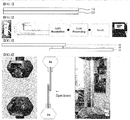
- FIG. 1 is a cross-sectional view of a composite metal sheet according to an embodiment of the present invention.
- the composite metal sheet according to the present embodiment may include a metal sheet 10 and a plastic layer 20.
- a stacked structure of the composite metal sheet according to the present invention is not limited to FIG. 1 , and may be variously changed when necessary.
- the stacked structure may be a sandwich structure in which the metal sheets 10 are stacked on upper and lower portions of the plastic layer 20, with the plastic layer 20 present therebetween.
- other layers in addition to the metal sheet 10 and the plastic layer 20 may be stacked.
- the metal sheet 10 may be a steel sheet.
- a hot-dipped galvanized iron (GI) sheet, an electrolytic GI sheet, a hot-dipped aluminized steel sheet, a hot-dipped aluminum-zinc alloy coated steel sheet, a hot-dipped galvannealed steel sheet, or the like may be used.
- the metal sheet 10 may have a thickness of 0.2 mm to 1.2 mm, preferably, 0.3 mm to 1 mm, and, more preferably, 0.4 mm to 0.8 mm.
- a thickness of the metal sheet 10 is too small, it is difficult to secure sufficient rigidity, and manufacturing costs may significantly increase.
- the thickness of the metal sheet 10 is too large, a lightweight effect may decrease, and it may be difficult to perform processing thereon.
- the plastic layer 20 may include a polyolefin and a thermoplastic polyester polyether elastomer (TPEE).
- TPEE thermoplastic polyester polyether elastomer
- a polyolefin is used as a main raw material of the plastic layer 20, and mixed with a TPEE, and thus a disadvantage in terms of adhesion of the polyolefin may be addressed and excellent vibration damping characteristics may be secured.
- polyethylene PE
- polypropylene PP
- polybutylene polybutylene
- thermoplastic polyester polyether elastomer may be prepared by polymerizing a raw material composition including polyester, which is a hard segment, as a first monomer and polyether, which is a soft segment, as a second monomer.
- polybutylene terephthalate polyethylene terephthalate, polytrimethylene terephthalate, polyethylene naphthalate, or the like may be used.
- polybutylene terephthalate is preferably used due to its high crystallinity.
- the polybutylene terephthalate may be a polymer of dimethylene terephthalate and 1,4-butanediol.
- a content of the polyester may range from 20 wt% to 90 wt%, preferably, 20 wt% to 60 wt%, and, more preferably, 20 wt% to 40 wt%, with respect to a total weight of the raw material composition.
- the content of the polyester is too small, rigidity, elasticity, and thermal resistance of an obtained thermoplastic polyester polyether elastomer may deteriorate.
- the thermoplastic polyester polyether elastomer has no flexibility due to its increased crystallinity, and has increased viscosity, resulting in difficulty in molding thereof to be manufactured as a product.
- polytetramethylene ether glycol As the second monomer (polyether), polytetramethylene ether glycol, polyalkylene glycol, polyethylene glycol, polypropylene glycol, or the like may be used. Among these, polytetramethylene ether glycol is preferably used due to its high flexibility since it is a soft segment.
- the polytetramethylene ether glycol may be a polymer of dimethylene terephthalate and tetramethylene ether glycol.
- a content of the polyether may range from 10 wt% to 80 wt%, preferably, 40 wt% to 80 wt%, and, more preferably, 60 wt% to 80 wt%, with respect to a total weight of the raw material composition.
- the content of the polyether is too small, the thermoplastic polyester polyether elastomer may have deteriorated flexibility.
- strength and thermal resistance thereof may deteriorate.
- the raw material composition of the thermoplastic polyester polyether elastomer may include a general polymerization initiator and a general additive, in addition to the first monomer and the second monomer described above.
- a molecular weight of the thermoplastic polyester polyether elastomer may be a weight average molecular weight (Mw) measured using gel permeation chromatography (GPC) or the like and range from 300 to 10,000.
- Mw weight average molecular weight
- GPC gel permeation chromatography
- the molecular weight of the thermoplastic polyester polyether elastomer is too small, mechanical and physical properties, thermal resistance, and viscosity of the plastic layer 20 may be too low, and adhesion of the plastic layer 20 to the metal sheet 10 may be reduced.
- the molecular weight of the thermoplastic polyester polyether elastomer is too large, the plastic layer 20 may have excessive viscosity and increased elasticity, and thus, when the plastic layer 20 is used to fabricate a composite metal sheet, formability of the composite metal sheet may deteriorate.
- the plastic layer 20 may include 20 wt% to 80 wt% of the polyolefin and 20 wt% to 80 wt% of the thermoplastic polyester polyether elastomer with respect to the total weight of the plastic layer 20.
- the content of the polyolefin is too small or the content of the thermoplastic polyester polyether elastomer is too large, it may be impossible to guarantee mechanical strength, thermal resistance, and weather resistance of the plastic layer 20, and economic efficiency may be reduced.
- the content of the polyolefin is too large or the content of the thermoplastic polyester polyether elastomer is too small, it may be impossible to secure adhesion between the plastic layer 20 and the metal sheet 10, and flexibility and bending fatigue resistance may be reduced.
- the plastic layer 20 may include an additive (a curing agent, an antioxidant, a filler, or the like) in addition to the polyolefin and the thermoplastic polyester polyether elastomer described above.
- an additive a curing agent, an antioxidant, a filler, or the like
- the plastic layer 20 may be formed into a plate or sheet shape through extrusion, calendaring, casting, or the like.
- the plastic layer 20 may have a thickness of 0.3 mm to 1.0 mm, preferably 0.3 mm to 0.8 mm, and, more preferably, 0.4 mm to 0.6 mm.
- the thickness of the plastic layer 20 is too small, the thickness is not sufficient to attenuate an external impact or load, and thus an overall vibration damping effect of a composite metal sheet may be reduced.
- the thickness of the plastic layer 20 is too large, it may be difficult to mold a composite metal sheet into a product due to elasticity of the plastic layer 20.
- the metal sheet 10 and the plastic layer 20 may be bonded to each other by thermal compression without a separate adhesive layer. That is, the composite metal sheet according to the present invention may be manufactured by thermal compression, and does not require a separate adhesive layer.
- a vibration at a primary natural frequency may be 85 dB or less.
- a lower limit of the vibration is not particularly limited, and may be, for example, 40 dB.
- the vibration at a primary natural frequency may range from 40 dB to 85 dB, preferably, 40 dB to 80 dB, and, more preferably, 40 dB to 75 dB.
- a vibration at a secondary natural frequency may be 64 dB or less.
- a lower limit of the vibration is not particularly limited, and may be, for example, 40 dB.
- the vibration at a secondary natural frequency may range from 40 dB to 64 dB, preferably, 40 dB to 62 dB.
- a shear strength related to adhesion of the composite metal sheet according to the present invention may vary according to composition of the plastic layer 20, and the shear strength may increase as the content of the elastomer increases.
- the shear strength of the composite metal sheet may range from 1000 N to 3000 N, preferably, 1200 N to 2500 N.
- the present invention also provides a method of manufacturing a composite metal sheet, including: preparing a metal sheet; forming a plastic layer including a polyolefin and a thermoplastic polyester polyether elastomer; and bonding the metal sheet and the plastic layer by thermal compression.
- the thermal compression may be performed using a hot press device at a temperature ranging from 170°C to 240°C, preferably 190°C to 240°C, and, more preferably, 210°C to 230°C and a pressure ranging from 60 kgf/cm 2 to 150 kgf/cm 2 , preferably, 80 kgf/cm 2 to 130 kgf/cm 2 , and, more preferably, 90 kgf/cm 2 to 110 kgf/cm 2 .
- the temperature of the thermal compression is too low, it is impossible to form the plastic layer 20 into a molten state having sufficient flowability, and the plastic layer 20 does not spread over a whole surface of the metal sheet 10.
- the plastic layer 20 may be easily burned, and thus may lose intrinsic physical properties.
- the pressure of the thermal compression is too low, the metal sheet 10 and the plastic layer 20 cannot be sufficiently adhered.
- the pressure of the thermal compression is too high, it may be difficult to maintain a uniform thickness of the plastic layer 20.
- a lightweight composite steel sheet according to the present invention has very high adhesion between a metal sheet and a plastic layer by appropriately balancing plastic properties of polypropylene that constitute the plastic layer and rubber properties of the thermoplastic polyester polyether elastomer that constitute the plastic layer, and, in particular, has excellent vibration damping characteristics.
- the composite metal sheet according to the present invention has a density of 1.46 to 7.0, and may be applied to automobile finishing (closure) materials, automobile exterior plate materials, and the like which require weight reduction.
- the composite metal sheet is applied to automobile door modules, and the like, and thus the weight reduction of an automobile is enabled.
- an anti-vibration pad further used for removing vibration and noise.
- a hot-dipped galvanized iron (GI) sheet having a thickness of 0.6 mm was used as a metal sheet.
- a plastic layer was formed by melt-mixing 80 wt% of polypropylene (PP) and 20 wt% of a thermoplastic polyester polyether elastomer (TPEE) and then extruding the resulting mixture to a thickness of 0.5 mm.
- the thermoplastic polyester polyether elastomer was prepared from a raw material composition including 30 wt% of polybutylene terephthalate and 70 wt% of polytetramethylene ether glycol.
- the prepared hot-dipped GI sheet and the formed plastic layer were thermally compressed using a hot press device at a temperature of 220°C and a pressure of 100 kgf/cm 2 , thereby integrating the GI sheet and the plastic layer.
- a composite metal sheet was manufactured in the same manner as in Example 1, except that a hot-dipped GI sheet having a thickness of 0.8 mm was used as a metal sheet, and a plastic layer was formed using only polypropylene (PP) without using the thermoplastic polyester polyether elastomer (TPEE).
- PP polypropylene
- TPEE thermoplastic polyester polyether elastomer
- a composite metal sheet was manufactured in the same manner as in Example 1, except that a plastic layer was formed using polyvinyl butyral (PVB) instead of the thermoplastic polyester polyether elastomer (TPEE).
- PVB polyvinyl butyral
- TPEE thermoplastic polyester polyether elastomer
- a vibration damping test was performed on two-layered laminate steel sheets manufactured according to Example 1 and Comparative Examples 1 and 2. As illustrated in FIG. 2 , the test was performed on a specimen having a size of 95 mm x 30 mm with a hole having a diameter of 3 mm using an impact hammer (PCB Piezotronics, Model No. 086E80) and an acceleration sensor (B&K type 4373). An excitation force of 50 N was applied thereto.
- Mode 1 st denotes measurement of a vibration at a primary natural frequency
- Mode 2 nd was performed under a secondary natural frequency condition.
- thermoplastic polyester polyether elastomer was prepared from a raw material composition including 30 wt% of polybutylene terephthalate and 70 wt% of polytetramethylene ether glycol.
- the prepared two hot-dipped GI sheets and the formed plastic layer were thermally compressed using a hot press device at a temperature of 220°C and a pressure of 100 kgf/cm 2 to manufacture a sandwich structure in which the metal sheets 10 were stacked on upper and lower portions of the plastic layer 20, with the plastic layer 20 present therebetween.
- a composite metal sheet was manufactured in the same manner as in Example 2, except that a plastic layer was formed using only polypropylene (PP) without using the thermoplastic polyester polyether elastomer (TPEE).
- PP polypropylene
- TPEE thermoplastic polyester polyether elastomer
- a composite metal sheet was manufactured in the same manner as in Example 2, except that a plastic layer was formed using only polyethylene terephthalate (PET) instead of polypropylene (PP) and the thermoplastic polyester polyether elastomer (TPEE).
- PET polyethylene terephthalate
- PP polypropylene
- TPEE thermoplastic polyester polyether elastomer
- a composite metal sheet was manufactured in the same manner as in Example 2, except that a plastic layer was formed using only Nylon6,6 instead of polypropylene (PP) and the thermoplastic polyester polyether elastomer (TPEE).
- PP polypropylene
- TPEE thermoplastic polyester polyether elastomer
- Composite metal sheets were manufactured in the same manner as in Example 2, except that plastic layers are formed using polyvinylbutyral (PVB) at varying contents thereof as shown in Table 2 instead of the thermoplastic polyester polyether elastomer (TPEE).
- PVB polyvinylbutyral
- TPEE thermoplastic polyester polyether elastomer
- An adhesion test was performed on three-layered sandwich structures manufactured according to Examples 2 to 7 and Comparative Examples 3 to 12. As illustrated in FIG. 4 , the test was performed on a specimen having a size of 25 mm (width) x 255 mm (length) x 1.1 mm (thickness) using a Lap shear test. In particular, shear strengths were measured under conditions: a tensile speed of 50 mm/min and a 50 kN load cell.
Landscapes
- Laminated Bodies (AREA)
- Casting Or Compression Moulding Of Plastics Or The Like (AREA)
- Vibration Prevention Devices (AREA)
Abstract
Description
- The present invention relates to a composite metal sheet and a method of manufacturing the same, and more particularly, to a lightweight composite metal sheet having excellent vibration damping characteristics and a method of manufacturing the same.
- Conventional lightweight sandwich steel sheets for an automobile are fabricated by positioning a plastic core formed of polypropylene or polyamides between thin iron sheets having a thickness of 0.2 mm to 0.3 mm. Existing techniques use a thin iron sheet, and thus manufacturing costs increase and adhesion between a plastic core and a steel sheet is not sufficiently secured, and, accordingly, it is necessary to use a separate adhesive layer or develop a separate plastic.
- An object of the present invention is to provide a lightweight composite metal sheet having high adhesion between a metal sheet and a plastic layer and excellent vibration damping characteristics, and a method of manufacturing the same.
- In order to achieve the object, the present invention provides a composite metal sheet including: a metal sheet; and a plastic layer disposed on one surface or both surfaces of the metal sheet and including a polyolefin and a thermoplastic polyester polyether elastomer.
- In the present invention, the metal sheet may be a steel sheet.
- In the present invention, the metal sheet may have a thickness of 0.2 mm to 1.2 mm.
- In the present invention, the polyolefin may be polypropylene.
- In the present invention, the thermoplastic polyester polyether elastomer may be prepared from a raw material composition including 20 wt% to 90 wt% of a polymer of dimethylene terephthalate and 1,4-butanediol and 10 wt% to 80 wt% of a polymer of dimethylene terephthalate and tetramethylene ether glycol.
- In the present invention, the plastic layer may include 20 wt% to 80 wt% of the polyolefin and 20 wt% to 80 wt% of the thermoplastic polyester polyether elastomer.
- In the present invention, the plastic layer may have a thickness of 0.3 mm to 1.0 mm.
- In the present invention, the metal sheet and the plastic layer may be bonded to each other by thermal compression without a separate adhesive layer.
- The composite metal sheet according to the present invention may have a vibration at a primary natural frequency of 40 dB to 85 dB and a vibration at a secondary natural frequency of 40 dB to 64 dB.
- The composite metal sheet according to the present invention may have a shear strength of 1000 N to 3000 N.
- The present invention also provides a method of manufacturing a composite metal sheet, including: preparing a metal sheet; forming a plastic layer including a polyolefin and a thermoplastic polyester polyether elastomer; and bonding the metal sheet and the plastic layer by thermal compression.
- The thermal compression may be performed at a temperature ranging from 170°C to 240°C and a pressure ranging from 60 kgf/cm2 to 150 kgf/cm2.
- A composite metal sheet according to the present invention uses a thermoplastic polyester polyether elastomer in a plastic layer, and thus has high adhesion between a metal sheet and the plastic layer and, in particular, excellent vibration damping characteristics.
-
-
FIG. 1 is a cross-sectional view of a composite metal sheet according to an embodiment of the present invention. -
FIG. 2 illustrates a vibration damping test method for the composite metal sheet according to an embodiment of the present invention. -
FIG. 3 is a cross-sectional view of a composite metal sheet according to another embodiment of the present invention. -
FIG. 4 illustrates an adhesion test method for the composite metal sheet according to another embodiment of the present invention. - Hereinafter, the present invention will be described in detail.
-
FIG. 1 is a cross-sectional view of a composite metal sheet according to an embodiment of the present invention. The composite metal sheet according to the present embodiment may include ametal sheet 10 and aplastic layer 20. A stacked structure of the composite metal sheet according to the present invention is not limited toFIG. 1 , and may be variously changed when necessary. For example, as illustrated inFIG. 3 , the stacked structure may be a sandwich structure in which themetal sheets 10 are stacked on upper and lower portions of theplastic layer 20, with theplastic layer 20 present therebetween. In addition, other layers in addition to themetal sheet 10 and theplastic layer 20 may be stacked. - The
metal sheet 10 may be a steel sheet. As the steel sheet, a hot-dipped galvanized iron (GI) sheet, an electrolytic GI sheet, a hot-dipped aluminized steel sheet, a hot-dipped aluminum-zinc alloy coated steel sheet, a hot-dipped galvannealed steel sheet, or the like may be used. - The
metal sheet 10 may have a thickness of 0.2 mm to 1.2 mm, preferably, 0.3 mm to 1 mm, and, more preferably, 0.4 mm to 0.8 mm. When the thickness of themetal sheet 10 is too small, it is difficult to secure sufficient rigidity, and manufacturing costs may significantly increase. On the other hand, when the thickness of themetal sheet 10 is too large, a lightweight effect may decrease, and it may be difficult to perform processing thereon. - The
plastic layer 20 may include a polyolefin and a thermoplastic polyester polyether elastomer (TPEE). - In the present invention, to secure economic efficiency, a polyolefin is used as a main raw material of the
plastic layer 20, and mixed with a TPEE, and thus a disadvantage in terms of adhesion of the polyolefin may be addressed and excellent vibration damping characteristics may be secured. - As the polyolefin, polyethylene (PE), polypropylene (PP), polybutylene, or the like may be used, but, preferably, PP may be used to secure thermal resistance and economic efficiency.
- The thermoplastic polyester polyether elastomer (TPEE) may be prepared by polymerizing a raw material composition including polyester, which is a hard segment, as a first monomer and polyether, which is a soft segment, as a second monomer.
- As the first monomer (polyester), polybutylene terephthalate, polyethylene terephthalate, polytrimethylene terephthalate, polyethylene naphthalate, or the like may be used. Among these, polybutylene terephthalate is preferably used due to its high crystallinity. The polybutylene terephthalate may be a polymer of dimethylene terephthalate and 1,4-butanediol.
- A content of the polyester may range from 20 wt% to 90 wt%, preferably, 20 wt% to 60 wt%, and, more preferably, 20 wt% to 40 wt%, with respect to a total weight of the raw material composition. When the content of the polyester is too small, rigidity, elasticity, and thermal resistance of an obtained thermoplastic polyester polyether elastomer may deteriorate. On the other hand, when the content of the polyester is too large, the thermoplastic polyester polyether elastomer has no flexibility due to its increased crystallinity, and has increased viscosity, resulting in difficulty in molding thereof to be manufactured as a product.
- As the second monomer (polyether), polytetramethylene ether glycol, polyalkylene glycol, polyethylene glycol, polypropylene glycol, or the like may be used. Among these, polytetramethylene ether glycol is preferably used due to its high flexibility since it is a soft segment. The polytetramethylene ether glycol may be a polymer of dimethylene terephthalate and tetramethylene ether glycol.
- A content of the polyether may range from 10 wt% to 80 wt%, preferably, 40 wt% to 80 wt%, and, more preferably, 60 wt% to 80 wt%, with respect to a total weight of the raw material composition. When the content of the polyether is too small, the thermoplastic polyester polyether elastomer may have deteriorated flexibility. On the other hand, when the content of the polyether is too large, strength and thermal resistance thereof may deteriorate.
- The raw material composition of the thermoplastic polyester polyether elastomer may include a general polymerization initiator and a general additive, in addition to the first monomer and the second monomer described above.
- A molecular weight of the thermoplastic polyester polyether elastomer may be a weight average molecular weight (Mw) measured using gel permeation chromatography (GPC) or the like and range from 300 to 10,000. When the molecular weight of the thermoplastic polyester polyether elastomer is too small, mechanical and physical properties, thermal resistance, and viscosity of the
plastic layer 20 may be too low, and adhesion of theplastic layer 20 to themetal sheet 10 may be reduced. On the other hand, when the molecular weight of the thermoplastic polyester polyether elastomer is too large, theplastic layer 20 may have excessive viscosity and increased elasticity, and thus, when theplastic layer 20 is used to fabricate a composite metal sheet, formability of the composite metal sheet may deteriorate. - The
plastic layer 20 may include 20 wt% to 80 wt% of the polyolefin and 20 wt% to 80 wt% of the thermoplastic polyester polyether elastomer with respect to the total weight of theplastic layer 20. When the content of the polyolefin is too small or the content of the thermoplastic polyester polyether elastomer is too large, it may be impossible to guarantee mechanical strength, thermal resistance, and weather resistance of theplastic layer 20, and economic efficiency may be reduced. On the other hand, when the content of the polyolefin is too large or the content of the thermoplastic polyester polyether elastomer is too small, it may be impossible to secure adhesion between theplastic layer 20 and themetal sheet 10, and flexibility and bending fatigue resistance may be reduced. - The
plastic layer 20 may include an additive (a curing agent, an antioxidant, a filler, or the like) in addition to the polyolefin and the thermoplastic polyester polyether elastomer described above. - The
plastic layer 20 may be formed into a plate or sheet shape through extrusion, calendaring, casting, or the like. - The
plastic layer 20 may have a thickness of 0.3 mm to 1.0 mm, preferably 0.3 mm to 0.8 mm, and, more preferably, 0.4 mm to 0.6 mm. When the thickness of theplastic layer 20 is too small, the thickness is not sufficient to attenuate an external impact or load, and thus an overall vibration damping effect of a composite metal sheet may be reduced. On the other hand, when the thickness of theplastic layer 20 is too large, it may be difficult to mold a composite metal sheet into a product due to elasticity of theplastic layer 20. - The
metal sheet 10 and theplastic layer 20 may be bonded to each other by thermal compression without a separate adhesive layer. That is, the composite metal sheet according to the present invention may be manufactured by thermal compression, and does not require a separate adhesive layer. - As a result of performing a vibration damping test on the composite metal sheet according to the present invention, a vibration at a primary natural frequency may be 85 dB or less. A lower limit of the vibration is not particularly limited, and may be, for example, 40 dB. In particular, the vibration at a primary natural frequency may range from 40 dB to 85 dB, preferably, 40 dB to 80 dB, and, more preferably, 40 dB to 75 dB. A vibration at a secondary natural frequency may be 64 dB or less. A lower limit of the vibration is not particularly limited, and may be, for example, 40 dB. In particular, the vibration at a secondary natural frequency may range from 40 dB to 64 dB, preferably, 40 dB to 62 dB.
- A shear strength related to adhesion of the composite metal sheet according to the present invention may vary according to composition of the
plastic layer 20, and the shear strength may increase as the content of the elastomer increases. For example, the shear strength of the composite metal sheet may range from 1000 N to 3000 N, preferably, 1200 N to 2500 N. - The present invention also provides a method of manufacturing a composite metal sheet, including: preparing a metal sheet; forming a plastic layer including a polyolefin and a thermoplastic polyester polyether elastomer; and bonding the metal sheet and the plastic layer by thermal compression.
- The thermal compression may be performed using a hot press device at a temperature ranging from 170°C to 240°C, preferably 190°C to 240°C, and, more preferably, 210°C to 230°C and a pressure ranging from 60 kgf/cm2 to 150 kgf/cm2, preferably, 80 kgf/cm2 to 130 kgf/cm2, and, more preferably, 90 kgf/cm2 to 110 kgf/cm2. When the temperature of the thermal compression is too low, it is impossible to form the
plastic layer 20 into a molten state having sufficient flowability, and theplastic layer 20 does not spread over a whole surface of themetal sheet 10. On the other hand, when the temperature of the thermal compression is too high, theplastic layer 20 may be easily burned, and thus may lose intrinsic physical properties. When the pressure of the thermal compression is too low, themetal sheet 10 and theplastic layer 20 cannot be sufficiently adhered. On the other hand, when the pressure of the thermal compression is too high, it may be difficult to maintain a uniform thickness of theplastic layer 20. - A lightweight composite steel sheet according to the present invention has very high adhesion between a metal sheet and a plastic layer by appropriately balancing plastic properties of polypropylene that constitute the plastic layer and rubber properties of the thermoplastic polyester polyether elastomer that constitute the plastic layer, and, in particular, has excellent vibration damping characteristics.
- The composite metal sheet according to the present invention has a density of 1.46 to 7.0, and may be applied to automobile finishing (closure) materials, automobile exterior plate materials, and the like which require weight reduction. In particular, the composite metal sheet is applied to automobile door modules, and the like, and thus the weight reduction of an automobile is enabled. In addition, when the composite metal sheet according to the present invention is applied to an automobile door module or the like, there is no need to use an anti-vibration pad further used for removing vibration and noise.
- A hot-dipped galvanized iron (GI) sheet having a thickness of 0.6 mm was used as a metal sheet. A plastic layer was formed by melt-mixing 80 wt% of polypropylene (PP) and 20 wt% of a thermoplastic polyester polyether elastomer (TPEE) and then extruding the resulting mixture to a thickness of 0.5 mm. At this time, the thermoplastic polyester polyether elastomer was prepared from a raw material composition including 30 wt% of polybutylene terephthalate and 70 wt% of polytetramethylene ether glycol. The prepared hot-dipped GI sheet and the formed plastic layer were thermally compressed using a hot press device at a temperature of 220°C and a pressure of 100 kgf/cm2, thereby integrating the GI sheet and the plastic layer.
- A composite metal sheet was manufactured in the same manner as in Example 1, except that a hot-dipped GI sheet having a thickness of 0.8 mm was used as a metal sheet, and a plastic layer was formed using only polypropylene (PP) without using the thermoplastic polyester polyether elastomer (TPEE).
- A composite metal sheet was manufactured in the same manner as in Example 1, except that a plastic layer was formed using polyvinyl butyral (PVB) instead of the thermoplastic polyester polyether elastomer (TPEE).
- A vibration damping test was performed on two-layered laminate steel sheets manufactured according to Example 1 and Comparative Examples 1 and 2. As illustrated in
FIG. 2 , the test was performed on a specimen having a size of 95 mm x 30 mm with a hole having a diameter of 3 mm using an impact hammer (PCB Piezotronics, Model No. 086E80) and an acceleration sensor (B&K type 4373). An excitation force of 50 N was applied thereto. In Table 1 below, Mode 1st denotes measurement of a vibration at a primary natural frequency, and Mode 2nd was performed under a secondary natural frequency condition.[Table 1] Material of steel sheet Thickness of steel sheet (mmt) Composition of plastic layer Vibration damping test results Mode 1st Mode 2nd Comparative Example 1 GI 0.8 PP 100 wt% 88 dB 79 dB Comparative Example 2 GI 0.6 PP 80 wt% + PVB 20 wt%86 dB 65 dB Example 1 GI 0.6 PP 80 wt% + TPEE 20 wt% 74 dB 61 dB - According to Table 1, it was quantitatively confirmed that the laminate steel sheet according to the present invention had excellent vibration improvement characteristics. In particular, it was confirmed that the TPEE material of Example 1 had a much higher vibration reduction effect than that of the PVB material of Comparative Example 2.
- Two hot-dipped galvanized iron (GI) sheets having a thickness of 0.3 mm were used as metal sheets. Plastic layers were formed by melt-mixing polypropylene (PP) and a thermoplastic polyester polyether elastomer (TPEE) in contents varying as shown in Table 2 and then extruding the resulting mixture to a thickness of 0.5 mm. At this time, the thermoplastic polyester polyether elastomer was prepared from a raw material composition including 30 wt% of polybutylene terephthalate and 70 wt% of polytetramethylene ether glycol. The prepared two hot-dipped GI sheets and the formed plastic layer were thermally compressed using a hot press device at a temperature of 220°C and a pressure of 100 kgf/cm2 to manufacture a sandwich structure in which the
metal sheets 10 were stacked on upper and lower portions of theplastic layer 20, with theplastic layer 20 present therebetween. - A composite metal sheet was manufactured in the same manner as in Example 2, except that a plastic layer was formed using only polypropylene (PP) without using the thermoplastic polyester polyether elastomer (TPEE).
- A composite metal sheet was manufactured in the same manner as in Example 2, except that a plastic layer was formed using only polyethylene terephthalate (PET) instead of polypropylene (PP) and the thermoplastic polyester polyether elastomer (TPEE).
- A composite metal sheet was manufactured in the same manner as in Example 2, except that a plastic layer was formed using only Nylon6,6 instead of polypropylene (PP) and the thermoplastic polyester polyether elastomer (TPEE).
- Composite metal sheets were manufactured in the same manner as in Example 2, except that plastic layers are formed using polyvinylbutyral (PVB) at varying contents thereof as shown in Table 2 instead of the thermoplastic polyester polyether elastomer (TPEE).
- An adhesion test was performed on three-layered sandwich structures manufactured according to Examples 2 to 7 and Comparative Examples 3 to 12. As illustrated in
FIG. 4 , the test was performed on a specimen having a size of 25 mm (width) x 255 mm (length) x 1.1 mm (thickness) using a Lap shear test. In particular, shear strengths were measured under conditions: a tensile speed of 50 mm/min and a 50 kN load cell.[Table 2] Material of steel sheet Thickness of steel sheet (mmt) Composition of plastic layer Shear strength (maximum load)(N) Comparative Example 3 GI 0.3 PP 100 wt% Failure Comparative Example 4 GI 0.3 PET 100 wt% Failure Comparative Example 5 GI 0.3 Nylon6,6 100 wt% Failure Comparative Example 6 GI 0.3 PP 80 wt% + PVB 20 wt%683 Comparative Example 7 GI 0.3 PP 70 wt% + PVB 30 wt% 844 Comparative Example 8 GI 0.3 PP 60 wt% + PVB 40 wt% 1076 Comparative Example 9 GI 0.3 PP 50 wt% + PVB 50 wt% 1854 Comparative Example 10 GI 0.3 PP 40 wt% + PVB 60 wt% 2070 Comparative Example 11 GI 0.3 PP 30 wt% + PVB 70 wt% 1912 Comparative Example 12 GI 0.3 PP 20 wt% + PVB 80 wt%2384 Example 2 GI 0.3 PP 70 wt% + TPEE 30 wt% 1247 Example 3 GI 0.3 PP 60 wt% + TPEE 40 wt% 1394 Example 4 GI 0.3 PP 50 wt% + TPEE 50 wt% 1259 Example 5 GI 0.3 PP 40 wt% + TPEE 60 wt% 1791 Example 6 GI 0.3 PP 30 wt% + TPEE 70 wt% 2198 Example 7 GI 0.3 PP 20 wt% + TPEE 80 wt%2449 - According to Table 2, it was seen that the sandwich-structured composite metal sheets according to the present invention had high adhesion. In particular, it was confirmed that the cases of Examples 2 to 7 exhibited higher adhesion between the
plastic layer 20 formed of the TPEE material and a metal sheet than that between theplastic layer 20 formed of the PVB material and a metal sheet of the cases of Comparative Examples 6 to 12.
Claims (12)
- A composite metal sheet comprising:a metal sheet; anda plastic layer disposed on one surface or both surfaces of the metal sheet and comprising a polyolefin and a thermoplastic polyester polyether elastomer.
- The composite metal sheet of claim 1, wherein the metal sheet is a steel sheet.
- The composite metal sheet of claim 1, wherein the metal sheet has a thickness of 0.2 mm to 1.2 mm.
- The composite metal sheet of claim 1, wherein the polyolefin is polypropylene.
- The composite metal sheet of claim 1, wherein the thermoplastic polyester polyether elastomer is prepared from a raw material composition comprising 20 wt% to 90 wt% of a polymer of dimethylene terephthalate and 1,4-butanediol and 10 wt% to 80 wt% of a polymer of dimethylene terephthalate and tetramethylene ether glycol.
- The composite metal sheet of claim 1, wherein the plastic layer comprises 20 wt% to 80 wt% of the polyolefin and 20 wt% to 80 wt% of the thermoplastic polyester polyether elastomer.
- The composite metal sheet of claim 1, wherein the plastic layer has a thickness of 0.3 mm to 1.0 mm.
- The composite metal sheet of claim 1, wherein the metal sheet and the plastic layer are bonded to each other by thermal compression without a separate adhesive layer.
- The composite metal sheet of claim 1, wherein the composite metal sheet has a vibration at a primary natural frequency of 40 dB to 85 dB and a vibration at a secondary natural frequency of 40 dB to 64 dB.
- The composite metal sheet of claim 1, wherein the composite metal sheet has a shear strength of 1000 N to 3000 N.
- A method of manufacturing a composite metal sheet, the method comprising:preparing a metal sheet;forming a plastic layer comprising a polyolefin and a thermoplastic polyester polyether elastomer; andbonding the metal sheet and the plastic layer by thermal compression.
- The method of claim 11, wherein the thermal compression is performed at a temperature ranging from 170°C to 240°C and a pressure ranging from 60 kgf/cm2 to 150 kgf/cm2.
Applications Claiming Priority (2)
| Application Number | Priority Date | Filing Date | Title |
|---|---|---|---|
| KR1020150124596A KR101755112B1 (en) | 2015-09-03 | 2015-09-03 | Light weight composite metal sheet having superior vibration reduction property and method for producing the same |
| PCT/KR2016/009855 WO2017039391A1 (en) | 2015-09-03 | 2016-09-02 | Lightweight composite metal sheet having excellent vibration damping characteristics, and manufacturing method therefor |
Publications (3)
| Publication Number | Publication Date |
|---|---|
| EP3345756A1 true EP3345756A1 (en) | 2018-07-11 |
| EP3345756A4 EP3345756A4 (en) | 2018-07-11 |
| EP3345756B1 EP3345756B1 (en) | 2019-10-23 |
Family
ID=58188032
Family Applications (1)
| Application Number | Title | Priority Date | Filing Date |
|---|---|---|---|
| EP16842357.2A Active EP3345756B1 (en) | 2015-09-03 | 2016-09-02 | Lightweight composite metal sheet having excellent vibration damping characteristics, and manufacturing method therefor |
Country Status (6)
| Country | Link |
|---|---|
| US (1) | US10828867B2 (en) |
| EP (1) | EP3345756B1 (en) |
| JP (1) | JP6595097B2 (en) |
| KR (1) | KR101755112B1 (en) |
| CN (1) | CN108136733B (en) |
| WO (1) | WO2017039391A1 (en) |
Families Citing this family (2)
| Publication number | Priority date | Publication date | Assignee | Title |
|---|---|---|---|---|
| KR102008972B1 (en) * | 2017-12-21 | 2019-08-08 | 주식회사 포스코 | Composite of plastic layer and steel sheet combined with plastic minute particles and manufacturing method thereof |
| KR102428824B1 (en) * | 2019-12-11 | 2022-08-02 | 주식회사 포스코 | Metal-plastic composite material and method for manufacturing the same |
Family Cites Families (14)
| Publication number | Priority date | Publication date | Assignee | Title |
|---|---|---|---|---|
| JPS6189842A (en) * | 1984-10-11 | 1986-05-08 | 住友化学工業株式会社 | High vibration-damping material |
| JPH0752315A (en) * | 1993-08-19 | 1995-02-28 | Toray Ind Inc | Method for producing polyester-coated metal |
| JP2574121B2 (en) * | 1993-12-09 | 1997-01-22 | 三井石油化学工業株式会社 | Damping material and its laminate |
| KR980009368A (en) * | 1996-07-10 | 1998-04-30 | 김종진 | Manufacturing method of vibration damping material for vibration damping steel |
| JP2001172376A (en) | 1999-12-21 | 2001-06-26 | Toyobo Co Ltd | Thermoplastic polyester elastomer |
| JP2001207044A (en) | 2000-01-28 | 2001-07-31 | Asahi Kasei Corp | Elastomer composition |
| JP2003001762A (en) | 2001-06-22 | 2003-01-08 | Jsr Corp | Laminate and gap filling method |
| JP4277174B2 (en) * | 2003-03-06 | 2009-06-10 | 東洋紡績株式会社 | Resin composition |
| US7799838B2 (en) | 2006-07-26 | 2010-09-21 | Sabic Innovative Plastics Ip B.V. | Elastomer blends of polyesters and copolyetheresters derived from polyethylene terephthalate, method of manufacture, and articles therefrom |
| KR20080105668A (en) * | 2007-05-31 | 2008-12-04 | 머티어리얼 사이언시스 코포레이션 | Press-processing method for forming think ball by using think-bonded steel sheet with excellent sound absorption, vibration damping, and heat insulation. |
| KR100861448B1 (en) * | 2007-08-31 | 2008-10-02 | 해원엠에스씨(주) | Bonded steel sheet with excellent vibration damping, sound absorption and workability |
| DE102011015071A1 (en) | 2011-03-24 | 2012-09-27 | Thyssenkrupp Steel Europe Ag | Composite material and structural component for a motor vehicle |
| JP2013060539A (en) * | 2011-09-14 | 2013-04-04 | Toyobo Co Ltd | Resin composition and coated metallic article using the same |
| KR102105351B1 (en) * | 2013-11-11 | 2020-04-29 | 현대모비스 주식회사 | Thermoplastic polyetherester elastomer composition |
-
2015
- 2015-09-03 KR KR1020150124596A patent/KR101755112B1/en active Active
-
2016
- 2016-09-02 CN CN201680057294.9A patent/CN108136733B/en active Active
- 2016-09-02 US US15/754,236 patent/US10828867B2/en active Active
- 2016-09-02 EP EP16842357.2A patent/EP3345756B1/en active Active
- 2016-09-02 JP JP2018510365A patent/JP6595097B2/en active Active
- 2016-09-02 WO PCT/KR2016/009855 patent/WO2017039391A1/en not_active Ceased
Also Published As
| Publication number | Publication date |
|---|---|
| KR20170027955A (en) | 2017-03-13 |
| CN108136733B (en) | 2020-05-12 |
| WO2017039391A1 (en) | 2017-03-09 |
| KR101755112B1 (en) | 2017-07-06 |
| JP6595097B2 (en) | 2019-10-23 |
| EP3345756A4 (en) | 2018-07-11 |
| JP2018528104A (en) | 2018-09-27 |
| CN108136733A (en) | 2018-06-08 |
| US20180281349A1 (en) | 2018-10-04 |
| EP3345756B1 (en) | 2019-10-23 |
| US10828867B2 (en) | 2020-11-10 |
Similar Documents
| Publication | Publication Date | Title |
|---|---|---|
| US7829192B2 (en) | Acoustic laminated glazing, acoustic interlayer and method for selecting the interlayer for optimal acoustic damping | |
| JP4371462B2 (en) | Laminated glass interlayer film and laminated glass | |
| RU2627863C2 (en) | Multilayer metal sheet and method of its manufacture | |
| CN109789674A (en) | Sound attenuating multilayer laminate | |
| KR20140138860A (en) | Defect resisting acoustic polymer interlayers | |
| JP4429428B2 (en) | Laminated glass interlayer film and laminated glass | |
| EP3254054B1 (en) | Ballistic resistant sheet | |
| EP3345756B1 (en) | Lightweight composite metal sheet having excellent vibration damping characteristics, and manufacturing method therefor | |
| KR101994147B1 (en) | Fiber-reinforced composite material and method of manufacturing the same | |
| KR101999530B1 (en) | Sandwich panel and the manufacturing method for the same | |
| US11413851B2 (en) | Hybrid polymer for visco-elastic plastic spacer | |
| EP3904185A1 (en) | Reinforcing steel member for motor vehicle | |
| KR102115026B1 (en) | Manufacturing method of polyester film and manufacturing method of polyester product | |
| EP3804976A1 (en) | Multilayer laminate for heat shielding applications | |
| KR102005672B1 (en) | Multilayer polyvinyl acetal film having improved sound insulation and laminated glass comprising the same | |
| KR102673286B1 (en) | Molded object, sandwich panel using same, and method for manufacturing same | |
| EP4070947B1 (en) | Molded body, sandwich panel using same and method for manufacturing same | |
| CN105848966A (en) | Composite member and seat shell | |
| CN220447402U (en) | Multifunctional composite material structure | |
| JP2016172324A (en) | Thermoplastic film and glazing | |
| KR20220048946A (en) | Molded object, sandwich panel using same, and method for manufacturing same | |
| KR102077907B1 (en) | Multilayer polyvinyl acetal film having improved sound insulation and laminated glass comprising the same | |
| JPH1162045A (en) | Damping sheet, damping material and folded plate roof | |
| KR20190132178A (en) | Laminated sheets | |
| JPH10183883A (en) | Damping sheet for folded roof, damping material and folded roof |
Legal Events
| Date | Code | Title | Description |
|---|---|---|---|
| STAA | Information on the status of an ep patent application or granted ep patent |
Free format text: STATUS: THE INTERNATIONAL PUBLICATION HAS BEEN MADE |
|
| PUAI | Public reference made under article 153(3) epc to a published international application that has entered the european phase |
Free format text: ORIGINAL CODE: 0009012 |
|
| STAA | Information on the status of an ep patent application or granted ep patent |
Free format text: STATUS: REQUEST FOR EXAMINATION WAS MADE |
|
| 17P | Request for examination filed |
Effective date: 20180301 |
|
| A4 | Supplementary search report drawn up and despatched |
Effective date: 20180612 |
|
| AK | Designated contracting states |
Kind code of ref document: A1 Designated state(s): AL AT BE BG CH CY CZ DE DK EE ES FI FR GB GR HR HU IE IS IT LI LT LU LV MC MK MT NL NO PL PT RO RS SE SI SK SM TR |
|
| AX | Request for extension of the european patent |
Extension state: BA ME |
|
| DAV | Request for validation of the european patent (deleted) | ||
| DAX | Request for extension of the european patent (deleted) | ||
| GRAP | Despatch of communication of intention to grant a patent |
Free format text: ORIGINAL CODE: EPIDOSNIGR1 |
|
| STAA | Information on the status of an ep patent application or granted ep patent |
Free format text: STATUS: GRANT OF PATENT IS INTENDED |
|
| INTG | Intention to grant announced |
Effective date: 20190430 |
|
| RAP1 | Party data changed (applicant data changed or rights of an application transferred) |
Owner name: POSCO |
|
| GRAS | Grant fee paid |
Free format text: ORIGINAL CODE: EPIDOSNIGR3 |
|
| GRAA | (expected) grant |
Free format text: ORIGINAL CODE: 0009210 |
|
| STAA | Information on the status of an ep patent application or granted ep patent |
Free format text: STATUS: THE PATENT HAS BEEN GRANTED |
|
| AK | Designated contracting states |
Kind code of ref document: B1 Designated state(s): AL AT BE BG CH CY CZ DE DK EE ES FI FR GB GR HR HU IE IS IT LI LT LU LV MC MK MT NL NO PL PT RO RS SE SI SK SM TR |
|
| REG | Reference to a national code |
Ref country code: GB Ref legal event code: FG4D |
|
| REG | Reference to a national code |
Ref country code: CH Ref legal event code: EP |
|
| REG | Reference to a national code |
Ref country code: IE Ref legal event code: FG4D |
|
| REG | Reference to a national code |
Ref country code: DE Ref legal event code: R096 Ref document number: 602016023120 Country of ref document: DE |
|
| REG | Reference to a national code |
Ref country code: AT Ref legal event code: REF Ref document number: 1193204 Country of ref document: AT Kind code of ref document: T Effective date: 20191115 |
|
| REG | Reference to a national code |
Ref country code: NL Ref legal event code: FP |
|
| REG | Reference to a national code |
Ref country code: LT Ref legal event code: MG4D |
|
| PG25 | Lapsed in a contracting state [announced via postgrant information from national office to epo] |
Ref country code: LV Free format text: LAPSE BECAUSE OF FAILURE TO SUBMIT A TRANSLATION OF THE DESCRIPTION OR TO PAY THE FEE WITHIN THE PRESCRIBED TIME-LIMIT Effective date: 20191023 Ref country code: SE Free format text: LAPSE BECAUSE OF FAILURE TO SUBMIT A TRANSLATION OF THE DESCRIPTION OR TO PAY THE FEE WITHIN THE PRESCRIBED TIME-LIMIT Effective date: 20191023 Ref country code: PL Free format text: LAPSE BECAUSE OF FAILURE TO SUBMIT A TRANSLATION OF THE DESCRIPTION OR TO PAY THE FEE WITHIN THE PRESCRIBED TIME-LIMIT Effective date: 20191023 Ref country code: GR Free format text: LAPSE BECAUSE OF FAILURE TO SUBMIT A TRANSLATION OF THE DESCRIPTION OR TO PAY THE FEE WITHIN THE PRESCRIBED TIME-LIMIT Effective date: 20200124 Ref country code: NO Free format text: LAPSE BECAUSE OF FAILURE TO SUBMIT A TRANSLATION OF THE DESCRIPTION OR TO PAY THE FEE WITHIN THE PRESCRIBED TIME-LIMIT Effective date: 20200123 Ref country code: LT Free format text: LAPSE BECAUSE OF FAILURE TO SUBMIT A TRANSLATION OF THE DESCRIPTION OR TO PAY THE FEE WITHIN THE PRESCRIBED TIME-LIMIT Effective date: 20191023 Ref country code: BG Free format text: LAPSE BECAUSE OF FAILURE TO SUBMIT A TRANSLATION OF THE DESCRIPTION OR TO PAY THE FEE WITHIN THE PRESCRIBED TIME-LIMIT Effective date: 20200123 Ref country code: FI Free format text: LAPSE BECAUSE OF FAILURE TO SUBMIT A TRANSLATION OF THE DESCRIPTION OR TO PAY THE FEE WITHIN THE PRESCRIBED TIME-LIMIT Effective date: 20191023 Ref country code: PT Free format text: LAPSE BECAUSE OF FAILURE TO SUBMIT A TRANSLATION OF THE DESCRIPTION OR TO PAY THE FEE WITHIN THE PRESCRIBED TIME-LIMIT Effective date: 20200224 |
|
| PG25 | Lapsed in a contracting state [announced via postgrant information from national office to epo] |
Ref country code: IS Free format text: LAPSE BECAUSE OF FAILURE TO SUBMIT A TRANSLATION OF THE DESCRIPTION OR TO PAY THE FEE WITHIN THE PRESCRIBED TIME-LIMIT Effective date: 20200224 Ref country code: RS Free format text: LAPSE BECAUSE OF FAILURE TO SUBMIT A TRANSLATION OF THE DESCRIPTION OR TO PAY THE FEE WITHIN THE PRESCRIBED TIME-LIMIT Effective date: 20191023 Ref country code: HR Free format text: LAPSE BECAUSE OF FAILURE TO SUBMIT A TRANSLATION OF THE DESCRIPTION OR TO PAY THE FEE WITHIN THE PRESCRIBED TIME-LIMIT Effective date: 20191023 |
|
| PG25 | Lapsed in a contracting state [announced via postgrant information from national office to epo] |
Ref country code: AL Free format text: LAPSE BECAUSE OF FAILURE TO SUBMIT A TRANSLATION OF THE DESCRIPTION OR TO PAY THE FEE WITHIN THE PRESCRIBED TIME-LIMIT Effective date: 20191023 |
|
| REG | Reference to a national code |
Ref country code: DE Ref legal event code: R097 Ref document number: 602016023120 Country of ref document: DE |
|
| PG2D | Information on lapse in contracting state deleted |
Ref country code: IS |
|
| PG25 | Lapsed in a contracting state [announced via postgrant information from national office to epo] |
Ref country code: EE Free format text: LAPSE BECAUSE OF FAILURE TO SUBMIT A TRANSLATION OF THE DESCRIPTION OR TO PAY THE FEE WITHIN THE PRESCRIBED TIME-LIMIT Effective date: 20191023 Ref country code: DK Free format text: LAPSE BECAUSE OF FAILURE TO SUBMIT A TRANSLATION OF THE DESCRIPTION OR TO PAY THE FEE WITHIN THE PRESCRIBED TIME-LIMIT Effective date: 20191023 Ref country code: CZ Free format text: LAPSE BECAUSE OF FAILURE TO SUBMIT A TRANSLATION OF THE DESCRIPTION OR TO PAY THE FEE WITHIN THE PRESCRIBED TIME-LIMIT Effective date: 20191023 Ref country code: RO Free format text: LAPSE BECAUSE OF FAILURE TO SUBMIT A TRANSLATION OF THE DESCRIPTION OR TO PAY THE FEE WITHIN THE PRESCRIBED TIME-LIMIT Effective date: 20191023 Ref country code: ES Free format text: LAPSE BECAUSE OF FAILURE TO SUBMIT A TRANSLATION OF THE DESCRIPTION OR TO PAY THE FEE WITHIN THE PRESCRIBED TIME-LIMIT Effective date: 20191023 Ref country code: IS Free format text: LAPSE BECAUSE OF FAILURE TO SUBMIT A TRANSLATION OF THE DESCRIPTION OR TO PAY THE FEE WITHIN THE PRESCRIBED TIME-LIMIT Effective date: 20200223 |
|
| PLBE | No opposition filed within time limit |
Free format text: ORIGINAL CODE: 0009261 |
|
| STAA | Information on the status of an ep patent application or granted ep patent |
Free format text: STATUS: NO OPPOSITION FILED WITHIN TIME LIMIT |
|
| PG25 | Lapsed in a contracting state [announced via postgrant information from national office to epo] |
Ref country code: SM Free format text: LAPSE BECAUSE OF FAILURE TO SUBMIT A TRANSLATION OF THE DESCRIPTION OR TO PAY THE FEE WITHIN THE PRESCRIBED TIME-LIMIT Effective date: 20191023 Ref country code: SK Free format text: LAPSE BECAUSE OF FAILURE TO SUBMIT A TRANSLATION OF THE DESCRIPTION OR TO PAY THE FEE WITHIN THE PRESCRIBED TIME-LIMIT Effective date: 20191023 Ref country code: IT Free format text: LAPSE BECAUSE OF FAILURE TO SUBMIT A TRANSLATION OF THE DESCRIPTION OR TO PAY THE FEE WITHIN THE PRESCRIBED TIME-LIMIT Effective date: 20191023 |
|
| 26N | No opposition filed |
Effective date: 20200724 |
|
| PG25 | Lapsed in a contracting state [announced via postgrant information from national office to epo] |
Ref country code: SI Free format text: LAPSE BECAUSE OF FAILURE TO SUBMIT A TRANSLATION OF THE DESCRIPTION OR TO PAY THE FEE WITHIN THE PRESCRIBED TIME-LIMIT Effective date: 20191023 |
|
| REG | Reference to a national code |
Ref country code: AT Ref legal event code: UEP Ref document number: 1193204 Country of ref document: AT Kind code of ref document: T Effective date: 20191023 |
|
| REG | Reference to a national code |
Ref country code: CH Ref legal event code: PL |
|
| GBPC | Gb: european patent ceased through non-payment of renewal fee |
Effective date: 20200902 |
|
| REG | Reference to a national code |
Ref country code: BE Ref legal event code: MM Effective date: 20200930 |
|
| PG25 | Lapsed in a contracting state [announced via postgrant information from national office to epo] |
Ref country code: LU Free format text: LAPSE BECAUSE OF NON-PAYMENT OF DUE FEES Effective date: 20200902 |
|
| PG25 | Lapsed in a contracting state [announced via postgrant information from national office to epo] |
Ref country code: FR Free format text: LAPSE BECAUSE OF NON-PAYMENT OF DUE FEES Effective date: 20200930 |
|
| PG25 | Lapsed in a contracting state [announced via postgrant information from national office to epo] |
Ref country code: BE Free format text: LAPSE BECAUSE OF NON-PAYMENT OF DUE FEES Effective date: 20200930 Ref country code: CH Free format text: LAPSE BECAUSE OF NON-PAYMENT OF DUE FEES Effective date: 20200930 Ref country code: GB Free format text: LAPSE BECAUSE OF NON-PAYMENT OF DUE FEES Effective date: 20200902 Ref country code: LI Free format text: LAPSE BECAUSE OF NON-PAYMENT OF DUE FEES Effective date: 20200930 Ref country code: IE Free format text: LAPSE BECAUSE OF NON-PAYMENT OF DUE FEES Effective date: 20200902 |
|
| PG25 | Lapsed in a contracting state [announced via postgrant information from national office to epo] |
Ref country code: TR Free format text: LAPSE BECAUSE OF FAILURE TO SUBMIT A TRANSLATION OF THE DESCRIPTION OR TO PAY THE FEE WITHIN THE PRESCRIBED TIME-LIMIT Effective date: 20191023 Ref country code: MT Free format text: LAPSE BECAUSE OF FAILURE TO SUBMIT A TRANSLATION OF THE DESCRIPTION OR TO PAY THE FEE WITHIN THE PRESCRIBED TIME-LIMIT Effective date: 20191023 Ref country code: CY Free format text: LAPSE BECAUSE OF FAILURE TO SUBMIT A TRANSLATION OF THE DESCRIPTION OR TO PAY THE FEE WITHIN THE PRESCRIBED TIME-LIMIT Effective date: 20191023 |
|
| PG25 | Lapsed in a contracting state [announced via postgrant information from national office to epo] |
Ref country code: MK Free format text: LAPSE BECAUSE OF FAILURE TO SUBMIT A TRANSLATION OF THE DESCRIPTION OR TO PAY THE FEE WITHIN THE PRESCRIBED TIME-LIMIT Effective date: 20191023 Ref country code: MC Free format text: LAPSE BECAUSE OF FAILURE TO SUBMIT A TRANSLATION OF THE DESCRIPTION OR TO PAY THE FEE WITHIN THE PRESCRIBED TIME-LIMIT Effective date: 20191023 |
|
| REG | Reference to a national code |
Ref country code: DE Ref legal event code: R081 Ref document number: 602016023120 Country of ref document: DE Owner name: POSCO CO., LTD, POHANG-SI, KR Free format text: FORMER OWNER: POSCO, POHANG-SI, GYEONGSANGBUK-DO, KR Ref country code: DE Ref legal event code: R081 Ref document number: 602016023120 Country of ref document: DE Owner name: POSCO CO., LTD, POHANG- SI, KR Free format text: FORMER OWNER: POSCO, POHANG-SI, GYEONGSANGBUK-DO, KR Ref country code: DE Ref legal event code: R081 Ref document number: 602016023120 Country of ref document: DE Owner name: POSCO HOLDINGS INC., KR Free format text: FORMER OWNER: POSCO, POHANG-SI, GYEONGSANGBUK-DO, KR |
|
| REG | Reference to a national code |
Ref country code: NL Ref legal event code: PD Owner name: POSCO HOLDINGS INC.; KR Free format text: DETAILS ASSIGNMENT: CHANGE OF OWNER(S), CHANGE OF LEGAL ENTITY; FORMER OWNER NAME: POSCO Effective date: 20221026 |
|
| REG | Reference to a national code |
Ref country code: NL Ref legal event code: PD Owner name: POSCO CO., LTD; KO Free format text: DETAILS ASSIGNMENT: CHANGE OF OWNER(S), ASSIGNMENT; FORMER OWNER NAME: POSCO Effective date: 20221109 |
|
| REG | Reference to a national code |
Ref country code: AT Ref legal event code: PC Ref document number: 1193204 Country of ref document: AT Kind code of ref document: T Owner name: POSCO CO., LTD, KR Effective date: 20230228 |
|
| REG | Reference to a national code |
Ref country code: DE Ref legal event code: R081 Ref document number: 602016023120 Country of ref document: DE Owner name: POSCO CO., LTD, POHANG-SI, KR Free format text: FORMER OWNER: POSCO HOLDINGS INC., SEOUL, KR Ref country code: DE Ref legal event code: R081 Ref document number: 602016023120 Country of ref document: DE Owner name: POSCO CO., LTD, POHANG- SI, KR Free format text: FORMER OWNER: POSCO HOLDINGS INC., SEOUL, KR |
|
| PGFP | Annual fee paid to national office [announced via postgrant information from national office to epo] |
Ref country code: NL Payment date: 20250623 Year of fee payment: 10 |
|
| PGFP | Annual fee paid to national office [announced via postgrant information from national office to epo] |
Ref country code: DE Payment date: 20250624 Year of fee payment: 10 |
|
| PGFP | Annual fee paid to national office [announced via postgrant information from national office to epo] |
Ref country code: AT Payment date: 20250707 Year of fee payment: 10 |