EP3343958B1 - Verfahren und vorrichtung für positionsbasierten dienst - Google Patents
Verfahren und vorrichtung für positionsbasierten dienst Download PDFInfo
- Publication number
- EP3343958B1 EP3343958B1 EP16842269.9A EP16842269A EP3343958B1 EP 3343958 B1 EP3343958 B1 EP 3343958B1 EP 16842269 A EP16842269 A EP 16842269A EP 3343958 B1 EP3343958 B1 EP 3343958B1
- Authority
- EP
- European Patent Office
- Prior art keywords
- beacon
- beacon signal
- location
- service
- advertising mode
- Prior art date
- Legal status (The legal status is an assumption and is not a legal conclusion. Google has not performed a legal analysis and makes no representation as to the accuracy of the status listed.)
- Active
Links
Images




Classifications
-
- H—ELECTRICITY
- H04—ELECTRIC COMMUNICATION TECHNIQUE
- H04W—WIRELESS COMMUNICATION NETWORKS
- H04W4/00—Services specially adapted for wireless communication networks; Facilities therefor
- H04W4/02—Services making use of location information
- H04W4/029—Location-based management or tracking services
-
- H—ELECTRICITY
- H04—ELECTRIC COMMUNICATION TECHNIQUE
- H04W—WIRELESS COMMUNICATION NETWORKS
- H04W48/00—Access restriction; Network selection; Access point selection
- H04W48/08—Access restriction or access information delivery, e.g. discovery data delivery
- H04W48/12—Access restriction or access information delivery, e.g. discovery data delivery using downlink control channel
-
- H—ELECTRICITY
- H04—ELECTRIC COMMUNICATION TECHNIQUE
- H04W—WIRELESS COMMUNICATION NETWORKS
- H04W12/00—Security arrangements; Authentication; Protecting privacy or anonymity
- H04W12/08—Access security
- H04W12/084—Access security using delegated authorisation, e.g. open authorisation [OAuth] protocol
-
- H—ELECTRICITY
- H04—ELECTRIC COMMUNICATION TECHNIQUE
- H04W—WIRELESS COMMUNICATION NETWORKS
- H04W4/00—Services specially adapted for wireless communication networks; Facilities therefor
- H04W4/02—Services making use of location information
- H04W4/021—Services related to particular areas, e.g. point of interest [POI] services, venue services or geofences
-
- H—ELECTRICITY
- H04—ELECTRIC COMMUNICATION TECHNIQUE
- H04W—WIRELESS COMMUNICATION NETWORKS
- H04W88/00—Devices specially adapted for wireless communication networks, e.g. terminals, base stations or access point devices
- H04W88/02—Terminal devices
-
- H—ELECTRICITY
- H04—ELECTRIC COMMUNICATION TECHNIQUE
- H04W—WIRELESS COMMUNICATION NETWORKS
- H04W88/00—Devices specially adapted for wireless communication networks, e.g. terminals, base stations or access point devices
- H04W88/18—Service support devices; Network management devices
-
- H—ELECTRICITY
- H04—ELECTRIC COMMUNICATION TECHNIQUE
- H04W—WIRELESS COMMUNICATION NETWORKS
- H04W4/00—Services specially adapted for wireless communication networks; Facilities therefor
- H04W4/02—Services making use of location information
-
- H—ELECTRICITY
- H04—ELECTRIC COMMUNICATION TECHNIQUE
- H04W—WIRELESS COMMUNICATION NETWORKS
- H04W4/00—Services specially adapted for wireless communication networks; Facilities therefor
- H04W4/80—Services using short range communication, e.g. near-field communication [NFC], radio-frequency identification [RFID] or low energy communication
Definitions
- the present disclosure relates to a method and apparatus for providing a location-based service.
- Internet which is a human-oriented connectivity network where humans generate and consume information
- IoT Internet of Things
- IoE Internet of Everything
- sensing technology As technology elements, such as sensing technology, wired/wireless communication and network infrastructure, service interface technology, and security technology, have been demanded for IoT implementation, a sensor network, a machine to machine (M2M), machine type communication (MTC), and so forth have been recently researched for connection between things.
- M2M machine to machine
- MTC machine type communication
- IoT Internet technology
- IoT may be applied to a variety of fields including smart home, smart building, smart city, smart car or connected cars, smart grid, health care, smart appliances, advanced medical services, and so forth through convergence and combination between existing IT and various industries.
- a location-based service provides a short-range service on the basis of a beacon signal.
- EP 5806597A2 describes a method and system for a user to receive location based services for selected locations while maintaining the privacy of his/her location. The user can control when the location based service provider can determine the user's location.
- EP 2750418A1 describes a method and system that allows a user to receive location based services for user selected businesses when not in the vicinity of a user selected business. The provider of the location based service will only know the user's location if and only if the user is near a business selected by the user.
- the present disclosure relates to a method and apparatus for providing various location-based services to users on the basis of a beacon technology.
- the present invention defines a method performed by a user equipment, UE, of providing a location-based service according to independent claim 1. Furthermore, the present invention defines a corresponding user equipment according to independent claim 9 and a non-transitory computer-readable recording medium according to independent claim 12. The present invention als defines a corresponding system method according to independent claim 6, a system according to independent claim 11 and a non-transitory computer-readable recording medium according to independent claim 13. Preferred embodiments are defined in the dependent claims.
- a method of a user equipment (UE) for a location-based service which includes detecting a first signal related to a location of the location-based service in a first mode for scanning the first signal and determining whether to switch to a second mode for transmitting a second signal related to a location of the UE based on second mode-related information included in the first signal.
- UE user equipment
- a method of a device for a location-based service which includes transmitting information related to a second mode through a first signal related to a location of a location-based service and exchanging additional information for the second mode with a UE having received the first signal, in which the second mode is a mode in which the UE transmits a second signal related to a location of the UE.
- a method for a server for a location-based service which includes providing information related to the location-based service, which corresponds to a first signal related to a location of the location-based service, to a UE if receiving a notification indicating that the first signal is detected from the UE, and exchanging additional information, needed for switch to a second mode in which the UE transmits a second signal related to a location of the UE, with the UE, if the first signal comprises information related to the second mode.
- a method for a device for a location-based service which includes receiving a second device related to a location of a UE from the UE and transmitting the second signal to a server or a 3rd-party service providing device which provides a service related to the location of the UE.
- a UE for receiving a location-based service which includes a transceiver configured to detect a first signal related to a location of the location-based service in a first mode for scanning the first signal and a controller configured to determine whether to switch to a second mode for transmitting a second signal related to a location of the UE based on second mode-related information included in the first signal.
- a device for a location-based service which includes a controller configured to control a transceiver to transmit information related to a second mode through a first signal related to a location of a location-based service and the transceiver configured to exchange additional information for the second mode with a UE having received the first signal, in which the second mode is a mode in which the UE transmits a second signal related to a location of the UE.
- a server for a location-based service which includes a controller configured to control a transceiver to provide information related to the location-based service, which corresponds to a first signal related to a location of the location-based service, to a UE if receiving a notification indicating that the first signal is detected from the UE, and the transceiver configured to exchange additional information, needed for switch to a second mode in which the UE transmits a second signal related to a location of the UE, with the UE, if the first signal comprises information related to the second mode.
- a device for a location-based service which includes a transceiver configured to receive a second device related to a location of a UE from the UE and a controller configured to control the transceiver to transmit the second signal to a server or a 3rd-party service providing device which provides a service related to the location of the UE, upon sensing reception of the second signal through the transceiver.
- a short-range service based on a hybrid beacon scheme as described various services may be provided with one application without needing to install a separate application for each service by overcoming shortcomings of a forward beacon scheme, and even when the number of nearby beacon devices increases, electric current consumption is not increased, and a service may also be provided through a nearby object without intervention of a UE. Moreover, a beacon signal transmission period is changed corresponding to a service type, thereby adjusting a service reaction speed and thus reducing electric current consumption.
- the present disclosure relates to a method and apparatus for providing a location-based service for a user equipment (UE) by using a beacon technology.
- the location-based service may include, for example, personalized advertisement, a coupon, an indoor navigation system, a lost child prevention bracelet, an escape route or measures for disaster occurrence, and the like.
- the meaning of "advertise” may be defined as a technique for transmitting a signal to many unspecific targets.
- advertisement is performed by frequently transmitting a beacon signal including a small amount of information (e.g., a location identifier) to unspecific targets.
- a process in which a device monitors reception of a beacon signal for advertisement to detect the beacon signal is defined as scanning.
- an advertising scheme will be described as a concept corresponding to transmission to unspecific targets.
- a service using a beacon signal may be classified into a forward beacon scheme and a backward beacon scheme depending on a subject that performs advertisement.
- FIG. 1 is a view for describing an example of a general forward beacon scheme.
- a beacon device 108 generally installed in a fixed location advertises a beacon signal indicating location information about a location where the beacon device 108 is installed, and a mobile user equipment (UE), e.g. a UE 106 moves to a location where the UE 106 is able to receive the beacon signal advertised by the beacon device 108. Then, the UE 106 scans the beacon signal advertised by the beacon device 108 as indicated by 110.
- the UE 106 may be configured to interpret the scanned beacon signal and to perform a particular function or execute a corresponding application based on interpreted information. In this case, the UE 106 may perform the particular function or execute the corresponding application alone.
- the UE 106 notifies detection of the beacon signal to a server 102 which then recognizes that the particular function mapped to location information corresponding to the detected beacon signal is performed or the corresponding application is executed, and transmits related information to the UE 106.
- the related information may correspond to event or service information configured in a corresponding location.
- the server 102 communicating with the UE 106 recognizes that the UE 106 receives a particular beacon signal, i.e., the beacon signal of the beacon device 108 in the process 112, and provides a service mapped to a location corresponding to the beacon signal through processes 114 and 116.
- the server 102 stores location-related information about a location where a service is provided, e.g., location identifier information for each location-based service in a memory, and transmits a beacon signal corresponding to the stored location identifier information.
- the service corresponding to the beacon signal is directly provided to the UE 106 from the server 102.
- a representative example of the service corresponding to the beacon signal may include delivery of a discount coupon, sales information, a sales list, etc., provided in a store where the beacon device 108 is installed.
- a service corresponding to the beacon signal corresponds to a 3 rd -party service provided by a 3 rd -party server 104, and the server 102 may deliver information indicating that the UE 106 receives the beacon signal to the 3 rd -party server 104.
- a representative example of the service may be providing a user-tailored advertisement through digital signage.
- Nearby beacon devices associated with various 3 rd -party services advertise different beacon identifiers.
- a UE interprets only a beacon signal corresponding to a basic function or application provided by a UE manufacturer, that is, a location identifier.
- applications capable of interpreting a beacon signal have to be separately installed in a UE. Therefore, a UE where a corresponding application is not installed may not be able to use a corresponding beacon service.
- the UE may frequently use Internet connection and computational resources for performing a task corresponding to or executing an application corresponding to a received beacon signal. As a result, power consumption of the UE may increase.
- the UE receives a beacon signal and is provided with a corresponding service, such that a medium through which the service is provided is limited to the UE. That is, to receive various and rich services through a device or an apparatus installed near the user by a 3 rd -party service provider, beside the UE, the UE has to intervene.
- the UE has to receive a beacon signal advertised nearby. According to a period of the beacon signal transmitted by a nearby beacon device, a reaction speed of a service is determined.
- a transmission period of the beacon signal is relatively long.
- services in which a speed of reaction to service providing, e.g., indoor navigation, escape route and measures for disaster occurrence, a temporary event, and so forth, are not suitable for being provided using the forward beacon scheme.
- the backward beacon scheme has been proposed.
- a UE transmits a beacon signal and a nearby device receives and processes the beacon signal.
- the beacon signal transmitted by the UE may include information for identifying the UE (or UE identification information).
- the UE identification information may be included in the beacon signal in a form to which encryption or anonymization is applied to protect user's privacy.
- FIG. 2 is a view for describing an example of a general backward beacon scheme.
- a UE having mobility advertises a beacon signal.
- a UE 206 advertises a beacon signal as indicated by 210.
- a beacon device 208 installed in a fixed position near the UE 206 scans the beacon signal. The beacon device 208 then interprets the scanned beacon signal and performs a specific task of the beacon device 208 based on the interpreted information, or delivers the interpreted information to a central server 202 to perform a more sophisticated task based on the interpreted information.
- the beacon device 208 may deliver a signal directly to a service providing subject, e.g., a 3 rd -party server 204 without passing through the server 202 in a process 214.
- a service providing subject e.g., a 3 rd -party server 204
- the server 202 having recognized that the UE 206 has transmitted the beacon signal in a process 212 provides a service corresponding to the beacon signal. If the service corresponding to the beacon signal is a service that may be provided directly to the UE 206, the server 202 provides the service to the UE 206 in a process 216. The service corresponding to the beacon signal may also be provided from a third device or nearby devices other than the server 202 and the beacon device 208. In FIG. 2 , it is assumed that the service is provided to the UE 206 through the 3 rd -party server 204. In this case, the service provided through the 3 rd -party server 204 may be, for example, a user-tailored advertisement through a large format display (LFD), an auto lock release, etc.
- LFD large format display
- the UE may also determine a transmission period of a beacon signal, such that the beacon signal may be frequently transmitted for a service to which a speed of reaction is important and the beacon signal may be less frequently transmitted for a service to which a speed of reaction is less important.
- the UE periodically transmits the beacon signal and a nearby device receives and reacts to the beacon signal or injects a service to the UE, such that it is important to obtain service providing consent in advance and thus a plurality of services not desired by a user may be provided as spam.
- UEs implemented at present have a function of receiving a beacon signal at all times by default, but only some of them support a function of transmitting a beacon signal at all times, degrading general application of the backward beacon scheme when compared to the forward beacon scheme.
- backward beacon scheme since a UE transmits a beacon signal at all times, user privacy may be invaded by beacon signal analysis and an increasing number of UEs using the backward beacon scheme may increase the number of beacon signals, causing a congestion problem.
- an embodiment of the present disclosure proposes a hybrid beacon scheme adopting both the forward beacon scheme and the backward beacon scheme based on the above-described pros and cons of the forward and backward beacon schemes.
- Beacon devices according to an embodiment of the present disclosure will be defined as below.
- a beacon device that transmits a beacon signal using the forward beacon scheme will be defined as an A-type beacon device, and the beacon signal transmitted by the A-type beacon device will be defined as an "A-type beacon signal”.
- a beacon device that scans a beacon signal advertised by a UE using the backward beacon scheme will be defined as an S-type beacon device, and the beacon signal advertised by the UE will be defined as an "S-type beacon signal".
- the UE according to an embodiment of the present disclosure may operate in one of a scanning mode for scanning the A-type beacon signal and an advertising mode for advertising the S-type beacon signal.
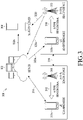
- FIG. 3 shows an example of a communication system for providing a short-range service based on a hybrid beacon scheme according to an embodiment of the present disclosure.
- a communication system 300 providing a short-range service may include, for example, UEs 306a and 306b, an A-type beacon device 308, an S-type beacon device 310, a server 302, and a 3 rd -party server 304.
- a beacon signal advertised by the A-type beacon device 308 may be transmitted using, but not limited to, Bluetooth Low Energy (BLE), Wireless Fidelity (Wi-Fi), Audible Sound, Inaudible Sound, etc.
- the A-type beacon signal transmitted by the A-type beacon signal 308 according to an embodiment of the present disclosure may further include beacon service-related information and advertising mode-related information.
- the beacon service-related information may include at least one of a beacon service type and information indicating whether to transmit a result of detecting the A-type beacon signal to a server.
- the advertising mode-related information may include at least one of information indicating whether to switch a UE having received the beacon signal to the advertising mode, parameters needed for switch of the UE to the advertising mode, a technology to be used for the advertising mode, and information indicating whether to receive additional information related to the advertising mode.
- the parameters needed for switch of the UE to the advertising mode may include an advertising period, an advertising signal strength, information to be included in an advertising signal, information indicating whether to perform scanning simultaneously with advertisement, etc.
- the technology to be used for the advertising mode may indicate one of BLE, Wi-Fi, and Audible/Inaudible Sound available in transmission of the A-type beacon signal.
- the UE executes BLE scanning if the A-type beacon device 308 advertises a beacon signal by using BLE, executes Wi-Fi scanning if the A-type beacon device 308 advertises Wi-Fi, and executes ultrasound scanning using a microphone if the A-type beacon device 308 advertises an ultrasound-based beacon signal.
- the A-type beacon device 308 advertises an ultrasound-based A-type beacon signal and the UE 306b switching to the advertising mode advertises a BLE-based beacon signal.
- the UE 306a having detected the A-type beacon signal transmitted based on ultrasound turns on a Bluetooth function therein. This operation may be applied in a flexible and hybrid manner depending on a type of a technology used in advertisement of a beacon signal.
- the UE 306a If the A-type beacon signal received by the UE 306a provides the general forward beacon service, the UE 306a operates according to a general forward beacon service flow described with reference to FIG. 1 .
- the UE 306a switches to the advertising mode in operation 316.
- the UE 306a may check through communication with the server 304 if user's consent to a service to be currently provided in operation 314. During the communication with the server 304, the UE 306a may report to the server 302 that the UE 306a has detected the A-type beacon signal and thus may use the advertising mode-related information included in the A-type beacon signal when the service is provided in the advertising mode.
- the detected A-type beacon signal includes information indicating reception of the additional information related to the advertising mode out of the advertising mode-related information through the server 302.
- the UE 306a then accesses the server 302 to receive the additional information related to the advertising mode.
- the additional information that the UE 306a may receive from the server 302 may include the parameters needed for switch of the UE to the advertising mode, the information indicating a technology to be used in the advertising mode, and so forth.
- the UE 306b having switched to the advertising mode in operation 316 advertises the S-type beacon signal in operation 318.
- a period in which the UE 306b advertises the S-type beacon signal, an advertising signal strength, information included in the S-type beacon signal to be advertised, and so forth may vary with information obtained from the A-type beacon signal in operation 312 or information received from the server 302 in operation 314.
- the UE 306b is assumed to move near the S-type beacon device 310.
- the S-type beacon signal 310 interprets an S-type beacon signal received from the UE 306b and provides a service corresponding to the interpreted beacon signal to the UE 306b.
- the S-type beacon device 310 interprets the interpreted S-type beacon signal and delivers the same to the server 302 in operation 320a. For example, if the interpreted S-type beacon signal provides a local service, the UE 306b may directly deliver the local service to the 3 rd -party server 304 providing the local service in operation 320b.
- the server 302 directly provides the service to the UE 306b in operation 322a or delivers the service to the UE 306b through the 3 rd -party server 304 in operation 322b.
- FIG. 4 is an example of a flowchart illustrating operations of a UE according to an embodiment of the present disclosure.
- a UE operating in the scanning mode is assumed to scan a beacon signal and to move near an A-type beacon device.
- the UE is assumed to detect an A-type beacon signal.
- the UE may scan a BLE or Wi-Fi-based beacon signal, or an ultrasound-based beacon signal through a microphone, depending on a transmission scheme of the A-type beacon device. For example, it is assumed that if the A-type beacon device transmits the ultrasound-based beacon signal and the UE switches to the advertising mode, the BLE-based beacon signal is transmitted. Then the UE having detected the A-type beacon signal transmitted based on ultrasound turns on the Bluetooth function therein.
- the UE determines whether information indicating whether to receive additional information related to the advertising mode through the server is included in the detected A-type beacon signal.
- the detected A-type beacon signal may include the beacon service-related information and the advertising mode-related information described with reference to FIG. 3 .
- the UE goes to operation 406.
- the UE exchanges the additional information that may be referred to during switch to the advertising mode with the A-type beacon device or the server.
- the additional information that may be referred to during switch to the advertising mode may include the advertising period, the advertising signal strength, the information to be included in a beacon signal to be advertised, whether to perform scanning simultaneously with advertisement, and so forth.
- the exchange of the additional information between the UE and the beacon device may be performed based on at least one of a scheme of requesting the additional information without setting up connection between the UE and the beacon device or a scheme for requesting the additional information by setting up the connection.
- the UE determines whether to switch to the advertising mode. More specifically, to determine whether to switch to the advertising mode, the UE according to an embodiment of the present disclosure determines whether at least one of switch conditions to the advertising mode is satisfied as below.
- the UE returns to operation 400 to maintain the scanning mode to operate according to the general forward beacon scheme.
- the general forward beacon scheme may operate, for example, as illustrated in FIG. 1 .
- the UE inquires of the server about whether user's consent is required if a service corresponding to the detected A-type beacon signal is provided, before switching to the advertising mode in operation 410. If the service to be provided is limited to a place in which or a service type for which user's consent is set in advance, or no need to inquire user's consent is set in user's switch to the advertising mode, the UE goes to operation 416 without separately performing operation 410.
- the UE inquires of the server about whether separate user's consent is required. If the user's consent is required, the UE inquires of the user about consent to the service to the server in operation 412. Depending on an embodiment, the UE may bring up a popup window for allowing the user to directly input user's consent onto a screen. If the UE fails to receive the user's consent to the service in operation 414, the UE returns to operation 400 without switching to the advertising mode and maintains the forward beacon scheme.
- the UE switches to the advertising mode to periodically advertise an S-type beacon signal in operation 416.
- information such as content, period, and transmission strength of a beacon signal to be transmitted may use a preset default value or may be determined by the additional information obtained during the exchange of the additional information with the beacon device or the server in operation 406.
- Whether the UE operating in the advertising mode scans the A-type beacon at the same time may also be determined according to preset settings or settings obtained from the additional information, and by the information exchanged during the exchange of the additional information with the beacon device.
- an S-type beacon device that receives a beacon signal exists near a UE in the advertising mode which periodically transmits an S-type beacon signal, and the S-type beacon device receives the S-type beacon signal transmitted by the UE.
- the UE is provided with a short-range service associated with the S-type beacon device.
- the UE may be provided with an A-type beacon service and an S-type beacon service at the same time.
- the short-range service may include a tailored advertisement, a coupon, indoor navigation, and so forth.
- the short-range service provided to the UE in this case may be directly provided through the UE or may be provided through a 3 rd -party server.
- the UE operating in the advertising mode determines whether a stop condition for the advertising mode according to an embodiment of the present disclosure is satisfied. If the stop condition for the advertising mode is not satisfied, the UE continues periodically transmitting the S-type beacon signal in operation 416. If the stop condition for the advertising mode is satisfied, the UE stops transmitting the S-type beacon signal and returns to operation 400 to switch to the scanning mode for receiving the A-type beacon signal.
- the stop condition according to an embodiment of the present disclosure is satisfying at least one of the following conditions:
- FIG. 5 is an example of a flowchart illustrating operations of an A-type beacon device according to an embodiment of the present disclosure.
- an A-type beacon device periodically transmits an A-type beacon signal in operation 500.
- the A-type beacon signal may include at least one of the beacon service-related information and the advertising mode-related information described with reference to FIG. 3 .
- the A-type beacon device includes information indicating reception of additional information related to the advertising mode in the advertised A-type beacon signal in operation 502
- the A-type beacon device exchanges additional information for switch to the advertising mode with a UE having received the A-type beacon device in operation 504.
- the exchanged additional information may include the parameters needed for switch of the UE to the advertising mode, the information indicating a technology to be used in the advertising mode, and so forth.
- the A-type beacon device may advertise the A-type beacon signal in predetermined periods according to an embodiment.
- the A-type beacon device includes information not indicating reception of the additional information in operation 502, the A-type beacon device returns to operation 500 to continue advertising the A-type beacon signal.
- FIG. 6 is an example of a flowchart illustrating operations of an S-type beacon device according to an embodiment of the present disclosure.
- an S-type beacon device performs a scanning operation for receiving an S-type beacon signal transmitted by the UE in operation 600.
- the S-type beacon device has detected the S-type beacon signal transmitted from the UE during the scanning operation in operation 602.
- the S-type beacon device transmits a result of detecting the S-type beacon signal to a server or a 3 rd -party server.
- the server or the 3 rd -party server having received the detection result provides a service corresponding to the detection result to the UE.
- the S-type beacon signal detected by the S-type beacon device may include location information of the UE having transmitted the S-type beacon signal.
- the location information may include detailed location information indicating a distance between the UE and the S-type beacon device with respect to a location of the S-type beacon device by using a predetermined unit, such as enter periphery/proximate/super proximate/tag/leave super-proximity/leave proximity/leave periphery, etc.
- the UE may receive a service corresponding to the detection result from the server or the 3 rd -party server having received the detection result.
- FIG. 7 shows an embodiment where a UE according to an embodiment of the present disclosure is provided with a short-range service to which a hybrid beacon scheme is applied, as the UE moves.
- A-type beacon devices are installed in an entrance A and an exit C of a venue, and an S-type beacon device is installed in an inside B of the venue.
- the UE receives an A-type beacon signal broadcast from the A-type beacon device installed in the entrance A as indicated by 706b.
- the A-type beacon signal may include the beacon service-related information and the advertising mode-related information according to an embodiment of the present disclosure.
- the UE having received the A-type beacon signal connects to a server 700 and receives the beacon service-related information obtained from the detected A-type beacon signal.
- the beacon service-related information may include a discount coupon available in the venue, a sales list of products for sale, and etc.
- the UE may determine whether to switch to the advertising mode based on the advertising mode-related information included in the A-type beacon signal.
- the UE may also configure parameters related to the advertising mode depending on a type of a service to be provided in the inside B of the venue. Such parameters may include information to be included in an advertisement, an advertising period, an advertising signal strength, information indicating whether to perform scanning simultaneously with advertisement, etc.
- the parameters may be configured with parameters obtained from the A-type beacon signal or may be obtained by information exchange with the server 700.
- the UE may set a rapid advertising period. If the service is a service that is not related to the user's reaction speed, the UE may set a slow advertising period to reduce electric current consumption of the UE.
- the service in which a speed of reaction of the user is important may include a service provided to a user in the order of arrival at the inside B of the venue, indoor navigation, a tailored advertisement, and so forth.
- the service in which the speed of reaction of the user is not important may include a menu and a detailed schedule which are set by default in the inside B of the venue and thus are not changed.
- the user may be provided with a service by merely holding the UE, and the service may be provided by using, in a hybrid manner, information provided when the UE notifies the server of detection of the A-type beacon signal.
- the UE switches to the advertising mode as indicated by 706c to transmit the S-type beacon signal and the S-type beacon device installed in the inside B of the venue notifies the server 700 of reception of the S-type beacon signal.
- the UE may advertise the S-type beacon signal after including location information indicating that the user enters the venue through a VIP reversed parking space in the S-type beacon signal.
- the S-type beacon device delivers the location information while notifying the server of reception of the S-type beacon signal from the UE.
- the UE may provide a VIP-only service provided in the inside B of the venue from the server 700.
- the UE may use an indoor navigation service guiding indoor location information in the inside B of the venue.
- the UE obtains information indicating that the user moves out of the service area of the venue by receiving the A-type beacon signal of the A-type beacon device installed in the exit C of the venue as indicated by 708e, and in this case, the UE enters the scanning mode.
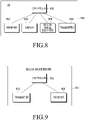
- FIG. 8 is a block diagram of a UE according to an embodiment of the present disclosure.
- a UE 800 may include a controller 802, a receiver 804, a beacon signal identifier 806, a transmitter 808, and a display 809.
- a detailed structure of the UE 800 may be divided, or some units thereof may be integrated according to an embodiment of the present disclosure or depending on an operator's intention.
- the UE may operate based on the operation flow illustrated in FIG. 4 .
- the controller 802 controls overall operations of respective sub units such that the sub units operate according to the embodiment of FIG. 4 .
- the display 809 displays information obtained from an A-type beacon signal received through the receiver 804 and location-based services of the UE 800 obtained based on the information.
- the display 809 may display a popup window inquiring the user's consent.
- the transmitter 808 transmits an S-type beacon signal in the advertising mode under control of the controller 802.
- the beacon signal identifier 806 obtains beacon service-related information or advertising mode-related information from the A-type beacon signal obtained through the receiver 804.
- FIG. 9 is a block diagram of a beacon device or a server according to an embodiment of the present disclosure.
- a beacon device or server 900 may include a controller 902, a transmitter 904, and a receiver 906. Likewise, a detailed structure of the beacon device or server 900 may be divided or some units thereof may be integrated according to an embodiment of the present disclosure or depending on an operator's intention.
- beacon device 900 When the beacon device 900 operates, respective elements operate corresponding to the A-type beacon device or the S-type beacon device of FIGs. 5 and 6 and thus will not be described repeatedly.
- the server 900 When the server 900 operates, the server 900 stores location information mapped to each service. Once the controller 902 receives a notification indicating that the UE has detected the A-type beacon signal through the transmitter 904, the controller 902 controls the transmitter 904 to provide a service mapped to location information corresponding to the A-type beacon signal to the UE.
- the controller 902 delivers the additional information to the UE through the transmitter 906.
- the additional information has already been described and thus will not be described again.
- the controller 902 controls the transmitter 904 to provide a service mapped to location information corresponding to the S-type beacon signal to the UE.
- the method and apparatus for providing a location-based service using a hybrid beacon technique may be implemented by hardware, software, or a combination of hardware and software.
- Such arbitrary software may be stored, for example, in a volatile or non-volatile storage device (e.g., a read only memory (ROM), etc.), a memory (e.g., a random-access memory (RAM), a memory chip, a memory device, or a memory integrated circuit (IC)), or a machine (e.g., computer) recordable optical or magnetic storage medium (e.g., a compact disk (CD), a digital versatile disk (DVD), a magnetic disc, a magnetic tape, etc.) regardless of its ability to erase or rewrite.
- a volatile or non-volatile storage device e.g., a read only memory (ROM), etc.
- a memory e.g., a random-access memory (RAM), a memory chip, a memory device, or a memory integrated circuit (IC)
- a machine
- the graphic screen update method according to the present disclosure may be implemented by a computer or a portable terminal which includes a controller and a memory
- the memory is an example of a machine-readable storage medium which is suitable for storing a program or programs including instructions for implementing the embodiment of the present disclosure.
- the present disclosure includes a program including codes for implementing an apparatus or method claimed in an arbitrary claim and a machine(computer)-readable storage medium for storing such a program. Furthermore, the program may be electronically transferred by an arbitrary medium, such as a communication signal transmitted through a wired or wireless connection, and the present invention appropriately includes equivalents of the program.
- the mobile terminal in the idle mode may receive and store the program from an apparatus for providing and receiving the MT service.
- the program providing device may include a memory for storing a program including instructions for instructing a graphic processing device to execute a preset method, information necessary for the method, a communication unit for performing wired or wireless communication with the graphic processing device, and a controller for transmitting a corresponding program to the graphic processing device at the request of the graphic processing device or automatically.
Landscapes
- Engineering & Computer Science (AREA)
- Computer Networks & Wireless Communication (AREA)
- Signal Processing (AREA)
- Computer Security & Cryptography (AREA)
- Mobile Radio Communication Systems (AREA)
- Telephonic Communication Services (AREA)
Claims (13)
- Verfahren zum Bereitstellen eines standortbasierten Dienstes durch eine Benutzerausrüstung, UE, (306a, 306b), wobei das Verfahren Folgendes umfasst:Erfassen eines ersten Beacon-Signals, das sich auf einen Standort des standortbasierten Dienstes bezieht, in einem Scan-Modus zum Scannen des ersten Beacon-Signals, wobei das erste Beacon-Signal so konfiguriert ist, dass es von einer ersten Beacon-Vorrichtung (308) an die UE (306a, 306b) angekündigt wird, undBestimmen, ob in einen Ankündigungsmodus zum Übertragen eines zweiten Beacon-Signals in Bezug auf einen Standort der UE (306a, 306b) basierend auf Informationen über den Ankündigungsmodus, die im ersten Beacon-Signal enthalten sind, an eine zweite Beacon-Vorrichtung (310) umgeschaltet werden soll, wobei das zweite Beacon-Signal so konfiguriert ist, dass es von der UE (306a, 306b) der zweiten Beacon-Vorrichtung (310) angekündigt wird.
- Verfahren nach Anspruch 1, ferner umfassend:Anfordern einer Eingabe für die Zustimmung des Benutzers in Abhängigkeit von einem Diensttyp des standortbezogenen Dienstes, der in dem ersten Beacon-Signal enthalten ist, wenn bestimmt wird, ob in den Ankündigungsmodus umzuschalten ist; undBestimmen, beim Empfangen der Eingabe in den Ankündigungsmodus umzuschalten, und Umschalten in den Ankündigungsmodus.
- Verfahren nach Anspruch 2, wobei das Bestimmen, ob in den Ankündigungsmodus umgeschaltet werden soll, das Bestimmen umfasst, in den Ankündigungsmodus umzuschalten, wenn mindestens eine Bedingung erfüllt ist, wobei die Bedingungen eine Bedingung, dass eine Stärke des ersten Beacon-Signals größer oder gleich einem Schwellenwert ist, eine Bedingung, dass empfangene erste Beacon-Signale mit einem vorbestimmten Muster übereinstimmen, und eine Bedingung, dass das erste Beacon-Signal Informationen umfasst, die das Umschalten in den Ankündigungsmodus anzeigen, umfassen.
- Verfahren nach Anspruch 1, ferner umfassend das Durchführen eines Scannens des ersten Beacon-Signals zusammen mit einer Übertragung eines zweiten Beacon-Signals basierend auf den Ankündigungsmodus-bezogenen Informationen nach dem Umschalten in den Ankündigungsmodus.
- Verfahren nach Anspruch 1, ferner umfassend das Umschalten in den Scanmodus, wenn mindestens eine Bedingung nach dem Umschalten in den Ankündigungsmodus erfüllt ist, wobei die Bedingungen eine Bedingung umfassen, dass Nichtdetektieren des zweiten Beacon-Signals durch eine Vorrichtung, die das erste Beacon-Signal für eine Schwellenzeit übertragen hat, bestimmt wird, Informationen zur Aufrechterhaltung des Ankündigungsmodus für die Schwellenzeit nicht empfangen werden und eine Angabe zum Umschalten in den Scanmodus empfangen wird.
- Verfahren zum Bereitstellen eines standortbasierten Dienstes durch ein System (308, 310), wobei das System eine Benutzerausrüstung, UE, (306a, 306b), eine erste Beacon-Vorrichtung (308) und eine zweite Beacon-Vorrichtung (310) umfasst, wobei das Verfahren die folgenden Schritte umfasst:Übertragen, durch die erste Beacon-Vorrichtung (308) an die Benutzerausrüstung, UE, (306a, 306b), von Informationen über einen Ankündigungsmodus, der von der UE verwendet wird, um zu bestimmen, ob in den Ankündigungsmodus umgeschaltet werden soll, die Informationen in einem ersten Beacon-Signal enthalten sind, das sich auf einen Standort eines standortbasierten Dienstes bezieht, wobei das erste Beacon-Signal so konfiguriert ist, dass es von einer ersten Beacon-Vorrichtung (308) an das UE (306a, 306b) angekündigt wird, undwobei der Ankündigungsmodus ein Modus ist, in dem die UE (306a, 306b) an die zweite Beacon-Vorrichtung (310) ein zweites Beacon-Signal in Bezug auf einen Standort der UE (306a, 306b) überträgt.
- Verfahren nach Anspruch 6, ferner umfassend Austauschen zusätzlicher Informationen durch die erste Beacon-Vorrichtung (308) für den Ankündigungsmodus mit der Benutzerausrüstung, UE, (306a, 306b), die das erste Beacon-Signal empfangen hat,
wobei die zusätzlichen Informationen mindestens eines von einer Periode des zweiten Beacon-Signals, das von der UE (306a, 306b) verwendet werden soll, einer Stärke des zweiten Beacon-Signals, Informationen, die in dem zweiten Beacon-Signal enthalten sein sollen, und Informationen bezüglich eines Übertragungsschemas umfassen, das zum Übertragen des zweiten Beacon-Signals zu verwenden ist, wenn die UE (306a, 306b) in den Ankündigungsmodus umschaltet. - Verfahren nach Anspruch 6, ferner umfassend:Empfangen des zweiten Beacon-Signals in Bezug auf einen Standort der UE (306a, 306b) von der UE (306a, 306b) durch die zweite Beacon-Vorrichtung (310); undÜbertragen des zweiten Beacon-Signals durch die zweite Beacon-Vorrichtung (310) an einen Server oder eine Dienstbereitstellungsvorrichtung (304) eines Drittanbieters, die einen Dienst bereitstellt, der sich auf den Standort der UE (306a, 306b) bezieht.
- Benutzerausrüstung, UE, (306a, 306b), zum Empfangen eines standortbasierten Dienstes, wobei die UE (306a, 306b) Folgendes umfasst:einen Transceiver, der dazu konfiguriert ist, ein erstes Beacon-Signal in Bezug auf einen Standort des standortbasierten Dienstes in einem Scanmodus zum Scannen des ersten Beacon-Signals zu erfassen, wobei das erste Beacon-Signal so konfiguriert ist, dass es von einer ersten Beacon-Vorrichtung (308) an die UE (306a, 306b) angekündigt wird; undeine mit dem Transceiver gekoppelte Steuerung,wobei die Steuerung dazu konfiguriert ist, basierend auf Informationen über den Ankündigungsmodus, die im ersten Beacon-Signal enthalten sind, zu bestimmen, ob in einen Ankündigungsmodus zum Übertragen eines zweiten Beacon-Signals in Bezug auf einen Standort der UE (306a, 306b) an eine zweite Beacon-Vorrichtung (310) umgeschaltet werden soll, wobei das zweite Beacon-Signal so konfiguriert ist, dass es von der UE (306a, 306b) der zweiten Beacon-Vorrichtung (310) angekündigt wird.
- Benutzerausrüstung, UE, (306a, 306b) nach Anspruch 9,
wobei die Steuerung dazu konfiguriert ist, ein Verfahren unter den Ansprüchen 2 bis 5 durchzuführen. - System (308, 310) zum Bereitstellen eines standortbasierten Dienstes für eine Benutzerausrüstung (306a, 306b), wobei das System Folgendes umfasst:die UE (306a, 306b), eine erste Beacon-Vorrichtung (308); undeine zweite Beacon-Vorrichtung (310),wobei das System dazu konfiguriert ist, ein Verfahren unter den Ansprüchen 6 bis 8 durchzuführen.
- Nichtflüchtiges computerlesbares Aufzeichnungsmedium, das Befehle umfasst, die, wenn sie von einer Benutzerausrüstung, UE, (306a, 306b) ausgeführt werden, die UE veranlassen, das Verfahren nach einem der Ansprüche 1 bis 5 auszuführen.
- Nichtflüchtiges computerlesbares Aufzeichnungsmedium, umfassenderste Anweisungen, die, wenn sie von einer Benutzerausrüstung, UE, (306a, 306b) ausgeführt werden, die UE veranlassen, jene Verfahrensschritte nach einem der Ansprüche 6 bis 8 auszuführen, die von der UE ausgeführt werden,zweite Anweisungen, die, wenn sie von einer ersten Beacon-Vorrichtung (308) ausgeführt werden, die erste Beacon-Vorrichtung veranlassen, jene Verfahrensschritte nach einem der Ansprüche 6 bis 8 auszuführen, die von der ersten Beacon-Vorrichtung ausgeführt werden,dritte Anweisungen, die, wenn sie von einer zweiten Beacon-Vorrichtung (310) ausgeführt werden, die zweite Beacon-Vorrichtung veranlassen, jene Verfahrensschritte nach einem der Ansprüche 6 bis 8 auszuführen, die von der zweiten Beacon-Vorrichtung durchgeführt werden.
Applications Claiming Priority (2)
| Application Number | Priority Date | Filing Date | Title |
|---|---|---|---|
| KR1020150123038A KR102452997B1 (ko) | 2015-08-31 | 2015-08-31 | 위치 기반 서비스를 위한 방법 및 장치 |
| PCT/KR2016/009702 WO2017039303A1 (ko) | 2015-08-31 | 2016-08-31 | 위치 기반 서비스를 위한 방법 및 장치 |
Publications (3)
| Publication Number | Publication Date |
|---|---|
| EP3343958A4 EP3343958A4 (de) | 2018-07-04 |
| EP3343958A1 EP3343958A1 (de) | 2018-07-04 |
| EP3343958B1 true EP3343958B1 (de) | 2022-04-27 |
Family
ID=58187976
Family Applications (1)
| Application Number | Title | Priority Date | Filing Date |
|---|---|---|---|
| EP16842269.9A Active EP3343958B1 (de) | 2015-08-31 | 2016-08-31 | Verfahren und vorrichtung für positionsbasierten dienst |
Country Status (4)
| Country | Link |
|---|---|
| US (1) | US10820155B2 (de) |
| EP (1) | EP3343958B1 (de) |
| KR (1) | KR102452997B1 (de) |
| WO (1) | WO2017039303A1 (de) |
Families Citing this family (2)
| Publication number | Priority date | Publication date | Assignee | Title |
|---|---|---|---|---|
| US10448238B2 (en) * | 2017-06-07 | 2019-10-15 | Noodle Technology Inc. | Delay tolerant decentralized network |
| CN110375808A (zh) * | 2019-07-25 | 2019-10-25 | 成都理工大学 | 径流泥沙监测方法及系统 |
Family Cites Families (18)
| Publication number | Priority date | Publication date | Assignee | Title |
|---|---|---|---|---|
| TWI264196B (en) | 2003-05-14 | 2006-10-11 | Interdigital Tech Corp | Method and apparatus for network management using periodic measurements of indications |
| US8433312B2 (en) | 2006-10-23 | 2013-04-30 | Research In Motion Limited | Methods and apparatus for scanning radio frequency bands in wireless local area networks |
| US8045482B2 (en) | 2008-02-08 | 2011-10-25 | Yahoo! Inc. | Location tracking based on proximity-based ad hoc network |
| US8725171B2 (en) * | 2008-09-04 | 2014-05-13 | Qualcomm Incorporated | System and method of providing mode changes to wireless devices |
| US9398443B2 (en) * | 2008-09-04 | 2016-07-19 | Qualcomm Incorporated | System and method of providing mode changes to wireless devices |
| KR101306744B1 (ko) | 2009-08-19 | 2013-09-11 | 엘지전자 주식회사 | 무선 통신 시스템에서 위치기반서비스를 위한 신호 전송방법 및 이를 위한 장치, 상기 신호를 이용한 단말의 위치측정방법 및 이를 위한 장치 |
| KR101718892B1 (ko) * | 2009-11-13 | 2017-03-24 | 삼성전자주식회사 | 모드 전환 방법 및 그 장치 |
| US20110287787A1 (en) | 2009-11-25 | 2011-11-24 | Qualcomm Incorporated | Location-based service based on access point identifiers |
| US8547870B2 (en) * | 2011-06-07 | 2013-10-01 | Qualcomm Incorporated | Hybrid positioning mechanism for wireless communication devices |
| AU2012295079B2 (en) | 2011-08-07 | 2015-09-17 | Lg Electronics Inc. | Method and apparatus for transmitting and receiving frame on the basis of frequency selection transmission |
| WO2014010957A1 (ko) | 2012-07-11 | 2014-01-16 | 엘지전자 주식회사 | 무선랜에서 스캐닝 방법 및 장치 |
| US9137631B2 (en) | 2012-12-27 | 2015-09-15 | Pitney Bowes Inc. | Location-based service provider method and system having a user controlled location privacy mechanism |
| US9084218B2 (en) * | 2013-05-23 | 2015-07-14 | Pitney Bowes Inc. | Location-based service provider method and system having a user controlled location privacy mechanism |
| US9313320B2 (en) * | 2014-02-19 | 2016-04-12 | Qualcomm Incorporated | Automatic switching of modes and mode control capabilities on a wireless communication device |
| KR101553161B1 (ko) | 2014-04-28 | 2015-09-16 | 김권영 | 근거리 유저 기반 광고 제공 시스템 및 방법 |
| KR20160057958A (ko) | 2014-11-14 | 2016-05-24 | 삼성전자주식회사 | 사용자 맞춤 서비스 제공 방법 및 장치 |
| US10477372B2 (en) * | 2014-12-24 | 2019-11-12 | Abb Schweiz Ag | Inter-operable remote terminal unit |
| US9961619B2 (en) * | 2015-05-05 | 2018-05-01 | Motorola Solutions, Inc. | Method for intelligently and dynamically selecting beacon transmitting nodes in ad-hoc networks |
-
2015
- 2015-08-31 KR KR1020150123038A patent/KR102452997B1/ko active Active
-
2016
- 2016-08-31 WO PCT/KR2016/009702 patent/WO2017039303A1/ko not_active Ceased
- 2016-08-31 US US15/753,862 patent/US10820155B2/en active Active
- 2016-08-31 EP EP16842269.9A patent/EP3343958B1/de active Active
Also Published As
| Publication number | Publication date |
|---|---|
| KR20170025918A (ko) | 2017-03-08 |
| KR102452997B1 (ko) | 2022-10-12 |
| EP3343958A4 (de) | 2018-07-04 |
| EP3343958A1 (de) | 2018-07-04 |
| US10820155B2 (en) | 2020-10-27 |
| US20180262870A1 (en) | 2018-09-13 |
| WO2017039303A1 (ko) | 2017-03-09 |
Similar Documents
| Publication | Publication Date | Title |
|---|---|---|
| EP3229500B1 (de) | Verfahren und server zum verarbeiten von positionsinformationen eines endgeräts mit beacon | |
| EP4005251B1 (de) | Elektronische vorrichtung und verfahren zur entfernungsmessung über ein ultrabreitband (uwb) | |
| US9277524B2 (en) | Cooperative localization of portable electronic devices | |
| KR101540272B1 (ko) | 위치 앵커 포인트들로서 모바일 디바이스들을 사용하기 위한 방법들 및 장치 | |
| US9913197B2 (en) | Beacon device for seamless service, and control method thereof | |
| US10492166B2 (en) | Reporting of location information | |
| EP3491855B1 (de) | Verfahren und vorrichtung in bezug auf v2x-kommunikation | |
| JP6315110B2 (ja) | 無線接続機器のスケジューリング方法及びスケジューリング制御装置 | |
| KR102406268B1 (ko) | 위치 정보를 제공하는 전자 장치 및 제어 방법 | |
| TW201218812A (en) | Methods and apparatus to access network connectivity information using predicted locations | |
| KR101642739B1 (ko) | 사물 인터넷 디바이스 위치 확인 서비스 시스템 및 방법 | |
| KR20150062858A (ko) | 중계 장치를 결정하기 위한 전자장치 및 그에 대한 방법 | |
| US10820155B2 (en) | Method and device for position-based service | |
| KR102736503B1 (ko) | 모바일 커머스 서비스 장치, 초음파 송수신 장치를 이용한 모바일 커머스 서비스 방법 및 컴퓨터 프로그램이 기록된 기록매체 | |
| EP4333471A1 (de) | Verfahren und vorrichtung zur durchführung einer ultrabreitbandkommunikation | |
| US20190250239A1 (en) | Improved ability to interact with passive beacon receiver devices in a short-range wireless beacon communication system | |
| EP3264806A1 (de) | Verfahren und vorrichtung zur bereitstellung von informationen in einem kommunikationssystem | |
| AU2015419275B2 (en) | Method, device, and system for creating communication groups | |
| KR20150103595A (ko) | 단말스캐닝장치를 이용한 서비스 제공 시스템 및 방법, 그리고 이에 적용되는 단말스캐닝장치 및 그 장치의 동작 방법 | |
| WO2021229608A1 (en) | System and method for proximity-based beaconing | |
| CN118509985A (zh) | 用于侧链路定位的方法和装置 | |
| KR20130123973A (ko) | 무선 네트워크 영역 기반 서비스 제공 시스템 및 그 방법 |
Legal Events
| Date | Code | Title | Description |
|---|---|---|---|
| STAA | Information on the status of an ep patent application or granted ep patent |
Free format text: STATUS: THE INTERNATIONAL PUBLICATION HAS BEEN MADE |
|
| PUAI | Public reference made under article 153(3) epc to a published international application that has entered the european phase |
Free format text: ORIGINAL CODE: 0009012 |
|
| STAA | Information on the status of an ep patent application or granted ep patent |
Free format text: STATUS: REQUEST FOR EXAMINATION WAS MADE |
|
| 17P | Request for examination filed |
Effective date: 20180326 |
|
| A4 | Supplementary search report drawn up and despatched |
Effective date: 20180518 |
|
| AK | Designated contracting states |
Kind code of ref document: A1 Designated state(s): AL AT BE BG CH CY CZ DE DK EE ES FI FR GB GR HR HU IE IS IT LI LT LU LV MC MK MT NL NO PL PT RO RS SE SI SK SM TR |
|
| AX | Request for extension of the european patent |
Extension state: BA ME |
|
| DAV | Request for validation of the european patent (deleted) | ||
| DAX | Request for extension of the european patent (deleted) | ||
| STAA | Information on the status of an ep patent application or granted ep patent |
Free format text: STATUS: EXAMINATION IS IN PROGRESS |
|
| 17Q | First examination report despatched |
Effective date: 20200804 |
|
| REG | Reference to a national code |
Ref country code: DE Ref legal event code: R079 Ref document number: 602016071579 Country of ref document: DE Free format text: PREVIOUS MAIN CLASS: H04W0004020000 Ipc: H04W0048120000 |
|
| RIC1 | Information provided on ipc code assigned before grant |
Ipc: H04W 4/029 20180101ALI20211206BHEP Ipc: H04W 12/084 20210101ALI20211206BHEP Ipc: H04W 4/02 20180101ALI20211206BHEP Ipc: H04W 88/18 20090101ALI20211206BHEP Ipc: H04W 88/02 20090101ALI20211206BHEP Ipc: H04W 4/021 20180101AFI20211206BHEP |
|
| RIC1 | Information provided on ipc code assigned before grant |
Ipc: H04W 88/18 20090101ALN20211216BHEP Ipc: H04W 88/02 20090101ALN20211216BHEP Ipc: H04W 4/021 20180101ALI20211216BHEP Ipc: H04W 48/12 20090101AFI20211216BHEP |
|
| GRAP | Despatch of communication of intention to grant a patent |
Free format text: ORIGINAL CODE: EPIDOSNIGR1 |
|
| STAA | Information on the status of an ep patent application or granted ep patent |
Free format text: STATUS: GRANT OF PATENT IS INTENDED |
|
| INTG | Intention to grant announced |
Effective date: 20220121 |
|
| GRAS | Grant fee paid |
Free format text: ORIGINAL CODE: EPIDOSNIGR3 |
|
| GRAA | (expected) grant |
Free format text: ORIGINAL CODE: 0009210 |
|
| STAA | Information on the status of an ep patent application or granted ep patent |
Free format text: STATUS: THE PATENT HAS BEEN GRANTED |
|
| AK | Designated contracting states |
Kind code of ref document: B1 Designated state(s): AL AT BE BG CH CY CZ DE DK EE ES FI FR GB GR HR HU IE IS IT LI LT LU LV MC MK MT NL NO PL PT RO RS SE SI SK SM TR |
|
| REG | Reference to a national code |
Ref country code: GB Ref legal event code: FG4D |
|
| REG | Reference to a national code |
Ref country code: CH Ref legal event code: EP |
|
| REG | Reference to a national code |
Ref country code: AT Ref legal event code: REF Ref document number: 1487957 Country of ref document: AT Kind code of ref document: T Effective date: 20220515 |
|
| REG | Reference to a national code |
Ref country code: DE Ref legal event code: R096 Ref document number: 602016071579 Country of ref document: DE |
|
| REG | Reference to a national code |
Ref country code: IE Ref legal event code: FG4D |
|
| REG | Reference to a national code |
Ref country code: LT Ref legal event code: MG9D |
|
| REG | Reference to a national code |
Ref country code: NL Ref legal event code: MP Effective date: 20220427 |
|
| REG | Reference to a national code |
Ref country code: AT Ref legal event code: MK05 Ref document number: 1487957 Country of ref document: AT Kind code of ref document: T Effective date: 20220427 |
|
| PG25 | Lapsed in a contracting state [announced via postgrant information from national office to epo] |
Ref country code: NL Free format text: LAPSE BECAUSE OF FAILURE TO SUBMIT A TRANSLATION OF THE DESCRIPTION OR TO PAY THE FEE WITHIN THE PRESCRIBED TIME-LIMIT Effective date: 20220427 |
|
| PG25 | Lapsed in a contracting state [announced via postgrant information from national office to epo] |
Ref country code: SE Free format text: LAPSE BECAUSE OF FAILURE TO SUBMIT A TRANSLATION OF THE DESCRIPTION OR TO PAY THE FEE WITHIN THE PRESCRIBED TIME-LIMIT Effective date: 20220427 Ref country code: PT Free format text: LAPSE BECAUSE OF FAILURE TO SUBMIT A TRANSLATION OF THE DESCRIPTION OR TO PAY THE FEE WITHIN THE PRESCRIBED TIME-LIMIT Effective date: 20220829 Ref country code: NO Free format text: LAPSE BECAUSE OF FAILURE TO SUBMIT A TRANSLATION OF THE DESCRIPTION OR TO PAY THE FEE WITHIN THE PRESCRIBED TIME-LIMIT Effective date: 20220727 Ref country code: LT Free format text: LAPSE BECAUSE OF FAILURE TO SUBMIT A TRANSLATION OF THE DESCRIPTION OR TO PAY THE FEE WITHIN THE PRESCRIBED TIME-LIMIT Effective date: 20220427 Ref country code: HR Free format text: LAPSE BECAUSE OF FAILURE TO SUBMIT A TRANSLATION OF THE DESCRIPTION OR TO PAY THE FEE WITHIN THE PRESCRIBED TIME-LIMIT Effective date: 20220427 Ref country code: GR Free format text: LAPSE BECAUSE OF FAILURE TO SUBMIT A TRANSLATION OF THE DESCRIPTION OR TO PAY THE FEE WITHIN THE PRESCRIBED TIME-LIMIT Effective date: 20220728 Ref country code: FI Free format text: LAPSE BECAUSE OF FAILURE TO SUBMIT A TRANSLATION OF THE DESCRIPTION OR TO PAY THE FEE WITHIN THE PRESCRIBED TIME-LIMIT Effective date: 20220427 Ref country code: ES Free format text: LAPSE BECAUSE OF FAILURE TO SUBMIT A TRANSLATION OF THE DESCRIPTION OR TO PAY THE FEE WITHIN THE PRESCRIBED TIME-LIMIT Effective date: 20220427 Ref country code: BG Free format text: LAPSE BECAUSE OF FAILURE TO SUBMIT A TRANSLATION OF THE DESCRIPTION OR TO PAY THE FEE WITHIN THE PRESCRIBED TIME-LIMIT Effective date: 20220727 Ref country code: AT Free format text: LAPSE BECAUSE OF FAILURE TO SUBMIT A TRANSLATION OF THE DESCRIPTION OR TO PAY THE FEE WITHIN THE PRESCRIBED TIME-LIMIT Effective date: 20220427 |
|
| PG25 | Lapsed in a contracting state [announced via postgrant information from national office to epo] |
Ref country code: RS Free format text: LAPSE BECAUSE OF FAILURE TO SUBMIT A TRANSLATION OF THE DESCRIPTION OR TO PAY THE FEE WITHIN THE PRESCRIBED TIME-LIMIT Effective date: 20220427 Ref country code: PL Free format text: LAPSE BECAUSE OF FAILURE TO SUBMIT A TRANSLATION OF THE DESCRIPTION OR TO PAY THE FEE WITHIN THE PRESCRIBED TIME-LIMIT Effective date: 20220427 Ref country code: LV Free format text: LAPSE BECAUSE OF FAILURE TO SUBMIT A TRANSLATION OF THE DESCRIPTION OR TO PAY THE FEE WITHIN THE PRESCRIBED TIME-LIMIT Effective date: 20220427 Ref country code: IS Free format text: LAPSE BECAUSE OF FAILURE TO SUBMIT A TRANSLATION OF THE DESCRIPTION OR TO PAY THE FEE WITHIN THE PRESCRIBED TIME-LIMIT Effective date: 20220827 |
|
| REG | Reference to a national code |
Ref country code: DE Ref legal event code: R097 Ref document number: 602016071579 Country of ref document: DE |
|
| PG25 | Lapsed in a contracting state [announced via postgrant information from national office to epo] |
Ref country code: SM Free format text: LAPSE BECAUSE OF FAILURE TO SUBMIT A TRANSLATION OF THE DESCRIPTION OR TO PAY THE FEE WITHIN THE PRESCRIBED TIME-LIMIT Effective date: 20220427 Ref country code: SK Free format text: LAPSE BECAUSE OF FAILURE TO SUBMIT A TRANSLATION OF THE DESCRIPTION OR TO PAY THE FEE WITHIN THE PRESCRIBED TIME-LIMIT Effective date: 20220427 Ref country code: RO Free format text: LAPSE BECAUSE OF FAILURE TO SUBMIT A TRANSLATION OF THE DESCRIPTION OR TO PAY THE FEE WITHIN THE PRESCRIBED TIME-LIMIT Effective date: 20220427 Ref country code: EE Free format text: LAPSE BECAUSE OF FAILURE TO SUBMIT A TRANSLATION OF THE DESCRIPTION OR TO PAY THE FEE WITHIN THE PRESCRIBED TIME-LIMIT Effective date: 20220427 Ref country code: DK Free format text: LAPSE BECAUSE OF FAILURE TO SUBMIT A TRANSLATION OF THE DESCRIPTION OR TO PAY THE FEE WITHIN THE PRESCRIBED TIME-LIMIT Effective date: 20220427 Ref country code: CZ Free format text: LAPSE BECAUSE OF FAILURE TO SUBMIT A TRANSLATION OF THE DESCRIPTION OR TO PAY THE FEE WITHIN THE PRESCRIBED TIME-LIMIT Effective date: 20220427 |
|
| PLBE | No opposition filed within time limit |
Free format text: ORIGINAL CODE: 0009261 |
|
| STAA | Information on the status of an ep patent application or granted ep patent |
Free format text: STATUS: NO OPPOSITION FILED WITHIN TIME LIMIT |
|
| PG25 | Lapsed in a contracting state [announced via postgrant information from national office to epo] |
Ref country code: MC Free format text: LAPSE BECAUSE OF FAILURE TO SUBMIT A TRANSLATION OF THE DESCRIPTION OR TO PAY THE FEE WITHIN THE PRESCRIBED TIME-LIMIT Effective date: 20220427 Ref country code: AL Free format text: LAPSE BECAUSE OF FAILURE TO SUBMIT A TRANSLATION OF THE DESCRIPTION OR TO PAY THE FEE WITHIN THE PRESCRIBED TIME-LIMIT Effective date: 20220427 |
|
| REG | Reference to a national code |
Ref country code: CH Ref legal event code: PL |
|
| 26N | No opposition filed |
Effective date: 20230130 |
|
| PG25 | Lapsed in a contracting state [announced via postgrant information from national office to epo] |
Ref country code: LU Free format text: LAPSE BECAUSE OF NON-PAYMENT OF DUE FEES Effective date: 20220831 Ref country code: LI Free format text: LAPSE BECAUSE OF NON-PAYMENT OF DUE FEES Effective date: 20220831 Ref country code: CH Free format text: LAPSE BECAUSE OF NON-PAYMENT OF DUE FEES Effective date: 20220831 |
|
| REG | Reference to a national code |
Ref country code: BE Ref legal event code: MM Effective date: 20220831 |
|
| PG25 | Lapsed in a contracting state [announced via postgrant information from national office to epo] |
Ref country code: SI Free format text: LAPSE BECAUSE OF FAILURE TO SUBMIT A TRANSLATION OF THE DESCRIPTION OR TO PAY THE FEE WITHIN THE PRESCRIBED TIME-LIMIT Effective date: 20220427 |
|
| PG25 | Lapsed in a contracting state [announced via postgrant information from national office to epo] |
Ref country code: IE Free format text: LAPSE BECAUSE OF NON-PAYMENT OF DUE FEES Effective date: 20220831 Ref country code: FR Free format text: LAPSE BECAUSE OF NON-PAYMENT OF DUE FEES Effective date: 20220831 |
|
| PG25 | Lapsed in a contracting state [announced via postgrant information from national office to epo] |
Ref country code: BE Free format text: LAPSE BECAUSE OF NON-PAYMENT OF DUE FEES Effective date: 20220831 |
|
| PG25 | Lapsed in a contracting state [announced via postgrant information from national office to epo] |
Ref country code: IT Free format text: LAPSE BECAUSE OF FAILURE TO SUBMIT A TRANSLATION OF THE DESCRIPTION OR TO PAY THE FEE WITHIN THE PRESCRIBED TIME-LIMIT Effective date: 20220427 |
|
| PG25 | Lapsed in a contracting state [announced via postgrant information from national office to epo] |
Ref country code: HU Free format text: LAPSE BECAUSE OF FAILURE TO SUBMIT A TRANSLATION OF THE DESCRIPTION OR TO PAY THE FEE WITHIN THE PRESCRIBED TIME-LIMIT; INVALID AB INITIO Effective date: 20160831 |
|
| PG25 | Lapsed in a contracting state [announced via postgrant information from national office to epo] |
Ref country code: CY Free format text: LAPSE BECAUSE OF FAILURE TO SUBMIT A TRANSLATION OF THE DESCRIPTION OR TO PAY THE FEE WITHIN THE PRESCRIBED TIME-LIMIT Effective date: 20220427 |
|
| PG25 | Lapsed in a contracting state [announced via postgrant information from national office to epo] |
Ref country code: MK Free format text: LAPSE BECAUSE OF FAILURE TO SUBMIT A TRANSLATION OF THE DESCRIPTION OR TO PAY THE FEE WITHIN THE PRESCRIBED TIME-LIMIT Effective date: 20220427 |
|
| PG25 | Lapsed in a contracting state [announced via postgrant information from national office to epo] |
Ref country code: MT Free format text: LAPSE BECAUSE OF FAILURE TO SUBMIT A TRANSLATION OF THE DESCRIPTION OR TO PAY THE FEE WITHIN THE PRESCRIBED TIME-LIMIT Effective date: 20220427 |
|
| PG25 | Lapsed in a contracting state [announced via postgrant information from national office to epo] |
Ref country code: BG Free format text: LAPSE BECAUSE OF FAILURE TO SUBMIT A TRANSLATION OF THE DESCRIPTION OR TO PAY THE FEE WITHIN THE PRESCRIBED TIME-LIMIT Effective date: 20220427 |
|
| PG25 | Lapsed in a contracting state [announced via postgrant information from national office to epo] |
Ref country code: BG Free format text: LAPSE BECAUSE OF FAILURE TO SUBMIT A TRANSLATION OF THE DESCRIPTION OR TO PAY THE FEE WITHIN THE PRESCRIBED TIME-LIMIT Effective date: 20220427 |
|
| PGFP | Annual fee paid to national office [announced via postgrant information from national office to epo] |
Ref country code: DE Payment date: 20250721 Year of fee payment: 10 |
|
| PGFP | Annual fee paid to national office [announced via postgrant information from national office to epo] |
Ref country code: GB Payment date: 20250722 Year of fee payment: 10 |
|
| PG25 | Lapsed in a contracting state [announced via postgrant information from national office to epo] |
Ref country code: TR Free format text: LAPSE BECAUSE OF FAILURE TO SUBMIT A TRANSLATION OF THE DESCRIPTION OR TO PAY THE FEE WITHIN THE PRESCRIBED TIME-LIMIT Effective date: 20220427 |