EP3340674B1 - Informationsübertragungsverfahren und -vorrichtung für drahtloses lokales netzwerk - Google Patents
Informationsübertragungsverfahren und -vorrichtung für drahtloses lokales netzwerk Download PDFInfo
- Publication number
- EP3340674B1 EP3340674B1 EP17735858.7A EP17735858A EP3340674B1 EP 3340674 B1 EP3340674 B1 EP 3340674B1 EP 17735858 A EP17735858 A EP 17735858A EP 3340674 B1 EP3340674 B1 EP 3340674B1
- Authority
- EP
- European Patent Office
- Prior art keywords
- sig
- field
- subcarriers
- indexes
- mhz bandwidth
- Prior art date
- Legal status (The legal status is an assumption and is not a legal conclusion. Google has not performed a legal analysis and makes no representation as to the accuracy of the status listed.)
- Active
Links
Images




Classifications
-
- H—ELECTRICITY
- H04—ELECTRIC COMMUNICATION TECHNIQUE
- H04L—TRANSMISSION OF DIGITAL INFORMATION, e.g. TELEGRAPHIC COMMUNICATION
- H04L27/00—Modulated-carrier systems
- H04L27/26—Systems using multi-frequency codes
- H04L27/2601—Multicarrier modulation systems
- H04L27/2614—Peak power aspects
- H04L27/2621—Reduction thereof using phase offsets between subcarriers
-
- H—ELECTRICITY
- H04—ELECTRIC COMMUNICATION TECHNIQUE
- H04L—TRANSMISSION OF DIGITAL INFORMATION, e.g. TELEGRAPHIC COMMUNICATION
- H04L25/00—Baseband systems
- H04L25/02—Details ; arrangements for supplying electrical power along data transmission lines
- H04L25/0202—Channel estimation
-
- H—ELECTRICITY
- H04—ELECTRIC COMMUNICATION TECHNIQUE
- H04L—TRANSMISSION OF DIGITAL INFORMATION, e.g. TELEGRAPHIC COMMUNICATION
- H04L27/00—Modulated-carrier systems
- H04L27/26—Systems using multi-frequency codes
- H04L27/2601—Multicarrier modulation systems
- H04L27/2602—Signal structure
-
- H—ELECTRICITY
- H04—ELECTRIC COMMUNICATION TECHNIQUE
- H04L—TRANSMISSION OF DIGITAL INFORMATION, e.g. TELEGRAPHIC COMMUNICATION
- H04L27/00—Modulated-carrier systems
- H04L27/26—Systems using multi-frequency codes
- H04L27/2601—Multicarrier modulation systems
- H04L27/2602—Signal structure
- H04L27/2603—Signal structure ensuring backward compatibility with legacy system
-
- H—ELECTRICITY
- H04—ELECTRIC COMMUNICATION TECHNIQUE
- H04L—TRANSMISSION OF DIGITAL INFORMATION, e.g. TELEGRAPHIC COMMUNICATION
- H04L27/00—Modulated-carrier systems
- H04L27/26—Systems using multi-frequency codes
- H04L27/2601—Multicarrier modulation systems
- H04L27/2626—Arrangements specific to the transmitter only
- H04L27/2627—Modulators
- H04L27/2628—Inverse Fourier transform modulators, e.g. inverse fast Fourier transform [IFFT] or inverse discrete Fourier transform [IDFT] modulators
-
- H—ELECTRICITY
- H04—ELECTRIC COMMUNICATION TECHNIQUE
- H04L—TRANSMISSION OF DIGITAL INFORMATION, e.g. TELEGRAPHIC COMMUNICATION
- H04L5/00—Arrangements affording multiple use of the transmission path
- H04L5/0001—Arrangements for dividing the transmission path
- H04L5/0003—Two-dimensional division
- H04L5/0005—Time-frequency
- H04L5/0007—Time-frequency the frequencies being orthogonal, e.g. OFDM(A) or DMT
-
- H—ELECTRICITY
- H04—ELECTRIC COMMUNICATION TECHNIQUE
- H04L—TRANSMISSION OF DIGITAL INFORMATION, e.g. TELEGRAPHIC COMMUNICATION
- H04L5/00—Arrangements affording multiple use of the transmission path
- H04L5/003—Arrangements for allocating sub-channels of the transmission path
- H04L5/0048—Allocation of pilot signals, i.e. of signals known to the receiver
-
- H—ELECTRICITY
- H04—ELECTRIC COMMUNICATION TECHNIQUE
- H04W—WIRELESS COMMUNICATION NETWORKS
- H04W28/00—Network traffic management; Network resource management
- H04W28/02—Traffic management, e.g. flow control or congestion control
- H04W28/06—Optimizing the usage of the radio link, e.g. header compression, information sizing, discarding information
-
- H—ELECTRICITY
- H04—ELECTRIC COMMUNICATION TECHNIQUE
- H04W—WIRELESS COMMUNICATION NETWORKS
- H04W4/00—Services specially adapted for wireless communication networks; Facilities therefor
-
- H—ELECTRICITY
- H04—ELECTRIC COMMUNICATION TECHNIQUE
- H04W—WIRELESS COMMUNICATION NETWORKS
- H04W4/00—Services specially adapted for wireless communication networks; Facilities therefor
- H04W4/20—Services signaling; Auxiliary data signalling, i.e. transmitting data via a non-traffic channel
-
- H—ELECTRICITY
- H04—ELECTRIC COMMUNICATION TECHNIQUE
- H04W—WIRELESS COMMUNICATION NETWORKS
- H04W72/00—Local resource management
- H04W72/12—Wireless traffic scheduling
-
- H—ELECTRICITY
- H04—ELECTRIC COMMUNICATION TECHNIQUE
- H04W—WIRELESS COMMUNICATION NETWORKS
- H04W84/00—Network topologies
- H04W84/02—Hierarchically pre-organised networks, e.g. paging networks, cellular networks, WLAN [Wireless Local Area Network] or WLL [Wireless Local Loop]
- H04W84/10—Small scale networks; Flat hierarchical networks
- H04W84/12—WLAN [Wireless Local Area Networks]
-
- H—ELECTRICITY
- H04—ELECTRIC COMMUNICATION TECHNIQUE
- H04W—WIRELESS COMMUNICATION NETWORKS
- H04W88/00—Devices specially adapted for wireless communication networks, e.g. terminals, base stations or access point devices
- H04W88/08—Access point devices
-
- H—ELECTRICITY
- H04—ELECTRIC COMMUNICATION TECHNIQUE
- H04L—TRANSMISSION OF DIGITAL INFORMATION, e.g. TELEGRAPHIC COMMUNICATION
- H04L25/00—Baseband systems
- H04L25/02—Details ; arrangements for supplying electrical power along data transmission lines
- H04L25/0202—Channel estimation
- H04L25/0224—Channel estimation using sounding signals
Definitions
- Embodiments of the present invention relate to communications technologies, and in particular, to an information transmission method and apparatus in a wireless local area network.
- a wireless local area network is a data transmission system, and replaces, by using a radio frequency (RF) technology, a legacy local area network comprising a twisted-pair copper wire, so that a user can transmit information via the wireless local area network by using a simple access architecture.
- RF radio frequency
- Development and application of a WLAN technology have greatly changed people's communication manner and working manner, and bring unprecedented convenience to people. Wide application of intelligent terminals is accompanied by people's growing requirements for data network traffic. Development of the WLAN depends on standard formulation, popularization, and application.
- the IEEE 802.11 family is primary standards, and mainly includes 802.11, 802.11b/g/a, 802.11n, and 802.11ac. In all standards except the 802.11 and the 802.11b, an orthogonal frequency division multiplexing (OFDM) technology is used as a core technology at a physical layer.
- OFDM orthogonal frequency division multiplexing
- Channel estimation is a process of estimating, according to a receive signal and by a specific criterion, a parameter of a channel through which a transmit signal passes.
- Performance of a wireless communications system is affected by a wireless channel to a great extent, such as shadow fading and frequency selective fading. Consequently, a transmission path between a transmitter and a receiver is extremely complex.
- the wireless channel is characterized by high randomness.
- a channel needs to be estimated in coherent detection of an OFDM system, and channel estimation precision directly affects performance of the entire system.
- the WLAN technology has been rapidly developed over the past dozen of years, and a core transmission standard is the IEEE 802.11 family of standards that includes the 802.11a, the 802.11n, the 802,11ac, and the like.
- the 802.11 family of standards is backward-compatible, that is, a subsequently developed standard is compatible with an existing standard.
- 802.11ax in a standardization process also needs to have a backward compatibility feature.
- a peak-to-average ratio (PAPR) of the wireless local area network needs to be reduced as much as possible in a corresponding standard.
- PAPR peak-to-average ratio
- embodiments of the present invention provide an information transmission method in a wireless local area network.
- the method includes: generating a legacy signaling field L-SIG field andr a repeated legacy signaling field RL-SIG field, wherein the L-SIG field carries control information including a rate and a length, the RL-SIG field is the same as the L-SIG field; where extra four subcarriers with indexes -28, -27, 27, and 28 are inserted in each of the L-SIG and the RL-SIG in a 20 MHz bandwidth, carrying -1, -1, -1, and 1 respectively for channel estimation; and sending the generated L-SIG/RL-SIG.
- the generating an L-SIG/RL-SIG includes: in each 20 MHz bandwidth in the transmission bandwidth, duplicating the L-SIG and the RL-SIG, in which the subcarriers with indexes -28, -27, 27, and 28 carry -1, -1, -1, and 1, over each 20 MHz subchannel in the transmission bandwidth and applying phase rotation for each 20 MHz subchannel in the transmission bandwidth.
- subcarriers inserted to the L-SIG/RL-SI in 11ax may correspondingly carry the other preferable values provided in the embodiments.
- an information transmission apparatus in a wireless local area network comprising a processing unit configured to perform the foregoing method, and an interface.
- the L-SIG or the RL-SIG in the embodiments of the present invention enables a system to have an extremely low PAPR value.
- FIG. 1 is a schematic diagram of a scenario to which a transmission method in a wireless local area network is applicable according to Embodiment 1 of the present invention.
- the WLAN network system may include one access point 101 and at least two stations 102.
- An access point may also be referred to as a wireless access point, a bridge, a hotspot, or the like, and may access a server or a communications network.
- the station may also be referred to as user equipment, and may be a wireless sensor, a wireless communications terminal, or a mobile terminal, such as a mobile phone (or referred to as a "cellular" phone) that supports a WiFi communication function and a computer with a wireless communication function.
- the station may be a portable, pocket-sized, handheld, computer built-in, wearable, or in-vehicle wireless communications apparatus that supports a WiFi communication function, which exchanges communication data such as a voice or data with a radio access network.
- WiFi communication function which exchanges communication data such as a voice or data with a radio access network.
- FIG. 2 is a simple schematic diagram of a packet structure in 802.11ax.
- a high efficiency signaling field B (HE-SIGB) exists only in a downlink multi-user transmission packet.
- a legacy short training field (L-STF), a legacy long training field (L-LTF), and a legacy signaling field (L-SIG) are a legacy preamble part, and one of functions of the legacy preamble part is to implement a backward compatibility feature.
- a repeated legacy signaling field (RL-SIG) is totally the same as the L-SIG, and one of functions of the RL-SIG is to automatically detect an 802.11ax packet.
- FIG. 3 is a schematic diagram of an L-SIG. It can be learned that the L-SIG field includes 24 information bits in total, and carries control information such as a rate and a length.
- a transmission bandwidth is 20 MHz
- ⁇ F 312.5kHz.
- subcarriers there are 48 subcarriers used for L-SIG transmission, and indexes of these subcarriers are -26, ..., -22, -20, ..., -8, -6, ..., -1, 1, ..., 6, 8, ..., 20, 22, ..., and 26; and remaining four subcarriers carry a pilot sequence.
- the foregoing obtained 48 symbols of the L-SIG are mapped to the subcarriers with indexes -26, ..., -22, -20, ..., -8, -6, ..., -1, 1, ..., 6, 8, ..., 20, 22, ..., and 26.
- the pilot sequence is inserted into subcarriers with indexes ⁇ 7 and ⁇ 21.
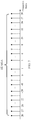
- FIG. 4 is a schematic diagram of subcarrier mapping of an L-SIG in 20 MHz bandwidth.
- a direct-current subcarrier is not drawn, and empty subcarriers with indexes -32, ..., -27, 27, ..., and 31 are not drawn either.
- a subcarrier that carries a pilot sequence is represented by a dotted line for distinction.
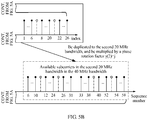
- the L-SIG (comprising the pilot sequence) needs to be duplicated and phase rotated over each 20 MHz subchannel. That is, content on subcarriers (comprising the pilot sequence) with indexes -26, ..., -1, 1, ..., and 26 in the 20 MHz bandwidth is duplicated over each 20 MHz bandwidth, and appropriate phase rotation is applied for each 20 MHz bandwidth. Specifically, a 40 MHz bandwidth is used as an example. Indexes of 104 available subcarriers are -58, ..., -33, -31, ..., -6, 6, ..., 31, 33, ..., and 58.
- the content of the subcarriers (comprising the pilot sequence) with indexes -26, ..., -1, 1, ..., and 26 in the 20 MHz bandwidth is respectively duplicated to subcarriers with indexes -58, ..., -33, -31, ..., and -6 (that is, available subcarriers of the L-SIG field in the first 20 MHz bandwidth in the 40 MHz bandwidth), and subcarriers with indexes 6, ..., 31, 33, ..., and 58 (that is, available subcarriers of the L-SIG field in the second 20 MHz bandwidth in the 40 MHz bandwidth) in the 40 MHz bandwidth.
- phase rotation is applied for each 20 MHz bandwidth.
- FIG. 5A and FIG. 5B are a schematic diagram of duplication and phase rotation of an L-SIG in a 40 MHz bandwidth. Duplication and phase rotation are similarly performed in an 80 MHz bandwidth and a 160 MHz bandwidth. Details are not described.
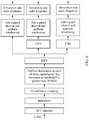
- FIG. 6 shows a procedure of sending an L-SIG in 802.11ac standard.
- a number of available subcarriers in an HE-SIG A field in a preamble of a packet is 56, increasing from 52 (indexes of the available subcarriers are -28, -27, -26, ..., -1, 1, ..., 26, 27, and 28).
- FIG. 7 is a schematic diagram of subcarrier mapping of an HE-SIG A field in a 20 MHz bandwidth.
- channels of the foregoing 52 subcarriers with indexes -28, -27, -26, ..., -22, -20, ..., -8, -6, ..., -1, 1, ..., 6, 8, ..., 20, 22, ..., 26, 27, and 28 need to be estimated.
- Channels of the 48 subcarriers with indexes -26, ..., -22, -20, ..., -8, -6, ... -1, 1, ..., 6, 8, ..., 20, 22, ..., and 26 may be estimated by using an L-STF field and an L-LTF field.
- subcarriers with indexes -28, -27, 27, and 28 there is no value on subcarriers with indexes -28, -27, 27, and 28 in the L-STF and the L-LTF, that is, the four subcarriers are not used. Therefore, channels of the subcarriers with indexes -28, -27, 27, and 28 cannot be estimated by using the L-STF field and the L-LTF field.
- extra four subcarriers with indexes -28, -27, 27, and 28 are inserted to the L-SIG/RL-SIG field in an 802.11ax draft. In this case, subcarriers occupied by an L-SIG/RL-SIG in a 20 MHz bandwidth are shown in FIG. 8 .
- an RL-SIG is totally the same as an L-SIG. Therefore, the L-SIG is used as an object for description below, and similar processing is performed for the RL-SIG.
- the L-SIG/RL-SIG field is generated or processed.
- Content carried by subcarriers with indexes -28, -27, 27, and 28 in the L-SIG/RL-SIG field in a 20 MHz bandwidth is -1, -1, -1, and 1 respectively, and is denoted as C 1.
- subsequent processing is performed.
- the generated or processed L-SIG/RL-SIG is sent.
- a maximum PAPR of the L-SIG/RL-SIG in which extra subcarriers are inserted can be extremely small in 2730 different values.
- the L-SIG/RL-SIG field is generated or processed.
- Content carried by subcarriers with indexes -28, -27, 27, and 28 in the L-SIG/RL-SIG field in a 20 MHz bandwidth is respectively 1, -1, -1, and 1, and is denoted as C 2.
- subsequent processing is performed.
- the generated or processed L-SIG/RL-SIG is sent.
- an average PAPR of the L-SIG/RL-SIG to which extra subcarriers are inserted is also extremely small in 2730 different values.
- a transmission bandwidth is greater than 20 MHz (for example, 40 MHz, 80 MHz, or 160 MHz).
- the foregoing L-SIG (comprising the subcarriers with indexes -28, -27, 27, and 28) is duplicated over each 20 MHz subchannel and phase rotation are applied for each 20 MHz subchannel.
- FIG. 9 shows a procedure 1 (which may be applicable to all transmission bandwidths, where the step of "performing duplication over each 20 MHz subchannel" is not required in a 20 MHz bandwidth channel) of sending an L-SIG/RL-SIG.
- a difference from the 802.11ac standard comprises: in addition to executing existing steps in the 802.11ac standard, a constellation mapping module is configured to further insert the foregoing content C 1 or C 2 on the subcarriers with indexes -28, -27, 27, and 28.
- a maximum PAPR, obtained by means of simulation, of the content C 1 (-1, -1, -1, 1) is 10.45 dB in the 20 MHz transmission bandwidth, and maximum PAPRs of some other content reach up to 12.06 dB in the 20 MHz bandwidth.
- a maximum PAPR of the content C 1 (-1, -1, -1, 1) is 13.14 dB in a 40 MHz transmission bandwidth, and maximum PAPRs of some other content reach up to 14.59 dB in the 40 MHz bandwidth.
- a maximum PAPR of the content C 1 (-1, -1, -1, 1) is 12.45 dB in an 80 MHz transmission bandwidth, and maximum PAPRs of some other content reach up to 14.28 dB in the 80 MHz bandwidth.
- a maximum PAPR of the content C 1 (-1, -1, -1, 1) is 13.84 dB in a 160 MHz transmission bandwidth, and maximum PAPRs of some other content reach up to 15.32 dB in the 160 MHz bandwidth.
- an average PAPR, obtained by means of simulation, of the content C 2 (1, -1, -1, 1) is 6.74 dB in the 20 MHz transmission bandwidth, and average PAPRs of some other content reach up to 7.29 dB in the 20 MHz transmission bandwidth.
- An average PAPR of the content C 2 (1, -1, -1, 1) is 9.56 dB in the 40 MHz transmission bandwidth, and average PAPRs of some other content reach up to 9.97 dB in the 40 MHz bandwidth.
- An average PAPR of the content C 2 (1, -1, -1, 1) is 8.86 dB in the 80 MHz transmission bandwidth, and average PAPRs of some other content reach up to 9.48 dB in the 80 MHz bandwidth.
- a maximum PAPR of the content C 2 (1, -1, -1, 1) is 10.27 dB in the 160 MHz transmission bandwidth, and maximum PAPRs of some other content reach up to 11.35 dB in the 160 MHz bandwidth.
- Embodiment 2 is different from Embodiment 1.
- a transmission bandwidth is greater than 20 MHz
- after duplication and phase rotation are performed on an L-SIG/RL-SIG over each 20 MHz bandwidth, a corresponding value is inserted into a corresponding subcarrier.
- extra subcarriers in the L-SIG/RL-SIG field may carry different content in different bandwidths of 20 MHz. In this way, a maximum PAPR or an average PAPR of the L-SIG/RL-SIG in 2730 different values can be further reduced.
- FIG. 10 shows a procedure of sending an L-SIG/RL-SIG when a transmission bandwidth is greater than 20 MHz in this embodiment.
- the L-SIG/RL-SIG is characterized by a good PAPR, and is easily implemented in different bandwidth conditions.
- the present invention may be applied to a wireless local area network that includes but is not limited to a Wi-Fi system represented by 802.11a, 802.11b, 802.11g, 802.11n, or 802.11ac; or may be applied to a next-generation Wi-Fi system or a next-generation wireless local area network system.
- a Wi-Fi system represented by 802.11a, 802.11b, 802.11g, 802.11n, or 802.11ac
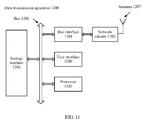
- FIG. 11 is an example (for example, some components in the figure such as an access point, a station, and a chip are optional) of a schematic structural diagram of an information transmission apparatus in an embodiment of the present invention.
- an information transmission apparatus 1200 may be implemented by using a bus 1201 as a general bus architecture.
- the bus 1201 may include any quantity of interconnected buses and bridges according to specific application and an overall design constraint condition that are of the information transmission apparatus 1200.
- Various circuits are connected together by using the bus 1201. These circuits include a processor 1202, a storage medium 1203, and a bus interface 1204.
- a network adapter 1205 and the like are connected via the bus 1201 by using the bus interface 1204.
- the network adapter 1205 may be configured to: implement a signal processing function at a physical layer in a wireless local area network, and send and receive a radio frequency signal by using an antenna 1207.
- a user interface 1206 may be connected to a user terminal such as a keyboard, a display, a mouse, or a joystick.
- the bus 1201 may be further connected to various other circuits, such as a timing source, a peripheral device, a voltage regulator, and a power management circuit. These circuits are known in the art. Therefore, details are not described.
- the information transmission apparatus 1200 may be configured as a general-purpose processing system.
- the general-purpose processing system includes: one or more microprocessors that provide a processor function, and an external memory that provides at least one part of the storage medium 1203. All the components are connected to another support circuit by using an external bus architecture.
- the information transmission apparatus 1200 may be implemented by using an ASIC (application-specific integrated circuit) that includes the processor 1202, the bus interface 1204, and the user interface 1206, and at least one part that is of the storage media 1203 and that is integrated into a single chip.
- the information transmission apparatus 1200 may be implemented by using one or more FPGAs (field programmable gate array), a PLD (programmable logic device), a controller, a state machine, gate logic, a discrete hardware component, any other appropriate circuit, or any combination of circuits that can perform various functions described in the present invention.
- FPGAs field programmable gate array
- PLD programmable logic device
- controller a state machine
- gate logic gate logic
- discrete hardware component any other appropriate circuit, or any combination of circuits that can perform various functions described in the present invention.
- the processor 1202 is responsible for bus management and general processing (comprising executing software stored on the storage medium 1203).
- the processor 1202 may be implemented by using one or more general-purpose processors and/or dedicated processors.
- the processor includes, for example, a microprocessor, a microcontroller, a DSP processor, or another circuit that can execute software. Regardless of whether the software is referred to as software, firmware, middleware, micro code, hardware description language, or the like, the software should be broadly construed as an instruction, data, or any combination thereof.
- the storage medium 1203 is separated from the processor 1202.
- the storage medium 1203 or any part of the storage medium 1203 may be located outside the information transmission apparatus 1200.
- the storage medium 1203 may include a transmission line, a carrier waveform obtained by means of data modulation, and/or a computer product separated from a wireless node. All the media may be accessed by the processor 1202 by using the bus interface 1204.
- the storage medium 1203 or any part of the storage medium 1203 may be integrated into the processor 1202, for example, may be a cache and/or a general-purpose register.
- the processor 1202 may perform the foregoing embodiment, and details are not described herein.
- the program may be stored in a computer readable storage medium. When the program runs, the steps of the method embodiments are performed.
- the foregoing storage medium includes: any medium that can store program code, such as a ROM, a RAM, a magnetic disk, or an optical disc.
Landscapes
- Engineering & Computer Science (AREA)
- Signal Processing (AREA)
- Computer Networks & Wireless Communication (AREA)
- Power Engineering (AREA)
- Physics & Mathematics (AREA)
- Discrete Mathematics (AREA)
- General Physics & Mathematics (AREA)
- Mathematical Physics (AREA)
- Mobile Radio Communication Systems (AREA)
- Small-Scale Networks (AREA)
Claims (18)
- Informationsübertragungsverfahren in einem drahtlosen lokalen Netzwerk, umfassend:Erzeugen eines Legacy-Signalisierungsfelds L-SIG und eines wiederholten Legacy-Signalisierungsfelds RL-SIG,wobei zusätzliche vier Teilträger mit den Indizes -28, -27, 27 und 28 in das L-SIG in einer Bandbreite von 20 MHz eingefügt werden, die -1, -1, -1 bzw. 1 für die Kanalschätzung tragen; undweitere vier Teilträger mit den Indizes -28, -27, 27 und 28 in das RL-SIG in die Bandbreite von 20 MHz eingefügt werden, die -1, -1, -1 bzw. 1 für die Kanalschätzung; undSenden des erzeugten L-SIG und RL-SIG.
- Verfahren nach Anspruch 1, wobei, wenn eine Übertragungsbandbreite größer als die Bandbreite von 20 MHz ist, das Erzeugen eines L-SIG und des RL-SIG umfasst:Duplizieren des L-SIG und des RL-SIG, in denen die Teilträger mit den Indizes -28, -27, 27 und 28 -1, -1, -1 und 1 tragen, über jeden Teilkanal von 20 MHz in der Übertragungsbandbreite, undAnwenden einer Phasendrehung für jeden Teilkanal von 20 MHz.
- Verfahren nach Anspruch 1 oder 2, wobei das Verfahren ferner umfasst:
Erzeugen eines L-STF-Felds und eines L-LTF-Felds gemäß dem 802.11ac-Standard zur Kanalschätzung auf 48 Teilträgern mit den Indizes -26, ..., -22, -20, ..., -8, -6 , ..., -1, 1, ..., 6, 8, ..., 20, 22, ... und 26 in der Bandbreite von 20 MHz. - Informationsempfangsverfahren in einem drahtlosen lokalen Netzwerk, umfassend:Empfangen eines Legacy-Signalisierungsfelds L-SIG und eines wiederholten Legacy-Signalisierungsfelds RL-SIG; undDurchführen einer Kanalschätzung, wobei eine Sequenz -1, -1, -1 und 1 zur Kanalschätzung von Teilträgern mit den Indizes -28, -27, 27 und 28 in dem L-SIG in einer Bandbreite von 20 MHz verwendet wird und die Sequenz -1, -1, -1 und 1 zur Kanalschätzung von Teilträgern mit den Indizes -28, -27, 27 und 28 in dem RL-SIG in der Bandbreite von 20 MHz verwendet wird.
- Verfahren nach Anspruch 4, umfassend:
wenn eine Übertragungsbandbreite größer als die Bandbreite von 20 MHz ist, wird die Sequenz -1, -1, -1 und 1 für die Kanalschätzung von Teilträgern mit den Indizes - 28, -27, 27 und 28 in jeder Bandbreite von 20 MHz in der Übertragungsbandbreite verwendet. - Verfahren nach Anspruch 4 oder 5, wobei das Verfahren ferner umfasst
Empfangen eines L-STF-Felds und eines L-LTF-Felds nach dem 802.11ac-Standard, wobei die Kanalschätzung von 48 Teilträgern mit den Indizes -26, ..., -22, -20, ..., -8, -6, ..., -1, 1, ..., 6, 8, ..., 20, 22, ... und 26 in der Bandbreite von 20 MHz basierend auf dem L-STF-Feld und dem L-LTF-Feld durchgeführt wird. - Informationsübertragungsvorrichtung in einem drahtlosen lokalen Netzwerk, umfassend eine Verarbeitungseinheit, die konfiguriert ist, um das Verfahren nach einem der Ansprüche 1 bis 3 durchzuführen, und eine Schnittstelle, die konfiguriert ist, um eine Übertragung mit dem Außenbereich durchzuführen.
- Informationsübertragungsverfahren in einem drahtlosen lokalen Netzwerk, umfassend:Erzeugen eines Legacy-Signalisierungsfelds L-SIG und eines wiederholten Legacy-Signalisierungsfelds RL-SIG,wobei zusätzliche vier Teilträger mit den Indizes -28, -27, 27 und 28 in das L-SIG in einer Bandbreite von 20 MHz eingefügt werden, die 1, -1, -1 bzw. 1 für die Kanalschätzung tragen; undweitere vier Teilträger mit den Indizes -28, -27, 27 und 28 in das RL-SIG in der Bandbreite von 20 MHz eingefügt werden, die 1, -1, -1 bzw. 1 für die Kanalschätzung tragen; undSenden des erzeugten L-SIG und RL-SIG.
- Verfahren nach Anspruch 8, wobei, wenn eine Übertragungsbandbreite größer als die Bandbreite von 20 MHz ist, das Erzeugen eines L-SIG und des RL-SIG umfasst:Duplizieren des L-SIG und des RL-SIG, in denen die Teilträger mit den Indizes -28, -27, 27 und 28 1, -1, -1 und 1 tragen, über jeden Teilkanal von 20 MHz in der Übertragungsbandbreite, undAnwenden einer Phasendrehung für jeden Teilkanal von 20 MHz.
- Verfahren nach Anspruch 8 oder 9, wobei das Verfahren ferner umfasst:
Erzeugen eines L-STF-Felds und eines L-LTF-Felds nach dem 802.11ac-Standard zur Kanalschätzung auf 48 Teilträgern mit den Indizes -26, ..., -22, -20, ..., -8, -6, ..., - 1, 1, ..., 6, 8, ..., 20, 22, ... und 26 in der Bandbreite von 20 MHz. - Informationsempfangsverfahren in einem drahtlosen lokalen Netzwerk, umfassend:Empfangen eines Legacy-Signalisierungsfelds L-SIG und eines wiederholten Legacy-Signalisierungsfelds RL-SIG; wobei das L-SIG-Feld Steuerinformationen einschließlich einer Rate und einer Länge trägt, wobei das RL-SIG-Feld dasselbe wie das L-SIG-Feld ist; undDurchführen einer Kanalschätzung, wobei eine Sequenz 1, -1, -1 und 1 zur Kanalschätzung von Teilträgern mit den Indizes -28, -27, 27 und 28 in dem L-SIG in einer Bandbreite von 20 MHz verwendet wird und die Sequenz 1, -1, -1 und 1 zur Kanalschätzung von Teilträgern mit den Indizes -28, -27, 27 und 28 in dem RL-SIG in der Bandbreite von 20 MHz verwendet wird.
- Verfahren nach Anspruch 11, umfassend:
wenn eine Übertragungsbandbreite größer als die Bandbreite von 20 MHz ist, Schätzen der Sequenz 1, -1, -1 und 1, die zur Kanalschätzung von Teilträgern mit den Indizes - 28, -27, 27 und 28 in jeder Bandbreite von 20 MHz in der Übertragungsbandbreite verwendet wird. - Verfahren nach Anspruch 11 oder 12, wobei das Verfahren ferner umfasst:
Empfangen eines L-STF-Felds und eines L-LTF-Felds nach dem 802.11ac-Standard, wobei die Kanalschätzung auf 48 Teilträgern mit den Indizes -26, ..., -22, -20, ..., -8, - 6, ..., - 1, 1, ..., 6, 8, ..., 20, 22, ... und 26 in der Bandbreite von 20 MHz basierend auf dem L-STF-Feld und dem L-LTF-Feld durchgeführt wird. - Informationsübertragungsvorrichtung in einem drahtlosen lokalen Netzwerk, umfassend eine Verarbeitungseinheit, die konfiguriert ist, um das Verfahren nach einem der Ansprüche 8 bis 10 durchzuführen, und eine Schnittstelle, die konfiguriert ist, um eine Übertragung mit dem Außenbereich durchzuführen.
- Informationsempfangsvorrichtung in einem drahtlosen lokalen Netzwerk, umfassend Mittel, die konfiguriert sind, um das Verfahren nach einem der Ansprüche 4 bis 6 durchzuführen.
- Informationsempfangsvorrichtung in einem drahtlosen lokalen Netzwerk, umfassend Mittel, die konfiguriert sind, um das Verfahren nach einem der Ansprüche 11 bis 13 durchzuführen.
- Paketstruktur in einem drahtlosen lokalen Netzwerk, umfassend ein Legacy-Kurztrainingsfeld, L-STF, ein Legacy-Langtrainingsfeld, L-LTF, und ein Legacy-Signalisierungsfeld, L-SIG, und ein wiederholtes Legacy-Signalisierungsfeld, RL-SIG;
wobei das L-SIG-Feld Steuerinformationen einschließlich einer Rate und einer Länge trägt, wobei das RL-SIG-Feld dasselbe wie das L-SIG-Feld ist;
wobei zusätzliche vier Teilträger mit den Indizes -28, -27, 27 und 28 in das L-SIG in einer Bandbreite von 20 MHz eingefügt werden, die -1, -1, -1 bzw. 1 für die Kanalschätzung tragen; und zusätzliche vier Teilträger mit den Indizes -28, -27, 27 und 28 in das RL-SIG in der Bandbreite von 20 MHz eingefügt werden, die -1, -1, -1 bzw. 1 zur Kanalschätzung tragen. - Paketstruktur in einem drahtlosen lokalen Netzwerk, umfassend ein Legacy-Kurztrainingsfeld, L-STF, ein Legacy-Langtrainingsfeld, L-LTF, und ein Legacy-Signalisierungsfeld, L-SIG, und ein wiederholtes Legacy-Signalisierungsfeld, RL-SIG;
wobei das L-SIG-Feld Steuerinformationen einschließlich einer Rate und einer Länge trägt, wobei das RL-SIG-Feld dasselbe wie das L-SIG-Feld ist;
wobei zusätzliche vier Teilträger mit den Indizes -28, -27, 27 und 28 in das L-SIG in einer Bandbreite von 20 MHz eingefügt werden, die 1, -1, -1 bzw. 1 zur Kanalschätzung tragen; und zusätzliche vier Teilträger mit den Indizes -28, -27, 27 und 28 in das RL-SIG in der Bandbreite von 20 MHz eingefügt werden, die 1, -1, -1 bzw. 1 zur Kanalschätzung tragen.
Priority Applications (1)
| Application Number | Priority Date | Filing Date | Title |
|---|---|---|---|
| EP19207329.4A EP3694133B1 (de) | 2016-01-07 | 2017-01-06 | Informationsübertragungsverfahren und -vorrichtung in einem drahtlosen lokalen netzwerk |
Applications Claiming Priority (2)
| Application Number | Priority Date | Filing Date | Title |
|---|---|---|---|
| CN201610011271.6A CN106954202B (zh) | 2016-01-07 | 2016-01-07 | 无线局域网信息传输方法和装置 |
| PCT/CN2017/070462 WO2017118420A1 (zh) | 2016-01-07 | 2017-01-06 | 无线局域网信息传输方法和装置 |
Related Child Applications (2)
| Application Number | Title | Priority Date | Filing Date |
|---|---|---|---|
| EP19207329.4A Division-Into EP3694133B1 (de) | 2016-01-07 | 2017-01-06 | Informationsübertragungsverfahren und -vorrichtung in einem drahtlosen lokalen netzwerk |
| EP19207329.4A Division EP3694133B1 (de) | 2016-01-07 | 2017-01-06 | Informationsübertragungsverfahren und -vorrichtung in einem drahtlosen lokalen netzwerk |
Publications (3)
| Publication Number | Publication Date |
|---|---|
| EP3340674A1 EP3340674A1 (de) | 2018-06-27 |
| EP3340674A4 EP3340674A4 (de) | 2018-10-10 |
| EP3340674B1 true EP3340674B1 (de) | 2019-12-25 |
Family
ID=59274554
Family Applications (2)
| Application Number | Title | Priority Date | Filing Date |
|---|---|---|---|
| EP17735858.7A Active EP3340674B1 (de) | 2016-01-07 | 2017-01-06 | Informationsübertragungsverfahren und -vorrichtung für drahtloses lokales netzwerk |
| EP19207329.4A Active EP3694133B1 (de) | 2016-01-07 | 2017-01-06 | Informationsübertragungsverfahren und -vorrichtung in einem drahtlosen lokalen netzwerk |
Family Applications After (1)
| Application Number | Title | Priority Date | Filing Date |
|---|---|---|---|
| EP19207329.4A Active EP3694133B1 (de) | 2016-01-07 | 2017-01-06 | Informationsübertragungsverfahren und -vorrichtung in einem drahtlosen lokalen netzwerk |
Country Status (15)
| Country | Link |
|---|---|
| US (3) | US10397037B2 (de) |
| EP (2) | EP3340674B1 (de) |
| JP (1) | JP6705895B2 (de) |
| KR (1) | KR102104947B1 (de) |
| CN (3) | CN108449728B (de) |
| AU (1) | AU2017205032B2 (de) |
| BR (1) | BR112018002902B1 (de) |
| CA (1) | CA2997038C (de) |
| ES (1) | ES2904694T3 (de) |
| HU (1) | HUE056426T2 (de) |
| MX (1) | MX376899B (de) |
| MY (1) | MY189128A (de) |
| RU (1) | RU2700193C2 (de) |
| WO (1) | WO2017118420A1 (de) |
| ZA (1) | ZA201801165B (de) |
Families Citing this family (10)
| Publication number | Priority date | Publication date | Assignee | Title |
|---|---|---|---|---|
| US10863437B1 (en) * | 2017-08-30 | 2020-12-08 | Newracom, Inc. | Wireless device low power wake up |
| CN110768924B (zh) * | 2018-07-27 | 2024-08-20 | 华为技术有限公司 | 设计短训练序列的方法和装置 |
| KR20250117464A (ko) * | 2019-08-12 | 2025-08-04 | 엘지전자 주식회사 | 무선 통신 시스템에서 프리앰블을 구성하기 위한 기법 |
| CN113078987B (zh) | 2020-01-03 | 2024-08-27 | 华为技术有限公司 | 传输物理层协议数据单元的方法和装置 |
| WO2021150083A1 (ko) * | 2020-01-23 | 2021-07-29 | 엘지전자 주식회사 | 무선 통신 시스템에서 프리앰블을 구성하기 위한 기법 |
| US20210328745A1 (en) * | 2020-04-17 | 2021-10-21 | Lg Electronics Inc. | Techniques for allocating a resource unit in a wireless communication system |
| US11973626B2 (en) | 2020-05-26 | 2024-04-30 | Lg Electronics Inc. | Method and device for applying subcarrier-specific phase rotation to broadband in wireless LAN system |
| CN116015579B (zh) * | 2020-08-03 | 2023-12-08 | 华为技术有限公司 | 一种传输物理层协议数据单元的方法及装置 |
| CN114070698B (zh) * | 2020-08-10 | 2024-06-04 | 华为技术有限公司 | 数据发送、接收方法及装置 |
| CN114697176A (zh) * | 2020-12-26 | 2022-07-01 | 华为技术有限公司 | 信息传输方法及装置 |
Family Cites Families (19)
| Publication number | Priority date | Publication date | Assignee | Title |
|---|---|---|---|---|
| US7474608B2 (en) * | 2004-01-12 | 2009-01-06 | Intel Corporation | Method for signaling information by modifying modulation constellations |
| KR101261434B1 (ko) * | 2006-01-19 | 2013-05-10 | 삼성전자주식회사 | 무선 광역 망 내에 무선 지역 망 형성방법 및 이를지원하는 무선통신시스템 |
| US7616617B2 (en) * | 2006-06-29 | 2009-11-10 | Motorola, Inc. | System and method for communicating beacon transmissions in wireless local area network (WLAN) systems |
| US7515577B2 (en) * | 2006-06-29 | 2009-04-07 | Motorola, Inc. | System and method for communicating beacon transmissions in wireless local area network (WLAN) systems |
| US7693108B2 (en) * | 2006-08-01 | 2010-04-06 | Intel Corporation | Methods and apparatus for providing a handover control system associated with a wireless communication network |
| US8917784B2 (en) * | 2009-07-17 | 2014-12-23 | Qualcomm Incorporated | Method and apparatus for constructing very high throughput long training field sequences |
| US9935805B2 (en) * | 2009-08-25 | 2018-04-03 | Qualcomm Incorporated | MIMO and MU-MIMO OFDM preambles |
| KR20110036485A (ko) | 2009-10-01 | 2011-04-07 | 엘지전자 주식회사 | 무선랜 시스템에서의 데이터 전송방법 및 장치 |
| TW201132074A (en) | 2010-03-15 | 2011-09-16 | Ralink Technology Corp | Preamble sequence generating method and wireless local area network device |
| US9025428B2 (en) * | 2010-04-14 | 2015-05-05 | Qualcomm Incorporated | Allocating and receiving tones for a frame |
| US9300511B2 (en) * | 2011-01-05 | 2016-03-29 | Qualcomm Incorporated | Method and apparatus for improving throughput of 5 MHZ WLAN transmissions |
| CN103002448B (zh) * | 2011-09-19 | 2018-04-17 | 工业和信息化部电信传输研究所 | 一种无线局域网信道配置方法及装置 |
| WO2013095382A1 (en) * | 2011-12-20 | 2013-06-27 | Intel Corporation | Wireless wide area network (wwan) assisted proximity wireless local area network (wlan) peer-to-peer (p2p) connection and offloading |
| US10158511B2 (en) * | 2012-05-07 | 2018-12-18 | Qualcomm Incorporated | Systems and methods for wireless communication in sub gigahertz bands |
| US10194006B2 (en) * | 2013-10-25 | 2019-01-29 | Marvell World Trade Ltd. | Physical layer frame format for WLAN |
| JP2016536911A (ja) * | 2013-11-12 | 2016-11-24 | ホアウェイ・テクノロジーズ・カンパニー・リミテッド | 高効率ワイヤレスローカルエリアネットワーク通信用のシステムおよび方法 |
| US9325463B2 (en) * | 2013-11-19 | 2016-04-26 | Intel IP Corporation | High-efficiency WLAN (HEW) master station and methods to increase information bits for HEW communication |
| CN105981343B (zh) | 2014-02-14 | 2019-08-20 | 华为技术有限公司 | 传输数据的方法和装置 |
| EP3123756A4 (de) * | 2014-03-24 | 2017-11-01 | Intel IP Corporation | Vorrichtung, system und verfahren zur sicherung der kommunikation einer benutzervorrichtung in einem wlan |
-
2016
- 2016-01-07 CN CN201810148666.XA patent/CN108449728B/zh active Active
- 2016-01-07 CN CN202111667013.0A patent/CN114500210A/zh active Pending
- 2016-01-07 CN CN201610011271.6A patent/CN106954202B/zh active Active
-
2017
- 2017-01-06 EP EP17735858.7A patent/EP3340674B1/de active Active
- 2017-01-06 MY MYPI2018700620A patent/MY189128A/en unknown
- 2017-01-06 AU AU2017205032A patent/AU2017205032B2/en active Active
- 2017-01-06 WO PCT/CN2017/070462 patent/WO2017118420A1/zh not_active Ceased
- 2017-01-06 EP EP19207329.4A patent/EP3694133B1/de active Active
- 2017-01-06 HU HUE19207329A patent/HUE056426T2/hu unknown
- 2017-01-06 JP JP2018518730A patent/JP6705895B2/ja active Active
- 2017-01-06 RU RU2018108182A patent/RU2700193C2/ru active
- 2017-01-06 CA CA2997038A patent/CA2997038C/en active Active
- 2017-01-06 MX MX2018002421A patent/MX376899B/es active IP Right Grant
- 2017-01-06 ES ES19207329T patent/ES2904694T3/es active Active
- 2017-01-06 BR BR112018002902-5A patent/BR112018002902B1/pt active IP Right Grant
- 2017-01-06 KR KR1020187008304A patent/KR102104947B1/ko active Active
-
2018
- 2018-02-20 ZA ZA2018/01165A patent/ZA201801165B/en unknown
- 2018-03-15 US US15/922,274 patent/US10397037B2/en active Active
-
2019
- 2019-04-11 US US16/381,126 patent/US10454737B2/en active Active
- 2019-10-16 US US16/654,431 patent/US11128508B2/en active Active
Non-Patent Citations (1)
| Title |
|---|
| None * |
Also Published As
Similar Documents
| Publication | Publication Date | Title |
|---|---|---|
| EP3340674B1 (de) | Informationsübertragungsverfahren und -vorrichtung für drahtloses lokales netzwerk | |
| US20230336396A1 (en) | Data transmission method and apparatus in wireless local area network | |
| US20210219250A1 (en) | Information transmission method and information transmission apparatus | |
| KR20190103343A (ko) | 정보 전송 방법 및 장치 | |
| JP2022539907A (ja) | データ送信及び受信方法並びに装置 | |
| WO2020030127A1 (zh) | 一种资源分配方法、相关设备及装置 | |
| US11528705B2 (en) | Signal transmission method and device | |
| WO2022042618A1 (zh) | 传输信号的方法和通信装置 | |
| WO2026086403A1 (en) | Systems, apparatuses and methods for enhanced long range packet transmission for wireless communication |
Legal Events
| Date | Code | Title | Description |
|---|---|---|---|
| STAA | Information on the status of an ep patent application or granted ep patent |
Free format text: STATUS: THE INTERNATIONAL PUBLICATION HAS BEEN MADE |
|
| PUAI | Public reference made under article 153(3) epc to a published international application that has entered the european phase |
Free format text: ORIGINAL CODE: 0009012 |
|
| STAA | Information on the status of an ep patent application or granted ep patent |
Free format text: STATUS: REQUEST FOR EXAMINATION WAS MADE |
|
| 17P | Request for examination filed |
Effective date: 20180220 |
|
| AK | Designated contracting states |
Kind code of ref document: A1 Designated state(s): AL AT BE BG CH CY CZ DE DK EE ES FI FR GB GR HR HU IE IS IT LI LT LU LV MC MK MT NL NO PL PT RO RS SE SI SK SM TR |
|
| AX | Request for extension of the european patent |
Extension state: BA ME |
|
| A4 | Supplementary search report drawn up and despatched |
Effective date: 20180911 |
|
| RIC1 | Information provided on ipc code assigned before grant |
Ipc: H04L 27/26 20060101ALI20180905BHEP Ipc: H04L 5/00 20060101AFI20180905BHEP Ipc: H04W 28/06 20090101ALI20180905BHEP Ipc: H04L 25/02 20060101ALN20180905BHEP |
|
| DAV | Request for validation of the european patent (deleted) | ||
| DAX | Request for extension of the european patent (deleted) | ||
| REG | Reference to a national code |
Ref country code: DE Ref legal event code: R079 Ref document number: 602017010175 Country of ref document: DE Free format text: PREVIOUS MAIN CLASS: H04W0028060000 Ipc: H04L0005000000 |
|
| GRAP | Despatch of communication of intention to grant a patent |
Free format text: ORIGINAL CODE: EPIDOSNIGR1 |
|
| STAA | Information on the status of an ep patent application or granted ep patent |
Free format text: STATUS: GRANT OF PATENT IS INTENDED |
|
| RIC1 | Information provided on ipc code assigned before grant |
Ipc: H04L 27/26 20060101ALI20190603BHEP Ipc: H04L 5/00 20060101AFI20190603BHEP Ipc: H04W 28/06 20090101ALI20190603BHEP Ipc: H04L 25/02 20060101ALN20190603BHEP |
|
| INTG | Intention to grant announced |
Effective date: 20190701 |
|
| GRAS | Grant fee paid |
Free format text: ORIGINAL CODE: EPIDOSNIGR3 |
|
| GRAA | (expected) grant |
Free format text: ORIGINAL CODE: 0009210 |
|
| STAA | Information on the status of an ep patent application or granted ep patent |
Free format text: STATUS: THE PATENT HAS BEEN GRANTED |
|
| AK | Designated contracting states |
Kind code of ref document: B1 Designated state(s): AL AT BE BG CH CY CZ DE DK EE ES FI FR GB GR HR HU IE IS IT LI LT LU LV MC MK MT NL NO PL PT RO RS SE SI SK SM TR |
|
| REG | Reference to a national code |
Ref country code: GB Ref legal event code: FG4D |
|
| REG | Reference to a national code |
Ref country code: CH Ref legal event code: EP |
|
| REG | Reference to a national code |
Ref country code: AT Ref legal event code: REF Ref document number: 1218326 Country of ref document: AT Kind code of ref document: T Effective date: 20200115 |
|
| REG | Reference to a national code |
Ref country code: DE Ref legal event code: R096 Ref document number: 602017010175 Country of ref document: DE |
|
| REG | Reference to a national code |
Ref country code: IE Ref legal event code: FG4D |
|
| REG | Reference to a national code |
Ref country code: NL Ref legal event code: FP |
|
| PG25 | Lapsed in a contracting state [announced via postgrant information from national office to epo] |
Ref country code: LT Free format text: LAPSE BECAUSE OF FAILURE TO SUBMIT A TRANSLATION OF THE DESCRIPTION OR TO PAY THE FEE WITHIN THE PRESCRIBED TIME-LIMIT Effective date: 20191225 Ref country code: GR Free format text: LAPSE BECAUSE OF FAILURE TO SUBMIT A TRANSLATION OF THE DESCRIPTION OR TO PAY THE FEE WITHIN THE PRESCRIBED TIME-LIMIT Effective date: 20200326 Ref country code: NO Free format text: LAPSE BECAUSE OF FAILURE TO SUBMIT A TRANSLATION OF THE DESCRIPTION OR TO PAY THE FEE WITHIN THE PRESCRIBED TIME-LIMIT Effective date: 20200325 Ref country code: SE Free format text: LAPSE BECAUSE OF FAILURE TO SUBMIT A TRANSLATION OF THE DESCRIPTION OR TO PAY THE FEE WITHIN THE PRESCRIBED TIME-LIMIT Effective date: 20191225 Ref country code: LV Free format text: LAPSE BECAUSE OF FAILURE TO SUBMIT A TRANSLATION OF THE DESCRIPTION OR TO PAY THE FEE WITHIN THE PRESCRIBED TIME-LIMIT Effective date: 20191225 Ref country code: BG Free format text: LAPSE BECAUSE OF FAILURE TO SUBMIT A TRANSLATION OF THE DESCRIPTION OR TO PAY THE FEE WITHIN THE PRESCRIBED TIME-LIMIT Effective date: 20200325 Ref country code: FI Free format text: LAPSE BECAUSE OF FAILURE TO SUBMIT A TRANSLATION OF THE DESCRIPTION OR TO PAY THE FEE WITHIN THE PRESCRIBED TIME-LIMIT Effective date: 20191225 |
|
| REG | Reference to a national code |
Ref country code: LT Ref legal event code: MG4D |
|
| PG25 | Lapsed in a contracting state [announced via postgrant information from national office to epo] |
Ref country code: HR Free format text: LAPSE BECAUSE OF FAILURE TO SUBMIT A TRANSLATION OF THE DESCRIPTION OR TO PAY THE FEE WITHIN THE PRESCRIBED TIME-LIMIT Effective date: 20191225 Ref country code: RS Free format text: LAPSE BECAUSE OF FAILURE TO SUBMIT A TRANSLATION OF THE DESCRIPTION OR TO PAY THE FEE WITHIN THE PRESCRIBED TIME-LIMIT Effective date: 20191225 |
|
| PG25 | Lapsed in a contracting state [announced via postgrant information from national office to epo] |
Ref country code: AL Free format text: LAPSE BECAUSE OF FAILURE TO SUBMIT A TRANSLATION OF THE DESCRIPTION OR TO PAY THE FEE WITHIN THE PRESCRIBED TIME-LIMIT Effective date: 20191225 |
|
| PG25 | Lapsed in a contracting state [announced via postgrant information from national office to epo] |
Ref country code: PT Free format text: LAPSE BECAUSE OF FAILURE TO SUBMIT A TRANSLATION OF THE DESCRIPTION OR TO PAY THE FEE WITHIN THE PRESCRIBED TIME-LIMIT Effective date: 20200520 Ref country code: RO Free format text: LAPSE BECAUSE OF FAILURE TO SUBMIT A TRANSLATION OF THE DESCRIPTION OR TO PAY THE FEE WITHIN THE PRESCRIBED TIME-LIMIT Effective date: 20191225 Ref country code: CZ Free format text: LAPSE BECAUSE OF FAILURE TO SUBMIT A TRANSLATION OF THE DESCRIPTION OR TO PAY THE FEE WITHIN THE PRESCRIBED TIME-LIMIT Effective date: 20191225 Ref country code: EE Free format text: LAPSE BECAUSE OF FAILURE TO SUBMIT A TRANSLATION OF THE DESCRIPTION OR TO PAY THE FEE WITHIN THE PRESCRIBED TIME-LIMIT Effective date: 20191225 |
|
| PG25 | Lapsed in a contracting state [announced via postgrant information from national office to epo] |
Ref country code: SM Free format text: LAPSE BECAUSE OF FAILURE TO SUBMIT A TRANSLATION OF THE DESCRIPTION OR TO PAY THE FEE WITHIN THE PRESCRIBED TIME-LIMIT Effective date: 20191225 Ref country code: IS Free format text: LAPSE BECAUSE OF FAILURE TO SUBMIT A TRANSLATION OF THE DESCRIPTION OR TO PAY THE FEE WITHIN THE PRESCRIBED TIME-LIMIT Effective date: 20200425 Ref country code: SK Free format text: LAPSE BECAUSE OF FAILURE TO SUBMIT A TRANSLATION OF THE DESCRIPTION OR TO PAY THE FEE WITHIN THE PRESCRIBED TIME-LIMIT Effective date: 20191225 |
|
| REG | Reference to a national code |
Ref country code: CH Ref legal event code: PL |
|
| REG | Reference to a national code |
Ref country code: DE Ref legal event code: R097 Ref document number: 602017010175 Country of ref document: DE |
|
| PG25 | Lapsed in a contracting state [announced via postgrant information from national office to epo] |
Ref country code: MC Free format text: LAPSE BECAUSE OF FAILURE TO SUBMIT A TRANSLATION OF THE DESCRIPTION OR TO PAY THE FEE WITHIN THE PRESCRIBED TIME-LIMIT Effective date: 20191225 |
|
| REG | Reference to a national code |
Ref country code: BE Ref legal event code: MM Effective date: 20200131 |
|
| PG25 | Lapsed in a contracting state [announced via postgrant information from national office to epo] |
Ref country code: DK Free format text: LAPSE BECAUSE OF FAILURE TO SUBMIT A TRANSLATION OF THE DESCRIPTION OR TO PAY THE FEE WITHIN THE PRESCRIBED TIME-LIMIT Effective date: 20191225 Ref country code: LU Free format text: LAPSE BECAUSE OF NON-PAYMENT OF DUE FEES Effective date: 20200106 Ref country code: ES Free format text: LAPSE BECAUSE OF FAILURE TO SUBMIT A TRANSLATION OF THE DESCRIPTION OR TO PAY THE FEE WITHIN THE PRESCRIBED TIME-LIMIT Effective date: 20191225 |
|
| PLBE | No opposition filed within time limit |
Free format text: ORIGINAL CODE: 0009261 |
|
| STAA | Information on the status of an ep patent application or granted ep patent |
Free format text: STATUS: NO OPPOSITION FILED WITHIN TIME LIMIT |
|
| REG | Reference to a national code |
Ref country code: AT Ref legal event code: MK05 Ref document number: 1218326 Country of ref document: AT Kind code of ref document: T Effective date: 20191225 |
|
| PG25 | Lapsed in a contracting state [announced via postgrant information from national office to epo] |
Ref country code: BE Free format text: LAPSE BECAUSE OF NON-PAYMENT OF DUE FEES Effective date: 20200131 Ref country code: CH Free format text: LAPSE BECAUSE OF NON-PAYMENT OF DUE FEES Effective date: 20200131 Ref country code: SI Free format text: LAPSE BECAUSE OF FAILURE TO SUBMIT A TRANSLATION OF THE DESCRIPTION OR TO PAY THE FEE WITHIN THE PRESCRIBED TIME-LIMIT Effective date: 20191225 Ref country code: LI Free format text: LAPSE BECAUSE OF NON-PAYMENT OF DUE FEES Effective date: 20200131 |
|
| 26N | No opposition filed |
Effective date: 20200928 |
|
| PG25 | Lapsed in a contracting state [announced via postgrant information from national office to epo] |
Ref country code: IE Free format text: LAPSE BECAUSE OF NON-PAYMENT OF DUE FEES Effective date: 20200106 Ref country code: IT Free format text: LAPSE BECAUSE OF FAILURE TO SUBMIT A TRANSLATION OF THE DESCRIPTION OR TO PAY THE FEE WITHIN THE PRESCRIBED TIME-LIMIT Effective date: 20191225 Ref country code: AT Free format text: LAPSE BECAUSE OF FAILURE TO SUBMIT A TRANSLATION OF THE DESCRIPTION OR TO PAY THE FEE WITHIN THE PRESCRIBED TIME-LIMIT Effective date: 20191225 |
|
| PG25 | Lapsed in a contracting state [announced via postgrant information from national office to epo] |
Ref country code: PL Free format text: LAPSE BECAUSE OF FAILURE TO SUBMIT A TRANSLATION OF THE DESCRIPTION OR TO PAY THE FEE WITHIN THE PRESCRIBED TIME-LIMIT Effective date: 20191225 |
|
| PG25 | Lapsed in a contracting state [announced via postgrant information from national office to epo] |
Ref country code: TR Free format text: LAPSE BECAUSE OF FAILURE TO SUBMIT A TRANSLATION OF THE DESCRIPTION OR TO PAY THE FEE WITHIN THE PRESCRIBED TIME-LIMIT Effective date: 20191225 Ref country code: MT Free format text: LAPSE BECAUSE OF FAILURE TO SUBMIT A TRANSLATION OF THE DESCRIPTION OR TO PAY THE FEE WITHIN THE PRESCRIBED TIME-LIMIT Effective date: 20191225 Ref country code: CY Free format text: LAPSE BECAUSE OF FAILURE TO SUBMIT A TRANSLATION OF THE DESCRIPTION OR TO PAY THE FEE WITHIN THE PRESCRIBED TIME-LIMIT Effective date: 20191225 |
|
| PG25 | Lapsed in a contracting state [announced via postgrant information from national office to epo] |
Ref country code: MK Free format text: LAPSE BECAUSE OF FAILURE TO SUBMIT A TRANSLATION OF THE DESCRIPTION OR TO PAY THE FEE WITHIN THE PRESCRIBED TIME-LIMIT Effective date: 20191225 |
|
| P01 | Opt-out of the competence of the unified patent court (upc) registered |
Effective date: 20230514 |
|
| PGFP | Annual fee paid to national office [announced via postgrant information from national office to epo] |
Ref country code: GB Payment date: 20251204 Year of fee payment: 10 |
|
| PGFP | Annual fee paid to national office [announced via postgrant information from national office to epo] |
Ref country code: FR Payment date: 20251208 Year of fee payment: 10 Ref country code: NL Payment date: 20251215 Year of fee payment: 10 |
|
| PGFP | Annual fee paid to national office [announced via postgrant information from national office to epo] |
Ref country code: DE Payment date: 20251203 Year of fee payment: 10 |