EP3334533B1 - Multiplexed detection of nucleic acid targets directly from samples containing blood - Google Patents
Multiplexed detection of nucleic acid targets directly from samples containing blood Download PDFInfo
- Publication number
- EP3334533B1 EP3334533B1 EP16714508.5A EP16714508A EP3334533B1 EP 3334533 B1 EP3334533 B1 EP 3334533B1 EP 16714508 A EP16714508 A EP 16714508A EP 3334533 B1 EP3334533 B1 EP 3334533B1
- Authority
- EP
- European Patent Office
- Prior art keywords
- reaction
- excitation
- light
- spectrophotometer
- use according
- Prior art date
- Legal status (The legal status is an assumption and is not a legal conclusion. Google has not performed a legal analysis and makes no representation as to the accuracy of the status listed.)
- Active
Links
Images




Classifications
-
- C—CHEMISTRY; METALLURGY
- C12—BIOCHEMISTRY; BEER; SPIRITS; WINE; VINEGAR; MICROBIOLOGY; ENZYMOLOGY; MUTATION OR GENETIC ENGINEERING
- C12Q—MEASURING OR TESTING PROCESSES INVOLVING ENZYMES, NUCLEIC ACIDS OR MICROORGANISMS; COMPOSITIONS OR TEST PAPERS THEREFOR; PROCESSES OF PREPARING SUCH COMPOSITIONS; CONDITION-RESPONSIVE CONTROL IN MICROBIOLOGICAL OR ENZYMOLOGICAL PROCESSES
- C12Q1/00—Measuring or testing processes involving enzymes, nucleic acids or microorganisms; Compositions therefor; Processes of preparing such compositions
- C12Q1/68—Measuring or testing processes involving enzymes, nucleic acids or microorganisms; Compositions therefor; Processes of preparing such compositions involving nucleic acids
- C12Q1/6844—Nucleic acid amplification reactions
-
- C—CHEMISTRY; METALLURGY
- C12—BIOCHEMISTRY; BEER; SPIRITS; WINE; VINEGAR; MICROBIOLOGY; ENZYMOLOGY; MUTATION OR GENETIC ENGINEERING
- C12Q—MEASURING OR TESTING PROCESSES INVOLVING ENZYMES, NUCLEIC ACIDS OR MICROORGANISMS; COMPOSITIONS OR TEST PAPERS THEREFOR; PROCESSES OF PREPARING SUCH COMPOSITIONS; CONDITION-RESPONSIVE CONTROL IN MICROBIOLOGICAL OR ENZYMOLOGICAL PROCESSES
- C12Q1/00—Measuring or testing processes involving enzymes, nucleic acids or microorganisms; Compositions therefor; Processes of preparing such compositions
- C12Q1/68—Measuring or testing processes involving enzymes, nucleic acids or microorganisms; Compositions therefor; Processes of preparing such compositions involving nucleic acids
- C12Q1/6844—Nucleic acid amplification reactions
- C12Q1/6851—Quantitative amplification
-
- C—CHEMISTRY; METALLURGY
- C12—BIOCHEMISTRY; BEER; SPIRITS; WINE; VINEGAR; MICROBIOLOGY; ENZYMOLOGY; MUTATION OR GENETIC ENGINEERING
- C12Q—MEASURING OR TESTING PROCESSES INVOLVING ENZYMES, NUCLEIC ACIDS OR MICROORGANISMS; COMPOSITIONS OR TEST PAPERS THEREFOR; PROCESSES OF PREPARING SUCH COMPOSITIONS; CONDITION-RESPONSIVE CONTROL IN MICROBIOLOGICAL OR ENZYMOLOGICAL PROCESSES
- C12Q1/00—Measuring or testing processes involving enzymes, nucleic acids or microorganisms; Compositions therefor; Processes of preparing such compositions
- C12Q1/68—Measuring or testing processes involving enzymes, nucleic acids or microorganisms; Compositions therefor; Processes of preparing such compositions involving nucleic acids
- C12Q1/6844—Nucleic acid amplification reactions
- C12Q1/686—Polymerase chain reaction [PCR]
-
- B—PERFORMING OPERATIONS; TRANSPORTING
- B01—PHYSICAL OR CHEMICAL PROCESSES OR APPARATUS IN GENERAL
- B01L—CHEMICAL OR PHYSICAL LABORATORY APPARATUS FOR GENERAL USE
- B01L7/00—Heating or cooling apparatus; Heat insulating devices
- B01L7/52—Heating or cooling apparatus; Heat insulating devices with provision for submitting samples to a predetermined sequence of different temperatures, e.g. for treating nucleic acid samples
Definitions
- the present invention relates to a process and apparatus for the multiplexed detection of nucleic acid targets directly from samples containing blood.
- a pertinent example is the concurrent detection of a target virus together with a human control gene amplified from the human DNA present in the white blood cells.
- the background to this invention lies in two distinct fields.
- the first is the applicant's own background knowledge in the fields of ultra-rapid PCR and the extension of this to the ability to directly amplify nucleic acids from a crude sample in a single closed tube format.
- the requirement for diagnostic tests that are both sensitive and take an absolute minimum time to detection has been clearly established, for example in the face of an emerging disease outbreak where in field screening would save many lives.
- the applicants have previously demonstrated direct rapid detection of target species from a number of matrices.
- One target which is both desirable and technically challenging is the direct screening of blood borne pathogens direct from a whole blood sample.
- the challenges comprise, firstly the amount of blood that can be accepted into the reaction and secondly the impact of the presence of this blood on the assay outcome.
- the second relevant area of background information is the work of the group Barnes et al (Mutants of Taq DNA polymerase resistant to PCR inhibitors allow DNA amplification from whole blood and crude soil samples) (full reference of any publication is needed).
- This work showed that it is possible through mutation of the polymerase to make enzymes capable of amplifying DNA in the presence of whole blood.
- the same paper highlights the issue that the present invention seeks to overcome, fluorescence inhibition observed by the presence of human blood.
- the present invention comprises therefore a method for the detection of one or more nucleic acid targets from a sample containing whole blood.
- XP 055276973 is the manual of a PCR machine Stratagene MX-PRO, and discusses the use of red dyes in the context of real-time PCR labels.
- the inventors discovered that beyond the large quenching effect up to 620nm there is a much lower effect of the presence of blood, in the region of 20-30% as opposed to 85-95% inhibition and as such the system provides a means of delivering high excitation powers of red light to the sample.
- the second key feature is the ability to detect the emitted fluorescence signals by the use of a spectrophotometer calibrated to collect light at 650nm and ranging as far as 750nm. By use of high excitation power red light and a spectrophotometer it becomes possible, via means of a spectral deconvolution approach, to simultaneously detect multiple target species in a single fluorescence reading.
- a pertinent example may be to distinguish between an infection resulting from the filovirus family while excluding infections from organisms causing similar symptoms and still have spectral space for an internal control.
- Standard PCR optical approaches use single point excitation sources in combination with emission filters and as such there would neither be sufficient separation between dye emission wavelengths or the ability to remove cross-talk between these channels.
- Systems do exist that have a red or far red excitation component, but these do not allow high level multiplexing when there is an absolute requirement for.
- the present invention is defined by the claims and provides: a method for the multiplexed detection of nucleic acid targets directly amplified in a reaction with a sample when the sample contains blood, the method characterized by excitation of the reaction at a wavelength greater than 620nm and wherein the excitation is effected with a power of at least 2mW.
- the invention also provides: the use of an apparatus for the multiplexed detection of nucleic acid targets according to the method of any one of claims 1-7 wherein the apparatus is characterized by a reaction chamber (17) arranged for effecting the amplification and means (18) for the delivery to the sample of red excitation light, at greater than 620nm wavelength, and having excitation means (18) arranged to operate with a power of at least 2mW.
- the method is a method for the multiplexed detection of multiple nucleic acid targets directly amplified in a single closed tube format when the sample includes whole blood and comprises the delivery to the sample of red excitation light, at greater than 620nm wavelength, at a power in the order of at least 2mW but preferably in excess of 5mW.
- this excitation is delivered by a laser diode at 635nm but a range of 633-642 has proven to be applicable.
- a band pass filter or short pass may be used.
- LED excitation has been provided via coupling the LED into a large diameter core, high NA fiber and is similarly band pass filtered. Additionally a free space approach with regard to excitation has been demonstrated but the preferred embodiment is the fiber based delivery approach.
- an apparatus for the multiplexed detection of multiple nucleic acid targets directly amplified when the sample includes whole blood comprising a reaction chamber arranged for effecting the amplification and means for the delivery to the sample of red excitation light, at greater than 620nm wavelength.
- the excitation light is preferably delivered at a power in the order of at least 2mW but even more preferably in excess of 5mW.
- the excitation may be delivered by a laser diode at 635nm but a range of 633-642 has proven to be applicable.
- a band pass filter or short pass may be used.
- LED excitation has been provided via coupling the LED into a large diameter core, high NA fiber and is similarly band pass filtered. Additionally a free space approach with regard to excitation has been demonstrated but the preferred disclosure is the fiber based delivery approach.
- the apparatus may incorporate a spectrophotometer for collation of the resultant emission profile.
- the system takes the form of an eight well randomly accessed system for direct in field detection ( GB2015000027 ).
- This previous specification describes a system that utilises the HRM approach ( US8597937 ) to enable direct freeze/thaw ( EP2585581 ) mediated lysis and combined amplification in a single closed tube format.
- the eight well format means that all of the eight reaction vessels must transmit fluorescence signals to a single shared spectrophotometer and as such an optical fiber array forms the preferred disclosure.
- This consists of an octofurcated fiber array consisting of eight 200 micron core 0.22NA fibers each terminated to eight individual laser diode modules.
- Each of these laser diodes is temperature controlled via means of being included within an off shoot of the HRM mechanism ( US8597937 ) such that their temperature is held constant; laser diodes shift wavelength and excitation power with temperature shift and as such much be stabilised.
- the octofurcated delivery fibers are conjoined at a junction with eight collection fibers such that a double core fiber is terminated over the top of each sample reaction vessel, with one providing the excitation and a second collecting the emitted fluorescence.
- the eight collection fibers are brought together at the SMA connector terminus into an array of two by four as per the attached drawings and these are focused onto the spectrophotometer after passing through a long-pass filter that rejects any light below 650nm, such that only the intended emission light is imaged onto the spectrophotometer.
- the preferred apparatus operates in a sequential fashion such that the illumination of each individual vessel in turn images one spectrum onto the detector.
- a means of electronic control then synchronises this illumination with both the time base and the heating system such that the contemporaneous reading from each well is taken at the correct time point.
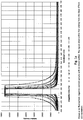
- Figures 1a-d and 2 show the effect of blood on the signal emanating from fluorescence in a sample undergoing PCR, with the vertical axes showing the relative intensity of the light and the horizontal axis showing the wavelength in nanometers (nm).
- Figure 1a depicts the results from a control sample, that is one which contains no blood.
- the signal observed is that arising from a blue 473nm LED excitation.
- Figure 1b shows the fluorescence generated by the addition of SYBR gold intercalating dye at normal concentration including the addition of 100ng (nanograms) of double stranded DNA. It shows the fluorescence saturating the detector at the higher integration times. For reference, 55,000 counts were generated over the background at 545nm.
- Figure 1c shows the effect of adding 10% by volume human blood to the sample. There is an intrinsic autofluorescence with emission peaks at 560 and 610nm.
- Figure 1d shows the results of setting up an identical experiment to that of figure 1b but with the addition of 10% by volume human blood to the sample.
- a number of absorption peaks, for example at 545nm can be observed, and also a marked increase in the autofluorescence at 610nm.
- Signal intensity at 545nm has dropped by over 92% compared to figure 1 b.
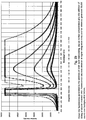
- the spectrographic output of the fluorescence from samples at 2mW red (625nm) under different parameters is shown in figure 2 .
- the graphs show the impact of with (+) and without (-) the addition of 10% by volume human blood. It illustrates that red centred dyes Cal635, Quasar70 and Quasar 705 only display 30 to 50% inhibition in the presence of blood as opposed to the 85-95% observed for other visible wavelengths.
- the figures 1a-d and 2 demonstrate in summary that the present invention overcomes the greater than 90% inhibition of fluorescence signal observed using conventional qPCR optical approaches.
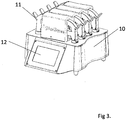
- a preferred disclosure is an instrument 10 for the field detection of amplified of nucleic acid targets in the presence of whole blood.
- the blood may be human or that of another creature - so long as it's red!
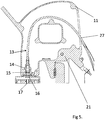
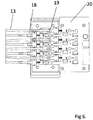
- the instrument 10 comprises eight randomly accessible reaction stations each possessing an individual optical detection head 11. There is a display monitor 12 for presenting analysis results to the end user. Each optical head 11 contains one leg of an octofurcated fiber array 13 secured in place via an SMA connector 14. Within each of these connectors is located a collimating lens 15 such that the excitation beam and the emission light emanating from the reaction vessel are collected into the fiber 13. The excitation beam is focused through a clear lid 16 to a reaction vessel 17 and to a point at the base of the reaction vessel. The distal end of the fiber array 13 is attached to eight red laser diodes 18 contained in SMA housings and each with a bandpass filter 19 to prevent unwanted wavelengths being injected into the fiber. The laser diodes 18 are driven by a PCB 2 driving the current to each device such that the excitation power can be normalised across the array 13.
- Each optical detection head 11 is mounted to the apparatus via a pivot 21 enabling the head 11 to be swivelled clear of the reaction vessel 16 so that the vessel 16 can be emplaced and removed from the heating/cooling apparatus whereby PCR can be performed on the content of the vessel.
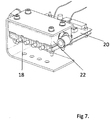
- a water cooling block 22 is arranged for stabilising the temperature of the laser diode 17 assembly.
- a laser diode 18 emitting at 635-638nm is paired with a band pass filter in the laser housing that passes 630-642 but blocks other wavelengths at OD6.to excite fluorescence in the reaction vessel.
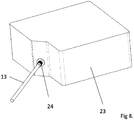
- a spectrophotometer 23 ( figure 8 ) is arranged to receive the light emission from the reaction vessels 17 via the fibre array 13 and a paired 650 or 665nm long-pass filter 24 at the entrance to the spectrophotometer 23.
- FIG. 9 shows the optical fibre array 13.
- the fibre bundle 25 on the right comprises fibres attached to the laser diodes and contain a single core. These fibres enter a splitter 26 wherefrom emerge eight fibres now containing two cores 27, one leading back to the laser diodes 18 for excitation and the other leading to the spectrophotometer 23 for detection.
- the fibre 27 is the one located in the instrument pivoting head..
- the leg leading to the spectrophotometer 23 exits the splitter having now been combined into a single fibre 28 containing eight cores in a two by four array
- reaction vessel 17 which is of microtitre capacity, is snugly held in a reaction vessel receiving cup which is associated with the working face of a peltier cell in such a way that a prescribed temperature can rapidly be reach in the reaction chamber of the reaction vessel.
- the base face of the peltier cell is associated with a heat source sink in which water is arranged to flow at a constant temperature intermediate the upper and lower temperatures of a PCR cycle.
Landscapes
- Chemical & Material Sciences (AREA)
- Life Sciences & Earth Sciences (AREA)
- Organic Chemistry (AREA)
- Zoology (AREA)
- Wood Science & Technology (AREA)
- Proteomics, Peptides & Aminoacids (AREA)
- Health & Medical Sciences (AREA)
- Engineering & Computer Science (AREA)
- Chemical Kinetics & Catalysis (AREA)
- Molecular Biology (AREA)
- General Engineering & Computer Science (AREA)
- Microbiology (AREA)
- Biotechnology (AREA)
- Biophysics (AREA)
- Analytical Chemistry (AREA)
- Physics & Mathematics (AREA)
- Biochemistry (AREA)
- Bioinformatics & Cheminformatics (AREA)
- Immunology (AREA)
- General Health & Medical Sciences (AREA)
- Genetics & Genomics (AREA)
- Investigating, Analyzing Materials By Fluorescence Or Luminescence (AREA)
- Apparatus Associated With Microorganisms And Enzymes (AREA)
- Measuring Or Testing Involving Enzymes Or Micro-Organisms (AREA)
- Investigating Or Analysing Biological Materials (AREA)
- Investigating Or Analysing Materials By The Use Of Chemical Reactions (AREA)
Description
- The present invention relates to a process and apparatus for the multiplexed detection of nucleic acid targets directly from samples containing blood. A pertinent example is the concurrent detection of a target virus together with a human control gene amplified from the human DNA present in the white blood cells.
- The limited number of publications in this area suggest that the commonly used fluorescently labelled real-time PCR methodology cannot be utilised in the presence of any significant amounts of blood in the sample to be tested. It would clearly be advantageous for researchers and clinicians to be able to rapidly detect both pathogens and human targets directly from a blood sample, for example at the point of care, without the need to perform time consuming nucleic acid extraction.
- The background to this invention lies in two distinct fields. The first is the applicant's own background knowledge in the fields of ultra-rapid PCR and the extension of this to the ability to directly amplify nucleic acids from a crude sample in a single closed tube format. The requirement for diagnostic tests that are both sensitive and take an absolute minimum time to detection has been clearly established, for example in the face of an emerging disease outbreak where in field screening would save many lives. The applicants have previously demonstrated direct rapid detection of target species from a number of matrices. One target which is both desirable and technically challenging is the direct screening of blood borne pathogens direct from a whole blood sample. The challenges comprise, firstly the amount of blood that can be accepted into the reaction and secondly the impact of the presence of this blood on the assay outcome.
- The second relevant area of background information is the work of the group Barnes et al (Mutants of Taq DNA polymerase resistant to PCR inhibitors allow DNA amplification from whole blood and crude soil samples) (full reference of any publication is needed). There are also evolved enzymes and adjuncts designed to make direct PCR in the presence of inhibitors a possibility. This work showed that it is possible through mutation of the polymerase to make enzymes capable of amplifying DNA in the presence of whole blood. The same paper highlights the issue that the present invention seeks to overcome, fluorescence inhibition observed by the presence of human blood.
- When real-time PCR is completed in the presence of whole human blood in a standard real-time thermal cycler there is observed a very high background and additionally an attenuation of fluorescence signals in the order of 85-95% depending on the wavelength of the dyes involved. The inventor has sought to overcome this with an intercalating dye approach but the significantly high background level from the whole human genomic DNA in the blood sample renders this approach both unsuited to clinical use but also makes multiplexing impossible. All clinical assays will have some form of internal control nucleic acid species and as such it has not been possible to perform direct diagnostic detection of target species from a whole blood sample.
- The inventor has repeated earlier experiments to determine the effects of blood on fluorescence collection, however there is little background literature relating to the field of PCR since it was assumed it would not work. However, there are some papers in the field of directly fluorescently imaging blood for examining the brain and other organs. The data effectively shows why there is an 85-95% reduction in fluorescence - rendering direct multiplexed detection of nucleic acid targets direct from whole blood impossible. Firstly, there are strong absorption peaks at around 541 and 577nm and these completely absorb the fluorescence output from any common dyes in these wavelengths. Secondly, there is an observable red-shift; standard systems have narrow 10-20nm band pass filters in front of the detectors and any wavelength shift will clearly move a proportion of the light away from the wavelengths which will be collected. Thirdly, there is a strength quenching effect from the presence of the haemoglobin itself. In summary the commonly used combination of wavelength insensitive detector and the use of filters to enable the direct multiplexed detection of multiple nucleic acid targets in a single closed tube format will not work in the presence of blood.
- The present invention comprises therefore a method for the detection of one or more nucleic acid targets from a sample containing whole blood.
- Mx Pro QPCR Software for Mx3000P and Mx3005P QPCR Systems, XP 055276973 is the manual of a PCR machine Stratagene MX-PRO, and discusses the use of red dyes in the context of real-time PCR labels.
- Castley 2005 Clinical Chemistry 51: 2025-2030 discusses a method of performing genotyping on "whole-blood" using a real-time PCR instrument.
- The inventors discovered that beyond the large quenching effect up to 620nm there is a much lower effect of the presence of blood, in the region of 20-30% as opposed to 85-95% inhibition and as such the system provides a means of delivering high excitation powers of red light to the sample. The second key feature is the ability to detect the emitted fluorescence signals by the use of a spectrophotometer calibrated to collect light at 650nm and ranging as far as 750nm. By use of high excitation power red light and a spectrophotometer it becomes possible, via means of a spectral deconvolution approach, to simultaneously detect multiple target species in a single fluorescence reading. A pertinent example may be to distinguish between an infection resulting from the filovirus family while excluding infections from organisms causing similar symptoms and still have spectral space for an internal control. Standard PCR optical approaches use single point excitation sources in combination with emission filters and as such there would neither be sufficient separation between dye emission wavelengths or the ability to remove cross-talk between these channels. Systems do exist that have a red or far red excitation component, but these do not allow high level multiplexing when there is an absolute requirement for.
- The present invention is defined by the claims and provides:
a method for the multiplexed detection of nucleic acid targets directly amplified in a reaction with a sample when the sample contains blood, the method characterized by excitation of the reaction at a wavelength greater than 620nm and wherein the excitation is effected with a power of at least 2mW. - The invention also provides:
the use of an apparatus for the multiplexed detection of nucleic acid targets according to the method of any one of claims 1-7 wherein the apparatus is characterized by a reaction chamber (17) arranged for effecting the amplification and means (18) for the delivery to the sample of red excitation light, at greater than 620nm wavelength, and having excitation means (18) arranged to operate with a power of at least 2mW. - In one embodiment, the method is a method for the multiplexed detection of multiple nucleic acid targets directly amplified in a single closed tube format when the sample includes whole blood and comprises the delivery to the sample of red excitation light, at greater than 620nm wavelength, at a power in the order of at least 2mW but preferably in excess of 5mW. In a preferred embodiment this excitation is delivered by a laser diode at 635nm but a range of 633-642 has proven to be applicable. To remove light emitting from the laser below the 640nm wavelength range either a band pass filter or short pass may be used. In an alternative embodiment LED excitation has been provided via coupling the LED into a large diameter core, high NA fiber and is similarly band pass filtered. Additionally a free space approach with regard to excitation has been demonstrated but the preferred embodiment is the fiber based delivery approach.
- Also disclosed is an apparatus for the multiplexed detection of multiple nucleic acid targets directly amplified when the sample includes whole blood, the apparatus comprising a reaction chamber arranged for effecting the amplification and means for the delivery to the sample of red excitation light, at greater than 620nm wavelength.
- The excitation light is preferably delivered at a power in the order of at least 2mW but even more preferably in excess of 5mW. The excitation may be delivered by a laser diode at 635nm but a range of 633-642 has proven to be applicable. To remove light emitting from the laser below the 640nm wavelength range either a band pass filter or short pass may be used. In an alternative disclosure LED excitation has been provided via coupling the LED into a large diameter core, high NA fiber and is similarly band pass filtered. Additionally a free space approach with regard to excitation has been demonstrated but the preferred disclosure is the fiber based delivery approach. The apparatus may incorporate a spectrophotometer for collation of the resultant emission profile.
- In the preferred disclosure the system takes the form of an eight well randomly accessed system for direct in field detection (
GB2015000027 US8597937 ) to enable direct freeze/thaw (EP2585581 ) mediated lysis and combined amplification in a single closed tube format. The eight well format means that all of the eight reaction vessels must transmit fluorescence signals to a single shared spectrophotometer and as such an optical fiber array forms the preferred disclosure. This consists of an octofurcated fiber array consisting of eight 200 micron core 0.22NA fibers each terminated to eight individual laser diode modules. These comprising a laser diode, control electronics, an aspheric lens for collimation and a band or short pass filter such that only light below 640nm is emitted. Each of these laser diodes is temperature controlled via means of being included within an off shoot of the HRM mechanism (US8597937 ) such that their temperature is held constant; laser diodes shift wavelength and excitation power with temperature shift and as such much be stabilised. The octofurcated delivery fibers are conjoined at a junction with eight collection fibers such that a double core fiber is terminated over the top of each sample reaction vessel, with one providing the excitation and a second collecting the emitted fluorescence. The eight collection fibers are brought together at the SMA connector terminus into an array of two by four as per the attached drawings and these are focused onto the spectrophotometer after passing through a long-pass filter that rejects any light below 650nm, such that only the intended emission light is imaged onto the spectrophotometer. - In use the preferred apparatus operates in a sequential fashion such that the illumination of each individual vessel in turn images one spectrum onto the detector. A means of electronic control then synchronises this illumination with both the time base and the heating system such that the contemporaneous reading from each well is taken at the correct time point.
- It can clearly be envisaged that disclosures from one vessel with free space illumination to a single spectrophotometer, through different numbers of spectrophotometers and indeed differing fiber arrays can be constructed that meet the central tenet - the system must have sufficient excitation power at a wavelength greater than 620nm and preferably utilise a spectrophotometer for collation of the resultant emission profile.
- Embodiments of the invention will now be particularly described by way of example with reference to the accompanying drawings of which:
-
Figure 1a is a graph of relative detected intensity against excitation light wavelength, for various integration times with a no fluorophore negative control sample and no blood present; -
Figure 1b is a graph as infigure 1a but with an intercalating dye and a DNA present; -
Figure 1c is a graph as infigure 1a but when blood is present; -
Figure 1d is a graph as infigure 1b but when blood is present; -
Figure 2 is a graph showing the fluorescence arising from the use of red excitation; -
Figure 3 is a perspective view of, an eight well field PCR apparatus; -
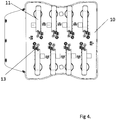
Figure 4 is a plan view of the apparatus depicted infigure 3 -
Figure 5 is a cross section of the head array of the apparatus offigure 3 ; -
Figure 6 is a plan view of the optical arrangement in the apparatus offigure 3 ; -
Figure 7 depicts an optical excitation source array for the apparatus offigure 3 ; -
Figure 8 shows a spectrophotometer; -
Figure 9 shows anoptical fibre array 13; and -
Figure 10 shows a complete PCR apparatus exposed to show the PCR system and the optics. -
Figures 1a-d and2 show the effect of blood on the signal emanating from fluorescence in a sample undergoing PCR, with the vertical axes showing the relative intensity of the light and the horizontal axis showing the wavelength in nanometers (nm). -
Figure 1a depicts the results from a control sample, that is one which contains no blood. The signal observed is that arising from a blue 473nm LED excitation. -
Figure 1b shows the fluorescence generated by the addition of SYBR gold intercalating dye at normal concentration including the addition of 100ng (nanograms) of double stranded DNA. It shows the fluorescence saturating the detector at the higher integration times. For reference, 55,000 counts were generated over the background at 545nm. -
Figure 1c shows the effect of adding 10% by volume human blood to the sample. There is an intrinsic autofluorescence with emission peaks at 560 and 610nm. -
Figure 1d shows the results of setting up an identical experiment to that offigure 1b but with the addition of 10% by volume human blood to the sample. A number of absorption peaks, for example at 545nm can be observed, and also a marked increase in the autofluorescence at 610nm. Signal intensity at 545nm has dropped by over 92% compared tofigure 1 b. - The spectrographic output of the fluorescence from samples at 2mW red (625nm) under different parameters is shown in
figure 2 . The graphs show the impact of with (+) and without (-) the addition of 10% by volume human blood. It illustrates that red centred dyes Cal635, Quasar70 andQuasar 705 only display 30 to 50% inhibition in the presence of blood as opposed to the 85-95% observed for other visible wavelengths. - The
figures 1a-d and2 demonstrate in summary that the present invention overcomes the greater than 90% inhibition of fluorescence signal observed using conventional qPCR optical approaches. - As shown in
figures 3 to 9 a preferred disclosure is aninstrument 10 for the field detection of amplified of nucleic acid targets in the presence of whole blood. The blood may be human or that of another creature - so long as it's red! - The
instrument 10 comprises eight randomly accessible reaction stations each possessing an individualoptical detection head 11. There is adisplay monitor 12 for presenting analysis results to the end user. Eachoptical head 11 contains one leg of anoctofurcated fiber array 13 secured in place via anSMA connector 14. Within each of these connectors is located acollimating lens 15 such that the excitation beam and the emission light emanating from the reaction vessel are collected into thefiber 13. The excitation beam is focused through aclear lid 16 to areaction vessel 17 and to a point at the base of the reaction vessel. The distal end of thefiber array 13 is attached to eightred laser diodes 18 contained in SMA housings and each with abandpass filter 19 to prevent unwanted wavelengths being injected into the fiber. Thelaser diodes 18 are driven by a PCB 2 driving the current to each device such that the excitation power can be normalised across thearray 13. - Each
optical detection head 11 is mounted to the apparatus via apivot 21 enabling thehead 11 to be swivelled clear of thereaction vessel 16 so that thevessel 16 can be emplaced and removed from the heating/cooling apparatus whereby PCR can be performed on the content of the vessel. - A
water cooling block 22 is arranged for stabilising the temperature of thelaser diode 17 assembly. - In this disclosure a
laser diode 18 emitting at 635-638nm is paired with a band pass filter in the laser housing that passes 630-642 but blocks other wavelengths at OD6.to excite fluorescence in the reaction vessel. - A spectrophotometer 23 (
figure 8 ) is arranged to receive the light emission from thereaction vessels 17 via thefibre array 13 and a paired 650 or 665nm long-pass filter 24 at the entrance to thespectrophotometer 23. -
Figure 9 shows theoptical fibre array 13. Thefibre bundle 25 on the right comprises fibres attached to the laser diodes and contain a single core. These fibres enter asplitter 26 wherefrom emerge eight fibres now containing twocores 27, one leading back to thelaser diodes 18 for excitation and the other leading to thespectrophotometer 23 for detection. Thefibre 27 is the one located in the instrument pivoting head.. The leg leading to thespectrophotometer 23 exits the splitter having now been combined into asingle fibre 28 containing eight cores in a two by four array - Not shown in the drawings is the means by which a PCR reaction is carried out in the
reaction vessels 17. Thereaction vessel 17, which is of microtitre capacity, is snugly held in a reaction vessel receiving cup which is associated with the working face of a peltier cell in such a way that a prescribed temperature can rapidly be reach in the reaction chamber of the reaction vessel. The base face of the peltier cell is associated with a heat source sink in which water is arranged to flow at a constant temperature intermediate the upper and lower temperatures of a PCR cycle. - In use whole human blood suspected of containing a potential target, such as a pathogen, is placed into the
reaction vessel 17 with the correct primers and probes-labelled with for example Cy5.5,quasar 670,quasar 705 or any other multiplexed dyes known in the art. The laser is shone into thereaction vessel 17 as PCR proceeds and successful amplification generates spectra that are observed even in the presence of blood.
Claims (14)
- A method for the multiplexed detection of nucleic acid targets directly amplified in a reaction with a sample when the sample contains blood, the method characterized by excitation of the reaction at a wavelength greater than 620nm and wherein the excitation is effected with a power of at least 2mW.
- A method as claimed in claim 1 and carried out in a single closed tube format.
- A method as claimed in claim 1 or claim 2 and wherein the amplification reaction comprises PCR, isothermal amplification, RT-PCR.
- A method as claimed in any one of claims 1 to 3 and wherein subsequent processing comprises spectrally deconvoluting the multiple observed spectra arising from the plurality of signals being detected.
- A method as claimed in any one of the preceding claims and wherein the excitation is delivered by laser or a light emitting diode (LED).
- A method as claimed in any one of the preceding claims and comprising effecting and controlling the reaction employing a peltier cell having a working face arranged to heat and cool the reaction and a base face kept at a constant temperature intermediate the upper and lower temperatures of the reaction.
- A method as claimed in any one of the preceding claims wherein the emitted fluorescence signals are detected by the use of a spectrophotometer, optionally calibrated to collect light at 650nm ranging as far as 750nm.
- Use of an apparatus for the multiplexed detection of nucleic acid targets according to the method of any one of claims 1-7 wherein the apparatus is characterized by a reaction chamber (17) arranged for effecting the amplification and means (18) for the delivery to the sample of red excitation light, at greater than 620nm wavelength, and having excitation means (18) arranged to operate with a power of at least 2mW.
- The use according to claim 8 wherein the apparatus has a fluorescence collection means comprising a spectrophotometer (23).
- The use according to any one of claims 8 or 9 wherein the apparatus is arranged to deliver excitation at a range of 633-640nm.
- The use according to any of claims 8-10 wherein the apparatus comprises excitation means (18) comprising one of a laser diode and a light emitting diode (LED).
- The use according to any of claims 8-11 wherein the apparatus comprises a peltier cell having a working face arranged to heat and cool the reaction and a base face arranged to be kept at a constant temperature intermediate the upper and lower temperatures of the reaction.
- The use according to any of claims 8-12 wherein the apparatus comprises a fibre array (13) arranged to convey light between the light source (18) and the reaction vessel and between the reaction vessel and a light detector.
- The use according to any of claims 8-13 wherein the apparatus comprises an array of two by four collection fibers (13) that are focused onto a spectrophotometer (23) after passing through a 665nm longpass filter (24) such that only the intended emission light is imaged onto the spectrophotometer (23).
Applications Claiming Priority (2)
| Application Number | Priority Date | Filing Date | Title |
|---|---|---|---|
| GB201503775A GB201503775D0 (en) | 2015-03-05 | 2015-03-05 | Multiplexed detection of nucleic acid targets directly from samples containing blood |
| PCT/GB2016/000046 WO2016139443A1 (en) | 2015-03-05 | 2016-03-04 | Multiplexed detection of nucleic acid targets directly from samples containing blood |
Publications (2)
| Publication Number | Publication Date |
|---|---|
| EP3334533A1 EP3334533A1 (en) | 2018-06-20 |
| EP3334533B1 true EP3334533B1 (en) | 2021-04-21 |
Family
ID=52998469
Family Applications (1)
| Application Number | Title | Priority Date | Filing Date |
|---|---|---|---|
| EP16714508.5A Active EP3334533B1 (en) | 2015-03-05 | 2016-03-04 | Multiplexed detection of nucleic acid targets directly from samples containing blood |
Country Status (5)
| Country | Link |
|---|---|
| EP (1) | EP3334533B1 (en) |
| JP (2) | JP2018507694A (en) |
| CN (1) | CN107406883B (en) |
| GB (1) | GB201503775D0 (en) |
| WO (1) | WO2016139443A1 (en) |
Families Citing this family (4)
| Publication number | Priority date | Publication date | Assignee | Title |
|---|---|---|---|---|
| GB201806762D0 (en) | 2018-04-25 | 2018-06-06 | Bg Res Ltd | Improved processes for performing direct detection |
| GB201812428D0 (en) | 2018-07-31 | 2018-09-12 | Bg Res Ltd | Improved method for pathogen detection |
| CN113607937B (en) * | 2020-12-30 | 2022-07-12 | 北京中科生仪科技有限公司 | Data processing method of PCR detection method |
| JP7393070B1 (en) | 2023-08-04 | 2023-12-06 | 株式会社ゴーフォトン | PCR method |
Family Cites Families (9)
| Publication number | Priority date | Publication date | Assignee | Title |
|---|---|---|---|---|
| JP2007521016A (en) * | 2003-10-16 | 2007-08-02 | サード・ウェーブ・テクノロジーズ・インク | Direct nucleic acid detection in body fluids |
| JP2008518621A (en) * | 2004-11-03 | 2008-06-05 | サード・ウェーブ・テクノロジーズ・インク | One-step detection assay |
| US20070098594A1 (en) * | 2005-11-03 | 2007-05-03 | Roche Molecular Systems, Inc. | Analytical multi-spectral optical detection system |
| GB0718250D0 (en) | 2007-08-29 | 2007-10-31 | B G Res Ltd | Improvements in and relating to reaction apparatus |
| WO2010146339A1 (en) * | 2009-06-15 | 2010-12-23 | Bg Research Ltd | Nucleic acid detection |
| CN101624629B (en) * | 2009-07-24 | 2012-09-05 | 上海浩源生物科技有限公司 | PCR detection method of multiple-target nucleic acid in single pipe and kit thereof |
| GB201009998D0 (en) | 2010-06-15 | 2010-07-21 | Bg Res | Cell disruption |
| WO2014059281A1 (en) * | 2012-10-11 | 2014-04-17 | The Regents Of The University Of Michigan | Fluorescence polarization assay for detecting high molecular weight molecules in biological fluids |
| GB201401584D0 (en) | 2014-01-29 | 2014-03-19 | Bg Res Ltd | Intelligent detection of biological entities |
-
2015
- 2015-03-05 GB GB201503775A patent/GB201503775D0/en not_active Ceased
-
2016
- 2016-03-04 CN CN201680013510.XA patent/CN107406883B/en active Active
- 2016-03-04 WO PCT/GB2016/000046 patent/WO2016139443A1/en not_active Ceased
- 2016-03-04 JP JP2017545888A patent/JP2018507694A/en active Pending
- 2016-03-04 EP EP16714508.5A patent/EP3334533B1/en active Active
-
2020
- 2020-02-26 JP JP2020030137A patent/JP6877605B2/en active Active
Non-Patent Citations (1)
| Title |
|---|
| EVALDAS KATILIUS ET AL: "Multiphoton excitation of fluorescent DNA base analogs", JOURNAL OF BIOMEDICAL OPTICS, vol. 11, no. 4, 1 January 2006 (2006-01-01), pages 044004, XP055655479, ISSN: 1083-3668, DOI: 10.1117/1.2337521 * |
Also Published As
| Publication number | Publication date |
|---|---|
| GB201503775D0 (en) | 2015-04-22 |
| JP2018507694A (en) | 2018-03-22 |
| WO2016139443A1 (en) | 2016-09-09 |
| CN107406883A (en) | 2017-11-28 |
| HK1244514A1 (en) | 2018-08-10 |
| JP2020110153A (en) | 2020-07-27 |
| CN107406883B (en) | 2021-06-22 |
| EP3334533A1 (en) | 2018-06-20 |
| JP6877605B2 (en) | 2021-05-26 |
Similar Documents
| Publication | Publication Date | Title |
|---|---|---|
| US10724084B2 (en) | Systems and methods for fluorescence detection with a movable detection module | |
| EP2825865B1 (en) | Portable device for detecting molecule(s) | |
| JP6877605B2 (en) | Multiple detection of direct nucleic acid targets from samples containing blood | |
| CA2525482C (en) | Improved system for multicolor real-time pcr comprising 3 to 6 pairs of forester resonance energy transfer (fret) probes | |
| EP3658898B1 (en) | Optical signal detection modules and methods | |
| US9777318B2 (en) | Systems and methods for monitoring the amplification of DNA | |
| CN103443290B (en) | Systems and methods for assessing properties of biomolecules | |
| US20170051335A1 (en) | Apparatus and method for thermocyclic biochemical operations | |
| US20080280331A1 (en) | Microfluidic Analysis System | |
| US20170247745A1 (en) | Multiplex optical detection | |
| KR102133633B1 (en) | A device for real-time detecting nucleic acids amplification products | |
| US20240017256A1 (en) | An apparatus & method for processing and analysing one or more samples | |
| CN120796450B (en) | Microfluidic isothermal amplification method and system based on multichannel spectrum detection | |
| US9464329B2 (en) | Portable systems and methods for amplifying nucleotides and detecting nucleotide sequences | |
| WO2023023808A1 (en) | A screening system to identify pathogens or genetic differences | |
| HK1244514B (en) | Multiplexed detection of nucleic acid targets directly from samples containing blood | |
| RU118064U1 (en) | DEVICE FOR SIMULTANEOUS MONITORING IN REAL TIME OF MULTIPLE NUCLEIC ACID AMPLIFICATIONS | |
| DE102014108143A1 (en) | An optical system for detecting fluorescent or luminescent signals of at least two samples | |
| Alaruri | High-power white LED-based system incorporating a CCD Offner imaging spectrometer for real-time fluorescence qPCR measurements | |
| Alaruri | High-Power White LEDs-Based System incorporating a CCD-Based Offner Imaging Spectrometer for Real-Time Fluorescence qPCR Measurements | |
| Kim et al. | Optical system for multi-channel real-time PCR detection | |
| KR20240041310A (en) | Apparatus for detecting target analyte including TIR lens | |
| HK1232954A1 (en) | Apparatus and method for thermocyclic biochemical operations | |
| CN115210556A (en) | Optical discrimination apparatus and method adapted to monitor a reaction | |
| HK1230667B (en) | Systems and methods for assessing biomolecule characteristics |
Legal Events
| Date | Code | Title | Description |
|---|---|---|---|
| STAA | Information on the status of an ep patent application or granted ep patent |
Free format text: STATUS: THE INTERNATIONAL PUBLICATION HAS BEEN MADE |
|
| PUAI | Public reference made under article 153(3) epc to a published international application that has entered the european phase |
Free format text: ORIGINAL CODE: 0009012 |
|
| STAA | Information on the status of an ep patent application or granted ep patent |
Free format text: STATUS: REQUEST FOR EXAMINATION WAS MADE |
|
| 17P | Request for examination filed |
Effective date: 20180119 |
|
| AK | Designated contracting states |
Kind code of ref document: A1 Designated state(s): AL AT BE BG CH CY CZ DE DK EE ES FI FR GB GR HR HU IE IS IT LI LT LU LV MC MK MT NL NO PL PT RO RS SE SI SK SM TR |
|
| STAA | Information on the status of an ep patent application or granted ep patent |
Free format text: STATUS: EXAMINATION IS IN PROGRESS |
|
| 17Q | First examination report despatched |
Effective date: 20190220 |
|
| REG | Reference to a national code |
Ref country code: DE Ref legal event code: R079 Ref document number: 602016056437 Country of ref document: DE Free format text: PREVIOUS MAIN CLASS: B01L0007000000 Ipc: C12Q0001684400 |
|
| GRAP | Despatch of communication of intention to grant a patent |
Free format text: ORIGINAL CODE: EPIDOSNIGR1 |
|
| STAA | Information on the status of an ep patent application or granted ep patent |
Free format text: STATUS: GRANT OF PATENT IS INTENDED |
|
| RIC1 | Information provided on ipc code assigned before grant |
Ipc: C12Q 1/686 20180101ALI20200914BHEP Ipc: C12Q 1/6851 20180101ALI20200914BHEP Ipc: C12Q 1/6844 20180101AFI20200914BHEP Ipc: B01L 7/00 20060101ALI20200914BHEP |
|
| INTG | Intention to grant announced |
Effective date: 20201016 |
|
| RAP1 | Party data changed (applicant data changed or rights of an application transferred) |
Owner name: BG RESEARCH LTD |
|
| RAP1 | Party data changed (applicant data changed or rights of an application transferred) |
Owner name: BG RESEARCH LTD |
|
| GRAS | Grant fee paid |
Free format text: ORIGINAL CODE: EPIDOSNIGR3 |
|
| GRAA | (expected) grant |
Free format text: ORIGINAL CODE: 0009210 |
|
| STAA | Information on the status of an ep patent application or granted ep patent |
Free format text: STATUS: THE PATENT HAS BEEN GRANTED |
|
| AK | Designated contracting states |
Kind code of ref document: B1 Designated state(s): AL AT BE BG CH CY CZ DE DK EE ES FI FR GB GR HR HU IE IS IT LI LT LU LV MC MK MT NL NO PL PT RO RS SE SI SK SM TR |
|
| REG | Reference to a national code |
Ref country code: GB Ref legal event code: FG4D |
|
| REG | Reference to a national code |
Ref country code: CH Ref legal event code: EP |
|
| REG | Reference to a national code |
Ref country code: DE Ref legal event code: R096 Ref document number: 602016056437 Country of ref document: DE Ref country code: IE Ref legal event code: FG4D |
|
| REG | Reference to a national code |
Ref country code: CH Ref legal event code: NV Representative=s name: ISLER AND PEDRAZZINI AG, CH |
|
| REG | Reference to a national code |
Ref country code: AT Ref legal event code: REF Ref document number: 1384703 Country of ref document: AT Kind code of ref document: T Effective date: 20210515 |
|
| REG | Reference to a national code |
Ref country code: NL Ref legal event code: FP |
|
| REG | Reference to a national code |
Ref country code: LT Ref legal event code: MG9D |
|
| REG | Reference to a national code |
Ref country code: AT Ref legal event code: MK05 Ref document number: 1384703 Country of ref document: AT Kind code of ref document: T Effective date: 20210421 |
|
| PG25 | Lapsed in a contracting state [announced via postgrant information from national office to epo] |
Ref country code: FI Free format text: LAPSE BECAUSE OF FAILURE TO SUBMIT A TRANSLATION OF THE DESCRIPTION OR TO PAY THE FEE WITHIN THE PRESCRIBED TIME-LIMIT Effective date: 20210421 Ref country code: LT Free format text: LAPSE BECAUSE OF FAILURE TO SUBMIT A TRANSLATION OF THE DESCRIPTION OR TO PAY THE FEE WITHIN THE PRESCRIBED TIME-LIMIT Effective date: 20210421 Ref country code: HR Free format text: LAPSE BECAUSE OF FAILURE TO SUBMIT A TRANSLATION OF THE DESCRIPTION OR TO PAY THE FEE WITHIN THE PRESCRIBED TIME-LIMIT Effective date: 20210421 Ref country code: BG Free format text: LAPSE BECAUSE OF FAILURE TO SUBMIT A TRANSLATION OF THE DESCRIPTION OR TO PAY THE FEE WITHIN THE PRESCRIBED TIME-LIMIT Effective date: 20210721 Ref country code: AT Free format text: LAPSE BECAUSE OF FAILURE TO SUBMIT A TRANSLATION OF THE DESCRIPTION OR TO PAY THE FEE WITHIN THE PRESCRIBED TIME-LIMIT Effective date: 20210421 |
|
| PG25 | Lapsed in a contracting state [announced via postgrant information from national office to epo] |
Ref country code: PT Free format text: LAPSE BECAUSE OF FAILURE TO SUBMIT A TRANSLATION OF THE DESCRIPTION OR TO PAY THE FEE WITHIN THE PRESCRIBED TIME-LIMIT Effective date: 20210823 Ref country code: NO Free format text: LAPSE BECAUSE OF FAILURE TO SUBMIT A TRANSLATION OF THE DESCRIPTION OR TO PAY THE FEE WITHIN THE PRESCRIBED TIME-LIMIT Effective date: 20210721 Ref country code: PL Free format text: LAPSE BECAUSE OF FAILURE TO SUBMIT A TRANSLATION OF THE DESCRIPTION OR TO PAY THE FEE WITHIN THE PRESCRIBED TIME-LIMIT Effective date: 20210421 Ref country code: RS Free format text: LAPSE BECAUSE OF FAILURE TO SUBMIT A TRANSLATION OF THE DESCRIPTION OR TO PAY THE FEE WITHIN THE PRESCRIBED TIME-LIMIT Effective date: 20210421 Ref country code: SE Free format text: LAPSE BECAUSE OF FAILURE TO SUBMIT A TRANSLATION OF THE DESCRIPTION OR TO PAY THE FEE WITHIN THE PRESCRIBED TIME-LIMIT Effective date: 20210421 Ref country code: LV Free format text: LAPSE BECAUSE OF FAILURE TO SUBMIT A TRANSLATION OF THE DESCRIPTION OR TO PAY THE FEE WITHIN THE PRESCRIBED TIME-LIMIT Effective date: 20210421 Ref country code: GR Free format text: LAPSE BECAUSE OF FAILURE TO SUBMIT A TRANSLATION OF THE DESCRIPTION OR TO PAY THE FEE WITHIN THE PRESCRIBED TIME-LIMIT Effective date: 20210722 Ref country code: IS Free format text: LAPSE BECAUSE OF FAILURE TO SUBMIT A TRANSLATION OF THE DESCRIPTION OR TO PAY THE FEE WITHIN THE PRESCRIBED TIME-LIMIT Effective date: 20210821 |
|
| REG | Reference to a national code |
Ref country code: DE Ref legal event code: R097 Ref document number: 602016056437 Country of ref document: DE |
|
| PG25 | Lapsed in a contracting state [announced via postgrant information from national office to epo] |
Ref country code: ES Free format text: LAPSE BECAUSE OF FAILURE TO SUBMIT A TRANSLATION OF THE DESCRIPTION OR TO PAY THE FEE WITHIN THE PRESCRIBED TIME-LIMIT Effective date: 20210421 Ref country code: RO Free format text: LAPSE BECAUSE OF FAILURE TO SUBMIT A TRANSLATION OF THE DESCRIPTION OR TO PAY THE FEE WITHIN THE PRESCRIBED TIME-LIMIT Effective date: 20210421 Ref country code: SK Free format text: LAPSE BECAUSE OF FAILURE TO SUBMIT A TRANSLATION OF THE DESCRIPTION OR TO PAY THE FEE WITHIN THE PRESCRIBED TIME-LIMIT Effective date: 20210421 Ref country code: SM Free format text: LAPSE BECAUSE OF FAILURE TO SUBMIT A TRANSLATION OF THE DESCRIPTION OR TO PAY THE FEE WITHIN THE PRESCRIBED TIME-LIMIT Effective date: 20210421 Ref country code: CZ Free format text: LAPSE BECAUSE OF FAILURE TO SUBMIT A TRANSLATION OF THE DESCRIPTION OR TO PAY THE FEE WITHIN THE PRESCRIBED TIME-LIMIT Effective date: 20210421 Ref country code: DK Free format text: LAPSE BECAUSE OF FAILURE TO SUBMIT A TRANSLATION OF THE DESCRIPTION OR TO PAY THE FEE WITHIN THE PRESCRIBED TIME-LIMIT Effective date: 20210421 Ref country code: EE Free format text: LAPSE BECAUSE OF FAILURE TO SUBMIT A TRANSLATION OF THE DESCRIPTION OR TO PAY THE FEE WITHIN THE PRESCRIBED TIME-LIMIT Effective date: 20210421 |
|
| PLBE | No opposition filed within time limit |
Free format text: ORIGINAL CODE: 0009261 |
|
| STAA | Information on the status of an ep patent application or granted ep patent |
Free format text: STATUS: NO OPPOSITION FILED WITHIN TIME LIMIT |
|
| 26N | No opposition filed |
Effective date: 20220124 |
|
| PG25 | Lapsed in a contracting state [announced via postgrant information from national office to epo] |
Ref country code: IS Free format text: LAPSE BECAUSE OF FAILURE TO SUBMIT A TRANSLATION OF THE DESCRIPTION OR TO PAY THE FEE WITHIN THE PRESCRIBED TIME-LIMIT Effective date: 20210821 Ref country code: AL Free format text: LAPSE BECAUSE OF FAILURE TO SUBMIT A TRANSLATION OF THE DESCRIPTION OR TO PAY THE FEE WITHIN THE PRESCRIBED TIME-LIMIT Effective date: 20210421 |
|
| PG25 | Lapsed in a contracting state [announced via postgrant information from national office to epo] |
Ref country code: IT Free format text: LAPSE BECAUSE OF FAILURE TO SUBMIT A TRANSLATION OF THE DESCRIPTION OR TO PAY THE FEE WITHIN THE PRESCRIBED TIME-LIMIT Effective date: 20210421 |
|
| PG25 | Lapsed in a contracting state [announced via postgrant information from national office to epo] |
Ref country code: MC Free format text: LAPSE BECAUSE OF FAILURE TO SUBMIT A TRANSLATION OF THE DESCRIPTION OR TO PAY THE FEE WITHIN THE PRESCRIBED TIME-LIMIT Effective date: 20210421 |
|
| REG | Reference to a national code |
Ref country code: BE Ref legal event code: MM Effective date: 20220331 |
|
| PG25 | Lapsed in a contracting state [announced via postgrant information from national office to epo] |
Ref country code: LU Free format text: LAPSE BECAUSE OF NON-PAYMENT OF DUE FEES Effective date: 20220304 Ref country code: IE Free format text: LAPSE BECAUSE OF NON-PAYMENT OF DUE FEES Effective date: 20220304 |
|
| PG25 | Lapsed in a contracting state [announced via postgrant information from national office to epo] |
Ref country code: BE Free format text: LAPSE BECAUSE OF NON-PAYMENT OF DUE FEES Effective date: 20220331 |
|
| P01 | Opt-out of the competence of the unified patent court (upc) registered |
Effective date: 20230524 |
|
| PG25 | Lapsed in a contracting state [announced via postgrant information from national office to epo] |
Ref country code: HU Free format text: LAPSE BECAUSE OF FAILURE TO SUBMIT A TRANSLATION OF THE DESCRIPTION OR TO PAY THE FEE WITHIN THE PRESCRIBED TIME-LIMIT; INVALID AB INITIO Effective date: 20160304 |
|
| PGFP | Annual fee paid to national office [announced via postgrant information from national office to epo] |
Ref country code: NL Payment date: 20240318 Year of fee payment: 9 |
|
| PG25 | Lapsed in a contracting state [announced via postgrant information from national office to epo] |
Ref country code: MK Free format text: LAPSE BECAUSE OF FAILURE TO SUBMIT A TRANSLATION OF THE DESCRIPTION OR TO PAY THE FEE WITHIN THE PRESCRIBED TIME-LIMIT Effective date: 20210421 Ref country code: CY Free format text: LAPSE BECAUSE OF FAILURE TO SUBMIT A TRANSLATION OF THE DESCRIPTION OR TO PAY THE FEE WITHIN THE PRESCRIBED TIME-LIMIT Effective date: 20210421 |
|
| PGFP | Annual fee paid to national office [announced via postgrant information from national office to epo] |
Ref country code: DE Payment date: 20240318 Year of fee payment: 9 |
|
| PGFP | Annual fee paid to national office [announced via postgrant information from national office to epo] |
Ref country code: FR Payment date: 20240318 Year of fee payment: 9 |
|
| PGFP | Annual fee paid to national office [announced via postgrant information from national office to epo] |
Ref country code: CH Payment date: 20240401 Year of fee payment: 9 |
|
| PG25 | Lapsed in a contracting state [announced via postgrant information from national office to epo] |
Ref country code: MT Free format text: LAPSE BECAUSE OF FAILURE TO SUBMIT A TRANSLATION OF THE DESCRIPTION OR TO PAY THE FEE WITHIN THE PRESCRIBED TIME-LIMIT Effective date: 20210421 |
|
| REG | Reference to a national code |
Ref country code: DE Ref legal event code: R119 Ref document number: 602016056437 Country of ref document: DE |
|
| REG | Reference to a national code |
Ref country code: CH Ref legal event code: H13 Free format text: ST27 STATUS EVENT CODE: U-0-0-H10-H13 (AS PROVIDED BY THE NATIONAL OFFICE) Effective date: 20251023 |
|
| REG | Reference to a national code |
Ref country code: NL Ref legal event code: MM Effective date: 20250401 |
|
| PG25 | Lapsed in a contracting state [announced via postgrant information from national office to epo] |
Ref country code: TR Free format text: LAPSE BECAUSE OF FAILURE TO SUBMIT A TRANSLATION OF THE DESCRIPTION OR TO PAY THE FEE WITHIN THE PRESCRIBED TIME-LIMIT Effective date: 20210421 |
|
| PG25 | Lapsed in a contracting state [announced via postgrant information from national office to epo] |
Ref country code: NL Free format text: LAPSE BECAUSE OF NON-PAYMENT OF DUE FEES Effective date: 20250401 |
|
| PG25 | Lapsed in a contracting state [announced via postgrant information from national office to epo] |
Ref country code: DE Free format text: LAPSE BECAUSE OF NON-PAYMENT OF DUE FEES Effective date: 20251001 |
|
| PG25 | Lapsed in a contracting state [announced via postgrant information from national office to epo] |
Ref country code: FR Free format text: LAPSE BECAUSE OF NON-PAYMENT OF DUE FEES Effective date: 20250331 |
|
| PG25 | Lapsed in a contracting state [announced via postgrant information from national office to epo] |
Ref country code: CH Free format text: LAPSE BECAUSE OF NON-PAYMENT OF DUE FEES Effective date: 20250331 |
|
| PGFP | Annual fee paid to national office [announced via postgrant information from national office to epo] |
Ref country code: GB Payment date: 20260331 Year of fee payment: 11 |