EP3331964B1 - High temperature fracturing fluids with nanoparticles - Google Patents
High temperature fracturing fluids with nanoparticles Download PDFInfo
- Publication number
- EP3331964B1 EP3331964B1 EP16745354.7A EP16745354A EP3331964B1 EP 3331964 B1 EP3331964 B1 EP 3331964B1 EP 16745354 A EP16745354 A EP 16745354A EP 3331964 B1 EP3331964 B1 EP 3331964B1
- Authority
- EP
- European Patent Office
- Prior art keywords
- fracturing fluid
- metal oxide
- per thousand
- litres
- polyacrylamide
- Prior art date
- Legal status (The legal status is an assumption and is not a legal conclusion. Google has not performed a legal analysis and makes no representation as to the accuracy of the status listed.)
- Active
Links
Images





Classifications
-
- C—CHEMISTRY; METALLURGY
- C09—DYES; PAINTS; POLISHES; NATURAL RESINS; ADHESIVES; COMPOSITIONS NOT OTHERWISE PROVIDED FOR; APPLICATIONS OF MATERIALS NOT OTHERWISE PROVIDED FOR
- C09K—MATERIALS FOR MISCELLANEOUS APPLICATIONS, NOT PROVIDED FOR ELSEWHERE
- C09K8/00—Compositions for drilling of boreholes or wells; Compositions for treating boreholes or wells, e.g. for completion or for remedial operations
- C09K8/60—Compositions for stimulating production by acting on the underground formation
- C09K8/84—Compositions based on water or polar solvents
- C09K8/86—Compositions based on water or polar solvents containing organic compounds
- C09K8/88—Compositions based on water or polar solvents containing organic compounds macromolecular compounds
- C09K8/887—Compositions based on water or polar solvents containing organic compounds macromolecular compounds containing cross-linking agents
-
- C—CHEMISTRY; METALLURGY
- C09—DYES; PAINTS; POLISHES; NATURAL RESINS; ADHESIVES; COMPOSITIONS NOT OTHERWISE PROVIDED FOR; APPLICATIONS OF MATERIALS NOT OTHERWISE PROVIDED FOR
- C09K—MATERIALS FOR MISCELLANEOUS APPLICATIONS, NOT PROVIDED FOR ELSEWHERE
- C09K8/00—Compositions for drilling of boreholes or wells; Compositions for treating boreholes or wells, e.g. for completion or for remedial operations
- C09K8/60—Compositions for stimulating production by acting on the underground formation
- C09K8/62—Compositions for forming crevices or fractures
- C09K8/66—Compositions based on water or polar solvents
- C09K8/68—Compositions based on water or polar solvents containing organic compounds
- C09K8/685—Compositions based on water or polar solvents containing organic compounds containing cross-linking agents
-
- C—CHEMISTRY; METALLURGY
- C09—DYES; PAINTS; POLISHES; NATURAL RESINS; ADHESIVES; COMPOSITIONS NOT OTHERWISE PROVIDED FOR; APPLICATIONS OF MATERIALS NOT OTHERWISE PROVIDED FOR
- C09K—MATERIALS FOR MISCELLANEOUS APPLICATIONS, NOT PROVIDED FOR ELSEWHERE
- C09K8/00—Compositions for drilling of boreholes or wells; Compositions for treating boreholes or wells, e.g. for completion or for remedial operations
- C09K8/60—Compositions for stimulating production by acting on the underground formation
- C09K8/84—Compositions based on water or polar solvents
- C09K8/86—Compositions based on water or polar solvents containing organic compounds
- C09K8/88—Compositions based on water or polar solvents containing organic compounds macromolecular compounds
- C09K8/882—Compositions based on water or polar solvents containing organic compounds macromolecular compounds obtained by reactions only involving carbon-to-carbon unsaturated bonds
-
- C—CHEMISTRY; METALLURGY
- C09—DYES; PAINTS; POLISHES; NATURAL RESINS; ADHESIVES; COMPOSITIONS NOT OTHERWISE PROVIDED FOR; APPLICATIONS OF MATERIALS NOT OTHERWISE PROVIDED FOR
- C09K—MATERIALS FOR MISCELLANEOUS APPLICATIONS, NOT PROVIDED FOR ELSEWHERE
- C09K8/00—Compositions for drilling of boreholes or wells; Compositions for treating boreholes or wells, e.g. for completion or for remedial operations
- C09K8/60—Compositions for stimulating production by acting on the underground formation
- C09K8/84—Compositions based on water or polar solvents
- C09K8/86—Compositions based on water or polar solvents containing organic compounds
- C09K8/88—Compositions based on water or polar solvents containing organic compounds macromolecular compounds
- C09K8/885—Compositions based on water or polar solvents containing organic compounds macromolecular compounds obtained otherwise than by reactions only involving carbon-to-carbon unsaturated bonds
-
- C—CHEMISTRY; METALLURGY
- C09—DYES; PAINTS; POLISHES; NATURAL RESINS; ADHESIVES; COMPOSITIONS NOT OTHERWISE PROVIDED FOR; APPLICATIONS OF MATERIALS NOT OTHERWISE PROVIDED FOR
- C09K—MATERIALS FOR MISCELLANEOUS APPLICATIONS, NOT PROVIDED FOR ELSEWHERE
- C09K2208/00—Aspects relating to compositions of drilling or well treatment fluids
- C09K2208/10—Nanoparticle-containing well treatment fluids
-
- C—CHEMISTRY; METALLURGY
- C09—DYES; PAINTS; POLISHES; NATURAL RESINS; ADHESIVES; COMPOSITIONS NOT OTHERWISE PROVIDED FOR; APPLICATIONS OF MATERIALS NOT OTHERWISE PROVIDED FOR
- C09K—MATERIALS FOR MISCELLANEOUS APPLICATIONS, NOT PROVIDED FOR ELSEWHERE
- C09K2208/00—Aspects relating to compositions of drilling or well treatment fluids
- C09K2208/24—Bacteria or enzyme containing gel breakers
-
- C—CHEMISTRY; METALLURGY
- C09—DYES; PAINTS; POLISHES; NATURAL RESINS; ADHESIVES; COMPOSITIONS NOT OTHERWISE PROVIDED FOR; APPLICATIONS OF MATERIALS NOT OTHERWISE PROVIDED FOR
- C09K—MATERIALS FOR MISCELLANEOUS APPLICATIONS, NOT PROVIDED FOR ELSEWHERE
- C09K2208/00—Aspects relating to compositions of drilling or well treatment fluids
- C09K2208/26—Gel breakers other than bacteria or enzymes
Definitions
- Embodiments of the present disclosure generally relate to fracturing fluids, and more specifically relate to fracturing fluids comprising metal oxide nanoparticles.
- Thermally stable synthetic polymers such as polyacrylamide
- these polymers may be used in fracturing fluids at temperatures of 149 to 204 °C (300 to 400 °F); however, these polymers have to be employed at very high concentrations in order to generate enough viscosity to suspend proppant.
- the high polymer concentrations of these fluids make it very difficult to completely degrade at the end of a fracturing operation. Thus, polymer residue within the gas reservoir can block gas flow.
- WO 2012/122505 discloses a method of forming a wellbore fluid including introducing a hydratable polymer and introducing a crosslinker comprised of at least a silica material, wherein the crosslinker has a dimension of about 5-100 nm.
- EP 2848666 discloses well treatment fluids comprising nanoparticles
- WO 2013/052359 discloses a foam formed from a dispersion comprising nanoparticles and a gaseous reactant for recovery of hydrocarbons from a subterranean reservoir.
- a high temperature fracturing fluid comprising an aqueous fluid, carboxyl-containing synthetic polymers, metal oxide nanoparticles having a particle size of 0.1 to 500 nanometers; and a metal crosslinker which crosslinks the carboxyl-containing synthetic polymers and the metal oxide nanoparticles to form a crosslinked gel.
- the metal crosslinker is selected from the group consisting of zirconium crosslinkers, titanium crosslinkers, aluminum crosslinkers, chromium crosslinkers, iron crosslinkers, hafnium crosslinkers, antimony cross linkers, and combinations thereof.
- the metal oxide nanoparticles which may include transition metal oxides or rare earth oxides, increase the viscosity of the fracturing fluid, thereby allowing for a reduction in the concentration of polyacrylamide in the fracturing fluid.
- the fracturing fluid leaves less polymer residue, while maintaining its requisite viscosity at high temperatures, for example, 149 to 204 °C (300 to 400 °F).
- the present invention relates to a fracturing fluid according to claim 1, wherein the fracturing fluid is suitable to be injected down a wellbore at a rate and applied pressure sufficient for the fracturing fluid to flow into a subterranean formation and to initiate or extend fractures in the formation.
- the fracturing fluid comprises an aqueous fluid, a carboxyl-containing synthetic polymer, a metal crosslinker, and metal oxide nanoparticles.
- the metal crosslinker is selected from the group consisting of zirconium crosslinkers, titanium crosslinkers, aluminum crosslinkers, chromium crosslinkers, iron crosslinkers, hafnium crosslinkers, antimony cross linkers, and combinations thereof.
- the metal oxide nanoparticles interact with at least a portion of carboxyl-containing synthetic polymer (also called a base fluid) to exhibit an improved stability and viscosity.
- the metal oxide nanoparticles when used in fracturing fluids, increase the viscosity to allow better suspension of the proppant in the fracturing fluid. Proper suspension of the proppant holds the subterranean formation open to allow extraction of the gas or oil without any damage to the subterranean formation.
- nanoparticles means particles having an average particle size of 0.1 to 500 nanometers (nm). In one or more embodiments, the nanoparticles may have an average particle size of 1 to 100 nm, or 1 to 80 nm, or 5 to 75 nm, or 10 to 60 nm.
- the metal oxide of the metal oxide nanoparticles is selected from the group consisting of zirconium oxide, cerium oxide, titanium oxide and combinations thereof.
- the metal oxide nanoparticles may be added to the fracturing fluid in various forms, such as in powder form or in a dispersion, for example, an aqueous dispersion. As illustrated in Example 10 as follows, it is desirable in some embodiments to add the metal oxide nanoparticles in a dispersion, because it increases crosslinking with the carboxyl-containing synthetic polymer.
- the metal oxide nanoparticles may be stabilized with a polymer, a surfactant, or a combination thereof.
- the metal oxide nanoparticles may be stabilized with a polymer, such as polyvinylpyrrolidone.
- carboxyl-containing synthetic polymers are contemplated for the fracturing fluid.
- the carboxyl-containing synthetic polymer includes polymers produced from one or more monomers containing carboxyl groups or derivatives thereof, such as salts or esters of the carboxyl containing monomers (e.g., acrylates).
- the carboxyl-containing synthetic polymer may be a polyacrylamide polymer.
- the polyacrylamide polymer and copolymer may comprise a polyacrylamide copolymer, a polyacrylamide terpolymer, or combinations thereof.
- the polyacrylamide polymer, whether a copolymer, or terpolymer, may include at least one monomer selected from the group consisting of acrylic acid, or other monomers containing carboxyl groups or their salts or esters such as acrylates, and combinations thereof.
- acrylates examples include methyl acrylate, ethyl acrylate, n -propyl acrylate, isopropyl acrylate, n-butyl acrylate, isobutyl acrylate, tert- butyl acrylate, n -octyl acrylate, and the like.
- Other monomers besides the carboxyl-containing monomer may include acrylamide, methacrylamide, N-substituted acrylamides.
- N-substituted acrylamides include, among others, N-methyl acrylamide, N-propyl acrylamide, N-butyl acrylamide, N,N-dimethyl acrylamide, N-methyl-N-sec-butyl acrylamide.
- the carboxyl-containing synthetic polymer may be a partially hydrolyzed carboxyl-containing synthetic polymer.
- the fracturing fluid also comprises a metal crosslinker which promotes crosslinking between the carboxyl-containing synthetic polymer to form three-dimensional polymer networks.
- the metal oxide nanoparticles are dispersed within this three dimension polymer network.
- the metal crosslinker is selected from the group consisting of zirconium crosslinkers, titanium crosslinkers, aluminum crosslinkers, chromium crosslinkers, iron crosslinkers, hafnium crosslinkers, antimony cross linkers, and combinations thereof.
- the metal crosslinkers may include organic metal oxide complexes.
- the metal crosslinker is a zirconium crosslinker.
- zirconium crosslinkers may include a zirconium alkanolamine complex, a zirconium alkanolamine polyol complex.
- Suitable commercial embodiments of the zirconium crosslinker may include TYZOR® 212 produced by Dorf Ketal Specialty Catalysts LLC.
- the metal crosslinker crosslinks the carboxyl-containing synthetic polymers to form a crosslinked gel.
- the fracturing fluid may comprise 0.12 to 12 kg per thousand litres (1 to 100 pounds per thousand gallons) (pptg) of crosslinked gel, or 1.8 to 6 kg per thousand litres (15 to 50 pptg) of crosslinked gel, or 2.4 to 5.4 kg per thousand litres (20 to 45 pptg) of crosslinked gel.
- the fracturing fluid may include 0.12 to 7.2 kg per thousand litres (1 to 60 pptg) of the carboxyl-containing synthetic polymer (e.g., polyacrylamide), or from 0.12 to 6 kg per thousand litres (1 to 50 pptg) of the carboxyl-containing synthetic polymer, or 1.2 to 6 kg per thousand litres (10 from 50 pptg) of the carboxyl-containing synthetic polymer, or from 2.4 to 4.8 kg per thousand litres (20 to 40 pptg) of the carboxyl-containing synthetic polymer.
- the presence of the metal oxide nanoparticles enables reduction of the carboxyl-containing synthetic polymer by amounts of 5% to 50 % by weight.
- the fracturing fluid may comprise from 0.0002% to about 2% by weight of the metal oxide nanoparticles, or from 0.002% to 0.5% by weight of metal oxide nanoparticles, or from 0.005% to 0.2% by weight of metal oxide nanoparticles. Additionally, the fracturing fluid includes from about 0.02% to about 2% by weight of the metal crosslinker.
- the fracturing fluid also includes additional additives, for example, additives that alter the salt concentration of the crosslinked gel.
- additional additives for example, additives that alter the salt concentration of the crosslinked gel.
- brine solution may be added, such as KCl or CaCl 2 .
- the fracturing fluid may also include additional components such as buffers, antioxidants, biocides, clay stabilizers, diverting agents, fluid loss additives, friction reducers, iron controllers, gel stabilizers, etc.
- the fracturing fluid may further comprise a surfactant, which may be used to lower the surface tension of the fracturing fluid.
- surfactants are contemplated, for example, anionic surfactants, cationic surfactants, amphoteric surfactants, zwitterionic surfactants, or combinations thereof.
- the fracturing fluid may also comprise a breaker to degrade the crosslinked gel.
- the breaker is used to "break" or reduce the viscosity of the fracturing fluid so that the fracturing fluid may be easily recovered from the fracture during clean up.
- the breaker may be an acid, an oxidizer, an enzyme breaker, a chelating agent, or a combination thereof. Examples of breakers include, but are not be limited to sodium bromate, potassium bromate, sodium persulfate, ammonium persulfate, potassium persulfate, and various peroxides.
- an encapsulant may be used to control or delay the release of the breaker encapsulated or disposed therein.
- the breaker may include a combination of encapsulated and unencapsulated breaker.
- the breaker may include a combination of sodium bromate and encapsulated sodium bromate.
- Table 1 as follows lists the components of the fracturing fluids used in the following Examples 1-10.
- Table 1 Product Name/Identifier Composition/Properties Supplier CELB-217-063-2 Partially hydrolyzed polyacrylamide terpolymer (80% active) ChemEOR CELB-225-010-2 Gel stabilizer/ antioxidant ChemEOR DP/EM 5015 Partially hydrolyzed polyacrylamide terpolymer (30% active) SNF TYZOR 212 Zr-based crosslinker (Type 2) Dorf Ketal Specialty Catalysts LLC ZrO 2 nanoparticles dispersion 45-55 nm; 20 wt% active in water U.S.
- Research Nanomaterials, Inc TiO 2 nanoparticles dispersion Rutile structure; 5-15 nm; 15 U.S. Research Nanomaterials, wt% active in water Inc CeO 2 nanoparticles dispersion 30-50 nm; 20 wt% active in water U.S. Research Nanomaterials, Inc Tetramethyl ammonium chloride (TMAC) dispersion Clay stabilizer (50 wt % active) PABA-152L Acetic acid/acetate buffer Precision Additives ProCap BR Encapsulated sodium bromate breaker Fritz Industries
- the crosslinked gel samples of Examples 1-6 were prepared using a Waring® blender. Referring to Table 1, polyacrylamide-based polymer, (for example, CELB-217-063-2, or DP/EM 5015), which is being used as the base fluid, was hydrated in tap water. Additional additives such as buffers, and antioxidant (CELB-225-010-2) may be added to the base fluid followed by the addition of metal oxide nanoparticles (ZrO 2 , TiO 2, and CeO 2 ) and the Zr-based metal crosslinker (Type 1, containing 5.8 wt.% ZrO 2 ).
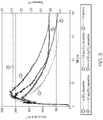
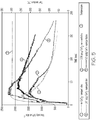
- the samples of Examples 1-6 were generally prepared in a volume of 100 mL. A 52 mL fluid sample was placed into a Grace M5600 HPHT Rheometer equipped with a B5 Bob configuration. Tests were performed using a shear-rate of 40 s -1 at the temperature profiles depicted in FIGS. 1-6 respectively.
- a viscosity comparison was performed for: 1) a fracturing fluid comprising 3.6 kg per thousand litres (30 pptg) polyacrylamide (CELB-217-063-2), 5 litres per thousand litres (5 gpt) Zr-based crosslinker (Type 1, containing 5.8 wt.% ZrO 2 ), and a 1 litre per thousand litres (1.0 gpt) ZrO 2 nanoparticle dispersion; 2) a fracturing fluid comprising 3.6 kg per thousand litres (30 pptg) polyacrylamide (CELB-217-063-2) and 5 litres per thousand litres (5 gpt) Zr-based crosslinker (Type 1, containing 5.8 wt.% ZrO 2 ), but no ZrO 2 nanoparticle dispersion; and 3) a fracturing fluid comprising 3.6 kg per thousand litres (30 pptg) polyacrylamide (CELB-217-063-2), and a
- the viscosity curves of FIG. 1 demonstrate that the combination of the Zr-based crosslinker and the ZrO 2 nanoparticle dispersion achieves better viscosity stability than when the polyacrylamide is crosslinked with 5 litres per thousand litres (5 gpt) traditional Zr-based crosslinker (Type 1) alone. Without being bound by theory, the interaction between the ZrO 2 nanoparticles and partially hydrolyzed polyacrylamide reinforces the crosslinked gel and provides improved viscosity stability for the crosslinked gel.
- a fracturing fluid comprising 3 kg per thousand litres (25 pptg) polyacrylamide (CELB-217-063-2), 5 litres per thousand litres (5 gpt) Zr-based crosslinker (Type 1, containing 5.8 wt.% ZrO 2 ), and 1 litre per thousand litres (1.0 gpt) ZrO 2 nanoparticle dispersion (45-55 nm; 20 wt% active); and 2) a fracturing fluid comprising 3.6 kg per thousand litres (30 pptg) polyacrylamide (CELB-217-063-2) and 5 litres per thousand litres (5 gpt) Zr-based crosslinker (Type 1, containing 5.8 wt.% ZrO 2 ), but no ZrO 2 nanoparticles.
- the addition of the ZrO 2 metal oxide nanoparticles enables reduction of the polymer loading by 0.6 kg per thousand
- a viscosity comparison was performed at 149 °C (300 °F) for various fracturing fluids comprising 3.6 kg per thousand litres (30 pptg) polyacrylamide (DP/EM 5015) crosslinked with 5 litres per thousand litres (5 gpt) Zr-bascd crosslinker and ZrO 2 nanoparticle dispersion (45-55 nm; 20 wt% active) at multiple concentrations.
- three samples with the following amounts of ZrO 2 nanoparticles were tested: 1 litre per thousand litres, 2 litres per thousand litres and 3 litres per thousand litres (1.0 gpt, 2.0 gpt and 3.0 gpt, respectively).
- a viscosity comparison was performed at 149 °C (300 °F) for various fracturing fluids comprising 3.6 kg per thousand litres (30 pptg) polyacrylamide (DP/EM 5015) crosslinked with 0.6 kg per thousand litres (5 pptg) Zr-based crosslinker (Type 1) and a TiO 2 nanoparticle dispersion (Rutile; 5-15 nm; 15 wt% active in a dispersion form) at multiple concentrations.
- fracturing fluids comprising 3.6 kg per thousand litres (30 pptg) polyacrylamide (DP/EM 5015) crosslinked with 0.6 kg per thousand litres (5 pptg) Zr-based crosslinker (Type 1) and a TiO 2 nanoparticle dispersion (Rutile; 5-15 nm; 15 wt% active in a dispersion form) at multiple concentrations.
- a viscosity comparison was performed at 149 °C (300 °F) for various fracturing fluids comprising 3.6 kg per thousand litres (30 pptg) polyacrylamide (DP/EM 5015) crosslinked with 0.6 kg per thousand litres (5 pptg) Zr-based crosslinker (Type 1) and CeO 2 nanoparticle dispersion (30-50 nm; 20 wt% active in a dispersion form) at multiple concentrations.
- fracturing fluids comprising 3.6 kg per thousand litres (30 pptg) polyacrylamide (DP/EM 5015) crosslinked with 0.6 kg per thousand litres (5 pptg) Zr-based crosslinker (Type 1) and CeO 2 nanoparticle dispersion (30-50 nm; 20 wt% active in a dispersion form) at multiple concentrations.
- an oxidizer type breaker fluid was added separately after the fracturing process to eliminate the polymer residue from the fracture.
- a viscosity comparison was performed at 149 °C (300 °F) for various fracturing fluids having various concentrations of sodium bromate as a breaker.
- Each crosslinked gel sample included 3.6 kg per thousand litres (30 pptg) polyacrylamide (DP/EM 5015), 0.6 kg per thousand litres (5 pptg) Zr-based crosslinker (Type 1), and 2 litres per thousand litres (2.0 gpt) ZrO 2 nanoparticle dispersion; however, the samples differ in including the following amounts of sodium bromate breaker: zero breaker; 0.06 kg per thousand litres (0.5 pptg) sodium bromate; 0.12 kg per thousand litres (1.0 pptg) sodium bromate; and 0.24 kg per thousand litres (2.0 pptg) sodium bromate. As shown, the lowest concentration sodium bromate sample, 0.06 kg per thousand litres (0.5 pptg), was sufficient to break the crosslinked fracturing fluid.
- the samples of Examples 7-9 were formulated in accordance with the following procedure.
- the water analysis for this field water is in Table 2 as follows.
- the crosslinked gel includes 3.6 kg per thousand litres (30 pptg) polyacrylamide (DP/EM 5015), which was prepared by hydrating 12 grams of DP/EM 5015 in 1 liter of water at 1000 rpm for 30 min.
- Two water sources have been tested in this strategy, Houston tap water or synthetic field water from one of the Saudi Aramco wells as listed in Table 2.
- Fluid samples were prepared using a Waring® blender.
- the fracturing fluid was prepared by taking 100 mL of base fluid, followed by addition of pH adjusting agent, gel stabilizers, nanomaterials, and then Zr-based crosslinker (Type 2).
- Table 2 the analyzed field water source from Saudi Arabia had total dissolved solids (TDS) amount of about 850 ppm.
- Table 2 Ion Concentration (mg/L) Sulfate 126 Cl 461 HCO 3 - 231 CO 3 2- 12 Ca 0.6 Mg 1.1 Fe 3.22
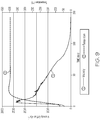
- FIG. 7 depicts the effect on viscosity at a temperature of 149 °C (300 °F) when using the combination of an unencapsulated breaker and an encapsulated breaker.
- the breaker containing fracturing fluid and the comparative breaker-free fracturing fluid comprises 3.6 kg per thousand litres (30 pptg) DP/EM 5015 (hydrated in Synthetic field water), 1.8 litres per thousand litres (1.8 gpt) 20% acetic acid, 1 litre per thousand litres (1.0 gpt) CELB-225-010-2, 2 litres per thousand litres (2.0 gpt) TMAC, 1.0 gpt ZrO 2 nanoparticle solution, and 0.5 litre per thousand litres (0.5 gpt) Zr-based crosslinker (Type 2).
- the pH of the fluid is about 5.3.
- the breaker containing fluid includes 0.03 kg per thousand litres (0.25 pptg) sodium bromate and 0.24 kg per thousand litres (2 pptg) ProCap BR. As shown, when no breaker is utilized, there is still some viscosity remaining, which correlates with polyacrylamide residue buildup.
- FIG. 8 depicts the effect on viscosity at a temperature of 177 °C (350 °F) when using an encapsulated breaker.
- the breaker containing fracturing fluid and the comparative breaker-free fracturing fluid includes 3.6 kg per thousand litres (30 pptg) DP/EM 5015, 1.8 litres per thousand litres (1.8 gpt) 20% acetic acid, 2 litres per thousand litres (2.0 gpt) CELB-225-010-2, 2 litres per thousand litres (2.0 gpt) 50% TMAC, 1 litre per thousand litres (1.0 gpt) ZrO 2 nanoparticle solution, and 0.9 litre per thousand litres (0.9 gpt) Zr-based crosslinker (Type 2) (pH ⁇ 5.4).
- the breaker containing fracturing fluid included 0.47 kg per thousand litres (3.9 pptg) ProCap BR encapsulated breaker. Similar to Example 7, when no breaker is utilized as shown in FIG. 8 , there is still some viscosity remaining, whereas the breaker reduces the viscosity to essentially zero
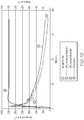
- FIG. 9 depicts the stabilizing effect on viscosity at a temperature of 204 °C (400 °F) when using ZrO 2 nanoparticles.
- the fracturing fluid which includes 3.6 kg per thousand litres (30 pptg) DP/EM 5015 (hydrated in Synthetic field water), 1.8 litres per thousand litres (1.8 gpt) 20% acetic acid, 3 litres per thousand litres (3.0 gpt) CELB-225-010-2, 2 litres per thousand litres (2.0 gpt) 50% TMAC, 1 litre per thousand litres (1.0 gpt) ZrO 2 nanoparticle solution, and 0.9 litre per thousand litres (0.9 gpt) Zr-based crosslinker (Type 2) (pH ⁇ 5.4), maintains a viscosity above 500 cP at a shear rate of 40 s -1 for about 75 min.
- fracturing fluid samples comprise the following component mixtures:
- No nanomaterials 100 mL 25# DP/EM 5015 in Tap Water, 0.37 mL PABA-152L (acetic acid/acetate buffer), 0.05 mL CELB 225-010-2, 0.2 mL 50% TMAC, and 0.06 mL Zr-based crosslinker (Type 2).
- the fluid mixture has a final pH of approximately 5.12.
- ZrO 2 nanodispersion 100 mL 25# DP/EM 5015 in Tap Water, 0.1 mL ZrO 2 nanoparticles (45-55 nm; 20% dispersion; contains 20 mg of nanoparticles), 0.37 mL PABA-152L (acetic acid/acetate buffer), 0.05 mL CELB 225-010-2, 0.2 mL 50% TMAC, and 0.06 mL Zr-based crosslinker (Type 2).
- the fluid mixture has a final pH of approximately 5.30.
- ZrO 2 powder 100 mL 25# DP/EM 5015 in Tap Water, 40 mg ZrO 2 nanoparticles (powder; high purity, 99.95%), 0.37 mL PABA-152L (acetic acid/acetate buffer), 0.05 mL CELB 225-010-2, 0.2 mL 50% TMAC, and 0.06 mL Zr-based crosslinker (Type 2).
- the fluid mixture has a final pH of approximately 5.32.
- the addition of 20 mg of ZrO 2 nanoparticles in dispersion form maintains the viscosity above 500 cP at a shear rate of 40 s -1 for 130 mins, which is a 50% increase compared to the fluid without nanoparticles. Moreover, even with addition of double amount of the ZrO 2 nanoparticle powder, the viscosity improvement (500 cp at 40 s -1 for 99 min) is less than the viscosity improvement achieved by the samples with 20 mg of ZrO 2 nanoparticles in a dispersion form.
Landscapes
- Chemical & Material Sciences (AREA)
- Life Sciences & Earth Sciences (AREA)
- General Life Sciences & Earth Sciences (AREA)
- Engineering & Computer Science (AREA)
- Materials Engineering (AREA)
- Organic Chemistry (AREA)
- Chemical Kinetics & Catalysis (AREA)
- Compositions Of Macromolecular Compounds (AREA)
- Processes Of Treating Macromolecular Substances (AREA)
- Chemically Coating (AREA)
- Inorganic Compounds Of Heavy Metals (AREA)
Applications Claiming Priority (3)
| Application Number | Priority Date | Filing Date | Title |
|---|---|---|---|
| US201562200807P | 2015-08-04 | 2015-08-04 | |
| US15/157,999 US10550314B2 (en) | 2015-08-04 | 2016-05-18 | High temperature fracturing fluids with nanoparticles |
| PCT/US2016/043321 WO2017023564A1 (en) | 2015-08-04 | 2016-07-21 | High temperature fracturing fluids with nanoparticles |
Publications (2)
| Publication Number | Publication Date |
|---|---|
| EP3331964A1 EP3331964A1 (en) | 2018-06-13 |
| EP3331964B1 true EP3331964B1 (en) | 2021-06-30 |
Family
ID=56555840
Family Applications (1)
| Application Number | Title | Priority Date | Filing Date |
|---|---|---|---|
| EP16745354.7A Active EP3331964B1 (en) | 2015-08-04 | 2016-07-21 | High temperature fracturing fluids with nanoparticles |
Country Status (7)
| Country | Link |
|---|---|
| US (1) | US10550314B2 (https=) |
| EP (1) | EP3331964B1 (https=) |
| JP (1) | JP2018527438A (https=) |
| KR (1) | KR20180036973A (https=) |
| CN (1) | CN107949617B (https=) |
| SA (1) | SA518390853B1 (https=) |
| WO (1) | WO2017023564A1 (https=) |
Families Citing this family (32)
| Publication number | Priority date | Publication date | Assignee | Title |
|---|---|---|---|---|
| US10815414B2 (en) * | 2015-05-20 | 2020-10-27 | Schlumberger Technology Corporation | Water control agent for oilfield application |
| WO2018160815A1 (en) | 2017-03-01 | 2018-09-07 | Saudi Arabian Oil Company | Additives to minimize viscosity reduction for guar/borate system under high pressure |
| CN107033868A (zh) * | 2017-04-14 | 2017-08-11 | 中国石油大学(华东) | 纳米材料强化清洁压裂液及其制备方法 |
| EP3694950A1 (en) | 2017-10-12 | 2020-08-19 | Saudi Arabian Oil Company | Polymer gel with nanocomposite crosslinker |
| US20190390101A1 (en) * | 2018-06-25 | 2019-12-26 | Saudi Arabian Oil Company | Hydraulic fracturing fluid |
| KR102266474B1 (ko) * | 2018-06-26 | 2021-06-17 | (주)골든엔지니어링 | 오일 생산정에서의 산 처리 공정 |
| US11505735B2 (en) | 2018-10-19 | 2022-11-22 | Halliburton Energy Services. Inc. | Friction reducing additives including nanoparticles |
| US11319478B2 (en) | 2019-07-24 | 2022-05-03 | Saudi Arabian Oil Company | Oxidizing gasses for carbon dioxide-based fracturing fluids |
| US11492541B2 (en) | 2019-07-24 | 2022-11-08 | Saudi Arabian Oil Company | Organic salts of oxidizing anions as energetic materials |
| US11220581B2 (en) * | 2019-11-05 | 2022-01-11 | Saudi Arabian Oil Company | Polymer gel with crosslinker and filler |
| WO2021138355A1 (en) | 2019-12-31 | 2021-07-08 | Saudi Arabian Oil Company | Viscoelastic-surfactant fracturing fluids having oxidizer |
| US11352548B2 (en) | 2019-12-31 | 2022-06-07 | Saudi Arabian Oil Company | Viscoelastic-surfactant treatment fluids having oxidizer |
| US11578263B2 (en) | 2020-05-12 | 2023-02-14 | Saudi Arabian Oil Company | Ceramic-coated proppant |
| CN111574976A (zh) * | 2020-06-28 | 2020-08-25 | 四川格瑞迪斯石油技术有限公司 | 一种增强型堵漏凝胶及其制备方法 |
| US11795382B2 (en) | 2020-07-14 | 2023-10-24 | Saudi Arabian Oil Company | Pillar fracturing |
| US20220049155A1 (en) * | 2020-08-17 | 2022-02-17 | Saudi Arabian Oil Company | Nanoclay Assisted High Temperature Crosslinked Fracturing Fluids |
| US11542815B2 (en) | 2020-11-30 | 2023-01-03 | Saudi Arabian Oil Company | Determining effect of oxidative hydraulic fracturing |
| US11867028B2 (en) | 2021-01-06 | 2024-01-09 | Saudi Arabian Oil Company | Gauge cutter and sampler apparatus |
| US11802232B2 (en) | 2021-03-10 | 2023-10-31 | Saudi Arabian Oil Company | Polymer-nanofiller hydrogels |
| US11585176B2 (en) | 2021-03-23 | 2023-02-21 | Saudi Arabian Oil Company | Sealing cracked cement in a wellbore casing |
| US11466199B1 (en) | 2021-04-23 | 2022-10-11 | Halliburton Energy Services, Inc. | Synergistic enhancement of slickwater fracturing fluids |
| CN113480991B (zh) * | 2021-07-26 | 2022-06-17 | 中国石油大学(北京) | 纳米增渗储层保护加重压裂液及其制备、破胶方法与应用 |
| US12071589B2 (en) | 2021-10-07 | 2024-08-27 | Saudi Arabian Oil Company | Water-soluble graphene oxide nanosheet assisted high temperature fracturing fluid |
| US12025589B2 (en) | 2021-12-06 | 2024-07-02 | Saudi Arabian Oil Company | Indentation method to measure multiple rock properties |
| US11867012B2 (en) | 2021-12-06 | 2024-01-09 | Saudi Arabian Oil Company | Gauge cutter and sampler apparatus |
| US12012550B2 (en) | 2021-12-13 | 2024-06-18 | Saudi Arabian Oil Company | Attenuated acid formulations for acid stimulation |
| US11572761B1 (en) | 2021-12-14 | 2023-02-07 | Saudi Arabian Oil Company | Rigless method for selective zonal isolation in subterranean formations using colloidal silica |
| US12158053B2 (en) | 2021-12-14 | 2024-12-03 | Saudi Arabian Oil Company | Selective zonal isolation |
| US11708521B2 (en) | 2021-12-14 | 2023-07-25 | Saudi Arabian Oil Company | Rigless method for selective zonal isolation in subterranean formations using polymer gels |
| CN118240538B (zh) * | 2022-12-23 | 2025-11-11 | 中国石油天然气股份有限公司 | 暂堵剂组合物、暂堵剂及其制备方法和应用 |
| US12203366B2 (en) | 2023-05-02 | 2025-01-21 | Saudi Arabian Oil Company | Collecting samples from wellbores |
| US12221580B1 (en) * | 2023-09-21 | 2025-02-11 | Saudi Arabian Oil Company | Dual-polymer hydraulic fracturing fluid and method for pumping the same into subterranean formations |
Family Cites Families (21)
| Publication number | Priority date | Publication date | Assignee | Title |
|---|---|---|---|---|
| US3921733A (en) * | 1972-02-09 | 1975-11-25 | Phillips Petroleum Co | Method of drilling a borehole using gelled polymers |
| US5591700A (en) | 1994-12-22 | 1997-01-07 | Halliburton Company | Fracturing fluid with encapsulated breaker |
| US7766099B2 (en) * | 2003-08-26 | 2010-08-03 | Halliburton Energy Services, Inc. | Methods of drilling and consolidating subterranean formation particulates |
| EP1555385A1 (en) * | 2004-01-16 | 2005-07-20 | Services Petroliers Schlumberger SA | Method of consolidating an underground formation |
| EP2126281A4 (en) | 2007-03-12 | 2014-08-27 | Univ Kansas | POLYELECTROLYTE COMPLEXES AS A TEMPERATURE GELING AGENT FOR OIL AND GAS APPLICATIONS |
| CN101644151B (zh) * | 2008-07-25 | 2014-07-02 | 贝克休斯公司 | 用于井下地层处理的多功能纳米颗粒 |
| WO2011063023A2 (en) | 2009-11-17 | 2011-05-26 | Board Of Regents, The University Of Texas System | Determination of oil saturation in reservoir rock using paramagnetic nanoparticles and magnetic field |
| US8822386B2 (en) * | 2010-06-28 | 2014-09-02 | Baker Hughes Incorporated | Nanofluids and methods of use for drilling and completion fluids |
| US9062242B2 (en) * | 2011-03-09 | 2015-06-23 | Schlumberger Technology Corporation | Cross-linkers for hydraulic fracturing fluid |
| US20150175876A1 (en) | 2011-10-03 | 2015-06-25 | The Board Of Regents Of The University Of Oklahoma | Method and foam composition for recovering hydrocarbons from a subterranean reservoir |
| JP6011075B2 (ja) * | 2012-07-03 | 2016-10-19 | 富士通株式会社 | インストール情報生成方法、インストール情報生成プログラム及びインストール情報生成装置 |
| US20140096964A1 (en) | 2012-10-10 | 2014-04-10 | Baker Hughes Incorporated | Nanoparticle modified fluids and methods of manufacture thereof |
| CN104109525B (zh) | 2013-04-17 | 2018-05-18 | 中国石油大学(北京) | 一种聚丙烯酰胺纳米复合压裂液的制备方法 |
| US20140374095A1 (en) * | 2013-06-21 | 2014-12-25 | Schlumberger Technology Corporation | Nanoparticle slurries and methods |
| US9512349B2 (en) * | 2013-07-11 | 2016-12-06 | Halliburton Energy Services, Inc. | Solid-supported crosslinker for treatment of a subterranean formation |
| US20150057196A1 (en) | 2013-08-22 | 2015-02-26 | Baker Hughes Incorporated | Aqueous downhole fluids having charged nano-particles and polymers |
| CN104419396B (zh) * | 2013-08-23 | 2018-02-02 | 中国石油天然气股份有限公司 | 一种纳米复合压裂液及其制备方法与应用 |
| AU2014224072A1 (en) * | 2013-09-12 | 2015-03-26 | Halliburton Energy Services, Inc. | Well treatment fluids and methods utilizing nano-particles |
| US20150284625A1 (en) | 2014-04-04 | 2015-10-08 | Baker Hughes Incorporated | Composition and method for treating subterranean formations using a gel composition containing nanoparticles |
| MX2017015414A (es) * | 2015-05-30 | 2018-06-19 | Mi Llc | Salmuera de alta densidad que contiene particulas coloidales. |
| CN105754578B (zh) * | 2016-03-22 | 2018-08-14 | 中国石油大学(华东) | 一种压裂液用纳米钛交联剂及其制备方法及其应用 |
-
2016
- 2016-05-18 US US15/157,999 patent/US10550314B2/en active Active
- 2016-07-21 CN CN201680045774.3A patent/CN107949617B/zh active Active
- 2016-07-21 WO PCT/US2016/043321 patent/WO2017023564A1/en not_active Ceased
- 2016-07-21 JP JP2018505666A patent/JP2018527438A/ja active Pending
- 2016-07-21 EP EP16745354.7A patent/EP3331964B1/en active Active
- 2016-07-21 KR KR1020187003562A patent/KR20180036973A/ko not_active Ceased
-
2018
- 2018-01-31 SA SA518390853A patent/SA518390853B1/ar unknown
Non-Patent Citations (1)
| Title |
|---|
| None * |
Also Published As
| Publication number | Publication date |
|---|---|
| US10550314B2 (en) | 2020-02-04 |
| CN107949617A (zh) | 2018-04-20 |
| JP2018527438A (ja) | 2018-09-20 |
| WO2017023564A1 (en) | 2017-02-09 |
| KR20180036973A (ko) | 2018-04-10 |
| CN107949617B (zh) | 2021-06-01 |
| SA518390853B1 (ar) | 2021-09-01 |
| EP3331964A1 (en) | 2018-06-13 |
| US20170037302A1 (en) | 2017-02-09 |
Similar Documents
| Publication | Publication Date | Title |
|---|---|---|
| EP3331964B1 (en) | High temperature fracturing fluids with nanoparticles | |
| US8309498B2 (en) | High temperature fracturing fluids and methods | |
| US7543644B2 (en) | Concentrated suspension of particulate additives for fracturing and other fluids | |
| US9556376B2 (en) | Solids suspension with nanoparticle-associated viscoelastic surfactant micellar fluids | |
| US8720558B2 (en) | Viscosified fluids for remediating subterranean damage | |
| US5439059A (en) | Aqueous gel fluids and methods of treating subterranean formations | |
| AU2017202607B2 (en) | Concentrated borate crosslinking solutions for use in hydraulic fracturing operations | |
| US7104327B2 (en) | Methods of fracturing high temperature subterranean zones and foamed fracturing fluids therefor | |
| GB2291907A (en) | Fracturing fluid and method | |
| US20080220995A1 (en) | Suspension of Concentrated Particulate Additives Containing Oil for Fracturing and Other Fluids | |
| CA2734377A1 (en) | Delayed crosslinking agents for high-temperature fracturing | |
| US20210062071A1 (en) | Enhanced High Temperature Crosslinked Fracturing Fluids | |
| US10407606B2 (en) | High temperature viscoelastic surfactant (VES) fluids comprising nanoparticle viscosity modifiers | |
| EP3383968A1 (en) | High temperature crosslinked fracturing fluids | |
| US10047279B2 (en) | High temperature viscoelastic surfactant (VES) fluids comprising polymeric viscosity modifiers | |
| US8367589B2 (en) | Polysaccharide treatment fluid and method of treating a subterranean formation | |
| US9169431B2 (en) | Method to complex metals in aqueous treating fluids for VES-gelled fluids | |
| CA2704542A1 (en) | High temperature aqueous-based zirconium fracturing fluid and use | |
| CA2849248C (en) | Method of fracturing with phenothiazine stabilizer | |
| US20120111567A1 (en) | Formate salts for increased stability of polyacrylamide fluids | |
| EP3004285B1 (en) | Treatment fluids with non-oxidizer class inorganic peroxide polymer breakers and methods of use thereof | |
| CA2802841C (en) | Crosslinking composition for fracturing fluids |
Legal Events
| Date | Code | Title | Description |
|---|---|---|---|
| STAA | Information on the status of an ep patent application or granted ep patent |
Free format text: STATUS: THE INTERNATIONAL PUBLICATION HAS BEEN MADE |
|
| PUAI | Public reference made under article 153(3) epc to a published international application that has entered the european phase |
Free format text: ORIGINAL CODE: 0009012 |
|
| STAA | Information on the status of an ep patent application or granted ep patent |
Free format text: STATUS: REQUEST FOR EXAMINATION WAS MADE |
|
| 17P | Request for examination filed |
Effective date: 20180305 |
|
| AK | Designated contracting states |
Kind code of ref document: A1 Designated state(s): AL AT BE BG CH CY CZ DE DK EE ES FI FR GB GR HR HU IE IS IT LI LT LU LV MC MK MT NL NO PL PT RO RS SE SI SK SM TR |
|
| AX | Request for extension of the european patent |
Extension state: BA ME |
|
| DAV | Request for validation of the european patent (deleted) | ||
| DAX | Request for extension of the european patent (deleted) | ||
| STAA | Information on the status of an ep patent application or granted ep patent |
Free format text: STATUS: EXAMINATION IS IN PROGRESS |
|
| 17Q | First examination report despatched |
Effective date: 20190314 |
|
| GRAP | Despatch of communication of intention to grant a patent |
Free format text: ORIGINAL CODE: EPIDOSNIGR1 |
|
| STAA | Information on the status of an ep patent application or granted ep patent |
Free format text: STATUS: GRANT OF PATENT IS INTENDED |
|
| INTG | Intention to grant announced |
Effective date: 20210201 |
|
| GRAS | Grant fee paid |
Free format text: ORIGINAL CODE: EPIDOSNIGR3 |
|
| GRAA | (expected) grant |
Free format text: ORIGINAL CODE: 0009210 |
|
| STAA | Information on the status of an ep patent application or granted ep patent |
Free format text: STATUS: THE PATENT HAS BEEN GRANTED |
|
| AK | Designated contracting states |
Kind code of ref document: B1 Designated state(s): AL AT BE BG CH CY CZ DE DK EE ES FI FR GB GR HR HU IE IS IT LI LT LU LV MC MK MT NL NO PL PT RO RS SE SI SK SM TR |
|
| REG | Reference to a national code |
Ref country code: CH Ref legal event code: EP |
|
| REG | Reference to a national code |
Ref country code: AT Ref legal event code: REF Ref document number: 1406343 Country of ref document: AT Kind code of ref document: T Effective date: 20210715 |
|
| REG | Reference to a national code |
Ref country code: NL Ref legal event code: FP |
|
| REG | Reference to a national code |
Ref country code: DE Ref legal event code: R096 Ref document number: 602016059984 Country of ref document: DE |
|
| REG | Reference to a national code |
Ref country code: IE Ref legal event code: FG4D |
|
| REG | Reference to a national code |
Ref country code: NO Ref legal event code: T2 Effective date: 20210630 |
|
| REG | Reference to a national code |
Ref country code: LT Ref legal event code: MG9D |
|
| PG25 | Lapsed in a contracting state [announced via postgrant information from national office to epo] |
Ref country code: BG Free format text: LAPSE BECAUSE OF FAILURE TO SUBMIT A TRANSLATION OF THE DESCRIPTION OR TO PAY THE FEE WITHIN THE PRESCRIBED TIME-LIMIT Effective date: 20210930 Ref country code: HR Free format text: LAPSE BECAUSE OF FAILURE TO SUBMIT A TRANSLATION OF THE DESCRIPTION OR TO PAY THE FEE WITHIN THE PRESCRIBED TIME-LIMIT Effective date: 20210630 Ref country code: FI Free format text: LAPSE BECAUSE OF FAILURE TO SUBMIT A TRANSLATION OF THE DESCRIPTION OR TO PAY THE FEE WITHIN THE PRESCRIBED TIME-LIMIT Effective date: 20210630 |
|
| REG | Reference to a national code |
Ref country code: AT Ref legal event code: MK05 Ref document number: 1406343 Country of ref document: AT Kind code of ref document: T Effective date: 20210630 |
|
| PG25 | Lapsed in a contracting state [announced via postgrant information from national office to epo] |
Ref country code: RS Free format text: LAPSE BECAUSE OF FAILURE TO SUBMIT A TRANSLATION OF THE DESCRIPTION OR TO PAY THE FEE WITHIN THE PRESCRIBED TIME-LIMIT Effective date: 20210630 Ref country code: SE Free format text: LAPSE BECAUSE OF FAILURE TO SUBMIT A TRANSLATION OF THE DESCRIPTION OR TO PAY THE FEE WITHIN THE PRESCRIBED TIME-LIMIT Effective date: 20210630 Ref country code: GR Free format text: LAPSE BECAUSE OF FAILURE TO SUBMIT A TRANSLATION OF THE DESCRIPTION OR TO PAY THE FEE WITHIN THE PRESCRIBED TIME-LIMIT Effective date: 20211001 Ref country code: LV Free format text: LAPSE BECAUSE OF FAILURE TO SUBMIT A TRANSLATION OF THE DESCRIPTION OR TO PAY THE FEE WITHIN THE PRESCRIBED TIME-LIMIT Effective date: 20210630 |
|
| PG25 | Lapsed in a contracting state [announced via postgrant information from national office to epo] |
Ref country code: CZ Free format text: LAPSE BECAUSE OF FAILURE TO SUBMIT A TRANSLATION OF THE DESCRIPTION OR TO PAY THE FEE WITHIN THE PRESCRIBED TIME-LIMIT Effective date: 20210630 Ref country code: EE Free format text: LAPSE BECAUSE OF FAILURE TO SUBMIT A TRANSLATION OF THE DESCRIPTION OR TO PAY THE FEE WITHIN THE PRESCRIBED TIME-LIMIT Effective date: 20210630 Ref country code: SM Free format text: LAPSE BECAUSE OF FAILURE TO SUBMIT A TRANSLATION OF THE DESCRIPTION OR TO PAY THE FEE WITHIN THE PRESCRIBED TIME-LIMIT Effective date: 20210630 Ref country code: SK Free format text: LAPSE BECAUSE OF FAILURE TO SUBMIT A TRANSLATION OF THE DESCRIPTION OR TO PAY THE FEE WITHIN THE PRESCRIBED TIME-LIMIT Effective date: 20210630 Ref country code: PT Free format text: LAPSE BECAUSE OF FAILURE TO SUBMIT A TRANSLATION OF THE DESCRIPTION OR TO PAY THE FEE WITHIN THE PRESCRIBED TIME-LIMIT Effective date: 20211102 Ref country code: RO Free format text: LAPSE BECAUSE OF FAILURE TO SUBMIT A TRANSLATION OF THE DESCRIPTION OR TO PAY THE FEE WITHIN THE PRESCRIBED TIME-LIMIT Effective date: 20210630 Ref country code: ES Free format text: LAPSE BECAUSE OF FAILURE TO SUBMIT A TRANSLATION OF THE DESCRIPTION OR TO PAY THE FEE WITHIN THE PRESCRIBED TIME-LIMIT Effective date: 20210630 Ref country code: AT Free format text: LAPSE BECAUSE OF FAILURE TO SUBMIT A TRANSLATION OF THE DESCRIPTION OR TO PAY THE FEE WITHIN THE PRESCRIBED TIME-LIMIT Effective date: 20210630 |
|
| PG25 | Lapsed in a contracting state [announced via postgrant information from national office to epo] |
Ref country code: PL Free format text: LAPSE BECAUSE OF FAILURE TO SUBMIT A TRANSLATION OF THE DESCRIPTION OR TO PAY THE FEE WITHIN THE PRESCRIBED TIME-LIMIT Effective date: 20210630 |
|
| REG | Reference to a national code |
Ref country code: CH Ref legal event code: PL |
|
| REG | Reference to a national code |
Ref country code: DE Ref legal event code: R097 Ref document number: 602016059984 Country of ref document: DE |
|
| PG25 | Lapsed in a contracting state [announced via postgrant information from national office to epo] |
Ref country code: MC Free format text: LAPSE BECAUSE OF FAILURE TO SUBMIT A TRANSLATION OF THE DESCRIPTION OR TO PAY THE FEE WITHIN THE PRESCRIBED TIME-LIMIT Effective date: 20210630 |
|
| REG | Reference to a national code |
Ref country code: BE Ref legal event code: MM Effective date: 20210731 |
|
| PG25 | Lapsed in a contracting state [announced via postgrant information from national office to epo] |
Ref country code: LI Free format text: LAPSE BECAUSE OF NON-PAYMENT OF DUE FEES Effective date: 20210731 Ref country code: DK Free format text: LAPSE BECAUSE OF FAILURE TO SUBMIT A TRANSLATION OF THE DESCRIPTION OR TO PAY THE FEE WITHIN THE PRESCRIBED TIME-LIMIT Effective date: 20210630 Ref country code: CH Free format text: LAPSE BECAUSE OF NON-PAYMENT OF DUE FEES Effective date: 20210731 |
|
| PLBE | No opposition filed within time limit |
Free format text: ORIGINAL CODE: 0009261 |
|
| STAA | Information on the status of an ep patent application or granted ep patent |
Free format text: STATUS: NO OPPOSITION FILED WITHIN TIME LIMIT |
|
| PG25 | Lapsed in a contracting state [announced via postgrant information from national office to epo] |
Ref country code: LU Free format text: LAPSE BECAUSE OF NON-PAYMENT OF DUE FEES Effective date: 20210721 Ref country code: AL Free format text: LAPSE BECAUSE OF FAILURE TO SUBMIT A TRANSLATION OF THE DESCRIPTION OR TO PAY THE FEE WITHIN THE PRESCRIBED TIME-LIMIT Effective date: 20210630 |
|
| 26N | No opposition filed |
Effective date: 20220331 |
|
| PG25 | Lapsed in a contracting state [announced via postgrant information from national office to epo] |
Ref country code: IT Free format text: LAPSE BECAUSE OF FAILURE TO SUBMIT A TRANSLATION OF THE DESCRIPTION OR TO PAY THE FEE WITHIN THE PRESCRIBED TIME-LIMIT Effective date: 20210630 Ref country code: IE Free format text: LAPSE BECAUSE OF NON-PAYMENT OF DUE FEES Effective date: 20210721 Ref country code: BE Free format text: LAPSE BECAUSE OF NON-PAYMENT OF DUE FEES Effective date: 20210731 |
|
| PG25 | Lapsed in a contracting state [announced via postgrant information from national office to epo] |
Ref country code: LT Free format text: LAPSE BECAUSE OF FAILURE TO SUBMIT A TRANSLATION OF THE DESCRIPTION OR TO PAY THE FEE WITHIN THE PRESCRIBED TIME-LIMIT Effective date: 20210630 |
|
| PG25 | Lapsed in a contracting state [announced via postgrant information from national office to epo] |
Ref country code: HU Free format text: LAPSE BECAUSE OF FAILURE TO SUBMIT A TRANSLATION OF THE DESCRIPTION OR TO PAY THE FEE WITHIN THE PRESCRIBED TIME-LIMIT; INVALID AB INITIO Effective date: 20160721 |
|
| P01 | Opt-out of the competence of the unified patent court (upc) registered |
Effective date: 20230514 |
|
| PG25 | Lapsed in a contracting state [announced via postgrant information from national office to epo] |
Ref country code: CY Free format text: LAPSE BECAUSE OF FAILURE TO SUBMIT A TRANSLATION OF THE DESCRIPTION OR TO PAY THE FEE WITHIN THE PRESCRIBED TIME-LIMIT Effective date: 20210630 |
|
| PG25 | Lapsed in a contracting state [announced via postgrant information from national office to epo] |
Ref country code: MK Free format text: LAPSE BECAUSE OF FAILURE TO SUBMIT A TRANSLATION OF THE DESCRIPTION OR TO PAY THE FEE WITHIN THE PRESCRIBED TIME-LIMIT Effective date: 20210630 |
|
| PG25 | Lapsed in a contracting state [announced via postgrant information from national office to epo] |
Ref country code: MT Free format text: LAPSE BECAUSE OF FAILURE TO SUBMIT A TRANSLATION OF THE DESCRIPTION OR TO PAY THE FEE WITHIN THE PRESCRIBED TIME-LIMIT Effective date: 20210630 |
|
| PGFP | Annual fee paid to national office [announced via postgrant information from national office to epo] |
Ref country code: GB Payment date: 20250619 Year of fee payment: 10 |
|
| PGFP | Annual fee paid to national office [announced via postgrant information from national office to epo] |
Ref country code: NO Payment date: 20250623 Year of fee payment: 10 |
|
| PGFP | Annual fee paid to national office [announced via postgrant information from national office to epo] |
Ref country code: NL Payment date: 20250620 Year of fee payment: 10 |
|
| PGFP | Annual fee paid to national office [announced via postgrant information from national office to epo] |
Ref country code: FR Payment date: 20250620 Year of fee payment: 10 |
|
| PGFP | Annual fee paid to national office [announced via postgrant information from national office to epo] |
Ref country code: DE Payment date: 20250620 Year of fee payment: 10 |
|
| PG25 | Lapsed in a contracting state [announced via postgrant information from national office to epo] |
Ref country code: TR Free format text: LAPSE BECAUSE OF FAILURE TO SUBMIT A TRANSLATION OF THE DESCRIPTION OR TO PAY THE FEE WITHIN THE PRESCRIBED TIME-LIMIT Effective date: 20210630 |