EP3329770A1 - Absorbent article for pets - Google Patents
Absorbent article for pets Download PDFInfo
- Publication number
- EP3329770A1 EP3329770A1 EP16841236.9A EP16841236A EP3329770A1 EP 3329770 A1 EP3329770 A1 EP 3329770A1 EP 16841236 A EP16841236 A EP 16841236A EP 3329770 A1 EP3329770 A1 EP 3329770A1
- Authority
- EP
- European Patent Office
- Prior art keywords
- section
- absorbent article
- pet
- attachment
- tail
- Prior art date
- Legal status (The legal status is an assumption and is not a legal conclusion. Google has not performed a legal analysis and makes no representation as to the accuracy of the status listed.)
- Granted
Links
Images



Classifications
-
- A—HUMAN NECESSITIES
- A01—AGRICULTURE; FORESTRY; ANIMAL HUSBANDRY; HUNTING; TRAPPING; FISHING
- A01K—ANIMAL HUSBANDRY; AVICULTURE; APICULTURE; PISCICULTURE; FISHING; REARING OR BREEDING ANIMALS, NOT OTHERWISE PROVIDED FOR; NEW BREEDS OF ANIMALS
- A01K23/00—Manure or urine pouches
-
- A—HUMAN NECESSITIES
- A61—MEDICAL OR VETERINARY SCIENCE; HYGIENE
- A61F—FILTERS IMPLANTABLE INTO BLOOD VESSELS; PROSTHESES; DEVICES PROVIDING PATENCY TO, OR PREVENTING COLLAPSING OF, TUBULAR STRUCTURES OF THE BODY, e.g. STENTS; ORTHOPAEDIC, NURSING OR CONTRACEPTIVE DEVICES; FOMENTATION; TREATMENT OR PROTECTION OF EYES OR EARS; BANDAGES, DRESSINGS OR ABSORBENT PADS; FIRST-AID KITS
- A61F13/00—Bandages or dressings; Absorbent pads
- A61F13/15—Absorbent pads, e.g. sanitary towels, swabs or tampons for external or internal application to the body; Supporting or fastening means therefor; Tampon applicators
-
- A—HUMAN NECESSITIES
- A61—MEDICAL OR VETERINARY SCIENCE; HYGIENE
- A61F—FILTERS IMPLANTABLE INTO BLOOD VESSELS; PROSTHESES; DEVICES PROVIDING PATENCY TO, OR PREVENTING COLLAPSING OF, TUBULAR STRUCTURES OF THE BODY, e.g. STENTS; ORTHOPAEDIC, NURSING OR CONTRACEPTIVE DEVICES; FOMENTATION; TREATMENT OR PROTECTION OF EYES OR EARS; BANDAGES, DRESSINGS OR ABSORBENT PADS; FIRST-AID KITS
- A61F13/00—Bandages or dressings; Absorbent pads
- A61F13/15—Absorbent pads, e.g. sanitary towels, swabs or tampons for external or internal application to the body; Supporting or fastening means therefor; Tampon applicators
- A61F2013/15008—Absorbent pads, e.g. sanitary towels, swabs or tampons for external or internal application to the body; Supporting or fastening means therefor; Tampon applicators characterized by the use
- A61F2013/15186—Absorbent pads, e.g. sanitary towels, swabs or tampons for external or internal application to the body; Supporting or fastening means therefor; Tampon applicators characterized by the use for animals
Definitions
- the present disclosure relates to an absorbent article that absorbs excretion from pet animals such as cats and dogs.
- Patent Literature 1 discloses one example of such an absorbent article for pet animals.
- the absorbent article includes a ventral area, a dorsal area, an intermediate area between the dorsal area and the ventral area, a liquid-permeable interior layer sheet, a liquid-impermeable exterior layer sheet, and an absorbent core interposed between the interior and exterior layer sheets.
- Patent Literature 2 discloses another absorbent article for pet animals that includes a liquid-permeable interior layer sheet, a liquid-impermeable exterior layer sheet, and an absorbent core interposed between the interior and exterior sheets . This article is worn by being encircled around the body of a pet animal.
- Patent Literature 1 The absorbent article for pet animals disclosed in Patent Literature 1 is mainly for female pet animals.
- the article is worn on the body of a pet, while covering the excretory opening (vulva), by connecting the ventral area and the dorsal area to each other with both curved side edges of the intermediate area conforming to and fit the hind legs.
- the excretion can be prevented from leaking.
- the absorbent article for pet animals disclosed in Patent Literature 2 is mainly for male pet animals.
- the article can be worn, while covering the excretory opening, with both end portions of the article, encircled around the waist, attached to each other, and whereby the excretion can be prevented from leaking out.
- a relatively old (10 to 20 years old) pet is likely to be bedridden to have one of left and right sides of its body constantly in contact with a floor surface.
- the pet having kept lying on one side for a relatively long period of time might have a bedsore.
- the bedsore is likely to occur when pressure is applied to a part of the body that has become damp.
- the absorbent article worn on an elderly pet has a risk that an inner portion might become damp to be in a wet state, which is likely to lead to a bedsore, due to the excretion.
- an absorbent sheet may be provided on a floor instead of making the pet wear the absorbent material.
- the excretion might spread outward beyond the absorbent sheet to be on the floor.
- Some bedridden pet animals are still capable of moving their legs.
- the absorbent article not stably attached to the body of such a pet might be detached due to the movement of the legs, and thus fail to absorb bodily fluid.
- the present invention is directed to an improvement of the conventional absorbent articles for pet animals, and an object of the present invention is to provide an absorbent article suitable for bedridden pet animals.
- the present invention for solving the problems described above is directed to an absorbent article for pet animals having a longitudinal direction and a transverse direction crossing each other and including: a body-facing surface and a non-body-facing surface opposite to each other; a first edge and a second edge opposite to each other in the longitudinal direction; a tail facing area facing a tail of a pet; a first section extending from the tail facing area toward the first edge and covering one of the buttocks of the pet; a second section extending from the tail facing area toward the second edge and covering another one of the buttocks of the pet; an absorbent core positioned between the first and second sections; and a fastener positioned on the first section and capable of fastening target part on the second section.
- An attachment is positioned on a non-body-facing surface of the first section and an attachment target part is positioned on a body-facing surface of the second section.
- the fastener is positioned on a body-facing surface of the first section and the attachment target part is positioned on the body-facing surface or the non-body-facing surface of the second section.
- the first section and the second section have end portions connected to each other while being overlapped with each other or facing each other.
- the absorbent article further includes a tape fastener including: a fixed portion fixed to the first section; and a free portion extending outward from the first edge in the longitudinal direction and capable of being attached to the second section, and the attachment positioned on the free portion.
- a tape fastener including: a fixed portion fixed to the first section; and a free portion extending outward from the first edge in the longitudinal direction and capable of being attached to the second section, and the attachment positioned on the free portion.
- the article can be put on a pet with a relatively large body.
- the tape fastener can be used for a tape used for disposal of the article.
- the absorbent article further has a first axis bisecting a length of the absorbent article in the width direction, and the attachment is positioned on the first axis on the first section.
- the first and the second sections may be connected to each other in a well-balanced manner.
- the absorbent article further has a first axis bisecting a length of the absorbent article in the width direction, and further includes both side areas positioned more on an outer side than both side edges of the absorbent core in the width direction and extend in the longitudinal direction, and the tail facing area is positioned on one of the side areas.
- the attachment is positioned between the one of the side areas and the first axis.
- the one of the side areas provided with the tail facing area can be pulled and attached to the other one of the side areas. This improves fittability to the body.
- a first elastic member extending in the longitudinal direction is provided on another one of the both side areas.
- the other one of the side areas is fit around the legs.
- the one side areas provided with the tail facing area is further provided with a second elastic member extending in the longitudinal direction. This improves fittability on the back.
- the one side portion extends diagonally downward relative to a body of the pet, when the absorbent article is in a worn state. Thus, a portion of the body covered with the absorbent article is small. Thus, the inner portion of the absorbent article can be prevented from becoming damp.
- the absorbent article for pet animals includes the tail facing area facing the tail of the pet and the first section and the second section covering the buttocks.
- This article can quickly absorb a relatively large amount of excretion, flowed toward the floor surface, with the absorbent core while a bedridden pet is lying on one side.
- an inner portion of the article can be prevented from becoming damp and the pet can be prevented from having a bedsore.
- the first section and the second section can be detachable attached to each other with the attachment. This improves fittability around the legs.
- an absorbent article 10 for pet animals has a longitudinal direction Y and a width direction X that cross each other, a first axis P bisecting a length in the width X, and a second axis Q bisecting a length in the longitudinal direction Y, and includes a body-facing surface facing the body of a pet 5, and a non-body-facing surface opposite to the body-facing surface.
- the absorbent article 10 has a rectangular shape, elongated in the longitudinal direction Y, defined by first and second edges 10a and 10b and both side edges 10c and 10d in between the edges. The first and the second edges 10a and 10b are opposed to each other in the longitudinal direction Y and the both side edges 10c and 10d extend along the longitudinal direction Y.
- the absorbent article 10 includes a tail facing area 13 to face the tail of the pet 5, a first section 11 extending from the tail facing area 13 towards the first edge 10a and covers one of the buttocks of the pet 5, and a second section 12 extending from the tail facing area 13 towards the second edge 10b and covers the other one of the buttocks of the pet 5.
- a first section 11 has the non-body-facing surface (outer surface) provided with an attachment 21 to be detachably attached to the second section 12.
- the second section 12 has the body-facing surface (or the non-body facing surface) provided with an attachment target part 22 to which the attachment 21 is attached.
- the absorbent article 10 has a length L1, which is approximately 300 to 1000 mm, in the longitudinal direction Y and has a length W1, which is approximately 80 to 500 mm, in the width direction X.
- the first section 11 and the second section 12 respectively have lengths L2 and L3, which are each approximately 150 to 500 mm, in the longitudinal direction Y.
- the absorbent article 10 further includes a liquid-permeable interior layer sheet 20, a liquid-impermeable exterior layer sheet 30, and an absorbent core 15.
- the liquid-permeable interior layer sheet 20 is positioned on the body-facing surface.
- the liquid-impermeable exterior layer sheet 30 may be made of a moisture-permeable plastic film, a fibrous nonwoven fabric, a laminate sheet including these, or the like, and is positioned on the non-body-facing surface.
- the absorbent core 15 is positioned in first and second sections 11 and 12 and is interposed between the interior and the exterior layer sheets 20 and 30.
- a leakage-barrier sheet 40 is provided between the absorbent core 15 and the exterior layer sheet 30, and may be made of a non-liquid permeable and moisture permeable plastic film.
- the interior and the exterior layer sheets 20 and 30 and the leakage-barrier sheet 40 extend beyond a circumference edge of the absorbent core 15. Outward extending portion of the sheets 20, 30, and 40, overlapped with each other, are adhered to each other with hotmelt adhesive applied to an interior surface(s) of at least one of the sheets facing each other.
- the absorbent article 10 has the body-facing surface side (or the body-facing surface of the interior layer sheet 20) provided with a pair of cover sheets 50 extending in the longitudinal direction Y along the first and the second side edges 10c and 10d.
- the cover sheet 50 may be made of a liquid-permeable or liquid-impermeable fibrous nonwoven fabric, a plastic film, a laminate sheet including these, or the like.
- the cover sheets 50 are fixed while covering the interior layer sheet 20, and are fixed to each other with hotmelt adhesive (not illustrated), via the outward extending portion of the exterior layer sheet 30, extending outward beyond the both side edges of the interior layer sheet 20 in the width direction X.
- the cover sheets 50 cover both side edge portions of the interior layer sheet 20, and the absorbent article 10 has both side edge portions made of liquid-impermeable sheets.
- urine discharged from the both side edges of the interior layer sheet 20 can be prevented from leaking out.
- the absorbent core 15 has a rectangular shape contoured by both edges 15a and 15b and both side edges 15c and 15d in between these edges.
- the both edges 15a and 15b are opposed to each other in the longitudinal direction Y.
- the both side edges 15c and 15d extend in the longitudinal direction Y.
- the absorbent core 15 may be made of a mixture including materials known as superabsorbent polymer (SAP) particles and wood fluff pulp, and optionally including a small amount of thermoplastic fibers.
- SAP superabsorbent polymer
- the SAP is insoluble and features excellent water absorbency (capable of absorbing water in an amount that is 10 times as much as its mass or more).
- the absorbent core 15 is covered with a core cover sheet (not illustrated) made of nonwoven fabrics or tissue paper having hydrophilicity and liquid diffusing property. The core cover sheet is adhered to the interior layer sheet 20 and/or the leakage-barrier sheet 40 with hotmelt adhesive.
- the absorbent article 10 includes first and second side areas (both side areas) 16 and 17 and an intermediate area 18 positioned between the first and the second side areas 16 and 17 in the width direction X.
- the first and the second side areas 16 and 17 are positioned more on the outer side than the both side edges 15c and 15d of the absorbent core 15 in the width direction X and extend in the longitudinal direction Y.
- the elastic member (first elastic member) 61 is secured between the exterior layer sheet 30 and the cover sheet 50, in the first side area 16, in a contractible manner under tension.
- the elastic member 61 is in a string form or a strand form, and extends in the longitudinal direction Y.
- the first side area 16 includes a side edge 16a where an elastic portion is formed. Contracting force of the elastic member 61 is applied to the elastic portion. Thus, in a worn state, the side edge 16a may be frilled.
- a second elastic member 62 extending in the longitudinal direction Y, is secured to the second side area 17. With the second elastic member 62 provided on the second side area 17, the contracting force of the second elastic member 62 is applied to an elastic portion of the sided edge 17a of the second side area 17 so that the elastic portion may be frilled.
- the cover sheet 50 includes both end fixed portions 71 and 72, fixed side portions (proximal portions) 73, and free portions 74.
- the both end fixed portions 71 and 72 are fixed to the interior layer sheet 20 respectively on the sides of the first edge 10a and the second edge 10b.
- the fixed side portions 73 extends in the longitudinal direction Y between the both end fixed portions 71 and 72 and is fixed to the interior layer sheet 20.
- the free portions 74 are positioned on inner sides (or outer sides) of the fixed side portions 73 in the width direction X.
- the free portions 74 have free edges 74a, in a sleeve form, formed by folding side edge portions of the cover sheet 50.
- Third elastic members (cuff elastic members) 63 are secured in a corresponding one of the free edges 74a in a contractible manner under tension. In the worn state of the absorbent article 10, the third elastic members 63 are stretched so that the free portions 74 may space away from the interior layer sheet 20, whereby a pair of upstanding cuffs (barrier cuffs) are formed. With the upstanding cuffs thus formed, excretion can be prevented from flowing toward the back or the legs.
- the free portions 74 of the cover sheet 50 extend in an inclined manner toward the inner side in the width direction X with the both end fixed portions 71 and 72 positioned in the first and the second side areas 16 and 17 and fixed to the body-facing surface of the interior layer sheet 20.
- the free portions 74 of the cover sheet 50 may be fixed while extending in an inclined manner toward the outer side in the width direction X. Furthermore, at least one of the both end fixed portions 71 and 72 may not be fixed. When the both end fixed portions 71 and 72 are not fixed, the free portions 74 can entirely extend in an inclined manner toward the inner side and/or the outer side in the width direction X, and thus can be inclined in any appropriate form.
- the attachment 21 is provided in an end portion 11A of the first section 11 between the edge 15a of the absorbent core 15 and the edge 10a of the absorbent article 10, in the non-skin facing surface of the first section 11.
- the attachment 21 has a rectangular shape, and includes a base sheet attached to the outer surface of the cover sheet 50 and a fastening element formed of hooks of a mechanical fastener fixed to the base sheet.
- the attachment target part 22, to which the attachment 21 is detachably attached, is provided in an end portion 12A of the second section 12 between the edge 15b of the absorbent core 15 and the edge 10b of the absorbent article 10, in the skin facing surface of the second section 12.
- the attachment target part 22 may be formed of a fibrous nonwoven fabric forming the interior layer sheet.
- a portion where the attachment target part 22 is formed may be embossed/debossed or a non-embossed/debossed spun-bound fibrous nonwoven fabric, including long fibers, may be used as the interior layer sheet. This facilitates the engagement of the hook element of the attachment 21.
- a target sheet including loops of the mechanical fastener may be provided in an area of the interior layer sheet 20 corresponding to the position of the attachment target part 22.
- the attachment 21 may be adhesive covered with a separator with a surface coated with silicon, instead of hooks, as long as the predetermined attachment strength between the attachment 21 and the attachment target part 22 can be ensured.
- the attachment 21 has a length W2, in the width direction, set to be approximately 20 mm, which is approximately 10% of the length W1 of the absorbent article 10 in the width direction X.
- the length W2 of the attachment 21 in the width direction is not larger than approximately 5% of the length W1 of the absorbent article 10 in the width direction X, the attachment 21 might be unintentionally detached when the pet wearing the article change its position.
- the length W2 is approximately 80% of the length W1
- the end portion 11A of the first section 11 and the end portion 12A of the second section 12 are in contact with each other over a relatively large area in the width direction X. This results in a higher risk of an inner portion of the absorbent article 10 becoming damp.
- the edge 21a of the attachment 21 facing the edge 10a of the absorbent article 10 is positioned more on the inner side than the edge 10a of the absorbent article 10 in the longitudinal direction Y.
- the edges 10a and 21a has a separated portion in between with a length R of approximately 10 mm in the longitudinal direction Y. With this configuration, the separated portion can serve as a holding portion in an operation of attaching the attachment 21, while holding the end portion 11A of the first section 11, to the attachment target part 22 positioned in the end portion 12A of the second section 12. This ensures no risk of a fingertip directly touching the fastening element of the attachment 21 resulting in the skin becoming irritated.
- the attachment 21 is positioned on the first axis P in the end portion 11A of the first section 11.
- the attachment 21 positioned on the first axis P ensures more balanced connection between the end portion 11A and the end portion 12A, compared to the case where the attachment 21 is arranged on one side of the first axis P, closer to any one of the first side area 16 and the second side area 17. Still, if the attachment 21 is not arranged on the first axis P, but is shifted on one of the sides closer to the first side area 16 or the second side area 17, the attachment 21 is preferably positioned on the side closer to the second side area 17 where the tail facing area 13 is positioned.
- the attachment 21, positioned between the first axis P and the first side area 16 is attached, the first side area 16 in contact with the back of the pet 5 is pulled toward the legs 7. This improves fittability of the absorbent article 10 to the body.
- the attachment 21 positioned between the first axis P and the first side area 16 might hinder the movement of the legs 7 of the pet 5.
- the tail facing area 13 includes a substantially U-shaped notch 13a through which the tail 6 of the pet 5 is inserted.
- the notch 13a may be formed by partially cutting away a sheet layer including the cover sheet 50, the interior layer sheet 20, the leakage-barrier sheet 40, and the exterior layer sheet 30 layered one on top of the other in the plan view of the absorbent article 10.
- the portion cut away may have cut sections joined to each other by fusion-bonding or adhering.
- these plurality of sheets may each be partially notched in advance, so that the notch 13a is formed when the sheets are layered one on top of the other while being joined to each other.
- the notch 13a having a shape protruding outward in the width direction X, may also have various other known shapes such as a linear shape, a circular shape, or a rectangular shape depending on the size or the shape of the tail 6 of the pet 5.
- the notch 13a which may have any size as long as the tail 6 of the pet 5 can be inserted, may be large enough to face and thus expose the anus 9 immediately below the tail 6, so that the excretion (dropping) excreted from the anus 9 can be discharged to the outside (see Fig. 6 ).
- the tail facing area 13 is an area facing the tail 6 of the pet 5 wearing the absorbent article 10.
- the tail facing area 13 may serve as a boundary area between the first and the second sections 11 and 12 that cover the buttocks of the pet 5, when the pet 5 without the tail 6 is wearing the absorbent article 10.
- the tail facing area 13 may not be provided with the notch 13a conforming to the shape of the tail 6.
- a substantially U-shaped cutting line defined by perforation, formed by partially cutting the absorbent article 10 may be provided instead of the notch 13a.
- an opening can be formed with a tongue piece, defined by the cutting line, folded outward in a state where the sheets 20 and 30 are joined or not joined.
- the tongue piece can be separated (ripped away) from the absorbent article 10, so as to be prevented from coming into contact with the excretion excreted from the anus 9.
- the tail facing area 13 may be provided with an opening, through which the tail can be inserted, formed by partially perforating the absorbent article 10, instead of the notch 13a or the cutting line defined by the perforation. When this perforation is formed, the absorbent article 10 can be prevented from being mispositioned during the wearing operation or while being worn, with the tail 6 inserted through the opening.
- the notch 13a crosses the second axis Q and is formed to be symmetrical with respect to the second axis Q.
- the first and the second sections 11 and 12 are areas extending toward the first and the second edges 10a and 10b from the tail facing area 13 provided with the notch 13a.
- the first and the second sections 11 and 12 are areas respectively extending toward the first and the second edges 10a and 10b from the second axis Q.
- the length L2 of the first section 11 in the longitudinal direction Y and the length L3 of the second section 12 in the longitudinal direction Y are substantially the same.
- the lengths L2 and L3 are each equal to or longer than approximately 50% of the length L1 of the absorbent article 10 in the longitudinal direction Y.
- the lengths L2 and L3 of the first section 11 and the second section 12 are substantially the same, so that an amount of absorbed urine, flowed toward a floor surface 4 (lower side), can be substantially the same between the case where the pet 5 has a right side in contact with the floor surface 4 and the case where the pet has a left side in contact with the floor surface 4.
- the notch 13a may be shifted toward the first edge 10a or the second edge 10b instead of crossing the second axis Q.
- the first and the second sections 11 and 12 are defined based on the center position of the tail facing area 13 (or the notch 13a) in the length direction.
- one of the length L2 of the first section 11 and the length L3 of the second section 12 may be larger than the other.
- the lengths L2 and L3 may be within a range between approximately 40% to 60% of the length L1.
- the absorbent article 10 is put on a bedridden pet 5 with the tail 6 placed in the notch 13a positioned in the tail facing area 13 while placing the first section 11 (or the second section 12) placed on one of the buttocks of the pet 5 that is not in contact with the floor surface 4.
- the body of the pet is lifted and the second section 12 (or the first section 11) is placed on the other one of the buttocks that has been in contact with the floor surface 4.
- the end portion 12A of the second section 12 is held and pulled toward the first section 11.
- the attachment target part 22, positioned on the skin facing surface of the end portion 12A is pressed against and attached to the attachment 21 positioned on the non-skin facing surface of the end portion 11A of the first section 11.
- An absorbent article generally used as a diaper for a male pet includes a diaper worn with a ventral area and a dorsal area connected to each other via an engagement means and a diaper worn with both end portions connected to each other while being encircled around the waist of the pet 5.
- Such diapers are designed for urination by the pet taking a standing/sitting position or lying down.
- an excretory opening is covered with an absorbent core, extending in a longitudinal direction (front and rear direction) of the body.
- an absorbent core positioned on a portion in contact with the floor surface is relatively small.
- bodily fluid flowing to spread toward the back side and the rear side of the pet might be failed to be sufficiently absorbed.
- the urine might leak out from the absorbent article.
- These absorbent articles have closed inner spaces for preventing the excretion from leaking. Thus, urination is likely to result in the inner space becoming damp.
- the absorbent article 10 entirely covers one of the right and left sides of the lower body that is in contact with the floor surface 4 with one of the first and the second sections 11 and 12.
- the absorbent core 15 with a relatively large area is positioned on the first and the second sections 11 and 12.
- the supporter needs to change the side of the pet 5 in contact with the floor surface (flip the pet upside down) .
- a predetermined period of time for example, two hours
- the supporter inserts one of his or her hands between the floor surface 4 and the second section 12 to hold the second section 12 and holds the first section 11 with the other hand to press the first section 11 against the buttock.
- the supporter lifts and flips the pet 5 while the absorbent article 10 is placed on the buttocks.
- the first section 11 is brought into contact with the floor surface 4, whereby the side of the pet in contact with the floor surface 4 is switched.
- the bedsore can be prevented.
- the bedridden pet 5 in a relatively healthy condition might relatively largely move its legs.
- the bodily fluid might be failed to be absorbed by the absorbent core 15.
- the absorbent article 10 according to the present embodiment has the first and the second sections 11 and 12 provided with the attachment 21 and the attachment target part 22 to be partially in contact with each other.
- the first and the second sections 11 and 12 are not separated from the body, even when the pet 5 largely moves its legs.
- the first section 11 and the second section 12 of the absorbent article 10 are partially in contact with each other via the attachment 21 and the attachment target part 22, and thus are not in contact with each other entirely over the width direction.
- the abdominal portion of the pet is not oppressed, and the inner portion of the article is not closed but is in an open state.
- the inner portion can be prevented from becoming damp, whereby the bedsore can be prevented from occurring or worsening.
- the absorbent article 10 has the elastic portion, as a result of the contracting action of the first elastic member, positioned in the side edge 16a of the first side area 16, and the elastic portion, as a result of the contracting action of the second elastic member, positioned in the side edge 17a of the second side area 17.
- the elastic portions ensure excellent fittability to the waist and legs of the pet 5.
- the elastic portions may function as means for achieving better fittability of the absorbent article 10 to the body, in addition to the connection between the attachment 21 and the attachment target part 22.
- the side edge 17a of the second side area 17 extends diagonally downward relative to the body (waist) of the pet in side view, in a state where the attachment 21 of the first section 11 is attached to the attachment target part 22 of the second section 12.
- the back side can be exposed unlike in the configuration where the side edge 17a extends along the body in side view.
- the inner portion of the absorbent article 10 can be prevented from becoming damp.
- Fig. 7 (a) is a development plan view of the absorbent article 10 according to one exemplary modification in an open state as in Fig. 2 .
- Fig. 7(b) illustrates the absorbent article 10 according to one exemplary modification in a used state.
- the attachment 21 is positioned on the skin facing surface of the first section 11, and the attachment target part 22 is positioned on the skin facing surface (or the non-skin facing surface) of the second section 12.
- the end portion 11A of the first section 11 and the end portion 12A of the second section 12 can be connected to each other while facing each other, with the attachment 21 attached to the attachment target part 22 formed as a part of the interior layer sheet 20.
- the attachment 21 may be positioned on the non-skin facing surface of the end portion 12A of the second section 12.
- end portion 11A of the first section 11 and the end portion 12A of the second section 12 may be connected to each other while overlapping with each other in the front and rear direction in the worn state, with the attachment 21 attached to the attachment target part 22 formed as a part of the exterior layer sheet 30.
- Fig. 8 (a) is a plan view illustrating the absorbent article 10 according to another modification, in an open state as in Fig. 3 .
- Fig. 8(b) is a cross-sectional view taken along line VIII(b)-VIII(b) in Fig. 8 .
- a tape fastener 80 is provided on the non-skin facing surface of the end portion 11A of the first section 11.
- the tape fastener 80 is made of one piece of tape material folded to have a Z-shaped cross section, and includes a fixed portion 81 fixed to the first section 11 via a joint area 79 formed by applying hotmelt adhesive, and a free portion 82 detachably attached to the fixed portion 81 while being in a folded state.
- the free portion 82 of the tape fastener 80 includes a first free portion 82A that continues from the fixed portion 81 and faces the fixed portion 81 in a thickness direction Z of the tape fastener 80 by being folded relative to the fixed portion 81 and a second free portion 82B continuing from the first free portion 82A and faces the first free portion 82A in the thickness direction Z.
- the tape fastener 80 further includes a first folded portion 83A and a second folded portion 83B positioned more on the outer side than the first folded portion 83A in the width direction X.
- the fixed portion 81 and the first and the second free portions 82A and 82B, in a layered state, are detachably attached each other via detachably attaching portions 85 and 86 positioned on the first and the second folded portions 83A and 83B.
- the free portion 82 further includes a holding portion 87 extending outward from the detachably attaching portion 85, positioned on the first folded portion 83A, in the width direction X.
- the second free portion 82B, between the detachably attaching portions 85 and 86, has an inner surface provided with the attachment portion 88.
- the attachment portion 88 is formed of a hook sheet including the hook element of the mechanical fastener. The hook sheet is attached to the tape material.
- the detachably attaching portions 85 and 86 may be formed by performing known pressing processing and heat pressing processing. For example, known embossing/debossing processing or supersonic processing may be employed.
- the absorbent article 10 with the attachment 88 provided to the free portion 82 of the tape fastener 80 is put on the pet 5 as follows. Specifically, a user holds and pulls the holding portion 87 toward the outer side in the width direction X, so that the detachably attaching portions 85 and 86 are detached from each other. Thus, the tape fastener 80 is opened. Then, the user presses and attaches the attachment 88 to the attachment target part 22 positioned on the non-skin facing surface of the second section 12 while holding the holding portion 87.
- end portions of the first section 11 and the second section 12 do not overlap with each other or overlap with each other only in a relatively small area.
- the first section 11 and the second section 12 can be stably attached to each other by extending in the tape fastener 80.
- An edge 79a of a joint area 79 of the tape fastener 80 and an edge 10a of the absorbent article 10 are separated from each other, in the longitudinal direction Y, so that the body is not stimulated due to stiffness of the tape fastener 80.
- the separated portion might be lifted from the body.
- the attachment portion 88 is attached to the attachment target part 22 with the tape fastener 80 extended, the separated portion is pressed against the body and thus can be prevented from lifting from the body.
- the tape fastener 80 may be provided on the skin facing surface instead of the non-skin facing surface of the first section 11.
- a tape fastener arranged to be in a Y shape or an I shape in plan view, instead of the Z cross-sectional shape as in the modification may be employed.
- the tape fastener 80 may be used as a tape for maintaining a rolled state, when the absorbent article 10 that has been used is discarded in a rolled form.
- the components of the absorbent article 10 are not limited to those described in this description, and known materials generally used in this technical field may be used, unless otherwise noted.
- the terms used in this specification, such as “first”, “second”, and “third”, are used merely for the distinction between similar elements, positions, or the like.
Landscapes
- Life Sciences & Earth Sciences (AREA)
- Environmental Sciences (AREA)
- Health & Medical Sciences (AREA)
- Animal Husbandry (AREA)
- Biodiversity & Conservation Biology (AREA)
- Heart & Thoracic Surgery (AREA)
- Engineering & Computer Science (AREA)
- Biomedical Technology (AREA)
- Epidemiology (AREA)
- Vascular Medicine (AREA)
- Animal Behavior & Ethology (AREA)
- General Health & Medical Sciences (AREA)
- Public Health (AREA)
- Veterinary Medicine (AREA)
- Housing For Livestock And Birds (AREA)
- Absorbent Articles And Supports Therefor (AREA)
Abstract
Description
- The present disclosure relates to an absorbent article that absorbs excretion from pet animals such as cats and dogs.
- Absorbent articles worn on the body of pet animals such as cats and dogs have conventionally been known. Patent Literature 1 discloses one example of such an absorbent article for pet animals. Specifically, the absorbent article includes a ventral area, a dorsal area, an intermediate area between the dorsal area and the ventral area, a liquid-permeable interior layer sheet, a liquid-impermeable exterior layer sheet, and an absorbent core interposed between the interior and exterior layer sheets.
- Patent Literature 2 discloses another absorbent article for pet animals that includes a liquid-permeable interior layer sheet, a liquid-impermeable exterior layer sheet, and an absorbent core interposed between the interior and exterior sheets . This article is worn by being encircled around the body of a pet animal.
-
- PTL 1: Japanese Unexamined Patent Application Publication No.
2004-159591 JP2004-159591A - PTL 2: Japanese Unexamined Patent Application Publication No.
2012-187095 JP2012-187095A - The absorbent article for pet animals disclosed in Patent Literature 1 is mainly for female pet animals. The article is worn on the body of a pet, while covering the excretory opening (vulva), by connecting the ventral area and the dorsal area to each other with both curved side edges of the intermediate area conforming to and fit the hind legs. Thus, the excretion can be prevented from leaking.
- The absorbent article for pet animals disclosed in Patent Literature 2 is mainly for male pet animals. The article can be worn, while covering the excretory opening, with both end portions of the article, encircled around the waist, attached to each other, and whereby the excretion can be prevented from leaking out.
- A relatively old (10 to 20 years old) pet is likely to be bedridden to have one of left and right sides of its body constantly in contact with a floor surface. The pet having kept lying on one side for a relatively long period of time might have a bedsore. The bedsore is likely to occur when pressure is applied to a part of the body that has become damp. In this context, the absorbent article worn on an elderly pet has a risk that an inner portion might become damp to be in a wet state, which is likely to lead to a bedsore, due to the excretion. To prevent the inner portion from becoming damp, an absorbent sheet may be provided on a floor instead of making the pet wear the absorbent material. However, this results in the body of the pet being soiled by the excretion. Furthermore, the excretion might spread outward beyond the absorbent sheet to be on the floor.
- Some bedridden pet animals are still capable of moving their legs. The absorbent article not stably attached to the body of such a pet might be detached due to the movement of the legs, and thus fail to absorb bodily fluid.
- The present invention is directed to an improvement of the conventional absorbent articles for pet animals, and an object of the present invention is to provide an absorbent article suitable for bedridden pet animals.
- The present invention for solving the problems described above is directed to an absorbent article for pet animals having a longitudinal direction and a transverse direction crossing each other and including: a body-facing surface and a non-body-facing surface opposite to each other; a first edge and a second edge opposite to each other in the longitudinal direction; a tail facing area facing a tail of a pet; a first section extending from the tail facing area toward the first edge and covering one of the buttocks of the pet; a second section extending from the tail facing area toward the second edge and covering another one of the buttocks of the pet; an absorbent core positioned between the first and second sections; and a fastener positioned on the first section and capable of fastening target part on the second section.
- An attachment is positioned on a non-body-facing surface of the first section and an attachment target part is positioned on a body-facing surface of the second section. Thus, the first section and the second section can be connected to each other, and the absorbent article should not come unfastened from the body owing to the movement of the legs.
- The fastener is positioned on a body-facing surface of the first section and the attachment target part is positioned on the body-facing surface or the non-body-facing surface of the second section. The first section and the second section have end portions connected to each other while being overlapped with each other or facing each other.
- The absorbent article further includes a tape fastener including: a fixed portion fixed to the first section; and a free portion extending outward from the first edge in the longitudinal direction and capable of being attached to the second section, and the attachment positioned on the free portion. Thus, the article can be put on a pet with a relatively large body. Furthermore, the tape fastener can be used for a tape used for disposal of the article.
- The absorbent article further has a first axis bisecting a length of the absorbent article in the width direction, and the attachment is positioned on the first axis on the first section. Thus, the first and the second sections may be connected to each other in a well-balanced manner.
- The absorbent article further has a first axis bisecting a length of the absorbent article in the width direction, and further includes both side areas positioned more on an outer side than both side edges of the absorbent core in the width direction and extend in the longitudinal direction, and the tail facing area is positioned on one of the side areas. Thus, a putting operation can be smoothly performed with the tail stably attached to the tail facing area.
- The attachment is positioned between the one of the side areas and the first axis. Thus, the one of the side areas provided with the tail facing area can be pulled and attached to the other one of the side areas. This improves fittability to the body.
- A first elastic member extending in the longitudinal direction is provided on another one of the both side areas. Thus, the other one of the side areas is fit around the legs.
- The one side areas provided with the tail facing area is further provided with a second elastic member extending in the longitudinal direction. This improves fittability on the back.
- The one side portion extends diagonally downward relative to a body of the pet, when the absorbent article is in a worn state. Thus, a portion of the body covered with the absorbent article is small. Thus, the inner portion of the absorbent article can be prevented from becoming damp.
- The absorbent article for pet animals according to one or more of embodiments according to the present invention includes the tail facing area facing the tail of the pet and the first section and the second section covering the buttocks. This article can quickly absorb a relatively large amount of excretion, flowed toward the floor surface, with the absorbent core while a bedridden pet is lying on one side. Thus, an inner portion of the article can be prevented from becoming damp and the pet can be prevented from having a bedsore. The first section and the second section can be detachable attached to each other with the attachment. This improves fittability around the legs.
- The drawings illustrate specific embodiments of the present invention, including optional and preferred embodiments as well as essential features of the invention.
- [
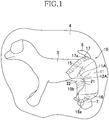
Fig. 1] Fig. 1 is a diagram illustrating a pet, wearing an absorbent article for pet animals according to a first embodiment of the present invention, is lying on one side. - [
Fig. 2] Fig 2 is a partially cut away development plan view of the absorbent article, expanded in a longitudinal direction and a width direction, to the maximum extent allowed by elastic members (until the gather produced by compressing effect of the elastic members disappear), as viewed from a body-facing surface side. - [
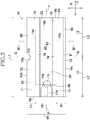
Fig. 3] Fig. 3 is a development plan view of the absorbent article in the expanded state, as inFig. 2 , as viewed from a non-body-facing surface side. - [
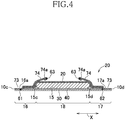
Fig. 4] Fig. 4 is a cross-sectional view taken along line IV-IV inFig. 2 . - [
Fig. 5] Fig. 5 is a diagram illustrating the pet lying on a side opposite to that inFig. 1 . - [
Fig. 6] Fig. 6 is a rear view of the pet wearing the absorbent article, as viewed from a rear side. - [
Fig. 7] Fig. 7(a) is a development plan view of an absorbent article according to one exemplary modification, under a condition similar to that inFig. 2 , andFig. 7(b) is a diagram illustrating the absorbent article according to the exemplary modification in a used state. - [
Fig. 8] Fig. 8(a) is a development plan view of an absorbent article according to another exemplary modification, under a condition similar to that inFig. 3 , andFig, 8(b) is a cross-sectional view taken along line VIII(b)-VIII(b) inFig. 8 (a) . - The embodiments described below relate to an absorbent article for pet animals illustrated in
Fig. 1 to Fig. 8 , including both optional and preferred features as well as those features which are essential features of the present invention. - As illustrated in
Fig. 1 to Fig. 4 , anabsorbent article 10 for pet animals has a longitudinal direction Y and a width direction X that cross each other, a first axis P bisecting a length in the width X, and a second axis Q bisecting a length in the longitudinal direction Y, and includes a body-facing surface facing the body of apet 5, and a non-body-facing surface opposite to the body-facing surface. Theabsorbent article 10 has a rectangular shape, elongated in the longitudinal direction Y, defined by first andsecond edges second edges - The
absorbent article 10 includes atail facing area 13 to face the tail of thepet 5, afirst section 11 extending from thetail facing area 13 towards thefirst edge 10a and covers one of the buttocks of thepet 5, and asecond section 12 extending from thetail facing area 13 towards thesecond edge 10b and covers the other one of the buttocks of thepet 5. - As illustrated in
Fig. 3 , afirst section 11 has the non-body-facing surface (outer surface) provided with anattachment 21 to be detachably attached to thesecond section 12. Thesecond section 12 has the body-facing surface (or the non-body facing surface) provided with anattachment target part 22 to which theattachment 21 is attached. - In
Fig. 2 , theabsorbent article 10 has a length L1, which is approximately 300 to 1000 mm, in the longitudinal direction Y and has a length W1, which is approximately 80 to 500 mm, in the width direction X. Thefirst section 11 and thesecond section 12 respectively have lengths L2 and L3, which are each approximately 150 to 500 mm, in the longitudinal direction Y. - The
absorbent article 10 further includes a liquid-permeableinterior layer sheet 20, a liquid-impermeableexterior layer sheet 30, and anabsorbent core 15. The liquid-permeableinterior layer sheet 20 is positioned on the body-facing surface. The liquid-impermeableexterior layer sheet 30 may be made of a moisture-permeable plastic film, a fibrous nonwoven fabric, a laminate sheet including these, or the like, and is positioned on the non-body-facing surface. Theabsorbent core 15 is positioned in first andsecond sections exterior layer sheets barrier sheet 40 is provided between theabsorbent core 15 and theexterior layer sheet 30, and may be made of a non-liquid permeable and moisture permeable plastic film. The interior and theexterior layer sheets barrier sheet 40 extend beyond a circumference edge of theabsorbent core 15. Outward extending portion of thesheets - The
absorbent article 10 has the body-facing surface side (or the body-facing surface of the interior layer sheet 20) provided with a pair ofcover sheets 50 extending in the longitudinal direction Y along the first and the second side edges 10c and 10d. Thecover sheet 50 may be made of a liquid-permeable or liquid-impermeable fibrous nonwoven fabric, a plastic film, a laminate sheet including these, or the like. Thecover sheets 50 are fixed while covering theinterior layer sheet 20, and are fixed to each other with hotmelt adhesive (not illustrated), via the outward extending portion of theexterior layer sheet 30, extending outward beyond the both side edges of theinterior layer sheet 20 in the width direction X. As described above, thecover sheets 50 cover both side edge portions of theinterior layer sheet 20, and theabsorbent article 10 has both side edge portions made of liquid-impermeable sheets. Thus, urine discharged from the both side edges of theinterior layer sheet 20 can be prevented from leaking out. - The
absorbent core 15 has a rectangular shape contoured by bothedges edges absorbent core 15 may be made of a mixture including materials known as superabsorbent polymer (SAP) particles and wood fluff pulp, and optionally including a small amount of thermoplastic fibers. The SAP is insoluble and features excellent water absorbency (capable of absorbing water in an amount that is 10 times as much as its mass or more). Theabsorbent core 15 is covered with a core cover sheet (not illustrated) made of nonwoven fabrics or tissue paper having hydrophilicity and liquid diffusing property. The core cover sheet is adhered to theinterior layer sheet 20 and/or the leakage-barrier sheet 40 with hotmelt adhesive. - As illustrated in
Fig. 2 andFig. 3 , theabsorbent article 10 includes first and second side areas (both side areas) 16 and 17 and anintermediate area 18 positioned between the first and thesecond side areas second side areas absorbent core 15 in the width direction X and extend in the longitudinal direction Y. The elastic member (first elastic member) 61 is secured between theexterior layer sheet 30 and thecover sheet 50, in thefirst side area 16, in a contractible manner under tension. Theelastic member 61 is in a string form or a strand form, and extends in the longitudinal direction Y. Thefirst side area 16 includes aside edge 16a where an elastic portion is formed. Contracting force of theelastic member 61 is applied to the elastic portion. Thus, in a worn state, theside edge 16a may be frilled. A secondelastic member 62, extending in the longitudinal direction Y, is secured to thesecond side area 17. With the secondelastic member 62 provided on thesecond side area 17, the contracting force of the secondelastic member 62 is applied to an elastic portion of thesided edge 17a of thesecond side area 17 so that the elastic portion may be frilled. - The
cover sheet 50 includes both end fixedportions free portions 74. The both end fixedportions interior layer sheet 20 respectively on the sides of thefirst edge 10a and thesecond edge 10b. The fixedside portions 73 extends in the longitudinal direction Y between the both end fixedportions interior layer sheet 20. Thefree portions 74 are positioned on inner sides (or outer sides) of the fixedside portions 73 in the width direction X. Thefree portions 74 havefree edges 74a, in a sleeve form, formed by folding side edge portions of thecover sheet 50. Third elastic members (cuff elastic members) 63 are secured in a corresponding one of thefree edges 74a in a contractible manner under tension. In the worn state of theabsorbent article 10, the thirdelastic members 63 are stretched so that thefree portions 74 may space away from theinterior layer sheet 20, whereby a pair of upstanding cuffs (barrier cuffs) are formed. With the upstanding cuffs thus formed, excretion can be prevented from flowing toward the back or the legs. Thefree portions 74 of thecover sheet 50 extend in an inclined manner toward the inner side in the width direction X with the both end fixedportions second side areas interior layer sheet 20. - Unlike in the present embodiment, the
free portions 74 of thecover sheet 50 may be fixed while extending in an inclined manner toward the outer side in the width direction X. Furthermore, at least one of the both end fixedportions portions free portions 74 can entirely extend in an inclined manner toward the inner side and/or the outer side in the width direction X, and thus can be inclined in any appropriate form. - As illustrated in
Fig. 2 andFig. 3 , theattachment 21 is provided in anend portion 11A of thefirst section 11 between theedge 15a of theabsorbent core 15 and theedge 10a of theabsorbent article 10, in the non-skin facing surface of thefirst section 11. Theattachment 21 has a rectangular shape, and includes a base sheet attached to the outer surface of thecover sheet 50 and a fastening element formed of hooks of a mechanical fastener fixed to the base sheet. Theattachment target part 22, to which theattachment 21 is detachably attached, is provided in anend portion 12A of thesecond section 12 between theedge 15b of theabsorbent core 15 and theedge 10b of theabsorbent article 10, in the skin facing surface of thesecond section 12. Theattachment target part 22 may be formed of a fibrous nonwoven fabric forming the interior layer sheet. A portion where theattachment target part 22 is formed may be embossed/debossed or a non-embossed/debossed spun-bound fibrous nonwoven fabric, including long fibers, may be used as the interior layer sheet. This facilitates the engagement of the hook element of theattachment 21. A target sheet including loops of the mechanical fastener may be provided in an area of theinterior layer sheet 20 corresponding to the position of theattachment target part 22. Theattachment 21 may be adhesive covered with a separator with a surface coated with silicon, instead of hooks, as long as the predetermined attachment strength between theattachment 21 and theattachment target part 22 can be ensured. - As illustrated in
Fig. 3 , theattachment 21 has a length W2, in the width direction, set to be approximately 20 mm, which is approximately 10% of the length W1 of theabsorbent article 10 in the width direction X. When the length W2 of theattachment 21 in the width direction is not larger than approximately 5% of the length W1 of theabsorbent article 10 in the width direction X, theattachment 21 might be unintentionally detached when the pet wearing the article change its position. When the length W2 is approximately 80% of the length W1, theend portion 11A of thefirst section 11 and theend portion 12A of thesecond section 12 are in contact with each other over a relatively large area in the width direction X. This results in a higher risk of an inner portion of theabsorbent article 10 becoming damp. Theedge 21a of theattachment 21 facing theedge 10a of theabsorbent article 10 is positioned more on the inner side than theedge 10a of theabsorbent article 10 in the longitudinal direction Y. Theedges attachment 21, while holding theend portion 11A of thefirst section 11, to theattachment target part 22 positioned in theend portion 12A of thesecond section 12. This ensures no risk of a fingertip directly touching the fastening element of theattachment 21 resulting in the skin becoming irritated. - The
attachment 21 is positioned on the first axis P in theend portion 11A of thefirst section 11. Theattachment 21 positioned on the first axis P ensures more balanced connection between theend portion 11A and theend portion 12A, compared to the case where theattachment 21 is arranged on one side of the first axis P, closer to any one of thefirst side area 16 and thesecond side area 17. Still, if theattachment 21 is not arranged on the first axis P, but is shifted on one of the sides closer to thefirst side area 16 or thesecond side area 17, theattachment 21 is preferably positioned on the side closer to thesecond side area 17 where thetail facing area 13 is positioned. Specifically, in a state where theattachment 21, positioned between the first axis P and thefirst side area 16, is attached, thefirst side area 16 in contact with the back of thepet 5 is pulled toward thelegs 7. This improves fittability of theabsorbent article 10 to the body. On the other hand, theattachment 21 positioned between the first axis P and thefirst side area 16 might hinder the movement of thelegs 7 of thepet 5. - As illustrated in
Fig. 2 , thetail facing area 13 includes a substantiallyU-shaped notch 13a through which thetail 6 of thepet 5 is inserted. Thenotch 13a may be formed by partially cutting away a sheet layer including thecover sheet 50, theinterior layer sheet 20, the leakage-barrier sheet 40, and theexterior layer sheet 30 layered one on top of the other in the plan view of theabsorbent article 10. Furthermore, the portion cut away may have cut sections joined to each other by fusion-bonding or adhering. Furthermore, these plurality of sheets may each be partially notched in advance, so that thenotch 13a is formed when the sheets are layered one on top of the other while being joined to each other. Thenotch 13a, having a shape protruding outward in the width direction X, may also have various other known shapes such as a linear shape, a circular shape, or a rectangular shape depending on the size or the shape of thetail 6 of thepet 5. Thenotch 13a, which may have any size as long as thetail 6 of thepet 5 can be inserted, may be large enough to face and thus expose theanus 9 immediately below thetail 6, so that the excretion (dropping) excreted from theanus 9 can be discharged to the outside (seeFig. 6 ). - The
tail facing area 13 is an area facing thetail 6 of thepet 5 wearing theabsorbent article 10. Thetail facing area 13 may serve as a boundary area between the first and thesecond sections pet 5, when thepet 5 without thetail 6 is wearing theabsorbent article 10. Thetail facing area 13 may not be provided with thenotch 13a conforming to the shape of thetail 6. Alternatively, a substantially U-shaped cutting line defined by perforation, formed by partially cutting theabsorbent article 10, may be provided instead of thenotch 13a. When thetail facing area 13 is provided with the cutting line, an opening can be formed with a tongue piece, defined by the cutting line, folded outward in a state where thesheets absorbent article 10, so as to be prevented from coming into contact with the excretion excreted from theanus 9. Furthermore, thetail facing area 13 may be provided with an opening, through which the tail can be inserted, formed by partially perforating theabsorbent article 10, instead of thenotch 13a or the cutting line defined by the perforation. When this perforation is formed, theabsorbent article 10 can be prevented from being mispositioned during the wearing operation or while being worn, with thetail 6 inserted through the opening. - In the present embodiment, the
notch 13a crosses the second axis Q and is formed to be symmetrical with respect to the second axis Q. As described above, the first and thesecond sections second edges tail facing area 13 provided with thenotch 13a. Specifically, the first and thesecond sections second edges first section 11 in the longitudinal direction Y and the length L3 of thesecond section 12 in the longitudinal direction Y are substantially the same. The lengths L2 and L3 are each equal to or longer than approximately 50% of the length L1 of theabsorbent article 10 in the longitudinal direction Y. Preferably, the lengths L2 and L3 of thefirst section 11 and thesecond section 12 are substantially the same, so that an amount of absorbed urine, flowed toward a floor surface 4 (lower side), can be substantially the same between the case where thepet 5 has a right side in contact with thefloor surface 4 and the case where the pet has a left side in contact with thefloor surface 4. Thenotch 13a may be shifted toward thefirst edge 10a or thesecond edge 10b instead of crossing the second axis Q. In such a configuration, the first and thesecond sections notch 13a) in the length direction. Thus, one of the length L2 of thefirst section 11 and the length L3 of thesecond section 12 may be larger than the other. The lengths L2 and L3 may be within a range between approximately 40% to 60% of the length L1. - As illustrated in
Fig. 1 ,Fig. 5 , andFig. 6 , theabsorbent article 10 is put on abedridden pet 5 with thetail 6 placed in thenotch 13a positioned in thetail facing area 13 while placing the first section 11 (or the second section 12) placed on one of the buttocks of thepet 5 that is not in contact with thefloor surface 4. Next, the body of the pet is lifted and the second section 12 (or the first section 11) is placed on the other one of the buttocks that has been in contact with thefloor surface 4. Then, theend portion 12A of thesecond section 12 is held and pulled toward thefirst section 11. Then, theattachment target part 22, positioned on the skin facing surface of theend portion 12A, is pressed against and attached to theattachment 21 positioned on the non-skin facing surface of theend portion 11A of thefirst section 11. - A relatively old (10 years old or older)
pet 5 cannot stay lying on its stomach when resting, and is bedridden with half of its body in contact with thefloor surface 4. When thepet 5 thus lying on its side urinates, the urine excreted might spread on thefloor surface 4 toward the back side of thepet 5 and/or toward the rear side of thepet 5. An absorbent article generally used as a diaper for a male pet includes a diaper worn with a ventral area and a dorsal area connected to each other via an engagement means and a diaper worn with both end portions connected to each other while being encircled around the waist of thepet 5. Such diapers are designed for urination by the pet taking a standing/sitting position or lying down. Specifically, an excretory opening is covered with an absorbent core, extending in a longitudinal direction (front and rear direction) of the body. Thus, the urine is quickly absorbed and while spreading in the front and rear direction. With this configuration, when the pet is lying on its side, an area of the absorbent core positioned on a portion in contact with the floor surface is relatively small. Thus, bodily fluid flowing to spread toward the back side and the rear side of the pet might be failed to be sufficiently absorbed. As a result, the urine might leak out from the absorbent article. These absorbent articles have closed inner spaces for preventing the excretion from leaking. Thus, urination is likely to result in the inner space becoming damp. Furthermore, when the pet is lying on its side for a relatively long period of time so that a part of its body may be pressured, a bedsore might occur or might be worsened. An absorbent sheet may be laid on the floor surface without making the pet wear the absorbent article so that bedsore can be prevented from occurring due to the inner portion of the absorbent article becoming damp as described above. However, this might result in the urine spreading on the absorbent sheet soiling a large part of the body. - The
absorbent article 10 according to the present embodiment entirely covers one of the right and left sides of the lower body that is in contact with thefloor surface 4 with one of the first and thesecond sections absorbent core 15 with a relatively large area is positioned on the first and thesecond sections anus 9 can be quickly absorbed, and can be prevented from leaking out from theabsorbent article 10. - To prevent the
pet 5 from having a bedsore on a part of its body, the supporter needs to change the side of thepet 5 in contact with the floor surface (flip the pet upside down) . For example, as illustrated inFig. 1 , when a predetermined period of time (for example, two hours) elapses after thesecond section 12 of theabsorbent article 10 has been brought into contact with thefloor surface 4, the supporter inserts one of his or her hands between thefloor surface 4 and thesecond section 12 to hold thesecond section 12 and holds thefirst section 11 with the other hand to press thefirst section 11 against the buttock. Then, the supporter lifts and flips thepet 5 while theabsorbent article 10 is placed on the buttocks. Then, thefirst section 11 is brought into contact with thefloor surface 4, whereby the side of the pet in contact with thefloor surface 4 is switched. Thus, the bedsore can be prevented. - The
bedridden pet 5 in a relatively healthy condition might relatively largely move its legs. This results in the first and/or thesecond sections 11 and/or 12 partially or entirely separating from the body, if the first and thesecond sections absorbent core 15. Theabsorbent article 10 according to the present embodiment has the first and thesecond sections attachment 21 and theattachment target part 22 to be partially in contact with each other. Thus, the first and thesecond sections pet 5 largely moves its legs. As described above, thefirst section 11 and thesecond section 12 of theabsorbent article 10 are partially in contact with each other via theattachment 21 and theattachment target part 22, and thus are not in contact with each other entirely over the width direction. Thus, the abdominal portion of the pet is not oppressed, and the inner portion of the article is not closed but is in an open state. Thus, the inner portion can be prevented from becoming damp, whereby the bedsore can be prevented from occurring or worsening. - The
absorbent article 10 according to the present embodiment has the elastic portion, as a result of the contracting action of the first elastic member, positioned in theside edge 16a of thefirst side area 16, and the elastic portion, as a result of the contracting action of the second elastic member, positioned in theside edge 17a of thesecond side area 17. The elastic portions ensure excellent fittability to the waist and legs of thepet 5. Thus, the elastic portions may function as means for achieving better fittability of theabsorbent article 10 to the body, in addition to the connection between theattachment 21 and theattachment target part 22. - Referring back to
Fig. 1 andFig. 5 , theside edge 17a of thesecond side area 17 extends diagonally downward relative to the body (waist) of the pet in side view, in a state where theattachment 21 of thefirst section 11 is attached to theattachment target part 22 of thesecond section 12. With theside edge 17a diagonally extending relative to the body in the worn state, the back side can be exposed unlike in the configuration where theside edge 17a extends along the body in side view. Thus, the inner portion of theabsorbent article 10 can be prevented from becoming damp. -
Fig. 7 (a) is a development plan view of theabsorbent article 10 according to one exemplary modification in an open state as inFig. 2 .Fig. 7(b) illustrates theabsorbent article 10 according to one exemplary modification in a used state. - In this modification, the
attachment 21 is positioned on the skin facing surface of thefirst section 11, and theattachment target part 22 is positioned on the skin facing surface (or the non-skin facing surface) of thesecond section 12. Specifically, in this configuration where theattachment 21 positioned on the skin facing surface of thefirst section 11, as illustrated inFig. 7(b) , theend portion 11A of thefirst section 11 and theend portion 12A of thesecond section 12 can be connected to each other while facing each other, with theattachment 21 attached to theattachment target part 22 formed as a part of theinterior layer sheet 20. Alternatively, theattachment 21 may be positioned on the non-skin facing surface of theend portion 12A of thesecond section 12. Thus, theend portion 11A of thefirst section 11 and theend portion 12A of thesecond section 12 may be connected to each other while overlapping with each other in the front and rear direction in the worn state, with theattachment 21 attached to theattachment target part 22 formed as a part of theexterior layer sheet 30. -
Fig. 8 (a) is a plan view illustrating theabsorbent article 10 according to another modification, in an open state as inFig. 3 .Fig. 8(b) is a cross-sectional view taken along line VIII(b)-VIII(b) inFig. 8 . - As illustrated in
Fig. 8(a) and 8(b) , in the present modification, atape fastener 80 is provided on the non-skin facing surface of theend portion 11A of thefirst section 11. Thetape fastener 80 is made of one piece of tape material folded to have a Z-shaped cross section, and includes a fixedportion 81 fixed to thefirst section 11 via ajoint area 79 formed by applying hotmelt adhesive, and afree portion 82 detachably attached to the fixedportion 81 while being in a folded state. Thefree portion 82 of thetape fastener 80 includes a firstfree portion 82A that continues from the fixedportion 81 and faces the fixedportion 81 in a thickness direction Z of thetape fastener 80 by being folded relative to the fixedportion 81 and a secondfree portion 82B continuing from the firstfree portion 82A and faces the firstfree portion 82A in the thickness direction Z. Thetape fastener 80 further includes a first foldedportion 83A and a second foldedportion 83B positioned more on the outer side than the first foldedportion 83A in the width direction X. The fixedportion 81 and the first and the secondfree portions portions portions free portion 82 further includes a holdingportion 87 extending outward from thedetachably attaching portion 85, positioned on the first foldedportion 83A, in the width direction X. The secondfree portion 82B, between the detachably attachingportions attachment portion 88. Theattachment portion 88 is formed of a hook sheet including the hook element of the mechanical fastener. The hook sheet is attached to the tape material. Thedetachably attaching portions - The
absorbent article 10 with theattachment 88 provided to thefree portion 82 of thetape fastener 80 is put on thepet 5 as follows. Specifically, a user holds and pulls the holdingportion 87 toward the outer side in the width direction X, so that thedetachably attaching portions tape fastener 80 is opened. Then, the user presses and attaches theattachment 88 to theattachment target part 22 positioned on the non-skin facing surface of thesecond section 12 while holding the holdingportion 87. When theabsorbent article 10 is worn on a pet that is relatively large around the waist, end portions of thefirst section 11 and thesecond section 12 do not overlap with each other or overlap with each other only in a relatively small area. Here, with theattachment 88 positioned in thefree portion 82 of thetape fastener 80, thefirst section 11 and thesecond section 12 can be stably attached to each other by extending in thetape fastener 80. Anedge 79a of ajoint area 79 of thetape fastener 80 and anedge 10a of theabsorbent article 10 are separated from each other, in the longitudinal direction Y, so that the body is not stimulated due to stiffness of thetape fastener 80. With theedge 79a and theedge 10a separated from each other, the separated portion might be lifted from the body. However, in a state where theattachment portion 88 is attached to theattachment target part 22 with thetape fastener 80 extended, the separated portion is pressed against the body and thus can be prevented from lifting from the body. - The
tape fastener 80 may be provided on the skin facing surface instead of the non-skin facing surface of thefirst section 11. In such a configuration, for example, a tape fastener arranged to be in a Y shape or an I shape in plan view, instead of the Z cross-sectional shape as in the modification, may be employed. Thetape fastener 80 may be used as a tape for maintaining a rolled state, when theabsorbent article 10 that has been used is discarded in a rolled form. - The components of the
absorbent article 10 are not limited to those described in this description, and known materials generally used in this technical field may be used, unless otherwise noted. The terms used in this specification, such as "first", "second", and "third", are used merely for the distinction between similar elements, positions, or the like. -
- 5
- pet animal
- 6
- tail
- 10
- absorbent article for pet animal
- 10a
- first edge
- 10b
- second edge
- 11
- first section
- 12
- second section
- 13
- tail facing area
- 15
- absorbent core
- 16
- first side area (one or the other side area)
- 17
- second side area (one or the other side area)
- 20
- interior layer sheet
- 21
- attachment
- 22
- attachment target part
- 30
- exterior layer sheet
- 61
- first elastic member
- 62
- second elastic member
- 63
- third elastic member
- X
- width direction
- Y
- longitudinal direction
Claims (10)
- An absorbent article for pet animals, the absorbent article having a longitudinal direction and a width direction crossing each other and comprising:a body-facing surface and a non-body-facing surface opposite to each other;a first edge and a second edge opposite to each other in the longitudinal direction;a tail facing area facing a tail of a pet;a first section extending from the tail facing area toward the first edge and covers one of buttocks of the pet;a second section extending from the tail facing area toward the second edge and covering another one of the buttocks of the pet;an absorbent core positioned between the first section and the second section; andan attachment positioned on the first section and capable of attaching to an attachment target part on the second section.
- The absorbent article according to claim 1, wherein the attachment is positioned on a non-body-facing surface of the first section and the attachment target part is positioned on a body-facing surface of the second section.
- The absorbent article according to claim 1, wherein the attachment is positioned on a body-facing surface of the first section and the attachment target part is positioned on a body-facing surface or a non-body-facing surface of the second section.
- The absorbent article according to claim 1 further comprising a tape fastener including:a fixed portion fixed to the first section; anda free portion that extends outward from the first edge in the longitudinal direction and is capable of being attached to the second section,wherein the attachment is provided to the free portion.
- The absorbent article according to any one of claims 1 to 4 further having a first axis bisecting a length of the absorbent article in the width direction,
wherein the attachment is positioned on the first axis on the first section. - The absorbent article according to any one of claims 1 to 4 further having a first axis bisecting a length of the absorbent article in the width direction, and further comprising both side areas provided more on an outer side than both side edges of the absorbent core in the width direction and extend in the longitudinal direction,
wherein the tail facing area is positioned on one of the side areas. - The absorbent article according to claim 6, wherein the attachment portion is positioned between the one of the side portions and the first axis.
- The absorbent article according to claim 6 or 7, wherein a first elastic member extending in the longitudinal direction is provided on another one of the both side areas.
- The absorbent article according to any one of claims 6 to 8, wherein the one side area provided with the tail facing area is further provided with a second elastic member extending in the longitudinal direction.
- The absorbent article according to any one of claims 6 to 9, wherein the one side area extends diagonally downward relative to a body of the pet, when the absorbent article is in a worn state.
Applications Claiming Priority (2)
| Application Number | Priority Date | Filing Date | Title |
|---|---|---|---|
| JP2015174033A JP6478880B2 (en) | 2015-09-03 | 2015-09-03 | Absorbent articles for pets |
| PCT/JP2016/067955 WO2017038204A1 (en) | 2015-09-03 | 2016-06-16 | Absorbent article for pets |
Publications (3)
| Publication Number | Publication Date |
|---|---|
| EP3329770A1 true EP3329770A1 (en) | 2018-06-06 |
| EP3329770A4 EP3329770A4 (en) | 2018-08-08 |
| EP3329770B1 EP3329770B1 (en) | 2021-03-03 |
Family
ID=58188751
Family Applications (1)
| Application Number | Title | Priority Date | Filing Date |
|---|---|---|---|
| EP16841236.9A Active EP3329770B1 (en) | 2015-09-03 | 2016-06-16 | Absorbent article for pet animals |
Country Status (5)
| Country | Link |
|---|---|
| US (1) | US10863722B2 (en) |
| EP (1) | EP3329770B1 (en) |
| JP (1) | JP6478880B2 (en) |
| CN (1) | CN108347903A (en) |
| WO (1) | WO2017038204A1 (en) |
Families Citing this family (2)
| Publication number | Priority date | Publication date | Assignee | Title |
|---|---|---|---|---|
| WO2020145160A1 (en) * | 2019-01-07 | 2020-07-16 | 株式会社Wisteria | Method for manufacturing butter-like food derived from vegetable milk and butter-like food derived from vegetable milk |
| JP2022176015A (en) * | 2021-05-14 | 2022-11-25 | 株式会社グリーンライフ | pet diaper cover |
Family Cites Families (22)
| Publication number | Priority date | Publication date | Assignee | Title |
|---|---|---|---|---|
| US4996949A (en) * | 1989-11-30 | 1991-03-05 | Lynn Wunderman | Disposable dog diaper |
| CA2270663C (en) * | 1999-05-03 | 2004-06-15 | Chui Chui-Wen | Devices wearable on a dog for collecting its excrements |
| JP3884368B2 (en) | 2002-11-14 | 2007-02-21 | ユニ・チャームペットケア株式会社 | Pet diapers |
| JP3944058B2 (en) * | 2002-11-14 | 2007-07-11 | ユニ・チャームペットケア株式会社 | Urine capture products for pets |
| CN2760952Y (en) * | 2004-11-30 | 2006-03-01 | 夏双印 | Sanitary diaper for pet |
| US20070129702A1 (en) * | 2005-10-11 | 2007-06-07 | Gribben Linda S | Reusable and disposable diaper for dogs |
| JP4583301B2 (en) * | 2005-12-22 | 2010-11-17 | ユニ・チャームペットケア株式会社 | Method for producing absorbent article for animals |
| US8161916B2 (en) * | 2009-01-07 | 2012-04-24 | University Of Louisville Research Foundation, Inc. | Decubitus ulcer prevention garment for dogs |
| US20110209675A1 (en) * | 2010-02-26 | 2011-09-01 | Barbara Esperon | Adjustable Fit Disposable Male Dog Diaper or Post Surgical Protective Wrap |
| JP5969175B2 (en) * | 2011-02-25 | 2016-08-17 | 第一衛材株式会社 | Pet diapers |
| JP5650575B2 (en) * | 2011-03-30 | 2015-01-07 | ユニ・チャーム株式会社 | Absorbent articles for pets |
| JP5924754B2 (en) * | 2011-03-30 | 2016-05-25 | ユニ・チャーム株式会社 | Absorbent articles for pets |
| JP5924869B2 (en) * | 2011-03-30 | 2016-05-25 | ユニ・チャーム株式会社 | Absorbent articles for pets |
| JP5924753B2 (en) * | 2011-03-30 | 2016-05-25 | ユニ・チャーム株式会社 | Absorbent articles for pets |
| JP5624925B2 (en) * | 2011-03-30 | 2014-11-12 | ユニ・チャーム株式会社 | Absorbent articles for pets |
| WO2012164961A1 (en) * | 2011-06-02 | 2012-12-06 | Uni-Charm Corporation | Absorbent article for pet |
| US9943451B2 (en) * | 2011-06-02 | 2018-04-17 | Unicharm Corporation | Absorbent article for pet |
| JP5917839B2 (en) * | 2011-06-14 | 2016-05-18 | ユニ・チャーム株式会社 | Absorbent articles for pets |
| JP5624949B2 (en) * | 2011-06-14 | 2014-11-12 | ユニ・チャーム株式会社 | Absorbent article for pet and method for producing absorbent article for pet |
| JP5917860B2 (en) * | 2011-08-29 | 2016-05-18 | ユニ・チャーム株式会社 | Absorbent articles for pets |
| US20140165926A1 (en) * | 2012-12-19 | 2014-06-19 | Puddles Be Gone | Diaper and method for its manufacture |
| JP5602973B1 (en) * | 2014-06-06 | 2014-10-08 | ユニ・チャーム株式会社 | Absorbent packaging for pets |
-
2015
- 2015-09-03 JP JP2015174033A patent/JP6478880B2/en active Active
-
2016
- 2016-06-16 CN CN201680062863.9A patent/CN108347903A/en active Pending
- 2016-06-16 EP EP16841236.9A patent/EP3329770B1/en active Active
- 2016-06-16 WO PCT/JP2016/067955 patent/WO2017038204A1/en not_active Ceased
- 2016-06-16 US US15/757,311 patent/US10863722B2/en active Active
Also Published As
| Publication number | Publication date |
|---|---|
| EP3329770A4 (en) | 2018-08-08 |
| EP3329770B1 (en) | 2021-03-03 |
| JP6478880B2 (en) | 2019-03-06 |
| US10863722B2 (en) | 2020-12-15 |
| US20190069522A1 (en) | 2019-03-07 |
| JP2017046661A (en) | 2017-03-09 |
| WO2017038204A1 (en) | 2017-03-09 |
| CN108347903A (en) | 2018-07-31 |
Similar Documents
| Publication | Publication Date | Title |
|---|---|---|
| JP5628454B1 (en) | Absorbent articles for pets | |
| TWI603721B (en) | Pet diapers | |
| JP5719112B2 (en) | Absorbent articles | |
| JP5576002B1 (en) | Absorbent articles | |
| JP6407126B2 (en) | Absorbent articles for pets | |
| US20110209675A1 (en) | Adjustable Fit Disposable Male Dog Diaper or Post Surgical Protective Wrap | |
| US11134656B2 (en) | Absorbent article for pet animals | |
| KR200498944Y1 (en) | Individual packaging of absorbent articles and method for manufacturing individual packaging of absorbent articles | |
| CN107072173B (en) | Absorbent articles for play animals | |
| JP2007244506A (en) | Pants-type diaper and urine pad | |
| CN108882695B (en) | Absorbent article for pet animal | |
| JP5340696B2 (en) | Absorbent articles | |
| TWI679007B (en) | Absorbent articles for pets | |
| JP2009077929A (en) | Absorbent article | |
| EP3329770B1 (en) | Absorbent article for pet animals | |
| JP4833131B2 (en) | Disposable diapers | |
| JP5837250B1 (en) | Absorbent articles for pets | |
| JP2009125338A (en) | Absorbent articles | |
| JP5715865B2 (en) | Disposable diapers | |
| JP5407341B2 (en) | Absorbent articles | |
| JP4315848B2 (en) | Absorbent articles | |
| JP4451294B2 (en) | Disposable wearing items | |
| JP2010148680A (en) | Absorbent article | |
| JP2008245841A (en) | Paper diaper | |
| KR101525257B1 (en) | Absorbent product with easy open/close fastening device |
Legal Events
| Date | Code | Title | Description |
|---|---|---|---|
| STAA | Information on the status of an ep patent application or granted ep patent |
Free format text: STATUS: THE INTERNATIONAL PUBLICATION HAS BEEN MADE |
|
| PUAI | Public reference made under article 153(3) epc to a published international application that has entered the european phase |
Free format text: ORIGINAL CODE: 0009012 |
|
| STAA | Information on the status of an ep patent application or granted ep patent |
Free format text: STATUS: REQUEST FOR EXAMINATION WAS MADE |
|
| 17P | Request for examination filed |
Effective date: 20180227 |
|
| AK | Designated contracting states |
Kind code of ref document: A1 Designated state(s): AL AT BE BG CH CY CZ DE DK EE ES FI FR GB GR HR HU IE IS IT LI LT LU LV MC MK MT NL NO PL PT RO RS SE SI SK SM TR |
|
| AX | Request for extension of the european patent |
Extension state: BA ME |
|
| A4 | Supplementary search report drawn up and despatched |
Effective date: 20180711 |
|
| RIC1 | Information provided on ipc code assigned before grant |
Ipc: A01K 23/00 20060101AFI20180705BHEP |
|
| DAV | Request for validation of the european patent (deleted) | ||
| DAX | Request for extension of the european patent (deleted) | ||
| GRAP | Despatch of communication of intention to grant a patent |
Free format text: ORIGINAL CODE: EPIDOSNIGR1 |
|
| STAA | Information on the status of an ep patent application or granted ep patent |
Free format text: STATUS: GRANT OF PATENT IS INTENDED |
|
| INTG | Intention to grant announced |
Effective date: 20201112 |
|
| GRAS | Grant fee paid |
Free format text: ORIGINAL CODE: EPIDOSNIGR3 |
|
| GRAA | (expected) grant |
Free format text: ORIGINAL CODE: 0009210 |
|
| STAA | Information on the status of an ep patent application or granted ep patent |
Free format text: STATUS: THE PATENT HAS BEEN GRANTED |
|
| AK | Designated contracting states |
Kind code of ref document: B1 Designated state(s): AL AT BE BG CH CY CZ DE DK EE ES FI FR GB GR HR HU IE IS IT LI LT LU LV MC MK MT NL NO PL PT RO RS SE SI SK SM TR |
|
| REG | Reference to a national code |
Ref country code: GB Ref legal event code: FG4D |
|
| REG | Reference to a national code |
Ref country code: AT Ref legal event code: REF Ref document number: 1366178 Country of ref document: AT Kind code of ref document: T Effective date: 20210315 Ref country code: CH Ref legal event code: EP |
|
| REG | Reference to a national code |
Ref country code: DE Ref legal event code: R096 Ref document number: 602016053751 Country of ref document: DE |
|
| REG | Reference to a national code |
Ref country code: IE Ref legal event code: FG4D |
|
| REG | Reference to a national code |
Ref country code: LT Ref legal event code: MG9D |
|
| PG25 | Lapsed in a contracting state [announced via postgrant information from national office to epo] |
Ref country code: HR Free format text: LAPSE BECAUSE OF FAILURE TO SUBMIT A TRANSLATION OF THE DESCRIPTION OR TO PAY THE FEE WITHIN THE PRESCRIBED TIME-LIMIT Effective date: 20210303 Ref country code: GR Free format text: LAPSE BECAUSE OF FAILURE TO SUBMIT A TRANSLATION OF THE DESCRIPTION OR TO PAY THE FEE WITHIN THE PRESCRIBED TIME-LIMIT Effective date: 20210604 Ref country code: FI Free format text: LAPSE BECAUSE OF FAILURE TO SUBMIT A TRANSLATION OF THE DESCRIPTION OR TO PAY THE FEE WITHIN THE PRESCRIBED TIME-LIMIT Effective date: 20210303 Ref country code: NO Free format text: LAPSE BECAUSE OF FAILURE TO SUBMIT A TRANSLATION OF THE DESCRIPTION OR TO PAY THE FEE WITHIN THE PRESCRIBED TIME-LIMIT Effective date: 20210603 Ref country code: BG Free format text: LAPSE BECAUSE OF FAILURE TO SUBMIT A TRANSLATION OF THE DESCRIPTION OR TO PAY THE FEE WITHIN THE PRESCRIBED TIME-LIMIT Effective date: 20210603 Ref country code: LT Free format text: LAPSE BECAUSE OF FAILURE TO SUBMIT A TRANSLATION OF THE DESCRIPTION OR TO PAY THE FEE WITHIN THE PRESCRIBED TIME-LIMIT Effective date: 20210303 |
|
| REG | Reference to a national code |
Ref country code: NL Ref legal event code: MP Effective date: 20210303 |
|
| REG | Reference to a national code |
Ref country code: AT Ref legal event code: MK05 Ref document number: 1366178 Country of ref document: AT Kind code of ref document: T Effective date: 20210303 |
|
| PG25 | Lapsed in a contracting state [announced via postgrant information from national office to epo] |
Ref country code: SE Free format text: LAPSE BECAUSE OF FAILURE TO SUBMIT A TRANSLATION OF THE DESCRIPTION OR TO PAY THE FEE WITHIN THE PRESCRIBED TIME-LIMIT Effective date: 20210303 Ref country code: LV Free format text: LAPSE BECAUSE OF FAILURE TO SUBMIT A TRANSLATION OF THE DESCRIPTION OR TO PAY THE FEE WITHIN THE PRESCRIBED TIME-LIMIT Effective date: 20210303 Ref country code: PL Free format text: LAPSE BECAUSE OF FAILURE TO SUBMIT A TRANSLATION OF THE DESCRIPTION OR TO PAY THE FEE WITHIN THE PRESCRIBED TIME-LIMIT Effective date: 20210303 Ref country code: RS Free format text: LAPSE BECAUSE OF FAILURE TO SUBMIT A TRANSLATION OF THE DESCRIPTION OR TO PAY THE FEE WITHIN THE PRESCRIBED TIME-LIMIT Effective date: 20210303 |
|
| PG25 | Lapsed in a contracting state [announced via postgrant information from national office to epo] |
Ref country code: NL Free format text: LAPSE BECAUSE OF FAILURE TO SUBMIT A TRANSLATION OF THE DESCRIPTION OR TO PAY THE FEE WITHIN THE PRESCRIBED TIME-LIMIT Effective date: 20210303 |
|
| PG25 | Lapsed in a contracting state [announced via postgrant information from national office to epo] |
Ref country code: EE Free format text: LAPSE BECAUSE OF FAILURE TO SUBMIT A TRANSLATION OF THE DESCRIPTION OR TO PAY THE FEE WITHIN THE PRESCRIBED TIME-LIMIT Effective date: 20210303 Ref country code: CZ Free format text: LAPSE BECAUSE OF FAILURE TO SUBMIT A TRANSLATION OF THE DESCRIPTION OR TO PAY THE FEE WITHIN THE PRESCRIBED TIME-LIMIT Effective date: 20210303 Ref country code: AT Free format text: LAPSE BECAUSE OF FAILURE TO SUBMIT A TRANSLATION OF THE DESCRIPTION OR TO PAY THE FEE WITHIN THE PRESCRIBED TIME-LIMIT Effective date: 20210303 Ref country code: SM Free format text: LAPSE BECAUSE OF FAILURE TO SUBMIT A TRANSLATION OF THE DESCRIPTION OR TO PAY THE FEE WITHIN THE PRESCRIBED TIME-LIMIT Effective date: 20210303 |
|
| PG25 | Lapsed in a contracting state [announced via postgrant information from national office to epo] |
Ref country code: IS Free format text: LAPSE BECAUSE OF FAILURE TO SUBMIT A TRANSLATION OF THE DESCRIPTION OR TO PAY THE FEE WITHIN THE PRESCRIBED TIME-LIMIT Effective date: 20210703 Ref country code: PT Free format text: LAPSE BECAUSE OF FAILURE TO SUBMIT A TRANSLATION OF THE DESCRIPTION OR TO PAY THE FEE WITHIN THE PRESCRIBED TIME-LIMIT Effective date: 20210705 Ref country code: SK Free format text: LAPSE BECAUSE OF FAILURE TO SUBMIT A TRANSLATION OF THE DESCRIPTION OR TO PAY THE FEE WITHIN THE PRESCRIBED TIME-LIMIT Effective date: 20210303 Ref country code: RO Free format text: LAPSE BECAUSE OF FAILURE TO SUBMIT A TRANSLATION OF THE DESCRIPTION OR TO PAY THE FEE WITHIN THE PRESCRIBED TIME-LIMIT Effective date: 20210303 |
|
| REG | Reference to a national code |
Ref country code: DE Ref legal event code: R097 Ref document number: 602016053751 Country of ref document: DE |
|
| PLBE | No opposition filed within time limit |
Free format text: ORIGINAL CODE: 0009261 |
|
| STAA | Information on the status of an ep patent application or granted ep patent |
Free format text: STATUS: NO OPPOSITION FILED WITHIN TIME LIMIT |
|
| PG25 | Lapsed in a contracting state [announced via postgrant information from national office to epo] |
Ref country code: ES Free format text: LAPSE BECAUSE OF FAILURE TO SUBMIT A TRANSLATION OF THE DESCRIPTION OR TO PAY THE FEE WITHIN THE PRESCRIBED TIME-LIMIT Effective date: 20210303 Ref country code: AL Free format text: LAPSE BECAUSE OF FAILURE TO SUBMIT A TRANSLATION OF THE DESCRIPTION OR TO PAY THE FEE WITHIN THE PRESCRIBED TIME-LIMIT Effective date: 20210303 Ref country code: DK Free format text: LAPSE BECAUSE OF FAILURE TO SUBMIT A TRANSLATION OF THE DESCRIPTION OR TO PAY THE FEE WITHIN THE PRESCRIBED TIME-LIMIT Effective date: 20210303 Ref country code: MC Free format text: LAPSE BECAUSE OF FAILURE TO SUBMIT A TRANSLATION OF THE DESCRIPTION OR TO PAY THE FEE WITHIN THE PRESCRIBED TIME-LIMIT Effective date: 20210303 |
|
| REG | Reference to a national code |
Ref country code: CH Ref legal event code: PL |
|
| 26N | No opposition filed |
Effective date: 20211206 |
|
| PG25 | Lapsed in a contracting state [announced via postgrant information from national office to epo] |
Ref country code: SI Free format text: LAPSE BECAUSE OF FAILURE TO SUBMIT A TRANSLATION OF THE DESCRIPTION OR TO PAY THE FEE WITHIN THE PRESCRIBED TIME-LIMIT Effective date: 20210303 |
|
| REG | Reference to a national code |
Ref country code: BE Ref legal event code: MM Effective date: 20210630 |
|
| PG25 | Lapsed in a contracting state [announced via postgrant information from national office to epo] |
Ref country code: LU Free format text: LAPSE BECAUSE OF NON-PAYMENT OF DUE FEES Effective date: 20210616 |
|
| PG25 | Lapsed in a contracting state [announced via postgrant information from national office to epo] |
Ref country code: LI Free format text: LAPSE BECAUSE OF NON-PAYMENT OF DUE FEES Effective date: 20210630 Ref country code: IT Free format text: LAPSE BECAUSE OF FAILURE TO SUBMIT A TRANSLATION OF THE DESCRIPTION OR TO PAY THE FEE WITHIN THE PRESCRIBED TIME-LIMIT Effective date: 20210303 Ref country code: IE Free format text: LAPSE BECAUSE OF NON-PAYMENT OF DUE FEES Effective date: 20210616 Ref country code: CH Free format text: LAPSE BECAUSE OF NON-PAYMENT OF DUE FEES Effective date: 20210630 |
|
| PG25 | Lapsed in a contracting state [announced via postgrant information from national office to epo] |
Ref country code: IS Free format text: LAPSE BECAUSE OF FAILURE TO SUBMIT A TRANSLATION OF THE DESCRIPTION OR TO PAY THE FEE WITHIN THE PRESCRIBED TIME-LIMIT Effective date: 20210703 |
|
| PG25 | Lapsed in a contracting state [announced via postgrant information from national office to epo] |
Ref country code: BE Free format text: LAPSE BECAUSE OF NON-PAYMENT OF DUE FEES Effective date: 20210630 |
|
| PG25 | Lapsed in a contracting state [announced via postgrant information from national office to epo] |
Ref country code: CY Free format text: LAPSE BECAUSE OF FAILURE TO SUBMIT A TRANSLATION OF THE DESCRIPTION OR TO PAY THE FEE WITHIN THE PRESCRIBED TIME-LIMIT Effective date: 20210303 |
|
| PG25 | Lapsed in a contracting state [announced via postgrant information from national office to epo] |
Ref country code: HU Free format text: LAPSE BECAUSE OF FAILURE TO SUBMIT A TRANSLATION OF THE DESCRIPTION OR TO PAY THE FEE WITHIN THE PRESCRIBED TIME-LIMIT; INVALID AB INITIO Effective date: 20160616 |
|
| PG25 | Lapsed in a contracting state [announced via postgrant information from national office to epo] |
Ref country code: MK Free format text: LAPSE BECAUSE OF FAILURE TO SUBMIT A TRANSLATION OF THE DESCRIPTION OR TO PAY THE FEE WITHIN THE PRESCRIBED TIME-LIMIT Effective date: 20210303 |
|
| PG25 | Lapsed in a contracting state [announced via postgrant information from national office to epo] |
Ref country code: TR Free format text: LAPSE BECAUSE OF FAILURE TO SUBMIT A TRANSLATION OF THE DESCRIPTION OR TO PAY THE FEE WITHIN THE PRESCRIBED TIME-LIMIT Effective date: 20210303 |
|
| PGFP | Annual fee paid to national office [announced via postgrant information from national office to epo] |
Ref country code: GB Payment date: 20240502 Year of fee payment: 9 |
|
| PGFP | Annual fee paid to national office [announced via postgrant information from national office to epo] |
Ref country code: FR Payment date: 20240509 Year of fee payment: 9 |
|
| PG25 | Lapsed in a contracting state [announced via postgrant information from national office to epo] |
Ref country code: MT Free format text: LAPSE BECAUSE OF FAILURE TO SUBMIT A TRANSLATION OF THE DESCRIPTION OR TO PAY THE FEE WITHIN THE PRESCRIBED TIME-LIMIT Effective date: 20210303 |
|
| GBPC | Gb: european patent ceased through non-payment of renewal fee |
Effective date: 20250616 |
|
| PG25 | Lapsed in a contracting state [announced via postgrant information from national office to epo] |
Ref country code: GB Free format text: LAPSE BECAUSE OF NON-PAYMENT OF DUE FEES Effective date: 20250616 |
|
| PG25 | Lapsed in a contracting state [announced via postgrant information from national office to epo] |
Ref country code: FR Free format text: LAPSE BECAUSE OF NON-PAYMENT OF DUE FEES Effective date: 20250630 |
|
| PGFP | Annual fee paid to national office [announced via postgrant information from national office to epo] |
Ref country code: DE Payment date: 20260430 Year of fee payment: 11 |