EP3328101A1 - Data processing method, apparatus, and system - Google Patents
Data processing method, apparatus, and system Download PDFInfo
- Publication number
- EP3328101A1 EP3328101A1 EP16827173.2A EP16827173A EP3328101A1 EP 3328101 A1 EP3328101 A1 EP 3328101A1 EP 16827173 A EP16827173 A EP 16827173A EP 3328101 A1 EP3328101 A1 EP 3328101A1
- Authority
- EP
- European Patent Office
- Prior art keywords
- historical
- data
- mobile terminal
- parameter set
- false
- Prior art date
- Legal status (The legal status is an assumption and is not a legal conclusion. Google has not performed a legal analysis and makes no representation as to the accuracy of the status listed.)
- Withdrawn
Links
Images







Classifications
-
- G—PHYSICS
- G06—COMPUTING OR CALCULATING; COUNTING
- G06Q—INFORMATION AND COMMUNICATION TECHNOLOGY [ICT] SPECIALLY ADAPTED FOR ADMINISTRATIVE, COMMERCIAL, FINANCIAL, MANAGERIAL OR SUPERVISORY PURPOSES; SYSTEMS OR METHODS SPECIALLY ADAPTED FOR ADMINISTRATIVE, COMMERCIAL, FINANCIAL, MANAGERIAL OR SUPERVISORY PURPOSES, NOT OTHERWISE PROVIDED FOR
- G06Q30/00—Commerce
- G06Q30/018—Certifying business or products
- G06Q30/0185—Product, service or business identity fraud
-
- H—ELECTRICITY
- H04—ELECTRIC COMMUNICATION TECHNIQUE
- H04W—WIRELESS COMMUNICATION NETWORKS
- H04W12/00—Security arrangements; Authentication; Protecting privacy or anonymity
- H04W12/60—Context-dependent security
- H04W12/68—Gesture-dependent or behaviour-dependent
-
- G—PHYSICS
- G06—COMPUTING OR CALCULATING; COUNTING
- G06F—ELECTRIC DIGITAL DATA PROCESSING
- G06F21/00—Security arrangements for protecting computers, components thereof, programs or data against unauthorised activity
- G06F21/30—Authentication, i.e. establishing the identity or authorisation of security principals
- G06F21/44—Program or device authentication
-
- G—PHYSICS
- G06—COMPUTING OR CALCULATING; COUNTING
- G06F—ELECTRIC DIGITAL DATA PROCESSING
- G06F21/00—Security arrangements for protecting computers, components thereof, programs or data against unauthorised activity
- G06F21/50—Monitoring users, programs or devices to maintain the integrity of platforms, e.g. of processors, firmware or operating systems
- G06F21/55—Detecting local intrusion or implementing counter-measures
-
- G—PHYSICS
- G06—COMPUTING OR CALCULATING; COUNTING
- G06Q—INFORMATION AND COMMUNICATION TECHNOLOGY [ICT] SPECIALLY ADAPTED FOR ADMINISTRATIVE, COMMERCIAL, FINANCIAL, MANAGERIAL OR SUPERVISORY PURPOSES; SYSTEMS OR METHODS SPECIALLY ADAPTED FOR ADMINISTRATIVE, COMMERCIAL, FINANCIAL, MANAGERIAL OR SUPERVISORY PURPOSES, NOT OTHERWISE PROVIDED FOR
- G06Q30/00—Commerce
- G06Q30/06—Buying, selling or leasing transactions
- G06Q30/0601—Electronic shopping [e-shopping]
-
- H—ELECTRICITY
- H04—ELECTRIC COMMUNICATION TECHNIQUE
- H04W—WIRELESS COMMUNICATION NETWORKS
- H04W12/00—Security arrangements; Authentication; Protecting privacy or anonymity
- H04W12/12—Detection or prevention of fraud
- H04W12/121—Wireless intrusion detection systems [WIDS]; Wireless intrusion prevention systems [WIPS]
-
- H—ELECTRICITY
- H04—ELECTRIC COMMUNICATION TECHNIQUE
- H04W—WIRELESS COMMUNICATION NETWORKS
- H04W12/00—Security arrangements; Authentication; Protecting privacy or anonymity
- H04W12/60—Context-dependent security
- H04W12/61—Time-dependent
-
- H—ELECTRICITY
- H04—ELECTRIC COMMUNICATION TECHNIQUE
- H04W—WIRELESS COMMUNICATION NETWORKS
- H04W12/00—Security arrangements; Authentication; Protecting privacy or anonymity
- H04W12/60—Context-dependent security
- H04W12/63—Location-dependent; Proximity-dependent
-
- H—ELECTRICITY
- H04—ELECTRIC COMMUNICATION TECHNIQUE
- H04W—WIRELESS COMMUNICATION NETWORKS
- H04W4/00—Services specially adapted for wireless communication networks; Facilities therefor
- H04W4/02—Services making use of location information
-
- H—ELECTRICITY
- H04—ELECTRIC COMMUNICATION TECHNIQUE
- H04W—WIRELESS COMMUNICATION NETWORKS
- H04W4/00—Services specially adapted for wireless communication networks; Facilities therefor
- H04W4/02—Services making use of location information
- H04W4/023—Services making use of location information using mutual or relative location information between multiple location based services [LBS] targets or of distance thresholds
-
- H—ELECTRICITY
- H04—ELECTRIC COMMUNICATION TECHNIQUE
- H04W—WIRELESS COMMUNICATION NETWORKS
- H04W4/00—Services specially adapted for wireless communication networks; Facilities therefor
- H04W4/02—Services making use of location information
- H04W4/029—Location-based management or tracking services
-
- H—ELECTRICITY
- H04—ELECTRIC COMMUNICATION TECHNIQUE
- H04W—WIRELESS COMMUNICATION NETWORKS
- H04W48/00—Access restriction; Network selection; Access point selection
- H04W48/02—Access restriction performed under specific conditions
-
- G—PHYSICS
- G06—COMPUTING OR CALCULATING; COUNTING
- G06F—ELECTRIC DIGITAL DATA PROCESSING
- G06F17/00—Digital computing or data processing equipment or methods, specially adapted for specific functions
- G06F17/10—Complex mathematical operations
- G06F17/11—Complex mathematical operations for solving equations, e.g. nonlinear equations, general mathematical optimization problems
- G06F17/12—Simultaneous equations, e.g. systems of linear equations
-
- H—ELECTRICITY
- H04—ELECTRIC COMMUNICATION TECHNIQUE
- H04W—WIRELESS COMMUNICATION NETWORKS
- H04W84/00—Network topologies
- H04W84/02—Hierarchically pre-organised networks, e.g. paging networks, cellular networks, WLAN [Wireless Local Area Network] or WLL [Wireless Local Loop]
- H04W84/10—Small scale networks; Flat hierarchical networks
- H04W84/12—WLAN [Wireless Local Area Networks]
-
- H—ELECTRICITY
- H04—ELECTRIC COMMUNICATION TECHNIQUE
- H04W—WIRELESS COMMUNICATION NETWORKS
- H04W88/00—Devices specially adapted for wireless communication networks, e.g. terminals, base stations or access point devices
- H04W88/02—Terminal devices
Definitions
- the present disclosure relates to the field of Internet technologies, and particularly to a data processing method, apparatus, and system.
- the present disclosure provides a data processing method and apparatus for identifying false data transmitted by mobile terminals, thereby maintaining an ordinary transaction course of an electronic business platform.
- the present disclosure provides a data processing method comprising:
- the target posture parameter includes an angle ⁇ 1 between the mobile terminal and the magnetic north, an angle of rotation ⁇ 1 that the mobile terminal is rotated about the horizonal axis X, an angle of rotation ⁇ 1 that the mobile terminal is rotated about the horizonal axis Z.
- the historical posture parameter includes a historical angle ⁇ 2 between the mobile terminal and the magnetic north, an angle of rotation ⁇ 2 that the mobile terminal is rotated about the horizonal axis X, an angle of rotation ⁇ 2 that the mobile terminal is rotated about the horizonal axis Z.
- the posture variation determined by the target posture parameter and the historical posture parameter is determined, which includes using the value arising from the formula ⁇ 1 ⁇ ⁇ 2 2 + ⁇ 1 ⁇ ⁇ 2 2 + ⁇ 1 ⁇ ⁇ 2 2 as the posture variation.
- the parameter set also includes a sending time of the target data.
- the parameter set satisfying the preset condition also includes that a time interval that the mobile terminal sends data is less than a predetermined time length. The time interval is determined by the sending time of the target data and the sending time of the historical data in the historical parameter set.
- the determining the time interval includes: using a latest time that the mobile terminal sends data as the sending time of the historical data.
- the parameter set also includes a location identifier of the mobile terminal.
- the parameter set satisfying the preset condition also includes that the locations of the mobile terminal and the set of historical false terminal are within a preset range according to the location identifier.
- the set of historical false terminal includes one or more historical false terminals.
- the distance between adjacent historical false terminals is less than a preset distance threshold.
- the location identifier includes latitude and longitude data, a base station identifier, and/or a WIFI hotspot identifier of the mobile terminal when the mobile terminal sends the target data.
- the determining process that the locations of the mobile terminal and the set of historical false terminal are within a preset range according to the location identifier includes:
- the latitude and longitude data of the set of historical false terminal includes the latitude and longitude data of the center points of the shapes of various historical false terminals in the set of historical false terminal.
- the base station identifier is the Cell Global Identifier (CGI).
- CGI Cell Global Identifier
- the WIFI hotspot identifier is the service set identifier SSID or basic service set identification (BSSID).
- the method further includes:
- the response information is sent to the mobile terminal.
- the target data is target transaction data and the historical data is the historical transaction data.
- the present disclosure provides another data processing method comprising:
- the parameter set also includes a sending time of the target data and/or a location identifier of the mobile terminal.
- the method further includes receiving the response information sent by the server.
- the response information is sent by the server to respond to the target data after the server determines that the parameter set does not satisfy the preset condition.
- the target data is target transaction data and the historical data is the historical transaction data.
- the present disclosure provides a data processing apparatus comprising:
- the parameter set also includes a sending time of the target data.
- the false data determining module further determines the time interval that the mobile terminal sends data is less than a preset time length.
- the time interval is determined by the sending time of the target data and the sending time of the historical data in the historical parameter set.
- the parameter set also includes a location identifier of the mobile terminal.
- the false data determining module further determines that the locations of the mobile terminal and the set of historical false terminal are within a preset range according to the location identifier.
- the set of historical false terminal includes one or more historical false terminals.
- the data processing apparatus further includes a blocking module that blocks the false data; and a false terminal determining module that determines the mobile terminal as a false terminal.
- the data processing apparatus also includes a response information sending module that, when the parameter set does not satisfy the preset condition, in response to the target data, sends response information to the mobile terminal.
- the target data is target transaction data and the historical data is the historical transaction data.
- the present disclosure provides another data processing apparatus comprising:
- the data processing apparatus also includes a response information sending module that receives response information sent by the server.
- the response information is sent by the server to respond to the target data after the server determines that the parameter set does not satisfy the preset condition.
- the target data is target transaction data and the historical data is the historical transaction data.
- the present disclosure also provides a data processing system including a mobile terminal and a server.
- the mobile terminal generates target data and sends the target data to the server.
- the server receives the target data sent by the mobile terminal, the target data carrying a parameter set, the parameter set including at least a target posture parameter of the mobile terminal; obtains a historical parameter set in historical data corresponding to the mobile terminal, the historical parameter set including at least a historical posture parameter of the mobile terminal; and in response to determining that the parameter set satisfies a preset condition according to the historical parameter set, determines that the target data is false data, the parameter set satisfying the preset condition including at least that a posture variation between the target posture parameter in the parameter set and the historical posture parameter in the historical parameter set is less than a preset variation threshold.
- the target data is target transaction data and the historical data is the historical transaction data.
- the server receives the target data carrying the parameter set sent by the mobile terminal.
- the parameter set includes at least a target posture parameter of the mobile terminal.
- the server determines that the parameter set satisfies the prese condition and determines the target data as false data.
- the amount of change in posture variation being smaller than the preset variation threshold indicates that the posture that the mobile terminal sends the target data hardly changes compared with the postures that the mobile terminal historically sends the target data to the server.
- the target data sent by the mobile terminal without posture change is regarded as false data. Then the mobile terminal that sends the false data is identified, thereby ensuring the fairness and efficiency of data processing.
- the core idea of the data processing method of the present disclosure is to use the comparison result or calculation result of the parameter set carried by the mobile terminal when sending the target data and the historical parameter set to determine whether the parameter set satisfies the preset condition, and further determine whether the sent target data is false data, thereby achieving the purpose of identifying whether the mobile terminal sends the false data.
- the target posture parameter of the mobile terminal is selected as the most important parameter as, in real life, there already exists using a PC by some means to control a plurality of mobile terminals, each mobile terminal using the corresponding account to send false data.
- the plurality of mobile terminals is typically placed on a table or fixed to the wall, which is, in most cases, in a stationary state and their postures do not change much. If the posture parameters of the same mobile terminal in the adjacent two or more times when the mobile terminal sends the data to the server have no or little changes, the mobile terminal is regarded as having status change when sending data, which is further deemed as a false terminal sending false data that is controlled by a PC. Thus, the data sent by such mobile terminal is regarded as false data.
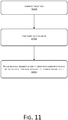
- the present disclosure uses such characteristic to set the target posture parameter as the basis for identification basis.
- the parameter set includes at least the target posture parameter of the mobile terminal.
- the present disclosure provides a process of a data processing method.
- the data processing method is applied at the server, which includes: Step S101: the target data sent by the mobile terminal is received.
- the target data carries the parameter set.
- the parameter set includes at least the target posture parameter of the mobile terminal.
- the target posture parameter refers to a post parameter when the terminal sends the target data.
- the posture parameter may have multiple forms.
- the posture parameter may be an angle between the terminal and the horizontal surface, such as 30°.
- the parameter includes an angle ⁇ 1 between the mobile terminal and the magnetic north, an angle of rotation ⁇ 1 that the mobile terminal is rotated about the horizonal axis X, an angle of rotation ⁇ 1 that the mobile terminal is rotated about the horizonal axis Z, as shown in FIG. 2 .
- Step S102 the historical parameter set in historical data corresponding to the mobile terminal is obtained.
- the historical parameter set includes at least a historical posture parameter of the mobile terminal.
- the historical data corresponding to the mobile terminal is the data transmitted between the mobile terminal and the server during the data interaction process prior to the time that the mobile terminal sends the target data, and each time such data is transmitted a parameter set is carried.
- Such parameter set is defined as historical parameter set.
- the historical parameter set includes at least the historical posture parameter of the mobile terminal.
- the historical posture parameter in the historical parameter set may include only the last posture parameter when the mobile terminal sends data to the server in the last time, a preset number of posture parameters when the mobile terminal sends data to the server, or all posture parameters when the mobile terminal sends data to the server.
- Step S103 In response to determining that the parameter set satisfies a preset condition according to the historical parameter set, the target data is determined as false data.
- the process determining whether the parameter set satisfies the preset condition according to the historical parameter set is mainly achieved by analyzing or calculating the same type parameters in the two parameter sets.
- the parameter set includes at least the target posture parameter while the historical parameter set includes at least the historical posture parameter.
- the parameter set satisfying the preset condition includes at least that a posture variation between the target posture parameter in the parameter set and the historical posture parameter in the historical parameter set is less than a preset variation threshold.
- the posture parameter is an angle between the terminal and the horizonal surface, assuming that the target posture parameter is 30° and the historical posture parameter is 45°, the posture variation is 15°.
- the present disclosure does not restrict which value is used as a minuend or subtrahend.
- the calculation result does not have a positive or negative sign and an absolute value is sued as long as such value reflects a difference between the two.
- the preset variation threshold is 20°, as the posture variation is less than the preset variation threshold, the parameter set satisfies the present threshold and thus the target data is false data.
- the target posture parameter includes an angle ⁇ 1 between the mobile terminal and the magnetic north, an angle of rotation ⁇ 1 that the mobile terminal is rotated about the horizonal axis X, an angle of rotation ⁇ 1 that the mobile terminal is rotated about the horizonal axis Z, and the historical posture parameter includes a historical angle ⁇ 2 between the mobile terminal and the magnetic north, an angle of rotation ⁇ 2 that the mobile terminal is rotated about the horizonal axis X, an angle of rotation ⁇ 2 that the mobile terminal is rotated about the horizonal axis Z, the calculation result from the angle variation ⁇ of the rotation of the three-dimension space ⁇ 1 ⁇ ⁇ 2 2 ⁇ ⁇ 1 ⁇ ⁇ 2 2 ⁇ ⁇ 1 ⁇ ⁇ 2 2 is used as the posture variation.
- the preset variation threshold maybe set as 10°.
- the present disclosure does not restrict to use the above formula to calculate the posture variation.
- the differences between ⁇ 1 and ⁇ 2 , ⁇ 1 and ⁇ 2 , ⁇ 1 and ⁇ 2 are calculated and the average value of the three differences is used as the posture variation.
- the server receives the target data carrying the parameter set sent by the mobile terminal.
- the parameter set includes at least the target posture parameter when the mobile terminal sends the target data to the server.
- the posture variation value between the target posture parameter and the historical posture parameter is less than the preset variation threshold, the posture that the mobile terminal sends the target data this time has almost no change from the posture that the mobile terminal historically sends the target data to the server.
- the target data sent when the posture of the mobile terminal does not change is regarded as false data and the further the mobile terminal is identified as a false terminal.
- the parameter set also includes a sending time of the target data.
- the parameter set satisfying the preset condition also includes that a time interval that the mobile terminal sends data is less than a predetermined time length. The time interval is determined by the sending time of the target data and the sending time of the historical data in the historical parameter set.
- the present techniques calculate the time interval that the mobile terminal sends the data as the determination condition, as the inventor found that the criminal frequently controls the mobile terminal to make orders on the electronic business platform. Therefore, if the time interval is small, the order frequency is higher, which conforms to the characteristic of sending false data.
- the present techniques use the time interval that the mobile terminal sends data being less than the preset time length as another determination condition, and use such condition together with the condition that the posture variation is less than the preset variation threshold. When both conditions are met, the parameter set is determined to satisfy the preset condition and thus the target6 data is the false data.
- the process of determining the time interval may be as shown in FIG. 3 , which includes: Step S301: the last time that the mobile terminal sends data is determined as the sending time of the historical data.
- the present disclosure is not limited to determine the time interval only by the method shown in FIG. 3 .
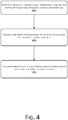
- the method as shown in FIG. 4 may also be used, which includes:
- the present disclosure does not restrict to use the above two methods to obtain the time interval. Any method that calculates the time interval value of the frequency that the mobile terminal sends data is with the protection scope of the present disclosure. Compared with the method shown in FIG. 3 , the method shown in FIG. 4 uses the average value to determine the time interval, which more accurately reflects the frequency that the mobile terminal sends the data within a period of time.
- the parameter set of the present disclosure may also include a location identifier of the mobile terminal.
- the parameter set satisfying the preset condition also includes that the locations of the mobile terminal and the set of historical false terminal are within a preset range according to the location identifier.
- the set of historical false terminal includes one or more historical false terminals. When the set of historical false terminal includes multiple historical false terminals, the distance between adjacent historical false terminals is less than a preset distance threshold.
- the present disclosure uses the location relationship between the mobile terminal and the set of historical false terminal.
- the inventor selects such condition as the inventor found during study that during the process of using a PC machine to control multiple mobile terminals to send false data, multiple mobile terminals need to be connected with the PC through the control cable or wireless local area network. Thus, the locations of the multiple mobile terminals are close within a short range.
- some historical false terminals are determined and used as the set of historical false terminal, if the locations of the one particular mobile terminal and the historical false terminals in the set of historical false terminal are within a preset range, the locations of the mobile terminal and the historical false terminal are deemed close, and thus the mobile terminal is also deemed as a terminal that sends false data.
- the location identifier includes latitude and longitude data, a base station identifier, and/or a WIFI hotspot identifier of the mobile terminal when the mobile terminal sends the target data.
- the location identifier included in the historical parameter set includes the latitude and longitude data when the false terminal in the set of historical false terminal sends data. Then, the determining process that the locations of the mobile terminal and the set of historical false terminal are within a preset range according to the location identifier may be as shown in FIG. 5 , which includes:
- the preset distance threshold may be set to 5cm, or according to actual situation.
- Step S504 the locations of the mobile terminal and the set of historical false terminal are determined within a preset range.
- Step S505 the locations of the mobile terminal and the set of historical false terminal are determined not within a preset range
- the latitude and longitude data of the set of historical false terminal may be the latitude and longitude data of a predetermined false terminal, or the latitude and longitude data the centers of the shapes covering the various historical false terminals in the set of historical false terminal.
- Such shape may be circle, square, or other shapes as long as they cover all historical false terminals and their centers are ascertainable, which are within the protection scope of the present disclosure.
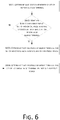
- the location identifier included in the historical parameter set includes the base station identifier of the base station when the false terminal in the set of historical false terminal sends data. Then, the determining process that the locations of the mobile terminal and the set of historical false terminal are within a preset range according to the location identifier may be as shown in FIG. 6 , which includes: Step S601: the base station identifier of the set of historical false terminal is determined.
- the base station identifier is CGI.
- Step S602 whether the base station identifier of the base station when the mobile terminal sends target data is consistent with the base station identifier of the base station when the set of historical false terminal sends data is determined. If the result is positive, step S603 is performed; otherwise, step S604 is performed.
- Step S603 the locations of the mobile terminal and the set of historical false terminal are determined within a preset range.
- Step S604 the locations of the mobile terminal and the set of historical false terminal are determined not within a preset range
- the location identifier included in the historical parameter sets includes the WIFI hot spot identifier of the WIFI hot spot through which the false terminal in the set of historical false terminal sends data.
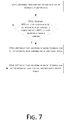
- the determining process that the locations of the mobile terminal and the set of historical false terminal are within a preset range according to the location identifier may be as shown in FIG. 6 , which includes: Step S701: the WIFI hot spot identifier of the set of historical false terminal is determined.
- the WIFI hot spot identifier is the SSID or BSSID.
- Step S702 whether the WIFI hot spot identifier of the WIFI hot spot through which the mobile terminal sends target data is consistent with the WIFI hot spot identifier of the WIFI hot spot through which the set of historical false terminal sends data is determined. If a result is positive, step S703 is performed; if not, step S704 is performed.
- Step S703 the locations of the mobile terminal and the set of historical false terminal are determined within a preset range.
- Step S704 the locations of the mobile terminal and the set of historical false terminal are determined not within a preset range.
- the location identifier includes only one form.
- the location identifier may include a combination of any two or all of the above three forms.
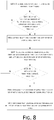
- the present techniques consider the determination result of the three situations comprehensively when determining whether locations of the mobile terminal and the set of historical false terminal are within the preset range. For example, when the location identifier includes the latitude and longitude data and the base station identifier when the mobile terminal sends the target data, the determination process may be as shown in FIG. 8 , which includes:
- the location identifier includes longitude and latitude data and a base station identifier when the mobile terminal sends the target data. Analysis of these two parameters reveals that the latitude and longitude data is a more direct determination parameter, and the base station identity is a parameter indirectly judged by whether the mobile terminal is in the coverage of the base station. In addition, the coverage of the base station is a large area, and latitude and longitude data is a very specific parameter value. In combination with the characteristics of these two parameters, in the example embodiment as shown in FIG.
- the present techniques firstly determine whether the base station identifier of the base station when the mobile terminal sends the target data is consistent with the base station identifier of the base station of the set of historical false terminal to determine whether the mobile terminal and the set of historical false terminal are within the coverage of the same base station. If the two are inconsistent, the difference between the two are deemed far away and are directly determined not within the preset range. Thus, there is no need to perform the following calculation process. If the two are consistent, the present techniques further determine whether the distance between the two is within the preset range according to the latitude and longitude data to determine whether the two are in a very close state. That is, the locations of the mobile terminal and the set of historical fake terminal are determined to be within the preset range only when both two determination conditions are satisfied, which improves the accuracy and reliability of the process.
- the location identifier only includes the longitude and latitude data and the base station identifier of the base station when the mobile terminal sends the target data as an example.
- the present disclosure does not restrict to perform according to the above process. Two determination conditions may also be determined simultaneously. When the determination result is that the base station identifiers are consistent and the distance is less than the preset distance value, the locations of the mobile terminal and the set of historical false terminal are within a preset range.
- the sequence of the three determination processes may also be set according to the actual situation. Or, the sequence of the three determination processes is not limited. The three determination processes may be determined simultaneously.
- the base station identifiers are consistent, the WIFI hot spot identifiers are consistent, and the distance is less than the preset distance threshold, the locations of the mobile terminal and the set of historical false terminal are determined to be within the preset range. Or, if any two conditions are met, the locations of the mobile terminal and the set of historical false terminal are determined to be within the preset range.
- FIG. 8 is just an illustration example and should not be used to restrict the detailed implementation process.
- the present disclosure does not limit the location identifier to only the above three forms, and may also use location information when the mobile terminal sends the target data by using GPRS.
- the parameter set disclosed by the present disclosure includes the target posture parameter, the sending time of the target data, and/or the location identifier of the mobile terminal.
- the target posture parameter may be arbitrarily combined with the other two parameters.
- the parameter set includes the target posture parameter and the sending time of the target data.
- the parameter includes the target posture parameter, the sending time of the target data, and/or the location identifier of the mobile terminal.
- the parameter set includes the target posture parameter and the location identifier of the mobile terminal.
- the parameter set includes the target posture parameter, the sending time of the target data, and the location identifier of the mobile terminal, which is used as an example to illustrate the process.
- the specific process may be as shown in FIG. 9 , which includes: Step S901: whether the posture variance between the target posture parameter and the historical posture parameter in the historical parameter set is less than the preset variation threshold. If a result is positive, step S902 is performed; otherwise, step S905 is performed.
- the historical posture parameter includes an angle between the terminal and the horizontal surface, such as 30°, or more strictly speaking, an angle ⁇ 1 between the mobile terminal and the magnetic north, an angle of rotation ⁇ 1 that the mobile terminal is rotated about the horizonal axis X, an angle of rotation ⁇ 1 that the mobile terminal is rotated about the horizonal axis Z.
- Step S902 whether the time interval that the mobile terminal sends data is less than the preset time length is determined. If a result is positive, step S903 is performed; otherwise, step S905 is performed.
- Such process may refer to the example embodiment as shown in FIG. 2 or FIG. 3 .
- Step S903 whether the locations of the mobile terminal and the set of historical false terminal are within the preset range is determined. If a result is positive, step S904 is performed; otherwise, step S905 is performed.
- Such step may refer to the example embodiments as shown from FIGs. 3-7 .
- Step S904 the parameter set satisfies the preset condition.
- Step S905 the parameter set does not satisfy the preset condition.
- the present disclosure only uses the parameter set that includes the posture parameter set, the sending time of the target data, and the location identifier of the mobile terminal as an example to illustrate to process determining that the parameter set satisfies the preset condition according to the historical parameter set, and does not limit to use the above method to implement the process determining that the parameter set satisfies the preset condition according to the historical parameter set.
- the sequence of the determination process of the three parameters is not determined.
- the three parameters may be determined simultaneously. When all of the parameters satisfy condition, or two or one parameter satisfies condition, the parameter set is determined to satisfy the preset condition.
- the present disclosure does not limit that the parameter set only includes the above three parameters.
- the parameter set may also include the merchant identification or the product identification in the target data.
- the present techniques determine whether the occurrence times of the merchant identification or the product identification are more than the preset number threshold. In a false process, the same merchant or product may be repeatedly visited or purchased for multiple time. When the occurrence times of the merchant identification or the product identification in the target data are more than the preset number threshold, such data is determined as false data.
- the method also includes the following processing process, as shown in FIG. 10 , which includes: Step S1001: the false data is blocked.
- the false data may be blocked, not processed, or deleted.
- Step S1002 the false terminal is determined as the false terminal.
- the mobile terminal sending the false data is defined as the false terminal so that when the data sent by the false terminal is received again, such data is directly determined as the false data. Alternatively, such terminal is added into the set of historical false terminal to help identify false data in the following data processing.
- the response information is sent to the mobile terminal.
- the present disclosure also provides a data processing method applied at the mobile terminal corresponding to the above data processing method, as shown in FIG. 11 , which includes: Step S1101: the target data is generated.
- the target data carries a parameter set.
- the parameter set includes at least a target posture parameter of the mobile terminal.
- the parameter set is a basis to determine that the target data is false data such that a server obtains a historical parameter set in historical data corresponding to the mobile terminal and, in response to determining that the parameter set satisfies a preset condition according to the historical parameter set, determines that the target data is false data.
- the historical parameter set includes at least a historical posture parameter of the mobile terminal.
- the parameter set satisfying the preset condition includes at least that a posture variation between the target posture parameter in the parameter set and the historical posture parameter in the historical parameter set is less than a preset variation threshold.
- the parameter set also includes a sending time of the target data and/or a location identifier of the mobile terminal.
- the parameter set may also include the merchant identification and/or product identification in the target data. The present techniques determine whether the occurrence times of the merchant identification or the product identification are more than the preset number threshold.
- the location identifier includes, but is not limited to, the longitude and latitude data, the base station identifier of the base station, and the WIFI hot spot identification of the WIFI hot spot when the mobile terminal sends the target data.
- the present disclosure does not limit the location identifier to only the above three forms, and may also use the location information when the mobile terminal sends the target data by using GPRS.
- Step S1102 the target data is sent to the server.
- the mobile terminal sends the parameter set together with the target data.
- the parameter set includes at least the target posture parameter when the mobile terminal sends the target data to the server so that the server determines that the target data is false data by using the parameter set.
- Step S1103 the response information sent by the server is received when the parameter set does not satisfy the preset condition according to the historical parameter set.
- the target data may be target transaction data.
- the historical data may be historical transaction data. That is, when the mobile terminal conducts transactions with the server, the server determines whether the transaction data sent by the mobile terminal is false transaction data.
- the present disclosure provides a data processing apparatus whose structure as shown in FIG. 12 , which includes a target data receiving module 1201 that receives target data sent by a mobile terminal, the target data carrying a parameter set, the parameter set including at least a target posture parameter of the mobile terminal.
- the target posture parameter refers to a post parameter when the terminal sends the target data.
- the posture parameter may have multiple forms.
- the posture parameter may be an angle between the terminal and the horizontal surface, such as 30°.
- the parameter includes an angle ⁇ 1 between the mobile terminal and the magnetic north, an angle of rotation ⁇ 1 that the mobile terminal is rotated about the horizonal axis X, an angle of rotation ⁇ 1 that the mobile terminal is rotated about the horizonal axis Z, as shown in FIG. 2 .
- the posture parameter is an angle between the terminal and the horizonal surface, assuming that the target posture parameter is 30° and the historical posture parameter is 45°, the posture variation is 15°.
- the present disclosure does not restrict which value is used as a minuend or subtrahend.
- the calculation result does not have a positive or negative sign and an absolute value is sued as long as such value reflects a difference between the two.
- the preset variation threshold is 20°, as the posture variation is less than the preset variation threshold, the parameter set satisfies the present threshold and thus the target data is false data.
- the target posture parameter includes an angle ⁇ 1 between the mobile terminal and the magnetic north, an angle of rotation ⁇ 1 that the mobile terminal is rotated about the horizonal axis X, an angle of rotation ⁇ 1 that the mobile terminal is rotated about the horizonal axis Z, and the historical posture parameter includes a historical angle ⁇ 2 between the mobile terminal and the magnetic north, an angle of rotation ⁇ 2 that the mobile terminal is rotated about the horizonal axis X, an angle of rotation ⁇ 2 that the mobile terminal is rotated about the horizonal axis Z, the calculation result from the angle variation ⁇ of the rotation of the three-dimension space ⁇ 1 ⁇ ⁇ 2 2 + ⁇ 1 ⁇ ⁇ 2 2 + ⁇ 1 ⁇ ⁇ 2 2 is used as the posture variation.
- the preset variation threshold maybe set as 10°.
- the present disclosure does not restrict to use the above formula to calculate the posture variation.
- the differences between ⁇ 1 and ⁇ 2 , ⁇ 1 and ⁇ 2 , ⁇ 1 and ⁇ 2 are calculated and the average value of the three differences is used as the posture variation.
- the data processing apparatus may also include a historical parameter set obtaining module 1202 that obtains a historical parameter set in historical data corresponding to the mobile terminal, the historical parameter set including at least a historical posture parameter of the mobile terminal.
- the historical data corresponding to the mobile terminal is the data transmitted between the mobile terminal and the server during the data interaction process prior to the time that the mobile terminal sends the target data, and each time such data is transmitted a parameter set is carried.
- Such parameter set is defined as historical parameter set.
- the historical parameter set includes at least the historical posture parameter of the mobile terminal.
- the historical posture parameter in the historical parameter set may include only the last posture parameter when the mobile terminal sends data to the server in the last time, a preset number of posture parameters when the mobile terminal sends data to the server, or all posture parameters when the mobile terminal sends data to the server.
- the data processing apparatus may also include a false data determining module 1203 that, in response to determining that the parameter set satisfies a preset condition according to the historical parameter set, determines that the target data is false data, the parameter set satisfying the preset condition including at least that a posture variation between the target posture parameter in the parameter set and the historical posture parameter in the historical parameter set is less than a preset variation threshold.
- a false data determining module 1203 that, in response to determining that the parameter set satisfies a preset condition according to the historical parameter set, determines that the target data is false data, the parameter set satisfying the preset condition including at least that a posture variation between the target posture parameter in the parameter set and the historical posture parameter in the historical parameter set is less than a preset variation threshold.
- the parameter set may also include a sending time of the target data.
- the false data determining module 1203 further determines the time interval that the mobile terminal sends data is less than a preset time length.
- the time interval is determined by the sending time of the target data and the sending time of the historical data in the historical parameter set.
- the last time that the mobile terminal sends data may be determined as the sending time of the historical data.
- the last time that the mobile terminal sends data is t1 and the sending time of the target data is t2
- the time difference between the sending time of the target data and the sending time of the historical data is determined as the time interval.
- the time intervals of adjacent sending times of the historical data are calculated respectively.
- the time interval between the sending time of the target data and the last time that the mobile terminal sends data is calculated.
- the average value of all time intervals is calculated. The average value is used as the time interval that the mobile terminal sends data.
- the parameter set may also include the location identifier of the mobile terminal.
- the false data determining module 1203 further determines whether the locations of the mobile terminal and set of historical false terminal are within the preset range.
- the set of historical false terminal includes one or more historical false terminals.
- the location identifier includes latitude and longitude data, a base station identifier, and/or a WIFI hotspot identifier of the mobile terminal when the mobile terminal sends the target data.
- the determining process that the locations of the mobile terminal and the set of historical false terminal are within a preset range according to the location identifier includes:
- the detailed process may refer to the example embodiments as shown in FIGs. 3-7 .
- any of the above two or three determination processes may be combined to set the sequence of determination processes to determine subsequently to obtain the result.
- the sequence of the determination processes is not limited and the determination processes may be conducted simultaneously.
- the parameter set disclosed by the present disclosure includes the target posture parameter, the sending time of the target data, and/or the location identifier of the mobile terminal.
- the target posture parameter may be arbitrarily combined with the other two parameters.
- the parameter set includes the target posture parameter and the sending time of the target data.
- the parameter set includes the target posture parameter, the sending time of the target data, and the location identifier of the mobile terminal.
- the parameter set includes the target posture parameter and the location identifier of the mobile terminal.
- the structure of data processing apparatus may be as shown in FIG. 13 .
- the data processing apparatus as shown in FIG. 13 may further includes:
- the data processing apparatus disclosed by the present disclosure applies at the server, which receives the target data carrying the parameter set sent by the mobile terminal.
- the parameter set includes at least the target posture parameter when the mobile terminal sends the target data to the server.
- the posture variation value between the target posture parameter and the historical posture parameter is less than the preset variation threshold, the posture that the mobile terminal sends the target data this time has almost no change from the posture that the mobile terminal historically sends the target data to the server.
- the target data sent when the posture of the mobile terminal does not change is regarded as false data.
- the present disclosure provides a data processing apparatus applied at the mobile terminal, whose structure may be as shown in FIG. 14 , which includes:
- the data processing apparatus may also include a response information receiving module 1403 that receives response information sent by the server.
- the response information is sent by the server to respond to the target data after the server determines that the parameter set does not satisfy the preset condition.
- the data processing apparatus at the mobile terminal may cooperate with the data processing apparatus at the server to achieve the purpose of identifying false data.
- the target data may be target transaction data.
- the historical data may be historical transaction data. That is, when the mobile terminal conducts transactions with the server, the server determines whether the transaction data sent by the mobile terminal is false transaction data.
- the present disclosure also provides a data processing system. As shown in FIG. 15 , the data processing process includes the mobile terminal 1501 and the server 1502.
- the mobile terminal 1501 generates target data and sends the target data to the server.
- the mobile terminal may be a cell phone, a tablet. This example embodiment uses the cell phone as an example.
- the server 1502 receives the target data sent by the mobile terminal, the target data carrying a parameter set, the parameter set including at least a target posture parameter of the mobile terminal; obtains a historical parameter set in historical data corresponding to the mobile terminal, the historical parameter set including at least a historical posture parameter of the mobile terminal; and in response to determining that the parameter set satisfies a preset condition according to the historical parameter set, determines that the target data is false data.
- the parameter set satisfying the preset condition includes at least that a posture variation between the target posture parameter in the parameter set and the historical posture parameter in the historical parameter set is less than a preset variation threshold.
- the operation process of the data processing system may refer to the above method embodiments.
- the mobile terminal sends the parameter set together with the target data so that the server uses the historical parameter set in the historical data to determine whether the parameter set satisfies the preset condition.
- the target data is determined as false data, thereby ensuring the fairness and effectiveness of the data processing process.
- the target data may be target transaction data.
- the historical data may be historical transaction data. That is, when the mobile terminal conducts transactions with the server, the server determines whether the transaction data sent by the mobile terminal is false transaction data.
- the functions described in the methods of the example embodiments may be stored in a computing device readable storage medium if implemented in the form of a software functional unit and sold or used as an independent product.
- a computing device which may be a personal computer, a server, a mobile computing device, or a network device
- the foregoing storage medium includes various media capable of storing program code such as a USB flash disk, a removable hard disk, a read-only memory (ROM), a random-access memory (RAM), a magnetic disk, or an optical disk.
Landscapes
- Engineering & Computer Science (AREA)
- Computer Security & Cryptography (AREA)
- Business, Economics & Management (AREA)
- Theoretical Computer Science (AREA)
- Signal Processing (AREA)
- Computer Networks & Wireless Communication (AREA)
- Physics & Mathematics (AREA)
- General Physics & Mathematics (AREA)
- Finance (AREA)
- Software Systems (AREA)
- Accounting & Taxation (AREA)
- General Engineering & Computer Science (AREA)
- Development Economics (AREA)
- Economics (AREA)
- Marketing (AREA)
- General Business, Economics & Management (AREA)
- Computer Hardware Design (AREA)
- Strategic Management (AREA)
- Entrepreneurship & Innovation (AREA)
- Life Sciences & Earth Sciences (AREA)
- Animal Behavior & Ethology (AREA)
- General Health & Medical Sciences (AREA)
- Human Computer Interaction (AREA)
- Social Psychology (AREA)
- Health & Medical Sciences (AREA)
- Mobile Radio Communication Systems (AREA)
- Telephonic Communication Services (AREA)
- Financial Or Insurance-Related Operations Such As Payment And Settlement (AREA)
Abstract
Description
- This application claims priority to Chinese Patent Application No.
201510427882.4, filed on 20 July 2015 - The present disclosure relates to the field of Internet technologies, and particularly to a data processing method, apparatus, and system.
- With the development of network technology, electronic business platform is becoming mature and is developing rapidly, and has become an important shopping channel in people's lives. When people shop through an electronic business platform, they usually prefer high reputation shops or high sales of merchandise. After understanding consumer shopping psychology, criminals send false data electronic to the electronic business platform to achieve or enhance the credibility of shops for selling purposes.
- With the increasing popularity of mobile terminals, criminals have gradually begun to use the mobile terminal to send false data to the electronic business platform to achieve false trading, etc. to enhance the credibility of the shops or sales. The conventional technologies for identifying false data only identify false data sent by the PC machine. Thus, there is a need of a method for identifying false data sent by the mobile terminals.
- In view of this, the present disclosure provides a data processing method and apparatus for identifying false data transmitted by mobile terminals, thereby maintaining an ordinary transaction course of an electronic business platform.
- To achieve the above object, the present disclosure provides the following technical solutions:
The present disclosure provides a data processing method comprising: - receiving target data sent by a mobile terminal, the target data carrying a parameter set, the parameter set including at least a target posture parameter of the mobile terminal;
- obtaining historical parameter set in historical data corresponding to the mobile terminal, the historical parameter set including at least a historical posture parameter of the mobile terminal; and
- in response to determining that the parameter set satisfies a preset condition according to the historical parameter set, determining that the target data is false data, the parameter set satisfying the preset condition including at least that a posture variation between the target posture parameter in the parameter set and the historical posture parameter in the historical parameter set is less than a preset variation threshold.
- Preferably, the target posture parameter includes an angle α1 between the mobile terminal and the magnetic north, an angle of rotation β1 that the mobile terminal is rotated about the horizonal axis X, an angle of rotation γ1 that the mobile terminal is rotated about the horizonal axis Z. The historical posture parameter includes a historical angle α2 between the mobile terminal and the magnetic north, an angle of rotation β2 that the mobile terminal is rotated about the horizonal axis X, an angle of rotation γ2 that the mobile terminal is rotated about the horizonal axis Z.
- Thus, the posture variation determined by the target posture parameter and the historical posture parameter is determined, which includes using the value arising from the formula

- Preferably, the parameter set also includes a sending time of the target data. The parameter set satisfying the preset condition also includes that a time interval that the mobile terminal sends data is less than a predetermined time length. The time interval is determined by the sending time of the target data and the sending time of the historical data in the historical parameter set.
- Preferably, the determining the time interval includes: using a latest time that the mobile terminal sends data as the sending time of the historical data. The time difference between the sending time of the target data and the sending time of the historical data
- Preferably, the parameter set also includes a location identifier of the mobile terminal. The parameter set satisfying the preset condition also includes that the locations of the mobile terminal and the set of historical false terminal are within a preset range according to the location identifier. The set of historical false terminal includes one or more historical false terminals.
- Preferably, when the set of historical false terminal includes multiple historical false terminals, the distance between adjacent historical false terminals is less than a preset distance threshold.
- Preferably, the location identifier includes latitude and longitude data, a base station identifier, and/or a WIFI hotspot identifier of the mobile terminal when the mobile terminal sends the target data.
- The determining process that the locations of the mobile terminal and the set of historical false terminal are within a preset range according to the location identifier includes:
- determining latitude and longitude data of the set of historical false terminal; calculating a distance between the latitude and longitude data of the mobile terminal that sends the target data and the latitude and longitude data of the set of historical false terminal; in response to determining that the distance is less than a preset distance threshold, determining that the locations of the mobile terminal and the set of historical false terminal are within the preset range;
- determining the base station identifier of the set of historical false terminal; in response to determining that the base station identifier of the base station that the mobile terminal uses to send the target data coincides with the base station identifier of the set of historical false terminal, determining that the locations of the mobile terminal and the set of historical false terminal are within the preset range; or
- determining a WIFI hot spot identifier of the set of historical false terminal; in response to determining that the WIFI hot spot identifier of the WIFI hot spot that the mobile terminal uses to send the target data coincides with the WIFI hot spot of the set of historical false terminal, determining that the locations of the mobile terminal and the set of historical false terminal are within the preset range.
- Preferably, the latitude and longitude data of the set of historical false terminal includes the latitude and longitude data of the center points of the shapes of various historical false terminals in the set of historical false terminal.
- Preferably, the base station identifier is the Cell Global Identifier (CGI).
- The WIFI hotspot identifier is the service set identifier SSID or basic service set identification (BSSID).
- Preferably, if the parameter set meets a preset condition, after determining that the target data is false data, the method further includes:
- blocking the false data; and
- determining that the mobile terminal is a false terminal.
- Preferably, if parameter set does not meet a preset condition, in response to the target data, the response information is sent to the mobile terminal.
- Preferably, the target data is target transaction data and the historical data is the historical transaction data.
- The present disclosure provides another data processing method comprising:
- generating target data, the target data carrying a parameter set, the parameter set including at least a target posture parameter of the mobile terminal, the parameter set being a basis to determine that the target data is false data such that a server obtains a historical parameter set in historical data corresponding to the mobile terminal and, in response to determining that the parameter set satisfies a preset condition according to the historical parameter set, determines that the target data is false data, the historical parameter set including at least a historical posture parameter of the mobile terminal, the parameter set satisfying the preset condition including at least that a posture variation between the target posture parameter in the parameter set and the historical posture parameter in the historical parameter set is less than a preset variation threshold; and
- sending the target data to the server.
- Preferably, the parameter set also includes a sending time of the target data and/or a location identifier of the mobile terminal.
- Preferably, the method further includes receiving the response information sent by the server. The response information is sent by the server to respond to the target data after the server determines that the parameter set does not satisfy the preset condition.
- Preferably, the target data is target transaction data and the historical data is the historical transaction data.
- Preferably, the present disclosure provides a data processing apparatus comprising:
- a target data receiving module that receives target data sent by a mobile terminal, the target data carrying a parameter set, the parameter set including at least a target posture parameter of the mobile terminal;
- a historical parameter set obtaining module that obtains a historical parameter set in historical data corresponding to the mobile terminal, the historical parameter set including at least a historical posture parameter of the mobile terminal; and
- a false data determining module that, in response to determining that the parameter set satisfies a preset condition according to the historical parameter set, determines that the target data is false data, the parameter set satisfying the preset condition including at least that a posture variation between the target posture parameter in the parameter set and the historical posture parameter in the historical parameter set is less than a preset variation threshold.
- Preferably, the parameter set also includes a sending time of the target data.
- The false data determining module further determines the time interval that the mobile terminal sends data is less than a preset time length. The time interval is determined by the sending time of the target data and the sending time of the historical data in the historical parameter set.
- Preferably, the parameter set also includes a location identifier of the mobile terminal. The false data determining module further determines that the locations of the mobile terminal and the set of historical false terminal are within a preset range according to the location identifier. The set of historical false terminal includes one or more historical false terminals.
- Preferably, the data processing apparatus further includes a blocking module that blocks the false data; and a false terminal determining module that determines the mobile terminal as a false terminal.
- Preferably, the data processing apparatus also includes a response information sending module that, when the parameter set does not satisfy the preset condition, in response to the target data, sends response information to the mobile terminal.
- Preferably, the target data is target transaction data and the historical data is the historical transaction data.
- The present disclosure provides another data processing apparatus comprising:
- a target data generating module that generates target data, the target data carrying a parameter set, the parameter set including at least a target posture parameter of the mobile terminal, the parameter set being a basis to determine that the target data is false data such that a server obtains a historical parameter set in historical data corresponding to the mobile terminal and, in response to determining that the parameter set satisfies a preset condition according to the historical parameter set, determines that the target data is false data, the historical parameter set including at least a historical posture parameter of the mobile terminal, the parameter set satisfying the preset condition including at least that a posture variation between the target posture parameter in the parameter set and the historical posture parameter in the historical parameter set is less than a preset variation threshold; and
- a target data sending module that sends the target data to the server.
- Preferably, the data processing apparatus also includes a response information sending module that receives response information sent by the server. The response information is sent by the server to respond to the target data after the server determines that the parameter set does not satisfy the preset condition.
- Preferably, the target data is target transaction data and the historical data is the historical transaction data.
- The present disclosure also provides a data processing system including a mobile terminal and a server.
- The mobile terminal generates target data and sends the target data to the server.
- The server receives the target data sent by the mobile terminal, the target data carrying a parameter set, the parameter set including at least a target posture parameter of the mobile terminal; obtains a historical parameter set in historical data corresponding to the mobile terminal, the historical parameter set including at least a historical posture parameter of the mobile terminal; and in response to determining that the parameter set satisfies a preset condition according to the historical parameter set, determines that the target data is false data, the parameter set satisfying the preset condition including at least that a posture variation between the target posture parameter in the parameter set and the historical posture parameter in the historical parameter set is less than a preset variation threshold.
- Preferably, the target data is target transaction data and the historical data is the historical transaction data.
- In the data processing method of the present disclosure, the server receives the target data carrying the parameter set sent by the mobile terminal. The parameter set includes at least a target posture parameter of the mobile terminal. In response to determining that the posture variation between the target posture parameter and the historical posture parameter is less than a preset variation threshold, the server determines that the parameter set satisfies the prese condition and determines the target data as false data.
- In this process, the amount of change in posture variation being smaller than the preset variation threshold indicates that the posture that the mobile terminal sends the target data hardly changes compared with the postures that the mobile terminal historically sends the target data to the server. As the posture of the mobile terminal is frequently changed during the process of normal use of the mobile terminal, the target data sent by the mobile terminal without posture change is regarded as false data. Then the mobile terminal that sends the false data is identified, thereby ensuring the fairness and efficiency of data processing.
- In order to more clearly illustrate the technical solutions in the embodiments or the prior art embodiment of the present disclosure, the accompanying drawings briefly described embodiments or the prior art needed to be used in describing the embodiments. Apparently, the drawings in the following description only represent some of the embodiments of the present disclosure. Those of ordinary skill in the art, without creative efforts, can derive other drawings from these drawings.
-
FIG. 1 is a flowchart illustrating a data processing method according to an example embodiment of the present disclosure; -
FIG 2 is a diagram illustrating posture parameters of a mobile terminal according to an example embodiment of the present disclosure; -
FIG. 3 is a flowchart illustrating a method for determining the time interval according to an example embodiment of the present disclosure; -
FIG. 4 is a flowchart illustrating another method for determining the time interval according to an example embodiment of the present disclosure; -
FIG. 5 is a flowchart illustrating a method for determining that the locations of the mobile terminal and the set of historical false terminal are within a preset range according to the location identifier according to an example embodiment of the present disclosure; -
FIG. 6 is a flowchart illustrating another method for determining that the locations of the mobile terminal and the set of historical false terminal are within a preset range according to the location identifier according to an example embodiment of the present disclosure; -
FIG. 7 is a flowchart illustrating another method for determining that the locations of the mobile terminal and the set of historical false terminal are within a preset range according to the location identifier according to an example embodiment of the present disclosure; -
FIG. 8 is a flowchart illustrating another method for determining that the locations of the mobile terminal and the set of historical false terminal are within a preset range according to the location identifier according to an example embodiment of the present disclosure; -
FIG. 9 is a flowchart illustrating a method for determining that the parameter set satisfies the preset condition according to the historical parameter set according to an example embodiment of the present disclosure; -
FIG. 10 is a flowchart illustrating another data processing method according to an example embodiment of the present disclosure; -
FIG. 11 is a flowchart illustrating another data processing method according to an example embodiment of the present disclosure; -
FIG. 12 is a diagram illustrating a data processing apparatus according to an example embodiment of the present disclosure; -
FIG. 13 is a diagram illustrating another data processing apparatus according to an example embodiment of the present disclosure; -
FIG. 14 is a diagram illustrating another data processing apparatus according to an example embodiment of the present disclosure; and -
FIG. 15 is a diagram illustrating a data processing system according to an example embodiment of the present disclosure. - In conjunction with the drawings of the present disclosure, the technical solutions in the example embodiments of the present disclosure will be clearly and completely described below. Apparently, the described example embodiments are merely a portion of, rather than all of, the embodiments of the present disclosure. All other embodiments obtained by one of ordinary skill in the art without using creative efforts are within the scope of protection of the present disclosure.
- The core idea of the data processing method of the present disclosure is to use the comparison result or calculation result of the parameter set carried by the mobile terminal when sending the target data and the historical parameter set to determine whether the parameter set satisfies the preset condition, and further determine whether the sent target data is false data, thereby achieving the purpose of identifying whether the mobile terminal sends the false data.
- In the present disclosure, the target posture parameter of the mobile terminal is selected as the most important parameter as, in real life, there already exists using a PC by some means to control a plurality of mobile terminals, each mobile terminal using the corresponding account to send false data. After study, the inventor found that, under this scenario, the plurality of mobile terminals is typically placed on a table or fixed to the wall, which is, in most cases, in a stationary state and their postures do not change much. If the posture parameters of the same mobile terminal in the adjacent two or more times when the mobile terminal sends the data to the server have no or little changes, the mobile terminal is regarded as having status change when sending data, which is further deemed as a false terminal sending false data that is controlled by a PC. Thus, the data sent by such mobile terminal is regarded as false data.
- Therefore, the present disclosure uses such characteristic to set the target posture parameter as the basis for identification basis. The parameter set includes at least the target posture parameter of the mobile terminal.
- The present disclosure provides a process of a data processing method. Referring to
FIG. 1 , the data processing method is applied at the server, which includes:
Step S101: the target data sent by the mobile terminal is received. - The target data carries the parameter set. The parameter set includes at least the target posture parameter of the mobile terminal.
- The target posture parameter refers to a post parameter when the terminal sends the target data. The posture parameter may have multiple forms. For example, the posture parameter may be an angle between the terminal and the horizontal surface, such as 30°. Or, more strictly speaking, the parameter includes an angle α1 between the mobile terminal and the magnetic north, an angle of rotation β1 that the mobile terminal is rotated about the horizonal axis X, an angle of rotation γ1 that the mobile terminal is rotated about the horizonal axis Z, as shown in
FIG. 2 . - Step S102: the historical parameter set in historical data corresponding to the mobile terminal is obtained. The historical parameter set includes at least a historical posture parameter of the mobile terminal. The historical data corresponding to the mobile terminal is the data transmitted between the mobile terminal and the server during the data interaction process prior to the time that the mobile terminal sends the target data, and each time such data is transmitted a parameter set is carried. Such parameter set is defined as historical parameter set. The historical parameter set includes at least the historical posture parameter of the mobile terminal. The historical posture parameter in the historical parameter set may include only the last posture parameter when the mobile terminal sends data to the server in the last time, a preset number of posture parameters when the mobile terminal sends data to the server, or all posture parameters when the mobile terminal sends data to the server.
- Step S103: In response to determining that the parameter set satisfies a preset condition according to the historical parameter set, the target data is determined as false data.
- The process determining whether the parameter set satisfies the preset condition according to the historical parameter set is mainly achieved by analyzing or calculating the same type parameters in the two parameter sets. In this example embodiment, the parameter set includes at least the target posture parameter while the historical parameter set includes at least the historical posture parameter. The parameter set satisfying the preset condition includes at least that a posture variation between the target posture parameter in the parameter set and the historical posture parameter in the historical parameter set is less than a preset variation threshold.
- If the posture parameter is an angle between the terminal and the horizonal surface, assuming that the target posture parameter is 30° and the historical posture parameter is 45°, the posture variation is 15°. Here, the present disclosure does not restrict which value is used as a minuend or subtrahend. Thus, the calculation result does not have a positive or negative sign and an absolute value is sued as long as such value reflects a difference between the two. Assuming that the preset variation threshold is 20°, as the posture variation is less than the preset variation threshold, the parameter set satisfies the present threshold and thus the target data is false data.
- If the target posture parameter includes an angle α1 between the mobile terminal and the magnetic north, an angle of rotation β1 that the mobile terminal is rotated about the horizonal axis X, an angle of rotation γ1 that the mobile terminal is rotated about the horizonal axis Z, and the historical posture parameter includes a historical angle α2 between the mobile terminal and the magnetic north, an angle of rotation β2 that the mobile terminal is rotated about the horizonal axis X, an angle of rotation γ2 that the mobile terminal is rotated about the horizonal axis Z, the calculation result from the angle variation Δ of the rotation of the three-dimension space

- The present disclosure does not restrict to use the above formula to calculate the posture variation. For example, the differences between α1 and α2, β1 and β2, γ1 and γ2 are calculated and the average value of the three differences is used as the posture variation.
- In the data processing method of the present disclosure, the server receives the target data carrying the parameter set sent by the mobile terminal. The parameter set includes at least the target posture parameter when the mobile terminal sends the target data to the server. When the posture variation value between the target posture parameter and the historical posture parameter is less than the preset variation threshold, the posture that the mobile terminal sends the target data this time has almost no change from the posture that the mobile terminal historically sends the target data to the server. As the postures of the mobile terminal in normal use change frequently, the target data sent when the posture of the mobile terminal does not change is regarded as false data and the further the mobile terminal is identified as a false terminal.
- Further, the parameter set also includes a sending time of the target data. The parameter set satisfying the preset condition also includes that a time interval that the mobile terminal sends data is less than a predetermined time length. The time interval is determined by the sending time of the target data and the sending time of the historical data in the historical parameter set.
- The present techniques calculate the time interval that the mobile terminal sends the data as the determination condition, as the inventor found that the criminal frequently controls the mobile terminal to make orders on the electronic business platform. Therefore, if the time interval is small, the order frequency is higher, which conforms to the characteristic of sending false data. Thus, the present techniques use the time interval that the mobile terminal sends data being less than the preset time length as another determination condition, and use such condition together with the condition that the posture variation is less than the preset variation threshold. When both conditions are met, the parameter set is determined to satisfy the preset condition and thus the target6 data is the false data.
- In the example embodiment, the process of determining the time interval may be as shown in
FIG. 3 , which includes:
Step S301: the last time that the mobile terminal sends data is determined as the sending time of the historical data. - Suppose the last time that the mobile terminal sends data is t1 and the sending time of the target data is t2.
- Step S302: The time difference between the sending time of the target data and the sending time of the historical data is determined as the time interval.

- The present disclosure is not limited to determine the time interval only by the method shown in
FIG. 3 . The method as shown inFIG. 4 may also be used, which includes: - Step S401: when there are multiple sending times of the historical data, the time intervals of sending times of the adjacent historical data are calculated respectively.
- Step S402: the time interval between the sending time of the target data and the last time that the mobile terminal sends data is calculated.
- Step S403: the average value of all time intervals is calculated. The average value is used as the time interval that the mobile terminal sends data.
- The present disclosure does not restrict to use the above two methods to obtain the time interval. Any method that calculates the time interval value of the frequency that the mobile terminal sends data is with the protection scope of the present disclosure. Compared with the method shown in
FIG. 3 , the method shown inFIG. 4 uses the average value to determine the time interval, which more accurately reflects the frequency that the mobile terminal sends the data within a period of time. - Based on any of the above example embodiments, the parameter set of the present disclosure may also include a location identifier of the mobile terminal.
- The parameter set satisfying the preset condition also includes that the locations of the mobile terminal and the set of historical false terminal are within a preset range according to the location identifier. The set of historical false terminal includes one or more historical false terminals. When the set of historical false terminal includes multiple historical false terminals, the distance between adjacent historical false terminals is less than a preset distance threshold.
- The present disclosure uses the location relationship between the mobile terminal and the set of historical false terminal. The inventor selects such condition as the inventor found during study that during the process of using a PC machine to control multiple mobile terminals to send false data, multiple mobile terminals need to be connected with the PC through the control cable or wireless local area network. Thus, the locations of the multiple mobile terminals are close within a short range. Thus, when some historical false terminals are determined and used as the set of historical false terminal, if the locations of the one particular mobile terminal and the historical false terminals in the set of historical false terminal are within a preset range, the locations of the mobile terminal and the historical false terminal are deemed close, and thus the mobile terminal is also deemed as a terminal that sends false data.
- In the example embodiment, the location identifier includes latitude and longitude data, a base station identifier, and/or a WIFI hotspot identifier of the mobile terminal when the mobile terminal sends the target data.
- When the location identifier is the latitude and longitude data when the terminal sends data, the location identifier included in the historical parameter set includes the latitude and longitude data when the false terminal in the set of historical false terminal sends data. Then, the determining process that the locations of the mobile terminal and the set of historical false terminal are within a preset range according to the location identifier may be as shown in
FIG. 5 , which includes: - Step S501: the latitude and longitude data of the set of historical false terminal is determined.
- Step S502: the difference between the latitude and longitude data when the mobile terminal sends the target data and the latitude and longitude data of the set of historical false terminal is calculated.
- Step S503: whether the distance is less than a preset distance threshold is determined. If a result is positive, step S504 is performed; if not, step S505 is performed.
- The preset distance threshold may be set to 5cm, or according to actual situation.
- Step S504: the locations of the mobile terminal and the set of historical false terminal are determined within a preset range.
- Step S505: the locations of the mobile terminal and the set of historical false terminal are determined not within a preset range
- In this example embodiment, the latitude and longitude data of the set of historical false terminal may be the latitude and longitude data of a predetermined false terminal, or the latitude and longitude data the centers of the shapes covering the various historical false terminals in the set of historical false terminal. Such shape may be circle, square, or other shapes as long as they cover all historical false terminals and their centers are ascertainable, which are within the protection scope of the present disclosure.
- When the location identifier is the base station identifier of the base station when the terminal sends data, the location identifier included in the historical parameter set includes the base station identifier of the base station when the false terminal in the set of historical false terminal sends data. Then, the determining process that the locations of the mobile terminal and the set of historical false terminal are within a preset range according to the location identifier may be as shown in
FIG. 6 , which includes:
Step S601: the base station identifier of the set of historical false terminal is determined. - The base station identifier is CGI.
- Step S602: whether the base station identifier of the base station when the mobile terminal sends target data is consistent with the base station identifier of the base station when the set of historical false terminal sends data is determined. If the result is positive, step S603 is performed; otherwise, step S604 is performed.
- Step S603: the locations of the mobile terminal and the set of historical false terminal are determined within a preset range.
- Step S604: the locations of the mobile terminal and the set of historical false terminal are determined not within a preset range
- When the location identifier is the WIFI hot spot identifier of the WIFI hot spot through which the mobile terminal sends data, the location identifier included in the historical parameter sets includes the WIFI hot spot identifier of the WIFI hot spot through which the false terminal in the set of historical false terminal sends data. Then, the determining process that the locations of the mobile terminal and the set of historical false terminal are within a preset range according to the location identifier may be as shown in
FIG. 6 , which includes:
Step S701: the WIFI hot spot identifier of the set of historical false terminal is determined. - The WIFI hot spot identifier is the SSID or BSSID.
- Step S702: whether the WIFI hot spot identifier of the WIFI hot spot through which the mobile terminal sends target data is consistent with the WIFI hot spot identifier of the WIFI hot spot through which the set of historical false terminal sends data is determined. If a result is positive, step S703 is performed; if not, step S704 is performed.
- Step S703: the locations of the mobile terminal and the set of historical false terminal are determined within a preset range.
- Step S704: the locations of the mobile terminal and the set of historical false terminal are determined not within a preset range.
- The above example embodiment describes from the perspective that the location identifier includes only one form. In an actual application, the location identifier may include a combination of any two or all of the above three forms. Under such situation, the present techniques consider the determination result of the three situations comprehensively when determining whether locations of the mobile terminal and the set of historical false terminal are within the preset range. For example, when the location identifier includes the latitude and longitude data and the base station identifier when the mobile terminal sends the target data, the determination process may be as shown in
FIG. 8 , which includes: - Step S801: the base station identifier of the set of historical false terminal is determined.
- Step S802: whether the base station identifier of the base station through which the mobile terminal sends target data is consistent with the base station identifier of the base station through which the set of historical false terminal sends data is determined. If the result is positive, step S803 is performed; otherwise, step S807 is performed.
- Step S803: the latitude and longitude data of the set of historical false terminal is determined.
- Step S804: the difference between the latitude and longitude data when the mobile terminal sends the target data and the latitude and longitude data of the set of historical false terminal is calculated.
- Step S805: whether the distance is less than a preset distance threshold is determined. If a result is positive, step S806 is performed; if not, step S807 is performed.
- Step S806: the locations of the mobile terminal and the set of historical false terminal are determined within a preset range.
- Step S807: the locations of the mobile terminal and the set of historical false terminal are determined not within a preset range
- In the example embodiment as shown in
FIG. 8 , the location identifier includes longitude and latitude data and a base station identifier when the mobile terminal sends the target data. Analysis of these two parameters reveals that the latitude and longitude data is a more direct determination parameter, and the base station identity is a parameter indirectly judged by whether the mobile terminal is in the coverage of the base station. In addition, the coverage of the base station is a large area, and latitude and longitude data is a very specific parameter value. In combination with the characteristics of these two parameters, in the example embodiment as shown inFIG. 8 , the present techniques firstly determine whether the base station identifier of the base station when the mobile terminal sends the target data is consistent with the base station identifier of the base station of the set of historical false terminal to determine whether the mobile terminal and the set of historical false terminal are within the coverage of the same base station. If the two are inconsistent, the difference between the two are deemed far away and are directly determined not within the preset range. Thus, there is no need to perform the following calculation process. If the two are consistent, the present techniques further determine whether the distance between the two is within the preset range according to the latitude and longitude data to determine whether the two are in a very close state. That is, the locations of the mobile terminal and the set of historical fake terminal are determined to be within the preset range only when both two determination conditions are satisfied, which improves the accuracy and reliability of the process. - In this example embodiment, the location identifier only includes the longitude and latitude data and the base station identifier of the base station when the mobile terminal sends the target data as an example. The present disclosure does not restrict to perform according to the above process. Two determination conditions may also be determined simultaneously. When the determination result is that the base station identifiers are consistent and the distance is less than the preset distance value, the locations of the mobile terminal and the set of historical false terminal are within a preset range.
- When the location identifier includes the latitude and longitude data, the base station identifier, and the WIFI hotspot identifier of the mobile terminal when the mobile terminal sends the target data, the sequence of the three determination processes may also be set according to the actual situation. Or, the sequence of the three determination processes is not limited. The three determination processes may be determined simultaneously. When the base station identifiers are consistent, the WIFI hot spot identifiers are consistent, and the distance is less than the preset distance threshold, the locations of the mobile terminal and the set of historical false terminal are determined to be within the preset range. Or, if any two conditions are met, the locations of the mobile terminal and the set of historical false terminal are determined to be within the preset range.
FIG. 8 is just an illustration example and should not be used to restrict the detailed implementation process. - Certainly, the present disclosure does not limit the location identifier to only the above three forms, and may also use location information when the mobile terminal sends the target data by using GPRS.
- Based on the foregoing example embodiment, the parameter set disclosed by the present disclosure includes the target posture parameter, the sending time of the target data, and/or the location identifier of the mobile terminal. The target posture parameter may be arbitrarily combined with the other two parameters. For example, the parameter set includes the target posture parameter and the sending time of the target data. Alternatively, the parameter includes the target posture parameter, the sending time of the target data, and/or the location identifier of the mobile terminal. Alternatively, the parameter set includes the target posture parameter and the location identifier of the mobile terminal. When the parameter set includes different contents, the process of determining that the parameter set satisfies the preset condition according to the historical parameter set is also different. In this example embodiment, the parameter set includes the target posture parameter, the sending time of the target data, and the location identifier of the mobile terminal, which is used as an example to illustrate the process. The specific process may be as shown in
FIG. 9 , which includes:
Step S901: whether the posture variance between the target posture parameter and the historical posture parameter in the historical parameter set is less than the preset variation threshold. If a result is positive, step S902 is performed; otherwise, step S905 is performed. - The historical posture parameter includes an angle between the terminal and the horizontal surface, such as 30°, or more strictly speaking, an angle α1 between the mobile terminal and the magnetic north, an angle of rotation β1 that the mobile terminal is rotated about the horizonal axis X, an angle of rotation γ1 that the mobile terminal is rotated about the horizonal axis Z.
- Step S902: whether the time interval that the mobile terminal sends data is less than the preset time length is determined. If a result is positive, step S903 is performed; otherwise, step S905 is performed.
- Such process may refer to the example embodiment as shown in
FIG. 2 orFIG. 3 . - Step S903: whether the locations of the mobile terminal and the set of historical false terminal are within the preset range is determined. If a result is positive, step S904 is performed; otherwise, step S905 is performed.
- Such step may refer to the example embodiments as shown from
FIGs. 3-7 . - Step S904: the parameter set satisfies the preset condition.
- Step S905: the parameter set does not satisfy the preset condition.
- Similarly, the present disclosure only uses the parameter set that includes the posture parameter set, the sending time of the target data, and the location identifier of the mobile terminal as an example to illustrate to process determining that the parameter set satisfies the preset condition according to the historical parameter set, and does not limit to use the above method to implement the process determining that the parameter set satisfies the preset condition according to the historical parameter set. The sequence of the determination process of the three parameters is not determined. The three parameters may be determined simultaneously. When all of the parameters satisfy condition, or two or one parameter satisfies condition, the parameter set is determined to satisfy the preset condition.
- In addition, the present disclosure does not limit that the parameter set only includes the above three parameters. The parameter set may also include the merchant identification or the product identification in the target data. The present techniques determine whether the occurrence times of the merchant identification or the product identification are more than the preset number threshold. In a false process, the same merchant or product may be repeatedly visited or purchased for multiple time. When the occurrence times of the merchant identification or the product identification in the target data are more than the preset number threshold, such data is determined as false data.
- In the above method disclosed by the present disclosure, after the target data is determined as false data, the method also includes the following processing process, as shown in
FIG. 10 , which includes:
Step S1001: the false data is blocked. - The false data may be blocked, not processed, or deleted.
- Step S1002: the false terminal is determined as the false terminal.
- The mobile terminal sending the false data is defined as the false terminal so that when the data sent by the false terminal is received again, such data is directly determined as the false data. Alternatively, such terminal is added into the set of historical false terminal to help identify false data in the following data processing.
- After the parameter set is determined as not satisfying the preset condition, in response to the target data, the response information is sent to the mobile terminal.
- The present disclosure also provides a data processing method applied at the mobile terminal corresponding to the above data processing method, as shown in
FIG. 11 , which includes:
Step S1101: the target data is generated. - The target data carries a parameter set. The parameter set includes at least a target posture parameter of the mobile terminal. The parameter set is a basis to determine that the target data is false data such that a server obtains a historical parameter set in historical data corresponding to the mobile terminal and, in response to determining that the parameter set satisfies a preset condition according to the historical parameter set, determines that the target data is false data. The historical parameter set includes at least a historical posture parameter of the mobile terminal. The parameter set satisfying the preset condition includes at least that a posture variation between the target posture parameter in the parameter set and the historical posture parameter in the historical parameter set is less than a preset variation threshold.
- In addition, the parameter set also includes a sending time of the target data and/or a location identifier of the mobile terminal. The parameter set may also include the merchant identification and/or product identification in the target data. The present techniques determine whether the occurrence times of the merchant identification or the product identification are more than the preset number threshold.
- The location identifier includes, but is not limited to, the longitude and latitude data, the base station identifier of the base station, and the WIFI hot spot identification of the WIFI hot spot when the mobile terminal sends the target data.
- Certainly, the present disclosure does not limit the location identifier to only the above three forms, and may also use the location information when the mobile terminal sends the target data by using GPRS.
- Step S1102: the target data is sent to the server.
- In the data processing method of the present disclosure, the mobile terminal sends the parameter set together with the target data. The parameter set includes at least the target posture parameter when the mobile terminal sends the target data to the server so that the server determines that the target data is false data by using the parameter set.
- Further, the method also includes:
Step S1103: the response information sent by the server is received when the parameter set does not satisfy the preset condition according to the historical parameter set. - In the example embodiments as shown from
FIGs. 1-11 , the target data may be target transaction data. The historical data may be historical transaction data. That is, when the mobile terminal conducts transactions with the server, the server determines whether the transaction data sent by the mobile terminal is false transaction data. - The present disclosure provides a data processing apparatus whose structure as shown in
FIG. 12 , which includes a targetdata receiving module 1201 that receives target data sent by a mobile terminal, the target data carrying a parameter set, the parameter set including at least a target posture parameter of the mobile terminal. - The target posture parameter refers to a post parameter when the terminal sends the target data. The posture parameter may have multiple forms. For example, the posture parameter may be an angle between the terminal and the horizontal surface, such as 30°. Or, more strictly speaking, the parameter includes an angle α1 between the mobile terminal and the magnetic north, an angle of rotation β1 that the mobile terminal is rotated about the horizonal axis X, an angle of rotation γ1 that the mobile terminal is rotated about the horizonal axis Z, as shown in
FIG. 2 . - If the posture parameter is an angle between the terminal and the horizonal surface, assuming that the target posture parameter is 30° and the historical posture parameter is 45°, the posture variation is 15°. Here, the present disclosure does not restrict which value is used as a minuend or subtrahend. Thus, the calculation result does not have a positive or negative sign and an absolute value is sued as long as such value reflects a difference between the two. Assuming that the preset variation threshold is 20°, as the posture variation is less than the preset variation threshold, the parameter set satisfies the present threshold and thus the target data is false data.
- If the target posture parameter includes an angle α1 between the mobile terminal and the magnetic north, an angle of rotation β1 that the mobile terminal is rotated about the horizonal axis X, an angle of rotation γ1 that the mobile terminal is rotated about the horizonal axis Z, and the historical posture parameter includes a historical angle α2 between the mobile terminal and the magnetic north, an angle of rotation β2 that the mobile terminal is rotated about the horizonal axis X, an angle of rotation γ2 that the mobile terminal is rotated about the horizonal axis Z, the calculation result from the angle variation Δ of the rotation of the three-dimension space

- The present disclosure does not restrict to use the above formula to calculate the posture variation. For example, the differences between α1 and α2, β1 and β2, γ1 and γ2 are calculated and the average value of the three differences is used as the posture variation.
- The data processing apparatus may also include a historical parameter set obtaining
module 1202 that obtains a historical parameter set in historical data corresponding to the mobile terminal, the historical parameter set including at least a historical posture parameter of the mobile terminal. - The historical data corresponding to the mobile terminal is the data transmitted between the mobile terminal and the server during the data interaction process prior to the time that the mobile terminal sends the target data, and each time such data is transmitted a parameter set is carried. Such parameter set is defined as historical parameter set. The historical parameter set includes at least the historical posture parameter of the mobile terminal. The historical posture parameter in the historical parameter set may include only the last posture parameter when the mobile terminal sends data to the server in the last time, a preset number of posture parameters when the mobile terminal sends data to the server, or all posture parameters when the mobile terminal sends data to the server.
- The data processing apparatus may also include a false data determining module 1203 that, in response to determining that the parameter set satisfies a preset condition according to the historical parameter set, determines that the target data is false data, the parameter set satisfying the preset condition including at least that a posture variation between the target posture parameter in the parameter set and the historical posture parameter in the historical parameter set is less than a preset variation threshold.
- The parameter set may also include a sending time of the target data.
- The false data determining module 1203 further determines the time interval that the mobile terminal sends data is less than a preset time length. The time interval is determined by the sending time of the target data and the sending time of the historical data in the historical parameter set.
- The last time that the mobile terminal sends data may be determined as the sending time of the historical data. Suppose the last time that the mobile terminal sends data is t1 and the sending time of the target data is t2, the time difference between the sending time of the target data and the sending time of the historical data is determined as the time interval.
- Alternatively, when there are multiple sending times of the historical data, the time intervals of adjacent sending times of the historical data are calculated respectively. The time interval between the sending time of the target data and the last time that the mobile terminal sends data is calculated. The average value of all time intervals is calculated. The average value is used as the time interval that the mobile terminal sends data.
- Based on the foregoing example embodiment, the parameter set may also include the location identifier of the mobile terminal.
- The false data determining module 1203 further determines whether the locations of the mobile terminal and set of historical false terminal are within the preset range. The set of historical false terminal includes one or more historical false terminals.
- In the example embodiment, the location identifier includes latitude and longitude data, a base station identifier, and/or a WIFI hotspot identifier of the mobile terminal when the mobile terminal sends the target data.
- The determining process that the locations of the mobile terminal and the set of historical false terminal are within a preset range according to the location identifier includes:
- determining latitude and longitude data of the set of historical false terminal; calculating a distance between the latitude and longitude data of the mobile terminal that sends the target data and the latitude and longitude data of the set of historical false terminal; in response to determining that the distance is less than a preset distance threshold, determining that the locations of the mobile terminal and the set of historical false terminal are within the preset range;
- determining the base station identifier of the set of historical false terminal; in response to determining that the base station identifier of the base station that the mobile terminal uses to send the target data coincides with the base station identifier of the set of historical false terminal, determining that the locations of the mobile terminal and the set of historical false terminal are within the preset range; or
- determining a WIFI hot spot identifier of the set of historical false terminal; in response to determining that the WIFI hot spot identifier of the WIFI hot spot that the mobile terminal uses to send the target data coincides with the WIFI hot spot of the set of historical false terminal, determining that the locations of the mobile terminal and the set of historical false terminal are within the preset range.
- The detailed process may refer to the example embodiments as shown in
FIGs. 3-7 . - Alternatively, any of the above two or three determination processes may be combined to set the sequence of determination processes to determine subsequently to obtain the result. Alternatively, the sequence of the determination processes is not limited and the determination processes may be conducted simultaneously. When the base station identifiers of the mobile terminal and the set of historical false terminal are consistent, the WIFI hot spot identifiers of the mobile terminal and the set of historical false terminal are consistent, and the distance between the mobile terminal and the set of historical false terminal is less than the preset distance threshold, the locations of the mobile terminal and the set of historical false terminal are within the present range. Or if any two of the conditions are satisfied, the locations of the mobile terminal and the set of historical false terminal are within the present range.
- As shown from the above example embodiments, the parameter set disclosed by the present disclosure includes the target posture parameter, the sending time of the target data, and/or the location identifier of the mobile terminal. The target posture parameter may be arbitrarily combined with the other two parameters. For example, the parameter set includes the target posture parameter and the sending time of the target data. Alternatively, the parameter set includes the target posture parameter, the sending time of the target data, and the location identifier of the mobile terminal. Alternatively, the parameter set includes the target posture parameter and the location identifier of the mobile terminal. When the contents included in the parameter set are different, the process determining that the parameter set satisfies the preset condition according to the historical parameter set is also different, which may refer to the process as shown in
FIG. 9 . - Further, the structure of data processing apparatus may be as shown in
FIG. 13 . In addition to the modules as shown inFIG. 12 , the data processing apparatus as shown inFIG. 13 may further includes: - a
blocking module 1301 that blocks the false data; - a false
terminal determining module 1302 that determines the mobile terminal as a false terminal; and - a response
information sending module 1303 that, when the parameter set does not satisfy the preset condition, in response to the target data, sends response information to the mobile terminal. - The data processing apparatus disclosed by the present disclosure applies at the server, which receives the target data carrying the parameter set sent by the mobile terminal. The parameter set includes at least the target posture parameter when the mobile terminal sends the target data to the server. When the posture variation value between the target posture parameter and the historical posture parameter is less than the preset variation threshold, the posture that the mobile terminal sends the target data this time has almost no change from the posture that the mobile terminal historically sends the target data to the server. As the postures of the mobile terminal in normal use change frequently, the target data sent when the posture of the mobile terminal does not change is regarded as false data.
- Correspondingly, the present disclosure provides a data processing apparatus applied at the mobile terminal, whose structure may be as shown in
FIG. 14 , which includes: - a target data generating module 1401 that generates target data, the target data carrying a parameter set, the parameter set including at least a target posture parameter of the mobile terminal, the parameter set being a basis to determine that the target data is false data such that a server obtains a historical parameter set in historical data corresponding to the mobile terminal and, in response to determining that the parameter set satisfies a preset condition according to the historical parameter set, determines that the target data is false data, the historical parameter set including at least a historical posture parameter of the mobile terminal, the parameter set satisfying the preset condition including at least that a posture variation between the target posture parameter in the parameter set and the historical posture parameter in the historical parameter set is less than a preset variation threshold; and
- a target
data sending module 1402 that sends the target data to the server. - Further, the data processing apparatus may also include a response
information receiving module 1403 that receives response information sent by the server. The response information is sent by the server to respond to the target data after the server determines that the parameter set does not satisfy the preset condition. - The data processing apparatus at the mobile terminal may cooperate with the data processing apparatus at the server to achieve the purpose of identifying false data.
- In the example embodiments as shown in
FIGs. 12-14 , the target data may be target transaction data. The historical data may be historical transaction data. That is, when the mobile terminal conducts transactions with the server, the server determines whether the transaction data sent by the mobile terminal is false transaction data. - The present disclosure also provides a data processing system. As shown in
FIG. 15 , the data processing process includes themobile terminal 1501 and theserver 1502. - The
mobile terminal 1501 generates target data and sends the target data to the server. The mobile terminal may be a cell phone, a tablet. This example embodiment uses the cell phone as an example. - The
server 1502 receives the target data sent by the mobile terminal, the target data carrying a parameter set, the parameter set including at least a target posture parameter of the mobile terminal; obtains a historical parameter set in historical data corresponding to the mobile terminal, the historical parameter set including at least a historical posture parameter of the mobile terminal; and in response to determining that the parameter set satisfies a preset condition according to the historical parameter set, determines that the target data is false data. The parameter set satisfying the preset condition includes at least that a posture variation between the target posture parameter in the parameter set and the historical posture parameter in the historical parameter set is less than a preset variation threshold. The operation process of the data processing system may refer to the above method embodiments. - In the data processing system provided by the present disclosure, the mobile terminal sends the parameter set together with the target data so that the server uses the historical parameter set in the historical data to determine whether the parameter set satisfies the preset condition. When the parameter set satisfies the preset condition, the target data is determined as false data, thereby ensuring the fairness and effectiveness of the data processing process.
- In the example embodiment as shown in
FIG. 15 , the target data may be target transaction data. The historical data may be historical transaction data. That is, when the mobile terminal conducts transactions with the server, the server determines whether the transaction data sent by the mobile terminal is false transaction data. - The functions described in the methods of the example embodiments may be stored in a computing device readable storage medium if implemented in the form of a software functional unit and sold or used as an independent product. Based on such understanding, the part of the example embodiments of the present disclosure that makes contributions to the conventional techniques or the part of the technical solution may be embodied in the form of a software product stored in a storage medium and including several instructions for causing a computing device (which may be a personal computer, a server, a mobile computing device, or a network device) to perform all or part of the steps of the method described in each embodiment of the present disclosure. The foregoing storage medium includes various media capable of storing program code such as a USB flash disk, a removable hard disk, a read-only memory (ROM), a random-access memory (RAM), a magnetic disk, or an optical disk.
- The example embodiments in the present disclosure are described in a progressive manner. Each embodiment focuses on differences from other embodiments, and the same or similar parts among the embodiments may refer to each other.
- The above description of the disclosed example embodiments enables those skilled in the art to make or use the present disclosure. Various modifications to these example embodiments will be readily apparent to those skilled in the art, and the generic principles defined herein may be embodied in other embodiments without departing from the spirit or scope of the present disclosure. Therefore, the present disclosure is not limited to these example embodiments shown herein, but rather should cover the broadest scope consistent with the principles and novel features disclosed herein.
Claims (27)
- A data processing method comprising:receiving target data sent by a mobile terminal, the target data carrying a parameter set, the parameter set including at least a target posture parameter of the mobile terminal;obtaining a historical parameter set in historical data corresponding to the mobile terminal, the historical parameter set including at least a historical posture parameter of the mobile terminal; andin response to determining that the parameter set satisfies a preset condition according to the historical parameter set, determining that the target data is false data, the parameter set satisfying the preset condition including at least that a posture variation between the target posture parameter in the parameter set and the historical posture parameter in the historical parameter set is less than a preset variation threshold.
- The method of claim 1, wherein:the target posture parameter includes:an angle α1 between the mobile terminal and a magnetic north;an angle of rotation β1 that the mobile terminal is rotated about a horizonal axis X; andan angle of rotation γ1 that the mobile terminal is rotated about a horizonal axis Z;the historical posture parameter includes:a historical angle α2 between the mobile terminal and the magnetic north;an angle of rotation β2 that the mobile terminal is rotated about the horizonal axis X; andan angle of rotation γ2 that the mobile terminal is rotated about the horizonal axis Z; andthe posture variation between the target posture parameter in the parameter set and the historical posture parameter in the historical parameter set is determined by using a value calculated from formula

- The method of claim 1, wherein:the parameter set further includes a sending time of the target data; andthe parameter set satisfying the preset condition further includes that a time interval that the mobile terminal sends data is less than a predetermined time length, the time interval being determined by the sending time of the target data and a sending time of historical data in the historical parameter set.
- The method of claim 3, wherein a process to determine the time interval includes:using a latest time that the mobile terminal sends data as the sending time of the historical data; anddetermining a time difference between the sending time of the target data and the sending time of the historical data as the time interval.
- The method of claim 1 or 3, wherein:the parameter set further includes a location identifier of the mobile terminal; andthe parameter set satisfying the preset condition further includes that locations of the mobile terminal and a set of historical false terminal are within a preset range according to the location identifier, the set of historical false terminal including one or more historical false terminals.
- The method of claim 5, wherein:
when the set of historical false terminal includes multiple historical false terminals, a distance between adjacent historical false terminals is less than a preset distance threshold. - The method of claim 6, wherein:the location identifier includes latitude and longitude data, a base station identifier, and/or a WIFI hotspot identifier of the mobile terminal when the mobile terminal sends the target data; anda process determining that locations of the mobile terminal and the set of historical false terminal are within the preset range according to the location identifier includes:determining latitude and longitude data of the set of historical false terminal; calculating a distance between the latitude and longitude data of the mobile terminal that sends the target data and the latitude and longitude data of the set of historical false terminal; in response to determining that the distance is less than a preset distance threshold, determining that the locations of the mobile terminal and the set of historical false terminal are within the preset range;determining the base station identifier of the set of historical false terminal; in response to determining that the base station identifier of the base station that the mobile terminal uses to send the target data coincides with the base station identifier of the set of historical false terminal, determining that the locations of the mobile terminal and the set of historical false terminal are within the preset range; ordetermining a WIFI hot spot identifier of the set of historical false terminal; in response to determining that the WIFI hot spot identifier of the WIFI hot spot that the mobile terminal uses to send the target data coincides with the WIFI hot spot of the set of historical false terminal, determining that the locations of the mobile terminal and the set of historical false terminal are within the preset range.
- The method of claim 7, wherein the latitude and longitude data of the set of historical false terminal includes latitude and longitude data of center points of shapes of various historical false terminals in the set of historical false terminal.
- The method of claim 7, wherein:the base station identifier is a Cell Global Identifier (CGI); andthe WIFI hotspot identifier is a service set identifier (SSID) or a basic service set identification (BSSID).
- The method of claim 1, further comprising:after, in response to determining that the parameter set satisfies the preset condition according to the historical parameter set, determining that the target data is false data,blocking the false data; anddetermining that the mobile terminal is a false terminal.
- The method of claim 1, further comprising:in response to determining that the parameter set does not satisfy the preset condition, in response to the target data, sending response information to the mobile terminal.
- The method of any of claims 1-11, wherein:the target data is target transaction data; andthe historical data is the historical transaction data.
- A data processing method comprising:generating target data, the target data carrying a parameter set, the parameter set including at least a target posture parameter of a mobile terminal, the parameter set being a basis to determine that the target data is false data such that a server obtains a historical parameter set in historical data corresponding to the mobile terminal and, in response to determining that the parameter set satisfies a preset condition according to the historical parameter set, determines that the target data is false data, the historical parameter set including at least a historical posture parameter of the mobile terminal, the parameter set satisfying the preset condition including at least that a posture variation between the target posture parameter in the parameter set and the historical posture parameter in the historical parameter set is less than a preset variation threshold; andsending the target data to the server.
- The method of claim 13, wherein the parameter set also includes a sending time of the target data and/or a location identifier of the mobile terminal.
- The method of claim 13, further comprising:receiving response information sent by the server,wherein:
the response information is sent by the server to respond to the target data after the server determines that the parameter set does not satisfy the preset condition. - The method of any of claims 13-15, wherein:the target data is target transaction data; andthe historical data is the historical transaction data.
- A data processing apparatus comprising:a target data receiving module that receives target data sent by a mobile terminal, the target data carrying a parameter set, the parameter set including at least a target posture parameter of the mobile terminal;a historical parameter set obtaining module that obtains a historical parameter set in historical data corresponding to the mobile terminal, the historical parameter set including at least a historical posture parameter of the mobile terminal; anda false data determining module that, in response to determining that the parameter set satisfies a preset condition according to the historical parameter set, determines that the target data is false data, the parameter set satisfying the preset condition including at least that a posture variation between the target posture parameter in the parameter set and the historical posture parameter in the historical parameter set is less than a preset variation threshold.
- The apparatus of claim 17, wherein:the parameter set further includes a sending time of the target data; andthe false data determining module further determines ae time interval that the mobile terminal sends data is less than a preset time length, the time interval being determined by the sending time of the target data and a sending time of the historical data in the historical parameter set.
- The apparatus of claim 18, wherein:the parameter set further includes a location identifier of the mobile terminal; andthe false data determining module further determines that locations of the mobile terminal and the set of historical false terminal are within a preset range according to the location identifier, the set of historical false terminal including one or more historical false terminals.
- The apparatus of claim 17, further comprising:a blocking module that blocks the false data; anda false terminal determining module that determines the mobile terminal as a false terminal.
- The apparatus of claim 17, further comprising:
a response information sending module that, when the parameter set does not satisfy the preset condition, in response to the target data, sends response information to the mobile terminal. - The apparatus of any of claims 17-21, wherein:the target data is target transaction data; andthe historical data is the historical transaction data.
- A data processing apparatus comprising:a target data generating module that generates target data, the target data carrying a parameter set, the parameter set including at least a target posture parameter of the mobile terminal, the parameter set being a basis to determine that the target data is false data such that a server obtains a historical parameter set in historical data corresponding to the mobile terminal and, in response to determining that the parameter set satisfies a preset condition according to the historical parameter set, determines that the target data is false data, the historical parameter set including at least a historical posture parameter of the mobile terminal, the parameter set satisfying the preset condition including at least that a posture variation between the target posture parameter in the parameter set and the historical posture parameter in the historical parameter set is less than a preset variation threshold; anda target data sending module that sends the target data to the server.
- The apparatus of claim 23, further comprising:
a response information sending module that receives response information sent by the server, the response information being sent by the server to respond to the target data after the server determines that the parameter set does not satisfy the preset condition. - The apparatus of claim 23 or 24, wherein:the target data is target transaction data; andthe historical data is the historical transaction data.
- A data processing system comprising:a mobile terminal; anda server,wherein:the mobile terminal generates target data and sends the target data to the server; andthe server receives the target data sent by the mobile terminal, the target data carrying a parameter set, the parameter set including at least a target posture parameter of the mobile terminal; obtains a historical parameter set in historical data corresponding to the mobile terminal, the historical parameter set including at least a historical posture parameter of the mobile terminal; and in response to determining that the parameter set satisfies a preset condition according to the historical parameter set, determines that the target data is false data, the parameter set satisfying the preset condition including at least that a posture variation between the target posture parameter in the parameter set and the historical posture parameter in the historical parameter set is less than a preset variation threshold.
- The system of claim 26, wherein:the target data is target transaction data; andthe historical data is the historical transaction data.
Applications Claiming Priority (2)
| Application Number | Priority Date | Filing Date | Title |
|---|---|---|---|
| CN201510427882.4A CN106714094B (en) | 2015-07-20 | 2015-07-20 | Data processing method, device and system |
| PCT/CN2016/089595 WO2017012482A1 (en) | 2015-07-20 | 2016-07-11 | Data processing method, apparatus, and system |
Publications (2)
| Publication Number | Publication Date |
|---|---|
| EP3328101A1 true EP3328101A1 (en) | 2018-05-30 |
| EP3328101A4 EP3328101A4 (en) | 2019-01-16 |
Family
ID=57833571
Family Applications (1)
| Application Number | Title | Priority Date | Filing Date |
|---|---|---|---|
| EP16827173.2A Withdrawn EP3328101A4 (en) | 2015-07-20 | 2016-07-11 | METHOD, APPARATUS AND SYSTEM FOR PROCESSING DATA |
Country Status (6)
| Country | Link |
|---|---|
| US (1) | US11625729B2 (en) |
| EP (1) | EP3328101A4 (en) |
| JP (1) | JP6773761B2 (en) |
| KR (1) | KR20180030838A (en) |
| CN (1) | CN106714094B (en) |
| WO (1) | WO2017012482A1 (en) |
Families Citing this family (2)
| Publication number | Priority date | Publication date | Assignee | Title |
|---|---|---|---|---|
| CN106714094B (en) | 2015-07-20 | 2021-03-02 | 阿里巴巴集团控股有限公司 | Data processing method, device and system |
| CN112766023B (en) * | 2019-11-04 | 2024-01-19 | 北京地平线机器人技术研发有限公司 | Method, device, medium and equipment for determining gesture of target object |
Family Cites Families (48)
| Publication number | Priority date | Publication date | Assignee | Title |
|---|---|---|---|---|
| FR2770315B1 (en) * | 1997-10-24 | 2001-05-11 | Roland Moreno | SYSTEM FOR SECURE CONTACTLESS COMMUNICATION BETWEEN A TERMINAL AND A PORTABLE OBJECT SUCH AS A CHIP CARD |
| US8348742B2 (en) * | 1999-12-10 | 2013-01-08 | Elottery, Inc. | System and method for operating governmental lottery games with television-based user terminals |
| US8192269B2 (en) * | 1999-12-10 | 2012-06-05 | Elottery, Inc. | System and method for operating on-line governmental lottery games |
| KR100480713B1 (en) * | 2002-07-31 | 2005-04-06 | 엘지전자 주식회사 | Method for Tracing and Monitoring of Call in Mobile Communication Systems |
| JP2004204629A (en) * | 2002-12-26 | 2004-07-22 | Yamatake Corp | Access control system and method |
| US7260408B2 (en) * | 2004-02-20 | 2007-08-21 | Airespace, Inc. | Wireless node location mechanism using antenna pattern diversity to enhance accuracy of location estimates |
| WO2006012554A2 (en) * | 2004-07-23 | 2006-02-02 | Wireless Valley Communications, Inc. | System, method, and apparatus for determining and using the position of wireless devices or infrastructure for wireless network enhancements |
| US9033225B2 (en) * | 2005-04-26 | 2015-05-19 | Guy Hefetz | Method and system for authenticating internet users |
| EP1875653B1 (en) * | 2005-04-29 | 2018-12-12 | Oracle International Corporation | System and method for fraud monitoring, detection, and tiered user authentication |
| JP4361913B2 (en) * | 2006-04-07 | 2009-11-11 | 防衛省技術研究本部長 | Motion calculation device |
| US7626969B2 (en) * | 2006-10-04 | 2009-12-01 | Cisco Technology, Inc. | Relative location of a wireless node in a wireless network |
| US20130197998A1 (en) * | 2012-01-26 | 2013-08-01 | Finsphere Corporation | Authenticating entities engaging in automated or electronic transactions or activities |
| US8923806B2 (en) * | 2008-03-14 | 2014-12-30 | William J. Johnson | System and method for presenting application data by data processing system(s) in a vicinity |
| US8073467B2 (en) * | 2008-09-25 | 2011-12-06 | Microsoft Corporation | WiFi and GSM landmarks and neighborhoods for location based services |
| US9563889B2 (en) * | 2009-02-25 | 2017-02-07 | General Electric Company | Method and apparatus for secure wireless point of sale transactions |
| US9053513B2 (en) * | 2010-02-25 | 2015-06-09 | At&T Mobility Ii Llc | Fraud analysis for a location aware transaction |
| US20120094639A1 (en) * | 2010-10-15 | 2012-04-19 | Mark Carlson | Heat maps applying location-based information to transaction processing data |
| US8694251B2 (en) * | 2010-11-25 | 2014-04-08 | Texas Instruments Incorporated | Attitude estimation for pedestrian navigation using low cost mems accelerometer in mobile applications, and processing methods, apparatus and systems |
| JP5886205B2 (en) * | 2010-11-25 | 2016-03-16 | パナソニック インテレクチュアル プロパティ コーポレーション オブアメリカPanasonic Intellectual Property Corporation of America | Communication equipment |
| CN102034182A (en) * | 2010-11-29 | 2011-04-27 | 深圳市爱贝信息技术有限公司 | Method and device for secure transaction of payment platform account |
| US8938787B2 (en) * | 2010-11-29 | 2015-01-20 | Biocatch Ltd. | System, device, and method of detecting identity of a user of a mobile electronic device |
| US9069942B2 (en) * | 2010-11-29 | 2015-06-30 | Avi Turgeman | Method and device for confirming computer end-user identity |
| US9526006B2 (en) * | 2010-11-29 | 2016-12-20 | Biocatch Ltd. | System, method, and device of detecting identity of a user of an electronic device |
| US10330491B2 (en) * | 2011-10-10 | 2019-06-25 | Texas Instruments Incorporated | Robust step detection using low cost MEMS accelerometer in mobile applications, and processing methods, apparatus and systems |
| US8892461B2 (en) * | 2011-10-21 | 2014-11-18 | Alohar Mobile Inc. | Mobile device user behavior analysis and authentication |
| CN103309885B (en) * | 2012-03-13 | 2017-08-11 | 阿里巴巴集团控股有限公司 | The method and device and searching method and device of a kind of identification feature user in electronic trade platform |
| TW201345184A (en) * | 2012-04-27 | 2013-11-01 | Acer Inc | Mobile device and near field communication system |
| US20150156084A1 (en) * | 2012-12-02 | 2015-06-04 | Bot Or Not, Llc | System and method for reporting on automated browser agents |
| US9355231B2 (en) * | 2012-12-05 | 2016-05-31 | Telesign Corporation | Frictionless multi-factor authentication system and method |
| US9344414B2 (en) * | 2013-02-01 | 2016-05-17 | Interman Corporation | User similarity provision method |
| US9589137B2 (en) * | 2013-03-01 | 2017-03-07 | Hitachi, Ltd. | Method for detecting unfair use and device for detecting unfair use |
| US20140279494A1 (en) * | 2013-03-12 | 2014-09-18 | Mastercard International Incorporated | Method and system of detecting and using geofencing for fraud detection and modeling |
| CN106165506B (en) * | 2013-07-19 | 2020-11-10 | 英特尔公司 | Computing device, method and storage medium for identifying rogue access points |
| US20150040193A1 (en) * | 2013-08-02 | 2015-02-05 | Datafise, LLC | Physical Interaction Style Based User Authentication for Mobile Computing Devices |
| CN103530772A (en) * | 2013-09-30 | 2014-01-22 | 深圳钱盒信息技术有限公司 | Mobile interaction payment risk control method and system |
| US9818105B2 (en) * | 2013-10-29 | 2017-11-14 | Elwha Llc | Guaranty provisioning via wireless service purveyance |
| WO2015103216A1 (en) * | 2014-01-02 | 2015-07-09 | Visa International Service Association | Location obfuscation for authentication |
| CN103874021B (en) * | 2014-04-02 | 2018-07-10 | 银理安金融信息服务(北京)有限公司 | Safety zone recognition methods, identification equipment and user terminal |
| CN104023105A (en) * | 2014-06-13 | 2014-09-03 | 广东欧珀移动通信有限公司 | A mobile terminal camera angle rotation detection device and detection method thereof |
| CN104185158A (en) * | 2014-09-01 | 2014-12-03 | 北京奇虎科技有限公司 | Malicious short message processing method and client based on false base station |
| US9858575B2 (en) * | 2014-12-16 | 2018-01-02 | At&T Mobility Ii Llc | Fraud detection via mobile device location tracking |
| CN104616183B (en) * | 2015-01-27 | 2017-11-07 | 杨芳 | Network trading identification system, client and discrimination method |
| CN105991600B (en) * | 2015-02-25 | 2019-06-21 | 阿里巴巴集团控股有限公司 | Identity authentication method, device, server and terminal |
| CN104794615A (en) * | 2015-05-11 | 2015-07-22 | 易联支付有限公司 | Safety verification method for mobile phone payment |
| US20170011382A1 (en) * | 2015-07-10 | 2017-01-12 | Fair Isaac Corporation | Mobile attribute time-series profiling analytics |
| CN106714094B (en) | 2015-07-20 | 2021-03-02 | 阿里巴巴集团控股有限公司 | Data processing method, device and system |
| EP3682373A4 (en) * | 2017-09-15 | 2021-06-09 | Tandemlaunch Inc | SYSTEM AND METHOD FOR CLASSIFYING PASSIVE HUMAN DEVICE INTERACTIONS VIA A PERCEPTION OF A CURRENT DEVICE CONTEXT |
| CN109814704B (en) * | 2017-11-22 | 2022-02-11 | 腾讯科技(深圳)有限公司 | Video data processing method and device |
-
2015
- 2015-07-20 CN CN201510427882.4A patent/CN106714094B/en active Active
-
2016
- 2016-07-11 EP EP16827173.2A patent/EP3328101A4/en not_active Withdrawn
- 2016-07-11 JP JP2018502716A patent/JP6773761B2/en active Active
- 2016-07-11 KR KR1020187001629A patent/KR20180030838A/en not_active Withdrawn
- 2016-07-11 WO PCT/CN2016/089595 patent/WO2017012482A1/en not_active Ceased
-
2018
- 2018-01-19 US US15/875,954 patent/US11625729B2/en active Active
Also Published As
| Publication number | Publication date |
|---|---|
| WO2017012482A1 (en) | 2017-01-26 |
| KR20180030838A (en) | 2018-03-26 |
| JP2018520448A (en) | 2018-07-26 |
| JP6773761B2 (en) | 2020-10-21 |
| CN106714094A (en) | 2017-05-24 |
| EP3328101A4 (en) | 2019-01-16 |
| US11625729B2 (en) | 2023-04-11 |
| US20180144348A1 (en) | 2018-05-24 |
| CN106714094B (en) | 2021-03-02 |
Similar Documents
| Publication | Publication Date | Title |
|---|---|---|
| JP6673906B2 (en) | Method and server for transmitting information to a user terminal | |
| EP3262552B1 (en) | Methods, apparatus, and systems for identity authentication | |
| CN108876385A (en) | Identity authentication method, device and system | |
| US10776842B2 (en) | Location-based obfuscation of user information | |
| EP3226587B1 (en) | Geo-fencing implementation method and mobile device | |
| CN106570716A (en) | Commodity object information providing method and device | |
| CN111651797A (en) | Information display method and device | |
| JP6678678B2 (en) | Information sharing method and device | |
| CN104978342B (en) | The detection of user's clustering phenomena, inquiry system method and system | |
| JP2016525236A (en) | Method, apparatus, and system for screening augmented reality content | |
| CN108600399A (en) | Information-pushing method and Related product | |
| WO2020063115A1 (en) | Graphic coding display method and apparatus | |
| WO2017215475A1 (en) | Information pushing method and location positioning method and device | |
| CN108428027B (en) | Event processing method and device | |
| EP3328101A1 (en) | Data processing method, apparatus, and system | |
| US20150326682A1 (en) | System and method for social networking among mutually-interested users | |
| CN106332000B (en) | Terminal position information acquisition method and device | |
| CN109257797B (en) | Method and apparatus for identifying wireless access points | |
| US9600451B2 (en) | Method, terminal, and server for displaying file | |
| CN111107487A (en) | Position display control method and related device | |
| CN104780079A (en) | Flow monitoring method and device for multiple system terminals | |
| US20180239656A1 (en) | Event execution method, device, and system | |
| TWI725107B (en) | Data processing method, device and system | |
| CN111198981A (en) | Query method, device, system and storage medium | |
| CN107171949A (en) | A kind of information-pushing method, apparatus and system |
Legal Events
| Date | Code | Title | Description |
|---|---|---|---|
| STAA | Information on the status of an ep patent application or granted ep patent |
Free format text: STATUS: THE INTERNATIONAL PUBLICATION HAS BEEN MADE |
|
| PUAI | Public reference made under article 153(3) epc to a published international application that has entered the european phase |
Free format text: ORIGINAL CODE: 0009012 |
|
| STAA | Information on the status of an ep patent application or granted ep patent |
Free format text: STATUS: REQUEST FOR EXAMINATION WAS MADE |
|
| 17P | Request for examination filed |
Effective date: 20180119 |
|
| AK | Designated contracting states |
Kind code of ref document: A1 Designated state(s): AL AT BE BG CH CY CZ DE DK EE ES FI FR GB GR HR HU IE IS IT LI LT LU LV MC MK MT NL NO PL PT RO RS SE SI SK SM TR |
|
| AX | Request for extension of the european patent |
Extension state: BA ME |
|
| DAV | Request for validation of the european patent (deleted) | ||
| DAX | Request for extension of the european patent (deleted) | ||
| A4 | Supplementary search report drawn up and despatched |
Effective date: 20181217 |
|
| RIC1 | Information provided on ipc code assigned before grant |
Ipc: H04W 48/02 20090101ALI20181211BHEP Ipc: H04W 12/08 20090101ALI20181211BHEP Ipc: H04L 29/08 20060101ALI20181211BHEP Ipc: G06Q 30/06 20120101ALI20181211BHEP Ipc: G06F 21/55 20130101ALI20181211BHEP Ipc: H04W 4/02 20180101AFI20181211BHEP |
|
| STAA | Information on the status of an ep patent application or granted ep patent |
Free format text: STATUS: EXAMINATION IS IN PROGRESS |
|
| 17Q | First examination report despatched |
Effective date: 20210315 |
|
| STAA | Information on the status of an ep patent application or granted ep patent |
Free format text: STATUS: THE APPLICATION IS DEEMED TO BE WITHDRAWN |
|
| 18D | Application deemed to be withdrawn |
Effective date: 20210727 |