EP3324940B1 - Negativ geladene selbstanordnende geträgerte doppellipidschicht auf mesoporösen siliciumdioxidnanoteilchen, verfahren zur synthese und verwendung als nanovektor - Google Patents
Negativ geladene selbstanordnende geträgerte doppellipidschicht auf mesoporösen siliciumdioxidnanoteilchen, verfahren zur synthese und verwendung als nanovektor Download PDFInfo
- Publication number
- EP3324940B1 EP3324940B1 EP16742296.3A EP16742296A EP3324940B1 EP 3324940 B1 EP3324940 B1 EP 3324940B1 EP 16742296 A EP16742296 A EP 16742296A EP 3324940 B1 EP3324940 B1 EP 3324940B1
- Authority
- EP
- European Patent Office
- Prior art keywords
- msnps
- dops
- mesoporous silica
- lipid bilayer
- slb
- Prior art date
- Legal status (The legal status is an assumption and is not a legal conclusion. Google has not performed a legal analysis and makes no representation as to the accuracy of the status listed.)
- Active
Links
Images





Classifications
-
- A—HUMAN NECESSITIES
- A61—MEDICAL OR VETERINARY SCIENCE; HYGIENE
- A61K—PREPARATIONS FOR MEDICAL, DENTAL OR TOILETRY PURPOSES
- A61K9/00—Medicinal preparations characterised by special physical form
- A61K9/10—Dispersions; Emulsions
- A61K9/127—Synthetic bilayered vehicles, e.g. liposomes or liposomes with cholesterol as the only non-phosphatidyl surfactant
-
- A—HUMAN NECESSITIES
- A61—MEDICAL OR VETERINARY SCIENCE; HYGIENE
- A61K—PREPARATIONS FOR MEDICAL, DENTAL OR TOILETRY PURPOSES
- A61K49/00—Preparations for testing in vivo
- A61K49/0002—General or multifunctional contrast agents, e.g. chelated agents
-
- A—HUMAN NECESSITIES
- A61—MEDICAL OR VETERINARY SCIENCE; HYGIENE
- A61K—PREPARATIONS FOR MEDICAL, DENTAL OR TOILETRY PURPOSES
- A61K8/00—Cosmetics or similar toiletry preparations
- A61K8/02—Cosmetics or similar toiletry preparations characterised by special physical form
- A61K8/14—Liposomes; Vesicles
-
- A—HUMAN NECESSITIES
- A61—MEDICAL OR VETERINARY SCIENCE; HYGIENE
- A61K—PREPARATIONS FOR MEDICAL, DENTAL OR TOILETRY PURPOSES
- A61K9/00—Medicinal preparations characterised by special physical form
- A61K9/10—Dispersions; Emulsions
- A61K9/127—Synthetic bilayered vehicles, e.g. liposomes or liposomes with cholesterol as the only non-phosphatidyl surfactant
- A61K9/1271—Non-conventional liposomes, e.g. PEGylated liposomes or liposomes coated or grafted with polymers
-
- A—HUMAN NECESSITIES
- A61—MEDICAL OR VETERINARY SCIENCE; HYGIENE
- A61K—PREPARATIONS FOR MEDICAL, DENTAL OR TOILETRY PURPOSES
- A61K9/00—Medicinal preparations characterised by special physical form
- A61K9/10—Dispersions; Emulsions
- A61K9/127—Synthetic bilayered vehicles, e.g. liposomes or liposomes with cholesterol as the only non-phosphatidyl surfactant
- A61K9/1277—Preparation processes; Proliposomes
-
- A—HUMAN NECESSITIES
- A61—MEDICAL OR VETERINARY SCIENCE; HYGIENE
- A61K—PREPARATIONS FOR MEDICAL, DENTAL OR TOILETRY PURPOSES
- A61K9/00—Medicinal preparations characterised by special physical form
- A61K9/48—Preparations in capsules, e.g. of gelatin, of chocolate
- A61K9/50—Microcapsules having a gas, liquid or semi-solid filling; Solid microparticles or pellets surrounded by a distinct coating layer, e.g. coated microspheres, coated drug crystals
- A61K9/51—Nanocapsules; Nanoparticles
- A61K9/5107—Excipients; Inactive ingredients
- A61K9/5115—Inorganic compounds
-
- A—HUMAN NECESSITIES
- A61—MEDICAL OR VETERINARY SCIENCE; HYGIENE
- A61P—SPECIFIC THERAPEUTIC ACTIVITY OF CHEMICAL COMPOUNDS OR MEDICINAL PREPARATIONS
- A61P17/00—Drugs for dermatological disorders
-
- A—HUMAN NECESSITIES
- A61—MEDICAL OR VETERINARY SCIENCE; HYGIENE
- A61P—SPECIFIC THERAPEUTIC ACTIVITY OF CHEMICAL COMPOUNDS OR MEDICINAL PREPARATIONS
- A61P35/00—Antineoplastic agents
-
- A—HUMAN NECESSITIES
- A61—MEDICAL OR VETERINARY SCIENCE; HYGIENE
- A61Q—SPECIFIC USE OF COSMETICS OR SIMILAR TOILETRY PREPARATIONS
- A61Q19/00—Preparations for care of the skin
Definitions
- the invention is directed to the field of synthesis of mesoporous silica nanomaterials adapted to be used as nanovector for the encapsulation and the delivery of materials. More particularly, the invention is directed to the synthesis of mesoporous silica nanomaterials which are completely surrounded by a supported lipid bilayer (SLB).
- SLB supported lipid bilayer
- mesoporous silica nanomaterials allow different biomedical applications such as drug delivery, therapeutic imaging, and diagnosis.
- mesoporous silica nanoparticles (MSNPs) have been hugely studied as a vector for drug delivery applications.
- mesoporous silica nanomaterials allow different biomedical applications such as drug delivery, therapeutic imaging, and diagnosis.
- mesoporous silica nanoparticles (MSNPs) have been hugely studied as a vector for drug delivery applications.
- Mesoporous silica micro or nanoparticles are generally synthesized using template-assisted sol-gel methods.
- MSNPs such as, for example, a supported lipid bilayer (SLB)
- SLB supported lipid bilayer
- Bein and co-workers have reported the self-assembly of MSNPs, in particular functionalized MSNPs.
- the self-assembly is provided by mixing a surfactant, which is employed as structure-directing agent, a silica precursor, and an organotriethoxysilane, which will provide the functional moiety onto the external surface of the nanoparticles, in an alkaline aqueous media containing a polyalcohol, which is going to slow down the condensation rate of the silica species.
- the surfactant is cetyltrimethylammonium chloride (CTACI).
- the silica precursor is tetraethylorthosilicate (TEOS).
- the organotriethoxysilane is 3-aminopropyltriethoxysilane (APTES). It can also be, for example, phenyltriethoxysilane (PTES).
- APTES 3-aminopropyltriethoxysilane
- PTES phenyltriethoxysilane
- the polyalcohol is triethanolamine (TEA).
- the protocol provided by the Bein's research group requires the co-condensation of all of the above mentioned reagents to provide the self-assembly of the functionalized MSNPs.
- a first mixture of TEOS, CTACI, TEA in water is prepared and is co-condensed with a mixture of TEOS and the organotriethoxysilane.
- the second mixture comprising TEOS and the organotriethoxysilane, always contained 185 ⁇ mol of silane, namely 2% of the total amount of silane involved in the preparation of the MSNPs.
- the second mixture can be added onto the first mixture at different time, depending of the nanoparticle growth.
- ⁇ -potential experiments performed after 10 or 30 minutes of particle growth at a pH of 6 indicates a ⁇ -potential between 0 mV and 5 mV.
- the ⁇ -potential logically increases (up to 10 mV at a pH of 4 and up to more than 25mV at a pH of 2 after 30 minutes of particle growth).
- the co-condensation route was not performed, namely when the organotriethoxysilane (at a concentration equal to 2% of the total amount of silane involved in the preparation of the MSNPs) was added directly (without condensation with TEOS), the final nanoparticles obtained where either aggregated (in the case where APTES was used) or non-functionalized (in the case where PTES was used).
- organotriethoxysilane when used at this concentration, the pores and the channels of the nanoparticles in formation becomes blocked.
- the organotriethoxysilanes are hydrolysed forming oligosilicate anions which can subsequently reacts with the silica wall which is built during the nanoparticle growth.
- MSNPs are not yet approved for medical application as drug delivery vectors. Divergent results have been discussed and it has been demonstrated that the toxicity and the biodistribution were dependent on the shape, the structure, the functionalization and the size of the silica NP types.
- MSNPs are expected to be administered intravenously and the future capability as carriers will depend on their drug delivery performances and biocompatibility.
- several reports have focused on MSNPs hemotoxicity which also depends on the surface functionalization, size and shape.
- PBS phosphate-buffered saline
- Paula and co-workers J. Braz. Chem. Soc., 2012, 23, 1807-1814 ) have demonstrated that the protein corona on 40-80 nm MSNPs induced the hemolysis suppression.
- RBCs red blood cells
- Brinker's group synthesized to so-called "protocells" by merging mesoporous MCM-41 nanoparticles with preformed and purified liposomes. In their case, nanoparticles sizes were generally greater than 100 nm and the porous matrix was organized like a honeycomb structure.
- the method of Brinkers and co-workers involves the synthesis of anionic liposomes, extrusion and mechanical stirring with cationic silica nanoparticles followed by the post insertion of cationic lipids.
- Cationic NPs such as cationic silica NPs, cationic gold NPs or polyethylenimine polymer based NPs were demonstrated in several reports as producing defects in plasma membrane models ( Nano Lett., 2008, 8, 420-424 and J. Phys. Chem., 2009, 113, 11179-11185 ).
- Cationic lipids NPs which include 1,2-dioleoyl-3-trimethylammonium-propane (DOTAP) lipids were described as potentially toxic, inducing immune toxicity ( Biomaterials, 2010, 31, 6867-6875 ) and RBCs lysis ( Chem. Phys. Lipids, 2005, 135, 181-187 ).
- DOTAP 1,2-dioleoyl-3-trimethylammonium-propane
- cationic NPs For non-gene delivery applications, there is no need to use cationic NPs. Consequently, neutral or anionic SLBs can be used. Anionic SLBs may decrease the interaction between RBCs or plasma proteins and therefore increase the stability of MSNPs in blood. However, no method was described to achieve anionic SLB without defect on MSNPs.
- phospholipids suitable for forming the bilayers including 1,2-dioleoyl-3-trimethylammonium-propane (DOTAP), 1,2-dioleoyl-sn-glycero-3-phospho-L-serine (DOPS) and 1,2-dioleoyl-sn-glycero-3-phosphocholine (DOPC).
- DOTAP 1,2-dioleoyl-3-trimethylammonium-propane
- DOPS 1,2-dioleoyl-sn-glycero-3-phospho-L-serine
- DOPC 1,2-dioleoyl-sn-glycero-3-phosphocholine
- US patent application published US 2015/0164798 A1 relates to materials and method for synthesizing protocells for use in targeted delivery of cargo components to cancer cells.
- the invention has for technical problem to provide a synthesis of non-aggregated functionalized MSNPs being covered by an anionic SLB without any defect in its structure.
- the main objective is to enhance the encapsulation of an object, such as for example a drug, within the mesoporous nanoparticles.
- the goal is also to obtain such SLB which are relatively stable.
- the invention is directed to a method for manufacturing a negatively charged supported lipid bilayer on a mesoporous silica nanoparticle, according to claim 1, said method comprising the following steps: preparing a formulation of lipids, said lipids being 1,2-dioleoyl-sn-glycero-3-phospho-L-serine alias DOPS, cholesterol and at least one lipid different from DOPS and cholesterol, said formulation of lipids being dissolved in a first solvent; evaporating said first solvent; adding an aqueous formulation of mesoporous silica nanoparticles; performing an ultra-sonication and performing a centrifugation. Said method is remarkable in that the number of equivalents of cholesterol relative to one equivalent of DOPS is comprised between 2.30 and 2.70.
- said number of equivalents of cholesterol relative to one equivalent of DOPS is comprised between 2.35 and 2.65, preferentially between 2.40 and 2.60, more preferentially between 2.45 and 2.55.
- said number of equivalents of cholesterol relative to one equivalent of DOPS is 2.50.
- said step of performing an ultra-sonication is performed at room temperature, under argon and during twenty minutes.
- said at least one lipid different from DOPS and cholesterol is 1,2-dipalmitoyl-sn-glycero-3-phosphocholine alias DPPC.
- the number of equivalents of said DPPC relative to said DOPS is comprised between 3.55 and 3.95, preferentially between 3.60 and 3.90, more preferentially between 3.65 and 3.85, even more preferentially between 3.70 and 3.80.
- the number of equivalents of said DPPC relative to said DOPS is 3.75.
- said formulation further comprises 1,2-distearoyl-sn-glycero-3-phosphoethanolamine- N -amino(polyethylene glycol) 2KDa alias DSPE-PEG(2000).
- the number of equivalents of said DPPC relative to said DSPE-PEG(2000) is comprised between 6.70 and 8.30, preferentially between 6.90 and 8.10, more preferentially between 7.10 and 7.90, even more preferentially between 7.30 and 7.70.
- the number of equivalents of said DPPC relative to said DSPE-PEG(2000) is 7.50.
- said formulation comprising at least three lipids dissolved in a first solvent is prepared at a volume comprised between 0.5 and 1.5 ml, preferentially between 0.75 and 1.25 ml, more preferentially at a volume of 1.0 ml.
- said first solvent is a mixture of chloroform and methanol.
- the number of equivalents of chloroform relative to methanol is comprised between 7 and 11, preferentially between 7.5 and 10.5, more preferentially between 8 and 10, even more preferentially between 8.5 and 9.5.
- the number of equivalents of the chloroform relative to methanol is 9.0.
- the concentration of lipids in said first solvent is comprised between 2 and 12 mg/ml.
- said mesoporous silica nanoparticles are obtained from the steps of condensing a silica precursor, a surfactant and a condensation agent in a second solvent; of adding an organotriethoxysilane wherein the portion of said organotriethoxysilane to said silica precursor is comprised between 5% and 15%; of removing said surfactant.
- said portion is comprised between 6% and 14%, preferentially between 7% and 13%, more preferentially between 8% and 12%, even more preferentially between 9% and 11%.
- said portion is 10%.
- said said silica precursor is tetraethyl orthosilicate
- said surfactant is cetyltrimethylammonium chloride
- said condensation agent is triethanolamine and/or said organotriethoxysilane is (3-aminoproplyl)triethoxysilane.
- the number of equivalents of the condensation agent relative to one equivalent of said silica precursor is comprised between 1.6 and 2.4, preferentially between 1.7 and 2.3, more preferentially between 1.8 and 2.2, even more preferentially between 1.9 and 2.1.
- the number of equivalents of the condensation agent relative to one equivalent of said silica precursor is 2.0.
- the number of equivalents of the surfactant relative to one equivalent of said silica precursor is comprised between 0.22 and 0.30, preferentially between 0.23 and 0.29, more preferentially between 0.24 and 0.28, even more preferentially between 0.25 and 0.27.
- the number of equivalents of the surfactant relative to one equivalent of said silica precursor is 0.26.
- said organotriethoxysilane is added between 10 minutes and 30 minutes, preferentially between 15 minutes and 25 minutes, more preferentially at 20 minutes.
- said step of removing said surfactant is a combination of a dialysis process and an extraction in hydrochloric acid.
- said second solvent is a mixture of milliQ water and ethanol.
- the number of equivalents of milliQ water relative to one equivalent of said silica precursor is comprised between 100 and 134 or between 217 and 251, preferentially between 105 and 129 or between 222 and 246, more preferentially between 110 and 124 or between 227 and 241, even more preferentially between 116 and 118 or between 233 and 235.
- the number of equivalents of milliQ water relative to one equivalent of said silica precursor is 117.35 or 234.7.
- the number of equivalents of ethanol relative to one equivalent of said silica precursor is comprised between 2 and 8 or between 9 and 14, preferentially between 3 and 7 or between 10 and 13, more preferentially between 4 and 6 or between 11 and 12.
- the number of equivalents of ethanol relative to one equivalent of said silica precursor is 5.88 or 11.76.
- said mesoporous silica nanoparticles are dissolved in milliQ water at a concentration comprised between 3 and 7 mg/ml, preferentially between 3.5 and 6.5 mg/ml, more preferentially between 4.0 and 6.0 mg/ml, even more preferentially between 4.5 and 5.5 mg/ml.
- said mesoporous silica nanoparticles are dissolved in milliQ water at a concentration of 5.0 mg/ml.
- said aqueous formulation of mesoporous silica nanoparticle is added at a volume comprised between 3.5 and 4.5 ml, preferentially comprised between 3.75 and 4.25 ml, more preferentially at a volume of 4.0 ml.
- the invention is further directed to a negatively charged supported lipid bilayer on mesoporous silica nanoparticle, according to claim 7.
- Said negatively charged supported lipid bilayer comprises cholesterol, 1,2-dioleoyl-sn-glycero-3-phospho-L-serine alias DOPS, and at least one lipid different from DOPS and cholesterol.
- Said negatively charged supported lipid bilayer is remarkable in that the number of equivalents of cholesterol relative to one equivalent of DOPS is comprised between 2.30 and 2.70.
- said number of equivalents of cholesterol relative to one equivalent of DOPS is comprised between 2.35 and 2.65, preferentially between 2.40 and 2.60, more preferentially between 2.45 and 2.55.
- said number of equivalents of cholesterol relative to one equivalent of DOPS is 2.50.
- said at least one lipid different from DOPS and cholesterol is 1,2-dipalmitoyl-sn-glycero-3-phosphocholine alias DPPC.
- the number of equivalents of said DPPC relative to one equivalent of said DOPS is comprised between 3.55 and 3.95, preferentially between 3.60 and 3.90, more preferentially between 3.65 and 3.85, even more preferentially between 3.70 and 3.80.
- the number of equivalents of said DPPC relative to one equivalent of said DOPS is 3.75.
- said negatively charged supported lipid bilayer further comprises 1,2-distearoyl-sn-glycero-3-phosphoethanolamine-N-amino(polyethylene glycol) 2KDa alias DSPE-PEG(2000).
- the number of equivalents of said DPPC relative to one equivalent of said DSPE-PEG(2000) is comprised between 6.70 and 8.30, preferentially between 6.90 and 8.10, more preferentially between 7.10 and 7.90, even more preferentially between 7.30 and 7.70.
- the number of equivalents of said DPPC relative to one equivalent of said DSPE-PEG(2000) is 7.50.
- said mesoporous silica nanoparticle comprises at least one silica precursor and at least one organotriethoxysilane, the portion of said organotriethoxysilane to said silica precursor being comprised between 5% and 15%.
- said portion is comprised between 6% and 14%, preferentially between 7% and 13%, more preferentially between 8% and 12%, even more preferentially between 9% and 11%.
- said portion is 10%.
- said silica precursor is tetraethyl orthosilicate and/or said organotriethoxysilane is (3-aminopropyl)triethoxysilane.
- the invention is further directed to a composition adapted for drug delivery according to claim 11 which comprises the negatively charged supported lipid bilayer on a mesoporous silica nanoparticle according to the teachings of the present invention and at least one active moiety.
- Said composition adapted for drug delivery is remarkable in that said at least one active moiety is a molecule presenting therapeutic properties, preferentially a molecule presenting anticancerous properties, or said at least one active moiety is a contrasting agent, or said at least one active moiety is a cosmetic agent.
- said molecule presenting anticancerous properties is chosen among the following list: doxorubicin, paclitaxel, docetaxel, any mitotic inhibitor, cisplatin, 5-FU, temozolomide, or any other.
- said contrasting agent is any gadolinium derivative, any iodine derivative, any gold derivative, indocyanine green, rhodamine, fluorescein, methylene blue, 5-aminolevulinic acid, any porphyrin precursor, or any other.
- said cosmetic agent is retinoic acid, vitamin E, nicotinic acid, ascorbic acid, any B vitamin, any antioxidant, or any other.
- the invention is further directed to the use, according to claim 15, of the negatively charged supported lipid bilayer on a positively charged mesoporous silica nanoparticle in accordance with any one of claims 7-10 as biomimetic compound configured to mimic the membrane asymmetry and/or the electrical conductivity of a red blood cell.
- the invention is particularly interesting in that it discloses a method for manufacturing negatively charged supported lipid bilayer on a mesoporous silica nanoparticle, said supported lipid bilayer fully covering said nanoparticle.
- the method also provide negatively charged supported lipid bilayer with an important colloidal stability. Encapsulation of objects, such as for example a drug, and delivery of these objects to a selective location is therefore considerably enhanced by using this kind of nanoparticles fully covered by those stable supported lipid bilayer.
- the self-assembling of the mesoporous structure was provided by a radial growth using tetraethyl orthosilicate (TEOS) as silica precursor, the surfactant cetyltrimethylammonium chloride solution (CTACI) as a pore template, and triethanolamine (TEA) as condensation agent.
- TEOS tetraethyl orthosilicate
- CTACI cetyltrimethylammonium chloride solution
- TAA triethanolamine
- MSNPs Smaller MSNPs have potential interest in the perspective to cross biological barriers such as the blood brain barrier.
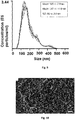
- the size of MSNPs was decreased by diluting by two the reagents to get particles of a size around 35 nm. Decreasing concentrations of reactants slows down the condensation of the silica nuclei which can explain the smaller size of these MSNPs ( figures 3 and 4 ).
- MSNPs 35 nm A minor but still significant intra-particular aggregation of MSNPs 35 nm was observed during hydrodynamic size studies by using Nano Tracking Analysis (NTA) ( figure 5 ). Due to their smaller size, MSNPs of 35 nm tend to aggregate more in water than those of 55 nm.
- NTA Nano Tracking Analysis
- MSNPs Functionalization of MSNPs with amino moieties provides positively charged nanoparticles. Those positively charged nanoparticles (MSNPs+) will be used to be incorporated into negatively charged structures, such as negatively charged supported lipid bilayer.
- a high density of amino moieties is expected to reinforce electrostatic interaction between the negatively charged supported lipid bilayer and the MSNPs+.
- APTES (3-aminopropyl)triethoxysilane
- Figures 6 and 7 provide respectively a SEM and a TEM picture of the MSNPs+ with a size of 50.9 ⁇ 3.6 nm.
- SLB Anionic supported lipid bilayers
- the lipid formulations of supported lipid bilayer covering mesoporous silica nanoparticles were composed of 1,2-dioleoyl-sn-glycero-3-phospho-L-serine (DOPS), 1,2-dipalmitoyl-sn-glycero-3-phosphocholine (DPPC), and cholesterol.
- DOPS 1,2-dioleoyl-sn-glycero-3-phospho-L-serine
- DPPC 1,2-dipalmitoyl-sn-glycero-3-phosphocholine
- 1,2-distearoyl-sn-glycero-3-phosphoethanolamine- N -amino(polyethylene glycol)-2 KDa (DSPE-PEG (2000)) is further added.
- the lipids are dissolved in a solvent, preferably a mixture of chloroform/methanol at a molar ratio of 9/1.
- the lipid film constituted by DPPC/DOPS/cholesterol or by DPPC/DOPS/cholesterol/DSPE-PEG(2000) was thus ultra-sonicated in the presence of 4 ml of an aqueous solution of functionalized MSNPs with a nanoparticle size of 50.9 ⁇ 3.6 nm.
- the concentration of said aqueous solution of functionalized MSNPs is fixed at 5 mg/mL.
- Ultra-sonication of the lipid film in water induces very high shearing forces generating the formation of Small Unilamellar Vesicles (SUV) from MultiLamellar Vesicles (MLV).
- SUV Small Unilamellar Vesicles
- MLV MultiLamellar Vesicles
- lipid reorganization might occur in two different ways.
- the first mechanism may involve the in situ formation of SUV which will be quickly adsorbed on the mesoporous core according to the mechanism proposed by Brisson and co-workers.
- MSNPs can be loaded inside lipid vesicles. Then, the lipid bilayer will merge with the outer layer of the MSNPs due to electrostatic forces and/or hydrogen bonding.
- the stable colloidal suspension was then centrifuged to remove the excess of liposomes and the particles were suspended in water.
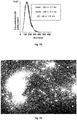
- figure 15 shows an "intermediate" particle where one of the MSNPs+ is going to be trapped by anionic liposomes. This picture suggests that the mechanism of interaction is driven by electrostatic forces and could fit in with a two-step mechanism involving the loading of MSNPs+ within a liposome in formation followed by an adsorption of the anionic bilayers on the cationic MSNPs+.
- pegylated SLB have also been synthesized on MSNPs of 65.3 ⁇ 1.6 nm, measured by CRYO-TEM ( figure 16 ).
- lipids were extracted and then quantified using the Liquid Chromatography-Mass Spectrometry (LC-MS) method.
- Table 1 summarizes the different molar ratios for each lipid before and after the synthesis of the MSNPs incorporated either within the SLB or within the SLB PEG .
- Table I Initial molar ratios of each lipid before synthesis and final ratios after synthesis and purification of the MSNPs with either SLB or SLB PEG . The data are mean ⁇ SE, performed by LC-MS in three independent experiments.
- This high amount of cholesterol (36%-50%) in the final SLB is necessary to give colloidal stability to the SLB. This is provided by the number of equivalents (2.50) of cholesterol relative to one equivalent of DOPS as initial molar ratio.
- MSNPs 35 mm with SLB results in a strong aggregation of the particles after purification. This may be explained by the initial intra-particular aggregation of MSNPs+ 35nm and the NPs curvature which is significantly higher than the 55 nm MSNPs. This may induce defects in the SLB and concomitant intra-particulate aggregation between cationic silica domains and SLB negatively charged domains. Nevertheless the presence of intact or partial SLB on MSNPs+ (35 nm) can be seen in the aggregate as shown by CRYO-TEM pictures ( figures 20 and 21 ).
- the ⁇ -potential of SLB or SLB PEG on MSNPs were investigated in different media (milliQ water, HEPES buffer and human serum) and were compared with the similar physicochemical properties of MSNPs and MSNPs+ ( figures 22 and 23 ). These measurements have been made without performing any filtration or size exclusion prior to analysis. The size has been measured using NTA whereas ⁇ -potential has been measured by using Malvern Nano Zetasizer®. In milliQ water, at a pH value of 5.8, MSNPs+ have a charge of +26.47 mV whereas SLB on MSNPS or SLB PEG on MSNPs have a charge of -52 and -50 mV respectively. This is in agreement with the CRYO-TEM pictures ( figures 14 and 16 ) showing that the MSNPs+ are fully coated by SLB or SLB PEG .
- the ⁇ -potential of the MSNPs+ of the present invention is significatively higher. Indeed, at a pH value of 6.0, the ⁇ -potential of the Bein's nanoparticle is comprised between 0 mV and 5 mV.
- APTES organotriethoxysilane
- a further result indicates that at a pH value of 4.0, the ⁇ -potential measurement demonstrates a charge of +37 mV onto the MSNPs+.
- MSNPs+ in water is about 99 nm. This may be attributed to the presence of a few intra-particulate aggregates due to NH 3 + /Si-OH electrostatic or hydrogen bonding between the particles. SLB on MSNPs were formulated in water from MSNPs+ resulting in the size of 127 nm which is higher than MSNPs+. This can be explained by the lipid coating present on the surface of MSNPs+.
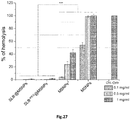
- MSNPs in PBS induce a high rate of hemolysis even at low concentrations up to the equivalence with the water positive control effect (100 % of hemolysis) at the high concentrations.
- Cetyltrimethylammonium chloride solution (CTACI), TEA: Triethanolamine, tetraorthosilicate (TEOS), (3-aminopropyl)triethoxysilane (APTES) and cholesterol were purchased from Sigma-Aldrich Co.
- the phospholipids 1,2-dioleoyl-sn-glycero-3-phospho-L-serine (DOPS), 1,2-dipalmitoyl-sn-glycero-3-phosphocholine (DPPC) and 1,2-distearoyl-sn-glycero-3-phosphoethanolamine- N -[amino(polyethylene glycol)-2000] (DSPE-PEG 2KDa) were purchased from Avanti Polar Lipids Inc. (Alabaster, AL). Ammonium acetate and Methanol were purchased from Biosolve.
- MSNPs 55mn Synthesis of 55 nm Mesoporous Silica Nanoparticles
- a stock solution was prepared by mixing 13.75 mL (762.8 mmol) of milliQ water, 2.23 mL (38.2 mmol) of absolute ethanol, and 2.23 mL (1.69 mmol) of 25% CTACI by stirring in Radleys Tech® carrousel for 10 minutes under argon atmosphere. Then, TEA (1.78 mL; 13.37 mmol) was added and mixed with stock solution until complete dissolution. Stock solution was heated at 60°C, and then TEOS (1.454 mL; 6.5 mmol) was added in drops over 2-3 minutes. The reaction was stirred for 2 hours, under argon atmosphere.
- the molar ratio of this reaction is: TEOS/CTACI/TEA/H 2 O/EtOH 1/0.26/2/117.35/5.88.
- the mesoporous silica nanoparticles which are formed display a wormhole-type matrix.
- MSNPs 35 nm Mesoporous Silica Nanoparticles
- the reagent mixture was diluted by two.
- Stock solution was prepared by mixing 27.5 mL (1.52 mol) of milliQ water, 4.46 mL (76.4 mmol) of absolute ethanol, and 2.23 mL (1.69 mmol) of 25 % CTACI in Radleys Tech® carrousel for 10 minutes under argon atmosphere. Then, the same synthesis process than the MSNPs 55 nm is applied with a molar ratio of: TEOS/CTACI/TEA/H2O/EtOH 1/0.26/2/234.7/11.76.
- the mesoporous silica nanoparticles which are formed display a wormhole-type matrix.
- the template extraction was performed by the combination of dialysis process and washing in hydrochloric acid.
- the NPs were washed in HCI/Ethanol (25 mL conc.HCl in 100 mL EtOH) solution follow by 20 minutes centrifugation at 45 000 g by Beckman TM Allegra® 64R. The NPs were washed five times in the extraction solution for 2 hours under sonication. And, one last washing was performed in water.
- Phospholipids were dissolved in chloroform/methanol 9:1 at a range of concentrations of 2 to 12 mg/mL.
- the phospholipids ratio was DPPC/DOPS/cholesterol 75/20/50.
- the ratio was DPPC/DOPS/cholesterol/DSPE-PEG 75/20/50/10.
- the total volume of lipid mixture was 1 mL. Then, these lipids were evaporated to produce a lipid film. Four mL of MSNPs at 5 mg/mL were mixed with the lipid film.
- the suspension was ultra-sonicated with Ultrasonicator Sonics Vibra Cell® during 20 minutes at room temperature under argon flow at 29 % of amplitude pulsed mode 10s/10s.
- the excess of liposomes was removed after centrifugation at 45 000g by Beckman TM Allegra® 64R centrifuge.
- the SLB on MSNPs obtained were stored at 4 °C under argon.
- the MSNPs and MSNPs+ samples were dried by lyophilization, to get 100mg of powder.
- the silica nanomaterials were characterized by X-ray diffraction (XRD) in Brüker D8 Discover® HR XRD.
- the MSNPs and MSNPs+ samples were evaporated by lyophilization, to get 100 mg of powder.
- the textural properties including the BET (Brunauer-Emmett-Teller) specific surface area (SBET), specific pore volume (Vp) and pore diameter (Dp), were determined from low-temperature N2 adsorption-desorption measurements collected using an ASAP 2010 Micrometrics apparatus. Prior to the analysis, the samples were degased under vacuum at 150 °C until the static pressure was less than 6.6 ⁇ 10-4 Pa.
- the specific surface area was calculated from the N2 sorption isotherm using the BET equation and taking into account the cross-sectional area of a physically adsorbed N2 molecule (0.1620 nm2).
- the pore diameter and pore size distributions were calculated from the desorption branch of the isotherms using the Barrett-Joyner-Halenda (BJH) method.
- BJH Barrett-Joyner-Halenda
- Malvern Nano Zetasizer® measure the size and Zeta potential of NPs by using dynamic light scattering size (DLS). The analysis was performed with 0.1 mg/mL for each sample.
- Nanoparticles Tracking Analysis used a light scattering method which relates the rate of Brownian motion to particle size. This method allows direct and real time visualizing and analyzing of the NPs in liquids.
- NTA Nanoparticles Tracking Analysis
- NPs are illuminated by a focused laser beam and analyzed by the light scattered by each individual particle in the microscope onto the image sensor of a charge-coupled device (CCD) camera. The camera visualizes and records the frames of the particles in solution.
- CCD charge-coupled device
- the NTA software identifies and individually tracks the particles moving under Brownian motion. This measurement uses the temperature and the viscosity of the liquid to calculate particle size through the Stokes-Einstein equation.
- the Nanosight® analyses the particles with a size range from 30 to 1 ⁇ m. The samples were diluted at 0.01 mg/mL for analysis.
- NanoPlusGrids with a 15 nm Nitride monolayer were used as analysis support.
- One drop of each silica sample was deposited on a grid and fully dried before measurement.
- the shape, porosity and size of the nanoparticles were characterized by FEI Tecna ⁇ TM Transmission Electronic Microscopy (TEM) operating at 200 kV.
- TEM Transmission Electronic Microscopy
- the purpose of the CRYO-TEM analysis is to determine the presence of the lipid bilayer surrounding Silica NPs.
- the samples were frozen with liquid nitrogen in carbon grids by FEI toolTM for sample preparation. Analyses were performed using FEI Titan KriosTM CRYO-TEM operated at 200 kV.
- the LC-MS Thermo Scientific Dionex BIO LC system is coupled with the mass of LTQ Orbitrap Elite.
- the system consisted of a GS50 gradient pump, AS50 Auto Sampler with oven column of thermal compartment. The separation was performed at 40 °C on a GRACE visionHT C18 HL column (150 ⁇ 2.1 mm i.d., 3 ⁇ m) from Dionex Bio LC with the scan mass of 300 and 1 000.
- the flow rate was 0.25 mL/min for the mobile phases (mobile phase C, 5 mM ammonium acetate in water (pH 4.0) and mobile phase D, 5 mM ammonium acetate in methanol).
- the binary linear gradient began from a mixture of 20 % C and 80 % D and ended at 100 % D.
- the SLB on MSNPs and SLB PEG on MSNPs samples were directly mixed in the solution of dichloromethane/methanol (9:1) to destabilize the lipid bilayer around the MSNPs.
- the NPs were removed by Beckman TM Allegra® 64R centrifuge, and the samples were diluted in methanol.
- the calibration range was performed in methanol with the concentration of lipid mixture 1, 10, 25, 50, 75 and 100 ⁇ g/mol.
- the sample injection volume was 50 ⁇ L.
- Data analysis was performed with the software ThermoXcalibur Qual Browser. The attenuation was ⁇ 6 ppm.
- the hemolysis assay was performed in two conditions, PBS buffer and human plasma.
- Human whole blood was freshly collected from healthy donors with their signed consent in a tube containing EDTA. The collection and use of healthy donor blood has been approved by the National Ethics Committee for Research of Luxembourg (CNER).
- CNER National Ethics Committee for Research of Luxembourg
- Four mL of blood were diluted with 8 mL of Dulbecco's phosphate-buffered saline (PBS).
- Red blood cells (RBCs) were isolated by centrifugation at 2 500 g for 10 minutes and washed 3 times with PBS. Then, RBCs were diluted in 40 mL of PBS.
- the human plasma was collected after the first centrifugation of the blood.
- Nanoparticles were diluted in 0.8 mL of PBS or human plasma with a concentration of 125, 625 and 1 250 ⁇ g/mL and 0.2 mL of diluted RBCs were added to make a final concentration of 0.1, 0.5 and 1 mg/mL.
- 0.2 mL of RBCs were added in 0.8 mL of water or PBS/human plasma respectively.
- the solutions were briefly mixed and left at room temperature for 2 hours at static conditions. Then the solutions were briefly mixed and centrifuged at 2 500 g for 5 minutes. One hundred ⁇ L of each sample's supernatant were transferred into a 96-well plate.
- Supported lipid bilayer (SLB) on mesoporous silica nanoparticles can be used as a nanovector for multiple applications (such as drug delivery, contrast agent for imaging).
- mesoporous silica can be used as a cargo while SLB adsorbed on porous silica play the role of gate keepers.
- One of the main drawbacks of this system is the colloidal stability when MSNPs, used as substrate for supported lipid bilayer, are close or below 70 nm.
- the curvature of such small MSNPs as well as the influence of their anionic charge impact the lipid bilayer coverage and can lead to defect in the lipid bilayer or/and inter-particulate aggregations.
- Cationic supported lipid bilayers are quickly removed from the blood circulation and can induce immune toxicity as well as cell membrane defect.
- Pegylated lipid bilayers such as pegylated liposomes are suspected to induce CARPA (complement activation-related pseudoallergy) or other immune reaction after multiple injection.
- the solution proposed by the present invention is to adsorb, on small cationic mesoporous silica, biomimetic supported lipid bilayer which mimics the phosphatidyl serine asymmetry as well as the charge of the red blood cells membrane.
- highly aminated mesoporous silica are coated during ultra-sonication process at room temperature by a supported lipid bilayer constituted by a range of 33 % of cholesterol, 13.5 % of DOPS, and 53.5 % of DPPC (see below table II, line 4).
- Table II thus shows the impact of the lipid formulation on the colloidal stability: Table II : Influence of the lipid ingredients in regards of the colloidal stability of SLB@MSNPs formulated by ultra-sonication (US).
- ratios are equivalent to the ratio used for the synthesis of the MSNPs incorporated with SLB, as described in table I of the present invention (34 % of cholesterol, 14 % of DOPS and 52 % of DPPC).
- the number of equivalents of cholesterol relative to one equivalent of DOPS are thus comprised between 2.30 and 2.70, this number being preferably equal to 2.50.
- the global charges are anionic as for RBC membranes.
- ultra-sonication is required to suppress nanoparticle aggregation which appears when highly aminated mesoporous silica and DOPS liposomes are in contact without adding ultra-sonication or any other sources of energy.
- the rate of DOPS/Chol/DPPC has been designed to reach a strong degree of SLB stability to coat the mesoporous silica without any defects which induce holes in SLB as well as nanoparticles aggregation.
- These "aniocells" nanoparticles have a very low avidity for plasma proteins (similar to pegylated supported lipid bilayer), are non-toxic regarding blood cells (i.e.
- peripheral blood mononuclear cell PBMC
- RBC peripheral blood mononuclear cell
- the defect-free structure of the proposed supported lipid bilayer allows slowing down the diffusion of active ingredients loaded into the mesoporous silica (gate keepers activity).
- MSNP + @SLB - and MSNP + @SLB -/PEG exhibit fivefold less protein adsorption on their surfaces compared to bare MSNP.
- SLB - acts like an anti-biofouling layer decreasing non-specific binding of proteins similar to the DSPE-PEG functionalized lipids. This antifouling property suggests therefore a different behavior of SLB - compared to a classical liposome.
Landscapes
- Health & Medical Sciences (AREA)
- Chemical & Material Sciences (AREA)
- Life Sciences & Earth Sciences (AREA)
- Public Health (AREA)
- Animal Behavior & Ethology (AREA)
- General Health & Medical Sciences (AREA)
- Veterinary Medicine (AREA)
- Epidemiology (AREA)
- Pharmacology & Pharmacy (AREA)
- Medicinal Chemistry (AREA)
- Dispersion Chemistry (AREA)
- Engineering & Computer Science (AREA)
- Bioinformatics & Cheminformatics (AREA)
- Optics & Photonics (AREA)
- Biomedical Technology (AREA)
- Inorganic Chemistry (AREA)
- Physics & Mathematics (AREA)
- Nanotechnology (AREA)
- Dermatology (AREA)
- Nuclear Medicine, Radiotherapy & Molecular Imaging (AREA)
- General Chemical & Material Sciences (AREA)
- Chemical Kinetics & Catalysis (AREA)
- Organic Chemistry (AREA)
- Birds (AREA)
- Medicinal Preparation (AREA)
- Pharmaceuticals Containing Other Organic And Inorganic Compounds (AREA)
- Cosmetics (AREA)
- Medicines That Contain Protein Lipid Enzymes And Other Medicines (AREA)
- Medicines Containing Antibodies Or Antigens For Use As Internal Diagnostic Agents (AREA)
Claims (15)
- Verfahren zur Herstellung einer negativ geladenen geträgerten Lipid-Doppelschicht auf einem positiv geladenen mesoporösen Silika-Nanoteilchen, wobei das Verfahren die folgenden Schritte umfasst:a) Herstellen einer Rezeptur von Lipiden, wobei die Lipide 1,2-Dioleoyl-sn-glycero-3-phospho-L-serin alias DOPS, Cholesterin und mindestens ein von DOPS und Cholesterin verschiedenes Lipid sind, wobei die Rezeptur von Lipiden in einem ersten Lösungsmittel gelöst ist;b) Verdampfen des ersten Lösungsmittels;c) Zusetzen einer wässrigen Rezeptur von positiv geladenen mesoporösen Silika-Nanoteilchen;d) Durchführen einer Zentrifugierung;dadurch gekennzeichnet, dass
das Verfahren weiter den Schritt des Durchführens einer Ultraschallbehandlung nach Schritt (c) und vor Schritt (d) umfasst, und dass die Anzahl von Äquivalenten von Cholesterin relativ zu einem Äquivalent von DOPS zwischen 2,30 und 2,70 liegt. - Verfahren nach Anspruch 1, dadurch gekennzeichnet, dass das mindestens eine von DOPS und Cholesterin verschiedene Lipid 1,2-Dipalmitoyl-sn-glycero-3-phosphocholin alias DPPC ist.
- Verfahren nach einem der Ansprüche 1-2, dadurch gekennzeichnet, dass die Rezeptur weiter 1,2-Distearoyl-sn-glycero-3-phosphoethanolamin-N-amino(polyethylenglycol) 2KDa alias DSPE-PEG(2000) umfasst.
- Verfahren nach einem der Ansprüche 1-3, dadurch gekennzeichnet, dass die positiv geladenen mesoporösen Silika-Nanoteilchen erhalten werden aus den Schritten des:a. Kondensierens eines Silika-Vorläufers, eines oberflächenaktiven Mittels und eines Kondensationsmittels in einem zweiten Lösungsmittel;b. Zusetzens eines Organotriethoxysilans, wobei der Anteil des Organotriethoxysilans zu dem Silika-Vorläufer zwischen 5% und 15% liegt;c. Entfernens des oberflächenaktiven Mittels.
- Verfahren nach Anspruch 4, dadurch gekennzeichnet, dass der Silika-Vorläufer Tetraethylorthosilikat ist, das oberflächenaktive Mittel Cetyltrimethylammoniumchlorid ist, das Kondensationsmittel Triethanolamin ist und/oder das Organotriethoxysilan (3-Aminopropyl)triethoxysilan ist.
- Verfahren nach einem der Ansprüche 4-5, dadurch gekennzeichnet, dass der Schritt des Entfernens des oberflächenaktiven Mittels eine Kombination aus einem Dialyseprozess und einer Extraktion in Salzsäure ist.
- Negativ geladene geträgerte Lipid-Doppelschicht auf einem positiv geladenen mesoporösen Silika-Nanoteilchen, wobei die negativ geladene geträgerte Lipid-Doppelschicht Cholesterin, 1,2-Dioleoyl-sn-glycero-3-phospho-L-serin alias DOPS und mindestens ein von DOPS und Cholesterin verschiedenes Lipid umfasst, dadurch gekennzeichnet, dass die Anzahl von Äquivalenten von Cholesterin relativ zu einem Äquivalent von DOPS zwischen 2,30 und 2,70 liegt, und dass das ζ-Potential gemessen in milliQ Wasser bei einem pH-Wert von 5,8 niedriger als -50 mV ist.
- Negativ geladene geträgerte Lipid-Doppelschicht auf einem positiv geladenen mesoporösen Silika-Nanoteilchen nach Anspruch 7, dadurch gekennzeichnet, dass das mindestens eine von DOPS und Cholesterin verschiedene Lipid 1,2-Dipalmitoyl-sn-glycero-3-phosphocholin alias DPPC ist.
- Negativ geladene geträgerte Lipid-Doppelschicht auf einem positiv geladenen mesoporösen Silika-Nanoteilchen nach einem der Ansprüche 7-8,
dadurch gekennzeichnet, dass die geträgerte Lipid-Doppelschicht weiter 1,2-Distearoyl-sn-glycero-3-phosphoethanolamin-N-amino(polyethylenglycol) 2KDa alias DSPE-PEG(2000) umfasst. - Negativ geladene geträgerte Lipid-Doppelschicht auf einem positiv geladenen mesoporösen Silika-Nanoteilchen nach einem der Ansprüche 7-9,
dadurch gekennzeichnet, dass das positiv geladene mesoporöse Silika-Nanoteilchen mindestens einen Silika-Vorläufer und mindestens ein Organotriethoxysilan umfasst, wobei der Anteil des Organotriethoxysilans zu dem Silika-Vorläufer zwischen 5% und 15% liegt. - Zusammensetzung, die zur Abgabe von Medikamenten ausgelegt ist, umfassenda. die negativ geladene geträgerte Lipid-Doppelschicht auf einem positiv geladenen mesoporösen Silika-Nanoteilchen nach einem der Ansprüche 7-10, undb. mindestens einen aktiven Anteil,dadurch gekennzeichnet, dass
der mindestens eine aktive Anteil ein Molekül ist, das therapeutische Eigenschaften aufweist, bevorzugt ein Molekül, das antikanzeröse Eigenschaften aufweist, oder der mindestens eine aktive Anteil ein Kontrastmittel ist, oder der mindestens eine aktive Anteil ein kosmetisches Mittel ist. - Zusammensetzung nach Anspruch 11, dadurch gekennzeichnet, dass das antikanzeröse Eigenschaften aufweisende Molekül aus der folgenden Liste ausgewählt ist: Doxorubicin, Paclitaxel, Docetaxel, gleich welcher Mitoseinhibitor, Cisplatin, 5-FU, Temozolomid oder gleich welches andere.
- Zusammensetzung nach Anspruch 11, dadurch gekennzeichnet, dass das Kontrastmittel gleich welches Gadolinium-Derivat, gleich welches lod-Derivat, gleich welches Goldderivat, Indocyaningrün, Rhodamin, Fluorescein, Methylenblau, 5-Aminolävulinsäure, gleich welcher Porphyrin-Vorläufer oder gleich welches andere ist.
- Zusammensetzung nach Anspruch 11, dadurch gekennzeichnet, dass das kosmetische Mittel Retinsäure, Vitamin E, Nikotinsäure, Ascorbinsäure, gleich welches B-Vitamin, gleich welches Antioxidans oder gleich welches andere ist.
- Anwendung der negativ geladenen geträgerten Lipid-Doppelschicht auf einem positiv geladenen mesoporösen Silika-Nanopartikel gemäß einem der Ansprüche 7-10 als biomimetische Verbindung, die dafür ausgelegt ist, die Membranasymmetrie und/oder die elektrische Leitfähigkeit eines roten Blutkörperchens nachzuahmen.
Applications Claiming Priority (2)
| Application Number | Priority Date | Filing Date | Title |
|---|---|---|---|
| LU92784A LU92784B1 (en) | 2015-07-22 | 2015-07-22 | Negatively charged self-assembling supported lipid bilayer on mesoporous silica nanoparticles, method of synthesis and use as a nanovector |
| PCT/EP2016/067546 WO2017013250A1 (en) | 2015-07-22 | 2016-07-22 | Negatively charged self-assembling supported lipid bilayer on mesoporous silica nanoparticles, method of synthesis and use as a nanovector |
Publications (2)
| Publication Number | Publication Date |
|---|---|
| EP3324940A1 EP3324940A1 (de) | 2018-05-30 |
| EP3324940B1 true EP3324940B1 (de) | 2018-12-19 |
Family
ID=53785688
Family Applications (1)
| Application Number | Title | Priority Date | Filing Date |
|---|---|---|---|
| EP16742296.3A Active EP3324940B1 (de) | 2015-07-22 | 2016-07-22 | Negativ geladene selbstanordnende geträgerte doppellipidschicht auf mesoporösen siliciumdioxidnanoteilchen, verfahren zur synthese und verwendung als nanovektor |
Country Status (6)
| Country | Link |
|---|---|
| US (1) | US11213487B2 (de) |
| EP (1) | EP3324940B1 (de) |
| JP (1) | JP6968426B2 (de) |
| IL (1) | IL257032B (de) |
| LU (1) | LU92784B1 (de) |
| WO (1) | WO2017013250A1 (de) |
Families Citing this family (18)
| Publication number | Priority date | Publication date | Assignee | Title |
|---|---|---|---|---|
| WO2014138278A1 (en) | 2013-03-05 | 2014-09-12 | The Regents Of The University Of California | Lipid bilayer coated mesoporous silica nanoparticles with a high loading capacity for one or more anticancer agents |
| US10194672B2 (en) | 2015-10-23 | 2019-02-05 | NanoGuard Technologies, LLC | Reactive gas, reactive gas generation system and product treatment using reactive gas |
| WO2017120537A1 (en) | 2016-01-08 | 2017-07-13 | The Regents Of The University Of California | Mesoporous silica nanoparticles with lipid bilayer coating for cargo delivery |
| LU100023B1 (en) * | 2017-01-20 | 2018-07-30 | Luxembourg Inst Science & Tech List | Nanocapsules and method for manufacturing thereof |
| LU100581B1 (en) * | 2017-12-20 | 2019-06-28 | Luxembourg Inst Science & Tech List | Method for manufacturing mesoporous silica nanoparticles with encapsulated superparamagnetic clusters |
| EP3735250A4 (de) * | 2018-01-01 | 2022-04-13 | The Regents Of The University Of California | Aufskalierungssynthese von silicasom-nanoträgern |
| US12252708B2 (en) | 2018-09-24 | 2025-03-18 | Unm Rainforest Innovations | Living mammalian cells modified with functional modular nanoparticles |
| WO2020176716A1 (en) | 2019-02-28 | 2020-09-03 | Brinker C Jeffrey | Modular metal–organic polyhedra superassembly compositions |
| GB201904336D0 (en) | 2019-03-28 | 2019-05-15 | Sisaf Ltd | A delivery system |
| GB201904337D0 (en) | 2019-03-28 | 2019-05-15 | Sisaf Ltd | A delivery system |
| EP3714879A1 (de) | 2019-03-28 | 2020-09-30 | Sisaf Ltd | Strukturierte verkapselte siliciumhaltige partikel |
| GB201904334D0 (en) | 2019-03-28 | 2019-05-15 | Sisaf Ltd | Carrier system for preparing herbaceous extracts |
| CN110269847A (zh) * | 2019-06-21 | 2019-09-24 | 温州医科大学 | 一种用于中和细菌毒素的仿生纳米材料及其制备方法与应用 |
| LU102356B1 (en) * | 2020-12-30 | 2022-06-30 | Luxembourg Inst Science & Tech List | Stabilisation of carbonate calcium nanoparticles |
| US20250177301A1 (en) * | 2022-01-31 | 2025-06-05 | Unm Rainforest Innovations | Triplex nanoparticles |
| CN114699541A (zh) * | 2022-03-22 | 2022-07-05 | 中山大学附属第七医院(深圳) | 一种纳米液态氟碳硅脂质超声造影剂及其制备方法 |
| CN116120538B (zh) * | 2023-02-09 | 2024-07-23 | 苏州大学 | 一种用于富集细胞外囊泡的双功能杂化整体材料及其制备方法和应用 |
| CN118026768A (zh) * | 2024-01-26 | 2024-05-14 | 大连理工大学 | 一种氨基封端的聚乙二醇修饰的纳米肥药制剂的制备方法 |
Family Cites Families (3)
| Publication number | Priority date | Publication date | Assignee | Title |
|---|---|---|---|---|
| US8992984B1 (en) * | 2009-10-21 | 2015-03-31 | Stc.Unm | Protocells and their use for targeted delivery of multicomponent cargos to cancer cells |
| CN103687590A (zh) * | 2011-04-28 | 2014-03-26 | Stc·Unm公司 | 用于靶向给药的多孔纳米颗粒支撑脂双层(原始细胞)及其使用方法 |
| WO2014138278A1 (en) * | 2013-03-05 | 2014-09-12 | The Regents Of The University Of California | Lipid bilayer coated mesoporous silica nanoparticles with a high loading capacity for one or more anticancer agents |
-
2015
- 2015-07-22 LU LU92784A patent/LU92784B1/en active IP Right Grant
-
2016
- 2016-07-22 EP EP16742296.3A patent/EP3324940B1/de active Active
- 2016-07-22 US US15/746,357 patent/US11213487B2/en active Active
- 2016-07-22 JP JP2018500897A patent/JP6968426B2/ja active Active
- 2016-07-22 WO PCT/EP2016/067546 patent/WO2017013250A1/en not_active Ceased
-
2018
- 2018-01-20 IL IL257032A patent/IL257032B/en active IP Right Grant
Non-Patent Citations (1)
| Title |
|---|
| None * |
Also Published As
| Publication number | Publication date |
|---|---|
| WO2017013250A1 (en) | 2017-01-26 |
| IL257032A (en) | 2018-03-29 |
| US11213487B2 (en) | 2022-01-04 |
| JP2018520174A (ja) | 2018-07-26 |
| LU92784B1 (en) | 2017-01-31 |
| IL257032B (en) | 2020-02-27 |
| JP6968426B2 (ja) | 2021-11-17 |
| EP3324940A1 (de) | 2018-05-30 |
| US20180207096A1 (en) | 2018-07-26 |
Similar Documents
| Publication | Publication Date | Title |
|---|---|---|
| US11213487B2 (en) | Negatively charged self-assembling supported lipid bilayer on mesoporous silica nanoparticles, method of synthesis and use as a nanovector | |
| Tai et al. | The effect of sterol derivatives on properties of soybean and egg yolk lecithin liposomes: Stability, structure and membrane characteristics | |
| Dichello et al. | Preparation of liposomes containing small gold nanoparticles using electrostatic interactions | |
| Yoo et al. | Preparation of novel capsosome with liposomal core by layer-by-Layer self-assembly of sodium hyaluronate and chitosan | |
| KR20070028478A (ko) | 비응집성 코어/쉘 나노복합 입자 | |
| US20130273561A1 (en) | Lipid encapsulation of surface enhanced raman scattering (sers) nanoparticles | |
| EP3570817B1 (de) | Nanokapsel und verfahren zur herstellung davon | |
| CN107625966A (zh) | 一种自组装式脂质‑介孔硅核/壳复合型纳米药物载体及其制备方法 | |
| Song et al. | Multifunctional dual-mesoporous silica nanoparticles loaded with a protein and dual antitumor drugs as a targeted delivery system | |
| Jang et al. | Self-assembly of gold nanoparticles in a block copolymer aggregate template driven by hydrophobic interactions | |
| Sancho-Albero et al. | Cargo-loaded lipid-shielded breakable organosilica nanocages for enhanced drug delivery | |
| Wallin et al. | Peptide-induced formation of a tethered lipid bilayer membrane on mesoporous silica | |
| WO2022144135A1 (en) | Stabilisation of carbonate calcium nanoparticles | |
| Lindén et al. | Characterization of phosphatidylcholine/polyethylene glycol‐lipid aggregates and their use as coatings and carriers in capillary electrophoresis | |
| LU92783B1 (en) | Highly aminated self-assembling fuctionalized Mesoporous Silicia Nanoparticles and methods of synthesis | |
| Trucillo et al. | Operative parameters optimization production of liposomes for the encapsulation of hydrophilic compounds using a new supercritical process | |
| Er et al. | Attenuated total reflectance infrared studies of liposome adsorption at the solid–liquid interface | |
| Eremina et al. | Stabilization of porous silicon nanoparticles by PEGalization in water | |
| Gonçalves et al. | Liposil nanocarriers for pharmaceutical applications: Synthesis innovations | |
| Desai | Mesoporous silica nanoparticles as versatile intracellular drug delivery platform | |
| Schloßbauer | Biofunctionalized mesoporous silica for controlled release applications | |
| Cocquyt et al. | Partitioning of propranolol in the phospholipid bilayer coat of anionic magnetoliposomes | |
| Chen | A molecular study of membrane structure in liposomes | |
| Kashcooli | NIR light activated hollow gold nanoshell structures based on layersome template | |
| Sylvie et al. | Liposil, a Promising Phospholipid/Silica Composite Material |
Legal Events
| Date | Code | Title | Description |
|---|---|---|---|
| STAA | Information on the status of an ep patent application or granted ep patent |
Free format text: STATUS: THE INTERNATIONAL PUBLICATION HAS BEEN MADE |
|
| PUAI | Public reference made under article 153(3) epc to a published international application that has entered the european phase |
Free format text: ORIGINAL CODE: 0009012 |
|
| STAA | Information on the status of an ep patent application or granted ep patent |
Free format text: STATUS: REQUEST FOR EXAMINATION WAS MADE |
|
| 17P | Request for examination filed |
Effective date: 20180116 |
|
| AK | Designated contracting states |
Kind code of ref document: A1 Designated state(s): AL AT BE BG CH CY CZ DE DK EE ES FI FR GB GR HR HU IE IS IT LI LT LU LV MC MK MT NL NO PL PT RO RS SE SI SK SM TR |
|
| AX | Request for extension of the european patent |
Extension state: BA ME |
|
| GRAP | Despatch of communication of intention to grant a patent |
Free format text: ORIGINAL CODE: EPIDOSNIGR1 |
|
| STAA | Information on the status of an ep patent application or granted ep patent |
Free format text: STATUS: GRANT OF PATENT IS INTENDED |
|
| INTG | Intention to grant announced |
Effective date: 20180627 |
|
| DAV | Request for validation of the european patent (deleted) | ||
| DAX | Request for extension of the european patent (deleted) | ||
| GRAS | Grant fee paid |
Free format text: ORIGINAL CODE: EPIDOSNIGR3 |
|
| GRAA | (expected) grant |
Free format text: ORIGINAL CODE: 0009210 |
|
| STAA | Information on the status of an ep patent application or granted ep patent |
Free format text: STATUS: THE PATENT HAS BEEN GRANTED |
|
| AK | Designated contracting states |
Kind code of ref document: B1 Designated state(s): AL AT BE BG CH CY CZ DE DK EE ES FI FR GB GR HR HU IE IS IT LI LT LU LV MC MK MT NL NO PL PT RO RS SE SI SK SM TR |
|
| REG | Reference to a national code |
Ref country code: GB Ref legal event code: FG4D |
|
| REG | Reference to a national code |
Ref country code: CH Ref legal event code: EP |
|
| REG | Reference to a national code |
Ref country code: DE Ref legal event code: R096 Ref document number: 602016008507 Country of ref document: DE |
|
| REG | Reference to a national code |
Ref country code: IE Ref legal event code: FG4D |
|
| REG | Reference to a national code |
Ref country code: AT Ref legal event code: REF Ref document number: 1077908 Country of ref document: AT Kind code of ref document: T Effective date: 20190115 |
|
| REG | Reference to a national code |
Ref country code: CH Ref legal event code: NV Representative=s name: RA DR. ALEXANDER MILLER, LL.M., CH |
|
| REG | Reference to a national code |
Ref country code: NL Ref legal event code: FP |
|
| PG25 | Lapsed in a contracting state [announced via postgrant information from national office to epo] |
Ref country code: NO Free format text: LAPSE BECAUSE OF FAILURE TO SUBMIT A TRANSLATION OF THE DESCRIPTION OR TO PAY THE FEE WITHIN THE PRESCRIBED TIME-LIMIT Effective date: 20190319 Ref country code: LT Free format text: LAPSE BECAUSE OF FAILURE TO SUBMIT A TRANSLATION OF THE DESCRIPTION OR TO PAY THE FEE WITHIN THE PRESCRIBED TIME-LIMIT Effective date: 20181219 Ref country code: BG Free format text: LAPSE BECAUSE OF FAILURE TO SUBMIT A TRANSLATION OF THE DESCRIPTION OR TO PAY THE FEE WITHIN THE PRESCRIBED TIME-LIMIT Effective date: 20190319 Ref country code: HR Free format text: LAPSE BECAUSE OF FAILURE TO SUBMIT A TRANSLATION OF THE DESCRIPTION OR TO PAY THE FEE WITHIN THE PRESCRIBED TIME-LIMIT Effective date: 20181219 Ref country code: FI Free format text: LAPSE BECAUSE OF FAILURE TO SUBMIT A TRANSLATION OF THE DESCRIPTION OR TO PAY THE FEE WITHIN THE PRESCRIBED TIME-LIMIT Effective date: 20181219 Ref country code: LV Free format text: LAPSE BECAUSE OF FAILURE TO SUBMIT A TRANSLATION OF THE DESCRIPTION OR TO PAY THE FEE WITHIN THE PRESCRIBED TIME-LIMIT Effective date: 20181219 |
|
| REG | Reference to a national code |
Ref country code: LT Ref legal event code: MG4D |
|
| REG | Reference to a national code |
Ref country code: AT Ref legal event code: MK05 Ref document number: 1077908 Country of ref document: AT Kind code of ref document: T Effective date: 20181219 |
|
| PG25 | Lapsed in a contracting state [announced via postgrant information from national office to epo] |
Ref country code: GR Free format text: LAPSE BECAUSE OF FAILURE TO SUBMIT A TRANSLATION OF THE DESCRIPTION OR TO PAY THE FEE WITHIN THE PRESCRIBED TIME-LIMIT Effective date: 20190320 Ref country code: RS Free format text: LAPSE BECAUSE OF FAILURE TO SUBMIT A TRANSLATION OF THE DESCRIPTION OR TO PAY THE FEE WITHIN THE PRESCRIBED TIME-LIMIT Effective date: 20181219 Ref country code: SE Free format text: LAPSE BECAUSE OF FAILURE TO SUBMIT A TRANSLATION OF THE DESCRIPTION OR TO PAY THE FEE WITHIN THE PRESCRIBED TIME-LIMIT Effective date: 20181219 Ref country code: AL Free format text: LAPSE BECAUSE OF FAILURE TO SUBMIT A TRANSLATION OF THE DESCRIPTION OR TO PAY THE FEE WITHIN THE PRESCRIBED TIME-LIMIT Effective date: 20181219 |
|
| PG25 | Lapsed in a contracting state [announced via postgrant information from national office to epo] |
Ref country code: IT Free format text: LAPSE BECAUSE OF FAILURE TO SUBMIT A TRANSLATION OF THE DESCRIPTION OR TO PAY THE FEE WITHIN THE PRESCRIBED TIME-LIMIT Effective date: 20181219 Ref country code: PL Free format text: LAPSE BECAUSE OF FAILURE TO SUBMIT A TRANSLATION OF THE DESCRIPTION OR TO PAY THE FEE WITHIN THE PRESCRIBED TIME-LIMIT Effective date: 20181219 Ref country code: ES Free format text: LAPSE BECAUSE OF FAILURE TO SUBMIT A TRANSLATION OF THE DESCRIPTION OR TO PAY THE FEE WITHIN THE PRESCRIBED TIME-LIMIT Effective date: 20181219 Ref country code: PT Free format text: LAPSE BECAUSE OF FAILURE TO SUBMIT A TRANSLATION OF THE DESCRIPTION OR TO PAY THE FEE WITHIN THE PRESCRIBED TIME-LIMIT Effective date: 20190419 Ref country code: CZ Free format text: LAPSE BECAUSE OF FAILURE TO SUBMIT A TRANSLATION OF THE DESCRIPTION OR TO PAY THE FEE WITHIN THE PRESCRIBED TIME-LIMIT Effective date: 20181219 |
|
| PG25 | Lapsed in a contracting state [announced via postgrant information from national office to epo] |
Ref country code: EE Free format text: LAPSE BECAUSE OF FAILURE TO SUBMIT A TRANSLATION OF THE DESCRIPTION OR TO PAY THE FEE WITHIN THE PRESCRIBED TIME-LIMIT Effective date: 20181219 Ref country code: SM Free format text: LAPSE BECAUSE OF FAILURE TO SUBMIT A TRANSLATION OF THE DESCRIPTION OR TO PAY THE FEE WITHIN THE PRESCRIBED TIME-LIMIT Effective date: 20181219 Ref country code: RO Free format text: LAPSE BECAUSE OF FAILURE TO SUBMIT A TRANSLATION OF THE DESCRIPTION OR TO PAY THE FEE WITHIN THE PRESCRIBED TIME-LIMIT Effective date: 20181219 Ref country code: IS Free format text: LAPSE BECAUSE OF FAILURE TO SUBMIT A TRANSLATION OF THE DESCRIPTION OR TO PAY THE FEE WITHIN THE PRESCRIBED TIME-LIMIT Effective date: 20190419 Ref country code: SK Free format text: LAPSE BECAUSE OF FAILURE TO SUBMIT A TRANSLATION OF THE DESCRIPTION OR TO PAY THE FEE WITHIN THE PRESCRIBED TIME-LIMIT Effective date: 20181219 |
|
| REG | Reference to a national code |
Ref country code: DE Ref legal event code: R097 Ref document number: 602016008507 Country of ref document: DE |
|
| PLBE | No opposition filed within time limit |
Free format text: ORIGINAL CODE: 0009261 |
|
| STAA | Information on the status of an ep patent application or granted ep patent |
Free format text: STATUS: NO OPPOSITION FILED WITHIN TIME LIMIT |
|
| PG25 | Lapsed in a contracting state [announced via postgrant information from national office to epo] |
Ref country code: DK Free format text: LAPSE BECAUSE OF FAILURE TO SUBMIT A TRANSLATION OF THE DESCRIPTION OR TO PAY THE FEE WITHIN THE PRESCRIBED TIME-LIMIT Effective date: 20181219 Ref country code: AT Free format text: LAPSE BECAUSE OF FAILURE TO SUBMIT A TRANSLATION OF THE DESCRIPTION OR TO PAY THE FEE WITHIN THE PRESCRIBED TIME-LIMIT Effective date: 20181219 |
|
| 26N | No opposition filed |
Effective date: 20190920 |
|
| PG25 | Lapsed in a contracting state [announced via postgrant information from national office to epo] |
Ref country code: MC Free format text: LAPSE BECAUSE OF FAILURE TO SUBMIT A TRANSLATION OF THE DESCRIPTION OR TO PAY THE FEE WITHIN THE PRESCRIBED TIME-LIMIT Effective date: 20181219 |
|
| PG25 | Lapsed in a contracting state [announced via postgrant information from national office to epo] |
Ref country code: TR Free format text: LAPSE BECAUSE OF FAILURE TO SUBMIT A TRANSLATION OF THE DESCRIPTION OR TO PAY THE FEE WITHIN THE PRESCRIBED TIME-LIMIT Effective date: 20181219 |
|
| PG25 | Lapsed in a contracting state [announced via postgrant information from national office to epo] |
Ref country code: CY Free format text: LAPSE BECAUSE OF FAILURE TO SUBMIT A TRANSLATION OF THE DESCRIPTION OR TO PAY THE FEE WITHIN THE PRESCRIBED TIME-LIMIT Effective date: 20181219 |
|
| PG25 | Lapsed in a contracting state [announced via postgrant information from national office to epo] |
Ref country code: MT Free format text: LAPSE BECAUSE OF FAILURE TO SUBMIT A TRANSLATION OF THE DESCRIPTION OR TO PAY THE FEE WITHIN THE PRESCRIBED TIME-LIMIT Effective date: 20181219 Ref country code: HU Free format text: LAPSE BECAUSE OF FAILURE TO SUBMIT A TRANSLATION OF THE DESCRIPTION OR TO PAY THE FEE WITHIN THE PRESCRIBED TIME-LIMIT; INVALID AB INITIO Effective date: 20160722 |
|
| PG25 | Lapsed in a contracting state [announced via postgrant information from national office to epo] |
Ref country code: SI Free format text: LAPSE BECAUSE OF FAILURE TO SUBMIT A TRANSLATION OF THE DESCRIPTION OR TO PAY THE FEE WITHIN THE PRESCRIBED TIME-LIMIT Effective date: 20181219 |
|
| PG25 | Lapsed in a contracting state [announced via postgrant information from national office to epo] |
Ref country code: MK Free format text: LAPSE BECAUSE OF FAILURE TO SUBMIT A TRANSLATION OF THE DESCRIPTION OR TO PAY THE FEE WITHIN THE PRESCRIBED TIME-LIMIT Effective date: 20181219 |
|
| PGFP | Annual fee paid to national office [announced via postgrant information from national office to epo] |
Ref country code: IE Payment date: 20230724 Year of fee payment: 8 |
|
| PG25 | Lapsed in a contracting state [announced via postgrant information from national office to epo] |
Ref country code: IE Free format text: LAPSE BECAUSE OF NON-PAYMENT OF DUE FEES Effective date: 20240722 |
|
| PGFP | Annual fee paid to national office [announced via postgrant information from national office to epo] |
Ref country code: NL Payment date: 20250726 Year of fee payment: 10 Ref country code: LU Payment date: 20250728 Year of fee payment: 10 |
|
| PGFP | Annual fee paid to national office [announced via postgrant information from national office to epo] |
Ref country code: DE Payment date: 20250729 Year of fee payment: 10 |
|
| PGFP | Annual fee paid to national office [announced via postgrant information from national office to epo] |
Ref country code: BE Payment date: 20250728 Year of fee payment: 10 Ref country code: GB Payment date: 20250728 Year of fee payment: 10 |
|
| PGFP | Annual fee paid to national office [announced via postgrant information from national office to epo] |
Ref country code: FR Payment date: 20250725 Year of fee payment: 10 |
|
| PGFP | Annual fee paid to national office [announced via postgrant information from national office to epo] |
Ref country code: CH Payment date: 20250801 Year of fee payment: 10 |
|
| REG | Reference to a national code |
Ref country code: CH Ref legal event code: U11 Free format text: ST27 STATUS EVENT CODE: U-0-0-U10-U11 (AS PROVIDED BY THE NATIONAL OFFICE) Effective date: 20260801 |