EP3323069B1 - Tracking infections in hospital environments - Google Patents
Tracking infections in hospital environments Download PDFInfo
- Publication number
- EP3323069B1 EP3323069B1 EP16739265.3A EP16739265A EP3323069B1 EP 3323069 B1 EP3323069 B1 EP 3323069B1 EP 16739265 A EP16739265 A EP 16739265A EP 3323069 B1 EP3323069 B1 EP 3323069B1
- Authority
- EP
- European Patent Office
- Prior art keywords
- samples
- infection
- over time
- sample
- changes
- Prior art date
- Legal status (The legal status is an assumption and is not a legal conclusion. Google has not performed a legal analysis and makes no representation as to the accuracy of the status listed.)
- Active
Links
Images

Classifications
-
- G—PHYSICS
- G16—INFORMATION AND COMMUNICATION TECHNOLOGY [ICT] SPECIALLY ADAPTED FOR SPECIFIC APPLICATION FIELDS
- G16B—BIOINFORMATICS, i.e. INFORMATION AND COMMUNICATION TECHNOLOGY [ICT] SPECIALLY ADAPTED FOR GENETIC OR PROTEIN-RELATED DATA PROCESSING IN COMPUTATIONAL MOLECULAR BIOLOGY
- G16B10/00—ICT specially adapted for evolutionary bioinformatics, e.g. phylogenetic tree construction or analysis
-
- G—PHYSICS
- G16—INFORMATION AND COMMUNICATION TECHNOLOGY [ICT] SPECIALLY ADAPTED FOR SPECIFIC APPLICATION FIELDS
- G16B—BIOINFORMATICS, i.e. INFORMATION AND COMMUNICATION TECHNOLOGY [ICT] SPECIALLY ADAPTED FOR GENETIC OR PROTEIN-RELATED DATA PROCESSING IN COMPUTATIONAL MOLECULAR BIOLOGY
- G16B20/00—ICT specially adapted for functional genomics or proteomics, e.g. genotype-phenotype associations
-
- G—PHYSICS
- G16—INFORMATION AND COMMUNICATION TECHNOLOGY [ICT] SPECIALLY ADAPTED FOR SPECIFIC APPLICATION FIELDS
- G16B—BIOINFORMATICS, i.e. INFORMATION AND COMMUNICATION TECHNOLOGY [ICT] SPECIALLY ADAPTED FOR GENETIC OR PROTEIN-RELATED DATA PROCESSING IN COMPUTATIONAL MOLECULAR BIOLOGY
- G16B20/00—ICT specially adapted for functional genomics or proteomics, e.g. genotype-phenotype associations
- G16B20/20—Allele or variant detection, e.g. single nucleotide polymorphism [SNP] detection
-
- G—PHYSICS
- G16—INFORMATION AND COMMUNICATION TECHNOLOGY [ICT] SPECIALLY ADAPTED FOR SPECIFIC APPLICATION FIELDS
- G16B—BIOINFORMATICS, i.e. INFORMATION AND COMMUNICATION TECHNOLOGY [ICT] SPECIALLY ADAPTED FOR GENETIC OR PROTEIN-RELATED DATA PROCESSING IN COMPUTATIONAL MOLECULAR BIOLOGY
- G16B20/00—ICT specially adapted for functional genomics or proteomics, e.g. genotype-phenotype associations
- G16B20/50—Mutagenesis
-
- G—PHYSICS
- G16—INFORMATION AND COMMUNICATION TECHNOLOGY [ICT] SPECIALLY ADAPTED FOR SPECIFIC APPLICATION FIELDS
- G16H—HEALTHCARE INFORMATICS, i.e. INFORMATION AND COMMUNICATION TECHNOLOGY [ICT] SPECIALLY ADAPTED FOR THE HANDLING OR PROCESSING OF MEDICAL OR HEALTHCARE DATA
- G16H50/00—ICT specially adapted for medical diagnosis, medical simulation or medical data mining; ICT specially adapted for detecting, monitoring or modelling epidemics or pandemics
- G16H50/30—ICT specially adapted for medical diagnosis, medical simulation or medical data mining; ICT specially adapted for detecting, monitoring or modelling epidemics or pandemics for calculating health indices; for individual health risk assessment
Definitions
- the invention relates to computer-implemented methods and apparatus for tracking the spread of hospital acquired infections.
- HAIs Healthcare-associated infections
- HAIs Healthcare-associated infections
- nosocomial infections HAIs
- HAIs can be deadly and are a frequent occurrence in hospitals. They often have bacterial or fungal causes.
- Approximately 1 out of every 20 patients hospitalized will contract an HAI.
- the last study conducted in 2002 estimated that there were approximately 1.7 million HAIs. These 1.7 million HAIs have caused or contributed to approximately 99,000 deaths each year. A similar trend has been identified in Europe where HAI infections appear to contribute to two-thirds of the 25,000 yearly deaths.
- Nosocomial infections can cause severe pneumonia and infections of the urinary tract, bloodstream and other parts of the body. Many types are difficult to treat with antibiotics, and antibiotic resistance is spreading to Gram-negative bacteria that can infect people outside the hospital context. In the United States, the most frequent type of infection hospital-wide is urinary tract infection (36%), followed by surgical site infection (20%), and bloodstream infection and pneumonia (both 11%).
- HAIs Nosocomial Infection Control
- US 2008/206767A1 discloses a system and method for performing real-time infection control over a computer network.
- Various embodiments disclosed herein generally relate to healthcare associated infections, and more specifically, to methods, apparatus, and non-transitory machine-readable media storing instructions for execution by a processor for tracking the spread of hospital acquired infections in the hospital environment. To this end, some embodiments track hospital-associated infections acquired from bacterial and fungi and compare them to other samples in an evolutionary manner to help with the sourcing of transmission, identifying related cases, etc.
- Various embodiments further identify infection samples that may be spreading in a single outbreak (rather than separate unrelated infections) for the purposes of aiding infection control procedures. If there are multiple patients with the same type of infection, it is important to identify which infections may have been spread within the hospital versus community acquired infections (i.e., infections transmitted outside the hospital environment).
- sequencing data from a sample of an infection is used to determine the main pathogen (e.g., bacterial, virus, or fungi) present.
- the sequencing reads are then mapped to a reference sequence of the pathogen to obtain a list of variants (such as SNPs and indels).
- the pairwise distances between each sample are calculated to create a distance matrix. This distance matrix is used to build a phylogenic tree of samples to show how infection outbreaks may have spread.
- measurements of how the pathogen may have evolved in the past are used to determine the expected rate of change over time, which are expected to be seen in the case of patient-to-patient transmission.
- the expected rate of change is calculated by using linear regression on sample data, which contains the number of changes seen over time for different samples.
- a prediction interval which is an interval bounding the expected number of changes expected to be seen when an HAI is transmitted, is also calculated. Using the prediction interval at a particular threshold, such as 95%, the closely related samples can be classified as either transmitted between patients or unrelated. After determining the pairs of samples which may be related, those samples can be visually marked on the phylogenic tree by various methods, such as placing a box around related samples. These samples should typically fall within a subtree of the phylogenic tree.
- Various embodiments disclosed herein include a method to track the spread of infection.
- the method includes determining an expected range of changes over time for a pathogenic organism using linear regression on sample data which contains changes over time for different samples and computing a prediction interval, wherein the prediction interval bounds the typical range of expected changes for infection transmission; for at least one infection sample, computing the number of mutational changes over time between that sample and at least one additional sample; for each of the computed number of mutational changes over time, determining if the number of mutational changes over time between samples is within the prediction interval; and, for each of the computed number of mutational changes over time that are within the prediction interval, marking the associated pair of samples as a potential transmission.
- the method to track the spread of infection as set out above includes building a phylogeny of sequenced samples to identify closely-related samples, wherein the expected range of changes is determined by computing, for at least one of the plurality of infection samples, the number of changes over time between the sample and at least one closely-related sample as determined by the phylogeny.
- the method to track the spread of infection as set out above is disclosed wherein the expected range of changes is determined from a plurality of samples taken from the same patient over time or from two patients between which there was a likely transmission.
- the method to track the spread of infection as set out above comprises computing pairwise distances between each pair of sequenced samples and using a distance matrix to build a phylogenic tree with approaches such as, e.g., FastTree2 or the Kimura 2-parameter model.
- the method to track the spread of infection as set out above is disclosed wherein the infection sample sequencing data is obtained through full genome sequencing or targeted sequencing.
- the method to track the spread of infection as set out above is disclosed wherein the computed number of mutational changes between samples is normalized by dividing by the total number of genomic positions for which both samples have a base call.
- the method to track the spread of infection as set out above further includes determining which infection samples are from the same outbreak by conducting a breadth first search on the phylogenetic tree of the samples traversing edges with a number of changes within the expected range of changes.
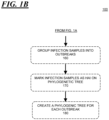
- the method to track the spread of infection as set out above further includes marking the pairs of infection samples identified as being a potential transmission on a displayed phylogenic tree of sequenced infection samples.
- the method to track the spread of infection as set out above further includes creating a plurality of phylogenic trees, with each tree constructed from samples marked as being from the same outbreak.
- the system includes a receiver for receiving infection sample sequencing data, a memory configured to store the received infection sample sequencing data, and a processor configured to: determine an expected range of changes over time for a pathogenic organism using linear regression on sample data which contains changes over time for different samples and computing a prediction interval, wherein the prediction interval bounds the typical range of expected changes for infection transmission; for at least one infection sample, compute the number of mutational changes over time between that sample and at least one additional infection sample; for each of the computed number of mutational changes over time, determine if the number of mutational changes over time between samples is within the prediction interval; and for each of the computed number of mutational changes over time that are within the prediction interval, mark the associated pair of samples as a potential transmission.
- the system to track the spread of infection as set out above wherein the configured processor builds a phylogeny of sequenced samples to identify closely-related samples, and determines the expected range of changes by computing, for at least one of the plurality of infection samples, the number of changes over time between the sample and at least one closely-related sample as determined by the phylogeny.
- the system to track the spread of infection as set out above is disclosed wherein the configured processor determines the expected range of changes from a plurality of samples taken from the same patient over time, or from two patients between which there was a likely transmission.
- the system to track the spread of infection as set out above is disclosed wherein the configured processor builds the phylogeny by computing pairwise distances between each pair of sequenced samples and using a distance matrix to build a phylogenic tree.
- the system to track the spread of infection as set out above is disclosed wherein the infection sample sequencing data is received from a source of full genome sequencing data or targeted sequencing data.
- the system to track the spread of infection as set out above is disclosed wherein computed number of mutational changes between samples is normalized by dividing the total number of genomic positions for which both samples have a base call.
- the system to track the spread of infection as set out above is disclosed wherein the processor is further configured to determine which of the infection samples are from the same outbreak by conducting a breadth first search on the phylogenetic tree of the samples traversing edges with a number of changes within the expected range of changes.
- the system to track the spread of infection as set out above is disclosed wherein the processor is further configured to mark the pairs of infection samples identified as being a potential transmission on a displayed phylogenic tree of sequenced infection samples.
- the system to track the spread of infection as set out above is disclosed wherein the processor is further configured to create a plurality of phylogenic trees, with each tree constructed from samples marked as being from the same outbreak.
- the term, "or,” as used herein, refers to a non-exclusive or (i.e., and/or), unless otherwise indicated (e.g., "or else” or “or in the alternative”). Additionally, the various embodiments described herein are not necessarily mutually exclusive and may be combined to produce additional embodiments that incorporate the principles described herein.
- Embodiments generally relate to healthcare associated infections, and more specifically, to methods and apparatus for the tracking of hospital acquired infections.
- each infection sample in a plurality of infection samples is sequenced.
- the sequencing can be performed using various sequencing technologies, e.g., next-generation sequencing technology such as Illumina HiSeq or MiSeq, or Pacific Biosciences.
- Embodiments can utilize data from full genome sequencing or targeted sequencing of the organism.
- the sequencing data is processed and compared to one or more reference sequences for the sequenced organism.
- the appropriate reference sequence can be identified using, e.g., prior knowledge or MLST typing.
- the sequenced data can be aligned to the reference sequence using well-known methods such as BWA, Bowtie, etc., and differences between the sequenced data and the reference sequence can be identified by various methods to call variants, such as samtools or GATK.
- Variations in the genome may be annotated to determine which mutations occur within important genes or in less important regions of the genome.
- the pairwise distances between each pair of sequenced samples is calculated using, e.g., the R statistical modeling language and an R package such as APE, available at http://cran.r-project.org/web/packages/ape/index.html, and used to form a distance matrix.
- the distance matrix can be based on the absolute number of differences or based on a probabilistic model, such as Jukes-Cantor. This distance matrix may then be used for building a phylogenic tree of sequenced samples and identifying any closely-related samples for each of the sequenced samples.
- an expected range of changes over time for a transmitted infection is determined.
- One procedure for determining the expected range of changes over time involves examining neighbors that the phylogenic tree indicates are closely related, i.e., those neighbors which only have a limited number of changes between them (e.g. 10 SNPs) and are believed to be evolutionarily related, and measuring the range of changes between their genomes and dividing by the time between the isolation of their originating infections. Linear regression may also be used on the sample data to determine the average range of changes per unit time.
- Alternative procedures for determining the expected range of changes over time could include utilizing a controlled method, such as taking samples from the same patient over known period(s) of time and measuring the observed changes, using previously-determined information from third party sources or publications, or determining the expected range of changes from a plurality of samples taken from a known hospital-acquired infection.
- Other methods can be used to compute prediction intervals on the range of changes expected to be seen over time, and these intervals can be used to bound the typical range of expected changes.
- step 140 for at least one infection sample, the number of mutational changes over time between that sample and at least one additional infection sample is computed, and it is determined if the number of changes over time between those sample pairs is within or without an interval of the expected range of changes.
- the pairwise distances between each pair of samples may be computed based on the number of SNP differences between the samples.
- the number of mutational changes may also be determined by counting, e.g., indels (insertions and deletions), genomic rearrangements (inversions and translocations), copy number changes, the absence or presence of genes, or some combination of the preceding features, and these changes may be measured in the full genome of an organism or part of the genome, such as the organism's chromosomes or plasmid.
- each sample may be compared with every other sample to determine if the number of differences between the pair of samples falls within the expected range of differences we would expect to see from a transmitted infection given the time difference between the samples.
- the computed number of mutational changes between the samples may be normalized using the total number of genomic positions for which both samples have a base call, thereby reducing errors and noise arising in the physical transduction in the sample sequencing process.
- step 150 for each pair of samples where the computed number of changes over time is within an interval of the expected range of changes, the associated pair of samples are marked as a potentially-transmitted infection. For example, if the number of changes is within some prediction interval, e.g., 95%, of the number of changes that are expected based on previous data, the sample would be marked as a potentially-transmitted infection.
- some prediction interval e.g. 95%
- a method to identify a transmitted infection as set out above is disclosed along with the step 160 of determining which of the infection samples are from the same outbreak. This can be accomplished by conducting a breadth first search on a graph where each patient is a node and there is an edge between two nodes if the foregoing steps determine there likely was a transmission between the patients. Such a search essentially identifies patients within the same outbreak by starting with one patient and noting the other patients that have been marked as likely having received an infection from that patient. The process iterates by identifying the patients that have likely in turn received an infection from those patients that received an infection from the original patient and so on until no new patients are identified.
- a method to identify a transmitted infection as set out above is disclosed along with the step 170 of marking the infection samples identified as being transmitted infections on a phylogenic tree of sequenced infection samples.
- the phylogenic tree may be the original phylogenic tree computed in connection with the transmission determination above or it may be a recomputed phylogenic tree that accounts for transmitted infections as discussed above.
- the actual display of transmitted infections may be, e.g. the highlighting of a cluster or subtree of samples on the displayed tree.
- a method to identify a transmitted infection as set out above is disclosed along with the step 180 of creating a plurality of phylogenic trees, with each tree associated with a separate outbreak.
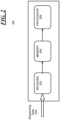
- the system 200 includes a receiver 202 for receiving infection sample sequencing data 204, a memory 206 configured to store the received infection sample sequencing data 204 and a processor 208.
- Processor 208 is configured as discussed above to build a phylogeny of sequenced samples to identify any closely-related samples for each of the sequenced samples; determine an expected range of changes over time for a transmitted infection; for each of the plurality of infection samples, compute the number of changes over time between that sample and at least one other infection sample; for each of the computed number of changes over time, determine if the number of changes over time is within an interval of the expected range of changes; and for each of the computed number of changes over time that are within the interval of the expected range of changes, marking the associated pair of samples as a transmitted infection.
- the processor 208 may include one or more microprocessors, field-programmable gate arrays (FPGAs), application-specific integrated circuits (ASICs), other similar devices, or combinations thereof.
- the memory 206 may include various memory devices such as cache (L1/L2/L3 cache), system memory, or storage.
- cache L1/L2/L3 cache
- system memory or storage.
- non-transitory machine-readable medium will be understood to encompass both volatile (e.g., DRAM and SRAM) and non-volatile (e.g., flash, magnetic, and optical) memories, but to exclude transitory signals.
- a system to identify a transmitted infection as set out above wherein the configured processor determines the expected range of changes by computing, for at least one of the plurality of infection samples, the number of changes over time between the sample and at least one closely-related sample as determined by the phylogeny.
- a system to identify a transmitted infection as set out above wherein the configured processor determines the expected range of changes from a plurality of samples taken from the same patient over time, or from two patients between which there was a likely transmission.
- a system to identify a transmitted infection as set out above wherein the configured processor builds the phylogeny by computing pairwise distances between each pair of sequenced samples and using a distance matrix to build a phylogenic tree.
- a system to identify a transmitted infection as set out above wherein the configured processor determines an expected range of changes over time for a pathogenic organism by using linear regression on sample data which contains changes over time for different samples and computing a prediction interval.
- a system to identify a transmitted infection as set out above wherein the infection sample sequencing data is received from a source of full genome sequencing data or targeted sequencing data.
- a system to identify a transmitted infection as set out above wherein the computed number of mutational changes between samples is normalized by dividing by the total number of genomic positions for which both samples have a base call.
- a system to identify a transmitted infection as set out above wherein the processor is further configured to determine which of said infection samples are from the same outbreak by conducting a breadth first search on the phylogenetic tree of the samples traversing edges with a number of changes within the expected range of changes.
- a system to identify a transmitted infection as set out above wherein the processor is further configured to mark the pairs of infection samples identified as being a potential transmission on a displayed phylogenic tree of sequenced infection samples.
- a system to identify a transmitted infection as set out above wherein the processor is further configured to create a plurality of phylogenic trees, with each tree constructed from samples marked as being from the same outbreak.
- a system to identify a transmitted infection as set out above wherein the processor is further configured to create a plurality of phylogenic trees, with each tree constructed from samples marked as being from the same outbreak.
Landscapes
- Health & Medical Sciences (AREA)
- Life Sciences & Earth Sciences (AREA)
- Physics & Mathematics (AREA)
- Engineering & Computer Science (AREA)
- Bioinformatics & Cheminformatics (AREA)
- Medical Informatics (AREA)
- Spectroscopy & Molecular Physics (AREA)
- Biophysics (AREA)
- Bioinformatics & Computational Biology (AREA)
- Biotechnology (AREA)
- Evolutionary Biology (AREA)
- General Health & Medical Sciences (AREA)
- Theoretical Computer Science (AREA)
- Analytical Chemistry (AREA)
- Chemical & Material Sciences (AREA)
- Genetics & Genomics (AREA)
- Molecular Biology (AREA)
- Proteomics, Peptides & Aminoacids (AREA)
- Animal Behavior & Ethology (AREA)
- Physiology (AREA)
- Measuring Or Testing Involving Enzymes Or Micro-Organisms (AREA)
- Measurement Of The Respiration, Hearing Ability, Form, And Blood Characteristics Of Living Organisms (AREA)
- Medical Treatment And Welfare Office Work (AREA)
- Apparatus Associated With Microorganisms And Enzymes (AREA)
- Investigating Or Analysing Biological Materials (AREA)
- Measuring And Recording Apparatus For Diagnosis (AREA)
Applications Claiming Priority (2)
| Application Number | Priority Date | Filing Date | Title |
|---|---|---|---|
| US201562191684P | 2015-07-13 | 2015-07-13 | |
| PCT/IB2016/054139 WO2017009770A1 (en) | 2015-07-13 | 2016-07-11 | Tracking infections in hospital environments |
Publications (2)
| Publication Number | Publication Date |
|---|---|
| EP3323069A1 EP3323069A1 (en) | 2018-05-23 |
| EP3323069B1 true EP3323069B1 (en) | 2024-09-11 |
Family
ID=56413716
Family Applications (1)
| Application Number | Title | Priority Date | Filing Date |
|---|---|---|---|
| EP16739265.3A Active EP3323069B1 (en) | 2015-07-13 | 2016-07-11 | Tracking infections in hospital environments |
Country Status (8)
| Country | Link |
|---|---|
| US (1) | US10902936B2 (https=) |
| EP (1) | EP3323069B1 (https=) |
| JP (1) | JP6867959B2 (https=) |
| CN (1) | CN107851135B (https=) |
| BR (1) | BR112018000560A2 (https=) |
| MX (1) | MX2018000171A (https=) |
| RU (1) | RU2018105353A (https=) |
| WO (1) | WO2017009770A1 (https=) |
Families Citing this family (4)
| Publication number | Priority date | Publication date | Assignee | Title |
|---|---|---|---|---|
| US11961594B2 (en) * | 2019-06-28 | 2024-04-16 | Koninklijke Philips N.V. | System and method using clinical data to predict genetic relatedness for the efficient management and reduction of healthcare-associated infections |
| WO2021163223A1 (en) * | 2020-02-10 | 2021-08-19 | The Research Foundation For The State University Of New York | Using resilient systems inference for estimating hospital acquired infection prevention infrastructure performance |
| WO2021195594A1 (en) * | 2020-03-26 | 2021-09-30 | San Diego State University (SDSU) Foundation, dba San Diego State University Research Foundation | Compositions and methods for treating or ameliorating infections |
| WO2021233996A1 (en) * | 2020-05-19 | 2021-11-25 | Alacris Theranostics Gmbh | Method and system for fighting pandemic |
Family Cites Families (5)
| Publication number | Priority date | Publication date | Assignee | Title |
|---|---|---|---|---|
| US7349808B1 (en) * | 2000-09-06 | 2008-03-25 | Egenomics, Inc. | System and method for tracking and controlling infections |
| CN1612936A (zh) * | 2001-11-09 | 2005-05-04 | 苏尔斯精细医药公司 | 利用基因表达分布图识别、监控和治疗疾病以及鉴定生物学状态 |
| EP2613278A2 (en) * | 2011-12-05 | 2013-07-10 | Koninklijke Philips Electronics N.V. | Retroactive extraction of clinically relevant information from patient sequencing data for clinical decision support |
| JP2015503388A (ja) * | 2011-12-27 | 2015-02-02 | コーニンクレッカ フィリップス エヌ ヴェ | 一体化されたフィルタを有する呼吸測定装置 |
| EP2925915A4 (en) * | 2013-03-15 | 2016-09-07 | Egenomics Inc | SYSTEM AND METHOD FOR DETERMINING THE RECONCILIATION |
-
2016
- 2016-07-11 BR BR112018000560A patent/BR112018000560A2/pt not_active Application Discontinuation
- 2016-07-11 MX MX2018000171A patent/MX2018000171A/es unknown
- 2016-07-11 US US15/742,929 patent/US10902936B2/en active Active
- 2016-07-11 WO PCT/IB2016/054139 patent/WO2017009770A1/en not_active Ceased
- 2016-07-11 CN CN201680041161.2A patent/CN107851135B/zh active Active
- 2016-07-11 RU RU2018105353A patent/RU2018105353A/ru unknown
- 2016-07-11 EP EP16739265.3A patent/EP3323069B1/en active Active
- 2016-07-11 JP JP2017566789A patent/JP6867959B2/ja not_active Expired - Fee Related
Non-Patent Citations (1)
| Title |
|---|
| GUERRA-ASSUNÇÃO JA ET AL: "Large-scale whole genome sequencing of M. tuberculosis provides insights into transmission in a high prevalence area", 3 March 2015 (2015-03-03), pages 1 - 17, XP093009065, Retrieved from the Internet <URL:https://elifesciences.org/articles/05166> [retrieved on 20221216] * |
Also Published As
| Publication number | Publication date |
|---|---|
| RU2018105353A (ru) | 2019-08-13 |
| CN107851135A (zh) | 2018-03-27 |
| JP2018528503A (ja) | 2018-09-27 |
| EP3323069A1 (en) | 2018-05-23 |
| RU2018105353A3 (https=) | 2020-02-03 |
| JP6867959B2 (ja) | 2021-05-12 |
| CN107851135B (zh) | 2022-03-01 |
| US10902936B2 (en) | 2021-01-26 |
| MX2018000171A (es) | 2018-03-26 |
| BR112018000560A2 (pt) | 2018-09-11 |
| US20190087535A1 (en) | 2019-03-21 |
| WO2017009770A1 (en) | 2017-01-19 |
Similar Documents
| Publication | Publication Date | Title |
|---|---|---|
| Song et al. | Lighter: fast and memory-efficient sequencing error correction without counting | |
| Ingle et al. | Prolonged outbreak of multidrug-resistant Shigella sonnei harboring bla CTX-M-27 in victoria, Australia | |
| Bekal et al. | Usefulness of high-quality core genome single-nucleotide variant analysis for subtyping the highly clonal and the most prevalent Salmonella enterica serovar Heidelberg clone in the context of outbreak investigations | |
| Marschall et al. | CLEVER: clique-enumerating variant finder | |
| Schloss et al. | Introducing SONS, a tool for operational taxonomic unit-based comparisons of microbial community memberships and structures | |
| Abyzov et al. | Analysis of deletion breakpoints from 1,092 humans reveals details of mutation mechanisms | |
| Chen et al. | Widespread dissemination of CTX-M-15 genotype extended-spectrum-β-lactamase-producing Enterobacteriaceae among patients presenting to community hospitals in the southeastern United States | |
| EP3323069B1 (en) | Tracking infections in hospital environments | |
| Baines et al. | Convergent adaptation in the dominant global hospital clone ST239 of methicillin-resistant Staphylococcus aureus | |
| Chen et al. | Detecting early‐warning signals of influenza outbreak based on dynamic network marker | |
| Tong et al. | Neutral processes drive seasonal assembly of the skin mycobiome | |
| Mathers et al. | Chromosomal integration of the Klebsiella pneumoniae carbapenemase gene, bla KPC, in Klebsiella species is elusive but not rare | |
| Sabat et al. | Complete-genome sequencing elucidates outbreak dynamics of CA-MRSA USA300 (ST8-spa t008) in an academic hospital of Paramaribo, Republic of Suriname | |
| Kanamori et al. | Next-generation sequencing and comparative analysis of sequential outbreaks caused by multidrug-resistant Acinetobacter baumannii at a large academic burn center | |
| Sideris et al. | A systematic review and meta‐analysis of predictors of airway intervention in adult epiglottitis | |
| Zawack et al. | Monitoring antimicrobial resistance in the food supply chain and its implications for FDA policy initiatives | |
| de Groot et al. | Optimization and validation of Candida auris short tandem repeat analysis | |
| Lee et al. | Clonality and Resistome Analysis of KPC‐Producing Klebsiella pneumoniae Strain Isolated in Korea Using Whole Genome Sequencing | |
| Harhay et al. | Complete closed genome sequences of Mannheimia haemolytica serotypes A1 and A6, isolated from cattle | |
| Carey et al. | The origins of haplotype 58 (H58) Salmonella enterica serovar Typhi | |
| Micek et al. | Identifying critically ill patients at risk for inappropriate antibiotic therapy: a pilot study of a point-of-care decision support alert | |
| Lapp et al. | Patient and microbial genomic factors associated with carbapenem-resistant Klebsiella pneumoniae extraintestinal colonization and infection | |
| Tian et al. | Genome sequence of Hafnia alvei bta3_1, a bacterium with antimicrobial properties isolated from honey bee gut | |
| Seah et al. | In silico evaluation of variant calling methods for bacterial whole-genome sequencing assays | |
| Roberts et al. | Genetic evaluation of nosocomial Candida auris transmission |
Legal Events
| Date | Code | Title | Description |
|---|---|---|---|
| STAA | Information on the status of an ep patent application or granted ep patent |
Free format text: STATUS: THE INTERNATIONAL PUBLICATION HAS BEEN MADE |
|
| PUAI | Public reference made under article 153(3) epc to a published international application that has entered the european phase |
Free format text: ORIGINAL CODE: 0009012 |
|
| STAA | Information on the status of an ep patent application or granted ep patent |
Free format text: STATUS: REQUEST FOR EXAMINATION WAS MADE |
|
| 17P | Request for examination filed |
Effective date: 20180213 |
|
| AK | Designated contracting states |
Kind code of ref document: A1 Designated state(s): AL AT BE BG CH CY CZ DE DK EE ES FI FR GB GR HR HU IE IS IT LI LT LU LV MC MK MT NL NO PL PT RO RS SE SI SK SM TR |
|
| AX | Request for extension of the european patent |
Extension state: BA ME |
|
| DAV | Request for validation of the european patent (deleted) | ||
| DAX | Request for extension of the european patent (deleted) | ||
| STAA | Information on the status of an ep patent application or granted ep patent |
Free format text: STATUS: EXAMINATION IS IN PROGRESS |
|
| 17Q | First examination report despatched |
Effective date: 20200213 |
|
| RAP1 | Party data changed (applicant data changed or rights of an application transferred) |
Owner name: KONINKLIJKE PHILIPS N.V. |
|
| REG | Reference to a national code |
Ref country code: DE Ref legal event code: R079 Free format text: PREVIOUS MAIN CLASS: G06F0019180000 Ipc: G16B0010000000 Ref document number: 602016089354 Country of ref document: DE |
|
| GRAP | Despatch of communication of intention to grant a patent |
Free format text: ORIGINAL CODE: EPIDOSNIGR1 |
|
| STAA | Information on the status of an ep patent application or granted ep patent |
Free format text: STATUS: GRANT OF PATENT IS INTENDED |
|
| RIC1 | Information provided on ipc code assigned before grant |
Ipc: G16B 20/50 20190101ALN20240308BHEP Ipc: G16B 20/20 20190101ALN20240308BHEP Ipc: G16B 10/00 20190101AFI20240308BHEP |
|
| INTG | Intention to grant announced |
Effective date: 20240409 |
|
| RIC1 | Information provided on ipc code assigned before grant |
Ipc: G16B 20/50 20190101ALN20240326BHEP Ipc: G16B 20/20 20190101ALN20240326BHEP Ipc: G16B 10/00 20190101AFI20240326BHEP |
|
| GRAS | Grant fee paid |
Free format text: ORIGINAL CODE: EPIDOSNIGR3 |
|
| GRAA | (expected) grant |
Free format text: ORIGINAL CODE: 0009210 |
|
| STAA | Information on the status of an ep patent application or granted ep patent |
Free format text: STATUS: THE PATENT HAS BEEN GRANTED |
|
| AK | Designated contracting states |
Kind code of ref document: B1 Designated state(s): AL AT BE BG CH CY CZ DE DK EE ES FI FR GB GR HR HU IE IS IT LI LT LU LV MC MK MT NL NO PL PT RO RS SE SI SK SM TR |
|
| REG | Reference to a national code |
Ref country code: GB Ref legal event code: FG4D |
|
| REG | Reference to a national code |
Ref country code: CH Ref legal event code: EP |
|
| REG | Reference to a national code |
Ref country code: DE Ref legal event code: R096 Ref document number: 602016089354 Country of ref document: DE |
|
| REG | Reference to a national code |
Ref country code: IE Ref legal event code: FG4D |
|
| REG | Reference to a national code |
Ref country code: DE Ref legal event code: R084 Ref document number: 602016089354 Country of ref document: DE |
|
| REG | Reference to a national code |
Ref country code: LT Ref legal event code: MG9D |
|
| PG25 | Lapsed in a contracting state [announced via postgrant information from national office to epo] |
Ref country code: NO Free format text: LAPSE BECAUSE OF FAILURE TO SUBMIT A TRANSLATION OF THE DESCRIPTION OR TO PAY THE FEE WITHIN THE PRESCRIBED TIME-LIMIT Effective date: 20241211 |
|
| REG | Reference to a national code |
Ref country code: NL Ref legal event code: MP Effective date: 20240911 |
|
| PG25 | Lapsed in a contracting state [announced via postgrant information from national office to epo] |
Ref country code: GR Free format text: LAPSE BECAUSE OF FAILURE TO SUBMIT A TRANSLATION OF THE DESCRIPTION OR TO PAY THE FEE WITHIN THE PRESCRIBED TIME-LIMIT Effective date: 20241212 Ref country code: FI Free format text: LAPSE BECAUSE OF FAILURE TO SUBMIT A TRANSLATION OF THE DESCRIPTION OR TO PAY THE FEE WITHIN THE PRESCRIBED TIME-LIMIT Effective date: 20240911 |
|
| PG25 | Lapsed in a contracting state [announced via postgrant information from national office to epo] |
Ref country code: BG Free format text: LAPSE BECAUSE OF FAILURE TO SUBMIT A TRANSLATION OF THE DESCRIPTION OR TO PAY THE FEE WITHIN THE PRESCRIBED TIME-LIMIT Effective date: 20240911 |
|
| PG25 | Lapsed in a contracting state [announced via postgrant information from national office to epo] |
Ref country code: LV Free format text: LAPSE BECAUSE OF FAILURE TO SUBMIT A TRANSLATION OF THE DESCRIPTION OR TO PAY THE FEE WITHIN THE PRESCRIBED TIME-LIMIT Effective date: 20240911 |
|
| PG25 | Lapsed in a contracting state [announced via postgrant information from national office to epo] |
Ref country code: HR Free format text: LAPSE BECAUSE OF FAILURE TO SUBMIT A TRANSLATION OF THE DESCRIPTION OR TO PAY THE FEE WITHIN THE PRESCRIBED TIME-LIMIT Effective date: 20240911 |
|
| PG25 | Lapsed in a contracting state [announced via postgrant information from national office to epo] |
Ref country code: RS Free format text: LAPSE BECAUSE OF FAILURE TO SUBMIT A TRANSLATION OF THE DESCRIPTION OR TO PAY THE FEE WITHIN THE PRESCRIBED TIME-LIMIT Effective date: 20241211 Ref country code: ES Free format text: LAPSE BECAUSE OF FAILURE TO SUBMIT A TRANSLATION OF THE DESCRIPTION OR TO PAY THE FEE WITHIN THE PRESCRIBED TIME-LIMIT Effective date: 20240911 |
|
| PG25 | Lapsed in a contracting state [announced via postgrant information from national office to epo] |
Ref country code: RS Free format text: LAPSE BECAUSE OF FAILURE TO SUBMIT A TRANSLATION OF THE DESCRIPTION OR TO PAY THE FEE WITHIN THE PRESCRIBED TIME-LIMIT Effective date: 20241211 Ref country code: NO Free format text: LAPSE BECAUSE OF FAILURE TO SUBMIT A TRANSLATION OF THE DESCRIPTION OR TO PAY THE FEE WITHIN THE PRESCRIBED TIME-LIMIT Effective date: 20241211 Ref country code: LV Free format text: LAPSE BECAUSE OF FAILURE TO SUBMIT A TRANSLATION OF THE DESCRIPTION OR TO PAY THE FEE WITHIN THE PRESCRIBED TIME-LIMIT Effective date: 20240911 Ref country code: HR Free format text: LAPSE BECAUSE OF FAILURE TO SUBMIT A TRANSLATION OF THE DESCRIPTION OR TO PAY THE FEE WITHIN THE PRESCRIBED TIME-LIMIT Effective date: 20240911 Ref country code: GR Free format text: LAPSE BECAUSE OF FAILURE TO SUBMIT A TRANSLATION OF THE DESCRIPTION OR TO PAY THE FEE WITHIN THE PRESCRIBED TIME-LIMIT Effective date: 20241212 Ref country code: FI Free format text: LAPSE BECAUSE OF FAILURE TO SUBMIT A TRANSLATION OF THE DESCRIPTION OR TO PAY THE FEE WITHIN THE PRESCRIBED TIME-LIMIT Effective date: 20240911 Ref country code: ES Free format text: LAPSE BECAUSE OF FAILURE TO SUBMIT A TRANSLATION OF THE DESCRIPTION OR TO PAY THE FEE WITHIN THE PRESCRIBED TIME-LIMIT Effective date: 20240911 Ref country code: BG Free format text: LAPSE BECAUSE OF FAILURE TO SUBMIT A TRANSLATION OF THE DESCRIPTION OR TO PAY THE FEE WITHIN THE PRESCRIBED TIME-LIMIT Effective date: 20240911 |
|
| REG | Reference to a national code |
Ref country code: AT Ref legal event code: MK05 Ref document number: 1723440 Country of ref document: AT Kind code of ref document: T Effective date: 20240911 |
|
| PG25 | Lapsed in a contracting state [announced via postgrant information from national office to epo] |
Ref country code: NL Free format text: LAPSE BECAUSE OF FAILURE TO SUBMIT A TRANSLATION OF THE DESCRIPTION OR TO PAY THE FEE WITHIN THE PRESCRIBED TIME-LIMIT Effective date: 20240911 |
|
| PG25 | Lapsed in a contracting state [announced via postgrant information from national office to epo] |
Ref country code: IS Free format text: LAPSE BECAUSE OF FAILURE TO SUBMIT A TRANSLATION OF THE DESCRIPTION OR TO PAY THE FEE WITHIN THE PRESCRIBED TIME-LIMIT Effective date: 20250111 Ref country code: PT Free format text: LAPSE BECAUSE OF FAILURE TO SUBMIT A TRANSLATION OF THE DESCRIPTION OR TO PAY THE FEE WITHIN THE PRESCRIBED TIME-LIMIT Effective date: 20250113 |
|
| PG25 | Lapsed in a contracting state [announced via postgrant information from national office to epo] |
Ref country code: RO Free format text: LAPSE BECAUSE OF FAILURE TO SUBMIT A TRANSLATION OF THE DESCRIPTION OR TO PAY THE FEE WITHIN THE PRESCRIBED TIME-LIMIT Effective date: 20240911 Ref country code: SM Free format text: LAPSE BECAUSE OF FAILURE TO SUBMIT A TRANSLATION OF THE DESCRIPTION OR TO PAY THE FEE WITHIN THE PRESCRIBED TIME-LIMIT Effective date: 20240911 |
|
| PG25 | Lapsed in a contracting state [announced via postgrant information from national office to epo] |
Ref country code: EE Free format text: LAPSE BECAUSE OF FAILURE TO SUBMIT A TRANSLATION OF THE DESCRIPTION OR TO PAY THE FEE WITHIN THE PRESCRIBED TIME-LIMIT Effective date: 20240911 Ref country code: AT Free format text: LAPSE BECAUSE OF FAILURE TO SUBMIT A TRANSLATION OF THE DESCRIPTION OR TO PAY THE FEE WITHIN THE PRESCRIBED TIME-LIMIT Effective date: 20240911 |
|
| PG25 | Lapsed in a contracting state [announced via postgrant information from national office to epo] |
Ref country code: PL Free format text: LAPSE BECAUSE OF FAILURE TO SUBMIT A TRANSLATION OF THE DESCRIPTION OR TO PAY THE FEE WITHIN THE PRESCRIBED TIME-LIMIT Effective date: 20240911 Ref country code: CZ Free format text: LAPSE BECAUSE OF FAILURE TO SUBMIT A TRANSLATION OF THE DESCRIPTION OR TO PAY THE FEE WITHIN THE PRESCRIBED TIME-LIMIT Effective date: 20240911 |
|
| PG25 | Lapsed in a contracting state [announced via postgrant information from national office to epo] |
Ref country code: IT Free format text: LAPSE BECAUSE OF FAILURE TO SUBMIT A TRANSLATION OF THE DESCRIPTION OR TO PAY THE FEE WITHIN THE PRESCRIBED TIME-LIMIT Effective date: 20240911 Ref country code: SK Free format text: LAPSE BECAUSE OF FAILURE TO SUBMIT A TRANSLATION OF THE DESCRIPTION OR TO PAY THE FEE WITHIN THE PRESCRIBED TIME-LIMIT Effective date: 20240911 |
|
| REG | Reference to a national code |
Ref country code: DE Ref legal event code: R097 Ref document number: 602016089354 Country of ref document: DE |
|
| PG25 | Lapsed in a contracting state [announced via postgrant information from national office to epo] |
Ref country code: DK Free format text: LAPSE BECAUSE OF FAILURE TO SUBMIT A TRANSLATION OF THE DESCRIPTION OR TO PAY THE FEE WITHIN THE PRESCRIBED TIME-LIMIT Effective date: 20240911 |
|
| PLBE | No opposition filed within time limit |
Free format text: ORIGINAL CODE: 0009261 |
|
| STAA | Information on the status of an ep patent application or granted ep patent |
Free format text: STATUS: NO OPPOSITION FILED WITHIN TIME LIMIT |
|
| 26N | No opposition filed |
Effective date: 20250612 |
|
| PG25 | Lapsed in a contracting state [announced via postgrant information from national office to epo] |
Ref country code: SE Free format text: LAPSE BECAUSE OF FAILURE TO SUBMIT A TRANSLATION OF THE DESCRIPTION OR TO PAY THE FEE WITHIN THE PRESCRIBED TIME-LIMIT Effective date: 20240911 |
|
| REG | Reference to a national code |
Ref country code: DE Ref legal event code: R119 Ref document number: 602016089354 Country of ref document: DE |
|
| REG | Reference to a national code |
Ref country code: CH Ref legal event code: H13 Free format text: ST27 STATUS EVENT CODE: U-0-0-H10-H13 (AS PROVIDED BY THE NATIONAL OFFICE) Effective date: 20260224 |
|
| PG25 | Lapsed in a contracting state [announced via postgrant information from national office to epo] |
Ref country code: LU Free format text: LAPSE BECAUSE OF NON-PAYMENT OF DUE FEES Effective date: 20250711 |
|
| GBPC | Gb: european patent ceased through non-payment of renewal fee |
Effective date: 20250711 |
|
| REG | Reference to a national code |
Ref country code: BE Ref legal event code: MM Effective date: 20250731 |
|
| PG25 | Lapsed in a contracting state [announced via postgrant information from national office to epo] |
Ref country code: GB Free format text: LAPSE BECAUSE OF NON-PAYMENT OF DUE FEES Effective date: 20250711 |
|
| PG25 | Lapsed in a contracting state [announced via postgrant information from national office to epo] |
Ref country code: DE Free format text: LAPSE BECAUSE OF NON-PAYMENT OF DUE FEES Effective date: 20260203 |
|
| PG25 | Lapsed in a contracting state [announced via postgrant information from national office to epo] |
Ref country code: BE Free format text: LAPSE BECAUSE OF NON-PAYMENT OF DUE FEES Effective date: 20250731 |
|
| PG25 | Lapsed in a contracting state [announced via postgrant information from national office to epo] |
Ref country code: FR Free format text: LAPSE BECAUSE OF NON-PAYMENT OF DUE FEES Effective date: 20250731 |