EP3318962B1 - Stylus having variable transmit signal strength - Google Patents
Stylus having variable transmit signal strength Download PDFInfo
- Publication number
- EP3318962B1 EP3318962B1 EP17200093.7A EP17200093A EP3318962B1 EP 3318962 B1 EP3318962 B1 EP 3318962B1 EP 17200093 A EP17200093 A EP 17200093A EP 3318962 B1 EP3318962 B1 EP 3318962B1
- Authority
- EP
- European Patent Office
- Prior art keywords
- stylus
- strength
- signal
- height
- sensor
- Prior art date
- Legal status (The legal status is an assumption and is not a legal conclusion. Google has not performed a legal analysis and makes no representation as to the accuracy of the status listed.)
- Active
Links
Images

Classifications
-
- G—PHYSICS
- G06—COMPUTING OR CALCULATING; COUNTING
- G06F—ELECTRIC DIGITAL DATA PROCESSING
- G06F3/00—Input arrangements for transferring data to be processed into a form capable of being handled by the computer; Output arrangements for transferring data from processing unit to output unit, e.g. interface arrangements
- G06F3/01—Input arrangements or combined input and output arrangements for interaction between user and computer
- G06F3/03—Arrangements for converting the position or the displacement of a member into a coded form
- G06F3/033—Pointing devices displaced or positioned by the user, e.g. mice, trackballs, pens or joysticks; Accessories therefor
- G06F3/0354—Pointing devices displaced or positioned by the user, e.g. mice, trackballs, pens or joysticks; Accessories therefor with detection of 2D relative movements between the device, or an operating part thereof, and a plane or surface, e.g. 2D mice, trackballs, pens or pucks
- G06F3/03545—Pens or stylus
-
- G—PHYSICS
- G06—COMPUTING OR CALCULATING; COUNTING
- G06F—ELECTRIC DIGITAL DATA PROCESSING
- G06F3/00—Input arrangements for transferring data to be processed into a form capable of being handled by the computer; Output arrangements for transferring data from processing unit to output unit, e.g. interface arrangements
- G06F3/01—Input arrangements or combined input and output arrangements for interaction between user and computer
- G06F3/03—Arrangements for converting the position or the displacement of a member into a coded form
- G06F3/033—Pointing devices displaced or positioned by the user, e.g. mice, trackballs, pens or joysticks; Accessories therefor
- G06F3/038—Control and interface arrangements therefor, e.g. drivers or device-embedded control circuitry
- G06F3/0383—Signal control means within the pointing device
-
- G—PHYSICS
- G06—COMPUTING OR CALCULATING; COUNTING
- G06F—ELECTRIC DIGITAL DATA PROCESSING
- G06F3/00—Input arrangements for transferring data to be processed into a form capable of being handled by the computer; Output arrangements for transferring data from processing unit to output unit, e.g. interface arrangements
- G06F3/01—Input arrangements or combined input and output arrangements for interaction between user and computer
- G06F3/03—Arrangements for converting the position or the displacement of a member into a coded form
- G06F3/041—Digitisers, e.g. for touch screens or touch pads, characterised by the transducing means
- G06F3/0416—Control or interface arrangements specially adapted for digitisers
- G06F3/04162—Control or interface arrangements specially adapted for digitisers for exchanging data with external devices, e.g. smart pens, via the digitiser sensing hardware
-
- G—PHYSICS
- G06—COMPUTING OR CALCULATING; COUNTING
- G06F—ELECTRIC DIGITAL DATA PROCESSING
- G06F3/00—Input arrangements for transferring data to be processed into a form capable of being handled by the computer; Output arrangements for transferring data from processing unit to output unit, e.g. interface arrangements
- G06F3/01—Input arrangements or combined input and output arrangements for interaction between user and computer
- G06F3/03—Arrangements for converting the position or the displacement of a member into a coded form
- G06F3/041—Digitisers, e.g. for touch screens or touch pads, characterised by the transducing means
- G06F3/044—Digitisers, e.g. for touch screens or touch pads, characterised by the transducing means by capacitive means
- G06F3/0441—Digitisers, e.g. for touch screens or touch pads, characterised by the transducing means by capacitive means using active external devices, e.g. active pens, for receiving changes in electrical potential transmitted by the digitiser, e.g. tablet driving signals
-
- G—PHYSICS
- G06—COMPUTING OR CALCULATING; COUNTING
- G06F—ELECTRIC DIGITAL DATA PROCESSING
- G06F3/00—Input arrangements for transferring data to be processed into a form capable of being handled by the computer; Output arrangements for transferring data from processing unit to output unit, e.g. interface arrangements
- G06F3/01—Input arrangements or combined input and output arrangements for interaction between user and computer
- G06F3/03—Arrangements for converting the position or the displacement of a member into a coded form
- G06F3/041—Digitisers, e.g. for touch screens or touch pads, characterised by the transducing means
- G06F3/044—Digitisers, e.g. for touch screens or touch pads, characterised by the transducing means by capacitive means
- G06F3/0442—Digitisers, e.g. for touch screens or touch pads, characterised by the transducing means by capacitive means using active external devices, e.g. active pens, for transmitting changes in electrical potential to be received by the digitiser
-
- G—PHYSICS
- G06—COMPUTING OR CALCULATING; COUNTING
- G06F—ELECTRIC DIGITAL DATA PROCESSING
- G06F2203/00—Indexing scheme relating to G06F3/00 - G06F3/048
- G06F2203/038—Indexing scheme relating to G06F3/038
- G06F2203/0384—Wireless input, i.e. hardware and software details of wireless interface arrangements for pointing devices
-
- G—PHYSICS
- G06—COMPUTING OR CALCULATING; COUNTING
- G06F—ELECTRIC DIGITAL DATA PROCESSING
- G06F2203/00—Indexing scheme relating to G06F3/00 - G06F3/048
- G06F2203/041—Indexing scheme relating to G06F3/041 - G06F3/045
- G06F2203/04101—2.5D-digitiser, i.e. digitiser detecting the X/Y position of the input means, finger or stylus, also when it does not touch, but is proximate to the digitiser's interaction surface and also measures the distance of the input means within a short range in the Z direction, possibly with a separate measurement setup
-
- G—PHYSICS
- G06—COMPUTING OR CALCULATING; COUNTING
- G06F—ELECTRIC DIGITAL DATA PROCESSING
- G06F2203/00—Indexing scheme relating to G06F3/00 - G06F3/048
- G06F2203/041—Indexing scheme relating to G06F3/041 - G06F3/045
- G06F2203/04108—Touchless 2D- digitiser, i.e. digitiser detecting the X/Y position of the input means, finger or stylus, also when it does not touch, but is proximate to the digitiser's interaction surface without distance measurement in the Z direction
Definitions
- This disclosure relates to improving detection of a stylus by an electronic device, such as a tablet based computing device or a tablet peripheral attached to a computing device.
- an electronic device may send a request for data from a stylus and the stylus may send the requested data.
- a location of a stylus on a surface of an electronic device may be determined based on a signal transmitted by the stylus.
- a control circuit in the electronic device may sequentially sample signals from the active stylus, and the location of the stylus may be determined based on the signal strengths of the sampled signals.
- EP3037935 A1 discloses an active stylus configured to detect a height of the stylus over a touch-screen and to switch between two transmission modes according to the detected height, each transmission mode having a distinct signal strength.
- US 2016/0266663 A1 discloses an active stylus with a transmitter, which is configured to transmit electrical signals to a device through a touch sensor of the device.
- the active stylus also includes a receiver, which is configured to receive electrical signals from the device through the touch sensor of the device.
- the active stylus includes a controller to determine a strength of an electrical signal received by the receiver from the touch sensor of the device and instruct the transmitter to transmit electrical signals to the device at a voltage based on the determined strength of the received electrical signal.
- WO 2015/191807 A1 discloses a stylus device that is capable of changing its output so that it can interact with a multitude of touch controllers.
- the stylus device receives a message including configuration information from the computing device.
- the configuration information includes an encoding scheme corresponding to a format for encoding data to be sent to the computing device and an operating frequency.
- the stylus configures itself in the encoding scheme, and communicates with the computing device using the encoding scheme.
- US 2010/066693 A1 discloses a touch panel device with a stylus pen including a conductive stylus pen electrode portion at a tip and a plurality of capacitance detecting interconnections formed on a substrate in row and column directions.
- An oscillator circuit outputs an oscillation signal for performing charging/discharging to each of the plurality of capacitance detecting interconnections, wherein the oscillation signal has a cycle which changes in accordance with an amount of electric charges in the charging/discharging.
- a counter circuit and a computing circuit/control circuit compute, based on a change of the cycle being in accordance with a capacitance formed between the electrode portion of the stylus pen and the capacitance detecting interconnections, positional coordinates of the stylus pen brought in proximity to the interconnections in a non-contact manner, wherein the stylus pen outputs to the electrode portion of the stylus pen an input pen signal which is in synchronization with the oscillation signal and has a different phase as the phase of the oscillation signal and a larger voltage amplitude compared with the oscillation signal.
- the invention is defined by an active stylus, and a method for detecting a position of an active stylus according to the independent claims. Preferred embodiments are defined in the dependent claims.
- an electronic device may include a stylus sensor, a sensor controller, a host processor, and a display.
- the stylus sensor includes a plurality of sensing antennas, such as loop coil antennas or line conductor antennas.
- the sensing antennas receive or detect signals from the stylus.
- the sensor controller controls the operation of the stylus sensor, performs bidirectional communication with the stylus, and communicates with the host processor.
- the host processor communicates with the sensor controller and executes a variety of applications or functions.
- the display is configured to display text or graphics.
- the electronic device also includes a signal strength sensor that measures strengths of signals received by the sensing antennas from the stylus.
- the stylus may include a power source, an information manager, a data manager, sensors, buttons, a communication module, an electrode, and a gain controller housed by a body.
- the power source provides power to the stylus.
- the information manager may include a memory or cache that stores stylus capability information of the stylus.
- the data manager prepares operational data indicative of an operational state of the stylus, such as tip pressure data and orientation data.
- the sensors include one or more sensors, such as a stylus tip pressure sensor and a barrel sensor, which generates operational data of the stylus.
- the communication module provides bidirectional communication with the electronic device.
- the gain controller adjusts the gain or strength of signals transmitted by the TX circuitry of the communication module.
- the stylus also includes a signal strength sensor that measures strengths of signals received by the RX circuitry of the communication module from the sensor controller.
- the method includes adjusting signal strength of signals transmitted by the stylus based on a distance between the stylus and the electronic device.
- Strength of a signal transmitted between a stylus and a stylus sensor is used as a proxy for the distance between the stylus and the electronic device.
- the method includes, in part, measuring strength of a signal currently being transmitted between the stylus and the electronic device (i.e., a signal transmitted from the stylus to the electronic device, and/or a signal transmitted from the electronic device to the stylus), and determining whether the measured strength of the signal corresponds to a first height value or a second height value, each indicative of a height of the stylus relative to the stylus sensor.
- a threshold height is set, and the measured strength of the signal corresponding to a height at or below the threshold height is determined to correspond to the first height value, and the measured strength of the signal corresponding to a height above the threshold height is determined to correspond to the second height value.
- the method then includes adjusting the strength of the signal transmitted by the stylus to a first strength value in response to the determined first height value and to a second strength value different from the first strength value in response to the determined second height value.
- the transmit signal strength of the stylus is adjusted according to the determined height of the stylus relative to the stylus sensor (e.g., a greater transmit signal strength is used when the stylus is farther away from the stylus sensor) to thereby increase the detectable height of the stylus.
- two thresholds are used to avoid having to switch (oscillate) between two transmit signal strengths too frequently.
- the method includes determining whether the measured strength of the signal is lower than a first threshold. As before the strength of the signal may be measured by a signal strength sensor in the stylus and/or the electronic device.
- the transmit signal strength may be increased from the first strength value to the second strength value. It is (e.g., subsequently) determined whether the measured strength of the signal is greater than a second threshold that is larger than the first threshold. If the measured strength of the signal is greater than the second threshold, it is assumed that the stylus is closer to the stylus sensor and, accordingly, the transmit signal strength may be decreased from the second strength value to the first strength value. If the measured strength of the signal is between the first (lower) threshold and the second (larger) threshold, the strength of the signal currently being transmitted by the stylus is within an acceptable level and the strength of the signal transmitted by the stylus is not adjusted.
- the adjustment (increase and reduction) of the strength of the signal transmitted by the stylus is initiated by the stylus.
- the electronic device either sends a command to the stylus directing the stylus to increase or decrease the strength of the signal, or sends data indicative of the measured strength of the signal to the stylus and the stylus increases or decreases the strength of the signal accordingly.
- the command and the data sent from the electronic device may be collectively referred to as a "height signal," which is indicative of the height of the stylus as determined by the electronic device.
- the detectable height of the stylus may be increased, i.e., the stylus may be detected by the electronic device from greater distances.
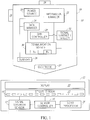
- FIG. 1 is a diagram illustrating an example of a system including a stylus 10 according to one embodiment and an electronic device 12 according to one example.
- the electronic device 12 may be any type of device that senses a stylus, such as a tablet, a personal computer, a tablet computer, and a smartphone.
- the electronic device 12 includes a stylus sensor 14, a sensor controller 16, a signal strength sensor 17, a host processor 18, and a display 19.
- the host processor 18 and/or the display 19 are external to the electronic device.
- the stylus sensor 14 includes a plurality of sensing antennas 15, such as loop coil antennas or line conductor antennas.
- the sensing antennas (sensor lines) 15 receive or detect signals from the stylus 10.
- the antennas 15 may be loop coil antennas configured to receive a magnetic field from the stylus 10, or line conductor antennas configured to receive an electrostatic field from the stylus 10.
- the stylus sensor 14 may have any number of sensing antennas.
- the sensing antennas 15 are arranged in a matrix of sensor lines extending in first and second directions different from each other.
- the sensing antennas 15 may be arranged in array having a plurality of rows and columns.
- the stylus sensor 14 is capable of detecting a passive stylus and a finger touch, in addition to the stylus 10.
- the sensor controller 16 controls the operation of the stylus sensor 14, performs bidirectional communication with the stylus 10, and communicates with the host processor 18. In one example, the sensor controller 16 processes handwritten input data from the stylus 10 to determine coordinates of a position indicated or pointed to by the stylus 10 on the stylus sensor 14, and forwards the coordinates to the host processor 18.
- the signal strength sensor 17 measures strengths of signals received by the sensing antennas 15 from the stylus 10.
- the signal strength sensor 17 may be any type of sensor that obtains a measurement that is indicative of signal strength, such as voltage, current, tesla, and volts per meter.
- the strengths of the signals measured by the signal strength sensor 17 are used to determine a location or coordinates of a tip of the stylus 10 on the stylus sensor 14.
- the strengths of the signals, including data signal, measured by the signal strength sensor 17 are also used to adjust signal strengths of signals transmitted by the stylus 10.
- the signal strength sensor 17 is included in the sensor controller 16.
- the host processor 18 communicates with the sensor controller 16 and executes a variety of applications or functions. In one embodiment, the host processor 18 receives coordinates from the sensor controller 16 and executes an application or function based on the received coordinates.
- the sensor controller 16 and the host processor 18 are connected via any suitable interface, such as the USB Human Interface Devices Protocol.
- the host processor 18 is a controller or CPU with memory.
- the display 19 is configured to display text or graphics.
- the display 19 displays text or graphics in response to the stylus 10 being detected by the stylus sensor 14.
- the display may be located above the stylus sensor 14 as shown in Figure 1 , the display 19 may be located below the stylus sensor 14, or external to the electronic device 12.
- the stylus 10 may be any stylus that contains active electronic components.
- the stylus 10 includes a power source 20, an information manager 22, a data manager 24, sensors 26, buttons 28, a communication module 30, an electrode 27, a signal strength sensor 32, and a gain controller 29.
- the power source 20, the information manager 22, the data manager 24, sensors 26, the buttons 28, the communication module 30, an electrode 27, the signal strength sensor 32, and the gain controller 29 are housed by a body 35.
- the body 35 has an elongated shape.
- the power source 20 may be any type of a power source, such as a battery or a parasitic energy conduit, that provides power to the stylus 10.
- the information manager 22 includes a memory or cache that stores stylus capability information of the stylus 10.
- the stylus capability information may include information indicating an operational state of the stylus 10.
- the stylus capability information may include information regarding predefined capabilities of the stylus and setting information regarding user-adjustable setting of the stylus.
- the information manager 22 updates the setting information each time a user changes the stylus setting, such as the stylus color and stylus line width.
- the data manager 24 prepares operational data indicative of an operational state of the stylus 10, such as tip pressure data, buttons states, and orientation data (e.g., data indicating how much the stylus 10 is twisted or tilted relative to a surface of the stylus sensor 14).
- operational data indicative of an operational state of the stylus 10 such as tip pressure data, buttons states, and orientation data (e.g., data indicating how much the stylus 10 is twisted or tilted relative to a surface of the stylus sensor 14).
- the sensors 26 include one or more sensors, such as a stylus tip pressure sensor (e.g., a variable capacitor) configured to sense pressure applied to the stylus tip; a barrel pressure sensor configured to sense pressure applied to the stylus barrel; a 9-axis or lesser-axis IMU (inertial measurement unit) including one or more combinations of 3-axis gyroscopes, 3-axis accelerometers, and 3-axis magnetometers; a twist sensor configured to sense twist/rotation of the stylus 10; and a tilt sensor configured to sense X and Y directional tilt of an axis of the stylus 10 relative to a surface of the stylus sensor 14.
- the sensors 26 generate operational data of the stylus 10, such as stylus tip pressure data, stylus barrel pressure data, stylus orientation (e.g., twist or tilt) data, stylus switch status, and stylus battery level.
- buttons 28 allow the user to configure or adjust the stylus 10. For example, a user may use the buttons 28 to update setting information, such as the stylus color and stylus line width.
- the buttons 28 also allow the user to send instructions or commands to the sensor controller 16. For instance, a user may use the buttons 28 to indicate a right click command to the electronic device 12 similar to a computer mouse.
- the stylus 10 may include any number of buttons and may be positioned anywhere on the body 35.
- the buttons 28 may also be replaced with other types of mechanical inputs, such as switches, knobs, etc.
- the information manager 22 and the data manager 24 are both coupled to the communication module 30.
- the communication module 30 is capable of bidirectional communication with the electronic device 12.
- the communication module 30 includes transmission (TX) and reception (RX) circuitry that communicates with the electronic device 12 through the electrode 27.
- the electrode 27 is typically used to electromagnetically or electrostatically communicate with the sensor lines 15 of the stylus sensor 14.
- the communication module 30 includes a transmitter and a receiver, or a transceiver, specific to a particular communication protocol.
- the communication module may utilize any one or more types of communication protocols, such as a protocol based on electromagnetic communication, a protocol based on electrostatic communication, any RF communication protocol such as Bluetooth®.
- the TX and RX circuitry are sometimes referred to as a signal generator and a signal receiver, respectively.
- the communication module 30 transmits or generates stylus capability information and operational data to the sensor controller 16.
- stylus capability information may include information regarding predefined capabilities of the stylus and setting information regarding user-adjustable settings of the stylus; and operational data may include data such as stylus tip pressure data, stylus barrel pressure data, stylus orientation (e.g., twist or tilt) data, stylus switch status, and stylus battery level.
- the communication module 30 may transmit the stylus capability information and operational data via the TX circuitry and the electrode 27, or a transceiver/transmitter specific to a communication protocol (e.g., Bluetooth®).
- a communication protocol e.g., Bluetooth®
- the communication module 30 receives various commands and other information from the sensor controller 16.
- the commands may include various commands, such as a read command to request the stylus 10 to transmit stylus capability information to the sensor controller 16, a write command to configure capability information for the stylus 10, and a polling command to request the stylus 10 to transmit operational data of the active stylus to the sensor controller 16.
- the communication module 30 may receive the various commands and other information via the RX circuitry and the electrode 27, or transceiver/receiver specific to a communication protocol (e.g., Bluetooth®).
- a communication protocol e.g., Bluetooth®
- Signals transmitted or received by the communication module 40 are transmitted or received through the electrode 27 (and via a separate transmitter/receiver specific to a particular communication protocol, if provided as described above).
- the electrode 27 is positioned at or near a tip of the body 35.
- the signal strength sensor 32 measures strengths of signals received by the RX circuitry, such as signals transmitted from the sensor controller 16.
- the signal strength sensor 32 may be any type of sensor that obtains a measurement that is indicative of signal strength, such as voltage, current, tesla, and volts per meter. As will be discussed in further detail below, the strengths of the signals measured by the signal strength sensor 32 are used to adjust signal strengths of signals transmitted by the stylus 10. In one embodiment, signal strength sensor 32 is included in the gain controller 29.
- the gain controller 29 adjusts the gain or strength of signals transmitted by the stylus 10, more specifically the communication module 30. As will be discussed in further detail below, the gain controller 29 dynamically adjusts a strength of a signal transmitted by the stylus 10 based on a strength of a signal transmitted between the stylus 10 and the electronic device 12.
- signals e.g., beacon signals, tones, or data signals including stylus capability information and operational data
- the signal strength sensor 17 measures strengths of signals detected or received by the sensing antennas 15 from the communication module 30.
- the sensor controller 16 uses the variation of signal strengths over the antennas to interpolate a precise location of a tip of the stylus 10.
- the location of the stylus 10 is determined to be near an antenna in which the signal strength is the strongest, as signal strength is typically the strongest in an antenna proximate to the stylus 10 and decreases in antennas further away from the stylus 10.
- the sensor controller 16 uses interpolation algorithms that use the strength of two or more antennas nearest to the stylus to improve the resolution of the measured location beyond the antenna spacing.
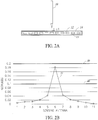
- Figure 2A is a diagram illustrating an example of the stylus 10, more specifically the electrode 27 at the tip of the stylus, being a first height or distance d1 from the stylus sensor 14 of the electronic device 12 according to one embodiment.
- Figure 2B is a diagram illustrating an example of a signal profile of a signal 31 received by sensing antennas of the stylus sensor 14 from the stylus 10 when the stylus 10 is a first distance d1 from the stylus sensor 14 according to one embodiment.
- FIG. 3A is a diagram illustrating an example of the stylus 10, more specifically the electrode 27 at the tip of the stylus, being a second height or distance d2 from the stylus sensor 14 of the electronic device 12 according to one embodiment.
- the second distance d2 is larger than the first distance d1.
- the first distance d1 may be between 0 and 10 millimeters
- the second distance d2 may be between 15 and 25 millimeters.
- Figure 3B is a diagram illustrating an example of a signal profile of a signal 33 received by sensing antennas of the stylus sensor 14 from the stylus 10 when the stylus is a second distance d2 from the stylus sensor 14 according to one embodiment. Similar to Figure 2B , eleven sensing antennas are shown along the x-axis of Figure 3B , and the strength of the signal 33 received by the sensing antennas is shown along the y-axis of Figure 3B .
- a strength of a signal received by the sensing antennas increases when the stylus 10 is closer to the stylus sensor 14.
- the strength of the signal 31 sensed by sensing antenna number 6 has a value of 0.18 when the stylus 10 is a first distance d1 from the stylus sensor 14, and the strength of the signal 33 sensed by sensing antenna number 6 has a value of under 0.02 when the stylus 10 is a second distance d2, which is larger than the first distance d1, from the stylus sensor 14.
- the strength of a signal transmitted between a stylus and a stylus sensor may be used as a proxy or indication for a distance between the stylus 10 and the stylus sensor 14.
- strength of a signal transmitted from the stylus 10 is dynamically adjusted based on a distance or height between the stylus 10 and the electronic device 12. Strength of a signal transmitted between the stylus 10 and the electronic device 12 is used as an indication of the distance or height. As will be discussed in further detail below, adjusting the strength of a signal transmitted from the stylus 10 increases the distance in which the stylus 10 may be detected, prevents oversaturation of the stylus sensor 14, and conserves power of the stylus 10.
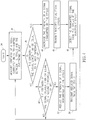
- Figure 4 is a flow diagram illustrating an example of a process for adjusting signal strength of signals transmitted by the stylus 10 according to one embodiment.
- step 34 the process begins.
- step 36 a strength of a signal currently being transmitted between the stylus 10 and the electronic device 12 (i.e., a signal transmitted from the stylus 10 to the electronic device 12, or a signal transmitted from the electronic device 12 to the stylus 10) is measured.
- signal strength indicates how far the stylus 10 is from the electronic device 12.
- the measured signal strength of the signal currently being transmitted is indicative of the current position of the stylus 10 relative to the stylus sensor 14.
- the signal may be any signal that is transmitted between the stylus 10 and the electronic device 12.
- the signal may be a data signal sending stylus capability information, operational data, or a command.
- the strength of the signal may be any type of measurement that is indicative of signal strength, such as voltage, current, tesla, and volts per meter.
- the strength of the signal is measured by the stylus 10.
- a signal such as a command
- the communication module 30 of the stylus 10 is received by the communication module 30 of the stylus 10 from the electronic device 12, and the strength of the received signal is measured by the signal strength sensor 32.
- the strength of the signal is measured by the electronic device 12.
- a signal such as a beacon signal or a data signal
- the sensing antennas 15 of the stylus sensor 14 from the stylus 10
- the strength of the received signal is measured by the signal strength sensor 17.
- the electronic device 12 may either send commands based on the measured signal strength or data indicative of the signal strength to the stylus 10.
- the strength of the signal is measured based on a combination of the strength as measured by the stylus 10 and the strength as measured by the electronic device 12.
- step 38 it is determined whether the strength of the signal measured in step 36 is lower than or equal to a first threshold 40 (i.e., whether the stylus 10 and the electronic device 12 are distal to each other).
- a first threshold 40 i.e., whether the stylus 10 and the electronic device 12 are distal to each other.
- the first threshold 40 has a value of 0.1.
- the first threshold 40 is set according to a particular distance or height between the stylus 10 and the electronic device 12.
- the first threshold 40 is set to a value that corresponds to a particular distance, such as 20 millimeters, between the stylus 10 and the electronic device 12.
- the first threshold 40 is set based on the sensing capability of the stylus sensor 14. For example, the first threshold 40 may be set such that signal strengths below the second threshold 50 are not properly detected by the stylus sensor 14 and signal strengths above the second threshold 50 are properly detected by the stylus sensor 14.
- the strength of the signal is measured by the stylus 10.
- the determination of step 36 is performed by the stylus 10.
- the strength of the signal is measured by the electronic device 12.
- the determination of step 36 is performed by the electronic device 12.
- the strength of the signal measured in step 36 is not lower than the first threshold 40, it is assumed that the stylus 10 is in close proximity to the electronic device 12. For example, referring to Figure 2B , the strength of the signal 31 is larger than the first threshold 40 when the stylus 10 is a first distance d1 from the stylus sensor 14. The process then moves to step 42.
- step 36 If the strength of the signal measured in step 36 is lower than the first threshold 40, it is assumed that the stylus 10 is distal to the electronic device 12. For example, referring to Figure 3B , the strength of the signal 33 is less than the first threshold 40 when the stylus 10 is a second distance d2 from the stylus sensor 14. The process then moves to step 44.
- the strength of a signal transmitted by the stylus 10 is increased or boosted.
- the strength of the signal is increased by the gain controller 29.
- the stylus 10 may be detected by the electronic device 12 from greater distances.
- the strength of the signal is increased such that the electronic device 12 can detect the stylus 10 from at least 20 millimeters away.
- the increase in signal strength of the transmitted signal is chosen such that the increased signal strength will not saturate the receiving circuitry (e.g., the sensing elements 15) of the electronic device 12.
- the strength of the signal is measured by the stylus 10.
- the boosted signal is either a signal currently being transmitted by the stylus 10 or a subsequent signal transmitted by the stylus 10.
- the increasing of the strength of the signal transmitted by stylus 10 is initiated and performed by the stylus 10 itself.
- the strength of the signal is measured by the electronic device 12.
- the boosted signal is either the signal measured in step 36 or a subsequent signal transmitted by the stylus 10.
- the increasing of the strength of the signal transmitted by stylus 10 is initiated and performed by the electronic device 12.
- the electronic device 12 sends a command to the stylus 10 directing the stylus 10 to increase the strength of the signal.
- the electronic device 12 sends data indicative of the strength of the signal measured in step 36 to the stylus 10, and the stylus 10 increases the strength of the signal accordingly.
- the command and the data are sent via the sensor controller 16.
- the command and the data are collectively referred to as a height signal indicative of the height of the stylus 10 relative to the electronic device 12.
- the command is indicative of the height of the stylus 10 in that the command to increase or decrease the strength of the signal is indicative of the determined height of the stylus 10 being too high or too low, respectively.
- the data is indicative of the height of the stylus 10 in that the data indicative of a lower or higher measured strength of the signal is, in turn, indicative of the stylus 10 being too high or too low, respectively.
- the strength of the signal is increased in discrete steps. In another embodiment, the strength of the signal is increased continuously. When the strength of the signal is increased continuously, the relationship between received and transmitted signal strengths could be piecewise linear, linear, geometric, or some other transfer function between receiver and transmitter depending on implementation.
- a form of Automatic Gain Control is used to modulate transmitted signal strength based on the received signal.
- the gain signal from the AGC may be used as the transmit signal strength control. This is particularly useful for styli that retransmit a touch scan signal.
- the stylus 10 is in control of the signal strength.
- step 46 the stylus 10 transmits the boosted signal.
- the boosted signal is transmitted by the communication module 30 via the TX circuitry and the electrode 27. The process then moves to step 48.
- the electronic device 12 detects the transmitted signal from the stylus 10.
- the signal is sensed by the sensing elements 15 of the stylus sensor 14.
- the electronic device 12, more specifically the sensor controller 16 or the host processor 18, may perform a variety of actions in response.
- the electronic device 12 ignores other types of detections, such as a finger touch, by the stylus sensor 14 besides the boosted signal so that unintentional touches, such as a hand holding the stylus 10 or the electronic device 12, are not falsely detected.
- the process then returns to step 36, in which strength of a signal that is currently being transmitted between the stylus 10 and the electronic device is measured.
- step 42 it is determined whether the strength of the signal measured in step 36 is greater than or equal to a second threshold 50 (i.e., whether the stylus 10 and the electronic device 12 are in close proximity to each other) and are within an acceptable level.
- a second threshold 50 i.e., whether the stylus 10 and the electronic device 12 are in close proximity to each other
- the second threshold 50 has a value of 0.2.
- the second threshold 50 is set according to a distance between the stylus 10 and the electronic device 12. In other words, the second threshold 50 is set to a value that corresponds to a particular distance, such as 5 millimeters, between the stylus 10 and the electronic device 12.
- the second threshold 50 is set to avoid incorrect position measurement by the stylus sensor 14 caused by being overloaded or saturated by the signal transmitted by the stylus 10.
- the second threshold 50 may be set such that signal strengths below the second threshold 50 will not overload or saturate the stylus sensor 14, and signal strengths above the second threshold 50 may overload or saturate the stylus sensor 14.
- the second threshold 50 is set to conserve power of the stylus 10 and avoid excessive battery drain.
- the second threshold 50 may be set such that signal strengths below the second threshold 50 will not drain excessive power from the power source 20 and signal strengths above the second threshold 50 may drain excessive power from the power source 20.
- the strength of the signal is measured by the stylus 10.
- the determination of step 36 is performed by the stylus 10.
- the strength of the signal is measured by the electronic device 12.
- the determination of step 36 is performed by the electronic device 12.
- step 36 If the strength of the signal measured in step 36 is not greater than the second threshold 50, it is assumed that the stylus 10 and the electronic device 12 are not in close proximity to each other and the strength of the signal currently being transmitted by the stylus 10 is within an acceptable level. Accordingly, no action is taken and a current strength of a signal transmitted by the stylus 10 is maintained. The process then returns to step 36, in which strength of another or subsequent signal transmitted between the stylus 10 and the electronic device 12 is measured.
- step 36 If the strength of the signal measured in step 36 is greater than the second threshold 50, it is assumed that the stylus 10 and the electronic device 12 are in close proximity to each other and the strength of the signal currently being transmitted by the stylus 10 is not within an acceptable level. The process then moves to step 52.
- step 52 the strength of the signal transmitted by the stylus 10 is reduced and set to an appropriate strength level.
- the strength of the signal is reduced by the gain controller 29.
- the strength of the signal is measured by the stylus 10.
- the reduced signal is either a signal currently being transmitted by the stylus 10 or a subsequent signal transmitted by the stylus 10.
- the reduction of the strength of the signal transmitted by stylus 10 is initiated and performed by the stylus 10, itself.
- the strength of the signal is measured by the electronic device 12.
- the reduced signal is either the signal measured in step 36 or a subsequent signal transmitted by the stylus 10.
- the decreasing of the strength of the signal transmitted by stylus 10 is initiated and performed by the electronic device 12.
- the electronic device 12 sends a command to the stylus 10 directing the stylus 10 to decrease the strength of the signal.
- the electronic device 12 sends data indicative of the strength of the signal measured in step 36 to the stylus 10, and the stylus 10 decreases the strength of the signal accordingly.
- the command and the data are sent via the sensor controller 16.
- the strength of the signal is decreased in discrete steps. In another embodiment, the strength of the signal is decreased continuously. When the strength of the signal is increased continuously, the relationship between received and transmitted signal strengths could be piecewise linear, linear, geometric, or some other transfer function between receiver and transmitter depending on implementation.
- the second threshold 50 is larger than the first threshold 40.
- unnecessary increasing and decreasing of the strength of the signal transmitted by the stylus 10 may be avoided. For example, if a single threshold is used for both steps 38 and 42, a signal that fluctuates above and below the single threshold will have its strength oscillating between being decreased in step 42 and increased in step 44. By using two separate thresholds for steps 38 and 42, such alternating between increasing and decreasing of the signal can be mitigated or avoided.
- step 54 the stylus 10 transmits the reduced signal.
- the boosted signal is transmitted by the communication module 30 via the TX circuitry and the electrode 27.
- the process then moves to step 48.
- step 48 the electronic device 12 detects the transmitted signal from the stylus 10.
- the method for adjusting signal strength of signals transmitted by the stylus 10 improves detection of the stylus 10 at greater distances, prevents over saturation of the stylus sensor 14, and conserves power of the stylus 10.
- Increasing the distance in which a stylus may be detected by an electronic device is particularly beneficial for a stylus sensor that is capable of sensing a stylus and a finger touch.
- the electronic device may quickly distinguish between a user using a stylus and a user using his or her finger, and respond accordingly. For example, once it is determined that a user is using a stylus, finger or hand touches by a user may be ignored. Accordingly, unintentional touches, such as a user's a hand holding the stylus or the electronic device, may be disregarded.
Landscapes
- Engineering & Computer Science (AREA)
- General Engineering & Computer Science (AREA)
- Theoretical Computer Science (AREA)
- Human Computer Interaction (AREA)
- Physics & Mathematics (AREA)
- General Physics & Mathematics (AREA)
- Measurement Of Length, Angles, Or The Like Using Electric Or Magnetic Means (AREA)
- Position Input By Displaying (AREA)
Applications Claiming Priority (1)
| Application Number | Priority Date | Filing Date | Title |
|---|---|---|---|
| US15/345,943 US10073548B2 (en) | 2016-11-08 | 2016-11-08 | Stylus having variable transmit signal strength, and sensor for detecting such stylus |
Publications (2)
| Publication Number | Publication Date |
|---|---|
| EP3318962A1 EP3318962A1 (en) | 2018-05-09 |
| EP3318962B1 true EP3318962B1 (en) | 2021-06-23 |
Family
ID=60268264
Family Applications (1)
| Application Number | Title | Priority Date | Filing Date |
|---|---|---|---|
| EP17200093.7A Active EP3318962B1 (en) | 2016-11-08 | 2017-11-06 | Stylus having variable transmit signal strength |
Country Status (6)
| Country | Link |
|---|---|
| US (1) | US10073548B2 (enExample) |
| EP (1) | EP3318962B1 (enExample) |
| JP (1) | JP6971083B2 (enExample) |
| KR (1) | KR102384569B1 (enExample) |
| CN (1) | CN108062173B (enExample) |
| TW (1) | TWI749023B (enExample) |
Families Citing this family (9)
| Publication number | Priority date | Publication date | Assignee | Title |
|---|---|---|---|---|
| CN111373357B (zh) | 2017-11-29 | 2023-09-22 | 株式会社和冠 | 在主动笔与传感器控制器之间执行的通信方法及主动笔 |
| CN112074802A (zh) * | 2018-05-18 | 2020-12-11 | 株式会社和冠 | 位置指示装置及信息处理装置 |
| WO2020047777A1 (zh) * | 2018-09-05 | 2020-03-12 | 深圳市汇顶科技股份有限公司 | 触控感应方法、触控芯片、电子设备以及触控系统 |
| US10884522B1 (en) * | 2019-06-19 | 2021-01-05 | Microsoft Technology Licensing, Llc | Adaptive hover operation of touch instruments |
| KR102724467B1 (ko) | 2019-07-26 | 2024-11-01 | 삼성전자 주식회사 | 전자 장치 및 전자 펜의 상태에 기반하여 전자 장치의 디지타이저 패널 제어 방법 |
| JP7478608B2 (ja) * | 2020-07-01 | 2024-05-07 | 株式会社ワコム | 位置検出装置及びブログラム |
| CN113970980A (zh) * | 2020-07-23 | 2022-01-25 | 三星显示有限公司 | 输入装置和包括该输入装置的接口装置 |
| US11775084B2 (en) * | 2021-04-20 | 2023-10-03 | Microsoft Technology Licensing, Llc | Stylus haptic component arming and power consumption |
| CN117724618B (zh) * | 2023-07-05 | 2024-12-27 | 荣耀终端有限公司 | 一种贴膜识别方法及电子设备 |
Citations (1)
| Publication number | Priority date | Publication date | Assignee | Title |
|---|---|---|---|---|
| EP3037935A1 (en) * | 2014-12-26 | 2016-06-29 | Wacom Co., Ltd. | Position pointer and signal processor |
Family Cites Families (13)
| Publication number | Priority date | Publication date | Assignee | Title |
|---|---|---|---|---|
| US7298367B2 (en) * | 2003-11-25 | 2007-11-20 | 3M Innovative Properties Company | Light emitting stylus and user input device using same |
| JP2010067117A (ja) * | 2008-09-12 | 2010-03-25 | Mitsubishi Electric Corp | タッチパネル装置 |
| US9195351B1 (en) * | 2011-09-28 | 2015-11-24 | Amazon Technologies, Inc. | Capacitive stylus |
| US9606641B2 (en) * | 2015-03-09 | 2017-03-28 | Atmel Corporation | Adaptive transmit voltage in active stylus |
| KR20140017255A (ko) * | 2012-07-31 | 2014-02-11 | 삼성전자주식회사 | C―type tsp을 이용한 전자펜 입력 인식 장치 및 방법 |
| US9841862B2 (en) * | 2012-10-16 | 2017-12-12 | Atmel Corporation | Stylus position system |
| TWI559178B (zh) * | 2014-05-13 | 2016-11-21 | 禾瑞亞科技股份有限公司 | 觸控處理裝置及其偵測方法,與觸控系統 |
| US10209788B2 (en) * | 2014-05-27 | 2019-02-19 | Egalax_Empia Technology Inc. | Touch processor, touch device, touch system, and touch method |
| US9632597B2 (en) | 2014-06-12 | 2017-04-25 | Amazon Technologies, Inc. | Configurable active stylus devices |
| KR102056298B1 (ko) * | 2014-09-02 | 2019-12-16 | 애플 인크. | 가변 햅틱 출력을 위한 시맨틱 프레임워크 |
| US9575573B2 (en) * | 2014-12-18 | 2017-02-21 | Apple Inc. | Stylus with touch sensor |
| JP6544791B2 (ja) * | 2015-02-20 | 2019-07-17 | 株式会社ワコム | 位置指示器、信号処理回路、信号供給制御方法及び信号処理方法 |
| US9841828B2 (en) * | 2016-04-20 | 2017-12-12 | Microsoft Technology Licensing, Llc | Pressure sensitive stylus |
-
2016
- 2016-11-08 US US15/345,943 patent/US10073548B2/en active Active
-
2017
- 2017-06-28 TW TW106121636A patent/TWI749023B/zh active
- 2017-07-27 CN CN201710622929.1A patent/CN108062173B/zh active Active
- 2017-08-14 JP JP2017156317A patent/JP6971083B2/ja active Active
- 2017-10-17 KR KR1020170134880A patent/KR102384569B1/ko active Active
- 2017-11-06 EP EP17200093.7A patent/EP3318962B1/en active Active
Patent Citations (1)
| Publication number | Priority date | Publication date | Assignee | Title |
|---|---|---|---|---|
| EP3037935A1 (en) * | 2014-12-26 | 2016-06-29 | Wacom Co., Ltd. | Position pointer and signal processor |
Also Published As
| Publication number | Publication date |
|---|---|
| EP3318962A1 (en) | 2018-05-09 |
| CN108062173B (zh) | 2023-04-11 |
| JP6971083B2 (ja) | 2021-11-24 |
| JP2018077826A (ja) | 2018-05-17 |
| TWI749023B (zh) | 2021-12-11 |
| CN108062173A (zh) | 2018-05-22 |
| KR102384569B1 (ko) | 2022-04-08 |
| KR20180051368A (ko) | 2018-05-16 |
| TW201818202A (zh) | 2018-05-16 |
| US20180129305A1 (en) | 2018-05-10 |
| US10073548B2 (en) | 2018-09-11 |
Similar Documents
| Publication | Publication Date | Title |
|---|---|---|
| EP3318962B1 (en) | Stylus having variable transmit signal strength | |
| EP3327552B1 (en) | Stylus tilt detection based on bidirectional communication between stylus and stylus sensor controller | |
| US9158393B2 (en) | Active stylus for touch sensing applications | |
| EP2696268B1 (en) | Position detecting device and position indicator thereof | |
| US9977519B2 (en) | Active pen with bidirectional communication | |
| JP2016062205A (ja) | センサ信号処理回路及びセンサ信号処理方法 | |
| EP2570777B1 (en) | Sensing apparatus for measuring position of touch object by electromagnetic induction and method for controlling the same | |
| US12008172B2 (en) | Position detection device and program | |
| KR102191519B1 (ko) | 터치 장치 및 이의 터치 검출 방법 | |
| CN102436333B (zh) | 兼容电容定位和电磁定位的输入装置及其输入方法 | |
| EP3771970B1 (en) | Inertial measurement system with smart power mode management and corresponding smart power mode management method | |
| US20220113817A1 (en) | Styluses for electronic devices | |
| EP2905684B1 (en) | Position measurement device for measuring position of pen and method for controlling same | |
| JPWO2020158088A1 (ja) | 描画システム | |
| EP3407175A1 (en) | Hand-holdable electronic devices and method of determining an electromagnetic environment near to such a device | |
| CN120161957A (zh) | 主动笔和交互系统 | |
| CN115480667A (zh) | 用于辅助设备的电容性通信信道 |
Legal Events
| Date | Code | Title | Description |
|---|---|---|---|
| PUAI | Public reference made under article 153(3) epc to a published international application that has entered the european phase |
Free format text: ORIGINAL CODE: 0009012 |
|
| STAA | Information on the status of an ep patent application or granted ep patent |
Free format text: STATUS: THE APPLICATION HAS BEEN PUBLISHED |
|
| AK | Designated contracting states |
Kind code of ref document: A1 Designated state(s): AL AT BE BG CH CY CZ DE DK EE ES FI FR GB GR HR HU IE IS IT LI LT LU LV MC MK MT NL NO PL PT RO RS SE SI SK SM TR |
|
| AX | Request for extension of the european patent |
Extension state: BA ME |
|
| STAA | Information on the status of an ep patent application or granted ep patent |
Free format text: STATUS: REQUEST FOR EXAMINATION WAS MADE |
|
| 17P | Request for examination filed |
Effective date: 20181109 |
|
| RBV | Designated contracting states (corrected) |
Designated state(s): AL AT BE BG CH CY CZ DE DK EE ES FI FR GB GR HR HU IE IS IT LI LT LU LV MC MK MT NL NO PL PT RO RS SE SI SK SM TR |
|
| STAA | Information on the status of an ep patent application or granted ep patent |
Free format text: STATUS: EXAMINATION IS IN PROGRESS |
|
| 17Q | First examination report despatched |
Effective date: 20190513 |
|
| REG | Reference to a national code |
Ref country code: DE Ref legal event code: R079 Ref document number: 602017040699 Country of ref document: DE Free format text: PREVIOUS MAIN CLASS: G06F0003044000 Ipc: G06F0003035400 |
|
| GRAP | Despatch of communication of intention to grant a patent |
Free format text: ORIGINAL CODE: EPIDOSNIGR1 |
|
| STAA | Information on the status of an ep patent application or granted ep patent |
Free format text: STATUS: GRANT OF PATENT IS INTENDED |
|
| RIC1 | Information provided on ipc code assigned before grant |
Ipc: G06F 3/044 20060101ALI20210127BHEP Ipc: G06F 3/0354 20130101AFI20210127BHEP Ipc: G06F 3/038 20130101ALI20210127BHEP |
|
| INTG | Intention to grant announced |
Effective date: 20210215 |
|
| RIN1 | Information on inventor provided before grant (corrected) |
Inventor name: FLECK, DAVID CHARLES |
|
| GRAS | Grant fee paid |
Free format text: ORIGINAL CODE: EPIDOSNIGR3 |
|
| GRAA | (expected) grant |
Free format text: ORIGINAL CODE: 0009210 |
|
| STAA | Information on the status of an ep patent application or granted ep patent |
Free format text: STATUS: THE PATENT HAS BEEN GRANTED |
|
| AK | Designated contracting states |
Kind code of ref document: B1 Designated state(s): AL AT BE BG CH CY CZ DE DK EE ES FI FR GB GR HR HU IE IS IT LI LT LU LV MC MK MT NL NO PL PT RO RS SE SI SK SM TR |
|
| REG | Reference to a national code |
Ref country code: GB Ref legal event code: FG4D |
|
| REG | Reference to a national code |
Ref country code: CH Ref legal event code: EP |
|
| REG | Reference to a national code |
Ref country code: DE Ref legal event code: R096 Ref document number: 602017040699 Country of ref document: DE Ref country code: AT Ref legal event code: REF Ref document number: 1404851 Country of ref document: AT Kind code of ref document: T Effective date: 20210715 |
|
| REG | Reference to a national code |
Ref country code: IE Ref legal event code: FG4D |
|
| REG | Reference to a national code |
Ref country code: NL Ref legal event code: FP |
|
| REG | Reference to a national code |
Ref country code: LT Ref legal event code: MG9D |
|
| PG25 | Lapsed in a contracting state [announced via postgrant information from national office to epo] |
Ref country code: FI Free format text: LAPSE BECAUSE OF FAILURE TO SUBMIT A TRANSLATION OF THE DESCRIPTION OR TO PAY THE FEE WITHIN THE PRESCRIBED TIME-LIMIT Effective date: 20210623 Ref country code: LT Free format text: LAPSE BECAUSE OF FAILURE TO SUBMIT A TRANSLATION OF THE DESCRIPTION OR TO PAY THE FEE WITHIN THE PRESCRIBED TIME-LIMIT Effective date: 20210623 Ref country code: BG Free format text: LAPSE BECAUSE OF FAILURE TO SUBMIT A TRANSLATION OF THE DESCRIPTION OR TO PAY THE FEE WITHIN THE PRESCRIBED TIME-LIMIT Effective date: 20210923 Ref country code: HR Free format text: LAPSE BECAUSE OF FAILURE TO SUBMIT A TRANSLATION OF THE DESCRIPTION OR TO PAY THE FEE WITHIN THE PRESCRIBED TIME-LIMIT Effective date: 20210623 |
|
| REG | Reference to a national code |
Ref country code: AT Ref legal event code: MK05 Ref document number: 1404851 Country of ref document: AT Kind code of ref document: T Effective date: 20210623 |
|
| PG25 | Lapsed in a contracting state [announced via postgrant information from national office to epo] |
Ref country code: GR Free format text: LAPSE BECAUSE OF FAILURE TO SUBMIT A TRANSLATION OF THE DESCRIPTION OR TO PAY THE FEE WITHIN THE PRESCRIBED TIME-LIMIT Effective date: 20210924 Ref country code: LV Free format text: LAPSE BECAUSE OF FAILURE TO SUBMIT A TRANSLATION OF THE DESCRIPTION OR TO PAY THE FEE WITHIN THE PRESCRIBED TIME-LIMIT Effective date: 20210623 Ref country code: NO Free format text: LAPSE BECAUSE OF FAILURE TO SUBMIT A TRANSLATION OF THE DESCRIPTION OR TO PAY THE FEE WITHIN THE PRESCRIBED TIME-LIMIT Effective date: 20210923 Ref country code: RS Free format text: LAPSE BECAUSE OF FAILURE TO SUBMIT A TRANSLATION OF THE DESCRIPTION OR TO PAY THE FEE WITHIN THE PRESCRIBED TIME-LIMIT Effective date: 20210623 Ref country code: SE Free format text: LAPSE BECAUSE OF FAILURE TO SUBMIT A TRANSLATION OF THE DESCRIPTION OR TO PAY THE FEE WITHIN THE PRESCRIBED TIME-LIMIT Effective date: 20210623 |
|
| PG25 | Lapsed in a contracting state [announced via postgrant information from national office to epo] |
Ref country code: SM Free format text: LAPSE BECAUSE OF FAILURE TO SUBMIT A TRANSLATION OF THE DESCRIPTION OR TO PAY THE FEE WITHIN THE PRESCRIBED TIME-LIMIT Effective date: 20210623 Ref country code: SK Free format text: LAPSE BECAUSE OF FAILURE TO SUBMIT A TRANSLATION OF THE DESCRIPTION OR TO PAY THE FEE WITHIN THE PRESCRIBED TIME-LIMIT Effective date: 20210623 Ref country code: ES Free format text: LAPSE BECAUSE OF FAILURE TO SUBMIT A TRANSLATION OF THE DESCRIPTION OR TO PAY THE FEE WITHIN THE PRESCRIBED TIME-LIMIT Effective date: 20210623 Ref country code: PT Free format text: LAPSE BECAUSE OF FAILURE TO SUBMIT A TRANSLATION OF THE DESCRIPTION OR TO PAY THE FEE WITHIN THE PRESCRIBED TIME-LIMIT Effective date: 20211025 Ref country code: RO Free format text: LAPSE BECAUSE OF FAILURE TO SUBMIT A TRANSLATION OF THE DESCRIPTION OR TO PAY THE FEE WITHIN THE PRESCRIBED TIME-LIMIT Effective date: 20210623 Ref country code: EE Free format text: LAPSE BECAUSE OF FAILURE TO SUBMIT A TRANSLATION OF THE DESCRIPTION OR TO PAY THE FEE WITHIN THE PRESCRIBED TIME-LIMIT Effective date: 20210623 Ref country code: CZ Free format text: LAPSE BECAUSE OF FAILURE TO SUBMIT A TRANSLATION OF THE DESCRIPTION OR TO PAY THE FEE WITHIN THE PRESCRIBED TIME-LIMIT Effective date: 20210623 Ref country code: AT Free format text: LAPSE BECAUSE OF FAILURE TO SUBMIT A TRANSLATION OF THE DESCRIPTION OR TO PAY THE FEE WITHIN THE PRESCRIBED TIME-LIMIT Effective date: 20210623 |
|
| PG25 | Lapsed in a contracting state [announced via postgrant information from national office to epo] |
Ref country code: PL Free format text: LAPSE BECAUSE OF FAILURE TO SUBMIT A TRANSLATION OF THE DESCRIPTION OR TO PAY THE FEE WITHIN THE PRESCRIBED TIME-LIMIT Effective date: 20210623 |
|
| REG | Reference to a national code |
Ref country code: DE Ref legal event code: R097 Ref document number: 602017040699 Country of ref document: DE |
|
| PG25 | Lapsed in a contracting state [announced via postgrant information from national office to epo] |
Ref country code: DK Free format text: LAPSE BECAUSE OF FAILURE TO SUBMIT A TRANSLATION OF THE DESCRIPTION OR TO PAY THE FEE WITHIN THE PRESCRIBED TIME-LIMIT Effective date: 20210623 |
|
| PLBE | No opposition filed within time limit |
Free format text: ORIGINAL CODE: 0009261 |
|
| STAA | Information on the status of an ep patent application or granted ep patent |
Free format text: STATUS: NO OPPOSITION FILED WITHIN TIME LIMIT |
|
| 26N | No opposition filed |
Effective date: 20220324 |
|
| PG25 | Lapsed in a contracting state [announced via postgrant information from national office to epo] |
Ref country code: AL Free format text: LAPSE BECAUSE OF FAILURE TO SUBMIT A TRANSLATION OF THE DESCRIPTION OR TO PAY THE FEE WITHIN THE PRESCRIBED TIME-LIMIT Effective date: 20210623 |
|
| PG25 | Lapsed in a contracting state [announced via postgrant information from national office to epo] |
Ref country code: MC Free format text: LAPSE BECAUSE OF FAILURE TO SUBMIT A TRANSLATION OF THE DESCRIPTION OR TO PAY THE FEE WITHIN THE PRESCRIBED TIME-LIMIT Effective date: 20210623 |
|
| REG | Reference to a national code |
Ref country code: CH Ref legal event code: PL |
|
| GBPC | Gb: european patent ceased through non-payment of renewal fee |
Effective date: 20211106 |
|
| PG25 | Lapsed in a contracting state [announced via postgrant information from national office to epo] |
Ref country code: LU Free format text: LAPSE BECAUSE OF NON-PAYMENT OF DUE FEES Effective date: 20211106 Ref country code: IT Free format text: LAPSE BECAUSE OF FAILURE TO SUBMIT A TRANSLATION OF THE DESCRIPTION OR TO PAY THE FEE WITHIN THE PRESCRIBED TIME-LIMIT Effective date: 20210623 Ref country code: BE Free format text: LAPSE BECAUSE OF NON-PAYMENT OF DUE FEES Effective date: 20211130 |
|
| REG | Reference to a national code |
Ref country code: BE Ref legal event code: MM Effective date: 20211130 |
|
| PG25 | Lapsed in a contracting state [announced via postgrant information from national office to epo] |
Ref country code: LI Free format text: LAPSE BECAUSE OF NON-PAYMENT OF DUE FEES Effective date: 20211130 Ref country code: CH Free format text: LAPSE BECAUSE OF NON-PAYMENT OF DUE FEES Effective date: 20211130 |
|
| PG25 | Lapsed in a contracting state [announced via postgrant information from national office to epo] |
Ref country code: IE Free format text: LAPSE BECAUSE OF NON-PAYMENT OF DUE FEES Effective date: 20211106 Ref country code: GB Free format text: LAPSE BECAUSE OF NON-PAYMENT OF DUE FEES Effective date: 20211106 |
|
| PG25 | Lapsed in a contracting state [announced via postgrant information from national office to epo] |
Ref country code: FR Free format text: LAPSE BECAUSE OF NON-PAYMENT OF DUE FEES Effective date: 20211130 |
|
| PG25 | Lapsed in a contracting state [announced via postgrant information from national office to epo] |
Ref country code: HU Free format text: LAPSE BECAUSE OF FAILURE TO SUBMIT A TRANSLATION OF THE DESCRIPTION OR TO PAY THE FEE WITHIN THE PRESCRIBED TIME-LIMIT; INVALID AB INITIO Effective date: 20171106 |
|
| PG25 | Lapsed in a contracting state [announced via postgrant information from national office to epo] |
Ref country code: CY Free format text: LAPSE BECAUSE OF FAILURE TO SUBMIT A TRANSLATION OF THE DESCRIPTION OR TO PAY THE FEE WITHIN THE PRESCRIBED TIME-LIMIT Effective date: 20210623 |
|
| P01 | Opt-out of the competence of the unified patent court (upc) registered |
Effective date: 20230907 |
|
| PG25 | Lapsed in a contracting state [announced via postgrant information from national office to epo] |
Ref country code: MK Free format text: LAPSE BECAUSE OF FAILURE TO SUBMIT A TRANSLATION OF THE DESCRIPTION OR TO PAY THE FEE WITHIN THE PRESCRIBED TIME-LIMIT Effective date: 20210623 |
|
| PG25 | Lapsed in a contracting state [announced via postgrant information from national office to epo] |
Ref country code: MT Free format text: LAPSE BECAUSE OF FAILURE TO SUBMIT A TRANSLATION OF THE DESCRIPTION OR TO PAY THE FEE WITHIN THE PRESCRIBED TIME-LIMIT Effective date: 20210623 |
|
| PGFP | Annual fee paid to national office [announced via postgrant information from national office to epo] |
Ref country code: NL Payment date: 20241120 Year of fee payment: 8 |
|
| PGFP | Annual fee paid to national office [announced via postgrant information from national office to epo] |
Ref country code: DE Payment date: 20241121 Year of fee payment: 8 |