EP3316774B1 - Verfahren zum aufbau eines sinnesraums - Google Patents
Verfahren zum aufbau eines sinnesraums Download PDFInfo
- Publication number
- EP3316774B1 EP3316774B1 EP16742368.0A EP16742368A EP3316774B1 EP 3316774 B1 EP3316774 B1 EP 3316774B1 EP 16742368 A EP16742368 A EP 16742368A EP 3316774 B1 EP3316774 B1 EP 3316774B1
- Authority
- EP
- European Patent Office
- Prior art keywords
- physiological
- sensory
- analysis
- stimuli
- sample
- Prior art date
- Legal status (The legal status is an assumption and is not a legal conclusion. Google has not performed a legal analysis and makes no representation as to the accuracy of the status listed.)
- Not-in-force
Links
Images


Classifications
-
- G—PHYSICS
- G01—MEASURING; TESTING
- G01N—INVESTIGATING OR ANALYSING MATERIALS BY DETERMINING THEIR CHEMICAL OR PHYSICAL PROPERTIES
- G01N33/00—Investigating or analysing materials by specific methods not covered by groups G01N1/00 - G01N31/00
- G01N33/18—Water
- G01N33/186—Water using one or more living organisms, e.g. a fish
-
- A—HUMAN NECESSITIES
- A61—MEDICAL OR VETERINARY SCIENCE; HYGIENE
- A61B—DIAGNOSIS; SURGERY; IDENTIFICATION
- A61B5/00—Measuring for diagnostic purposes; Identification of persons
- A61B5/16—Devices for psychotechnics; Testing reaction times ; Devices for evaluating the psychological state
-
- A—HUMAN NECESSITIES
- A61—MEDICAL OR VETERINARY SCIENCE; HYGIENE
- A61B—DIAGNOSIS; SURGERY; IDENTIFICATION
- A61B5/00—Measuring for diagnostic purposes; Identification of persons
- A61B5/24—Detecting, measuring or recording bioelectric or biomagnetic signals of the body or parts thereof
- A61B5/316—Modalities, i.e. specific diagnostic methods
- A61B5/369—Electroencephalography [EEG]
- A61B5/377—Electroencephalography [EEG] using evoked responses
- A61B5/381—Olfactory or gustatory stimuli
-
- A—HUMAN NECESSITIES
- A61—MEDICAL OR VETERINARY SCIENCE; HYGIENE
- A61B—DIAGNOSIS; SURGERY; IDENTIFICATION
- A61B5/00—Measuring for diagnostic purposes; Identification of persons
- A61B5/40—Detecting, measuring or recording for evaluating the nervous system
- A61B5/4005—Detecting, measuring or recording for evaluating the nervous system for evaluating the sensory system
- A61B5/4017—Evaluating sense of taste
-
- A—HUMAN NECESSITIES
- A61—MEDICAL OR VETERINARY SCIENCE; HYGIENE
- A61B—DIAGNOSIS; SURGERY; IDENTIFICATION
- A61B5/00—Measuring for diagnostic purposes; Identification of persons
- A61B5/72—Signal processing specially adapted for physiological signals or for diagnostic purposes
- A61B5/7235—Details of waveform analysis
- A61B5/7264—Classification of physiological signals or data, e.g. using neural networks, statistical classifiers, expert systems or fuzzy systems
-
- A—HUMAN NECESSITIES
- A61—MEDICAL OR VETERINARY SCIENCE; HYGIENE
- A61B—DIAGNOSIS; SURGERY; IDENTIFICATION
- A61B3/00—Apparatus for testing the eyes; Instruments for examining the eyes
- A61B3/10—Objective types, i.e. instruments for examining the eyes independent of the patients' perceptions or reactions
- A61B3/11—Objective types, i.e. instruments for examining the eyes independent of the patients' perceptions or reactions for measuring interpupillary distance or diameter of pupils
- A61B3/112—Objective types, i.e. instruments for examining the eyes independent of the patients' perceptions or reactions for measuring interpupillary distance or diameter of pupils for measuring diameter of pupils
-
- A—HUMAN NECESSITIES
- A61—MEDICAL OR VETERINARY SCIENCE; HYGIENE
- A61B—DIAGNOSIS; SURGERY; IDENTIFICATION
- A61B5/00—Measuring for diagnostic purposes; Identification of persons
- A61B5/01—Measuring temperature of body parts ; Diagnostic temperature sensing, e.g. for malignant or inflamed tissue
-
- A—HUMAN NECESSITIES
- A61—MEDICAL OR VETERINARY SCIENCE; HYGIENE
- A61B—DIAGNOSIS; SURGERY; IDENTIFICATION
- A61B5/00—Measuring for diagnostic purposes; Identification of persons
- A61B5/02—Detecting, measuring or recording for evaluating the cardiovascular system, e.g. pulse, heart rate, blood pressure or blood flow
-
- A—HUMAN NECESSITIES
- A61—MEDICAL OR VETERINARY SCIENCE; HYGIENE
- A61B—DIAGNOSIS; SURGERY; IDENTIFICATION
- A61B5/00—Measuring for diagnostic purposes; Identification of persons
- A61B5/02—Detecting, measuring or recording for evaluating the cardiovascular system, e.g. pulse, heart rate, blood pressure or blood flow
- A61B5/0205—Simultaneously evaluating both cardiovascular conditions and different types of body conditions, e.g. heart and respiratory condition
- A61B5/02055—Simultaneously evaluating both cardiovascular condition and temperature
-
- A—HUMAN NECESSITIES
- A61—MEDICAL OR VETERINARY SCIENCE; HYGIENE
- A61B—DIAGNOSIS; SURGERY; IDENTIFICATION
- A61B5/00—Measuring for diagnostic purposes; Identification of persons
- A61B5/02—Detecting, measuring or recording for evaluating the cardiovascular system, e.g. pulse, heart rate, blood pressure or blood flow
- A61B5/021—Measuring pressure in heart or blood vessels
-
- A—HUMAN NECESSITIES
- A61—MEDICAL OR VETERINARY SCIENCE; HYGIENE
- A61B—DIAGNOSIS; SURGERY; IDENTIFICATION
- A61B5/00—Measuring for diagnostic purposes; Identification of persons
- A61B5/02—Detecting, measuring or recording for evaluating the cardiovascular system, e.g. pulse, heart rate, blood pressure or blood flow
- A61B5/024—Measuring pulse rate or heart rate
-
- A—HUMAN NECESSITIES
- A61—MEDICAL OR VETERINARY SCIENCE; HYGIENE
- A61B—DIAGNOSIS; SURGERY; IDENTIFICATION
- A61B5/00—Measuring for diagnostic purposes; Identification of persons
- A61B5/02—Detecting, measuring or recording for evaluating the cardiovascular system, e.g. pulse, heart rate, blood pressure or blood flow
- A61B5/026—Measuring blood flow
- A61B5/0261—Measuring blood flow using optical means, e.g. infrared light
-
- A—HUMAN NECESSITIES
- A61—MEDICAL OR VETERINARY SCIENCE; HYGIENE
- A61B—DIAGNOSIS; SURGERY; IDENTIFICATION
- A61B5/00—Measuring for diagnostic purposes; Identification of persons
- A61B5/05—Detecting, measuring or recording for diagnosis by means of electric currents or magnetic fields; Measuring using microwaves or radio waves
- A61B5/053—Measuring electrical impedance or conductance of a portion of the body
- A61B5/0531—Measuring skin impedance
-
- A—HUMAN NECESSITIES
- A61—MEDICAL OR VETERINARY SCIENCE; HYGIENE
- A61B—DIAGNOSIS; SURGERY; IDENTIFICATION
- A61B5/00—Measuring for diagnostic purposes; Identification of persons
- A61B5/05—Detecting, measuring or recording for diagnosis by means of electric currents or magnetic fields; Measuring using microwaves or radio waves
- A61B5/053—Measuring electrical impedance or conductance of a portion of the body
- A61B5/0531—Measuring skin impedance
- A61B5/0533—Measuring galvanic skin response
-
- A—HUMAN NECESSITIES
- A61—MEDICAL OR VETERINARY SCIENCE; HYGIENE
- A61B—DIAGNOSIS; SURGERY; IDENTIFICATION
- A61B5/00—Measuring for diagnostic purposes; Identification of persons
- A61B5/40—Detecting, measuring or recording for evaluating the nervous system
- A61B5/4029—Detecting, measuring or recording for evaluating the nervous system for evaluating the peripheral nervous systems
- A61B5/4035—Evaluating the autonomic nervous system
-
- A—HUMAN NECESSITIES
- A61—MEDICAL OR VETERINARY SCIENCE; HYGIENE
- A61B—DIAGNOSIS; SURGERY; IDENTIFICATION
- A61B5/00—Measuring for diagnostic purposes; Identification of persons
- A61B5/40—Detecting, measuring or recording for evaluating the nervous system
- A61B5/4058—Detecting, measuring or recording for evaluating the nervous system for evaluating the central nervous system
-
- G—PHYSICS
- G06—COMPUTING OR CALCULATING; COUNTING
- G06Q—INFORMATION AND COMMUNICATION TECHNOLOGY [ICT] SPECIALLY ADAPTED FOR ADMINISTRATIVE, COMMERCIAL, FINANCIAL, MANAGERIAL OR SUPERVISORY PURPOSES; SYSTEMS OR METHODS SPECIALLY ADAPTED FOR ADMINISTRATIVE, COMMERCIAL, FINANCIAL, MANAGERIAL OR SUPERVISORY PURPOSES, NOT OTHERWISE PROVIDED FOR
- G06Q30/00—Commerce
- G06Q30/02—Marketing; Price estimation or determination; Fundraising
- G06Q30/0201—Market modelling; Market analysis; Collecting market data
-
- G—PHYSICS
- G16—INFORMATION AND COMMUNICATION TECHNOLOGY [ICT] SPECIALLY ADAPTED FOR SPECIFIC APPLICATION FIELDS
- G16H—HEALTHCARE INFORMATICS, i.e. INFORMATION AND COMMUNICATION TECHNOLOGY [ICT] SPECIALLY ADAPTED FOR THE HANDLING OR PROCESSING OF MEDICAL OR HEALTHCARE DATA
- G16H50/00—ICT specially adapted for medical diagnosis, medical simulation or medical data mining; ICT specially adapted for detecting, monitoring or modelling epidemics or pandemics
- G16H50/20—ICT specially adapted for medical diagnosis, medical simulation or medical data mining; ICT specially adapted for detecting, monitoring or modelling epidemics or pandemics for computer-aided diagnosis, e.g. based on medical expert systems
Definitions
- the present invention relates to a method of constructing a Sensory Space based on Physiological Responses (ESRP) (from discriminating physiological parameters) as well as a method of sensory analysis comprising the positioning of a sample within a reference sensory space (ESRP) allowing the prediction of its chemical and / or sensory characteristics.
- ESRP Physiological Responses
- Sensory analysis also called sensory metrology, is a field of science used to evaluate, measure, analyze and interpret responses to products perceived by the senses of sight, smell, touch, taste and taste. hearing.
- the main objective of sensory analysis is to translate the desires and preferences of consumers into well-defined and tangible properties of a given product. The hypothesis used to link them is that part of the sensations are structured by preference. By comparing and analyzing the characteristics of the product that consumers like and dislike, sensory analysis helps identify positive and negative aspects and tailor them to satisfy consumer tastes.
- Quality is defined as a set of inherent characteristics such as the description of a visual, a smell, a touch, a taste or a sound. Intensity represents the degree of presence of a characteristic in the product.
- the hedonic dimension of a product is its ability to provide pleasure or displeasure.
- the inventors had the merit of developing a sensory analysis method based on the construction of an individual sensory space, that is to say specific to an individual, from physiological measurements making it possible to compensate for limits mentioned above.
- the sensory analysis method according to the invention is applicable to naive subjects and thus makes it possible to circumvent the problem of long, restrictive and expensive training which is implied by conventional sensory analysis methods.
- the individual approach of this method makes it possible to obtain a reference sensory space that is reliable and stable over time. The individual is assimilated to a sensor of sensory characteristics to be studied, which makes it possible to overcome difficulties in verbalization and problems of subjectivity linked to perception.
- the method is therefore based on the principle of idiosyncrasy, that is to say on the exploitation of the particular predisposition of an individual which causes an individual to react in a personal way to the influence of 'external agents.
- it is possible to obtain information on the quality, intensity and / or hedonic dimension of an unknown sample often more reliably than with a conventional analysis method, in particular for stimuli close to the thresholds. of perception.
- the present invention relates to a method of constructing a sensory space of an individual as well as to a method of sensory analysis of a sample based on the use of this sensory space.
- the method of building an individual sensory space is based on the comparison of physiological responses and sensory responses measured simultaneously during the realization of a sensory evaluation of basic stimuli representative of the sense to be studied by the individual, the stimuli having an intensity (or power or level) below or close to the detection threshold.
- Sensory responses are obtained by self-assessment of the individual using a sensory questionnaire.
- Physiological responses are obtained by recording signals relating to at least one physiological indicator.
- Carrying out a sensory evaluation of at least 4 basic stimuli representative of the sense to be studied thus consists in determining at least 4 stimuli associated with the sense selected and with a family of compounds of the sense studied, for example flavors for taste .
- the stimuli that correspond to the basic flavors, namely, acid, bitter, salty, sweet and umami, but also the secondary tastes: medicinal, vegetable, stale, metallic, earthy, moldy, chemical, spicy, fruity, floral, aromatic. These stimuli are capable of only stimulating the sense of taste and of simulating positive and negative hedonic valences.
- odors For the sense of smell, we can choose the following stimuli including the following types of odors: septic, sulphurous swamp, chemical (chlorine), hydrocarbon, medical, vegetable, fruity, floral, earthy, musty, rancid, phenolic,
- the method can also be deployed to study other senses such as hearing and touch.
- Quality is defined as “qualitas”, that is, a set of inherent characteristics.
- Intensity represents the degree of presence of a characteristic in the product. Intensity corresponds to stimuli of taste or smell, power to stimuli of touch and level to stimuli of hearing.
- the hedonic dimension of a product is its ability to provide pleasure or displeasure.
- the term “stimuli having an intensity (or power or level) below or in the vicinity of the detection threshold of the sense to be studied” is understood to mean stimuli which are at a concentration (or power or level) below the concentration. (or power or level) detectable by the sense to be studied and up to a concentration (or power or level) less than 3, preferably less than twice the concentration (or power or level) detectable by the sense to be studied .
- a physiological response to a stimulus can be demonstrated even though the individual does not perceive this stimulus, that is to say that even below the detection threshold of the meaning to be studied, a physiological response will be demonstrated and will allow the implementation of the invention.
- the physiological indicators which make it possible to establish the relation with the quality, the intensity and the hedonic valence of the stimuli are indicators of the central nervous system and / or the autonomic nervous system measured synchronously. According to the invention, several physiological indicators are used.
- Physiological indicators of the central nervous system that can be used are the activity of the central nervous system which can be measured by electroencephalography (EEG) or by functional near infrared spectroscopy.
- EEG electroencephalography
- functional near infrared spectroscopy the activity of the central nervous system which can be measured by electroencephalography (EEG) or by functional near infrared spectroscopy.
- Physiological indicators of the autonomic nervous system that can be used are heart rate, electrodermal response (RED), skin temperature, skin microcirculation, gusto-facial reflex measured by electromyography, pupillary response, respiratory response, blood pressure .
- physiological associated with the stimuli and in connection with the intensity and / or the hedonic valence and / or the physical or chemical characteristics (for example concentration of the sample) of the stimuli were retained.
- the measurements are carried out in a synchronized manner, that is to say according to the same time scale and at the same acquisition frequency, for example 1 kHz. For each indicator, different parameters are measured.
- the physiological indicator is the cutaneous microcirculation, it can be measured using a Periflux PF 5010 device (Perimed AB, Sweden) and the parameters measured simultaneously which will be extracted could be similar to parameters extracted on the RED signals.
- the identification of the discriminating parameters is made by statistical analysis.
- the different statistical analysis methods that can be used are in particular the analysis of variance (ANOVA) which makes it possible to evaluate the effect of one or more qualitative factors. on a quantitative variable for which the measurements were carried out with several repetitions ( Pagès, J., 2010, General statistics for users. Methodology. PUR, Rennes ); the correlation analysis carried out using the Pearson (or Spearman) correlation coefficient, which is suitable for continuous variables and is also the most widely used ( Labbe, D., Rytz, A. & Hugi, A., 2004, Training is a critical step to obtain reliable product profiles in a real food industry context.
- ANOVA analysis of variance
- PCA principal component analysis
- CFA factorial correspondence analysis
- a sensory space is represented on the Figure 3b .
- This sensory space produced specific to the individual corresponds to the “calibration” of the individual tester and could subsequently be used for the systematic evaluation of samples by this individual.
- this method can make it possible to evaluate unknown samples in order to measure where they will be situated in relation to known stimuli, that is to say to determine their quality, intensity and hedonic value in particular.
- the invention also relates to the use of the sensory analysis method (senso-physiological) for the analysis of products requiring very precise sensory analyzes to be carried out by high quality testers who follow an intense prior training, such as for example drinking water.
- Example 1 Construction of a sensory space intended to be used to test the quality of tap water on a panel of experts
- the objective of this example is to construct an ESRP sensory space based on measurements of skin microcirculation in order to use it as a reference to characterize odor and taste problems in water samples.
- the sensory dimensions studied are the hedonic valence and the intensity of the product.
- the four basic tastes sweet, sour, sour and bitter
- the solutions were prepared with citric acid for the sour taste, caffeine for the bitter taste, sodium chloride for the salty taste, and sucrose for the sweet taste (all purchased at Sigma Aldrich, France) in Evian water. Evian water was also used as a control and blank.
- Each taste was prepared with the four concentrations mentioned in Table 1.
- Table 1 Table 1: ⁇ /b> ⁇ i> Concentrations (mmol.L ⁇ sup> 1 ⁇ /sup>) for each ⁇ sup> a ⁇ /sup> taste stimulus.
- Citric acid (acid) Caffeine (bitter) NaCl (salted) Sucrose (sweet) 1 1.6 0.72 12 8 2 2.0 0.88 17 13 3 2.5 1.13 24 21 4 3.1 1.39 34 35 a
- the dilution 1 of citric acid (corresponding to a concentration of 1.6 mmol.L -1 of citric acid) will be called Acid 1 in this example, the same name will be used for other concentrations
- concentrations of the solutions were chosen from these threshold values and from previous standardized taste tests (AFNOR, 2012) in order to have concentrations close to the detection thresholds.
- the amount of solution to be tested was standardized to 10 mL.
- the subjects In order to impregnate the whole of the oral cavity, the subjects kept the solution in their mouth for 5s before swallowing it.
- the blood perfusion unit is arbitrary and corresponds to the product of the average speed of movement of red blood cells and their concentration.
- the Periflux PF 5010 system has a laser beam of 780 nm, 1 mm in diameter, with no thermal effect.
- a PR407 fiber optic probe is used. The low energy laser beam is transmitted by the probe to the tissue. Some of the light reflects off static structures and some of the light reflects off moving blood cells. When light is reflected from a moving cell, the wavelength changes, which corresponds to the Doppler effect.
- the scattered light collected by the optical fiber is used to calculate the value of the perfusion. The measurement is expressed in unit of perfusion (PU).
- the recordings were made on the pulp of the index finger of the non-dominant hand because of the strong vascularization of this area. Perfusion signals were recorded using the PowerLab PL35088 / 35 8-channel acquisition system, data was collected at a rate of 1 kHz and analyzed by Labchart® software (AD Instruments Ltd, UK).
- the resulting signal was first inverted (multiplied by -1) so that analysis of the peak by LabChart® software was possible, and its value was multiplied by 100 to convert it from volt to UP.
- the signal was then filtered by a low pass filter having a cutoff frequency of 0.6 Hz to remove the characteristic heartbeat frequency which was not relevant in the present analysis. Then, peak analysis was performed manually by choosing the peak in its entirety and analyzing it with LabChart® software ( Figure 1 ).
- WidthX (where X equals either 30, 50 or 90) is calculated as the duration at X% Width50, of the height of the peak starting from the line between the ascent and the descent Width90 Width Duration between Start and End
- the sessions were individual and subjects were asked not to eat or drink for at least 1 h before the test. They arrived 15 minutes before the start of the session in order to get used to the environmental conditions, in particular the room temperature (kept constant at 23 ° C) and to be at rest, seated in a comfortable chair.
- the 16 solutions for testing and two additional samples of water containing only Evian water, added to the references were presented in a monadic way following a test order determined from a "balanced incomplete block design". During one session, only 9 of 18 samples were presented to minimize sensory fatigue.
- an Evian sample has always been tested as a "blank" sample in order to avoid the first order effect ( Lawless, HT & Heymann, H., 2010, Sensory evaluation of food: Principles and practices. Springer, New York ) and was excluded from the analysis.
- a light signal was sent to instruct the sample to be tested.
- the nervous system disturbance returned to its baseline (after about 1 min)
- a second light signal indicated to the subjects that they had to complete a questionnaire concerning the stimulus previously tested.
- the first part of the questionnaire was related to taste identification (ie determining the quality of taste); subjects had to choose between five labels: sweet, salty, sour, bitter or neutral.
- the effect of taste on the hedonic and intensity note was analyzed by an analysis of variance (ANOVA) including the product effect, the subject effect and the product-subject interaction.
- ANOVA analysis of variance
- the subject effect was fixed because there were only 4 subjects and the results could only be applied to a particular schema. The differences were considered significant at the 0.05 level.
- SKBF responses were analyzed individually by one-way ANOVA (produced effect), subjects having their own "preferential channel” ( Lacey, JI, Bateman, DE & VanLEHN, R., 1953, Autonomic response specificity: An experimental study. Psychosomatic Medicine, 15, 8-21 .). Indeed, some subjects responded to SKBF variations, others with EDR variations, and physiological measurements are known to show important individual differences, which lead to the need to individualize the analysis ( Johannes, B. & Gaillard, AWK, 2014, A methodology to compensate for individual differences in psychophysiological assessment. Biological psychology, 96, 77-85 ).
- the 4 concentrations of sour, salty and sweet tastes had the highest scores, 8.4 ⁇ 1.2, 8.6 ⁇ 1.0 and 8.3 ⁇ 0.9, respectively.
- the bitter solutions were less differentiated from each other and gave the highest standard deviations; concentrations 3 and 4 were not significantly different. Salty taste concentrations 1 and 2 were not significantly different either. The only taste for which each concentration was rated significantly different from the previous one was sweet ( Figure 2 ).
- the physiological evaluation is focused on the results of subject 3 only.
- ESRP cutaneous blood microcirculation
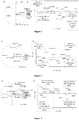
- PCR was performed in order to visualize data with physiological parameters extracted from individual variations of SKBF from subject 3 (cf. Figure 1 and Table 2). This analysis allows the representation of all the variables on a circle of correlations ( Figure 3a ) and all products on a two-dimensional space ( Figure 3b ). The first map represented 83.3% of the initial variability.
- the first axis of PCR was characterized by a group of variables of duration and amplitude of physiological response ( Figure 4a ).
- the products Acid 3 and 4, Caffeine 3 and 4, NaCl 4 located on the right side of the map ( Figure 4b ) tended to have high values for the variables "width”, "height” and "peak area”.
- the second axis separated the “slope” variables. Products in the upper part of the graph tended to cause the signal to drop more quickly after stimulation, while products in the lower part caused a slower return to baseline before stimulation.
- the most discriminating variables for the products were the width of the signal, ie its duration ( p ⁇ 0.001), and the area of the peak ( p ⁇ 0.001). Acid 4, NaCl 4 and Caffeine 3 induced a significantly stronger disturbance than the others.
- Example 2 Construction of a sensory space intended to be used to test the quality of tap water on a naive panel
- the objective of this example is to construct an ESRP sensory space based on measurements of skin microcirculation, electrodermal response and heart rate in order to use it as a reference to characterize odor and taste problems in samples. of water.
- the sensory dimensions studied are the hedonic valence and the intensities of the product as a function of the 4 basic flavors (scales of sweet intensity, salty intensity, bitter intensity and acid intensity).
- the four basic tastes sweet, sour, sour and bitter
- the solutions were prepared with citric acid for the sour taste, caffeine for the bitter taste, sodium chloride for the salty taste and sucrose for the sweet taste (all purchased from Sigma Aldrich, France) in Evian water. Evian water was also used as a control and blank.
- Each taste was prepared with the four concentrations mentioned in Table 4.
- ESPR is featured on figures 4 a) and b) constructed from relevant parameters extracted from the electrodermal response. These figures show respectively the circle of correlation of the factorial plane F1-F2 and the factorial plane F1-F2 with the cloud of individuals. All the variables are positively correlated with the first axis, the “Peak Duration” variable is also positively correlated with the second axis. On the cloud of individuals, all the products with the highest concentration 4 are located to the right of the plane (cumulative contributions: 39.63%). These products take higher values for all the physiological parameters. Conversely, the products with low concentrations of Caffeine 1, Acid 2 and the Evian water sample are on the left of the map (cumulative contributions: 43.48%) and have lower values for the whole. parameters. The first factor therefore opposes low intensities to high intensities. Axis 2 is driven by Sucrose 3 and 4 products which contribute more than 58% of its inertia. These two products take higher values for the variable "Peak Duration".
- this correlation is explained by the fact that the hedonic scores of the products decrease relative to their increasing concentration.
- the levels of the hedonic notes are not the same between sweet stimuli and bitter stimuli for example. Indeed, subject 1 relatively appreciates the sweet stimuli, although the score is lower for the strong stimulus than the weak one, while he appreciates little the bitter stimuli.
- the RED in subject 1 is therefore more linked to the intensity of the stimuli than to their hedonic dimension.
- the representation of the ESRP space obtained, figure 4 is directly related to concentrations.
- ESPR cutaneous blood microcirculation, electrodermal response, heart rate
- This example covers a sensory space on an individual who responded on several channels. This example is shown on figure 5 a) and b) .
- the results obtained in RED and variations in heart rate for this individual are now presented. Only two parameters in RED are discriminating for the products: the area (p ⁇ 0.20) and the height of the peak (p ⁇ 0.01) and four in VFC: the maximum in bpm (p ⁇ 0.10), the duration and the standard deviation of the band 0.15 - 0.4 H (p ⁇ 0.20), and the VLF + LF / HF (p ⁇ 0.05). These six variables were added to the previous PCA along with the microcirculation discriminant variables.
- the maximum reached in heart rate is positively and significantly related to the declared salt and bitter intensities, and the duration and standard deviation of the 0.15 - 0.4 Hz band are also positively correlated with the salt intensity. It is therefore the salty stimuli that had the most impact on cardiac variations.
- the ESRP can be used as a response space onto which products can be projected in order to be compared to standard products (products being at the origin of the construction of the sensory space). This projection is made from the analysis of physiological parameters (selected for the construction of the ESRP) linked to the physiological response of these new products.
- the figure 6 illustrates the projection of new measurements with reference concentrations.
- the projection of these new measurements shows that the position of the different samples remains relatively unchanged on the first factor and that the classification of the samples is the same, with the exception of Sucrose 2.
- the coordinates of the Evian water sample, NaCl 1, Caffeine 3 and Acid 4 for the first experiment are respectively -2.0, - 3.4, 3.0 and 7.8 on the first factor of the PCA and are respectively -0.5, -2.4, 3.9 and 8.3 during the second experiment.
- Chlorine is more of an odor than a taste since its detection in water is made on the basis of an olfactory and non-taste component at the concentrations delivered on the distribution networks.
- the smell of chlorine added to Evian water was therefore used to apply the method to a concrete drinking water problem in France.
- the ESPR used here corresponds to a subject whose preferential channel is the cutaneous microcirculation.
- the representation of the reference ESPR obtained by virtue of its physiological responses is therefore already known.
- the stock solution was prepared a few minutes before the start of the session and the solutions were diluted in the tasting glasses once the subject was equipped and installed in the tasting box.
- the figure 7 presents the projection of the values of the physiological parameters measured for the samples of Chlorine.
- the chlorine samples are all located on the right side of the factorial plane. Given their coordinates on the first factor, it seems that all chlorine concentrations, even the weakest, induced strong physiological reactions.
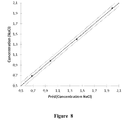
- Example 5 Use of ESRPs for the Prediction of Product Concentrations Models were constructed for the sour, bitter and salty flavors in order to obtain the prediction of the chemical characteristics of the stimuli in water. The aim is to demonstrate a direct link between physiological reactions and the chemical composition of water samples. The quality of each model obtained is presented in Table 7. ⁇ b> Table 7 ⁇ /b>: ⁇ i> Quality of the models for the prediction of the concentration of samples by type of taste, Partial least square type model. ⁇ /i> Type of taste Q 2 cum Acid 0.980 Bitter 0.920 Dirty 0.995
- the figure 8 illustrates the quality of prediction models for salty flavor by comparing the actual concentrations of the reference samples and their predicted concentrations.
Landscapes
- Health & Medical Sciences (AREA)
- Life Sciences & Earth Sciences (AREA)
- Engineering & Computer Science (AREA)
- Physics & Mathematics (AREA)
- Pathology (AREA)
- General Health & Medical Sciences (AREA)
- Heart & Thoracic Surgery (AREA)
- Biophysics (AREA)
- Biomedical Technology (AREA)
- Medical Informatics (AREA)
- Molecular Biology (AREA)
- Surgery (AREA)
- Animal Behavior & Ethology (AREA)
- Public Health (AREA)
- Veterinary Medicine (AREA)
- Psychiatry (AREA)
- Chemical & Material Sciences (AREA)
- Physiology (AREA)
- Artificial Intelligence (AREA)
- Psychology (AREA)
- Signal Processing (AREA)
- Neurosurgery (AREA)
- Computer Vision & Pattern Recognition (AREA)
- Immunology (AREA)
- General Physics & Mathematics (AREA)
- Biochemistry (AREA)
- Analytical Chemistry (AREA)
- Medicinal Chemistry (AREA)
- Food Science & Technology (AREA)
- Neurology (AREA)
- Child & Adolescent Psychology (AREA)
- Social Psychology (AREA)
- Mathematical Physics (AREA)
- Educational Technology (AREA)
- Developmental Disabilities (AREA)
- Hospice & Palliative Care (AREA)
- Evolutionary Computation (AREA)
- Fuzzy Systems (AREA)
- Investigating Or Analysing Biological Materials (AREA)
Claims (7)
- Verfahren zur Konstruktion eines für ein Individuum spezifischen sensorischen Raumes, umfassend:- Durchführung einer sensorischen Bewertung von mindestens vier Grundreizen, die für den von der Person zu untersuchenden Sinn repräsentativ sind, wobei die Reize eine Intensität haben, die weniger als das Dreifache der Intensität beträgt, die von dem zu untersuchenden Sinn erfasst werden kann,- Aufzeichnung von Signalen, die sich auf eine Vielzahl von physiologischen Indikatoren beziehen, die auf die Reize reagiert haben,- Extraktion von physiologischen Parametern aus den aufgezeichneten Signalen der physiologischen Indikatoren,- Identifizierung der unterscheidenden physiologischen Parameter der physiologischen Reaktionen durch statistische Verarbeitung,- Konstruktion eines auf der physiologischen Reaktion basierenden sensorischen Raums (ESRP) aus den durch statistische Verarbeitung identifizierten unterscheidenden physiologischen Parametern.
- Verfahren nach Anspruch 1, wobei die physiologischen Indikatoren aus Indikatoren des Zentralnervensystems und/oder des autonomen Nervensystems gewählt werden.
- Verfahren nach Anspruch 2, wobei der (die) physiologische(n) Indikator(en) des Zentralnervensystems die Aktivität des Zentralnervensystems ist (sind), die durch Elektroenzephalographie (EEG) oder funktionelle Nahinfrarotspektroskopie gemessen werden kann.
- Verfahren nach Anspruch 2, wobei der (die) physiologische(n) Indikator(en) des autonomen Nervensystems gewählt wird (werden) aus Herzfrequenz, elektrodermaler Reaktion, Hautmikrozirkulation, gustofazialem Reflex gemessen durch Elektromyographie, Pupillenreaktion, Atemreaktion, Hauttemperatur und Blutdruck.
- Verfahren nach einem der Ansprüche 1 bis 4, wobei die Identifizierung unterscheidender physiologischer Parameter durch mindestens eine statistische Analyse durchgeführt wird, die aus der Varianzanalyse (ANOVA), dem Pearson-Koeffizienten, der Hauptkomponentenanalyse (PCA), der Korrespondenzfaktoranalyse (CFA) oder Kombinationen davon gewählt wird.
- Verfahren zur sensorischen Analyse einer Probe, umfassend:- Konstruieren eines sensorischen Raums eines Individuums, wie in einem der Ansprüche 1 bis 5 definiert,- Auswerten der Probe durch das Individuum,- Aufzeichnen von Signalen, die sich auf mindestens einen physiologischen Indikator beziehen, der den unterscheidenden physiologischen Parametern entspricht, die zum Konstruieren des sensorischen Raums verwendet werden,- Extrahieren der unterscheidenden physiologischen Parameter aus der Probe,- Positionieren der Probe in dem sensorischen Raum auf der Basis der unterscheidenden physiologischen Parameter der Probe.
- Analyseverfahren nach Anspruch 6, dadurch gekennzeichnet, dass die zu analysierende Probe eine Trinkwasserprobe ist.
Applications Claiming Priority (2)
| Application Number | Priority Date | Filing Date | Title |
|---|---|---|---|
| FR1556350A FR3038216A1 (fr) | 2015-07-03 | 2015-07-03 | Methode de construction d'un espace sensoriel |
| PCT/FR2016/051672 WO2017006032A1 (fr) | 2015-07-03 | 2016-07-01 | Méthode de construction d'un espace sensoriel |
Publications (2)
| Publication Number | Publication Date |
|---|---|
| EP3316774A1 EP3316774A1 (de) | 2018-05-09 |
| EP3316774B1 true EP3316774B1 (de) | 2020-12-09 |
Family
ID=54199843
Family Applications (1)
| Application Number | Title | Priority Date | Filing Date |
|---|---|---|---|
| EP16742368.0A Not-in-force EP3316774B1 (de) | 2015-07-03 | 2016-07-01 | Verfahren zum aufbau eines sinnesraums |
Country Status (4)
| Country | Link |
|---|---|
| US (1) | US20180188224A1 (de) |
| EP (1) | EP3316774B1 (de) |
| FR (1) | FR3038216A1 (de) |
| WO (1) | WO2017006032A1 (de) |
Families Citing this family (3)
| Publication number | Priority date | Publication date | Assignee | Title |
|---|---|---|---|---|
| CN111579724B (zh) * | 2020-06-01 | 2022-07-12 | 中国标准化研究院 | 一种麻和辣阈上感觉敏感度快速分类方法、装置及应用 |
| JP7438410B2 (ja) * | 2020-09-30 | 2024-02-26 | フイルメニツヒ ソシエテ アノニム | フレグランス成分の空間認識性予測方法およびフレグランス組成物の空間認識性予測方法 |
| CN113303816A (zh) * | 2021-04-30 | 2021-08-27 | 浙江大学 | 一种基于面部表面肌电信号的味觉感知识别方法及系统 |
Family Cites Families (1)
| Publication number | Priority date | Publication date | Assignee | Title |
|---|---|---|---|---|
| US8392253B2 (en) * | 2007-05-16 | 2013-03-05 | The Nielsen Company (Us), Llc | Neuro-physiology and neuro-behavioral based stimulus targeting system |
-
2015
- 2015-07-03 FR FR1556350A patent/FR3038216A1/fr not_active Withdrawn
-
2016
- 2016-07-01 US US15/741,565 patent/US20180188224A1/en not_active Abandoned
- 2016-07-01 WO PCT/FR2016/051672 patent/WO2017006032A1/fr not_active Ceased
- 2016-07-01 EP EP16742368.0A patent/EP3316774B1/de not_active Not-in-force
Non-Patent Citations (1)
| Title |
|---|
| None * |
Also Published As
| Publication number | Publication date |
|---|---|
| EP3316774A1 (de) | 2018-05-09 |
| WO2017006032A1 (fr) | 2017-01-12 |
| FR3038216A1 (fr) | 2017-01-06 |
| US20180188224A1 (en) | 2018-07-05 |
Similar Documents
| Publication | Publication Date | Title |
|---|---|---|
| Hort et al. | Controlled continuous flow delivery system for investigating taste− aroma interactions | |
| Walsh et al. | Integrating implicit and explicit emotional assessment of food quality and safety concerns | |
| Luckett et al. | Crispness level of potato chips affects temporal dynamics of flavor perception and mastication patterns in adults of different age groups | |
| Vali et al. | Relationship between subjective halitosis and psychological factors | |
| Hannum et al. | Different olfactory percepts evoked by orthonasal and retronasal odorant delivery | |
| EP1898783B1 (de) | Elektrophysiologisches analysesystem und verfahren | |
| US20130060602A1 (en) | Systems and methods to determine impact of test subjects | |
| Wang et al. | Application of electroencephalogram (EEG) in the study of the influence of different contents of alcohol and Baijiu on brain perception | |
| Deneulin et al. | Evaluation of the Pivot Profile©, a new method to characterize a large variety of a single product: Case study on honeys from around the world | |
| CN117396587A (zh) | 用于改善放松状态的口腔护理香料和评估方法 | |
| Pfeiffer et al. | Taste-aroma interactions in a ternary system: A model of fruitiness perception in sucrose/acid solutions | |
| WO2017006032A1 (fr) | Méthode de construction d'un espace sensoriel | |
| Miyagi | Influence of Japanese consumer gender and age on sensory attributes and preference (a case study on deep‐fried peanuts) | |
| Menghi et al. | Arousal influences olfactory abilities in adults with different degree of food neophobia | |
| Zhao et al. | Unveiling brain response mechanisms of citrus flavor perception: An EEG-based study on sensory and cognitive responses | |
| JP4966790B2 (ja) | 香料の評価方法 | |
| Ke et al. | Unveiling the neurocognitive impact of food aroma molecules on pleasantness perception: insights from EEG and key brain LFT activation | |
| Angerosa et al. | Sensory quality: Methodologies and applications | |
| Wei et al. | The mechanism of β-ionone enhancing the sweet taste of phloridzin | |
| JP4673341B2 (ja) | 風味評価方法 | |
| Cleve et al. | Effects of roasting level and milk addition on in vivo aroma release and perception of coffee | |
| Koyuncu | Sensory Analysis Methods and Quality Characteristics of Foods | |
| Cain et al. | Independence of odor quality and absolute sensitivity in a study of aging | |
| Pokhrel et al. | Ethnicity and the mechanisms of point-of-sale e-cigarette marketing’s influence on behavior: A longitudinal study. | |
| Saito-Iizumi et al. | Ethylmaltol odor enhances salivary hemodynamic responses to sucrose taste as detected by near-infrared spectroscopy |
Legal Events
| Date | Code | Title | Description |
|---|---|---|---|
| STAA | Information on the status of an ep patent application or granted ep patent |
Free format text: STATUS: THE INTERNATIONAL PUBLICATION HAS BEEN MADE |
|
| PUAI | Public reference made under article 153(3) epc to a published international application that has entered the european phase |
Free format text: ORIGINAL CODE: 0009012 |
|
| STAA | Information on the status of an ep patent application or granted ep patent |
Free format text: STATUS: REQUEST FOR EXAMINATION WAS MADE |
|
| 17P | Request for examination filed |
Effective date: 20171221 |
|
| AK | Designated contracting states |
Kind code of ref document: A1 Designated state(s): AL AT BE BG CH CY CZ DE DK EE ES FI FR GB GR HR HU IE IS IT LI LT LU LV MC MK MT NL NO PL PT RO RS SE SI SK SM TR |
|
| AX | Request for extension of the european patent |
Extension state: BA ME |
|
| DAV | Request for validation of the european patent (deleted) | ||
| DAX | Request for extension of the european patent (deleted) | ||
| STAA | Information on the status of an ep patent application or granted ep patent |
Free format text: STATUS: EXAMINATION IS IN PROGRESS |
|
| 17Q | First examination report despatched |
Effective date: 20200213 |
|
| REG | Reference to a national code |
Ref country code: DE Ref legal event code: R079 Ref document number: 602016049426 Country of ref document: DE Free format text: PREVIOUS MAIN CLASS: A61B0005048400 Ipc: G06Q0030020000 |
|
| GRAP | Despatch of communication of intention to grant a patent |
Free format text: ORIGINAL CODE: EPIDOSNIGR1 |
|
| STAA | Information on the status of an ep patent application or granted ep patent |
Free format text: STATUS: GRANT OF PATENT IS INTENDED |
|
| RIC1 | Information provided on ipc code assigned before grant |
Ipc: A61B 5/02 20060101ALN20200820BHEP Ipc: A61B 5/0484 20060101ALI20200820BHEP Ipc: G06Q 30/02 20120101AFI20200820BHEP Ipc: A61B 5/053 20060101ALN20200820BHEP Ipc: A61B 5/00 20060101ALI20200820BHEP Ipc: A61B 5/0496 20060101ALN20200820BHEP Ipc: A61B 5/16 20060101ALI20200820BHEP Ipc: G01N 33/18 20060101ALI20200820BHEP |
|
| INTG | Intention to grant announced |
Effective date: 20200911 |
|
| GRAS | Grant fee paid |
Free format text: ORIGINAL CODE: EPIDOSNIGR3 |
|
| GRAA | (expected) grant |
Free format text: ORIGINAL CODE: 0009210 |
|
| STAA | Information on the status of an ep patent application or granted ep patent |
Free format text: STATUS: THE PATENT HAS BEEN GRANTED |
|
| AK | Designated contracting states |
Kind code of ref document: B1 Designated state(s): AL AT BE BG CH CY CZ DE DK EE ES FI FR GB GR HR HU IE IS IT LI LT LU LV MC MK MT NL NO PL PT RO RS SE SI SK SM TR |
|
| REG | Reference to a national code |
Ref country code: GB Ref legal event code: FG4D Free format text: NOT ENGLISH |
|
| REG | Reference to a national code |
Ref country code: AT Ref legal event code: REF Ref document number: 1344170 Country of ref document: AT Kind code of ref document: T Effective date: 20201215 Ref country code: CH Ref legal event code: EP |
|
| REG | Reference to a national code |
Ref country code: DE Ref legal event code: R096 Ref document number: 602016049426 Country of ref document: DE |
|
| REG | Reference to a national code |
Ref country code: IE Ref legal event code: FG4D Free format text: LANGUAGE OF EP DOCUMENT: FRENCH |
|
| PG25 | Lapsed in a contracting state [announced via postgrant information from national office to epo] |
Ref country code: NO Free format text: LAPSE BECAUSE OF FAILURE TO SUBMIT A TRANSLATION OF THE DESCRIPTION OR TO PAY THE FEE WITHIN THE PRESCRIBED TIME-LIMIT Effective date: 20210309 Ref country code: RS Free format text: LAPSE BECAUSE OF FAILURE TO SUBMIT A TRANSLATION OF THE DESCRIPTION OR TO PAY THE FEE WITHIN THE PRESCRIBED TIME-LIMIT Effective date: 20201209 Ref country code: FI Free format text: LAPSE BECAUSE OF FAILURE TO SUBMIT A TRANSLATION OF THE DESCRIPTION OR TO PAY THE FEE WITHIN THE PRESCRIBED TIME-LIMIT Effective date: 20201209 Ref country code: GR Free format text: LAPSE BECAUSE OF FAILURE TO SUBMIT A TRANSLATION OF THE DESCRIPTION OR TO PAY THE FEE WITHIN THE PRESCRIBED TIME-LIMIT Effective date: 20210310 |
|
| REG | Reference to a national code |
Ref country code: AT Ref legal event code: MK05 Ref document number: 1344170 Country of ref document: AT Kind code of ref document: T Effective date: 20201209 |
|
| PG25 | Lapsed in a contracting state [announced via postgrant information from national office to epo] |
Ref country code: SE Free format text: LAPSE BECAUSE OF FAILURE TO SUBMIT A TRANSLATION OF THE DESCRIPTION OR TO PAY THE FEE WITHIN THE PRESCRIBED TIME-LIMIT Effective date: 20201209 Ref country code: BG Free format text: LAPSE BECAUSE OF FAILURE TO SUBMIT A TRANSLATION OF THE DESCRIPTION OR TO PAY THE FEE WITHIN THE PRESCRIBED TIME-LIMIT Effective date: 20210309 Ref country code: LV Free format text: LAPSE BECAUSE OF FAILURE TO SUBMIT A TRANSLATION OF THE DESCRIPTION OR TO PAY THE FEE WITHIN THE PRESCRIBED TIME-LIMIT Effective date: 20201209 |
|
| REG | Reference to a national code |
Ref country code: NL Ref legal event code: MP Effective date: 20201209 |
|
| PG25 | Lapsed in a contracting state [announced via postgrant information from national office to epo] |
Ref country code: HR Free format text: LAPSE BECAUSE OF FAILURE TO SUBMIT A TRANSLATION OF THE DESCRIPTION OR TO PAY THE FEE WITHIN THE PRESCRIBED TIME-LIMIT Effective date: 20201209 Ref country code: NL Free format text: LAPSE BECAUSE OF FAILURE TO SUBMIT A TRANSLATION OF THE DESCRIPTION OR TO PAY THE FEE WITHIN THE PRESCRIBED TIME-LIMIT Effective date: 20201209 |
|
| REG | Reference to a national code |
Ref country code: LT Ref legal event code: MG9D |
|
| PG25 | Lapsed in a contracting state [announced via postgrant information from national office to epo] |
Ref country code: PT Free format text: LAPSE BECAUSE OF FAILURE TO SUBMIT A TRANSLATION OF THE DESCRIPTION OR TO PAY THE FEE WITHIN THE PRESCRIBED TIME-LIMIT Effective date: 20210409 Ref country code: RO Free format text: LAPSE BECAUSE OF FAILURE TO SUBMIT A TRANSLATION OF THE DESCRIPTION OR TO PAY THE FEE WITHIN THE PRESCRIBED TIME-LIMIT Effective date: 20201209 Ref country code: SK Free format text: LAPSE BECAUSE OF FAILURE TO SUBMIT A TRANSLATION OF THE DESCRIPTION OR TO PAY THE FEE WITHIN THE PRESCRIBED TIME-LIMIT Effective date: 20201209 Ref country code: EE Free format text: LAPSE BECAUSE OF FAILURE TO SUBMIT A TRANSLATION OF THE DESCRIPTION OR TO PAY THE FEE WITHIN THE PRESCRIBED TIME-LIMIT Effective date: 20201209 Ref country code: CZ Free format text: LAPSE BECAUSE OF FAILURE TO SUBMIT A TRANSLATION OF THE DESCRIPTION OR TO PAY THE FEE WITHIN THE PRESCRIBED TIME-LIMIT Effective date: 20201209 Ref country code: LT Free format text: LAPSE BECAUSE OF FAILURE TO SUBMIT A TRANSLATION OF THE DESCRIPTION OR TO PAY THE FEE WITHIN THE PRESCRIBED TIME-LIMIT Effective date: 20201209 Ref country code: SM Free format text: LAPSE BECAUSE OF FAILURE TO SUBMIT A TRANSLATION OF THE DESCRIPTION OR TO PAY THE FEE WITHIN THE PRESCRIBED TIME-LIMIT Effective date: 20201209 |
|
| PG25 | Lapsed in a contracting state [announced via postgrant information from national office to epo] |
Ref country code: AT Free format text: LAPSE BECAUSE OF FAILURE TO SUBMIT A TRANSLATION OF THE DESCRIPTION OR TO PAY THE FEE WITHIN THE PRESCRIBED TIME-LIMIT Effective date: 20201209 Ref country code: PL Free format text: LAPSE BECAUSE OF FAILURE TO SUBMIT A TRANSLATION OF THE DESCRIPTION OR TO PAY THE FEE WITHIN THE PRESCRIBED TIME-LIMIT Effective date: 20201209 |
|
| REG | Reference to a national code |
Ref country code: DE Ref legal event code: R097 Ref document number: 602016049426 Country of ref document: DE |
|
| PG25 | Lapsed in a contracting state [announced via postgrant information from national office to epo] |
Ref country code: IS Free format text: LAPSE BECAUSE OF FAILURE TO SUBMIT A TRANSLATION OF THE DESCRIPTION OR TO PAY THE FEE WITHIN THE PRESCRIBED TIME-LIMIT Effective date: 20210409 |
|
| PLBE | No opposition filed within time limit |
Free format text: ORIGINAL CODE: 0009261 |
|
| STAA | Information on the status of an ep patent application or granted ep patent |
Free format text: STATUS: NO OPPOSITION FILED WITHIN TIME LIMIT |
|
| PG25 | Lapsed in a contracting state [announced via postgrant information from national office to epo] |
Ref country code: IT Free format text: LAPSE BECAUSE OF FAILURE TO SUBMIT A TRANSLATION OF THE DESCRIPTION OR TO PAY THE FEE WITHIN THE PRESCRIBED TIME-LIMIT Effective date: 20201209 Ref country code: AL Free format text: LAPSE BECAUSE OF FAILURE TO SUBMIT A TRANSLATION OF THE DESCRIPTION OR TO PAY THE FEE WITHIN THE PRESCRIBED TIME-LIMIT Effective date: 20201209 |
|
| 26N | No opposition filed |
Effective date: 20210910 |
|
| PG25 | Lapsed in a contracting state [announced via postgrant information from national office to epo] |
Ref country code: DK Free format text: LAPSE BECAUSE OF FAILURE TO SUBMIT A TRANSLATION OF THE DESCRIPTION OR TO PAY THE FEE WITHIN THE PRESCRIBED TIME-LIMIT Effective date: 20201209 Ref country code: SI Free format text: LAPSE BECAUSE OF FAILURE TO SUBMIT A TRANSLATION OF THE DESCRIPTION OR TO PAY THE FEE WITHIN THE PRESCRIBED TIME-LIMIT Effective date: 20201209 |
|
| PG25 | Lapsed in a contracting state [announced via postgrant information from national office to epo] |
Ref country code: ES Free format text: LAPSE BECAUSE OF FAILURE TO SUBMIT A TRANSLATION OF THE DESCRIPTION OR TO PAY THE FEE WITHIN THE PRESCRIBED TIME-LIMIT Effective date: 20201209 |
|
| REG | Reference to a national code |
Ref country code: CH Ref legal event code: PL |
|
| PG25 | Lapsed in a contracting state [announced via postgrant information from national office to epo] |
Ref country code: MC Free format text: LAPSE BECAUSE OF FAILURE TO SUBMIT A TRANSLATION OF THE DESCRIPTION OR TO PAY THE FEE WITHIN THE PRESCRIBED TIME-LIMIT Effective date: 20201209 |
|
| REG | Reference to a national code |
Ref country code: BE Ref legal event code: MM Effective date: 20210731 |
|
| PG25 | Lapsed in a contracting state [announced via postgrant information from national office to epo] |
Ref country code: LI Free format text: LAPSE BECAUSE OF NON-PAYMENT OF DUE FEES Effective date: 20210731 Ref country code: CH Free format text: LAPSE BECAUSE OF NON-PAYMENT OF DUE FEES Effective date: 20210731 |
|
| PG25 | Lapsed in a contracting state [announced via postgrant information from national office to epo] |
Ref country code: IS Free format text: LAPSE BECAUSE OF FAILURE TO SUBMIT A TRANSLATION OF THE DESCRIPTION OR TO PAY THE FEE WITHIN THE PRESCRIBED TIME-LIMIT Effective date: 20210409 Ref country code: LU Free format text: LAPSE BECAUSE OF NON-PAYMENT OF DUE FEES Effective date: 20210701 |
|
| PG25 | Lapsed in a contracting state [announced via postgrant information from national office to epo] |
Ref country code: IE Free format text: LAPSE BECAUSE OF NON-PAYMENT OF DUE FEES Effective date: 20210701 Ref country code: BE Free format text: LAPSE BECAUSE OF NON-PAYMENT OF DUE FEES Effective date: 20210731 |
|
| PG25 | Lapsed in a contracting state [announced via postgrant information from national office to epo] |
Ref country code: HU Free format text: LAPSE BECAUSE OF FAILURE TO SUBMIT A TRANSLATION OF THE DESCRIPTION OR TO PAY THE FEE WITHIN THE PRESCRIBED TIME-LIMIT; INVALID AB INITIO Effective date: 20160701 |
|
| PG25 | Lapsed in a contracting state [announced via postgrant information from national office to epo] |
Ref country code: CY Free format text: LAPSE BECAUSE OF FAILURE TO SUBMIT A TRANSLATION OF THE DESCRIPTION OR TO PAY THE FEE WITHIN THE PRESCRIBED TIME-LIMIT Effective date: 20201209 |
|
| PGFP | Annual fee paid to national office [announced via postgrant information from national office to epo] |
Ref country code: FR Payment date: 20230517 Year of fee payment: 8 |
|
| PGFP | Annual fee paid to national office [announced via postgrant information from national office to epo] |
Ref country code: GB Payment date: 20230725 Year of fee payment: 8 |
|
| PGFP | Annual fee paid to national office [announced via postgrant information from national office to epo] |
Ref country code: DE Payment date: 20230712 Year of fee payment: 8 |
|
| PG25 | Lapsed in a contracting state [announced via postgrant information from national office to epo] |
Ref country code: MK Free format text: LAPSE BECAUSE OF FAILURE TO SUBMIT A TRANSLATION OF THE DESCRIPTION OR TO PAY THE FEE WITHIN THE PRESCRIBED TIME-LIMIT Effective date: 20201209 |
|
| PG25 | Lapsed in a contracting state [announced via postgrant information from national office to epo] |
Ref country code: TR Free format text: LAPSE BECAUSE OF FAILURE TO SUBMIT A TRANSLATION OF THE DESCRIPTION OR TO PAY THE FEE WITHIN THE PRESCRIBED TIME-LIMIT Effective date: 20201209 |
|
| PG25 | Lapsed in a contracting state [announced via postgrant information from national office to epo] |
Ref country code: MT Free format text: LAPSE BECAUSE OF FAILURE TO SUBMIT A TRANSLATION OF THE DESCRIPTION OR TO PAY THE FEE WITHIN THE PRESCRIBED TIME-LIMIT Effective date: 20201209 |
|
| REG | Reference to a national code |
Ref country code: DE Ref legal event code: R119 Ref document number: 602016049426 Country of ref document: DE |
|
| GBPC | Gb: european patent ceased through non-payment of renewal fee |
Effective date: 20240701 |
|
| PG25 | Lapsed in a contracting state [announced via postgrant information from national office to epo] |
Ref country code: DE Free format text: LAPSE BECAUSE OF NON-PAYMENT OF DUE FEES Effective date: 20250201 |
|
| PG25 | Lapsed in a contracting state [announced via postgrant information from national office to epo] |
Ref country code: FR Free format text: LAPSE BECAUSE OF NON-PAYMENT OF DUE FEES Effective date: 20240731 |
|
| PG25 | Lapsed in a contracting state [announced via postgrant information from national office to epo] |
Ref country code: GB Free format text: LAPSE BECAUSE OF NON-PAYMENT OF DUE FEES Effective date: 20240701 |