EP3315736B1 - Endothermer motor mit verbessertem verteilungssystem - Google Patents
Endothermer motor mit verbessertem verteilungssystem Download PDFInfo
- Publication number
- EP3315736B1 EP3315736B1 EP17198441.2A EP17198441A EP3315736B1 EP 3315736 B1 EP3315736 B1 EP 3315736B1 EP 17198441 A EP17198441 A EP 17198441A EP 3315736 B1 EP3315736 B1 EP 3315736B1
- Authority
- EP
- European Patent Office
- Prior art keywords
- main
- intake
- exhaust
- channel
- valve
- Prior art date
- Legal status (The legal status is an assumption and is not a legal conclusion. Google has not performed a legal analysis and makes no representation as to the accuracy of the status listed.)
- Active
Links
Images



Classifications
-
- F—MECHANICAL ENGINEERING; LIGHTING; HEATING; WEAPONS; BLASTING
- F01—MACHINES OR ENGINES IN GENERAL; ENGINE PLANTS IN GENERAL; STEAM ENGINES
- F01L—CYCLICALLY OPERATING VALVES FOR MACHINES OR ENGINES
- F01L1/00—Valve-gear or valve arrangements, e.g. lift-valve gear
- F01L1/44—Multiple-valve gear or arrangements, not provided for in preceding subgroups, e.g. with lift and different valves
- F01L1/443—Multiple-valve gear or arrangements, not provided for in preceding subgroups, e.g. with lift and different valves comprising a lift valve and at least one rotary valve
Definitions
- the present invention relates to an internal combustion engine and aims to improve one of the most critical aspects of any internal combustion engine for which a certain amount of air, i.e. volumetric/pumping efficiency, is necessary.
- the solution proposed in this patent has as its main scope high performance engines or high/very high-power engines where, for various reasons, both constructive and regulatory (as in the case of sporting applications), it is not possible to further increase the power delivered by means of known systems.
- the most commonly adopted technical solution (and at times imposed by the regulation itself, as in the case of F1) consists in the use of four valves per cylinder with a circular cross-section with alternate axial movement, actuated by a suitable distribution system that may be either a cam mechanism or, in more sophisticated cases, pneumatic, hydraulic or electrical.
- a suitable distribution system may be either a cam mechanism or, in more sophisticated cases, pneumatic, hydraulic or electrical.
- two valves are used for intake and two for exhaust.
- High-performance engines maximize the passage area by means of high-diameter, large “raised” valves with “aggressive” phasing (wide cross phase). This all clearly has physical and constructive limits determined by the space available on the engine head (bore of the cylinder) and the structural resistance of the valves themselves, especially at high engine rotation speeds, and thus at very high accelerations and inertias to which the same valves are subjected in the continuous inversions of rectilinear motion.
- the type, power and/or displacement of the endothermic engine are not relevant, even though, as described, the present invention is preferably, but not exclusively, for automotive, motorcycling or other disciplines involving the use of an endothermic engine.
- the endothermic engine 4 comprises at least one cylinder 8 which houses and drives, according to a reciprocating rectilinear motion, a piston 12 operatively connected to a drive shaft according to a connecting rod/crank mechanism 16, in a known manner.
- the cylinder 8 is provided with at least one first main intake valve 20 and at least one first main exhaust valve 24, each adapted to close the access to the cylinder 8 and inserted at least partially in a relevant first main manifold 28.
- the first main intake and exhaust valves 20, 24 are poppet valves, provided with reciprocating rectilinear motion. The actuation of said poppet valves is usually achieved by camshafts 32, in a known manner.
- At least one of said first main intake and/or exhaust valves 20,24 is fluidically connected to a first main manifold 28 that forks into an intake channel 36 intercepted by a secondary intake valve 40 and into an exhaust channel 44 intercepted by a secondary exhaust valve 48.
- the intake channel 36 is fluidically connected to an intake system of the engine (not shown) and the exhaust channel 44 is fluidically connected to an exhaust system of the engine (not shown).
- the intake channel 36 (or intake channels 36) and the exhaust channel 44 (or exhaust channels 44) may be shared, for example, by each cylinder bank of the engine.
- an intake system is typically an air duct that draws air from the outside environment and conducts it into the combustion chamber through said intake channel 36 of the first main manifold 28, after filtering the air.
- the filter may be placed, for example, in a suitable filter box upstream of the first main manifold 28.
- said exhaust system comprises one or more combustion gas collectors that are introduced into an expansion compartment which may, for example, contain one or more treatment devices for combustion gases prior to introducing them into the atmosphere.
- the combustion gas treatment may also be absent, for example, from vehicles intended for competitions.
- the secondary intake and exhaust valves 40,48 are kinematically connected in synchronism with the respective first main intake and/or exhaust valve 20,24 so as to cyclically allow the additional entry of air into the cylinder 8 through the intake channel 36, connected to the first main exhaust valve 24, at least partially simultaneously with the inlet of air from the first main intake valve 20, and/or to allow the additional exit of combustion gases from the cylinder 8 through the exhaust channel 44, connected to the first main intake valve 20, at least partially simultaneously with the exit of combustion gases through the first main exhaust valve 24.
- the present invention provides, as better described below, the possibility of using a secondary distribution, comprising the aforementioned intake and exhaust valves 40,48 upstream of the primary distribution comprising the intake and exhaust valves 20,24.
- DDP-A partial dual distribution intake system
- DDP-S partial dual distribution exhaust system
- DI full dual distribution system
- the first main intake valve 20 is fluidically connected to a main intake duct 52, while the first main exhaust valve 24 is fluidically connected to a first main manifold 28 that forks into an intake channel 36 intercepted by a secondary intake valve 40 and into an exhaust channel 44, intercepted by a secondary exhaust valve 48.
- Said secondary intake and exhaust valves 40,48 are kinematically connected in synchronism with the first main intake valve 20 so as to cyclically allow the additional entry of air in the cylinder 8 through the intake channel 36, at least partially simultaneously with the entry of air from the first main intake valve 20 through the main intake duct 52, and to allow the exit of combustion gases from the cylinder 8 through the exhaust channel 44.
- the first main exhaust valve 24 is fluidically connected to a second main manifold 56, while the first main exhaust valve 20 is fluidically connected to a first main manifold 28 that forks into an intake channel 36 intercepted by a secondary intake valve 40 and into an exhaust channel 44 intercepted by a secondary exhaust valve 48.
- Said secondary intake and exhaust valves 40,48 are kinematically connected in synchronism with the first main exhaust valve 24 so as to cyclically allow the additional exit of combustion gases from the cylinder 8 through the exhaust channel 44, at least partially simultaneously with the exit of combustion gases from the first main exhaust valve 24 through the second main manifold 56, and to allow the entry of air in the cylinder 8 through the intake channel 36.
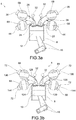
- the engine 4 comprises a full dual distribution system (DDI; figure 3 ) which provides for the use of first main manifolds 28 which engage at both the first main intake valve 20 and the first main exhaust valve 24, each of which forks into an intake channel 36 and into an exhaust channel 44. Therefore, each first main manifold 28 is capable by means of the respective intake and exhaust channels 36,44 to provide an additional inlet air flow and outlet flow for combustion gas with respect to the normal allowed flow of the intake and exhaust valves 20,24.
- DMI full dual distribution system
- a preferred embodiment provides for the application of the present invention to an engine having four valves per cylinder.
- the cylinder 8 is provided with at least one second main intake valve 120 and at least one second main exhaust valve 124, wherein at least one of said second main intake and/or exhaust valves 120, 124 is connected fluidically to a second main manifold 128 which is forked into a second intake channel 136 intercepted by a secondary intake valve 40 and into a second exhaust channel 144 intercepted by a secondary exhaust valve 48.
- the second intake channel 136 is fluidically connected to the intake system of the engine, along with the intake channel 36.
- the second exhaust channel 144 is fluidically connected to the exhaust system of the engine, along with the exhaust channel 44.
- said secondary intake and exhaust valves 40,48 are kinematically connected in synchronism with the respective second main intake 120 and/or exhaust 124 valve so as to cyclically allow the additional entry of air into the cylinder through the second intake channel 136, connected to the second main exhaust valve 124, at least partially simultaneously with the entry of air from the second main intake valve 120, and/or to allow the additional exit of combustion gases from the cylinder through the second exhaust channel 144, connected to the second main intake valve 120, at least partially simultaneously with the exit of combustion gases through the second main exhaust valve 124.
- the main valves are preferably poppet valves.
- the secondary intake and exhaust valves 40, 48 are preferably rotary valves.
- said rotary valves comprise a cylindrical or spherical body 60 defining an inner channel 64 rotating integrally with the body.
- Said inner channel 64 has a lumen 68 of a dimension similar to the lumen 72 of the intake channel 36,136 or the exhaust channel 44,144 within which the valve is inserted; in this way, during the rotation of the body 60, the inner channel 64 cyclically passes from an angular orientation where it is at least partially aligned with the related lumen 72 of the intake channel 36,136 or exhaust channel 44,144 at an angular orientation wherein it is totally misaligned with respect to the latter.
- the alignment even partial, is configured as the opening of the rotary valve and allows the incoming air or outgoing exhaust gas to pass through, while the full misalignment is configured as the closing of the rotary valve.
- outer diameter and the passage diameter of the rotary valves are suitably calibrated and calculated inasmuch as the closing or opening of the duct depends on their relative ratio.
- the system lends itself to being easily adopted in multi-cylinder engines simply by using a cylinder where the through-holes are properly rotated according to the respective crank angle.
- the rotary valves are not subject to strong pressures because the totality of the sealing work remains dependent on the main valves. Therefore, no particularly sophisticated seals are required.
- said rotary valves are controlled by a main distribution apparatus of the engine comprising at least one camshaft 32.
- a main distribution apparatus of the engine comprising at least one camshaft 32.
- the same camshaft or camshafts 32 control both the main valves 20, 120, 24, 124 and the secondary valves 40, 48.
- the secondary intake and exhaust valves 40, 48 are rotary valves actuated at the same rotational speed of at least one camshaft 32 which controls the actuation of the main valves.
- the rotation speed of the same could also be reduced to 1 ⁇ 2 of the camshaft's rotation speed.
- first and second main manifolds 28, 128 of each main valve 20, 120, 24, 124 are separated so that they do not provide any direct fluidic connection. This avoids the hold time of gas in a shared volume or buffer between the same ducts.
- the two main exhaust valves 24 may have a first common duct intercepted by the same secondary exhaust valves 48; only subsequently to such first common duct will the same duct fork into two branches that will each merge into a single valve.
- the secondary valves are positioned within the respective manifolds 28 so as to be away from the corresponding intake 20,120 and/or exhaust 24,124 valves at the minimum possible distance, compatible with the construction and cooling requirements.
- the secondary valves 40, 48 of a same first main manifold 28 are mutually phased so as to have a cross phase, i.e. at least a partial opening at the same time, so as to facilitate the emptying of the gases inside the same duct.
- the arrangement of exhaust ducts and phasing of the valves will be suitable in order to avoid that the passive cross phase (i.e. with the main valves closed) coincides with an active exhaust phase (i.e. with the main valves open) of another cylinder having a shared duct.
- the engine 4 comprises fuel injector devices (not shown) arranged downstream of said secondary intake valves 40.
- said injector devices are arranged so as to inject the fuel directly into the cylinder; in this way the problem is completely solved.
- phasing angles, the lifts and the opening/closing angles of the secondary valves are purely indicative and, in this context, serve solely to better define the operation of the present invention.
- figure 4 illustrates the beginning of the intake phase, coinciding with the end of the exhaust phase.
- the main valves are in the maximum lift state
- the secondary rotary intake valves are in the opening state (about 5 degrees)
- the secondary rotary exhaust valves are in the opening state (about 25 degrees).
- Figure 5 continues with the intake phase and reaches the end of the exhaust phase.
- the main valves are in maximum lift state, the secondary rotary intake valves are in opening state (about 25 degrees), while the secondary rotary exhaust valves are in closing state. It should be noted that, in the passage from the exhaust phase to the intake phase, the main valves have remained motionless in the open position, thus maximizing the passage area of the fluids.
- Figure 6 again illustrates the intake phase.
- the main valves are in maximum lift state and beginning of closure, the secondary rotary intake valves are in the maximum opening state (in other words, the respective inner channel is aligned parallel to the related intake duct in order to allow the maximum lumen of the air passage), while the secondary rotary exhaust valves are closed.
- the inner channel of a valve is not, even partially, aligned with the respective channel wherein the rotary valve is inserted.
- Figure 7 shows the end of the intake phase and the beginning of the compression phase.
- the main valves are closed, the secondary rotary intake valves are in the closing phase, open about 25 degrees; however, such position is irrelevant as the main valves are closed whereby the duct is fluidically separated from the cylinder.
- the secondary rotary exhaust valves are closed: also in this case their position is irrelevant.
- Figure 8 illustrates the end of the compression phase. The main valves are closed, the secondary rotary intake valves and the secondary rotary exhaust valves still have an irrelevant position.
- Figure 9 illustrates the end of the expansion phase coinciding with the beginning of the exhaust phase.
- the main valves are in the opening state, while the secondary rotary intake valves are in the closing state.
- the secondary rotary exhaust valves are instead in the opening state.
- Figure 10 shows the exhaust phase.
- the main valves are in the maximum lift state
- the secondary rotary intake valves are closed
- the secondary rotary exhaust valves are in the maximum opening state.
- figure 11 shows the end of the exhaust phase.
- the main valves are in the maximum lift state, the secondary rotary intake valves are in the opening state, while the secondary rotary exhaust valves are in the closing state (approximately 25 degrees).
- DDP-A partial dual distribution intake
- DDP -S exhaust
- the endothermic engine according to the invention overcomes the disadvantages of the prior art.
- the endothermic engine allows the improvement of the volumetric and pumping efficiency with respect to the prior art solutions.
- DDP-A partial dual distribution intake system
- DDP-S partial dual distribution exhaust system
- DDP-A only volumetric efficiency is increased: this improvement is certainly notable and useful in case of use on aspirated engines, i.e. not supercharged.
- the partial dual distribution intake system (DDP-A), with respect to the full dual distribution system (DDI), has greater constructive simplicity, is lighter, and is suitable, as is seen in aspirated engines as well as in those cases where the exhaust outlet of the engine is constrained by constructive or regulatory requirements.
- DDP-S partial dual distribution exhaust system
- the partial dual distribution exhaust system (DDP-S), with respect to the full dual distribution system (DDI), has greater constructive simplicity, is lighter, and is suitable, as seen in turbocharged engines.
Landscapes
- Engineering & Computer Science (AREA)
- Mechanical Engineering (AREA)
- General Engineering & Computer Science (AREA)
- Output Control And Ontrol Of Special Type Engine (AREA)
Claims (13)
- Ein endothermer Motor (4), der Folgendes umfasst:- mindestens einen Zylinder (8), der, gemäß einer hin- und hergehenden geradlinigen Bewegung, einen Kolben (12) aufnimmt und führt, der gemäß eines Verbindungsstangen- / Kurbel-Mechanismus' (16) funktionsfähig mit einer Antriebswelle verbunden ist, wobei der Zylinder (8) mit mindestens einem ersten Haupteinlassventil (20) versehen ist, das mit einem ersten Hauptverteiler (28) fluidisch verbunden ist, und mindestens einem ersten Hauptauslassventil (24), das mit einem zweiten Hauptverteiler (56) fluidisch verbunden ist,
wobei
mindestens einer der Hauptverteiler eins und zwei (28, 56) in einen Einlasskanal (36) und in einen Auslasskanal (44) abzweigt,- wobei der Einlasskanal (36) mit einem Einlasssystem des Motors (4) fluidisch verbunden ist, und der Auslasskanal (44) mit einem Auslasssystem des Motors (4) fluidisch verbunden ist,
dadurch gekennzeichnet, dass
der Einlasskanal (36) durch ein sekundäres Einlassventil (40) unterbrochen wird (intercepted) und der Auslasskanal (44) durch ein sekundäres Auslassventil (48) unterbrochen wird,- wobei die genannten sekundären Ventile für Einlass- und Auslass (40, 48) kinematisch synchron mit dem jeweiligen ersten Haupteinlass- und/oder Auslassventil (20, 24) verbunden sind, um zyklisch Folgendes zu ermöglichen:- den zusätzlichen Lufteintritt in den Zylinder (8) durch den Einlasskanal (36), der mit dem genannten ersten Hauptauslassventil (24) verbunden ist, zumindest teilweise gleichzeitig mit dem Lufteintritt aus dem genannten ersten Haupteinlassventil (20), und/oder um Folgendes zu ermöglichen:- den zusätzlichen Auslass von Verbrennungsgasen aus dem Zylinder (8) durch den Auslasskanal (44), der mit dem genannten ersten Haupteinlassventil (20) verbunden ist, zumindest teilweise gleichzeitig mit dem Auslass von Verbrennungsgasen durch das genannte erste Hauptauslassventil (24). - Der endotherme Motor (4) nach Anspruch 1, wobei das erste Haupteinlassventil (20) mit einem Haupteinlasskanal (52) fluidisch verbunden ist, wobei das erste Hauptauslassventil (24) mit einem ersten Hauptverteiler (28) fluidisch verbunden ist, der in einen Einlasskanal (36) zweigt, der von einem sekundären Einlassventil (40) unterbrochen wird, und in einen Auslasskanal (44), der von einem sekundären Auslassventil (48) unterbrochen wird,- wobei die genannten Ventile für Einlass- und Auslass (40, 48) kinematisch synchron mit dem ersten Haupteinlassventil (20) verbunden sind, um zyklisch den zusätzlichen Eintritt von Luft in den Zylinder (8) durch den Einlasskanal (36) zu ermöglichen, zumindest teilweise gleichzeitig mit dem Eintritt von Luft aus dem ersten Haupteinlassventil (20) durch den Haupteinlasskanal (52), und um den Austritt von Verbrennungsgasen aus dem Zylinder (8) durch den Auslasskanal (44) zu ermöglichen.
- Der endotherme Motor (4) nach Anspruch 1 oder 2,
wobei das erste Hauptauslassventil (24) mit einem zweiten Hauptverteiler (56) fluidisch verbunden ist, wobei das erste Haupteinlassventil (20) mit einem ersten Hauptverteiler (28) fluidisch verbunden ist, der in einen Einlasskanal (36) abzweigt, der von einem sekundären Einlassventil (40) unterbrochenen wird, und in einen Auslasskanal (44) abzweigt, der von einem sekundären Auslassventil (48) unterbrochen wird,- wobei die genannten sekundären Ventile für Einlass- und Auslass (40, 48) kinematisch synchron mit dem ersten Hauptauslassventil (24) verbunden sind, um zyklisch den zusätzlichen Auslass von Verbrennungsgasen aus dem Zylinder (8) durch den Auslasskanal (44), zumindest teilweise gleichzeitig mit dem Austritt von Verbrennungsgasen aus dem ersten Hauptauslassventil (24) durch den zweiten Hauptverteiler (56), zu ermöglichen und den Eintritt von Luft in den Zylinder (8) durch den Einlasskanal (36) zu ermöglichen. - Der endotherme Motor (4) nach irgendeinem der vorstehenden Ansprüche, wobei der Zylinder (8) mit mindestens einem zweiten Haupteinlassventil (120) und mindestens einem zweiten Hauptauslassventil (124) versehen ist,
dadurch gekennzeichnet, dass- mindestens eines der genannten zweiten Ventile für Einlass- und Auslass (120, 124) fluidisch mit einem zweiten Hauptverteiler (128) verbunden ist, der in einen zweiten Einlasskanal (136) abzweigt, der von einem sekundären Einlassventil (40) unterbrochen wird, und in einen zweiten Auslasskanal (144) abzweigt, der von einem sekundären Auslassventil (148) unterbrochen wird,- wobei der zweite Einlasskanal (136) mit einem Einlasssystem des Motors (4) fluidisch verbunden ist und der Auslasskanal mit einem Auslasssystem des Motors (4) fluidisch verbunden ist,- wobei die genannten sekundären Ventile für Einlass- und Auslass (40, 48) kinematisch synchron mit dem jeweiligen zweiten Haupteinlass- (120) und/oder Auslassventil (124) verbunden sind, um zyklisch den zusätzlichen Eintritt von Luft in den Zylinder (8) durch den zweiten Einlasskanal (136) zu ermöglichen, der mit dem zweiten Hauptauslassventil (124) verbunden ist, zumindest teilweise gleichzeitig mit dem Lufteintritt aus dem zweiten Haupteinlassventil (120), und/oder um den zusätzlichen Austritt von Verbrennungsgasen aus dem Zylinder (8) durch den zweiten Auslasskanal (144) zu ermöglichen, der mit dem zweiten Haupteinlassventil (120) verbunden ist, zumindest teilweise gleichzeitig mit dem Auslass von Verbrennungsgasen durch das zweite Hauptauslassventil (124). - Der endotherme Motor (4) nach irgendeinem der vorstehenden Ansprüche, wobei die Hauptventile (20, 120, 24, 124) Tellerventile (poppet valves) sind, die mit einer hin- und hergehenden geradlinigen Bewegung versehen sind, und wobei die Sekundärventile (40, 48) Drehventile sind.
- Der endotherme Motor (4) nach Anspruch 5, wobei die genannten Drehventile (40, 48) durch eine Hauptverteilungsvorrichtung des Motors (4) gesteuert werden, die mindestens eine Nockenwelle (32) umfasst.
- Der endotherme Motor (4) nach Anspruch 5 oder 6,
wobei die genannten Drehventile (40, 48) einen zylindrischen oder kugelförmigen Körper (60) umfassen, der einen internen Kanal (64) begrenzt, der sich integral mit dem Körper (60) dreht, wobei der genannte interne Kanal (64) ein Lumen (68) mit einer ähnlichen Abmessung wie das Lumen (72) des Einlass- (36, 136) oder Auslasskanals (44, 144) aufweist, in den das Ventil eingesetzt ist, sodass während der Drehung des Körpers (60) der interne Kanal (64) zyklisch von einer Winkelorientierung, bei der er zumindest teilweise mit dem jeweiligen Lumen (72) des Einlass- (36, 136) oder Auslasskanals (44, 144) ausgerichtet ist, zu einer Winkelorientierung übergeht, bei der er in Bezug auf Letztere völlig fehlausgerichtet ist. - Der endotherme Motor (4) nach irgendeinem der vorstehenden Ansprüche, bei dem alle Hauptventile (20, 120, 24, 124) und sekundären Ventile (40, 48) für die jeweilige Betätigung mechanisch mit derselben Hauptverteilungsvorrichtung verbunden sind.
- Der endotherme Motor (4) nach irgendeinem der vorstehenden Ansprüche, wobei die sekundären Ventile (40, 48) Drehventile sind, die mit der gleichen Drehgeschwindigkeit oder mit der ½ Drehgeschwindigkeit von mindestens einer Nockenwelle (32) angetrieben werden, die die Betätigung der Hauptventile (20, 120, 24, 124) steuert.
- Der endotherme Motor (4) nach irgendeinem der vorstehenden Ansprüche, wobei die ersten Hauptverteiler (28) jedes Hauptventils (20, 120, 24, 124) voneinander getrennt sind, um keine direkte fluidische Verbindung herzustellen.
- Der endotherme Motor (4) nach irgendeinem der vorstehenden Ansprüche, wobei die sekundären Ventile (40, 48) eines selben ersten Hauptverteilers (28) zueinander auf geeignete Weise phasenverschoben sind, um die Entleerung der Gase innerhalb des ersten Hauptverteilers (28) selbst zu erleichtern.
- Der endotherme Motor (4) nach irgendeinem der vorstehenden Ansprüche, wobei die sekundären Ventile (40, 48) so phasenversetzt sind, dass sie eine sich überschneidende Phase (intersection phase), d.h. eine zumindest teilweise gleichzeitige Öffnung, bilden.
- Der endotherme Motor (4) nach irgendeinem der vorstehenden Ansprüche, wobei der Motor (4) Kraftstoffeinspritzvorrichtungen umfasst, die so angeordnet sind, dass sie den Kraftstoff direkt in den Zylinder (8) einspritzen.
Applications Claiming Priority (1)
| Application Number | Priority Date | Filing Date | Title |
|---|---|---|---|
| IT102016000108158A IT201600108158A1 (it) | 2016-10-26 | 2016-10-26 | Motore endotermico con impianto di distribuzione migliorato |
Publications (2)
| Publication Number | Publication Date |
|---|---|
| EP3315736A1 EP3315736A1 (de) | 2018-05-02 |
| EP3315736B1 true EP3315736B1 (de) | 2019-12-18 |
Family
ID=58054451
Family Applications (1)
| Application Number | Title | Priority Date | Filing Date |
|---|---|---|---|
| EP17198441.2A Active EP3315736B1 (de) | 2016-10-26 | 2017-10-26 | Endothermer motor mit verbessertem verteilungssystem |
Country Status (2)
| Country | Link |
|---|---|
| EP (1) | EP3315736B1 (de) |
| IT (1) | IT201600108158A1 (de) |
Families Citing this family (2)
| Publication number | Priority date | Publication date | Assignee | Title |
|---|---|---|---|---|
| CN114033582B (zh) * | 2021-11-12 | 2023-02-03 | 中船动力研究院有限公司 | 一种燃气、透气分配装置及船舶 |
| CN114720141B (zh) * | 2021-12-31 | 2024-10-18 | 中国航发沈阳发动机研究所 | 一种飞机发动机进气道吸入高温气流的试验装置 |
Family Cites Families (3)
| Publication number | Priority date | Publication date | Assignee | Title |
|---|---|---|---|---|
| GB191220861A (en) * | 1912-09-13 | 1913-06-26 | Herbert Lindley | Improvements in Valves and Valves-gear for Internal Combustion Engines. |
| US1951759A (en) * | 1931-11-16 | 1934-03-20 | Keister James | Internal combustion engine |
| FR2764937A1 (fr) * | 1997-06-20 | 1998-12-24 | Philippe Jean Claude Jaouen | Dispositif pour doubler le nombre de soupapes utiles d'un moteur a quatre temps |
-
2016
- 2016-10-26 IT IT102016000108158A patent/IT201600108158A1/it unknown
-
2017
- 2017-10-26 EP EP17198441.2A patent/EP3315736B1/de active Active
Non-Patent Citations (1)
| Title |
|---|
| None * |
Also Published As
| Publication number | Publication date |
|---|---|
| IT201600108158A1 (it) | 2018-04-26 |
| EP3315736A1 (de) | 2018-05-02 |
Similar Documents
| Publication | Publication Date | Title |
|---|---|---|
| EP2640934B1 (de) | Zweitakt-gegenlaufverbrennungsmotor mit entspannung der kompression zur motorbremsung | |
| US8256402B2 (en) | Exhaust passage structure of multi-cylinder engine | |
| EP2119888B1 (de) | Parallel-sequentielle Turboladerarchitektur unter Verwendung eines Motorzylinderventiltriebs mit variablem Ventilhub | |
| US8677749B2 (en) | Exhaust system for an internal combustion engine | |
| US8627659B2 (en) | Engine assembly including exhaust port separation for turbine feed | |
| US8714121B2 (en) | Split-cycle air hybrid V-engine | |
| US5749337A (en) | Barrel type internal combustion engine | |
| US20120090320A1 (en) | Turbocharged Combustion System | |
| US9121338B1 (en) | Two-stage turbocharger system for internal combustion engines featuring cylinder deactivation | |
| US20110041491A1 (en) | Heat engine with external hot source | |
| CN106168147B (zh) | 内燃发动机和发动机系统 | |
| US8925526B2 (en) | Internal combustion engine and method of operating such engine | |
| RU2638901C2 (ru) | Двигатель внутреннего сгорания с наддувом и способ работы двигателя внутреннего сгорания с наддувом | |
| US5778833A (en) | Water vehicle having a "V" shaped multi-cylinder crankcase scavenging engine | |
| CN104879208A (zh) | 用于带有停缸特征的涡轮增压内燃机的可变双涡管涡轮机 | |
| US5056472A (en) | 4-cycle 12-cylinder engine | |
| US6736100B2 (en) | Compact tuned air induction system for engine | |
| EP3315736B1 (de) | Endothermer motor mit verbessertem verteilungssystem | |
| US9784169B2 (en) | Two-port integrated exhaust manifold for an internal combustion engine having three cylinders | |
| CN103184950A (zh) | 多汽缸内燃发动机和运行这样的多汽缸内燃发动机的方法 | |
| US5027753A (en) | Intake system of multi-cylinder internal combustion engine | |
| US9689326B2 (en) | Exhaust gas recirculation system with paired cylinders | |
| US20070215078A1 (en) | Methods and apparatus to use engine valves as both intake and exhaust valves | |
| US8616173B2 (en) | Engine assembly including modified intake port arrangement | |
| AU2008201574B2 (en) | "Martin" cross-flow, 4 stroke side-valve engine |
Legal Events
| Date | Code | Title | Description |
|---|---|---|---|
| PUAI | Public reference made under article 153(3) epc to a published international application that has entered the european phase |
Free format text: ORIGINAL CODE: 0009012 |
|
| STAA | Information on the status of an ep patent application or granted ep patent |
Free format text: STATUS: THE APPLICATION HAS BEEN PUBLISHED |
|
| AK | Designated contracting states |
Kind code of ref document: A1 Designated state(s): AL AT BE BG CH CY CZ DE DK EE ES FI FR GB GR HR HU IE IS IT LI LT LU LV MC MK MT NL NO PL PT RO RS SE SI SK SM TR |
|
| AX | Request for extension of the european patent |
Extension state: BA ME |
|
| STAA | Information on the status of an ep patent application or granted ep patent |
Free format text: STATUS: REQUEST FOR EXAMINATION WAS MADE |
|
| 17P | Request for examination filed |
Effective date: 20181031 |
|
| RBV | Designated contracting states (corrected) |
Designated state(s): AL AT BE BG CH CY CZ DE DK EE ES FI FR GB GR HR HU IE IS IT LI LT LU LV MC MK MT NL NO PL PT RO RS SE SI SK SM TR |
|
| STAA | Information on the status of an ep patent application or granted ep patent |
Free format text: STATUS: EXAMINATION IS IN PROGRESS |
|
| 17Q | First examination report despatched |
Effective date: 20190218 |
|
| GRAJ | Information related to disapproval of communication of intention to grant by the applicant or resumption of examination proceedings by the epo deleted |
Free format text: ORIGINAL CODE: EPIDOSDIGR1 |
|
| STAA | Information on the status of an ep patent application or granted ep patent |
Free format text: STATUS: GRANT OF PATENT IS INTENDED |
|
| GRAP | Despatch of communication of intention to grant a patent |
Free format text: ORIGINAL CODE: EPIDOSNIGR1 |
|
| INTG | Intention to grant announced |
Effective date: 20190723 |
|
| RAP1 | Party data changed (applicant data changed or rights of an application transferred) |
Owner name: CROSETTA, LUCA |
|
| RIN1 | Information on inventor provided before grant (corrected) |
Inventor name: CROSETTA, LUCA |
|
| GRAS | Grant fee paid |
Free format text: ORIGINAL CODE: EPIDOSNIGR3 |
|
| GRAA | (expected) grant |
Free format text: ORIGINAL CODE: 0009210 |
|
| STAA | Information on the status of an ep patent application or granted ep patent |
Free format text: STATUS: THE PATENT HAS BEEN GRANTED |
|
| AK | Designated contracting states |
Kind code of ref document: B1 Designated state(s): AL AT BE BG CH CY CZ DE DK EE ES FI FR GB GR HR HU IE IS IT LI LT LU LV MC MK MT NL NO PL PT RO RS SE SI SK SM TR |
|
| REG | Reference to a national code |
Ref country code: CH Ref legal event code: EP |
|
| REG | Reference to a national code |
Ref country code: IE Ref legal event code: FG4D |
|
| REG | Reference to a national code |
Ref country code: DE Ref legal event code: R096 Ref document number: 602017009820 Country of ref document: DE |
|
| REG | Reference to a national code |
Ref country code: AT Ref legal event code: REF Ref document number: 1214837 Country of ref document: AT Kind code of ref document: T Effective date: 20200115 |
|
| REG | Reference to a national code |
Ref country code: NL Ref legal event code: MP Effective date: 20191218 |
|
| PG25 | Lapsed in a contracting state [announced via postgrant information from national office to epo] |
Ref country code: LT Free format text: LAPSE BECAUSE OF FAILURE TO SUBMIT A TRANSLATION OF THE DESCRIPTION OR TO PAY THE FEE WITHIN THE PRESCRIBED TIME-LIMIT Effective date: 20191218 Ref country code: GR Free format text: LAPSE BECAUSE OF FAILURE TO SUBMIT A TRANSLATION OF THE DESCRIPTION OR TO PAY THE FEE WITHIN THE PRESCRIBED TIME-LIMIT Effective date: 20200319 Ref country code: BG Free format text: LAPSE BECAUSE OF FAILURE TO SUBMIT A TRANSLATION OF THE DESCRIPTION OR TO PAY THE FEE WITHIN THE PRESCRIBED TIME-LIMIT Effective date: 20200318 Ref country code: FI Free format text: LAPSE BECAUSE OF FAILURE TO SUBMIT A TRANSLATION OF THE DESCRIPTION OR TO PAY THE FEE WITHIN THE PRESCRIBED TIME-LIMIT Effective date: 20191218 Ref country code: NO Free format text: LAPSE BECAUSE OF FAILURE TO SUBMIT A TRANSLATION OF THE DESCRIPTION OR TO PAY THE FEE WITHIN THE PRESCRIBED TIME-LIMIT Effective date: 20200318 Ref country code: LV Free format text: LAPSE BECAUSE OF FAILURE TO SUBMIT A TRANSLATION OF THE DESCRIPTION OR TO PAY THE FEE WITHIN THE PRESCRIBED TIME-LIMIT Effective date: 20191218 Ref country code: SE Free format text: LAPSE BECAUSE OF FAILURE TO SUBMIT A TRANSLATION OF THE DESCRIPTION OR TO PAY THE FEE WITHIN THE PRESCRIBED TIME-LIMIT Effective date: 20191218 |
|
| REG | Reference to a national code |
Ref country code: LT Ref legal event code: MG4D |
|
| PG25 | Lapsed in a contracting state [announced via postgrant information from national office to epo] |
Ref country code: RS Free format text: LAPSE BECAUSE OF FAILURE TO SUBMIT A TRANSLATION OF THE DESCRIPTION OR TO PAY THE FEE WITHIN THE PRESCRIBED TIME-LIMIT Effective date: 20191218 Ref country code: HR Free format text: LAPSE BECAUSE OF FAILURE TO SUBMIT A TRANSLATION OF THE DESCRIPTION OR TO PAY THE FEE WITHIN THE PRESCRIBED TIME-LIMIT Effective date: 20191218 |
|
| PG25 | Lapsed in a contracting state [announced via postgrant information from national office to epo] |
Ref country code: AL Free format text: LAPSE BECAUSE OF FAILURE TO SUBMIT A TRANSLATION OF THE DESCRIPTION OR TO PAY THE FEE WITHIN THE PRESCRIBED TIME-LIMIT Effective date: 20191218 |
|
| PG25 | Lapsed in a contracting state [announced via postgrant information from national office to epo] |
Ref country code: EE Free format text: LAPSE BECAUSE OF FAILURE TO SUBMIT A TRANSLATION OF THE DESCRIPTION OR TO PAY THE FEE WITHIN THE PRESCRIBED TIME-LIMIT Effective date: 20191218 Ref country code: NL Free format text: LAPSE BECAUSE OF FAILURE TO SUBMIT A TRANSLATION OF THE DESCRIPTION OR TO PAY THE FEE WITHIN THE PRESCRIBED TIME-LIMIT Effective date: 20191218 Ref country code: CZ Free format text: LAPSE BECAUSE OF FAILURE TO SUBMIT A TRANSLATION OF THE DESCRIPTION OR TO PAY THE FEE WITHIN THE PRESCRIBED TIME-LIMIT Effective date: 20191218 Ref country code: PT Free format text: LAPSE BECAUSE OF FAILURE TO SUBMIT A TRANSLATION OF THE DESCRIPTION OR TO PAY THE FEE WITHIN THE PRESCRIBED TIME-LIMIT Effective date: 20200513 Ref country code: RO Free format text: LAPSE BECAUSE OF FAILURE TO SUBMIT A TRANSLATION OF THE DESCRIPTION OR TO PAY THE FEE WITHIN THE PRESCRIBED TIME-LIMIT Effective date: 20191218 |
|
| PG25 | Lapsed in a contracting state [announced via postgrant information from national office to epo] |
Ref country code: IS Free format text: LAPSE BECAUSE OF FAILURE TO SUBMIT A TRANSLATION OF THE DESCRIPTION OR TO PAY THE FEE WITHIN THE PRESCRIBED TIME-LIMIT Effective date: 20200418 Ref country code: SK Free format text: LAPSE BECAUSE OF FAILURE TO SUBMIT A TRANSLATION OF THE DESCRIPTION OR TO PAY THE FEE WITHIN THE PRESCRIBED TIME-LIMIT Effective date: 20191218 Ref country code: SM Free format text: LAPSE BECAUSE OF FAILURE TO SUBMIT A TRANSLATION OF THE DESCRIPTION OR TO PAY THE FEE WITHIN THE PRESCRIBED TIME-LIMIT Effective date: 20191218 |
|
| REG | Reference to a national code |
Ref country code: DE Ref legal event code: R097 Ref document number: 602017009820 Country of ref document: DE |
|
| REG | Reference to a national code |
Ref country code: AT Ref legal event code: MK05 Ref document number: 1214837 Country of ref document: AT Kind code of ref document: T Effective date: 20191218 |
|
| PLBE | No opposition filed within time limit |
Free format text: ORIGINAL CODE: 0009261 |
|
| STAA | Information on the status of an ep patent application or granted ep patent |
Free format text: STATUS: NO OPPOSITION FILED WITHIN TIME LIMIT |
|
| PG25 | Lapsed in a contracting state [announced via postgrant information from national office to epo] |
Ref country code: ES Free format text: LAPSE BECAUSE OF FAILURE TO SUBMIT A TRANSLATION OF THE DESCRIPTION OR TO PAY THE FEE WITHIN THE PRESCRIBED TIME-LIMIT Effective date: 20191218 Ref country code: DK Free format text: LAPSE BECAUSE OF FAILURE TO SUBMIT A TRANSLATION OF THE DESCRIPTION OR TO PAY THE FEE WITHIN THE PRESCRIBED TIME-LIMIT Effective date: 20191218 |
|
| 26N | No opposition filed |
Effective date: 20200921 |
|
| PG25 | Lapsed in a contracting state [announced via postgrant information from national office to epo] |
Ref country code: SI Free format text: LAPSE BECAUSE OF FAILURE TO SUBMIT A TRANSLATION OF THE DESCRIPTION OR TO PAY THE FEE WITHIN THE PRESCRIBED TIME-LIMIT Effective date: 20191218 Ref country code: AT Free format text: LAPSE BECAUSE OF FAILURE TO SUBMIT A TRANSLATION OF THE DESCRIPTION OR TO PAY THE FEE WITHIN THE PRESCRIBED TIME-LIMIT Effective date: 20191218 |
|
| PG25 | Lapsed in a contracting state [announced via postgrant information from national office to epo] |
Ref country code: IT Free format text: LAPSE BECAUSE OF FAILURE TO SUBMIT A TRANSLATION OF THE DESCRIPTION OR TO PAY THE FEE WITHIN THE PRESCRIBED TIME-LIMIT Effective date: 20191218 |
|
| PG25 | Lapsed in a contracting state [announced via postgrant information from national office to epo] |
Ref country code: PL Free format text: LAPSE BECAUSE OF FAILURE TO SUBMIT A TRANSLATION OF THE DESCRIPTION OR TO PAY THE FEE WITHIN THE PRESCRIBED TIME-LIMIT Effective date: 20191218 |
|
| REG | Reference to a national code |
Ref country code: CH Ref legal event code: PL |
|
| PG25 | Lapsed in a contracting state [announced via postgrant information from national office to epo] |
Ref country code: LU Free format text: LAPSE BECAUSE OF NON-PAYMENT OF DUE FEES Effective date: 20201026 Ref country code: MC Free format text: LAPSE BECAUSE OF FAILURE TO SUBMIT A TRANSLATION OF THE DESCRIPTION OR TO PAY THE FEE WITHIN THE PRESCRIBED TIME-LIMIT Effective date: 20191218 |
|
| REG | Reference to a national code |
Ref country code: BE Ref legal event code: MM Effective date: 20201031 |
|
| PG25 | Lapsed in a contracting state [announced via postgrant information from national office to epo] |
Ref country code: BE Free format text: LAPSE BECAUSE OF NON-PAYMENT OF DUE FEES Effective date: 20201031 Ref country code: CH Free format text: LAPSE BECAUSE OF NON-PAYMENT OF DUE FEES Effective date: 20201031 Ref country code: LI Free format text: LAPSE BECAUSE OF NON-PAYMENT OF DUE FEES Effective date: 20201031 |
|
| PG25 | Lapsed in a contracting state [announced via postgrant information from national office to epo] |
Ref country code: IE Free format text: LAPSE BECAUSE OF NON-PAYMENT OF DUE FEES Effective date: 20201026 |
|
| PG25 | Lapsed in a contracting state [announced via postgrant information from national office to epo] |
Ref country code: TR Free format text: LAPSE BECAUSE OF FAILURE TO SUBMIT A TRANSLATION OF THE DESCRIPTION OR TO PAY THE FEE WITHIN THE PRESCRIBED TIME-LIMIT Effective date: 20191218 Ref country code: MT Free format text: LAPSE BECAUSE OF FAILURE TO SUBMIT A TRANSLATION OF THE DESCRIPTION OR TO PAY THE FEE WITHIN THE PRESCRIBED TIME-LIMIT Effective date: 20191218 Ref country code: CY Free format text: LAPSE BECAUSE OF FAILURE TO SUBMIT A TRANSLATION OF THE DESCRIPTION OR TO PAY THE FEE WITHIN THE PRESCRIBED TIME-LIMIT Effective date: 20191218 |
|
| PG25 | Lapsed in a contracting state [announced via postgrant information from national office to epo] |
Ref country code: MK Free format text: LAPSE BECAUSE OF FAILURE TO SUBMIT A TRANSLATION OF THE DESCRIPTION OR TO PAY THE FEE WITHIN THE PRESCRIBED TIME-LIMIT Effective date: 20191218 |
|
| PGFP | Annual fee paid to national office [announced via postgrant information from national office to epo] |
Ref country code: FR Payment date: 20221020 Year of fee payment: 6 |
|
| PG25 | Lapsed in a contracting state [announced via postgrant information from national office to epo] |
Ref country code: FR Free format text: LAPSE BECAUSE OF NON-PAYMENT OF DUE FEES Effective date: 20231031 |
|
| PGFP | Annual fee paid to national office [announced via postgrant information from national office to epo] |
Ref country code: DE Payment date: 20241015 Year of fee payment: 8 |
|
| PGFP | Annual fee paid to national office [announced via postgrant information from national office to epo] |
Ref country code: GB Payment date: 20251022 Year of fee payment: 9 |