EP3314524B1 - Virtualisierter sicherer speicher - Google Patents
Virtualisierter sicherer speicher Download PDFInfo
- Publication number
- EP3314524B1 EP3314524B1 EP16818398.6A EP16818398A EP3314524B1 EP 3314524 B1 EP3314524 B1 EP 3314524B1 EP 16818398 A EP16818398 A EP 16818398A EP 3314524 B1 EP3314524 B1 EP 3314524B1
- Authority
- EP
- European Patent Office
- Prior art keywords
- data
- memory
- trusted
- storage area
- virtualized
- Prior art date
- Legal status (The legal status is an assumption and is not a legal conclusion. Google has not performed a legal analysis and makes no representation as to the accuracy of the status listed.)
- Active
Links
Images





Classifications
-
- G—PHYSICS
- G06—COMPUTING OR CALCULATING; COUNTING
- G06F—ELECTRIC DIGITAL DATA PROCESSING
- G06F12/00—Accessing, addressing or allocating within memory systems or architectures
- G06F12/14—Protection against unauthorised use of memory or access to memory
- G06F12/1408—Protection against unauthorised use of memory or access to memory by using cryptography
-
- G—PHYSICS
- G06—COMPUTING OR CALCULATING; COUNTING
- G06F—ELECTRIC DIGITAL DATA PROCESSING
- G06F12/00—Accessing, addressing or allocating within memory systems or architectures
- G06F12/14—Protection against unauthorised use of memory or access to memory
- G06F12/1416—Protection against unauthorised use of memory or access to memory by checking the object accessibility, e.g. type of access defined by the memory independently of subject rights
- G06F12/145—Protection against unauthorised use of memory or access to memory by checking the object accessibility, e.g. type of access defined by the memory independently of subject rights the protection being virtual, e.g. for virtual blocks or segments before a translation mechanism
-
- G—PHYSICS
- G06—COMPUTING OR CALCULATING; COUNTING
- G06F—ELECTRIC DIGITAL DATA PROCESSING
- G06F16/00—Information retrieval; Database structures therefor; File system structures therefor
-
- G—PHYSICS
- G06—COMPUTING OR CALCULATING; COUNTING
- G06F—ELECTRIC DIGITAL DATA PROCESSING
- G06F16/00—Information retrieval; Database structures therefor; File system structures therefor
- G06F16/20—Information retrieval; Database structures therefor; File system structures therefor of structured data, e.g. relational data
- G06F16/25—Integrating or interfacing systems involving database management systems
-
- G—PHYSICS
- G06—COMPUTING OR CALCULATING; COUNTING
- G06F—ELECTRIC DIGITAL DATA PROCESSING
- G06F21/00—Security arrangements for protecting computers, components thereof, programs or data against unauthorised activity
- G06F21/50—Monitoring users, programs or devices to maintain the integrity of platforms, e.g. of processors, firmware or operating systems
- G06F21/55—Detecting local intrusion or implementing counter-measures
-
- G—PHYSICS
- G06—COMPUTING OR CALCULATING; COUNTING
- G06F—ELECTRIC DIGITAL DATA PROCESSING
- G06F21/00—Security arrangements for protecting computers, components thereof, programs or data against unauthorised activity
- G06F21/50—Monitoring users, programs or devices to maintain the integrity of platforms, e.g. of processors, firmware or operating systems
- G06F21/57—Certifying or maintaining trusted computer platforms, e.g. secure boots or power-downs, version controls, system software checks, secure updates or assessing vulnerabilities
-
- G—PHYSICS
- G06—COMPUTING OR CALCULATING; COUNTING
- G06F—ELECTRIC DIGITAL DATA PROCESSING
- G06F21/00—Security arrangements for protecting computers, components thereof, programs or data against unauthorised activity
- G06F21/60—Protecting data
- G06F21/62—Protecting access to data via a platform, e.g. using keys or access control rules
-
- G—PHYSICS
- G06—COMPUTING OR CALCULATING; COUNTING
- G06F—ELECTRIC DIGITAL DATA PROCESSING
- G06F21/00—Security arrangements for protecting computers, components thereof, programs or data against unauthorised activity
- G06F21/60—Protecting data
- G06F21/62—Protecting access to data via a platform, e.g. using keys or access control rules
- G06F21/6218—Protecting access to data via a platform, e.g. using keys or access control rules to a system of files or objects, e.g. local or distributed file system or database
-
- G—PHYSICS
- G06—COMPUTING OR CALCULATING; COUNTING
- G06F—ELECTRIC DIGITAL DATA PROCESSING
- G06F21/00—Security arrangements for protecting computers, components thereof, programs or data against unauthorised activity
- G06F21/70—Protecting specific internal or peripheral components, in which the protection of a component leads to protection of the entire computer
- G06F21/78—Protecting specific internal or peripheral components, in which the protection of a component leads to protection of the entire computer to assure secure storage of data
-
- H—ELECTRICITY
- H04—ELECTRIC COMMUNICATION TECHNIQUE
- H04L—TRANSMISSION OF DIGITAL INFORMATION, e.g. TELEGRAPHIC COMMUNICATION
- H04L63/00—Network architectures or network communication protocols for network security
- H04L63/10—Network architectures or network communication protocols for network security for controlling access to devices or network resources
-
- H—ELECTRICITY
- H04—ELECTRIC COMMUNICATION TECHNIQUE
- H04L—TRANSMISSION OF DIGITAL INFORMATION, e.g. TELEGRAPHIC COMMUNICATION
- H04L67/00—Network arrangements or protocols for supporting network services or applications
- H04L67/01—Protocols
- H04L67/10—Protocols in which an application is distributed across nodes in the network
- H04L67/1097—Protocols in which an application is distributed across nodes in the network for distributed storage of data in networks, e.g. transport arrangements for network file system [NFS], storage area networks [SAN] or network attached storage [NAS]
-
- G—PHYSICS
- G06—COMPUTING OR CALCULATING; COUNTING
- G06F—ELECTRIC DIGITAL DATA PROCESSING
- G06F2212/00—Indexing scheme relating to accessing, addressing or allocation within memory systems or architectures
- G06F2212/10—Providing a specific technical effect
- G06F2212/1052—Security improvement
-
- G—PHYSICS
- G06—COMPUTING OR CALCULATING; COUNTING
- G06F—ELECTRIC DIGITAL DATA PROCESSING
- G06F2221/00—Indexing scheme relating to security arrangements for protecting computers, components thereof, programs or data against unauthorised activity
- G06F2221/21—Indexing scheme relating to G06F21/00 and subgroups addressing additional information or applications relating to security arrangements for protecting computers, components thereof, programs or data against unauthorised activity
- G06F2221/2141—Access rights, e.g. capability lists, access control lists, access tables, access matrices
-
- G—PHYSICS
- G06—COMPUTING OR CALCULATING; COUNTING
- G06F—ELECTRIC DIGITAL DATA PROCESSING
- G06F2221/00—Indexing scheme relating to security arrangements for protecting computers, components thereof, programs or data against unauthorised activity
- G06F2221/21—Indexing scheme relating to G06F21/00 and subgroups addressing additional information or applications relating to security arrangements for protecting computers, components thereof, programs or data against unauthorised activity
- G06F2221/2149—Restricted operating environment
Definitions
- This disclosure relates in general to the field of information security, and more particularly, to virtualized trusted storage.
- the field of network security has become increasingly important in today's society.
- the Internet has enabled interconnection of different computer networks all over the world.
- the Internet provides a medium for exchanging data between different users connected to different computer networks via various types of client devices.
- While the use of the Internet has transformed business and personal communications, it has also been used as a vehicle for malicious operators to gain unauthorized access to computers and computer networks and for intentional or inadvertent disclosure of sensitive information.
- Malicious software that infects a host computer may be able to perform any number of malicious actions, such as stealing sensitive information from a business or individual associated with the host computer, propagating to other host computers, and/or assisting with distributed denial of service attacks, sending out spam or malicious emails from the host computer, etc.
- significant administrative challenges remain for protecting computers and computer networks from malicious and inadvertent exploitation by malicious software and devices.
- Documents US 2014/115660 , US 2012/254982 , US 2012/254995 and US 2015/106946 are relevant prior-art documents.
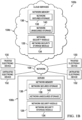
- FIGURE 1A is a simplified block diagram of a communication system 100a for virtualized trusted storage, in accordance with an embodiment of the present disclosure.
- an embodiment of communication system 100a can include an electronic device 102a, cloud services 104a, and a server 106a.
- Electronic device 102a can include memory 110, a processor 112, a trusted process 114, an untrusted process 116, and a security module 118.
- Memory 110 can include secured storage 120 and unsecured storage 122.
- Security module 118 can include a security storage module 124.
- Cloud services 104a and server 106a can each include a network security module 126.
- Electronic device 102a, cloud services 104a, and server 106a may be in communication using network 108.
- FIGURE 1B is a simplified block diagram of a communication system 100b for virtualized trusted storage, in accordance with an embodiment of the present disclosure.
- an embodiment of communication system 100b can include cloud services 104b, a server 106b, one or more trusted electronic devices 130, and one or more untrusted electronic devices 132.
- Cloud services 104b and server 106b can each include network security module 126 and network memory 136.
- Network security module 126 can include a network security storage module 134.
- Network memory 136 can include network secured storage 138 and network unsecured storage 140.
- communication systems 100a and 100b can be configured for virtualized trusted secure storage, in accordance with an embodiment of the present disclosure.
- Security storage module 124 can be configured to use a file system driver and a reputation of process (e.g. trusted or untrusted) to dynamically virtualize a file system and secure critical user data.
- communication systems 100a and 100b can be configured to receive a request from a process to access data is a system, determine if the data is in a virtualized protected area of memory in the system (e.g., secured storage 120 or network secured storage 138), allow access to the data is the data is not in the virtualized protected area of memory (e.g., unsecured storage 122 or network unsecured storage 140), and allow access to the data if the data is in the virtualized protected area of memory and the process is a trusted process.
- security module 118 or network security module 126 can be configured to determine if a process is a trusted or untrusted process.
- Communication systems 100a and 100b can also be configured to determine if new data should be protected, store the new data in the virtualized protected area of memory in the system if the new data should be protected, and store the new data in an unprotected area of memory in the system if the new data should not be protected.
- Communication systems 100a and 100b may include a configuration capable of transmission control protocol/Internet protocol (TCP/IP) communications for the transmission or reception of packets in a network.
- Communication system systems 100a and 100b may also operate in conjunction with a user datagram protocol/IP (UDP/IP) or any other suitable protocol where appropriate and based on particular needs.
- TCP/IP transmission control protocol/Internet protocol
- UDP/IP user datagram protocol/IP
- a communication system for virtualized trusted storage can resolve these issues (and others).
- Communication systems 100a and 100b may be configured to virtualize trusted process storage to a secure storage area (secure vault, encrypted file system, cloud storage, etc.).
- the secure storage area e.g., secured storage 120 or network secured storage 138
- Untrusted processes storage cannot access the virtualized trusted storage.
- file system drivers can redirect traffic to the virtualized trusted storage to make the virtualized trusted storage invisible to an untrusted application or an untrusted user.
- Communication systems 100a and 100b may be configured to use security storage module 124 and/or a filter driver to redirect input/output (I/O) from trusted processes (e.g. trusted process 114) to secured storage (e.g., secured storage 120) and I/O from untrusted processes (e.g., untrusted process 116) to unsecured storage (e.g., unsecured storage 122).
- trusted processes e.g. trusted process 114
- secured storage e.g., secured storage 120
- untrusted processes e.g., untrusted process 116
- unsecured storage e.g., unsecured storage 122
- Untrusted processes do not get access to the secured storage and will get an untrusted view of the location.
- Trusted processes get full access to and a trusted view of the secured storage and unsecured storage.
- the secured storage can be implemented in a variety of ways.
- secured storage could be a cloud vault.
- the secured storage could be a secured vault or locally encrypted virtual file system.
- a policy on minimum reputation can be set for access to the secured storage.
- the reputation of a process can be determined by security module 118 or network security module 126.
- the secured storage can also be protected by the file type trying to access the secured storage or on a per application type basis.
- the virtualization of the secured storage can be applied to execute on system locations (e.g. My Documents), on specific folders, or for specific applications.
- the system can mark individual files as important and only to be accessed by trusted applications and add the important file to secure storage.
- files can be removed from secure storage or added to the secured storage based on a user configuration. For example, a user may set a configuration where all applications should be able to access a specific file, only trusted applications should be able to access the specific file, only trusted applications of a specific type should be able to access the specific file, etc.
- Establishing the reputation of a process may be done using cloud services, local certifications, whitelists, etc.
- communication systems 100a and 100b in accordance with an example embodiment is shown.
- communication systems 100a and 100b can be implemented in any type or topology of networks.
- Network 108 represents a series of points or nodes of interconnected communication paths for receiving and transmitting packets of information that propagate through communication systems 100a and 100b.
- Network 108 offers a communicative interface between nodes, and may be configured as any local area network (LAN), virtual local area network (VLAN), wide area network (WAN), wireless local area network (WLAN), metropolitan area network (MAN), Intranet, Extranet, virtual private network (VPN), and any other appropriate architecture or system that facilitates communications in a network environment, or any suitable combination thereof, including wired and/or wireless communication.
- LAN local area network
- VLAN virtual local area network
- WAN wide area network
- WLAN wireless local area network
- MAN metropolitan area network
- Intranet Intranet
- Extranet virtual private network
- VPN virtual private network
- network traffic which is inclusive of packets, frames, signals, data, etc.
- Suitable communication messaging protocols can include a multi-layered scheme such as Open Systems Interconnection (OSI) model, or any derivations or variants thereof (e.g., Transmission Control Protocol/Internet Protocol (TCP/IP), user datagram protocol/IP (UDP/IP)).
- OSI Open Systems Interconnection
- radio signal communications over a cellular network may also be provided in communication systems 100a and 100b.
- Suitable interfaces and infrastructure may be provided to enable communication with the cellular network.
- packet refers to a unit of data that can be routed between a source node and a destination node on a packet switched network.
- a packet includes a source network address and a destination network address. These network addresses can be Internet Protocol (IP) addresses in a TCP/IP messaging protocol.
- IP Internet Protocol
- data refers to any type of binary, numeric, voice, video, textual, or script data, or any type of source or object code, or any other suitable information in any appropriate format that may be communicated from one point to another in electronic devices and/or networks. Additionally, messages, requests, responses, and queries are forms of network traffic, and therefore, may comprise packets, frames, signals, data, etc.
- electronic device 102a, cloud services 104a and 104b, server 106a and 106b, one or more trusted electronic devices 130, and one or more untrusted electronic devices 132 are network elements, which are meant to encompass network appliances, servers, routers, switches, gateways, bridges, load balancers, processors, modules, or any other suitable device, component, element, or object operable to exchange information in a network environment.
- Network elements may include any suitable hardware, software, components, modules, or objects that facilitate the operations thereof, as well as suitable interfaces for receiving, transmitting, and/or otherwise communicating data or information in a network environment. This may be inclusive of appropriate algorithms and communication protocols that allow for the effective exchange of data or information.
- each of electronic device 102a, cloud services 104a and 104b, server 106a and 106b, one or more trusted electronic devices 130, and one or more untrusted electronic devices 132 can include memory elements for storing information to be used in the operations outlined herein.
- Each of electronic device 102a, cloud services 104a and 104b, server 106a and 106b, one or more trusted electronic devices 130, and one or more untrusted electronic devices 132 may keep information in any suitable memory element (e.g., random access memory (RAM), read-only memory (ROM), erasable programmable ROM (EPROM), electrically erasable programmable ROM (EEPROM), application specific integrated circuit (ASIC), etc.), software, hardware, firmware, or in any other suitable component, device, element, or object where appropriate and based on particular needs.
- RAM random access memory
- ROM read-only memory
- EPROM erasable programmable ROM
- EEPROM electrically erasable programmable ROM
- ASIC application specific integrated circuit
- any of the memory items discussed herein should be construed as being encompassed within the broad term 'memory element.
- the information being used, tracked, sent, or received in communication systems 100a and 100b could be provided in any database, register, queue, table, cache, control list, or other storage structure, all of which can be referenced at any suitable timeframe. Any such storage options may also be included within the broad term 'memory element' as used herein.
- the functions outlined herein may be implemented by logic encoded in one or more tangible media (e.g., embedded logic provided in an ASIC, digital signal processor (DSP) instructions, software (potentially inclusive of object code and source code) to be executed by a processor, or other similar machine, etc.), which may be inclusive of non-transitory computer-readable media.
- memory elements can store data used for the operations described herein. This includes the memory elements being able to store software, logic, code, or processor instructions that are executed to carry out the activities described herein.
- network elements of communication systems 100a and 100b may include software modules (e.g., security module 118, security storage module 124, network security module 126, and network security storage module 134) to achieve, or to foster, operations as outlined herein.
- These modules may be suitably combined in any appropriate manner, which may be based on particular configuration and/or provisioning needs. In example embodiments, such operations may be carried out by hardware, implemented externally to these elements, or included in some other network device to achieve the intended functionality.
- the modules can be implemented as software, hardware, firmware, or any suitable combination thereof.
- These elements may also include software (or reciprocating software) that can coordinate with other network elements in order to achieve the operations, as outlined herein.
- each of electronic device 102a, cloud services 104a and 104b, server 106a and 106b, one or more trusted electronic devices 130, and one or more untrusted electronic devices 132 may include a processor that can execute software or an algorithm to perform activities as discussed herein.
- a processor can execute any type of instructions associated with the data to achieve the operations detailed herein.
- the processors could transform an element or an article (e.g., data) from one state or thing to another state or thing.
- the activities outlined herein may be implemented with fixed logic or programmable logic (e.g., software/computer instructions executed by a processor) and the elements identified herein could be some type of a programmable processor, programmable digital logic (e.g., a field programmable gate array (FPGA), an EPROM, an EEPROM) or an ASIC that includes digital logic, software, code, electronic instructions, or any suitable combination thereof.
- programmable logic e.g., a field programmable gate array (FPGA), an EPROM, an EEPROM
- Electronic device 102a can be a network element and include, for example, desktop computers, laptop computers, mobile devices, personal digital assistants, smartphones, tablets, or other similar devices.
- Cloud services 104a is configured to provide cloud services to electronic device 102a.
- Cloud services 104b is configured to provide cloud services to one or more trusted electronic devices 130 and one or more untrusted electronic devices 132.
- Cloud services may generally be defined as the use of computing resources that are delivered as a service over a network, such as the Internet.
- a network such as the Internet.
- compute, storage, and network resources are offered in a cloud infrastructure, effectively shifting the workload from a local network to the cloud network.
- Server 106a and 106b can be a network element such as a server or virtual server and can be associated with clients, customers, endpoints, or end users wishing to initiate a communication in communication system 100a and 100b via some network (e.g., network 108).
- the term 'server' is inclusive of devices used to serve the requests of clients and/or perform some computational task on behalf of clients within communication systems 100a and 100b.
- security module 118 is represented in FIGURE 1A as being located in electronic device 102a, this is for illustrative purposes only. Security module 118 could be combined or separated in any suitable configuration. Furthermore, security module 118 could be integrated with or distributed in another network accessible by electronic device 102a such as cloud services 104a or server 106a.
- FIGURE 2 is a simplified block diagram of a portion of a communication system 100a for virtualized trusted secure storage, in accordance with an embodiment of the present disclosure.
- FIGURE 2 illustrates an embodiment of an electronic device 102b.
- Electronic device 102b can include memory 110, processor 112, trusted process 114, untrusted process 116, security module 118, and a filter driver 128.
- Security storage module 124 can be configured to use filter driver 128 to redirect I/O from trusted process 114 to secured storage 120 and I/O from untrusted processes 116 to unsecured storage 122. Untrusted processes do not get access to the secured storage and will get an untrusted view of the location. Trusted processes get full access to and a trusted view of the secured storage and unsecured storage.
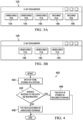
- FIGURE 3A is a simplified block diagram of a portion of a communication system for virtualized trusted storage, in accordance with an embodiment of the present disclosure.
- the virtualization of the secured storage can be applied to execute on system locations such as My Documents.
- My Documents is the commonly recognized name of a special folder in Microsoft Windows ® that is allocated to help users store their personal data files.
- a trusted user, trusted process 114, or some other trusted application accesses a My Documents folder
- a secured view 142 or access of the My Documents folder can include both unsecured files 144 and secured files 146.
- FIGURE 3B is a simplified block diagram of a portion of a communication system for virtualized trusted storage, in accordance with an embodiment of the present disclosure.
- an untrusted trusted user, untrusted process untrusted process 116, or some other untrusted application accesses the My Documents folder
- an unsecured view 148 or access of the My Documents folder can include only unsecured files 144. Because the user, process, or other application is not trusted, secured files 146 are not available.
- FIGURE 4 is an example flowchart illustrating possible operations of a flow 400 that may be associated with virtualized secure storage, in accordance with an embodiment.
- one or more operations of flow 400 may be performed by security module 118, security storage module 124, network security module 126, and network security storage module 134.
- data is to be stored in a system.
- the system determines if access to the data is be restricted. For example, the data may be from a trusted application, a user may set a configuration where access to the data is restricted, etc. If the access to the data should be restricted, then the data is stored in secured storage, as in 406. If the data should not be restricted, then the data is stored in unsecured storage, as in 408.
- FIGURE 5 is an example flowchart illustrating possible operations of a flow 500 that may be associated with virtualized secure storage, in accordance with an embodiment.
- one or more operations of flow 500 may be performed by security module 118, security storage module 124, network security module 126, and network security storage module 134.
- access to data is requested by an application.
- the system determines if the data is in a secured storage location. If the data is not in a secured storage location, then access to the data is allowed, as in 506. If the data is in a secured storage location, then the system determines if the application is a trusted application, as in 508. If the application is a trusted application, then access to the data is allowed, as in 506. If the application is not a trusted application, then access to the data is not allowed, as in 510.
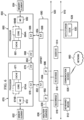
- FIGURE 6 illustrates a computing system 600 that is arranged in a point-to-point (PtP) configuration according to an embodiment.
- FIGURE 6 shows a system where processors, memory, and input/output devices are interconnected by a number of point-to-point interfaces.
- processors, memory, and input/output devices are interconnected by a number of point-to-point interfaces.
- one or more of the network elements of communication systems 100a and 100b may be configured in the same or similar manner as computing system 600.
- system 600 may include several processors, of which only two, processors 670 and 680, are shown for clarity. While two processors 670 and 680 are shown, it is to be understood that an embodiment of system 600 may also include only one such processor.
- Processors 670 and 680 may each include a set of cores (i.e., processor cores 674A and 674B and processor cores 684A and 684B) to execute multiple threads of a program. The cores may be configured to execute instruction code in a manner similar to that discussed above with reference to FIGURES 1-5 .
- Each processor 670, 680 may include at least one shared cache 671, 681. Shared caches 671, 681 may store data (e.g., instructions) that are utilized by one or more components of processors 670, 680, such as processor cores 674 and 684.
- Processors 670 and 680 may also each include integrated memory controller logic (MC) 672 and 682 to communicate with memory elements 632 and 634.
- MC memory controller logic
- Memory elements 632 and/or 634 may store various data used by processors 670 and 680.
- memory controller logic 672 and 682 may be discrete logic separate from processors 670 and 680.
- Processors 670 and 680 may be any type of processor and may exchange data via a point-to-point (PtP) interface 650 using point-to-point interface circuits 678 and 688, respectively.
- Processors 670 and 680 may each exchange data with a chipset 690 via individual point-to-point interfaces 652 and 654 using point-to-point interface circuits 676, 686, 694, and 698.
- Chipset 690 may also exchange data with a high-performance graphics circuit 638 via a high-performance graphics interface 639, using an interface circuit 692, which could be a PtP interface circuit.
- any or all of the PtP links illustrated in FIGURE 6 could be implemented as a multi-drop bus rather than a PtP link.
- Chipset 690 may be in communication with a bus 620 via an interface circuit 696.
- Bus 620 may have one or more devices that communicate over it, such as a bus bridge 618 and I/O devices 616.
- bus bridge 618 may be in communication with other devices such as a keyboard/mouse 612 (or other input devices such as a touch screen, trackball, etc.), communication devices 626 (such as modems, network interface devices, or other types of communication devices that may communicate through a computer network 660), audio I/O devices 614, and/or a data storage device 628.
- Data storage device 628 may store code 630, which may be executed by processors 670 and/or 680.
- any portions of the bus architectures could be implemented with one or more PtP links.
- the computer system depicted in FIGURE 6 is a schematic illustration of an embodiment of a computing system that may be utilized to implement various embodiments discussed herein. It will be appreciated that various components of the system depicted in FIGURE 6 may be combined in a system-on-a-chip (SoC) architecture or in any other suitable configuration. For example, embodiments disclosed herein can be incorporated into systems including mobile devices such as smart cellular telephones, tablet computers, personal digital assistants, portable gaming devices, etc. It will be appreciated that these mobile devices may be provided with SoC architectures in at least some embodiments.
- SoC system-on-a-chip
- FIGURE 7 is a simplified block diagram associated with an example ARM ecosystem SOC 700 of the present disclosure.
- At least one example implementation of the present disclosure can include the virtualized trusted storage features discussed herein and an ARM component.
- the example of FIGURE 7 can be associated with any ARM core (e.g., A-7, A-15, etc.).
- the architecture can be part of any type of tablet, smartphone (inclusive of Android TM phones, iPhones TM ), iPad TM , Google Nexus TM , Microsoft Surface TM , personal computer, server, video processing components, laptop computer (inclusive of any type of notebook), Ultrabook TM system, any type of touch-enabled input device, etc.
- ARM ecosystem SOC 700 may include multiple cores 706-707, an L2 cache control 708, a bus interface unit 709, an L2 cache 710, a graphics processing unit (GPU) 715, an interconnect 702, a video codec 720, and a liquid crystal display (LCD) I/F 725, which may be associated with mobile industry processor interface (MIPI)/ high-definition multimedia interface (HDMI) links that couple to an LCD.
- MIPI mobile industry processor interface
- HDMI high-definition multimedia interface
- ARM ecosystem SOC 700 may also include a subscriber identity module (SIM) I/F 730, a boot read-only memory (ROM) 735, a synchronous dynamic random access memory (SDRAM) controller 740, a flash controller 745, a serial peripheral interface (SPI) master 750, a suitable power control 755, a dynamic RAM (DRAM) 760, and flash 765.
- SIM subscriber identity module
- ROM boot read-only memory
- SDRAM synchronous dynamic random access memory
- SPI serial peripheral interface
- DRAM dynamic RAM
- flash 765 flash 765
- one or more embodiments include one or more communication capabilities, interfaces, and features such as instances of Bluetooth TM 770, a 3G modem 775, a global positioning system (GPS) 780, and an 802.11 Wi-Fi 785.
- GPS global positioning system
- the example of FIGURE 7 can offer processing capabilities, along with relatively low power consumption to enable computing of various types (e.g., mobile computing, high-end digital home, servers, wireless infrastructure, etc.).
- such an architecture can enable any number of software applications (e.g., Android TM , Adobe ® Flash ® Player, Java Platform Standard Edition (Java SE), JavaFX, Linux, Microsoft Windows Embedded, Symbian and Ubuntu, etc.).
- the core processor may implement an out-of-order superscalar pipeline with a coupled low-latency level-2 cache.
- FIGURE 8 illustrates a processor core 800 according to an embodiment.
- Processor core 800 may be the core for any type of processor, such as a micro-processor, an embedded processor, a digital signal processor (DSP), a network processor, or other device to execute code. Although only one processor core 800 is illustrated in Figure 8 , a processor may alternatively include more than one of the processor core 800 illustrated in Figure 8 .
- processor core 800 represents one example embodiment of processors cores 674a, 674b, 684a, and 684b shown and described with reference to processors 670 and 680 of FIGURE 6 .
- Processor core 800 may be a single-threaded core or, for at least one embodiment, processor core 800 may be multithreaded in that it may include more than one hardware thread context (or "logical processor") per core.
- FIGURE 8 also illustrates a memory 802 coupled to processor core 800 in accordance with an embodiment.
- Memory 802 may be any of a wide variety of memories (including various layers of memory hierarchy) as are known or otherwise available to those of skill in the art.
- Memory 802 may include code 804, which may be one or more instructions, to be executed by processor core 800.
- Processor core 800 can follow a program sequence of instructions indicated by code 804.
- Each instruction enters a front-end logic 806 and is processed by one or more decoders 808.
- the decoder may generate, as its output, a micro operation such as a fixed width micro operation in a predefined format, or may generate other instructions, microinstructions, or control signals that reflect the original code instruction.
- Front-end logic 806 also includes register renaming logic 810 and scheduling logic 812, which generally allocate resources and queue the operation corresponding to the instruction for execution.
- Processor core 800 can also include execution logic 814 having a set of execution units 816-1 through 816-N. Some embodiments may include a number of execution units dedicated to specific functions or sets of functions. Other embodiments may include only one execution unit or one execution unit that can perform a particular function. Execution logic 814 performs the operations specified by code instructions.
- back-end logic 818 can retire the instructions of code 804.
- processor core 800 allows out of order execution but requires in order retirement of instructions.
- Retirement logic 820 may take a variety of known forms (e.g., re-order buffers or the like). In this manner, processor core 800 is transformed during execution of code 804, at least in terms of the output generated by the decoder, hardware registers and tables utilized by register renaming logic 810, and any registers (not shown) modified by execution logic 814.
- a processor may include other elements on a chip with processor core 800, at least some of which were shown and described herein with reference to FIGURE 6 .
- a processor may include memory control logic along with processor core 800.
- the processor may include I/O control logic and/or may include I/O control logic integrated with memory control logic.
- communication systems 100a and 100b and its teachings are readily scalable and can accommodate a large number of components, as well as more complicated/sophisticated arrangements and configurations. Accordingly, the examples provided should not limit the scope or inhibit the broad teachings of communication systems 100a and 100b as potentially applied to a myriad of other architectures.
- FIGURES 4 and 5 illustrate only some of the possible correlating scenarios and patterns that may be executed by, or within, communication systems 100a and 100b. Some of these operations may be deleted or removed where appropriate, or these operations may be modified or changed considerably without departing from the scope of the present disclosure. In addition, a number of these operations have been described as being executed concurrently with, or in parallel to, one or more additional operations. However, the timing of these operations may be altered considerably.
- the preceding operational flows have been offered for purposes of example and discussion. Substantial flexibility is provided by communication systems 100a and 100b in that any suitable arrangements, chronologies, configurations, and timing mechanisms may be provided without departing from the teachings of the present disclosure.
Landscapes
- Engineering & Computer Science (AREA)
- Theoretical Computer Science (AREA)
- Computer Security & Cryptography (AREA)
- General Engineering & Computer Science (AREA)
- General Physics & Mathematics (AREA)
- Physics & Mathematics (AREA)
- Computer Hardware Design (AREA)
- Software Systems (AREA)
- Databases & Information Systems (AREA)
- General Health & Medical Sciences (AREA)
- Bioethics (AREA)
- Health & Medical Sciences (AREA)
- Signal Processing (AREA)
- Computer Networks & Wireless Communication (AREA)
- Data Mining & Analysis (AREA)
- Computing Systems (AREA)
- Storage Device Security (AREA)
Claims (9)
- Mindestens ein maschinenlesbares Medium, das eine oder mehrere Anweisungen umfasst, die, wenn sie von mindestens einem Prozessor ausgeführt werden, den mindestens einen Prozessor veranlassen zum:Empfangen einer Anforderung von einem Prozess, auf Daten in einem System zuzugreifen;Bestimmen, ob sich die Daten in einem virtualisierten geschützten Bereich des Speichers in dem System befinden, wobei der virtualisierte geschützte Bereich des Speichers ein sicherer Speicherbereich ist, oder Bestimmen, ob sich die Daten nicht in dem virtualisierten geschützten Bereich des Speichers aber in einem unsicheren Speicherbereich des Speichers befinden, wobei vertrauenswürdige Prozesse vollständigen Zugriff auf den sicheren Speicherbereich und den unsicheren Speicherbereich erhalten und wobei nicht vertrauenswürdige Prozesse keinen Zugriff auf den sicheren Speicherbereich erhalten;als Reaktion auf ein Bestimmen, dass sich die Daten in dem virtualisierten geschützten Bereich des Speichers befinden, Bestimmen, ob der Prozess ein vertrauenswürdiger Prozess ist, und Gewähren des Zugriffs auf die Daten basierend auf einer Bestimmung, dass der Prozess ein vertrauenswürdiges Prozess ist, und wobei auf die Daten zugegriffen werden kann und sowohl ungesicherte als auch gesicherte Dateien aufweisen;als Reaktion auf das Bestimmen, dass sich die Daten in dem virtualisierten geschützten Bereich des Speichers befinden, und auf das Bestimmen, ob der Prozess ein vertrauenswürdiger Prozess ist, Verweigern des Zugriffs auf die Daten basierend auf einer Bestimmung, dass der Prozess ein nicht vertrauenswürdiger Prozess ist; undals Reaktion auf das Bestimmen, dass sich die Daten in dem unsicheren Speicherbereich des Speichers befinden, Gewähren des Zugriffs auf die Daten, und wobei die Daten, auf die zugegriffen werden kann, nur die unsicheren Dateien aufweisen.
- Das mindestens eine maschinenlesbare Medium nach Anspruch 1, ferner umfassend eine oder mehrere Anweisungen, die, wenn sie von mindestens einem Prozessor ausgeführt werden, den mindestens einen Prozessor veranlassen zum:Bestimmen, ob neue Daten geschützt werden sollen;Speichern der neuen Daten in dem virtualisierten geschützten Bereich des Speichers in dem System basierend auf einer Bestimmung, dass die neuen Daten geschützt werden sollten; undSpeichern der neuen Daten in dem unsicheren Speicherbereich des Speichers in dem System basierend auf einer Bestimmung, dass die neuen Daten nicht geschützt werden sollten.
- Vorrichtung, umfassend:ein Sicherheitsspeichermoduldass eingerichtet ist zum:Empfangen einer Anforderung von einem Prozess, auf Daten in einem System zuzugreifen;Bestimmen, ob sich die Daten in einem virtualisierten geschützten Bereich des Speichers in dem System befinden, wobei der virtualisierte geschützte Bereich des Speichers ein sicherer Speicher ist, oder Bestimmen, ob sich die Daten nicht in dem virtualisierten geschützten Bereich des Speichers aber in einem unsicheren Speicherbereich des Speichers befinden, wobei vertrauenswürdige Prozesse vollständigen Zugriff auf den sicheren Speicherbereich und den unsicheren Speicherbereich erhalten und wobei nicht vertrauenswürdige Prozesse keinen Zugriff auf den sicheren Speicherbereich erhalten;als Reaktion auf ein Bestimmen, dass sich die Daten in dem virtualisierten geschützten Bereich des Speichers befinden, Bestimmen, ob der Prozess ein vertrauenswürdiger Prozess ist, und Gewähren des Zugriffs auf die Daten basierend auf einer Bestimmung, dass der Prozess ein vertrauenswürdiges Prozess ist, und wobei auf die Daten zugegriffen werden kann und sowohl ungesicherte als auch gesicherte Dateien aufweisen;als Reaktion auf das Bestimmen, dass sich die Daten in dem virtualisierten geschützten Bereich des Speichers befinden, und auf das Bestimmen, ob der Prozess ein vertrauenswürdiger Prozess ist, Verweigern des Zugriffs auf die Daten basierend auf einer Bestimmung, dass der Prozess ein nicht vertrauenswürdiger Prozess ist; undals Reaktion auf das Bestimmen, dass sich die Daten in dem unsicheren Speicherbereich des Speichers befinden, Gewähren des Zugriffs auf die Daten, und wobei die Daten, auf die zugegriffen werden kann, nur die unsicheren Dateien aufweisen.
- Verfahren, umfassend:Empfangen einer Anforderung von einem Prozess, auf Daten in einem System zuzugreifen;Bestimmen, ob sich die Daten in einem virtualisierten geschützten Bereich des Speichers in dem System befinden, wobei der virtualisierte geschützte Bereich des Speichers ein sicherer Speicherbereich ist, oder Bestimmen, ob sich die Daten nicht in dem virtualisierten geschützten Bereich des Speichers aber in einem unsicheren Speicherbereich des Speichers befinden, wobei vertrauenswürdige Prozesse vollständigen Zugriff auf den sicheren Speicherbereich und den unsicheren Speicherbereich erhalten und wobei nicht vertrauenswürdige Prozesse keinen Zugriff auf den sicheren Speicherbereich erhalten;als Reaktion auf ein Bestimmen, dass sich die Daten in dem virtualisierten geschützten Bereich des Speichers befinden, Bestimmen, ob der Prozess ein vertrauenswürdiger Prozess ist, und Gewähren des Zugriffs auf die Daten basierend auf einer Bestimmung, dass der Prozess ein vertrauenswürdiges Prozess ist, und wobei auf die Daten zugegriffen werden kann und sowohl ungesicherte als auch gesicherte Dateien aufweisen;als Reaktion auf das Bestimmen, dass sich die Daten in dem virtualisierten geschützten Bereich des Speichers befinden, und auf das Bestimmen, ob der Prozess ein vertrauenswürdiger Prozess ist, Verweigern des Zugriffs auf die Daten basierend auf einer Bestimmung, dass der Prozess ein nicht vertrauenswürdiger Prozess ist; undals Reaktion auf das Bestimmen, dass sich die Daten in dem unsicheren Speicherbereich des Speichers befinden, Gewähren des Zugriffs auf die Daten, und wobei die Daten, auf die zugegriffen werden kann, nur die unsicheren Dateien aufweisen.
- Das Verfahren nach Anspruch 4, ferner umfassend:Bestimmen, ob neue Daten geschützt werden sollten;Speichern der neuen Daten in dem virtualisierten geschützten Bereich des Speichers in dem System basierend auf einer Bestimmung, dass die neuen Daten geschützt werden sollten; undSpeichern der neuen Daten in dem unsicheren Speicherbereich des Speichers in dem System basierend auf einer Bestimmung, dass die neuen Daten nicht geschützt werden sollten.
- Das Verfahren nach einem der Ansprüche 4 und 5, wobei der virtualisierte geschützte Bereich des Speichers ein gesicherter Tresor ist.
- Das Verfahren nach einem der Ansprüche 4-6, wobei der virtualisierte geschützte Bereich des Speichers ein Cloud-Tresor ist.
- System für einen virtualisierten vertrauenswürdigen sicheren Speicher, wobei das System umfasst: ein Sicherheitsspeichermodul, das eingerichtet ist zum:Empfangen einer Anforderung von einem Prozess, auf Daten in einem System zuzugreifen;Bestimmen, ob sich die Daten in einem virtualisierten geschützten Bereich des Speichers in dem System befinden, wobei der virtualisierte geschützte Bereich des Speichers ein sicherer Speicherbereich ist, oder Bestimmen, ob sich die Daten nicht in dem virtualisierten geschützten Bereich des Speichers aber in einem unsicheren Speicherbereich des Speichers befinden, wobei vertrauenswürdige Prozesse vollständigen Zugriff auf den sicheren Speicherbereich und den unsicheren Speicherbereich erhalten und wobei nicht vertrauenswürdige Prozesse keinen Zugriff auf den sicheren Speicherbereich erhalten;als Reaktion auf ein Bestimmen, dass sich die Daten in dem virtualisierten geschützten Bereich des Speichers befinden, Bestimmen, ob der Prozess ein vertrauenswürdiger Prozess ist, und Gewähren des Zugriffs auf die Daten basierend auf einer Bestimmung, dass der Prozess ein vertrauenswürdiges Prozess ist, und wobei auf die Daten zugegriffen werden kann und sowohl ungesicherte als auch gesicherte Dateien aufweisen;als Reaktion auf das Bestimmen, dass sich die Daten in dem virtualisierten geschützten Bereich des Speichers befinden, und auf das Bestimmen, ob der Prozess ein vertrauenswürdiger Prozess ist, Verweigern des Zugriffs auf die Daten basierend auf einer Bestimmung, dass der Prozess ein nicht vertrauenswürdiger Prozess ist; undals Reaktion auf das Bestimmen, dass sich die Daten in dem unsicheren Speicherbereich des Speichers befinden, Gewähren des Zugriffs auf die Daten, und wobei die Daten, auf die zugegriffen werden kann, nur die unsicheren Dateien aufweisen.
- Das System nach Anspruch 8, wobei das System außerdem eingerichtet ist zum:Bestimmen, ob neue Daten geschützt werden sollen;Speichern der neuen Daten in dem virtualisierten geschützten Bereich des Speichers im System basierend auf einer Bestimmung, dass die neuen Daten geschützt werden sollten; undSpeichern der neuen Daten in dem unsicheren Speicherbereich des Speichers in dem System basierend auf einer Bestimmung, dass die neuen Daten nicht geschützt werden sollten.
Applications Claiming Priority (2)
| Application Number | Priority Date | Filing Date | Title |
|---|---|---|---|
| US14/752,914 US10162767B2 (en) | 2015-06-27 | 2015-06-27 | Virtualized trusted storage |
| PCT/US2016/033854 WO2017003583A1 (en) | 2015-06-27 | 2016-05-24 | Virtualized trusted storage |
Publications (3)
| Publication Number | Publication Date |
|---|---|
| EP3314524A1 EP3314524A1 (de) | 2018-05-02 |
| EP3314524A4 EP3314524A4 (de) | 2019-01-23 |
| EP3314524B1 true EP3314524B1 (de) | 2023-08-02 |
Family
ID=57602344
Family Applications (1)
| Application Number | Title | Priority Date | Filing Date |
|---|---|---|---|
| EP16818398.6A Active EP3314524B1 (de) | 2015-06-27 | 2016-05-24 | Virtualisierter sicherer speicher |
Country Status (5)
| Country | Link |
|---|---|
| US (2) | US10162767B2 (de) |
| EP (1) | EP3314524B1 (de) |
| CN (1) | CN107949834B (de) |
| GB (1) | GB2557468A (de) |
| WO (1) | WO2017003583A1 (de) |
Families Citing this family (50)
| Publication number | Priority date | Publication date | Assignee | Title |
|---|---|---|---|---|
| US9578664B1 (en) | 2013-02-07 | 2017-02-21 | Sprint Communications Company L.P. | Trusted signaling in 3GPP interfaces in a network function virtualization wireless communication system |
| US9928377B2 (en) | 2015-03-19 | 2018-03-27 | Netskope, Inc. | Systems and methods of monitoring and controlling enterprise information stored on a cloud computing service (CCS) |
| US10162767B2 (en) * | 2015-06-27 | 2018-12-25 | Mcafee, Llc | Virtualized trusted storage |
| US10691476B2 (en) * | 2015-06-27 | 2020-06-23 | Mcafee, Llc | Protection of sensitive data |
| US9686240B1 (en) | 2015-07-07 | 2017-06-20 | Sprint Communications Company L.P. | IPv6 to IPv4 data packet migration in a trusted security zone |
| US9749294B1 (en) | 2015-09-08 | 2017-08-29 | Sprint Communications Company L.P. | System and method of establishing trusted operability between networks in a network functions virtualization environment |
| US10542115B1 (en) | 2015-10-01 | 2020-01-21 | Sprint Communications Company L.P. | Securing communications in a network function virtualization (NFV) core network |
| US9811686B1 (en) | 2015-10-09 | 2017-11-07 | Sprint Communications Company L.P. | Support systems interactions with virtual network functions in a trusted security zone |
| US9781016B1 (en) | 2015-11-02 | 2017-10-03 | Sprint Communications Company L.P. | Dynamic addition of network function services |
| US11403418B2 (en) | 2018-08-30 | 2022-08-02 | Netskope, Inc. | Enriching document metadata using contextual information |
| US11019101B2 (en) | 2016-03-11 | 2021-05-25 | Netskope, Inc. | Middle ware security layer for cloud computing services |
| US11405423B2 (en) * | 2016-03-11 | 2022-08-02 | Netskope, Inc. | Metadata-based data loss prevention (DLP) for cloud resources |
| US11425169B2 (en) | 2016-03-11 | 2022-08-23 | Netskope, Inc. | Small-footprint endpoint data loss prevention (DLP) |
| US10469525B2 (en) | 2016-08-10 | 2019-11-05 | Netskope, Inc. | Systems and methods of detecting and responding to malware on a file system |
| US10250498B1 (en) | 2016-10-03 | 2019-04-02 | Sprint Communications Company L.P. | Session aggregator brokering of data stream communication |
| US10348488B1 (en) | 2017-08-25 | 2019-07-09 | Sprint Communications Company L.P. | Tiered distributed ledger technology (DLT) in a network function virtualization (NFV) core network |
| US10834081B2 (en) | 2017-10-19 | 2020-11-10 | International Business Machines Corporation | Secure access management for tools within a secure environment |
| WO2020069431A1 (en) * | 2018-09-28 | 2020-04-02 | Visa International Service Association | Oblivious filtering of data streams |
| US11416641B2 (en) | 2019-01-24 | 2022-08-16 | Netskope, Inc. | Incident-driven introspection for data loss prevention |
| US11586750B2 (en) * | 2019-03-21 | 2023-02-21 | Blackberry Limited | Managing access to protected data file content |
| US12166759B2 (en) | 2019-09-24 | 2024-12-10 | Pribit Technology, Inc. | System for remote execution code-based node control flow management, and method therefor |
| US11652801B2 (en) | 2019-09-24 | 2023-05-16 | Pribit Technology, Inc. | Network access control system and method therefor |
| US11082256B2 (en) | 2019-09-24 | 2021-08-03 | Pribit Technology, Inc. | System for controlling network access of terminal based on tunnel and method thereof |
| US12519754B2 (en) | 2019-09-24 | 2026-01-06 | Pribit Technology, Inc. | System for controlling network access of node on basis of tunnel and data flow, and method therefor |
| US11271777B2 (en) | 2019-09-24 | 2022-03-08 | Pribit Technology, Inc. | System for controlling network access of terminal based on tunnel and method thereof |
| US11381557B2 (en) | 2019-09-24 | 2022-07-05 | Pribit Technology, Inc. | Secure data transmission using a controlled node flow |
| EP4037277B1 (de) | 2019-09-24 | 2025-05-07 | PRIBIT Technology, Inc. | System zur authentisierung und steuerung des netzzugriffs eines endgerätes und verfahren dafür |
| US12381890B2 (en) | 2019-09-24 | 2025-08-05 | Pribit Technology, Inc. | System and method for secure network access of terminal |
| US12348494B2 (en) | 2019-09-24 | 2025-07-01 | Pribit Technology, Inc. | Network access control system and method therefor |
| US11856022B2 (en) | 2020-01-27 | 2023-12-26 | Netskope, Inc. | Metadata-based detection and prevention of phishing attacks |
| JP7514586B2 (ja) * | 2020-09-14 | 2024-07-11 | パナソニックオートモーティブシステムズ株式会社 | 情報処理装置、情報処理方法、および、プログラム |
| US11847205B1 (en) | 2020-10-26 | 2023-12-19 | T-Mobile Innovations Llc | Trusted 5G network function virtualization of virtual network function elements embedded on a system-on-chip |
| US11947838B2 (en) * | 2020-11-30 | 2024-04-02 | International Business Machines Corporation | Utilizing statuses to preserve a state of data during procedures such as testing without causing functional interruptions |
| US11082445B1 (en) | 2021-01-21 | 2021-08-03 | Netskope, Inc. | Preventing phishing attacks via document sharing |
| US11271953B1 (en) | 2021-01-29 | 2022-03-08 | Netskope, Inc. | Dynamic power user identification and isolation for managing SLA guarantees |
| US11463362B2 (en) | 2021-01-29 | 2022-10-04 | Netskope, Inc. | Dynamic token bucket method adaptive to opaque server limits |
| US11848949B2 (en) | 2021-01-30 | 2023-12-19 | Netskope, Inc. | Dynamic distribution of unified policies in a cloud-based policy enforcement system |
| US12015619B2 (en) | 2021-01-30 | 2024-06-18 | Netskope, Inc. | Dynamic routing of access request streams in a unified policy enforcement system |
| US11777993B2 (en) | 2021-01-30 | 2023-10-03 | Netskope, Inc. | Unified system for detecting policy enforcement issues in a cloud-based environment |
| US11159576B1 (en) | 2021-01-30 | 2021-10-26 | Netskope, Inc. | Unified policy enforcement management in the cloud |
| US11310282B1 (en) | 2021-05-20 | 2022-04-19 | Netskope, Inc. | Scoring confidence in user compliance with an organization's security policies |
| US11481709B1 (en) | 2021-05-20 | 2022-10-25 | Netskope, Inc. | Calibrating user confidence in compliance with an organization's security policies |
| US11444951B1 (en) | 2021-05-20 | 2022-09-13 | Netskope, Inc. | Reducing false detection of anomalous user behavior on a computer network |
| US11336689B1 (en) | 2021-09-14 | 2022-05-17 | Netskope, Inc. | Detecting phishing websites via a machine learning-based system using URL feature hashes, HTML encodings and embedded images of content pages |
| US11438377B1 (en) | 2021-09-14 | 2022-09-06 | Netskope, Inc. | Machine learning-based systems and methods of using URLs and HTML encodings for detecting phishing websites |
| US11444978B1 (en) | 2021-09-14 | 2022-09-13 | Netskope, Inc. | Machine learning-based system for detecting phishing websites using the URLS, word encodings and images of content pages |
| US12210614B2 (en) * | 2022-07-07 | 2025-01-28 | Versa Networks, Inc. | Methods and systems for displaying remote browser isolation (RBI) protected browsing |
| US12210654B2 (en) * | 2022-07-07 | 2025-01-28 | Versa Networks, Inc. | User interface (UI) for a remote browser isolation (RBI) protected browser |
| CN116578968A (zh) * | 2023-04-24 | 2023-08-11 | 国网冀北电力有限公司信息通信分公司 | 对电力控制系统中应用程序提供安全防护的方法及装置 |
| WO2025145317A1 (en) * | 2024-01-03 | 2025-07-10 | Huawei Cloud Computing Technologies Co., Ltd. | Computing system and method for tracking protected data |
Family Cites Families (49)
| Publication number | Priority date | Publication date | Assignee | Title |
|---|---|---|---|---|
| US751810A (en) * | 1904-02-09 | Apparatus for separating liquids from solids | ||
| US6073142A (en) | 1997-06-23 | 2000-06-06 | Park City Group | Automated post office based rule analysis of e-mail messages and other data objects for controlled distribution in network environments |
| US5987610A (en) | 1998-02-12 | 1999-11-16 | Ameritech Corporation | Computer virus screening methods and systems |
| US6460050B1 (en) | 1999-12-22 | 2002-10-01 | Mark Raymond Pace | Distributed content identification system |
| US6901519B1 (en) | 2000-06-22 | 2005-05-31 | Infobahn, Inc. | E-mail virus protection system and method |
| US20020133702A1 (en) | 2001-03-16 | 2002-09-19 | Stevens Curtis E. | Methods of granting access to a protected area |
| US7512810B1 (en) | 2002-09-11 | 2009-03-31 | Guardian Data Storage Llc | Method and system for protecting encrypted files transmitted over a network |
| AU2005256154B2 (en) * | 2004-06-24 | 2010-08-26 | X2M Connect Limited | A meter device |
| US7577985B1 (en) * | 2005-02-01 | 2009-08-18 | Symantec Corporation | Trusted handler and data association |
| US8495700B2 (en) * | 2005-02-28 | 2013-07-23 | Mcafee, Inc. | Mobile data security system and methods |
| US8856473B2 (en) | 2005-07-01 | 2014-10-07 | Red Hat, Inc. | Computer system protection based on virtualization |
| US7464219B2 (en) * | 2005-08-01 | 2008-12-09 | International Business Machines Corporation | Apparatus, system, and storage medium for data protection by a storage device |
| US7900012B2 (en) | 2007-04-13 | 2011-03-01 | Phison Electronics Corp. | Secure storage apparatus and method for controlling the same |
| US8156298B1 (en) | 2007-10-24 | 2012-04-10 | Adam Stubblefield | Virtualization-based security apparatuses, methods, and systems |
| US8181033B1 (en) * | 2008-07-01 | 2012-05-15 | Mcafee, Inc. | Data leakage prevention system, method, and computer program product for preventing a predefined type of operation on predetermined data |
| TW201019113A (en) * | 2008-11-06 | 2010-05-16 | Genesys Logic Inc | Authenticable USB storage device and method thereof |
| US8213618B2 (en) | 2008-12-30 | 2012-07-03 | Intel Corporation | Protecting content on client platforms |
| CN101667232B (zh) * | 2009-07-13 | 2014-12-10 | 北京可信华泰信息技术有限公司 | 基于可信计算的终端可信保障系统与方法 |
| US8234400B2 (en) | 2010-03-16 | 2012-07-31 | Microsoft Corporation | Shaping virtual machine communication traffic |
| EP2980695B1 (de) * | 2010-05-09 | 2017-04-12 | Citrix Systems, Inc. | Verfahren und systeme zur erzwingung der datenspeicherung in einer sicheren speicherumgebung durch eine anwendung |
| US8954722B2 (en) * | 2011-03-04 | 2015-02-10 | Broadcom Corporation | Enforcing software updates in an electronic device |
| US9038176B2 (en) * | 2011-03-31 | 2015-05-19 | Mcafee, Inc. | System and method for below-operating system trapping and securing loading of code into memory |
| US8621620B2 (en) * | 2011-03-29 | 2013-12-31 | Mcafee, Inc. | System and method for protecting and securing storage devices using below-operating system trapping |
| US9087189B1 (en) * | 2011-05-03 | 2015-07-21 | Symantec Corporation | Network access control for cloud services |
| TWI467364B (zh) * | 2011-07-12 | 2015-01-01 | Phison Electronics Corp | 記憶體儲存裝置、記憶體控制器與資料寫入方法 |
| CN102289620A (zh) * | 2011-08-12 | 2011-12-21 | 华南理工大学 | 一种基于Xen安全计算机可信设备虚拟化系统及方法 |
| KR101314514B1 (ko) * | 2011-09-29 | 2013-11-21 | 이청종 | 보안이 강화된 클라우드 시스템 및 그에 의한 보안 관리 방법 |
| US8984478B2 (en) | 2011-10-03 | 2015-03-17 | Cisco Technology, Inc. | Reorganization of virtualized computer programs |
| US20140032733A1 (en) * | 2011-10-11 | 2014-01-30 | Citrix Systems, Inc. | Policy-Based Application Management |
| US8782351B2 (en) * | 2011-10-13 | 2014-07-15 | International Business Machines Corporation | Protecting memory of a virtual guest |
| US8990558B2 (en) * | 2011-11-09 | 2015-03-24 | Safer Point Ltd | Securing information in a cloud computing system |
| CN104040543B (zh) * | 2012-01-11 | 2018-01-19 | 英特尔公司 | 基于文件库和云的文档公正服务 |
| US8732291B2 (en) * | 2012-01-13 | 2014-05-20 | Accenture Global Services Limited | Performance interference model for managing consolidated workloads in QOS-aware clouds |
| US8838968B2 (en) * | 2012-05-14 | 2014-09-16 | Ca, Inc. | System and method for virtual machine data protection in a public cloud |
| US8572410B1 (en) * | 2012-07-18 | 2013-10-29 | Freescale Semiconductor, Inc. | Virtualized protected storage |
| US8954759B2 (en) * | 2012-09-14 | 2015-02-10 | Avalanche Technology, Inc. | Secure spin torque transfer magnetic random access memory (STTMRAM) |
| US9152870B2 (en) * | 2013-03-15 | 2015-10-06 | Sri International | Computer vision as a service |
| US9313203B2 (en) * | 2013-03-15 | 2016-04-12 | Symantec Corporation | Systems and methods for identifying a secure application when connecting to a network |
| US9215251B2 (en) * | 2013-09-11 | 2015-12-15 | Appsense Limited | Apparatus, systems, and methods for managing data security |
| US9857974B2 (en) * | 2013-10-03 | 2018-01-02 | International Business Machines Corporation | Session execution decision |
| US9218494B2 (en) * | 2013-10-16 | 2015-12-22 | Citrix Systems, Inc. | Secure client drive mapping and file storage system for mobile device management type security |
| CN103605929B (zh) * | 2013-11-17 | 2016-05-25 | 北京工业大学 | 一种支持多用户的可信硬件设备及其使用方法 |
| US9823869B2 (en) * | 2014-01-08 | 2017-11-21 | Nvidia Corporation | System and method of protecting data in dynamically-allocated regions of memory |
| CN103812862A (zh) * | 2014-01-23 | 2014-05-21 | 厦门密安信息技术有限责任公司 | 可信安全云计算构成方法 |
| CN103927489B (zh) * | 2014-04-22 | 2017-01-18 | 陈幼雷 | 一种数据可信存储的系统及其方法 |
| CN104239802A (zh) * | 2014-10-15 | 2014-12-24 | 浪潮电子信息产业股份有限公司 | 一种基于云数据中心的可信服务器设计方法 |
| US10587639B2 (en) * | 2015-03-10 | 2020-03-10 | Ca, Inc. | Assessing trust of components in systems |
| US10366244B2 (en) * | 2015-06-09 | 2019-07-30 | International Business Machines Corporation | Performing an operation on sensitive data |
| US10162767B2 (en) * | 2015-06-27 | 2018-12-25 | Mcafee, Llc | Virtualized trusted storage |
-
2015
- 2015-06-27 US US14/752,914 patent/US10162767B2/en active Active
-
2016
- 2016-05-24 EP EP16818398.6A patent/EP3314524B1/de active Active
- 2016-05-24 CN CN201680037881.1A patent/CN107949834B/zh active Active
- 2016-05-24 GB GB1720984.2A patent/GB2557468A/en not_active Withdrawn
- 2016-05-24 WO PCT/US2016/033854 patent/WO2017003583A1/en not_active Ceased
-
2018
- 2018-12-12 US US16/218,454 patent/US10579544B2/en active Active
Also Published As
| Publication number | Publication date |
|---|---|
| US10579544B2 (en) | 2020-03-03 |
| GB201720984D0 (en) | 2018-01-31 |
| EP3314524A4 (de) | 2019-01-23 |
| CN107949834A (zh) | 2018-04-20 |
| WO2017003583A1 (en) | 2017-01-05 |
| EP3314524A1 (de) | 2018-05-02 |
| CN107949834B (zh) | 2021-08-24 |
| GB2557468A (en) | 2018-06-20 |
| US20160378685A1 (en) | 2016-12-29 |
| US20190155752A1 (en) | 2019-05-23 |
| US10162767B2 (en) | 2018-12-25 |
Similar Documents
| Publication | Publication Date | Title |
|---|---|---|
| US10579544B2 (en) | Virtualized trusted storage | |
| US11128626B2 (en) | Security service for an unmanaged device | |
| US10691476B2 (en) | Protection of sensitive data | |
| US10176344B2 (en) | Data verification using enclave attestation | |
| EP3238128B1 (de) | Detektion eines bösartigen peripheriegerätes | |
| EP3248132B1 (de) | Nachweis des bösartigen aufrufs von anwendungsprogrammschnittstellenanrufen | |
| US20210029150A1 (en) | Determining a reputation for a process | |
| US20160381051A1 (en) | Detection of malware | |
| US20160180092A1 (en) | Portable secure storage | |
| US11032266B2 (en) | Determining the reputation of a digital certificate | |
| US10152350B2 (en) | Secure domain manager | |
| EP3314511B1 (de) | Erkennung von anomalien zur identifizierung von schadprogrammen | |
| US10574672B2 (en) | System and method to detect bypass of a sandbox application |
Legal Events
| Date | Code | Title | Description |
|---|---|---|---|
| STAA | Information on the status of an ep patent application or granted ep patent |
Free format text: STATUS: THE INTERNATIONAL PUBLICATION HAS BEEN MADE |
|
| PUAI | Public reference made under article 153(3) epc to a published international application that has entered the european phase |
Free format text: ORIGINAL CODE: 0009012 |
|
| STAA | Information on the status of an ep patent application or granted ep patent |
Free format text: STATUS: REQUEST FOR EXAMINATION WAS MADE |
|
| 17P | Request for examination filed |
Effective date: 20171124 |
|
| AK | Designated contracting states |
Kind code of ref document: A1 Designated state(s): AL AT BE BG CH CY CZ DE DK EE ES FI FR GB GR HR HU IE IS IT LI LT LU LV MC MK MT NL NO PL PT RO RS SE SI SK SM TR |
|
| AX | Request for extension of the european patent |
Extension state: BA ME |
|
| DAV | Request for validation of the european patent (deleted) | ||
| DAX | Request for extension of the european patent (deleted) | ||
| A4 | Supplementary search report drawn up and despatched |
Effective date: 20181221 |
|
| RIC1 | Information provided on ipc code assigned before grant |
Ipc: G06F 21/78 20130101ALI20181217BHEP Ipc: G06F 21/60 20130101ALI20181217BHEP Ipc: G06F 12/14 20060101ALI20181217BHEP Ipc: G06F 17/30 20060101ALI20181217BHEP Ipc: G06F 21/55 20130101ALI20181217BHEP Ipc: G06F 21/57 20130101ALI20181217BHEP Ipc: G06F 21/62 20130101ALI20181217BHEP Ipc: H04L 29/06 20060101ALI20181217BHEP Ipc: G06F 9/455 20180101ALI20181217BHEP Ipc: G06F 21/79 20130101AFI20181217BHEP Ipc: H04L 29/08 20060101ALI20181217BHEP |
|
| STAA | Information on the status of an ep patent application or granted ep patent |
Free format text: STATUS: EXAMINATION IS IN PROGRESS |
|
| 17Q | First examination report despatched |
Effective date: 20200706 |
|
| RAP1 | Party data changed (applicant data changed or rights of an application transferred) |
Owner name: MCAFEE, LLC |
|
| GRAP | Despatch of communication of intention to grant a patent |
Free format text: ORIGINAL CODE: EPIDOSNIGR1 |
|
| STAA | Information on the status of an ep patent application or granted ep patent |
Free format text: STATUS: GRANT OF PATENT IS INTENDED |
|
| RIC1 | Information provided on ipc code assigned before grant |
Ipc: G06F 16/00 20190101ALI20230123BHEP Ipc: H04L 9/40 20220101ALI20230123BHEP Ipc: H04L 67/1097 20220101ALI20230123BHEP Ipc: G06F 12/14 20060101ALI20230123BHEP Ipc: G06F 21/57 20130101ALI20230123BHEP Ipc: G06F 21/78 20130101ALI20230123BHEP Ipc: G06F 21/55 20130101ALI20230123BHEP Ipc: G06F 9/455 20060101ALI20230123BHEP Ipc: G06F 21/60 20130101ALI20230123BHEP Ipc: G06F 21/62 20130101ALI20230123BHEP Ipc: G06F 21/79 20130101AFI20230123BHEP |
|
| INTG | Intention to grant announced |
Effective date: 20230223 |
|
| GRAS | Grant fee paid |
Free format text: ORIGINAL CODE: EPIDOSNIGR3 |
|
| GRAA | (expected) grant |
Free format text: ORIGINAL CODE: 0009210 |
|
| STAA | Information on the status of an ep patent application or granted ep patent |
Free format text: STATUS: THE PATENT HAS BEEN GRANTED |
|
| AK | Designated contracting states |
Kind code of ref document: B1 Designated state(s): AL AT BE BG CH CY CZ DE DK EE ES FI FR GB GR HR HU IE IS IT LI LT LU LV MC MK MT NL NO PL PT RO RS SE SI SK SM TR |
|
| REG | Reference to a national code |
Ref country code: GB Ref legal event code: FG4D |
|
| REG | Reference to a national code |
Ref country code: CH Ref legal event code: EP |
|
| P01 | Opt-out of the competence of the unified patent court (upc) registered |
Effective date: 20230706 |
|
| REG | Reference to a national code |
Ref country code: DE Ref legal event code: R096 Ref document number: 602016081612 Country of ref document: DE |
|
| REG | Reference to a national code |
Ref country code: IE Ref legal event code: FG4D |
|
| REG | Reference to a national code |
Ref country code: LT Ref legal event code: MG9D |
|
| REG | Reference to a national code |
Ref country code: NL Ref legal event code: MP Effective date: 20230802 |
|
| REG | Reference to a national code |
Ref country code: AT Ref legal event code: MK05 Ref document number: 1595621 Country of ref document: AT Kind code of ref document: T Effective date: 20230802 |
|
| PG25 | Lapsed in a contracting state [announced via postgrant information from national office to epo] |
Ref country code: GR Free format text: LAPSE BECAUSE OF FAILURE TO SUBMIT A TRANSLATION OF THE DESCRIPTION OR TO PAY THE FEE WITHIN THE PRESCRIBED TIME-LIMIT Effective date: 20231103 |
|
| PG25 | Lapsed in a contracting state [announced via postgrant information from national office to epo] |
Ref country code: IS Free format text: LAPSE BECAUSE OF FAILURE TO SUBMIT A TRANSLATION OF THE DESCRIPTION OR TO PAY THE FEE WITHIN THE PRESCRIBED TIME-LIMIT Effective date: 20231202 |
|
| PG25 | Lapsed in a contracting state [announced via postgrant information from national office to epo] |
Ref country code: SE Free format text: LAPSE BECAUSE OF FAILURE TO SUBMIT A TRANSLATION OF THE DESCRIPTION OR TO PAY THE FEE WITHIN THE PRESCRIBED TIME-LIMIT Effective date: 20230802 Ref country code: RS Free format text: LAPSE BECAUSE OF FAILURE TO SUBMIT A TRANSLATION OF THE DESCRIPTION OR TO PAY THE FEE WITHIN THE PRESCRIBED TIME-LIMIT Effective date: 20230802 Ref country code: PT Free format text: LAPSE BECAUSE OF FAILURE TO SUBMIT A TRANSLATION OF THE DESCRIPTION OR TO PAY THE FEE WITHIN THE PRESCRIBED TIME-LIMIT Effective date: 20231204 Ref country code: NO Free format text: LAPSE BECAUSE OF FAILURE TO SUBMIT A TRANSLATION OF THE DESCRIPTION OR TO PAY THE FEE WITHIN THE PRESCRIBED TIME-LIMIT Effective date: 20231102 Ref country code: NL Free format text: LAPSE BECAUSE OF FAILURE TO SUBMIT A TRANSLATION OF THE DESCRIPTION OR TO PAY THE FEE WITHIN THE PRESCRIBED TIME-LIMIT Effective date: 20230802 Ref country code: LV Free format text: LAPSE BECAUSE OF FAILURE TO SUBMIT A TRANSLATION OF THE DESCRIPTION OR TO PAY THE FEE WITHIN THE PRESCRIBED TIME-LIMIT Effective date: 20230802 Ref country code: LT Free format text: LAPSE BECAUSE OF FAILURE TO SUBMIT A TRANSLATION OF THE DESCRIPTION OR TO PAY THE FEE WITHIN THE PRESCRIBED TIME-LIMIT Effective date: 20230802 Ref country code: IS Free format text: LAPSE BECAUSE OF FAILURE TO SUBMIT A TRANSLATION OF THE DESCRIPTION OR TO PAY THE FEE WITHIN THE PRESCRIBED TIME-LIMIT Effective date: 20231202 Ref country code: HR Free format text: LAPSE BECAUSE OF FAILURE TO SUBMIT A TRANSLATION OF THE DESCRIPTION OR TO PAY THE FEE WITHIN THE PRESCRIBED TIME-LIMIT Effective date: 20230802 Ref country code: GR Free format text: LAPSE BECAUSE OF FAILURE TO SUBMIT A TRANSLATION OF THE DESCRIPTION OR TO PAY THE FEE WITHIN THE PRESCRIBED TIME-LIMIT Effective date: 20231103 Ref country code: FI Free format text: LAPSE BECAUSE OF FAILURE TO SUBMIT A TRANSLATION OF THE DESCRIPTION OR TO PAY THE FEE WITHIN THE PRESCRIBED TIME-LIMIT Effective date: 20230802 Ref country code: AT Free format text: LAPSE BECAUSE OF FAILURE TO SUBMIT A TRANSLATION OF THE DESCRIPTION OR TO PAY THE FEE WITHIN THE PRESCRIBED TIME-LIMIT Effective date: 20230802 |
|
| PG25 | Lapsed in a contracting state [announced via postgrant information from national office to epo] |
Ref country code: PL Free format text: LAPSE BECAUSE OF FAILURE TO SUBMIT A TRANSLATION OF THE DESCRIPTION OR TO PAY THE FEE WITHIN THE PRESCRIBED TIME-LIMIT Effective date: 20230802 |
|
| PG25 | Lapsed in a contracting state [announced via postgrant information from national office to epo] |
Ref country code: ES Free format text: LAPSE BECAUSE OF FAILURE TO SUBMIT A TRANSLATION OF THE DESCRIPTION OR TO PAY THE FEE WITHIN THE PRESCRIBED TIME-LIMIT Effective date: 20230802 |
|
| PG25 | Lapsed in a contracting state [announced via postgrant information from national office to epo] |
Ref country code: SM Free format text: LAPSE BECAUSE OF FAILURE TO SUBMIT A TRANSLATION OF THE DESCRIPTION OR TO PAY THE FEE WITHIN THE PRESCRIBED TIME-LIMIT Effective date: 20230802 Ref country code: RO Free format text: LAPSE BECAUSE OF FAILURE TO SUBMIT A TRANSLATION OF THE DESCRIPTION OR TO PAY THE FEE WITHIN THE PRESCRIBED TIME-LIMIT Effective date: 20230802 Ref country code: ES Free format text: LAPSE BECAUSE OF FAILURE TO SUBMIT A TRANSLATION OF THE DESCRIPTION OR TO PAY THE FEE WITHIN THE PRESCRIBED TIME-LIMIT Effective date: 20230802 Ref country code: EE Free format text: LAPSE BECAUSE OF FAILURE TO SUBMIT A TRANSLATION OF THE DESCRIPTION OR TO PAY THE FEE WITHIN THE PRESCRIBED TIME-LIMIT Effective date: 20230802 Ref country code: DK Free format text: LAPSE BECAUSE OF FAILURE TO SUBMIT A TRANSLATION OF THE DESCRIPTION OR TO PAY THE FEE WITHIN THE PRESCRIBED TIME-LIMIT Effective date: 20230802 Ref country code: CZ Free format text: LAPSE BECAUSE OF FAILURE TO SUBMIT A TRANSLATION OF THE DESCRIPTION OR TO PAY THE FEE WITHIN THE PRESCRIBED TIME-LIMIT Effective date: 20230802 Ref country code: SK Free format text: LAPSE BECAUSE OF FAILURE TO SUBMIT A TRANSLATION OF THE DESCRIPTION OR TO PAY THE FEE WITHIN THE PRESCRIBED TIME-LIMIT Effective date: 20230802 |
|
| REG | Reference to a national code |
Ref country code: DE Ref legal event code: R097 Ref document number: 602016081612 Country of ref document: DE |
|
| PG25 | Lapsed in a contracting state [announced via postgrant information from national office to epo] |
Ref country code: IT Free format text: LAPSE BECAUSE OF FAILURE TO SUBMIT A TRANSLATION OF THE DESCRIPTION OR TO PAY THE FEE WITHIN THE PRESCRIBED TIME-LIMIT Effective date: 20230802 |
|
| PLBE | No opposition filed within time limit |
Free format text: ORIGINAL CODE: 0009261 |
|
| STAA | Information on the status of an ep patent application or granted ep patent |
Free format text: STATUS: NO OPPOSITION FILED WITHIN TIME LIMIT |
|
| 26N | No opposition filed |
Effective date: 20240503 |
|
| PG25 | Lapsed in a contracting state [announced via postgrant information from national office to epo] |
Ref country code: SI Free format text: LAPSE BECAUSE OF FAILURE TO SUBMIT A TRANSLATION OF THE DESCRIPTION OR TO PAY THE FEE WITHIN THE PRESCRIBED TIME-LIMIT Effective date: 20230802 |
|
| PG25 | Lapsed in a contracting state [announced via postgrant information from national office to epo] |
Ref country code: BG Free format text: LAPSE BECAUSE OF FAILURE TO SUBMIT A TRANSLATION OF THE DESCRIPTION OR TO PAY THE FEE WITHIN THE PRESCRIBED TIME-LIMIT Effective date: 20230802 |
|
| PG25 | Lapsed in a contracting state [announced via postgrant information from national office to epo] |
Ref country code: BG Free format text: LAPSE BECAUSE OF FAILURE TO SUBMIT A TRANSLATION OF THE DESCRIPTION OR TO PAY THE FEE WITHIN THE PRESCRIBED TIME-LIMIT Effective date: 20230802 |
|
| REG | Reference to a national code |
Ref country code: CH Ref legal event code: PL |
|
| PG25 | Lapsed in a contracting state [announced via postgrant information from national office to epo] |
Ref country code: MC Free format text: LAPSE BECAUSE OF FAILURE TO SUBMIT A TRANSLATION OF THE DESCRIPTION OR TO PAY THE FEE WITHIN THE PRESCRIBED TIME-LIMIT Effective date: 20230802 |
|
| PG25 | Lapsed in a contracting state [announced via postgrant information from national office to epo] |
Ref country code: LU Free format text: LAPSE BECAUSE OF NON-PAYMENT OF DUE FEES Effective date: 20240524 |
|
| GBPC | Gb: european patent ceased through non-payment of renewal fee |
Effective date: 20240524 |
|
| PG25 | Lapsed in a contracting state [announced via postgrant information from national office to epo] |
Ref country code: MC Free format text: LAPSE BECAUSE OF FAILURE TO SUBMIT A TRANSLATION OF THE DESCRIPTION OR TO PAY THE FEE WITHIN THE PRESCRIBED TIME-LIMIT Effective date: 20230802 Ref country code: LU Free format text: LAPSE BECAUSE OF NON-PAYMENT OF DUE FEES Effective date: 20240524 Ref country code: CH Free format text: LAPSE BECAUSE OF NON-PAYMENT OF DUE FEES Effective date: 20240531 |
|
| REG | Reference to a national code |
Ref country code: BE Ref legal event code: MM Effective date: 20240531 |
|
| PG25 | Lapsed in a contracting state [announced via postgrant information from national office to epo] |
Ref country code: IE Free format text: LAPSE BECAUSE OF NON-PAYMENT OF DUE FEES Effective date: 20240524 |
|
| PG25 | Lapsed in a contracting state [announced via postgrant information from national office to epo] |
Ref country code: BE Free format text: LAPSE BECAUSE OF NON-PAYMENT OF DUE FEES Effective date: 20240531 |
|
| PG25 | Lapsed in a contracting state [announced via postgrant information from national office to epo] |
Ref country code: GB Free format text: LAPSE BECAUSE OF NON-PAYMENT OF DUE FEES Effective date: 20240524 |
|
| PGFP | Annual fee paid to national office [announced via postgrant information from national office to epo] |
Ref country code: DE Payment date: 20250402 Year of fee payment: 10 |
|
| PGFP | Annual fee paid to national office [announced via postgrant information from national office to epo] |
Ref country code: FR Payment date: 20250401 Year of fee payment: 10 |
|
| PG25 | Lapsed in a contracting state [announced via postgrant information from national office to epo] |
Ref country code: CY Free format text: LAPSE BECAUSE OF FAILURE TO SUBMIT A TRANSLATION OF THE DESCRIPTION OR TO PAY THE FEE WITHIN THE PRESCRIBED TIME-LIMIT; INVALID AB INITIO Effective date: 20160524 |
|
| PG25 | Lapsed in a contracting state [announced via postgrant information from national office to epo] |
Ref country code: HU Free format text: LAPSE BECAUSE OF FAILURE TO SUBMIT A TRANSLATION OF THE DESCRIPTION OR TO PAY THE FEE WITHIN THE PRESCRIBED TIME-LIMIT; INVALID AB INITIO Effective date: 20160524 |