EP3312920A1 - Electrolytic copper foil for lithium secondary battery and lithium secondary battery including same - Google Patents
Electrolytic copper foil for lithium secondary battery and lithium secondary battery including same Download PDFInfo
- Publication number
- EP3312920A1 EP3312920A1 EP16811818.0A EP16811818A EP3312920A1 EP 3312920 A1 EP3312920 A1 EP 3312920A1 EP 16811818 A EP16811818 A EP 16811818A EP 3312920 A1 EP3312920 A1 EP 3312920A1
- Authority
- EP
- European Patent Office
- Prior art keywords
- secondary battery
- copper foil
- lithium secondary
- electrolytic copper
- negative electrode
- Prior art date
- Legal status (The legal status is an assumption and is not a legal conclusion. Google has not performed a legal analysis and makes no representation as to the accuracy of the status listed.)
- Granted
Links
Images
Classifications
-
- H—ELECTRICITY
- H01—ELECTRIC ELEMENTS
- H01M—PROCESSES OR MEANS, e.g. BATTERIES, FOR THE DIRECT CONVERSION OF CHEMICAL ENERGY INTO ELECTRICAL ENERGY
- H01M4/00—Electrodes
- H01M4/02—Electrodes composed of, or comprising, active material
- H01M4/64—Carriers or collectors
- H01M4/66—Selection of materials
- H01M4/661—Metal or alloys, e.g. alloy coatings
-
- C—CHEMISTRY; METALLURGY
- C22—METALLURGY; FERROUS OR NON-FERROUS ALLOYS; TREATMENT OF ALLOYS OR NON-FERROUS METALS
- C22F—CHANGING THE PHYSICAL STRUCTURE OF NON-FERROUS METALS AND NON-FERROUS ALLOYS
- C22F1/00—Changing the physical structure of non-ferrous metals or alloys by heat treatment or by hot or cold working
- C22F1/08—Changing the physical structure of non-ferrous metals or alloys by heat treatment or by hot or cold working of copper or alloys based thereon
-
- H—ELECTRICITY
- H01—ELECTRIC ELEMENTS
- H01M—PROCESSES OR MEANS, e.g. BATTERIES, FOR THE DIRECT CONVERSION OF CHEMICAL ENERGY INTO ELECTRICAL ENERGY
- H01M10/00—Secondary cells; Manufacture thereof
- H01M10/05—Accumulators with non-aqueous electrolyte
- H01M10/052—Li-accumulators
-
- H—ELECTRICITY
- H01—ELECTRIC ELEMENTS
- H01M—PROCESSES OR MEANS, e.g. BATTERIES, FOR THE DIRECT CONVERSION OF CHEMICAL ENERGY INTO ELECTRICAL ENERGY
- H01M4/00—Electrodes
- H01M4/02—Electrodes composed of, or comprising, active material
- H01M4/64—Carriers or collectors
- H01M4/66—Selection of materials
-
- H—ELECTRICITY
- H01—ELECTRIC ELEMENTS
- H01M—PROCESSES OR MEANS, e.g. BATTERIES, FOR THE DIRECT CONVERSION OF CHEMICAL ENERGY INTO ELECTRICAL ENERGY
- H01M4/00—Electrodes
- H01M4/02—Electrodes composed of, or comprising, active material
- H01M4/64—Carriers or collectors
- H01M4/66—Selection of materials
- H01M4/665—Composites
- H01M4/667—Composites in the form of layers, e.g. coatings
-
- H—ELECTRICITY
- H01—ELECTRIC ELEMENTS
- H01M—PROCESSES OR MEANS, e.g. BATTERIES, FOR THE DIRECT CONVERSION OF CHEMICAL ENERGY INTO ELECTRICAL ENERGY
- H01M4/00—Electrodes
- H01M4/02—Electrodes composed of, or comprising, active material
- H01M2004/026—Electrodes composed of, or comprising, active material characterised by the polarity
- H01M2004/027—Negative electrodes
-
- Y—GENERAL TAGGING OF NEW TECHNOLOGICAL DEVELOPMENTS; GENERAL TAGGING OF CROSS-SECTIONAL TECHNOLOGIES SPANNING OVER SEVERAL SECTIONS OF THE IPC; TECHNICAL SUBJECTS COVERED BY FORMER USPC CROSS-REFERENCE ART COLLECTIONS [XRACs] AND DIGESTS
- Y02—TECHNOLOGIES OR APPLICATIONS FOR MITIGATION OR ADAPTATION AGAINST CLIMATE CHANGE
- Y02E—REDUCTION OF GREENHOUSE GAS [GHG] EMISSIONS, RELATED TO ENERGY GENERATION, TRANSMISSION OR DISTRIBUTION
- Y02E60/00—Enabling technologies; Technologies with a potential or indirect contribution to GHG emissions mitigation
- Y02E60/10—Energy storage using batteries
Definitions
- the present disclosure relates to an electrolytic copper foil for a lithium secondary battery and a lithium secondary battery comprising the same, and more particularly, to an electrolytic copper foil for a lithium secondary battery and a lithium secondary battery comprising the same, which has an elongation over a certain level after a thermal history is applied during an actual lithium secondary battery manufacturing process.
- the present application claims priority to Korean Patent Application No. 10-2015-0086856 filed on June 18, 2015 and Korean Patent Application No. 10-2016-0049472 filed on April 22, 2016 in the Republic of Korea, the disclosures of which are incorporated herein by reference.
- graphite-based materials are commonly used as a negative electrode material of a lithium secondary battery, but the graphite-based negative electrode materials have a small battery capacity per weight and thus are not capable of coping with the demands on larger mobile battery capacity.
- a silicon-based negative electrode active material is actively investigated as a next-generation negative electrode material, because the silicon-based negative electrode active material has a much greater capacity per weight in comparison to the silicon-based negative electrode active material.
- the negative electrode active material if an Si-based negative electrode material is used as the negative electrode active material, the negative electrode is seriously swelled, and thus if the Si-based negative electrode material is commercially used for a copper foil, during a charging/discharging process, the negative electrode current collector may be torn, which may greatly deteriorating the charging/discharging efficiency.
- a polyimide-based resin capable of controlling the swelling of the negative electrode material is used as a binder.
- an electrolytic copper foil for a lithium secondary battery serving as a negative electrode current collector of the lithium secondary battery should have suitable properties as an electrolytic copper foil for a lithium secondary battery, even though a thermal history is applied at a high temperature of about 300°C for a predetermined time.
- the present disclosure is directed to providing an electrolytic copper foil for a lithium secondary battery, which may maintain excellent properties over a certain level, even after a thermal history is applied at a high temperature.
- the inventors of the present disclosure have found that if an electrolytic copper foil for a lithium secondary battery to which a thermal history is applied at a high temperature has an elongation over a certain level, even though the negative electrode material is swelled while the secondary battery is being charged or discharged, the negative electrode current collector is not torn.
- the electrolytic copper foil for a lithium secondary battery according to an embodiment of the present disclosure is applied as a negative electrode current collector of a lithium secondary battery, and after a thermal treatment at 300°C for 30 minutes, the electrolytic copper foil for a lithium secondary battery has an elongation of 5% or above.
- the electrolytic copper foil for a lithium secondary battery may have an elongation of 5% to 30%, after a thermal treatment at 300°C for 30 minutes.
- the electrolytic copper foil for a lithium secondary battery may have a breaking strength of 19 kgf/mm 2 to 26 kgf/mm 2 , after a thermal treatment at 300°C for 30 minutes.
- the electrolytic copper foil for a lithium secondary battery may have a breaking strength ratio ((breaking strength/yield strength) ⁇ 100) of 110% to 165%, after a thermal treatment at 300°C for 30 minutes.
- the electrolytic copper foil for a lithium secondary battery may have an anti-corrosion layer containing at least one of chrome (Cr), silane compound and nitride compound, on both surfaces thereof.
- the electrolytic copper foil for a lithium secondary battery may have a thickness of 3 ⁇ m to 30 ⁇ m.
- Both surfaces of the electrolytic copper foil for a lithium secondary battery may have a surface roughness of 3.5 ⁇ m or less on the basis of Rz.
- a lithium secondary battery according to an embodiment of the present disclosure is manufactured by applying the electrolytic copper foil for a lithium secondary battery, described above, as a negative electrode current collector.
- an electrolytic copper foil for a lithium secondary battery and a lithium secondary battery comprising the same, which may maintain excellent quality after a high-temperature thermal history is applied, which must be performed during an actual lithium secondary battery manufacturing process.
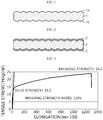
- Fig. 1 is a cross-sectional view showing an electrolytic copper foil for a lithium secondary battery according to an embodiment of the present disclosure.
- the electrolytic copper foil 1 for a lithium secondary battery may be used as a negative electrode current collector of a lithium secondary battery.
- the negative electrode current collector coupled to a negative electrode active material may employ the electrolytic copper foil.
- a positive electrode current collector coupled to a positive electrode active material generally employs a foil made of aluminum (Al).
- the present disclosure is based on a case where the electrolytic copper foil 1 for a lithium secondary battery corresponds to a negative electrode current collector applied to the lithium secondary battery.
- the electrolytic copper foil for a lithium secondary battery has an elongation of about 5% or above, when being measured after a thermal treatment at a high temperature of about 300°C during about 30 minutes.
- 300°C corresponds to a temperature applied during a drying process, after the electrolytic copper foil is coated with a negative electrode active material while manufacturing an actual lithium secondary battery (a lithium secondary battery in which a Si-based negative electrode material is applied and a polyimide-based resin is used as a binder to control swelling of the Si-based negative electrode material).
- the electrolytic copper foil 1 for a lithium secondary battery according to an embodiment of the present disclosure may be manufactured to exhibit an elongation of about 30% or less, after a thermal treatment is applied at a high temperature of about 300°C during about 30 minutes.
- the electrolytic copper foil 1 for a lithium secondary battery exhibits an elongation greater than about 30% after the thermal treatment, a stain rate of the electrolytic copper foil increases too great during a battery manufacturing process, and thus wrinkles are generated at the electrode while the electrode is being transported in a battery manufacture line, after the Si-based negative electrode material is coated to the electrolytic copper foil and dried.
- the breaking strength exhibited by the electrolytic copper foil 1 for a lithium secondary battery after the thermal treatment may be limited to a range of about 19 kgf/mm 2 to 26 kgf/mm 2 .
- the electrolytic copper foil 1 for a lithium secondary battery exhibits a breaking strength less than about 19 kgf/mm 2 after the thermal treatment, the electrolytic copper foil may be torn since the electrolytic copper foil may not endure a tensile stress applied when the electrolytic copper foil and/or the electrode is being wound.
- the electrolytic copper foil 1 for a lithium secondary battery exhibits a breaking strength greater than about 26 kgf/mm 2 after the thermal treatment, wrinkles may be generated at the electrolytic copper foil while the electrode is being transported in a battery manufacture line after the Si-based negative electrode material is coated and dried, since the electrolytic copper foil has small particles and the elongation is lowered.
- a breaking strength ratio exhibited by the electrolytic copper foil 1 for a lithium secondary battery after the thermal treatment namely a value obtained by multiplying 100 by a value obtained by dividing a breaking strength by yield strength, may be controlled to a range of about 110% to 165%.
- an electrolytic copper foil When manufacturing an electrolytic copper foil, it is substantially technically impossible to have a breaking strength ratio less than about 110% after a thermal treatment at about 300°C. Also, if the breaking strength ratio after the thermal treatment is greater than 165%, the electrolytic copper foil may be easily deformed to generate wrinkles while the electrode is being transported after the Si-based negative electrode material is coated and dried.
- the electrolytic copper foil for a lithium secondary battery according to an embodiment of the present disclosure may have suitably controlled properties during its manufacturing process so as to ensure reliability during a lithium secondary battery manufacturing process even after a thermal history is applied at a high temperature of about 300°C.
- both surfaces of the electrolytic copper foil for a lithium secondary battery according to an embodiment of the present disclosure may have surface roughness of about 0.2 ⁇ m to 3.5 ⁇ m, on the basis of Rz (ten-point average roughness).
- the adhesion between the electrolytic copper foil and the active material may deteriorate. If the adhesion between the electrolytic copper foil and the active material deteriorates as above, the active material is more likely to be separated while the lithium secondary battery is in use.
- the active material may not be uniformly coated on the surface 1a of the electrolytic copper foil due to high roughness, thereby deteriorating an adhesion force. If the active material is not uniformly coated as above, the manufactured lithium secondary battery may have a deteriorated discharge capacity retention rate.
- the electrolytic copper foil for a lithium secondary battery may have a thickness of about 3 ⁇ m to 30 ⁇ m.
- the electrolytic copper foil has a thickness of less than about 3 ⁇ m which is too small, during a battery manufacturing process, the electrolytic copper foil may not be easily handled, thereby deteriorating workability. If the electrolytic copper foil has a thickness greater than about 30 ⁇ m, when the electrolytic copper foil is used as a current collector, the volume of the current collector may increase due to the thickness, which makes it difficult to manufacture a high-capacity battery.
- the electrolytic copper foil 1 for a lithium secondary battery may further include an anti-corrosion layer 2 formed on the surface 1a thereof.
- the anti-corrosion layer 2 is selectively formed on the surface 1a of the electrolytic copper foil for the corrosion control of the electrolytic copper foil 1 for a lithium secondary battery, and may contain at least one of chrome (Cr), silane compound and nitride compound.
- the anti-corrosion layer 2 may also play a role of giving heat resistance and/or enhanced coupling with the active material to the electrolytic copper foil 1 for a lithium secondary battery, in addition to the corrosion control.
- An electrolytic copper foil for a lithium secondary battery according to each of the examples and the comparative examples is prepared using an apparatus for electrolytic deposition which includes a rotating drum and a positive electrode plate located at a predetermined interval from the drum, in an electrolytic bath.
- an electrolyte includes a restricted amount of concentration less than 1 g/L by limiting a TOC concentration to 1 g/L or less in copper sulphate containing 50 to 100 g/L of copper and 50 to 150 g/L of sulfuric acid.
- a restricted amount of concentration less than 1 g/L by limiting a TOC concentration to 1 g/L or less in copper sulphate containing 50 to 100 g/L of copper and 50 to 150 g/L of sulfuric acid.
- a current density applied during electrolytic deposition of the electrolytic copper foil according to the example is in the range of 30ASD to 80ASD, and the temperature of the electrolyte is adjusted to the range of 40 to 70°C.
- Hydroxyethyl cellulose (HEC) 3-(Benzothiazolyl-2-mercapto)-propyl-sulfonic acid), and polymer nitrides (for example, gelatin) are used as organic additives.
- the additives may include 2 to 15 mg/L of HEC, 2 to 15 mg/L of (3-(Benzothiazolyl-2-mercapto)-propyl-sulfonic acid, and 5 to 20 mg/L of gelatin (2300 g/mole) which is a polymer nitride.
- a concentration of TOC which is organic impurity in copper sulfate (50 to 100 g/L of copper and 50 to 150 g/L of sulfuric acid) used as an electrolyte during a foil preparing process, is greater than 1 g/L, or a current density applied for electrolytic deposition of the electrolytic copper foil is out of the range of 30ASD to 80ASD.
- compositions of the electrolyte and electrolyzing conditions to prepare an electrolytic copper foil according to each of the examples and the comparative examples are as follows.
- the electrolytic copper foil 1 prepared according to each of the examples and the comparative examples may have an anti-corrosion layer 2 formed on a surface 1a thereof, as shown in Fig. 2 .
- a negative electrode material was coated to an electrolytic copper foil and then dried at 300°C, and then made into a jelly roll by using a roll-to-roll battery manufacturing facility. During this process, workability of the electrolytic copper foil was evaluated, while setting a winding tension to be 160N at a linear speed of 5 to 10 mpm. When the electrolytic copper foil coated with the negative electrode material is wound as much as 1,000 m, if the electrolytic copper foil acquired wrinkles or was torn, the electrolytic copper foil was determined as having inferiority.
- Examples 1 to 3 and Comparative Examples 1 to 3 in Table 2 are compared with each other, it may be understood that inferiority does not occur at a product while the electrolytic copper foil is being manufactured or while the manufactured secondary battery is being charged or discharged, only when the electrolytic copper foil has an elongation of 5% or above after the thermal treatment.
- Examples 4 to 6 and Comparative Examples 4 to 6 in Table 2 are compared with each other, it may be understood that inferiority does not occur at a product while the electrolytic copper foil is being manufactured, only when the electrolytic copper foil has an elongation of 30% or less after the thermal treatment.
- Example 6 and Comparative Example 10 in Table 2 are compared with each other, it may be understood that inferiority does not occur at a product while the electrolytic copper foil is being manufactured, only when the electrolytic copper foil has a breaking strength of 19 kgf/mm 2 or above after the thermal treatment.
- Example 7 and Comparative Example 9 in Table 2 are compared with each other, it may be understood that inferiority does not occur at a product while the electrolytic copper foil is being manufactured, only when the electrolytic copper foil has a breaking strength of 26 kgf/mm 2 or less after the thermal treatment.
- Example 6 and Comparative Examples 6 to 8 in Table 2 are compared with each other, it may be understood that inferiority does not occur at a product while the electrolytic copper foil is being manufactured, only when the electrolytic copper foil has a breaking strength ratio of 165% or less after the thermal treatment (however, in a technical aspect, the breaking strength ratio cannot be lowered below 110% at the electrolytic copper foil to which a thermal treatment is applied at 300°C for 30 minutes).
- the electrolytic copper foil for a lithium secondary battery may have excellent quality suitable for making a lithium secondary battery when the electrolytic copper foil has an elongation in the range of about 5% to 30%, a breaking strength in the range of about 19 kgf/mm 2 to 26 kgf/mm 2 and a breaking strength ratio in the range of about 110% to 165%, after thermal treatment is applied thereto at about 300°.
- the present disclosure provides an electrolytic copper foil for a lithium secondary battery, which is used for a negative electrode current collector applied to a lithium secondary battery, and a lithium secondary battery comprising the same.
Landscapes
- Chemical & Material Sciences (AREA)
- Engineering & Computer Science (AREA)
- Chemical Kinetics & Catalysis (AREA)
- Electrochemistry (AREA)
- General Chemical & Material Sciences (AREA)
- Materials Engineering (AREA)
- Manufacturing & Machinery (AREA)
- Physics & Mathematics (AREA)
- Thermal Sciences (AREA)
- Crystallography & Structural Chemistry (AREA)
- Mechanical Engineering (AREA)
- Metallurgy (AREA)
- Organic Chemistry (AREA)
- Composite Materials (AREA)
- Cell Electrode Carriers And Collectors (AREA)
- Secondary Cells (AREA)
Abstract
Description
- The present disclosure relates to an electrolytic copper foil for a lithium secondary battery and a lithium secondary battery comprising the same, and more particularly, to an electrolytic copper foil for a lithium secondary battery and a lithium secondary battery comprising the same, which has an elongation over a certain level after a thermal history is applied during an actual lithium secondary battery manufacturing process. The present application claims priority to Korean Patent Application No.
10-2015-0086856 filed on June 18, 2015 10-2016-0049472 filed on April 22, 2016 - At present, graphite-based materials are commonly used as a negative electrode material of a lithium secondary battery, but the graphite-based negative electrode materials have a small battery capacity per weight and thus are not capable of coping with the demands on larger mobile battery capacity.
- In order to cope with the demands on larger battery capacity, a silicon-based negative electrode active material is actively investigated as a next-generation negative electrode material, because the silicon-based negative electrode active material has a much greater capacity per weight in comparison to the silicon-based negative electrode active material.
- However, if an Si-based negative electrode material is used as the negative electrode active material, the negative electrode is seriously swelled, and thus if the Si-based negative electrode material is commercially used for a copper foil, during a charging/discharging process, the negative electrode current collector may be torn, which may greatly deteriorating the charging/discharging efficiency.
- In addition, if the Si-based negative electrode material is used, a polyimide-based resin capable of controlling the swelling of the negative electrode material is used as a binder.
- In this case, since the negative electrode material coated on a copper foil is dried at a high temperature of about 300°C, an electrolytic copper foil for a lithium secondary battery serving as a negative electrode current collector of the lithium secondary battery should have suitable properties as an electrolytic copper foil for a lithium secondary battery, even though a thermal history is applied at a high temperature of about 300°C for a predetermined time.
- The present disclosure is directed to providing an electrolytic copper foil for a lithium secondary battery, which may maintain excellent properties over a certain level, even after a thermal history is applied at a high temperature.
- However, the technical objects to be accomplished by the present disclosure are not limited to the above, and other objects not mentioned above may be clearly understood from the following detailed description.
- After the researches to accomplish the above object, the inventors of the present disclosure have found that if an electrolytic copper foil for a lithium secondary battery to which a thermal history is applied at a high temperature has an elongation over a certain level, even though the negative electrode material is swelled while the secondary battery is being charged or discharged, the negative electrode current collector is not torn.
- The electrolytic copper foil for a lithium secondary battery according to an embodiment of the present disclosure is applied as a negative electrode current collector of a lithium secondary battery, and after a thermal treatment at 300°C for 30 minutes, the electrolytic copper foil for a lithium secondary battery has an elongation of 5% or above.
- The electrolytic copper foil for a lithium secondary battery may have an elongation of 5% to 30%, after a thermal treatment at 300°C for 30 minutes.
- The electrolytic copper foil for a lithium secondary battery may have a breaking strength of 19 kgf/mm2 to 26 kgf/mm2, after a thermal treatment at 300°C for 30 minutes.
- The electrolytic copper foil for a lithium secondary battery may have a breaking strength ratio ((breaking strength/yield strength)×100) of 110% to 165%, after a thermal treatment at 300°C for 30 minutes.
- The electrolytic copper foil for a lithium secondary battery may have an anti-corrosion layer containing at least one of chrome (Cr), silane compound and nitride compound, on both surfaces thereof.
- The electrolytic copper foil for a lithium secondary battery may have a thickness of 3 µm to 30 µm.
- Both surfaces of the electrolytic copper foil for a lithium secondary battery may have a surface roughness of 3.5 µm or less on the basis of Rz.
- Meanwhile, a lithium secondary battery according to an embodiment of the present disclosure is manufactured by applying the electrolytic copper foil for a lithium secondary battery, described above, as a negative electrode current collector.
- According to an embodiment of the present disclosure, it is possible to provide an electrolytic copper foil for a lithium secondary battery and a lithium secondary battery comprising the same, which may maintain excellent quality after a high-temperature thermal history is applied, which must be performed during an actual lithium secondary battery manufacturing process.
- The accompanying drawings illustrate a preferred embodiment of the present disclosure and together with the foregoing disclosure, serve to provide further understanding of the technical spirit of the present disclosure, and thus, the present disclosure is not construed as being limited to the drawing.
-
Fig. 1 is a cross-sectional view showing an electrolytic copper foil for a lithium secondary battery according to an embodiment of the present disclosure. -
Fig. 2 is a cross-sectional view showing an anti-corrosion layer formed at a surface of the electrolytic copper foil for a lithium secondary battery according to an embodiment of the present disclosure. -
Fig. 3 is a graph showing properties after a high-temperature thermal history is applied to the electrolytic copper foil for a lithium secondary battery according to an embodiment of the present disclosure. - Hereinafter, preferred embodiments of the present disclosure will be described in detail with reference to the accompanying drawings. Prior to the description, it should be understood that the terms used in the specification and the appended claims should not be construed as limited to general and dictionary meanings, but interpreted based on the meanings and concepts corresponding to technical aspects of the present disclosure on the basis of the principle that the inventor is allowed to define terms appropriately for the best explanation. Therefore, the description proposed herein is just a preferable example for the purpose of illustrations only, not intended to limit the scope of the disclosure, so it should be understood that other equivalents and modifications could be made thereto without departing from the scope of the disclosure.
- First, an electrolytic copper foil for a lithium secondary battery according to an embodiment of the present disclosure will be described with reference to
Fig. 1 . -
Fig. 1 is a cross-sectional view showing an electrolytic copper foil for a lithium secondary battery according to an embodiment of the present disclosure. - The electrolytic copper foil 1 for a lithium secondary battery according to an embodiment of the present disclosure, shown in
Fig. 1 , may be used as a negative electrode current collector of a lithium secondary battery. In other words, in the lithium secondary battery, the negative electrode current collector coupled to a negative electrode active material may employ the electrolytic copper foil. - Meanwhile, when manufacturing a lithium secondary battery, a positive electrode current collector coupled to a positive electrode active material generally employs a foil made of aluminum (Al).
- Accordingly, the present disclosure is based on a case where the electrolytic copper foil 1 for a lithium secondary battery corresponds to a negative electrode current collector applied to the lithium secondary battery.
- The electrolytic copper foil for a lithium secondary battery according to an embodiment of the present disclosure has an elongation of about 5% or above, when being measured after a thermal treatment at a high temperature of about 300°C during about 30 minutes. Here, 300°C corresponds to a temperature applied during a drying process, after the electrolytic copper foil is coated with a negative electrode active material while manufacturing an actual lithium secondary battery (a lithium secondary battery in which a Si-based negative electrode material is applied and a polyimide-based resin is used as a binder to control swelling of the Si-based negative electrode material). Here, it is possible to prevent the electrolytic copper foil from being torn at a secondary battery charging/discharging test, only when the electrolytic copper foil exhibits an elongation of about 5% or above after the thermal treatment.
- In addition, the electrolytic copper foil 1 for a lithium secondary battery according to an embodiment of the present disclosure may be manufactured to exhibit an elongation of about 30% or less, after a thermal treatment is applied at a high temperature of about 300°C during about 30 minutes.
- If the electrolytic copper foil 1 for a lithium secondary battery exhibits an elongation greater than about 30% after the thermal treatment, a stain rate of the electrolytic copper foil increases too great during a battery manufacturing process, and thus wrinkles are generated at the electrode while the electrode is being transported in a battery manufacture line, after the Si-based negative electrode material is coated to the electrolytic copper foil and dried.
- Meanwhile, the breaking strength exhibited by the electrolytic copper foil 1 for a lithium secondary battery after the thermal treatment may be limited to a range of about 19 kgf/mm2 to 26 kgf/mm2.
- If the electrolytic copper foil 1 for a lithium secondary battery exhibits a breaking strength less than about 19 kgf/mm2 after the thermal treatment, the electrolytic copper foil may be torn since the electrolytic copper foil may not endure a tensile stress applied when the electrolytic copper foil and/or the electrode is being wound.
- On the contrary, if the electrolytic copper foil 1 for a lithium secondary battery exhibits a breaking strength greater than about 26 kgf/mm2 after the thermal treatment, wrinkles may be generated at the electrolytic copper foil while the electrode is being transported in a battery manufacture line after the Si-based negative electrode material is coated and dried, since the electrolytic copper foil has small particles and the elongation is lowered.
- In addition, a breaking strength ratio exhibited by the electrolytic copper foil 1 for a lithium secondary battery after the thermal treatment, namely a value obtained by multiplying 100 by a value obtained by dividing a breaking strength by yield strength, may be controlled to a range of about 110% to 165%.
- When manufacturing an electrolytic copper foil, it is substantially technically impossible to have a breaking strength ratio less than about 110% after a thermal treatment at about 300°C. Also, if the breaking strength ratio after the thermal treatment is greater than 165%, the electrolytic copper foil may be easily deformed to generate wrinkles while the electrode is being transported after the Si-based negative electrode material is coated and dried.
- As described above, the electrolytic copper foil for a lithium secondary battery according to an embodiment of the present disclosure may have suitably controlled properties during its manufacturing process so as to ensure reliability during a lithium secondary battery manufacturing process even after a thermal history is applied at a high temperature of about 300°C.
- Meanwhile, both surfaces of the electrolytic copper foil for a lithium secondary battery according to an embodiment of the present disclosure may have surface roughness of about 0.2 µm to 3.5 µm, on the basis of Rz (ten-point average roughness).
- If the surface roughness is less than about 0.2 µm, the adhesion between the electrolytic copper foil and the active material may deteriorate. If the adhesion between the electrolytic copper foil and the active material deteriorates as above, the active material is more likely to be separated while the lithium secondary battery is in use.
- If the surface roughness is greater than about 3.5 µm, the active material may not be uniformly coated on the
surface 1a of the electrolytic copper foil due to high roughness, thereby deteriorating an adhesion force. If the active material is not uniformly coated as above, the manufactured lithium secondary battery may have a deteriorated discharge capacity retention rate. - In addition, the electrolytic copper foil for a lithium secondary battery may have a thickness of about 3 µm to 30 µm.
- If the electrolytic copper foil has a thickness of less than about 3 µm which is too small, during a battery manufacturing process, the electrolytic copper foil may not be easily handled, thereby deteriorating workability. If the electrolytic copper foil has a thickness greater than about 30 µm, when the electrolytic copper foil is used as a current collector, the volume of the current collector may increase due to the thickness, which makes it difficult to manufacture a high-capacity battery.
- Meanwhile, referring to
Fig. 2 , the electrolytic copper foil 1 for a lithium secondary battery according to an embodiment of the present disclosure may further include ananti-corrosion layer 2 formed on thesurface 1a thereof. - The
anti-corrosion layer 2 is selectively formed on thesurface 1a of the electrolytic copper foil for the corrosion control of the electrolytic copper foil 1 for a lithium secondary battery, and may contain at least one of chrome (Cr), silane compound and nitride compound. - The
anti-corrosion layer 2 may also play a role of giving heat resistance and/or enhanced coupling with the active material to the electrolytic copper foil 1 for a lithium secondary battery, in addition to the corrosion control. - Hereinafter, after preparing electrolytic copper foils according to examples satisfying features of the present disclosure as well as comparative examples, properties of the electrolytic copper foils according to the examples and the comparative examples are compared to investigate the features of the present disclosure more clearly.
- An electrolytic copper foil for a lithium secondary battery according to each of the examples and the comparative examples is prepared using an apparatus for electrolytic deposition which includes a rotating drum and a positive electrode plate located at a predetermined interval from the drum, in an electrolytic bath.
- During a foil preparing process using such an apparatus for electrolytic deposition, in order to prepare an electrolytic copper foil for a lithium secondary battery according to an example of the present disclosure, an electrolyte includes a restricted amount of concentration less than 1 g/L by limiting a TOC concentration to 1 g/L or less in copper sulphate containing 50 to 100 g/L of copper and 50 to 150 g/L of sulfuric acid. For this, in order to maintain cleanliness of the electrolyte according to the example of the present disclosure, before a copper wire (Cu wire) is put into sulfuric acid, sulfuric acid is cleaned by removing impurities or the like, and also water and air are put into the electrolyte to maintain as a clean solution.
- In addition, a current density applied during electrolytic deposition of the electrolytic copper foil according to the example is in the range of 30ASD to 80ASD, and the temperature of the electrolyte is adjusted to the range of 40 to 70°C. Hydroxyethyl cellulose (HEC), 3-(Benzothiazolyl-2-mercapto)-propyl-sulfonic acid), and polymer nitrides (for example, gelatin) are used as organic additives. At this time, the additives may include 2 to 15 mg/L of HEC, 2 to 15 mg/L of (3-(Benzothiazolyl-2-mercapto)-propyl-sulfonic acid, and 5 to 20 mg/L of gelatin (2300 g/mole) which is a polymer nitride.
- Meanwhile, in order to prepare an electrolytic copper foil for a lithium secondary battery according to a comparative example, a method different from the above is applied. In detail, a concentration of TOC, which is organic impurity in copper sulfate (50 to 100 g/L of copper and 50 to 150 g/L of sulfuric acid) used as an electrolyte during a foil preparing process, is greater than 1 g/L, or a current density applied for electrolytic deposition of the electrolytic copper foil is out of the range of 30ASD to 80ASD.
- Detailed compositions of the electrolyte and electrolyzing conditions to prepare an electrolytic copper foil according to each of the examples and the comparative examples are as follows.
- Copper: 75 g/L
- Sulfuric acid: 100 g/L
- Temperature of electrolyte: 55°C
- Current density: see Table 1
- HEC: 10 mg/L
- (3-(Benzothiazolyl-2-mercapto)-propyl-sulfonic acid: 10 mg/L
- Gelatin (2300 g/mole): 15 mg/L
- TOC concentration in the electrolyte: see Table 1
- For the electrolytic copper foils according to the examples and the comparative examples as shown in Table 1, it was checked whether the electrolytic copper foil prepared according to each of the examples and the comparative examples is disconnected or not along with the degree of workability during a battery manufacturing process, depending on ranges of an elongation, a breaking strength and a breaking strength ratio, as described below in detail.
- Now, with reference to Table 2 below, effects depending on properties of copper foils after a thermal treatment will be investigated by comparing the electrolytic copper foils prepared according to the examples and the comparative examples. At this time, the electrolytic copper foil 1 prepared according to each of the examples and the comparative examples may have an
anti-corrosion layer 2 formed on asurface 1a thereof, as shown inFig. 2 . - A negative electrode material was coated to an electrolytic copper foil and then dried at 300°C, and then made into a jelly roll by using a roll-to-roll battery manufacturing facility. During this process, workability of the electrolytic copper foil was evaluated, while setting a winding tension to be 160N at a linear speed of 5 to 10 mpm. When the electrolytic copper foil coated with the negative electrode material is wound as much as 1,000 m, if the electrolytic copper foil acquired wrinkles or was torn, the electrolytic copper foil was determined as having inferiority.
- 2 parts by weight of polyimide monomer and 2 parts by weight of carboxymethyl cellulose (CMC) were mixed on the basis of 100 parts by of silicon-carbon composite weight negative electrode material as a negative electrode active material, and made into slurry by using distilled water as a solvent. Also, the negative electrode material was coated on the electrolytic copper foil prepared according to each of the examples and the comparative examples and having a width of 20 cm and then dried, thereby preparing a cylindrical lithium secondary battery sample of 18650 standard.
- After the cylindrical lithium secondary battery sample was prepared using the above process, a charging/discharging test was performed 200 times at 0.2C, and then the lithium secondary battery was dissembled. Here, it was checked whether the copper foil coated with the negative electrode material is torn, and if the copper foil was torn, the copper foil was determined as having inferiority.
-
- Sample width: 12.7mm
- Distance between grips: 50mm
- Measurement speed: 50mm/min
- Thermal treatment condition: 300°C /30 minutes
- Yield strength: yield strength was obtained after 0.2% offset at a SS curve
- If Examples 1 to 3 and Comparative Examples 1 to 3 in Table 2 are compared with each other, it may be understood that inferiority does not occur at a product while the electrolytic copper foil is being manufactured or while the manufactured secondary battery is being charged or discharged, only when the electrolytic copper foil has an elongation of 5% or above after the thermal treatment.
- Similarly, if Examples 4 to 6 and Comparative Examples 4 to 6 in Table 2 are compared with each other, it may be understood that inferiority does not occur at a product while the electrolytic copper foil is being manufactured, only when the electrolytic copper foil has an elongation of 30% or less after the thermal treatment.
- Next, if Example 6 and Comparative Example 10 in Table 2 are compared with each other, it may be understood that inferiority does not occur at a product while the electrolytic copper foil is being manufactured, only when the electrolytic copper foil has a breaking strength of 19 kgf/mm2 or above after the thermal treatment.
- Similarly, if Example 7 and Comparative Example 9 in Table 2 are compared with each other, it may be understood that inferiority does not occur at a product while the electrolytic copper foil is being manufactured, only when the electrolytic copper foil has a breaking strength of 26 kgf/mm2 or less after the thermal treatment.
- Lastly, if Example 6 and Comparative Examples 6 to 8 in Table 2 are compared with each other, it may be understood that inferiority does not occur at a product while the electrolytic copper foil is being manufactured, only when the electrolytic copper foil has a breaking strength ratio of 165% or less after the thermal treatment (however, in a technical aspect, the breaking strength ratio cannot be lowered below 110% at the electrolytic copper foil to which a thermal treatment is applied at 300°C for 30 minutes).
- Therefore, if the above results are synthetically put into consideration, it may be understood that the electrolytic copper foil for a lithium secondary battery may have excellent quality suitable for making a lithium secondary battery when the electrolytic copper foil has an elongation in the range of about 5% to 30%, a breaking strength in the range of about 19 kgf/mm2 to 26 kgf/mm2 and a breaking strength ratio in the range of about 110% to 165%, after thermal treatment is applied thereto at about 300°.
- The present disclosure has been described in detail. However, it should be understood that the detailed description and specific examples, while indicating preferred embodiments of the disclosure, are given by way of illustration only, since various changes and modifications within the scope of the disclosure will become apparent to those skilled in the art from this detailed description.
- The present disclosure provides an electrolytic copper foil for a lithium secondary battery, which is used for a negative electrode current collector applied to a lithium secondary battery, and a lithium secondary battery comprising the same.
| TOC (g/L) | current density (ASD) | |
| Example 1 | 0.7 | 40 |
| Example 2 | 0.8 | 40 |
| Example 3 | 0.9 | 50 |
| Example 4 | 0.3 | 60 |
| Example 5 | 0.5 | 60 |
| Example 6 | 0.7 | 70 |
| Example 7 | 0.3 | 50 |
| Example 8 | 0.9 | 60 |
| Example 9 | 0.3 | 70 |
| Comparative Example 1 | 1.2 | 30 |
| Comparative Example 2 | 1.5 | 40 |
| Comparative Example 3 | 1.7 | 40 |
| Comparative Example 4 | 2 | 50 |
| Comparative Example 5 | 0.5 | 90 |
| Comparative Example 6 | 0.7 | 20 |
| Comparative Example 7 | 1.2 | 40 |
| Comparative Example 8 | 1.1 | 40 |
| Comparative Example 9 | 1.8 | 50 |
| Comparative Example 10 | 0.3 | 85 |
| elongation [%] | breaking strength [kgf/mm2] | yield strength [kgf/mm2] | breaking strength ratio [%} | workability | tear after charging/di scharging | |
| Example 1 | 5.2 | 19.2 | 16.3 | 118 | good | no |
| Example 2 | 5.1 | 19.4 | 14.4 | 135 | good | no |
| Example 3 | 29.2 | 20.4 | 17.3 | 118 | good | no |
| Example 4 | 29.5 | 20.3 | 15.0 | 135 | good | no |
| Example 5 | 29.7 | 19.7 | 12.0 | 164 | good | no |
| Example 6 | 5.2 | 25.9 | 21.9 | 118 | good | no |
| Example 7 | 8.4 | 24.2 | 15.2 | 159 | good | no |
| Example 8 | 29.2 | 25.9 | 21.9 | 118 | good | no |
| Example 9 | 29.5 | 25.3 | 18.7 | 135 | good | no |
| Comparative Example 1 | 4.8 | 25.9 | 21.9 | 118 | good | yes |
| Comparative | 4.7 | 25.3 | 19.2 | 132 | good | yes |
| Example 2 | ||||||
| Comparative Example 3 | 4.7 | 24.7 | 15.8 | 156 | good | yes |
| Comparative Example 4 | 30.6 | 19.7 | 16.3 | 121 | wrinkle | not available |
| Comparative Example 5 | 30.9 | 19.2 | 14.2 | 135 | wrinkle | not available |
| Comparative Example 6 | 30.5 | 21 | 11.7 | 179 | wrinkle | not available |
| Comparative Example 7 | 5.4 | 25.5 | 15.3 | 166 | wrinkle | not available |
| Comparative Example 8 | 29.7 | 19.2 | 11.4 | 169 | wrinkle | not available |
| Comparative Example 9 | 6 | 26.3 | 22.3 | 118 | wrinkle | not available |
| Comparative Example 10 | 29.3 | 18.7 | 11.4 | 164 | torn | not available |
Claims (7)
- An electrolytic copper foil for a lithium secondary battery, which is applied as a negative electrode current collector of a lithium secondary battery,
wherein after a thermal treatment at 300°C for 30 minutes, the electrolytic copper foil for a lithium secondary battery has an elongation of 5% to 30%. - The electrolytic copper foil for a lithium secondary battery according to claim 1,
wherein the electrolytic copper foil for a lithium secondary battery has a breaking strength of 19 kgf/mm2 to 26 kgf/mm2, after a thermal treatment at 300°C for 30 minutes. - The electrolytic copper foil for a lithium secondary battery according to claim 2,
wherein the electrolytic copper foil for a lithium secondary battery has a breaking strength ratio ((breaking strength/yield strength)×100) of 110% to 165%, after a thermal treatment at 300°C for 30 minutes. - The electrolytic copper foil for a lithium secondary battery according to any one of claims 1 to 3,
wherein the electrolytic copper foil for a lithium secondary battery has an anti-corrosion layer containing at least one of chrome (Cr), silane compound and nitride compound, on both surfaces thereof. - The electrolytic copper foil for a lithium secondary battery according to any one of claims 1 to 3,
wherein the electrolytic copper foil for a lithium secondary battery has a thickness of 3 µm to 30 µm. - The electrolytic copper foil for a lithium secondary battery according to any one of claims 1 to 3,
wherein both surfaces of the electrolytic copper foil for a lithium secondary battery have a surface roughness of 3.5 µm or less on the basis of Rz. - A lithium secondary battery, to which the electrolytic copper foil for a lithium secondary battery according to any one of claims 1 to 3 is applied as a negative electrode current collector.
Priority Applications (1)
| Application Number | Priority Date | Filing Date | Title |
|---|---|---|---|
| PL16811818T PL3312920T3 (en) | 2015-06-18 | 2016-05-11 | Electrolytic copper foil for lithium secondary battery and lithium secondary battery including same |
Applications Claiming Priority (3)
| Application Number | Priority Date | Filing Date | Title |
|---|---|---|---|
| KR20150086856 | 2015-06-18 | ||
| KR1020160049472A KR102122425B1 (en) | 2015-06-18 | 2016-04-22 | Electrolytic copper foil for lithium secondary battery and Lithium secondary battery comprising the same |
| PCT/KR2016/004925 WO2016204405A1 (en) | 2015-06-18 | 2016-05-11 | Electrolytic copper foil for lithium secondary battery and lithium secondary battery including same |
Publications (3)
| Publication Number | Publication Date |
|---|---|
| EP3312920A1 true EP3312920A1 (en) | 2018-04-25 |
| EP3312920A4 EP3312920A4 (en) | 2018-04-25 |
| EP3312920B1 EP3312920B1 (en) | 2020-03-18 |
Family
ID=57724756
Family Applications (1)
| Application Number | Title | Priority Date | Filing Date |
|---|---|---|---|
| EP16811818.0A Active EP3312920B1 (en) | 2015-06-18 | 2016-05-11 | Electrolytic copper foil for lithium secondary battery and lithium secondary battery including same |
Country Status (8)
| Country | Link |
|---|---|
| US (1) | US10418635B2 (en) |
| EP (1) | EP3312920B1 (en) |
| JP (1) | JP6584531B2 (en) |
| KR (1) | KR102122425B1 (en) |
| CN (1) | CN106663816B (en) |
| HU (1) | HUE049264T2 (en) |
| PL (1) | PL3312920T3 (en) |
| TW (1) | TWI651420B (en) |
Cited By (1)
| Publication number | Priority date | Publication date | Assignee | Title |
|---|---|---|---|---|
| US11145867B2 (en) | 2019-02-01 | 2021-10-12 | Chang Chun Petrochemical Co., Ltd. | Surface treated copper foil |
Families Citing this family (9)
| Publication number | Priority date | Publication date | Assignee | Title |
|---|---|---|---|---|
| KR102130011B1 (en) * | 2015-06-23 | 2020-07-03 | 케이씨에프테크놀로지스 주식회사 | Electrolytic copper foil for lithium secondary battery and Lithium secondary battery comprising the same |
| KR102725487B1 (en) * | 2017-01-04 | 2024-11-01 | 에스케이넥실리스 주식회사 | Electrolytic Copper Foil with Optimized Peak Roughness, Electrode Comprising The Same, Secondary Battery Comprising The Same, and Method for Manufacturing The Same |
| KR102721378B1 (en) * | 2017-02-03 | 2024-10-23 | 에스케이넥실리스 주식회사 | High Strength Electrolytic Copper Foil with Minimized Wrinkle and Curl, Electrode Comprising The Same, Secondary Battery Comprising The Same, and Method for Manufacturing The Same |
| KR102824073B1 (en) * | 2017-02-22 | 2025-06-20 | 에스케이넥실리스 주식회사 | Copper foil with enhanced adhesion property by having coating layer, electrode comprisng the same, secondary battery comprising the same and method for manufacturing the same |
| TWI660541B (en) * | 2018-10-01 | 2019-05-21 | 長春石油化學股份有限公司 | Copper foil for current collector of lithium secondary battery and negative electrode including the same |
| TWI731330B (en) * | 2019-04-30 | 2021-06-21 | 南亞塑膠工業股份有限公司 | Electrolytic copper foil, method for producing the same, and lithium ion secondary battery |
| WO2023057067A1 (en) * | 2021-10-07 | 2023-04-13 | Circuit Foil Luxembourg | Copper foil with high engery at break and secondary battery comprising the same |
| WO2023057068A1 (en) * | 2021-10-07 | 2023-04-13 | Circuit Foil Luxembourg | Copper foil with high engery at break and secondary battery comprising the same |
| LU501043B1 (en) * | 2021-12-20 | 2023-06-20 | Circuit Foil Luxembourg | Method for producing an electrodeposited copper foil for lithium secondary battery |
Family Cites Families (16)
| Publication number | Priority date | Publication date | Assignee | Title |
|---|---|---|---|---|
| JP3850155B2 (en) | 1998-12-11 | 2006-11-29 | 日本電解株式会社 | Electrolytic copper foil, copper foil for current collector of secondary battery and secondary battery |
| TW200714666A (en) * | 2005-07-29 | 2007-04-16 | Sumitomo Chemical Co | Laminate of liquid crystalline polyester with copper foil |
| JP4470917B2 (en) * | 2006-06-29 | 2010-06-02 | ソニー株式会社 | Electrode current collector, battery electrode and secondary battery |
| MY158819A (en) * | 2007-04-20 | 2016-11-15 | Jx Nippon Mining & Metals Corp | Electrolytic copper foil for lithium rechargeable battery and process for producing the copper foil |
| CN102959135B (en) | 2010-07-01 | 2016-03-09 | 三井金属矿业株式会社 | Electrolytic copper foil and its manufacturing method |
| JP5276158B2 (en) * | 2010-12-27 | 2013-08-28 | 古河電気工業株式会社 | Lithium ion secondary battery, negative electrode for battery, and electrolytic copper foil for battery negative electrode current collector |
| JP5074611B2 (en) * | 2011-03-30 | 2012-11-14 | Jx日鉱日石金属株式会社 | Electrolytic copper foil for secondary battery negative electrode current collector and method for producing the same |
| JP2013001982A (en) * | 2011-06-20 | 2013-01-07 | Jx Nippon Mining & Metals Corp | Rolled copper foil |
| JP5391366B2 (en) * | 2011-06-28 | 2014-01-15 | 古河電気工業株式会社 | Electrolytic copper foil, wiring board using the electrolytic copper foil, and flexible wiring board |
| WO2013065699A1 (en) | 2011-10-31 | 2013-05-10 | 古河電気工業株式会社 | High strength, high heat-resistance electrolytic copper foil, and manufacturing method for same |
| JP5981165B2 (en) * | 2011-12-27 | 2016-08-31 | 古河電気工業株式会社 | Copper foil, negative electrode of secondary battery, secondary battery, and printed circuit board |
| JP5718476B2 (en) | 2012-06-27 | 2015-05-13 | 古河電気工業株式会社 | Electrolytic copper foil for lithium ion secondary battery, negative electrode of lithium ion secondary battery, and lithium ion secondary battery |
| JP2014009365A (en) * | 2012-06-27 | 2014-01-20 | Furukawa Electric Co Ltd:The | Electrolytic copper foil, lithium ion secondary battery negative pole electrode, and lithium ion secondary battery |
| TWI518210B (en) * | 2013-01-31 | 2016-01-21 | 三井金屬鑛業股份有限公司 | Electrolytic copper foil, method for producing the same, and surface-treated copper foil obtained by using the same |
| KR101571063B1 (en) | 2013-11-28 | 2015-11-24 | 일진머티리얼즈 주식회사 | Electrolytic copper foil, electric component and battery comprising the foil and preparation method thereof |
| JP2014101581A (en) * | 2013-12-25 | 2014-06-05 | Furukawa Electric Co Ltd:The | Electrolytic copper alloy foil, its manufacturing method, electrolyte used for its manufacturing, negative electrode collector for secondary battery, secondary battery and its electrode |
-
2016
- 2016-04-22 KR KR1020160049472A patent/KR102122425B1/en active Active
- 2016-05-11 CN CN201680000866.XA patent/CN106663816B/en active Active
- 2016-05-11 PL PL16811818T patent/PL3312920T3/en unknown
- 2016-05-11 HU HUE16811818A patent/HUE049264T2/en unknown
- 2016-05-11 JP JP2017565096A patent/JP6584531B2/en active Active
- 2016-05-11 US US15/315,774 patent/US10418635B2/en active Active
- 2016-05-11 EP EP16811818.0A patent/EP3312920B1/en active Active
- 2016-06-15 TW TW105118807A patent/TWI651420B/en active
Cited By (1)
| Publication number | Priority date | Publication date | Assignee | Title |
|---|---|---|---|---|
| US11145867B2 (en) | 2019-02-01 | 2021-10-12 | Chang Chun Petrochemical Co., Ltd. | Surface treated copper foil |
Also Published As
| Publication number | Publication date |
|---|---|
| HUE049264T2 (en) | 2020-09-28 |
| TW201700738A (en) | 2017-01-01 |
| US20180102545A1 (en) | 2018-04-12 |
| KR20160149996A (en) | 2016-12-28 |
| JP2018524772A (en) | 2018-08-30 |
| PL3312920T3 (en) | 2020-07-27 |
| JP6584531B2 (en) | 2019-10-02 |
| EP3312920B1 (en) | 2020-03-18 |
| KR102122425B1 (en) | 2020-06-12 |
| CN106663816A (en) | 2017-05-10 |
| US10418635B2 (en) | 2019-09-17 |
| CN106663816B (en) | 2020-02-11 |
| EP3312920A4 (en) | 2018-04-25 |
| TWI651420B (en) | 2019-02-21 |
Similar Documents
| Publication | Publication Date | Title |
|---|---|---|
| EP3312920A1 (en) | Electrolytic copper foil for lithium secondary battery and lithium secondary battery including same | |
| US10218004B2 (en) | Electrolytic copper foil for lithium secondary battery and lithium secondary battery comprising the same | |
| CN108075098B (en) | Electrolytic copper foil, electrode for secondary battery, and method for producing electrolytic copper foil | |
| KR101661006B1 (en) | Porous polypropylene film roll | |
| CN108306022A (en) | Electrolytic copper foil, electrode, secondary cell and its manufacturing method comprising it | |
| EP3316364B1 (en) | Electrolytic copper foil for lithium secondary battery and lithium secondary battery including same | |
| KR102456668B1 (en) | Copper foil with high engery at break and secondary battery comprsing the same | |
| KR102524929B1 (en) | Copper foil with high engery at break and secondary battery comprsing the same | |
| US10403898B2 (en) | Electrolytic copper foil having high tensile strength, electrode including the same, secondary battery including the same, and method of manufacturing the same | |
| CN120476485A (en) | Metal foil having excellent edge break elongation and secondary battery including the same | |
| WO2023117127A1 (en) | Electrolytic copper foil and secondary battery comprising the same | |
| CN110880601A (en) | Copper foil with minimized swelling and tearing, electrode including the same, secondary battery including the same, and method of making the same | |
| WO2016204405A1 (en) | Electrolytic copper foil for lithium secondary battery and lithium secondary battery including same |
Legal Events
| Date | Code | Title | Description |
|---|---|---|---|
| STAA | Information on the status of an ep patent application or granted ep patent |
Free format text: STATUS: THE INTERNATIONAL PUBLICATION HAS BEEN MADE |
|
| PUAI | Public reference made under article 153(3) epc to a published international application that has entered the european phase |
Free format text: ORIGINAL CODE: 0009012 |
|
| STAA | Information on the status of an ep patent application or granted ep patent |
Free format text: STATUS: REQUEST FOR EXAMINATION WAS MADE |
|
| 17P | Request for examination filed |
Effective date: 20180108 |
|
| A4 | Supplementary search report drawn up and despatched |
Effective date: 20180326 |
|
| AK | Designated contracting states |
Kind code of ref document: A1 Designated state(s): AL AT BE BG CH CY CZ DE DK EE ES FI FR GB GR HR HU IE IS IT LI LT LU LV MC MK MT NL NO PL PT RO RS SE SI SK SM TR |
|
| AX | Request for extension of the european patent |
Extension state: BA ME |
|
| RAP1 | Party data changed (applicant data changed or rights of an application transferred) |
Owner name: KCF TECHNOLOGIES CO., LTD. |
|
| DAV | Request for validation of the european patent (deleted) | ||
| DAX | Request for extension of the european patent (deleted) | ||
| STAA | Information on the status of an ep patent application or granted ep patent |
Free format text: STATUS: EXAMINATION IS IN PROGRESS |
|
| 17Q | First examination report despatched |
Effective date: 20181129 |
|
| GRAP | Despatch of communication of intention to grant a patent |
Free format text: ORIGINAL CODE: EPIDOSNIGR1 |
|
| STAA | Information on the status of an ep patent application or granted ep patent |
Free format text: STATUS: GRANT OF PATENT IS INTENDED |
|
| INTG | Intention to grant announced |
Effective date: 20191016 |
|
| GRAS | Grant fee paid |
Free format text: ORIGINAL CODE: EPIDOSNIGR3 |
|
| GRAA | (expected) grant |
Free format text: ORIGINAL CODE: 0009210 |
|
| STAA | Information on the status of an ep patent application or granted ep patent |
Free format text: STATUS: THE PATENT HAS BEEN GRANTED |
|
| AK | Designated contracting states |
Kind code of ref document: B1 Designated state(s): AL AT BE BG CH CY CZ DE DK EE ES FI FR GB GR HR HU IE IS IT LI LT LU LV MC MK MT NL NO PL PT RO RS SE SI SK SM TR |
|
| REG | Reference to a national code |
Ref country code: GB Ref legal event code: FG4D |
|
| REG | Reference to a national code |
Ref country code: DE Ref legal event code: R096 Ref document number: 602016032197 Country of ref document: DE |
|
| REG | Reference to a national code |
Ref country code: AT Ref legal event code: REF Ref document number: 1246969 Country of ref document: AT Kind code of ref document: T Effective date: 20200415 Ref country code: IE Ref legal event code: FG4D |
|
| REG | Reference to a national code |
Ref country code: SE Ref legal event code: TRGR |
|
| REG | Reference to a national code |
Ref country code: NO Ref legal event code: T2 Effective date: 20200318 |
|
| REG | Reference to a national code |
Ref country code: CH Ref legal event code: NV Representative=s name: ING. MARCO ZARDI C/O M. ZARDI AND CO. S.A., CH |
|
| PG25 | Lapsed in a contracting state [announced via postgrant information from national office to epo] |
Ref country code: RS Free format text: LAPSE BECAUSE OF FAILURE TO SUBMIT A TRANSLATION OF THE DESCRIPTION OR TO PAY THE FEE WITHIN THE PRESCRIBED TIME-LIMIT Effective date: 20200318 Ref country code: FI Free format text: LAPSE BECAUSE OF FAILURE TO SUBMIT A TRANSLATION OF THE DESCRIPTION OR TO PAY THE FEE WITHIN THE PRESCRIBED TIME-LIMIT Effective date: 20200318 |
|
| REG | Reference to a national code |
Ref country code: NL Ref legal event code: MP Effective date: 20200318 |
|
| PG25 | Lapsed in a contracting state [announced via postgrant information from national office to epo] |
Ref country code: GR Free format text: LAPSE BECAUSE OF FAILURE TO SUBMIT A TRANSLATION OF THE DESCRIPTION OR TO PAY THE FEE WITHIN THE PRESCRIBED TIME-LIMIT Effective date: 20200619 Ref country code: HR Free format text: LAPSE BECAUSE OF FAILURE TO SUBMIT A TRANSLATION OF THE DESCRIPTION OR TO PAY THE FEE WITHIN THE PRESCRIBED TIME-LIMIT Effective date: 20200318 Ref country code: LV Free format text: LAPSE BECAUSE OF FAILURE TO SUBMIT A TRANSLATION OF THE DESCRIPTION OR TO PAY THE FEE WITHIN THE PRESCRIBED TIME-LIMIT Effective date: 20200318 Ref country code: BG Free format text: LAPSE BECAUSE OF FAILURE TO SUBMIT A TRANSLATION OF THE DESCRIPTION OR TO PAY THE FEE WITHIN THE PRESCRIBED TIME-LIMIT Effective date: 20200618 |
|
| REG | Reference to a national code |
Ref country code: LT Ref legal event code: MG4D |
|
| REG | Reference to a national code |
Ref country code: HU Ref legal event code: AG4A Ref document number: E049264 Country of ref document: HU |
|
| PG25 | Lapsed in a contracting state [announced via postgrant information from national office to epo] |
Ref country code: NL Free format text: LAPSE BECAUSE OF FAILURE TO SUBMIT A TRANSLATION OF THE DESCRIPTION OR TO PAY THE FEE WITHIN THE PRESCRIBED TIME-LIMIT Effective date: 20200318 |
|
| PG25 | Lapsed in a contracting state [announced via postgrant information from national office to epo] |
Ref country code: SM Free format text: LAPSE BECAUSE OF FAILURE TO SUBMIT A TRANSLATION OF THE DESCRIPTION OR TO PAY THE FEE WITHIN THE PRESCRIBED TIME-LIMIT Effective date: 20200318 Ref country code: LT Free format text: LAPSE BECAUSE OF FAILURE TO SUBMIT A TRANSLATION OF THE DESCRIPTION OR TO PAY THE FEE WITHIN THE PRESCRIBED TIME-LIMIT Effective date: 20200318 Ref country code: EE Free format text: LAPSE BECAUSE OF FAILURE TO SUBMIT A TRANSLATION OF THE DESCRIPTION OR TO PAY THE FEE WITHIN THE PRESCRIBED TIME-LIMIT Effective date: 20200318 Ref country code: PT Free format text: LAPSE BECAUSE OF FAILURE TO SUBMIT A TRANSLATION OF THE DESCRIPTION OR TO PAY THE FEE WITHIN THE PRESCRIBED TIME-LIMIT Effective date: 20200812 Ref country code: CZ Free format text: LAPSE BECAUSE OF FAILURE TO SUBMIT A TRANSLATION OF THE DESCRIPTION OR TO PAY THE FEE WITHIN THE PRESCRIBED TIME-LIMIT Effective date: 20200318 Ref country code: RO Free format text: LAPSE BECAUSE OF FAILURE TO SUBMIT A TRANSLATION OF THE DESCRIPTION OR TO PAY THE FEE WITHIN THE PRESCRIBED TIME-LIMIT Effective date: 20200318 Ref country code: IS Free format text: LAPSE BECAUSE OF FAILURE TO SUBMIT A TRANSLATION OF THE DESCRIPTION OR TO PAY THE FEE WITHIN THE PRESCRIBED TIME-LIMIT Effective date: 20200718 Ref country code: SK Free format text: LAPSE BECAUSE OF FAILURE TO SUBMIT A TRANSLATION OF THE DESCRIPTION OR TO PAY THE FEE WITHIN THE PRESCRIBED TIME-LIMIT Effective date: 20200318 |
|
| REG | Reference to a national code |
Ref country code: AT Ref legal event code: MK05 Ref document number: 1246969 Country of ref document: AT Kind code of ref document: T Effective date: 20200318 |
|
| REG | Reference to a national code |
Ref country code: DE Ref legal event code: R097 Ref document number: 602016032197 Country of ref document: DE |
|
| RAP2 | Party data changed (patent owner data changed or rights of a patent transferred) |
Owner name: SK NEXILIS CO., LTD. |
|
| PLBE | No opposition filed within time limit |
Free format text: ORIGINAL CODE: 0009261 |
|
| STAA | Information on the status of an ep patent application or granted ep patent |
Free format text: STATUS: NO OPPOSITION FILED WITHIN TIME LIMIT |
|
| PG25 | Lapsed in a contracting state [announced via postgrant information from national office to epo] |
Ref country code: ES Free format text: LAPSE BECAUSE OF FAILURE TO SUBMIT A TRANSLATION OF THE DESCRIPTION OR TO PAY THE FEE WITHIN THE PRESCRIBED TIME-LIMIT Effective date: 20200318 Ref country code: DK Free format text: LAPSE BECAUSE OF FAILURE TO SUBMIT A TRANSLATION OF THE DESCRIPTION OR TO PAY THE FEE WITHIN THE PRESCRIBED TIME-LIMIT Effective date: 20200318 Ref country code: AT Free format text: LAPSE BECAUSE OF FAILURE TO SUBMIT A TRANSLATION OF THE DESCRIPTION OR TO PAY THE FEE WITHIN THE PRESCRIBED TIME-LIMIT Effective date: 20200318 Ref country code: MC Free format text: LAPSE BECAUSE OF FAILURE TO SUBMIT A TRANSLATION OF THE DESCRIPTION OR TO PAY THE FEE WITHIN THE PRESCRIBED TIME-LIMIT Effective date: 20200318 |
|
| 26N | No opposition filed |
Effective date: 20201221 |
|
| REG | Reference to a national code |
Ref country code: BE Ref legal event code: MM Effective date: 20200531 |
|
| GBPC | Gb: european patent ceased through non-payment of renewal fee |
Effective date: 20200618 |
|
| PG25 | Lapsed in a contracting state [announced via postgrant information from national office to epo] |
Ref country code: IE Free format text: LAPSE BECAUSE OF NON-PAYMENT OF DUE FEES Effective date: 20200511 Ref country code: GB Free format text: LAPSE BECAUSE OF NON-PAYMENT OF DUE FEES Effective date: 20200618 |
|
| REG | Reference to a national code |
Ref country code: HU Ref legal event code: HC9C Owner name: SK NEXILIS CO., LTD., KR Free format text: FORMER OWNER(S): KCF TECHNOLOGIES CO., LTD., KR |
|
| PG25 | Lapsed in a contracting state [announced via postgrant information from national office to epo] |
Ref country code: SI Free format text: LAPSE BECAUSE OF FAILURE TO SUBMIT A TRANSLATION OF THE DESCRIPTION OR TO PAY THE FEE WITHIN THE PRESCRIBED TIME-LIMIT Effective date: 20200318 Ref country code: BE Free format text: LAPSE BECAUSE OF NON-PAYMENT OF DUE FEES Effective date: 20200531 |
|
| PG25 | Lapsed in a contracting state [announced via postgrant information from national office to epo] |
Ref country code: TR Free format text: LAPSE BECAUSE OF FAILURE TO SUBMIT A TRANSLATION OF THE DESCRIPTION OR TO PAY THE FEE WITHIN THE PRESCRIBED TIME-LIMIT Effective date: 20200318 Ref country code: MT Free format text: LAPSE BECAUSE OF FAILURE TO SUBMIT A TRANSLATION OF THE DESCRIPTION OR TO PAY THE FEE WITHIN THE PRESCRIBED TIME-LIMIT Effective date: 20200318 Ref country code: CY Free format text: LAPSE BECAUSE OF FAILURE TO SUBMIT A TRANSLATION OF THE DESCRIPTION OR TO PAY THE FEE WITHIN THE PRESCRIBED TIME-LIMIT Effective date: 20200318 |
|
| PG25 | Lapsed in a contracting state [announced via postgrant information from national office to epo] |
Ref country code: MK Free format text: LAPSE BECAUSE OF FAILURE TO SUBMIT A TRANSLATION OF THE DESCRIPTION OR TO PAY THE FEE WITHIN THE PRESCRIBED TIME-LIMIT Effective date: 20200318 Ref country code: AL Free format text: LAPSE BECAUSE OF FAILURE TO SUBMIT A TRANSLATION OF THE DESCRIPTION OR TO PAY THE FEE WITHIN THE PRESCRIBED TIME-LIMIT Effective date: 20200318 |
|
| PGFP | Annual fee paid to national office [announced via postgrant information from national office to epo] |
Ref country code: LU Payment date: 20250407 Year of fee payment: 10 |
|
| PGFP | Annual fee paid to national office [announced via postgrant information from national office to epo] |
Ref country code: PL Payment date: 20250408 Year of fee payment: 10 Ref country code: DE Payment date: 20250407 Year of fee payment: 10 |
|
| PGFP | Annual fee paid to national office [announced via postgrant information from national office to epo] |
Ref country code: HU Payment date: 20250526 Year of fee payment: 10 Ref country code: NO Payment date: 20250422 Year of fee payment: 10 |
|
| PGFP | Annual fee paid to national office [announced via postgrant information from national office to epo] |
Ref country code: IT Payment date: 20250408 Year of fee payment: 10 |
|
| PGFP | Annual fee paid to national office [announced via postgrant information from national office to epo] |
Ref country code: FR Payment date: 20250408 Year of fee payment: 10 |
|
| PGFP | Annual fee paid to national office [announced via postgrant information from national office to epo] |
Ref country code: CH Payment date: 20250601 Year of fee payment: 10 |
|
| PGFP | Annual fee paid to national office [announced via postgrant information from national office to epo] |
Ref country code: SE Payment date: 20250408 Year of fee payment: 10 |