EP3312765B1 - Anomaliedetektion durch selbstlernen von sensorsignalen - Google Patents
Anomaliedetektion durch selbstlernen von sensorsignalen Download PDFInfo
- Publication number
- EP3312765B1 EP3312765B1 EP17160491.1A EP17160491A EP3312765B1 EP 3312765 B1 EP3312765 B1 EP 3312765B1 EP 17160491 A EP17160491 A EP 17160491A EP 3312765 B1 EP3312765 B1 EP 3312765B1
- Authority
- EP
- European Patent Office
- Prior art keywords
- sensor signal
- input sensor
- points
- features
- anomalous
- Prior art date
- Legal status (The legal status is an assumption and is not a legal conclusion. Google has not performed a legal analysis and makes no representation as to the accuracy of the status listed.)
- Active
Links
Images


Classifications
-
- A—HUMAN NECESSITIES
- A61—MEDICAL OR VETERINARY SCIENCE; HYGIENE
- A61B—DIAGNOSIS; SURGERY; IDENTIFICATION
- A61B5/00—Measuring for diagnostic purposes; Identification of persons
- A61B5/72—Signal processing specially adapted for physiological signals or for diagnostic purposes
- A61B5/7235—Details of waveform analysis
- A61B5/7264—Classification of physiological signals or data, e.g. using neural networks, statistical classifiers, expert systems or fuzzy systems
- A61B5/7267—Classification of physiological signals or data, e.g. using neural networks, statistical classifiers, expert systems or fuzzy systems involving training the classification device
-
- G—PHYSICS
- G06—COMPUTING OR CALCULATING; COUNTING
- G06N—COMPUTING ARRANGEMENTS BASED ON SPECIFIC COMPUTATIONAL MODELS
- G06N20/00—Machine learning
-
- A—HUMAN NECESSITIES
- A61—MEDICAL OR VETERINARY SCIENCE; HYGIENE
- A61B—DIAGNOSIS; SURGERY; IDENTIFICATION
- A61B5/00—Measuring for diagnostic purposes; Identification of persons
- A61B5/02—Detecting, measuring or recording for evaluating the cardiovascular system, e.g. pulse, heart rate, blood pressure or blood flow
- A61B5/021—Measuring pressure in heart or blood vessels
-
- A—HUMAN NECESSITIES
- A61—MEDICAL OR VETERINARY SCIENCE; HYGIENE
- A61B—DIAGNOSIS; SURGERY; IDENTIFICATION
- A61B5/00—Measuring for diagnostic purposes; Identification of persons
- A61B5/145—Measuring characteristics of blood in vivo, e.g. gas concentration or pH-value ; Measuring characteristics of body fluids or tissues, e.g. interstitial fluid or cerebral tissue
- A61B5/1455—Measuring characteristics of blood in vivo, e.g. gas concentration or pH-value ; Measuring characteristics of body fluids or tissues, e.g. interstitial fluid or cerebral tissue using optical sensors, e.g. spectral photometrical oximeters
- A61B5/14551—Measuring characteristics of blood in vivo, e.g. gas concentration or pH-value ; Measuring characteristics of body fluids or tissues, e.g. interstitial fluid or cerebral tissue using optical sensors, e.g. spectral photometrical oximeters for measuring blood gases
-
- A—HUMAN NECESSITIES
- A61—MEDICAL OR VETERINARY SCIENCE; HYGIENE
- A61B—DIAGNOSIS; SURGERY; IDENTIFICATION
- A61B5/00—Measuring for diagnostic purposes; Identification of persons
- A61B5/24—Detecting, measuring or recording bioelectric or biomagnetic signals of the body or parts thereof
- A61B5/316—Modalities, i.e. specific diagnostic methods
- A61B5/318—Heart-related electrical modalities, e.g. electrocardiography [ECG]
- A61B5/346—Analysis of electrocardiograms
- A61B5/349—Detecting specific parameters of the electrocardiograph cycle
- A61B5/364—Detecting abnormal ECG interval, e.g. extrasystoles, ectopic heartbeats
-
- G—PHYSICS
- G06—COMPUTING OR CALCULATING; COUNTING
- G06F—ELECTRIC DIGITAL DATA PROCESSING
- G06F17/00—Digital computing or data processing equipment or methods, specially adapted for specific functions
- G06F17/10—Complex mathematical operations
- G06F17/18—Complex mathematical operations for evaluating statistical data, e.g. average values, frequency distributions, probability functions, regression analysis
-
- G—PHYSICS
- G06—COMPUTING OR CALCULATING; COUNTING
- G06F—ELECTRIC DIGITAL DATA PROCESSING
- G06F18/00—Pattern recognition
- G06F18/20—Analysing
- G06F18/21—Design or setup of recognition systems or techniques; Extraction of features in feature space; Blind source separation
- G06F18/211—Selection of the most significant subset of features
- G06F18/2113—Selection of the most significant subset of features by ranking or filtering the set of features, e.g. using a measure of variance or of feature cross-correlation
-
- G—PHYSICS
- G06—COMPUTING OR CALCULATING; COUNTING
- G06F—ELECTRIC DIGITAL DATA PROCESSING
- G06F18/00—Pattern recognition
- G06F18/20—Analysing
- G06F18/23—Clustering techniques
- G06F18/232—Non-hierarchical techniques
-
- G—PHYSICS
- G06—COMPUTING OR CALCULATING; COUNTING
- G06F—ELECTRIC DIGITAL DATA PROCESSING
- G06F18/00—Pattern recognition
- G06F18/20—Analysing
- G06F18/24—Classification techniques
- G06F18/241—Classification techniques relating to the classification model, e.g. parametric or non-parametric approaches
- G06F18/2413—Classification techniques relating to the classification model, e.g. parametric or non-parametric approaches based on distances to training or reference patterns
- G06F18/24133—Distances to prototypes
-
- G—PHYSICS
- G06—COMPUTING OR CALCULATING; COUNTING
- G06F—ELECTRIC DIGITAL DATA PROCESSING
- G06F2218/00—Aspects of pattern recognition specially adapted for signal processing
- G06F2218/08—Feature extraction
- G06F2218/10—Feature extraction by analysing the shape of a waveform, e.g. extracting parameters relating to peaks
Definitions
- the embodiments herein generally relate to signal processing, and more particularly to systems and methods for anomaly detection by self-learning of sensor signals.
- Sensor signals are gaining high importance for deriving parameters required to build smart applications based on sensor analytics. Hence extracting the various time series features of sensor signals and then co-relating them with application specific parameters is a necessity to obtain robust sensor analytics applications.
- sensor signals such as Photoplethysmograph (PPG) are characterized by a lot of noise and analytics generally run on low power / battery operated device like mobile phones. Therefore, identifying outlier / anomaly (with or without physiological abnormality) with reduced error and reduced resource usage is an important requirement.
- Document XP019099370, by MOOI CHOO CHUAH ET AL discloses a method for anomaly detection in EGG data by analysing time series data.
- Embodiments of the present disclosure present technological improvements as solutions to one or more of the above-mentioned technical problems recognized by the inventors in conventional systems.
- a processor implemented method comprising: deriving primary features associated with an input sensor signal based on learning pattern of the input sensor signal by applying the discrete nature of the input sensor signal and basic definitions of minima and maxima, the primary features being minima points, maxima points, next minima points and three consecutive extrema points (204), wherein the input sensor signal comprises a non-anomalous portion thereof, wherein the primary features are derived based on peak and valley points of the input sensor signal; detecting a pattern of selective derived features obtained from the primary features (206, 208) based on temporal and amplitude differences of the primary features of the input sensor signal, wherein the detected pattern is represented in form of a function of the derived features, wherein the derived features obtained from the primary features are (i) amplitude of maxima points, (ii) number of sampling points between two consecutive minima points, (iii) amplitude differences between minima points and next followed maxima points, (iv) number of sampling points between maxima points and next followed minim minim
- a system comprising: one or more data storage devices (102) operatively coupled to one or more hardware processors (104) and configured to store instructions configured for execution by the one or more hardware processors to: derive primary features associated with an input sensor signal based on learning pattern of the input sensor signal by applying the discrete nature of the input sensor signal and basic definitions of minima and maxima, the primary features being minima points, maxima points, next minima points and three consecutive extrema points, wherein the input sensor signal comprises a non-anomalous portion thereof, wherein the primary features are derived based on peak and valley points of the input sensor signal; detect a pattern of selective derived features obtained from the primary features based on temporal and amplitude differences of the primary features of the input sensor signal, wherein the detected pattern is represented in form of a function of the derived features, wherein the derived features obtained from the primary features are (i) amplitude of maxima points, (ii) number of sampling points between two consecutive minima points, (iii) amplitude
- a computer program product comprising a non-transitory computer readable medium having a computer readable program embodied therein, wherein the computer readable program, when executed on a computing device, causes the computing device to:derive primary features associated with an input sensor signal based on learning pattern of the input sensor signal by applying the discrete nature of the input sensor signal and basic definitions of minima and maxima, the primary features being minima points, maxima points, next minima points and three consecutive extrema points, wherein the input sensor signal comprises a non-anomalous portion thereof, wherein the primary features are derived based on peak and valley points of the input sensor signal;detect a pattern of selective derived features obtained from the primary features based on temporal and amplitude differences of the primary features of the input sensor signal, wherein the detected pattern is represented in form of a function of the derived features, wherein the derived features obtained from the primary features are (i) amplitude of maxima points, (ii) number of sampling points between two consecutive minim
- any block diagram herein represent conceptual views of illustrative systems embodying the principles of the present subject matter.
- any flow charts, flow diagrams, state transition diagrams, pseudo code, and the like represent various processes which may be substantially represented in computer readable medium and so executed by a computing device or processor, whether or not such computing device or processor is explicitly shown.
- Detection of normal (non-anomalous) and anomalous events from sensor signals is a key necessity in today's smart world.
- anomalous phenomena indicate outliers that may encompass noise, mainly due to motion artifacts and/or abnormalities. Identifying patterns from a sensor signal is a challenge specially without using training data. Conventional methods have used supervised learning to classify normal and anomalous phenomena.
- Systems and methods of the present disclosure provide semi-supervised means to classify normal and anomalous phenomena by using self-learning of signals, wherein as a first step in the analysis of sensor signals, a pattern of selective derived features is detected based on temporal and amplitude differences of primary features of sensor signals, the primary features being derived based on the peak and valley points of the sensor signals.
- the pattern of the sensor signal is learnt by applying the discrete nature of the sensor signals and basic definitions of minima and maxima. This is followed by identifying one or more defining features from the derived primary features based on statistical learning of normal signature of the sensor signals.
- Self-learning encompasses the dynamic variation in pattern recognition to classify anomalous phenomena.
- a clustering algorithm is then applied to cluster portions of the input sensor signal based on the values of the defining features associated with the portions of the input sensor signal; depending on the density of the clusters, the anomalous and non-anomalous portions of the sensor signals are then classified.
- FIGS. 1 through 5 where similar reference characters denote corresponding features consistently throughout the figures, there are shown preferred embodiments and these embodiments are described in the context of the following exemplary system and method.
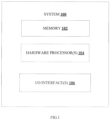
- FIG.1 illustrates an exemplary block diagram of a system 100 for anomaly detection by self-learning of sensor signals, in accordance with an embodiment of the present disclosure.
- the system 100 includes one or more processors 104, communication interface device(s) or input/output (I/O) interface(s) 106, and one or more data storage devices or memory 102 operatively coupled to the one or more processors 104.
- the one or more processors 104 that are hardware processors can be implemented as one or more microprocessors, microcomputers, microcontrollers, digital signal processors, central processing units, state machines, graphics controllers, logic circuitries, and/or any devices that manipulate signals based on operational instructions.
- the processor(s) is configured to fetch and execute computer-readable instructions stored in the memory.
- the system 100 can be implemented in a variety of computing systems, such as laptop computers, notebooks, hand-held devices, workstations, mainframe computers, servers, a network cloud and the like.
- the I/O interface device(s) 106 can include a variety of software and hardware interfaces, for example, a web interface, a graphical user interface, and the like and can facilitate multiple communications within a wide variety of networks N/W and protocol types, including wired networks, for example, LAN, cable, etc., and wireless networks, such as WLAN, cellular, or satellite.
- the I/O interface device(s) can include one or more ports for connecting a number of devices to one another or to another server.
- the memory 102 may include any computer-readable medium known in the art including, for example, volatile memory, such as static random access memory (SRAM) and dynamic random access memory (DRAM), and/or non-volatile memory, such as read only memory (ROM), erasable programmable ROM, flash memories, hard disks, optical disks, and magnetic tapes.
- volatile memory such as static random access memory (SRAM) and dynamic random access memory (DRAM)
- non-volatile memory such as read only memory (ROM), erasable programmable ROM, flash memories, hard disks, optical disks, and magnetic tapes.
- ROM read only memory
- erasable programmable ROM erasable programmable ROM
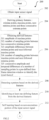
- FIG.2 illustrates an exemplary flow diagram of a method 200 for anomaly detection by self-learning of sensor signals, in accordance with an embodiment of the present disclosure.
- the system 100 comprises one or more data storage devices or memory 102 operatively coupled to the one or more processors 104 and is configured to store instructions configured for execution of steps of the method 200 by the one or more processors 104.
- the one or more processors 104 may obtain an input sensor signal wherein at least a portion of the input sensor signal is non-anomalous (normal signature) and may be used for self-learning at step 212. Accordingly a window of the normal signature of input sensor signal based on ground truth may be provided as an input to the system 100 for learning primary features associated with peak and valley points of the input sensor signal.
- the one or more processors 104 may derive the primary features associated with the input sensor signal including minima points, maxima points, next minima points and three consecutive extrema points.
- selective features from the primary features are derived at step 206 for detecting a pattern associated with the input sensor signal at step 208.
- the derived features include:
- the detection window may be a 300 millisecond window.
- a semi-supervised approach is used to identify, at step 210, at least one defining feature from the derived features based on statistical properties and time and frequency domain properties of the input sensor signal. For each of the derived features of each of the input sensor signal, mean ( ⁇ ) and standard deviation ( ⁇ ) is computed for the normal signature or non-anomalous portion of the input sensor signal.
- the one or more defining features are those derived features that satisfy the following two conditions -
- the pre-defined first threshold and the pre-defined second threshold may have same values.
- the one or more processors 104 may cluster, at step 214, portions of the input sensor signal based on values of the at least one defining feature associated with the input sensor signal into clusters of varying density.
- the step of clustering portions of the input sensor signal is based on k-means clustering method.
- the step of clustering comprises merging of two or more of the clusters.
- lower density clusters having insignificant members in comparison to dense clusters may be merged to detect anomalous portions of the input sensor signal.
- the nearness among the cluster's centroids may also be taken into account, if necessary for merging.
- the one or more processors 104 may classify portions of the input sensor signal as anomalous portions and non-anomalous portions based on the density of the clusters. In an embodiment, most dense clusters may be classified as corresponding to non-anomalous portions and least dense clusters may be classified as corresponding to anomalous portions of the input sensor signal. In accordance with the present disclosure, it is presumed that percentage of normal part of the input sensor signal is more than that of the anomalous part. Classification of normal and anomalous portions is based on ground truth. Systems and methods of the present disclosure thus enable automating anomaly detection for any sensor signal as compared to prior art wherein domain specific features are considered and anomaly detection relies on supervised learning.
- Fingertip PPG data was collected from persons in the age group 20 to 50 years. Total duration of the collected data was 5 minutes with 30 seconds normal and 10 seconds motion artifacts where the persons moved their finger multiple times.
- the system of the present disclosure used a sample of normal non-noisy data (30 seconds) for self-learning. During the self-learning phase, the system of the present disclosure derives maxima and minima by following strictly rising and falling edges and the discrete nature of the signal.
- minima points are detected as follows: x ⁇ k ⁇ T 2 2 > x ⁇ k ⁇ T 2 2 + 1 ... > x ⁇ k ⁇ 1 > x ⁇ k ⁇ x ⁇ k + 1 ... ⁇ x ⁇ k + T 2 2 wherein, T2 is a detection window of 300 milliseconds, x ⁇ is a smoothened signal applying moving average technique.
- FIG.3 illustrates an exemplary graphical illustration of maxima and minima points detected as part of self-learning of an input sensor signal, in accordance with an embodiment of the present disclosure.
- the system of the present disclosure After detecting the minima and maxima points, the system of the present disclosure discovers pattern of the normal (non-anomalous) portion as well as complete signal by deriving X1, X2, X3 and X4 and is followed by selection of the defining feature. Illustrations of means and standard deviations are shown in Table 1, Table 2 whereas FIG. (corresponding to Table 1) illustrates an exemplary graphical illustration of comparative statistical properties and time and frequency domain properties of the input sensor signal, in accordance with an embodiment of the present disclosure. Particularly, FIG.4 illustrates the average of X1, X2, X3 and X4 for 9 signals collected for the evaluation.
- Table 1 Statistical deviations of different features for an exemplary signal 1 Derived features Data: Non-anomalous (Normal) portion of the input sensor signal Data: Complete input sensor signal ( ⁇ ) ( ⁇ ) ( ⁇ ) ( ⁇ ) X1 60.66667 2.216819 66.71631 16.09806 X2 48.00 1.75662 45.32624 17.62121 X3 36.11111 2.561002 48.19149 17.36454 X4 34.91667 1.5 28.15603 10.68797
- Table 2 Statistical deviations of different features for an exemplary signal 2 Derive d feature s Data: Non-anomalous (Normal) portion of the input sensor signal Data: Complete input sensor signal Difference Between Mean (Data: Normal-Data: Complete) Difference Between Std.
- the pre-defined first threshold may have been set as say 2; wherein both X2 and X4 having difference between mean values of normal and the complete portion of the signal as 3.5 and 7.02 respectively qualify as defining features.
- the pre-defined second threshold may have been set as say 15; wherein both X2 and X4 having a difference of 21.95 and 17.27 qualify as defining features.
- X2 and X4 in the data under consideration satisfy the two conditions required to qualify as the defining features of the method present disclosure.
- Lower density clusters were merged (having insignificant members in comparison to the dense cluster) to detect the anomalous samples of the signal.
- the detected anomaly was compared with ground truth to assess the performance of the system and method of the present disclosure.
- FIG.5 illustrates a graphical representation of anomaly detected in accordance with the present disclosure as compared with ground truth data.
- Table 3 performance measure of the detected anomaly for the exemplary signal 1 Performance (%) Anomalous subsequence detection Precision 90.27 Sensitivity 92.09
- PPG photoplethysmogram
- the hardware device can be any kind of device which can be programmed including e.g. any kind of computer like a server or a personal computer, or the like, or any combination thereof.
- the device may also include means which could be e.g. hardware means like e.g. an application-specific integrated circuit (ASIC), a field-programmable gate array (FPGA), or a combination of hardware and software means, e.g.
- ASIC application-specific integrated circuit
- FPGA field-programmable gate array
- the means can include both hardware means and software means.
- the method embodiments described herein could be implemented in hardware and software.
- the device may also include software means.
- the embodiments of the present disclosure may be implemented on different hardware devices, e.g. using a plurality of CPUs.
- the embodiments herein can comprise hardware and software elements.
- the embodiments that are implemented in software include but are not limited to, firmware, resident software, microcode, etc.
- the functions performed by various modules comprising the system of the present disclosure and described herein may be implemented in other modules or combinations of other modules.
- a computer-usable or computer readable medium can be any apparatus that can comprise, store, communicate, propagate, or transport the program for use by or in connection with the instruction execution system, apparatus, or device.
- the various modules described herein may be implemented as software and/or hardware modules and may be stored in any type of non-transitory computer readable medium or other storage device.
- Some nonlimiting examples of non-transitory computer-readable media include CDs, DVDs, BLU-RAY, flash memory, and hard disk drives.
Landscapes
- Engineering & Computer Science (AREA)
- Health & Medical Sciences (AREA)
- Physics & Mathematics (AREA)
- Life Sciences & Earth Sciences (AREA)
- Data Mining & Analysis (AREA)
- Theoretical Computer Science (AREA)
- General Physics & Mathematics (AREA)
- Cardiology (AREA)
- Artificial Intelligence (AREA)
- Medical Informatics (AREA)
- Mathematical Physics (AREA)
- General Engineering & Computer Science (AREA)
- Software Systems (AREA)
- Evolutionary Computation (AREA)
- Computer Vision & Pattern Recognition (AREA)
- Surgery (AREA)
- Public Health (AREA)
- General Health & Medical Sciences (AREA)
- Animal Behavior & Ethology (AREA)
- Molecular Biology (AREA)
- Veterinary Medicine (AREA)
- Heart & Thoracic Surgery (AREA)
- Biomedical Technology (AREA)
- Pathology (AREA)
- Biophysics (AREA)
- Evolutionary Biology (AREA)
- Bioinformatics & Cheminformatics (AREA)
- Bioinformatics & Computational Biology (AREA)
- Mathematical Analysis (AREA)
- Mathematical Optimization (AREA)
- Pure & Applied Mathematics (AREA)
- Computational Mathematics (AREA)
- Physiology (AREA)
- Computing Systems (AREA)
- Operations Research (AREA)
- Probability & Statistics with Applications (AREA)
- Algebra (AREA)
- Databases & Information Systems (AREA)
- Fuzzy Systems (AREA)
- Psychiatry (AREA)
Claims (7)
- Prozessorimplementiertes Verfahren (200), umfassend:Ableiten von primären Merkmalen, die mit einem Eingangssensorsignal assoziiert sind, basierend auf einem Lernmuster des Eingangssensorsignals durch Anwenden der diskreten Natur des Eingangssensorsignals und grundlegender Definitionen von Minima und Maxima, wobei die primären Merkmale Minimumpunkte, Maximumpunkte, nächste Minimumpunkte und drei aufeinanderfolgende Extrempunkte (204) sind, wobei das Eingangssensorsignal einen nicht anomalen Abschnitt davon umfasst, wobei die primären Merkmale basierend auf Spitzen- und Talpunkten des Eingangssensorsignals abgeleitet werden;Detektieren eines Musters von selektiven abgeleiteten Merkmalen, die aus den primären Merkmalen (206, 208) erhalten werden, basierend auf zeitlichen und Amplitudendifferenzen der primären Merkmale des Eingangssensorsignals, wobei das detektierte Muster in Form einer Funktion der abgeleiteten Merkmale dargestellt wird, wobei die abgeleiteten Merkmale, die aus den primären Merkmalen erhalten werden, (i) Amplitude von Maximumpunkten, (ii) Anzahl von Abtastpunkten zwischen zwei aufeinanderfolgenden Minimumpunkten, (iii) Amplitudendifferenzen zwischen Minimumpunkten und nächsten gefolgten Maximumpunkten, (iv) Anzahl von Abtastpunkten zwischen Maximumpunkten und nächsten gefolgten Minimumpunkten und (v) aufeinanderfolgende Amplituden- und zeitliche Differenzen einer Anzahl von Abtastpunkten in einem vordefinierten Zeitrahmendetektionsfenster sind, um Trends davon zu identifizieren;Identifizieren mindestens eines definierenden Merkmals aus den abgeleiteten Merkmalen basierend auf statistischen Eigenschaften des Eingangssensorsignals (210), wobei für jedes der abgeleiteten Merkmale des Eingangssensorsignals ein Mittelwert und eine Standardabweichung für einen nicht anomalen Abschnitt des Eingangssensorsignals berechnet wird und ein Mittelwert und eine Standardabweichung für einen vollständigen Abschnitt des Eingangssensorsignals berechnet wird, wobei das mindestens eine definierende Merkmal diejenigen abgeleiteten Merkmale sind, die die folgenden Bedingungen erfüllen:(i) eine Differenz zwischen Mittelwerten der abgeleiteten Merkmale des nicht anomalen Abschnitts des Eingangssensorsignals und den Mittelwerten der abgeleiteten Merkmale des vollständigen Abschnitts des Eingangssensorsignals ist größer als ein vordefinierter erster Schwellenwert, wobei der vordefinierte erste Schwellenwert auf einem Typ des Eingangssensorsignals basiert; und(ii) eine Standardabweichung der abgeleiteten Merkmale des nicht anomalen Abschnitts des Eingangssensorsignals ist um einen vordefinierten zweiten Schwellenwert kleiner als die Standardabweichung der abgeleiteten Merkmale des vollständigen Abschnitts des Eingangssensorsignals, wobei der vordefinierte zweite Schwellenwert auf dem Typ des Eingangssensorsignals basiert;Durchführen eines Selbstlernens des Eingangssensorsignals basierend auf den abgeleiteten Merkmalen und dem mindestens einen definierenden Merkmal des nicht anomalen Abschnitts des Eingangssensorsignals (212), wobei während des Selbstlernens des Eingangssensorsignals die Maxima und die Minima abgeleitet werden, indem streng steigende und fallende Flanken und die diskrete Natur des Eingangssensorsignals verfolgt werden, gefolgt von einem Entdecken eines Musters des nicht anomalen Abschnitts sowie eines vollständigen Signals durch Ableiten von Merkmalen, gefolgt von einer Auswahl des mindestens einen definierenden Merkmals;Clustern von Abschnitten des Eingangssensorsignals basierend auf Werten des mindestens einen definierenden Merkmals, das damit assoziiert ist, in Cluster mit variierender Dichte (214), wobei der Schritt des Clusterns ein Zusammenführen von zwei oder mehr der Cluster umfasst; undKlassifizieren der Abschnitte des Eingangssensorsignals als anomale Abschnitte und nicht anomale Abschnitte basierend auf der Dichte der Cluster (216), wobei die dichtesten Cluster nicht anomalen Abschnitten entsprechen und die am wenigsten dichten Cluster anomalen Abschnitten des Eingangssensorsignals entsprechen.
- Prozessorimplementiertes Verfahren nach Anspruch 1, wobei der Schritt des Clusterns von Abschnitten des Eingangssensorsignals basierend auf Werten des mindestens einen definierenden Merkmals, das damit assoziiert ist, auf einem k-Means-Clustering-Verfahren basiert.
- Prozessorimplementiertes Verfahren nach Anspruch 2, wobei der Schritt des Clusterns von Abschnitten des Eingangssensorsignals auf einem 3-Means-Clustering-Verfahren mit k = 3 basiert.
- System (100), umfassend:
eine oder mehrere Datenspeichervorrichtungen (102), die betriebsfähig mit einem oder mehreren Hardwareprozessoren (104) gekoppelt sind und konfiguriert sind, um Anweisungen zu speichern, die zur Ausführung durch den einen oder die mehreren Hardwareprozessoren konfiguriert sind zum:Ableiten von primären Merkmalen, die mit einem Eingangssensorsignal assoziiert sind, basierend auf einem Lernmuster des Eingangssensorsignals durch Anwenden der diskreten Natur des Eingangssensorsignals und grundlegender Definitionen von Minima und Maxima, wobei die primären Merkmale Minimumpunkte, Maximumpunkte, nächste Minimumpunkte und drei aufeinanderfolgende Extrempunkte sind, wobei das Eingangssensorsignal einen nicht anomalen Abschnitt davon umfasst, wobei die primären Merkmale basierend auf Spitzen- und Talpunkten des Eingangssensorsignals abgeleitet werden;Detektieren eines Musters von selektiven abgeleiteten Merkmalen, die aus den primären Merkmalen erhalten werden, basierend auf zeitlichen und Amplitudendifferenzen der primären Merkmale des Eingangssensorsignals, wobei das detektierte Muster in Form einer Funktion der abgeleiteten Merkmale dargestellt wird, wobei die abgeleiteten Merkmale, die aus den primären Merkmalen erhalten werden, (i) Amplitude von Maximumpunkten, (ii) Anzahl von Abtastpunkten zwischen zwei aufeinanderfolgenden Minimumpunkten, (iii) Amplitudendifferenzen zwischen Minimumpunkten und nächsten gefolgten Maximumpunkten, (iv) Anzahl von Abtastpunkten zwischen Maximumpunkten und nächsten gefolgten Minimumpunkten und (v) aufeinanderfolgende Amplituden- und zeitliche Differenzen einer Anzahl von Abtastpunkten in einem vordefinierten Zeitrahmendetektionsfenster sind, um Trends davon zu identifizieren;Identifizieren mindestens eines definierenden Merkmals aus den abgeleiteten Merkmalen basierend auf statistischen Eigenschaften des Eingangssensorsignals, wobei für jedes der abgeleiteten Merkmale des Eingangssensorsignals ein Mittelwert und eine Standardabweichung für einen nicht anomalen Abschnitt des Eingangssensorsignals berechnet wird und ein Mittelwert und eine Standardabweichung für einen vollständigen Abschnitt des Eingangssensorsignals berechnet wird, wobei das mindestens eine definierende Merkmal diejenigen abgeleiteten Merkmale sind, die die folgenden Bedingungen erfüllen:(i) eine Differenz zwischen Mittelwerten der abgeleiteten Merkmale des nicht anomalen Abschnitts des Eingangssensorsignals und den Mittelwerten der abgeleiteten Merkmale des vollständigen Abschnitts des Eingangssensorsignals ist größer als ein vordefinierter erster Schwellenwert, wobei der vordefinierte erste Schwellenwert auf einem Typ des Eingangssensorsignals basiert; und(ii) eine Standardabweichung der abgeleiteten Merkmale des nicht anomalen Abschnitts des Eingangssensorsignals ist um einen vordefinierten zweiten Schwellenwert kleiner als die Standardabweichung der abgeleiteten Merkmale des vollständigen Abschnitts des Eingangssensorsignals, wobei der vordefinierte zweite Schwellenwert auf dem Typ des Eingangssensorsignals basiert;Durchführen eines Selbstlernens des Eingangssensorsignals basierend auf den abgeleiteten Merkmalen und dem mindestens einen definierenden Merkmal des nicht anomalen Abschnitts des Eingangssensorsignals, wobei während des Selbstlernens des Eingangssensorsignals die Maxima und die Minima abgeleitet werden, indem streng steigende und fallende Flanken und die diskrete Natur des Eingangssensorsignals verfolgt werden, gefolgt von einem Entdecken eines Musters des nicht anomalen Abschnitts sowie eines vollständigen Signals durch Ableiten von Merkmalen, gefolgt von einer Auswahl des mindestens einen definierenden Merkmals;Clustern von Abschnitten des Eingangssensorsignals basierend auf Werten des mindestens einen definierenden Merkmals, das damit assoziiert ist, in Cluster mit variierender Dichte, wobei der Schritt des Clusterns ein Zusammenführen von zwei oder mehr der Cluster umfasst; undKlassifizieren der Abschnitte des Eingangssensorsignals als anomale Abschnitte und nicht anomale Abschnitte basierend auf der Dichte der Cluster, wobei die dichtesten Cluster nicht anomalen Abschnitten entsprechen und die am wenigsten dichten Cluster anomalen Abschnitten des Eingangssensorsignals entsprechen. - System nach Anspruch 4, wobei der eine oder die mehreren Hardwareprozessoren ferner konfiguriert sind, um Abschnitte des Eingangssensorsignals basierend auf den Werten des mindestens einen definierenden Merkmals, das damit assoziiert ist, basierend auf einem k-Means-Clustering-Verfahren zu clustern.
- System nach Anspruch 5, wobei der eine oder die mehreren Hardwareprozessoren ferner konfiguriert sind, um Abschnitte des Eingangssensorsignals basierend auf einem 3-Means-Clustering-Verfahren mit k = 3 zu clustern.
- Computerprogrammprodukt, umfassend ein nichtflüchtiges computerlesbares Medium mit einem darin enthaltenen computerlesbaren Programm, wobei das computerlesbare Programm, wenn es auf einer Rechenvorrichtung ausgeführt wird, die Rechenvorrichtung veranlasst zum:Ableiten von primären Merkmalen, die mit einem Eingangssensorsignal assoziiert sind, basierend auf einem Lernmuster des Eingangssensorsignals durch Anwenden der diskreten Natur des Eingangssensorsignals und grundlegender Definitionen von Minima und Maxima, wobei die primären Merkmale Minimumpunkte, Maximumpunkte, nächste Minimumpunkte und drei aufeinanderfolgende Extrempunkte sind, wobei das Eingangssensorsignal einen nicht anomalen Abschnitt davon umfasst, wobei die primären Merkmale basierend auf Spitzen- und Talpunkten des Eingangssensorsignals abgeleitet werden;Detektieren eines Musters von selektiven abgeleiteten Merkmalen, die aus den primären Merkmalen erhalten werden, basierend auf zeitlichen und Amplitudendifferenzen der primären Merkmale des Eingangssensorsignals, wobei das detektierte Muster in Form einer Funktion der abgeleiteten Merkmale dargestellt wird, wobei die abgeleiteten Merkmale, die aus den primären Merkmalen erhalten werden, (i) Amplitude von Maximumpunkten, (ii) Anzahl von Abtastpunkten zwischen zwei aufeinanderfolgenden Minimumpunkten, (iii) Amplitudendifferenzen zwischen Minimumpunkten und nächsten gefolgten Maximumpunkten, (iv) Anzahl von Abtastpunkten zwischen Maximumpunkten und nächsten gefolgten Minimumpunkten und (v) aufeinanderfolgende Amplituden- und zeitliche Differenzen einer Anzahl von Abtastpunkten in einem vordefinierten Zeitrahmendetektionsfenster sind, um Trends davon zu identifizieren;Identifizieren mindestens eines definierenden Merkmals aus den abgeleiteten Merkmalen basierend auf statistischen Eigenschaften des Eingangssensorsignals, wobei für jedes der abgeleiteten Merkmale des Eingangssensorsignals ein Mittelwert und eine Standardabweichung für einen nicht anomalen Abschnitt des Eingangssensorsignals berechnet wird und ein Mittelwert und eine Standardabweichung für einen vollständigen Abschnitt des Eingangssensorsignals berechnet wird, wobei das mindestens eine definierende Merkmal diejenigen abgeleiteten Merkmale sind, die die folgenden Bedingungen erfüllen(i) eine Differenz zwischen Mittelwerten der abgeleiteten Merkmale des nicht anomalen Abschnitts des Eingangssensorsignals und den Mittelwerten der abgeleiteten Merkmale des vollständigen Abschnitts des Eingangssensorsignals ist größer als ein vordefinierter erster Schwellenwert, wobei der vordefinierte erste Schwellenwert auf einem Typ des Eingangssensorsignals basiert; und(ii) eine Standardabweichung der abgeleiteten Merkmale des nicht anomalen Abschnitts des Eingangssensorsignals ist um einen vordefinierten zweiten Schwellenwert kleiner als die Standardabweichung der abgeleiteten Merkmale des vollständigen Abschnitts des Eingangssensorsignals, wobei der vordefinierte zweite Schwellenwert auf dem Typ des Eingangssensorsignals basiert;Durchführen eines Selbstlernens des Eingangssensorsignals basierend auf den abgeleiteten Merkmalen und dem mindestens einen definierenden Merkmal des nicht anomalen Abschnitts des Eingangssensorsignals, wobei während des Selbstlernens des Eingangssensorsignals die Maxima und die Minima abgeleitet werden, indem streng steigende und fallende Flanken und die diskrete Natur des Eingangssensorsignals verfolgt werden, gefolgt von einem Entdecken eines Musters des nicht anomalen Abschnitts sowie eines vollständigen Signals durch Ableiten von Merkmalen, gefolgt von einer Auswahl des mindestens einen definierenden Merkmals;Clustern von Abschnitten des Eingangssensorsignals basierend auf Werten des mindestens einen definierenden Merkmals, das damit assoziiert ist, in Cluster mit variierender Dichte, wobei der Schritt des Clusterns ein Zusammenführen von zwei oder mehr der Cluster umfasst; undKlassifizieren der Abschnitte des Eingangssensorsignals als anomale Abschnitte und nicht anomale Abschnitte basierend auf der Dichte der Cluster, wobei die dichtesten Cluster nicht anomalen Abschnitten entsprechen und die am wenigsten dichten Cluster anomalen Abschnitten des Eingangssensorsignals entsprechen.
Applications Claiming Priority (1)
| Application Number | Priority Date | Filing Date | Title |
|---|---|---|---|
| IN201621036139 | 2016-10-21 |
Publications (3)
| Publication Number | Publication Date |
|---|---|
| EP3312765A1 EP3312765A1 (de) | 2018-04-25 |
| EP3312765B1 true EP3312765B1 (de) | 2024-04-17 |
| EP3312765C0 EP3312765C0 (de) | 2024-04-17 |
Family
ID=58461050
Family Applications (1)
| Application Number | Title | Priority Date | Filing Date |
|---|---|---|---|
| EP17160491.1A Active EP3312765B1 (de) | 2016-10-21 | 2017-03-13 | Anomaliedetektion durch selbstlernen von sensorsignalen |
Country Status (4)
| Country | Link |
|---|---|
| US (1) | US10743821B2 (de) |
| EP (1) | EP3312765B1 (de) |
| JP (1) | JP6535044B2 (de) |
| SG (1) | SG10201702167SA (de) |
Families Citing this family (9)
| Publication number | Priority date | Publication date | Assignee | Title |
|---|---|---|---|---|
| US10743821B2 (en) * | 2016-10-21 | 2020-08-18 | Tata Consultancy Services Limited | Anomaly detection by self-learning of sensor signals |
| EP3627262A1 (de) * | 2018-09-18 | 2020-03-25 | Siemens Aktiengesellschaft | Verfahren und assistenzsystem zur parametrisierung eines anomalieerkennungsverfahrens |
| KR102887168B1 (ko) | 2019-06-11 | 2025-11-14 | 삼성전자주식회사 | 뉴럴 네트워크를 이용하여 이상 신호를 감지하는 방법 및 장치 |
| CN110831050B (zh) * | 2019-11-21 | 2022-09-30 | 武汉宝久智控科技有限公司 | 一种传感器节点控制方法及系统 |
| CN111612082B (zh) * | 2020-05-26 | 2023-06-23 | 河北小企鹅医疗科技有限公司 | 检测时间序列中异常子序列的方法及设备 |
| CN112651444B (zh) * | 2020-12-29 | 2022-08-02 | 山东科技大学 | 一种基于自学习的非平稳过程异常检测方法 |
| CN113724885B (zh) * | 2021-09-27 | 2023-12-05 | 厦门市易联众易惠科技有限公司 | 一种异常体征的识别方法、装置、设备和存储介质 |
| US20240366139A1 (en) * | 2023-05-02 | 2024-11-07 | University Health Network | System and method for probabilistic search for r-peak detection from electrocardiogram |
| CN116414817B (zh) * | 2023-06-08 | 2024-06-07 | 荣耀终端有限公司 | 轨迹点处理方法、电子设备及存储介质 |
Family Cites Families (18)
| Publication number | Priority date | Publication date | Assignee | Title |
|---|---|---|---|---|
| US20110178967A1 (en) * | 2001-05-24 | 2011-07-21 | Test Advantage, Inc. | Methods and apparatus for data analysis |
| US20160026915A1 (en) * | 2001-01-05 | 2016-01-28 | In-Depth Test Llc | Methods and Apparatus for Data Analysis |
| KR100499139B1 (ko) | 2003-01-07 | 2005-07-04 | 삼성전자주식회사 | 이상데이터 소거방법 및 이를 적용한 분광학을 이용한혈액성분분석시스템 |
| US8532932B2 (en) * | 2008-06-30 | 2013-09-10 | Nellcor Puritan Bennett Ireland | Consistent signal selection by signal segment selection techniques |
| US9113830B2 (en) | 2011-05-31 | 2015-08-25 | Nellcor Puritan Bennett Ireland | Systems and methods for detecting and monitoring arrhythmias using the PPG |
| US8836536B2 (en) * | 2011-07-29 | 2014-09-16 | Hewlett-Packard Development Company, L. P. | Device characterization system and methods |
| US9060695B2 (en) * | 2011-11-30 | 2015-06-23 | Covidien Lp | Systems and methods for determining differential pulse transit time from the phase difference of two analog plethysmographs |
| US9471544B1 (en) * | 2012-05-24 | 2016-10-18 | Google Inc. | Anomaly detection in a signal |
| US9005129B2 (en) | 2012-06-22 | 2015-04-14 | Fitbit, Inc. | Wearable heart rate monitor |
| AU2013370495B2 (en) * | 2012-12-26 | 2019-05-09 | Cambridge Mobile Telematics Inc | Methods and systems for driver identification |
| US20140316292A1 (en) | 2013-04-19 | 2014-10-23 | Semler Scientific, Inc. | Circulation Monitoring System |
| JP5342708B1 (ja) * | 2013-06-19 | 2013-11-13 | 株式会社日立パワーソリューションズ | 異常検知方法及びその装置 |
| US9924870B2 (en) * | 2013-07-26 | 2018-03-27 | Tata Consultancy Services Limited | Monitoring physiological parameters |
| US10103960B2 (en) * | 2013-12-27 | 2018-10-16 | Splunk Inc. | Spatial and temporal anomaly detection in a multiple server environment |
| US20150245782A1 (en) * | 2014-02-28 | 2015-09-03 | Covidien Lp | Systems and methods for capacitance sensing in medical devices |
| US9838409B2 (en) * | 2015-10-08 | 2017-12-05 | Cisco Technology, Inc. | Cold start mechanism to prevent compromise of automatic anomaly detection systems |
| US20170149810A1 (en) * | 2015-11-25 | 2017-05-25 | Hewlett Packard Enterprise Development Lp | Malware detection on web proxy log data |
| US10743821B2 (en) * | 2016-10-21 | 2020-08-18 | Tata Consultancy Services Limited | Anomaly detection by self-learning of sensor signals |
-
2017
- 2017-03-10 US US15/456,199 patent/US10743821B2/en active Active
- 2017-03-13 EP EP17160491.1A patent/EP3312765B1/de active Active
- 2017-03-16 SG SG10201702167SA patent/SG10201702167SA/en unknown
- 2017-03-21 JP JP2017055093A patent/JP6535044B2/ja active Active
Also Published As
| Publication number | Publication date |
|---|---|
| JP6535044B2 (ja) | 2019-06-26 |
| SG10201702167SA (en) | 2018-05-30 |
| US10743821B2 (en) | 2020-08-18 |
| JP2018067287A (ja) | 2018-04-26 |
| US20180110471A1 (en) | 2018-04-26 |
| EP3312765C0 (de) | 2024-04-17 |
| EP3312765A1 (de) | 2018-04-25 |
Similar Documents
| Publication | Publication Date | Title |
|---|---|---|
| US10743821B2 (en) | Anomaly detection by self-learning of sensor signals | |
| AU2018200751B2 (en) | A cascaded binary classifier for identifying rhythms in a single-lead electrocardiogram (ecg) signal | |
| US10504036B2 (en) | Optimizing performance of event detection by sensor data analytics | |
| EP3572980B1 (de) | Verfahren und system zur gemeinsamen auswahl eines merkmalsteilmengenklassifiziererpaares für eine klassifizierungsaufgabe | |
| US10068176B2 (en) | Defect prediction method and apparatus | |
| EP3422262A1 (de) | Verfahren zur überwachung der leistung eines maschinenlernalgorithmus | |
| US11727109B2 (en) | Identifying adversarial attacks with advanced subset scanning | |
| CN110928862A (zh) | 数据清洗方法、数据清洗设备以及计算机存储介质 | |
| US10733264B2 (en) | System and method for detecting outliers in real-time for a univariate time-series signal | |
| US20210365771A1 (en) | Out-of-distribution (ood) detection by perturbation | |
| EP3330974B1 (de) | System und verfahren zur physiologischen überwachung | |
| US20200012941A1 (en) | Method and system for generation of hybrid learning techniques | |
| EP4386622A1 (de) | Verfahren und system für ekg-klassifizierer auf spiking-nervennetzwerkbasis für am körper tragbare randvorrichtungen | |
| EP3292819A1 (de) | Identifikation eines verrauschten signals aus nicht stationären audiosignalen | |
| EP4339965A1 (de) | Verfahren und system zur eeg-motorbildklassifizierung | |
| EP3480734A1 (de) | Verallgemeinerte einklassenunterstützungsvektormaschinen mit gemeinsam optimierten hyperparametern davon | |
| US11531830B2 (en) | Synthetic rare class generation by preserving morphological identity | |
| CN110378543A (zh) | 离职风险预测方法、装置、计算机设备和存储介质 | |
| EP3790022B1 (de) | Verfahren und system zur schätzung der herzfrequenz eines benutzers | |
| EP4009237B1 (de) | Verfahren und system zur optimierten spike-kodierung für spikende neuronale netzwerke | |
| EP3996002A1 (de) | System und verfahren zur erzeugung von etiketten für die klassifizierung von zeitreihen | |
| EP4120205A1 (de) | Verfahren und system zur erkennung von modeattributen | |
| EP3933715A1 (de) | Verfahren und system zur erzeugung synthetischer zeitbereichssignale zum aufbau eines klassifikators | |
| EP4147633A1 (de) | Verfahren und system zur bestimmung der qualität eines photoplethysmogramm(ppg)-signals | |
| EP4365782A1 (de) | Verfahren und system zum lernen mit widersprüchenvermeidung für mehrklassen-multilabel-klassifizierung |
Legal Events
| Date | Code | Title | Description |
|---|---|---|---|
| PUAI | Public reference made under article 153(3) epc to a published international application that has entered the european phase |
Free format text: ORIGINAL CODE: 0009012 |
|
| STAA | Information on the status of an ep patent application or granted ep patent |
Free format text: STATUS: THE APPLICATION HAS BEEN PUBLISHED |
|
| AK | Designated contracting states |
Kind code of ref document: A1 Designated state(s): AL AT BE BG CH CY CZ DE DK EE ES FI FR GB GR HR HU IE IS IT LI LT LU LV MC MK MT NL NO PL PT RO RS SE SI SK SM TR |
|
| AX | Request for extension of the european patent |
Extension state: BA ME |
|
| RIN1 | Information on inventor provided before grant (corrected) |
Inventor name: SINGH, RITURAJ Inventor name: BANDYOPADHYAY, SOMA Inventor name: PURI, CHETANYA Inventor name: MURTHY, C A Inventor name: UKIL, ARIJIT Inventor name: PAL, ARPAN |
|
| STAA | Information on the status of an ep patent application or granted ep patent |
Free format text: STATUS: REQUEST FOR EXAMINATION WAS MADE |
|
| 17P | Request for examination filed |
Effective date: 20181025 |
|
| RBV | Designated contracting states (corrected) |
Designated state(s): AL AT BE BG CH CY CZ DE DK EE ES FI FR GB GR HR HU IE IS IT LI LT LU LV MC MK MT NL NO PL PT RO RS SE SI SK SM TR |
|
| STAA | Information on the status of an ep patent application or granted ep patent |
Free format text: STATUS: EXAMINATION IS IN PROGRESS |
|
| 17Q | First examination report despatched |
Effective date: 20200629 |
|
| REG | Reference to a national code |
Free format text: PREVIOUS MAIN CLASS: G06K0009000000 Ref country code: DE Ref legal event code: R079 Ref document number: 602017081030 Country of ref document: DE Ipc: G06F0018211300 |
|
| RIC1 | Information provided on ipc code assigned before grant |
Ipc: G06F 18/2413 20230101ALI20230928BHEP Ipc: G06F 18/232 20230101ALI20230928BHEP Ipc: G06F 18/2113 20230101AFI20230928BHEP |
|
| GRAP | Despatch of communication of intention to grant a patent |
Free format text: ORIGINAL CODE: EPIDOSNIGR1 |
|
| STAA | Information on the status of an ep patent application or granted ep patent |
Free format text: STATUS: GRANT OF PATENT IS INTENDED |
|
| INTG | Intention to grant announced |
Effective date: 20231110 |
|
| GRAS | Grant fee paid |
Free format text: ORIGINAL CODE: EPIDOSNIGR3 |
|
| GRAA | (expected) grant |
Free format text: ORIGINAL CODE: 0009210 |
|
| STAA | Information on the status of an ep patent application or granted ep patent |
Free format text: STATUS: THE PATENT HAS BEEN GRANTED |
|
| AK | Designated contracting states |
Kind code of ref document: B1 Designated state(s): AL AT BE BG CH CY CZ DE DK EE ES FI FR GB GR HR HU IE IS IT LI LT LU LV MC MK MT NL NO PL PT RO RS SE SI SK SM TR |
|
| REG | Reference to a national code |
Ref country code: GB Ref legal event code: FG4D |
|
| REG | Reference to a national code |
Ref country code: CH Ref legal event code: EP |
|
| REG | Reference to a national code |
Ref country code: DE Ref legal event code: R096 Ref document number: 602017081030 Country of ref document: DE |
|
| REG | Reference to a national code |
Ref country code: IE Ref legal event code: FG4D |
|
| U01 | Request for unitary effect filed |
Effective date: 20240417 |
|
| U07 | Unitary effect registered |
Designated state(s): AT BE BG DE DK EE FI FR IT LT LU LV MT NL PT SE SI Effective date: 20240422 |
|
| PG25 | Lapsed in a contracting state [announced via postgrant information from national office to epo] |
Ref country code: IS Free format text: LAPSE BECAUSE OF FAILURE TO SUBMIT A TRANSLATION OF THE DESCRIPTION OR TO PAY THE FEE WITHIN THE PRESCRIBED TIME-LIMIT Effective date: 20240817 |
|
| PG25 | Lapsed in a contracting state [announced via postgrant information from national office to epo] |
Ref country code: HR Free format text: LAPSE BECAUSE OF FAILURE TO SUBMIT A TRANSLATION OF THE DESCRIPTION OR TO PAY THE FEE WITHIN THE PRESCRIBED TIME-LIMIT Effective date: 20240417 |
|
| PG25 | Lapsed in a contracting state [announced via postgrant information from national office to epo] |
Ref country code: GR Free format text: LAPSE BECAUSE OF FAILURE TO SUBMIT A TRANSLATION OF THE DESCRIPTION OR TO PAY THE FEE WITHIN THE PRESCRIBED TIME-LIMIT Effective date: 20240718 |
|
| PG25 | Lapsed in a contracting state [announced via postgrant information from national office to epo] |
Ref country code: ES Free format text: LAPSE BECAUSE OF FAILURE TO SUBMIT A TRANSLATION OF THE DESCRIPTION OR TO PAY THE FEE WITHIN THE PRESCRIBED TIME-LIMIT Effective date: 20240417 |
|
| PG25 | Lapsed in a contracting state [announced via postgrant information from national office to epo] |
Ref country code: PL Free format text: LAPSE BECAUSE OF FAILURE TO SUBMIT A TRANSLATION OF THE DESCRIPTION OR TO PAY THE FEE WITHIN THE PRESCRIBED TIME-LIMIT Effective date: 20240417 |
|
| PG25 | Lapsed in a contracting state [announced via postgrant information from national office to epo] |
Ref country code: PL Free format text: LAPSE BECAUSE OF FAILURE TO SUBMIT A TRANSLATION OF THE DESCRIPTION OR TO PAY THE FEE WITHIN THE PRESCRIBED TIME-LIMIT Effective date: 20240417 Ref country code: NO Free format text: LAPSE BECAUSE OF FAILURE TO SUBMIT A TRANSLATION OF THE DESCRIPTION OR TO PAY THE FEE WITHIN THE PRESCRIBED TIME-LIMIT Effective date: 20240717 Ref country code: IS Free format text: LAPSE BECAUSE OF FAILURE TO SUBMIT A TRANSLATION OF THE DESCRIPTION OR TO PAY THE FEE WITHIN THE PRESCRIBED TIME-LIMIT Effective date: 20240817 Ref country code: HR Free format text: LAPSE BECAUSE OF FAILURE TO SUBMIT A TRANSLATION OF THE DESCRIPTION OR TO PAY THE FEE WITHIN THE PRESCRIBED TIME-LIMIT Effective date: 20240417 Ref country code: GR Free format text: LAPSE BECAUSE OF FAILURE TO SUBMIT A TRANSLATION OF THE DESCRIPTION OR TO PAY THE FEE WITHIN THE PRESCRIBED TIME-LIMIT Effective date: 20240718 Ref country code: ES Free format text: LAPSE BECAUSE OF FAILURE TO SUBMIT A TRANSLATION OF THE DESCRIPTION OR TO PAY THE FEE WITHIN THE PRESCRIBED TIME-LIMIT Effective date: 20240417 Ref country code: RS Free format text: LAPSE BECAUSE OF FAILURE TO SUBMIT A TRANSLATION OF THE DESCRIPTION OR TO PAY THE FEE WITHIN THE PRESCRIBED TIME-LIMIT Effective date: 20240717 |
|
| REG | Reference to a national code |
Ref country code: DE Ref legal event code: R097 Ref document number: 602017081030 Country of ref document: DE |
|
| PG25 | Lapsed in a contracting state [announced via postgrant information from national office to epo] |
Ref country code: CZ Free format text: LAPSE BECAUSE OF FAILURE TO SUBMIT A TRANSLATION OF THE DESCRIPTION OR TO PAY THE FEE WITHIN THE PRESCRIBED TIME-LIMIT Effective date: 20240417 |
|
| PG25 | Lapsed in a contracting state [announced via postgrant information from national office to epo] |
Ref country code: RO Free format text: LAPSE BECAUSE OF FAILURE TO SUBMIT A TRANSLATION OF THE DESCRIPTION OR TO PAY THE FEE WITHIN THE PRESCRIBED TIME-LIMIT Effective date: 20240417 Ref country code: SK Free format text: LAPSE BECAUSE OF FAILURE TO SUBMIT A TRANSLATION OF THE DESCRIPTION OR TO PAY THE FEE WITHIN THE PRESCRIBED TIME-LIMIT Effective date: 20240417 |
|
| PG25 | Lapsed in a contracting state [announced via postgrant information from national office to epo] |
Ref country code: SM Free format text: LAPSE BECAUSE OF FAILURE TO SUBMIT A TRANSLATION OF THE DESCRIPTION OR TO PAY THE FEE WITHIN THE PRESCRIBED TIME-LIMIT Effective date: 20240417 |
|
| PG25 | Lapsed in a contracting state [announced via postgrant information from national office to epo] |
Ref country code: SM Free format text: LAPSE BECAUSE OF FAILURE TO SUBMIT A TRANSLATION OF THE DESCRIPTION OR TO PAY THE FEE WITHIN THE PRESCRIBED TIME-LIMIT Effective date: 20240417 Ref country code: SK Free format text: LAPSE BECAUSE OF FAILURE TO SUBMIT A TRANSLATION OF THE DESCRIPTION OR TO PAY THE FEE WITHIN THE PRESCRIBED TIME-LIMIT Effective date: 20240417 Ref country code: RO Free format text: LAPSE BECAUSE OF FAILURE TO SUBMIT A TRANSLATION OF THE DESCRIPTION OR TO PAY THE FEE WITHIN THE PRESCRIBED TIME-LIMIT Effective date: 20240417 Ref country code: CZ Free format text: LAPSE BECAUSE OF FAILURE TO SUBMIT A TRANSLATION OF THE DESCRIPTION OR TO PAY THE FEE WITHIN THE PRESCRIBED TIME-LIMIT Effective date: 20240417 |
|
| PLBE | No opposition filed within time limit |
Free format text: ORIGINAL CODE: 0009261 |
|
| STAA | Information on the status of an ep patent application or granted ep patent |
Free format text: STATUS: NO OPPOSITION FILED WITHIN TIME LIMIT |
|
| 26N | No opposition filed |
Effective date: 20250120 |
|
| U20 | Renewal fee for the european patent with unitary effect paid |
Year of fee payment: 9 Effective date: 20250325 |
|
| PGFP | Annual fee paid to national office [announced via postgrant information from national office to epo] |
Ref country code: CH Payment date: 20250401 Year of fee payment: 9 |
|
| PG25 | Lapsed in a contracting state [announced via postgrant information from national office to epo] |
Ref country code: MC Free format text: LAPSE BECAUSE OF FAILURE TO SUBMIT A TRANSLATION OF THE DESCRIPTION OR TO PAY THE FEE WITHIN THE PRESCRIBED TIME-LIMIT Effective date: 20240417 |
|
| PG25 | Lapsed in a contracting state [announced via postgrant information from national office to epo] |
Ref country code: IE Free format text: LAPSE BECAUSE OF NON-PAYMENT OF DUE FEES Effective date: 20250313 |
|
| REG | Reference to a national code |
Ref country code: CH Ref legal event code: U11 Free format text: ST27 STATUS EVENT CODE: U-0-0-U10-U11 (AS PROVIDED BY THE NATIONAL OFFICE) Effective date: 20260401 |
|
| PGFP | Annual fee paid to national office [announced via postgrant information from national office to epo] |
Ref country code: GB Payment date: 20260304 Year of fee payment: 10 |
|
| U20 | Renewal fee for the european patent with unitary effect paid |
Year of fee payment: 10 Effective date: 20260323 |