EP3312574B1 - Vibrationssensor mit integrierter temperaturerfassung - Google Patents
Vibrationssensor mit integrierter temperaturerfassung Download PDFInfo
- Publication number
- EP3312574B1 EP3312574B1 EP16194931.8A EP16194931A EP3312574B1 EP 3312574 B1 EP3312574 B1 EP 3312574B1 EP 16194931 A EP16194931 A EP 16194931A EP 3312574 B1 EP3312574 B1 EP 3312574B1
- Authority
- EP
- European Patent Office
- Prior art keywords
- vibration sensor
- temperature
- coupling factor
- drive
- piezo
- Prior art date
- Legal status (The legal status is an assumption and is not a legal conclusion. Google has not performed a legal analysis and makes no representation as to the accuracy of the status listed.)
- Active
Links
Images




Classifications
-
- H—ELECTRICITY
- H10—SEMICONDUCTOR DEVICES; ELECTRIC SOLID-STATE DEVICES NOT OTHERWISE PROVIDED FOR
- H10N—ELECTRIC SOLID-STATE DEVICES NOT OTHERWISE PROVIDED FOR
- H10N30/00—Piezoelectric or electrostrictive devices
- H10N30/80—Constructional details
- H10N30/802—Circuitry or processes for operating piezoelectric or electrostrictive devices not otherwise provided for, e.g. drive circuits
-
- G—PHYSICS
- G01—MEASURING; TESTING
- G01F—MEASURING VOLUME, VOLUME FLOW, MASS FLOW OR LIQUID LEVEL; METERING BY VOLUME
- G01F23/00—Indicating or measuring liquid level or level of fluent solid material, e.g. indicating in terms of volume or indicating by means of an alarm
- G01F23/22—Indicating or measuring liquid level or level of fluent solid material, e.g. indicating in terms of volume or indicating by means of an alarm by measuring physical variables, other than linear dimensions, pressure or weight, dependent on the level to be measured, e.g. by difference of heat transfer of steam or water
- G01F23/28—Indicating or measuring liquid level or level of fluent solid material, e.g. indicating in terms of volume or indicating by means of an alarm by measuring physical variables, other than linear dimensions, pressure or weight, dependent on the level to be measured, e.g. by difference of heat transfer of steam or water by measuring the variations of parameters of electromagnetic or acoustic waves applied directly to the liquid or fluent solid material
- G01F23/296—Acoustic waves
- G01F23/2965—Measuring attenuation of transmitted waves
-
- G—PHYSICS
- G01—MEASURING; TESTING
- G01H—MEASUREMENT OF MECHANICAL VIBRATIONS OR ULTRASONIC, SONIC OR INFRASONIC WAVES
- G01H11/00—Measuring mechanical vibrations or ultrasonic, sonic or infrasonic waves by detecting changes in electric or magnetic properties
- G01H11/06—Measuring mechanical vibrations or ultrasonic, sonic or infrasonic waves by detecting changes in electric or magnetic properties by electric means
- G01H11/08—Measuring mechanical vibrations or ultrasonic, sonic or infrasonic waves by detecting changes in electric or magnetic properties by electric means using piezoelectric devices
-
- G—PHYSICS
- G01—MEASURING; TESTING
- G01K—MEASURING TEMPERATURE; MEASURING QUANTITY OF HEAT; THERMALLY-SENSITIVE ELEMENTS NOT OTHERWISE PROVIDED FOR
- G01K7/00—Measuring temperature based on the use of electric or magnetic elements directly sensitive to heat ; Power supply therefor, e.g. using thermoelectric elements
- G01K7/34—Measuring temperature based on the use of electric or magnetic elements directly sensitive to heat ; Power supply therefor, e.g. using thermoelectric elements using capacitative elements
-
- G—PHYSICS
- G01—MEASURING; TESTING
- G01K—MEASURING TEMPERATURE; MEASURING QUANTITY OF HEAT; THERMALLY-SENSITIVE ELEMENTS NOT OTHERWISE PROVIDED FOR
- G01K7/00—Measuring temperature based on the use of electric or magnetic elements directly sensitive to heat ; Power supply therefor, e.g. using thermoelectric elements
- G01K7/34—Measuring temperature based on the use of electric or magnetic elements directly sensitive to heat ; Power supply therefor, e.g. using thermoelectric elements using capacitative elements
- G01K7/343—Measuring temperature based on the use of electric or magnetic elements directly sensitive to heat ; Power supply therefor, e.g. using thermoelectric elements using capacitative elements the dielectric constant of which is temperature dependant
-
- H—ELECTRICITY
- H10—SEMICONDUCTOR DEVICES; ELECTRIC SOLID-STATE DEVICES NOT OTHERWISE PROVIDED FOR
- H10N—ELECTRIC SOLID-STATE DEVICES NOT OTHERWISE PROVIDED FOR
- H10N30/00—Piezoelectric or electrostrictive devices
- H10N30/30—Piezoelectric or electrostrictive devices with mechanical input and electrical output, e.g. functioning as generators or sensors
- H10N30/302—Sensors
Definitions
- the present invention relates to a piezoelectrically operated vibrating limit switch with integrated temperature detection according to the preamble of patent claim 1.
- Vibration sensors which are used for example as vibration limit switches, are known from the prior art, the vibration sensor having a membrane that can be excited to vibrate via a drive, by means of which a mechanical vibrator arranged on the membrane can be excited to vibrate.
- the mechanical oscillator oscillates at a characteristic frequency, which can be detected by the vibration sensor and converted into a measurement signal, depending on how much the mechanical vibrator is covered with a filling material and on the viscosity of this filling material.
- the vibration sensor has a membrane 5 that can be excited to vibrate via a drive 3 , the drive 3 comprising a plurality of ring-shaped piezo elements 7 with an opening 9 and electrical contacting of the piezo elements 7 .
- the piezo elements 7 are clamped against the membrane 5 by a tensioning screw 19 via a tension bolt 17 that is arranged on the membrane 5 of the vibration sensor 1 and runs through the opening 9 of the piezo elements 7, so that an oscillation of the piezo elements 7 generated by an electrical signal is reliable is transferred to the membrane 5.
- an adapter ceramic 13 and a clamping disk 14 arranged between the piezo elements 7 and the membrane 5 , which ensures a targeted introduction of the mechanical vibration in the membrane 5 and an electrical insulation of the piezo elements 7 compared to the typically metallic membrane 5 and a thermal adaptation.
- an adapter ceramic 13 and the clamping disk 14 between the membrane 5 and the piezo elements 7 Similar to the adapter ceramic 13 and the clamping disk 14 between the membrane 5 and the piezo elements 7, another adapter ceramic 13 and a clamping disk 14 can also be provided between the clamping screw 19 and the piezo elements 7, so that the clamping screw 19 is also electrically insulated from the piezo elements 7.
- the piezo elements 7 can be isolated from the tie bolt 17 via the sleeve 10 which is arranged in the opening 9 and is not shown in detail here.
- Electrodes 8 arranged on the surfaces of the piezo elements 7 and contacted from the outside via cables 25.
- Two mechanical vibrators 11 designed as paddles are typically arranged on a side of the membrane 5 facing away from the drive 3 , which transmit the vibration coupled into the membrane 5 to a medium surrounding the mechanical vibrators 11 .
- Vibration sensors of the type described above work on the principle of resonant frequency shifting.
- the vibrating level switch oscillates with a different resonance frequency and amplitude depending on the coverage, density and temperature of the medium.
- the amplitude of the resonance frequency depends on the viscosity of the medium.
- the frequency shift depends on the density and temperature of the medium.
- the temperature at the piezo drive and/or the vibration element must be known so that the influence of temperature on the resonant frequency can be compensated.
- the influence of the temperature on the resonant frequency is known from the material constants of the materials used, in particular the membrane and the oscillating element. If the temperature is known, a resonant frequency shift caused by temperature influences can be compensated.
- a temperature sensor is installed in the drive, in figure 8 denoted by 22, eg of the type PT100 installed.
- JP 2012-13440 A Arrangements of two piezoelectric elements are known which can be switched in such a way that the electrical charges generated during vibration cancel each other out and the electrical charges generated during heating add up, which makes it possible to detect and measure a temperature change.
- a vibration sensor according to the invention has a membrane that can be caused to oscillate and a piezoelectric drive for causing the membrane to oscillate and for detecting vibrations of the membrane, the drive having at least two piezo elements mechanically connected in series.
- Such vibration sensors are off, for example EP 2 801 799 A1 known.
- the vibration sensor according to the invention is characterized in that the vibration sensor has integrated temperature detection, at least one first piezo element is made of a first piezoelectric material and at least one second piezo element is made of a second piezoelectric material, and a temperature is determined by detecting a capacitance of at least one piezo element.
- the use of at least two piezo elements made of different piezoelectric materials means that the two different piezo elements can have different temperature dependencies in their properties, such as coupling factor and permittivity. In this way, a suitable combination of materials can provide a vibration sensor with a drive that can be used in a large temperature range and also enables integrated temperature determination.
- the coupling factor k is a measure of the extent of the piezoelectric effect. It describes the ability of a piezoelectric material to convert electrical energy into mechanical energy and vice versa.
- the coupling factor is calculated from the square root of the ratio of stored mechanical energy to the total energy absorbed. Under dynamic conditions, the coupling factor k depends on the corresponding mode shape of the piezoelectric body.
- the coupling factor of the longitudinal vibration k 33 is particularly relevant for piezoelectric drives of vibration sensors of the present type, ie the extent to which a piezo element converts an electrical voltage applied in the direction of polarization into an expansion in the direction of axis 3, ie in the direction of polarization.
- the permittivity ⁇ or the relative permittivity ⁇ r depends on the direction.
- ⁇ r describes the ratio of the dielectric constant ⁇ of the piezoelectric material and the dielectric constant ⁇ 0 , the dielectric constant ⁇ being a measure of the polarizability of the piezoelectric material in the electric field.
- the dependence of the relative permittivity ⁇ r on the direction of the electric field and the dielectric displacement is also indicated by corresponding indices.
- ⁇ 33 describes the dielectric constant ⁇ in the direction of polarization when the electric field is also present in the direction of polarization.
- the coupling factor is in the 33-direction, i. H. parallel to the polarization of the piezo element and in a direction perpendicular to the membrane of the vibration sensor.
- the relative permittivity should also be understood in the 33-direction without explicit indexing and directional information.
- first relative permittivity of the first piezoelectric material and a second relative permittivity of the second piezoelectric material having different temperature dependencies.
- first relative permittivity in the 33-direction and the second relative permittivity in the 33-direction have different temperature dependencies.
- a first coupling factor in the direction of material polarization of the first piezoelectric material and a second coupling factor in the direction of material polarization of the second piezoelectric material have different temperature dependencies.
- a material combination can be selected for the drive that has a coupling factor that is sufficient for the operation of the vibration sensor over a large temperature range, for example from -50° to +200°, advantageously up to +250° or +300°C.
- the first coupling factor has an approximately linear temperature dependency in a temperature range from -50°C to +200°C, i. H. change relative to temperature.
- the first coupling factor can have a relative change in the temperature range of less than +/- 15%, preferably less than +/- 10% and more preferably equal to or less than +/- 5%.
- Such a linear behavior with an almost constant coupling factor ensures that the piezoelectric drive can be used reliably for the entire temperature range.
- the first coupling factor can have values in a range between 10 and 20, preferably between 15 and 20, for example.
- the second relative permittivity in the area has a relative change of more than +/-10%, preferably more than +/-15%. , in particular in a range from -10% to +30%, preferably in a range from -10% to +50%.
- a correspondingly large change in the second dielectric constant of the second piezo element results in a correspondingly large change in a capacitance of a plate capacitor formed with the piezoelectric elements, so that a temperature can be determined with sufficient accuracy.
- the second relative dielectric constant in the temperature range has a change of at least 30%, preferably at least 50%, in particular at least 80%, which is intended to mean a change in amount over the entire temperature range.
- the drive has at least two piezo elements made from the first piezoelectric material.
- the coupling factors of piezo elements mechanically connected in series add up to an overall coupling factor of the drive.
- the coupling factor of the drive is at least 20, preferably at least 25, more preferably at least 35 in the entire temperature range, since in this way a sufficient mechanical excitation of the membrane can be achieved with a predetermined prestressing of the drive.
- the first piezo element has a Curie temperature of at least 300°C, preferably at least 320°C.
- the second piezo element can then have a Curie temperature of 255° C., for example, and thus a greater temperature dependency in the temperature range.
- piezoelectric materials based on lead zirconate-lead titanate are used for piezoelectric drives of vibration sensors according to the present application.
- figure 1 shows a longitudinal section through a vibration sensor 1 according to the present application.
- a housing and sensor electronics are not shown here for the sake of clarity.
- the vibration sensor 1 shown consists essentially of a drive 3 which is screwed to a membrane 5 by means of a tie bolt 17 and a clamping screw 19 .
- Mechanical oscillators 11, for example in the form of paddles arranged on the membrane 5 and aligned parallel to one another, are arranged on a side of the membrane 5 opposite the drive 3.
- a central component of the drive 3 is a stack of two piezo elements 7, which are referred to below as the first piezo element 71 and the second piezo element 72 so that they can be distinguished.
- the piezoelectric elements 7 are ring-shaped and thus enclose the tie bolt 17 in the circumferential direction.
- An insulating sleeve 10 is arranged between the tie bolt 17 and the piezo elements 71 for the centered alignment of the piezo elements 7 and for their electrical insulation relative to the metallic tie bolt 17 .
- the piezoelectric elements 7 are electrically contacted via electrodes 8, with an electrical voltage being conducted via cables 25 running in the rear direction.
- the electrodes 8 each make contact with a surface metallization of the piezo elements 7, which is not shown in detail in the present figure.
- front side means an orientation in the direction of the membrane 5
- rear side means an orientation facing away from the membrane 5.
- a matching ceramic 13 for electrical insulation is arranged on the front and rear of the piezo elements 7 in each case.
- the front and rear of the respective matching ceramics 13 are clamping washers 14, by means of which The drive is seated at the front on the membrane 5 and at the back is screwed to the tie bolt 17 with the aid of a clamping screw 19 and is thus pretensioned in the direction of the membrane 5 .
- the first piezo element 71 and the second piezo element 72 are in the figure 1 illustrated embodiment stacked on top of each other and thus connected mechanically in series. This means that changes in length of the first piezoelectric element 71 and the second piezoelectric element 72 that form in the direction of a longitudinal axis of the tie bolt 17 add up within the drive 3 and an increased stroke can thus be achieved.
- figure 2 is an electrical equivalent circuit diagram of the piezo elements 7 from figure 1 shown. From this equivalent circuit diagram it can be seen that the first piezoelectric element 71 and the second piezoelectric element 72 are electrically connected in parallel.
- the first piezo element 71 forms a first capacitance C 1 and the second piezo element 72 forms a second capacitance C 2 . Due to the electrical parallel connection, the capacitances C 1 , C 2 add up. Due to the electrical parallel connection, the capacitances C 1 , C 2 add up to form a total capacitance C tot of the drive 3.
- the piezo elements 7 are to be regarded as the dielectric within the plate capacitors, so that a change in the relative Dielectric constant ⁇ r of the piezoelectric material of the respective piezo element leads to a change in the capacitance of the associated plate capacitor.
- the temperature of the piezo elements can be determined with sufficient accuracy.
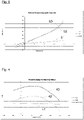
- FIG 3 a relative change in the first coupling factor k 1 and the second coupling factor k 2 of the first piezo element 71 and of the second piezo element 72 is shown.
- the change in the coupling factor k in the 33 direction of the piezo elements is shown in each case, with a polarization of the piezo elements being aligned in the direction of the longitudinal axis L of the tie bolt 17 and thus perpendicular to the membrane 5 .
- figure 3 31 denotes the characteristic curve of the relative change in the first coupling factor k 1 of the first piezo element 71 and 32 denotes the relative change in the second coupling factor k 2 of the second piezo element 72 and is plotted against the temperature.
- the first coupling factor k 1 has a relative change of about +/-5% in a temperature range from ⁇ 50° C. to +200° C., the first coupling factor k 1 additionally having an extremely linear change behavior.
- the second coupling factor k 2 has a non-linear change behavior, with characteristic curve 32 starting from a relative change of ⁇ 20% at ⁇ 50° C. rising almost linearly to the zero point, then at around 60° C and + 10% reaches its maximum and drops drastically with further increasing temperature.
- the characteristic curve 32 of the relative change in the second coupling factor k 2 intersects at approximately 125°C the X-axis again and then falls almost linearly down to a value of - 80% at + 200°C. It can be seen from this characteristic curve that the second coupling factor k 2 of the second piezo element 72 drastically decreases with increasing temperature.
- figure 4 shows the temperature dependence of the first coupling factor k 1 (characteristic 41), the second coupling factor k 2 (characteristic 42) and a sum of the first coupling factor k 1 and the second coupling factor k 2 (characteristic 43).
- the first coupling factor k 1 develops approximately linearly from a value of +17 to a value of +15 in the temperature range from -50°C to +200°C.
- the second coupling factor k 2 of the second piezo element 72 shows a greater temperature dependency in the temperature range mentioned, with the coupling factor increasing essentially linearly starting at a temperature of ⁇ 50° C. from +20 to approximately +25 at a temperature of 0° C reaches its maximum at +27.5 at a temperature of around 60°C and then drops to around +5 at a temperature of 200°C.
- the characteristic curve 43 shows the temperature dependency of the overall coupling factor k tot .
- the total coupling factor k tot results from an addition of the first coupling factor k 1 and the second coupling factor k 2 of the first piezoelectric element 71 and the second piezoelectric element 72, which is shown in the in figure 4 diagrams shown an addition of the characteristics 41 and 42 corresponds.
- ⁇ 0 is the dielectric constant
- ⁇ r is the relative permittivity of the material
- A is the area of the electrode
- d is the distance between the electrodes.
- the second capacitance C 2 of the plate capacitor formed with the second piezo element 72 changes in the same temperature range from ⁇ 10% to +55%, with an essentially linear increase of ⁇ 10% occurring in a temperature range from ⁇ 50° C. to +125° C. to +25% and then ramping up with positive curvature to +55%.
- the relative temperature dependence the total capacity C tot of the drive 3 is illustrated by the characteristic curve 53 .
- the characteristic curve 53 is the addition of the characteristic curves 51 and 52, so that the total capacitance C tot increases from -15% to +60% at 200°C.
- Such a change in capacitance can be easily determined using conventional methods, so that in particular each change in capacitance can be clearly assigned to a temperature, which enables a temperature determination on the basis of a capacitance measurement.
- figure 6 is for a drive with two piezo elements made of the first piezoelectric material and one piezo element made of the second piezoelectric material, which is already in relation to figure 4 explained temperature dependence of the coupling factor k of the individual piezo elements and the total coupling factor shown.
- the total coupling factor is shifted further upwards, so that a total coupling factor of more than 35 is achieved over the entire temperature range.
Landscapes
- Physics & Mathematics (AREA)
- General Physics & Mathematics (AREA)
- Engineering & Computer Science (AREA)
- Power Engineering (AREA)
- Acoustics & Sound (AREA)
- Electromagnetism (AREA)
- Thermal Sciences (AREA)
- Fluid Mechanics (AREA)
- Gyroscopes (AREA)
- Measuring Fluid Pressure (AREA)
Description
- Die vorliegende Erfindung betrifft einen piezoelektrisch betriebenen Vibrationsgrenzschalter mit integrierter Temperaturerfassung gemäß dem Oberbegriff des Patentanspruchs 1.
- Aus dem Stand der Technik sind Vibrationssensoren, die beispielsweise als Vibrationsgrenzschalter verwendet werden, bekannt, wobei der Vibrationssensor eine über einen Antrieb zu einer Schwingung anregbare Membran aufweist, mittels der ein an der Membran angeordneter mechanischer Schwinger zu einer Schwingung anregbar ist. Abhängig von einem Bedeckungsstand des mechanischen Schwingers mit einem Füllgut sowie abhängig von der Viskosität dieses Füllgutes schwingt der mechanische Schwinger mit einer charakteristischen Frequenz, die von dem Vibrationssensor detektiert werden und in ein Messsignal umgewandelt werden kann.
- In
Figur 8 ist ein aus dem Stand der Technik bekannter piezoelektrisch angetriebene Vibrationssensor 1, der insbesondere als Vibrationsgrenzschalter eingesetzt werden kann, gezeigt. Der Vibrationssensor weist eine über einen Antrieb 3 zu einer Schwingung anregbare Membran 5 auf, wobei der Antrieb 3 eine Mehrzahl von ringförmig ausgebildeten Piezoelementen 7 mit einer Öffnung 9 und eine elektrische Kontaktierung der Piezoelemente 7 umfasst. Typischerweise sind die Piezoelemente 7 über einen an der Membran 5 des Vibrationssensors 1 angeordneten Zugbolzen 17, der durch die Öffnung 9 der Piezoelemente 7 verläuft, über eine Spannschraube 19 gegen die Membran 5 gespannt, sodass eine über ein elektrisches Signal erzeugte Schwingung der Piezoelemente 7 zuverlässig auf die Membran 5 übertragen wird. Typischerweise sind zwischen den Piezoelementen 7 und der Membran 5 eine Anpasskeramik 13 und eine Spannscheibe 14 angeordnet, die für eine gezielte Einleitung der mechanischen Schwingung in die Membran 5 sowie eine elektrische Isolierung der Piezoelemente 7 gegenüber der typischerweise metallisch ausgebildeten Membran 5 sowie eine thermische Anpassung sorgt. Analog zu Anpasskeramik 13 und Spannscheibe 14 zwischen der Membran 5 und den Piezoelementen 7 kann ebenfalls eine weitere Anpasskeramik 13 und eine Spannscheibe 14 zwischen der Spannschraube 19 und den Piezoelementen 7 vorgesehen sein, sodass auch die Spannschraube 19 gegenüber den Piezoelementen 7 elektrisch isoliert ist. - Gegenüber dem Zugbolzen 17 können die Piezzoelemente 7 über die in der Öffnung 9 angeordnete, vorliegend nicht höher gezeigte Hülse 10 isoliert sein.
- Eine elektrische Kontaktierung der Piezoelemente 7 erfolgt über an den Oberflächen der Piezoelemente 7 angeordnete und über Kabel 25 von außen kontaktierte Elektroden 8.
- Auf einer dem Antrieb 3 abgewandten Seite der Membran 5 sind typischerweise zwei als Paddel ausgebildete mechanische Schwinger 11 angeordnet, die die in die Membran 5 eingekoppelte Schwingung auf ein die mechanischen Schwinger 11 umgebendes Medium übertragen.
- Vibrationssensoren der zuvor beschriebenen Art, insbesondere Vibrationsgrenzschalter für Flüssigkeiten arbeiten nach dem Prinzip der Resonanzfrequenzverschiebung. Der Vibrationsgrenzschalter schwingt je nach Bedeckungszustand, Dichte und Temperatur des Mediums mit einer anderen Resonanzfrequenz und Amplitude. Die Amplitude der Resonanzfrequenz ist dabei von der Viskosität des Mediums abhängig. Die Frequenzverschiebung ist von der Dichte und Temperatur des Mediums abhängig.
- Damit die Einflüsse der Temperatur auf die Resonanzfrequenz kompensiert werden können, muss die Temperatur am Piezoantrieb und/oder des Schwingungselements bekannt sein.
- Der Einfluss der Temperatur auf die Resonanzfrequenz ist durch die Materialkonstanten der verwendeten Materialen, insbesondere der Membran und des Schwingelements bekannt. Ist die Temperatur bekannt, kann also eine durch Temperatureinflüsse hervorgerufene Resonanzfrequenzverschiebung kompensiert werden. Im Stand der Technik wird im Antrieb ein Temperatursensor, in
Figur 8 mit 22 bezeichnet, z.B. vom Typ PT100 mit verbaut. - Aus
JP 2012-13440 A - Bei den aus dem Stand der Technik bekannten Vibrationssensoren wird es dabei als nachteilig empfunden, dass zur Temperaturerfassung ein Temperatursensor als zusätzliches Bauelement mit zusätzlichem Platzbedarf, zusätzlichen Kosten sowie zusätzlicher Verkabelung notwendig ist.
- Es ist die Aufgabe der vorliegenden Erfindung einen Vibrationssensor mit integrierter Temperaturerfassung dahingehend weiterzubilden, dass kein separater Sensor notwendig ist.
- Diese Aufgabe wird durch einen Vibrationssensor mit den Merkmalen des Patentanspruchs 1 gelöst.
- Vorteilhafte Weiterbildungen sind in abhängigen Patentansprüchen widergegeben.
- Ein erfindungsgemäßer Vibrationssensor weist eine in Schwingung versetzbare Membran und einen piezoelektrischen Antrieb zum Versetzen der Membran in Schwingung und zum Erfassen von Schwingungen der Membran auf, wobei der Antrieb wenigstens zwei mechanisch in Serie geschaltete Piezoelemente aufweist. Solche Vibrationssensoren sind beispielsweise aus
EP 2 801 799 A1 bekannt. Der erfindungsgemäße Vibrationssensor zeichnet sich dadurch aus, dass der Vibrationssensor eine integrierte Temperaturerfassung aufweist, wenigstens ein erstes Piezoelement aus einem ersten piezoelektrischen Material und wenigstens ein zweites Piezoelement aus einem zweiten piezoelektrischen Material ausgebildet ist und eine Temperatur durch Erfassen einer Kapazität wenigstens eines Piezoelements bestimmt wird. - Durch die Verwendung von wenigstens zwei Piezoelementen aus unterschiedlichen piezoelektrischen Materialien wird erreicht, dass die beiden unterschiedlichen Piezoelemente unterschiedliche Temperaturabhängigkeiten ihre Eigenschaften wie beispielsweise Kopplungsfaktor und Permittivität haben können. Auf diese Weise kann durch eine geeignete Materialzusammenstellung ein Vibrationssensor mit einem Antrieb zur Verfügung gestellt werden, der sowohl in einem großen Temperaturbereich einsetzbar ist als, auch eine integrierte Temperaturbestimmung ermöglicht.
- Eine unterschiedliche Materialwahl ist notwendig, da Materialien, die einen über einen großen Temperaturbereich weitgehend konstanten oder nur in einem geringen Bereich schwankenden Kopplungsfaktor aufweisen in der Regel auch eine geringe Temperaturabhängigkeit ihrer dielektrischen Eigenschaften, also insbesondere der relativen Dielektrizitätszahl, aufweisen. Dagegen weisen piezoelektrische Materialien mit einer hohen Temperaturabhängigkeit der dielektrischen Eigenschaften, die sich damit gut zur Bestimmung einer Temperatur eignen, auch eine hohe Temperaturabhängigkeit des Kopplungsfaktors auf, wobei dieser insbesondere bei einer Annäherung an die Curietemperatur des jeweiligen Materials deutlich einbricht, sodass ein Wirkungsgrad des Antriebs damit deutlich zurückgeht.
- Zur Festlegung von Richtungen in Bezug auf die verwendeten Piezoelemente werden, wie dies in
Figur 7 dargestellt ist, die Achsen 1, 2 und 3 eingeführt, die analog zu X-, Y- und Z-Achsen des katesischen Koordinatensystems ausgerichtet sind. Zusätzlich werden mit den Ziffern 4, 5 und 6 die Drehrichtungen um die jeweiligen Achsen, ebenfalls wie inFigur 7 eingezeichnet, bezeichnet. Die Achse 3 ist dabei entlang der Polarisierungsrichtung des jeweiligen Piezoelements ausgerichtet. Da das piezoelektrische Material anisotrop ist, werden die entsprechenden physikalischen Größen durch Tensoren beschrieben und entsprechend der obigen Achsennummerierung indiziert. - Der Kopplungsfaktor k ist ein Maß für die Ausprägung des piezoelektrischen Effekts. Er beschreibt das Vermögen eines piezoelektrischen Materials, aufgenommene elektrische Energie in mechanische Energie umzuwandeln und umgekehrt. Der Kopplungsfaktor berechnet sich dabei aus der Quadratwurzel des Verhältnisses von gespeicherter mechanischer Energie zur gesamten aufgenommenen Energie. Unter dynamischen Bedingungen hängt der Kopplungsfaktor k von der entsprechenden Schwingungsform des piezoelektrischen Körpers ab. Besonders relevant für piezoelektrische Antriebe von Vibrationssensoren der vorliegenden Art ist der Kopplungsfaktor der Longitudinalschwingung k33, d. h. inwieweit ein Piezoelement eine in Richtung der Polarisation angelegte elektrische Spannung in eine Ausdehnung in Richtung der Achse 3, d. h. in Richtung der Polarisation überführt.
- In gleicher Weise ist die Dielektrizitätszahl ε bzw. die relative Dielektrizitätszahl εr Richtungsabhängig. εr beschreibt dabei das Verhältnis aus der Dielektrizitätszahl ε des piezoelektrischen Materials und der Dielektrizitätskonstante ε0, wobei die Dielektrizitätszahl ε ein Maß für die Polarisierbarkeit des piezoelektrischen Materials im elektrischen Feld darstellt. Die Abhängigkeit der relativen Dielektrizitätszahl εr von der Richtung des elektrischen Feldes und der dielektrischen Verschiebung wird ebenfalls durch entsprechende Indizies angezeigt. ε33 beschreibt dabei die Dielektrizitätszahl ε in Polarisationsrichtung bei ebenfalls in Polarisationsrichtung anliegenden elektrischem Feld.
- Sofern in der vorliegenden Anmeldung von einem Kopplungsfaktor ohne explizite Indizierung oder Richtungsangabe gesprochen wird, so ist in diesen Fällen der Kopplungsfaktor in 33-Richtung, d. h. parallel zur Polarisierung des Piezoelements und in einer Richtung senkrecht zur Membran des Vibrationssensors gemeint. Dasselbe gilt für die relative Dielektrizitätszahl, die ohne explizit Indizierung und Richtungsangabe ebenfalls in 33-Richtung verstanden werden soll.
- Erfindungsgemäß werden unterschiedlicher Materialien verwendet, wobei eine erste relative Dielektrizitätszahl des ersten piezoelektrischen Materials und eine zweite relative Dielektrizitätszahl des zweiten piezoelektrischen Materials eine unterschiedliche Temperaturabhängigkeit aufweisen. Insbesondere ist es vorteilhaft, wenn die erste relative Dielektrizitätszahl in 33-Richtung und die zweite relative Dielektrizitätszahl in 33-Richtung eine unterschiedliche Temperaturabhängigkeit aufweisen.
- Ebenso ist es für die Materialkombination vorteilhaft, wenn ein erster Kopplungsfaktor in Richtung der Materialpolarisation des ersten piezoelektrischen Materials und ein zweiter Kopplungsfaktor in Richtung der Materialpolarisation des zweiten piezoelektrischen Materials eine unterschiedliche Temperaturabhängigkeit aufweisen. Durch entsprechend unterschiedliche Temperaturabhängigkeiten kann für den Antrieb eine Materialkombination gewählt werden, die für einen großen Temperaturbereich, beispielsweise von - 50° bis + 200°, vorteilhafterweise bis + 250° oder + 300°C in Summe einen für den Betrieb des Vibrationssensors ausreichenden Kopplungsfaktor aufweisen.
- Wenn ein piezoelektrisches Material in die Nähe seiner Curietemperatur kommt, nimmt sein Kopplungsfaktor mit zunehmender Temperatur deutlich ab. Dieser Effekt tritt besonders stark ab etwa 70 % der Curietemperatur auf.
- Vorteilhafterweise weist der erste Kopplungsfaktor in einem Temperaturbereich von - 50°C bis + 200°C eine annähernd lineare Temperaturabhängigkeit, d. h. Änderung relativ zur Temperatur auf.
- Insbesondere kann der erste Kopplungsfaktor in dem Temperaturbereich eine relative Änderung von weniger als +/- 15%, vorzugsweise weniger als +/- 10% und weiter bevorzugt von gleich oder weniger als +/- 5% aufweisen. Ein solch lineares Verhalten bei einem annähernd konstanten Kopplungsfaktor stellt sicher, dass der piezoelektrische Antrieb für den gesamten Temperaturbereich zuverlässig einsetzbar ist.
- Der erste Kopplungsfaktor kann in dem Temperaturbereich beispielsweise Werte in einem Bereich zwischen 10 und 20, vorzugsweise zwischen 15 und 20 aufweisen.
- Der Kopplungsfaktor in 33-Richtung ist wie folgt definiert:

- Wobei die verwendeten Formelbestandteile folgende Bedeutung aufweisen:
- K33 - Kopplungsfaktor in 33-Richtung
- Wmech.,3 - mechanische Arbeit in 33-Richtung
- Welektr.,3 - elektrische Energie in 33-Richtung
- U3 - Elektrodenspannung in 33-Richtung
- b - Piezobreite in 22-Richtung
- h - Piezohöhe in 11-Richtung
- l - Piezolänge in 33-Richtung
- d33 - Piezoelektrische Ladungskonstante in 33-Richtung
- s33 E - Elastische Nachgiebigkeitskonstante in 33-Richtung
- ∈33 T - Relative Permitivitätszahl in 33-Richtung
- Um eine möglichst gute Temperaturerfassung mit Hilfe einer Kapazitätsmessung des Antriebs insgesamt oder eines einzelnen Piezoelements zu gewährleiste ist es vorteilhaft, wenn die zweite relative Dielektrizitätszahl in dem Bereich eine relative Änderung von mehr als +/- 10%, vorzugsweise mehr als +/-15%, insbesondere in einem Bereich von - 10% bis + 30%, vorzugsweise in einem Bereich von - 10% bis + 50% aufweist. Durch eine entsprechend große Änderung der zweiten Dielektrizitätszahl des zweiten Piezoelements wird eine entsprechend große Änderung einer Kapazität eines Plattenkondensators, der mit den piezoelektrischen Elementen gebildet ist, erreicht, sodass mit hinreichender Genauigkeit eine Temperaturbestimmung erfolgen kann.
- Vorzugsweise weist die zweite relative Dielektrizitätskonstante in dem Temperaturbereich eine Änderung von wenigstens 30%, vorzugsweise wenigstens 50%, insbesondere wenigstens 80% auf, wobei hier eine betragsmäßige Änderung über den gesamten Temperaturbereich gemeint sein soll.
- Um einen hinreichend großen Kopplungsfaktor für den gesamten Antrieb über den gesamten Temperaturbereich hinweg zu gewährleisten, kann es vorteilhaft sein, wenn der Antrieb wenigstens zwei Piezoelemente aus dem ersten piezoelektrischen Material aufweist. Die Kopplungsfaktoren von mechanisch in Reihe geschalteten Piezoelementen addieren sich dabei zu einem Gesamtkopplungsfaktor des Antriebs.
- Es ist vorteilhaft, wenn der Kopplungsfaktor des Antriebs in dem gesamten Temperaturbereich wenigstens 20, vorzugsweise wenigstens 25, weiter bevorzugt wenigstens 35 beträgt, da auf diese Weise bei einer vorgegebenen Vorspannung des Antriebs eine hinreichend mechanische Anregung der Membran erzielt werden kann.
- Es kann dabei vorteilhaft sein, wenn das erste Piezoelement eine Curietemperatur von wenigstens 300°C, vorzugsweise wenigstens 320°C aufweist.
- Das zweite Piezoelement kann dann beispielsweise eine Curietemperatur von 255°C und damit eine größere Temperaturabhängigkeit in dem Temperaturbereich aufweisen.
- Typischerweise kommen für piezoelektrische Antriebe von Vibrationssensoren gemäß der vorliegenden Anmeldung piezoelektrische Materialien auf der Basis von Bleizirkonat - Bleititanat (PZT) zum Einsatz.
- Die vorliegende Erfindung wird nachfolgend anhand von Ausführungsbeispielen und unter Bezugnahme auf die beigefügten Figuren eingehend erläutert.
- Es zeigen:
- Fig. 1
- einen Längsschnitt durch einen Vibrationssensor gemäß der vorliegenden Anmeldung,
- Fig. 2
- ein elektrisches Ersatzschaltbild des Antriebs des Vibrationssensors aus
Figur 1 , - Fig. 3
- eine relative Änderung des Kopplungsfaktors der Piezoelemente des Antriebs aus
Figur 1 mit der Temperatur, - Fig. 4
- eine absolute Änderung des Kopplungsfaktors der Piezoelemente des Antriebs aus
Figur 1 mit der Temperatur, - Fig. 5
- eine relative Änderung der Kapazität der Piezoelemente des Antriebs aus
Figur 1 , - Fig. 6
- eine Änderung des Kopplungsfaktors mit der Temperatur für einen Antrieb mit drei Piezoelementen,
- Fig. 7
- ein Koordinatensystem wie es zur Bezeichnung der Richtungen von Polarisation, Kopplungsfaktor und relativer Dielektrizitätszahl verwendet wird (schon behandelt) und
- Fig. 8
- einen Vibrationssensor gemäß dem Stand der Technik (schon behandelt).
-
Figur 1 zeigt einen Längsschnitt durch einen Vibrationssensor 1 gemäß der vorliegenden Anmeldung. Ein Gehäuse sowie eine Sensorelektronik sind der besseren Übersichtlichkeit halber vorliegend nicht dargestellt. - Der gezeigte Vibrationssensor 1 besteht im Wesentlichen aus einem Antrieb 3, der mittels eines Zugbolzens 17 und einer Spannschraube 19 mit einer Membran 5 verschraubt ist. An einer dem Antrieb 3 gegenüberliegenden Seite der Membran 5 sind mechanische Schwinger 11, beispielsweise in Form von an der Membran 5 angeordneten und parallel zueinander ausgerichteten Paddeln angeordnet.
- Zentraler Bestandteil des Antriebs 3 ist im vorliegenden Ausführungsbeispiel ein Stapel aus zwei Piezoelementen 7, die nachfolgend zu deren Unterscheidbarkeit als erstes Piezoelement 71 und zweites Piezoelement 72 bezeichnet werden. Die Piezoelemente 7 sind vorliegend ringförmig ausgebildet und umschließen damit den Zugbolzen 17 in Umfangsrichtung. Zur zentrierten Ausrichtung der Piezoelemente 7 sowie zu deren elektrischer Isolation gegenüber dem metallischen Zugbolzen 17 ist zwischen dem Zugbolzen 17 und den Piezoelementen 71 eine isolierende Hülse 10 angeordnet. Die Piezoelemente 7 sind über Elektroden 8 elektrisch kontaktiert, wobei eine elektrische Spannung über in rückseitiger Richtung verlaufende Kabel 25 geführt wird. Die Elektroden 8 kontaktieren jeweils eine in der vorliegenden Figur nicht näher dargestellte Oberflächenmetallisierung der Piezoelemente 7.
- Unter vorderseitig wird in der vorliegenden Anmeldung eine Orientierung in Richtung der Membran 5, unter rückseitig eine Orientierung von der Membran 5 weggewandt verstanden.
- Vorder- und rückseitig der Piezoelemente 7 ist jeweils eine Anpasskeramik 13 zur elektrischen Isolation angeordnet. Wiederum vorder- und rückseitig zu den jeweiligen Anpasskeramiken 13 sind Spannscheiben 14 angeordnet, mittels derer der Antrieb vorderseitig auf der Membran 5 aufsitzt und rückseitig mit Hilfe Spannschraube 19 mit dem Zugbolzen 17 verschraubt und damit in Richtung der Membran 5 vorgespannt ist.
- Das erste Piezoelement 71 und das zweite Piezoelement 72 sind in dem in
Figur 1 dargestellten Ausführungsbeispiel übereinandergestapelt und damit mechanisch in Reihe geschaltet. Das bedeutet, dass sich in Richtung einer Längsachse des Zugbolzens 17 ausbildende Längenänderungen des ersten Piezoelements 71 und des zweiten Piezoelements 72 innerhalb des Antriebs 3 addieren und damit ein vergrößerter Hub erreicht werden kann. - Bei einer mechanischen Reihenschaltung, wie dies in
Figur 1 dargestellt ist, addieren sich die Kopplungsfaktoren der aufeinandergestapelten Piezoelemente 7 zu einem Gesamtkopplungsfaktor des Antriebs 3. - In
Figur 2 ist ein elektrisches Ersatzschaltbild der Piezoelemente 7 ausFigur 1 dargestellt. Aus diesem Ersatzschaltbild ist ersichtlich, dass das erste Piezoelement 71 und das zweite Piezoelement 72 elektrisch gesehen parallel geschaltet sind. - Wie aus
Figur 2 ersichtlich, bildet das erste Piezoelement 71 eine erste Kapazität C1 und das zweite Piezoelement 72 eine zweite Kapazität C2 aus. Durch die elektrische Parallelschaltung addieren sich die Kapazitäten C1, C2 aus. Durch die elektrische Parallelschaltung addieren sich die Kapazitäten C1, C2 zu einer Gesamtkapazität Cges des Antriebs 3. - Wie aus dem Ersatzschaltbild ersichtlich ist, sind die Piezoelemente 7 dabei als die Dielektrikum innerhalb der Plattenkondensatoren anzusehen, sodass eine Änderung der relativen Dielektrizitätszahl εr des piezoelektrischen Materials des jeweiligen Piezoelements zu einer Änderung der Kapazität des zugeordneten Plattenkondensators führt. Auf diese Weise kann durch Bestimmung der Gesamtkapazität Cges des Antriebs 3 wie nachfolgend gezeigt wird eine Bestimmung der Temperatur der Piezoelemente mit hinreichender Genauigkeit erfolgen.
- In
Figur 3 ist ein relative Änderung des ersten Kopplungsfaktors k1 und des zweiten Kopplungsfaktors k2 des ersten Piezoelements 71 bzw. des zweiten Piezoelements 72 dargestellt. Gezeigt ist jeweils die Änderung des Kopplungsfaktors k in 33-Richtung der Piezoelemente, wobei eine Polarisation der Piezoelemente in Richtung der Längsachse L des Zugbolzens 17 und damit senkrecht zur Membran 5 ausgerichtet ist. - In
Figur 3 ist mit 31 die Kennlinie der relativen Änderung des ersten Kopplungsfaktors k1 des ersten Piezoelements 71 und mit 32 die relative Änderung des zweiten Kopplungsfaktors k2 des zweiten Piezoelements 72 bezeichnet und gegenüber der Temperatur aufgetragen. - Wie aus
Figur 3 ersichtlich, weist der erste Kopplungsfaktor k1 in einem Temperaturbereich von - 50°C bis + 200°C eine relative Änderung von etwa +/- 5% auf, wobei der erste Kopplungsfaktor k1 zusätzlich ein äußerst lineares Änderungsverhalten aufweist. Der zweite Kopplungsfaktor k2 weist, wie aus Kennlinie 32 ersichtlich ist, ein nicht lineares Änderungsverhalten auf, wobei die Kennlinie 32 ausgehend von einer Relativänderung von - 20% bei - 50°C annähernd linear bis zum Nullpunkt ansteigt, anschließend bei etwa 60°C und + 10% ihr Maximum erreicht und mit weiter steigender Temperatur drastisch abfällt. Die Kennlinie 32 der relativen Änderung des zweiten Kopplungsfaktors k2 schneidet dabei bei etwa 125°C erneut die X-Achse und fällt dann annähernd linear bis zu einem Wert von - 80% bei + 200°C ab. Es ist aus dieser Kennlinie ersichtlich, dass der zweite Kopplungsfaktor k2 des zweiten Piezoelements 72 mit zunehmender Temperatur drastisch abnimmt. InFigur 4 ist die Temperaturabhängigkeit des ersten Kopplungsfaktors k1 (Kennlinie 41), des zweiten Kopplungsfaktors k2 (Kennlinie 42) sowie einer Summe aus dem ersten Kopplungsfaktor k1 und dem zweiten Kopplungsfaktor k2 (Kennlinie 43) dargestellt. - Aus
Figur 4 ist dabei ersichtlich, dass sich erste Kopplungsfaktor k1 in dem Temperaturbereich von - 50°C bis + 200°C annähernd linear von einem Wert von + 17 zu einem Wert von + 15 entwickelt. - Der zweite Kopplungsfaktor k2 des zweiten Piezoelements 72 zeigt in dem genannten Temperaturbereich eine stärkere Temperaturabhängigkeit, wobei der Kopplungsfaktor beginnend bei einer Temperatur von - 50°C von + 20 auf etwa + 25 bei einer Temperatur von 0°C im Wesentlichen linear ansteigt, bei einer Temperatur von etwa 60°C mit +27,5 sein Maximum erreicht und anschließend bis zu einer Temperatur von 200°C auf etwa + 5 abfällt.
- Mit der Kennlinie 43 ist die Temperaturabhängigkeit des Gesamtkopplungsfaktors kges gezeigt. Der Gesamtkopplungsfaktor kges ergibst sich dabei aus einer Addition des ersten Kopplungsfaktors k1 und des zweiten Kopplungsfaktors k2 des ersten Piezoelements 71 und des zweiten Piezoelements 72, was in den in
Figur 4 dargestellten Diagramme eine Addition der Kennlinien 41 und 42 entspricht. - In
Figur 5 ist die relative Änderung der ersten Kapazität C1 (Kennlinie 51) der zweiten Kapazität C2 (Kennlinie 52) sowie der Gesamtkapazität Cges (Kennlinie 53) gegenüber der Temperatur dargestellt. Die gleiche Kennlinie zeigt auch die relative Änderung der jeweiligen relativen Dielektrizitätszahl εr. Da unter der Annahme, dass eine Fläche A der Elektroden mittels derer die Piezoelemente 71, 72 kontaktiert werden sowie deren Abstand d im Wesentlichen gleich bleiben kürzen sich diese Werte aus der Formel zur Berechnung der Kapazität eines Plattenkondensators heraus, sodass lediglich die relative Änderung der relativen Dielektrizitätszahl verbleibt. Die Formel zur Berechnung der Kapazität eines Plattenkondensators ist
- Wobei ε0 die dielektrische Konstante, εr die relative Dielektrizitätszahl des Materials, A die Fläche der Elektrode und d der Abstand der Elektroden bezeichnet.
- Aus
Figur 5 geht damit hervor, dass sich die erste Kapazität C1 des mit dem ersten Piezoelement 71 gebildeten Plattenkondensators im Temperaturbereich von - 50°C bis + 200°C im Wesentlichen linear in einem Bereich von +/- 5% ändert, wobei die Kapazität beginnend von - 5% bei - 50°C auf + 5% bei 200°C ansteigt. - Die zweite Kapazität C2 des mit dem zweiten Piezoelement 72 gebildeten Plattenkondensators ändert sich im selben Temperaturbereich von - 10% auf + 55%, wobei in einem Temperaturbereich von - 50°C bis + 125°C ein im Wesentlichen linearer Anstieg von - 10% auf + 25% und anschließend ein ein Anstieg mit positiver Krümmung auf + 55% stattfindet. Die relative Temperaturabhängigkeit der Gesamtkapazität Cges des Antriebs 3 ist mit der Kennlinie 53 verdeutlicht. Die Kennlinie 53 ist dabei die Addition der Kennlinien 51 und 52, sodass die Gesamtkapazität Cges von - 15% auf + 60% bei 200°C ansteigt. Eine derartige Kapazitätsänderung kann mittels üblicher Verfahren gut ermittelt werden, sodass insbesondere jede Kapazitätsänderung eindeutig eine Temperatur zuordenbar ist, wodurch eine Temperaturbestimmung auf Basis einer Kapazitätsmessung ermöglicht wird.
- In
Figur 6 ist für einen Antrieb mit zwei Piezoelementen aus dem ersten piezoelektrischen Material und einem Piezoelement aus dem zweiten piezoelektrischen Material, die bereits in Bezug aufFigur 4 erläuterte Temperaturabhängigkeit des Kopplungsfaktors k der einzelnen Piezoelemente sowie des Gesamtkopplungsfaktors gezeigt. Durch das Vorsehen von zwei Piezoelementen aus dem ersten piezoelektrischen Material wird der Gesamtkopplungsfaktor weiter nach oben geschoben, sodass insgesamt ein Kopplungsfaktor von über 35 über den gesamten Temperaturbereich erreicht wird. - In Kenntnis der vorliegenden Erfindung ist es dem Fachmann ohne Weiteres möglich, geeignete Materialkombinationen zur Erzielung eines hinreichenden Kopplungsfaktors über den gesamten Temperaturbereich bei gleichzeitig hinreichend großer Temperaturabhängigkeit eine Gesamtkapazität des Antriebs zu erreichen, sodass ohne zusätzliche Sensoren eine Temperaturbestimmung auf Basis einer Kapazitätsmessung möglich ist.
-
- 1
- Vibrationssensor
- 3
- Antrieb
- 5
- Membran
- 7
- Piezoelemente
- 8
- Elektroden
- 9
- Öffnung
- 10
- Hülse
- 11
- mechanische Schwinger
- 13
- Anpasskeramik
- 14
- Spannscheibe
- 17
- Zugbolzen
- 19
- Spannschraube
- 22
- Temperatursensor
- 25
- Kabel
- 31
- relative Änderung k1
- 32
- relative Änderung k2
- 41
- Änderung k1
- 42
- Änderung k2
- 43
- Änderung kges
- 71
- erstes Piezoelement
- 72
- zweites Piezoelement
- ε0
- Dielektrizitätskonstante
- εr1
- erste relative Dielektrizitätszahl
- εr2
- zweite relative Dielektrizitätszahl
- k1
- erster Kopplungsfaktor
- k2
- Zweiter Kopplungsfaktor
- kges
- Gesamtkopplungsfaktor
- C1
- erste Kapazität
- C2
- zweite Kapazität
- Cges
- Gesamtkapazität
- L
- Längsachse
Claims (12)
- Vibrationssensor (1) mit- einer in Schwingung versetzbaren Membran (5),- einem piezoelektrischen Antrieb (3) zum Versetzen der Membran (3) in Schwingung und zur Erfassung von Schwingungen der Membran (3), wobei der Antrieb wenigstens zwei mechanisch in Serie geschaltete Piezoelemente (71, 72) aufweist,dadurch gekennzeichnet, dassder Vibrationssensor eine integrierte Temperaturerfassung aufweist, wenigstens ein erstes Piezoelement (71) aus einem ersten piezoelektrischen Material und wenigstens ein zweites Piezoelement (72) aus einem zweiten, piezoelektrischen Material ausgebildet ist , wobei der Vibrationssensor dazu ausgebildet ist, eine Temperatur durch Erfassen einer Kapazität wenigstens eines Piezoelements zu bestimmen, und wobeieine erste relative Dielektrizitätszahl (εr1) des ersten piezoelektrischen Materials und eine zweite relative Dielektrizitätszahl (εr2) des zweiten piezoelektrischen Materials eine unterschiedliche Temperaturabhängigkeit aufweisen.
- Vibrationssensor (1) gemäß Anspruch 1,
dadurch gekennzeichnet, dass
eine erster Kopplungsfaktor (k1) in Richtung der Materialpolarisation des ersten piezoelektrischen Materials und eine zweiter Kopplungsfaktor (k2) in Richtung der Materialpolarisation des zweiten piezoelektrischen Materials eine unterschiedliche Temperaturabhängigkeit aufweisen. - Vibrationssensor (1) gemäß Anspruch 2,
dadurch gekennzeichnet, dass
der erste Kopplungsfaktor (k1) in einem Temperaturbereich von -50°C bis +200°C eine annähernd lineare Änderung aufweist. - Vibrationssensor gemäß Anspruch 3,
dadurch gekennzeichnet, dass
der erste Kopplungsfaktor (k1) in dem Temperaturbereich eine relative Änderung von weniger als +/- 15%, vorzugsweise weniger als +/-10% und weiter bevorzugt von gleich oder weniger als +/- 5% aufweist. - Vibrationssensor (1) gemäß Anspruch 4,
dadurch gekennzeichnet, dass
der erste Kopplungsfaktor (k1) in dem Temperaturbereich Werte in einem Bereich zwischen 10 und 20, vorzugsweise zwischen 15 und 20 aufweist. - Vibrationssensor (1) gemäß einem der Ansprüche 4 oder 5,
dadurch gekennzeichnet, dass
die zweite relative Dielektrizitätszahl (εr2) in dem Temperaturbereich eine relative Änderung von mehr als +/-10%, vorzugsweise mehr als +/- 15%, insbesondere von wenigstens - 10% bis + 30%, vorzugsweise wenigstens +50% aufweist. - Vibrationssensor (1) gemäß einem der vorhergehenden Ansprüche,
dadurch gekennzeichnet, dass
die zweite relative Dielektrizitätszahl in dem Temperaturbereich eine Änderung von wenigstens 30%, vorzugsweise wenigstens 50%, insbesondere wenigstens 80% aufweist. - Vibrationssensor (1) gemäß einem der vorhergehenden Ansprüche,
dadurch gekennzeichnet, dass
der Antrieb (3) wenigstens zwei Piezoelemente (71, 72) aus dem ersten piezoelektrischen Material aufweist. - Vibrationssensor (1) gemäß einem der vorhergehenden Ansprüche,
dadurch gekennzeichnet, dass
der Antrieb (3) einen Kopplungsfaktor von wenigstens 20, vorzugsweise wenigstens 35 aufweist. - Vibrationssensor (1) gemäß einem der vorhergehenden Ansprüche,
dadurch gekennzeichnet, dass
ein membranseitiges Piezoelement (71) aus dem zweiten piezoelektrischen Material ist. - Vibrationssensor (1) gemäß einem der vorhergehenden Ansprüche,
dadurch gekennzeichnet, dass
das erste Piezoelement (71) eine Curietemperatur von wenigstens 300°C, vorzugsweise wenigstens 320°C ausweist. - Vibrationssensor (1) gemäß einem der vorhergehenden Ansprüche,
dadurch gekennzeichnet, dass
das zweite Piezoelement (72) eine Curietemperatur von 255°C aufweist.
Priority Applications (4)
| Application Number | Priority Date | Filing Date | Title |
|---|---|---|---|
| HUE16194931A HUE059513T2 (hu) | 2016-10-20 | 2016-10-20 | Vibrációs szenzor integrált hõérzékelõvel |
| EP16194931.8A EP3312574B1 (de) | 2016-10-20 | 2016-10-20 | Vibrationssensor mit integrierter temperaturerfassung |
| US15/787,614 US10608160B2 (en) | 2016-10-20 | 2017-10-18 | Vibration sensor with integrated temperature detection |
| CN201710998463.5A CN107990973B (zh) | 2016-10-20 | 2017-10-20 | 具有集成的温度测量的振动传感器 |
Applications Claiming Priority (1)
| Application Number | Priority Date | Filing Date | Title |
|---|---|---|---|
| EP16194931.8A EP3312574B1 (de) | 2016-10-20 | 2016-10-20 | Vibrationssensor mit integrierter temperaturerfassung |
Publications (2)
| Publication Number | Publication Date |
|---|---|
| EP3312574A1 EP3312574A1 (de) | 2018-04-25 |
| EP3312574B1 true EP3312574B1 (de) | 2022-07-13 |
Family
ID=57208109
Family Applications (1)
| Application Number | Title | Priority Date | Filing Date |
|---|---|---|---|
| EP16194931.8A Active EP3312574B1 (de) | 2016-10-20 | 2016-10-20 | Vibrationssensor mit integrierter temperaturerfassung |
Country Status (4)
| Country | Link |
|---|---|
| US (1) | US10608160B2 (de) |
| EP (1) | EP3312574B1 (de) |
| CN (1) | CN107990973B (de) |
| HU (1) | HUE059513T2 (de) |
Families Citing this family (3)
| Publication number | Priority date | Publication date | Assignee | Title |
|---|---|---|---|---|
| DE102018120124A1 (de) * | 2018-08-17 | 2020-02-20 | Herrmann Ultraschalltechnik Gmbh & Co. Kg | Ultraschallschwingeinrichtung mit Piezosensor |
| DE102019102204B4 (de) | 2019-01-29 | 2025-07-31 | Vega Grieshaber Kg | Verfahren und Schaltungsanordnung zum Betreiben eines Vibrationssensors mit integrierter Temperaturerfassung |
| DE102019132021B4 (de) | 2019-11-26 | 2024-10-02 | Vega Grieshaber Kg | Vibrationssensor mit integrierter Temperaturerfassung mit einer in Schwingung versetzbaren Membran |
Family Cites Families (23)
| Publication number | Priority date | Publication date | Assignee | Title |
|---|---|---|---|---|
| US5635812A (en) * | 1994-09-29 | 1997-06-03 | Motorola, Inc. | Thermal sensing polymeric capacitor |
| DE19805184A1 (de) * | 1998-02-10 | 1999-08-12 | Bosch Gmbh Robert | Verfahren und Vorrichtung zum Ermitteln der Temperatur eines piezoelektrischen Elements |
| DE10023302C2 (de) * | 2000-05-15 | 2003-11-13 | Grieshaber Vega Kg | Piezoelektrisch erregbares Schwingelement |
| JP2002111087A (ja) * | 2000-09-29 | 2002-04-12 | Matsushita Electric Ind Co Ltd | 可撓性圧電素子とそれを用いた異常監視装置 |
| JP2003277143A (ja) * | 2002-03-25 | 2003-10-02 | Noritake Co Ltd | 圧電セラミックス |
| EP1554570A2 (de) * | 2002-10-18 | 2005-07-20 | Symyx Technologies, Inc. | Umweltsteuersystemfluidmesssystem und verfahren mit einem sensor mit mechanischem resonator |
| WO2005116599A1 (en) * | 2004-05-27 | 2005-12-08 | Koninklijke Philips Electronics N.V. | Recording and storing a temperature |
| JP4741849B2 (ja) * | 2005-02-07 | 2011-08-10 | ホーチキ株式会社 | 熱感知素子の製造方法 |
| US8261368B2 (en) * | 2008-05-13 | 2012-09-04 | Nanoink, Inc. | Nanomanufacturing devices and methods |
| DE102008050266A1 (de) * | 2008-10-07 | 2010-04-08 | Endress + Hauser Gmbh + Co. Kg | Vorrichtung zur Bestimmung und/oder Überwachung einer Prozessgröße eines Mediums |
| JP2011181764A (ja) * | 2010-03-02 | 2011-09-15 | Tdk Corp | 圧電体素子及びその製造方法 |
| JP5673998B2 (ja) * | 2010-06-29 | 2015-02-18 | 独立行政法人国立高等専門学校機構 | 圧電型センサ |
| DE102010030791A1 (de) * | 2010-07-01 | 2012-01-05 | Endress + Hauser Gmbh + Co. Kg | Vorrichtung zur Bestimmung und/oder Überwachung einer Prozessgröße eines Mediums |
| JP5020403B1 (ja) * | 2011-11-28 | 2012-09-05 | リオン株式会社 | 振動式物性測定装置及び方法 |
| DE102011090015B4 (de) * | 2011-12-28 | 2023-12-28 | Endress+Hauser SE+Co. KG | Vorrichtung zur Bestimmung und/oder Überwachung mindestens einer Prozessgröße |
| US9214623B1 (en) * | 2012-01-18 | 2015-12-15 | Analog Devices, Inc. | Doped piezoelectric resonator |
| US9837975B2 (en) * | 2013-04-01 | 2017-12-05 | Cymatics Laboratories Corp. | Temperature drift compensation of MEMS resonators |
| EP2801799B1 (de) * | 2013-05-08 | 2016-03-16 | VEGA Grieshaber KG | Vibrations-Grenzstandschalter |
| JP5754660B2 (ja) * | 2013-06-28 | 2015-07-29 | セイコーエプソン株式会社 | 圧電材料、圧電素子、液体噴射ヘッド、液体噴射装置、超音波センサー、圧電モーター及び発電装置 |
| US9923136B2 (en) * | 2014-05-07 | 2018-03-20 | The Penn State Research Foundation | High temperature sensors and transducers |
| EP3140869B1 (de) * | 2014-05-09 | 2019-06-05 | Chirp Microsystems, Inc. | Mikrobearbeiteter ultraschallwandler mit mehreren piezoelektrischen materialien |
| US10312882B2 (en) * | 2015-07-22 | 2019-06-04 | Cindy X. Qiu | Tunable film bulk acoustic resonators and filters |
| DE102016107658B4 (de) * | 2016-04-25 | 2025-12-31 | Infineon Technologies Ag | Abstimmbares resonatorelement, filterschaltkreis und verfahren |
-
2016
- 2016-10-20 EP EP16194931.8A patent/EP3312574B1/de active Active
- 2016-10-20 HU HUE16194931A patent/HUE059513T2/hu unknown
-
2017
- 2017-10-18 US US15/787,614 patent/US10608160B2/en active Active
- 2017-10-20 CN CN201710998463.5A patent/CN107990973B/zh active Active
Also Published As
| Publication number | Publication date |
|---|---|
| US10608160B2 (en) | 2020-03-31 |
| CN107990973B (zh) | 2022-01-21 |
| EP3312574A1 (de) | 2018-04-25 |
| CN107990973A (zh) | 2018-05-04 |
| HUE059513T2 (hu) | 2022-11-28 |
| US20180130939A1 (en) | 2018-05-10 |
Similar Documents
| Publication | Publication Date | Title |
|---|---|---|
| EP0065511B1 (de) | Messwertaufnehmer mit piezoelektrischem Sensorelement | |
| DE69518896T2 (de) | Piezoelektrischer Wandler | |
| EP0947002B1 (de) | Piezoaktuatorisches antriebs- oder verstellelement | |
| EP2710344B1 (de) | Sensorelement mit piezoelektrischem wandler | |
| WO2010040582A1 (de) | VORRICHTUNG ZUR BESTIMMUNG UND/ODER ÜBERWACHUNG EINER PROZESSGRÖßE EINES MEDIUMS | |
| DE102018207436A1 (de) | Sensoreinrichtung für Batteriezellen, Batteriezelle umfassend die Sensoreinrichtung sowie Zellstapel umfassend die Sensoreinrichtung | |
| EP3312574B1 (de) | Vibrationssensor mit integrierter temperaturerfassung | |
| DE69716360T2 (de) | Piezoelektrischer transformator | |
| DE102013217111A1 (de) | Mikromechanisches Bauteil und Verfahren zur Herstellung eines mikromechanischen Bauteils | |
| DE102019220132A1 (de) | Piezoelektrisches Element und Verfahren zum Herstellen eines piezoelektrischen Elements | |
| DE102016118445A1 (de) | Vibrationssensor und Verfahren zum Betreiben eines Vibrationssensors | |
| DE102019132021B4 (de) | Vibrationssensor mit integrierter Temperaturerfassung mit einer in Schwingung versetzbaren Membran | |
| DE19831270B4 (de) | Anordnung und Verfahren zur Bestimmung und Überwachung des Spannungszustandes eines Befestigungselementes | |
| DE19525147C2 (de) | Piezoelektrischer Biegesensor, insbesondere Serien-Bimorph-Sensor | |
| DE102019102204B4 (de) | Verfahren und Schaltungsanordnung zum Betreiben eines Vibrationssensors mit integrierter Temperaturerfassung | |
| EP3837512B1 (de) | Ultraschallschwingeinrichtung mit piezosensor | |
| EP1704603B1 (de) | Verfahren zum herstellen einer korrelation zwischen einem ersten zustand eines piezoelektrischen bauteils und einem zweiten zustand des bauteils sowie verwendung der korrelation | |
| DE102015220271A1 (de) | Magnetischer Temperatursensor, Verfahren zur Bestimmung einer Temperatur | |
| DE102023118598A1 (de) | Vibrationssensor | |
| DE102014204661A1 (de) | Magnetfeldsensor zur Erfassung eines Magnetfeldes und Verfahren | |
| DE112022003736T5 (de) | Piezoelektrische spule mit sensor und elektronisches gerät | |
| DE102019104677A1 (de) | Kraftfahrzeugtürgriff mit einem Kraftsensor | |
| DE19913902B4 (de) | Verfahren zum Erfassen eines Risses in einem piezoelektrischen Bauelement und Anordnung zum Erfassen des Risses | |
| DE102017204670A1 (de) | Sensoreinrichtung und Überwachungsverfahren | |
| DE102023112237A1 (de) | Vibronischer Sensor |
Legal Events
| Date | Code | Title | Description |
|---|---|---|---|
| PUAI | Public reference made under article 153(3) epc to a published international application that has entered the european phase |
Free format text: ORIGINAL CODE: 0009012 |
|
| STAA | Information on the status of an ep patent application or granted ep patent |
Free format text: STATUS: THE APPLICATION HAS BEEN PUBLISHED |
|
| AK | Designated contracting states |
Kind code of ref document: A1 Designated state(s): AL AT BE BG CH CY CZ DE DK EE ES FI FR GB GR HR HU IE IS IT LI LT LU LV MC MK MT NL NO PL PT RO RS SE SI SK SM TR |
|
| AX | Request for extension of the european patent |
Extension state: BA ME |
|
| STAA | Information on the status of an ep patent application or granted ep patent |
Free format text: STATUS: REQUEST FOR EXAMINATION WAS MADE |
|
| 17P | Request for examination filed |
Effective date: 20180418 |
|
| RBV | Designated contracting states (corrected) |
Designated state(s): AL AT BE BG CH CY CZ DE DK EE ES FI FR GB GR HR HU IE IS IT LI LT LU LV MC MK MT NL NO PL PT RO RS SE SI SK SM TR |
|
| STAA | Information on the status of an ep patent application or granted ep patent |
Free format text: STATUS: EXAMINATION IS IN PROGRESS |
|
| 17Q | First examination report despatched |
Effective date: 20210413 |
|
| GRAP | Despatch of communication of intention to grant a patent |
Free format text: ORIGINAL CODE: EPIDOSNIGR1 |
|
| STAA | Information on the status of an ep patent application or granted ep patent |
Free format text: STATUS: GRANT OF PATENT IS INTENDED |
|
| INTG | Intention to grant announced |
Effective date: 20220215 |
|
| RIC1 | Information provided on ipc code assigned before grant |
Ipc: G01K 7/34 20060101ALI20220204BHEP Ipc: G01F 23/2965 20220101ALI20220204BHEP Ipc: G01H 11/08 20060101AFI20220204BHEP |
|
| GRAS | Grant fee paid |
Free format text: ORIGINAL CODE: EPIDOSNIGR3 |
|
| GRAA | (expected) grant |
Free format text: ORIGINAL CODE: 0009210 |
|
| STAA | Information on the status of an ep patent application or granted ep patent |
Free format text: STATUS: THE PATENT HAS BEEN GRANTED |
|
| AK | Designated contracting states |
Kind code of ref document: B1 Designated state(s): AL AT BE BG CH CY CZ DE DK EE ES FI FR GB GR HR HU IE IS IT LI LT LU LV MC MK MT NL NO PL PT RO RS SE SI SK SM TR |
|
| REG | Reference to a national code |
Ref country code: CH Ref legal event code: EP |
|
| REG | Reference to a national code |
Ref country code: IE Ref legal event code: FG4D Free format text: LANGUAGE OF EP DOCUMENT: GERMAN |
|
| REG | Reference to a national code |
Ref country code: DE Ref legal event code: R096 Ref document number: 502016015064 Country of ref document: DE |
|
| REG | Reference to a national code |
Ref country code: AT Ref legal event code: REF Ref document number: 1504503 Country of ref document: AT Kind code of ref document: T Effective date: 20220815 |
|
| REG | Reference to a national code |
Ref country code: NL Ref legal event code: FP |
|
| REG | Reference to a national code |
Ref country code: LT Ref legal event code: MG9D |
|
| REG | Reference to a national code |
Ref country code: HU Ref legal event code: AG4A Ref document number: E059513 Country of ref document: HU |
|
| PG25 | Lapsed in a contracting state [announced via postgrant information from national office to epo] |
Ref country code: SE Free format text: LAPSE BECAUSE OF FAILURE TO SUBMIT A TRANSLATION OF THE DESCRIPTION OR TO PAY THE FEE WITHIN THE PRESCRIBED TIME-LIMIT Effective date: 20220713 Ref country code: RS Free format text: LAPSE BECAUSE OF FAILURE TO SUBMIT A TRANSLATION OF THE DESCRIPTION OR TO PAY THE FEE WITHIN THE PRESCRIBED TIME-LIMIT Effective date: 20220713 Ref country code: PT Free format text: LAPSE BECAUSE OF FAILURE TO SUBMIT A TRANSLATION OF THE DESCRIPTION OR TO PAY THE FEE WITHIN THE PRESCRIBED TIME-LIMIT Effective date: 20221114 Ref country code: NO Free format text: LAPSE BECAUSE OF FAILURE TO SUBMIT A TRANSLATION OF THE DESCRIPTION OR TO PAY THE FEE WITHIN THE PRESCRIBED TIME-LIMIT Effective date: 20221013 Ref country code: LV Free format text: LAPSE BECAUSE OF FAILURE TO SUBMIT A TRANSLATION OF THE DESCRIPTION OR TO PAY THE FEE WITHIN THE PRESCRIBED TIME-LIMIT Effective date: 20220713 Ref country code: LT Free format text: LAPSE BECAUSE OF FAILURE TO SUBMIT A TRANSLATION OF THE DESCRIPTION OR TO PAY THE FEE WITHIN THE PRESCRIBED TIME-LIMIT Effective date: 20220713 Ref country code: FI Free format text: LAPSE BECAUSE OF FAILURE TO SUBMIT A TRANSLATION OF THE DESCRIPTION OR TO PAY THE FEE WITHIN THE PRESCRIBED TIME-LIMIT Effective date: 20220713 Ref country code: ES Free format text: LAPSE BECAUSE OF FAILURE TO SUBMIT A TRANSLATION OF THE DESCRIPTION OR TO PAY THE FEE WITHIN THE PRESCRIBED TIME-LIMIT Effective date: 20220713 |
|
| PG25 | Lapsed in a contracting state [announced via postgrant information from national office to epo] |
Ref country code: PL Free format text: LAPSE BECAUSE OF FAILURE TO SUBMIT A TRANSLATION OF THE DESCRIPTION OR TO PAY THE FEE WITHIN THE PRESCRIBED TIME-LIMIT Effective date: 20220713 Ref country code: IS Free format text: LAPSE BECAUSE OF FAILURE TO SUBMIT A TRANSLATION OF THE DESCRIPTION OR TO PAY THE FEE WITHIN THE PRESCRIBED TIME-LIMIT Effective date: 20221113 Ref country code: HR Free format text: LAPSE BECAUSE OF FAILURE TO SUBMIT A TRANSLATION OF THE DESCRIPTION OR TO PAY THE FEE WITHIN THE PRESCRIBED TIME-LIMIT Effective date: 20220713 Ref country code: GR Free format text: LAPSE BECAUSE OF FAILURE TO SUBMIT A TRANSLATION OF THE DESCRIPTION OR TO PAY THE FEE WITHIN THE PRESCRIBED TIME-LIMIT Effective date: 20221014 |
|
| REG | Reference to a national code |
Ref country code: DE Ref legal event code: R097 Ref document number: 502016015064 Country of ref document: DE |
|
| PG25 | Lapsed in a contracting state [announced via postgrant information from national office to epo] |
Ref country code: SM Free format text: LAPSE BECAUSE OF FAILURE TO SUBMIT A TRANSLATION OF THE DESCRIPTION OR TO PAY THE FEE WITHIN THE PRESCRIBED TIME-LIMIT Effective date: 20220713 Ref country code: RO Free format text: LAPSE BECAUSE OF FAILURE TO SUBMIT A TRANSLATION OF THE DESCRIPTION OR TO PAY THE FEE WITHIN THE PRESCRIBED TIME-LIMIT Effective date: 20220713 Ref country code: DK Free format text: LAPSE BECAUSE OF FAILURE TO SUBMIT A TRANSLATION OF THE DESCRIPTION OR TO PAY THE FEE WITHIN THE PRESCRIBED TIME-LIMIT Effective date: 20220713 Ref country code: CZ Free format text: LAPSE BECAUSE OF FAILURE TO SUBMIT A TRANSLATION OF THE DESCRIPTION OR TO PAY THE FEE WITHIN THE PRESCRIBED TIME-LIMIT Effective date: 20220713 |
|
| PLBE | No opposition filed within time limit |
Free format text: ORIGINAL CODE: 0009261 |
|
| STAA | Information on the status of an ep patent application or granted ep patent |
Free format text: STATUS: NO OPPOSITION FILED WITHIN TIME LIMIT |
|
| PG25 | Lapsed in a contracting state [announced via postgrant information from national office to epo] |
Ref country code: SK Free format text: LAPSE BECAUSE OF FAILURE TO SUBMIT A TRANSLATION OF THE DESCRIPTION OR TO PAY THE FEE WITHIN THE PRESCRIBED TIME-LIMIT Effective date: 20220713 Ref country code: MC Free format text: LAPSE BECAUSE OF FAILURE TO SUBMIT A TRANSLATION OF THE DESCRIPTION OR TO PAY THE FEE WITHIN THE PRESCRIBED TIME-LIMIT Effective date: 20220713 Ref country code: EE Free format text: LAPSE BECAUSE OF FAILURE TO SUBMIT A TRANSLATION OF THE DESCRIPTION OR TO PAY THE FEE WITHIN THE PRESCRIBED TIME-LIMIT Effective date: 20220713 |
|
| REG | Reference to a national code |
Ref country code: CH Ref legal event code: PL |
|
| 26N | No opposition filed |
Effective date: 20230414 |
|
| REG | Reference to a national code |
Ref country code: BE Ref legal event code: MM Effective date: 20221031 |
|
| PG25 | Lapsed in a contracting state [announced via postgrant information from national office to epo] |
Ref country code: LU Free format text: LAPSE BECAUSE OF NON-PAYMENT OF DUE FEES Effective date: 20221020 Ref country code: AL Free format text: LAPSE BECAUSE OF FAILURE TO SUBMIT A TRANSLATION OF THE DESCRIPTION OR TO PAY THE FEE WITHIN THE PRESCRIBED TIME-LIMIT Effective date: 20220713 |
|
| PG25 | Lapsed in a contracting state [announced via postgrant information from national office to epo] |
Ref country code: LI Free format text: LAPSE BECAUSE OF NON-PAYMENT OF DUE FEES Effective date: 20221031 Ref country code: FR Free format text: LAPSE BECAUSE OF NON-PAYMENT OF DUE FEES Effective date: 20221031 Ref country code: CH Free format text: LAPSE BECAUSE OF NON-PAYMENT OF DUE FEES Effective date: 20221031 |
|
| P01 | Opt-out of the competence of the unified patent court (upc) registered |
Effective date: 20230626 |
|
| PG25 | Lapsed in a contracting state [announced via postgrant information from national office to epo] |
Ref country code: SI Free format text: LAPSE BECAUSE OF FAILURE TO SUBMIT A TRANSLATION OF THE DESCRIPTION OR TO PAY THE FEE WITHIN THE PRESCRIBED TIME-LIMIT Effective date: 20220713 |
|
| PG25 | Lapsed in a contracting state [announced via postgrant information from national office to epo] |
Ref country code: BE Free format text: LAPSE BECAUSE OF NON-PAYMENT OF DUE FEES Effective date: 20221031 |
|
| PG25 | Lapsed in a contracting state [announced via postgrant information from national office to epo] |
Ref country code: IE Free format text: LAPSE BECAUSE OF NON-PAYMENT OF DUE FEES Effective date: 20221020 |
|
| REG | Reference to a national code |
Ref country code: AT Ref legal event code: MM01 Ref document number: 1504503 Country of ref document: AT Kind code of ref document: T Effective date: 20221020 |
|
| PG25 | Lapsed in a contracting state [announced via postgrant information from national office to epo] |
Ref country code: IT Free format text: LAPSE BECAUSE OF FAILURE TO SUBMIT A TRANSLATION OF THE DESCRIPTION OR TO PAY THE FEE WITHIN THE PRESCRIBED TIME-LIMIT Effective date: 20220713 Ref country code: AT Free format text: LAPSE BECAUSE OF NON-PAYMENT OF DUE FEES Effective date: 20221020 |
|
| PG25 | Lapsed in a contracting state [announced via postgrant information from national office to epo] |
Ref country code: CY Free format text: LAPSE BECAUSE OF FAILURE TO SUBMIT A TRANSLATION OF THE DESCRIPTION OR TO PAY THE FEE WITHIN THE PRESCRIBED TIME-LIMIT Effective date: 20220713 |
|
| PG25 | Lapsed in a contracting state [announced via postgrant information from national office to epo] |
Ref country code: MK Free format text: LAPSE BECAUSE OF FAILURE TO SUBMIT A TRANSLATION OF THE DESCRIPTION OR TO PAY THE FEE WITHIN THE PRESCRIBED TIME-LIMIT Effective date: 20220713 |
|
| PG25 | Lapsed in a contracting state [announced via postgrant information from national office to epo] |
Ref country code: BG Free format text: LAPSE BECAUSE OF FAILURE TO SUBMIT A TRANSLATION OF THE DESCRIPTION OR TO PAY THE FEE WITHIN THE PRESCRIBED TIME-LIMIT Effective date: 20220713 |
|
| PG25 | Lapsed in a contracting state [announced via postgrant information from national office to epo] |
Ref country code: MT Free format text: LAPSE BECAUSE OF FAILURE TO SUBMIT A TRANSLATION OF THE DESCRIPTION OR TO PAY THE FEE WITHIN THE PRESCRIBED TIME-LIMIT Effective date: 20220713 |
|
| PGFP | Annual fee paid to national office [announced via postgrant information from national office to epo] |
Ref country code: HU Payment date: 20251020 Year of fee payment: 10 |
|
| PGFP | Annual fee paid to national office [announced via postgrant information from national office to epo] |
Ref country code: NL Payment date: 20251023 Year of fee payment: 10 |
|
| PG25 | Lapsed in a contracting state [announced via postgrant information from national office to epo] |
Ref country code: TR Free format text: LAPSE BECAUSE OF FAILURE TO SUBMIT A TRANSLATION OF THE DESCRIPTION OR TO PAY THE FEE WITHIN THE PRESCRIBED TIME-LIMIT Effective date: 20220713 |
|
| PGFP | Annual fee paid to national office [announced via postgrant information from national office to epo] |
Ref country code: DE Payment date: 20251020 Year of fee payment: 10 |
|
| PGFP | Annual fee paid to national office [announced via postgrant information from national office to epo] |
Ref country code: GB Payment date: 20251024 Year of fee payment: 10 |