EP3309872A1 - Lithium iron phosphate power battery and method for preparing the same - Google Patents
Lithium iron phosphate power battery and method for preparing the same Download PDFInfo
- Publication number
- EP3309872A1 EP3309872A1 EP17196188.1A EP17196188A EP3309872A1 EP 3309872 A1 EP3309872 A1 EP 3309872A1 EP 17196188 A EP17196188 A EP 17196188A EP 3309872 A1 EP3309872 A1 EP 3309872A1
- Authority
- EP
- European Patent Office
- Prior art keywords
- active material
- positive
- iron phosphate
- lithium iron
- negative
- Prior art date
- Legal status (The legal status is an assumption and is not a legal conclusion. Google has not performed a legal analysis and makes no representation as to the accuracy of the status listed.)
- Withdrawn
Links
Images

Classifications
-
- H—ELECTRICITY
- H01—ELECTRIC ELEMENTS
- H01M—PROCESSES OR MEANS, e.g. BATTERIES, FOR THE DIRECT CONVERSION OF CHEMICAL ENERGY INTO ELECTRICAL ENERGY
- H01M10/00—Secondary cells; Manufacture thereof
- H01M10/05—Accumulators with non-aqueous electrolyte
- H01M10/052—Li-accumulators
-
- H—ELECTRICITY
- H01—ELECTRIC ELEMENTS
- H01M—PROCESSES OR MEANS, e.g. BATTERIES, FOR THE DIRECT CONVERSION OF CHEMICAL ENERGY INTO ELECTRICAL ENERGY
- H01M10/00—Secondary cells; Manufacture thereof
- H01M10/05—Accumulators with non-aqueous electrolyte
- H01M10/052—Li-accumulators
- H01M10/0525—Rocking-chair batteries, i.e. batteries with lithium insertion or intercalation in both electrodes; Lithium-ion batteries
-
- H—ELECTRICITY
- H01—ELECTRIC ELEMENTS
- H01M—PROCESSES OR MEANS, e.g. BATTERIES, FOR THE DIRECT CONVERSION OF CHEMICAL ENERGY INTO ELECTRICAL ENERGY
- H01M10/00—Secondary cells; Manufacture thereof
- H01M10/05—Accumulators with non-aqueous electrolyte
- H01M10/056—Accumulators with non-aqueous electrolyte characterised by the materials used as electrolytes, e.g. mixed inorganic/organic electrolytes
- H01M10/0561—Accumulators with non-aqueous electrolyte characterised by the materials used as electrolytes, e.g. mixed inorganic/organic electrolytes the electrolyte being constituted of inorganic materials only
- H01M10/0562—Solid materials
-
- H—ELECTRICITY
- H01—ELECTRIC ELEMENTS
- H01M—PROCESSES OR MEANS, e.g. BATTERIES, FOR THE DIRECT CONVERSION OF CHEMICAL ENERGY INTO ELECTRICAL ENERGY
- H01M10/00—Secondary cells; Manufacture thereof
- H01M10/05—Accumulators with non-aqueous electrolyte
- H01M10/056—Accumulators with non-aqueous electrolyte characterised by the materials used as electrolytes, e.g. mixed inorganic/organic electrolytes
- H01M10/0564—Accumulators with non-aqueous electrolyte characterised by the materials used as electrolytes, e.g. mixed inorganic/organic electrolytes the electrolyte being constituted of organic materials only
- H01M10/0566—Liquid materials
- H01M10/0567—Liquid materials characterised by the additives
-
- H—ELECTRICITY
- H01—ELECTRIC ELEMENTS
- H01M—PROCESSES OR MEANS, e.g. BATTERIES, FOR THE DIRECT CONVERSION OF CHEMICAL ENERGY INTO ELECTRICAL ENERGY
- H01M10/00—Secondary cells; Manufacture thereof
- H01M10/05—Accumulators with non-aqueous electrolyte
- H01M10/058—Construction or manufacture
-
- H—ELECTRICITY
- H01—ELECTRIC ELEMENTS
- H01M—PROCESSES OR MEANS, e.g. BATTERIES, FOR THE DIRECT CONVERSION OF CHEMICAL ENERGY INTO ELECTRICAL ENERGY
- H01M10/00—Secondary cells; Manufacture thereof
- H01M10/05—Accumulators with non-aqueous electrolyte
- H01M10/058—Construction or manufacture
- H01M10/0587—Construction or manufacture of accumulators having only wound construction elements, i.e. wound positive electrodes, wound negative electrodes and wound separators
-
- H—ELECTRICITY
- H01—ELECTRIC ELEMENTS
- H01M—PROCESSES OR MEANS, e.g. BATTERIES, FOR THE DIRECT CONVERSION OF CHEMICAL ENERGY INTO ELECTRICAL ENERGY
- H01M4/00—Electrodes
- H01M4/02—Electrodes composed of, or comprising, active material
- H01M4/13—Electrodes for accumulators with non-aqueous electrolyte, e.g. for lithium-accumulators; Processes of manufacture thereof
- H01M4/133—Electrodes based on carbonaceous material, e.g. graphite-intercalation compounds or CFx
-
- H—ELECTRICITY
- H01—ELECTRIC ELEMENTS
- H01M—PROCESSES OR MEANS, e.g. BATTERIES, FOR THE DIRECT CONVERSION OF CHEMICAL ENERGY INTO ELECTRICAL ENERGY
- H01M4/00—Electrodes
- H01M4/02—Electrodes composed of, or comprising, active material
- H01M4/13—Electrodes for accumulators with non-aqueous electrolyte, e.g. for lithium-accumulators; Processes of manufacture thereof
- H01M4/136—Electrodes based on inorganic compounds other than oxides or hydroxides, e.g. sulfides, selenides, tellurides, halogenides or LiCoFy
-
- H—ELECTRICITY
- H01—ELECTRIC ELEMENTS
- H01M—PROCESSES OR MEANS, e.g. BATTERIES, FOR THE DIRECT CONVERSION OF CHEMICAL ENERGY INTO ELECTRICAL ENERGY
- H01M4/00—Electrodes
- H01M4/02—Electrodes composed of, or comprising, active material
- H01M4/13—Electrodes for accumulators with non-aqueous electrolyte, e.g. for lithium-accumulators; Processes of manufacture thereof
- H01M4/139—Processes of manufacture
- H01M4/1393—Processes of manufacture of electrodes based on carbonaceous material, e.g. graphite-intercalation compounds or CFx
-
- H—ELECTRICITY
- H01—ELECTRIC ELEMENTS
- H01M—PROCESSES OR MEANS, e.g. BATTERIES, FOR THE DIRECT CONVERSION OF CHEMICAL ENERGY INTO ELECTRICAL ENERGY
- H01M4/00—Electrodes
- H01M4/02—Electrodes composed of, or comprising, active material
- H01M4/13—Electrodes for accumulators with non-aqueous electrolyte, e.g. for lithium-accumulators; Processes of manufacture thereof
- H01M4/139—Processes of manufacture
- H01M4/1397—Processes of manufacture of electrodes based on inorganic compounds other than oxides or hydroxides, e.g. sulfides, selenides, tellurides, halogenides or LiCoFy
-
- H—ELECTRICITY
- H01—ELECTRIC ELEMENTS
- H01M—PROCESSES OR MEANS, e.g. BATTERIES, FOR THE DIRECT CONVERSION OF CHEMICAL ENERGY INTO ELECTRICAL ENERGY
- H01M4/00—Electrodes
- H01M4/02—Electrodes composed of, or comprising, active material
- H01M4/36—Selection of substances as active materials, active masses, active liquids
- H01M4/58—Selection of substances as active materials, active masses, active liquids of inorganic compounds other than oxides or hydroxides, e.g. sulfides, selenides, tellurides, halogenides or LiCoFy; of polyanionic structures, e.g. phosphates, silicates or borates
- H01M4/5825—Oxygenated metallic salts or polyanionic structures, e.g. borates, phosphates, silicates, olivines
-
- H—ELECTRICITY
- H01—ELECTRIC ELEMENTS
- H01M—PROCESSES OR MEANS, e.g. BATTERIES, FOR THE DIRECT CONVERSION OF CHEMICAL ENERGY INTO ELECTRICAL ENERGY
- H01M4/00—Electrodes
- H01M4/02—Electrodes composed of, or comprising, active material
- H01M4/62—Selection of inactive substances as ingredients for active masses, e.g. binders, fillers
- H01M4/621—Binders
- H01M4/622—Binders being polymers
- H01M4/623—Binders being polymers fluorinated polymers
-
- H—ELECTRICITY
- H01—ELECTRIC ELEMENTS
- H01M—PROCESSES OR MEANS, e.g. BATTERIES, FOR THE DIRECT CONVERSION OF CHEMICAL ENERGY INTO ELECTRICAL ENERGY
- H01M4/00—Electrodes
- H01M4/02—Electrodes composed of, or comprising, active material
- H01M4/62—Selection of inactive substances as ingredients for active masses, e.g. binders, fillers
- H01M4/624—Electric conductive fillers
- H01M4/625—Carbon or graphite
-
- B—PERFORMING OPERATIONS; TRANSPORTING
- B82—NANOTECHNOLOGY
- B82Y—SPECIFIC USES OR APPLICATIONS OF NANOSTRUCTURES; MEASUREMENT OR ANALYSIS OF NANOSTRUCTURES; MANUFACTURE OR TREATMENT OF NANOSTRUCTURES
- B82Y40/00—Manufacture or treatment of nanostructures
-
- B—PERFORMING OPERATIONS; TRANSPORTING
- B82—NANOTECHNOLOGY
- B82Y—SPECIFIC USES OR APPLICATIONS OF NANOSTRUCTURES; MEASUREMENT OR ANALYSIS OF NANOSTRUCTURES; MANUFACTURE OR TREATMENT OF NANOSTRUCTURES
- B82Y99/00—Subject matter not provided for in other groups of this subclass
-
- C—CHEMISTRY; METALLURGY
- C01—INORGANIC CHEMISTRY
- C01P—INDEXING SCHEME RELATING TO STRUCTURAL AND PHYSICAL ASPECTS OF SOLID INORGANIC COMPOUNDS
- C01P2004/00—Particle morphology
- C01P2004/60—Particles characterised by their size
- C01P2004/62—Submicrometer sized, i.e. from 0.1-1 micrometer
-
- H—ELECTRICITY
- H01—ELECTRIC ELEMENTS
- H01M—PROCESSES OR MEANS, e.g. BATTERIES, FOR THE DIRECT CONVERSION OF CHEMICAL ENERGY INTO ELECTRICAL ENERGY
- H01M2220/00—Batteries for particular applications
- H01M2220/20—Batteries in motive systems, e.g. vehicle, ship, plane
-
- H—ELECTRICITY
- H01—ELECTRIC ELEMENTS
- H01M—PROCESSES OR MEANS, e.g. BATTERIES, FOR THE DIRECT CONVERSION OF CHEMICAL ENERGY INTO ELECTRICAL ENERGY
- H01M2300/00—Electrolytes
- H01M2300/0017—Non-aqueous electrolytes
- H01M2300/0025—Organic electrolyte
- H01M2300/0028—Organic electrolyte characterised by the solvent
- H01M2300/0037—Mixture of solvents
- H01M2300/0042—Four or more solvents
-
- H—ELECTRICITY
- H01—ELECTRIC ELEMENTS
- H01M—PROCESSES OR MEANS, e.g. BATTERIES, FOR THE DIRECT CONVERSION OF CHEMICAL ENERGY INTO ELECTRICAL ENERGY
- H01M2300/00—Electrolytes
- H01M2300/0088—Composites
- H01M2300/0094—Composites in the form of layered products, e.g. coatings
- H01M2300/0097—Composites in the form of layered products, e.g. coatings with adhesive layers
-
- Y—GENERAL TAGGING OF NEW TECHNOLOGICAL DEVELOPMENTS; GENERAL TAGGING OF CROSS-SECTIONAL TECHNOLOGIES SPANNING OVER SEVERAL SECTIONS OF THE IPC; TECHNICAL SUBJECTS COVERED BY FORMER USPC CROSS-REFERENCE ART COLLECTIONS [XRACs] AND DIGESTS
- Y02—TECHNOLOGIES OR APPLICATIONS FOR MITIGATION OR ADAPTATION AGAINST CLIMATE CHANGE
- Y02E—REDUCTION OF GREENHOUSE GAS [GHG] EMISSIONS, RELATED TO ENERGY GENERATION, TRANSMISSION OR DISTRIBUTION
- Y02E60/00—Enabling technologies; Technologies with a potential or indirect contribution to GHG emissions mitigation
- Y02E60/10—Energy storage using batteries
-
- Y—GENERAL TAGGING OF NEW TECHNOLOGICAL DEVELOPMENTS; GENERAL TAGGING OF CROSS-SECTIONAL TECHNOLOGIES SPANNING OVER SEVERAL SECTIONS OF THE IPC; TECHNICAL SUBJECTS COVERED BY FORMER USPC CROSS-REFERENCE ART COLLECTIONS [XRACs] AND DIGESTS
- Y02—TECHNOLOGIES OR APPLICATIONS FOR MITIGATION OR ADAPTATION AGAINST CLIMATE CHANGE
- Y02P—CLIMATE CHANGE MITIGATION TECHNOLOGIES IN THE PRODUCTION OR PROCESSING OF GOODS
- Y02P70/00—Climate change mitigation technologies in the production process for final industrial or consumer products
- Y02P70/50—Manufacturing or production processes characterised by the final manufactured product
Definitions
- the present application generally relates to batteries and, more particularly, to a lithium iron phosphate power battery and a method for preparing the same.
- Lithium iron phosphate power batteries are core energy storage devices for electric vehicles. At present, the energy density of existing lithium iron phosphate battery material is low. Even a highly automated steel shell lithium iron phosphate battery has an energy density of less than 110Wh/kg, which affects the endurance mileage of the electric vehicles.
- the lithium iron phosphate itself has poor electric conductivity and slow lithium ion diffusion rate, which may lead to poor low temperature performance.
- the discharge capacity of an existing lithium iron phosphate battery at -20°C is only 40% to 70% as that of the discharge capacity at normal temperature.
- Existing lithium iron phosphate battery even cannot be discharged or discharge capacity is close to 0% at -40°C, which seriously affect the promotion and operation of electric vehicles in extremely cold areas.
- One object of the present application is to provide a lithium iron phosphate power battery having high energy density and desirable low temperature performances and a method for preparing the same.
- a lithium iron phosphate power battery including:
- One embodiment of the present application provides a method for preparing a lithium iron phosphate power battery, including the steps of:
- the lithium iron phosphate power battery according to the present application has high energy density and excellent low temperature performances.
- a lithium iron phosphate power battery including:
- the positive active material includes a positive glue solution.
- the positive glue solution includes an oily binder and an oily solvent.
- the oily binder is HSV900, 5130 or equivalent polyvinylidene fluoride (PVDF) binder.
- the oily solvent is N-methylpyrrolidone (NMP).
- the solid content of the positive glue solution is 5-12%.
- the positive active material includes a positive conductive agent.
- the positive conductive agent is carbon nanotube (CNT) and/or graphene.
- a mass content of the positive conductive agent in the positive active material is 1-3%.
- the negative active material includes a negative conductive agent.
- the negative conductive agent is selected from a group consisting of conductive carbon black (SP), Ketjenblack (CB), carbon nanotube (CNT), graphene and carbon nanofiber (VGCF).
- SP conductive carbon black
- CB Ketjenblack
- CNT carbon nanotube
- VGCF carbon nanofiber
- the negative active material includes an aqueous binder and a deionized water.
- the aqueous binder is selected from a group consisting of water dispersion of acrylonitrile copolymer, polyacrylic acid, carboxymethylcellulose and styrene-butadiene rubber, and a mass content of the aqueous binder in the negative active material is 2.5-4%.
- the electrolyte includes a lithium salt, a solvent and an additive.
- concentration of the lithium salt is 1-1.3mol/L.
- the solvent is selected from two to four of propylene carbonate (PC), ethyl acetate (EA), propyl acetate (PA) and ethyl propionate (EP).
- the mass content of the solvent in the electrolyte is 70-85%.
- the additive is selected from a group consisting of fluorinated ethylene carbonate (FEC), propane sultone (PS), bistrifluoromethanesulfonimidate lithium (LiTFSi), vinylene carbonate (VC) and ethylene sulfate (DT).
- FEC fluorinated ethylene carbonate
- PS propane sultone
- LiTFSi bistrifluoromethanesulfonimidate lithium
- VC vinylene carbonate
- DT ethylene sulfate
- the mass content of the additive in the electrolyte is 0.5-
- the positive active material contains lithium iron phosphate coated with ultrafine carbon having a particle diameter of no more than 200nm.
- the conductivity of the lithium iron phosphate material is improved.
- Conventional spherical particle conductive agent conductive carbon black, Ketjenblack, etc.
- linear or planar carbon nanotube or graphene are distributed on the surface of the positive active material particles and gaps between the positive active material particles, which can play a role as a "bridge".
- the active material particles can be connected desirably, to provide a desirable path for the transmission of the lithium ions, reduce the resistance in the diffusion process, and increase the conductive capability of the positive active material under low temperature.
- the negative active material contains graphite having desirable layer structure, crystal spacing, electrical conductivity and ion diffusion rate, which can improve the electrical conductivity and ion diffusion rate, reduce the impedance of lithium ion migration.
- the conductivity of the electrolyte at low temperature can be improved.
- the SEI film formed can keep stable even be charged and discharged at low temperature, which can improve the charge and discharge performances at low temperature.
- One embodiment of the present application provides a method for preparing a lithium iron phosphate power battery, including the steps of:
- the revolution frequency of the dry mixer is 35-40Hz, the autorotation speed is 6000-8000rpm, and the stirring time is 0.5-2h.
- the revolution frequency of the dry mixer is 40-45 Hz, the autorotation speed is 4000-5000rpm, and the stirring time is 10-30min.
- the revolution frequency of the dry mixer is 40-45Hz, the autorotation speed is 4000-5000rpm, and the stirring time is 2-3h.
- the dispersing time of the double planetary mixer in step 2) is 0.5-1.5h
- the stirring time after adding the graphite powder is 10-30min
- the stirring time under vacuum is 0.5-1.5h
- the viscosity of the negative active material obtained in step 2) is 500-2000 mPas.
- the positive conductive agent is carbon nanotubes (CNT) and/or graphene, and the mass content of the positive conductive agent in the positive active material is 1-3%.
- the negative conductive agent is selected from a group consisting of conductive carbon black (SP), Ketjenblack (CB), carbon nanotubes (CNT), graphene and carbon nanofiber (VGCF), and the mass content of the negative conductive agent in the negative active material is 1-3%.
- the electrolyte contains a lithium salt, a solvent and an additive.
- the concentration of the lithium salt is 1-1.3mol/L.
- the solvent is selected from two to four of ethyl acetate (EA), propylene carbonate (PC), propyl acetate (PA) and ethyl propionate (EP).
- the mass content of the solvent in the electrolyte is 70-85%.
- the additive is selected from a group consisting of fluorinated ethylene carbonate (FEC), propane sultone (PS), bistrifluoromethanesulfonimidate lithium (LiTFSi), vinylene carbonate (VC) and ethylene sulfate (DT), and the mass content of the additive in the electrolyte is 0.5-5%.
- the lithium iron phosphate hard to be dispersed is mixed with the carbon nanotube/graphene conductive agent powder, and then is mixed with the glue solution. Via high viscosity kneading beating technology, desirable dispersion of the nanoscale lithium iron phosphate and the conductive agent can be realized.
- the lithium iron phosphate power battery has the low temperature performance as that of the nanoscale lithium iron phosphate material, and the charge and discharge performances of the battery at low temperature is improved remarkably.
- the low temperature test of the lithium iron phosphate power battery according to the embodiment of the present application is carried out, and the test results are shown as following.
- Table 1 shows the capacity and energy density data of the lithium iron phosphate power battery according to one embodiment of the present application.
- Table 2 shows the charging data of the lithium iron phosphate power battery according to one embodiment of the present application at -20°C;
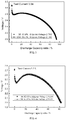
- FIG. 3 depicts a discharge curve of a lithium iron phosphate power battery according to one embodiment of the present application at -20°C.
- FIG. 4 depicts a discharge curve of a lithium iron phosphate power battery according to one embodiment of the present application at -40°C.
- the lithium iron phosphate power battery according to one embodiment of the present application when the lithium iron phosphate power battery according to one embodiment of the present application is charged with 0.5C constant current at -20°C, the charging constant current ratio is more than 75%. When the battery is charged with 1C constant current at -20°C, the charging constant current ratio is more than 55%.
- FIGS. 3 and 4 when the lithium iron phosphate power battery according to one embodiment of the present application is discharged with a current of 5.5Ah at -20°C, the lithium iron phosphate power battery can discharge a rated capacity of no less than 93%. When the lithium iron phosphate power battery is discharged with a current of 5.5Ah at -40°C, the lithium iron phosphate power battery can discharge a rated capacity of no less than 80%. It can be seen from the test results, the lithium iron phosphate power battery according to one embodiment of the present application has high energy density and excellent low temperature performance.
Landscapes
- Chemical & Material Sciences (AREA)
- General Chemical & Material Sciences (AREA)
- Engineering & Computer Science (AREA)
- Chemical Kinetics & Catalysis (AREA)
- Electrochemistry (AREA)
- Manufacturing & Machinery (AREA)
- Materials Engineering (AREA)
- Inorganic Chemistry (AREA)
- Physics & Mathematics (AREA)
- Condensed Matter Physics & Semiconductors (AREA)
- General Physics & Mathematics (AREA)
- Crystallography & Structural Chemistry (AREA)
- Battery Electrode And Active Subsutance (AREA)
- Secondary Cells (AREA)
Abstract
A lithium iron phosphate power battery includes: a battery case; a battery cell in the battery case, including: a positive plate including a positive current collector and a positive active material formed thereon, the positive active material including lithium iron phosphate having a primary particle diameter of no more than 200nm and a D50 of no more than 3µm, a mass content of the lithium iron phosphate in the positive active material being 93-96%, a solid content of the positive active material being 50-65%; a negative plate including a negative current collector and a negative active material formed thereon, the negative active material including a graphite having a D50 of 10-15µm, a mass content of the graphite in the negative active material being 92-95%, a solid content of the negative active material being 50-65%; a separator between the positive plate and the negative plate; and an electrolyte.
Description
- The present application generally relates to batteries and, more particularly, to a lithium iron phosphate power battery and a method for preparing the same.
- With continuous improvement of green environment consciousness, electric vehicles have been increasingly popular in people's daily life. Lithium iron phosphate power batteries are core energy storage devices for electric vehicles. At present, the energy density of existing lithium iron phosphate battery material is low. Even a highly automated steel shell lithium iron phosphate battery has an energy density of less than 110Wh/kg, which affects the endurance mileage of the electric vehicles.
- In addition, the lithium iron phosphate itself has poor electric conductivity and slow lithium ion diffusion rate, which may lead to poor low temperature performance. The discharge capacity of an existing lithium iron phosphate battery at -20°C is only 40% to 70% as that of the discharge capacity at normal temperature. Existing lithium iron phosphate battery even cannot be discharged or discharge capacity is close to 0% at -40°C, which seriously affect the promotion and operation of electric vehicles in extremely cold areas.
- In view of the foregoing, what is needed, therefore, is to provide a novel lithium iron phosphate power battery and a method for preparing the same, so as to overcome the disadvantages as discussed above.
- One object of the present application is to provide a lithium iron phosphate power battery having high energy density and desirable low temperature performances and a method for preparing the same.
- According to one embodiment of the present application, a lithium iron phosphate power battery including:
- a battery case;
- a battery cell received in the battery case, the battery cell including:
- a positive plate, including a positive current collector and a positive active material formed on the positive current collector, the positive active material including lithium iron phosphate having a primary particle diameter of no more than 200nm and a D50 of no more than 3µm, a mass content of the lithium iron phosphate in the positive active material being 93-96%, and a solid content of the positive active material being 50-65%;
- a negative plate, including a negative current collector and a negative active material formed on the negative current collector, the negative active material including a graphite having a D50 of 10-15µm, a mass content of the graphite in the negative active material being 92-95%, and a solid content of the negative active material being 50-65%; and
- a separator between the positive plate and the negative plate; and
- an electrolyte filled in the battery case.
- One embodiment of the present application provides a method for preparing a lithium iron phosphate power battery, including the steps of:
- 1) preparing a positive active material: adding lithium iron phosphate and positive conductive agent into a dry mixer, carrying out a first stirring; adding 30-60% of a positive glue solution and carrying out a second stirring, and scraping material; and adding residual glue solution and carrying out a third stirring, wherein the positive glue solution is obtained by adding an oily binder PVDF and an oily solvent NMP into a double planetary mixer and obtaining a mixture, and stirring and dispersing the mixture uniformly for 1-2h;
- 2) preparing a negative active material: adding an aqueous binder and a deionized water into a double planetary mixer and dispersing, adding graphite powder into the double planetary mixer and stirring and scraping material, and adding a negative conductive agent and continuing stirring under vacuum;
- 3) preparing a positive plate and a negative plate: coating the prepared positive active material on the positive current collector and coating the prepared negative active material on the negative current collector respectively, and obtaining the positive plate and the negative plate after baking; and
- 4) assembling a battery: winding the positive plate, a separator and the negative plate and obtaining a battery cell, setting the battery cell in a battery case and injecting an electrolyte into the battery case, and obtaining a lithium iron phosphate power battery.
- Compared with the prior art, the lithium iron phosphate power battery according to the present application has high energy density and excellent low temperature performances.
-
-
FIG. 1 depicts an exemplary cross-sectional view of a battery cell for use in a lithium iron phosphate power battery according to one embodiment of the present application; -
FIG. 2 depicts an exemplary perspective view of a lithium iron phosphate power battery according to one embodiment of the present application; -
FIG. 3 depicts a discharge curve of a lithium iron phosphate power battery according to one embodiment of the present application at -20°C; and -
FIG. 4 depicts a discharge curve of a lithium iron phosphate power battery according to one embodiment of the present application at -40°C. - In order that the objects, technical solution and technical effects of the present invention can be understood more clearly, the present invention will be described in more detail with reference to the accompanying drawings and examples. It should be understood that the specific examples described herein are illustrative only and are not intended to limit the present invention.
- Referring to
FIGS. 1 and 2 , according to one embodiment of the present application, a lithium iron phosphate power battery including: - a
battery case 10; - a
battery cell 20 received in thebattery case 10, thebattery cell 20 including:- a
positive plate 100, including a positive current collector 102 and a positive active material 104 formed on the positive current collector 102, the positive active material 104 including lithium iron phosphate having a primary particle diameter of no more than 200nm and a D50 of no more than 3µm, a mass content of the lithium iron phosphate in the positive active material 104 is 93-96%, and a solid content of the positive active material 104 is 50-65%; - a negative plate 200, including a negative current collector 202 and a negative active material 204 formed on the negative current collector 202, the negative active material 204 including a graphite having a D50 of 10-15µm, a mass content of the graphite in the negative active material 204 is 92-95%, and a solid content of the negative active material 204 is 50-65%; and
- a
separator 300 between thepositive plate 100 and the negative plate 200; and
- a
- an electrolyte filled in the
battery case 10. - Specifically, the positive active material includes a positive glue solution. The positive glue solution includes an oily binder and an oily solvent. The oily binder is HSV900, 5130 or equivalent polyvinylidene fluoride (PVDF) binder. The oily solvent is N-methylpyrrolidone (NMP). The solid content of the positive glue solution is 5-12%.
- Specifically, the positive active material includes a positive conductive agent. The positive conductive agent is carbon nanotube (CNT) and/or graphene. A mass content of the positive conductive agent in the positive active material is 1-3%. The negative active material includes a negative conductive agent. The negative conductive agent is selected from a group consisting of conductive carbon black (SP), Ketjenblack (CB), carbon nanotube (CNT), graphene and carbon nanofiber (VGCF). The mass content of the negative conductive agent in the negative active material is 1-3%.
- Specifically, the negative active material includes an aqueous binder and a deionized water. The aqueous binder is selected from a group consisting of water dispersion of acrylonitrile copolymer, polyacrylic acid, carboxymethylcellulose and styrene-butadiene rubber, and a mass content of the aqueous binder in the negative active material is 2.5-4%.
- Specifically, the electrolyte includes a lithium salt, a solvent and an additive. The concentration of the lithium salt is 1-1.3mol/L. The solvent is selected from two to four of propylene carbonate (PC), ethyl acetate (EA), propyl acetate (PA) and ethyl propionate (EP). The mass content of the solvent in the electrolyte is 70-85%. The additive is selected from a group consisting of fluorinated ethylene carbonate (FEC), propane sultone (PS), bistrifluoromethanesulfonimidate lithium (LiTFSi), vinylene carbonate (VC) and ethylene sulfate (DT). The mass content of the additive in the electrolyte is 0.5-5%.
- In the lithium iron phosphate power battery according to the present application, the positive active material contains lithium iron phosphate coated with ultrafine carbon having a particle diameter of no more than 200nm. The conductivity of the lithium iron phosphate material is improved. Conventional spherical particle conductive agent (conductive carbon black, Ketjenblack, etc.) is completely or partially replaced by linear or planar carbon nanotube or graphene. The linear or planar carbon nanotube or graphene are distributed on the surface of the positive active material particles and gaps between the positive active material particles, which can play a role as a "bridge". The active material particles can be connected desirably, to provide a desirable path for the transmission of the lithium ions, reduce the resistance in the diffusion process, and increase the conductive capability of the positive active material under low temperature.
- In the lithium iron phosphate power battery according to the present application, the negative active material contains graphite having desirable layer structure, crystal spacing, electrical conductivity and ion diffusion rate, which can improve the electrical conductivity and ion diffusion rate, reduce the impedance of lithium ion migration. By selecting a low temperature co-solvent with low melting point, low viscosity, high dielectric constant and high electrochemical stability, and by adjusting the proportion of each solvent component, the conductivity of the electrolyte at low temperature can be improved. Via selecting appropriate film forming additives, the SEI film formed can keep stable even be charged and discharged at low temperature, which can improve the charge and discharge performances at low temperature.
- One embodiment of the present application provides a method for preparing a lithium iron phosphate power battery, including the steps of:
- 1) preparing a positive active material: adding lithium iron phosphate and positive conductive agent into a dry mixer and carrying out a first stirring; adding 30-60% of a positive glue solution, carrying out a second stirring, and scraping material; and adding residual glue solution and carrying out a third stirring, wherein the positive glue solution is obtained by adding an oily binder PVDF and an oily solvent NMP into a double planetary mixer and obtaining a mixture, and stirring and dispersing the mixture uniformly for 1-2h;
- 2) preparing a negative active material: adding an aqueous binder and a deionized water into a double planetary mixer and dispersing; adding graphite powder into the double planetary mixer and stirring and scraping material; and adding a negative conductive agent and continuing stirring under vacuum;
- 3) preparing a positive plate and a negative plate: coating the prepared positive active material on the positive current collector and coating the prepared negative active material on the negative current collector respectively, and obtaining a positive plate and a negative plate after baking; and
- 4) assembling a battery: winding the positive plate, a separator and the negative plate and obtaining a battery cell, setting the battery cell in a battery case and injecting an electrolyte into the battery case, and obtaining a lithium iron phosphate power battery.
- Specifically, in the first stirring of step 1), the revolution frequency of the dry mixer is 35-40Hz, the autorotation speed is 6000-8000rpm, and the stirring time is 0.5-2h. In the second stirring of step 1), the revolution frequency of the dry mixer is 40-45 Hz, the autorotation speed is 4000-5000rpm, and the stirring time is 10-30min. In the third stirring of step 1), the revolution frequency of the dry mixer is 40-45Hz, the autorotation speed is 4000-5000rpm, and the stirring time is 2-3h.
- Specifically, the dispersing time of the double planetary mixer in step 2) is 0.5-1.5h, the stirring time after adding the graphite powder is 10-30min, the stirring time under vacuum is 0.5-1.5h, and the viscosity of the negative active material obtained in step 2) is 500-2000 mPas.
- Specifically, the positive conductive agent is carbon nanotubes (CNT) and/or graphene, and the mass content of the positive conductive agent in the positive active material is 1-3%. The negative conductive agent is selected from a group consisting of conductive carbon black (SP), Ketjenblack (CB), carbon nanotubes (CNT), graphene and carbon nanofiber (VGCF), and the mass content of the negative conductive agent in the negative active material is 1-3%.
- The electrolyte contains a lithium salt, a solvent and an additive. The concentration of the lithium salt is 1-1.3mol/L. The solvent is selected from two to four of ethyl acetate (EA), propylene carbonate (PC), propyl acetate (PA) and ethyl propionate (EP). The mass content of the solvent in the electrolyte is 70-85%. The additive is selected from a group consisting of fluorinated ethylene carbonate (FEC), propane sultone (PS), bistrifluoromethanesulfonimidate lithium (LiTFSi), vinylene carbonate (VC) and ethylene sulfate (DT), and the mass content of the additive in the electrolyte is 0.5-5%.
- In the method for preparing a lithium iron phosphate power battery according to the present application, the lithium iron phosphate hard to be dispersed is mixed with the carbon nanotube/graphene conductive agent powder, and then is mixed with the glue solution. Via high viscosity kneading beating technology, desirable dispersion of the nanoscale lithium iron phosphate and the conductive agent can be realized. The lithium iron phosphate power battery has the low temperature performance as that of the nanoscale lithium iron phosphate material, and the charge and discharge performances of the battery at low temperature is improved remarkably.
-
- 1) Preparing a positive active material: adding lithium iron phosphate powder and positive conductive agent powder into a dry mixer and dispersing the mixture for 0.5-2h at a high speed, wherein the revolution frequency of the dry mixer is 35-40Hz, the autorotation speed is 6000-8000rpm. Adding 30-60% of the positive glue solution into the uniformly mixed powder, wherein the revolution frequency of the dry mixer is 40-45Hz, the autorotation speed is 4000-5000rpm, stirring for 10-30min and scraping material; adding the residual glue solution and stirring for 2-3h, wherein the revolution frequency of the dry mixer is 40-45Hz, the autorotation speed is 4000-5000rpm, the viscosity of the positive active material is 4000-10000mPas; removing the bubbles via stirring and vacuum pumping, the rotation of the dry mixer does not open, while the revolution frequency is 15-20Hz. The positive glue solution is obtained via adding oily binder PVDF and oily solvent NMP into the double planetary mixer, stirring and mixing uniformly for 1-2h.
- 2) preparing a negative active material: adding an aqueous binder and a deionized water into a double planetary mixer and dispersing for 0.5-1.5h, adding graphite powder into the double planetary mixer and stirring for 10-30min, scraping material, adding negative conductive agent SP and continuing to vacuum stirring for 0.5-1.5h, and adding deionized water to adjust the viscosity to 500-2000 mPas.
- 3) preparing a positive plate and a negative plate: coating the prepared positive active material on the positive current collector, coating the prepared negative active material on the negative current collector respectively, and obtaining the positive plate and the negative plate after baking; and
- 4) assembling a battery: winding the positive plate, a separator and the negative plate and obtaining a battery cell, setting the battery cell in a battery case and injecting an electrolyte into the battery case, and obtaining a lithium iron phosphate power battery.
- According to the standard method of Chinese new national standard of "lithium ion battery for electric vehicles", the low temperature test of the lithium iron phosphate power battery according to the embodiment of the present application is carried out, and the test results are shown as following.
- Table 1 shows the capacity and energy density data of the lithium iron phosphate power battery according to one embodiment of the present application. Table 2 shows the charging data of the lithium iron phosphate power battery according to one embodiment of the present application at -20°C;
FIG. 3 depicts a discharge curve of a lithium iron phosphate power battery according to one embodiment of the present application at -20°C.FIG. 4 depicts a discharge curve of a lithium iron phosphate power battery according to one embodiment of the present application at -40°C.TABLE 1 Battery number Battery weight /g Battery capacity /mAh Battery energy density Wh/kg 1# 147.3 5532 120.1792261 2# 146.9 5525 120.3539823 3# 146.3 5522 120.7819549 4# 146.9 5525 120.3703704 5# 145.4 5567 122.519945 6# 147 5585 121.5616923 7# 147.3 5565 120.9289692 8# 146.2 5561 121.7098694 9# 146.3 5566 121.7776562 10# 145.9 5637 123.6353667 11# 146.5 5628 122.9324232 12# 145.5 5547 121.9958763 13# 145 5511 121.622069 14# 146.2 5542 121.3023256 15# 146.1 5536 121.2539357 16# 147 5569 121.229932 17# 145.6 5543 121.8241758 18# 145 5521 121.8427586 19# 146.3 5546 121.3069036 20# 145.8 5519 121.1303155 TABLE 2 Battery number Capacity/ mAh Charging at low temperature of -20°C Charging constant current ratio at 0.5C Charging constant current ratio at 1C 1# 5.532 76.90% 57.41% 2# 5.525 78.40% 61.76% - As shown in Table 2, when the lithium iron phosphate power battery according to one embodiment of the present application is charged with 0.5C constant current at -20°C, the charging constant current ratio is more than 75%. When the battery is charged with 1C constant current at -20°C, the charging constant current ratio is more than 55%. Referred to
FIGS. 3 and 4 , when the lithium iron phosphate power battery according to one embodiment of the present application is discharged with a current of 5.5Ah at -20°C, the lithium iron phosphate power battery can discharge a rated capacity of no less than 93%. When the lithium iron phosphate power battery is discharged with a current of 5.5Ah at -40°C, the lithium iron phosphate power battery can discharge a rated capacity of no less than 80%. It can be seen from the test results, the lithium iron phosphate power battery according to one embodiment of the present application has high energy density and excellent low temperature performance. - It should be understood that, the above examples are only used to illustrate the technical concept and feature of the present invention, and the purpose thereof is familiarize the person skilled in the art to understand the content of the present invention and carry it out, which cannot restrict the protection scope of the present invention based on above. Any equivalent transformation or modification made in the spirit of the present invention should all be included within the protection scope of the present invention.
Claims (15)
- A lithium iron phosphate power battery, comprising:a battery case (10);a battery cell (20) received in the battery case (10), the battery cell (20)comprising:a positive plate (100), comprising a positive current collector (102) and a positive active material (104) formed on the positive current collector (102), the positive active material (104) comprising lithium iron phosphate having a primary particle diameter of no more than 200nm and a D50 of no more than 3µm, a mass content of the lithium iron phosphate in the positive active material (104) being 93-96%, and a solid content of the positive active material (104) being 50-65%;a negative plate (200), comprising a negative current collector (202) and a negative active material (204) formed on the negative current collector (202), the negative active material (204) comprising a graphite having a D50 of 10-15µm, a mass content of the graphite in the negative active material (204) being 92-95%, and a solid content of the negative active material (204) being 50-65%; anda separator (300) between the positive plate (100) and the negative plate (200); andan electrolyte filled in the battery case (10).
- The lithium iron phosphate power battery according to claim 1, wherein the positive active material comprises a positive glue solution, and a solid content of the positive glue solution is 5-12%.
- The lithium iron phosphate power battery according to claim 2, wherein the positive glue solution comprises an oily binder of polyvinylidene fluoride binder and an oily solvent of N-methylpyrrolidone,
- The lithium iron phosphate power battery according to claim 1, wherein the positive active material comprises a positive conductive agent of carbon nanotubes and/or graphene, and a mass content of the positive conductive agent in the positive active material is 1-3%.
- The lithium iron phosphate power battery according to claim 1, wherein the negative active material comprises a negative conductive agent selected from a group consisting of conductive carbon black, Ketjenblack, carbon nanotubes, graphene and carbon nanofibers, and a mass content of the negative conductive agent in the negative active material is 1-3%.
- The lithium iron phosphate power battery according to claim 1, wherein the negative active material comprises an aqueous binder and a deionized water, the aqueous binder is selected from a group consisting of water dispersion of acrylonitrile copolymer, polyacrylic acid, carboxymethylcellulose and styrene-butadiene rubber, and a mass content of the aqueous binder in the negative active material is 2.5-4%.
- The lithium iron phosphate power battery according to claim 1, wherein the electrolyte comprises a lithium salt, a solvent and an additive, a concentration of the lithium salt is 1-1.3mol/L, and the solvent is selected from two to four of propylene carbonate, ethyl acetate, propyl acetate, and ethyl propionate, a mass content of the solvent in the electrolyte is 70-85%; the additive is selected from a group consisting of bistrifluoromethanesulfonimidate lithium, fluorinated ethylene carbonate, propane sultone, vinylene carbonate and ethylene sulfate, and a mass content of the additive in the electrolyte is 0.5-5%.
- A method for preparing a lithium iron phosphate power battery, comprising the steps of:1) preparing a positive active material: adding lithium iron phosphate and positive conductive agent into a dry mixer and carrying out a first stirring; adding 30-60% of a positive glue solution, carrying out a second stirring, and scraping material; and adding residual glue solution and carrying out a third stirring, wherein the positive glue solution is obtained by adding an oily binder PVDF and an oily solvent NMP into a double planetary mixer and obtaining a mixture, and stirring and dispersing the mixture uniformly for 1-2h;2) preparing a negative active material: adding an aqueous binder and a deionized water into a double planetary mixer and dispersing, adding graphite powder into the double planetary mixer and stirring, scraping material, adding a negative conductive agent and continuing stirring under vacuum;3) preparing a positive plate and a negative plate: coating the prepared positive active material on the positive current collector and coating the prepared negative active material on the negative current collector respectively, and obtaining the positive plate and the negative plate after baking; and4) assembling a battery: winding the positive plate, a separator and the negative plate and obtaining a battery cell, setting the battery cell in a battery case and injecting an electrolyte into the battery case, and obtaining a lithium iron phosphate power battery.
- The method for preparing a lithium iron phosphate power battery according to claim 8, wherein in the first stirring of step 1), a revolution frequency of the dry mixer is 35-40Hz, an autorotation speed is 6000-8000rpm and a stirring time is 0.5-2h.
- The method for preparing a lithium iron phosphate power battery according to claim 8, wherein in the second stirring of step 1), a revolution frequency of the dry mixer is 40-45Hz, an autorotation speed is 4000-5000rpm and the stirring time is 10-30min.
- The method for preparing a lithium iron phosphate power battery according to claim 8, wherein in the third stirring of step 1), a revolution frequency of the dry mixer is 40-45Hz, an autorotation speed is 4000-5000 rpm and the stirring time is 2-3h.
- The method for preparing a lithium iron phosphate power battery according to claim 8, wherein a dispersing time of the double planetary mixer in step 2) is 0.5-1.5h, the stirring time after adding the graphite powder is 10-30min, the stirring time under vacuum is 0.5-1.5h, a viscosity of the negative active material obtained in step 2) is 500 to 2000mPas.
- The method for preparing a lithium iron phosphate power battery according to claim 8, wherein the positive conductive agent in step 1) is carbon nanotubes and/or graphene, and a mass content of the positive conductive agent in the positive active material is 1-3%.
- The method for preparing a lithium iron phosphate power battery according to claim 8, wherein the negative conductive agent in step 2) is selected from a group consisting of conductive carbon black, Ketjenblack and carbon nanotubes, graphene and carbon nanofibers, and a mass content of the negative conductive agent in the negative active material is 1-3%.
- The method for preparing a lithium iron phosphate power battery according to claim 8, wherein the electrolyte in step 4) comprises a lithium salt, a solvent and an additive, a concentration of the lithium salt is 1-1.3mol/L; the solvent is selected from two to four of propylene carbonate, ethyl acetate, propyl acetate and ethyl propionate, a mass content of the solvent in the electrolyte is 70-85%; the additive is selected from a group consisting of fluorinated ethylene carbonate, propane sultone, vinylene carbonate, bistrifluoromethanesulfonimidate lithium and ethylene sulfate, and a mass content of the additive in the electrolyte is 0.5-5%.
Applications Claiming Priority (1)
| Application Number | Priority Date | Filing Date | Title |
|---|---|---|---|
| CN201610900168.7A CN106450328A (en) | 2016-10-14 | 2016-10-14 | LiFePO4 power battery and preparation method thereof |
Publications (1)
| Publication Number | Publication Date |
|---|---|
| EP3309872A1 true EP3309872A1 (en) | 2018-04-18 |
Family
ID=58175029
Family Applications (1)
| Application Number | Title | Priority Date | Filing Date |
|---|---|---|---|
| EP17196188.1A Withdrawn EP3309872A1 (en) | 2016-10-14 | 2017-10-12 | Lithium iron phosphate power battery and method for preparing the same |
Country Status (3)
| Country | Link |
|---|---|
| US (1) | US20180108936A1 (en) |
| EP (1) | EP3309872A1 (en) |
| CN (1) | CN106450328A (en) |
Cited By (2)
| Publication number | Priority date | Publication date | Assignee | Title |
|---|---|---|---|---|
| CN115207291A (en) * | 2022-07-22 | 2022-10-18 | 深圳赛骄阳能源科技股份有限公司 | Preparation method of aqueous lithium iron phosphate anode slurry, anode plate and lithium ion battery |
| CN117209653A (en) * | 2023-11-09 | 2023-12-12 | 江苏一特新材料有限责任公司 | A three-segment polymer dispersant and its preparation method and lithium iron manganese phosphate cathode slurry |
Families Citing this family (29)
| Publication number | Priority date | Publication date | Assignee | Title |
|---|---|---|---|---|
| CN109037592A (en) * | 2017-06-09 | 2018-12-18 | 宁德时代新能源科技股份有限公司 | Lithium ion battery positive plate, preparation method thereof and lithium ion battery |
| CN107732201B (en) * | 2017-10-13 | 2020-12-08 | 江苏海四达电源股份有限公司 | Lithium battery positive electrode material, lithium battery positive electrode, preparation method of lithium battery positive electrode and lithium battery |
| CN107768667B (en) * | 2017-10-13 | 2020-10-09 | 江苏海四达电源股份有限公司 | Low-temperature circulating lithium iron phosphate power battery and preparation method thereof |
| CN109802094A (en) * | 2017-11-15 | 2019-05-24 | 成都特隆美储能技术有限公司 | A kind of low temperature ferric phosphate lithium cell and preparation method thereof |
| CN109473661A (en) * | 2018-12-24 | 2019-03-15 | 湖北融通高科先进材料有限公司 | Lithium ion battery anode glue size and preparation method thereof |
| CN111211323A (en) * | 2020-01-13 | 2020-05-29 | 合肥国轩高科动力能源有限公司 | Soft package lithium ion battery of lithium iron phosphate system and preparation method thereof |
| CN111342145B (en) * | 2020-03-13 | 2023-05-30 | 湖北亿纬动力有限公司 | A long cycle life lithium iron phosphate battery and preparation method thereof |
| CN113555600B (en) * | 2020-04-26 | 2023-01-17 | 深圳新宙邦科技股份有限公司 | a solid state battery |
| CN111933903A (en) * | 2020-07-07 | 2020-11-13 | 银隆新能源股份有限公司 | Lithium iron phosphate battery positive electrode slurry and preparation method thereof |
| CN111952659A (en) * | 2020-08-21 | 2020-11-17 | 安瑞创新(厦门)能源有限公司 | Lithium iron phosphate battery |
| CN111969250A (en) * | 2020-08-26 | 2020-11-20 | 深圳市优帮迪科技有限公司 | Electrolyte of lithium ion battery capable of being rapidly charged at low temperature, lithium ion battery and preparation method |
| CN112201841A (en) * | 2020-09-04 | 2021-01-08 | 东莞市沃泰通新能源有限公司 | A novel high rate or long cycle life lithium iron phosphate cylindrical battery and preparation method |
| CN113086959B (en) * | 2021-02-26 | 2022-03-01 | 云南航开科技有限公司 | High-compaction low-temperature lithium iron phosphate material, lithium battery positive plate and preparation method thereof |
| CN113363557A (en) * | 2021-06-02 | 2021-09-07 | 合肥国轩高科动力能源有限公司 | Lithium iron phosphate battery capable of improving low-temperature high-rate charge and discharge performance |
| CN113809322B (en) * | 2021-08-10 | 2022-12-02 | 福建巨电新能源股份有限公司 | Water-based lithium iron phosphate battery, positive electrode slurry thereof and preparation method of positive electrode slurry |
| CN116315041A (en) * | 2021-08-16 | 2023-06-23 | 福建巨电新能源股份有限公司 | Low-temperature-resistant lithium iron phosphate battery |
| CN113964320A (en) * | 2021-10-15 | 2022-01-21 | 湖北亿纬动力有限公司 | Lithium ion battery and preparation method thereof |
| CN114361396A (en) * | 2021-12-21 | 2022-04-15 | 重庆东星炭素材料有限公司 | A kind of new energy battery electrode preparation method |
| CN114566717B (en) * | 2022-03-04 | 2024-04-26 | 沈阳国科金能科技有限公司 | Preparation method of lithium iron phosphate battery suitable for wide temperature range |
| CN114813616B (en) * | 2022-06-29 | 2022-11-08 | 四川富临新能源科技有限公司 | Device and method for detecting carbon content in lithium iron phosphate battery negative electrode material |
| CN115172702A (en) * | 2022-07-12 | 2022-10-11 | 星恒电源股份有限公司 | Method for improving SOC algorithm of lithium iron phosphate battery and lithium iron phosphate battery |
| CN115763725A (en) * | 2022-11-01 | 2023-03-07 | 广汽埃安新能源汽车股份有限公司 | Positive active material, positive pole piece, battery core, battery pack and electric equipment |
| CN115722093B (en) * | 2022-12-07 | 2025-08-29 | 惠州亿纬锂能股份有限公司 | Aqueous homogenization process, slurry and lithium battery for lithium-ion battery positive electrode system |
| CN116130770A (en) * | 2023-01-31 | 2023-05-16 | 江苏正力新能电池技术有限公司 | Lithium iron phosphate battery |
| CN116845195B (en) * | 2023-06-29 | 2025-08-29 | 北京当升材料科技股份有限公司 | Carbon-coated positive electrode material and preparation method thereof, and lithium-ion battery |
| CN117446777A (en) * | 2023-11-01 | 2024-01-26 | 金川集团股份有限公司 | A method for preparing one-dimensional nanostructured lithium iron phosphate |
| CN117712333A (en) * | 2023-12-20 | 2024-03-15 | 湖北亿纬动力有限公司 | Lithium iron phosphate battery and hybrid vehicle |
| CN119208701A (en) * | 2024-09-29 | 2024-12-27 | 湖北亿纬动力有限公司 | A lithium ion battery |
| CN119943852A (en) * | 2025-04-09 | 2025-05-06 | 济南中瑞泰新材料科技有限公司 | A boron nitride modified positive electrode material and preparation method thereof |
Citations (3)
| Publication number | Priority date | Publication date | Assignee | Title |
|---|---|---|---|---|
| CN102185157B (en) * | 2011-03-22 | 2013-06-12 | 浙江海锂子新能源有限公司 | Production process of waterborne positive lithium ion battery |
| US20150017499A1 (en) * | 2012-02-29 | 2015-01-15 | Shin-Kobe Electric Machinery Co., Ltd. | Lithium Ion Battery |
| CN105655559A (en) * | 2016-01-19 | 2016-06-08 | 深圳市沃特玛电池有限公司 | Lithium ion battery and preparation method thereof |
Family Cites Families (5)
| Publication number | Priority date | Publication date | Assignee | Title |
|---|---|---|---|---|
| CN101436654B (en) * | 2007-11-13 | 2011-06-15 | 深圳市慧通天下科技股份有限公司 | Ferric phosphate lithium type safety high power lithium ion battery |
| CN102652905A (en) * | 2012-04-19 | 2012-09-05 | 珠海格力新能源科技有限公司 | Stirring technology during manufacturing process of lithium battery |
| CN102910618A (en) * | 2012-10-10 | 2013-02-06 | 彩虹集团公司 | Method for improving electrical property of natural graphite |
| KR101580030B1 (en) * | 2013-07-09 | 2015-12-23 | 주식회사 엘지화학 | Method for manufacturing lithium iron phosphate nanopowder coated with carbon |
| CN105742710A (en) * | 2016-05-03 | 2016-07-06 | 深圳市沃特玛电池有限公司 | A kind of lithium-ion battery electrolyte and lithium-ion battery |
-
2016
- 2016-10-14 CN CN201610900168.7A patent/CN106450328A/en active Pending
-
2017
- 2017-10-12 EP EP17196188.1A patent/EP3309872A1/en not_active Withdrawn
- 2017-10-13 US US15/782,873 patent/US20180108936A1/en not_active Abandoned
Patent Citations (3)
| Publication number | Priority date | Publication date | Assignee | Title |
|---|---|---|---|---|
| CN102185157B (en) * | 2011-03-22 | 2013-06-12 | 浙江海锂子新能源有限公司 | Production process of waterborne positive lithium ion battery |
| US20150017499A1 (en) * | 2012-02-29 | 2015-01-15 | Shin-Kobe Electric Machinery Co., Ltd. | Lithium Ion Battery |
| CN105655559A (en) * | 2016-01-19 | 2016-06-08 | 深圳市沃特玛电池有限公司 | Lithium ion battery and preparation method thereof |
Non-Patent Citations (1)
| Title |
|---|
| WENJIA ZHANG ET AL: "Effect of slurry preparation and dispersion on electrochemical performances of LiFePOcomposite electrode", IONICS ; INTERNATIONAL JOURNAL OF IONICS THE SCIENCE AND TECHNOLOGY OF IONIC MOTION, SPRINGER, BERLIN, DE, vol. 17, no. 5, 20 April 2011 (2011-04-20), pages 473 - 477, XP019909194, ISSN: 1862-0760, DOI: 10.1007/S11581-011-0560-4 * |
Cited By (3)
| Publication number | Priority date | Publication date | Assignee | Title |
|---|---|---|---|---|
| CN115207291A (en) * | 2022-07-22 | 2022-10-18 | 深圳赛骄阳能源科技股份有限公司 | Preparation method of aqueous lithium iron phosphate anode slurry, anode plate and lithium ion battery |
| CN117209653A (en) * | 2023-11-09 | 2023-12-12 | 江苏一特新材料有限责任公司 | A three-segment polymer dispersant and its preparation method and lithium iron manganese phosphate cathode slurry |
| CN117209653B (en) * | 2023-11-09 | 2024-01-02 | 江苏一特新材料有限责任公司 | Three-chain-segment polymer dispersing agent, preparation method thereof and lithium manganese iron phosphate positive electrode slurry |
Also Published As
| Publication number | Publication date |
|---|---|
| US20180108936A1 (en) | 2018-04-19 |
| CN106450328A (en) | 2017-02-22 |
Similar Documents
| Publication | Publication Date | Title |
|---|---|---|
| EP3309872A1 (en) | Lithium iron phosphate power battery and method for preparing the same | |
| US11050052B2 (en) | Lithium ion battery and negative electrode material thereof | |
| EP3767709B1 (en) | Positive electrode composition for lithium ion secondary cell, positive electrode for lithium ion secondary cell, and lithium ion secondary cell | |
| ES2977893T3 (en) | Positive electrode material reuse method | |
| US20120052386A1 (en) | Electrode for nonaqueous electrolyte secondary battery, nonaqueous electrolyte secondary battery, and method for manufacturing electrode for nonaqueous electrolyte secondary battery | |
| US20130313486A1 (en) | Electrode for non-aqueous electrolyte secondary battery, method for producing same, and non-aqueous electrolyte secondary battery | |
| US20180102533A1 (en) | Negative electrode for lithium ion battery and method for preparing the same | |
| US10454098B2 (en) | Nonaqueous electrolyte secondary battery including a positive electrode having a positive electrode mixture layer including a first powder and a second powder | |
| CN113410425A (en) | Battery core and battery | |
| CN100546074C (en) | A kind of preparation method of electrode slurry | |
| CN112751002A (en) | Positive plate and lithium ion battery | |
| CN112713266A (en) | Negative electrode slurry and application thereof | |
| CN107154497A (en) | A kind of combined conductive agent, positive plate, lithium ion battery and preparation method thereof | |
| CN115295804A (en) | Positive pole piece and secondary battery | |
| US11075366B2 (en) | Method for producing sulfide solid-state battery | |
| CN113140696A (en) | Negative plate, lithium ion battery and preparation method of negative plate | |
| JP2017062960A (en) | Method for producing positive electrode mixture paste for non-aqueous electrolyte secondary battery, and method for producing positive electrode for non-aqueous electrolyte secondary battery | |
| JPH10144302A (en) | Method for producing electrode for non-aqueous electrolyte battery and non-aqueous electrolyte battery using the electrode | |
| KR20140122500A (en) | Positive electrode for secondary battery and the method for manufacturing the same | |
| CN109659563A (en) | A kind of carbon nanotube silicon combined conductive agent and its preparation method and application | |
| CN105870454A (en) | Application method of graphene as conductive agent to positive electrode slurry of lithium ion battery | |
| CN106374083B (en) | Silicon substrate negative electrode and preparation method thereof and lithium ion battery | |
| KR101170172B1 (en) | Process of preparing coatings for positive electrode materials for lithium secondary batteries and positive electrodes for lithium secondary batteries | |
| CN113097453A (en) | Lithium pre-embedding method for positive electrode of lithium ion battery | |
| JP2017117746A (en) | Method for producing positive electrode for non-aqueous electrolyte secondary battery |
Legal Events
| Date | Code | Title | Description |
|---|---|---|---|
| PUAI | Public reference made under article 153(3) epc to a published international application that has entered the european phase |
Free format text: ORIGINAL CODE: 0009012 |
|
| 17P | Request for examination filed |
Effective date: 20171109 |
|
| AK | Designated contracting states |
Kind code of ref document: A1 Designated state(s): AL AT BE BG CH CY CZ DE DK EE ES FI FR GB GR HR HU IE IS IT LI LT LU LV MC MK MT NL NO PL PT RO RS SE SI SK SM TR |
|
| AX | Request for extension of the european patent |
Extension state: BA ME |
|
| STAA | Information on the status of an ep patent application or granted ep patent |
Free format text: STATUS: THE APPLICATION HAS BEEN WITHDRAWN |
|
| 18W | Application withdrawn |
Effective date: 20190207 |