EP3308789A1 - Nucleic acid delivery carrier, nucleic acid delivery kit, and nucleic acid delivery method - Google Patents
Nucleic acid delivery carrier, nucleic acid delivery kit, and nucleic acid delivery method Download PDFInfo
- Publication number
- EP3308789A1 EP3308789A1 EP16807600.8A EP16807600A EP3308789A1 EP 3308789 A1 EP3308789 A1 EP 3308789A1 EP 16807600 A EP16807600 A EP 16807600A EP 3308789 A1 EP3308789 A1 EP 3308789A1
- Authority
- EP
- European Patent Office
- Prior art keywords
- nucleic acid
- liposome
- cells
- delivering
- temperature
- Prior art date
- Legal status (The legal status is an assumption and is not a legal conclusion. Google has not performed a legal analysis and makes no representation as to the accuracy of the status listed.)
- Withdrawn
Links
- 108020004707 nucleic acids Proteins 0.000 title claims abstract description 181
- 102000039446 nucleic acids Human genes 0.000 title claims abstract description 181
- 150000007523 nucleic acids Chemical class 0.000 title claims abstract description 181
- 238000002716 delivery method Methods 0.000 title abstract 3
- 239000002502 liposome Substances 0.000 claims abstract description 105
- 229920000208 temperature-responsive polymer Polymers 0.000 claims abstract description 68
- 239000012528 membrane Substances 0.000 claims abstract description 29
- -1 cationic lipid Chemical class 0.000 claims abstract description 23
- 239000000470 constituent Substances 0.000 claims abstract description 17
- 230000034217 membrane fusion Effects 0.000 claims abstract description 12
- 206010008342 Cervix carcinoma Diseases 0.000 claims abstract description 9
- 208000006105 Uterine Cervical Neoplasms Diseases 0.000 claims abstract description 9
- 201000010881 cervical cancer Diseases 0.000 claims abstract description 9
- 238000000034 method Methods 0.000 claims description 22
- 239000011557 critical solution Substances 0.000 claims description 19
- XLYOFNOQVPJJNP-UHFFFAOYSA-N water Substances O XLYOFNOQVPJJNP-UHFFFAOYSA-N 0.000 claims description 17
- 150000003904 phospholipids Chemical class 0.000 claims description 6
- 230000000694 effects Effects 0.000 abstract description 44
- 230000030833 cell death Effects 0.000 abstract description 21
- 230000002401 inhibitory effect Effects 0.000 abstract 1
- 210000004027 cell Anatomy 0.000 description 157
- 108020004459 Small interfering RNA Proteins 0.000 description 56
- 230000000052 comparative effect Effects 0.000 description 46
- 108060001084 Luciferase Proteins 0.000 description 34
- 239000005089 Luciferase Substances 0.000 description 34
- 239000007788 liquid Substances 0.000 description 34
- 150000002632 lipids Chemical class 0.000 description 32
- 239000002609 medium Substances 0.000 description 24
- 239000012091 fetal bovine serum Substances 0.000 description 20
- 238000005259 measurement Methods 0.000 description 18
- 239000007758 minimum essential medium Substances 0.000 description 18
- 239000006185 dispersion Substances 0.000 description 17
- 239000000243 solution Substances 0.000 description 17
- HRPVXLWXLXDGHG-UHFFFAOYSA-N Acrylamide Chemical compound NC(=O)C=C HRPVXLWXLXDGHG-UHFFFAOYSA-N 0.000 description 13
- 108090000623 proteins and genes Proteins 0.000 description 13
- 102000004169 proteins and genes Human genes 0.000 description 13
- IJGRMHOSHXDMSA-UHFFFAOYSA-N Atomic nitrogen Chemical compound N#N IJGRMHOSHXDMSA-UHFFFAOYSA-N 0.000 description 12
- HEDRZPFGACZZDS-UHFFFAOYSA-N Chloroform Chemical compound ClC(Cl)Cl HEDRZPFGACZZDS-UHFFFAOYSA-N 0.000 description 12
- 239000002904 solvent Substances 0.000 description 12
- 230000003833 cell viability Effects 0.000 description 11
- 230000000799 fusogenic effect Effects 0.000 description 11
- KWVJHCQQUFDPLU-YEUCEMRASA-N 2,3-bis[[(z)-octadec-9-enoyl]oxy]propyl-trimethylazanium Chemical compound CCCCCCCC\C=C/CCCCCCCC(=O)OCC(C[N+](C)(C)C)OC(=O)CCCCCCC\C=C/CCCCCCCC KWVJHCQQUFDPLU-YEUCEMRASA-N 0.000 description 10
- 239000000178 monomer Substances 0.000 description 10
- 239000013612 plasmid Substances 0.000 description 10
- 210000002966 serum Anatomy 0.000 description 10
- BZTDTCNHAFUJOG-UHFFFAOYSA-N 6-carboxyfluorescein Chemical compound C12=CC=C(O)C=C2OC2=CC(O)=CC=C2C11OC(=O)C2=CC=C(C(=O)O)C=C21 BZTDTCNHAFUJOG-UHFFFAOYSA-N 0.000 description 9
- RTZKZFJDLAIYFH-UHFFFAOYSA-N Diethyl ether Chemical compound CCOCC RTZKZFJDLAIYFH-UHFFFAOYSA-N 0.000 description 9
- AFYNADDZULBEJA-UHFFFAOYSA-N bicinchoninic acid Chemical compound C1=CC=CC2=NC(C=3C=C(C4=CC=CC=C4N=3)C(=O)O)=CC(C(O)=O)=C21 AFYNADDZULBEJA-UHFFFAOYSA-N 0.000 description 9
- 238000006243 chemical reaction Methods 0.000 description 9
- OZAIFHULBGXAKX-UHFFFAOYSA-N 2-(2-cyanopropan-2-yldiazenyl)-2-methylpropanenitrile Chemical compound N#CC(C)(C)N=NC(C)(C)C#N OZAIFHULBGXAKX-UHFFFAOYSA-N 0.000 description 8
- QOSSAOTZNIDXMA-UHFFFAOYSA-N Dicylcohexylcarbodiimide Chemical compound C1CCCCC1N=C=NC1CCCCC1 QOSSAOTZNIDXMA-UHFFFAOYSA-N 0.000 description 8
- 239000002202 Polyethylene glycol Substances 0.000 description 8
- 229920001223 polyethylene glycol Polymers 0.000 description 8
- 238000001890 transfection Methods 0.000 description 8
- 239000002953 phosphate buffered saline Substances 0.000 description 7
- 229920000642 polymer Polymers 0.000 description 7
- MWRBNPKJOOWZPW-NYVOMTAGSA-N 1,2-dioleoyl-sn-glycero-3-phosphoethanolamine zwitterion Chemical compound CCCCCCCC\C=C/CCCCCCCC(=O)OC[C@H](COP(O)(=O)OCCN)OC(=O)CCCCCCC\C=C/CCCCCCCC MWRBNPKJOOWZPW-NYVOMTAGSA-N 0.000 description 6
- 206010028980 Neoplasm Diseases 0.000 description 6
- 201000011510 cancer Diseases 0.000 description 6
- 230000006037 cell lysis Effects 0.000 description 6
- 239000003795 chemical substances by application Substances 0.000 description 6
- 230000036571 hydration Effects 0.000 description 6
- 238000006703 hydration reaction Methods 0.000 description 6
- OAICVXFJPJFONN-UHFFFAOYSA-N Phosphorus Chemical compound [P] OAICVXFJPJFONN-UHFFFAOYSA-N 0.000 description 5
- 210000000170 cell membrane Anatomy 0.000 description 5
- 229920001577 copolymer Polymers 0.000 description 5
- 238000011534 incubation Methods 0.000 description 5
- 229910052757 nitrogen Inorganic materials 0.000 description 5
- 239000011574 phosphorus Substances 0.000 description 5
- 229910052698 phosphorus Inorganic materials 0.000 description 5
- 238000000746 purification Methods 0.000 description 5
- 238000001226 reprecipitation Methods 0.000 description 5
- GPRLSGONYQIRFK-MNYXATJNSA-N triton Chemical compound [3H+] GPRLSGONYQIRFK-MNYXATJNSA-N 0.000 description 5
- DKIDEFUBRARXTE-UHFFFAOYSA-N 3-mercaptopropanoic acid Chemical compound OC(=O)CCS DKIDEFUBRARXTE-UHFFFAOYSA-N 0.000 description 4
- 108091003079 Bovine Serum Albumin Proteins 0.000 description 4
- NQTADLQHYWFPDB-UHFFFAOYSA-N N-Hydroxysuccinimide Chemical compound ON1C(=O)CCC1=O NQTADLQHYWFPDB-UHFFFAOYSA-N 0.000 description 4
- 230000015572 biosynthetic process Effects 0.000 description 4
- 230000003247 decreasing effect Effects 0.000 description 4
- 238000002296 dynamic light scattering Methods 0.000 description 4
- 238000005538 encapsulation Methods 0.000 description 4
- 238000004519 manufacturing process Methods 0.000 description 4
- 239000000463 material Substances 0.000 description 4
- 238000000527 sonication Methods 0.000 description 4
- 238000003786 synthesis reaction Methods 0.000 description 4
- JZNWSCPGTDBMEW-UHFFFAOYSA-N Glycerophosphorylethanolamin Natural products NCCOP(O)(=O)OCC(O)CO JZNWSCPGTDBMEW-UHFFFAOYSA-N 0.000 description 3
- OKKJLVBELUTLKV-UHFFFAOYSA-N Methanol Chemical compound OC OKKJLVBELUTLKV-UHFFFAOYSA-N 0.000 description 3
- 238000003149 assay kit Methods 0.000 description 3
- 238000011088 calibration curve Methods 0.000 description 3
- 230000002209 hydrophobic effect Effects 0.000 description 3
- 238000004020 luminiscence type Methods 0.000 description 3
- 239000002245 particle Substances 0.000 description 3
- 150000008104 phosphatidylethanolamines Chemical class 0.000 description 3
- 239000002244 precipitate Substances 0.000 description 3
- 239000008213 purified water Substances 0.000 description 3
- 239000006228 supernatant Substances 0.000 description 3
- LVNGJLRDBYCPGB-LDLOPFEMSA-N (R)-1,2-distearoylphosphatidylethanolamine Chemical compound CCCCCCCCCCCCCCCCCC(=O)OC[C@H](COP([O-])(=O)OCC[NH3+])OC(=O)CCCCCCCCCCCCCCCCC LVNGJLRDBYCPGB-LDLOPFEMSA-N 0.000 description 2
- QFMZQPDHXULLKC-UHFFFAOYSA-N 1,2-bis(diphenylphosphino)ethane Chemical compound C=1C=CC=CC=1P(C=1C=CC=CC=1)CCP(C=1C=CC=CC=1)C1=CC=CC=C1 QFMZQPDHXULLKC-UHFFFAOYSA-N 0.000 description 2
- SSCDRSKJTAQNNB-DWEQTYCFSA-N 1,2-di-(9Z,12Z-octadecadienoyl)-sn-glycero-3-phosphoethanolamine Chemical compound CCCCC\C=C/C\C=C/CCCCCCCC(=O)OC[C@H](COP(O)(=O)OCCN)OC(=O)CCCCCCC\C=C/C\C=C/CCCCC SSCDRSKJTAQNNB-DWEQTYCFSA-N 0.000 description 2
- SLKDGVPOSSLUAI-PGUFJCEWSA-N 1,2-dihexadecanoyl-sn-glycero-3-phosphoethanolamine zwitterion Chemical compound CCCCCCCCCCCCCCCC(=O)OC[C@H](COP(O)(=O)OCCN)OC(=O)CCCCCCCCCCCCCCC SLKDGVPOSSLUAI-PGUFJCEWSA-N 0.000 description 2
- LDGWQMRUWMSZIU-LQDDAWAPSA-M 2,3-bis[(z)-octadec-9-enoxy]propyl-trimethylazanium;chloride Chemical compound [Cl-].CCCCCCCC\C=C/CCCCCCCCOCC(C[N+](C)(C)C)OCCCCCCCC\C=C/CCCCCCCC LDGWQMRUWMSZIU-LQDDAWAPSA-M 0.000 description 2
- WALUVDCNGPQPOD-UHFFFAOYSA-M 2,3-di(tetradecoxy)propyl-(2-hydroxyethyl)-dimethylazanium;bromide Chemical compound [Br-].CCCCCCCCCCCCCCOCC(C[N+](C)(C)CCO)OCCCCCCCCCCCCCC WALUVDCNGPQPOD-UHFFFAOYSA-M 0.000 description 2
- ZWAPMFBHEQZLGK-UHFFFAOYSA-N 5-(dimethylamino)-2-methylidenepentanamide Chemical compound CN(C)CCCC(=C)C(N)=O ZWAPMFBHEQZLGK-UHFFFAOYSA-N 0.000 description 2
- NIXOWILDQLNWCW-UHFFFAOYSA-M Acrylate Chemical compound [O-]C(=O)C=C NIXOWILDQLNWCW-UHFFFAOYSA-M 0.000 description 2
- 206010009944 Colon cancer Diseases 0.000 description 2
- 208000008839 Kidney Neoplasms Diseases 0.000 description 2
- ZMXDDKWLCZADIW-UHFFFAOYSA-N N,N-Dimethylformamide Chemical compound CN(C)C=O ZMXDDKWLCZADIW-UHFFFAOYSA-N 0.000 description 2
- 206010038389 Renal cancer Diseases 0.000 description 2
- 235000002597 Solanum melongena Nutrition 0.000 description 2
- CZMRCDWAGMRECN-UGDNZRGBSA-N Sucrose Chemical compound O[C@H]1[C@H](O)[C@@H](CO)O[C@@]1(CO)O[C@@H]1[C@H](O)[C@@H](O)[C@H](O)[C@@H](CO)O1 CZMRCDWAGMRECN-UGDNZRGBSA-N 0.000 description 2
- 229930006000 Sucrose Natural products 0.000 description 2
- DTQVDTLACAAQTR-UHFFFAOYSA-N Trifluoroacetic acid Chemical compound OC(=O)C(F)(F)F DTQVDTLACAAQTR-UHFFFAOYSA-N 0.000 description 2
- 241001441550 Zeiformes Species 0.000 description 2
- NYDLOCKCVISJKK-WRBBJXAJSA-N [3-(dimethylamino)-2-[(z)-octadec-9-enoyl]oxypropyl] (z)-octadec-9-enoate Chemical compound CCCCCCCC\C=C/CCCCCCCC(=O)OCC(CN(C)C)OC(=O)CCCCCCC\C=C/CCCCCCCC NYDLOCKCVISJKK-WRBBJXAJSA-N 0.000 description 2
- 210000000601 blood cell Anatomy 0.000 description 2
- 230000036760 body temperature Effects 0.000 description 2
- 239000000872 buffer Substances 0.000 description 2
- 125000002091 cationic group Chemical group 0.000 description 2
- NEHMKBQYUWJMIP-UHFFFAOYSA-N chloromethane Chemical compound ClC NEHMKBQYUWJMIP-UHFFFAOYSA-N 0.000 description 2
- 208000029742 colonic neoplasm Diseases 0.000 description 2
- 230000003013 cytotoxicity Effects 0.000 description 2
- 231100000135 cytotoxicity Toxicity 0.000 description 2
- 229910001873 dinitrogen Inorganic materials 0.000 description 2
- 238000004090 dissolution Methods 0.000 description 2
- 150000002148 esters Chemical class 0.000 description 2
- 238000011156 evaluation Methods 0.000 description 2
- 238000001914 filtration Methods 0.000 description 2
- 238000004108 freeze drying Methods 0.000 description 2
- 238000002523 gelfiltration Methods 0.000 description 2
- 229920001519 homopolymer Polymers 0.000 description 2
- 125000001449 isopropyl group Chemical group [H]C([H])([H])C([H])(*)C([H])([H])[H] 0.000 description 2
- 201000010982 kidney cancer Diseases 0.000 description 2
- 210000002751 lymph Anatomy 0.000 description 2
- 210000003712 lysosome Anatomy 0.000 description 2
- 230000001868 lysosomic effect Effects 0.000 description 2
- 239000000203 mixture Substances 0.000 description 2
- 210000000865 mononuclear phagocyte system Anatomy 0.000 description 2
- GLGLUQVVDHRLQK-WRBBJXAJSA-N n,n-dimethyl-2,3-bis[(z)-octadec-9-enoxy]propan-1-amine Chemical compound CCCCCCCC\C=C/CCCCCCCCOCC(CN(C)C)OCCCCCCCC\C=C/CCCCCCCC GLGLUQVVDHRLQK-WRBBJXAJSA-N 0.000 description 2
- QNILTEGFHQSKFF-UHFFFAOYSA-N n-propan-2-ylprop-2-enamide Chemical compound CC(C)NC(=O)C=C QNILTEGFHQSKFF-UHFFFAOYSA-N 0.000 description 2
- 229920002557 polyglycidol polymer Polymers 0.000 description 2
- 238000002360 preparation method Methods 0.000 description 2
- 239000000047 product Substances 0.000 description 2
- 238000010926 purge Methods 0.000 description 2
- 238000010526 radical polymerization reaction Methods 0.000 description 2
- 239000012679 serum free medium Substances 0.000 description 2
- 125000002730 succinyl group Chemical group C(CCC(=O)*)(=O)* 0.000 description 2
- 239000005720 sucrose Substances 0.000 description 2
- NEZDNQCXEZDCBI-WJOKGBTCSA-N (2-aminoethoxy)[(2r)-2,3-bis(tetradecanoyloxy)propoxy]phosphinic acid Chemical compound CCCCCCCCCCCCCC(=O)OC[C@H](COP(O)(=O)OCCN)OC(=O)CCCCCCCCCCCCC NEZDNQCXEZDCBI-WJOKGBTCSA-N 0.000 description 1
- VBZSMBBOZFITID-FRWASNMLSA-N (2-aminoethoxy)[(2r)-2,3-bis[(13z)-docos-13-enoyloxy]propoxy]phosphinic acid Chemical compound CCCCCCCC\C=C/CCCCCCCCCCCC(=O)OC[C@H](COP(O)(=O)OCCN)OC(=O)CCCCCCCCCCC\C=C/CCCCCCCC VBZSMBBOZFITID-FRWASNMLSA-N 0.000 description 1
- ASWBNKHCZGQVJV-UHFFFAOYSA-N (3-hexadecanoyloxy-2-hydroxypropyl) 2-(trimethylazaniumyl)ethyl phosphate Chemical compound CCCCCCCCCCCCCCCC(=O)OCC(O)COP([O-])(=O)OCC[N+](C)(C)C ASWBNKHCZGQVJV-UHFFFAOYSA-N 0.000 description 1
- MWRBNPKJOOWZPW-GPADLTIESA-N 1,2-di-[(9E)-octadecenoyl]-sn-glycero-3-phosphoethanolamine Chemical compound CCCCCCCC\C=C\CCCCCCCC(=O)OC[C@H](COP(O)(=O)OCCN)OC(=O)CCCCCCC\C=C\CCCCCCCC MWRBNPKJOOWZPW-GPADLTIESA-N 0.000 description 1
- PORPENFLTBBHSG-MGBGTMOVSA-N 1,2-dihexadecanoyl-sn-glycerol-3-phosphate Chemical compound CCCCCCCCCCCCCCCC(=O)OC[C@H](COP(O)(O)=O)OC(=O)CCCCCCCCCCCCCCC PORPENFLTBBHSG-MGBGTMOVSA-N 0.000 description 1
- TZCPCKNHXULUIY-RGULYWFUSA-N 1,2-distearoyl-sn-glycero-3-phosphoserine Chemical compound CCCCCCCCCCCCCCCCCC(=O)OC[C@H](COP(O)(=O)OC[C@H](N)C(O)=O)OC(=O)CCCCCCCCCCCCCCCCC TZCPCKNHXULUIY-RGULYWFUSA-N 0.000 description 1
- ADFXKUOMJKEIND-UHFFFAOYSA-N 1,3-dicyclohexylurea Chemical compound C1CCCCC1NC(=O)NC1CCCCC1 ADFXKUOMJKEIND-UHFFFAOYSA-N 0.000 description 1
- RYHBNJHYFVUHQT-UHFFFAOYSA-N 1,4-Dioxane Chemical compound C1COCCO1 RYHBNJHYFVUHQT-UHFFFAOYSA-N 0.000 description 1
- RYCNUMLMNKHWPZ-SNVBAGLBSA-N 1-acetyl-sn-glycero-3-phosphocholine Chemical compound CC(=O)OC[C@@H](O)COP([O-])(=O)OCC[N+](C)(C)C RYCNUMLMNKHWPZ-SNVBAGLBSA-N 0.000 description 1
- JLPULHDHAOZNQI-ZTIMHPMXSA-N 1-hexadecanoyl-2-(9Z,12Z-octadecadienoyl)-sn-glycero-3-phosphocholine Chemical compound CCCCCCCCCCCCCCCC(=O)OC[C@H](COP([O-])(=O)OCC[N+](C)(C)C)OC(=O)CCCCCCC\C=C/C\C=C/CCCCC JLPULHDHAOZNQI-ZTIMHPMXSA-N 0.000 description 1
- IIZPXYDJLKNOIY-JXPKJXOSSA-N 1-palmitoyl-2-arachidonoyl-sn-glycero-3-phosphocholine Chemical compound CCCCCCCCCCCCCCCC(=O)OC[C@H](COP([O-])(=O)OCC[N+](C)(C)C)OC(=O)CCC\C=C/C\C=C/C\C=C/C\C=C/CCCCC IIZPXYDJLKNOIY-JXPKJXOSSA-N 0.000 description 1
- DUVWEYQMWDHDBY-UHFFFAOYSA-N 2-(dimethylamino)prop-2-enamide Chemical compound CN(C)C(=C)C(N)=O DUVWEYQMWDHDBY-UHFFFAOYSA-N 0.000 description 1
- RWDRFINWYPSROK-UHFFFAOYSA-N 5-(methylamino)-2-methylidenepentanamide Chemical compound CNCCCC(=C)C(N)=O RWDRFINWYPSROK-UHFFFAOYSA-N 0.000 description 1
- 206010061424 Anal cancer Diseases 0.000 description 1
- 208000007860 Anus Neoplasms Diseases 0.000 description 1
- 206010073360 Appendix cancer Diseases 0.000 description 1
- 206010004593 Bile duct cancer Diseases 0.000 description 1
- 241000283690 Bos taurus Species 0.000 description 1
- 206010006187 Breast cancer Diseases 0.000 description 1
- 208000026310 Breast neoplasm Diseases 0.000 description 1
- 0 CC(C)NC(C(C**)*CC(C)C(NC)=O)=O Chemical compound CC(C)NC(C(C**)*CC(C)C(NC)=O)=O 0.000 description 1
- MQOAPJYYLUSVPA-UHFFFAOYSA-N CCC(N(C(CC1)=O)C1=O)=O Chemical compound CCC(N(C(CC1)=O)C1=O)=O MQOAPJYYLUSVPA-UHFFFAOYSA-N 0.000 description 1
- GAWIXWVDTYZWAW-UHFFFAOYSA-N C[CH]O Chemical group C[CH]O GAWIXWVDTYZWAW-UHFFFAOYSA-N 0.000 description 1
- 241000282465 Canis Species 0.000 description 1
- 229920002134 Carboxymethyl cellulose Polymers 0.000 description 1
- XULFJDKZVHTRLG-JDVCJPALSA-N DOSPA trifluoroacetate Chemical compound [O-]C(=O)C(F)(F)F.CCCCCCCC\C=C/CCCCCCCCOCC(C[N+](C)(C)CCNC(=O)C(CCCNCCCN)NCCCN)OCCCCCCCC\C=C/CCCCCCCC XULFJDKZVHTRLG-JDVCJPALSA-N 0.000 description 1
- 108090000790 Enzymes Proteins 0.000 description 1
- 102000004190 Enzymes Human genes 0.000 description 1
- 208000000461 Esophageal Neoplasms Diseases 0.000 description 1
- IMROMDMJAWUWLK-UHFFFAOYSA-N Ethenol Chemical compound OC=C IMROMDMJAWUWLK-UHFFFAOYSA-N 0.000 description 1
- IAYPIBMASNFSPL-UHFFFAOYSA-N Ethylene oxide Chemical compound C1CO1 IAYPIBMASNFSPL-UHFFFAOYSA-N 0.000 description 1
- 241000282324 Felis Species 0.000 description 1
- 208000022072 Gallbladder Neoplasms Diseases 0.000 description 1
- ZWZWYGMENQVNFU-UHFFFAOYSA-N Glycerophosphorylserin Natural products OC(=O)C(N)COP(O)(=O)OCC(O)CO ZWZWYGMENQVNFU-UHFFFAOYSA-N 0.000 description 1
- 206010058467 Lung neoplasm malignant Diseases 0.000 description 1
- 206010025323 Lymphomas Diseases 0.000 description 1
- 241000124008 Mammalia Species 0.000 description 1
- 241001465754 Metazoa Species 0.000 description 1
- CERQOIWHTDAKMF-UHFFFAOYSA-N Methacrylic acid Chemical compound CC(=C)C(O)=O CERQOIWHTDAKMF-UHFFFAOYSA-N 0.000 description 1
- 241000699666 Mus <mouse, genus> Species 0.000 description 1
- WHNWPMSKXPGLAX-UHFFFAOYSA-N N-Vinyl-2-pyrrolidone Chemical compound C=CN1CCCC1=O WHNWPMSKXPGLAX-UHFFFAOYSA-N 0.000 description 1
- 101710163270 Nuclease Proteins 0.000 description 1
- 241000283973 Oryctolagus cuniculus Species 0.000 description 1
- 206010033128 Ovarian cancer Diseases 0.000 description 1
- 206010061535 Ovarian neoplasm Diseases 0.000 description 1
- 206010061902 Pancreatic neoplasm Diseases 0.000 description 1
- 241001494479 Pecora Species 0.000 description 1
- 206010060862 Prostate cancer Diseases 0.000 description 1
- 208000000236 Prostatic Neoplasms Diseases 0.000 description 1
- 108091030071 RNAI Proteins 0.000 description 1
- 241000700159 Rattus Species 0.000 description 1
- 208000015634 Rectal Neoplasms Diseases 0.000 description 1
- 208000000453 Skin Neoplasms Diseases 0.000 description 1
- 208000005718 Stomach Neoplasms Diseases 0.000 description 1
- 241000282898 Sus scrofa Species 0.000 description 1
- 108020004566 Transfer RNA Proteins 0.000 description 1
- 102000004142 Trypsin Human genes 0.000 description 1
- 108090000631 Trypsin Proteins 0.000 description 1
- QYKIQEUNHZKYBP-UHFFFAOYSA-N Vinyl ether Chemical class C=COC=C QYKIQEUNHZKYBP-UHFFFAOYSA-N 0.000 description 1
- ATBOMIWRCZXYSZ-XZBBILGWSA-N [1-[2,3-dihydroxypropoxy(hydroxy)phosphoryl]oxy-3-hexadecanoyloxypropan-2-yl] (9e,12e)-octadeca-9,12-dienoate Chemical compound CCCCCCCCCCCCCCCC(=O)OCC(COP(O)(=O)OCC(O)CO)OC(=O)CCCCCCC\C=C\C\C=C\CCCCC ATBOMIWRCZXYSZ-XZBBILGWSA-N 0.000 description 1
- 238000002835 absorbance Methods 0.000 description 1
- 150000003926 acrylamides Chemical class 0.000 description 1
- AWUCVROLDVIAJX-UHFFFAOYSA-N alpha-glycerophosphate Natural products OCC(O)COP(O)(O)=O AWUCVROLDVIAJX-UHFFFAOYSA-N 0.000 description 1
- 210000000436 anus Anatomy 0.000 description 1
- 201000011165 anus cancer Diseases 0.000 description 1
- 208000021780 appendiceal neoplasm Diseases 0.000 description 1
- 210000000013 bile duct Anatomy 0.000 description 1
- 208000026900 bile duct neoplasm Diseases 0.000 description 1
- 210000004369 blood Anatomy 0.000 description 1
- 239000008280 blood Substances 0.000 description 1
- 210000000481 breast Anatomy 0.000 description 1
- 239000006227 byproduct Substances 0.000 description 1
- 239000001768 carboxy methyl cellulose Substances 0.000 description 1
- 235000010948 carboxy methyl cellulose Nutrition 0.000 description 1
- 239000008112 carboxymethyl-cellulose Substances 0.000 description 1
- 238000010609 cell counting kit-8 assay Methods 0.000 description 1
- 239000001913 cellulose Substances 0.000 description 1
- 229920002678 cellulose Polymers 0.000 description 1
- 210000003169 central nervous system Anatomy 0.000 description 1
- 238000005119 centrifugation Methods 0.000 description 1
- 208000006990 cholangiocarcinoma Diseases 0.000 description 1
- 210000001072 colon Anatomy 0.000 description 1
- 239000002299 complementary DNA Substances 0.000 description 1
- 150000001875 compounds Chemical class 0.000 description 1
- 238000007334 copolymerization reaction Methods 0.000 description 1
- 125000004122 cyclic group Chemical group 0.000 description 1
- 238000000354 decomposition reaction Methods 0.000 description 1
- UMGXUWVIJIQANV-UHFFFAOYSA-M didecyl(dimethyl)azanium;bromide Chemical compound [Br-].CCCCCCCCCC[N+](C)(C)CCCCCCCCCC UMGXUWVIJIQANV-UHFFFAOYSA-M 0.000 description 1
- 238000000113 differential scanning calorimetry Methods 0.000 description 1
- 238000009792 diffusion process Methods 0.000 description 1
- PSLWZOIUBRXAQW-UHFFFAOYSA-M dimethyl(dioctadecyl)azanium;bromide Chemical compound [Br-].CCCCCCCCCCCCCCCCCC[N+](C)(C)CCCCCCCCCCCCCCCCCC PSLWZOIUBRXAQW-UHFFFAOYSA-M 0.000 description 1
- UAKOZKUVZRMOFN-JDVCJPALSA-M dimethyl-bis[(z)-octadec-9-enyl]azanium;chloride Chemical compound [Cl-].CCCCCCCC\C=C/CCCCCCCC[N+](C)(C)CCCCCCCC\C=C/CCCCCCCC UAKOZKUVZRMOFN-JDVCJPALSA-M 0.000 description 1
- 125000002147 dimethylamino group Chemical group [H]C([H])([H])N(*)C([H])([H])[H] 0.000 description 1
- LOKCTEFSRHRXRJ-UHFFFAOYSA-I dipotassium trisodium dihydrogen phosphate hydrogen phosphate dichloride Chemical compound P(=O)(O)(O)[O-].[K+].P(=O)(O)([O-])[O-].[Na+].[Na+].[Cl-].[K+].[Cl-].[Na+] LOKCTEFSRHRXRJ-UHFFFAOYSA-I 0.000 description 1
- ZGSPNIOCEDOHGS-UHFFFAOYSA-L disodium [3-[2,3-di(octadeca-9,12-dienoyloxy)propoxy-oxidophosphoryl]oxy-2-hydroxypropyl] 2,3-di(octadeca-9,12-dienoyloxy)propyl phosphate Chemical compound [Na+].[Na+].CCCCCC=CCC=CCCCCCCCC(=O)OCC(OC(=O)CCCCCCCC=CCC=CCCCCC)COP([O-])(=O)OCC(O)COP([O-])(=O)OCC(OC(=O)CCCCCCCC=CCC=CCCCCC)COC(=O)CCCCCCCC=CCC=CCCCCC ZGSPNIOCEDOHGS-UHFFFAOYSA-L 0.000 description 1
- 238000012377 drug delivery Methods 0.000 description 1
- 210000002969 egg yolk Anatomy 0.000 description 1
- 238000005516 engineering process Methods 0.000 description 1
- 201000004101 esophageal cancer Diseases 0.000 description 1
- 210000003238 esophagus Anatomy 0.000 description 1
- 125000001495 ethyl group Chemical group [H]C([H])([H])C([H])([H])* 0.000 description 1
- 238000000684 flow cytometry Methods 0.000 description 1
- 210000000232 gallbladder Anatomy 0.000 description 1
- 201000010175 gallbladder cancer Diseases 0.000 description 1
- 206010017758 gastric cancer Diseases 0.000 description 1
- 230000002496 gastric effect Effects 0.000 description 1
- 238000001641 gel filtration chromatography Methods 0.000 description 1
- 230000009368 gene silencing by RNA Effects 0.000 description 1
- 238000001415 gene therapy Methods 0.000 description 1
- 208000005017 glioblastoma Diseases 0.000 description 1
- 238000010559 graft polymerization reaction Methods 0.000 description 1
- 201000005787 hematologic cancer Diseases 0.000 description 1
- 208000024200 hematopoietic and lymphoid system neoplasm Diseases 0.000 description 1
- 210000005260 human cell Anatomy 0.000 description 1
- 230000001771 impaired effect Effects 0.000 description 1
- 238000000338 in vitro Methods 0.000 description 1
- 238000001727 in vivo Methods 0.000 description 1
- 238000002347 injection Methods 0.000 description 1
- 239000007924 injection Substances 0.000 description 1
- 238000010255 intramuscular injection Methods 0.000 description 1
- 239000007927 intramuscular injection Substances 0.000 description 1
- 238000010253 intravenous injection Methods 0.000 description 1
- 210000003292 kidney cell Anatomy 0.000 description 1
- 239000000787 lecithin Substances 0.000 description 1
- 235000010445 lecithin Nutrition 0.000 description 1
- 229940067606 lecithin Drugs 0.000 description 1
- 201000007270 liver cancer Diseases 0.000 description 1
- 210000005229 liver cell Anatomy 0.000 description 1
- 208000014018 liver neoplasm Diseases 0.000 description 1
- 201000005202 lung cancer Diseases 0.000 description 1
- 210000005265 lung cell Anatomy 0.000 description 1
- 208000020816 lung neoplasm Diseases 0.000 description 1
- 229920002521 macromolecule Polymers 0.000 description 1
- 208000015486 malignant pancreatic neoplasm Diseases 0.000 description 1
- 108020004999 messenger RNA Proteins 0.000 description 1
- 229940050176 methyl chloride Drugs 0.000 description 1
- 108091070501 miRNA Proteins 0.000 description 1
- 239000002679 microRNA Substances 0.000 description 1
- 238000002156 mixing Methods 0.000 description 1
- 229940042880 natural phospholipid Drugs 0.000 description 1
- 210000004498 neuroglial cell Anatomy 0.000 description 1
- 210000005009 osteogenic cell Anatomy 0.000 description 1
- 201000008968 osteosarcoma Diseases 0.000 description 1
- 230000002611 ovarian Effects 0.000 description 1
- 201000002528 pancreatic cancer Diseases 0.000 description 1
- 208000008443 pancreatic carcinoma Diseases 0.000 description 1
- WTJKGGKOPKCXLL-RRHRGVEJSA-N phosphatidylcholine Chemical compound CCCCCCCCCCCCCCCC(=O)OC[C@H](COP([O-])(=O)OCC[N+](C)(C)C)OC(=O)CCCCCCCC=CCCCCCCCC WTJKGGKOPKCXLL-RRHRGVEJSA-N 0.000 description 1
- 150000003905 phosphatidylinositols Chemical class 0.000 description 1
- 108090000765 processed proteins & peptides Proteins 0.000 description 1
- 210000005267 prostate cell Anatomy 0.000 description 1
- 206010038038 rectal cancer Diseases 0.000 description 1
- 210000000664 rectum Anatomy 0.000 description 1
- 201000001275 rectum cancer Diseases 0.000 description 1
- 150000003839 salts Chemical class 0.000 description 1
- 201000000849 skin cancer Diseases 0.000 description 1
- 210000004927 skin cell Anatomy 0.000 description 1
- 210000000813 small intestine Anatomy 0.000 description 1
- 201000002314 small intestine cancer Diseases 0.000 description 1
- VSIVTUIKYVGDCX-UHFFFAOYSA-M sodium;4-[2-(2-methoxy-4-nitrophenyl)-3-(4-nitrophenyl)tetrazol-2-ium-5-yl]benzene-1,3-disulfonate Chemical compound [Na+].COC1=CC([N+]([O-])=O)=CC=C1[N+]1=NC(C=2C(=CC(=CC=2)S([O-])(=O)=O)S([O-])(=O)=O)=NN1C1=CC=C([N+]([O-])=O)C=C1 VSIVTUIKYVGDCX-UHFFFAOYSA-M 0.000 description 1
- 229940083466 soybean lecithin Drugs 0.000 description 1
- 239000012798 spherical particle Substances 0.000 description 1
- 201000011549 stomach cancer Diseases 0.000 description 1
- 238000010254 subcutaneous injection Methods 0.000 description 1
- 239000007929 subcutaneous injection Substances 0.000 description 1
- 239000000126 substance Substances 0.000 description 1
- 238000000967 suction filtration Methods 0.000 description 1
- 230000001629 suppression Effects 0.000 description 1
- 239000012588 trypsin Substances 0.000 description 1
Images



Classifications
-
- A—HUMAN NECESSITIES
- A61—MEDICAL OR VETERINARY SCIENCE; HYGIENE
- A61K—PREPARATIONS FOR MEDICAL, DENTAL OR TOILETRY PURPOSES
- A61K9/00—Medicinal preparations characterised by special physical form
- A61K9/10—Dispersions; Emulsions
- A61K9/127—Synthetic bilayered vehicles, e.g. liposomes or liposomes with cholesterol as the only non-phosphatidyl surfactant
-
- A—HUMAN NECESSITIES
- A61—MEDICAL OR VETERINARY SCIENCE; HYGIENE
- A61K—PREPARATIONS FOR MEDICAL, DENTAL OR TOILETRY PURPOSES
- A61K9/00—Medicinal preparations characterised by special physical form
- A61K9/0012—Galenical forms characterised by the site of application
- A61K9/0019—Injectable compositions; Intramuscular, intravenous, arterial, subcutaneous administration; Compositions to be administered through the skin in an invasive manner
-
- A—HUMAN NECESSITIES
- A61—MEDICAL OR VETERINARY SCIENCE; HYGIENE
- A61K—PREPARATIONS FOR MEDICAL, DENTAL OR TOILETRY PURPOSES
- A61K31/00—Medicinal preparations containing organic active ingredients
- A61K31/70—Carbohydrates; Sugars; Derivatives thereof
- A61K31/7088—Compounds having three or more nucleosides or nucleotides
- A61K31/713—Double-stranded nucleic acids or oligonucleotides
-
- A—HUMAN NECESSITIES
- A61—MEDICAL OR VETERINARY SCIENCE; HYGIENE
- A61K—PREPARATIONS FOR MEDICAL, DENTAL OR TOILETRY PURPOSES
- A61K47/00—Medicinal preparations characterised by the non-active ingredients used, e.g. carriers or inert additives; Targeting or modifying agents chemically bound to the active ingredient
- A61K47/50—Medicinal preparations characterised by the non-active ingredients used, e.g. carriers or inert additives; Targeting or modifying agents chemically bound to the active ingredient the non-active ingredient being chemically bound to the active ingredient, e.g. polymer-drug conjugates
- A61K47/69—Medicinal preparations characterised by the non-active ingredients used, e.g. carriers or inert additives; Targeting or modifying agents chemically bound to the active ingredient the non-active ingredient being chemically bound to the active ingredient, e.g. polymer-drug conjugates the conjugate being characterised by physical or galenical forms, e.g. emulsion, particle, inclusion complex, stent or kit
- A61K47/6905—Medicinal preparations characterised by the non-active ingredients used, e.g. carriers or inert additives; Targeting or modifying agents chemically bound to the active ingredient the non-active ingredient being chemically bound to the active ingredient, e.g. polymer-drug conjugates the conjugate being characterised by physical or galenical forms, e.g. emulsion, particle, inclusion complex, stent or kit the form being a colloid or an emulsion
- A61K47/6911—Medicinal preparations characterised by the non-active ingredients used, e.g. carriers or inert additives; Targeting or modifying agents chemically bound to the active ingredient the non-active ingredient being chemically bound to the active ingredient, e.g. polymer-drug conjugates the conjugate being characterised by physical or galenical forms, e.g. emulsion, particle, inclusion complex, stent or kit the form being a colloid or an emulsion the form being a liposome
-
- A—HUMAN NECESSITIES
- A61—MEDICAL OR VETERINARY SCIENCE; HYGIENE
- A61K—PREPARATIONS FOR MEDICAL, DENTAL OR TOILETRY PURPOSES
- A61K48/00—Medicinal preparations containing genetic material which is inserted into cells of the living body to treat genetic diseases; Gene therapy
- A61K48/0008—Medicinal preparations containing genetic material which is inserted into cells of the living body to treat genetic diseases; Gene therapy characterised by an aspect of the 'non-active' part of the composition delivered, e.g. wherein such 'non-active' part is not delivered simultaneously with the 'active' part of the composition
- A61K48/0025—Medicinal preparations containing genetic material which is inserted into cells of the living body to treat genetic diseases; Gene therapy characterised by an aspect of the 'non-active' part of the composition delivered, e.g. wherein such 'non-active' part is not delivered simultaneously with the 'active' part of the composition wherein the non-active part clearly interacts with the delivered nucleic acid
- A61K48/0041—Medicinal preparations containing genetic material which is inserted into cells of the living body to treat genetic diseases; Gene therapy characterised by an aspect of the 'non-active' part of the composition delivered, e.g. wherein such 'non-active' part is not delivered simultaneously with the 'active' part of the composition wherein the non-active part clearly interacts with the delivered nucleic acid the non-active part being polymeric
-
- A—HUMAN NECESSITIES
- A61—MEDICAL OR VETERINARY SCIENCE; HYGIENE
- A61K—PREPARATIONS FOR MEDICAL, DENTAL OR TOILETRY PURPOSES
- A61K9/00—Medicinal preparations characterised by special physical form
- A61K9/10—Dispersions; Emulsions
- A61K9/127—Synthetic bilayered vehicles, e.g. liposomes or liposomes with cholesterol as the only non-phosphatidyl surfactant
- A61K9/1271—Non-conventional liposomes, e.g. PEGylated liposomes or liposomes coated or grafted with polymers
-
- A—HUMAN NECESSITIES
- A61—MEDICAL OR VETERINARY SCIENCE; HYGIENE
- A61P—SPECIFIC THERAPEUTIC ACTIVITY OF CHEMICAL COMPOUNDS OR MEDICINAL PREPARATIONS
- A61P15/00—Drugs for genital or sexual disorders; Contraceptives
-
- A—HUMAN NECESSITIES
- A61—MEDICAL OR VETERINARY SCIENCE; HYGIENE
- A61P—SPECIFIC THERAPEUTIC ACTIVITY OF CHEMICAL COMPOUNDS OR MEDICINAL PREPARATIONS
- A61P35/00—Antineoplastic agents
-
- A—HUMAN NECESSITIES
- A61—MEDICAL OR VETERINARY SCIENCE; HYGIENE
- A61P—SPECIFIC THERAPEUTIC ACTIVITY OF CHEMICAL COMPOUNDS OR MEDICINAL PREPARATIONS
- A61P43/00—Drugs for specific purposes, not provided for in groups A61P1/00-A61P41/00
-
- C—CHEMISTRY; METALLURGY
- C12—BIOCHEMISTRY; BEER; SPIRITS; WINE; VINEGAR; MICROBIOLOGY; ENZYMOLOGY; MUTATION OR GENETIC ENGINEERING
- C12N—MICROORGANISMS OR ENZYMES; COMPOSITIONS THEREOF; PROPAGATING, PRESERVING, OR MAINTAINING MICROORGANISMS; MUTATION OR GENETIC ENGINEERING; CULTURE MEDIA
- C12N15/00—Mutation or genetic engineering; DNA or RNA concerning genetic engineering, vectors, e.g. plasmids, or their isolation, preparation or purification; Use of hosts therefor
- C12N15/09—Recombinant DNA-technology
- C12N15/11—DNA or RNA fragments; Modified forms thereof; Non-coding nucleic acids having a biological activity
- C12N15/113—Non-coding nucleic acids modulating the expression of genes, e.g. antisense oligonucleotides; Antisense DNA or RNA; Triplex- forming oligonucleotides; Catalytic nucleic acids, e.g. ribozymes; Nucleic acids used in co-suppression or gene silencing
- C12N15/1137—Non-coding nucleic acids modulating the expression of genes, e.g. antisense oligonucleotides; Antisense DNA or RNA; Triplex- forming oligonucleotides; Catalytic nucleic acids, e.g. ribozymes; Nucleic acids used in co-suppression or gene silencing against enzymes
-
- C—CHEMISTRY; METALLURGY
- C12—BIOCHEMISTRY; BEER; SPIRITS; WINE; VINEGAR; MICROBIOLOGY; ENZYMOLOGY; MUTATION OR GENETIC ENGINEERING
- C12N—MICROORGANISMS OR ENZYMES; COMPOSITIONS THEREOF; PROPAGATING, PRESERVING, OR MAINTAINING MICROORGANISMS; MUTATION OR GENETIC ENGINEERING; CULTURE MEDIA
- C12N15/00—Mutation or genetic engineering; DNA or RNA concerning genetic engineering, vectors, e.g. plasmids, or their isolation, preparation or purification; Use of hosts therefor
- C12N15/09—Recombinant DNA-technology
- C12N15/87—Introduction of foreign genetic material using processes not otherwise provided for, e.g. co-transformation
- C12N15/88—Introduction of foreign genetic material using processes not otherwise provided for, e.g. co-transformation using microencapsulation, e.g. using amphiphile liposome vesicle
-
- C—CHEMISTRY; METALLURGY
- C12—BIOCHEMISTRY; BEER; SPIRITS; WINE; VINEGAR; MICROBIOLOGY; ENZYMOLOGY; MUTATION OR GENETIC ENGINEERING
- C12N—MICROORGANISMS OR ENZYMES; COMPOSITIONS THEREOF; PROPAGATING, PRESERVING, OR MAINTAINING MICROORGANISMS; MUTATION OR GENETIC ENGINEERING; CULTURE MEDIA
- C12N2310/00—Structure or type of the nucleic acid
- C12N2310/10—Type of nucleic acid
- C12N2310/14—Type of nucleic acid interfering nucleic acids [NA]
-
- C—CHEMISTRY; METALLURGY
- C12—BIOCHEMISTRY; BEER; SPIRITS; WINE; VINEGAR; MICROBIOLOGY; ENZYMOLOGY; MUTATION OR GENETIC ENGINEERING
- C12N—MICROORGANISMS OR ENZYMES; COMPOSITIONS THEREOF; PROPAGATING, PRESERVING, OR MAINTAINING MICROORGANISMS; MUTATION OR GENETIC ENGINEERING; CULTURE MEDIA
- C12N2310/00—Structure or type of the nucleic acid
- C12N2310/30—Chemical structure
- C12N2310/35—Nature of the modification
- C12N2310/351—Conjugate
- C12N2310/3515—Lipophilic moiety, e.g. cholesterol
Definitions
- the present invention relates to a carrier for delivering a nucleic acid into a cell, a kit for delivering a nucleic acid, and a method of delivering a nucleic acid into a cell.
- nucleic acid such as siRNA In gene therapy, delivery of a nucleic acid such as siRNA into a target cell is difficult when the nucleic acid such as siRNA alone is administered intravenously. This is because the nucleic acid such as siRNA tends to disappear from the blood stream due to uptake by the reticuloendothelial system (RES) and decomposition by nuclease and the like. For this reason, there have always been demands for a carrier which is suitable for delivering a nucleic acid more efficiently into a target cell, and can be used for a drug delivery system (DDS).
- RES reticuloendothelial system
- DDS drug delivery system
- a liposome is a spherical particle having a bimolecular lipid membrane structure similar to cell membrane, and is also used for DDS of a nucleic acid because it forms a complex with a nucleic acid to retain the nucleic acid stably.
- Lipofectamine® available from Invitrogen, Inc. (see Nonpatent Document 1) is traditionally used as a carrier for DDS which can efficiently deliver siRNA into cells.
- Non-Patent Document 1 https://www.lifetechnologies.com/order/catalog/product/1377803 0
- Lipofectamine® has a good delivery efficiency of a nucleic acid into a cell, but disadvantageously tends to cause cell death after delivery of the nucleic acid.
- Cell death after delivery of a nucleic acid may be reduced when the surface of a liposome is modified with PEG (polyethylene glycol).
- PEG polyethylene glycol
- a liposome having a surface modified with PEG shows a low delivery efficiency of a nucleic acid into a cell.
- a carrier for delivering a nucleic acid has not yet been available to date which can reduce cell death after delivery of the nucleic acid, and show excellent delivery efficiency of a nucleic acid into a cell.
- An object of the present invention is to provide a carrier for delivering a nucleic acid, a kit for delivering a nucleic acid, and a method of delivering a nucleic acid, which show an excellent effect for reducing cell death after delivery of a nucleic acid and excellent delivery efficiency of a nucleic acid into a cell.
- a liposome including a cationic lipid as a membrane constituent and having a surface modified with a temperature-responsive polymer can show excellent delivery efficiency of a nucleic acid into a cell while reducing cell death after delivery of the nucleic acid. Then the present invention has been completed. More specifically, the present invention can provide the followings.
- the present invention can provide a carrier for delivering a nucleic acid, a kit for delivering a nucleic acid, and a method of delivering a nucleic acid, which show an excellent effect for reducing cell death after delivery of a nucleic acid and excellent delivery efficiency of a nucleic acid into a cell.
- the carrier for delivering a nucleic acid according to an embodiment of the present invention is a carrier for delivering a nucleic acid into a cell including a liposome having a membrane fusion capability, in which the liposome includes a cationic lipid as a membrane constituent, and a surface of the liposome is modified with a temperature-responsive polymer.
- the carrier for delivering a nucleic acid according to an embodiment of the present invention has an excellent effect for reducing cell death after delivery of the nucleic acid and excellent delivery efficiency of a nucleic acid into a cell.
- the carrier for delivering a nucleic acid according to an embodiment of the present invention has an excellent effect for reducing cell death after delivery of the nucleic acid and excellent delivery efficiency of a nucleic acid into a cell can be explained as follows.
- the surface of the liposome of the carrier for delivering a nucleic acid according to an embodiment of the present invention is modified with a temperature-responsive polymer.
- This temperature-responsive polymer can form a hydration layer at or below the lower critical solution temperature to reduce cytotoxicity due to a cationic lipid. Further, when the temperature-responsive polymer becomes hydrophobic at an elevated temperature, the hydration layer formed is decreased, leading to improved cell affinity.
- This enables direct delivery of the nucleic acid into a cell without via a lysosome by virtue of a lipid having a membrane fusion capability. As a result, an excellent effect for reducing cell death after delivery of a nucleic acid and excellent delivery efficiency of a nucleic acid into a cell can be conferred on the carrier for delivering a nucleic acid according to an embodiment of the present invention.
- the lipid which constitutes the liposome according to an embodiment of the present invention has a membrane fusion capability and includes a cationic lipid as a membrane constituent.
- it may be formed with a cationic lipid and a lipid or macromolecule having a membrane fusion capability, or the cationic lipid itself may have a membrane fusion capability.
- the lipid included as a membrane constituent may be of one type or a combination of two or more types.
- membrane fusion capability refers to a capability to fuse with an endosomal membrane or a cell membrane.
- Cationic lipids include cationic lipids which are not a phospholipid, for example, 1,2-dioleoyl-3-trimethylammonium propane (DOTAP), N-[1-(2,3-dioleoylpropyl)]-N,N-dimethylamine (DODAP), N,N-dioleyl-N,N-dimethylammonium chloride (DODAC), N,N-distearyl-N,N-dimethylammonium bromide (DDAB), N-(1-(2,3-dioleyloxy)propyl)-N,N,N-trimethylammonium chloride (DOTMA), N,N-dimethyl-2,3-dioleyloxypropylamine (DODMA), 2,3-dioleyloxy-N-[2-(sperminecarboxyamide)ethyl]-N,N-dimethyl-1-propanaminium trifluoroacetic acid (DOSPA), N-[
- DOTAP 1,2-dioleoyl-3-trimethylammonium propane
- DODAP 1,2-dioleoyl-3-trimethylammonium propane
- DORIE 1,2-dioleoyl-3-trimethylammonium propane
- DORIE 1,2-dioleoyl-3-trimethylammonium propane
- DORIE 1,2-dioleoyl-3-trimethylammonium propane
- DORIE 1,2-dioleoyl-3-trimethylammonium propane
- DORIE 1,2-dioleoyl-3-trimethylammonium propane
- DORIE 1,2-dioleoyl-3-trimethylammonium propane
- DORIE 1,2-dioleoyl-3-trimethylammonium propane
- DORIE 1,2-dioleoyl-3-trimethylammonium propane
- DORIE 1,2-dioleoyl-3-trimethylammonium propane
- DORIE 1,2-dioleoyl-3-trimethylammonium propane
- Lipids which can be used as a membrane constituent along with a cationic lipid to confer a membrane fusion capability on the liposome according to an embodiment of the present invention include, for example, phospholipids such as natural phospholipids, for example, phosphatidylethanolamine, phosphatidylcholine, lysophosphatidylcholine, phosphatidylglycerol, phosphatidic acid, phosphatidylserine, phosphatidylinositol, cardiolipin, sphingomyelin, soybean lecithin, yolk lecithin, lysolecithin, and the like; high molecular weight succinylated polyglycidol (SucPG) having a membrane fusion capability; and the like.
- phospholipids such as natural phospholipids, for example, phosphatidylethanolamine, phosphatidylcholine, lysophosphatidylcholine, phosphatidyl
- the liposome according to an embodiment of the present invention preferably includes a phospholipid as a membrane constituent in view of its ability of further reducing cell death due to a cationic lipid.
- phosphatidylethanolamine examples include 1,2-dioleoyl-sn-glycero-3-phosphoethanolamine (DOPE), 1,2-dilinoleoyl-sn-glycero-3-phosphoethanolamine (DLoPE), 1,2-dierucoyl-sn-glycero-3-phosphoethanolamine (DEPE), 1,2-dimyristoyl-sn-glycero-3-phosphoethanolamine (DMPE), 1,2-dipalmitoyl-sn-glycero-3-phosphoethanolamine (DPPE), 1,2-distearoyl-sn-glycero-3-phosphoethanolamine (DSPE), and the like.
- DOPE 1,2-dioleoyl-sn-glycero-3-phosphoethanolamine
- DLoPE 1,2-dilinoleoyl-sn-glycero-3-phosphoethanolamine
- DEPE 1,2-dierucoyl-sn-glycero-3-phosphoethanolamine
- DMPE 1,2-d
- 1,2-dioleoyl-sn-glycero-3-phosphoethanolamine DOPE
- 1,2-dipalmitoyl-sn-glycero-3-phosphoethanolamine DPPE
- DOPE 1,2-dioleoyl-sn-glycero-3-phosphoethanolamine
- DPPE 1,2-dipalmitoyl-sn-glycero-3-phosphoethanolamine
- the liposome according to an embodiment of the present invention preferably includes a cationic lipid that is not a phospholipid and a membrane fusogenic lipid as membrane constituents in a molecular ratio suitable for achieving excellent efficiency for delivering a nucleic acid into a cell, preferably in a molecular ratio of 3:0.5 to 3:20, more preferably in a molecular ratio of 3:2 to 3:15, and even more preferably in a molecular ratio of 3:5 to 3:10.
- 1,2-dioleoyl-3-trimethylammonium propane (DOTAP) as a cationic lipid and 1,2-dioleoyl-sn-glycero-3-phosphoethanolamine (DOPE) as a membrane fusogenic lipid are in particular preferably included in the above molecular ratios as membrane constituents of a liposome.
- DOTAP 1,2-dioleoyl-3-trimethylammonium propane
- DOPE 1,2-dioleoyl-sn-glycero-3-phosphoethanolamine
- the temperature-responsive polymer modified with the lipid is preferably present in an amount of 0.05 to 40 mol% relative to the entire lipids as membrane constituents, more preferably 1.0 to 20 mol%, and even more preferably 2.0 to 8.0 mol% in view of ability of further reducing cell death after delivery of a nucleic acid and excellent delivery efficiency of a nucleic acid into a cell.
- the temperature-responsive polymer is preferably modified with a membrane fusogenic lipid, and in particular preferably modified with 1,2-dioleoyl-sn-glycero-3-phosphoethanolamine (DOPE) among membrane fusogenic lipids.
- DOPE 1,2-dioleoyl-sn-glycero-3-phosphoethanolamine
- the temperature-responsive polymer forms a hydration layer over the surface of a liposome at or below the lower critical solution temperature (LCST) with water, reducing the affinity of a liposome for a cell membrane whilst it aggregates and becomes hydrophobic at a temperature at or above the lower critical solution temperature, improving the affinity of the liposome for the cell membrane.
- LCST lower critical solution temperature
- a temperature-responsive polymer for use in an embodiment of the present invention has a low lower critical solution temperature with water, the affinity of a liposome for a cell membrane is reduced, resulting in decreased delivery efficiency into cells.
- the lower critical solution temperature with water of a temperature-responsive polymer for use in an embodiment of the present invention is preferably at a temperature around the body temperature (for example, 35.0 to 45.0°C).
- a temperature-responsive polymer for use in an embodiment of the present invention having a lower critical solution temperature as high as possible within a temperature range around the body temperature tends to more easily reduce cell death after delivery of a nucleic acid into a cell.
- the temperature-responsive polymer preferably has a lower critical solution temperature of preferably 37.0 to 42.0°C with water, more preferably 37.5 to 41.0°C, and even more preferably 38.0 to 40.5°C in view of excellent delivery efficiency of a nucleic acid into a cell and ability of more easily reducing cell death after delivery of a nucleic acid into a cell.
- the lower critical solution temperature of a temperature-responsive polymer with water can be measured by differential scanning calorimetry (DSC) .
- the temperature-responsive polymer for modifying the surface of the liposome may include, for example, a polymer having a (meth)acrylamide compound, an N-(or N,N-di)alkyl-substituted (meth)acrylamide derivative, a vinyl ether derivative, or the like as a constituent monomer, or a copolymer having two or more of these monomers. Further, a copolymer of monomers other than these monomers, a substance obtainable by graft polymerization or copolymerization of polymers, or a mixture of a homopolymer and copolymer of these monomers may be used. Moreover, the temperature-responsive polymer may be cross-linked as long as the original properties of the polymer are not impaired.
- Specific monomers for constituting a temperature-responsive polymer include, for example, N-isopropyl(meth)acrylamide, N-n-propyl(meth)acrylamide, N-cyclopropyl(meth)acrylamide, N-ethoxyethyl(meth)acrylamide, N-tetrahydrofurfuryl(meth)acrylamide, N,N-ethylmethyl(meth)acrylamide, N,N-diethyl(meth)acrylamide, and the like.
- the temperature-responsive polymer may be a homopolymer of these monomers, or a copolymer of two or more.
- monomers which may be further co-polymerized with these monomers include dimethylaminopropyl(meth)acrylamide, (meth)acrylamide, dimethylamino(meth)acrylamide, N,N-diethyl(meth)acrylamide, N,N-dimethyl(meth)acrylamide, ethylene oxide, (meth)acrylic acid and salts thereof, hydroxyethyl(meth)acrylate, polyhydroxyethyl(meth)acrylate, vinyl alcohol, vinyl pyrrolidone, cellulose, carboxymethylcellulose, and the like.
- the lower critical solution temperature of a temperature-responsive polymer with water can be adjusted by appropriately selecting a monomer for constituting the temperature-responsive polymer among those described above according to their properties.
- a compound represented by the following general formula (1) as a copolymer of N-isopropyl(meth)acrylamide (NIPAA) and dimethylaminopropylacrylamide (DMAPAA) is preferably used as a temperature-responsive polymer in view of excellent delivery of a nucleic acid into a cell and ability of more easily reducing cell death after delivery of a nucleic acid into a cell.
- NIPAA N-isopropyl(meth)acrylamide
- DMAPAA dimethylaminopropylacrylamide
- x is preferably 60 to 99, more preferably 90 to 99
- y is preferably 1 to 40, more preferably 1 to 10.
- the molecular weight of the temperature-responsive polymer for use in an embodiment of the present invention, but it may be, for example, 1000 to 100000 in terms of weight-average molecular weight. Further, the weight-average molecular weight is preferably 2000 to 50000, more preferably 3000 to 10000, and even more preferably 4000 to 7000 in view of excellent delivery of a nucleic acid into a cell and ability of more easily reducing cell death after delivery of a nucleic acid into a cell. It is noted that the weight-average molecular weight can be measured by gel filtration chromatography (GPC).
- GPC gel filtration chromatography
- the surface of the liposome may be modified with a temperature-responsive polymer as follows.
- the temperature-responsive polymer is chemically modified with either the membrane fusogenic lipid or the cationic lipid.
- the temperature-responsive polymer modified with either of the lipids is mixed when producing the liposome.
- a structure having a surface modified with the temperature-responsive polymer can be obtained after this liposome production.
- the liposome according to an embodiment of the present invention can be produced with a cationic lipid and a membrane fusogenic lipid as follows.
- the cationic lipid and the membrane fusogenic lipid are dissolved into a solvent (for example, chloroform and the like).
- the solvent is then removed, and the resulting thin lipid film is then hydrated with the phosphate buffered saline and the like, and then sonicated to adjust the particle size of the liposome.
- mean particle size of the liposome there is no particular limitation for the mean particle size of the liposome, but it may be, for example, 0.05 to 1 ⁇ m.
- the mean particle size of the liposome is measured by the dynamic light scattering method (DLS).
- cells to which the carrier for delivering a nucleic acid include, for example, cells such lung cells, colon cells, rectum cells, anus cells, bile duct cells, small intestine cells, gastric cells, esophagus cells, gallbladder cells, liver cells, pancreatic cells, appendix cells, breast cells, ovarian cells, cervical cells, prostate cells, kidney cells, glial cells, skin cells, lymph cells, villous cells, cervicofacial cells, osteogenic cells, and blood cells or cancer cells thereof, (cervical cancer cells, lung cancer cells, colon cancer cells, rectum cancer cells, anal cancer cells, bile duct cancer cells, small intestine cancer cells, gastric cancer cells, esophagus cancer cells, gallbladder cancer cells, liver cancer cells, pancreatic cancer cells, appendix cancer cells, breast cancer cells, ovarian cancer cells, prostate cancer cells, kidney cancer cells, cancer cells of central nervous system
- the carrier for delivering a nucleic acid is preferably used for delivery of a nucleic acid into a cancer cell in view of delivery efficiency of a nucleic acid into a cell and ability of more easily reducing cell death after delivery of a nucleic acid.
- cancer cells it is particularly suitable for delivering a nucleic acid into a cervical cancer cell, a colon cancer cell, a renal cancer cells, and a lymph cell.
- nucleic acid there is no particular limitation for the nucleic acid to be delivered, but it may be, for example, siRNA, mRNA, tRNA, rRNA, cDNA, miRNA, cyclic plasmid DNA, and the like. These nucleic acids may be any of single-stranded, double-stranded, or triple-stranded. Further, in the present invention, the nucleic acid may be chemically modified, or may be modified with an enzyme, a peptide, and the like. Moreover, the nucleic acid(s) may be used alone or in an appropriate combination of two or more.
- siRNA as a nucleic acid is to be preferably delivered in view of an excellent effect for reducing cell death after delivery of a nucleic acid and excellent delivery efficiency of a nucleic acid into a cell.
- the number of bases of a nucleic acid may vary appropriately, and may be selected from, for example, the range of 10 to 10000 bp. That is, according to the carrier for delivering a nucleic acid according to an embodiment of the present invention, a short nucleic acid with the number of bases as small as 10 to 50 bp can be delivered, and even a long nucleic acid with the number of bases as large as 1000 to 10000 bp can be delivered.
- the kit for delivering a nucleic acid includes the aforementioned carrier for delivering a nucleic acid.
- the kit for delivering a nucleic acid according to an embodiment of the present invention may include a component other than the aforementioned carrier for delivering a nucleic acid.
- components of the kit for delivering a nucleic acid according to an embodiment of the present invention may include a container containing a dispersed liquid in which the aforementioned carrier for delivering a nucleic acid is dispersed in a solvent (water, buffer, sucrose, and the like), an operation manual in which instructions for using the kit are described, and the like.
- a solvent water, buffer, sucrose, and the like
- those components (for example, sucrose and others) other than the carrier for delivering a nucleic acid in addition to a solvent such as water and buffer may be included in the dispersion liquid containing the carrier for delivering a nucleic acid.
- the method of delivering a nucleic acid includes the step of: contacting a complex of the aforementioned carrier for delivering a nucleic acid and a nucleic acid with an isolated cell, or administering the complex of the carrier for delivering a nucleic acid and a nucleic acid to a non-human animal.
- the contact step in the method of delivering a nucleic acid is a step of contacting a complex of the aforementioned carrier for delivering a nucleic acid and a nucleic acid with an isolated cell.
- the step is performed in vitro. This enables the nucleic acid to be delivered into the cell through the aforementioned carrier for delivering a nucleic acid.
- the complex of the carrier for delivering a nucleic acid and a nucleic acid may be formed by the conventionally known method.
- it may be produced by dispersing the carrier for delivering a nucleic acid and a nucleic acid each in a separate medium (serum MEM (a minimum essential medium and others)), and mixing these.
- the molar ratio (N/P) of nitrogen and phosphorus in the liposome-nucleic acid complex is in particular preferably 5:0.1 to 5:10, more preferably 5:0.5 to 5:8, and even more preferably 5:0.7 to 5:2.0 in view of excellent delivery efficiency of a nucleic acid into a cell.
- the molar ratio (N/P) of nitrogen and phosphorus in the liposome-nucleic acid complex can be measured by the zeta-potential in accordance with the dynamic light scattering method (DLS).
- Contacting can be performed by the conventional known method.
- the complex of the carrier for delivering a nucleic acid and a nucleic acid is administered to a medium containing cells, and incubated at 37 to 42°C for 20 minutes to 48 hours to perform diffusion administration into a cell.
- Cells to be contacted may be human or non-human cells as long as they are isolated. Further, those similar to the cell into which a nucleic acid is delivered in the carrier for delivering a nucleic acid as described above can be used.
- the administration step in the method of delivering a nucleic acid according to an embodiment of the present invention is a step of administering the complex of the aforementioned carrier for delivering a nucleic acid and a nucleic acid to a non-human animal.
- the step is performed in vivo. This enables the nucleic acid to be delivered into a cell of a non-human animal through the aforementioned carrier for delivering a nucleic acid.
- the mode of administration may be oral and injection (intravenous injection, subcutaneous injection, intramuscular injection, and the like).
- non-human animal there is no particular limitation for the non-human animal, but it may be, for example, animals such as mammals, for example, mouse, rat, canine, feline, simian, swine, bovine, sheep, rabbit, and the like.
- NIPAAm N-isopropylacrylamide represented by the formula (2)
- DMAPAAm methylaminopropylacrylamide represented by the formula (3)
- DMF dimethylformamide
- MPA 3-mercaptopropionic acid
- AIBN azobisisobutyronitrile
- the liquid after the reaction was cooled back to the room temperature, and then added dropwise to pre-cooled diethyl ether to perform reprecipitation purification. Then, precipitates were collected by filtration. This reprecipitation purification was performed two more times to collect a temperature-responsive polymer represented by the formula (1).
- the above temperature-responsive polymer represented by the formula (1) was dialyzed against water, and then lyophilization was performed to further purify the temperature-responsive polymer represented by the formula (1). It is noted that the molecular weight of the temperature-responsive polymer represented by the formula (1) is 5500, and the lower critical solution temperature with water is 40°C.
- the reaction scheme is shown below.
- the temperature-responsive polymer represented by the formula (1) In order to convert the temperature-responsive polymer represented by the formula (1) to an active ester, the temperature-responsive polymer represented by the formula (1), DCC (N,N'-dicyclohexylcarbodiimide), and NHS (N-hydroxysuccinimide) were dissolved in methyl chloride in the molar ratio of 1:2.5:2.5, and then allowed to react at the room temperature for 24 hours. After the reaction, dicyclohexyl urea as a by-product was removed by suction filtration, and reprecipitation purification was then performed with diethyl ether, and a succinyl polymer represented by the formula (4) was collected as precipitates.
- DCC N,N'-dicyclohexylcarbodiimide
- NHS N-hydroxysuccinimide
- the succinyl polymer represented by the formula (4) and a membrane fusogenic lipid DOPE (1,2-dioleoyl-sn-glycero-3-phosphoethanolamine) in the molar ratio of 1:1 were dissolved in dioxane, and allowed to react at the room temperature for 24 hours.
- the solvent of the solution after the reaction was evaporated under reduced pressure with an evaporator to prepare a lipid-modified temperature-responsive polymer represented by the formula (5).
- the reaction scheme is shown below.
- DOTAP (1,2-dioleoyl-3-trimethylammonium propane) as a cationic lipid and DOPE (including the lipid-modified temperature-responsive polymer represented by the formula (5)) were dissolved in chloroform so that the molar ratio was 3:7, and the total lipid amount was 20 mg. It is noted that the molar ratio of DOPE and the lipid-modified temperature-responsive polymer represented by the formula (5) was 6.5:0.5 in the DOPE solution of chloroform. The resulting solution was transferred to an eggplant flask, and the solvent was evaporated in an evaporator to form a lipid film.
- Lipofectamine® available from Invitrogen Inc. (Lipofectamine® RNAi MAX®) was provided, and used as a liposome according to Comparative Example 1.
- a liposome according to Comparative Example 2 was produced by a similar procedure as in Example 1 except that liposome production was performed without including the lipid-modified temperature-responsive polymer represented with the formula (5) in DOPE.
- the liposome according to Comparative Example 2 is similar to the liposome according to Example 1 except that the surface is not modified with the temperature-responsive polymer represented by the formula (1).
- a liposome according to Comparative Example 3 was produced by a similar procedure as in Example 1 except that PEG (polyethylene glycol, the molecular weight: 2000) was used instead of the temperature-responsive polymer represented by the formula (1).
- PEG polyethylene glycol, the molecular weight: 2000
- a dispersed liquid of a complex with a nucleic acid was prepared for each of the liposomes according to Example 1 and Comparative Examples 1 to 3, and this dispersion liquid was used to delivery the nucleic acid to HeLa cells.
- siRNA siRNA duplex available from Sigma Genesis
- the amount of a liposome and siRNA in the dispersed liquid of the complex and siRNA was used as the nucleic acid.
- the final concentration of siRNA in the dispersion liquid of the complex and siRNA was 50 nM for all.
- Example 1: liposome-siRNA complex/siRNA (N/P (the molar ratio of nitrogen and phosphorus)) 5:1
- a dispersed liquid of the complex with a nucleic acid was produced, and the nucleic acid was delivered into cells according to the following method.
- siRNA was mixed with non-FBS (non-fetal bovine serum) (serum MEM (minimum essential medium)) in each well of a 6-well plate so that the final concentration was 50 nM, and the total volume of 125 ⁇ l, and allowed to stand for 5 minutes.
- non-FBS non-fetal bovine serum
- serum MEM minimum essential medium
- a cell-lysis agent a Pikkagene cell-lysis agent Lc ⁇ (Toyo Ink, Co., Ltd.)
- a cell-lysis agent a Pikkagene cell-lysis agent Lc ⁇ (Toyo Ink, Co., Ltd.)
- PBS PBS
- the cells were detached by pipetting, and the resulting solution was transferred to a micro tube.
- the micro tube was frozen at -80°C to collapse the cells. After collapsing the cells, the solution was thawed in a 37°C bath, and then centrifuged under conditions of 12000 rpm and 4°C for 5 minutes to spin down impurites.
- luciferase activity was evaluated for the unit emission amount for each.
- the unit emission amount (C/P) was defined as a quotient of a detected emission amount, which is denoted as C (count per second), divided by protein abundance P (protein abundant). It is noted that the luciferase activities for Example 1 and Comparative Examples 1 to 3 were evaluated in a relative manner as follows.
- the luciferase activity was measured in similar conditions as described above for the liposome from Example 1 except that the complex with siRNA was not formed, and the liposome alone was delivered into the cells.
- the luciferase activity was measured in similar conditions as described above for the liposome from Comparative Example 1 except that the complex with siRNA was not formed, and the liposome alone was delivered into the cells.
- siRNA was mixed with non-FBS (non-fetal bovine serum) (serum MEM (minimum essential medium)) in each well of a 96-well plate so that the final concentration was 100 nM, and the total volume was 125 ⁇ l, and allowed to stand for 5 minutes. Meanwhile, the liposomes from Example 1 and Comparative Example 1 were each dispersed in 125 ⁇ l of non-FBS medium (serum MEM (minimum essential medium)), and allowed to stand for 5 minutes. These two non-FBS media were mixed to prepare a dispersion liquid of the liposome-siRNA complex, and allowed to stand for 30 minutes. Then, FBS medium was added to the dispersed liquid to a volume of 1 ml.
- non-FBS non-fetal bovine serum
- serum MEM minimum essential medium
- a medium of HeLa cells (cervical cancer cells) seeded in a 6-well plate at the concentration of 5.0x10 4 cells/ml on the previous day was replaced with the dispersion liquid of the liposome-siRNA complex, and incubated at 37°C for 48 hours. After the incubation, 10 ⁇ l of a WST-8 solution (Cell Counting Kit-8, Dojindo Molecular Technologies, Inc.) was added to each well, and further incubated at 37°C for 30 minutes, and then the absorbance at 450 nm was measured to determine cell viability. Moreover, untreated HeLa cells was measured at 450 nm, and the obtained numerical value was assumed to be 100% cell viability (control), and used for relative evaluation of cell viability for Example 1 and Comparative Example 1.
- a WST-8 solution Cell Counting Kit-8, Dojindo Molecular Technologies, Inc.
- the cell viability was measured in a similar way as described above for the liposome from Example 1 except that the complex with siRNA was not formed, and the liposome alone was delivered into the cells.
- the cell viability was measured in a similar way as described above for the liposome from Comparative Example 1 except that the complex with siRNA was not formed, and the liposome alone was delivered into the cells.
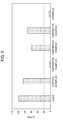
- Fig. 1 shows measurement results of the luciferase activity for Example 1, Comparative Example 1, and Control Examples 1 and 2.
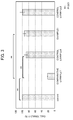
- Fig. 2 shows measurement results of the luciferase activity for Example 1, Comparative Examples 1 to 3, and Control Example 2.
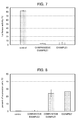
- Fig. 3 shows measurement results of the cell viability for Example 1, Comparative Example 1, and Control Examples 3 and 4.
- the graph shown in Fig. 1 revealed that the luciferase activity from Comparative Example 1 where Lipofectamine® was used to deliver siRNA was similar to the luciferase activity from Example 1 where a liposome having a surface modified with the temperature-responsive polymer represented by the formula (1) was used to deliver siRNA. Further, the graph shown in Fig.
- Example 2 revealed that the luciferase activity from Example 1 was higher than that from Comparative Example 2 (the luciferase activity when a liposome having a similar configuration as that of Example 1 except that the surface was not modified with the temperature-responsive polymer represented by the formula (1)), and that from Comparative Example 3 (the luciferase activity when the same liposome as that from Example 1 except that the surface was modified with PEG instead of the temperature-responsive polymer represented by the formula (1)).
- the liposome having a surface modified with the temperature-responsive polymer had superior delivery efficiency of a nucleic acid into a cell to the liposome having a surface modified with PEG and the liposome having an unmodified surface, and had a similar delivery efficiency of a nucleic acid into a cell to that of the conventional Lipofectamine®.
- Example 1 As seen in the graph of Fig. 3 , the cell viability of Example 1 is significantly better than that of Comparative Example 1. In addition to that, the cell viability of Example 1 was found to be similar that of untreated HeLa cells (control). As understood from the above cell viability, Example 1 showed a superior effect for reducing cell death after delivery of a nucleic acid to the conventional Lipofectamine®.
- the carrier for delivering a nucleic acid according to an embodiment of the present invention had an excellent delivery efficiency of a nucleic acid into a cell, and further had an excellent effect for reducing cell death after delivery of a nucleic acid regardless of inclusion of a cationic lipid as a membrane constituent.
- the reason of this may be explained as follows.
- the surface of the liposome of the carrier for delivering a nucleic acid according to an embodiment of the present invention is modified with a temperature-responsive polymer. Therefore, a hydration layer is formed at the lower critical solution temperature, which can reduce cytotoxicity due to a cationic lipid.
- the polymer becomes hydrophobic at an elevated temperature, the hydration layer is decreased, leading to improved cell affinity.
- This enables direct delivery of a nucleic acid into a cell without via a lysosome by virtue of the lipid having membrane fusion capability.
- the dispersed liquid of the complex with a nucleic acid was produced, and the nucleic acid was delivered into cells according to the following method.
- siRNA was mixed with non-FBS (non-fetal bovine serum) (serum MEM (minimum essential medium)) in each well of a 6-well plate so that the final concentration was 50 nM, and the total volume of 125 ⁇ l, and allowed to stand for 5 minutes.
- non-FBS non-fetal bovine serum
- serum MEM minimum essential medium
- a cell-lysis agent a Pikkagene cell-lysis agent Lc ⁇ (Toyo Ink, Co., Ltd.)
- a cell-lysis agent a Pikkagene cell-lysis agent Lc ⁇ (Toyo Ink, Co., Ltd.)
- PBS PBS
- the cells were detached by pipetting, and the resulting solution was transferred to a micro tube.
- the micro tube was frozen at -80°C to collapse the cells. After collapsing the cells, the solution was thawed in a 37°C bath, and then centrifuged under conditions of 12000 rpm and 4°C for 5 minutes to spin down impurites.
- luciferase activity was evaluated for the unit emission amount for each.
- the unit emission amount (C/P) was defined as a quotient of a detected emission amount denoted as C (count per second) divided by protein abundance P (Protein abundant). It is noted that the luciferase activities for Example 1 and Comparative Examples 1 and 3 were evaluated in a relative manner as follows.
- the liposome modified with the temperature-responsive polymer did not sufficiently suppress the luciferase activity at a temperature at or below the lower critical solution temperature (30°C) whilst it suppressed the luciferase activity as in the conventional Lipofectamine® at a temperature at or above the lower critical solution temperature (40°C).
- the liposome having a surface modified with the temperature-responsive polymer was able to control the delivery of a nucleic acid into a cell by adjusting the temperature at or above or at or below the lower critical solution temperature.
- NIPAAm N-isopropylacrylamide represented by the formula (2) and DMAAm (dimethylaminoacrylamide) represented by the formula (7) was dissolved in DMF (dimethylformamide) to give a molar ratio of 69.5:30.5. It is noted that the total amount of NIPAAm and DMAAm was 10 g. MPA (3-mercaptopropionic acid) was added to the solvent after the dissolution so as to be 0.028 times of NIPAAm in terms of the number of moles, and 58 mg of AIBN (azobisisobutyronitrile) was further added. Subsequently, the solvent was degassed by purging with nitrogen gas and sonication, and then radical polymerization was performed at 70°C for 5 hours.
- the liquid after the reaction was cooled back to the room temperature, and then added dropwise to pre-cooled diethyl ether to perform reprecipitation purification. Then, precipitates were collected by filtration. This reprecipitation purification was performed two more times to collect a temperature-responsive polymer represented by the formula (6).
- the above temperature-responsive polymer represented by the formula (6) was dialyzed against water, and then lyophilization was performed to further purifying the temperature-responsive polymer represented by the formula (6). It is noted that the molecular weight of the temperature-responsive polymer represented by the formula (6) is 5000, and the lower critical solution temperature is 41.8°C with water.
- the reaction scheme is shown below.
- the temperature-responsive polymer represented by the formula (6) In order to convert the temperature-responsive polymer represented by the formula (6) to an active ester, the temperature-responsive polymer represented by the formula (6), DCC (N,N'-dicyclohexylcarbodiimide), and NHS (N-hydroxysuccinimide) were dissolved in chloroform to give a molar ratio of 1:2.5:2.5, and DOPE (1,2-dioleoyl-sn-glycero-3-phosphoethanolamine) as a membrane fusogenic lipid was further added so that the molar ratio to the polymer was 1:1, and then allowed to react at the room temperature for 24 hours. The solution after the reaction was dialyzed against a methanol solution to purify the product. The solvent was evaporated under reduced pressure with an evaporator to prepare a lipid-modified temperature-responsive polymer represented by the formula (8).
- the reaction scheme is shown below.
- DOTAP (1,2-dioleoyl-3-trimethylammonium propane) as a cationic lipid and DOPE (including the lipid-modified temperature-responsive polymer represented by the formula (8)) were each dissolved in chloroform so that the molar ratio was 3:7, and the total lipid amount was 20 mg. It is noted that the molar ratio of DOPE and the lipid-modified temperature-responsive polymer represented by the formula (8) was 6.5:0.5 in the DOPE solution of chloroform. The resulting solution was transferred to an eggplant flask, and the solvent was evaporated in an evaporator to form a lipid film.
- the liposome from Example 2 was used to produce a dispersion liquid of a complex with a nucleic acid, which was used to deliver the nucleic acid to HeLa cells under different temperature conditions.
- siRNA siRNA duplex available from Sigma Genesis
- siRNA duplex available from Sigma Genesis
- the dispersed liquid of the complex with a nucleic acid was produced, and the nucleic acid was delivered into cells according to the following method.
- the siRNA was mixed with non-FBS (non-fetal bovine serum) (serum MEM (minimum essential medium)) in each well of a 6-well plate so that the final concentration was 50 nM, and the total volume was 125 ⁇ l, and allowed to stand for 5 minutes.
- each liposome from Example 2 was dispersed in 125 ⁇ l of non FBS medium (serum MEM (minimum essential medium)), and allowed to stand for 5 minutes.
- a cell-lysis agent a Pikkagene cell-lysis agent Lc ⁇ (Toyo Ink, Co., Ltd.)
- a cell-lysis agent a Pikkagene cell-lysis agent Lc ⁇ (Toyo Ink, Co., Ltd.)
- PBS PBS
- the cells were detached by pipetting, and the resulting solution was transferred to a micro tube.
- the micro tube was frozen at -80°C to collapse the cells. After collapsing the cells, the solution was thawed in a 37°C bath, and then centrifuged under conditions of 12000 rpm and 4°C for 5 minutes to spin down impurites.
- luciferase activity was evaluated for the unit emission amount for each.
- the unit emission amount (C/P) was defined as a quotient of a detected emission amount denoted as C (count per second) divided by protein abundance P (Protein abundant). It is noted that the luciferase activity for Example 2 were evaluated in a relative manner as follows.
- the siRNA transfection with the liposome from Example 2 in which the temperature-responsive polymer having a different composition from that of Example 1 was also found to suppress the luciferase activity, showing a stronger suppression of the activity at or above LCST (the lower critical solution temperature) as compared with that at or below LCST (the lower critical solution temperature).
- a liposome according to Example 1 was prepared, and 1 ml of PBS containing 2 mM carboxyfluorescein (CF) instead of purified water was added to the lipid film for hydration.
- the resulting liposome was diluted 20 times with PBS, and measured for a fluorescence intensity with a fluorophotometer, which was considered as the fluorescence intensity at the time of CF encapsulation. Further, 1% Triton 10X was added to completely collapse the liposome, and then the fluorescence intensity was measured, which was considered as the fluorescence intensity upon complete release.
- CF carboxyfluorescein
- the value of the fluorescence intensity upon encapsulation was subtracted from the value of the fluorescence intensity upon addition of Triton to calculate the difference, which was considered as the encapsulation amount.
- the fluorescence intensities before and after Triton treatment are shown in Fig. 6 .
- the fluorescence intensity increased after Triton treatment as shown in Fig. 6 , showing that carboxyfluorescein was able to be encapsulated.
- the liposome from Example 1 which was encapsulated with carboxyfluorescein and the liposome (Lipofectamine®) from Comparative Example 1 were measured for the luciferase activity to determine whether they had siRNA transfection capability. The results are shown in Fig. 7. As shown in Fig. 7, the luciferase activity was decreased in a similar way as in Comparative Example 1, indicating that Example 1 had a similarly efficient transfection capability. That is, the liposome from Example 1 was able to encapsulate a low-molecular material carboxyfluorescein therein, and was able to be used to produce a complex with siRNA, and was able to show a transfection capability as efficient as Lipofectamine®.
- the liposome from Comparative Example 1 Lipofectamine® (Lipofectamine® 2000), Invitrogen Inc.) and the liposome from Comparative Example 3 (modified with PEG instead of a temperature-responsive polymer) were prepared. Further, the liposome from Example 1 was prepared.
- the liposomes from Example 1, Comparative Examples 1 and 2 were each used to produce a dispersion liquid of a complex with a nucleic acid (plasmid), which was then used to deliver the nucleic acid (plasmid) into HeLa cells. Specifically, the dispersed liquid of the complex with the nucleic acid was produced, and the nucleic acid was delivered into cells according to the following method.
- a MSCV-IRES-GFP plasmid in an amount of 5 ⁇ g was dispersed in 50 ⁇ l of serum-free medium. Further, 3 ⁇ l of Lipofectamine® 2000 and 2 ⁇ l of each liposome were dispersed in 50 ⁇ l of serum-free medium. These two media were mixed, and allowed to stand for 30 minutes to produce a liposome-plasmid complex. Then, a serum-containing medium was added to the dispersed liquid of the complex to a volume of 1 ml.
- a medium of HeLa cells seeded in each well of a 6-well plate at the concentration of 5.0x10 4 cells/ml on the previous day was replaced with the medium in which the liposome-plasmid complex was dispersed, and incubated at 40°C for 48 hours. After the incubation, the medium was removed, and trypsin treatment was performed to strip the cells from the dish. PBS was then added to the cells, and centrifugation was performed to wash the cells. Subsequently, the cells were observed by flow cytometry to evaluate the expression percentage of the GFP protein in the HeLa cells. The results are shown in Fig. 8.
- the liposome (Example 1) modified with the temperature-responsive polymer enabled significantly more efficient transfection of HeLa cells with the plasmid as compared with the PEG-liposome (Comparative Example 3), and the transfection capability thereof was comparable to or more than that of Lipofectamine®.
Landscapes
- Health & Medical Sciences (AREA)
- Life Sciences & Earth Sciences (AREA)
- Chemical & Material Sciences (AREA)
- Engineering & Computer Science (AREA)
- Genetics & Genomics (AREA)
- General Health & Medical Sciences (AREA)
- Medicinal Chemistry (AREA)
- Pharmacology & Pharmacy (AREA)
- Animal Behavior & Ethology (AREA)
- Public Health (AREA)
- Veterinary Medicine (AREA)
- Bioinformatics & Cheminformatics (AREA)
- Organic Chemistry (AREA)
- Biotechnology (AREA)
- Biomedical Technology (AREA)
- Epidemiology (AREA)
- Molecular Biology (AREA)
- Zoology (AREA)
- Wood Science & Technology (AREA)
- General Engineering & Computer Science (AREA)
- Biochemistry (AREA)
- Dispersion Chemistry (AREA)
- Biophysics (AREA)
- Physics & Mathematics (AREA)
- Plant Pathology (AREA)
- Microbiology (AREA)
- Nuclear Medicine, Radiotherapy & Molecular Imaging (AREA)
- Chemical Kinetics & Catalysis (AREA)
- General Chemical & Material Sciences (AREA)
- Virology (AREA)
- Reproductive Health (AREA)
- Endocrinology (AREA)
- Dermatology (AREA)
- Medicines That Contain Protein Lipid Enzymes And Other Medicines (AREA)
- Pharmaceuticals Containing Other Organic And Inorganic Compounds (AREA)
- Medicinal Preparation (AREA)
Abstract
Description
- The present invention relates to a carrier for delivering a nucleic acid into a cell, a kit for delivering a nucleic acid, and a method of delivering a nucleic acid into a cell.
- In gene therapy, delivery of a nucleic acid such as siRNA into a target cell is difficult when the nucleic acid such as siRNA alone is administered intravenously. This is because the nucleic acid such as siRNA tends to disappear from the blood stream due to uptake by the reticuloendothelial system (RES) and decomposition by nuclease and the like. For this reason, there have always been demands for a carrier which is suitable for delivering a nucleic acid more efficiently into a target cell, and can be used for a drug delivery system (DDS).
- Meanwhile, in recent years, use of a liposome for DDS has attracted much attention. A liposome is a spherical particle having a bimolecular lipid membrane structure similar to cell membrane, and is also used for DDS of a nucleic acid because it forms a complex with a nucleic acid to retain the nucleic acid stably.
- For example, Lipofectamine® available from Invitrogen, Inc. (see Nonpatent Document 1) is traditionally used as a carrier for DDS which can efficiently deliver siRNA into cells.
- Non-Patent Document 1: https://www.lifetechnologies.com/order/catalog/product/1377803 0
- However, the above Lipofectamine® has a good delivery efficiency of a nucleic acid into a cell, but disadvantageously tends to cause cell death after delivery of the nucleic acid.
- Cell death after delivery of a nucleic acid may be reduced when the surface of a liposome is modified with PEG (polyethylene glycol). However, a liposome having a surface modified with PEG shows a low delivery efficiency of a nucleic acid into a cell.
- A carrier for delivering a nucleic acid has not yet been available to date which can reduce cell death after delivery of the nucleic acid, and show excellent delivery efficiency of a nucleic acid into a cell.
- The present invention was made in view of the above actual circumstances. An object of the present invention is to provide a carrier for delivering a nucleic acid, a kit for delivering a nucleic acid, and a method of delivering a nucleic acid, which show an excellent effect for reducing cell death after delivery of a nucleic acid and excellent delivery efficiency of a nucleic acid into a cell.
- The present inventors found that a liposome including a cationic lipid as a membrane constituent and having a surface modified with a temperature-responsive polymer can show excellent delivery efficiency of a nucleic acid into a cell while reducing cell death after delivery of the nucleic acid. Then the present invention has been completed. More specifically, the present invention can provide the followings.
- (1) A carrier for delivering a nucleic acid into a cell including a liposome having a membrane fusion capability, in which
the liposome includes a cationic lipid as a membrane constituent, and
a surface of the liposome is modified with a temperature-responsive polymer. - (2) The carrier for delivering a nucleic acid according to (1), in which the temperature-responsive polymer has a lower critical solution temperature of 35.0 to 45.0°C with water.
- (3) The carrier for delivering a nucleic acid according to (1) or (2), in which the liposome includes a phospholipid as a membrane constituent.
- (4) The carrier for delivering a nucleic acid according to any one of (1) to (3), which is used for delivering the nucleic acid into a cervical cancer cell.
- (5) A kit for delivering a nucleic acid into a cell, including the carrier for delivering a nucleic acid according to any one of (1) to (4).
- (6) A method of delivering a nucleic acid into a cell, the method including the step of: contacting a complex of the carrier for delivering a nucleic acid according to any one of (1) to (4) and a nucleic acid with an isolated cell, or administering the complex of the carrier for delivering a nucleic acid and a nucleic acid to a non-human animal.
- The present invention can provide a carrier for delivering a nucleic acid, a kit for delivering a nucleic acid, and a method of delivering a nucleic acid, which show an excellent effect for reducing cell death after delivery of a nucleic acid and excellent delivery efficiency of a nucleic acid into a cell.
-
-
Fig. 1 is a graph illustrating results from measurements of the luciferase activity for Example 1, Comparative Example 1, and Control Examples 1 and 2. -
Fig. 2 is a graph illustrating results from measurements of the luciferase activity for Example 1, Comparative Examples 1 to 3, and Control Example 2. -
Fig. 3 is a graph illustrating results from measurements of the cell viability for Example 1, Comparative Example 1, and Control Examples 3 and 4. -
Fig. 4 is a graph illustrating results from measurements of the luciferase activity at 30°C or 40°C for Example 1, Comparative Example 1, and Comparative Example 3. -
Fig. 5 is a graph illustrating results from measurements of the luciferase activity at 37°C or 42°C for Example 2. -
Fig. 6 is a graph illustrating results from measurements of the fluorescence intensity of a liposome having carboxyfluorescein encapsulated according to Example 1 before and after treatment with Triton. - Fig. 7 is a graph illustrating results of measurements of the luciferase activity for a liposome having carboxyfluorescein encapsulated according to Example 1, and a liposome according to Comparative Example 1.
- Fig. 8 is a graph illustrating the percentage of cells expressing GFP when a plasmid (the MSCV-IRES-GFP plasmid) was transfected into HeLa cells using Example 1, Comparative Example 1, and Comparative Example 3.
- Below, the embodiments of the present invention will be described, but the present invention shall not be limited to these. They can be suitably altered.
- The carrier for delivering a nucleic acid according to an embodiment of the present invention is a carrier for delivering a nucleic acid into a cell including a liposome having a membrane fusion capability, in which the liposome includes a cationic lipid as a membrane constituent, and a surface of the liposome is modified with a temperature-responsive polymer. By virtue of having the above structure, the carrier for delivering a nucleic acid according to an embodiment of the present invention has an excellent effect for reducing cell death after delivery of the nucleic acid and excellent delivery efficiency of a nucleic acid into a cell.
- The reasons why the carrier for delivering a nucleic acid according to an embodiment of the present invention has an excellent effect for reducing cell death after delivery of the nucleic acid and excellent delivery efficiency of a nucleic acid into a cell can be explained as follows.
- The surface of the liposome of the carrier for delivering a nucleic acid according to an embodiment of the present invention is modified with a temperature-responsive polymer. This temperature-responsive polymer can form a hydration layer at or below the lower critical solution temperature to reduce cytotoxicity due to a cationic lipid. Further, when the temperature-responsive polymer becomes hydrophobic at an elevated temperature, the hydration layer formed is decreased, leading to improved cell affinity. This enables direct delivery of the nucleic acid into a cell without via a lysosome by virtue of a lipid having a membrane fusion capability. As a result, an excellent effect for reducing cell death after delivery of a nucleic acid and excellent delivery efficiency of a nucleic acid into a cell can be conferred on the carrier for delivering a nucleic acid according to an embodiment of the present invention.
- There is no particular limitation for the lipid which constitutes the liposome according to an embodiment of the present invention as long as it has a membrane fusion capability and includes a cationic lipid as a membrane constituent. For example, it may be formed with a cationic lipid and a lipid or macromolecule having a membrane fusion capability, or the cationic lipid itself may have a membrane fusion capability. For the liposome according to an embodiment of the present invention, the lipid included as a membrane constituent may be of one type or a combination of two or more types. It is noted that the term "membrane fusion capability" as used in the present invention refers to a capability to fuse with an endosomal membrane or a cell membrane.
- Cationic lipids include cationic lipids which are not a phospholipid, for example, 1,2-dioleoyl-3-trimethylammonium propane (DOTAP), N-[1-(2,3-dioleoylpropyl)]-N,N-dimethylamine (DODAP), N,N-dioleyl-N,N-dimethylammonium chloride (DODAC), N,N-distearyl-N,N-dimethylammonium bromide (DDAB), N-(1-(2,3-dioleyloxy)propyl)-N,N,N-trimethylammonium chloride (DOTMA), N,N-dimethyl-2,3-dioleyloxypropylamine (DODMA), 2,3-dioleyloxy-N-[2-(sperminecarboxyamide)ethyl]-N,N-dimethyl-1-propanaminium trifluoroacetic acid (DOSPA), N-[1-(2,3-ditetradecyloxypropyl)]-N,N-dimethyl-N-hydroxyethylammonium bromide (DMRIE), N-[1-(2,3-dioleyloxypropyl)]-N,N-dimethyl-N-hydroxyethylammonium bromide (DORIE), and the like. Alternatively they include cationic phospholipids and the like. Among these, 1,2-dioleoyl-3-trimethylammonium propane (DOTAP), DODAP, DMRIE, and DORIE are preferably used in view of their excellent delivery efficiency of a nucleic acid into a cell. These may be used alone or in combinations of two or more.
- Lipids which can be used as a membrane constituent along with a cationic lipid to confer a membrane fusion capability on the liposome according to an embodiment of the present invention (hereinafter, may be referred to as the "membrane fusogenic lipid" in the present specification) include, for example, phospholipids such as natural phospholipids, for example, phosphatidylethanolamine, phosphatidylcholine, lysophosphatidylcholine, phosphatidylglycerol, phosphatidic acid, phosphatidylserine, phosphatidylinositol, cardiolipin, sphingomyelin, soybean lecithin, yolk lecithin, lysolecithin, and the like; high molecular weight succinylated polyglycidol (SucPG) having a membrane fusion capability; and the like. Among these, phosphatidylethanolamine and succinylated polyglycidol are particularly preferred in view of their excellent delivery efficiency of a nucleic acid into a cell. Moreover, the liposome according to an embodiment of the present invention preferably includes a phospholipid as a membrane constituent in view of its ability of further reducing cell death due to a cationic lipid.
- Examples of phosphatidylethanolamine include 1,2-dioleoyl-sn-glycero-3-phosphoethanolamine (DOPE), 1,2-dilinoleoyl-sn-glycero-3-phosphoethanolamine (DLoPE), 1,2-dierucoyl-sn-glycero-3-phosphoethanolamine (DEPE), 1,2-dimyristoyl-sn-glycero-3-phosphoethanolamine (DMPE), 1,2-dipalmitoyl-sn-glycero-3-phosphoethanolamine (DPPE), 1,2-distearoyl-sn-glycero-3-phosphoethanolamine (DSPE), and the like. Among these, 1,2-dioleoyl-sn-glycero-3-phosphoethanolamine (DOPE), 1,2-dipalmitoyl-sn-glycero-3-phosphoethanolamine (DPPE) is particularly preferred in view of their excellent delivery efficiency of a nucleic acid into a cell.
- In view of ability of further reducing cell death after delivery of a nucleic acid and excellent delivery efficiency of a nucleic acid into a cell, the liposome according to an embodiment of the present invention preferably includes a cationic lipid that is not a phospholipid and a membrane fusogenic lipid as membrane constituents in a molecular ratio suitable for achieving excellent efficiency for delivering a nucleic acid into a cell, preferably in a molecular ratio of 3:0.5 to 3:20, more preferably in a molecular ratio of 3:2 to 3:15, and even more preferably in a molecular ratio of 3:5 to 3:10.
- Further, 1,2-dioleoyl-3-trimethylammonium propane (DOTAP) as a cationic lipid and 1,2-dioleoyl-sn-glycero-3-phosphoethanolamine (DOPE) as a membrane fusogenic lipid are in particular preferably included in the above molecular ratios as membrane constituents of a liposome. Moreover, when the surface of a liposome surface is modified with a temperature-responsive polymer modified with a lipid as a membrane constituent of the liposome, the temperature-responsive polymer modified with the lipid is preferably present in an amount of 0.05 to 40 mol% relative to the entire lipids as membrane constituents, more preferably 1.0 to 20 mol%, and even more preferably 2.0 to 8.0 mol% in view of ability of further reducing cell death after delivery of a nucleic acid and excellent delivery efficiency of a nucleic acid into a cell. Furthermore, the temperature-responsive polymer is preferably modified with a membrane fusogenic lipid, and in particular preferably modified with 1,2-dioleoyl-sn-glycero-3-phosphoethanolamine (DOPE) among membrane fusogenic lipids.
- The temperature-responsive polymer forms a hydration layer over the surface of a liposome at or below the lower critical solution temperature (LCST) with water, reducing the affinity of a liposome for a cell membrane whilst it aggregates and becomes hydrophobic at a temperature at or above the lower critical solution temperature, improving the affinity of the liposome for the cell membrane. As described above, if a temperature-responsive polymer for use in an embodiment of the present invention has a low lower critical solution temperature with water, the affinity of a liposome for a cell membrane is reduced, resulting in decreased delivery efficiency into cells. Therefore, the lower critical solution temperature with water of a temperature-responsive polymer for use in an embodiment of the present invention is preferably at a temperature around the body temperature (for example, 35.0 to 45.0°C). On the other hand, a temperature-responsive polymer for use in an embodiment of the present invention having a lower critical solution temperature as high as possible within a temperature range around the body temperature tends to more easily reduce cell death after delivery of a nucleic acid into a cell. Therefore, the temperature-responsive polymer preferably has a lower critical solution temperature of preferably 37.0 to 42.0°C with water, more preferably 37.5 to 41.0°C, and even more preferably 38.0 to 40.5°C in view of excellent delivery efficiency of a nucleic acid into a cell and ability of more easily reducing cell death after delivery of a nucleic acid into a cell. It is noted that in the present invention, the lower critical solution temperature of a temperature-responsive polymer with water can be measured by differential scanning calorimetry (DSC) .
- Specific examples of the temperature-responsive polymer for modifying the surface of the liposome according to an embodiment of the present invention may include, for example, a polymer having a (meth)acrylamide compound, an N-(or N,N-di)alkyl-substituted (meth)acrylamide derivative, a vinyl ether derivative, or the like as a constituent monomer, or a copolymer having two or more of these monomers. Further, a copolymer of monomers other than these monomers, a substance obtainable by graft polymerization or copolymerization of polymers, or a mixture of a homopolymer and copolymer of these monomers may be used. Moreover, the temperature-responsive polymer may be cross-linked as long as the original properties of the polymer are not impaired.
- Specific monomers for constituting a temperature-responsive polymer include, for example, N-isopropyl(meth)acrylamide, N-n-propyl(meth)acrylamide, N-cyclopropyl(meth)acrylamide, N-ethoxyethyl(meth)acrylamide, N-tetrahydrofurfuryl(meth)acrylamide, N,N-ethylmethyl(meth)acrylamide, N,N-diethyl(meth)acrylamide, and the like. The temperature-responsive polymer may be a homopolymer of these monomers, or a copolymer of two or more. Further, monomers which may be further co-polymerized with these monomers include dimethylaminopropyl(meth)acrylamide, (meth)acrylamide, dimethylamino(meth)acrylamide, N,N-diethyl(meth)acrylamide, N,N-dimethyl(meth)acrylamide, ethylene oxide, (meth)acrylic acid and salts thereof, hydroxyethyl(meth)acrylate, polyhydroxyethyl(meth)acrylate, vinyl alcohol, vinyl pyrrolidone, cellulose, carboxymethylcellulose, and the like. The lower critical solution temperature of a temperature-responsive polymer with water can be adjusted by appropriately selecting a monomer for constituting the temperature-responsive polymer among those described above according to their properties.
- A compound represented by the following general formula (1) as a copolymer of N-isopropyl(meth)acrylamide (NIPAA) and dimethylaminopropylacrylamide (DMAPAA) is preferably used as a temperature-responsive polymer in view of excellent delivery of a nucleic acid into a cell and ability of more easily reducing cell death after delivery of a nucleic acid into a cell. In the following formula (1), x is preferably 60 to 99, more preferably 90 to 99, and y is preferably 1 to 40, more preferably 1 to 10.

- There is no particular limitation for the molecular weight of the temperature-responsive polymer for use in an embodiment of the present invention, but it may be, for example, 1000 to 100000 in terms of weight-average molecular weight. Further, the weight-average molecular weight is preferably 2000 to 50000, more preferably 3000 to 10000, and even more preferably 4000 to 7000 in view of excellent delivery of a nucleic acid into a cell and ability of more easily reducing cell death after delivery of a nucleic acid into a cell. It is noted that the weight-average molecular weight can be measured by gel filtration chromatography (GPC).
- For example, in a case where a liposome is produced with a cationic lipid and a membrane fusogenic lipid, the surface of the liposome may be modified with a temperature-responsive polymer as follows. The temperature-responsive polymer is chemically modified with either the membrane fusogenic lipid or the cationic lipid. Then, the temperature-responsive polymer modified with either of the lipids is mixed when producing the liposome. As a result, a structure having a surface modified with the temperature-responsive polymer can be obtained after this liposome production.
- The conventionally known method can be used for producing the liposome according to an embodiment of the present invention. For example, the liposome according to an embodiment of the present invention can be produced with a cationic lipid and a membrane fusogenic lipid as follows. The cationic lipid and the membrane fusogenic lipid are dissolved into a solvent (for example, chloroform and the like). The solvent is then removed, and the resulting thin lipid film is then hydrated with the phosphate buffered saline and the like, and then sonicated to adjust the particle size of the liposome.
- There is no particular limitation for the mean particle size of the liposome, but it may be, for example, 0.05 to 1 µm. The mean particle size of the liposome is measured by the dynamic light scattering method (DLS).
- There is no particular limitation for the types of cells to which the carrier for delivering a nucleic acid according to an embodiment of the present invention, but they include, for example, cells such lung cells, colon cells, rectum cells, anus cells, bile duct cells, small intestine cells, gastric cells, esophagus cells, gallbladder cells, liver cells, pancreatic cells, appendix cells, breast cells, ovarian cells, cervical cells, prostate cells, kidney cells, glial cells, skin cells, lymph cells, villous cells, cervicofacial cells, osteogenic cells, and blood cells or cancer cells thereof, (cervical cancer cells, lung cancer cells, colon cancer cells, rectum cancer cells, anal cancer cells, bile duct cancer cells, small intestine cancer cells, gastric cancer cells, esophagus cancer cells, gallbladder cancer cells, liver cancer cells, pancreatic cancer cells, appendix cancer cells, breast cancer cells, ovarian cancer cells, prostate cancer cells, kidney cancer cells, cancer cells of central nervous system, glioblastoma cells, skin cancer cells, lymphoma cells, villous cancer cells, cervicofacial cancer cells, osteogenic sarcoma cells, blood cancer cells, and the like). The carrier for delivering a nucleic acid according to an embodiment of the present invention is preferably used for delivery of a nucleic acid into a cancer cell in view of delivery efficiency of a nucleic acid into a cell and ability of more easily reducing cell death after delivery of a nucleic acid. Among cancer cells, it is particularly suitable for delivering a nucleic acid into a cervical cancer cell, a colon cancer cell, a renal cancer cells, and a lymph cell.
- There is no particular limitation for the nucleic acid to be delivered, but it may be, for example, siRNA, mRNA, tRNA, rRNA, cDNA, miRNA, cyclic plasmid DNA, and the like. These nucleic acids may be any of single-stranded, double-stranded, or triple-stranded. Further, in the present invention, the nucleic acid may be chemically modified, or may be modified with an enzyme, a peptide, and the like. Moreover, the nucleic acid(s) may be used alone or in an appropriate combination of two or more. siRNA as a nucleic acid is to be preferably delivered in view of an excellent effect for reducing cell death after delivery of a nucleic acid and excellent delivery efficiency of a nucleic acid into a cell. Further, there is no particular limitation for the number of bases of a nucleic acid, but it may vary appropriately, and may be selected from, for example, the range of 10 to 10000 bp. That is, according to the carrier for delivering a nucleic acid according to an embodiment of the present invention, a short nucleic acid with the number of bases as small as 10 to 50 bp can be delivered, and even a long nucleic acid with the number of bases as large as 1000 to 10000 bp can be delivered.
- The kit for delivering a nucleic acid according to an embodiment of the present invention includes the aforementioned carrier for delivering a nucleic acid.
- The kit for delivering a nucleic acid according to an embodiment of the present invention may include a component other than the aforementioned carrier for delivering a nucleic acid. For example, components of the kit for delivering a nucleic acid according to an embodiment of the present invention may include a container containing a dispersed liquid in which the aforementioned carrier for delivering a nucleic acid is dispersed in a solvent (water, buffer, sucrose, and the like), an operation manual in which instructions for using the kit are described, and the like. Moreover, those components (for example, sucrose and others) other than the carrier for delivering a nucleic acid in addition to a solvent such as water and buffer may be included in the dispersion liquid containing the carrier for delivering a nucleic acid.
- The method of delivering a nucleic acid according to an embodiment of the present invention includes the step of: contacting a complex of the aforementioned carrier for delivering a nucleic acid and a nucleic acid with an isolated cell, or administering the complex of the carrier for delivering a nucleic acid and a nucleic acid to a non-human animal.
- The contact step in the method of delivering a nucleic acid according to an embodiment of the present invention is a step of contacting a complex of the aforementioned carrier for delivering a nucleic acid and a nucleic acid with an isolated cell. The step is performed in vitro. This enables the nucleic acid to be delivered into the cell through the aforementioned carrier for delivering a nucleic acid.
- The complex of the carrier for delivering a nucleic acid and a nucleic acid may be formed by the conventionally known method. For example, it may be produced by dispersing the carrier for delivering a nucleic acid and a nucleic acid each in a separate medium (serum MEM (a minimum essential medium and others)), and mixing these.
- There is no particular limitation for the molar ratio (N/P) of nitrogen and phosphorus in the liposome-nucleic acid complex, but it is in particular preferably 5:0.1 to 5:10, more preferably 5:0.5 to 5:8, and even more preferably 5:0.7 to 5:2.0 in view of excellent delivery efficiency of a nucleic acid into a cell. The molar ratio (N/P) of nitrogen and phosphorus in the liposome-nucleic acid complex can be measured by the zeta-potential in accordance with the dynamic light scattering method (DLS).
- Contacting can be performed by the conventional known method. The complex of the carrier for delivering a nucleic acid and a nucleic acid is administered to a medium containing cells, and incubated at 37 to 42°C for 20 minutes to 48 hours to perform diffusion administration into a cell.
- Cells to be contacted may be human or non-human cells as long as they are isolated. Further, those similar to the cell into which a nucleic acid is delivered in the carrier for delivering a nucleic acid as described above can be used.
- The administration step in the method of delivering a nucleic acid according to an embodiment of the present invention is a step of administering the complex of the aforementioned carrier for delivering a nucleic acid and a nucleic acid to a non-human animal. The step is performed in vivo. This enables the nucleic acid to be delivered into a cell of a non-human animal through the aforementioned carrier for delivering a nucleic acid.
- There is no particular limitation for the mode of administration, but it can be suitably selected depending on the type of target cells. For example, the mode of administration may be oral and injection (intravenous injection, subcutaneous injection, intramuscular injection, and the like).
- There is no particular limitation for the non-human animal, but it may be, for example, animals such as mammals, for example, mouse, rat, canine, feline, simian, swine, bovine, sheep, rabbit, and the like.
- NIPAAm (N-isopropylacrylamide) represented by the formula (2) and DMAPAAm (methylaminopropylacrylamide) represented by the formula (3) were dissolved in DMF (dimethylformamide) to give a molar ratio of 95:5. It is noted that the total amount of NIPAAm and DMAPAAm was 10 g. MPA (3-mercaptopropionic acid) was added to the solvent after the dissolution so as to be 0.028 times of NIPAAm in terms of the number of moles, and 58 mg of AIBN (azobisisobutyronitrile) was further added. Subsequently, the solvent was degassed by purging with nitrogen gas and sonication, and then radical polymerization was performed at 70°C for 5 hours. The liquid after the reaction was cooled back to the room temperature, and then added dropwise to pre-cooled diethyl ether to perform reprecipitation purification. Then, precipitates were collected by filtration. This reprecipitation purification was performed two more times to collect a temperature-responsive polymer represented by the formula (1). The above temperature-responsive polymer represented by the formula (1) was dialyzed against water, and then lyophilization was performed to further purify the temperature-responsive polymer represented by the formula (1). It is noted that the molecular weight of the temperature-responsive polymer represented by the formula (1) is 5500, and the lower critical solution temperature with water is 40°C. The reaction scheme is shown below.

- In order to convert the temperature-responsive polymer represented by the formula (1) to an active ester, the temperature-responsive polymer represented by the formula (1), DCC (N,N'-dicyclohexylcarbodiimide), and NHS (N-hydroxysuccinimide) were dissolved in methyl chloride in the molar ratio of 1:2.5:2.5, and then allowed to react at the room temperature for 24 hours. After the reaction, dicyclohexyl urea as a by-product was removed by suction filtration, and reprecipitation purification was then performed with diethyl ether, and a succinyl polymer represented by the formula (4) was collected as precipitates. The succinyl polymer represented by the formula (4) and a membrane fusogenic lipid DOPE (1,2-dioleoyl-sn-glycero-3-phosphoethanolamine) in the molar ratio of 1:1 were dissolved in dioxane, and allowed to react at the room temperature for 24 hours. The solvent of the solution after the reaction was evaporated under reduced pressure with an evaporator to prepare a lipid-modified temperature-responsive polymer represented by the formula (5). The reaction scheme is shown below.


- DOTAP (1,2-dioleoyl-3-trimethylammonium propane) as a cationic lipid and DOPE (including the lipid-modified temperature-responsive polymer represented by the formula (5)) were dissolved in chloroform so that the molar ratio was 3:7, and the total lipid amount was 20 mg. It is noted that the molar ratio of DOPE and the lipid-modified temperature-responsive polymer represented by the formula (5) was 6.5:0.5 in the DOPE solution of chloroform. The resulting solution was transferred to an eggplant flask, and the solvent was evaporated in an evaporator to form a lipid film. To the lipid film, 1 ml of purified water was added to hydrate the lipid film, and then dispersed by vortex. Then, sonication was performed for 30 minutes in an ultrasonic bath to reduce the size of the liposome, and then passed through a 100-nm filter with an extruder to adjust the size of the liposome. Then, gel filtration was performed to separate and purify the liposome to obtain the liposome of interest according to Example 1 having a surface modified with the temperature-responsive polymer represented by the formula (1).
- Lipofectamine® available from Invitrogen Inc. (Lipofectamine® RNAi MAX®) was provided, and used as a liposome according to Comparative Example 1.
- A liposome according to Comparative Example 2 was produced by a similar procedure as in Example 1 except that liposome production was performed without including the lipid-modified temperature-responsive polymer represented with the formula (5) in DOPE. The liposome according to Comparative Example 2 is similar to the liposome according to Example 1 except that the surface is not modified with the temperature-responsive polymer represented by the formula (1).
- A liposome according to Comparative Example 3 was produced by a similar procedure as in Example 1 except that PEG (polyethylene glycol, the molecular weight: 2000) was used instead of the temperature-responsive polymer represented by the formula (1).
- A dispersed liquid of a complex with a nucleic acid was prepared for each of the liposomes according to Example 1 and Comparative Examples 1 to 3, and this dispersion liquid was used to delivery the nucleic acid to HeLa cells. siRNA (siRNA duplex available from Sigma Genesis) which suppress the luciferase activity was used as the nucleic acid. Below, shown is the amount of a liposome and siRNA in the dispersed liquid of the complex and siRNA for each of Example 1 and Comparative Examples 1 to 3. It is noted that the final concentration of siRNA in the dispersion liquid of the complex and siRNA was 50 nM for all. Example 1: liposome-siRNA complex/siRNA (N/P (the molar ratio of nitrogen and phosphorus)) = 5:1
- Comparative Example 1: siRNA:liposome = 0.1 nmol:10 µl (Lipofectamine® available from Invitrogen Inc. (dispersed in a liquid) 10 µl)
- Comparative Example 2: liposome-siRNA complex/siRNA (N/P) = 5:1
- Comparative Example 3: liposome-siRNA complex/siRNA (N/P) = 5:1
- Specifically, a dispersed liquid of the complex with a nucleic acid was produced, and the nucleic acid was delivered into cells according to the following method. First, siRNA was mixed with non-FBS (non-fetal bovine serum) (serum MEM (minimum essential medium)) in each well of a 6-well plate so that the final concentration was 50 nM, and the total volume of 125 µl, and allowed to stand for 5 minutes. Meanwhile, the liposomes from Example 1 and Comparative Examples 1 to 3 were each dispersed in 125 µl of non-FBS medium (serum MEM (minimum essential medium)), and allowed to stand for 5 minutes. These two non-FBS media were mixed to prepare a dispersed liquid of the liposome-siRNA complex, and allowed to stand for 30 minutes. Then, FBS medium was added to the dispersed liquid to a volume of 1 ml. After the volume adjustment, a medium of HeLa cells (cervical cancer cells) seeded in a 6-well plate at the concentration of 5.0x10⁴ cells/ml on the previous day was replaced with the dispersion liquid of the liposome-siRNA complex, and incubated at 37°C for 48 hours. After the incubation, the medium was removed from each well, and 250 µl/well of a cell-lysis agent (a Pikkagene cell-lysis agent Lcβ (Toyo Ink, Co., Ltd.)) diluted 5 times with PBS was added. After incubated under the above conditions for 30 minutes, the cells were detached by pipetting, and the resulting solution was transferred to a micro tube. Then, the micro tube was frozen at -80°C to collapse the cells. After collapsing the cells, the solution was thawed in a 37°C bath, and then centrifuged under conditions of 12000 rpm and 4°C for 5 minutes to spin down impurites. Of the resulting supernatant, 90 µl was transferred to another micro tube, from which 10 µl was added to a 96-well plate. To this, 50 µl of a Pikkagene solution was further added, and luminescence measurements were performed to determine the luciferase activity after delivery of siRNA into HeLa cells. The luciferase activity was evaluated for the unit emission amount for each. The unit emission amount (C/P) was defined as a quotient of a detected emission amount, which is denoted as C (count per second), divided by protein abundance P (protein abundant). It is noted that the luciferase activities for Example 1 and Comparative Examples 1 to 3 were evaluated in a relative manner as follows. In addition to the above materials, 10 µl of a medium of HeLa cells into which siRNA was not delivered was added to a 96-well plate. A BCA (bicinchoninic acid) assay kit was used to create a calibration curve with BCA standards having concentrations in the range of 0 to 1 mg/ml, and the amount of proteins was then determined. The emission amount C and the resulting protein abundance P were used to calculate the unit emission amount (C/P), which was assumed as 100% (control).
- The luciferase activity was measured in similar conditions as described above for the liposome from Example 1 except that the complex with siRNA was not formed, and the liposome alone was delivered into the cells.
- The luciferase activity was measured in similar conditions as described above for the liposome from Comparative Example 1 except that the complex with siRNA was not formed, and the liposome alone was delivered into the cells.
- siRNA was mixed with non-FBS (non-fetal bovine serum) (serum MEM (minimum essential medium)) in each well of a 96-well plate so that the final concentration was 100 nM, and the total volume was 125 µl, and allowed to stand for 5 minutes. Meanwhile, the liposomes from Example 1 and Comparative Example 1 were each dispersed in 125 µl of non-FBS medium (serum MEM (minimum essential medium)), and allowed to stand for 5 minutes. These two non-FBS media were mixed to prepare a dispersion liquid of the liposome-siRNA complex, and allowed to stand for 30 minutes. Then, FBS medium was added to the dispersed liquid to a volume of 1 ml. After the volume adjustment, a medium of HeLa cells (cervical cancer cells) seeded in a 6-well plate at the concentration of 5.0x10⁴ cells/ml on the previous day was replaced with the dispersion liquid of the liposome-siRNA complex, and incubated at 37°C for 48 hours. After the incubation, 10 µl of a WST-8 solution (Cell Counting Kit-8, Dojindo Molecular Technologies, Inc.) was added to each well, and further incubated at 37°C for 30 minutes, and then the absorbance at 450 nm was measured to determine cell viability. Moreover, untreated HeLa cells was measured at 450 nm, and the obtained numerical value was assumed to be 100% cell viability (control), and used for relative evaluation of cell viability for Example 1 and Comparative Example 1.
- The cell viability was measured in a similar way as described above for the liposome from Example 1 except that the complex with siRNA was not formed, and the liposome alone was delivered into the cells.
- The cell viability was measured in a similar way as described above for the liposome from Comparative Example 1 except that the complex with siRNA was not formed, and the liposome alone was delivered into the cells.
-
Fig. 1 shows measurement results of the luciferase activity for Example 1, Comparative Example 1, and Control Examples 1 and 2.Fig. 2 shows measurement results of the luciferase activity for Example 1, Comparative Examples 1 to 3, and Control Example 2.Fig. 3 shows measurement results of the cell viability for Example 1, Comparative Example 1, and Control Examples 3 and 4. - The graph shown in
Fig. 1 revealed that the luciferase activity from Comparative Example 1 where Lipofectamine® was used to deliver siRNA was similar to the luciferase activity from Example 1 where a liposome having a surface modified with the temperature-responsive polymer represented by the formula (1) was used to deliver siRNA. Further, the graph shown inFig. 2 revealed that the luciferase activity from Example 1 was higher than that from Comparative Example 2 (the luciferase activity when a liposome having a similar configuration as that of Example 1 except that the surface was not modified with the temperature-responsive polymer represented by the formula (1)), and that from Comparative Example 3 (the luciferase activity when the same liposome as that from Example 1 except that the surface was modified with PEG instead of the temperature-responsive polymer represented by the formula (1)). These results showed that the liposome having a surface modified with the temperature-responsive polymer had superior delivery efficiency of a nucleic acid into a cell to the liposome having a surface modified with PEG and the liposome having an unmodified surface, and had a similar delivery efficiency of a nucleic acid into a cell to that of the conventional Lipofectamine®. - As seen in the graph of
Fig. 3 , the cell viability of Example 1 is significantly better than that of Comparative Example 1. In addition to that, the cell viability of Example 1 was found to be similar that of untreated HeLa cells (control). As understood from the above cell viability, Example 1 showed a superior effect for reducing cell death after delivery of a nucleic acid to the conventional Lipofectamine®. - These results as described above indicated that the carrier for delivering a nucleic acid according to an embodiment of the present invention had an excellent delivery efficiency of a nucleic acid into a cell, and further had an excellent effect for reducing cell death after delivery of a nucleic acid regardless of inclusion of a cationic lipid as a membrane constituent. The reason of this may be explained as follows. The surface of the liposome of the carrier for delivering a nucleic acid according to an embodiment of the present invention is modified with a temperature-responsive polymer. Therefore, a hydration layer is formed at the lower critical solution temperature, which can reduce cytotoxicity due to a cationic lipid. On the other hand, when the polymer becomes hydrophobic at an elevated temperature, the hydration layer is decreased, leading to improved cell affinity. This enables direct delivery of a nucleic acid into a cell without via a lysosome by virtue of the lipid having membrane fusion capability.
- For each of the liposomes from Example 1, Comparative Example 1, and Comparative Example 3, the dispersion liquid of the complex with a nucleic acid was produced, which was then used to deliver the nucleic acid to HeLa cells under different temperature conditions. siRNA (siRNA duplex available from Sigma Genesis) which suppresses the luciferase activity was used as the nucleic acid. Below, shown is the amount of a liposome and siRNA in the dispersion liquid of the complex with siRNA for Example 1 and Comparative Example 1. It is noted that the final concentration of siRNA in the dispersion liquid of the complex and siRNA was 50 nM for all. Example 1: liposome-siRNA complex / siRNA (N/P (the molar ratio of nitrogen and phosphorus)) = 5:1
- Comparative Example 1: siRNA:liposome = 0.1 nmol:10 µl (Lipofectamine® available from Invitrogen Inc. (dispersed in a liquid) 10 µl)
- Comparative Example 3: liposome-siRNA complex/siRNA (N/P) = 5:1
- Specifically, the dispersed liquid of the complex with a nucleic acid was produced, and the nucleic acid was delivered into cells according to the following method. First, siRNA was mixed with non-FBS (non-fetal bovine serum) (serum MEM (minimum essential medium)) in each well of a 6-well plate so that the final concentration was 50 nM, and the total volume of 125 µl, and allowed to stand for 5 minutes. Meanwhile, the liposomes from Example 1 and Comparative Examples were each dispersed in 125 µl of non-FBS medium (serum MEM (minimum essential medium)), and allowed to stand for 5 minutes. These two non-FBS media were mixed to prepare a dispersion liquid of the liposome-siRNA complex, and allowed to stand for 30 minutes. Then, FBS medium was added to the dispersed liquid to a volume of 1 ml. After the volume adjustment, a medium of HeLa cells (cervical cancer cells) seeded in a 6-well plate at the concentration of 1.0x10⁵ cells/ml on the previous day was replaced with the dispersion liquid of the liposome-siRNA complex, and incubated at 30°C or 40°C for 48 hours. After the incubation, the medium was removed from each well, and 250 µl/well of a cell-lysis agent (a Pikkagene cell-lysis agent Lcβ (Toyo Ink, Co., Ltd.)) diluted 5 times with PBS was added. After incubated under the above conditions for 30 minutes, the cells were detached by pipetting, and the resulting solution was transferred to a micro tube. Then, the micro tube was frozen at -80°C to collapse the cells. After collapsing the cells, the solution was thawed in a 37°C bath, and then centrifuged under conditions of 12000 rpm and 4°C for 5 minutes to spin down impurites. Of the resulting supernatant, 90 µl was transferred to another micro tube, from which 10 µl was added to a 96-well plate. To this, 50 µl of a Pikkagene solution was further added, and luminescence measurements were performed to determine the luciferase activity after delivery of siRNA into HeLa cells. The luciferase activity was evaluated for the unit emission amount for each. The unit emission amount (C/P) was defined as a quotient of a detected emission amount denoted as C (count per second) divided by protein abundance P (Protein abundant). It is noted that the luciferase activities for Example 1 and Comparative Examples 1 and 3 were evaluated in a relative manner as follows. In addition to the above materials, 10 µl of a medium of HeLa cells into which siRNA was not delivered was added to a 96-well plate. A BCA (bicinchoninic acid) assay kit was used to create a calibration curve with BCA standards having concentrations in the range of 0 to 1 mg/ml, and the amount of proteins was then determined. The emission amount C and the resulting protein abundance P were used to calculate the unit emission amount (C/P), which was assumed as 100% (control). The results are shown in
Fig. 4 . - As seen from the graph of
Fig. 4 , the liposome modified with the temperature-responsive polymer did not sufficiently suppress the luciferase activity at a temperature at or below the lower critical solution temperature (30°C) whilst it suppressed the luciferase activity as in the conventional Lipofectamine® at a temperature at or above the lower critical solution temperature (40°C). - The above results showed that the liposome having a surface modified with the temperature-responsive polymer was able to control the delivery of a nucleic acid into a cell by adjusting the temperature at or above or at or below the lower critical solution temperature.
- NIPAAm (N-isopropylacrylamide) represented by the formula (2) and DMAAm (dimethylaminoacrylamide) represented by the formula (7) was dissolved in DMF (dimethylformamide) to give a molar ratio of 69.5:30.5. It is noted that the total amount of NIPAAm and DMAAm was 10 g. MPA (3-mercaptopropionic acid) was added to the solvent after the dissolution so as to be 0.028 times of NIPAAm in terms of the number of moles, and 58 mg of AIBN (azobisisobutyronitrile) was further added. Subsequently, the solvent was degassed by purging with nitrogen gas and sonication, and then radical polymerization was performed at 70°C for 5 hours. The liquid after the reaction was cooled back to the room temperature, and then added dropwise to pre-cooled diethyl ether to perform reprecipitation purification. Then, precipitates were collected by filtration. This reprecipitation purification was performed two more times to collect a temperature-responsive polymer represented by the formula (6). The above temperature-responsive polymer represented by the formula (6) was dialyzed against water, and then lyophilization was performed to further purifying the temperature-responsive polymer represented by the formula (6). It is noted that the molecular weight of the temperature-responsive polymer represented by the formula (6) is 5000, and the lower critical solution temperature is 41.8°C with water. The reaction scheme is shown below.

- In order to convert the temperature-responsive polymer represented by the formula (6) to an active ester, the temperature-responsive polymer represented by the formula (6), DCC (N,N'-dicyclohexylcarbodiimide), and NHS (N-hydroxysuccinimide) were dissolved in chloroform to give a molar ratio of 1:2.5:2.5, and DOPE (1,2-dioleoyl-sn-glycero-3-phosphoethanolamine) as a membrane fusogenic lipid was further added so that the molar ratio to the polymer was 1:1, and then allowed to react at the room temperature for 24 hours. The solution after the reaction was dialyzed against a methanol solution to purify the product. The solvent was evaporated under reduced pressure with an evaporator to prepare a lipid-modified temperature-responsive polymer represented by the formula (8). The reaction scheme is shown below.


- DOTAP (1,2-dioleoyl-3-trimethylammonium propane) as a cationic lipid and DOPE (including the lipid-modified temperature-responsive polymer represented by the formula (8)) were each dissolved in chloroform so that the molar ratio was 3:7, and the total lipid amount was 20 mg. It is noted that the molar ratio of DOPE and the lipid-modified temperature-responsive polymer represented by the formula (8) was 6.5:0.5 in the DOPE solution of chloroform. The resulting solution was transferred to an eggplant flask, and the solvent was evaporated in an evaporator to form a lipid film. To the lipid film, 1 ml of purified water was added to hydrate the lipid film, and then dispersed by vortex. Then, sonication was performed for 30 minutes in an ultrasonic bath to reduce the size of the liposome, and then passed through a 100-nm filter with an extruder to adjust the size of the liposome. Then, gel filtration was performed to separate and purify the liposome to obtain the liposome of interest according to Example 2 having a surface modified with the temperature-responsive polymer represented by the formula 6.
- The liposome from Example 2 was used to produce a dispersion liquid of a complex with a nucleic acid, which was used to deliver the nucleic acid to HeLa cells under different temperature conditions. siRNA (siRNA duplex available from Sigma Genesis) which suppresses the luciferase activity was used as the nucleic acid. Below, shown is the amount of a liposome and siRNA in the dispersion liquid of the complex with siRNA for Example 2. It is noted that the final concentration of siRNA in the dispersion liquid of the complex and siRNA was 50 nM for all.
- Specifically, the dispersed liquid of the complex with a nucleic acid was produced, and the nucleic acid was delivered into cells according to the following method. First, the siRNA was mixed with non-FBS (non-fetal bovine serum) (serum MEM (minimum essential medium)) in each well of a 6-well plate so that the final concentration was 50 nM, and the total volume was 125 µl, and allowed to stand for 5 minutes. Meanwhile, each liposome from Example 2 was dispersed in 125 µl of non FBS medium (serum MEM (minimum essential medium)), and allowed to stand for 5 minutes. These two non-FBS media were mixed to prepare a dispersion liquid of the liposome-siRNA complex, and allowed to stand for 30 minutes. Then, FBS medium was added to the dispersed liquid to a volume of 1 ml. After the volume adjustment, a medium of HeLa cells (cervical cancer cells) seeded in a 6-well plate at the concentration of 5.0x10⁴ cells/ml on the previous day was replaced with the dispersion liquid of the liposome-siRNA complex, and incubated at 37°C or 42°C for 48 hours. After the incubation, the medium was removed from each well, and 250 µl/well of a cell-lysis agent (a Pikkagene cell-lysis agent Lcβ (Toyo Ink, Co., Ltd.)) diluted 5 times with PBS was added. After incubated under the above conditions for 30 minutes, the cells were detached by pipetting, and the resulting solution was transferred to a micro tube. Then, the micro tube was frozen at -80°C to collapse the cells. After collapsing the cells, the solution was thawed in a 37°C bath, and then centrifuged under conditions of 12000 rpm and 4°C for 5 minutes to spin down impurites. Of the resulting supernatant, 90 µl was transferred to another micro tube, from which 10 µl was added to a 96-well plate. To this, 50 µl of a Pikkagene solution was further added, and luminescence measurements were performed to determine the luciferase activity after delivery of siRNA into HeLa cells. The luciferase activity was evaluated for the unit emission amount for each. The unit emission amount (C/P) was defined as a quotient of a detected emission amount denoted as C (count per second) divided by protein abundance P (Protein abundant). It is noted that the luciferase activity for Example 2 were evaluated in a relative manner as follows. In addition to the above materials, 10 µl of a medium of HeLa cells into which siRNA was not delivered was added to a 96-well plate. A BCA (bicinchoninic acid) assay kit was used to create a calibration curve with BCA standards having concentrations in the range of 0 to 1 mg/ml, and the amount of proteins was then determined. The emission amount C and the resulting protein abundance P were used to calculate the unit emission amount (C/P), which was assumed as 100% (control). The results are shown in
Fig. 5 . - As seen from the results in
Fig. 5 , the siRNA transfection with the liposome from Example 2 in which the temperature-responsive polymer having a different composition from that of Example 1 was also found to suppress the luciferase activity, showing a stronger suppression of the activity at or above LCST (the lower critical solution temperature) as compared with that at or below LCST (the lower critical solution temperature). - A liposome according to Example 1 was prepared, and 1 ml of PBS containing 2 mM carboxyfluorescein (CF) instead of purified water was added to the lipid film for hydration. The resulting liposome was diluted 20 times with PBS, and measured for a fluorescence intensity with a fluorophotometer, which was considered as the fluorescence intensity at the time of CF encapsulation. Further, 1% Triton 10X was added to completely collapse the liposome, and then the fluorescence intensity was measured, which was considered as the fluorescence intensity upon complete release. The value of the fluorescence intensity upon encapsulation was subtracted from the value of the fluorescence intensity upon addition of Triton to calculate the difference, which was considered as the encapsulation amount. The fluorescence intensities before and after Triton treatment are shown in
Fig. 6 . The fluorescence intensity increased after Triton treatment as shown inFig. 6 , showing that carboxyfluorescein was able to be encapsulated. - The liposome from Example 1 which was encapsulated with carboxyfluorescein and the liposome (Lipofectamine®) from Comparative Example 1 were measured for the luciferase activity to determine whether they had siRNA transfection capability. The results are shown in Fig. 7. As shown in Fig. 7, the luciferase activity was decreased in a similar way as in Comparative Example 1, indicating that Example 1 had a similarly efficient transfection capability. That is, the liposome from Example 1 was able to encapsulate a low-molecular material carboxyfluorescein therein, and was able to be used to produce a complex with siRNA, and was able to show a transfection capability as efficient as Lipofectamine®.
- The liposome from Comparative Example 1 (Lipofectamine® (Lipofectamine® 2000), Invitrogen Inc.) and the liposome from Comparative Example 3 (modified with PEG instead of a temperature-responsive polymer) were prepared. Further, the liposome from Example 1 was prepared. The liposomes from Example 1, Comparative Examples 1 and 2 were each used to produce a dispersion liquid of a complex with a nucleic acid (plasmid), which was then used to deliver the nucleic acid (plasmid) into HeLa cells. Specifically, the dispersed liquid of the complex with the nucleic acid was produced, and the nucleic acid was delivered into cells according to the following method.
- A MSCV-IRES-GFP plasmid in an amount of 5 µg was dispersed in 50 µl of serum-free medium. Further, 3 µl of Lipofectamine® 2000 and 2 µl of each liposome were dispersed in 50 µl of serum-free medium. These two media were mixed, and allowed to stand for 30 minutes to produce a liposome-plasmid complex. Then, a serum-containing medium was added to the dispersed liquid of the complex to a volume of 1 ml. After the volume adjustment, a medium of HeLa cells seeded in each well of a 6-well plate at the concentration of 5.0x10⁴ cells/ml on the previous day was replaced with the medium in which the liposome-plasmid complex was dispersed, and incubated at 40°C for 48 hours. After the incubation, the medium was removed, and trypsin treatment was performed to strip the cells from the dish. PBS was then added to the cells, and centrifugation was performed to wash the cells. Subsequently, the cells were observed by flow cytometry to evaluate the expression percentage of the GFP protein in the HeLa cells. The results are shown in Fig. 8.
- As seen from the results in Fig. 8, the liposome (Example 1) modified with the temperature-responsive polymer enabled significantly more efficient transfection of HeLa cells with the plasmid as compared with the PEG-liposome (Comparative Example 3), and the transfection capability thereof was comparable to or more than that of Lipofectamine®.
Claims (6)
- A carrier for delivering a nucleic acid into a cell, comprising a liposome having a membrane fusion capability, wherein
the liposome includes a cationic lipid as a membrane constituent, and
a surface of the liposome is modified with a temperature-responsive polymer. - The carrier for delivering a nucleic acid according to claim 1, wherein the temperature-responsive polymer has a lower critical solution temperature of 35.0 to 45.0°C with water.
- The carrier for delivering a nucleic acid according to claim 1 or 2, wherein the liposome includes a phospholipid as a membrane constituent.
- The carrier for delivering a nucleic acid according to any one of claims 1 to 3, which is used for delivering the nucleic acid into a cervical cancer cell.
- A kit for delivering a nucleic acid into a cell, comprising the carrier for delivering a nucleic acid according to any one of claims 1 to 4.
- A method of delivering a nucleic acid into a cell, the method comprising the step of: contacting a complex of the carrier for delivering a nucleic acid according to any one of claims 1 to 4 and a nucleic acid with an isolated cell, or
administering the complex of the carrier for delivering a nucleic acid and a nucleic acid to a non-human animal.
Applications Claiming Priority (2)
| Application Number | Priority Date | Filing Date | Title |
|---|---|---|---|
| JP2015117429 | 2015-06-10 | ||
| PCT/JP2016/067382 WO2016199895A1 (en) | 2015-06-10 | 2016-06-10 | Nucleic acid delivery carrier, nucleic acid delivery kit, and nucleic acid delivery method |
Publications (2)
| Publication Number | Publication Date |
|---|---|
| EP3308789A1 true EP3308789A1 (en) | 2018-04-18 |
| EP3308789A4 EP3308789A4 (en) | 2019-04-24 |
Family
ID=57503749
Family Applications (1)
| Application Number | Title | Priority Date | Filing Date |
|---|---|---|---|
| EP16807600.8A Withdrawn EP3308789A4 (en) | 2015-06-10 | 2016-06-10 | NUCLEIC ACID DELIVERY AGENT, NUCLEIC ACID DELIVERY KIT, AND NUCLEIC ACID DELIVERY METHOD |
Country Status (4)
| Country | Link |
|---|---|
| US (1) | US20200032293A1 (en) |
| EP (1) | EP3308789A4 (en) |
| JP (1) | JP6796864B2 (en) |
| WO (1) | WO2016199895A1 (en) |
Cited By (1)
| Publication number | Priority date | Publication date | Assignee | Title |
|---|---|---|---|---|
| WO2024246358A1 (en) * | 2023-06-01 | 2024-12-05 | Sanofi | Thermostable compositions comprising mrna lipid nanoparticles |
Families Citing this family (2)
| Publication number | Priority date | Publication date | Assignee | Title |
|---|---|---|---|---|
| JP7497850B2 (en) | 2019-12-23 | 2024-06-11 | 株式会社アイ・ティー・オー | Cell Delivery Carriers |
| EP4368657A4 (en) * | 2021-07-07 | 2025-07-02 | Nof Corp | PH-REACTIVE LIPID DERIVATIVE |
Family Cites Families (5)
| Publication number | Priority date | Publication date | Assignee | Title |
|---|---|---|---|---|
| EP1046394A3 (en) * | 1999-04-19 | 2001-10-10 | ImaRx Pharmaceutical Corp. | Novel compositions useful for delivering compounds into a cell |
| US6852334B1 (en) * | 1999-04-20 | 2005-02-08 | The University Of British Columbia | Cationic peg-lipids and methods of use |
| WO2001080900A2 (en) * | 2000-04-20 | 2001-11-01 | The University Of British Columbia | Enhanced stabilised plasmid-lipid particle-mediated transfection using endosomal membrane |
| JP4247361B2 (en) * | 2002-01-24 | 2009-04-02 | 公立大学法人大阪府立大学 | Temperature sensitive liposome |
| JP5382567B2 (en) * | 2008-05-02 | 2014-01-08 | 公立大学法人大阪府立大学 | Temperature sensitive liposome |
-
2016
- 2016-06-10 US US15/735,117 patent/US20200032293A1/en not_active Abandoned
- 2016-06-10 JP JP2017523717A patent/JP6796864B2/en not_active Expired - Fee Related
- 2016-06-10 EP EP16807600.8A patent/EP3308789A4/en not_active Withdrawn
- 2016-06-10 WO PCT/JP2016/067382 patent/WO2016199895A1/en not_active Ceased
Cited By (1)
| Publication number | Priority date | Publication date | Assignee | Title |
|---|---|---|---|---|
| WO2024246358A1 (en) * | 2023-06-01 | 2024-12-05 | Sanofi | Thermostable compositions comprising mrna lipid nanoparticles |
Also Published As
| Publication number | Publication date |
|---|---|
| WO2016199895A1 (en) | 2016-12-15 |
| US20200032293A1 (en) | 2020-01-30 |
| JPWO2016199895A1 (en) | 2018-04-05 |
| EP3308789A4 (en) | 2019-04-24 |
| JP6796864B2 (en) | 2020-12-09 |
Similar Documents
| Publication | Publication Date | Title |
|---|---|---|
| Yang et al. | Functional exosome-mimic for delivery of siRNA to cancer: in vitro and in vivo evaluation | |
| Bao et al. | Effect of PEGylation on biodistribution and gene silencing of siRNA/lipid nanoparticle complexes | |
| US12161659B2 (en) | Compositions and methods for the delivery of nucleic acids | |
| KR102198736B1 (en) | Lipid nanoparticles for in vivo drug delivery and uses thereof | |
| Tagami et al. | Anti-angiogenic therapy via cationic liposome-mediated systemic siRNA delivery | |
| US9730893B2 (en) | Lipid assemblies comprising anionic lysolipids and use thereof | |
| TW201623614A (en) | Compositions and methods for silencing hepatitis B virus gene expression | |
| JP5801055B2 (en) | Composition that suppresses expression of target gene | |
| Wang et al. | Enhanced cellular uptake and gene silencing activity of siRNA using temperature-responsive polymer-modified liposome | |
| US20120021044A1 (en) | Novel Cationic Lipid, A Preparation Method of the Same and A Delivery System Comprising the Same | |
| KR20060028655A (en) | Lipid Encapsulated Interference RNA | |
| CN116744979A (en) | Lipid nanoparticles containing mannose or uses thereof | |
| Sakurai et al. | Efficient siRNA delivery by lipid nanoparticles modified with a nonstandard macrocyclic peptide for EpCAM-targeting | |
| Zheng et al. | A novel gemini-like cationic lipid for the efficient delivery of siRNA | |
| Lu et al. | Preparation and characterization of a gemini surfactant-based biomimetic complex for gene delivery | |
| US20200032293A1 (en) | Nucleic acid delivery carrier, nucleic acid delivery kit, and nucleic acid delivery method | |
| US20220127606A1 (en) | Nucleic acid delivery complex | |
| US10227589B2 (en) | Method for inhibiting tumor growth through RNA-interference using liposomally associated CDC20 siRNA | |
| US20120244210A1 (en) | Composition for suppressing expression of target gene | |
| EP2666856A1 (en) | Composition for inhibiting target gene expression | |
| JP5872898B2 (en) | Composition that suppresses expression of target gene | |
| US20120207818A1 (en) | Composition for suppressing expression of target gene | |
| Xiang et al. | Dual-modified siRNA-loaded liposomes for prostate cancer therapy | |
| Nicolescu | Assessing and Monitoring ECO/siRNA Nanoparticle Treatment to Regulate a LncRNA in Cancer | |
| WO2010021389A1 (en) | Nucleic acid capable of inhibiting expression of bcl-2 protein |
Legal Events
| Date | Code | Title | Description |
|---|---|---|---|
| STAA | Information on the status of an ep patent application or granted ep patent |
Free format text: STATUS: THE INTERNATIONAL PUBLICATION HAS BEEN MADE |
|
| PUAI | Public reference made under article 153(3) epc to a published international application that has entered the european phase |
Free format text: ORIGINAL CODE: 0009012 |
|
| STAA | Information on the status of an ep patent application or granted ep patent |
Free format text: STATUS: REQUEST FOR EXAMINATION WAS MADE |
|
| 17P | Request for examination filed |
Effective date: 20171229 |
|
| AK | Designated contracting states |
Kind code of ref document: A1 Designated state(s): AL AT BE BG CH CY CZ DE DK EE ES FI FR GB GR HR HU IE IS IT LI LT LU LV MC MK MT NL NO PL PT RO RS SE SI SK SM TR |
|
| AX | Request for extension of the european patent |
Extension state: BA ME |
|
| DAV | Request for validation of the european patent (deleted) | ||
| DAX | Request for extension of the european patent (deleted) | ||
| A4 | Supplementary search report drawn up and despatched |
Effective date: 20190327 |
|
| RIC1 | Information provided on ipc code assigned before grant |
Ipc: A61K 48/00 20060101ALI20190321BHEP Ipc: A61K 47/24 20060101ALI20190321BHEP Ipc: A61K 9/127 20060101ALI20190321BHEP Ipc: A61P 43/00 20060101ALI20190321BHEP Ipc: A61K 9/00 20060101ALI20190321BHEP Ipc: A61K 38/00 20060101ALI20190321BHEP Ipc: A61K 31/7088 20060101AFI20190321BHEP |
|
| STAA | Information on the status of an ep patent application or granted ep patent |
Free format text: STATUS: THE APPLICATION IS DEEMED TO BE WITHDRAWN |
|
| 18D | Application deemed to be withdrawn |
Effective date: 20220104 |