EP3307906B1 - Verfahren zur erkennung der gefahr einer blutstrominfektion - Google Patents
Verfahren zur erkennung der gefahr einer blutstrominfektion Download PDFInfo
- Publication number
- EP3307906B1 EP3307906B1 EP16732413.6A EP16732413A EP3307906B1 EP 3307906 B1 EP3307906 B1 EP 3307906B1 EP 16732413 A EP16732413 A EP 16732413A EP 3307906 B1 EP3307906 B1 EP 3307906B1
- Authority
- EP
- European Patent Office
- Prior art keywords
- genus
- bacteria
- chemotherapy
- bsi
- members
- Prior art date
- Legal status (The legal status is an assumption and is not a legal conclusion. Google has not performed a legal analysis and makes no representation as to the accuracy of the status listed.)
- Active
Links
Images






Classifications
-
- A—HUMAN NECESSITIES
- A61—MEDICAL OR VETERINARY SCIENCE; HYGIENE
- A61K—PREPARATIONS FOR MEDICAL, DENTAL OR TOILETRY PURPOSES
- A61K35/00—Medicinal preparations containing materials or reaction products thereof with undetermined constitution
- A61K35/66—Microorganisms or materials therefrom
- A61K35/74—Bacteria
- A61K35/741—Probiotics
-
- A—HUMAN NECESSITIES
- A61—MEDICAL OR VETERINARY SCIENCE; HYGIENE
- A61P—SPECIFIC THERAPEUTIC ACTIVITY OF CHEMICAL COMPOUNDS OR MEDICINAL PREPARATIONS
- A61P31/00—Antiinfectives, i.e. antibiotics, antiseptics, chemotherapeutics
- A61P31/04—Antibacterial agents
-
- C—CHEMISTRY; METALLURGY
- C12—BIOCHEMISTRY; BEER; SPIRITS; WINE; VINEGAR; MICROBIOLOGY; ENZYMOLOGY; MUTATION OR GENETIC ENGINEERING
- C12Q—MEASURING OR TESTING PROCESSES INVOLVING ENZYMES, NUCLEIC ACIDS OR MICROORGANISMS; COMPOSITIONS OR TEST PAPERS THEREFOR; PROCESSES OF PREPARING SUCH COMPOSITIONS; CONDITION-RESPONSIVE CONTROL IN MICROBIOLOGICAL OR ENZYMOLOGICAL PROCESSES
- C12Q1/00—Measuring or testing processes involving enzymes, nucleic acids or microorganisms; Compositions therefor; Processes of preparing such compositions
- C12Q1/68—Measuring or testing processes involving enzymes, nucleic acids or microorganisms; Compositions therefor; Processes of preparing such compositions involving nucleic acids
- C12Q1/6809—Methods for determination or identification of nucleic acids involving differential detection
-
- C—CHEMISTRY; METALLURGY
- C12—BIOCHEMISTRY; BEER; SPIRITS; WINE; VINEGAR; MICROBIOLOGY; ENZYMOLOGY; MUTATION OR GENETIC ENGINEERING
- C12Q—MEASURING OR TESTING PROCESSES INVOLVING ENZYMES, NUCLEIC ACIDS OR MICROORGANISMS; COMPOSITIONS OR TEST PAPERS THEREFOR; PROCESSES OF PREPARING SUCH COMPOSITIONS; CONDITION-RESPONSIVE CONTROL IN MICROBIOLOGICAL OR ENZYMOLOGICAL PROCESSES
- C12Q1/00—Measuring or testing processes involving enzymes, nucleic acids or microorganisms; Compositions therefor; Processes of preparing such compositions
- C12Q1/68—Measuring or testing processes involving enzymes, nucleic acids or microorganisms; Compositions therefor; Processes of preparing such compositions involving nucleic acids
- C12Q1/6876—Nucleic acid products used in the analysis of nucleic acids, e.g. primers or probes
- C12Q1/6888—Nucleic acid products used in the analysis of nucleic acids, e.g. primers or probes for detection or identification of organisms
- C12Q1/689—Nucleic acid products used in the analysis of nucleic acids, e.g. primers or probes for detection or identification of organisms for bacteria
Definitions
- Hematopoietic stem cell transplantation is commonly applied as a curative treatment in patients with hematological malignancy.
- the therapy includes the administration of high-dose chemotherapy for transplantation conditioning, followed by the intravenous transfusion of marrow ( Tuncer et al., World J. Gastroenterol. WJG 2012;18(16):1851-1860 ).
- a frequent toxicity of myeloablative doses of chemotherapy used during the HSCT procedure is gastro-intestinal (GI) mucositis, defined as inflammatory and ulcerative lesions of the GI tract responsible for mucosal injury ( Peterson et al., Ann. Oncol. 2011;22 Suppl 6:vi78-84 ).
- GI mucositis has been reported to affect up to 80% of all cancer patients, but the incidence is highly dependent on the chemotherapy regimen ( Keefe et al. Cancer 2007;109(5):820-831 ).
- the method includes (A) providing a fecal sample from a subject before the subject receives chemotherapy, (B) determining the relative abundance of total bacteria in the fecal sample, (C) detecting in the fecal sample bacteria that correlate with developing a bloodstream infection after chemotherapy and calculating the relative abundances of bacteria that correlate with developing a bloodstream infection after chemotherapy, and (D) detecting in the fecal sample bacteria that correlate with not developing a bloodstream infection after chemotherapy and calculating the relative abundances of bacteria that correlate with not developing a bloodstream infection after chemotherapy.
- determining the relative abundances in the fecal sample includes performing a quantitative polymerase chain reaction, such as by performing a high-throughput DNA sequencing.
- the determining can include analysis of a 16S rRNA variable region of the bacteria in the fecal sample, wherein the 16S rRNA variable region includes V1, V2, V3, V4, V5, V6, V7, V8, or V9, or a combination thereof.
- the detecting of (C), (D), or both (C) and (D) includes analysis of the 16S rRNA region of the bacteria in the fecal sample.
- the detecting of (C) includes an assay that detects a member of family Erysipelotrichaceae, a member of genus Lactobacillus, a member of genus Eggerthella , a member of genus Veillonella , or a combination thereof.
- the detecting of (D) includes an assay that detects a member of the order RF39 in the class Mollicutes, a member of the order Clostridiales, a member of family Barnesiellaceae, a member of family Coriobacteriaceae, a member of family Rikenellaceae, a member of genus Butyricimonas, a member of genus Faecalibacterium, such as Faecalibacterium prausnitzii, a member of genus Oscillospira, a member of family Christensenellaceae such as genus Christensenella, a member of genus Dehalobacterium, a member of genus Desulfovibrio, a member of genus Sutterella, a member of genus Methanobrevibacter, a member of genus Oxalobacter, or a combination thereof, wherein reference to a taxonomic group above species level excludes all lower taxonomic members of that
- the method can further include (E) generating a bloodstream infection risk index score, and (F) determining whether the subject has a risk of bloodstream infection in accordance with the result of (E).
- a subject with a bloodstream risk index score that is greater than a threshold, such as from -1 to 1, is at higher risk of a blood stream infection after undergoing chemotherapy.
- the chemotherapy is done to prepare the subject for a hematopoietic stem cell transplantation, and in another embodiment, the subject undergoes a hematopoietic stem cell transplantation after the chemotherapy.
- the chemotherapy includes a non-myeloablative regimen or a myeloablative regimen.
- the subject is at higher risk of a bloodstream infection after undergoing chemotherapy, and the method further includes administering to the subject a composition that includes at least one isolated bacteria.
- the at least one isolated bacteria administered is a member of the order RF39 in the class Mollicutes, a member of the order Clostridiales, a member of family Barnesiellaceae, a member of family Coriobacteriaceae, a member of family Rikenellaceae, a member of genus Butyricimonas, a member of genus Faecalibacterium, such as Faecalibacterium prausnitzii, a member of genus Oscillospira, a member of family Christensellaceae such as genus Christensella, a member of genus Dehalobacterium, a member of genus Desulfovibrio, a member of genus Sutterella, a member of genus Methanobrevibacter, a
- the composition includes a mixture of isolated bacteria and a pharmaceutically acceptable carrier.
- the isolated bacteria are at least two selected from members of the order RF39 in the class Mollicutes, members of the order Clostridiales, members of family Barnesiellaceae, members of family Coriobacteriaceae, members of family Rikenellaceae, members of genus Butyricimonas, members of genus Faecalibacterium, such as Faecalibacterium prausnitzii, members of genus Oscillospira, members of family Christensellaceae such as genus Christensella, members of genus Dehalobacterium, members of genus Desulfovibrio, members of genus Sutterella, members of genus Methanobrevibacter, and members of genus Oxalobacter.
- the composition includes at least 1x10 3 of each isolated bacteria.
- the composition can include at least three isolated bacteria, at least four isolated bacteria, at least five isolated bacteria, at least six isolated bacteria, at least seven isolated bacteria, at least eight isolated bacteria, at least nine isolated bacteria, at least ten isolated bacteria, at least eleven isolated bacteria, at least twelve isolated bacteria, or at least thirteen isolated bacteria.
- the method includes administering to a subject in need thereof a composition that includes an effective amount of at least one isolated bacteria under conditions suitable for the isolated bacteria to populate the subject's gastrointestinal tract, wherein the risk that the subject will have a bloodstream infection is reduced.
- the isolated bacteria is selected from members of the order RF39 in the class Mollicutes, members of the order Clostridiales, members of family Barnesiellaceae, members of family Coriobacteriaceae, members of family Rikenellaceae, members of genus Butyricimonas, members of genus Faecalibacterium, such as Faecalibacterium prausnitzii, members of genus Oscillospira, members of family Christensenella such as genus Christensenella, members of genus Dehalobacterium, members of genus Desulfovibrio, members of genus Sutterella, members of genus Methanobrevibacter, and members of genus Oxalobacter.
- the populations of at least two isolated bacteria, at least three isolated bacteria, at least four isolated bacteria, at least five isolated bacteria, at least six isolated bacteria, at least seven isolated bacteria, at least eight isolated bacteria, at least nine isolated bacteria, at least ten isolated bacteria, at least eleven isolated bacteria, at least twelve isolated bacteria, or at least thirteen isolated bacteria are administered.
- the subject is expected to receive chemotherapy.
- the chemotherapy is administered before the subject undergoes a hematopoietic stem cell transplant.
- a subject with a bloodstream risk index score that is greater than a threshold, such as from -1 to 1, is at higher risk of a blood stream infection after undergoing chemotherapy.
- the administering can include more than one administration, and the administration can be rectal, intubation through nose or mouth, oral, or a combination thereof. At least 1x10 3 of each isolated bacteria can be administered. In one aspect, the administering occurs at least 2 days before the subject undergoes the chemotherapy. In one aspect, the isolated bacteria populate the subject's gastrointestinal tract for at least 1 day after the administration.
- the method includes administering to a subject a composition that includes an effective amount of at least one isolated bacteria under conditions suitable for the isolated bacteria to populate the subject's gastrointestinal tract.
- the isolated bacteria can be selected from members of the order RF39 in the class Mollicutes, members of the order Clostridiales, members of family Barnesiellaceae, members of family Coriobacteriaceae, members of family Rikenellaceae, members of genus Butyricimonas, members of genus Faecalibacterium, such as Faecalibacterium prausnitzii, members of genus Oscillospira, members of family Christensenellaceae such as genus Christensenella, members of genus Dehalobacterium, members of genus Desulfovibrio, members of genus Sutterella, members of genus Methanobrevibacter, and members of genus Oxalobacter.
- the method includes administering to a subject a composition that includes an effective amount of at least one isolated bacteria under conditions suitable for the isolated bacteria to populate the subject's gastrointestinal tract, wherein the amount of the at least one isolated bacteria in the subject's gastrointestinal tract is increased compared to the amount of the at least one isolated bacteria before the administering.
- the isolated bacteria is selected from members of the order RF39 in the class Mollicutes, members of the order Clostridiales, members of family Barnesiellaceae, members of family Coriobacteriaceae, members of family Rikenellaceae, members of genus Butyricimonas, members of genus Faecalibacterium, such as Faecalibacterium prausnitzii, members of genus Oscillospira, members of family Christensenellaceae such as genus Christensenella , members of genus Dehalobacterium, members of genus Desulfovibrio, members of genus Sutterella, members of genus Methanobrevibacter, and members of genus Oxalobacter.
- the steps may be conducted in any feasible order. And, as appropriate, any combination of two or more steps may be conducted simultaneously.
- hematopoietic stem cell transplantation for treatment of hematological malignancy.
- bloodstream infection (BSI) is a common life-threatening complication during the early transplant period.
- BBI bloodstream infection
- There is a need for methods of identifying subjects who have an increased risk of developing a bloodstream infection such as after hematopoietic stem cell transplantation, after other transplantations that include a preliminary chemotherapy step, during chemotherapy and/or after chemotherapy received, for instance, in therapy for a cancer.
- Provided and disclosed herein are methods and kits for determining whether a subject has an increased risk for developing a bloodstream infection.
- the treatment may occur before and/or during and/or after the chemotherapy.
- a method described herein includes determining risk of having a bloodstream infection.
- a fecal sample is obtained from a patient and is processed to measure the relative or fractional abundances of microbes in the sample.
- relative abundance refers to the commonality or rarity of a microbe relative to other microbes in a fecal sample. For example, the relative abundance can be determined by generally measuring the presence of a particular microbe compared to the total presence of microbes in a sample.
- microbe and “bacteria” are used interchangeably, and refer to prokaryotic cells that are members of the domain Bacteria and prokaryotic cells that are members of the domain Archaea.
- the patient is an individual who is expected to undergo chemotherapy.
- chemotherapies include those with doses high enough to prepare an individual for a transplant, such as hematopoietic stem cell transplantation (for instance, non-myeloablative, reduced intensity, and myeloablative conditioning regimens).
- Other examples of chemotherapies include those with doses generally used when the individual is being treated for solid tumors or blood cancers.
- the methods described herein are not limited by the type of compounds delivered to the individual for the chemotherapy.
- the patient may be any age, and may be any sex.
- the fecal sample for determining risk may be obtained before chemotherapy begins.
- the sample may be obtained up to 31 days or fewer (31, 30, 29, 28, 27, 26, 25, 24, 23, 22, 21, 20, 19, 18, 17, 16, 15, 14, 13, 12, 11, 10, 9, 8, 7, 6, 5, 4, 3, 2, or 1) before chemotherapy begins, or it may be obtained the day chemotherapy begins.
- the fecal sample is processed for evaluation of the bacterial genomic DNA present.
- Methods for processing a fecal sample to obtain bacterial genomic DNA that can be analyzed as described herein are known in the art and are routine.
- bacterial load and “total bacterial load” are used interchangeably and refer to number of cells per unit of mass of feces by dry weight; “relative bacterial load” refers to the fraction of cells composed of a particular species, genus, family, or other taxonomic level of taxon in the bacterial community.
- the total bacterial load per unit of fecal material by dry weight is measured.
- the total bacterial load per unit of fecal material can be measured using routine methods, and in one embodiment it is measured using quantitative PCR (qPCR) and universal DNA primers for the 16S ribosomal RNA (rRNA) gene.
- the quantity being measured would be the total number of copies of 16S rRNA genes per gram of fecal material by dry weight.
- Another common approach for determining the relative or fractional abundances of bacteria in the sample uses high-throughput DNA sequencing. Measurement of the total bacterial load is not required with high-throughput DNA sequencing because it already produces relative abundance measurements.
- Analysis of the bacterial genomic DNA also includes measuring for two types of microbes: those correlating with developing a bloodstream infection after chemotherapy and those correlating with not developing a bloodstream infection after chemotherapy. Any method for determining the relative quantity of specific microbes present in a sample may be used.
- strain identification is accomplished using nucleic acid based methods. Many methods based on molecular analyses are known in the art are routine (see, for instance, Li et al., 2009, FEMS Microbiol. Rev., 33:892916 ).
- 16S rRNA gene identification is used. 16S rRNA gene identification is routinely used for identifying genus and species of many bacteria.
- Hypervariable regions of 16S rRNA that may be used include a V1, V2, V3, V4, V5, V6, V7, V8, or V9 region, or any combination thereof.
- Methods for using 16S rRNA analysis may include qPCR with primers specific to the species under consideration to determine the number of copies of 16S rRNA genes from a given species per gram of fecal material, and then normalizing these total abundance measurements by the total bacterial load obtained using universal primers and qPCR.
- the other common approach is to use universal primers to amplify a particular variable region of the 16S rRNA, and then subjecting the amplicons to high-throughput DNA sequencing, for example on the Illumina MiSeq instrument.
- Sources are readily available for use by the skilled person to determine if an amplification product identifies a specific genus or species, and include the Greengenes database available through the world wide web (http://greengenes.lbl.gov).
- Bacteria whose presence correlates with developing a bloodstream infection after chemotherapy include, but are not limited to, members of the family Erysipelotrichaceae, members of the genus Lactobacillus, members of the genus Eggerthella , and members of the genus Veillonella.
- Bacteria whose presence correlates with not developing a bloodstream infection after chemotherapy include, but are not limited to, members of the order RF39 in the class Mollicutes, members of the order Clostridiales, members of the family Barnesiellaceae, members of the family Coriobacteriaceae, members of the family Rikenellaceae, members of the genus Butyricimonas, members of the genus Faecalibacterium, members of the genus Oscillospira, members of the family Christensenellaceae, members of the genus Christensenella, members of the genus Dehalobacterium, members of the genus Desulfovibrio, members of the genus Sutterella, members of the genus Methanobrevibacter, and members of the genus Oxalobacter.
- the method further includes generating a bloodstream infection risk index. Calculating this index includes determining the cumulative percent of each of the two groups of bacteria described herein, that is, the group of bacteria that correlate with developing a bloodstream infection after chemotherapy, and the group of bacteria that correlate with not developing a bloodstream infection after chemotherapy. For each sample collected, the relative abundance of each microbe is obtained and the dataset is normalized using arcsine of the square root.
- the sum of bacteria that correlate with not developing a bloodstream infection after chemotherapy is calculated (unclassified members of RF39, unclassified members of Clostridiales, Barnesiellaceae, Coriobacteriaceae, Rikenellaceae, Butyricimonas, Faecalibacterium, Oscillospira, Christensenellaceae, Christensenella, Dehalobacterium, Desulfovibrio, Sutterella, Methanobrevibacter, and Oxalobacter ).
- the sum of the bacteria that correlate with developing a bloodstream infection is calculated (Erysipelotrichaceae, Lactobacillus, Eggerthella , Veillonella ).
- a taxonomic group above species level excludes all lower taxonomic members of that group that are specifically identified in another taxonomic group.
- the calculation of relative abundance of Clostridiales excludes the family Christensenellaceae.
- the BSI risk index is produced as the weighted or unweighted sum of the undesirable microbes (those correlating with developing a BSI) minus the weighted or unweighted sum of the desirable microbes (those correlating with not developing a BSI) in each sample.
- the weighted sum is used, and in another embodiment the unweighted sum is used.
- the bloodstream infection risk index can be used to determine whether the patient is at risk.
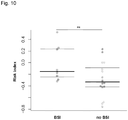
- a patient with a BSI risk index no greater than a given threshold is considered to have a lower risk of BSI after undergoing chemotherapy whereas a patient with a BSI risk index greater than that same threshold is considered at higher risk to develop a subsequent BSI during chemotherapy or after undergoing chemotherapy, such as chemotherapy for a hematopoietic stem cell transplantation (HSCT) procedure.
- the threshold may be any real-valued number from -1 to 1. For instance, the threshold may be -1, -0.9, -0.8, -0.7, -0.6, -0.5, - 0.4, -0.3, -0.2.
- the threshold may be a one hundredth, for instance, -0.02.
- a model using leave-one-out cross validation is used to determine the threshold.
- compositions of bacteria may be vegetative cells, spores, or a combination thereof.
- the bacteria present in a composition may include one or more of the bacteria that are significantly differentiated between the patients that did and did not develop a BSI.
- the bacteria present in a composition may include one or more members of the family Barnesiellaceae.
- the bacteria present in a composition may include one or more members of the family Coriobacteriaceae.
- the bacteria present in a composition may include one or more members of the family Rikenellaceae.
- the bacteria present in a composition may include one or more members of the genus Butyricimonas.
- the bacteria present in a composition may include one or more members of the genus Faecalibacterium, such as Faecalibacterium prausnitzii.
- the bacteria present in a composition may include one or more members of the genus Oscillospira.
- the bacteria present in a composition may include one or more members of the family Christensenellaceae.
- the bacteria present in a composition may include one or more members of the genus Christensenella.
- the bacteria present in a composition may include one or more members of the genus Dehalobacterium.
- the bacteria present in a composition may include one or more members of the genus Desulfovibrio.
- the bacteria present in a composition may include one or more members of the genus Sutterella.
- the bacteria present in a composition may include one or more members of the genus Methanobrevibacter.
- the bacteria present in a composition may include one or more members of the genus Oxalobacter.
- the bacteria present in a composition may include one or more members of the order RF39 in the class Mollicutes.
- the bacteria present in a composition may include one or more members of the order Clostridiales.
- the bacteria present in a composition may include one or more members of other bacterial families, genera, or species in addition to those listed above.
- a composition may include at least 1, at least 2, at least 3, at least 4, at least 5, at least 6, at least 7, at least 8, at least 9, at least 10, at least 11, at least 12, at least 13, at least 14, or at least 15 isolated bacteria.
- the composition may, in one aspect, include a member of the genus Butyricimonas, a member of the genus Faecalibacterium, and a member of the genus Oscillospira, or 2 members of the genus Butyricimonas, and a member of the genus Faecalibacterium, or any other combination of the bacteria described herein that are significantly differentiated between the patients that did and did not develop a BSI.
- a composition has at least 2 isolated bacteria, where the 2 bacteria are distinct strains of the same genus.
- a composition may include at least 1x10 3 , at least 1x10 4 , at least 1x10 5 , at least 1x10 6 , at least 1x10 7 , at least 1x10 8 , at least 1x10 9 , at least 1x10 10 , at least 1x10 11 , or at least 1x10 12 bacterial cells. These numbers do not refer to the total number of isolated bacteria present, but the amount of each type of isolated bacteria. For instance, in one aspect a composition contains three isolated bacteria, and at least 1x10 3 of each isolated bacteria is present in the composition.
- compositions disclosed herein may be included in a diversity of pharmaceutically acceptable formulations.
- a formulation may be a fluid composition. Fluid compositions include, but are not limited to, solutions, suspensions, dispersions, and the like.
- a formulation may be a solid composition. Solid compositions include, but are not limited to, powder, granule, compressed tablet, pill, capsule, chewing gum, wafer, and the like. Those formulations may include a pharmaceutically acceptable carrier to render the composition appropriate for administration to a subject.
- pharmaceutically acceptable carrier includes pharmacologically inactive compounds compatible with pharmaceutical administration.
- the compositions of the present disclosure may be formulated to be compatible with its intended route of administration.
- a composition of the present disclosure may be administered by any method suitable for depositing in the gastrointestinal tract of a subject.
- routes of administration include rectal administration (e.g., by suppository, enema, upper endoscopy, upper push enteroscopy, or colonoscopy), intubation through the nose or the mouth (e.g., by nasogastric tube, nasoenteric tube, or nasal jejunal tube), or oral administration (e.g., by a solid such as a pill, tablet, or capsule, or by liquid).
- a composition may include one or more prebiotics, meaning compounds that are nutritious to or otherwise aid in growth of the bacteria being administered to a subject.
- a composition may be conveniently administered in a form containing one or more pharmaceutically acceptable carriers.
- suitable carriers are well known in the art and vary with the desired form and mode of administration of the composition.
- they may include diluents or excipients such as fillers, binders, wetting agents, disintegrators, surface-active agents, glidants, lubricants, and the like.
- the carrier may be a solid (including powder), liquid, or combinations thereof.
- Each carrier is preferably "acceptable” in the sense of being compatible with the other ingredients in the composition and not injurious to the subject.
- the carrier is preferably biologically acceptable and inert, i.e., it permits the composition to maintain viability of the biological material until delivered to the appropriate site.
- Oral compositions may include an inert diluent or an edible carrier.
- the bacteria can be incorporated with excipients and used in the form of tablets, troches, or capsules, e.g., gelatin capsules.
- Oral compositions can also be prepared by combining a composition of the present disclosure with a food.
- a food used for administration is chilled, for instance, ice cream.
- Pharmaceutically compatible binding agents, and/or adjuvant materials can be included as part of the composition.
- the tablets, pills, capsules, troches and the like can contain any of the following ingredients, or compounds of a similar nature: a binder such as microcrystalline cellulose, gum tragacanth or gelatin; an excipient such as starch or lactose, a disintegrating agent such as alginic acid, Primogel, or corn starch; a lubricant such as magnesium stearate or Sterotes; a glidant such as colloidal silicon dioxide; a sweetening agent such as sucrose or saccharin; or a flavoring agent such as peppermint, methyl salicylate, or orange flavoring.
- a binder such as microcrystalline cellulose, gum tragacanth or gelatin
- an excipient such as starch or lactose, a disintegrating agent such as alginic acid, Primogel, or corn starch
- a lubricant such as magnesium stearate or Sterotes
- a glidant such as colloidal silicon dioxide
- a composition can also be prepared in the form of suppositories (e.g., with conventional suppository bases such as cocoa butter and other glycerides) or retention enemas for rectal delivery.
- suppositories e.g., with conventional suppository bases such as cocoa butter and other glycerides
- retention enemas for rectal delivery.
- a composition may be prepared with carriers that will protect the bacteria against rapid elimination from the body, such as a controlled release formulation.
- Biodegradable, biocompatible polymers can be used, such as ethylene vinyl acetate, polyanhydrides, polyglycolic acid, collagen, polyorthoesters, and polylactic acid.
- Such formulations can be prepared using standard techniques. The materials can also be obtained commercially.
- Liposomal suspensions can also be used as pharmaceutically acceptable carriers. These can be prepared according to methods known to those skilled in the art.
- a composition may be encapsulated.
- the dosage form is formulated to protect the composition from conditions in some parts of the gastrointestinal tract, e.g., high acidity and digestive enzymes present in the stomach and/or parts of the intestine.
- the encapsulation of compositions for therapeutic use is routine in the art.
- Encapsulation may include hard-shelled capsules, which may be used for dry, powdered ingredients or soft-shelled capsules.
- Capsules may be made from aqueous solutions of gelling agents such as animal protein (e.g., gelatin), plant polysaccharides or derivatives like carrageenans and modified forms of starch and cellulose.
- Other ingredients may be added to a gelling agent solution such as plasticizers (e.g., glycerin and or sorbitol), coloring agents, preservatives, disintegrants, lubricants and surface treatment.
- a composition may be prepared by routine culture of each of the bacteria that will be present in a composition.
- the bacteria used in the composition may be obtained from any source, including from a fecal sample or from strain collections. After appropriate numbers of each type of bacterium are available they may be combined into a composition, optionally with a pharmaceutically acceptable carrier.
- a composition may be used immediately, or stored for future use. Storage for future use may include freezing the cells, or further manipulating them into a suitable dosage form, such as a capsule.
- a method includes increasing the amount of certain bacteria in the gastrointestinal tract of a subject.
- a method includes treating certain conditions in a subject in need of treatment.
- Treatment of a condition can be prophylactic or, alternatively, can be initiated after the development of a condition.
- Treatment that is prophylactic, for instance, initiated before a subject manifests signs of a condition is referred to herein as treatment of a subject that is "at risk" of developing a condition.
- An example of a subject that is at risk of developing a condition is a person having a risk factor.
- An example of a risk factor is the BSI risk index described herein.
- a risk factor include undergoing chemotherapy before receiving a transplant, such as a HSCT.
- Treatment can be performed before, during, or after the occurrence of a condition described herein. Treatment initiated after the development of a condition may result in decreasing the severity of the signs of the condition, or completely removing the signs.
- conditions include a bloodstream infection, also referred to in the art as bacteremia and sepsis.
- a method includes preventing, e.g., reducing the risk, of a bloodstream infection in a patient.
- a subject may optionally be diagnosed as at risk, or not at risk, as described herein.
- a subject may be one that will undergo hematopoietic stem cell transplantation, one that will undergo some other transplantation that includes a preliminary chemotherapy step, one that is undergoing chemotherapy, or one that has undergone chemotherapy.
- the subject has a hematological malignancy, such as non-Hodgkin's lymphoma, myeloma, acute lymphocytic leukemia, or acute myelogenous leukemia.
- the subject is immunocompromised.
- the term "clinical sign,” or simply “sign,” refers to objective evidence of a condition present in a subject.
- the term “symptom” refers to subjective evidence of a condition experienced by the patient and caused by condition. Symptoms and/or signs associated with conditions referred to herein and the evaluation of such signs are routine and known in the art.
- a method includes transplanting a microbiota to a recipient. Such a transplantation results in modifying the microbial population of a subject's gastrointestinal tract.
- the method includes increasing the relative abundance in a recipient's gastrointestinal tract of the bacteria present in the composition administered to the subject.
- the phrase "relative abundance" refers to number in the recipient's gastrointestinal tract of the bacteria present in the composition administered to the subject compared to the number of all other bacteria in the recipient's gastrointestinal tract. Such a comparison can be expressed as a percent.
- the relative abundance in the recipient's gastrointestinal tract of the bacteria present in the composition administered to the subject after the administration may be increased by at least 0.01%, at least 0.05%, at least 0.1%, at least 0.5%, at least 1%, at least 5%, at least 10%, at least 20%, or at least 50%, compared to the recipient's gastrointestinal tract before the administration.
- the change in the abundance may be determined at, for instance, 2 days, 3 days, 5 days, 7 days, 10 days, 14 days, or 25 days after the administration.
- the microbiota already existing in the subject's gastrointestinal tract does not need to be cleared prior to administration of a composition described herein.
- clearance of the microbiota may be necessary. Whether clearance is necessary can be determined by an attending physician. Methods for clearance of existing microbiota are known and routine. In one example, clearance can be accomplished by administering a cocktail of antibiotics for one week until a day prior to transplant and/or a clearance preparation similar to those routinely used before colonoscopy.
- An example of a useful cocktail includes Metronidazole, Rifaximin, Vancomycin, and Neomycin.
- kits are for detecting whether a patient is at risk of developing a bloodstream infection.
- the kit may include a fecal material collection apparatus of one or more containers and a solvent solution, and instructions for use.
- the kit may also include primers and/or probes suitable for use in determining the total bacterial load of a fecal sample, detecting in a fecal sample bacteria that correlate with developing a bloodstream infection after chemotherapy, detecting in a fecal sample bacteria that correlate with not developing a bloodstream infection after chemotherapy, or a combination thereof, and instructions for use.
- the primers may be in a suitable packaging material in an amount sufficient for at least one assay.
- a kit is for treating a subject.
- the kit may include one or more containers with bacteria suitable for administering to a patient, and instructions for use.
- the bacteria may be vegetative cells, spores, or a combination thereof.
- the bacteria present in a kit may include one or more members of the family Barnesiellaceae; one or more members of the family Coriobacteriaceae; one or more members of the family Rikenellaceae; one or more members of the genus Butyricimonas; one or more members of the genus Faecalibacterium, such as Faecalibacterium prausnitzii; one or more members of the genus Oscillospira ; one or more members of the family Christensenellaceae; one or more members of the genus Christensenella; one or more members of the genus Dehalobacterium; one or more members of the genus Desulfovibrio; one or more members of the genus Sutterella; one or more members of the
- the number of each isolated bacteria can be at least 1x10 3 , at least 1x10 4 , at least 1x10 5 , at least 1x10 6 , at least 1x10 7 , at least 1x10 8 , at least 1x10 9 , at least 1x10 10 , at least 1x10 11 , or at least 1x10 12 bacterial cells.
- the bacteria present in a kit may include one or more members of other bacterial families, genera, or species in addition to those listed above.
- the phrase "packaging material” refers to one or more physical structures used to house the contents of the kit.
- the packaging material is constructed by known methods, preferably to provide a sterile, contaminant-free environment.
- the packaging material has a label which indicates that the disclosure may be used for its intended purpose.
- the packaging material contains instructions indicating how the materials within the kit are employed.
- the term "package” refers to a solid matrix or material such as glass, plastic, paper, foil, and the like, capable of holding within fixed limits primers or bacteria.
- a package can be a plastic vial used to contain milligram quantities of a primer.
- Instructions for use typically include a tangible expression describing the reagent concentration or at least one assay method parameter, such as the relative amounts of reagent and sample to be admixed, maintenance time periods for reagent/sample admixtures, temperature, buffer conditions, and the like.
- Hematopoietic stem cell transplantation is a curative treatment in patients with hematological malignancy.
- Bloodstream infection (BSI) is a common life-threatening complication during the early transplant period.
- BSI Bloodstream infection
- the objective of our work was to characterize the fecal microbiome collected prior to chemotherapy to identify taxonomic and functional microbiome features associated with the risk of BSI.
- Fecal samples were collected from 28 patients with non-Hodgkin's lymphoma prior to administration of chemotherapy and 16S rRNA genes were characterized using high-throughput DNA sequencing. Machine learning tools were applied to develop predictive biomarkers for BSI.
- pre-treatment fecal samples of the patients who developed subsequent BSI exhibited a decreased overall diversity and a decreased abundance of taxa including Barnesiellaceae, Coriobacteriaceae, Faecalibacterium, Christensenella, Dehalobacterium, Desulfovibrio and Sutterella.
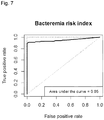
- BSI risk index capable of predicting BSI incidence with 86% accuracy based on the pre-treatment microbiome.
- Our analysis showed that significant differences in microbial community structure in advance of treatment precede BSI, and that analysis of the microbial community can predict BSI in new patients.
- BSI Bloodstream infection n (%, 95%CI or median, 1 st and 3 rd quartile) Age (years) 55 [45-62] Sex, male 18 (64.3%, 95%CI: 44.1- 80.7%) Body Mass Index 24 [23-27] Antibiotic prophylaxis 24 (85.7%, 95%CI: 66.4-95.3%) penicillin V 14 (50.0%, 95%CI: 32.6-67.4%) cotrimoxazole 18 (64.3%, 95%CI: 44.1- 80.7%) Previous history of chemotherapy 27 (96.4%, 95%CI: 79.7-99.8%) BSI 11 (39% [24% to 58%]) Escherichia coli 4 (36.4% [15.0% to 64.8%]) Enterococcus 2 (18.2% [39.9% to 48.9%]) other Gammaproteobacteria 5 (45.5% [21.3% to 72.0%])
- BSI was reported in 11 patients (39% [24% to 58%]), by a mean of 12 ⁇ 1 days after sample collection.
- Machine learning tools were also used to determine the robustness of clustering fecal samples from patients who did or did not develop BSI (14).
- the model classified unknown samples with a 0.15 ⁇ 0.20 error rate, which is 2.6 times better than the baseline error rate for random guessing.
- Taxa associated with the risk of subsequent BSI Taxa associated with the risk of subsequent BSI.
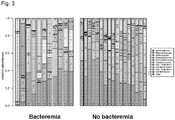
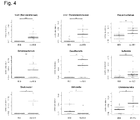
- Fecal samples collected prior to treatment from the patients who developed subsequent BSI exhibited significantly decreased abundance of members of Bacteroidetes (Barnesiellaceae, Rikenellaceae, Butyricimonas ), Firmicutes (Christensenellaceae, Faecalibacterium, Oscillospira, Christensenella , Dehalobacterium ), Proteobacteria ( Desulfovibrio, Sutterella, Oxalobacter ) , Actinobacteria (Coriobacteriaceae), the order RF39 in the class Mollicutes, and the order Clostridiales compared to patients who did not develop subsequent BSI.
- Q values are p values adjusted with a false discovery rate correction
- Feature P value Q value Bacteremia mean No bacteremia mean k_Bacteria;p_Bacteroidetes;c_Bacteroidia;o_Bacteroidales;f_ [Barnesiellaceae] 4.80123E-05 0.002160555 0 0.030608691 k_Bacteria;p_Firmicutes;c_ Clostridia;o_Clostridiales;f_Christensenellaceae 0.000976047 0.021961056 0.017263335 0.061397059 k_Bacteria;p_Proteobacteria;c_Deltaproteobacteria;o_Desulfovibrionales;f_Desulfovibrionaceae 0.002583052 0.038745776 0.009117493 0.035661785 k_Bacteria;p_Firmicutes;c_ Clostridia;o_Clos
- Q values are p values adjusted with a false discovery rate correction Feature P value
- Bacteremia mean Nobacteremia mean k_Bacteria;p_Bacteroidetes;c_Bacteroidia;o_Bacteroidales;f_[Barnesiellaceae];g_ 4.80123E-05 0.0035049 0 0.030608691 k_Bacteria;p_Firmicutes;c_ Clostridia;o_Clostridiales;f_Christensenellaceae;g_ 0.002715736 0.093925496 0.009486937 0.051637282 k_Bacteria;p_Firmicutes;c_ Clostridia;o_Clostridiales;f_ Ruminococcaceae;g_Faecalibacterium 0.004106589 0.093925496 0.075943204 0.
- the fecal microbiome of patients that developed subsequent BSI exhibited a specific decreased overall diversity and a distinct bacterial composition compared to patients that did not develop BSI.
- the mean time in this study between this indicative taxonomic imbalance and BSI was 12 days.
- the fecal microbiome of patients that developed subsequent bacteremia were enriched in functional categories associated with xenobiotics biodegradation and metabolism and depleted in categories associated with glycan biosynthesis, transcription machinery, histidine metabolism, arginine and proline metabolism, lipid biosynthesis proteins and alanine, aspartate and glutamate metabolism ( Figure 8 ).
- arginine supplementation reduces the level of bacterial translocation when compared with the control group (32).
- arginine supplementation prevent damage to the intestinal mucosa and favor the intestinal barrier function and therefore preventing bacterial translocation (33-35).
- Glutamate found decreased in patients who developed a subsequent BSI, also protects the mucosal integrity and reduces bacterial translocation.
- glutamate supplementation reduced intestinal permeability and bacterial translocation caused by trauma and endotoxemia (36).
- glutamate supplementation reduced significantly the rate of sepsis in low-birth-weight infants (37).
- intestinal inflammation the availability of glutamate is pivotal for the maintenance of an efficient barrier function and glutamine deprivation enables bacterial translocation (38).
- the genomic DNA extraction procedure was based on the QIAamp® DNA Stool Minikit (Qiagen®). First, 200 mg of fecal sample were homogenized in 180 ⁇ L of lysozyme buffer and incubated for 30 min at 37°C. Mechanical lysis was obtained by adding 1.220 mL of ASL buffer and 300 mg of glass beads. The mixture was shaken using the Minibeadbeater-16 (Bead-beater Biospec Products®). The homogenized sample was heated at 95°C for 5 min and centrifuged for 1 min at 13,000 rpm. The supernatant was transferred into a 2 mL tube and an InhibitEX tablet was added.
- QiAamp® DNA Stool Minikit Qiagen® DNA Stool Minikit
- the sample was incubated for 1 min at room temperature and centrifuged for 6 min at 13,200 rpm. The supernatant was transferred into a 1.5 mL tube and centrifuged for 3 min at 13,200 rpm. Then, 200 ⁇ L of supernatant were mixed with 15 ⁇ L of proteinase K and 200 ⁇ L of AL buffer and incubated at 70°C for 10 min. 200 ⁇ L of ethanol were added and the solution was mixed. The complete lysate was applied to the column and centrifuged for 2 min at 13,200 rpm. After 2 washing processes with 500 ⁇ L of buffer AW1 and 500 ⁇ L of buffer AW2, DNA was eluted by adding 200 ⁇ L of buffer AE. DNA quality was assessed by gel electrophoresis and spectrophotometry measuring OD ratio 260/280 with the nanoDrop® ND-1000 (Thermo Fisher Scientific Inc®). The DNA aliquots were then stored at - 20°C.
- the forward primer contained the sequence of the Titanium A adaptor (5'-CCATCTCATCCCTGCGTGTCTCCGACTCAG-3')(SEQ ID NO:3) and a barcode sequence.
- the reverse primer contained the sequence of Titanium B adaptor (5'-CCTATCCCCTGTGTGCCTTGGCAGTCTCAG-3') (SEQ ID NO:4).
- a PCR mix of 100 ⁇ L was prepared containing PCR buffer, 2 u of KAPA HiFi Hotstart polymerase blend, and dNTPs (KAPA biosystems®), 300 nM primers (Eurogentec®), and 60 ng DNA.
- Thermal cycling consisted of an initial denaturing step at 95°C for 5 min, 25 cycles of denaturing at 98°C for 20 s, annealing at 56°C for 40 s, extension at 72°C for 20 s, and a final extension step at 72°C for 5 minutes.
- the amplicons were visualized using 1% agarose gels and GelGreen Nucleic Acid gel stain (Biotium®) in IX TEA buffer. The amplicons were purified using the Wizard® SV Gel and PCR Clean-up System (Promega®) according to the manufacturer's instructions.
- Amplicon DNA concentrations were determined using the Quant-iT PicoGreen dsDNA reagent and kit (Invitrogen®) following the manufacturer's instructions. Assays were carried out using 10 ⁇ L of the cleaned PCR product in a total reaction volume of 200 ⁇ L in black, 96-well microtiter plates. Fluorescence was measured on a Perkin-Elmer Victor Plate reader using the 485/530 nm excitation/emission filter paired with a measurement time of 0.1 s. Following quantitation, the cleaned amplicons were combined in equimolar ratios in a single tube.
- the final pool of DNA was precipitated on ice for 45 min following the addition of 5 M NaCl (0.2 M final concentration) and two volumes of ice-cold 100% ethanol.
- the precipitated DNA was centrifuged at 7,800 ⁇ g for 40 min at 4°C, and the resulting pellet was washed with an equal volume of ice-cold 70% ethanol and centrifuged again at 7,800 ⁇ g for 20 min at 4 °C. The supernatant was removed, and the pellet was air dried for 10 min at room temperature and then resuspended in 100 ⁇ L nuclease-free water (Ambion®).
- the final concentration of the pooled DNA was determined using a NanoDrop spectrophotometer (Thermo Fisher Scientific Inc®). Pyrosequencing was carried out using primer A on a 454 Life Sciences Genome Sequencer FLX instrument (454 Life Sciences-Roche®) with titanium chemistry at at DNAVision (Charleroi, Belgium).
- beta_diversity_through_plots.py script was used to compute beta diversity metrics, which assess the differences in bacterial community composition between fecal samples of the patients who did or did not develop BSI.
- PCoA Principal Coordinate Analysis
- alpha rarefaction.py script was used to compute alpha diversity metrics, which evaluated diversity within a sample and generated rarefaction curves.
- the measure of the method's success is its ability to classify new samples as coming from one of the two groups (i.e., BSI or no BSI).
- Random Forests assign an importance score to each genus by estimating the increase in error caused by removing that genus from the set of predictors.
- Bacteria were stored at -70°C by using the cryovial bead preservation system (Microbank; Pro-Lab Diagnostics, Richmond Hill, Ontario, Canada). For identification, one bead was spread on a blood agar plate and incubated for 24h in aerobic conditions at 37°C. All isolates were identified at the species level by biochemical tests and confirmed by matrix-assisted laser desorption/ionization time-of-flight mass spectrometry with a VitekMS® mass spectrometer (bioMérieux SA, Marcy l'Etoile, France).
- DNA from clinical isolates was extracted using the InstaGene Matrix method (Bio-Rad Laboratories, Hercules, CA, USA). 16S rRNA gene amplification and sequencing were performed with different sets of primers: forward primer 27F, 5'-AGA GTT TGA TCM TGG CTC AG-3'(SEQ ID NO:5); reverse primer 1492R, 5'- TAC GGY TAC CTT GTT ACG ACT T-3'(SEQ ID NO:6) for PCR and forward primer 530F, 5'-GTG CCA GCM GCC GCG G-3'(SEQ ID NO:7); reverse primer 515R, 5'-ACC GCG GCK GCT GGC AC-3' (SEQ ID NO:8); forward primer 1114F, 5'-GCA ACG AGC GCA ACC C-3' (SEQ ID NO:9); reverse primer 1100R, 5'-GGG TTG CGC TCG TTG-3'(SEQ ID NO:10) for sequencing.
- PCR fragments were purified and sequenced using the ABI PRISM Big dye terminator v1.1 cycle sequencing ready reaction kit (Applied Biosystems, Courtaboeuf, France). The corresponding amplicons sequenced in both strands were compared with those in the Bioinformatics Bacteria Identification (BIBI) and BLAST databases. The rates of concordance between 16S rRNA gene sequences were based on results at the genus ( ⁇ 97% similarity) and species ( ⁇ 99% similarity) levels.
- BIBI Bioinformatics Bacteria Identification
- PICRUSt a computational approach to predict the functional composition of a metagenome using marker gene data (in this case the 16S rRNA gene) and a database of reference genomes. PICRUSt recaptures key findings from the Human Microbiome Project and predicts the abundance of gene families in host-associated and environmental communities with an accuracy of 90% on human intestinal communities (15).
- BSI risk index corresponding to the difference between a patient's total relative abundance of taxa associated with protection from BSI and the patient's total relative abundance of taxa associated with development of a subsequent BSI.
- Relative abundances were arcsine square root transformed.
- biomarkers that should predict the risk of subsequent BSI based on relative abundance of differentially expressed taxa in pre-treatment fecal samples.
- ROC receiving operating characteristic
- AUC area under the curve
Landscapes
- Chemical & Material Sciences (AREA)
- Life Sciences & Earth Sciences (AREA)
- Health & Medical Sciences (AREA)
- Organic Chemistry (AREA)
- Analytical Chemistry (AREA)
- Proteomics, Peptides & Aminoacids (AREA)
- General Health & Medical Sciences (AREA)
- Microbiology (AREA)
- Engineering & Computer Science (AREA)
- Wood Science & Technology (AREA)
- Zoology (AREA)
- Molecular Biology (AREA)
- Animal Behavior & Ethology (AREA)
- Public Health (AREA)
- Veterinary Medicine (AREA)
- Pharmacology & Pharmacy (AREA)
- Medicinal Chemistry (AREA)
- Mycology (AREA)
- Biotechnology (AREA)
- Physics & Mathematics (AREA)
- General Engineering & Computer Science (AREA)
- Bioinformatics & Cheminformatics (AREA)
- Biochemistry (AREA)
- Genetics & Genomics (AREA)
- Immunology (AREA)
- Biophysics (AREA)
- Communicable Diseases (AREA)
- Epidemiology (AREA)
- Oncology (AREA)
- Chemical Kinetics & Catalysis (AREA)
- General Chemical & Material Sciences (AREA)
- Nuclear Medicine, Radiotherapy & Molecular Imaging (AREA)
- Medicines Containing Material From Animals Or Micro-Organisms (AREA)
- Medicines Containing Plant Substances (AREA)
- Measuring Or Testing Involving Enzymes Or Micro-Organisms (AREA)
Claims (6)
- Verfahren zum Bestimmen der relativen Häufigkeit von Gesamtbakterien in einer Probe, wobei das Verfahren Folgendes umfasst:(A) Bereitstellen einer Stuhlprobe von einem Subjekt, bevor das Subjekt eine Chemotherapie erhält;(B) Bestimmen der relativen Häufigkeit von Gesamtbakterien in der Stuhlprobe;(C) Nachweisen von Bakterien in der Stuhlprobe, die mit einem Entwickeln einer Blutkreislaufinfektion nach der Chemotherapie korrelieren, und Berechnen der relativen Häufigkeit von Bakterien, die mit dem Entwickeln einer Blutkreislaufinfektion nach der Chemotherapie korrelieren; und(D) Nachweisen von Bakterien in der Stuhlprobe, die mit einem Nichtentwickeln einer Blutkreislaufinfektion nach der Chemotherapie korrelieren, und Berechnen der relativen Häufigkeit von Bakterien, die mit dem Nichtentwickeln einer Blutkreislaufinfektion nach der Chemotherapie korrelieren;wobei:(i) das Nachweisen von (C) einen Assay umfasst, der ein Mitglied der Familie Erysipelotrichaceae, ein Mitglied der Gattung Lactobacillus, ein Mitglied der Gattung Eggerthella, ein Mitglied der Gattung Veillonella oder eine Kombination davon nachweist; und/oder(ii) das Nachweisen von (D) einen Assay umfasst, der ein Mitglied der Ordnung RF39 in der Klasse Mollicutes, ein Mitglied der Ordnung Clostridiales, ein Mitglied der Familie Barnesiellaceae, ein Mitglied der Familie Coriobacteriaceae, ein Mitglied der Familie Rikenellaceae, ein Mitglied der Gattung Butyricimonas, ein Mitglied der Gattung Faecalibacterium, wie etwa Faecalibacterium prausnitzii, ein Mitglied der Gattung Oscillospira, ein Mitglied der Familie Christensenellaceae, wie etwa die Gattung Christensenella, ein Mitglied der Gattung Dehalobacterium, ein Mitglied der Gattung Desulfovibrio, ein Mitglied der Gattung Sutterella, ein Mitglied der Gattung Methanobrevibacter, ein Mitglied der Gattung Oxalobacter oder eine Kombination davon nachweist,wobei eine Bezugnahme auf eine taxonomische Gruppe über dem Artenniveau alle niedrigeren taxonomischen Mitglieder dieser Gruppe ausschließt, die ansonsten speziell identifiziert werden.
- Verfahren nach Anspruch 1, wobei:(i) das Nachweisen von (C) einen Assay umfasst, der ein Mitglied der Familie Erysipelotrichaceae, ein Mitglied der Gattung Lactobacillus, ein Mitglied der Gattung Eggerthella, ein Mitglied der Gattung Veillonella oder eine Kombination davon nachweist; und(ii) das Nachweisen von (D) einen Assay umfasst, der ein Mitglied der Ordnung RF39 in der Klasse Mollicutes, ein Mitglied der Ordnung Clostridiales, ein Mitglied der Familie Bamesiellaceae, ein Mitglied der Familie Coriobacteriaceae außer der Gattung Eggerthella, ein Mitglied der Familie Rikenellaceae, ein Mitglied der Gattung Butyricimonas, ein Mitglied der Gattung Faecalibacterium, wie etwa Faecalibacterium prausnilzii, ein Mitglied der Gattung Oscillospira, ein Mitglied der Familie Christensenellaceae, wie etwa die Gattung Christensenella, ein Mitglied der Gattung Dehalobacterium, ein Mitglied der Gattung Desulfovibrio, ein Mitglied der Gattung Sutterella, ein Mitglied der Gattung Methanobrevibacter, ein Mitglied der Gattung Oxalobacter oder eine Kombination davon nachweist.
- Verfahren nach einem der Ansprüche 1-2, das ferner Folgendes umfasst:(E) Generieren eines Blutkreislaufinfektionsrisikoindexwertes; und(F) Bestimmen, ob das Subjekt ein Risiko einer Blutkreislaufinfektion gemäß dem Ergebnis von (E) aufweist, optional wobei ein Subjekt mit einem Blutkreislaufinfektionsrisikoindexwert, der über einer Schwelle liegt, ein höheres Risiko einer Blutkreislaufinfektion hat, nachdem es sich einer Chemotherapie unterzogen hat, ferner optional wobei die Schwelle zwischen -1 und 1 ein höheres Risiko für eine Blutkreislaufinfektion nach der Chemotherapie bedeutet.
- Verfahren nach einem der Ansprüche 1-2, wobei das Bestimmen der relativen Häufigkeit in der Stuhlprobe ein Durchführen einer quantitativen Polymerasekettenreaktion umfasst oder wobei das Bestimmen der relativen Häufigkeit in der Stuhlprobe das Durchführen einer DNA-Sequenzierung mit hohem Durchsatz umfasst.
- Verfahren nach einem der Ansprüche 1-2, wobei(i) das Bestimmen von (B) eine Analyse einer variablen 16S-rRNA-Region der Bakterien in der Stuhlprobe umfasst, wobei die variable 16S-rRNA-Region V1, V2, V3, V4, V5, V6, V7, V8 oder V9 oder eine Kombination davon umfasst, oder(ii) das Nachweisen von (C), (D) oder sowohl (C) als auch (D) die Analyse der 16S-rRNA-Region der Bakterien in der Stuhlprobe umfasst.
- Verfahren nach einem der Ansprüche 1-2, wobei die Chemotherapie darin besteht, das Subjekt auf eine blutbildende Stammzelltransplantation vorzubereiten, oder wobei das Subjekt nach der Chemotherapie einer blutbildenden Stammzelltransplantation unterzogen wird oder wobei die Chemotherapie von (A) einen nichtmyeloablativen Therapieplan oder einen myeloablativen Therapieplan umfasst.
Applications Claiming Priority (2)
| Application Number | Priority Date | Filing Date | Title |
|---|---|---|---|
| US201562172986P | 2015-06-09 | 2015-06-09 | |
| PCT/US2016/036612 WO2016201053A1 (en) | 2015-06-09 | 2016-06-09 | Methods for detecting risk of having a bloodstream infection and compositions for reducing the risk |
Publications (2)
| Publication Number | Publication Date |
|---|---|
| EP3307906A1 EP3307906A1 (de) | 2018-04-18 |
| EP3307906B1 true EP3307906B1 (de) | 2020-10-14 |
Family
ID=56236098
Family Applications (1)
| Application Number | Title | Priority Date | Filing Date |
|---|---|---|---|
| EP16732413.6A Active EP3307906B1 (de) | 2015-06-09 | 2016-06-09 | Verfahren zur erkennung der gefahr einer blutstrominfektion |
Country Status (4)
| Country | Link |
|---|---|
| US (2) | US20180153944A1 (de) |
| EP (1) | EP3307906B1 (de) |
| ES (1) | ES2833349T3 (de) |
| WO (1) | WO2016201053A1 (de) |
Families Citing this family (16)
| Publication number | Priority date | Publication date | Assignee | Title |
|---|---|---|---|---|
| CA2964480A1 (en) | 2014-10-31 | 2016-05-06 | Whole Biome Inc. | Methods and compositions relating to microbial treatment and diagnosis of disorders |
| WO2017091694A1 (en) * | 2015-11-24 | 2017-06-01 | Memorial Sloan-Kettering Cancer Center | Methods and compositions for identifying and treating subjects at risk for checkpoint blockade therapy associated colitis |
| ES2960053T3 (es) | 2016-06-14 | 2024-02-29 | Vedanta Biosciences Inc | Tratamiento de infección por Clostridium difficile |
| US9999641B2 (en) | 2016-06-14 | 2018-06-19 | Vedanta Biosciences, Inc. | Treatment of clostridium difficile infection |
| WO2019046646A1 (en) | 2017-08-30 | 2019-03-07 | Whole Biome Inc. | METHODS AND COMPOSITIONS FOR THE TREATMENT OF MICROBIOMA ASSOCIATED DISORDERS |
| CN109652567B (zh) * | 2017-10-12 | 2022-05-10 | 北京乐土医学检验实验室有限公司 | 一种检测待测样品中微生物的种类和相对含量的方法及其专用引物组合 |
| RU2020115649A (ru) * | 2017-10-13 | 2021-11-15 | Ребиотикс, Инк. | Индекс здоровья микробиома |
| CN108676901A (zh) * | 2018-05-21 | 2018-10-19 | 温州大学 | 一种检测牛粪便的方法及检测试剂盒 |
| JP7811843B2 (ja) | 2018-07-19 | 2026-02-06 | ペンデュラム セラピューティクス, インコーポレイテッド | 微生物生着のための方法および組成物 |
| JP7558170B2 (ja) | 2018-08-17 | 2024-09-30 | ヴェダンタ バイオサイエンシーズ インコーポレーテッド | 腸内毒素症を減少させ、微生物叢を復元する方法 |
| WO2020245823A1 (en) * | 2019-06-03 | 2020-12-10 | Rambam Med-Tech Ltd. | Automatic prediction of blood infections |
| US20220339212A1 (en) | 2019-08-28 | 2022-10-27 | Xbiome Inc. | Compositions comprising bacterial species and methods related thereto |
| CR20220257A (es) * | 2019-11-11 | 2023-01-17 | Sabine Hazan | Equipo de muestra de heces para tratamiento de un individuo con una condición de salud con trasplante de microbiota fecal |
| US11744866B2 (en) | 2020-03-18 | 2023-09-05 | Sabine Hazan | Methods of preventing and treating COVID-19 infection with probiotics |
| US20230020958A1 (en) * | 2021-07-19 | 2023-01-19 | Washington University | Method of selecting a treatment for an ms patient |
| WO2024144862A1 (en) * | 2022-12-29 | 2024-07-04 | Mayo Foundation For Medical Education And Research | Gut microbiomes and assessing and treating cancer |
Citations (1)
| Publication number | Priority date | Publication date | Assignee | Title |
|---|---|---|---|---|
| WO2014070014A1 (en) * | 2012-11-01 | 2014-05-08 | Rijksuniversiteit Groningen | Methods and compositions for stimulating beneficial bacteria in the gastrointestinal tract |
Family Cites Families (6)
| Publication number | Priority date | Publication date | Assignee | Title |
|---|---|---|---|---|
| AU2003274927A1 (en) * | 2002-08-23 | 2004-03-11 | Genome Therapeutics Corporation | Methods and reagents for preventing bacteremias |
| US9050319B2 (en) * | 2010-04-30 | 2015-06-09 | Telormedix, Sa | Phospholipid drug analogs |
| EA201490512A1 (ru) * | 2011-10-11 | 2014-09-30 | Ачим Байотерапьютикс Аб | Композиции, содержащие культивируемую в анаэробных условиях микробиоту кишечника человека |
| WO2013130773A2 (en) * | 2012-02-29 | 2013-09-06 | Ethicon Endo-Surgery, Inc. | Compositions of microbiota and methods related thereto |
| US8906668B2 (en) * | 2012-11-23 | 2014-12-09 | Seres Health, Inc. | Synergistic bacterial compositions and methods of production and use thereof |
| US20150037285A1 (en) * | 2013-07-03 | 2015-02-05 | New York University | Methods for efficient transfer of viable and bioactive microbiota |
-
2016
- 2016-06-09 EP EP16732413.6A patent/EP3307906B1/de active Active
- 2016-06-09 ES ES16732413T patent/ES2833349T3/es active Active
- 2016-06-09 US US15/580,587 patent/US20180153944A1/en not_active Abandoned
- 2016-06-09 WO PCT/US2016/036612 patent/WO2016201053A1/en not_active Ceased
-
2020
- 2020-07-23 US US16/937,210 patent/US20210060089A1/en not_active Abandoned
Patent Citations (1)
| Publication number | Priority date | Publication date | Assignee | Title |
|---|---|---|---|---|
| WO2014070014A1 (en) * | 2012-11-01 | 2014-05-08 | Rijksuniversiteit Groningen | Methods and compositions for stimulating beneficial bacteria in the gastrointestinal tract |
Non-Patent Citations (1)
| Title |
|---|
| C. UBEDA ET AL: "Intestinal Microbiota Containing Barnesiella Species Cures Vancomycin-Resistant Enterococcus faecium Colonization", INFECTION AND IMMUNITY, vol. 81, no. 3, 1 March 2013 (2013-03-01), US, pages 965 - 973, XP055386852, ISSN: 0019-9567, DOI: 10.1128/IAI.01197-12 * |
Also Published As
| Publication number | Publication date |
|---|---|
| ES2833349T3 (es) | 2021-06-15 |
| US20210060089A1 (en) | 2021-03-04 |
| WO2016201053A1 (en) | 2016-12-15 |
| US20180153944A1 (en) | 2018-06-07 |
| EP3307906A1 (de) | 2018-04-18 |
Similar Documents
| Publication | Publication Date | Title |
|---|---|---|
| US20210060089A1 (en) | Methods for detecting risk of having a bloodstream infection and compositions for reducing the risk | |
| US12084727B2 (en) | Microbiome markers and therapies for autism spectrum disorders | |
| Buc et al. | High prevalence of mucosa-associated E. coli producing cyclomodulin and genotoxin in colon cancer | |
| Osei Sekyere | Candida auris: A systematic review and meta‐analysis of current updates on an emerging multidrug‐resistant pathogen | |
| EP2971127B1 (de) | Verfahren zur diagnose und behandlung von entzündlicher darmerkrankung | |
| Kuehbacher et al. | Bacterial and fungal microbiota in relation to probiotic therapy (VSL# 3) in pouchitis | |
| Bielecki et al. | In vivo mRNA profiling of uropathogenic Escherichia coli from diverse phylogroups reveals common and group-specific gene expression profiles | |
| Jiang et al. | Virulence-associated genes and molecular characteristics of non-O1/non-O139 Vibrio cholerae isolated from hepatitis B cirrhosis patients in China | |
| Hayes et al. | Emergence of the L phenotype in Group B Streptococci in the South of Ireland | |
| O’Reilly et al. | Impact of nisin on Clostridioides difficile and microbiota composition in a faecal fermentation model of the human colon | |
| Mai et al. | Novel encapsulation improves recovery of probiotic strains in fecal samples of human volunteers | |
| JP2025531029A (ja) | 炎症性腸疾患における内因性硫化物を低減させるための組成物および方法 | |
| KR101815692B1 (ko) | 구강 세균의 군집을 이용한 대사성 질환 진단용 바이오 마커 | |
| Yakoob et al. | Helicobacter pylori: correlation of the virulence marker iceA allele with clinical outcome in a high prevalence area | |
| Yadav et al. | Gut colonization with antibiotic-resistant Escherichia coli pathobionts leads to disease severity in ulcerative colitis | |
| Bouglita et al. | Microbiological and molecular screening of Candida spp. isolated from genital tract of asymptomatic pregnant women | |
| Orth et al. | Prevalence, structure and expression of urease genes in Shiga toxin-producing Escherichia coli from humans and the environment | |
| Modgil et al. | Molecular, phylogenetic and antibiotic resistance analysis of enteroaggregative escherichia coli/uropathogenic Escherichia coli hybrid genotypes causing urinary tract infections. | |
| Luo et al. | Serum bacterial DNA detection in patients with cholangitis after Kasai procedure | |
| Sun et al. | Bacterial characteristics of intestinal tissues from patients with Crohn’s disease | |
| Al-Laaeiby et al. | Candida species: the silent enemy. | |
| Voronina | Genomic characteristics of listeria that caused invasive listeriosis during the COVID-19 pandemic | |
| Malik et al. | Review Article About Superbug Fungus C. auris | |
| McKloud | Understanding Recurrent Vulvovaginal Candidiasis as a dynamic biofilm disease of Candida and Lactobacillus | |
| Singh et al. | Characterization and identification of atypical yeast species causing fungemia by MALDI-TOF ms technique |
Legal Events
| Date | Code | Title | Description |
|---|---|---|---|
| STAA | Information on the status of an ep patent application or granted ep patent |
Free format text: STATUS: THE INTERNATIONAL PUBLICATION HAS BEEN MADE |
|
| PUAI | Public reference made under article 153(3) epc to a published international application that has entered the european phase |
Free format text: ORIGINAL CODE: 0009012 |
|
| STAA | Information on the status of an ep patent application or granted ep patent |
Free format text: STATUS: REQUEST FOR EXAMINATION WAS MADE |
|
| 17P | Request for examination filed |
Effective date: 20180108 |
|
| AK | Designated contracting states |
Kind code of ref document: A1 Designated state(s): AL AT BE BG CH CY CZ DE DK EE ES FI FR GB GR HR HU IE IS IT LI LT LU LV MC MK MT NL NO PL PT RO RS SE SI SK SM TR |
|
| AX | Request for extension of the european patent |
Extension state: BA ME |
|
| DAV | Request for validation of the european patent (deleted) | ||
| DAX | Request for extension of the european patent (deleted) | ||
| STAA | Information on the status of an ep patent application or granted ep patent |
Free format text: STATUS: EXAMINATION IS IN PROGRESS |
|
| 17Q | First examination report despatched |
Effective date: 20181126 |
|
| REG | Reference to a national code |
Ref country code: DE Ref legal event code: R079 Ref document number: 602016045819 Country of ref document: DE Free format text: PREVIOUS MAIN CLASS: C12Q0001680000 Ipc: C12Q0001680900 |
|
| GRAP | Despatch of communication of intention to grant a patent |
Free format text: ORIGINAL CODE: EPIDOSNIGR1 |
|
| STAA | Information on the status of an ep patent application or granted ep patent |
Free format text: STATUS: GRANT OF PATENT IS INTENDED |
|
| RIC1 | Information provided on ipc code assigned before grant |
Ipc: C12Q 1/6809 20180101AFI20200402BHEP |
|
| INTG | Intention to grant announced |
Effective date: 20200423 |
|
| GRAS | Grant fee paid |
Free format text: ORIGINAL CODE: EPIDOSNIGR3 |
|
| GRAA | (expected) grant |
Free format text: ORIGINAL CODE: 0009210 |
|
| STAA | Information on the status of an ep patent application or granted ep patent |
Free format text: STATUS: THE PATENT HAS BEEN GRANTED |
|
| AK | Designated contracting states |
Kind code of ref document: B1 Designated state(s): AL AT BE BG CH CY CZ DE DK EE ES FI FR GB GR HR HU IE IS IT LI LT LU LV MC MK MT NL NO PL PT RO RS SE SI SK SM TR |
|
| REG | Reference to a national code |
Ref country code: GB Ref legal event code: FG4D |
|
| REG | Reference to a national code |
Ref country code: AT Ref legal event code: REF Ref document number: 1323607 Country of ref document: AT Kind code of ref document: T Effective date: 20201015 Ref country code: CH Ref legal event code: EP |
|
| REG | Reference to a national code |
Ref country code: CH Ref legal event code: NV Representative=s name: NOVAGRAAF INTERNATIONAL SA, CH |
|
| REG | Reference to a national code |
Ref country code: DE Ref legal event code: R096 Ref document number: 602016045819 Country of ref document: DE |
|
| REG | Reference to a national code |
Ref country code: IE Ref legal event code: FG4D |
|
| REG | Reference to a national code |
Ref country code: AT Ref legal event code: MK05 Ref document number: 1323607 Country of ref document: AT Kind code of ref document: T Effective date: 20201014 |
|
| REG | Reference to a national code |
Ref country code: NL Ref legal event code: MP Effective date: 20201014 |
|
| PG25 | Lapsed in a contracting state [announced via postgrant information from national office to epo] |
Ref country code: GR Free format text: LAPSE BECAUSE OF FAILURE TO SUBMIT A TRANSLATION OF THE DESCRIPTION OR TO PAY THE FEE WITHIN THE PRESCRIBED TIME-LIMIT Effective date: 20210115 Ref country code: FI Free format text: LAPSE BECAUSE OF FAILURE TO SUBMIT A TRANSLATION OF THE DESCRIPTION OR TO PAY THE FEE WITHIN THE PRESCRIBED TIME-LIMIT Effective date: 20201014 Ref country code: NO Free format text: LAPSE BECAUSE OF FAILURE TO SUBMIT A TRANSLATION OF THE DESCRIPTION OR TO PAY THE FEE WITHIN THE PRESCRIBED TIME-LIMIT Effective date: 20210114 Ref country code: PT Free format text: LAPSE BECAUSE OF FAILURE TO SUBMIT A TRANSLATION OF THE DESCRIPTION OR TO PAY THE FEE WITHIN THE PRESCRIBED TIME-LIMIT Effective date: 20210215 Ref country code: RS Free format text: LAPSE BECAUSE OF FAILURE TO SUBMIT A TRANSLATION OF THE DESCRIPTION OR TO PAY THE FEE WITHIN THE PRESCRIBED TIME-LIMIT Effective date: 20201014 |
|
| REG | Reference to a national code |
Ref country code: LT Ref legal event code: MG4D |
|
| PG25 | Lapsed in a contracting state [announced via postgrant information from national office to epo] |
Ref country code: SE Free format text: LAPSE BECAUSE OF FAILURE TO SUBMIT A TRANSLATION OF THE DESCRIPTION OR TO PAY THE FEE WITHIN THE PRESCRIBED TIME-LIMIT Effective date: 20201014 Ref country code: LV Free format text: LAPSE BECAUSE OF FAILURE TO SUBMIT A TRANSLATION OF THE DESCRIPTION OR TO PAY THE FEE WITHIN THE PRESCRIBED TIME-LIMIT Effective date: 20201014 Ref country code: PL Free format text: LAPSE BECAUSE OF FAILURE TO SUBMIT A TRANSLATION OF THE DESCRIPTION OR TO PAY THE FEE WITHIN THE PRESCRIBED TIME-LIMIT Effective date: 20201014 Ref country code: IS Free format text: LAPSE BECAUSE OF FAILURE TO SUBMIT A TRANSLATION OF THE DESCRIPTION OR TO PAY THE FEE WITHIN THE PRESCRIBED TIME-LIMIT Effective date: 20210214 Ref country code: BG Free format text: LAPSE BECAUSE OF FAILURE TO SUBMIT A TRANSLATION OF THE DESCRIPTION OR TO PAY THE FEE WITHIN THE PRESCRIBED TIME-LIMIT Effective date: 20210114 Ref country code: AT Free format text: LAPSE BECAUSE OF FAILURE TO SUBMIT A TRANSLATION OF THE DESCRIPTION OR TO PAY THE FEE WITHIN THE PRESCRIBED TIME-LIMIT Effective date: 20201014 |
|
| REG | Reference to a national code |
Ref country code: ES Ref legal event code: FG2A Ref document number: 2833349 Country of ref document: ES Kind code of ref document: T3 Effective date: 20210615 |
|
| PG25 | Lapsed in a contracting state [announced via postgrant information from national office to epo] |
Ref country code: NL Free format text: LAPSE BECAUSE OF FAILURE TO SUBMIT A TRANSLATION OF THE DESCRIPTION OR TO PAY THE FEE WITHIN THE PRESCRIBED TIME-LIMIT Effective date: 20201014 Ref country code: HR Free format text: LAPSE BECAUSE OF FAILURE TO SUBMIT A TRANSLATION OF THE DESCRIPTION OR TO PAY THE FEE WITHIN THE PRESCRIBED TIME-LIMIT Effective date: 20201014 |
|
| REG | Reference to a national code |
Ref country code: DE Ref legal event code: R097 Ref document number: 602016045819 Country of ref document: DE |
|
| PG25 | Lapsed in a contracting state [announced via postgrant information from national office to epo] |
Ref country code: SK Free format text: LAPSE BECAUSE OF FAILURE TO SUBMIT A TRANSLATION OF THE DESCRIPTION OR TO PAY THE FEE WITHIN THE PRESCRIBED TIME-LIMIT Effective date: 20201014 Ref country code: RO Free format text: LAPSE BECAUSE OF FAILURE TO SUBMIT A TRANSLATION OF THE DESCRIPTION OR TO PAY THE FEE WITHIN THE PRESCRIBED TIME-LIMIT Effective date: 20201014 Ref country code: LT Free format text: LAPSE BECAUSE OF FAILURE TO SUBMIT A TRANSLATION OF THE DESCRIPTION OR TO PAY THE FEE WITHIN THE PRESCRIBED TIME-LIMIT Effective date: 20201014 Ref country code: SM Free format text: LAPSE BECAUSE OF FAILURE TO SUBMIT A TRANSLATION OF THE DESCRIPTION OR TO PAY THE FEE WITHIN THE PRESCRIBED TIME-LIMIT Effective date: 20201014 Ref country code: EE Free format text: LAPSE BECAUSE OF FAILURE TO SUBMIT A TRANSLATION OF THE DESCRIPTION OR TO PAY THE FEE WITHIN THE PRESCRIBED TIME-LIMIT Effective date: 20201014 Ref country code: CZ Free format text: LAPSE BECAUSE OF FAILURE TO SUBMIT A TRANSLATION OF THE DESCRIPTION OR TO PAY THE FEE WITHIN THE PRESCRIBED TIME-LIMIT Effective date: 20201014 |
|
| PLBE | No opposition filed within time limit |
Free format text: ORIGINAL CODE: 0009261 |
|
| STAA | Information on the status of an ep patent application or granted ep patent |
Free format text: STATUS: NO OPPOSITION FILED WITHIN TIME LIMIT |
|
| PG25 | Lapsed in a contracting state [announced via postgrant information from national office to epo] |
Ref country code: DK Free format text: LAPSE BECAUSE OF FAILURE TO SUBMIT A TRANSLATION OF THE DESCRIPTION OR TO PAY THE FEE WITHIN THE PRESCRIBED TIME-LIMIT Effective date: 20201014 |
|
| 26N | No opposition filed |
Effective date: 20210715 |
|
| PG25 | Lapsed in a contracting state [announced via postgrant information from national office to epo] |
Ref country code: AL Free format text: LAPSE BECAUSE OF FAILURE TO SUBMIT A TRANSLATION OF THE DESCRIPTION OR TO PAY THE FEE WITHIN THE PRESCRIBED TIME-LIMIT Effective date: 20201014 |
|
| PG25 | Lapsed in a contracting state [announced via postgrant information from national office to epo] |
Ref country code: SI Free format text: LAPSE BECAUSE OF FAILURE TO SUBMIT A TRANSLATION OF THE DESCRIPTION OR TO PAY THE FEE WITHIN THE PRESCRIBED TIME-LIMIT Effective date: 20201014 |
|
| PG25 | Lapsed in a contracting state [announced via postgrant information from national office to epo] |
Ref country code: MC Free format text: LAPSE BECAUSE OF FAILURE TO SUBMIT A TRANSLATION OF THE DESCRIPTION OR TO PAY THE FEE WITHIN THE PRESCRIBED TIME-LIMIT Effective date: 20201014 |
|
| REG | Reference to a national code |
Ref country code: BE Ref legal event code: MM Effective date: 20210630 |
|
| PG25 | Lapsed in a contracting state [announced via postgrant information from national office to epo] |
Ref country code: LU Free format text: LAPSE BECAUSE OF NON-PAYMENT OF DUE FEES Effective date: 20210609 |
|
| PG25 | Lapsed in a contracting state [announced via postgrant information from national office to epo] |
Ref country code: IE Free format text: LAPSE BECAUSE OF NON-PAYMENT OF DUE FEES Effective date: 20210609 |
|
| PG25 | Lapsed in a contracting state [announced via postgrant information from national office to epo] |
Ref country code: IS Free format text: LAPSE BECAUSE OF FAILURE TO SUBMIT A TRANSLATION OF THE DESCRIPTION OR TO PAY THE FEE WITHIN THE PRESCRIBED TIME-LIMIT Effective date: 20210214 |
|
| PG25 | Lapsed in a contracting state [announced via postgrant information from national office to epo] |
Ref country code: BE Free format text: LAPSE BECAUSE OF NON-PAYMENT OF DUE FEES Effective date: 20210630 |
|
| PG25 | Lapsed in a contracting state [announced via postgrant information from national office to epo] |
Ref country code: CY Free format text: LAPSE BECAUSE OF FAILURE TO SUBMIT A TRANSLATION OF THE DESCRIPTION OR TO PAY THE FEE WITHIN THE PRESCRIBED TIME-LIMIT Effective date: 20201014 |
|
| P01 | Opt-out of the competence of the unified patent court (upc) registered |
Effective date: 20230527 |
|
| PG25 | Lapsed in a contracting state [announced via postgrant information from national office to epo] |
Ref country code: HU Free format text: LAPSE BECAUSE OF FAILURE TO SUBMIT A TRANSLATION OF THE DESCRIPTION OR TO PAY THE FEE WITHIN THE PRESCRIBED TIME-LIMIT; INVALID AB INITIO Effective date: 20160609 |
|
| PG25 | Lapsed in a contracting state [announced via postgrant information from national office to epo] |
Ref country code: MK Free format text: LAPSE BECAUSE OF FAILURE TO SUBMIT A TRANSLATION OF THE DESCRIPTION OR TO PAY THE FEE WITHIN THE PRESCRIBED TIME-LIMIT Effective date: 20201014 |
|
| PG25 | Lapsed in a contracting state [announced via postgrant information from national office to epo] |
Ref country code: MT Free format text: LAPSE BECAUSE OF FAILURE TO SUBMIT A TRANSLATION OF THE DESCRIPTION OR TO PAY THE FEE WITHIN THE PRESCRIBED TIME-LIMIT Effective date: 20201014 |
|
| PGFP | Annual fee paid to national office [announced via postgrant information from national office to epo] |
Ref country code: DE Payment date: 20250617 Year of fee payment: 10 |
|
| PGFP | Annual fee paid to national office [announced via postgrant information from national office to epo] |
Ref country code: GB Payment date: 20250625 Year of fee payment: 10 |
|
| PGFP | Annual fee paid to national office [announced via postgrant information from national office to epo] |
Ref country code: FR Payment date: 20250630 Year of fee payment: 10 |
|
| PGFP | Annual fee paid to national office [announced via postgrant information from national office to epo] |
Ref country code: ES Payment date: 20250710 Year of fee payment: 10 |
|
| PGFP | Annual fee paid to national office [announced via postgrant information from national office to epo] |
Ref country code: IT Payment date: 20250609 Year of fee payment: 10 |
|
| PGFP | Annual fee paid to national office [announced via postgrant information from national office to epo] |
Ref country code: CH Payment date: 20250701 Year of fee payment: 10 |
|
| PG25 | Lapsed in a contracting state [announced via postgrant information from national office to epo] |
Ref country code: TR Free format text: LAPSE BECAUSE OF FAILURE TO SUBMIT A TRANSLATION OF THE DESCRIPTION OR TO PAY THE FEE WITHIN THE PRESCRIBED TIME-LIMIT Effective date: 20201014 |