EP3307697B1 - Verfahren zur verarbeitung einer anorganischen, nahrhaften eisenzusammensetzung - Google Patents
Verfahren zur verarbeitung einer anorganischen, nahrhaften eisenzusammensetzung Download PDFInfo
- Publication number
- EP3307697B1 EP3307697B1 EP16732987.9A EP16732987A EP3307697B1 EP 3307697 B1 EP3307697 B1 EP 3307697B1 EP 16732987 A EP16732987 A EP 16732987A EP 3307697 B1 EP3307697 B1 EP 3307697B1
- Authority
- EP
- European Patent Office
- Prior art keywords
- solution
- iron
- polyphosphate
- fertigation
- equal
- Prior art date
- Legal status (The legal status is an assumption and is not a legal conclusion. Google has not performed a legal analysis and makes no representation as to the accuracy of the status listed.)
- Active
Links
Images



Classifications
-
- C—CHEMISTRY; METALLURGY
- C05—FERTILISERS; MANUFACTURE THEREOF
- C05D—INORGANIC FERTILISERS NOT COVERED BY SUBCLASSES C05B, C05C; FERTILISERS PRODUCING CARBON DIOXIDE
- C05D9/00—Other inorganic fertilisers
- C05D9/02—Other inorganic fertilisers containing trace elements
-
- A—HUMAN NECESSITIES
- A01—AGRICULTURE; FORESTRY; ANIMAL HUSBANDRY; HUNTING; TRAPPING; FISHING
- A01C—PLANTING; SOWING; FERTILISING
- A01C23/00—Distributing devices specially adapted for liquid manure or other fertilising liquid, including ammonia, e.g. transport tanks or sprinkling wagons
- A01C23/04—Distributing under pressure; Distributing mud; Adaptation of watering systems for fertilising-liquids
- A01C23/042—Adding fertiliser to watering systems
-
- C—CHEMISTRY; METALLURGY
- C05—FERTILISERS; MANUFACTURE THEREOF
- C05B—PHOSPHATIC FERTILISERS
- C05B13/00—Fertilisers produced by pyrogenic processes from phosphatic materials
- C05B13/04—Fertilisers produced by pyrogenic processes from phosphatic materials from metallic phosphorus compounds, e.g. ferro-phosphorus
-
- C—CHEMISTRY; METALLURGY
- C05—FERTILISERS; MANUFACTURE THEREOF
- C05B—PHOSPHATIC FERTILISERS
- C05B13/00—Fertilisers produced by pyrogenic processes from phosphatic materials
- C05B13/06—Alkali and alkaline earth meta- or polyphosphate fertilisers
-
- C—CHEMISTRY; METALLURGY
- C05—FERTILISERS; MANUFACTURE THEREOF
- C05B—PHOSPHATIC FERTILISERS
- C05B7/00—Fertilisers based essentially on alkali or ammonium orthophosphates
Definitions
- the present invention relates to a process for using an inorganic iron nutrient composition according to claim 1. Mention is also made of the corresponding device for the fertigation of plants.
- macronutrients carbon, hydrogen, oxygen, nitrogen, potassium, sodium, calcium, magnesium, phosphorus and sulfur
- macronutrients or trace elements present in lower concentrations than those of macronutrients in plants, are for example chlorine, iron, boron, manganese, zinc, copper, nickel and molybdenum and are also very important. If either of these micronutrients is lacking or is present in too low a concentration, deficiency diseases can result with a direct impact on plant growth and therefore on crop yields.
- iron is the one in which the plant requires the highest concentration (of the order of 100 mg / kg of dry tissue), this element being necessary for the synthesis of chlorophyll which is itself essential for photosynthesis, which is directly related to the growth and "survival" of plants.
- iron is a micronutrient well known to be a particularly poorly soluble element.
- One of the ways used to dissolve iron lies in the fact of complexing it using synthetic organic chelates.
- these chelating agents are more and more controversial because they are not biodegradable and in particular promote the resolubilization of heavy metals in surface water.
- compositions based on inorganic iron contain at least one source of iron and one polyphosphate.
- Current fertigation processes typically include forming one or more stock solutions by dissolving solid fertilizers or mixing / diluting liquid fertilizers, feeding each of these stock solutions into the irrigation water, or in a dilution tank, either directly in the irrigation line, to form a fertirrigation solution, and a supply to a fertirrigation device (such as a drip device) by means of a device transfer which supplies the fertirrigation device with said fertirrigation solution.
- This device then regularly feeds the plant plants grown in hydroponics or on substrates or in open ground or in aeroponics or for the nutrient film technique.
- WO2014056690 injecting the nutrient composition in the aqueous phase of the patent application.
- WO2014056690 as such or diluted with water, directly in the irrigation solution, said nutrient composition then itself acting as stock solution.
- the same kind of stock solution can be obtained by dissolving the solid nutrient composition of the application WO2014056688 in water separately from other fertilizers.
- Another possibility consists in introducing the inorganic nutrient compositions based on solid or liquid iron into one of the stock solutions already used to provide the other nutrients which the plants need.
- This precipitation phenomenon therefore causes iron deficiencies and also results in problems of fouling and even sometimes clogging of the devices used to dose and inject said stock solution into the irrigation solution or even into the fertigation solution.
- the clogging phenomenon is particularly important in the case of the venturi system which horticulturalists commonly use to dose stock solutions and where part of the irrigation solution loaded with calcium is usually used as suction liquid. Clogging of the venturi device can go as far as causing the complete shutdown of the iron dosage if the problem is not detected in time, the consequences being then dramatic for the culture.
- the solid nutrient composition also provides typically basic pHs after being dissolved in water. It is possible to lower the pH of said stock solutions by adding a certain amount of acid to them, but to date it is not clear whether there is a pH range for said stock solutions to avoid the precipitation problem described above without creating other difficulties.
- the protonation reaction that polyphosphates undergo when the pH of the solution is lowered generally reduces their complexing power with respect to metal cations such as iron.
- the object of the invention is to overcome these drawbacks of the state of the art by providing an optimal process for using iron and at least one polyphosphate in fertigation devices.
- said pH range is wide enough to ensure the robustness of the implementation method according to the present invention despite the many parameters which are capable of influencing the pH of the series of stock solutions or of the fertigation solution and disturb their adjustment: the concentrations in the series of stock solutions, of the fertigation solution, the possible buffering effect of the other constituents and the various dosing errors that may occur, in particular at the level of the acid added or left in excess to lower the pH of the solution.
- These errors can be particularly important in the case of liquid fertilizers where it is often a question of neutralizing basic solutions by other acid solutions and where a small excess of one or the other solution can create significant differences in pH. .
- the above-mentioned pH range in the stock solution in which the iron and said at least one polyphosphate are fed makes it possible to avoid the problem of precipitation which was encountered when feeding the stock solution in the solution. irrigation while maintaining sufficient storage stability of the solution
- said at least one solution of iron and at least one polyphosphate at pH between 4.5 and 6.2 advantageously greater than or equal to 5.0 and less or equal to 6.0, preferably a pH greater than or equal to 5.5
- said at least one solution of iron and at least one polyphosphate at pH between 4.5 and 6.2 advantageously greater than or equal to 5.0 and less or equal to 6.0, preferably a pH greater than or equal to 5.5
- a dispersion turbine or any other intensive mixing device whether static or dynamic can be placed in the mixing tank or in the irrigation line in order to create the necessary dispersion effect at the feed point.
- Another embodiment of this alternative implementation method consists in choosing a feed point in the mixing tank having sufficiently intensive mixing conditions.
- the adequacy of the mixing conditions at the feed point can be verified by measuring the content of solubilized iron according to the analytical method described in the patent applications mentioned above.
- the present invention therefore also provides a process for using basic stock solutions comprising iron and at least one polyphosphate which does not require bringing said stock solutions into the pH range claimed above.
- said addition of iron and at least one polyphosphate is carried out by feeding separately or together, a source of iron and a source of at least one polyphosphate, each source being, independently of one another, in the form of a solid, a solution or else a suspension.
- said addition of iron and at least one polyphosphate is carried out by supplying a composition containing iron and at least one polyphosphate, in solid form, in solution or alternatively. suspension.
- said at least one addition of iron and at least one polyphosphate to an aqueous phase with formation of at least one solution of iron and at least one polyphosphate at a pH of between 4.5 and 6.2, preferably greater than or equal to 5.0 and less than or equal to 6.0, preferably a pH greater than or equal to 5.5 is an addition of a pre-solution of iron and at least one polyphosphate in a stock solution, which forms the solution of iron and at least one polyphosphate at a pH between 4.5 and 6.2, advantageously greater than or equal to 5.0 and less than or equal to 6, 0, preferably a pH greater than or equal to 5.5.
- said at least one solution of iron and at least one polyphosphate at a pH of between 4.5 and 6.2, advantageously greater than or equal to 5.0 and less than or equal to 6.0, preferably a pH greater than or equal to 5.5 is a solution of iron and at least one polyphosphate with a pH of between 4.5 and 6.2, advantageously greater than or equal to 5.0 and less or equal to 6.0, preferably a pH greater than or equal to 5.5 added to at least one stock solution of said series of stock solutions.
- said at least one stock solution of said series of stock solutions containing iron and at least one polyphosphate also contains ions chosen from the group consisting of sulfates, phosphates of any type, nitrates. , chlorides, potassium, ammonium, sodium and their mixtures.
- said at least one stock solution of said series of stock solutions containing iron and at least one polyphosphate does not contain magnesium ion.
- the iron and said at least one polyphosphate are added to an aqueous phase to form a pre-stock solution comprising iron and at least one polyphosphate, said pre-stock solution comprising iron and at least one.
- polyphoshate then being added to another aqueous phase to form said at least one solution of iron and at least one polyphosphate at pH between 4.5 and 6.2, advantageously greater than or equal to 5.0 and less than or equal to 6.0, preferably a pH greater than or equal to 5.5.
- said at least one stock solution of said series of stock solutions or said pre-stock solution containing iron and at least one polyphosphate contains micronutrients selected from the group consisting of boron, manganese, zinc, copper, molybdenum, cobalt and their mixtures, preferably in an atomic ratio with respect to Fe between 0.1 and 5 for B, 0.05 and 2.5 for Mn, 0 , 01 and 1 for Zn, 0.005 and 0.25 for Cu and Mo and between 0.001 and 0.1 for Co.
- the pH of said stock solution or of one of said stock solutions or of said pre-stock solution or of the fertigation solution containing iron and at least one polyphosphate is adjusted by adding an acid selected from the group consisting of mineral acids, such as, for example, nitric acid, sulfuric acid, phosphoric acid, and mixtures thereof.
- said fertigation solution has a molar concentration, expressed in millimoles / L (mM) of phosphorus (P) of between 0.05 and 5 mM, preferably between 0.5 and 3 mM, advantageously between 1 and 2 mM .
- the process according to the present invention comprises, according to a preferred mode, an oxidation of said at least one solution of iron and of at least one polyphosphate and / or of said pre-stock solution containing iron and at least one polyphosphate.
- the oxidation treatments commonly used are: air bubbling using a disperser located at the bottom of the tank (the air can come from a compressor or a simple pump ), agitation at the surface of the liquid in air, an addition of oxidants such as oxygen, air, hydrogen peroxide, water. bleach.
- the duration of the oxidation treatment varies between a few hours and several days depending on the size of the tank and the aeration system used.
- the iron and said at least one polyphosphate are added according to a P poly / Fe ratio of between 5 and 50, preferably between 8 and 32, where Fe represents the total number of moles of iron and where P poly represents the number of moles of phosphorus in the form of polyphosphate.
- said at least one polyphosphate comprises potassium tripolyphosphate, and / or tetrapotassium pyrophosphate, and / or potassium tripolyphosphate, and / or sodium tripolyphosphate, and / or sodium pyrophosphate. acid, and / or tetrasodium pyrophosphate, and / or ammonium pyrophosphate, and / or ammonium polyphosphate, or mixtures thereof
- the molar ratio P ortho / P total with P ortho the number of moles of P in ortho form and P tot the number of total moles of P, between 0 and 0.95, preferably 0 to 0.3.
- each step of feeding each of the mother solutions into the dilution system is a step of transfer by venturi entrainment of said mother solution by means of a flow of fertirrigation solution derived from the discharge of said device. transfer device that feeds the fertigation device in which the pH of the fertigation solution is less than 6.2.
- said fertirrigation solution is at a pH less than 6.0 and preferably less than 5.8.
- the iron and said at least one polyphosphate are added to said fertigation solution at a feed point having sufficiently intense mixing conditions in order to avoid any precipitation.
- said stock solutions comprising iron and at least one polyphosphate have an iron concentration of 0.15 mM to 500 mM.
- said stock solutions comprising iron and at least one polyphosphate have as their constituent a solid inorganic composition containing iron and at least one polyphosphate dissolved in water or in an aqueous solution (fertigation solution or drainage solution) or a liquid inorganic composition comprising iron and at least one polyphosphate.
- said mother pre-solutions comprising iron and at least one polyphosphate have as their constituent a solid inorganic composition containing iron and at least one polyphosphate dissolved in one of said mother pre-solutions or a liquid inorganic composition comprising iron and at least one polyphosphate. minus one polyphosphate.
- said at least one source of iron is chosen from the group consisting of Fe2 (SO4) 3.xH2O where x represents a molar coefficient between 0 and 9, MFe (SO4) 2.12H2O where M represents Na or K, Fe (NO3) 3.xH2O where x represents a molar coefficient between 0 and 9, FeCl3.xH2O where x represents a molar coefficient between 0 and 6, Fe4 (P2O7) 3, FePO4.xH2O where x represents a molar coefficient between between 0 and 4, FeSO4.xH2O where x represents a molar coefficient between 0 and 7, FeCl2.xH2O where x represents a molar coefficient between 0 and 4, FeO.xH2O where x represents a molar coefficient between 0 and 1, Fe (NH4) PO4.H2O, iron oxysulphate and mixtures thereof.
- the feed water, the stock solutions or pre-stock solutions or the fertigation solutions can be filtered by any means or device commonly used such as, for example, sand filters, ...
- the method makes it possible to achieve an iron yield at the outlet of the pipes 9 of the fertigation system 7 of more than 85%, preferably of more than 90%.
- the iron yield being defined as the soluble iron concentration measured at the outlet of the tubing 9 of the fertigation system 7 (or just before the fertigation solution comes into contact with the substrate (s) and the plant (s)) ) relative to the theoretical iron concentration at this point.
- the theoretical iron concentration is calculated on the basis of the initial iron concentration (stock solution or pre-stock solution) and the dilution factor of the step of preparing the fertigation solution F.
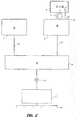
- said series of stock solutions comprises a first stock solution A in a first tank of stock solution 1 and a second stock solution B in a second tank of stock solution 2, said first stock solution A comprising the calcium nutrients, preferably in the form of nitrate or chloride and the magnesium nutrients, preferably in the form of nitrate, said second stock solution B comprising sulfate and phosphate anions, and mixtures thereof, as well as iron and at least one polyphosphate fed for example by a P hopper in solid form.
- the second stock solution B is said solution D of iron and at least one polyphosphate having a pH of between 4.5 and 6.2, advantageously greater than or equal to 5.0 and less than or equal to 6.0, preferably greater than 5.5 by adjusting the latter by the pH adjustment means 10 connected to said second tank 2 using acid.
- the first one mentioned above in fact aims to adapt the conventional process by introducing the calcium and magnesium nutrients into the first tank, the other nutrients then being introduced into the second tank, including iron and at least one polyphosphate.
- the only ions with which the inorganic nutrient composition comprising iron and at least one polyphosphate is not compatible are calcium and magnesium.
- the latter are isolated in the first stock solution A in the first tank of stock solution 1 while the inorganic nutrient composition is implemented in the second stock solution B in the second tank of stock solution 2, for example with monopotassium phosphate ( MKP), potassium nitrate (KNO 3 ) or potassium sulfate (K 2 SO 4 ).
- MKP monopotassium phosphate
- KNO 3 potassium nitrate
- K 2 SO 4 potassium sulfate
- magnesium which is often found as sulfate in second stock solution B in conventional processes, is now supplied as nitrate in first stock solution A.
- the pH of the second stock solution B should be greater than 4.5 and preferably greater than 5.0 and advantageously greater than 5.5 to guarantee the stability of the iron during its storage time. On the other hand, if the pH of this second stock solution does not exceed 6.2, any risk of precipitation in the dilution step is ruled out as explained above.
- the other trace elements or micronutrients can be introduced both in the first stock solution A and in the second stock solution B, however, in view of the pH conditions imposed in the second stock solution B, it is preferable to introduce them into the first stock solution A.
- said series of stock solutions comprises a first stock solution A contained in a first tank of stock solution 1 and a second stock solution B contained in a second tank of stock solution 2.
- the first stock solution A comprises the calcium nutrients, preferably under nitrate or chloride form and magnesium nutrients, preferably nitrate form.
- the second stock solution B comprises the sulfate and phosphate anions and mixtures thereof as well as iron and at least one polyphosphate.
- the iron and said at least one polyphosphate are fed from a pre-stock solution C contained in a stock presolution tank 3 to said second stock solution B in the second stock solution tank 2 by means of a transfer tubing 11 connected on the one hand to the pre-solution tank 3 and on the other hand to the second mother solution tank 2.
- pH adjustment means 10 are directly connected to the mother presolution tank 3.
- the pre-solution stock solution C has sufficient acidity to ensure a pH of between 4.5 and 6.2, advantageously greater than or equal to 5.0 and less than or equal to 6.0, preferably greater than 5.5 in said second solution mother B.
- a pre-stock solution C comprising iron and at least one polyphosphate is provided in order to be subsequently transferred into the second stock solution B as a solution.
- the pH of the pre-stock solution C will be adjusted directly using an addition of acid so that the pH of said second stock solution B has a pH between 4.5 and 6.2, more particularly between 5.0 and 6.0, preferably greater than 5.5.
- This can be done in various ways, such as, for example, by adjusting the pH of the pre-stock solution C to a predetermined pH by the pH adjusting means 10 such that the pH in the second stock solution B is within the required range 4.5 and 6.2, more particularly between 5.0 and 6.0, preferably greater than 5.5.
- Another way lies in the fact of adjusting the pH also in the second stock solution B, in which case the second tank 2 is also connected to pH adjustment means 10 (not illustrated), or else by ensuring that the second stock solution B has a pH between 4.5 and 6.2, more particularly between 5.0 and 6.0, preferably greater than 5.5, as well as the pre-stock solution C.
- said series of stock solutions comprises a first stock solution A in a first tank of stock solution 1 and a second stock solution B in a second tank of stock solution 2, said first stock solution A of the first tank of stock solution 1 comprising the calcium nutrients, preferably in the form of nitrate or chloride and the magnesium nutrients, preferably in the form of nitrate, said second stock solution B from the second tank of stock solution comprising the anions of sulphates and phosphates and their mixtures as well as iron and at least one polyphosphate.
- the iron and said at least one polyphosphate are fed from a pre-stock solution C contained in a pre-solution tank 3 to said second stock solution B by means of a transfer pipe 11 connected on the one hand to the pre-solution tank 3 and on the other hand to the second mother solution tank 2.
- the pH adjustment means 10 are connected to the second mother solution tank 2.
- a pre-stock solution C comprising iron and at least one polyphosphate is provided in order to be subsequently transferred into the second stock solution B as a solution.
- the pH of the second stock solution B, in which the pre-solution is added will be directly adjusted to a value between 4.5 and 6.2, advantageously greater than or equal to 5.0 and less than or equal to 6.0, more particularly greater than 5.5 by adding acid.
- the pre-stock solution C comprises iron and at least one polyphosphate and has a P poly / Fe ratio of between 5 and 50 and preferably between 8 and 32, where Fe represents the number of total moles of iron and where P poly represents the number of moles of phosphorus in the form of polyphosphate.
- the pre-stock solution C is formed from an inorganic nutrient composition based on iron and at least one solid or liquid polyphosphate.
- the pre-stock solution C is formed from a source of iron and at least one solid or liquid polyphosphate added independently or not.
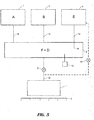
- said series of stock solutions comprises a first stock solution A in a first tank of stock solution 1, a second stock solution B in a second tank of stock solution 2 and a third stock solution E in a third tank of stock solution 5.
- the first stock solution A comprises the calcium nutrients, preferably in the form of nitrate or chloride
- the second stock solution B comprises sulphate and phosphate anions or mixtures thereof
- said third stock solution E comprises iron and at least one polyphosphate
- the magnesium nutrients being able to be fed into said first stock solution A or into said second stock solution B
- a third stock solution E comprising iron and at least one polyphosphate is formed separately (as for example in a third tank of stock solution 5 or from pre-stock solutions (not shown) fed into the third. stock solution tank 5). It is then supplied, no longer in the second stock solution B, but directly in the fertigation solution F, in the dilution tank 6 or in the irrigation line 12, using for example its own transfer device. 13.
- the pH will be adjusted to a value between 4.5 and 6.2, advantageously greater than or equal to 5.0 and less than or equal to 6.0, preferably greater than 5.5. by the pH adjustment means 10 connected to the third tank 5, in particular by adding acid to the level of the third stock solution E.
- the magnesium nutrients can be provided in the form of sulphates or nitrates in said second stock solution B.
- each feeding step of each of the stock solutions (A, B, E) of the aforementioned embodiments, in a dilution tank 6 or in an irrigation line 12 is a step of transfer by venturi entrainment of said mother solution by means of a flow of fertirrigation solution derived from the discharge of said transfer device 8 which makes it possible to supply the fertirrigation device 7 (not illustrated).
- All the steps of the process are carried out at room temperature, that is to say without strict temperature control in the tanks of said stock solutions or of said pre-stock solutions, that is, ie at temperatures fluctuating between 10 and 40 ° C depending on whether the preparation installation is installed in the open air or in a greenhouse.
- an oxidation of the stock solutions or pre-stock solutions can be envisaged by oxidation means 15, in particular to avoid precipitation. or the co-precipitation of certain micronutrients such as copper.
- micro-nutrients such as copper can precipitate with iron and other ions such as pyrophosphates.
- Conventional oxidation techniques can be implemented with known oxidizing agents such as oxygen, air, hydrogen peroxide, bleach, etc.
- the oxidation treatments commonly used are: air bubbling using a disperser located at the bottom of the tank (the air can come from a compressor or a simple pump ), agitation on the surface of the liquid in air, ....
- the duration of the oxidation treatment varies between a few hours and several days depending on the size of the tank and the aeration system used.
- a second pH adjustment means 10 may be present in the dilution tank 6 (not illustrated).
- said series of stock solutions comprises a first stock solution A contained in a first tank of stock solution 1, a second stock solution B contained in a second tank of stock solution 2 and a third stock solution E contained in a third tank of stock solution 5.
- the first stock solution A comprises the calcium nutrients, preferably in the form of nitrate or chloride
- the second stock solution B comprises the sulfate and phosphate anions and said third stock solution E comprising iron and at least one polyphosphate; the magnesian nutrients being able to be fed into said first A or into said second stock solution B; the mixing conditions being sufficiently intensive at the point of supply of said third stock solution E in said fertigation solution F so as to prevent any precipitation of calcium phosphate;
- said fertirrigation solution F being at a pH less than 6.2, preferably less than 6.0 and preferably less than 5.8 after said supply of the third stock solution E.
- a stock solution E comprising iron and at least one polyphosphate is formed separately.
- This may have a basic pH and is fed directly into the fertigation solution F, into the dilution system 6 or into the irrigation line 12 to which the pH adjustment means 10 are connected (which also include in this form of particular embodiment, the means which make it possible to ensure sufficiently intensive mixing conditions at the feed point 16 of said third stock solution E in said fertigation solution F).
- the mixing conditions can be ensured by any means of conventional stirring at the point of injection of said third stock solution E, such as stirrers, recycles, gas bubbling, etc. .
- the sufficient quantity of acid will be added before supplying said third solution E into the dilution device (dilution tank 6 or irrigation line 12).
- the fertigation solution F is the solution D of iron and at least one polyphosphate in the required pH range, i.e. 4.5 and 6.2, more particularly between 5.0 and 6, 0, preferably greater than 5.5, but less than or equal to 5.8.
- said series of tanks of stock solutions comprises a first tank of stock solution, a second tank of stock solution, and a third tank of stock solution, said means for supplying iron and at least one polyphosphate being connected to said third tank, said pH adjusting means being connected to said dilution system or to one of said first or second tanks of stock solution.
- the fertigation solution is continuously formed in a conventional 1000 liter dilution tank through which the irrigation water passes.
- the supply of nutrients to said dilution tank is effected via three different stock solutions, one of them containing the source of iron and polyphosphate, the other two all of the remaining nutrients.
- the stock solution containing iron and at least one polyphosphate is that of Example 1 of the patent application WO2014 / 056688 .
- This solution, with an Fe content of 10 mmol / kg, is characterized by a basic pH of 9.4 in which no precipitate appears. after 4 weeks of storage at room temperature or higher (40 ° C).
- Each of the stock solutions is dosed using a specific venturi system, a small fraction of the fertigation solution being taken from the discharge of the irrigation pump to serve as training liquid for each venturi.
- the pH of the fertigation solution is also continuously adjusted between pH 5.4 and 5.7 by automatic addition of nitric acid carried out directly in the dilution tank. A severe problem of precipitation appears at the outlet of the venturi serving to dose the stock solution containing iron and at least one polyphosphate after a few hours of operation.
- the solid particles thus formed are partially deposited on the walls of the tube and end up completely blocking the passage.
- the precipitate of solid calcium orthophosphate at the origin of this fouling causes a large fraction of the iron by chemical co-precipitation. This can be the cause of severe iron deficiency in cultivated plants if the detection of the abnormality is not sufficiently early.
- the resulting iron loss before the venturi blocked was already at least 20% compared to the calculated theoretical concentration of iron that should have been present in the venturi. the fertigation solution. This theoretical value was correctly reached by a dilute solution prepared in the same proportions in the laboratory to simulate the process.
- Comparative Example 1 A variant of Comparative Example 1 was carried out by replacing the venturi system dedicated to the stock solution containing iron and at least one polyphosphate by a volumetric metering pump.
- said stock solution containing iron and at least one polyphosphate therefore ends up directly in the dilution tank without being partially diluted by the fertigation solution in the transfer system.
- the iron yield obtained by drip was particularly not very reproducible, losses of 40% being observed at times.
- Comparative Example 1 During a second variant of Comparative Example 1, the stock solution containing iron and at least one polyphosphate is brought to pH 7.0 by addition of nitric acid before its use by the venturi metering system, the other operating conditions being identical to those of Comparative Example 1.
- the stability of the stock solution is satisfactory: no precipitate is observed after 4 weeks of storage at room temperature or during storage at a temperature of 40 ° C. Such an acidification of the stock solution is not, however, sufficient to prevent the blockage of the venturi after a few days.
- a variant of Comparative Example 3 was carried out by increasing the degree of acidification of the stock solution containing iron and at least one polyphosphate to pH 4.0. A precipitate then appears in said mother solution containing iron and at least one polyphosphate after a few days. Analyzes of the stock solution containing iron and at least one filtered polyphosphate made it possible to measure the proportion of iron remaining in solution. The results reveal significant iron losses in the stock solution containing iron and at least one polyphosphate which reached 20 and 55% respectively after 1 and 4 weeks of storage at room temperature.
- the stock solution containing iron and at least one polyphosphate according to Example 1 of the patent application WO2014 / 056688 was acidified with nitric acid to reach a pH of 6.0 before processing via a venturi-type transfer system in the dilution tank.
- the results thus obtained are satisfactory from all points of view: the problem of clogging at the outlet of the venturi has disappeared and the soluble iron content of the fertirrigation solution taken by drip is constantly equal to the value calculated at errors d analysis closely.
- the stock solution containing iron and at least one polyphosphate is stable: no loss of iron by chemical precipitation over 4 weeks of storage at room temperature or at a temperature of 40 ° C.
- Example 1 was reproduced by replacing the transfer system of Example 1 with a positive displacement pump.
- the iron yield at the drip level still greatly exceeds 90%.
- Example 1 was reproduced by acidifying a stock solution containing iron and at least one polyphosphate to pH 5.0. Storage stability of the stock solution is maintained for up to 4 weeks at room temperature.
Landscapes
- Chemical & Material Sciences (AREA)
- Organic Chemistry (AREA)
- Life Sciences & Earth Sciences (AREA)
- Inorganic Chemistry (AREA)
- Engineering & Computer Science (AREA)
- Water Supply & Treatment (AREA)
- Chemical Kinetics & Catalysis (AREA)
- Soil Sciences (AREA)
- Environmental Sciences (AREA)
- Fertilizers (AREA)
- Agricultural Chemicals And Associated Chemicals (AREA)
- Coloring Foods And Improving Nutritive Qualities (AREA)
- Hydroponics (AREA)
- Catching Or Destruction (AREA)
- Fertilizing (AREA)
Claims (15)
- Verfahren zur Düngungsbewässerung von Pflanzen, umfassend- ein Bereitstellen einer Reihe von Stammlösungen, umfassend eine Stammlösung, umfassend Eisen und mindestens ein Polyphosphat, bei basischem pH-Wert oder bei einem pH-Wert im Bereich zwischen 4,5 und 6,2, vorteilhafterweise höher als oder gleich 5,0 und niedriger als oder gleich 6,0, vorzugsweise einem pH-Wert höher als oder gleich 5,5, gebildet durch Hinzufügen von Eisen und von mindestens einem Polyphosphat zu einer wässrigen Phase,- eine Einspeisung jeder der Stammlösungen in ein Verdünnungssystem, um eine Düngungsbewässerungslösung zu bilden,- eine Einspeisung einer Düngungsbewässerungsvorrichtung mittels einer Transfervorrichtung, die die Düngungsbewässerungsvorrichtung mit der Düngungsbewässerungslösung versorgt,unter der Bedingung, dass, wenn die Stammlösung bei basischem pH-Wert vorliegt, vor der Einspeisung der Stammlösung eine ausreichende Menge an Säure in das Verdünnungssystem hinzugefügt wird, und ausreichend intensive Mischungsbedingungen an einem Einspeisungspunkt der Stammlösung in das Verdünnungssystem auf eine Weise gewährleistet sind, dass die Düngungsbewässerungslösung einen pH-Wert unterhalb von 6,2 besitzt.
- Verfahren zur Düngungsbewässerung von Pflanzen nach Anspruch 1, wobei eine der mindestens einen Lösung von Eisen und von mindestens einem Polyphosphat bei einem pH-Wert im Bereich zwischen 4,5 und 6,2, vorteilhafterweise höher als oder gleich 5,0 und niedriger als oder gleich 6,0, vorzugsweise einem pH-Wert höher als oder gleich 5,5, einen pH-Wert im Bereich zwischen 4,5 und 6,2, vorteilhafterweise höher als oder gleich 5,0 und niedriger als oder gleich 6,0, vorzugsweise einen pH-Wert höher als oder gleich 5,5 und niedriger als oder gleich 5,8, aufweist und die Düngungsbewässerungslösung ist.
- Verfahren zur Düngungsbewässerung von Pflanzen nach Anspruch 1 oder nach Anspruch 2, wobei das Hinzufügen von Eisen und von mindestens einem Polyphosphat durch Einspeisung, getrennt oder gemeinsam, einer Eisenquelle und einer Quelle von mindestens einem Polyphosphat durchgeführt wird, wobei jede Quelle unabhängig voneinander in Form von Feststoff, Lösung oder auch Suspension vorliegt.
- Verfahren zur Düngungsbewässerung von Pflanzen nach Anspruch 1 oder auch Anspruch 3, wenn er von Anspruch 1 abhängt, wobei das mindestens eine Hinzufügen von Eisen und von mindestens einem Polyphosphat zu einer wässrigen Phase mit einer Bildung von mindestens einer Lösung von Eisen und von mindestens einem Polyphosphat bei einem pH-Wert im Bereich zwischen 4,5 und 6,2, vorteilhafterweise höher als oder gleich 5,0 und niedriger als oder gleich 6,0, vorzugsweise einem pH-Wert höher als oder gleich 5,5, ein Hinzufügen einer Vorstammlösung von Eisen und von mindestens einem Polyphosphat zu einer Stammlösung ist, welche die Lösung von Eisen und von mindestens einem Polyphosphat bei einem pH-Wert im Bereich zwischen 4,5 und 6,2, vorteilhafterweise höher als oder gleich 5,0 und niedriger als oder gleich 6,0, vorzugsweise einem pH-Wert höher als oder gleich 5,5, bildet.
- Verfahren zur Düngungsbewässerung von Pflanzen nach Anspruch 1 oder 4, oder auch Anspruch 3, wenn er von Anspruch 1 abhängt, wobei die mindestens eine Lösung von Eisen und von mindestens einem Polyphosphat bei einem pH-Wert im Bereich zwischen 4,5 und 6,2, vorteilhafterweise höher als oder gleich 5,0 und niedriger als oder gleich 6,0, vorzugsweise einem pH-Wert höher als oder gleich 5,5, eine Vorstammlösung von Eisen und von mindestens einem Polyphosphat bei einem pH-Wert im Bereich zwischen 4,5 und 6,2, vorteilhafterweise höher als oder gleich 5,0 und niedriger als oder gleich 6,0, vorzugsweise einem pH-Wert höher als oder gleich 5,5, ist, hinzugefügt zu mindestens einer Stammlösung der Reihe von Stammlösungen.
- Verfahren zur Düngungsbewässerung von Pflanzen nach einem der Ansprüche 1 bis 5, wobei das Hinzufügen von Eisen und von mindestens einem Polyphosphat durch Einspeisung einer Zusammensetzung, die Eisen und mindestens ein Polyphosphat in Form von Feststoff, Lösung oder auch Suspension enthält, durchgeführt wird.
- Verfahren zur Düngungsbewässerung nach einem der Ansprüche 1 bis 6, wobei die mindestens eine Stammlösung der Reihe von Stammlösungen, die das Eisen und mindestens ein Polyphosphat enthalten, ebenfalls Ionen enthält, ausgewählt aus der Gruppe bestehend aus Sulfaten, Phosphaten, Nitraten, Chloriden, Kalium, Natrium, Ammonium und deren Gemischen.
- Verfahren zur Düngungsbewässerung nach einem der Ansprüche 1 bis 7, wobei die mindestens eine Stammlösung der Reihe von Stammlösungen, die das Eisen enthalten, und mindestens ein Polyphosphat oder die Vorstammlösung, die das Eisen und mindestens ein Polyphosphat enthält, Mikronährstoffe enthält, ausgewählt aus der Gruppe bestehend aus Bor, Mangan, Zink, Kupfer, Molybdän, Kobalt und deren Gemischen.
- Verfahren zur Düngungsbewässerung von Pflanzen nach einem der Ansprüche 1 bis 8, wobei der pH-Wert der Vorstammlösung oder einer der Stammlösungen oder der Düngungsbewässerungslösung durch Hinzufügen einer Säure eingestellt wird, ausgewählt aus der Gruppe bestehend aus Mineralsäuren wie zum Beispiel Salpetersäure, Schwefelsäure, Phosphorsäure und deren Gemischen.
- Verfahren zur Düngungsbewässerung von Pflanzen nach einem der Ansprüche 1 bis 9, ferner umfassend eine Oxidation der Stammlösung, die Eisen und mindestens ein Polyphosphat enthält, und/oder der Vorstammlösung, die Eisen und mindestens ein Polyphosphat enthält.
- Verfahren zur Düngungsbewässerung von Pflanzen nach einem der Ansprüche 1 bis 10, wobei das Eisen und das mindestens eine Polyphosphat gemäß einem Verhältnis PPoly/Fe im Bereich zwischen 5 und 50, vorzugsweise zwischen 8 und 32, hinzugefügt werden, wobei Fe die Gesamtanzahl an Molen von Eisen darstellt und PPoly die Anzahl an Molen von Phosphor in Form von Polyphosphat darstellt.
- Verfahren zur Düngungsbewässerung von Pflanzen nach einem der vorstehenden Ansprüche, wobei das mindestens eine Polyphosphat Kaliumtripolyphosphat und/oder Tetrakaliumpyrophosphat und/oder Kaliumtripolyphosphat und/oder Natriumtripolyphosphat und/oder saures Natriumpyrophosphat und/oder Tetranatriumpyrophosphat und/oder Ammoniumpyrophosphat und/oder Ammoniumpolyphosphat oder deren Gemische umfasst.
- Verfahren zur Düngungsbewässerung von Pflanzen nach einem der vorstehenden Ansprüche, wobei der pH-Wert der Düngungsbewässerungslösung niedriger als 6,2 ist.
- Verfahren zur Düngungsbewässerung von Pflanzen nach einem der vorstehenden Ansprüche, wobei die Düngungsbewässerungslösung bei einem pH-Wert von niedriger als 6 und vorzugsweise niedriger als 5,8 liegt.
- Verfahren zur Düngungsbewässerung von Pflanzen nach einem der Ansprüche 3 und 6 bis 14, wenn sie von Anspruch 2 abhängen, wobei das Eisen und das mindestens eine Polyphosphat an einem Einspeisungspunkt in die Lösung hinzugefügt werden, der hinsichtlich des Vermeidens jeder Ausfällung ausreichend intensive Mischungsbedingungen aufweist.
Priority Applications (1)
| Application Number | Priority Date | Filing Date | Title |
|---|---|---|---|
| PL16732987T PL3307697T3 (pl) | 2015-06-15 | 2016-06-14 | Sposób stosowania nieorganicznej kompozycji odżywczej z żelazem |
Applications Claiming Priority (2)
| Application Number | Priority Date | Filing Date | Title |
|---|---|---|---|
| BE201505363 | 2015-06-15 | ||
| PCT/EP2016/063639 WO2016202803A1 (fr) | 2015-06-15 | 2016-06-14 | Procede et dispositif de mise en oeuvre d'une composition nutritive inorganique de fer |
Publications (2)
| Publication Number | Publication Date |
|---|---|
| EP3307697A1 EP3307697A1 (de) | 2018-04-18 |
| EP3307697B1 true EP3307697B1 (de) | 2021-02-17 |
Family
ID=54148279
Family Applications (1)
| Application Number | Title | Priority Date | Filing Date |
|---|---|---|---|
| EP16732987.9A Active EP3307697B1 (de) | 2015-06-15 | 2016-06-14 | Verfahren zur verarbeitung einer anorganischen, nahrhaften eisenzusammensetzung |
Country Status (13)
| Country | Link |
|---|---|
| US (1) | US10781144B2 (de) |
| EP (1) | EP3307697B1 (de) |
| AU (1) | AU2016278781A1 (de) |
| BR (1) | BR112017026134B1 (de) |
| CA (1) | CA2987911C (de) |
| EA (1) | EA201792436A1 (de) |
| ES (1) | ES2868783T3 (de) |
| IL (1) | IL256012B (de) |
| MA (1) | MA43203B1 (de) |
| MX (1) | MX2017015677A (de) |
| PL (1) | PL3307697T3 (de) |
| PT (1) | PT3307697T (de) |
| WO (1) | WO2016202803A1 (de) |
Family Cites Families (4)
| Publication number | Priority date | Publication date | Assignee | Title |
|---|---|---|---|---|
| IL51248A (en) * | 1977-01-12 | 1981-02-27 | Fertilizers & Chemicals Ltd | Method and compositions for improving the functioning of drip irrigation systems |
| FI98517C (fi) * | 1994-04-15 | 1997-07-10 | Kemira Agro Oy | Kastelulannoitukseen soveltuva suspensiolannoite ja menetelmä sen valmistamiseksi |
| US8690982B1 (en) * | 2008-05-27 | 2014-04-08 | John C. Miller | Method and system for agriculture fertigation |
| BE1021212B1 (fr) | 2012-10-10 | 2015-08-11 | Prayon | Composition nutritive |
-
2016
- 2016-06-14 WO PCT/EP2016/063639 patent/WO2016202803A1/fr not_active Ceased
- 2016-06-14 PL PL16732987T patent/PL3307697T3/pl unknown
- 2016-06-14 ES ES16732987T patent/ES2868783T3/es active Active
- 2016-06-14 CA CA2987911A patent/CA2987911C/fr active Active
- 2016-06-14 EA EA201792436A patent/EA201792436A1/ru unknown
- 2016-06-14 EP EP16732987.9A patent/EP3307697B1/de active Active
- 2016-06-14 BR BR112017026134-0A patent/BR112017026134B1/pt not_active IP Right Cessation
- 2016-06-14 MX MX2017015677A patent/MX2017015677A/es unknown
- 2016-06-14 AU AU2016278781A patent/AU2016278781A1/en not_active Abandoned
- 2016-06-14 US US15/579,544 patent/US10781144B2/en active Active
- 2016-06-14 MA MA43203A patent/MA43203B1/fr unknown
- 2016-06-14 PT PT167329879T patent/PT3307697T/pt unknown
-
2017
- 2017-11-30 IL IL256012A patent/IL256012B/en active IP Right Grant
Non-Patent Citations (1)
| Title |
|---|
| None * |
Also Published As
| Publication number | Publication date |
|---|---|
| MA43203B1 (fr) | 2021-05-31 |
| IL256012B (en) | 2020-11-30 |
| EA201792436A1 (ru) | 2018-05-31 |
| IL256012A (en) | 2018-01-31 |
| WO2016202803A1 (fr) | 2016-12-22 |
| MX2017015677A (es) | 2018-06-19 |
| MA43203A (fr) | 2018-04-18 |
| PT3307697T (pt) | 2021-05-05 |
| AU2016278781A1 (en) | 2018-01-04 |
| BR112017026134A2 (pt) | 2018-08-28 |
| US10781144B2 (en) | 2020-09-22 |
| CA2987911C (fr) | 2023-09-19 |
| EP3307697A1 (de) | 2018-04-18 |
| ES2868783T3 (es) | 2021-10-21 |
| BR112017026134B1 (pt) | 2022-12-20 |
| US20180148385A1 (en) | 2018-05-31 |
| PL3307697T3 (pl) | 2021-09-20 |
| CA2987911A1 (fr) | 2016-12-22 |
Similar Documents
| Publication | Publication Date | Title |
|---|---|---|
| US8821646B1 (en) | Compositions and methods for cleaning and preventing plugging in micro-irrigation systems | |
| US10233128B1 (en) | Method and composition for agricultural potassium and nutrient fertigation | |
| WO2015082468A1 (fr) | Source de phosphate pour l'agriculture et l'alimentaire | |
| EP2906049B1 (de) | Herstellungsverfahren eines eisen-enthaltenden nährstoffes | |
| FR2471357A1 (fr) | Engrais phosphate mixte et son procede de production | |
| US11653592B2 (en) | Liquid fertilizer composition containing nano-bubbles and method of use thereof | |
| BE1021206B1 (fr) | Composition nutritive | |
| EP3307697B1 (de) | Verfahren zur verarbeitung einer anorganischen, nahrhaften eisenzusammensetzung | |
| CN101774827B (zh) | 一种磷酸铵防结块的方法 | |
| US10046369B1 (en) | Method for cleaning micro-irrigation systems | |
| EP4149911B1 (de) | Wasserlöslicher dünger | |
| AU2007224319B2 (en) | Soluble and solubilizing, free-flowing, solid fertilizer compositions, and the preparation thereof | |
| JP6747731B1 (ja) | 植物栽培用養液の製造方法及び植物栽培方法 | |
| CN116867754A (zh) | 涂覆有微量营养素源的肥料颗粒 | |
| AU2002300060B2 (en) | Fertilizer composition including fulvic acid | |
| WO2022049355A1 (fr) | Procédé de préparation d'une composition fertilisante par oxydation | |
| WO2024226798A1 (en) | Liquid suspension compositions and coated fertilizer particles | |
| WO2025073821A1 (fr) | Procédé de fabrication d'un engrais organique liquide à base de compost | |
| Yi | Phosphate recovery from greenhouse wastewater through crystallization | |
| Schloter et al. | Project B3–Influence of different pioneering plants on microbial food web development in soil during initial states of ecosystem development | |
| EP3077335A1 (de) | Phosphatquelle für landwirtschaft und nahrungsmittelindustrie |
Legal Events
| Date | Code | Title | Description |
|---|---|---|---|
| STAA | Information on the status of an ep patent application or granted ep patent |
Free format text: STATUS: THE INTERNATIONAL PUBLICATION HAS BEEN MADE |
|
| PUAI | Public reference made under article 153(3) epc to a published international application that has entered the european phase |
Free format text: ORIGINAL CODE: 0009012 |
|
| STAA | Information on the status of an ep patent application or granted ep patent |
Free format text: STATUS: REQUEST FOR EXAMINATION WAS MADE |
|
| 17P | Request for examination filed |
Effective date: 20171221 |
|
| AK | Designated contracting states |
Kind code of ref document: A1 Designated state(s): AL AT BE BG CH CY CZ DE DK EE ES FI FR GB GR HR HU IE IS IT LI LT LU LV MC MK MT NL NO PL PT RO RS SE SI SK SM TR |
|
| AX | Request for extension of the european patent |
Extension state: BA ME |
|
| RAV | Requested validation state of the european patent: fee paid |
Extension state: MA Effective date: 20171221 |
|
| STAA | Information on the status of an ep patent application or granted ep patent |
Free format text: STATUS: EXAMINATION IS IN PROGRESS |
|
| 17Q | First examination report despatched |
Effective date: 20200303 |
|
| GRAP | Despatch of communication of intention to grant a patent |
Free format text: ORIGINAL CODE: EPIDOSNIGR1 |
|
| STAA | Information on the status of an ep patent application or granted ep patent |
Free format text: STATUS: GRANT OF PATENT IS INTENDED |
|
| RIC1 | Information provided on ipc code assigned before grant |
Ipc: A01C 23/04 20060101ALI20200723BHEP Ipc: C05B 7/00 20060101ALI20200723BHEP Ipc: C05D 9/02 20060101ALI20200723BHEP Ipc: C05B 13/06 20060101AFI20200723BHEP Ipc: C05B 13/04 20060101ALI20200723BHEP |
|
| INTG | Intention to grant announced |
Effective date: 20200821 |
|
| RAP1 | Party data changed (applicant data changed or rights of an application transferred) |
Owner name: PRAYON SA |
|
| GRAS | Grant fee paid |
Free format text: ORIGINAL CODE: EPIDOSNIGR3 |
|
| GRAA | (expected) grant |
Free format text: ORIGINAL CODE: 0009210 |
|
| STAA | Information on the status of an ep patent application or granted ep patent |
Free format text: STATUS: THE PATENT HAS BEEN GRANTED |
|
| AK | Designated contracting states |
Kind code of ref document: B1 Designated state(s): AL AT BE BG CH CY CZ DE DK EE ES FI FR GB GR HR HU IE IS IT LI LT LU LV MC MK MT NL NO PL PT RO RS SE SI SK SM TR |
|
| AX | Request for extension of the european patent |
Extension state: BA ME |
|
| REG | Reference to a national code |
Ref country code: GB Ref legal event code: FG4D Free format text: NOT ENGLISH |
|
| REG | Reference to a national code |
Ref country code: CH Ref legal event code: EP |
|
| REG | Reference to a national code |
Ref country code: DE Ref legal event code: R096 Ref document number: 602016052560 Country of ref document: DE |
|
| REG | Reference to a national code |
Ref country code: AT Ref legal event code: REF Ref document number: 1361263 Country of ref document: AT Kind code of ref document: T Effective date: 20210315 |
|
| REG | Reference to a national code |
Ref country code: IE Ref legal event code: FG4D Free format text: LANGUAGE OF EP DOCUMENT: FRENCH |
|
| REG | Reference to a national code |
Ref country code: PT Ref legal event code: SC4A Ref document number: 3307697 Country of ref document: PT Date of ref document: 20210505 Kind code of ref document: T Free format text: AVAILABILITY OF NATIONAL TRANSLATION Effective date: 20210429 |
|
| REG | Reference to a national code |
Ref country code: NL Ref legal event code: FP |
|
| REG | Reference to a national code |
Ref country code: MA Ref legal event code: VAGR Ref document number: 43203 Country of ref document: MA Kind code of ref document: B1 |
|
| REG | Reference to a national code |
Ref country code: GR Ref legal event code: EP Ref document number: 20210401139 Country of ref document: GR Effective date: 20210614 |
|
| REG | Reference to a national code |
Ref country code: LT Ref legal event code: MG9D |
|
| PG25 | Lapsed in a contracting state [announced via postgrant information from national office to epo] |
Ref country code: NO Free format text: LAPSE BECAUSE OF FAILURE TO SUBMIT A TRANSLATION OF THE DESCRIPTION OR TO PAY THE FEE WITHIN THE PRESCRIBED TIME-LIMIT Effective date: 20210517 Ref country code: HR Free format text: LAPSE BECAUSE OF FAILURE TO SUBMIT A TRANSLATION OF THE DESCRIPTION OR TO PAY THE FEE WITHIN THE PRESCRIBED TIME-LIMIT Effective date: 20210217 Ref country code: FI Free format text: LAPSE BECAUSE OF FAILURE TO SUBMIT A TRANSLATION OF THE DESCRIPTION OR TO PAY THE FEE WITHIN THE PRESCRIBED TIME-LIMIT Effective date: 20210217 Ref country code: LT Free format text: LAPSE BECAUSE OF FAILURE TO SUBMIT A TRANSLATION OF THE DESCRIPTION OR TO PAY THE FEE WITHIN THE PRESCRIBED TIME-LIMIT Effective date: 20210217 Ref country code: BG Free format text: LAPSE BECAUSE OF FAILURE TO SUBMIT A TRANSLATION OF THE DESCRIPTION OR TO PAY THE FEE WITHIN THE PRESCRIBED TIME-LIMIT Effective date: 20210517 |
|
| PG25 | Lapsed in a contracting state [announced via postgrant information from national office to epo] |
Ref country code: RS Free format text: LAPSE BECAUSE OF FAILURE TO SUBMIT A TRANSLATION OF THE DESCRIPTION OR TO PAY THE FEE WITHIN THE PRESCRIBED TIME-LIMIT Effective date: 20210217 Ref country code: LV Free format text: LAPSE BECAUSE OF FAILURE TO SUBMIT A TRANSLATION OF THE DESCRIPTION OR TO PAY THE FEE WITHIN THE PRESCRIBED TIME-LIMIT Effective date: 20210217 Ref country code: SE Free format text: LAPSE BECAUSE OF FAILURE TO SUBMIT A TRANSLATION OF THE DESCRIPTION OR TO PAY THE FEE WITHIN THE PRESCRIBED TIME-LIMIT Effective date: 20210217 |
|
| PG25 | Lapsed in a contracting state [announced via postgrant information from national office to epo] |
Ref country code: IS Free format text: LAPSE BECAUSE OF FAILURE TO SUBMIT A TRANSLATION OF THE DESCRIPTION OR TO PAY THE FEE WITHIN THE PRESCRIBED TIME-LIMIT Effective date: 20210617 |
|
| REG | Reference to a national code |
Ref country code: ES Ref legal event code: FG2A Ref document number: 2868783 Country of ref document: ES Kind code of ref document: T3 Effective date: 20211021 |
|
| PG25 | Lapsed in a contracting state [announced via postgrant information from national office to epo] |
Ref country code: CZ Free format text: LAPSE BECAUSE OF FAILURE TO SUBMIT A TRANSLATION OF THE DESCRIPTION OR TO PAY THE FEE WITHIN THE PRESCRIBED TIME-LIMIT Effective date: 20210217 Ref country code: EE Free format text: LAPSE BECAUSE OF FAILURE TO SUBMIT A TRANSLATION OF THE DESCRIPTION OR TO PAY THE FEE WITHIN THE PRESCRIBED TIME-LIMIT Effective date: 20210217 Ref country code: SM Free format text: LAPSE BECAUSE OF FAILURE TO SUBMIT A TRANSLATION OF THE DESCRIPTION OR TO PAY THE FEE WITHIN THE PRESCRIBED TIME-LIMIT Effective date: 20210217 |
|
| REG | Reference to a national code |
Ref country code: DE Ref legal event code: R097 Ref document number: 602016052560 Country of ref document: DE |
|
| PG25 | Lapsed in a contracting state [announced via postgrant information from national office to epo] |
Ref country code: DK Free format text: LAPSE BECAUSE OF FAILURE TO SUBMIT A TRANSLATION OF THE DESCRIPTION OR TO PAY THE FEE WITHIN THE PRESCRIBED TIME-LIMIT Effective date: 20210217 Ref country code: RO Free format text: LAPSE BECAUSE OF FAILURE TO SUBMIT A TRANSLATION OF THE DESCRIPTION OR TO PAY THE FEE WITHIN THE PRESCRIBED TIME-LIMIT Effective date: 20210217 Ref country code: SK Free format text: LAPSE BECAUSE OF FAILURE TO SUBMIT A TRANSLATION OF THE DESCRIPTION OR TO PAY THE FEE WITHIN THE PRESCRIBED TIME-LIMIT Effective date: 20210217 |
|
| PLBE | No opposition filed within time limit |
Free format text: ORIGINAL CODE: 0009261 |
|
| STAA | Information on the status of an ep patent application or granted ep patent |
Free format text: STATUS: NO OPPOSITION FILED WITHIN TIME LIMIT |
|
| 26N | No opposition filed |
Effective date: 20211118 |
|
| PG25 | Lapsed in a contracting state [announced via postgrant information from national office to epo] |
Ref country code: AL Free format text: LAPSE BECAUSE OF FAILURE TO SUBMIT A TRANSLATION OF THE DESCRIPTION OR TO PAY THE FEE WITHIN THE PRESCRIBED TIME-LIMIT Effective date: 20210217 Ref country code: MC Free format text: LAPSE BECAUSE OF FAILURE TO SUBMIT A TRANSLATION OF THE DESCRIPTION OR TO PAY THE FEE WITHIN THE PRESCRIBED TIME-LIMIT Effective date: 20210217 |
|
| PG25 | Lapsed in a contracting state [announced via postgrant information from national office to epo] |
Ref country code: SI Free format text: LAPSE BECAUSE OF FAILURE TO SUBMIT A TRANSLATION OF THE DESCRIPTION OR TO PAY THE FEE WITHIN THE PRESCRIBED TIME-LIMIT Effective date: 20210217 |
|
| PG25 | Lapsed in a contracting state [announced via postgrant information from national office to epo] |
Ref country code: LU Free format text: LAPSE BECAUSE OF NON-PAYMENT OF DUE FEES Effective date: 20210614 |
|
| PG25 | Lapsed in a contracting state [announced via postgrant information from national office to epo] |
Ref country code: IS Free format text: LAPSE BECAUSE OF FAILURE TO SUBMIT A TRANSLATION OF THE DESCRIPTION OR TO PAY THE FEE WITHIN THE PRESCRIBED TIME-LIMIT Effective date: 20210617 |
|
| REG | Reference to a national code |
Ref country code: AT Ref legal event code: UEP Ref document number: 1361263 Country of ref document: AT Kind code of ref document: T Effective date: 20210217 |
|
| PG25 | Lapsed in a contracting state [announced via postgrant information from national office to epo] |
Ref country code: CY Free format text: LAPSE BECAUSE OF FAILURE TO SUBMIT A TRANSLATION OF THE DESCRIPTION OR TO PAY THE FEE WITHIN THE PRESCRIBED TIME-LIMIT Effective date: 20210217 |
|
| P01 | Opt-out of the competence of the unified patent court (upc) registered |
Effective date: 20230526 |
|
| PG25 | Lapsed in a contracting state [announced via postgrant information from national office to epo] |
Ref country code: HU Free format text: LAPSE BECAUSE OF FAILURE TO SUBMIT A TRANSLATION OF THE DESCRIPTION OR TO PAY THE FEE WITHIN THE PRESCRIBED TIME-LIMIT; INVALID AB INITIO Effective date: 20160614 |
|
| PG25 | Lapsed in a contracting state [announced via postgrant information from national office to epo] |
Ref country code: MK Free format text: LAPSE BECAUSE OF FAILURE TO SUBMIT A TRANSLATION OF THE DESCRIPTION OR TO PAY THE FEE WITHIN THE PRESCRIBED TIME-LIMIT Effective date: 20210217 |
|
| PGFP | Annual fee paid to national office [announced via postgrant information from national office to epo] |
Ref country code: NL Payment date: 20240516 Year of fee payment: 9 |
|
| PGFP | Annual fee paid to national office [announced via postgrant information from national office to epo] |
Ref country code: IE Payment date: 20240618 Year of fee payment: 9 |
|
| PGFP | Annual fee paid to national office [announced via postgrant information from national office to epo] |
Ref country code: GB Payment date: 20240618 Year of fee payment: 9 |
|
| PGFP | Annual fee paid to national office [announced via postgrant information from national office to epo] |
Ref country code: DE Payment date: 20240627 Year of fee payment: 9 |
|
| PGFP | Annual fee paid to national office [announced via postgrant information from national office to epo] |
Ref country code: GR Payment date: 20240619 Year of fee payment: 9 |
|
| PGFP | Annual fee paid to national office [announced via postgrant information from national office to epo] |
Ref country code: AT Payment date: 20240618 Year of fee payment: 9 |
|
| PGFP | Annual fee paid to national office [announced via postgrant information from national office to epo] |
Ref country code: FR Payment date: 20240516 Year of fee payment: 9 |
|
| PGFP | Annual fee paid to national office [announced via postgrant information from national office to epo] |
Ref country code: PL Payment date: 20240521 Year of fee payment: 9 Ref country code: PT Payment date: 20240524 Year of fee payment: 9 |
|
| PGFP | Annual fee paid to national office [announced via postgrant information from national office to epo] |
Ref country code: TR Payment date: 20240527 Year of fee payment: 9 Ref country code: BE Payment date: 20240516 Year of fee payment: 9 |
|
| PG25 | Lapsed in a contracting state [announced via postgrant information from national office to epo] |
Ref country code: MT Free format text: LAPSE BECAUSE OF FAILURE TO SUBMIT A TRANSLATION OF THE DESCRIPTION OR TO PAY THE FEE WITHIN THE PRESCRIBED TIME-LIMIT Effective date: 20210217 |
|
| PGFP | Annual fee paid to national office [announced via postgrant information from national office to epo] |
Ref country code: IT Payment date: 20240619 Year of fee payment: 9 |
|
| PGFP | Annual fee paid to national office [announced via postgrant information from national office to epo] |
Ref country code: CH Payment date: 20240701 Year of fee payment: 9 Ref country code: ES Payment date: 20240710 Year of fee payment: 9 |
|
| VSFP | Annual fee paid to validation state [announced via postgrant information from national office to epo] |
Ref country code: MA Payment date: 20230530 Year of fee payment: 8 |
|
| VSFP | Annual fee paid to validation state [announced via postgrant information from national office to epo] |
Ref country code: MA Payment date: 20240524 Year of fee payment: 9 Ref country code: MA Payment date: 20220527 Year of fee payment: 7 Ref country code: MA Payment date: 20210525 Year of fee payment: 6 |
|
| REG | Reference to a national code |
Ref country code: DE Ref legal event code: R119 Ref document number: 602016052560 Country of ref document: DE |
|
| PG25 | Lapsed in a contracting state [announced via postgrant information from national office to epo] |
Ref country code: PT Free format text: LAPSE BECAUSE OF NON-PAYMENT OF DUE FEES Effective date: 20251215 |
|
| REG | Reference to a national code |
Ref country code: CH Ref legal event code: H13 Free format text: ST27 STATUS EVENT CODE: U-0-0-H10-H13 (AS PROVIDED BY THE NATIONAL OFFICE) Effective date: 20260127 |
|
| REG | Reference to a national code |
Ref country code: NL Ref legal event code: MM Effective date: 20250701 |
|
| REG | Reference to a national code |
Ref country code: AT Ref legal event code: MM01 Ref document number: 1361263 Country of ref document: AT Kind code of ref document: T Effective date: 20250614 |
|
| GBPC | Gb: european patent ceased through non-payment of renewal fee |
Effective date: 20250614 |
|
| REG | Reference to a national code |
Ref country code: BE Ref legal event code: MM Effective date: 20250630 |
|
| PG25 | Lapsed in a contracting state [announced via postgrant information from national office to epo] |
Ref country code: NL Free format text: LAPSE BECAUSE OF NON-PAYMENT OF DUE FEES Effective date: 20250701 |
|
| VS25 | Lapsed in a validation state [announced via postgrant information from nat. office to epo] |
Ref country code: MA Free format text: LAPSE BECAUSE OF NON-PAYMENT OF DUE FEES Effective date: 20250615 |
|
| PG25 | Lapsed in a contracting state [announced via postgrant information from national office to epo] |
Ref country code: GB Free format text: LAPSE BECAUSE OF NON-PAYMENT OF DUE FEES Effective date: 20250614 |
|
| PG25 | Lapsed in a contracting state [announced via postgrant information from national office to epo] |
Ref country code: IE Free format text: LAPSE BECAUSE OF NON-PAYMENT OF DUE FEES Effective date: 20250614 Ref country code: DE Free format text: LAPSE BECAUSE OF NON-PAYMENT OF DUE FEES Effective date: 20260101 |
|
| PG25 | Lapsed in a contracting state [announced via postgrant information from national office to epo] |
Ref country code: AT Free format text: LAPSE BECAUSE OF NON-PAYMENT OF DUE FEES Effective date: 20250614 |
|
| PG25 | Lapsed in a contracting state [announced via postgrant information from national office to epo] |
Ref country code: BE Free format text: LAPSE BECAUSE OF NON-PAYMENT OF DUE FEES Effective date: 20250630 Ref country code: IT Free format text: LAPSE BECAUSE OF NON-PAYMENT OF DUE FEES Effective date: 20250614 |
|
| PG25 | Lapsed in a contracting state [announced via postgrant information from national office to epo] |
Ref country code: FR Free format text: LAPSE BECAUSE OF NON-PAYMENT OF DUE FEES Effective date: 20250630 |
|
| PG25 | Lapsed in a contracting state [announced via postgrant information from national office to epo] |
Ref country code: CH Free format text: LAPSE BECAUSE OF NON-PAYMENT OF DUE FEES Effective date: 20250630 |
|
| PG25 | Lapsed in a contracting state [announced via postgrant information from national office to epo] |
Ref country code: GR Free format text: LAPSE BECAUSE OF NON-PAYMENT OF DUE FEES Effective date: 20260108 |