EP3306754B1 - Connector - Google Patents
Connector Download PDFInfo
- Publication number
- EP3306754B1 EP3306754B1 EP16803016.1A EP16803016A EP3306754B1 EP 3306754 B1 EP3306754 B1 EP 3306754B1 EP 16803016 A EP16803016 A EP 16803016A EP 3306754 B1 EP3306754 B1 EP 3306754B1
- Authority
- EP
- European Patent Office
- Prior art keywords
- detection terminals
- terminal fittings
- housing
- counterpart
- detection
- Prior art date
- Legal status (The legal status is an assumption and is not a legal conclusion. Google has not performed a legal analysis and makes no representation as to the accuracy of the status listed.)
- Active
Links
Images



Classifications
-
- H—ELECTRICITY
- H01—ELECTRIC ELEMENTS
- H01R—ELECTRICALLY-CONDUCTIVE CONNECTIONS; STRUCTURAL ASSOCIATIONS OF A PLURALITY OF MUTUALLY-INSULATED ELECTRICAL CONNECTING ELEMENTS; COUPLING DEVICES; CURRENT COLLECTORS
- H01R13/00—Details of coupling devices of the kinds covered by groups H01R12/70 or H01R24/00 - H01R33/00
- H01R13/40—Securing contact members in or to a base or case; Insulating of contact members
- H01R13/42—Securing in a demountable manner
- H01R13/436—Securing a plurality of contact members by one locking piece or operation
- H01R13/4361—Insertion of locking piece perpendicular to direction of contact insertion
-
- H—ELECTRICITY
- H01—ELECTRIC ELEMENTS
- H01R—ELECTRICALLY-CONDUCTIVE CONNECTIONS; STRUCTURAL ASSOCIATIONS OF A PLURALITY OF MUTUALLY-INSULATED ELECTRICAL CONNECTING ELEMENTS; COUPLING DEVICES; CURRENT COLLECTORS
- H01R13/00—Details of coupling devices of the kinds covered by groups H01R12/70 or H01R24/00 - H01R33/00
- H01R13/64—Means for preventing incorrect coupling
-
- H—ELECTRICITY
- H01—ELECTRIC ELEMENTS
- H01R—ELECTRICALLY-CONDUCTIVE CONNECTIONS; STRUCTURAL ASSOCIATIONS OF A PLURALITY OF MUTUALLY-INSULATED ELECTRICAL CONNECTING ELEMENTS; COUPLING DEVICES; CURRENT COLLECTORS
- H01R12/00—Structural associations of a plurality of mutually-insulated electrical connecting elements, specially adapted for printed circuits, e.g. printed circuit boards [PCB], flat or ribbon cables, or like generally planar structures, e.g. terminal strips, terminal blocks; Coupling devices specially adapted for printed circuits, flat or ribbon cables, or like generally planar structures; Terminals specially adapted for contact with, or insertion into, printed circuits, flat or ribbon cables, or like generally planar structures
- H01R12/70—Coupling devices
- H01R12/7005—Guiding, mounting, polarizing or locking means; Extractors
- H01R12/7011—Locking or fixing a connector to a PCB
- H01R12/7064—Press fitting
-
- H—ELECTRICITY
- H01—ELECTRIC ELEMENTS
- H01R—ELECTRICALLY-CONDUCTIVE CONNECTIONS; STRUCTURAL ASSOCIATIONS OF A PLURALITY OF MUTUALLY-INSULATED ELECTRICAL CONNECTING ELEMENTS; COUPLING DEVICES; CURRENT COLLECTORS
- H01R13/00—Details of coupling devices of the kinds covered by groups H01R12/70 or H01R24/00 - H01R33/00
- H01R13/02—Contact members
- H01R13/04—Pins or blades for co-operation with sockets
- H01R13/05—Resilient pins or blades
- H01R13/055—Resilient pins or blades co-operating with sockets having a rectangular transverse section
-
- H—ELECTRICITY
- H01—ELECTRIC ELEMENTS
- H01R—ELECTRICALLY-CONDUCTIVE CONNECTIONS; STRUCTURAL ASSOCIATIONS OF A PLURALITY OF MUTUALLY-INSULATED ELECTRICAL CONNECTING ELEMENTS; COUPLING DEVICES; CURRENT COLLECTORS
- H01R13/00—Details of coupling devices of the kinds covered by groups H01R12/70 or H01R24/00 - H01R33/00
- H01R13/40—Securing contact members in or to a base or case; Insulating of contact members
- H01R13/405—Securing in non-demountable manner, e.g. moulding, riveting
- H01R13/41—Securing in non-demountable manner, e.g. moulding, riveting by frictional grip in grommet, panel or base
-
- H—ELECTRICITY
- H01—ELECTRIC ELEMENTS
- H01R—ELECTRICALLY-CONDUCTIVE CONNECTIONS; STRUCTURAL ASSOCIATIONS OF A PLURALITY OF MUTUALLY-INSULATED ELECTRICAL CONNECTING ELEMENTS; COUPLING DEVICES; CURRENT COLLECTORS
- H01R13/00—Details of coupling devices of the kinds covered by groups H01R12/70 or H01R24/00 - H01R33/00
- H01R13/40—Securing contact members in or to a base or case; Insulating of contact members
- H01R13/42—Securing in a demountable manner
-
- H—ELECTRICITY
- H01—ELECTRIC ELEMENTS
- H01R—ELECTRICALLY-CONDUCTIVE CONNECTIONS; STRUCTURAL ASSOCIATIONS OF A PLURALITY OF MUTUALLY-INSULATED ELECTRICAL CONNECTING ELEMENTS; COUPLING DEVICES; CURRENT COLLECTORS
- H01R13/00—Details of coupling devices of the kinds covered by groups H01R12/70 or H01R24/00 - H01R33/00
- H01R13/73—Means for mounting coupling parts to apparatus or structures, e.g. to a wall
- H01R13/74—Means for mounting coupling parts in openings of a panel
- H01R13/741—Means for mounting coupling parts in openings of a panel using snap fastening means
- H01R13/743—Means for mounting coupling parts in openings of a panel using snap fastening means integral with the housing
-
- H—ELECTRICITY
- H01—ELECTRIC ELEMENTS
- H01R—ELECTRICALLY-CONDUCTIVE CONNECTIONS; STRUCTURAL ASSOCIATIONS OF A PLURALITY OF MUTUALLY-INSULATED ELECTRICAL CONNECTING ELEMENTS; COUPLING DEVICES; CURRENT COLLECTORS
- H01R12/00—Structural associations of a plurality of mutually-insulated electrical connecting elements, specially adapted for printed circuits, e.g. printed circuit boards [PCB], flat or ribbon cables, or like generally planar structures, e.g. terminal strips, terminal blocks; Coupling devices specially adapted for printed circuits, flat or ribbon cables, or like generally planar structures; Terminals specially adapted for contact with, or insertion into, printed circuits, flat or ribbon cables, or like generally planar structures
- H01R12/70—Coupling devices
- H01R12/71—Coupling devices for rigid printing circuits or like structures
- H01R12/72—Coupling devices for rigid printing circuits or like structures coupling with the edge of the rigid printed circuits or like structures
- H01R12/722—Coupling devices for rigid printing circuits or like structures coupling with the edge of the rigid printed circuits or like structures coupling devices mounted on the edge of the printed circuits
- H01R12/724—Coupling devices for rigid printing circuits or like structures coupling with the edge of the rigid printed circuits or like structures coupling devices mounted on the edge of the printed circuits containing contact members forming a right angle
-
- H—ELECTRICITY
- H01—ELECTRIC ELEMENTS
- H01R—ELECTRICALLY-CONDUCTIVE CONNECTIONS; STRUCTURAL ASSOCIATIONS OF A PLURALITY OF MUTUALLY-INSULATED ELECTRICAL CONNECTING ELEMENTS; COUPLING DEVICES; CURRENT COLLECTORS
- H01R13/00—Details of coupling devices of the kinds covered by groups H01R12/70 or H01R24/00 - H01R33/00
- H01R13/40—Securing contact members in or to a base or case; Insulating of contact members
- H01R13/42—Securing in a demountable manner
- H01R13/422—Securing in resilient one-piece base or case, e.g. by friction; One-piece base or case formed with resilient locking means
- H01R13/4223—Securing in resilient one-piece base or case, e.g. by friction; One-piece base or case formed with resilient locking means comprising integral flexible contact retaining fingers
-
- H—ELECTRICITY
- H01—ELECTRIC ELEMENTS
- H01R—ELECTRICALLY-CONDUCTIVE CONNECTIONS; STRUCTURAL ASSOCIATIONS OF A PLURALITY OF MUTUALLY-INSULATED ELECTRICAL CONNECTING ELEMENTS; COUPLING DEVICES; CURRENT COLLECTORS
- H01R13/00—Details of coupling devices of the kinds covered by groups H01R12/70 or H01R24/00 - H01R33/00
- H01R13/62—Means for facilitating engagement or disengagement of coupling parts or for holding them in engagement
- H01R13/639—Additional means for holding or locking coupling parts together, after engagement, e.g. separate keylock, retainer strap
-
- H—ELECTRICITY
- H01—ELECTRIC ELEMENTS
- H01R—ELECTRICALLY-CONDUCTIVE CONNECTIONS; STRUCTURAL ASSOCIATIONS OF A PLURALITY OF MUTUALLY-INSULATED ELECTRICAL CONNECTING ELEMENTS; COUPLING DEVICES; CURRENT COLLECTORS
- H01R13/00—Details of coupling devices of the kinds covered by groups H01R12/70 or H01R24/00 - H01R33/00
- H01R13/64—Means for preventing incorrect coupling
- H01R13/641—Means for preventing incorrect coupling by indicating incorrect coupling; by indicating correct or full engagement
Definitions
- the present invention relates to a connector.
- Patent Literature 1 discloses a connector having a first housing and a second housing, which can be mutually fitted.
- the first housing is provided with first terminal fittings and first detection terminal.
- the second housing is provided with second terminal fittings and second detection terminals.
- Each of the first terminal fittings has a box having a tubular shape, and a barrel having an open barrel shape continued to the rear of the box.
- the barrel is connected to the end of an electric wire by pressure bonding.
- the first detection terminal has a base portion having a plate shape, and right and left elastic contact pieces extending from the base portion to the front.
- each of the first terminal fittings and the second detection terminals has a tab having a pin shape (not referred to in Patent Literature 1).
- the tab of each of the second detection terminals is provided with a conductive portion and a resin portion, which are disposed so as to be aligned in the front-back direction.
- Patent Literature 2 describes a locking mechanism connector comprising a plug having contacts and a socket having a structure suitable for receiving the plug, the socket comprising pins engageable with the contacts, characterized by a first locking mechanism for locking the plug in a tight insertion position, a second locking mechanism for locking the plug in a deep insertion position, and indicator means for indicating when the second lock mechanism locks the plug.
- the first detection terminal is formed in a shape different from the first terminal fittings. Consequently, the process for forming the first detection terminal is necessary aside from the process for forming the first terminal fittings. This may increase the number of processes and increase the cost.
- the present invention has been completed based on the above circumstances, and an object of the present invention is to provide a connector in which terminal fittings and detection terminals can be formed at the same time.
- the present invention is a connector as defined in claim 1, which has a housing capable of being fitted to a counterpart housing, one or more terminal fittings provided in the housing, connected to ends of electric wires, and configured to electrically come into contact with counterpart terminal fittings provided in the counterpart housing when both of the housings are fitted together, and a pair of detection terminals provided in the housing and mutually energized thereby to form a detection circuit when both of the housings are properly fitted together.
- the pair of detection terminals are mutually connected via an electric wire and formed in the same shape as the terminal fittings.
- the connector of the invention is characterised in that the housing is provided with a plurality of cavities into which the terminal fittings and the detection terminals are each inserted, a front wall closing a space on a front side of the cavities in an insertion direction of the terminal fittings and the detection terminals, and a retainer mounting hole intersecting and communicating with the cavities; a retainer to retain the terminal fittings and the detection terminals is inserted into the retainer mounting hole; and a pressing portion capable of abutting onto the detection terminals and pressing the detection terminals toward the front wall is protrudingly provided in the retainer; and the pressing portion is not disposed at a position corresponding to the terminal fittings.
- the detection terminals connected via the electric wire are formed in the same shape as the terminal fittings, the detection terminals can be formed at the same time in the forming process of the terminal fittings. As a result, the number of processes and the die cost can be reduced.
- the electric wire connected to the pair of detection terminals is bundled together with the electric wires connected to the terminal fittings by a bundling member.
- the electric wire connected to the pair of detection terminals has a substantially looped shape (U-shape or annular shape). Consequently, if the electric wire having a looped shape is spread, the space efficiency could be worsened.
- the electric wire having a looped shape and the electric wires connected to the terminal fittings are bundled by the bundling member thereby to be held together compactly and efficiently.
- the housing is provided with a plurality of cavities into which the terminal fittings and the detection terminals are each inserted, a front wall closing a space on a front side of the cavities in an insertion direction of the terminal fittings and the detection terminals, and a retainer mounting hole intersecting and communicating with the cavities.
- a retainer to retain the terminal fittings and the detection terminals is inserted into the retainer mounting hole.
- a pressing portion capable of abutting onto the detection terminals and pressing the detection terminals toward the front wall is protrudingly provided in the retainer.
- the detection terminals move freely in the cavities, the detection timing will not be constant, so that the detection reliability could be deteriorated.
- the detection terminals are capable of being pressed by the pressing portion in the cavities, so that the clearance between the retainer and the detection terminals is reduced or rendered absent.
- the detection terminals do not move freely in the cavities greatly, so that the detection reliability can be improved.
- the pressing portion is not provided at a position corresponding to the terminal fittings.
- the pressing portion is not provided at the position corresponding to the terminal fittings. This can simplify the configuration of the retainer. Furthermore, the pressing portion is thus provided in the minimum necessary range, so that the sliding resistance caused between the retainer and the housing can be rendered small when the retainer is inserted into the retainer mounting hole. As a result, worsening of mounting operability of the retainer can be avoided.
- the retainer is provided with a stopper configured to abut onto the housing when the retainer is properly inserted into the housing, the stopper and the pressing portion mutually protrude in the same direction, and a protruding end of the pressing portion is located behind a protruding end of the stopper.
- the counterpart housing is provided with counterpart detection terminals electrically connected to the detection circuit, the counterpart detection terminals and the counterpart terminal fittings are male terminals having respective tabs, the detection terminals and the terminal fittings are female terminals having respective main bodies into which the tabs are each inserted and connected, and the tabs of the counterpart detection terminals are shorter than the tabs of the counterpart terminal fittings.
- the timing at which the tabs of the counterpart detection terminals are inserted and connected into the main bodies can be later than the timing at which the tabs of the counterpart terminal fittings are inserted and connected into the main bodies. This can prevent erroneous fitting detection before the counterpart terminal fittings are electrically connected to the terminal fittings.
- a connector of the example has a housing 10, a plurality of terminal fittings 20A accommodated in the housing 10, a pair of detection terminals 20B also accommodated in the housing 10, and a retainer 60 assembled into the housing 10.
- the housing 10 can be fitted to a counterpart housing 80.
- the front-back direction the side in which both of the housings 10 and 80 face each other at the time of the start of fitting is referred to as a front side.
- the up-down direction is based on Figs. 3 to 6 , 8 , and 9 .
- the counterpart housing 80 is made of synthetic resin. As illustrated in Fig. 2(A) , the counterpart housing 80 has a hood 81 having a square cylindrical shape and opened to the front. At the substantially central part of the inner face of the upper wall of the hood 81A, a cam follower 82 having a columnar shape is protrudingly provided. A plurality of counterpart terminal fittings 90A are attached in the counterpart housing 80.
- the counterpart terminal fittings 90A are made of conductive metal. As illustrated in Fig. 2(A) , the counterpart terminal fittings 90A have tabs 91A having a pin shape as a whole and extending in the front-back direction. The tabs 91A penetrate through a back wall 82 of the hood 81, and have respective distal ends disposed so as to protrude into the hood 81. The tabs 91A are disposed in the hood 81 so as to be aligned at predetermined intervals in the up-down direction and the left-right direction.
- a pair of counterpart detection terminals 90B are attached in the counterpart housing 80.
- the counterpart detection terminals 90B are electrically connected to a detection circuit, not illustrated.
- the counterpart detection terminals 90B are formed in the same shape as the counterpart terminal fittings 90A except for size (length), and have tabs 91B having a pin shape and protruding into the hood 81.
- the tabs 91B of both counterpart detection terminals 90B are disposed side by side and adjacent to each other. More specifically, the tabs 91B of both counterpart detection terminals 90B are disposed at the same height position as the counterpart terminal fittings 90A in the upper row so as to be sandwiched between the counterpart terminal fittings 90A.
- the tabs 91B of the counterpart detection terminals 90B are formed as a whole to be shorter than the tabs 91A of the counterpart terminal fittings 90A.
- the tabs 91B of the counterpart detection terminals 90B have a smaller amount of protrusion into the hood 81 than the tabs 91A of the counterpart terminal fittings 90A.
- the distal ends of the tabs 91B of the counterpart detection terminals 90B are disposed behind the distal ends of the tabs 91A of the counterpart terminal fittings 90A.
- the housing 10 is made of synthetic resin. As illustrated in Figs. 1 and 3 , the housing 10 has a housing body 11 having a square block shape as a whole. A plurality of cavities 12A and 12B are provided in the housing body 11 so as to extend in the front-back direction. The cavities 12A and 12B are disposed at the positions corresponding to the tabs 91A and 91B respectively, so as to be aligned in the up-down direction and the left-right direction. The cavities 12A and 12B are formed in the mutually same shape. As illustrated in Fig. 3 , on the upper faces of the inner walls of the cavities 12A and 12B, lances 13 having a cantilevered shape and protruding frontward are provided respectively so as to be flexible. The terminal fittings 20A are inserted from the rear into the cavities 12A, among the cavities 12A and 12B, except for a pair of cavities 12B which will be described later.
- Each of the terminal fittings 20A is integrally formed by the bending process of conductive metal plates and the like.
- the terminal fitting 20A has a main body 21 having a square tubular shape and elongated in the front-back direction, a wire barrel 22 continued to the rear of the main body 21, and an insulation barrel 23 continued to the rear of the wire barrel 22.
- an elastic contact piece 24 having a cantilevered shape and extending so as to be folded back rearward from the front end of the upper wall of the main body 21 is provided so as to be flexible.
- a lance hole 25 is provided in the upper wall of the main body 21A so as to penetrate therethrough.
- the wire barrel 22 has an open barrel shape, and is connected by pressure bonding to a core wire 71 exposed by the removal of coating 72 at the terminal of an electric wire for signal (hereinafter, called a signal line 70A). Furthermore, the insulation barrel 23 is connected by pressure bonding to the coating 72 at the terminal of the signal line 70A.
- the detection terminals 20B are inserted from the rear into the pair of cavities 12B disposed side by side and adjacent to each other at the position near the center among the cavities 12A and 12B in the upper row.
- the terminal fittings 20A are also used. As illustrated in Fig. 3 , the detection terminals 20B are formed in the same shape (the same shape and the same size) as the terminal fittings 20A. Each of the detection terminals 20B has the main body 21 provided with the lance hole 25 and the elastic contact piece 24, the wire barrel 22, and the insulation barrel 23. The detailed configurations of the detection terminals 20B are indicated by the same reference signs as the terminal fittings 20A.
- the wire barrels 22 and the insulation barrels 23 are connected by pressure bonding to the terminal of an electric wire for detection (hereinafter, called a detection line 70B) which detects the fitting of both of the housings 10 and 80.
- a detection line 70B an electric wire for detection
- the detection line 70B has the same configuration as the signal lines 70A, although having a different use.
- both detection terminals 20B are connected to both lengthwise ends of the detection line 70B, and the main bodies 21 of both detection terminals 20B are directed to the front and are disposed in parallel, so that the detection line 70B is turned and bent in a looped shape (U-shape or annular shape).
- both detection terminals 20B are coupled together so as to be capable of being energized via one detection line 70B having a looped shape.
- the front face of the housing body 11 has a portion having a gate shape from the upper end to both left and right sides, and a fitting recess 14 is provided inside the portion so as to be stepped down by one step.
- a front holder 50 separate from the housing body 11 is fitted into the fitting recess 14.
- the front holder 50 has a plate shaped front wall 51 which covers the front face of the housing body 11 (in detail, the inner face of the fitting recess 14).
- a plurality of tab insertion holes 52 are provided so as to penetrate therethrough at the positions corresponding to the cavities 12A and 12B.
- the tab insertion holes 52 have a regular square shape in cross section, seen from the front, and are formed in the mutually same shape.
- a space in front of the cavities 12A and 12B is closed by a portion of the front wall 51 except for the tab insertion holes 52, at the front end of the housing 10.
- guiding portions 53 having a tapered shape and enlarged to the front are provided at the opening edges of the tab insertion holes 52.
- the tabs 91A and 91B are guided into the guiding portions 53, and are inserted from the tab insertion holes 52 into the cavities 12A and 12B, respectively.
- the rear portions of the tab insertion holes 52 have substantially the same opening diameter as the cavities 12A and 12B, and communicate with the cavities 12A and 12B, so that the front ends of the main bodies 21 are inserted therein in a fitted state.
- a retainer mounting hole 15 is provided in the housing body 11 so as to be opened from the lower face to both side faces of the housing body 11.
- the retainer mounting hole 15 has a square shape in cross section, seen from the side (see Fig. 3 ), and intersects the cavities 12A and 12B at a substantially right angle so as to communicate with the cavities 12A and 12B.
- the retainer 60 is inserted from below into the retainer mounting hole 15.
- the retainer 60 is made of synthetic resin. As illustrated in Figs. 8 and 9 , the retainer 60 has a retainer body 61 having a plate shape along the up-down direction and the width direction. As illustrated in Fig. 3 , the retainer body 61 has such a shape and size that the retainer body 61 can be internally fitted into the retainer mounting hole 15. In the retainer body 61, a plurality of through holes 62A and 62B penetrating in the front-back direction are aligned and provided. As illustrated in Figs. 1 and 3 , the through holes 62A and 62B are disposed so as to communicate with the cavities 12A and 12B respectively, in a state where the retainer 60 is properly inserted into the retainer mounting hole 15.
- retaining portions 63 are protrudingly provided at the lower edges of the through holes 62A and 62B. As illustrated in Fig. 8 , retaining portions 63 are also protrudingly provided in a pair of recessed steps 64 recessed at both widthwise ends of the retainer body 61. As illustrated in Fig.
- the retaining portions 63 enter the corresponding cavities 12A and 12B from below, and are disposed so as to be engageable with the rear ends of the main bodies 21 of the terminal fittings 20A and the detection terminals 20B respectively, so that the terminal fittings 20A and the detection terminals 20B are secondarily retained in the cavities 12A and 12B respectively.
- the retainer body 61 is provided with a pair of protective walls 65 having a plate shape and extending from both widthwise ends of the retainer body 61 to both front and rear sides.
- the protective walls 65 are inserted in a fitted state into fitting grooves 16 which are provided so as to be opened in both widthwise end faces of the housing body 11, and close both side openings of the retainer mounting hole 15.
- the protective walls 65 slide on the groove faces of the fitting grooves 16 so that the mounting operation of the retainer 60 is guided.
- a stopper 66 having a rib shape along the width direction is protrudingly provided at a position near the center.
- a pressing portion 67 having a rib shape along the width direction is protrudingly provided immediately below the pair of through holes 62B which are located near the center among the through holes 62A and 62B in the upper row.
- the pressing portion 67 is disposed so as to be across both through holes 62B in substantially parallel with the lower edges of the pair of through holes 62B.
- the pressing portion 67 has a substantially trapezoidal shape in cross section protruding above the stopper 66 with a smaller amount of protrusion than the stopper 66.
- the lower portion of the pressing portion 67 and the stopper 66 are invisible in side view by being hidden by the protective walls 65, and are substantially covered by both protective walls 65 (see Fig. 9 ). Accordingly, it can be avoided that foreign substances, not illustrated, from the side, interfere with the pressing portion 67 and the stopper 66, and thus, the pressing portion 67 and the stopper 66 are protected by the protective walls 65. Furthermore, since the protruding end of the pressing portion 67 is located behind the protruding end of the stopper 66, the foreign substances cannot interfere with the pressing portion 67 even when interfering with the stopper 66, and thus, the pressing portion 67 can be protected by the stopper 66.
- the pair of through holes 62B communicate with both cavities 12B (see Fig. 1 ), and the pressing portion 67 enters both cavities 12B from below and is disposed therein (see Fig. 3 ). Then, the pressing portion 67 which has entered both cavities 12B abuts onto the lower edges of the rear ends of the main bodies 21 of the detection terminals 20B, and presses the detection terminals 20B to the front side (the side on which the front wall 51 is located).
- the clearance between the main bodies 21 of the detection terminals 20B and the retainer body 61 is rendered substantially absent.
- the pressing portion 67 is provided in a thick wall 68 together with the retaining portions 63 provided in the through holes 62B, and retains the detection terminals 20B together with the retaining portions 63.
- the pressing portion 67 is not provided at a position corresponding to the cavities 12A into which the terminal fittings 20A are inserted, and only one pressing portion 67 is provided at a position corresponding to the pair of cavities 12B.
- a lever accommodating portion 17 is provided above the region in which the cavities 12A and 12B are disposed to be aligned, so as to be opened to the rear.
- the upper wall of the lever accommodating portion 17 is provided with an introduction groove 18 extending in the front-back direction and opened to the front end of the housing body 11.
- the lever accommodating portion 17 is configured so that a lever 40 is rotatably accommodated and attached therein.
- the lever 40 has a plate shape, and has a cam groove 41 extending in a predetermined direction.
- an electric wire cover 30 having a cap shape is attached to the rear end of the housing body 11.
- the signal lines 70A and the detection line 70B are drawn out from the housing body 11, and are drawn out to the outside while being enclosed by the electric wire cover 30.
- the pair of detection terminals 20B are respectively connected to both ends of the common detection line 70B. Then, the pair of detection terminals 20B are disposed in parallel so that the main bodies 21 are directed to the front while the detection line 70B is turned and bent in a looped shape. Furthermore, the plurality of terminal fittings 20A are respectively connected to the ends of the corresponding signal lines 70A and also disposed so that the main bodies 21 are directed to the front.
- the terminal fittings 20A and both detection terminals 20B are inserted into the cavities 12A and 12B of the housing body 11 from the rear respectively, and are primarily retained by the lances 13.
- the front ends of the terminal fittings 20A and the front ends of both detection terminals 20B are disposed so as to be aligned at substantially the same position with respect to the front-back direction.
- the retainer 60 is held at the temporary engaging position with respect to the housing 10, and the retaining portions 63 and the pressing portion 67 are disposed so as to be retracted from the corresponding cavities 12A and 12B.
- the terminal fittings 20A and both detection terminals 20B are inserted into the cavities 12A and 12B respectively without any trouble without interfering with the retaining portions 63 and the pressing portion 67.
- the retainer 60 is pressed in upward.
- the pressing portion 67 slides on the inner face of the retainer mounting hole 15, there is a possibility that sliding resistance could occur.
- the pressing portion 67 is provided only in the minimum necessary range corresponding to both detection terminals 20B, the sliding resistance is not particularly excessive.
- the pressing portion 67 abuts onto the lower edges of the rear ends of the main bodies 21 of both detection terminals 20B to press both detection terminals 20B to the front, and the main bodies 21 of both detection terminals 20B are disposed between the front wall 51 and the pressing portion 67 in a state where free movement in the front-back direction is substantially prevented (see Fig. 3 ).
- the corresponding retaining portions 63 are disposed opposite to the main bodies 21 with small gaps therebetween so as to be engageable with the main bodies 21.
- the detection line 70B is disposed so as to spread in a predetermined range behind the housing body 11 in a turned and bent state in a looped shape. Due to this, the signal lines 70A located on both sides of the detection line 70B having a looped shape are also spread by being pressed by the detection line 70B, so that the space efficiency of the electric wire routing could be deteriorated. In view of this, in this example, as illustrated in Fig.
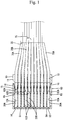
- the detection line 70B projecting to the rear of the housing body 11 is narrowed to a small width together with the signal lines 70A, and in that state, a tape 35 as a bundling member is wound around the detection line 70B and the signal lines 70A, so that the detection line 70B and the signal lines 70A are compactly held and bundled together.
- a folded portion 75 of the detection line 70B is covered by the tape 35 and fixed so as to cohere inside of the tape 35.
- the housing 10 is fitted into the hood 81 of the counterpart housing 80.
- the cam follower 82 of the counterpart housing 80 enters the inlet of the cam groove 41 of the lever 40 through the introduction groove 18 of the housing body 11.
- the cam follower 82 slides on the groove face of the cam groove 41 to exhibit the cam operation, so that both of the housings 10 and 80 are mutually fitted by a low fitting force.
- the cam follower 82 reaches the inner side of the cam groove 41, so that both of the housings 10 and 80 are held in a state of being prevented from being removed from each other.
- the tabs 91A of the counterpart terminal fittings 90A are inserted into the main bodies 21 of the terminal fittings 20A through the tab insertion holes 52, and thereafter, the tabs 91B of the counterpart detection terminals 90B are inserted into the main bodies 21 of the detection terminals 20B through the tab insertion holes 52.
- the tabs 91A of the counterpart terminal fittings 90A come into contact with the elastic contact pieces 24 in the main bodies 21 of the terminal fittings 20A and are conductively connected, but the tabs 91B of the counterpart detection terminals 90B have not yet reached the position where the tabs 91B come into contact with the elastic contact pieces 24 in the main bodies 21 of the detection terminals 20B.
- the detection circuit remains opened at this stage.
- the pair of detection terminals 20B are mutually connected via the detection line 70B, and the detection terminals 20B are formed in the same shape as the terminal fittings 20A.
- the terminal fittings 20A and the detection terminals 20B can be formed in the same process, so that the number of processes and the die cost can be reduced.
- the detection line 70B connected to the pair of detection terminals 20B has a looped shape
- the detection line 70B having a looped shape and the signal lines 70A are fixed together by being wound by the tape 35. Thus, worsening of the space efficiency can be avoided.
- the tabs 91B of the counterpart detection terminals 90B are shorter than the tabs 91A of the counterpart terminal fittings 90A, and the timing at which the counterpart terminal fittings 90A are inserted and connected into the main bodies 21 is set to be earlier than the timing at which the counterpart detection terminals 90B are inserted and connected into the main bodies 21.
- the proper fitting state of both of the housings 10 and 80 can be detected after the terminal fittings 20A and the counterpart terminal fittings 90A are electrically connected, so that the reliability of the fitting detection can be enhanced.
- the retainer 60 is properly inserted into the retainer mounting hole 15 so that the detection terminals 20B are pressed to the front wall 51 side by the pressing portion 67, with the result that the clearance between the retainer 60 and the detection terminals 20B is reduced or rendered substantially absent.
- the detection terminals 20B do not move freely in the cavities 12B greatly, so that the detection reliability can be improved.
- the pressing portion 67 is not provided at the position corresponding to the terminal fittings 20A, the configuration of the retainer 60 is simplified, and the sliding resistance between the pressing portion 67 and the housing body 11 does not become large in the mounting process of the retainer 60. Thus, worsening of the mounting operability of the retainer 60 can be avoided.
Landscapes
- Details Of Connecting Devices For Male And Female Coupling (AREA)
- Connector Housings Or Holding Contact Members (AREA)
Description
- The present invention relates to a connector.
- Patent Literature 1 discloses a connector having a first housing and a second housing, which can be mutually fitted. The first housing is provided with first terminal fittings and first detection terminal. The second housing is provided with second terminal fittings and second detection terminals.
- Each of the first terminal fittings has a box having a tubular shape, and a barrel having an open barrel shape continued to the rear of the box. The barrel is connected to the end of an electric wire by pressure bonding. Furthermore, the first detection terminal has a base portion having a plate shape, and right and left elastic contact pieces extending from the base portion to the front. On the other hand, each of the first terminal fittings and the second detection terminals has a tab having a pin shape (not referred to in Patent Literature 1). The tab of each of the second detection terminals is provided with a conductive portion and a resin portion, which are disposed so as to be aligned in the front-back direction.
- In the fitting process of the first housing and the second housing, the conductive portions of the second detection terminals elastically come into contact with the corresponding elastic contact pieces of the first detection terminal so that a detection circuit is closed. When the first housing and the second housing are properly fitted together, the elastic contact pieces move to ride onto the resin portions of the second detection terminals so that the detection circuit is opened. Therefore, with the opened state of the detection circuit, it is possible to electrically detect that the first housing and the second housing are properly fitted together. It is to be noted that contrary to Patent Literature 1, there is a case where the detection circuit is closed when the first housing and the second housing are properly fitted together, or rather, such a case occurs more often. When the first housing and the second housing are properly fitted together, the tabs of the second terminal fittings are inserted and connected into the boxes of the first terminal fittings, and the first terminal fittings and the second terminal fittings are conductively connected properly.
- Patent Literature 2 describes a locking mechanism connector comprising a plug having contacts and a socket having a structure suitable for receiving the plug, the socket comprising pins engageable with the contacts, characterized by a first locking mechanism for locking the plug in a tight insertion position, a second locking mechanism for locking the plug in a deep insertion position, and indicator means for indicating when the second lock mechanism locks the plug.
-
- Patent Literature 1: Japanese Patent Application Publication No.
2014-135196 - Patent Literature 2:
JP H01 132076 U - In the above case, the first detection terminal is formed in a shape different from the first terminal fittings. Consequently, the process for forming the first detection terminal is necessary aside from the process for forming the first terminal fittings. This may increase the number of processes and increase the cost.
- The present invention has been completed based on the above circumstances, and an object of the present invention is to provide a connector in which terminal fittings and detection terminals can be formed at the same time.
- The present invention is a connector as defined in claim 1, which has a housing capable of being fitted to a counterpart housing, one or more terminal fittings provided in the housing, connected to ends of electric wires, and configured to electrically come into contact with counterpart terminal fittings provided in the counterpart housing when both of the housings are fitted together, and a pair of detection terminals provided in the housing and mutually energized thereby to form a detection circuit when both of the housings are properly fitted together. The pair of detection terminals are mutually connected via an electric wire and formed in the same shape as the terminal fittings.
- The connector of the invention is characterised in that the housing is provided with a plurality of cavities into which the terminal fittings and the detection terminals are each inserted, a front wall closing a space on a front side of the cavities in an insertion direction of the terminal fittings and the detection terminals, and a retainer mounting hole intersecting and communicating with the cavities; a retainer to retain the terminal fittings and the detection terminals is inserted into the retainer mounting hole; and a pressing portion capable of abutting onto the detection terminals and pressing the detection terminals toward the front wall is protrudingly provided in the retainer; and the pressing portion is not disposed at a position corresponding to the terminal fittings.
- Since the pair of detection terminals connected via the electric wire are formed in the same shape as the terminal fittings, the detection terminals can be formed at the same time in the forming process of the terminal fittings. As a result, the number of processes and the die cost can be reduced.
-
-
Fig. 1 is a diagram of a connector according to an example of the present invention, in a state where a detection line having a looped shape and signal lines therearound are bundled by a bundling member, seen in a plan view. -
Fig. 2(A) is a diagram of the interior of a counterpart housing, seen in a plan view. -
Fig. 2(B) is a diagram of a state before the detection line having a looped shape and the signal lines therearound are bundled by the bundling member, seen in a plan view. -
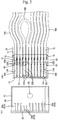
Fig. 3 is a diagram of a state where tabs are being inserted into main bodies at the final stage in which a housing is fitted to the counterpart housing, seen in side view. -
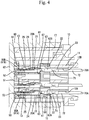
Fig. 4 is a diagram of a state where the tabs have been inserted into the main bodies to the proper depth when both of the housings are properly fitted together, seen in side view. -
Fig. 5 is an enlarged view of a state where a pressing portion of a retainer abuts onto a detection terminal. -
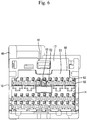
Fig. 6 is a front view of the housing. -
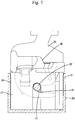
Fig. 7 is a diagram of a state where the housing is properly fitted with the counterpart housing, seen in a plan view. -
Fig. 8 is a front view of the retainer. -
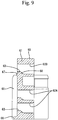
Fig. 9 is a cross-sectional view taken along line X-X inFig. 8 . - A preferable embodiment of the present invention will be described below.
- The electric wire connected to the pair of detection terminals is bundled together with the electric wires connected to the terminal fittings by a bundling member.
- The electric wire connected to the pair of detection terminals has a substantially looped shape (U-shape or annular shape). Consequently, if the electric wire having a looped shape is spread, the space efficiency could be worsened. However, according to the above configuration, the electric wire having a looped shape and the electric wires connected to the terminal fittings are bundled by the bundling member thereby to be held together compactly and efficiently.
- The housing is provided with a plurality of cavities into which the terminal fittings and the detection terminals are each inserted, a front wall closing a space on a front side of the cavities in an insertion direction of the terminal fittings and the detection terminals, and a retainer mounting hole intersecting and communicating with the cavities. A retainer to retain the terminal fittings and the detection terminals is inserted into the retainer mounting hole. A pressing portion capable of abutting onto the detection terminals and pressing the detection terminals toward the front wall is protrudingly provided in the retainer.
- If the detection terminals move freely in the cavities, the detection timing will not be constant, so that the detection reliability could be deteriorated. In that respect, according to the above configuration, the detection terminals are capable of being pressed by the pressing portion in the cavities, so that the clearance between the retainer and the detection terminals is reduced or rendered absent. Thus, the detection terminals do not move freely in the cavities greatly, so that the detection reliability can be improved.
- The pressing portion is not provided at a position corresponding to the terminal fittings.
- Since it is not necessary to strictly prevent the terminal fittings not having a detection function from moving freely in the cavities as compared with the detection terminals, the pressing portion is not provided at the position corresponding to the terminal fittings. This can simplify the configuration of the retainer. Furthermore, the pressing portion is thus provided in the minimum necessary range, so that the sliding resistance caused between the retainer and the housing can be rendered small when the retainer is inserted into the retainer mounting hole. As a result, worsening of mounting operability of the retainer can be avoided.
- The retainer is provided with a stopper configured to abut onto the housing when the retainer is properly inserted into the housing, the stopper and the pressing portion mutually protrude in the same direction, and a protruding end of the pressing portion is located behind a protruding end of the stopper. With this configuration, the pressing portion can be protected from foreign substances by the stopper, with the result that the pressing portion can be prevented from being damaged due to the interference with the foreign substances.
- The counterpart housing is provided with counterpart detection terminals electrically connected to the detection circuit, the counterpart detection terminals and the counterpart terminal fittings are male terminals having respective tabs, the detection terminals and the terminal fittings are female terminals having respective main bodies into which the tabs are each inserted and connected, and the tabs of the counterpart detection terminals are shorter than the tabs of the counterpart terminal fittings.
- The timing at which the tabs of the counterpart detection terminals are inserted and connected into the main bodies can be later than the timing at which the tabs of the counterpart terminal fittings are inserted and connected into the main bodies. This can prevent erroneous fitting detection before the counterpart terminal fittings are electrically connected to the terminal fittings.
- Hereinafter, an example of the present invention will be described with reference to
Figs. 1 to 9 . A connector of the example has ahousing 10, a plurality ofterminal fittings 20A accommodated in thehousing 10, a pair ofdetection terminals 20B also accommodated in thehousing 10, and aretainer 60 assembled into thehousing 10. Thehousing 10 can be fitted to acounterpart housing 80. In the following description, regarding the front-back direction, the side in which both of thehousings Figs. 3 to 6 ,8 , and9 . - The
counterpart housing 80 is made of synthetic resin. As illustrated inFig. 2(A) , thecounterpart housing 80 has ahood 81 having a square cylindrical shape and opened to the front. At the substantially central part of the inner face of the upper wall of the hood 81A, acam follower 82 having a columnar shape is protrudingly provided. A plurality ofcounterpart terminal fittings 90A are attached in thecounterpart housing 80. - The
counterpart terminal fittings 90A are made of conductive metal. As illustrated inFig. 2(A) , thecounterpart terminal fittings 90A havetabs 91A having a pin shape as a whole and extending in the front-back direction. Thetabs 91A penetrate through aback wall 82 of thehood 81, and have respective distal ends disposed so as to protrude into thehood 81. Thetabs 91A are disposed in thehood 81 so as to be aligned at predetermined intervals in the up-down direction and the left-right direction. - Furthermore, as illustrated in
Fig. 2(A) , a pair ofcounterpart detection terminals 90B are attached in thecounterpart housing 80. Thecounterpart detection terminals 90B are electrically connected to a detection circuit, not illustrated. Thecounterpart detection terminals 90B are formed in the same shape as thecounterpart terminal fittings 90A except for size (length), and havetabs 91B having a pin shape and protruding into thehood 81. In thehood 81, thetabs 91B of bothcounterpart detection terminals 90B are disposed side by side and adjacent to each other. More specifically, thetabs 91B of bothcounterpart detection terminals 90B are disposed at the same height position as thecounterpart terminal fittings 90A in the upper row so as to be sandwiched between thecounterpart terminal fittings 90A. - As illustrated in
Fig. 2(A) , thetabs 91B of thecounterpart detection terminals 90B are formed as a whole to be shorter than thetabs 91A of thecounterpart terminal fittings 90A. Thetabs 91B of thecounterpart detection terminals 90B have a smaller amount of protrusion into thehood 81 than thetabs 91A of thecounterpart terminal fittings 90A. Thus, in thehood 81, the distal ends of thetabs 91B of thecounterpart detection terminals 90B are disposed behind the distal ends of thetabs 91A of thecounterpart terminal fittings 90A. - The
housing 10 is made of synthetic resin. As illustrated inFigs. 1 and3 , thehousing 10 has ahousing body 11 having a square block shape as a whole. A plurality ofcavities housing body 11 so as to extend in the front-back direction. Thecavities tabs cavities Fig. 3 , on the upper faces of the inner walls of thecavities terminal fittings 20A are inserted from the rear into thecavities 12A, among thecavities cavities 12B which will be described later. - Each of the
terminal fittings 20A is integrally formed by the bending process of conductive metal plates and the like. As illustrated inFig. 3 , the terminal fitting 20A has amain body 21 having a square tubular shape and elongated in the front-back direction, awire barrel 22 continued to the rear of themain body 21, and aninsulation barrel 23 continued to the rear of thewire barrel 22. Inside the main body 21A, anelastic contact piece 24 having a cantilevered shape and extending so as to be folded back rearward from the front end of the upper wall of themain body 21 is provided so as to be flexible. - In the upper wall of the main body 21A, a
lance hole 25 is provided so as to penetrate therethrough. When the terminal fitting 20A is properly inserted into thecavity 12A, thelance 13 is elastically engaged into thelance hole 25 in themain body 21 so that the terminal fitting 20A is primarily retained in thecavity 12A. - The
wire barrel 22 has an open barrel shape, and is connected by pressure bonding to acore wire 71 exposed by the removal ofcoating 72 at the terminal of an electric wire for signal (hereinafter, called asignal line 70A). Furthermore, theinsulation barrel 23 is connected by pressure bonding to thecoating 72 at the terminal of thesignal line 70A. - As illustrated in
Figs. 1 and3 , thedetection terminals 20B are inserted from the rear into the pair ofcavities 12B disposed side by side and adjacent to each other at the position near the center among thecavities - As the
detection terminals 20B, theterminal fittings 20A are also used. As illustrated inFig. 3 , thedetection terminals 20B are formed in the same shape (the same shape and the same size) as theterminal fittings 20A. Each of thedetection terminals 20B has themain body 21 provided with thelance hole 25 and theelastic contact piece 24, thewire barrel 22, and theinsulation barrel 23. The detailed configurations of thedetection terminals 20B are indicated by the same reference signs as theterminal fittings 20A. - The wire barrels 22 and the insulation barrels 23 are connected by pressure bonding to the terminal of an electric wire for detection (hereinafter, called a
detection line 70B) which detects the fitting of both of thehousings - The
detection line 70B has the same configuration as thesignal lines 70A, although having a different use. - As illustrated in
Fig. 2 , the wire barrels 22 and the insulation barrels 23 of thedetection terminals 20B are connected to both lengthwise ends of thedetection line 70B, and themain bodies 21 of bothdetection terminals 20B are directed to the front and are disposed in parallel, so that thedetection line 70B is turned and bent in a looped shape (U-shape or annular shape). Thus, bothdetection terminals 20B are coupled together so as to be capable of being energized via onedetection line 70B having a looped shape. - As illustrated in
Fig. 6 , the front face of thehousing body 11 has a portion having a gate shape from the upper end to both left and right sides, and afitting recess 14 is provided inside the portion so as to be stepped down by one step. Afront holder 50 separate from thehousing body 11 is fitted into thefitting recess 14. Thefront holder 50 has a plate shapedfront wall 51 which covers the front face of the housing body 11 (in detail, the inner face of the fitting recess 14). In the front wall 51A, a plurality of tab insertion holes 52 are provided so as to penetrate therethrough at the positions corresponding to thecavities Figs. 2 and3 , a space in front of thecavities front wall 51 except for the tab insertion holes 52, at the front end of thehousing 10. - As illustrated in
Figs. 3 and6 , on the front face of thefront wall 51, guidingportions 53 having a tapered shape and enlarged to the front are provided at the opening edges of the tab insertion holes 52. Thetabs portions 53, and are inserted from the tab insertion holes 52 into thecavities Figs. 1 and3 , the rear portions of the tab insertion holes 52 have substantially the same opening diameter as thecavities cavities main bodies 21 are inserted therein in a fitted state. - Furthermore, as illustrated in
Figs. 1 and3 , aretainer mounting hole 15 is provided in thehousing body 11 so as to be opened from the lower face to both side faces of thehousing body 11. Theretainer mounting hole 15 has a square shape in cross section, seen from the side (seeFig. 3 ), and intersects thecavities cavities retainer 60 is inserted from below into theretainer mounting hole 15. - The
retainer 60 is made of synthetic resin. As illustrated inFigs. 8 and9 , theretainer 60 has aretainer body 61 having a plate shape along the up-down direction and the width direction. As illustrated inFig. 3 , theretainer body 61 has such a shape and size that theretainer body 61 can be internally fitted into theretainer mounting hole 15. In theretainer body 61, a plurality of throughholes Figs. 1 and3 , the throughholes cavities retainer 60 is properly inserted into theretainer mounting hole 15. - As illustrated in
Figs. 8 and9 , retainingportions 63 are protrudingly provided at the lower edges of the throughholes Fig. 8 , retainingportions 63 are also protrudingly provided in a pair of recessedsteps 64 recessed at both widthwise ends of theretainer body 61. As illustrated inFig. 3 , when theretainer 60 is properly inserted into theretainer mounting hole 15, the retainingportions 63 enter the correspondingcavities main bodies 21 of theterminal fittings 20A and thedetection terminals 20B respectively, so that theterminal fittings 20A and thedetection terminals 20B are secondarily retained in thecavities - Furthermore, as illustrated in
Figs. 1 and8 , theretainer body 61 is provided with a pair ofprotective walls 65 having a plate shape and extending from both widthwise ends of theretainer body 61 to both front and rear sides. As illustrated inFig. 1 , theprotective walls 65 are inserted in a fitted state intofitting grooves 16 which are provided so as to be opened in both widthwise end faces of thehousing body 11, and close both side openings of theretainer mounting hole 15. In the mounting process of theretainer 60, theprotective walls 65 slide on the groove faces of thefitting grooves 16 so that the mounting operation of theretainer 60 is guided. - As illustrated in
Figs. 8 and9 , in the lower end of the front face of theretainer body 61, astopper 66 having a rib shape along the width direction is protrudingly provided at a position near the center. When theretainer 60 is properly inserted into theretainer mounting hole 15, thestopper 66 abuts onto the lower end of thehousing body 11 thereby to prevent theretainer 60 from being pressed in. - Furthermore, as illustrated in
Figs. 8 and9 , on the front face of theretainer body 61, apressing portion 67 having a rib shape along the width direction is protrudingly provided immediately below the pair of throughholes 62B which are located near the center among the throughholes pressing portion 67 is disposed so as to be across both throughholes 62B in substantially parallel with the lower edges of the pair of throughholes 62B. As illustrated inFig. 9 , thepressing portion 67 has a substantially trapezoidal shape in cross section protruding above thestopper 66 with a smaller amount of protrusion than thestopper 66. - The lower portion of the
pressing portion 67 and thestopper 66 are invisible in side view by being hidden by theprotective walls 65, and are substantially covered by both protective walls 65 (seeFig. 9 ). Accordingly, it can be avoided that foreign substances, not illustrated, from the side, interfere with thepressing portion 67 and thestopper 66, and thus, thepressing portion 67 and thestopper 66 are protected by theprotective walls 65. Furthermore, since the protruding end of thepressing portion 67 is located behind the protruding end of thestopper 66, the foreign substances cannot interfere with thepressing portion 67 even when interfering with thestopper 66, and thus, thepressing portion 67 can be protected by thestopper 66. - When the
retainer 60 is properly inserted into theretainer mounting hole 15, the pair of throughholes 62B communicate with bothcavities 12B (seeFig. 1 ), and thepressing portion 67 enters bothcavities 12B from below and is disposed therein (seeFig. 3 ). Then, thepressing portion 67 which has entered bothcavities 12B abuts onto the lower edges of the rear ends of themain bodies 21 of thedetection terminals 20B, and presses thedetection terminals 20B to the front side (the side on which thefront wall 51 is located). Thus, as illustrated inFig. 5 , the clearance between themain bodies 21 of thedetection terminals 20B and theretainer body 61 is rendered substantially absent. Furthermore, when thedetection line 70B connected to thedetection terminals 20B is pulled to the rear, the state where thepressing portion 67 abuts onto themain bodies 21 of thedetection terminals 20B is maintained, with the result that thedetection terminals 20B are prevented from being pulled out to the rear. As illustrated inFig. 5 , thepressing portion 67 is provided in athick wall 68 together with the retainingportions 63 provided in the throughholes 62B, and retains thedetection terminals 20B together with the retainingportions 63. - As illustrated in
Fig. 8 , thepressing portion 67 is not provided at a position corresponding to thecavities 12A into which theterminal fittings 20A are inserted, and only one pressingportion 67 is provided at a position corresponding to the pair ofcavities 12B. - Furthermore, as illustrated in
Figs. 6 and7 , in the upper end of thehousing body 11, alever accommodating portion 17 is provided above the region in which thecavities lever accommodating portion 17 is provided with anintroduction groove 18 extending in the front-back direction and opened to the front end of thehousing body 11. Thelever accommodating portion 17 is configured so that alever 40 is rotatably accommodated and attached therein. Thelever 40 has a plate shape, and has acam groove 41 extending in a predetermined direction. Furthermore, as illustrated inFig. 7 , anelectric wire cover 30 having a cap shape is attached to the rear end of thehousing body 11. Thesignal lines 70A and thedetection line 70B are drawn out from thehousing body 11, and are drawn out to the outside while being enclosed by theelectric wire cover 30. - Next, the assembling procedure and operation of the connector will be described.
- Before being assembled into the
housing 10, the pair ofdetection terminals 20B are respectively connected to both ends of thecommon detection line 70B. Then, the pair ofdetection terminals 20B are disposed in parallel so that themain bodies 21 are directed to the front while thedetection line 70B is turned and bent in a looped shape. Furthermore, the plurality ofterminal fittings 20A are respectively connected to the ends of thecorresponding signal lines 70A and also disposed so that themain bodies 21 are directed to the front. - Subsequently, the
terminal fittings 20A and bothdetection terminals 20B are inserted into thecavities housing body 11 from the rear respectively, and are primarily retained by thelances 13. At this time, the front ends of theterminal fittings 20A and the front ends of bothdetection terminals 20B are disposed so as to be aligned at substantially the same position with respect to the front-back direction. - Although not illustrated, before the
terminal fittings 20A and bothdetection terminals 20B are inserted into thecavities retainer 60 is held at the temporary engaging position with respect to thehousing 10, and the retainingportions 63 and thepressing portion 67 are disposed so as to be retracted from the correspondingcavities terminal fittings 20A and bothdetection terminals 20B are inserted into thecavities portions 63 and thepressing portion 67. - After the
terminal fittings 20A and bothdetection terminals 20B are inserted into thecavities retainer 60 is pressed in upward. In the insertion process of theretainer 60, since thepressing portion 67 slides on the inner face of theretainer mounting hole 15, there is a possibility that sliding resistance could occur. However, since thepressing portion 67 is provided only in the minimum necessary range corresponding to bothdetection terminals 20B, the sliding resistance is not particularly excessive. - When the
retainer 60 is held at the final engaging position with respect to thehousing 10 and is properly inserted into theretainer mounting hole 15, thepressing portion 67 abuts onto the lower edges of the rear ends of themain bodies 21 of bothdetection terminals 20B to press bothdetection terminals 20B to the front, and themain bodies 21 of bothdetection terminals 20B are disposed between thefront wall 51 and thepressing portion 67 in a state where free movement in the front-back direction is substantially prevented (seeFig. 3 ). On the other hand, behind themain bodies 21 of theterminal fittings 20A and bothdetection terminals 20B, the corresponding retainingportions 63 are disposed opposite to themain bodies 21 with small gaps therebetween so as to be engageable with themain bodies 21. - As illustrated in
Fig. 2(B) , when thedetection terminals 20B are inserted into thecavities 12B, thedetection line 70B is disposed so as to spread in a predetermined range behind thehousing body 11 in a turned and bent state in a looped shape. Due to this, thesignal lines 70A located on both sides of thedetection line 70B having a looped shape are also spread by being pressed by thedetection line 70B, so that the space efficiency of the electric wire routing could be deteriorated. In view of this, in this example, as illustrated inFig. 1 , thedetection line 70B projecting to the rear of thehousing body 11 is narrowed to a small width together with thesignal lines 70A, and in that state, atape 35 as a bundling member is wound around thedetection line 70B and thesignal lines 70A, so that thedetection line 70B and thesignal lines 70A are compactly held and bundled together. In particular, in the illustrated case, in order to reliably prevent the spread of thedetection line 70B, a foldedportion 75 of thedetection line 70B is covered by thetape 35 and fixed so as to cohere inside of thetape 35. - Subsequently, the
housing 10 is fitted into thehood 81 of thecounterpart housing 80. When both of thehousings cam follower 82 of thecounterpart housing 80 enters the inlet of thecam groove 41 of thelever 40 through theintroduction groove 18 of thehousing body 11. When thelever 40 is rotated in that state, thecam follower 82 slides on the groove face of thecam groove 41 to exhibit the cam operation, so that both of thehousings Fig. 7 , when both of thehousings cam follower 82 reaches the inner side of thecam groove 41, so that both of thehousings - Now, in the final fitting stage of both of the
housings Fig. 3 , thetabs 91A of thecounterpart terminal fittings 90A are inserted into themain bodies 21 of theterminal fittings 20A through the tab insertion holes 52, and thereafter, thetabs 91B of thecounterpart detection terminals 90B are inserted into themain bodies 21 of thedetection terminals 20B through the tab insertion holes 52. At this time, thetabs 91A of thecounterpart terminal fittings 90A come into contact with theelastic contact pieces 24 in themain bodies 21 of theterminal fittings 20A and are conductively connected, but thetabs 91B of thecounterpart detection terminals 90B have not yet reached the position where thetabs 91B come into contact with theelastic contact pieces 24 in themain bodies 21 of thedetection terminals 20B. Thus, the detection circuit remains opened at this stage. - Thereafter, as illustrated in
Fig. 4 , when both of thehousings tabs 91A of thecounterpart terminal fittings 90A are inserted to the proper depth into themain bodies 21 of theterminal fittings 20A and maintain the contact state with theelastic contact pieces 24, and thetabs 91B of thecounterpart detection terminals 90B come into contact with theelastic contact pieces 24 and are conductively connected. As a result, the detection circuit is closed, and it becomes possible to electrically detect that both of thehousings - As described above, according to this example, the pair of
detection terminals 20B are mutually connected via thedetection line 70B, and thedetection terminals 20B are formed in the same shape as theterminal fittings 20A. Thus, theterminal fittings 20A and thedetection terminals 20B can be formed in the same process, so that the number of processes and the die cost can be reduced. - Furthermore, although the
detection line 70B connected to the pair ofdetection terminals 20B has a looped shape, thedetection line 70B having a looped shape and thesignal lines 70A are fixed together by being wound by thetape 35. Thus, worsening of the space efficiency can be avoided. - Furthermore, the
tabs 91B of thecounterpart detection terminals 90B are shorter than thetabs 91A of thecounterpart terminal fittings 90A, and the timing at which thecounterpart terminal fittings 90A are inserted and connected into themain bodies 21 is set to be earlier than the timing at which thecounterpart detection terminals 90B are inserted and connected into themain bodies 21. Thus, the proper fitting state of both of thehousings terminal fittings 20A and thecounterpart terminal fittings 90A are electrically connected, so that the reliability of the fitting detection can be enhanced. - Furthermore, after the
detection terminals 20B are inserted into thecavities 12B, theretainer 60 is properly inserted into theretainer mounting hole 15 so that thedetection terminals 20B are pressed to thefront wall 51 side by thepressing portion 67, with the result that the clearance between theretainer 60 and thedetection terminals 20B is reduced or rendered substantially absent. Thus, thedetection terminals 20B do not move freely in thecavities 12B greatly, so that the detection reliability can be improved. - Furthermore, since the
pressing portion 67 is not provided at the position corresponding to theterminal fittings 20A, the configuration of theretainer 60 is simplified, and the sliding resistance between thepressing portion 67 and thehousing body 11 does not become large in the mounting process of theretainer 60. Thus, worsening of the mounting operability of theretainer 60 can be avoided. - Other examples will be briefly described below.
- (1) When a plurality types of terminal fittings having different shapes and sizes are accommodated in the housing, at least one type of the terminal fittings and detection terminals should be formed in the same shape.
- (2) The terminal fittings and the detection terminals may be male terminal fittings in which the tabs protrude to the front of the main body portions having a tubular shape.
- (3) In the above example, the front wall is provided in the front holder separate from the housing body, but according to the present invention, the front wall may be provided integrally with the housing body.
- (4) The pressing portion may be individually disposed at the position corresponding to each of the pair of detection terminals.
- (5) The entire pressing portion may be covered by the protective walls so as to be invisible in side view by being hidden by the protective walls.
- (6) When the detection terminals are deeply inserted into the cavities and are located ahead of the predetermined positions, the pressing portion may not abut onto the main bodies of the detection terminals when the retainer is properly inserted into the retainer mounting hole.
- (7) The bundling member to bundle the detection line and the signal lines is not particularly limited, and in place of the tape, for example, a tie band may be used.
-
- 10
- housing
- 12A
- cavity (into which a terminal fitting is inserted)
- 12B
- cavity (into which a detection terminal is inserted)
- 15
- retainer mounting hole
- 20A
- terminal fitting
- 20B
- detection terminal
- 21
- main body
- 35
- tape (bundling member)
- 51
- front wall
- 60
- retainer
- 65
- protective wall
- 67
- pressing portion
- 70A
- signal line (electric wire for signal)
- 70B
- detection line (electric wire for detection)
- 90A
- counterpart terminal fitting
- 90B
- counterpart detection terminal
- 91A
- tab (of a counterpart terminal fitting)
- 91B
- tab (of a counterpart detection terminal)
Claims (4)
- A connector comprising:a housing (10) capable of being fitted to a counterpart housing (80);one or more terminal fittings (20A) provided in the housing, connected to ends of electric wires, and configured to electrically come into contact with counterpart terminal fittings (90A) provided in the counterpart housing (80) when both of the housings (10; 80) are fitted together; anda pair of detection terminals (20B) provided in the housing (10) and configured to mutually energized thereby to form a detection circuit when both of the housings (10; 80) are properly fitted together; and
an electric wire via which the pair of detection terminals (20B) are mutually connected; wherein said detection terminals (20B) are formed in the same shape as the terminal fittings (20A);characterized in that the housing (10) is provided with a plurality of cavities (12A; 12B) into which the terminal fittings (20A) and the detection terminals (20B) are each inserted, a front wall (51) closing a space on a front side of the cavities in an insertion direction of the terminal fittings (20A) and the detection terminals (20B), and a retainer mounting hole (15) intersecting and communicating with the cavities (12A; 12B); the connector further comprisinga retainer (60) to retain the terminal fittings (20A) and the detection terminals (20B) inserted into the retainer mounting hole (15); whereina pressing portion (67) capable of abutting onto the detection terminals (20B) and pressing the detection terminals (20B) toward the front wall (51) is protrudingly provided in the retainer (60); andthe pressing portion (67) is not disposed at a position corresponding to the terminal fittings (20A). - The connector according to claim 1, further comprising a bundling member (35), wherein the electric wire connected to the pair of detection terminals (20B) is bundled together with the electric wires connected to the terminal fittings (20A) by said bundling member (35).
- The connector according to claim 1 or 2, wherein the retainer (60) is provided with a stopper (66) configured to abut onto the housing (10) when the retainer (60) is properly inserted into the housing (10), the stopper (66) and the pressing portion (67) mutually protrude in the same direction, and a protruding end of the pressing portion (67) is located behind a protruding end of the stopper (66).
- The connector according to any one of claims 1, 2 and 3, wherein the housing (10) is configured to be fitted to a counterpart housing (80) provided with counterpart detection terminals (90B) that are electrically connected to the detection circuit when both of the housings (10, 80) are properly fitted together, wherein the counterpart detection terminals (90B) and the counterpart terminal fittings (90A) are male terminals having respective tabs (91A; 91B), and wherein the detection terminals (20B) and the terminal fittings (20A) are female terminals having respective main bodies (21) configured so that the tabs (91A; 91B) can be each inserted and connected into said main bodies (21), wherein the tabs of the counterpart detection terminals (91B) are shorter than the tabs of the counterpart terminal fittings (91A).
Applications Claiming Priority (2)
| Application Number | Priority Date | Filing Date | Title |
|---|---|---|---|
| JP2015109566 | 2015-05-29 | ||
| PCT/JP2016/064231 WO2016194579A1 (en) | 2015-05-29 | 2016-05-13 | Connector |
Publications (3)
| Publication Number | Publication Date |
|---|---|
| EP3306754A1 EP3306754A1 (en) | 2018-04-11 |
| EP3306754A4 EP3306754A4 (en) | 2019-01-02 |
| EP3306754B1 true EP3306754B1 (en) | 2019-08-14 |
Family
ID=57441970
Family Applications (1)
| Application Number | Title | Priority Date | Filing Date |
|---|---|---|---|
| EP16803016.1A Active EP3306754B1 (en) | 2015-05-29 | 2016-05-13 | Connector |
Country Status (5)
| Country | Link |
|---|---|
| US (1) | US10141691B2 (en) |
| EP (1) | EP3306754B1 (en) |
| JP (1) | JP6393418B2 (en) |
| CN (1) | CN107615595B (en) |
| WO (1) | WO2016194579A1 (en) |
Families Citing this family (4)
| Publication number | Priority date | Publication date | Assignee | Title |
|---|---|---|---|---|
| JP6946967B2 (en) * | 2017-11-22 | 2021-10-13 | 住友電装株式会社 | Terminal holder, wire harness, fixed structure |
| JP7318311B2 (en) * | 2019-05-29 | 2023-08-01 | 株式会社オートネットワーク技術研究所 | female connector and connector |
| CN114441178B (en) * | 2022-01-29 | 2023-06-23 | 中国航发湖南动力机械研究所 | Threading seal structure with adjustable |
| DE102023106977B3 (en) | 2023-03-21 | 2024-08-22 | Lisa Dräxlmaier GmbH | Plug with interlock contact, plug connection and method for producing a plug connection |
Family Cites Families (17)
| Publication number | Priority date | Publication date | Assignee | Title |
|---|---|---|---|---|
| JPS6265778A (en) | 1985-09-17 | 1987-03-25 | Dainippon Screen Mfg Co Ltd | Method for coating liquid agent |
| JPS6265778U (en) * | 1985-10-11 | 1987-04-23 | ||
| JPH0632244B2 (en) | 1987-11-17 | 1994-04-27 | 松下電器産業株式会社 | Jumper taping device |
| JPH01132076U (en) * | 1988-03-04 | 1989-09-07 | ||
| JPH04127982A (en) | 1990-09-18 | 1992-04-28 | Nec Corp | Laser marking machine |
| JPH04127982U (en) * | 1991-05-14 | 1992-11-20 | 本田技研工業株式会社 | Couplers with anti-disengagement means |
| JP2852497B2 (en) * | 1995-03-16 | 1999-02-03 | モレックス インコーポレーテッド | Electrical connector |
| US6545562B2 (en) * | 2001-02-09 | 2003-04-08 | Adc Telecommunications, Inc. | Plug connector for cable television network and method of use |
| JP2003317870A (en) * | 2002-04-23 | 2003-11-07 | Sumitomo Wiring Syst Ltd | connector |
| JP2005005126A (en) * | 2003-06-11 | 2005-01-06 | Sumitomo Wiring Syst Ltd | connector |
| US7056159B2 (en) * | 2003-06-11 | 2006-06-06 | Sumitomo Wiring Systems, Ltd. | Connector |
| JP4857899B2 (en) * | 2006-05-12 | 2012-01-18 | 住友電装株式会社 | connector |
| JP5223777B2 (en) * | 2009-05-27 | 2013-06-26 | 住友電装株式会社 | connector |
| JP2014135196A (en) * | 2013-01-10 | 2014-07-24 | Sumitomo Wiring Syst Ltd | Connector |
| CN107017489B (en) * | 2016-01-28 | 2019-09-06 | 莫列斯有限公司 | Electric connector |
| JP6548038B2 (en) * | 2016-06-17 | 2019-07-24 | 住友電装株式会社 | connector |
| JP6499131B2 (en) * | 2016-07-29 | 2019-04-10 | 矢崎総業株式会社 | connector |
-
2016
- 2016-05-13 EP EP16803016.1A patent/EP3306754B1/en active Active
- 2016-05-13 CN CN201680026980.XA patent/CN107615595B/en active Active
- 2016-05-13 WO PCT/JP2016/064231 patent/WO2016194579A1/en not_active Ceased
- 2016-05-13 US US15/575,406 patent/US10141691B2/en active Active
- 2016-05-13 JP JP2017521769A patent/JP6393418B2/en active Active
Non-Patent Citations (1)
| Title |
|---|
| None * |
Also Published As
| Publication number | Publication date |
|---|---|
| JP6393418B2 (en) | 2018-09-19 |
| CN107615595B (en) | 2019-07-26 |
| JPWO2016194579A1 (en) | 2018-03-29 |
| US10141691B2 (en) | 2018-11-27 |
| CN107615595A (en) | 2018-01-19 |
| EP3306754A4 (en) | 2019-01-02 |
| WO2016194579A1 (en) | 2016-12-08 |
| EP3306754A1 (en) | 2018-04-11 |
| US20180145456A1 (en) | 2018-05-24 |
Similar Documents
| Publication | Publication Date | Title |
|---|---|---|
| US7556539B2 (en) | Connector | |
| EP1536527B1 (en) | A watertight connector and method of assembling it | |
| US20130288542A1 (en) | Connector | |
| US9362665B2 (en) | Joint connector with pairs of locking lances and communication space extending between the pairs of locking lances | |
| AU2011224127B2 (en) | Connector | |
| US9124018B2 (en) | Connector and method of making the same | |
| US7980880B2 (en) | Connector | |
| US9118127B2 (en) | Connector | |
| US9859645B2 (en) | Connector including a terminal retainer | |
| CN113661611B (en) | Connector with a locking member | |
| US10141691B2 (en) | Connector | |
| EP2493025B1 (en) | Connector | |
| US20240204426A1 (en) | Connector | |
| US9065198B2 (en) | Connector with foreign substance entrance preventing portion | |
| US20250286300A1 (en) | Connector | |
| JP6243277B2 (en) | Shield connector | |
| EP3460922B1 (en) | Connector | |
| CN115244789B (en) | Connector and method for manufacturing connector | |
| JP4823844B2 (en) | Socket terminal | |
| EP3322044B1 (en) | Connector having wiring cover | |
| CN119032470A (en) | Connectors | |
| US10892582B2 (en) | Connector with upper and lower covers | |
| US9196993B2 (en) | Connector unit | |
| US10804625B2 (en) | Terminal, method of connecting electric wire to terminal, and jig | |
| JP2002184508A (en) | connector |
Legal Events
| Date | Code | Title | Description |
|---|---|---|---|
| STAA | Information on the status of an ep patent application or granted ep patent |
Free format text: STATUS: THE INTERNATIONAL PUBLICATION HAS BEEN MADE |
|
| PUAI | Public reference made under article 153(3) epc to a published international application that has entered the european phase |
Free format text: ORIGINAL CODE: 0009012 |
|
| STAA | Information on the status of an ep patent application or granted ep patent |
Free format text: STATUS: REQUEST FOR EXAMINATION WAS MADE |
|
| 17P | Request for examination filed |
Effective date: 20171116 |
|
| AK | Designated contracting states |
Kind code of ref document: A1 Designated state(s): AL AT BE BG CH CY CZ DE DK EE ES FI FR GB GR HR HU IE IS IT LI LT LU LV MC MK MT NL NO PL PT RO RS SE SI SK SM TR |
|
| AX | Request for extension of the european patent |
Extension state: BA ME |
|
| DAV | Request for validation of the european patent (deleted) | ||
| DAX | Request for extension of the european patent (deleted) | ||
| A4 | Supplementary search report drawn up and despatched |
Effective date: 20181129 |
|
| RIC1 | Information provided on ipc code assigned before grant |
Ipc: H01R 13/422 20060101ALN20181123BHEP Ipc: H01R 13/436 20060101AFI20181123BHEP |
|
| REG | Reference to a national code |
Ref country code: DE Ref legal event code: R079 Ref document number: 602016018764 Country of ref document: DE Free format text: PREVIOUS MAIN CLASS: H01R0013640000 Ipc: H01R0013436000 |
|
| GRAP | Despatch of communication of intention to grant a patent |
Free format text: ORIGINAL CODE: EPIDOSNIGR1 |
|
| STAA | Information on the status of an ep patent application or granted ep patent |
Free format text: STATUS: GRANT OF PATENT IS INTENDED |
|
| RIC1 | Information provided on ipc code assigned before grant |
Ipc: H01R 13/436 20060101AFI20190228BHEP Ipc: H01R 13/422 20060101ALN20190228BHEP |
|
| RIC1 | Information provided on ipc code assigned before grant |
Ipc: H01R 13/436 20060101AFI20190305BHEP Ipc: H01R 13/422 20060101ALN20190305BHEP Ipc: H01R 13/641 20060101ALN20190305BHEP |
|
| INTG | Intention to grant announced |
Effective date: 20190326 |
|
| GRAS | Grant fee paid |
Free format text: ORIGINAL CODE: EPIDOSNIGR3 |
|
| GRAA | (expected) grant |
Free format text: ORIGINAL CODE: 0009210 |
|
| STAA | Information on the status of an ep patent application or granted ep patent |
Free format text: STATUS: THE PATENT HAS BEEN GRANTED |
|
| AK | Designated contracting states |
Kind code of ref document: B1 Designated state(s): AL AT BE BG CH CY CZ DE DK EE ES FI FR GB GR HR HU IE IS IT LI LT LU LV MC MK MT NL NO PL PT RO RS SE SI SK SM TR |
|
| REG | Reference to a national code |
Ref country code: GB Ref legal event code: FG4D |
|
| REG | Reference to a national code |
Ref country code: CH Ref legal event code: EP Ref country code: AT Ref legal event code: REF Ref document number: 1168128 Country of ref document: AT Kind code of ref document: T Effective date: 20190815 |
|
| REG | Reference to a national code |
Ref country code: IE Ref legal event code: FG4D |
|
| REG | Reference to a national code |
Ref country code: DE Ref legal event code: R096 Ref document number: 602016018764 Country of ref document: DE |
|
| REG | Reference to a national code |
Ref country code: NL Ref legal event code: MP Effective date: 20190814 |
|
| REG | Reference to a national code |
Ref country code: LT Ref legal event code: MG4D |
|
| PG25 | Lapsed in a contracting state [announced via postgrant information from national office to epo] |
Ref country code: NL Free format text: LAPSE BECAUSE OF FAILURE TO SUBMIT A TRANSLATION OF THE DESCRIPTION OR TO PAY THE FEE WITHIN THE PRESCRIBED TIME-LIMIT Effective date: 20190814 Ref country code: HR Free format text: LAPSE BECAUSE OF FAILURE TO SUBMIT A TRANSLATION OF THE DESCRIPTION OR TO PAY THE FEE WITHIN THE PRESCRIBED TIME-LIMIT Effective date: 20190814 Ref country code: LT Free format text: LAPSE BECAUSE OF FAILURE TO SUBMIT A TRANSLATION OF THE DESCRIPTION OR TO PAY THE FEE WITHIN THE PRESCRIBED TIME-LIMIT Effective date: 20190814 Ref country code: BG Free format text: LAPSE BECAUSE OF FAILURE TO SUBMIT A TRANSLATION OF THE DESCRIPTION OR TO PAY THE FEE WITHIN THE PRESCRIBED TIME-LIMIT Effective date: 20191114 Ref country code: SE Free format text: LAPSE BECAUSE OF FAILURE TO SUBMIT A TRANSLATION OF THE DESCRIPTION OR TO PAY THE FEE WITHIN THE PRESCRIBED TIME-LIMIT Effective date: 20190814 Ref country code: PT Free format text: LAPSE BECAUSE OF FAILURE TO SUBMIT A TRANSLATION OF THE DESCRIPTION OR TO PAY THE FEE WITHIN THE PRESCRIBED TIME-LIMIT Effective date: 20191216 Ref country code: FI Free format text: LAPSE BECAUSE OF FAILURE TO SUBMIT A TRANSLATION OF THE DESCRIPTION OR TO PAY THE FEE WITHIN THE PRESCRIBED TIME-LIMIT Effective date: 20190814 Ref country code: NO Free format text: LAPSE BECAUSE OF FAILURE TO SUBMIT A TRANSLATION OF THE DESCRIPTION OR TO PAY THE FEE WITHIN THE PRESCRIBED TIME-LIMIT Effective date: 20191114 |
|
| REG | Reference to a national code |
Ref country code: AT Ref legal event code: MK05 Ref document number: 1168128 Country of ref document: AT Kind code of ref document: T Effective date: 20190814 |
|
| PG25 | Lapsed in a contracting state [announced via postgrant information from national office to epo] |
Ref country code: LV Free format text: LAPSE BECAUSE OF FAILURE TO SUBMIT A TRANSLATION OF THE DESCRIPTION OR TO PAY THE FEE WITHIN THE PRESCRIBED TIME-LIMIT Effective date: 20190814 Ref country code: RS Free format text: LAPSE BECAUSE OF FAILURE TO SUBMIT A TRANSLATION OF THE DESCRIPTION OR TO PAY THE FEE WITHIN THE PRESCRIBED TIME-LIMIT Effective date: 20190814 Ref country code: GR Free format text: LAPSE BECAUSE OF FAILURE TO SUBMIT A TRANSLATION OF THE DESCRIPTION OR TO PAY THE FEE WITHIN THE PRESCRIBED TIME-LIMIT Effective date: 20191115 Ref country code: IS Free format text: LAPSE BECAUSE OF FAILURE TO SUBMIT A TRANSLATION OF THE DESCRIPTION OR TO PAY THE FEE WITHIN THE PRESCRIBED TIME-LIMIT Effective date: 20191214 Ref country code: ES Free format text: LAPSE BECAUSE OF FAILURE TO SUBMIT A TRANSLATION OF THE DESCRIPTION OR TO PAY THE FEE WITHIN THE PRESCRIBED TIME-LIMIT Effective date: 20190814 Ref country code: AL Free format text: LAPSE BECAUSE OF FAILURE TO SUBMIT A TRANSLATION OF THE DESCRIPTION OR TO PAY THE FEE WITHIN THE PRESCRIBED TIME-LIMIT Effective date: 20190814 |
|
| PG25 | Lapsed in a contracting state [announced via postgrant information from national office to epo] |
Ref country code: TR Free format text: LAPSE BECAUSE OF FAILURE TO SUBMIT A TRANSLATION OF THE DESCRIPTION OR TO PAY THE FEE WITHIN THE PRESCRIBED TIME-LIMIT Effective date: 20190814 |
|
| PG25 | Lapsed in a contracting state [announced via postgrant information from national office to epo] |
Ref country code: DK Free format text: LAPSE BECAUSE OF FAILURE TO SUBMIT A TRANSLATION OF THE DESCRIPTION OR TO PAY THE FEE WITHIN THE PRESCRIBED TIME-LIMIT Effective date: 20190814 Ref country code: EE Free format text: LAPSE BECAUSE OF FAILURE TO SUBMIT A TRANSLATION OF THE DESCRIPTION OR TO PAY THE FEE WITHIN THE PRESCRIBED TIME-LIMIT Effective date: 20190814 Ref country code: AT Free format text: LAPSE BECAUSE OF FAILURE TO SUBMIT A TRANSLATION OF THE DESCRIPTION OR TO PAY THE FEE WITHIN THE PRESCRIBED TIME-LIMIT Effective date: 20190814 Ref country code: IT Free format text: LAPSE BECAUSE OF FAILURE TO SUBMIT A TRANSLATION OF THE DESCRIPTION OR TO PAY THE FEE WITHIN THE PRESCRIBED TIME-LIMIT Effective date: 20190814 Ref country code: RO Free format text: LAPSE BECAUSE OF FAILURE TO SUBMIT A TRANSLATION OF THE DESCRIPTION OR TO PAY THE FEE WITHIN THE PRESCRIBED TIME-LIMIT Effective date: 20190814 Ref country code: PL Free format text: LAPSE BECAUSE OF FAILURE TO SUBMIT A TRANSLATION OF THE DESCRIPTION OR TO PAY THE FEE WITHIN THE PRESCRIBED TIME-LIMIT Effective date: 20190814 |
|
| PG25 | Lapsed in a contracting state [announced via postgrant information from national office to epo] |
Ref country code: IS Free format text: LAPSE BECAUSE OF FAILURE TO SUBMIT A TRANSLATION OF THE DESCRIPTION OR TO PAY THE FEE WITHIN THE PRESCRIBED TIME-LIMIT Effective date: 20200224 Ref country code: SM Free format text: LAPSE BECAUSE OF FAILURE TO SUBMIT A TRANSLATION OF THE DESCRIPTION OR TO PAY THE FEE WITHIN THE PRESCRIBED TIME-LIMIT Effective date: 20190814 Ref country code: SK Free format text: LAPSE BECAUSE OF FAILURE TO SUBMIT A TRANSLATION OF THE DESCRIPTION OR TO PAY THE FEE WITHIN THE PRESCRIBED TIME-LIMIT Effective date: 20190814 Ref country code: CZ Free format text: LAPSE BECAUSE OF FAILURE TO SUBMIT A TRANSLATION OF THE DESCRIPTION OR TO PAY THE FEE WITHIN THE PRESCRIBED TIME-LIMIT Effective date: 20190814 |
|
| REG | Reference to a national code |
Ref country code: DE Ref legal event code: R097 Ref document number: 602016018764 Country of ref document: DE |
|
| PLBE | No opposition filed within time limit |
Free format text: ORIGINAL CODE: 0009261 |
|
| STAA | Information on the status of an ep patent application or granted ep patent |
Free format text: STATUS: NO OPPOSITION FILED WITHIN TIME LIMIT |
|
| PG2D | Information on lapse in contracting state deleted |
Ref country code: IS |
|
| 26N | No opposition filed |
Effective date: 20200603 |
|
| PG25 | Lapsed in a contracting state [announced via postgrant information from national office to epo] |
Ref country code: SI Free format text: LAPSE BECAUSE OF FAILURE TO SUBMIT A TRANSLATION OF THE DESCRIPTION OR TO PAY THE FEE WITHIN THE PRESCRIBED TIME-LIMIT Effective date: 20190814 |
|
| PG25 | Lapsed in a contracting state [announced via postgrant information from national office to epo] |
Ref country code: CH Free format text: LAPSE BECAUSE OF NON-PAYMENT OF DUE FEES Effective date: 20200531 Ref country code: LI Free format text: LAPSE BECAUSE OF NON-PAYMENT OF DUE FEES Effective date: 20200531 Ref country code: MC Free format text: LAPSE BECAUSE OF FAILURE TO SUBMIT A TRANSLATION OF THE DESCRIPTION OR TO PAY THE FEE WITHIN THE PRESCRIBED TIME-LIMIT Effective date: 20190814 |
|
| REG | Reference to a national code |
Ref country code: BE Ref legal event code: MM Effective date: 20200531 |
|
| PG25 | Lapsed in a contracting state [announced via postgrant information from national office to epo] |
Ref country code: LU Free format text: LAPSE BECAUSE OF NON-PAYMENT OF DUE FEES Effective date: 20200513 |
|
| PG25 | Lapsed in a contracting state [announced via postgrant information from national office to epo] |
Ref country code: IE Free format text: LAPSE BECAUSE OF NON-PAYMENT OF DUE FEES Effective date: 20200513 |
|
| PG25 | Lapsed in a contracting state [announced via postgrant information from national office to epo] |
Ref country code: BE Free format text: LAPSE BECAUSE OF NON-PAYMENT OF DUE FEES Effective date: 20200531 |
|
| PG25 | Lapsed in a contracting state [announced via postgrant information from national office to epo] |
Ref country code: MT Free format text: LAPSE BECAUSE OF FAILURE TO SUBMIT A TRANSLATION OF THE DESCRIPTION OR TO PAY THE FEE WITHIN THE PRESCRIBED TIME-LIMIT Effective date: 20190814 Ref country code: CY Free format text: LAPSE BECAUSE OF FAILURE TO SUBMIT A TRANSLATION OF THE DESCRIPTION OR TO PAY THE FEE WITHIN THE PRESCRIBED TIME-LIMIT Effective date: 20190814 |
|
| PG25 | Lapsed in a contracting state [announced via postgrant information from national office to epo] |
Ref country code: MK Free format text: LAPSE BECAUSE OF FAILURE TO SUBMIT A TRANSLATION OF THE DESCRIPTION OR TO PAY THE FEE WITHIN THE PRESCRIBED TIME-LIMIT Effective date: 20190814 |
|
| P01 | Opt-out of the competence of the unified patent court (upc) registered |
Effective date: 20230517 |
|
| PGFP | Annual fee paid to national office [announced via postgrant information from national office to epo] |
Ref country code: GB Payment date: 20260409 Year of fee payment: 11 |
|
| PGFP | Annual fee paid to national office [announced via postgrant information from national office to epo] |
Ref country code: DE Payment date: 20260402 Year of fee payment: 11 |
|
| PGFP | Annual fee paid to national office [announced via postgrant information from national office to epo] |
Ref country code: FR Payment date: 20260401 Year of fee payment: 11 |