EP3297678B1 - An improved processes for the preparation of carfilzomib or pharmaceutically acceptable salts thereof - Google Patents
An improved processes for the preparation of carfilzomib or pharmaceutically acceptable salts thereof Download PDFInfo
- Publication number
- EP3297678B1 EP3297678B1 EP16796004.6A EP16796004A EP3297678B1 EP 3297678 B1 EP3297678 B1 EP 3297678B1 EP 16796004 A EP16796004 A EP 16796004A EP 3297678 B1 EP3297678 B1 EP 3297678B1
- Authority
- EP
- European Patent Office
- Prior art keywords
- formula
- compound
- carfilzomib
- salt
- hplc
- Prior art date
- Legal status (The legal status is an assumption and is not a legal conclusion. Google has not performed a legal analysis and makes no representation as to the accuracy of the status listed.)
- Active
Links
- 0 *C1C=C=CCC1 Chemical compound *C1C=C=CCC1 0.000 description 7
- RJTZBWCQBVOWGL-UHFFFAOYSA-N CC(C(C)=O)NC Chemical compound CC(C(C)=O)NC RJTZBWCQBVOWGL-UHFFFAOYSA-N 0.000 description 1
- MCODLPJUFHPVQP-LBPRGKRZSA-N CC(C)(C)OC(N[C@@H](CCc1ccccc1)C(O)=O)=O Chemical compound CC(C)(C)OC(N[C@@H](CCc1ccccc1)C(O)=O)=O MCODLPJUFHPVQP-LBPRGKRZSA-N 0.000 description 1
- AKIABKDAWVWIHO-GFMLHKOCSA-N CC(C)CC(C(N[C@@H](Cc1ccccc1)C(OCc1ccccc1)=O)=O)NC([C@H](CCc1ccccc1)NC(OC(C)(C)C)=O)=O Chemical compound CC(C)CC(C(N[C@@H](Cc1ccccc1)C(OCc1ccccc1)=O)=O)NC([C@H](CCc1ccccc1)NC(OC(C)(C)C)=O)=O AKIABKDAWVWIHO-GFMLHKOCSA-N 0.000 description 1
- KAISUMZOBYGCMX-LHIURRSHSA-N CC(C)CC(C([C@]1(C)OC1)=O)N=C Chemical compound CC(C)CC(C([C@]1(C)OC1)=O)N=C KAISUMZOBYGCMX-LHIURRSHSA-N 0.000 description 1
- CSADYEVGOVYMHC-BBACVFHCSA-N CC(C)C[C@@H](C(C(C)=C)=O)NC([C@H](Cc1ccccc1)NC([C@H](CC(C)C)NC([C@H](CCc1ccccc1)NC(CN1CCOCC1)=O)=O)=O)=O Chemical compound CC(C)C[C@@H](C(C(C)=C)=O)NC([C@H](Cc1ccccc1)NC([C@H](CC(C)C)NC([C@H](CCc1ccccc1)NC(CN1CCOCC1)=O)=O)=O)=O CSADYEVGOVYMHC-BBACVFHCSA-N 0.000 description 1
- HUSQDEMGAGMVNN-IYIZQNKPSA-N CC(C)C[C@@H](C(C(C)=C)=O)NC([C@H](Cc1ccccc1)NC([C@H](CC(C)C)NC([C@H](CCc1ccccc1)NC(CN1[C@H](C)COCC1)=O)=O)=O)=O Chemical compound CC(C)C[C@@H](C(C(C)=C)=O)NC([C@H](Cc1ccccc1)NC([C@H](CC(C)C)NC([C@H](CCc1ccccc1)NC(CN1[C@H](C)COCC1)=O)=O)=O)=O HUSQDEMGAGMVNN-IYIZQNKPSA-N 0.000 description 1
- MIVQDKORYUSPTQ-QKDODKLFSA-N CC(C)C[C@@H](C(N[C@@H](Cc1ccccc1)C(O)=O)=O)NC([C@H](CCc1ccccc1)NC(CN1CCOCC1)=O)=O Chemical compound CC(C)C[C@@H](C(N[C@@H](Cc1ccccc1)C(O)=O)=O)NC([C@H](CCc1ccccc1)NC(CN1CCOCC1)=O)=O MIVQDKORYUSPTQ-QKDODKLFSA-N 0.000 description 1
- WHTUEIFBXGEPIM-ZSMRNREKSA-N CC(C)C[C@@H](C([C@]1(C)OC1)=O)NC([C@H](CC1=CC=CCC1)NC([C@H](CC(C)C)NC([C@H](CCc1ccccc1)NC(OC(C)(C)C)=O)=O)=O)=O Chemical compound CC(C)C[C@@H](C([C@]1(C)OC1)=O)NC([C@H](CC1=CC=CCC1)NC([C@H](CC(C)C)NC([C@H](CCc1ccccc1)NC(OC(C)(C)C)=O)=O)=O)=O WHTUEIFBXGEPIM-ZSMRNREKSA-N 0.000 description 1
- ZHBDLOMPGLZDJI-ZSMRNREKSA-N CC(C)C[C@@H](C([C@]1(C)OC1)=O)NC([C@H](Cc1ccccc1)NC([C@H](CC(C)C)NC([C@H](CCc1ccccc1)NC(OC(C)(C)C)=O)=O)=O)=O Chemical compound CC(C)C[C@@H](C([C@]1(C)OC1)=O)NC([C@H](Cc1ccccc1)NC([C@H](CC(C)C)NC([C@H](CCc1ccccc1)NC(OC(C)(C)C)=O)=O)=O)=O ZHBDLOMPGLZDJI-ZSMRNREKSA-N 0.000 description 1
- ZHBDLOMPGLZDJI-PYVAPRMCSA-N CC(C)C[C@H](C(C1(C)OC1)=O)NC(C(Cc1ccccc1)NC(C(CC(C)C)NC([C@H](CCc1ccccc1)NC(OC(C)(C)C)=O)=O)=O)=O Chemical compound CC(C)C[C@H](C(C1(C)OC1)=O)NC(C(Cc1ccccc1)NC(C(CC(C)C)NC([C@H](CCc1ccccc1)NC(OC(C)(C)C)=O)=O)=O)=O ZHBDLOMPGLZDJI-PYVAPRMCSA-N 0.000 description 1
- QJCNLJWUIOIMMF-MQWKRIRWSA-N CCC(C)[C@@H](C(O)=O)NC(OC(C)(C)C)=O Chemical compound CCC(C)[C@@H](C(O)=O)NC(OC(C)(C)C)=O QJCNLJWUIOIMMF-MQWKRIRWSA-N 0.000 description 1
- QJFOBFBLCAKSEE-UHFFFAOYSA-N CCNCC1C(C)CNC1 Chemical compound CCNCC1C(C)CNC1 QJFOBFBLCAKSEE-UHFFFAOYSA-N 0.000 description 1
- LTMOFXOWXXOMEZ-UHFFFAOYSA-N COC(CN1CCOCC1)=O Chemical compound COC(CN1CCOCC1)=O LTMOFXOWXXOMEZ-UHFFFAOYSA-N 0.000 description 1
Images


Classifications
-
- C—CHEMISTRY; METALLURGY
- C07—ORGANIC CHEMISTRY
- C07K—PEPTIDES
- C07K5/00—Peptides containing up to four amino acids in a fully defined sequence; Derivatives thereof
- C07K5/04—Peptides containing up to four amino acids in a fully defined sequence; Derivatives thereof containing only normal peptide links
- C07K5/10—Tetrapeptides
- C07K5/1002—Tetrapeptides with the first amino acid being neutral
- C07K5/1005—Tetrapeptides with the first amino acid being neutral and aliphatic
- C07K5/1008—Tetrapeptides with the first amino acid being neutral and aliphatic the side chain containing 0 or 1 carbon atoms, i.e. Gly, Ala
-
- A—HUMAN NECESSITIES
- A61—MEDICAL OR VETERINARY SCIENCE; HYGIENE
- A61K—PREPARATIONS FOR MEDICAL, DENTAL OR TOILETRY PURPOSES
- A61K47/00—Medicinal preparations characterised by the non-active ingredients used, e.g. carriers or inert additives; Targeting or modifying agents chemically bound to the active ingredient
- A61K47/30—Macromolecular organic or inorganic compounds, e.g. inorganic polyphosphates
- A61K47/42—Proteins; Polypeptides; Degradation products thereof; Derivatives thereof, e.g. albumin, gelatin or zein
-
- A—HUMAN NECESSITIES
- A61—MEDICAL OR VETERINARY SCIENCE; HYGIENE
- A61K—PREPARATIONS FOR MEDICAL, DENTAL OR TOILETRY PURPOSES
- A61K9/00—Medicinal preparations characterised by special physical form
- A61K9/0012—Galenical forms characterised by the site of application
- A61K9/0019—Injectable compositions; Intramuscular, intravenous, arterial, subcutaneous administration; Compositions to be administered through the skin in an invasive manner
-
- C—CHEMISTRY; METALLURGY
- C07—ORGANIC CHEMISTRY
- C07C—ACYCLIC OR CARBOCYCLIC COMPOUNDS
- C07C269/00—Preparation of derivatives of carbamic acid, i.e. compounds containing any of the groups, the nitrogen atom not being part of nitro or nitroso groups
- C07C269/06—Preparation of derivatives of carbamic acid, i.e. compounds containing any of the groups, the nitrogen atom not being part of nitro or nitroso groups by reactions not involving the formation of carbamate groups
-
- C—CHEMISTRY; METALLURGY
- C07—ORGANIC CHEMISTRY
- C07C—ACYCLIC OR CARBOCYCLIC COMPOUNDS
- C07C271/00—Derivatives of carbamic acids, i.e. compounds containing any of the groups, the nitrogen atom not being part of nitro or nitroso groups
- C07C271/06—Esters of carbamic acids
- C07C271/08—Esters of carbamic acids having oxygen atoms of carbamate groups bound to acyclic carbon atoms
- C07C271/10—Esters of carbamic acids having oxygen atoms of carbamate groups bound to acyclic carbon atoms with the nitrogen atoms of the carbamate groups bound to hydrogen atoms or to acyclic carbon atoms
- C07C271/16—Esters of carbamic acids having oxygen atoms of carbamate groups bound to acyclic carbon atoms with the nitrogen atoms of the carbamate groups bound to hydrogen atoms or to acyclic carbon atoms to carbon atoms of hydrocarbon radicals substituted by singly-bound oxygen atoms
-
- C—CHEMISTRY; METALLURGY
- C07—ORGANIC CHEMISTRY
- C07C—ACYCLIC OR CARBOCYCLIC COMPOUNDS
- C07C271/00—Derivatives of carbamic acids, i.e. compounds containing any of the groups, the nitrogen atom not being part of nitro or nitroso groups
- C07C271/06—Esters of carbamic acids
- C07C271/08—Esters of carbamic acids having oxygen atoms of carbamate groups bound to acyclic carbon atoms
- C07C271/10—Esters of carbamic acids having oxygen atoms of carbamate groups bound to acyclic carbon atoms with the nitrogen atoms of the carbamate groups bound to hydrogen atoms or to acyclic carbon atoms
- C07C271/18—Esters of carbamic acids having oxygen atoms of carbamate groups bound to acyclic carbon atoms with the nitrogen atoms of the carbamate groups bound to hydrogen atoms or to acyclic carbon atoms to carbon atoms of hydrocarbon radicals substituted by doubly-bound oxygen atoms
-
- C—CHEMISTRY; METALLURGY
- C07—ORGANIC CHEMISTRY
- C07C—ACYCLIC OR CARBOCYCLIC COMPOUNDS
- C07C271/00—Derivatives of carbamic acids, i.e. compounds containing any of the groups, the nitrogen atom not being part of nitro or nitroso groups
- C07C271/06—Esters of carbamic acids
- C07C271/08—Esters of carbamic acids having oxygen atoms of carbamate groups bound to acyclic carbon atoms
- C07C271/10—Esters of carbamic acids having oxygen atoms of carbamate groups bound to acyclic carbon atoms with the nitrogen atoms of the carbamate groups bound to hydrogen atoms or to acyclic carbon atoms
- C07C271/22—Esters of carbamic acids having oxygen atoms of carbamate groups bound to acyclic carbon atoms with the nitrogen atoms of the carbamate groups bound to hydrogen atoms or to acyclic carbon atoms to carbon atoms of hydrocarbon radicals substituted by carboxyl groups
-
- C—CHEMISTRY; METALLURGY
- C07—ORGANIC CHEMISTRY
- C07D—HETEROCYCLIC COMPOUNDS
- C07D303/00—Compounds containing three-membered rings having one oxygen atom as the only ring hetero atom
- C07D303/02—Compounds containing oxirane rings
- C07D303/12—Compounds containing oxirane rings with hydrocarbon radicals, substituted by singly or doubly bound oxygen atoms
- C07D303/32—Compounds containing oxirane rings with hydrocarbon radicals, substituted by singly or doubly bound oxygen atoms by aldehydo- or ketonic radicals
-
- C—CHEMISTRY; METALLURGY
- C07—ORGANIC CHEMISTRY
- C07D—HETEROCYCLIC COMPOUNDS
- C07D303/00—Compounds containing three-membered rings having one oxygen atom as the only ring hetero atom
- C07D303/02—Compounds containing oxirane rings
- C07D303/36—Compounds containing oxirane rings with hydrocarbon radicals, substituted by nitrogen atoms
-
- A—HUMAN NECESSITIES
- A61—MEDICAL OR VETERINARY SCIENCE; HYGIENE
- A61K—PREPARATIONS FOR MEDICAL, DENTAL OR TOILETRY PURPOSES
- A61K38/00—Medicinal preparations containing peptides
- A61K38/04—Peptides having up to 20 amino acids in a fully defined sequence; Derivatives thereof
- A61K38/07—Tetrapeptides
-
- C—CHEMISTRY; METALLURGY
- C07—ORGANIC CHEMISTRY
- C07B—GENERAL METHODS OF ORGANIC CHEMISTRY; APPARATUS THEREFOR
- C07B2200/00—Indexing scheme relating to specific properties of organic compounds
- C07B2200/07—Optical isomers
-
- C—CHEMISTRY; METALLURGY
- C07—ORGANIC CHEMISTRY
- C07B—GENERAL METHODS OF ORGANIC CHEMISTRY; APPARATUS THEREFOR
- C07B2200/00—Indexing scheme relating to specific properties of organic compounds
- C07B2200/13—Crystalline forms, e.g. polymorphs
Definitions
- the present invention generally relates to an improved process for the preparation of carfilzomib or a pharmaceutically acceptable salt thereof.
- Carfilzomib is a tetrapeptide epoxyketone, also known as (2S)-N-((S)-1-((S)-4-methyl-1-((R)-2-methyloxiran2-yl)-1-oxopentan-2-yl-carbamoyl)-2-phenyl-ethyl)-2-((S)-2-(2-morpholinoacetamido)-4-phenylbutanamido)-4-methyl-pentanamide, is represented by the following structure of Formula I:
- Carfilzomib is marketed by Onyx Pharma under the trade name Kyprolis® is indicated for the treatment of patients with multiple myeloma who have received at least two prior therapies including bortezomib and an immunomodulatory agent and have demonstrated disease progression on or within 60 days of completion of the last therapy.
- WO 2005/105827 and U.S. Patent No. 7,232,818 disclose a variety of peptide based compounds and their derivatives such as carfilzomib and its process for preparation thereof.
- the process disclosed in the '818 patent is schematically represented as follows:
- the '818 patent involves solvent extractions for isolation of intermediates and final product; which process also isolates unreacted coupling agents present in the reaction medium along with required intermediates and final product. Thereby additional purifications required to separate those unwanted coupling agents.
- PCT publication No. 2015/010436 discloses a process for preparation of carfilzomib.
- the process disclosed in the '436 publication is schematically represented as follows:
- PCT publication No. 2015/032621 discloses a process for preparation of carfilzomib.
- the process disclosed in the '621 publication is schematically represented as follows:
- PCT publication No. 2016/046843 discloses a process for preparation of carfilzomib.
- the process disclosed in the '843 publication is schematically represented as follows:
- PCT publication No. 2016/069479 discloses a process for preparation of carfilzomib.
- the process disclosed in the '479 publication is schematically represented as follows:
- Kyung et al. in Bioorganic & Medicinal Chemistry Letters 9 (1999) 2283-2288 discloses a process for the preparation of carfilzomib intermediate of Formula XVI starting from Weinrebamide of Formula XVII, which involves direct epoxidation of ⁇ , ⁇ -unsaturated ketone of Formula XVIII in presence of hydrogen peroxide to obtain diastereomeric mixture in compound of Formula XVI and Formula XVIa in a ratio of 1.7:1.
- This reference silent on isolation of intermediate compounds obtained from this process.
- the process disclosed by Kyung et al is schematically represented as follows:
- PCT publication No. 2005/111009 discloses a process for preparation of carboxybenzyl (Cbz) protected compound of Formula XVI, by reduction of Cbz protected ⁇ , ⁇ -unsaturated ketone of Formula XVIII there by forming a diastereomeric mixture of allyl alcohol of Formula XIXa and Formula XIXb and epoxidation of allyl group of the obtained diastereomeric mixture of Formula XIX to obtain a diastereomeric mixture of compound of Formula XXa and Formula XXb, further oxidizing the hydroxy group of the obtained a diastereomeric mixture of Formula XX and the obtained compound was purified by flash chromatography to obtain diastereomeric mixture of compound of Formula XVI and Formula XVIa as a light yellow oil in a ratio of 9:1.
- the process disclosed in the '009 publication is schematically represented as follows:
- PCT publication No. 2009/045497 discloses a process for stereoselective epoxidation of ⁇ , ⁇ -unsaturated ketone of Formula XVIII in presence of sodium hypochlorite or calcium hypochlorite to obtain diastereomeric mixture of compound of Formula XVI and Formula XVIa.
- the process disclosed in the '497 publication is schematically represented as follows:
- Pereira et al. in ChemBioChem 2012, 13, 810-817 discloses a process for the preparation of compound of Formula XVI starting from boc-Leucine.
- the process disclosed by Pereira et al is schematically represented as follows:
- PCT publication No. 2014/003203 discloses a process for compound of Formula XVI, by reduction of compound of Formula XVIII in presence of amine borane complex and further converted in to diastereomeric mixture of compound of Formula XVI and Formula XVIa.
- the process disclosed in the '203 publication is schematically represented as follows:
- Presence of impurities in a pharmaceutical compound is undesirable and health authorities in many jurisdictions (e.g. the Food and Drug Administration in the United States) have established guidelines relating to acceptable levels of impurities in pharmaceuticals.
- the need for and commercial utility of methods of reducing the level of impurities in any pharmaceutical are self-evident.
- present inventors focused research to simplify the process for the preparation of carfilzomib or a pharmaceutically acceptable salt thereof, which avoids mainly usage of excess quantity of reagents and solvents as compared to the prior-art processes, thereby making the process more suitable for commercial applications with higher purity, yield and obviate the problems associated with the reported process.
- the present invention provides an improved process for the preparation of carfilzomib of Formula I or a pharmaceutically acceptable salt thereof: comprising:
- step (e) of the process of the present invention comprises a process for purification of compound of Formula X, comprising:
- a crystalline tert -butyl ((2S)-4-methyl-1-((2R)-2-methyloxirane-2-yl)-1-oxo-pentan-2-yl)-carbamate of Formula XVI characterized by a powder X-Ray diffraction (PXRD) pattern substantially in accordance with Figure 8
- a crystalline tert -butyl N-[(3R/S,4S)-3-hydroxy-2,6-dimethylhept-1-en-4-yl]carbamate of Formula XIX characterized by a powder X-Ray diffraction (PXRD) pattern substantially in accordance with
- the present invention encompasses an improved process for preparation of carfilzomib or a pharmaceutically acceptable salt thereof.
- carfilzomib maleate salt a process for its preparation and its use as intermediate in the preparation of carfilzomib.
- the present invention provides an improved process for the preparation of carfilzomib of Formula I or a pharmaceutically acceptable salt thereof: comprising:
- the suitable salt of compounds of Formula III, Formula V, Formula IX, Formula XI or Formula XII employed in the aforementioned process is a salt of a mineral or organic acid, such as HCl, HBr, HI, HNO 3 , H 2 SO 4 , acetic acid, trifluoro acetic acid, formic acid and the like.
- the '818 patent process involves peptide coupling reactions using excess quantity of coupling agents, additives and solvents.
- the use of excess quantity of such coupling reagents contaminate in each step with the required product, also involves formation of byproduct such as tris(pyrrolidino phosphine) oxide and it necessitates separate purification techniques to separate out unwanted coupling agents and/or by-products, which contributes significant impact on the final yield and purity, which makes the process not viable for large scale manufacturing.
- the process involves long reaction times, which leads to an increase in the manufacturing cycle time and decrease in the product yield and quality.
- Formula 1 Formula 2 Formula 3 Formula 4 Formula 5 Formula 6 Formula 7 Formula 8 Formula 9 Formula 10 Formula 11 Formula 12 Formula 13 Formula 14 Formula 15 Formula 16 Formula 17 Formula 18 Formula 19 Formula 20 Formula 21 Formula 22 Formula 23 Formula 24 Formula 25 Formula 26 Formula 27 Formula 28 Formula 29 Formula 30 Formula 31 Formula 32 Formula 33 Formula 34 Formula 35 Formula 36 Formula 37 Formula 38 Formula 39 Formula 40 Formula 41
- the inventors of the present invention have surprisingly found that use of less quantity of coupling agent and an additive substantially reduces the reaction time cycle, for instance about 3-6 hours against about overnight as reported thereby reduces the formation of by products for example tris(pyrrolidino phosphine) oxide, other process impurities and minimizing the contamination of un-reacted coupling agents such as HOBt, PyBOP.
- the present process also involves, the raw materials used for preparation of carfilzomib such as N-boc-L-leucine of Formula II, L-phenyl alanine benzyl ester of Formula III, N-boc-L-homophenylalanine of Formula VI and Formula IX are having less than 0.1% of its corresponding isomers thereby increasing the isomeric purity of carfilzomib by avoiding the formation of undesired carfilzomib isomers as an impurities.
- the raw materials used for preparation of carfilzomib such as N-boc-L-leucine of Formula II, L-phenyl alanine benzyl ester of Formula III, N-boc-L-homophenylalanine of Formula VI and Formula IX are having less than 0.1% of its corresponding isomers thereby increasing the isomeric purity of carfilzomib by avoiding the formation of undesired carfilzomib isomers as an impurities.
- the step a) of the aforementioned process involves reaction of a compound of Formula II with a compound of Formula III or a salt thereof in presence of a coupling agent (C1), an additive (A1) and a base (B1) in a suitable solvent (S1) to obtain a compound of Formula IV.
- the present invention provides an improved process for preparation of carfilzomib of Formula I or a pharmaceutically acceptable salt thereof, comprising: reacting a compound of Formula II with a compound of Formula III or a salt thereof in presence of a coupling agent (C1), an additive (A1) and a base (B1) in a suitable solvent (S1) to obtain a compound of Formula IV, wherein the coupling agent (C1) is used in an amount of about 0.9 to about 1.3w/w mole equivalents per mole of Formula III; wherein the additive (A1) is used in catalytic amount of about 0.05 to about 0.5w/w mole equivalents per mole of Formula III.
- a coupling agent (C1) is used in an amount of about 0.9 to about 1.3w/w mole equivalents per mole of Formula III
- the additive (A1) is used in catalytic amount of about 0.05 to about 0.5w/w mole equivalents per mole of Formula III.
- the N-boc-L-leucine of Formula II is having less than 0.1% of its corresponding D-isomer and isoleucine of Formula A and Formula B;
- the L-phenyl alanine benzyl ester of Formula III is having less than 0.1% by HPLC of its corresponding D-isomer of Formula C:
- Formula A Formula B Formula C
- the coupling agent (C1) used herein for reaction of compound of Formula II with a compound of Formula III or a salt thereof, preferably hydrochloride salt, is selected from the group consisting of benzotriazol-1-yl-oxytripyrrolidinophosphonium hexafluorophosphate (PyBOP), benzotriazol-1-yloxy-tris (dimethylamino)-phosphonium hexafluorophosphate (BOP), bromo-tripyrrolidino-phosphonium hexafluorophosphate (PyBrOP), Propylphosphonic anhydride (T3P), N-(3-dimethylaminopropyl)-N'-ethylcarbodiimide (EDC),1,1'-Carbonyldiimidazole (CDI), diisopropylcarbodiimide (DCI), dicyclohexyl carbodiimide (DCC) and the like and mixture thereof; preferably benzo
- the additive (A1) used herein for reaction of compound of Formula II with a compound of Formula III or a salt thereof, preferably hydrochloride salt is selected from the group consisting of 1-Hydroxybenzotriazole (HOBt), 1-Hydroxy-7-aza-1H-benzotriazole (HOAt), 2-(1H-Benzotriazol-1-yl)-N,N,N',N'-tetramethylaminium tetrafluoroborate/hexa fluoro phosphate (TBTU), 2-(7-Aza-1H-benzotriazol-1-yl)-N,N,N',N'-tetramethylaminium hexafluorophosphate) (HATU) and the like and mixture thereof; preferably 1-Hydroxybenzotriazole (HOBt).
- HOAt 1-Hydroxybenzotriazole
- HOAt 1-Hydroxy-7-aza-1H-benzotriazole
- the coupling agent (C1) used herein is benzotriazol-1-yl-oxytripyrrolidinophosphonium hexafluorophosphate (PyBOP) and is used in an amount of about 1.2w/w mole equivalents per mole of Formula III; additive (A1) used herein is 1-hydroxybenzotriazole (HOBt) and is used in an amount of about 0.1w/w mole equivalents per mole of Formula III.
- PyBOP benzotriazol-1-yl-oxytripyrrolidinophosphonium hexafluorophosphate
- additive (A1) used herein is 1-hydroxybenzotriazole (HOBt) and is used in an amount of about 0.1w/w mole equivalents per mole of Formula III.
- Exemplary bases (B1) used herein for the reaction of compound of Formula II with a compound of Formula III or a salt thereof, preferably hydrochloride salt includes but are not limited to diisopropylethyl amine, Imidazole or its salts, 1,8-Diazabicyclo[5.4.0]undec-7-en (DBU), tertiary amines or its hydro halide salts thereof selected from the group consisting of triethyl amine-hydrochloride and the like and mixtures thereof; preferably diisopropylethyl amine.
- Suitable solvent include, but are not limited to ethers, esters, halogenated hydrocarbons, amides, aromatic solvents, nitriles, or mixtures thereof.
- the ether includes, but are not limited to tetrahydrofuran, 2-methyltetrahydrofuran and the like; esters include, but are not limited to methyl acetate, ethyl acetate, propyl acetate, butyl acetate and the like; halogenated hydrocarbons include, but are not limited to methylene chloride, ethylene chloride, chloroform and the like; amides includes, but are not limited to dimethyl formamide, dimethyl acetamide, N-methyl pyrrolidinone and the like; aromatic solvents include, but are not limited to toluene, chlorobenzene and the like; nitriles include, but are not limited to acetonitrile, propionitrile, benzonitrile and the like and mixtures thereof; preferably dimethyl formamide.
- the reaction temperature should be sufficient to effect the coupling reaction.
- the reaction temperature can be from about -10°C to about reflux temperature.
- the reaction temperature is about 25°C to about 50°C.
- the reaction may take from about 0.5 hours to about 6 hours depending upon the coupling agent and additive, solvent and temperature chosen, preferably about 1 hour to 4 hours.
- the compound of Formula IV is advantageously isolated by quenching the step a) reaction mass in to water to precipitate compound of Formula IV as solid.
- the precipitated compound of Formula IV may be separated by methods known in the art, for example filtration.
- the resultant product may optionally be further dried using conventional methods known in the art at a temperature ranging from about 40°C to about 60°C.
- the compound of Formula IV, obtained by the aforementioned process have a chemical purity of at least about 95%, as measured by HPLC, preferably at least about 98%, as measured by HPLC and more preferably at least about 99.5%, as measured by HPLC; and contains less than 0.5% of total impurities, which include byproducts of HOBt, PyBOP, tris(pyrrolidino phosphine) oxide, isomer impurities of Formula 1, Formula 2 and Formula 3 as measured by HPLC; preferably less than 0.3%, as measured by HPLC.
- the obtained compound of Formula IV having less than 0.1%, as measured by HPLC of each of impurity of Formula 1, Formula 2 or Formula 3; preferably less than 0.05%, as measured by HPLC; more preferably less than 0.03%, as measured by HPLC.
- the compound of Formula IV obtained by the process described above is in amorphous in nature.
- the present invention provides amorphous compound of Formula IV characterized by a powder X-Ray diffraction (PXRD) pattern substantially in accordance with Figure 1 .
- PXRD powder X-Ray diffraction
- the step b) of the aforementioned process involves deprotection of amine protecting group of Formula IV with a suitable acid to obtain a compound of Formula V or a salt thereof.
- the suitable acid used herein for step b) is selected from the group consisting of hydrochloric acid, hydrobromic acid, sulfuric acid, phosphoric acid, acetic acid, trifluoro acetic acid, trichloro acetic acid, methane sulfonic acid and the like and mixture thereof; preferably trifluoro acetic acid.
- the deprotection reaction of compound of Formula IV with a suitable acid can be carried out in a suitable organic solvent.
- the suitable organic solvent includes but is not limited to alcohols, ketones, ethers, halogenated hydrocarbons and mixtures thereof.
- the alcohols include, but are not limited to methanol, ethanol, isopropanol and the like; ketones include, but are not limited to acetone, methyl isobutyl ketone, methyl ethyl ketone and the like; ethers include, but are not limited to tetrahydrofuran, dimethyl ether, diisopropyl ether, methyl tertiary butyl ether, 1,4-dioxane and the like; halogenated hydrocarbons include, but are not limited to methylene chloride, ethylene chloride and the like and mixture thereof; preferably methylene chloride.
- the reaction can be carried out at a temperature of about 0°C to reflux temperature; preferably at 0°C to about 50°C.
- the reaction mass can be basified with a suitable aqueous base such as sodium carbonate, potassium carbonate and the like and then extracting the product with water immiscible organic solvent such as ethyl acetate, methylene chloride and the like; preferably methylene chloride.
- water immiscible organic solvent such as ethyl acetate, methylene chloride and the like; preferably methylene chloride.
- the free base of compound of Formula V can be isolated from the resultant water immiscible organic solvent by subjecting to evaporation under vacuum.
- the step c) of the aforementioned process involves reaction of the compound of Formula V or a salt thereof ; preferably free base, with a compound of Formula VI in presence of a coupling agent (C2), an additive (A2) and a base (B2) in a suitable solvent (S2) to obtain a compound of Formula VII.
- the present invention provides an improved process for preparation of carfilzomib of Formula I or a pharmaceutically acceptable salt thereof, comprising: reacting a compound of Formula V with a compound of Formula VI in presence of a coupling agent (C2), an additive (A2) and a base (B2) in a suitable solvent (S2) to obtain a compound of Formula VII, wherein the coupling agent (C2) is used in an amount of about 0.9 to about 1.3w/w mole equivalents per mole of Formula IV; wherein the additive (A2) is used in catalytic amount of about 0.05 to about 0.5w/w mole equivalents per mole of Formula IV.
- a coupling agent (C2) is used in an amount of about 0.9 to about 1.3w/w mole equivalents per mole of Formula IV
- the additive (A2) is used in catalytic amount of about 0.05 to about 0.5w/w mole equivalents per mole of Formula IV.
- N-boc-L-homophenylalanine of Formula VI is having less than 0.1% of its corresponding D-isomer of Formula D:
- the coupling agent (C2), an additive (A2), base (B2) and solvent (S2) are used herein for reaction of compound of Formula V with a compound of Formula VI is same as used for step a) as mentioned above.
- the coupling agent (C2) used herein is benzotriazol-1-yl-oxytripyrrolidinophosphonium hexafluorophosphate (PyBOP) and is used in an amount of about 1.2w/w mole equivalents per mole of Formula IV; additive (A2) used herein is 1-Hydroxybenzotriazole (HOBt) and is used in an amount of about 0.1w/w mole equivalents per mole of Formula IV.
- PyBOP benzotriazol-1-yl-oxytripyrrolidinophosphonium hexafluorophosphate
- additive (A2) used herein is 1-Hydroxybenzotriazole (HOBt) and is used in an amount of about 0.1w/w mole equivalents per mole of Formula IV.
- the reaction temperature should be sufficient to effect coupling reaction. Typically the reaction temperature is from about -10°C to about reflux temperature. Preferably the reaction temperature is about 25°C to about 50°C. The reaction may take from about 0.5 hours to about 6 hours depending upon the coupling agent and additive, solvent and temperature chosen, preferably about 1 hour to 4 hours.
- the compound of Formula VII is advantageously isolated by quenching the step c) reaction mass in to water to precipitate compound of Formula IV as solid.
- the precipitated compound of Formula VII can be separated by methods known in the art, for example filtration.
- the resultant product may optionally be dried using conventional methods at a temperature ranging from about 40°C to about 60°C.
- the compound of Formula VII, obtained by the aforementioned process have a chemical purity of at least about 95%, as measured by HPLC, preferably at least about 98%, as measured by HPLC and more preferably at least about 99.5%, as measured by HPLC; and contains less than 0.5% of total impurities, which include byproducts HOBt, PyBOP, tris(pyrrolidino phosphine) oxide, isomeric impurities of Formula 4, Formula 5, Formula 6 and Formula 7 as measured by HPLC; preferably less than 0.3%, as measured by HPLC.
- the obtained compound of Formula VII having less than 0.1%, as measured by HPLC of each of impurity of Formula 4, Formula 5, Formula 6 or Formula 7; preferably less than 0.05%, as measured by HPLC; more preferably less than 0.03%, as measured by HPLC.
- the compound of Formula VII obtained by the process described above is in amorphous in nature.
- the present invention provides amorphous compound of Formula VII characterized by a powder X-Ray diffraction (PXRD) pattern substantially in accordance with Figure 2 .
- PXRD powder X-Ray diffraction
- the step d) of the aforementioned process involves deprotection of benzyl protecting group of the compound of Formula VII in presence of a suitable deprotecting agent to obtain a compound of Formula VIII.
- the suitable deprotecting agent used herein for deprotection of the compound of Formula VII is include, but is not limited to palladium on carbon/ ammonium formate, palladium on carbon/ ammonium acetate, palladium on carbon/ hydrogen gas, palladium hydroxide/ hydrogen gas, raney nickel/hydrogen gas, platinum oxide/ hydrogen gas, zinc/ hydrogen gas and the like; preferably palladium on carbon/ hydrogen gas.
- the deprotection may be carried out in a suitable solvent, which include alcohols, esters, ethers, halogenated hydrocarbons, acetic acid, water and mixtures thereof.
- a suitable solvent include alcohols, esters, ethers, halogenated hydrocarbons, acetic acid, water and mixtures thereof.
- the alcohols include, but are not limited to methanol, ethanol, isopropanol and the like; esters include, but are not limited to methyl acetate, ethyl acetate, propyl acetate, butyl acetate and the like; ethers include, but are not limited to tetrahydrofuran and the like; halogenated hydrocarbons include, but are not limited to methylene chloride, ethylene chloride and the like, and water and mixture thereof; preferably a mixture of methanol and methylene chloride.
- the deprotection reaction may be carried out at a temperature of about 0°C to reflux temperature; preferably at 0°C to about 50°C.
- the reaction mass may be filtered and resulting compound of Formula VIII may be isolated by subjecting the filterate to evaporation under vacuum to obtain a residue.
- the obtained residue is treated with a suitable solvent such as n-heptane and stirred for about 2 hours and the resultant compound of Formula VIII may be isolated by techniques known in the art, for example filtration.
- Optionally resulting Formula VIII may be purified by dissolving in a suitable organic solvent such as ethyl acetate, methylene chloride, 2-methyl tetrahydrofuran at a temperature of about 0°C to reflux temperature; preferably at 25°C to about 50°C.
- a suitable organic solvent such as ethyl acetate, methylene chloride, 2-methyl tetrahydrofuran at a temperature of about 0°C to reflux temperature; preferably at 25°C to about 50°C.
- the pure compound of Formula VIII may be precipitated from the solution by either addition of suitable anti-solvent to the Formula VIII solution obtained as above, (or) addition of Formula VIII solution obtained as above into a suitable anti-solvent at a temperature of less than about 25°C.
- the suitable anti-solvent include, but are not limited to dimethyl ether, diethyl ether, diisopropyl ether, hexane, heptane, propane, cyclopropane, cyclobutane, cyclopentane, cyclohexane, methyl cyclohexane, cycloheptane, cyclooctane and the like and mixture thereof; preferably Formula VIII is dissolved in ethyl acetate and precipitated by adding in to antisolvent of heptane and the resultant compound of Formula VIII may be isolated by techniques known in the art, for example filtration.
- the resultant product may optionally be further dried by the known techniques at a temperature ranging from about 40°C to about 60°C.
- the resulting Formula VIII, obtained by the aforementioned process have a chemical purity of at least about 95%, as measured by HPLC, preferably at least about 98%, as measured by HPLC and more preferably at least about 99.0%, as measured by HPLC; and having less than 0.1%, as measured by HPLC of each of impurity of Formula 16, Formula 17, Formula 18 or Formula 19; preferably less than 0.05%, as measured by HPLC; more preferably less than 0.03%, as measured by HPLC.
- the obtained compound of Formula VIII having less than 0.1%, as measured by HPLC of each of impurity of Formula 16, Formula 17, Formula 18 or Formula 19; preferably less than 0.05%, as measured by HPLC; more preferably less than 0.03%, as measured by HPLC.
- the compound of Formula VIII obtained by the process described above is in an amorphous nature.
- the present invention provides amorphous compound of Formula VIII characterized by a powder X-Ray diffraction (PXRD) pattern substantially in accordance with Figure 3 .
- PXRD powder X-Ray diffraction
- the step e) of the aforementioned process involves reaction of the compound of Formula VIII with a compound of Formula IX or a salt threof in presence of a coupling agent (C3), an additive (A3) and a base (B3) in a suitable solvent (S3) to obtain a compound of Formula X.
- the present invention provides an improved process for preparation of carfilzomib of Formula I or a pharmaceutically acceptable salt thereof, comprising: reacting a compound of Formula VIII with a compound of Formula IX or a salt threof in presence of a coupling agent (C3), an additive (A3) and a base (B3) in a suitable solvent (S3) to obtain a compound of Formula X; wherein the coupling agent (C3) is used in an amount of about 0.9 to about 1.3w/w mole equivalents per mole of Formula VIII; wherein the additive (A3) is used in catalytic amount of about 0.05 to about 0.5w/w mole equivalents per mole of Formula VIII.
- a coupling agent (C3) is used in an amount of about 0.9 to about 1.3w/w mole equivalents per mole of Formula VIII
- the additive (A3) is used in catalytic amount of about 0.05 to about 0.5w/w mole equivalents per mole of Formula VIII.
- the compound of Formula IX having less than 0.1% of its corresponding isomers or its impurities of Formula E, Formula F, Formula G, Formula H, Formula I and Formula J Formula E Formula F Formula G Formula H Formula I Formula J
- the coupling agent (C3), an additive (A3), base (B3) and solvent (S3) are used herein for reaction of compound of Formula VIII with a compound of Formula IX or a salt threof; preferably free base, is same as used for step a) as mentioned above.
- the coupling agent (C3) used herein is benzotriazol-1-yl-oxytripyrrolidinophosphonium hexafluorophosphate (PyBOP) and is used in an amount of about 1.2w/w mole equivalents per mole of Formula VIII; additive (A3) used herein is 1-Hydroxybenzotriazole (HOBt) and is used in an amount of about 0.1w/w mole equivalents per mole of Formula VIII.
- PyBOP benzotriazol-1-yl-oxytripyrrolidinophosphonium hexafluorophosphate
- additive (A3) used herein is 1-Hydroxybenzotriazole (HOBt) and is used in an amount of about 0.1w/w mole equivalents per mole of Formula VIII.
- the reaction temperature should be sufficient to effect coupling reaction. Typically the reaction temperature is from about -10°C to about reflux temperature. Preferably the reaction temperature is about 25°C to about 50°C. The reaction may take from about 0.5 hours to about 6 hours depending upon the coupling agent and additive, solvent and temperature chosen, preferably about 1 hour to 4 hours.
- the compound of Formula X is advantageously isolated by quenching the step e) reaction mass in to water to precipitate compound of Formula X as solid.
- the precipitated compound of Formula X may be separated by methods known in the art, for example filtration.
- the present invention provides a compound of Formula X prepared by the process described as above having a purity of at least about 90%, as measured by HPLC, preferably at least about 95% as measured by HPLC, and more preferably at least about 97.0%, as measured by HPLC; and contains less than 3% of total impurities, which includes byproducts of HOBt, PyBOP, tris(pyrrolidino phosphine) oxide; isomeric impurities of Formula 20, Formula 21, Formula 22, Formula 23, Formula 24, Formula 25, Formula 26 or Formula 27 as measured by HPLC.
- the compound of Formula X thus obtained may be purified by treating the compound of Formula X in a suitable solvent.
- the present invention provides a process for purification of compound of Formula X, comprising:
- the one or more suitable solvent used herein for purification of compound of Formula X include but is not limited to alcohols, esters, ethers, nitriles, ketones, halogenated hydrocarbons and mixtures thereof.
- the alcohols include, but are not limited to methanol, ethanol, isopropanol, n-propanol, t-butanol and the like; esters include, but are not limited to methyl acetate, ethyl acetate, isopropyl acetate and the like; ethers include, but are not limited to tetrahydrofuran, 2-methyltetrahydrofuran and the like; nitriles include, but are not limited to acetonitrile, propionitrile and the like; ketones include, but are not limited to acetone, methyl ethyl ketone, methyl isobutyl ketone and the like; halogenated hydrocarbons include, but are not limited to methylene chloride and the
- the solution may be heated to dissolve the compound of Formula X.
- the temperature suitable for dissolving compound of Formula X depends on the solvent used and the amount of compound of Formula X in the solution.
- the solution is heated at a temperature of at least about 30°C to about reflux; preferably at 50°C to about 80°C.
- the resultant reaction solution may be cooled at a temperature from about 10°C or less such that the compound of Formula X can be isolated by conventional techniques, for example filtration.
- the present invention provides a compound of Formula X prepared by the purification as described above having a purity of at least about 97%, as measured by HPLC, preferably at least about 98% as measured by HPLC, and more preferably at least about 99.5%, as measured by HPLC; and contains less than 0.5% of total impurities, which include byproducts of HOBt, PyBOP, tris(pyrrolidino phosphine) oxide; isomeric impurities of Formula 20, Formula 21, Formula 22, Formula 23, Formula 24, Formula 25, Formula 26 or Formula 27 as measured by HPLC; preferably less than 0.3%, as measured by HPLC.
- the obtained compound of Formula X having less than 0.1%, as measured by HPLC of each of impurity of Formula 20, Formula 21, Formula 22, Formula 23, Formula 24, Formula 25, Formula 26 or Formula 27; preferably less than 0.05%, as measured by HPLC; more preferably less than 0.03%, as measured by HPLC.
- the step f) of the aforementioned process involves deprotection of amine protecting group of Formula X with a suitable acid to obtain a compound of Formula XI or a salt thereof is may be carried out in a suitable organic solvent.
- the suitable acid and suitable organic solvent are used herein for deprotection of amine protecting group of Formula X is same as used for step b) as mentioned above.
- the deprotection reaction may be carried out at a temperature of about 0°C to reflux temperature; preferably at 0°C to about 50°C.
- the reaction mass may be basified with a suitable aqueous base such as sodium carbonate, potassium carbonate and the like and then extracting the product with water immiscible organic solvent such as ethyl acetate, methylene chloride and the like.
- the free base of compound of Formula XI may be isolated from the resultant water immiscible organic solvent by subjecting to evaporation under vacuum; or the reaction mass may be isolated as solid compound preferably by directly evaporating the acid salt of compound of Formula XI containing reaction solution to obtain solid acid salt of compound of Formula XI.
- the compound of Formula XI is isolated as trifluoro acetic salt and is in an amorphous in nature.
- the present invention provides amorphous Form of trifluoro acetic acid salt of Formula XI.
- the present invention provides amorphous Form of trifluoro acetic acid salt of Formula XI characterized by a powder X-Ray diffraction (PXRD) pattern substantially in accordance with Figure 5 .
- PXRD powder X-Ray diffraction
- the compound of Formula XI is isolated as its free base and is in amorphous in nature.
- the present invention provides amorphous form of Formula XI free amine.
- the present invention provides amorphous Form of Formula XI free amine characterized by a powder X-Ray diffraction (PXRD) pattern substantially in accordance with Figure 6 .
- PXRD powder X-Ray diffraction
- the step g) of the aforementioned process involves reaction of compound of Formula XI or a salt thereof with a compound of Formula XII or a salt thereof in presence of a coupling agent (C4), an additive (A4) and a base (B4) in a suitable solvent (S4) to obtain carfilzomib of Formula I.
- the present invention provides an improved process for preparation of carfilzomib of Formula I or a pharmaceutically acceptable salt thereof, comprising: reacting a compound of Formula XI or a salt thereof with a compound of Formula XII or a salt threof in presence of a coupling agent (C4), an additive (A4) and a base (B4) in a suitable solvent (S4) to obtain carfilzomib or a pharmaceutically acceptable salt thereof; wherein the coupling agent (C4) is used in an amount of about 0.9 to about 1.3w/w mole equivalents per mole of Formula X; wherein the additive (A4) is used in catalytic amount of about 0.05 to about 0.5w/w mole equivalents per mole of Formula X.
- the coupling agent (C4), an additive (A4), base (B4) and solvent (S4) are used herein for reaction of compound of Formula XI or a salt thereof, preferably free base with a compound of Formula XII or a salt threof; preferably hydrochloride salt, is same as used for step a) as mentioned above.
- the coupling agent (C4) used herein is benzotriazol-1-yl-oxytripyrrolidinophosphonium hexafluorophosphate (PyBOP) and is used in an amount of about 1.2w/w mole equivalents per mole of Formula X; additive (A4) used herein is 1-Hydroxybenzotriazole (HOBt) and is used in an amount of about 0.1w/w mole equivalents per mole of Formula X.
- PyBOP benzotriazol-1-yl-oxytripyrrolidinophosphonium hexafluorophosphate
- additive (A4) used herein is 1-Hydroxybenzotriazole (HOBt) and is used in an amount of about 0.1w/w mole equivalents per mole of Formula X.
- the reaction temperature should be sufficient to effect coupling reaction.
- the reaction temperature may be from about -10°C to about reflux temperature.
- the reaction temperature is about 25°C to about 50°C.
- the reaction may take from about 0.5 hours to about 6 hours depending upon the coupling agent and additive, solvent and temperature chosen, preferably about 1 hour to 4 hours.
- the carfilzomib of Formula I is isolated by quenching the step g) reaction mass in to water to precipitate carfilzomib as solid.
- the precipitated carfilzomib of Formula I may be separated by methods known in the art, for example filtration.
- the present invention provides carfilzomib prepared by the process described as above having a purity of at least about 98%, as measured by HPLC, preferably at least about 99% as measured by HPLC.
- the resultant carfilzomib of Formula I can be converted in to its pharmaceutically acceptable salt thereof.
- the present inventors have surprisingly found that, isolation of carfilzomib as its pharmaceutically acceptable salt thereof enhances purity by removing the impurities formed during the preparation and isomer impurities, if any.
- the one or more organic solvents for providing a solution of carfilzomib include, but are not limited to alcohols, esters, ethers, nitriles, halogenated solvents and mixtures thereof.
- the alcohols includes, but are not limited to methanol, ethanol, isopropanol and the like; esters such as methyl acetate, ethyl acetate, isopropyl acetate and the like; ethers such as tetrahydrofuran, methyl tertiary butyl ether and the like; nitriles such as acetonitrile, propionitrile and the like; halogenated solvents such as methylene chloride, chloroform and the like and mixture thereof; preferable a mixture of acetonitrile and tetrahydrofuran.
- the suitable temperature for dissolving carfilzomib includes a temperature of about 25°C to reflux; preferably at about 25°C to about 35°C.
- the crystalline carfilzomib maleate salt can be recovered by any conventional techniques known in the art, for example filtration.
- the temperature during stirring can range from about 25°C to about 35°C and the resultant product may optionally be further dried. Drying can be suitably carried out in a tray dryer, vacuum oven, air oven and the like. The drying can be carried out at a temperature ranging from about 40°C to about 60°C.
- a high purity level of the resulting carfilzomib, obtained by the aforementioned process may have a chemical purity of at least about 98%, as measured by HPLC, preferably at least about 99%, as measured by HPLC and more preferably at least about 99.9%, as measured by HPLC and contains less than 0.1%, as measured by HPLC of each of impurity of Formula 28, Formula 29, Formula 30, Formula 31, Formula 32, Formula 33, Formula 34, Formula 35, Formula 36, Formula 37, Formula 38, Formula 39, Formula 40 or Formula 41; preferably less than 0.05%, as measured by HPLC; more preferably less than 0.03%, as measured by HPLC.
- the step of neutralizing the carfilzomib maleic acid salt involves treating the carfilzomib maleic acid salt with a suitable base, where in the base includes but are not limited to sodium carbonate, potassium carbonate, sodium bicarbonate, potassium bicarbonate, ammonium hydroxide and mixtures thereof; preferably sodium bicarbonate.
- the step of neutralizing the carfilzomib maleic acid salt may be carried out in a suitable solvent.
- the suitable solvent includes but is not limited to esters, halogenated solvents, aromatic hydrocarbons and mixtures thereof.
- the esters such as methyl acetate, ethyl acetate, isopropyl acetate and the like; halogenated solvents such as methylene chloride, chloroform and the like; aromatic hydrocarbons include, but are not limited to toluene, xylene and the like, water and mixture thereof; preferable methylene chloride, water or mixtures thereof.
- the product containing organic layer may be separated and followed by concentrating under vacuum at a temperature of about 25°C to about 65°C; preferably at about 30°C to about 45°C to obtain carfilzomib as a residue.
- the residue so obtained is dissolved in a suitable solvent to obtain a solution at a suitable temperature.
- the solution is heated at a temperature of at least about 30°C to about reflux temperature, wherein the suitable solvent includes, but are not limited to alcohols such as methanol, ethanol, isopropanol, n-propanol, n-butanol, t-butanol and the like and mixtures thereof; preferably methanol.
- the carfilzomib may be precipitated by adding the step f) solution to an anti-solvent of water at a temperature of about 0°C to about 35°C; preferably at less than 10°C.
- the carfilzomib can be recovered by any conventional techniques known in the art, for example filtration.
- the temperature during stirring can range from about 0°C to about 30°C, preferably at less than 10°C and the resultant product may optionally be further dried. Drying can be suitably carried out in a tray dryer, vacuum oven, air oven and the like. The drying can be carried out at a temperature ranging from about 35°C to about 60°C.
- a high purity level of the resulting amorphous carfilzomib, obtained by the aforementioned process may have a chemical purity of at least about 98%, as measured by HPLC, preferably at least about 99%, as measured by HPLC and more preferably at least about 99.9%, as measured by HPLC and contains less than 0.1%, as measured by HPLC of each of impurity of Formula 28, Formula 29, Formula 30, Formula 31, Formula 32, Formula 33, Formula 34, Formula 35, Formula 36, Formula 37, Formula 38, Formula 39, Formula 40 or Formula 41; preferably less than 0.05%, as measured by HPLC; more preferably less than 0.03%, as measured by HPLC.
- Carfilzomib recovered using the purification process mentioned above is in substantially amorphous form and contains less than 0.05% as measured by HPLC of one or more of impurities of Formula 1 to Formula 41; preferably 0.03% as measured by HPLC.
- carfilzomib salt or a solution of carfilzomib salt obtained from previous processing steps can be used as starting material in the process of making the amorphous carfilzomib.
- the carfilzomib salt used to prepare carfilzomib amorphous form is any salt of carfilzomib; preferably maleate salt of carfilzomib.
- the step a) process involves providing a solution of maleate salt of carfilzomib in a suitable solvent at a temperature of about 25°C to about 35°C.
- the suitable solvent of step a) includes, but is not limited to esters, halogenated solvents, aromatic hydrocarbons, water and mixtures thereof.
- the esters such as methyl acetate, ethyl acetate, isopropyl acetate and the like; halogenated solvents such as methylene chloride, chloroform and the like; aromatic hydrocarbons include, but are not limited to toluene, xylene and the like mixtures thereof and mixture thereof; preferable methylene chloride, water and mixture thereof.
- the step b) process involves neutralizing the step a) solution with a base, where in the base includes but are not limited to sodium carbonate, potassium carbonate, sodium bicarbonate, potassium bicarbonate, ammonium hydroxide and mixtures thereof; preferably sodium bicarbonate.
- the product containing organic layer may be separated and followed by concentrating under vacuum at a temperature of about 25°C to about 65°; preferably at about 30°C to about 45°C to obtain carfilzomib as a residue.
- the residue so obtained is dissolved in a suitable solvent to obtain a solution at a suitable temperature.
- the solution is heated at a temperature of at least about 30°C to about reflux temperature, wherein the suitable solvent includes, but are not limited to methanol, ethanol, isopropanol, n-propanol, n-butanol, t-butanol and the like and mixtures thereof; preferably methanol.
- the carfilzomib amorphous Form may be precipitated by adding the step d) solution to an anti-solvent of water at a temperature of about 0°C to about 35°; preferably at less than 10°C.
- the carfilzomib amorphous Form can be recovered by any conventional techniques known in the art, for example filtration.
- the temperature during stirring can range from about 0°C to about 30°C, preferably at less than 10°C and the resultant product may optionally be further dried. Drying can be suitably carried out in a tray dryer, vacuum oven, air oven and the like. The drying can be carried out at a temperature ranging from about 35°C to about 60°C.
- a high purity level of the resulting amorphous carfilzomib, obtained by the aforementioned process may have a chemical purity of at least about 98%, as measured by HPLC, preferably at least about 99%, as measured by HPLC and more preferably at least about 99.9%, as measured by HPLC and contains less than 0.1%, as measured by HPLC of each of impurity of Formula 28, Formula 29, Formula 30, Formula 31, Formula 32, Formula 33, Formula 34, Formula 35, Formula 36, Formula 37, Formula 38, Formula 39, Formula 40 or Formula 41; preferably less than 0.05%, as measured by HPLC; more preferably less than 0.03%, as measured by HPLC.
- the carfilzomib obtained by the aforementioned process contains less than 0.05% as measured by HPLC of one or more of impurities of Formula 1 to Formula 41; preferably 0.03% as measured by HPLC.
- the suitable salt of compounds of Formula III, Formula V or Formula IX employed in the aforementioned process is a salt of a mineral or organic acid, such as HCl, HBr, HI, HNO 3 , H 2 SO 4 , acetic acid, trifluoro acetic acid, formic acid and the like.
- step a1), step b2) and step c3) of converting compound of Formula II to compound of Formula VII can be carried out by the process described as above in the present specification.
- the step d1) of the aforementioned process involves deprotection of amine protecting group of Formula VII with a suitable acid to obtain a compound of Formula XIII or a salt thereof.
- the suitable acid used herein for step d1) is selected from the group consisting of hydrochloric acid, hydrobromic acid, sulfuric acid, phosphoric acid, acetic acid, trifluoro acetic acid, trichloro acetic acid, methane sulfonic acid and the like and mixture thereof; preferably trifluoro acetic acid.
- the deprotection reaction of compound of Formula VII with a suitable acid may be carried out in a suitable organic solvent.
- the suitable organic solvent includes but is not limited to alcohols, ketones, ethers, halogenated hydrocarbons and mixtures thereof.
- the alcohols include, but are not limited to methanol, ethanol, isopropanol and the like; ketones include, but are not limited to acetone, methyl isobutyl ketone, methyl ethyl ketone and the like; ethers include, but are not limited to tetrahydrofuran, dimethyl ether, diisopropyl ether, methyl tertiary butyl ether, 1,4-dioxane and the like; halogenated hydrocarbons include, but are not limited to methylene chloride, ethylene chloride and the like and mixture thereof; preferably methylene chloride.
- the deprotection reaction may be carried out at a temperature of about 0°C to reflux temperature; preferably at 0°C to about 50°C.
- the reaction mass may be basified with a suitable aqueous base such as sodium carbonate, potassium carbonate and the like and then extracting the product with water immiscible organic solvent such as ethyl acetate, methylene chloride and the like.
- water immiscible organic solvent such as ethyl acetate, methylene chloride and the like.
- the free base of compound of Formula XIII may be isolated from the resultant water immiscible organic solvent by subjecting to evaporation under vacuum.
- Step e1)
- the step e1) of the aforementioned process involves reaction of the compound of Formula XIII or a salt thereof with a compound of Formula XII in presence of a coupling agent (C5), an additive (A5) and a base (B5) in a suitable solvent (S5) to obtain a compound of Formula XIV.
- the improved process for preparation of carfilzomib of Formula I or a pharmaceutically acceptable salt thereof comprises: reacting a compound of Formula XIII or a salt thereof; preferably free base, with a compound of Formula XII in presence of a coupling agent (C5), an additive (A5) and a base (B5) in a suitable solvent (S5) to obtain a compound of Formula XIV, wherein the coupling agent (C5) is used in an amount of about 0.9 to about 1.3w/w mole equivalents per mole of Formula VII; wherein the additive (A5) is used in catalytic amount of about 0.05 to about 0.5w/w mole equivalents per mole of Formula VII.
- the coupling agent (C5) used herein for reaction of compound of Formula XIII or a salt thereof; preferably free base with a compound of Formula XII is selected from the group consisting of benzotriazol-1-yl-oxytripyrrolidinophosphonium hexafluorophosphate (PyBOP), benzotriazol-1-yloxy-tris (dimethylamino)-phosphonium hexafluorophosphate (BOP), bromo-tripyrrolidino-phosphonium hexafluorophosphate (PyBrOP), Propylphosphonic anhydride (T3P), N-(3-dimethylaminopropyl)-N'-ethylcarbodiimide (EDC), 1,1'-Carbonyldiimidazole(CDI), diisopropylcarbodiimide (DCI), dicyclohexyl carbodiimide (DCC) and the like and mixture thereof; preferably be
- the additive (A5) used herein for reaction of compound of Formula XIII or a salt thereof; preferably free base with a compound of Formula XII is selected from the group consisting of 1-Hydroxybenzotriazole (HOBt), 1-Hydroxy-7-aza-1H-benzotriazole (HOAt), 2-(1H-Benzotriazol-1-yl)-N,N,N',N'-tetramethylaminium tetrafluoroborate/hexa fluoro phosphate (TBTU), 2-(7-Aza-1H-benzotriazol-1-yl)-N,N,N','N'-tetramethylaminium hexafluorophosphate) (HATU) and the like and mixture thereof; preferably is 1-Hydroxybenzotriazole (HOBt).
- HOAt 1-Hydroxybenzotriazole
- HOAt 1-Hydroxy-7-aza-1H-benzotriazole
- the coupling agent (C5) used herein is benzotriazol-1-yl-oxytripyrrolidinophosphonium hexafluorophosphate (PyBOP) and is used in an amount of about 1.2w/w mole equivalents Formula VII; additive (A5) used herein isl-Hydroxybenzotriazole (HOBt) and is used in an amount of about 0.1w/w mole equivalents per mole of Formula VII.
- PyBOP benzotriazol-1-yl-oxytripyrrolidinophosphonium hexafluorophosphate
- additive (A5) used herein isl-Hydroxybenzotriazole (HOBt) and is used in an amount of about 0.1w/w mole equivalents per mole of Formula VII.
- Exemplary bases (B5) used herein for reaction of compound of Formula XIII or a salt thereof; preferably free base with a compound of Formula XII includes but are not limited to diisopropylethyl amine, Imidazole or its salts, 1,8-Diazabicyclo[5.4.0]undec-7-en (DBU), tertiary amines or its hydro halide salts thereof selected from the group consisting of triethyl amine-hydrochloride and the like and mixtures thereof; preferably diisopropylethyl amine.
- Suitable solvent include, but are not limited to ethers, esters, halogenated hydrocarbons, amides, aromatic solvents, nitriles, or mixtures thereof.
- the ether includes, but are not limited to tetrahydrofuran, 2-methyltetrahydrofuran and the like; esters include, but are not limited to methyl acetate, ethyl acetate, propyl acetate, butyl acetate and the like; halogenated hydrocarbons include, but are not limited to methylene chloride, ethylene chloride and the like; amides includes, but are not limited to dimethyl formamide, dimethyl acetamide, N-methyl pyrrolidinone and the like; aromatic solvents include, but are not limited to toluene, chlorobenzene and the like; nitriles include, but are not limited to acetonitrile, propionitrile and the like and mixtures thereof; preferably dimethyl formamide and acetonitrile.
- the reaction temperature should be sufficient to effect coupling reaction.
- the reaction temperature may be from about -10°C to about reflux temperature.
- the reaction temperature is about 25°C to about 50°C.
- the reaction may take from about 0.5 hours to about 6 hours depending upon the coupling agent and additive, solvent and temperature chosen, preferably about 1 hour to 4 hours.
- the compound of Formula XIV is advantageously isolated by quenching the step e1) reaction mass in to water to precipitate compound of Formula XIV as solid.
- the precipitated compound of Formula XIV may be separated by methods known in the art, for example filtration.
- the resultant product may optionally be further dried. Drying can be suitably carried out in a tray dryer, vacuum oven, air oven and the like. The drying can be carried out at a temperature ranging from about 40°C to about 60°C.
- a high purity level of the resulting Formula XIV, obtained by the aforementioned process may have a chemical purity of at least about 95%, as measured by HPLC, preferably at least about 98%, as measured by HPLC and more preferably at least about 99.0%, as measured by HPLC; and contains less than 0.5% of total impurities of byproducts HOBt, PyBOP, tris(pyrrolidino phosphine) oxide, isomer impurities of Formula 8, Formula 9, Formula 10 and Formula 11, as measured by HPLC; preferably less than 0.3%, as measured by HPLC.
- the obtained compound of Formula XIV having less than 0.1%, as measured by HPLC of each of impurity of Formula 8, Formula 9, Formula 10 or Formula 11; preferably less than 0.05%, as measured by HPLC; more preferably less than 0.03%, as measured by HPLC.
- Step f1)
- the step f1) of the aforementioned process involves deprotection of benzyl protecting group of the compound of Formula XIV in presence of a suitable deprotecting agent to obtain a compound of Formula XV.
- the suitable deprotecting agent used herein for deprotection of the compound of Formula XV is include, but is not limited to palladium on carbon/ ammonium formate, palladium on carbon/ ammonium acetate, palladium on carbon/ hydrogen gas, palladium hydroxide/ hydrogen gas, raney nickel/hydrogen gas, platinum oxide/ hydrogen gas, zinc/ hydrogen gas and the like; preferably palladium on carbon/ ammonium formate.
- the deprotection reaction of compound of Formula XIV with a suitable deprotecting agent may be carried out in a suitable solvent.
- the suitable solvent includes but is not limited to alcohols, esters, ethers, acetic acid, water and mixtures thereof.
- the alcohols include, but are not limited to methanol, ethanol, isopropanol and the like; esters include, but are not limited to methyl acetate, ethyl acetate, propyl acetate, butyl acetate and the like; ethers include, but are not limited to tetrahydrofuran and the like; water and mixture thereof; preferably methanol.
- the deprotection reaction may be carried out at a temperature of about 0°C to reflux temperature; preferably at 0°C to about 50°C.
- the reaction mass may be filtered and resulting compound of Formula XV may be isolated by subjecting the filterate to evaporation under vacuum to obtain a residue.
- the obtained residue is treated with a suitable solvent such as acetone and stirred for about 2 hours and the resultant compound of Formula XV may be isolated by techniques known in the art, for example filtration.
- the resultant product may optionally be further dried. Drying can be suitably carried out in a tray dryer, vacuum oven, air oven and the like. The drying can be carried out at a temperature ranging from about 40°C to about 60°C.
- a high purity level of the resulting Formula XV, obtained by the aforementioned process may have a chemical purity of at least about 95%, as measured by HPLC, preferably at least about 98%, as measured by HPLC and more preferably at least about 99.5%, as measured by HPLC; and contains less than 0.5% of total impurities of Formula 12, Formula 13, Formula 14 and Formula 15 as measured by HPLC; preferably less than 0.3%, as measured by HPLC.
- the obtained compound of Formula XV having less than 0.1%, as measured by HPLC of each of impurity of Formula 12, Formula 13, Formula 14 or Formula 15; preferably less than 0.05%, as measured by HPLC; more preferably less than 0.03%, as measured by HPLC.
- Step g1)
- the step g1) of the aforementioned process involves reaction of the compound of Formula XV with a compound of Formula IX or a salt threof in presence of a coupling agent (C6), an additive (A6) and a base (B6) in a suitable solvent (S6) to obtain carfilzomib of Formula I.
- the improved process for preparation of carfilzomib of Formula I or a pharmaceutically acceptable salt thereof comprises: reacting a compound of Formula XV with a compound of Formula IX or a salt threof in presence of a coupling agent (C6), an additive (A6) and a base (B6) in a suitable solvent (S6) to obtain carfilzomib or a pharmaceutically acceptable salt thereof; wherein the coupling agent (C6) is used in an amount of about 0.9 to about 1.3w/w mole equivalents per mole of Formula XV; wherein the additive (A6) is used in catalytic amount of about 0.05 to about 0.5w/w mole equivalents per mole of Formula XV.
- the compound of Formula IX is having less than 0.1% of its corresponding isomers or its impurities of Formula E, Formula F, Formula G, Formula H, Formula I and Formula J: Formula E Formula F Formula G Formula H Formula I Formula J
- the coupling agent (C6), an additive (A6), base (B6) and solvent (S6) are used herein for reaction of compound of Formula XV with a compound of Formula IX or a salt threof, preferably free base is same as used for step e1) as mentioned above.
- the coupling agent (C6) used herein is benzotriazol-1-yl-oxytripyrrolidinophosphonium hexafluorophosphate (PyBOP) and is used in an amount of about 1.2w/w mole equivalents per mole of Formula XV; additive (A6) used herein is 1-Hydroxybenzotriazole (HOBt) and is used in an amount of about 0.1w/w mole equivalents per mole of Formula XV.
- the reaction temperature should be sufficient to effect coupling reaction. Typically the reaction temperature may be from about -10°C to about reflux temperature. Preferably the reaction temperature is about 25°C to about 50°C. The reaction may take from about 0.5 hours to about 6 hours depending upon the coupling agent and additive, solvent and temperature chosen, preferably about 1 hour to 4 hours.
- the obtained carfilzomib may be isolated by subjecting the reaction mass to evaporation under vacuum to obtain a residue.
- the resultant residue of carfilzomib can be converted in to its pharmaceutically acceptable salt thereof; preferably maleate salt by using the process described as above in the present specification.
- carfilzomib pharmaceutically acceptable salt in to its free base of carfilzomib amorphous form may be performed by using the process described as above in the present specification.
- a high purity level of the resulting amorphous carfilzomib, obtained by the aforementioned process may have a chemical purity of at least about 98%, as measured by HPLC, preferably at least about 99%, as measured by HPLC and more preferably at least about 99.9%, as measured by HPLC and contains less than 0.1%, as measured by HPLC of each of impurity of Formula 28, Formula 29, Formula 30, Formula 31, Formula 32, Formula 33, Formula 34, Formula 35, Formula 36, Formula 37, Formula 38, Formula 39, Formula 40 or Formula 41; preferably less than 0.05%, as measured by HPLC; more preferably less than 0.03%, as measured by HPLC.
- a carfilzomib obtained by the aforementioned process containing less than 0.05% as measured by HPLC of one or more of impurities of Formula I to Formula 41; preferably 0.03% as measured by HPLC: wherein the compound of Formula 41 is characterized by 1 H-NMR (DMSO-d6): ⁇ 0.80 (m, 6H), 0.83 (m, 6H), 0.83(m, 6H), 0.85 (m, 6H), 0.87 (m, 3H), 1.11 (S, 3H), 1.24 (m, 1H), 1.32 (m, 2H), 1.36 (m, 3H), 1.36 (m, 2H), 1.4 (S, 3H), 1.53 (m, 1H), 1.53 (m, 1H), 1.60 (m, 2H), 1.63 (m, 1H), 1.63 (m, 1H), 1.66 (m, 1H), 1.84 (m, 2H), 2.38 (m, 1H), 2.45 (m, 4H), 2.5 (m, 2H), 2.63 (m,
- the starting material of Formula XVII is known in the art and can be prepared by any known method, for example WO2009/045467 or may be by prepared by the process described in example part.
- Step i) of reaction of compound of Formula XVII with alkyl magnesium halide such as iso-propenyl magnesium bromide is carried out in a suitable organic solvent, which includes but is not limited to esters, ketones, ethers and mixtures thereof.
- esters include, but are not limited to ethyl acetate, isopropyl acetate and the like; ketones include, but are not limited to acetone, methyl isobutyl ketone, methyl ethyl ketone and the like; ethers include, but are not limited to tetrahydrofuran, dimethyl ether, diisopropyl ether, methyl tertiary butyl ether, 1,4-dioxane and the like and mixtures thereof; preferably tetrahydrofuran.
- reaction of compound of Formula XVII with iso-propenyl magnesium bromide is carried out at a temperature of about 25°C to about reflux temperature; preferably at about 25°C to about 50°C.
- the reaction mass may be quenched into ammonium chloride solution and compound of Formula XVIII may be extracted with water immiscible organic solvent such as ethyl acetate, methylene chloride, methyl tertiary butyl ether; preferable ethyl acetate and distilling out the water immiscible organic solvent under vacuum to obtain a compound of Formula XVIII as residue.
- the obtained residue may be purified by column chromatography using ethyl acetate and cyclohexane as an eluent system and the compound containing solvent fractions are combined and distilled under vacuum to obtain a compound of Formula XVIII as residue.
- the residue obtained is purified by a solvent crystallization method to isolating the compound of Formula XVIII as a crystalline solid.
- the compound of Formula XVIII may be purified by recrystallization to obtain compound of Formula XVIII as a crystalline solid.
- the step i) of providing a solution of Formula XVIII includes heating to dissolve the compound of Formula XVIII obtained by the process described above in a suitable solvent at a temperature of about 25°C to about reflux temperature; preferably at about 25°C to about 35°C.
- the suitable solvent for dissolving compound of Formula XVIII include, but is not limited to alcohols, ketones, esters, nitriles and the like and mixture thereof.
- the alcohols include, but are not limited to methanol, ethanol, propanol, isopropanol and the like; ketones include, but are not limited to acetone, methyl isobutyl ketone, methyl ethyl ketone and the like; esters include, but are not limited to methyl acetate, ethyl acetate, isopropyl acetate and the like; nitriles include, but are not limited to acetonitrile, propionitrile and the like and mixture thereof; preferably acetone.
- the optional step of cooling the step i) solution to less than 20°C; preferably about -10°C to about 0°C.
- step ii) reaction solution adding an antisolvent to the step ii) reaction solution and stirring the solution for a period of about 1 hour to about 2 hours to precipitating out the crystalline compound of Formula XVIII.
- the resultant compound of Formula XVIII can be recovered by any conventional techniques known in the art, for example filtration and the resultant product may optionally be further dried.
- the suitable anti-solvent for precipitating the compound of Formula XVIII include, but is not limited to aliphatic hydrocarbons, cyclic hydrocarbons, ethers and the like and water and mixture thereof.
- the aliphatic hydrocarbons include, but are not limited to n-hexane, n-heptane, n-pentane and the like;
- cyclic hydrocarbons include, but are not limited to cyclopentane, cyclohexane and the like;
- ethers include, but are not limited to methyl tertiary butyl ether, diethyl ether and the like; and water and mixture thereof; preferable water.
- a crystalline compound of Formula XVIII is disclosed characterized by a powder X-Ray diffraction (PXRD) pattern substantially in accordance with Figure 9 .
- the compound of Formula XVIII obtained according to the process described just as above can be converted in to a diastereomeric mixture of compound of Formula XIXa and Formula XIXb using a reducing agent.
- the reducing agent used herein includes but is not limited to sodium borohydride with cerium trichloride, lithium tri-tert-butoxyaluminium hydride; preferable sodium borohydride with cerium trichloride.
- the reduction of compound of Formula XVIII can be carried out in a suitable organic solvent.
- the suitable organic solvent includes but is not limited to alcohols, ethers and the like and mixture thereof.
- the alcohols include, but are not limited to methanol, ethanol, propanol, isopropanol and the like; ethers include, but are not limited to tetrahydrofuran, dimethyl ether and the like and mixture thereof; preferably methanol.
- the reduction of compound of Formula III is carried out at a temperature of about -15°C to about 35°C; preferably at about -10 to 0°C.
- reaction mass may be quenched with acetic acid and compound of Formula XIX may be extracted with a water immiscible organic solvent such as ethyl acetate, methylene chloride, methyl tertiary butyl ether; preferable ethyl acetate and distilling out the water immiscible organic solvent under vacuum to obtain a diastereomeric mixture of compound of Formula XIXa and Formula XIXb as residue.
- the residue obtained is purified by a solvent crystallization method to isolate the diastereomeric mixture of compound of Formula XIXa and Formula XIXb as a crystalline solid.
- the diastereomeric mixture of compound of Formula XIXa and Formula XIXb may be purified by recrystallization using a solvent to obtain corresponding pure compounds as a crystalline solid.
- the process for the preparation of diastereomeric mixture of compound of Formula XIXa and Formula XIXb as a crystalline solid comprises the steps of:
- the step i) of providing a solution of diastereomeric mixture of a compound of Formula XIXa and Formula XIXb includes heating to dissolve the diastereomeric mixture of Formula XIXa and XIXb obtained by the process described above, in a suitable solvent at a temperature of about 25°C to about reflux temperature; preferably at about 25°C to about 35°C.
- the suitable solvent for dissolving a diastereomeric mixture of a compound of Formula XIXa and Formula XIXb include, but is not limited to alcohols, ketones, esters, nitriles and the like and mixtures thereof.
- the alcohols include, but are not limited to methanol, ethanol, propanol, isopropanol and the like; ketones include, but are not limited to acetone, methyl isobutyl ketone, methyl ethyl ketone and the like; esters include, but are not limited to methyl acetate, ethyl acetate, isopropyl acetate and the like; nitriles include, but are not limited to acetonitrile, propionitrile and the like and mixture thereof; preferably methanol.
- the step ii) process involves cooling the step a) resulted solution to less than 10°C; preferably about 0°C to about 5°C.
- the step iii) process involves addition of an anti-solvent to the above step ii) reaction solution and stirring the solution for about 2 hours to precipitate the crystalline diastereomeric mixture of a compound of Formula XIXa and Formula XIXb. Then, the resultant pure diastereomeric mixture of compound of Formula XIXa and XIXb can be recovered by any conventional techniques known in the art, for example filtration and the resultant product may optionally be further dried.
- the suitable anti-solvent for precipitating the diastereomeric mixture of a compound of Formula XIXa and Formula XIXb include, but is not limited to aliphatic hydrocarbons, cyclic hydrocarbons, ethers and the like and water and mixture thereof.
- the aliphatic hydrocarbons include, but are not limited to n-hexane, n-heptane, n-pentane and the like;
- cyclic hydrocarbons include, but are not limited to cyclopentane, cyclohexane and the like;
- ethers include, but are not limited to methyl tertiary butyl ether, diethyl ether and the like; and water and mixture thereof; preferable water.
- the crystalline diastereomeric mixture of a compound of Formula XIXa and Formula XIXb is characterized by a powder X-Ray diffraction (PXRD) pattern substantially in accordance with Figure 10 , and can be converted in to diastereomeric mixture of compound of Formula XXa and Formula XXb by epoxidation and followed by oxidation.
- PXRD powder X-Ray diffraction
- the epoxidizing agent used herein includes but is not limited to m-chloroperbenzoic acid, VO(acac) 2 , hydrogen peroxide and the like; preferable m-chloroperbenzoic acid.
- the epoxidation is carried out in a suitable organic solvent such as methylene chloride at a temperature of about 0°C to about 50°C; preferably at about 0°C to about 35°C.
- a suitable organic solvent such as methylene chloride
- diastereomeric mixture of compound of Formula XXa and Formula XXb may be isolated by extracting the reaction mass with water immiscible organic solvent such as ethyl acetate, methylene chloride, methyl tertiary butyl ether; preferable methylene chloride and distilling out the water immiscible organic solvent under vacuum to obtain a diastereomeric mixture of compound of Formula XXa and Formula XXb as residue.
- water immiscible organic solvent such as ethyl acetate, methylene chloride, methyl tertiary butyl ether; preferable methylene chloride
- the oxidizing agent used herein include but is not limited to Dess-Martin periodinane, tetrapropylammonium perruthenate with 4-methylmorpholine-N-oxide; preferable Dess-Martin periodinane.
- the oxidation is carried out in a suitable organic solvent such as acetonitrile at a temperature of about 0°C to about 50°C; preferably at about 25 to about 30°C.
- a suitable organic solvent such as acetonitrile
- the diastereomeric mixture of compound of Formula XVI and Formula XVIa may be extracted with water immiscible organic solvent such as ethyl acetate, methylene chloride, methyl tertiary butyl ether; preferable ethyl acetate and distilling the water immiscible organic solvent under vacuum to obtain diastereomeric mixture of compound of Formula XVI and Formula XVIa as residue.
- water immiscible organic solvent such as ethyl acetate, methylene chloride, methyl tertiary butyl ether; preferable ethyl acetate and distilling the water immiscible organic solvent under vacuum to obtain diastereomeric mixture of compound of Formula XVI and Formula XVIa as residue.
- the compound of Formula XVI may be separated from the obtained diastereomeric mixture of compound of Formula XVI and Formula XVIa by subjecting the mixture to column chromatography by eluting with ethyl acetate and cyclohexane solvent system and the product containing solvent fractions are collected and distilled under vacuum to obtain compound of Formula XVI as a residue.
- the resulting compound of Formula XVI obtained by the aforementioned process, may have a chemical purity of at least about 99%, as measured by HPLC and about 0.5 to 1% of compound of Formula XVIII as measured by HPLC.
- the improved process for the preparation of compound of Formula XVI comprises purifying the compound of Formula XVI as described above or by any known process to obtain pure compound of Formula XVI which is having chemical purity of at least about 99.9%, as measured by HPLC and less than about 0.1% of Formula XVIII as measured by HPLC.
- the tert -butyl ((2S)-4-methyl-1-((2R)-2-methyloxirane-2-yl)-1-oxo-pentan-2-yl)-carbamate of Formula XVI has less than 0.1% of compound of Formula XVIII as measured by HPLC and is obtained by purifying the compound of Formula XVI by the process described above.
- the step i) of providing a solution of tert- butyl ((2S)-4-methyl-1-((2R)-2-methyloxirane-2-yl)-1-oxo-pentan-2-yl)-carbamate of Formula XVI includes heating to dissolve the compound of Formula XVI obtained by the process described as above, in a suitable solvent at a temperature of about 25°C to about reflux temperature; preferably at about 25°C to about 35°C.
- the suitable solvent for dissolving compound of Formula XVI include, but not limited to aliphatic hydrocarbons, cyclic hydrocarbons, ethers and the like and mixtures thereof.
- the aliphatic hydrocarbons include, but are not limited to n-hexane, n-heptane, n-pentane and the like;
- cyclic hydrocarbons include, but are not limited to cyclopentane, cyclohexane and the like;
- ethers include, but are not limited to methyl tertiary butyl ether, diethyl ether and the like and mixture thereof; preferably n-heptane.
- the resultant solution may be cooled to less than 5°C, preferably about -10°C to 0°C.
- the solution may be seeding with a seed compound of Formula XVI to precipitating out the crystalline compound of Formula XVI.
- the precipitated crystalline compound of Formula XVI may be isolated by methods known in the art, for example filtration followed by drying at suitable temperatures.
- the crystalline tert -butyl ((2S)-4-methyl-1-((2R)-2-methyloxirane-2-yl)-1-oxo-pentan-2-yl)-carbamate of Formula XVI is characterized by a powder X-Ray diffraction (PXRD) pattern substantially in accordance with Figure 8 and contains less than 0.1% of compound of Formula XVIII as measured by HPLC.
- PXRD powder X-Ray diffraction
- an improved process for the preparation of carfilzomib comprising preparing the tert -butyl ((2S)-4-methyl-1-((2R)-2-methyloxirane-2-yl)-1-oxo-pentan-2-yl)-carbamate of Formula XVI as described above, and converting the tert- butyl ((2S)-4-methyl-1-((2R)-2-methyloxirane-2-yl)-1-oxo-pentan-2-yl)-carbamate of Formula XVI in to carfilzomib by any process known in the art or by the process described in the above specification.
- Also disclosed is a process for the preparation of carfilzomib comprising providing a compound of Formula XVI as obtained by the process described above, as a starting material or as an intermediate, where the purity of the carfilzomib having at least about 99% and less than 0.1% of compound of Formula XVIII as measured by HPLC, preferably at least about 99.5% and less than 0.05% of compound of Formula XVIII as measured by HPLC.
- the pharmaceutical acceptable salts include acid addition salts formed with inorganic acids or with organic acids.
- the inorganic acids may be selected from hydrochloric acid, hydrobromic acid, sulfuric acid, phosphoric acid, nitric acid, sulfamic acid, and the like; organic acids may be selected from acetic acid, oxalic acid, fumaric acid, succinic acid, tartaric acid, salicylic acid, benzoic acid, glycolic acid, methane sulfonic acid, ethanesulfonic acid, benzenesulfonic acid, p-toluenesulfonic acid, lactic acid, maleic acid, malonic acid, malic acid and the like.
- the present invention provides carfilzomib or a pharmaceutically acceptable salt thereof and its intermediates, obtained by the above process, as analyzed using high performance liquid chromatography ("HPLC") with the conditions are tabulated below: Column Halo C18 (100 ⁇ 4.6) mm,2.7 ⁇ m Column temperature 35°C Mobile phase Mixture of buffer and Acetonitrile (30:70) v/v Buffer Dipotassium hydrogen phosphate Diluent Water and Acetonitrile (30:70) v/v Flow rate 1.0mL/min Wavelength By UV at 210nm Injection Volume 10 ⁇ L Elution Gradient
- the present invention provides a pharmaceutical composition, comprising carfilzomib or a pharmaceutically acceptable salt thereof prepared by the processes of the present invention and at least one pharmaceutically acceptable excipient.
- Such pharmaceutical composition may be administered to a mammalian patient in any dosage form, e.g., injectable solution, solid, liquid, powder etc.
- reaction mass was heated to 25-30°C and stirred for 2-3 hr at same temperature. After completion of the reaction, reaction mass was quenched in to water (5lit) at 25-30°C and stirred for 2-3 hr at same temperature and the precipitated solid was filtered, washed with water (500 ml) and dried to get the title compound. Yield: 130g; PXRD: Fig. 2 ; DSC: endothermic peak at about 150°C; Chemical purity by HPLC: 99.97%; HOBt: 0.1%, PyBOP: Not detected and tris(pyrrolidino phosphine) oxide: 0.02% by HPLC.
- reaction mass was quenched in to water (750 ml) at 25-30°C and stirred for 2-3 hr at same temperature. Precipitated solid was filtered and washed with water (75 ml) to obtain crude compound of Formula X.
- Precipitated solid was filtered, washed with water (75 ml).
- the obtained compound was dissolved in ethyl acetate (700 ml), washed with 5% sodium bisulphate (2 ⁇ 140ml), 5% sodium bicarbonate (2 ⁇ 140 ml) and water (140 ml) sequentially.
- Organic layer was separated and passed through silicycle-M 60 silica gel bed and compound containing fractions were collected and distilled completely under vacuum at 25-35°C to obtaine residue.
- the obtained residue was dissolved in a mixture of acetonitrile (70 ml) and tetrahydrofuran (35 ml) at 25-35°C and stirred for clear solution.
- reaction mass was quenched in to water (5lit) at 25-30°C and stirred for 2 hr at same temperature and the solid precipitated was filtered, washed with water (500 ml) and dried to get the title compound. Yield: 94 g; Chemical purity by HPLC: 97.6%; HOBt: 0.35%, PyBOP: 0.01% and tris(pyrrolidino phosphine) oxide: 0.04% by HPLC.
- reaction mass was allowed to cool to 25-30°C and stirred for 2-4 hr at same temperature.
- Precipitated solid was filtered, washed with n-propanol (200 ml) and dried to get the title compound. Yield: 77g; Chemical purity by HPLC: 99.7%.
- reaction mass was distilled completely under vacuum at below 35°C to obtain residue and the obtained residue was dissolved in ethyl acetate and washed the clear solution with 5%sodium bicarbonate (3 ⁇ 100ml), water (llit), 5% sodium chloride (llit) sequentially.
- Organic layer was separated and passed through silica gel bed and the product containing fractions were collected and distilled completely under vacuum at below 35°C to obtain residue.
- the obtained residue was dissolved in a mixture of acetonitrile (250ml) and tetrahydrofuran (250ml) at 25-30°C.
- maleic acid (20.5g) was added at 25-30°C and stirred for 30min at same temperature.
- the obtained residue was dissolved in a mixture of ethyl acetate (90 ml) and methylene chloride (12 ml) and passed the solution through neutral silica bed and separated the product containing fractions and distilled completely under vacuum at below 40°C to obtain residue.
- the obtained residue was dissolved in methanol (42 ml) at 25-30°C. Then the methanol solution was slowly added in to pre cooled water (420 ml) at 4-10°C and stirred for 1hr at same temperature. Precipitated solid was filtered, washed with water (60 ml) and dried to get the title compound.
- the obtained residue was purified by silicycle silica by using ethyl acetate and cyclohexane solvent system. Product containing solvent fractions were combined and concentrated under vacuum at below 40°C to obtain residue.
- the obtained residue was dissolved in acetone (100 ml) at 25-30°C and allowed to cool to -5 to 0°C. To the clear solution water (1.5 lit) was added slowly at -5 to 0°C. Precipitated solid was filtered, washed with water (100 ml) and dried to get the title compound as a crystalline solid. Yield: 72 g; PXRD: Fig. 9 ; Chemical purity by HPCL: 99.44%; Chiral purity by HPLC: 99.73%.
- the obtained solid was dissolved in ethyl acetate (1 lit) and washed with water (500 ml) and 10% sodium chloride solution (500 ml) sequentially. Organic layer was separated and concentrated under vacuum at below 40°C to obtain title compound as a solid.
- the obtained solid was dissolved in methanol (100 ml) at 25-30°C and allowed to cool to 0-5°C. To the reaction mass water (150 ml) was added at 0-5°C. Precipitated solid was filtered, washed with water (100 ml) and dried to get the title compound as a crystalline solid. Yield: 95 g; PXRD: Fig. 10 ; Chemical purity by HPLC: 99.48%, Chiral purity by HPLC: 99.99%.
- reaction mass was distilled completely under vacuum and the obtained crude was dissolved in ethyl acetate (500ml), washed with saturated sodium bicarbonate solution, water followed by sodium chloride solution. Organic layer was dryed with magnesium sulphate and distilled under vacuum to obtain title compound. Yield: 25 g; Chemical purity by HPLC: 88.12%; HOBt: 4.1%, PyBOP: Not detected and tris(pyrrolidino phosphine) oxide: 5.41% by HPLC.
- Reaction mass was allowed to cool to 0°C and HOBt (11.5g, 1.6eq), PyBOP (44.4g, 1.6eq) were added in lot wise over 5 min at same temperature and stirred for overnight under nitrogen at 25-30°C. Then the reaction mass was allowed to cool to 0°C and the solid obtained was filtered, washed with chilled acetonitrile to get the title compound. Yield: 24.8 g; Chemical purity by HPLC: 89.35%; HOBt: 9.9%, PyBOP: 0.02% and tris(pyrrolidino phosphine) oxide: 0.24% by HPLC.
- reaction mass was distilled completely under vacuum and the obtained oily trifluoroacetic acid salt of Formula VIII was dissolved in dimethyl formamide (6ml).
- morpholine acetic acid (0.07gm) and diisopropyl ethyl amine (0.5g, 10eq) were added at 25-30°C. Then reaction mass was allowed to cool to 0°C and PyBOP (0.3g, 1.6eq) was added in lot wise for 5 min at same temperature.
- reaction mass was heated to 25-30°C and stirred for overnight under nitrogen. After completion of reaction, reaction mass was diluted with brine solution and extracted with ethyl acetate and washed with saturated sodium bicarbonate solution, water followed by sodium chloride solution. Organic layer was separated and distilled under vacuum to obtain title compound. Yield: 0.19 g; Chemical purity by HPLC: 92.14%; HOBt: 2.03%, PyBOP: 0.24% and tris(pyrrolidino phosphine) oxide: 3.4% by HPLC.
- Trifluoroacetic acid salt of Formula IX (0.08g), acetonitrile (5 ml), compound of Formula XV (01g, 1eq), diisopropyl ethyl amine (0.3g) and HOBt (0.04g, 1.6eq) were combined in a reaction flask at 25-30°C. Reaction mass was allowed to cool to 0°C and PyBOP (0.15g, 1.6eq) was added lot wise in 5 min at same temperature. Then the reaction mass was stirred for overnight under nitrogen at 5°C. After completion of reaction, reaction mass was diluted with brine solution and extracted with ethyl acetate and the organic layer was washed with saturated sodium bicarbonate solution, water followed by sodium chloride solution.
Landscapes
- Chemical & Material Sciences (AREA)
- Organic Chemistry (AREA)
- Health & Medical Sciences (AREA)
- Life Sciences & Earth Sciences (AREA)
- General Health & Medical Sciences (AREA)
- Medicinal Chemistry (AREA)
- Proteomics, Peptides & Aminoacids (AREA)
- Pharmacology & Pharmacy (AREA)
- Veterinary Medicine (AREA)
- Public Health (AREA)
- Animal Behavior & Ethology (AREA)
- Epidemiology (AREA)
- Biochemistry (AREA)
- Molecular Biology (AREA)
- Genetics & Genomics (AREA)
- Biophysics (AREA)
- Dermatology (AREA)
- Inorganic Chemistry (AREA)
- Chemical Kinetics & Catalysis (AREA)
- Pharmaceuticals Containing Other Organic And Inorganic Compounds (AREA)
- Organic Low-Molecular-Weight Compounds And Preparation Thereof (AREA)
Description
- The present invention generally relates to an improved process for the preparation of carfilzomib or a pharmaceutically acceptable salt thereof.
- Also disclosed is a process for preparation of tert-butyl ((2S)-4-methyl-1-((2R)-2-methyloxirane-2-yl)-1-oxo-pentan-2-yl)-carbamate, a synthetic intermediate for preparation of carfilzomib.
- Carfilzomib is a tetrapeptide epoxyketone, also known as (2S)-N-((S)-1-((S)-4-methyl-1-((R)-2-methyloxiran2-yl)-1-oxopentan-2-yl-carbamoyl)-2-phenyl-ethyl)-2-((S)-2-(2-morpholinoacetamido)-4-phenylbutanamido)-4-methyl-pentanamide, is represented by the following structure of Formula I:

- Carfilzomib is marketed by Onyx Pharma under the trade name Kyprolis® is indicated for the treatment of patients with multiple myeloma who have received at least two prior therapies including bortezomib and an immunomodulatory agent and have demonstrated disease progression on or within 60 days of completion of the last therapy.
-
WO 2005/105827 andU.S. Patent No. 7,232,818 ("the '818 patent") disclose a variety of peptide based compounds and their derivatives such as carfilzomib and its process for preparation thereof. The process disclosed in the '818 patent is schematically represented as follows: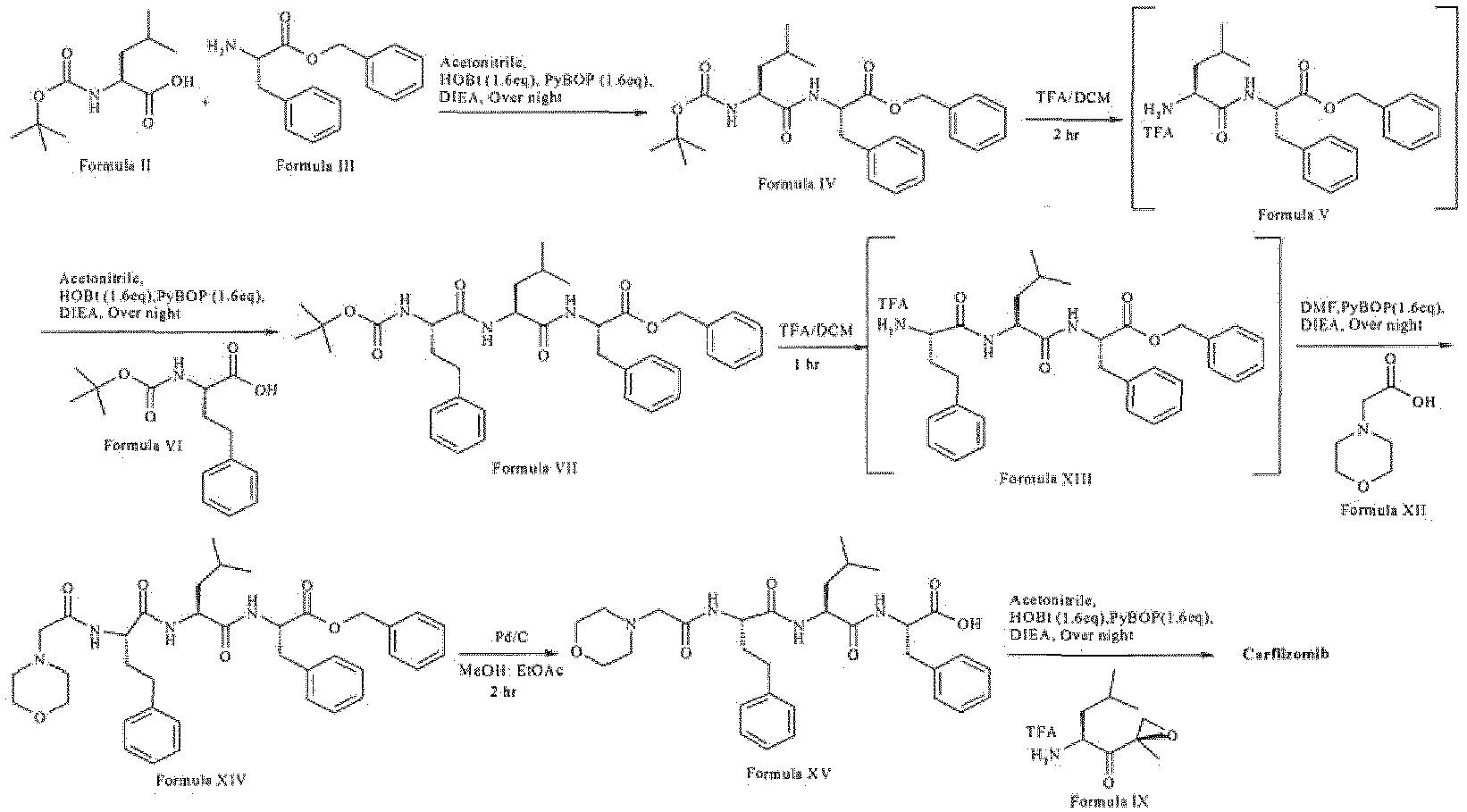
- The synthesis of carfilzomib as disclosed in the '818 patent has certain drawbacks as it involves:
- a) coupling of N-boc-leucine of Formula II with phenyl alanine benzyl ester of Formula III in presence of excess quantity of coupling agents such as PyBOP of about 1.6w/w mole equivalents and an additive of HOBt of about 1.6w/w mole equivalents per mole of Formula III, in higher volume of solvent such as acetonitrile of about 45v for the preparation of compound of Formula IV;
- b) coupling of trifluoro acetic acid salt of Formula V with a compound of Formula VI in presence of excess quantity of coupling agents such as PyBOP of about 1.6w/w mole equivalents and an additive of HOBt of about 1.6w/w mole equivalents per mole of Formula IV, in higher volume of solvent such as acetonitrile of about 22v for the preparation of compound of Formula VII;
- c) coupling of trifluoro acetic acid salt of Formula XIII with morpholine acetic acid of Formula XII in presence of excess quantity of coupling agents such as PyBOP of about 1.6w/w mole equivalents and an additive of HOBt of about 1.6w/w mole equivalents per mole of Formula VII, in higher volume of solvent such as dimethylformamide of about 24v for the preparation of compound of Formula XIV; and
- d) coupling of Formula XV with a compound of Formula IX in presence of excess quantity of coupling agents such as PyBOP of about 1.6w/w mole equivalents per mole of Formula XV, in higher volume of solvent such as acetonitrile of about 50v for the preparation of carfilzomib;
- All the above mentioned amide coupling reactions involves use of excess quantity of coupling agent, excess quantity of an additive and solvent. Use of excess quantity of these reagents results to formation of higher quantity of unreacted HOBt, PyBOP and by product of tris(pyrrolidino phosphine) oxide thereby it necessitates separate purification techniques required for the high pure product, which contributes significant impact on the final yield and purity, thereby process not viable for large scale manufacturing. Further, the process involves long reaction times, which leads to an increase in the manufacturing cycle time and decrease in the product yield and quality.
- Further, the '818 patent involves solvent extractions for isolation of intermediates and final product; which process also isolates unreacted coupling agents present in the reaction medium along with required intermediates and final product. Thereby additional purifications required to separate those unwanted coupling agents.
- Journal of biological chemistry vol. 285, no. 51, pp. 40125-40134, 2010 discloses preparation of carfilzomib. The process disclosed in the article is schematically represented as follows:

-
U.S. Patent No. 8,367,617 ("the '617 patent") disclosed an alternate process for preparation of carfilzomib. The process disclosed in the '617 patent is schematically represented as follows:
- However, '617 patent disclosed process also involves use of excess quantity of coupling agents same as mentioned for '818 patent.
-
PCT publication No. 2015/010436 ("the '436 publication") discloses a process for preparation of carfilzomib. The process disclosed in the '436 publication is schematically represented as follows:
-
PCT publication No. 2015/032621 ("the '621 publication") discloses a process for preparation of carfilzomib. The process disclosed in the '621 publication is schematically represented as follows:
-
PCT publication No. 2015/032622 ("the '622 publication") discloses a process for preparation of carfilzomib. The process disclosed in the '622 publication is schematically represented as follows:
-
PCT publication No. 2015/121769 ("the '769 publication") discloses a process for preparation of carfilzomib intermediate. The process disclosed in the '769 publication is schematically represented as follows:
-
PCT publication No. 2016/046843 ("the '843 publication") discloses a process for preparation of carfilzomib. The process disclosed in the '843 publication is schematically represented as follows:
-
PCT publication No. 2016/069479 ("the '479 publication") discloses a process for preparation of carfilzomib. The process disclosed in the '479 publication is schematically represented as follows: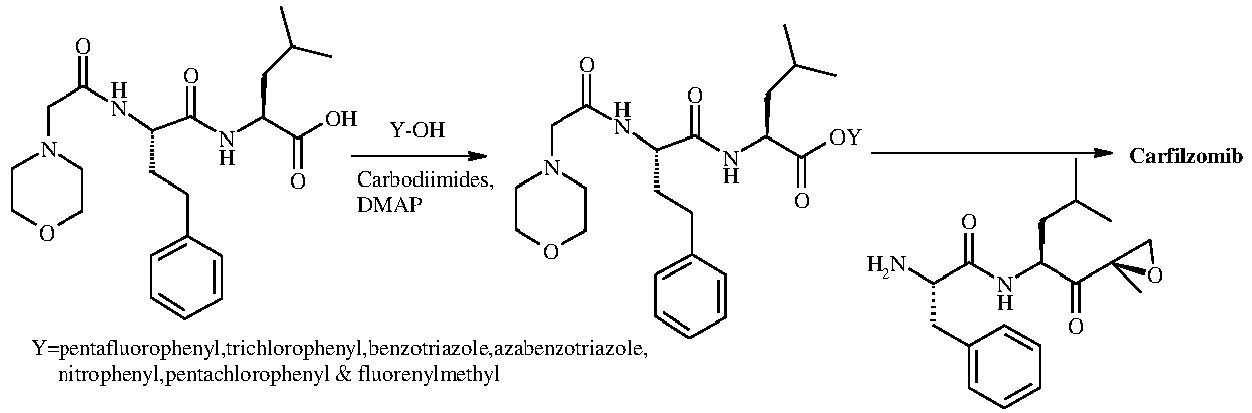
- Kyung et al., in Bioorganic & Medicinal Chemistry Letters 9 (1999) 2283-2288 discloses a process for the preparation of carfilzomib intermediate of Formula XVI starting from Weinrebamide of Formula XVII, which involves direct epoxidation of α,β-unsaturated ketone of Formula XVIII in presence of hydrogen peroxide to obtain diastereomeric mixture in compound of Formula XVI and Formula XVIa in a ratio of 1.7:1. However, this reference silent on isolation of intermediate compounds obtained from this process. The process disclosed by Kyung et al is schematically represented as follows:

-
PCT publication No. 2005/111009 ("the '009 publication") discloses a process for preparation of carboxybenzyl (Cbz) protected compound of Formula XVI, by reduction of Cbz protected α,β-unsaturated ketone of Formula XVIII there by forming a diastereomeric mixture of allyl alcohol of Formula XIXa and Formula XIXb and epoxidation of allyl group of the obtained diastereomeric mixture of Formula XIX to obtain a diastereomeric mixture of compound of Formula XXa and Formula XXb, further oxidizing the hydroxy group of the obtained a diastereomeric mixture of Formula XX and the obtained compound was purified by flash chromatography to obtain diastereomeric mixture of compound of Formula XVI and Formula XVIa as a light yellow oil in a ratio of 9:1. The process disclosed in the '009 publication is schematically represented as follows:
-
PCT publication No. 2009/045497 ("the '497 publication") discloses a process for stereoselective epoxidation of α,β-unsaturated ketone of Formula XVIII in presence of sodium hypochlorite or calcium hypochlorite to obtain diastereomeric mixture of compound of Formula XVI and Formula XVIa. The process disclosed in the '497 publication is schematically represented as follows:
- Pereira et al., in ChemBioChem 2012, 13, 810-817 discloses a process for the preparation of compound of Formula XVI starting from boc-Leucine. The process disclosed by Pereira et al is schematically represented as follows:

- Wang et al., in Chemistry - A European Journal 2012, vol. 18, Issue 22, Page-6750-6753 discloses a process for epoxidation of Formula XVIII in presence of hydrogen peroxide to obtain diastereomeric mixture of compound of Formula XVI and Formula XVIa in 1:7 ratio. The process disclosed by Wang et al is schematically represented as follows:

-
PCT publication No. 2014/003203 ("the '203 publication") discloses a process for compound of Formula XVI, by reduction of compound of Formula XVIII in presence of amine borane complex and further converted in to diastereomeric mixture of compound of Formula XVI and Formula XVIa. The process disclosed in the '203 publication is schematically represented as follows:
- As compound of Formula XVI and Formula XVIII have almost marginal polarity differences, compound of Formula XVI is readily isolated along with compound of Formula XVIII as an impurity in oily liquid state, thus compound of Formula XVIII is not possible to separate out from the mixture. Thereby unwanted formula XVIII is involved in the further sequential steps in preparation of carfilzomib, leads to formation of impurity of Formula 28.
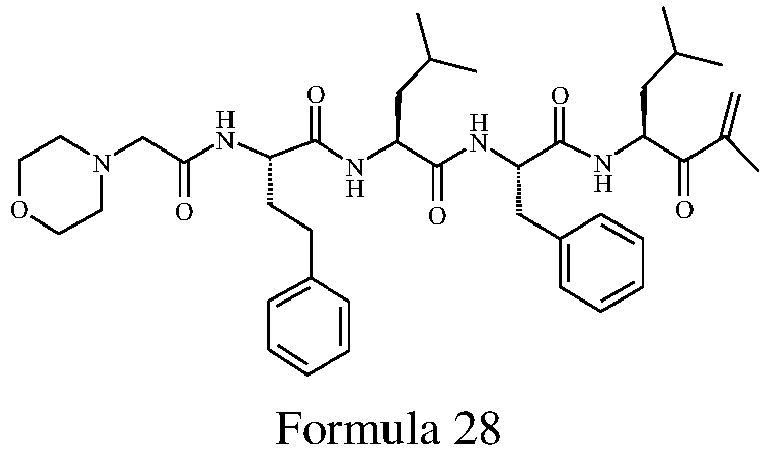
- All the above described processes involve isolation of intermediate compound of Formula XVIII, Formula XIX and Formula XVI as an oily nature, which are having higher content of process impurities thereby using such impure intermediates in the preparation of carfilzomib leads to formation of impure product.
- Further, numerous CN publication No.(s)
103641890 ,103864889 ,103864898 ,103936828 ,103804469 ,104086624 ,104230857 ,104356197 ,104557793 ,104672179 ,104672180 ,104710507 ,105017181 ,105273057 ,105294501 ,105218488 and105440106 discloses process for preparation of carfilzomib and its intermediates thereof. - Reported literatures on preparation of carfilzomib involves N-boc-L-leucine of Formula II, L-phenyl alanine benzyl ester of Formula III, N-boc-L-Homophenylalanine of Formula VI and Formula IX as intermediates, which contains traces of its corresponding D-isomers or isoleucine compounds as impurities which tends to react in the same sequential manner to generate the corresponding isomers as impurities, which requires repetitive purifications to separate from the final API.
- Different isomers of a chiral drug molecule bind differently to target receptors, one isomer of a drug may have a desired beneficial effect while the other may cause serious and undesired side effects or sometimes even beneficial but entirely different effect, hence in the drug molecule the effective isomer is preferred in pure form, free of other undesired isomers, thus carfilzomib free of its other isomers would always be preferred.
- Presence of impurities in a pharmaceutical compound is undesirable and health authorities in many jurisdictions (e.g. the Food and Drug Administration in the United States) have established guidelines relating to acceptable levels of impurities in pharmaceuticals. The need for and commercial utility of methods of reducing the level of impurities in any pharmaceutical are self-evident.
- Based on the drawbacks mentioned above, there is a vital need to develop a process for the preparation of carfilzomib or a pharmaceutically acceptable salt thereof and its intermediates, which is readily amenable to large scale production with higher purity and yield.
- Hence, present inventors focused research to simplify the process for the preparation of carfilzomib or a pharmaceutically acceptable salt thereof, which avoids mainly usage of excess quantity of reagents and solvents as compared to the prior-art processes, thereby making the process more suitable for commercial applications with higher purity, yield and obviate the problems associated with the reported process.
- The present invention provides an improved process for the preparation of carfilzomib of Formula I or a pharmaceutically acceptable salt thereof:

- a) reacting a compound of Formula II with a compound of Formula III or a salt thereof in presence of a coupling agent (C1), an additive (A1) and a base (B1) in a suitable solvent (S1) to obtain a compound of Formula IV,

- b) reacting the compound of Formula IV with a suitable acid to obtain a compound of Formula V or a salt thereof,

- c) reacting the compound of Formula V or a salt thereof with a compound of Formula VI in presence of a coupling agent (C2), an additive (A2) and a base (B2) in a suitable solvent (S2) to obtain a compound of Formula VII,

- d) deprotecting the compound of Formula VII in presence of a suitable deprotecting agent to obtain a compound of Formula VIII,

- e) reacting the compound of Formula VIII with a compound of Formula IX or a salt threof in presence of a coupling agent (C3), an additive (A3) and a base (B3) in a suitable solvent (S3) to obtain a compound of Formula X,

- f) reacting the compound of Formula X with a suitable acid to obtain a compound of Formula XI or a salt thereof, and

- g) reacting the compound of Formula XI or a salt thereof with a compound of Formula XII or a salt thereof in presence of a coupling agent (C4), an additive (A4) and a base (B4) in a suitable solvent (S4) to obtain carfilzomib or a pharmaceutically acceptable salt thereof,

wherein the additive (A1), (A2), (A3) and (A4) are used in catalytic amount of about 0.05 to about 0.5w/w mole equivalents per mole of Formula III, Formula IV, Formula VIII and Formula XI respectively. - In accordance with an embodiment, step (e) of the process of the present invention comprises a process for purification of compound of Formula X, comprising:
- a) dissolving compound of Formula X in one or more suitable solvent at a temperature of about 30°C to about reflux temperature,
- b) cooling the obtained solution to less than 10°C, and
- c) filtering the compound of Formula X.
- Also disclosed is a process for purification of carfilzomib, comprising:
- a) providing a solution of carfilzomib in one or more organic solvents,
- b) adding maleic acid to the step a) solution,
- c) isolating the carfilzomib maleic acid salt,
- d) neutralizing the carfilzomib maleic acid salt in a suitable solvent using a base,
- e) concentrating the step d) solution under vacuum to obtain a residue,
- f) dissolving the step e) residue in a suitable solvent,
- g) adding the step f) solution to an anti-solvent, or vice-versa, and
- h) isolating the pure carfilzomib.
- In addition, a process for preparation of amorphous Form of carfilzomib is disclosed, comprising:
- a) providing a solution of carfilzomib pharmaceutically acceptable salt in a suitable solvent,
- b) neutralizing the step a) solution with a base,
- c) concentrating the step b) solution under vacuum to obtain a residue,
- d) dissolving the step c) residue in a suitable solvent,
- e) adding the step d) solution to an anti-solvent, or vice-versa and
- f) isolating the amorphous form of carfilzomib.
- Also disclosed is a process for preparation of amorphous Form of carfilzomib, comprising:
- a) providing a solution of carfilzomib maleate salt in methylene chloride,
- b) neutralizing the step a) solution with a base,
- c) concentrating the step b) solution under vacuum to obtain a residue,
- d) dissolving the step c) residue in methanol,
- e) adding the step d) solution to water, or vice-versa and
- f) isolating the amorphous form of carfilzomib;
- a) providing a solution of carfilzomib in one or more organic solvents,
- b) adding maleic acid to the step a) solution, and
- c) isolating the carfilzomib maleate salt.
- In addition, a process for the preparation of carfilzomib of Formula I or a pharmaceutically acceptable salt thereof is disclosed:

- a1) reacting a compound of Formula II with a compound of Formula III or a salt thereof in presence of a coupling agent (C1), an additive (A1) and a base (B1) in a suitable solvent (S1) to obtain a compound of Formula IV,

- b1) reacting the compound of Formula IV with a suitable acid to obtain a compound of Formula V or a salt thereof,

- c1) reacting the compound of Formula V or a salt thereof with a compound of Formula VI in presence of a coupling agent (C2), an additive (A2) and a base (B2) in a suitable solvent (S2) to obtain a compound of Formula VII,

- d1) reacting the compound of Formula VII with a suitable acid to obtain a compound of Formula XIII or a salt thereof,

- e1) reacting the compound of Formula XIII or a salt thereof with a compound of Formula XII in presence of a coupling agent (C5), an additive (A5) and a base (B5) in a suitable solvent (S5) to obtain a compound of Formula XIV,

- f1) deprotecting the compound of Formula XIV in presence of a suitable deprotecting agent to obtain a compound of Formula XV, and
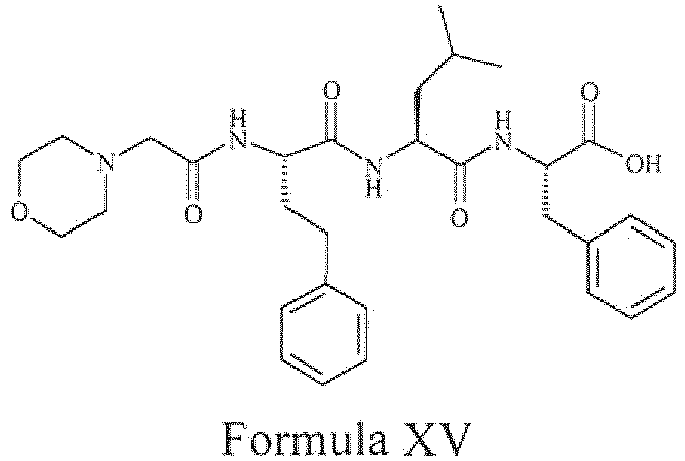
- g1) reacting the compound of Formula XV with a compound of Formula IX or a salt threof in presence of a coupling agent (C6), an additive (A6) and a base (B6) in a suitable solvent (S6) to obtain carfilzomib or a pharmaceutically acceptable salt thereof,

wherein the additive (A1), (A2), (A5) and (A6) are used in catalytic amount of about 0.05 to about 0.5w/w mole equivalents per mole of Formula III, Formula IV, Formula VII and Formula XV respectively. - Also disclosed is a process for preparation of carfilzomib of Formula I or a pharmaceutically acceptable salt thereof; comprising:
- a1) reacting a compound of Formula XIII or a salt thereof with a compound of Formula XII in presence of a coupling agent (C5), an additive (A5) and a base (B5) in a suitable solvent (S5) to obtain a compound of Formula XIV, wherein the coupling agent (C5) is used in an amount of about 0.9 to about 1.3w/w mole equivalents per mole of Formula VII; wherein the additive (A5) is used in catalytic amount of about 0.05 to about 0.5w/w mole equivalents per mole of Formula VII, and
- b1) converting the compound of Formula XIV into compound of Formula I or a pharmaceutically acceptable salt thereof;
- In addition, a process for the purification of tert-butyl ((2S)-4-methyl-1-((2R)-2-methyloxirane-2-yl)-1-oxo-pentan-2-yl)-carbamate of Formula XVI is disclosed,

- i) providing a solution of tert-butyl ((2S)-4-methyl-1-((2R)-2-methyloxirane-2-yl)-1-oxo-pentan-2-yl)-carbamate of Formula XVI in a suitable solvent,
- ii) cooling the step i) solution to less than 5°C,
- iii) optionally adding seed compound of Formula XVI to the step ii) solution, and
- iv) isolating the pure compound of Formula XVI; wherein the suitable solvent is selected from aliphatic hydrocarbons, cyclic hydrocarbons, ethers and the like and mixture thereof.
- The process for the purification of tert-butyl ((2S)-4-methyl-1-((2R)-2-methyloxirane-2-yl)-1-oxo-pentan-2-yl)-carbamate of Formula XVI having less than 0.1% by HPLC of compound of Formula XVIII comprises the steps:
- i) providing a solution of tert-butyl ((2S)-4-methyl-1-((2R)-2-methyloxirane-2-yl)-1-oxo-pentan-2-yl)-carbamate of Formula XVI in a suitable solvent,
- ii) cooling the step i) solution to less than 5°C,
- iii) optionally adding seed compound of Formula XVI to the step ii) solution, and
- iv) isolating the pure compound of Formula XVI; wherein the suitable solvent is selected from aliphatic hydrocarbons, cyclic hydrocarbons, ethers and the like and mixture thereof.
- Also disclosed is a process for the preparation of tert-butyl ((2S)-4-methyl-1-((2R)-2-methyloxirane-2-yl)-1-oxo-pentan-2-yl)-carbamate of Formula XVI,

- i) reacting a compound of Formula XVII with alkyl magnesium halide to obtain a compound of Formula XVIII as a crystalline solid,

- ii) reducing the compound of Formula XVIII in presence of a suitable reducing agent to obtain a diastereomeric mixture of compound of Formula XIXa and Formula XIXb as a crystalline solid,

- iii) epoxidation and followed by oxidation of the diastereomeric mixture of compound of Formula XIXa and Formula XIXb to obtain a diastereomeric mixture of compound of Formula XVI and Formula XVIa,

- iv) separating the compound of Formula XVI from the diastereomeric mixture of compound of Formula XVI and Formula XVIa by chromatography,
- v) crystallizing the compound of Formula XVI from a suitable solvent, wherein the suitable solvent is selected from aliphatic hydrocarbons, cyclic hydrocarbons, ethers and the like and mixture threof, and
- vi) isolating the compound of Formula XVI as a crystalline solid.
- The process for preparation of tert-butyl ((2S)-4-methyl-1-((2R)-2-methyloxirane-2-yl)-1-oxo-pentan-2-yl)-carbamate of Formula XVI,

- i) reacting a compound of Formula XVII with alkyl magnesium halide to obtain a compound of Formula XVIII,
- ii) crystallizing the compound of Formula XVIII from a suitable solvent system to obtain crystalline compound of Formula XVIII,

- iii) reducing the crystalline compound of Formula XVIII in presence of a suitable reducing agent to obtain a diastereomeric mixture of compound of Formula XIXa and Formula XIXb,
- iv) crystallizing the mixture of compound of Formula XIXa and Formula XIXb from a suitable solvent system to obtain a mixture of crystalline compound of Formula XIXa and Formula XIXb,

- v) epoxidation and followed by oxidation of diastereomeric mixture of crystalline compound of Formula XIXa and Formula XIXb to obtain a diastereomeric mixture of compound of Formula XVI and Formula XVIa,

- vi) separating the compound of Formula XVI from the diastereomeric mixture of compound of Formula XVI and Formula XVIa by chromatography, and
- vii) crystallizing the compound of Formula XVI from a suitable solvent system to obtain crystalline compound of Formula XVI.
- Also disclosed is a process for the preparation of compound of Formula XVIII as crystalline solid, comprising:
- i) providing a solution of compound of Formula XVIII in a suitable solvent,
- ii) optionally cooling the step i) solution to less than 20°C,
- iii) adding an anti-solvent to the step ii) solution, and
- iv) isolating the crystalline compound of Formula XVIII; wherein the suitable solvent is selected from the group comprising alcohols, ketones, esters, nitriles and the like and mixture thereof; and the anti-solvent is selected from the group comprising aliphatic hydrocarbons, cyclic hydrocarbons, ethers and the like and water and mixture thereof;
- i) providing a solution of diastereomeric mixture of a compound of Formula XIXa and Formula XIXb in a suitable solvent,
- ii) cooling the step i) solution to less than 10°C,
- iii) adding an anti-solvent to the step ii) solution, and
- iv) isolating the crystalline compound of Formula XIX; wherein the suitable solvent is selected from the group comprising alcohols, ketones, esters, nitriles and the like and mixture thereof; and the anti-solvent is selected from the group comprising aliphatic hydrocarbons, cyclic hydrocarbons, ethers and the like and water and mixture thereof;
- i) providing a solution of tert-butyl ((2S)-4-methyl-1-((2R)-2-methyloxirane-2-yl)-1-oxo-pentan-2-yl)-carbamate of Formula XVI in a suitable solvent,
- ii) cooling the step i) solution to less than 5°C,
- iii) optionally adding seed compound of Formula XVI to the step ii) solution,
- iv) isolating the pure compound of Formula XVI having less than 0.1% by HPLC of compound of Formula XVIII; and
- v) converting the pure compound of Formula XVI into carfilzomib; wherein the suitable solvent is selected from aliphatic hydrocarbons, cyclic hydrocarbons, ethers and the like and mixture thereof;
- In addition, it is disclosed: a crystalline tert-butyl ((2S)-4-methyl-1-((2R)-2-methyloxirane-2-yl)-1-oxo-pentan-2-yl)-carbamate of Formula XVI characterized by a powder X-Ray diffraction (PXRD) pattern substantially in accordance with
Figure 8 ;
a crystalline tert-butyl ((4S)-2,6-dimethyl -3-oxo hept-1-en-4-yl))carbamate of Formula XVIII characterized by a powder X-Ray diffraction (PXRD) pattern substantially in accordance withFigure 9 ;
a crystalline tert-butyl N-[(3R/S,4S)-3-hydroxy-2,6-dimethylhept-1-en-4-yl]carbamate of Formula XIX characterized by a powder X-Ray diffraction (PXRD) pattern substantially in accordance withFigure 10 ;
a carfilzomib containing less than 0.05% as measured by HPLC of one or more of impurities of Formula 1 to Formula 41; preferably 0.03% as measured by HPLC;
a compound of Formula 41:
an amorphous compound of Formula IV characterized by a powder X-Ray diffraction (PXRD) pattern substantially in accordance withFigure 1 ;
an amorphous compound of Formula VII;
an amorphous compound of Formula VII characterized by a powder X-Ray diffraction (PXRD) pattern substantially in accordance withFigure 2 ;
an amorphous compound of Formula VIII;
an amorphous compound of Formula VIII characterized by a powder X-Ray diffraction (PXRD) pattern substantially in accordance withFigure 3 ;
a crystalline compound of Formula X;
a crystalline compound of Formula X characterized by a powder X-Ray diffraction (PXRD) pattern substantially in accordance withFigure 4 ;
an amorphous compound of Formula XI trifluoro acetic acid salt;
an amorphous compound of Formula XI trifluoro acetic acid salt characterized by a powder X-Ray diffraction (PXRD) pattern substantially in accordance withFigure 5 ;
an amorphous compound of Formula XI free amine;
an amorphous compound of Formula XI free amine characterized by a powder X-Ray diffraction (PXRD) pattern substantially in accordance withFigure 6 ;
a crystalline carfilzomib maleate salt;
a crystalline carfilzomib maleate salt characterized by a powder X-Ray diffraction (PXRD) pattern substantially in accordance withFigure 7 ;
as well as a pharmaceutical composition comprising carfilzomib or a pharmaceutically acceptable salt thereof prepared by the processes of the present invention and at least one pharmaceutically acceptable excipient. - The accompanying drawings show:
-
Figure 1 is the characteristic powder X-ray diffraction (XRD) pattern of amorphous compound of Formula IV. -
Figure 2 is the characteristic powder X-ray diffraction (XRD) pattern of amorphous compound of Formula VII. -
Figure 3 is the characteristic powder X-ray diffraction (XRD) pattern of amorphous compound of Formula VIII. -
Figure 4 is the characteristic powder X-ray diffraction (XRD) pattern of a crystalline compound of Formula X. -
Figure 5 is the characteristic powder X-ray diffraction (XRD) pattern of amorphous compound of Formula XI trifluoro acetic acid salt. -
Figure 6 is the characteristic powder X-ray diffraction (XRD) pattern of amorphous compound of Formula XI free amine. -
Figure 7 is the characteristic powder X-ray diffraction (XRD) pattern of crystalline carfilzomib maleate salt. -
Figure 8 is the characteristic powder X-ray diffraction (XRD) pattern of crystalline compound of Formula XVI. -
Figure 9 is the characteristic powder X-ray diffraction (XRD) pattern of crystalline compound of Formula XVIII. -
Figure 10 is the characteristic powder X-ray diffraction (XRD) pattern of crystalline diastereomeric mixture of compound of Formula XIXa and Formula XIXb. - The present invention encompasses an improved process for preparation of carfilzomib or a pharmaceutically acceptable salt thereof.
- Also disclosed is a carfilzomib maleate salt, a process for its preparation and its use as intermediate in the preparation of carfilzomib.
- The present invention provides an improved process for the preparation of carfilzomib of Formula I or a pharmaceutically acceptable salt thereof:

- a) reacting a compound of Formula II with a compound of Formula III or a salt thereof in presence of a coupling agent (C1), an additive (A1) and a base (B1) in a suitable solvent (S1) to obtain a compound of Formula IV,

- b) reacting the compound of Formula IV with a suitable acid to obtain a compound of Formula V or a salt thereof,

- c) reacting the compound of Formula V or a salt thereof with a compound of Formula VI in presence of a coupling agent (C2), an additive (A2) and a base (B2) in a suitable solvent (S2) to obtain a compound of Formula VII,

- d) deprotecting the compound of Formula VII in presence of a suitable deprotecting agent to obtain a compound of Formula VIII,

- e) reacting the compound of Formula VIII with a compound of Formula IX or a salt threof in presence of a coupling agent (C3), an additive (A3) and a base (B3) in a suitable solvent (S3) to obtain a compound of Formula X,

- f) reacting the compound of Formula X with a suitable acid to obtain a compound of Formula XI or a salt thereof, and
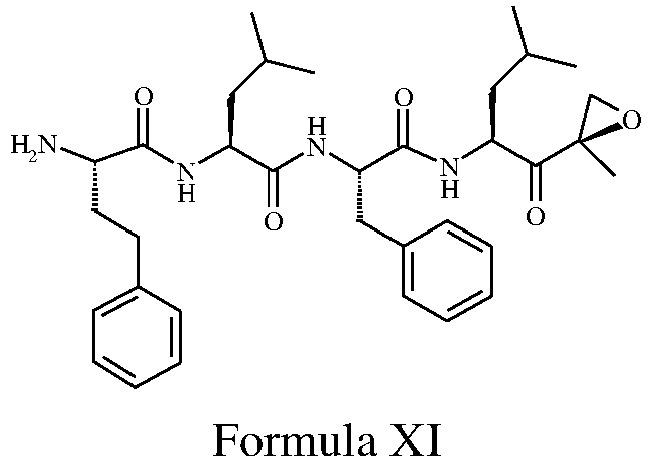
- g) reacting the compound of Formula XI or a salt thereof with a compound of Formula XII or a salt thereof in presence of a coupling agent (C4), an additive (A4) and a base (B4) in a suitable solvent (S4) to obtain carfilzomib or a pharmaceutically acceptable salt thereof,

wherein the additive (A1), (A2), (A3) and (A4) are used in catalytic amount of about 0.05 to about 0.5w/w mole equivalents per mole of Formula III, Formula IV, Formula VIII and Formula XI respectively. - The compound of Formula II, L-phenyl alanine benzyl ester of Formula III or a salt thereof, N-boc-homophenylalanine of Formula VI and morpholine acetic acid of Formula XII are known in the art and can be procured from commercially available sources.
- The suitable salt of compounds of Formula III, Formula V, Formula IX, Formula XI or Formula XII employed in the aforementioned process is a salt of a mineral or organic acid, such as HCl, HBr, HI, HNO3, H2SO4, acetic acid, trifluoro acetic acid, formic acid and the like.
- The '818 patent process involves peptide coupling reactions using excess quantity of coupling agents, additives and solvents. The use of excess quantity of such coupling reagents contaminate in each step with the required product, also involves formation of byproduct such as tris(pyrrolidino phosphine) oxide and it necessitates separate purification techniques to separate out unwanted coupling agents and/or by-products, which contributes significant impact on the final yield and purity, which makes the process not viable for large scale manufacturing. Further, the process involves long reaction times, which leads to an increase in the manufacturing cycle time and decrease in the product yield and quality.
- Further reported literatures on preparation of carfilzomib involves N-boc-L-leucine of Formula II, L-phenyl alanine benzyl ester of Formula III, N-boc-L-homophenylalanine of Formula VI and Formula IX as intermediates, which contains traces of its corresponding D-isomers or its isoleucine compounds as impurities which tends to react in the same sequential manner to generate the corresponding isomers of Formula 1 - 41 as impurities, which requires repetitive purifications to separate from the final API.
Formula 1 Formula 2 Formula 3 


Formula 4 Formula 5 Formula 6 


Formula 7 Formula 8 Formula 9 


Formula 10 Formula 11 Formula 12 


Formula 13 Formula 14 Formula 15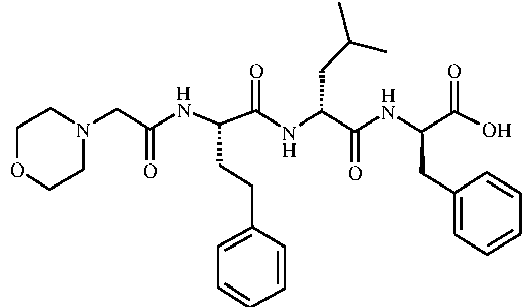


Formula 16 Formula 17 Formula 18 
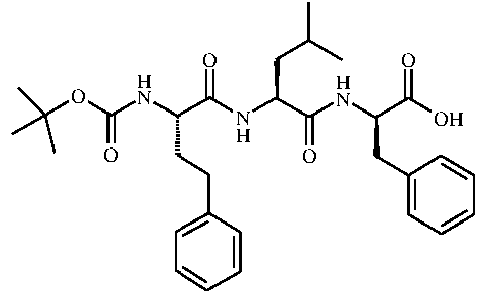

Formula 19 Formula 20 Formula 21 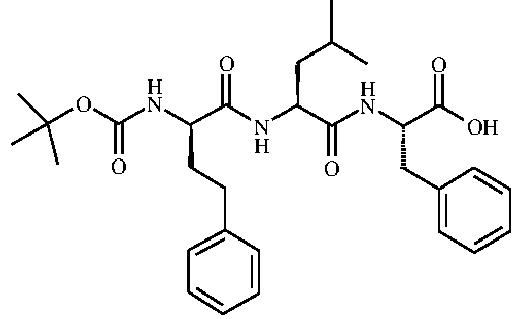


Formula 22 Formula 23 Formula 24 


Formula 25 Formula 26 Formula 27 


Formula 28 Formula 29 Formula 30 


Formula 31 Formula 32 Formula 33 


Formula 34 Formula 35 Formula 36 


Formula 37 Formula 38 Formula 39 


Formula 40 Formula 41 

- To overcome the difficulties associated with the processes described above, the inventors of the present invention have surprisingly found that use of less quantity of coupling agent and an additive substantially reduces the reaction time cycle, for instance about 3-6 hours against about overnight as reported thereby reduces the formation of by products for example tris(pyrrolidino phosphine) oxide, other process impurities and minimizing the contamination of un-reacted coupling agents such as HOBt, PyBOP. The present process also involves, the raw materials used for preparation of carfilzomib such as N-boc-L-leucine of Formula II, L-phenyl alanine benzyl ester of Formula III, N-boc-L-homophenylalanine of Formula VI and Formula IX are having less than 0.1% of its corresponding isomers thereby increasing the isomeric purity of carfilzomib by avoiding the formation of undesired carfilzomib isomers as an impurities.
- The step a) of the aforementioned process involves reaction of a compound of Formula II with a compound of Formula III or a salt thereof in presence of a coupling agent (C1), an additive (A1) and a base (B1) in a suitable solvent (S1) to obtain a compound of Formula IV.
- In a preferred embodiment, the present invention provides an improved process for preparation of carfilzomib of Formula I or a pharmaceutically acceptable salt thereof, comprising: reacting a compound of Formula II with a compound of Formula III or a salt thereof in presence of a coupling agent (C1), an additive (A1) and a base (B1) in a suitable solvent (S1) to obtain a compound of Formula IV, wherein the coupling agent (C1) is used in an amount of about 0.9 to about 1.3w/w mole equivalents per mole of Formula III; wherein the additive (A1) is used in catalytic amount of about 0.05 to about 0.5w/w mole equivalents per mole of Formula III.
- In a preferred embodiment, the N-boc-L-leucine of Formula II is having less than 0.1% of its corresponding D-isomer and isoleucine of Formula A and Formula B; the L-phenyl alanine benzyl ester of Formula III is having less than 0.1% by HPLC of its corresponding D-isomer of Formula C:
Formula A Formula B Formula C 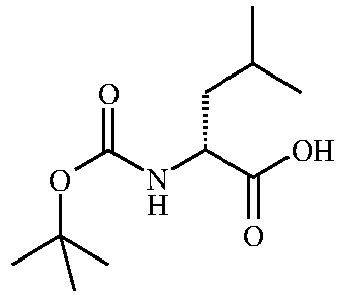


- The coupling agent (C1) used herein for reaction of compound of Formula II with a compound of Formula III or a salt thereof, preferably hydrochloride salt, is selected from the group consisting of benzotriazol-1-yl-oxytripyrrolidinophosphonium hexafluorophosphate (PyBOP), benzotriazol-1-yloxy-tris (dimethylamino)-phosphonium hexafluorophosphate (BOP), bromo-tripyrrolidino-phosphonium hexafluorophosphate (PyBrOP), Propylphosphonic anhydride (T3P), N-(3-dimethylaminopropyl)-N'-ethylcarbodiimide (EDC),1,1'-Carbonyldiimidazole (CDI), diisopropylcarbodiimide (DCI), dicyclohexyl carbodiimide (DCC) and the like and mixture thereof; preferably benzotriazol-1-yl-oxytripyrrolidinophosphonium hexafluorophosphate (PyBOP).
- The additive (A1) used herein for reaction of compound of Formula II with a compound of Formula III or a salt thereof, preferably hydrochloride salt, is selected from the group consisting of 1-Hydroxybenzotriazole (HOBt), 1-Hydroxy-7-aza-1H-benzotriazole (HOAt), 2-(1H-Benzotriazol-1-yl)-N,N,N',N'-tetramethylaminium tetrafluoroborate/hexa fluoro phosphate (TBTU), 2-(7-Aza-1H-benzotriazol-1-yl)-N,N,N',N'-tetramethylaminium hexafluorophosphate) (HATU) and the like and mixture thereof; preferably 1-Hydroxybenzotriazole (HOBt).
- In a preferred embodiment, the coupling agent (C1) used herein is benzotriazol-1-yl-oxytripyrrolidinophosphonium hexafluorophosphate (PyBOP) and is used in an amount of about 1.2w/w mole equivalents per mole of Formula III; additive (A1) used herein is 1-hydroxybenzotriazole (HOBt) and is used in an amount of about 0.1w/w mole equivalents per mole of Formula III.
- Exemplary bases (B1) used herein for the reaction of compound of Formula II with a compound of Formula III or a salt thereof, preferably hydrochloride salt includes but are not limited to diisopropylethyl amine, Imidazole or its salts, 1,8-Diazabicyclo[5.4.0]undec-7-en (DBU), tertiary amines or its hydro halide salts thereof selected from the group consisting of triethyl amine-hydrochloride and the like and mixtures thereof; preferably diisopropylethyl amine.
- The reaction of compound of Formula II with a compound of Formula III or a salt thereof, is advantageously carried out in a solvent (S1). Suitable solvent include, but are not limited to ethers, esters, halogenated hydrocarbons, amides, aromatic solvents, nitriles, or mixtures thereof. The ether includes, but are not limited to tetrahydrofuran, 2-methyltetrahydrofuran and the like; esters include, but are not limited to methyl acetate, ethyl acetate, propyl acetate, butyl acetate and the like; halogenated hydrocarbons include, but are not limited to methylene chloride, ethylene chloride, chloroform and the like; amides includes, but are not limited to dimethyl formamide, dimethyl acetamide, N-methyl pyrrolidinone and the like; aromatic solvents include, but are not limited to toluene, chlorobenzene and the like; nitriles include, but are not limited to acetonitrile, propionitrile, benzonitrile and the like and mixtures thereof; preferably dimethyl formamide.
- The reaction temperature should be sufficient to effect the coupling reaction. Typically the reaction temperature can be from about -10°C to about reflux temperature. Preferably the reaction temperature is about 25°C to about 50°C. The reaction may take from about 0.5 hours to about 6 hours depending upon the coupling agent and additive, solvent and temperature chosen, preferably about 1 hour to 4 hours.
- After completion of the reaction, the compound of Formula IV is advantageously isolated by quenching the step a) reaction mass in to water to precipitate compound of Formula IV as solid. The precipitated compound of Formula IV may be separated by methods known in the art, for example filtration.
- The resultant product may optionally be further dried using conventional methods known in the art at a temperature ranging from about 40°C to about 60°C. The compound of Formula IV, obtained by the aforementioned process have a chemical purity of at least about 95%, as measured by HPLC, preferably at least about 98%, as measured by HPLC and more preferably at least about 99.5%, as measured by HPLC; and contains less than 0.5% of total impurities, which include byproducts of HOBt, PyBOP, tris(pyrrolidino phosphine) oxide, isomer impurities of Formula 1, Formula 2 and Formula 3 as measured by HPLC; preferably less than 0.3%, as measured by HPLC.
- In another embodiment, the obtained compound of Formula IV having less than 0.1%, as measured by HPLC of each of impurity of Formula 1, Formula 2 or Formula 3; preferably less than 0.05%, as measured by HPLC; more preferably less than 0.03%, as measured by HPLC.
- In another embodiment, the compound of Formula IV obtained by the process described above is in amorphous in nature.
- In another embodiment, the present invention provides amorphous compound of Formula IV characterized by a powder X-Ray diffraction (PXRD) pattern substantially in accordance with
Figure 1 . - The step b) of the aforementioned process involves deprotection of amine protecting group of Formula IV with a suitable acid to obtain a compound of Formula V or a salt thereof.
- The suitable acid used herein for step b) is selected from the group consisting of hydrochloric acid, hydrobromic acid, sulfuric acid, phosphoric acid, acetic acid, trifluoro acetic acid, trichloro acetic acid, methane sulfonic acid and the like and mixture thereof; preferably trifluoro acetic acid.
- The deprotection reaction of compound of Formula IV with a suitable acid can be carried out in a suitable organic solvent. The suitable organic solvent includes but is not limited to alcohols, ketones, ethers, halogenated hydrocarbons and mixtures thereof. The alcohols include, but are not limited to methanol, ethanol, isopropanol and the like; ketones include, but are not limited to acetone, methyl isobutyl ketone, methyl ethyl ketone and the like; ethers include, but are not limited to tetrahydrofuran, dimethyl ether, diisopropyl ether, methyl tertiary butyl ether, 1,4-dioxane and the like; halogenated hydrocarbons include, but are not limited to methylene chloride, ethylene chloride and the like and mixture thereof; preferably methylene chloride.
- The reaction can be carried out at a temperature of about 0°C to reflux temperature; preferably at 0°C to about 50°C. After completion of the reaction, the reaction mass can be basified with a suitable aqueous base such as sodium carbonate, potassium carbonate and the like and then extracting the product with water immiscible organic solvent such as ethyl acetate, methylene chloride and the like; preferably methylene chloride. The free base of compound of Formula V can be isolated from the resultant water immiscible organic solvent by subjecting to evaporation under vacuum.
- The step c) of the aforementioned process involves reaction of the compound of Formula V or a salt thereof ; preferably free base, with a compound of Formula VI in presence of a coupling agent (C2), an additive (A2) and a base (B2) in a suitable solvent (S2) to obtain a compound of Formula VII.
- In a preferred embodiment, the present invention provides an improved process for preparation of carfilzomib of Formula I or a pharmaceutically acceptable salt thereof, comprising: reacting a compound of Formula V with a compound of Formula VI in presence of a coupling agent (C2), an additive (A2) and a base (B2) in a suitable solvent (S2) to obtain a compound of Formula VII, wherein the coupling agent (C2) is used in an amount of about 0.9 to about 1.3w/w mole equivalents per mole of Formula IV; wherein the additive (A2) is used in catalytic amount of about 0.05 to about 0.5w/w mole equivalents per mole of Formula IV.
- In a preferred embodiment, the N-boc-L-homophenylalanine of Formula VI is having less than 0.1% of its corresponding D-isomer of Formula D:

- The coupling agent (C2), an additive (A2), base (B2) and solvent (S2) are used herein for reaction of compound of Formula V with a compound of Formula VI is same as used for step a) as mentioned above.
- In a preferred embodiment, the coupling agent (C2) used herein is benzotriazol-1-yl-oxytripyrrolidinophosphonium hexafluorophosphate (PyBOP) and is used in an amount of about 1.2w/w mole equivalents per mole of Formula IV; additive (A2) used herein is 1-Hydroxybenzotriazole (HOBt) and is used in an amount of about 0.1w/w mole equivalents per mole of Formula IV.
- The reaction temperature should be sufficient to effect coupling reaction. Typically the reaction temperature is from about -10°C to about reflux temperature. Preferably the reaction temperature is about 25°C to about 50°C. The reaction may take from about 0.5 hours to about 6 hours depending upon the coupling agent and additive, solvent and temperature chosen, preferably about 1 hour to 4 hours.
- After completion of the reaction, the compound of Formula VII is advantageously isolated by quenching the step c) reaction mass in to water to precipitate compound of Formula IV as solid. The precipitated compound of Formula VII can be separated by methods known in the art, for example filtration.
- The resultant product may optionally be dried using conventional methods at a temperature ranging from about 40°C to about 60°C. The compound of Formula VII, obtained by the aforementioned process, have a chemical purity of at least about 95%, as measured by HPLC, preferably at least about 98%, as measured by HPLC and more preferably at least about 99.5%, as measured by HPLC; and contains less than 0.5% of total impurities, which include byproducts HOBt, PyBOP, tris(pyrrolidino phosphine) oxide, isomeric impurities of Formula 4, Formula 5, Formula 6 and Formula 7 as measured by HPLC; preferably less than 0.3%, as measured by HPLC.
- In another embodiment, the obtained compound of Formula VII having less than 0.1%, as measured by HPLC of each of impurity of Formula 4, Formula 5, Formula 6 or Formula 7; preferably less than 0.05%, as measured by HPLC; more preferably less than 0.03%, as measured by HPLC.
- In another embodiment, the compound of Formula VII obtained by the process described above is in amorphous in nature.
- In another embodiment, the present invention provides amorphous compound of Formula VII characterized by a powder X-Ray diffraction (PXRD) pattern substantially in accordance with
Figure 2 . - The step d) of the aforementioned process involves deprotection of benzyl protecting group of the compound of Formula VII in presence of a suitable deprotecting agent to obtain a compound of Formula VIII.
- The suitable deprotecting agent used herein for deprotection of the compound of Formula VII is include, but is not limited to palladium on carbon/ ammonium formate, palladium on carbon/ ammonium acetate, palladium on carbon/ hydrogen gas, palladium hydroxide/ hydrogen gas, raney nickel/hydrogen gas, platinum oxide/ hydrogen gas, zinc/ hydrogen gas and the like; preferably palladium on carbon/ hydrogen gas.
- The deprotection may be carried out in a suitable solvent, which include alcohols, esters, ethers, halogenated hydrocarbons, acetic acid, water and mixtures thereof. The alcohols include, but are not limited to methanol, ethanol, isopropanol and the like; esters include, but are not limited to methyl acetate, ethyl acetate, propyl acetate, butyl acetate and the like; ethers include, but are not limited to tetrahydrofuran and the like; halogenated hydrocarbons include, but are not limited to methylene chloride, ethylene chloride and the like, and water and mixture thereof; preferably a mixture of methanol and methylene chloride.
- The deprotection reaction may be carried out at a temperature of about 0°C to reflux temperature; preferably at 0°C to about 50°C. After completion of the reaction, the reaction mass may be filtered and resulting compound of Formula VIII may be isolated by subjecting the filterate to evaporation under vacuum to obtain a residue. Optionally the obtained residue is treated with a suitable solvent such as n-heptane and stirred for about 2 hours and the resultant compound of Formula VIII may be isolated by techniques known in the art, for example filtration.
- Optionally resulting Formula VIII may be purified by dissolving in a suitable organic solvent such as ethyl acetate, methylene chloride, 2-methyl tetrahydrofuran at a temperature of about 0°C to reflux temperature; preferably at 25°C to about 50°C. The pure compound of Formula VIII may be precipitated from the solution by either addition of suitable anti-solvent to the Formula VIII solution obtained as above, (or) addition of Formula VIII solution obtained as above into a suitable anti-solvent at a temperature of less than about 25°C. The suitable anti-solvent include, but are not limited to dimethyl ether, diethyl ether, diisopropyl ether, hexane, heptane, propane, cyclopropane, cyclobutane, cyclopentane, cyclohexane, methyl cyclohexane, cycloheptane, cyclooctane and the like and mixture thereof; preferably Formula VIII is dissolved in ethyl acetate and precipitated by adding in to antisolvent of heptane and the resultant compound of Formula VIII may be isolated by techniques known in the art, for example filtration.
- The resultant product may optionally be further dried by the known techniques at a temperature ranging from about 40°C to about 60°C. The resulting Formula VIII, obtained by the aforementioned process, have a chemical purity of at least about 95%, as measured by HPLC, preferably at least about 98%, as measured by HPLC and more preferably at least about 99.0%, as measured by HPLC; and having less than 0.1%, as measured by HPLC of each of impurity of Formula 16, Formula 17, Formula 18 or Formula 19; preferably less than 0.05%, as measured by HPLC; more preferably less than 0.03%, as measured by HPLC.
- In another embodiment, the obtained compound of Formula VIII having less than 0.1%, as measured by HPLC of each of impurity of Formula 16, Formula 17, Formula 18 or Formula 19; preferably less than 0.05%, as measured by HPLC; more preferably less than 0.03%, as measured by HPLC.
- In another embodiment, the compound of Formula VIII obtained by the process described above is in an amorphous nature.
- In another embodiment, the present invention provides amorphous compound of Formula VIII characterized by a powder X-Ray diffraction (PXRD) pattern substantially in accordance with
Figure 3 . - The step e) of the aforementioned process involves reaction of the compound of Formula VIII with a compound of Formula IX or a salt threof in presence of a coupling agent (C3), an additive (A3) and a base (B3) in a suitable solvent (S3) to obtain a compound of Formula X.
- In a preferred embodiment, the present invention provides an improved process for preparation of carfilzomib of Formula I or a pharmaceutically acceptable salt thereof, comprising: reacting a compound of Formula VIII with a compound of Formula IX or a salt threof in presence of a coupling agent (C3), an additive (A3) and a base (B3) in a suitable solvent (S3) to obtain a compound of Formula X; wherein the coupling agent (C3) is used in an amount of about 0.9 to about 1.3w/w mole equivalents per mole of Formula VIII; wherein the additive (A3) is used in catalytic amount of about 0.05 to about 0.5w/w mole equivalents per mole of Formula VIII.
- In a preferred embodiment, the compound of Formula IX having less than 0.1% of its corresponding isomers or its impurities of Formula E, Formula F, Formula G, Formula H, Formula I and Formula J:
Formula E Formula F Formula G 


Formula H Formula I Formula J 


- The coupling agent (C3), an additive (A3), base (B3) and solvent (S3) are used herein for reaction of compound of Formula VIII with a compound of Formula IX or a salt threof; preferably free base, is same as used for step a) as mentioned above.
- In a preferred embodiment, the coupling agent (C3) used herein is benzotriazol-1-yl-oxytripyrrolidinophosphonium hexafluorophosphate (PyBOP) and is used in an amount of about 1.2w/w mole equivalents per mole of Formula VIII; additive (A3) used herein is 1-Hydroxybenzotriazole (HOBt) and is used in an amount of about 0.1w/w mole equivalents per mole of Formula VIII.
- The reaction temperature should be sufficient to effect coupling reaction. Typically the reaction temperature is from about -10°C to about reflux temperature. Preferably the reaction temperature is about 25°C to about 50°C. The reaction may take from about 0.5 hours to about 6 hours depending upon the coupling agent and additive, solvent and temperature chosen, preferably about 1 hour to 4 hours.
- After completion of the reaction, the compound of Formula X is advantageously isolated by quenching the step e) reaction mass in to water to precipitate compound of Formula X as solid. The precipitated compound of Formula X may be separated by methods known in the art, for example filtration.
- The present invention provides a compound of Formula X prepared by the process described as above having a purity of at least about 90%, as measured by HPLC, preferably at least about 95% as measured by HPLC, and more preferably at least about 97.0%, as measured by HPLC; and contains less than 3% of total impurities, which includes byproducts of HOBt, PyBOP, tris(pyrrolidino phosphine) oxide; isomeric impurities of Formula 20, Formula 21, Formula 22, Formula 23, Formula 24, Formula 25, Formula 26 or Formula 27 as measured by HPLC.
- In another embodiment, the compound of Formula X thus obtained may be purified by treating the compound of Formula X in a suitable solvent.
- In accordance with another embodiment, the present invention provides a process for purification of compound of Formula X, comprising:
- a) dissolving compound of Formula X in one or more suitable solvent at a temperature of about 30°C to about reflux temperature,
- b) cooling the obtained solution to less than 10°C, and
- c) filtering the compound of Formula X.
- The one or more suitable solvent used herein for purification of compound of Formula X include but is not limited to alcohols, esters, ethers, nitriles, ketones, halogenated hydrocarbons and mixtures thereof. The alcohols include, but are not limited to methanol, ethanol, isopropanol, n-propanol, t-butanol and the like; esters include, but are not limited to methyl acetate, ethyl acetate, isopropyl acetate and the like; ethers include, but are not limited to tetrahydrofuran, 2-methyltetrahydrofuran and the like; nitriles include, but are not limited to acetonitrile, propionitrile and the like; ketones include, but are not limited to acetone, methyl ethyl ketone, methyl isobutyl ketone and the like; halogenated hydrocarbons include, but are not limited to methylene chloride and the like and mixtures thereof; preferably ethyl acetate.
- The solution may be heated to dissolve the compound of Formula X. The temperature suitable for dissolving compound of Formula X depends on the solvent used and the amount of compound of Formula X in the solution. Typically, the solution is heated at a temperature of at least about 30°C to about reflux; preferably at 50°C to about 80°C. The resultant reaction solution may be cooled at a temperature from about 10°C or less such that the compound of Formula X can be isolated by conventional techniques, for example filtration.
- The present invention provides a compound of Formula X prepared by the purification as described above having a purity of at least about 97%, as measured by HPLC, preferably at least about 98% as measured by HPLC, and more preferably at least about 99.5%, as measured by HPLC; and contains less than 0.5% of total impurities, which include byproducts of HOBt, PyBOP, tris(pyrrolidino phosphine) oxide; isomeric impurities of Formula 20, Formula 21, Formula 22, Formula 23, Formula 24, Formula 25, Formula 26 or Formula 27 as measured by HPLC; preferably less than 0.3%, as measured by HPLC.
- In another embodiment, the obtained compound of Formula X having less than 0.1%, as measured by HPLC of each of impurity of Formula 20, Formula 21, Formula 22, Formula 23, Formula 24, Formula 25, Formula 26 or Formula 27; preferably less than 0.05%, as measured by HPLC; more preferably less than 0.03%, as measured by HPLC.
- The step f) of the aforementioned process involves deprotection of amine protecting group of Formula X with a suitable acid to obtain a compound of Formula XI or a salt thereof is may be carried out in a suitable organic solvent.
- The suitable acid and suitable organic solvent are used herein for deprotection of amine protecting group of Formula X is same as used for step b) as mentioned above.
- The deprotection reaction may be carried out at a temperature of about 0°C to reflux temperature; preferably at 0°C to about 50°C. After completion of the reaction, the reaction mass may be basified with a suitable aqueous base such as sodium carbonate, potassium carbonate and the like and then extracting the product with water immiscible organic solvent such as ethyl acetate, methylene chloride and the like. The free base of compound of Formula XI may be isolated from the resultant water immiscible organic solvent by subjecting to evaporation under vacuum; or the reaction mass may be isolated as solid compound preferably by directly evaporating the acid salt of compound of Formula XI containing reaction solution to obtain solid acid salt of compound of Formula XI.
- In a preferred embodiment, the compound of Formula XI is isolated as trifluoro acetic salt and is in an amorphous in nature.
- In another embodiment, the present invention provides amorphous Form of trifluoro acetic acid salt of Formula XI.
- In another embodiment, the present invention provides amorphous Form of trifluoro acetic acid salt of Formula XI characterized by a powder X-Ray diffraction (PXRD) pattern substantially in accordance with
Figure 5 . - In a preferred embodiment, the compound of Formula XI is isolated as its free base and is in amorphous in nature.
- In another embodiment, the present invention provides amorphous form of Formula XI free amine.
- In another embodiment, the present invention provides amorphous Form of Formula XI free amine characterized by a powder X-Ray diffraction (PXRD) pattern substantially in accordance with
Figure 6 . - The step g) of the aforementioned process involves reaction of compound of Formula XI or a salt thereof with a compound of Formula XII or a salt thereof in presence of a coupling agent (C4), an additive (A4) and a base (B4) in a suitable solvent (S4) to obtain carfilzomib of Formula I.
- In a preferred embodiment, the present invention provides an improved process for preparation of carfilzomib of Formula I or a pharmaceutically acceptable salt thereof, comprising: reacting a compound of Formula XI or a salt thereof with a compound of Formula XII or a salt threof in presence of a coupling agent (C4), an additive (A4) and a base (B4) in a suitable solvent (S4) to obtain carfilzomib or a pharmaceutically acceptable salt thereof; wherein the coupling agent (C4) is used in an amount of about 0.9 to about 1.3w/w mole equivalents per mole of Formula X; wherein the additive (A4) is used in catalytic amount of about 0.05 to about 0.5w/w mole equivalents per mole of Formula X.
- The coupling agent (C4), an additive (A4), base (B4) and solvent (S4) are used herein for reaction of compound of Formula XI or a salt thereof, preferably free base with a compound of Formula XII or a salt threof; preferably hydrochloride salt, is same as used for step a) as mentioned above.
- In a preferred embodiment, the coupling agent (C4) used herein is benzotriazol-1-yl-oxytripyrrolidinophosphonium hexafluorophosphate (PyBOP) and is used in an amount of about 1.2w/w mole equivalents per mole of Formula X; additive (A4) used herein is 1-Hydroxybenzotriazole (HOBt) and is used in an amount of about 0.1w/w mole equivalents per mole of Formula X.
- The reaction temperature should be sufficient to effect coupling reaction. Typically the reaction temperature may be from about -10°C to about reflux temperature. Preferably the reaction temperature is about 25°C to about 50°C. The reaction may take from about 0.5 hours to about 6 hours depending upon the coupling agent and additive, solvent and temperature chosen, preferably about 1 hour to 4 hours.
- After completion of the reaction, the carfilzomib of Formula I is isolated by quenching the step g) reaction mass in to water to precipitate carfilzomib as solid. The precipitated carfilzomib of Formula I may be separated by methods known in the art, for example filtration.
- The present invention provides carfilzomib prepared by the process described as above having a purity of at least about 98%, as measured by HPLC, preferably at least about 99% as measured by HPLC.
- Alternatively, the resultant carfilzomib of Formula I can be converted in to its pharmaceutically acceptable salt thereof.
- The present inventors have surprisingly found that, isolation of carfilzomib as its pharmaceutically acceptable salt thereof enhances purity by removing the impurities formed during the preparation and isomer impurities, if any.
- Thus, a process for purification of carfilzomib is disclosed, comprising:
- a) providing a solution of carfilzomib in one or more organic solvents,
- b) adding maleic acid to the step a) solution,
- c) isolating the carfilzomib maleic acid salt,
- d) neutralizing the carfilzomib maleic acid salt in a suitable solvent using a base,
- e) concentrating the step d) solution under vacuum to obtain a residue,
- f) dissolving the step e) residue in a suitable solvent,
- g) adding the step f) solution to an anti-solvent, or vice-versa, and
- h) isolating the pure carfilzomib.
- The one or more organic solvents for providing a solution of carfilzomib include, but are not limited to alcohols, esters, ethers, nitriles, halogenated solvents and mixtures thereof. The alcohols includes, but are not limited to methanol, ethanol, isopropanol and the like; esters such as methyl acetate, ethyl acetate, isopropyl acetate and the like; ethers such as tetrahydrofuran, methyl tertiary butyl ether and the like; nitriles such as acetonitrile, propionitrile and the like; halogenated solvents such as methylene chloride, chloroform and the like and mixture thereof; preferable a mixture of acetonitrile and tetrahydrofuran.
- The suitable temperature for dissolving carfilzomib includes a temperature of about 25°C to reflux; preferably at about 25°C to about 35°C.
- Then the crystalline carfilzomib maleate salt can be recovered by any conventional techniques known in the art, for example filtration. Typically, if stirring is involved, the temperature during stirring can range from about 25°C to about 35°C and the resultant product may optionally be further dried. Drying can be suitably carried out in a tray dryer, vacuum oven, air oven and the like. The drying can be carried out at a temperature ranging from about 40°C to about 60°C. A high purity level of the resulting carfilzomib, obtained by the aforementioned process, may have a chemical purity of at least about 98%, as measured by HPLC, preferably at least about 99%, as measured by HPLC and more preferably at least about 99.9%, as measured by HPLC and contains less than 0.1%, as measured by HPLC of each of impurity of Formula 28, Formula 29, Formula 30, Formula 31, Formula 32, Formula 33, Formula 34, Formula 35, Formula 36, Formula 37, Formula 38, Formula 39, Formula 40 or Formula 41; preferably less than 0.05%, as measured by HPLC; more preferably less than 0.03%, as measured by HPLC.
- The step of neutralizing the carfilzomib maleic acid salt involves treating the carfilzomib maleic acid salt with a suitable base, where in the base includes but are not limited to sodium carbonate, potassium carbonate, sodium bicarbonate, potassium bicarbonate, ammonium hydroxide and mixtures thereof; preferably sodium bicarbonate.
- The step of neutralizing the carfilzomib maleic acid salt may be carried out in a suitable solvent. The suitable solvent includes but is not limited to esters, halogenated solvents, aromatic hydrocarbons and mixtures thereof. The esters such as methyl acetate, ethyl acetate, isopropyl acetate and the like; halogenated solvents such as methylene chloride, chloroform and the like; aromatic hydrocarbons include, but are not limited to toluene, xylene and the like, water and mixture thereof; preferable methylene chloride, water or mixtures thereof.
- Then the product containing organic layer may be separated and followed by concentrating under vacuum at a temperature of about 25°C to about 65°C; preferably at about 30°C to about 45°C to obtain carfilzomib as a residue.
- The residue so obtained is dissolved in a suitable solvent to obtain a solution at a suitable temperature. Typically, the solution is heated at a temperature of at least about 30°C to about reflux temperature, wherein the suitable solvent includes, but are not limited to alcohols such as methanol, ethanol, isopropanol, n-propanol, n-butanol, t-butanol and the like and mixtures thereof; preferably methanol. The carfilzomib may be precipitated by adding the step f) solution to an anti-solvent of water at a temperature of about 0°C to about 35°C; preferably at less than 10°C.
- The carfilzomib can be recovered by any conventional techniques known in the art, for example filtration. Typically, if stirring is involved, the temperature during stirring can range from about 0°C to about 30°C, preferably at less than 10°C and the resultant product may optionally be further dried. Drying can be suitably carried out in a tray dryer, vacuum oven, air oven and the like. The drying can be carried out at a temperature ranging from about 35°C to about 60°C. A high purity level of the resulting amorphous carfilzomib, obtained by the aforementioned process, may have a chemical purity of at least about 98%, as measured by HPLC, preferably at least about 99%, as measured by HPLC and more preferably at least about 99.9%, as measured by HPLC and contains less than 0.1%, as measured by HPLC of each of impurity of Formula 28, Formula 29, Formula 30, Formula 31, Formula 32, Formula 33, Formula 34, Formula 35, Formula 36, Formula 37, Formula 38, Formula 39, Formula 40 or Formula 41; preferably less than 0.05%, as measured by HPLC; more preferably less than 0.03%, as measured by HPLC.
- Carfilzomib recovered using the purification process mentioned above is in substantially amorphous form and contains less than 0.05% as measured by HPLC of one or more of impurities of Formula 1 to Formula 41; preferably 0.03% as measured by HPLC.
- Also disclosed is a process for preparation of amorphous Form of carfilzomib, comprising:
- a) providing a solution of carfilzomib pharmaceutically acceptable salt in a suitable solvent,
- b) neutralizing the step a) solution with a base,
- c) concentrating the step b) solution under vacuum to obtain a residue,
- d) dissolving the step c) residue in a suitable solvent,
- e) adding the step d) solution to an anti-solvent, or vice-versa, and
- f) isolating the amorphous form of carfilzomib.
- Any form of carfilzomib salt or a solution of carfilzomib salt obtained from previous processing steps can be used as starting material in the process of making the amorphous carfilzomib.
- The carfilzomib salt used to prepare carfilzomib amorphous form is any salt of carfilzomib; preferably maleate salt of carfilzomib.
- The step a) process involves providing a solution of maleate salt of carfilzomib in a suitable solvent at a temperature of about 25°C to about 35°C. The suitable solvent of step a) includes, but is not limited to esters, halogenated solvents, aromatic hydrocarbons, water and mixtures thereof. The esters such as methyl acetate, ethyl acetate, isopropyl acetate and the like; halogenated solvents such as methylene chloride, chloroform and the like; aromatic hydrocarbons include, but are not limited to toluene, xylene and the like mixtures thereof and mixture thereof; preferable methylene chloride, water and mixture thereof.
- The step b) process involves neutralizing the step a) solution with a base, where in the base includes but are not limited to sodium carbonate, potassium carbonate, sodium bicarbonate, potassium bicarbonate, ammonium hydroxide and mixtures thereof; preferably sodium bicarbonate.
- Then the product containing organic layer may be separated and followed by concentrating under vacuum at a temperature of about 25°C to about 65°; preferably at about 30°C to about 45°C to obtain carfilzomib as a residue.
- The residue so obtained is dissolved in a suitable solvent to obtain a solution at a suitable temperature. Typically, the solution is heated at a temperature of at least about 30°C to about reflux temperature, wherein the suitable solvent includes, but are not limited to methanol, ethanol, isopropanol, n-propanol, n-butanol, t-butanol and the like and mixtures thereof; preferably methanol. The carfilzomib amorphous Form may be precipitated by adding the step d) solution to an anti-solvent of water at a temperature of about 0°C to about 35°; preferably at less than 10°C.
- The carfilzomib amorphous Form can be recovered by any conventional techniques known in the art, for example filtration. Typically, if stirring is involved, the temperature during stirring can range from about 0°C to about 30°C, preferably at less than 10°C and the resultant product may optionally be further dried. Drying can be suitably carried out in a tray dryer, vacuum oven, air oven and the like. The drying can be carried out at a temperature ranging from about 35°C to about 60°C. A high purity level of the resulting amorphous carfilzomib, obtained by the aforementioned process, may have a chemical purity of at least about 98%, as measured by HPLC, preferably at least about 99%, as measured by HPLC and more preferably at least about 99.9%, as measured by HPLC and contains less than 0.1%, as measured by HPLC of each of impurity of Formula 28, Formula 29, Formula 30, Formula 31, Formula 32, Formula 33, Formula 34, Formula 35, Formula 36, Formula 37, Formula 38, Formula 39, Formula 40 or Formula 41; preferably less than 0.05%, as measured by HPLC; more preferably less than 0.03%, as measured by HPLC.
- The carfilzomib obtained by the aforementioned process contains less than 0.05% as measured by HPLC of one or more of impurities of Formula 1 to Formula 41; preferably 0.03% as measured by HPLC.
- In addition, an improved process for the preparation of carfilzomib of Formula I or a pharmaceutically acceptable salt thereof is disclosed:

- a1) reacting a compound of Formula II with a compound of Formula III or a salt thereof in presence of a coupling agent (C1), an additive (A1) and a base (B1) in a suitable solvent (S1) to obtain a compound of Formula IV,

- b1) reacting the compound of Formula IV with a suitable acid to obtain a compound of Formula V or a salt thereof,
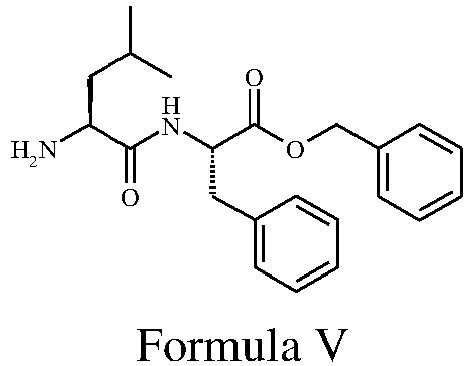
- c1) reacting the compound of Formula V or a salt thereof with a compound of Formula VI in presence of a coupling agent (C2), an additive (A2) and a base (B2) in a suitable solvent (S2) to obtain a compound of Formula VII,

- d1) reacting the compound of Formula VII with a suitable acid to obtain a compound of Formula XIII or a salt thereof,

- e1) reacting the compound of Formula XIII or a salt thereof with a compound of Formula XII in presence of a coupling agent (C5), an additive (A5) and a base (B5) in a suitable solvent (S5) to obtain a compound of Formula XIV,

- f1) deprotecting the compound of Formula XIV in presence of a suitable deprotecting agent to obtain a compound of Formula XV, and

- g1) reacting the compound of Formula XV with a compound of Formula IX or a salt threof in presence of a coupling agent (C6), an additive (A6) and a base (B6) in a suitable solvent (S6) to obtain carfilzomib or a pharmaceutically acceptable salt thereof,

- The compound of Formula II, L-phenyl alanine benzyl ester of Formula III or a salt thereof, N-boc-homophenylalanine of Formula VI and morpholine acetic acid of Formula XII are known in the art and can be procured from commercially available sources.
- The suitable salt of compounds of Formula III, Formula V or Formula IX employed in the aforementioned process is a salt of a mineral or organic acid, such as HCl, HBr, HI, HNO3, H2SO4, acetic acid, trifluoro acetic acid, formic acid and the like.
- The aforementioned process of step a1), step b2) and step c3) of converting compound of Formula II to compound of Formula VII can be carried out by the process described as above in the present specification.
- The step d1) of the aforementioned process involves deprotection of amine protecting group of Formula VII with a suitable acid to obtain a compound of Formula XIII or a salt thereof.
- The suitable acid used herein for step d1) is selected from the group consisting of hydrochloric acid, hydrobromic acid, sulfuric acid, phosphoric acid, acetic acid, trifluoro acetic acid, trichloro acetic acid, methane sulfonic acid and the like and mixture thereof; preferably trifluoro acetic acid.
- The deprotection reaction of compound of Formula VII with a suitable acid may be carried out in a suitable organic solvent. The suitable organic solvent includes but is not limited to alcohols, ketones, ethers, halogenated hydrocarbons and mixtures thereof. The alcohols include, but are not limited to methanol, ethanol, isopropanol and the like; ketones include, but are not limited to acetone, methyl isobutyl ketone, methyl ethyl ketone and the like; ethers include, but are not limited to tetrahydrofuran, dimethyl ether, diisopropyl ether, methyl tertiary butyl ether, 1,4-dioxane and the like; halogenated hydrocarbons include, but are not limited to methylene chloride, ethylene chloride and the like and mixture thereof; preferably methylene chloride.
- The deprotection reaction may be carried out at a temperature of about 0°C to reflux temperature; preferably at 0°C to about 50°C. After completion of the reaction, the reaction mass may be basified with a suitable aqueous base such as sodium carbonate, potassium carbonate and the like and then extracting the product with water immiscible organic solvent such as ethyl acetate, methylene chloride and the like. The free base of compound of Formula XIII may be isolated from the resultant water immiscible organic solvent by subjecting to evaporation under vacuum.
- The step e1) of the aforementioned process involves reaction of the compound of Formula XIII or a salt thereof with a compound of Formula XII in presence of a coupling agent (C5), an additive (A5) and a base (B5) in a suitable solvent (S5) to obtain a compound of Formula XIV.
- In a preferred embodiment, the improved process for preparation of carfilzomib of Formula I or a pharmaceutically acceptable salt thereof comprises: reacting a compound of Formula XIII or a salt thereof; preferably free base, with a compound of Formula XII in presence of a coupling agent (C5), an additive (A5) and a base (B5) in a suitable solvent (S5) to obtain a compound of Formula XIV, wherein the coupling agent (C5) is used in an amount of about 0.9 to about 1.3w/w mole equivalents per mole of Formula VII; wherein the additive (A5) is used in catalytic amount of about 0.05 to about 0.5w/w mole equivalents per mole of Formula VII.
- The coupling agent (C5) used herein for reaction of compound of Formula XIII or a salt thereof; preferably free base with a compound of Formula XII is selected from the group consisting of benzotriazol-1-yl-oxytripyrrolidinophosphonium hexafluorophosphate (PyBOP), benzotriazol-1-yloxy-tris (dimethylamino)-phosphonium hexafluorophosphate (BOP), bromo-tripyrrolidino-phosphonium hexafluorophosphate (PyBrOP), Propylphosphonic anhydride (T3P), N-(3-dimethylaminopropyl)-N'-ethylcarbodiimide (EDC), 1,1'-Carbonyldiimidazole(CDI), diisopropylcarbodiimide (DCI), dicyclohexyl carbodiimide (DCC) and the like and mixture thereof; preferably benzotriazol-1-yl-oxytripyrrolidinophosphonium hexafluorophosphate (PyBOP).
- The additive (A5) used herein for reaction of compound of Formula XIII or a salt thereof; preferably free base with a compound of Formula XII is selected from the group consisting of 1-Hydroxybenzotriazole (HOBt), 1-Hydroxy-7-aza-1H-benzotriazole (HOAt), 2-(1H-Benzotriazol-1-yl)-N,N,N',N'-tetramethylaminium tetrafluoroborate/hexa fluoro phosphate (TBTU), 2-(7-Aza-1H-benzotriazol-1-yl)-N,N,N','N'-tetramethylaminium hexafluorophosphate) (HATU) and the like and mixture thereof; preferably is 1-Hydroxybenzotriazole (HOBt).
- In a preferred embodiment, the coupling agent (C5) used herein is benzotriazol-1-yl-oxytripyrrolidinophosphonium hexafluorophosphate (PyBOP) and is used in an amount of about 1.2w/w mole equivalents Formula VII; additive (A5) used herein isl-Hydroxybenzotriazole (HOBt) and is used in an amount of about 0.1w/w mole equivalents per mole of Formula VII.
- Exemplary bases (B5) used herein for reaction of compound of Formula XIII or a salt thereof; preferably free base with a compound of Formula XII includes but are not limited to diisopropylethyl amine, Imidazole or its salts, 1,8-Diazabicyclo[5.4.0]undec-7-en (DBU), tertiary amines or its hydro halide salts thereof selected from the group consisting of triethyl amine-hydrochloride and the like and mixtures thereof; preferably diisopropylethyl amine.
- The reaction of compound of Formula XIII or a salt thereof; preferably free base with a compound of Formula XII is advantageously carried out in a solvent (S5). Suitable solvent include, but are not limited to ethers, esters, halogenated hydrocarbons, amides, aromatic solvents, nitriles, or mixtures thereof. The ether includes, but are not limited to tetrahydrofuran, 2-methyltetrahydrofuran and the like; esters include, but are not limited to methyl acetate, ethyl acetate, propyl acetate, butyl acetate and the like; halogenated hydrocarbons include, but are not limited to methylene chloride, ethylene chloride and the like; amides includes, but are not limited to dimethyl formamide, dimethyl acetamide, N-methyl pyrrolidinone and the like; aromatic solvents include, but are not limited to toluene, chlorobenzene and the like; nitriles include, but are not limited to acetonitrile, propionitrile and the like and mixtures thereof; preferably dimethyl formamide and acetonitrile.
- The reaction temperature should be sufficient to effect coupling reaction. Typically the reaction temperature may be from about -10°C to about reflux temperature. Preferably the reaction temperature is about 25°C to about 50°C. The reaction may take from about 0.5 hours to about 6 hours depending upon the coupling agent and additive, solvent and temperature chosen, preferably about 1 hour to 4 hours.
- After completion of the reaction, the compound of Formula XIV is advantageously isolated by quenching the step e1) reaction mass in to water to precipitate compound of Formula XIV as solid. The precipitated compound of Formula XIV may be separated by methods known in the art, for example filtration.
- The resultant product may optionally be further dried. Drying can be suitably carried out in a tray dryer, vacuum oven, air oven and the like. The drying can be carried out at a temperature ranging from about 40°C to about 60°C. A high purity level of the resulting Formula XIV, obtained by the aforementioned process, may have a chemical purity of at least about 95%, as measured by HPLC, preferably at least about 98%, as measured by HPLC and more preferably at least about 99.0%, as measured by HPLC; and contains less than 0.5% of total impurities of byproducts HOBt, PyBOP, tris(pyrrolidino phosphine) oxide, isomer impurities of Formula 8, Formula 9, Formula 10 and Formula 11, as measured by HPLC; preferably less than 0.3%, as measured by HPLC.
- In another embodiment, the obtained compound of Formula XIV having less than 0.1%, as measured by HPLC of each of impurity of Formula 8, Formula 9, Formula 10 or Formula 11; preferably less than 0.05%, as measured by HPLC; more preferably less than 0.03%, as measured by HPLC.
- The step f1) of the aforementioned process involves deprotection of benzyl protecting group of the compound of Formula XIV in presence of a suitable deprotecting agent to obtain a compound of Formula XV.
- The suitable deprotecting agent used herein for deprotection of the compound of Formula XV is include, but is not limited to palladium on carbon/ ammonium formate, palladium on carbon/ ammonium acetate, palladium on carbon/ hydrogen gas, palladium hydroxide/ hydrogen gas, raney nickel/hydrogen gas, platinum oxide/ hydrogen gas, zinc/ hydrogen gas and the like; preferably palladium on carbon/ ammonium formate.
- The deprotection reaction of compound of Formula XIV with a suitable deprotecting agent may be carried out in a suitable solvent. The suitable solvent includes but is not limited to alcohols, esters, ethers, acetic acid, water and mixtures thereof. The alcohols include, but are not limited to methanol, ethanol, isopropanol and the like; esters include, but are not limited to methyl acetate, ethyl acetate, propyl acetate, butyl acetate and the like; ethers include, but are not limited to tetrahydrofuran and the like; water and mixture thereof; preferably methanol.
- The deprotection reaction may be carried out at a temperature of about 0°C to reflux temperature; preferably at 0°C to about 50°C. After completion of the reaction, the reaction mass may be filtered and resulting compound of Formula XV may be isolated by subjecting the filterate to evaporation under vacuum to obtain a residue. Optionally the obtained residue is treated with a suitable solvent such as acetone and stirred for about 2 hours and the resultant compound of Formula XV may be isolated by techniques known in the art, for example filtration.
- The resultant product may optionally be further dried. Drying can be suitably carried out in a tray dryer, vacuum oven, air oven and the like. The drying can be carried out at a temperature ranging from about 40°C to about 60°C. A high purity level of the resulting Formula XV, obtained by the aforementioned process, may have a chemical purity of at least about 95%, as measured by HPLC, preferably at least about 98%, as measured by HPLC and more preferably at least about 99.5%, as measured by HPLC; and contains less than 0.5% of total impurities of Formula 12, Formula 13, Formula 14 and
Formula 15 as measured by HPLC; preferably less than 0.3%, as measured by HPLC. - In another embodiment, the obtained compound of Formula XV having less than 0.1%, as measured by HPLC of each of impurity of Formula 12, Formula 13, Formula 14 or
Formula 15; preferably less than 0.05%, as measured by HPLC; more preferably less than 0.03%, as measured by HPLC. - The step g1) of the aforementioned process involves reaction of the compound of Formula XV with a compound of Formula IX or a salt threof in presence of a coupling agent (C6), an additive (A6) and a base (B6) in a suitable solvent (S6) to obtain carfilzomib of Formula I.
- In a preferred embodiment, the improved process for preparation of carfilzomib of Formula I or a pharmaceutically acceptable salt thereof comprises: reacting a compound of Formula XV with a compound of Formula IX or a salt threof in presence of a coupling agent (C6), an additive (A6) and a base (B6) in a suitable solvent (S6) to obtain carfilzomib or a pharmaceutically acceptable salt thereof; wherein the coupling agent (C6) is used in an amount of about 0.9 to about 1.3w/w mole equivalents per mole of Formula XV; wherein the additive (A6) is used in catalytic amount of about 0.05 to about 0.5w/w mole equivalents per mole of Formula XV.
- In a preferred embodiment, the compound of Formula IX is having less than 0.1% of its corresponding isomers or its impurities of Formula E, Formula F, Formula G, Formula H, Formula I and Formula J:
Formula E Formula F Formula G 
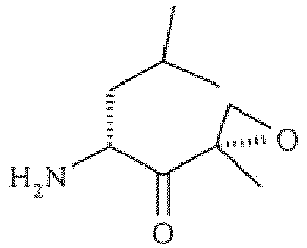

Formula H Formula I Formula J 


- The coupling agent (C6), an additive (A6), base (B6) and solvent (S6) are used herein for reaction of compound of Formula XV with a compound of Formula IX or a salt threof, preferably free base is same as used for step e1) as mentioned above.
- In a preferred embodiment, the coupling agent (C6) used herein is benzotriazol-1-yl-oxytripyrrolidinophosphonium hexafluorophosphate (PyBOP) and is used in an amount of about 1.2w/w mole equivalents per mole of Formula XV; additive (A6) used herein is 1-Hydroxybenzotriazole (HOBt) and is used in an amount of about 0.1w/w mole equivalents per mole of Formula XV.
The reaction temperature should be sufficient to effect coupling reaction. Typically the reaction temperature may be from about -10°C to about reflux temperature. Preferably the reaction temperature is about 25°C to about 50°C. The reaction may take from about 0.5 hours to about 6 hours depending upon the coupling agent and additive, solvent and temperature chosen, preferably about 1 hour to 4 hours. - After completion of the reaction, the obtained carfilzomib may be isolated by subjecting the reaction mass to evaporation under vacuum to obtain a residue.
- Alternatively, the resultant residue of carfilzomib can be converted in to its pharmaceutically acceptable salt thereof; preferably maleate salt by using the process described as above in the present specification.
- In addition, the conversion of carfilzomib pharmaceutically acceptable salt in to its free base of carfilzomib amorphous form may be performed by using the process described as above in the present specification.
- A high purity level of the resulting amorphous carfilzomib, obtained by the aforementioned process, may have a chemical purity of at least about 98%, as measured by HPLC, preferably at least about 99%, as measured by HPLC and more preferably at least about 99.9%, as measured by HPLC and contains less than 0.1%, as measured by HPLC of each of impurity of Formula 28, Formula 29, Formula 30, Formula 31, Formula 32, Formula 33, Formula 34, Formula 35, Formula 36, Formula 37, Formula 38, Formula 39, Formula 40 or Formula 41; preferably less than 0.05%, as measured by HPLC; more preferably less than 0.03%, as measured by HPLC.
- Also disclosed is a carfilzomib obtained by the aforementioned process, containing less than 0.05% as measured by HPLC of one or more of impurities of Formula I to Formula 41; preferably 0.03% as measured by HPLC:

- The repetition of '818 patent, which involves all the coupling reactions with excess quantity of coupling agent, an additive and solvent results less percentage of product yields in all stages when compared to the theoretical yields. In contrast the present invention involve use of less quantity of coupling agents, an additives and solvents for the preparation of carfilzomib, which observes less reaction time with higher product convertion there by process results higher yields and purity.
- A comparative step wise results of US'818 patent process and the present aforementioned process are reported in the following table:
Step Process Reagents (mole eqt) Solvent Purity by HPLC Reported Yield (w/w%) Theoretical yield (w/w%) Reaction of Formula II with Formula III US'818 process PyBOP (1.6); HOBt (1.6) Acetonitrile (45 vol) 88.12% 1% 1.6% Present process PyBOP (1.2); HOBt (0.1) DMF (5 vol) 99.53% 1.4% Reaction of Formula V with Formula VI US'818 process PyBOP (1.6); HOBt (1.6) Acetonitrile (22 vol) 89.35% 0.99% 1.35% Present process PyBOP (1.2); HOBt (0.1) DMF (5vol) 97.1% 1.2% Reaction of Formula XIII with Formula XII US'818 process PyBOP (1.6); HOBt (1.6) DMF (24 vol) 92.1% 0.6% 1.04% Present process PyBOP (1.2); HOBt (0.1) DMF (5 vol) 97.6% 0.95% Reaction of Formula XV with Formula IX US'818 process PyBOP (1.6); HOBt (1.6) Acetonitrile (50 vol) 26% 0.8% (isolated as amorphous) 1.27% Present process PyBOP (1.2); HOBt (0.1) Acetonitrile (50 vol) 99% 1% (isolated as maleate salt) - In addition, a process for preparation of tert-butyl ((2S)-4-methyl-1-((2R)-2-methyloxirane-2-yl)-1-oxo-pentan-2-yl)-carbamate of Formula XVI is disclosed,

- i) reacting a compound of Formula XVII with alkyl magnesium halide to obtain a compound of Formula XVIII,
- ii) crystallizing the compound of Formula XVIII from a suitable solvent system to obtain crystalline compound of Formula XVIII,
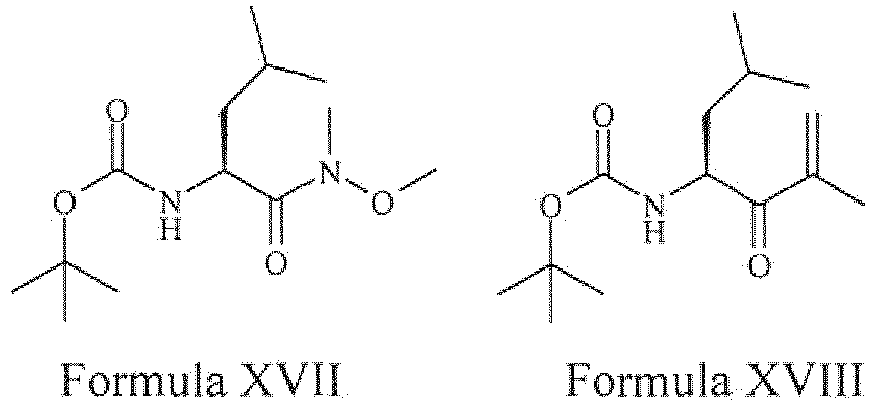
- iii) reducing the crystalline compound of Formula XVIII in presence of a suitable reducing agent to obtain a diastereomeric mixture of compound of Formula XIXa and Formula XIXb,
- iv) crystallizing the mixture of compound of Formula XIXa and Formula XIXb from a suitable solvent system to obtain a mixture of crystalline compound of Formula XIXa and Formula XIXb,

- v) epoxidation and followed by oxidation of diastereomeric mixture of crystalline compound of Formula XIXa and Formula XIXb to obtain a diastereomeric mixture of compound of Formula XVI and Formula XVIa,

- vi) separating the compound of Formula XVI from the diastereomeric mixture of compound of Formula XVI and Formula XVIa by chromatography, and
- vii) crystallizing the compound of Formula XVI from a suitable solvent system to obtain crystalline compound of Formula XVI.
- The starting material of Formula XVII is known in the art and can be prepared by any known method, for example
WO2009/045467 or may be by prepared by the process described in example part. - Step i) of reaction of compound of Formula XVII with alkyl magnesium halide such as iso-propenyl magnesium bromide is carried out in a suitable organic solvent, which includes but is not limited to esters, ketones, ethers and mixtures thereof. The esters include, but are not limited to ethyl acetate, isopropyl acetate and the like; ketones include, but are not limited to acetone, methyl isobutyl ketone, methyl ethyl ketone and the like; ethers include, but are not limited to tetrahydrofuran, dimethyl ether, diisopropyl ether, methyl tertiary butyl ether, 1,4-dioxane and the like and mixtures thereof; preferably tetrahydrofuran.
- The reaction of compound of Formula XVII with iso-propenyl magnesium bromide is carried out at a temperature of about 25°C to about reflux temperature; preferably at about 25°C to about 50°C.
- After completion of the reaction, the reaction mass may be quenched into ammonium chloride solution and compound of Formula XVIII may be extracted with water immiscible organic solvent such as ethyl acetate, methylene chloride, methyl tertiary butyl ether; preferable ethyl acetate and distilling out the water immiscible organic solvent under vacuum to obtain a compound of Formula XVIII as residue. The obtained residue may be purified by column chromatography using ethyl acetate and cyclohexane as an eluent system and the compound containing solvent fractions are combined and distilled under vacuum to obtain a compound of Formula XVIII as residue. The residue obtained is purified by a solvent crystallization method to isolating the compound of Formula XVIII as a crystalline solid.
- In an embodiment, the compound of Formula XVIII may be purified by recrystallization to obtain compound of Formula XVIII as a crystalline solid.
- Also disclosed is a process for the preparation of compound of Formula XVIII as crystalline solid, comprising:
- i) providing a solution of compound of Formula XVIII in a suitable solvent,
- ii) optionally cooling the step i) solution to less than 20°C,
- iii) adding an anti-solvent to the step ii) solution, and
- iv) isolating the crystalline compound of Formula XVIII; wherein the suitable solvent is selected from the group comprising alcohols, ketones, esters, nitriles and the like and mixture thereof; and the anti-solvent is selected from the group comprising aliphatic hydrocarbons, cyclic hydrocarbons, ethers and the like and water and mixture thereof.
- The step i) of providing a solution of Formula XVIII includes heating to dissolve the compound of Formula XVIII obtained by the process described above in a suitable solvent at a temperature of about 25°C to about reflux temperature; preferably at about 25°C to about 35°C.
- The suitable solvent for dissolving compound of Formula XVIII include, but is not limited to alcohols, ketones, esters, nitriles and the like and mixture thereof. The alcohols include, but are not limited to methanol, ethanol, propanol, isopropanol and the like; ketones include, but are not limited to acetone, methyl isobutyl ketone, methyl ethyl ketone and the like; esters include, but are not limited to methyl acetate, ethyl acetate, isopropyl acetate and the like; nitriles include, but are not limited to acetonitrile, propionitrile and the like and mixture thereof; preferably acetone. The optional step of cooling the step i) solution to less than 20°C; preferably about -10°C to about 0°C.
- Then, adding an antisolvent to the step ii) reaction solution and stirring the solution for a period of about 1 hour to about 2 hours to precipitating out the crystalline compound of Formula XVIII. Then, the resultant compound of Formula XVIII can be recovered by any conventional techniques known in the art, for example filtration and the resultant product may optionally be further dried.
- The suitable anti-solvent for precipitating the compound of Formula XVIII include, but is not limited to aliphatic hydrocarbons, cyclic hydrocarbons, ethers and the like and water and mixture thereof. The aliphatic hydrocarbons include, but are not limited to n-hexane, n-heptane, n-pentane and the like; cyclic hydrocarbons include, but are not limited to cyclopentane, cyclohexane and the like; ethers include, but are not limited to methyl tertiary butyl ether, diethyl ether and the like; and water and mixture thereof; preferable water.
- In addition, a crystalline compound of Formula XVIII is disclosed characterized by a powder X-Ray diffraction (PXRD) pattern substantially in accordance with
Figure 9 . - The compound of Formula XVIII obtained according to the process described just as above can be converted in to a diastereomeric mixture of compound of Formula XIXa and Formula XIXb using a reducing agent.
- The reducing agent used herein includes but is not limited to sodium borohydride with cerium trichloride, lithium tri-tert-butoxyaluminium hydride; preferable sodium borohydride with cerium trichloride.
- The reduction of compound of Formula XVIII can be carried out in a suitable organic solvent. The suitable organic solvent includes but is not limited to alcohols, ethers and the like and mixture thereof. The alcohols include, but are not limited to methanol, ethanol, propanol, isopropanol and the like; ethers include, but are not limited to tetrahydrofuran, dimethyl ether and the like and mixture thereof; preferably methanol. The reduction of compound of Formula III is carried out at a temperature of about -15°C to about 35°C; preferably at about -10 to 0°C.
- After completion of the reaction, the reaction mass may be quenched with acetic acid and compound of Formula XIX may be extracted with a water immiscible organic solvent such as ethyl acetate, methylene chloride, methyl tertiary butyl ether; preferable ethyl acetate and distilling out the water immiscible organic solvent under vacuum to obtain a diastereomeric mixture of compound of Formula XIXa and Formula XIXb as residue. The residue obtained is purified by a solvent crystallization method to isolate the diastereomeric mixture of compound of Formula XIXa and Formula XIXb as a crystalline solid.
- In an embodiment, the diastereomeric mixture of compound of Formula XIXa and Formula XIXb may be purified by recrystallization using a solvent to obtain corresponding pure compounds as a crystalline solid.
- In another embodiment, the process for the preparation of diastereomeric mixture of compound of Formula XIXa and Formula XIXb as a crystalline solid comprises the steps of:
- i) providing a solution of diastereomeric mixture of a compound of Formula XIXa and Formula XIXb in a suitable solvent,
- ii) cooling the step i) solution to less than 10°C,
- iii) adding an anti-solvent to the step ii) solution, and
- iv) isolating the crystalline compound of Formula XIX; wherein the suitable solvent is selected from the group comprising alcohols, ketones, esters, nitriles and the like and mixture thereof; and the anti-solvent is selected from the group comprising aliphatic hydrocarbons, cyclic hydrocarbons, ethers and the like and water and mixture thereof.
- The step i) of providing a solution of diastereomeric mixture of a compound of Formula XIXa and Formula XIXb includes heating to dissolve the diastereomeric mixture of Formula XIXa and XIXb obtained by the process described above, in a suitable solvent at a temperature of about 25°C to about reflux temperature; preferably at about 25°C to about 35°C.
- The suitable solvent for dissolving a diastereomeric mixture of a compound of Formula XIXa and Formula XIXb include, but is not limited to alcohols, ketones, esters, nitriles and the like and mixtures thereof. The alcohols include, but are not limited to methanol, ethanol, propanol, isopropanol and the like; ketones include, but are not limited to acetone, methyl isobutyl ketone, methyl ethyl ketone and the like; esters include, but are not limited to methyl acetate, ethyl acetate, isopropyl acetate and the like; nitriles include, but are not limited to acetonitrile, propionitrile and the like and mixture thereof; preferably methanol.
- The step ii) process involves cooling the step a) resulted solution to less than 10°C; preferably about 0°C to about 5°C.
- The step iii) process involves addition of an anti-solvent to the above step ii) reaction solution and stirring the solution for about 2 hours to precipitate the crystalline diastereomeric mixture of a compound of Formula XIXa and Formula XIXb. Then, the resultant pure diastereomeric mixture of compound of Formula XIXa and XIXb can be recovered by any conventional techniques known in the art, for example filtration and the resultant product may optionally be further dried.
- The suitable anti-solvent for precipitating the diastereomeric mixture of a compound of Formula XIXa and Formula XIXb include, but is not limited to aliphatic hydrocarbons, cyclic hydrocarbons, ethers and the like and water and mixture thereof. The aliphatic hydrocarbons include, but are not limited to n-hexane, n-heptane, n-pentane and the like; cyclic hydrocarbons include, but are not limited to cyclopentane, cyclohexane and the like; ethers include, but are not limited to methyl tertiary butyl ether, diethyl ether and the like; and water and mixture thereof; preferable water.
- The crystalline diastereomeric mixture of a compound of Formula XIXa and Formula XIXb is characterized by a powder X-Ray diffraction (PXRD) pattern substantially in accordance with
Figure 10 , and can be converted in to diastereomeric mixture of compound of Formula XXa and Formula XXb by epoxidation and followed by oxidation. - The epoxidizing agent used herein includes but is not limited to m-chloroperbenzoic acid, VO(acac)2, hydrogen peroxide and the like; preferable m-chloroperbenzoic acid.

- The epoxidation is carried out in a suitable organic solvent such as methylene chloride at a temperature of about 0°C to about 50°C; preferably at about 0°C to about 35°C.
- After completion of the reaction, diastereomeric mixture of compound of Formula XXa and Formula XXb may be isolated by extracting the reaction mass with water immiscible organic solvent such as ethyl acetate, methylene chloride, methyl tertiary butyl ether; preferable methylene chloride and distilling out the water immiscible organic solvent under vacuum to obtain a diastereomeric mixture of compound of Formula XXa and Formula XXb as residue.
- Then the obtained diastereomeric mixture of compound of Formula XXa and Formula XXb can be converted in to a diastereomeric mixture of compound of Formula XVI and Formula XVIa in presence of a suitable oxidizing agent.
- The oxidizing agent used herein include but is not limited to Dess-Martin periodinane, tetrapropylammonium perruthenate with 4-methylmorpholine-N-oxide; preferable Dess-Martin periodinane.
- The oxidation is carried out in a suitable organic solvent such as acetonitrile at a temperature of about 0°C to about 50°C; preferably at about 25 to about 30°C.
- After completion of the reaction, the diastereomeric mixture of compound of Formula XVI and Formula XVIa may be extracted with water immiscible organic solvent such as ethyl acetate, methylene chloride, methyl tertiary butyl ether; preferable ethyl acetate and distilling the water immiscible organic solvent under vacuum to obtain diastereomeric mixture of compound of Formula XVI and Formula XVIa as residue.
- The compound of Formula XVI may be separated from the obtained diastereomeric mixture of compound of Formula XVI and Formula XVIa by subjecting the mixture to column chromatography by eluting with ethyl acetate and cyclohexane solvent system and the product containing solvent fractions are collected and distilled under vacuum to obtain compound of Formula XVI as a residue.
- The resulting compound of Formula XVI, obtained by the aforementioned process, may have a chemical purity of at least about 99%, as measured by HPLC and about 0.5 to 1% of compound of Formula XVIII as measured by HPLC.
- In another embodiment, the improved process for the preparation of compound of Formula XVI comprises purifying the compound of Formula XVI as described above or by any known process to obtain pure compound of Formula XVI which is having chemical purity of at least about 99.9%, as measured by HPLC and less than about 0.1% of Formula XVIII as measured by HPLC.
- Also disclosed is a process for the purification of tert-butyl ((2S)-4-methyl-1-((2R)-2-methyloxirane-2-y])-1-oxo-pentan-2-yl)-carbamate of Formula XVI, comprising:
- i) providing a solution of tert-butyl ((2S)-4-methyl-1-((2R)-2-methyloxirane-2-yl)-1-oxo-pentan-2-yl)-carbamate of Formula XVI in a suitable solvent,
- ii) cooling the step i) solution to less than 5°C,
- iii) optionally adding seed compound of Formula XVI to the step ii) solution, and
- iv) isolating the pure compound of Formula XVI; wherein the suitable solvent is selected from aliphatic hydrocarbons, cyclic hydrocarbons, ethers and the like and mixture thereof.
- Preferably, the tert-butyl ((2S)-4-methyl-1-((2R)-2-methyloxirane-2-yl)-1-oxo-pentan-2-yl)-carbamate of Formula XVI has less than 0.1% of compound of Formula XVIII as measured by HPLC and is obtained by purifying the compound of Formula XVI by the process described above.
- The step i) of providing a solution of tert-butyl ((2S)-4-methyl-1-((2R)-2-methyloxirane-2-yl)-1-oxo-pentan-2-yl)-carbamate of Formula XVI includes heating to dissolve the compound of Formula XVI obtained by the process described as above, in a suitable solvent at a temperature of about 25°C to about reflux temperature; preferably at about 25°C to about 35°C.
- The suitable solvent for dissolving compound of Formula XVI include, but not limited to aliphatic hydrocarbons, cyclic hydrocarbons, ethers and the like and mixtures thereof. The aliphatic hydrocarbons include, but are not limited to n-hexane, n-heptane, n-pentane and the like; cyclic hydrocarbons include, but are not limited to cyclopentane, cyclohexane and the like; ethers include, but are not limited to methyl tertiary butyl ether, diethyl ether and the like and mixture thereof; preferably n-heptane.
- The resultant solution may be cooled to less than 5°C, preferably about -10°C to 0°C. Optionally the solution may be seeding with a seed compound of Formula XVI to precipitating out the crystalline compound of Formula XVI. The precipitated crystalline compound of Formula XVI may be isolated by methods known in the art, for example filtration followed by drying at suitable temperatures.
- The crystalline tert-butyl ((2S)-4-methyl-1-((2R)-2-methyloxirane-2-yl)-1-oxo-pentan-2-yl)-carbamate of Formula XVI is characterized by a powder X-Ray diffraction (PXRD) pattern substantially in accordance with
Figure 8 and contains less than 0.1% of compound of Formula XVIII as measured by HPLC. - In addition, an improved process for the preparation of carfilzomib is disclosed, comprising preparing the tert-butyl ((2S)-4-methyl-1-((2R)-2-methyloxirane-2-yl)-1-oxo-pentan-2-yl)-carbamate of Formula XVI as described above, and converting the tert-butyl ((2S)-4-methyl-1-((2R)-2-methyloxirane-2-yl)-1-oxo-pentan-2-yl)-carbamate of Formula XVI in to carfilzomib by any process known in the art or by the process described in the above specification.
- Also disclosed is a process for the preparation of carfilzomib, comprising providing a compound of Formula XVI as obtained by the process described above, as a starting material or as an intermediate, where the purity of the carfilzomib having at least about 99% and less than 0.1% of compound of Formula XVIII as measured by HPLC, preferably at least about 99.5% and less than 0.05% of compound of Formula XVIII as measured by HPLC.
- The X-Ray powder diffraction can be measured by an X-ray powder diffractometer equipped with a Cu-anode ([λ] =1.54 Angstrom), X-ray source operated at 30kV, 15 mA. Two-theta calibration is performed using an NIST SRM 640c Si standard. The sample was analyzed using the following instrument parameters: measuring range=3-45°2θ; step width=0.020°; and scan speed=5°/minute.
- As used herein, the pharmaceutical acceptable salts include acid addition salts formed with inorganic acids or with organic acids. The inorganic acids may be selected from hydrochloric acid, hydrobromic acid, sulfuric acid, phosphoric acid, nitric acid, sulfamic acid, and the like; organic acids may be selected from acetic acid, oxalic acid, fumaric acid, succinic acid, tartaric acid, salicylic acid, benzoic acid, glycolic acid, methane sulfonic acid, ethanesulfonic acid, benzenesulfonic acid, p-toluenesulfonic acid, lactic acid, maleic acid, malonic acid, malic acid and the like.
- The present invention provides carfilzomib or a pharmaceutically acceptable salt thereof and its intermediates, obtained by the above process, as analyzed using high performance liquid chromatography ("HPLC") with the conditions are tabulated below:
Column Halo C18 (100×4.6) mm,2.7µm Column temperature 35°C Mobile phase Mixture of buffer and Acetonitrile (30:70) v/v Buffer Dipotassium hydrogen phosphate Diluent Water and Acetonitrile (30:70) v/v Flow rate 1.0mL/min Wavelength By UV at 210nm Injection Volume 10µL Elution Gradient - The present invention provides a pharmaceutical composition, comprising carfilzomib or a pharmaceutically acceptable salt thereof prepared by the processes of the present invention and at least one pharmaceutically acceptable excipient. Such pharmaceutical composition may be administered to a mammalian patient in any dosage form, e.g., injectable solution, solid, liquid, powder etc.
- The following examples illustrate specific embodiments of the present invention.
- A mixture of N-boc-L-leucine (45g, 1.05eq) and toluene (500ml) was heated to 50-55°C and stirred for 30 min at same temperature. The reaction mass was distilled completely under vacuum at less than 55°C to obtain residue. To the obtained residue dimethyl formamide (250 ml) was charged at 25-30°C and allowed to cool to 2-6°C. To the reaction mass HOBt (2.4g, 0.1eq), PyBOP (107g, 1.2eq) and L-phenyl alanine benzyl ester hydrochloride (50g, 1eq) and diisopropyl ethyl amine (89g, 4eq) were sequentially added at 2-6°C and stirred for 5min at same temperature. Then the reaction mass was heated to 25-30°C and stirred for 2-3 hr at same temperature. After completion of the reaction, reaction mass was quenched in to water (2500 ml) at 25-30°C and stirred for 3-4 hr at same temperature. Precipitated solid was filtered, washed with water (250 ml) and dried to get the title compound. Yield: 77.5 g; PXRD:
Fig. 1 ; DSC: endothermic peak at about 104°C; Chemical purity by HPLC: 99.97%; HOBt: Not detected, PyBOP: 0.01% and tris(pyrrolidino phosphine) oxide: Not detected by HPLC. - A mixture of methylene chloride (90 ml) and trifluoro acetic acid (210 ml) was allowed to cool to 2-6°C and compound of Formula IV (100 g, 1eq) was added at same temperature. Then the reaction mass was heated to 25-30°C and stirred for 2 hr at same temperature. To the reaction mass methylene chloride (1.5lit) was added and pH adjusted to 7-8 with 20% sodium carbonate at 25-30°C and stirred for 20 min at same temperature. Separated the organic layer and washed with water (300ml) and 10% sodium chloride (300 ml) sequentially. Organic layer was separated and concentrated under vacuum at below 35°C to obtain residue. The obtained residue was dissolved in dimethyl formamide (500 ml) and allowed to cool to 2-6°C. To the reaction mass HOBt (2.9g, 0.1eq), PyBOP (133.5g, 1.2eq), N-boc-homo phenyl alanine (59.7g, 1eq) were added slowly at 2-6°C. To the reaction mass HOBt (2.9g, 0.1eq), PyBOP (133.5g, 1.2eq), N-boc-homo phenyl alanine (59.7g, 1eq) and diisopropyl ethyl amine (110.5g, 4eq) were added slowly at 2-6°C. Then the reaction mass was heated to 25-30°C and stirred for 2-3 hr at same temperature. After completion of the reaction, reaction mass was quenched in to water (5lit) at 25-30°C and stirred for 2-3 hr at same temperature and the precipitated solid was filtered, washed with water (500 ml) and dried to get the title compound. Yield: 130g; PXRD:
Fig. 2 ; DSC: endothermic peak at about 150°C; Chemical purity by HPLC: 99.97%; HOBt: 0.1%, PyBOP: Not detected and tris(pyrrolidino phosphine) oxide: 0.02% by HPLC. - A mixture of methanol (150 ml), methylene chloride (150 ml), compound of Formula VII (30 g) and 10% Pd/C (6g) were charged in to 2 lit auto clave at 25-35°C and purged hydrogen gas at 25-30°C for a period of 36 hr. After completion of the reaction, filtered the reaction mass and filterate was distilled under vacuum at below 40°C. To the obtained compound n-heptane (120 ml) was added at 25-35°C and stirred for 1-2 hr at same temperature. The solid obtained was filtered and dissolved in ethyl acetate (120 ml) at 25-35°C. The obtained solution was added in to n-heptane (450 ml) at 25-35°C and stirred for 2 hr at same temperature. Precipitated solid was filtered, washed with n-heptane (90 ml) and dried to get the title compound. Yield: 24g; PXRD:
Fig. 3 ; DSC: endothermic peak at about 64°C; Chemical purity by HPLC: 97.2%. - A mixture of methylene chloride (105ml) and [(1S)-3-Methyl-1-[[(2R)-2-methyloxiranyl] carbonyl]butyl]carbamic acid 1,1-dimethylethyl ester (7.5g, 1eq) was allowed to cool to 2-6°C. To the reaction mass trifluoroacetic acid (15ml) was added at same temperature. Then the reaction mass was heated to 25-30°C and stirred for 2 hr at same temperature. After completion of reaction, reaction mass was distilled completely under vacuum at below 35°C and the obtained residue was dissolved in dimethyl formamide (30 ml).
- In another reaction flask a mixture of dimethyl formamide (45 ml) and compound of Formula VIII (15 g, 1eq) was allowed to cool to 2°C to 6°C. To the reaction mass HOBt (0.4g, 0.1eq), PyBOP (23.2g), dimethyl formamide solution of (2S)-2-Amino-4-methyl-1-[(2R)-2-methyloxiranyl]-1-pentanonetrifluoroacetate (30 ml) and diisopropyl ethyl amine (14.4g, 4eq) was slowly added sequentially at 2°C to 6°C and stirred for 2-4 hr at same temperature. After completion of the reaction, reaction mass was quenched in to water (750 ml) at 25-30°C and stirred for 2-3 hr at same temperature. Precipitated solid was filtered and washed with water (75 ml) to obtain crude compound of Formula X.
- The obtained crude compound of Formula X was dissolved in ethyl acetate (225 ml) at 25-35°C and heated to reflux for 30 min. filtered the undissolved material and reaction mass was allowed to cool to 2-6°C. Precipitated solid was filtered, washed with chilled ethyl acetate (30 ml) and dryed to get the title compound. Yield: 14 g; PXRD:
Fig. 4 ; DSC: endothermic peak at about 151.7°C and exothermic peak at about 164°C; Chemical purity by HPLC: 97.0%. - A mixture of methylene chloride (140 ml) and compound of Formula X (14g, 1eq) was allowed to cool to 2-6°C and trifluoroacetic acid (84 ml) was added at same temperature and stirred for 2-3 hr at same temperature. After completion of reaction, reaction mass was distilled completely under vacuum at below 35°C and the obtained compound was slurred in n-heptane (70 ml) at 25-35°C. Filtered the solids and washed with n-heptane (70 ml) to obtain trifluoro acetic acid salt of Formula XI. PXRD:
Fig. 5 ; DSC: endothermic peak at about 115°C; or the reaction mass was basified and isolated the compound of Formula XI as its free base. PXRD:Fig. 6 ; DSC: exothermic peaks at about 76.8°C and 141.8°C. - A mixture of dimethyl formamide (42 ml) and 2-morpholino acetic acid of Formula XII (3.73 g) was allowed to cool to 2-6°C. To the reaction mass HOBt (0.27g, 0.1eq), PyBOP (12.6g, 1.2eq), Formula XI free base (dissolved in 28 ml dimethyl formamide) and diisopropyl ethyl amine (10.34 g, 4eq) were slowly added sequentially at 2°C to 6°C and stirred for 2-4 hr at same temperature. After completion of the reaction, reaction mass was quenched in to water (700 ml) at 25-30°C and stirred for 2-3 hr at same temperature. Precipitated solid was filtered, washed with water (75 ml). The obtained compound was dissolved in ethyl acetate (700 ml), washed with 5% sodium bisulphate (2×140ml), 5% sodium bicarbonate (2×140 ml) and water (140 ml) sequentially. Organic layer was separated and passed through silicycle-M 60 silica gel bed and compound containing fractions were collected and distilled completely under vacuum at 25-35°C to obtaine residue. The obtained residue was dissolved in a mixture of acetonitrile (70 ml) and tetrahydrofuran (35 ml) at 25-35°C and stirred for clear solution. To the reaction mass maleic acid (2.32 g) was added at 25-30°C and stirred for 30min at same temperature. To the reaction mass acetonitrile (70 ml) was charged and stirred for 1-2 hr at 25-30°C. Precipitated solid was filtered, washed with acetonitrile (70 ml) and dried. To the obtained compound n-propanol (210 ml) was added and heated to reflux for 30-60 min. Reaction mass was allowed to cool to 25-35°C. Precipitated solid was filtered, washed with chilled n-propanol (28 ml) and dried to get crystalline maleate salt. Yield: 8 g; Chemical purity by HPLC: 99.8%; PXRD:
Fig. 7 ; DSC: Endothermic peak at 185.4°C; TGA: No weight loss; HOBt: 0.15%, PyBOP: Not detected and tris(pyrrolidino phosphine) oxide: 0.05% by HPLC. - A mixture of methylene chloride (60 ml) and trifluoro acetic acid (240 ml) was allowed to cool to 2-6°C. To the reaction mass compound of Formula VII (100g, 1eq) was added at same temperature. Then the reaction mass was heated to 25-30°C and stirred for 2 hr at same temperature. To the reaction mass methylene chloride (1.5lit) was added and pH adjusted to 7-8 with 20% sodium carbonate at 25-30°C and stirred for 20 min at same temperature. Separated the organic layer and washed with water (300 ml) and 10% sodium chloride (300 ml) sequentially. Organic layer was separated and concentrated under vacuum at 25-35°C to obtain residue. The obtained residue was dissolved in dimethyl formamide (500 ml) and allowed to cool to 2-6°C. To the reaction mass HOBt (2.2g, 0.1eq), PyBOP (99.2g, 1.2eq), morpholine acetic acid (29.5g, 1.2eq) and diisopropyl ethyl amine (82.1g, 4eq) were slowly added sequentially at 2-6°C. Then the reaction mass was heated to 25-30°C and stirred for 2-3 hr at same temperature. After completion of the reaction, reaction mass was quenched in to water (5lit) at 25-30°C and stirred for 2 hr at same temperature and the solid precipitated was filtered, washed with water (500 ml) and dried to get the title compound. Yield: 94 g; Chemical purity by HPLC: 97.6%; HOBt: 0.35%, PyBOP: 0.01% and tris(pyrrolidino phosphine) oxide: 0.04% by HPLC.
- Compound of Formula XIV (100g) was dissolved in methanol (4.5lit) at 25-30°C. To the reaction mass ammonium formate (38.5g dissolved in 500ml methanol) and palladium on carbon (20 g) were added and stirred for 2 hr at same temperature. After completion of the reaction, filtered the reaction mass and filterate was distilled under vacuum at below 45°C to obtain residue. To the obtained residue water (llit) was added at 25-30°C and stirred for 2-3 hr at same temperature. The solid was filtered, washed with acetone (500 ml) and dried. To the obtained solid n-propanol (31it) was added and heated to reflux for 1hr. Then the reaction mass was allowed to cool to 25-30°C and stirred for 2-4 hr at same temperature. Precipitated solid was filtered, washed with n-propanol (200 ml) and dried to get the title compound. Yield: 77g; Chemical purity by HPLC: 99.7%.
- A mixture of methylene chloride (250 ml) and [(1S)-3-Methyl-1-[[(2R)-2-methyloxiranyl]carbonyl]butyl]carbamic acid 1,1-dimethylethyl ester (50g, 1eq) was allowed to cool to 2-6°C. To the reaction mass trifluoroacetic acid (100ml) was added at same temperature. Then the reaction mass was heated to 25-30°C and stirred for 2hr at same temperature. After completion of reaction, reaction mass was distilled completely under vacuum at below 35°C and the obtained residue was dissolved in acetonitrile (500 ml).
- In another reaction flask a mixture of acetonitrile (4500ml) and compound of Formula XV (100g, 1eq) was allowed to cool to -10°C to -5°C. To the reaction mass HOBt (38.1g, 0.1eq), PyBOP (146.8g, 1.2eq), acetonitrile solution of (2S)-2-Amino-4-methyl-1-[(2R)-2-methyloxiranyl]-1-pentanonetrifluoroacetate (500 ml) and diisopropyl ethyl amine (91.2ml, 4eq) were added sequentially at -10°C to -5°C and stirred for 3-4 hr at same temperature. After completion of the reaction, reaction mass was distilled completely under vacuum at below 35°C to obtain residue and the obtained residue was dissolved in ethyl acetate and washed the clear solution with 5%sodium bicarbonate (3×100ml), water (llit), 5% sodium chloride (llit) sequentially. Organic layer was separated and passed through silica gel bed and the product containing fractions were collected and distilled completely under vacuum at below 35°C to obtain residue. The obtained residue was dissolved in a mixture of acetonitrile (250ml) and tetrahydrofuran (250ml) at 25-30°C. To the reaction mass maleic acid (20.5g) was added at 25-30°C and stirred for 30min at same temperature. To the reaction mass acetonitrile (500ml) was charged and stirred for 1-2 hr at 25-30°C. The solid obtained was filtered, washed with acetonitrile (1.5lit) and dried. To the obtained compound n-propanol (llit) was added and heated to reflux for 10min. Then the reaction mass was allowed to cool to 2-6°C. Precipitated solid was filtered, washed with chilled n-propanol (llit) and dried to get the title compound. Yield: 100 g; PXRD:
Fig. 7 ; Chemical purity by HPLC: 99.8%; HOBt: 0.15%, PyBOP: Not detected and tris(pyrrolidino phosphine) oxide: 0.05% by HPLC. - A mixture of methylene chloride (180 ml) and carfilzomib maleate salt (6 g) was allowed to cool to 2-6°C. To the reaction mass sodium bicarbonate solution (1.27 g dissolved in 60 ml water) was added slowly at 2-6°C and stirred for 10min at same temperature. Organic layer was separated and washed with sodium bisulphate (2×60 ml) and water (2×60 ml) sequentially. Organic layer was separated and distilled under vacuum completely to obtain residue. The obtained residue was dissolved in a mixture of ethyl acetate (90 ml) and methylene chloride (12 ml) and passed the solution through neutral silica bed and separated the product containing fractions and distilled completely under vacuum at below 40°C to obtain residue. The obtained residue was dissolved in methanol (42 ml) at 25-30°C. Then the methanol solution was slowly added in to pre cooled water (420 ml) at 4-10°C and stirred for 1hr at same temperature. Precipitated solid was filtered, washed with water (60 ml) and dried to get the title compound. Yield: 2.4 g; Chemical purity by HPLC: 99.8%; HOBt: Not detected, PyBOP: Not detected, tris(pyrrolidino phosphine) oxide: Not detected, Formula 28: 0.02%, Formula 29 to Formula 36: Not detected, Formula 37: 0.02%, Formula 38: Not detected, Formula 39: Not detected, Formula 40: 0.02% and Formula 41: Not detected by HPLC.
- A mixture of N-Boc-L-Leucine monohydrate (216 g) and toluene (2 lit) was heated to 45-50°C and was distilled completely under vacuum at same temperature to obtain a residue. To the obtained residue methylene chloride (1 lit) was added at 25-30°C and allowed to cool to -10°C to -5°C. To the reaction mass PyBOP (584g), HOBt (128g), N,O-dimethyl hydroxyl amine hydrochloride (168 g) and diisopropylethylamine (690 ml) were added and allowed to stir at same temperature. After completion of the reaction, reaction mass was washed with 8% sodium bicarbonate solution (2 lit), water (2 lit), 10% sodium chloride solution (2 lit) sequentially. Organic layer was separated and distilled under vacuum completely and followed by co-distilled with cyclohexane (500 ml) to obtain residue. To the obtained residue cyclohexane (2 lit) was added and stirred for 30 min at 25-30°C. Filtered the reaction mass and the filterate was concentrated under vacuum to obtain a residue. The obtained residue was dissolved in cyclohexane (1 lit) and passed through neutral alumina column. Concentrated the product containing column fractions completely under vacuum to obtain residue and the obtained residue was dissolve in n-hexane (100 ml) at 25-30°C and allowed to cool to -15 to -10°C and stirred for 2 hr at same temperature. Filtered the un-wanted solids and concentrated the filterate under vacuum at 45-50°C to obtain title compound. Yield: 210 g
- A mixture of compound of Formula XVII (100 g) and toluene (1500 ml) was heated to 75-80°C and was distilled completely under vacuum at same temperature to obtain residue. The obtained residue was dissolved in tetrahydrofuran (100 ml) at 25-30°C. In another reaction flask isopropenyl magnesium bromide (2.19 lit) was charged at 25-30°C and slowly added the above tetrahydrofuran solution over 2 hr at 25-40°C and stirred for 45 min at same temperature. After completion of the reaction, quenched the reaction mass in to 15% ammonium chloride (1.5 lit) at 0-5°C and organic layer was separated and concentrated under vacuum at below 40°C to obtain residue. The obtained residue was purified by silicycle silica by using ethyl acetate and cyclohexane solvent system. Product containing solvent fractions were combined and concentrated under vacuum at below 40°C to obtain residue. The obtained residue was dissolved in acetone (100 ml) at 25-30°C and allowed to cool to -5 to 0°C. To the clear solution water (1.5 lit) was added slowly at -5 to 0°C. Precipitated solid was filtered, washed with water (100 ml) and dried to get the title compound as a crystalline solid. Yield: 72 g; PXRD:
Fig. 9 ; Chemical purity by HPCL: 99.44%; Chiral purity by HPLC: 99.73%. - A mixture of compound of Formula XVIII (115 g) and methanol (500 ml) was allowed to cool to 0-5°C. To the reaction mass cerium (III) chloride heptahydrate solution (203 g dissolved in 500ml methanol) was added slowly at 0-5°C. Then the reaction mass was allowed to cool -5 to 0°C and sodium borohydride (10.2 g) was added in lot wise over 1 hr at same temperature. After completion of the reaction, acetic acid (20 ml) was added drop wise at same temperature and concentrated reaction mass under vacuum at below 40°C to obtain a solid. The obtained solid was dissolved in ethyl acetate (1 lit) and washed with water (500 ml) and 10% sodium chloride solution (500 ml) sequentially. Organic layer was separated and concentrated under vacuum at below 40°C to obtain title compound as a solid. The obtained solid was dissolved in methanol (100 ml) at 25-30°C and allowed to cool to 0-5°C. To the reaction mass water (150 ml) was added at 0-5°C. Precipitated solid was filtered, washed with water (100 ml) and dried to get the title compound as a crystalline solid. Yield: 95 g; PXRD:
Fig. 10 ; Chemical purity by HPLC: 99.48%, Chiral purity by HPLC: 99.99%. - A mixture of compound of Formula XIX (20 g) and methylene chloride (200 ml) was allowed to cool to 0-5°C. To the reaction mass mCPBA (22.6 g) was added in lot wise at 0-5°C and heated to 25-30°C. After completion of the reaction, reaction mass was allowed to cool to 0-5°C and solid was filtered. Then the product containing filterate was washed with 8% sodium bicarbonate solution (200 ml) and 10% sodium bisulphate solution (200 ml). Organic layer was separated and concentrated under vacuum at below 40°C to obtain title compound. Yield: 17 g.
- Compound of Formula XX (16 g) was dissolved in acetonitrile (80 ml) at 25-30°C. To the reaction mass a mixture of acetonitrile (80 ml) and Dess-Martin Periodinane (37.3 g) were added over a period of 1 hr at 0-5°C. Then the reaction mass was heated to 25-30°C and stirred for 2 hr at same temperature. After completion of the reaction, reaction mass was quenched in to 8% sodium bicarbonate solution (160 ml) at 0-5°C and extracted with ethyl acetate. Ethyl acetate layer was concentrated under vacuum at below 40°C to obtain oily mass. The obtained oily mass was purified by column chromatography using a mixture of 0.5% ethyl acetate and cyclohexane as an eluent. Then the product containing solvent fractions were combined and concentrated under vacuum at below 40°C to obtain title compound as residue. Chemical purity by HPLC: 99.0%; Compound of Formula XVIII by HPLC: 0.5%.
- The obtained residue was dissolved in n-heptane (4 ml) at 25-30°C and stirred for 10 min at same temperature. Reaction mass was allowed to cool to -5 to 0°C and stirred for 30 min at same temperature, to the reaction mass seed compound of Formula XVI (16 mg) was added at same temperature. Precipitated solid was filtered and dried to get the title compound as a crystalline solid. Yield: 4.5 g; PXRD:
Fig. 8 ; Chemical purity by HPLC: 99.88%, Compound of Formula XVIII by HPLC: 0.05%, Chiral purity by HPLC: 100%. - A mixture of acetonitrile (900 ml), N-boc-L-leucine (19.8g, 1eq), L-phenyl alanine benzyl ester hydrochloride (25g, 1eq) and diisopropyl ethyl amine (44.2g, 4eq) were charged in to a reaction flask at 25-30°C and stirred for 10 min at same temperature. Then the reaction mass was allowed to cool to 0°C and HOBt (18.5g, 1.6eq), PyBOP (71.3g, 1.6eq) were added in lot wise over 5 min at same temperature and stirred under nitrogen for overnight at same temperature. After completion of reaction, reaction mass was distilled completely under vacuum and the obtained crude was dissolved in ethyl acetate (500ml), washed with saturated sodium bicarbonate solution, water followed by sodium chloride solution. Organic layer was dryed with magnesium sulphate and distilled under vacuum to obtain title compound. Yield: 25 g; Chemical purity by HPLC: 88.12%; HOBt: 4.1%, PyBOP: Not detected and tris(pyrrolidino phosphine) oxide: 5.41% by HPLC.
- A mixture of 70% trifluoro acetic acid/methylene chloride (150 ml) was allowed to cool to 0°C. To the reaction mass compound of Formula IV (25g, 1eq) was added at same temperature. Then the reaction mass was heated to 25-30°C and stirred for 2 hr at same temperature. After completion of reaction, distilled the reaction mass completely under vacuum and the obtained trifluoroacetic acid salt of Formula V was dissolved in acetonitrile (550 ml). To the reaction mass N-boc-homo phenyl alanine (25g, 1eq) and diisopropyl ethyl amine (27.5g, 4eq) were added at 25-30°C. Reaction mass was allowed to cool to 0°C and HOBt (11.5g, 1.6eq), PyBOP (44.4g, 1.6eq) were added in lot wise over 5 min at same temperature and stirred for overnight under nitrogen at 25-30°C. Then the reaction mass was allowed to cool to 0°C and the solid obtained was filtered, washed with chilled acetonitrile to get the title compound. Yield: 24.8 g; Chemical purity by HPLC: 89.35%; HOBt: 9.9%, PyBOP: 0.02% and tris(pyrrolidino phosphine) oxide: 0.24% by HPLC.
- A mixture of 80% trifluoro acetic acid/methylene chloride (12ml) and compound of Formula VII (0.25g, 1eq) were combined in a reaction flask at 25-30°C and stirred for 1 hr at same temperature. After completion of reaction, reaction mass was distilled completely under vacuum and the obtained oily trifluoroacetic acid salt of Formula VIII was dissolved in dimethyl formamide (6ml). To the reaction mass morpholine acetic acid (0.07gm) and diisopropyl ethyl amine (0.5g, 10eq) were added at 25-30°C. Then reaction mass was allowed to cool to 0°C and PyBOP (0.3g, 1.6eq) was added in lot wise for 5 min at same temperature. Reaction mass was heated to 25-30°C and stirred for overnight under nitrogen. After completion of reaction, reaction mass was diluted with brine solution and extracted with ethyl acetate and washed with saturated sodium bicarbonate solution, water followed by sodium chloride solution. Organic layer was separated and distilled under vacuum to obtain title compound. Yield: 0.19 g; Chemical purity by HPLC: 92.14%; HOBt: 2.03%, PyBOP: 0.24% and tris(pyrrolidino phosphine) oxide: 3.4% by HPLC.
- Compound of Formula XIV (0.19g) was dissolved in 1:1 mixture of methanol and ethyl acetate (5ml) at 25-30°C. To the reaction mass 10% Pd/C (0.05g) was added and stirred under hydrogen atmosphere for 2 hr at same temperature. After completion of reaction, filtered the reaction mass through hyflo bed and filterate was distilled under vacuum to obtain title compound. Yield: 0.12 g; Chemical purity by HPLC: 95.90%; HOBt: 0.41% and tris(pyrrolidino phosphine) oxide: 1.42% by HPLC.
- Trifluoroacetic acid salt of Formula IX (0.08g), acetonitrile (5 ml), compound of Formula XV (01g, 1eq), diisopropyl ethyl amine (0.3g) and HOBt (0.04g, 1.6eq) were combined in a reaction flask at 25-30°C. Reaction mass was allowed to cool to 0°C and PyBOP (0.15g, 1.6eq) was added lot wise in 5 min at same temperature. Then the reaction mass was stirred for overnight under nitrogen at 5°C. After completion of reaction, reaction mass was diluted with brine solution and extracted with ethyl acetate and the organic layer was washed with saturated sodium bicarbonate solution, water followed by sodium chloride solution. Organic layer was separated and distilled under vacuum and the obtained crude compound was dissolved in methanol and slowly added in to water (100ml) under rapid stirring at 0°C. Precipitated solid was filtered to get the title compound. Yield: 0.08 g; Chemical purity by HPLC: 25.91%; HOBt: 59.34%, PyBOP: 2.04% and tris(pyrrolidino phosphine) oxide: 1.7% by HPLC.
an improved process for the preparation of carfilzomib having less than 0.1% of Formula 28 by HPLC, comprising:
Claims (13)
- A process for the preparation of carfilzomib of Formula I or a pharmaceutically acceptable salt thereof:
 a) reacting a compound of Formula II with a compound of Formula III or a salt thereof in presence of a coupling agent (C1), an additive (A1) and a base (B1) in a suitable solvent (S1) to obtain a compound of Formula IV,
 b) reacting the compound of Formula IV with a suitable acid to obtain a compound of Formula V or a salt thereof,
 c) reacting the compound of Formula V or a salt thereof with a compound of Formula VI in presence of a coupling agent (C2), an additive (A2) and a base (B2) in a suitable solvent (S2) to obtain a compound of Formula VII,
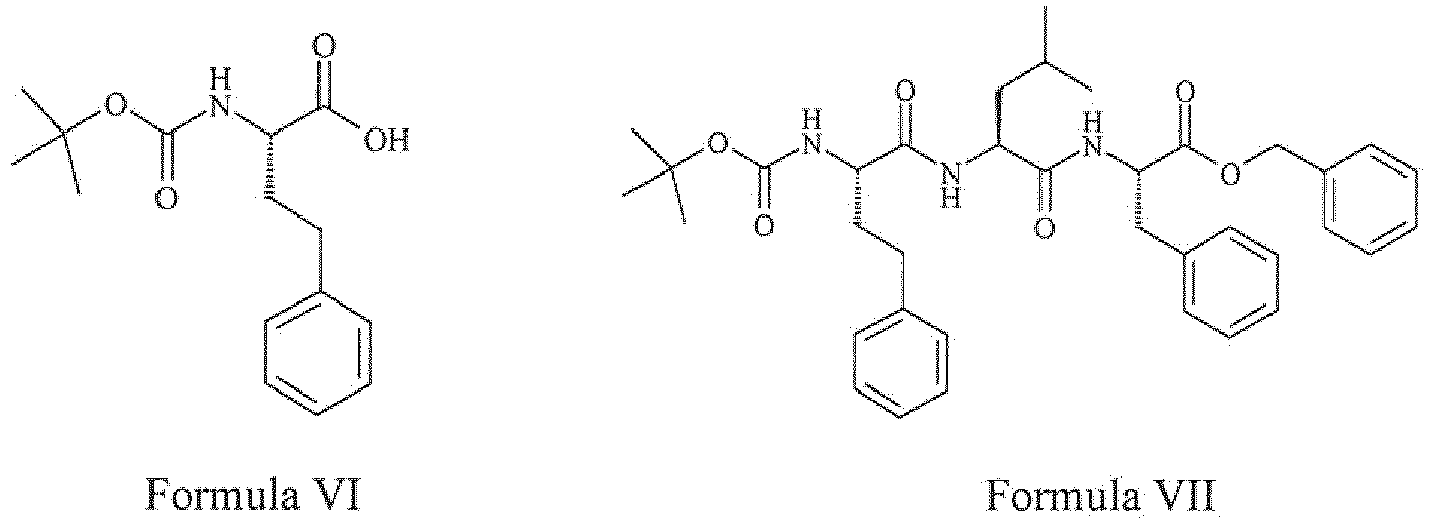 d) deprotecting the compound of Formula VII in presence of a suitable deprotecting agent to obtain a compound of Formula VIII,
 e) reacting the compound of Formula VIII with a compound of Formula IX or a salt thereof in presence of a coupling agent (C3), an additive (A3) and a base (B3) in a suitable solvent (S3) to obtain a compound of Formula X,
 f) reacting the compound of Formula X with a suitable acid to obtain a compound of Formula XI or a salt thereof, and
 g) reacting the compound of Formula XI or a salt thereof with a compound of Formula XII or a salt thereof in presence of a coupling agent (C4), an additive (A4) and a base (B4) in a suitable solvent (S4) to obtain carfilzomib or a pharmaceutically acceptable salt thereof,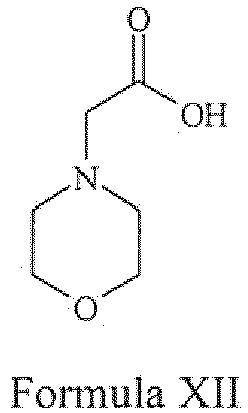
wherein the additive (A1), (A2), (A3) and (A4) are used in an amount of about 0.05 to about 0.5w/w mole equivalents per mole of Formula III, Formula IV, Formula VIII and Formula XI respectively. - The process of claim 1, wherein the coupling agent (C1), (C2), (C3) or (C4) is selected from the group consisting of benzotriazol-1-yl-oxytripyrrolidinophosphonium hexafluorophosphate (PyBOP), benzotriazol-1-yloxy-tris (dimethylamino)-phosphonium hexafluorophosphate (BOP), bromo-tripyrrolidino-phosphonium hexafluorophosphate (PyBrOP), Propylphosphonic anhydride (T3P), N-(3-dimethylaminopropyl)-N'-ethylcarbodiimide (EDC), 1,1'-Carbonyldiimidazole (CDI), diisopropylcarbodiimide (DCI), dicyclohexyl carbodiimide (DCC) and mixtures thereof.
- The process of claim 1 or 2, wherein the additive (A1), (A2), (A3) or (A4) is selected from the group consisting of 1-Hydroxybenzotriazole (HOBt), 1-Hydroxy-7-aza-1H-benzotriazole (HOAt), 2-(1H-Benzotriazol-1-yl)-N,N,N',N'-tetramethylaminium tetrafluoroborate/hexafluoro phosphate (TBTU), 2-(7-Aza-1H-benzotriazol-1-yl)-N,N,N',N'-tetramethylaminium hexafluorophosphate) (HATU) and mixture thereof.
- The process of any one of claims 1-3, wherein the base (B1), (B2), (B3) or (B4) is used is selected from the group consisting of diisopropylethyl amine, Imidazole or its salts, 1,8-Diazabicyclo[5.4.0]undec-7-en (DBU), tertiary amines or its hydro halide salts thereof.
- The process of any one of claims 1-4, wherein the suitable solvent (S1), (S2), (S3) or (S4) is selected from the group consisting of ethers selected from tetrahydrofuran or 2-methyltetrahydrofuran; esters selected from methyl acetate, ethyl acetate, propyl acetate, or butyl acetate; halogenated hydrocarbons selected from methylene chloride, ethylene chloride or chloroform; amides selected from dimethyl formamide, dimethyl acetamide or N-methyl pyrrolidinone; aromatic solvents selected from toluene, xylene, or chlorobenzene; nitriles selected from acetonitrile, propionitrile or benzonitrile; and mixtures thereof.
- The process of any one of claims 1-5, wherein the suitable deprotecting agent is selected from the group consisting of palladium on carbon/ ammonium formate, palladium on carbon/ ammonium acetate, palladium on carbon/ hydrogen gas, palladium hydroxide/ hydrogen gas, raney nickel/hydrogen gas, platinum oxide/ hydrogen gas and zinc/ hydrogen gas.
- The process of any one of claims 1-6, wherein the step d) is carried out in a suitable solvent selected from the group consisting of methanol, ethanol, isopropanol, methyl acetate, ethyl acetate, propyl acetate, butyl acetate, tetrahydrofuran, methylene chloride, ethylene chloride, water and mixture thereof.
- The process of any one of claims 1-7, wherein the suitable acid of steps b) and f) is selected from the group consisting of hydrochloric acid, hydrobromic acid, sulfuric acid, phosphoric acid, acetic acid, trifluoro acetic acid, trichloro acetic acid, methane sulfonic acid and mixture thereof.
- The process of any one of claims 1-8, wherein the steps b) and f) are carried out in suitable organic solvent selected from the group consisting of methanol, ethanol, isopropanol, acetone, methyl isobutyl ketone, methyl ethyl ketone, tetrahydrofuran, dimethyl ether, diisopropyl ether, methyl tertiary butyl ether, 1,4-dioxane, methylene chloride, ethylene chloride and mixture thereof.
- The process of any one of claims 1-9, step e) further comprises:a) dissolving compound of Formula X in one or more suitable solvent at a temperature of about 30°C to about reflux temperature,b) cooling the obtained solution to less than 10°C, andc) filtering the pure compound of Formula X.
- The process of claim 10, wherein the one or more suitable solvent is selected from the group consisting of methanol, ethanol, isopropanol, n-propanol, t-butanol, methyl acetate, ethyl acetate, isopropyl acetate, tetrahydrofuran, 2-methyltetrahydrofuran, acetonitrile, propionitrile, acetone, methyl ethyl ketone, methyl isobutyl ketone, methylene chloride and mixtures thereof.
- The process of any one of claims 1-11, further comprising: a) isolating the carfilzomib as its pharmaceutically acceptable salt thereof as an intermediate and b) converting the salt of carfilzomib in to pure carfilzomib.
- The process of claim 12, wherein the salt of carfilzomib is carfilzomib maleate.
Applications Claiming Priority (4)
| Application Number | Priority Date | Filing Date | Title |
|---|---|---|---|
| IN2543CH2015 | 2015-05-21 | ||
| IN2592CH2015 | 2015-05-25 | ||
| IN3106CH2015 | 2015-06-22 | ||
| PCT/IB2016/052994 WO2016185450A1 (en) | 2015-05-21 | 2016-05-21 | An improved processes for the preparation of carfilzomib or pharmaceutically acceptable salts thereof |
Publications (3)
| Publication Number | Publication Date |
|---|---|
| EP3297678A1 EP3297678A1 (en) | 2018-03-28 |
| EP3297678A4 EP3297678A4 (en) | 2019-04-17 |
| EP3297678B1 true EP3297678B1 (en) | 2021-07-07 |
Family
ID=57319586
Family Applications (1)
| Application Number | Title | Priority Date | Filing Date |
|---|---|---|---|
| EP16796004.6A Active EP3297678B1 (en) | 2015-05-21 | 2016-05-21 | An improved processes for the preparation of carfilzomib or pharmaceutically acceptable salts thereof |
Country Status (4)
| Country | Link |
|---|---|
| US (2) | US10364269B2 (en) |
| EP (1) | EP3297678B1 (en) |
| ES (1) | ES2888800T3 (en) |
| WO (1) | WO2016185450A1 (en) |
Families Citing this family (10)
| Publication number | Priority date | Publication date | Assignee | Title |
|---|---|---|---|---|
| CN107402259B (en) * | 2016-05-18 | 2020-10-13 | 石药集团中奇制药技术(石家庄)有限公司 | Method for detecting chiral isomer in carfilzomib |
| CN106946981B (en) * | 2017-03-08 | 2020-08-21 | 南京陵瑞医药科技有限公司 | Tetrapeptide epoxypropane derivative and preparation method and application thereof |
| CN110964085B (en) * | 2018-09-28 | 2023-07-07 | 扬子江药业集团有限公司 | Preparation method of carfilzomib and derivatives thereof |
| CN109406685B (en) * | 2018-12-27 | 2021-05-25 | 湖南泰新医药科技有限公司 | High performance liquid chromatography method for separating carfilzomib and isomers thereof |
| WO2020255059A1 (en) * | 2019-06-19 | 2020-12-24 | Laurus Labs Limited | Purification method of carfilzomib |
| AU2021256189A1 (en) * | 2020-04-15 | 2022-11-10 | Kashiv Biosciences, Llc | Stable ready to dilute formulations of carfilzomib |
| EP4733756A2 (en) * | 2020-06-19 | 2026-04-29 | Amgen Inc. | Methods of measuring carfilzomib |
| CN111646958B (en) * | 2020-08-06 | 2020-12-01 | 常州恒邦药业有限公司 | A kind of preparation method of carfilzomib |
| JP2024537910A (en) | 2021-10-21 | 2024-10-16 | カシーヴ バイオサイエンシズ,リミテッド・ライアビリティ・カンパニー | Stable, ready-to-dilute carfilzomib composition |
| CN116768972A (en) * | 2023-06-25 | 2023-09-19 | 重庆药友制药有限责任公司 | Preparation method of carfilzomib intermediate |
Family Cites Families (26)
| Publication number | Priority date | Publication date | Assignee | Title |
|---|---|---|---|---|
| JP5616569B2 (en) | 2004-04-15 | 2014-10-29 | オニキス セラピューティクス, インク.Onyx Therapeutics, Inc. | Compounds for enzyme inhibition |
| US7232818B2 (en) | 2004-04-15 | 2007-06-19 | Proteolix, Inc. | Compounds for enzyme inhibition |
| US20050256324A1 (en) | 2004-05-10 | 2005-11-17 | Proteolix, Inc. | Synthesis of amino acid keto-epoxides |
| EA018973B1 (en) | 2007-10-04 | 2013-12-30 | Оникс Терапьютикс, Инк. | Crystalline peptide epoxy ketone protease inhibitors and the synthesis of amino acid keto-epoxides |
| WO2014003203A2 (en) | 2012-06-29 | 2014-01-03 | Nissan Chemical Industries, Ltd. | Method for producing stereoselective epoxyketone compound |
| CA2920220A1 (en) | 2013-09-06 | 2015-03-12 | Sandoz Ag | Synthesis of peptide epoxy ketones |
| CN105517998A (en) | 2013-09-06 | 2016-04-20 | 桑多斯股份公司 | Stereoselective synthesis of diols and triols by the Mannich reaction and their use in the synthesis of carfilzomib |
| CN104710507B (en) | 2013-12-11 | 2018-08-14 | 深圳翰宇药业股份有限公司 | A kind of preparation method of Carfilzomib |
| CN103641890B (en) | 2013-12-19 | 2015-08-19 | 重庆泰濠制药有限公司 | The synthetic method of a kind of Ka Feizuo meter |
| CN103804469B (en) | 2014-02-17 | 2016-04-06 | 苏州明锐医药科技有限公司 | The preparation method of Ka Feizuo meter intermediate |
| CN103936282B (en) | 2014-03-20 | 2016-03-23 | 浙江伟兴水晶有限公司 | A kind of shallow large red color crystal bead blank and preparation method thereof |
| CN104086624B (en) | 2014-03-21 | 2017-01-18 | 河南海汇药物研究有限公司 | Preparation method for carfilzomib |
| CN103864889B (en) | 2014-04-04 | 2017-01-11 | 重庆泰濠制药有限公司 | Epoxy ketone compound, preparation method thereof and preparation method of kyprolis |
| CN103864898A (en) | 2014-04-04 | 2014-06-18 | 重庆泰濠制药有限公司 | Preparation method of kyprolis |
| CN105273057B (en) | 2014-07-18 | 2019-03-19 | 杭州阿诺生物医药科技有限公司 | A method of preparing Carfilzomib |
| CN104230857A (en) | 2014-08-19 | 2014-12-24 | 上海皓元生物医药科技有限公司 | Preparation method of intermediate compounds of carfilzomib and intermediate compounds |
| US10329325B2 (en) | 2014-09-24 | 2019-06-25 | Biophore India Pharmaceuticals Pvt. Ltd | Process for the preparation of (S)-4-methyl-N-((S)-1-(((S)-4-methyl-1-((R)-2-methyloxiran-2-yl)-1-oxo-pentan-2-yl) amino)-1-oxo-3-phenylpropan-2-yl)-2-((S)-2-(2-morpholinoacetamido)-4-phenylbutanamido) pentanamide |
| CN104356197B (en) | 2014-09-30 | 2018-01-19 | 重庆泰濠制药有限公司 | A kind of Carfilzomib intermediate and preparation method thereof, and a kind of preparation method of Carfilzomib |
| WO2016069479A1 (en) | 2014-10-27 | 2016-05-06 | Apicore Us Llc | Methods of making carfilzomib and intermediates thereof |
| CN104557793B (en) | 2015-01-08 | 2016-06-08 | 苏州齐力远医药科技有限公司 | The synthetic method of a kind of Carfilzomib intermediate and intermediate thereof |
| CN104672180B (en) | 2015-02-15 | 2017-01-18 | 浙江永宁药业股份有限公司 | Chiral preparation method of [(1S)-3-methyl-1-[[(2R)-2-methylepoxyethyl]carbonyl]butyl]tert-butyl carbamate |
| CN104672179B (en) | 2015-02-15 | 2017-01-18 | 浙江永宁药业股份有限公司 | Preparation method of [(1S)-3-methyl-1-[[(2R)-2-methylepoxyethyl]carbonyl]butyl]tert-butyl carbamate |
| CN105017181B (en) | 2015-07-02 | 2017-10-10 | 南京师范大学 | The preparation method of Carfilzomib key intermediate and its derivative |
| CN105294501B (en) | 2015-08-21 | 2017-09-29 | 上海应用技术学院 | A kind of preparation method of Carfilzomib midbody compound |
| CN105218488A (en) | 2015-10-14 | 2016-01-06 | 湖南华腾制药有限公司 | A kind of Preparation Method And Their Intermediate compound of Ka Feizuo meter intermediate |
| CN105440106A (en) | 2015-12-17 | 2016-03-30 | 昆明贵研药业有限公司 | Preparation method of carfilzomib |
-
2016
- 2016-05-21 EP EP16796004.6A patent/EP3297678B1/en active Active
- 2016-05-21 ES ES16796004T patent/ES2888800T3/en active Active
- 2016-05-21 US US15/573,912 patent/US10364269B2/en active Active - Reinstated
- 2016-05-21 WO PCT/IB2016/052994 patent/WO2016185450A1/en not_active Ceased
-
2019
- 2019-06-06 US US16/433,862 patent/US10800809B2/en not_active Expired - Fee Related
Non-Patent Citations (1)
| Title |
|---|
| None * |
Also Published As
| Publication number | Publication date |
|---|---|
| EP3297678A4 (en) | 2019-04-17 |
| ES2888800T3 (en) | 2022-01-07 |
| US20190085026A1 (en) | 2019-03-21 |
| US10800809B2 (en) | 2020-10-13 |
| US10364269B2 (en) | 2019-07-30 |
| WO2016185450A1 (en) | 2016-11-24 |
| US20190284231A1 (en) | 2019-09-19 |
| EP3297678A1 (en) | 2018-03-28 |
Similar Documents
| Publication | Publication Date | Title |
|---|---|---|
| US10800809B2 (en) | Processes for the preparation of carfilzomib or pharmaceutically acceptable salts thereof | |
| CA2934537C (en) | Synthesis of an antiviral compound | |
| EP2609099A2 (en) | Sitagliptin, salts and polymorphs thereof | |
| CN106316889A (en) | Preparation method of Edoxaban intermediate | |
| WO2019043724A1 (en) | Processes for the preparation of (s)-2-(2-(benzofuran-6-carbonyl)-5,7-dichloro-1,2,3,4-tetrahydroisoquinoline-6-carboxamido)-3-(3-(methylsulfonyl)phenyl) propanoic acid and polymorphs thereof | |
| US9233963B2 (en) | Method for preparing meropenem using zinc powder | |
| KR20150020214A (en) | Process for making hydroxylated cyclopentylpyrimidine compounds | |
| DK2468724T3 (en) | Synthesis of pyrrolidine compounds | |
| JP6454707B2 (en) | trans-8-chloro-5-methyl-1- [4- (pyridin-2-yloxy) -cyclohexyl] -5,6-dihydro-4H-2,3,5,10b-tetraaza-benzo [e] azulene and Synthesis of its crystalline form | |
| CN114667136A (en) | Composition of TROFINETIDE | |
| KR102937379B1 (en) | Method for preparing phthalazinone derivatives and intermediates thereof | |
| EP2448916B1 (en) | Production of trans-4-aminocyclopent-2-ene-1-carboxylic acid derivatives | |
| US11827603B2 (en) | Method for preparing 1-(1-tert-butoxycarbonyl-4-piperidylacetyl)-4-mesyloxypiperidine and 1-(1-tert-butoxycarbonyl-4-piperidylacetyl)-4-mesyloxypiperidine | |
| CA3180417A1 (en) | Synthesis of (2s,5r)-5-(2-chlorophenyl)-1-(2'-methoxy-[1,1'-biphenyl]-4-carbonyl)pyrrolidine-2-carboxylic acid | |
| JP7693921B2 (en) | Method for producing prolinamide compound | |
| JP7279134B2 (en) | Method for producing prolinamide compound | |
| KR102184129B1 (en) | Production method of intermediate compound for synthesizing medicament | |
| KR20190092429A (en) | Process for preparing diazepine derivative | |
| CN122029168A (en) | Methods for preparing KRAS G12C inhibitors | |
| EP2152697A2 (en) | Process for the preparation of alfuzosin and salts thereof | |
| CN113582902A (en) | Preparation method of brivaracetam and intermediate thereof | |
| KR20050062944A (en) | New process for preparing diisopropyl ((1-((2-amino-6-chloro-9h-purin-9-yl)methyl)cyclopropyl)oxy)-methylphosphonate | |
| EP3548472A1 (en) | Process for the preparation of an intermediate for the synthesis of carfilzomib |
Legal Events
| Date | Code | Title | Description |
|---|---|---|---|
| STAA | Information on the status of an ep patent application or granted ep patent |
Free format text: STATUS: THE INTERNATIONAL PUBLICATION HAS BEEN MADE |
|
| PUAI | Public reference made under article 153(3) epc to a published international application that has entered the european phase |
Free format text: ORIGINAL CODE: 0009012 |
|
| STAA | Information on the status of an ep patent application or granted ep patent |
Free format text: STATUS: REQUEST FOR EXAMINATION WAS MADE |
|
| 17P | Request for examination filed |
Effective date: 20171221 |
|
| AK | Designated contracting states |
Kind code of ref document: A1 Designated state(s): AL AT BE BG CH CY CZ DE DK EE ES FI FR GB GR HR HU IE IS IT LI LT LU LV MC MK MT NL NO PL PT RO RS SE SI SK SM TR |
|
| AX | Request for extension of the european patent |
Extension state: BA ME |
|
| RAP1 | Party data changed (applicant data changed or rights of an application transferred) |
Owner name: LAURUS LABS LIMITED |
|
| DAV | Request for validation of the european patent (deleted) | ||
| DAX | Request for extension of the european patent (deleted) | ||
| RIC1 | Information provided on ipc code assigned before grant |
Ipc: C07C 271/22 20060101ALI20181211BHEP Ipc: C07K 5/103 20060101AFI20181211BHEP Ipc: C07D 303/36 20060101ALI20181211BHEP |
|
| REG | Reference to a national code |
Ref country code: DE Ref legal event code: R079 Ref document number: 602016060371 Country of ref document: DE Free format text: PREVIOUS MAIN CLASS: A61K0047420000 Ipc: C07K0005103000 |
|
| A4 | Supplementary search report drawn up and despatched |
Effective date: 20190320 |
|
| RIC1 | Information provided on ipc code assigned before grant |
Ipc: C07K 5/103 20060101AFI20190314BHEP Ipc: C07C 271/22 20060101ALI20190314BHEP Ipc: C07D 303/36 20060101ALI20190314BHEP |
|
| STAA | Information on the status of an ep patent application or granted ep patent |
Free format text: STATUS: EXAMINATION IS IN PROGRESS |
|
| 17Q | First examination report despatched |
Effective date: 20200415 |
|
| GRAP | Despatch of communication of intention to grant a patent |
Free format text: ORIGINAL CODE: EPIDOSNIGR1 |
|
| STAA | Information on the status of an ep patent application or granted ep patent |
Free format text: STATUS: GRANT OF PATENT IS INTENDED |
|
| INTG | Intention to grant announced |
Effective date: 20210118 |
|
| RIN1 | Information on inventor provided before grant (corrected) |
Inventor name: DEHURY, SANJAY KUMAR Inventor name: BUDDEPU, SRINIVASA RAO Inventor name: INDUKURI, VENKATA SUNIL KUMAR Inventor name: KOLA, LAKSHMI KANTH Inventor name: MEKALA, NAGARAJU Inventor name: GORANTLA, SEETA RAMA ANJANEYULU Inventor name: SHAIK, JAHANGEER BABA Inventor name: CHAVA, SATYANARAYANA |
|
| GRAS | Grant fee paid |
Free format text: ORIGINAL CODE: EPIDOSNIGR3 |
|
| GRAA | (expected) grant |
Free format text: ORIGINAL CODE: 0009210 |
|
| STAA | Information on the status of an ep patent application or granted ep patent |
Free format text: STATUS: THE PATENT HAS BEEN GRANTED |
|
| AK | Designated contracting states |
Kind code of ref document: B1 Designated state(s): AL AT BE BG CH CY CZ DE DK EE ES FI FR GB GR HR HU IE IS IT LI LT LU LV MC MK MT NL NO PL PT RO RS SE SI SK SM TR |
|
| REG | Reference to a national code |
Ref country code: GB Ref legal event code: FG4D |
|
| REG | Reference to a national code |
Ref country code: AT Ref legal event code: REF Ref document number: 1408533 Country of ref document: AT Kind code of ref document: T Effective date: 20210715 |
|
| REG | Reference to a national code |
Ref country code: DE Ref legal event code: R096 Ref document number: 602016060371 Country of ref document: DE |
|
| REG | Reference to a national code |
Ref country code: IE Ref legal event code: FG4D |
|
| REG | Reference to a national code |
Ref country code: LT Ref legal event code: MG9D |
|
| REG | Reference to a national code |
Ref country code: NL Ref legal event code: MP Effective date: 20210707 |
|
| REG | Reference to a national code |
Ref country code: AT Ref legal event code: MK05 Ref document number: 1408533 Country of ref document: AT Kind code of ref document: T Effective date: 20210707 |
|
| REG | Reference to a national code |
Ref country code: ES Ref legal event code: FG2A Ref document number: 2888800 Country of ref document: ES Kind code of ref document: T3 Effective date: 20220107 |
|
| PG25 | Lapsed in a contracting state [announced via postgrant information from national office to epo] |
Ref country code: LT Free format text: LAPSE BECAUSE OF FAILURE TO SUBMIT A TRANSLATION OF THE DESCRIPTION OR TO PAY THE FEE WITHIN THE PRESCRIBED TIME-LIMIT Effective date: 20210707 Ref country code: BG Free format text: LAPSE BECAUSE OF FAILURE TO SUBMIT A TRANSLATION OF THE DESCRIPTION OR TO PAY THE FEE WITHIN THE PRESCRIBED TIME-LIMIT Effective date: 20211007 Ref country code: AT Free format text: LAPSE BECAUSE OF FAILURE TO SUBMIT A TRANSLATION OF THE DESCRIPTION OR TO PAY THE FEE WITHIN THE PRESCRIBED TIME-LIMIT Effective date: 20210707 Ref country code: NL Free format text: LAPSE BECAUSE OF FAILURE TO SUBMIT A TRANSLATION OF THE DESCRIPTION OR TO PAY THE FEE WITHIN THE PRESCRIBED TIME-LIMIT Effective date: 20210707 Ref country code: NO Free format text: LAPSE BECAUSE OF FAILURE TO SUBMIT A TRANSLATION OF THE DESCRIPTION OR TO PAY THE FEE WITHIN THE PRESCRIBED TIME-LIMIT Effective date: 20211007 Ref country code: PT Free format text: LAPSE BECAUSE OF FAILURE TO SUBMIT A TRANSLATION OF THE DESCRIPTION OR TO PAY THE FEE WITHIN THE PRESCRIBED TIME-LIMIT Effective date: 20211108 Ref country code: HR Free format text: LAPSE BECAUSE OF FAILURE TO SUBMIT A TRANSLATION OF THE DESCRIPTION OR TO PAY THE FEE WITHIN THE PRESCRIBED TIME-LIMIT Effective date: 20210707 Ref country code: FI Free format text: LAPSE BECAUSE OF FAILURE TO SUBMIT A TRANSLATION OF THE DESCRIPTION OR TO PAY THE FEE WITHIN THE PRESCRIBED TIME-LIMIT Effective date: 20210707 Ref country code: RS Free format text: LAPSE BECAUSE OF FAILURE TO SUBMIT A TRANSLATION OF THE DESCRIPTION OR TO PAY THE FEE WITHIN THE PRESCRIBED TIME-LIMIT Effective date: 20210707 Ref country code: SE Free format text: LAPSE BECAUSE OF FAILURE TO SUBMIT A TRANSLATION OF THE DESCRIPTION OR TO PAY THE FEE WITHIN THE PRESCRIBED TIME-LIMIT Effective date: 20210707 |
|
| PG25 | Lapsed in a contracting state [announced via postgrant information from national office to epo] |
Ref country code: PL Free format text: LAPSE BECAUSE OF FAILURE TO SUBMIT A TRANSLATION OF THE DESCRIPTION OR TO PAY THE FEE WITHIN THE PRESCRIBED TIME-LIMIT Effective date: 20210707 Ref country code: LV Free format text: LAPSE BECAUSE OF FAILURE TO SUBMIT A TRANSLATION OF THE DESCRIPTION OR TO PAY THE FEE WITHIN THE PRESCRIBED TIME-LIMIT Effective date: 20210707 Ref country code: GR Free format text: LAPSE BECAUSE OF FAILURE TO SUBMIT A TRANSLATION OF THE DESCRIPTION OR TO PAY THE FEE WITHIN THE PRESCRIBED TIME-LIMIT Effective date: 20211008 |
|
| REG | Reference to a national code |
Ref country code: DE Ref legal event code: R097 Ref document number: 602016060371 Country of ref document: DE |
|
| PG25 | Lapsed in a contracting state [announced via postgrant information from national office to epo] |
Ref country code: DK Free format text: LAPSE BECAUSE OF FAILURE TO SUBMIT A TRANSLATION OF THE DESCRIPTION OR TO PAY THE FEE WITHIN THE PRESCRIBED TIME-LIMIT Effective date: 20210707 |
|
| PLBE | No opposition filed within time limit |
Free format text: ORIGINAL CODE: 0009261 |
|
| STAA | Information on the status of an ep patent application or granted ep patent |
Free format text: STATUS: NO OPPOSITION FILED WITHIN TIME LIMIT |
|
| PG25 | Lapsed in a contracting state [announced via postgrant information from national office to epo] |
Ref country code: SM Free format text: LAPSE BECAUSE OF FAILURE TO SUBMIT A TRANSLATION OF THE DESCRIPTION OR TO PAY THE FEE WITHIN THE PRESCRIBED TIME-LIMIT Effective date: 20210707 Ref country code: SK Free format text: LAPSE BECAUSE OF FAILURE TO SUBMIT A TRANSLATION OF THE DESCRIPTION OR TO PAY THE FEE WITHIN THE PRESCRIBED TIME-LIMIT Effective date: 20210707 Ref country code: RO Free format text: LAPSE BECAUSE OF FAILURE TO SUBMIT A TRANSLATION OF THE DESCRIPTION OR TO PAY THE FEE WITHIN THE PRESCRIBED TIME-LIMIT Effective date: 20210707 Ref country code: EE Free format text: LAPSE BECAUSE OF FAILURE TO SUBMIT A TRANSLATION OF THE DESCRIPTION OR TO PAY THE FEE WITHIN THE PRESCRIBED TIME-LIMIT Effective date: 20210707 Ref country code: CZ Free format text: LAPSE BECAUSE OF FAILURE TO SUBMIT A TRANSLATION OF THE DESCRIPTION OR TO PAY THE FEE WITHIN THE PRESCRIBED TIME-LIMIT Effective date: 20210707 Ref country code: AL Free format text: LAPSE BECAUSE OF FAILURE TO SUBMIT A TRANSLATION OF THE DESCRIPTION OR TO PAY THE FEE WITHIN THE PRESCRIBED TIME-LIMIT Effective date: 20210707 |
|
| 26N | No opposition filed |
Effective date: 20220408 |
|
| REG | Reference to a national code |
Ref country code: CH Ref legal event code: PL |
|
| REG | Reference to a national code |
Ref country code: BE Ref legal event code: MM Effective date: 20220531 |
|
| PG25 | Lapsed in a contracting state [announced via postgrant information from national office to epo] |
Ref country code: MC Free format text: LAPSE BECAUSE OF FAILURE TO SUBMIT A TRANSLATION OF THE DESCRIPTION OR TO PAY THE FEE WITHIN THE PRESCRIBED TIME-LIMIT Effective date: 20210707 Ref country code: LU Free format text: LAPSE BECAUSE OF NON-PAYMENT OF DUE FEES Effective date: 20220521 Ref country code: LI Free format text: LAPSE BECAUSE OF NON-PAYMENT OF DUE FEES Effective date: 20220531 Ref country code: CH Free format text: LAPSE BECAUSE OF NON-PAYMENT OF DUE FEES Effective date: 20220531 |
|
| PG25 | Lapsed in a contracting state [announced via postgrant information from national office to epo] |
Ref country code: IE Free format text: LAPSE BECAUSE OF NON-PAYMENT OF DUE FEES Effective date: 20220521 |
|
| PG25 | Lapsed in a contracting state [announced via postgrant information from national office to epo] |
Ref country code: BE Free format text: LAPSE BECAUSE OF NON-PAYMENT OF DUE FEES Effective date: 20220531 |
|
| PG25 | Lapsed in a contracting state [announced via postgrant information from national office to epo] |
Ref country code: HU Free format text: LAPSE BECAUSE OF FAILURE TO SUBMIT A TRANSLATION OF THE DESCRIPTION OR TO PAY THE FEE WITHIN THE PRESCRIBED TIME-LIMIT; INVALID AB INITIO Effective date: 20160521 |
|
| PG25 | Lapsed in a contracting state [announced via postgrant information from national office to epo] |
Ref country code: MK Free format text: LAPSE BECAUSE OF FAILURE TO SUBMIT A TRANSLATION OF THE DESCRIPTION OR TO PAY THE FEE WITHIN THE PRESCRIBED TIME-LIMIT Effective date: 20210707 Ref country code: CY Free format text: LAPSE BECAUSE OF FAILURE TO SUBMIT A TRANSLATION OF THE DESCRIPTION OR TO PAY THE FEE WITHIN THE PRESCRIBED TIME-LIMIT Effective date: 20210707 |
|
| PGFP | Annual fee paid to national office [announced via postgrant information from national office to epo] |
Ref country code: GB Payment date: 20240411 Year of fee payment: 9 |
|
| PGFP | Annual fee paid to national office [announced via postgrant information from national office to epo] |
Ref country code: DE Payment date: 20240426 Year of fee payment: 9 |
|
| PGFP | Annual fee paid to national office [announced via postgrant information from national office to epo] |
Ref country code: ES Payment date: 20240607 Year of fee payment: 9 |
|
| PGFP | Annual fee paid to national office [announced via postgrant information from national office to epo] |
Ref country code: IT Payment date: 20240507 Year of fee payment: 9 Ref country code: FR Payment date: 20240528 Year of fee payment: 9 |
|
| PG25 | Lapsed in a contracting state [announced via postgrant information from national office to epo] |
Ref country code: MT Free format text: LAPSE BECAUSE OF FAILURE TO SUBMIT A TRANSLATION OF THE DESCRIPTION OR TO PAY THE FEE WITHIN THE PRESCRIBED TIME-LIMIT Effective date: 20210707 |
|
| REG | Reference to a national code |
Ref country code: DE Ref legal event code: R119 Ref document number: 602016060371 Country of ref document: DE |
|
| PG25 | Lapsed in a contracting state [announced via postgrant information from national office to epo] |
Ref country code: TR Free format text: LAPSE BECAUSE OF FAILURE TO SUBMIT A TRANSLATION OF THE DESCRIPTION OR TO PAY THE FEE WITHIN THE PRESCRIBED TIME-LIMIT Effective date: 20210707 |
|
| GBPC | Gb: european patent ceased through non-payment of renewal fee |
Effective date: 20250521 |
|
| PG25 | Lapsed in a contracting state [announced via postgrant information from national office to epo] |
Ref country code: GB Free format text: LAPSE BECAUSE OF NON-PAYMENT OF DUE FEES Effective date: 20250521 |
|
| PG25 | Lapsed in a contracting state [announced via postgrant information from national office to epo] |
Ref country code: DE Free format text: LAPSE BECAUSE OF NON-PAYMENT OF DUE FEES Effective date: 20251202 |
|
| PG25 | Lapsed in a contracting state [announced via postgrant information from national office to epo] |
Ref country code: IT Free format text: LAPSE BECAUSE OF NON-PAYMENT OF DUE FEES Effective date: 20250521 |
|
| PG25 | Lapsed in a contracting state [announced via postgrant information from national office to epo] |
Ref country code: FR Free format text: LAPSE BECAUSE OF NON-PAYMENT OF DUE FEES Effective date: 20250531 |