Prior art
-
Sulphur-containing compounds such as cysteine, homocysteine, methionine or S-adenosylmethionine are critical to cellular metabolism. In particular L-methionine, an essential amino acid, which cannot be synthesized by animals, plays an important role in many body functions. Most of the methionine produced industrially is widely used as an animal feed and food additive.
-
With the decreased use of animal-derived proteins as a result of BSE and chicken flu, the demand for pure methionine has increased. Commonly, D,L-methionine is produced chemically from acrolein, methyl mercaptan and hydrogen cyanide. However, the racemic mixture does not perform as well as pure L-methionine (Saunderson, 1985). Additionally, although pure L-methionine can be produced from racemic methionine, for example, through the acylase treatment of N-acetyl-D,L-methionine, this dramatically increases production costs. Accordingly, the increasing demand for pure L-methionine coupled with environmental concerns render microbial production of methionine an attractive prospect.
-
Other important amino acids, such as lysine, threonine and tryptophan are produced via fermentation for use in animal feed. Therefore, these amino acids can be made using glucose and other renewable resources as starting materials. Industrial one-step production of L-methionine via fermentation has not been successful yet, but the development of the technology is ongoing.
-
Because methionine biosynthesis involves incorporation of reduced sulfur atom and that is more complex than biosynthesis of other amino acids, combinations of genetic modifications leading to improved production of methionine and more particularly to commercially attractive levels of methionine are not obvious.
-
Different approaches for the optimization of L-methionine production in microorganisms have been described previously (see, for example, Patents or patent applications
US 7,790,424 ,
US 7,611,873 ,
WO 2002/10209 ,
WO 2005/059093 and
WO 2006/008097 ); however, industrial production of L-methionine from microorganisms requires further improvements.
-
Optimization of L-methionine production in microorganisms may lie in genetic modifications of genes involved directly in the methionine backbone synthesis (including regulator of these genes) as disclosed for example in patent applications
WO2005108561 ,
US2010041108 ,
WO2007077041 or
WO2011073122 , genes involved in the uptake or efflux of methionine as disclosed in patent application
WO2015028675 , in
WO2015028674 , genes involved in the availability of co-factors or substrate as disclosed in patent application
WO2012055798 or
WO2013001055 , or genes involved in biosynthesis of by-products as disclosed in patent application
WO20100047879 .
-
All these different genes are either over-expressed or inactivated or down-expressed, depending on their function in the biosynthesis of L-methionine.
-
Genes involved directly in the methionine backbone synthesis are well disclosed in the prior art as in Dharmendra & Gomesthe (2005 ) and Usudo & Kurahashi (2005).
-
Moreover to improved production of methionine it could be advantageous to attenuate production of by-product as isoleucine, phenylalanine or threonine in order to facilitate the separation and recovering of methionine, as those three amino acids are likely to be by-produced from pathways linked to L-methionine production. Indeed, isoleucine and threonine are derived from aspartate pathway like L-methionine and phenylalanine is derived from the phosphoenolpyruvate (PEP) whose synthesis is enhanced for the production of L-methionine from glucose.
-
Pathways for the biosynthesis of isoleucine, phenylalanine and threonine are well-known by the man skilled in the art and are disclosed respectively in
Yin et al. (2012), Kennerknecht et al. (2002), Ding et al. (2016), Ikeda et al. (1993) and Patent
US5175107 .
-
More precisely to synthesize isoleucine, first, pyruvate and 2-oxobutanoate are converted into (S)-2-aceto-2-hydroxybutanoate by acetohydroxy acid synthase I encoded by ilvBN genes, or by acetolactate synthase II encoded by ilvGM genes, or by acetolactate synthase III encoded by ilvIH genes. In E. coli MG1655 strain, the acetolactate synthase II is not functionnal as the ilvG gene encoding for this enzyme is truncated. Then the (S)-2-aceto-2-hydroxybutanoate is converted into (R)-2,3-dihydroxy-3-methylpentanoate by acetohydroxy acid isomeroreductase encoded by ilvC gene. Then the (R)-2,3-dihydroxy-3-methylpentanoate is converted into 3-methyl-2-oxobutanoate by dihydroxyacid dehydratase encoded by ilvD gene. Finally, the 3-methyl-2-oxobutanoate is converted into L-isoleucine by branched-chain amino-acid aminotransferase encoded by ilvE gene. The acetohydroxy acid isomeroreductase encoded by ilvC gene, the dihydroxyacid dehydratase encoded by ilvD gene and the branched-chain amino-acid aminotransferase encoded by ilvE gene are also involved in valine and leucine biosynthesis pathways.
-
To synthesize phenylalanine, first, prephenate is converted into 2-oxo-3-phenylpropanoate by chorismate mutase / prephenate dehydratase encoded by pheA gene. Then 2-oxo-3-phenylpropanoate is converted into L-phenylalanine by phenylalanine transaminase encoded by ilvE or aspC genes, or by the phenylalanine aminotransferase encoded by tyrB gene.
-
To synthesize threonine, first, L-homoserine is converted into O-phospho-L-homoserine by the homoserine kinase encoded by thrB gene. Then O-phospho-L-homoserine is converted into L-threonine by the threonine synthase encoded by thrC gene.
-
The inventors have found that abolishment of isoleucine and/or threonine and/or phenylalanine improve production of methionine and its recovering even with the obligatory medium complementation with threonine, phenylalanine, isoleucine, valine and leucine when needed due to auxotrophy of the recombinant microorganisms.
Summary of the invention
-
The invention relates to a recombinant microorganism optimised for the production of methionine, wherein the biosynthesis of by-products chosen among isoleucine, phenylalanine and threonine are attenuated, preferably completely abolished. More preferentially the biosynthesis of the three by-products isoleucine, phenylalanine and threonine are all together abolished.
-
The recombinant microorganism may also comprise other genetic modifications such as:
- an increased expression of at least one of the following genes: ptsG, pyc, pntAB, cysP, cysU, cysW, cysA, cysM, cysJ, cysI, cysH, gcvT, gcvH, gcvP, Ipd, serA, serB, serC, cysE, metF, metH, thrA, metA allele encoding for an enzyme with reduced feed-back sensitivity to S-adenosylmethionine and/or methionine (metA*), thrA, or a thrA allele encoding for an enzyme with reduced feed-back inhibition to threonine (thrA*) and/or
- an attenuated expression of one of the following genes: metJ, pykA, pykF, purU, ybdL, metE or yncA.
-
In a particular embodiment, the present invention is related to a microorganism wherein: a) the expression of the genes metA*, metH, cysPUWAM, cysJIH, gcvTHP, metF, serA, serB, serC, cysE, thrA* and pyc are enhanced; and b) the expression of the genes metJ, pykA, pykF, purU, metE and yncA are attenuated.
-
The invention also relates to a method for the production of methionine or methionine derivatives in a fermentative process comprising the steps of: a) culturing the recombinant microorganism according to the invention in an appropriate culture medium comprising a fermentable source of carbon containing glucose and a source of sulphur and b) recovering methionine or methionine derivatives from the culture medium.
-
Preferably, the recombinant microorganism is Escherichia coli or Corynebacterium glutomicum.
Detailed description of the invention
-
Before describing the present invention in detail, it is to be understood that this invention is not limited to particularly exemplified methods and may, of course, vary. It is also to be understood that the terminology used herein is for the purpose of describing particular embodiments of the invention only, and is not intended to be limiting, which will be limited only by the appended claims.
-
All publications, patents and patent applications cited herein, whether supra or infra, are hereby incorporated by reference in their entirety.
-
Furthermore, the practice of the present invention employs, unless otherwise indicated, conventional microbiological and molecular biological techniques within the skill of the art. Such techniques are well known to the skilled worker, and are explained fully in the literature.
-
It must be noted that as used herein and in the appended claims, the singular forms "a", "an", and "the" include plural reference unless the context clearly dictates otherwise. Thus, for example, a reference to "a microorganism" includes a plurality of such microorganisms, and a reference to "an endogenous gene" is a reference to one or more endogenous genes, and so forth. Unless defined otherwise, all technical and scientific terms used herein have the same meanings as commonly understood by one of ordinary skill in the art to which this invention belongs. Although any materials and methods similar or equivalent to those described herein can be used to practice or test the present invention, the preferred materials and methods are now described.
-
In the claims that follow and in the consecutive description of the invention, except where the context requires otherwise due to express language or necessary implication, the word "comprise", "contain", "involve" or "include" or variations such as "comprises", "comprising", "containing", "involved", "includes", "including" are used in an inclusive sense, i.e. to specify the presence of the stated features but not to preclude the presence or addition of further features in various embodiments of the invention.
-
The term "methionine" and "L-methionine" designate the essential sulphur-containing amino-acid with chemical formula HO2CCH(NH2)CH2CH2SCH3 and CAS number 59-51-8 or 63-68-3 for the specific L-isomer.
-
"Derivatives of methionine" refers to molecules analogs to methionine which present the same chemical backbone but differ from methionine with at least one chemical group. In this invention, preferred methionine derivatives are N-acetyl methionine (NAM), S-adenosyl methionine (SAM) and hydroxy-methionine (or methionine hydroxy analog or MHA).
-
The term "microorganism", as used herein, refers to a bacterium, yeast or fungus which is not modified artificially. Preferentially, the microorganism is selected among Enterobacteriaceae, Bacillaceae, Streptomycetaceae and Corynebacteriaceae. More preferentially the microorganism is a species of Escherichia, Klebsiella, Pontoea, Salmonella, or Corynebacterium. Even more preferentially the microorganism of the invention is either the species Escherichia coli or Corynebacterium glutomicum.
-
The term "recombinant microorganism" or "genetically modified microorganism", as used herein, refers to a bacterium, yeast or fungus that is not found in nature and is genetically different from its equivalent found in nature. It means, it is modified either by introduction or by deletion or by modification of genetic elements. It can also be transformed by forcing the development and evolution of new metabolic pathways by combining directed mutagenesis and evolution under specific selection pressure (see, for example,
WO2004076659 or
WO2007011939 ).
-
A microorganism may be modified to express exogenous genes if these genes are introduced into the microorganism with all the elements allowing their expression in the host microorganism. The modification or "transformation" of microorganisms with exogenous DNA is a routine task for those skilled in the art.
-
A microorganism may be modified to modulate the expression level of an endogenous gene.
-
The term "endogenous gene" means that the gene was present in the microorganism before any genetic modification. Endogenous genes may be overexpressed by introducing heterologous sequences in addition to, or to replace endogenous regulatory elements, or by introducing one or more supplementary copies of the gene into the chromosome or a plasmid. Endogenous genes may also be modified to modulate their expression and activity of the corresponding encoded protein. For example, mutations may be introduced into the coding sequence to modify the gene product or heterologous sequences may be introduced in addition to or to replace endogenous regulatory elements. Modulation of an endogenous gene may result in the up-regulation and/or enhancement of the activity of the gene product, or alternatively, down regulate and/or lower the activity of the endogenous gene product.
-
Another way to modulate their expression is to exchange the endogenous promoter of a gene (e.g., wild type promoter) with a stronger or weaker promoter to up or down regulate expression of the endogenous gene. These promoters may be homologous or heterologous. It is well within the ability of the person skilled in the art to select appropriate promoters.
-
Contrariwise, "exogenous gene" means that the gene was introduced into a microorganism, by means well known by the man skilled in the art whereas this gene is not naturally occurring in the microorganism. Exogenous genes may be integrated into the host chromosome, or be expressed extra-chromosomally by plasmids or vectors. A variety of plasmids, which differ with respect to their origin of replication and their copy number in the cell, are well known in the art. These genes may be homologous.
-
In the context of the invention, the term "homologous gene" is not limited to designate genes having a theoretical common genetic ancestor, but includes genes which may be genetically unrelated that have, none the less, evolved to encode protein which perform similar functions and/or have similar structure. Therefore the term 'functional homologue" for the purpose of the present invention relates to the fact that a certain enzymatic activity may not only be provided by a specific protein of defined amino acid sequence, but also by proteins of similar sequence from other (un)related microorganisms.
-
Using the references given in Genbank for known genes, those skilled in the art are able to determine the equivalent genes in other organisms, bacterial strains, yeast, fungi, mammals, plants, etc. This routine work is advantageously done using consensus sequences that can be determined by carrying out sequence alignments with genes derived from other microorganisms and designing degenerate probes to clone the corresponding gene in another organism. These routine methods of molecular biology are well known to those skilled in the art.
-
The terms "improved methionine production", "enhanced methionine production" or "increased methionine production" and grammatical equivalents thereof, as used herein, refer to an increased methionine/carbon source yield (ratio of gram/mol methionine produced per gram/mol carbon source consumed that it can be expressed in percent). Methods for determining the amount of carbon source consumed and of methionine produced are well known to those in the art. The yield is higher in the recombinant microorganism compared to the corresponding non-modified microorganism.
-
The terms "microorganism optimized for the fermentative production of methionine" refers to microorganisms evolved and/or genetically modified to present an improved methionine production in comparison with the endogenous production of the corresponding wild-type microorganisms. Such microorganisms "optimized" for methionine production are well known in the art, and have been disclosed in particular in patent applications
WO2005111202 ,
WO2007077041 ,
WO2009043803 WO2010020681 ,
WO2011073738 ,
WO2011080542 ,
WO2011080301 ,
WO2012055798 ,
WO2013001055 ,
WO2013190343 ,
WO2015028675 and
WO2015028674 .
-
According to the invention the terms "fermentative production", "culture" or "fermentation" are used to denote the growth of bacteria. This growth is generally conducted in fermenters with an appropriate culture medium adapted to the microorganism being used and containing at least one simple carbon source, and if necessary co-substrates.
-
An "appropriate culture medium" designates a medium (e.g., a sterile, liquid media) comprising nutrients essential or beneficial to the maintenance and/or growth of the cell such as carbon sources or carbon substrates, nitrogen sources, for example, peptone, yeast extracts, meat extracts, malt extracts, urea, ammonium sulfate, ammonium chloride, ammonium nitrate and ammonium phosphate; phosphorus sources, for example, monopotassium phosphate or dipotassium phosphate; trace elements (e.g., metal salts), for example magnesium salts, cobalt salts and/or manganese salts; as well as growth factors such as amino acids and vitamins.
-
The term "carbon source" or "carbon substrate" or "source of carbon" according to the present invention denotes any source of carbon that can be used by those skilled in the art to support the normal growth of a microorganism, including monosaccharides (such as glucose, galactose, xylose, fructose or lactose), oligosaccharides, disaccharides (such as sucrose, cellobiose or maltose), molasses, starch or its derivatives, hemicelluloses and combinations thereof. An especially preferred simple carbon source is glucose. Another preferred simple carbon source is sucrose. The carbon source can be derived from renewable feed-stock. Renewable feed-stock is defined as raw material required for certain industrial processes that can be regenerated within a brief delay and in sufficient amount to permit its transformation into the desired product. Vegetal biomass treated or not, is an interesting renewable carbon source.
-
The term "source of sulphur" according to the invention refers to sulphate, thiosulfate, hydrogen sulphide, dithionate, dithionite, sulphite, methylmercaptan, dimethylsulfide and other methyl capped sulphides or a combination of the different sources. More preferentially, the sulphur source in the culture medium is sulphate or thiosulfate or a mixture thereof.
-
The terms "source of nitrogen" corresponds to either an ammonium salt or ammoniac gas. The nitrogen source is supplied in the form of ammonium or ammoniac.
-
The terms "attenuation" or "expression attenuated" mean in this context that the expression of a gene and/or the production of an enzyme is decreased or suppressed compared to the non-modified microorganism leading to a decrease in the intracellular concentration of a ribonucleic acid, a protein or an enzyme compared to the non-modified microorganism. The man skilled in the art knows different means and methods to measure ribonucleic acid concentration or protein concentration in the cell including for instance use of Reverse Transcription Polymerase Chain Reaction (RT-PCR) to determine ribonucleic acid concentration and use of specific antibody to determine concentration of specific protein.
-
Decrease or suppression of the production of an enzyme is obtained by the attenuation of the expression of gene encoding said enzyme.
-
Attenuation of genes may be achieved by means and methods known to the man skilled in the art. Generally, attenuation of gene expression may be achieved by:
- Mutating the coding region or the promoter region or,
- Deleting of all or a part of the promoter region necessary for the gene expression or,
- Deleting of all or a part of the coding region of the gene by homologous recombination or,
- Inserting an external element into coding region or into promoter region or,
- Expressing the gene under control of a weak promoter or an inducible promoter.
-
The man skilled in the art knows a variety of promoters which exhibit different strength and which promoter to use for a weak or an inducible genetic expression.
-
The term "activity" of an enzyme is used interchangeably with the term "function" and designates, in the context of the invention, the reaction that is catalyzed by the enzyme. The man skilled in the art knows how to measure the enzymatic activity of said enzyme.
-
The terms "attenuated activity" or "reduced activity" of an enzyme mean either a reduced specific catalytic activity of the protein obtained by mutation in the amino acids sequence and/or decreased concentrations of the protein in the cell obtained by mutation of the nucleotidic sequence or by deletion of the coding region of the gene.
-
The terms "enhanced activity" or "increased activity" of an enzyme designate either an increased specific catalytic activity of the enzyme, and/or an increased quantity/availability of the enzyme in the cell, obtained for example by overexpressing the gene encoding the enzyme.
-
The terms "increased expression", "enhanced expression" or "overexpression" and grammatical equivalents thereof, are used interchangeably in the text and have a similar meaning. These terms mean that the expression of a gene or the production of an enzyme is increased compared to the non-modified microorganism leading to an increase in the intracellular concentration of a ribonucleic acid, a protein or an enzyme compared to the non-modified microorganism. The man skilled in the art knows different means and methods to measure ribonucleic acid concentration or protein concentration in the cell including for instance use of Reverse Transcription Polymerase Chain Reaction (RT-PCR) to determine ribonucleic acid concentration and use of specific antibody to determine concentration of specific protein.
-
Increase production of an enzyme is obtained by increasing expression of the gene encoding said enzyme.
-
To increase the expression of a gene, the man skilled in the art knows different techniques such as:
- - Increasing the number of copies of the gene in the microorganism. The gene is encoded chromosomally or extrachromosomally. When the gene is located on the chromosome, several copies of the gene can be introduced on the chromosome by methods of recombination, known by the expert in the field (including gene replacement). When the gene is located extra-chromosomally, it may be carried by different types of plasmids that differ with respect to their origin of replication and thus their copy number in the cell. These plasmids are present in the microorganism in 1 to 5 copies, or about 20 copies, or up to 500 copies, depending on the nature of the plasmid : low copy number plasmids with tight replication (pSC101, RK2), low copy number plasmids (pACYC, pRSF1010) or high copy number plasmids (pSK bluescript II).
- - Using a promoter leading to a high level of expression of the gene. The man skilled in the art knows which promoters are the most convenient, for example promoters Ptrc, Ptac, Plac, or the lambda promoters PR and PL are widely used. These promoters can be "inducible" by a particular compound or by specific external condition like temperature or light. These promoters may be homologous or heterologous. More preferentially Ptrc promoters and derivatives of Ptrc promoter are used.
- - Attenuating the activity or the expression of a transcription repressor, specific or non-specific of the gene.
- - Using elements stabilizing the corresponding messenger RNA (Carrier and Keasling, 1999) or elements stabilizing the protein (e.g., GST tags, GE Healthcare).
-
The terms "encoding" or "coding" refer to the process by which a polynucleotide, through the mechanisms of transcription and translation, produces an amino-acid sequence. The gene(s) encoding the enzyme(s) can be exogenous or endogenous.
-
The terms "feed-back sensitivity" or "feed-back inhibition" refer to a cellular mechanism control in which an or several enzyme that catalyze the production of a particular substance in the cell are inhibited or less active when that substance has accumulated to a certain level. So the terms "reduced feed-back sensitivity" or "reduced feed-back inhibition" mean that the activity of such a mechanism is decreased or suppressed compared to a non-modified microorganism. The man skilled in the art knows how to modify the enzyme to obtain this result. Such modifications have been described in the patent application
WO2005111202 or in the patent
US7611873 .
-
The invention relates to a recombinant microorganism optimised for the production of methionine, wherein the biosynthesis of at least one by-products chosen among isoleucine, phenylalanine and threonine is attenuated. Preferably production of isoleucine, phenylalanine or threonine is completely abolished. Even more preferentially production of isoleucine and phenylalanine and threonine are abolished.
-
In a first aspect of the invention, isoleucine biosynthesis is attenuated by attenuating the expression of at least one gene involved in isoleucine biosynthesis pathway. Genes involved in biosynthesis of isoleucine are:
- ilvBN genes of SEQ ID N°5 and 7 respectively encoding acetohydroxy acid synthase I which converts pyruvate and 2-oxobutanoate are converted into (S)-2-aceto-2-hydroxybutanoate or,
- ilvGM genes of SEQ ID N°257 and 261 respectively encoding acetolactate synthase II which converts pyruvate and 2-oxobutanoate are converted into (S)-2-aceto-2-hydroxybutanoate or,
- ilvIH genes of SEQ ID N°9 and 11 respectively encoding acetolactate synthase III which converts pyruvate and 2-oxobutanoate are converted into (S)-2-aceto-2-hydroxybutanoate or,
- ilvC gene of SEQ ID N°3 encoding acetohydroxy acid isomeroreductase which converts (S)-2-aceto-2-hydroxybutanoate into (R)-2,3-dihydroxy-3-methylpentanoate or,
- ilvD gene of SEQ ID N°1 encoding dihydroxyacid dehydratase which converts (R)-2,3-dihydroxy-3-methylpentanoate into 3-methyl-2-oxobutanoate or,
- ilvE gene of SEQ ID N°307 encoding branched-chain amino-acid aminotransferase which converts 3-methyl-2-oxobutanoate into L-isoleucine.
-
In the microorganism of the invention, the expression of at least one gene chosen among ilvBN, ilvGM, ilvIH, ilvC, ilvD or ilvE is attenuated. Preferentially expression of ilvD or ilvC or combination of ilvBN and ilvIH genes are attenuated. The man skill in the art knows means and methods in order to attenuated the expression of a gene as, for instance the replacement of the wild promoter by a weak promoter.
-
More preferentially the expressions of the genes involved in isoleucine biosynthesis are completely abolished by deletion of the genes. Preferentially in the microorganism of the invention genes deleted are ilvD or ilvC or combination of ilvBN and ilvIH.
-
In a second aspect of the invention, phenylalanine biosynthesis is attenuated by attenuating the expression of at least one gene involved in phenylalanine biosynthesis pathway. Genes involved in biosynthesis of phenylalanine are:
- pheA gene of SEQ ID N°13 encoding chorismate mutase / prephenate dehydratase which converts prephenate into 2-oxo-3-phenylpropanoate or,
- ilvE or aspC genes of SEQ ID N°307 and 53 respectively encoding phenylalanine transaminase which converts 2-oxo-3-phenylpropanoate into L-phenylalanine or,
- tyrB gene of SEQ ID N°309 encoding phenylalanine aminotransferase which converts 2-oxo-3-phenylpropanoate into L-phenylalanine.
-
In the microorganism of the invention, the expression of at least one gene chosen among pheA, ilvE, aspC or tyrB is attenuated. Preferentially expression of pheA gene is attenuated. The man skill in the art knows means and methods in order to attenuated the expression of a gene as, for instance the replacement of the wild promoter by a weak promoter.
-
More preferentially the expressions of the genes involved in phenylalanine biosynthesis are completely abolished by deletion of the genes. Preferentially in the microorganism of the invention genes deleted are pheA, ilvE, aspC or tyrB. Even more preferentially only pheA is deleted in the microorganism of the invention in order to abolished phenylalanine biosynthesis.
-
In a third aspect of the invention, threonine biosynthesis is attenuated by attenuating the expression of at least one gene involved in threonine biosynthesis pathway. Genes involved in biosynthesis of threonine are:
- thrB gene of SEQ ID N°232 encoding homoserine kinase which converts L-homoserine into O-phospho-L-homoserine or,
- thrC gene of SEQ ID N°234 encoding threonine synthase which converts O-phospho-L-homoserine into L-threonine.
-
In the microorganism of the invention, the expression of thrB or thrC gene is attenuated. Preferentially expression of thrB and thrC gene are attenuated. The man skill in the art knows means and methods in order to attenuated the expression of a gene as, for instance the replacement of the wild promoter by a weak promoter.
-
More preferentially the expressions of the genes involved in threonine biosynthesis are completely abolished by deletion of the genes. Preferentially in the microorganism of the invention genes deleted are thrB and thrC.
-
In a fourth aspect of the invention, the microorganism is modified in a way that biosynthesis of isoleucine, phenylalanine and threonine are completely abolished by deletion of genes ilvC and pheA and thrBC or by deletion of genes ilvD and pheA and thrBC or by deletion of genes ivlBN and ilvIH and pheA and thrBC.
-
In a fifth aspect of the invention, the microorganism is modified in a way that biosynthesis of isoleucine and phenylalanine are completely abolished whereas biosynthesis of threonine is attenuated by deletion of genes ilvC and pheA and expression of thrBC genes under a weak promoter or by deletion of genes ilvD and pheA and expression of thrBC genes under a weak promoter or by deletion of genes ivlBN and ilvIH and pheA and expression of thrBC genes under a weak promoter.
-
These modifications are introduced in a recombinant microorganism already modified to optimize the fermentative production of methionine.
Microorganism optimized for the fermentative production of methionine
-
The recombinant microorganism according to the invention is modified for improving the production of methionine. Genes involved in methionine production are well known in the art, and comprise genes involved in the methionine specific biosynthesis pathway as well as genes involved in precursor-providing pathways and genes involved in methionine consuming pathways.
-
Efficient production of methionine requires the optimization of the methionine specific pathway and several precursor-providing pathways. Methionine producing strains have already been described, in particular in patent applications
WO2005111202 ,
WO2007077041 and
WO2009043803 . These applications are incorporated as reference into this application.
-
Except otherwise stated, all the genes mentioned below concerning optimization of methionine biosynthesis pathway are referring to those from E. coli.
-
In a specific embodiment of the invention, the recombinant microorganism is modified as described below: the expression of at least one gene chosen among ptsG, pyc, pntAB, cysP, cysU, cysW, cysA, cysM, cysJ, cysI, cysH, gcvT, gcvH, gcvP, Ipd, serA, serB, serC, cysE, metH, metF, metA, metA* allele encoding for an enzyme with reduced feed-back sensitivity to S-adenosylmethionine and/or methionine, thrA, and thrA* allele encoding for an enzyme with reduced feed-back inhibition to threonine is increased.
- ptsG gene of SEQ ID N°171 encodes the PTS enzyme IICBGIc as described in patent application WO2013001055 .
- pyc gene of SEQ ID N°145 encodes a pyruvate carboxylase as described in patent application WO2013001055 . In a preferred embodiment, the pyc gene is heterologous and is chosen from pyc genes from Rhizobium etli, Bacillus subtilis, Lactococcus lactis, Pseudomonas fluorescens or Corynebacterium species,
- pntAB genes of SEQ ID N°190 and 192 respectively encode subunits of a membrane-bound transhydrogenase, such as described in patent application WO2012055798 ,
- cysP gene of SEQ ID N°57 encodes a periplasmic sulphate binding protein, as described in WO2007077041 and in WO2009043803 ,
- cysU gene of SEQ ID N°59 encodes a component of sulphate ABC transporter, as described in WO2007077041 and in WO2009043803 ,
- cysW gene of SEQ ID N°61 encodes a membrane bound sulphate transport protein, as described in WO2007077041 and in WO2009043803 ,
- cysA gene of SEQ ID N°63 encodes a sulphate permease, as described in WO2007077041 and in WO2009043803 ,
- cysM gene of SEQ ID N°65 encodes an O-acetyl serine sulfhydralase, as described in WO2007077041 and in WO2009043803 ,
- cysI and cysJ genes of SEQ ID N°69 and 67 respectively encode respectively the alpha and beta subunits of a sulfite reductase as described in WO2007077041 and in WO2009043803 . Preferably cysI and cysJ are overexpressed together,
- cysH gene of SEQ ID N°71 encodes an adenylylsulfate reductase, as described in WO2007077041 and in WO2009043803 ,
- metH gene of SEQ ID N°25 encodes a methionine synthase, as described in patent application WO2015028674 .
-
Increasing C1 metabolism is also a modification that leads to improved methionine production. It relates to the increase of the activity of at least one enzyme involved in the C1 metabolism chosen among GcvTHP, Lpd, or MetF. In a preferred embodiment of the invention, the one carbon metabolism is increased by enhancing the expression and/or the activity of at least one of the following:
- gcvT, gcvH, gcvP, and lpd genes of SEQ ID N°99, 101, 103 and 121 respectively coding for the glycine cleavage complex, as described in patent application WO 2007/077041 . The glycine-cleavage complex (GCV) is a multienzyme complex that catalyzes the oxidation of glycine, yielding carbon dioxide, ammonia, methylene-THF and a reduced pyridine nucleotide. The GCV complex consists of four protein components, the glycine dehydrogenase said P-protein (GcvP), the lipoyl-GcvH-protein said H-protein (GcvH), the aminomethyltransferase said T-protein (GcvT), and the dihydrolipoamide dehydrogenase said L-protein (GcvL or Lpd). P-protein catalyzes the pyridoxal phosphate-dependent liberation of CO2 from glycine, leaving a methylamine moiety. The methylamine moiety is transferred to the lipoic acid group of the H-protein, which is bound to the P-protein prior to decarboxylation of glycine. The T-protein catalyzes the release of NH3 from the methylamine group and transfers the remaining C1 unit to THF, forming methylene-THF. The L protein then oxidizes the lipoic acid component of the H-protein and transfers the electrons to NAD+, forming NADH;
- metF gene of SEQ ID N°27 encoding a methylenetetrahydrofolate reductase, as described in patent application WO2007077041 ;
-
The overexpression of at least one of the following genes involved in serine biosynthesis also reduces the production of the by-product isoleucine:
- serA gene of SEQ ID N°107 which encodes a phosphoglycerate dehydrogenase, as described in WO2007077041 and in WO2009043803 ,
- serB gene of SEQ ID N°109 which encodes a phosphoserine phosphatase, as described in WO2007077041 and in WO2009043803 ,
- serC gene of SEQ ID N°105 which encodes a phosphoserine aminotransferase, as described in WO2007077041 and in WO2009043803 .
-
The overexpression of the following genes has already been shown to improve the production of methionine:
- cysE gene of SEQ ID N°55 encodes a serine acyltransferase; its overexpression allows an increase in methionine production, as described in WO2007077041 ;
- metA gene of SEQ ID N°17 encodes a homoserine succinyltransferase. The allele metA* gene of SEQ ID N°19 codes for an enzyme with reduced feed-back sensitivity to S-adenosylmethionine and/or methionine. Preferentially, the allele metA* described in the patent application WO2005111202 is used;
- thrA gene of SEQ ID N°21 encodes an aspartokinase /homoserine dehydrogenase; the allele thrA* gene of SEQ ID N°23 codes for an enzyme with reduced feed-back inhibition to threonine, as described in WO2005111202 .
-
In a specific embodiment of the invention, genes may be under control of an inducible promoter. In a preferred embodiment of the invention, at least one of these genes is under the control of a temperature inducible promoter. Preferably, the expression of at least one of the genes: thrA, cysE, metA, is under the control of an inducible promoter, directly or indirectly. More preferably, the genes thrA, cysE and metA are under control of an inducible promoter, directly or indirectly. In a preferred embodiment of the invention, expression of thrA gene is under direct control of an inducible promoter and expression of cysE gene is under polar effect of inducible expression of thrA gene. In another preferred embodiment of the invention, expression of thrA gene is under direct control of an inducible promoter and expressions of cysE and metA genes are under polar effect of inducible expression of thrA gene.
-
In a most preferred embodiment, the temperature inducible promoter belongs to the family of PR promoters. A methionine producing strain having genes under control of inducible promoters is described in patent application
WO2011073122 .
-
In another specific embodiment of the invention, the microorganism has been further modified, and the expression of at least one of the following genes is attenuated: metJ, pykA, pykF, purU, ybdL, yncA, metE, dgsA or udhA.
- the gene metJ of SEQ ID N°15 codes for the repressor protein MetJ (GenBank 1790373), responsible for the down-regulation of the methionine regulon as was suggested in patent application JP2000157267 ,
- the genes pykA and pykF of SEQ ID N°141 and 143 respectively code for the enzymes 'pyruvate kinase'. The attenuation of the expression of at least one or both of the pyruvate kinases decreases the consumption of phosphoenol pyruvate (PEP). Increased availability of PEP can increase the production of oxaloacetate, an important precursor of aspartate, which in turn is a precursor of methionine, as described in WO2007077041 and in WO2009043803 ,
- purU gene of SEQ ID N°111 codes for a formyltetrahydrofolate deformylase, an enzyme that catalyzes the formyl-THF deformylase reaction. The attenuation of the deformylase activity increases the production of methyl-THF that is required for methylation of homocysteine. Loss of C1 metabolites by deformylation leads to an increased production of homocysteine that cannot be transformed into methionine. Homocysteine can then be a substrate for the enzyme cystathionine gamma synthase (MetB) that can catalyze the reaction between O-succinylhomoserine and homocysteine resulting in the production of homolanthionine, as described in WO2007077041 and in WO2009043803 ,
- ybdL gene of SEQ ID N°317 encodes an aminotransferase as described in patent application WO2012090021 ,
- yncA gene of SEQ ID N°126, better known as mnaT, encodes a N-acyltransferase, as described in patent application WO2010020681 ,
- metE gene of SEQ ID N°29 encodes a cobalamin-independent methionine synthase, as described in patent application WO2013190343 ,
- dgsA gene of SEQ ID N°169, better known as mlc, encodes a transcriptional dual regulator that controls the expression of genes encoding enzymes of the phosphotransferase (PTS) and phosphoenolpyruvate (PEP) systems as described in patent application WO2013001055 ,
- udhA gene of SEQ ID N°194, better known as sthA, encodes soluble pyridine nucleotide transhydrogenase, as described in patent application WO2012055798 .
Culture conditions
-
In a last aspect of the invention, a method is optimized for the fermentative production of methionine and/or its derivatives. It comprises the followings steps:
- Culturing a recombinant microorganism wherein isoleucine and/or phenylalanine and/or threonine biosynthesis are attenuated or completely abolished as disclosed previously, and,
- Recovering methionine and/or its derivatives from the culture medium.
-
In a particular embodiment, the method of the invention is a method optimized for the fermentative production of methionine and/or its derivatives comprising the followings steps:
- Culturing a recombinant microorganism wherein isoleucine and phenylalanine biosynthesis are completely abolished and threonine biosynthesis is attenuated as disclosed previously and,
- Recovering methionine and/or its derivatives from the culture medium.
-
Those skilled in the art are able to define the culture conditions for the microorganisms according to the invention. In particular the bacteria are fermented at a temperature between 20°C and 55°C, preferentially between 25°C and 40°C, and more specifically about 30°C for C. glutamicum and about 37°C for E. coli.
-
For E. coli, the culture medium can be of identical or similar composition to an M9 medium (Anderson, 1946), an M63 medium (Miller, 1992); or a medium such as defined by Schaefer et al., (1999).
-
For C. glutamicum, the culture medium can be of identical or similar composition to BMCG medium (Liebl et al., 1989) or to a medium such as described by Riedel et al., (2001).
-
The culture medium composition can be adjusted according to genetic modification of the microorganism grown:
- isoleucine, valine and leucine amino acids is added when ilvD or ilvC or ilvBN and ilvIH genes are deleted, as these genes are common to these three amino acid biosynthesis pathways,
- phenylalanine amino acid is added when pheA gene is deleted,
- threonine amino acid is added when thrBC genes are deleted.
-
The quantities to be added depend on the dry weight and are well known by the man skilled in the art.
-
In some embodiment of the invention, the growth of the recombinant microorganism is subjected to a limitation or starvation for one or several inorganic substrates, in particular phosphate and/or potassium, in the culture medium. It refers to condition under which growth of the microorganisms is governed by the quantity of an inorganic chemical supplied that still permits weak growth. Such limitation in microorganism growth has been described in the patent application
WO2009043372 . In a preferred embodiment of the invention, the culture is subjected to phosphate limitation.
-
In a particular embodiment of the method of the invention, the recombinant microorganism is from the bacterial family Enterobacteriaceae or Corynebacteriaceae. Preferentially, the recombinant microorganism is Escherichia coli or Corynebacterium glutamicum, and more preferentially the recombinant microorganism of the invention is E. coli.
-
The action of "recovering methionine and/or its derivatives from the culture medium" designates the action of recovering L-methionine and/or one of its derivatives, in particular N-acetyl methionine (NAM) and S-adenosyl methionine (SAM) and all other derivatives that may be useful such as hydroxy-methionine (or methionine hydroxy analogue or MHA). The action of "recovering methionine from the culture medium" designates the action of recovering methionine from the fermentation medium whatever its purity degree. "Recovering" means recovering the first product directly obtained from the fermentative process (fermentation must) which contains the product of interest (in this case methionine) and other co-products of the fermentation so with a more or less acceptable purity degree.
-
The "purifying" step consists of specifically purify the product of interest (in this case methionine) in order to obtain said product of interest with an improved purity degree.
-
Methionine might be recovered and purified by techniques and means well known by the man skilled in the art like distillation, ion-exchange chromatographic methods, precipitation, crystallization or complexation with salts and particularly with calcium salts or ammonium salts. Such methods for the recovery and purification of the produced compounds are in particular disclosed in
WO2005007862 and in
WO2005059155 . Preferably, the step of recovering methionine and/or its derivatives comprises a step of concentration of methionine and/or its derivatives in the fermentation broth.
-
The amount of product in the fermentation medium can be determined using a number of methods known in the art, for example, high performance liquid chromatography (HPLC) or gas chromatography (GC). For example the quantity of methionine obtained in the medium is measured by HPLC after OPA/Fmoc derivatization using L-methionine (Fluka, Ref 64319) as a standard. The amount of NAM is determinated using refractometric HPLC using NAM (Sigma, Ref 01310) as a standard.
EXAMPLES
-
The following experiments demonstrate how to facilitate the purification of L-methionine by producing directly L-methionine free of isoleucine, phenylalanine and threonine, which are the three amino acids the most difficult to separate from L-methionine, using an E.coli recombinant L-methionine producer strain as background.
-
In the examples given below, methods well known in the art were used to construct E. coli strains containing replicating vectors and/or various chromosomal insertions, deletions, and substitutions using homologous recombination well described by Datsenko & Wanner, (2000).
PROTOCOLS
-
Several protocols have been used to construct methionine producing strains described in the following examples.
-
Protocol 1 (Chromosomal modifications by homologous recombination, selection of recombinants and antibiotic cassette excision) and protocol 2 (Transduction of phage P1) used in this invention have been fully described in patent application
WO2013001055 .
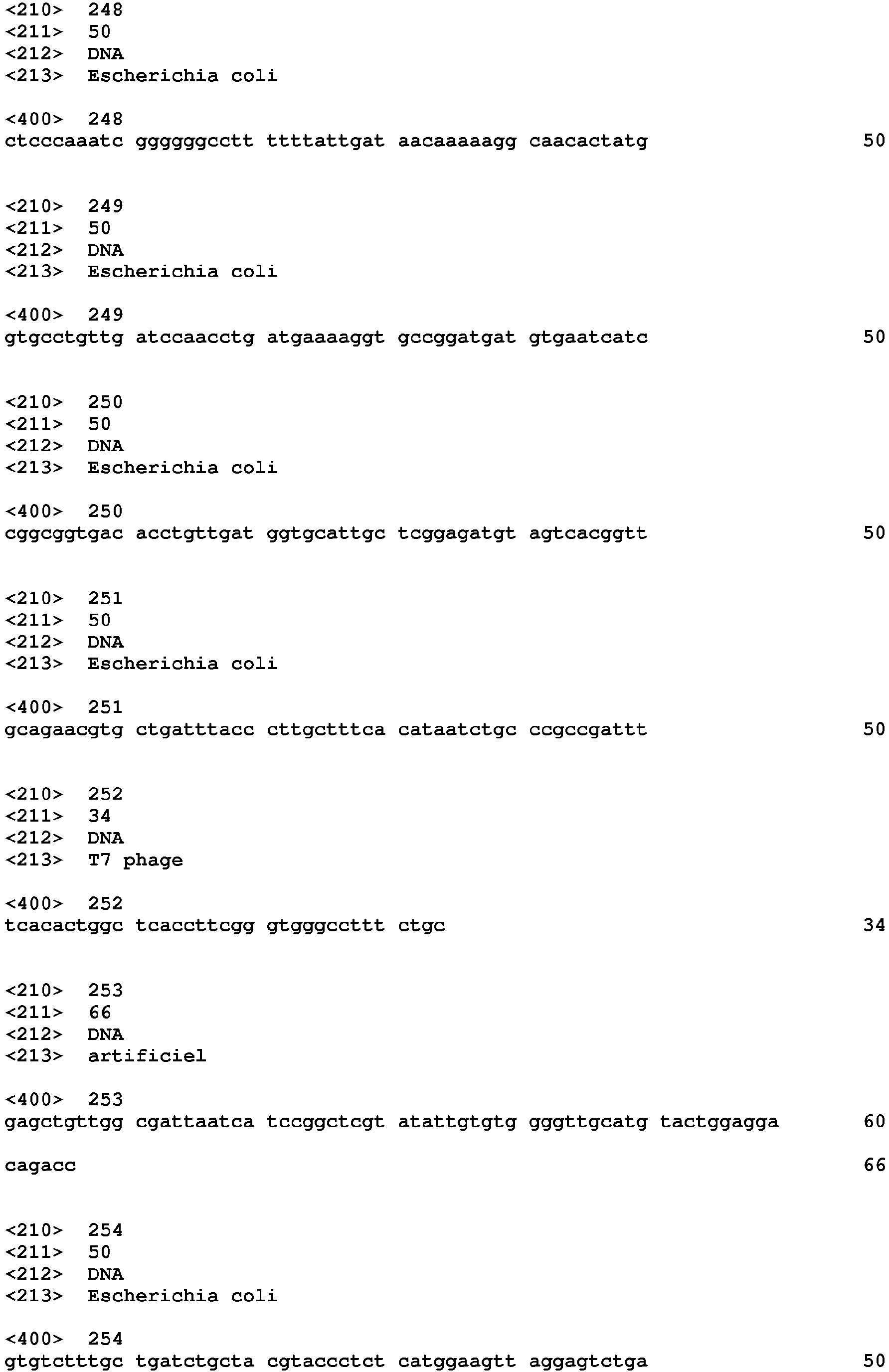
Table 1: Sequences cited in the followings examples | SEQ ID N° | Sequence 5' → 3' |
| 240 | caataaatacaaaaaatgggacggcacgcaccgtcccatttacgagacag |
| 241 | gttacaggtaagcgatgccgaactggcggcgcgtcgtgaagcgcaggacg |
| 242 | caaacgcgaaccgaacaataagaagcacaacatcacgaggaatcaccatg |
| 243 | cgtattgctgttgcgggttaagtgcgcgctgatgccctcaccccgaccct |
| 244 | cgtattgctgttgcgggttaagtgcgcgctgatgccctcaccccgactct |
| 245 | agcgtctggagcagatgataagccaaatcgataagctggaagatgtcgtg |
| 246 | caattgcttaagcaagatcggacggttaatgtgttttacacattttttcc |
| 247 | gcgaaaattgtggaggttgctcgctctggtgtggtcggactttcgcgcgg |
| 248 | ctcccaaatcggggggccttttttattgataacaaaaaggcaacactatg |
| 249 | gtgcctgttgatccaacctgatgaaaaggtgccggatgatgtgaatcatc |
| 250 | cggcggtgacacctgttgatggtgcattgctcggagatgtagtcacggtt |
| 251 | gcagaacgtgctgatttacccttgctttcacataatctgcccgccgattt |
| 252 | tcacactggctcaccttcgggtgggcctttctgc |
| 253 | |
| 254 | gtgtctttgctgatctgctacgtaccctctcatggaagttaggagtctga |
| 255 | atggttaaagtttatgccccggcttccagtgccaatatgagcgtcgggtt |
EXAMPLE 1: Deletion of the isoleucine biosynthesis pathway in an E.coli L-methionine overproducer recombinant strain - Description of strain 1 and construction of strains 2 to 7.
Description of Stain 1
-
The strain 9 described in patent application
WO2015028674 will be named strain 1 in the current patent application. The genes of interest involved in the isoleucine, phenylalanine and threonine biosynthesis pathways were deleted or attenuated in strain 1.
Construction of Stains 2 to 7
-
The gene encoding the dihydroxy acid dehydratase, ilvD (SEQ ID N°1), or gene encoding the acetohydroxy acid isomeroreductase, ilvC (SEQ ID N°3), or genes encoding the acetohydroxy acid synthase I, ilvBN (SEQ ID N°5 and N°7), and genes encoding the acetolactate synthase III, ilvIH (SEQ ID N°9 and N°11), were deleted in E.coli recombinant L-methionine producer strain 1.
-
To achieve the deletion of ilvD, ilvC, ilvBN and ilvIH, the homologous recombination strategy described by Datsenko & Wanner, 2000 (according to Protocol 1) was used.
-
For each deletion, a fragment carrying a resistance marker flanked by DNA sequences homologous to upstream and downstream regions of the targeted gene was PCR amplified by the overlapping PCR technique (overlapping oligonucleotides). The sequences for recombination into upstream and downstream regions of the targeted genes are referred as SEQ ID N° 240 and 241, SEQ ID N° 242 and 243, SEQ ID N° 244 and 245 and SEQ ID N° 246 and 247 (listed in table 1), for ilvD, ilvC, ilvBN and ilvIH respectively. The corresponding PCR products obtained "ΔilvD::Km", "ΔilvC::Km", "ΔilvBN::Km" and "ΔilvIH::Cm" were then introduced by electroporation into the strain MG1655 metA*11 (pKD46), separately. The antibiotic resistant transformants were selected and the deletions of ilvD or ilvC or ilvBN or ilvIH genes with the associated resistance cassette were verified by a PCR analysis with appropriate oligonucleotides. The strains retained were designated MG1655 metA*11 ΔilvD::Km, MG1655 metA*11 ΔilvC::Km, MG1655 metA*11 ΔilvBN::Km and MG1655 metA*11 ΔilvIH::Cm. Finally, the ΔilvD::Km and ΔilvC::Km were transferred by P1 phage transduction individually (according to Protocol 2) from MG1655 metA*11 ΔilvD::Km and MG1655 metA*11 ΔilvC::Km to strain 1. The ΔilvBN::Km and ΔilvIH::Cm deletions were both transferred by P1 phage transduction successively (according to Protocol 2) from the MG1655 metA*11 ΔilvBN::Km and MG1655 metA*11 ΔilvIH::Cm to strain 1. Chloramphenicol or kanamycin resistant transductants were selected and the presence of ΔiIvD::Km, or ΔilvC::Km, or ΔilvBN::Km and ΔilvIH::Cm deletions was verified by a PCR analysis with appropriate oligonucleotides. The strains retained were named as follows:
- strain 2: strain 1 + ΔilvD::Km,
- strain 3: strain 1 + ΔilvC::Km,
- strain 4: strain 1 + ΔilvBN::Km + ΔilvIH::Cm
-
The antibiotic cassettes were removed from each locus ilvD, ilvC and both of ilvBN and ilvIH in strains 2, 3, and 4, using the Flp recombinase as described by Datsenko & Wanner, 2000 (according to Protocol 1). The kanamycin and chloramphenicol sensible transformants were selected and the absence of antibiotic cassette at loci of concerned was verified by a PCR analysis with appropriate oligonucleotides. The strains retained were named strain 5, strain 6 and strain 7, descendant of strain 2, stain 3 and stain 4, respectively.
-
As the large subunit of acetolactate synthase II encoded by ilvG (SEQ ID N°256) is not functional into strain 1, it was not necessary to delete the genes ilvGM encoding the acetolactate synthase II (ilvM: SEQ ID N°261)).
EXAMPLE 2: Deletion of phenylalanine biosynthesis pathway in an E.coli L-methionine overproducer recombinant strain - Construction of strain 8.
-
The gene encoding the chorismate mutase / prephenate dehydratase, pheA (SEQ ID N°13), was deleted in E.coli recombinant L-methionine producer strain 1.
-
To achieve the deletion of pheA gene, the homologous recombination strategy described by Datsenko & Wanner, 2000 (according to Protocol 1) was used.
-
For pheA deletion, a fragment carrying a resistance marker flanked by DNA sequences homologous to upstream and downstream regions of the targeted gene was PCR amplified by the overlapping PCR technique (overlapping oligonucleotides). The sequences for recombination into upstream and downstream regions of pheA gene are referred as SEQ ID N° 248 and 249 (listed in table 1). The PCR product obtained "ΔpheA::Km" was then introduced by electroporation into the strain MG1655 metA*11 (pKD46). The antibiotic resistant transformants were selected and the deletion of pheA gene with the associated resistance cassette was verified by a PCR analysis with appropriate oligonucleotides. The strain retained was designated MG1655 metA*11 ΔpheA::Km. Finally, the ΔpheA::Km deletion was transferred by P1 phage transduction (according to Protocol 2) from MG1655 metA*11 ΔpheA::Km to strain 1. Kanamycin resistant transductants were selected and the presence of ΔpheA::Km deletion was verified by a PCR analysis with appropriate oligonucleotides. The strain retained was named strain 8.
EXAMPLE 3: Deletion or attenuation of threonine biosynthesis pathway in an E.coli L-methionine overproducer recombinant strain - Construction of strains 9 and 10.
-
The gene encoding the homoserine kinase, thrB (SEQ ID N°232), and the gene encoding the threonine synthase, thrC (SEQ ID N°234), were deleted or their expression was attenuated in E.coli recombinant L-methionine producer strain 1.
-
To achieve the deletion of thrBC genes, the homologous recombination strategy described by Datsenko & Wanner, 2000 (according to Protocol 1) was used.
-
For thrBC deletion, a fragment carrying a resistance marker flanked by DNA sequences homologous to upstream and downstream regions of the targeted genes was PCR amplified by the overlapping PCR technique (overlapping oligonucleotides). The sequences for recombination into upstream and downstream regions of thrBC genes are referred as SEQ ID N° 250 and 251 (listed in table 1). The PCR product obtained "ΔthrBC::Cm" was then introduced by electroporation into the strain MG1655 metA*11 (pKD46). The antibiotic resistant transformants were selected and the deletion of thrBC gene with the associated resistance cassette was verified by a PCR analysis with appropriate oligonucleotides. The strain retained was designated MG1655 metA*11 ΔthrBC::Cm. Finally, the ΔthrBC::Cm deletion was transferred by P1 phage transduction (according to Protocol 2) from MG1655 metA*11 ΔthrBC::Cm to strain 1. Chloramphenicol resistant transductants were selected and the presence of ΔthrBC::Cm deletion was verified by a PCR analysis with appropriate oligonucleotides. The strain retained was named strain 9.
-
To achieve the attenuation of thrBC genes, the homologous recombination strategy described by Datsenko & Wanner, 2000 (according to Protocol 1) was used.
-
For attenuation of expression of thrBC genes, a fragment carrying a transcriptional terminator (SEQ ID N° 252, listed in table 1), a resistance marker and a weak promoter with a ribosome binding site (SEQ ID N° 253, listed in table 1), flanked by DNA sequence homologous to upstream region of the thrB gene and sequence homologous to the beginning of thrB gene was PCR amplified by the overlapping PCR technique (overlapping oligonucleotides). The sequences for recombination into upstream region of thrB gene and the beginning of thrB gene are referred as SEQ ID N° 254 and 255 (listed in table 1).
-
The PCR product obtained "Ptrc244-thrBC::Cm" was then introduced by electroporation into the strain MG1655 metA*11 (pKD46). The antibiotic resistant transformants were selected and the attenuation Ptrc244-thrBC with the associated resistance cassette was verified by a PCR analysis with appropriate oligonucleotides. The strain retained was designated MG1655 metA*11 Ptrc244-thrBC::Cm. Finally, the Ptrc244-thrBC::Cm attenuation was transferred by P1 phage transduction (according to Protocol 2) from MG1655 metA*11 Ptrc244-thrBC::Cm to strain 1. Chloramphenicol resistant transductants were selected and the presence of Ptrc244-thrBC::Cm attenuation was verified by a PCR analysis with appropriate oligonucleotides. The strain retained was named strain 10.
EXAMPLE 4: Deletion of isoleucine, phenylalanine and threonine biosynthesis pathways in an
E.coli L-methionine overproducer recombinant strain - Construction of strains 11 to 13.
-
To delete the isoleucine, phenylalanine and threonine biosynthesis pathways in E.coli recombinant L-methionine producer strain 1 as background, the ΔpheA::Km and ΔthrBC::Cm deletions were both successively transferred by P1 phage transduction (according to Protocol 2) from the MG1655 metA*11 ΔpheA::Km and MG1655 metA*11 ΔthrBC::Cm to strain 5 or to strain 6 or to strain 7, respectively. Chloramphenicol or kanamycin resistant transductants were selected and the presence of ΔilvD, or ΔilvC, or ΔilvBN, ΔpheA::Km and ΔthrBC::Cm deletions was verified by a PCR analysis with appropriate oligonucleotides. The strains retained were named as follows:
- strain 11: strain 5 + ΔpheA::Km + ΔthrBC::Cm,
- strain 12: strain 6 + ΔpheA::Km + ΔthrBC::Cm,
- strain 13 : strain 7 + ΔpheA::Km + ΔthrBC::Cm.
EXAMPLE 5: Deletion of isoleucine and phenylalanine biosynthesis pathways and attenuation of threonine biosynthesis pathway in an E.coli L-methionine overproducer recombinant strain - Construction of strains 14 to 16.
-
To delete the isoleucine and phenylalanine biosynthesis pathways with the attenuation of the threonine biosynthesis pathway in E.coli recombinant L-methionine producer strain 1 as background, the ΔpheA::Km deletion and the Ptrc244-threC::Cm attenuation were both transferred by P1 phage transduction successively (according to Protocol 2) from the strains MG1655 metA*11 ΔpheA::Km and MG1655 metA*11 Ptrc244-thrBC::Cm to strain 5 or to strain 6 or to strain 7, respectively. Chloramphenicol or kanamycin resistant transductants were selected and the presences of ΔilvD, or ΔilvC, or ΔilvBN, ΔpheA::Km deletions and Ptrc244-thrBC::Cm attenuation were verified by a PCR analysis with appropriate oligonucleotides. The strains retained were named as follows:
- strain 14: strain 5 + ΔpheA::Km + Ptrc244-thrBC::Cm,
- strain 15: strain 6 + ΔpheA::Km + Ptrc244-thrBC::Cm,
- strain 16 : strain 7 + ΔpheA::Km + Ptrc244-thrBC::Cm.
EXAMPLE 6: Production of L-methionine free of isoleucine, phenylalanine and/or threonine by fermentation in shake flasks
-
Production of strains 1 and 11 to 16 were assessed in small Erlenmeyer flasks. A 5.5 mL preculture was grown at 30°C for 21 hours in a mixed medium (10 % LB medium (Sigma 25 %) with 2.5 g.L-1 glucose and 90 % minimal medium PC1). It was used to inoculate a 50 mL culture of PC1 medium (Table 2) to an OD600 of 0.2. When necessary antibiotics were added at a concentration of 50 mg.L-1 for kanamycin and spectinomycin, at a concentration of 30 mg.L-1 for chloramphenicol and at a concentration of 10 mg.L-1 for gentamycin. When necessary amino acids were added at a concentration of 1.4 mM for isoleucine, 2 mM for valine, 2.1 mM for leucine, 0.9 mM for phenylalanine, and at 1.2 mM for threonine. These concentrations are necessary for auxotrophic strains and sufficient to produce biomass, but not to accumulate at the end of the culture. Increase of 20% of these concentrations was also used in certain cultures in aim to evaluate strains without risk of limitation of amino acids of concerned. IPTG was added to the cultures at 0.02 mM. The growth temperature of the cultures was 37°C. When the culture had reached 5g/L of dry weight, extracellular amino acids were quantified by HPLC after OPA/Fmoc derivatization and other relevant metabolites were analyzed using HPLC with refractometric detection (organic acids and glucose) and GC-MS after silylation. For each strain, several repetitions were made.
-
The methionine yield was expressed as followed:
-
The methionine, isoleucine, phenylalanine and threonine titer was expressed as followed:
Table 2: Minimal medium composition (PC1). | Compound | Concentration (g.L-1) |
| ZnSO4.7H2O | 0.0040 |
| CuCl2.2H2O | 0.0020 |
| MnSO4.H2O | 0.0200 |
| CoCl2.6H2O | 0.0080 |
| H3BO3 | 0.0010 |
| Na2MoO4.2H2O | 0.0004 |
| MgSO4.7H2O | 1.00 |
| Citric acid | 6.00 |
| CaCl2.2H2O | 0.04 |
| K2HPO4 | 8.00 |
| Na2HPO4 | 2.00 |
| (NH4)2HPO4 | 8.00 |
| NH4Cl | 0.13 |
| NaOH 4M | Adjusted to pH 6.8 |
| FeSO4.7H2O | 0.04 |
| Thiamine | 0.01 |
| Glucose | 15.00 |
| Ammonium thiosulfate | 5.60 |
| Vitamin B12 | 0.01 |
| MOPS | 15.00 |
Effect of the deletion or attenuation of isoleucine, phenylalanine and threonine pathways on the production of methionine in different strains
-
Table 3: Yields of methionine (Y
Met) in % g of product /g of glucose and titer of methionine, isoleucine, phenylalanine and threonine (mM), produced in batch culture was evaluated for strains 1, 11 and 14, with addition according to the need of the strain of 1.4 mM for isoleucine, 2 mM for valine, 2.1 mM for leucine, 0.9 mM for phenylalanine, and at 1.2 mM for threonine. For the precise definition of the methionine/glucose yield see above. For each strain, two repetitions were made.
| Strain | YMet (g/g) | Titer of methionine (mM) | Titer of isoleucine (mM) | Titer of phenylalanine (mM) | Titer of threonine (mM) |
| Strain 1 (Ref) | 16.5 n = 15 | 9.5 | 0.8 | 0.04 | 0.01 |
| Strain 11 | 16.8 | 9.9 | -0 | -0 | -0 |
| Strain 14 | 16.6 | 9.7 | -0 | -0 | 0- |
-
Table 3 shows that strains 11 and 14 are optimized for the fermentative production of L-methionine as deletion or attenuation of isoleucine, phenylalanine and threonine pathways allows to decrease the residual concentrations of these amino acids in culture medium. Results similar to those of strain 11 were obtained with strain 12 and stain 13; and results similar to those of strain 14 were obtained with strain 15 and stain 16 (data not shown).
-
The most interesting result presented in table 3 above is that upon deletion (strain 11) or attenuation (strain 14) of the three pathways isoleucine, phenylalanine and threonine, the L-methionine production is improved by two means; production performances (with higher titer and yield) and purity. Indeed, experiments have shown that in the liquid broth at the end of the fermentation, the amount of carbon compounds decrease to the benefit of the L-methionine concentration. Therefore, L-methionine is purer and easier to purify from those 3 amino acids which are recognized as to be hard to separate from L-methionine.
REFERENCES
-
- Anderson, 1946, Proc. Natl. Acad. Sci. USA 32:120-128.
-
Datsenko K.A., Wanner B.L., 2000, Proceedings of the National Academy of Sciences of the U S A, 97:6640-6645
-
Ding et al. 2016, Sci Rep. 6:32208
-
Ikeda et al. 1993, Applied microbiology and biotechnology. 39-3: 318-323
.
-
Kennerknecht et al. 2002, J. Bacteriol. 184: 3947-3956
.
- Liebl et al., 1989, Appl. Microbiol. Biotechnol. 32: 205-210.
-
Miller, 1992; "A Short Course in Bacterial Genetics: A Laboratory Manual and Handbook for Escherichia coli and Related Bacteria"; Cold Spring Harbor Laboratory Press, Cold Spring Harbor, New York
.
-
Riedel et al., 2001, J. Mol. Microbiol. Biotechnol. 3: 573-583
.
- Schaefer et al. 1999, Anal. Biochem. 270: 88-96.
-
Yin et al. 2012, Metab. Eng. 14: 542-550
.