EP3295342B1 - Blood glucose management device for calculating bolus insulin - Google Patents
Blood glucose management device for calculating bolus insulin Download PDFInfo
- Publication number
- EP3295342B1 EP3295342B1 EP16725237.8A EP16725237A EP3295342B1 EP 3295342 B1 EP3295342 B1 EP 3295342B1 EP 16725237 A EP16725237 A EP 16725237A EP 3295342 B1 EP3295342 B1 EP 3295342B1
- Authority
- EP
- European Patent Office
- Prior art keywords
- user
- insulin
- tdd
- display
- type
- Prior art date
- Legal status (The legal status is an assumption and is not a legal conclusion. Google has not performed a legal analysis and makes no representation as to the accuracy of the status listed.)
- Active
Links
Images


Classifications
-
- G—PHYSICS
- G16—INFORMATION AND COMMUNICATION TECHNOLOGY [ICT] SPECIALLY ADAPTED FOR SPECIFIC APPLICATION FIELDS
- G16H—HEALTHCARE INFORMATICS, i.e. INFORMATION AND COMMUNICATION TECHNOLOGY [ICT] SPECIALLY ADAPTED FOR THE HANDLING OR PROCESSING OF MEDICAL OR HEALTHCARE DATA
- G16H20/00—ICT specially adapted for therapies or health-improving plans, e.g. for handling prescriptions, for steering therapy or for monitoring patient compliance
- G16H20/10—ICT specially adapted for therapies or health-improving plans, e.g. for handling prescriptions, for steering therapy or for monitoring patient compliance relating to drugs or medications, e.g. for ensuring correct administration to patients
- G16H20/17—ICT specially adapted for therapies or health-improving plans, e.g. for handling prescriptions, for steering therapy or for monitoring patient compliance relating to drugs or medications, e.g. for ensuring correct administration to patients delivered via infusion or injection
-
- A—HUMAN NECESSITIES
- A61—MEDICAL OR VETERINARY SCIENCE; HYGIENE
- A61M—DEVICES FOR INTRODUCING MEDIA INTO, OR ONTO, THE BODY; DEVICES FOR TRANSDUCING BODY MEDIA OR FOR TAKING MEDIA FROM THE BODY; DEVICES FOR PRODUCING OR ENDING SLEEP OR STUPOR
- A61M5/00—Devices for bringing media into the body in a subcutaneous, intra-vascular or intramuscular way; Accessories therefor, e.g. filling or cleaning devices, arm-rests
- A61M5/14—Infusion devices, e.g. infusing by gravity; Blood infusion; Accessories therefor
- A61M5/168—Means for controlling media flow to the body or for metering media to the body, e.g. drip meters, counters ; Monitoring media flow to the body
- A61M5/172—Means for controlling media flow to the body or for metering media to the body, e.g. drip meters, counters ; Monitoring media flow to the body electrical or electronic
- A61M5/1723—Means for controlling media flow to the body or for metering media to the body, e.g. drip meters, counters ; Monitoring media flow to the body electrical or electronic using feedback of body parameters, e.g. blood-sugar, pressure
-
- G—PHYSICS
- G16—INFORMATION AND COMMUNICATION TECHNOLOGY [ICT] SPECIALLY ADAPTED FOR SPECIFIC APPLICATION FIELDS
- G16H—HEALTHCARE INFORMATICS, i.e. INFORMATION AND COMMUNICATION TECHNOLOGY [ICT] SPECIALLY ADAPTED FOR THE HANDLING OR PROCESSING OF MEDICAL OR HEALTHCARE DATA
- G16H20/00—ICT specially adapted for therapies or health-improving plans, e.g. for handling prescriptions, for steering therapy or for monitoring patient compliance
- G16H20/10—ICT specially adapted for therapies or health-improving plans, e.g. for handling prescriptions, for steering therapy or for monitoring patient compliance relating to drugs or medications, e.g. for ensuring correct administration to patients
-
- G—PHYSICS
- G16—INFORMATION AND COMMUNICATION TECHNOLOGY [ICT] SPECIALLY ADAPTED FOR SPECIFIC APPLICATION FIELDS
- G16H—HEALTHCARE INFORMATICS, i.e. INFORMATION AND COMMUNICATION TECHNOLOGY [ICT] SPECIALLY ADAPTED FOR THE HANDLING OR PROCESSING OF MEDICAL OR HEALTHCARE DATA
- G16H50/00—ICT specially adapted for medical diagnosis, medical simulation or medical data mining; ICT specially adapted for detecting, monitoring or modelling epidemics or pandemics
- G16H50/20—ICT specially adapted for medical diagnosis, medical simulation or medical data mining; ICT specially adapted for detecting, monitoring or modelling epidemics or pandemics for computer-aided diagnosis, e.g. based on medical expert systems
-
- A—HUMAN NECESSITIES
- A61—MEDICAL OR VETERINARY SCIENCE; HYGIENE
- A61B—DIAGNOSIS; SURGERY; IDENTIFICATION
- A61B5/00—Measuring for diagnostic purposes; Identification of persons
- A61B5/145—Measuring characteristics of blood in vivo, e.g. gas concentration or pH-value ; Measuring characteristics of body fluids or tissues, e.g. interstitial fluid or cerebral tissue
- A61B5/14532—Measuring characteristics of blood in vivo, e.g. gas concentration or pH-value ; Measuring characteristics of body fluids or tissues, e.g. interstitial fluid or cerebral tissue for measuring glucose, e.g. by tissue impedance measurement
-
- A—HUMAN NECESSITIES
- A61—MEDICAL OR VETERINARY SCIENCE; HYGIENE
- A61K—PREPARATIONS FOR MEDICAL, DENTAL OR TOILETRY PURPOSES
- A61K38/00—Medicinal preparations containing peptides
- A61K38/16—Peptides having more than 20 amino acids; Gastrins; Somatostatins; Melanotropins; Derivatives thereof
- A61K38/17—Peptides having more than 20 amino acids; Gastrins; Somatostatins; Melanotropins; Derivatives thereof from animals; from humans
- A61K38/22—Hormones
- A61K38/28—Insulins
-
- A—HUMAN NECESSITIES
- A61—MEDICAL OR VETERINARY SCIENCE; HYGIENE
- A61M—DEVICES FOR INTRODUCING MEDIA INTO, OR ONTO, THE BODY; DEVICES FOR TRANSDUCING BODY MEDIA OR FOR TAKING MEDIA FROM THE BODY; DEVICES FOR PRODUCING OR ENDING SLEEP OR STUPOR
- A61M5/00—Devices for bringing media into the body in a subcutaneous, intra-vascular or intramuscular way; Accessories therefor, e.g. filling or cleaning devices, arm-rests
- A61M5/14—Infusion devices, e.g. infusing by gravity; Blood infusion; Accessories therefor
- A61M5/168—Means for controlling media flow to the body or for metering media to the body, e.g. drip meters, counters ; Monitoring media flow to the body
- A61M5/172—Means for controlling media flow to the body or for metering media to the body, e.g. drip meters, counters ; Monitoring media flow to the body electrical or electronic
- A61M5/1723—Means for controlling media flow to the body or for metering media to the body, e.g. drip meters, counters ; Monitoring media flow to the body electrical or electronic using feedback of body parameters, e.g. blood-sugar, pressure
- A61M2005/1726—Means for controlling media flow to the body or for metering media to the body, e.g. drip meters, counters ; Monitoring media flow to the body electrical or electronic using feedback of body parameters, e.g. blood-sugar, pressure the body parameters being measured at, or proximate to, the infusion site
-
- A—HUMAN NECESSITIES
- A61—MEDICAL OR VETERINARY SCIENCE; HYGIENE
- A61P—SPECIFIC THERAPEUTIC ACTIVITY OF CHEMICAL COMPOUNDS OR MEDICINAL PREPARATIONS
- A61P5/00—Drugs for disorders of the endocrine system
- A61P5/48—Drugs for disorders of the endocrine system of the pancreatic hormones
Definitions
- the present disclosure relates generally to an apparatus for assisting in determining a carbohydrate factor and a correction factor used for determining an amount of bolus insulin required to maintain or return a user's blood glucose to a desired range.
- the quantitative determination of analytes in body fluids is of great importance in the diagnosis and maintenance of certain physiological conditions. For example, individuals with diabetes frequently check the glucose level in their bodily fluids. The results of such tests can be used to regulate the glucose intake in their diets and/or to determine whether insulin or other medication needs to be administered.
- Diagnostic systems such as blood-glucose monitoring systems, may employ an instrument, such as a meter, to calculate the glucose concentration value in a fluid sample from an individual.
- instrument such as a meter
- Such instruments operate by measuring an output, such as current or light, from a reaction with the glucose in the sample.
- the test results typically are displayed and stored by the meter.
- Basic systems allow the user to access the test results directly from the meter via a display and a keypad or other interactive component.
- Bolus dosing algorithms or calculators often included in existing more sophisticated instruments, assist diabetic individuals in determining the amount of bolus insulin needed to return their blood glucose levels to, or maintain within, a desired range.
- two types of information are generally required to be input into the instrument: (1) short-term parameters that depend on the individual's current carbohydrate level, exercise status, and insulin levels; and (2) user-specific parameters that describe how the individual's body processes carbohydrates, exercise, and insulin.
- User-specific parameters may include a carbohydrate factor, an exercise adjustment factor, and a correction factor.
- the carbohydrate factor sometimes known as a carb-to-insulin ratio, refers to the amount of carbohydrates affected by one unit of insulin.
- the correction factor sometimes referred to as insulin sensitivity, is the amount a user's blood glucose level drops per one unit of insulin.
- the user-specific parameters may be determined either by examining the individual's blood glucose response over time or by estimating using a series of equations. These equations can, for example, estimate the carbohydrate factor and the correction factor using a combination of the individual's weight and diabetes type, whether the individual uses an insulin pump, and his or her daily dose of insulin.
- the user-specific parameters are generally defined by the individual during, for example, an initial bolus calculator setup. If the values associated with the individual's user-specific parameters are known, the values may be entered directly into the instrument. However, if the individual does not know these values, they must be calculated. If the equations that can be used to calculate the user-specific parameter values are known, a calculator - or at least a paper and pencil to assist with the math - is often needed to do the calculations. If the equations are not known, they generally need to be looked up externally. Thus, existing methods of calculating user-specific parameters can be time consuming, inconvenient, and prone to error.
- the problem is solved by a glucose management device according to claim 1.
- the glucose management device includes one or more processing components, a housing, a user interface including a display and a user-input mechanism, and a memory.
- the method comprises displaying on the display a prompt for initiating a carbohydrate factor determination sequence via the user-input mechanism and displaying on the display at least one query, the at least one query including a query associated with a user's type of diabetes.
- the method further comprises receiving the user's response to the at least one query via the user-input mechanism and determining, via the at least one processing component, the carbohydrate factor using the user's response to the at least one query and information stored in the memory.
- the glucose management device includes one or more processing components, a housing, a user interface including a display and a user-input mechanism, and a memory.
- the method comprises displaying on the display a prompt for initiating a correction factor determination sequence via the user-input mechanism and displaying on the display at least one query, the at least one query being including a query associated with a user's type of diabetes and a query associated with the user's insulin pump usage.
- the method further comprises receiving the user's response to the at least one query via the user-input mechanism and determining, via the at least one processing component, the correction factor using the user's response to the at least one query and information stored in the memory.
- the glucose management device for managing a user's blood glucose level.
- the glucose management device comprises a housing, a user interface including a display and a user-input mechanism, a memory device for storing programmed instructions, and a processing component, the processing component configured to cause the display to display a prompt for initiating a carbohydrate factor determination sequence or a correction factor determination sequence in response to input received via the user-input mechanism.
- the processing component is further configured to cause the display to display at least one query, the at least one query being associated with a user's type of diabetes, the user's weight, the user's total daily dose of insulin, whether the user uses an insulin pump, or combinations thereof.
- the processing component is further configured to receive the user's response to the at least one query via the user-input mechanism and determine the carbohydrate factor or the correction factor using the user's response to the at least one query and information stored in the memory device.
- Existing medical device systems and glucose management devices including insulin bolus calculators suffer from a number of significant limitations.
- diabetic individuals to input user-specific parameters such as a carbohydrate factor, an exercise adjustment factor, and a correction factor.
- a diabetic individual and/or the healthcare professionals may not know the individual's carbohydrate factor and/or the correction factor. If they know the equations to calculate those factors, they can do so (often with the assistance of a calculator). However, if they do not know the equations to determine the factors, they will have to look up the equations externally and then determine the factors, which can be time consuming, inconvenient, and prone to error.
- aspects of the present disclosure are described for improving insulin bolus calculations.
- the described systems and methods assist with simplifying and/or removing certain steps required for determining a bolus calculation.
- aspects of the present invention assist in determining a carbohydrate factor, a correction factor, or both based on the individual's response to several lifestyle questions, the answers to which are generally known/memorized by the individual (and, as such, generally do not require any looking up or researching the answers).
- the meter 100 includes a housing 107 having a test sensor port or opening 101 formed therein.
- a test sensor 110 is received into the test sensor port 101.
- the test sensor 110 is configured to receive a fluid (e.g., blood) sample, which has an analyte (e.g., glucose) that is to be analyzed by the meter 100.
- the meter 100 provides point-in-time measurements of blood glucose concentrations in blood samples received on the test sensor 110.
- the test sensors described herein may be electrochemical test sensors or optical test sensors.
- the test sensor 110 shown in FIG. 1 is an electrochemical test sensor.
- the test sensor 110 includes a receiving area 111 that contains a reagent that reacts with the sample to provide information relating to an analyte in the sample, i.e., blood glucose concentration.
- the reagent converts the glucose in the sample into a chemical species that is electrochemically measurable and reflects the glucose concentration in the sample.
- the test sensor 110 also includes a plurality of electrodes 112 that transmits the measurable electrical signal from the electrochemical reaction.
- the meter 100 includes contacts 102a, 102b that contact the electrodes 112 on the test sensor 110 to receive the electrical signal from the electrodes 112.
- the meter 100 employs a processing component 103 to process the electrical signal and determine a glucose concentration measurement.
- the processing component 103 may include an analog front end that interfaces with the contacts 102a, 102b to receive an analog signal from the test sensor 110 and a back end digital engine to digitally process the signal.
- the processing component 103 includes one or more computer processors that execute programmed instructions according to a measurement algorithm.
- the programmed instructions are stored in, and read from, at least one memory 104.
- the memory 104 may include any type or combination of computer readable and writable storage devices.
- the memory 104 may be a non-volatile memory, such as flash memory, or the like.
- the processing component 103 may execute programmed instructions stored as data on the memory 104.
- the programmed instructions provide various functions for the meter 100 and control various aspects of the operation of the meter 100.
- the housing 107 of the meter 100 includes a user interface 105.
- the user interface 105 includes a display 105a and a user-input mechanism 105b.
- the display 105a may present information relating to the test results, the testing procedure, etc., as well as other responses to user inputs, etc.
- the display 105a may be a graphic liquid crystal display (LCD), an organic light-emitting diode (OLED), segment LCD, or the like.
- the processing component 103 may execute programmed instructions to show information on the display 105a.
- the display 105a may be a high-resolution, rich viewing display, which may present both static and moving text and images to the user.
- other types of displays including, for example, lower resolution, monochromatic LCD displays, may be employed.
- the display 105a may be of any suitable size.
- the display 105a may cover one entire side of the instrument 100.
- the display 105a may include a touchscreen.
- the user interface 105 may provide advanced graphical user display and audio capabilities available directly on the instrument 100 or via a communications interface with the instrument 100.
- the user-input mechanism 105b allows the user to interact with the instrument 100 and may include push buttons, a scroll wheel, touch-screen elements, or any combinations thereof.
- the memory 104 may also store program parameters, constants, lookup tables, etc., that are employed by the processing component 103 when executing the programmed instructions.
- the program parameters may alter operation of the meter 100 according to geographical or market considerations.
- the memory 104 stores software, firmware, and other data that are used for the operation of the meter 100.
- the meter 100 can be communicatively coupled to an external computing device 200 via a wired or wireless connection 10.
- the computing device 200 may be a desktop or laptop personal computer, a handheld or pocket personal computer, a computer tablet, a smart phone/device, a personal data assistant (PDA), or any other device that includes processing capabilities and other features that can be employed with the meter 100.
- PDA personal data assistant
- the meter 100 can run a testing procedure to produce test results and present related information on the display 105a
- the computing device 200 can provide more advanced functionality for managing, processing, and displaying test results and related information.
- the computing device 200 has the necessary processing power, program memory (e.g., RAM), and display capabilities to execute health data management software that provides more advanced analysis and presentation of the test results measured by the meter 100.
- the computing device 200 may download test results from the meter 100, perform complex statistical analysis on the test results, and display the statistical analysis as graphs on a high-resolution display provided by the computing device 200.
- the meter 100 may be integrated with the computing device 200 to create a single device (not shown) that has the capabilities of both, such as for use in hospitals and other sophisticated environments, in which the benefits of the feature-rich functionality offset the increased costs of a more complex handheld device. Both meter 100 and computing device 200 can be characterized as a glucose management device.
- aspects of the invention assist with calculating an amount of insulin bolus for returning a user's blood glucose levels to within a desired range , or maintaining it within the desired range.
- the processing component 103 executes programmed instructions pertaining to a bolus calculator stored on the memory 104.
- the display 105a prompts the user to input short-term parameters that depend on the user's current levels of carbohydrates and insulin and his or her exercise status.
- the display 105a also prompts the user to (1) input user-specific parameters, including an exercise adjustment factor, a carbohydrate (“carb”) factor, and a correction factor or (2) select the option for using the meter 100 to assist in calculating one or more of the user-specific parameters.
- carbohydrate carbohydrate
- the processing component 103 causes the display 105a to display a series of questions (stored in the memory 104), the answers to which are commonly known to a person with diabetes and/or the person's healthcare professional.
- the bolus calculation also utilizes the user's insulin type (e.g., rapid-acting insulin, regular insulin, etc.), which the user is also required to input into the instrument 100.
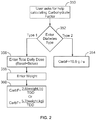
- FIG. 2 is a flowchart of an exemplary method of determining a carb factor, according to one embodiment.
- the instrument 100 may display on the display 105a a prompt for the user to, via the user-input mechanism 105b, (1) input the user's carb factor or (2) initiate a carb factor determination sequence to obtain assistance from the meter 100 in determining the user's carb factor.
- the processing component 103 uses the user-input mechanism 105b, the user selects the option for assistance in determining the carb factor.
- the processing component 103 causes the instrument 100 to run programmed instructions stored in the memory 104 pertaining to a carb factor determination sequence.
- the programmed instructions include causing the display 105a to display at least one query.
- the at least one query may include a prompt for the user to input his or her diabetes type, i.e., Type 1 or Type 2, at step 352.
- the user's diabetes type may have been previously input by the user and stored in the memory 104.
- the processor may determine the carb factor, via the at least one processing component 103, using information (e.g., data, an equation, or an algorithm) stored in the memory 104.
- the carb factor may optionally be displayed on the display 105a.
- the carb factor is 10.8 g/U, as shown in step 354.
- this value may vary, as it is generally unique to the individual. In one embodiment, the value may range from about 1 to about 200. In another embodiment, the value may range from about 6 to about 30.
- the at least one query further includes a query associated with the user's total daily doses (TDD) of basal insulin and bolus insulin, a query associated with the user's weight, or the combination thereof.
- Basal insulin doses are baseline amounts of insulin needed to keep blood glucose levels at consistent levels during periods of fasting.
- Bolus insulin doses are amounts of insulin needed to process digested sugars and carbohydrates due to the increased need for insulin after meals.
- the display 105a displays a prompt for the user to enter the user's TDD at step 356. The display 105a may then display a prompt for the user to enter his or her weight at step 358.
- the weight prompt may come before the TDD prompt (step 356) or that the user's weight may have been previously entered and stored in the memory 104.
- the processing component 103 may then determine the carb factor at step 360 using information (e.g., data, an equation, or an algorithm) stored in the memory 104.
- the carb factor may optionally be displayed on the display 105a.
- the carb factor is (2.6 x weight (lb))/TDD or (5.7 x weight (kg))/TDD.
- the equation for calculating the carb factor is 500/TDD. It is contemplated, however, that other equations may be used.
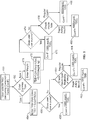
- FIG. 3 is a flowchart of an exemplary method for determining a correction factor, according to one embodiment. It is contemplated that the correction factor determination sequence of FIG. 3 may be displayed and run prior to, instead of, or after the carbohydrate factor determination sequence of FIG. 2 .
- the instrument 100 may display on the display 105a a prompt for the user to, via the user-input mechanism 105b, (1) input the user's correction factor or (2) initiate a correction factor determination sequence to obtain assistance from the meter 100 in determining the user's correction factor.
- the user uses the user-input mechanism 105b, the user selects the option for assistance in determining the correction factor.
- the processing component 103 causes the instrument 100 to run programmed instructions stored in the memory 104 pertaining to a correction factor determination sequence.
- the programmed instructions include causing the display 105a to display at least one query.
- the at least one query may include a prompt for the user to input the user's diabetes type (i.e., Type 1 or Type 2), the user's insulin pump usage, or the like.
- the user is prompted to enter the user's diabetes type.
- the user's diabetes type may have been previously input and stored in the memory 104.
- the display 105a displays a query associated with the user's total daily doses (TDD 1 ) of basal insulin and bolus insulin.
- TDD 1 total daily doses
- the display 105a queries the user to input whether or not the user uses an insulin pump.
- information regarding whether the user uses an insulin pump may have been previously entered and stored in the memory 104, in which case step 456 may be omitted.
- the processing component 103 may determine the correction factor using information (e.g., data, an equation, or an algorithm) stored in the memory 104.
- the correction factor is determined to be (1960 mg/dL)/TDD 1 , which may optionally be displayed on the display 105a. It is contemplated, however, that other equations may be used.
- the processing component 103 checks for the type of insulin injected by the user (step 460), which may be stored by the memory 104. In some embodiments, the user is prompted to enter the type of insulin used during the correction factor determination sequence shown in FIG. 3 . If the insulin type is rapid-acting insulin (e.g., insulin that begins to work about 15 minutes after injection, peaks after about 1 hour, and is effective for about 2-4 hours) (step 462), the correction factor is determined using data, an algorithm, and/or an equation stored in the memory. In the illustrated embodiment, the processing component 103 has determined the correction factor to be (1800 mg/dL)/TDD 1 . It is contemplated, however, that other equations may be used.
- rapid-acting insulin e.g., insulin that begins to work about 15 minutes after injection, peaks after about 1 hour, and is effective for about 2-4 hours
- the correction factor is determined using data, an algorithm, and/or an equation stored in the memory. In the illustrated embodiment, the processing component 103 has determined the correction factor to
- the correction factor is determined using data, an algorithm, and/or an equation stored in the memory 104.
- the processing component 103 has determined the correction factor to be (1500 mg/dL)/TDD 1 . It is contemplated, however, that other equations may be used.
- the display 105a may display a prompt for the user to enter the user's weight at step 470. It is contemplated that user's weight may have been previously stored in the memory 104, in which case step 470 may be omitted.
- the processing component 103 determines, at step 472, the effective total daily doses (TDD 2 ) of basal insulin and bolus insulin at step 472.
- the TDD 2 is (0.24 x weight (lbs)) or (0.53 x weight (kg)). It is contemplated, however, that other equations may be used.
- the display 105a displays a prompt for the user to input whether or not the user uses an insulin pump.
- step 474 information regarding whether the user uses an insulin pump was previously entered and is stored in the memory 104, in which case step 474 may be omitted.
- the processing component 103 determines the correction factor to be (1960 mg/dL)/TDD 2 . As discussed above, it is contemplated that other equations may be used. If an insulin pump is not used, the processing component 103 checks for the type of insulin injected by the user (step 478), which may be stored by the memory 104. In some embodiments, the user is prompted to enter the type of insulin used during the correction factor determination sequence shown in FIG. 3 .
- the correction factor is determined by the processing component 103 as (1800 mg/dL)/TDD 2 .
- the correction factor is determined by the processing component 103 as (1500 mg/dL)/TDD 2 .
- the processing component 103 As discussed above, it is contemplated that other equations may be used.
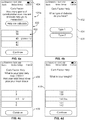
- interface screens displayed on the display 105a, associated with a carb factor determination are shown according to one embodiment.
- the interface screens shown and described herein may also or alternatively appear, for example, on the computing device 200.
- the user is prompted, via the interface screen 400, to enter the user's carb factor, i.e., how many grams of carbohydrates one unit of insulin helps the user to metabolize.
- the user may make a selection from a series of carbohydrate amounts provided on a segment 402 of the interface screen 400 using a scrolling feature, touching/swiping the display 105a, or the like.
- the user may manually enter the appropriate amount of carbohydrates via the user-input mechanism 105b.
- a subsequent (or, in other embodiments, preceding) interface screen 402 displays the query "What type of diabetes to you have?" corresponding with step 352 of FIG. 2 .
- the user may select from "Type 1" (404) or "Type 2" (405).
- a subsequent interface screen 408 displays the query "What is your total daily dose (TDD)? Add your total basal dose plus your meal doses," corresponding with step 356 of FIG. 2 .
- the user may select the appropriate TDD and then select "Continue” (409).
- FIG. 4d illustrates an interface screen 410 prompting the user to enter the user's weight, corresponding with step 358 of FIG. 2 .
- FIG. 5 illustrates one example of an interface screen 420 corresponding with the correction factor determination (see FIG. 3 ).
- the interface screen 420 corresponds with step 456 or step 474 of FIG. 3 and queries, "Do you use an insulin pump?"
- FIGs. 2 and 3 may be modified as appropriate.
- the order of the queries displayed on the display may be altered.
- more or other information may be queried of the user and that, accordingly, interface screens other than those shown in FIGs. 4a-4d and 5 may be displayed on the display 105a.
- less information may be queried of a user, especially if certain information has already been entered by the user and stored in the meter memory 104.
- the carbohydrate factor and/or the correction factor ascertained by the meter according to the embodiments discussed herein may then be used to calculate an amount of bolus insulin needed by the user to return his or her blood glucose to within a normal range.
- the bolus insulin amount is determined using the user's current blood glucose value, carbohydrate amount, amount of exercise, insulin amount, target blood glucose value/range, carb factor, correction factor, and exercise factor.
Landscapes
- Health & Medical Sciences (AREA)
- Engineering & Computer Science (AREA)
- Public Health (AREA)
- General Health & Medical Sciences (AREA)
- Medical Informatics (AREA)
- Epidemiology (AREA)
- Primary Health Care (AREA)
- Biomedical Technology (AREA)
- Chemical & Material Sciences (AREA)
- Bioinformatics & Cheminformatics (AREA)
- Medicinal Chemistry (AREA)
- Databases & Information Systems (AREA)
- Hematology (AREA)
- Pathology (AREA)
- Diabetes (AREA)
- Vascular Medicine (AREA)
- Anesthesiology (AREA)
- Heart & Thoracic Surgery (AREA)
- Data Mining & Analysis (AREA)
- Life Sciences & Earth Sciences (AREA)
- Animal Behavior & Ethology (AREA)
- Veterinary Medicine (AREA)
- Infusion, Injection, And Reservoir Apparatuses (AREA)
- Measurement Of The Respiration, Hearing Ability, Form, And Blood Characteristics Of Living Organisms (AREA)
- Medical Treatment And Welfare Office Work (AREA)
Applications Claiming Priority (2)
| Application Number | Priority Date | Filing Date | Title |
|---|---|---|---|
| US201562160892P | 2015-05-13 | 2015-05-13 | |
| PCT/IB2016/052755 WO2016181351A1 (en) | 2015-05-13 | 2016-05-12 | Blood glucose management device for calculating bolus insulin |
Publications (2)
| Publication Number | Publication Date |
|---|---|
| EP3295342A1 EP3295342A1 (en) | 2018-03-21 |
| EP3295342B1 true EP3295342B1 (en) | 2021-08-25 |
Family
ID=56081522
Family Applications (1)
| Application Number | Title | Priority Date | Filing Date |
|---|---|---|---|
| EP16725237.8A Active EP3295342B1 (en) | 2015-05-13 | 2016-05-12 | Blood glucose management device for calculating bolus insulin |
Country Status (6)
| Country | Link |
|---|---|
| US (1) | US20180130551A1 (https=) |
| EP (1) | EP3295342B1 (https=) |
| JP (1) | JP2018517974A (https=) |
| CN (1) | CN107592931A (https=) |
| CA (1) | CA2984080A1 (https=) |
| WO (1) | WO2016181351A1 (https=) |
Families Citing this family (7)
| Publication number | Priority date | Publication date | Assignee | Title |
|---|---|---|---|---|
| JP6874155B2 (ja) | 2017-05-05 | 2021-05-19 | イーライ リリー アンド カンパニー | 生理的グルコースの閉ループ制御 |
| WO2019125932A1 (en) | 2017-12-21 | 2019-06-27 | Eli Lilly And Company | Closed loop control of physiological glucose |
| US11123137B2 (en) * | 2018-01-23 | 2021-09-21 | Modulight Oy | Method and system for operating biomedical laser |
| CN112313754A (zh) | 2018-06-22 | 2021-02-02 | 伊莱利利公司 | 胰岛素和普兰林肽输送系统、方法和设备 |
| FR3100973B1 (fr) | 2019-09-25 | 2023-05-05 | Air Liquide | Dispositif pour déterminer et afficher une dose d’insuline à administrer à un patient diabétique |
| US12458753B2 (en) * | 2020-01-08 | 2025-11-04 | Dexcom, Inc. | Managing bolus doses |
| US20220249773A1 (en) * | 2021-02-05 | 2022-08-11 | Insulet Corporation | Techniques and devices for adaptation of maximum drug delivery limits |
Citations (1)
| Publication number | Priority date | Publication date | Assignee | Title |
|---|---|---|---|---|
| US20090253970A1 (en) * | 2008-04-04 | 2009-10-08 | Eran Bashan | System for optimizing a patient's insulin dosage regimen |
Family Cites Families (7)
| Publication number | Priority date | Publication date | Assignee | Title |
|---|---|---|---|---|
| US20070078314A1 (en) * | 2005-09-30 | 2007-04-05 | Grounsell Richard L | System and method for measuring and predicting insulin dosing rates |
| US20080228056A1 (en) * | 2007-03-13 | 2008-09-18 | Michael Blomquist | Basal rate testing using frequent blood glucose input |
| BRPI0813708A2 (pt) * | 2007-07-09 | 2014-12-30 | Univ Virginia Patent Found | Método, sistema e produto de programa de computador para avaliação de sensibilidade a insulina, coeficiente de insulina / carboidrato, e fatores de correção de insulina em diabetes a partir de dados de auto-monitoramento |
| US20100262434A1 (en) * | 2007-12-13 | 2010-10-14 | Shaya Steven A | Method and apparatus to calculate diabetic sensitivity factors affecting blood glucose |
| CN103619255B (zh) * | 2011-02-28 | 2016-11-02 | 雅培糖尿病护理公司 | 与分析物监测装置关联的装置、系统和方法以及结合了它们的装置 |
| US20140121634A1 (en) * | 2012-07-11 | 2014-05-01 | Caren Frances Thomson | Method, system and apparatus for setting insulin dosages for diabetics |
| US20140379360A1 (en) * | 2013-06-25 | 2014-12-25 | Lifescan, Inc. | Low glucose treatment for people with diabetes |
-
2016
- 2016-05-12 EP EP16725237.8A patent/EP3295342B1/en active Active
- 2016-05-12 JP JP2017558972A patent/JP2018517974A/ja active Pending
- 2016-05-12 CA CA2984080A patent/CA2984080A1/en not_active Abandoned
- 2016-05-12 WO PCT/IB2016/052755 patent/WO2016181351A1/en not_active Ceased
- 2016-05-12 US US15/569,302 patent/US20180130551A1/en not_active Abandoned
- 2016-05-12 CN CN201680027618.4A patent/CN107592931A/zh active Pending
Patent Citations (1)
| Publication number | Priority date | Publication date | Assignee | Title |
|---|---|---|---|---|
| US20090253970A1 (en) * | 2008-04-04 | 2009-10-08 | Eran Bashan | System for optimizing a patient's insulin dosage regimen |
Also Published As
| Publication number | Publication date |
|---|---|
| CN107592931A (zh) | 2018-01-16 |
| CA2984080A1 (en) | 2016-11-17 |
| WO2016181351A1 (en) | 2016-11-17 |
| EP3295342A1 (en) | 2018-03-21 |
| US20180130551A1 (en) | 2018-05-10 |
| JP2018517974A (ja) | 2018-07-05 |
Similar Documents
| Publication | Publication Date | Title |
|---|---|---|
| EP3295342B1 (en) | Blood glucose management device for calculating bolus insulin | |
| CN1991369B (zh) | 分析物检验设备 | |
| JP6240126B2 (ja) | 健康の測定およびモニタリングシステムのためのインターフェイス | |
| CN102802522B (zh) | 具有胰岛素给药安全警告的分析物测试方法和系统 | |
| RU2494399C2 (ru) | Способ и система проверки анализируемого вещества | |
| TWI504895B (zh) | 操作分析物測量裝置的方法 | |
| WO2014015160A2 (en) | Method and system to indicate hyperglycemia or hypoglycemia for people with diabetes | |
| AU2009201094A1 (en) | Analyte test meter | |
| US20170242967A1 (en) | Display with iconic markers for a meter | |
| HK1245938A1 (en) | Blood glucose management device for calculating bolus insulin | |
| HK1153004A (en) | Analyte testing device | |
| HK1060395A (en) | Analyte testing device | |
| HK1153005A (en) | Analyte testing device | |
| HK1152129A (en) | Analyte testing device | |
| HK1147571A (en) | Interface for a health measurement and monitoring system |
Legal Events
| Date | Code | Title | Description |
|---|---|---|---|
| STAA | Information on the status of an ep patent application or granted ep patent |
Free format text: STATUS: THE INTERNATIONAL PUBLICATION HAS BEEN MADE |
|
| PUAI | Public reference made under article 153(3) epc to a published international application that has entered the european phase |
Free format text: ORIGINAL CODE: 0009012 |
|
| STAA | Information on the status of an ep patent application or granted ep patent |
Free format text: STATUS: REQUEST FOR EXAMINATION WAS MADE |
|
| 17P | Request for examination filed |
Effective date: 20171114 |
|
| AK | Designated contracting states |
Kind code of ref document: A1 Designated state(s): AL AT BE BG CH CY CZ DE DK EE ES FI FR GB GR HR HU IE IS IT LI LT LU LV MC MK MT NL NO PL PT RO RS SE SI SK SM TR |
|
| AX | Request for extension of the european patent |
Extension state: BA ME |
|
| DAV | Request for validation of the european patent (deleted) | ||
| DAX | Request for extension of the european patent (deleted) | ||
| STAA | Information on the status of an ep patent application or granted ep patent |
Free format text: STATUS: EXAMINATION IS IN PROGRESS |
|
| 17Q | First examination report despatched |
Effective date: 20181210 |
|
| REG | Reference to a national code |
Ref country code: DE Ref legal event code: R079 Ref document number: 602016062705 Country of ref document: DE Free format text: PREVIOUS MAIN CLASS: G06F0019000000 Ipc: G16H0020100000 |
|
| GRAP | Despatch of communication of intention to grant a patent |
Free format text: ORIGINAL CODE: EPIDOSNIGR1 |
|
| STAA | Information on the status of an ep patent application or granted ep patent |
Free format text: STATUS: GRANT OF PATENT IS INTENDED |
|
| RIC1 | Information provided on ipc code assigned before grant |
Ipc: G16H 20/10 20180101AFI20210315BHEP |
|
| INTG | Intention to grant announced |
Effective date: 20210330 |
|
| GRAS | Grant fee paid |
Free format text: ORIGINAL CODE: EPIDOSNIGR3 |
|
| GRAA | (expected) grant |
Free format text: ORIGINAL CODE: 0009210 |
|
| STAA | Information on the status of an ep patent application or granted ep patent |
Free format text: STATUS: THE PATENT HAS BEEN GRANTED |
|
| AK | Designated contracting states |
Kind code of ref document: B1 Designated state(s): AL AT BE BG CH CY CZ DE DK EE ES FI FR GB GR HR HU IE IS IT LI LT LU LV MC MK MT NL NO PL PT RO RS SE SI SK SM TR |
|
| REG | Reference to a national code |
Ref country code: CH Ref legal event code: EP |
|
| REG | Reference to a national code |
Ref country code: DE Ref legal event code: R096 Ref document number: 602016062705 Country of ref document: DE |
|
| REG | Reference to a national code |
Ref country code: IE Ref legal event code: FG4D Ref country code: AT Ref legal event code: REF Ref document number: 1424626 Country of ref document: AT Kind code of ref document: T Effective date: 20210915 |
|
| REG | Reference to a national code |
Ref country code: LT Ref legal event code: MG9D |
|
| REG | Reference to a national code |
Ref country code: NL Ref legal event code: MP Effective date: 20210825 |
|
| REG | Reference to a national code |
Ref country code: AT Ref legal event code: MK05 Ref document number: 1424626 Country of ref document: AT Kind code of ref document: T Effective date: 20210825 |
|
| PG25 | Lapsed in a contracting state [announced via postgrant information from national office to epo] |
Ref country code: SE Free format text: LAPSE BECAUSE OF FAILURE TO SUBMIT A TRANSLATION OF THE DESCRIPTION OR TO PAY THE FEE WITHIN THE PRESCRIBED TIME-LIMIT Effective date: 20210825 Ref country code: RS Free format text: LAPSE BECAUSE OF FAILURE TO SUBMIT A TRANSLATION OF THE DESCRIPTION OR TO PAY THE FEE WITHIN THE PRESCRIBED TIME-LIMIT Effective date: 20210825 Ref country code: HR Free format text: LAPSE BECAUSE OF FAILURE TO SUBMIT A TRANSLATION OF THE DESCRIPTION OR TO PAY THE FEE WITHIN THE PRESCRIBED TIME-LIMIT Effective date: 20210825 Ref country code: ES Free format text: LAPSE BECAUSE OF FAILURE TO SUBMIT A TRANSLATION OF THE DESCRIPTION OR TO PAY THE FEE WITHIN THE PRESCRIBED TIME-LIMIT Effective date: 20210825 Ref country code: FI Free format text: LAPSE BECAUSE OF FAILURE TO SUBMIT A TRANSLATION OF THE DESCRIPTION OR TO PAY THE FEE WITHIN THE PRESCRIBED TIME-LIMIT Effective date: 20210825 Ref country code: PT Free format text: LAPSE BECAUSE OF FAILURE TO SUBMIT A TRANSLATION OF THE DESCRIPTION OR TO PAY THE FEE WITHIN THE PRESCRIBED TIME-LIMIT Effective date: 20211227 Ref country code: NO Free format text: LAPSE BECAUSE OF FAILURE TO SUBMIT A TRANSLATION OF THE DESCRIPTION OR TO PAY THE FEE WITHIN THE PRESCRIBED TIME-LIMIT Effective date: 20211125 Ref country code: BG Free format text: LAPSE BECAUSE OF FAILURE TO SUBMIT A TRANSLATION OF THE DESCRIPTION OR TO PAY THE FEE WITHIN THE PRESCRIBED TIME-LIMIT Effective date: 20211125 Ref country code: AT Free format text: LAPSE BECAUSE OF FAILURE TO SUBMIT A TRANSLATION OF THE DESCRIPTION OR TO PAY THE FEE WITHIN THE PRESCRIBED TIME-LIMIT Effective date: 20210825 Ref country code: LT Free format text: LAPSE BECAUSE OF FAILURE TO SUBMIT A TRANSLATION OF THE DESCRIPTION OR TO PAY THE FEE WITHIN THE PRESCRIBED TIME-LIMIT Effective date: 20210825 |
|
| PG25 | Lapsed in a contracting state [announced via postgrant information from national office to epo] |
Ref country code: PL Free format text: LAPSE BECAUSE OF FAILURE TO SUBMIT A TRANSLATION OF THE DESCRIPTION OR TO PAY THE FEE WITHIN THE PRESCRIBED TIME-LIMIT Effective date: 20210825 Ref country code: LV Free format text: LAPSE BECAUSE OF FAILURE TO SUBMIT A TRANSLATION OF THE DESCRIPTION OR TO PAY THE FEE WITHIN THE PRESCRIBED TIME-LIMIT Effective date: 20210825 Ref country code: GR Free format text: LAPSE BECAUSE OF FAILURE TO SUBMIT A TRANSLATION OF THE DESCRIPTION OR TO PAY THE FEE WITHIN THE PRESCRIBED TIME-LIMIT Effective date: 20211126 |
|
| PG25 | Lapsed in a contracting state [announced via postgrant information from national office to epo] |
Ref country code: NL Free format text: LAPSE BECAUSE OF FAILURE TO SUBMIT A TRANSLATION OF THE DESCRIPTION OR TO PAY THE FEE WITHIN THE PRESCRIBED TIME-LIMIT Effective date: 20210825 |
|
| PG25 | Lapsed in a contracting state [announced via postgrant information from national office to epo] |
Ref country code: DK Free format text: LAPSE BECAUSE OF FAILURE TO SUBMIT A TRANSLATION OF THE DESCRIPTION OR TO PAY THE FEE WITHIN THE PRESCRIBED TIME-LIMIT Effective date: 20210825 |
|
| REG | Reference to a national code |
Ref country code: DE Ref legal event code: R097 Ref document number: 602016062705 Country of ref document: DE |
|
| PG25 | Lapsed in a contracting state [announced via postgrant information from national office to epo] |
Ref country code: SM Free format text: LAPSE BECAUSE OF FAILURE TO SUBMIT A TRANSLATION OF THE DESCRIPTION OR TO PAY THE FEE WITHIN THE PRESCRIBED TIME-LIMIT Effective date: 20210825 Ref country code: SK Free format text: LAPSE BECAUSE OF FAILURE TO SUBMIT A TRANSLATION OF THE DESCRIPTION OR TO PAY THE FEE WITHIN THE PRESCRIBED TIME-LIMIT Effective date: 20210825 Ref country code: RO Free format text: LAPSE BECAUSE OF FAILURE TO SUBMIT A TRANSLATION OF THE DESCRIPTION OR TO PAY THE FEE WITHIN THE PRESCRIBED TIME-LIMIT Effective date: 20210825 Ref country code: EE Free format text: LAPSE BECAUSE OF FAILURE TO SUBMIT A TRANSLATION OF THE DESCRIPTION OR TO PAY THE FEE WITHIN THE PRESCRIBED TIME-LIMIT Effective date: 20210825 Ref country code: CZ Free format text: LAPSE BECAUSE OF FAILURE TO SUBMIT A TRANSLATION OF THE DESCRIPTION OR TO PAY THE FEE WITHIN THE PRESCRIBED TIME-LIMIT Effective date: 20210825 Ref country code: AL Free format text: LAPSE BECAUSE OF FAILURE TO SUBMIT A TRANSLATION OF THE DESCRIPTION OR TO PAY THE FEE WITHIN THE PRESCRIBED TIME-LIMIT Effective date: 20210825 |
|
| PLBE | No opposition filed within time limit |
Free format text: ORIGINAL CODE: 0009261 |
|
| STAA | Information on the status of an ep patent application or granted ep patent |
Free format text: STATUS: NO OPPOSITION FILED WITHIN TIME LIMIT |
|
| 26N | No opposition filed |
Effective date: 20220527 |
|
| PG25 | Lapsed in a contracting state [announced via postgrant information from national office to epo] |
Ref country code: SI Free format text: LAPSE BECAUSE OF FAILURE TO SUBMIT A TRANSLATION OF THE DESCRIPTION OR TO PAY THE FEE WITHIN THE PRESCRIBED TIME-LIMIT Effective date: 20210825 |
|
| REG | Reference to a national code |
Ref country code: CH Ref legal event code: PL |
|
| REG | Reference to a national code |
Ref country code: BE Ref legal event code: MM Effective date: 20220531 |
|
| PG25 | Lapsed in a contracting state [announced via postgrant information from national office to epo] |
Ref country code: MC Free format text: LAPSE BECAUSE OF FAILURE TO SUBMIT A TRANSLATION OF THE DESCRIPTION OR TO PAY THE FEE WITHIN THE PRESCRIBED TIME-LIMIT Effective date: 20210825 Ref country code: LU Free format text: LAPSE BECAUSE OF NON-PAYMENT OF DUE FEES Effective date: 20220512 Ref country code: LI Free format text: LAPSE BECAUSE OF NON-PAYMENT OF DUE FEES Effective date: 20220531 Ref country code: CH Free format text: LAPSE BECAUSE OF NON-PAYMENT OF DUE FEES Effective date: 20220531 |
|
| PG25 | Lapsed in a contracting state [announced via postgrant information from national office to epo] |
Ref country code: IE Free format text: LAPSE BECAUSE OF NON-PAYMENT OF DUE FEES Effective date: 20220512 |
|
| PG25 | Lapsed in a contracting state [announced via postgrant information from national office to epo] |
Ref country code: BE Free format text: LAPSE BECAUSE OF NON-PAYMENT OF DUE FEES Effective date: 20220531 |
|
| P01 | Opt-out of the competence of the unified patent court (upc) registered |
Effective date: 20230510 |
|
| PG25 | Lapsed in a contracting state [announced via postgrant information from national office to epo] |
Ref country code: HU Free format text: LAPSE BECAUSE OF FAILURE TO SUBMIT A TRANSLATION OF THE DESCRIPTION OR TO PAY THE FEE WITHIN THE PRESCRIBED TIME-LIMIT; INVALID AB INITIO Effective date: 20160512 |
|
| PG25 | Lapsed in a contracting state [announced via postgrant information from national office to epo] |
Ref country code: MK Free format text: LAPSE BECAUSE OF FAILURE TO SUBMIT A TRANSLATION OF THE DESCRIPTION OR TO PAY THE FEE WITHIN THE PRESCRIBED TIME-LIMIT Effective date: 20210825 Ref country code: CY Free format text: LAPSE BECAUSE OF FAILURE TO SUBMIT A TRANSLATION OF THE DESCRIPTION OR TO PAY THE FEE WITHIN THE PRESCRIBED TIME-LIMIT Effective date: 20210825 |
|
| PG25 | Lapsed in a contracting state [announced via postgrant information from national office to epo] |
Ref country code: TR Free format text: LAPSE BECAUSE OF FAILURE TO SUBMIT A TRANSLATION OF THE DESCRIPTION OR TO PAY THE FEE WITHIN THE PRESCRIBED TIME-LIMIT Effective date: 20210825 |
|
| PG25 | Lapsed in a contracting state [announced via postgrant information from national office to epo] |
Ref country code: MT Free format text: LAPSE BECAUSE OF FAILURE TO SUBMIT A TRANSLATION OF THE DESCRIPTION OR TO PAY THE FEE WITHIN THE PRESCRIBED TIME-LIMIT Effective date: 20210825 |
|
| PGFP | Annual fee paid to national office [announced via postgrant information from national office to epo] |
Ref country code: DE Payment date: 20250529 Year of fee payment: 10 |
|
| PGFP | Annual fee paid to national office [announced via postgrant information from national office to epo] |
Ref country code: GB Payment date: 20250527 Year of fee payment: 10 |
|
| PGFP | Annual fee paid to national office [announced via postgrant information from national office to epo] |
Ref country code: IT Payment date: 20250521 Year of fee payment: 10 |
|
| PGFP | Annual fee paid to national office [announced via postgrant information from national office to epo] |
Ref country code: FR Payment date: 20250526 Year of fee payment: 10 |