EP3288808B1 - Verbesserungen bei der fahrzeuggeschwindigkeitskontrolle - Google Patents
Verbesserungen bei der fahrzeuggeschwindigkeitskontrolle Download PDFInfo
- Publication number
- EP3288808B1 EP3288808B1 EP16719407.5A EP16719407A EP3288808B1 EP 3288808 B1 EP3288808 B1 EP 3288808B1 EP 16719407 A EP16719407 A EP 16719407A EP 3288808 B1 EP3288808 B1 EP 3288808B1
- Authority
- EP
- European Patent Office
- Prior art keywords
- vehicle
- speed
- driving
- target speed
- value
- Prior art date
- Legal status (The legal status is an assumption and is not a legal conclusion. Google has not performed a legal analysis and makes no representation as to the accuracy of the status listed.)
- Active
Links
Images




Classifications
-
- B—PERFORMING OPERATIONS; TRANSPORTING
- B60—VEHICLES IN GENERAL
- B60W—CONJOINT CONTROL OF VEHICLE SUB-UNITS OF DIFFERENT TYPE OR DIFFERENT FUNCTION; CONTROL SYSTEMS SPECIALLY ADAPTED FOR HYBRID VEHICLES; ROAD VEHICLE DRIVE CONTROL SYSTEMS FOR PURPOSES NOT RELATED TO THE CONTROL OF A PARTICULAR SUB-UNIT
- B60W30/00—Purposes of road vehicle drive control systems not related to the control of a particular sub-unit, e.g. of systems using conjoint control of vehicle sub-units
- B60W30/14—Adaptive cruise control
- B60W30/143—Speed control
-
- B—PERFORMING OPERATIONS; TRANSPORTING
- B60—VEHICLES IN GENERAL
- B60W—CONJOINT CONTROL OF VEHICLE SUB-UNITS OF DIFFERENT TYPE OR DIFFERENT FUNCTION; CONTROL SYSTEMS SPECIALLY ADAPTED FOR HYBRID VEHICLES; ROAD VEHICLE DRIVE CONTROL SYSTEMS FOR PURPOSES NOT RELATED TO THE CONTROL OF A PARTICULAR SUB-UNIT
- B60W30/00—Purposes of road vehicle drive control systems not related to the control of a particular sub-unit, e.g. of systems using conjoint control of vehicle sub-units
- B60W30/18—Propelling the vehicle
- B60W30/18009—Propelling the vehicle related to particular drive situations
- B60W30/18072—Coasting
-
- B—PERFORMING OPERATIONS; TRANSPORTING
- B60—VEHICLES IN GENERAL
- B60W—CONJOINT CONTROL OF VEHICLE SUB-UNITS OF DIFFERENT TYPE OR DIFFERENT FUNCTION; CONTROL SYSTEMS SPECIALLY ADAPTED FOR HYBRID VEHICLES; ROAD VEHICLE DRIVE CONTROL SYSTEMS FOR PURPOSES NOT RELATED TO THE CONTROL OF A PARTICULAR SUB-UNIT
- B60W50/00—Details of control systems for road vehicle drive control not related to the control of a particular sub-unit, e.g. process diagnostic or vehicle driver interfaces
- B60W50/08—Interaction between the driver and the control system
- B60W50/087—Interaction between the driver and the control system where the control system corrects or modifies a request from the driver
-
- B—PERFORMING OPERATIONS; TRANSPORTING
- B60—VEHICLES IN GENERAL
- B60W—CONJOINT CONTROL OF VEHICLE SUB-UNITS OF DIFFERENT TYPE OR DIFFERENT FUNCTION; CONTROL SYSTEMS SPECIALLY ADAPTED FOR HYBRID VEHICLES; ROAD VEHICLE DRIVE CONTROL SYSTEMS FOR PURPOSES NOT RELATED TO THE CONTROL OF A PARTICULAR SUB-UNIT
- B60W2520/00—Input parameters relating to overall vehicle dynamics
- B60W2520/10—Longitudinal speed
-
- B—PERFORMING OPERATIONS; TRANSPORTING
- B60—VEHICLES IN GENERAL
- B60W—CONJOINT CONTROL OF VEHICLE SUB-UNITS OF DIFFERENT TYPE OR DIFFERENT FUNCTION; CONTROL SYSTEMS SPECIALLY ADAPTED FOR HYBRID VEHICLES; ROAD VEHICLE DRIVE CONTROL SYSTEMS FOR PURPOSES NOT RELATED TO THE CONTROL OF A PARTICULAR SUB-UNIT
- B60W2520/00—Input parameters relating to overall vehicle dynamics
- B60W2520/10—Longitudinal speed
- B60W2520/105—Longitudinal acceleration
-
- B—PERFORMING OPERATIONS; TRANSPORTING
- B60—VEHICLES IN GENERAL
- B60W—CONJOINT CONTROL OF VEHICLE SUB-UNITS OF DIFFERENT TYPE OR DIFFERENT FUNCTION; CONTROL SYSTEMS SPECIALLY ADAPTED FOR HYBRID VEHICLES; ROAD VEHICLE DRIVE CONTROL SYSTEMS FOR PURPOSES NOT RELATED TO THE CONTROL OF A PARTICULAR SUB-UNIT
- B60W2552/00—Input parameters relating to infrastructure
- B60W2552/15—Road slope, i.e. the inclination of a road segment in the longitudinal direction
-
- B—PERFORMING OPERATIONS; TRANSPORTING
- B60—VEHICLES IN GENERAL
- B60W—CONJOINT CONTROL OF VEHICLE SUB-UNITS OF DIFFERENT TYPE OR DIFFERENT FUNCTION; CONTROL SYSTEMS SPECIALLY ADAPTED FOR HYBRID VEHICLES; ROAD VEHICLE DRIVE CONTROL SYSTEMS FOR PURPOSES NOT RELATED TO THE CONTROL OF A PARTICULAR SUB-UNIT
- B60W2552/00—Input parameters relating to infrastructure
- B60W2552/40—Coefficient of friction
-
- B—PERFORMING OPERATIONS; TRANSPORTING
- B60—VEHICLES IN GENERAL
- B60W—CONJOINT CONTROL OF VEHICLE SUB-UNITS OF DIFFERENT TYPE OR DIFFERENT FUNCTION; CONTROL SYSTEMS SPECIALLY ADAPTED FOR HYBRID VEHICLES; ROAD VEHICLE DRIVE CONTROL SYSTEMS FOR PURPOSES NOT RELATED TO THE CONTROL OF A PARTICULAR SUB-UNIT
- B60W2710/00—Output or target parameters relating to a particular sub-units
- B60W2710/10—Change speed gearings
- B60W2710/105—Output torque
- B60W2710/1055—Output torque change rate
-
- B—PERFORMING OPERATIONS; TRANSPORTING
- B60—VEHICLES IN GENERAL
- B60W—CONJOINT CONTROL OF VEHICLE SUB-UNITS OF DIFFERENT TYPE OR DIFFERENT FUNCTION; CONTROL SYSTEMS SPECIALLY ADAPTED FOR HYBRID VEHICLES; ROAD VEHICLE DRIVE CONTROL SYSTEMS FOR PURPOSES NOT RELATED TO THE CONTROL OF A PARTICULAR SUB-UNIT
- B60W2720/00—Output or target parameters relating to overall vehicle dynamics
- B60W2720/10—Longitudinal speed
- B60W2720/106—Longitudinal acceleration
-
- B—PERFORMING OPERATIONS; TRANSPORTING
- B60—VEHICLES IN GENERAL
- B60W—CONJOINT CONTROL OF VEHICLE SUB-UNITS OF DIFFERENT TYPE OR DIFFERENT FUNCTION; CONTROL SYSTEMS SPECIALLY ADAPTED FOR HYBRID VEHICLES; ROAD VEHICLE DRIVE CONTROL SYSTEMS FOR PURPOSES NOT RELATED TO THE CONTROL OF A PARTICULAR SUB-UNIT
- B60W2720/00—Output or target parameters relating to overall vehicle dynamics
- B60W2720/30—Wheel torque
Definitions
- Cruise control speed (or cruise set-speed) is settable by the vehicle driver, typically by pressing a button when the vehicle is at the desired speed. Plus and minus buttons provide for incremental speed variation whilst the cruise control is set.
- More sophisticated cruise control systems are integrated into the engine management system and may include an adaptive functionality which takes into account the distance to the vehicle in front using a radar-based system.
- the vehicle may be provided with a forward-looking radar detection system so that the speed and distance of the vehicle in front is detected and a safe following speed and distance is maintained automatically without the need for user input. If the lead vehicle slows down, or another object is detected by the radar detection system, the system sends a signal to the engine or the braking system to slow the vehicle down accordingly, to maintain a safe following distance.
- Known cruise control systems also cancel in the event that a wheel slip event is detected requiring intervention by a traction control system (TCS) or stability control system (SCS). Accordingly, they are not well suited to maintaining vehicle progress when driving in off road conditions where such events may be relatively common.
- TCS traction control system
- SCS stability control system
- US7349776 discloses a vehicle control system comprising a plurality of subsystem controllers including an engine management system, a transmission controller, a steering controller, a brakes controller and a suspension controller.
- the subsystem controllers are each operable in a plurality of subsystem function or configuration modes.
- the subsystem controllers are connected to a vehicle mode controller which controls the subsystem controllers to assume a required function mode so as to provide a number of driving modes for the vehicle.
- Each of the driving modes corresponds to a particular driving condition or set of driving conditions, and in each mode each of the sub-systems is set to the function mode most appropriate to those conditions.
- WO-A1-2014/027071 relates to a method for operating a speed control system comprising detecting an external force acting on the vehicle.
- WO-A1-2014/027071 describes detecting an external force on a vehicle by detecting deviation of a longitudinal acceleration of the vehicle from an expected acceleration profile. The rate of change of a component of the net torque on the wheels is modulated to compensate for the external force.
- International patent publication number WO-A1-2014/139875 relates to a system for controlling the speed of a vehicle where, in response to a change in the user set-speed, the vehicle accelerates from the current set-speed to the changed set-speed in accordance with an acceleration profile which depends on the selected terrain mode.
- the torque control means may be configured to attempt to cause the vehicle to accelerate towards the target speed value when speed is below the target speed value at a rate that is higher than when driving on a horizontal surface. That is, the torque control means may be configured to attempt to cause the vehicle to accelerate towards the target speed value when speed is below the target speed value at a more aggressive rate than when driving on a horizontal surface.
- the torque control means is configured wherein when actual vehicle speed is less than the target speed value, the torque control means attempts to cause the vehicle to accelerate towards the target speed value at a rate that is progressively higher for progressively higher values of uphill driving surface gradient.
- the torque control means may attempt to increase the amount of torque at a rate that decreases with increasing positive (uphill) driving surface gradient. That is, the torque control means may attempt to increase the amount of torque at a rate that is progressively less aggressive with progressively increasing gradient steepness.
- the torque control means is configured wherein when actual vehicle speed is greater than the target speed value and the vehicle is travelling downhill, the torque control means causes a reduction in torque applied to the one or more wheels in order to attempt to cause the vehicle to travel at the target speed at a rate that is substantially equal to or lower than in the case of a corresponding deviation in vehicle speed above the target speed whilst traveling over a horizontal driving surface.
- control system may respond to vehicle speed deviations above the target speed (referred to as 'overshoot') less aggressively when going uphill and/or downhill relative to driving over substantially horizontal surfaces.
- control system may respond more aggressively.
- Other arrangements may be useful.
- the torque control means is configured wherein when actual vehicle speed is greater than the target speed value and the vehicle is travelling downhill, the torque control means causes a reduction in torque applied to the one or more wheels, in order to attempt to cause the vehicle to travel at the target speed, at a rate that is greater than in the case of a corresponding deviation in vehicle speed above the target speed whilst traveling over a horizontal driving surface.
- control system may attempt to correct vehicle speed more aggressively in the event of overshoot when travelling downhill due to the effect of gravity in tending to promote overshoot. Accordingly, the amount of any further increase in vehicle speed may be reduced due to the relatively aggressive response.
- the control system may be operable to control a rate of change of vehicle speed so as not to exceed a prescribed jerk value.
- the first group of driving modes comprises at least one driving mode adapted for driving on a driving surface of relatively low surface coefficient of friction excluding a mode adapted for driving on sand.
- sand represents a surface that is characterised by relatively high drag and relatively highly deformability as well as relatively low surface coefficient of friction. Accordingly, when driving uphill over sand and undershoot occurs, it is advisable to respond with a relatively rapid, i.e. aggressive, increasing in torque applied to the one or more wheels, in order to reduce the risk of the vehicle becoming bogged down or otherwise immobilised. Slip of wheels when travelling over sand can be effective in enhancing traction by enabling the wheels to 'excavate' sand, compounding the material to improve tractive force.
- the first group of driving modes comprises at least one driving mode adapted for driving on at least one of a snowy surface, an icy surface, grass, gravel, snow and mud.
- the transmission 124 may be set to one of a plurality of transmission operating modes, being a park mode, a reverse mode, a neutral mode, a drive mode or a sport mode, by means of a transmission mode selector dial 124S.
- the selector dial 124S provides an output signal to a powertrain controller 11 in response to which the powertrain controller 11 causes the transmission 124 to operate in accordance with the selected transmission mode.
- the driveline 130 is arranged to drive a pair of front vehicle wheels 111,112 by means of a front differential 137 and a pair of front drive shafts 118.
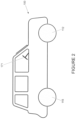
- the driveline 130 also comprises an auxiliary driveline portion 131 arranged to drive a pair of rear wheels 114, 115 by means of an auxiliary driveshaft or prop-shaft 132, a rear differential 135 and a pair of rear driveshafts 139.
- the VCU 10 further includes a Traction Control (TC) function block.
- the TC function block is implemented in software code run by a computing device of the VCU 10.
- the ABS controller 13 and TC function block provide outputs indicative of, for example, TC activity, ABS activity, brake interventions on individual wheels and engine torque requests from the VCU 10 to the engine 121 in the event a wheel slip event occurs. Each of the aforementioned events indicate that a wheel slip event has occurred.
- the ABS controller 13 implements the TC function block.
- Other vehicle sub-systems such as a roll stability control system or the like may also be included.
- the vehicle 100 also includes a cruise control system 16 which is operable to automatically maintain vehicle speed at a selected speed when the vehicle is travelling at speeds in excess of 25 kph.
- the cruise control system 16 is provided with a cruise control HMI (human machine interface) 18 by which means the user can input a target vehicle speed to the cruise control system 16 in a known manner.
- cruise control system input controls are mounted to a steering wheel 171 ( FIG. 5 ).
- the cruise control system 16 may be switched on by pressing a cruise control system selector button 176.
- depression of a 'set-speed' control 173 sets the current value of a cruise control set-speed parameter, cruise_set-speed to the current vehicle speed.
- a resume button 173R is provided that is operable to control the cruise control system 16 to resume speed control at the instant value of cruise_set-speed following driver over-ride. It is to be understood that known on-highway cruise control systems including the present system 16 are configured so that, in the event that the user depresses the brake or, in the case of vehicles with a manual transmission, a clutch pedal, control of vehicle speed by the cruise control system 16 is cancelled and the vehicle 100 reverts to a manual mode of operation which requires accelerator or brake pedal input by a user in order to maintain vehicle speed.
- the cruise control system 16 monitors vehicle speed and any deviation from the target vehicle speed is adjusted automatically so that the vehicle speed is maintained at a substantially constant value, typically in excess of 25 kph. In other words, the cruise control system is ineffective at speeds lower than 25 kph.
- the cruise control HMI 18 may also be configured to provide an alert to the user about the status of the cruise control system 16 via a visual display of the HMI 18.
- the cruise control system 16 is configured to allow the value of cruise_set-speed to be set to any value in the range 25-150kph.
- the LSP control system 12 is configured to allow a user to input a desired value of set-speed parameter, user_set-speed to the LSP control system 12 via a low-speed progress control HMI (LSP HMI) 20 ( FIG. 1 , FIG. 3 ) which shares certain input buttons 173-175 with the cruise control system 16 and HDC control system 12HD.
- LSP HMI low-speed progress control HMI
- the vehicle speed is within the allowable range of operation of the LSP control system 12 (which is the range from 2 to 30kph in the present embodiment although other ranges are also useful) and no other constraint on vehicle speed exists whilst under the control of the LSP control system 12, the LSP control system 12 controls vehicle speed in accordance with a LSP control system set-speed value LSP_set-speed which is set substantially equal to user_set-speed.
- the LSP control system 12 is configured to operate independently of the occurrence of a traction event. That is, the LSP control system 12 does not cancel speed control upon detection of wheel slip. Rather, the LSP control system 12 actively manages vehicle behaviour when slip is detected.
- the LSP control HMI 20 is provided in the vehicle cabin so as to be readily accessible to the user.
- the user of the vehicle 100 is able to input to the LSP control system 12, via the LSP HMI 20, an indication of the speed at which the user desires the vehicle to travel (referred to as "the target speed") by means of the 'set-speed' button 173 and the '+'/ '-' buttons 174, 175 in a similar manner to the cruise control system 16.
- the LSP HMI 20 also includes a visual display by means of which information and guidance can be provided to the user about the status of the LSP control system 12.
- the LSP control system 12 receives an input from the ABS controller 13 of the braking system 22 of the vehicle indicative of the extent to which the user has applied braking by means of the brake pedal 163.
- the LSP control system 12 also receives an input from an accelerator pedal 161 indicative of the extent to which the user has depressed the accelerator pedal 161, and an input from the transmission or gearbox 124.
- This latter input may include signals representative of, for example, the speed of an output shaft of the gearbox 124, an amount of torque converter slip and a gear ratio request.
- vehicle reference speed may be determined to be the speed of the second slowest turning wheel, or the average speed of all the wheels.
- Other ways of calculating vehicle reference speed may be useful in some embodiments, incuding by means of a camera device or radar sensor.
- the system 12HD controls the braking system 22 in order to limit vehicle speed to a value corresponding to that of a HDC set-speed parameter HDC_set-speed which may be set by a user.
- the HDC set-speed parameter may also be referred to as an HDC target speed.
- the HDC system 12HD controls the braking system 22 ( FIG. 3 ) to prevent vehicle speed from exceeding HDC_set-speed.
- the HDC system 12HD is not operable to apply positive drive torque. Rather, the HDC system 12HD is only operable to cause negative brake torque to be applied, via the braking system 22.
- a HDC system HMI 20HD is provided by means of which a user may control the HDC system 12HD, including setting the value of HDC_set-speed.
- the HDC system is activated by depressing the HDC selector button 177 for more than the prescribed period (3s in the present embodiment as noted above).
- the HDC system 12HD sets the value of HDC_set-speed to a value selected from a look-up table.
- the value output by the look-up table is determined in dependence on the identity of the currently selected transmission gear, the currently selected PTU gear ratio (Hi/LO) and the currently selected driving mode.
- the HDC system 12HD then causes the powertrain 129 and/or braking system 22 (via signal 42, FIG. 4 ) to slow the vehicle 100 to the HDC system set-speed provided the driver does not override the HDC system 12HD by depressing the accelerator pedal 161. It is to be understood that the HDC system 12HD may cause the powertrain 129 to apply negative torque to one or more wheels, for example by engine over-run braking, but cannot cause the powertrain 129 to apply a positive torque to a wheel.
- the HDC system 12HD is configured to slow the vehicle 100 to the set-speed value at a deceleration rate not exceeding a maximum allowable rate.
- the rate is set as 1.25ms-2 in the present embodiment, however other values are also useful. If the user subsequently presses the 'set-speed' button 173 the HDC system 12HD sets the value of HDC_set-speed to the instant vehicle speed provided the instant speed is 30kph or less.
- the VCU 10 is configured to implement a known Terrain Response (TR) (RTM) System of the kind described above in which the VCU 10 controls settings of one or more vehicle systems or sub-systems such as the powertrain controller 11 in dependence on a selected driving mode.
- TR Terrain Response
- the driving mode may be selected by a user by means of a driving mode selector 141S ( FIG. 1 ).
- the driving modes may also be referred to as terrain modes, terrain response (TR) modes, or control modes.
- an 'on-highway' driving mode suitable for driving on a relatively hard, smooth driving surface where a relatively high surface coefficient of friction exists between the driving surface and wheels of the vehicle
- a 'sand' driving mode suitable for driving over sandy terrain, being terrain characterised at least in part by relatively high drag, relatively high deformability or compliance and relatively low surface coefficient of friction
- a 'grass, gravel or snow' (GGS) driving mode suitable for driving over grass, gravel or snow, being relatively slippery surfaces (i.e.
- the on-highway driving mode may be referred to as a 'special programs off' (SPO) mode in some embodiments since it corresponds to a standard or default driving mode, and is not required to take account of special factors such as relatively low surface coefficient of friction, or surfaces of high roughness.
- SPO programs off'
- the LSP control system 12 is also operable to assume an intermediate mode or condition similar to that of the active mode but in which the LSP control system 12 is prevented from commanding the application of positive drive torque to one or more wheels of the vehicle 100 by the powertrain 129.
- the intermediate mode is implemented by causing the HDC control system 12HD to control vehicle speed, with the value HDC_set-speed set substantially equal to LSP_set-speed. Other arrangements are also useful.
- the cruise control HMI 18 and the LSP control HMI 20 are configured within the same hardware so that the speed selection is input via the same hardware.
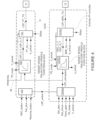
- FIG. 4 illustrates the means by which vehicle speed is controlled when the LSP control system 12 is in the active mode.
- the LSP control system determines the amount of positive drive torque to be applied by the powertrain 129, LSP_PT_TQ, and causes the powertrain 129 to deliver this amount of torque by communicating the value of LSP_PT_TQ to the powertrain controller 11.
- the value of LSP_PT_TQ may be communicated to the powertrain controller 11 via the TC function block, which may arbitrate the value of LSP_PT_TQ in dependence on the amount of slip experienced by a driving wheel.
- the TC function block may reduce the value of LSP_PT_TQ output to the powertrain controller 11 when excessive slip is experienced.
- the LSP control system 12 may cause the HDC control system 12HD to command a non-zero value of LSP_BRK_TQ whilst the LSP control system 12 is commanding application of positive (or negative) powertrain torque, LSP_PT_TQ, in an automated implementation of 'two pedalling' where both brake and accelerator pedals are depressed by a driver to reduce wheel slip.
- the LSP control system 12 has an input function block 12a that receives the following signals: a signal HDC_button indicating whether HDC system selector button 177 is currently pressed; a signal set_plus indicating whether the 'set +' button 174 is currently pressed; and a signal Resume_button indicating whether the resume button 173R is currently pressed.
- the LSP control system 12 is configured to become active and command application of positive powertrain torque as required if the HDC selector button 177 is pressed for less than three seconds whilst the LSP control system is not active and the 'set +' button is subsequently pressed within 3 seconds of release of the HDC selector button 177. Other time periods are also useful.
- the HDC system 12HD becomes active. Under such circumstances the HDC system 12HD is not slaved to the LSP control system 12 and the LSP control system 12 remains inactive.
- the active system 12, 12HD is deactivated.
- the HDC system 12HD is operable to apply brake torque to prevent vehicle speed exceeding HDC_set-speed (which is set equal to LSP_set-speed when the LSP control system is active), but not to apply positive powertrain torque.
- LSP_V_T and LSP_A_T are input to a PI (proportional-integral) control module 12c to generate a value of LSP_PT_TQ that is output to the powertrain controller 129.
- Function block 12b controls the value of LSP_V_T and the value of LSP_A_T such that the target speed gradually becomes equal to LSP_set-speed according to target speed trajectory profiles stored in a memory thereof.
- the PI control module 12c also receives as an input a value corresponding to the instant value of torque, PT_trq, being generated by the powertrain 129, a value of a parameter A_actual corresponding to the actual instant rate of acceleration of the vehicle 100, the signal TR_mode and a value of a parameter 'slope' corresponding to a steepness of a slope on which the vehicle 100 is driving.
- A_actual may be positive or negative depending on whether the vehicle 100 is accelerating or decelerating.
- the value of 'slope' may be positive or negative depending on whether the vehicle 100 is ascending or descending a slope.
- Function block 12c adjusts these rates in dependence on the gradient of the driving surface according to stored data.
- the manner in which the rates are adjusted in dependence on slope is further dependent on the TR mode, and therefore the function block 12c receives the signals indicative of TR mode and driving surface gradient.
- the values are adjusted such that when the vehicle is in the 'Sand' TR mode and ascending a slope, the rate at which the value of LSP_PT_TQ increases when an increase in powertrain torque is required, due to target speed undershoot, is greater (i.e. more aggressive) than that when the vehicle is traversing level ground.
- the rate at which LSP_PT_TQ decreases is lower (i.e. less aggressive) than in the case where the vehicle is traversing level ground. This is because gravity is acting in favour of reducing vehicle speed even in the absence of brake torque from the braking system 22, such that vehicle speed will reduce at a greater rate than if the vehicle 100 were travelling over level ground.
- the values of proportional feedback gain and integral feedback gain are adjusted such that the rate at which the amount of commanded powertrain torque increases, when an increase in powertrain torque is required due to target speed undershoot, is lower (i.e. less aggressive) than that when the vehicle is traversing level ground. This reduces the risk of excessive wheel slip, and therefore loss of traction.
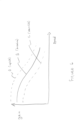
- Profile B is a baseline profile and is used when travelling over a substantially horizontal surface and target speed undershoot occurs.
- Profile A is used when travelling uphill and target speed undershoot occurs; it can be seen that the value of gain employed as a function of speed can be seen to be higher when travelling uphill compared to when travelling over a substantially horizontal surface. That is, the function block 12c is caused to command a more aggressive increase in powertrain torque when undershoot occurs when travelling uphill, compared with travel over a substantially horizontal surface.
- Profile B is a baseline profile and is used when travelling over a substantially horizontal surface and target speed undershoot occurs.
- Profile A is used when travelling uphill and target speed undershoot occurs; it can be seen that the value of gain employed as a function of speed can be seen to be lower when travelling uphill compared to when travelling over a substantially horizontal surface. That is, the function block 12c is caused to command a less aggressive increase in powertrain torque when undershoot occurs when travelling uphill, compared with travel over a substantially horizontal surface.
- This has the advantage that the wheels are less likely to experience excessive slip, increasing the risk that the vehicle fails to make adequate progress over terrain, and/or the risk that undesirable modification of the driving surface occurs due to wheel slip. Surface modification is typically less problematic in the case of driving over sand.
- the value of gain is lower, for travel downhill over a driving surface having a given value of slope, compared with the gain value for travel uphill over a driving surface having the same value of slope as shown by the fact that profile C is below profile A in the figure.
- the value of gain for travel downhill may be higher than, or substantially the same as, the value for travel uphill, in some alternative embodiments.
- the general relative form of the gain profiles for speed undershoot when travelling uphill, over substantially horizontal ground, or downhill have a similar relationship to that illustrated in FIG. 7 , i.e. the gain values decrease when travelling uphill or downhill compared to travel over substantially level ground.
- LSP_A_T is controlled such that a steady state rate of acceleration is established the value of which is determined according to the value of TR_mode.
- the steady state rate of acceleration is higher for high-drag surfaces such as sand compared with lower drag surfaces in order to reduce a risk that a vehicle becomes stuck, i.e. unable to make adequate progress across terrain.
- parameter HDC_V_T corresponds to a required target instant speed of the vehicle 100 and the value of parameter HDC_A_T corresponds to a target instant rate of deceleration of the vehicle 100.
- Function block 12HDb controls the value of HDC_V_T and the value of HDC_A_T such that the target speed gradually becomes equal to HDC_set-speed according to trajectory profiles stored in a memory thereof.
- the steady state rate of deceleration is arranged to be lower for high-drag surfaces such as sand compared with low-drag asphalt surfaces in order to reduce a risk that sand displaced by a wheel builds up in front of a wheel and causes abrupt deceleration. Abrupt deceleration typically compromises vehicle composure and is therefore typically undesirable.
- HDC_A_T and HDC_V_T are input to a PI (proportional-integral) control module 12HDc which generates a value of HDC_BRK_TQ that is output to the ABS controller 13.
- PI proportional-integral
- the LSP control system 12 is configured to cause the PI control module 12HDc of the HDC control system 12HD to operate with reduced gain values in order to reduce vehicle speed (in the event braking is required) due to the effect of gravity in assisting deceleration of the vehicle 100.
- negative torque may be applied by the powertrain 129 to one or more wheels by the one or more electric machines. Negative torque may also be applied by means of engine braking in some circumstances, depending at least in part on the speed at which the vehicle 100 is moving. If one or more electric machines are provided that are operable as propulsion motors, positive drive torque may be applied by means of the one or more electric machines when positive drive torque is commanded by the driver or LSP control system 12.
- the VCU 10 may command that positive or negative torque is applied to the vehicle wheels by the powertrain 129 and/or that a braking force is applied to the vehicle wheels by the braking system 22, either or both of which may be used to implement the change in torque that is necessary to attain and maintain a required vehicle speed.
- torque is applied to the vehicle wheels individually, for example by powertrain torque vectoring, so as to maintain the vehicle at the required speed.
- torque may be applied to the wheels collectively to maintain the required speed, for example in vehicles having drivelines where torque vectoring is not possible.
- the powertrain controller 11 may be operable to implement torque vectoring to control an amount of torque applied to one or more wheels by controlling a driveline component such as a rear drive unit, front drive unit, differential or any other suitable component.
- a driveline component such as a rear drive unit, front drive unit, differential or any other suitable component.
- one or more components of the driveline 130 may include one or more clutches operable to allow an amount of torque applied to one or more wheels to be varied. Other arrangements may also be useful.
- a wheel slip event is triggered when a loss of traction occurs at any one of the vehicle wheels. Wheels and tyres may be more prone to losing traction when travelling for example on snow, ice, mud or sand and/or on steep gradients or cross-slopes. A vehicle 100 may also be more prone to losing traction in other environments where the terrain is more uneven or slippery compared with driving on a highway in normal on-road conditions. Embodiments of the present invention therefore find particular benefit when the vehicle 100 is being driven in an off-road environment, or in conditions in which wheel slip may commonly occur. Manual operation in such conditions can be a difficult and often stressful experience for the driver and may result in an uncomfortable ride.
- the sensors (not shown) on the vehicle 100 include, but are not limited to, sensors which provide continuous sensor outputs to the VCU 10, including wheel speed sensors, as mentioned previously, an ambient temperature sensor, an atmospheric pressure sensor, tyre pressure sensors, wheel articulation sensors, gyroscopic sensors to detect vehicular yaw, roll and pitch angle and rate, a vehicle speed sensor, a longitudinal acceleration sensor, an engine torque sensor (or engine torque estimator), a steering angle sensor, a steering wheel speed sensor, a gradient sensor (or gradient estimator), a lateral acceleration sensor which may be part of the SCS 14, a brake pedal position sensor, a brake pressure sensor, an accelerator pedal position sensor, longitudinal, lateral and vertical motion sensors, and water detection sensors forming part of a vehicle wading assistance system (not shown). In other embodiments, only a selection of the aforementioned sensors may be used.
- the VCU 10 also receives a signal from the steering controller 170C.
- the steering controller 170C is in the form of an electronic power assisted steering unit (ePAS unit) 170C.
- the steering controller 170C provides a signal to the VCU 10 indicative of the steering force being applied to steerable road wheels 111, 112 of the vehicle 100. This force corresponds to that applied by a user to the steering wheel 171 in combination with steering force generated by the ePAS unit 170C.
- the VCU 10 evaluates the various sensor inputs to determine the probability that each of a plurality of different control modes (driving modes) for the vehicle subsystems is appropriate, with each control mode corresponding to a particular terrain type over which the vehicle is travelling (for example, mud and ruts, sand, grass/gravel/snow).
- the VCU 10 selects the most appropriate one of the control modes and is configured automatically to control the subsystems according to the selected mode.
- This aspect of the invention is described in further detail in our co-pending patent application nos. GB1111288.5 , GB1211910.3 and GB1202427.9 , the contents of each of which is incorporated herein by reference.
- the nature of the terrain over which the vehicle is travelling may also be utilised in the LSP control system 12 to determine an appropriate increase or decrease in vehicle speed. For example, if the user selects a value of user_set-speed that is not suitable for the nature of the terrain over which the vehicle is travelling, the system 12 is operable to automatically adjust the vehicle speed downwards by reducing the speed of the vehicle wheels. In some cases, for example, the user selected speed may not be achievable or appropriate over certain terrain types, particularly in the case of uneven or rough surfaces.
- a parameter indicative of an actual amount of drag on a vehicle due to external forces may be provided.
- the function blocks 12b, 12HDb may be arranged to determine, respectively, the values of LSP_V_T, LSP_A_T and HDC_V_T, HDC_A_T in dependence on the amount of drag as well as or instead of the selected TR mode. It is to be understood that travel over sand corresponds to travel over terrain for which the amount of external drag is relatively high. Means for measuring external drag forces on a vehicle are well known.
- a vehicle 100 may descend an incline at a speed below LSP_set-speed and the LSP control system 12 may be required to cause application of positive powertrain drive torque to accelerate the vehicle 100 to LSP_set-speed.
- function blocks 12b, 12c may be configured to set the value of LSP_PT_TQ to a value corresponding to substantially no positive powertrain drive torque prior to v_actual attaining LSP_set-speed. This is so as to prevent excessive overshoot of LSP_set-speed by v_actual, and be performed in dependence on the value of 'slope' and TR mode. This procedure may enable the vehicle 100 to descend the slope without a requirement to apply brake torque to one or more wheels.
- Some embodiments of the present invention enable vehicle operation with enhanced composure on driving surfaces of different gradients.
- some embodiments of the present invention have the advantage that sudden over-braking on high drag terrain such as sand may be prevented. Some embodiments of the present invention give rise to greatly enhanced vehicle composure when driving across varied terrain, especially over high drag, deformable surfaces such as sand.
Landscapes
- Engineering & Computer Science (AREA)
- Automation & Control Theory (AREA)
- Transportation (AREA)
- Mechanical Engineering (AREA)
- Human Computer Interaction (AREA)
- Control Of Driving Devices And Active Controlling Of Vehicle (AREA)
- Control Of Vehicle Engines Or Engines For Specific Uses (AREA)
Claims (14)
- Geschwindigkeitssteuersystem für ein Fahrzeug, umfassend:ein Drehmomentsteuermittel (12) zum automatischen Veranlassen einer Anwendung von positivem und negativem Drehmoment auf ein oder mehrere Räder (111, 112, 114, 115) eines Fahrzeugs (100), um zu veranlassen, dass sich das Fahrzeug mit einer Geschwindigkeit fortbewegt, die im Wesentlichen gleich dem Zielgeschwindigkeitswert ist; undein Mittel zum Empfangen von Informationen, die eine Neigung einer Fahrbahnoberfläche angeben, über die das Fahrzeug fährt,wobei das Drehmomentsteuermittel (12) konfiguriert ist, um die Änderungsrate der Menge an Drehmoment zu steuern, das auf das eine oder die mehreren Räder (111, 112, 114, 115) angewendet wird, um zu versuchen, beizubehalten, dass sich das Fahrzeug im Wesentlichen mit dem Zielgeschwindigkeitswert fortbewegt, in Abhängigkeit mindestens teilweise der Neigung der Fahrbahnoberfläche,dadurch gekennzeichnet, dass das Drehmomentsteuermittel ferner konfiguriert ist, um zu veranlassen, dass das Fahrzeug von einer ersten Geschwindigkeit auf den Zielgeschwindigkeitswert beschleunigt, wobei die erste Geschwindigkeit geringer als der Zielgeschwindigkeitswert ist, mindestens teilweise gemäß gespeicherter Daten bezüglich einer Zielbeschleunigungsrate als eine Funktion von Geschwindigkeit, wobei der Wert der Zielbeschleunigungsrate, gemäß der veranlasst wird, dass das Fahrzeug beschleunigt, in weiterer Abhängigkeit mindestens teilweise von der Fahrbahnoberflächenneigung bestimmt wird.
- Steuersystem nach Anspruch 1 oder 2, wobei das Drehmomentsteuermittel (12) konfiguriert ist, wobei wenn die tatsächliche Fahrzeuggeschwindigkeit geringer als der Zielgeschwindigkeitswert ist und die Informationen, die die Oberflächenneigung angeben, angeben, dass sich das Fahrzeug bergauf fortbewegt, das Drehmomentsteuermittel (12) versucht, das Fahrzeug zu veranlassen, in Richtung des Zielgeschwindigkeitswerts mit einer Rate zu beschleunigen, die höher ist, als wenn auf einer im Wesentlichen horizontalen Oberfläche gefahren wird,
optional wobei das Drehmomentsteuermittel (12) konfiguriert ist, wobei wenn die tatsächliche Fahrzeuggeschwindigkeit geringer als der Zielgeschwindigkeitswert ist, das Drehmomentsteuermittel (12) versucht, das Fahrzeug zu veranlassen, in Richtung des Zielgeschwindigkeitswerts mit einer Rate zu beschleunigen, die bei schrittweise höheren Werten einer Bergauffahrbahnoberflächenneigung der Fahrbahnoberfläche schrittweise höher wird. - Steuersystem nach Anspruch 1, wobei das Drehmomentsteuermittel (12) konfiguriert ist, wobei wenn die tatsächliche Fahrzeuggeschwindigkeit geringer als der Zielgeschwindigkeitswert ist und die Informationen, die die Oberflächenneigung angeben, angeben, dass sich das Fahrzeug bergauf fortbewegt, das Drehmomentsteuermittel (12) versucht, das Fahrzeug zu veranlassen, in Richtung des Zielgeschwindigkeitswerts mit einer Rate zu beschleunigen, die niedriger ist, als wenn auf einer im Wesentlichen horizontalen Oberfläche gefahren wird, optional wobei das Drehmomentsteuermittel (12) konfiguriert ist, wobei wenn die tatsächliche Fahrzeuggeschwindigkeit geringer als der Zielgeschwindigkeitswert ist, das Drehmomentsteuermittel (12) versucht, das Fahrzeug zu veranlassen, in Richtung des Zielgeschwindigkeitswerts mit einer Rate zu beschleunigen, die bei zunehmend höheren Werten der Bergauffahrbahnoberflächenneigung zunehmend niedriger wird.
- Steuersystem nach einem der vorstehenden Ansprüche, wobei das Drehmomentsteuermittel (12) konfiguriert ist, wobei wenn die tatsächliche Fahrzeuggeschwindigkeit größer als der Zielgeschwindigkeitswert ist, das Drehmomentsteuermittel (12) eine Reduzierung des Drehmoments veranlasst, das auf das eine oder die mehreren Räder (111, 112, 114, 115) ausgeübt wird, um zu versuchen, das Fahrzeug zu veranlassen, sich mit einer Geschwindigkeit fortzubewegen, die im Wesentlichen gleich der Zielgeschwindigkeit ist, mit einer Rate, die bei einer gegebenen Geschwindigkeitsabweichung über der Zielgeschwindigkeit niedriger als im Fall einer entsprechenden Abweichung unter dem Zielgeschwindigkeitswert ist, optional wobei das Drehmomentsteuermittel (12) konfiguriert ist, wobei wenn die tatsächliche Fahrzeuggeschwindigkeit größer als der Zielgeschwindigkeitswert ist und sich das Fahrzeug bergauf fortbewegt, das Drehmomentsteuermittel (12) eine Reduzierung des Drehmoments veranlasst, das auf das eine oder die mehreren Räder (111, 112, 114, 115) ausgeübt wird, um zu versuchen, das Fahrzeug zu veranlassen, sich mit einer Geschwindigkeit fortzubewegen, die im Wesentlichen gleich der Zielgeschwindigkeit ist, mit einer Rate, die im Wesentlichen gleich oder niedriger als im Fall einer entsprechenden Abweichung der Fahrzeuggeschwindigkeit über der Zielgeschwindigkeit ist, während es sich über eine im Wesentlichen horizontale Fahrbahnoberfläche fortbewegt.
- Steuersystem nach einem der vorstehenden Ansprüche, wobei das Drehmomentsteuermittel (12) konfiguriert ist, wobei wenn die tatsächliche Fahrzeuggeschwindigkeit größer als der Zielgeschwindigkeitswert ist und sich das Fahrzeug bergab fortbewegt, das Drehmomentsteuermittel (12) eine Reduzierung des Drehmoments veranlasst, das auf das eine oder die mehreren Räder (111, 112, 114, 115) ausgeübt wird, um zu versuchen, das Fahrzeug zu veranlassen, sich mit einer Geschwindigkeit fortzubewegen, die im Wesentlichen gleich der Zielgeschwindigkeit ist, mit einer Rate, die im Wesentlichen gleich oder niedriger als im Fall einer entsprechenden Abweichung der Fahrzeuggeschwindigkeit über der Zielgeschwindigkeit ist, während es sich über eine im Wesentlichen horizontale Fahrbahnoberfläche fortbewegt.
- Steuersystem nach einem der vorstehenden Ansprüche, wobei das Drehmomentsteuermittel (12) konfiguriert ist, wobei wenn die tatsächliche Fahrzeuggeschwindigkeit größer als der Zielgeschwindigkeitswert ist und sich das Fahrzeug bergab fortbewegt, das Drehmomentsteuermittel (12) eine Reduzierung des Drehmoments veranlasst, das auf das eine oder die mehreren Räder (111, 112, 114, 115) ausgeübt wird, um zu versuchen, das Fahrzeug zu veranlassen, sich mit einer Geschwindigkeit fortzubewegen, die im Wesentlichen gleich der Zielgeschwindigkeit ist, mit einer Rate, die größer als im Fall einer entsprechenden Abweichung der Fahrzeuggeschwindigkeit über der Zielgeschwindigkeit ist, während es sich über eine im Wesentlichen horizontale Fahrbahnoberfläche fortbewegt.
- Steuersystem nach einem der vorstehenden Ansprüche, das konfiguriert ist, um zu veranlassen, dass ein Fahrzeug von einer zweiten Geschwindigkeit auf den Zielgeschwindigkeitswert abbremst, wobei die zweite Geschwindigkeit größer als der Zielgeschwindigkeitswert ist, gemäß gespeicherter Daten bezüglich einer Abbremsungszielrate als eine Funktion von Geschwindigkeit, wobei die Abbremsungszielrate, gemäß der veranlasst wird, dass das Fahrzeug abbremst, in weiterer Abhängigkeit mindestens teilweise von der Fahrbahnoberflächenneigung bestimmt wird.
- Steuersystem nach einem der vorstehenden Ansprüche, das konfiguriert ist, um eine Änderungsrate der Fahrzeuggeschwindigkeit in Richtung der Zielgeschwindigkeit iterativ zu steuern, durch Veranlassen des Fahrzeugs, zu versuchen, eine vorläufige sofortige Zielgeschwindigkeit zu erreichen, wobei veranlasst wird, dass sich der Wert der vorläufigen sofortigen Zielgeschwindigkeit und damit die Fahrzeuggeschwindigkeit auf iterative Weise in Richtung des Zielgeschwindigkeitswerts mit einer erforderlichen Rate ändern.
- Steuersystem nach einem der vorstehenden Ansprüche, das betriebsfähig ist, um die Änderungsrate der Fahrzeuggeschwindigkeit so zu steuern, dass ein vorgeschriebener Ruckwert nicht überschritten wird, optional wobei der vorgeschriebene Ruckwert in Abhängigkeit von der Neigung der Fahrbahnoberfläche eingestellt wird.
- Steuersystem nach einem der vorstehenden Ansprüche, wobei das Drehmomentsteuermittel konfiguriert ist, um die Änderungsrate der Menge an Drehmoment zu steuern, das auf das eine oder die mehreren Räder ausgeübt wird, um zu versuchen, beizubehalten, dass sich das Fahrzeug gemäß dem Zielgeschwindigkeitswert fortbewegt, in weiterer Abhängigkeit mindestens teilweise von der Identität eines Fahrmodus, in dem das Fahrzeug betrieben wird.
- System nach Anspruch 10, wobei der Fahrmodus einer von einer Vielzahl von Fahrmodi ist, in denen veranlasst wird, dass jedes von einer Vielzahl von Fahrzeugsubsystemen in einem von einer Vielzahl von Konfigurationsmodi dieses Subsystems betrieben wird, wobei der Subsystemkonfigurationsmodus in Abhängigkeit von dem ausgewählten Fahrmodus bestimmt wird.
- Steuersystem nach Anspruch 11, das konfiguriert ist, wobei das Drehmomentsteuermittel (12) betriebsfähig ist, um die Änderungsrate der Menge an Drehmoment zu steuern, das auf das eine oder die mehreren Räder (111, 112, 114, 115) angewendet wird, um zu versuchen, beizubehalten, dass sich das Fahrzeug gemäß dem Zielgeschwindigkeitswert fortbewegt, in Abhängigkeit mindestens teilweise von den Informationen, die die Fahrbahnoberflächenneigung angeben, nur dann, wenn das Fahrzeug in einem Fahrmodus in Betrieb ist, der ein Mitglied einer zuvor bestimmten Gruppe von einem oder mehreren der Vielzahl von Fahrmodi ist.
- Steuersystem nach Anspruch 12 in Abhängigkeit von Anspruch 3, das konfiguriert ist, wobei wenn die tatsächliche Fahrzeuggeschwindigkeit geringer als der Zielgeschwindigkeitswert ist und die Informationen, die die Oberflächenneigung angeben, angeben, dass sich das Fahrzeug bergauf fortbewegt, das Drehmomentsteuermittel (12) versucht, das Fahrzeug zu veranlassen, in Richtung des Zielgeschwindigkeitswerts mit einer Rate zu beschleunigen, die niedriger ist als wenn auf einer im Wesentlichen horizontalen Oberfläche gefahren wird, falls das Fahrzeug in einem Fahrmodus betrieben wird, der ein Mitglied einer ersten Gruppe von einem oder mehreren der Fahrmodi ist und kein Fahrmodus ist, der nicht ein Mitglied der ersten Gruppe ist, optional wobei die erste Gruppe von Fahrmodi mindestens einen Fahrmodus umfasst, der zum Fahren auf einer Fahroberfläche mit einem relativ geringen Oberflächenreibungskoeffizienten angepasst ist, und/oder wobei die erste Gruppe von Fahrmodi mindestens einen Fahrmodus umfasst, der zum Fahren auf einer Fahroberfläche mit dem relativ geringen Oberflächenreibungskoeffizienten angepasst ist, mit Ausnahme eines Modus, der zum Fahren auf Sand angepasst ist, ferner optional wobei die erste Gruppe von Fahrmodi mindestens einen Fahrmodus umfasst, der zum Fahren auf mindestens einem von einer Schneeoberfläche, einer Eisoberfläche, Gras, Schotter, Schnee und Schlamm angepasst ist.
- Verfahren zum Steuern eines Fahrzeugs, das mittels eines Steuersystems implementiert wird, umfassend:automatisches Veranlassen der Anwendung von positivem und negativem Drehmoment auf das eine oder die mehreren Räder (111, 112, 114, 115) eines Fahrzeugs, um zu veranlassen, dass sich ein Fahrzeug gemäß einem Zielgeschwindigkeitswert fortbewegt, undEmpfangen von Informationen, die eine Neigung einer Fahrbahnoberfläche angeben, über die das Fahrzeug fährt,das Verfahren umfassend das Steuern der Änderungsrate der Menge an Drehmoment, das auf das eine oder die mehreren Räder (111, 112, 114, 115) angewendet wird, um zu versuchen, beizubehalten, dass sich das Fahrzeug gemäß dem Zielgeschwindigkeitswert fortbewegt, in Abhängigkeit mindestens teilweise der Neigung der Fahrbahnoberfläche,wobei das Verfahren dadurch gekennzeichnet ist, dass es ferner umfasst, dass das Fahrzeug veranlasst wird, von einer ersten Geschwindigkeit auf einen Zielgeschwindigkeitswert zu beschleunigen, wobei die erste Geschwindigkeit geringer als der Zielgeschwindigkeitswert ist, mindestens teilweise gemäß gespeicherter Daten bezüglich der Beschleunigungszielrate als eine Funktion von Geschwindigkeit, wobei der Wert der Beschleunigungszielrate in weiterer Abhängigkeit mindestens teilweise von der Fahrbahnoberflächenneigung bestimmt wird.
Applications Claiming Priority (3)
| Application Number | Priority Date | Filing Date | Title |
|---|---|---|---|
| GB1507352.1A GB2537884A (en) | 2015-04-29 | 2015-04-29 | Improvements in vehicle speed control |
| GB1507503.9A GB2537926B (en) | 2015-04-29 | 2015-04-30 | Improvements in vehicle speed control |
| PCT/EP2016/059626 WO2016174212A2 (en) | 2015-04-29 | 2016-04-29 | Improvements in vehicle speed control |
Publications (2)
| Publication Number | Publication Date |
|---|---|
| EP3288808A2 EP3288808A2 (de) | 2018-03-07 |
| EP3288808B1 true EP3288808B1 (de) | 2025-04-16 |
Family
ID=53488893
Family Applications (1)
| Application Number | Title | Priority Date | Filing Date |
|---|---|---|---|
| EP16719407.5A Active EP3288808B1 (de) | 2015-04-29 | 2016-04-29 | Verbesserungen bei der fahrzeuggeschwindigkeitskontrolle |
Country Status (4)
| Country | Link |
|---|---|
| US (1) | US10604152B2 (de) |
| EP (1) | EP3288808B1 (de) |
| GB (2) | GB2537884A (de) |
| WO (1) | WO2016174212A2 (de) |
Families Citing this family (23)
| Publication number | Priority date | Publication date | Assignee | Title |
|---|---|---|---|---|
| GB2523203B (en) * | 2014-02-18 | 2017-01-11 | Jaguar Land Rover Ltd | Control System and method |
| GB2537952B (en) * | 2015-04-29 | 2019-07-03 | Jaguar Land Rover Ltd | Vehicle speed control for low speed progress |
| US10303176B2 (en) * | 2015-10-15 | 2019-05-28 | Ford Global Technologies, Llc | Determining variance factors for complex road segments |
| DE102016204356B4 (de) * | 2016-03-16 | 2022-02-10 | Ford Global Technologies, Llc | Verfahren und Vorrichtung zur Längsregelung eines Kraftfahrzeugs |
| CN107117173B (zh) * | 2017-04-27 | 2019-05-28 | 广州汽车集团股份有限公司 | 车辆的制动及降扭控制方法、装置及系统 |
| CN107161151B (zh) | 2017-04-27 | 2019-05-28 | 广州汽车集团股份有限公司 | 车辆的动力分配控制方法、装置及系统 |
| CN107150687B (zh) | 2017-04-27 | 2019-08-13 | 广州汽车集团股份有限公司 | 车辆的双向传输控制系统 |
| CN107128309B (zh) * | 2017-04-27 | 2019-05-28 | 广州汽车集团股份有限公司 | 车辆的动力输出控制方法、装置及系统 |
| JP6495971B2 (ja) * | 2017-06-02 | 2019-04-03 | 本田技研工業株式会社 | 車両制御システム、車両制御方法、および車両制御プログラム |
| US10676088B2 (en) * | 2018-06-08 | 2020-06-09 | GM Global Technology Operations LLC | Powertrain control system and method of operating the same |
| US11352004B2 (en) * | 2019-12-04 | 2022-06-07 | Hyundai Motor Company | Vehicle travel control system and control method therefor |
| JP7400754B2 (ja) | 2021-02-24 | 2023-12-19 | トヨタ自動車株式会社 | 遠隔支援システム及び遠隔支援方法 |
| JP7302616B2 (ja) * | 2021-02-24 | 2023-07-04 | トヨタ自動車株式会社 | 遠隔支援システム及び遠隔支援方法 |
| US20230035533A1 (en) * | 2021-07-29 | 2023-02-02 | Transportation Ip Holdings, Llc | Vehicle control system and method |
| US11821744B2 (en) * | 2021-10-08 | 2023-11-21 | Ford Global Technologies, Llc | Recommending an alternative off-road track to a driver of a vehicle |
| CN114162126B (zh) * | 2021-12-28 | 2024-07-05 | 上海洛轲智能科技有限公司 | 车辆控制方法、装置、设备、介质及产品 |
| FR3132069B1 (fr) * | 2022-01-26 | 2024-01-05 | Psa Automobiles Sa | Procédé et dispositif de contrôle d’accélération d’un véhicule embarquant un système de régulation de vitesse |
| GB2633926A (en) * | 2022-05-10 | 2025-03-26 | Jaguar Land Rover Ltd | Speed control system for a vehicle and method |
| GB2618565B (en) * | 2022-05-10 | 2024-10-02 | Jaguar Land Rover Ltd | Speed control system for a vehicle and method |
| GB2618566B (en) * | 2022-05-10 | 2024-07-31 | Jaguar Land Rover Ltd | Control system for a vehicle and method |
| GB2618562B (en) * | 2022-05-10 | 2024-07-31 | Jaguar Land Rover Ltd | Control system for a vehicle and method |
| CN114987482B (zh) * | 2022-06-09 | 2025-04-01 | 中国第一汽车股份有限公司 | 车辆扭矩控制方法、装置及计算机可读存储介质 |
| GB2629767A (en) * | 2023-05-04 | 2024-11-13 | Jaguar Land Rover Ltd | System and method for selecting vehicle control mode |
Citations (5)
| Publication number | Priority date | Publication date | Assignee | Title |
|---|---|---|---|---|
| EP1010567A2 (de) * | 1998-12-17 | 2000-06-21 | DaimlerChrysler AG | Verfahren zur Fahrgeschwindigkeitsregelung eines Kraftfahrzeuges |
| EP1355209A1 (de) * | 2002-04-18 | 2003-10-22 | Ford Global Technologies, LLC | Fahrzeugsteuerungssystem |
| WO2007141631A2 (en) * | 2006-06-07 | 2007-12-13 | Toyota Jidosha Kabushiki Kaisha | System and method for controlling vehicle |
| WO2014027071A1 (en) * | 2012-08-16 | 2014-02-20 | Jaguar Land Rover Limited | Vehicle speed control system and method with external force compensation |
| WO2014139875A1 (en) * | 2013-03-15 | 2014-09-18 | Jaguar Land Rover Limited | Vehicle speed control system and method |
Family Cites Families (5)
| Publication number | Priority date | Publication date | Assignee | Title |
|---|---|---|---|---|
| JPH06344802A (ja) * | 1993-06-02 | 1994-12-20 | Hitachi Ltd | 自動車一定速走行制御装置 |
| KR20110125128A (ko) * | 2010-05-12 | 2011-11-18 | 주식회사 만도 | 경사로의 적응 순항 제어 방법 |
| US8954255B1 (en) * | 2011-09-16 | 2015-02-10 | Robert J. Crawford | Automobile-speed control using terrain-based speed profile |
| WO2014027109A1 (en) * | 2012-08-16 | 2014-02-20 | Jaguar Land Rover Limited | Speed control system and method of operating the same |
| GB201318706D0 (en) * | 2013-10-23 | 2013-12-04 | Jaguar Land Rover Ltd | Improvements in vehicle speed control |
-
2015
- 2015-04-29 GB GB1507352.1A patent/GB2537884A/en not_active Withdrawn
- 2015-04-30 GB GB1507503.9A patent/GB2537926B/en active Active
-
2016
- 2016-04-29 US US15/570,211 patent/US10604152B2/en active Active
- 2016-04-29 WO PCT/EP2016/059626 patent/WO2016174212A2/en not_active Ceased
- 2016-04-29 EP EP16719407.5A patent/EP3288808B1/de active Active
Patent Citations (5)
| Publication number | Priority date | Publication date | Assignee | Title |
|---|---|---|---|---|
| EP1010567A2 (de) * | 1998-12-17 | 2000-06-21 | DaimlerChrysler AG | Verfahren zur Fahrgeschwindigkeitsregelung eines Kraftfahrzeuges |
| EP1355209A1 (de) * | 2002-04-18 | 2003-10-22 | Ford Global Technologies, LLC | Fahrzeugsteuerungssystem |
| WO2007141631A2 (en) * | 2006-06-07 | 2007-12-13 | Toyota Jidosha Kabushiki Kaisha | System and method for controlling vehicle |
| WO2014027071A1 (en) * | 2012-08-16 | 2014-02-20 | Jaguar Land Rover Limited | Vehicle speed control system and method with external force compensation |
| WO2014139875A1 (en) * | 2013-03-15 | 2014-09-18 | Jaguar Land Rover Limited | Vehicle speed control system and method |
Also Published As
| Publication number | Publication date |
|---|---|
| GB2537926B (en) | 2018-09-19 |
| GB201507503D0 (en) | 2015-06-17 |
| GB201507352D0 (en) | 2015-06-10 |
| US20180126987A1 (en) | 2018-05-10 |
| EP3288808A2 (de) | 2018-03-07 |
| GB2537926A (en) | 2016-11-02 |
| GB2537884A (en) | 2016-11-02 |
| US10604152B2 (en) | 2020-03-31 |
| WO2016174212A3 (en) | 2016-12-08 |
| WO2016174212A2 (en) | 2016-11-03 |
Similar Documents
| Publication | Publication Date | Title |
|---|---|---|
| EP3288808B1 (de) | Verbesserungen bei der fahrzeuggeschwindigkeitskontrolle | |
| EP3288807B1 (de) | Verbesserungen bei der fahrzeuggeschwindigkeitskontrolle | |
| EP3060444B1 (de) | Verbesserungen bei der fahrzeuggeschwindigkeitskontrolle | |
| EP2976242B1 (de) | Verbesserungen an einer fahrzeuglenkung | |
| EP2969692B1 (de) | System und verfahren zur geschwindigkeitsregelung eines fahrzeugs | |
| EP3096993B1 (de) | System und verfahren zur geschwindigkeitsregelung eines fahrzeugs | |
| EP2996917B1 (de) | Fahrzeuggeschwindigkeitssteuerungssystem | |
| US20170197619A1 (en) | Vehicle speed control system and method for low speed situation or slippery environment | |
| US9758165B2 (en) | Vehicle speed control system and method | |
| EP2969691B1 (de) | Fahrzeuggeschwindigkeitssteuerungssystem | |
| GB2537929A (en) | Improvements In Vehicle Speed Control | |
| GB2565819A (en) | Vehicle controller and method |
Legal Events
| Date | Code | Title | Description |
|---|---|---|---|
| STAA | Information on the status of an ep patent application or granted ep patent |
Free format text: STATUS: THE INTERNATIONAL PUBLICATION HAS BEEN MADE |
|
| PUAI | Public reference made under article 153(3) epc to a published international application that has entered the european phase |
Free format text: ORIGINAL CODE: 0009012 |
|
| STAA | Information on the status of an ep patent application or granted ep patent |
Free format text: STATUS: REQUEST FOR EXAMINATION WAS MADE |
|
| 17P | Request for examination filed |
Effective date: 20171129 |
|
| AK | Designated contracting states |
Kind code of ref document: A2 Designated state(s): AL AT BE BG CH CY CZ DE DK EE ES FI FR GB GR HR HU IE IS IT LI LT LU LV MC MK MT NL NO PL PT RO RS SE SI SK SM TR |
|
| AX | Request for extension of the european patent |
Extension state: BA ME |
|
| DAV | Request for validation of the european patent (deleted) | ||
| DAX | Request for extension of the european patent (deleted) | ||
| STAA | Information on the status of an ep patent application or granted ep patent |
Free format text: STATUS: EXAMINATION IS IN PROGRESS |
|
| 17Q | First examination report despatched |
Effective date: 20210322 |
|
| P01 | Opt-out of the competence of the unified patent court (upc) registered |
Effective date: 20230528 |
|
| REG | Reference to a national code |
Ref legal event code: R079 Ref country code: DE Ref legal event code: R079 Ref document number: 602016091908 Country of ref document: DE Free format text: PREVIOUS MAIN CLASS: B60W0030140000 Ipc: B60W0050080000 |
|
| GRAP | Despatch of communication of intention to grant a patent |
Free format text: ORIGINAL CODE: EPIDOSNIGR1 |
|
| STAA | Information on the status of an ep patent application or granted ep patent |
Free format text: STATUS: GRANT OF PATENT IS INTENDED |
|
| RIC1 | Information provided on ipc code assigned before grant |
Ipc: B60W 30/14 20060101ALI20241027BHEP Ipc: B60W 50/08 20120101AFI20241027BHEP |
|
| INTG | Intention to grant announced |
Effective date: 20241112 |
|
| GRAS | Grant fee paid |
Free format text: ORIGINAL CODE: EPIDOSNIGR3 |
|
| GRAA | (expected) grant |
Free format text: ORIGINAL CODE: 0009210 |
|
| STAA | Information on the status of an ep patent application or granted ep patent |
Free format text: STATUS: THE PATENT HAS BEEN GRANTED |
|
| AK | Designated contracting states |
Kind code of ref document: B1 Designated state(s): AL AT BE BG CH CY CZ DE DK EE ES FI FR GB GR HR HU IE IS IT LI LT LU LV MC MK MT NL NO PL PT RO RS SE SI SK SM TR |
|
| REG | Reference to a national code |
Ref country code: GB Ref legal event code: FG4D |
|
| REG | Reference to a national code |
Ref country code: CH Ref legal event code: EP Ref country code: DE Ref legal event code: R096 Ref document number: 602016091908 Country of ref document: DE |
|
| REG | Reference to a national code |
Ref country code: IE Ref legal event code: FG4D |
|
| PGFP | Annual fee paid to national office [announced via postgrant information from national office to epo] |
Ref country code: DE Payment date: 20250429 Year of fee payment: 10 |
|
| PGFP | Annual fee paid to national office [announced via postgrant information from national office to epo] |
Ref country code: GB Payment date: 20250527 Year of fee payment: 10 |
|
| PGFP | Annual fee paid to national office [announced via postgrant information from national office to epo] |
Ref country code: FR Payment date: 20250610 Year of fee payment: 10 |
|
| REG | Reference to a national code |
Ref country code: NL Ref legal event code: MP Effective date: 20250416 |
|
| PG25 | Lapsed in a contracting state [announced via postgrant information from national office to epo] |
Ref country code: NL Free format text: LAPSE BECAUSE OF FAILURE TO SUBMIT A TRANSLATION OF THE DESCRIPTION OR TO PAY THE FEE WITHIN THE PRESCRIBED TIME-LIMIT Effective date: 20250416 |
|
| REG | Reference to a national code |
Ref country code: AT Ref legal event code: MK05 Ref document number: 1785428 Country of ref document: AT Kind code of ref document: T Effective date: 20250416 |
|
| PG25 | Lapsed in a contracting state [announced via postgrant information from national office to epo] |
Ref country code: PT Free format text: LAPSE BECAUSE OF FAILURE TO SUBMIT A TRANSLATION OF THE DESCRIPTION OR TO PAY THE FEE WITHIN THE PRESCRIBED TIME-LIMIT Effective date: 20250818 Ref country code: FI Free format text: LAPSE BECAUSE OF FAILURE TO SUBMIT A TRANSLATION OF THE DESCRIPTION OR TO PAY THE FEE WITHIN THE PRESCRIBED TIME-LIMIT Effective date: 20250416 Ref country code: ES Free format text: LAPSE BECAUSE OF FAILURE TO SUBMIT A TRANSLATION OF THE DESCRIPTION OR TO PAY THE FEE WITHIN THE PRESCRIBED TIME-LIMIT Effective date: 20250416 |
|
| REG | Reference to a national code |
Ref country code: LT Ref legal event code: MG9D |
|
| PG25 | Lapsed in a contracting state [announced via postgrant information from national office to epo] |
Ref country code: GR Free format text: LAPSE BECAUSE OF FAILURE TO SUBMIT A TRANSLATION OF THE DESCRIPTION OR TO PAY THE FEE WITHIN THE PRESCRIBED TIME-LIMIT Effective date: 20250717 Ref country code: NO Free format text: LAPSE BECAUSE OF FAILURE TO SUBMIT A TRANSLATION OF THE DESCRIPTION OR TO PAY THE FEE WITHIN THE PRESCRIBED TIME-LIMIT Effective date: 20250716 |
|
| PG25 | Lapsed in a contracting state [announced via postgrant information from national office to epo] |
Ref country code: PL Free format text: LAPSE BECAUSE OF FAILURE TO SUBMIT A TRANSLATION OF THE DESCRIPTION OR TO PAY THE FEE WITHIN THE PRESCRIBED TIME-LIMIT Effective date: 20250416 |
|
| PG25 | Lapsed in a contracting state [announced via postgrant information from national office to epo] |
Ref country code: BG Free format text: LAPSE BECAUSE OF FAILURE TO SUBMIT A TRANSLATION OF THE DESCRIPTION OR TO PAY THE FEE WITHIN THE PRESCRIBED TIME-LIMIT Effective date: 20250416 |
|
| PG25 | Lapsed in a contracting state [announced via postgrant information from national office to epo] |
Ref country code: HR Free format text: LAPSE BECAUSE OF FAILURE TO SUBMIT A TRANSLATION OF THE DESCRIPTION OR TO PAY THE FEE WITHIN THE PRESCRIBED TIME-LIMIT Effective date: 20250416 |
|
| PG25 | Lapsed in a contracting state [announced via postgrant information from national office to epo] |
Ref country code: AT Free format text: LAPSE BECAUSE OF FAILURE TO SUBMIT A TRANSLATION OF THE DESCRIPTION OR TO PAY THE FEE WITHIN THE PRESCRIBED TIME-LIMIT Effective date: 20250416 |
|
| PG25 | Lapsed in a contracting state [announced via postgrant information from national office to epo] |
Ref country code: RS Free format text: LAPSE BECAUSE OF FAILURE TO SUBMIT A TRANSLATION OF THE DESCRIPTION OR TO PAY THE FEE WITHIN THE PRESCRIBED TIME-LIMIT Effective date: 20250716 |
|
| PG25 | Lapsed in a contracting state [announced via postgrant information from national office to epo] |
Ref country code: IS Free format text: LAPSE BECAUSE OF FAILURE TO SUBMIT A TRANSLATION OF THE DESCRIPTION OR TO PAY THE FEE WITHIN THE PRESCRIBED TIME-LIMIT Effective date: 20250816 |
|
| PG25 | Lapsed in a contracting state [announced via postgrant information from national office to epo] |
Ref country code: LV Free format text: LAPSE BECAUSE OF FAILURE TO SUBMIT A TRANSLATION OF THE DESCRIPTION OR TO PAY THE FEE WITHIN THE PRESCRIBED TIME-LIMIT Effective date: 20250416 |
|
| REG | Reference to a national code |
Ref country code: CH Ref legal event code: H13 Free format text: ST27 STATUS EVENT CODE: U-0-0-H10-H13 (AS PROVIDED BY THE NATIONAL OFFICE) Effective date: 20251125 |
|
| PG25 | Lapsed in a contracting state [announced via postgrant information from national office to epo] |
Ref country code: LU Free format text: LAPSE BECAUSE OF NON-PAYMENT OF DUE FEES Effective date: 20250429 |
|
| REG | Reference to a national code |
Ref country code: BE Ref legal event code: MM Effective date: 20250430 |
|
| PG25 | Lapsed in a contracting state [announced via postgrant information from national office to epo] |
Ref country code: DK Free format text: LAPSE BECAUSE OF FAILURE TO SUBMIT A TRANSLATION OF THE DESCRIPTION OR TO PAY THE FEE WITHIN THE PRESCRIBED TIME-LIMIT Effective date: 20250416 Ref country code: SM Free format text: LAPSE BECAUSE OF FAILURE TO SUBMIT A TRANSLATION OF THE DESCRIPTION OR TO PAY THE FEE WITHIN THE PRESCRIBED TIME-LIMIT Effective date: 20250416 |
|
| PG25 | Lapsed in a contracting state [announced via postgrant information from national office to epo] |
Ref country code: BE Free format text: LAPSE BECAUSE OF NON-PAYMENT OF DUE FEES Effective date: 20250430 |
|
| PG25 | Lapsed in a contracting state [announced via postgrant information from national office to epo] |
Ref country code: CH Free format text: LAPSE BECAUSE OF NON-PAYMENT OF DUE FEES Effective date: 20250430 |
|
| PG25 | Lapsed in a contracting state [announced via postgrant information from national office to epo] |
Ref country code: CZ Free format text: LAPSE BECAUSE OF FAILURE TO SUBMIT A TRANSLATION OF THE DESCRIPTION OR TO PAY THE FEE WITHIN THE PRESCRIBED TIME-LIMIT Effective date: 20250416 |
|
| PG25 | Lapsed in a contracting state [announced via postgrant information from national office to epo] |
Ref country code: EE Free format text: LAPSE BECAUSE OF FAILURE TO SUBMIT A TRANSLATION OF THE DESCRIPTION OR TO PAY THE FEE WITHIN THE PRESCRIBED TIME-LIMIT Effective date: 20250416 |
|
| PG25 | Lapsed in a contracting state [announced via postgrant information from national office to epo] |
Ref country code: SK Free format text: LAPSE BECAUSE OF FAILURE TO SUBMIT A TRANSLATION OF THE DESCRIPTION OR TO PAY THE FEE WITHIN THE PRESCRIBED TIME-LIMIT Effective date: 20250416 Ref country code: RO Free format text: LAPSE BECAUSE OF FAILURE TO SUBMIT A TRANSLATION OF THE DESCRIPTION OR TO PAY THE FEE WITHIN THE PRESCRIBED TIME-LIMIT Effective date: 20250416 |
|
| PG25 | Lapsed in a contracting state [announced via postgrant information from national office to epo] |
Ref country code: IT Free format text: LAPSE BECAUSE OF FAILURE TO SUBMIT A TRANSLATION OF THE DESCRIPTION OR TO PAY THE FEE WITHIN THE PRESCRIBED TIME-LIMIT Effective date: 20250416 |
|
| PG25 | Lapsed in a contracting state [announced via postgrant information from national office to epo] |
Ref country code: MC Free format text: LAPSE BECAUSE OF FAILURE TO SUBMIT A TRANSLATION OF THE DESCRIPTION OR TO PAY THE FEE WITHIN THE PRESCRIBED TIME-LIMIT Effective date: 20250416 |