EP3288302A1 - Systeme und verfahren zur identifizierung drahtloser vorrichtungen zur korrekten paarung - Google Patents
Systeme und verfahren zur identifizierung drahtloser vorrichtungen zur korrekten paarung Download PDFInfo
- Publication number
- EP3288302A1 EP3288302A1 EP17186224.6A EP17186224A EP3288302A1 EP 3288302 A1 EP3288302 A1 EP 3288302A1 EP 17186224 A EP17186224 A EP 17186224A EP 3288302 A1 EP3288302 A1 EP 3288302A1
- Authority
- EP
- European Patent Office
- Prior art keywords
- wireless
- headset
- wireless headset
- unique identifier
- pairing
- Prior art date
- Legal status (The legal status is an assumption and is not a legal conclusion. Google has not performed a legal analysis and makes no representation as to the accuracy of the status listed.)
- Granted
Links
Images


Classifications
-
- H—ELECTRICITY
- H04—ELECTRIC COMMUNICATION TECHNIQUE
- H04M—TELEPHONIC COMMUNICATION
- H04M1/00—Substation equipment, e.g. for use by subscribers
- H04M1/72—Mobile telephones; Cordless telephones, i.e. devices for establishing wireless links to base stations without route selection
- H04M1/724—User interfaces specially adapted for cordless or mobile telephones
- H04M1/72403—User interfaces specially adapted for cordless or mobile telephones with means for local support of applications that increase the functionality
- H04M1/72409—User interfaces specially adapted for cordless or mobile telephones with means for local support of applications that increase the functionality by interfacing with external accessories
- H04M1/72412—User interfaces specially adapted for cordless or mobile telephones with means for local support of applications that increase the functionality by interfacing with external accessories using two-way short-range wireless interfaces
-
- H—ELECTRICITY
- H04—ELECTRIC COMMUNICATION TECHNIQUE
- H04W—WIRELESS COMMUNICATION NETWORKS
- H04W12/00—Security arrangements; Authentication; Protecting privacy or anonymity
- H04W12/06—Authentication
-
- H—ELECTRICITY
- H04—ELECTRIC COMMUNICATION TECHNIQUE
- H04W—WIRELESS COMMUNICATION NETWORKS
- H04W12/00—Security arrangements; Authentication; Protecting privacy or anonymity
- H04W12/50—Secure pairing of devices
-
- H—ELECTRICITY
- H04—ELECTRIC COMMUNICATION TECHNIQUE
- H04W—WIRELESS COMMUNICATION NETWORKS
- H04W4/00—Services specially adapted for wireless communication networks; Facilities therefor
- H04W4/80—Services using short range communication, e.g. near-field communication [NFC], radio-frequency identification [RFID] or low energy communication
Definitions
- the present invention relates to pairing of wireless devices and more particularly relates to systems and methods for identifying wireless devices for correct pairing, such as in the pairing of a Bluetooth-enabled wireless headset with a Bluetooth-enabled wireless mobile device.
- Wireless devices with Bluetooth radios i.e., "Bluetooth-enabled devices” or simply “Bluetooth devices” must be correctly “paired” with each other before they can communicate.
- a Bluetooth-enabled wireless mobile device may be configured to be paired with a single particular Bluetooth-enabled wireless headset for helping a user perform specific tasks.
- a pairing screen (or simply "screen") on the Bluetooth-enabled wireless mobile device displays a list of nearby Bluetooth wireless devices (i.e., other Bluetooth-enabled wireless devices that are in Bluetooth range of the Bluetooth-enabled mobile device) and that have been placed in discovery mode (and are thus available for pairing) as well as already-paired Bluetooth-enabled wireless devices.
- the nearby wireless devices may also be referred to herein as "wireless accessories”.
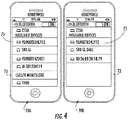
- the list may include one or more wireless headsets conventionally identified on the list with the same fixed name that does not identify any single particular headset. For example, referring briefly to FIG. 4 , the Bluetooth-enabled headset listed in the pairing screen of conventional wireless mobile device A is identified with the exemplary fixed generic name "SRX-SL", the model name for the headset.
- the user may select an available wireless device, such as the Bluetooth-enabled wireless headset, from the list for pairing with his/her respective wireless mobile device.
- the wireless mobile device then connects wirelessly to the selected wireless accessory, i.e., the wireless mobile device pairs with the selected wireless accessory (the selected wireless accessory also pairs with the wireless mobile device).
- an individual user may see more than one wireless headset listed on the pairing screen.
- the user may select the incorrect wireless headset to pair with his/her respective wireless mobile device. If the incorrect wireless headset is paired with the wireless mobile device, the user may not be able to communicate with the wireless mobile device, necessitating at least one subsequent unpairing to break the connection between the wireless mobile device and the incorrectly paired wireless headset so that the user can try again to pair the wireless mobile device to the correct wireless headset.
- the current pairing process may be frustrating, time-consuming, and inefficient. This is particularly true in environments where specific wireless devices are configured to be paired with each other, but multiple wireless accessories such as a wireless headset and more particularly, Bluetooth-enabled wireless headsets with the same fixed generic name appear on the list of available wireless accessories.
- a wireless headset such as a Bluetooth-enabled wireless headset (an exemplary wireless accessory) for correct pairing with another wireless device.
- Various embodiments permit a user to easily recognize the correct wireless headset on the list displayed on the pairing screen of the wireless device, enabling selection and pairing with his/her respective mobile device and substantially preventing an incorrect pairing, thereby saving time, easing frustration, and improving workplace efficiency.
- a wireless headset is provided, according to various embodiments.
- the wireless headset comprises a headset memory and a processor communicatively coupled to the headset memory.
- the headset memory is operable to store a unique identifier to identify the wireless headset.
- the processor is configured to read the known unique identifier from the headset memory and transmit a signal representing the known unique identifier of the wireless headset to another wireless device such that a screen on the wireless device identifies the wireless headset with the known unique identifier.
- a system for identifying a wireless headset for pairing with another wireless device, according to various embodiments.
- the system comprises the wireless headset and the wireless device.
- the wireless headset comprises a headset memory operable to store a unique identifier of the wireless headset and a processor communicatively coupled to the headset memory.
- the processor is configured to read the unique identifier from the headset memory and transmit a unique identifier signal.
- the wireless headset is configured to be paired to the wireless device via a wireless communications protocol.
- the wireless device comprises a memory and a program code resident in the memory, a display configured for displaying a screen for listing the wireless headset as available for pairing, and at least one processing unit communicatively coupled to the memory and the display.
- the at least one processing unit is configured by at least a portion of the program code to detect the wireless headset, receive the unique identifier signal from the processor of the wireless headset, display the pairing screen, and identify the wireless headset with the unique identifier on the screen.
- a method for identifying a wireless headset for pairing to another wireless device comprises detecting a wireless headset, receiving a unique identifier signal from the wireless headset, displaying the screen, and identifying the wireless headset on the screen with the unique identifier.
- Various embodiments are directed to systems and methods for identifying wireless devices for correct pairing.
- Various embodiments enable identification of a single particular wireless headset (an exemplary wireless accessory) for correct pairing with another wireless device, such as a wireless mobile device.
- Various embodiments permit a user to easily recognize which wireless headset listed on a pairing screen of the wireless device is configured to correctly pair with his/her respective wireless mobile device.
- Various embodiments improve workplace efficiency, and save time and frustration in having to disconnect incorrect pairings.
- Various embodiments distinguish between shared wireless accessories.
- the term "wireless accessory” is used to distinguish a wireless device that another wireless device is connected to (e.g., a wireless headset) from a wireless device that connects to the wireless accessory (e.g., a wireless mobile device).
- a Bluetooth-enabled wireless headset is communicatively coupled to a Bluetooth-enabled mobile device via a Bluetooth wireless communications protocol.
- FIG. 2 graphically illustrates an exemplary wireless headset 72 worn by a user 206 and paired to a wireless device comprising a wireless mobile device 70, and used in system 100 ( FIG. 3 ) for identifying the wireless headset 72 for correct pairing to another wireless device, such as the wireless mobile device 70 of FIG. 2 , according to various embodiments.
- the system 100 for identifying the wireless headset for correct pairing to another wireless device comprises the wireless headset 72 and the wireless device (the wireless mobile device 70 in the depicted embodiment) to which the wireless headset 72 is configured to be paired via the Bluetooth wireless communications protocol.
- the wireless headset 72 may comprise a Bluetooth-enabled wireless headset and the other wireless device may be a Bluetooth-enabled wireless device such as a Bluetooth mobile device, i.e., the Bluetooth wireless headset may be paired (i.e., communicatively coupled) to the Bluetooth wireless mobile device via the Bluetooth wireless communication protocol as illustrated in FIG. 3 .
- the wireless mobile device 70 comprises a portable and/or wearable mobile computing device worn by the user 206, for example, such as on a belt 78 as illustrated in the depicted embodiment.
- the wireless mobile device 70 may be carried or otherwise transported, on a vehicle 74 used in the workplace.
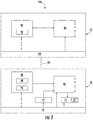
- FIG. 3 is a schematic block diagram of at least a portion of the hardware and software components of the wireless mobile device 70 and the wireless headset 72 of FIG. 2 , according to various embodiments.
- the wireless mobile device 70 comprises a memory 86 and a program code 88 resident in the memory 86, a display 73 ( FIGS. 2 and 4 ) configured for displaying a pairing screen 75 as hereinafter described, and at least one processing unit communicatively coupled to the memory 86 and the display 73.
- the wireless mobile device further comprises a wireless radio 77, such as a Bluetooth radio and a power supply 79, such as a battery, rechargeable battery, rectifier, and/or another power source.
- the at least one processing unit 90 of the wireless mobile device 70 is typically implemented in hardware using circuit logic disposed in one or more physical integrated circuit devices, or chips.
- Each processing unit 90 may be one or more microprocessors, micro-controllers, field programmable gate arrays, or ASICs, while memory 86 may include RAM, DRAM, SRAM, flash memory, and/or another digital storage medium, and that is also typically implemented using circuit logic disposed in one or more physical integrated circuit devices, or chips.
- memory is considered to include memory storage physically located elsewhere in the wireless mobile device 70, e.g., any cache memory in the at least one processing unit 90, as well as any storage capacity used as a virtual memory, e.g., as stored on a mass storage device, a computer, and/or or another device coupled to the wireless mobile device, including coupled to the wireless mobile device 70 through at least one network I/F by way of a communications network.
- the wireless mobile device may be coupled to the communications network through the network I/F with at least one wired and/or wireless connection.
- the wireless mobile device 70 may be under the control and/or otherwise rely upon various software applications, components, programs, files, objects, modules, etc. (herein the "program code” 88 that is resident in memory) according to various embodiments of the present invention.
- This program code may include an operating system (e.g., such as a Windows Embedded Compact operating system as distributed by Microsoft Corporation of Redmond, WA, an ANDROID operating system, an IOS operating system, or the like.) as well as one or more software applications (e.g., configured to operate in an operating system or as "stand-alone” applications).
- the memory may also be configured with one or more task applications 92.
- the one or more task applications process messages or task instructions for the user (e.g., by displaying and/or converting the task messages or task instructions into speech output).
- the task application(s) implement a dialog flow, such as for a pick-and-place, voice-assisted, or voice-directed operation.
- the task application(s) may communicate with a server to receive task messages or task instructions.
- suitable exemplary wireless mobile devices for implementing the present invention are a Honeywell CT50 wearable wireless mobile and a Honeywell D75E wireless mobile device available from Honeywell International, Inc.
- the wireless headset 72 is depicted.
- a “headset” is a device commonly understood to allow two-way communications.
- the wireless headset 72 comprises a user input/output device.
- the wireless headset 72 provides hands-free voice communication between the user 206 and the wireless mobile device 70.
- the wireless headset 72 may be used, for example, in voice-enabled workplace operations (such as a pick to voice picking operation, etc.).
- a user 206 may interface with the wireless mobile device 70 (and the wireless mobile device 70 interfaces with the user 206) through the wireless headset 72, which is coupled to the wireless mobile device 70 through a wireless control signal (indicated by dots 80 in FIGS. 2 and 3 ) as hereinafter described.
- the wireless mobile device 70 is configured to communicate with the wireless headset 72 through a headset interface, which is in turn configured to couple to the wireless headset wirelessly.
- the wireless mobile device 70 may be coupled to the wireless headset 72 through the BlueTooth® wireless communication protocol that is known in the art.
- the wireless headset 72 comprises a generally U-shaped, resilient headband 15 that can be fitted over the top of the user's head and a receiver assembly 13 rotationally coupled to the headband 15.
- the headband 15 may be separable from the receiver assembly.
- each user may have his/her own personal headband.
- the receiver assembly 13 comprises an electronics module ( FIG. 3 ) as hereinafter described.
- the receiver assembly 13 further comprises a microphone boom 83 having a first end and a second end.
- One or more microphones 84 are located adjacent the first end and can be positioned adjacent the user's mouth as depicted in FIG. 2 .
- One or more speakers 82 are located adjacent the second end of the microphone boom 83 and can be positioned over a user's ear.
- the one or more speakers are configured to play audio (e.g., such as speech output associated with a voice dialog to instruct the user to perform an action/task), while the one or more microphones are configured to capture speech input from the user (e.g., such as for conversion to machine readable input).
- the user 206 interfaces with the wireless mobile device 70 hands-free through the wireless headset 72.
- the receiver assembly 13 (the electronics module) of the wireless headset 72 comprises a headset memory 94 and a processor 96 communicatively coupled to the headset memory 94.
- the headset memory 94 may be additionally or alternatively be in the headband 15 of the wireless headset 72.
- the headset memory 94 stores the unique identifier (as exemplified by SRX-SL Dale in FIG. 4 ) that identifies the single particular wireless headset, according to various embodiments.
- the headset memory 94 is configured to store the unique identifier associated with each of the wireless headsets in a unique identifier file 98 within the headset memory.
- Headset memory 94 may include non-volatile memory. Headset memory 94 may additionally or alternatively comprise an integrated circuit chip that stores a static, unique identifier.
- the processor 96 of the wireless headset 72 may be within the receiver assembly and is typically implemented in hardware using circuit logic disposed on one or more physical integrated circuit devices or chips and may be one or more microprocessors, micro-controllers, FPGAs, or ASICs.
- the wireless headset 72 also comprises a headset power supply.
- the headset power supply 102 may be a battery, rechargeable battery, rectifier, and/or another power source.
- the processor 96 of the wireless headset 72 is configured to transmit and receive the wireless control signal 80 for establishing and at least temporarily maintaining a Bluetooth wireless connection (with the wireless mobile device 70 when the wireless headset 72 is placed in discovery mode.
- the wireless headset 72 is placed into discovery mode by the user 206 in order to transmit and receive the wireless control signal 80.
- the exact way to place the wireless headset 72 in discovery mode depends on the wireless headset. For example, the user 206 may need to hold a button down on the headset for several seconds until a light starts flashing. The light may flash to indicate that the wireless headset 72 is in discovery mode. It is to be understood that the wireless headset can be made discoverable in other manners.
- the method 10 for identifying a wireless headset for correct pairing to another wireless device begins by initializing a pairing process to pair the wireless device to the wireless headset (step 20).
- the pairing process is initialized by searching for nearby wireless accessories that have been placed in discovery mode.
- the term "nearby” means within Bluetooth wireless range.
- method 10 for identifying a wireless headset for correct pairing to another wireless device is described as performed by the processing unit of the Bluetooth-enabled mobile device, it is to be understood that alternative methods may be performed by the processor of the wireless headset according to various embodiments. For example, such method comprises reading a unique identifier from the headset memory and transmitting a signal representing the unique identifier upon pairing of the wireless headset to another wireless device such that a pairing screen on the wireless device identifies the wireless headset with the unique identifier.
- the method 10 for identifying a wireless headset for correct pairing to another wireless device continues by detecting the wireless headset (step 30), such as wireless headset 72 depicted in FIG. 3 .
- the processing unit 90 of the wireless mobile device 70 detects the wireless headset 72 by receiving the wireless control signal 80 transmitted from the processor 96 of the wireless headset 72.
- the wireless control signal 80 comprises a Bluetooth inquiry response.
- the Bluetooth friendly name (the unique identifier) is returned as part of the inquiry response during pairing.
- the processing unit 90 of the wireless mobile device 70 may also detect a wireless control signal comprising the Bluetooth inquiry response from one or more other wireless accessories that are in discovery mode and within wireless range.
- the processing unit 90 of the wireless mobile device may detect the wireless control signal comprising the Bluetooth inquiry response from each wireless headset that has been placed in discovery mode and is within wireless range.
- the processing unit 90 of the wireless mobile device 70 may also or alternatively detect the wireless control signal 80 comprising the Bluetooth inquiry response from other wireless accessories available for pairing.
- the processing unit 90 of wireless mobile device 70B has detected a wireless control signal comprising the Bluetooth inquiry response from four computers, each identified with a computer icon and a serial number that does not change for the particular computer.
- the method 10 for identifying a wireless headset for correct pairing to another wireless device continues by receiving the unique identifier signal that identifies the wireless headset (step 40).
- the processing unit 90 of the wireless mobile device 70 receives the unique identifier signal.
- the unique identifier signal represents the unique identifier (e.g., SRX-SL Dale on wireless mobile device 70B of FIG. 4 ).
- the wireless headset 72 may be one wireless headset of a plurality of wireless headsets in discovery mode and in wireless range of the wireless mobile device 70.
- the processing unit 90 of the wireless mobile device 70 may receive a unique identifier signal from each wireless headset 72. Each of the wireless headsets 72 is identified on the pairing screen 75 of the wireless mobile device 70 with a different unique identifier, according to various embodiments as hereinafter described.
- the processor in receiver assembly 13 (the electronics module dynamically changes the inquiry response (the unique identifier) depending on whose headset is communicatively coupled to the wireless mobile device. Therefore, it is possible to customize the headset for the user if the headset memory is in the receiver assembly of the wireless headset. If the headset memory is in the headband and as each user may have his/her own headband, it is possible to customize the headband for the user.
- the method 10 for identifying a wireless headset for correct pairing to another wireless device continues by commanding the display 73 of the wireless mobile device 70 to display the pairing screen 75(step 50).
- the pairing screen 75 displays a list of wireless accessories available for pairing to the wireless mobile device 70, i.e., the pairing screen 75 displays a list of the nearby wireless devices that have been placed in discovery mode as well as any wireless accessories already paired to the wireless device.
- the pairing screen 75 of mobile device 70B of FIG. 4 lists the wireless accessories placed in discovery mode and within wireless range under the heading "Available Devices" (i.e., available to be paired with a wireless mobile device 70 such as depicted in FIGS. 2 and 4 ).
- the method 10 for identifying a wireless headset for correct pairing to another wireless device continues by identifying the wireless headset with the unique identifier on the pairing screen (step 60).
- the processing unit 90 is configured to identify the wireless headset 72 with the unique identifier on the pairing screen.
- the pairing screen 75 of exemplary wireless mobile device 70B in FIG. 4 displays an icon representing the wireless headset with the unique known identifier "SRX-SL-Dale" that is unique to a headset user named "Dale". While the unique identifier "SRX-SL-Dale" is illustrated, it is to be understood that other unique identifiers may be used.
- the unique identifier may be unique to the particular user.
- the unique identifier "SRX-SL-Dale” includes the fixed generic name “SRX-SL” and the personal name “Dale”, it is to be understood that the unique identifier may be any characters, letters, numbers, etc. that identify a user of a particular wireless headset. It is not necessary that the fixed generic name be included in the unique identifier.
- the term "device identifier” includes both fixed generic names and unique identifiers and is used herein to refer to wireless devices displaying a generic name and devices displaying a unique identifier, in accordance with various embodiments. Therefore, each wireless headset broadcasts a device identifier, with the device identifier for at least one of the listed wireless headsets is unique to that wireless headset.
- the pairing screen of Bluetooth wireless mobile device 70B in FIG. 4 includes only one listed wireless headset, it is to be understood that the list on the pairing screen of a wireless mobile device may include one or more wireless headsets as well as other wireless accessories if detected in step 30.
- Each wireless headset of the plurality of wireless headsets is identified on the pairing screen 75 with a different unique identifier, according to various embodiments.
- Each wireless headset of the plurality of wireless headsets may be labeled or otherwise with the unique identifier and/or the user can be made aware of the unique identifier for his/her own wireless headset to easily and quickly identify the correct wireless headset from the list on the pairing screen of his/her wireless device, such as on the wireless mobile device 70B of FIG. 4 .
- the user selects the wireless accessory to be paired with his/her wireless device from the pairing screen on the wireless device.
- the wireless device then connects wirelessly to the selected wireless accessory.
- the unique identifier the "unique identifier" for the wireless headset that he/she is wearing or holding (for example, by reference to a label or otherwise on the wireless headset, by memory, etc.
- the user may select the wireless headset identified with the unique identifier for pairing with his/her wireless device, such as the wireless mobile device 70B depicted in FIG. 4 .
- the wireless mobile device then connects wirelessly to the selected wireless headset, resulting in a correct pairing. Correct pairing of the particular wireless headset with the user's wireless device enables the user wearing the wireless headset to communicate with the wireless device to which it is paired.
- wireless headset 72 has been described as configured for pairing to a wireless mobile device 70 ("another wireless device"), it is to be understood that a wireless device other than a wireless headset may be configured for pairing to another wireless device according to various embodiments. While a wireless headset configured for pairing with a wireless mobile device has been described, it is to be understood that the wireless headset and other wireless accessories may be configured to pair with other than a wireless mobile device according to various embodiments. While a Bluetooth-enabled wireless mobile device has been described as configured for pairing to a Bluetooth-enabled wireless headset (and vice versa), it is to be understood that other Bluetooth-enabled wireless devices configured to be paired may benefit from various embodiments as described herein.
- each wireless headset to transmit a unique identifier signal that is listed on the pairing screen of another wireless device to which the wireless headset is configured to be paired, enabling each user to select the correct headset for correct pairing with his/her respective wireless device.
- Various embodiments improve workplace efficiency, and save time and frustration in having to disconnect incorrect pairings.
- Various embodiments distinguish between shared wireless accessories, such as shared wireless headsets.
Landscapes
- Engineering & Computer Science (AREA)
- Computer Networks & Wireless Communication (AREA)
- Signal Processing (AREA)
- Computer Security & Cryptography (AREA)
- Human Computer Interaction (AREA)
- Telephone Function (AREA)
- Mobile Radio Communication Systems (AREA)
Applications Claiming Priority (1)
| Application Number | Priority Date | Filing Date | Title |
|---|---|---|---|
| US15/244,015 US20180063310A1 (en) | 2016-08-23 | 2016-08-23 | Systems and methods for identifying wireless devices for correct pairing |
Publications (2)
| Publication Number | Publication Date |
|---|---|
| EP3288302A1 true EP3288302A1 (de) | 2018-02-28 |
| EP3288302B1 EP3288302B1 (de) | 2021-10-06 |
Family
ID=59772369
Family Applications (1)
| Application Number | Title | Priority Date | Filing Date |
|---|---|---|---|
| EP17186224.6A Active EP3288302B1 (de) | 2016-08-23 | 2017-08-14 | System und verfahren zur identifizierung drahtloser vorrichtungen zur korrekten paarung |
Country Status (2)
| Country | Link |
|---|---|
| US (1) | US20180063310A1 (de) |
| EP (1) | EP3288302B1 (de) |
Families Citing this family (9)
| Publication number | Priority date | Publication date | Assignee | Title |
|---|---|---|---|---|
| US10880935B2 (en) * | 2018-03-15 | 2020-12-29 | Plantronics, Inc. | Secure call endpoint pairing |
| US12010742B1 (en) * | 2018-09-19 | 2024-06-11 | Apple Inc. | Proximity pairing techniques for an accessory device |
| US11233870B1 (en) * | 2020-02-17 | 2022-01-25 | Cisco Technology, Inc. | Method and apparatus for simplifying extension mobility login into call control server using headset connected to IP phone |
| CN111464987B (zh) * | 2020-03-11 | 2022-07-26 | 华为技术有限公司 | 一种显示蓝牙设备标识的方法及电子设备 |
| US12236840B2 (en) * | 2020-10-20 | 2025-02-25 | Samsung Electronics Co., Ltd. | Display apparatus, electronic apparatus and methods thereof |
| US11700653B2 (en) * | 2021-03-11 | 2023-07-11 | Amazon Technologies, Inc. | Context-based wireless-protocol connections |
| US12369036B2 (en) | 2021-03-11 | 2025-07-22 | Amazon Technologies, Inc. | Remote device pairing |
| US11868294B2 (en) * | 2021-06-28 | 2024-01-09 | Learning Squared, Inc. | Image based pairing system |
| US20240232315A9 (en) * | 2022-10-21 | 2024-07-11 | Apple Inc. | Subsequent accessory setup |
Citations (4)
| Publication number | Priority date | Publication date | Assignee | Title |
|---|---|---|---|---|
| EP1635508A1 (de) * | 2004-09-08 | 2006-03-15 | Koninklijke Philips Electronics N.V. | Sichere Paarung für drahtlose Kommunikationsgeräte |
| US20080057890A1 (en) * | 2006-08-30 | 2008-03-06 | Apple Computer, Inc. | Automated pairing of wireless accessories with host devices |
| US20090061946A1 (en) * | 2007-08-31 | 2009-03-05 | Palm, Inc. | System and method for identifying devices in a wireless network |
| EP3054714A1 (de) * | 2015-02-06 | 2016-08-10 | Assa Abloy AB | Entdeckung, identifizierung und konfiguration von vorrichtungen mit uneindeutigen adressen in einer internet-der-dinge-umgebung |
Family Cites Families (16)
| Publication number | Priority date | Publication date | Assignee | Title |
|---|---|---|---|---|
| US20060025206A1 (en) * | 1997-03-21 | 2006-02-02 | Walker Jay S | Gaming device operable to faciliate audio output via a headset and methods related thereto |
| US7283635B1 (en) * | 1999-12-09 | 2007-10-16 | Plantronics, Inc. | Headset with memory |
| FI110296B (fi) * | 2000-05-26 | 2002-12-31 | Nokia Corp | Kädet vapaana -toiminto |
| JP2003204282A (ja) * | 2002-01-07 | 2003-07-18 | Toshiba Corp | 無線通信機能付きヘッドセット、これを用いたコミュニケーション記録システム、およびコミュニケーション制御方式を選択可能なヘッドセットシステム |
| US6993292B2 (en) * | 2002-02-26 | 2006-01-31 | 3M Innovative Properties Company | Self-monitoring radio network |
| US8073137B2 (en) * | 2006-03-06 | 2011-12-06 | Sony Ericsson Mobile Communications Ab | Audio headset |
| US8385824B2 (en) * | 2007-05-03 | 2013-02-26 | MindTree Limited | Procedure for headset and device authentication |
| US8401520B2 (en) * | 2007-08-30 | 2013-03-19 | MindTree Limited | Method and apparatus for multiterminal support using bluetooth based audio gateway |
| EP2294801B1 (de) * | 2008-06-04 | 2012-08-22 | GN Netcom A/S | Drahtloses headset mit sprachansagemitteln |
| US8532714B2 (en) * | 2009-01-29 | 2013-09-10 | Qualcomm Incorporated | Dynamically provisioning a device with audio processing capability |
| US20120088452A1 (en) * | 2010-10-11 | 2012-04-12 | Gn Netcom A/S | Method For Locating A Wirelessly Connected Device |
| EP2727322A1 (de) * | 2011-06-30 | 2014-05-07 | GN Netcom A/S | Ferngesteuertes headset mit eingebautem mobiltelefonmodul |
| US20130094866A1 (en) * | 2011-10-12 | 2013-04-18 | Research In Motion Limited | Wearable accessory for monitoring whether user is looking at portable electronic device |
| US9524309B2 (en) * | 2013-07-18 | 2016-12-20 | Plantronics, Inc. | Enterprise asset management |
| US9697522B2 (en) * | 2013-11-01 | 2017-07-04 | Plantronics, Inc. | Interactive device registration, setup and use |
| US9843660B2 (en) * | 2014-12-29 | 2017-12-12 | Hand Held Products, Inc. | Tag mounted distributed headset with electronics module |
-
2016
- 2016-08-23 US US15/244,015 patent/US20180063310A1/en not_active Abandoned
-
2017
- 2017-08-14 EP EP17186224.6A patent/EP3288302B1/de active Active
Patent Citations (4)
| Publication number | Priority date | Publication date | Assignee | Title |
|---|---|---|---|---|
| EP1635508A1 (de) * | 2004-09-08 | 2006-03-15 | Koninklijke Philips Electronics N.V. | Sichere Paarung für drahtlose Kommunikationsgeräte |
| US20080057890A1 (en) * | 2006-08-30 | 2008-03-06 | Apple Computer, Inc. | Automated pairing of wireless accessories with host devices |
| US20090061946A1 (en) * | 2007-08-31 | 2009-03-05 | Palm, Inc. | System and method for identifying devices in a wireless network |
| EP3054714A1 (de) * | 2015-02-06 | 2016-08-10 | Assa Abloy AB | Entdeckung, identifizierung und konfiguration von vorrichtungen mit uneindeutigen adressen in einer internet-der-dinge-umgebung |
Also Published As
| Publication number | Publication date |
|---|---|
| EP3288302B1 (de) | 2021-10-06 |
| US20180063310A1 (en) | 2018-03-01 |
Similar Documents
| Publication | Publication Date | Title |
|---|---|---|
| EP3288302B1 (de) | System und verfahren zur identifizierung drahtloser vorrichtungen zur korrekten paarung | |
| EP3447649B1 (de) | Mastervorrichtung zur verwendung von verbindungsattributen von elektronischen zubehörverbindungen zur ermöglichung der ortung von zubehör | |
| US12058746B2 (en) | Method of operating a sensor and/or information system and sensor and/or information system | |
| CN108886653B (zh) | 一种耳机声道控制方法、相关设备及系统 | |
| EP3246790B1 (de) | Informationsverarbeitung von kombinierten sprach- und gesteneingaben | |
| CN107452383B (zh) | 一种信息处理方法、服务器、终端及信息处理系统 | |
| CN112042176B (zh) | 电子装置和控制电子装置的方法 | |
| WO2020200096A1 (zh) | Ssb传输指示方法、装置、终端、设备和介质 | |
| CN107682801B (zh) | 计算机可读存储介质、蓝牙耳机测试装置、蓝牙耳机测试系统 | |
| CN107852431B (zh) | 信息处理设备、信息处理方法和程序 | |
| EP3246791B1 (de) | Informationsverarbeitungsvorrichtung, informationsverarbeitungssystem und informationsverarbeitungsverfahren | |
| CN204578621U (zh) | 一种语音唤醒系统及移动终端 | |
| KR100887371B1 (ko) | 무선 헤드셋 및 그 제어 방법 | |
| CN111819831A (zh) | 消息接收通知方法及支持该方法的电子设备 | |
| JP2015198347A (ja) | 無線端末識別装置、システム及び方法 | |
| CN108668335A (zh) | 通信连接方法、装置、移动终端及计算机可读取存储介质 | |
| CN105050031A (zh) | 一种基于蓝牙spp协议实现可穿戴设备工厂测试的方法和装置 | |
| CN114397956B (zh) | 一种穿戴设备使用模式切换方法及装置 | |
| WO2021128451A1 (zh) | 群组通讯录更新方法、装置、存储介质及终端设备 | |
| CN110110549B (zh) | 一种信息处理方法、装置、终端及存储介质 | |
| EP4694549A1 (de) | Verbindungsverfahren und -vorrichtung für ein bluetooth-hörgerät und elektronische vorrichtung | |
| CN115292170A (zh) | 调试方法及相关装置 | |
| JP2026057260A (ja) | 通信機器、通信方法、及びプログラム | |
| KR20210059503A (ko) | 수신 경로 스위칭 방법 및 이를 위한 전자 장치 | |
| HK40002797A (en) | Master device for using connection attribute of electronic accessories connections to facilitate locating an accessory |
Legal Events
| Date | Code | Title | Description |
|---|---|---|---|
| PUAI | Public reference made under article 153(3) epc to a published international application that has entered the european phase |
Free format text: ORIGINAL CODE: 0009012 |
|
| STAA | Information on the status of an ep patent application or granted ep patent |
Free format text: STATUS: REQUEST FOR EXAMINATION WAS MADE |
|
| 17P | Request for examination filed |
Effective date: 20170814 |
|
| AK | Designated contracting states |
Kind code of ref document: A1 Designated state(s): AL AT BE BG CH CY CZ DE DK EE ES FI FR GB GR HR HU IE IS IT LI LT LU LV MC MK MT NL NO PL PT RO RS SE SI SK SM TR |
|
| AX | Request for extension of the european patent |
Extension state: BA ME |
|
| STAA | Information on the status of an ep patent application or granted ep patent |
Free format text: STATUS: EXAMINATION IS IN PROGRESS |
|
| 17Q | First examination report despatched |
Effective date: 20191216 |
|
| GRAP | Despatch of communication of intention to grant a patent |
Free format text: ORIGINAL CODE: EPIDOSNIGR1 |
|
| STAA | Information on the status of an ep patent application or granted ep patent |
Free format text: STATUS: GRANT OF PATENT IS INTENDED |
|
| RIC1 | Information provided on ipc code assigned before grant |
Ipc: H04W 12/06 20210101AFI20210323BHEP Ipc: H04W 4/80 20180101ALI20210323BHEP Ipc: H04W 12/50 20210101ALI20210323BHEP |
|
| INTG | Intention to grant announced |
Effective date: 20210420 |
|
| GRAS | Grant fee paid |
Free format text: ORIGINAL CODE: EPIDOSNIGR3 |
|
| GRAA | (expected) grant |
Free format text: ORIGINAL CODE: 0009210 |
|
| STAA | Information on the status of an ep patent application or granted ep patent |
Free format text: STATUS: THE PATENT HAS BEEN GRANTED |
|
| AK | Designated contracting states |
Kind code of ref document: B1 Designated state(s): AL AT BE BG CH CY CZ DE DK EE ES FI FR GB GR HR HU IE IS IT LI LT LU LV MC MK MT NL NO PL PT RO RS SE SI SK SM TR |
|
| REG | Reference to a national code |
Ref country code: GB Ref legal event code: FG4D |
|
| REG | Reference to a national code |
Ref country code: CH Ref legal event code: EP Ref country code: AT Ref legal event code: REF Ref document number: 1437309 Country of ref document: AT Kind code of ref document: T Effective date: 20211015 |
|
| REG | Reference to a national code |
Ref country code: IE Ref legal event code: FG4D |
|
| REG | Reference to a national code |
Ref country code: DE Ref legal event code: R096 Ref document number: 602017047062 Country of ref document: DE |
|
| REG | Reference to a national code |
Ref country code: NL Ref legal event code: FP |
|
| REG | Reference to a national code |
Ref country code: LT Ref legal event code: MG9D |
|
| REG | Reference to a national code |
Ref country code: AT Ref legal event code: MK05 Ref document number: 1437309 Country of ref document: AT Kind code of ref document: T Effective date: 20211006 |
|
| PG25 | Lapsed in a contracting state [announced via postgrant information from national office to epo] |
Ref country code: RS Free format text: LAPSE BECAUSE OF FAILURE TO SUBMIT A TRANSLATION OF THE DESCRIPTION OR TO PAY THE FEE WITHIN THE PRESCRIBED TIME-LIMIT Effective date: 20211006 Ref country code: LT Free format text: LAPSE BECAUSE OF FAILURE TO SUBMIT A TRANSLATION OF THE DESCRIPTION OR TO PAY THE FEE WITHIN THE PRESCRIBED TIME-LIMIT Effective date: 20211006 Ref country code: FI Free format text: LAPSE BECAUSE OF FAILURE TO SUBMIT A TRANSLATION OF THE DESCRIPTION OR TO PAY THE FEE WITHIN THE PRESCRIBED TIME-LIMIT Effective date: 20211006 Ref country code: BG Free format text: LAPSE BECAUSE OF FAILURE TO SUBMIT A TRANSLATION OF THE DESCRIPTION OR TO PAY THE FEE WITHIN THE PRESCRIBED TIME-LIMIT Effective date: 20220106 Ref country code: AT Free format text: LAPSE BECAUSE OF FAILURE TO SUBMIT A TRANSLATION OF THE DESCRIPTION OR TO PAY THE FEE WITHIN THE PRESCRIBED TIME-LIMIT Effective date: 20211006 |
|
| PG25 | Lapsed in a contracting state [announced via postgrant information from national office to epo] |
Ref country code: IS Free format text: LAPSE BECAUSE OF FAILURE TO SUBMIT A TRANSLATION OF THE DESCRIPTION OR TO PAY THE FEE WITHIN THE PRESCRIBED TIME-LIMIT Effective date: 20220206 Ref country code: SE Free format text: LAPSE BECAUSE OF FAILURE TO SUBMIT A TRANSLATION OF THE DESCRIPTION OR TO PAY THE FEE WITHIN THE PRESCRIBED TIME-LIMIT Effective date: 20211006 Ref country code: PT Free format text: LAPSE BECAUSE OF FAILURE TO SUBMIT A TRANSLATION OF THE DESCRIPTION OR TO PAY THE FEE WITHIN THE PRESCRIBED TIME-LIMIT Effective date: 20220207 Ref country code: PL Free format text: LAPSE BECAUSE OF FAILURE TO SUBMIT A TRANSLATION OF THE DESCRIPTION OR TO PAY THE FEE WITHIN THE PRESCRIBED TIME-LIMIT Effective date: 20211006 Ref country code: NO Free format text: LAPSE BECAUSE OF FAILURE TO SUBMIT A TRANSLATION OF THE DESCRIPTION OR TO PAY THE FEE WITHIN THE PRESCRIBED TIME-LIMIT Effective date: 20220106 Ref country code: LV Free format text: LAPSE BECAUSE OF FAILURE TO SUBMIT A TRANSLATION OF THE DESCRIPTION OR TO PAY THE FEE WITHIN THE PRESCRIBED TIME-LIMIT Effective date: 20211006 Ref country code: HR Free format text: LAPSE BECAUSE OF FAILURE TO SUBMIT A TRANSLATION OF THE DESCRIPTION OR TO PAY THE FEE WITHIN THE PRESCRIBED TIME-LIMIT Effective date: 20211006 Ref country code: GR Free format text: LAPSE BECAUSE OF FAILURE TO SUBMIT A TRANSLATION OF THE DESCRIPTION OR TO PAY THE FEE WITHIN THE PRESCRIBED TIME-LIMIT Effective date: 20220107 Ref country code: ES Free format text: LAPSE BECAUSE OF FAILURE TO SUBMIT A TRANSLATION OF THE DESCRIPTION OR TO PAY THE FEE WITHIN THE PRESCRIBED TIME-LIMIT Effective date: 20211006 |
|
| REG | Reference to a national code |
Ref country code: DE Ref legal event code: R097 Ref document number: 602017047062 Country of ref document: DE |
|
| PG25 | Lapsed in a contracting state [announced via postgrant information from national office to epo] |
Ref country code: SM Free format text: LAPSE BECAUSE OF FAILURE TO SUBMIT A TRANSLATION OF THE DESCRIPTION OR TO PAY THE FEE WITHIN THE PRESCRIBED TIME-LIMIT Effective date: 20211006 Ref country code: SK Free format text: LAPSE BECAUSE OF FAILURE TO SUBMIT A TRANSLATION OF THE DESCRIPTION OR TO PAY THE FEE WITHIN THE PRESCRIBED TIME-LIMIT Effective date: 20211006 Ref country code: RO Free format text: LAPSE BECAUSE OF FAILURE TO SUBMIT A TRANSLATION OF THE DESCRIPTION OR TO PAY THE FEE WITHIN THE PRESCRIBED TIME-LIMIT Effective date: 20211006 Ref country code: EE Free format text: LAPSE BECAUSE OF FAILURE TO SUBMIT A TRANSLATION OF THE DESCRIPTION OR TO PAY THE FEE WITHIN THE PRESCRIBED TIME-LIMIT Effective date: 20211006 Ref country code: DK Free format text: LAPSE BECAUSE OF FAILURE TO SUBMIT A TRANSLATION OF THE DESCRIPTION OR TO PAY THE FEE WITHIN THE PRESCRIBED TIME-LIMIT Effective date: 20211006 Ref country code: CZ Free format text: LAPSE BECAUSE OF FAILURE TO SUBMIT A TRANSLATION OF THE DESCRIPTION OR TO PAY THE FEE WITHIN THE PRESCRIBED TIME-LIMIT Effective date: 20211006 |
|
| PLBE | No opposition filed within time limit |
Free format text: ORIGINAL CODE: 0009261 |
|
| STAA | Information on the status of an ep patent application or granted ep patent |
Free format text: STATUS: NO OPPOSITION FILED WITHIN TIME LIMIT |
|
| 26N | No opposition filed |
Effective date: 20220707 |
|
| PG25 | Lapsed in a contracting state [announced via postgrant information from national office to epo] |
Ref country code: AL Free format text: LAPSE BECAUSE OF FAILURE TO SUBMIT A TRANSLATION OF THE DESCRIPTION OR TO PAY THE FEE WITHIN THE PRESCRIBED TIME-LIMIT Effective date: 20211006 |
|
| PG25 | Lapsed in a contracting state [announced via postgrant information from national office to epo] |
Ref country code: SI Free format text: LAPSE BECAUSE OF FAILURE TO SUBMIT A TRANSLATION OF THE DESCRIPTION OR TO PAY THE FEE WITHIN THE PRESCRIBED TIME-LIMIT Effective date: 20211006 |
|
| PG25 | Lapsed in a contracting state [announced via postgrant information from national office to epo] |
Ref country code: MC Free format text: LAPSE BECAUSE OF FAILURE TO SUBMIT A TRANSLATION OF THE DESCRIPTION OR TO PAY THE FEE WITHIN THE PRESCRIBED TIME-LIMIT Effective date: 20211006 |
|
| REG | Reference to a national code |
Ref country code: CH Ref legal event code: PL |
|
| PG25 | Lapsed in a contracting state [announced via postgrant information from national office to epo] |
Ref country code: LU Free format text: LAPSE BECAUSE OF NON-PAYMENT OF DUE FEES Effective date: 20220814 Ref country code: LI Free format text: LAPSE BECAUSE OF NON-PAYMENT OF DUE FEES Effective date: 20220831 Ref country code: CH Free format text: LAPSE BECAUSE OF NON-PAYMENT OF DUE FEES Effective date: 20220831 |
|
| PG25 | Lapsed in a contracting state [announced via postgrant information from national office to epo] |
Ref country code: IT Free format text: LAPSE BECAUSE OF FAILURE TO SUBMIT A TRANSLATION OF THE DESCRIPTION OR TO PAY THE FEE WITHIN THE PRESCRIBED TIME-LIMIT Effective date: 20211006 |
|
| PG25 | Lapsed in a contracting state [announced via postgrant information from national office to epo] |
Ref country code: IE Free format text: LAPSE BECAUSE OF NON-PAYMENT OF DUE FEES Effective date: 20220814 |
|
| PG25 | Lapsed in a contracting state [announced via postgrant information from national office to epo] |
Ref country code: HU Free format text: LAPSE BECAUSE OF FAILURE TO SUBMIT A TRANSLATION OF THE DESCRIPTION OR TO PAY THE FEE WITHIN THE PRESCRIBED TIME-LIMIT; INVALID AB INITIO Effective date: 20170814 |
|
| PG25 | Lapsed in a contracting state [announced via postgrant information from national office to epo] |
Ref country code: CY Free format text: LAPSE BECAUSE OF FAILURE TO SUBMIT A TRANSLATION OF THE DESCRIPTION OR TO PAY THE FEE WITHIN THE PRESCRIBED TIME-LIMIT Effective date: 20211006 |
|
| PG25 | Lapsed in a contracting state [announced via postgrant information from national office to epo] |
Ref country code: MK Free format text: LAPSE BECAUSE OF FAILURE TO SUBMIT A TRANSLATION OF THE DESCRIPTION OR TO PAY THE FEE WITHIN THE PRESCRIBED TIME-LIMIT Effective date: 20211006 |
|
| PG25 | Lapsed in a contracting state [announced via postgrant information from national office to epo] |
Ref country code: TR Free format text: LAPSE BECAUSE OF FAILURE TO SUBMIT A TRANSLATION OF THE DESCRIPTION OR TO PAY THE FEE WITHIN THE PRESCRIBED TIME-LIMIT Effective date: 20211006 |
|
| PG25 | Lapsed in a contracting state [announced via postgrant information from national office to epo] |
Ref country code: MT Free format text: LAPSE BECAUSE OF FAILURE TO SUBMIT A TRANSLATION OF THE DESCRIPTION OR TO PAY THE FEE WITHIN THE PRESCRIBED TIME-LIMIT Effective date: 20211006 |
|
| PGFP | Annual fee paid to national office [announced via postgrant information from national office to epo] |
Ref country code: NL Payment date: 20250825 Year of fee payment: 9 |
|
| PGFP | Annual fee paid to national office [announced via postgrant information from national office to epo] |
Ref country code: DE Payment date: 20250827 Year of fee payment: 9 |
|
| PGFP | Annual fee paid to national office [announced via postgrant information from national office to epo] |
Ref country code: GB Payment date: 20250826 Year of fee payment: 9 Ref country code: BE Payment date: 20250825 Year of fee payment: 9 |
|
| PGFP | Annual fee paid to national office [announced via postgrant information from national office to epo] |
Ref country code: FR Payment date: 20250825 Year of fee payment: 9 |