EP3286141B1 - Verfahren und vorrichtung zur wasserbehandlung durch kontakt mit einem adsorbierenden material - Google Patents
Verfahren und vorrichtung zur wasserbehandlung durch kontakt mit einem adsorbierenden material Download PDFInfo
- Publication number
- EP3286141B1 EP3286141B1 EP16719915.7A EP16719915A EP3286141B1 EP 3286141 B1 EP3286141 B1 EP 3286141B1 EP 16719915 A EP16719915 A EP 16719915A EP 3286141 B1 EP3286141 B1 EP 3286141B1
- Authority
- EP
- European Patent Office
- Prior art keywords
- water
- contact
- adsorbent
- zone
- adsorption
- Prior art date
- Legal status (The legal status is an assumption and is not a legal conclusion. Google has not performed a legal analysis and makes no representation as to the accuracy of the status listed.)
- Active
Links
Images
Classifications
-
- C—CHEMISTRY; METALLURGY
- C02—TREATMENT OF WATER, WASTE WATER, SEWAGE, OR SLUDGE
- C02F—TREATMENT OF WATER, WASTE WATER, SEWAGE, OR SLUDGE
- C02F1/00—Treatment of water, waste water, or sewage
- C02F1/28—Treatment of water, waste water, or sewage by sorption
- C02F1/283—Treatment of water, waste water, or sewage by sorption using coal, charred products, or inorganic mixtures containing them
-
- C—CHEMISTRY; METALLURGY
- C02—TREATMENT OF WATER, WASTE WATER, SEWAGE, OR SLUDGE
- C02F—TREATMENT OF WATER, WASTE WATER, SEWAGE, OR SLUDGE
- C02F1/00—Treatment of water, waste water, or sewage
- C02F1/52—Treatment of water, waste water, or sewage by flocculation or precipitation of suspended impurities
- C02F1/5236—Treatment of water, waste water, or sewage by flocculation or precipitation of suspended impurities using inorganic agents
- C02F1/5245—Treatment of water, waste water, or sewage by flocculation or precipitation of suspended impurities using inorganic agents using basic salts, e.g. of aluminium and iron
-
- C—CHEMISTRY; METALLURGY
- C02—TREATMENT OF WATER, WASTE WATER, SEWAGE, OR SLUDGE
- C02F—TREATMENT OF WATER, WASTE WATER, SEWAGE, OR SLUDGE
- C02F1/00—Treatment of water, waste water, or sewage
- C02F1/52—Treatment of water, waste water, or sewage by flocculation or precipitation of suspended impurities
- C02F1/54—Treatment of water, waste water, or sewage by flocculation or precipitation of suspended impurities using organic material
- C02F1/56—Macromolecular compounds
-
- C—CHEMISTRY; METALLURGY
- C02—TREATMENT OF WATER, WASTE WATER, SEWAGE, OR SLUDGE
- C02F—TREATMENT OF WATER, WASTE WATER, SEWAGE, OR SLUDGE
- C02F1/00—Treatment of water, waste water, or sewage
- C02F2001/007—Processes including a sedimentation step
-
- C—CHEMISTRY; METALLURGY
- C02—TREATMENT OF WATER, WASTE WATER, SEWAGE, OR SLUDGE
- C02F—TREATMENT OF WATER, WASTE WATER, SEWAGE, OR SLUDGE
- C02F2301/00—General aspects of water treatment
- C02F2301/04—Flow arrangements
- C02F2301/046—Recirculation with an external loop
Definitions
- the invention relates to the field of the treatment of water, in particular to remove organic matter and micropollutants contained in urban or industrial waste water, or in surface or underground water intended for the production of drinking water. .
- the invention relates to a method and a device for treating water using an adsorbent of the powdered activated carbon type.
- micropollutants being compounds present in trace amounts in water but which can induce harmful effects for or via the environment and organisms.
- PBTs bioaccumulative and toxic chemical compounds
- CMR altering reproduction
- micropollutants are quantified in still high amounts in water.
- the elimination mechanisms are numerous and include, among others, bacterial or chemical oxidation, volatilization, coagulation, adsorption or even filtration using membranes with low cut-off thresholds. Among them, coagulation and adsorption (on the particulate matter present in the water, on the sludge produced during the treatments or even on a specific absorbent material) seem to be two main treatment routes.
- the adsorption is carried out in a dedicated reactor using a porous material of small particle size and high specific surface area.
- Activated carbon is particularly suitable for the treatment of micropollutants and organic matter.
- the elimination of these compounds by adsorption operates thanks to a surface phenomenon by which the molecules attach themselves to the solid surfaces of the activated carbon by means of different forces (electric charges, dipole-dipole interaction, Van der Waals forces) or bonds (hydrogen, covalent, etc.).
- the adsorption can be either physical (nonspecific) and depend essentially on the size of the surface, or chemical (specific) due to the presence of charged sites on the surface of the activated carbon.
- One phenomenon particularly affects the performance of adsorption the concomitant presence of organic matter and micropollutants in the water to be treated.
- Small natural organic matter (comparable to micropollutants) in water decreases the efficiency of adsorption vis-à-vis micropollutants, as it competes for binding sites or can block access to pores.
- the structure of activated carbon Indeed, the ratio of the concentrations between the organic matter and the pollutants to be eliminated by activated carbon exceeds 1000 and can reach 1000000. This phenomenon can consequently lead to an additional cost of treatment linked to the addition of larger quantities of activated carbon.
- a first type of treatment implements stages of coagulation, flocculation, clarification (settling or flotation) and adsorption on granular activated carbon within a filter.
- This first type of treatment can include intermediate stages, for example sand filtration, ozonation, etc.
- a second type of treatment involves the joint use of a coagulant and a powdered activated carbon within the same clarification structure.
- a third type of treatment implements a separate use of the coagulant in an upstream clarification structure and powdered activated carbon in another downstream contact or clarification structure optionally comprising recirculation of the sludge from the downstream structure to the downstream structure. upstream work.
- the patent application FR 2934 258 describes a water treatment process comprising a step of injecting an adsorbent into the water, a step of mixing the water and the adsorbent, a step of filtering the mixture obtained at a speed between 50 and 200 m / h within a filtration unit comprising a plurality of flexible fibers and an adsorbent recirculation step.
- the patent FR 2 932 795 describes a process combining a refining stage described above and an adsorption stage in a process for purifying water with a view to making it potable. This process incorporates separate treatment zones within which the water to be treated and the injection of new powdered activated carbon (contact zone 1), the recirculation of used powdered activated carbon (contact zone 2) by returning the concentrated sludge to zone 4, the flocculation of the water (zone 3) and the separation of the powdered activated carbon from the water to be treated.
- the patent application FR 2 973 794 describes a process combining coagulation, flocculation and decantation (ballasted) of the water to be treated in order to guarantee low concentrations of organic carbon dissolved in water processed.
- the treatment installation incorporates a pre-contact zone of the water to be treated with powdered activated carbon (zone 1) in which the used powdered activated carbon is recirculated, a coagulation zone (zone 2) followed by a weighted flocculation zone (zone 3) then a lamellar clarification zone (zone 4).
- Activated carbon is not used or reused in an optimal way with regard to its adsorption capacities and the field of application where it is the most effective and economically viable.
- the adsorption performance is influenced by the competition between the compounds to be adsorbed described above, it is also dependent on the concentration gradient between the solution (water to be treated) and the surface of the carbon according to the principle of adsorption isotherms.
- the adsorption can be positive (the molecules go from the solution to the adsorbent surface) or negative (the molecules go from the adsorbent surface to the solution giving rise to a more or less significant release of the compounds, depending on their characteristics. ).
- adsorption After a given contact time, for a used activated carbon which has reached its equilibrium in the initial solution (no more concentration gradient) but which is not necessarily saturated, adsorption will only be possible when it is put back in. in contact with a more concentrated solution. In this solution, there will again be a positive concentration gradient necessary for adsorption.
- the third type of treatment relating to the production of drinking water or water intended for industrial use, with prior clarification of the water before the use of activated carbon, is very efficient and economical in reagents. because these are used in the correct order.
- this type of treatment involves a costly investment because it requires two clarification works: one after coagulation, the other after coming into contact with the powdered activated carbon.
- An objective of the invention is to provide a method and an installation for treating water by contact with an adsorbent material, making it possible to remedy all or part of the drawbacks of the methods and installations of the state of the prior art.
- the term “adsorbed water” is understood to mean water which has already been in contact with new adsorbent, regardless of its inherent quality or of a treatment that it has already undergone, and by “ pre-adsorbed water "water which has not yet been in contact with the new adsorbent, also regardless of its inherent quality or of a treatment that it has already undergone.
- This process makes it possible to save an intermediate clarification work by not implementing a clarification step upstream of the adsorption step, while obtaining overall performance comparable to processes known in the state of the prior art in which such an intermediate clarification work is implemented. This is made possible in particular by optimizing the use of the adsorption capacities of the adsorbent.
- the method further comprises a step of maintaining adsorbent-water contact in which the mixture consisting of water and the adsorbent is kept in contact for a determined period of time, for example greater than 5 minutes, advantageously greater than 10 minutes, more preferably equal to 20 minutes.
- the adsorbent can be chosen from any type of adsorbent known to those skilled in the art, such as activated carbon (regardless of its particle size) or resin.
- the adsorbent is a powdered activated carbon.
- the process of the invention therefore also makes it possible to reduce the cost of treating water by reducing the quantities of adsorbent used.
- the method further comprises a clarification step in which the adsorbed water is separated from the suspended matter which it contains.
- this clarification step can be carried out by any means known to a person skilled in the art, for example by settling (for example on a bed of pulsed mud, and / or with recirculation of mud, etc.), by flotation or by filtration.
- the method comprises a coagulation step in which the pre-adsorbed water is brought into contact with one or more coagulants, typically iron salts (for example ferric chloride) or alum.
- one or more coagulants typically iron salts (for example ferric chloride) or alum.
- Such a coagulation step makes it possible to remove part of the organic matter contained in the water before bringing this water into contact with the new adsorbent.
- the small natural organic matter comparable to micropollutants, present in the water that it is typically desired to treat using such a process, decreases the efficiency of the adsorption vis-à-vis micropollutants, because this organic material and the micropollutants compete for access to the binding sites of the adsorbent.
- Such a small organic material can thus block access to pores in the structure of the adsorbent, and thus reduce the efficiency of this absorbent for adsorbing micropollutants.
- the ratio of the concentrations between the organic material and the micropollutants which it is desired to eliminate using the adsorbent exceeds 1000 and can reach 1,000,000.
- a coagulation step also makes it possible to reduce the cost of treating water by reducing the quantities of adsorbent used.
- the method further comprises a step of maintaining coagulant-water contact in which the pre-adsorbed water having undergone the coagulation step is stored in an enclosure for a period greater than 1 minute, advantageously greater than 5 minutes. , more advantageously equal to 10 minutes.
- the pre-adsorbed water undergoing such a step of maintaining coagulant-water contact can comprise used adsorbent taken during the recycling step.
- Such a step of maintaining coagulant-water contact optimizes the efficiency of the process, in particular in terms of the amount of adsorbent. More specifically, the step of maintaining coagulant-water contact makes it possible to limit the competition between organic matter and micropollutants (see above) and to improve the overall performance of the process, in particular when it is carried out after the step of coagulation.
- the process comprises an additional coagulation step in which the adsorbed water is brought into contact with one or more coagulants, typically iron salts (for example ferric chloride) or iron. 'alum.
- coagulants typically iron salts (for example ferric chloride) or iron. 'alum.
- the process can further comprise a flocculation step in which the adsorbed or pre-adsorbed water is brought into contact with a flocculation agent, typically a polymer.
- a flocculation agent typically a polymer.
- the flocculation step is carried out after the step of maintaining coagulant-water contact.
- variants of the invention comprising only a selection of characteristics described, isolated from the other characteristics described (even if this selection is isolated within a sentence comprising these other characteristics), if this selection of characteristics is sufficient to confer a technical advantage or to differentiate the invention from the state of the prior art.
- This selection comprises at least one characteristic, preferably functional without structural details, or with only part of the structural details if this part only is sufficient to confer a technical advantage or to differentiate the invention from the state of the prior art. .
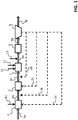
- an installation according to the invention is arranged to treat water routed successively to different zones 1, 3, 4, 5, 6 of this installation.
- the flow of water is represented by the horizontal arrows 9a, 9b, 9c, 9d, 9e, 9f.
- This installation includes an adsorption zone 1.
- the water arrives in the adsorption zone 1 through a channel 9c.
- the adsorption zone 1 is arranged to bring the water into contact with a new adsorbent (adsorption step). Before it comes into contact with the new adsorbent, that is to say before entering the adsorption zone 1, the water is called “pre-adsorbed water”. After it has been brought into contact with the new adsorbent in adsorption zone 1, the water is called “adsorbed water”.
- the new adsorbent is typically powdered activated carbon.
- the new adsorbent is for example injected into the adsorption zone 1 by any appropriate injection means 11.
- the adsorption zone 1 is for example a reactor, in particular of the stirred tank type, or else a system for injecting new adsorbent in line.
- the adsorbed water leaves the adsorption zone 1 via a channel 9d.
- the adsorbed water leaving the adsorption zone 1 arrives in a zone for maintaining adsorbent-water contact 6 via the channel 9d.
- the adsorbent-water contact maintenance zone 6 is arranged to perform a step of maintaining adsorbent-water contact in which maintains the mixture consisting of water and the adsorbent in this zone 6 for a determined period of time, for example greater than 5 minutes, advantageously greater than 10 minutes, more advantageously equal to 20 minutes.
- This adsorbent-water contact maintenance zone 6 may consist of a tank separate from the adsorption zone 1, for example as illustrated in FIGURE 1 .
- the adsorbent-water contact maintenance zone 6 and the adsorption zone 1 can consist of one and the same zone (not illustrated), in which case both the adsorption stage and the adsorption stage are carried out in this zone. step of maintaining adsorbent-water contact.
- the adsorbed water leaving the adsorbent-water contact maintenance zone 6 arrives in a clarification structure 5 through channel 9e.
- This clarification structure 5 is designed to separate the water from the suspended matter which it contains.
- the clarification structure 5 is for example a settling tank, in particular with a pulsed sludge bed and / or sludge recirculation, etc.), or a flotation device.
- the clarification structure 5 may include the adsorbent-water contact maintenance zone 6 (not illustrated). In this case, the adsorbent-water contact maintenance step and the clarification step are carried out in the same structure.
- the water leaves the clarification structure 5 through a channel 9f.
- the installation includes a recirculation branch 2a, 2b, 2c, 2d (represented by dotted arrows in FIG. 1 ) capable of taking at least part of the new adsorbent brought into contact with water in the adsorption zone 1. This removed part constitutes a used adsorbent.
- the FIGURE 1 illustrates reinjection to these different areas. However, it is possible, and preferable, to reinject the used adsorbent in a single reinjection zone, for example in channel 9c (loop 2d).
- the used adsorbent can be taken by any means known to those skilled in the art (for example, pumping, gravity, etc.).
- the installation of the FIGURE 1 also comprises a coagulation zone 4 located upstream of the adsorption zone 1.
- the water arrives in the coagulation zone 4 through a channel 9a.
- the coagulation zone 4 is designed to bring the pre-adsorbed water into contact with one or more coagulants (coagulation step), typically iron salts (for example ferric chloride) or alum.
- coagulants typically iron salts (for example ferric chloride) or alum.
- This or these coagulants are for example injected into the coagulation zone 4 by any appropriate injection means 41.
- the coagulation zone 4 can consist of a stirred tank type reactor, or can include an in-line injection system as well as a static mixer.
- the water leaves the coagulation zone 4 through a channel 9b.
- the installation of the FIGURE 1 further comprises a coagulant-water contact maintenance zone 3 located downstream of the coagulation zone 4 and upstream of the adsorption zone 1.
- the coagulant-water contact maintenance zone 3 is designed to perform a coagulant-water contact maintenance step in which the mixture consisting of water and the coagulant is maintained in this zone 3 for a determined period of time, for example greater than 1 minute, preferably greater than 5 minutes, more preferably 10 minutes.
- the water arrives in the contact zone 3 through the channel 9b.
- the contact zone 3 is for example an enclosure or a tank compartment. Such a contact zone 3 can consist of a mechanically agitated sheet or of a baffled sheet.
- the coagulant-water contact maintenance zone 3 and the coagulation zone 4 can consist of one and the same zone (not illustrated), in which case both the coagulation step and the step are carried out in this zone. for maintaining coagulant-water contact.
- the water leaves the contact zone 3 through the channel 9c.
- the invention also provides for bringing the adsorbed water into contact with one or more coagulants, typically iron salts (for example ferric chloride) or alum, for example by injecting this or these coagulants into the zone of. adsorption 1 by any suitable injection means 12, in order to carry out an additional coagulation step.
- This means 12 for injecting the coagulant or coagulants can also be arranged to inject this agent into other areas of the installation (not shown).
- the invention also provides for bringing the water into contact with a flocculating agent, typically a polymer, for example by injecting such a flocculating agent downstream of the adsorption zone 1 by any injection means 13. appropriate.
- a flocculating agent typically a polymer
- the means 13 for injecting the flocculating agent can also be arranged to inject this agent into other areas of the installation (not shown).
- the installation comprises a single clarification structure 5 and, more specifically, does not include any clarification structure upstream of the adsorption zone 1.
- the different zones 1, 3, 4, 5, 6 of the installation according to the invention can consist, according to different combinations, of separate structures or tanks or reactors, or for all or part of them, of compartments of 'a single structure or vessel or reactor.
- the inventors carried out comparative tests of three processes A, B and C using a surface water, a dose of coagulant and three doses of powdered activated carbon of the same quality, as illustrated in Table 1 which summarizes the operating conditions and the performance obtained on the elimination of organic matter for each of these processes.
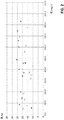
- FIGURE 2 illustrates comparative tests carried out between a first method known from the prior art and a second method in accordance with one embodiment of the invention.
- the first method comprises a step of recirculating used powdered activated carbon in the adsorption zone. This recirculation of used activated carbon takes place at the same point as the new activated carbon, or upstream.
- the second process comprises one or more configurations for the recirculation of used powdered activated carbon (shown diagrammatically in 2a, 2b, 2c and 2d in the figure 1 ). This recirculation of used activated carbon takes place in all cases before the injection of the new activated carbon into the adsorption zone 1 by the adsorption means 11.
- the recirculated spent activated carbon i.e. the spent adsorbent
- the recirculated spent activated carbon is injected into the adsorbed water
- the recirculated spent activated carbon is injected into the water. pre-adsorbed.
- the FIGURE 2 also represents the reduction percentage on the ordinate and noted A in%, as a function of the sludge concentration in the adsorption zone on the abscissa and noted C in mg / L, with the first and second processes.
Landscapes
- Chemical & Material Sciences (AREA)
- Life Sciences & Earth Sciences (AREA)
- Hydrology & Water Resources (AREA)
- Engineering & Computer Science (AREA)
- Environmental & Geological Engineering (AREA)
- Water Supply & Treatment (AREA)
- Organic Chemistry (AREA)
- Inorganic Chemistry (AREA)
- Water Treatment By Sorption (AREA)
- Separation Of Suspended Particles By Flocculating Agents (AREA)
- Solid-Sorbent Or Filter-Aiding Compositions (AREA)
- Carbon And Carbon Compounds (AREA)
Claims (8)
- Verfahren zur Wasserbehandlung, wobei das Verfahren Folgendes umfasst:- einen Schritt des Adsorbierens, in dem Wasser mit einem neuen Adsorptionsmittel in Kontakt gebracht wird, wobei das Wasser vor seinem In-Kontakt-Bringen mit dem neuen Adsorptionsmittel als "vor-adsorbiertes Wasser" bezeichnet wird und nach seinem In-Kontakt-Bringen mit dem neuen Adsorptionsmittel als "adsorbiertes Wasser" bezeichnet wird, und- einen Schritt des Rückführens, in dem mindestens ein Teil des neuen Adsorptionsmittels, das während des Schritts des Adsorbierens mit Wasser in Kontakt gebracht wird, entnommen wird, wobei dieser entnommene Teil ein gebrauchtes Adsorptionsmittel darstellt,und wobei während des Schritts des Rückführens das gebrauchte Adsorptionsmittel mit dem vor-adsorbierten Wasser in Kontakt gebracht wird,
wobei das vor-adsorbierte Wasser keinem Schritt der Klärung unterzogen wird, in dem vom Wasser mindestens ein Teil der Schwebstoffe beseitigt wird, die darin enthalten sind,
wobei das Verfahren dadurch gekennzeichnet ist, dass es außerdem einen Schritt der Koagulation umfasst, in dem das vor-adsorbierte Wasser mit einem oder mehreren Koagulans in Kontakt gebracht wird. - Verfahren nach Anspruch 1, dadurch gekennzeichnet, dass das Adsorptionsmittel eine pulverförmige Aktivkohle ist.
- Verfahren nach Anspruch 1 oder 2, dadurch gekennzeichnet, dass es außerdem einen Schritt der Klärung umfasst, in dem das adsorbierte Wasser von den Schwebstoffen, die es enthält, getrennt wird.
- Verfahren nach einem der Ansprüche 1 bis 3, dadurch gekennzeichnet, dass es außerdem einen Schritt des In-Kontakt-Haltens zwischen Koagulans und Wasser umfasst, in dem das vor-adsorbierte Wasser, das dem Schritt der Koagulation unterzogen wurde, in einem Behälter während einer Dauer von mehr als 1 Minute, vorteilhafterweise mehr als 5 Minuten, noch vorteilhafter gleich 10 Minuten, gelagert wird.
- Verfahren nach einem der Ansprüche 1 bis 4, dadurch gekennzeichnet, dass es außerdem einen Schritt der Ausflockung umfasst, in dem das adsorbierte oder vor-adsorbierte Wasser mit einem Flockungsmittel in Kontakt gebracht wird.
- Verfahren nach Anspruch 4 und 5, dadurch gekennzeichnet, dass der Schritt der Ausflockung nach dem Schritt des In-Kontakt-Haltens zwischen Koagulans und Wasser durchgeführt wird.
- Verfahren nach einem der Ansprüche 1 bis 6, dadurch gekennzeichnet, dass das Wasser:- ein städtisches oder industrielles Abwasser ist, oder- ein Oberflächen- oder Grundwasser ist, das zur Herstellung von Trinkwasser oder einer industriellen Verwendung dient.
- Anlage zur Wasserbehandlung, wobei diese Anlage angeordnet ist, um ein Verfahren nach einem der Ansprüche 1 bis 7 durchzuführen, wobei diese Anlage Folgendes umfasst:- einen Adsorptionsbereich (1), der ausgelegt ist, um Wasser mit einem neuen Adsorptionsmittel in Kontakt zu bringen,- einen Rückführungszweig (2a, 2b, 2c, 2d), der ausgelegt ist, um mindestens einen Teil des Adsorptionsmittels, das mit Wasser im Adsorptionsbereich (1) in Kontakt gebracht ist, zu entnehmen,- wobei der Rückführungszweig (2a, 2b, 2c, 2d) angeordnet ist, um den Teil des entnommenen Adsorptionsmittels in Kontakt mit dem Wasser zu bringen, der sich vorgelagert vom Adsorptionsbereich (1) befindet,- wobei die Anlage vorgelagert vom Adsorptionsbereich (1) keine Klärungsanlage umfasst, die angeordnet ist, um aus dem Wasser mindestens einen Teil der Schwebstoffe zu beseitigen, die darin enthalten sind,- wobei die Anlage dadurch gekennzeichnet ist, dass sie einen Koagulationsbereich (4) umfasst, der angeordnet ist, um das Wasser mit einem oder mehreren Koagulans in Kontakt zu bringen, wobei der Koagulationsbereich (4) vorgelagert vom Adsorptionsbereich (1) angeordnet ist.
Applications Claiming Priority (2)
| Application Number | Priority Date | Filing Date | Title |
|---|---|---|---|
| FR1553501A FR3035102A1 (fr) | 2015-04-20 | 2015-04-20 | Procede et dispositif de traitement d'une eau par contact avec un materiau adsorbant |
| PCT/IB2016/052192 WO2016170460A1 (fr) | 2015-04-20 | 2016-04-18 | Procédé et dispositif de traitement d'une eau par contact avec un matériau adsorbant |
Publications (2)
| Publication Number | Publication Date |
|---|---|
| EP3286141A1 EP3286141A1 (de) | 2018-02-28 |
| EP3286141B1 true EP3286141B1 (de) | 2020-09-09 |
Family
ID=53524804
Family Applications (1)
| Application Number | Title | Priority Date | Filing Date |
|---|---|---|---|
| EP16719915.7A Active EP3286141B1 (de) | 2015-04-20 | 2016-04-18 | Verfahren und vorrichtung zur wasserbehandlung durch kontakt mit einem adsorbierenden material |
Country Status (12)
| Country | Link |
|---|---|
| US (1) | US11097960B2 (de) |
| EP (1) | EP3286141B1 (de) |
| JP (1) | JP6864632B2 (de) |
| KR (1) | KR102665891B1 (de) |
| CN (1) | CN107531511B (de) |
| AU (1) | AU2016251944B2 (de) |
| CA (1) | CA2981862C (de) |
| DK (1) | DK3286141T3 (de) |
| ES (1) | ES2834891T3 (de) |
| FR (1) | FR3035102A1 (de) |
| SG (1) | SG11201708321QA (de) |
| WO (1) | WO2016170460A1 (de) |
Families Citing this family (3)
| Publication number | Priority date | Publication date | Assignee | Title |
|---|---|---|---|---|
| JP7200518B2 (ja) * | 2018-07-05 | 2023-01-10 | 三菱ケミカル株式会社 | 排水処理方法および排水処理装置 |
| JP7386188B2 (ja) * | 2021-01-15 | 2023-11-24 | 日立Geニュークリア・エナジー株式会社 | 放射性廃液の処理方法及び放射性核種の吸着塔の製造方法 |
| CN115645983A (zh) * | 2022-10-15 | 2023-01-31 | 湘南学院 | 一种从污酸中直接回收银、铜的工艺 |
Family Cites Families (16)
| Publication number | Priority date | Publication date | Assignee | Title |
|---|---|---|---|---|
| JPS5349858A (en) * | 1976-10-18 | 1978-05-06 | Agency Of Ind Science & Technol | Method of treating waste liquid using inorganic synthetic adsorbent |
| US5302288A (en) * | 1993-03-19 | 1994-04-12 | Zimpro Environmental, Inc. | Treatment of highly colored wastewaters |
| JPH10151446A (ja) * | 1996-11-21 | 1998-06-09 | Koyo Giken:Kk | 源水の処理システム |
| JP2001079561A (ja) * | 1999-09-20 | 2001-03-27 | Ngk Insulators Ltd | 河川浄化方法 |
| JP2003024754A (ja) * | 2001-07-17 | 2003-01-28 | Maezawa Ind Inc | 膜モジュールの洗浄方法 |
| FR2847572B1 (fr) * | 2002-11-22 | 2006-04-21 | Omnium Traitement Valorisa | Procede de traitement des eaux a l'aide d'un reactif pulverulent inorganique a forte surface specifique incluant une etape de recyclage dudit reactif |
| US7678278B2 (en) * | 2006-09-29 | 2010-03-16 | Otv S.A. Sa | Method of treating water with an inorganic powder reagent |
| US8491788B2 (en) * | 2007-10-23 | 2013-07-23 | Siemens Industry, Inc. | Process for enhanced total organic carbon removal while maintaining optimum membrane filter performance |
| JP2009274008A (ja) * | 2008-05-14 | 2009-11-26 | Sawatec Kk | 廃水処理装置および廃水処理方法 |
| FR2932795B1 (fr) | 2008-06-20 | 2011-06-24 | Vinci Construction France | Procede de traitement des eaux |
| FR2934258B1 (fr) * | 2008-07-28 | 2010-08-27 | Otv Sa | Procede de traitement d'eau ultra rapide et installation correspondante. |
| FR2935697B1 (fr) | 2008-09-11 | 2011-06-03 | Otv Sa | Procede de traitement d'eau incluant un recyclage de charbon actif en poudre |
| US7648637B1 (en) * | 2009-01-29 | 2010-01-19 | Otv S.A. | Water treatment method by ballasted flocculation, settling, and prior adsorbent contact |
| FR2973794B1 (fr) * | 2011-04-11 | 2014-04-11 | Veolia Water Solutions & Tech | Procede de traitement d'eau a traiter par clarification comprenant une adsorption d'une portion d'eau clarifiee et une clarification d'un melange d'eau clarifiee adsorbee et d'eau a traiter |
| CN102774923B (zh) * | 2012-06-06 | 2013-10-16 | 安徽科技学院 | 高效利用混凝吸附剂的污水处理方法 |
| CN103214117A (zh) * | 2013-04-01 | 2013-07-24 | 北京工业大学 | 一种净水厂粉末活性炭回流/超滤组合工艺 |
-
2015
- 2015-04-20 FR FR1553501A patent/FR3035102A1/fr not_active Ceased
-
2016
- 2016-04-18 AU AU2016251944A patent/AU2016251944B2/en active Active
- 2016-04-18 DK DK16719915.7T patent/DK3286141T3/da active
- 2016-04-18 WO PCT/IB2016/052192 patent/WO2016170460A1/fr not_active Ceased
- 2016-04-18 CA CA2981862A patent/CA2981862C/fr active Active
- 2016-04-18 EP EP16719915.7A patent/EP3286141B1/de active Active
- 2016-04-18 CN CN201680022633.XA patent/CN107531511B/zh active Active
- 2016-04-18 JP JP2017555719A patent/JP6864632B2/ja active Active
- 2016-04-18 US US15/562,434 patent/US11097960B2/en active Active
- 2016-04-18 KR KR1020177033248A patent/KR102665891B1/ko active Active
- 2016-04-18 ES ES16719915T patent/ES2834891T3/es active Active
- 2016-04-18 SG SG11201708321QA patent/SG11201708321QA/en unknown
Non-Patent Citations (1)
| Title |
|---|
| None * |
Also Published As
| Publication number | Publication date |
|---|---|
| CA2981862A1 (fr) | 2016-10-27 |
| AU2016251944A1 (en) | 2017-11-02 |
| HK1243396A1 (zh) | 2018-07-13 |
| JP6864632B2 (ja) | 2021-04-28 |
| CN107531511A (zh) | 2018-01-02 |
| WO2016170460A1 (fr) | 2016-10-27 |
| ES2834891T3 (es) | 2021-06-21 |
| SG11201708321QA (en) | 2017-11-29 |
| CN107531511B (zh) | 2021-11-30 |
| JP2018517546A (ja) | 2018-07-05 |
| KR20170137909A (ko) | 2017-12-13 |
| CA2981862C (fr) | 2023-04-04 |
| AU2016251944B2 (en) | 2021-04-08 |
| KR102665891B1 (ko) | 2024-05-17 |
| DK3286141T3 (da) | 2020-11-30 |
| EP3286141A1 (de) | 2018-02-28 |
| US11097960B2 (en) | 2021-08-24 |
| US20180086647A1 (en) | 2018-03-29 |
| FR3035102A1 (fr) | 2016-10-21 |
Similar Documents
| Publication | Publication Date | Title |
|---|---|---|
| FR2927622A1 (fr) | Procede de traitement d'eau par systeme membranaire de type nanofiltration ou osmose inverse permettant des taux de conversion eleves grace a l'elimination de la matiere organique. | |
| CA3012058C (fr) | Procede et installation de traitement des eaux usees | |
| EP3040312B1 (de) | Wasseraufbereitungsverfahren, das eine adsorptionsstufe auf ionenaustauscherharz und eine stufe mit koagulation/ballastausflockung und trennung umfasst, und entsprechende anlage | |
| EA201200103A1 (ru) | Система и способ обработки сточных вод, включая облучение твердых веществ при первичной обработке | |
| CN102276056B (zh) | 一种向活性污泥池内投加活性材料的煤化工废水处理工艺 | |
| EP3286141B1 (de) | Verfahren und vorrichtung zur wasserbehandlung durch kontakt mit einem adsorbierenden material | |
| WO2015091211A1 (fr) | Installation et procede de traitement d'eau sur membranes integrant une adsorption sur materiau pulverulent adsorbant et des moyens permettant de limiter l'abrasion des membranes | |
| CN107364998B (zh) | 中等浓度有机工业废水的处理工艺 | |
| FR2973794A1 (fr) | Procede de traitement d'eau a traiter par clarification comprenant une adsorption d'une portion d'eau clarifiee et une clarification d'un melange d'eau clarifiee adsorbee et d'eau a traiter | |
| CN1639074A (zh) | 用于水生附着生物过滤的使用臭氧的预处理和后处理系统和方法 | |
| EP3009405A1 (de) | Wasseraufbereitungsverfahren durch adsorption auf aktivkohle, und klärung sowie entsprechende anlage | |
| KR20120074942A (ko) | 중금속 흡착제 및 이를 이용한 중금속 제거 방법 | |
| WO2022144304A1 (fr) | Procédé de traitement de l'eau par adsorption sur charbon actif couplé à une adjonction d'ozone, et installation pour la mise en œuvre de ce procédé | |
| CA3010693C (fr) | Procede et dispositif de traitement d'eaux residuaires par oxydation | |
| KR101318285B1 (ko) | 염색폐수 방류수의 재이용방법 | |
| WO2014091141A1 (fr) | Procede d'oxydation d'eaux de production | |
| EP3684734A1 (de) | Verfahren und anlage zur behandlung von abwasser mit mikroschadstoffen von pharmazeutischer herkunft | |
| HK1243396B (zh) | 通过与吸附剂材料接触处理水的方法和设备 | |
| OA17315A (fr) | Procédé d'oxydation d'eaux de production. |
Legal Events
| Date | Code | Title | Description |
|---|---|---|---|
| STAA | Information on the status of an ep patent application or granted ep patent |
Free format text: STATUS: THE INTERNATIONAL PUBLICATION HAS BEEN MADE |
|
| PUAI | Public reference made under article 153(3) epc to a published international application that has entered the european phase |
Free format text: ORIGINAL CODE: 0009012 |
|
| STAA | Information on the status of an ep patent application or granted ep patent |
Free format text: STATUS: REQUEST FOR EXAMINATION WAS MADE |
|
| 17P | Request for examination filed |
Effective date: 20171020 |
|
| AK | Designated contracting states |
Kind code of ref document: A1 Designated state(s): AL AT BE BG CH CY CZ DE DK EE ES FI FR GB GR HR HU IE IS IT LI LT LU LV MC MK MT NL NO PL PT RO RS SE SI SK SM TR |
|
| AX | Request for extension of the european patent |
Extension state: BA ME |
|
| DAV | Request for validation of the european patent (deleted) | ||
| DAX | Request for extension of the european patent (deleted) | ||
| STAA | Information on the status of an ep patent application or granted ep patent |
Free format text: STATUS: EXAMINATION IS IN PROGRESS |
|
| 17Q | First examination report despatched |
Effective date: 20181031 |
|
| GRAP | Despatch of communication of intention to grant a patent |
Free format text: ORIGINAL CODE: EPIDOSNIGR1 |
|
| STAA | Information on the status of an ep patent application or granted ep patent |
Free format text: STATUS: GRANT OF PATENT IS INTENDED |
|
| INTG | Intention to grant announced |
Effective date: 20200326 |
|
| GRAS | Grant fee paid |
Free format text: ORIGINAL CODE: EPIDOSNIGR3 |
|
| GRAA | (expected) grant |
Free format text: ORIGINAL CODE: 0009210 |
|
| STAA | Information on the status of an ep patent application or granted ep patent |
Free format text: STATUS: THE PATENT HAS BEEN GRANTED |
|
| AK | Designated contracting states |
Kind code of ref document: B1 Designated state(s): AL AT BE BG CH CY CZ DE DK EE ES FI FR GB GR HR HU IE IS IT LI LT LU LV MC MK MT NL NO PL PT RO RS SE SI SK SM TR |
|
| REG | Reference to a national code |
Ref country code: GB Ref legal event code: FG4D Free format text: NOT ENGLISH |
|
| REG | Reference to a national code |
Ref country code: AT Ref legal event code: REF Ref document number: 1311356 Country of ref document: AT Kind code of ref document: T Effective date: 20200915 Ref country code: CH Ref legal event code: EP |
|
| REG | Reference to a national code |
Ref country code: IE Ref legal event code: FG4D Free format text: LANGUAGE OF EP DOCUMENT: FRENCH |
|
| REG | Reference to a national code |
Ref country code: DE Ref legal event code: R096 Ref document number: 602016043661 Country of ref document: DE |
|
| REG | Reference to a national code |
Ref country code: CH Ref legal event code: NV Representative=s name: VALIPAT S.A. C/O BOVARD SA NEUCHATEL, CH |
|
| REG | Reference to a national code |
Ref country code: DK Ref legal event code: T3 Effective date: 20201126 |
|
| REG | Reference to a national code |
Ref country code: SE Ref legal event code: TRGR |
|
| REG | Reference to a national code |
Ref country code: LT Ref legal event code: MG4D |
|
| PG25 | Lapsed in a contracting state [announced via postgrant information from national office to epo] |
Ref country code: FI Free format text: LAPSE BECAUSE OF FAILURE TO SUBMIT A TRANSLATION OF THE DESCRIPTION OR TO PAY THE FEE WITHIN THE PRESCRIBED TIME-LIMIT Effective date: 20200909 Ref country code: GR Free format text: LAPSE BECAUSE OF FAILURE TO SUBMIT A TRANSLATION OF THE DESCRIPTION OR TO PAY THE FEE WITHIN THE PRESCRIBED TIME-LIMIT Effective date: 20201210 Ref country code: HR Free format text: LAPSE BECAUSE OF FAILURE TO SUBMIT A TRANSLATION OF THE DESCRIPTION OR TO PAY THE FEE WITHIN THE PRESCRIBED TIME-LIMIT Effective date: 20200909 Ref country code: BG Free format text: LAPSE BECAUSE OF FAILURE TO SUBMIT A TRANSLATION OF THE DESCRIPTION OR TO PAY THE FEE WITHIN THE PRESCRIBED TIME-LIMIT Effective date: 20201209 Ref country code: LT Free format text: LAPSE BECAUSE OF FAILURE TO SUBMIT A TRANSLATION OF THE DESCRIPTION OR TO PAY THE FEE WITHIN THE PRESCRIBED TIME-LIMIT Effective date: 20200909 |
|
| REG | Reference to a national code |
Ref country code: AT Ref legal event code: MK05 Ref document number: 1311356 Country of ref document: AT Kind code of ref document: T Effective date: 20200909 Ref country code: NO Ref legal event code: T2 Effective date: 20200909 |
|
| REG | Reference to a national code |
Ref country code: NL Ref legal event code: MP Effective date: 20200909 |
|
| PG25 | Lapsed in a contracting state [announced via postgrant information from national office to epo] |
Ref country code: LV Free format text: LAPSE BECAUSE OF FAILURE TO SUBMIT A TRANSLATION OF THE DESCRIPTION OR TO PAY THE FEE WITHIN THE PRESCRIBED TIME-LIMIT Effective date: 20200909 Ref country code: PL Free format text: LAPSE BECAUSE OF FAILURE TO SUBMIT A TRANSLATION OF THE DESCRIPTION OR TO PAY THE FEE WITHIN THE PRESCRIBED TIME-LIMIT Effective date: 20200909 Ref country code: RS Free format text: LAPSE BECAUSE OF FAILURE TO SUBMIT A TRANSLATION OF THE DESCRIPTION OR TO PAY THE FEE WITHIN THE PRESCRIBED TIME-LIMIT Effective date: 20200909 |
|
| PG25 | Lapsed in a contracting state [announced via postgrant information from national office to epo] |
Ref country code: EE Free format text: LAPSE BECAUSE OF FAILURE TO SUBMIT A TRANSLATION OF THE DESCRIPTION OR TO PAY THE FEE WITHIN THE PRESCRIBED TIME-LIMIT Effective date: 20200909 Ref country code: CZ Free format text: LAPSE BECAUSE OF FAILURE TO SUBMIT A TRANSLATION OF THE DESCRIPTION OR TO PAY THE FEE WITHIN THE PRESCRIBED TIME-LIMIT Effective date: 20200909 Ref country code: PT Free format text: LAPSE BECAUSE OF FAILURE TO SUBMIT A TRANSLATION OF THE DESCRIPTION OR TO PAY THE FEE WITHIN THE PRESCRIBED TIME-LIMIT Effective date: 20210111 Ref country code: RO Free format text: LAPSE BECAUSE OF FAILURE TO SUBMIT A TRANSLATION OF THE DESCRIPTION OR TO PAY THE FEE WITHIN THE PRESCRIBED TIME-LIMIT Effective date: 20200909 Ref country code: SM Free format text: LAPSE BECAUSE OF FAILURE TO SUBMIT A TRANSLATION OF THE DESCRIPTION OR TO PAY THE FEE WITHIN THE PRESCRIBED TIME-LIMIT Effective date: 20200909 |
|
| PG25 | Lapsed in a contracting state [announced via postgrant information from national office to epo] |
Ref country code: IS Free format text: LAPSE BECAUSE OF FAILURE TO SUBMIT A TRANSLATION OF THE DESCRIPTION OR TO PAY THE FEE WITHIN THE PRESCRIBED TIME-LIMIT Effective date: 20210109 Ref country code: AT Free format text: LAPSE BECAUSE OF FAILURE TO SUBMIT A TRANSLATION OF THE DESCRIPTION OR TO PAY THE FEE WITHIN THE PRESCRIBED TIME-LIMIT Effective date: 20200909 Ref country code: AL Free format text: LAPSE BECAUSE OF FAILURE TO SUBMIT A TRANSLATION OF THE DESCRIPTION OR TO PAY THE FEE WITHIN THE PRESCRIBED TIME-LIMIT Effective date: 20200909 |
|
| REG | Reference to a national code |
Ref country code: DE Ref legal event code: R097 Ref document number: 602016043661 Country of ref document: DE |
|
| REG | Reference to a national code |
Ref country code: ES Ref legal event code: FG2A Ref document number: 2834891 Country of ref document: ES Kind code of ref document: T3 Effective date: 20210621 |
|
| PG25 | Lapsed in a contracting state [announced via postgrant information from national office to epo] |
Ref country code: SK Free format text: LAPSE BECAUSE OF FAILURE TO SUBMIT A TRANSLATION OF THE DESCRIPTION OR TO PAY THE FEE WITHIN THE PRESCRIBED TIME-LIMIT Effective date: 20200909 |
|
| PLBE | No opposition filed within time limit |
Free format text: ORIGINAL CODE: 0009261 |
|
| STAA | Information on the status of an ep patent application or granted ep patent |
Free format text: STATUS: NO OPPOSITION FILED WITHIN TIME LIMIT |
|
| 26N | No opposition filed |
Effective date: 20210610 |
|
| PG25 | Lapsed in a contracting state [announced via postgrant information from national office to epo] |
Ref country code: SI Free format text: LAPSE BECAUSE OF FAILURE TO SUBMIT A TRANSLATION OF THE DESCRIPTION OR TO PAY THE FEE WITHIN THE PRESCRIBED TIME-LIMIT Effective date: 20200909 |
|
| PG25 | Lapsed in a contracting state [announced via postgrant information from national office to epo] |
Ref country code: MC Free format text: LAPSE BECAUSE OF FAILURE TO SUBMIT A TRANSLATION OF THE DESCRIPTION OR TO PAY THE FEE WITHIN THE PRESCRIBED TIME-LIMIT Effective date: 20200909 |
|
| GBPC | Gb: european patent ceased through non-payment of renewal fee |
Effective date: 20210418 |
|
| PG25 | Lapsed in a contracting state [announced via postgrant information from national office to epo] |
Ref country code: LU Free format text: LAPSE BECAUSE OF NON-PAYMENT OF DUE FEES Effective date: 20210418 |
|
| REG | Reference to a national code |
Ref country code: BE Ref legal event code: MM Effective date: 20210430 |
|
| PG25 | Lapsed in a contracting state [announced via postgrant information from national office to epo] |
Ref country code: GB Free format text: LAPSE BECAUSE OF NON-PAYMENT OF DUE FEES Effective date: 20210418 |
|
| REG | Reference to a national code |
Ref country code: FR Ref legal event code: PLFP Year of fee payment: 7 |
|
| PG25 | Lapsed in a contracting state [announced via postgrant information from national office to epo] |
Ref country code: IE Free format text: LAPSE BECAUSE OF NON-PAYMENT OF DUE FEES Effective date: 20210418 |
|
| PG25 | Lapsed in a contracting state [announced via postgrant information from national office to epo] |
Ref country code: IS Free format text: LAPSE BECAUSE OF FAILURE TO SUBMIT A TRANSLATION OF THE DESCRIPTION OR TO PAY THE FEE WITHIN THE PRESCRIBED TIME-LIMIT Effective date: 20210109 |
|
| PG25 | Lapsed in a contracting state [announced via postgrant information from national office to epo] |
Ref country code: BE Free format text: LAPSE BECAUSE OF NON-PAYMENT OF DUE FEES Effective date: 20210430 |
|
| PG25 | Lapsed in a contracting state [announced via postgrant information from national office to epo] |
Ref country code: HU Free format text: LAPSE BECAUSE OF FAILURE TO SUBMIT A TRANSLATION OF THE DESCRIPTION OR TO PAY THE FEE WITHIN THE PRESCRIBED TIME-LIMIT; INVALID AB INITIO Effective date: 20160418 |
|
| PG25 | Lapsed in a contracting state [announced via postgrant information from national office to epo] |
Ref country code: NL Free format text: LAPSE BECAUSE OF NON-PAYMENT OF DUE FEES Effective date: 20200923 Ref country code: CY Free format text: LAPSE BECAUSE OF FAILURE TO SUBMIT A TRANSLATION OF THE DESCRIPTION OR TO PAY THE FEE WITHIN THE PRESCRIBED TIME-LIMIT Effective date: 20200909 |
|
| P01 | Opt-out of the competence of the unified patent court (upc) registered |
Effective date: 20230530 |
|
| PG25 | Lapsed in a contracting state [announced via postgrant information from national office to epo] |
Ref country code: MK Free format text: LAPSE BECAUSE OF FAILURE TO SUBMIT A TRANSLATION OF THE DESCRIPTION OR TO PAY THE FEE WITHIN THE PRESCRIBED TIME-LIMIT Effective date: 20200909 |
|
| PG25 | Lapsed in a contracting state [announced via postgrant information from national office to epo] |
Ref country code: TR Free format text: LAPSE BECAUSE OF FAILURE TO SUBMIT A TRANSLATION OF THE DESCRIPTION OR TO PAY THE FEE WITHIN THE PRESCRIBED TIME-LIMIT Effective date: 20200909 |
|
| PG25 | Lapsed in a contracting state [announced via postgrant information from national office to epo] |
Ref country code: MT Free format text: LAPSE BECAUSE OF FAILURE TO SUBMIT A TRANSLATION OF THE DESCRIPTION OR TO PAY THE FEE WITHIN THE PRESCRIBED TIME-LIMIT Effective date: 20200909 |
|
| PGFP | Annual fee paid to national office [announced via postgrant information from national office to epo] |
Ref country code: DE Payment date: 20250429 Year of fee payment: 10 |
|
| PGFP | Annual fee paid to national office [announced via postgrant information from national office to epo] |
Ref country code: DK Payment date: 20250425 Year of fee payment: 10 Ref country code: ES Payment date: 20250505 Year of fee payment: 10 |
|
| PGFP | Annual fee paid to national office [announced via postgrant information from national office to epo] |
Ref country code: NO Payment date: 20250429 Year of fee payment: 10 |
|
| PGFP | Annual fee paid to national office [announced via postgrant information from national office to epo] |
Ref country code: IT Payment date: 20250422 Year of fee payment: 10 |
|
| PGFP | Annual fee paid to national office [announced via postgrant information from national office to epo] |
Ref country code: FR Payment date: 20250425 Year of fee payment: 10 |
|
| PGFP | Annual fee paid to national office [announced via postgrant information from national office to epo] |
Ref country code: CH Payment date: 20250501 Year of fee payment: 10 |
|
| PGFP | Annual fee paid to national office [announced via postgrant information from national office to epo] |
Ref country code: SE Payment date: 20250507 Year of fee payment: 10 |