EP3285071A1 - Biomarker composition for diagnosing still's disease, diagnostic kit, and diagnostic method - Google Patents
Biomarker composition for diagnosing still's disease, diagnostic kit, and diagnostic method Download PDFInfo
- Publication number
- EP3285071A1 EP3285071A1 EP16780296.6A EP16780296A EP3285071A1 EP 3285071 A1 EP3285071 A1 EP 3285071A1 EP 16780296 A EP16780296 A EP 16780296A EP 3285071 A1 EP3285071 A1 EP 3285071A1
- Authority
- EP
- European Patent Office
- Prior art keywords
- disease
- still
- sample
- granulocytes
- lymphocytes
- Prior art date
- Legal status (The legal status is an assumption and is not a legal conclusion. Google has not performed a legal analysis and makes no representation as to the accuracy of the status listed.)
- Granted
Links
Images

Classifications
-
- G—PHYSICS
- G01—MEASURING; TESTING
- G01N—INVESTIGATING OR ANALYSING MATERIALS BY DETERMINING THEIR CHEMICAL OR PHYSICAL PROPERTIES
- G01N33/00—Investigating or analysing materials by specific methods not covered by groups G01N1/00 - G01N31/00
- G01N33/48—Biological material, e.g. blood, urine; Haemocytometers
- G01N33/50—Chemical analysis of biological material, e.g. blood, urine; Testing involving biospecific ligand binding methods; Immunological testing
- G01N33/68—Chemical analysis of biological material, e.g. blood, urine; Testing involving biospecific ligand binding methods; Immunological testing involving proteins, peptides or amino acids
- G01N33/6893—Chemical analysis of biological material, e.g. blood, urine; Testing involving biospecific ligand binding methods; Immunological testing involving proteins, peptides or amino acids related to diseases not provided for elsewhere
-
- C—CHEMISTRY; METALLURGY
- C07—ORGANIC CHEMISTRY
- C07K—PEPTIDES
- C07K16/00—Immunoglobulins [IG], e.g. monoclonal or polyclonal antibodies
- C07K16/18—Immunoglobulins [IG], e.g. monoclonal or polyclonal antibodies against material from animals or humans
- C07K16/28—Immunoglobulins [IG], e.g. monoclonal or polyclonal antibodies against material from animals or humans against receptors, cell surface antigens or cell surface determinants
- C07K16/2803—Immunoglobulins [IG], e.g. monoclonal or polyclonal antibodies against material from animals or humans against receptors, cell surface antigens or cell surface determinants against the immunoglobulin superfamily
- C07K16/283—Immunoglobulins [IG], e.g. monoclonal or polyclonal antibodies against material from animals or humans against receptors, cell surface antigens or cell surface determinants against the immunoglobulin superfamily against Fc-receptors, e.g. CD16, CD32, CD64
-
- C—CHEMISTRY; METALLURGY
- C07—ORGANIC CHEMISTRY
- C07K—PEPTIDES
- C07K16/00—Immunoglobulins [IG], e.g. monoclonal or polyclonal antibodies
- C07K16/18—Immunoglobulins [IG], e.g. monoclonal or polyclonal antibodies against material from animals or humans
- C07K16/28—Immunoglobulins [IG], e.g. monoclonal or polyclonal antibodies against material from animals or humans against receptors, cell surface antigens or cell surface determinants
- C07K16/2839—Immunoglobulins [IG], e.g. monoclonal or polyclonal antibodies against material from animals or humans against receptors, cell surface antigens or cell surface determinants against the integrin superfamily
- C07K16/2845—Immunoglobulins [IG], e.g. monoclonal or polyclonal antibodies against material from animals or humans against receptors, cell surface antigens or cell surface determinants against the integrin superfamily against integrin beta2-subunit-containing molecules, e.g. CD11, CD18
-
- G—PHYSICS
- G01—MEASURING; TESTING
- G01N—INVESTIGATING OR ANALYSING MATERIALS BY DETERMINING THEIR CHEMICAL OR PHYSICAL PROPERTIES
- G01N33/00—Investigating or analysing materials by specific methods not covered by groups G01N1/00 - G01N31/00
- G01N33/48—Biological material, e.g. blood, urine; Haemocytometers
- G01N33/50—Chemical analysis of biological material, e.g. blood, urine; Testing involving biospecific ligand binding methods; Immunological testing
- G01N33/5005—Chemical analysis of biological material, e.g. blood, urine; Testing involving biospecific ligand binding methods; Immunological testing involving human or animal cells
-
- G—PHYSICS
- G01—MEASURING; TESTING
- G01N—INVESTIGATING OR ANALYSING MATERIALS BY DETERMINING THEIR CHEMICAL OR PHYSICAL PROPERTIES
- G01N33/00—Investigating or analysing materials by specific methods not covered by groups G01N1/00 - G01N31/00
- G01N33/48—Biological material, e.g. blood, urine; Haemocytometers
- G01N33/50—Chemical analysis of biological material, e.g. blood, urine; Testing involving biospecific ligand binding methods; Immunological testing
- G01N33/53—Immunoassay; Biospecific binding assay; Materials therefor
- G01N33/569—Immunoassay; Biospecific binding assay; Materials therefor for microorganisms, e.g. protozoa, bacteria, viruses
- G01N33/56966—Animal cells
- G01N33/56972—White blood cells
-
- G—PHYSICS
- G01—MEASURING; TESTING
- G01N—INVESTIGATING OR ANALYSING MATERIALS BY DETERMINING THEIR CHEMICAL OR PHYSICAL PROPERTIES
- G01N33/00—Investigating or analysing materials by specific methods not covered by groups G01N1/00 - G01N31/00
- G01N33/48—Biological material, e.g. blood, urine; Haemocytometers
- G01N33/50—Chemical analysis of biological material, e.g. blood, urine; Testing involving biospecific ligand binding methods; Immunological testing
- G01N33/68—Chemical analysis of biological material, e.g. blood, urine; Testing involving biospecific ligand binding methods; Immunological testing involving proteins, peptides or amino acids
- G01N33/6854—Immunoglobulins
-
- G—PHYSICS
- G01—MEASURING; TESTING
- G01N—INVESTIGATING OR ANALYSING MATERIALS BY DETERMINING THEIR CHEMICAL OR PHYSICAL PROPERTIES
- G01N33/00—Investigating or analysing materials by specific methods not covered by groups G01N1/00 - G01N31/00
- G01N33/48—Biological material, e.g. blood, urine; Haemocytometers
- G01N33/50—Chemical analysis of biological material, e.g. blood, urine; Testing involving biospecific ligand binding methods; Immunological testing
- G01N33/68—Chemical analysis of biological material, e.g. blood, urine; Testing involving biospecific ligand binding methods; Immunological testing involving proteins, peptides or amino acids
- G01N33/6854—Immunoglobulins
- G01N33/6857—Antibody fragments
-
- G—PHYSICS
- G01—MEASURING; TESTING
- G01N—INVESTIGATING OR ANALYSING MATERIALS BY DETERMINING THEIR CHEMICAL OR PHYSICAL PROPERTIES
- G01N2333/00—Assays involving biological materials from specific organisms or of a specific nature
- G01N2333/435—Assays involving biological materials from specific organisms or of a specific nature from animals; from humans
- G01N2333/705—Assays involving receptors, cell surface antigens or cell surface determinants
- G01N2333/70503—Immunoglobulin superfamily, e.g. VCAMs, PECAM, LFA-3
- G01N2333/70535—Fc-receptors, e.g. CD16, CD32, CD64 (CD2314/705F)
-
- G—PHYSICS
- G01—MEASURING; TESTING
- G01N—INVESTIGATING OR ANALYSING MATERIALS BY DETERMINING THEIR CHEMICAL OR PHYSICAL PROPERTIES
- G01N2333/00—Assays involving biological materials from specific organisms or of a specific nature
- G01N2333/435—Assays involving biological materials from specific organisms or of a specific nature from animals; from humans
- G01N2333/705—Assays involving receptors, cell surface antigens or cell surface determinants
- G01N2333/70546—Integrin superfamily, e.g. VLAs, leuCAM, GPIIb/GPIIIa, LPAM
- G01N2333/70553—Integrin beta2-subunit-containing molecules, e.g. CD11, CD18
-
- G—PHYSICS
- G01—MEASURING; TESTING
- G01N—INVESTIGATING OR ANALYSING MATERIALS BY DETERMINING THEIR CHEMICAL OR PHYSICAL PROPERTIES
- G01N2333/00—Assays involving biological materials from specific organisms or of a specific nature
- G01N2333/435—Assays involving biological materials from specific organisms or of a specific nature from animals; from humans
- G01N2333/705—Assays involving receptors, cell surface antigens or cell surface determinants
- G01N2333/70596—Molecules with a "CD"-designation not provided for elsewhere in G01N2333/705
-
- G—PHYSICS
- G01—MEASURING; TESTING
- G01N—INVESTIGATING OR ANALYSING MATERIALS BY DETERMINING THEIR CHEMICAL OR PHYSICAL PROPERTIES
- G01N2800/00—Detection or diagnosis of diseases
- G01N2800/10—Musculoskeletal or connective tissue disorders
- G01N2800/101—Diffuse connective tissue disease, e.g. Sjögren, Wegener's granulomatosis
- G01N2800/102—Arthritis; Rheumatoid arthritis, i.e. inflammation of peripheral joints
Definitions
- the present invention relates to a biomarker composition for diagnosing Still's disease, a diagnostic kit, and a method of providing information for diagnosis.
- Still's disease which is the systemic form of juvenile rheumatoid arthritis is a disease that has not yet elucidated its cause since the disease was first described by Dr. Still, and the disease occurs in both children and adults.
- Adult-onset Still's disease occurring in adults was first reported by Bywaters in 1971, and since then, it has been reported in all around the world and is known as a rare disease or a causative disease of fever of unknown origin.
- a diagnosis of Still's disease is mainly based on clinical findings.
- the disease is diagnosed through clinical findings, such as high fever, arthralgia or arthritis, characteristic skin lesion, lymph node enlargement, hepatomegaly, splenomegaly, sclerosis and sore throat, and laboratory findings, such as leukocytosis, accelerated erythrocyte sedimentation, a negative antinuclear antibody, and a negative rheumatoid factor.
- HLA human leucocyte antigen
- the disease is associated with a virus, and in this regard, human parvo virus B19, cytomegalovirus, rubella virus, echovirus 7, or the like has been reported. It has been also suggested that the disease is associated with Toxoplasma gondii and Yersinia enterocolitica.
- IL-1 Interleukin-1
- TNF- ⁇ tumor necrosis factor- ⁇
- IL-6 tumor necrosis factor-6
- IL-18 Interleukin-18
- Viral and bacterial infections are considered as causative factors of the pathogenesis of adult-onset Still's disease. However, there is still little research on how these infections cause adult-onset Still's disease.
- a pattern recognition receptor that plays an important role in recognizing a damage-associated molecular pattern (DAMP) and a microbe-associated molecular pattern (MAMP) in the early stages of the innate immunity currently attracts attention as an important key.
- DAMP damage-associated molecular pattern
- MAMP microbe-associated molecular pattern
- the present invention has thus an object in providing a biomarker composition that can diagnose Still's disease.
- the present invention also has an object in providing a kit that can diagnose Still's disease.
- the present invention also has an object in providing a method of providing information for diagnosis of Still's disease.
- the present invention provides a biomarker composition for diagnosing Still's disease, the biomarker composition including at least one protein selected from CD11b and CD32.
- the present invention also provides a kit for diagnosing Still's disease, the kit including an antibody specifically binding to a CD11b or CD32 cell-surface antigen.
- the present invention provides a method of providing information for diagnosis of Still's disease, the method including: measuring an expression level of at least one protein selected from CD11b and CD32 in a sample; comparing the measured expression level with a protein expression level of a normal control sample; and diagnosing Still's disease, when the expression level of the at least one protein selected from CD11b and CD32 in the sample is higher than that of the protein expression of the normal control sample.
- the present invention provides a method of providing information for diagnosis of Still's disease, the method including: measuring a frequency ratio of granulocytes to lymphocytes in a sample; comparing the measured frequency ratio with a frequency ratio of a normal control sample; and diagnosing Still's disease, when the frequency ratio of the granulocytes to the lymphocytes in the sample is higher than that of the granulocytes to the lymphocytes in the normal control sample.
- peripheral blood mononuclear cells (PBMCs) of a patient with Still's disease when compared with those of a normal person, the PBMCs of the patient show high frequency of cells expressing CD11b and cells expressing CD32, and high frequency ratio of granulocytes to lymphocytes.
- PBMCs peripheral blood mononuclear cells
- Such information can be used for providing a biomarker composition for diagnosing Still's disease, the biomarker composition including at least one protein selected from CD11b and CD32, a kit for diagnosing Still's disease, the kit including an antibody specifically binding to a CD11 b or CD32 cell-surface antigen, and a method of providing information for diagnosis of Still's disease. Accordingly, the diagnosis of Still's disease can be accurately made in children and adults, thereby further improving the therapeutic effects.
- the frequency refers to the number of cells expressing CD11b, the number of cells expressing CD32, and the number of frequency occupied by with granulocytes or lymphocytes, with respect to the total number of cells
- the present invention provides a biomarker composition for diagnosing Still's disease, the biomarker composition including at least one protein selected from CD11b and CD32.
- the frequency of cells expressing CD11b and the frequency of cells expressing CD32 in peripheral blood mononuclear cells (PBMCs) of the patient with Still's disease are each found to be higher than that of cells expressing CD11b or cells expressing CD32 in PBMCs of a normal person or a patient with rheumatoid arthritis.
- the ratio of granulocytes in PBMCs of the patient with Still's disease was found to be higher than that of granulocytes in PBMCs of a normal person or a patient with rheumatoid arthritis, and the ratio of lymphocytes was found to be lower.
- the present invention also provides a kit for diagnosing Still's disease, the kit including an antibody specifically binding to a CD11b or CD32 cell-surface antigen.
- the antibody may be a polyclonal antibody or a monoclonal antibody.
- the polyclonal antibody may be prepared by injecting an immunogen, such as CD11 b or CD32 protein or a fragment thereof, into a foreign host according to methods known in the art.
- the foreign host may include a mammal, such as a mouse, a rat, a sheep, or a rabbit.
- the immunogen may be injected via an intramuscular, intraperitoneal, or subcutaneous injection method, and is generally administered with an adjuvant to increase antigenicity. Serum is collected periodically from a foreign host to collect serum having improved titer and showing specificity to antigens, or to separate and purify antibodies therefrom.
- the monoclonal antibody may be prepared by an immortalized cell line generation technique using a fusion method known in the art.
- a protein expressed in a gene may be immunized in a mouse, or a peptide may be synthesized and bound to a bovine serum albumin to be immunized in a mouse.
- Antigen-secreting B lymphocytes separated from the mouse may be then fused with myeloma of a human or a mouse to produce immortalized hybridomas, and the hybridomas may be subjected to an indirect enzyme-linked immunoabsorbent assay (ELISA) to confirm whether the monoclonal antibody is produced.
- ELISA indirect enzyme-linked immunoabsorbent assay
- positive clones may be selected and cultured, and antibodies may be separated and purified.
- antibodies may be injected into the abdominal cavity of a rat, and ascites may be collected, thereby preparing the monoclonal antibody.
- the monoclonal antibody may be quantitatively analyzed by performing a color reaction using a secondary antibody to which an enzyme such as alkaline phosphatase (AP) or horseradish peroxidase (HRP) is bound, and a substrate of the secondary antibody.
- the monoclonal antibody may be directly quantitatively by using an antibody to which an enzyme such as AP or HRP is bound for the monoclonal antibody against the protein above.
- an antibody labeled with various fluorescent markers such as fluorescein isothiocyanat (FITC) and phycoerythrin (PE) may be used.
- the reaction between the protein above and the antibody may be confirmed by protein identification experiments such as western blot, Immunoprecipitation (IP), ELISA, immunohistochemistry (IHC), and flow cytometry analysis (FACS), but embodiments of the present invention are not limited thereto.
- protein identification experiments such as western blot, Immunoprecipitation (IP), ELISA, immunohistochemistry (IHC), and flow cytometry analysis (FACS), but embodiments of the present invention are not limited thereto.
- the kit including the antibody may typically include an antibody and a buffer that are in the lyophilized form, a stabilizer, an inactive protein, or the like, wherein the antibody may be labeled with a radionuclide, a fluorescer, an enzyme, or the like.
- the present invention also provides a method of providing information for diagnosis of Still's disease, the method including: measuring an expression level of at least one protein selected from CD11b and CD32 in a sample; comparing the measured expression level with a protein expression level of a normal control sample; and diagnosing Still's disease, when the expression level of the at least one protein selected from CD11b and CD32 in the sample is higher than that of the protein expression of the normal control sample.
- the present invention also provides a method of providing information for diagnosis of Still's disease, the method including: measuring a frequency ratio of granulocytes to lymphocytes in a sample; comparing the measured frequency ratio with a frequency ratio of a normal control sample; and diagnosing Still's disease, when the frequency ratio of the granulocytes to the lymphocytes in the sample is higher than that of the granulocytes to the lymphocytes in the normal control sample.
- the frequency ratio of the granulocytes to the lymphocytes is in a range of about 3.0 to about 50.0, it is diagnosed as Still's disease.
- sample may be blood, and more preferably, may be PBMCs separate from blood, but embodiments of the present invention are not limited thereto.
- PBMC peripheral blood mononuclear cells
- Human PBMCs were separated from human blood of a healthy donor by using an ammonium-chloride-potassium (ACK) lysis buffer. Then, 2 mL of blood was added to a tube treated with ethylenediaminetetraacetic acid (EDTA), and the tube was inverted 15 times. Afterwards, the resultant blood was added to 40 mL of the ACK lysis buffer, and was left at room temperature for 5 minutes. The centrifugation was performed thereon at a speed of 300 xg for 5 minutes. After white blood cells (WBC) were collected, the supernatant was discarded and the precipitated cells were mixed in 5 ml of PBS. The centrifugation was repeatedly performed thereon twice at a speed of 300 xg at a temperature of 4°C, thereby preparing PBMCs.
- ACK ammonium-chloride-potassium
- the frequencies of cells expressing CD11b and cells expressing CD32 were each measured in the PBMCs prepared according to Example 1, with respect to normal people (19 people), patients with rheumatoid arthritis (RA) (19 people), and patients with Still's disease (18 people).
- red blood cells were removed from each blood, and leukocytes were collected. Then, by a reaction with anti-CD11b and anti-CD32 antibodies each labeled with different fluorescence, the leukocytes were reacted with the antibodies, and the number of cells to which the antibodies bound was counted according to FACS. In this regard, the frequency of these cells occupied over the entire cells was analyzed.
- the ratio of the group of patients with Still's disease was about 7 times higher than that of the normal control group, and accordingly, it was confirmed that the ratio of granulocytes was significantly high in PBMCs of the patients with Still's disease.
- the present invention can be utilized for the diagnosis of Still's disease.
Landscapes
- Health & Medical Sciences (AREA)
- Life Sciences & Earth Sciences (AREA)
- Immunology (AREA)
- Chemical & Material Sciences (AREA)
- Engineering & Computer Science (AREA)
- Molecular Biology (AREA)
- Hematology (AREA)
- Biomedical Technology (AREA)
- Urology & Nephrology (AREA)
- Medicinal Chemistry (AREA)
- Biochemistry (AREA)
- General Health & Medical Sciences (AREA)
- Cell Biology (AREA)
- Proteomics, Peptides & Aminoacids (AREA)
- Pathology (AREA)
- Microbiology (AREA)
- Analytical Chemistry (AREA)
- Food Science & Technology (AREA)
- Biotechnology (AREA)
- General Physics & Mathematics (AREA)
- Physics & Mathematics (AREA)
- Organic Chemistry (AREA)
- Biophysics (AREA)
- Genetics & Genomics (AREA)
- Tropical Medicine & Parasitology (AREA)
- Virology (AREA)
- Zoology (AREA)
- Investigating Or Analysing Biological Materials (AREA)
- Measuring Or Testing Involving Enzymes Or Micro-Organisms (AREA)
Abstract
Description
- The present invention relates to a biomarker composition for diagnosing Still's disease, a diagnostic kit, and a method of providing information for diagnosis.
- Still's disease which is the systemic form of juvenile rheumatoid arthritis is a disease that has not yet elucidated its cause since the disease was first described by Dr. Still, and the disease occurs in both children and adults. Adult-onset Still's disease occurring in adults was first reported by Bywaters in 1971, and since then, it has been reported in all around the world and is known as a rare disease or a causative disease of fever of unknown origin.
- Adult-onset Still's disease has been usually reported as a benign disease having a favorable prognosis. However, fatal cases where some patients die from adult-onset Still's disease have also been reported. Patients may be in a condition where the patients may die in the case of hemophagocytotic syndrome, worsening liver function, and liver infection. Domestic studies have also reported a prognosis of death in about 10% of the affected patients.
- A diagnosis of Still's disease is mainly based on clinical findings. The disease is diagnosed through clinical findings, such as high fever, arthralgia or arthritis, characteristic skin lesion, lymph node enlargement, hepatomegaly, splenomegaly, sclerosis and sore throat, and laboratory findings, such as leukocytosis, accelerated erythrocyte sedimentation, a negative antinuclear antibody, and a negative rheumatoid factor.
- Most of the studies on adult-onset Still's disease are associated with inflammatory cytokines using serum of a patient, a simple enzyme-linked immunospecific assay (ELISA) study with respect to an acute reactant material, or a genetic research, but there has been no report of systematic biomarkers. Furthermore, due to lack of understanding of the pathogenesis, the treatment of the disease depends on experience, and there is no consensus thereon.
- According to a genetic research of adult-onset Still's disease, it has been reported that the disease is associated with a human leucocyte antigen (HLA), specifically with HLA-DR4 and HLA-DR7, HLA-Bw35, HLA-Cw4, and the like. However, there has been a case of adult Still's disease occurring in only one of an enzygotic twin reported by foreign researchers, and thus, environmental factors are being more focused than genetic factors.
- In addition, it has been also suggested that the disease is associated with a virus, and in this regard, human parvo virus B19, cytomegalovirus, rubella virus, echovirus 7, or the like has been reported. It has been also suggested that the disease is associated with Toxoplasma gondii and Yersinia enterocolitica.
- The association with the bacteria above or viral infections is also a reflection of the importance of innate immunity in the pathogenesis of adult-onset Still's disease. The studies of the pathogenesis of adult-onset Still's disease are very limited to cytokine changes in inflammatory state of acute phase and to inflammatory cells, and Interleukin-1 (IL-1), tumor necrosis factor-α (TNF-α), IL-6, and IL-18 are known as related cytokines.
- Viral and bacterial infections are considered as causative factors of the pathogenesis of adult-onset Still's disease. However, there is still little research on how these infections cause adult-onset Still's disease.
- A pattern recognition receptor that plays an important role in recognizing a damage-associated molecular pattern (DAMP) and a microbe-associated molecular pattern (MAMP) in the early stages of the innate immunity currently attracts attention as an important key. However, there has been no report of changes in such a pattern recognition receptor in a patient with adult-onset Still's disease.
- The present invention has thus an object in providing a biomarker composition that can diagnose Still's disease.
- The present invention also has an object in providing a kit that can diagnose Still's disease.
- The present invention also has an object in providing a method of providing information for diagnosis of Still's disease.
- To achieve the objects above, the present invention provides a biomarker composition for diagnosing Still's disease, the biomarker composition including at least one protein selected from CD11b and CD32.
- To achieve the objects above, the present invention also provides a kit for diagnosing Still's disease, the kit including an antibody specifically binding to a CD11b or CD32 cell-surface antigen.
- To achieve the objects above, the present invention provides a method of providing information for diagnosis of Still's disease, the method including: measuring an expression level of at least one protein selected from CD11b and CD32 in a sample; comparing the measured expression level with a protein expression level of a normal control sample; and diagnosing Still's disease, when the expression level of the at least one protein selected from CD11b and CD32 in the sample is higher than that of the protein expression of the normal control sample.
- In addition, the present invention provides a method of providing information for diagnosis of Still's disease, the method including: measuring a frequency ratio of granulocytes to lymphocytes in a sample; comparing the measured frequency ratio with a frequency ratio of a normal control sample; and diagnosing Still's disease, when the frequency ratio of the granulocytes to the lymphocytes in the sample is higher than that of the granulocytes to the lymphocytes in the normal control sample.
- According to the present invention, when peripheral blood mononuclear cells (PBMCs) of a patient with Still's disease are compared with those of a normal person, the PBMCs of the patient show high frequency of cells expressing CD11b and cells expressing CD32, and high frequency ratio of granulocytes to lymphocytes. Such information can be used for providing a biomarker composition for diagnosing Still's disease, the biomarker composition including at least one protein selected from CD11b and CD32, a kit for diagnosing Still's disease, the kit including an antibody specifically binding to a CD11 b or CD32 cell-surface antigen, and a method of providing information for diagnosis of Still's disease. Accordingly, the diagnosis of Still's disease can be accurately made in children and adults, thereby further improving the therapeutic effects.
-
-
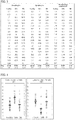
FIG. 1 is a table showing frequencies of living cells (P1%) in peripheral blood mononuclear cells (PBMCs), frequencies of cells expressing CD11 b, and frequencies of cells expressing CD32. -
FIG. 2 is an image showing frequencies of living cells (P1%) in PBMCs, frequencies of cells expressing CD11b, and frequencies of cells expressing CD32. -
FIG. 3 is a table showing ratios of granulocytes, ratios of lymphocytes, and ratios of granulocytes to lymphocytes, in PBMCs. -
FIG. 4 is an image showing ratios of granulocytes and ratios of lymphocytes, in PBMCs. - While the inventors of the present invention were studying a biomarker capable of diagnosing Still's disease, differences in the frequency of cells expressing CD11b, the frequency of cells expressing CD32 and the frequency ratio of granulocytes to lymphocytes between a normal person and a patient with Still's disease were found, thereby completing the present invention.
- The frequency refers to the number of cells expressing CD11b, the number of cells expressing CD32, and the number of frequency occupied by with granulocytes or lymphocytes, with respect to the total number of cells
- Therefore, the present invention provides a biomarker composition for diagnosing Still's disease, the biomarker composition including at least one protein selected from CD11b and CD32.
- In an embodiment of the present invention, the frequency of cells expressing CD11b and the frequency of cells expressing CD32 in peripheral blood mononuclear cells (PBMCs) of the patient with Still's disease are each found to be higher than that of cells expressing CD11b or cells expressing CD32 in PBMCs of a normal person or a patient with rheumatoid arthritis.
- In addition, in one or more embodiments of the present invention, the ratio of granulocytes in PBMCs of the patient with Still's disease was found to be higher than that of granulocytes in PBMCs of a normal person or a patient with rheumatoid arthritis, and the ratio of lymphocytes was found to be lower.
- The present invention also provides a kit for diagnosing Still's disease, the kit including an antibody specifically binding to a CD11b or CD32 cell-surface antigen.
- The antibody may be a polyclonal antibody or a monoclonal antibody.
- The polyclonal antibody may be prepared by injecting an immunogen, such as CD11 b or CD32 protein or a fragment thereof, into a foreign host according to methods known in the art. The foreign host may include a mammal, such as a mouse, a rat, a sheep, or a rabbit. The immunogen may be injected via an intramuscular, intraperitoneal, or subcutaneous injection method, and is generally administered with an adjuvant to increase antigenicity. Serum is collected periodically from a foreign host to collect serum having improved titer and showing specificity to antigens, or to separate and purify antibodies therefrom.
- The monoclonal antibody may be prepared by an immortalized cell line generation technique using a fusion method known in the art. For example, a protein expressed in a gene may be immunized in a mouse, or a peptide may be synthesized and bound to a bovine serum albumin to be immunized in a mouse. Antigen-secreting B lymphocytes separated from the mouse may be then fused with myeloma of a human or a mouse to produce immortalized hybridomas, and the hybridomas may be subjected to an indirect enzyme-linked immunoabsorbent assay (ELISA) to confirm whether the monoclonal antibody is produced. Then, positive clones may be selected and cultured, and antibodies may be separated and purified. Alternatively, antibodies may be injected into the abdominal cavity of a rat, and ascites may be collected, thereby preparing the monoclonal antibody.
- The monoclonal antibody may be quantitatively analyzed by performing a color reaction using a secondary antibody to which an enzyme such as alkaline phosphatase (AP) or horseradish peroxidase (HRP) is bound, and a substrate of the secondary antibody. Alternatively, the monoclonal antibody may be directly quantitatively by using an antibody to which an enzyme such as AP or HRP is bound for the monoclonal antibody against the protein above. In addition, an antibody labeled with various fluorescent markers such as fluorescein isothiocyanat (FITC) and phycoerythrin (PE) may be used.
- The reaction between the protein above and the antibody may be confirmed by protein identification experiments such as western blot, Immunoprecipitation (IP), ELISA, immunohistochemistry (IHC), and flow cytometry analysis (FACS), but embodiments of the present invention are not limited thereto.
- The kit including the antibody may typically include an antibody and a buffer that are in the lyophilized form, a stabilizer, an inactive protein, or the like, wherein the antibody may be labeled with a radionuclide, a fluorescer, an enzyme, or the like.
- The present invention also provides a method of providing information for diagnosis of Still's disease, the method including: measuring an expression level of at least one protein selected from CD11b and CD32 in a sample; comparing the measured expression level with a protein expression level of a normal control sample; and diagnosing Still's disease, when the expression level of the at least one protein selected from CD11b and CD32 in the sample is higher than that of the protein expression of the normal control sample.
- The present invention also provides a method of providing information for diagnosis of Still's disease, the method including: measuring a frequency ratio of granulocytes to lymphocytes in a sample; comparing the measured frequency ratio with a frequency ratio of a normal control sample; and diagnosing Still's disease, when the frequency ratio of the granulocytes to the lymphocytes in the sample is higher than that of the granulocytes to the lymphocytes in the normal control sample.
- When the frequency ratio of the granulocytes to the lymphocytes is in a range of about 3.0 to about 50.0, it is diagnosed as Still's disease.
- An example of the sample may be blood, and more preferably, may be PBMCs separate from blood, but embodiments of the present invention are not limited thereto.
- Hereinafter, to promote understanding of one or more exemplary embodiments, reference has been made to the exemplary embodiments. However, the present invention should not be construed as being limited to the exemplary embodiments set forth herein. Rather, these embodiments are provided so that this disclosure will be thorough and complete, and will fully convey the concept of the inventive concept to those skilled in the art.
- Human PBMCs were separated from human blood of a healthy donor by using an ammonium-chloride-potassium (ACK) lysis buffer. Then, 2 mL of blood was added to a tube treated with ethylenediaminetetraacetic acid (EDTA), and the tube was inverted 15 times. Afterwards, the resultant blood was added to 40 mL of the ACK lysis buffer, and was left at room temperature for 5 minutes. The centrifugation was performed thereon at a speed of 300 xg for 5 minutes. After white blood cells (WBC) were collected, the supernatant was discarded and the precipitated cells were mixed in 5 ml of PBS. The centrifugation was repeatedly performed thereon twice at a speed of 300 xg at a temperature of 4°C, thereby preparing PBMCs.
- The frequencies of cells expressing CD11b and cells expressing CD32 were each measured in the PBMCs prepared according to Example 1, with respect to normal people (19 people), patients with rheumatoid arthritis (RA) (19 people), and patients with Still's disease (18 people).
- Here, red blood cells were removed from each blood, and leukocytes were collected. Then, by a reaction with anti-CD11b and anti-CD32 antibodies each labeled with different fluorescence, the leukocytes were reacted with the antibodies, and the number of cells to which the antibodies bound was counted according to FACS. In this regard, the frequency of these cells occupied over the entire cells was analyzed.
- Consequently, as shown in
FIGS. 1 and 2 , it was confirmed that the frequencies of the cells expressing CD11b and the cells expressing CD32 were significantly high when compared with the normal control group and the test group of patients with RA. - Here, there was no bid difference overall regarding the frequency of living cells over the entire cells (P1 %).
- In the same manner as in Example 2, the frequencies of granulocyte and lymphocyte and the ratio of granulocytes to lymphocytes were measured with respect to normal people (19 people), patients with RA (19 people), and patients with Still's disease (18 people).
- Consequently, as shown in
FIGS. 3 and 4 , it was confirmed that the frequency of granulocytes of the group of patients with Still's disease was higher than that of granulocytes of the normal control group and the test group of patients with RA, and that the frequency of lymphocyte of the group of patients with Still's disease was significantly lower than that of lymphocyte of the normal control group and the test group of patients with RA. - In particular, referring to
FIG. 3 , as a result of confirming the ratio of granulocytes to lymphocytes, the ratio of the group of patients with Still's disease was about 7 times higher than that of the normal control group, and accordingly, it was confirmed that the ratio of granulocytes was significantly high in PBMCs of the patients with Still's disease. - Overall, when the PBMCs of the patients with Still's disease are compared with those of the normal control group, the frequencies of the cells expressing CD11b and the cells expressing CD32 were high, as well as the ratio of granulocytes to lymphocytes. Thus, through analysis, the present invention can be utilized for the diagnosis of Still's disease.
- While the present invention has been particularly shown and described with reference to exemplary embodiments thereof, it will be understood by one of ordinary skill in the art that the detailed embodiments disclosed herein are only preferred embodiments and that the scope of the present invention is not limited thereby. Therefore, it is intended that the scope of the present invention be defined by the claims and equivalents thereof.
Claims (8)
- A biomarker composition for diagnosing Still's disease, the biomarker composition comprising at least one protein selected from CD11b and CD32.
- A kit for diagnosing Still's disease, the kit comprising an antibody specifically binding to a CD11b or CD32 cell-surface antigen.
- The kit of claim 2, wherein the antibody is a monoclonal antibody or a polyclonal antibody.
- A method of providing information for diagnosis of Still's disease, the method comprising:measuring an expression level of at least one protein selected from CD11b and CD32 in a sample;comparing the measured expression level with a protein expression level of a normal control sample; anddiagnosing Still's disease, when the expression level of the at least one protein selected from CD11b and CD32 in the sample is higher than that of the protein expression of the normal control sample.
- A method of providing information for diagnosis of Still's disease, the method comprising:measuring a frequency ratio of granulocytes to lymphocytes in a sample;comparing the measured frequency ratio with a frequency ratio of a normal control sample; anddiagnosing Still's disease, when the frequency ratio of the granulocytes to the lymphocytes in the sample is higher than that of the granulocytes to the lymphocytes in the normal control sample.
- The method of claim 5, wherein the frequency ratio of the granulocytes to the lymphocytes is in a range of about 3.0 to about 50.0.
- The method of claim 4 or 5, wherein the sample is blood.
- The method of claim 4 or 5, wherein the sample is a peripheral blood mononuclear cell (PBMC).
Applications Claiming Priority (3)
| Application Number | Priority Date | Filing Date | Title |
|---|---|---|---|
| KR20150053231 | 2015-04-15 | ||
| KR1020160044090A KR101806681B1 (en) | 2015-04-15 | 2016-04-11 | Biomarker composition for diagnosing still's diseases, diagnosing kit, and diagnosing method |
| PCT/KR2016/003898 WO2016167573A1 (en) | 2015-04-15 | 2016-04-14 | Biomarker composition for diagnosing still's disease, diagnostic kit, and diagnostic method |
Publications (3)
| Publication Number | Publication Date |
|---|---|
| EP3285071A1 true EP3285071A1 (en) | 2018-02-21 |
| EP3285071A4 EP3285071A4 (en) | 2018-12-19 |
| EP3285071B1 EP3285071B1 (en) | 2021-07-28 |
Family
ID=57446606
Family Applications (1)
| Application Number | Title | Priority Date | Filing Date |
|---|---|---|---|
| EP16780296.6A Active EP3285071B1 (en) | 2015-04-15 | 2016-04-14 | Use of biomarker composition or kit for diagnosing still's disease and diagnostic method |
Country Status (2)
| Country | Link |
|---|---|
| EP (1) | EP3285071B1 (en) |
| KR (1) | KR101806681B1 (en) |
Cited By (1)
| Publication number | Priority date | Publication date | Assignee | Title |
|---|---|---|---|---|
| CN113777319A (en) * | 2020-06-10 | 2021-12-10 | 台湾中国医药大学 | Method for diagnosing and typing adult still's disease |
Families Citing this family (6)
| Publication number | Priority date | Publication date | Assignee | Title |
|---|---|---|---|---|
| KR102578917B1 (en) | 2021-01-19 | 2023-09-15 | 영남대학교 산학협력단 | Composite of octahedron-like copper cobalt oxide on carbon fiber and its application for the supercapacitor electrodes |
| KR102705642B1 (en) | 2021-06-03 | 2024-09-12 | 아주대학교산학협력단 | Diagnostic composition of adult-onset Still’s disease and diagnosis method thereof |
| KR102621473B1 (en) * | 2021-07-01 | 2024-01-05 | 아주대학교산학협력단 | Biomarker composition for diagnosing adult-onset still's disease |
| KR102650566B1 (en) | 2021-12-03 | 2024-03-26 | 인제대학교 산학협력단 | Ocular nanoemulsion composition for the treatment of macular degeneration |
| KR102928744B1 (en) | 2021-12-22 | 2026-02-23 | 재단법인대구경북과학기술원 | Producing method of tongue organoid and uses thereof |
| KR102909685B1 (en) | 2022-05-26 | 2026-01-12 | 동국대학교 산학협력단 | Method for screening YDJC inhibitor |
Family Cites Families (2)
| Publication number | Priority date | Publication date | Assignee | Title |
|---|---|---|---|---|
| AU3712200A (en) * | 1999-03-01 | 2000-09-21 | Board Of Trustees Of The Leland Stanford Junior University | Rapid assay for chorioamnionitis |
| WO2011138506A1 (en) * | 2010-05-04 | 2011-11-10 | Jari Nuutila | Flow cytometric method for distinguishing between bacterial and viral infections |
-
2016
- 2016-04-11 KR KR1020160044090A patent/KR101806681B1/en active Active
- 2016-04-14 EP EP16780296.6A patent/EP3285071B1/en active Active
Cited By (1)
| Publication number | Priority date | Publication date | Assignee | Title |
|---|---|---|---|---|
| CN113777319A (en) * | 2020-06-10 | 2021-12-10 | 台湾中国医药大学 | Method for diagnosing and typing adult still's disease |
Also Published As
| Publication number | Publication date |
|---|---|
| KR20160123238A (en) | 2016-10-25 |
| EP3285071A4 (en) | 2018-12-19 |
| EP3285071B1 (en) | 2021-07-28 |
| KR101806681B1 (en) | 2017-12-07 |
Similar Documents
| Publication | Publication Date | Title |
|---|---|---|
| EP3285071B1 (en) | Use of biomarker composition or kit for diagnosing still's disease and diagnostic method | |
| Perugino et al. | Identification of galectin-3 as an autoantigen in patients with IgG4-related disease | |
| US20070269835A1 (en) | Reagent for determining laminin 5 antigen in biological sample and assay method | |
| EP2280279A1 (en) | Method for evaluation of function of phagocyte | |
| US20110256636A1 (en) | Methods and reagents for diagnosing rheumatoid arthrtis | |
| CN102608333A (en) | A kind of tuberculosis diagnostic composition and its application | |
| CN106706912A (en) | Marker for diagnosis of inflammation-associated HCC and application thereof | |
| US12352766B2 (en) | Immunoassay method for free aim in biological sample, and method for detecting NASH in subject | |
| JP6000239B2 (en) | Antibody reacting with native Cochlin-tomoprotein (CTP) and method for measuring CTP using the same | |
| EP4257977A1 (en) | Autoantibodies related to iga nephropathy | |
| JP4573188B2 (en) | Anti-NC1 monoclonal antibody | |
| US20230349889A1 (en) | Methods of Determining Immune Response | |
| JP6206953B2 (en) | Method for testing the likelihood of developing adult T-cell leukemia | |
| KR101836859B1 (en) | Biomarker composition for diagnosing radiation exposure comprising caveolin-1 and method for diagnosing using the same marker | |
| CN119161462B (en) | Monoclonal antibody cAbD4 of hepatitis B virus core protein and preparation and application thereof | |
| CN119101148B (en) | Monoclonal antibody cAbF of hepatitis B virus core protein and preparation and application thereof | |
| CN119161465B (en) | Monoclonal antibody cAbA1 of hepatitis B virus core protein and preparation and application thereof | |
| KR102621473B1 (en) | Biomarker composition for diagnosing adult-onset still's disease | |
| WO2012072516A1 (en) | Barf1 a diagnostic and prognostic marker for epstein-barr virus (ebv)-associated lymphoma | |
| WO2016167573A1 (en) | Biomarker composition for diagnosing still's disease, diagnostic kit, and diagnostic method | |
| US20220120744A1 (en) | Assessing and treating germ cell tumors and paraneoplastic autoimmunity | |
| EP2799877A1 (en) | Process for diagnosing a human subject with diseases affecting the kidneys, or at risk of acquiring diseases affecting the kidneys | |
| JP7007665B2 (en) | Method for determining the tissue regeneration state of a living body | |
| CN117756903A (en) | A schistosomiasis-derived polypeptide that induces follicular helper T cells and its application | |
| Hla | The clinicopathological study and associated causes of pleural effusions in cats |
Legal Events
| Date | Code | Title | Description |
|---|---|---|---|
| STAA | Information on the status of an ep patent application or granted ep patent |
Free format text: STATUS: THE INTERNATIONAL PUBLICATION HAS BEEN MADE |
|
| PUAI | Public reference made under article 153(3) epc to a published international application that has entered the european phase |
Free format text: ORIGINAL CODE: 0009012 |
|
| STAA | Information on the status of an ep patent application or granted ep patent |
Free format text: STATUS: REQUEST FOR EXAMINATION WAS MADE |
|
| 17P | Request for examination filed |
Effective date: 20171106 |
|
| AK | Designated contracting states |
Kind code of ref document: A1 Designated state(s): AL AT BE BG CH CY CZ DE DK EE ES FI FR GB GR HR HU IE IS IT LI LT LU LV MC MK MT NL NO PL PT RO RS SE SI SK SM TR |
|
| AX | Request for extension of the european patent |
Extension state: BA ME |
|
| RIN1 | Information on inventor provided before grant (corrected) |
Inventor name: KIM, HYOUN AH Inventor name: SOHN, SEONGHYANG |
|
| DAV | Request for validation of the european patent (deleted) | ||
| DAX | Request for extension of the european patent (deleted) | ||
| RIC1 | Information provided on ipc code assigned before grant |
Ipc: G01N 33/68 20060101AFI20180820BHEP Ipc: G01N 33/569 20060101ALI20180820BHEP |
|
| REG | Reference to a national code |
Ref country code: DE Ref legal event code: R079 Ref document number: 602016061276 Country of ref document: DE Free format text: PREVIOUS MAIN CLASS: G01N0033530000 Ipc: G01N0033680000 |
|
| A4 | Supplementary search report drawn up and despatched |
Effective date: 20181116 |
|
| RIC1 | Information provided on ipc code assigned before grant |
Ipc: G01N 33/68 20060101AFI20181112BHEP Ipc: G01N 33/569 20060101ALI20181112BHEP |
|
| STAA | Information on the status of an ep patent application or granted ep patent |
Free format text: STATUS: EXAMINATION IS IN PROGRESS |
|
| 17Q | First examination report despatched |
Effective date: 20190515 |
|
| GRAP | Despatch of communication of intention to grant a patent |
Free format text: ORIGINAL CODE: EPIDOSNIGR1 |
|
| STAA | Information on the status of an ep patent application or granted ep patent |
Free format text: STATUS: GRANT OF PATENT IS INTENDED |
|
| INTG | Intention to grant announced |
Effective date: 20210302 |
|
| GRAS | Grant fee paid |
Free format text: ORIGINAL CODE: EPIDOSNIGR3 |
|
| GRAA | (expected) grant |
Free format text: ORIGINAL CODE: 0009210 |
|
| STAA | Information on the status of an ep patent application or granted ep patent |
Free format text: STATUS: THE PATENT HAS BEEN GRANTED |
|
| AK | Designated contracting states |
Kind code of ref document: B1 Designated state(s): AL AT BE BG CH CY CZ DE DK EE ES FI FR GB GR HR HU IE IS IT LI LT LU LV MC MK MT NL NO PL PT RO RS SE SI SK SM TR |
|
| REG | Reference to a national code |
Ref country code: GB Ref legal event code: FG4D |
|
| REG | Reference to a national code |
Ref country code: CH Ref legal event code: EP |
|
| REG | Reference to a national code |
Ref country code: AT Ref legal event code: REF Ref document number: 1415161 Country of ref document: AT Kind code of ref document: T Effective date: 20210815 |
|
| REG | Reference to a national code |
Ref country code: IE Ref legal event code: FG4D |
|
| REG | Reference to a national code |
Ref country code: DE Ref legal event code: R096 Ref document number: 602016061276 Country of ref document: DE |
|
| REG | Reference to a national code |
Ref country code: LT Ref legal event code: MG9D |
|
| REG | Reference to a national code |
Ref country code: NL Ref legal event code: MP Effective date: 20210728 |
|
| REG | Reference to a national code |
Ref country code: AT Ref legal event code: MK05 Ref document number: 1415161 Country of ref document: AT Kind code of ref document: T Effective date: 20210728 |
|
| PG25 | Lapsed in a contracting state [announced via postgrant information from national office to epo] |
Ref country code: HR Free format text: LAPSE BECAUSE OF FAILURE TO SUBMIT A TRANSLATION OF THE DESCRIPTION OR TO PAY THE FEE WITHIN THE PRESCRIBED TIME-LIMIT Effective date: 20210728 Ref country code: FI Free format text: LAPSE BECAUSE OF FAILURE TO SUBMIT A TRANSLATION OF THE DESCRIPTION OR TO PAY THE FEE WITHIN THE PRESCRIBED TIME-LIMIT Effective date: 20210728 Ref country code: ES Free format text: LAPSE BECAUSE OF FAILURE TO SUBMIT A TRANSLATION OF THE DESCRIPTION OR TO PAY THE FEE WITHIN THE PRESCRIBED TIME-LIMIT Effective date: 20210728 Ref country code: NL Free format text: LAPSE BECAUSE OF FAILURE TO SUBMIT A TRANSLATION OF THE DESCRIPTION OR TO PAY THE FEE WITHIN THE PRESCRIBED TIME-LIMIT Effective date: 20210728 Ref country code: NO Free format text: LAPSE BECAUSE OF FAILURE TO SUBMIT A TRANSLATION OF THE DESCRIPTION OR TO PAY THE FEE WITHIN THE PRESCRIBED TIME-LIMIT Effective date: 20211028 Ref country code: PT Free format text: LAPSE BECAUSE OF FAILURE TO SUBMIT A TRANSLATION OF THE DESCRIPTION OR TO PAY THE FEE WITHIN THE PRESCRIBED TIME-LIMIT Effective date: 20211129 Ref country code: LT Free format text: LAPSE BECAUSE OF FAILURE TO SUBMIT A TRANSLATION OF THE DESCRIPTION OR TO PAY THE FEE WITHIN THE PRESCRIBED TIME-LIMIT Effective date: 20210728 Ref country code: AT Free format text: LAPSE BECAUSE OF FAILURE TO SUBMIT A TRANSLATION OF THE DESCRIPTION OR TO PAY THE FEE WITHIN THE PRESCRIBED TIME-LIMIT Effective date: 20210728 Ref country code: BG Free format text: LAPSE BECAUSE OF FAILURE TO SUBMIT A TRANSLATION OF THE DESCRIPTION OR TO PAY THE FEE WITHIN THE PRESCRIBED TIME-LIMIT Effective date: 20211028 Ref country code: SE Free format text: LAPSE BECAUSE OF FAILURE TO SUBMIT A TRANSLATION OF THE DESCRIPTION OR TO PAY THE FEE WITHIN THE PRESCRIBED TIME-LIMIT Effective date: 20210728 Ref country code: RS Free format text: LAPSE BECAUSE OF FAILURE TO SUBMIT A TRANSLATION OF THE DESCRIPTION OR TO PAY THE FEE WITHIN THE PRESCRIBED TIME-LIMIT Effective date: 20210728 |
|
| PG25 | Lapsed in a contracting state [announced via postgrant information from national office to epo] |
Ref country code: PL Free format text: LAPSE BECAUSE OF FAILURE TO SUBMIT A TRANSLATION OF THE DESCRIPTION OR TO PAY THE FEE WITHIN THE PRESCRIBED TIME-LIMIT Effective date: 20210728 Ref country code: LV Free format text: LAPSE BECAUSE OF FAILURE TO SUBMIT A TRANSLATION OF THE DESCRIPTION OR TO PAY THE FEE WITHIN THE PRESCRIBED TIME-LIMIT Effective date: 20210728 Ref country code: GR Free format text: LAPSE BECAUSE OF FAILURE TO SUBMIT A TRANSLATION OF THE DESCRIPTION OR TO PAY THE FEE WITHIN THE PRESCRIBED TIME-LIMIT Effective date: 20211029 |
|
| PG25 | Lapsed in a contracting state [announced via postgrant information from national office to epo] |
Ref country code: DK Free format text: LAPSE BECAUSE OF FAILURE TO SUBMIT A TRANSLATION OF THE DESCRIPTION OR TO PAY THE FEE WITHIN THE PRESCRIBED TIME-LIMIT Effective date: 20210728 |
|
| REG | Reference to a national code |
Ref country code: DE Ref legal event code: R097 Ref document number: 602016061276 Country of ref document: DE |
|
| PG25 | Lapsed in a contracting state [announced via postgrant information from national office to epo] |
Ref country code: SM Free format text: LAPSE BECAUSE OF FAILURE TO SUBMIT A TRANSLATION OF THE DESCRIPTION OR TO PAY THE FEE WITHIN THE PRESCRIBED TIME-LIMIT Effective date: 20210728 Ref country code: SK Free format text: LAPSE BECAUSE OF FAILURE TO SUBMIT A TRANSLATION OF THE DESCRIPTION OR TO PAY THE FEE WITHIN THE PRESCRIBED TIME-LIMIT Effective date: 20210728 Ref country code: RO Free format text: LAPSE BECAUSE OF FAILURE TO SUBMIT A TRANSLATION OF THE DESCRIPTION OR TO PAY THE FEE WITHIN THE PRESCRIBED TIME-LIMIT Effective date: 20210728 Ref country code: EE Free format text: LAPSE BECAUSE OF FAILURE TO SUBMIT A TRANSLATION OF THE DESCRIPTION OR TO PAY THE FEE WITHIN THE PRESCRIBED TIME-LIMIT Effective date: 20210728 Ref country code: CZ Free format text: LAPSE BECAUSE OF FAILURE TO SUBMIT A TRANSLATION OF THE DESCRIPTION OR TO PAY THE FEE WITHIN THE PRESCRIBED TIME-LIMIT Effective date: 20210728 Ref country code: AL Free format text: LAPSE BECAUSE OF FAILURE TO SUBMIT A TRANSLATION OF THE DESCRIPTION OR TO PAY THE FEE WITHIN THE PRESCRIBED TIME-LIMIT Effective date: 20210728 |
|
| PLBE | No opposition filed within time limit |
Free format text: ORIGINAL CODE: 0009261 |
|
| STAA | Information on the status of an ep patent application or granted ep patent |
Free format text: STATUS: NO OPPOSITION FILED WITHIN TIME LIMIT |
|
| 26N | No opposition filed |
Effective date: 20220429 |
|
| PG25 | Lapsed in a contracting state [announced via postgrant information from national office to epo] |
Ref country code: IT Free format text: LAPSE BECAUSE OF FAILURE TO SUBMIT A TRANSLATION OF THE DESCRIPTION OR TO PAY THE FEE WITHIN THE PRESCRIBED TIME-LIMIT Effective date: 20210728 |
|
| REG | Reference to a national code |
Ref country code: CH Ref legal event code: PL |
|
| GBPC | Gb: european patent ceased through non-payment of renewal fee |
Effective date: 20220414 |
|
| REG | Reference to a national code |
Ref country code: BE Ref legal event code: MM Effective date: 20220430 |
|
| PG25 | Lapsed in a contracting state [announced via postgrant information from national office to epo] |
Ref country code: MC Free format text: LAPSE BECAUSE OF FAILURE TO SUBMIT A TRANSLATION OF THE DESCRIPTION OR TO PAY THE FEE WITHIN THE PRESCRIBED TIME-LIMIT Effective date: 20210728 Ref country code: LU Free format text: LAPSE BECAUSE OF NON-PAYMENT OF DUE FEES Effective date: 20220414 Ref country code: LI Free format text: LAPSE BECAUSE OF NON-PAYMENT OF DUE FEES Effective date: 20220430 Ref country code: GB Free format text: LAPSE BECAUSE OF NON-PAYMENT OF DUE FEES Effective date: 20220414 Ref country code: FR Free format text: LAPSE BECAUSE OF NON-PAYMENT OF DUE FEES Effective date: 20220430 Ref country code: CH Free format text: LAPSE BECAUSE OF NON-PAYMENT OF DUE FEES Effective date: 20220430 |
|
| PG25 | Lapsed in a contracting state [announced via postgrant information from national office to epo] |
Ref country code: BE Free format text: LAPSE BECAUSE OF NON-PAYMENT OF DUE FEES Effective date: 20220430 |
|
| PG25 | Lapsed in a contracting state [announced via postgrant information from national office to epo] |
Ref country code: IE Free format text: LAPSE BECAUSE OF NON-PAYMENT OF DUE FEES Effective date: 20220414 |
|
| PG25 | Lapsed in a contracting state [announced via postgrant information from national office to epo] |
Ref country code: HU Free format text: LAPSE BECAUSE OF FAILURE TO SUBMIT A TRANSLATION OF THE DESCRIPTION OR TO PAY THE FEE WITHIN THE PRESCRIBED TIME-LIMIT; INVALID AB INITIO Effective date: 20160414 |
|
| PG25 | Lapsed in a contracting state [announced via postgrant information from national office to epo] |
Ref country code: MK Free format text: LAPSE BECAUSE OF FAILURE TO SUBMIT A TRANSLATION OF THE DESCRIPTION OR TO PAY THE FEE WITHIN THE PRESCRIBED TIME-LIMIT Effective date: 20210728 Ref country code: CY Free format text: LAPSE BECAUSE OF FAILURE TO SUBMIT A TRANSLATION OF THE DESCRIPTION OR TO PAY THE FEE WITHIN THE PRESCRIBED TIME-LIMIT Effective date: 20210728 |
|
| PG25 | Lapsed in a contracting state [announced via postgrant information from national office to epo] |
Ref country code: TR Free format text: LAPSE BECAUSE OF FAILURE TO SUBMIT A TRANSLATION OF THE DESCRIPTION OR TO PAY THE FEE WITHIN THE PRESCRIBED TIME-LIMIT Effective date: 20210728 |
|
| PG25 | Lapsed in a contracting state [announced via postgrant information from national office to epo] |
Ref country code: MT Free format text: LAPSE BECAUSE OF FAILURE TO SUBMIT A TRANSLATION OF THE DESCRIPTION OR TO PAY THE FEE WITHIN THE PRESCRIBED TIME-LIMIT Effective date: 20210728 |
|
| PGFP | Annual fee paid to national office [announced via postgrant information from national office to epo] |
Ref country code: DE Payment date: 20250320 Year of fee payment: 10 |