EP3284490A1 - Verfahren zum betrieb einer extrakorporalen blutbehandlungsvorrichtung und blutbehandlungsvorrichtung - Google Patents
Verfahren zum betrieb einer extrakorporalen blutbehandlungsvorrichtung und blutbehandlungsvorrichtung Download PDFInfo
- Publication number
- EP3284490A1 EP3284490A1 EP17192921.9A EP17192921A EP3284490A1 EP 3284490 A1 EP3284490 A1 EP 3284490A1 EP 17192921 A EP17192921 A EP 17192921A EP 3284490 A1 EP3284490 A1 EP 3284490A1
- Authority
- EP
- European Patent Office
- Prior art keywords
- pressure
- impeller
- pump
- extracorporeal blood
- course
- Prior art date
- Legal status (The legal status is an assumption and is not a legal conclusion. Google has not performed a legal analysis and makes no representation as to the accuracy of the status listed.)
- Granted
Links
Images
Classifications
-
- A—HUMAN NECESSITIES
- A61—MEDICAL OR VETERINARY SCIENCE; HYGIENE
- A61M—DEVICES FOR INTRODUCING MEDIA INTO, OR ONTO, THE BODY; DEVICES FOR TRANSDUCING BODY MEDIA OR FOR TAKING MEDIA FROM THE BODY; DEVICES FOR PRODUCING OR ENDING SLEEP OR STUPOR
- A61M1/00—Suction or pumping devices for medical purposes; Devices for carrying-off, for treatment of, or for carrying-over, body-liquids; Drainage systems
- A61M1/14—Dialysis systems; Artificial kidneys; Blood oxygenators ; Reciprocating systems for treatment of body fluids, e.g. single needle systems for hemofiltration or pheresis
- A61M1/16—Dialysis systems; Artificial kidneys; Blood oxygenators ; Reciprocating systems for treatment of body fluids, e.g. single needle systems for hemofiltration or pheresis with membranes
- A61M1/1601—Control or regulation
- A61M1/1603—Regulation parameters
-
- A—HUMAN NECESSITIES
- A61—MEDICAL OR VETERINARY SCIENCE; HYGIENE
- A61B—DIAGNOSIS; SURGERY; IDENTIFICATION
- A61B5/00—Measuring for diagnostic purposes; Identification of persons
- A61B5/02—Detecting, measuring or recording for evaluating the cardiovascular system, e.g. pulse, heart rate, blood pressure or blood flow
- A61B5/021—Measuring pressure in heart or blood vessels
-
- A—HUMAN NECESSITIES
- A61—MEDICAL OR VETERINARY SCIENCE; HYGIENE
- A61B—DIAGNOSIS; SURGERY; IDENTIFICATION
- A61B5/00—Measuring for diagnostic purposes; Identification of persons
- A61B5/68—Arrangements of detecting, measuring or recording means, e.g. sensors, in relation to patient
- A61B5/6846—Arrangements of detecting, measuring or recording means, e.g. sensors, in relation to patient specially adapted to be brought in contact with an internal body part, i.e. invasive
- A61B5/6847—Arrangements of detecting, measuring or recording means, e.g. sensors, in relation to patient specially adapted to be brought in contact with an internal body part, i.e. invasive mounted on an invasive device
- A61B5/6866—Extracorporeal blood circuits, e.g. dialysis circuits
-
- A—HUMAN NECESSITIES
- A61—MEDICAL OR VETERINARY SCIENCE; HYGIENE
- A61M—DEVICES FOR INTRODUCING MEDIA INTO, OR ONTO, THE BODY; DEVICES FOR TRANSDUCING BODY MEDIA OR FOR TAKING MEDIA FROM THE BODY; DEVICES FOR PRODUCING OR ENDING SLEEP OR STUPOR
- A61M1/00—Suction or pumping devices for medical purposes; Devices for carrying-off, for treatment of, or for carrying-over, body-liquids; Drainage systems
- A61M1/14—Dialysis systems; Artificial kidneys; Blood oxygenators ; Reciprocating systems for treatment of body fluids, e.g. single needle systems for hemofiltration or pheresis
- A61M1/16—Dialysis systems; Artificial kidneys; Blood oxygenators ; Reciprocating systems for treatment of body fluids, e.g. single needle systems for hemofiltration or pheresis with membranes
-
- A—HUMAN NECESSITIES
- A61—MEDICAL OR VETERINARY SCIENCE; HYGIENE
- A61M—DEVICES FOR INTRODUCING MEDIA INTO, OR ONTO, THE BODY; DEVICES FOR TRANSDUCING BODY MEDIA OR FOR TAKING MEDIA FROM THE BODY; DEVICES FOR PRODUCING OR ENDING SLEEP OR STUPOR
- A61M1/00—Suction or pumping devices for medical purposes; Devices for carrying-off, for treatment of, or for carrying-over, body-liquids; Drainage systems
- A61M1/14—Dialysis systems; Artificial kidneys; Blood oxygenators ; Reciprocating systems for treatment of body fluids, e.g. single needle systems for hemofiltration or pheresis
- A61M1/16—Dialysis systems; Artificial kidneys; Blood oxygenators ; Reciprocating systems for treatment of body fluids, e.g. single needle systems for hemofiltration or pheresis with membranes
- A61M1/26—Dialysis systems; Artificial kidneys; Blood oxygenators ; Reciprocating systems for treatment of body fluids, e.g. single needle systems for hemofiltration or pheresis with membranes and internal elements which are moving
- A61M1/267—Dialysis systems; Artificial kidneys; Blood oxygenators ; Reciprocating systems for treatment of body fluids, e.g. single needle systems for hemofiltration or pheresis with membranes and internal elements which are moving used for pumping
-
- A—HUMAN NECESSITIES
- A61—MEDICAL OR VETERINARY SCIENCE; HYGIENE
- A61M—DEVICES FOR INTRODUCING MEDIA INTO, OR ONTO, THE BODY; DEVICES FOR TRANSDUCING BODY MEDIA OR FOR TAKING MEDIA FROM THE BODY; DEVICES FOR PRODUCING OR ENDING SLEEP OR STUPOR
- A61M1/00—Suction or pumping devices for medical purposes; Devices for carrying-off, for treatment of, or for carrying-over, body-liquids; Drainage systems
- A61M1/36—Other treatment of blood in a by-pass of the natural circulatory system, e.g. temperature adaptation, irradiation ; Extra-corporeal blood circuits
- A61M1/3621—Extra-corporeal blood circuits
- A61M1/3622—Extra-corporeal blood circuits with a cassette forming partially or totally the blood circuit
-
- A—HUMAN NECESSITIES
- A61—MEDICAL OR VETERINARY SCIENCE; HYGIENE
- A61M—DEVICES FOR INTRODUCING MEDIA INTO, OR ONTO, THE BODY; DEVICES FOR TRANSDUCING BODY MEDIA OR FOR TAKING MEDIA FROM THE BODY; DEVICES FOR PRODUCING OR ENDING SLEEP OR STUPOR
- A61M1/00—Suction or pumping devices for medical purposes; Devices for carrying-off, for treatment of, or for carrying-over, body-liquids; Drainage systems
- A61M1/36—Other treatment of blood in a by-pass of the natural circulatory system, e.g. temperature adaptation, irradiation ; Extra-corporeal blood circuits
- A61M1/3621—Extra-corporeal blood circuits
- A61M1/3639—Blood pressure control, pressure transducers specially adapted therefor
-
- A—HUMAN NECESSITIES
- A61—MEDICAL OR VETERINARY SCIENCE; HYGIENE
- A61M—DEVICES FOR INTRODUCING MEDIA INTO, OR ONTO, THE BODY; DEVICES FOR TRANSDUCING BODY MEDIA OR FOR TAKING MEDIA FROM THE BODY; DEVICES FOR PRODUCING OR ENDING SLEEP OR STUPOR
- A61M60/00—Blood pumps; Devices for mechanical circulatory actuation; Balloon pumps for circulatory assistance
- A61M60/10—Location thereof with respect to the patient's body
- A61M60/104—Extracorporeal pumps, i.e. the blood being pumped outside the patient's body
- A61M60/109—Extracorporeal pumps, i.e. the blood being pumped outside the patient's body incorporated within extracorporeal blood circuits or systems
- A61M60/113—Extracorporeal pumps, i.e. the blood being pumped outside the patient's body incorporated within extracorporeal blood circuits or systems in other functional devices, e.g. dialysers or heart-lung machines
-
- A—HUMAN NECESSITIES
- A61—MEDICAL OR VETERINARY SCIENCE; HYGIENE
- A61M—DEVICES FOR INTRODUCING MEDIA INTO, OR ONTO, THE BODY; DEVICES FOR TRANSDUCING BODY MEDIA OR FOR TAKING MEDIA FROM THE BODY; DEVICES FOR PRODUCING OR ENDING SLEEP OR STUPOR
- A61M60/00—Blood pumps; Devices for mechanical circulatory actuation; Balloon pumps for circulatory assistance
- A61M60/20—Type thereof
- A61M60/205—Non-positive displacement blood pumps
- A61M60/216—Non-positive displacement blood pumps including a rotating member acting on the blood, e.g. impeller
- A61M60/226—Non-positive displacement blood pumps including a rotating member acting on the blood, e.g. impeller the blood flow through the rotating member having mainly radial components
- A61M60/232—Centrifugal pumps
-
- A—HUMAN NECESSITIES
- A61—MEDICAL OR VETERINARY SCIENCE; HYGIENE
- A61M—DEVICES FOR INTRODUCING MEDIA INTO, OR ONTO, THE BODY; DEVICES FOR TRANSDUCING BODY MEDIA OR FOR TAKING MEDIA FROM THE BODY; DEVICES FOR PRODUCING OR ENDING SLEEP OR STUPOR
- A61M60/00—Blood pumps; Devices for mechanical circulatory actuation; Balloon pumps for circulatory assistance
- A61M60/30—Medical purposes thereof other than the enhancement of the cardiac output
- A61M60/36—Medical purposes thereof other than the enhancement of the cardiac output for specific blood treatment; for specific therapy
- A61M60/37—Haemodialysis, haemofiltration or diafiltration
-
- A—HUMAN NECESSITIES
- A61—MEDICAL OR VETERINARY SCIENCE; HYGIENE
- A61M—DEVICES FOR INTRODUCING MEDIA INTO, OR ONTO, THE BODY; DEVICES FOR TRANSDUCING BODY MEDIA OR FOR TAKING MEDIA FROM THE BODY; DEVICES FOR PRODUCING OR ENDING SLEEP OR STUPOR
- A61M60/00—Blood pumps; Devices for mechanical circulatory actuation; Balloon pumps for circulatory assistance
- A61M60/50—Details relating to control
- A61M60/508—Electronic control means, e.g. for feedback regulation
- A61M60/515—Regulation using real-time patient data
- A61M60/531—Regulation using real-time patient data using blood pressure data, e.g. from blood pressure sensors
-
- A—HUMAN NECESSITIES
- A61—MEDICAL OR VETERINARY SCIENCE; HYGIENE
- A61M—DEVICES FOR INTRODUCING MEDIA INTO, OR ONTO, THE BODY; DEVICES FOR TRANSDUCING BODY MEDIA OR FOR TAKING MEDIA FROM THE BODY; DEVICES FOR PRODUCING OR ENDING SLEEP OR STUPOR
- A61M60/00—Blood pumps; Devices for mechanical circulatory actuation; Balloon pumps for circulatory assistance
- A61M60/50—Details relating to control
- A61M60/508—Electronic control means, e.g. for feedback regulation
- A61M60/562—Electronic control means, e.g. for feedback regulation for making blood flow pulsatile in blood pumps that do not intrinsically create pulsatile flow
- A61M60/569—Electronic control means, e.g. for feedback regulation for making blood flow pulsatile in blood pumps that do not intrinsically create pulsatile flow synchronous with the native heart beat
-
- A—HUMAN NECESSITIES
- A61—MEDICAL OR VETERINARY SCIENCE; HYGIENE
- A61M—DEVICES FOR INTRODUCING MEDIA INTO, OR ONTO, THE BODY; DEVICES FOR TRANSDUCING BODY MEDIA OR FOR TAKING MEDIA FROM THE BODY; DEVICES FOR PRODUCING OR ENDING SLEEP OR STUPOR
- A61M1/00—Suction or pumping devices for medical purposes; Devices for carrying-off, for treatment of, or for carrying-over, body-liquids; Drainage systems
- A61M1/36—Other treatment of blood in a by-pass of the natural circulatory system, e.g. temperature adaptation, irradiation ; Extra-corporeal blood circuits
- A61M1/3621—Extra-corporeal blood circuits
- A61M1/3653—Interfaces between patient blood circulation and extra-corporal blood circuit
- A61M1/3656—Monitoring patency or flow at connection sites; Detecting disconnections
-
- A—HUMAN NECESSITIES
- A61—MEDICAL OR VETERINARY SCIENCE; HYGIENE
- A61M—DEVICES FOR INTRODUCING MEDIA INTO, OR ONTO, THE BODY; DEVICES FOR TRANSDUCING BODY MEDIA OR FOR TAKING MEDIA FROM THE BODY; DEVICES FOR PRODUCING OR ENDING SLEEP OR STUPOR
- A61M2205/00—General characteristics of the apparatus
- A61M2205/12—General characteristics of the apparatus with interchangeable cassettes forming partially or totally the fluid circuit
-
- A—HUMAN NECESSITIES
- A61—MEDICAL OR VETERINARY SCIENCE; HYGIENE
- A61M—DEVICES FOR INTRODUCING MEDIA INTO, OR ONTO, THE BODY; DEVICES FOR TRANSDUCING BODY MEDIA OR FOR TAKING MEDIA FROM THE BODY; DEVICES FOR PRODUCING OR ENDING SLEEP OR STUPOR
- A61M2205/00—General characteristics of the apparatus
- A61M2205/33—Controlling, regulating or measuring
- A61M2205/3331—Pressure; Flow
- A61M2205/3334—Measuring or controlling the flow rate
-
- A—HUMAN NECESSITIES
- A61—MEDICAL OR VETERINARY SCIENCE; HYGIENE
- A61M—DEVICES FOR INTRODUCING MEDIA INTO, OR ONTO, THE BODY; DEVICES FOR TRANSDUCING BODY MEDIA OR FOR TAKING MEDIA FROM THE BODY; DEVICES FOR PRODUCING OR ENDING SLEEP OR STUPOR
- A61M2205/00—General characteristics of the apparatus
- A61M2205/50—General characteristics of the apparatus with microprocessors or computers
-
- A—HUMAN NECESSITIES
- A61—MEDICAL OR VETERINARY SCIENCE; HYGIENE
- A61M—DEVICES FOR INTRODUCING MEDIA INTO, OR ONTO, THE BODY; DEVICES FOR TRANSDUCING BODY MEDIA OR FOR TAKING MEDIA FROM THE BODY; DEVICES FOR PRODUCING OR ENDING SLEEP OR STUPOR
- A61M2230/00—Measuring parameters of the user
- A61M2230/005—Parameter used as control input for the apparatus
-
- A—HUMAN NECESSITIES
- A61—MEDICAL OR VETERINARY SCIENCE; HYGIENE
- A61M—DEVICES FOR INTRODUCING MEDIA INTO, OR ONTO, THE BODY; DEVICES FOR TRANSDUCING BODY MEDIA OR FOR TAKING MEDIA FROM THE BODY; DEVICES FOR PRODUCING OR ENDING SLEEP OR STUPOR
- A61M2230/00—Measuring parameters of the user
- A61M2230/04—Heartbeat characteristics, e.g. ECG, blood pressure modulation
-
- A—HUMAN NECESSITIES
- A61—MEDICAL OR VETERINARY SCIENCE; HYGIENE
- A61M—DEVICES FOR INTRODUCING MEDIA INTO, OR ONTO, THE BODY; DEVICES FOR TRANSDUCING BODY MEDIA OR FOR TAKING MEDIA FROM THE BODY; DEVICES FOR PRODUCING OR ENDING SLEEP OR STUPOR
- A61M2230/00—Measuring parameters of the user
- A61M2230/30—Blood pressure
Definitions
- the invention relates to a method for operating an extracorporeal blood treatment device and a corresponding blood treatment device.
- peristaltic blood pumps also referred to as roller pumps or peristaltic pumps, are used to deliver blood to the extracorporeal bloodstream.
- peristaltic blood pumps hinder the measurement of the course of the patient's pressure pulse waves caused by cardiac contraction in the extracorporeal blood circulation.
- the peristaltic blood pumps namely occlude with the rollers Their rotor a pump tube segment of the extracorporeal blood circulation and thus generate a pulsating flow with strong pressure pulses and pulsating flow rate.
- occluding peristaltic pumps are common in practice for hemodialysis and that the pressure pulses of the occluding blood pump submerge all other pressure signals in the extracorporeal blood circulation in the unfiltered pressure signal as noise.
- centrifugal blood pumps also referred to as impeller blood pumps
- impeller blood pumps are known for other extracorporeal blood circuits. These are used, for example, in cardiac surgery.
- impeller blood pumps can be components of a disposable or a blood tube set, in particular also a blood cassette.
- the impeller of such an impeller blood pump is usually without direct mechanical coupling - so non-contact - magnetically stored, so that the impeller enters into frictional contact only with the funded blood.
- the storage of the impeller may also be a combination of magnetic, hydraulic and / or mechanical storage.
- the object of the present invention is to provide an improved method for operating an extracorporeal blood treatment apparatus with an extracorporeal blood circulation, in particular for hemodialysis and / or hemofiltration and / or hemodiafiltration by controlling an impeller blood pump, and to an improved blood treatment apparatus having a control unit. and computing unit configured and / or programmed to drive an impeller blood pump.
- this object is achieved by a method according to claim 1 and a blood treatment device according to claim 8 of the present invention.
- the present invention provides a method for operating an extracorporeal blood treatment device with an extracorporeal blood circulation, in particular for hemodialysis and / or hemofiltration and / or hemodiafiltration, by controlling an impeller blood pump.
- the impeller blood pump is pulsed by adding a pulsating speed component to a first constant speed.
- the method according to the invention makes use of the typical course of the characteristic curves of impeller blood pumps, which enable targeted predetermination of a certain pressure pulsation by pulsating increase of the pump speed beyond the normal operating points.
- This property is already in the DE 10 2009 060 668 A1 and here especially in the FIG. 2 shown in which the pressure increase is shown as a function of blood flow.
- a targeted pump pulsation in accordance with the present invention, may allow improved operation of the extracorporeal blood circuit with an impeller blood pump.
- the pump pulsation can be predetermined based on measured pressure pulse waves in the extracorporeal blood circulation, such as the patient's pressure waves caused by cardiac contraction.
- the course of the pressure amplitude at at least one pressure measuring point of the extracorporeal blood circulation can be measured.
- the pump pulsation is predetermined based on this measured course of the pressure amplitude in the extracorporeal blood circulation.
- the course of a pressure amplitude at at least one pressure measuring point of the extracorporeal blood circulation can be measured, the measured profile of the pressure amplitude being converted into a desired value for the control of the pulsating speed component of the impeller pump received.
- the measurement signal of the pressure measuring point can be used directly as a target value, for which it is optionally filtered by a low pass and / or scaled.
- the pulsating speed component can be controlled based on the desired value and / or regulated by a feedback.
- the measured course can represent a summation signal from the pressure pulses from the patient's heart passing through the arterial and venous patient connections to the pressure sensor. This is due to the fact that no occluding elements and in particular no occluding pumps are used.
- the impeller pump or centrifugal pump can be arranged between the pressure sensor and the venous patient access, and / or the pressure sensor can be arranged in the venous drip chamber.
- the pulsating operation of the impeller blood pump can be synchronized with a course of the patient caused by cardiac contraction pressure pulse waves in the extracorporeal blood circulation.
- this can be done by using a parameter characterizing the patient pulse and / or the measurement signal already described above.
- the pump speed is first lowered by a specific first speed difference and the thus reduced pump speed is increased by means of a second, but with a certain frequency pulsating up and down speed difference.
- the blood can be promoted in the extracorporeal blood circulation with pulsating pressure curve synchronous to the heartbeat of the patient.
- the mean flow rate of the impeller pump in the extracorporeal blood circulation remains unchanged (eg 500 ml / min).
- the removal of blood from the patient access is adjusted by the pulsatile, synchronized operation of the impeller pump to the supply of blood in the patient access, ie in large supply is much withdrawn and vice versa.
- this synchronization is carried out such that at maximum pressure, the blood in the patient access, d. H. the fistula is sucked.
- the blood in the patient access which may be applied to the patient as a fistula or shunt
- there may be an undesirable fistula circulation of already treated blood when the blood pump via the arterial needle more blood in the extracorporeal Blood circulation is sucked as is due to blood flow in the fistula.
- the shortage of blood flow is counterbalanced by aspirating the already dialyzed blood returned to the fistula via the venous needle. This in turn leads to a reduction in the efficiency of the treatment, since already dialyzed blood in the extracorporeal blood circulation is dialyzed directly again.
- the pulsating operation of the impeller blood pump can be synchronized with the progression of the pressure pulse waves of the patient in the extracorporeal blood circulation caused by cardiac contraction, so that the fistula recirculation of the blood in the extracorporeal blood circulation assumes a minimum.
- the extraction of the course of at least one pressure pulse wave of the patient in the extracorporeal blood circulation caused by cardiac contraction from the first course of the measured pressure amplitude in the sense of the present invention need not include an additional step of the evaluation. Rather, as the pressure pulse wave of the patient in the extracorporeal blood circulation caused by cardiac contraction, the profile of the measured pressure amplitude can be used directly, optionally after a low-pass filtering and / or scaling.
- control of the impeller pump is coupled directly by means of a control circuit to the - possibly against low-pass filtered low-pass filtered - signal of the pressure sensor.
- the frequency of the pump modulation is specified directly by the measurement signal.
- the amplitude of the blood pump modulation can be measured with a constant factor, e.g. 1, be coupled to the amplitude of the pressure signal.
- this factor is stored in the controller.
- the parameters characterizing the patient pulse can therefore also be measured values from ECG, heart rate monitor, blood pressure cuff, ultrasound measurement and / or flow measurement.
- the transmembrane pressure is the pressure drop across the dialyzer membrane which divides the dialyzer into a blood chamber and a dialysis fluid chamber.
- this pressure drop can be specifically influenced by the corresponding mode of operation of the impeller blood pump.
- the present invention further includes a blood treatment device having a control and processing unit that is configured and / or programmed to drive an impeller blood pump. It is provided that the impeller blood pump is pulsed by adding a pulsating speed component to a first constant speed.
- a control and computing unit is configured and / or programmed for such an operation.
- the blood treatment device is configured to perform hemodialysis and / or hemofiltration and / or hemodiafiltration.
- the control and computing unit can be configured and / or programmed so that the pump pulsation is predetermined based on measured pressure pulse waves in the extracorporeal blood circulation.
- the blood treatment device may further comprise a pressure sensor or be connectable to a pressure sensor, via which it measures the course of a pressure amplitude at at least one pressure measuring point of the extracorporeal blood circuit, wherein the measured curve of the pressure amplitude is received in a desired value for the control of the pulsating speed component of the impeller pump , where appropriate, the measuring signal of the pressure measuring point is filtered by a low pass and / or scaled.
- the control and computing unit may be configured and / or programmed to synchronize the pulsed operation of the impeller blood pump with the course of a patient's pulse pulse wave in the extracorporeal bloodstream caused by cardiac contraction, in particular by taking a parameter indicative of the patient's pulse.
- control and processing unit can be configured and / or programmed so that the pulsating operation of the impeller blood pump is synchronized with the course of the patient caused by cardiac contraction pressure pulse waves in extracorporeal blood circulation, so that the fistula recirculation of the blood in the extracorporeal blood circulation a minimum accepts.
- the parameters characterizing the patient pulse may be measured values from ECG, heart rate monitor, blood pressure cuff, ultrasound measurement and / or flow measurement.
- the control and arithmetic unit preferably determines this at least one of these parameters, or has an interface over which it receives at least one of these parameters.
- the blood treatment device of the present invention may include a drive unit for the impeller blood pump, wherein the control and calculation unit is configured and / or programmed to control and / or regulate the drive unit for the impeller blood pump.
- the control and computing unit can furthermore be configured and / or programmed to evaluate the measurement signals of the at least one pressure measurement point of the extracorporeal blood circulation.
- control and computing unit is carried out automatically.
- control and computing unit can be configured and / or programmed to carry out one of the methods presented above, in particular automatically. Furthermore, the control and processing unit can work as described above with regard to the method.
- the invention makes use of the fact that impeller pumps and thus also the impeller blood pumps used here are not occlusive and let pressure pulses pass unadulterated. As a result, the pressure pulse waves caused due to the contraction of the heart can be detected very well.
- the impeller blood pump can be operated in a pulsating manner by adding a pulsating rotational speed component to a first constant rotational speed in a subsequent step following the aforementioned method.
- the method according to the invention makes use of the typical course of the characteristic curves of impeller blood pumps, which enable targeted predetermination of a certain pressure pulsation by pulsating increase of the pump speed beyond the normal operating points. This property is already in the DE 10 2009 060 668 A1 and here especially in the FIG. 2 shown in which the pressure increase is shown as a function of blood flow.
- a targeted pump pulsation in accordance with the present invention, may allow improved operation of the extracorporeal blood circuit with an impeller blood pump.
- the pulsating operation of the impeller blood pump can be synchronized with the course of the patient caused by cardiac contraction pressure pulse waves in the extracorporeal blood circulation.
- the synchronization can be carried out as already explained with regard to the first aspect described above.
- the pulsating operation of the impeller blood pump can be synchronized with the course of the patient caused by cardiac contraction pressure pulse waves in extracorporeal blood circulation, so that the fistula recirculation of the blood in the extracorporeal blood circulation assumes a minimum. Accordingly, with an operation of the impeller blood pump synchronized with the course of the pressure pulse waves caused by cardiac contraction, the occurrence of the undesired fistula circulation can be minimized.
- the transmembrane pressure is the pressure drop across the dialyzer membrane which divides the dialyzer into a blood chamber and a dialysis fluid chamber.
- This pressure drop can according to this aspect of the invention be specifically influenced by the appropriate operation of the impeller blood pump.
- a course of a parameter characterizing the patient flow should be a continuous acquisition of a measured value of the parameter characterizing the patient pulse or a phased detection of such a measured value or a sequential detection of such a measured value, in particular also repeated individual measurements and measurements "from peak to peak” -Peak "be understood.
- a blood treatment device which has a control and processing unit that is configured and / or programmed to perform the method of measuring the patient's cardiac contraction-induced pressure pulse waves in the extracorporeal blood circuit.
- the blood treatment machine is configured to perform hemodialysis and / or hemofiltration and / or hemodiafiltration.
- the blood treatment device may include a drive unit for the impeller blood pump, wherein the control and computing unit configured and / or programmed is for controlling and / or regulating the drive unit for the impeller blood pump.
- control and computing unit can be configured and / or programmed to evaluate the measurement signals of the at least one pressure measurement point of the extracorporeal blood circulation.
- An extracorporeal blood treatment device corresponds to the structure as it is based on the DE 10 2009 060 668 A is described. A detailed repetition of this description is omitted here, since this is a standard structure.
- the impeller blood pump consists of a housing with an impeller and is preferably part of the extracorporeal blood tubing set, which is designed in particular as disposable blood cassette, wherein the extracorporeal blood tubing set is configured for coupling to the extracorporeal blood treatment device.
- the blood treatment machine has at least one pressure sensor that is configured for coupling to a pressure measuring point of the extracorporeal blood hose set. The pressure sensor and the impeller blood pump are in communication with the control and computing unit.
- a wireless transmission can also be used here as the connection to the control and computing unit.
- at least one arterial pressure measuring point and one venous pressure measuring point are present on an extracorporeal blood hose set.
- the at least one pressure sensor is located on the extracorporeal blood tubing set, because the amplitude of the measured pressure changes throughout the extracorporeal blood circulation due to a cardiac pressure pulse and thus can be measured at any point in the extracorporeal blood circulation ,
- the control and computing unit has a data memory in which a computer program is stored.
- the program code of the computer program is programmed to control the impeller blood pump and to evaluate and store the pressure signals of the at least one pressure sensor.
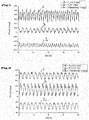
- FIG. 1 shows the pressure curves of the venous (curve 1) and the arterial (curve 2) pressure measured on the extracorporeal blood circulation, whereby a conventional peristaltic blood pump was used to operate the extracorporeal blood circulation.
- the mean curve (indicated by 3) shows the corresponding measured pressure curve of the pressure pulse from the heart of the patient, which was measured elsewhere and which is shown only for comparison in the same graph. It becomes clear here that the strong pressure pulses of the peristaltic pressure pump dominate the pressure signal and greatly distort the amplitude and frequency.
- the second diagram according to FIG. 2 now shows the measured pressure curves of the venous (curve 1) and the arterial (curve 2) pressure for an extracorporeal blood circulation, which was operated with an impeller blood pump.
- the mean curve (curve 3) in turn shows the corresponding pressure curve of the pressure pulse from the heart of the patient, which was measured elsewhere and is shown only for comparison in the same graph.
- the measured pulses of the arterial and venous pressure measurements are now synchronized with those of the measured heart pulses.
- the measured heart pulses are unadulterated.
- the course of the pressure pulse waves of the patient caused by cardiac contraction can be reliably extracted from the arterial and / or venous pressure curve measured at the extracorporeal blood circulation.
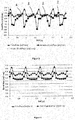
- FIG. 3 shows by way of example in the operation of an extracorporeal blood circulation the courses of the fistula flow and the flow of an occluding roller blood pump.
- the course of the fistula flow has phases of high fistula circulation marked "R".
- the pulsation frequency of the roller blood pump is inseparable linked to the flow, which in turn is specified.
- the removal of blood from the patient's access is therefore not adapted to the pulsatile supply of blood flow in the patient's access.
- FIG. 4 shows by way of example in the operation of an extracorporeal blood circulation, the courses of the fistula flow and the flow of an impeller pump or centrifugal pump.
- the course of the flow of the impeller or centrifugal pump takes place at least substantially synchronously with the course of the fistula flow.
- the synchronization of the pulsation of the impeller or centrifugal pump may include the pulsation frequency and / or the amplitude of the pulses and be controlled and / or regulated independently of the predetermined mean blood flow in the extracorporeal blood flow.
- the synchronization can be carried out on the basis of the peak of the patient pulse and / or directly on the basis of the measured pressure signal.
- the impeller pump or a centrifugal pump does not generate its own pressure pulses. Because of the lack of interference signals from the EBK, the sum signal from the signals coming from the patient's heart can therefore be directly evaluated. According to the invention, no post-processing of the signal in the sense of a transformation into the frequency domain and / or Filtering of signal components necessary, which are based on the pump. The system does not require Fourier transformation.
- the extraction of the course of at least one pressure pulse wave of the patient in the extracorporeal blood circulation caused by cardiac contraction from the first course of the measured pressure amplitude in the sense of the present invention need not include an additional step of the evaluation. Rather, can be used as caused by cardiac contraction pressure pulse wave of the patient in the extracorporeal blood circulation of the course of the measured pressure amplitude directly - possibly after a low-pass filtering - are used.
- the control of the impeller pump is coupled directly by means of a control circuit to the - possibly against low-pass filtered low-pass filtered - Herzdruckpuls signal.
- the frequency of the pump modulation is specified directly by the measurement signal.
- the amplitude of the blood pump modulation can be measured with a constant factor, e.g. 1, be coupled to the amplitude of the pressure signal.
Landscapes
- Health & Medical Sciences (AREA)
- Heart & Thoracic Surgery (AREA)
- Engineering & Computer Science (AREA)
- Life Sciences & Earth Sciences (AREA)
- Cardiology (AREA)
- Veterinary Medicine (AREA)
- Biomedical Technology (AREA)
- Animal Behavior & Ethology (AREA)
- General Health & Medical Sciences (AREA)
- Public Health (AREA)
- Hematology (AREA)
- Anesthesiology (AREA)
- Vascular Medicine (AREA)
- Urology & Nephrology (AREA)
- Mechanical Engineering (AREA)
- Medical Informatics (AREA)
- Emergency Medicine (AREA)
- Physics & Mathematics (AREA)
- Biophysics (AREA)
- Pathology (AREA)
- Molecular Biology (AREA)
- Surgery (AREA)
- Physiology (AREA)
- Pulmonology (AREA)
- External Artificial Organs (AREA)
Abstract
Description
- Die Erfindung betrifft ein Verfahren zum Betrieb einer extrakorporalen Blutbehandlungsvorrichtung und eine entsprechende Blutbehandlungsvorrichtung.
- Üblicherweise ist es beispielsweise bei einer Hämodialysebehandlung erforderlich, den Herzschlag des Patienten zu überwachen. Da mit dem extrakorporalen Blutkreislauf bereits ein direkter Zugang zum Blutkreislauf des Patienten vorhanden ist, wäre es vorteilhaft, wenn die Erfassung der durch Herzkontraktion verursachten Druckpulswellen mit Hilfe eines am extrakorporalen Blutkreislauf ohnehin vorhandenen Drucksensors erfolgen könnte.
- Bei der Hämodialyse werden standardmäßig jedoch peristaltische Blutpumpen, die auch als Rollenpumpen bzw. Schlauchpumpen bezeichnet werden, zur Förderung des Bluts im extrakorporalen Blutkreislauf eingesetzt.
- Diese peristaltischen Blutpumpen behindern jedoch die Messung des Verlaufs der durch Herzkontraktion verursachten Druckpulswellen des Patienten im extrakorporalen Blutkreislauf. Die peristaltischen Blutpumpen okkludieren nämlich mit den Rollen ihres Rotors ein Pumpschlauchsegment des extrakorporalen Blutkreislaufs und erzeugen so eine pulsierende Strömung mit starken Druckpulsen und pulsierendem Fördervolumenstrom. So wird beispielsweise in der
WO 97/10013 A1 - Außerhalb des Gebiets der Hämodialyse sind für andere extrakorporale Blutkreisläufe auch Zentrifugal-Blutpumpen, die auch als Impeller-Blutpumpen bezeichnet werden, bekannt. Diese werden beispielsweise bei Herzoperationen eingesetzt.
- Es ist weiter bekannt, dass derartige Impeller-Blutpumpen Bestandteile eines Disposables bzw. eines Blutschlauchsatzes, insbesondere auch einer Blutkassette sein können. Der Impeller einer derartigen Impeller-Blutpumpe ist in der Regel ohne unmittelbare mechanische Ankopplung - also berührungsfrei - magnetisch gelagert, so dass der Impeller lediglich mit dem geförderten Blut in reibungsbehafteten Kontakt tritt. Die Lagerung des Impellers kann auch eine Kombination aus magnetischer, hydraulischer und/oder mechanischer Lagerung sein.
- Aufgabe der vorliegenden Erfindung ist es, ein verbessertes Verfahren zum Betrieb einer extrakorporalen Blutbehandlungsvorrichtung mit einem extrakorporalen Blutkreislauf insbesondere für eine Hämodialyse und/oder Hämofiltration und/oder Hämodiafiltration durch Ansteuerung einer Impeller-Blutpumpe zur Verfügung zu stellen, sowie eine verbesserte Blutbehandlungsvorrichtung mit einer Steuer- und Recheneinheit, die konfiguriert und/oder programmiert ist, eine Impeller-Blutpumpe anzusteuern.
- Erfindungsgemäß wird diese Aufgabe durch ein Verfahren gemäß Anspruch 1 und eine Blutbehandlungsvorrichtung gemäß Anspruch 8 der vorliegenden Erfindung gelöst.
- Die vorliegende Erfindung stellt dabei ein Verfahren zum Betrieb einer extrakorporalen Blutbehandlungsvorrichtung mit einem extrakorporalen Blutkreislauf insbesondere für eine Hämodialyse und/oder Hämofiltration und/oder Hämodiafiltration, durch Ansteuerung einer Impeller-Blutpumpe zur Verfügung. Dabei wird die Impeller-Blutpumpe durch Hinzufügen eines pulsierenden Drehzahlanteils zu einer ersten konstanten Drehzahl pulsierend betrieben.
- Hier macht das erfindungsgemäße Verfahren den typischen Verlauf der Kennlinien von Impeller-Blutpumpen zunutze, welche das gezielte Vorgeben einer gewissen Druckpulsation durch pulsierende Erhöhung der Pumpendrehzahl über die normalen Betriebspunkte hinaus ermöglichen. Diese Eigenschaft wird bereits in der
DE 10 2009 060 668 A1 und hier insbesondere in derFigur 2 gezeigt, in welcher die Druckerhöhung als Funktion des Blutflusses dargestellt ist. - Hierdurch ist es nun möglich, eine Pumpenpulsation vorzugeben, ohne dass der mittlere Durchfluss der Impeller-Blutpumpe nennenswert vom vorgegebenen Durchfluss bei konstanter Drehzahl abweicht. Eine gezielt vorgegebene Pumpenpulsation wiederum kann entsprechend der vorliegenden Erfindung einen verbesserten Betrieb des extrakorporalen Blutkreislaufs mit einer Impeller-Blutpumpe ermöglichen.
- Insbesondere kann die Pumpenpulsation dabei ausgehend von gemessenen Druckpulswellen im extrakorporalen Blutkreislauf, wie etwa den durch Herzkontraktion verursachten Druckwellen des Patienten, vorgegeben werden.
- Dabei kann erfindungsgemäß der Verlauf der Druckamplitude an mindestens einer Druckmessstelle des extrakorporalen Blutkreislaufs gemessen werden. Bevorzugt wird die Pumpenpulsation dabei ausgehend diesem gemessenen Verlauf der Druckamplitude im extrakorporalen Blutkreislauf vorgegeben.
- Insbesondere kann dabei der Verlauf einer Druckamplitude an mindestens einer Druckmessstelle des extrakorporalen Blutkreislaufs gemessen werden, wobei der gemessene Verlauf der Druckamplitude in einen Soll-Wert für die Steuerung des pulsierenden Drehzahlanteils der Impellerpumpe eingeht. Dabei kann das Messsignal der Druckmessstelle direkt als Soll-Wert herangezogen werden, wofür es gegebenenfalls durch einen Tiefpass gefiltert und/oder skaliert wird. Der pulsierende Drehzahlanteil kann dabei anhand des Soll-Werts gesteuert und/oder über eine Rückkopplung geregelt werden.
- Dabei kann der gemessene Verlauf ein Summensignal aus den durch den arteriellen und den venösen Patientenanschluss zum Drucksensor gelangenden Druckpulsen vom Herz des Patienten darstellen. Dies ist dadurch bedingt, dass keine okkludierenden Elemente und insbesondere keine okkludierenden Pumpen eingesetzt werden.
- Erfindungsgemäß kann weiterhin die Impellerpumpe oder Zentrifugalpumpe zwischen dem Drucksensor und dem venösen Patientenzugang angeordnet sein, und/oder der Drucksensor in der venösen Tropfkammer angeordnet sein.
- Weiterhin kann der pulsierende Betrieb der Impeller-Blutpumpe mit einem Verlauf der durch Herzkontraktion verursachten Druckpulswellen des Patienten im extrakorporalen Blutkreislauf synchronisiert werden. Insbesondere kann dies durch Heranziehen eines den Patientenpuls kennzeichnenden Parameters und/oder des oben bereits beschriebenen Messsignals erfolgen.
- Zur Synchronisation kann ausgehend vom Betrieb der Impeller-Blutpumpe mit einer konstanten Pumpendrehzahl die Pumpendrehzahl zunächst um eine bestimmte erste Drehzahldifferenz abgesenkt und die so reduzierte Pumpendrehzahl wird mittels einer zweiten, jedoch mit bestimmter Frequenz pulsierend auf und abschwellenden Drehzahldifferenz erhöht. Damit kann das Blut im extrakorporalen Blutkreislauf mit pulsierendem Druckverlauf synchron zum Herzschlag des Patienten gefördert werden.
- Der mittlere Durchfluss der Impellerpumpe im extrakorporalen Blutkreislauf bleibt dabei unverändert (z. B. 500 ml/min). Die Entnahme von Blut aus dem PatientenZugang (Fistel oder Shunt oder Graft) ist durch den pulsatilen, synchronisierten Betrieb der Impellerpumpe angepasst an das Angebot von Blut in dem Patientenzugang, d. h. bei großem Angebot wird viel entnommen und umgekehrt.
- Gemäß einer weiteren Ausgestaltung der Erfindung wird diese Synchronisation derart ausgeführt, dass bei maximalem Druck das Blut im Patientenzugang, d. h. der Fistel angesaugt wird. Hierbei ist zu berücksichtigen, dass es bekannt ist, dass es im Patientenzugang, der am Patienten als Fistel oder Shunt angelegt sein kann, zu einer unerwünschten Fistelzirkulation von bereits behandeltem Blut kommen kann, wenn von der Blutpumpe über die arterielle Nadel mehr Blut in den extrakorporalen Blutkreislauf angesaugt wird als aufgrund des Blutflusses in der Fistel zur Verfügung steht. Der Fehlbetrag des Blutflusses wird nämlich durch Ansaugen des über die venöse Nadel in die Fistel zurückgeleiteten bereits dialysierten Bluts ausgeglichen. Dies wiederum führt zu einer Verminderung der Effizienz der Behandlung, da bereits dialysiertes Blut im extrakorporalen Blutkreislauf unmittelbar erneut dialysiert wird.
- Erfindungsgemäß kann dabei der pulsierende Betrieb der Impeller-Blutpumpe mit dem Verlauf der durch Herzkontraktion verursachten Druckpulswellen des Patienten im extrakorporalen Blutkreislauf synchronisiert werden, so dass die Fistelrezirkulation des Blutes im extrakorporalen Blutkreislauf ein Minimum annimmt.
- Das erfindungsgemäße Verfahren kann dabei folgende Schritte umfassen:
- Betreiben der extrakorporalen Blutbehandlungsvorrichtung mit dem extrakorporalen Blutkreislauf insbesondere für eine Hämodialyse und/oder Hämofiltration und/oder Hämodiafiltration, durch Ansteuerung der Impeller-Blutpumpe zum Betrieb mit einer ersten konstanten Drehzahl,
- Bestimmen eines den Patientenpuls kennzeichnenden Parameters
- Pulsierendes Betreiben der Impeller-Blutpumpe durch Hinzufügen eines pulsierenden Drehzahlanteils zu einer ersten konstanten Drehzahl, wobei durch Heranziehen des den Patientenpuls kennzeichnenden Parameters der pulsierende Betrieb der Impeller-Blutpumpe mit dem Verlauf der durch Herzkontraktion verursachten Druckpulswellen des Patienten im extrakorporalen Blutkreislauf synchronisiert wird.
- Das erfindungsgemäße Verfahren kann ebenfalls folgende Schritte umfassen, welche bevorzugt dem erfindungsgemäßen pulsierenden Betrieb vorangehen:
- Betreiben der extrakorporalen Blutbehandlungsvorrichtung mit dem extrakorporalen Blutkreislauf insbesondere für eine Hämodialyse und/oder Hämofiltration und/oder Hämodiafiltration, durch Ansteuerung der Impeller-Blutpumpe zum Betrieb mit einer ersten konstanten Drehzahl,
- Messen mindestens eines ersten Verlaufs der Druckamplitude an mindestens einer Druckmessstelle des extrakorporalen Blutkreislaufs und
- Extrahieren des Verlaufs mindestens einer durch Herzkontraktion verursachten Druckpulswelle des Patienten im extrakorporalen Blutkreislauf aus dem ersten Verlauf der gemessenen Druckamplitude.
- Die Extraktion des Verlaufs mindestens einer durch Herzkontraktion verursachten Druckpulswelle des Patienten im extrakorporalen Blutkreislauf aus dem ersten Verlauf der gemessenen Druckamplitude im Sinne der vorliegenden Erfindung muss dabei keinen zusätzlichen Schritt der Auswertung umfassen. Vielmehr kann als durch Herzkontraktion verursachte Druckpulswelle des Patienten im extrakorporalen Blutkreislauf der Verlauf der gemessenen Druckamplitude direkt - gegebenenfalls nach einer Tiefpass-Filterung und/oder Skalierung - herangezogen werden.
- Bevorzugt wird die Steuerung der Impellerpumpe direkt mittels eines Regelkreises an das - gegen Rauschen eventuell Tiefpass-gefilterte - gemessene Signal des Drucksensors gekoppelt. Somit ist die Frequenz der Pumpenmodulation direkt durch das Messsignal vorgegeben.
- Die Amplitude der Blutpumpenmodulation kann mit einem konstanten Faktor, z.B. 1, an die Amplitude des Drucksignals gekoppelt sein. Bevorzugt ist dieser Faktor in der Steuerung hinterlegt.
- Dabei kann eine Auswertung des Signals im Hinblick auf die Erkennung bestimmter Zustände unterbleiben.
- In alternativen Ausführungsformen können anstelle des Messens der Druckamplitude an mindestens einer Druckmessstelle des extrakorporalen Blutkreislaufs ergänzend oder ersatzweise auch andere den Patientenpuls kennzeichnende Parameter für die Synchronisation der Impellerpumpe oder Zentrifugalpumpe herangezogen werden. Alternativ kann es sich bei dem den Patientenpuls kennzeichnenden Parameter daher auch um Messwerte aus EKG, Pulsuhr, Blutdruckmanschette, Ultraschallmessung und/oder Flussmessung handeln.
- Das erfindungsgemäße Verfahren kann ebenfalls folgende Schritte umfassen:
- Messen des Transmembrandrucks in der extrakorporalen Blutbehandlungsvorrichtung und
- pulsierendes Betreiben der Impeller-Blutpumpe durch Hinzufügen eines pulsierenden Drehzahlanteils zu einer ersten konstanten Drehzahl, wobei der pulsierende Betrieb der Impeller-Blutpumpe nach Frequenz und Amplitude so eingestellt wird, dass der Verlauf des Transmembrandrucks einem vorgegebenen Verlauf des Transmembrandrucks folgt.
- Bei dem Transmembrandruck handelt es sich um den Druckabfall über die Dialysatormembran, die den Dialysator in eine Blutkammer und eine Dialysierflüssigkeitskammer unterteilt. Dieser Druckabfall kann nach diesem Aspekt der Erfindung gezielt durch die entsprechende Betriebsweise der Impeller-Blutpumpe beeinflusst werden. Dabei ist es einerseits möglich, einen möglichst konstanten Druckverlauf und andererseits auch einen stark pulsierenden Druckverlauf einzustellen.
- Die vorliegende Erfindung umfasst weiterhin eine Blutbehandlungsvorrichtung mit einer Steuer- und Recheneinheit, die konfiguriert und/oder programmiert ist, eine Impeller-Blutpumpe anzusteuern. Dabei ist vorgesehen, dass die Impeller-Blutpumpe durch Hinzufügen eines pulsierenden Drehzahlanteils zu einer ersten konstanten Drehzahl pulsierend betrieben wird. Insbesondere ist die einer Steuer- und Recheneinheit für einen solchen Betrieb konfiguriert und/oder programmiert. Bevorzugt ist die Blutbehandlungsvorrichtung konfiguriert zur Durchführung einer Hämodialyse und/oder Hämofiltration und/oder einer Hämodiafiltration.
- Die Steuer- und Recheneinheit kann dabei so konfiguriert und/oder programmiert sein, dass die Pumpenpulsation ausgehend von gemessenen Druckpulswellen im extrakorporalen Blutkreislauf vorgegeben wird.
- Die Blutbehandlungsvorrichtung kann weiterhin einen Drucksensor aufweisen oder mit einem Drucksensor verbindbar sein, über welchen sie den Verlauf einer Druckamplitude an mindestens einer Druckmessstelle des extrakorporalen Blutkreislaufs misst, wobei der gemessene Verlauf der Druckamplitude in einen Soll-Wert für die Steuerung des pulsierenden Drehzahlanteils der Impellerpumpe eingeht, wobei das Messsignal der Druckmessstelle gegebenenfalls durch einen Tiefpass gefiltert und/oder skaliert wird.
- Die Steuer- und Recheneinheit kann so konfiguriert und/oder programmiert sein, dass der pulsierende Betrieb der Impeller-Blutpumpe mit dem Verlauf einer durch Herzkontraktion verursachten Druckpulswelle des Patienten im extrakorporalen Blutkreislauf synchronisiert wird, insbesondere durch Heranziehen eines den Patientenpuls kennzeichnenden Parameters.
- Weiterhin kann die Steuer- und Recheneinheit so konfiguriert und/oder programmiert sein, dass der pulsierende Betrieb der Impeller-Blutpumpe mit dem Verlauf der durch Herzkontraktion verursachten Druckpulswellen des Patienten im extrakorporalen Blutkreislauf synchronisiert wird, so dass die Fistelrezirkulation des Blutes im extrakorporalen Blutkreislauf ein Minimum annimmt.
- Weiterhin kann die Steuer- und Recheneinheit konfiguriert und/oder programmiert sein, folgendes Verfahren durchzuführen:
- Betreiben der extrakorporalen Blutbehandlungsvorrichtung mit dem extrakorporalen Blutkreislauf insbesondere für eine Hämodialyse und/oder Hämofiltration und/oder Hämodiafiltration, durch Ansteuerung der Impeller-Blutpumpe zum Betrieb mit einer ersten konstanten Drehzahl,
- Bestimmen eines den Patientenpuls kennzeichnenden Parameters
- Pulsierendes Betreiben der Impeller-Blutpumpe durch Hinzufügen eines pulsierenden Drehzahlanteils zu einer ersten konstanten Drehzahl, wobei durch Heranziehen des den Patientenpuls kennzeichnenden Parameters der pulsierende Betrieb der Impeller-Blutpumpe mit dem Verlauf der durch Herzkontraktion verursachten Druckpulswellen des Patienten im extrakorporalen Blutkreislauf synchronisiert wird.
- Weiterhin kann die Steuer- und Recheneinheit konfiguriert und/oder programmiert sein, folgendes Verfahren durchzuführen:
- Betreiben der extrakorporalen Blutbehandlungsvorrichtung mit dem extrakorporalen Blutkreislauf insbesondere für eine Hämodialyse und/oder Hämofiltration und/oder Hämodiafiltration, durch Ansteuerung der Impeller-Blutpumpe zum Betrieb mit einer ersten konstanten Drehzahl,
- Messen mindestens eines ersten Verlaufs der Druckamplitude an mindestens einer Druckmessstelle des extrakorporalen Blutkreislaufs und
- Extrahieren des Verlaufs mindestens einer durch Herzkontraktion verursachten Druckpulswelle des Patienten im extrakorporalen Blutkreislauf aus dem ersten Verlauf der gemessenen Druckamplitude.
- Alternativ kann es sich bei dem den Patientenpuls kennzeichnenden Parameter um Messwerte aus EKG, Pulsuhr, Blutdruckmanschette, Ultraschallmessung und/oder Flussmessung handeln. Bevorzugt bestimmt die Steuer- und Recheneinheit dabei mindestens einen dieser Parameter, oder weist eine Schnittstelle auf, über welche sie mindestens einen dieser Parameter erhält.
- Weiterhin kann die Steuer- und Recheneinheit konfiguriert und/oder programmiert sein, folgendes Verfahren durchzuführen:
- Messen des Transmembrandrucks in der extrakorporalen Blutbehandlungsvorrichtung und
- pulsierendes Betreiben der Impeller-Blutpumpe durch Hinzufügen eines pulsierenden Drehzahlanteils zu einer ersten konstanten Drehzahl, wobei der pulsierende Betrieb der Impeller-Blutpumpe nach Frequenz und Amplitude so eingestellt wird, dass der Verlauf des Transmembrandrucks einem vorgegebenen Verlauf des Transmembrandrucks folgt.
- Die Blutbehandlungsvorrichtung der vorliegenden Erfindung kann eine Antriebseinheit für die Impellerblutpumpe aufweisen, wobei die Steuer- und Recheneinheit konfiguriert und/oder programmiert ist zum Steuern und/oder Regeln der Antriebseinheit für die Impeller-Blutpumpe.
- Die Steuer- und Recheneinheit kann weiterhin konfiguriert und/oder programmiert sein zum Auswerten der Messsignale der mindestens einen Druckmessstelle des extrakorporalen Blutkreislaufs.
- Bevorzugt erfolgt die Auswertung und/oder Ansteuerung durch die erfindungsgemäße Steuer- und Recheneinheit dabei automatisch.
- Weiterhin kann die Steuer- und Recheneinheit dabei konfiguriert und/oder programmiert sein, um eines der oben dargestellten Verfahren durchzuführen, insbesondere automatisch durchzuführen. Weiterhin kann die Steuer- und Recheneinheit dabei so arbeiten, wie dies oben im Hinblick auf das Verfahren dargestellt wurde.
- Die vorliegende Erfindung umfasst in einem zweiten Aspekt - sowohl unabhängig von als auch in Kombination mit dem soeben beschriebenen Verfahren bzw. der soeben beschriebenen Blutbehandlungsvorrichtung gemäß dem ersten Aspekt-ein Verfahren zur Messung der durch Herzkontraktion verursachten Druckpulswellen eines Patienten im extrakorporalen Blutkreislauf einer extrakorporalen Blutbehandlungsvorrichtung mit folgenden Schritten:
- Betreiben einer extrakorporalen Blutbehandlungsvorrichtung mit einem extrakorporalen Blutkreislauf insbesondere für eine Hämodialyse und/oder Hämofiltration und/oder Hämodiafiltration, durch Ansteuerung einer Impeller-Blutpumpe zum Betrieb mit einer ersten konstanten Drehzahl,
- Messen mindestens eines ersten Verlaufs der Druckamplitude an mindestens einer Druckmessstelle des extrakorporalen Blutkreislaufs und
- Extrahieren des Verlaufs mindestens einer durch Herzkontraktion verursachten Druckpulswelle des Patienten im extrakorporalen Blutkreislauf aus dem ersten Verlauf der gemessenen Druckamplitude.
- Die Erfindung macht sich zunutze, dass Impeller-Pumpen und somit auch die hier verwendeten Impeller-Blutpumpen nicht okkludierend sind und Druckpulse unverfälscht passieren lassen. Dadurch können die aufgrund der Herzkontraktion verursachten Druckpulswellen sehr gut detektiert werden.
- Vorteilhaft kann in einem sich an das vorgenannte Verfahren anschließenden nächsten Schritt die Impeller-Blutpumpe durch Hinzufügen eines pulsierenden Drehzahlanteils zu einer ersten konstanten Drehzahl pulsierend betrieben werden. Hier macht das erfindungsgemäße Verfahren den typischen Verlauf der Kennlinien von Impeller-Blutpumpen zunutze, welche das gezielte Vorgeben einer gewissen Druckpulsation durch pulsierende Erhöhung der Pumpendrehzahl über die normalen Betriebspunkte hinaus ermöglichen. Diese Eigenschaft wird bereits in der
DE 10 2009 060 668 A1 und hier insbesondere in derFigur 2 gezeigt, in welcher die Druckerhöhung als Funktion des Blutflusses dargestellt ist. - Hierdurch ist es nun möglich, ausgehend von gemessenen Druckpulswellen im extrakorporalen Blutkreislauf, wie etwa den durch Herzkontraktion verursachten Druckwellen des Patienten, eine Pumpenpulsation vorzugeben, ohne dass der mittlere Durchfluss der Impeller-Blutpumpe nennenswert vom vorgegebenen Durchfluss bei konstanter Drehzahl abweicht. Eine gezielt vorgegebene Pumpenpulsation wiederum kann entsprechend der vorliegenden Erfindung einen verbesserten Betrieb des extrakorporalen Blutkreislaufs mit einer Impeller-Blutpumpe ermöglichen.
- Gemäß einer weiteren bevorzugten Ausführungsform kann der pulsierende Betrieb der Impeller-Blutpumpe mit dem Verlauf der durch Herzkontraktion verursachten Druckpulswellen des Patienten im extrakorporalen Blutkreislauf synchronisiert werden. Die Synchronisation kann dabei so erfolgen, wie dies im Hinblick auf den oben dargestellten ersten Aspekt bereits erläutert wurde.
- Weiterhin kann der pulsierende Betrieb der Impeller-Blutpumpe mit dem Verlauf der durch Herzkontraktion verursachten Druckpulswellen des Patienten im extrakorporalen Blutkreislauf synchronisiert werden, so dass die Fistelrezirkulation des Blutes im extrakorporalen Blutkreislauf ein Minimum annimmt. Dementsprechend kann daher mit einer an den Verlauf der durch Herzkontraktion verursachten Druckpulswellen synchronisierten Betriebsweise der Impeller-Blutpumpe das Auftreten der unerwünschten Fistelzirkulation minimiert werden.
- Schließlich kann vorteilhaft der Transmembrandruck in der extrakorporalen Blutbehandlungsvorrichtung gemessen werden, wobei bei pulsierendem Betrieb der Impeller-Blutpumpe die Frequenz und Amplitude so eingestellt werden, dass der Verlauf des Transmembrandrucks einen vorgegebenen Verlauf des Transmembrandrucks folgt. Bei dem Transmembrandruck handelt es sich um den Druckabfall über die Dialysatormembran, die den Dialysator in eine Blutkammer und eine Dialysierflüssigkeitskammer unterteilt. Dieser Druckabfall kann nach diesem Aspekt der Erfindung gezielt durch die entsprechende Betriebsweise der Impeller-Blutpumpe beeinflusst werden. Dabei ist es einerseits möglich, einen möglichst konstanten Druckverlauf und andererseits auch einen stark pulsierenden Druckverlauf einzustellen.
- In alternativen Ausführungsformen können anstelle des Messens der Druckamplitude an mindestens einer Druckmessstelle des extrakorporalen Blutkreislaufs ergänzend oder ersatzweise auch andere den Patientenpuls kennzeichnende Parameter für die Synchronisation der Impellerpumpe oder Zentrifugalpumpe herangezogen werden. Beispiele für andere den Patientenpuls kennzeichnende Parameter sind beispielsweise Messwerte aus EKG, Pulsuhr, Blutdruckmanschette, Ultraschallmessung, Flussmessung und weitere dem Fachmann geläufige Surrogatparameter für den Patientenpuls. Die Anmelderin behält sich vor, für solche alternativen Ausführungsformen in möglichen Teilanmeldungen Schutz zu suchen.
- Unter einem Verlauf eines den Patientenfluss kennzeichnenden Parameters soll in der vorliegenden Patentanmeldung eine kontinuierliche Erfassung eines Messwerts des den Patientenpuls kennzeichnenden Parameters oder eine phasenweise Erfassung eines solchen Messwerts oder eine sequenzielle Erfassung eines solchen Messwerts, insbesondere auch wiederholte Einzelmessungen und Messungen "von-Peak-zu-Peak" verstanden werden.
- Gemäß einem weiteren Aspekt der Erfindung wird eine Blutbehandlungsvorrichtung unter Schutz gestellt, die eine Steuer- und Recheneinheit aufweist, die konfiguriert und/oder programmiert ist, um das Verfahren zum Messen der durch Herzkontraktion verursachten Druckpulswellen des Patienten im extrakorporalen Blutkreislauf durchzuführen. Bevorzugt ist die Blutbehandlungsmaschine zur Durchführung einer Hämodialyse und/oder Hämofiltration und/oder einer Hämodiafiltration konfiguriert.
- Die Blutbehandlungsvorrichtung kann eine Antriebseinheit für die Impellerblutpumpe aufweisen, wobei die Steuer- und Recheneinheit konfiguriert und/oder programmiert ist zum Steuern und/oder Regeln der Antriebseinheit für die Impeller-Blutpumpe.
- Weiterhin kann die Steuer- und Recheneinheit konfiguriert und/oder programmiert sein zum Auswerten der Messsignale der mindestens einen Druckmessstelle des extrakorporalen Blutkreislaufs.
- Weitere Merkmale, Einzelheiten und Vorteile der Erfindung ergeben sich aus der folgenden Beschreibung einer bevorzugten Ausführungsform zur Erläuterung der im Blutkreislauf auftretenden Druckpulswellen in den beigefügten Figuren. Es zeigen:
- Figur 1:
- die gemessenen Druckverläufe des venösen und arteriellen Druckverlaufs an einen mittels einer okkludierenden Rollenpumpe betriebenen extrakorporalen Blutkreislaufs,
- Figur 2:
- die gemessenen Druckverläufe des venösen und arteriellen Blutverlaufs an einem mittels einer Impeller-Blutpumpe betriebenen extrakorporalen Blutkreislaufs,
- Figur 3:
- den Verlauf des Fistelflusses und des Flusses einer okkludierenden Rollen-Blutpumpe und
- Figur 4:
- den Verlauf des Fistelflusses und des Flusses einer Impellerpumpe oder Zentrifugalpumpe.
- Eine extrakorporale Blutbehandlungsvorrichtung nach dem Ausführungsbeispiel entspricht dem Aufbau, wie er anhand der
DE 10 2009 060 668 A beschrieben ist. Auf eine ausführliche Wiederholung dieser Beschreibung wird an dieser Stelle verzichtet, da es sich hier um einen Standardaufbau handelt. - Wesentlich bei der erfindungsgemäßen Ausführungsvariante der extrakorporalen Blutbehandlungsvorrichtung ist eine Steuer- und Recheneinheit und ein maschinenseitiger Antrieb für eine Impeller-Blutpumpe. Die Impeller-Blutpumpe besteht aus einem Gehäuse mit Impeller und ist vorzugsweise Bestandteil des extrakorporalen Blutschlauchsatzes, der insbesondere als Disposable-Blutkassette ausgeführt ist, wobei der extrakorporale Blutschlauchsatz zur Ankopplung an die extrakorporale Blutbehandlungsvorrichtung konfiguriert ist. Des Weiteren weist die Blutbehandlungsmaschine mindestens einen Drucksensor auf, der zum Ankoppeln an eine Druckmessstelle des extrakorporalen Blutschlauchsatzes konfiguriert ist. Der Drucksensor und die Impeller-Blutpumpe stehen mit der Steuer- und Recheneinheit in Verbindung.
- Alternativ kann hier auch - wie im Fall von integrierten RFID-Drucksensoren am Disposable-Blutschlauchsatz - als Verbindung zu der Steuer- und Recheneinheit eine drahtlose Übertragung verwendet werden. Üblicherweise sind an einem extrakorporalen Blutschlauchsatz zumindest eine arterielle Druckmessstelle und eine venöse Druckmessstelle vorhanden. Es kommt für die Ausführung der vorliegenden Erfindung jedoch nicht darauf an, wo sich der mindestens eine Drucksensor am extrakorporalen Blutschlauchsatz befindet, da sich aufgrund eines Herzdruckpulses überall im extrakorporalen Blutkreislauf die Amplitude des gemessenen Drucks ändert und damit an jeder Stelle des extrakorporalen Blutkreislaufs gemessen werden kann.
- Die Steuer- und Recheneinheit gemäß der vorliegenden Erfindung weist einen Datenspeicher auf, in dem ein Computerprogramm abgespeichert ist. Der Programmcode des Computerprogramms ist programmiert, um die Impeller-Blutpumpe anzusteuern und die Drucksignale des mindestens einen Drucksensors auszuwerten und abzuspeichern.
- Die Funktionsweise der Erfindung kann anhand des Kurvenverlaufs gemäß der Figuren 1 und 2 näher erläutert werden.
- Die
Figur 1 zeigt die am extrakorporalen Blutkreislauf gemessenen Druckverläufe des venösen (Kurve 1) und des arteriellen (Kurve 2) Drucks, wobei eine konventionelle peristaltische Blutpumpe zum Betrieb des extrakorporalen Blutkreislaufs verwendet wurde. Die mittlere (mit 3 bezeichnete) Kurve zeigt den korrespondierenden gemessenen Druckverlauf des Druckpulses vom Herz des Patienten, der anderweitig gemessen wurde und der nur zum Vergleich in derselben Grafik dargestellt ist. Es wird hier deutlich, dass die starken Druckpulse der peristaltischen Druckpumpe das Drucksignal dominieren und hinsichtlich der Amplitude und Frequenz stark verfälschen. Anhand der Druckmesskurve des venösen Drucks ist besonders gut zu erkennen, dass die Druckpulse der peristaltischen Blutpumpe, deren Frequenz aufgrund des geförderten Blutflusses im extrakorporalen Blutfluss festliegt, zwangsläufig nicht synchron zu dem Patientenpuls verläuft. Es ist auch eine Schwebung im Drucksignal erkennbar. Insgesamt ist ein solches Drucksignal nicht geeignet, ohne Weiteres als Grundlage zum Extrahieren des Verlaufs der durch Herzkontraktion verursachten Druckpulswellen des Patienten zu dienen. - Das zweite Diagramm gemäß
Figur 2 zeigt nun die gemessenen Druckverläufe des venösen (Kurve 1) und des arteriellen (Kurve 2) Drucks für einen extrakorporalen Blutkreislauf, der mit einer Impeller-Blutpumpe betrieben wurde. Die mittlere Kurve (Kurve 3) zeigt wiederum den korrespondierenden Druckverlauf des Druckpulses vom Herz des Patienten, der anderweitig gemessen wurde und nur zum Vergleich in derselben Grafik dargestellt ist. Die gemessenen Pulse der arteriellen und der venösen Druckmessung verlaufen hier nun synchron mit denen der gemessenen Herzpulse. Die gemessenen Herzpulse sind unverfälscht. Somit kann aus dem am extrakorporalen Blutkreislauf gemessenen arteriellen und/oder venösen Druckverlauf zuverlässig der Verlauf der durch Herzkontraktion verursachten Druckpulswellen des Patienten extrahiert werden. -
Figur 3 zeigt beispielhaft beim Betrieb eines extrakorporalen Blutkreislaufs die Verläufe des Fistelflusses und des Flusses einer okkludierenden Rollen-Blutpumpe. Der Verlauf des Fistelflusses weist Phasen hoher Fistelzirkulation auf, die mit "R" gekennzeichnet sind. Die Pulsationsfrequenz der Rollen-Blutpumpe ist untrennbar mit dem Durchfluss verknüpft, der wiederum vorgegeben wird. Die Entnahme von Blut aus dem Patientenzugang (Fistel oder Shunt oder Graft) ist daher nicht angepasst an das pulsatile Angebot des Blutflusses in dem Patientenzugang. -
Figur 4 zeigt beispielhaft beim Betrieb eines extrakorporalen Blutkreislaufs die Verläufe des Fistelflusses und des Flusses einer Impellerpumpe oder Zentrifugalpumpe. Der Verlauf des Flusses der Impeller- oder Zentrifugalpumpe erfolgt zumindest im Wesentlichen synchron mit dem Verlauf des Fistelflusses. Die Synchronisation der Pulsation der Impeller- oder Zentrifugalpumpe kann dabei die Pulsationsfrequenz und/oder die Amplitude der Pulse umfassen und unabhängig vom vorgegebenen mittleren Blutfluss im extrakorporalen Blutfluss gesteuert und/oder geregelt werden. Die Synchronisation kann anhand des Peaks des Patientenpulses und/oder unmittelbar anhand des gemessenen Drucksignals erfolgen. - Im Rahmen der vorliegenden Erfindung wird insbesondere folgendes Messprinzip eingesetzt:
- Die Druckpulskurve der Herzpulse wird im extrakorporalen Blutkreislauf (EBK) gemessen. Da das System erfindungsgemäß ohne okkludierende Komponenten, insbesondere ohne peristaltische Pumpen auskommt, ist es als offenes System ausgeprägt, d.h. die Druckpulse des Herzens gelangen durch beide Patientenzugänge in den EBK und überlagern sich dort. Es stellt sich somit ein Summensignal ein, welches nicht oder sehr wenig durch (Druck-)Aktuatoren des EBK selbst gestört ist. Durch das offene Systemkonzept kann der Drucksensor an jeder beliebigen Stelle im System angeordnet sein. Beispielsweise kann ein Drucksensor in der venösen Tropfkammer verwendet werden.
- Weiterhin erzeugt die Impellerpumpe oder eine Zentrifugalpumpe anders als eine Peristaltikpumpe keine eigenen Druckpulse. Wegen der fehlenden Störsignale aus dem EBK kann das Summensignal aus den vom Herz des Patienten kommenden Signale daher direkt ausgewertet werden. Erfindungsgemäß ist keine Nachverarbeitung des Signals im Sinne einer Transformation in den Frequenzraum und/oder Filtern von Signalanteilen notwendig, welche auf der Pumpe beruhen. Das System kommt ohne Fouriertransformation aus.
- Insbesondere muss damit die Extraktion des Verlaufs mindestens einer durch Herzkontraktion verursachten Druckpulswelle des Patienten im extrakorporalen Blutkreislauf aus dem ersten Verlauf der gemessenen Druckamplitude im Sinne der vorliegenden Erfindung keinen zusätzlichen Schritt der Auswertung umfassen. Vielmehr kann als durch Herzkontraktion verursachte Druckpulswelle des Patienten im extrakorporalen Blutkreislauf der Verlaufs der gemessenen Druckamplitude direkt - gegebenenfalls nach einer Tiefpass-Filterung - herangezogen werden.
- Dabei erfolgt keine Auswertung des Signals im Hinblick auf die Erkennung bestimmter Zustände.
- Die Steuerung der Impellerpumpe wird direkt mittels eines Regelkreises an das - gegen Rauschen eventuell Tiefpass-gefilterte - Herzdruckpuls-Signal gekoppelt. Somit ist die Frequenz der Pumpenmodulation direkt durch das Messsignal vorgegeben.
- Die Amplitude der Blutpumpenmodulation kann mit einem konstanten Faktor, z.B. 1, an die Amplitude des Drucksignals gekoppelt sein.
Claims (15)
- Verfahren zum Betrieb einer extrakorporalen Blutbehandlungsvorrichtung mit einem extrakorporalen Blutkreislauf für eine Hämodialyse und/oder Hämofiltration und/oder Hämodiafiltration, durch Ansteuerung einer Impeller-Blutpumpe,
dadurch gekennzeichnet,
dass die Impeller-Blutpumpe durch Hinzufügen eines pulsierenden Drehzahlanteils zu einer ersten konstanten Drehzahl pulsierend betrieben wird. - Verfahren nach Anspruch 1, wobei die Pumpenpulsation ausgehend von gemessenen Druckpulswellen im extrakorporalen Blutkreislauf vorgegeben wird.
- Verfahren nach einem der vorangegangenen Ansprüche, wobei der Verlauf einer Druckamplitude an mindestens einer Druckmessstelle des extrakorporalen Blutkreislaufs gemessen wird, und wobei der gemessene Verlauf der Druckamplitude in einen Soll-Wert für die Steuerung des pulsierenden Drehzahlanteils der Impellerpumpe eingeht, wobei das Messsignal der Druckmessstelle bevorzugt direkt als Soll-Wert herangezogen wird, wofür es gegebenenfalls durch einen Tiefpass gefiltert und/oder skaliert wird.
- Verfahren nach einem der vorangegangenen Ansprüche, wobei der pulsierende Betrieb der Impeller-Blutpumpe mit einem Verlauf der durch Herzkontraktion verursachten Druckpulswellen des Patienten im extrakorporalen Blutkreislauf synchronisiert wird, insbesondere durch Heranziehen eines den Patientenpuls kennzeichnenden Parameters.
- Verfahren nach einem der Ansprüche 1 bis 4, mit den Schritten:- Betreiben der extrakorporalen Blutbehandlungsvorrichtung mit dem extrakorporalen Blutkreislauf für eine Hämodialyse und/oder Hämofiltration und/oder Hämodiafiltration, durch Ansteuerung der Impeller-Blutpumpe zum Betrieb mit einer ersten konstanten Drehzahl,- Messen mindestens eines ersten Verlaufs der Druckamplitude an mindestens einer Druckmessstelle des extrakorporalen Blutkreislaufs und- Extrahieren des Verlaufs mindestens einer durch Herzkontraktion verursachten Druckpulswelle des Patienten im extrakorporalen Blutkreislauf aus dem ersten Verlauf der gemessenen Druckamplitude.
- Verfahren nach einem der Ansprüche 2 bis 4, dadurch gekennzeichnet, dass es sich bei dem den Patientenpuls kennzeichnenden Parameter um Messwerte aus EKG, Pulsuhr, Blutdruckmanschette, Ultraschallmessung und/oder Flussmessung handelt.
- Verfahren nach Anspruch 1, mit folgenden Schritten:- Messen des Transmembrandrucks in der extrakorporalen Blutbehandlungsvorrichtung und- pulsierendes Betreiben der Impeller-Blutpumpe durch Hinzufügen eines pulsierenden Drehzahlanteils zu einer ersten konstanten Drehzahl, wobei der pulsierende Betrieb der Impeller-Blutpumpe nach Frequenz und Amplitude so eingestellt wird, dass der Verlauf des Transmembrandrucks einem vorgegebenen Verlauf des Transmembrandrucks folgt.
- Blutbehandlungsvorrichtung mit einer Antriebseinheit für eine Impellerblutpumpe und mit einer Steuer- und Recheneinheit, die konfiguriert und/oder programmiert ist zum Steuern und/oder Regeln der Antriebseinheit für die Impeller-Blutpumpe,
dadurch gekennzeichnet,
dass die Impeller-Blutpumpe durch Hinzufügen eines pulsierenden Drehzahlanteils zu einer ersten konstanten Drehzahl pulsierend betrieben wird. - Blutbehandlungsvorrichtung nach Anspruch 8, wobei die Steuer- und Recheneinheit so konfiguriert und/oder programmiert ist, dass die Pumpenpulsation ausgehend von gemessenen Druckpulswellen im extrakorporalen Blutkreislauf vorgegeben werden.
- Blutbehandlungsvorrichtung nach Anspruch 8 oder 9, welche einen Drucksensor aufweist oder mit einem Drucksensor verbindbar ist, über welchen sie den Verlauf einer Druckamplitude an mindestens einer Druckmessstelle des extrakorporalen Blutkreislaufs misst, wobei der gemessene Verlauf der Druckamplitude in ein Soll-Signal für die Steuerung des pulsierenden Drehzahlanteils der Impellerpumpe eingeht, wobei das Messsignal der Druckmessstelle bevorzugt direkt als Soll-Wert herangezogen wird, wofür es gegebenenfalls durch einen Tiefpass gefiltert und/oder skaliert wird.
- Blutbehandlungsvorrichtung nach Anspruch 8, 9 oder 10, wobei die Steuer- und Recheneinheit so konfiguriert und/oder programmiert ist, dass der pulsierende Betrieb der Impeller-Blutpumpe mit einem Verlauf der durch Herzkontraktion verursachten Druckpulswellen des Patienten im extrakorporalen Blutkreislauf synchronisiert wird, insbesondere durch Heranziehen eines den Patientenpuls kennzeichnenden Parameters.
- Blutbehandlungsvorrichtung nach einem der Ansprüche 8 bis 11, wobei die Steuer- und Recheneinheit konfiguriert und/oder programmiert ist, folgendes Verfahren durchzuführen:- Betreiben der extrakorporalen Blutbehandlungsvorrichtung mit dem extrakorporalen Blutkreislauf insbesondere für eine Hämodialyse und/oder Hämofiltration und/oder Hämodiafiltration, durch Ansteuerung der Impeller-Blutpumpe zum Betrieb mit einer ersten konstanten Drehzahl,- Messen mindestens eines ersten Verlaufs der Druckamplitude an mindestens einer Druckmessstelle des extrakorporalen Blutkreislaufs und- Extrahieren des Verlaufs mindestens einer durch Herzkontraktion verursachten Druckpulswelle des Patienten im extrakorporalen Blutkreislauf aus dem ersten Verlauf der gemessenen Druckamplitude.
- Blutbehandlungsvorrichtung nach Anspruch 11, wobei es sich bei dem den Patientenpuls kennzeichnenden Parameter um Messwerte aus EKG, Pulsuhr, Blutdruckmanschette, Ultraschallmessung und/oder Flussmessung handelt.
- Blutbehandlungsvorrichtung nach Anspruch 8, wobei die Steuer- und Recheneinheit konfiguriert und/oder programmiert ist, folgendes Verfahren durchzuführen:- Messen des Transmembrandrucks in der extrakorporalen Blutbehandlungsvorrichtung und- pulsierendes Betreiben der Impeller-Blutpumpe durch Hinzufügen eines pulsierenden Drehzahlanteils zu einer ersten konstanten Drehzahl, wobei der pulsierende Betrieb der Impeller-Blutpumpe nach Frequenz und Amplitude so eingestellt wird, dass der Verlauf des Transmembrandrucks einem vorgegebenen Verlauf des Transmembrandrucks folgt.
- Blutbehandlungsvorrichtung nach einem der vorangegangenen Ansprüche, dadurch gekennzeichnet, dass die Steuer- und Recheneinheit konfiguriert und/oder programmiert ist zum Auswerten der Messsignale der mindestens einen Druckmessstelle des extrakorporalen Blutkreislaufs.
Applications Claiming Priority (4)
| Application Number | Priority Date | Filing Date | Title |
|---|---|---|---|
| DE102013011488 | 2013-07-09 | ||
| DE102013012469.7A DE102013012469A1 (de) | 2013-07-09 | 2013-07-26 | Verfahren zur Messung des Verlaufs von Druckpulswellen bei einer extrakorporalen Blutbehandlung und Vorrichtung zur Durchführung des Verfahrens |
| PCT/EP2014/001857 WO2015003794A1 (de) | 2013-07-09 | 2014-07-07 | Verfahren zum betrieb einer extrakorporalen blutbehandlungsvorrichtung und blutbehandlungsvorrichtung |
| EP14738388.9A EP3019211B1 (de) | 2013-07-09 | 2014-07-07 | Blutbehandlungsvorrichtung |
Related Parent Applications (2)
| Application Number | Title | Priority Date | Filing Date |
|---|---|---|---|
| EP14738388.9A Division EP3019211B1 (de) | 2013-07-09 | 2014-07-07 | Blutbehandlungsvorrichtung |
| EP14738388.9A Division-Into EP3019211B1 (de) | 2013-07-09 | 2014-07-07 | Blutbehandlungsvorrichtung |
Publications (2)
| Publication Number | Publication Date |
|---|---|
| EP3284490A1 true EP3284490A1 (de) | 2018-02-21 |
| EP3284490B1 EP3284490B1 (de) | 2021-05-26 |
Family
ID=52107107
Family Applications (2)
| Application Number | Title | Priority Date | Filing Date |
|---|---|---|---|
| EP17192921.9A Active EP3284490B1 (de) | 2013-07-09 | 2014-07-07 | Extrakorporale blutbehandlungsvorrichtung |
| EP14738388.9A Not-in-force EP3019211B1 (de) | 2013-07-09 | 2014-07-07 | Blutbehandlungsvorrichtung |
Family Applications After (1)
| Application Number | Title | Priority Date | Filing Date |
|---|---|---|---|
| EP14738388.9A Not-in-force EP3019211B1 (de) | 2013-07-09 | 2014-07-07 | Blutbehandlungsvorrichtung |
Country Status (5)
| Country | Link |
|---|---|
| US (1) | US10124103B2 (de) |
| EP (2) | EP3284490B1 (de) |
| CN (2) | CN110064083A (de) |
| DE (1) | DE102013012469A1 (de) |
| WO (1) | WO2015003794A1 (de) |
Families Citing this family (18)
| Publication number | Priority date | Publication date | Assignee | Title |
|---|---|---|---|---|
| BR112019004444A2 (pt) * | 2016-09-08 | 2019-05-28 | Kk Advance | sistema de gestão de informação com diferença individual no tratamento de diálise |
| CN110944689B (zh) | 2017-06-07 | 2022-12-09 | 施菲姆德控股有限责任公司 | 血管内流体运动设备、系统和使用方法 |
| WO2019013089A1 (ja) * | 2017-07-10 | 2019-01-17 | テルモ株式会社 | 圧力検知装置および体外循環装置 |
| WO2019094963A1 (en) | 2017-11-13 | 2019-05-16 | Shifamed Holdings, Llc | Intravascular fluid movement devices, systems, and methods of use |
| WO2019152875A1 (en) | 2018-02-01 | 2019-08-08 | Shifamed Holdings, Llc | Intravascular blood pumps and methods of use and manufacture |
| US12161857B2 (en) | 2018-07-31 | 2024-12-10 | Shifamed Holdings, Llc | Intravascular blood pumps and methods of use |
| WO2020073047A1 (en) | 2018-10-05 | 2020-04-09 | Shifamed Holdings, Llc | Intravascular blood pumps and methods of use |
| DE102019004825A1 (de) * | 2019-07-10 | 2021-01-14 | Xenios Ag | Steuerung für nicht-okklusive Blutpumpen |
| US11964145B2 (en) | 2019-07-12 | 2024-04-23 | Shifamed Holdings, Llc | Intravascular blood pumps and methods of manufacture and use |
| WO2021016372A1 (en) | 2019-07-22 | 2021-01-28 | Shifamed Holdings, Llc | Intravascular blood pumps with struts and methods of use and manufacture |
| EP4010046B1 (de) | 2019-08-07 | 2026-07-15 | Supira Medical, Inc. | Katheterblutpumpen und zusammenklappbare pumpengehäuse |
| WO2021062270A1 (en) | 2019-09-25 | 2021-04-01 | Shifamed Holdings, Llc | Catheter blood pumps and collapsible pump housings |
| EP4782050A1 (de) | 2019-09-25 | 2026-07-29 | Supira Medical, Inc. | Katheterblutpumpen und zusammenklappbare blutleitungen |
| EP4034192B1 (de) | 2019-09-25 | 2025-12-24 | Supira Medical, Inc. | Intravaskuläre blutpumpensysteme und verfahren zur verwendung und steuerung davon |
| DE102019133075A1 (de) * | 2019-12-04 | 2021-06-10 | B.Braun Avitum Ag | Blutbehandlungsmaschine und Verfahren zur automatischen Füllstandsüberwachung und -Regelung eines Luftabscheiders mittels Frequenzanalyse |
| EP4072650A4 (de) | 2019-12-11 | 2024-01-10 | Shifamed Holdings, LLC | Absteigende aorten- und hohlvenenblutpumpen |
| WO2021127503A1 (en) | 2019-12-19 | 2021-06-24 | Shifamed Holdings, Llc | Intravascular blood pumps, motors, and fluid control |
| CN113289092B (zh) * | 2021-06-30 | 2024-12-17 | 迪泰医学科技(苏州)有限公司 | 与脉搏同步的抽吸设备及抽吸方法 |
Citations (9)
| Publication number | Priority date | Publication date | Assignee | Title |
|---|---|---|---|---|
| US4293961A (en) * | 1980-03-26 | 1981-10-13 | Runge Thomas M | Pulsatile flow cardiopulmonary bypass pump |
| US4968422A (en) * | 1986-06-23 | 1990-11-06 | Runge Thomas M | Pulsatile flow hemodialysis |
| US5417648A (en) * | 1992-06-22 | 1995-05-23 | Saitteku Kabushiki Kaisha | Method and apparatus for generating pulsating blood flow in a dialyzer circuit |
| WO2002064239A1 (en) * | 2001-02-14 | 2002-08-22 | East Carolina University | Method and apparatus for treating renal disease with hemodialysis utilizing pulsatile pump |
| US20050101901A1 (en) * | 2001-11-16 | 2005-05-12 | Victor Gura | Wearable continuous renal replacement therapy device |
| WO2007103464A2 (en) * | 2006-03-08 | 2007-09-13 | Orqis Medical Corporation | Blood conduit connector |
| DE102009060668A1 (de) * | 2009-12-28 | 2011-06-30 | Fresenius Medical Care Deutschland GmbH, 61352 | Vorrichtung und Verfahren zur Überwachung einer extrakorporalen Blutbehandlung |
| WO2011090927A1 (en) * | 2010-01-19 | 2011-07-28 | Heartware, Inc. | Physiologically responsive vad |
| WO2012095294A1 (de) * | 2011-01-11 | 2012-07-19 | Fresenius Medical Care Deutschland Gmbh | Blutbehandlungseinheit für eine extrakorporale blutbehandlungsvorrichtung |
Family Cites Families (7)
| Publication number | Priority date | Publication date | Assignee | Title |
|---|---|---|---|---|
| SE508374C2 (sv) | 1995-09-12 | 1998-09-28 | Gambro Med Tech Ab | Förfarande och anordning för detektering av tillståndet hos en blodkärlsaccess |
| DE60021554T2 (de) | 1999-04-23 | 2006-03-30 | Ventrassist Pty Ltd., Brisbane | Rotationsblutpumpe sowie kontrollsystem dafür |
| GB0023412D0 (en) | 2000-09-23 | 2000-11-08 | Khaghani Asghar | Aortic counterpulsator |
| DE10123139B4 (de) | 2001-04-30 | 2005-08-11 | Berlin Heart Ag | Verfahren zur Regelung einer Unterstützungspumpe für Fluidfördersysteme mit pulsatilem Druck |
| CN1833736A (zh) * | 2005-03-17 | 2006-09-20 | 张杰民 | 搏动轴流血泵 |
| WO2007014028A1 (en) * | 2005-07-21 | 2007-02-01 | The Cleveland Clinic Foundation | Medical oscillating compliance devices and uses thereof |
| CN102579238B (zh) | 2012-03-08 | 2014-06-18 | 北京龙马负图科技有限公司 | 与肢体脉搏同步的肢体静脉泵系统 |
-
2013
- 2013-07-26 DE DE102013012469.7A patent/DE102013012469A1/de not_active Ceased
-
2014
- 2014-07-07 CN CN201811559546.5A patent/CN110064083A/zh active Pending
- 2014-07-07 CN CN201480038874.4A patent/CN105517589B/zh not_active Expired - Fee Related
- 2014-07-07 EP EP17192921.9A patent/EP3284490B1/de active Active
- 2014-07-07 EP EP14738388.9A patent/EP3019211B1/de not_active Not-in-force
- 2014-07-07 WO PCT/EP2014/001857 patent/WO2015003794A1/de not_active Ceased
- 2014-07-07 US US14/903,652 patent/US10124103B2/en active Active
Patent Citations (9)
| Publication number | Priority date | Publication date | Assignee | Title |
|---|---|---|---|---|
| US4293961A (en) * | 1980-03-26 | 1981-10-13 | Runge Thomas M | Pulsatile flow cardiopulmonary bypass pump |
| US4968422A (en) * | 1986-06-23 | 1990-11-06 | Runge Thomas M | Pulsatile flow hemodialysis |
| US5417648A (en) * | 1992-06-22 | 1995-05-23 | Saitteku Kabushiki Kaisha | Method and apparatus for generating pulsating blood flow in a dialyzer circuit |
| WO2002064239A1 (en) * | 2001-02-14 | 2002-08-22 | East Carolina University | Method and apparatus for treating renal disease with hemodialysis utilizing pulsatile pump |
| US20050101901A1 (en) * | 2001-11-16 | 2005-05-12 | Victor Gura | Wearable continuous renal replacement therapy device |
| WO2007103464A2 (en) * | 2006-03-08 | 2007-09-13 | Orqis Medical Corporation | Blood conduit connector |
| DE102009060668A1 (de) * | 2009-12-28 | 2011-06-30 | Fresenius Medical Care Deutschland GmbH, 61352 | Vorrichtung und Verfahren zur Überwachung einer extrakorporalen Blutbehandlung |
| WO2011090927A1 (en) * | 2010-01-19 | 2011-07-28 | Heartware, Inc. | Physiologically responsive vad |
| WO2012095294A1 (de) * | 2011-01-11 | 2012-07-19 | Fresenius Medical Care Deutschland Gmbh | Blutbehandlungseinheit für eine extrakorporale blutbehandlungsvorrichtung |
Also Published As
| Publication number | Publication date |
|---|---|
| WO2015003794A1 (de) | 2015-01-15 |
| US10124103B2 (en) | 2018-11-13 |
| US20160166749A1 (en) | 2016-06-16 |
| EP3019211B1 (de) | 2017-12-13 |
| EP3284490B1 (de) | 2021-05-26 |
| CN105517589A (zh) | 2016-04-20 |
| DE102013012469A1 (de) | 2015-01-15 |
| CN105517589B (zh) | 2019-01-15 |
| CN110064083A (zh) | 2019-07-30 |
| EP3019211A1 (de) | 2016-05-18 |
Similar Documents
| Publication | Publication Date | Title |
|---|---|---|
| EP3019211B1 (de) | Blutbehandlungsvorrichtung | |
| EP3416701B1 (de) | Gerät zur extrakorporalen blutbehandlung mit einer auswerte- und steuereinheit | |
| EP2259812B1 (de) | Verfahren und vorrichtung zur überwachung eines gefässzugangs sowie extrakorporale blutbehandlungsvorrichtung mit einer vorrichtung zur überwachung eines gefässzugangs | |
| EP2384138B1 (de) | Vorrichtung zum ermitteln und/oder überwachen einer fisteldurchgängigkeit basierend auf einer amplitude des herzdrucksignals während einer blutbehandlung | |
| EP2263717B1 (de) | Verfahren und Vorrichtung zur Erkennung von Stenosen bei der extrakorporalen Blutbehandlung | |
| EP2913072B1 (de) | System zur Erkennung einer venösen Nadeldiskonnektion | |
| EP2238996B1 (de) | Verfahren zur Bestimmung der Fistelrezirkulation und extrakorporalen Blutbehandlungsvorrichtung | |
| EP2985045B1 (de) | Verfahren zum einstellen eines blutflusses in einer dialysevorrichtung und dialysevorrichtung | |
| EP3576805B1 (de) | Anordnung mit einer blutpumpe, einer steuereinheit und einem gerät zur übermittlung der messwerte | |
| EP2913073B1 (de) | Vorrichtung zur Erkennung einer venösen Nadeldiskonnektion | |
| WO2014044365A1 (de) | Vorrichtung und verfahren zur erkennung der rezirkulation während einer extrakorporalen blutbehandlung | |
| WO2012159734A1 (de) | Vorrichtung und verfahren zur erkennung eines betriebszustandes einer extrakorporalen blutbehandlung | |
| EP3019212B1 (de) | Vorrichtung zur überwachung einer extrakorporalen blutbehandlung | |
| EP2736561B1 (de) | Verfahren sowie vorrichtungen zum ablösen von gasansammlungen von einem gerinnselfänger eines extrakorporalen blutkreislaufs | |
| EP2999498B1 (de) | Vorrichtung zur überwachung eines extrakorporalen blutkreislaufs | |
| DE10033192A1 (de) | Verfahren zur Detektion arterieller Einlaufprobleme während einer extrakorporalen Blutbehandlung und extrakorporale Blutbehandlungsvorrichtung | |
| DE102013001437A1 (de) | Extrakorporale Blutbehandlungsvorrichtung für den Betrieb mit einem einzigen Patientenanschluss und Verfahren zum Betreiben einer extrakorporalen Blutbehandlungsvorrichtung mit einem einzigen Patientenanschluss | |
| DE112022004359T5 (de) | System und Verfahren zur Unterstützung der ventrikulären Unterstützung während extrakorporaler Membranoxygenierung | |
| EP3131603B1 (de) | Vorrichtung zum entfernen von blut aus einem extrakorporalen blutkreislauf unter druckkontrolle | |
| WO2015004009A1 (de) | Verfahren und vorrichtung zur detektion eines ansaugens einer entnahmekanüle | |
| EP4438074B1 (de) | Verfahren und system zur betriebsüberwachung eines medizinischen geräts zur extrakorporalen blutbehandlung | |
| EP3305345B1 (de) | Vorrichtung zur rezirkulationsmessung |
Legal Events
| Date | Code | Title | Description |
|---|---|---|---|
| PUAI | Public reference made under article 153(3) epc to a published international application that has entered the european phase |
Free format text: ORIGINAL CODE: 0009012 |
|
| STAA | Information on the status of an ep patent application or granted ep patent |
Free format text: STATUS: THE APPLICATION HAS BEEN PUBLISHED |
|
| AC | Divisional application: reference to earlier application |
Ref document number: 3019211 Country of ref document: EP Kind code of ref document: P |
|
| AK | Designated contracting states |
Kind code of ref document: A1 Designated state(s): AL AT BE BG CH CY CZ DE DK EE ES FI FR GB GR HR HU IE IS IT LI LT LU LV MC MK MT NL NO PL PT RO RS SE SI SK SM TR |
|
| RIN1 | Information on inventor provided before grant (corrected) |
Inventor name: WIKTOR, CHRISTOPH Inventor name: PETERS, ARNE Inventor name: HEIDE, ALEXANDER |
|
| STAA | Information on the status of an ep patent application or granted ep patent |
Free format text: STATUS: REQUEST FOR EXAMINATION WAS MADE |
|
| 17P | Request for examination filed |
Effective date: 20180820 |
|
| STAA | Information on the status of an ep patent application or granted ep patent |
Free format text: STATUS: EXAMINATION IS IN PROGRESS |
|
| 17Q | First examination report despatched |
Effective date: 20191209 |
|
| GRAP | Despatch of communication of intention to grant a patent |
Free format text: ORIGINAL CODE: EPIDOSNIGR1 |
|
| STAA | Information on the status of an ep patent application or granted ep patent |
Free format text: STATUS: GRANT OF PATENT IS INTENDED |
|
| INTG | Intention to grant announced |
Effective date: 20201218 |
|
| GRAS | Grant fee paid |
Free format text: ORIGINAL CODE: EPIDOSNIGR3 |
|
| GRAA | (expected) grant |
Free format text: ORIGINAL CODE: 0009210 |
|
| STAA | Information on the status of an ep patent application or granted ep patent |
Free format text: STATUS: THE PATENT HAS BEEN GRANTED |
|
| AC | Divisional application: reference to earlier application |
Ref document number: 3019211 Country of ref document: EP Kind code of ref document: P |
|
| AK | Designated contracting states |
Kind code of ref document: B1 Designated state(s): AL AT BE BG CH CY CZ DE DK EE ES FI FR GB GR HR HU IE IS IT LI LT LU LV MC MK MT NL NO PL PT RO RS SE SI SK SM TR |
|
| REG | Reference to a national code |
Ref country code: GB Ref legal event code: FG4D Free format text: NOT ENGLISH |
|
| REG | Reference to a national code |
Ref country code: CH Ref legal event code: EP |
|
| REG | Reference to a national code |
Ref country code: AT Ref legal event code: REF Ref document number: 1395570 Country of ref document: AT Kind code of ref document: T Effective date: 20210615 |
|
| REG | Reference to a national code |
Ref country code: DE Ref legal event code: R096 Ref document number: 502014015629 Country of ref document: DE |
|
| REG | Reference to a national code |
Ref country code: IE Ref legal event code: FG4D Free format text: LANGUAGE OF EP DOCUMENT: GERMAN |
|
| REG | Reference to a national code |
Ref country code: LT Ref legal event code: MG9D |
|
| PG25 | Lapsed in a contracting state [announced via postgrant information from national office to epo] |
Ref country code: FI Free format text: LAPSE BECAUSE OF FAILURE TO SUBMIT A TRANSLATION OF THE DESCRIPTION OR TO PAY THE FEE WITHIN THE PRESCRIBED TIME-LIMIT Effective date: 20210526 Ref country code: LT Free format text: LAPSE BECAUSE OF FAILURE TO SUBMIT A TRANSLATION OF THE DESCRIPTION OR TO PAY THE FEE WITHIN THE PRESCRIBED TIME-LIMIT Effective date: 20210526 Ref country code: HR Free format text: LAPSE BECAUSE OF FAILURE TO SUBMIT A TRANSLATION OF THE DESCRIPTION OR TO PAY THE FEE WITHIN THE PRESCRIBED TIME-LIMIT Effective date: 20210526 Ref country code: BG Free format text: LAPSE BECAUSE OF FAILURE TO SUBMIT A TRANSLATION OF THE DESCRIPTION OR TO PAY THE FEE WITHIN THE PRESCRIBED TIME-LIMIT Effective date: 20210826 |
|
| REG | Reference to a national code |
Ref country code: NL Ref legal event code: MP Effective date: 20210526 |
|
| PG25 | Lapsed in a contracting state [announced via postgrant information from national office to epo] |
Ref country code: LV Free format text: LAPSE BECAUSE OF FAILURE TO SUBMIT A TRANSLATION OF THE DESCRIPTION OR TO PAY THE FEE WITHIN THE PRESCRIBED TIME-LIMIT Effective date: 20210526 Ref country code: IS Free format text: LAPSE BECAUSE OF FAILURE TO SUBMIT A TRANSLATION OF THE DESCRIPTION OR TO PAY THE FEE WITHIN THE PRESCRIBED TIME-LIMIT Effective date: 20210926 Ref country code: GR Free format text: LAPSE BECAUSE OF FAILURE TO SUBMIT A TRANSLATION OF THE DESCRIPTION OR TO PAY THE FEE WITHIN THE PRESCRIBED TIME-LIMIT Effective date: 20210827 Ref country code: PL Free format text: LAPSE BECAUSE OF FAILURE TO SUBMIT A TRANSLATION OF THE DESCRIPTION OR TO PAY THE FEE WITHIN THE PRESCRIBED TIME-LIMIT Effective date: 20210526 Ref country code: PT Free format text: LAPSE BECAUSE OF FAILURE TO SUBMIT A TRANSLATION OF THE DESCRIPTION OR TO PAY THE FEE WITHIN THE PRESCRIBED TIME-LIMIT Effective date: 20210927 Ref country code: NO Free format text: LAPSE BECAUSE OF FAILURE TO SUBMIT A TRANSLATION OF THE DESCRIPTION OR TO PAY THE FEE WITHIN THE PRESCRIBED TIME-LIMIT Effective date: 20210826 Ref country code: RS Free format text: LAPSE BECAUSE OF FAILURE TO SUBMIT A TRANSLATION OF THE DESCRIPTION OR TO PAY THE FEE WITHIN THE PRESCRIBED TIME-LIMIT Effective date: 20210526 Ref country code: SE Free format text: LAPSE BECAUSE OF FAILURE TO SUBMIT A TRANSLATION OF THE DESCRIPTION OR TO PAY THE FEE WITHIN THE PRESCRIBED TIME-LIMIT Effective date: 20210526 |
|
| PG25 | Lapsed in a contracting state [announced via postgrant information from national office to epo] |
Ref country code: NL Free format text: LAPSE BECAUSE OF FAILURE TO SUBMIT A TRANSLATION OF THE DESCRIPTION OR TO PAY THE FEE WITHIN THE PRESCRIBED TIME-LIMIT Effective date: 20210526 |
|
| PG25 | Lapsed in a contracting state [announced via postgrant information from national office to epo] |
Ref country code: SK Free format text: LAPSE BECAUSE OF FAILURE TO SUBMIT A TRANSLATION OF THE DESCRIPTION OR TO PAY THE FEE WITHIN THE PRESCRIBED TIME-LIMIT Effective date: 20210526 Ref country code: SM Free format text: LAPSE BECAUSE OF FAILURE TO SUBMIT A TRANSLATION OF THE DESCRIPTION OR TO PAY THE FEE WITHIN THE PRESCRIBED TIME-LIMIT Effective date: 20210526 Ref country code: CZ Free format text: LAPSE BECAUSE OF FAILURE TO SUBMIT A TRANSLATION OF THE DESCRIPTION OR TO PAY THE FEE WITHIN THE PRESCRIBED TIME-LIMIT Effective date: 20210526 Ref country code: DK Free format text: LAPSE BECAUSE OF FAILURE TO SUBMIT A TRANSLATION OF THE DESCRIPTION OR TO PAY THE FEE WITHIN THE PRESCRIBED TIME-LIMIT Effective date: 20210526 Ref country code: EE Free format text: LAPSE BECAUSE OF FAILURE TO SUBMIT A TRANSLATION OF THE DESCRIPTION OR TO PAY THE FEE WITHIN THE PRESCRIBED TIME-LIMIT Effective date: 20210526 Ref country code: RO Free format text: LAPSE BECAUSE OF FAILURE TO SUBMIT A TRANSLATION OF THE DESCRIPTION OR TO PAY THE FEE WITHIN THE PRESCRIBED TIME-LIMIT Effective date: 20210526 Ref country code: ES Free format text: LAPSE BECAUSE OF FAILURE TO SUBMIT A TRANSLATION OF THE DESCRIPTION OR TO PAY THE FEE WITHIN THE PRESCRIBED TIME-LIMIT Effective date: 20210526 |
|
| REG | Reference to a national code |
Ref country code: CH Ref legal event code: PL |
|
| REG | Reference to a national code |
Ref country code: DE Ref legal event code: R097 Ref document number: 502014015629 Country of ref document: DE |
|
| PLBE | No opposition filed within time limit |
Free format text: ORIGINAL CODE: 0009261 |
|
| STAA | Information on the status of an ep patent application or granted ep patent |
Free format text: STATUS: NO OPPOSITION FILED WITHIN TIME LIMIT |
|
| PG25 | Lapsed in a contracting state [announced via postgrant information from national office to epo] |
Ref country code: MC Free format text: LAPSE BECAUSE OF FAILURE TO SUBMIT A TRANSLATION OF THE DESCRIPTION OR TO PAY THE FEE WITHIN THE PRESCRIBED TIME-LIMIT Effective date: 20210526 |
|
| REG | Reference to a national code |
Ref country code: BE Ref legal event code: MM Effective date: 20210731 |
|
| PG25 | Lapsed in a contracting state [announced via postgrant information from national office to epo] |
Ref country code: LI Free format text: LAPSE BECAUSE OF NON-PAYMENT OF DUE FEES Effective date: 20210731 Ref country code: CH Free format text: LAPSE BECAUSE OF NON-PAYMENT OF DUE FEES Effective date: 20210731 |
|
| 26N | No opposition filed |
Effective date: 20220301 |
|
| PG25 | Lapsed in a contracting state [announced via postgrant information from national office to epo] |
Ref country code: IS Free format text: LAPSE BECAUSE OF FAILURE TO SUBMIT A TRANSLATION OF THE DESCRIPTION OR TO PAY THE FEE WITHIN THE PRESCRIBED TIME-LIMIT Effective date: 20210926 Ref country code: LU Free format text: LAPSE BECAUSE OF NON-PAYMENT OF DUE FEES Effective date: 20210707 Ref country code: AL Free format text: LAPSE BECAUSE OF FAILURE TO SUBMIT A TRANSLATION OF THE DESCRIPTION OR TO PAY THE FEE WITHIN THE PRESCRIBED TIME-LIMIT Effective date: 20210526 |
|
| PG25 | Lapsed in a contracting state [announced via postgrant information from national office to epo] |
Ref country code: IT Free format text: LAPSE BECAUSE OF NON-PAYMENT OF DUE FEES Effective date: 20210707 Ref country code: IE Free format text: LAPSE BECAUSE OF NON-PAYMENT OF DUE FEES Effective date: 20210707 Ref country code: BE Free format text: LAPSE BECAUSE OF NON-PAYMENT OF DUE FEES Effective date: 20210731 |
|
| REG | Reference to a national code |
Ref country code: AT Ref legal event code: MM01 Ref document number: 1395570 Country of ref document: AT Kind code of ref document: T Effective date: 20210707 |
|
| PG25 | Lapsed in a contracting state [announced via postgrant information from national office to epo] |
Ref country code: AT Free format text: LAPSE BECAUSE OF NON-PAYMENT OF DUE FEES Effective date: 20210707 |
|
| PG25 | Lapsed in a contracting state [announced via postgrant information from national office to epo] |
Ref country code: HU Free format text: LAPSE BECAUSE OF FAILURE TO SUBMIT A TRANSLATION OF THE DESCRIPTION OR TO PAY THE FEE WITHIN THE PRESCRIBED TIME-LIMIT; INVALID AB INITIO Effective date: 20140707 |
|
| PG25 | Lapsed in a contracting state [announced via postgrant information from national office to epo] |
Ref country code: CY Free format text: LAPSE BECAUSE OF FAILURE TO SUBMIT A TRANSLATION OF THE DESCRIPTION OR TO PAY THE FEE WITHIN THE PRESCRIBED TIME-LIMIT Effective date: 20210526 |
|
| P01 | Opt-out of the competence of the unified patent court (upc) registered |
Effective date: 20230602 |
|
| PG25 | Lapsed in a contracting state [announced via postgrant information from national office to epo] |
Ref country code: MK Free format text: LAPSE BECAUSE OF FAILURE TO SUBMIT A TRANSLATION OF THE DESCRIPTION OR TO PAY THE FEE WITHIN THE PRESCRIBED TIME-LIMIT Effective date: 20210526 |
|
| PGFP | Annual fee paid to national office [announced via postgrant information from national office to epo] |
Ref country code: GB Payment date: 20240620 Year of fee payment: 11 |
|
| PGFP | Annual fee paid to national office [announced via postgrant information from national office to epo] |
Ref country code: FR Payment date: 20240619 Year of fee payment: 11 |
|
| PG25 | Lapsed in a contracting state [announced via postgrant information from national office to epo] |
Ref country code: MT Free format text: LAPSE BECAUSE OF FAILURE TO SUBMIT A TRANSLATION OF THE DESCRIPTION OR TO PAY THE FEE WITHIN THE PRESCRIBED TIME-LIMIT Effective date: 20210526 |
|
| PGFP | Annual fee paid to national office [announced via postgrant information from national office to epo] |
Ref country code: DE Payment date: 20240619 Year of fee payment: 11 |
|
| PGFP | Annual fee paid to national office [announced via postgrant information from national office to epo] |
Ref country code: TR Payment date: 20240701 Year of fee payment: 11 |
|
| REG | Reference to a national code |
Ref country code: DE Ref legal event code: R119 Ref document number: 502014015629 Country of ref document: DE |
|
| GBPC | Gb: european patent ceased through non-payment of renewal fee |
Effective date: 20250707 |
|
| PG25 | Lapsed in a contracting state [announced via postgrant information from national office to epo] |
Ref country code: GB Free format text: LAPSE BECAUSE OF NON-PAYMENT OF DUE FEES Effective date: 20250707 |
|
| PG25 | Lapsed in a contracting state [announced via postgrant information from national office to epo] |
Ref country code: DE Free format text: LAPSE BECAUSE OF NON-PAYMENT OF DUE FEES Effective date: 20260203 |
|
| PG25 | Lapsed in a contracting state [announced via postgrant information from national office to epo] |
Ref country code: FR Free format text: LAPSE BECAUSE OF NON-PAYMENT OF DUE FEES Effective date: 20250731 |