EP3284472A1 - Hot flash-suppressing agent - Google Patents
Hot flash-suppressing agent Download PDFInfo
- Publication number
- EP3284472A1 EP3284472A1 EP16776566.8A EP16776566A EP3284472A1 EP 3284472 A1 EP3284472 A1 EP 3284472A1 EP 16776566 A EP16776566 A EP 16776566A EP 3284472 A1 EP3284472 A1 EP 3284472A1
- Authority
- EP
- European Patent Office
- Prior art keywords
- hot flash
- suppressing
- lactalbumin
- present
- administration
- Prior art date
- Legal status (The legal status is an assumption and is not a legal conclusion. Google has not performed a legal analysis and makes no representation as to the accuracy of the status listed.)
- Granted
Links
Images

Classifications
-
- A—HUMAN NECESSITIES
- A61—MEDICAL OR VETERINARY SCIENCE; HYGIENE
- A61K—PREPARATIONS FOR MEDICAL, DENTAL OR TOILETRY PURPOSES
- A61K38/00—Medicinal preparations containing peptides
- A61K38/16—Peptides having more than 20 amino acids; Gastrins; Somatostatins; Melanotropins; Derivatives thereof
- A61K38/17—Peptides having more than 20 amino acids; Gastrins; Somatostatins; Melanotropins; Derivatives thereof from animals; from humans
- A61K38/1703—Peptides having more than 20 amino acids; Gastrins; Somatostatins; Melanotropins; Derivatives thereof from animals; from humans from vertebrates
- A61K38/1709—Peptides having more than 20 amino acids; Gastrins; Somatostatins; Melanotropins; Derivatives thereof from animals; from humans from vertebrates from mammals
-
- A—HUMAN NECESSITIES
- A23—FOODS OR FOODSTUFFS; TREATMENT THEREOF, NOT COVERED BY OTHER CLASSES
- A23L—FOODS, FOODSTUFFS OR NON-ALCOHOLIC BEVERAGES, NOT OTHERWISE PROVIDED FOR; PREPARATION OR TREATMENT THEREOF
- A23L2/00—Non-alcoholic beverages; Dry compositions or concentrates therefor; Preparation or treatment thereof
- A23L2/52—Adding ingredients
-
- A—HUMAN NECESSITIES
- A23—FOODS OR FOODSTUFFS; TREATMENT THEREOF, NOT COVERED BY OTHER CLASSES
- A23L—FOODS, FOODSTUFFS OR NON-ALCOHOLIC BEVERAGES, NOT OTHERWISE PROVIDED FOR; PREPARATION OR TREATMENT THEREOF
- A23L2/00—Non-alcoholic beverages; Dry compositions or concentrates therefor; Preparation or treatment thereof
- A23L2/52—Adding ingredients
- A23L2/66—Proteins
-
- A—HUMAN NECESSITIES
- A23—FOODS OR FOODSTUFFS; TREATMENT THEREOF, NOT COVERED BY OTHER CLASSES
- A23L—FOODS, FOODSTUFFS OR NON-ALCOHOLIC BEVERAGES, NOT OTHERWISE PROVIDED FOR; PREPARATION OR TREATMENT THEREOF
- A23L33/00—Modifying nutritive qualities of foods; Dietetic products; Preparation or treatment thereof
- A23L33/10—Modifying nutritive qualities of foods; Dietetic products; Preparation or treatment thereof using additives
- A23L33/17—Amino acids, peptides or proteins
- A23L33/19—Dairy proteins
-
- A—HUMAN NECESSITIES
- A61—MEDICAL OR VETERINARY SCIENCE; HYGIENE
- A61K—PREPARATIONS FOR MEDICAL, DENTAL OR TOILETRY PURPOSES
- A61K38/00—Medicinal preparations containing peptides
- A61K38/16—Peptides having more than 20 amino acids; Gastrins; Somatostatins; Melanotropins; Derivatives thereof
- A61K38/17—Peptides having more than 20 amino acids; Gastrins; Somatostatins; Melanotropins; Derivatives thereof from animals; from humans
- A61K38/38—Albumins
-
- A—HUMAN NECESSITIES
- A61—MEDICAL OR VETERINARY SCIENCE; HYGIENE
- A61P—SPECIFIC THERAPEUTIC ACTIVITY OF CHEMICAL COMPOUNDS OR MEDICINAL PREPARATIONS
- A61P15/00—Drugs for genital or sexual disorders; Contraceptives
- A61P15/12—Drugs for genital or sexual disorders; Contraceptives for climacteric disorders
-
- A—HUMAN NECESSITIES
- A23—FOODS OR FOODSTUFFS; TREATMENT THEREOF, NOT COVERED BY OTHER CLASSES
- A23V—INDEXING SCHEME RELATING TO FOODS, FOODSTUFFS OR NON-ALCOHOLIC BEVERAGES AND LACTIC OR PROPIONIC ACID BACTERIA USED IN FOODSTUFFS OR FOOD PREPARATION
- A23V2002/00—Food compositions, function of food ingredients or processes for food or foodstuffs
Definitions
- the present invention relates to a hot flash-suppressing agent.
- Hot flash is one of typical symptoms of menopause. Menopausal symptoms, such as hot flash, are treated by administration of Kampo medicine or hormone replacement therapy. However, the administration of Kampo medicine has some problems, for example, that patients do not take the medicine as directed by a physician because of its distinct flavor. The hormone replacement therapy also has a problem of causing side effects, such as nausea and increased risk of developing cancer.
- Patent Literature 1 describes an agent for preventing/treating hot flash, comprising a non-peptidic compound as an active ingredient.
- Patent Literature 2 also describes hot flash-suppressing agents comprising various plant extracts as active ingredients.
- an agent for preventing/treating hot flash which is easily taken by all patients and is more safe and effective.
- Patent Literature 3 states that ⁇ -lactalbumin selectively inhibits cyclooxygenase-2 (COX-2) and has an anti-inflammatory analgesic effect (anti-inflammatory action) based on the selective inhibition of COX-2. However, Patent Literature 3 does not disclose anything beyond that ⁇ -lactalbumin has an anti-inflammatory action based on the selective inhibition of COX-2. Patent Literature 4 states that ⁇ -lactalbumin has a prebiotic effect. However, Patent Literature 4 does not describe other effects of ⁇ -lactalbumin.
- An object of the present invention is to provide a hot flash-suppressing agent, which is easily taken by patients and is more safe and effective.
- the present invention encompasses the followings.
- a hot flash symptom can be effectively suppressed.
- the present invention relates to a hot flash-suppressing agent comprising ⁇ -lactalbumin as an active ingredient.
- ⁇ -Lactalbumin is a major component of the proteins in animal milk (mammalian milk), such as cow milk, as with casein, ⁇ -lactoglobulin, lactoferrin, and the like.
- ⁇ -Lactalbumin is an acidic protein of about 14 kDa, and contained at a high concentration in dairy products and whey.
- ⁇ -Lactalbumin used in the present invention may be any ⁇ -lactalbumin derived from mammals (human, cow, sheep, goat, pig, or the like) and it is preferably ⁇ -lactalbumin derived from bovine milk (cow milk) (bovine ⁇ -lactalbumin).
- the amino acid sequence of the precursor of bovine ⁇ -lactalbumin is publicly available under accession numbers J05147 and AAA30367 in the NCBI database and positions 1 to 19 of the full-length amino acid sequence (142 amino acids in length) form a signal peptide, and positions 20 to 142 form the amino acid sequence of the mature protein.
- a mutant bovine ⁇ -lactalbumin in which arginine (R) at position 29 of the amino acid sequence is substituted with glutamine (Q) is also known to be present ("miruku sogoh-jiten" (comprehensive milk dictionary), p.35, Asakura Publishing Co., Ltd.).
- ⁇ -Lactalbumin secreted into milk is a mature type resulting from the cleavage of the signal peptide moiety from its precursor.
- ⁇ -lactalbumin typically means mature-type ⁇ -lactalbumin, containing no signal peptide.
- ⁇ -Lactalbumin can be prepared from mammalian milk, particularly animal milk or its processed products by a known technique, such as ammonium sulfate precipitation method, an ultrafiltration method, or an ion exchange method.
- the content of ⁇ -lactalbumin in cow milk varies slightly depending on the production area, the feed, and the like; however, the content of ⁇ -lactalbumin in Japanese domestic cow milk is typically about 1.2 g/kg, and the use of cow milk as a raw material enables the easy preparation of a large amount of ⁇ -lactalbumin.
- ⁇ -Lactalbumin can be synthesized by a chemical method based on the amino acid sequence and the nucleotide sequence, or can be prepared by genetic engineering methods well-known to those skilled in the art.
- Commercially available ⁇ -lactalbumin e.g., Sigma or Davisco
- ⁇ -lactalbumin is capable of effectively suppressing hot flash and can be used as an active ingredient of a hot flash-suppressing agent.
- hot flash refers to a chronically or repetitively occurring symptom in which the skin of the face or body has abnormal heat near the surface thereof.
- having abnormal heat refers to, for example, development of heat by a factor that is different from exogenous factors, such as a rise in ambient temperature and the use of a heater, and transient factors, such as fever associated with infection or inflammation, sunburn, heat attack, exercise, and psychological stress, or development of heat exceeding the normal level by e.g., the transient factors.
- Hot flash appears as a symptom of other diseases involving abnormalities of the autonomic nervous system, such as autonomic imbalance, Basedow disease, alcohol dependence, and diabetes, as well as appearing as a typical symptom of menopause.
- the hot flash-suppressing agent according to the present invention is capable of suppressing hot flash associated with symptoms of other diseases involving abnormalities of the autonomic nervous system, such as Basedow disease, alcohol dependence, and diabetes, as well as suppressing hot flash as a symptom of menopause, in subjects administered (ingesting) an effective amount of ⁇ -lactalbumin contained in the agent.
- the present invention provides a method for suppressing hot flash, comprising administering the hot flash-suppressing agent according to the present invention at a dose corresponding to an effective amount of ⁇ -lactalbumin to a subject.
- the hot flash-suppressing agent according to the present invention can target hot flash associated with symptoms of other diseases involving abnormalities of the autonomic nervous system, such as Basedow disease, alcohol dependence, and diabetes, and can preferably target hot flash as a symptom of menopause, for suppression.
- "suppressing" hot flash means improving a condition of hot flash from a state in which hot flash has already occurred, or a state in which hot flash can occur (menopause or the like), and includes alleviating the level of hot flash or preventing the occurrence of hot flash.
- the effect of suppressing hot flash can be determined (evaluated) using changes over time in skin temperature as an indicator. For example, using ovariectomized rats to which yohimbine is administered (yohimbine administration model), the effect of suppressing hot flash can be determined by measuring the extent of being capable of suppressing a rise in the skin temperature of the tail base of the rat with time while comparing a state in which a test substance is administered with a state in which the test substance is not administered (a state in which water is administered in place of the test substance).
- the average skin temperature rise from 10 minutes after to 80 minutes after yohimbine administration is evaluated using, as a reference, skin temperature immediately before yohimbine administration, while comparing a state in which a test substance is administered (a test substance administration group) and a state in which the test substance is not administered (a control group). Then, if the average skin temperature rise in a test substance administration group relative to a control group is 70% or less, preferably 65% or less, more preferably 60% or less, still more preferably 55% or less, the test substance is determined as having a hot flash-suppressing effect.
- the hot flash-suppressing agent according to the present invention may be a composition containing a pharmacological component having a different pharmacological activity or the like in addition to ⁇ -lactalbumin.
- the hot flash-suppressing agent according to the present invention can be used for suppressing hot flash without resort to a cyclooxygenase-2 (COX-2) inhibitory action and an anti-inflammatory action based thereon, and preferably can be used for suppressing hot flash as a symptom of menopause.
- the present invention also provides a menopause-improving agent, comprising the hot flash-suppressing agent according to the present invention.
- the menopause-improving agent, comprising the hot flash-suppressing agent according to the present invention may be a composition containing a pharmacological component having a different pharmacological activity in addition to a hot flash-suppressing agent having a menopause-improving action.
- the present invention also provides a method for improving menopause, comprising administering the menopause-improving agent to a subject.
- improving menopause refers to improving, reducing, or eliminating symptoms of menopause, including hot flash.
- the hot flash-suppressing agent according to the present invention can also be used for reducing the risk of causing hot flash, for example, hot flash as a symptom of menopause.
- the hot flash-suppressing agent according to the present invention can also be used as one component of an agent for treating/preventing various diseases involving hot flash.
- the hot flash-suppressing agent according to the present invention may be parenterally, for example, enterally, administered (ingested), or may be orally administered; however, the agent is preferably administered orally.
- Examples of a subject for administration of the hot flash-suppressing agent according to the present invention include any mammals (subjects) including human, domestic animals (e.g., horse, cow, sheep, goat, and pig), pet animals (e.g., dog, cat, and rabbit), and experimental (test) animals (e.g., mouse, rat, and monkey); and preferred examples thereof include mammals having hot flash and mammals having diseases prone to or predisposition to develop hot flash.
- mammals including human, domestic animals (e.g., horse, cow, sheep, goat, and pig), pet animals (e.g., dog, cat, and rabbit), and experimental (test) animals (e.g., mouse, rat, and monkey); and preferred examples thereof include mammals having hot flash and mammals having diseases prone to or predisposition to develop hot flash.
- Dosage or ingestion dose of the hot flash-suppressing agent according to the present invention can be set appropriately in light of various factors, such as administration route, the age, body weight, and symptoms of a subject.
- the dosage or ingestion dose set may be preferably, for example, 30 mg to 10 g, preferably 50 mg to 5 g, more preferably 100 mg to 2 g of ⁇ -lactalbumin to be dosed or ingested, per administration or ingestion.
- the hot flash-suppressing agent according to the present invention may be administered as single dose, or may be administered as multiple doses at intervals of several hours to several months.
- the hot flash-suppressing agent according to the present invention is preferably packed in a unit dose (a single ingestion dose) (i.e., being in a unit-dose packaging form) in view of hygiene at its administration (ingestion) and ease of handling during its transportation/storage.
- a unit dose a single ingestion dose
- the present invention provides a hot flash-suppressing agent in a unit-dose packaging form.
- the "unit-dose packaging form” may be a form packed in a unit dose per administration or ingestion.
- the unit dose of the hot flash-suppressing agent according to the present invention per administration or ingestion is, for example, 5 g to 500 g (or 5 mL to 500 mL), preferably 10 g to 300 g (or 10 mL to 300 mL), more preferably 50 g to 200 g (or 50 mL to 200 mL).
- the unit dose of the hot flash-suppressing agent according to the present invention per ingestion may be a daily dose or, for example, may be a divided dose that corresponds to 1/2 to 1/10 aliquot of the daily dose.
- the hot flash-suppressing agent according to the present invention can be incorporated (added) into a pharmaceutical preparation or a food or drink, and can also be used in combination with a pharmaceutical preparation or a food or drink.
- the present invention also provides a pharmaceutical preparation or a food or drink comprising the hot flash-suppressing agent according to the present invention, and a set of a pharmaceutical preparation or a food or drink in combination with the hot flash-suppressing agent according to the present invention.
- the pharmaceutical preparation or the food or drink comprising the hot flash-suppressing agent according to the present invention, or the pharmaceutical preparation or the food or drink in combination with the hot flash-suppressing agent according to the present invention can be used for suppressing hot flash by administration to (or ingestion by) a subject as described above.
- the present invention also provides a pharmaceutical preparation and a food or drink comprising ⁇ -lactalbumin as an active ingredient.
- the pharmaceutical preparation and the food or drink are, preferably, for suppressing hot flash.
- the pharmaceutical preparation and the food or drink of the present invention may be for suppressing hot flash as a symptom of menopause and for thereby improving menopause.
- the pharmaceutical preparation and the food or drink of the present invention may be for reducing the risk of developing hot flash, for example, hot flash as a symptom of menopause.
- the pharmaceutical preparation according to the present invention may further contain pharmaceutically acceptable auxiliary for the preparation (for example, inert carrier such as solid or liquid carrier, excipient, surfactant, binder, disintegrant, lubricant, solubilizer, suspending agent, coating agent, colorant, flavoring agent, preservative, buffering agent, and pH adjuster) or the like as a pharmacological component having a different pharmacological activity or the like.
- pharmaceutically acceptable auxiliary for the preparation for example, inert carrier such as solid or liquid carrier, excipient, surfactant, binder, disintegrant, lubricant, solubilizer, suspending agent, coating agent, colorant, flavoring agent, preservative, buffering agent, and pH adjuster
- the pharmaceutical preparation according to the present invention may further comprise, for example, water, another aqueous solvent, a pharmaceutically acceptable organic solvent, collagen, polyvinyl alcohol, polyvinylpyrrolidone, carboxyvinyl polymer, alginate sodium, water-soluble dextran, water-soluble dextrin, sodium carboxymethyl starch, pectin, xanthan gum, gum Arabic, casein, gelatin, agar, glycerin, propylene glycol, polyethylene glycol, vaseline, paraffin, stearyl alcohol, stearic acid, human serum albumin, mannitol, sorbitol, or lactose, or artificial cell structures, such as liposomes.
- the auxiliary substances or the like for the preparation can be appropriately selected depending on the dosage form of the preparation.
- the pharmaceutical preparation according to the present invention may further comprise vitamins, minerals, saccharides, amino acids, peptides, an antibiotic, or the like, at their adequate amounts.
- the pharmaceutical preparation according to the present invention may be one formulated into any dosage form, including solid preparations, such as tablets, granules, powders, pills, and capsules, liquid preparations, such as solutions, suspensions, and syrups, gels, and aerosols.
- solid preparations such as tablets, granules, powders, pills, and capsules
- liquid preparations such as solutions, suspensions, and syrups, gels, and aerosols.
- the pharmaceutical preparation can also be formulated as a dried product intended to be reconstituted, immediately before use, for example, with saline.
- the pharmaceutical preparation according to the present invention can be appropriately set for the content of ⁇ -lactalbumin in the preparation, and the content can vary, for example, depending on the dosage form, auxiliary substances for the preparation, and the severity of a disease of a subject.
- the food or drink according to the present invention may further comprise, for example, auxiliary substances for preparation, acceptable in the art of manufacturing food and drink (e.g., inert carrier such as solid or liquid carrier, excipient, surfactant, binder, disintegrant, lubricant, solubilizer, suspending agent, coating agent, colorant, flavoring agent, preservative, buffering agent, and pH adjuster).
- auxiliary substances for preparation acceptable in the art of manufacturing food and drink
- the food or drink according to the present invention may further comprise, for example, water, protein, saccharide, lipid, vitamins, minerals, organic acid, organic base, fruit juices, or flavors.
- examples of a raw material of the protein include animal proteins, such as whole powdered milk, powdered skim milk, partially-skimmed milk powder, whole concentrated milk, concentrated skim milk, partially-skimmed concentrated milk, casein ( ⁇ -casein, ⁇ -casein, and ⁇ -casein), whey, demineralized whey, whey powder, demineralized whey powder, whey protein, whey protein concentrate (WPC), whey protein isolate (WPI), ⁇ -lactoglobulin, lactoferrin, chicken egg protein, and meat protein; plant proteins, such as soy protein; degradation products thereof; peptides, such as casein phosphopeptide, and amino acids, such as arginine and lysine.
- animal proteins such as whole powdered milk, powdered skim milk, partially-skimmed milk powder, whole concentrated milk, concentrated skim milk, partially-skimmed concentrated milk, casein ( ⁇ -casein, ⁇ -casein, and ⁇ -casein),
- examples of a raw material of the saccharide include, for example, lactose, saccharides, processed starch (soluble starch, British starch, oxidized starch, starch ester, starch ether, or the like, as well as dextrin), and dietary fiber.
- examples of a raw material of the lipid include animal fat and oils, such as butter, cream, phospholipid, lard, and fish oil, and fractionated oils, hydrogenated oils, and transesterified oils thereof; plant fat and oils, such as palm oil, safflower oil, corn oil, rapeseed oil, coconut oil, and fractionated oils, hydrogenated oils, and transesterified oils thereof. These substances or components may be used alone or in a combination of two or more thereof. These substances or components may be synthesized ones or naturally occurring ones.
- examples of raw materials of vitamins include, for example, non-protein nitrogen, sialic acid, vitamin A, carotenes, B vitamins, vitamin C, D vitamins, vitamin E, K vitamins, vitamin P, vitamin Q, niacin, nicotinic acid, pantothenic acid, biotin, inositol, choline, and folic acid.
- examples of raw materials of the minerals include, for example, whey minerals, calcium, potassium, magnesium, sodium, copper, iron, manganese, zinc, and selenium.
- a raw material of the organic acid include, for example, malic acid, citric acid, lactic acid, tartaric acid, and erythorbic acid. These substances or components may be used alone or in a combination of two or more thereof. These substances or components may be synthesized ones or naturally occurring ones.
- the food or drink according to the present invention may be in any form, such as dairy product, processed food, prepared food, confectionery, seasoning, and beverage.
- the food or drink according to the present invention is preferably in the form of a functional food.
- the food or drink according to the present invention may be, for example, a supplement for humans in a state in which hot flash has already occurred or in a state in which hot flash can occur (menopause or the like).
- the "functional food” refers to a food capable of imparting predetermined functionality to a living body, and includes any health foods, such as foods for specified health use (including a conditional foods for specified health use), foods with function claims, foods with health claims such as foods with nutrient function claims, special-use foods, nutritional supplementary foods, health supplements, supplements (e.g., in various dosage forms, such as tablets, coated tablets, sugar-coated tablets, capsules, and solutions), and beauty foods (e.g., diet foods).
- the "functional food” includes health foods with health claims based on the food standards of CODEX (FAO/WHO Joint Food Standards Committee).
- the food or drink according to the present invention may be prepared in any form, such as solid, solution, mixture, suspension, paste, gel, powder, granule, or capsule.
- the hot flash-suppressing agent or ⁇ -lactalbumin according to the present invention may be incorporated into the food or drink according to the present invention by any adequate method available to those skilled in the art.
- the hot flash-suppressing agent or ⁇ -lactalbumin may be encapsulated, or the hot flash-suppressing agent or ⁇ -lactalbumin may be wrapped by an edible film, an edible coating agent, or the like; or, the food or drink according to the present invention may be formed into any form, such as tablet, after mixing (adding) an adequate excipient or the like with the hot flash-suppressing agent or ⁇ -lactalbumin.
- the food or drink according to the present invention may be produced by processing a composition containing the hot flash-suppressing agent or ⁇ -lactalbumin according to the present invention and other food materials.
- the hot flash-suppressing agent or ⁇ -lactalbumin can be incorporated (added) into various foods (e.g., cow milk, soft drink, fermented milk, yogurt, cheese, bread, biscuits, crackers, pizza crust, prepared milk powder, liquid diets, foods for sick, nutritional foods, frozen foods, processed foods, and other commercial foods), or the various foods can be used in combination with the hot flash-suppressing agent or ⁇ -lactalbumin.
- the pharmaceutical preparation or the food or drink according to the present invention may comprise the hot flash-suppressing agent according to the present invention or ⁇ -lactalbumin at the above-mentioned dose per administration or ingestion.
- the subject for the administration can be set in a similar way to the subject for the administration of the hot flash-suppressing agent.
- the present invention also includes the followings (1) to (6).
- yohimbine administration model An ovariectomized rat to which yohimbine is administered (yohimbine administration model) is used as a hot flash model.
- This Example examined whether ⁇ -lactalbumin ( ⁇ -La) has an effect of suppressing a rise in skin temperature (hot flash), using the yohimbine administration model.
- Distilled water for injection was orally administered at 10 mL/kg body weight to a normal group and a control group.
- ⁇ -La was orally administered at 300 mg/kg body weight (as 10 mL/kg body weight of an ⁇ -La solution in distilled water for injection) to an ⁇ -La administration group.
- distilled water for injection was subcutaneously administered at 2 mL/kg body weight to the normal group, and yohimbine was subcutaneously administered at 2 mg/kg body weight (2 mL/kg body weight of yohimbine solution in distilled water for injection) to the control group and the ⁇ -La administration group.
- the skin temperature of the tail base of the rat was measured with time every 5 minutes from immediately after to 80 minutes after the subcutaneous administration.
- COX-2 cyclooxygenase-2
- ⁇ -La ⁇ -lactalbumin
- a gum arabic solution (1% by weight) was orally administered at 10 mL/kg body weight to a normal group and a control group.
- Celecoxib was orally administered at 10 mg/kg body weight (as 10 mL/kg body weight of a dispersion of celecoxib in a gum arabic solution (1% by weight)) to a celecoxib administration group.
- the gum arabic solution was used to enhance the dispersibility of celecoxib.
- distilled water for injection was subcutaneously administered at 2 mL/kg body weight to the normal group, and yohimbine was subcutaneously administered at 2 mg/kg body weight (as 2 mL/kg body weight of a yohimbine solution in distilled water for injection) to the control group and the ⁇ -La administration group.
- the skin temperature of the tail base of the rat was measured with time every 5 minutes from immediately after to 80 minutes after the subcutaneous administration.
- ⁇ -Lactoglobulin is a typical whey protein (milk protein) different from ⁇ -lactalbumin ( ⁇ -La).
- This Example examined whether ⁇ -lactoglobulin ( ⁇ -Lg) has an effect of suppressing a rise in skin temperature (hot flash), using a yohimbine administration model.
- Distilled water for injection was orally administered at 10 mL/kg body weight to a control group.
- ⁇ -Lg was orally administered at 300 mg/kg body weight (as 10 mL/kg body weight of a ⁇ -Lg solution in distilled water for injection) to a ⁇ -Lg administration group.
- yohimbine was subcutaneously administered at 2 mg/kg body weight (as 2 mL/kg body weight of a yohimbine solution in distilled water for injection) to the control group and the ⁇ -Lg administration group.
- the skin temperature of the tail base of the rat was measured with time every 5 minutes from immediately after to 80 minutes after the subcutaneous administration.
- Keisibukuryogan is a typical Kampo preparation (harbal medicine) intended for improving menopause.
- This Example examined whether keisibukuryogan has an effect of suppressing a rise in skin temperature (hot flash) using a yohimbine administration model.
- Distilled water for injection was orally administered at 10 mL/kg body weight to a control group.
- Keisibukuryogan was orally administered at 1 g/kg body weight (as 10 mL/kg body weight of a keisibukuryogan solution in distilled water for injection) to a Kampo preparation administration group.
- yohimbine was subcutaneously administered at 2 mg/kg body weight (as 2 mL/kg body weight of a yohimbine solution in distilled water for injection) to the control group and the Kampo preparation administration group.
- the skin temperature of the tail base of the rat was measured with time every 5 minutes from immediately after to 80 minutes after the subcutaneous administration.
- the present invention can be used in producing a food and drink and a pharmaceutical preparation useful for improving hot flash, and particularly can be used in producing a food and drink and a pharmaceutical preparation useful for improving hot flash as a symptom of menopause.
Landscapes
- Health & Medical Sciences (AREA)
- Life Sciences & Earth Sciences (AREA)
- Engineering & Computer Science (AREA)
- Chemical & Material Sciences (AREA)
- Polymers & Plastics (AREA)
- Food Science & Technology (AREA)
- Nutrition Science (AREA)
- Animal Behavior & Ethology (AREA)
- Veterinary Medicine (AREA)
- Public Health (AREA)
- Bioinformatics & Cheminformatics (AREA)
- General Health & Medical Sciences (AREA)
- Medicinal Chemistry (AREA)
- Pharmacology & Pharmacy (AREA)
- Proteomics, Peptides & Aminoacids (AREA)
- Epidemiology (AREA)
- Immunology (AREA)
- Gastroenterology & Hepatology (AREA)
- Zoology (AREA)
- Mycology (AREA)
- Endocrinology (AREA)
- Reproductive Health (AREA)
- Chemical Kinetics & Catalysis (AREA)
- General Chemical & Material Sciences (AREA)
- Nuclear Medicine, Radiotherapy & Molecular Imaging (AREA)
- Organic Chemistry (AREA)
- Marine Sciences & Fisheries (AREA)
- Medicines That Contain Protein Lipid Enzymes And Other Medicines (AREA)
- Coloring Foods And Improving Nutritive Qualities (AREA)
Abstract
Description
- The present invention relates to a hot flash-suppressing agent.
- Hot flash is one of typical symptoms of menopause. Menopausal symptoms, such as hot flash, are treated by administration of Kampo medicine or hormone replacement therapy. However, the administration of Kampo medicine has some problems, for example, that patients do not take the medicine as directed by a physician because of its distinct flavor. The hormone replacement therapy also has a problem of causing side effects, such as nausea and increased risk of developing cancer.
- Patent Literature 1 describes an agent for preventing/treating hot flash, comprising a non-peptidic compound as an active ingredient. Patent Literature 2 also describes hot flash-suppressing agents comprising various plant extracts as active ingredients. However, there is further need for the development of an agent for preventing/treating hot flash, which is easily taken by all patients and is more safe and effective.
- Patent Literature 3 states that α-lactalbumin selectively inhibits cyclooxygenase-2 (COX-2) and has an anti-inflammatory analgesic effect (anti-inflammatory action) based on the selective inhibition of COX-2. However, Patent Literature 3 does not disclose anything beyond that α-lactalbumin has an anti-inflammatory action based on the selective inhibition of COX-2. Patent Literature 4 states that α-lactalbumin has a prebiotic effect. However, Patent Literature 4 does not describe other effects of α-lactalbumin.
-
- Patent Literature 1: Japanese Publication No.
2008-195728 - Patent Literature 2: International Publication No.
WO2012/133825 - Patent Literature 3: International Publication No.
WO2008/140041 - Patent Literature 4: International Publication No.
WO2002/060279 - An object of the present invention is to provide a hot flash-suppressing agent, which is easily taken by patients and is more safe and effective.
- As a result of intensive studies for solving the above-described problems, the present inventors have found that α-lactalbumin as a milk protein rich in meal experiences exerts a hot flash-suppressing action, thereby accomplishing the present invention.
- Thus, the present invention encompasses the followings.
- [1] A hot flash-suppressing agent comprising α-lactalbumin as an active ingredient.
- [2] The hot flash-suppressing agent according to [1] above, which is for suppressing hot flash as a symptom of menopause.
- [3] The hot flash-suppressing agent according to [1] or [2] above, wherein the agent is in a unit packaging form comprising an effective amount of α-lactalbumin.
- [4] A menopause-improving agent, comprising the hot flash-suppressing agent according to [1] or [2] above.
- [5] The menopause-improving agent according to [4] above, wherein the agent is in a unit-dose packaging form comprising an effective amount of α-lactalbumin.
- [6] A method for suppressing hot flash, comprising administering α-lactalbumin or the hot flash-suppressing agent according to any one of [1] to [3] above to a subject.
- [7] The method according to [6] above, wherein the subject has a symptom of menopause.
- [8] A method for improving menopause, comprising administering the menopause-improving agent according to [4] or [5] above to a subject.
- [9] A food or drink for suppressing hot flash, comprising α-lactalbumin as an active ingredient or comprising the hot flash-suppressing agent according to any one of [1] to [3] above.
- [10] A pharmaceutical preparation for suppressing hot flash, comprising α-lactalbumin as an active ingredient or comprising the hot flash-suppressing agent according to any one of [1] to [3] above.
- The present specification encompasses the disclosure of Japanese Patent Application No.
2015-078574 - According to the present invention, a hot flash symptom can be effectively suppressed.
-
- [
Figure 1] Figure 1 is a graph of changes over time in the skin temperature of the tail base of the rat, showing the effect of α-lactalbumin (α-La) administration. In the figure, the white circle indicates the result of a normal group; the white triangle indicates the result of a control group (administration of water + yohimbine); and the black circle indicates the result of an α-La administration group (administration of α-lactalbumin + yohimbine). * denotes statistical significance at p < 0.05, and ** denotes statistical significance at p < 0.01, relative to the control group. - [
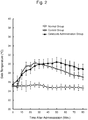
Figure 2] Figure 2 is a graph of changes over time in the skin temperature of the tail base of the rat, showing the effect of celecoxib administration. In the figure, the white circle indicates the result of a normal group; the white triangle indicates the result of a control group (administration of water + yohimbine); and the black triangle indicates the result of a celecoxib administration group (administration of celecoxib + yohimbine). - [
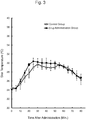
Figure 3] Figure 3 is a graph of changes over time in the skin temperature of the tail base of the rat, showing the effect of β-lactoglobulin (β-Lg) administration. In the figure, the white triangle indicates the result of a control group (administration of water + yohimbine), and the black square indicates the result of a β-Lg administration group (administration of β-lactoglobulin + yohimbine). - [
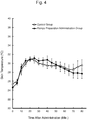
Figure 4] Figure 4 is a graph of changes over time in the skin temperature of the tail base of the rat, showing the effect of Kampo preparation (keisibukuryogan) administration. In the figure, the white triangle indicates the result of a control group (administration of water + yohimbine), and the black rhombus indicates the result of a Kampo preparation administration group (administration of keisibukuryogan + yohimbine). - The present invention will be described below in detail.
- The present invention relates to a hot flash-suppressing agent comprising α-lactalbumin as an active ingredient.
- α-Lactalbumin is a major component of the proteins in animal milk (mammalian milk), such as cow milk, as with casein, β-lactoglobulin, lactoferrin, and the like. α-Lactalbumin is an acidic protein of about 14 kDa, and contained at a high concentration in dairy products and whey. α-Lactalbumin used in the present invention may be any α-lactalbumin derived from mammals (human, cow, sheep, goat, pig, or the like) and it is preferably α-lactalbumin derived from bovine milk (cow milk) (bovine α-lactalbumin). The amino acid sequence of the precursor of bovine α-lactalbumin is publicly available under accession numbers J05147 and AAA30367 in the NCBI database and positions 1 to 19 of the full-length amino acid sequence (142 amino acids in length) form a signal peptide, and
positions 20 to 142 form the amino acid sequence of the mature protein. A mutant bovine α-lactalbumin in which arginine (R) at position 29 of the amino acid sequence is substituted with glutamine (Q) is also known to be present ("miruku sogoh-jiten" (comprehensive milk dictionary), p.35, Asakura Publishing Co., Ltd.). α-Lactalbumin secreted into milk is a mature type resulting from the cleavage of the signal peptide moiety from its precursor. In the present invention, α-lactalbumin typically means mature-type α-lactalbumin, containing no signal peptide. - α-Lactalbumin can be prepared from mammalian milk, particularly animal milk or its processed products by a known technique, such as ammonium sulfate precipitation method, an ultrafiltration method, or an ion exchange method. The content of α-lactalbumin in cow milk varies slightly depending on the production area, the feed, and the like; however, the content of α-lactalbumin in Japanese domestic cow milk is typically about 1.2 g/kg, and the use of cow milk as a raw material enables the easy preparation of a large amount of α-lactalbumin. α-Lactalbumin can be synthesized by a chemical method based on the amino acid sequence and the nucleotide sequence, or can be prepared by genetic engineering methods well-known to those skilled in the art. Commercially available α-lactalbumin (e.g., Sigma or Davisco) may also be used as α-Lactalbumin.
- As shown in Examples to be described later, α-lactalbumin is capable of effectively suppressing hot flash and can be used as an active ingredient of a hot flash-suppressing agent.
- According to the present invention, "hot flash" refers to a chronically or repetitively occurring symptom in which the skin of the face or body has abnormal heat near the surface thereof. Here, "having abnormal heat" refers to, for example, development of heat by a factor that is different from exogenous factors, such as a rise in ambient temperature and the use of a heater, and transient factors, such as fever associated with infection or inflammation, sunburn, heat attack, exercise, and psychological stress, or development of heat exceeding the normal level by e.g., the transient factors. Hot flash appears as a symptom of other diseases involving abnormalities of the autonomic nervous system, such as autonomic imbalance, Basedow disease, alcohol dependence, and diabetes, as well as appearing as a typical symptom of menopause.
- The hot flash-suppressing agent according to the present invention is capable of suppressing hot flash associated with symptoms of other diseases involving abnormalities of the autonomic nervous system, such as Basedow disease, alcohol dependence, and diabetes, as well as suppressing hot flash as a symptom of menopause, in subjects administered (ingesting) an effective amount of α-lactalbumin contained in the agent. Thus, for example, the present invention provides a method for suppressing hot flash, comprising administering the hot flash-suppressing agent according to the present invention at a dose corresponding to an effective amount of α-lactalbumin to a subject.
- The hot flash-suppressing agent according to the present invention can target hot flash associated with symptoms of other diseases involving abnormalities of the autonomic nervous system, such as Basedow disease, alcohol dependence, and diabetes, and can preferably target hot flash as a symptom of menopause, for suppression.
- In the context of the present invention, "suppressing" hot flash means improving a condition of hot flash from a state in which hot flash has already occurred, or a state in which hot flash can occur (menopause or the like), and includes alleviating the level of hot flash or preventing the occurrence of hot flash.
- As stated in Examples to be described later, the effect of suppressing hot flash can be determined (evaluated) using changes over time in skin temperature as an indicator. For example, using ovariectomized rats to which yohimbine is administered (yohimbine administration model), the effect of suppressing hot flash can be determined by measuring the extent of being capable of suppressing a rise in the skin temperature of the tail base of the rat with time while comparing a state in which a test substance is administered with a state in which the test substance is not administered (a state in which water is administered in place of the test substance). Specifically, using the yohimbine administration model, the average skin temperature rise from 10 minutes after to 80 minutes after yohimbine administration is evaluated using, as a reference, skin temperature immediately before yohimbine administration, while comparing a state in which a test substance is administered (a test substance administration group) and a state in which the test substance is not administered (a control group). Then, if the average skin temperature rise in a test substance administration group relative to a control group is 70% or less, preferably 65% or less, more preferably 60% or less, still more preferably 55% or less, the test substance is determined as having a hot flash-suppressing effect.
- The hot flash-suppressing agent according to the present invention may be a composition containing a pharmacological component having a different pharmacological activity or the like in addition to α-lactalbumin.
- The hot flash-suppressing agent according to the present invention can be used for suppressing hot flash without resort to a cyclooxygenase-2 (COX-2) inhibitory action and an anti-inflammatory action based thereon, and preferably can be used for suppressing hot flash as a symptom of menopause. Thus, for example, the present invention also provides a menopause-improving agent, comprising the hot flash-suppressing agent according to the present invention. Herein, the menopause-improving agent, comprising the hot flash-suppressing agent according to the present invention may be a composition containing a pharmacological component having a different pharmacological activity in addition to a hot flash-suppressing agent having a menopause-improving action. The present invention also provides a method for improving menopause, comprising administering the menopause-improving agent to a subject. In the context of the present invention, improving menopause refers to improving, reducing, or eliminating symptoms of menopause, including hot flash. The hot flash-suppressing agent according to the present invention can also be used for reducing the risk of causing hot flash, for example, hot flash as a symptom of menopause. Thus, the hot flash-suppressing agent according to the present invention can also be used as one component of an agent for treating/preventing various diseases involving hot flash. The hot flash-suppressing agent according to the present invention may be parenterally, for example, enterally, administered (ingested), or may be orally administered; however, the agent is preferably administered orally.
- Examples of a subject for administration of the hot flash-suppressing agent according to the present invention include any mammals (subjects) including human, domestic animals (e.g., horse, cow, sheep, goat, and pig), pet animals (e.g., dog, cat, and rabbit), and experimental (test) animals (e.g., mouse, rat, and monkey); and preferred examples thereof include mammals having hot flash and mammals having diseases prone to or predisposition to develop hot flash.
- Dosage or ingestion dose of the hot flash-suppressing agent according to the present invention can be set appropriately in light of various factors, such as administration route, the age, body weight, and symptoms of a subject. The dosage or ingestion dose set may be preferably, for example, 30 mg to 10 g, preferably 50 mg to 5 g, more preferably 100 mg to 2 g of α-lactalbumin to be dosed or ingested, per administration or ingestion. The hot flash-suppressing agent according to the present invention may be administered as single dose, or may be administered as multiple doses at intervals of several hours to several months.
- The hot flash-suppressing agent according to the present invention is preferably packed in a unit dose (a single ingestion dose) (i.e., being in a unit-dose packaging form) in view of hygiene at its administration (ingestion) and ease of handling during its transportation/storage. Thus, for example, the present invention provides a hot flash-suppressing agent in a unit-dose packaging form. In the context of the present invention, the "unit-dose packaging form" may be a form packed in a unit dose per administration or ingestion. The unit dose of the hot flash-suppressing agent according to the present invention per administration or ingestion is, for example, 5 g to 500 g (or 5 mL to 500 mL), preferably 10 g to 300 g (or 10 mL to 300 mL), more preferably 50 g to 200 g (or 50 mL to 200 mL). The unit dose of the hot flash-suppressing agent according to the present invention per ingestion may be a daily dose or, for example, may be a divided dose that corresponds to 1/2 to 1/10 aliquot of the daily dose.
- The hot flash-suppressing agent according to the present invention can be incorporated (added) into a pharmaceutical preparation or a food or drink, and can also be used in combination with a pharmaceutical preparation or a food or drink. Thus, for example, the present invention also provides a pharmaceutical preparation or a food or drink comprising the hot flash-suppressing agent according to the present invention, and a set of a pharmaceutical preparation or a food or drink in combination with the hot flash-suppressing agent according to the present invention. The pharmaceutical preparation or the food or drink comprising the hot flash-suppressing agent according to the present invention, or the pharmaceutical preparation or the food or drink in combination with the hot flash-suppressing agent according to the present invention can be used for suppressing hot flash by administration to (or ingestion by) a subject as described above.
- The present invention also provides a pharmaceutical preparation and a food or drink comprising α-lactalbumin as an active ingredient. The pharmaceutical preparation and the food or drink are, preferably, for suppressing hot flash. In a preferred embodiment, the pharmaceutical preparation and the food or drink of the present invention may be for suppressing hot flash as a symptom of menopause and for thereby improving menopause. The pharmaceutical preparation and the food or drink of the present invention may be for reducing the risk of developing hot flash, for example, hot flash as a symptom of menopause.
- The pharmaceutical preparation according to the present invention may further contain pharmaceutically acceptable auxiliary for the preparation (for example, inert carrier such as solid or liquid carrier, excipient, surfactant, binder, disintegrant, lubricant, solubilizer, suspending agent, coating agent, colorant, flavoring agent, preservative, buffering agent, and pH adjuster) or the like as a pharmacological component having a different pharmacological activity or the like. Specifically, the pharmaceutical preparation according to the present invention may further comprise, for example, water, another aqueous solvent, a pharmaceutically acceptable organic solvent, collagen, polyvinyl alcohol, polyvinylpyrrolidone, carboxyvinyl polymer, alginate sodium, water-soluble dextran, water-soluble dextrin, sodium carboxymethyl starch, pectin, xanthan gum, gum Arabic, casein, gelatin, agar, glycerin, propylene glycol, polyethylene glycol, vaseline, paraffin, stearyl alcohol, stearic acid, human serum albumin, mannitol, sorbitol, or lactose, or artificial cell structures, such as liposomes. The auxiliary substances or the like for the preparation can be appropriately selected depending on the dosage form of the preparation. The pharmaceutical preparation according to the present invention may further comprise vitamins, minerals, saccharides, amino acids, peptides, an antibiotic, or the like, at their adequate amounts.
- The pharmaceutical preparation according to the present invention may be one formulated into any dosage form, including solid preparations, such as tablets, granules, powders, pills, and capsules, liquid preparations, such as solutions, suspensions, and syrups, gels, and aerosols. When the pharmaceutical preparation is used as a liquid preparation, it can also be formulated as a dried product intended to be reconstituted, immediately before use, for example, with saline. The pharmaceutical preparation according to the present invention can be appropriately set for the content of α-lactalbumin in the preparation, and the content can vary, for example, depending on the dosage form, auxiliary substances for the preparation, and the severity of a disease of a subject.
- The food or drink according to the present invention may further comprise, for example, auxiliary substances for preparation, acceptable in the art of manufacturing food and drink (e.g., inert carrier such as solid or liquid carrier, excipient, surfactant, binder, disintegrant, lubricant, solubilizer, suspending agent, coating agent, colorant, flavoring agent, preservative, buffering agent, and pH adjuster). Specifically, the food or drink according to the present invention may further comprise, for example, water, protein, saccharide, lipid, vitamins, minerals, organic acid, organic base, fruit juices, or flavors.
- In the present invention, examples of a raw material of the protein include animal proteins, such as whole powdered milk, powdered skim milk, partially-skimmed milk powder, whole concentrated milk, concentrated skim milk, partially-skimmed concentrated milk, casein (α-casein, β-casein, and κ-casein), whey, demineralized whey, whey powder, demineralized whey powder, whey protein, whey protein concentrate (WPC), whey protein isolate (WPI), β-lactoglobulin, lactoferrin, chicken egg protein, and meat protein; plant proteins, such as soy protein; degradation products thereof; peptides, such as casein phosphopeptide, and amino acids, such as arginine and lysine. In the present invention, examples of a raw material of the saccharide include, for example, lactose, saccharides, processed starch (soluble starch, British starch, oxidized starch, starch ester, starch ether, or the like, as well as dextrin), and dietary fiber. In the present invention, examples of a raw material of the lipid include animal fat and oils, such as butter, cream, phospholipid, lard, and fish oil, and fractionated oils, hydrogenated oils, and transesterified oils thereof; plant fat and oils, such as palm oil, safflower oil, corn oil, rapeseed oil, coconut oil, and fractionated oils, hydrogenated oils, and transesterified oils thereof. These substances or components may be used alone or in a combination of two or more thereof. These substances or components may be synthesized ones or naturally occurring ones.
- In the present invention, examples of raw materials of vitamins include, for example, non-protein nitrogen, sialic acid, vitamin A, carotenes, B vitamins, vitamin C, D vitamins, vitamin E, K vitamins, vitamin P, vitamin Q, niacin, nicotinic acid, pantothenic acid, biotin, inositol, choline, and folic acid. In the present invention, examples of raw materials of the minerals include, for example, whey minerals, calcium, potassium, magnesium, sodium, copper, iron, manganese, zinc, and selenium. In the present invention, a raw material of the organic acid include, for example, malic acid, citric acid, lactic acid, tartaric acid, and erythorbic acid. These substances or components may be used alone or in a combination of two or more thereof. These substances or components may be synthesized ones or naturally occurring ones.
- The food or drink according to the present invention may be in any form, such as dairy product, processed food, prepared food, confectionery, seasoning, and beverage. The food or drink according to the present invention is preferably in the form of a functional food. The food or drink according to the present invention may be, for example, a supplement for humans in a state in which hot flash has already occurred or in a state in which hot flash can occur (menopause or the like).
- In the context of the present invention, the "functional food" refers to a food capable of imparting predetermined functionality to a living body, and includes any health foods, such as foods for specified health use (including a conditional foods for specified health use), foods with function claims, foods with health claims such as foods with nutrient function claims, special-use foods, nutritional supplementary foods, health supplements, supplements (e.g., in various dosage forms, such as tablets, coated tablets, sugar-coated tablets, capsules, and solutions), and beauty foods (e.g., diet foods). In the context of the present invention, the "functional food" includes health foods with health claims based on the food standards of CODEX (FAO/WHO Joint Food Standards Committee).
- The food or drink according to the present invention may be prepared in any form, such as solid, solution, mixture, suspension, paste, gel, powder, granule, or capsule. The hot flash-suppressing agent or α-lactalbumin according to the present invention may be incorporated into the food or drink according to the present invention by any adequate method available to those skilled in the art. Specifically, in the food or drink according to the present invention, the hot flash-suppressing agent or α-lactalbumin may be encapsulated, or the hot flash-suppressing agent or α-lactalbumin may be wrapped by an edible film, an edible coating agent, or the like; or, the food or drink according to the present invention may be formed into any form, such as tablet, after mixing (adding) an adequate excipient or the like with the hot flash-suppressing agent or α-lactalbumin. The food or drink according to the present invention may be produced by processing a composition containing the hot flash-suppressing agent or α-lactalbumin according to the present invention and other food materials. Then, in the food or drink according to the present invention, for example, the hot flash-suppressing agent or α-lactalbumin can be incorporated (added) into various foods (e.g., cow milk, soft drink, fermented milk, yogurt, cheese, bread, biscuits, crackers, pizza crust, prepared milk powder, liquid diets, foods for sick, nutritional foods, frozen foods, processed foods, and other commercial foods), or the various foods can be used in combination with the hot flash-suppressing agent or α-lactalbumin. The pharmaceutical preparation or the food or drink according to the present invention may comprise the hot flash-suppressing agent according to the present invention or α-lactalbumin at the above-mentioned dose per administration or ingestion.
- For pharmaceutical preparation or the food and drink according to the present invention, the subject for the administration can be set in a similar way to the subject for the administration of the hot flash-suppressing agent.
- The present invention also includes the followings (1) to (6).
- (1) A method for suppressing hot flash (improving menopause), comprising a step of (orally) administering to a subject (or having a subject ingest) α-lactalbumin or a composition (agent) comprising α-lactalbumin.
- (2) Use of α-lactalbumin in the manufacture of a hot flash-suppressing agent.
- (3) α-Lactalbumin for use in suppressing hot flash.
- (4) A method for producing a hot flash-suppressing agent, comprising a step of combining α-lactalbumin with a pharmaceutically acceptable carrier.
- (5) A composition (agent) comprising α-lactalbumin, which is for use as an additive to a pharmaceutical preparation (a pharmaceutical composition) or a food or drink (a food or drink composition) and for use in suppressing hot flash.
- (6) A method for providing a hot flash-suppressing effect to a pharmaceutical composition, a nutritional pharmaceutical composition, a pharmaceutical preparation, a drug, a food or drink composition, a food or drink, a nutritional composition, a special-use food, a food with nutrient function claims, a health food, or the like, comprising a step of adding (incorporating) α-lactalbumin or a composition containing α-lactalbumin to the pharmaceutical composition, the nutritional pharmaceutical composition, the pharmaceutical preparation, the drug, the food or drink composition, the food or drink, the nutritional composition, the special-use food, the food with nutrient function claims, the health food, or the like.
- The present invention will be more specifically described below with reference to Examples. However, these Examples are not intended to limit the technical scope of the present invention.
- An ovariectomized rat to which yohimbine is administered (yohimbine administration model) is used as a hot flash model. This Example examined whether α-lactalbumin (α-La) has an effect of suppressing a rise in skin temperature (hot flash), using the yohimbine administration model.
- The ovary was removed from 7-week old female SD rats (Japan SLC Inc.) to prepare menopausal animal models, which were then used for an experiment after 1 week. In this experiment, the rats were divided into 3 groups (n = 6 per group) with comparable mean body weight.
- Distilled water for injection was orally administered at 10 mL/kg body weight to a normal group and a control group. α-La was orally administered at 300 mg/kg body weight (as 10 mL/kg body weight of an α-La solution in distilled water for injection) to an α-La administration group.
- After 30 minutes from the oral administration, distilled water for injection was subcutaneously administered at 2 mL/kg body weight to the normal group, and yohimbine was subcutaneously administered at 2 mg/kg body weight (2 mL/kg body weight of yohimbine solution in distilled water for injection) to the control group and the α-La administration group. In addition, the skin temperature of the tail base of the rat was measured with time every 5 minutes from immediately after to 80 minutes after the subcutaneous administration.
- Changes over time in the skin temperature of the tail base of the rat are shown in
Figure 1 . In the normal group, the skin temperature hardly rose. In the control group, the skin temperature rose with time by the action of yohimbine. In contrast, in the α-La administration group, the effect of yohimbine was suppressed and a rise in the skin temperature was significantly suppressed, compared to the control group. - These results showed that a rise in skin temperature (hot flash) is suppressed by the effect of α-La.
- The inhibition of cyclooxygenase-2 (COX-2) is known as one of the action mechanisms of the anti-inflammatory effect of α-lactalbumin (α-La). Thus, this Example examined whether COX-2 inhibition has an effect of suppressing a rise in skin temperature (hot flash), using a yohimbine administration model. In this examination, celecoxib was used as a selective COX-2 inhibitor.
- The ovary was removed from 7-week old female SD rats (Japan SLC Inc.) to prepare menopausal animal models, which were then used for an experiment after 1 week. In this experiment, the rats were divided into 3 groups (n = 6 per group) with comparable mean body weight.
- A gum arabic solution (1% by weight) was orally administered at 10 mL/kg body weight to a normal group and a control group. Celecoxib was orally administered at 10 mg/kg body weight (as 10 mL/kg body weight of a dispersion of celecoxib in a gum arabic solution (1% by weight)) to a celecoxib administration group. The gum arabic solution was used to enhance the dispersibility of celecoxib.
- After 30 minutes from the oral administration, distilled water for injection was subcutaneously administered at 2 mL/kg body weight to the normal group, and yohimbine was subcutaneously administered at 2 mg/kg body weight (as 2 mL/kg body weight of a yohimbine solution in distilled water for injection) to the control group and the α-La administration group. In addition, the skin temperature of the tail base of the rat was measured with time every 5 minutes from immediately after to 80 minutes after the subcutaneous administration.
- Changes over time in the skin temperature of the tail base of the rat are shown in
Figure 2 . In the normal group, the skin temperature hardly rose. In the control group, the skin temperature rose with time by the action of yohimbine. In the celecoxib administration group, the skin temperature also rose with time without the suppression of yohimbine action, compared to that in the control group. - These results showed that the cyclooxygenase-2 (COX-2)-inhibiting action of celecoxib could not suppress a rise in skin temperature (hot flash). In other words, it was shown that the COX-2-inhibiting effect of α-La providing an anti-inflammatory effect cannot suppress a rise in skin temperature (hot flash) and the skin temperature rise (hot flash)-suppressing effect of α-La is due to a distinct mechanism from COX-2 inhibition.
- β-Lactoglobulin (β-Lg) is a typical whey protein (milk protein) different from α-lactalbumin (α-La). This Example examined whether β-lactoglobulin (β-Lg) has an effect of suppressing a rise in skin temperature (hot flash), using a yohimbine administration model.
- The ovary was removed from 7-week old female SD rats (Japan SLC Inc.) to prepare menopausal animal models, which were then used for an experiment after 1 week. In this experiment, the rats were divided into 2 groups (n = 4 per group) with comparable mean body weight.
- Distilled water for injection was orally administered at 10 mL/kg body weight to a control group. β-Lg was orally administered at 300 mg/kg body weight (as 10 mL/kg body weight of a β-Lg solution in distilled water for injection) to a β-Lg administration group.
- After 30 minutes from the oral administration, yohimbine was subcutaneously administered at 2 mg/kg body weight (as 2 mL/kg body weight of a yohimbine solution in distilled water for injection) to the control group and the β-Lg administration group. In addition, the skin temperature of the tail base of the rat was measured with time every 5 minutes from immediately after to 80 minutes after the subcutaneous administration.
- Changes over time in the skin temperature of the tail base of the rat are shown in
Figure 3 . In the control group, the skin temperature rose with time by the action of yohimbine. In the β-Lg administration group, the skin temperature also rose with time without the suppression of yohimbine action, compared to that in the control group. - These results showed that a whey protein different from α-La, such as β-Lg, cannot suppress a rise in skin temperature (hot flash). In other words, it was shown that the effect of suppressing a rise in skin temperature (hot flash) was observed for not every milk protein and specifically observed for α-La.
- Keisibukuryogan is a typical Kampo preparation (harbal medicine) intended for improving menopause. This Example examined whether keisibukuryogan has an effect of suppressing a rise in skin temperature (hot flash) using a yohimbine administration model.
- The ovary was removed from 7-week old female SD rats (Japan SLC Inc.) to prepare menopausal animal models, which were then used for an experiment after 1 week. In this experiment, the rats were divided into 2 groups (n = 5 per group) with comparable mean body weight.
- Distilled water for injection was orally administered at 10 mL/kg body weight to a control group. Keisibukuryogan was orally administered at 1 g/kg body weight (as 10 mL/kg body weight of a keisibukuryogan solution in distilled water for injection) to a Kampo preparation administration group.
- After 30 minutes from the oral administration, yohimbine was subcutaneously administered at 2 mg/kg body weight (as 2 mL/kg body weight of a yohimbine solution in distilled water for injection) to the control group and the Kampo preparation administration group. In addition, the skin temperature of the tail base of the rat was measured with time every 5 minutes from immediately after to 80 minutes after the subcutaneous administration.
- Changes over time in the skin temperature of the tail base of the rat are shown in
Figure 4 . In the control group, the skin temperature rose with time by the action of yohimbine. Also in the Kampo preparation administration group, the skin temperature rose with time without the suppression of yohimbine action, compared to that in the control group. - These results showed that a Kampo preparation intended for improving menopause, such as keisibukuryogan, cannot suppress a rise in skin temperature (hot flash). As seen above, the effect of suppressing a rise in skin temperature (hot flash) was observed in the single administration of α-La, while the hot flash-suppressing effect was not observed in the single administration of the Kampo preparation, showing that even a preparation for improving menopause was not always effective in suppressing hot flash.
- The present invention can be used in producing a food and drink and a pharmaceutical preparation useful for improving hot flash, and particularly can be used in producing a food and drink and a pharmaceutical preparation useful for improving hot flash as a symptom of menopause.
- All publications, patents, and patent applications cited in this application are intended to be incorporated herein by reference in their entirety.
Claims (7)
- A hot flash-suppressing agent comprising α-lactalbumin as an active ingredient.
- The hot flash-suppressing agent according to claim 1, which is for suppressing hot flash as a symptom of menopause.
- The hot flash-suppressing agent according to claim 1 or 2, wherein the agent is in a unit-dose packaging form comprising an effective amount of α-lactalbumin.
- A menopause-improving agent, comprising the hot flash-suppressing agent according to claim 1 or 2.
- The menopause-improving agent according to claim 4, wherein the agent is in a unit-dose packaging form comprising an effective amount of α-lactalbumin.
- A food or drink for suppressing hot flash, comprising α-lactalbumin as an active ingredient or comprising the hot flash-suppressing agent according to any one of claims 1 to 3.
- A pharmaceutical preparation for suppressing hot flash, comprising α-lactalbumin as an active ingredient or comprising the hot flash-suppressing agent according to any one of claims 1 to 3.
Applications Claiming Priority (2)
| Application Number | Priority Date | Filing Date | Title |
|---|---|---|---|
| JP2015078574 | 2015-04-07 | ||
| PCT/JP2016/061265 WO2016163400A1 (en) | 2015-04-07 | 2016-04-06 | Hot flash-suppressing agent |
Publications (3)
| Publication Number | Publication Date |
|---|---|
| EP3284472A1 true EP3284472A1 (en) | 2018-02-21 |
| EP3284472A4 EP3284472A4 (en) | 2019-01-02 |
| EP3284472B1 EP3284472B1 (en) | 2021-06-02 |
Family
ID=57073119
Family Applications (1)
| Application Number | Title | Priority Date | Filing Date |
|---|---|---|---|
| EP16776566.8A Active EP3284472B1 (en) | 2015-04-07 | 2016-04-06 | Hot flash-suppressing agent |
Country Status (7)
| Country | Link |
|---|---|
| US (1) | US11147856B2 (en) |
| EP (1) | EP3284472B1 (en) |
| JP (2) | JP6038416B1 (en) |
| CN (1) | CN107249615B (en) |
| CA (1) | CA2980990A1 (en) |
| SG (1) | SG11201708162UA (en) |
| WO (1) | WO2016163400A1 (en) |
Families Citing this family (1)
| Publication number | Priority date | Publication date | Assignee | Title |
|---|---|---|---|---|
| KR102817311B1 (en) * | 2016-09-29 | 2025-06-09 | (주)아모레퍼시픽 | Composition for improving hot frush comprising lactic acid |
Family Cites Families (16)
| Publication number | Priority date | Publication date | Assignee | Title |
|---|---|---|---|---|
| FR2657013B1 (en) * | 1990-01-18 | 1992-05-15 | Medgenix Group Sa | DIETETIC COMPOSITION BASED ON POLYPEPTIDES AND AMINO ACIDS. |
| EP1228707A1 (en) | 2001-02-01 | 2002-08-07 | Campina Melkunie B.V. | Use of alpha-lactalbumin as prebiotic agent |
| JP2004525940A (en) * | 2001-03-29 | 2004-08-26 | イーライ・リリー・アンド・カンパニー | Duloxetine for the treatment of hot flashes |
| WO2003086464A1 (en) | 2002-04-12 | 2003-10-23 | Takeda Pharmaceutical Company Limited. | Preventives/remedies for hotflash |
| NZ537521A (en) * | 2002-08-14 | 2007-05-31 | Pharmacia & Upjohn Co Llc | Use of reboxetine for the treatment of hot flashes |
| US7064104B2 (en) * | 2003-06-13 | 2006-06-20 | The Procter & Gamble Company | Methods of managing the symptoms of premenstrual syndrome |
| US20050089546A1 (en) * | 2003-09-16 | 2005-04-28 | Dick Wurtman | Compositions and methods comprising complex carbohydrate and alpha-lactalbumin |
| JP4578821B2 (en) * | 2004-02-19 | 2010-11-10 | 明治乳業株式会社 | Pharmaceutical composition for the treatment of nephritis |
| US20080033050A1 (en) * | 2006-08-04 | 2008-02-07 | Richards Patricia Allison Tewe | Method of treating thermoregulatory disfunction with paroxetine |
| US7645750B2 (en) * | 2006-12-13 | 2010-01-12 | Yung Shin Pharmaceutical Ind. Co., Ltd. | Method of treating symptoms of hormonal variations |
| WO2008140041A1 (en) * | 2007-05-11 | 2008-11-20 | Meiji Dairies Corporation | Novel antiphlogistic-analgesic agent |
| CN101181069B (en) * | 2007-11-30 | 2012-01-25 | 天津科技大学 | Complex nutrition albumen powder for preventing women's osteosporosis after menopause |
| CN101779809A (en) * | 2009-01-21 | 2010-07-21 | 陈石良 | Solid health-care beverage special for female menstrual period and preparation method thereof |
| ES2574210T3 (en) * | 2010-03-02 | 2016-06-15 | Fervent Pharmaceuticals, Llc | Methods and compositions to treat or prevent the symptoms of hormonal variations |
| CN103458910A (en) | 2011-03-31 | 2013-12-18 | 株式会社资生堂 | Hot flash suppressant |
| KR102817311B1 (en) * | 2016-09-29 | 2025-06-09 | (주)아모레퍼시픽 | Composition for improving hot frush comprising lactic acid |
-
2016
- 2016-04-06 JP JP2016547631A patent/JP6038416B1/en active Active
- 2016-04-06 CN CN201680012406.9A patent/CN107249615B/en active Active
- 2016-04-06 SG SG11201708162UA patent/SG11201708162UA/en unknown
- 2016-04-06 CA CA2980990A patent/CA2980990A1/en active Pending
- 2016-04-06 US US15/560,791 patent/US11147856B2/en active Active
- 2016-04-06 WO PCT/JP2016/061265 patent/WO2016163400A1/en not_active Ceased
- 2016-04-06 EP EP16776566.8A patent/EP3284472B1/en active Active
- 2016-08-31 JP JP2016169687A patent/JP6752659B2/en active Active
Also Published As
| Publication number | Publication date |
|---|---|
| JP6752659B2 (en) | 2020-09-09 |
| US20180078610A1 (en) | 2018-03-22 |
| EP3284472A4 (en) | 2019-01-02 |
| SG11201708162UA (en) | 2017-11-29 |
| US11147856B2 (en) | 2021-10-19 |
| CN107249615A (en) | 2017-10-13 |
| WO2016163400A1 (en) | 2016-10-13 |
| CN107249615B (en) | 2021-02-05 |
| EP3284472B1 (en) | 2021-06-02 |
| JPWO2016163400A1 (en) | 2017-04-27 |
| CA2980990A1 (en) | 2016-10-13 |
| JP6038416B1 (en) | 2016-12-07 |
| JP2016199590A (en) | 2016-12-01 |
Similar Documents
| Publication | Publication Date | Title |
|---|---|---|
| TWI722992B (en) | Brain function improving agent, and preventive or therapeutic agent for cognitive dysfunction | |
| JP5581071B2 (en) | Mitochondrial function improver | |
| MX2011010454A (en) | Improvement in promotion of healthy catch-up growth. | |
| US6468556B1 (en) | Liver fat accumulation inhibitory composition, food additive for liver fat accumulation, inhibition, and method of inhibiting liver fat accumulation | |
| RU2762096C2 (en) | Bifidobacteria for reducing food, energy and/or fat consumption | |
| EP3177154B1 (en) | Myo-inositol and probiotics, and their use to prevent excess body weight in infants | |
| CN103561756A (en) | Composition for preventing and/or ameliorating cancer-related irreversible metabolism disorders | |
| US11147856B2 (en) | Hot flash-suppressing agent | |
| KR20100017708A (en) | Novel antiphlogistic-analgesic agent | |
| JP2024539844A (en) | Compositions and methods for enhancing intermittent fasting using autophagy inducers | |
| US20220296534A1 (en) | Scyllo-inositol and b-cell mediated disorders | |
| JP2011063552A (en) | Physical activity promoter | |
| JP7383874B2 (en) | Composition for inhibiting endotoxin transfer into blood | |
| HK1238170A1 (en) | Hot flash-suppressing agent | |
| HK1238170B (en) | Hot flash-suppressing agent | |
| JP6071988B2 (en) | Physical activity promoter | |
| US20230053297A1 (en) | Compositions and methods to increase serum dileucine levels | |
| JP5748441B2 (en) | Bone loss reducing agent containing citrulline as an active ingredient | |
| JP7134703B2 (en) | Adrenal hypofunction inhibitor | |
| US20220370378A1 (en) | Scyllo-inositol and its use as insulin sensitizer | |
| CN120225074A (en) | Myo-Inositol and Prevention of Accelerated Growth | |
| TW201825011A (en) | Composition for improving protein efficiency ratio | |
| HK1230931A1 (en) | Brain function improving agent, and prophylactic or therapeutic agent for cognitive dysfunction | |
| JP2016204356A (en) | Inhibitor of liver fibrosis |
Legal Events
| Date | Code | Title | Description |
|---|---|---|---|
| STAA | Information on the status of an ep patent application or granted ep patent |
Free format text: STATUS: THE INTERNATIONAL PUBLICATION HAS BEEN MADE |
|
| PUAI | Public reference made under article 153(3) epc to a published international application that has entered the european phase |
Free format text: ORIGINAL CODE: 0009012 |
|
| STAA | Information on the status of an ep patent application or granted ep patent |
Free format text: STATUS: REQUEST FOR EXAMINATION WAS MADE |
|
| 17P | Request for examination filed |
Effective date: 20171019 |
|
| AK | Designated contracting states |
Kind code of ref document: A1 Designated state(s): AL AT BE BG CH CY CZ DE DK EE ES FI FR GB GR HR HU IE IS IT LI LT LU LV MC MK MT NL NO PL PT RO RS SE SI SK SM TR |
|
| AX | Request for extension of the european patent |
Extension state: BA ME |
|
| DAV | Request for validation of the european patent (deleted) | ||
| DAX | Request for extension of the european patent (deleted) | ||
| REG | Reference to a national code |
Ref country code: DE Ref legal event code: R079 Ref document number: 602016058868 Country of ref document: DE Free format text: PREVIOUS MAIN CLASS: A61K0038000000 Ipc: A61K0038380000 |
|
| A4 | Supplementary search report drawn up and despatched |
Effective date: 20181204 |
|
| RIC1 | Information provided on ipc code assigned before grant |
Ipc: A61K 38/38 20060101AFI20181128BHEP Ipc: A61P 15/12 20060101ALI20181128BHEP Ipc: A23L 2/52 20060101ALI20181128BHEP Ipc: A23L 33/19 20160101ALI20181128BHEP |
|
| GRAP | Despatch of communication of intention to grant a patent |
Free format text: ORIGINAL CODE: EPIDOSNIGR1 |
|
| STAA | Information on the status of an ep patent application or granted ep patent |
Free format text: STATUS: GRANT OF PATENT IS INTENDED |
|
| INTG | Intention to grant announced |
Effective date: 20201013 |
|
| RAP1 | Party data changed (applicant data changed or rights of an application transferred) |
Owner name: MEIJI CO., LTD. |
|
| GRAS | Grant fee paid |
Free format text: ORIGINAL CODE: EPIDOSNIGR3 |
|
| RIN1 | Information on inventor provided before grant (corrected) |
Inventor name: UCHIDA MASAYUKI Inventor name: KOBAYASHI ORIE |
|
| GRAA | (expected) grant |
Free format text: ORIGINAL CODE: 0009210 |
|
| STAA | Information on the status of an ep patent application or granted ep patent |
Free format text: STATUS: THE PATENT HAS BEEN GRANTED |
|
| REG | Reference to a national code |
Ref country code: CH Ref legal event code: EP |
|
| AK | Designated contracting states |
Kind code of ref document: B1 Designated state(s): AL AT BE BG CH CY CZ DE DK EE ES FI FR GB GR HR HU IE IS IT LI LT LU LV MC MK MT NL NO PL PT RO RS SE SI SK SM TR |
|
| REG | Reference to a national code |
Ref country code: GB Ref legal event code: FG4D |
|
| REG | Reference to a national code |
Ref country code: AT Ref legal event code: REF Ref document number: 1397809 Country of ref document: AT Kind code of ref document: T Effective date: 20210615 |
|
| REG | Reference to a national code |
Ref country code: IE Ref legal event code: FG4D |
|
| REG | Reference to a national code |
Ref country code: DE Ref legal event code: R096 Ref document number: 602016058868 Country of ref document: DE |
|
| REG | Reference to a national code |
Ref country code: LT Ref legal event code: MG9D |
|
| PG25 | Lapsed in a contracting state [announced via postgrant information from national office to epo] |
Ref country code: LT Free format text: LAPSE BECAUSE OF FAILURE TO SUBMIT A TRANSLATION OF THE DESCRIPTION OR TO PAY THE FEE WITHIN THE PRESCRIBED TIME-LIMIT Effective date: 20210602 Ref country code: FI Free format text: LAPSE BECAUSE OF FAILURE TO SUBMIT A TRANSLATION OF THE DESCRIPTION OR TO PAY THE FEE WITHIN THE PRESCRIBED TIME-LIMIT Effective date: 20210602 Ref country code: HR Free format text: LAPSE BECAUSE OF FAILURE TO SUBMIT A TRANSLATION OF THE DESCRIPTION OR TO PAY THE FEE WITHIN THE PRESCRIBED TIME-LIMIT Effective date: 20210602 Ref country code: BG Free format text: LAPSE BECAUSE OF FAILURE TO SUBMIT A TRANSLATION OF THE DESCRIPTION OR TO PAY THE FEE WITHIN THE PRESCRIBED TIME-LIMIT Effective date: 20210902 |
|
| REG | Reference to a national code |
Ref country code: NL Ref legal event code: MP Effective date: 20210602 |
|
| REG | Reference to a national code |
Ref country code: AT Ref legal event code: MK05 Ref document number: 1397809 Country of ref document: AT Kind code of ref document: T Effective date: 20210602 |
|
| PG25 | Lapsed in a contracting state [announced via postgrant information from national office to epo] |
Ref country code: NO Free format text: LAPSE BECAUSE OF FAILURE TO SUBMIT A TRANSLATION OF THE DESCRIPTION OR TO PAY THE FEE WITHIN THE PRESCRIBED TIME-LIMIT Effective date: 20210902 Ref country code: PL Free format text: LAPSE BECAUSE OF FAILURE TO SUBMIT A TRANSLATION OF THE DESCRIPTION OR TO PAY THE FEE WITHIN THE PRESCRIBED TIME-LIMIT Effective date: 20210602 Ref country code: RS Free format text: LAPSE BECAUSE OF FAILURE TO SUBMIT A TRANSLATION OF THE DESCRIPTION OR TO PAY THE FEE WITHIN THE PRESCRIBED TIME-LIMIT Effective date: 20210602 Ref country code: SE Free format text: LAPSE BECAUSE OF FAILURE TO SUBMIT A TRANSLATION OF THE DESCRIPTION OR TO PAY THE FEE WITHIN THE PRESCRIBED TIME-LIMIT Effective date: 20210602 Ref country code: LV Free format text: LAPSE BECAUSE OF FAILURE TO SUBMIT A TRANSLATION OF THE DESCRIPTION OR TO PAY THE FEE WITHIN THE PRESCRIBED TIME-LIMIT Effective date: 20210602 Ref country code: GR Free format text: LAPSE BECAUSE OF FAILURE TO SUBMIT A TRANSLATION OF THE DESCRIPTION OR TO PAY THE FEE WITHIN THE PRESCRIBED TIME-LIMIT Effective date: 20210903 |
|
| PG25 | Lapsed in a contracting state [announced via postgrant information from national office to epo] |
Ref country code: AT Free format text: LAPSE BECAUSE OF FAILURE TO SUBMIT A TRANSLATION OF THE DESCRIPTION OR TO PAY THE FEE WITHIN THE PRESCRIBED TIME-LIMIT Effective date: 20210602 Ref country code: NL Free format text: LAPSE BECAUSE OF FAILURE TO SUBMIT A TRANSLATION OF THE DESCRIPTION OR TO PAY THE FEE WITHIN THE PRESCRIBED TIME-LIMIT Effective date: 20210602 Ref country code: RO Free format text: LAPSE BECAUSE OF FAILURE TO SUBMIT A TRANSLATION OF THE DESCRIPTION OR TO PAY THE FEE WITHIN THE PRESCRIBED TIME-LIMIT Effective date: 20210602 Ref country code: PT Free format text: LAPSE BECAUSE OF FAILURE TO SUBMIT A TRANSLATION OF THE DESCRIPTION OR TO PAY THE FEE WITHIN THE PRESCRIBED TIME-LIMIT Effective date: 20211004 Ref country code: ES Free format text: LAPSE BECAUSE OF FAILURE TO SUBMIT A TRANSLATION OF THE DESCRIPTION OR TO PAY THE FEE WITHIN THE PRESCRIBED TIME-LIMIT Effective date: 20210602 Ref country code: EE Free format text: LAPSE BECAUSE OF FAILURE TO SUBMIT A TRANSLATION OF THE DESCRIPTION OR TO PAY THE FEE WITHIN THE PRESCRIBED TIME-LIMIT Effective date: 20210602 Ref country code: CZ Free format text: LAPSE BECAUSE OF FAILURE TO SUBMIT A TRANSLATION OF THE DESCRIPTION OR TO PAY THE FEE WITHIN THE PRESCRIBED TIME-LIMIT Effective date: 20210602 Ref country code: SK Free format text: LAPSE BECAUSE OF FAILURE TO SUBMIT A TRANSLATION OF THE DESCRIPTION OR TO PAY THE FEE WITHIN THE PRESCRIBED TIME-LIMIT Effective date: 20210602 Ref country code: SM Free format text: LAPSE BECAUSE OF FAILURE TO SUBMIT A TRANSLATION OF THE DESCRIPTION OR TO PAY THE FEE WITHIN THE PRESCRIBED TIME-LIMIT Effective date: 20210602 |
|
| REG | Reference to a national code |
Ref country code: DE Ref legal event code: R097 Ref document number: 602016058868 Country of ref document: DE |
|
| PLBE | No opposition filed within time limit |
Free format text: ORIGINAL CODE: 0009261 |
|
| STAA | Information on the status of an ep patent application or granted ep patent |
Free format text: STATUS: NO OPPOSITION FILED WITHIN TIME LIMIT |
|
| PG25 | Lapsed in a contracting state [announced via postgrant information from national office to epo] |
Ref country code: DK Free format text: LAPSE BECAUSE OF FAILURE TO SUBMIT A TRANSLATION OF THE DESCRIPTION OR TO PAY THE FEE WITHIN THE PRESCRIBED TIME-LIMIT Effective date: 20210602 |
|
| 26N | No opposition filed |
Effective date: 20220303 |
|
| PG25 | Lapsed in a contracting state [announced via postgrant information from national office to epo] |
Ref country code: AL Free format text: LAPSE BECAUSE OF FAILURE TO SUBMIT A TRANSLATION OF THE DESCRIPTION OR TO PAY THE FEE WITHIN THE PRESCRIBED TIME-LIMIT Effective date: 20210602 |
|
| PG25 | Lapsed in a contracting state [announced via postgrant information from national office to epo] |
Ref country code: IT Free format text: LAPSE BECAUSE OF FAILURE TO SUBMIT A TRANSLATION OF THE DESCRIPTION OR TO PAY THE FEE WITHIN THE PRESCRIBED TIME-LIMIT Effective date: 20210602 |
|
| REG | Reference to a national code |
Ref country code: CH Ref legal event code: PL |
|
| REG | Reference to a national code |
Ref country code: BE Ref legal event code: MM Effective date: 20220430 |
|
| PG25 | Lapsed in a contracting state [announced via postgrant information from national office to epo] |
Ref country code: MC Free format text: LAPSE BECAUSE OF FAILURE TO SUBMIT A TRANSLATION OF THE DESCRIPTION OR TO PAY THE FEE WITHIN THE PRESCRIBED TIME-LIMIT Effective date: 20210602 Ref country code: LU Free format text: LAPSE BECAUSE OF NON-PAYMENT OF DUE FEES Effective date: 20220406 Ref country code: LI Free format text: LAPSE BECAUSE OF NON-PAYMENT OF DUE FEES Effective date: 20220430 Ref country code: CH Free format text: LAPSE BECAUSE OF NON-PAYMENT OF DUE FEES Effective date: 20220430 |
|
| PG25 | Lapsed in a contracting state [announced via postgrant information from national office to epo] |
Ref country code: BE Free format text: LAPSE BECAUSE OF NON-PAYMENT OF DUE FEES Effective date: 20220430 |
|
| PG25 | Lapsed in a contracting state [announced via postgrant information from national office to epo] |
Ref country code: IE Free format text: LAPSE BECAUSE OF NON-PAYMENT OF DUE FEES Effective date: 20220406 |
|
| P01 | Opt-out of the competence of the unified patent court (upc) registered |
Effective date: 20230516 |
|
| PG25 | Lapsed in a contracting state [announced via postgrant information from national office to epo] |
Ref country code: HU Free format text: LAPSE BECAUSE OF FAILURE TO SUBMIT A TRANSLATION OF THE DESCRIPTION OR TO PAY THE FEE WITHIN THE PRESCRIBED TIME-LIMIT; INVALID AB INITIO Effective date: 20160406 |
|
| PG25 | Lapsed in a contracting state [announced via postgrant information from national office to epo] |
Ref country code: MK Free format text: LAPSE BECAUSE OF FAILURE TO SUBMIT A TRANSLATION OF THE DESCRIPTION OR TO PAY THE FEE WITHIN THE PRESCRIBED TIME-LIMIT Effective date: 20210602 Ref country code: CY Free format text: LAPSE BECAUSE OF FAILURE TO SUBMIT A TRANSLATION OF THE DESCRIPTION OR TO PAY THE FEE WITHIN THE PRESCRIBED TIME-LIMIT Effective date: 20210602 |
|
| PG25 | Lapsed in a contracting state [announced via postgrant information from national office to epo] |
Ref country code: MT Free format text: LAPSE BECAUSE OF FAILURE TO SUBMIT A TRANSLATION OF THE DESCRIPTION OR TO PAY THE FEE WITHIN THE PRESCRIBED TIME-LIMIT Effective date: 20210602 |
|
| PGFP | Annual fee paid to national office [announced via postgrant information from national office to epo] |
Ref country code: DE Payment date: 20250305 Year of fee payment: 10 |
|
| PG25 | Lapsed in a contracting state [announced via postgrant information from national office to epo] |
Ref country code: TR Free format text: LAPSE BECAUSE OF FAILURE TO SUBMIT A TRANSLATION OF THE DESCRIPTION OR TO PAY THE FEE WITHIN THE PRESCRIBED TIME-LIMIT Effective date: 20210602 |
|
| PGFP | Annual fee paid to national office [announced via postgrant information from national office to epo] |
Ref country code: GB Payment date: 20260313 Year of fee payment: 11 |
|
| PGFP | Annual fee paid to national office [announced via postgrant information from national office to epo] |
Ref country code: FR Payment date: 20260309 Year of fee payment: 11 |